EP3687227B1 - Procédé de réglage de puissance d'émission de terminal, terminal mobile et dispositif de stockage - Google Patents
Procédé de réglage de puissance d'émission de terminal, terminal mobile et dispositif de stockage Download PDFInfo
- Publication number
- EP3687227B1 EP3687227B1 EP18856597.2A EP18856597A EP3687227B1 EP 3687227 B1 EP3687227 B1 EP 3687227B1 EP 18856597 A EP18856597 A EP 18856597A EP 3687227 B1 EP3687227 B1 EP 3687227B1
- Authority
- EP
- European Patent Office
- Prior art keywords
- channel
- accession
- terminal
- connection
- score
- Prior art date
- Legal status (The legal status is an assumption and is not a legal conclusion. Google has not performed a legal analysis and makes no representation as to the accuracy of the status listed.)
- Active
Links
Images


Classifications
-
- H—ELECTRICITY
- H04—ELECTRIC COMMUNICATION TECHNIQUE
- H04W—WIRELESS COMMUNICATION NETWORKS
- H04W52/00—Power management, e.g. Transmission Power Control [TPC] or power classes
- H04W52/04—Transmission power control [TPC]
- H04W52/18—TPC being performed according to specific parameters
- H04W52/28—TPC being performed according to specific parameters using user profile, e.g. mobile speed, priority or network state, e.g. standby, idle or non-transmission
-
- H—ELECTRICITY
- H04—ELECTRIC COMMUNICATION TECHNIQUE
- H04W—WIRELESS COMMUNICATION NETWORKS
- H04W52/00—Power management, e.g. Transmission Power Control [TPC] or power classes
- H04W52/02—Power saving arrangements
- H04W52/0209—Power saving arrangements in terminal devices
- H04W52/0212—Power saving arrangements in terminal devices managed by the network, e.g. network or access point is leader and terminal is follower
-
- H—ELECTRICITY
- H04—ELECTRIC COMMUNICATION TECHNIQUE
- H04W—WIRELESS COMMUNICATION NETWORKS
- H04W52/00—Power management, e.g. Transmission Power Control [TPC] or power classes
- H04W52/04—Transmission power control [TPC]
- H04W52/30—Transmission power control [TPC] using constraints in the total amount of available transmission power
- H04W52/36—Transmission power control [TPC] using constraints in the total amount of available transmission power with a discrete range or set of values, e.g. step size, ramping or offsets
- H04W52/367—Power values between minimum and maximum limits, e.g. dynamic range
-
- H—ELECTRICITY
- H04—ELECTRIC COMMUNICATION TECHNIQUE
- H04W—WIRELESS COMMUNICATION NETWORKS
- H04W52/00—Power management, e.g. Transmission Power Control [TPC] or power classes
- H04W52/04—Transmission power control [TPC]
- H04W52/06—TPC algorithms
- H04W52/14—Separate analysis of uplink or downlink
- H04W52/146—Uplink power control
-
- H—ELECTRICITY
- H04—ELECTRIC COMMUNICATION TECHNIQUE
- H04W—WIRELESS COMMUNICATION NETWORKS
- H04W52/00—Power management, e.g. Transmission Power Control [TPC] or power classes
- H04W52/04—Transmission power control [TPC]
- H04W52/18—TPC being performed according to specific parameters
- H04W52/24—TPC being performed according to specific parameters using SIR [Signal to Interference Ratio] or other wireless path parameters
-
- H—ELECTRICITY
- H04—ELECTRIC COMMUNICATION TECHNIQUE
- H04W—WIRELESS COMMUNICATION NETWORKS
- H04W52/00—Power management, e.g. Transmission Power Control [TPC] or power classes
- H04W52/04—Transmission power control [TPC]
- H04W52/18—TPC being performed according to specific parameters
- H04W52/24—TPC being performed according to specific parameters using SIR [Signal to Interference Ratio] or other wireless path parameters
- H04W52/245—TPC being performed according to specific parameters using SIR [Signal to Interference Ratio] or other wireless path parameters taking into account received signal strength
-
- H—ELECTRICITY
- H04—ELECTRIC COMMUNICATION TECHNIQUE
- H04W—WIRELESS COMMUNICATION NETWORKS
- H04W52/00—Power management, e.g. Transmission Power Control [TPC] or power classes
- H04W52/04—Transmission power control [TPC]
- H04W52/18—TPC being performed according to specific parameters
- H04W52/24—TPC being performed according to specific parameters using SIR [Signal to Interference Ratio] or other wireless path parameters
- H04W52/241—TPC being performed according to specific parameters using SIR [Signal to Interference Ratio] or other wireless path parameters taking into account channel quality metrics, e.g. SIR, SNR, CIR or Eb/lo
-
- H—ELECTRICITY
- H04—ELECTRIC COMMUNICATION TECHNIQUE
- H04W—WIRELESS COMMUNICATION NETWORKS
- H04W52/00—Power management, e.g. Transmission Power Control [TPC] or power classes
- H04W52/04—Transmission power control [TPC]
- H04W52/18—TPC being performed according to specific parameters
- H04W52/24—TPC being performed according to specific parameters using SIR [Signal to Interference Ratio] or other wireless path parameters
- H04W52/243—TPC being performed according to specific parameters using SIR [Signal to Interference Ratio] or other wireless path parameters taking into account interferences
-
- H—ELECTRICITY
- H04—ELECTRIC COMMUNICATION TECHNIQUE
- H04W—WIRELESS COMMUNICATION NETWORKS
- H04W52/00—Power management, e.g. Transmission Power Control [TPC] or power classes
- H04W52/04—Transmission power control [TPC]
- H04W52/18—TPC being performed according to specific parameters
- H04W52/26—TPC being performed according to specific parameters using transmission rate or quality of service QoS [Quality of Service]
- H04W52/267—TPC being performed according to specific parameters using transmission rate or quality of service QoS [Quality of Service] taking into account the information rate
Definitions
- the present disclosure relates to the field of mobile terminals, and in particular to a method of adjusting transmission power of a terminal, a mobile terminal, and a non-transitory storage device.
- a reference document D1 discloses a wireless communication terminal device which comprises a wireless communication unit that performs a plurality of communication operations in parallel using a plurality of different communication systems; a transmission power detecting unit that detects transmission power in the communication operations using the respective communication systems performed by the wireless communication unit; and a control unit that calculates the total sum of specific absorption rates in the respective communication operations based on the transmission power detected by the transmission power detecting unit and that controls the wireless communication unit to lower the transmission power of the communication operation using a predetermined communication system out of the plurality of different communication systems when the calculated total sum of the specific absorption rates is greater than a reference value.
- a reference document D2 ( LAURIDSEN MADS ET AL: "Empirical LTE Smartphone Power Model with DRX Operation for System Level Simulations " ) discloses that: An LTE smartphone power model is presented to enable academia and industry to evaluate users' battery life on system level. The model is based on empirical measurements on a smartphone using a second generation LTE chipset, and the model includes functions of receive and transmit data rates and power levels. The first comprehensive Discontinuous Reception (DRX) power consumption measurements are reported together with cell bandwidth, screen and CPU power consumption. The transmit power level and to some extent the receive data rate constitute the overall power consumption, while DRX proves to be a very efficient method to prolong the battery life.
- DRX Discontinuous Reception
- a reference document D3 discloses a data processing device which includes a display unit, a light-emitting unit which illuminates the display unit, a communication unit which makes radio communication with other data processing devices, a detector which detects whether the communication unit is in operation or not, and a controller which limits a current to be supplied to the light-emitting unit in accordance with transmission power consumed in radio communication carried out by the communication unit, when the detector has detected that the communication unit is in operation.
- the present disclosure may involve a method of adjusting transmission power of a terminal, a mobile terminal, and a non-transitory storage device to solve a problem of a user unable to use the mobile terminal to access the internet via the wireless communication for a long period of time with limited battery capacity.
- a method of adjusting transmission power of the terminal includes: connecting to an accession point of a wireless network; obtaining a connection state of the terminal connecting to the accession point; calculating a connection evaluation score based on the connection state; obtaining a state of a screen of the terminal, setting a threshold connection score based on the state of the screen of the terminal; comparing the connection evaluation score to the threshold connection score; and reducing the transmission power of the terminal connecting to the wireless network in response to the connection evaluation score being greater than the threshold connection score; wherein the setting the threshold connection score based on the state of the screen comprises: setting a first threshold connection score in response to the screen being in black; setting a second threshold connection score in response to the screen being bright; and the first threshold connection score is less than the second threshold connection score.
- a mobile terminal includes a processor and a non-transitory memory.
- the processor is coupled with the non-transitory memory, and the processor is arranged to perform operations of: connecting to an accession point of a wireless network; obtaining a connection state of the terminal connecting to the accession point; calculating a connection evaluation score based on the connection state; obtaining a state of a screen of the terminal, setting a threshold connection score based on the state of the screen of the terminal; comparing the connection evaluation score to the threshold connection score; and reducing the transmission power of the terminal connecting to the wireless network in response to the connection evaluation score being greater than the threshold connection score; wherein the setting the threshold connection score based on the state of the screen comprises: setting a first threshold connection score in response to the screen being in black; setting a second threshold connection score in response to the screen being bright; and the first threshold connection score is less than the second threshold connection score.
- a non-transitory storage medium has a computer program stored in.
- the computer program is able to be executed by a processor to perform the above-mentioned method of adjusting transmission power of the terminal.
- an accession point of a wireless network is connected, a connection state of a terminal connecting to the access point may be acquired, a connection evaluation score may be calculated based on the connection state, a state of a screen of the terminal may be obtained, a threshold connection score may be set based on the state of the screen, and the connection evaluation score may be compared to the threshold connection score.
- transmission power of the terminal connecting to the wireless network may be reduced.
- the transmission power of WiFi may be adjusted dynamically based on a state of the terminal, ensuring the user to use the terminal to access the internet via the wireless network for an extended period of time with limited battery capacity and ensuring normal accession to the internet via WiFi at the same time, improving user experience.
- a mobile terminal provided in the present disclosure may include an electronic device such as a smart mobile phone, a tablet computer, an intelligent wearable device, a digital audio and video player, an electronic reader, a portable game machine, and the like.
- a process, a method, a system, a product, or a device including a series of operations or units is not limited to listed operations and units, unlisted operations and units may alternatively be included, or other inherent operations or units for the process, the method, the product, or the device may alternatively be included.
- Embodiment mentioned in the present disclosure may indicate that certain characteristics, structures, or properties described by referring to the embodiment may be included in at least one embodiment of the present disclosure.
- the term of "embodiment” at various sections of the present disclosure may not refer to a same embodiment, and may not be an independent or alternative embodiment conflicting with other embodiments. Any one of skill in the art should explicitly or implicitly understand that embodiments described in the present disclosure may be combined with other embodiments.
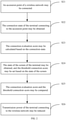
- the method of adjusting transmission power of the terminal may include following operations.
- an accession point of a wireless network may be connected to the terminal.
- the wireless network may be a network achieved via wireless communication.
- the wireless network may include a global voice and data network allowing a user to establish a long-range wireless connection, and include a network using an infrared technology and a radio frequency technology optimizing a short-range wireless connection.
- the wireless network and a wired network may have a similar application, and the wireless network and the wired network may involve different transmission media.
- a radio replaces a wire to achieve the wireless network, and each of the wireless network and the wired network may be a backup for each other.
- the wireless network that is widely used may include a wireless network achieved via a public-land mobile network (such as 3G, 4G, or General Packet Radio Service) and via a wireless local area network (such as Wireless-Fidelity, WiFi).
- the wireless network in the present embodiment may refer to the wireless local area network.
- the accession point of the wireless network may refer as a "hotspot".
- a device of the accession point of the wireless network may include an integral device having routing switch and accession and a device purely for accession.
- the integral device may perform operations of accessing and routing, and the device purely for accession may enable a client to access only.
- the device purely for accession may be applied as a wireless network extender and connect with other accession points of the wireless network or a main accession point of the wireless network to extend a range covered by the wireless network, whereas the integral device may typically be a core of the wireless network.
- the accession point of the wireless network may refer to the device purely for accession arranged at home or in a public area.
- the accession point of the wireless network may be connected to the terminal. Specifically, during the user is daily using the mobile terminal, activities, such as working, entertaining, socializing, and the like, may be performed by accessing an internet.
- the internet may be accessed via WiFi, that is, a function of the terminal for connecting to the WiFi may be activated (for example, a switch for WiFi connection may be switched on), a list of WiFi accession points found by the mobile terminal may be acquired, and an accession point expected for connection may be selected.
- the accession point of the wireless network connected in the operation of S11 may be used for a following operation S12 to obtain a connection state.
- connection state of the terminal connecting to the accession point may be obtained.
- connection state of the terminal connecting to the accession point may be obtained in the operation of S12.
- the connection state of the terminal connecting to the accession point may include attribute information of the accession point.
- the accession point may be analyzed accordingly by obtaining the connection state of the terminal connecting to the accession point.
- whether the connection state is good may be analyzed after obtaining the connection state of the accession point. For example, when the connection state is not good, the user may be reminded that a current connection state of the accession point is relatively poor, and the terminal may increase transmission power of the terminal to obtain more signals, increasing power consumption and reducing time period for which the terminal may run. When the connection state is good, the transmission power may remain unchanged.
- the transmission power of the terminal may be adjusted appropriately based on the connection state, such that the power consumption may be reduced.
- the connection state of the accession point obtained in the operation of S12 may be used for calculating a connection evaluation score in a following operation S13.
- connection evaluation score may be calculated based on the connection state.
- the connection evaluation score may be calculated based on the connection state of the terminal connecting to the accession point obtained in the operation of S12. Specifically, the connection evaluation score may be used to evaluate a current state of the accession point, such as strength of a connection signal, a speed of transmission, and the like. The connection evaluation score may be calculated based on relative information extracted from the connection state of the accession point, and a formula for calculating the connection evaluation score may be determined by a programming personnel.
- an operation of S14 may be performed, that is, a state of a screen of the terminal may be obtained, and a threshold connection score may be set based on the state of the screen.
- the connection evaluation score calculated in the operation of S13 may be used in an operation of S15 for comparing with the threshold connection score obtained in the operation S14.
- the state of the screen of the terminal may be obtained, and the threshold connection score may be set based on the state of the screen.
- the operation of S14 may be performed to obtain the state of the screen and set the threshold connection score corresponding to the state of the screen.
- the state of the screen may impact the connection state of the terminal.
- a connection state with a strong connection signal and a high transmission speed may be required to ensure the user to use the terminal normally.
- communication may typically be performed via voice information or text information, and a connection state having a connection signal in medium strength and a medium transmission speed may be required to ensure the user to use the terminal normally.
- the threshold connection score may be various corresponding to various states of the screen.
- the threshold connection score set based on the state of the screen as described in the operation of S14 may be adapted to compare to the calculated connection evaluation score obtained in the operation of S13.
- connection evaluation score and the threshold connection score may be compared.
- connection evaluation score calculated in the operation of S13 and the threshold connection score set based on the state of the screen in the operation of S14 may be compared.
- a following operation of S16 may be performed.
- no operations may further be performed.
- transmission power of the terminal connecting to the wireless network may be reduced.
- the operation of S16 may be performed to reduce the transmission power of the terminal connecting to the wireless network.
- the transmission power of the terminal connecting to the wireless network may be reduced in a stepwise manner or by reducing a same value periodically.
- a stepwise reduction may refer to reducing 5db each time in a first stage, reducing 1db each time in a second stage, and reducing 0.1db each time in a third stage; and a periodic reduction may refer to reducing 5db every 5 seconds.
- the operations of S12 to S16 may be performed repeatedly. That is, after each reduction of the transmission power of the terminal connecting to the wireless network, the operations of S12 to S15 may be performed again, and that is, the connection evaluation score obtained after each reduction of the transmission power of the terminal and the threshold connection score may be compared again. In response to the connection evaluation score being greater than the threshold connection score, the operation of S16 may be performed again, and no operations may further be performed until the connection evaluation score is less than or equal to the threshold connection score.
- the accession point of the wireless network may be connected, the connection state of the terminal connecting to the accession point may be acquired, the connection evaluation point may be calculated based on the connection state, the state of the screen of the terminal may be obtained, the threshold connection score may be set based on the state of the screen, and the connection evaluation score may be compared to the threshold connection score.
- the transmission power of the terminal connecting to the wireless network may be reduced, such that the user may use the mobile terminal to access the internet via the wireless network for an extended period of time with limited battery capacity, improving user experience.
- the method of adjusting transmission power of the terminal may include following operations.
- an accession point of a wireless network may be connected to the terminal.
- the accession point of the wireless network may be connected. Specifically, during the user is daily using the terminal, activities, such as working, entertaining, socializing, and the like, may be performed by accessing an internet.
- the internet may be accessed via the wireless network, such as 3G, 4G, or WiFi.
- the internet may be accessed via connection with WiFi, that is, a function of the terminal for connecting the WiFi may be activated (for example, a switch on the for WiFi connection on the terminal may be switched on), a list of WiFi accession points found by the terminal may be acquired, and an accession point expected for connection may be selected.
- the accession point of the wireless network connected in the operation of S11 may be used in a following operation S22 to obtain a connection state.
- connection state of the terminal connecting to the accession point may be obtained.
- the accession point of the wireless network may be connected to the terminal, the operation of S22 may be performed, obtaining the connection state of the terminal connecting to the accession point.
- the connection state of the accession point may include attribute information of the accession point.
- the accession point may be analyzed accordingly by obtaining the connection state of the accession point.
- obtaining the connection state of the terminal connecting to the accession point may include obtaining a connection speed, a packet loss rate, and an interference degree of the terminal connecting to the accession point.
- a channel type of the accession point connected with the terminal may be obtained firstly, and signal strength values of all accession points in a channel related to the accession point connected with the terminal may be obtained.
- the interference degree may be obtained by calculating the signal strength values based on a computing strategy corresponding to the channel type.
- a channel may refer to a pathway along which a signal transmits in a communication system, and may include a transmission medium through which the signal transmitted from a sender to a receiver.
- Channel types that the WiFi is currently using may include two types, a type of 2.4G and a type of 5.0G. In common frequency bands of the 2.4G and 5.0G, various countries may set various opening degrees for these two types of channels.
- a 2.4G-type channel may include 9 channels from 2.432G to 2.427G, and a 5.0G-type channel may include 8 channels from 5.12G to 5.35G.
- the 2.4G-type channel may include 13 channels from 2.412G to 2.472G
- the 5.0G-type channel may include 4 channels from 5.725G to 5.82G.
- communication standards of China may be applied, that is, 13 channels in the type of the 2.4G and 4 channels in the type of 5.0G may be applied.
- communication standards of other countries may be applied and will not be limited by the present disclosure.
- interference may completely be avoided when signals transmitting along two channels with 4 channels apart from each other.
- a channel in the type of 2.4G may be surrounded by a plurality of interfering channels, whereas an interfering channel may not exist for a channel in the type of 5.0G.
- the interference degree of the terminal connecting to the accession point may be relative to a hotspot, which is in a same channel as the accession point connected to the terminal. That is, the more hotspots the same channel has, the higher the interference degree is. Therefore, the interference degree of the channel in the type of the 2.4G and that of the channel in the type of the 5.0G may be calculated based on different strategy formulas.
- signal strength values of all accession points in the first channel may be obtained. Further, signal strength values of all accession points in a second channel may be obtained, and the second channel is next to the first channel. Signal strength values of all accession points in a third channel may be obtained. Signal strength values of all accession points in a fourth channel may be obtained. The second channel is arranged between the first channel and the third channel. The second channel and the third channel are arranged between the first channel and the fourth channel.
- T ij may represent a ratio of a signal strength value of an accession point j of a channel i to a predefined experienced value.
- W i may represent a weight of the channel i
- n i may represent the number of accession numbers in the channel i.
- a weight W 1 of the first channel may be equal to 2
- a weight W 2 of the second channel may be equal to 1.5
- a weight W 3 of the third channel may be equal to 1
- a weight W 4 of the fourth channel may be equal to 0.5.
- a plurality of hotspots may be included in one channel, and the accession point connected to the terminal may refer to a certain hotspot of a certain channel.
- Other hotspots in a same channel i.e., the certain channel
- the weight of the same channel i.e., the certain channel
- the weight of a channel being one channel away from the certain channel may be 1.5
- the weight of a channel being two channels away from the certain channel may be 1
- the weight of a channel being three channels away from the certain channel may be 0.5
- the weight of a channel being four or more channels away from the certain channel may be 0, that is, no interference may be generated by the channel being four or more channels away from the certain channel.
- the predefined experience value in a formula (2) may be set based on a chip of the terminal. For example, when the chip arranged in the terminal is provided by MTK (MediaTek.
- the predefined experience value may be equal to -50, and when the chip arranged in the terminal is provided by Qualcomm, the predefined experience value may be equal to -60.
- the predefined experience value may be stored in the terminal during the terminal is being set in a factory, and may be extracted while calculating the interference degree. However, when the predefined experience value of the chip arranged in the terminal is unable to be extracted while calculating the interference degree, a default predefined experience value of -50 may be used. In the present embodiment, the predefined experience value may be -50.
- the terminal may connect to a hotspot A in Channel 6, and a type of Channel 6 is 2.4G.
- Channel 6 may further include a hotspot B6 and a hotspot C6.
- Signal strength of the hotspot B6 may be RSSIB6, and signal strength of the hotspot C6 may be RSSIC6.
- RSSIB6 and RSSIC6 may both be -80dbm.
- Channel 7 may be arranged next to Channel 6 and include a hotspot A7 and a hotspot B7.
- Signal strength of the hotspot A7 may be RSSIA7
- signal strength of the hotspot B7 may be RSSIB7.
- RSSIA7 and RSSIB7 may both be -70dbm.
- Channel 8 may include a hotspot A8 and a hotspot B8.
- Signal strength of the hotspot A8 may be RSSIA8, and signal strength of the hotspot B8 may be RSSIB8.
- RSSIA8 and RSSIB8 may both be -60dbm.
- Channel 7 may be arranged between Channel 6 and Channel 8.
- Channel 9 may include a hotspot A9 and a hotspot B9.
- Signal strength of the hotspot A9 may be RSSIA9
- signal strength of the hotspot B9 may be RSSIB9.
- RSSIA9 and RSSIB9 may both be -50dbm.
- Channel 7 and Channel 8 may be arranged between Channel 6 and Channel 9. According to formula (1) and (2), interference degrees of the above mentioned channels may be calculated.
- An interference degree of Channel 6 may be 2 ⁇ (RSSIB6/N + RSSIC6/N).
- An interference degree of Channel 7 may be 1.5 ⁇ (RSSIA7/N + RSSIB7/N).
- An interference degree of Channel 8 may be 1 ⁇ (RSSIA8/N + RSSIB8/N).
- An interference degree of Channel 9 may be 0.5 ⁇ (RSSIA9/N + RSSIB9/N).
- An interference degree of the hotspot A in Channel 6 may be equal to a sum the interference degree of Channel 6, the interference degree of Channel 7, the interference degree of Channel 8, and the interference degree of Channel 9, and that is, 2 ⁇ ((-80dbm)-(-50)+(-80dbm)/(-50))+1.5 ⁇ ((-70dbm)-(-50)+(-70dbm)/(-50))+1 ⁇ ((-60dbm)-(-50)+(-60dbm)/(-50))+0.5 ⁇ ((-50dbm)-(-50)+(-50dbm)/(-50)). Therefore, the interference degree of the hotspot A in Channel 6 may be equal to 14dbm.
- T j may represent a ratio of signal strength of an accession point j in the channel having the accession point connected to the terminal to the predefined experience value.
- W may represent a weight of the channel having the accession point of the terminal, n may represent the number of accession points in the channel having the accession point of the terminal.
- the interference degree may be relative to hotspots in a same channel (i.e., the channel having the accession point connected to the terminal) only, and the weight W of the channel having the accession point of the terminal may be equal to 2.
- the terminal may be connected to a hotspot A in Channel 1, and Channel 1 may be in the type of 5G.
- Channel 1 may further include a hotspot B1 and a hotspot C1.
- Signal strength of the hotspot B1 may be RSSIB1
- signal strength of the hotspot C1 may be RSSIC1.
- RSSIB1 may be equal to -75dbm
- RSSIC1 may be equal to -65dbm
- the predefined experience value may be equal to -50.
- the interference degree of Channel 1 may be equal to be 2 ⁇ ((-75dbm)/(-50)+(-65dbm)/(-50)), and that is 2.66dbm.
- connection state obtained in the operation of S22 may be used in a following operation of S23 to calculate a connection evaluation score.
- connection evaluation score may be calculated based on the connection state.
- connection evaluation score may be calculated based on the connection state obtained in the operation of S22. Specifically, the connection evaluation score may be used to evaluate a current state of the accession point.
- a following operation of S24 may be performed, that is, a state of a screen of the terminal may be obtained, and a threshold connection score may be set based on the state of the screen.
- the connection evaluation score calculated in the operation of S23 may be used to compare to the threshold connection score set in the operation of S24.
- the state of the screen of the terminal may be obtained, and the threshold connection score may be set based on the state of the screen.
- the connection evaluation score is calculated based on the connection state
- the state of the screen of the terminal may be obtained in the operation of S24, and the threshold connection score corresponding to the state of the screen may be set.
- the state of the screen of the terminal may impact the connection state of the terminal.
- the terminal may be determined to be unused by the user. Connection to the internet while the screen is in black is to prevent from missing reminding messages sent by applications. A connection state of at least maintaining the connection and a relatively low transmission speed may be required to enable the user to fluently use the terminal. Therefore, a first threshold connection score may be set for the screen in black.
- the terminal When the screen is bright, the terminal may be determined as being used by the user, such as watching videos, socializing, and the like. A connection state of relatively high signal strength and a relatively high transmission speed may be required to enable the user to use the terminal fluently. Therefore, a second threshold connection score may be set for the bright screen. Based on a usage state of the terminal, the connection state between the unused terminal and the accession point may be weaker than that between the terminal in use and the accession point. That is, the first threshold connection score may be less than the second threshold connection score.
- the threshold connection score set based on the state of the screen may be used in the following operation of S25 to compare to the connection evaluation scores obtained in the operation of S23.
- connection evaluation score and the threshold connection score may be compared.
- the calculated connection evaluation score obtained in the operation of S23 may be compared to the threshold connection score set based on the state of the screen in the operation of S24. That is, when the screen is in black, the connection evaluation score may be compared to the first threshold connection score corresponding to the black screen, and when the screen is bright, the connection evaluation score may be compared to the second threshold connection score corresponding to the bright screen. In response to the connection evaluation score being greater than the threshold connection score corresponding to the state of the screen, an operation of S26 may be performed. In response to the connection evaluation score being less than the threshold connection score corresponding to the state of the screen, no operations may further be performed.
- transmission power of the terminal connecting to the wireless network may be reduced.
- the transmission power of the terminal may be reduced in the operation of S26.
- the transmission power of the terminal connecting to the wireless network may be reduced in a stepwise manner or by reducing a same value periodically.
- a stepwise reduction may refer to reducing 5db each time in a first stage, reducing 1db each time in a second stage, and reducing 0.1db each time in a third stage. Reducing a same value periodically may refer to reducing 5db every 5 seconds.
- the transmission power of the terminal connecting to the wireless network may refer to reducing 0.5db each time.
- the operations of S22 to S26 may be performed repeatedly. That is, after each reduction of the transmission power of the terminal connecting to the wireless network as described in the operation of S26, the operations of S22 to S25 may be performed again. That is, the connection evaluation score obtained after reducing the transmission power may be compared to the threshold connection score again. In response to the connection evaluation score being greater than the threshold connection score, the operation of S26 may be performed again, and no operation may further be performed until the connection evaluation score is less than or equal to the threshold connection score.
- the accession point of the wireless network may be connected to the terminal, the connection state of the terminal connecting to the accession point may be obtained, the connection evaluation score may be calculated based on the connection state, the state of the screen of the terminal may be obtained, the threshold connection score may be set based on the state of the screen, and the connection evaluation score and the threshold connection score may be compared.
- transmission power of the terminal connecting to the wireless network may be reduced.
- the transmission power of WiFi may be adjusted dynamically based on the usage state of the terminal.
- the internet accession via WiFi may be maintained, and at the same time, the user may use the terminal to access the internet via the wireless network for an extended period of time with limited battery capacity, improving user experience.
- the above-mentioned method may be performed by a mobile terminal, and a logic process may be expressed as a computer program and may be achieved via the mobile terminal.
- the computer program When the computer program is achieved in a form of software and sold or used as an independent product, the computer program may be stored in an electronic device-readable non-transitory storage medium. That is, a non-transitory storage device may be provided by the present disclosure.
- the non-transitory storage device may store program data, and the program data may be executed by a processor to perform the above-mentioned method to adjust transmission power of the non-transitory storage device connecting to the wireless network.
- FIG. 3 a structural diagram of a non-transitory storage device is provided.
- the non-transitory storage device 100 may store program data, and the program data may be executed to perform the method as described in the above embodiments.
- the non-transitory storage device may be a universal serial bus flash disk, an optical disk, a server, and the like.
- FIG. 4 Hardware structures of the mobile terminal may be shown in FIG. 4 .
- the mobile terminal 200 in the present embodiment may include a processor 21 and a non-transitory memory 22.
- the processor 21 may be coupled with the non-transitory memory 22.
- the non-transitory memory 22 may store program data, and the processor 21 may upload and execute the program data to perform the above-mentioned method of adjusting transmission power of the terminal.
- the processor 21 may be arranged to connect to the accession point of the wireless network, obtain the connection state of the terminal connecting to the accession point, calculate the connection evaluation score based on the connection state, obtain the state of the screen of the terminal, set the threshold connection score based on the state of the screen, compare the connection evaluation score and the threshold connection score, and reduce the transmission power of the terminal connecting to the wireless network in response to the connection evaluation score being greater than the threshold connection score.
- the method of adjusting the transmission power of the terminal achieved by the mobile terminal in the present embodiment may be similar to the implementation of the above-mentioned embodiments. Specific operations may refer to FIG. 1 or FIG. 2 , and will not be repeatedly described hereinafter.
- the user may be enabled to use the mobile terminal to access the internet via the wireless network for an extended period of time with limited battery capacity, improving user experience.
Landscapes
- Engineering & Computer Science (AREA)
- Computer Networks & Wireless Communication (AREA)
- Signal Processing (AREA)
- Quality & Reliability (AREA)
- Mobile Radio Communication Systems (AREA)
Claims (14)
- Procédé de réglage de la puissance de transmission d'un terminal effectué par le terminal, comprenant :la connexion (S11) à un point d'accès d'un réseau sans fil ;l'obtention (S12) d'un état de connexion du terminal se connectant au point d'accès ;le calcul (S13) d'un score d'évaluation de connexion sur la base de l'état de connexion ;l'obtention (S14) d'un état d'un écran du terminal, le réglage d'un score de connexion de seuil sur la base de l'état de l'écran du terminal ;la comparaison (S15) du score d'évaluation de connexion au score de connexion de seuil ; etla réduction (S16) de la puissance de transmission du terminal se connectant au réseau sans fil en réponse au score d'évaluation de connexion qui est supérieur au score de connexion de seuil ;caractérisé en ce que le réglage (S14) du score de connexion de seuil sur la base de l'état de l'écran comprend :le réglage d'un premier score de connexion de seuil en réponse au fait que l'écran est en noir ;le réglage d'un second score de connexion de seuil en réponse au fait que l'écran est lumineux ; etle premier score de connexion de seuil est inférieur au second score de connexion de seuil.
- Procédé selon la revendication 1, oùl'obtention (S12) de l'état de connexion du terminal se connectant au point d'accès comprend l'obtention d'une vitesse de connexion, d'un taux de perte de paquets et d'un degré d'interférence du terminal se connectant au point d'accès ;le calcul (S13) du score d'évaluation de connexion sur la base de l'état de connexion comprend le calcul du score d'évaluation de connexion sur la base d'une formule de calcul de score, et la formule de calcul de score est exprimée comme suit : le score d'évaluation de connexion = la vitesse de connexion ×0,7/(le taux de perte ×0,2 + le degré d'interférence ×0,1).
- Procédé selon la revendication 2, où l'obtention du degré d'interférence du terminal se connectant au point d'accès comprend :l'obtention d'un type de canal du point d'accès connecté au terminal et l'obtention des valeurs d'intensité de signal de signaux émis à partir de tous les points d'accès par le terminal, où tous les points d'accès sont situés dans un canal par rapport au point d'accès connecté au terminal ; etl'obtention du degré d'interférence en calculant les valeurs d'intensité de signal sur la base d'une stratégie de calcul correspondant au type de canal.
- Procédé selon la revendication 3, où le type de canal est un canal dans la bande de fréquence 2,4 G, et l'obtention du degré d'interférence du terminal se connectant au point d'accès comprend :l'obtention des valeurs d'intensité de signal de tous les points d'accès dans un premier canal, où le point d'accès connecté au terminal se trouve dans le premier canal ;l'obtention des valeurs d'intensité de signal de tous les points d'accès dans un deuxième canal, des valeurs d'intensité de signal de tous les points d'accès dans un troisième canal,et des valeurs d'intensité de signal de tous les points d'accès dans un quatrième canal, où le deuxième canal est adjacent au premier canal, le deuxième canal est entre le premier canal et le troisième canal, et le deuxième canal et le troisième canal sont agencés entre le premier canal et le quatrième canal ; etle calcul du degré d'interférence sur la base d'une première formule de stratégie présentée comme suit :
 où Tij représente un rapport d'une valeur d'intensité de signal d'un point d'accès j dans un canal i sur une valeur d'expérience prédéfinie, Wi représente un poids du canal i, et ni représente le nombre de points d'accès dans le canal i.
 - Procédé selon la revendication 4, où un poids du premier canal (W1) est égal à 2, un poids du deuxième canal (W2) est égal à 1,5, un poids du troisième canal (W3) est égal à 1, et un poids du quatrième canal (W4) est égal à 0,5.
- Procédé selon la revendication 3, où le type de canal est un canal dans la bande de fréquence 5,0 G, et l'obtention du degré d'interférence du terminal se connectant au point d'accès comprend :l'obtention des valeurs d'intensité de signal de tous les points d'accès dans un canal dont le point d'accès est connecté au terminal ;le calcul du degré d'interférence sur la base d'une seconde formule de stratégie présentée comme suit :
 où Tj représente un rapport d'une valeur d'intensité de signal d'un point d'accès j dans le canal ayant le point d'accès connecté au terminal à une valeur d'expérience prédéfinie, W représente un poids du canal ayant le point d'accès connecté au terminal, et n représente le nombre de points d'accès dans le canal ayant le point d'accès connecté au terminal.
 - Procédé selon la revendication 1, où la réduction (S16) de la puissance de transmission du terminal se connectant au réseau sans fil comprend :
la réduction de la puissance de transmission du terminal se connectant au réseau sans fil de 0,5 dB à chaque fois. - Terminal mobile (200), comprenant un processeur (22) et une mémoire non transitoire (21), où le processeur (22) est couplé à la mémoire non transitoire (21), et le processeur (22) est agencé pour effectuer des opérations de :connexion à un point d'accès d'un réseau sans fil ;obtention d'un état de connexion du terminal se connectant au point d'accès ;calcul d'un score d'évaluation de connexion sur la base de l'état de connexion ;obtention d'un état d'un écran du terminal, réglage d'un score de connexion de seuil sur la base de l'état de l'écran du terminal ;comparaison du score d'évaluation de connexion au score de connexion de seuil ; etréduction de la puissance de transmission du terminal se connectant au réseau sans fil en réponse au score d'évaluation de connexion qui est supérieur au score de connexion de seuil ;caractérisé en ce que le réglage (S14) du score de connexion de seuil sur la base de l'état de l'écran comprend :le réglage d'un premier score de connexion de seuil en réponse au fait que l'écran est en noir ;le réglage d'un second score de connexion de seuil en réponse au fait que l'écran est lumineux ; etle premier score de connexion de seuil est inférieur au second score de connexion de seuil.
- Terminal mobile selon la revendication 8, où, tout en obtenant un état de connexion du terminal se connectant au point d'accès, le processeur (22) est en outre agencé pour effectuer des opérations de :obtention d'une vitesse de connexion, un taux de perte de paquets et un degré d'interférence du terminal se connectant au point d'accès ; etcalcul du score d'évaluation de connexion sur la base de l'état de connexion comprend le calcul du score d'évaluation de connexion sur la base d'une formule de calcul de score,et la formule de calcul de score est exprimée comme : le score d'évaluation de connexion = la vitesse de connexion × 0,7/(le taux de perte ×0,2 + le degré d'interférence ×0,1).
- Terminal mobile selon la revendication 9, où, tout en obtenant le degré d'interférence du terminal se connectant au point d'accès, le processeur (22) est en outre agencé pour effectuer des opérations de :obtention d'un type de canal du point d'accès connecté au terminal et obtention des valeurs d'intensité de signal de signaux émis à partir de tous les points d'accès par le terminal, où tous les points d'accès sont situés dans un canal par rapport au point d'accès connecté au terminal ; etobtention du degré d'interférence en calculant les valeurs d'intensité de signal sur la base d'une stratégie de calcul correspondant au type de canal.
- Terminal mobile selon la revendication 10, où le type de canal est un canal dans la bande de fréquences 2,4 G,
et tout en obtenant le degré d'interférence du terminal se connectant au point d'accès, le processeur (22) est en outre agencé pour effectuer des opérations de :obtention des valeurs d'intensité de signal de tous les points d'accès dans un premier canal, où le point d'accès connecté au terminal se trouve dans le premier canal ;obtention des valeurs d'intensité de signal de tous les points d'accès dans un deuxième canal, des valeurs d'intensité de signal de tous les points d'accès dans un troisième canal,et des valeurs d'intensité de signal de tous les points d'accès dans un quatrième canal, où le deuxième canal est adjacent au premier canal, le deuxième canal est entre le premier canal et le troisième canal, et le deuxième canal et le troisième canal sont agencés entre le premier canal et le quatrième canal ; etcalcul du degré d'interférence sur la base d'une première formule de stratégie présentée comme suit : où Tij représente un rapport d'une valeur d'intensité de signal d'un point d'accès j dans un canal i sur une valeur d'expérience prédéfinie, Wi représente un poids du canal i, et ni représente le nombre de points d'accès dans le canal i.
 - Terminal mobile selon la revendication 11, où un poids du premier canal (W1) est égal à 2, un poids du deuxième canal (W2) est égal à 1,5, un poids du troisième canal (W3) est égal à 1, et un poids du quatrième canal (W4) est égal à 0,5.
- Terminal mobile selon la revendication 10, où le type de canal est un canal dans la bande de fréquence 5,0 G, et tout en obtenant le degré d'interférence du terminal se connectant au point d'accès, le processeur (22) est en outre agencé pour effectuer des opérations de :obtention des valeurs d'intensité de signal de tous les points d'accès dans un canal dont le point d'accès est connecté au terminal ;calcul du degré d'interférence sur la base d'une seconde formule de stratégie présentée comme suit :
 où Tj représente un rapport d'une valeur d'intensité de signal d'un point d'accès j dans le canal ayant le point d'accès connecté au terminal à une valeur d'expérience prédéfinie, W représente un poids du canal ayant le point d'accès connecté au terminal, et n représente le nombre de points d'accès dans le canal ayant le point d'accès connecté au terminal.
 - Support de stockage non transitoire, ayant un programme d'ordinateur stocké à l'intérieur, où le programme d'ordinateur peut être exécuté par un processeur pour exécuter le procédé selon l'une quelconque des revendications 1 à 7.
Applications Claiming Priority (2)
| Application Number | Priority Date | Filing Date | Title |
|---|---|---|---|
| CN201710846737.9A CN107659987B (zh) | 2017-09-18 | 2017-09-18 | 一种终端发射功率的调整方法、移动终端及存储设备 |
| PCT/CN2018/106254 WO2019052579A1 (fr) | 2017-09-18 | 2018-09-18 | Procédé de réglage de puissance d'émission de terminal, terminal mobile et dispositif de stockage |
Publications (3)
| Publication Number | Publication Date |
|---|---|
| EP3687227A1 EP3687227A1 (fr) | 2020-07-29 |
| EP3687227A4 EP3687227A4 (fr) | 2020-11-11 |
| EP3687227B1 true EP3687227B1 (fr) | 2022-01-26 |
Family
ID=61130704
Family Applications (1)
| Application Number | Title | Priority Date | Filing Date |
|---|---|---|---|
| EP18856597.2A Active EP3687227B1 (fr) | 2017-09-18 | 2018-09-18 | Procédé de réglage de puissance d'émission de terminal, terminal mobile et dispositif de stockage |
Country Status (4)
| Country | Link |
|---|---|
| US (1) | US11178624B2 (fr) |
| EP (1) | EP3687227B1 (fr) |
| CN (1) | CN107659987B (fr) |
| WO (1) | WO2019052579A1 (fr) |
Families Citing this family (6)
| Publication number | Priority date | Publication date | Assignee | Title |
|---|---|---|---|---|
| US10315219B2 (en) | 2010-05-31 | 2019-06-11 | Valinge Innovation Ab | Method of manufacturing a panel |
| CN107659987B (zh) | 2017-09-18 | 2021-06-08 | 捷开通讯(深圳)有限公司 | 一种终端发射功率的调整方法、移动终端及存储设备 |
| CN109005581B (zh) * | 2018-09-27 | 2021-07-13 | 维沃移动通信有限公司 | 一种发射功率控制方法及装置 |
| CN110691372B (zh) * | 2019-09-16 | 2021-10-08 | Oppo广东移动通信有限公司 | 传输速率控制方法及终端、存储介质 |
| CN111526573A (zh) * | 2020-04-02 | 2020-08-11 | 北京小米移动软件有限公司 | 通信数据的处理方法及装置、电子设备和存储介质 |
| CN112804743A (zh) * | 2021-01-05 | 2021-05-14 | 上海艾策通讯科技股份有限公司 | 网关ap发射功率自适应调整方法、存储介质及网关设备 |
Family Cites Families (19)
| Publication number | Priority date | Publication date | Assignee | Title |
|---|---|---|---|---|
| JP3496589B2 (ja) * | 1999-09-21 | 2004-02-16 | 日本電気株式会社 | 情報処理装置 |
| CN100563121C (zh) * | 2006-04-19 | 2009-11-25 | 华为技术有限公司 | 一种专用物理控制信道dpcch的信干比调整方法 |
| GB2448367B (en) * | 2007-04-13 | 2009-09-02 | Nec Corp | Transmission power adjustment |
| US8744391B2 (en) * | 2007-05-31 | 2014-06-03 | Motorola Mobility Llc | Signal strength indication methods for use in wireless communication devices |
| CN101925167A (zh) * | 2009-06-09 | 2010-12-22 | 中兴通讯股份有限公司 | 一种无线局域网接入点设备的功率控制方法和装置 |
| CN101854710A (zh) * | 2010-06-01 | 2010-10-06 | 中兴通讯股份有限公司 | 无线接入点及其射频发射功率的调整方法 |
| CN101951671B (zh) * | 2010-08-25 | 2013-01-16 | 华为终端有限公司 | 一种无线网络连接方法、装置及终端 |
| JP2013143574A (ja) * | 2012-01-06 | 2013-07-22 | Fujitsu Mobile Communications Ltd | 無線通信端末装置及び無線通信端末装置制御方法 |
| CN102833838A (zh) * | 2012-09-19 | 2012-12-19 | 东莞宇龙通信科技有限公司 | 终端和终端射频发射功率的调整方法 |
| US9247495B2 (en) * | 2012-11-06 | 2016-01-26 | Microsoft Technology Licensing, Llc | Power saving Wi-Fi tethering |
| CN104301982B (zh) * | 2013-07-19 | 2019-07-26 | 中兴通讯股份有限公司 | 一种自适应可控功率式wifi调整方法及装置 |
| CN104427538B (zh) * | 2013-08-19 | 2019-07-09 | 中兴通讯股份有限公司 | 一种带wifi的终端节能处理的方法及装置 |
| CN104113899B (zh) * | 2014-07-01 | 2018-02-23 | 深圳市双赢伟业科技股份有限公司 | 一种终端设备的自动步进节能方法及系统 |
| CN104981005A (zh) * | 2015-06-19 | 2015-10-14 | 深圳天珑无线科技有限公司 | 降低功耗的处理方法和装置 |
| CN106412343A (zh) * | 2015-07-28 | 2017-02-15 | 中兴通讯股份有限公司 | 一种功耗的控制方法、装置及移动终端 |
| CN105636138A (zh) * | 2015-12-31 | 2016-06-01 | 宇龙计算机通信科技(深圳)有限公司 | 网络切换方法、网络切换装置和终端 |
| CN106453909B (zh) * | 2016-10-19 | 2019-05-28 | Oppo广东移动通信有限公司 | 一种功率调整方法及移动终端 |
| CN106658652B (zh) * | 2016-12-07 | 2020-03-10 | Oppo广东移动通信有限公司 | 连接WiFi热点的方法及装置 |
| CN107659987B (zh) * | 2017-09-18 | 2021-06-08 | 捷开通讯(深圳)有限公司 | 一种终端发射功率的调整方法、移动终端及存储设备 |
-
2017
- 2017-09-18 CN CN201710846737.9A patent/CN107659987B/zh active Active
-
2018
- 2018-09-18 WO PCT/CN2018/106254 patent/WO2019052579A1/fr not_active Ceased
- 2018-09-18 EP EP18856597.2A patent/EP3687227B1/fr active Active
-
2020
- 2020-03-17 US US16/821,987 patent/US11178624B2/en active Active
Also Published As
| Publication number | Publication date |
|---|---|
| WO2019052579A1 (fr) | 2019-03-21 |
| EP3687227A4 (fr) | 2020-11-11 |
| US20200221397A1 (en) | 2020-07-09 |
| CN107659987A (zh) | 2018-02-02 |
| EP3687227A1 (fr) | 2020-07-29 |
| CN107659987B (zh) | 2021-06-08 |
| US11178624B2 (en) | 2021-11-16 |
Similar Documents
| Publication | Publication Date | Title |
|---|---|---|
| EP3687227B1 (fr) | Procédé de réglage de puissance d'émission de terminal, terminal mobile et dispositif de stockage | |
| US11974168B2 (en) | Method for data transmission through communication link, electronic device, and storage medium | |
| CN109618373B (zh) | 链路选取方法及相关装置 | |
| CN109803325B (zh) | 数据分流方法、装置、移动终端及存储介质 | |
| EP2575400B1 (fr) | Procédé, appareil et terminal pour une connexion de réseau sans fil | |
| CN108632930B (zh) | 搜网控制方法、装置及移动终端 | |
| EP3923626A1 (fr) | Procédé de connexion de liaison, et appareil associé | |
| CN111918351B (zh) | 一种网络参数调整的方法及装置 | |
| CN106973431B (zh) | 一种发射功率调节方法及终端 | |
| CN106255183A (zh) | 调整Wi‑Fi发射功率的方法、装置及终端 | |
| CN109743141B (zh) | 一种数据传输的调整方法及终端设备 | |
| CN105557016B (zh) | 一种并发业务的处理方法及终端 | |
| US11540153B2 (en) | Link quality monitoring method and terminal | |
| CN115696539A (zh) | 发送功率的确定方法、装置、终端及存储介质 | |
| US20180376362A1 (en) | Video Optimization Method, User Equipment, And Network Device | |
| CN109413669B (zh) | 网络配置参数的有效取值确定方法、相关设备和系统 | |
| CN114466441B (zh) | 调整发射功率的方法、装置、存储介质及WiFi设备 | |
| CN115696477A (zh) | 一种信道选择方法、装置、设备及存储介质 | |
| US8280310B2 (en) | Wireless communication terminal automatically controlling non-communication monitoring timer | |
| CN105188113B (zh) | 一种信息处理方法及无线接入设备 | |
| US9504045B2 (en) | Bluetooth service estimation apparatus and bluetooth service estimation method thereof | |
| CN109587765B (zh) | 链路聚合实现方法及相关产品 | |
| CN112261712A (zh) | 功率调节方法及装置 | |
| CN108924902A (zh) | 无线网络断开方法、装置及电子装置 | |
| EP4510478A1 (fr) | Procédé, appareil, dispositif et système de mesure et de rapport de csi, et support de stockage |
Legal Events
| Date | Code | Title | Description |
|---|---|---|---|
| STAA | Information on the status of an ep patent application or granted ep patent |
Free format text: STATUS: THE INTERNATIONAL PUBLICATION HAS BEEN MADE |
|
| PUAI | Public reference made under article 153(3) epc to a published international application that has entered the european phase |
Free format text: ORIGINAL CODE: 0009012 |
|
| STAA | Information on the status of an ep patent application or granted ep patent |
Free format text: STATUS: REQUEST FOR EXAMINATION WAS MADE |
|
| 17P | Request for examination filed |
Effective date: 20200323 |
|
| AK | Designated contracting states |
Kind code of ref document: A1 Designated state(s): AL AT BE BG CH CY CZ DE DK EE ES FI FR GB GR HR HU IE IS IT LI LT LU LV MC MK MT NL NO PL PT RO RS SE SI SK SM TR |
|
| AX | Request for extension of the european patent |
Extension state: BA ME |
|
| A4 | Supplementary search report drawn up and despatched |
Effective date: 20201012 |
|
| RIC1 | Information provided on ipc code assigned before grant |
Ipc: H04W 52/28 20090101ALI20201006BHEP Ipc: H04W 52/02 20090101AFI20201006BHEP |
|
| DAV | Request for validation of the european patent (deleted) | ||
| DAX | Request for extension of the european patent (deleted) | ||
| GRAP | Despatch of communication of intention to grant a patent |
Free format text: ORIGINAL CODE: EPIDOSNIGR1 |
|
| STAA | Information on the status of an ep patent application or granted ep patent |
Free format text: STATUS: GRANT OF PATENT IS INTENDED |
|
| RIC1 | Information provided on ipc code assigned before grant |
Ipc: H04W 52/28 20090101ALI20210907BHEP Ipc: H04W 52/02 20090101AFI20210907BHEP |
|
| GRAJ | Information related to disapproval of communication of intention to grant by the applicant or resumption of examination proceedings by the epo deleted |
Free format text: ORIGINAL CODE: EPIDOSDIGR1 |
|
| GRAP | Despatch of communication of intention to grant a patent |
Free format text: ORIGINAL CODE: EPIDOSNIGR1 |
|
| INTG | Intention to grant announced |
Effective date: 20211012 |
|
| INTG | Intention to grant announced |
Effective date: 20211029 |
|
| GRAS | Grant fee paid |
Free format text: ORIGINAL CODE: EPIDOSNIGR3 |
|
| GRAA | (expected) grant |
Free format text: ORIGINAL CODE: 0009210 |
|
| STAA | Information on the status of an ep patent application or granted ep patent |
Free format text: STATUS: THE PATENT HAS BEEN GRANTED |
|
| AK | Designated contracting states |
Kind code of ref document: B1 Designated state(s): AL AT BE BG CH CY CZ DE DK EE ES FI FR GB GR HR HU IE IS IT LI LT LU LV MC MK MT NL NO PL PT RO RS SE SI SK SM TR |
|
| REG | Reference to a national code |
Ref country code: GB Ref legal event code: FG4D |
|
| REG | Reference to a national code |
Ref country code: CH Ref legal event code: EP |
|
| REG | Reference to a national code |
Ref country code: AT Ref legal event code: REF Ref document number: 1466266 Country of ref document: AT Kind code of ref document: T Effective date: 20220215 |
|
| REG | Reference to a national code |
Ref country code: IE Ref legal event code: FG4D |
|
| REG | Reference to a national code |
Ref country code: DE Ref legal event code: R096 Ref document number: 602018030289 Country of ref document: DE |
|
| REG | Reference to a national code |
Ref country code: LT Ref legal event code: MG9D |
|
| REG | Reference to a national code |
Ref country code: NL Ref legal event code: MP Effective date: 20220126 |
|
| REG | Reference to a national code |
Ref country code: AT Ref legal event code: MK05 Ref document number: 1466266 Country of ref document: AT Kind code of ref document: T Effective date: 20220126 |
|
| PG25 | Lapsed in a contracting state [announced via postgrant information from national office to epo] |
Ref country code: NL Free format text: LAPSE BECAUSE OF FAILURE TO SUBMIT A TRANSLATION OF THE DESCRIPTION OR TO PAY THE FEE WITHIN THE PRESCRIBED TIME-LIMIT Effective date: 20220126 |
|
| PG25 | Lapsed in a contracting state [announced via postgrant information from national office to epo] |
Ref country code: SE Free format text: LAPSE BECAUSE OF FAILURE TO SUBMIT A TRANSLATION OF THE DESCRIPTION OR TO PAY THE FEE WITHIN THE PRESCRIBED TIME-LIMIT Effective date: 20220126 Ref country code: RS Free format text: LAPSE BECAUSE OF FAILURE TO SUBMIT A TRANSLATION OF THE DESCRIPTION OR TO PAY THE FEE WITHIN THE PRESCRIBED TIME-LIMIT Effective date: 20220126 Ref country code: PT Free format text: LAPSE BECAUSE OF FAILURE TO SUBMIT A TRANSLATION OF THE DESCRIPTION OR TO PAY THE FEE WITHIN THE PRESCRIBED TIME-LIMIT Effective date: 20220526 Ref country code: NO Free format text: LAPSE BECAUSE OF FAILURE TO SUBMIT A TRANSLATION OF THE DESCRIPTION OR TO PAY THE FEE WITHIN THE PRESCRIBED TIME-LIMIT Effective date: 20220426 Ref country code: LT Free format text: LAPSE BECAUSE OF FAILURE TO SUBMIT A TRANSLATION OF THE DESCRIPTION OR TO PAY THE FEE WITHIN THE PRESCRIBED TIME-LIMIT Effective date: 20220126 Ref country code: HR Free format text: LAPSE BECAUSE OF FAILURE TO SUBMIT A TRANSLATION OF THE DESCRIPTION OR TO PAY THE FEE WITHIN THE PRESCRIBED TIME-LIMIT Effective date: 20220126 Ref country code: ES Free format text: LAPSE BECAUSE OF FAILURE TO SUBMIT A TRANSLATION OF THE DESCRIPTION OR TO PAY THE FEE WITHIN THE PRESCRIBED TIME-LIMIT Effective date: 20220126 Ref country code: BG Free format text: LAPSE BECAUSE OF FAILURE TO SUBMIT A TRANSLATION OF THE DESCRIPTION OR TO PAY THE FEE WITHIN THE PRESCRIBED TIME-LIMIT Effective date: 20220426 |
|
| PG25 | Lapsed in a contracting state [announced via postgrant information from national office to epo] |
Ref country code: PL Free format text: LAPSE BECAUSE OF FAILURE TO SUBMIT A TRANSLATION OF THE DESCRIPTION OR TO PAY THE FEE WITHIN THE PRESCRIBED TIME-LIMIT Effective date: 20220126 Ref country code: LV Free format text: LAPSE BECAUSE OF FAILURE TO SUBMIT A TRANSLATION OF THE DESCRIPTION OR TO PAY THE FEE WITHIN THE PRESCRIBED TIME-LIMIT Effective date: 20220126 Ref country code: GR Free format text: LAPSE BECAUSE OF FAILURE TO SUBMIT A TRANSLATION OF THE DESCRIPTION OR TO PAY THE FEE WITHIN THE PRESCRIBED TIME-LIMIT Effective date: 20220427 Ref country code: FI Free format text: LAPSE BECAUSE OF FAILURE TO SUBMIT A TRANSLATION OF THE DESCRIPTION OR TO PAY THE FEE WITHIN THE PRESCRIBED TIME-LIMIT Effective date: 20220126 Ref country code: AT Free format text: LAPSE BECAUSE OF FAILURE TO SUBMIT A TRANSLATION OF THE DESCRIPTION OR TO PAY THE FEE WITHIN THE PRESCRIBED TIME-LIMIT Effective date: 20220126 |
|
| PG25 | Lapsed in a contracting state [announced via postgrant information from national office to epo] |
Ref country code: IS Free format text: LAPSE BECAUSE OF FAILURE TO SUBMIT A TRANSLATION OF THE DESCRIPTION OR TO PAY THE FEE WITHIN THE PRESCRIBED TIME-LIMIT Effective date: 20220526 |
|
| REG | Reference to a national code |
Ref country code: DE Ref legal event code: R097 Ref document number: 602018030289 Country of ref document: DE |
|
| PG25 | Lapsed in a contracting state [announced via postgrant information from national office to epo] |
Ref country code: SM Free format text: LAPSE BECAUSE OF FAILURE TO SUBMIT A TRANSLATION OF THE DESCRIPTION OR TO PAY THE FEE WITHIN THE PRESCRIBED TIME-LIMIT Effective date: 20220126 Ref country code: SK Free format text: LAPSE BECAUSE OF FAILURE TO SUBMIT A TRANSLATION OF THE DESCRIPTION OR TO PAY THE FEE WITHIN THE PRESCRIBED TIME-LIMIT Effective date: 20220126 Ref country code: RO Free format text: LAPSE BECAUSE OF FAILURE TO SUBMIT A TRANSLATION OF THE DESCRIPTION OR TO PAY THE FEE WITHIN THE PRESCRIBED TIME-LIMIT Effective date: 20220126 Ref country code: EE Free format text: LAPSE BECAUSE OF FAILURE TO SUBMIT A TRANSLATION OF THE DESCRIPTION OR TO PAY THE FEE WITHIN THE PRESCRIBED TIME-LIMIT Effective date: 20220126 Ref country code: DK Free format text: LAPSE BECAUSE OF FAILURE TO SUBMIT A TRANSLATION OF THE DESCRIPTION OR TO PAY THE FEE WITHIN THE PRESCRIBED TIME-LIMIT Effective date: 20220126 Ref country code: CZ Free format text: LAPSE BECAUSE OF FAILURE TO SUBMIT A TRANSLATION OF THE DESCRIPTION OR TO PAY THE FEE WITHIN THE PRESCRIBED TIME-LIMIT Effective date: 20220126 |
|
| PG25 | Lapsed in a contracting state [announced via postgrant information from national office to epo] |
Ref country code: AL Free format text: LAPSE BECAUSE OF FAILURE TO SUBMIT A TRANSLATION OF THE DESCRIPTION OR TO PAY THE FEE WITHIN THE PRESCRIBED TIME-LIMIT Effective date: 20220126 |
|
| PLBE | No opposition filed within time limit |
Free format text: ORIGINAL CODE: 0009261 |
|
| STAA | Information on the status of an ep patent application or granted ep patent |
Free format text: STATUS: NO OPPOSITION FILED WITHIN TIME LIMIT |
|
| 26N | No opposition filed |
Effective date: 20221027 |
|
| PG25 | Lapsed in a contracting state [announced via postgrant information from national office to epo] |
Ref country code: SI Free format text: LAPSE BECAUSE OF FAILURE TO SUBMIT A TRANSLATION OF THE DESCRIPTION OR TO PAY THE FEE WITHIN THE PRESCRIBED TIME-LIMIT Effective date: 20220126 |
|
| PG25 | Lapsed in a contracting state [announced via postgrant information from national office to epo] |
Ref country code: MC Free format text: LAPSE BECAUSE OF FAILURE TO SUBMIT A TRANSLATION OF THE DESCRIPTION OR TO PAY THE FEE WITHIN THE PRESCRIBED TIME-LIMIT Effective date: 20220126 |
|
| REG | Reference to a national code |
Ref country code: CH Ref legal event code: PL |
|
| REG | Reference to a national code |
Ref country code: BE Ref legal event code: MM Effective date: 20220930 |
|
| PG25 | Lapsed in a contracting state [announced via postgrant information from national office to epo] |
Ref country code: LU Free format text: LAPSE BECAUSE OF NON-PAYMENT OF DUE FEES Effective date: 20220918 |
|
| P01 | Opt-out of the competence of the unified patent court (upc) registered |
Effective date: 20230530 |
|
| PG25 | Lapsed in a contracting state [announced via postgrant information from national office to epo] |
Ref country code: LI Free format text: LAPSE BECAUSE OF NON-PAYMENT OF DUE FEES Effective date: 20220930 Ref country code: IT Free format text: LAPSE BECAUSE OF FAILURE TO SUBMIT A TRANSLATION OF THE DESCRIPTION OR TO PAY THE FEE WITHIN THE PRESCRIBED TIME-LIMIT Effective date: 20220126 Ref country code: IE Free format text: LAPSE BECAUSE OF NON-PAYMENT OF DUE FEES Effective date: 20220918 Ref country code: CH Free format text: LAPSE BECAUSE OF NON-PAYMENT OF DUE FEES Effective date: 20220930 |
|
| PG25 | Lapsed in a contracting state [announced via postgrant information from national office to epo] |
Ref country code: BE Free format text: LAPSE BECAUSE OF NON-PAYMENT OF DUE FEES Effective date: 20220930 |
|
| PG25 | Lapsed in a contracting state [announced via postgrant information from national office to epo] |
Ref country code: CY Free format text: LAPSE BECAUSE OF FAILURE TO SUBMIT A TRANSLATION OF THE DESCRIPTION OR TO PAY THE FEE WITHIN THE PRESCRIBED TIME-LIMIT Effective date: 20220126 |
|
| PG25 | Lapsed in a contracting state [announced via postgrant information from national office to epo] |
Ref country code: MK Free format text: LAPSE BECAUSE OF FAILURE TO SUBMIT A TRANSLATION OF THE DESCRIPTION OR TO PAY THE FEE WITHIN THE PRESCRIBED TIME-LIMIT Effective date: 20220126 Ref country code: HU Free format text: LAPSE BECAUSE OF FAILURE TO SUBMIT A TRANSLATION OF THE DESCRIPTION OR TO PAY THE FEE WITHIN THE PRESCRIBED TIME-LIMIT; INVALID AB INITIO Effective date: 20180918 |
|
| PG25 | Lapsed in a contracting state [announced via postgrant information from national office to epo] |
Ref country code: MT Free format text: LAPSE BECAUSE OF FAILURE TO SUBMIT A TRANSLATION OF THE DESCRIPTION OR TO PAY THE FEE WITHIN THE PRESCRIBED TIME-LIMIT Effective date: 20220126 |
|
| PGFP | Annual fee paid to national office [announced via postgrant information from national office to epo] |
Ref country code: DE Payment date: 20250919 Year of fee payment: 8 |
|
| PGFP | Annual fee paid to national office [announced via postgrant information from national office to epo] |
Ref country code: GB Payment date: 20250919 Year of fee payment: 8 |
|
| PGFP | Annual fee paid to national office [announced via postgrant information from national office to epo] |
Ref country code: FR Payment date: 20250922 Year of fee payment: 8 |
|
| PG25 | Lapsed in a contracting state [announced via postgrant information from national office to epo] |
Ref country code: TR Free format text: LAPSE BECAUSE OF FAILURE TO SUBMIT A TRANSLATION OF THE DESCRIPTION OR TO PAY THE FEE WITHIN THE PRESCRIBED TIME-LIMIT Effective date: 20220126 |