EP3687645B1 - Présentation en réalité virtuelle d'espace du monde réel - Google Patents
Présentation en réalité virtuelle d'espace du monde réel Download PDFInfo
- Publication number
- EP3687645B1 EP3687645B1 EP18792619.1A EP18792619A EP3687645B1 EP 3687645 B1 EP3687645 B1 EP 3687645B1 EP 18792619 A EP18792619 A EP 18792619A EP 3687645 B1 EP3687645 B1 EP 3687645B1
- Authority
- EP
- European Patent Office
- Prior art keywords
- real world
- capture system
- user
- hmd
- video
- Prior art date
- Legal status (The legal status is an assumption and is not a legal conclusion. Google has not performed a legal analysis and makes no representation as to the accuracy of the status listed.)
- Active
Links
Images





Classifications
-
- A—HUMAN NECESSITIES
- A63—SPORTS; GAMES; AMUSEMENTS
- A63F—CARD, BOARD, OR ROULETTE GAMES; INDOOR GAMES USING SMALL MOVING PLAYING BODIES; VIDEO GAMES; GAMES NOT OTHERWISE PROVIDED FOR
- A63F13/00—Video games, i.e. games using an electronically generated display having two or more dimensions
- A63F13/85—Providing additional services to players
- A63F13/86—Watching games played by other players
-
- A—HUMAN NECESSITIES
- A63—SPORTS; GAMES; AMUSEMENTS
- A63F—CARD, BOARD, OR ROULETTE GAMES; INDOOR GAMES USING SMALL MOVING PLAYING BODIES; VIDEO GAMES; GAMES NOT OTHERWISE PROVIDED FOR
- A63F13/00—Video games, i.e. games using an electronically generated display having two or more dimensions
- A63F13/20—Input arrangements for video game devices
- A63F13/21—Input arrangements for video game devices characterised by their sensors, purposes or types
- A63F13/211—Input arrangements for video game devices characterised by their sensors, purposes or types using inertial sensors, e.g. accelerometers or gyroscopes
-
- A—HUMAN NECESSITIES
- A63—SPORTS; GAMES; AMUSEMENTS
- A63F—CARD, BOARD, OR ROULETTE GAMES; INDOOR GAMES USING SMALL MOVING PLAYING BODIES; VIDEO GAMES; GAMES NOT OTHERWISE PROVIDED FOR
- A63F13/00—Video games, i.e. games using an electronically generated display having two or more dimensions
- A63F13/20—Input arrangements for video game devices
- A63F13/21—Input arrangements for video game devices characterised by their sensors, purposes or types
- A63F13/213—Input arrangements for video game devices characterised by their sensors, purposes or types comprising photodetecting means, e.g. cameras, photodiodes or infrared cells
-
- A—HUMAN NECESSITIES
- A63—SPORTS; GAMES; AMUSEMENTS
- A63F—CARD, BOARD, OR ROULETTE GAMES; INDOOR GAMES USING SMALL MOVING PLAYING BODIES; VIDEO GAMES; GAMES NOT OTHERWISE PROVIDED FOR
- A63F13/00—Video games, i.e. games using an electronically generated display having two or more dimensions
- A63F13/20—Input arrangements for video game devices
- A63F13/21—Input arrangements for video game devices characterised by their sensors, purposes or types
- A63F13/215—Input arrangements for video game devices characterised by their sensors, purposes or types comprising means for detecting acoustic signals, e.g. using a microphone
-
- A—HUMAN NECESSITIES
- A63—SPORTS; GAMES; AMUSEMENTS
- A63F—CARD, BOARD, OR ROULETTE GAMES; INDOOR GAMES USING SMALL MOVING PLAYING BODIES; VIDEO GAMES; GAMES NOT OTHERWISE PROVIDED FOR
- A63F13/00—Video games, i.e. games using an electronically generated display having two or more dimensions
- A63F13/20—Input arrangements for video game devices
- A63F13/21—Input arrangements for video game devices characterised by their sensors, purposes or types
- A63F13/216—Input arrangements for video game devices characterised by their sensors, purposes or types using geographical information, e.g. location of the game device or player using GPS
-
- A—HUMAN NECESSITIES
- A63—SPORTS; GAMES; AMUSEMENTS
- A63F—CARD, BOARD, OR ROULETTE GAMES; INDOOR GAMES USING SMALL MOVING PLAYING BODIES; VIDEO GAMES; GAMES NOT OTHERWISE PROVIDED FOR
- A63F13/00—Video games, i.e. games using an electronically generated display having two or more dimensions
- A63F13/25—Output arrangements for video game devices
-
- A—HUMAN NECESSITIES
- A63—SPORTS; GAMES; AMUSEMENTS
- A63F—CARD, BOARD, OR ROULETTE GAMES; INDOOR GAMES USING SMALL MOVING PLAYING BODIES; VIDEO GAMES; GAMES NOT OTHERWISE PROVIDED FOR
- A63F13/00—Video games, i.e. games using an electronically generated display having two or more dimensions
- A63F13/25—Output arrangements for video game devices
- A63F13/26—Output arrangements for video game devices having at least one additional display device, e.g. on the game controller or outside a game booth
-
- A—HUMAN NECESSITIES
- A63—SPORTS; GAMES; AMUSEMENTS
- A63F—CARD, BOARD, OR ROULETTE GAMES; INDOOR GAMES USING SMALL MOVING PLAYING BODIES; VIDEO GAMES; GAMES NOT OTHERWISE PROVIDED FOR
- A63F13/00—Video games, i.e. games using an electronically generated display having two or more dimensions
- A63F13/30—Interconnection arrangements between game servers and game devices; Interconnection arrangements between game devices; Interconnection arrangements between game servers
- A63F13/35—Details of game servers
-
- A—HUMAN NECESSITIES
- A63—SPORTS; GAMES; AMUSEMENTS
- A63F—CARD, BOARD, OR ROULETTE GAMES; INDOOR GAMES USING SMALL MOVING PLAYING BODIES; VIDEO GAMES; GAMES NOT OTHERWISE PROVIDED FOR
- A63F13/00—Video games, i.e. games using an electronically generated display having two or more dimensions
- A63F13/40—Processing input control signals of video game devices, e.g. signals generated by the player or derived from the environment
- A63F13/42—Processing input control signals of video game devices, e.g. signals generated by the player or derived from the environment by mapping the input signals into game commands, e.g. mapping the displacement of a stylus on a touch screen to the steering angle of a virtual vehicle
- A63F13/428—Processing input control signals of video game devices, e.g. signals generated by the player or derived from the environment by mapping the input signals into game commands, e.g. mapping the displacement of a stylus on a touch screen to the steering angle of a virtual vehicle involving motion or position input signals, e.g. signals representing the rotation of an input controller or a player's arm motions sensed by accelerometers or gyroscopes
-
- A—HUMAN NECESSITIES
- A63—SPORTS; GAMES; AMUSEMENTS
- A63F—CARD, BOARD, OR ROULETTE GAMES; INDOOR GAMES USING SMALL MOVING PLAYING BODIES; VIDEO GAMES; GAMES NOT OTHERWISE PROVIDED FOR
- A63F13/00—Video games, i.e. games using an electronically generated display having two or more dimensions
- A63F13/40—Processing input control signals of video game devices, e.g. signals generated by the player or derived from the environment
- A63F13/44—Processing input control signals of video game devices, e.g. signals generated by the player or derived from the environment involving timing of operations, e.g. performing an action within a time slot
-
- A—HUMAN NECESSITIES
- A63—SPORTS; GAMES; AMUSEMENTS
- A63F—CARD, BOARD, OR ROULETTE GAMES; INDOOR GAMES USING SMALL MOVING PLAYING BODIES; VIDEO GAMES; GAMES NOT OTHERWISE PROVIDED FOR
- A63F13/00—Video games, i.e. games using an electronically generated display having two or more dimensions
- A63F13/50—Controlling the output signals based on the game progress
- A63F13/52—Controlling the output signals based on the game progress involving aspects of the displayed game scene
- A63F13/525—Changing parameters of virtual cameras
-
- A—HUMAN NECESSITIES
- A63—SPORTS; GAMES; AMUSEMENTS
- A63F—CARD, BOARD, OR ROULETTE GAMES; INDOOR GAMES USING SMALL MOVING PLAYING BODIES; VIDEO GAMES; GAMES NOT OTHERWISE PROVIDED FOR
- A63F13/00—Video games, i.e. games using an electronically generated display having two or more dimensions
- A63F13/50—Controlling the output signals based on the game progress
- A63F13/52—Controlling the output signals based on the game progress involving aspects of the displayed game scene
- A63F13/525—Changing parameters of virtual cameras
- A63F13/5255—Changing parameters of virtual cameras according to dedicated instructions from a player, e.g. using a secondary joystick to rotate the camera around a player's character
-
- A—HUMAN NECESSITIES
- A63—SPORTS; GAMES; AMUSEMENTS
- A63F—CARD, BOARD, OR ROULETTE GAMES; INDOOR GAMES USING SMALL MOVING PLAYING BODIES; VIDEO GAMES; GAMES NOT OTHERWISE PROVIDED FOR
- A63F13/00—Video games, i.e. games using an electronically generated display having two or more dimensions
- A63F13/50—Controlling the output signals based on the game progress
- A63F13/53—Controlling the output signals based on the game progress involving additional visual information provided to the game scene, e.g. by overlay to simulate a head-up display [HUD] or displaying a laser sight in a shooting game
-
- A—HUMAN NECESSITIES
- A63—SPORTS; GAMES; AMUSEMENTS
- A63F—CARD, BOARD, OR ROULETTE GAMES; INDOOR GAMES USING SMALL MOVING PLAYING BODIES; VIDEO GAMES; GAMES NOT OTHERWISE PROVIDED FOR
- A63F13/00—Video games, i.e. games using an electronically generated display having two or more dimensions
- A63F13/60—Generating or modifying game content before or while executing the game program, e.g. authoring tools specially adapted for game development or game-integrated level editor
- A63F13/61—Generating or modifying game content before or while executing the game program, e.g. authoring tools specially adapted for game development or game-integrated level editor using advertising information
-
- A—HUMAN NECESSITIES
- A63—SPORTS; GAMES; AMUSEMENTS
- A63F—CARD, BOARD, OR ROULETTE GAMES; INDOOR GAMES USING SMALL MOVING PLAYING BODIES; VIDEO GAMES; GAMES NOT OTHERWISE PROVIDED FOR
- A63F13/00—Video games, i.e. games using an electronically generated display having two or more dimensions
- A63F13/60—Generating or modifying game content before or while executing the game program, e.g. authoring tools specially adapted for game development or game-integrated level editor
- A63F13/63—Generating or modifying game content before or while executing the game program, e.g. authoring tools specially adapted for game development or game-integrated level editor by the player, e.g. authoring using a level editor
-
- A—HUMAN NECESSITIES
- A63—SPORTS; GAMES; AMUSEMENTS
- A63F—CARD, BOARD, OR ROULETTE GAMES; INDOOR GAMES USING SMALL MOVING PLAYING BODIES; VIDEO GAMES; GAMES NOT OTHERWISE PROVIDED FOR
- A63F13/00—Video games, i.e. games using an electronically generated display having two or more dimensions
- A63F13/60—Generating or modifying game content before or while executing the game program, e.g. authoring tools specially adapted for game development or game-integrated level editor
- A63F13/65—Generating or modifying game content before or while executing the game program, e.g. authoring tools specially adapted for game development or game-integrated level editor automatically by game devices or servers from real world data, e.g. measurement in live racing competition
- A63F13/655—Generating or modifying game content before or while executing the game program, e.g. authoring tools specially adapted for game development or game-integrated level editor automatically by game devices or servers from real world data, e.g. measurement in live racing competition by importing photos, e.g. of the player
-
- A—HUMAN NECESSITIES
- A63—SPORTS; GAMES; AMUSEMENTS
- A63F—CARD, BOARD, OR ROULETTE GAMES; INDOOR GAMES USING SMALL MOVING PLAYING BODIES; VIDEO GAMES; GAMES NOT OTHERWISE PROVIDED FOR
- A63F13/00—Video games, i.e. games using an electronically generated display having two or more dimensions
- A63F13/70—Game security or game management aspects
- A63F13/77—Game security or game management aspects involving data related to game devices or game servers, e.g. configuration data, software version or amount of memory
-
- A—HUMAN NECESSITIES
- A63—SPORTS; GAMES; AMUSEMENTS
- A63F—CARD, BOARD, OR ROULETTE GAMES; INDOOR GAMES USING SMALL MOVING PLAYING BODIES; VIDEO GAMES; GAMES NOT OTHERWISE PROVIDED FOR
- A63F13/00—Video games, i.e. games using an electronically generated display having two or more dimensions
- A63F13/70—Game security or game management aspects
- A63F13/79—Game security or game management aspects involving player-related data, e.g. identities, accounts, preferences or play histories
-
- G—PHYSICS
- G06—COMPUTING OR CALCULATING; COUNTING
- G06F—ELECTRIC DIGITAL DATA PROCESSING
- G06F3/00—Input arrangements for transferring data to be processed into a form capable of being handled by the computer; Output arrangements for transferring data from processing unit to output unit, e.g. interface arrangements
- G06F3/01—Input arrangements or combined input and output arrangements for interaction between user and computer
- G06F3/011—Arrangements for interaction with the human body, e.g. for user immersion in virtual reality
-
- G—PHYSICS
- G06—COMPUTING OR CALCULATING; COUNTING
- G06T—IMAGE DATA PROCESSING OR GENERATION, IN GENERAL
- G06T11/00—Two-dimensional [2D] image generation
- G06T11/60—Creating or editing images; Combining images with text
-
- G—PHYSICS
- G06—COMPUTING OR CALCULATING; COUNTING
- G06T—IMAGE DATA PROCESSING OR GENERATION, IN GENERAL
- G06T15/00—Three-dimensional [3D] image rendering
- G06T15/10—Geometric effects
- G06T15/20—Perspective computation
-
- G—PHYSICS
- G06—COMPUTING OR CALCULATING; COUNTING
- G06T—IMAGE DATA PROCESSING OR GENERATION, IN GENERAL
- G06T15/00—Three-dimensional [3D] image rendering
- G06T15/10—Geometric effects
- G06T15/20—Perspective computation
- G06T15/205—Image-based rendering
-
- G—PHYSICS
- G06—COMPUTING OR CALCULATING; COUNTING
- G06T—IMAGE DATA PROCESSING OR GENERATION, IN GENERAL
- G06T19/00—Manipulating three-dimensional [3D] models or images for computer graphics
- G06T19/006—Mixed reality
-
- H—ELECTRICITY
- H04—ELECTRIC COMMUNICATION TECHNIQUE
- H04N—PICTORIAL COMMUNICATION, e.g. TELEVISION
- H04N13/00—Stereoscopic video systems; Multi-view video systems; Details thereof
- H04N13/10—Processing, recording or transmission of stereoscopic or multi-view image signals
- H04N13/106—Processing image signals
- H04N13/111—Transformation of image signals corresponding to virtual viewpoints, e.g. spatial image interpolation
- H04N13/117—Transformation of image signals corresponding to virtual viewpoints, e.g. spatial image interpolation the virtual viewpoint locations being selected by the viewers or determined by viewer tracking
-
- H—ELECTRICITY
- H04—ELECTRIC COMMUNICATION TECHNIQUE
- H04N—PICTORIAL COMMUNICATION, e.g. TELEVISION
- H04N21/00—Selective content distribution, e.g. interactive television or video on demand [VOD]
- H04N21/20—Servers specifically adapted for the distribution of content, e.g. VOD servers; Operations thereof
- H04N21/21—Server components or server architectures
- H04N21/218—Source of audio or video content, e.g. local disk arrays
- H04N21/21805—Source of audio or video content, e.g. local disk arrays enabling multiple viewpoints, e.g. using a plurality of cameras
-
- H—ELECTRICITY
- H04—ELECTRIC COMMUNICATION TECHNIQUE
- H04N—PICTORIAL COMMUNICATION, e.g. TELEVISION
- H04N21/00—Selective content distribution, e.g. interactive television or video on demand [VOD]
- H04N21/20—Servers specifically adapted for the distribution of content, e.g. VOD servers; Operations thereof
- H04N21/21—Server components or server architectures
- H04N21/218—Source of audio or video content, e.g. local disk arrays
- H04N21/2187—Live feed
-
- H—ELECTRICITY
- H04—ELECTRIC COMMUNICATION TECHNIQUE
- H04N—PICTORIAL COMMUNICATION, e.g. TELEVISION
- H04N21/00—Selective content distribution, e.g. interactive television or video on demand [VOD]
- H04N21/20—Servers specifically adapted for the distribution of content, e.g. VOD servers; Operations thereof
- H04N21/25—Management operations performed by the server for facilitating the content distribution or administrating data related to end-users or client devices, e.g. end-user or client device authentication, learning user preferences for recommending movies
- H04N21/258—Client or end-user data management, e.g. managing client capabilities, user preferences or demographics, processing of multiple end-users preferences to derive collaborative data
- H04N21/25866—Management of end-user data
- H04N21/25891—Management of end-user data being end-user preferences
-
- H—ELECTRICITY
- H04—ELECTRIC COMMUNICATION TECHNIQUE
- H04N—PICTORIAL COMMUNICATION, e.g. TELEVISION
- H04N21/00—Selective content distribution, e.g. interactive television or video on demand [VOD]
- H04N21/40—Client devices specifically adapted for the reception of or interaction with content, e.g. set-top-box [STB]; Operations thereof
- H04N21/43—Processing of content or additional data, e.g. demultiplexing additional data from a digital video stream; Elementary client operations, e.g. monitoring of home network or synchronising decoder's clock; Client middleware
- H04N21/442—Monitoring of processes or resources, e.g. detecting the failure of a recording device, monitoring the downstream bandwidth, the number of times a movie has been viewed, the storage space available from the internal hard disk
- H04N21/44213—Monitoring of end-user related data
- H04N21/44218—Detecting physical presence or behaviour of the user, e.g. using sensors to detect if the user is leaving the room or changes his face expression during a TV programme
-
- H—ELECTRICITY
- H04—ELECTRIC COMMUNICATION TECHNIQUE
- H04N—PICTORIAL COMMUNICATION, e.g. TELEVISION
- H04N21/00—Selective content distribution, e.g. interactive television or video on demand [VOD]
- H04N21/60—Network structure or processes for video distribution between server and client or between remote clients; Control signalling between clients, server and network components; Transmission of management data between server and client, e.g. sending from server to client commands for recording incoming content stream; Communication details between server and client
- H04N21/65—Transmission of management data between client and server
- H04N21/658—Transmission by the client directed to the server
- H04N21/6587—Control parameters, e.g. trick play commands, viewpoint selection
-
- H—ELECTRICITY
- H04—ELECTRIC COMMUNICATION TECHNIQUE
- H04N—PICTORIAL COMMUNICATION, e.g. TELEVISION
- H04N21/00—Selective content distribution, e.g. interactive television or video on demand [VOD]
- H04N21/80—Generation or processing of content or additional data by content creator independently of the distribution process; Content per se
- H04N21/81—Monomedia components thereof
- H04N21/816—Monomedia components thereof involving special video data, e.g 3D video
-
- A—HUMAN NECESSITIES
- A63—SPORTS; GAMES; AMUSEMENTS
- A63F—CARD, BOARD, OR ROULETTE GAMES; INDOOR GAMES USING SMALL MOVING PLAYING BODIES; VIDEO GAMES; GAMES NOT OTHERWISE PROVIDED FOR
- A63F2300/00—Features of games using an electronically generated display having two or more dimensions, e.g. on a television screen, showing representations related to the game
- A63F2300/80—Features of games using an electronically generated display having two or more dimensions, e.g. on a television screen, showing representations related to the game specially adapted for executing a specific type of game
- A63F2300/8082—Virtual reality
-
- G—PHYSICS
- G06—COMPUTING OR CALCULATING; COUNTING
- G06F—ELECTRIC DIGITAL DATA PROCESSING
- G06F3/00—Input arrangements for transferring data to be processed into a form capable of being handled by the computer; Output arrangements for transferring data from processing unit to output unit, e.g. interface arrangements
- G06F3/01—Input arrangements or combined input and output arrangements for interaction between user and computer
- G06F3/011—Arrangements for interaction with the human body, e.g. for user immersion in virtual reality
- G06F3/012—Head tracking input arrangements
-
- H—ELECTRICITY
- H04—ELECTRIC COMMUNICATION TECHNIQUE
- H04N—PICTORIAL COMMUNICATION, e.g. TELEVISION
- H04N13/00—Stereoscopic video systems; Multi-view video systems; Details thereof
- H04N13/20—Image signal generators
- H04N13/204—Image signal generators using stereoscopic image cameras
- H04N13/246—Calibration of cameras
-
- H—ELECTRICITY
- H04—ELECTRIC COMMUNICATION TECHNIQUE
- H04N—PICTORIAL COMMUNICATION, e.g. TELEVISION
- H04N13/00—Stereoscopic video systems; Multi-view video systems; Details thereof
- H04N13/30—Image reproducers
- H04N13/332—Displays for viewing with the aid of special glasses or head-mounted displays [HMD]
- H04N13/344—Displays for viewing with the aid of special glasses or head-mounted displays [HMD] with head-mounted left-right displays
Definitions
- the present disclosure relates generally to virtual reality (VR) presentations of real world spaces and more particularly to methods and systems for providing a user of a head mounted display (HMD) with a VR experience of a live event such as an e-sports event that is remote to the user.
- VR virtual reality
- Esports Electronic sports, or "esports,” are becoming an increasingly popular form of entertainment for spectators.
- Esports are a form of competition typically involving multiplayer video games that are facilitated by electronic systems such as video game servers and computer systems.
- Some of the more popular video game genres that are played in an esports context are real-time strategy games, combat games, first-person shooter (FPS) shooter games, and multiplayer online battle arena (MOBA) games.
- Esports events become spectator events when the Esports game is played live in front of an audience.
- Many esports events are held in large arenas and provide audience members a view of the game action on a large display such as a jumbotron as well as live commentary from a commentator team.
- an esports live audience member is given an immersive real world experience of the game action, the players, the commentators, and the audience itself.
- esports fans that are not able to attend an esports event in person are still able to tune in via an online live stream of the event.
- remote spectators are able to get a generic video stream of the event that is produced by, for example, the organization hosting the event or a distribution company distributing the event.
- current video streams of esports events are not immersive.
- a remote spectator watching an esports video stream on a display will not feel as if they are immersed in the arena where the esports event is being hosted.
- there may be a plurality of camera views and "screen views" (e.g., what a player's screen is displaying) that may be of interest to the spectator.
- Current broadcasts of esports to not allow consumers to choose which of the views they want shown.
- a previously proposed arrangement is disclosed in EP 2 930 671 A1 .
- a method includes an operation for sending a request for the VR presentation of the real world space and for identifying a seat selection within the real world space made by the user, the seat selection being mapped to a real world capture system configured for capturing video and audio at a location that corresponds to the seat selection.
- the method also includes operations for receiving mapping data for the real world capture system, the mapping data including real world coordinates for the real world capture system. The method is able to access a user profile of the user having user preferences.
- the method receives a video stream of the real world space from the real world capture system, the video stream including a plurality of video images captured by one or more cameras of the real world capture system, the plurality of images being presented in the HMD from a perspective associated with the real world coordinates of the real world capture system corresponding to the seat selection.
- the method further includes operations for identifying a real world object configured for reskinning during presentation from the plurality of images of the video stream.
- the method reskins the real world object within the plurality of video images based on the user profile, the reskinning including overlaying a graphical content element in place of the image data associated with the real world object.
- the overlaying is geometrically adjusted based on the perspective associated with the real world capture system corresponding to the seat selection.
- the method then presents the video stream having been reskinned to the user via the HMD for the VR presentation.
- Esports are becoming an increasingly popular form of entertainment for spectators.
- Esports are a form of competition typically involving multiplayer video games that are facilitated by electronic systems such as video game servers and computer systems.
- Some of the more popular video game genres that are played in an esports context are real-time strategy games, combat games, first-person shooter (FPS) shooter games, and multiplayer online battle arena (MOBA) games.
- Esports events become spectator events when the Esports game is played live in front of an audience.
- Many esports events are held in large arenas and provide audience members a view of the game action on a large display such as a jumbotron as well as live commentary from a commentator team.
- an esports live audience member is given an immersive real world experience of the game action, the players, the commentators, and the audience itself.
- esports fans that are not able to attend an esports event in person are still able to tune in via an online live stream of the event.
- remote spectators are able to get a generic video stream of the event that is produced by, for example, the organization hosting the event or a distribution company distributing the event.
- current video streams of esports events are not immersive. For example, a remote spectator watching an esports video stream on a display will not feel as if they are immersed in the arena where the esports event is being hosted.
- there may be a plurality of camera views and "screen views" (e.g., what a player's screen is displaying) that may be of interest to the spectator. Current broadcasts of esports to not allow consumers to choose which of the views they want shown.
- Methods and systems presented here allow a remote user of an HMD to view a VR presentation of a real world event such as an esports event.
- real world data such as video, audio, and other data are captured by devices located within a real world space such as an auditorium, an arena, a concert hall, a warehouse.
- the real world data including video and audio data are delivered to a VR hosting server or other content provider for processing.
- the VR hosting server is able to process the real world data and render a VR presentation of the real world event.
- the VR presentation data is sent over a network to an HMD of the user or to a computing device connected to the HMD.
- certain areas or regions, or generally, real world objects may be visually modified for the VR presentation.
- the visual modification includes reskinning real world objects such as advertisements.
- Reskinning includes processes that overlay new content on top of existing content or replace or integrate pixel data associated with new content in place of the pixel data associated with existing content within the video frames.
- Embodiments contemplated here may use either method of reskinning. As a result, remote spectators of real world events may be provided with reskinned content that is more attuned to their interests and free of content that is unwanted.
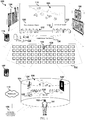
- FIG 1 is a conceptual illustration of an embodiment for delivering a virtual reality (VR) presentation 106 of an esports event 100 to a remote user 101 via HMD 102 and VR environment 104.
- the esports event 100 is shown to include a first team 112 and a second team 114 playing against each other in a multiplayer video game hosted by a local server 116.
- Team banners 120 and 122 are shown indicate which team is which.
- a real-time presentation 103 of the happenings of the video game is displayed on a main display 118 such as a jumbotron, and includes live video of the video game as it is being played from various points of view.
- Each player in the esports event 100 is shown to have their own gaming station where they can interact with a monitor and input devices while playing the multiplayer game.
- Each gaming station also has an audience-facing panel that is shown to display a live portrait view of each player as they play the multiplayer game.
- Also shown in Figure 1 are a pair of commentators 105 who may provide play-by-play and color commentary regarding the game and its players.
- the esports event 100 is further shown to include a plurality of physical advertisements that are viewable by audience 132.
- the physical advertisements may include printed banner advertisements, projected advertisements, LED displayed advertisements and the like.
- the esports event is shown to include a left-wall ad 124 for milk, a right-wall ad 126 for instant noodles, a stage-wall ad 130 for energy drinks, and a commentator desk ad 128 for gaming products.
- the audience 132 is shown to include a plurality of seats facing the stage of the esports event 100.
- a remote user 101 is able to choose a particular seat of the plurality of seats for the VR presentation 106 of the esports event 100.
- the user 101 has chosen seat 134 having a point of view 136 from which to view the esports event 100 via the VR presentation 106.
- the point of view 136 of seat 134 is provided by a real world capture system 138 having a plurality of cameras and microphones located at seat 134 to capture the esports event 100 from the point of view 136 of the seat 134.
- the HMD 102 is shown to have access to the esports event 100 through a VR hosting server 107.
- the VR hosting server 107 receives real world data and game state data provided by the local server 116 for processing a VR presentation.
- video game data such as game state information of the video game, as well as the video scenes of the video game being rendered from different points of view may be provided to VR hosting server 107 for processing.
- real world data captured by the real world capture system 136 may be routed by local server 116 to the VR hosting server 107 for processing.
- a different server or plurality of servers may be used for serving real world data captured by the plurality of real world capture systems to remote users that is distinct from local server 116 for hosting the multiplayer video game.
- the VR presentation 106 of the esports event 100 is shown to be from a point of view or vantage point of the seat 134 selected by remote user 101. As a result, the VR presentation 106 may provide a visual and audio experience of the esports event 100 as if remote user 101 were located at seat 134.
- the real world capture system 138 is able to provide a 360 degree view of the esports event 100 and the physical space surrounding it such that the remote user 101 is also able to have a 360 degree view of the esports event 100 by moving turning their head or body.
- the remote user 101 is provided with an immersive VR presentation 106 of the esports event 100 that current esports broadcasts are unable to provide because the remote user 101 is provided with an experience as if they were inside the arena hosting the esports event 100.
- the VR presentation 106 differs from the real world data captured by the real world capture system 138.
- the left-wall ad for milk 124 has been reskinned to be a left-wall ad 124' for PlayStation in the VR presentation.
- the right-wall ad 126 for instant noodles in the real world space appears to remote user 101 as a right-wall ad 126' for Farpoint.
- the stage-wall ad 136 and the commentator desk ad 128 have been reskinned to display ad content that is different than that of the real world space.
- Each of the reskinned ads 124'-130' is shown to keep their perspective, size, and geometric proportions in the VR presentation 106 relative to that in the real world with respect to the point of view of the seat 134 and the real world capture system 138.
- left-wall ad 124' appears to the user 101 with the same perspective as left-wall ad 124 would if the VR presentation 106 were to occur without reskinning.
- reskinning may involve overlaying replacement content on top of existing content by inserting frames into a video stream having the existing content such that the new content is displayed instead of the existing content.
- reskinning may involve replacing, blending, or integrating new pixel data associated with the new content into the existing pixel data associated with the existing content.
- reskinning existing content with new content involves analyzing a perspective of the existing content such that the new content is reskinned having the same or similar perspective.
- a method or system may gather data regarding the real world coordinates of each of the vertices of the existing content as well as real world coordinates of the real world capture system (e.g., the camera capturing the existing content).
- a perspective of the existing content may be determined based on the gathered coordinates. For example, the vertices of the new content may be placed virtually in 3-dimensional space to match the coordinates of the vertices of the existing content and projected back into 2-dimensional space.
- reskinning may occur in 2-dimensional space by distort transforming or perspective distorting new content to occupy the same 2-dimensional area as the existing content within a video image.
- reskinning used with the methods and systems presented here are enabled to dynamically reskin existing content that moves in relation to a camera point of view.
- an object moving in the real world may be reskinned by tracking the object in each of the video frames and performing the reskinning on the object within the video frames.
- a perspective of the object may change as well.
- the reskinning methods contemplated here are able to track these changes in real time and reskin new content according to the changing perspective.
- the real world capture system may move within the real world space.
- a perspective of a real world object will change while the camera moves.
- Methods and systems contemplated here are able to reskin real world objects according to a changing perspective as a camera of a real world capture system moves about the real world. Similar to reskinning a moving object, reskinning a stationary object for a moving camera point of view involves tracking an object over a series of video frames and overlaying or replacing existing image data associated with existing content with new image data associated with new content.
- existing content may be automatically identified using classifiers, object recognition, character recognition, and artificial intelligence.
- existing content automatically identified are tagged to be replaced by a reskinning logic.
- the VR hosting service may be instructed to identify and reskin a particular brand of beef jerky automatically ever time indicia of that brand is captured. It is envisioned that the VR hosting service may be enabled to automatically reskin indicia of the brand of beef jerky for the eventual VR presentation.
- the content used for reskinning may be based upon user preferences, user settings, user demographic, user browsing history, user shopping history, user viewing history, and the like.
- the remote user 101 may be provided with advertisement content that matches the interest of the remote user 101 in a way that does not distract from VR presentation 106 of the esports event 100.
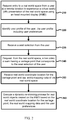
- Figure 2 shows an overall flow of a method for reskinning a VR presentation of a real world space according to one embodiment.
- the method includes an operation 210 to request entry to a real world space from a user at a remote location to experience a VR presentation of the real world space using an HMD.
- the method then flows to operation 220, which serves to identify a user profile of the user, the user profile including user preferences.
- the use profile and the user preferences may include data on user interest, user demographic, user shopping history, user browsing history, user viewing history, as well as social network data on social friend activity, interests, and the like.
- the method may be enabled to learn of products, services, events, etc., that are of interest to the remote user.
- the method receives a seat selection from the user.
- the user may be offered a plurality of seats that correspond to real world locations in the real world space for viewing real world action. Different seats may provide different VR presentations due to the different seats having a different point of view or vantage point of the real world action.
- different seats may be priced at different values. For example, the best seat in the house that is front and center of the stage may have a higher price or requirement than a seat that is located farther away from the stage.
- the method requests a live video stream having a vantage point that corresponds to the seat selection of the remote user.
- the live video stream may be provided by a real world capture system having a plurality of cameras and microphones.
- the method then flows to operation 250, which serves to receive real world coordinate location for the vantage point.
- operation 250 may obtain real world coordinate location of the real world capture system shown in Figure 1 .
- the method is able to obtain real world mapping data of the real world space, which may include real world coordinates of objects within the real world space. For example, if the real world space is an arena having a stage, the real world mapping data may provide information on where the stage is relative to the vantage point.
- the method then flows to operation 260, which serves to execute a dynamic reskinning process for real world objects viewed on the HMD based on the real world coordinate location for the vantage point, the real world mapping data, and the user preferences.
- the real world objects used for dynamic reskinning may include any object in the real world, such as advertisements, banners, displays, surfaces, patches, floors, ceilings, electronic devices, etc.
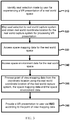
- Figure 3 shows an overall flow of a method for using data gathered from the real world space to provide a VR presentation of a real world space having a point of view corresponding to a seat selection made by a user, according to one embodiment.
- Operation 310 identifies a seat selection made by the user for experiencing a VR presentation of a real world space.
- the method then flows to operation 320, which serves to obtain real world coordinate location for the seat selection for processing the VR presentation.
- the process for obtaining real world coordinates for the seat selection may involve mapping the seat selection to a real world capture system located in the real world that corresponds to the seat selection.
- a seat selecting process is similar to selecting seats for live events where a ticket buyer is provided with an option to buy tickets for particular seats within an arena.
- each seat selection maps to a real world seat in the real world space.
- there is a distinct real world capture system that captures events in the real world from a location that corresponds to the seat selection.
- the real world coordinates for the real world seat will be similar to the real world coordinates of the real world capture system.
- Operation 320 is able to map the seat selection to a real world capture system that is the best fit in terms of proximity, viewing angle, etc. relative to the seat selection.
- the real world coordinate location of the real world capture system obtained by operation 320 help to identify where the real world capture system is relative to objects in the auditorium or arena. For example, a seat selection of AA01 may be mapped to a real world capture system that has a real world coordinate location of (x, y, z) within a coordinate system of the auditorium or arena.
- Operation 330 is configured to access space mapping data for the real world space.
- Space mapping data may include a virtual map of the physical space in terms of the coordinate system of the auditorium or arena mentioned above.
- the space mapping data generally helps identify locations of objects, walls, floors, ceilings, seats, stages, etc.
- the space mapping data may include coordinate data of the esports players, the commentators, the main display, the stage, advertisements, and other points of interest.
- Space environment data may include any type of data capable of being captured by the real world capture system.
- a real world capture system may include an array of cameras, microphones, and other sensors for measuring distances of objects.
- space environment data may include data gathered from a sound calibration process that detects acoustics properties of the auditorium relative to the position of the real world capture system. The acoustic properties detected may include directional acoustic reflectance, impedance, gain, harmonics, background or ambient noise, etc.
- the space environment data obtained by operation 340 may also include measurements of distances between the real world capture system and various objects within the real world space. Angular distances between rays traced to vertices of real world objects such as corners of a large advertisement within the real world space may also be measured.
- the space mapping data may be able to determine coordinate location of each of the four vertices of a large rectangular advertisement in the real world space.
- the space environment data may be usable to construct a 3-D model real world objects in the real world space.
- Point of view mapping data may include data that is relevant to processing a VR presentation of the real world space as well as reskinning of real world object for the VR presentation.
- point of view mapping data may include distances measured to real world objects, angular distances of rays traced to vertices of real world objects, real world coordinates of real world objects (e.g., coordinates of real world objects independent of the real world capture system), camera coordinates of real world objects (e.g., coordinates of real world objects relative to the real world capture system).
- the point of view mapping data may also include data on the acoustic properties of the real world space at the location of the real world capture system.
- the method shown in Figure 3 then flows to operation 360, which provides the VR presentation of the real world space to the user via an HMD according to the point of view mapping data processed by operation 350.
- the VR presentation may include live audio and video streams captured by the real world capture system.
- the VR presentation may include modified versions of the live audio and video streams according to the point of view mapping data.
- An example of modifying the audio stream includes mixing various audio inputs such audio captured at the real world capture system with audio associated with the audience, players, commentators, game sounds, etc.
- An example of modifying the video stream includes reskinning a real world object such as a large rectangular ad to appear as a large rectangular ad for something else in the VR presentation.
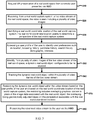
- Figure 4 shows an overall flow for reskinning a static real world object of a real world space during VR presentation of the real world space, according to one embodiment.
- the method begins with operation 410 for requesting a VR presentation of a real world space from a remote user via HMD.
- the method then flows to operation 420 for receiving, from a real world capture system, a live video stream of the real world space, the video stream including a plurality of video images.
- the video stream may include video of the players of each team, a main display of the video game, other spectators, commentators, advertisements, etc.
- the video feed may include a 360 degree horizontal view of the real world space that allows an HMD user receiving the video feed to look around in 360 degrees by turning their head or body. In other embodiments, a 360 degree vertical view of the real world space is also provided.
- the method then flows to operation 430, which serves to identify real world coordinate location of the real world capture system, the real world coordinate location usable to determine a perspective for the real world capture system.
- the method is able to analyze the perspective associated with various real world objects or scenes captured by the real world capture system.
- the method may use the real world coordinate (e.g., x, y, z) of the real world capture system to determine a perspective associated with the advertisement when captured by the real world capture system.
- the method accesses a user profile to identify preferences such a location, browsing history, purchase history, search history, demographic and interest.
- the method identifies, from the plurality of video images of the live video stream of the real world arena, a stationary real world object configurable to be reskinned. For example, operation 450 may identify that a large rectangular advertisement is configurable to be reskinned with some other content.
- static real world objects and portions of real world objects that may be configurable to be reskinned. For example, portions of walls, curtains, displays, gaming stations, portions of the stage, etc. may all be configurable to be reskinned as static real world objects. It will be appreciated that a real world object that is configurable to be reskinned is also taken to mean portions of real world object that are configurable to be reskinned.
- the method then flows to operation 460, which serves to reskin, based on the user profile of the user and based on the real world coordinate system of the real world capture system, the stationary real world object within the live video stream.
- the reskinning includes overlaying graphical content in place of the image data associated with the real world object in the live video stream.
- the overlaying is to be geometrically adjusted based on the perspective associated with the real world coordinate location of the real world capture system.
- operation 460 would be operable to identify a graphical content element that is of interest to the user for reskinning, for example, an ad for sneakers.
- Operation 460 is able to overlay the ad for sneakers in place of the image data associated with the large rectangular ad, for example, by creating new video stream having the ad for sneakers in place of the pixel values that were previously associated with the large rectangular ad.
- the ad for sneakers is to be adjusted geometrically based on the perspective of the real world capture system.
- Operation 470 presents the modified video stream having the real world objects being reskinned.
- Figure 5 shows an overall flow for reskinning a moving real world object of the real world space during VR presentation of the real world space, according to one embodiment.
- the method proceeds similar to the method shown in Figure 4 .
- operations 510 and 520 are configured to respectively request a VR presentation of a real world space from a remote user presented via HMD and to receive a live video stream of the real world space from a real world capture system.
- the method identifies a real world coordinate location of the real world capture system for determining a perspective of the real world capture system.
- the method accesses a user profile of the user to identify user preferences such as location, browsing history, purchase history, search history, demographics, interests, etc.
- the method identifies a dynamic object configurable to be reskinned from a plurality of video images of the live video stream of the real world space.
- Operation 560 serves to track the dynamic object within the plurality of video frames of the live video stream.
- a dynamic real world object that is configurable to be reskinned may include attire that players or spectators are wearing, furnishings, and other gear that tend to move within the physical space.
- Operation 560 is configured to track their movements for reskinning in later operations.
- Operation 570 of the method allows for the reskinning of the dynamic real world object within the video stream based on the user profile of the user and based on the real world coordinate location of the real world capture system.
- the reskinning includes overlaying replacement graphical content in place of image data associated with the real world object, wherein the overlaying is geometrically adjusted based on the perspective of the real world coordinate location of the real world capture system.
- the method presents the reskinned video stream to the user via the HMD.
- FIG. 6 shows a conceptual illustration of a remote spectator 600 making a seat selection for viewing a live event via an HMD 601, according to one embodiment.
- the remote spectator 600 is shown to be provided with a seat selection interface 602 that is viewable with the HMD.
- the seat selection interface 602 is able to convey auditorium and seat information to the user.
- the seat selection interface 602 is also able to convey price information of each seat for a VR presentation of a real world event.
- the remote spectator 600 is able to preview various seats shown in the seat selection interface 602.
- the remote spectator 600 is shown to make a first selection 604 for a seat that is toward the front of the auditorium.
- the seat selection interface 602 may then provide a first preview 606 that includes a VR scene of the auditorium from the seat corresponding to the first selection 604.
- the seat selection interface 602 may then provide a second preview 610 including a VR scene of the auditorium from the seat corresponding to the second selection 618.
- the first and second previews 606 and 610 may be immersive VR views having a 360 degree view.
- Figure 7 shows a conceptual illustration of a process that maps a remote spectator's seat selection to a real world capture system.
- Example seat selections 700 are shown to be mapped to various real world capture systems represented by black dots in a seat mapping chart 716.
- selection 702 for seat A8 is shown to map to real world capture system 718.
- Real world capture system 718 is shown to be mounted on top of the back rest of real world seat 720 corresponding to selection 702 for seat A8.
- real world capture system 718 provides a view within the real world space that is similar to a view a person would have sitting in seat 720.
- the real world capture system 718 is shown to include an array of cameras 722 for capturing a 360 degree view of the real world, an array of microphones 724 for capturing sounds originating from various directions, and an array of sensors 726 for sensing environmental data.
- the seat mapping chart 716 of Figure 7 illustrates how seat selections 700 are mapped to various real world capture systems.
- rows A and B there is a one-to-one mapping of a seat selection to a distinct real world capture system. That is, every seat selection from rows A and B maps to its own real world capture system.
- selection 704 for seat A8 maps to a real world capture system that is specific to seat A8 and distinct from that of seat A9.
- the seat mapping chart 716 shows that a group of four seat selections are mapped to one real world capture system.
- a group 728 of four seats e.g., C9, C10, D9, and D10) each map to one real world capture system.
- a selection 706 for seat C9 may be mapped to real world capture system 730, as would a selection for seats C10, D9, and D10.
- the real world capture system 730 is placed at a position that is in between or an average of the locations of each of seats C9, C10, D9, and D10. In other embodiments, however, this need not be the case.
- Seat selection 708 for seat E3 is shown to be mapped to real world capture system 734, which is associated with a group 736 of nine seats.
- the real world capture system 734 is thus shown to be mounted on top of seat F9, which closest to an average of the locations of each of the seats in group 736.
- the seat selection chart 716 shows groups of various sizes. For example, selection 710 is shown to map to a real world capture system that is associated with a group 738 spanning 4 rows and 5 columns of seats. Moreover, both of selections 712 and 714 are shown to map to a real world capture system associated with a group 740 having a 25 seats arranged in a 5 by 5 pattern. While certain groupings of seats have been shown in Figure 7 for illustrative purposes, it is to be appreciated that any size or pattern of groupings may be utilized with the methods and systems presented here.
- the real world capture systems 718, 730, and 734 may be enabled to provide feedback signals to the real-world audience such that the real-world audience is made aware that one or more virtual spectators are connected.
- each of the real world capture system 718, 730, and 734 may include feedback system such as one or more LEDs (not shown) for delivering feedback from the virtual spectators.
- the feedback system may include an array of LEDs that are configured to display a representation of feedback obtained from one or more virtual spectators for the real world spectators.
- the real world capture systems 718, 730, and 734 may also include speakers (not shown) that are configured to deliver sounds from the virtual spectators to the real world spectators.
- the virtual spectators are able to express their feedback to the real world space, which may reinforce the response and excitement of the real world arena.
- the feedback system may be configured to identify and convey the intensity and directionality of the virtual spectator feedback.
- his or her clapping may be represented by a dynamic pattern that is displayed via an array of LEDs.
- the intensity of his or her clapping may be represented by displaying various colors or patterns of movement within the array of LEDs.
- more than one virtual spectator may be connected to a real world capture system at any given moment.
- the intensity and pattern of feedback may be correlated with the average reaction or response of the two or more virtual spectators that are connected to the real world capture system.
- a pattern such as a starburst may appear on a display mechanism of the real world capture system.
- the real world audience is provided with feedback from the virtual spectators that is indicative of the number of virtual spectators that are connected to real world capture system in addition to the nature of the response or reaction of the virtual spectators.
- FIG 8 shows a conceptual illustration of obtaining point of view mapping data associated with the real world capture system from real world space data and real world environment data, according to one embodiment.
- Real world space data 800 is shown to include mapping data of real world objects within the real world space.
- real world space data 800 may include coordinate locations of various real world objects in the physical environment.
- the real world space may be the Bill Graham® Auditorium and the real world space data may include the coordinate locations of the stage, the walls, steps, walkways, the balcony level of the auditorium, as well as various points of interest for a given real world event held in the auditorium.
- the real world space environment data 802 is shown to be captured by a real world capture system 801, which captures environmental data for the point of view of the seat or group of seats associated with the real world capture device 801.
- the real world capture device 801 may include an array of microphones, cameras, and sensors.
- Figure 8 shows that the real world space data 800 and the real world environment data 802 may be combined to provide point of view mapping data 804.
- Point of view mapping data 804 is shown to include real world coordinates, a distance to the stage (e.g., 20 meters), a distance to player 1 of team 1 (e.g., 25 meters), an acoustic reflectance of a direction ⁇ , ⁇ , at w Hertz, a distance to a large rectangular ad, a distance to the commentators, a camera angle, a camera field of view, a 3D map of the physical space, an acoustic map of the physical space, a map of audience members, a distance to the jumbotron, a distance to a speaker, and/or a distance to a friend who is present either in person or virtually in the real world space.
- the point of view mapping data 804 uses real world space data 800 and real world space environment data 802 to construct camera coordinates of the real world and real world objects.
- point of view mapping data 804 is able to transform "world coordinates" provided by the real world space data into "camera coordinates" using real world environment data 802.
- the point of view mapping data 804 is enabled to use the camera coordinates of, for example, the large rectangular ad for reskinning purposes, as the point of view mapping data 804 will know how the large rectangular ad projects onto the camera during image capture of the real world space.
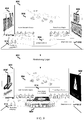
- Figure 9 shows a conceptual illustration of reskinning real world objects in a real world view of an esports event.
- a first view 900 that has not been reskinned is shown to capture an esports event.
- the view 900 may be part of the video capture of a real world capture system.
- the first view 900 includes a plurality of advertisements placed on various surfaces that are viewable by the audience of the esports event.
- first view 900 includes a left-wall ad 904 for milk, a right-wall ad for noodles, a first stage ad 908 for an energy drink, a second stage ad 910 for a chipmaker, and a commentator desk ad 912 for a production company.
- the view also includes a main display 904 of the video game action that is being played, as well as team banners.
- the first view 900 is shown to be inputted into reskinning logic 901, which in turn is shown to output a second view 900 of the esports event having been reskinned.
- Figure 9 demonstrates the graphical and visual capabilities of the reskinning logic.
- the left-wall ad 904' for milk has been reskinned to appear as left-wall ad 904' for PlayStation.
- the right-wall ad 906 for noodles and the second stage ad 910 are each shown to have been reskinned to appear as a right-wall ad 906' for Farpoint, and a second stage ad 910' for a different chipmaker.
- the reskinning logic 901 For each of ads 904', 906', and ad 910', the reskinning logic 901 has overlaid the replacement ads in a way that occupies the same space as the original ads 904, 906, and 910. Moreover, the reskinning logic 901 has performed the reskinning such that each of the replacement ads 904' 906' and 910' are drawn to provide the same perspective in the second view 902 as the respective original ads 904, 906, and 910 provided in the first view 900. For example, left-wall ad 904 appears in the first view 900 with a perspective having a skew. In the second view 902, the reskinning logic 901 overlays replacement left-wall ad 904' with a perspective having the same skew.
- the reskinning logic 901 is also able to detect additional real world objects such as portions of surfaces that may be reskinned with content.
- back-wall ad 914 for a headphone manufacturer is shown to have been reskinned in a region that is without content in the first view 900.
- stage-floor ad 916 is shown in the second view 902 in a region where there was no existing content in the first view 900 of the real world space.
- the stage-floor ad 916 is further shown to have been reskinned to have geometric and perspectivesl consistency with the stage floor as captured by first view 900 by the real world capture device. That is, the stage-floor ad 916 appears as though it has been laid down flat on the stage floor.
- the reskinning logic 901 contemplated here is able to identify regions within the real world space as captured by the real world capture device where content may be augmented where no content exists in the real world space.
- the determination of whether and which regions within the real world space that may be augmented with additional content will depend upon the view received by each real world capture system. For example, a region within the real world space that is determined to be desirable for augmenting content where no content exists for a particular real world capture system may not be found to be desirable by a different real world capture system because of a difference in points of view.
- the replacement content is made to occupy the same space as the original existing content
- the replacement content has a display dimension and aspect ratio that is different than the existing content to be reskinned.
- the first stage ad 908 for an energy drink is shown to have been reskinned with a replacement first stage ad 908' for Star Wars Battlefront that has a wider dimension.
- replacement first stage ad 908' is appears in the second view 902 to be flush against the contours of the front of the stage instead of appearing to float in air.
- the reskinning logic 901 is able to reskin replacement content having different dimensions than the content to be replaced, while maintaining geometric and naval consistency with the real world object on which the replacement content is overlaid.
- each of the player gaming stations 918 is shown to display a live portrait of the respective player on a gaming station audience-facing display.
- the live portrait display provides an audience with a way to see the facial expressions of the players that are otherwise blocked from view by respective computer monitors.
- embodiments contemplated here enable the remote user to access these live portrait views of players without having to rely on the gaming station audience-facing displays, which may be hard to make out.
- reskinning may also be performed on the audience-facing display of all or a portion of the gaming stations.
- Figure 9 shows that each of the player gaming stations 918 first view 900 has been reskinned by reskinning logic 901 to display letters reading "GEATNESS AWAITS" on the player gaming station 918' in the second view 902.
- replacement content may be in the form of text in addition to graphical content such as ad graphics.
- the commentator desk ad 912 is shown to remain unchanged after the reskinning by the reskinning logic 901.
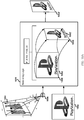
- Figure 10A shows a conceptual illustration of geometrically adjusting a replacement graphic 1002 for overlaying on top of a real world ad 1004 for reskinning based on the perspective of the real world capture system 1006.
- the real world capture system 1006 is shown to capture real world ad 1004 at a perspective that is not square or orthogonal to the plane of the real world ad 1004.
- the real world capture system 1006 is enabled to determine distances (d: d 1 , d 2 , d 3 , and d 4 ) to of the vertices, v 1 , v 2 , v 3 , and v 4 , of the real world ad 1006, as well as the angles ( ⁇ : ⁇ 1 , ⁇ 2 , ⁇ 3, and ⁇ 4 formed between rays traced to each of the vertices.
- the reskinning logic is able to transform various graphical elements using a transform function to appear similar to the real world ad from the perspective of the real world capture system 1006.
- the reskinning logic 1001 is shown to include a transform function F that is a function of d and ⁇ , that maps image data from a set X to itself in either 2-dimensional space or 3-dimensional space.
- replacement graphic 1002 is shown to be inputted into reskinning logic, which maps pixel data associated with the replacement graphic 1002 to new pixel coordinates in the modified replacement graphic 1002.
- the modified replacement graphic 1002 will be made to appear with the same perspective as the real world ad 1004 in a VR presentation.
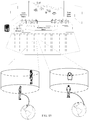
- Figure 10B shows an embodiment of reskinning a real world object while the point of view of a real world capture device is changing.
- the real world capture device is shown to travel longitudinally from a point of view that is left of the real world object to a point of view that is to the right of the real world object.
- the reskinning logic updates the parameters used for transforming and geometrically an input graphic.
- the reskinning logic is able to output varying perspectives of the input graphic depending on the current position and point of view of the real world capture device.
- Figure 11 shows additional real world objects that may be configurable to be reskinned.
- a shot 1000 of a player interacting with a video game includes a number of real world objects that may be reskinned.
- regions 1102 and 1104 associate with the monitor the player is using may be configurable to be reskinned.
- Certain other gaming gear logos such as region 1106 associated with a "performance chair" and region 1108 associated with head phones may also be regions that are compatible with the reskinning logic described here.
- regions 1110 and 1112 associated with the player's team jersey or attire are also contemplated to be reskinned for a VR presentation.
- Figure 12 shows a conceptual illustration of a remote spectator 1201 being presented with an in-game fly-through view of the video game being played at an esports event, according to one embodiment.
- the remote spectator receives a first view 1200 of the esports event that is provided by a real world capture system located at the esports event.
- the remote spectator 1201 may wish to have an "fly-through” view (e.g., first person view) of the game being played to view the game action from a point of view that is "inside” the game.
- Methods and systems contemplated here allow a user to "jump in” to an esports video game being played at an esports event to receive a fly-through view of the game action.
- the user points and drags a figurine to a position within the main display of the esports event.
- the VR presentation changes from a video stream provided by the real world capture system to a second view 1202 that is a fly-through view at a location corresponding to the position that the figurine was placed.
- the fly-through view is rendered using live game state data of the esports game and may be performed on the HMD, at a computing device associated with the HMD, or at a remote server.
- Figure 13 shows a conceptual illustration of a remote spectator 1301 choosing between different views of an esports event for display, according to one embodiment.
- the remote spectator 1301 is provided with a video feed of the esports event from a real world capture system, as well as a plurality of viewing modules 1304 for selection.
- the viewing modules may include various camera views of the real world such as portrait views of the players, views from behind the players, views of the players interacting with a keyboard, mouse, touchpad, joystick, or other input device, views of individual player screens, fly-through views, views of the audience, views of the commentators, etc.
- the remote spectator 1301 is shown to have selected a player 1 screen view 1306 and is in the process of selecting player 1 front view 1308 by pointing and dragging 1310 the view module associated with the player 1 front view 1308 to a location within the VR presentation that is desired for display.
- the selected viewing modules are shown to be displayed at the selected locations.
- player 1 screen view 1306' is shown to display a mirroring of what player 1 sees on their own screen.
- the remote spectator 1301 is able to see the control actions such as clicks and commands performed by player 1.
- the player 1 front view 1308' is shown to display a view of player 1 that may include facial expression, and controller input actions.
- a picture-in-picture or pictures-in-picture view of the esports event may be provided by the methods and system contemplated here, where a remote spectator 1301 is enabled to view desired views that they may not otherwise have access to as an in-person spectator.
- the ability to simultaneously view various camera views and game action views represent additional technological advantages to current esports broadcasts, which do not give remote spectators the same degree of control of what they want to view.
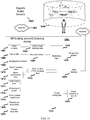
- FIG. 14 shows a diagram of an exemplary VR hosting server/computing device 1401 that enables VR presentation of an esports event via HMD to a user, according to one embodiment.
- the VR hosting server/computing device 1401 is shown to receive real world data from an Esports event server 1400.
- the esports event server 1400 may be from a production company or a distribution company that serves data captured at the esports event.
- the VR hosting server/computing device 1401 is shown to obtain video streams 1404 that include various camera views and game action views of the esports event, as well as space mapping data 1410 of the physical space or arena hosting the esports event, and space environment data 1412 captured by the real world capture system.
- VR hosting server/computing device 1401 is shown to receive a user profile 1406 that includes user preferences and user data, as well as replacement content 1408, which includes, for example, replacement ads.
- the video streams 1404 may include a number of video from a number of points of view. And even for a single point of view, there may be multiple video streams that are used to create a 360 degree (or less) field of view.
- the multiple video streams that are taken from one location for creating a 360 degree view may be stitched together by a remote server such as the Esports event server 1400 or at a production company or content distributer server.
- the video image stitching logic 1424 of the VR hosting server/computing device 1401 may perform a stitching of the multiple video streams having overlapping fields of view to render a 360 degree view.
- the 360 degree view provided by video image stitching logic 1424 is then fed to reskinning logic 1428. It should be appreciated that although a 360 degree view may be recited by methods and systems presented here, lesser than 360 degree views may be used as well, for example, 180 degree views, or 150 degree views, and so on.
- reskinning logic 1428 Also fed into reskinning logic 1428 are user preferences 1426 that are analyzed from the user profile 1406.
- the user preferences 1426 help determine which of replacement content (e.g., replacement ads) may be of interest to the remote spectator.
- the replacement content 1408 may also include video images for reskinning video clips into VR presentation 1440.
- point of view mapping data 1432 is also fed into the reskinning logic 1428 for performing transforms such as geometric and naval modifications to images or video provided by replacement content 1408.
- the reskinning logic 1428 is enabled to reskin real world objects within the video stream with the replacement content in a way that maintains geometric and navall consistency with the real world object used for reskinning.
- the reskinned video stream is then fed to a VR graphics system 1430 that is configured to render a VR presentation to the remote spectator via HMD interface 1438.
- a video feed outputted by VR graphics system 1430 may undergo compression before being transmitted to HMD interface 1438 for delivery over a network to the HMD.
- the HMD/Computing device 1401 is also shown to receive various sound streams, including seat sound feed 1414 that includes sounds captured at the real world capture system, background sound 1416 that includes sounds and noises made by the crowd, commentator sound feed 1418, player/team sound feed 1420, and friends' voice feed 1422. It is contemplated that method and systems described here enable the remote spectator to select between the various sound sources to be delivered in the VR presentation 1440.
- the sound mixing logic 1434 depending on user selection, is configured to mix the various sounds sources to provide a desired sound output that is fed to a sound processing system 1426.
- the sound processing system 1426 outputs an audio signal to the VR presentation 1438 via the HMD interface 1438.
- Figure 15 shows a conceptual illustration of two remote spectators interacting with one another virtually within the context of an esports event, according to one embodiment.
- the two remote spectators are shown to have selected adjacent seats in the real world space. As a result, they may experience the esports event as if they were there together in person via their respective VR presentations.
- the VR presentation may render the VR scene to display a virtual presence of the other remote spectator and vice versa. Thus, each remote spectator sees the other one.
- an avatar may be used for the virtual presence.
- a live image or 3D representation of the one of the remote spectators may be rendered in the VR presentation for the other remote spectator. It is also envisioned that more than two spectators may participate in the group spectating experience described above.
- a remote spectator may be able to communicate with a live spectator who is also viewing the esports event. For example, if real world seats are equipped with a real world capture system including cameras, microphones and speakers, a remote spectator may be able to see the live spectator who is sitting next to them in the real world within the VR presentation.
- FIG. 16 illustrates an additional embodiment of a HMD 1600 that may be used with the presented method and/or system.
- HMD 1600 includes hardware such as processor 1602, battery 1604, facial recognition 1606, buttons, sensors, switches 1608, sound localization 1610, display 1612, and memory 1614.
- HMD 1600 is also shown to include a position module 1626 that comprises a magnetometer 1616, an accelerometer 1618, a gyroscope 1620, a GPS 1622, and a compass 1624.
- robot 1600 Further included in robot 1600 are speakers 1628, microphone 1630, LEDs 1632, object/s for visual recognition 1634, IR lights 1636, front camera 1638, rear camera 1640, gaze tracking camera/s 1642, USB 1644, permanent storage 1646, vibro-tactile feedback 1648, communications link 1650, WiFi 1652, ultra-sonic communication 1654, Bluetooth 1656, near field communication (NFC) 1658, and radar 1660.
- speakers 1628 microphone 1630
- LEDs 1632 object/s for visual recognition 1634
- IR lights 1636 IR lights 1636
- front camera 1638 front camera 1638
- rear camera 1640 gaze tracking camera/s 1642
- USB 1644 USB 1644
- permanent storage 1646 permanent storage 1646
- vibro-tactile feedback 1648 vibro-tactile feedback 1648
- communications link 1650 WiFi 1652, ultra-sonic communication 1654, Bluetooth 1656, near field communication (NFC) 1658, and radar 1660.
- NFC near field communication
- One or more embodiments can also be fabricated as computer readable code on a computer readable medium.
- the computer readable medium is any data storage device that can store data, which can be thereafter be read by a computer system. Examples of the computer readable medium include hard drives, network attached storage (NAS), read-only memory, random-access memory, CD-ROMs, CD-Rs, CD-RWs, magnetic tapes and other optical and non-optical data storage devices.
- the computer readable medium can include computer readable tangible medium distributed over a network-coupled computer system so that the computer readable code is stored and executed in a distributed fashion.
Landscapes
- Engineering & Computer Science (AREA)
- Multimedia (AREA)
- Human Computer Interaction (AREA)
- Physics & Mathematics (AREA)
- Theoretical Computer Science (AREA)
- General Physics & Mathematics (AREA)
- Signal Processing (AREA)
- Computer Graphics (AREA)
- Databases & Information Systems (AREA)
- General Engineering & Computer Science (AREA)
- Business, Economics & Management (AREA)
- Computer Security & Cryptography (AREA)
- General Business, Economics & Management (AREA)
- Computing Systems (AREA)
- Geometry (AREA)
- Radar, Positioning & Navigation (AREA)
- Environmental & Geological Engineering (AREA)
- Computer Hardware Design (AREA)
- Software Systems (AREA)
- Optics & Photonics (AREA)
- Health & Medical Sciences (AREA)
- General Health & Medical Sciences (AREA)
- Social Psychology (AREA)
- Computer Networks & Wireless Communication (AREA)
- User Interface Of Digital Computer (AREA)
- Processing Or Creating Images (AREA)
- Controls And Circuits For Display Device (AREA)
- Two-Way Televisions, Distribution Of Moving Picture Or The Like (AREA)
Claims (15)
- Procédé implémenté sur ordinateur permettant de délivrer une présentation en réalité virtuelle (VR) d'un espace du monde réel à un utilisateur distant par l'intermédiaire d'un casque de visualisation (HMD), comprenant :l'envoi (510) d'une requête concernant la présentation VR de l'espace du monde réel,l'identification (530) d'une sélection de siège faite par l'utilisateur dans l'espace du monde réel, la sélection de siège étant mappée sur un système de capture du monde réel dans l'espace du monde réel, le système de capture du monde réel étant configuré pour capturer de la vidéo et de l'audio à l'emplacement qui correspond à la sélection de siège,la réception de données de mappage pour le système de capture du monde réel, les données de mappage incluant des coordonnées du monde réel pour le système de capture du monde réel,l'accès (540) à un profil utilisateur présentant les préférences de l'utilisateur,la réception d'un flux vidéo de l'espace du monde réel en provenance du système de capture du monde réel, le flux vidéo incluant une pluralité d'images vidéo prises par un ou plusieurs appareils de prise de vues du système de capture du monde réel, la pluralité d'images étant présentée dans le casque HMD depuis une perspective associée aux coordonnées dans le monde réel du système de capture du monde réel correspondant à la sélection de siège,l'identification (550) à partir de la pluralité d'images du flux vidéo, d'un objet du monde réel configuré pour un remodelage pendant la présentation à l'utilisateur,le remodelage (570), sur la base du profil utilisateur, de l'objet du monde réel dans la pluralité d'images vidéo, le remodelage incluant la superposition d'un élément de contenu graphique à la place des données d'image associées à l'objet du monde réel, la superposition étant ajustée géométriquement sur la base de la perspective associée au système de capture du monde réel correspondant à la sélection de siège, etla présentation (580) du flux vidéo à l'utilisateur par l'intermédiaire du casque HMD en vue de la présentation VR.
- Procédé selon la revendication 1, comprenant en outre :le suivi, à partir d'une pluralité de capteurs, de la position et de l'orientation du casque HMD lorsque l'utilisateur porte le casque HMD, etla détection d'un mouvement du casque HMD lorsque l'utilisateur porte le casque HMD, sur la base du suivi de la position et de l'orientation du casque HMD, le champ de vision du flux vidéo étant constitué pour changer en réponse au mouvement du casque HMD.
- Procédé selon la revendication 1, dans lequel le flux vidéo fourni par le système de capture du monde réel inclut un champ de vision horizontal sur 360 degrés.
- Procédé selon la revendication 1, dans lequel les données de mappage incluent en outre des coordonnées de l'objet du monde réel, les coordonnées de l'objet du monde réel étant utilisables pour le remodelage de l'objet du monde réel.
- Procédé selon la revendication 1, où les préférences de l'utilisateur incluent des données démographiques de l'utilisateur, un historique de navigation de l'utilisateur, un historique d'achat de l'utilisateur, un historique de visualisation de l'utilisateur, des données de médias sociaux de l'utilisateur ou l'intérêt de l'utilisateur, les préférences de l'utilisateur étant utilisables pour déterminer l'élément de contenu graphique pour le remodelage.
- Procédé selon la revendication 1, dans lequel la superposition inclut la mesure de distances dans le monde réel entre le système de capture du monde réel et les sommets de l'objet du monde réel, et la mesure d'angles formés entre les rayons qui sont tracés à partir du système de capture du monde réel vers les sommets, les distances mesurées et les angles mesurés sont utilisés pour la superposition de l'élément de contenu graphique ajusté géométriquement sur la base de la perspective du système de capture du monde réel.
- Procédé selon la revendication 6, dans lequel l'objet du monde réel se déplace, et dans lequel la mesure des distances dans le monde réel et la mesure des angles se produit en temps réel ou pratiquement en temps réel lorsque l'objet du monde réel se déplace de telle sorte que l'élément de contenu graphique est ajusté géométriquement sur la base de la perspective changeante de l'objet du monde réel lorsqu'il se déplace.
- Procédé selon la revendication 1, dans lequel le remodelage inclut l'identification des sommets de l'objet du monde réel dans la pluralité d'images vidéo et la transformation de l'élément de contenu graphique de telle sorte que les sommets de l'élément de contenu graphique s'ajustent aux sommets de l'objet du monde réel, l'élément de contenu graphique qui a été transformé étant utilisé pour la superposition de l'élément de contenu graphique à la place des données d'image associées à l'objet du monde réel.
- Procédé selon la revendication 1, comprenant en outre :
la réception d'un flux audio traité en fonction des coordonnées dans le monde réel du système de capture du monde réel en association avec l'emplacement du siège ; ou bien la réception d'une sélection d'un module vidéo provenant de l'utilisateur, le module vidéo étant un flux vidéo supplémentaire de l'espace du monde réel, le module vidéo étant affiché sous forme d'un affichage d'image dans l'image pendant ladite présentation du flux vidéo à l'utilisateur par l'intermédiaire du casque HMD. - Procédé selon la revendication 9, dans lequel l'espace du monde réel inclut des activités de sports électroniques (eSports), le module vidéo étant l'un d'un flux vidéo supplémentaire de la perspective avant d'un joueur, de la perspective arrière d'un joueur, de l'écran d'un joueur, de la perspective de la manette de commande d'un joueur, de la perspective de « jumbotron » d'un jeu, de la perspective d'un ou plusieurs commentateurs, de la perspective d'une équipe de joueurs ou de la perspective d'un membre de l'audience.
- Procédé selon la revendication 1, comprenant en outre :la réception d'une commande en provenance de l'utilisateur pour une vue en survol numérique d'un jeu vidéo joué dans l'espace du monde réel, la commande incluant un emplacement à l'intérieur du jeu vidéo pour la vue en survol numérique,la réception, depuis l'espace du monde réel, d'un flux de l'état du jeu vidéo joué,le rendu de la vue en survol numérique, sur la base du flux de l'état du jeu sur une vue en caméra virtuelle associée à l'emplacement à l'intérieur du jeu vidéo pour la vue en survol numérique, etla présentation de la vue de survol numérique à l'utilisateur au travers du casque HMD.
- Support de stockage pouvant être lu par ordinateur stockant des instructions exécutables par un processeur qui, lorsqu'elles sont exécutées par un processeur, amènent le processeur à exécuter le procédé conforme à l'une quelconque des revendications 1 à 11.
- Système serveur (1401) comprenant :un ou plusieurs processeurs, etune mémoire en communication avec le ou les processeurs et stockant des instructions exécutables par un processeur dans le but :d'envoyer une requête concernant une présentation VR de l'espace du monde réel, la requête étant destinée à délivrer la présentation VR de l'espace du monde réel à un utilisateur distant par l'intermédiaire d'un casque HMD,d'identifier une sélection de siège dans l'espace du monde réel, la sélection de siège étant mappée sur un système de capture du monde réel dans l'espace du monde réel, le système de capture du monde réel étant configuré pour capturer de la vidéo et de l'audio à l'emplacement qui correspond à la sélection de siège,de recevoir des données de mappage pour le système de capture du monde réel, les données de mappage incluant des coordonnées du monde réel pour le système de capture du monde réel,accéder à un profil utilisateur présentant les préférences de l'utilisateur,de recevoir un flux vidéo de l'espace du monde réel en provenance du système de capture du monde réel, le flux vidéo incluant une pluralité d'images vidéo prises par un ou plusieurs appareils de prise de vues du système de capture du monde réel, la pluralité d'images étant présentée dans le casque HMD depuis une perspective associée aux coordonnées dans le monde réel du système de capture du monde réel correspondant à la sélection de siège,d'identifier, à partir de la pluralité d'images du flux vidéo, un objet du monde réel configuré pour un remodelage pendant la présentation à l'utilisateur,de remodeler, sur la base du profil utilisateur, l'objet du monde réel dans la pluralité d'images vidéo, le remodelage incluant la superposition d'un élément de contenu graphique à la place des données d'image associées à l'objet du monde réel, la superposition étant ajustée géométriquement sur la base de la perspective associée au système de capture du monde réel correspondant à la sélection de siège, etde présenter le flux vidéo à l'utilisateur par l'intermédiaire du casque HMD en vue de la présentation VR.
- Système serveur selon la revendication 13, comprenant en outre des instructions pour :suivre, à partir d'une pluralité de capteurs, la position et l'orientation du casque HMD lorsque l'utilisateur porte le casque HMD, etdétecter, sur la base du suivi de la position de l'orientation du casque HMD, un mouvement du casque HMD lorsque l'utilisateur porte le casque HMD, le champ de vision du flux vidéo étant constitué pour changer en réponse au mouvement du casque HMD.
- Système serveur selon la revendication 13, dans lequel les données de mappage incluent en outre les coordonnées de l'objet du monde réel, les coordonnées de l'objet du monde réel étant utilisables pour le remodelage de l'objet du monde réel, ou
dans lequel la superposition inclut la mesure de distances dans le monde réel entre le système de capture du monde réel et les sommets de l'objet du monde réel ainsi que la mesure d'angles formés entre des rayons qui sont tracés depuis le système de capture du monde réel jusqu'aux sommets, les distances mesurées et les angles mesurés étant utilisés pour la superposition de l'élément de contenu graphique ajusté géométriquement sur la base de la perspective du système de capture du monde réel, ou
dans lequel l'objet du monde réel se déplace et dans lequel la mesure des distances dans le monde réel et la mesure des angles se produit en temps réel ou pratiquement en temps réel lorsque l'objet du monde réel se déplace de telle sorte que l'élément de contenu graphique est ajusté géométriquement sur la base d'un changement de perspective de l'objet du monde réel lorsqu'il se déplace, ou
dans lequel le remodelage inclut l'identification des sommets de l'objet du monde réel dans la pluralité d'images vidéo et la transformation de l'élément de contenu graphique de sorte à ce que les sommets de l'élément de contenu graphique s'adaptent aux sommets de l'objet du monde réel, l'élément de contenu graphique qui a été transformé étant utilisé pour la superposition de l'élément de contenu graphique à la place des données d'image associées à l'objet du monde réel.
Applications Claiming Priority (3)
| Application Number | Priority Date | Filing Date | Title |
|---|---|---|---|
| US201762566266P | 2017-09-29 | 2017-09-29 | |
| US15/901,845 US10556185B2 (en) | 2017-09-29 | 2018-02-21 | Virtual reality presentation of real world space |
| PCT/US2018/052986 WO2019067640A1 (fr) | 2017-09-29 | 2018-09-26 | Présentation en réalité virtuelle d'espace du monde réel |
Publications (2)
| Publication Number | Publication Date |
|---|---|
| EP3687645A1 EP3687645A1 (fr) | 2020-08-05 |
| EP3687645B1 true EP3687645B1 (fr) | 2021-06-30 |
Family
ID=65896466
Family Applications (1)
| Application Number | Title | Priority Date | Filing Date |
|---|---|---|---|
| EP18792619.1A Active EP3687645B1 (fr) | 2017-09-29 | 2018-09-26 | Présentation en réalité virtuelle d'espace du monde réel |
Country Status (5)
| Country | Link |
|---|---|
| US (3) | US10556185B2 (fr) |
| EP (1) | EP3687645B1 (fr) |
| JP (1) | JP7041253B2 (fr) |
| CN (1) | CN111148554B (fr) |
| WO (1) | WO2019067640A1 (fr) |
Families Citing this family (73)
| Publication number | Priority date | Publication date | Assignee | Title |
|---|---|---|---|---|
| DE112016007015T5 (de) * | 2016-07-29 | 2019-03-21 | Mitsubishi Electric Corporation | Anzeigevorrichtung, anzeigesteuervorrichtung und anzeigesteuerverfahren |
| US10810541B2 (en) | 2017-05-03 | 2020-10-20 | Hand Held Products, Inc. | Methods for pick and put location verification |
| US11579744B2 (en) * | 2017-06-21 | 2023-02-14 | Navitaire Llc | Systems and methods for seat selection in virtual reality |
| USD936697S1 (en) * | 2017-09-21 | 2021-11-23 | Yuri Hosokuni | Display screen with a graphical interface for an electronic game |
| WO2019089704A1 (fr) * | 2017-10-31 | 2019-05-09 | Outward, Inc. | Réalités physiques et virtuelles mélangées |
| IL276453B2 (en) * | 2018-02-02 | 2024-02-01 | S Horowitz & Co | A system based on virtual reality for training pilots |
| US12003585B2 (en) | 2018-06-08 | 2024-06-04 | Vale Group Llc | Session-based information exchange |
| US11195336B2 (en) | 2018-06-08 | 2021-12-07 | Vulcan Inc. | Framework for augmented reality applications |
| US10996831B2 (en) | 2018-06-29 | 2021-05-04 | Vulcan Inc. | Augmented reality cursors |
| US20200019782A1 (en) * | 2018-07-13 | 2020-01-16 | International Business Machines Corporation | Accommodating object occlusion in point-of-view displays |
| US11030796B2 (en) | 2018-10-17 | 2021-06-08 | Adobe Inc. | Interfaces and techniques to retarget 2D screencast videos into 3D tutorials in virtual reality |
| US10974153B2 (en) * | 2019-01-17 | 2021-04-13 | Disney Enterprises, Inc. | Streamable compressed geometry for live broadcast |
| US20200346114A1 (en) * | 2019-04-30 | 2020-11-05 | Microsoft Technology Licensing, Llc | Contextual in-game element recognition and dynamic advertisement overlay |
| US11050977B2 (en) * | 2019-06-18 | 2021-06-29 | Tmrw Foundation Ip & Holding Sarl | Immersive interactive remote participation in live entertainment |
| US11074759B2 (en) | 2019-07-09 | 2021-07-27 | Josh Lehman | Apparatus, system, and method of providing a three dimensional virtual local presence |
| US11270347B2 (en) * | 2019-07-09 | 2022-03-08 | Josh Lehman | Apparatus, system, and method of providing a three dimensional virtual local presence |
| JP7515845B2 (ja) | 2019-10-04 | 2024-07-16 | 株式会社コナミデジタルエンタテインメント | プログラム、ゲーム装置、ゲーム装置の制御方法及びゲームシステム |
| US10757528B1 (en) * | 2019-10-11 | 2020-08-25 | Verizon Patent And Licensing Inc. | Methods and systems for simulating spatially-varying acoustics of an extended reality world |
| JP2021065283A (ja) * | 2019-10-18 | 2021-04-30 | 株式会社コナミデジタルエンタテインメント | プログラム、ゲーム装置、ゲーム装置の制御方法及びゲームシステム |
| US11023729B1 (en) * | 2019-11-08 | 2021-06-01 | Msg Entertainment Group, Llc | Providing visual guidance for presenting visual content in a venue |
| WO2021102566A1 (fr) | 2019-11-25 | 2021-06-03 | Eidos Interactive Corp. | Systèmes et procédés d'amélioration de l'interaction avec un joueur utilisant la réalité augmentée |
| US20210194942A1 (en) * | 2019-12-19 | 2021-06-24 | Volta Audio Ltd | System, platform, device, and method for spatial audio production and virtual reality environment |
| JP7462916B2 (ja) * | 2019-12-27 | 2024-04-08 | 株式会社コナミデジタルエンタテインメント | 演出制御システム、それに用いるコンピュータプログラム、及び制御方法 |
| JP1724353S (ja) * | 2020-05-13 | 2022-09-09 | 文書間の関連を示す画像を表示可能な情報端末機 | |
| US11321892B2 (en) | 2020-05-21 | 2022-05-03 | Scott REILLY | Interactive virtual reality broadcast systems and methods |
| JP7082431B2 (ja) * | 2020-05-29 | 2022-06-08 | 株式会社コナミデジタルエンタテインメント | 配信システム、配信システムの制御方法及びコンピュータプログラム |
| WO2021246183A1 (fr) * | 2020-06-03 | 2021-12-09 | ソニーグループ株式会社 | Dispositif de traitement d'informations, procédé de traitement d'informations, et programme |
| US20230247231A1 (en) * | 2020-06-11 | 2023-08-03 | David Cohen | Apparatus and method for event participation by spectators |
| HUE070217T2 (hu) * | 2020-07-03 | 2025-05-28 | Pfetch Inc | Távoli jelenléti és részvételi rendszerek és módszerek |
| EP4210847A1 (fr) * | 2020-09-02 | 2023-07-19 | Daniel Choi | Systèmes et procédés pour environnements de réalité augmentée et jetons |
| US12472441B2 (en) * | 2020-11-23 | 2025-11-18 | International Business Machines Corporation | Modifying user interface of application during recording session |
| US11622100B2 (en) * | 2021-02-17 | 2023-04-04 | flexxCOACH VR | 360-degree virtual-reality system for dynamic events |
| US12244782B2 (en) | 2021-03-11 | 2025-03-04 | Quintar, Inc. | Augmented reality system for remote presentation for viewing an event |
| US12003806B2 (en) * | 2021-03-11 | 2024-06-04 | Quintar, Inc. | Augmented reality system for viewing an event with multiple coordinate systems and automatically generated model |
| US12159359B2 (en) | 2021-03-11 | 2024-12-03 | Quintar, Inc. | Use of multiple registrations for augmented reality system for viewing an event |
| US11657578B2 (en) | 2021-03-11 | 2023-05-23 | Quintar, Inc. | Registration for augmented reality system for viewing an event |
| US12586305B2 (en) | 2021-03-11 | 2026-03-24 | Quintar, Inc. | 3D reference point detection for survey for venue model construction |
| US11645819B2 (en) | 2021-03-11 | 2023-05-09 | Quintar, Inc. | Augmented reality system for viewing an event with mode based on crowd sourced images |
| US11527047B2 (en) | 2021-03-11 | 2022-12-13 | Quintar, Inc. | Augmented reality system for viewing an event with distributed computing |
| US12028507B2 (en) | 2021-03-11 | 2024-07-02 | Quintar, Inc. | Augmented reality system with remote presentation including 3D graphics extending beyond frame |
| US12542946B2 (en) | 2021-03-11 | 2026-02-03 | Quintar, Inc. | Remote presentation with augmented reality content synchronized with separately displayed video content |
| JP7800536B2 (ja) * | 2021-03-31 | 2026-01-16 | ソニーグループ株式会社 | 情報処理装置、情報処理方法および記録媒体 |
| US12322303B2 (en) * | 2021-06-15 | 2025-06-03 | Visionary Training Resources | Aircraft training aid systems and processes |
| CN113613028B (zh) * | 2021-08-03 | 2023-08-08 | 北京达佳互联信息技术有限公司 | 直播数据处理方法、装置、终端、服务器及存储介质 |
| CN114082199B (zh) * | 2021-08-12 | 2025-10-21 | 腾讯科技(成都)有限公司 | 语音播放方法和语音传输方法以及存储介质和电子设备 |
| CN113908543A (zh) * | 2021-10-15 | 2022-01-11 | 北京果仁互动科技有限公司 | 虚拟相机控制方法、装置及计算机设备 |
| CN114210071B (zh) * | 2021-11-26 | 2026-03-17 | 腾讯科技(深圳)有限公司 | 游戏直播的显示方法和装置、存储介质及电子设备 |
| CN114047824A (zh) * | 2022-01-13 | 2022-02-15 | 北京悉见科技有限公司 | 多终端用户在虚拟空间交互的方法 |
| CN114679619B (zh) * | 2022-03-18 | 2023-08-01 | 咪咕数字传媒有限公司 | 滑雪比赛信息增强展示方法、系统、设备及存储介质 |
| CN114745598B (zh) * | 2022-04-12 | 2024-03-19 | 北京字跳网络技术有限公司 | 视频数据展示方法、装置、电子设备及存储介质 |
| CN117115396A (zh) * | 2022-05-17 | 2023-11-24 | 北京字跳网络技术有限公司 | 显示控制方法、装置、终端和存储介质 |
| US12145074B2 (en) * | 2022-05-31 | 2024-11-19 | Sony Interactive Entertainment LLC | Triggering virtual help or hindrance based on audience participation tiers |
| US12311274B2 (en) | 2022-05-31 | 2025-05-27 | Sony Interactive Entertainment LLC | Esports spectator onboarding |
| US12086301B2 (en) | 2022-06-01 | 2024-09-10 | Sphere Entertainment Group, Llc | System for multi-user collaboration within a virtual reality environment |
| US12330070B2 (en) | 2022-07-21 | 2025-06-17 | Sony Interactive Entertainment LLC | Spectator participation in esports events |
| US12462494B2 (en) | 2022-08-11 | 2025-11-04 | Apple Inc. | Interactive element in a replay |
| CN115113737B (zh) * | 2022-08-30 | 2023-04-18 | 四川中绳矩阵技术发展有限公司 | 一种虚拟对象声音和图像的重现方法、系统、设备及介质 |
| US12449891B2 (en) | 2022-08-31 | 2025-10-21 | Snap Inc. | Timelapse re-experiencing system |
| US12519924B2 (en) | 2022-08-31 | 2026-01-06 | Snap Inc. | Multi-perspective augmented reality experience |
| US12322052B2 (en) | 2022-08-31 | 2025-06-03 | Snap Inc. | Mixing and matching volumetric contents for new augmented reality experiences |
| US12282604B2 (en) | 2022-08-31 | 2025-04-22 | Snap Inc. | Touch-based augmented reality experience |
| US12417593B2 (en) | 2022-08-31 | 2025-09-16 | Snap Inc. | Generating immersive augmented reality experiences from existing images and videos |
| US12267482B2 (en) | 2022-08-31 | 2025-04-01 | Snap Inc. | Controlling and editing presentation of volumetric content |
| CN115278340B (zh) * | 2022-09-26 | 2022-11-29 | 中影年年(北京)文化传媒有限公司 | 一种基于虚拟现实的用户交互方法及系统 |
| EP4354877A1 (fr) * | 2022-10-12 | 2024-04-17 | Holo-Light GmbH | Procédé de diffusion en continu xr multi-vues et système de diffusion en continu xr |
| US12464182B2 (en) * | 2022-11-23 | 2025-11-04 | At&T Intellectual Property I, L.P. | Apparatuses and methods for facilitating crowd sourced content for digital simulation |
| US20240185737A1 (en) * | 2022-12-06 | 2024-06-06 | Cooler Master Technology Inc. | Racing and flight simulator chassis |
| US11842543B1 (en) * | 2023-01-17 | 2023-12-12 | Starbucks Corporation | Camera system for providing an in-store experience to a remote user |
| JP2024112399A (ja) * | 2023-02-08 | 2024-08-21 | キヤノン株式会社 | 情報処理装置、情報処理方法、及びプログラム |
| CN121569265A (zh) | 2023-06-04 | 2026-02-24 | 苹果公司 | 用于显示演示应用的演示环境的设备、方法和图形用户界面 |
| JP7818160B2 (ja) * | 2023-08-09 | 2026-02-20 | 株式会社カプコン | プログラム、端末装置、システム |
| CN117596373B (zh) * | 2024-01-17 | 2024-04-12 | 淘宝(中国)软件有限公司 | 基于动态数字人形象进行信息展示的方法及电子设备 |
| US20260012498A1 (en) * | 2024-07-05 | 2026-01-08 | SimpliSafe, Inc. | Streaming network topology |
Family Cites Families (33)
| Publication number | Priority date | Publication date | Assignee | Title |
|---|---|---|---|---|
| JP3991076B2 (ja) | 1997-06-30 | 2007-10-17 | 雅信 鯨田 | 有限個数の座席の遠隔利用のためのシステム及び方法 |
| JP2009065627A (ja) | 2007-09-04 | 2009-03-26 | Mitsutoshi Akitani | バーチャルイベント視聴システムとその動作方法 |
| US20130278631A1 (en) * | 2010-02-28 | 2013-10-24 | Osterhout Group, Inc. | 3d positioning of augmented reality information |
| US20110225516A1 (en) * | 2010-03-10 | 2011-09-15 | Oddmobb, Inc. | Instantiating browser media into a virtual social venue |
| US9007364B2 (en) * | 2011-10-12 | 2015-04-14 | Salesforce.Com, Inc. | Augmented reality display apparatus and related methods using database record data |
| US20130222369A1 (en) | 2012-02-23 | 2013-08-29 | Charles D. Huston | System and Method for Creating an Environment and for Sharing a Location Based Experience in an Environment |
| US20130317912A1 (en) * | 2012-05-09 | 2013-11-28 | William Bittner | Advertising in Augmented Reality Based on Social Networking |
| JP2014035763A (ja) | 2012-08-10 | 2014-02-24 | Nippon Telegr & Teleph Corp <Ntt> | 情報表示装置 |
| US9049469B2 (en) * | 2013-04-03 | 2015-06-02 | Roy S. Melzer | Encryption and decryption of visible codes for real time augmented reality views |
| US10137361B2 (en) * | 2013-06-07 | 2018-11-27 | Sony Interactive Entertainment America Llc | Systems and methods for using reduced hops to generate an augmented virtual reality scene within a head mounted system |
| US10019057B2 (en) * | 2013-06-07 | 2018-07-10 | Sony Interactive Entertainment Inc. | Switching mode of operation in a head mounted display |
| WO2014200779A2 (fr) * | 2013-06-09 | 2014-12-18 | Sony Computer Entertainment Inc. | Visiocasque |
| EP2930671A1 (fr) | 2014-04-11 | 2015-10-14 | Microsoft Technology Licensing, LLC | Adaptation dynamique d'un lieu virtuel |
| US10852838B2 (en) * | 2014-06-14 | 2020-12-01 | Magic Leap, Inc. | Methods and systems for creating virtual and augmented reality |
| WO2016017997A1 (fr) * | 2014-07-31 | 2016-02-04 | Samsung Electronics Co., Ltd. | Lunettes portables et procédé de fourniture de contenu les utilisant |
| US10733565B1 (en) * | 2014-09-30 | 2020-08-04 | Amazon Technologies, Inc. | Interactive data processing system |
| US20170243403A1 (en) * | 2014-11-11 | 2017-08-24 | Bent Image Lab, Llc | Real-time shared augmented reality experience |
| US10055892B2 (en) * | 2014-11-16 | 2018-08-21 | Eonite Perception Inc. | Active region determination for head mounted displays |
| US10438262B1 (en) * | 2015-06-15 | 2019-10-08 | Amazon Technologies, Inc. | Method and device for implementing a virtual browsing experience |
| US9530426B1 (en) * | 2015-06-24 | 2016-12-27 | Microsoft Technology Licensing, Llc | Filtering sounds for conferencing applications |
| JP6744080B2 (ja) | 2015-09-30 | 2020-08-19 | 株式会社バンダイナムコエンターテインメント | ゲームシステム、撮影装置およびプログラム |
| US9573062B1 (en) * | 2015-12-06 | 2017-02-21 | Silver VR Technologies, Inc. | Methods and systems for virtual reality streaming and replay of computer video games |
| US9782678B2 (en) * | 2015-12-06 | 2017-10-10 | Sliver VR Technologies, Inc. | Methods and systems for computer video game streaming, highlight, and replay |
| US9648438B1 (en) * | 2015-12-16 | 2017-05-09 | Oculus Vr, Llc | Head-related transfer function recording using positional tracking |
| US10531137B1 (en) * | 2015-12-31 | 2020-01-07 | Mayfonk Athletic Llc | Athletic telemetry system |
| EP3417307A4 (fr) * | 2016-02-18 | 2019-09-11 | Edx Technologies, Inc. | Systèmes et procédés de représentations de réseaux en réalité augmentée |
| US10412438B2 (en) * | 2016-03-14 | 2019-09-10 | The Directv Group, Inc. | Method and system for viewing sports content within a virtual reality environment |
| US11181990B2 (en) * | 2016-03-18 | 2021-11-23 | Sony Interactive Entertainment Inc. | Spectator view tracking of virtual reality (VR) user in VR environments |
| US10112111B2 (en) * | 2016-03-18 | 2018-10-30 | Sony Interactive Entertainment Inc. | Spectator view perspectives in VR environments |
| JP6126272B1 (ja) * | 2016-05-17 | 2017-05-10 | 株式会社コロプラ | 仮想空間を提供する方法、プログラム及び記録媒体 |
| US10666768B1 (en) * | 2016-09-20 | 2020-05-26 | Alarm.Com Incorporated | Augmented home network visualization |
| US10388072B2 (en) * | 2016-10-31 | 2019-08-20 | Verizon Patent And Licensing Inc. | Methods and systems for dynamically customizing a scene for presentation to a user |
| US10880086B2 (en) * | 2017-05-02 | 2020-12-29 | PracticalVR Inc. | Systems and methods for authenticating a user on an augmented, mixed and/or virtual reality platform to deploy experiences |
-
2018
- 2018-02-21 US US15/901,845 patent/US10556185B2/en active Active
- 2018-09-26 CN CN201880062904.3A patent/CN111148554B/zh active Active
- 2018-09-26 WO PCT/US2018/052986 patent/WO2019067640A1/fr not_active Ceased
- 2018-09-26 EP EP18792619.1A patent/EP3687645B1/fr active Active
- 2018-09-26 JP JP2020518404A patent/JP7041253B2/ja active Active
-
2020
- 2020-02-11 US US16/787,897 patent/US11065551B2/en active Active
-
2021
- 2021-07-20 US US17/381,172 patent/US11738275B2/en active Active
Also Published As
| Publication number | Publication date |
|---|---|
| EP3687645A1 (fr) | 2020-08-05 |
| US20200171394A1 (en) | 2020-06-04 |
| US11065551B2 (en) | 2021-07-20 |
| WO2019067640A1 (fr) | 2019-04-04 |
| US10556185B2 (en) | 2020-02-11 |
| US20210346811A1 (en) | 2021-11-11 |
| CN111148554A (zh) | 2020-05-12 |
| JP7041253B2 (ja) | 2022-03-23 |
| JP2020536603A (ja) | 2020-12-17 |
| US11738275B2 (en) | 2023-08-29 |
| CN111148554B (zh) | 2023-10-03 |
| US20190099678A1 (en) | 2019-04-04 |
Similar Documents
| Publication | Publication Date | Title |
|---|---|---|
| US11738275B2 (en) | Virtual reality presentation of real world space | |
| US11436803B2 (en) | Insertion of VR spectator in live video of a live event | |
| CN115068932B (zh) | 虚拟现实环境中的视图位置处的视图渲染方法 | |
| EP3265864B1 (fr) | Système de suivi pour visiocasque | |
| US10709968B2 (en) | Controller having lights disposed along a loop of the controller | |
| KR102922416B1 (ko) | 가상 환경에서 사용자 특정 광고 | |
| CN116097292A (zh) | 针对关注者观看者的影响者流定制 | |
| US12323642B2 (en) | Computer program, server device, terminal device, and method | |
| KR20200041839A (ko) | 방송 시청을 위한 가상 현실 사용자 인터페이스 제공 방법 및 장치 | |
| JP7319172B2 (ja) | 画像処理装置、画像処理方法及び画像処理システム | |
| KR102082670B1 (ko) | 방송 시청을 위한 가상 현실 사용자 인터페이스 제공 방법 및 장치 | |
| KR101982291B1 (ko) | 가상현실 화면의 배열 및 표시방법 | |
| JP6831027B1 (ja) | 配信システム、動画生成装置、および動画生成方法 | |
| KR20220065388A (ko) | 전자 스포츠 경기에 관한 증강 현실 인터페이스 제공 장치 및 방법 | |
| KR102021497B1 (ko) | 가상 현실 콘텐츠의 표시 제어 방법 |
Legal Events
| Date | Code | Title | Description |
|---|---|---|---|
| STAA | Information on the status of an ep patent application or granted ep patent |
Free format text: STATUS: UNKNOWN |
|
| STAA | Information on the status of an ep patent application or granted ep patent |
Free format text: STATUS: THE INTERNATIONAL PUBLICATION HAS BEEN MADE |
|
| PUAI | Public reference made under article 153(3) epc to a published international application that has entered the european phase |
Free format text: ORIGINAL CODE: 0009012 |
|
| STAA | Information on the status of an ep patent application or granted ep patent |
Free format text: STATUS: REQUEST FOR EXAMINATION WAS MADE |
|
| 17P | Request for examination filed |
Effective date: 20200331 |
|
| AK | Designated contracting states |
Kind code of ref document: A1 Designated state(s): AL AT BE BG CH CY CZ DE DK EE ES FI FR GB GR HR HU IE IS IT LI LT LU LV MC MK MT NL NO PL PT RO RS SE SI SK SM TR |
|
| AX | Request for extension of the european patent |
Extension state: BA ME |
|
| DAV | Request for validation of the european patent (deleted) | ||
| DAX | Request for extension of the european patent (deleted) | ||
| GRAP | Despatch of communication of intention to grant a patent |
Free format text: ORIGINAL CODE: EPIDOSNIGR1 |
|
| STAA | Information on the status of an ep patent application or granted ep patent |
Free format text: STATUS: GRANT OF PATENT IS INTENDED |
|
| INTG | Intention to grant announced |
Effective date: 20210202 |
|
| GRAS | Grant fee paid |
Free format text: ORIGINAL CODE: EPIDOSNIGR3 |
|
| GRAA | (expected) grant |
Free format text: ORIGINAL CODE: 0009210 |
|
| STAA | Information on the status of an ep patent application or granted ep patent |
Free format text: STATUS: THE PATENT HAS BEEN GRANTED |
|
| AK | Designated contracting states |
Kind code of ref document: B1 Designated state(s): AL AT BE BG CH CY CZ DE DK EE ES FI FR GB GR HR HU IE IS IT LI LT LU LV MC MK MT NL NO PL PT RO RS SE SI SK SM TR |
|
| REG | Reference to a national code |
Ref country code: CH Ref legal event code: EP |
|
| REG | Reference to a national code |
Ref country code: AT Ref legal event code: REF Ref document number: 1405797 Country of ref document: AT Kind code of ref document: T Effective date: 20210715 |
|
| REG | Reference to a national code |
Ref country code: DE Ref legal event code: R096 Ref document number: 602018019479 Country of ref document: DE |
|
| REG | Reference to a national code |
Ref country code: IE Ref legal event code: FG4D |
|
| REG | Reference to a national code |
Ref country code: NL Ref legal event code: FP |
|
| REG | Reference to a national code |
Ref country code: LT Ref legal event code: MG9D |
|
| PG25 | Lapsed in a contracting state [announced via postgrant information from national office to epo] |
Ref country code: HR Free format text: LAPSE BECAUSE OF FAILURE TO SUBMIT A TRANSLATION OF THE DESCRIPTION OR TO PAY THE FEE WITHIN THE PRESCRIBED TIME-LIMIT Effective date: 20210630 Ref country code: FI Free format text: LAPSE BECAUSE OF FAILURE TO SUBMIT A TRANSLATION OF THE DESCRIPTION OR TO PAY THE FEE WITHIN THE PRESCRIBED TIME-LIMIT Effective date: 20210630 Ref country code: BG Free format text: LAPSE BECAUSE OF FAILURE TO SUBMIT A TRANSLATION OF THE DESCRIPTION OR TO PAY THE FEE WITHIN THE PRESCRIBED TIME-LIMIT Effective date: 20210930 |
|
| REG | Reference to a national code |
Ref country code: AT Ref legal event code: MK05 Ref document number: 1405797 Country of ref document: AT Kind code of ref document: T Effective date: 20210630 |
|
| PG25 | Lapsed in a contracting state [announced via postgrant information from national office to epo] |
Ref country code: GR Free format text: LAPSE BECAUSE OF FAILURE TO SUBMIT A TRANSLATION OF THE DESCRIPTION OR TO PAY THE FEE WITHIN THE PRESCRIBED TIME-LIMIT Effective date: 20211001 Ref country code: RS Free format text: LAPSE BECAUSE OF FAILURE TO SUBMIT A TRANSLATION OF THE DESCRIPTION OR TO PAY THE FEE WITHIN THE PRESCRIBED TIME-LIMIT Effective date: 20210630 Ref country code: SE Free format text: LAPSE BECAUSE OF FAILURE TO SUBMIT A TRANSLATION OF THE DESCRIPTION OR TO PAY THE FEE WITHIN THE PRESCRIBED TIME-LIMIT Effective date: 20210630 Ref country code: NO Free format text: LAPSE BECAUSE OF FAILURE TO SUBMIT A TRANSLATION OF THE DESCRIPTION OR TO PAY THE FEE WITHIN THE PRESCRIBED TIME-LIMIT Effective date: 20210930 Ref country code: LV Free format text: LAPSE BECAUSE OF FAILURE TO SUBMIT A TRANSLATION OF THE DESCRIPTION OR TO PAY THE FEE WITHIN THE PRESCRIBED TIME-LIMIT Effective date: 20210630 |
|
| PG25 | Lapsed in a contracting state [announced via postgrant information from national office to epo] |
Ref country code: EE Free format text: LAPSE BECAUSE OF FAILURE TO SUBMIT A TRANSLATION OF THE DESCRIPTION OR TO PAY THE FEE WITHIN THE PRESCRIBED TIME-LIMIT Effective date: 20210630 Ref country code: ES Free format text: LAPSE BECAUSE OF FAILURE TO SUBMIT A TRANSLATION OF THE DESCRIPTION OR TO PAY THE FEE WITHIN THE PRESCRIBED TIME-LIMIT Effective date: 20210630 Ref country code: SK Free format text: LAPSE BECAUSE OF FAILURE TO SUBMIT A TRANSLATION OF THE DESCRIPTION OR TO PAY THE FEE WITHIN THE PRESCRIBED TIME-LIMIT Effective date: 20210630 Ref country code: AT Free format text: LAPSE BECAUSE OF FAILURE TO SUBMIT A TRANSLATION OF THE DESCRIPTION OR TO PAY THE FEE WITHIN THE PRESCRIBED TIME-LIMIT Effective date: 20210630 Ref country code: CZ Free format text: LAPSE BECAUSE OF FAILURE TO SUBMIT A TRANSLATION OF THE DESCRIPTION OR TO PAY THE FEE WITHIN THE PRESCRIBED TIME-LIMIT Effective date: 20210630 Ref country code: RO Free format text: LAPSE BECAUSE OF FAILURE TO SUBMIT A TRANSLATION OF THE DESCRIPTION OR TO PAY THE FEE WITHIN THE PRESCRIBED TIME-LIMIT Effective date: 20210630 Ref country code: PT Free format text: LAPSE BECAUSE OF FAILURE TO SUBMIT A TRANSLATION OF THE DESCRIPTION OR TO PAY THE FEE WITHIN THE PRESCRIBED TIME-LIMIT Effective date: 20211102 Ref country code: SM Free format text: LAPSE BECAUSE OF FAILURE TO SUBMIT A TRANSLATION OF THE DESCRIPTION OR TO PAY THE FEE WITHIN THE PRESCRIBED TIME-LIMIT Effective date: 20210630 |
|
| PG25 | Lapsed in a contracting state [announced via postgrant information from national office to epo] |
Ref country code: PL Free format text: LAPSE BECAUSE OF FAILURE TO SUBMIT A TRANSLATION OF THE DESCRIPTION OR TO PAY THE FEE WITHIN THE PRESCRIBED TIME-LIMIT Effective date: 20210630 |
|
| REG | Reference to a national code |
Ref country code: DE Ref legal event code: R097 Ref document number: 602018019479 Country of ref document: DE |
|
| PG25 | Lapsed in a contracting state [announced via postgrant information from national office to epo] |
Ref country code: DK Free format text: LAPSE BECAUSE OF FAILURE TO SUBMIT A TRANSLATION OF THE DESCRIPTION OR TO PAY THE FEE WITHIN THE PRESCRIBED TIME-LIMIT Effective date: 20210630 |
|
| PLBE | No opposition filed within time limit |
Free format text: ORIGINAL CODE: 0009261 |
|
| STAA | Information on the status of an ep patent application or granted ep patent |
Free format text: STATUS: NO OPPOSITION FILED WITHIN TIME LIMIT |
|
| REG | Reference to a national code |
Ref country code: CH Ref legal event code: PL |
|
| REG | Reference to a national code |
Ref country code: BE Ref legal event code: MM Effective date: 20210930 |
|
| PG25 | Lapsed in a contracting state [announced via postgrant information from national office to epo] |
Ref country code: MC Free format text: LAPSE BECAUSE OF FAILURE TO SUBMIT A TRANSLATION OF THE DESCRIPTION OR TO PAY THE FEE WITHIN THE PRESCRIBED TIME-LIMIT Effective date: 20210630 Ref country code: AL Free format text: LAPSE BECAUSE OF FAILURE TO SUBMIT A TRANSLATION OF THE DESCRIPTION OR TO PAY THE FEE WITHIN THE PRESCRIBED TIME-LIMIT Effective date: 20210630 |
|
| 26N | No opposition filed |
Effective date: 20220331 |
|
| PG25 | Lapsed in a contracting state [announced via postgrant information from national office to epo] |
Ref country code: LU Free format text: LAPSE BECAUSE OF NON-PAYMENT OF DUE FEES Effective date: 20210926 Ref country code: IT Free format text: LAPSE BECAUSE OF FAILURE TO SUBMIT A TRANSLATION OF THE DESCRIPTION OR TO PAY THE FEE WITHIN THE PRESCRIBED TIME-LIMIT Effective date: 20210630 Ref country code: IE Free format text: LAPSE BECAUSE OF NON-PAYMENT OF DUE FEES Effective date: 20210926 Ref country code: BE Free format text: LAPSE BECAUSE OF NON-PAYMENT OF DUE FEES Effective date: 20210930 |
|
| PG25 | Lapsed in a contracting state [announced via postgrant information from national office to epo] |
Ref country code: LI Free format text: LAPSE BECAUSE OF NON-PAYMENT OF DUE FEES Effective date: 20210930 Ref country code: CH Free format text: LAPSE BECAUSE OF NON-PAYMENT OF DUE FEES Effective date: 20210930 |
|
| PG25 | Lapsed in a contracting state [announced via postgrant information from national office to epo] |
Ref country code: LT Free format text: LAPSE BECAUSE OF FAILURE TO SUBMIT A TRANSLATION OF THE DESCRIPTION OR TO PAY THE FEE WITHIN THE PRESCRIBED TIME-LIMIT Effective date: 20210630 |
|
| P01 | Opt-out of the competence of the unified patent court (upc) registered |
Effective date: 20230519 |
|
| PG25 | Lapsed in a contracting state [announced via postgrant information from national office to epo] |
Ref country code: CY Free format text: LAPSE BECAUSE OF FAILURE TO SUBMIT A TRANSLATION OF THE DESCRIPTION OR TO PAY THE FEE WITHIN THE PRESCRIBED TIME-LIMIT Effective date: 20210630 |
|
| PG25 | Lapsed in a contracting state [announced via postgrant information from national office to epo] |
Ref country code: HU Free format text: LAPSE BECAUSE OF FAILURE TO SUBMIT A TRANSLATION OF THE DESCRIPTION OR TO PAY THE FEE WITHIN THE PRESCRIBED TIME-LIMIT; INVALID AB INITIO Effective date: 20180926 |
|
| PG25 | Lapsed in a contracting state [announced via postgrant information from national office to epo] |
Ref country code: MK Free format text: LAPSE BECAUSE OF FAILURE TO SUBMIT A TRANSLATION OF THE DESCRIPTION OR TO PAY THE FEE WITHIN THE PRESCRIBED TIME-LIMIT Effective date: 20210630 |
|
| PG25 | Lapsed in a contracting state [announced via postgrant information from national office to epo] |
Ref country code: TR Free format text: LAPSE BECAUSE OF FAILURE TO SUBMIT A TRANSLATION OF THE DESCRIPTION OR TO PAY THE FEE WITHIN THE PRESCRIBED TIME-LIMIT Effective date: 20210630 |
|
| PG25 | Lapsed in a contracting state [announced via postgrant information from national office to epo] |
Ref country code: MT Free format text: LAPSE BECAUSE OF FAILURE TO SUBMIT A TRANSLATION OF THE DESCRIPTION OR TO PAY THE FEE WITHIN THE PRESCRIBED TIME-LIMIT Effective date: 20210630 |
|
| PGFP | Annual fee paid to national office [announced via postgrant information from national office to epo] |
Ref country code: NL Payment date: 20250820 Year of fee payment: 8 |
|
| PGFP | Annual fee paid to national office [announced via postgrant information from national office to epo] |
Ref country code: DE Payment date: 20250820 Year of fee payment: 8 |
|
| PGFP | Annual fee paid to national office [announced via postgrant information from national office to epo] |
Ref country code: GB Payment date: 20250822 Year of fee payment: 8 |
|
| PGFP | Annual fee paid to national office [announced via postgrant information from national office to epo] |
Ref country code: FR Payment date: 20250820 Year of fee payment: 8 |