EP3687980B1 - Darapladib radiomarqué, analogues et leur utilisation comme composés d'imagerie - Google Patents
Darapladib radiomarqué, analogues et leur utilisation comme composés d'imagerie Download PDFInfo
- Publication number
- EP3687980B1 EP3687980B1 EP18773208.6A EP18773208A EP3687980B1 EP 3687980 B1 EP3687980 B1 EP 3687980B1 EP 18773208 A EP18773208 A EP 18773208A EP 3687980 B1 EP3687980 B1 EP 3687980B1
- Authority
- EP
- European Patent Office
- Prior art keywords
- compound
- group
- mmol
- patient
- pet
- Prior art date
- Legal status (The legal status is an assumption and is not a legal conclusion. Google has not performed a legal analysis and makes no representation as to the accuracy of the status listed.)
- Not-in-force
Links
- 0 CC1(C)OB(*)OC1(C)C Chemical compound CC1(C)OB(*)OC1(C)C 0.000 description 16
- DAIJCPDERSGPTP-UHFFFAOYSA-N COC(CN(C1=C2CCC1)C(SCc(cc1)ccc1F)=NC2=O)=O Chemical compound COC(CN(C1=C2CCC1)C(SCc(cc1)ccc1F)=NC2=O)=O DAIJCPDERSGPTP-UHFFFAOYSA-N 0.000 description 2
- VEDDBHYQWFOITD-UHFFFAOYSA-N OCc(cc1)ccc1Br Chemical compound OCc(cc1)ccc1Br VEDDBHYQWFOITD-UHFFFAOYSA-N 0.000 description 2
- IRRHXGBAZCJXCV-UHFFFAOYSA-N CC(C)(C)OC(CN(C1=C2CCC1)C(SCc1ccc(B3OC(C)(C)C(C)(C)O3)cc1)=NC2=O)=O Chemical compound CC(C)(C)OC(CN(C1=C2CCC1)C(SCc1ccc(B3OC(C)(C)C(C)(C)O3)cc1)=NC2=O)=O IRRHXGBAZCJXCV-UHFFFAOYSA-N 0.000 description 1
- VVKKDEREPNLVAC-UHFFFAOYSA-N CC(C)(C)OC(COc1nc(SCc2ccc(B3OC(C)(C)C(C)(C)O3)cc2)nc2c1CCC2)=O Chemical compound CC(C)(C)OC(COc1nc(SCc2ccc(B3OC(C)(C)C(C)(C)O3)cc2)nc2c1CCC2)=O VVKKDEREPNLVAC-UHFFFAOYSA-N 0.000 description 1
- ULDSXJIVMGWFCV-UHFFFAOYSA-N CC1(C)OB(c2ccc(CSC(N(CC(O)=O)C3=C4CCC3)=NC4=O)cc2)OC1(C)C Chemical compound CC1(C)OB(c2ccc(CSC(N(CC(O)=O)C3=C4CCC3)=NC4=O)cc2)OC1(C)C ULDSXJIVMGWFCV-UHFFFAOYSA-N 0.000 description 1
- WWGMDKBSHWUVKN-UHFFFAOYSA-N CC1(C)OB(c2ccc(CSC(N3CC(O)=O)=NC(CCC4)=C4C3=O)cc2)OC1(C)C Chemical compound CC1(C)OB(c2ccc(CSC(N3CC(O)=O)=NC(CCC4)=C4C3=O)cc2)OC1(C)C WWGMDKBSHWUVKN-UHFFFAOYSA-N 0.000 description 1
- CQBYREFQWDUSJY-UHFFFAOYSA-N CCN(CC)CCNCc(cc1)ccc1-c1ccc(C(F)(F)F)cc1 Chemical compound CCN(CC)CCNCc(cc1)ccc1-c1ccc(C(F)(F)F)cc1 CQBYREFQWDUSJY-UHFFFAOYSA-N 0.000 description 1
- KYEACNNYFNZCST-UHFFFAOYSA-O CN(C(CC1)=O)C1=[OH+] Chemical compound CN(C(CC1)=O)C1=[OH+] KYEACNNYFNZCST-UHFFFAOYSA-O 0.000 description 1
- RERFYFFXICRQQW-UHFFFAOYSA-M COC(C(CCC1)=C1NCC([O-])=O)=O Chemical compound COC(C(CCC1)=C1NCC([O-])=O)=O RERFYFFXICRQQW-UHFFFAOYSA-M 0.000 description 1
- PZBBESSUKAHBHD-UHFFFAOYSA-N COC(C(CCC1)C1=O)=O Chemical compound COC(C(CCC1)C1=O)=O PZBBESSUKAHBHD-UHFFFAOYSA-N 0.000 description 1
- QHQXNFXPGWXXHB-UHFFFAOYSA-N C[Si](C)(C)Oc1nc(SCc(cc2)ccc2F)nc2c1CCC2 Chemical compound C[Si](C)(C)Oc1nc(SCc(cc2)ccc2F)nc2c1CCC2 QHQXNFXPGWXXHB-UHFFFAOYSA-N 0.000 description 1
- CTNBTUSBSPHZAX-UHFFFAOYSA-N FC(c(cc1)ccc1-c1ccc(CCl)cc1)(F)F Chemical compound FC(c(cc1)ccc1-c1ccc(CCl)cc1)(F)F CTNBTUSBSPHZAX-UHFFFAOYSA-N 0.000 description 1
- KGKHGMLLRQLUFP-UHFFFAOYSA-N O=C(C(CCC1)=C1N1)N=C1SCc(cc1)ccc1F Chemical compound O=C(C(CCC1)=C1N1)N=C1SCc(cc1)ccc1F KGKHGMLLRQLUFP-UHFFFAOYSA-N 0.000 description 1
- HIMSXOOFWOOYFK-UHFFFAOYSA-N O=Cc(cc1)ccc1-c1ccc(C(F)(F)F)cc1 Chemical compound O=Cc(cc1)ccc1-c1ccc(C(F)(F)F)cc1 HIMSXOOFWOOYFK-UHFFFAOYSA-N 0.000 description 1
- ZRYZBQLXDKPBDU-UHFFFAOYSA-N O=Cc(cc1)ccc1Br Chemical compound O=Cc(cc1)ccc1Br ZRYZBQLXDKPBDU-UHFFFAOYSA-N 0.000 description 1
- YONAGTZTYKICLQ-UHFFFAOYSA-N OC(CN(C(CCC1)=C1C(N1)=O)C1=S)=O Chemical compound OC(CN(C(CCC1)=C1C(N1)=O)C1=S)=O YONAGTZTYKICLQ-UHFFFAOYSA-N 0.000 description 1
- DJGRXBDYBUKPOC-UHFFFAOYSA-N OC(CN(C1=C2CCC1)C(SCc(cc1)ccc1F)=NC2=O)=O Chemical compound OC(CN(C1=C2CCC1)C(SCc(cc1)ccc1F)=NC2=O)=O DJGRXBDYBUKPOC-UHFFFAOYSA-N 0.000 description 1
- YCVFDTRUBSFXSA-UHFFFAOYSA-N OCc(cc1)ccc1-c1ccc(C(F)(F)F)cc1 Chemical compound OCc(cc1)ccc1-c1ccc(C(F)(F)F)cc1 YCVFDTRUBSFXSA-UHFFFAOYSA-N 0.000 description 1
Images




Classifications
-
- A—HUMAN NECESSITIES
- A61—MEDICAL OR VETERINARY SCIENCE; HYGIENE
- A61K—PREPARATIONS FOR MEDICAL, DENTAL OR TOILETRY PURPOSES
- A61K51/00—Preparations containing radioactive substances for use in therapy or testing in vivo
- A61K51/02—Preparations containing radioactive substances for use in therapy or testing in vivo characterised by the carrier, i.e. characterised by the agent or material covalently linked or complexing the radioactive nucleus
- A61K51/04—Organic compounds
- A61K51/041—Heterocyclic compounds
- A61K51/044—Heterocyclic compounds having nitrogen as a ring hetero atom, e.g. guanethidine, rifamycins
- A61K51/0459—Heterocyclic compounds having nitrogen as a ring hetero atom, e.g. guanethidine, rifamycins having six-membered rings with two nitrogen atoms as the only ring hetero atoms, e.g. piperazine
-
- C—CHEMISTRY; METALLURGY
- C07—ORGANIC CHEMISTRY
- C07D—HETEROCYCLIC COMPOUNDS
- C07D239/00—Heterocyclic compounds containing 1,3-diazine or hydrogenated 1,3-diazine rings
- C07D239/70—Heterocyclic compounds containing 1,3-diazine or hydrogenated 1,3-diazine rings condensed with carbocyclic rings or ring systems
-
- C—CHEMISTRY; METALLURGY
- C07—ORGANIC CHEMISTRY
- C07B—GENERAL METHODS OF ORGANIC CHEMISTRY; APPARATUS THEREFOR
- C07B59/00—Introduction of isotopes of elements into organic compounds ; Labelled organic compounds per se
- C07B59/002—Heterocyclic compounds
-
- C—CHEMISTRY; METALLURGY
- C07—ORGANIC CHEMISTRY
- C07D—HETEROCYCLIC COMPOUNDS
- C07D239/00—Heterocyclic compounds containing 1,3-diazine or hydrogenated 1,3-diazine rings
- C07D239/70—Heterocyclic compounds containing 1,3-diazine or hydrogenated 1,3-diazine rings condensed with carbocyclic rings or ring systems
- C07D239/72—Quinazolines; Hydrogenated quinazolines
- C07D239/95—Quinazolines; Hydrogenated quinazolines with hetero atoms directly attached in positions 2 and 4
-
- C—CHEMISTRY; METALLURGY
- C07—ORGANIC CHEMISTRY
- C07D—HETEROCYCLIC COMPOUNDS
- C07D403/00—Heterocyclic compounds containing two or more hetero rings, having nitrogen atoms as the only ring hetero atoms, not provided for by group C07D401/00
- C07D403/02—Heterocyclic compounds containing two or more hetero rings, having nitrogen atoms as the only ring hetero atoms, not provided for by group C07D401/00 containing two hetero rings
- C07D403/06—Heterocyclic compounds containing two or more hetero rings, having nitrogen atoms as the only ring hetero atoms, not provided for by group C07D401/00 containing two hetero rings linked by a carbon chain containing only aliphatic carbon atoms
-
- C—CHEMISTRY; METALLURGY
- C07—ORGANIC CHEMISTRY
- C07D—HETEROCYCLIC COMPOUNDS
- C07D405/00—Heterocyclic compounds containing both one or more hetero rings having oxygen atoms as the only ring hetero atoms, and one or more rings having nitrogen as the only ring hetero atom
- C07D405/02—Heterocyclic compounds containing both one or more hetero rings having oxygen atoms as the only ring hetero atoms, and one or more rings having nitrogen as the only ring hetero atom containing two hetero rings
- C07D405/12—Heterocyclic compounds containing both one or more hetero rings having oxygen atoms as the only ring hetero atoms, and one or more rings having nitrogen as the only ring hetero atom containing two hetero rings linked by a chain containing hetero atoms as chain links
-
- C—CHEMISTRY; METALLURGY
- C07—ORGANIC CHEMISTRY
- C07F—ACYCLIC, CARBOCYCLIC OR HETEROCYCLIC COMPOUNDS CONTAINING ELEMENTS OTHER THAN CARBON, HYDROGEN, HALOGEN, OXYGEN, NITROGEN, SULFUR, SELENIUM OR TELLURIUM
- C07F5/00—Compounds containing elements of Groups 3 or 13 of the Periodic Table
- C07F5/02—Boron compounds
- C07F5/025—Boronic and borinic acid compounds
-
- A—HUMAN NECESSITIES
- A61—MEDICAL OR VETERINARY SCIENCE; HYGIENE
- A61K—PREPARATIONS FOR MEDICAL, DENTAL OR TOILETRY PURPOSES
- A61K9/00—Medicinal preparations characterised by special physical form
- A61K9/0012—Galenical forms characterised by the site of application
- A61K9/0019—Injectable compositions; Intramuscular, intravenous, arterial, subcutaneous administration; Compositions to be administered through the skin in an invasive manner
-
- A—HUMAN NECESSITIES
- A61—MEDICAL OR VETERINARY SCIENCE; HYGIENE
- A61K—PREPARATIONS FOR MEDICAL, DENTAL OR TOILETRY PURPOSES
- A61K9/00—Medicinal preparations characterised by special physical form
- A61K9/0012—Galenical forms characterised by the site of application
- A61K9/0053—Mouth and digestive tract, i.e. intraoral and peroral administration
Definitions
- the present invention relates to radiolabeled Darapladib and analogs thereof and their use as imaging compounds.
- Cardiovascular diseases resulting from coronary and carotid complications, stand for one of the first cause of morbidity and mortality in the world.
- the concerned subjects show clinical signs when vulnerable atherosclerotic plaques become damaged or cracked.
- the vulnerable atherosclerotic plaque rupture initiates the formation of a thrombus which clogs vessels, resulting from myocardial ischemia, myocardial infarction or cerebral arteries embolization leading to transient ischemic attack (TIA) or ischemic stroke.
- TIA transient ischemic attack
- atherosclerotic complications are responsible in western countries for about 50% of death. While progresses have been shown on treating atherosclerotic diseases, fatal events occurrence is still on the rise.
- Atherosclerosis is characterized by an accumulation of lipids and leukocytes with the vascular wall of large arteries, leading to their occlusion and subsequent clinical events.
- LDL low density lipoproteins
- Lp-PLA2 lipoprotein-associated phospholipase A2
- Clinical studies have shown that plasma Lp-PLA2 levels were correlated with cardiovascular events. In situ, the expression of Lp-PLA2 was higher in carotid atherosclerotic plaques from symptomatic than asymptomatic patients.
- vulnerable atherosclerotic plaques are characterized by a high number of inflammatory cells (leukocytes and phagocytic cells) and proteic biomarkers.
- inflammatory cells leukocytes and phagocytic cells
- proteic biomarkers it would be possible to precisely evaluate the inflammatory levels in atheromatous lesions.
- Nuclear medicine by its high sensibility, is able to provide solutions. Labels have been developed in scintigraphy to evaluate the recruitment of macrophages, the production of matrix metalloproteinase, apoptosis, and the increment of phagocytic cells metabolic activity.
- the identification of inflammatory lesions in coronary section remains difficult in particular due to the small size of the plaque, heart and respiratory movement and the absence of specific nuclear label.
- PET Positron Emission Tomography
- the "gold-standard” for PET diagnosis in many pathologies is the Fluorodeoxyglucose or 18 F-FDG.
- 18 F-FDG is not suitable to detect vulnerable atherosclerotic plaques in coronary section due to the catch of 18 F-FDG by the myocardium. Furthermore, 18 F-FDG has a poor capture and does not specifically target the atherosclerotic plaques. 18 F-FDG is thus a poor candidate for atherosclerosis diagnosis.
- the present invention aims to the early detection of vulnerable atherosclerotic plaques and thus relates to new non-invasive imaging tools to assess plaque vulnerability and localization.
- Lp-PLA 2 lipoprotein-associated phospholipase A2
- Lp-PLA2 lipoprotein-associated phospholipase A2
- Lp-PLA2 is an enzyme produced by inflammatory cells involved in atherogenesis but is especially expressed in necrosis center of atherosclerotic lesions. This enzyme is thus highly present in the fibrous plaque before the complicated lesion phase.
- Lp-PLA2 rapidly degrades phospholipids present at the surface of oxidized LDL, thus leading to the production of inflammatory and cytotoxic products and consequently to vulnerable plaque rupture.
- LDL and/or HDL lipoproteins
- the present inventors decided to use this affinity to target vulnerable atheroma plaques with [ 18 F]-Darapladib, [ 123 I]-Darapladib [ 124 I]-Darapladib, [ 125 I]-Darapladib, [ 131 I]-Darapladib, and [ 211 At]-Darapladib for PET imaging and SPECT (Single-photon emission computed tomography) imaging. They surprisingly found that the original structure of Darapladib could be preserved while having unchanged physico-chemical properties as well as in vivo behavior.
- Lp-PLA 2 inhibitors may be used to thwart the deleterious effect of this enzyme in different pathologies, the present inventors have synthetized their own series of inhibitors using the key structure of Darapladib.
- X 1 , X 2 , X 3 , X 4 , X 5 and X 6 each independently represents - 18 F, - 124 I - 131 I, 123 I, 125 I, 211 At, -Cl; -I, -CF3, -OTs, or a group selected from
- Darapladib refers to the drug of general formula (I) as previously defined, wherein:
- C 1 -C 3 alkyl group represents a linear or branched alkyl group having from 1 to 3 carbons atoms. Examples of such alkyl groups include methyl, ethyl, n-propyl or i-propy1.
- R 9 is not -N(-R 17 )(-R 18 ) wherein R 17 is -(CH 2 ) n4 -N(R 19 ) 2 wherein R 19 is (C 1 -C 3 )alkyl preferably an ethyl group; and wherein R 18 is -(CH 2 ) n5 -Ph-Ph-X 6 .
- At least one of R 1' , R 2 , R 4 R 5 or R 6 comprises - 18 F, - 124 I - 131 I, 123 I, 125 I, 211 At, -OTs, SnBu 3 or a group selected from:
- R 2 and R 3 form, together with the carbon atoms to which they are attached, a cyclopentane or a cyclohexane; and R 5 is -(CH 2 )-Ph-X 5 ;or -(CH 2 )-Ph-SnBu 3 .
- the compound of formula (I) is selected from the group consisting of A1 to A56.
- Another object of the present invention refers to a process for preparing the compound of formula (I) as previously defined comprising the steps of:
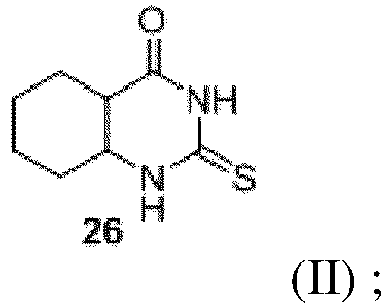
- the compounds of general formula (II) or (III) may react with a compound of formula (IV): wherein R represents a group selected from : represents - 19 F, - 18 F, - 124 I - 131 I, 123 I, 125 I or 211 At; and X represents an halogen or a leaving group such as CF3, I, Br, Cl, OTs, OTf or Oms.
- the compound of general formula (II) is obtained by reacting a compound of formula (IIA) with a compound of formula (IIB) in the presence of 1,8-Diazabicyclo(5.4.0)undec-7-ene (DBU) and Acetonitrile (ACN):
- DBU 1,8-Diazabicyclo(5.4.0)undec-7-ene
- ACN Acetonitrile
- the compound of general formula (III) is obtained by reacting a compound of formula (IIIA) with a compound of formula (IIIB) in the presence of 1,8-Diazabicyclo(5.4.0)undec-7-ene (DBU) and Acetonitrile (ACN):
- DBU 1,8-Diazabicyclo(5.4.0)undec-7-ene
- ACN Acetonitrile
- Another object of the present invention is a compound of formula (I) as previously defined, wherein at least one of X 1 , X 2 , X 3 , X 4 , X 5 or X 6 is 18 F, 124 I, 131 I, 123 I, 125 I or 211 At.
- said compound is an imaging agent able to target Lp-PLA2.
- imaging agent refers to a compound that can be used to detect specific biological elements (e.g., biomolecules) using imaging techniques. Imaging agents of the present invention can be used to detect Lp-PLA2 in in vitro and ex vivo biological systems as well as in subjects.
- Lp-PLA2 refers to the lipoprotein-associated phospholipase A2, which is an enzyme produced by inflammatory cells involved in atherogenesis ( Chem. Rev. 2011, 111, 6130-6185 ). Studies have shown that Lp-PLA2 was also involved in Neonatal Necrotizing Enterocolitis ( Caplan, M.; Hsueh, W.; Kelly, A.; Donovan, M. Prostaglandins 1990, 39, 705 ), cancers (pancreatic cancer), rheumatoid arthritis etc.
- imaging agents of the present invention are used to detect the accumulation of inflammatory cells and/or lipoproteins (LDL and/or HDL).
- Another object of the present invention is a process for preparing the compound of formula (I) as previously defined comprising the steps of:
- salt of 18 F, 124 I, 131 I, 123 I, 125 I or 211 At " refers to ionic compounds consisting of at least one cation selected from K + , Et 4 N + , Na + , Cs + and Bu 4 N + and at least one anion selected from 8 F - , 124 I - and 131 I - .
- Another object of the present invention is the compound of formula (I) as previously defined for use in a method for detecting Lp-PLA 2 enzyme in a patient, said method comprising the steps of:
- the term "patient” refers to a human or another mammal (e.g., mouse, rat, rabbit, hamster, dog, cat, cattle, swine, sheep, horse or primate).
- PET Positron Emission Tomography
- SPECT Single-photon emission computed tomography which is an imaging technique.
- Another object of the present invention is the compound of formula (I) as previously defined for use in a method for detecting atherosclerotic plaques, in particular vulnerable atherosclerotic plaques, in a patient, said method comprising the steps of:
- vulnerable atherosclerotic plaques refers to plaques characterized by a high number of inflammatory cells (leukocytes and phagocytic cells) and proteic biomarkers and/or to plaques that are susceptible to break.
- the compound of formula (I) as previously defined is administered to said patient by intra-venous, subcutaneous or oral route.
- blood vessels of the patient are subjected to PET or SPECT, in particular blood vessels of the heart, brain, liver, pancreas, spleen, kidney, bladder and intestine and lung, and more particularly the carotid, coronary, femoral and cerebral arteries.
- blood vessels refers to arteries and veins.
- the bones, muscles, brain, aorta, stomach and thyroid of the patient are subjected to PET or SPECT.
- Reagents and conditions (a) NMP, 60°C; (b) NaSCN, TMSCl, 120°C, 58%; (c) 4-fluorobenzyl chloride, KOH, K 2 CO 3 , H 2 O / IPA, 40°C, 60%.
- Methyl 2-oxocyclopentanecarboxylate (1 eq, 17.5 mmol) was added to a stirred suspension of glycine sodium salt (1 eq, 18.0 mmol) in NMP (18 mL). The reaction mixture was stirred for 2 hours at 60° C under argon atmosphere. After cooling the mixture to room temperature, sodium thiocyanate (1.4 eq, 25 mmol) was added. Chlorotrimethylsilane (3.5 eq, 61.5 mmol) was then added dropwise and the reaction mixture was stirred at 120° C for 3 hours. The reaction was cooled to 90° C and water (35 mL) was added. The resulting suspension was slowly cooled to 4° C overnight and the product was collected by filtration. The product was washed with water (2 ⁇ 15 mL) and acetone (15mL) then dried at 50° C to yield the title compound as an off white solid (1.4 g, 58%).
- Reagents and conditions (a) saccharin, HMDS, DCM, reflux; (b) (trifluoromethanesulfonyloxy)-acetic acid methyl ester, DCM, reflux; (c) NaOH 10% (wlv), IPA then HCl (5M).
- Reagents and conditions (a) Pd(OAc)2, TBAB, K 2 CO 3 , dioxane / water, 70°C, 89%; (b) Pd(OAc)2, TBAB, Na 2 CO 3 , water, 150°C, 98% (12), 93% (13); (c) NaBH(OAc) 3 , N,N-Diethylethylenediamine, DCM, 0°C then RT, 80% ; (d) SOCl 2 , DMF (cat), DCM, 0°C then RT, 91%; (e) K 2 CO 3 , DMF, 70°C, 94%.
- Radioisotope production No-carrier-added fluorine-18 (half-life : 109.8 min) was produced via the [ 18 O(p,n) 18 F] nuclear reaction by irradiation of a 1,5ml [ 18 O]water (IBA CisBio) target with an 16.5 MeV proton beam on a cyclotron General Electrics PET trace 80 cyclotron (GE Healthcare, Sweden, Uppsala).
- the aqueous radioactive solution was transferred to an appropriate shielded hot cell (COMECER) using Helium pressure of 2 bars.
- Typical irradiation times were 60 min with a beam current of 40 ⁇ A, which yielded a [ 18 F]-fluoride amount of about 70 GBq at end of bombardment.
- the 1.5 ml bolus of [ 18 O]water containing 70 GBq of [ 18 F] Fluoride was delivered to the synthesis module and trapped in a QMA-light Sep-Pak cartridge to remove the excess of [ 18 O]water and others impurities.
- the activity was released from the cartridge into the reaction vessel by the aqueous solution of KOTf/K 2 CO 3 .
- the 1 ml of acetonitrile from V2 was poured into the reaction vessel and the resulting solution was dried by azeotropic distillation to provide K 18 F. This step was achieved by heating the reaction vessel to 120°C under vacuum during 6 min. Overall, around 70% of activity remained after this first step.
- the reactive mixture contained in vial 3 [precursor 9 (4 mg, 5 ⁇ mol, 0.005 M), Cu(OTf) 2 (9 mg, 25 ⁇ mol, 0.02 M), Pyridine (52 ⁇ l, 644 ⁇ mol, 0.62 M) in a solution of NMP and n-BuOH] was poured into the reaction vessel with the dried K 18 F by applying helium pressure. Before starting the radiolabelling of the precursor 9, vial 2 was opened to bring some air into the reaction vessel. After shutting the valve of vial 2, the mixture was then stirred for 20 min at 120°C. The reaction vessel was the cooled to 50°C with compressed air cooling before adding 1.5 ml of HPLC eluent from V4.
- the solution was sucked into the HPLC vial.
- the reaction vessel was finally cleaned by adding another portion of 1.5 ml of HPLC eluent and immediately transferred into the HPLC vial.
- the whole volume contained in the HPLC vial was sent into the preparative HPLC.
- the [ 18 F]-Darapladib was collected into the dilution flask.
- the formulation step was started by passing through a Sep-Pak Plus C18 cartridge (Waters).
- the final activities were measured into a shielded glove box with dose calibrator SCINTIDOSE (Lemer Pax, Carquefou, France).
- the injected specific activities were 10.1 ⁇ 2.3 GBq / ⁇ mol.
- mice Apolipoprotein E-deficient mice (ApoE (-/-) or ApoE KO) and C57B16 mice were purchased from Charles River Laboratories (Saint-Germain-sur-L'Arbresles). All the animals were maintained at a constant temperature (24 ⁇ 1°C) and a hygrometry between 55 to 65% under a 12 hour light/dark cycle, and permitted free access to food and water. Mice were handled and cared in accordance with the Guide for the Care and Use of Laboratory Animals (national Research Council, 1996), the European Council Directive 2010/63/EU and approved by the Ethics Committee n°114 for Animal Experimentation under the reference APAFIS#6271-201605021622180v2, under the supervision of authorized investigators.
- mice were scanned on a small-animal multimodal scanner (Triumph II, PET/SPECT/CT, Trifoil Imaging, Chatsworth, CA, USA) under anesthesia (isoflurane, 3% induction and 1.5% maintenance in air). Beforehand, mice were anesthetized with isoflurane (3%) and injected with the radiotracers in the caudal lateral vein using a 30-gauge catheter. [ 18 F]FDG doses were supplied by GIP CYROI (Sainte-Clotilde, Reunion Island). The biodistribution studies were performed on a Gamma counter Wizard 2470 (Perkin Elmer, Groningen, The Netherlands).
- PBS Phosphate Buffer Saline
- Atherosclerosis Models Apolipoprotein E-deficient mice (ApoE (-/-) or ApoE KO) were chosen as models for atherosclerosis studies. Mice were bred in the animal facility until the age of 18-20 months for the study. 5 ApoE KO mice were used for each radiotracer. To compare with normal mice, 5 C57B16 mice were used for each radiotracer.
- Biodistributions At the end of the PET imaging acquisitions, the animals were sacrificed by cardiac puncture. The heart and aorta were isolated, blood-flushed and placed under the multimodal imager. A PET acquisition of 15 minutes was performed specifically on these tissues to measure the activity associated to the atherosclerosis plaques. At the end of this acquisition, all the organs were collected and placed into glass tubes for the ⁇ -counter measurements.
- the tumor cell line B16 was purchased from Sigma (Saint-Quentin-Fallavier, France). This cell line was cultivated in RPMI1640 supplemented with 10% fetal calf serum, 2 mM glutamine, 100 units / ml streptomycin, 100 units / ml penicillin and 1.25 ⁇ g / ml fungizone. Cells were maintained in a 5% CO2 humidified atmosphere at 37°C. Cell viability was over 90%, as determined by trypan-blue staining. Immediately before implantation in mice, cells were centrifuged and adjusted to a concentration of 25 ⁇ 10 6 cells per ml in PBS 1X for subcutaneous injection.
- mice Six to eight weeks old mice C57Bl6 mice were used for implantation of B16 cells.
- Radiolabelled Darapladib was injected in caudal vein in two mice models.
- 18 FDG was also injected as the reference in inflammation for PET imaging.
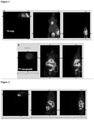
- the present inventors first worked on an tumor-induced inflammatory model to test the specificity of 18 F-Darapladib.
- Melanoma B16 tumors were induced in C57B16 mice that were intravenously injected via tail.
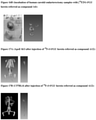
- 18 FDG accumulated markedly in the tumor whereas 18 F-Darapladib did not show any detectable signal.
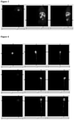
- mice knock-out ApoE mice
- mice were injected via tail and imaged for one hour.
- Figure 2 whole body imaging did not allow to see any accumulation in the aorta compared to control ( Figure 3 ).
- SNar reactions are the leading path to the formation of 18 F-labeled aromatics.
- RCY radiochemical yields
- a radiolabelling precursor that allowed to obtain [18F]-Darapladib was synthetized. Imaging studies showed promising results in a murine atherosclerosis model but also ex vivo in human carotid samples.
- Compound (a) can be obtained by reported procedures ( Cardwell, K. S.; Crawford, C. F.; Davies, S. H.; Wade, C. E. Novel processes. WO Patent 146,494 , 2011 ; Bioorg Med Chem Lett. 2018 Feb 15;28(4):787-792. doi: 10.1016/j.bmcl.2017.12.052 ).
- Compound (b) R group can represent a precursor derivative such as boron esters or iodonium ylides described in the scheme 10 below. For cold references, R represents a 19-fluorine atom.
- X is representative of an halogen or a leaving group such as CF3, I, Br, Cl, OTs, OTf or Oms.
- Compound ( b ) is synthesized as previously described ( Rotstein B. et al. Nat Commun. 2014 Jul 9;5:4365. doi: 10.1038/ncomms5365 ; Chem Commun (Camb). 2016 Jun 28;52(54):8361-4. doi: 10.1039/c6cc03295h ).
- Alkylation of compound (a) to form compound (c) is performed in acetone.
- Regioselective alkylation of ( c ) can be performed in DMF to obtained compound ( f ).
- N1 or N3 alkylation of compound ( c ) to obtain compounds (e) and (f) is performed in DCM.
- Alkylating agent used to obtain compounds ( d ), ( e ) or ( f ) is tBu -4-bromoacetate in the presence of a hindered base such as DiPEA.
- a hindered base such as DiPEA.
- Such compounds can be obtained by reacting Removal of the tert-butyl esters is performed in DCM with an excess of an acid such as TFA to obtain compounds ( g ), ( h ) and ( i ).
- compound ( i ) can be obtained from compound ( m ) in a mixture of polar protic solvents such as H 2 O/IPA with an inorganic base such as K 2 CO 3 .
- Scheme 9 shows the synthesis of amines of formula R 2 -NH-R 3 .
- R 2 and R 3 are described in the listing below.
- the amine used can be 4-aminobutyl 4-methylbenzenesulfonate obtained from the corresponding amino-alcohol in the presence of TsCl.
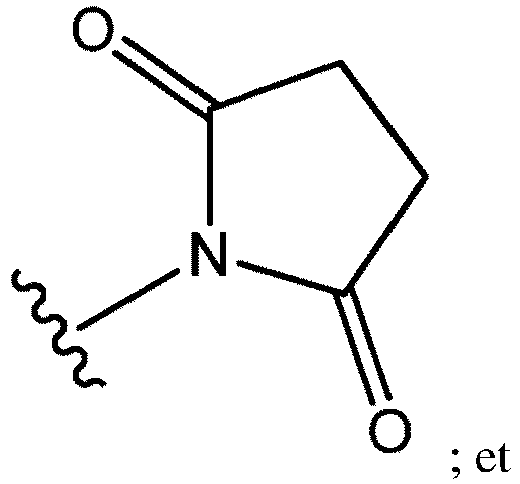
- a N-succinimidyl group has the following formula:
- R 2 and R 3 may represent one of the following groups:
- R2 and R3 can optionally form a cycle (see compounds A48 and A49 in table 1).
- a peptide coupling from the corresponding piperazine enables to obtain compounds A48 and A49.
- compound ( a ) can be reacted in DMSO in a Pd catalysed coupling to form boronic ester ( b ) or in THF through organolithium to obtain corresponding boronic acids.
- compound (a) can be treated with AcOH to form corresponding diacetoxyiodoarenes ( c ) that can be easily converted in corresponding iodonium salts ( e ) in AcOH in the presence of a catalyst such as sulfuric acid.
- Compound ( c ) can also be converted to the corresponding aryl ylide ( d ) in EtOH in the presence of Na 2 CO 3 .
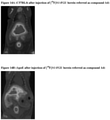
- the ex vivo imaging of the block heart/aorta shows an accumulation of [ 18 F]N1-FGU in the heart and specifically in atheromatous lesions present in the ApoE KO mice in comparison to C57BL/6 mice.
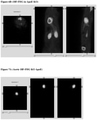
- the ex vivo imaging of the block heart/aorta show a nonspecific accumulation of 18 F- O- FGU in the heart and along the aorta of both non atheromatous C57BL/6 (16 MBq) and ApoE KO (22 MBq) mice.
- Whole body imaging shows a similar distribution in C57BL/6 and ApoE KO mice, with an important accumulation in the bladder, intestine and kidneys.
Landscapes
- Chemical & Material Sciences (AREA)
- Organic Chemistry (AREA)
- Health & Medical Sciences (AREA)
- Life Sciences & Earth Sciences (AREA)
- Pharmacology & Pharmacy (AREA)
- Physics & Mathematics (AREA)
- Medicinal Chemistry (AREA)
- Optics & Photonics (AREA)
- Proteomics, Peptides & Aminoacids (AREA)
- Epidemiology (AREA)
- Animal Behavior & Ethology (AREA)
- General Health & Medical Sciences (AREA)
- Public Health (AREA)
- Veterinary Medicine (AREA)
- Medicines Containing Antibodies Or Antigens For Use As Internal Diagnostic Agents (AREA)
- Nitrogen Condensed Heterocyclic Rings (AREA)
- Pharmaceuticals Containing Other Organic And Inorganic Compounds (AREA)
Claims (14)
- Composé de la formule générale (I) suivante :
 dans lequelR1 est =O ou -O-R1,R1 , est -(CH2)q-C(=O)-R7 ou -(CH2)q-C(=O)-O-R8 dans lequel R8 représente le groupe suivant :
 dans lequel R7 est -OH ; un groupe -O-alkyle en (C1 à C3), de préférence un groupe méthyle ou isopropyle ; ou -N(-R14)(-R15)dans lequelR14 est -H ; -(CH2)p-X3 ; (CH2)p-C≡CH ; -(CH2)p-diéthyl-méthyl-ammonium ; ou - (CH2)p-N(R16)2 dans lequel R16 est un alkyle en (C1 à C3), de préférence un groupe éthyle ;R15 est sélectionné parmi -(CH2)p1-OH ; -(CH2)p1-X4 ; -(CH2)p1-Ph-Ph-X4, -(CH2)p1-Ph-Ph-(CH2)p2-X3 ; -(CH2)p1-Ph-Ph-C≡C-(CH2)p2-X3 ; ou -(CH2)p1-Ph-Ph-O-(CH2)p2-X3, ouR14 et R15 forment, conjointement avec l'atome d'azote auquel ils sont attachés, une pipérazine, ladite pipérazine étant facultativement substituée en position 4 par -Ph-O-(CH2)p3-X3;R2 est -H ; -CH2-pyrimidine, ladite pyrimidine étant facultativement substituée en position 2 par -O-(CH2)2-X1;R3 est -H ; ouR2 et R3 forment, conjointement avec les atomes de carbone auxquels ils sont attachés, un cycloalcane, en particulier un cyclopentane ou un cyclohexane ;R4 est -H ; une paire libre ; ou -(CH2)m-C(=O)-R10dans lequel R10 est -OH ; un groupe -O-alkyle en (C1 à C3), de préférence un groupe méthyle ou isopropyle ; ou -N(-R11)(-R12)dans lequelR11 est -H ; -(CH2)n-X2 ; (CH2)n-C≡CH ; -(CH2)n-[(-diéthyl)(-méthyl)-ammonium] ; ou -(CH2)n-N(R13)2 dans lequel R13 est un alkyle en (C1 à C3), de préférence un groupe éthyle ;R12 est sélectionné parmi -(CH2)n1-OH ; -(CH2)n1-X2 ; -(CH2)n1-Ph-Ph-X2, -(CH2)n1-Ph-Ph-(CH2)n2-X2 ; -(CH2)n1-Ph-Ph-C≡C-(CH2)n2-X2 ; ou -(CH2)n1-Ph-Ph-O-(CH2)n2-X2,ou R11 et R12 forment, conjointement avec l'atome d'azote auquel ils sont attachés, une pipérazine, ladite pipérazine étant facultativement substituée en position 4 par -Ph-O-(CH2)n3-X2;R5 est -(CH2)o-Ph-X5 ; ou -(CH2)o-Ph-SnBu3;R6 est -H, une paire libre ; ou -(CH2)r-C(=O)-R9dans lequel R9 est -OH ; un groupe -O-alkyle en (C1 à C3), ledit groupe alkyle en (C1 à C3) étant de préférence un groupe isopropyle ; ou -N(-R17)(-R18)dans lequel R17 est -(CH2)n4-N(R19)2 dans lequel R19 est un alkyle en (C1 à C3), de préférence un groupe éthyle ;R18 est -(CH2)n5-Ph-Ph-X6;X1, X2, X3, X4, X5 et X6 représentent chacun indépendamment -18F, -124I, -131I, 123I, 125I, 211At, -Cl ; -F, -I, -19F ; -CF3, -OTs, ou un groupe sélectionné parmi :


 n, n1, n2, n3, n4, n5, m, o, p, p1, p2, p3, q, et r sont des nombres entiers qui sont indépendamment égaux à 0, 1, 2, 3, 4, 5, 6, 7 ou 8, de préférence égaux à 1, 2, 3 ou 4 ; à condition qu'au moins l'un parmi R1, R2, R4, R5 et R6 comprenne -18F, -124I, -131I, - 123I, -125I, -211At, -OTs, -SnBu3 ou un groupe sélectionné parmi :


- Composé de formule (I) selon la revendication 1, dans lequelR2 et R3 forment, conjointement avec les atomes de carbone auxquels ils sont attachés, un cyclopentane ou un cyclohexane ; etR5 est -(CH2)-Ph-X5 ; ou -(CH2)-Ph-SnBu3.
- Composé de formule (I) selon la revendication 1 ou 2, dans lequeldans lequel R1 est =O ou -O-R1,dans lequel R1, est -(CH2)-C(=O)-R7 ou -(CH2)-C(=O)-O-R8dans lequel R8 représente le groupe suivant :
 dans lequel R7 est -OH ; un groupe -O-isopropyle ; ou -N(-R14)(-R15);dans lequelR14 est -H ; ou -(CH2)2-N(R16)2 dans lequel R16 est un groupe éthyle ;R15 est sélectionné parmi -(CH2)4-X4 ; ou -(CH2)-Ph-Ph-X4.
- Composé de formule (I) selon l'une quelconque des revendications 1 à 3,dans lequel R4 est -H ; une paire libre ; ou -(CH2)-C(=O)-R10dans lequel R10 est -OH ; un groupe -O-isopropyle ; ou -N(-R11)(-R12)dans lequelR11 est -H ; -(CH2)2-X2 ; -(CH2)2-[(-diéthyl)(-méthyl)-ammonium] ; ou -(CH2)2-N(R13)2 dans lequel R13 est un groupe éthyle ;R12 est sélectionné parmi -(CH2)2-X2 ; -(CH2)4-X2 ; -(CH2)-Ph-Ph-X2, -(CH2)-Ph-Ph-(CH2)2-X2 ; -(CH2)-Ph-Ph-C≡C-(CH2)2-X2 ; ou -(CH2)1-Ph-Ph-O-(CH2)2-X2,ou R11 et R12 forment, conjointement avec l'atome d'azote auquel ils sont attachés, une pipérazine, ladite pipérazine étant facultativement substituée en position 4 par -Ph-O-(CH2)2-X2.
- Composé de formule (I) selon l'une quelconque des revendications 1 à 4, dans lequelR6 est -H, une paire libre ; ou -(CH2)-C(=O)-R9dans lequel R9 est -OH ; un groupe -O-isopropyle ; ou -N(-R17)(-R18)dans lequel R17 est -(CH2)2-N(R19)2 dans lequel R19 est un groupe éthyle ;R18 est -(CH2)-Ph-Ph-X6.
- Processus pour la préparation du composé tel que défini selon l'une quelconque des revendications 1 à 5, comprenant les étapes de :- la mise en réaction d'un composé de formule générale (II) ou (III):

- Composé selon l'une quelconque des revendications 1 à 5, dans lequel au moins l'un parmi X1, X2, X3, X4, X5 ou X6 est 18F, 124I, 131I, 123I, 125I, ou 211At.
- Composé selon la revendication 7, dans lequel ledit composé est un agent d'imagerie apte à cibler Lp-PLA2.
- Processus pour la préparation du composé tel que défini selon la revendication 7 ou 8 comprenant les étapes de :- la fourniture d'un composé de formule (I) dans lequel au moins l'un parmi X1, X2, X3, X4, X5 ou X6 est -Cl ; -F, -I, -19F ; -CF3, -OTs, ou un groupe sélectionné parmi

 - la mise en réaction dudit composé avec un sel de 18F, 124I, 131I, 123I, 125I, ou 211At en présence de [Cu(OTf)2(Py)4] ou [Cu(OTf)2].
- Composé tel que défini selon les revendications 7 ou 8 pour une utilisation dans un procédé pour la détection de l'enzyme Lp-PLA2 chez un patient, ledit procédé comprenant les étapes de :- l'administration audit patient d'une quantité détectable dudit composé,- la soumission dudit patient à une tomographie par émission de positons, PET, ou à une tomographie d'émission monophotonique, SPECT,- la collecte du signal de PET ou de SPECT.
- Composé tel que défini selon les revendications 7 ou 8 pour une utilisation dans un procédé pour la détection de plaques d'athérosclérose, en particulier de plaques d'athérosclérose vulnérables, chez un patient, ledit procédé comprenant les étapes de :- l'administration audit patient d'une quantité détectable dudit composé,- la soumission dudit patient à une PET ou à une SPECT,- la collecte du signal de PET ou de SPECT.
- Composé pour une utilisation selon les revendications 10 ou 11, dans lequel ledit composé est administré audit patient par voie intraveineuse, sous-cutanée ou orale.
- Composé pour une utilisation selon l'une quelconque des revendications 10 à 12, dans lequel les vaisseaux sanguins du patient sont soumis à une PET ou à une SPECT, en particulier les vaisseaux sanguins du cœur, du cerveau, du foie, du pancréas, de la rate, du rein, de la vessie, de l'intestin et du poumon, et plus particulièrement les artères carotide, coronaire, fémorale et cérébrale.
- Composé pour une utilisation selon l'une quelconque des revendications 10 à 12, dans lequel les os, les muscles, le cerveau, l'aorte, l'estomac et la thyroïde du patient sont soumis à une PET ou à une SPECT.
Applications Claiming Priority (2)
| Application Number | Priority Date | Filing Date | Title |
|---|---|---|---|
| EP17306272 | 2017-09-26 | ||
| PCT/EP2018/076163 WO2019063634A1 (fr) | 2017-09-26 | 2018-09-26 | Darapladib radiomarqué, ses analogues et leur utilisation en tant que composés d'imagerie |
Publications (2)
| Publication Number | Publication Date |
|---|---|
| EP3687980A1 EP3687980A1 (fr) | 2020-08-05 |
| EP3687980B1 true EP3687980B1 (fr) | 2022-01-19 |
Family
ID=60001827
Family Applications (1)
| Application Number | Title | Priority Date | Filing Date |
|---|---|---|---|
| EP18773208.6A Not-in-force EP3687980B1 (fr) | 2017-09-26 | 2018-09-26 | Darapladib radiomarqué, analogues et leur utilisation comme composés d'imagerie |
Country Status (4)
| Country | Link |
|---|---|
| US (2) | US11583596B2 (fr) |
| EP (1) | EP3687980B1 (fr) |
| ES (1) | ES2907130T3 (fr) |
| WO (1) | WO2019063634A1 (fr) |
Families Citing this family (5)
| Publication number | Priority date | Publication date | Assignee | Title |
|---|---|---|---|---|
| CN111825695B (zh) * | 2019-04-15 | 2022-04-12 | 中国科学院上海药物研究所 | 噁唑烷酮类化合物、其制备方法、用途及其药物组合物 |
| GB201915206D0 (en) | 2019-10-21 | 2019-12-04 | Ge Healthcare Ltd | Use of cyclodextrins as a radiostabilizer |
| GB202108605D0 (en) * | 2021-06-16 | 2021-07-28 | Ge Healthcare Uk Ltd | Effect of water content |
| WO2023196614A1 (fr) * | 2022-04-08 | 2023-10-12 | Axonis Therapeutics, Inc. | Procédés et composés pour le traitement de troubles neurologiques |
| WO2024233885A2 (fr) * | 2023-05-11 | 2024-11-14 | Axonis Therapeutics, Inc. | Potentialisateurs de kcc2 et leurs utilisations |
Family Cites Families (4)
| Publication number | Priority date | Publication date | Assignee | Title |
|---|---|---|---|---|
| DE60139429D1 (de) * | 2000-02-16 | 2009-09-10 | Smithkline Beecham Plc | Pyrimidin-5-Onderivate als LDL-PLA2 Inhibitoren |
| TW201209043A (en) | 2010-05-17 | 2012-03-01 | Glaxo Group Ltd | Novel processes |
| WO2015087239A1 (fr) * | 2013-12-11 | 2015-06-18 | Ranbaxy Laboratories Limited | Procédé de préparation de darapladib et d'intermédiaires de celui-ci |
| EP3172211B1 (fr) * | 2014-07-22 | 2019-07-03 | GlaxoSmithKline Intellectual Property Development Limited | Composés tricycliques imidazopyrimidone pour le traitement de maladies à mediation lp-pla2 |
-
2018
- 2018-09-26 ES ES18773208T patent/ES2907130T3/es active Active
- 2018-09-26 EP EP18773208.6A patent/EP3687980B1/fr not_active Not-in-force
- 2018-09-26 WO PCT/EP2018/076163 patent/WO2019063634A1/fr not_active Ceased
- 2018-09-26 US US16/650,532 patent/US11583596B2/en active Active
-
2022
- 2022-12-05 US US18/061,715 patent/US20230302162A1/en not_active Abandoned
Also Published As
| Publication number | Publication date |
|---|---|
| US11583596B2 (en) | 2023-02-21 |
| EP3687980A1 (fr) | 2020-08-05 |
| WO2019063634A1 (fr) | 2019-04-04 |
| ES2907130T3 (es) | 2022-04-22 |
| US20200276337A1 (en) | 2020-09-03 |
| US20230302162A1 (en) | 2023-09-28 |
Similar Documents
| Publication | Publication Date | Title |
|---|---|---|
| US20230302162A1 (en) | Radiolabeled darapladib and analogs thereof and their use as imaging compounds | |
| AU2017204979B2 (en) | 18/19F-labelled compounds which target the prostate specific membrane antigen | |
| TWI592391B (zh) | 用於合成及使用造影劑之組合物、方法及系統 | |
| Chiotellis et al. | Synthesis and biological evaluation of 18F-labeled fluoropropyl tryptophan analogs as potential PET probes for tumor imaging | |
| JP2014519489A (ja) | 画像診断のための放射性標識アミノ酸 | |
| Al-Momani et al. | Improved synthesis of [18F] FS-PTAD as a new tyrosine-specific prosthetic group for radiofluorination of biomolecules | |
| Wang et al. | Isotope exchange-based 18F-labeling methods | |
| Chiotellis et al. | Synthesis, Radiolabeling, and Biological Evaluation of 5‑Hydroxy-2‑[18F] fluoroalkyl-tryptophan Analogues as Potential PET Radiotracers for Tumor Imaging | |
| Liu et al. | Synthesis of enantiopure 18F-trifluoromethyl cysteine as a structure-mimetic amino acid tracer for glioma imaging | |
| Gao et al. | Synthesis of carbon-11-labeled imidazopyridine-and purine-thioacetamide derivatives as new potential PET tracers for imaging of nucleotide pyrophosphatase/phosphodiesterase 1 (NPP1) | |
| CN108299482B (zh) | F-bpa及其中间体合成方法、中间体及其应用 | |
| Pan et al. | Synthesis, radiolabeling, and evaluation of a potent β-site APP cleaving enzyme (BACE1) inhibitor for PET imaging of BACE1 in vivo | |
| Vaidyanathan et al. | Propargyl 4-[18F] fluorobenzoate: a putatively more stable prosthetic group for the fluorine-18 labeling of biomolecules via click chemistry | |
| Krutzek et al. | Structure–activity relationship of 18F-labeled PD-L1-targeting small molecule ligands: impact of radiolabeling strategy on affinity and in vivo performance | |
| EP2957556B1 (fr) | Dérivé aromatique d'acides aminés et sonde de tomographie par émission de positrons (pet) utilisant de tels dérivés | |
| Banka et al. | Radiosynthesis of [18F] brequinar for in vivo PET imaging of hDHODH for potential studies of acute myeloid leukemia and cancers | |
| JP6037330B2 (ja) | 11c−標識チアミン及びその誘導体、11c−標識フルスルチアミン、チアミン前駆体、並びにpet用プローブ及びそれらを用いたイメージング方法 | |
| EP4088745A1 (fr) | Composé pour le diagnostic du cancer | |
| CN116462635A (zh) | 一种吡嗪-1(2h)-2-氧代类化合物及其制备方法与应用 | |
| KR20130122944A (ko) | 방사성표지 콜린 유사체 화합물의 신규 전구체 | |
| WO2011140360A1 (fr) | Composés radiomarqués et leurs utilisations | |
| Bertram et al. | Aryl Sulfamoyl [18F] Fluorides: Preparation via Base-Free SuFEx 18F‑Fluorination and Assessment of Their Applicability as PET Tracers | |
| Song et al. | Development of radiolabeling 2-oxo-2-(4-phenylpiperazin-1-yl) acetamide derivatives as potential molecular probes for excitatory amino acid transporter 2 | |
| EP4696686A1 (fr) | Composés théranostiques fapi assemblés par ligature de tétrazine | |
| RU2395489C2 (ru) | [f-18] меченная l-глютаминовая кислота, [f-18] меченный l-глютамин, их производные и их применение, а также способ их получения |
Legal Events
| Date | Code | Title | Description |
|---|---|---|---|
| STAA | Information on the status of an ep patent application or granted ep patent |
Free format text: STATUS: UNKNOWN |
|
| STAA | Information on the status of an ep patent application or granted ep patent |
Free format text: STATUS: THE INTERNATIONAL PUBLICATION HAS BEEN MADE |
|
| PUAI | Public reference made under article 153(3) epc to a published international application that has entered the european phase |
Free format text: ORIGINAL CODE: 0009012 |
|
| STAA | Information on the status of an ep patent application or granted ep patent |
Free format text: STATUS: REQUEST FOR EXAMINATION WAS MADE |
|
| 17P | Request for examination filed |
Effective date: 20200325 |
|
| AK | Designated contracting states |
Kind code of ref document: A1 Designated state(s): AL AT BE BG CH CY CZ DE DK EE ES FI FR GB GR HR HU IE IS IT LI LT LU LV MC MK MT NL NO PL PT RO RS SE SI SK SM TR |
|
| AX | Request for extension of the european patent |
Extension state: BA ME |
|
| DAV | Request for validation of the european patent (deleted) | ||
| DAX | Request for extension of the european patent (deleted) | ||
| STAA | Information on the status of an ep patent application or granted ep patent |
Free format text: STATUS: EXAMINATION IS IN PROGRESS |
|
| 17Q | First examination report despatched |
Effective date: 20210401 |
|
| GRAP | Despatch of communication of intention to grant a patent |
Free format text: ORIGINAL CODE: EPIDOSNIGR1 |
|
| STAA | Information on the status of an ep patent application or granted ep patent |
Free format text: STATUS: GRANT OF PATENT IS INTENDED |
|
| INTG | Intention to grant announced |
Effective date: 20211104 |
|
| RAP3 | Party data changed (applicant data changed or rights of an application transferred) |
Owner name: UNIVERSITE DE LA REUNION Owner name: INSERM (INSTITUT NATIONAL DE LA SANTE ET DE LA RECHERCHE MEDICALE) |
|
| GRAS | Grant fee paid |
Free format text: ORIGINAL CODE: EPIDOSNIGR3 |
|
| GRAA | (expected) grant |
Free format text: ORIGINAL CODE: 0009210 |
|
| STAA | Information on the status of an ep patent application or granted ep patent |
Free format text: STATUS: THE PATENT HAS BEEN GRANTED |
|
| AK | Designated contracting states |
Kind code of ref document: B1 Designated state(s): AL AT BE BG CH CY CZ DE DK EE ES FI FR GB GR HR HU IE IS IT LI LT LU LV MC MK MT NL NO PL PT RO RS SE SI SK SM TR |
|
| REG | Reference to a national code |
Ref country code: GB Ref legal event code: FG4D |
|
| REG | Reference to a national code |
Ref country code: CH Ref legal event code: EP |
|
| REG | Reference to a national code |
Ref country code: DE Ref legal event code: R096 Ref document number: 602018029816 Country of ref document: DE |
|
| REG | Reference to a national code |
Ref country code: DE Ref legal event code: R082 Ref document number: 602018029816 Country of ref document: DE Representative=s name: PLASSERAUD EXPANSION MUNICH SARL, DE Ref country code: DE Ref legal event code: R082 Ref document number: 602018029816 Country of ref document: DE Representative=s name: PLASSERAUD IP GMBH, DE |
|
| REG | Reference to a national code |
Ref country code: AT Ref legal event code: REF Ref document number: 1463726 Country of ref document: AT Kind code of ref document: T Effective date: 20220215 |
|
| REG | Reference to a national code |
Ref country code: IE Ref legal event code: FG4D |
|
| REG | Reference to a national code |
Ref country code: ES Ref legal event code: FG2A Ref document number: 2907130 Country of ref document: ES Kind code of ref document: T3 Effective date: 20220422 |
|
| REG | Reference to a national code |
Ref country code: LT Ref legal event code: MG9D |
|
| REG | Reference to a national code |
Ref country code: NL Ref legal event code: MP Effective date: 20220119 |
|
| REG | Reference to a national code |
Ref country code: AT Ref legal event code: MK05 Ref document number: 1463726 Country of ref document: AT Kind code of ref document: T Effective date: 20220119 |
|
| PG25 | Lapsed in a contracting state [announced via postgrant information from national office to epo] |
Ref country code: NL Free format text: LAPSE BECAUSE OF FAILURE TO SUBMIT A TRANSLATION OF THE DESCRIPTION OR TO PAY THE FEE WITHIN THE PRESCRIBED TIME-LIMIT Effective date: 20220119 |
|
| PG25 | Lapsed in a contracting state [announced via postgrant information from national office to epo] |
Ref country code: SE Free format text: LAPSE BECAUSE OF FAILURE TO SUBMIT A TRANSLATION OF THE DESCRIPTION OR TO PAY THE FEE WITHIN THE PRESCRIBED TIME-LIMIT Effective date: 20220119 Ref country code: RS Free format text: LAPSE BECAUSE OF FAILURE TO SUBMIT A TRANSLATION OF THE DESCRIPTION OR TO PAY THE FEE WITHIN THE PRESCRIBED TIME-LIMIT Effective date: 20220119 Ref country code: PT Free format text: LAPSE BECAUSE OF FAILURE TO SUBMIT A TRANSLATION OF THE DESCRIPTION OR TO PAY THE FEE WITHIN THE PRESCRIBED TIME-LIMIT Effective date: 20220519 Ref country code: NO Free format text: LAPSE BECAUSE OF FAILURE TO SUBMIT A TRANSLATION OF THE DESCRIPTION OR TO PAY THE FEE WITHIN THE PRESCRIBED TIME-LIMIT Effective date: 20220419 Ref country code: LT Free format text: LAPSE BECAUSE OF FAILURE TO SUBMIT A TRANSLATION OF THE DESCRIPTION OR TO PAY THE FEE WITHIN THE PRESCRIBED TIME-LIMIT Effective date: 20220119 Ref country code: HR Free format text: LAPSE BECAUSE OF FAILURE TO SUBMIT A TRANSLATION OF THE DESCRIPTION OR TO PAY THE FEE WITHIN THE PRESCRIBED TIME-LIMIT Effective date: 20220119 Ref country code: BG Free format text: LAPSE BECAUSE OF FAILURE TO SUBMIT A TRANSLATION OF THE DESCRIPTION OR TO PAY THE FEE WITHIN THE PRESCRIBED TIME-LIMIT Effective date: 20220419 |
|
| PG25 | Lapsed in a contracting state [announced via postgrant information from national office to epo] |
Ref country code: PL Free format text: LAPSE BECAUSE OF FAILURE TO SUBMIT A TRANSLATION OF THE DESCRIPTION OR TO PAY THE FEE WITHIN THE PRESCRIBED TIME-LIMIT Effective date: 20220119 Ref country code: LV Free format text: LAPSE BECAUSE OF FAILURE TO SUBMIT A TRANSLATION OF THE DESCRIPTION OR TO PAY THE FEE WITHIN THE PRESCRIBED TIME-LIMIT Effective date: 20220119 Ref country code: GR Free format text: LAPSE BECAUSE OF FAILURE TO SUBMIT A TRANSLATION OF THE DESCRIPTION OR TO PAY THE FEE WITHIN THE PRESCRIBED TIME-LIMIT Effective date: 20220420 Ref country code: FI Free format text: LAPSE BECAUSE OF FAILURE TO SUBMIT A TRANSLATION OF THE DESCRIPTION OR TO PAY THE FEE WITHIN THE PRESCRIBED TIME-LIMIT Effective date: 20220119 Ref country code: AT Free format text: LAPSE BECAUSE OF FAILURE TO SUBMIT A TRANSLATION OF THE DESCRIPTION OR TO PAY THE FEE WITHIN THE PRESCRIBED TIME-LIMIT Effective date: 20220119 |
|
| PG25 | Lapsed in a contracting state [announced via postgrant information from national office to epo] |
Ref country code: IS Free format text: LAPSE BECAUSE OF FAILURE TO SUBMIT A TRANSLATION OF THE DESCRIPTION OR TO PAY THE FEE WITHIN THE PRESCRIBED TIME-LIMIT Effective date: 20220519 |
|
| REG | Reference to a national code |
Ref country code: DE Ref legal event code: R097 Ref document number: 602018029816 Country of ref document: DE |
|
| PG25 | Lapsed in a contracting state [announced via postgrant information from national office to epo] |
Ref country code: SM Free format text: LAPSE BECAUSE OF FAILURE TO SUBMIT A TRANSLATION OF THE DESCRIPTION OR TO PAY THE FEE WITHIN THE PRESCRIBED TIME-LIMIT Effective date: 20220119 Ref country code: SK Free format text: LAPSE BECAUSE OF FAILURE TO SUBMIT A TRANSLATION OF THE DESCRIPTION OR TO PAY THE FEE WITHIN THE PRESCRIBED TIME-LIMIT Effective date: 20220119 Ref country code: RO Free format text: LAPSE BECAUSE OF FAILURE TO SUBMIT A TRANSLATION OF THE DESCRIPTION OR TO PAY THE FEE WITHIN THE PRESCRIBED TIME-LIMIT Effective date: 20220119 Ref country code: EE Free format text: LAPSE BECAUSE OF FAILURE TO SUBMIT A TRANSLATION OF THE DESCRIPTION OR TO PAY THE FEE WITHIN THE PRESCRIBED TIME-LIMIT Effective date: 20220119 Ref country code: DK Free format text: LAPSE BECAUSE OF FAILURE TO SUBMIT A TRANSLATION OF THE DESCRIPTION OR TO PAY THE FEE WITHIN THE PRESCRIBED TIME-LIMIT Effective date: 20220119 Ref country code: CZ Free format text: LAPSE BECAUSE OF FAILURE TO SUBMIT A TRANSLATION OF THE DESCRIPTION OR TO PAY THE FEE WITHIN THE PRESCRIBED TIME-LIMIT Effective date: 20220119 |
|
| PLBE | No opposition filed within time limit |
Free format text: ORIGINAL CODE: 0009261 |
|
| STAA | Information on the status of an ep patent application or granted ep patent |
Free format text: STATUS: NO OPPOSITION FILED WITHIN TIME LIMIT |
|
| PG25 | Lapsed in a contracting state [announced via postgrant information from national office to epo] |
Ref country code: AL Free format text: LAPSE BECAUSE OF FAILURE TO SUBMIT A TRANSLATION OF THE DESCRIPTION OR TO PAY THE FEE WITHIN THE PRESCRIBED TIME-LIMIT Effective date: 20220119 |
|
| 26N | No opposition filed |
Effective date: 20221020 |
|
| PG25 | Lapsed in a contracting state [announced via postgrant information from national office to epo] |
Ref country code: SI Free format text: LAPSE BECAUSE OF FAILURE TO SUBMIT A TRANSLATION OF THE DESCRIPTION OR TO PAY THE FEE WITHIN THE PRESCRIBED TIME-LIMIT Effective date: 20220119 |
|
| PG25 | Lapsed in a contracting state [announced via postgrant information from national office to epo] |
Ref country code: MC Free format text: LAPSE BECAUSE OF FAILURE TO SUBMIT A TRANSLATION OF THE DESCRIPTION OR TO PAY THE FEE WITHIN THE PRESCRIBED TIME-LIMIT Effective date: 20220119 |
|
| REG | Reference to a national code |
Ref country code: CH Ref legal event code: PL |
|
| REG | Reference to a national code |
Ref country code: BE Ref legal event code: MM Effective date: 20220930 |
|
| PG25 | Lapsed in a contracting state [announced via postgrant information from national office to epo] |
Ref country code: LU Free format text: LAPSE BECAUSE OF NON-PAYMENT OF DUE FEES Effective date: 20220926 |
|
| PG25 | Lapsed in a contracting state [announced via postgrant information from national office to epo] |
Ref country code: LI Free format text: LAPSE BECAUSE OF NON-PAYMENT OF DUE FEES Effective date: 20220930 Ref country code: IE Free format text: LAPSE BECAUSE OF NON-PAYMENT OF DUE FEES Effective date: 20220926 Ref country code: CH Free format text: LAPSE BECAUSE OF NON-PAYMENT OF DUE FEES Effective date: 20220930 |
|
| PG25 | Lapsed in a contracting state [announced via postgrant information from national office to epo] |
Ref country code: BE Free format text: LAPSE BECAUSE OF NON-PAYMENT OF DUE FEES Effective date: 20220930 |
|
| PGFP | Annual fee paid to national office [announced via postgrant information from national office to epo] |
Ref country code: IT Payment date: 20230822 Year of fee payment: 6 Ref country code: GB Payment date: 20230823 Year of fee payment: 6 |
|
| PGFP | Annual fee paid to national office [announced via postgrant information from national office to epo] |
Ref country code: FR Payment date: 20230822 Year of fee payment: 6 Ref country code: DE Payment date: 20230822 Year of fee payment: 6 |
|
| PGFP | Annual fee paid to national office [announced via postgrant information from national office to epo] |
Ref country code: ES Payment date: 20231002 Year of fee payment: 6 |
|
| PG25 | Lapsed in a contracting state [announced via postgrant information from national office to epo] |
Ref country code: CY Free format text: LAPSE BECAUSE OF FAILURE TO SUBMIT A TRANSLATION OF THE DESCRIPTION OR TO PAY THE FEE WITHIN THE PRESCRIBED TIME-LIMIT Effective date: 20220119 |
|
| PG25 | Lapsed in a contracting state [announced via postgrant information from national office to epo] |
Ref country code: MK Free format text: LAPSE BECAUSE OF FAILURE TO SUBMIT A TRANSLATION OF THE DESCRIPTION OR TO PAY THE FEE WITHIN THE PRESCRIBED TIME-LIMIT Effective date: 20220119 Ref country code: HU Free format text: LAPSE BECAUSE OF FAILURE TO SUBMIT A TRANSLATION OF THE DESCRIPTION OR TO PAY THE FEE WITHIN THE PRESCRIBED TIME-LIMIT; INVALID AB INITIO Effective date: 20180926 |
|
| PG25 | Lapsed in a contracting state [announced via postgrant information from national office to epo] |
Ref country code: TR Free format text: LAPSE BECAUSE OF FAILURE TO SUBMIT A TRANSLATION OF THE DESCRIPTION OR TO PAY THE FEE WITHIN THE PRESCRIBED TIME-LIMIT Effective date: 20220119 |
|
| PG25 | Lapsed in a contracting state [announced via postgrant information from national office to epo] |
Ref country code: MT Free format text: LAPSE BECAUSE OF FAILURE TO SUBMIT A TRANSLATION OF THE DESCRIPTION OR TO PAY THE FEE WITHIN THE PRESCRIBED TIME-LIMIT Effective date: 20220119 |
|
| REG | Reference to a national code |
Ref country code: DE Ref legal event code: R082 Ref document number: 602018029816 Country of ref document: DE Representative=s name: PLASSERAUD IP GMBH, DE |
|
| REG | Reference to a national code |
Ref country code: DE Ref legal event code: R119 Ref document number: 602018029816 Country of ref document: DE |
|
| GBPC | Gb: european patent ceased through non-payment of renewal fee |
Effective date: 20240926 |
|
| PG25 | Lapsed in a contracting state [announced via postgrant information from national office to epo] |
Ref country code: DE Free format text: LAPSE BECAUSE OF NON-PAYMENT OF DUE FEES Effective date: 20250401 |
|
| PG25 | Lapsed in a contracting state [announced via postgrant information from national office to epo] |
Ref country code: GB Free format text: LAPSE BECAUSE OF NON-PAYMENT OF DUE FEES Effective date: 20240926 |
|
| PG25 | Lapsed in a contracting state [announced via postgrant information from national office to epo] |
Ref country code: IT Free format text: LAPSE BECAUSE OF NON-PAYMENT OF DUE FEES Effective date: 20240926 |
|
| PG25 | Lapsed in a contracting state [announced via postgrant information from national office to epo] |
Ref country code: FR Free format text: LAPSE BECAUSE OF NON-PAYMENT OF DUE FEES Effective date: 20240930 |
|
| REG | Reference to a national code |
Ref country code: ES Ref legal event code: FD2A Effective date: 20251031 |
|
| PG25 | Lapsed in a contracting state [announced via postgrant information from national office to epo] |
Ref country code: ES Free format text: LAPSE BECAUSE OF NON-PAYMENT OF DUE FEES Effective date: 20240927 |