EP3688544B1 - Commande de la manoeuvre d'ue aériens - Google Patents
Commande de la manoeuvre d'ue aériens Download PDFInfo
- Publication number
- EP3688544B1 EP3688544B1 EP17927639.9A EP17927639A EP3688544B1 EP 3688544 B1 EP3688544 B1 EP 3688544B1 EP 17927639 A EP17927639 A EP 17927639A EP 3688544 B1 EP3688544 B1 EP 3688544B1
- Authority
- EP
- European Patent Office
- Prior art keywords
- aerial
- flight
- autonomous mode
- flight path
- path information
- Prior art date
- Legal status (The legal status is an assumption and is not a legal conclusion. Google has not performed a legal analysis and makes no representation as to the accuracy of the status listed.)
- Active
Links
Images


Classifications
-
- G—PHYSICS
- G05—CONTROLLING; REGULATING
- G05D—SYSTEMS FOR CONTROLLING OR REGULATING NON-ELECTRIC VARIABLES
- G05D1/00—Control of position, course, altitude or attitude of land, water, air or space vehicles, e.g. using automatic pilots
- G05D1/10—Simultaneous control of position or course in three dimensions
-
- G—PHYSICS
- G08—SIGNALLING
- G08G—TRAFFIC CONTROL SYSTEMS
- G08G5/00—Traffic control systems for aircraft
- G08G5/20—Arrangements for acquiring, generating, sharing or displaying traffic information
- G08G5/26—Transmission of traffic-related information between aircraft and ground stations
-
- G—PHYSICS
- G08—SIGNALLING
- G08G—TRAFFIC CONTROL SYSTEMS
- G08G5/00—Traffic control systems for aircraft
- G08G5/30—Flight plan management
-
- G—PHYSICS
- G08—SIGNALLING
- G08G—TRAFFIC CONTROL SYSTEMS
- G08G5/00—Traffic control systems for aircraft
- G08G5/50—Navigation or guidance aids
- G08G5/55—Navigation or guidance aids for a single aircraft
-
- G—PHYSICS
- G08—SIGNALLING
- G08G—TRAFFIC CONTROL SYSTEMS
- G08G5/00—Traffic control systems for aircraft
- G08G5/70—Arrangements for monitoring traffic-related situations or conditions
- G08G5/72—Arrangements for monitoring traffic-related situations or conditions for monitoring traffic
- G08G5/727—Arrangements for monitoring traffic-related situations or conditions for monitoring traffic from a ground station
-
- H—ELECTRICITY
- H04—ELECTRIC COMMUNICATION TECHNIQUE
- H04L—TRANSMISSION OF DIGITAL INFORMATION, e.g. TELEGRAPHIC COMMUNICATION
- H04L67/00—Network arrangements or protocols for supporting network services or applications
- H04L67/01—Protocols
- H04L67/12—Protocols specially adapted for proprietary or special-purpose networking environments, e.g. medical networks, sensor networks, networks in vehicles or remote metering networks
- H04L67/125—Protocols specially adapted for proprietary or special-purpose networking environments, e.g. medical networks, sensor networks, networks in vehicles or remote metering networks involving control of end-device applications over a network
-
- H—ELECTRICITY
- H04—ELECTRIC COMMUNICATION TECHNIQUE
- H04W—WIRELESS COMMUNICATION NETWORKS
- H04W4/00—Services specially adapted for wireless communication networks; Facilities therefor
- H04W4/02—Services making use of location information
- H04W4/025—Services making use of location information using location based information parameters
-
- H—ELECTRICITY
- H04—ELECTRIC COMMUNICATION TECHNIQUE
- H04W—WIRELESS COMMUNICATION NETWORKS
- H04W4/00—Services specially adapted for wireless communication networks; Facilities therefor
- H04W4/02—Services making use of location information
- H04W4/029—Location-based management or tracking services
-
- H—ELECTRICITY
- H04—ELECTRIC COMMUNICATION TECHNIQUE
- H04W—WIRELESS COMMUNICATION NETWORKS
- H04W4/00—Services specially adapted for wireless communication networks; Facilities therefor
- H04W4/30—Services specially adapted for particular environments, situations or purposes
- H04W4/40—Services specially adapted for particular environments, situations or purposes for vehicles, e.g. vehicle-to-pedestrians [V2P]
-
- H—ELECTRICITY
- H04—ELECTRIC COMMUNICATION TECHNIQUE
- H04W—WIRELESS COMMUNICATION NETWORKS
- H04W4/00—Services specially adapted for wireless communication networks; Facilities therefor
- H04W4/30—Services specially adapted for particular environments, situations or purposes
- H04W4/40—Services specially adapted for particular environments, situations or purposes for vehicles, e.g. vehicle-to-pedestrians [V2P]
- H04W4/42—Services specially adapted for particular environments, situations or purposes for vehicles, e.g. vehicle-to-pedestrians [V2P] for mass transport vehicles, e.g. buses, trains or aircraft
-
- H—ELECTRICITY
- H04—ELECTRIC COMMUNICATION TECHNIQUE
- H04W—WIRELESS COMMUNICATION NETWORKS
- H04W4/00—Services specially adapted for wireless communication networks; Facilities therefor
- H04W4/30—Services specially adapted for particular environments, situations or purposes
- H04W4/40—Services specially adapted for particular environments, situations or purposes for vehicles, e.g. vehicle-to-pedestrians [V2P]
- H04W4/44—Services specially adapted for particular environments, situations or purposes for vehicles, e.g. vehicle-to-pedestrians [V2P] for communication between vehicles and infrastructures, e.g. vehicle-to-cloud [V2C] or vehicle-to-home [V2H]
-
- B—PERFORMING OPERATIONS; TRANSPORTING
- B64—AIRCRAFT; AVIATION; COSMONAUTICS
- B64U—UNMANNED AERIAL VEHICLES [UAV]; EQUIPMENT THEREFOR
- B64U2201/00—UAVs characterised by their flight controls
-
- B—PERFORMING OPERATIONS; TRANSPORTING
- B64—AIRCRAFT; AVIATION; COSMONAUTICS
- B64U—UNMANNED AERIAL VEHICLES [UAV]; EQUIPMENT THEREFOR
- B64U2201/00—UAVs characterised by their flight controls
- B64U2201/10—UAVs characterised by their flight controls autonomous, i.e. by navigating independently from ground or air stations, e.g. by using inertial navigation systems [INS]
-
- B—PERFORMING OPERATIONS; TRANSPORTING
- B64—AIRCRAFT; AVIATION; COSMONAUTICS
- B64U—UNMANNED AERIAL VEHICLES [UAV]; EQUIPMENT THEREFOR
- B64U2201/00—UAVs characterised by their flight controls
- B64U2201/20—Remote controls
-
- G—PHYSICS
- G08—SIGNALLING
- G08G—TRAFFIC CONTROL SYSTEMS
- G08G5/00—Traffic control systems for aircraft
- G08G5/50—Navigation or guidance aids
- G08G5/57—Navigation or guidance aids for unmanned aircraft
Definitions
- the present disclosure is directed to wireless communication technology, and more specifically relates to the technology about controlling the operation of aerial UEs (User Equipment) during wireless communication.
- aerial UEs User Equipment
- aerial vehicles such as drones are becoming more and more popular.
- more and more drones are commercially used in package delivery, search-and-rescue, monitoring of critical infrastructure, wildlife conservation, flight cameras, and surveillance.
- 3GPP 3rd Generation Partnership Project
- the present invention aims to provide a technical solution for controlling the operation of aerial UEs in a wireless network.
- An object of the invention is a method as claimed in claim 1. Another object is a method as claimed in claim 15. Further objects are apparatuses as claimed in claims 16 and 17. Preferred embodiments are covered by the appended dependent claims.
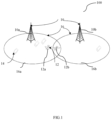
- FIG. 1 depicts a wireless communication system 100 with aerial UEs according to an embodiment of the present disclosure.
- the wireless communication system 100 includes a plurality of base stations 10 including base station 10a, 10b, a plurality of aerial UEs 12 including aerial LTE 12a and aerial LTE 12b and a plurality of conventional UEs 14, i.e., terrestrial LTEs.
- the plurality of base stations 10 may be based on LTE/LTE-A/5G or not.
- the plurality of base stations 10 may be a plurality of eNBs and/or a plurality of gNBs.
- the plurality of base stations 10 may be controlled by a control unit (not shown).
- Each base station 10 may define one or more cells 16 supporting aerial services or not.
- the plurality of aerial UEs 12 may be a plurality of drones or other aerial vehicles.
- the conventional UEs 14 may be computing devices, wearable devices, and mobile devices, etc.
- UEs 12a and 12b are aerial UEs 12, while the other UEs are conventional UEs 14.
- UEs 12a and 12b are both in cell 16a defined by base station 10a.
- LTE 12b is also in the edge of cell 16b defined by the base station 10b, that is, LTE 12b is simultaneously in cell 16a and cell 16b.
- Persons skilled in the art should understand that as the 3GPP and electronic technology develop, the terminologies recited in the specification may change, which should not affect the principle of the present disclosure.
- the following special behaviors of aerial UEs 12 can be identified: the first one is about flying over the air, which means the aerial UEs 12 are flying above the height of the base stations 10; the second one is about autonomous flying, which means the entire flight path of the aerial UEs 12 is completely known in advance for the aerial UEs 12; and the third one is about the specific behaviors of the aerial UEs 12 enabled by the specific applications of the aerial UEs 12. For example, even in the non-autonomous operation mode, a certain flight direction, flight altitude, and flight pattern etc. of an aerial UE12 may be known for the aerial LTE 12 in the application of building surveillance and other applications.
- a method for controlling the operation of aerial UEs 12, which may be performed in the terminal side, such as an aerial UE 12, may include: determining whether an aerial UE 12 is in an autonomous mode or in a non-autonomous mode; determining the flight path information of the aerial UE 12; and reporting the flight path information of the aerial LTE 12.
- the flight path information of the aerial UE 12 is reported when a first reporting period expires or when the path deviation of the aerial UE 12 is larger than a deviation threshold.
- the flight path information of the aerial UE 12 is reported when a second reporting period less than the first reporting period expires or when at least one of the flight direction and flight speed of the aerial UE 12 changes.
- a method for controlling the operation of aerial UEs 12, which may be performed on a network entity, such as a base station 10, may include receiving the flight path information of an aerial UE 12.
- the flight path information of the aerial LTE 12 is received when a first reporting period expires or when the path deviation of the aerial LTE 12 is larger than a deviation threshold.
- the flight path information of the aerial LTE 12 is received when a second reporting period less than the first reporting period expires or when at least one of the flight direction and flight speed of the aerial UE12 changes.
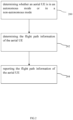
- FIG.2 is a flow chart illustrating a method of controlling the operation of aerial UEs 12 according to an embodiment of the present disclosure.
- the method of controlling the operation of aerial UEs 12 may be performed in an aerial LTE 12, for example a control unit configured in the aerial UE 12.
- step 200 whether the aerial LTE 12 is in an autonomous mode or in a non-autonomous mode is determined.
- the flight path information of the aerial UE 12 is determined.
- the flight path information may include at least one of the current position of the aerial LTE 12, the target position of the aerial UE 12, the flight direction of the aerial UE 12 and the flight speed of the aerial UE 12.
- the flight path information of the aerial UE 12 is reported to the network side, for example, to the base station 10, which may be in a predefined interval or may be triggered at least one redefined event.
- the flight path information of the aerial UE 12 is reported when a first reporting period expires or when the path deviation of the aerial UE 12 is larger than a deviation threshold, wherein the deviation threshold may be a fixed value predefined in the specification or a value indicated by the network side, for example, the base station 10.
- the first reporting period may be indicated by a network entity, such as the base station 10 or may be default.
- the first reporting period may be predefined in the specification or indicated by the base station 10 when the connection between the base station 10 and the aerial UE 12 is initiated.
- the first reporting period even may be determined by a first offset period indicated by a network entity, such as a base station 10 and a first default period.
- the first reporting period may be substantially in a time level no less than a second, such as a one second, which is a relatively long reporting interval in wireless communication.
- the flight path information of the aerial UE 12 can be used to enhance the handover and cell re-selection of the aerial UE 12, which can be performed by the aerial UE 12 or the network side.
- the location information of the relevant base stations 10, i.e., the base stations 10 associated with the aerial LTE12, also known to the aerial UE 12 the flight path information and the location information of the relevant base stations 10 can be used to minimize the interference to the aerial UE 12.
- the base station 10a and 10b are the relevant base stations 10.
- the location information of the relevant base stations 10 may be stored in a location server in the core network (not shown), which may be required by the aerial UE 12 as necessary or may be indicated to the aerial UE 12 by the core network, for example via signaling.
- the location of the relevant base stations 10 may be stored in the memory of the aerial LTE 12.
- the location information of the relevant base stations 10 associated with the aerial UE12 may be geographical coordinates and may include one of the following: the location information of the base stations 10 in a current tracking area of the aerial LTE12; the location information of the base stations 10 in a current neighbor cell list of the aerial UE 12; and the specific location of a base station 10 requested by the aerial UE 12.
- the base station 10 nearest to the aerial LTE 12 may be selected for the aerial LTE 12 during cell resection as long as the RSRP of the base station 10 measured by the aerial UE 12 meets the predefined performance criterion.
- the base station 10a nearest to the aerial UE 12a can be selected for the aerial UE 12a when reselecting a cell 16 for the aerial UE 12a.
- the cell reselection can be performed in a different manner, wherein when the RSRP of a base station 10 measured by the aerial UE 12 is offset better than that of the nearest base station 10, the base station with better RSRP, rather than the nearest base station can be selected for the aerial UE.
- the base station 10b can be selected for the aerial UE 12a when reselecting a cell 16 for the aerial UE 12a.
- the flight path information of the aerial LTE 12 can assist the right target cell decision. That is, further conditions for hand over and/or cell reselection can be defined based on the flight path information of the aerial UE 12. For example, when the flight path information and actual flight speed information is known to the network side for example base station 10, the network will know the actual flight duration of the aerial UE 12 in a specific cell. A threshold of the flight duration in a cell may be indicated by the network side, for example the base station 10, and received by the aerial UE 12, which may be used for a conditional handover of the aerial UE 12.
- the specific cell When an actual flight duration of the aerial UE 12 in a specific cell is larger than the threshold of the flight duration in a cell, the specific cell is the target cell to be handed over to and reselected for the aerial UE 12.
- the specific cell For a specific cell only supporting short flight duration, i.e., the flight duration of the aerial UE 12 in the specific cell being lower than the indicated threshold of the fight duration in a cell, the specific cell may be removed from the current neighbor cell list of the aerial UE 12, and accordingly the aerial UE 12 will not measure and report the removed cell.
- FIG. 3 illustrates a hand over and/or cell reselection scenario based on the threshold of the flight duration in a cell according to an embodiment of the present disclosure.
- the aerial UE 12 may fly over the area covered by cells A-H.
- the tracking area of the aerial UE 12 is covered by both cell A and cell E and the two cells both meet conventional hand over and/or cell reselection criterions, whether an actual fight duration of the aerial UE 12 in the cell E is larger than the threshold of the fight duration in a cell may be determined, for example by the aerial UE 12.
- the actual fight duration of the aerial UE 12 in cell E is smaller than the threshold of the fight duration in a cell, handover from cell A to cell E was prohibited due to the short flight duration in cell E.
- Similar conditional hand over and/or cell reselection determination also occurs when the aerial UE 12 flies the tracking area covered by cell C and cell F, and the tracking area covered by cell H and I.
- the handover is enabled from cell C to cell F, and from cell H to cell I because the actual flight duration in cell F and H are larger than the defined threshold of the flight duration in a cell respectively. Since the flight path information of the aerial LTE 12 is considered, the hand over based on the threshold of the fight duration in a cell is more accurate than conventional hand over manner.
- the flight path of the aerial UE 12 in the non-autonomous mode is at least partly uncertain.
- the flight path may be very uncertain due to the controlling of the ground pilot.
- partial flight path information for example, flight area and flight direction may be predicted.
- the flight path information of the aerial UE 12 may be reported when a second reporting period less than the first reporting period expires or when at least one of the flight direction and flight speed of the aerial UE 12 changes.
- the second reporting period may be indicated by a network entity, such as the base station 10 or may be default.
- the second reporting period may be predefined in the specification or indicated by the base station 10 when the connection between the base station 10 and the aerial UE 12 is initiated.
- the second reporting period even may be determined by a second offset period indicated by a network entity, such as a base station 10 and a second default period.
- the second reporting period may be substantially in a time level no more than a second, such as one millisecond, which is a relative short reporting interval in wireless communication. Based on the technical solutions according to embodiments of the present disclosure, the trajectory of the aerial UE 12 in the non-autonomous mode can also be efficiently tracked and the overhead of reporting flight path information can also be apparently reduced.
- the intended flight path information of the aerial UE 12 with a time tag may be reported, for example to a network entity like a base station 10, so that short-period flight path information is roughly known to the network side.
- An example application according to the present disclosure is solar panel surveillance, wherein the solar panel array is monitored by an aerial UE 12, such as a drone along a fixed path under the control of the ground pilot.
- the flight of the aerial UE 12 is not in an autonomous mode, the flight intention of the aerial UE 12 can be partly predicted.
- the intended flight path information may include at least one of the following: a) starting time tag, ending time tag, and the relevant location information of the aerial LTE; b) starting position, flight direction, and velocity information of the aerial UE until receiving a command for changing at least one of the starting position, flight direction, and velocity information; and c) series of discrete positions with time tags.
- the intended flight path information may also be broadcast to the neighbor aerial UEs of the aerial UE 12.
- a threshold of intended flying period may be indicated by the network side for example the base station 10, and received by the aerial UE 12. That is, the network side may define the required shortest period of an intended flight path, which is for judging whether the aerial UE 12 is eligible to report the intended flight path information.
- the aerial UE 12 reports the intended flight path information only when the intended flight period of the aerial UE 12 is larger than the threshold of intended flight period. For an intended flight path with a period shorter than the required period, the aerial UE 12 will not report it as an intended flight path. That is, that flight path will be regarded as a totally uncertain path.
- the aerial UE 12 may report that it is eligible to report the intended flight path to the network side, for example, the base station 10 by determining its own status based on the received threshold of intended flight period.
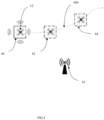
- FIG.4 illustrates a scenario of intended flight path information reporting/broadcasting according to an embodiment of the present disclosure.
- the aerial UE 12 is currently in the first position 40 of the flight path 400 to be flown over. Although the entire flight path information is unknown for the aerial UE 12, the future positions, i.e. the second position 42 and the third position 44 in the flight path 400 are known. The aerial UE 12 may determine whether the respective intended flight period of the aerial UE 12 from the first position 40 to the second position 42 and third position 44 is longer than the threshold of intended flight period received from the network side.
- the aerial UE 12 may report the second position and/or the third position 44 to the network side, for example the base station 10.
- Embodiments of the present disclosure also provide a mode switch mechanism for aerial UEs 12 between the autonomous mode to the non-autonomous mode.
- the method of controlling the operation of aerial UEs 12 may further include receiving mode switching information indicating the mode switching of the aerial UE 12 between the autonomous mode and the non-autonomous mode.
- the aerial UE 12 may receive the mode switching information when the ground pilot switches the operation mode of the aerial UE 12, or receives the mode switching information when the network side, for example the base station 1 indicates the mode switching of the aerial UE 12 between the autonomous mode and the non-autonomous mode via signaling.
- an explicit mode switching information may be sent to the network side once the ground pilot switches the operation mode of the aerial LTE 12.
- a signaling explicitly indicating the mode switching is completed in the network side may be sent back to the aerial LTE 12 from the network side for example from the base station 10.
- the mode switching may be implicitly determined by the aerial LTE 12 or the network side.
- the aerial UE 12 reports a complete flight path to the network side, for example, the base station 10, the network side will implicitly determine the aerial UE 12 is switched from the non-autonomous to the autonomous mode.
- the aerial UE 12 may be implicitly determined to be switched from the autonomous mode to the non-autonomous mode.
- the aerial LTE 12 may be implicitly determined to be switched from the non-autonomous mode to the autonomous mode.
- embodiments of the present disclosure also provide methods of controlling the operation of aerial UEs 12 in the network side.
- the method of controlling the operation of aerial UEs 12 may include receiving the flight path information of the aerial UE 12.
- the network side is aware which operation mode the aerial LTE 12 is, and takes relevant actions, in specific time periods based on received flight path information, for example, performing hand over and/or cell reselection of the aerial UE 1 etc. control actions.
- the flight path information of the aerial UE 12 is received when a first reporting period expires, or when the path deviation of the aerial UE 12 is larger than a deviation threshold.
- the flight path information of the aerial UE 12 is received when a second reporting period less than the first reporting period expires, or at least one of the flight direction and flight speed of the aerial UE 12 changes.
- the first reporting period may be indicated by a network entity, such as the base station 10 or is default.
- the first reporting period may be predefined in the specification or may be indicated by the base station 10 when the connection between the base station 10 and the aerial UE 12 is initiated.
- the first reporting period even may be determined by a first offset period indicated by a network entity, such as a base station 10 and a first default period.
- the first reporting period may be substantially in a time level no less than a second, such as a one second, which is a relative long reporting interval in wireless communication.
- the second reporting period may also be indicated by a network entity, such as the base station 10 or is default.
- the second reporting period may be predefined in the specification or may be indicated by the base station 10 when the connection between the base station 10 and the aerial UE 12 is initiated.
- the second reporting period even may be determined by a second offset period indicated by a network entity, such as a base station 10 and a second default period.
- the second reporting period may be substantially in a time level no more than a second, such as one millisecond, which is a relative short reporting interval in wireless communication.
- embodiments of the present disclosure can ensure the network side to receive enough flight path information to control the operation of aerial UEs 12 while increasing the reporting efficiency and reducing reporting overhead.
- the flight path information of the aerial UE 12 can be used to enhance the handover and cell re-selection of the aerial UE 12, which can be performed by the aerial UE 12 or the network side.
- the flight path information and the location information of the relevant base station 10 can be used to minimize the interference to the aerial UE 12.
- Embodiments of the present disclosure also provide a mode switch mechanism for aerial UEs 12.
- the method of controlling the operation of aerial UEs 12 may further include receiving mode switching information indicating the mode switching of the aerial UE 12 between the autonomous mode and the non-autonomous mode.
- the ground pilot switches the operation mode of the aerial LTE 12
- the ground pilot or the aerial UE12 may report the mode switching information to the network side.
- the network side may explicitly indicate to the aerial UE 12 that the reported mode switching is completed in the network side via signaling, that is, the network side has updated the operation mode of the aerial UE 12 to avoid misunderstanding on the operation mode of the aerial UE 12.
- the network side for example the base station 10 may transmit signaling indicating the mode switching of the aerial UE 12 between the autonomous mode and the non-autonomous mode based on the control made by itself.
- the mode switching may be implicitly determined.
- the network side for example, the base station 10
- the network side may implicitly determine the aerial UE 12 is switched from the non-autonomous to the autonomous mode.
- the network side may implicitly determine that the aerial UE 12 is switched from the autonomous mode to the non-autonomous mode.
- the network side may implicitly determine that the aerial UE 12 has been switched from the non-autonomous mode to the autonomous mode.
- Embodiments of the present disclosure define the flight path information reporting solutions in both the autonomous operation mode and non-autonomous mode, and the balance between reporting accuracy and reporting overhead is achieved.
- embodiments of the present disclosure define hand over and/or cell reselection based on a threshold of the flight duration in a cell as mobility optimization solutions for aerial UEs.
- Embodiments of the present disclosure also define the intended flight path information reporting solutions based on special application scenarios even if the aerial UE is in the non-autonomous operation mode.
- embodiments of the present disclosure provide a mode switching mechanism for aerial UEs between the autonomous mode and non-autonomous mode.
- the mode switching mechanism is illustrated in combining with the flight path information report, persons skilled in the art should know the mode switching mechanism can be used independently in a wireless network involving aerial UEs.
- the method of the present disclosure can be implemented on a programmed processor.
- the controllers, flowcharts, and modules may also be implemented on a general purpose or special purpose computer, a programmed microprocessor or microcontroller and peripheral integrated circuit elements, an integrated circuit, a hardware electronic or logic circuit such as a discrete element circuit, a programmable logic device, or the like.
- any device on which resides a finite state machine capable of implementing the flowcharts shown in the figures may be used to implement the processor functions of this disclosure.
- FIG.5 illustrates a block diagram of a system 500 for controlling the operation of aerial UEs 12 according to an embodiment of the disclosure, which may include a first apparatus 52 for controlling the operation of aerial UEs 12 in the terminal side and a second apparatus 54 for controlling the operation of aerial UEs 12 in the network side.
- the first apparatus 52 may be an aerial UE 12, or other apparatus that can execute the method for controlling the operation of aerial UEs 12 in the terminal side, such as that illustrated in FIG.2 .
- the second apparatus 54 may be a base station 10 or a control unit, or other apparatus that can execute the method for controlling the operation of aerial UEs 12 in the network side, such as that illustrated above.
- the first apparatus 52 may include a first processor 520 in an embodiment of the present disclosure.
- the first processor 520 may determine whether an aerial UE 12 is in an autonomous mode or in a non-autonomous mode, and determine the flight path information of the aerial UE 12, for example by performing programmed instructions and retrieving relevant data stored in the memory of the aerial UE 12.
- the first apparatus 52 may further include a transmitter 522.
- the transmitter 520 may report the flight path information of the aerial UE 12 to the network side.
- the flight path information may be reported in a predefined interval or may be event triggered.
- the transmitter 522 may report the flight path information of the aerial UE 12 when a first reporting period expires, that is, the flight path information is reported in an interval.
- the transmitter 522 may report the flight path information of the aerial UE 12 when the path deviation of the aerial UE 12 is larger than a deviation threshold, that is, the flight path information is reported when at least one defined event is triggered.
- the transmitter 522 may report the flight path information of the aerial UE 12 when a second reporting period less than the first reporting period expires, or when at least one of the flight direction and flight speed of the aerial UE 12 changes.
- the second apparatus 54 may include a receiver 540 in an embodiment of the present disclosure.
- the receiver 540 may receive the flight path information of the aerial UE 12 reported to the network side. Since the flight path information may be reported in a predefined interval or may be event triggered, the flight path information may be received dependent the flight path information being reported in a predefined interval or may be event triggered. For example, when the aerial UE is in the autonomous mode, the receiver 540 may receive the flight path information of the aerial UE 12 when a first reporting period expires, that is, the flight path information is reported in an interval.
- the receiver 540 may receive the flight path information of the aerial UE 12 when the path deviation of the aerial UE 12 is larger than a deviation threshold, that is, the flight path information is reported when at least one defined event is triggered.
- the receiver 540 may receive the flight path information of the aerial LTE 12 when a second reporting period less than the first reporting period expires, or when at least one of the flight direction and flight speed of the aerial UE 12 changes.
- the second apparatus 54 may further include a second processor 544 in an embodiment of the present disclosure. Based on the received flight path information of the aerial UE 12, the second processor 544 may perform control actions on the terminal side or even the network side, for example control hand over and/or cell resection of the aerial UE 12.
Landscapes
- Engineering & Computer Science (AREA)
- Aviation & Aerospace Engineering (AREA)
- Signal Processing (AREA)
- Computer Networks & Wireless Communication (AREA)
- General Physics & Mathematics (AREA)
- Physics & Mathematics (AREA)
- Remote Sensing (AREA)
- Radar, Positioning & Navigation (AREA)
- Automation & Control Theory (AREA)
- Medical Informatics (AREA)
- Health & Medical Sciences (AREA)
- General Health & Medical Sciences (AREA)
- Computing Systems (AREA)
- Mobile Radio Communication Systems (AREA)
Claims (17)
- Procédé de commande de l'opération d'un équipement utilisateur aérien, UE (12), dans un réseau sans fil, le procédé étant effectué par l'UE aérien, le procédé comprenant :la détermination (200) du fait de savoir si l'équipement utilisateur aérien UE (12) est dans un mode autonome ou dans un mode non autonome ;la détermination (202) des informations de trajectoire de vol de l'UE aérien (12) ;le signalement (204) au côté réseau (54) des informations de trajectoire de vol de l'UE aérien (12), dans lequellorsque l'UE aérien est dans le mode autonome, le signalement au côté réseau (54) des informations de trajectoire de vol de l'UE aérien (12) dans l'un des cas où une première période de signalement expire et de cas où un écart de trajectoire de l'UE aérien est supérieur à un seuil d'écart ; etlorsque l'UE aérien est dans le mode non autonome, le signalement au côté réseau (54) des informations de trajet de vol de l'UE aérien dans l'un des cas où une seconde période de signalement inférieure à la première période de signalement expire et de cas où au moins l'une parmi la direction de vol et la vitesse de vol de l'UE aérien change ;comprenant en outre, lorsque l'UE aérien est dans le mode non autonome, le signalement des informations de trajectoire de vol prévues de l'UE aérien avec une étiquette temporelle ;dans lequel les informations de trajectoire de vol prévues comportent au moins l'un des éléments suivants :une étiquette temporelle de démarrage, une étiquette temporelle terminale et les informations d'emplacement pertinentes de l'UE aérien ;une position de départ, une direction de vol et des informations de vitesse de l'UE aérien jusqu'à la réception d'une commande pour changer au moins l'une parmi la position de départ, la direction de vol et les informations de vitesse ; etune série de positions discrètes avec des étiquettes temporelles.
- Procédé selon la revendication 1, dans lequel la première période de signalement est sensiblement dans un niveau de temps n'excédant pas une seconde, et la seconde période de signalement est sensiblement dans un niveau de temps n'excédant pas une seconde.
- Procédé selon la revendication 1, dans lequel la première et/ou la seconde période de signalement est indiquée par une entité de réseau ou est par défaut.
- Procédé selon la revendication 1, dans lequel la première période de signalement est déterminée par une première période de décalage indiquée par une entité de réseau et une première période par défaut ; et/ou
dans lequel la seconde période de signalement est déterminée par une seconde période de décalage indiquée par une entité de réseau et une seconde période par défaut. - Procédé selon la revendication 1, dans lequel les informations de trajectoire de vol comportent au moins l'une parmi la position actuelle de l'UE aérien (12), la position cible de l'UE aérien, la direction de vol de l'UE aérien et la vitesse de vol de l'UE aérien.
- Procédé selon la revendication 1, comprenant en outre, lorsque l'UE aérien est dans le mode autonome, la sélection d'une station de base (10) la plus proche de l'UE aérien pour l'UE aérien sur la base des informations de trajectoire de vol de l'UE aérien et des informations d'emplacement de stations de base (10) associées à l'UE aérien lorsqu'une puissance de réception de signal de référence, RSRP, de la station de base (10) mesurée par l'UE aérien répond à un critère de performance prédéfini.
- Procédé selon la revendication 1, comprenant en outre, lorsque l'UE aérien (12) est dans le mode autonome, la sélection d'une station de base (10) pour l'UE aérien (12) sur la base des informations de trajectoire de vol de l'UE aérien (12) et des informations d'emplacement de stations de base associées à l'UE aérien lorsqu'une puissance de réception de signal de référence, RSRP, de la station de base mesurée par l'UE aérien est supérieure à celle d'une station de base la plus proche de l'UE aérien.
- Procédé selon l'une quelconque des revendications 6 et 7, dans lequel les informations d'emplacement des stations de base associées à l'UE aérien sont stockées dans au moins l'un parmi un serveur de localisation dans un réseau central et une mémoire de l'UE aérien.
- Procédé selon l'une quelconque des revendications 6 et 7, dans lequel les informations d'emplacement des stations de base associées à l'UE aérien comportent l'un des éléments suivants :les informations d'emplacement des stations de base (10) dans une zone de suivi actuelle de l'UE aérien ;les informations d'emplacement des stations de base dans une liste de cellules voisines actuelle de l'UE aérien ; etl'emplacement spécifique d'une station de base (10) demandée par l'UE aérien (12).
- Procédé selon la revendication 1, comprenant en outre, lorsque l'UE aérien est dans le mode autonome, la réception d'un seuil de la durée de vol dans une cellule, et
éventuellement dans lequel lorsqu'une durée de vol réelle de l'UE aérien dans une cellule spécifique est supérieure au seuil de la durée de vol dans une cellule, la cellule spécifique est la cellule cible à transférer et à resélectionner. - Procédé selon la revendication 1, comprenant en outre la réception d'un seuil de période de vol prévue, et le signalement des informations de trajectoire de vol prévues lorsque la période de vol prévue de l'UE aérien est supérieure au seuil de période de vol prévue.
- Procédé selon la revendication 1, comprenant en outre la diffusion des informations de trajectoire de vol prévues vers des UE aériens voisins de l'UE aérien.
- Procédé selon la revendication 1, comprenant en outre :la réception d'informations de commutation de mode indiquant la commutation de mode de l'UE aérien entre le mode autonome et le mode non autonome ; et/oula réception d'une signalisation indiquant la commutation de mode de l'UE aérien entre le mode autonome et le mode non autonome.
- Procédé selon la revendication 1, comprenant en outre, pendant une fenêtre temporelle, lors de la réception d'un ordre de commande, la détermination de l'UE aérien à commuter du mode autonome au mode non autonome ; et lorsqu'aucun ordre de commande n'est reçu, la détermination de l'UE aérien à commuter du mode non autonome au mode autonome.
- Procédé effectué par une entité de réseau telle qu'une station de base, le procédé comprenant :la réception des informations de trajectoire de vol d'un UE aérien, dans lequellorsque l'UE aérien est dans un mode autonome, la réception des informations de trajectoire de vol de l'UE aérien dans l'un des cas où une première période de signalement expire et de cas où l'écart de trajectoire de l'UE aérien est supérieur à un seuil d'écart ; etlorsque l'UE aérien est dans le mode non autonome, la réception des informations de trajectoire de vol de l'UE aérien dans l'un des cas où une seconde période de signalement inférieure à la première période de signalement expire et de cas où au moins l'une parmi la direction de vol et la vitesse de vol de l'UE aérien change ;comprenant en outre, lorsque l'UE aérien est dans le mode non autonome, la réception des informations de trajectoire de vol prévues de l'UE aérien avec une étiquette temporelle ; dans lequel les informations de trajectoire de vol prévues comportent au moins l'un des éléments suivants :une étiquette temporelle de démarrage, une étiquette temporelle terminale et les informations d'emplacement pertinentes de l'UE aérien ;une position de départ, une direction de vol et des informations de vitesse de l'UE aérien jusqu'à la réception d'une commande pour changer au moins l'une parmi la position de départ, la direction de vol et les informations de vitesse ; etune série de positions discrètes avec des étiquettes temporelles.
- Appareil comprenant des moyens pour effectuer le procédé selon l'une quelconque des revendications 1 à 14.
- Appareil comprenant des moyens pour effectuer le procédé selon la revendication 15.
Applications Claiming Priority (1)
| Application Number | Priority Date | Filing Date | Title |
|---|---|---|---|
| PCT/CN2017/103930 WO2019061140A1 (fr) | 2017-09-28 | 2017-09-28 | Procédé et appareil permettant de commander la manœuvre d'ue aériens |
Publications (4)
| Publication Number | Publication Date |
|---|---|
| EP3688544A1 EP3688544A1 (fr) | 2020-08-05 |
| EP3688544A4 EP3688544A4 (fr) | 2021-05-05 |
| EP3688544B1 true EP3688544B1 (fr) | 2023-09-27 |
| EP3688544C0 EP3688544C0 (fr) | 2023-09-27 |
Family
ID=65902617
Family Applications (1)
| Application Number | Title | Priority Date | Filing Date |
|---|---|---|---|
| EP17927639.9A Active EP3688544B1 (fr) | 2017-09-28 | 2017-09-28 | Commande de la manoeuvre d'ue aériens |
Country Status (4)
| Country | Link |
|---|---|
| US (1) | US11475777B2 (fr) |
| EP (1) | EP3688544B1 (fr) |
| CN (2) | CN114141060A (fr) |
| WO (1) | WO2019061140A1 (fr) |
Families Citing this family (12)
| Publication number | Priority date | Publication date | Assignee | Title |
|---|---|---|---|---|
| CN108885468B (zh) * | 2018-06-14 | 2022-11-11 | 北京小米移动软件有限公司 | 信息传输方法、装置、系统及存储介质 |
| CN114846844B (zh) * | 2019-12-31 | 2025-07-25 | 华为技术有限公司 | 用于切换的方法和装置 |
| US20230239724A1 (en) * | 2020-05-20 | 2023-07-27 | Lenovo (Singapore) Pte. Ltd. | Managing a c2 communication mode for an unmanned aerial system |
| CN116235531A (zh) | 2020-09-25 | 2023-06-06 | 联想(北京)有限公司 | 用于路径报告的方法及设备 |
| US20220148434A1 (en) * | 2020-11-11 | 2022-05-12 | AT&T Technical Services Company, Inc. | System and method for selecting long-lasting anchor base stations for unmanned aerial vehicles |
| US12543099B2 (en) * | 2021-01-14 | 2026-02-03 | Telefonaktiebolaget Lm Ericsson (Publ) | Radio network node, user equipment, and methods performed therein |
| CN115348599B (zh) * | 2021-05-13 | 2025-05-13 | 上海大唐移动通信设备有限公司 | 条件切换方法及装置 |
| US11956689B2 (en) * | 2021-05-28 | 2024-04-09 | Qualcomm Incorporated | Signalling enhancements for aerial operation |
| US12146946B2 (en) | 2021-06-21 | 2024-11-19 | Qualcomm Incorporated | UE flight path reporting |
| WO2024007131A1 (fr) * | 2022-07-04 | 2024-01-11 | Nec Corporation | Procédé, dispositif et support de stockage informatique de communication |
| EP4615080A4 (fr) * | 2022-11-04 | 2026-03-04 | Denso Corp | Dispositif station de base, dispositif terminal et procédé |
| GB2626725A (en) * | 2023-01-18 | 2024-08-07 | Samsung Electronics Co Ltd | Reporting to network a deviation from planned path |
Family Cites Families (42)
| Publication number | Priority date | Publication date | Assignee | Title |
|---|---|---|---|---|
| EP2008491A4 (fr) * | 2006-03-27 | 2013-08-21 | Nokia Corp | Appareil, procédé et produit-programme informatique pour effectuer un changement de cellule assisté par mobile 3.9g |
| US7969346B2 (en) * | 2008-10-07 | 2011-06-28 | Honeywell International Inc. | Transponder-based beacon transmitter for see and avoid of unmanned aerial vehicles |
| US8199001B2 (en) * | 2009-05-12 | 2012-06-12 | Qualcomm Incorporated | Dynamic reporting scheme for location based services |
| CA2724871C (fr) * | 2010-12-10 | 2015-10-13 | Telus Communications Company | Procede d'enregistrement instantane d'un equipement d'utilisateur en itinerance sur un rmtpv prefere a partir d'un rmtpv non prefere |
| CN102256233B (zh) * | 2011-06-28 | 2013-12-11 | 电信科学技术研究院 | 一种csg小区切换方法、设备及系统 |
| US9084117B2 (en) * | 2012-07-03 | 2015-07-14 | Telefonaktiebolaget L M Ericsson (Publ) | Dynamic mobility management in cell-breathing base stations in a cellular telecommunication network |
| US9686769B2 (en) * | 2012-12-14 | 2017-06-20 | Huawei Technologies Co., Ltd. | Systems and methods for user equipment mobility prediction |
| CN104053197A (zh) * | 2013-03-15 | 2014-09-17 | 中国移动通信集团公司 | 地空长期演进系统中飞机器的切换方法、基站及飞行器 |
| EP2804066B1 (fr) * | 2013-05-17 | 2019-08-28 | The Boeing Company | Procédé et système de guidage d'aéronef |
| US20140376459A1 (en) * | 2013-06-21 | 2014-12-25 | Qualcomm Incorporated | Aggregating data to improve performance at a user equipment (ue) |
| CN103970143B (zh) * | 2013-08-27 | 2017-03-29 | 清华大学 | 一种无人飞行器自主巡点飞行的智能优化方法 |
| IL232423A0 (en) * | 2014-05-01 | 2014-08-31 | Wave Guard Technologies Ltd | System and method for identifying active simulated cellular sites based on active network measurements |
| US9409644B2 (en) * | 2014-07-16 | 2016-08-09 | Ford Global Technologies, Llc | Automotive drone deployment system |
| WO2016021202A1 (fr) * | 2014-08-08 | 2016-02-11 | Sharp Kabushiki Kaisha | Mécanisme de surveillance de groupes de ressources pour la communication de dispositif à dispositif entre cellules |
| EP3399381A1 (fr) | 2014-09-05 | 2018-11-07 | SZ DJI Technology Co., Ltd. | Sélection de mode de vol basée sur le contexte |
| CN104363622B (zh) * | 2014-11-14 | 2018-04-10 | 宇龙计算机通信科技(深圳)有限公司 | 小区切换方法和小区切换装置 |
| EP3241205A4 (fr) * | 2014-12-31 | 2018-11-07 | Airmap Inc. | Système et procédé de commande de chemins de vol de véhicule volant autonome |
| US10580312B2 (en) * | 2015-07-24 | 2020-03-03 | Yamasee Ltd. | Method and system for obtaining and presenting turbulence data via communication devices located on airplanes |
| US20170023939A1 (en) * | 2015-05-06 | 2017-01-26 | Joel David Krouse | System and Method for Controlling an Unmanned Aerial Vehicle over a Cellular Network |
| US10798623B2 (en) * | 2015-06-26 | 2020-10-06 | Apple Inc. | Method for processing radio signals and mobile terminal device |
| US9530323B1 (en) * | 2015-07-15 | 2016-12-27 | Honeywell International Inc. | Aircraft systems and methods to monitor proximate traffic |
| US9607523B2 (en) * | 2015-08-24 | 2017-03-28 | Honeywell International Inc. | Systems and methods for weather information management |
| US9862488B2 (en) * | 2015-08-28 | 2018-01-09 | Mcafee, Llc | Location verification and secure no-fly logic for unmanned aerial vehicles |
| US9949201B2 (en) * | 2015-09-25 | 2018-04-17 | Honeywell International Inc. | Systems and methods for regulating weather information collection |
| US9793978B2 (en) * | 2016-01-22 | 2017-10-17 | Honeywell International Inc. | Efficient aeronautical information download coupled with ADS-B function |
| CN107018565A (zh) * | 2016-01-28 | 2017-08-04 | 索尼公司 | 无线通信系统以及无线通信系统中的装置和方法 |
| US10700767B2 (en) * | 2016-03-16 | 2020-06-30 | Honeywell International Inc. | Requesting weather data based on pre-selected events |
| CN105739536B (zh) | 2016-05-09 | 2017-12-19 | 广州极飞科技有限公司 | 一种无人机监控方法和系统 |
| CN105867420B (zh) | 2016-05-16 | 2020-06-02 | 深圳市智璟科技有限公司 | 一种应用于无人机的快速模式切换系统及方法 |
| CN105929838B (zh) | 2016-05-20 | 2019-04-02 | 腾讯科技(深圳)有限公司 | 一种飞行器的飞行控制方法和移动终端以及飞行控制端 |
| CN109358636B (zh) * | 2016-09-14 | 2021-12-28 | 江苏师范大学 | 用于管道机器人定位的无人机导航系统及其导航方法 |
| CN106339003A (zh) * | 2016-10-09 | 2017-01-18 | 北京国泰北斗科技有限公司 | 避障方法、空域管理系统和无人机 |
| CN106444848B (zh) * | 2016-11-28 | 2018-11-30 | 广州极飞科技有限公司 | 控制无人机飞行的方法及装置 |
| US10761207B2 (en) * | 2016-12-16 | 2020-09-01 | Honeywell International Inc. | Automatic uplink weather information sharing |
| CN106950981B (zh) * | 2017-04-25 | 2020-02-11 | 深圳大学 | 一种无人机高度控制方法及系统 |
| CN107065929A (zh) * | 2017-05-05 | 2017-08-18 | 成都通甲优博科技有限责任公司 | 一种无人机环绕飞行方法及系统 |
| CN108882260A (zh) * | 2017-05-08 | 2018-11-23 | 索尼公司 | 无线通信系统中的电子设备和方法 |
| CN107167037B (zh) * | 2017-06-08 | 2018-08-21 | 电子科技大学 | 一种基于声波攻击的集中控制反无人机系统 |
| US10522046B2 (en) * | 2017-08-03 | 2019-12-31 | Honeywell International Inc. | Position reporting for vehicles |
| EP3665668A4 (fr) * | 2017-08-11 | 2021-03-31 | Lenovo (Beijing) Limited | Transmission d'informations de position de véhicule aérien |
| US10470098B2 (en) * | 2017-11-14 | 2019-11-05 | Honeywell International Inc. | Systems and methods for implementing handovers in a vehicle communication system |
| WO2019218114A1 (fr) * | 2018-05-14 | 2019-11-21 | Lenovo (Beijing) Limited | Procédé et appareil de rapport d'informations de trajectoire de vol |
-
2017
- 2017-09-28 CN CN202111368336.XA patent/CN114141060A/zh active Pending
- 2017-09-28 WO PCT/CN2017/103930 patent/WO2019061140A1/fr not_active Ceased
- 2017-09-28 CN CN201780094646.2A patent/CN111095153B/zh active Active
- 2017-09-28 EP EP17927639.9A patent/EP3688544B1/fr active Active
- 2017-09-28 US US16/646,858 patent/US11475777B2/en active Active
Also Published As
| Publication number | Publication date |
|---|---|
| CN111095153B (zh) | 2021-11-30 |
| EP3688544A4 (fr) | 2021-05-05 |
| CN111095153A (zh) | 2020-05-01 |
| EP3688544A1 (fr) | 2020-08-05 |
| US20210012665A1 (en) | 2021-01-14 |
| US11475777B2 (en) | 2022-10-18 |
| WO2019061140A1 (fr) | 2019-04-04 |
| CN114141060A (zh) | 2022-03-04 |
| EP3688544C0 (fr) | 2023-09-27 |
Similar Documents
| Publication | Publication Date | Title |
|---|---|---|
| EP3688544B1 (fr) | Commande de la manoeuvre d'ue aériens | |
| US20250097811A1 (en) | Systems and methods for reducing system information acquisition during cell reselection in a non-terrestrial network | |
| US20230319661A1 (en) | Cell reselection priorities between terrestrial networks and non-terrestrial networks | |
| US12170547B2 (en) | Terminal and communication system | |
| US12356295B2 (en) | On-demand sensing of dynamic sensing area | |
| US20210068028A1 (en) | Improved cell reselection for an aerial ue | |
| US20250287461A1 (en) | Ephemeris data for conditional handover | |
| EP4566373A1 (fr) | Procédé, dispositif et support de stockage informatique de communication | |
| CN111034271B (zh) | 小区禁止方法和设备 | |
| US20250159654A1 (en) | Paging and system information (si) procedures under adjusted synchronization signal block measurement time configuration (smtc) in non-terrestrial networks (ntn) | |
| US20250184854A1 (en) | Systems and methods for time-based triggered handover in non-terrestrial networks | |
| EP3857819B1 (fr) | Association et stockage de données provenant d'un réseau radio et de capteurs spatio-temporels | |
| WO2022243269A2 (fr) | Espacement de mesure de dispositif sans fil | |
| WO2023177333A1 (fr) | Procédé de gestion de performance dans un réseau terrestre-réseau non terrestre (tn-ntn) hétérogène | |
| US8700059B1 (en) | Selecting a carrier | |
| US20250203426A1 (en) | Reporting of NTN-Related SON Information | |
| US20240214971A1 (en) | Quality of Service Based Positioning | |
| US20250253939A1 (en) | System and methods for regulatory-aware access to network resources over satellites | |
| EP3557909B1 (fr) | Techniques de transfert prises en charge par gps pour véhicules aériens sans pilote | |
| WO2025065468A1 (fr) | Journalisation de données opérationnelles par un dispositif de communication aérienne | |
| US20250220520A1 (en) | Methods and apparatuses for logging and reporting cell switch event | |
| WO2025086292A1 (fr) | Dispositifs et procédés de communication | |
| US10813013B1 (en) | Location-assisted inter-set roaming | |
| WO2025216685A1 (fr) | Indication de transfert intercellulaire réussi lorsque certaines conditions indiquent une défaillance de transfert intercellulaire | |
| WO2025104082A1 (fr) | Procédé et appareil de réduction d'interruption de positionnement dans un ntn |
Legal Events
| Date | Code | Title | Description |
|---|---|---|---|
| STAA | Information on the status of an ep patent application or granted ep patent |
Free format text: STATUS: THE INTERNATIONAL PUBLICATION HAS BEEN MADE |
|
| PUAI | Public reference made under article 153(3) epc to a published international application that has entered the european phase |
Free format text: ORIGINAL CODE: 0009012 |
|
| STAA | Information on the status of an ep patent application or granted ep patent |
Free format text: STATUS: REQUEST FOR EXAMINATION WAS MADE |
|
| 17P | Request for examination filed |
Effective date: 20200311 |
|
| AK | Designated contracting states |
Kind code of ref document: A1 Designated state(s): AL AT BE BG CH CY CZ DE DK EE ES FI FR GB GR HR HU IE IS IT LI LT LU LV MC MK MT NL NO PL PT RO RS SE SI SK SM TR |
|
| AX | Request for extension of the european patent |
Extension state: BA ME |
|
| DAV | Request for validation of the european patent (deleted) | ||
| DAX | Request for extension of the european patent (deleted) | ||
| A4 | Supplementary search report drawn up and despatched |
Effective date: 20210409 |
|
| RIC1 | Information provided on ipc code assigned before grant |
Ipc: G05D 1/10 20060101ALI20210401BHEP Ipc: H04W 4/44 20180101ALI20210401BHEP Ipc: H04W 4/42 20180101ALI20210401BHEP Ipc: H04W 4/029 20180101ALI20210401BHEP Ipc: G08G 5/00 20060101ALI20210401BHEP Ipc: B64C 39/02 20060101ALI20210401BHEP Ipc: H04L 29/08 20060101AFI20210401BHEP |
|
| REG | Reference to a national code |
Ref country code: DE Ref legal event code: R079 Free format text: PREVIOUS MAIN CLASS: G05D0001100000 Ipc: H04L0067125000 Ref document number: 602017074794 Country of ref document: DE |
|
| GRAP | Despatch of communication of intention to grant a patent |
Free format text: ORIGINAL CODE: EPIDOSNIGR1 |
|
| STAA | Information on the status of an ep patent application or granted ep patent |
Free format text: STATUS: GRANT OF PATENT IS INTENDED |
|
| RIC1 | Information provided on ipc code assigned before grant |
Ipc: G05D 1/10 20060101ALI20230315BHEP Ipc: H04W 4/44 20180101ALI20230315BHEP Ipc: H04W 4/42 20180101ALI20230315BHEP Ipc: H04W 4/029 20180101ALI20230315BHEP Ipc: G08G 5/00 20060101ALI20230315BHEP Ipc: B64C 39/02 20060101ALI20230315BHEP Ipc: H04L 67/125 20220101AFI20230315BHEP |
|
| INTG | Intention to grant announced |
Effective date: 20230411 |
|
| GRAS | Grant fee paid |
Free format text: ORIGINAL CODE: EPIDOSNIGR3 |
|
| GRAA | (expected) grant |
Free format text: ORIGINAL CODE: 0009210 |
|
| STAA | Information on the status of an ep patent application or granted ep patent |
Free format text: STATUS: THE PATENT HAS BEEN GRANTED |
|
| AK | Designated contracting states |
Kind code of ref document: B1 Designated state(s): AL AT BE BG CH CY CZ DE DK EE ES FI FR GB GR HR HU IE IS IT LI LT LU LV MC MK MT NL NO PL PT RO RS SE SI SK SM TR |
|
| REG | Reference to a national code |
Ref country code: GB Ref legal event code: FG4D |
|
| REG | Reference to a national code |
Ref country code: CH Ref legal event code: EP |
|
| REG | Reference to a national code |
Ref country code: DE Ref legal event code: R096 Ref document number: 602017074794 Country of ref document: DE |
|
| REG | Reference to a national code |
Ref country code: IE Ref legal event code: FG4D |
|
| U01 | Request for unitary effect filed |
Effective date: 20231012 |
|
| U07 | Unitary effect registered |
Designated state(s): AT BE BG DE DK EE FI FR IT LT LU LV MT NL PT SE SI Effective date: 20231023 |
|
| PG25 | Lapsed in a contracting state [announced via postgrant information from national office to epo] |
Ref country code: GR Free format text: LAPSE BECAUSE OF FAILURE TO SUBMIT A TRANSLATION OF THE DESCRIPTION OR TO PAY THE FEE WITHIN THE PRESCRIBED TIME-LIMIT Effective date: 20231228 |
|
| PG25 | Lapsed in a contracting state [announced via postgrant information from national office to epo] |
Ref country code: RS Free format text: LAPSE BECAUSE OF FAILURE TO SUBMIT A TRANSLATION OF THE DESCRIPTION OR TO PAY THE FEE WITHIN THE PRESCRIBED TIME-LIMIT Effective date: 20230927 Ref country code: NO Free format text: LAPSE BECAUSE OF FAILURE TO SUBMIT A TRANSLATION OF THE DESCRIPTION OR TO PAY THE FEE WITHIN THE PRESCRIBED TIME-LIMIT Effective date: 20231227 Ref country code: HR Free format text: LAPSE BECAUSE OF FAILURE TO SUBMIT A TRANSLATION OF THE DESCRIPTION OR TO PAY THE FEE WITHIN THE PRESCRIBED TIME-LIMIT Effective date: 20230927 Ref country code: GR Free format text: LAPSE BECAUSE OF FAILURE TO SUBMIT A TRANSLATION OF THE DESCRIPTION OR TO PAY THE FEE WITHIN THE PRESCRIBED TIME-LIMIT Effective date: 20231228 |
|
| U21 | Renewal fee for the european patent with unitary effect paid with additional fee |
Year of fee payment: 7 Effective date: 20240229 |
|
| PG25 | Lapsed in a contracting state [announced via postgrant information from national office to epo] |
Ref country code: IS Free format text: LAPSE BECAUSE OF FAILURE TO SUBMIT A TRANSLATION OF THE DESCRIPTION OR TO PAY THE FEE WITHIN THE PRESCRIBED TIME-LIMIT Effective date: 20240127 |
|
| PG25 | Lapsed in a contracting state [announced via postgrant information from national office to epo] |
Ref country code: ES Free format text: LAPSE BECAUSE OF FAILURE TO SUBMIT A TRANSLATION OF THE DESCRIPTION OR TO PAY THE FEE WITHIN THE PRESCRIBED TIME-LIMIT Effective date: 20230927 |
|
| PG25 | Lapsed in a contracting state [announced via postgrant information from national office to epo] |
Ref country code: SM Free format text: LAPSE BECAUSE OF FAILURE TO SUBMIT A TRANSLATION OF THE DESCRIPTION OR TO PAY THE FEE WITHIN THE PRESCRIBED TIME-LIMIT Effective date: 20230927 Ref country code: RO Free format text: LAPSE BECAUSE OF FAILURE TO SUBMIT A TRANSLATION OF THE DESCRIPTION OR TO PAY THE FEE WITHIN THE PRESCRIBED TIME-LIMIT Effective date: 20230927 Ref country code: IS Free format text: LAPSE BECAUSE OF FAILURE TO SUBMIT A TRANSLATION OF THE DESCRIPTION OR TO PAY THE FEE WITHIN THE PRESCRIBED TIME-LIMIT Effective date: 20240127 Ref country code: ES Free format text: LAPSE BECAUSE OF FAILURE TO SUBMIT A TRANSLATION OF THE DESCRIPTION OR TO PAY THE FEE WITHIN THE PRESCRIBED TIME-LIMIT Effective date: 20230927 Ref country code: CZ Free format text: LAPSE BECAUSE OF FAILURE TO SUBMIT A TRANSLATION OF THE DESCRIPTION OR TO PAY THE FEE WITHIN THE PRESCRIBED TIME-LIMIT Effective date: 20230927 Ref country code: SK Free format text: LAPSE BECAUSE OF FAILURE TO SUBMIT A TRANSLATION OF THE DESCRIPTION OR TO PAY THE FEE WITHIN THE PRESCRIBED TIME-LIMIT Effective date: 20230927 |
|
| REG | Reference to a national code |
Ref country code: CH Ref legal event code: PL |
|
| PG25 | Lapsed in a contracting state [announced via postgrant information from national office to epo] |
Ref country code: PL Free format text: LAPSE BECAUSE OF FAILURE TO SUBMIT A TRANSLATION OF THE DESCRIPTION OR TO PAY THE FEE WITHIN THE PRESCRIBED TIME-LIMIT Effective date: 20230927 |
|
| REG | Reference to a national code |
Ref country code: DE Ref legal event code: R097 Ref document number: 602017074794 Country of ref document: DE |
|
| PG25 | Lapsed in a contracting state [announced via postgrant information from national office to epo] |
Ref country code: MC Free format text: LAPSE BECAUSE OF FAILURE TO SUBMIT A TRANSLATION OF THE DESCRIPTION OR TO PAY THE FEE WITHIN THE PRESCRIBED TIME-LIMIT Effective date: 20230927 |
|
| REG | Reference to a national code |
Ref country code: IE Ref legal event code: MM4A |
|
| PG25 | Lapsed in a contracting state [announced via postgrant information from national office to epo] |
Ref country code: IE Free format text: LAPSE BECAUSE OF NON-PAYMENT OF DUE FEES Effective date: 20230928 |
|
| PG25 | Lapsed in a contracting state [announced via postgrant information from national office to epo] |
Ref country code: CH Free format text: LAPSE BECAUSE OF NON-PAYMENT OF DUE FEES Effective date: 20230930 |
|
| PG25 | Lapsed in a contracting state [announced via postgrant information from national office to epo] |
Ref country code: MC Free format text: LAPSE BECAUSE OF FAILURE TO SUBMIT A TRANSLATION OF THE DESCRIPTION OR TO PAY THE FEE WITHIN THE PRESCRIBED TIME-LIMIT Effective date: 20230927 Ref country code: IE Free format text: LAPSE BECAUSE OF NON-PAYMENT OF DUE FEES Effective date: 20230928 Ref country code: CH Free format text: LAPSE BECAUSE OF NON-PAYMENT OF DUE FEES Effective date: 20230930 |
|
| PLBE | No opposition filed within time limit |
Free format text: ORIGINAL CODE: 0009261 |
|
| STAA | Information on the status of an ep patent application or granted ep patent |
Free format text: STATUS: NO OPPOSITION FILED WITHIN TIME LIMIT |
|
| 26N | No opposition filed |
Effective date: 20240628 |
|
| U20 | Renewal fee for the european patent with unitary effect paid |
Year of fee payment: 8 Effective date: 20240926 |
|
| PG25 | Lapsed in a contracting state [announced via postgrant information from national office to epo] |
Ref country code: CY Free format text: LAPSE BECAUSE OF FAILURE TO SUBMIT A TRANSLATION OF THE DESCRIPTION OR TO PAY THE FEE WITHIN THE PRESCRIBED TIME-LIMIT; INVALID AB INITIO Effective date: 20170928 |
|
| PG25 | Lapsed in a contracting state [announced via postgrant information from national office to epo] |
Ref country code: HU Free format text: LAPSE BECAUSE OF FAILURE TO SUBMIT A TRANSLATION OF THE DESCRIPTION OR TO PAY THE FEE WITHIN THE PRESCRIBED TIME-LIMIT; INVALID AB INITIO Effective date: 20170928 |
|
| PGFP | Annual fee paid to national office [announced via postgrant information from national office to epo] |
Ref country code: GB Payment date: 20250923 Year of fee payment: 9 |
|
| U20 | Renewal fee for the european patent with unitary effect paid |
Year of fee payment: 9 Effective date: 20250925 |
|
| PG25 | Lapsed in a contracting state [announced via postgrant information from national office to epo] |
Ref country code: TR Free format text: LAPSE BECAUSE OF FAILURE TO SUBMIT A TRANSLATION OF THE DESCRIPTION OR TO PAY THE FEE WITHIN THE PRESCRIBED TIME-LIMIT Effective date: 20230927 |