EP3689287B1 - System zum vorschlagen und visualisieren von zahnbehandlungen - Google Patents
System zum vorschlagen und visualisieren von zahnbehandlungen Download PDFInfo
- Publication number
- EP3689287B1 EP3689287B1 EP19000053.9A EP19000053A EP3689287B1 EP 3689287 B1 EP3689287 B1 EP 3689287B1 EP 19000053 A EP19000053 A EP 19000053A EP 3689287 B1 EP3689287 B1 EP 3689287B1
- Authority
- EP
- European Patent Office
- Prior art keywords
- dimensional
- orthodontic treatment
- data record
- patient
- processor
- Prior art date
- Legal status (The legal status is an assumption and is not a legal conclusion. Google has not performed a legal analysis and makes no representation as to the accuracy of the status listed.)
- Active
Links
Images



Classifications
-
- A—HUMAN NECESSITIES
- A61—MEDICAL OR VETERINARY SCIENCE; HYGIENE
- A61C—DENTISTRY; APPARATUS OR METHODS FOR ORAL OR DENTAL HYGIENE
- A61C13/00—Dental prostheses; Making same
- A61C13/0003—Making bridge-work, inlays, implants or the like
- A61C13/0004—Computer-assisted sizing or machining of dental prostheses
-
- A—HUMAN NECESSITIES
- A61—MEDICAL OR VETERINARY SCIENCE; HYGIENE
- A61B—DIAGNOSIS; SURGERY; IDENTIFICATION
- A61B5/00—Measuring for diagnostic purposes; Identification of persons
- A61B5/0059—Measuring for diagnostic purposes; Identification of persons using light, e.g. diagnosis by transillumination, diascopy, fluorescence
- A61B5/0082—Measuring for diagnostic purposes; Identification of persons using light, e.g. diagnosis by transillumination, diascopy, fluorescence adapted for particular medical purposes
- A61B5/0088—Measuring for diagnostic purposes; Identification of persons using light, e.g. diagnosis by transillumination, diascopy, fluorescence adapted for particular medical purposes for oral or dental tissue
-
- A—HUMAN NECESSITIES
- A61—MEDICAL OR VETERINARY SCIENCE; HYGIENE
- A61C—DENTISTRY; APPARATUS OR METHODS FOR ORAL OR DENTAL HYGIENE
- A61C13/00—Dental prostheses; Making same
- A61C13/0001—In-situ dentures; Trial or temporary dentures
-
- A—HUMAN NECESSITIES
- A61—MEDICAL OR VETERINARY SCIENCE; HYGIENE
- A61C—DENTISTRY; APPARATUS OR METHODS FOR ORAL OR DENTAL HYGIENE
- A61C19/00—Dental auxiliary appliances
- A61C19/04—Measuring instruments specially adapted for dentistry
-
- A—HUMAN NECESSITIES
- A61—MEDICAL OR VETERINARY SCIENCE; HYGIENE
- A61C—DENTISTRY; APPARATUS OR METHODS FOR ORAL OR DENTAL HYGIENE
- A61C7/00—Orthodontics, i.e. obtaining or maintaining the desired position of teeth, e.g. by straightening, evening, regulating, separating, or by correcting malocclusions
- A61C7/002—Orthodontic computer assisted systems
-
- A—HUMAN NECESSITIES
- A61—MEDICAL OR VETERINARY SCIENCE; HYGIENE
- A61C—DENTISTRY; APPARATUS OR METHODS FOR ORAL OR DENTAL HYGIENE
- A61C9/00—Impression cups, i.e. impression trays; Impression methods
- A61C9/004—Means or methods for taking digitized impressions
-
- A—HUMAN NECESSITIES
- A61—MEDICAL OR VETERINARY SCIENCE; HYGIENE
- A61C—DENTISTRY; APPARATUS OR METHODS FOR ORAL OR DENTAL HYGIENE
- A61C9/00—Impression cups, i.e. impression trays; Impression methods
- A61C9/004—Means or methods for taking digitized impressions
- A61C9/0046—Data acquisition means or methods
- A61C9/0053—Optical means or methods, e.g. scanning the teeth by a laser or light beam
-
- G—PHYSICS
- G01—MEASURING; TESTING
- G01J—MEASUREMENT OF INTENSITY, VELOCITY, SPECTRAL CONTENT, POLARISATION, PHASE OR PULSE CHARACTERISTICS OF INFRARED, VISIBLE OR ULTRAVIOLET LIGHT; COLORIMETRY; RADIATION PYROMETRY
- G01J3/00—Spectrometry; Spectrophotometry; Monochromators; Measuring colours
- G01J3/46—Measurement of colour; Colour measuring devices, e.g. colorimeters
- G01J3/50—Measurement of colour; Colour measuring devices, e.g. colorimeters using electric radiation detectors
- G01J3/508—Measurement of colour; Colour measuring devices, e.g. colorimeters using electric radiation detectors measuring the colour of teeth
-
- G—PHYSICS
- G02—OPTICS
- G02B—OPTICAL ELEMENTS, SYSTEMS OR APPARATUS
- G02B27/00—Optical systems or apparatus not provided for by any of the groups G02B1/00 - G02B26/00, G02B30/00
- G02B27/01—Head-up displays
- G02B27/017—Head mounted
-
- G—PHYSICS
- G06—COMPUTING OR CALCULATING; COUNTING
- G06T—IMAGE DATA PROCESSING OR GENERATION, IN GENERAL
- G06T1/00—General purpose image data processing
- G06T1/0007—Image acquisition
-
- G—PHYSICS
- G06—COMPUTING OR CALCULATING; COUNTING
- G06T—IMAGE DATA PROCESSING OR GENERATION, IN GENERAL
- G06T19/00—Manipulating three-dimensional [3D] models or images for computer graphics
- G06T19/006—Mixed reality
-
- G—PHYSICS
- G06—COMPUTING OR CALCULATING; COUNTING
- G06T—IMAGE DATA PROCESSING OR GENERATION, IN GENERAL
- G06T7/00—Image analysis
- G06T7/0002—Inspection of images, e.g. flaw detection
- G06T7/0012—Biomedical image inspection
-
- G—PHYSICS
- G06—COMPUTING OR CALCULATING; COUNTING
- G06T—IMAGE DATA PROCESSING OR GENERATION, IN GENERAL
- G06T7/00—Image analysis
- G06T7/10—Segmentation; Edge detection
- G06T7/11—Region-based segmentation
-
- G—PHYSICS
- G06—COMPUTING OR CALCULATING; COUNTING
- G06T—IMAGE DATA PROCESSING OR GENERATION, IN GENERAL
- G06T7/00—Image analysis
- G06T7/20—Analysis of motion
-
- G—PHYSICS
- G06—COMPUTING OR CALCULATING; COUNTING
- G06T—IMAGE DATA PROCESSING OR GENERATION, IN GENERAL
- G06T7/00—Image analysis
- G06T7/70—Determining position or orientation of objects or cameras
-
- G—PHYSICS
- G16—INFORMATION AND COMMUNICATION TECHNOLOGY [ICT] SPECIALLY ADAPTED FOR SPECIFIC APPLICATION FIELDS
- G16H—HEALTHCARE INFORMATICS, i.e. INFORMATION AND COMMUNICATION TECHNOLOGY [ICT] SPECIALLY ADAPTED FOR THE HANDLING OR PROCESSING OF MEDICAL OR HEALTHCARE DATA
- G16H10/00—ICT specially adapted for the handling or processing of patient-related medical or healthcare data
-
- G—PHYSICS
- G16—INFORMATION AND COMMUNICATION TECHNOLOGY [ICT] SPECIALLY ADAPTED FOR SPECIFIC APPLICATION FIELDS
- G16H—HEALTHCARE INFORMATICS, i.e. INFORMATION AND COMMUNICATION TECHNOLOGY [ICT] SPECIALLY ADAPTED FOR THE HANDLING OR PROCESSING OF MEDICAL OR HEALTHCARE DATA
- G16H20/00—ICT specially adapted for therapies or health-improving plans, e.g. for handling prescriptions, for steering therapy or for monitoring patient compliance
-
- G—PHYSICS
- G16—INFORMATION AND COMMUNICATION TECHNOLOGY [ICT] SPECIALLY ADAPTED FOR SPECIFIC APPLICATION FIELDS
- G16H—HEALTHCARE INFORMATICS, i.e. INFORMATION AND COMMUNICATION TECHNOLOGY [ICT] SPECIALLY ADAPTED FOR THE HANDLING OR PROCESSING OF MEDICAL OR HEALTHCARE DATA
- G16H50/00—ICT specially adapted for medical diagnosis, medical simulation or medical data mining; ICT specially adapted for detecting, monitoring or modelling epidemics or pandemics
- G16H50/50—ICT specially adapted for medical diagnosis, medical simulation or medical data mining; ICT specially adapted for detecting, monitoring or modelling epidemics or pandemics for simulation or modelling of medical disorders
-
- A—HUMAN NECESSITIES
- A61—MEDICAL OR VETERINARY SCIENCE; HYGIENE
- A61B—DIAGNOSIS; SURGERY; IDENTIFICATION
- A61B18/00—Surgical instruments, devices or methods for transferring non-mechanical forms of energy to or from the body
- A61B18/18—Surgical instruments, devices or methods for transferring non-mechanical forms of energy to or from the body by applying electromagnetic radiation, e.g. microwaves
- A61B18/20—Surgical instruments, devices or methods for transferring non-mechanical forms of energy to or from the body by applying electromagnetic radiation, e.g. microwaves using laser
- A61B2018/2035—Beam shaping or redirecting; Optical components therefor
- A61B2018/20351—Scanning mechanisms
- A61B2018/20353—Scanning in three dimensions [3D]
-
- G—PHYSICS
- G02—OPTICS
- G02B—OPTICAL ELEMENTS, SYSTEMS OR APPARATUS
- G02B27/00—Optical systems or apparatus not provided for by any of the groups G02B1/00 - G02B26/00, G02B30/00
- G02B27/01—Head-up displays
- G02B27/017—Head mounted
- G02B2027/0178—Eyeglass type
-
- G—PHYSICS
- G06—COMPUTING OR CALCULATING; COUNTING
- G06T—IMAGE DATA PROCESSING OR GENERATION, IN GENERAL
- G06T2200/00—Indexing scheme for image data processing or generation, in general
- G06T2200/04—Indexing scheme for image data processing or generation, in general involving 3D image data
-
- G—PHYSICS
- G06—COMPUTING OR CALCULATING; COUNTING
- G06T—IMAGE DATA PROCESSING OR GENERATION, IN GENERAL
- G06T2207/00—Indexing scheme for image analysis or image enhancement
- G06T2207/30—Subject of image; Context of image processing
- G06T2207/30004—Biomedical image processing
- G06T2207/30036—Dental; Teeth
-
- G—PHYSICS
- G06—COMPUTING OR CALCULATING; COUNTING
- G06T—IMAGE DATA PROCESSING OR GENERATION, IN GENERAL
- G06T2207/00—Indexing scheme for image analysis or image enhancement
- G06T2207/30—Subject of image; Context of image processing
- G06T2207/30196—Human being; Person
- G06T2207/30201—Face
Definitions
- U.S. Patent Application Publication No. US20180249912A1 discloses a preview of how the teeth may look using an image of the teeth that was obtained beforehand.
- EP3418968A1 discloses a method for facilitating automated dental instruments.
- the present invention provides a non claimed method for the visualization of an orthodontic/cosmetic treatments, the method comprising: recording a three-dimensional image of a face to obtain a three-dimensional facial data record; determining characteristic points within the three-dimensional facial data record; segmenting a mouth area based on the characteristic points; obtaining a three-dimensional representation of actual teeth to be corrected; determining an orthodontic treatment as a three-dimensional tooth data record based on the obtained three-dimensional representation of actual teeth; and overlaying the orthodontic treatment on a mouth area of the three-dimensional facial data record.
- the non claimed method further comprises one or more of the following steps: (i) determining characteristic points within the three-dimensional facial data record, determining a direction of orientation of the face in the three-dimensional facial data record based on the characteristic points; and orienting said orthodontic treatment such that its direction matches the direction of orientation of the face in the three-dimensional facial data record, (ii) recording said three-dimensional image of the face with a mobile device, (iii) designing a corrective appliance based on the orthodontic treatment, (iv) wherein the three-dimensional representation of actual teeth is obtained through extraction from the three-dimensional image of the face or obtained from a scan, (v) establishing reference objects/reference frames and /or detecting anatomical dental features in the three-dimensional representation of actual teeth to be corrected; and determining misalignments of the three-dimensional representation of actual teeth to be corrected by comparing the reference objects/reference frames and /or anatomical dental features with reference data, (vi) wherein the reference data includes data obtained from ongoing patient treatments, past patient
- the present invention provides a non claimed method for the augmented visualization of an orthodontic treatment, the method comprising: recording a three-dimensional image of a face to obtain a three-dimensional facial data record; segmenting a mouth area based on the characteristic points; obtaining a three-dimensional representation of actual teeth to be corrected; determining an orthodontic treatment as a three-dimensional tooth data record based on the obtained three-dimensional representation of actual teeth; overlaying the orthodontic treatment as an augmentation on a treatment site through a display device for augmented visualization such that the orthodontic treatment appears directly superimposed on said treatment site.
- the computer implemented system comprises a display device for augmented visualization, wherein the display device comprises an augmented reality glass or HUD display.
- the computer implemented system comprises at least one processor having a program configured to cause the system to design a corrective appliance based on the orthodontic treatment, wherein the three-dimensional representation of actual teeth is obtained through extraction from the three-dimensional image of the face or obtained from a scan, to establishing reference objects/reference frames and /or detecting anatomical dental features in the three-dimensional representation of actual teeth to be corrected; and determining misalignments of the three-dimensional representation of actual teeth to be corrected by comparing the reference objects/reference frames and /or anatomical dental features with reference data, wherein the reference data includes data obtained ongoing patient treatments, past patient treatments, scientific literature and textbooks, wherein the anatomical features include at least one of cusps, ridges, grooves and contact points, further to continuously updating the three-dimensional facial data record based on data from a tracking system including real time data tracking changes in facial expressions, clinician movements and/
- the present invention provides a system for visualizing an orthodontic treatment, the system comprising: a mobile device having a means for distance measurement, a means for motion tracking and/or a means for color measurement, and at least one processor configured to perform the steps of; recording a three-dimensional image of a face to obtain a three-dimensional facial data record; segmenting a mouth area based on the characteristic points; obtaining a three-dimensional representation of actual teeth to be corrected; determining an orthodontic treatment as a three-dimensional tooth data record based on the obtained three-dimensional representation of actual teeth; and overlaying the orthodontic treatment on a mouth area of the three-dimensional facial data record.
- the system may further comprise one or more of the following configurations: (i) wherein the processor is further configured to perform the steps of: determining a direction of orientation of the face in the three-dimensional facial data record based on the characteristic points; and orienting said orthodontic treatment such that its direction matches the direction of orientation of the face in the three-dimensional facial data record, (ii) wherein the processor is further configured to perform the step of designing a corrective appliance based on the orthodontic treatment, (iii) wherein the three-dimensional representation of actual teeth is obtained through extraction from the three-dimensional image of the face or obtained from a scan (iv) wherein the processor is further configured to perform the steps of: establishing reference objects/reference frames and /or detecting anatomical dental features in the three-dimensional representation of actual teeth to be corrected; and determining misalignments of the three-dimensional representation of actual teeth to be corrected by comparing the reference objects/reference frames and /or anatomical dental features with reference data, (v) wherein the reference data includes data obtained from ongoing patient treatments, past
- the present invention may provide a system for visualizing an orthodontic treatment, the system comprising: a display device for augmented visualization, and at least one processor configured to perform the steps of; recording a three-dimensional image of a face to obtain a three-dimensional facial data record; determining characteristic points within the three-dimensional facial data record; segmenting a mouth area based on the characteristic points; obtaining a three-dimensional representation of actual teeth to be corrected; determining an orthodontic treatment as a three-dimensional tooth data record based on the obtained a three-dimensional representation of actual teeth; overlaying the orthodontic treatment as an augmentation on a treatment site through the display device for augmented visualization such that the orthodontic treatment appears directly superimposed on said treatment site.
- a method, system and computer readable storage media may be provided for detecting a misalignment of teeth and proposing possible orthodontic/cosmetic treatments.
- a patient 14 may use a display of the mobile device 54 to view an orthodontic treatment 42 overlaid on a video or 3 D model of him/herself.
- the camera system 3 may be a 3 D optical tracking system and/or stereoscopic camera system and may be included in the computer system and/or may form or be a part of the tracking system 2.
- the camera system 3 may also be embedded in the display device 12 of the clinician 10.
- the camera system may operate under one of several depth sensing principles including, for example, (i) structural light, (ii) Time of Flight (ToF) and/or (iii) stereoscopic principles explained hereinafter.
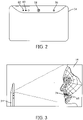
- the target/treatment site 14 a may be a buccal cavity area of the patient 14 corresponding to locations of the patient's actual teeth 74 ( FIG. 3 ).
- the orthodontic treatment 42 may be overlaid on a plain background on the display of the mobile device 54 or may be displayed directly on a screen of a smart glass worn by the clinician 10 without being superimposed in an augmented manner.
- patients' actual teeth 74 may be captured preferably three dimensionally and analyzed to determine any corrections needed as explained in the methods hereinafter.
- the display device 12 of FIG. 1 may be connected to or form part of a computer system 100.
- the computer system 100 may include the tracking system 2 and a processor 122.
- the tracking system 2 may alternatively be separate from the computer system 100 and may form at least part of any of the other devices, components, and/or systems discussed herein.
- the tracking system 2 may be electrically connected to a processor 122 and may offer real-time location data for a precise location and orientation of images and objects in a common coordinate system.
- the tracking system may be vision based, for example utilizing cameras of the camera system 3 for visual tracking of the face of the patient 14 , or characteristic points 63 ( FIG. 3 ) on the face of the patient 14 or predetermined markers (not shown) placed on the face of the patient, using for example object/pattern recognition.
- the processor 122 may be configured to receive real time three dimensional patient facial data, to analyze said data to obtain an orthodontic treatment 42 and to overlay said orthodontic treatment 42 on (i) the treatment site 14 a for viewing by the clinician 10 through the display 12 and/or (ii) on a region in a 3 D model or stereoscopic video of the patient corresponding to the treatment site 14.
- the clinician 10 and/or patient 14 may receive real-time proposed orthodontic treatments that possess depth and that may move/shift accordingly with changing facial expressions or locations of the patient 14 as if they were real teeth. This may be achieved, for example, by monitoring the characteristic points 63 in real time and showing or hiding portions of the displayed orthodontic treatments based on changes in locations of the characteristic points 63 caused by the changing facial expressions.
- Example facial expressions may include (a) smiling wherein the processor 122 may be configured to show all teeth or most teeth, (b) opening the mouth wherein the processor 122 may be configured to show the upper jaw to not be in contact with the lower jaw, (c) closing the mouth wherein the processor 122 may be configured to show no teeth, (d) biting wherein the processor 122 may be configured to show the upper jaw in contact with the lower jaw) etc.
- Overlaying of the orthodontic treatment 42 on the treatment site 14a or 3D model or stereo video of the treatment site may be performed dynamically and in real time and may be achieved by the processor 122 working in tandem with the tracking system 2 wherein changes in position of (i) the patient 14 and/or (ii) the clinician 10 , as well as changes in facial expressions of the patient 14 , captured by the tracking system 2 , may be translated into corresponding changes in positions of the overlaid orthodontic treatment 42 such that said orthodontic treatment 42 appears directly superimposed even as the patient 14 and/or or clinician 10 moves.
- the processor 122 may be configured to provide the further proposals until one is accepted.
- An accepted proposal may be stored for fabrication of aligners or for use in other orthodontic/dental treatments.
- the computer system 100 may include at least one computer processor 122 and may include a tracking system 2, user interface 126 and input unit 130.
- the input unit 130 in one exemplary embodiment may be used by the clinician 10 along with a display unit 128 such as a monitor to send instructions or requests about a treatment to the computer processor 122.
- the input unit 130 is a finger or stylus to be used on a touchscreen interface (not shown).
- the input unit 130 may alternatively be a gesture/voice recognition device, a trackball, a mouse or other input device such as a keyboard or stylus.
- the display unit 128 , the input unit 130 , and the computer processor 122 may collectively form the user interface 126.
- the computer processor 122 may include, for example, a central processing unit, a multiple processing unit, an application-specific integrated circuit ("ASIC"), a field programmable gate array (“FPGA”), or the like.
- the processor 122 may be connected to a communication infrastructure 124 (e.g., a communications bus, or a network).
- the processor 122 may receive a request for automatically calculating and displaying an orthodontic treatment 42 and may obtain instructions concerning the request from one or more storage units of the computer system 100.
- the processor 122 may then load said instructions and execute the loaded instructions such as using a database or artificial intelligence (AI) to obtain possible treatments for display.
- AI artificial intelligence
- One or more steps/procedures for proposing the orthodontic treatment 42 may be stored on a non-transitory storage device in the form of computer-readable program instructions.
- the processor 122 loads the appropriate instructions, as stored on a storage device, into memory and then executes the loaded instructions.
- the computer system 100 may further comprise a main memory 132 , which may be a random access memory ("RAM") and also may include a secondary memory 134.
- the secondary memory 134 may include, for example, a hard disk drive 136 and/or a removable-storage drive 138 (e.g., a floppy disk drive, a magnetic tape drive, an optical disk drive, a flash memory drive, and the like).
- the removable-storage drive 138 may read from and/or write to a removable storage unit 140 in a well-known manner.
- the removable storage unit 140 may be, for example, a floppy disk, a magnetic tape, an optical disk, a flash memory device, and the like, which may be written to and read from by the removable-storage drive 138.
- the removable storage unit 140 may include a non-transitory computer-readable storage medium storing computer-executable software instructions and/or data.
- the secondary memory 134 may include other computer-readable media storing computer-executable programs or other instructions to be loaded into the computer system 100.
- Such devices may include a removable storage unit 144 and an interface 142 (e.g., a program cartridge and a cartridge interface); a removable memory chip (e.g., an erasable programmable read-only memory (“EPROM”) or a programmable read-only memory (“PROM”)) and an associated memory socket; and other removable storage units 144 and interfaces 142 that allow software and data to be transferred from the removable storage unit 144 to other parts of the computer system 100.
- EPROM erasable programmable read-only memory
- PROM programmable read-only memory
- the computer system 100 also may include a communications interface 146 that enables software and data to be transferred between the computer system 100 and external devices.
- a communications interface may include a modem, a network interface (e.g., an Ethernet card or a wireless interface), a communications port (e.g., a Universal Serial Bus (“USB”) port or a FireWire ® port), a Personal Computer Memory Card International Association (“PCMCIA”) interface, Bluetooth ® , and the like.
- Software and data transferred via the communications interface 146 may be in the form of signals, which may be electronic, electromagnetic, optical or another type of signal that may be capable of being transmitted and/or received by the communications interface 146. Signals may be provided to the communications interface 146 via a communications path 148 (e.g., a channel).
- the communications path 148 may carry signals and may be implemented using wire or cable, fiber optics, a telephone line, a cellular link, a radio-frequency ("RF") link, or the like.
- the communications interface 146 may be used to transfer software or data or other information between the computer system 100 and a remote server or cloud-based storage (not shown).
- One or more computer programs or computer control logic may be stored in the main memory 132 and/or the secondary memory 134.
- the computer programs may also be received via the communications interface 146.
- the computer programs may include computer-executable instructions which, when executed by the computer processor 122 , cause the computer system 100 to perform the methods as described hereinafter.
- the software may be stored in a non-transitory computer-readable storage medium and loaded into the main memory 132 and/or the secondary memory 134 of the computer system 100 using the removable-storage drive 138 , the hard disk drive 136 , and/or the communications interface 146.
- Control logic when executed by the processor 122 , causes the computer system 100 , and more generally the system for visualizing an orthodontic treatment 1 , to perform all or some of the some of the methods described herein.
- the computer system 100 may be a mobile device 54 having an application that may be engaged by a user to propose and visualize orthodontic treatments 42.
- FIG. 5 shows a process 200 for proposing an orthodontic treatment.
- FIGS. 6a-7b show a three-dimensional facial data record 62 and a corresponding three-dimensional tooth data record 61 for correction of misaligned teeth.
- the process of proposing an orthodontic treatment 42 may start at Step S100 in FIG. 5 when a mobile device 54 or camera system 3 is engaged to capture a 3D facial data record 62 ( FIG. 6a ).
- a stereo video of the patient's face may alternatively be captured and object recognition methods may be used to detect anatomical features in the stereo video.
- characteristic points 63 FIG. 6b
- characteristic points 63 FIG. 6b
- the mouth or lips of the patient 14 may be recognized in Step S300.
- the facial recognition methods may also include methods as described in U.S. Patent No. US8831295B2, entitled “Electronic device configured to apply facial recognition based upon reflected infrared illumination and related methods" by Coons , U.S. Patent No. US7804997B2 entitled “Method and system for a three dimensional facial recognition system", by Geng et al , and U.S. Patent No. US8457367B1, entitled "Facial recognition” by Sipe et al.
- a three-dimensional direction 65 of the orientation of the patient's face in the three-dimensional facial data record 62 may be determined in Step S400 .
- a mouth area 64 between the lips of the patient 14 may be segmented and/or cut from the 3D facial data record 62 in Step S500.
- the three-dimensional representation of the actual teeth 66 of the patient 14 may also be extracted in Step S600 from the 3D facial data record 62. From the three-dimensional representation, it may also be determined if there is a misalignment (Step S700 ), through for example, automated measurements.
- the establishment of reference objects, reference frames and /or detection of anatomical dental features in the three-dimensional representation of the actual teeth 66 may allow for automatic dental measurements.
- the 3D representation of the patient's actual teeth 66 may be received from a previously created database or intraoral scan.
- Step S800 a proposed correction for the misaligned teeth may be obtained.
- instructions such as (i) predetermined instructions for correcting misalignments and/or (ii) instructions based on artificial intelligence may be to propose an orthodontic treatment. More specifically, in Step S800 , artificial intelligence data analysis may be used on the obtained dental measurements of Step S700 to diagnose an orthodontic condition and generate a set instructions for the processor 122 to propose a correction.
- the processor 122 may be configured to identify a location and position of a plurality of teeth of the 3D representation of the patient's actual teeth 66 and assign corresponding coordinates.
- the diagnosis may be based on or a best fit to one or more inputs, that may be compared with the 3D representation of the patient's actual teeth 66 such as inputs being derived from or otherwise based on ongoing patient treatments, past patient treatments (such as diagnostic data sets of a past treatment with each diagnostic data set comprising coordinates that correspond to known locations/positions of a plurality of teeth), scientific literature, textbooks etc.
- the processor 122 is configured to identify at least one treatment approach, a corrective appliance, corrected teeth, a combination thereof or otherwise orthodontic treatment 42 for at least one diagnosis, which may include calculating a set of target coordinates, which may represent a desired or corrected location or position of a tooth, and identifying at least one treatment approach, a corrective appliance, or a combination thereof, which may be at least partially effective in reorienting one or more teeth toward a location or position represented by one or more target coordinates.
- the method may also include determining a probability value that may be correlated with a relative likelihood of the orthodontic treatment 42 to be effective in reorienting one or more teeth to a location or position represented by a target, and may include employing an application of at least one artificial intelligence or other algorithm.
- Systems for employing artificial intelligence in treatment planning such as are described in US Patent No. 9788917B2, entitled "Methods and systems for employing artificial intelligence in automated orthodontic diagnosis and treatment planning" by James Mah .
- the orthodontic treatment 42 may preferably be a three-dimensional tooth data record 61 ( FIG. 7a ) corresponding to the corrected teeth which may be stored for use in further treatment procedures such as for designing aligners.
- the orthodontic treatment 42 may be rotated and overlaid (fully or partially or used to replace the 3D representation of the patient's actual teeth 66 on the mobile device 54 ) on the 3D facial data record 62 in such a way that the orientation of the orthodontic treatment 42 matches the 3D direction 65 of the orientation of the patient's face and the position matches the position of the mouth area 64.
- a relative orientation of the orthodontic treatment 42 to 3D direction 65 of the orientation of the patient's face may be established.
- the relationship may be established, for example, on the basis of existing teeth that will remain or teeth that are to be replaced.
- the relevant relationship data may be stored so that the orientation of the orthodontic treatment 42 may take place automatically when the patient moves.
- the 3D facial data record 62 may be colored due to the use of a color camera 62 in the smartphone and may also be updated in real time.
- the tracking system 2 may be used to continuously orient the orthodontic treatment as discussed hereinafter.
- the orthodontic treatment 42 is routed to a screen of the display device 12 such that the orthodontic treatment 42 appears directly superimposed on a treatment site 14a of the patient 14 in an augmented manner.
- data from the tracking system 2 including, for example, (i) real time data tracking changes in the patient's facial expressions 44 (e.g. smiling) (ii) real time data tracking clinician movements 46 , and/or (iii) real time data tracking patient movements 50 (e.g. changes in position), the augmented data (orthodontic treatment 42 ) routed to the display device 12 may be dynamically updated in real time for overlay on the treatment site 14a such that said orthodontic treatment 42 appears directly superimposed on said site.
- Said treatment site 14 a may be recognized using, for example, object recognition on data obtained from the camera system 3.
Landscapes
- Health & Medical Sciences (AREA)
- Engineering & Computer Science (AREA)
- General Health & Medical Sciences (AREA)
- Public Health (AREA)
- Life Sciences & Earth Sciences (AREA)
- Epidemiology (AREA)
- Physics & Mathematics (AREA)
- Oral & Maxillofacial Surgery (AREA)
- Veterinary Medicine (AREA)
- Animal Behavior & Ethology (AREA)
- Dentistry (AREA)
- General Physics & Mathematics (AREA)
- Theoretical Computer Science (AREA)
- Medical Informatics (AREA)
- Computer Vision & Pattern Recognition (AREA)
- General Engineering & Computer Science (AREA)
- Primary Health Care (AREA)
- Biomedical Technology (AREA)
- Biophysics (AREA)
- Pathology (AREA)
- Optics & Photonics (AREA)
- Software Systems (AREA)
- Computer Graphics (AREA)
- Computer Hardware Design (AREA)
- Spectroscopy & Molecular Physics (AREA)
- Multimedia (AREA)
- Nuclear Medicine, Radiotherapy & Molecular Imaging (AREA)
- Radiology & Medical Imaging (AREA)
- Audiology, Speech & Language Pathology (AREA)
- Quality & Reliability (AREA)
- Heart & Thoracic Surgery (AREA)
- Molecular Biology (AREA)
- Surgery (AREA)
- Data Mining & Analysis (AREA)
- Databases & Information Systems (AREA)
- Dental Tools And Instruments Or Auxiliary Dental Instruments (AREA)
Claims (9)
- Computerimplementiertes System (1) zum Vorschlagen und erweiterten Visualisieren einer kieferorthopädischen Behandlung, wobei das System Folgendes umfasst:eine Anzeigevorrichtung (12) zum erweiterten Visualisieren, wobei die Anzeigevorrichtung (12) eine Augmented-Reality-Glas- oder HUD-Anzeige umfasst;eine mobile Vorrichtung (54) mit einem Mittel zur Entfernungsmessung undmindestens einen Prozessor mit einem Programm, das so konfiguriert ist, dass das System (1) veranlasst wird, die folgenden Schritte durchzuführen:Aufnehmen eines dreidimensionalen Bildes eines Gesichts mit der mobilen Vorrichtung (54), um einen dreidimensionalen Gesichtsdatensatz zu erhalten;Segmentieren eines Mundbereichs des dreidimensionalen Gesichtsdatensatzes;Erhalten einer dreidimensionalen Darstellung tatsächlicher zu korrigierender Zähne;Bestimmen einer kieferorthopädischen Behandlung als dreidimensionaler Zahndatensatz basierend auf der erhaltenen dreidimensionalen Darstellung tatsächlicher Zähne; undÜberlagern der kieferorthopädischen Behandlung als eine Augmentation auf dem Mundbereich durch die Anzeigevorrichtung (12) zur erweiterten Visualisierung, sodass die kieferorthopädische Behandlung direkt auf dem Mundbereich überlagert erscheint.
- System nach Anspruch 1, wobei die mobile Vorrichtung (54) ferner ein Mittel zur Bewegungsverfolgung und/oder ein Mittel zur Farbmessung umfasst.
- System (1) nach Anspruch 1 oder 2, dadurch gekennzeichnet, dass der mindestens eine Prozessor ferner so konfiguriert ist, dass er die folgenden Schritte durchführt:Bestimmen charakteristischer Punkte innerhalb des dreidimensionalen Gesichtsdatensatzes,Bestimmen einer Ausrichtungsrichtung des Gesichts in dem dreidimensionalen Gesichtsdatensatz basierend auf den charakteristischen Punkten; undAusrichten der kieferorthopädischen Behandlung derart, dass ihre Richtung mit der Ausrichtungsrichtung des Gesichts in dem dreidimensionalen Gesichtsdatensatz übereinstimmt.
- System (1) nach einem der Ansprüche 1 bis 3, dadurch gekennzeichnet, dass der mindestens eine Prozessor ferner so konfiguriert ist, dass er die folgenden Schritte durchführt: Entwerfen einer Korrekturapparatur basierend auf der kieferorthopädischen Behandlung.
- System (1) nach einem der Ansprüche 1 bis 4, dadurch gekennzeichnet, dass die dreidimensionale Darstellung tatsächlicher Zähne durch eine Extraktion aus dem dreidimensionalen Bild des Gesichts oder durch einen Scan erhalten wird.
- System (1) nach einem der Ansprüche 1 bis 5, dadurch gekennzeichnet, dass der mindestens eine Prozessor ferner so konfiguriert ist, dass er die folgenden Schritte durchführt:Erstellen von Referenzobjekten/Referenzrahmen und/oder Erfassen von anatomischen Zahnmerkmalen in der dreidimensionalen Darstellung tatsächlich zu korrigierender Zähne; undBestimmen von Fehlstellungen der dreidimensionalen Darstellung tatsächlicher zu korrigierender Zähne durch Vergleichen der Referenzobjekte/Referenzrahmen und/oder anatomischer Zahnmerkmale mit Referenzdaten,wobei die Referenzdaten Daten einschließen, die aus laufenden Patientenbehandlungen, früheren Patientenbehandlungen, wissenschaftlicher Literatur und Lehrbüchern stammen.
- System (1) nach Anspruch 6, dadurch gekennzeichnet, dass die anatomischen Zahnmerkmale mindestens eines von Höckern, Graten, Rillen und Kontaktpunkten einschließen.
- System (1) nach einem der Ansprüche 1 bis 7, dadurch gekennzeichnet, dass der mindestens eine Prozessor ferner so konfiguriert ist, dass er den dreidimensionalen Gesichtsdatensatz basierend auf Daten von der mobilen Vorrichtung (54) einschließlich Echtzeitdaten, die Änderungen des Gesichtsausdrucks und/oder der Patientenbewegungen verfolgen, kontinuierlich aktualisiert.
- System (1) nach einem der Ansprüche 1 bis 8, wobei die kieferorthopädische Behandlung in Echtzeit bestimmt werden kann.
Priority Applications (9)
| Application Number | Priority Date | Filing Date | Title |
|---|---|---|---|
| EP19000053.9A EP3689287B1 (de) | 2019-01-30 | 2019-01-30 | System zum vorschlagen und visualisieren von zahnbehandlungen |
| JP2021536223A JP7472145B2 (ja) | 2019-01-30 | 2020-01-22 | 歯科治療を提案及び可視化するための方法及びシステム |
| PCT/EP2020/051468 WO2020156896A1 (en) | 2019-01-30 | 2020-01-22 | Method and system for proposing and visualizing dental treatments |
| CA3117881A CA3117881A1 (en) | 2019-01-30 | 2020-01-22 | Method and system for proposing and visualizing dental treatments |
| AU2020213847A AU2020213847B2 (en) | 2019-01-30 | 2020-01-22 | Method and system for proposing and visualizing dental treatments |
| BR112021008107-0A BR112021008107B1 (pt) | 2019-01-30 | 2020-01-22 | Sistema para propor e visualizar tratamentos dentários |
| US17/310,278 US11915378B2 (en) | 2019-01-30 | 2020-01-22 | Method and system for proposing and visualizing dental treatments |
| CN202080006739.7A CN113164237A (zh) | 2019-01-30 | 2020-01-22 | 用于提议和可视化牙科治疗的方法和系统 |
| KR1020217023863A KR102819705B1 (ko) | 2019-01-30 | 2020-01-22 | 치과 치료를 제안 및 시각화하기 위한 방법 및 시스템 |
Applications Claiming Priority (1)
| Application Number | Priority Date | Filing Date | Title |
|---|---|---|---|
| EP19000053.9A EP3689287B1 (de) | 2019-01-30 | 2019-01-30 | System zum vorschlagen und visualisieren von zahnbehandlungen |
Publications (2)
| Publication Number | Publication Date |
|---|---|
| EP3689287A1 EP3689287A1 (de) | 2020-08-05 |
| EP3689287B1 true EP3689287B1 (de) | 2022-07-27 |
Family
ID=65275921
Family Applications (1)
| Application Number | Title | Priority Date | Filing Date |
|---|---|---|---|
| EP19000053.9A Active EP3689287B1 (de) | 2019-01-30 | 2019-01-30 | System zum vorschlagen und visualisieren von zahnbehandlungen |
Country Status (8)
| Country | Link |
|---|---|
| US (1) | US11915378B2 (de) |
| EP (1) | EP3689287B1 (de) |
| JP (1) | JP7472145B2 (de) |
| KR (1) | KR102819705B1 (de) |
| CN (1) | CN113164237A (de) |
| AU (1) | AU2020213847B2 (de) |
| CA (1) | CA3117881A1 (de) |
| WO (1) | WO2020156896A1 (de) |
Families Citing this family (12)
| Publication number | Priority date | Publication date | Assignee | Title |
|---|---|---|---|---|
| EP3689287B1 (de) * | 2019-01-30 | 2022-07-27 | DENTSPLY SIRONA Inc. | System zum vorschlagen und visualisieren von zahnbehandlungen |
| US11937996B2 (en) * | 2019-11-05 | 2024-03-26 | Align Technology, Inc. | Face capture and intraoral scanner and methods of use |
| TWI712396B (zh) * | 2020-01-16 | 2020-12-11 | 中國醫藥大學 | 口腔缺陷模型之修補方法及口腔缺陷模型之修補系統 |
| FR3111066B1 (fr) * | 2020-06-06 | 2025-07-11 | Olivier Querbes | Procédé et dispositif de reconstruction tridimensionnelle d’un visage avec partie dentée à partir d’une seule image |
| KR102476832B1 (ko) * | 2020-08-10 | 2022-12-13 | 아주대학교산학협력단 | 증강현실 의료영상을 제공하기 위한 사용자 단말기 및 증강현실 의료영상 제공 방법 |
| EP4309142B1 (de) * | 2021-03-19 | 2025-10-29 | Digital Surgery Limited | Adaptive visualisierung kontextueller ziele in einem chirurgischen video |
| US20240169579A1 (en) * | 2021-03-19 | 2024-05-23 | Digital Surgery Limited | Prediction of structures in surgical data using machine learning |
| EP4113373A1 (de) * | 2021-07-01 | 2023-01-04 | DENTSPLY SIRONA Inc. | Dentale eingriffe |
| CN113516781B (zh) * | 2021-07-12 | 2025-09-19 | 先临三维科技股份有限公司 | 一种三维动态跟踪方法、装置、电子设备和存储介质 |
| WO2024049918A2 (en) * | 2022-08-30 | 2024-03-07 | Align Technology, Inc. | 3d facial reconstruction and visualization in dental treatment planning |
| KR102839446B1 (ko) * | 2023-04-10 | 2025-07-29 | 고려대학교 산학협력단 | Ar 기반의 치아 교정 보조 시스템 및 그 운용방법 |
| US20250252693A1 (en) * | 2024-02-07 | 2025-08-07 | Dentsply Sirona Inc. | Inraoral imaging before and after treatment |
Family Cites Families (22)
| Publication number | Priority date | Publication date | Assignee | Title |
|---|---|---|---|---|
| US20020082498A1 (en) | 2000-10-05 | 2002-06-27 | Siemens Corporate Research, Inc. | Intra-operative image-guided neurosurgery with augmented reality visualization |
| US9421074B2 (en) * | 2001-04-13 | 2016-08-23 | Orametrix, Inc. | Unified three dimensional virtual craniofacial and dentition model and uses thereof |
| JP4287646B2 (ja) * | 2002-12-26 | 2009-07-01 | 株式会社ミツトヨ | 画像読取装置 |
| US8126726B2 (en) * | 2004-02-27 | 2012-02-28 | Align Technology, Inc. | System and method for facilitating automated dental measurements and diagnostics |
| US7804997B2 (en) | 2004-06-10 | 2010-09-28 | Technest Holdings, Inc. | Method and system for a three dimensional facial recognition system |
| GB0707454D0 (en) * | 2007-04-18 | 2007-05-23 | Materialise Dental Nv | Computer-assisted creation of a custom tooth set-up using facial analysis |
| BRPI1009891B8 (pt) * | 2009-03-20 | 2021-06-22 | 3Shape As | sistema e método para planejamento, visualização e otimização de restaurações dentárias |
| US9788917B2 (en) | 2010-03-17 | 2017-10-17 | ClearCorrect Holdings, Inc. | Methods and systems for employing artificial intelligence in automated orthodontic diagnosis and treatment planning |
| US8831295B2 (en) | 2012-03-21 | 2014-09-09 | Authentec, Inc. | Electronic device configured to apply facial recognition based upon reflected infrared illumination and related methods |
| US8457367B1 (en) | 2012-06-26 | 2013-06-04 | Google Inc. | Facial recognition |
| US10166091B2 (en) * | 2014-02-21 | 2019-01-01 | Trispera Dental Inc. | Augmented reality dental design method and system |
| EP4383272A3 (de) | 2014-02-21 | 2024-11-20 | The University of Akron | Bildgebungs- und anzeigesystem zur führung medizinischer eingriffe |
| US9675305B2 (en) | 2014-06-03 | 2017-06-13 | Ortho-Tain | System and method for determining an orthodontic diagnostic analysis of a patient |
| US10154239B2 (en) | 2014-12-30 | 2018-12-11 | Onpoint Medical, Inc. | Image-guided surgery with surface reconstruction and augmented reality visualization |
| FR3032282B1 (fr) * | 2015-02-03 | 2018-09-14 | Francois Duret | Dispositif de visualisation de l'interieur d'une bouche |
| DE102015222782A1 (de) * | 2015-11-18 | 2017-05-18 | Sirona Dental Systems Gmbh | Verfahren zur Visualisierung einer Zahnsituation |
| JP2017221329A (ja) * | 2016-06-14 | 2017-12-21 | 医療法人社団秀信会 | 2次元画像を用いて生体の下顎開閉軸とバーチャル咬合器の開閉軸を一致させる方法 |
| US10467815B2 (en) * | 2016-12-16 | 2019-11-05 | Align Technology, Inc. | Augmented reality planning and viewing of dental treatment outcomes |
| US10758322B2 (en) * | 2017-03-20 | 2020-09-01 | Align Technology, Inc. | Virtually representing an orthodontic treatment outcome using automated detection of facial and dental reference objects |
| EP3689287B1 (de) * | 2019-01-30 | 2022-07-27 | DENTSPLY SIRONA Inc. | System zum vorschlagen und visualisieren von zahnbehandlungen |
| EP3946139B1 (de) * | 2019-03-26 | 2024-10-30 | Cvstom Co. | Verfahren und systeme zur planung kieferorthopädischer behandlungen |
| JP2022533654A (ja) * | 2019-05-16 | 2022-07-25 | アルタ・スマイルズ・エルエルシー | 歯列矯正治療のための分析および予測モデル |
-
2019
- 2019-01-30 EP EP19000053.9A patent/EP3689287B1/de active Active
-
2020
- 2020-01-22 WO PCT/EP2020/051468 patent/WO2020156896A1/en not_active Ceased
- 2020-01-22 AU AU2020213847A patent/AU2020213847B2/en active Active
- 2020-01-22 KR KR1020217023863A patent/KR102819705B1/ko active Active
- 2020-01-22 JP JP2021536223A patent/JP7472145B2/ja active Active
- 2020-01-22 CN CN202080006739.7A patent/CN113164237A/zh active Pending
- 2020-01-22 CA CA3117881A patent/CA3117881A1/en active Pending
- 2020-01-22 US US17/310,278 patent/US11915378B2/en active Active
Also Published As
| Publication number | Publication date |
|---|---|
| WO2020156896A1 (en) | 2020-08-06 |
| JP2022519987A (ja) | 2022-03-28 |
| US11915378B2 (en) | 2024-02-27 |
| KR102819705B1 (ko) | 2025-06-12 |
| AU2020213847A1 (en) | 2021-05-27 |
| CA3117881A1 (en) | 2020-08-06 |
| BR112021008107A2 (pt) | 2021-08-03 |
| CN113164237A (zh) | 2021-07-23 |
| AU2020213847B2 (en) | 2024-08-29 |
| KR20210121050A (ko) | 2021-10-07 |
| US20220139044A1 (en) | 2022-05-05 |
| JP7472145B2 (ja) | 2024-04-22 |
| EP3689287A1 (de) | 2020-08-05 |
Similar Documents
| Publication | Publication Date | Title |
|---|---|---|
| AU2020213847B2 (en) | Method and system for proposing and visualizing dental treatments | |
| US12303110B2 (en) | Method and system for guiding an intra-oral scan | |
| EP3817684B1 (de) | System für durch erweiterte realität geführte chirurgie | |
| AU2016290620B2 (en) | System and method for scanning anatomical structures and for displaying a scanning result | |
| US11445165B1 (en) | Method, system and computer readable storage media for visualizing a magnified dental treatment site | |
| AU2020213863B2 (en) | Method and system for controlling dental machines | |
| BR112021008107B1 (pt) | Sistema para propor e visualizar tratamentos dentários |
Legal Events
| Date | Code | Title | Description |
|---|---|---|---|
| PUAI | Public reference made under article 153(3) epc to a published international application that has entered the european phase |
Free format text: ORIGINAL CODE: 0009012 |
|
| STAA | Information on the status of an ep patent application or granted ep patent |
Free format text: STATUS: THE APPLICATION HAS BEEN PUBLISHED |
|
| AK | Designated contracting states |
Kind code of ref document: A1 Designated state(s): AL AT BE BG CH CY CZ DE DK EE ES FI FR GB GR HR HU IE IS IT LI LT LU LV MC MK MT NL NO PL PT RO RS SE SI SK SM TR |
|
| AX | Request for extension of the european patent |
Extension state: BA ME |
|
| STAA | Information on the status of an ep patent application or granted ep patent |
Free format text: STATUS: REQUEST FOR EXAMINATION WAS MADE |
|
| 17P | Request for examination filed |
Effective date: 20210205 |
|
| RBV | Designated contracting states (corrected) |
Designated state(s): AL AT BE BG CH CY CZ DE DK EE ES FI FR GB GR HR HU IE IS IT LI LT LU LV MC MK MT NL NO PL PT RO RS SE SI SK SM TR |
|
| STAA | Information on the status of an ep patent application or granted ep patent |
Free format text: STATUS: EXAMINATION IS IN PROGRESS |
|
| 17Q | First examination report despatched |
Effective date: 20210521 |
|
| GRAP | Despatch of communication of intention to grant a patent |
Free format text: ORIGINAL CODE: EPIDOSNIGR1 |
|
| STAA | Information on the status of an ep patent application or granted ep patent |
Free format text: STATUS: GRANT OF PATENT IS INTENDED |
|
| INTG | Intention to grant announced |
Effective date: 20220309 |
|
| GRAS | Grant fee paid |
Free format text: ORIGINAL CODE: EPIDOSNIGR3 |
|
| GRAA | (expected) grant |
Free format text: ORIGINAL CODE: 0009210 |
|
| STAA | Information on the status of an ep patent application or granted ep patent |
Free format text: STATUS: THE PATENT HAS BEEN GRANTED |
|
| AK | Designated contracting states |
Kind code of ref document: B1 Designated state(s): AL AT BE BG CH CY CZ DE DK EE ES FI FR GB GR HR HU IE IS IT LI LT LU LV MC MK MT NL NO PL PT RO RS SE SI SK SM TR |
|
| REG | Reference to a national code |
Ref country code: CH Ref legal event code: EP |
|
| REG | Reference to a national code |
Ref country code: DE Ref legal event code: R096 Ref document number: 602019017334 Country of ref document: DE |
|
| REG | Reference to a national code |
Ref country code: AT Ref legal event code: REF Ref document number: 1506564 Country of ref document: AT Kind code of ref document: T Effective date: 20220815 |
|
| REG | Reference to a national code |
Ref country code: IE Ref legal event code: FG4D |
|
| REG | Reference to a national code |
Ref country code: LT Ref legal event code: MG9D |
|
| REG | Reference to a national code |
Ref country code: NL Ref legal event code: MP Effective date: 20220727 |
|
| PG25 | Lapsed in a contracting state [announced via postgrant information from national office to epo] |
Ref country code: SE Free format text: LAPSE BECAUSE OF FAILURE TO SUBMIT A TRANSLATION OF THE DESCRIPTION OR TO PAY THE FEE WITHIN THE PRESCRIBED TIME-LIMIT Effective date: 20220727 Ref country code: RS Free format text: LAPSE BECAUSE OF FAILURE TO SUBMIT A TRANSLATION OF THE DESCRIPTION OR TO PAY THE FEE WITHIN THE PRESCRIBED TIME-LIMIT Effective date: 20220727 Ref country code: PT Free format text: LAPSE BECAUSE OF FAILURE TO SUBMIT A TRANSLATION OF THE DESCRIPTION OR TO PAY THE FEE WITHIN THE PRESCRIBED TIME-LIMIT Effective date: 20221128 Ref country code: NO Free format text: LAPSE BECAUSE OF FAILURE TO SUBMIT A TRANSLATION OF THE DESCRIPTION OR TO PAY THE FEE WITHIN THE PRESCRIBED TIME-LIMIT Effective date: 20221027 Ref country code: NL Free format text: LAPSE BECAUSE OF FAILURE TO SUBMIT A TRANSLATION OF THE DESCRIPTION OR TO PAY THE FEE WITHIN THE PRESCRIBED TIME-LIMIT Effective date: 20220727 Ref country code: LV Free format text: LAPSE BECAUSE OF FAILURE TO SUBMIT A TRANSLATION OF THE DESCRIPTION OR TO PAY THE FEE WITHIN THE PRESCRIBED TIME-LIMIT Effective date: 20220727 Ref country code: LT Free format text: LAPSE BECAUSE OF FAILURE TO SUBMIT A TRANSLATION OF THE DESCRIPTION OR TO PAY THE FEE WITHIN THE PRESCRIBED TIME-LIMIT Effective date: 20220727 Ref country code: FI Free format text: LAPSE BECAUSE OF FAILURE TO SUBMIT A TRANSLATION OF THE DESCRIPTION OR TO PAY THE FEE WITHIN THE PRESCRIBED TIME-LIMIT Effective date: 20220727 Ref country code: ES Free format text: LAPSE BECAUSE OF FAILURE TO SUBMIT A TRANSLATION OF THE DESCRIPTION OR TO PAY THE FEE WITHIN THE PRESCRIBED TIME-LIMIT Effective date: 20220727 |
|
| PG25 | Lapsed in a contracting state [announced via postgrant information from national office to epo] |
Ref country code: PL Free format text: LAPSE BECAUSE OF FAILURE TO SUBMIT A TRANSLATION OF THE DESCRIPTION OR TO PAY THE FEE WITHIN THE PRESCRIBED TIME-LIMIT Effective date: 20220727 Ref country code: IS Free format text: LAPSE BECAUSE OF FAILURE TO SUBMIT A TRANSLATION OF THE DESCRIPTION OR TO PAY THE FEE WITHIN THE PRESCRIBED TIME-LIMIT Effective date: 20221127 Ref country code: HR Free format text: LAPSE BECAUSE OF FAILURE TO SUBMIT A TRANSLATION OF THE DESCRIPTION OR TO PAY THE FEE WITHIN THE PRESCRIBED TIME-LIMIT Effective date: 20220727 Ref country code: GR Free format text: LAPSE BECAUSE OF FAILURE TO SUBMIT A TRANSLATION OF THE DESCRIPTION OR TO PAY THE FEE WITHIN THE PRESCRIBED TIME-LIMIT Effective date: 20221028 |
|
| PG25 | Lapsed in a contracting state [announced via postgrant information from national office to epo] |
Ref country code: SM Free format text: LAPSE BECAUSE OF FAILURE TO SUBMIT A TRANSLATION OF THE DESCRIPTION OR TO PAY THE FEE WITHIN THE PRESCRIBED TIME-LIMIT Effective date: 20220727 Ref country code: RO Free format text: LAPSE BECAUSE OF FAILURE TO SUBMIT A TRANSLATION OF THE DESCRIPTION OR TO PAY THE FEE WITHIN THE PRESCRIBED TIME-LIMIT Effective date: 20220727 Ref country code: DK Free format text: LAPSE BECAUSE OF FAILURE TO SUBMIT A TRANSLATION OF THE DESCRIPTION OR TO PAY THE FEE WITHIN THE PRESCRIBED TIME-LIMIT Effective date: 20220727 Ref country code: CZ Free format text: LAPSE BECAUSE OF FAILURE TO SUBMIT A TRANSLATION OF THE DESCRIPTION OR TO PAY THE FEE WITHIN THE PRESCRIBED TIME-LIMIT Effective date: 20220727 |
|
| REG | Reference to a national code |
Ref country code: DE Ref legal event code: R097 Ref document number: 602019017334 Country of ref document: DE |
|
| PG25 | Lapsed in a contracting state [announced via postgrant information from national office to epo] |
Ref country code: SK Free format text: LAPSE BECAUSE OF FAILURE TO SUBMIT A TRANSLATION OF THE DESCRIPTION OR TO PAY THE FEE WITHIN THE PRESCRIBED TIME-LIMIT Effective date: 20220727 Ref country code: EE Free format text: LAPSE BECAUSE OF FAILURE TO SUBMIT A TRANSLATION OF THE DESCRIPTION OR TO PAY THE FEE WITHIN THE PRESCRIBED TIME-LIMIT Effective date: 20220727 |
|
| PLBE | No opposition filed within time limit |
Free format text: ORIGINAL CODE: 0009261 |
|
| STAA | Information on the status of an ep patent application or granted ep patent |
Free format text: STATUS: NO OPPOSITION FILED WITHIN TIME LIMIT |
|
| P01 | Opt-out of the competence of the unified patent court (upc) registered |
Effective date: 20230509 |
|
| PG25 | Lapsed in a contracting state [announced via postgrant information from national office to epo] |
Ref country code: AL Free format text: LAPSE BECAUSE OF FAILURE TO SUBMIT A TRANSLATION OF THE DESCRIPTION OR TO PAY THE FEE WITHIN THE PRESCRIBED TIME-LIMIT Effective date: 20220727 |
|
| 26N | No opposition filed |
Effective date: 20230502 |
|
| PG25 | Lapsed in a contracting state [announced via postgrant information from national office to epo] |
Ref country code: SI Free format text: LAPSE BECAUSE OF FAILURE TO SUBMIT A TRANSLATION OF THE DESCRIPTION OR TO PAY THE FEE WITHIN THE PRESCRIBED TIME-LIMIT Effective date: 20220727 |
|
| REG | Reference to a national code |
Ref country code: AT Ref legal event code: UEP Ref document number: 1506564 Country of ref document: AT Kind code of ref document: T Effective date: 20220727 |
|
| PG25 | Lapsed in a contracting state [announced via postgrant information from national office to epo] |
Ref country code: LU Free format text: LAPSE BECAUSE OF NON-PAYMENT OF DUE FEES Effective date: 20230130 |
|
| REG | Reference to a national code |
Ref country code: BE Ref legal event code: MM Effective date: 20230131 |
|
| PG25 | Lapsed in a contracting state [announced via postgrant information from national office to epo] |
Ref country code: BE Free format text: LAPSE BECAUSE OF NON-PAYMENT OF DUE FEES Effective date: 20230131 |
|
| PG25 | Lapsed in a contracting state [announced via postgrant information from national office to epo] |
Ref country code: IE Free format text: LAPSE BECAUSE OF NON-PAYMENT OF DUE FEES Effective date: 20230130 |
|
| PG25 | Lapsed in a contracting state [announced via postgrant information from national office to epo] |
Ref country code: IT Free format text: LAPSE BECAUSE OF FAILURE TO SUBMIT A TRANSLATION OF THE DESCRIPTION OR TO PAY THE FEE WITHIN THE PRESCRIBED TIME-LIMIT Effective date: 20220727 |
|
| PG25 | Lapsed in a contracting state [announced via postgrant information from national office to epo] |
Ref country code: MC Free format text: LAPSE BECAUSE OF FAILURE TO SUBMIT A TRANSLATION OF THE DESCRIPTION OR TO PAY THE FEE WITHIN THE PRESCRIBED TIME-LIMIT Effective date: 20220727 |
|
| PG25 | Lapsed in a contracting state [announced via postgrant information from national office to epo] |
Ref country code: MC Free format text: LAPSE BECAUSE OF FAILURE TO SUBMIT A TRANSLATION OF THE DESCRIPTION OR TO PAY THE FEE WITHIN THE PRESCRIBED TIME-LIMIT Effective date: 20220727 |
|
| PG25 | Lapsed in a contracting state [announced via postgrant information from national office to epo] |
Ref country code: BG Free format text: LAPSE BECAUSE OF FAILURE TO SUBMIT A TRANSLATION OF THE DESCRIPTION OR TO PAY THE FEE WITHIN THE PRESCRIBED TIME-LIMIT Effective date: 20220727 |
|
| PG25 | Lapsed in a contracting state [announced via postgrant information from national office to epo] |
Ref country code: BG Free format text: LAPSE BECAUSE OF FAILURE TO SUBMIT A TRANSLATION OF THE DESCRIPTION OR TO PAY THE FEE WITHIN THE PRESCRIBED TIME-LIMIT Effective date: 20220727 |
|
| PGFP | Annual fee paid to national office [announced via postgrant information from national office to epo] |
Ref country code: CH Payment date: 20250201 Year of fee payment: 7 |
|
| PG25 | Lapsed in a contracting state [announced via postgrant information from national office to epo] |
Ref country code: CY Free format text: LAPSE BECAUSE OF FAILURE TO SUBMIT A TRANSLATION OF THE DESCRIPTION OR TO PAY THE FEE WITHIN THE PRESCRIBED TIME-LIMIT; INVALID AB INITIO Effective date: 20190130 |
|
| PG25 | Lapsed in a contracting state [announced via postgrant information from national office to epo] |
Ref country code: HU Free format text: LAPSE BECAUSE OF FAILURE TO SUBMIT A TRANSLATION OF THE DESCRIPTION OR TO PAY THE FEE WITHIN THE PRESCRIBED TIME-LIMIT; INVALID AB INITIO Effective date: 20190130 |
|
| PG25 | Lapsed in a contracting state [announced via postgrant information from national office to epo] |
Ref country code: TR Free format text: LAPSE BECAUSE OF FAILURE TO SUBMIT A TRANSLATION OF THE DESCRIPTION OR TO PAY THE FEE WITHIN THE PRESCRIBED TIME-LIMIT Effective date: 20220727 |
|
| PGFP | Annual fee paid to national office [announced via postgrant information from national office to epo] |
Ref country code: GB Payment date: 20251220 Year of fee payment: 8 |
|
| PGFP | Annual fee paid to national office [announced via postgrant information from national office to epo] |
Ref country code: FR Payment date: 20251218 Year of fee payment: 8 |
|
| REG | Reference to a national code |
Ref country code: CH Ref legal event code: U11 Free format text: ST27 STATUS EVENT CODE: U-0-0-U10-U11 (AS PROVIDED BY THE NATIONAL OFFICE) Effective date: 20260201 |
|
| PGFP | Annual fee paid to national office [announced via postgrant information from national office to epo] |
Ref country code: DE Payment date: 20251217 Year of fee payment: 8 |
|
| PGFP | Annual fee paid to national office [announced via postgrant information from national office to epo] |
Ref country code: AT Payment date: 20251218 Year of fee payment: 8 |