EP3689923B1 - Procédé et dispositif de préparation d'un polymère de composé aromatique de vinyle-composé de cyanure de vinyle - Google Patents
Procédé et dispositif de préparation d'un polymère de composé aromatique de vinyle-composé de cyanure de vinyle Download PDFInfo
- Publication number
- EP3689923B1 EP3689923B1 EP19824186.1A EP19824186A EP3689923B1 EP 3689923 B1 EP3689923 B1 EP 3689923B1 EP 19824186 A EP19824186 A EP 19824186A EP 3689923 B1 EP3689923 B1 EP 3689923B1
- Authority
- EP
- European Patent Office
- Prior art keywords
- condenser
- volatile components
- organic solvent
- aromatic vinyl
- spraying
- Prior art date
- Legal status (The legal status is an assumption and is not a legal conclusion. Google has not performed a legal analysis and makes no representation as to the accuracy of the status listed.)
- Active
Links
Images
Classifications
-
- C—CHEMISTRY; METALLURGY
- C08—ORGANIC MACROMOLECULAR COMPOUNDS; THEIR PREPARATION OR CHEMICAL WORKING-UP; COMPOSITIONS BASED THEREON
- C08F—MACROMOLECULAR COMPOUNDS OBTAINED BY REACTIONS ONLY INVOLVING CARBON-TO-CARBON UNSATURATED BONDS
- C08F6/00—Post-polymerisation treatments
- C08F6/001—Removal of residual monomers by physical means
-
- B—PERFORMING OPERATIONS; TRANSPORTING
- B01—PHYSICAL OR CHEMICAL PROCESSES OR APPARATUS IN GENERAL
- B01D—SEPARATION
- B01D3/00—Distillation or related exchange processes in which liquids are contacted with gaseous media, e.g. stripping
- B01D3/10—Vacuum distillation
-
- C—CHEMISTRY; METALLURGY
- C08—ORGANIC MACROMOLECULAR COMPOUNDS; THEIR PREPARATION OR CHEMICAL WORKING-UP; COMPOSITIONS BASED THEREON
- C08F—MACROMOLECULAR COMPOUNDS OBTAINED BY REACTIONS ONLY INVOLVING CARBON-TO-CARBON UNSATURATED BONDS
- C08F220/00—Copolymers of compounds having one or more unsaturated aliphatic radicals, each having only one carbon-to-carbon double bond, and only one being terminated by only one carboxyl radical or a salt, anhydride ester, amide, imide or nitrile thereof
- C08F220/02—Monocarboxylic acids having less than ten carbon atoms; Derivatives thereof
- C08F220/10—Esters
-
- B—PERFORMING OPERATIONS; TRANSPORTING
- B01—PHYSICAL OR CHEMICAL PROCESSES OR APPARATUS IN GENERAL
- B01D—SEPARATION
- B01D5/00—Condensation of vapours; Recovering volatile solvents by condensation
- B01D5/0027—Condensation of vapours; Recovering volatile solvents by condensation by direct contact between vapours or gases and the cooling medium
-
- B—PERFORMING OPERATIONS; TRANSPORTING
- B01—PHYSICAL OR CHEMICAL PROCESSES OR APPARATUS IN GENERAL
- B01D—SEPARATION
- B01D5/00—Condensation of vapours; Recovering volatile solvents by condensation
- B01D5/0057—Condensation of vapours; Recovering volatile solvents by condensation in combination with other processes
- B01D5/006—Condensation of vapours; Recovering volatile solvents by condensation in combination with other processes with evaporation or distillation
-
- C—CHEMISTRY; METALLURGY
- C08—ORGANIC MACROMOLECULAR COMPOUNDS; THEIR PREPARATION OR CHEMICAL WORKING-UP; COMPOSITIONS BASED THEREON
- C08F—MACROMOLECULAR COMPOUNDS OBTAINED BY REACTIONS ONLY INVOLVING CARBON-TO-CARBON UNSATURATED BONDS
- C08F2/00—Processes of polymerisation
- C08F2/01—Processes of polymerisation characterised by special features of the polymerisation apparatus used
-
- C—CHEMISTRY; METALLURGY
- C08—ORGANIC MACROMOLECULAR COMPOUNDS; THEIR PREPARATION OR CHEMICAL WORKING-UP; COMPOSITIONS BASED THEREON
- C08F—MACROMOLECULAR COMPOUNDS OBTAINED BY REACTIONS ONLY INVOLVING CARBON-TO-CARBON UNSATURATED BONDS
- C08F212/00—Copolymers of compounds having one or more unsaturated aliphatic radicals, each having only one carbon-to-carbon double bond, and at least one being terminated by an aromatic carbocyclic ring
- C08F212/02—Monomers containing only one unsaturated aliphatic radical
- C08F212/04—Monomers containing only one unsaturated aliphatic radical containing one ring
- C08F212/06—Hydrocarbons
- C08F212/08—Styrene
- C08F212/10—Styrene with nitriles
-
- C—CHEMISTRY; METALLURGY
- C08—ORGANIC MACROMOLECULAR COMPOUNDS; THEIR PREPARATION OR CHEMICAL WORKING-UP; COMPOSITIONS BASED THEREON
- C08F—MACROMOLECULAR COMPOUNDS OBTAINED BY REACTIONS ONLY INVOLVING CARBON-TO-CARBON UNSATURATED BONDS
- C08F6/00—Post-polymerisation treatments
- C08F6/001—Removal of residual monomers by physical means
- C08F6/003—Removal of residual monomers by physical means from polymer solutions, suspensions, dispersions or emulsions without recovery of the polymer therefrom
-
- C—CHEMISTRY; METALLURGY
- C08—ORGANIC MACROMOLECULAR COMPOUNDS; THEIR PREPARATION OR CHEMICAL WORKING-UP; COMPOSITIONS BASED THEREON
- C08F—MACROMOLECULAR COMPOUNDS OBTAINED BY REACTIONS ONLY INVOLVING CARBON-TO-CARBON UNSATURATED BONDS
- C08F6/00—Post-polymerisation treatments
- C08F6/14—Treatment of polymer emulsions
- C08F6/20—Concentration
-
- C—CHEMISTRY; METALLURGY
- C08—ORGANIC MACROMOLECULAR COMPOUNDS; THEIR PREPARATION OR CHEMICAL WORKING-UP; COMPOSITIONS BASED THEREON
- C08F—MACROMOLECULAR COMPOUNDS OBTAINED BY REACTIONS ONLY INVOLVING CARBON-TO-CARBON UNSATURATED BONDS
- C08F220/00—Copolymers of compounds having one or more unsaturated aliphatic radicals, each having only one carbon-to-carbon double bond, and only one being terminated by only one carboxyl radical or a salt, anhydride ester, amide, imide or nitrile thereof
- C08F220/02—Monocarboxylic acids having less than ten carbon atoms; Derivatives thereof
- C08F220/42—Nitriles
- C08F220/44—Acrylonitrile
Definitions
- the present invention relates to a method of preparing an aromatic vinyl compound-vinyl cyanide compound polymer and an apparatus for preparing the same. More specifically, the present invention relates to a method of preparing an aromatic vinyl compound-vinyl cyanide compound polymer including a step of separating volatile components from a polymerization product containing an aromatic vinyl compound-vinyl cyanide compound polymer, a residual aromatic vinyl monomer, a residual vinyl cyanide monomer, and an organic solvent using a volatilization tank; and a step of condensing the separated volatile components using one condenser or two or more condensers connected in series, wherein the method includes a step of spraying an organic solvent onto the separated volatile components being transferred from the volatilization tank to the condenser; or a step of spraying an organic solvent or an aromatic vinyl monomer onto the volatile components not being condensed in a first condenser and being transferred to a second condenser when the two or more condensers connected in series are used, and
- aromatic vinyl compound-vinyl cyanide compound polymers have excellent moldability, rigidity, and electrical properties, and thus are widely used in various fields including office automation (OA) equipment such as computers, printers, and copiers, home appliances such as televisions and audio systems, electric and electronic components, and general goods.
- OA office automation
- aromatic vinyl compound-vinyl cyanide compound polymers having improved heat resistance have been used in home appliances, interior materials for housing and automobiles, and the like due to the properties thereof of being not deformed at high temperature.
- An aromatic vinyl compound-vinyl cyanide compound polymer is prepared by reacting an aromatic vinyl compound and a vinyl cyanide compound in an organic solvent. As a result of the reaction, a polymerization product containing the aromatic vinyl compound-vinyl cyanide compound polymer is obtained. In this case, in addition to the final product, monomers and the organic solvent remain in the polymerization product. Accordingly, a process for removing the residual monomers and organic solvent is essential.
- polymerization is performed in a reactor; a polymerization product discharged from the reactor after polymerization is transferred to a volatilization tank, and volatile components such as residual monomers and organic solvents and an aromatic vinyl compound-vinyl cyanide compound polymer are separated from each other in the volatilization tank; and condensation of the separated volatile components is performed using a condenser, and purification is performed to obtain a final product, an aromatic vinyl compound-vinyl cyanide compound polymer.
- condensation efficiency can be improved by increasing the pressure in the condensers and lowering the temperature of a refrigerant.
- condensation efficiency can be improved by increasing the pressure in the condensers and lowering the temperature of a refrigerant.
- due to installation limitations there is a limit in lowering the temperature of a supplied refrigerant, resulting in discharge of uncondensed volatile components.
- condensation efficiency is lowered.
- Uncondensed volatile components are discharged to the stream through a wastewater treatment system or to the atmosphere.
- wastewater treatment incurs significant costs, and the discharged volatile components cause environmental pollution.
- Patent Document 1 KR 10-2007-0073028 A
- the present invention has been made in view of the above problems, and it is one object of the present invention to provide a method of preparing an aromatic vinyl compound-vinyl cyanide compound polymer including a step of separating volatile components from a polymerization product containing an aromatic vinyl compound-vinyl cyanide compound polymer, a residual aromatic vinyl monomer, a residual vinyl cyanide monomer, and an organic solvent using a volatilization tank; and a step of condensing the separated volatile components using one condenser or two or more condensers connected in series, wherein the method includes a step of spraying an organic solvent onto the separated volatile components being transferred from the volatilization tank to the condenser; or a step of spraying an organic solvent or an aromatic vinyl monomer onto the volatile components not being condensed in a first condenser and being transferred to a second condenser when the two or more condensers connected in series are used, and an apparatus for preparing the aromatic vinyl compound-vinyl cyanide compound polymer
- a method of preparing an aromatic vinyl compound-vinyl cyanide compound polymer including separating volatile components from a polymerization product containing an aromatic vinyl compound-vinyl cyanide compound polymer, a residual aromatic vinyl monomer, a residual vinyl cyanide monomer, and an organic solvent using a volatilization tank; and condensing the separated volatile components using one condenser or two or more condensers connected in series, wherein the method includes spraying an organic solvent onto the separated volatile components being transferred from the volatilization tank to the condenser; or spraying an organic solvent or an aromatic vinyl monomer onto the volatile components not being condensed in a first condenser and being transferred to a second condenser when the two or more condensers connected in series are used, wherein the organic solvent includes one or more selected from the group consisting of toluene, ethylbenzene, xylene, methylethylketon, and isobut
- an apparatus for preparing an aromatic vinyl compound-vinyl cyanide compound polymer including a volatilization tank for separating volatile components from a polymerization product containing an aromatic vinyl compound-vinyl cyanide compound polymer, a residual aromatic vinyl monomer, a residual vinyl cyanide monomer, and an organic solvent; and one condenser or two or more condensers connected in series for condensing the separated volatile components, wherein the apparatus includes a spray means for spraying an organic solvent into a transfer pipe for transferring the separated volatile components to the condenser; or a spray means for spraying an organic solvent or an aromatic vinyl monomer into a transfer pipe for transferring the volatile components, which have not been condensed in a first condenser, to a second condenser, when the two or more condensers connected in series are included.
- an aromatic vinyl compound-vinyl cyanide compound polymer when an aromatic vinyl compound-vinyl cyanide compound polymer is prepared, an organic solvent or an aromatic vinyl monomer is sprayed onto volatile components being transferred to a first condenser or the volatile components not being condensed in the first condenser and being transferred to a second condenser without replacing equipment.
- an organic solvent or an aromatic vinyl monomer is sprayed onto volatile components being transferred to a first condenser or the volatile components not being condensed in the first condenser and being transferred to a second condenser without replacing equipment.
- the method of preparing an aromatic vinyl compound-vinyl cyanide compound polymer according to the present invention is as follows.
- the method of preparing an aromatic vinyl compound-vinyl cyanide compound polymer according to the present invention includes a step of separating volatile components from a polymerization product containing an aromatic vinyl compound-vinyl cyanide compound polymer, a residual aromatic vinyl monomer, a residual vinyl cyanide monomer, and an organic solvent using a volatilization tank; and a step of condensing the separated volatile components using one condenser or two or more condensers connected in series, wherein the method includes a step of spraying an organic solvent onto the separated volatile components being transferred from the volatilization tank to the condenser; or a step of spraying an organic solvent or an aromatic vinyl monomer onto the volatile components not being condensed in a first condenser and being transferred to a second condenser when the two or more condensers connected in series are used. According to the method of the present invention, condensation efficiency may be improved, and the amount of volatile components discharged may be significantly reduced.
- the first and second condensers may be any two condensers of two or more condensers connected in series, respectively.
- the first condenser may be the condenser of the first stage
- the second condenser may be the condenser of the second stage.
- the method of preparing an aromatic vinyl compound-vinyl cyanide compound polymer according to the present invention includes a step of separating volatile components from a polymerization product containing an aromatic vinyl compound-vinyl cyanide compound polymer, a residual aromatic vinyl monomer, a residual vinyl cyanide monomer, and an organic solvent using a volatilization tank; and a step of condensing the separated volatile components using two or more condensers connected in series, wherein the method includes a step of spraying an organic solvent onto volatile components being transferred to a first condenser after being separated in the volatilization tank; or a step of spraying an organic solvent or an aromatic vinyl monomer onto the volatile components not being condensed in the first condenser and being transferred to a second condenser.
- condensation efficiency may be improved, thereby reducing the amount of the volatile components discharged.
- the method of preparing an aromatic vinyl compound-vinyl cyanide compound polymer may include a step of spraying an organic solvent onto volatile components being transferred to a first condenser after being separated in the volatilization tank; and a step of spraying an organic solvent or an aromatic vinyl monomer onto the volatile components not being condensed in the first condenser and being transferred to a second condenser.
- condensation efficiency may be improved, thereby significantly reducing the amount of the volatile components discharged.
- the method may include a step of polymerizing the aromatic vinyl compound and the vinyl cyanide compound before the step of separating the volatile components.
- the aromatic vinyl compound-vinyl cyanide compound polymer may be prepared by polymerizing the aromatic vinyl compound and the vinyl cyanide compound in an organic solvent.
- one or more selected from the group consisting of initiators, molecular weight regulators, and emulsifiers may be included.
- the polymerization reaction may be bulk polymerization, solution polymerization, or emulsion polymerization, preferably bulk polymerization or solution polymerization.
- the mechanical properties such as tensile strength and impact strength, heat resistance, and heat stability of the prepared aromatic vinyl compound-vinyl cyanide compound polymer may be excellent.
- a reaction method for obtaining the aromatic vinyl compound-vinyl cyanide compound polymer is not particularly limited, and general polymerization methods may be used.
- the step of separating the volatile components in the volatilization tank may be performed at a temperature of 220 to 260 °C under a pressure of 35 Torr or less, preferably a temperature of 225 to 255 °C under a pressure of 15 to 35 Torr.
- the volatile components may be effectively separated from the aromatic vinyl compound-vinyl cyanide compound polymer.
- Volatilization tanks generally used in the art to which the present invention pertains may be used as the volatilization tank of the present invention without particular limitation.
- the separated volatile components may include 5 to 35 % by weight of the vinyl cyanide compound, 45 to 80 % by weight of the aromatic vinyl compound, and 5 to 50 % by weight of the organic solvent.
- the separated volatile components may include 5 to 20 % by weight of the vinyl cyanide compound, 45 to 59 % by weight of the aromatic vinyl compound, and 25 to 45 % by weight of the organic solvent, or may include 15 to 35 % by weight of the vinyl cyanide compound, 60 to 80 % by weight of the aromatic vinyl compound, and 5 to 25 % by weight of the organic solvent.
- the aromatic vinyl compound-vinyl cyanide compound polymer passed through the volatilization tank may be transferred to a pelletizer and cut therein. Then, cooling and drying are performed to obtain the aromatic vinyl compound-vinyl cyanide compound polymer in a pellet form.
- two or more condensers are preferably connected to each other in series, or two condensers may be connected to each other in series. In this case, condensation efficiency may be improved.
- condensers commonly used in the art to which the present invention pertains may be used as the condensers of the present invention without particular limitation.
- the organic solvent in the step of spraying the organic solvent onto the volatile components being transferred to the first condenser after being separated in the volatilization tank, the organic solvent may be sprayed at a flow rate of 10 to 200 kg/hr, 10 to 150 kg/hr, or 15 to 100 kg/hr, preferably 15 to 90 kg/hr, more preferably 20 to 50 kg/hr.
- the content of residual vinyl cyanide monomers having low boiling points contained in the volatile components may be reduced, thereby improving condensation efficiency.
- the flow rate of the organic solvent may be 10 to 100 kg/hr, preferably 20 to 90 kg/hr.
- the flow rate of the organic solvent or the aromatic vinyl monomer may be 10 to 100 kg/hr, preferably 15 to 90 kg/hr. In this case, condensation efficiency may be improved, thereby significantly reducing the amount of the volatile components discharged.
- the organic solvent in the step of spraying the organic solvent onto the volatile components being transferred to the first condenser after being separated in the volatilization tank, the organic solvent may be sprayed at a temperature of -10 to 40 °C, preferably 0 to 30 °C, more preferably 15 to 25 °C. Within this range, condensation efficiency may be improved.
- the temperature of the organic solvent sprayed to the first condenser is not particularly limited.
- the organic solvent or the aromatic vinyl monomer may be sprayed at a flow rate of 10 to 200 kg/hr or 10 to 110 kg/hr, preferably 10 to 90 kg/hr, more preferably 10 to 40 kg/hr.
- the content of residual vinyl cyanide monomers having low boiling points contained in the volatile components may be reduced, thereby improving condensation efficiency.
- flow rates may be measured using a flow meter or calculated by a mass balance equation.
- the mass balance equation the flow rate of uncondensed volatile components may be calculated using an input, an output, and a recovered amount.
- the organic solvent or the aromatic vinyl monomer may be sprayed at a temperature of -10 to 40 °C, preferably 0 to 30 °C, more preferably 15 to 25 °C. Within this range, condensation efficiency may be improved.
- the temperature of the organic solvent or the aromatic vinyl monomer sprayed to the second condenser is not particularly limited.
- condensation in the first condenser may be performed at a refrigerant temperature of 20 to 35 °C under an operating pressure of 3 to 100 Torr, preferably at a refrigerant temperature of 25 to 33 °C under an operating pressure of 15 to 35 Torr, more preferably at a refrigerant temperature of 25 to 30 °C under an operating pressure of 15 to 30 Torr.
- condensation efficiency may be improved.
- the operating pressure refers to the internal pressure of the condenser formed when the condenser is operated.
- condensation in the second condenser may be performed at a refrigerant temperature of -3 to 4 °C under an operating pressure of 5 to 50 Torr, preferably at a refrigerant temperature of -1 to 4 °C under an operating pressure of 7 to 25 Torr, more preferably at a refrigerant temperature of 0 to 4 °C under an operating pressure of 10 to 20 Torr.
- condensation efficiency may be improved.
- condensates condensed in the first and second condensers may be recovered, purified, and reintroduced into a reactor. In this case, raw material costs may be reduced.
- the volatile components not condensed in the second condenser may be transferred to a vacuum unit, dissolved in a circulating fluid of a water-cooled pump, and discharged through a wastewater treatment process. In this process, some of the volatile components may be released into the atmosphere. According to the present invention, the amount of the volatile components released into the atmosphere may be significantly reduced, and environmental pollution may be prevented.
- the organic solvent includes one or more selected from the group consisting of toluene, ethylbenzene, xylene, methylethylketone, and isobutylmethyl ketone.
- the organic solvent used in the polymerization reaction and the organic solvent to be sprayed are the same.
- components having high boiling points may be added to the volatile components, and as a result, the ratio of components having low boiling points, i.e., residual vinyl cyanide monomers, contained in the volatile components may be reduced, thereby improving condensation efficiency.
- the aromatic vinyl compound mayinclude one or more selected from the group consisting of styrene, ⁇ -methyl styrene, p-methyl styrene, p-bromostyrene, p-chlorostyrene, and o-bromostyrene.
- the ratio of residual vinyl cyanide monomers having low boiling points contained in the volatile components may be reduced, thereby improving condensation efficiency.
- the apparatus for preparing the aromatic vinyl compound-vinyl cyanide compound polymer according to the present invention includes a volatilization tank for separating volatile components from a polymerization product containing an aromatic vinyl compound-vinyl cyanide compound polymer, a residual aromatic vinyl monomer, a residual vinyl cyanide monomer, and an organic solvent; and one condenser or two or more condensers connected in series for condensing the separated volatile components, wherein the apparatus includes a spray means for spraying an organic solvent into a transfer pipe for transferring the separated volatile components to the condenser; or a spray means for spraying an organic solvent or an aromatic vinyl monomer into a transfer pipe for transferring the volatile components, which have not been condensed in a first condenser, to a second condenser, when the two or more condensers connected in series are included.
- condensation efficiency may be improved, and the amount of volatile components released after condensation may be negligible.
- means configured to be connected to the transfer pipe and capable of spraying the organic solvent or the aromatic vinyl monomer into the transfer pipe may be used as the spray means of the present invention without particular limitation.
- a spray pipe, a spray bottle, and the like may be used as the spray means, and the spray means may be provided with a spray nozzle.
- the apparatus for preparing an aromatic vinyl compound-vinyl cyanide compound polymer according to the present invention includes a volatilization tank for separating volatile components from a polymerization product containing an aromatic vinyl compound-vinyl cyanide compound polymer, a residual aromatic vinyl monomer, a residual vinyl cyanide monomer, and an organic solvent; and two or more condensers connected in series for condensing the separated volatile components, wherein the apparatus includes a spray pipe for spraying an organic solvent into a transfer pipe for transferring the separated volatile components to a first condenser; or a spray pipe for spraying an organic solvent or an aromatic vinyl monomer into a transfer pipe for transferring the volatile components, which have not been condensed in the first condenser, to a second condenser.
- condensation efficiency may be improved, and the amount of the volatile components released after condensation may be negligible.
- the apparatus for preparing an aromatic vinyl compound-vinyl cyanide compound polymer may include a spray pipe for spraying an organic solvent into a transfer pipe for transferring the separated volatile components to a first condenser; and a spray pipe for spraying an organic solvent or an aromatic vinyl monomer into a transfer pipe for transferring the volatile components, which have not been condensed in the first condenser, to a second condenser.
- condensation efficiency may be improved, and the amount of the volatile components released after condensation in the second condenser may be negligible.
- the spray pipe may include a nozzle.
- nozzles commonly used in the art to which the present invention pertains may be used as the nozzle of the present invention without particular limitation.
- volatilization tank and the condenser included in the apparatus for preparing an aromatic vinyl compound-vinyl cyanide compound polymer follow the above description, and thus description thereof will be omitted.
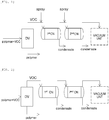
- FIGS. 1 and 2 The method of preparing an aromatic vinyl compound-vinyl cyanide compound polymer and the apparatus for preparing the same according to the present invention will be described with reference to FIGS. 1 and 2 .
- Embodiments of the present invention disclosed in the present specification and drawings are only provided to aid in understanding of the present invention, and the present invention is not limited to the embodiments.
- only means necessary for describing the present invention are described, and other obvious means for carrying out the method and apparatus are omitted in the drawings.
- FIG. 1 schematically illustrates a volatilization tank (DV), a first condenser (1 st CN), a second condenser (2 nd CN), a vacuum unit, a transfer pipe, and a spray pipe, which are used in Examples 1 to 21 according to the present invention, and shows the apparatus of the present invention including a volatilization tank for separating volatile components from a polymerization product containing an aromatic vinyl compound-vinyl cyanide compound polymer, a residual aromatic vinyl monomer, a residual vinyl cyanide monomer, and an organic solvent, wherein the apparatus includes a spray pipe for spraying an organic solvent into a transfer pipe for transferring the separated volatile components to a first condenser; or a spray pipe for spraying an organic solvent or an aromatic vinyl monomer into a transfer pipe for transferring the volatile components, which have not been condensed in the first condenser, to a second condenser.
- DV volatilization tank
- the volatile components not condensed in the second condenser may be transferred to a vacuum unit and dissolved in a circulating fluid of a water-cooled pump. Then, the dissolved volatile components may be discharged to the outside through a wastewater treatment process or to the atmosphere.
- condensates condensed in the first and second condensers may be reintroduced into a reactor.
- FIG. 2 schematically illustrates a volatilization tank (DV), a first condenser (1 st CN), a second condenser (2 nd CN), and a vacuum unit, which are used in Comparative Examples 1, 8, and 12.
- DV volatilization tank
- volatile components are separated from a polymerization product containing an aromatic vinyl compound-vinyl cyanide compound polymer, a residual aromatic vinyl monomer, and an organic solvent.
- the separated volatile components are condensed in the first and second condensers.
- the volatile components not condensed in the second condenser are transferred to a vacuum unit, compressed by a pump, and dissolved in a circulating fluid of a water-cooled pump. Then, the dissolved volatile components are discharged to the outside through a wastewater treatment process or to the atmosphere.
- condensates condensed in the first and second condensers may be reintroduced into a reactor.
- Volatile components were separated according to Separation Conditions A. Then, the separated volatile components were condensed in a first condenser according to Condensation Conditions A, and then uncondensed volatile components were transferred to a second condenser and condensed therein. At this time, toluene was sprayed at a flow rate of 45 kg/hr onto the volatile components being transferred to the first condenser after separation in the volatilization tank, and no spray was performed on the volatile components not being condensed in the first condenser and being transferred to the second condenser.
- Volatile components were separated according to Separation Conditions A. Then, the separated volatile components were condensed in a first condenser according to Condensation Conditions A, and then uncondensed volatile components were transferred to a second condenser and condensed therein. At this time, no spray was performed on the volatile components being transferred to the first condenser after separation in the volatilization tank, and styrene was sprayed at a flow rate of 30 kg/hr onto the volatile components not being condensed in the first condenser and being transferred to the second condenser.
- Volatile components were separated according to Separation Conditions A. Then, the separated volatile components were condensed in a first condenser according to Condensation Conditions A, and then uncondensed volatile components were transferred to a second condenser and condensed therein. At this time, no spray was performed on the volatile components being transferred to the first condenser after separation in the volatilization tank, and ⁇ -methyl styrene was sprayed at a flow rate of 30 kg/hr onto the volatile components not being condensed in the first condenser and being transferred to the second condenser.
- Volatile components were separated according to Separation Conditions A. Then, the separated volatile components were condensed in a first condenser according to Condensation Conditions A, and then uncondensed volatile components were transferred to a second condenser and condensed therein. At this time, no spray was performed on the volatile components being transferred to the first condenser after separation in the volatilization tank, and toluene was sprayed at a flow rate of 80 kg/hr onto the volatile components not being condensed in the first condenser and being transferred to the second condenser.
- Volatile components were separated according to Separation Conditions A. Then, the separated volatile components were condensed in a first condenser according to Condensation Conditions A, and then uncondensed volatile components were transferred to a second condenser and condensed therein. At this time, toluene was sprayed at a flow rate of 20 kg/hr onto the volatile components being transferred to the first condenser after separation in the volatilization tank, and styrene was sprayed at a flow rate of 15 kg/hr onto the volatile components not being condensed in the first condenser and being transferred to the second condenser.
- Example 2 The same procedure as Example 1 was performed except that toluene was not sprayed onto the volatile components being transferred to the first condenser after separation in the volatilization tank.
- Example 1 to 14 and Comparative Examples 1 to 16 the vinyl cyanide monomer not condensed in the first condenser and transferred to the second condenser was sampled from the pipe disposed between the first condenser and the second condenser, and the content of the sampled vinyl cyanide monomer was quantified by gas chromatography. The results are shown in Tables 1 to 5 below.
Landscapes
- Chemical & Material Sciences (AREA)
- Chemical Kinetics & Catalysis (AREA)
- Health & Medical Sciences (AREA)
- Medicinal Chemistry (AREA)
- Polymers & Plastics (AREA)
- Organic Chemistry (AREA)
- Dispersion Chemistry (AREA)
- Addition Polymer Or Copolymer, Post-Treatments, Or Chemical Modifications (AREA)
- Organic Low-Molecular-Weight Compounds And Preparation Thereof (AREA)
Claims (13)
- Procédé de préparation d'un polymère d'un composé vinylique aromatique et d'un composé de cyanure de vinyle, comprenant les étapes consistant à :séparer des composants volatils d'un produit de polymérisation contenant un polymère d'un composé vinylique aromatique et d'un composé de cyanure de vinyle, un monomère vinylique aromatique résiduel, un monomère de cyanure de vinyle résiduel et un solvant organique en utilisant une cuve de volatilisation ; etcondenser les composants volatils séparés en utilisant un condenseur ou deux ou plusieurs condenseurs reliés en série,dans lequel le procédé comprend la pulvérisation d'un solvant organique sur les composants volatils séparés lors de leur transfert de la cuve de volatilisation au condenseur ; oula pulvérisation d'un solvant organique ou d'un monomère vinylique aromatique sur les composants volatils qui ne sont pas condensés dans un premier condenseur lors de leur transfert à un deuxième condenseur lorsque les deux ou plusieurs condenseurs reliés en série sont utilisés,dans lequel le solvant organique renferme un ou plusieurs composés sélectionné(s) dans le groupe constitué de toluène, d'éthylbenzène, de xylène, de méthyléthylcétone et d'isobutylméthylcétone.
- Procédé selon la revendication 1, le procédé comprenant la pulvérisation du solvant organique sur les composants volatils lors de leur transfert au premier condenseur après avoir été séparés dans la cuve de volatilisation ; et
la pulvérisation du solvant organique ou du monomère vinylique aromatique sur les composants volatils non condensés dans le premier condenseur et lors de leur transfert au deuxième condenseur. - Procédé selon la revendication 1, dans lequel les composants volatils séparés comprennent 5 à 35 % en poids d'un composé de cyanure de vinyle, 45 à 80 % en poids d'un composé vinylique aromatique et 5 à 50 % en poids d'un solvant organique.
- Procédé selon la revendication 1, dans lequel, lors de la pulvérisation du solvant organique, ce dernier est pulvérisé à un débit d'écoulement de 10 à 200 kg/heure.
- Procédé selon la revendication 1, dans lequel, lors de la pulvérisation du solvant organique, ce dernier est pulvérisé à une température de -10 à 40 °C.
- Procédé selon la revendication 1, dans lequel, lors de la pulvérisation du solvant organique ou du monomère vinylique aromatique, le solvant organique ou le monomère vinylique aromatique est pulvérisé à un débit d'écoulement de 10 à 220 kg/heure.
- Procédé selon la revendication 1, dans lequel, lors de la pulvérisation du solvant organique ou du monomère vinylique aromatique sur les composants volatils non condensés dans le premier condenseur et lors de leur transfert vers le deuxième condenseur, le solvant organique ou le monomère vinylique aromatique est pulvérisé à une température de -10 à 40 °C.
- Procédé selon la revendication 1, dans lequel la condensation dans le premier condenseur est réalisée à une température de réfrigérant de 20 à 35 °C sous une pression de fonctionnement de 3 à 100 Torr.
- Procédé selon la revendication 1, dans lequel la condensation dans le deuxième condenseur est effectuée à une température de réfrigérant de -3 à 4 °C sous une pression de fonctionnement de 5 à 50 Torr.
- Procédé selon la revendication 1, dans lequel la séparation est effectuée à une température de 220 à 260 °C sous une pression de 35 Torr ou inférieure.
- Procédé selon la revendication 1, dans lequel les condensats condensés dans les premier et deuxième condenseurs sont récupérés, purifiés et réintroduits dans un réacteur.
- Appareil destiné à préparer un polymère d'un composé vinylique aromatique et d'un composé de cyanure de vinyle, comprenant :une cuve de volatilisation servant à séparer les composants volatils d'un produit de polymérisation contenant un polymère d'un composé vinylique aromatique et d'un composé de cyanure de vinyle, un monomère vinylique aromatique, un monomère de cyanure de vinyle résiduel et un solvant organique ; etun condenseur ou deux ou plusieurs condenseurs reliés en série pour condenser les composants volatils séparés,l'appareil comprenant un moyen de pulvérisation servant à pulvériser un solvant organique dans un tuyau de transfert pour transférer les composants volatils séparés au condenseur ; ouun moyen de pulvérisation servant à pulvériser un solvant organique ou un monomère vinylique aromatique dans un tuyau de transfert pour transférer les composants volatils qui n'ont pas été condensés dans un premier condenseur, vers un deuxième condenseur, lorsque les deux condenseurs ou plus reliés en série sont utilisés.
- Appareil selon la revendication 12, l'appareil comprenant un tuyau de pulvérisation pour pulvériser le solvant organique dans le tuyau de transfert de manière à transférer les composants volatils séparés vers le premier condenseur; et
un tuyau de pulvérisation pour pulvériser le solvant organique ou le monomère vinylique aromatique dans le tuyau de transfert de manière à transférer les composants volatils, qui n'ont pas été condensés dans le premier condenseur, vers le deuxième condenseur.
Applications Claiming Priority (3)
| Application Number | Priority Date | Filing Date | Title |
|---|---|---|---|
| KR20180164399 | 2018-12-18 | ||
| KR1020190072784A KR102435545B1 (ko) | 2018-12-18 | 2019-06-19 | 방향족 비닐 화합물-비닐시안 화합물 중합체의 제조방법 및 제조장치 |
| PCT/KR2019/009587 WO2020130264A1 (fr) | 2018-12-18 | 2019-08-01 | Procédé et dispositif de préparation d'un polymère de composé aromatique de vinyle-composé de cyanure de vinyle |
Publications (3)
| Publication Number | Publication Date |
|---|---|
| EP3689923A4 EP3689923A4 (fr) | 2020-08-05 |
| EP3689923A1 EP3689923A1 (fr) | 2020-08-05 |
| EP3689923B1 true EP3689923B1 (fr) | 2021-05-12 |
Family
ID=71136601
Family Applications (1)
| Application Number | Title | Priority Date | Filing Date |
|---|---|---|---|
| EP19824186.1A Active EP3689923B1 (fr) | 2018-12-18 | 2019-08-01 | Procédé et dispositif de préparation d'un polymère de composé aromatique de vinyle-composé de cyanure de vinyle |
Country Status (6)
| Country | Link |
|---|---|
| US (1) | US11512153B2 (fr) |
| EP (1) | EP3689923B1 (fr) |
| JP (1) | JP6998447B2 (fr) |
| KR (1) | KR102435545B1 (fr) |
| CN (1) | CN111587262B (fr) |
| TW (1) | TWI748228B (fr) |
Cited By (2)
| Publication number | Priority date | Publication date | Assignee | Title |
|---|---|---|---|---|
| WO2024068772A1 (fr) | 2022-09-29 | 2024-04-04 | Ineos Styrolution Group Gmbh | Procédé de production d'un copolymère à partir d'au moins un composé vinylique aromatique |
| WO2024068783A1 (fr) | 2022-09-29 | 2024-04-04 | Ineos Styrolution Group Gmbh | Procédé de préparation d'un copolymère à partir d'au moins un composé vinylique aromatique |
Families Citing this family (5)
| Publication number | Priority date | Publication date | Assignee | Title |
|---|---|---|---|---|
| KR102593889B1 (ko) * | 2020-07-17 | 2023-10-24 | 주식회사 엘지화학 | 중합체 제조방법 |
| KR102618181B1 (ko) * | 2020-07-22 | 2023-12-26 | 주식회사 엘지화학 | 중합체 제조방법 |
| CN116438206B (zh) * | 2020-12-08 | 2024-03-12 | 切弗朗菲利浦化学公司 | 环流淤浆聚合反应器中负载型铬催化剂的粒度控制 |
| KR20250133456A (ko) | 2021-09-13 | 2025-09-05 | 셰브론 필립스 케미컬 컴퍼니 엘피 | 올레핀 중합에서 사용하기 위한 촉매 시스템 성분의 하이드로사이클론 개질 |
| EP4486805B1 (fr) * | 2022-03-03 | 2026-02-04 | INEOS Styrolution Group GmbH | Procédé continu de fabrication de copolymères contenant de l'acrylonitrile à teneur réduite en propionitrile |
Family Cites Families (18)
| Publication number | Priority date | Publication date | Assignee | Title |
|---|---|---|---|---|
| BE588809A (fr) * | 1958-02-06 | |||
| BE897798A (fr) | 1982-09-24 | 1984-03-21 | Cosden Technology | Procede et appareillage pour la production de copolymeres de composes styreniques et de composes alcenylnitriles |
| US4550149A (en) * | 1982-09-24 | 1985-10-29 | Cosden Technology, Inc. | Process for producing styrenic/alkenylnitrile copolymers |
| KR100286606B1 (ko) | 1997-06-18 | 2001-04-16 | 성재갑 | 아크릴로니트릴-스티렌 공중합체의 제조 방법 |
| JPH1149804A (ja) | 1997-07-30 | 1999-02-23 | Mitsui Chem Inc | 重合設備および重合方法 |
| ID28337A (id) | 1997-08-27 | 2001-05-10 | Dow Chemical Co | Interpolimer-interpolimer yang menjadi keras setelah dipanaskan dan busa-busa dari interpolimer tersebut |
| JP3506323B2 (ja) * | 1999-02-04 | 2004-03-15 | 電気化学工業株式会社 | 共重合体の製造方法 |
| JP3565736B2 (ja) | 1999-03-12 | 2004-09-15 | 三菱レイヨン株式会社 | ビニル系重合体の重合方法 |
| JP3768167B2 (ja) | 2002-04-04 | 2006-04-19 | 三菱レイヨン株式会社 | アクリロニトリル系モノマーの重合時における未反応モノマー成分の回収方法と重合システム |
| JP2004244527A (ja) | 2003-02-14 | 2004-09-02 | Dainippon Ink & Chem Inc | 重合性モノマー蒸気の回収装置及び回収方法 |
| KR100512367B1 (ko) | 2003-08-05 | 2005-09-05 | 주식회사 엘지화학 | 그라프트 공중합체 라텍스 및 그의 건조 분말 제조방법 |
| KR100874030B1 (ko) | 2006-01-03 | 2008-12-17 | 주식회사 엘지화학 | 스티렌계 단량체 및 아크릴로니트릴계 단량체의 공중합체의제조 방법 |
| TW201016724A (en) | 2008-07-08 | 2010-05-01 | Toray Industries | Process for production of thermoplastic copolymer |
| CN101838354B (zh) | 2009-03-20 | 2012-11-21 | 中国石油化工股份有限公司 | 一种芳香族乙烯基类聚合物脱挥方法 |
| KR101683332B1 (ko) | 2013-09-06 | 2016-12-06 | 주식회사 엘지화학 | 플러깅이 감소된 부타디엔 고무의 제조방법 및 제조장치 |
| KR101633832B1 (ko) * | 2014-08-18 | 2016-07-05 | (주) 한국지에스엠 | 고산가 동식물유지를 활용한 바이오연료 제조장치 |
| KR101770892B1 (ko) * | 2014-10-23 | 2017-08-24 | 주식회사 엘지화학 | 탈휘발화 방법 |
| KR101946482B1 (ko) | 2015-10-22 | 2019-02-11 | 주식회사 엘지화학 | 폴리부타디엔의 제조 장치 |
-
2019
- 2019-06-19 KR KR1020190072784A patent/KR102435545B1/ko active Active
- 2019-08-01 CN CN201980003688.XA patent/CN111587262B/zh active Active
- 2019-08-01 US US16/634,094 patent/US11512153B2/en active Active
- 2019-08-01 JP JP2020502104A patent/JP6998447B2/ja active Active
- 2019-08-01 EP EP19824186.1A patent/EP3689923B1/fr active Active
- 2019-08-20 TW TW108129628A patent/TWI748228B/zh active
Cited By (2)
| Publication number | Priority date | Publication date | Assignee | Title |
|---|---|---|---|---|
| WO2024068772A1 (fr) | 2022-09-29 | 2024-04-04 | Ineos Styrolution Group Gmbh | Procédé de production d'un copolymère à partir d'au moins un composé vinylique aromatique |
| WO2024068783A1 (fr) | 2022-09-29 | 2024-04-04 | Ineos Styrolution Group Gmbh | Procédé de préparation d'un copolymère à partir d'au moins un composé vinylique aromatique |
Also Published As
| Publication number | Publication date |
|---|---|
| CN111587262B (zh) | 2022-04-15 |
| CN111587262A (zh) | 2020-08-25 |
| US11512153B2 (en) | 2022-11-29 |
| TW202033564A (zh) | 2020-09-16 |
| EP3689923A4 (fr) | 2020-08-05 |
| JP2021511394A (ja) | 2021-05-06 |
| TWI748228B (zh) | 2021-12-01 |
| EP3689923A1 (fr) | 2020-08-05 |
| US20210070895A1 (en) | 2021-03-11 |
| JP6998447B2 (ja) | 2022-01-18 |
| KR102435545B1 (ko) | 2022-08-24 |
| KR20200075718A (ko) | 2020-06-26 |
Similar Documents
| Publication | Publication Date | Title |
|---|---|---|
| EP3689923B1 (fr) | Procédé et dispositif de préparation d'un polymère de composé aromatique de vinyle-composé de cyanure de vinyle | |
| KR101770892B1 (ko) | 탈휘발화 방법 | |
| CN106866893B (zh) | 一种制备高固含量低voc聚合物多元醇的制备方法 | |
| KR20160044473A (ko) | 이소시아네이트 제조로부터의 증류 잔류물로부터 유기 이소시아네이트를 수득하는 방법 | |
| EP3689919B1 (fr) | Procédé et appareil pour la production d'un copolymère composé vinylique aromatique-composé cyan vinylique | |
| KR102601077B1 (ko) | 탈휘발화 시스템, 이를 이용한 탈휘발화 방법 및 스티렌-니트릴계 공중합체의 제조방법 | |
| KR102618181B1 (ko) | 중합체 제조방법 | |
| KR102635673B1 (ko) | 탈휘발화 시스템, 이를 이용한 탈휘발화 방법 및 스티렌-니트릴계 공중합체의 제조방법 | |
| EP3998251A1 (fr) | Procédé et dispositif de récupération d'un monomère à base de nitrile | |
| KR20210070079A (ko) | 방향족 비닐계 공중합체의 제조방법 및 제조장치 | |
| KR102778710B1 (ko) | 중합체 제조 장치 | |
| KR102144877B1 (ko) | 친환경 방향족 비닐-시안화 비닐 공중합체의 제조방법 | |
| CN114206957B (zh) | 聚合物的制备方法 | |
| CN114573744B (zh) | 一种降低苯乙烯-丙烯腈共聚物树脂残存的方法及用途 | |
| CN1389500A (zh) | 聚氨酯固化剂中游离单体的分离方法 | |
| KR20220012155A (ko) | 용매의 정제 방법 및 정제 장치 | |
| HK1037651A (en) | Methods for removing volatile components from polymer solutions |
Legal Events
| Date | Code | Title | Description |
|---|---|---|---|
| STAA | Information on the status of an ep patent application or granted ep patent |
Free format text: STATUS: UNKNOWN |
|
| STAA | Information on the status of an ep patent application or granted ep patent |
Free format text: STATUS: THE INTERNATIONAL PUBLICATION HAS BEEN MADE |
|
| PUAI | Public reference made under article 153(3) epc to a published international application that has entered the european phase |
Free format text: ORIGINAL CODE: 0009012 |
|
| STAA | Information on the status of an ep patent application or granted ep patent |
Free format text: STATUS: REQUEST FOR EXAMINATION WAS MADE |
|
| 17P | Request for examination filed |
Effective date: 20200102 |
|
| A4 | Supplementary search report drawn up and despatched |
Effective date: 20200624 |
|
| AK | Designated contracting states |
Kind code of ref document: A1 Designated state(s): AL AT BE BG CH CY CZ DE DK EE ES FI FR GB GR HR HU IE IS IT LI LT LU LV MC MK MT NL NO PL PT RO RS SE SI SK SM TR |
|
| AX | Request for extension of the european patent |
Extension state: BA ME |
|
| GRAP | Despatch of communication of intention to grant a patent |
Free format text: ORIGINAL CODE: EPIDOSNIGR1 |
|
| STAA | Information on the status of an ep patent application or granted ep patent |
Free format text: STATUS: GRANT OF PATENT IS INTENDED |
|
| INTG | Intention to grant announced |
Effective date: 20210122 |
|
| GRAS | Grant fee paid |
Free format text: ORIGINAL CODE: EPIDOSNIGR3 |
|
| GRAA | (expected) grant |
Free format text: ORIGINAL CODE: 0009210 |
|
| STAA | Information on the status of an ep patent application or granted ep patent |
Free format text: STATUS: THE PATENT HAS BEEN GRANTED |
|
| DAV | Request for validation of the european patent (deleted) | ||
| DAX | Request for extension of the european patent (deleted) | ||
| AK | Designated contracting states |
Kind code of ref document: B1 Designated state(s): AL AT BE BG CH CY CZ DE DK EE ES FI FR GB GR HR HU IE IS IT LI LT LU LV MC MK MT NL NO PL PT RO RS SE SI SK SM TR |
|
| REG | Reference to a national code |
Ref country code: GB Ref legal event code: FG4D |
|
| REG | Reference to a national code |
Ref country code: CH Ref legal event code: EP |
|
| REG | Reference to a national code |
Ref country code: DE Ref legal event code: R096 Ref document number: 602019004601 Country of ref document: DE |
|
| REG | Reference to a national code |
Ref country code: IE Ref legal event code: FG4D |
|
| REG | Reference to a national code |
Ref country code: AT Ref legal event code: REF Ref document number: 1392149 Country of ref document: AT Kind code of ref document: T Effective date: 20210615 |
|
| REG | Reference to a national code |
Ref country code: LT Ref legal event code: MG9D |
|
| REG | Reference to a national code |
Ref country code: AT Ref legal event code: MK05 Ref document number: 1392149 Country of ref document: AT Kind code of ref document: T Effective date: 20210512 |
|
| REG | Reference to a national code |
Ref country code: NL Ref legal event code: MP Effective date: 20210512 |
|
| PG25 | Lapsed in a contracting state [announced via postgrant information from national office to epo] |
Ref country code: AT Free format text: LAPSE BECAUSE OF FAILURE TO SUBMIT A TRANSLATION OF THE DESCRIPTION OR TO PAY THE FEE WITHIN THE PRESCRIBED TIME-LIMIT Effective date: 20210512 Ref country code: BG Free format text: LAPSE BECAUSE OF FAILURE TO SUBMIT A TRANSLATION OF THE DESCRIPTION OR TO PAY THE FEE WITHIN THE PRESCRIBED TIME-LIMIT Effective date: 20210812 Ref country code: HR Free format text: LAPSE BECAUSE OF FAILURE TO SUBMIT A TRANSLATION OF THE DESCRIPTION OR TO PAY THE FEE WITHIN THE PRESCRIBED TIME-LIMIT Effective date: 20210512 Ref country code: LT Free format text: LAPSE BECAUSE OF FAILURE TO SUBMIT A TRANSLATION OF THE DESCRIPTION OR TO PAY THE FEE WITHIN THE PRESCRIBED TIME-LIMIT Effective date: 20210512 Ref country code: FI Free format text: LAPSE BECAUSE OF FAILURE TO SUBMIT A TRANSLATION OF THE DESCRIPTION OR TO PAY THE FEE WITHIN THE PRESCRIBED TIME-LIMIT Effective date: 20210512 |
|
| PG25 | Lapsed in a contracting state [announced via postgrant information from national office to epo] |
Ref country code: GR Free format text: LAPSE BECAUSE OF FAILURE TO SUBMIT A TRANSLATION OF THE DESCRIPTION OR TO PAY THE FEE WITHIN THE PRESCRIBED TIME-LIMIT Effective date: 20210813 Ref country code: IS Free format text: LAPSE BECAUSE OF FAILURE TO SUBMIT A TRANSLATION OF THE DESCRIPTION OR TO PAY THE FEE WITHIN THE PRESCRIBED TIME-LIMIT Effective date: 20210912 Ref country code: LV Free format text: LAPSE BECAUSE OF FAILURE TO SUBMIT A TRANSLATION OF THE DESCRIPTION OR TO PAY THE FEE WITHIN THE PRESCRIBED TIME-LIMIT Effective date: 20210512 Ref country code: PL Free format text: LAPSE BECAUSE OF FAILURE TO SUBMIT A TRANSLATION OF THE DESCRIPTION OR TO PAY THE FEE WITHIN THE PRESCRIBED TIME-LIMIT Effective date: 20210512 Ref country code: NO Free format text: LAPSE BECAUSE OF FAILURE TO SUBMIT A TRANSLATION OF THE DESCRIPTION OR TO PAY THE FEE WITHIN THE PRESCRIBED TIME-LIMIT Effective date: 20210812 Ref country code: PT Free format text: LAPSE BECAUSE OF FAILURE TO SUBMIT A TRANSLATION OF THE DESCRIPTION OR TO PAY THE FEE WITHIN THE PRESCRIBED TIME-LIMIT Effective date: 20210913 Ref country code: SE Free format text: LAPSE BECAUSE OF FAILURE TO SUBMIT A TRANSLATION OF THE DESCRIPTION OR TO PAY THE FEE WITHIN THE PRESCRIBED TIME-LIMIT Effective date: 20210512 Ref country code: RS Free format text: LAPSE BECAUSE OF FAILURE TO SUBMIT A TRANSLATION OF THE DESCRIPTION OR TO PAY THE FEE WITHIN THE PRESCRIBED TIME-LIMIT Effective date: 20210512 |
|
| PG25 | Lapsed in a contracting state [announced via postgrant information from national office to epo] |
Ref country code: NL Free format text: LAPSE BECAUSE OF FAILURE TO SUBMIT A TRANSLATION OF THE DESCRIPTION OR TO PAY THE FEE WITHIN THE PRESCRIBED TIME-LIMIT Effective date: 20210512 |
|
| PG25 | Lapsed in a contracting state [announced via postgrant information from national office to epo] |
Ref country code: ES Free format text: LAPSE BECAUSE OF FAILURE TO SUBMIT A TRANSLATION OF THE DESCRIPTION OR TO PAY THE FEE WITHIN THE PRESCRIBED TIME-LIMIT Effective date: 20210512 Ref country code: EE Free format text: LAPSE BECAUSE OF FAILURE TO SUBMIT A TRANSLATION OF THE DESCRIPTION OR TO PAY THE FEE WITHIN THE PRESCRIBED TIME-LIMIT Effective date: 20210512 Ref country code: SK Free format text: LAPSE BECAUSE OF FAILURE TO SUBMIT A TRANSLATION OF THE DESCRIPTION OR TO PAY THE FEE WITHIN THE PRESCRIBED TIME-LIMIT Effective date: 20210512 Ref country code: DK Free format text: LAPSE BECAUSE OF FAILURE TO SUBMIT A TRANSLATION OF THE DESCRIPTION OR TO PAY THE FEE WITHIN THE PRESCRIBED TIME-LIMIT Effective date: 20210512 Ref country code: CZ Free format text: LAPSE BECAUSE OF FAILURE TO SUBMIT A TRANSLATION OF THE DESCRIPTION OR TO PAY THE FEE WITHIN THE PRESCRIBED TIME-LIMIT Effective date: 20210512 Ref country code: RO Free format text: LAPSE BECAUSE OF FAILURE TO SUBMIT A TRANSLATION OF THE DESCRIPTION OR TO PAY THE FEE WITHIN THE PRESCRIBED TIME-LIMIT Effective date: 20210512 Ref country code: SM Free format text: LAPSE BECAUSE OF FAILURE TO SUBMIT A TRANSLATION OF THE DESCRIPTION OR TO PAY THE FEE WITHIN THE PRESCRIBED TIME-LIMIT Effective date: 20210512 |
|
| REG | Reference to a national code |
Ref country code: DE Ref legal event code: R097 Ref document number: 602019004601 Country of ref document: DE |
|
| PLBE | No opposition filed within time limit |
Free format text: ORIGINAL CODE: 0009261 |
|
| STAA | Information on the status of an ep patent application or granted ep patent |
Free format text: STATUS: NO OPPOSITION FILED WITHIN TIME LIMIT |
|
| PG25 | Lapsed in a contracting state [announced via postgrant information from national office to epo] |
Ref country code: MC Free format text: LAPSE BECAUSE OF FAILURE TO SUBMIT A TRANSLATION OF THE DESCRIPTION OR TO PAY THE FEE WITHIN THE PRESCRIBED TIME-LIMIT Effective date: 20210512 |
|
| 26N | No opposition filed |
Effective date: 20220215 |
|
| REG | Reference to a national code |
Ref country code: BE Ref legal event code: MM Effective date: 20210831 |
|
| PG25 | Lapsed in a contracting state [announced via postgrant information from national office to epo] |
Ref country code: IS Free format text: LAPSE BECAUSE OF FAILURE TO SUBMIT A TRANSLATION OF THE DESCRIPTION OR TO PAY THE FEE WITHIN THE PRESCRIBED TIME-LIMIT Effective date: 20210912 Ref country code: LU Free format text: LAPSE BECAUSE OF NON-PAYMENT OF DUE FEES Effective date: 20210801 Ref country code: AL Free format text: LAPSE BECAUSE OF FAILURE TO SUBMIT A TRANSLATION OF THE DESCRIPTION OR TO PAY THE FEE WITHIN THE PRESCRIBED TIME-LIMIT Effective date: 20210512 |
|
| PG25 | Lapsed in a contracting state [announced via postgrant information from national office to epo] |
Ref country code: IT Free format text: LAPSE BECAUSE OF FAILURE TO SUBMIT A TRANSLATION OF THE DESCRIPTION OR TO PAY THE FEE WITHIN THE PRESCRIBED TIME-LIMIT Effective date: 20210512 Ref country code: BE Free format text: LAPSE BECAUSE OF NON-PAYMENT OF DUE FEES Effective date: 20210831 Ref country code: IE Free format text: LAPSE BECAUSE OF NON-PAYMENT OF DUE FEES Effective date: 20210801 |
|
| REG | Reference to a national code |
Ref country code: CH Ref legal event code: PL |
|
| PG25 | Lapsed in a contracting state [announced via postgrant information from national office to epo] |
Ref country code: LI Free format text: LAPSE BECAUSE OF NON-PAYMENT OF DUE FEES Effective date: 20220831 Ref country code: CH Free format text: LAPSE BECAUSE OF NON-PAYMENT OF DUE FEES Effective date: 20220831 |
|
| PG25 | Lapsed in a contracting state [announced via postgrant information from national office to epo] |
Ref country code: CY Free format text: LAPSE BECAUSE OF FAILURE TO SUBMIT A TRANSLATION OF THE DESCRIPTION OR TO PAY THE FEE WITHIN THE PRESCRIBED TIME-LIMIT Effective date: 20210512 |
|
| PG25 | Lapsed in a contracting state [announced via postgrant information from national office to epo] |
Ref country code: HU Free format text: LAPSE BECAUSE OF FAILURE TO SUBMIT A TRANSLATION OF THE DESCRIPTION OR TO PAY THE FEE WITHIN THE PRESCRIBED TIME-LIMIT; INVALID AB INITIO Effective date: 20190801 |
|
| PG25 | Lapsed in a contracting state [announced via postgrant information from national office to epo] |
Ref country code: MK Free format text: LAPSE BECAUSE OF FAILURE TO SUBMIT A TRANSLATION OF THE DESCRIPTION OR TO PAY THE FEE WITHIN THE PRESCRIBED TIME-LIMIT Effective date: 20210512 |
|
| PG25 | Lapsed in a contracting state [announced via postgrant information from national office to epo] |
Ref country code: TR Free format text: LAPSE BECAUSE OF FAILURE TO SUBMIT A TRANSLATION OF THE DESCRIPTION OR TO PAY THE FEE WITHIN THE PRESCRIBED TIME-LIMIT Effective date: 20210512 |
|
| PG25 | Lapsed in a contracting state [announced via postgrant information from national office to epo] |
Ref country code: MT Free format text: LAPSE BECAUSE OF FAILURE TO SUBMIT A TRANSLATION OF THE DESCRIPTION OR TO PAY THE FEE WITHIN THE PRESCRIBED TIME-LIMIT Effective date: 20210512 |
|
| PGFP | Annual fee paid to national office [announced via postgrant information from national office to epo] |
Ref country code: DE Payment date: 20250721 Year of fee payment: 7 |
|
| PGFP | Annual fee paid to national office [announced via postgrant information from national office to epo] |
Ref country code: GB Payment date: 20250722 Year of fee payment: 7 |
|
| PGFP | Annual fee paid to national office [announced via postgrant information from national office to epo] |
Ref country code: FR Payment date: 20250725 Year of fee payment: 7 |