EP3690659A2 - Mobiles endgerät und ressourcenverwaltungsverfahren des mobilen endgeräts - Google Patents
Mobiles endgerät und ressourcenverwaltungsverfahren des mobilen endgeräts Download PDFInfo
- Publication number
- EP3690659A2 EP3690659A2 EP19219740.8A EP19219740A EP3690659A2 EP 3690659 A2 EP3690659 A2 EP 3690659A2 EP 19219740 A EP19219740 A EP 19219740A EP 3690659 A2 EP3690659 A2 EP 3690659A2
- Authority
- EP
- European Patent Office
- Prior art keywords
- operating system
- service request
- data service
- channel resource
- resource
- Prior art date
- Legal status (The legal status is an assumption and is not a legal conclusion. Google has not performed a legal analysis and makes no representation as to the accuracy of the status listed.)
- Withdrawn
Links
Images






Classifications
-
- G—PHYSICS
- G06—COMPUTING OR CALCULATING; COUNTING
- G06F—ELECTRIC DIGITAL DATA PROCESSING
- G06F11/00—Error detection; Error correction; Monitoring
- G06F11/30—Monitoring
- G06F11/3003—Monitoring arrangements specially adapted to the computing system or computing system component being monitored
- G06F11/3013—Monitoring arrangements specially adapted to the computing system or computing system component being monitored where the computing system is an embedded system, i.e. a combination of hardware and software dedicated to perform a certain function in mobile devices, printers, automotive or aircraft systems
-
- H—ELECTRICITY
- H04—ELECTRIC COMMUNICATION TECHNIQUE
- H04M—TELEPHONIC COMMUNICATION
- H04M1/00—Substation equipment, e.g. for use by subscribers
- H04M1/72—Mobile telephones; Cordless telephones, i.e. devices for establishing wireless links to base stations without route selection
- H04M1/724—User interfaces specially adapted for cordless or mobile telephones
-
- H—ELECTRICITY
- H04—ELECTRIC COMMUNICATION TECHNIQUE
- H04W—WIRELESS COMMUNICATION NETWORKS
- H04W4/00—Services specially adapted for wireless communication networks; Facilities therefor
- H04W4/60—Subscription-based services using application servers or record carriers, e.g. SIM application toolkits
-
- H—ELECTRICITY
- H04—ELECTRIC COMMUNICATION TECHNIQUE
- H04W—WIRELESS COMMUNICATION NETWORKS
- H04W72/00—Local resource management
- H04W72/50—Allocation or scheduling criteria for wireless resources
- H04W72/51—Allocation or scheduling criteria for wireless resources based on terminal or device properties
-
- G—PHYSICS
- G06—COMPUTING OR CALCULATING; COUNTING
- G06F—ELECTRIC DIGITAL DATA PROCESSING
- G06F11/00—Error detection; Error correction; Monitoring
- G06F11/30—Monitoring
-
- G—PHYSICS
- G06—COMPUTING OR CALCULATING; COUNTING
- G06F—ELECTRIC DIGITAL DATA PROCESSING
- G06F9/00—Arrangements for program control, e.g. control units
- G06F9/06—Arrangements for program control, e.g. control units using stored programs, i.e. using an internal store of processing equipment to receive or retain programs
- G06F9/44—Arrangements for executing specific programs
- G06F9/455—Emulation; Interpretation; Software simulation, e.g. virtualisation or emulation of application or operating system execution engines
- G06F9/45533—Hypervisors; Virtual machine monitors
-
- H—ELECTRICITY
- H04—ELECTRIC COMMUNICATION TECHNIQUE
- H04M—TELEPHONIC COMMUNICATION
- H04M1/00—Substation equipment, e.g. for use by subscribers
- H04M1/72—Mobile telephones; Cordless telephones, i.e. devices for establishing wireless links to base stations without route selection
- H04M1/724—User interfaces specially adapted for cordless or mobile telephones
- H04M1/72448—User interfaces specially adapted for cordless or mobile telephones with means for adapting the functionality of the device according to specific conditions
-
- H—ELECTRICITY
- H04—ELECTRIC COMMUNICATION TECHNIQUE
- H04W—WIRELESS COMMUNICATION NETWORKS
- H04W12/00—Security arrangements; Authentication; Protecting privacy or anonymity
- H04W12/40—Security arrangements using identity modules
- H04W12/45—Security arrangements using identity modules using multiple identity modules
-
- H—ELECTRICITY
- H04—ELECTRIC COMMUNICATION TECHNIQUE
- H04W—WIRELESS COMMUNICATION NETWORKS
- H04W76/00—Connection management
- H04W76/10—Connection setup
Definitions
- Embodiments of the present invention relate to the field of communications technologies, and in particular, to a mobile terminal and a resource management method of the mobile terminal.
- a requirement such as mobile office, private modes, and mobile phone security is increasingly strong.
- a mobile phone may be used both for office and as a common mobile phone.
- two or more operating systems can run on one mobile phone, which may meet a requirement such as mobile office.
- An event that a user can deal with by using two or more mobile phones originally can be dealt with by using only one mobile phone currently.
- embodiments of the present invention provide a mobile terminal and a resource management method of the mobile terminal.
- each operating system of the mobile terminal can monitor and manage usage statuses of multiple SIM card resources of the mobile terminal in a real time manner, consistency is ensured in the usage statuses of the multiple SIM card resources in the mobile terminal, and the mobile terminal implements coordinated management of the multiple SIM card resources in multiple operating systems.
- embodiments of the present invention further provide a mobile terminal and a resource management method of the mobile terminal.
- each operating system of the mobile terminal can monitor and manage a usage status of a channel resource of the mobile terminal in a real time manner, consistency is ensured in the usage statuses of the channel resource in the mobile terminal, and the mobile terminal implements coordinated management of the channel resource in the multiple operating systems.
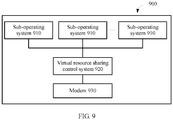
- a mobile terminal includes a virtual resource sharing control system, a modem, and multiple operating systems, and multiple SIM cards are deployed in the modem; a first operating system in the multiple operating systems is used to: receive a card operation request of a user of the mobile terminal for a first SIM card in the multiple SIM cards, and notify a second operating system in the multiple operating systems and the virtual resource sharing control system of the card operation request, where the first operating system is an operating system that is in the multiple operating systems and that runs in foreground, and the second operating system is one or more operating systems, except the first operating system, in the multiple operating systems; the virtual resource sharing control system is used to perform coordinated management on card operations on the multiple SIM cards for the multiple operating systems, and is specifically used to: perform a card operation on the first SIM card by using the modem and according to the card operation request and a current state of the first SIM card, and send a first feedback result of the card operation to the first operating system and the second operating system; the first operating system is further used to
- each of the first operating system and the second operating system includes a user interface UI interface processing unit, an upper-layer logic processing unit, and a resource management unit, where a UI interface processing unit in the first operating system is configured to: receive the card operation request, and notify an upper-layer logic processing unit in the current operating system of the card operation request; the upper-layer logic processing unit in the first operating system is configured to notify a resource management unit in the first operating system of the card operation request; the resource management unit in the first operating system is configured to: manage and monitor the current state of the first SIM card in the first operating system according to the card operation request, and notify the virtual resource sharing control system, so that the virtual resource sharing control system performs a corresponding card operation according to the card operation request; the upper-layer logic processing unit in the first operating system is further configured to notify an upper-layer logic processing unit in the second operating system of the card operation request; the upper-layer logic processing unit in the second operating system is configured to notify a resource management unit in the second operating
- the card operation includes: a SIM card startup operation, a SIM card activation operation, a SIM card deactivation operation, or a SIM card switching operation.
- the modem is further configured to provide a channel resource for a data connection of the mobile terminal;
- the first operating system is further used to: receive a data service request of the user of the mobile terminal, and notify the second operating system and the virtual resource sharing control system of the data service request, where a new data connection needs to be established for the data service request;
- the virtual resource sharing control system is further used to perform coordinated management on usage of the channel resource for the multiple operating systems, and is specifically used to: establish a data connection for the data service request according to the data service request and a current usage status of the channel resource in the modem, and send a second feedback result of data connection establishment to the first operating system and the second operating system;
- the first operating system is further used to manage and monitor a usage status of the channel resource in the first operating system according to the second feedback result;
- the second operating system is further used to manage and monitor a usage status of the channel resource in the second operating system according to the data service request or the second feedback result.
- each of the first operating system and the second operating system includes a user interface UI interface processing unit, an upper-layer logic processing unit, and a resource management unit, where a UI interface processing unit in the first operating system is configured to: receive the data service request, and notify an upper-layer logic processing unit in the current operating system of the data service request; the upper-layer logic processing unit in the first operating system is configured to notify a resource management unit in the first operating system of the data service request; the resource management unit in the first operating system is configured to: manage and monitor the usage status of the channel resource in the first operating system according to the data service request, and notify the virtual resource sharing control system, so that the virtual resource sharing control system allocates a corresponding channel resource to the data service request to establish the data connection; the upper-layer logic processing unit in the first operating system is further configured to notify an upper-layer logic processing unit in the second operating system of the data service request; the upper-layer logic processing unit in the second operating system is configured to notify
- the virtual resource sharing control system in a process of establishing the data connection for the data service request according to the data service request and the current usage status of the channel resource in the modem, is specifically used to: when no idle channel resource is in the modem, select a currently-used channel resource in the modem, disable a first data connection of the currently-used channel resource, and establish a second data connection for the data service request; and the virtual resource sharing control system is further used to: after a data service corresponding to the data service request is completed, release the second data connection, and restore the first data connection.
- the virtual resource sharing control system in a process of establishing the data connection for the data service request according to the data service request and the current usage status of the channel resource in the modem, is specifically used to: when an idle channel resource is in the modem, select the idle channel resource to establish a second data connection for the data service request; and the virtual resource sharing control system is further used to: after a service corresponding to the data service request is completed, release the second data connection.
- a mobile terminal includes a virtual resource sharing control system, a modem, and multiple operating systems, the modem is configured to provide a channel resource for a data connection of the mobile terminal;
- a first operating system in the multiple operating systems is used to: receive a data service request of a user of the mobile terminal, and notify a second operating system in the multiple operating systems and the virtual resource sharing control system of the data service request, where a new data connection needs to be established for the data service request, the first operating system is an operating system that is in the multiple operating systems and that runs in foreground, and the second operating system is one or more operating systems, except the first operating system, in the multiple operating systems;
- the virtual resource sharing control system is used to perform coordinated management on usage of the channel resource for the multiple operating systems, and is specifically used to:
- each of the first operating system and the second operating system includes a user interface UI interface processing unit, an upper-layer logic processing unit, and a resource management unit, where a UI interface processing unit in the first operating system is configured to: receive the data service request, and notify an upper-layer logic processing unit in the current operating system of the data service request; the upper-layer logic processing unit in the first operating system is configured to notify a resource management unit in the first operating system of the data service request; the resource management unit in the first operating system is configured to: manage and monitor the usage status of the channel resource in the first operating system according to the data service request, and notify the virtual resource sharing control system, so that the virtual resource sharing control system allocates a corresponding channel resource to the data service request to establish the data connection; the upper-layer logic processing unit in the first operating system is further configured to notify an upper-layer logic processing unit in the second operating system of the data service request; the upper-layer logic processing unit in the second operating system is configured to notify a resource management unit in
- a second possible implementation manner specific implementation is: in a process of establishing the data connection for the data service request according to the data service request and the current usage status of the channel resource in the modem, the virtual resource sharing control system is specifically used to: when no idle channel resource is in the modem, select a currently-used channel resource in the modem, disable a first data connection of the currently-used channel resource, and establish a second data connection for the data service request; and the virtual resource sharing control system is further used to: after a data service corresponding to the data service request is completed, release the second data connection, and restore the first data connection.
- the virtual resource sharing control system in a process of establishing the data connection for the data service request according to the data service request and the current usage status of the channel resource in the modem, is specifically used to: when an idle channel resource is in the modem, select the idle channel resource to establish a second data connection for the data service request; and the virtual resource sharing control system is further used to: after a service corresponding to the data service request is completed, release the second data connection.
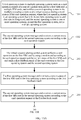
- a resource management method of a mobile terminal includes a virtual resource sharing control system, a modem, and multiple operating systems, and multiple SIM cards are deployed in the modem, and the method includes: receiving, by a first operating system in the multiple operating systems, a card operation request of a user of the mobile terminal for a first SIM card in the multiple SIM cards, and notifying a second operating system in the multiple operating systems and the virtual resource sharing control system of the card operation request, where the first operating system is an operating system that is in the multiple operating systems and that runs in foreground, and the second operating system is one or more operating systems, except the first operating system, in the multiple operating systems; managing and monitoring, by the second operating system, a current state of the first SIM card in the second operating system according to the card operation request; performing, by the virtual resource sharing control system, a card operation on the first SIM card by using the modem and according to the card operation request and the current state of the first SIM card, and sending a first feedback result of the card operation to
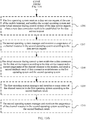
- a resource management method of a mobile terminal includes a virtual resource sharing control system, a modem, and multiple operating systems, the modem is configured to provide a channel resource for a data connection of the mobile terminal, and the method includes: receiving, by a first operating system in the multiple operating systems, a data service request of a user of the mobile terminal, and notifying a second operating system in the multiple operating systems and the virtual resource sharing control system of the data service request, where a new data connection needs to be established for the data service request, the first operating system is an operating system that is in the multiple operating systems and that runs in foreground, and the second operating system is one or more operating systems, except the first operating system, in the multiple operating systems; managing and monitoring, by the second operating system, a usage status of a channel resource in the second operating system according to the data service request; establishing, by the virtual resource sharing control system, a data connection for the data service request according to the data service request and a current usage status of the channel resource in the mode
- a virtual resource sharing control system is set in the mobile terminal, so as to manage multiple SIM card resources in a modem for all the operating systems, when a first operating system (an operating system running in foreground) performs an operation on a resource in the modem, notify a second operating system (an operating system except the first operating system), and after the operation is completed, notify all the operating systems by using the virtual resource sharing control system.
- a first operating system an operating system running in foreground
- notify a second operating system an operating system except the first operating system
- each operating system of the mobile terminal monitors and manages usage statuses of the multiple SIM card resources of the mobile terminal in a real time manner, consistency ensured in the usage statuses of the multiple SIM card resources in the mobile terminal, and the mobile terminal implements coordinated management of the multiple SIM card resources in the multiple operating systems.
- a virtual resource sharing control system is set in the mobile terminal, so as to manage a channel resource in a modem for all the operating systems, when a first operating system (an operating system running in foreground) performs an operation on a resource in the modem, notify a second operating system (an operating system except the first operating system), and after the operation is completed, notify all the operating systems by using the virtual resource sharing control system.
- a first operating system an operating system running in foreground
- notify a second operating system an operating system except the first operating system
- each operating system of the mobile terminal monitors and manages a usage status of the channel resource of the mobile terminal in a real time manner, consistency is ensured in the usage statuses of the channel resource in the mobile terminal, and the mobile terminal implements coordinated management of the channel resource in the multiple operating systems.
- a mobile terminal may be referred to as user equipment (User Equipment, "UE” for short), a user, or the like, and may communicate with one or more core networks by using a radio access network (for example, Radio Access Network, "RAN” for short).
- the mobile terminal may be a mobile telephone (or referred to as a "cellular" telephone) and a computer with a mobile terminal, for example, may be a portable, pocket-sized, handheld, computer built-in, or in-vehicle mobile apparatus.
- the mobile terminals exchange language and/or data with the radio access network, for example, may be a mobile phone, an in-vehicle mobile apparatus, a personal digital assistant PDA, or the like.
- FIG. 1 and FIG. 2 are schematic structural diagrams of a mobile terminal according to embodiments of the present invention.
- FIG. 1 and FIG. 2 are used as examples to describe a logical structure of a compute node applied in an application scenario identification method or a power consumption management method provided in the embodiments of the present invention.
- the compute node may be a mobile terminal, and the mobile terminal may be specifically a smartphone.
- a hardware layer of the mobile terminal includes a central processing unit (Center Processing Unit, CPU), a graphics processing unit (Graphic Processing Unit, GPU), and the like.
- the hardware layer may further include a memory, input/output devices, a memory, a memory controller, a network interface, and the like.
- An input device may include a keyboard, a mouse, a touchscreen, and the like
- an output device may include a display device such as a liquid crystal display (Liquid Crystal Display, LCD), a cathode ray tube (Cathode Ray Tube, CRT), a holographic (Holographic) imaging device, a projector (Projector), and the like.
- An operating system for example, Android and Firefox OS
- some application programs may run on the hardware layer.
- An Android system is used as an example in FIG. 1 to describe a software system architecture of the mobile terminal.
- a kernel library layer is a core part of an operating system and includes an appearance manager, a media framework, a relational database, a 2G graphics engine library, a Web browser engine, a kernel library, a virtual machine (for example, a Dalvik Virtual Machine), and the like. Identification of an application scenario and determining of a power consumption control policy that are described in the embodiments of the present invention may be implemented in the virtual machine (for example, the Dalvik Virtual Machine).
- the virtual machine analyzes, by means of compilation, an application program that is running on the mobile terminal, and obtains feature data of the application program; and determines, from a scenario feature data set according to the feature data of the application program, application scenario information corresponding to the feature data of the application program.
- the scenario feature data set includes a correspondence between multiple types of application scenario information and feature data of multiple application programs, and the application scenario information corresponding to the feature data of the application program is used to indicate an application scenario in which the mobile terminal is currently used.
- the virtual machine determines, from a control policy set according to the application scenario information, a power consumption control policy corresponding to the application scenario information.
- the control policy set includes a correspondence between the multiple types of application scenario information and multiple power consumption control policies.
- the virtual machine generates a corresponding power consumption control instruction according to the power consumption control policy corresponding to the application scenario information, and transmits the power consumption control instruction to a kernel (that is, a Linux kernel in FIG. 1 ), so that the kernel performs power consumption control on corresponding hardware (for example, a CPU, a GPU, or a display device) of the mobile terminal.
- a kernel that is, a Linux kernel in FIG. 1
- the mobile terminal further includes a driver layer, a framework layer, and an application layer.
- the driver layer may include a CPU drive, a GPU drive, a display controller drive, and the like.
- the framework layer may include a browser engine, a typographic engine, a file parser, and the like; the application layer may include multiple application programs such as a home screen (home), a media player (Media Player), and a browser (Browser).
- a Firefox OS system is used as an example in FIG. 2 to describe a software system architecture of the mobile terminal.
- a kernel library layer is a core part of an operating system and includes an appearance manager, a media framework, a relational database, a user interface, a voice manager, and the like.
- the mobile terminal further includes a driver layer, a framework layer, and an application layer.
- the driver layer may include a CPU drive, a GPU drive, a display controller drive, and the like.
- the framework layer may include a browser engine, a typographic engine, a file parser, a JavaScript engine, and the like. Identification of an application scenario and determining of a power consumption control policy that are described in the embodiments of the present invention may be implemented in the JavaScript engine. That is, the JavaScript engine analyzes, by means of compilation, an application program that is running on the mobile terminal, and obtains feature data of the application program; and determines, from a scenario feature data set according to the feature data of the application program, application scenario information corresponding to the feature data of the application program.
- the scenario feature data set includes a correspondence between multiple types of application scenario information and feature data of multiple application programs, and the application scenario information corresponding to the feature data of the application program is used to indicate an application scenario in which the mobile terminal is currently used.
- the JavaScript engine determines, from a control policy set according to the application scenario information, a power consumption control policy corresponding to the application scenario information.
- the control policy set includes a correspondence between the multiple types of application scenario information and multiple power consumption control policies.
- the JavaScript engine generates a corresponding power consumption control instruction according to the power consumption control policy corresponding to the application scenario information, and transmits the power consumption control instruction to a kernel (that is, a Linux kernel in FIG. 2 ), so that the kernel performs power consumption control on corresponding hardware (for example, a CPU, a GPU, or a display device) of the mobile terminal.
- a kernel that is, a Linux kernel in FIG. 2
- the application layer may include multiple application programs such as a home screen (home), a media player (Media Player), and a browser (Browser).
- home home
- Media Player media player
- Browser Browser
- An existing mobile terminal with multiple operating systems can support dual SIM cards, but cannot manage dual SIM card resources.
- FIG. 3 is a schematic structural diagram of a mobile terminal 300 according to an embodiment of the present invention.
- the mobile terminal 300 may include multiple operating systems 310, a virtual resource sharing control system 320, and a modem 330.
- SIM Subscriber Identity Module
- SIM card may also be referred to as a user identification card, a smart card, and the like.
- the SIM card may further be an another type of card that is in a mobile terminal and that is used to provide a mobile service, which is not limited in this embodiment of the present invention.
- a first operating system in the multiple operating systems 310 is used to: receive a card operation request of a user of the mobile terminal 300 for a first SIM card in the multiple SIM cards, and notify a second operating system in the multiple operating systems 310 and the virtual resource sharing control system 320 of the card operation request.
- the first operating system is an operating system that is in the multiple operating systems 310 and that runs in foreground.
- the second operating system is one or more operating systems, except the first operating system, in the multiple operating systems 310, or the second operating system is all other operating systems, except the first operating system, in the multiple operating systems 310.
- the mobile terminal when the mobile terminal is in an operating state, multiple operating systems running on the mobile terminal may be classified into an operating system running in foreground and an operating system running in background. There may be more than one operating system running in foreground. Obviously, the user of the mobile terminal generally performs an operation only in the operating system running in foreground.
- the first operating system may send the card operation request to another operating system, including the operating system running in background and another operating system running in foreground.
- the virtual resource sharing control system 320 is used to perform coordinated management on card operations on the multiple SIM cards for the multiple operating systems 310. Specifically, the virtual resource sharing control system 320 may be used to: perform a card operation on the first SIM card by using the modem 330 and according to the card operation request and a current state of the first SIM card, and send a first feedback result of the card operation to the first operating system and the second operating system.
- the first operating system is further used to manage and monitor a current state of the first SIM card in the first operating system according to the first feedback result.
- the second operating system is used to manage and monitor a current state of the first SIM card in the second operating system according to the card operation request or the first feedback result.
- a virtual resource sharing control system is set in a mobile terminal, so as to perform coordinated management on multiple SIM card resources in a modem for all the operating systems, notify another operating system when an operating system running in foreground performs an operation on the SIM card resources, and after the operation is completed, notify all the operating systems by using the virtual resource sharing control system.
- each operating system of the mobile terminal monitors and manages usage statuses of the multiple SIM card resources of the mobile terminal in a real time manner, consistency is ensured in the usage statuses of the multiple SIM card resources in the mobile terminal, and the mobile terminal implements coordinated management of the multiple SIM card resources in the multiple operating systems.
- the card operation may include a SIM card startup operation, a SIM card activation operation, a SIM card deactivation operation, or a SIM card switching operation.
- FIG. 4 is another schematic structural diagram of a mobile terminal 300 according to an embodiment of the present invention.
- an operating system 310 may further include a UI interface processing unit 311, an upper-layer logic processing unit 312, and a resource management unit 313.
- user interface UI interface processing units 311, upper-layer logic processing units 312, and resource management units 313 may be specifically configured to implement the following functions:
- a UI interface processing unit 311 in the first operating system is configured to: receive the card operation request, and notify an upper-layer logic processing unit 312 in the current operating system of the card operation request; the upper-layer logic processing unit 312 in the first operating system is configured to notify a resource management unit 313 in the first operating system of the card operation request; the resource management unit 313 in the first operating system is configured to: manage and monitor the current state of the first SIM card in the first operating system according to the card operation request, and notify the virtual resource sharing control system 320, so that the virtual resource sharing control system 320 performs a corresponding card operation according to the card operation request; the upper-layer logic processing unit 312 in the first operating system is further configured to notify an upper-layer logic processing unit 312 in the second operating system of the card operation request; the upper-layer logic processing unit 312 in the second operating system is configured to notify a resource management unit 313 in the second operating system of the card operation request; the resource management unit 313 in the second operating system is configured to manage and monitor the current state of the first SIM
- the modem 330 is further configured to provide a channel resource for a data connection of the mobile terminal 300.
- the first operating system is further used to: receive a data service request of the user of the mobile terminal 300, and notify the second operating system and the virtual resource sharing control system 320 of the data service request, where a new data connection needs to be established for the data service request.
- the virtual resource sharing control system 320 is further used to perform coordinated management on usage of the channel resource for the multiple operating systems 310, and is specifically used to: establish a data connection for the data service request according to the data service request and a current usage status of the channel resource in the modem 330, and send a second feedback result of data connection establishment to the first operating system and the second operating system.
- the first operating system is further used to manage and monitor a usage status of the channel resource in the first operating system according to the second feedback result.
- the second operating system is further used to manage and monitor a usage status of the channel resource in the second operating system according to the data service request or the second feedback result.
- a usage status of a channel resource may include: whether the channel resource is used, an operating system that is using the channel resource, whether a data connection is already established, or the like.
- the usage status of the channel resource may further include other information related to channel resource usage, which is not described in this embodiment of the present invention.
- another operating system is notified when an operating system running in foreground requests a channel resource, and all the operating systems are notified by using a virtual resource sharing control system after an operation (including channel resource allocation and channel resource release) is completed.
- each operating system of a mobile terminal monitors and manages a usage status of the channel resource of the mobile terminal in a real time manner, consistency is ensured in the usage statuses of the channel resource in the mobile terminal, and the mobile terminal implements coordinated management of the channel resource in the multiple operating systems.
- the user interface UI interface processing units 311, the upper-layer logic processing units 312, and the resource management units 313 may be further configured to implement the following functions:
- a UI interface processing unit 311 in the first operating system is configured to: receive the data service request, and notify an upper-layer logic processing unit 312 in the current operating system of the data service request; the upper-layer logic processing unit 312 in the first operating system is configured to notify a resource management unit 313 in the first operating system of the data service request; the resource management unit 313 in the first operating system is configured to: manage and monitor the usage status of the channel resource in the first operating system according to the data service request, and notify the virtual resource sharing control system 320, so that the virtual resource sharing control system 320 allocates a corresponding channel resource to the data service request to establish the data connection; the upper-layer logic processing unit 312 in the first operating system is further configured to notify an upper-layer logic processing unit 312 in the second operating system of the data service request; the upper-layer logic processing unit 312 in the second operating system is configured to notify a resource management unit 313 in the second operating system of the data service request; the resource management unit 313 in the second operating system is configured to manage and monitor the usage status of
- the virtual resource sharing control system 320 in a process of establishing the data connection for the data service request according to the data service request and the current usage status of the channel resource in the modem 330, is specifically used to: when no idle channel resource is in the modem 330, select a currently-used channel resource in the modem 330, disable a first data connection of the currently-used channel resource, and establish a second data connection for the data service request.
- the virtual resource sharing control system 320 is further used to: after a data service corresponding to the data service request is completed, release the second data connection, and restore the first data connection.
- the virtual resource sharing control system 320 in a process of establishing the data connection for the data service request according to the data service request and the current usage status of the channel resource in the modem 330, is specifically used to: when an idle channel resource is in the modem 330, select the idle channel resource to establish a second data connection for the data service request.
- the virtual resource sharing control system 320 is further used to: after a service corresponding to the data service request is completed, release the second data connection.
- the virtual resource sharing control system 320 may directly establish, on the single-channel resource, the second data connection corresponding to the service request.
- the virtual resource sharing control system 320 may establish, on the current channel resource of the first operating system, the second data connection corresponding to the service request.
- FIG. 5 is another schematic structural diagram of a mobile terminal 300 according to an embodiment of the present invention.
- a virtual resource sharing control system 320 may further include a logic control unit 321 for sharing and accessing an underlying protocol resource and a radio interface layer 322.
- the logic control unit 321 for sharing and accessing an underlying protocol resource may be configured to provide a unified interface for sharing and accessing an underlying protocol resource for all the operating systems 310, and the radio interface layer 322 is used to implement an access interface with an entity device: the modem 330.
- the logic control unit 321 for sharing and accessing an underlying protocol resource provides, for all the operating systems, an interface on which card operations are performed on SIM cards in the modem, so as to perform coordinated management on the card operations on the SIM cards in the modem for all the operating systems, and implement the card operations on the SIM cards in the modem by using the radio interface layer 322.
- a logical unit in the embodiments shown in the foregoing FIG. 3 to FIG. 5 may be a functional module.
- a UI interface processing module may implement a logical function of a UI interface processing unit
- an upper-layer logic processing module may implement a logical function of an upper-layer logic processing unit
- a resource management module may implement a logical function of a resource management unit
- a logic control module for sharing and accessing an underlying protocol resource may implement a logical function of a logic control unit for sharing and accessing an underlying protocol resource, and so on. Details are not described in this embodiment of the present invention.
- FIG. 6 is a schematic flowchart of management of dual SIM card resources in a mobile terminal according to an embodiment of the present invention.
- the mobile terminal may include three layers: multiple operating systems such as an operating system 1, an operating system 2, ..., and an operating system N at an operating system layer, a virtual resource sharing control system at a virtualization layer, a modem (Modem) and the like at a hardware layer.
- the operating system 1, the operating system 2, ..., and the operating system N are equivalent to the operating systems 310 in the embodiments shown in FIG. 3 to FIG. 5
- the virtual resource sharing control system is equivalent to the virtual resource sharing control system 320 in the embodiments shown in FIG. 3 to FIG.
- the modem (Modem) is equivalent to the modem 330 in the embodiments shown in FIG. 3 to FIG. 5 .
- SIM cards of the mobile terminal are in the modem, and the mobile terminal implements a startup operation, a card switching operation, an activation operation, a deactivation operation, and the like on multiple SIM cards by using the modem.
- each operating system may include a UI interface processing module, an upper-layer logic processing module, and a card management module.
- a UI interface processing module may be configured to: display current usage statuses of SIM card resources of the mobile terminal to a user, and send a card operation request of the user to an upper-layer logic processing module in a current operating system in which the UI interface processing module is located.
- the upper-layer logic processing module may be configured to: forward a message from a UI display interface module in the current operating system to the upper-layer logic processing module in the current operating system and a card management module in another operating system, or forward a message from a card management module in the current operating system to the UI interface processing module in the current operating system, or forward a message from an upper-layer logic processing module in another operating system to a UI display interface module in the current operating system and a card management module in the current operating system.
- a multi-connection management module may record current usage statuses of SIM card resources in the current operating system, and is specifically configured to: refresh the current usage statuses of the SIM card resources in the current operating system according to a message of the current operating system, or refresh the current usage statuses of the SIM card resources in the current operating system according to a card operation result fed back by the virtualization layer.
- the virtualization layer may further include a logic control module for sharing and accessing an underlying protocol resource and a radio interface layer (RIL) module.
- the logic control module for sharing and accessing an underlying protocol resource is configured to provide a unified interface for sharing and accessing an underlying protocol resource for all the operating systems, and a radio interface layer is used to implement an access interface with an entity device: the modem.
- the logic control module for sharing and accessing an underlying protocol resource may determine card operations on SIM cards according to card operation requests of all the operating systems and with reference to current usage statuses of the SIM card resources, and perform operations on SIM cards in the modem by using the radio interface layer.
- the logic control module for sharing and accessing an underlying protocol resource may further forward, to each operating system, a result fed back by the modem by using the radio interface layer.
- an operating system or a virtualization layer may have different functions, but the operating system can implement functions in the embodiments shown in FIG. 3 to FIG. 5 .
- a card deactivation operation is used as an example in this embodiment of the present invention for description, and a specific procedure for implementing the card deactivation operation by the mobile terminal is as follows: A1. A user performs an interface operation to generate a card operation request for managing a card.
- the operating system 2 is an operating system running in foreground in the mobile terminal.
- the modem includes multiple SIM card resources.
- the card operation request for managing a card is generated when the user performs an operation in the UI interface processing module, and the card operation request is assumed as an operation request for deactivating a first SIM card.
- an upper-layer logic processing module in the operating system 2 After receiving the card operation request, an upper-layer logic processing module in the operating system 2 notifies another operating system of the card operation request, and also notifies a card management module in the operating system 2.
- the card management module in the operating system 2 may refresh usage statuses of SIM card resources in the operating system 2 according to the card operation request. Specifically, the card management module in the operating system 2 may mark the state of the first SIM card as "to be deactivated".
- the upper-layer logic processing module in the operating system 2 may further send the card operation request to an upper-layer logic processing module in the another operating system.
- the another operating system may include an operating system running in background and another operating system running in foreground in the mobile terminal. Certainly, in specific application, the mobile terminal may have only one operating system running in foreground.
- an upper-layer logic processing module in the another operating system instructs a UI interface processing module in the another operating system to perform corresponding processing, and also notifies a card management module in the another operating system.
- the upper-layer logic processing module in the another operating system may instruct the UI interface processing module in the another operating system to refresh display of usage statuses of the SIM card resources, and instruct the card management module in the another operating system to update a record about the usage statuses of the SIM card resources.
- the operating system 1 is also one of operating systems running in foreground
- the operating system N is one of operating systems running in background.
- An upper-layer logic processing module in each of the operating system 1 and the operating system N may instruct, according to an operation for deactivating the first SIM card by the operating system 2, a UI interface processing module in each of the operating system 1 and the operating system N to display a state in which the first SIM card is being deactivated, and the like.
- the upper-layer logic processing module in each of the operating system 1 and the operating system N further notifies a card management module in each of the operating system 1 and the operating system N, so that the card management module in each of the operating system 1 and the operating system N changes a state record of the first SIM card into the state of "being deactivated".
- the another operating system may be an operating system running in background.
- the card management module in each operating system sends a message to the logic control module for sharing and accessing an underlying protocol resource.
- the card management module in the operating system 2 may send, to the logic control module for sharing and accessing an underlying protocol resource, a message for performing a deactivation operation on the first SIM card, the another operating system such as the operating system 1 or the operating system N sends current usage information of the SIM card resources to the logic control module for sharing and accessing an underlying protocol resource, and the like.
- the logic control module for sharing and accessing an underlying protocol resource instructs the RIL module to perform a card operation.
- the logic control module for sharing and accessing an underlying protocol resource coordinates card operations on all the operating systems according to the messages of all the operating systems, notifies the RIL module, and sends a card operation instruction to the modem by using the RIL module.
- the logic control module for sharing and accessing an underlying protocol resource may send the card operation instruction to the modem by using the RIL module, to instruct the modem to perform the deactivation operation on the first SIM card.
- the modem completes the card operation according to the instruction of the RIL module, and feeds back a result of the card operation to the RIL module.
- the result of the card operation may include a successful operation and a failed operation.
- the card operation always succeeds.
- the card operation succeeds.
- the modem may feed back, to the RIL module, a result in which the first SIM card is successfully deactivated.
- the RIL module returns a message to the logic control module for sharing and accessing an underlying protocol resource.
- the RIL module returns, to the logic control module for sharing and accessing an underlying protocol resource, the message fed back by the modem, so that the logic control module for sharing and accessing an underlying protocol resource performs corresponding logical processing.
- the logic control module for sharing and accessing an underlying protocol resource After performing logical processing, the logic control module for sharing and accessing an underlying protocol resource notifies each operating system.
- the logic control module for sharing and accessing an underlying protocol resource may perform coordinated management on the SIM card resources in the modem according to the result fed back by the RIL module and current states that are of the SIM card resources in the modem and that are recorded in the logic control module for sharing and accessing an underlying protocol resource.
- the logic control module for sharing and accessing an underlying protocol resource may change the state of the first SIM card into an inactive state according to the feedback result in which the first SIM card is successfully deactivated, and then returns, to the card management module in each operating system, state information of the first SIM card or the feedback result in which the first SIM card is successfully deactivated.
- the card management module in each operating system returns a result to the upper-layer logic processing module in each operating system.
- the card management module in each operating system may change the state of the first SIM card in each operating system into an inactive state, and then return the feedback result to the upper-layer logic processing module in each operating system, so that the upper-layer logic processing module in each operating system refreshes the state of the first SIM card by using the UI interface processing module in each operating system.
- the upper-layer logic processing module instructs a UI interface processing module in each operating system to refresh a result.
- the upper-layer logics processing module in each operating system instructs the UI interface processing module in each operating system to refresh the state of the SIM card.
- the UI interface processing module in each operating system may display the inactive state of the first SIM card.
- all operating systems notify each other when performing card operations, and a virtualization layer performs unified management on card operations on multiple SIM cards of a mobile terminal, and feeds back an operation result to each operating system.
- each operating system of the mobile terminal monitors and manages usage statuses of multiple SIM card resources of the mobile terminal in a real time manner, consistency is ensured in the usage statuses of the multiple SIM card resources in the mobile terminal, and the mobile terminal implements coordinated management of the multiple SIM card resources in the multiple operating systems.
- FIG. 7 is a schematic flowchart of concurrent management of multiple data services in a mobile terminal according to an embodiment of the present invention.
- the mobile terminal may include three layers: multiple operating systems such as an operating system 1, an operating system 2, ..., and an operating system N at an operating system layer, a virtual resource sharing control system at a virtualization layer, a modem (Modem) and the like at a hardware layer.
- the operating system 1, the operating system 2, ..., and the operating system N are equivalent to the operating systems 310 in the embodiments shown in FIG. 3 to FIG. 5
- the virtual resource sharing control system is equivalent to the virtual resource sharing control system 320 in the embodiments shown in FIG. 3 to FIG.
- the modem is equivalent to the modem 330 in the embodiments shown in FIG. 3 to FIG. 5 .
- the modem may be configured to provide a data connection resource for the mobile terminal.
- a channel resource that can be provided by the modem is a single-channel resource.
- each operating system may include a UI interface processing module, an upper-layer logic processing module, and a multi-connection management module.
- a UI interface processing module may be configured to: display a current usage status of a channel resource of the mobile terminal to a user, and send a data service request of the user to an upper-layer logic processing module in a current operating system in which the UI interface processing module is located.
- the upper-layer logic processing module may be configured to: forward a message from a UI display interface module in the current operating system to the upper-layer logic processing module in the current operating system and a multi-connection management module in another operating system, or forward a message from a multi-connection management module in the current operating system to the UI interface processing module in the current operating system, or forward a message from an upper-layer logic processing module in another operating system to a UI display interface module in the current operating system and a multi-connection management module in the current operating system.
- the multi-connection management module may record a current usage status of a channel resource in the current operating system, and is specifically configured to: refresh the current usage status of the channel resource in the current operating system according to a message of the current operating system, or refresh the current usage status of the channel resource in the current operating system according to a channel resource usage result fed back by the virtualization layer.
- a usage status of a channel resource may include: whether the channel resource is used, an operating system that is using the channel resource, whether a data connection is already established, or the like.
- the usage status of the channel resource may further include other information related to channel resource usage, which is not described in this embodiment of the present invention.
- the virtualization layer may further include a logic control module for sharing and accessing an underlying protocol resource and a radio interface layer (RIL) module.
- the logic control module for sharing and accessing an underlying protocol resource is configured to provide a unified interface for sharing and accessing an underlying protocol resource for all the operating systems, and a radio interface layer is used to implement an access interface with an entity device: the modem.
- the logic control module for sharing and accessing an underlying protocol resource may determine channel resource allocation according to data service requests of all the operating systems and with reference to the current usage status of the channel resource, and allocate the channel resource in the modem by using the radio interface layer.
- the logic control module for sharing and accessing an underlying protocol resource may further forward, to each operating system, a result fed back by the modem by using the radio interface layer.
- the channel resource allocation may include data connection establishment and data connection release in the channel resource.
- an operating system or a virtualization layer may have different functions, but the operating system can implement functions in the embodiments shown in FIG. 3 to FIG. 5 .
- a multimedia messaging service is used as an example in this embodiment of the present invention for description, and a specific procedure for implementing the concurrent management of the multiple data services by the mobile terminal is as follows: B1. A user performs an interface operation to generate a data service request for establishing a new data connection.
- the operating system 2 is an operating system running in foreground in the mobile terminal, the single-channel resource in the modem is already used, and there is a data connection.
- the data service request for establishing a new data connection is a multimedia messaging service request
- the multimedia messaging service request needs a channel resource to establish a data connection for data transmission.
- an upper-layer logic processing module in the operating system 2 After receiving the data service request, an upper-layer logic processing module in the operating system 2 notifies another operating system of the data service request, and also notifies a multi-connection management module in the operating system 2.
- the multi-connection management module in the operating system 2 may refresh a usage status of the channel resource in the operating system 2 according to the multimedia messaging service request. Specifically, the multi-connection management module in the operating system 2 may mark a status of the channel resource as a status of multimedia messaging service request connection.
- the upper-layer logic processing module in the operating system 2 may further send the multimedia messaging service request to an upper-layer logic processing module in the another operating system.
- the another operating system may include an operating system running in background and another operating system running in foreground in the mobile terminal. Certainly, in specific application, the mobile terminal may have only one operating system running in foreground.
- an upper-layer logic processing module in the another operating system instructs a UI interface processing module in the another operating system to perform corresponding processing, and also notifies a multi-connection management module in the another operating system.
- the upper-layer logic processing module in the another operating system may instruct the UI interface processing module in the another operating system to refresh display of a usage status of the channel resource, and instruct the multi-connection management module in the another operating system to update a record about refreshing the usage status of the channel resource.
- both the operating system 1 and the operating system N are operating systems running in background.
- the operating system 1 and the operating system N may display, in a UI interface processing module in each of the operating system 1 and the operating system N according to the multimedia messaging service request, the status of multimedia messaging service request connection, and the like.
- the multi-connection management module in the another operating system may also refresh, according to the multimedia messaging service request of the operating system 2, the usage status that is of the channel resource and that is recorded in the another operating system.
- the multi-connection management module in each operating system sends, to the logic control module for sharing and accessing an underlying protocol resource, a message for deleting a current data connection.
- each operating system may send, to the logic control module for sharing and accessing an underlying protocol resource by using the multi-connection management module, the message for deleting the current data connection, so that the logic control module for sharing and accessing an underlying protocol resource releases the channel resource to provide a data connection for the multimedia messaging service.
- the logic control module for sharing and accessing an underlying protocol resource instructs the RIL module to delete the current data connection.
- the logic control module for sharing and accessing an underlying protocol resource may record current information of the data service in each operating system for subsequent data service restoration.
- the logic control module for sharing and accessing an underlying protocol resource instructs the RIL module to delete the current data connection.
- the RIL module returns a feedback result of data connection deletion to the logic control module for sharing and accessing an underlying protocol resource.
- the logic control module for sharing and accessing an underlying protocol resource After performing logical processing, the logic control module for sharing and accessing an underlying protocol resource notifies the multi-connection management module in each operating system.
- the logic control module for sharing and accessing an underlying protocol resource may mark a data connection state in each operating system as a non-data connection state or a data connection pause state, and notify the multi-connection management module in each operating system of the state information.
- the multi-connection management module in each operating system refreshes, according to the feedback result of the data connection deletion, the usage status that is of the channel resource and is recorded in each operating system.
- the UI interface processing module in each operating system may remove display of the current data connection, display a pause of the current data connection, or the like.
- the multi-connection management module in the operating system 2 sends, to the logic control module for sharing and accessing an underlying protocol resource, a message for establishing a new data connection.
- the multi-connection management module in the operating system 2 may send, to the logic control module for sharing and accessing an underlying protocol resource, the message for establishing a new data connection.
- the another operating system such as the operating system 1 or the operating system N may also send the message to the logic control module for sharing and accessing an underlying protocol resource by using the multi-connection management module in the another operating system.
- the modem may feed back a message that the data connection is established to the upper-layer logic processing module in the operating system 2 by using the RIL module, the logic control module for sharing and accessing an underlying protocol resource, the multi-connection management module in the operating system 2, and the like.
- the upper-layer logic processing module in the operating system 2 may perform multimedia messaging service transmission on the newly-established data connection.
- the modem may delete the data connection established for the multimedia messaging service, and notify the RIL module after deleting the data connection.
- the logic control module for sharing and accessing an underlying protocol resource may set the status of the channel resource as an idle state, and the multi-connection management module in each operating system updates, to an idle state according to a message of the logic control module for sharing and accessing an underlying protocol resource, the usage status that is of the channel resource and is recorded in each operating system.
- the UI interface processing module in each operating system may display completion of multimedia messaging service transmission, no longer display a multimedia messaging service connection, or the like.
- the logic control module for sharing and accessing an underlying protocol resource may restore the data connection according to the previously-recorded data connection information after completing processing the data service messages of all the operating systems.
- the logic control module for sharing and accessing an underlying protocol resource performs, according to the message fed back by the RIL module, coordinated management on channel resource occupation performed by data connections of all the operating systems, and feeds back a channel resource occupation result to the multi-connection management module in each operating system.
- the multi-connection management module in each operating system refreshes, according to a feedback result of data connection re-establishment, the usage status that is of the channel resource and is recorded in each operating system.
- the upper-layer logic processing module in each subsystem sends the feedback result of the data connection re-establishment to the UI interface processing module in each operating system, so that the UI interface processing module in each operating system refreshes the usage status of the channel resource in each operating system.
- a virtual resource sharing control system is set in a mobile terminal, so as to perform coordinated management on a channel resource in a modem for all the operating systems, notify another operating system when an operating system running in foreground requests a channel resource, and after an operation (including channel resource allocation and channel resource release) is completed, notify all the operating systems by using the virtual resource sharing control system.
- each operating system of the mobile terminal monitors and manages a usage status of the channel resource of the mobile terminal in a real time manner, consistency is ensured in the usage statuses of the channel resource in the mobile terminal, and the mobile terminal implements coordinated management of the channel resource in the multiple operating systems.
- the method in this embodiment of the present invention may further be expanded to a scenario in which the modem has a multi-channel resource, but does not have an idle resource.
- a data connection in the channel resource is released to establish a new data connection, the new data connection is released after service data transmission is completed, and the original data connection of the channel resource is restored.
- FIG. 8 is a schematic flowchart of concurrent management of multiple data services in a mobile terminal according to an embodiment of the present invention.
- the mobile terminal may include three layers, that is, multiple operating systems, such as an operating system 1, an operating system 2, ..., and an operating system N, at an operating system layer, a virtual resource sharing control system at a virtualization layer, a modem (Modem) and the like at a hardware layer.
- the operating system 1, the operating system 2, ..., and the operating system N are equivalent to the operating systems 310 in the embodiments shown in FIG. 3 to FIG. 5
- the virtual resource sharing control system is equivalent to the virtual resource sharing control system 320 in the embodiments shown in FIG. 3 to FIG.
- the modem is equivalent to the modem 330 in the embodiments shown in FIG. 3 to FIG. 5 .
- the modem may be configured to provide a data connection resource for the mobile terminal.
- a channel resource that can be provided by the modem is a multi-channel resource.
- each operating system may include a UI interface processing module, an upper-layer logic processing module, and a multi-connection management module.
- a UI interface processing module may be configured to: display a current usage status of a channel resource of the mobile terminal to a user, and send a data service request of the user to an upper-layer logic processing module in a current operating system in which the UI interface processing module is located.
- the upper-layer logic processing module may be configured to: forward a message from a UI display interface module in the current operating system to the upper-layer logic processing module in the current operating system and a multi-connection management module in another operating system, or forward a message from a multi-connection management module in the current operating system to the UI interface processing module in the current operating system, or forward a message from an upper-layer logic processing module in another operating system to a UI display interface module in the current operating system and a multi-connection management module in the current operating system.
- the multi-connection management module may record a current usage status of a channel resource in the current operating system, and is specifically configured to: refresh the current usage status of the channel resource in the current operating system according to a message of the current operating system, or refresh the current usage status of the channel resource in the current operating system according to a channel resource usage result fed back by the virtualization layer.
- a usage status of a channel resource may include: a channel resource that is being used by the current operating system, whether a data connection is already established, or the like.
- the usage status of the channel resource may further include other information related to channel resource usage, which is not described in this embodiment of the present invention.
- the virtualization layer may further include a logic control module for sharing and accessing an underlying protocol resource and a radio interface layer (RIL) module.
- the logic control module for sharing and accessing an underlying protocol resource is configured to provide a unified interface for sharing and accessing an underlying protocol resource for all the operating systems, and a radio interface layer is used to implement an access interface with an entity device: the modem.
- the logic control module for sharing and accessing an underlying protocol resource may determine channel resource allocation according to data service requests of all the operating systems and with reference to the current usage status of the channel resource, and allocate the channel resource in the modem by using the radio interface layer.
- the logic control module for sharing and accessing an underlying protocol resource may further forward, to each operating system, a result fed back by the modem by using the radio interface layer.
- the channel resource allocation may include data connection establishment and data connection release in the channel resource.
- an operating system or a virtualization layer may have different functions, but the operating system can implement functions in the embodiments shown in FIG. 3 to FIG. 5 .
- circle symbols are used to indicate step numbers of arrows on the right of the circles or arrows in which the circles are located.
- a multimedia messaging service is used as an example in this embodiment of the present invention for description, and a specific procedure for implementing the concurrent management of the multiple data services by the mobile terminal is as follows: C1.
- a user performs an interface operation to generate a service operation for establishing a new data connection.
- the operating system 2 is an operating system that is currently used by the mobile terminal, and the multi-channel resource in the modem is already used, but there is at least one idle channel resource.
- the service operation for establishing a new data connection is a multimedia messaging service (an operation for sending an MMS message).
- an upper-layer logic processing module in the operating system 2 After receiving a message for establishing a new data connection, an upper-layer logic processing module in the operating system 2 notifies another operating system of the message, and also notifies a multi-connection management module in the operating system 2.
- the multi-connection management module in the operating system 2 may refresh a usage status of the channel resource in the operating system 2 according to the multimedia messaging service request. Specifically, the multi-connection management module in the operating system 2 may mark a status of the channel resource as a status of multimedia messaging service request connection.
- the upper-layer logic processing module in the operating system 2 may further send the multimedia messaging service request to an upper-layer logic processing module in the another operating system.
- the another operating system may include an operating system running in background and another operating system running in foreground in the mobile terminal. Certainly, in specific application, the mobile terminal may have only one operating system running in foreground.
- an upper-layer logic processing module in the another operating system instructs a UI interface processing module in the another operating system to perform corresponding processing, and also notifies a multi-connection management module in the another operating system.
- the upper-layer logic processing module in the another operating system may instruct the UI interface processing module in the another operating system to refresh display of a usage status of the channel resource, and instruct the multi-connection management module in the another operating system to update a record about refreshing the usage status of the channel resource.
- the operating system 1 and the operating system N may display, in a UI interface processing module in each of the operating system 1 and the operating system N according to the multimedia messaging service request, the status of multimedia messaging service request connection, and the like.
- the multi-connection management module in the another operating system may also refresh, according to the multimedia messaging service request of the operating system 2, the usage status that is of the channel resource and that is recorded in the another operating system.
- the multi-connection management module in each operating system sends a message to the logic control module for sharing and accessing an underlying protocol resource.
- Each operating system may send usage information of a current data connection to the logic control module for sharing and accessing an underlying protocol resource by using the multi-connection management modules, so that the logic control module for sharing and accessing an underlying protocol resource selects an idle channel resource to provide a data connection for the multimedia messaging service.
- the logic control module for sharing and accessing an underlying protocol resource instructs the RIL module to establish a new data connection.
- the logic control module for sharing and accessing an underlying protocol resource selects the idle channel resource according to the data service messages of all the operating systems, and instructs the RIL module to establish a new data connection on the idle channel resource.
- the RIL module commands the modem to establish a new data connection.
- the RIL module instructs the modem to establish a new data connection on the idle channel resource.
- the modem After successfully establishing a data connection, the modem notifies the RIL module.
- the modem establishes the data connection according to an instruction of the RIL module, and feeds back a result of data connection establishment to the RIL module.
- the RIL module returns a message to the logic control module for sharing and accessing an underlying protocol resource.
- the RIL module returns, to the logic control module for sharing and accessing an underlying protocol resource, the message fed back by the modem, so that the logic control module for sharing and accessing an underlying protocol resource performs corresponding logical processing.
- the logic control module for sharing and accessing an underlying protocol resource After performing logical processing, the logic control module for sharing and accessing an underlying protocol resource notifies each operating system.
- the logic control module for sharing and accessing an underlying protocol resource refreshes the usage status of the channel resource in the modem according to the feedback result and a current usage status that is of the channel resource in the modem and that is recorded in the logic control module for sharing and accessing an underlying protocol resource, and notifies the multi-connection management module in each operating system of the feedback result.
- the multi-connection management module in each operating system returns a result to the upper-layer logic processing module in each operating system.
- the multi-connection management module in each operating system returns the feedback result to the upper-layer logic processing module in each operating system, so that the upper-layer logic processing module in each operating system refreshes the usage status of the channel resource by using the UI interface processing module in each operating system.
- the upper-layer logic processing module instructs a UI interface processing module in each operating system to refresh a result.
- the upper-layer logic processing module in each operating system instructs the UI interface processing module in each operating system to refresh the usage status of the channel resource.
- a virtual resource sharing control system is set in a mobile terminal, so as to perform coordinated management on a channel resource in a modem for all the operating systems, notify another operating system when an operating system running in foreground requests a channel resource, and after an operation (including channel resource allocation and channel resource release) is completed, notify all the operating systems by using the virtual resource sharing control system.
- each operating system of the mobile terminal monitors and manages a usage status of the channel resource of the mobile terminal in a real time manner, consistency is ensured in the usage statuses of the channel resource in the mobile terminal, and the mobile terminal implements coordinated management of the channel resource in the multiple operating systems.
- FIG. 9 is a schematic structural diagram of a mobile terminal 900 according to an embodiment of the present invention.
- the mobile terminal 900 may include multiple operating systems 910, a virtual resource sharing control system 920, and a modem 930.
- the modem 930 is configured to provide a channel resource for a data connection of the mobile terminal 900.
- the first operating system in the multiple operating systems 910 is used to: receive a data service request of a user of the mobile terminal 900, and notify the second operating system and the virtual resource sharing control system 920 of the data service request, where a new data connection needs to be established for the data service request, the first operating system is an operating system that is in the multiple operating systems 910 and that runs in foreground, and the second operating system is one or more operating systems, except the first operating system, in the multiple operating systems 910, or the second operating system is all other operating systems, except the first operating system, in the multiple operating systems 110.
- the virtual resource sharing control system 920 is used to perform coordinated management on usage of the channel resource for the multiple operating systems 910, and is specifically used to: establish a data connection for the data service request according to the data service request and a current usage status of the channel resource in the modem 930, and send a feedback result of data connection establishment to the first operating system and the second operating system.
- the first operating system is further used to manage and monitor a usage status of the channel resource in the first operating system according to the feedback result.
- the second operating system is further used to manage and monitor a usage status of the channel resource in the second operating system according to the data service request or the feedback result.
- a virtual resource sharing control system is set in a mobile terminal 900, so as to perform coordinated management on a channel resource in a modem for all the operating systems, notify another operating system when an operating system running in foreground requests a channel resource, and after an operation (including channel resource allocation and channel resource release) is completed, notify all the operating systems by using the virtual resource sharing control system.
- each operating system of the mobile terminal 900 monitors and manages a usage status of the channel resource of the mobile terminal in a real time manner, consistency is ensured in the usage statuses of the channel resource in the mobile terminal 900, and the mobile terminal implements coordinated management of the channel resource in the multiple operating systems.
- FIG. 10 is another schematic structural diagram of a mobile terminal 900 according to an embodiment of the present invention.
- an operating system 910 may further include a UI interface processing unit 911, an upper-layer logic processing unit 912, and a resource management unit 913.
- user interface UI interface processing units 911, upper-layer logic processing units 912, and resource management units 913 may be further configured to implement the following functions:
- the virtual resource sharing control system 920 in a process of establishing the data connection for the data service request according to the data service request and the current usage status of the channel resource in the modem 930, is specifically used to: when no idle channel resource is in the modem 930, select a currently-used channel resource in the modem 930, disable a first data connection of the currently-used channel resource, and establish a second data connection for the data service request.
- the virtual resource sharing control system 920 is further used to: after a data service corresponding to the data service request is completed, release the second data connection, and restore the first data connection.
- the virtual resource sharing control system 920 in a process of establishing the data connection for the data service request according to the data service request and the current usage status of the channel resource in the modem 930, is specifically used to: when an idle channel resource is in the modem 930, select the idle channel resource to establish a second data connection for the data service request.
- the virtual resource sharing control system 920 is further used to: after a service corresponding to the data service request is completed, release the second data connection.
- the virtual resource sharing control system 920 may directly establish, on the single-channel resource, the second data connection corresponding to the service request.
- the virtual resource sharing control system 920 may establish, on the current channel resource of the current operating system, the second data connection corresponding to the service request.
- FIG. 11 is another schematic structural diagram of a mobile terminal 900 according to an embodiment of the present invention.
- a virtual resource sharing control system 920 may further include a logic control module 921 for sharing and accessing an underlying protocol resource and a radio interface layer 922.
- the logic control module 921 for sharing and accessing an underlying protocol resource is configured to provide a unified underlying protocol resource sharing access interface for all the operating systems 910, and the radio interface layer 922 is used to implement an access interface with an entity device: the modem 930.
- the mobile terminal 900 may further implement functions of the embodiments shown in FIG. 7 and FIG. 8 and expanded embodiments thereof.
- the operating system 1, the operating system 2, ..., and the operating system N are equivalent to the operating systems 910 in the embodiments shown in FIG. 9 to FIG. 11
- the virtual resource sharing control system is equivalent to the virtual resource sharing control system 920 in the embodiments shown in FIG. 9 to FIG. 11
- the modem (Modem) is equivalent to the modem 930 in the embodiments shown in FIG. 9 to FIG. 11 . Details are not described in this embodiment of the present invention.
- a logical unit in the embodiments shown in the foregoing FIG. 9 to FIG. 11 may be a functional module.
- a UI interface processing module may implement a logical function of a UI interface processing unit
- an upper-layer logic processing module may implement a logical function of an upper-layer logic processing unit
- a resource management module may implement a logical function of a resource management unit
- a logic control module for sharing and accessing an underlying protocol resource may implement a logical function of a logic control unit for sharing and accessing an underlying protocol resource, and so on. Details are not described in this embodiment of the present invention.
- FIG. 12 is a flowchart of a resource management method of a mobile terminal according to an embodiment of the present invention.
- the mobile terminal with multiple systems in this embodiment of the present invention includes multiple operating systems, a virtual resource sharing control system, and a modem. Multiple SIM cards are deployed in the modem.
- the method includes the following steps.
- a first operating system in the multiple operating systems receives a card operation request of a user of the mobile terminal for a first SIM card in the multiple SIM cards, and notifies a second operating system in the multiple operating systems and the virtual resource sharing control system of the card operation request.
- the first operating system is an operating system that is in the multiple operating systems and that runs in foreground.
- the second operating system is one or more operating systems, except the first operating system, in the multiple operating systems, or the second operating system is all other operating systems, except the first operating system, in the multiple operating systems.
- a virtual resource sharing control system is set in a mobile terminal, so as to perform coordinated management on multiple SIM card resources in a modem for all the operating systems, notify another operating system when an operating system running in foreground performs an operation on the SIM card resources, and after the operation is completed, notify all the operating systems by using the virtual resource sharing control system.
- each operating system of the mobile terminal monitors and manages usage statuses of the multiple SIM card resources of the mobile terminal in a real time manner, consistency is ensured in the usage statuses of the multiple SIM card resources in the mobile terminal, and the mobile terminal implements coordinated management of the multiple SIM card resources in the multiple operating systems.
- the modem is further configured to provide a channel resource for a data connection of the mobile terminal. As shown in FIG. 13 , the method may further include:
- another operating system is notified when an operating system running in foreground requests a channel resource, and all the operating systems are notified by using a virtual resource sharing control system after an operation (including channel resource allocation and channel resource release) is completed.
- each operating system of a mobile terminal can further monitor and manage a usage status of the channel resource of the mobile terminal in a real time manner, consistency is ensured in the usage statuses of the channel resource in the mobile terminal, and the mobile terminal can further implement coordinated management of the channel resource in the multiple operating systems.
- FIG. 14 is a flowchart of a resource management method of a mobile terminal according to an embodiment of the present invention.
- the mobile terminal with multiple systems in this embodiment of the present invention includes multiple operating systems, a virtual resource sharing control system, and a modem.
- the modem is configured to provide a channel resource for a data connection of the mobile terminal.
- the method includes the following steps.
- a first operating system in the multiple operating systems receives a data service request of a user of the mobile terminal, and notifies a second operating system in the multiple operating systems and the virtual resource sharing control system of the data service request, where a new data connection needs to be established for the data service request.
- the first operating system is an operating system that is in the multiple operating systems and that runs in foreground.
- the second operating system is one or more operating systems, except the first operating system, in the multiple operating systems, or the second operating system is all other operating systems, except the first operating system, in the multiple operating systems.
- another operating system is notified when an operating system running in foreground requests a channel resource, and all the operating systems are notified by using a virtual resource sharing control system after an operation (including channel resource allocation and channel resource release) is completed.
- each operating system of a mobile terminal can monitor and manage a usage status of the channel resource of the mobile terminal in a real time manner, consistency is ensured in the usage statuses of the channel resource in the mobile terminal, and the mobile terminal implements coordinated management of the channel resource in the multiple operating systems.
- FIG. 15 describes a structure of a mobile terminal 1500 according to an embodiment of the present invention.
- the mobile terminal 1500 includes: at least one processor 1510, at least one modem 1540 or another user interface 1530, a memory 1550, and at least one communications bus 1520.
- the communication bus 1520 is configured to implement connection and communication between these components.
- the mobile terminal 1500 includes the user interface 1530, which includes a display (for example, a touchscreen, an LCD, a CRT, a holographic (Holographic) imaging device, or a projector (Projector)), a keyboard, or a click device (for example, a mouse, a trackball (trackball), a touchpad, or a touchscreen).
- a display for example, a touchscreen, an LCD, a CRT, a holographic (Holographic) imaging device, or a projector (Projector)
- a keyboard for example, a mouse, a trackball (trackball), a touchpad, or a touchscreen.
- the memory 1550 may include a read-only memory and a random access memory, and provides an instruction and data for the processor 1510.
- a part of the memory 1550 may further include a non-volatile random access memory (NVRAM).
- NVRAM non-volatile random access memory
- the memory 1550 stores the following elements: an executable module or a data structure, or a subset of the executable module and the data structure, or an extended set of the executable module and the data structure:
- the processor 1510 by invoking a program or an instruction stored in the memory 1550, the processor 1510 is configured to:
- a virtual resource sharing control system is set in a mobile terminal 1500, so as to perform coordinated management on a channel resource in a modem for all the operating systems, notify another operating system when an operating system running in foreground requests a channel resource, and after an operation (including channel resource allocation and channel resource release) is completed, notify all the operating systems by using the virtual resource sharing control system.
- each operating system of the mobile terminal 1500 monitors and manages a usage status of the channel resource of the mobile terminal 1500 in a real time manner, consistency is ensured in the usage statuses of the channel resource in the mobile terminal 1500, and the mobile terminal 1500 implements coordinated management of the channel resource in the multiple operating systems.
- the card operation includes a SIM card startup operation, a SIM card activation operation, a SIM card deactivation operation, or a SIM card switching operation.
- an operating system 15510 may further include a UI interface processing unit 15511, an upper-layer logic processing unit 15512, and a resource management unit 15513.
- the processor 1510 is specifically configured to:
- the modem 1540 is further configured to provide a channel resource for a data connection of the mobile terminal 1500
- the processor 1510 is further configured to:
- a virtual resource sharing control system is set in a mobile terminal 1500, so as to perform coordinated management on a channel resource in a modem for all the operating systems, notify another operating system when an operating system running in foreground requests a channel resource, and after an operation (including channel resource allocation and channel resource release) is completed, notify all the operating systems by using the virtual resource sharing control system.
- each operating system of the mobile terminal 1500 monitors and manages a usage status of the channel resource of the mobile terminal 1500 in a real time manner, consistency is ensured in the usage statuses of the channel resource in the mobile terminal 1500, and the mobile terminal 1500 implements coordinated management of the channel resource in the multiple operating systems.
- the processor 1510 is specifically configured to:
- the processor 1510 in a process of establishing the data connection for the data service request according to the data service request and the current usage status of the channel resource in the modem 1540, is specifically configured to: in the virtual resource sharing control system 1553, when no idle channel resource is in the modem 1540, select a currently-used channel resource in the modem 1540, disable a first data connection of the currently-used channel resource, and establish a second data connection for the data service request.
- the processor 1510 is further configured to: in the virtual resource sharing control system 1553, after a data service corresponding to the data service request is completed, release the second data connection, and restore the first data connection.
- the processor 1510 in a process of establishing the data connection for the data service request according to the data service request and the current usage status of the channel resource in the modem 1540, is specifically configured to: in the virtual resource sharing control system 1553, when an idle channel resource is in the modem 1540, select the idle channel resource to establish a second data connection for the data service request.
- the processor 1510 is further configured to: in the virtual resource sharing control system 1553, after a service corresponding to the data service request is completed, release the second data connection.
- the mobile terminal 1500 may further implement functions of the embodiments shown in FIG. 6 to FIG. 8 and expanded embodiments thereof. Details are not described in this embodiment of the present invention.
- FIG. 16 describes a structure of a mobile terminal 1600 according to an embodiment of the present invention.
- the mobile terminal 1600 includes: at least one processor 1610, at least one modem 1640 or another user interface 1630, a memory 1650, and at least one communications bus 1620.
- the communication bus 1620 is configured to implement connection and communication between these components.
- the mobile terminal 1600 includes the user interface 1630, which includes a display (for example, a touchscreen, an LCD, a CRT, a holographic (Holographic) imaging device, or a projector (Projector)), a keyboard, or a click device (for example, a mouse, a trackball (trackball), a touchpad, or a touchscreen).
- the modem 1640 may be configured to provide a channel resource for a data connection of the mobile terminal 1600.
- the memory 1650 may include a read-only memory and a random access memory, and provides an instruction and data for the processor 1610.
- a part of the memory 1650 may further include a non-volatile random access memory (NVRAM).
- NVRAM non-volatile random access memory
- the memory 1650 stores the following elements: an executable module or a data structure, or a subset of the executable module and the data structure, or an extended set of the executable module and the data structure:
- the processor 1610 by invoking a program or an instruction stored in the memory 1650, the processor 1610 is configured to:
- a virtual resource sharing control system is set in a mobile terminal 1600, so as to perform coordinated management on a channel resource in a modem for all the operating systems, notify another operating system when an operating system running in foreground requests a channel resource, and after an operation (including channel resource allocation and channel resource release) is completed, notify all the operating systems by using the virtual resource sharing control system.
- each operating system of the mobile terminal 1600 monitors and manages a usage status of the channel resource of the mobile terminal 1600 in a real time manner, consistency is ensured in the usage statuses of the channel resource in the mobile terminal 1600, and the mobile terminal 1600 implements coordinated management of the channel resource in the multiple operating systems.
- the modem 1640 is further configured to provide a channel resource for a data connection of the mobile terminal 1600, and the processor 1610 is further configured to:
- an operating system 16510 may further include a UI interface processing unit 16511, an upper-layer logic processing unit 16512, and a resource management unit 16513.
- the processor 1610 is specifically configured to:
- the processor 1610 in a process of establishing the data connection for the data service request according to the data service request and the current usage status of the channel resource in the modem 1640, is specifically configured to: in the virtual resource sharing control system 1653, when no idle channel resource is in the modem 1640, select a currently-used channel resource in the modem 1640, disable a first data connection of the currently-used channel resource, and establish a second data connection for the data service request.
- the processor 1610 is further configured to: in the virtual resource sharing control system 1653, after a data service corresponding to the data service request is completed, release the second data connection, and restore the first data connection.
- the processor 1610 in a process of establishing the data connection for the data service request according to the data service request and the current usage status of the channel resource in the modem 1640, is specifically configured to: in the virtual resource sharing control system 1653, when an idle channel resource is in the modem 1640, select the idle channel resource to establish a second data connection for the data service request.
- the processor 1610 is further configured to: in the virtual resource sharing control system 1653, after a service corresponding to the data service request is completed, release the second data connection.
- the mobile terminal 1600 may further implement functions of the embodiments shown in FIG. 7 and FIG. 8 and expanded embodiments thereof. Details are not described in this embodiment of the present invention.
- the disclosed system, apparatus, and method may be implemented in other manners.
- the described apparatus embodiment is merely exemplary.
- the unit division is merely logic function division and may be other division in actual implementation.
- a plurality of units or components may be combined or integrated into another system, or some features may be ignored or not performed.
- the displayed or discussed mutual couplings or direct couplings or communication connections may be implemented by using some interfaces.
- the indirect couplings or communication connections between the apparatuses or units may be implemented in electronic, mechanical, or other forms.
- the units described as separate parts may or may not be physically separate, and parts displayed as units may or may not be physical units, may be located in one position, or may be distributed on a plurality of network units. Some or all of the units may be selected according to actual needs to achieve the objectives of the solutions of the embodiments.
- functional units in the embodiments of the present invention may be integrated into one processing unit, or each of the units may exist alone physically, or two or more units are integrated into one unit.
- the functions When the functions are implemented in the form of a software functional unit and sold or used as an independent product, the functions may be stored in a computer-readable storage medium. Based on such an understanding, the technical solutions of the present invention essentially, or the part contributing to the prior art, or some of the technical solutions may be implemented in a form of a software product.
- the software product is stored in a storage medium, and includes several instructions for instructing a computer device (which may be a personal computer, a server, or a network device) to perform all or some of the steps of the methods described in the embodiments of the present invention.
- the foregoing storage medium includes: any medium that can store program code, such as a USB flash drive, a removable hard disk, a read-only memory (ROM, Read-Only Memory), a random access memory (RAM, Random Access Memory), a magnetic disk, or an optical disc. Further examples of the present invention are provided in the following. It should be noted that the numbering used in the following section does not necessarily need to comply with the numbering used in the previous sections.
Landscapes
- Engineering & Computer Science (AREA)
- Theoretical Computer Science (AREA)
- Computer Networks & Wireless Communication (AREA)
- Signal Processing (AREA)
- Physics & Mathematics (AREA)
- General Physics & Mathematics (AREA)
- General Engineering & Computer Science (AREA)
- Software Systems (AREA)
- Quality & Reliability (AREA)
- Computing Systems (AREA)
- Computer Security & Cryptography (AREA)
- Human Computer Interaction (AREA)
- Mathematical Physics (AREA)
- Mobile Radio Communication Systems (AREA)
- Telephonic Communication Services (AREA)
Applications Claiming Priority (3)
| Application Number | Priority Date | Filing Date | Title |
|---|---|---|---|
| CN201410768512.2A CN104536869B (zh) | 2014-12-12 | 2014-12-12 | 移动终端及其资源管理方法 |
| PCT/CN2015/088837 WO2016090976A1 (zh) | 2014-12-12 | 2015-09-02 | 移动终端及其资源管理方法 |
| EP15866644.6A EP3220269B1 (de) | 2014-12-12 | 2015-09-02 | Tragbares endgerät und ressourcenverwaltungsverfahren dafür |
Related Parent Applications (2)
| Application Number | Title | Priority Date | Filing Date |
|---|---|---|---|
| EP15866644.6A Division EP3220269B1 (de) | 2014-12-12 | 2015-09-02 | Tragbares endgerät und ressourcenverwaltungsverfahren dafür |
| EP15866644.6A Division-Into EP3220269B1 (de) | 2014-12-12 | 2015-09-02 | Tragbares endgerät und ressourcenverwaltungsverfahren dafür |
Publications (2)
| Publication Number | Publication Date |
|---|---|
| EP3690659A2 true EP3690659A2 (de) | 2020-08-05 |
| EP3690659A3 EP3690659A3 (de) | 2020-12-30 |
Family
ID=52852399
Family Applications (2)
| Application Number | Title | Priority Date | Filing Date |
|---|---|---|---|
| EP19219740.8A Withdrawn EP3690659A3 (de) | 2014-12-12 | 2015-09-02 | Mobiles endgerät und ressourcenverwaltungsverfahren des mobilen endgeräts |
| EP15866644.6A Active EP3220269B1 (de) | 2014-12-12 | 2015-09-02 | Tragbares endgerät und ressourcenverwaltungsverfahren dafür |
Family Applications After (1)
| Application Number | Title | Priority Date | Filing Date |
|---|---|---|---|
| EP15866644.6A Active EP3220269B1 (de) | 2014-12-12 | 2015-09-02 | Tragbares endgerät und ressourcenverwaltungsverfahren dafür |
Country Status (5)
| Country | Link |
|---|---|
| US (1) | US10117253B2 (de) |
| EP (2) | EP3690659A3 (de) |
| KR (2) | KR102009037B1 (de) |
| CN (2) | CN104536869B (de) |
| WO (1) | WO2016090976A1 (de) |
Families Citing this family (16)
| Publication number | Priority date | Publication date | Assignee | Title |
|---|---|---|---|---|
| CN104536869B (zh) * | 2014-12-12 | 2017-09-12 | 华为技术有限公司 | 移动终端及其资源管理方法 |
| CN104794014B (zh) * | 2015-04-08 | 2020-08-25 | 华为技术有限公司 | 系统运行的方法及智能终端 |
| US10405171B2 (en) * | 2015-09-25 | 2019-09-03 | Intel IP Corporation | Communication terminal and method for communicating data |
| CN105871816A (zh) * | 2016-03-22 | 2016-08-17 | 乐卡汽车智能科技(北京)有限公司 | 服务器、通信方法、车辆终端、防攻击方法及系统 |
| US10104671B2 (en) * | 2016-06-15 | 2018-10-16 | Intel IP Corporation | Device and method for performance improvement with plurality of subscriber identity module awareness |
| CN106412878B (zh) * | 2016-09-22 | 2020-04-28 | 浙江丰泽科技有限公司 | 一种用户识别卡的激活装置和方法 |
| CN106793115B (zh) * | 2016-12-14 | 2020-09-11 | 北京小米移动软件有限公司 | 带宽分配方法及装置 |
| CN106899959B (zh) * | 2017-01-16 | 2020-09-25 | 腾讯科技(深圳)有限公司 | 一种获取sim卡信息的方法、装置、终端及系统 |
| CN106970844A (zh) * | 2017-03-01 | 2017-07-21 | 北京海杭通讯科技有限公司 | 一种双Android系统的MTP管理方法 |
| CN107333292B (zh) * | 2017-07-10 | 2019-11-12 | 深圳市优克联新技术有限公司 | 一种sim卡状态判断方法及装置 |
| US10341927B2 (en) * | 2017-07-20 | 2019-07-02 | GM Global Technology Operations LLC | Vehicle wireless unit and method of operating the same |
| US10579098B2 (en) * | 2017-12-14 | 2020-03-03 | Disney Enterprises, Inc. | Inferring the transfer of a physical object associated with a wearable device |
| CN108280020B (zh) * | 2018-01-23 | 2021-09-14 | 广州视源电子科技股份有限公司 | 计算机设备的监控方法、装置、终端及计算机存储介质 |
| US11129006B2 (en) * | 2019-08-30 | 2021-09-21 | Qualcomm Incorporated | Toolkit management during subscription disablement |
| CN113132969B (zh) * | 2021-03-03 | 2024-04-12 | 翱捷科技股份有限公司 | 一种多卡手机实现多个虚拟独立电话系统的方法及装置 |
| CN119721079A (zh) * | 2023-09-28 | 2025-03-28 | Oppo广东移动通信有限公司 | 模拟卡片的处理方法、装置、设备、存储介质及产品 |
Family Cites Families (30)
| Publication number | Priority date | Publication date | Assignee | Title |
|---|---|---|---|---|
| US5414851A (en) * | 1992-06-15 | 1995-05-09 | International Business Machines Corporation | Method and means for sharing I/O resources by a plurality of operating systems |
| EP1275052A2 (de) | 1999-11-22 | 2003-01-15 | Accenture LLP | Netzwerk und produktzyklus-bezogene betriebsmittelverwaltung in einer e-commerce umgebung und dazugehöriges verfahren |
| KR100593843B1 (ko) * | 2004-02-11 | 2006-07-13 | (주) 고미드 | 이동 통신 단말기용 응용 프로그램 운영 시스템 |
| FR2872309A1 (fr) * | 2004-06-23 | 2005-12-30 | Gemplus Sa | Procede de gestion d'une carte a puce multi-applicative |
| KR100579053B1 (ko) * | 2004-08-26 | 2006-05-12 | 삼성전자주식회사 | 스마트 카드와 메모리 카드간의 멀티 인터페이스 방법 및멀티 인터페이스 카드 |
| CN101131736B (zh) * | 2006-08-24 | 2011-09-14 | 北京握奇数据系统有限公司 | 一种智能卡操作系统和方法 |
| KR100793093B1 (ko) * | 2006-09-08 | 2008-01-10 | 엘지전자 주식회사 | 복수개의 심카드가 장착되는 이동통신단말기의 서비스설정방법 |
| CN101212345A (zh) * | 2006-12-31 | 2008-07-02 | 联想(北京)有限公司 | 一种刀片服务器管理系统 |
| US8849278B2 (en) | 2007-01-07 | 2014-09-30 | Jeffrey Bush | Mobile device activation |
| CN101571869B (zh) * | 2009-05-31 | 2011-04-20 | 北京握奇数据系统有限公司 | 一种智能卡的文件存储、读取方法及装置 |
| US20110117944A1 (en) * | 2009-11-17 | 2011-05-19 | Yaxin Cao | Method and system for task-level access arbitration between virtual modems in a multi-sim multi-standby communication device |
| CN102104860A (zh) * | 2009-12-22 | 2011-06-22 | 深圳富泰宏精密工业有限公司 | 实现多手机卡控制的手机、系统及方法 |
| US20110217969A1 (en) * | 2010-03-05 | 2011-09-08 | Qualcomm, Incorporated | Devices with multiple subscriptions that utilize a single baseband-radio frequency resource chain |
| CN101853416B (zh) * | 2010-06-02 | 2013-05-29 | 东信和平科技股份有限公司 | 设有虚拟智能卡的物理智能卡及虚拟智能卡的配置方法 |
| KR101679349B1 (ko) | 2010-09-14 | 2016-11-24 | 엘지전자 주식회사 | 이동 단말기, 그 구동 방법 및 식별 모듈 카드 |
| WO2012044546A2 (en) * | 2010-10-01 | 2012-04-05 | Imerj, Llc | Auto-waking of a suspended os in a dockable system |
| US8908579B2 (en) * | 2011-12-12 | 2014-12-09 | Broadcom Corporation | Communication protocol technique for improving data throughput |
| GB2487275B (en) * | 2011-12-20 | 2013-01-02 | Renesas Mobile Corp | Modem and method of operating a wireless device |
| KR20130104958A (ko) * | 2012-03-16 | 2013-09-25 | 삼성전자주식회사 | 다중 운영체제들을 실행하는 장치 및 방법 |
| CN102932531B (zh) * | 2012-09-27 | 2015-05-27 | 华为技术有限公司 | 保持客户识别模块卡待机的方法和终端设备 |
| CN103049289B (zh) | 2012-12-10 | 2016-08-24 | 广东欧珀移动通信有限公司 | 基于Android系统实现虚拟多系统的方法及装置 |
| KR20140076185A (ko) * | 2012-12-12 | 2014-06-20 | (주)한국산업정보기술 | 복수의 운영체제 동시구동이 가능한 모바일 디바이스와 그 구동방법 |
| US8694055B1 (en) | 2013-03-05 | 2014-04-08 | Metropcs Wireless, Inc. | System and method for selection of wireless service provider via a mobile terminal |
| CN103163967A (zh) | 2013-03-26 | 2013-06-19 | 华为技术有限公司 | 无线扩展卡以及用于数据存储的方法 |
| CN103281797A (zh) * | 2013-05-22 | 2013-09-04 | 青岛海信移动通信技术股份有限公司 | 一种移动终端及其传输业务数据的方法 |
| CN103391535B (zh) * | 2013-07-31 | 2017-02-01 | 华为技术有限公司 | 多终端共享虚拟sim卡的方法、终端、服务器及系统 |
| CN103823726A (zh) * | 2014-03-13 | 2014-05-28 | 中国联合网络通信集团有限公司 | Sim卡数据备份方法及终端 |
| CN104159329B (zh) * | 2014-09-03 | 2017-11-14 | 谭卫 | 一种移动终端及其使用方法 |
| CN104536869B (zh) * | 2014-12-12 | 2017-09-12 | 华为技术有限公司 | 移动终端及其资源管理方法 |
| EP3035724A1 (de) * | 2014-12-19 | 2016-06-22 | Telefónica, S.A. | Verfahren und system zur dynamischen verwaltung von teilnehmervorrichtungen mit multi-imsi sims in mobilen netzwerken |
-
2014
- 2014-12-12 CN CN201410768512.2A patent/CN104536869B/zh active Active
- 2014-12-12 CN CN201710502531.4A patent/CN107360310B/zh active Active
-
2015
- 2015-09-02 EP EP19219740.8A patent/EP3690659A3/de not_active Withdrawn
- 2015-09-02 EP EP15866644.6A patent/EP3220269B1/de active Active
- 2015-09-02 KR KR1020177018869A patent/KR102009037B1/ko active Active
- 2015-09-02 KR KR1020197022927A patent/KR102045865B1/ko active Active
- 2015-09-02 WO PCT/CN2015/088837 patent/WO2016090976A1/zh not_active Ceased
-
2017
- 2017-06-12 US US15/620,303 patent/US10117253B2/en active Active
Also Published As
| Publication number | Publication date |
|---|---|
| KR102045865B1 (ko) | 2019-11-18 |
| US20170280437A1 (en) | 2017-09-28 |
| EP3220269A1 (de) | 2017-09-20 |
| WO2016090976A1 (zh) | 2016-06-16 |
| EP3690659A3 (de) | 2020-12-30 |
| KR20170093224A (ko) | 2017-08-14 |
| KR102009037B1 (ko) | 2019-08-08 |
| CN104536869B (zh) | 2017-09-12 |
| KR20190093713A (ko) | 2019-08-09 |
| US10117253B2 (en) | 2018-10-30 |
| CN107360310B (zh) | 2019-12-13 |
| EP3220269B1 (de) | 2020-02-05 |
| EP3220269A4 (de) | 2017-11-29 |
| CN107360310A (zh) | 2017-11-17 |
| CN104536869A (zh) | 2015-04-22 |
Similar Documents
| Publication | Publication Date | Title |
|---|---|---|
| EP3220269B1 (de) | Tragbares endgerät und ressourcenverwaltungsverfahren dafür | |
| US10445186B1 (en) | Associating a guest application within a virtual machine to create dependencies in backup/restore policy | |
| US10313424B2 (en) | Cloud application processing method, cloud application deployment method, and related apparatus and system | |
| CN103810444B (zh) | 一种云计算平台中多租户应用隔离的方法和系统 | |
| US20200174818A1 (en) | Virtual machine management | |
| JP2021099879A (ja) | 開発マシン操作タスクの処理方法、電子機器、コンピュータ可読記憶媒体及びコンピュータプログラム | |
| CN106534281A (zh) | 一种数据请求的响应方法、装置及系统 | |
| KR102168994B1 (ko) | 클라우드 컴퓨팅 환경에서 클라우드 호스트를 삭제하는 방법, 장치, 서버 및 저장 매체 | |
| EP3358795B1 (de) | Verfahren und vorrichtung zur zuweisung einer virtuellen ressource in einem netzwerk zur virtualisierung von netzwerkfunktionen | |
| US20140052945A1 (en) | Optimizing storage system behavior in virtualized cloud computing environments by tagging input/output operation data to indicate storage policy | |
| WO2025200437A1 (zh) | 一种虚拟机绑核方法及计算设备 | |
| EP3213198B1 (de) | Überwachung einer anwendung einer mobilen vorrichtung | |
| TWI668634B (zh) | 基於軟體容器提供雲端服務之系統及方法 | |
| CN111770176B (zh) | 流量调度方法及装置 | |
| CN105094947B (zh) | 一种虚拟计算资源的配额管理方法及系统 | |
| CN113032111A (zh) | 应用程序的迁移方法、装置、系统和计算机可读存储介质 | |
| JP2019536173A (ja) | アプリケーションのリソース使用量の削減 | |
| KR101597246B1 (ko) | 가상머신 간에 이동 가능한 가상 디스크 연결방법 | |
| CN115756840B (zh) | 硬件资源调度方法、系统、计算机设备和存储介质 | |
| CN110968852B (zh) | 一种虚拟机密码管理方法、系统、设备及计算机存储介质 | |
| US9668082B2 (en) | Virtual machine based on a mobile device | |
| CN115086333A (zh) | 服务请求分配方法、装置及存储介质 | |
| CN107707620B (zh) | 处理io请求的方法及装置 | |
| US20200244525A1 (en) | System and method for device configuration update | |
| CN109634721A (zh) | 一种虚拟机与主机的启动通信方法及相关装置 |
Legal Events
| Date | Code | Title | Description |
|---|---|---|---|
| PUAI | Public reference made under article 153(3) epc to a published international application that has entered the european phase |
Free format text: ORIGINAL CODE: 0009012 |
|
| STAA | Information on the status of an ep patent application or granted ep patent |
Free format text: STATUS: REQUEST FOR EXAMINATION WAS MADE |
|
| 17P | Request for examination filed |
Effective date: 20191227 |
|
| AC | Divisional application: reference to earlier application |
Ref document number: 3220269 Country of ref document: EP Kind code of ref document: P |
|
| AK | Designated contracting states |
Kind code of ref document: A2 Designated state(s): AL AT BE BG CH CY CZ DE DK EE ES FI FR GB GR HR HU IE IS IT LI LT LU LV MC MK MT NL NO PL PT RO RS SE SI SK SM TR |
|
| PUAL | Search report despatched |
Free format text: ORIGINAL CODE: 0009013 |
|
| AK | Designated contracting states |
Kind code of ref document: A3 Designated state(s): AL AT BE BG CH CY CZ DE DK EE ES FI FR GB GR HR HU IE IS IT LI LT LU LV MC MK MT NL NO PL PT RO RS SE SI SK SM TR |
|
| RIC1 | Information provided on ipc code assigned before grant |
Ipc: H04W 76/10 20180101ALI20201124BHEP Ipc: H04M 1/725 20060101ALI20201124BHEP Ipc: H04W 4/00 20180101ALI20201124BHEP Ipc: H04W 72/04 20090101ALI20201124BHEP Ipc: G06F 11/30 20060101AFI20201124BHEP Ipc: H04W 4/60 20180101ALI20201124BHEP Ipc: G06F 9/455 20180101ALI20201124BHEP |
|
| STAA | Information on the status of an ep patent application or granted ep patent |
Free format text: STATUS: EXAMINATION IS IN PROGRESS |
|
| 17Q | First examination report despatched |
Effective date: 20220404 |
|
| REG | Reference to a national code |
Ref country code: DE Ref legal event code: R079 Free format text: PREVIOUS MAIN CLASS: G06F0011300000 Ipc: H04W0076100000 |
|
| GRAP | Despatch of communication of intention to grant a patent |
Free format text: ORIGINAL CODE: EPIDOSNIGR1 |
|
| STAA | Information on the status of an ep patent application or granted ep patent |
Free format text: STATUS: GRANT OF PATENT IS INTENDED |
|
| RIC1 | Information provided on ipc code assigned before grant |
Ipc: H04W 12/45 20210101ALI20230419BHEP Ipc: G06F 11/30 20060101ALI20230419BHEP Ipc: H04W 4/60 20180101ALI20230419BHEP Ipc: H04W 76/10 20180101AFI20230419BHEP |
|
| INTG | Intention to grant announced |
Effective date: 20230509 |
|
| STAA | Information on the status of an ep patent application or granted ep patent |
Free format text: STATUS: THE APPLICATION IS DEEMED TO BE WITHDRAWN |
|
| 18D | Application deemed to be withdrawn |
Effective date: 20230920 |