EP3690663A1 - Procédé et appareil de nettoyage d'application, support de stockage et dispositif électronique - Google Patents
Procédé et appareil de nettoyage d'application, support de stockage et dispositif électronique Download PDFInfo
- Publication number
- EP3690663A1 EP3690663A1 EP18861681.7A EP18861681A EP3690663A1 EP 3690663 A1 EP3690663 A1 EP 3690663A1 EP 18861681 A EP18861681 A EP 18861681A EP 3690663 A1 EP3690663 A1 EP 3690663A1
- Authority
- EP
- European Patent Office
- Prior art keywords
- sample set
- sample
- application
- classification
- feature
- Prior art date
- Legal status (The legal status is an assumption and is not a legal conclusion. Google has not performed a legal analysis and makes no representation as to the accuracy of the status listed.)
- Ceased
Links
Images


Classifications
-
- G—PHYSICS
- G06—COMPUTING OR CALCULATING; COUNTING
- G06F—ELECTRIC DIGITAL DATA PROCESSING
- G06F1/00—Details not covered by groups G06F3/00 - G06F13/00 and G06F21/00
- G06F1/26—Power supply means, e.g. regulation thereof
- G06F1/32—Means for saving power
- G06F1/3203—Power management, i.e. event-based initiation of a power-saving mode
- G06F1/3234—Power saving characterised by the action undertaken
- G06F1/3287—Power saving characterised by the action undertaken by switching off individual functional units in the computer system
-
- G—PHYSICS
- G06—COMPUTING OR CALCULATING; COUNTING
- G06F—ELECTRIC DIGITAL DATA PROCESSING
- G06F9/00—Arrangements for program control, e.g. control units
- G06F9/06—Arrangements for program control, e.g. control units using stored programs, i.e. using an internal store of processing equipment to receive or retain programs
- G06F9/44—Arrangements for executing specific programs
- G06F9/445—Program loading or initiating
- G06F9/44594—Unloading
-
- G—PHYSICS
- G06—COMPUTING OR CALCULATING; COUNTING
- G06F—ELECTRIC DIGITAL DATA PROCESSING
- G06F9/00—Arrangements for program control, e.g. control units
- G06F9/06—Arrangements for program control, e.g. control units using stored programs, i.e. using an internal store of processing equipment to receive or retain programs
- G06F9/46—Multiprogramming arrangements
- G06F9/50—Allocation of resources, e.g. of the central processing unit [CPU]
- G06F9/5005—Allocation of resources, e.g. of the central processing unit [CPU] to service a request
- G06F9/5011—Allocation of resources, e.g. of the central processing unit [CPU] to service a request the resources being hardware resources other than CPUs, Servers and Terminals
- G06F9/5022—Mechanisms to release resources
-
- G—PHYSICS
- G06—COMPUTING OR CALCULATING; COUNTING
- G06N—COMPUTING ARRANGEMENTS BASED ON SPECIFIC COMPUTATIONAL MODELS
- G06N20/00—Machine learning
-
- G—PHYSICS
- G06—COMPUTING OR CALCULATING; COUNTING
- G06N—COMPUTING ARRANGEMENTS BASED ON SPECIFIC COMPUTATIONAL MODELS
- G06N20/00—Machine learning
- G06N20/20—Ensemble learning
-
- G—PHYSICS
- G06—COMPUTING OR CALCULATING; COUNTING
- G06N—COMPUTING ARRANGEMENTS BASED ON SPECIFIC COMPUTATIONAL MODELS
- G06N5/00—Computing arrangements using knowledge-based models
- G06N5/01—Dynamic search techniques; Heuristics; Dynamic trees; Branch-and-bound
-
- G—PHYSICS
- G06—COMPUTING OR CALCULATING; COUNTING
- G06N—COMPUTING ARRANGEMENTS BASED ON SPECIFIC COMPUTATIONAL MODELS
- G06N5/00—Computing arrangements using knowledge-based models
- G06N5/04—Inference or reasoning models
-
- Y—GENERAL TAGGING OF NEW TECHNOLOGICAL DEVELOPMENTS; GENERAL TAGGING OF CROSS-SECTIONAL TECHNOLOGIES SPANNING OVER SEVERAL SECTIONS OF THE IPC; TECHNICAL SUBJECTS COVERED BY FORMER USPC CROSS-REFERENCE ART COLLECTIONS [XRACs] AND DIGESTS
- Y02—TECHNOLOGIES OR APPLICATIONS FOR MITIGATION OR ADAPTATION AGAINST CLIMATE CHANGE
- Y02D—CLIMATE CHANGE MITIGATION TECHNOLOGIES IN INFORMATION AND COMMUNICATION TECHNOLOGIES [ICT], I.E. INFORMATION AND COMMUNICATION TECHNOLOGIES AIMING AT THE REDUCTION OF THEIR OWN ENERGY USE
- Y02D10/00—Energy efficient computing, e.g. low power processors, power management or thermal management
Definitions
- the present disclosure relates to the field of electronic device communication technologies, in particular, to an application cleaning method, apparatus, storage medium, and electronic device.
- electronic devices such as smart phones typically have multiple applications running simultaneously, with one application running in the foreground and other applications running in the background. If the application running in the background is not cleared for a long time, the available memory of the electronic device is reduced, the occupancy rate of the central processing unit (CPU) is too high, causing the electronic device to run slower, jamming and too fast power consumption and the like.
- CPU central processing unit
- the embodiment of the disclosure provides an application cleaning method, a device, a storage medium and an electronic device, which can improve the running fluency of the electronic device and reduce power consumption.
- an application cleaning method provided by the embodiment of the present disclosure includes:
- an application cleaning device provided by the embodiment of the present disclosure includes:
- a storage medium provided by the embodiment of the present disclosure has a computer program stored thereon, and when the computer program is run on a computer, the computer is caused to perform an application cleaning method provided by any embodiment of the present disclosure.
- an electronic device provided by an embodiment of the present disclosure includes a processor and a memory, where the memory has a computer program, and the processor is used to execute an application cleaning method provided by any embodiment of the present disclosure by calling the computer program.
- references to "an embodiment” herein mean that a particular feature, structure, or characteristic described in connection with the embodiments can be included in at least one embodiment of the present disclosure.
- the appearances of the phrases in various places in the specification are not necessarily referring to the same embodiments and are not exclusive or alternative embodiments that are mutually exclusive. Those skilled in the art will understand and implicitly understand that the embodiments described herein can be combined with other embodiments.
- An embodiment of the present disclosure provides an application cleaning method, including:
- classifying the sample set according to information gain of the features to a sample classification to construct a decision tree model of the application including:
- dividing the sample set according to the partitioning feature includes:
- selecting a current partitioning feature from the features according to the information gain includes:
- the application cleaning method further includes: When the target information gain is not larger than the preset threshold, taking the current node as a leaf node, and taking the category of which the number of the sample is the largest as the output of the leaf node.
- determining whether the child node meets a preset classification termination condition includes:
- obtaining information gain of the features in the target sample set relative to the sample set classification includes:
- obtaining the information gains of the features relative to the target sample set classification includes:
- obtaining the information gain of the features relative to the sample set classification according to the information gains and the splitting information including:
- obtaining the empirical entropy of the sample classification including: obtaining a first probability of positive samples occurring in the sample set, and a second probability of negative samples occurring in the sample set, the positive samples are samples whose category is cleanable, and the negative samples are samples whose category is uncleanable; obtaining the empirical entropy of the sample according to the first probability and the second probability.
- the embodiment of the present disclosure provides an application cleaning method.
- the execution main body of the application cleaning method may be an application cleaning device provided by an embodiment of the present disclosure, or an electronic device integrated with the application cleaning device, wherein the application cleaning device may be implemented in hardware or software.
- the electronic device may be a device such as a smart phone, a tablet computer, a palmtop computer, a notebook computer, or a desktop computer or the like.
- FIG. 1 is a schematic diagram of an application scenario of an application cleaning method according to an embodiment of the present disclosure.
- the electronic device can collect multi-dimensional features of the application as samples and construct a sample set of the application; classifying the sample set according to information gain of the features for a sample classification to construct a decision tree model of the application, wherein an output of the decision tree model includes cleanable or not cleanable; Collecting, at a prediction time, multi-dimensional features of the application as prediction samples; and predicting whether the application is cleanable according to the prediction samples and the decision tree model.
- the multi-dimensional features (such as the duration of the application a running in the background, the time information of the application a running time, etc.) of the application a can be collected as the sample, to construct the sample set of the application a, classifying the sample set according to the information gain of the feature (such as the duration of the application a running in the background, the time information of the application a running time, etc.) for the sample classification to construct a decision tree model of the application a;
- the multi-dimensional features (for example, the time duration of the application a running in the background at the time t, the time information of the application a running at time t, etc.) corresponding to the application are collected according to the prediction time (such as t)as a prediction sample; whether the application a can be cleaned is predicted according to the
- FIG. 2 is a schematic flowchart of an application cleaning method according to an embodiment of the present disclosure.
- the specific process of the application cleaning method provided by the embodiment of the present disclosure may be as follows: Step 201, multi-dimensional features of an application are collected as samples, and a sample set of the application is constructed.
- the application mentioned in this embodiment may be any application installed on the electronic device, such as an office application, a communication application, a game application, a shopping application, and the like.
- the application may include an application running in the foreground, that is, a foreground application, and may also include an application running in the background, that is, a background application.
- the multi-dimensional feature of the application has a dimension of a certain length, and the parameters in each dimension correspond to a feature information of the application, that is, the multi-dimensional feature is composed of a number of features.
- the number of features may include feature information related to the application itself, for example, the duration of the application after switched to the background; the duration of screen-off of the electronic device after the application switched to the background; the number of times the application enters the foreground; the time period during which the application is in the foreground; the manner in which the application enters the background, for example, by a home button (home button), by a return button, and by other applications, and the type of application, including a first level (common application), a second level (other applications), and the like.
- the plurality of feature information may further include related feature information of the electronic device in which the application is located, for example, a screen-off time of the electronic device, a screen-on time of the electronic device, a current power, a wireless network connection status of the electronic device, whether the electronic device is in a charging state, or the like.
- a sample set of an application may include a plurality of samples, each sample including a multi-dimensional feature of the application.
- the sample set of the application may include multiple samples collected at a preset frequency during the historical time period.
- the historical time period may be, for example, the past 7 days or 10 days; the preset frequency may be, for example, collected once every 10 minutes, or once every half hour. It can be understood that datum of the multi-dimensional feature of the application collected at one time constitutes one sample and multiple samples constitute a sample set.
- each sample in the sample set can be marked to obtain a sample tag for each sample. Since the implementation of the present disclosure is to predict whether the application can be cleaned, the labeled sample tag includes cleanable and uncleanable, that is, the sample category includes cleanable and uncleanable. Specifically, each sample in the sample set can be marked according to the user's historical usage habits of the application. For example, after the application enters the background for 30 minutes, the user closes the application and this sample is marked as "cleanable”; for example, after the application enters the background and running in the background for 3 minutes, the user switch the application to the foreground and this sampler is marked as "uncleanable". Specifically, the value "1" can be used to indicate "cleanable", the value "0" is used to mean “uncleanable", and vice versa.
- Step 202 the sample set is classified according to information gain of the features for a sample classification to construct a decision tree model of the application, wherein an output of the decision tree model includes cleanable or uncleanable.
- the feature information that is not directly represented by the value in the multi-dimensional feature information of the application may be quantized by a specific value, for example, the feature information of a wireless network connection state of the electronic device may use the value 1 indicate anormal state, and the value 0 indicate an abnormal state (or vice versa); for example, for the feature information of whether the electronic device is in a charging state, the value 1 may be used to indicate the state of charge, and the value 0 indicate the uncharged state (or vice versa).
- Embodiments of the present disclosure may perform sample classification on the sample set according to information gain of the features for a sample classification to construct a decision tree model of an application.
- a decision tree model can be constructed based on the ID 3 algorithm.
- the decision tree is a tree built on the basis of decision-making.
- a decision tree is a predictive model that represents a mapping relationship between object properties and object values.
- Each node represents an object, and each forked path in the tree represents a certain possible attribute values, and each leaf node corresponds to the value of the object represented by the path from the root node to the leaf node.
- the decision tree has only a single output. If there are multiple outputs, separate decision trees can be established to handle different outputs, respectively.
- ID3 is a type of decision tree, which is based on the Occam razor principle, that is, to do more with as few things as possible. In information theory, the smaller the expected information, the greater the information gain and the higher the purity.
- the core idea of the ID3 algorithm is to measure the choice of attributes with information gain and select the attribute with the largest information gain after splitting to split. The algorithm uses a top-down greedy search to traverse possible decision spaces.
- the information gain is set for every feature.
- the amount of information when the feature in the system and the amount of information when the system without the feature are both observed.
- the difference between the two cases is the amount of information that the feature brings to the system, that is, the information gain.
- the classification process may include the following steps:
- the partitioning feature is a feature selected from the features according to the information gain ratio of each feature relative to the sample set classification and is used to classify the sample set.
- the partitioning feature there are various ways to select the feature according to the information gain ratio. For example, in order to improve the accuracy of the sample classification, the feature corresponding to the maximum information gain may be selected as the partitioning feature.
- the category of the sample may include two categories: cleanable and uncleanable.
- the category of each sample may be represented by a sample mark. For example, when the sample is marked as a numerical value, the value “1” means “cleanable”, the value “ 0” means “uncleanable”, and vice versa.
- the child node When the child node meets the preset classification termination condition, the child node may be used as a leaf node, that is, the sample set classification of the child node is stopped, and the output of the leaf node may be set based on the category of the sample in the removed sub-sample set.
- the output of a leaf node There are several ways to set the output of a leaf node based on the category of the sample. For example, the category with the maximum number of samples in the removed sub-sample set can be as the output of the leaf node.
- the preset classification termination condition may be set according to actual requirements.
- the current child node is used as a leaf node, and the sample set corresponding to the child node is stopped for word segmentation; when the child node does not meet the preset classification termination condition, the classification of the sample set corresponding to the child node is continued.
- the preset classification termination condition may include: whether the number of categories of the samples in the removed sub-sample set of the child node is a preset number, that is, the step "determining whether the child node meets a preset classification termination condition" may include:
- the preset classification termination condition may include: the number of categories of the samples in the removed sub-sample set corresponding to the child node is 1, that is, the sample in the sample set of the child node has only one category. At this time, if the child node meets the preset classification termination condition, the category of the sample in the subsample set is taken as the output of the leaf node. If there is only a sample with the category "cleanable" in the subsample set after removal, then "cleanable" can be used as the output of the leaf node.
- a gain threshold may also be set.
- the maximum information gain is greater than the threshold, the feature corresponding to the information gain is selected as the partitioning feature. That is, the step of "selecting a current partitioning feature from the features according to the information gain " may include:
- the current node when the target information gain is not greater than a preset threshold, the current node may be used as a leaf node, and the sample category with the maximum number of samples is selected as the output of the leaf node, wherein the sample categories include cleanable or uncleanable.
- the preset threshold can be set according to actual needs, such as 0.9, 0.8, and the like.
- feature 1 can be used as the partitioning feature.
- the preset threshold is 1, the maximum information gain is less than the preset threshold.
- the current node can be used as a leaf node, and through analyzing the sample set it can be found that the number of samples whose category is cleanable is the largest, which is larger than the number of samples whose category is uncleanable. At this point, "cleanable" can be used as the output of the leaf node.
- the sample sets can be divided based on the feature values of the partitioning features. That is, the step "dividing the sample set according to the partitioning feature" may include:
- a sample with the same feature value in the sample set can be divided into the same sub-sample set.
- the feature values of the partitioning features include: 0, 1, and 2, then, the samples whose feature values are 0 can be classified into one category, and the samples with the feature value 1 are classified into one category, and the feature values 2 are classified into one category.
- sample 1 includes features 1, feature 2, ..., feature m
- sample i includes feature 1, feature 2, ..., feature m
- sample n includes feature 1, feature 2, ..., feature m.
- the information gain g1, g2 hence gm of each feature such as feature 1, feature 2, ..., feature m, relative to the sample set classification is calculated; and a maximum information gain gmax, for example, gi, is selected.
- the current node is viewed as a leaf node, and the sample category with the maximum number of samples is selected as the output of the leaf node.
- the feature i corresponding to the information gain gmax may be selected as the partitioning feature t, and the sample set A ⁇ sample 1 sample 2...sample i, ...sample n ⁇ is divided according to the feature i.
- the sample set is divided into two sub-sample sets A1 ⁇ sample 1, sample 2 ... sample k ⁇ and A2 ⁇ sample k+1 ... sample n ⁇ .
- the partitioning feature t in the sub-sample sets A1 and A2 is removed.
- the sub-sample sets A1 and A2 each includes ⁇ feature 1, feature 2,..., feature i-1, feature i+1, ..., feature n ⁇ .
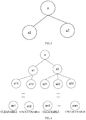
- the child nodes a1 and a2 of the root node a are generated, referring to FIG. 3 , the sub-sample set A1 is taken as the node information of the child node a1, and the sub-sample set A2 is taken as the node information of the child node a2.
- each child node taking a child node a1 as an example, it is determined whether the child node meets the preset classification termination condition. If yes, the current child node a1 is used as a leaf node, and the leaf node output is set according to the category of the sample in the sub-sample set corresponding to the child node a1.
- a child node a2 can be used as an example to calculate the information gain g of each features of the A2 sample set relative to the sample classification and select a maximum information gain ratio gmax.
- the maximum information gain ratio gmax is greater than the preset threshold ⁇
- the feature corresponding to the information gain gmax is the partitioning feature t
- the A2 is divided into several sub-sample sets based on the partitioning feature t, for example, the A2 can be divided into the sub-sample sets A21, A22, and A23.
- each subsample sets A21, A22, and A23 are removed, and the child nodes a21, a22, and a23 of the current node a2 are generated.
- the sample sets A21, A22, and A23 with removed partitioning features Ag are respectively taken as the node information of the child node a21, a22, and a23, respectively.
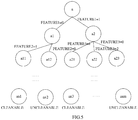
- the above-mentioned information gain classification way can be used to construct a decision tree as shown in FIG. 4 .
- the output of the leaf node of the decision tree includes "cleanable” or "uncleanable”.
- the feature values of the corresponding partitioning features may also be marked on the path between the nodes.
- the feature values of the corresponding partitioning features may be marked on the path of the current node and its child nodes.
- the feature values of the partitioning feature t include 0 and 1. 1 may be marked on the path between a2 and a. 0 may be marked on the path between a1 and a, and so on.
- a decision tree as shown in FIG. 5 can be obtained by marking a corresponding partition feature value such as 0 or 1 on the path of the current node and its child nodes.
- the information gain of the feature relative to the sample set classification may be obtained based on the empirical entropy of the sample classification and the conditional entropy of the feature relative to the sample set classification result. That is, the step "obtaining the information gain of the feature in the target sample set relative to the sample set classification" may include:
- a first probability of occurrence of a positive sample in the sample set and a second probability of occurrence of a negative sample in the sample set may be obtained.
- the positive sample is a sample that is cleanable
- the negative sample is a sample that is not cleanable.
- the empirical entropy of the sample is obtained according to the first probability and the second probability.
- the information gain is the difference of information of the decision tree between before and after the attribute selection.
- the sample set may be divided into several sub-sample sets according to feature t, and then the information entropy of each sub-sample set classification is obtained, and the probability of each feature value of the feature t appears in the sample set is obtained.
- the divided information entropy can be obtained according to the information entropy and the probability, that is, the conditional entropy of the feature t relative to the sample set classification result.
- the conditional entropy of the sample feature X relative to the sample set Y classification result can be calculated by the following formula: H Y
- X Xi
- n is the number of values of the feature X, that is, the number of types of the feature value.
- p i is the probability that the sample whose X feature is the i-th value appears in the sample set Y
- Xi is the i-th value of X.
- the sample set Y ⁇ sample 1, sample 2, sample i, ... sample n ⁇ can be divided into three sub-sample sets by feature X, that is Y1 ⁇ sample 1, sample 2...sample d ⁇ with feature values X1, Y2 ⁇ sample d+1...sample e ⁇ with feature values X2, Y3 ⁇ sample e +1...sample n ⁇ with feature values X3, wherein d and e are positive integers and both less than n.
- conditional entropy of feature X relative to the classification result of sample set Y is: H Y
- X p 1 H Y
- p 1 Y 1/ Y
- p 2 Y 2/ Y
- p 1 Y 3/ Y ;
- X 1) is the information entropy of the subsample set Y1 classification, that is, the empirical entropy, which can be calculated by the above formula of empirical entropy.
- the information gain of the feature X for the sample set Y classification is: the difference between the empirical entropy H ( Y ) and the conditional entropy H ( Y
- Step 203 at a prediction time, multi-dimensional features of the application as prediction samples are collected. wherein the prediction time can be set according to requirements, such as the current time.
- a multi-dimensional feature of an application can be acquired as a prediction sample at a predicted time.
- the multi-dimensional features collected in the step 201 and step 203 are the same feature, for example, the duration of the application switched to the background; the duration of screen-off of the electronic device after the application switched to the background; the number of times the application enters the foreground; the time period during which the application is in the foreground; the manner in which the application enters the background.
- Step 204 whether the application is cleanable is predicted according to the prediction samples and the decision tree model.
- the corresponding output result is obtained according to the predicted sample and the decision tree model, and whether the application can be cleaned is determined according to the output result.
- the output includes cleanable or uncleanable.
- the corresponding leaf node may be determined according to the feature of the predicted sample and the decision tree model, and the output of the leaf node is used as a predicted output result.
- the current leaf node is determined according to a branch condition (i.e., the feature value of the partitioning feature) of the decision tree, and the output of the leaf node is taken as the prediction result. Since the output of the leaf node includes cleanable or uncleanable, it is now possible to determine whether the application can be cleaned according to the decision tree.
- the corresponding leaf node may be found as an1 according to the branch condition of the decision tree in the decision tree shown in FIG. 5 , and the output of the leaf node an1 is cleanable.
- the application is determined to be cleanable.
- the embodiment of the present disclosure collects the multi-dimensional feature of the application, to construct the sample set of the application, classifying the sample set according to the information gain of the feature for the sample classification to construct a decision tree model of the application, an output of the decision tree model includes cleanable or uncleanable; the multi-dimensional features corresponding to the application are collected according to the prediction time as a prediction sample; whether the application a can be cleaned is predicted according to the prediction sample and the decision tree model to clean the cleanable application, thereby realizing automatically cleaning application, improving the smooth running of electronic devices and reducing power consumption.
- the embodiment of the present disclosure can make the cleaning of the corresponding application more personalized and intelligent, because each of the samples in the sample set includes a plurality of feature information that reflects the behavior of using habits of a user about the application.
- implementing the application clean prediction based on the decision tree prediction model can improve the accuracy of the user behavior prediction, thereby improving the accuracy of the cleanup.
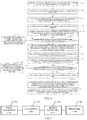
- the application cleaning method may include:
- Step 301 multi-dimensional features of an application are collected as samples and constructing a sample set of the application.
- the multi-dimensional feature information of the application has a dimension of a certain length, and the parameters in each dimension correspond to a feature information of the application, that is, the multi-dimensional feature information is composed of a plurality of feature information.
- the plurality of feature information may include feature information related to the application itself, for example, the duration of the application cutting into the background; the duration of the electronic device when the application is cut into the background; the number of times the application enters the foreground; the time when the application is in the foreground; the application enters the background mode is, for example, switched by the home button (home button), switched back by the return button, switched by other applications, etc.; the type of application includes level one (common application), level two (other applications), and the like.
- the plurality of feature information may further include related feature information of the electronic device where the application is located, for example, the time when the electronic device is off, the time of the bright screen, the current power, the wireless network connection status of the electronic device, whether the electronic device is in the charging state, or the like.
- the plurality of feature information may further include related feature information of the electronic device in which the application is located, for example, a screen-off time of the electronic device, a screen-on time of the electronic device,, a current power, a wireless network connection status of the electronic device, whether the electronic device is in a charging state, or the like.
- the sample set of the application may include multiple samples collected at a preset frequency during the historical time period.
- the historical time period may be, for example, the past 7 days or 10 days; the preset frequency may be, for example, collected once every 10 minutes, or once every half hour. It can be understood that datum of the multi-dimensional feature of the application collected at one time constitutes one sample and multiple samples constitute a sample set.
- a specific sample may be as shown in Table 1 below, which includes feature information of multi-dimensions. It should be noted that the feature information shown in Table 1 is only an example. In practice, the number of feature information included in one sample may be more than or less than the number of information shown in Table 1. The specific feature information may be different from that shown in Table 1, which is not specifically limited herein.
- Table 1 Dimension Feature information 1 Current time period 2 Current date category (working days, day of rest) 3 Previous situational application name 4 The name of situational application before the previous situational application 5 Current wireless network status, such as Wi-Fi connection status 6 When the wireless network is connected, the identification information of the wireless network, such as SSID/BSSID of Wi-Fi 7 The duration of the application in the background 8 A screen-off time of the electronic device, for example the screen-off time during the application is running background 9 A current power 10 Current charging state 11 Current plug-in status of the earphone 12 Category of the application 13 The way of switching application, for example, the way of switching the application to the background
- Step 302 the samples in the sample set are marked to obtain a sample tag for each sample.
- the labeled sample tag includes cleanable and uncleanable, that is, the sample category includes cleanable and uncleanable.
- each sample in the sample set can be marked according to the user's historical usage habits of the application. For example, after the application enters the background for 30 minutes, the user closes the application and this sample is marked as “cleanable”; for example, after the application enters the background and running in the background for 3 minutes, the user switch the application to the foreground and this sampler is marked as "uncleanable”. Specifically, the value “1" can be used to indicate “cleanable”, the value "0" is used to mean “uncleanable”, and vice versa.
- Step 303 a root node of the decision tree is generated, and the sample set is taken as node information of the root node.
- a root node a of a decision tree is first generated, and the sample set A is taken as the node information of the root node a.
- Step 304 the sample set is determined as the target sample set to be classified currently.
- the sample set of the root node is determined to be the current target sample set to be classified.
- Step 305 the information gain of the features in the target sample set relative to the sample set classification are obtained, and a maximum information gain ratio is determined.
- the information gain g1, g2, ..., gm of each feature for example, feature 1, feature 2, ..., feature m, relative to the sample set classification is calculated, and the maximum information gain gmax is selected.
- an obtaining method is provided as follows.
- a first probability of positive samples occurring in the sample set is obtained, and a second probability of negative samples occurring in the sample set is obtained, the positive samples are samples whose category is cleanable, and the negative samples are samples whose category is uncleanable; the empirical entropy of the sample is obtained according to the first probability and the second probability.
- the sample set Y ⁇ sample 1, sample 2, ..., sample n ⁇
- the number of samples is j
- the number of samples that cannot be cleaned is n-j
- the information gain is the difference of information of the decision tree between before and after the attribute selection.
- the sample set may be divided into several sub-sample sets according to feature t, and then the information entropy of each sub-sample set classification is obtained, and the probability of each feature value of the feature t occurring in the sample set is obtained.
- the divided information entropy can be obtained according to the information entropy and the probability, that is, the conditional entropy of the feature Ai relative to the sample set classification result.
- the conditional entropy of the feature X relative to the sample set Y classification result can be calculated by the following formula: H Y
- X Xi
- n is the number of values of the feature X, that is, the number of types of the feature value.
- p i is the probability that the sample whose X feature is the i-th value occurring in the sample set Y
- Xi is the i-th value of X.
- the sample set Y ⁇ sample 1, sample 2, sample i, ... sample n ⁇ can be divided into three sub-sample set by feature X, that is Y1 ⁇ sample 1, sample 2...sample d ⁇ with feature values X1, Y2 ⁇ sample d+1...sample e ⁇ with feature values X2, Y 3 ⁇ sample e +1...sample n ⁇ with feature values X3, wherein d and e are positive integers and both less than n.
- X p 1 H Y
- p 1 Y 1/ Y
- p 2 Y 2/ Y
- p 1 Y 3/ Y
- X 1) is an information entropy of the subsample set Y1 classification, that is, the empirical entropy, which can be calculated by the above formula of empirical entropy.
- the information gain of the feature X for the sample set Y classification is: the difference between the empirical entropy H ( Y ) and the conditional entropy H ( Y
- Step 306 whether the maximum information gain is greater than the threshold is determined. If yes, continue the step 307. If not, continue the step 313.
- the threshold ⁇ may be set according to an actual demand.
- Step 307 the feature corresponding to the maximum information gain is selected as a partitioning feature, and a number of sub-sample sets are obtained by dividing the sample set according to the feature value of the partitioning feature.
- the maximum information gain gmax corresponds to the feature i
- the feature i may be selected as the partitioning feature.
- a sample with the same feature value in the sample set can be divided into the same sub-sample set.
- the feature values of the partitioning features include: 0, 1, and 2, then, the samples whose feature values are 0 can be classified into one category, and the samples with the feature value 1 are classified into one category, and the feature values 2 are classified into one category.
- Step 308 the partitioning feature of the sample is removed in each sub-sample set to obtain a removed sub-sample set.
- the sample set A may be divided into A1 ⁇ sample 1, sample 2...sample k ⁇ , and A2 ⁇ sample k+1...sample n ⁇ . Then, the partitioning feature i may be removed in the sub-sample set A1 and the sub-sample set A2.
- Step 309 a child node of the current node is generated, and the removed sub-sample set is taken as node information of the child node.
- sub-sample set corresponds to a child node.
- a child node a1 and a child node a2 of a root node a are generated, and the sub-sample set A1 is set as node information of the child node a1, and the sub-sample set A2 is set as node information of the child node a2.
- a partition feature value corresponding to a child node may be set on the path of the current node and its child nodes, so that subsequent application prediction is facilitated.
- Step 310 it is determined whether the sub-sample set of the child node meets a preset classification termination condition, and if yes, a step 311 is performed, and if no, a step 312 is performed.
- the preset classification termination condition may be set according to actual requirements.
- the current child node is used as a leaf node, and the sample set corresponding to the child node is stopped for word segmentation; when the child node is not satisfied the preset classification termination condition is, the classification of the sample set corresponding to the child node is continued.
- the preset classification termination condition may include: the number of categories of the samples in the removed sub-sample set corresponding to the child node is 1, that is, the sample in the sample set of the child node has only one category.
- Step 311 the target sample set is updated by the sub-sample set of the child node and return to the step 305.
- Step 312 the child node is set as a leaf node, and an output of the leaf node is set according to a category of the sample in the sub-sample set of the child node.
- the preset classification termination condition may include: the number of categories of the samples in the removed sub-sample set corresponding to the child node is 1, that is, the sample in the sample set of the child node has only one category.
- the category of the sample in the sub-sample set is taken as the output of the leaf node. For example, there is only a sample with the category "cleanable” in the removed sub-sample set, then "cleanable" can be used as the output of the leaf node.
- Step 313 the current node is taken as a leaf node, and the sample category with the largest number of samples is selected as the output of the leaf node.
- sample categories include cleanable and uncleanable.
- the sample category having the largest number of samples in the sub-sample set A1 can be used as the output of the leaf node. If the number of "uncleanable” samples is the largest, "uncleanable” can be used as the output of leaf node a1.
- Step 314 after the decision tree model is constructed, a time at which whether a predicted application can be cleaned is obtained, and multi-dimensional features of the application at then is collected as prediction samples according to the time.
- a time at which whether a predicted application can be cleaned may include a current time, or other time.
- Step 315 whether the application can be cleaned is predicted according to the prediction sample and the decision tree model.
- a corresponding leaf node may be determined according to the features of the predicted sample and the decision tree model, and the output of the leaf node is output as a prediction result.
- the current leaf node is determined according to a branch condition of the decision tree (i.e., the feature value of the partitioning feature) by using the features of the predicted sample, and the output of the leaf node is taken as the prediction result. Since the output of the leaf node includes cleanable or uncleanable, it is now possible to determine whether the application can be cleaned according to the decision tree.
- the corresponding leaf node can be found as an2 according to the branch condition of the decision tree in the decision tree shown in FIG. 5 , and the output of the leaf node an2 is uncleanable, thus the application is not cleanable.
- whether a number of applications running in the background can be cleaned may be predicted by a pre-built decision tree model. As shown in Table 2, it is determined that an application A1 and an application A3 running in the background can be cleaned, while an application A2 is maintained with its status of running in the background unchanged. Table 2 Application Prediction Result Application A1 Cleanable Application A2 Unclean able Application A3 Cleanable
- the embodiment of the present disclosure collects multi-dimensional features of the application as samples, and constructs a sample set of the application; classifies the sample set according to the information gain of the sample classification to construct an application decision tree model, and a decision tree.
- the output of the model includes cleanable or uncleanable; the multi-dimensional features corresponding to the application are collected as prediction samples according to the prediction time; whether the application can be cleaned according to the prediction sample and the decision tree model, the application that can be cleaned is cleaned up, thereby realizing the application. Automatic cleaning improves the smooth running of electronic equipment and reduces power consumption.
- the embodiment of the present disclosure can make the cleaning of the corresponding application more personalized and intelligent, because each of the samples in the sample set includes a plurality of feature information that reflects the behavior of using habits of a user about the application.
- implementing the application clean prediction based on the decision tree prediction model can improve the accuracy of the user behavior prediction, thereby improving the accuracy of the cleanup.
- the embodiment of the present disclosure further provides an application cleaning device, including:
- the classifying unit comprises:
- the classification subunit is configured to:
- the feature determining subunit is configured to:
- the gain obtaining subunit is configured to:
- the feature determining subunit is further configured to: when the target information gain is not larger than the preset threshold, take the current node as a leaf node, and take the category of which the number of the sample is the largest as the output of the leaf node.
- the determining subunit is configured to:
- the gain obtaining subunit is configured to:
- the gain obtaining subunit is configured to: obtain a first probability of positive samples occurring in the sample set and a second probability of negative samples occurring in the sample set, wherein the positive samples are samples whose category is cleanable, and the negative samples are samples whose category is uncleanable; and obtain the empirical entropy of the sample according to the first probability and the second probability.
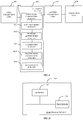
- An application cleaning device is also provided in an embodiment. Referring to FIG. 7 .
- FIG. 7 is a schematic structural diagram of an application cleaning device according to an embodiment of the present disclosure.
- the application cleaning device is applied to an electronic device, and the application cleaning device includes a first collecting unit 401, a classifying unit 402, a second collecting unit 403, and a predicting unit 404, as follows:
- the classifying unit 402 comprises:
- the classification subunit 4024 is configured to: obtain feature values of the partitioning feature in the target sample set; divide the target sample set according to the feature values.
- the feature determining subunit 4023 is configured to select a maximum target information gain ratio in the information gain; determine whether the target information gain ratio is larger than a preset threshold; when the target information gain ratio is larger than a preset threshold, determine a feature corresponding to the target information gain ratio as the current partitioning feature.
- the gain obtaining subunit 4022 is configured to:
- the gain obtaining subunit 4022 is configured to: obtain a first probability of positive samples occurring in the sample set and a second probability of negative samples occurring in the sample set, the positive samples are samples whose category is cleanable, and the negative samples are samples whose category is uncleanable; obtain the empirical entropy of the sample according to the first probability and the second probability
- the determining subunit 4025 is configured to determine whether the number of the category of the samples in the removed sub-sample set corresponding to the child node is a preset number; when the number of categories of the samples in the removed sub-sample set corresponding to the child node is a preset number, determine that the child node meets the preset classification termination condition.
- the feature determining subunit 4023 is further configured to: when the target information gain is not larger than the preset threshold, take the current node as a leaf node, and take the category of which the number of the sample is the largest as the output of the leaf node.
- the steps performed by each unit in the application cleaning device may refer to the method steps described in the foregoing method embodiments.
- the application cleaning device can be integrated in an electronic device such as a mobile phone, a tablet computer, or the like.
- the foregoing various units may be implemented as an independent entity, or may be implemented in any combination, and may be implemented as the same or a plurality of entities.
- the foregoing units refer to the foregoing embodiments, and details are not described herein again.
- module may be taken to mean a software object that is executed on the computing system.
- the different components, modules, engines, and services described herein can be considered as implementation objects on the computing system.
- the apparatus and method described herein may be implemented in software, and may of course be implemented in hardware, all of which are within the scope of the present disclosure.
- the application cleaning device of the present embodiment can collect multi-dimensional features of an application as samples, and constructing a sample set of the application by a first collecting unit 401, classify the sample set according to information gain of the features relative to a sample classification to construct a decision tree model of the application, wherein an output of the decision tree model includes cleanable or not cleanable by a classifying unit 402, collect the multi-dimensional features of the application as prediction samples according to a prediction time by a second collecting unit 403, and predict whether the application is cleanable according to the prediction samples and the decision tree model by a predicting unit 404, thus the application that can be cleaned is cleaned up, thereby realizing the application. Automatic cleaning improves the smooth running of electronic equipment and reduces power consumption.
- the electronic device 500 includes a processor 501 and a memory 502.
- the processor 501 is electrically connected to the memory 502.
- the processor 500 is a control center of the electronic device 500 that connects various portions of the entire electronic device using various interfaces and lines, by running or loading a computer program stored in the memory 502, and recalling data stored in the memory 502, The various functions of the electronic device 500 are performed and the data is processed to perform overall monitoring of the electronic device 500.
- the memory 502 can be used to store software programs and modules, and the processor 501 executes various functional applications and data processing by running computer programs and modules stored in the memory 502.
- the memory 502 may mainly include a storage program area and a storage data area, wherein the storage program area may store an operating system, a computer program required for at least one function (such as a sound playing function, an image playing function, etc.), and the like; the storage data area may be stored according to Data created by the use of electronic devices, etc.
- memory 502 can include high-speed random-access memory, and can also include non-volatile memory, such as at least one magnetic disk storage device, flash memory device, or other volatile solid-state storage device. Accordingly, memory 502 can also include a memory controller to provide processor 501 access to memory 502.
- the processor 501 in the electronic device 500 loads the instructions corresponding to the process of one or more computer programs into the memory 502 according to the following steps and is stored in the memory 502 by the processor 501.
- the computer program in which to implement various functions, as follows:
- the processor 501 may specifically perform the following steps:
- the processor 501 may specifically perform the following steps:
- the processor 501 when selecting the current partitioning feature from the features according to the information gain selection, the processor 501 may specifically perform the following steps:
- the processor 501 may further perform the following steps: when the target information gain ratio is not larger than the preset threshold, taking the current node as a leaf node, and taking the category of which the number of the sample is the largest as the output of the leaf node.
- the processor 501 when obtaining the information gains of the feature relative to the sample set classification in the target sample set, the processor 501 may specifically perform the following steps:
- the electronic device 500 may further include: a display 503, a radio frequency circuit 504, an audio circuit 505, and a power source 506.
- the display 503, the radio frequency circuit 504, the audio circuit 505, and the power source 506 are electrically connected to the processor 501, respectively.
- the display 503 can be used to display information entered by a user or information provided to a user, as well as various graphical user interfaces, which can be composed of graphics, text, icons, video, and any combination thereof.
- the display 503 can include a display panel.
- the display panel can be configured in the form of a liquid crystal display (LCD) or an organic light-emitting diode (OLED).
- LCD liquid crystal display
- OLED organic light-emitting diode
- the radio frequency circuit 504 can be used to transmit and receive radio frequency signals to establish wireless communication with a network device or other electronic device through wireless communication, and to transmit and receive signals with a network device or other electronic device.
- the audio circuit 505 can be used to provide an audio interface between a user and an electronic device through a speaker or a microphone.
- the power source 506 can be used to power various components of the electronic device 500.
- the power source 506 can be logically coupled to the processor 501 through a power management system to enable functions such as managing charging, discharging, and power management through the power management system.
- the electronic device 500 may further include a camera, a Bluetooth module, and the like, and details are not described herein.
- the embodiment of the present disclosure further provides a storage medium, where the storage medium stores a computer program, and when the computer program runs on a computer, causes the computer to perform an application cleaning method in any of the above embodiments, such as: collecting the multi-dimensional feature as a sample, and constructing a sample set of the application; classifying the sample set according to the information gain of the feature classification for the sample to construct a decision tree model of the application, the output includes cleanable or uncleanable; the multi-dimensional feature corresponding to the application is collected as a prediction sample according to the predicted time; and the application is predicted to be cleanable according to the predicted sample and the decision tree model.
- an application cleaning method in any of the above embodiments, such as: collecting the multi-dimensional feature as a sample, and constructing a sample set of the application; classifying the sample set according to the information gain of the feature classification for the sample to construct a decision tree model of the application, the output includes cleanable or uncleanable; the multi-dimensional feature corresponding to the application is collected as a prediction sample according to the
- the storage medium may be a magnetic disk, an optical disk, a read only memory (ROM), or a random-access memory (RAM).
- ROM read only memory
- RAM random-access memory
- the computer program may be stored in a computer readable storage medium, such as in a memory of the electronic device, and executed by at least one processor in the electronic device, and may include, for example, an application cleaning method during execution.
- the storage medium may be a magnetic disk, an optical disk, a read only memory, a random-access memory, or the like.
- each functional module may be integrated into one processing chip, or each module may exist physically separately, or two or more modules may be integrated into one module.
- the above integrated modules can be implemented in the form of hardware or in the form of software functional modules.
- the integrated module if implemented in the form of a software functional module and sold or used as a standalone product, may also be stored in a computer readable storage medium, such as a read only memory, a magnetic disk or an optical disk, etc.
Landscapes
- Engineering & Computer Science (AREA)
- Theoretical Computer Science (AREA)
- Software Systems (AREA)
- General Engineering & Computer Science (AREA)
- General Physics & Mathematics (AREA)
- Physics & Mathematics (AREA)
- Computing Systems (AREA)
- Evolutionary Computation (AREA)
- Data Mining & Analysis (AREA)
- Mathematical Physics (AREA)
- Artificial Intelligence (AREA)
- Computational Linguistics (AREA)
- Computer Vision & Pattern Recognition (AREA)
- Medical Informatics (AREA)
- Computer Hardware Design (AREA)
- Information Retrieval, Db Structures And Fs Structures Therefor (AREA)
Applications Claiming Priority (2)
| Application Number | Priority Date | Filing Date | Title |
|---|---|---|---|
| CN201710920017.2A CN107704070B (zh) | 2017-09-30 | 2017-09-30 | 应用清理方法、装置、存储介质及电子设备 |
| PCT/CN2018/102457 WO2019062418A1 (fr) | 2017-09-30 | 2018-08-27 | Procédé et appareil de nettoyage d'application, support de stockage et dispositif électronique |
Publications (2)
| Publication Number | Publication Date |
|---|---|
| EP3690663A1 true EP3690663A1 (fr) | 2020-08-05 |
| EP3690663A4 EP3690663A4 (fr) | 2020-11-11 |
Family
ID=61184440
Family Applications (1)
| Application Number | Title | Priority Date | Filing Date |
|---|---|---|---|
| EP18861681.7A Ceased EP3690663A4 (fr) | 2017-09-30 | 2018-08-27 | Procédé et appareil de nettoyage d'application, support de stockage et dispositif électronique |
Country Status (4)
| Country | Link |
|---|---|
| US (1) | US20200225995A1 (fr) |
| EP (1) | EP3690663A4 (fr) |
| CN (1) | CN107704070B (fr) |
| WO (1) | WO2019062418A1 (fr) |
Families Citing this family (13)
| Publication number | Priority date | Publication date | Assignee | Title |
|---|---|---|---|---|
| CN107704070B (zh) * | 2017-09-30 | 2020-01-14 | Oppo广东移动通信有限公司 | 应用清理方法、装置、存储介质及电子设备 |
| CN107678531B (zh) | 2017-09-30 | 2020-12-01 | Oppo广东移动通信有限公司 | 应用清理方法、装置、存储介质及电子设备 |
| CN108427582B (zh) * | 2018-03-09 | 2022-02-08 | 北京小米移动软件有限公司 | 卡顿状态确定方法、装置及计算机可读存储介质 |
| CN108984369A (zh) * | 2018-07-13 | 2018-12-11 | 厦门美图移动科技有限公司 | 卡顿预测方法、装置及移动终端 |
| CN109542624B (zh) * | 2018-11-23 | 2021-09-28 | 中国农业银行股份有限公司 | 一种应用变更的资源调配方法及装置 |
| CN113439253B (zh) * | 2019-04-12 | 2023-08-22 | 深圳市欢太科技有限公司 | 应用清理方法、装置、存储介质及电子设备 |
| CN110781430B (zh) * | 2019-09-27 | 2022-03-25 | 同济大学 | 互联网新型虚拟数据中心系统及其构造方法 |
| CN112732355B (zh) * | 2021-01-08 | 2022-03-01 | 湖南华埔信息产业有限公司 | 一种基于大数据的后台应用清理系统及方法 |
| CN113220369B (zh) * | 2021-05-27 | 2022-12-23 | 北京师范大学珠海校区 | 一种基于分布式机器学习的智能计算卸载优化方法 |
| CN113298422B (zh) * | 2021-06-16 | 2023-01-31 | 福建亿力优能电力科技有限公司 | 一种基于用电数据的污染源企业违规生产监控方法 |
| CN113781161A (zh) * | 2021-08-30 | 2021-12-10 | 微民保险代理有限公司 | 展示页面生成方法、装置、计算机设备和存储介质 |
| CN114474659A (zh) * | 2022-03-18 | 2022-05-13 | 宝胜(山东)电缆有限公司 | 一种具有清洁功能的加料箱及其控制方法 |
| CN117971438B (zh) * | 2024-03-29 | 2024-06-21 | 浪潮电子信息产业股份有限公司 | 系统功耗管理方法、装置、电子设备及可读存储介质 |
Family Cites Families (11)
| Publication number | Priority date | Publication date | Assignee | Title |
|---|---|---|---|---|
| US7870352B2 (en) * | 2003-11-13 | 2011-01-11 | Stalker Altan J | State-based memory unloading |
| US8510743B2 (en) * | 2007-10-31 | 2013-08-13 | Google Inc. | Terminating computer applications |
| JP5091923B2 (ja) * | 2009-07-06 | 2012-12-05 | 株式会社東芝 | 電子機器および通信制御方法 |
| US10990881B1 (en) * | 2014-08-26 | 2021-04-27 | Progress Software Corporation | Predictive analytics using sentence data model |
| CN105373800A (zh) * | 2014-08-28 | 2016-03-02 | 百度在线网络技术(北京)有限公司 | 分类方法及装置 |
| CN105468409A (zh) * | 2015-11-20 | 2016-04-06 | 北京金山安全软件有限公司 | 一种应用程序关闭方法、装置及电子设备 |
| CN107203774A (zh) * | 2016-03-17 | 2017-09-26 | 阿里巴巴集团控股有限公司 | 对数据的归属类别进行预测的方法及装置 |
| CN106331327A (zh) * | 2016-08-17 | 2017-01-11 | 陈银芳 | 手机的省电提醒方法及系统 |
| CN106793031B (zh) * | 2016-12-06 | 2020-11-10 | 常州大学 | 基于集合竞优算法的智能手机能耗优化方法 |
| CN106919448A (zh) * | 2017-02-16 | 2017-07-04 | 北京小米移动软件有限公司 | 应用清理方法及装置 |
| CN107704070B (zh) * | 2017-09-30 | 2020-01-14 | Oppo广东移动通信有限公司 | 应用清理方法、装置、存储介质及电子设备 |
-
2017
- 2017-09-30 CN CN201710920017.2A patent/CN107704070B/zh active Active
-
2018
- 2018-08-27 EP EP18861681.7A patent/EP3690663A4/fr not_active Ceased
- 2018-08-27 US US16/649,972 patent/US20200225995A1/en not_active Abandoned
- 2018-08-27 WO PCT/CN2018/102457 patent/WO2019062418A1/fr not_active Ceased
Also Published As
| Publication number | Publication date |
|---|---|
| CN107704070A (zh) | 2018-02-16 |
| WO2019062418A1 (fr) | 2019-04-04 |
| EP3690663A4 (fr) | 2020-11-11 |
| US20200225995A1 (en) | 2020-07-16 |
| CN107704070B (zh) | 2020-01-14 |
Similar Documents
| Publication | Publication Date | Title |
|---|---|---|
| EP3690663A1 (fr) | Procédé et appareil de nettoyage d'application, support de stockage et dispositif électronique | |
| US11422831B2 (en) | Application cleaning method, storage medium and electronic device | |
| EP3502880B1 (fr) | Procédé de préchargement d'application, support d'informations et dispositif terminal | |
| US11544633B2 (en) | Method for cleaning up background application, storage medium, and electronic device | |
| CN108337358B (zh) | 应用清理方法、装置、存储介质及电子设备 | |
| WO2019120007A1 (fr) | Appareil et procédé de prédiction du sexe d'un utilisateur, et dispositif électronique | |
| CN107894827B (zh) | 应用清理方法、装置、存储介质及电子设备 | |
| WO2019062419A1 (fr) | Procédé et appareil de nettoyage d'application, support de stockage et dispositif électronique | |
| CN108108455B (zh) | 目的地的推送方法、装置、存储介质及电子设备 | |
| CN107870810B (zh) | 应用清理方法、装置、存储介质及电子设备 | |
| WO2019120023A1 (fr) | Procédé et appareil de prédiction de sexe, support d'informations et dispositif électronique | |
| CN109992367A (zh) | 应用处理方法和装置、电子设备、计算机可读存储介质 | |
| WO2019085754A1 (fr) | Procédé et appareil de nettoyage d'application, et support d'informations et dispositif électronique | |
| CN107678858A (zh) | 应用处理方法、装置、存储介质及电子设备 | |
| CN108197225B (zh) | 图像的分类方法、装置、存储介质及电子设备 | |
| CN112948763B (zh) | 件量预测方法、装置、电子设备及存储介质 | |
| CN114117056B (zh) | 一种训练数据的处理方法、装置以及存储介质 | |
| CN107748697A (zh) | 应用关闭方法、装置、存储介质及电子设备 | |
| CN107943537B (zh) | 应用清理方法、装置、存储介质及电子设备 | |
| CN104360934A (zh) | 一种移动终端及其应用程序通知处理方法 | |
| CN109961163A (zh) | 性别预测方法、装置、存储介质及电子设备 | |
| CN107704364B (zh) | 后台应用程序管控方法、装置、存储介质及电子设备 | |
| CN107943535A (zh) | 应用清理方法、装置、存储介质及电子设备 |
Legal Events
| Date | Code | Title | Description |
|---|---|---|---|
| STAA | Information on the status of an ep patent application or granted ep patent |
Free format text: STATUS: THE INTERNATIONAL PUBLICATION HAS BEEN MADE |
|
| PUAI | Public reference made under article 153(3) epc to a published international application that has entered the european phase |
Free format text: ORIGINAL CODE: 0009012 |
|
| STAA | Information on the status of an ep patent application or granted ep patent |
Free format text: STATUS: REQUEST FOR EXAMINATION WAS MADE |
|
| 17P | Request for examination filed |
Effective date: 20200429 |
|
| AK | Designated contracting states |
Kind code of ref document: A1 Designated state(s): AL AT BE BG CH CY CZ DE DK EE ES FI FR GB GR HR HU IE IS IT LI LT LU LV MC MK MT NL NO PL PT RO RS SE SI SK SM TR |
|
| AX | Request for extension of the european patent |
Extension state: BA ME |
|
| A4 | Supplementary search report drawn up and despatched |
Effective date: 20201009 |
|
| RIC1 | Information provided on ipc code assigned before grant |
Ipc: G06F 13/20 20060101AFI20201005BHEP Ipc: G06N 5/00 20060101ALN20201005BHEP Ipc: G06F 9/50 20060101ALN20201005BHEP Ipc: G06F 9/445 20180101ALI20201005BHEP |
|
| DAV | Request for validation of the european patent (deleted) | ||
| DAX | Request for extension of the european patent (deleted) | ||
| STAA | Information on the status of an ep patent application or granted ep patent |
Free format text: STATUS: EXAMINATION IS IN PROGRESS |
|
| 17Q | First examination report despatched |
Effective date: 20211217 |
|
| REG | Reference to a national code |
Ref country code: DE Ref legal event code: R003 |
|
| STAA | Information on the status of an ep patent application or granted ep patent |
Free format text: STATUS: THE APPLICATION HAS BEEN REFUSED |
|
| 18R | Application refused |
Effective date: 20231116 |