EP3690751A1 - Procédé de construction d'un extracteur de caractéristiques latentes profondes pour des données de capteur industriel - Google Patents
Procédé de construction d'un extracteur de caractéristiques latentes profondes pour des données de capteur industriel Download PDFInfo
- Publication number
- EP3690751A1 EP3690751A1 EP19154667.0A EP19154667A EP3690751A1 EP 3690751 A1 EP3690751 A1 EP 3690751A1 EP 19154667 A EP19154667 A EP 19154667A EP 3690751 A1 EP3690751 A1 EP 3690751A1
- Authority
- EP
- European Patent Office
- Prior art keywords
- feature extractor
- task
- training
- latent
- latent feature
- Prior art date
- Legal status (The legal status is an assumption and is not a legal conclusion. Google has not performed a legal analysis and makes no representation as to the accuracy of the status listed.)
- Withdrawn
Links
Images

Classifications
-
- G—PHYSICS
- G06—COMPUTING OR CALCULATING; COUNTING
- G06N—COMPUTING ARRANGEMENTS BASED ON SPECIFIC COMPUTATIONAL MODELS
- G06N3/00—Computing arrangements based on biological models
- G06N3/02—Neural networks
- G06N3/08—Learning methods
- G06N3/084—Backpropagation, e.g. using gradient descent
-
- G—PHYSICS
- G06—COMPUTING OR CALCULATING; COUNTING
- G06N—COMPUTING ARRANGEMENTS BASED ON SPECIFIC COMPUTATIONAL MODELS
- G06N3/00—Computing arrangements based on biological models
- G06N3/02—Neural networks
- G06N3/08—Learning methods
- G06N3/096—Transfer learning
-
- G—PHYSICS
- G06—COMPUTING OR CALCULATING; COUNTING
- G06N—COMPUTING ARRANGEMENTS BASED ON SPECIFIC COMPUTATIONAL MODELS
- G06N3/00—Computing arrangements based on biological models
- G06N3/02—Neural networks
- G06N3/04—Architecture, e.g. interconnection topology
- G06N3/045—Combinations of networks
-
- G—PHYSICS
- G06—COMPUTING OR CALCULATING; COUNTING
- G06N—COMPUTING ARRANGEMENTS BASED ON SPECIFIC COMPUTATIONAL MODELS
- G06N3/00—Computing arrangements based on biological models
- G06N3/02—Neural networks
- G06N3/04—Architecture, e.g. interconnection topology
- G06N3/0464—Convolutional networks [CNN, ConvNet]
-
- G—PHYSICS
- G06—COMPUTING OR CALCULATING; COUNTING
- G06N—COMPUTING ARRANGEMENTS BASED ON SPECIFIC COMPUTATIONAL MODELS
- G06N3/00—Computing arrangements based on biological models
- G06N3/02—Neural networks
- G06N3/08—Learning methods
-
- G—PHYSICS
- G06—COMPUTING OR CALCULATING; COUNTING
- G06N—COMPUTING ARRANGEMENTS BASED ON SPECIFIC COMPUTATIONAL MODELS
- G06N3/00—Computing arrangements based on biological models
- G06N3/02—Neural networks
- G06N3/08—Learning methods
- G06N3/09—Supervised learning
Definitions
- the present invention relates to a method of and a system for building a latent feature extractor as well as a neural network (NN) comprising latent feature extractor built by said method and/or with said system.
- NN neural network
- labelled data is one of the if not even the most important ingredient for enabling machine learning based artificial intelligence (AI) solutions to solve new and challenging automation tasks.
- Labelled data describes datasets that have been specifically annotated by domain knowledge with a specific problem setting in mind such that the parameters of a machine learning model can be optimised by examples.
- a method should automatically detect whether a person is present in an image recorded by a camera.
- the current state of the art in solving this problem with methods from the domain of machine learning requires to build a labelled dataset that contains images and corresponding labels that indicate whether a person is present or not in each image. Given this labelled dataset the machine learning algorithm can learn a function that maps input pixels to a classification by repeatedly viewing examples from the labelled dataset. Even though building such a dataset sounds quite straight forward it can be incredibly labour and cost intensive if not even infeasible since, depending on the complexity of the target problem, thousands to millions of these labelled data instances are required.
- the first is to invest large amounts of money in training a workforce of highly specialized data labellers that build the required labelled datasets for every single target problem for which an AI solution based on machine learning is pursued. Obviously this approach is not very attractive since it is very labour intensive and expensive and also requires access to a large pool of (external) data which is not feasible in many cases.
- the second approach relies on classic domain specific feature engineering based on established signal processing methods like Fast Fourier Transform (FFT), Wavelets, moving statistics to name a few. If these features significantly facilitate the learning task, also the amount of required labelled data will be reduced. Applying this approach can be seen as manual feature extraction where the input sensor signals are represented (embedded) in a new interpretable space. However, such feature engineering is often not possible as not always a suitable signal processing method exists/is applicable.
- FFT Fast Fourier Transform
- the present invention provides a method for building a latent feature extractor according to independent claim 1 and a system of building a latent feature extractor as well as a neural network according to the further independent claims. Further refinements of the present invention are subject of the dependent claims.
- a method of building a latent feature extractor comprises the steps of: Providing non-uniform training data comprising k T training examples for each single task T of a multitude of T i tasks. Optimising parameters ⁇ of a neural network (NN) of the latent feature extractor based on the multitude of T i tasks. Thereto, the following steps are executed iteratively until the parameters ⁇ have converged: Randomly selecting a single tasks T from the multitude of T i tasks for optimising the parameters ⁇ . Sampling the current randomly selected task T for n j iterations with the respective k T training examples of the non-uniform training data for optimising the parameters ⁇ based on the current randomly selected task T.
- each iteration n of the n j iterations the following steps are executed: Extracting latent features from a training signal of the current training example k of the respective training examples k T with the latent feature extractor. Deriving an output signal o i for the current randomly selected task T from the extracted latent features with a respective task module of the current randomly selected task T.
- a system for building a latent feature extractor arranged and configured for executing the method as described above comprises the latent feature extractor and task modules.
- the latent feature extractor is utilised for extracting the latent features.
- the latent feature extractor is shared for each task T of the multitude of Ti tasks.
- the task modules for each single task T of the multitude of Ti tasks are located downstream the latent feature extractor and utilised for deriving the output signal o i for the respective task T.
- a neural network preferably a deep NN and in particular an (deep) industrial NN, comprises a latent feature extractor, a combiner module in case multiple input signals are provided to the neural network and a specific task module.
- the latent feature extractor is built by the method and/or with the system as described above.
- the combiner module is located downstream the latent feature extractor.
- the specific task module is located downstream the latent feature extractor and (if present) the combiner module, respectively.
- the industrial domain labelled data is a major bottleneck for implementing AI solutions based on machine learning.
- pre-trained models comprising general latent feature extractors (pre-trained (deep) NN) that automatically extract latent features from general industrial sensor data such as temperatures, torques, current and voltage profiles do reduce the amount of labelled training data needed to train an industrial neuronal network for a specific task.
- general latent feature extractors pre-trained (deep) NN
- the input to the (deep) NN/model consists of a single signal.
- the input to the model consists of a single sequence of fixed length like Is [second] of torque measurements of the spindle in a milling machine measured with a 500hz [Hertz] frequency, which results in 500 values per input.
- the data Given the context of the data the data has to be properly normalized such that the values are not too large or too low. Normally, min-max normalization or centring the data and scaling to unit variance or just scaling the values by some other constant (e.g. observed standard deviation within the complete data) can be utilised.
- the normalized signal will be fed into the subsequent (deep) NN.
- the (deep) NN consumes the normalized input signal and produces outputs optimised for a specific target task. For example, for an anomaly detection scenario the model might output the probability that the input signal contains an anomaly or in an activity recognition task class probabilities for various activities that might have generated the input signal.
- the (deep) NN architecture can be subdivided into two modules (which are optimised end-to-end not independently later on), the (general) latent feature extractor ((deep) "sub-NN”) and a specific task module ((deep) "sub-NN”).
- the latent feature extractor consumes the normalized sensor signal data and outputs a latent feature/embedding of that input signal.
- the latent feature extractor represents a function that encodes the input sensor signal(s) into a latent feature space where each feature represents meaningful information extracted from the input data that is useful for the downstream specific task module.
- the latent feature extraction is performed by a (deep) NN that consists of multiple 1D convolutional neural network layers that are stacked on top of each other. With a deeper architecture the model can extract locally detected latent features and further combine them in a hierarchical fashion in the deeper layers.
- the (deep) NN architecture might further contain some other components like batch normalization layers or skip connections to stabilize the training of the components.
- the specific task module consumes the latent features produced by the latent feature extractor and produces outputs required for the specified target task.
- the specific task module is a (deep) neural network that combines the latent features and produces values meaningful for the specific target problem (e.g. an anomaly probability, class probabilities or any other value).
- the input to the (deep) (industrial) NN/model consists of multiple input signals.
- Each of the input signals to the approach consists of a single sequence of fixed length, for example Is of torque measurements of the spindle and the x, y, z coordinates of the spindle in a milling machine measured with a 500hz frequency, which results in 500 values per input signal.
- the input data needs to be normalised.
- each of the types of the input signals have to be normalised individually if they were not measured by a related sensor. For example a torque measurement needs to be normalised differently than a coordinate measurement. The resulting normalized signal will be fed into the (deep) (industrial) NN.
- the (deep) NN consumes the normalized input signal and produces outputs optimised for the specific target task (e.g. anomaly detection scenario or activity recognition task).
- the (deep) NN architecture can be subdivided into three modules (which are optimised end-to-end not independently later on).
- the latent feature extractor ((deep) "sub"-NN) consumes each of the normalized sensor signals individually and outputs latent features/embeddings for each of the input signals.
- the latent feature extractor represents a function that encodes each single input sensor signal into a latent feature space where each features represent meaningful information extracted from the input data that is useful for the downstream modules.
- the latent feature extraction is performed by a (deep) NN that consists of multiple 1D convolutional neural network layers that are stacked on top of each other.
- the deep neural network architecture might further contain some components like batch normalization layers or skip connections to stabilize the training of the (deep) NN.
- the combiner module combines the latent features produced by the latent feature extractor for every input signal in a reasonable way. In the simplest case, they get simply concatenated, added or multiplied. In more complex scenarios, the combiner is also a (deep) "sub-NN" that learns meaningful combinations of the various latent features extracted from each input signal.
- the output of the combiner module is fed into the specific task module.
- the specific task module consumes the combined latent features produced by the combiner module and produces outputs required for the specific target task.
- the specific task model is a (deep) "sub-NN” that combines latent features and produces values meaningful for the target problem (e.g. an anomaly probability, class probabilities or any other value).
- the (deep) (industrial) NN is hence a combination of the (deep) "sub-NN” of the latent feature extractor and the combiner module (if present) and the (deep) "sub-NN” of the specific task module.
- the general latent feature extractor is built or pre-trained in a multi-task training setting.
- multiple different tasks T i are optimised in the pre-training while the latent feature extractor is shared between all the different tasks T i .
- the combiner modules and of course the task modules are not shared. This means that during pre-training of the general latent feature extractor all tasks T i optimise the same (deep) NN of the general latent feature extractor, which is responsible for extracting the useful features from the various non-uniform input industrial sensor signals.
- the (general) latent feature extractor is built or rather pre-trained.
- the non-uniform training data comprises a predefined number of k T training examples.
- the T i tasks may include several tasks with multiple input signals and some tasks with only one input signal.
- the different tasks may cover different problems in the industrial field, for example, error/fault detection, state detection or prediction, security issues etc.
- a task with multiple input signals could be detection of anomalies in the operation of a gas turbine (probability thereof) based on different sensor signals having different dimensions including rotational speed, torque, current load, vibrations of the drive shaft, state of stress of the turbine blades and the like.
- An exemplary task with only one single sensor input signal could be the detection of faulty electrical components based on a current profile at a power source. The more different the tasks are (underlying problem and used input signals) the more general the resulting latent feature extractor will be.
- the non-uniform training data used for building/pre-training the (general) latent feature extractor comprises a predefined number of training examples for each of the different tasks.
- the (general) latent feature extractor is based on its (deep) NN.
- the (deep) NN comprises the internal parameters ⁇ .
- the parameters ⁇ are optimised.
- the optimising is done by first randomly selecting one single task T of the multitude of T i different tasks.
- the selection of the tasks is random and based on an equal probability p(T) for all tasks such that during the process of optimising the parameters ⁇ each of the tasks T i is selected nearly equally often.
- the randomly selected task T is sampled based on the corresponding k T training examples of the non-uniform training data for n j iterations.
- the number of iterations n j is predefined.
- Sampling means feeding the current training signals of the current training example to the latent feature extractor and based on latent features generated by the latent feature extractor deriving the current output o i by means of the respective task module for the current randomly selected task T.
- the parameters ⁇ are then adjusted such that the next output o i will as closely as possible approximate to a given result of the current training example.
- (latent) features are extracted from the training signal(s) of the current training example k by the latent feature extractor based on the current parameters ⁇ . Then the extracted latent features are processed by the respective task module for the current task T and the output o i is generated. The output o i is compared to the given result of the current training example. Based on the difference between the current generated output o i and the result the parameters ⁇ are adjusted such that the next output o i will more closely approximate to the given result of the next training example.
- the parameters ⁇ may be adjusted with a stochastic gradient descent based optimiser. In each iteration of the n j iterations the current randomly selected task T is sampled with all k training examples.
- the next task T of the multitude of tasks T i is randomly selected and subsequently sampled for n j iterations.
- the random selection and subsequent sampling of tasks is continued until the parameters ⁇ of the (general) latent feature extractor converge. Converging means that after one task T has been sampled in the n j iterations the parameters do not have changed by more than a predefined threshold.
- parameters of each of the T i tasks are also optimised. However, these parameters are not part of the latent feature extractor and can thus be disregarded.
- a combiner module for the respective task T may combine the extracted features (e.g. by concatenating them or in a meaningful way) before the extracted features are provided to the respective task module of the current task T.
- the latent feature extractor is of general nature and also valuable to other tasks not used during the pre-training.
- the tasks T i are not related, meaning the first task could be classifying activities from sensor signals produced by sensors attached to the human body while in movement (smart watch/fitness tracker), while the next task consists of an anomaly classification problem on daily gas turbine sensor data or a tool break detector in a milling machine based on machining sensor data.
- the latent feature extractor is embedded in various architectures (T i different tasks) which try to solve a diverse set of tasks independently, yet they have to use and adapt the same latent feature extractor.
- T i different tasks the latent feature extractor must produce meaningful and general latent features that are beneficial for all T i tasks.
- the latent feature extractor is directly optimised to serve the desired general purpose.
- a (deep) (industrial) NN comprises the (general) latent feature extractor ((deep) "sub-NN") pre-trained as described above.
- Said NN further comprises the specific task module for (model of) the specific task the industrial NN is intended for ((deep) "sub-NN") and, in case more than one input signal is processed by the NN, a combiner module between the latent feature extractor and the specific task module.
- the NN has to be trained for the specific task before it can be utilized. Due to the pre-trained (general) latent feature extractor significantly less training examples need to be provided for training of the industrial NN.
- the parameters ⁇ of the latent feature extractor ((deep) "sub-NN") are not changed anymore. However, in order to further fine tune the whole NN the parameters ⁇ of the latent feature extractor ((deep) "sub-NN”) may be further adjusted.
- NNs/machine learning models enable a larger pool of developers to transfer quickly to new and complex industrial problems in a shorter period of time without the requirement to build and maintain large labelled datasets or to set up an infrastructure to train and evaluate large and complex models on these datasets. It greatly reduces the need for domain specific feature engineering since the feature extraction is performed automatically. In addition, the time for training will also be significantly reduced, resulting in faster development iterations and a greater chance of success by reducing both, labour cost and time at the same time.
- the (general) latent feature extractor described above has the potential to dramatically increase the speed and scale of AI based solution development based on non-uniform input signals like industrial sensor data together with a decrease in labour and costs.
- the non-uniform training data are sensor data from different sensors.
- the senor data comprises signals that are based on different physical variables like temperature, humidity, pressure, tension, strain, force, acceleration, velocity, distance, voltage, current, flow etc. These signals have different dimensions and value ranges. Thus, the resulting training data is very non-uniform.
- the resulting (general) latent feature extractor provides meaningful latent features for a wide variety of industrial applications or problems.
- T i is between 2 and 1000 and preferably between 2 and 100 and/or wherein n j is between 1 and 10000 and/or wherein each k T is equal to one of 32, 64 and 128.
- the method further comprises the step of: Normalising the non-uniform training data before the step of optimising.
- the (deep) (industrial) neural network further comprises a normaliser module upstream the latent feature extractor.
- the signal(s) of the non-uniform training data are be provided to the latent feature extractor, either during pre-training of the latent feature extractor or in the (deep) (latent) NN, the signal(s) are normalised by a normaliser module.
- the normalising can be done by a min-max normalisation or by centring the data and scaling to unit variance or by just scaling the values by some other constant (e.g. observed standard deviation within the complete data).
- the latent feature extractor is provided with values that are all in the same range.
- the k T training examples for each task T comprise one or multiple training signals from one or multiple sensors.
- the T i tasks By pre-training the latent feature extractor with non-uniform training data comprising training examples, some of which having one training signal and several of which having more than one training signal, for the T i tasks generality of the resulting latent feature extractor can be ensured.
- some of the T i tasks correspondingly consume one input signal from one sensor and several of the T i tasks consume multiple input signals from multiple sensors.
- each iteration n of the n j iterations where the k T training examples for the current randomly selected task T comprise multiple training signals in the step of extracting features are extracted for every training signal of the multiple training signals and wherein in each iteration n of the n j iterations where the k T training examples for the current randomly selected task T comprise multiple training signals the following step is additionally executed: Combining the extracted latent features of each training signal of the multiple training signals into combined extracted features with a respective combiner module of the current randomly selected task T before the step of deriving.
- system further comprises downstream the latent feature extractor and upstream the respective task module for each task T where the respective k T training examples comprise multiple training signals a combiner module for combining the extracted latent features of each training signal of the multiple training signals.
- the latent features extracted from the corresponding multiple training signals by the latent feature extractor have to be combined by the combiner module before they are provided to the respective task module in order to produce an meaningful output o i .
- the latent feature extractor comprises between 10 and 30 layers and each layer of the latent feature extractor comprises between 10 and 1000 neurons.
- each task module comprises between 1 and 2 layers and each layer of the task modules comprises between 10 and 1000 neurons.
- each combiner module comprises between 1 and 2 layers and each layer of the combiner modules comprises between 10 and 1000 neurons.
- the latent feature extractor of the (deep) (industrial) NN comprises between 10 and 30 layers comprising between 10 and 1000 neurons and alternatively or additionally the specific task module of the NN comprises between 1 and 2 layers comprising between 10 and 1000 neurons and alternatively or additionally the combiner module comprises between 1 and 2 layers comprising between 10 and 1000 neurons.
- the amount of labelled training data as well as the time needed for training the (deep) (industrial) NN can be significantly reduced.
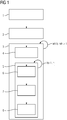
- a flow chart of a method of building a latent feature extractor is schematically depicted.
- the tasks comprise industrial applications or problems like deriving a probability of an anomaly in the operation of a gas turbine.
- Each training example comprises one or more sensor signals (e.g. rotational speed, temperature, current load etc.) and is labelled with a result for the respective task T (e.g. a probability of an anomaly).
- the non-uniform training data is normalised.
- the non-uniform training data is normalised by a min-max normalisation or by centring the data and scaling to unit variance or by just scaling the values by some other constant (e.g. observed standard deviation within the complete data).
- a third iterative step of optimising 3 parameters ⁇ of a neural network (NN) of the latent feature extractor are optimised based on the multitude of T i tasks.
- a fourth step of randomly selecting 4 and a fifth step of sampling 5 are executed iteratively until the parameters ⁇ have converged ( ⁇ ⁇ > l ).
- a single tasks T from the multitude of T i tasks is randomly selected for optimising the parameters ⁇ .
- the selecting of the tasks T is based on an equal probability p(T) for all tasks such that during the process of optimising the parameters ⁇ each of the tasks T i is selected nearly equally often.
- the fifth step of sampling 5 the current randomly selected task T is sampled for n j iterations. Thereby, the current randomly selected task T is sampled with the respective k T training examples of the non-uniform training data. Thereby, the parameters ⁇ are optimised based on the current randomly selected task T.
- n of the n j iterations a sixth step of extracting 6, an optional seventh step of combining 7 and an eighth step of deriving 8 are executed.
- the sixth step of extracting 6 features from a training signal of the current training example k of the respective training examples k T are extracted with the latent feature extractor.
- the optional seventh step of combining 7 the extracted latent features of each training signal of the multiple training signals are combined into combined extracted features with a respective combiner module of the current randomly selected task T.
- the combiner module is a (deep) "sub-NN" that learns meaningful combinations of the various latent features extracted from each training signal.
- an output signal o i for the current randomly selected task T is derived from the (combined) extracted features with a respective task module of the current randomly selected task T. Based on the output o i the parameters ⁇ are adjusted such that the next output approximates the respective result of the next training example more closely.
- a system 10 for building a latent feature extractor is schematically depicted.
- the system 10 is arranged and configured for executing the method of Fig. 1 .
- the NNs of the tasks T share one latent feature extractor 11 ("sub-NN") having 30 layers with 1000 neurons each.
- Each NN of the tasks T i comprises a respective task module 12.i (“sub-NN”) for its task T downstream the latent feature extractor 11, each task module 12.i having 2 layers with 100 neurons each.
- each NN of the T i tasks may comprise an optional combiner module 13.i ("sub-NN") between the latent feature extractor 11 and the respective task module 12.i, each combiner module having 2 layers with 100 neurons each.
- the system may comprise optional normaliser modules 14.i for the NNs of the T i tasks upstream the latent feature extractor 11.
- the training signals or rather input signals si.m i for each of the tasks T i are optionally normalised in the corresponding normaliser module 14.i.
- the latent feature extractor 11 extracts the latent features lf from the (normalised) input signals si.m i (s n i.m i ).
- the latent feature extractor 11 is shared for each task T of the multitude of T i tasks.
- the task modules 12.i downstream the latent feature extractor 11 derive the corresponding output signal o i for the respective task T from the corresponding (combined) latent features. based on the output o i the parameters ⁇ are adjusted and iteratively optimised.
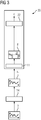
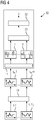
- FIGs. 3 and 4 two exemplary embodiments of a deep industrial NN are schematically depicted.
- the NN 20 comprises a normaliser module 14, a latent feature extractor 11 with 30 layers having 100 neurons each downstream the normaliser module 14 and a specific task module 22 with two layers having 100 neurons each downstream the latent feature extractor 11.
- the latent feature extractor 11 has been pre-trained with the method of Fig. 1 and/or the system of Fig. 2 . Consequently, the latent feature extractor 11 is able to output latent features lf for various different input signals s i .
- one input signal s e.g. a current profile of a power source
- the normaliser module 14 converts the input signal s into a normalised input signal s n .
- the latent feature extractor 11 extracts a latent feature lf from the normalised input signal s n .
- the specific task module derives an output o (e.g. presence of a faulty electrical component) from the latent feature lf.
- the training of the NN 20 for the specific task (e.g. deriving if a faulty electrical component is present based on the current profile of a power source) is much faster and requires significantly less labelled training data then a conventional NN without pre-trained feature extractor.
- a deep industrial NN 30 for a task consuming more than one one input signal is schematically depicted.
- the NN 30 comprises a specific task module 32 with two layers having 100 neurons each downstream the latent feature extractor 11 and additionally a combiner module 33 with two layers having 100 neurons each between the latent feature extractor 11 and the specific task module 32.
- more than one input signal s.1..s.m i (m i > 1) (e.g. a rotational speed, a tension state of turbine blades and a current load of a gas turbine) is provided to the normaliser module 14.
- the normaliser module 14 converts the input signals s.1..s.m i into normalised input signals s n .1..s n .m i .
- the latent feature extractor 11 extracts latent features lf from the normalised input signals s n .1..s n .m i .
- the combiner module 33 combines the latent features If to a combined latent feature.
- the specific task module 32 derives an output o (e.g. probability of an abnormal operation state) from the combined latent feature provided by the combiner module 33.
- the training of the NN 30 for the specific task (e.g. deriving if an abnormal operation state is present in a gas turbine) is much faster and requires significantly less labelled training data then a conventional NN without pre-trained feature extractor.
Landscapes
- Engineering & Computer Science (AREA)
- Theoretical Computer Science (AREA)
- Physics & Mathematics (AREA)
- General Health & Medical Sciences (AREA)
- Computing Systems (AREA)
- Biomedical Technology (AREA)
- Biophysics (AREA)
- Computational Linguistics (AREA)
- Data Mining & Analysis (AREA)
- Evolutionary Computation (AREA)
- Life Sciences & Earth Sciences (AREA)
- Molecular Biology (AREA)
- Artificial Intelligence (AREA)
- General Engineering & Computer Science (AREA)
- General Physics & Mathematics (AREA)
- Mathematical Physics (AREA)
- Software Systems (AREA)
- Health & Medical Sciences (AREA)
- Feedback Control In General (AREA)
- Image Analysis (AREA)
Priority Applications (5)
| Application Number | Priority Date | Filing Date | Title |
|---|---|---|---|
| EP19154667.0A EP3690751A1 (fr) | 2019-01-31 | 2019-01-31 | Procédé de construction d'un extracteur de caractéristiques latentes profondes pour des données de capteur industriel |
| US17/426,366 US12456057B2 (en) | 2019-01-31 | 2020-01-17 | Methods for building a deep latent feature extractor for industrial sensor data |
| EP20702228.6A EP3899805A1 (fr) | 2019-01-31 | 2020-01-17 | Procédé de construction d'un extracteur de caractéristiques latentes profondes pour données de capteurs industriels |
| CN202080026750.XA CN113614746A (zh) | 2019-01-31 | 2020-01-17 | 一种用于构建针对工业传感器数据的深度隐特征提取器的方法 |
| PCT/EP2020/051127 WO2020156835A1 (fr) | 2019-01-31 | 2020-01-17 | Procédé de construction d'un extracteur de caractéristiques latentes profondes pour données de capteurs industriels |
Applications Claiming Priority (1)
| Application Number | Priority Date | Filing Date | Title |
|---|---|---|---|
| EP19154667.0A EP3690751A1 (fr) | 2019-01-31 | 2019-01-31 | Procédé de construction d'un extracteur de caractéristiques latentes profondes pour des données de capteur industriel |
Publications (1)
| Publication Number | Publication Date |
|---|---|
| EP3690751A1 true EP3690751A1 (fr) | 2020-08-05 |
Family
ID=65268887
Family Applications (2)
| Application Number | Title | Priority Date | Filing Date |
|---|---|---|---|
| EP19154667.0A Withdrawn EP3690751A1 (fr) | 2019-01-31 | 2019-01-31 | Procédé de construction d'un extracteur de caractéristiques latentes profondes pour des données de capteur industriel |
| EP20702228.6A Pending EP3899805A1 (fr) | 2019-01-31 | 2020-01-17 | Procédé de construction d'un extracteur de caractéristiques latentes profondes pour données de capteurs industriels |
Family Applications After (1)
| Application Number | Title | Priority Date | Filing Date |
|---|---|---|---|
| EP20702228.6A Pending EP3899805A1 (fr) | 2019-01-31 | 2020-01-17 | Procédé de construction d'un extracteur de caractéristiques latentes profondes pour données de capteurs industriels |
Country Status (4)
| Country | Link |
|---|---|
| US (1) | US12456057B2 (fr) |
| EP (2) | EP3690751A1 (fr) |
| CN (1) | CN113614746A (fr) |
| WO (1) | WO2020156835A1 (fr) |
Cited By (1)
| Publication number | Priority date | Publication date | Assignee | Title |
|---|---|---|---|---|
| US20220146333A1 (en) * | 2020-11-11 | 2022-05-12 | NEC Laboratories Europe GmbH | Fine-grained indoor temperature measurements using smart devices for improved indoor climate and energy savings |
Families Citing this family (2)
| Publication number | Priority date | Publication date | Assignee | Title |
|---|---|---|---|---|
| EP3855432B1 (fr) * | 2020-01-22 | 2024-11-27 | Infineon Technologies AG | Système de classification et procédé de classification d'un impact externe sur une fenêtre ou sur une ouverture d'accès d'une structure fermée |
| US11657122B2 (en) * | 2020-07-16 | 2023-05-23 | Applied Materials, Inc. | Anomaly detection from aggregate statistics using neural networks |
Family Cites Families (43)
| Publication number | Priority date | Publication date | Assignee | Title |
|---|---|---|---|---|
| EP1751628A4 (fr) * | 2004-05-20 | 2007-12-05 | Univ Mcmaster | Procede pour commander l'aspect de produits et la performance de traitement par analyse d'images |
| JP5234469B2 (ja) * | 2007-09-14 | 2013-07-10 | 国立大学法人 東京大学 | 対応関係学習装置および方法ならびに対応関係学習用プログラム、アノテーション装置および方法ならびにアノテーション用プログラム、および、リトリーバル装置および方法ならびにリトリーバル用プログラム |
| US8781989B2 (en) * | 2008-01-14 | 2014-07-15 | Aptima, Inc. | Method and system to predict a data value |
| US8649990B2 (en) * | 2008-07-09 | 2014-02-11 | Inotera Memories, Inc. | Method for detecting variance in semiconductor processes |
| US10291460B2 (en) * | 2012-12-05 | 2019-05-14 | Origin Wireless, Inc. | Method, apparatus, and system for wireless motion monitoring |
| US9268859B2 (en) * | 2011-10-13 | 2016-02-23 | Yahoo! Inc. | Method and system for customizing a web site |
| US20150371241A1 (en) * | 2012-06-21 | 2015-12-24 | Thomson Licensing | User identification through subspace clustering |
| US10217058B2 (en) * | 2014-01-30 | 2019-02-26 | Microsoft Technology Licensing, Llc | Predicting interesting things and concepts in content |
| US20170092021A1 (en) * | 2014-03-19 | 2017-03-30 | Northern Vo Aps | Method and system for monitoring equipment |
| US20150310862A1 (en) * | 2014-04-24 | 2015-10-29 | Microsoft Corporation | Deep learning for semantic parsing including semantic utterance classification |
| US9792823B2 (en) * | 2014-09-15 | 2017-10-17 | Raytheon Bbn Technologies Corp. | Multi-view learning in detection of psychological states |
| US20180342322A1 (en) * | 2014-10-21 | 2018-11-29 | uBiome, Inc. | Method and system for characterization for appendix-related conditions associated with microorganisms |
| US20160162576A1 (en) * | 2014-12-05 | 2016-06-09 | Lightning Source Inc. | Automated content classification/filtering |
| US9864951B1 (en) * | 2015-03-30 | 2018-01-09 | Amazon Technologies, Inc. | Randomized latent feature learning |
| JPWO2016185913A1 (ja) * | 2015-05-19 | 2018-03-15 | ソニー株式会社 | 情報処理装置、情報処理方法、及び、プログラム |
| US10489703B2 (en) * | 2015-05-20 | 2019-11-26 | Nec Corporation | Memory efficiency for convolutional neural networks operating on graphics processing units |
| US10149958B1 (en) * | 2015-07-17 | 2018-12-11 | Bao Tran | Systems and methods for computer assisted operation |
| WO2017087334A1 (fr) * | 2015-11-16 | 2017-05-26 | Orbital Insight, Inc. | Détection de véhicule en déplacement et analyse à l'aide d'imagerie de détection à distance de faible résolution |
| WO2017091883A1 (fr) * | 2015-12-01 | 2017-06-08 | Tandemlaunch Inc. | Système et procédé de mise en œuvre d'une interface utilisateur vocale en combinant un système de parole-texte et un système de parole-intention |
| EP3440428B1 (fr) * | 2016-04-08 | 2022-06-01 | Orbital Insight, Inc. | Détermination à distance d'une quantité stockée dans des conteneurs dans une région géographique |
| US10217236B2 (en) * | 2016-04-08 | 2019-02-26 | Orbital Insight, Inc. | Remote determination of containers in geographical region |
| US10229369B2 (en) * | 2016-04-19 | 2019-03-12 | General Electric Company | Creating predictive damage models by transductive transfer learning |
| US10789538B2 (en) * | 2016-06-23 | 2020-09-29 | International Business Machines Corporation | Cognitive machine learning classifier generation |
| US10387888B2 (en) * | 2016-07-08 | 2019-08-20 | Asapp, Inc. | Assisting entities in responding to a request of a user |
| GB2555176B (en) * | 2016-08-16 | 2019-02-13 | British Telecomm | Machine learning for attack mitigation in virtual machines |
| GB2554983B (en) * | 2016-08-16 | 2019-02-13 | British Telecomm | Attack assessment in a virtualised computing environment |
| GB2554981A (en) * | 2016-08-16 | 2018-04-18 | British Telecomm | Configuration parameters for virtual machines |
| GB2554984B (en) * | 2016-08-16 | 2019-02-13 | British Telecomm | Secure configuration in a virtualised computing environment |
| GB2555175B (en) * | 2016-08-16 | 2019-02-27 | British Telecomm | Efficient attack mitigation in a virtual machine |
| GB2554982B (en) * | 2016-08-16 | 2019-02-13 | British Telecomm | Security in virtualised computing environments |
| US10346464B2 (en) * | 2016-09-27 | 2019-07-09 | Canon Kabushiki Kaisha | Cross-modiality image matching method |
| CN106447039A (zh) * | 2016-09-28 | 2017-02-22 | 西安交通大学 | 基于自编码神经网络的无监督特征提取方法 |
| US10923213B2 (en) * | 2016-12-02 | 2021-02-16 | Microsoft Technology Licensing, Llc | Latent space harmonization for predictive modeling |
| TWI612488B (zh) * | 2016-12-05 | 2018-01-21 | 財團法人資訊工業策進會 | 用於預測商品的市場需求的計算機裝置與方法 |
| US10592776B2 (en) * | 2017-02-08 | 2020-03-17 | Adobe Inc. | Generating multimodal image edits for a digital image |
| US11537615B2 (en) * | 2017-05-01 | 2022-12-27 | Futurewei Technologies, Inc. | Using machine learning to estimate query resource consumption in MPPDB |
| US11645508B2 (en) * | 2017-06-09 | 2023-05-09 | Korea Advanced Institute Of Science And Technology | Electronic apparatus and method for generating trained model |
| CN107808163B (zh) * | 2017-09-28 | 2020-12-29 | 中国科学院重庆绿色智能技术研究院 | 一种视频数据线性偏差主特征提取装置和方法 |
| GB2567850B (en) | 2017-10-26 | 2020-11-04 | Gb Gas Holdings Ltd | Determining operating state from complex sensor data |
| CN111542816A (zh) * | 2018-02-06 | 2020-08-14 | 赫尔实验室有限公司 | 域适应学习系统 |
| CN108460152A (zh) * | 2018-03-26 | 2018-08-28 | 王智华 | 一种数据的多维映射方法、装置及计算机可读存储介质 |
| US11449746B2 (en) * | 2018-04-10 | 2022-09-20 | Assured Information Security, Inc. | Behavioral biometric feature extraction and verification |
| EP3745352B1 (fr) * | 2019-05-31 | 2023-01-18 | presize GmbH | Procédés et systèmes pour déterminer des mesures corporelles et fournir des recommandations de tailles de vêtements |
-
2019
- 2019-01-31 EP EP19154667.0A patent/EP3690751A1/fr not_active Withdrawn
-
2020
- 2020-01-17 EP EP20702228.6A patent/EP3899805A1/fr active Pending
- 2020-01-17 CN CN202080026750.XA patent/CN113614746A/zh active Pending
- 2020-01-17 US US17/426,366 patent/US12456057B2/en active Active
- 2020-01-17 WO PCT/EP2020/051127 patent/WO2020156835A1/fr not_active Ceased
Non-Patent Citations (2)
| Title |
|---|
| KAREN SIMONYAN ET AL: "Two-Stream Convolutional Networks for Action Recognition in Videos", 9 June 2014 (2014-06-09), XP055324674, Retrieved from the Internet <URL:http://papers.nips.cc/paper/5353-two-stream-convolutional-networks-for-action-recognition-in-videos.pdf> * |
| RONAN COLLOBERT ET AL: "A unified architecture for natural language processing", PROCEEDINGS OF THE 25TH INTERNATIONAL CONFERENCE ON MACHINE LEARNING, ICML '08, ACM PRESS, NEW YORK, NEW YORK, USA, 5 July 2008 (2008-07-05), pages 160 - 167, XP058106311, ISBN: 978-1-60558-205-4, DOI: 10.1145/1390156.1390177 * |
Cited By (1)
| Publication number | Priority date | Publication date | Assignee | Title |
|---|---|---|---|---|
| US20220146333A1 (en) * | 2020-11-11 | 2022-05-12 | NEC Laboratories Europe GmbH | Fine-grained indoor temperature measurements using smart devices for improved indoor climate and energy savings |
Also Published As
| Publication number | Publication date |
|---|---|
| WO2020156835A1 (fr) | 2020-08-06 |
| US20220101125A1 (en) | 2022-03-31 |
| US12456057B2 (en) | 2025-10-28 |
| CN113614746A (zh) | 2021-11-05 |
| EP3899805A1 (fr) | 2021-10-27 |
Similar Documents
| Publication | Publication Date | Title |
|---|---|---|
| Yao et al. | A survey of transfer learning for machinery diagnostics and prognostics. | |
| Li et al. | Data alignments in machinery remaining useful life prediction using deep adversarial neural networks | |
| Zhang et al. | Machinery fault diagnosis with imbalanced data using deep generative adversarial networks | |
| Zhang et al. | Semi-supervised contrast learning based on multiscale attention and multitarget contrast learning for bearing fault diagnosis | |
| AU2020343526B2 (en) | Sensor-agnostic mechanical machine fault identification | |
| CN113610787A (zh) | 图像缺陷检测模型的训练方法、装置、计算机设备 | |
| Fu et al. | Rolling bearing fault diagnosis in limited data scenarios using feature enhanced generative adversarial networks | |
| US12456057B2 (en) | Methods for building a deep latent feature extractor for industrial sensor data | |
| Khawaja et al. | Optimizing Bearing Fault Detection: CNN-LSTM with Attentive TabNet for Electric Motor Systems. | |
| Appana et al. | Speed invariant bearing fault characterization using convolutional neural networks | |
| Ortego et al. | Data augmentation for industrial prognosis using generative adversarial networks | |
| Park et al. | Machine health assessment based on an anomaly indicator using a generative adversarial network | |
| Jo et al. | Semi-supervised learning with wafer-specific augmentations for wafer defect classification | |
| CN119669854B (zh) | 一种船舶推进轴系智能故障诊断方法及系统 | |
| Qin et al. | Rolling bearings fault diagnosis via 1d convolution networks | |
| CN116383647B (zh) | 基于并行特征提取的滚动轴承剩余寿命预测方法 | |
| Wang et al. | Data fused motor fault identification based on adversarial auto-encoder | |
| Kousalya et al. | Group emotion detection using convolutional neural network | |
| Essahraui et al. | CNN and Vision Transformer models for detecting cheating in online examinations: A comparative evaluation | |
| Tamilselvan et al. | A tri-fold hybrid classification approach for diagnostics with unexampled faulty states | |
| Nimma et al. | High-accuracy animal species classification using transfer learning with ResNet50 on wildlife camera trap images for enhanced conservation efforts | |
| Behara et al. | A multi-modal framework for intelligent bearing fault diagnosis of switched reluctance motor | |
| van den Hoogen | Time Series Analysis Using Convolutional Neural Networks | |
| Zhou et al. | Cross-Condition Intelligent Fault Diagnosis of Rolling Bearing Based on Rationle-Invariant Domain Adversarial Networks | |
| Mostajabi et al. | Diverse sampling for self-supervised learning of semantic segmentation |
Legal Events
| Date | Code | Title | Description |
|---|---|---|---|
| PUAI | Public reference made under article 153(3) epc to a published international application that has entered the european phase |
Free format text: ORIGINAL CODE: 0009012 |
|
| STAA | Information on the status of an ep patent application or granted ep patent |
Free format text: STATUS: THE APPLICATION HAS BEEN PUBLISHED |
|
| AK | Designated contracting states |
Kind code of ref document: A1 Designated state(s): AL AT BE BG CH CY CZ DE DK EE ES FI FR GB GR HR HU IE IS IT LI LT LU LV MC MK MT NL NO PL PT RO RS SE SI SK SM TR |
|
| AX | Request for extension of the european patent |
Extension state: BA ME |
|
| STAA | Information on the status of an ep patent application or granted ep patent |
Free format text: STATUS: THE APPLICATION IS DEEMED TO BE WITHDRAWN |
|
| 18D | Application deemed to be withdrawn |
Effective date: 20210206 |