EP3692032B1 - Conjugués chimiques de dérivés du bleu d'evans et leur utilisation comme agents de radiothérapie et d'imagerie - Google Patents
Conjugués chimiques de dérivés du bleu d'evans et leur utilisation comme agents de radiothérapie et d'imagerie Download PDFInfo
- Publication number
- EP3692032B1 EP3692032B1 EP17928082.1A EP17928082A EP3692032B1 EP 3692032 B1 EP3692032 B1 EP 3692032B1 EP 17928082 A EP17928082 A EP 17928082A EP 3692032 B1 EP3692032 B1 EP 3692032B1
- Authority
- EP
- European Patent Office
- Prior art keywords
- tumor
- tate
- compound
- rgd
- replaced
- Prior art date
- Legal status (The legal status is an assumption and is not a legal conclusion. Google has not performed a legal analysis and makes no representation as to the accuracy of the status listed.)
- Active
Links
Images




























Classifications
-
- C—CHEMISTRY; METALLURGY
- C07—ORGANIC CHEMISTRY
- C07D—HETEROCYCLIC COMPOUNDS
- C07D207/00—Heterocyclic compounds containing five-membered rings not condensed with other rings, with one nitrogen atom as the only ring hetero atom
- C07D207/02—Heterocyclic compounds containing five-membered rings not condensed with other rings, with one nitrogen atom as the only ring hetero atom with only hydrogen or carbon atoms directly attached to the ring nitrogen atom
- C07D207/44—Heterocyclic compounds containing five-membered rings not condensed with other rings, with one nitrogen atom as the only ring hetero atom with only hydrogen or carbon atoms directly attached to the ring nitrogen atom having three double bonds between ring members or between ring members and non-ring members
- C07D207/444—Heterocyclic compounds containing five-membered rings not condensed with other rings, with one nitrogen atom as the only ring hetero atom with only hydrogen or carbon atoms directly attached to the ring nitrogen atom having three double bonds between ring members or between ring members and non-ring members having two doubly-bound oxygen atoms directly attached in positions 2 and 5
- C07D207/448—Heterocyclic compounds containing five-membered rings not condensed with other rings, with one nitrogen atom as the only ring hetero atom with only hydrogen or carbon atoms directly attached to the ring nitrogen atom having three double bonds between ring members or between ring members and non-ring members having two doubly-bound oxygen atoms directly attached in positions 2 and 5 with only hydrogen atoms or radicals containing only hydrogen and carbon atoms directly attached to other ring carbon atoms, e.g. maleimide
- C07D207/452—Heterocyclic compounds containing five-membered rings not condensed with other rings, with one nitrogen atom as the only ring hetero atom with only hydrogen or carbon atoms directly attached to the ring nitrogen atom having three double bonds between ring members or between ring members and non-ring members having two doubly-bound oxygen atoms directly attached in positions 2 and 5 with only hydrogen atoms or radicals containing only hydrogen and carbon atoms directly attached to other ring carbon atoms, e.g. maleimide with hydrocarbon radicals, substituted by hetero atoms, directly attached to the ring nitrogen atom
-
- C—CHEMISTRY; METALLURGY
- C07—ORGANIC CHEMISTRY
- C07D—HETEROCYCLIC COMPOUNDS
- C07D417/00—Heterocyclic compounds containing two or more hetero rings, at least one ring having nitrogen and sulfur atoms as the only ring hetero atoms, not provided for by group C07D415/00
- C07D417/14—Heterocyclic compounds containing two or more hetero rings, at least one ring having nitrogen and sulfur atoms as the only ring hetero atoms, not provided for by group C07D415/00 containing three or more hetero rings
-
- A—HUMAN NECESSITIES
- A61—MEDICAL OR VETERINARY SCIENCE; HYGIENE
- A61K—PREPARATIONS FOR MEDICAL, DENTAL OR TOILETRY PURPOSES
- A61K31/00—Medicinal preparations containing organic active ingredients
- A61K31/33—Heterocyclic compounds
- A61K31/395—Heterocyclic compounds having nitrogen as a ring hetero atom, e.g. guanethidine or rifamycins
-
- A—HUMAN NECESSITIES
- A61—MEDICAL OR VETERINARY SCIENCE; HYGIENE
- A61K—PREPARATIONS FOR MEDICAL, DENTAL OR TOILETRY PURPOSES
- A61K31/00—Medicinal preparations containing organic active ingredients
- A61K31/33—Heterocyclic compounds
- A61K31/395—Heterocyclic compounds having nitrogen as a ring hetero atom, e.g. guanethidine or rifamycins
- A61K31/40—Heterocyclic compounds having nitrogen as a ring hetero atom, e.g. guanethidine or rifamycins having five-membered rings with one nitrogen as the only ring hetero atom, e.g. sulpiride, succinimide, tolmetin, buflomedil
- A61K31/4015—Heterocyclic compounds having nitrogen as a ring hetero atom, e.g. guanethidine or rifamycins having five-membered rings with one nitrogen as the only ring hetero atom, e.g. sulpiride, succinimide, tolmetin, buflomedil having oxo groups directly attached to the heterocyclic ring, e.g. piracetam, ethosuximide
-
- A—HUMAN NECESSITIES
- A61—MEDICAL OR VETERINARY SCIENCE; HYGIENE
- A61K—PREPARATIONS FOR MEDICAL, DENTAL OR TOILETRY PURPOSES
- A61K51/00—Preparations containing radioactive substances for use in therapy or testing in vivo
- A61K51/02—Preparations containing radioactive substances for use in therapy or testing in vivo characterised by the carrier, i.e. characterised by the agent or material covalently linked or complexing the radioactive nucleus
- A61K51/04—Organic compounds
- A61K51/0474—Organic compounds complexes or complex-forming compounds, i.e. wherein a radioactive metal (e.g. 111In3+) is complexed or chelated by, e.g. a N2S2, N3S, NS3, N4 chelating group
- A61K51/0482—Organic compounds complexes or complex-forming compounds, i.e. wherein a radioactive metal (e.g. 111In3+) is complexed or chelated by, e.g. a N2S2, N3S, NS3, N4 chelating group chelates from cyclic ligands, e.g. DOTA
-
- A—HUMAN NECESSITIES
- A61—MEDICAL OR VETERINARY SCIENCE; HYGIENE
- A61K—PREPARATIONS FOR MEDICAL, DENTAL OR TOILETRY PURPOSES
- A61K51/00—Preparations containing radioactive substances for use in therapy or testing in vivo
- A61K51/02—Preparations containing radioactive substances for use in therapy or testing in vivo characterised by the carrier, i.e. characterised by the agent or material covalently linked or complexing the radioactive nucleus
- A61K51/04—Organic compounds
- A61K51/0497—Organic compounds conjugates with a carrier being an organic compounds
-
- A—HUMAN NECESSITIES
- A61—MEDICAL OR VETERINARY SCIENCE; HYGIENE
- A61K—PREPARATIONS FOR MEDICAL, DENTAL OR TOILETRY PURPOSES
- A61K51/00—Preparations containing radioactive substances for use in therapy or testing in vivo
- A61K51/02—Preparations containing radioactive substances for use in therapy or testing in vivo characterised by the carrier, i.e. characterised by the agent or material covalently linked or complexing the radioactive nucleus
- A61K51/04—Organic compounds
- A61K51/08—Peptides, e.g. proteins, carriers being peptides, polyamino acids, proteins
- A61K51/082—Peptides, e.g. proteins, carriers being peptides, polyamino acids, proteins the peptide being a RGD-containing peptide
-
- A—HUMAN NECESSITIES
- A61—MEDICAL OR VETERINARY SCIENCE; HYGIENE
- A61P—SPECIFIC THERAPEUTIC ACTIVITY OF CHEMICAL COMPOUNDS OR MEDICINAL PREPARATIONS
- A61P35/00—Antineoplastic agents
- A61P35/04—Antineoplastic agents specific for metastasis
-
- C—CHEMISTRY; METALLURGY
- C07—ORGANIC CHEMISTRY
- C07D—HETEROCYCLIC COMPOUNDS
- C07D403/00—Heterocyclic compounds containing two or more hetero rings, having nitrogen atoms as the only ring hetero atoms, not provided for by group C07D401/00
- C07D403/02—Heterocyclic compounds containing two or more hetero rings, having nitrogen atoms as the only ring hetero atoms, not provided for by group C07D401/00 containing two hetero rings
- C07D403/12—Heterocyclic compounds containing two or more hetero rings, having nitrogen atoms as the only ring hetero atoms, not provided for by group C07D401/00 containing two hetero rings linked by a chain containing hetero atoms as chain links
-
- C—CHEMISTRY; METALLURGY
- C07—ORGANIC CHEMISTRY
- C07D—HETEROCYCLIC COMPOUNDS
- C07D403/00—Heterocyclic compounds containing two or more hetero rings, having nitrogen atoms as the only ring hetero atoms, not provided for by group C07D401/00
- C07D403/14—Heterocyclic compounds containing two or more hetero rings, having nitrogen atoms as the only ring hetero atoms, not provided for by group C07D401/00 containing three or more hetero rings
-
- A—HUMAN NECESSITIES
- A61—MEDICAL OR VETERINARY SCIENCE; HYGIENE
- A61K—PREPARATIONS FOR MEDICAL, DENTAL OR TOILETRY PURPOSES
- A61K45/00—Medicinal preparations containing active ingredients not provided for in groups A61K31/00 - A61K41/00
- A61K45/06—Mixtures of active ingredients without chemical characterisation, e.g. antiphlogistics and cardiaca
-
- C—CHEMISTRY; METALLURGY
- C07—ORGANIC CHEMISTRY
- C07B—GENERAL METHODS OF ORGANIC CHEMISTRY; APPARATUS THEREFOR
- C07B2200/00—Indexing scheme relating to specific properties of organic compounds
- C07B2200/05—Isotopically modified compounds, e.g. labelled
-
- C—CHEMISTRY; METALLURGY
- C07—ORGANIC CHEMISTRY
- C07B—GENERAL METHODS OF ORGANIC CHEMISTRY; APPARATUS THEREFOR
- C07B59/00—Introduction of isotopes of elements into organic compounds ; Labelled organic compounds per se
- C07B59/002—Heterocyclic compounds
Definitions
- the present disclosure relates to functionalized derivatives of Evans Blue dye, and more particularly to functionalized derivatives of Evans Blue dye that are useful as radiotherapy and imaging agents.
- one method of clearance rate reduction is to increase the molecular size of the protein drug through, for example, protein fusions, glycosylation, or the addition of polyethylene glycol polymers (PEG).
- PEG polyethylene glycol polymers
- some of these approaches have disadvantages.
- one common strategy to improve the pharmacokinetics of pharmaceutical agents is to attach poly(ethylene glycol) (PEG) moieties to therapeutic compounds, a process known as PEGylation.
- PEGylation poly(ethylene glycol)
- the covalent attachment of PEG to a drug or therapeutic protein can mask the agent from the host's immune system to reduce immunogenicity and antigenicity, and increase the hydrodynamic size of the agent which prolongs its circulatory time by reducing renal clearance.
- PEGylation can also provide water solubility to hydrophobic drugs and proteins.
- due to the bulky size of PEG chain the biological activity is inevitably compromised after PEGylation.
- Fusion of small molecule or protein drugs with large proteins such as albumin or the Fc domain of immunoglobulin G (IgG) can increase drug half-life by increasing the molecular size of the drug and in turn reducing renal clearance.
- fusion with either albumin or the IgG Fc domain adds functionality to the fused complex and enables interaction with the neonatal Fc receptor (FcRn), which salvages bound ligands from intracellular catabolism by recycling them back to circulation.
- FcRn neonatal Fc receptor
- This interaction with FcRn contributes to the extraordinarily long 21 day serum half-life of albumin and IgG in humans. Therefore, engineering proteins or small molecule drugs to interact with albumin or serum IgG has the potential to significantly increase half-life by reducing both renal clearance and intracellular catabolism. Through these methods the in vivo exposure of the therapeutics can be extended.
- HSA human serum albumin
- albumin As the most abundant protein in blood plasma (around 50 mg/ml), human serum albumin (HSA) with a molecular weight of 66.5 kDa is the chief carrier protein in the blood. It acts as the chief solubilizing agent for long chain fatty acids, a detoxifying protein through its binding of bilirubin, and the transport vehicle for heavy metal ions in the blood. Since the mid-1990s albumin has been studied as a carrier protein, either for targeting drugs to inflamed or malignant tissue or for extending their half-life. Two principal albumin-based technologies have been developed for therapeutic use. One method is to pass lipophilic drugs and HSA under high pressure through a jet to form albumin-drug nanoparticles. The other is to develop albumin-binding peptides or prodrugs that bind in situ to circulating albumin, either covalently or non-covalently, after intravenous injection.
- albumin Due to the extreme abundance in the blood circulation, albumin has advantages over immunoglobulin G (IgG) as the drug carrier. Taking drug release into consideration, physical binding is preferred to covalent binding since there is a need for a balance between albumin binding affinity and efficient drug release from the binding.
- IgG immunoglobulin G
- the cysteine-34 position of albumin is commonly used, since the free thiol group of cysteine-34 is a unique feature of an extracellular protein and accounts for approximately 90% of the thiol concentration in blood plasma.
- the first and most advanced prototype of these types of prodrugs is the (6-maleimidocaproyl)hydrazone derivative of doxorubicin (DOXO-EMCH), an acid-sensitive prodrug of doxorubicin that is rapidly and selectively bound to the cysteine-34 position of endogenous albumin after intravenous administration.
- Aldoxorubicin contains an acid-sensitive hydrazone linker allowing doxorubicin to be released either extracellularly in the slightly acidic environment often present in tumor tissue or intracellularly in acidic endosomal or lysosomal compartments after cellular uptake of the albumin conjugate by the tumor cell.
- Levemir ® Novartis
- myristic acid tetradecanoic acid
- the fatty acid on the Levemir attach to serum albumin makes it a long-acting form of insulin.
- Another other option of controlling glucose levels in diabetes is to stimulate insulin secretion.
- the peptide hormone GLP-1-(7-37) results from selective cleavage of the proglucagon molecule and increases insulin secretion in pancreatic cells but only has a half-life of 1.5-2 min due to degradation by ubiquitous enzymes.
- GLP-1-(7-37) is derivatized with a fatty acid, for example palmitic acid, at the ⁇ -amino position of lysine introduced at the N-terminal position of glutamic acid in the GLP-1 peptide sequence.
- the resulting new drug liraglutide (Victoza ® ) is an albumin-binding derivative of GLP-1 stable against metabolic degradation due to albumin-binding, and has a plasma half-life of 11-15 h after subcutaneous administration. Additional examples of anti-diabetic peptides modified for better drug-like properties are disclosed by Kaspar, et al. "Future Directions for Peptide Therapeutics Development", Drug Discovery Today, 18(17):807-817 (2013 ).
- Albumin-based drug delivery systems are not only important treatment options for metabolic disorders such as diabetes but are also useful for cancer therapy.
- Using albumin as a drug carrier has several unique advantages for drug delivery to solid tumors.
- albumin-based drug carriers offer enhanced permeability and retention of macromolecules in relation to passive tumor targeting (EPR effect).
- EPR effect passive tumor targeting
- two albumin-binding proteins were found to be overexpressed in tumor environment including the gp60 receptor on tumor endothelium and SPARC, a secreted glycoprotein with high binding affinity to albumin in the tumor interstitium.
- the interplay of two albumin-binding proteins facilitates the uptake and retention of albumin in the tumor.
- Evans Blue is an azo dye with a high affinity for serum albumin. It is frequently used in the measurement of blood volume, but it can also be used to show permeability to macromolecules. Because EB strongly binds to albumin, it can serve as a marker of where the large albumin molecules are localized, and thus it can be used to assess permeability of barriers, such as of the blood-brain barrier (BBB). Because albumin cannot cross the BBB and virtually all EB is bound to albumin, EB will only enter the CNS if the BBB has been compromised. EB has also been used in a viability assay, as the EB bound to albumin will enter damaged or non-viable cells, but not healthy cells.
- BBB blood-brain barrier
- the present invention is directed to a compound of Formula III or a pharmaceutically acceptable ester, amide, solvate, or salt thereof, or a salt of such an ester or amide or a solvate of such an ester amide or salt: wherein:
- the present invention is directed to a pharmaceutical composition
- a pharmaceutical composition comprising one of the above-described compounds, together with a pharmaceutically acceptable carrier.
- the present invention is directed to one of the above-described compounds, optionally in combination with one or more additional active ingredients, for use in a method of treating or diagnosing cancer in a mammal.
- the disclosure encompasses all variations, combinations, and permutations in which one or more limitations, elements, clauses, and descriptive terms from one or more of the listed claims are introduced into another claim.
- any claim that is dependent on another claim can be modified to include one or more limitations found in any other claim that is dependent on the same base claim.
- elements are presented as lists, e.g., in Markush group format, each subgroup of the elements is also disclosed, and any element(s) can be removed from the group.
- isotopes include those atoms having the same atomic number but different mass numbers and encompass heavy isotopes and radioactive isotopes.
- isotopes of hydrogen include tritium and deuterium
- isotopes of carbon include 11 C, 13 C, and 14 C.
- the compounds disclosed herein may include heavy or radioactive isotopes in the structure of the compounds or as substituents attached thereto. Examples of useful heavy or radioactive isotopes include 18 F, 15 N, 18 O, 76 Br, 125 I and 131 I.
- Formulae I, II, III and IV include all pharmaceutically acceptable salts of Formulae I, II, III, and IV.
- the opened ended term “comprising” includes the intermediate and closed terms “consisting essentially of” and “consisting of.”
- substituted means that any one or more hydrogens on the designated atom or group is replaced with a selection from the indicated group, provided that the designated atom's normal valence is not exceeded. Combinations of substituents and/or variables are permissible only if such combinations result in stable compounds or useful synthetic intermediates.
- a stable compound or stable structure is meant to imply a compound that is sufficiently robust to survive isolation from a reaction mixture, and subsequent formulation into an effective therapeutic agent.
- a dash (“-") that is not between two letters or symbols is used to indicate a point of attachment for a substituent.
- Alkyl includes both branched and straight chain saturated aliphatic hydrocarbon groups, having the specified number of carbon atoms, generally from 1 to about 8 carbon atoms.
- the term C 1 -C 6 alkyl as used herein indicates an alkyl group having from 1, 2, 3, 4, 5, or 6 carbon atoms.
- Other embodiments include alkyl groups having from 1 to 8 carbon atoms, 1 to 4 carbon atoms or 1 or 2 carbon atoms, e.g. C 1 -C 8 alkyl, C 1 -C 4 alkyl, and C 1 -C 2 alkyl.
- C 0 -C n alkyl is used herein in conjunction with another group, for example, -C 0 -C 2 alkyl(phenyl), the indicated group, in this case phenyl, is either directly bound by a single covalent bond (C 0 alkyl), or attached by an alkyl chain having the specified number of carbon atoms, in this case 1, 2, 3, or 4 carbon atoms.
- Alkyls can also be attached via other groups such as heteroatoms as in -O-C 0 -C 4 alkyl(C 3 -C 7 cycloalkyl).
- alkyl examples include, but are not limited to, methyl, ethyl, n-propyl, isopropyl, n-butyl, 3-methylbutyl, t-butyl, n-pentyl, and sec-pentyl.
- Alkoxy is an alkyl group as defined above with the indicated number of carbon atoms covalently bound to the group it substitutes by an oxygen bridge (-O-).
- alkoxy include, but are not limited to, methoxy, ethoxy, n-propoxy, i-propoxy, n-butoxy, 2-butoxy, t-butoxy, n-pentoxy, 2-pentoxy, 3- pentoxy, isopentoxy, neopentoxy, n-hexoxy, 2-hexoxy, 3-hexoxy, and 3- methylpentoxy.
- alkylthio or a “thioalkyl” group is an alkyl group as defined above with the indicated number of carbon atoms covalently bound to the group it substitutes by a sulfur bridge (-S-).
- alkenyloxy refer to alkenyl, alkynyl, and cycloalkyl groups, in each instance covalently bound to the group it substitutes by an oxygen bridge (-O-).
- Halo or halogen means fluoro, chloro, bromo, or iodo, and are defined herein to include all isotopes of same, including heavy isotopes and radioactive isotopes. Examples of useful halo isotopes include 18 F, 76 Br, and 131 I. Additional isotopes will be readily appreciated by one of skill in the art.
- Haloalkyl means both branched and straight-chain alkyl groups having the specified number of carbon atoms, substituted with 1 or more halogen atoms, generally up to the maximum allowable number of halogen atoms.
- haloalkyl include, but are not limited to, trifluoromethyl, difluoromethyl, 2-fluoroethyl, and penta-fluoroethyl.
- Haloalkoxy is a haloalkyl group as defined above attached through an oxygen bridge (oxygen of an alcohol radical).
- Peptide means a molecule which is a chain of amino acids linked together via amide bonds (also called peptide bonds).
- compositions means compositions comprising at least one active agent, such as a compound or salt of Formula II, and at least one other substance, such as a carrier.
- Pharmaceutical compositions meet the U.S. FDA's GMP (good manufacturing practice) standards for human or non-human drugs.
- Carrier means a diluent, excipient, or vehicle with which an active compound is administered.
- a “pharmaceutically acceptable carrier” means a substance, e.g., excipient, diluent, or vehicle, that is useful in preparing a pharmaceutical composition that is generally safe, non-toxic and neither biologically nor otherwise undesirable, and includes a carrier that is acceptable for veterinary use as well as human pharmaceutical use.
- a “pharmaceutically acceptable carrier” includes both one and more than one such carrier.
- a "patient” means a human or non-human animal in need of medical treatment.
- Medical treatment can include treatment of an existing condition, such as a disease or disorder or diagnostic treatment.
- the patient is a human patient.
- Providing means giving, administering, selling, distributing, transferring (for profit or not), manufacturing, compounding, or dispensing.
- Treatment means providing an active compound to a patient in an amount sufficient to measurably reduce any disease symptom, slow disease progression or cause disease regression.
- treatment of the disease may be commenced before the patient presents symptoms of the disease.
- a “therapeutically effective amount” of a pharmaceutical composition means an amount effective, when administered to a patient, to provide a therapeutic benefit such as an amelioration of symptoms, decrease disease progression, or cause disease regression.
- a “therapeutic compound” means a compound which can be used for diagnosis or treatment of a disease.
- the compounds can be small molecules, peptides, proteins, or other kinds of molecules.
- a significant change is any detectable change that is statistically significant in a standard parametric test of statistical significance such as Student's T-test, where p ⁇ 0.05.
- Compounds of Formulae I, II, III, and IV may contain one or more asymmetric elements such as stereogenic centers, stereogenic axes and the like, e.g., asymmetric carbon atoms, so that the compounds can exist in different stereoisomeric forms.
- asymmetric elements such as stereogenic centers, stereogenic axes and the like, e.g., asymmetric carbon atoms, so that the compounds can exist in different stereoisomeric forms.
- These compounds can be, for example, racemates or optically active forms.
- these compounds with two or more asymmetric elements these compounds can additionally be mixtures of diastereomers.
- all optical isomers in pure form and mixtures thereof are encompassed. In these situations, the single enantiomers, i.e., optically active forms can be obtained by asymmetric synthesis, synthesis from optically pure precursors, or by resolution of the racemates.
- Racemates can also be accomplished, for example, by conventional methods such as crystallization in the presence of a resolving agent, or chromatography, using, for example a chiral HPLC column. All forms are contemplated herein regardless of the methods used to obtain them.
- chiral refers to molecules, which have the property of non-superimposability of the mirror image partner.
- Steps are compounds, which have identical chemical constitution, but differ with regard to the arrangement of the atoms or groups in space.
- a “diastereomer” is a stereoisomer with two or more centers of chirality and whose molecules are not mirror images of one another. Diastereomers have different physical properties, e.g., melting points, boiling points, spectral properties, and reactivities. Mixtures of diastereomers may separate under high resolution analytical procedures such as electrophoresis, crystallization in the presence of a resolving agent, or chromatography, using, for example a chiral HPLC column.
- Enantiomers refer to two stereoisomers of a compound, which are non-superimposable mirror images of one another.
- a 50:50 mixture of enantiomers is referred to as a racemic mixture or a racemate, which may occur where there has been no stereoselection or stereospecificity in a chemical reaction or process.
- racemic mixture or “racemate” is an equimolar (or 50:50) mixture of two enantiomeric species, devoid of optical activity.
- a racemic mixture may occur where there has been no stereoselection or stereospecificity in a chemical reaction or process.
- a “chelating group” or “chelator” is a ligand group which can form two or more separate coordinate bonds to a single central atom, which is usually a metal ion.
- Chelating groups as disclosed herein are organic groups which possess multiple N, O, or S heteroatoms, and have a structure which allows two or more of the heteroatoms to form bonds to the same metal ion.
- “Pharmaceutically acceptable salts” include derivatives of the disclosed compounds in which the parent compound is modified by making inorganic and organic, non-toxic, acid or base addition salts thereof.
- the salts of the present compounds can be synthesized from a parent compound that contains a basic or acidic moiety by conventional chemical methods. Generally, such salts can be prepared by reacting free acid forms of these compounds with a stoichiometric amount of the appropriate base (such as Na, Ca, Mg, or K hydroxide, carbonate, bicarbonate, or the like), or by reacting free base forms of these compounds with a stoichiometric amount of the appropriate acid. Such reactions are typically carried out in water or in an organic solvent, or in a mixture of the two.
- salts of the present compounds further include solvates of the compounds and of the compound salts.
- Examples of pharmaceutically acceptable salts include, but are not limited to, mineral or organic acid salts of basic residues such as amines; alkali or organic salts of acidic residues such as carboxylic acids; and the like.
- the pharmaceutically acceptable salts include the conventional non-toxic salts and the quaternary ammonium salts of the parent compound formed, for example, from non-toxic inorganic or organic acids.
- conventional non-toxic acid salts include those derived from inorganic acids such as hydrochloric, hydrobromic, sulfuric, sulfamic, phosphoric, nitric and the like; and the salts prepared from organic acids such as acetic, propionic, succinic, glycolic, stearic, lactic, malic, tartaric, citric, ascorbic, pamoic, maleic, hydroxymaleic, phenylacetic, glutamic, benzoic, salicylic, mesylic, esylic, besylic, sulfanilic, 2-acetoxybenzoic, fumaric, toluenesulfonic, methanesulfonic, ethane disulfonic, oxalic, isethionic, HOOC-(CH 2 ) n -COOH where n is 0-4, and the like.
- inorganic acids such as hydrochloric, hydrobromic, sulfuric, sulfamic, phospho
- R 1 , R 2 , R 3 , R 4 , R 5 , R 6 , R 7 , R 8 , R 9 , R 10 , and R 11 are chosen independently from hydrogen, halogen, hydroxyl, cyano, C 1 -C 6 alkyl, C 1 -C 6 alkoxy, C 1 -C 6 haloalkyl, and C 1 -C 6 haloalkoxy.
- R 12 is hydrogen, C 1 -C 6 alkyl, or C 1 -C 6 haloalkyl.
- R 13 is a chelating group.
- the chelating group may be a macrocyclic moiety, such as a NOTA group, a DOTA group, mercaptoacetyltriglycine (MAG 3 ), dipicolylamine ethanoic acid (DPA), cyclodextrin, crown ether, or porphyrin, or may be a linear moiety such as a 1,4,7-triazaheptane-1,4,7,7-tetracetic acid group. Chemical structures of several of these compounds are shown below.
- Formula I may also include linking group L 1 which is -(CH 2 ) m - wherein m is an integer from 0 to 12; linking group L 2 which is -(CH 2 ) n - wherein n is an integer from 0 to 12; and linking group L 3 which is -(CH 2 ) p - wherein p is an integer from 0 to 12.
- each CH 2 can be individually replaced with -O-, -NH(CO)-, or -(CO)-NH-, providing no two adjacent CH 2 groups are replaced.
- linking groups L 1 -L 3 include polyethylene glycol segments - CH 2 CH 2 O-.
- L 1 is -NH(CO).
- L 2 is -(CH 2 ) 4 -NH(CO)-(CH 2 ) 2 -.
- L 3 is -NH(CO)CH 2 -.
- R 1 and R 4 are chosen independently from halogen, hydroxyl, cyano, C 1 -C 6 alkyl, C 1 -C 6 alkoxy, C 1 -C 6 haloalkyl, and C 1 -C 6 haloalkoxy.
- R 2 , R 3 , R 5 , R 6 , R 7 , R 8 , R 9 , R 10 , and R 11 are each hydrogen.
- R 1 and R 4 are chosen independently from C 1 -C 6 alkyl.
- R 1 and R 4 are each methyl.
- R 12 is hydrogen
- R 13 is selected from a crown ether, a cyclodextrin, or a porphyrin.
- R 13 is
- linking group L 2 is -(CH 2 ) n - wherein n is an integer from 0 to 12, wherein each CH 2 can be individually replaced with -O-, -NH(CO)-, or -(CO)-NH-, providing no two adjacent CH 2 groups are replaced.
- R 13 is a chelating group.
- R 13 is selected from a crown ether, a cyclodextrin, or a porphyrin.
- R 13 is
- L 2 is -(CH 2 ) 4 -NH(CO)-(CH 2 ) 2 -.
- Radionuclide therapy directed against tumors that express somatostatin receptors has proven effective for treatment of advanced, low- to intermediate-grade neuroendocrine tumors in the clinic.
- SSTRs somatostatin receptors
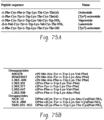
- FIGS. 75A-75B Several examples of the SSTR binding peptides are shown in FIGS. 75A-75B . These peptides were found to be SSTR2 specific and were used in the clinic for treatment of neuroendocrine tumor (NET) patients.
- NET neuroendocrine tumor
- the existing somatostatin-peptide-based analogs, labeled with common radiotherapeutic nuclides provide relatively low overall response rate.
- the inventors of the present invention set out to improve the effectiveness of somatostatin radiotherapy by preparing a chemical analog that would clear more slowly through the urinary tract and, concomitantly, have increased blood circulation half-life and higher targeted accumulation in the tumors.
- This goal was achieved by conjugation of a common, clinically-used SST peptide derivative, such as octreotate, octreotide and other, to an Evans blue analog (EB), which reversibly binds to circulating serum albumin, to provide a radiopharmaceutical that retained affinity and specificity to SSTR.
- EB Evans blue analog
- the new designed molecule also retained the high internalization rate of the conjugated target peptide, and therefore, showed significantly higher accumulation in SSTR-positive tumors.
- the claimed invention is directed to chemical conjugates of Evans Blue dye having the compound of Formula III illustrated below, or a pharmaceutically acceptable ester, amide, solvate, or salt thereof, or a salt of such an ester or amide or a solvate of such an ester amide or salt:
- R 1 , R 2 , R 3 , R 4 , R 5 , R 6 , R 7 , R 8 , R 9 , R 10 , and R 11 are chosen independently from hydrogen, halogen, hydroxyl, cyano, C 1 -C 6 alkyl, C 1 -C 6 alkoxy, C 1 -C 6 haloalkyl, and C 1 -C 6 haloalkoxy;
- R 12 is hydrogen, C 1 -C 6 alkyl, or C 1 -C 6 haloalkyl.
- Formula III may also include linking group L 1 which -(CH 2 ) m - wherein m is an integer from 0 to 12; linking group L 2 which is -(CH 2 ) n - wherein n is an integer from 0 to 12; linking group L 3 which is -(CH 2 ) p - wherein p is an integer from 0 to 12; and linking group L 4 which is -(CH 2 ) q - wherein q is an integer from 0 to 12.
- each CH 2 can be individually replaced with -O-, -NH(CO)-, or -(CO)-NH-, providing no two adjacent CH 2 groups are replaced.
- L 1 is -NH(CO)-
- R 1 and R 4 are each methyl
- R 2 , R 3 , R 5 , R 6 , R 7 , R 8 , R 9 , R 10 , R 11 , and R 12 are each hydrogen.
- R 14 contains a sulfhydryl moiety that facilitates conjugation or cross-linking between it and the maleimide moiety of Formula I to form the conjugated complex of Formula III.
- An active sulfhydryl moiety on the therapeutic compound may be naturally occurring (for example, Cys-40 in exendin-4), or may be artificially introduced into the therapeutic compound or fragment by methods well known in the art such as amino acid substitution or chemical modification.
- R 14 further comprises a radionuclide such as 18 F, 76 Br, 124 I, 125 I, or 131 I.
- R 13 can be selected from a crown ether, a cyclodextrin, or a porphyrin, noting that, in the claimed invention, R 13 is a chelating group comprising 177 Lu and is selected from
- the 177 Lu radionuclide may be suitable purposes such as imaging or scanning, for example PET imaging, and the compound of Formula III may be a PET imaging agent.
- the radionuclide may be suitable for purposes of patient treatment, for example radiation treatment, and the compound of Formula III may be an agent for treatment of cancer.
- Preferred embodiments of the present invention include chemical conjugates of Evans Blue dye having the compound of Formula IV illustrated below, or a pharmaceutically acceptable ester, amide, solvate, or salt thereof, or a salt of such an ester or amide or a solvate of such an ester amide or salt:
- R 14 is
- Formula IV may also include linking group L 2 which is -(CH 2 ) n - wherein n is an integer from 0 to 12; and linking group L 4 which is -(CH 2 ) q - wherein q is an integer from 0 to 12.
- each CH 2 can be individually replaced with -O-, -NH(CO)-, or -(CO)-NH-, providing no two adjacent CH 2 groups are replaced.
- the linking groups L 2 and L 4 include polyethylene glycol segments -CH 2 CH 2 O-.
- R 13 can be selected from a crown ether, a cyclodextrin, or a porphyrin, noting that, in the claimed invention, R 13 is a chelating group comprising 177 Lu and is selected from
- R 14 of Formula IV may further include a radionuclide as described above, and the description of radionuclide embodiments as given for compounds of Formula III also applies to compounds of Formula IV.
- novel molecules in the disclosure include the truncated Evans Blue domain as an Albumin-binding motif, a chelator for labeling with radionuclide, a spacer, a residue derived from maleimide as a linker, and a biomolecule binding motif.
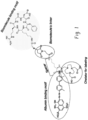
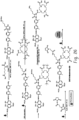
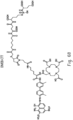
- FIG. 1 illustrates this type of compound but is not itself according to the claimed invention.
- Reference to a formula includes references to all subformulae, for example, Formula III includes compounds of Formula IV.
- Compounds disclosed herein can be administered as the neat chemical, but are preferably administered as a pharmaceutical composition. Accordingly, the invention encompasses pharmaceutical compositions comprising a compound or pharmaceutically acceptable salt of a compound according to the claimed invention, together with at least one pharmaceutically acceptable carrier.
- the pharmaceutical composition may contain said compound or salt as the only active agent, but is preferably contains at least one additional active agent.
- the pharmaceutical composition is in a dosage form that contains from about 0.1 mg to about 2000 mg, from about 10 mg to about 1000 mg, from about 100 mg to about 800 mg, or from about 200 mg to about 600 mg of a compound of Formula III and optionally from about 0.1 mg to about 2000 mg, from about 10 mg to about 1000 mg, from about 100 mg to about 800 mg, or from about 200 mg to about 600 mg of an additional active agent in a unit dosage form.
- the pharmaceutical composition may also include a molar ratio of a compound, such as a compound of Formula III, and an additional active agent.
- the pharmaceutical composition may contain a molar ratio of about 0.5:1, about 1:1, about 2:1, about 3:1 or from about 1.5:1 to about 4:1 of an additional active agent to a compound of Formula III.
- Compounds disclosed herein may be administered orally, topically, parenterally, by inhalation or spray, sublingually, transdermally, via buccal administration, rectally, as an ophthalmic solution, or by other means, in dosage unit formulations containing conventional pharmaceutically acceptable carriers.
- the pharmaceutical composition may be formulated as any pharmaceutically useful form, e.g., as an aerosol, a cream, a gel, a pill, a capsule, a tablet, a syrup, a transdermal patch, or an ophthalmic solution.
- Some dosage forms, such as tablets and capsules are subdivided into suitably sized unit doses containing appropriate quantities of the active components, e.g., an effective amount to achieve the desired purpose.
- Carriers include excipients and diluents and must be of sufficiently high purity and sufficiently low toxicity to render them suitable for administration to the patient being treated.
- the carrier can be inert or it can possess pharmaceutical benefits of its own.
- the amount of carrier employed in conjunction with the compound is sufficient to provide a practical quantity of material for administration per unit dose of the compound.
- Classes of carriers include, but are not limited to binders, buffering agents, coloring agents, diluents, disintegrants, emulsifiers, flavorants, glidants, lubricants, preservatives, stabilizers, surfactants, tableting agents, and wetting agents.
- Some carriers may be listed in more than one class, for example vegetable oil may be used as a lubricant in some formulations and a diluent in others.
- Exemplary pharmaceutically acceptable carriers include sugars, starches, celluloses, powdered tragacanth, malt, gelatin, talc, and vegetable oils.
- Optional active agents may be included in a pharmaceutical composition, which do not substantially interfere with the activity of the compound of the present invention.
- compositions / combinations can be formulated for oral administration. These compositions contain between 0.1 and 99 weight % (wt.%) of a compound of Formula III and usually at least about 5 wt.% of a compound of Formula III. Some embodiments contain from about 25 wt% to about 50 wt % or from about 5 wt% to about 75 wt% of the compound of Formula III.
- references to methods of treatment in the subsequent paragraphs of this description are to be interpreted as references to the compounds, pharmaceutical compositions and medicaments of the present invention for use in a method for treatment of the human (or animal) body by therapy (or for diagnosis).
- the compounds of Formula III, as well as pharmaceutical compositions comprising the compounds, are useful for diagnosis or treatment of diseases such as diabetes or cancer.
- a compound according to the claimed invention optionally in combination with one or more additive active ingredients, or a pharmaceutical composition as defined above, for use in a method of treating or diagnosing cancer in a mammal, and more specifically a human, although companion animals, e.g. cats, dogs, and livestock animals, are also contemplated.
- a therapeutically effective amount of a pharmaceutical composition is preferably an amount sufficient to reduce or ameliorate the symptoms of a disease or condition.
- a therapeutically effective amount may be an amount sufficient to reduce or ameliorate high blood sugar.
- a therapeutically effective amount of a compound or pharmaceutical composition described herein will also provide a sufficient concentration of a compound of Formula III when administered to a patient.
- a sufficient concentration is preferably a concentration of the compound in the patient's body necessary to prevent or combat the disorder. Such an amount may be ascertained experimentally, for example by assaying blood concentration of the compound, or theoretically, by calculating bioavailability.
- the methods of treatment disclosed herein include providing certain dosage amounts of a compound of Formula III to a patient.
- Dosage levels of each compound of from about 0.1 mg to about 140 mg per kilogram of body weight per day are useful in the treatment of the above-indicated conditions (about 0.5 mg to about 7 g per patient per day).
- the amount of compound that may be combined with the carrier materials to produce a single dosage form will vary depending upon the patient treated and the particular mode of administration.
- Dosage unit forms will generally contain between from about 1 mg to about 500 mg of each active compound.
- 25 mg to 500 mg, or 25 mg to 200 mg of a compound of Formula I are provided daily to a patient. Frequency of dosage may also vary depending on the compound used and the particular disease treated. However, for treatment of most diseases and disorders, a dosage regimen of 4 times daily or less can be used and optionally a dosage regimen of 1 or 2 times daily is used.
- the specific dose level for any particular patient will depend upon a variety of factors including the activity of the specific compound employed, the age, body weight, general health, sex, diet, time of administration, route of administration, and rate of excretion, drug combination and the severity of the particular disease undergoing therapy.
- a compound of Formula III may be administered singularly (i.e., sole therapeutic agent of a regime) to treat or prevent diseases and conditions such as diabetes, or may be administered in combination with another active agent.
- One or more compounds of Formula III may be administered in coordination with a regime of one or more other active agents such as anticancer cytotoxic agents.
- a method of treating or diagnosing cancer in a mammal includes administering to said mammal a therapeutically effective amount of a compound of Formula III, optionally in combination with one or more additional active ingredients.
- the methods of treatment described herein are also useful for treatment of mammals other than humans, including for veterinary applications such as to treat horses and livestock, e.g. cattle, sheep, cows, goats, swine and the like, and pets (companion animals) such as dogs and cats.
- a wide variety of mammals will be suitable subjects including rodents (e.g. mice, rats, hamsters), rabbits, primates, and swine such as inbred pigs and the like.
- rodents e.g. mice, rats, hamsters
- rabbits e.g. primates, and swine
- primates e.g. a human monocyte
- swine e.g. swine
- body fluids e.g. blood, plasma, serum, cellular interstitial fluid, saliva, feces, and urine
- cell and tissue samples e.g. cell and tissue samples of the above subjects will be suitable for use.
- Described, but not as such according to the invention is a method of treating a diabetes disorder in a patient identified as in need of such treatment, the method comprising providing to the patient an effective amount of a compound of Formula III.
- the compounds of Formula III provided herein may be administered alone, or in combination with one or more other active agents.
- the method of treating diabetes may additionally comprise administering the compound of Formula III in combination with one or more additional compounds, wherein at least one of the additional compounds is an active agent, to a patient in need of such treatment.
- the one or more additional compounds may include additional therapeutic compounds, including anticancer therapeutic compounds such as doxorubicin, paclitaxel, docetaxel, cisplatin, camptothecin, temozolomide, avastin, Herceptin, Erbitux, and the like.
- compositions of the present invention offer the advantage that many small molecules and biologics can be easily modified in one step with high yield and high purity. Due to the relatively strong binding of EB moiety with albumin, the in vivo biodistribution can be easily controlled to adjust the number of EB moieties and linkers. In addition, the relative small size of the EB moiety reduces the likelihood of any interference with the biological function of the small molecule or biologic.
- a chelator, such as NOTA or DOTA linked to the EB moiety allows for facile addition of further groups such as radionuclides, which can allow the present molecules to act as imaging agents and/or radiotherapeutic agents.
- the present invention therefore provides an efficient system for developing long lasting and long acting therapeutic and imaging agents with high efficacy.
- Boc-Lysine-Fmoc amino acid was purchased from Bachem.
- NOTA-bis(t-Bu ester) and DOTA-tris (t-Bu ester) were purchased from Macrocyclics.
- N-succinimidyl S-acetylthioacetate (SATA) and PEG 4 biotinylation reagent were purchased from Thermo Fisher Scientific.
- Avidin-sepharose beads acquired from GE Healthcare.
- Arg-Gly-Asp (RGD) peptide was purchased from C.S. Bio. All other solvents and chemicals were purchased from Sigma-Aldrich.
- EXAMPLE 1 PREPARATION OF EVANS BLUE AMINE (EB-NH 2 )
- N-Boc-2-tolidine (0.46 g, 1.47 mmol) was dissolved in acetonitrile (10 ml) in a glass vial, was cooled to 0°C, then hydrochloric acid (0.3 M, 15 ml) was added.
- Cold sodium nitrite solution (0.31 g in 5 ml water) was added dropwise and stirred for 20 min, and the solution turned bright yellow.
- This solution was added dropwise to another glass vial containing 1-amino-8-naphthol-2,4-disulfonic acid monosodium salt (0.59 g) and sodium bicarbonate (0.49 g) in water (20 ml) at 0°C.
- the reaction was deemed complete by LC/MS and the reaction was lyophilized without further purification to provide the Boc-EB product.
- [M-H] - 541.4425, calc: 542.0930.
- NOTA-EB-Lys was dissolved in 0.5 mL DMF. Then 1.26 eq of trimethylamine were added, followed by 1.26 eq of 3-(Maleimido)propionic acid N-hydroxysuccinimide ester in 0.2 mL DMF. The reaction was stirred for 2h at RT. Purification was done on Higgins column. Analytical HPLC injection (system 2) showed purity >90% with a r.t. of 17.4 min and mass of 1105 [MH] - .
- NMEB was dissolved in 0.3 mL of de-gassed 0.1% sodium ascorbate (w/v) in phosphate buffer-saline (PBS).
- RGD-SH 1.1 eq
- NMEB-RGD r.t. was 17.54 min, chemical purity >90% and mass of 1783 [MH] - .
- EXAMPLE 8 SYNTHESIS OF DOTA-MALEIMIDE-EB-RGD (DEB-RGD)
- EXAMPLE 9 SYNTHESIS OF DOTA-MALEIMIDE-EB CONJUGATED TO THIOLATED OCTREOTATE (EB-TATE)
- EXAMPLE 10 SYNTHESIS OF DOTA-MALEIMIDE-EB CONJUGATED TO CTT1298 (DMEB-CTT)
- U87MG human glioblastoma, MDA-MB-435 human melanoma and HT-29 human colorectal adenocarcinoma cell lines were purchased from ATCC, and was grown in Minimum Essential Medium, Leibovitz's L-15 Medium and McCoy's 5A Medium, respectively. All the cells were supplemented with 10% fetal bovine serum, 100 IU/mL penicillin, and 100 mg/mL streptomycin. Cells were grown in humidified atmosphere containing 5% CO 2 at 37°C.
- integrin expression on both tumor vasculature and tumor cells CD31, CD61 (murine integrin ⁇ 3 ) or human integrin ⁇ v ⁇ 3 immunofluoresence staining was chosen, respectively.
- the mouse anti-human integrin ⁇ v ⁇ 3 antibody we used only recognizes human integrin ⁇ v ⁇ 3 , which does not cross-react with murine integrin ⁇ v ⁇ 3 of the tumor cells. Briefly, frozen tissue sections (5 ⁇ m) were fixed with cold acetone, rinsed with PBS and blocked with 1% bovine serum albumin solution for an hour at RT.
- the slides were incubated with 1:100 dilution of rat anti-mouse CD31, hamster anti-rat CD61 or mouse anti-human integrin ⁇ v ⁇ 3 monoclonal antibody at room temperature overnight, and then incubated with 1:200 Alexa Fluor 488-labeled donkey anti-rat, Alexa Fluor 647-labeled anti-hamster and Alexa Fluor 488-labeled anti-mouse secondary antibody, respectively. Samples were mounted with DAPI for staining of cell nuclei. Fluorescence images were acquired with an epifluorescence microscope (200X; Olympus, X81). Images were acquired under the same conditions and displayed at the same scale.
- EXAMPLE 17 HISTOPATHOLOGIC STAINING AFTER TARGETED RADIOTHERAPY
- TUNEL Immunofluorescent terminal deoxynucleotidetransferase-mediated biotin-dUTP labeling
- 64 Cu-NMEB-RGD was stable in mouse serum for up to 24 h; no significant de-metalation was observed. In vivo, 64 Cu-NMEB-RGD was stable up to 4h in the blood with only a small amount of a more polar component apparent. Over 90% of the radioactivity extraction was bound to the blood proteins fraction. Evaluation of stability in vivo was limited to 4h because at 24h the amount of 64 Cu-NMEB-RGD that extracted from the albumin/blood was too low for HPLC analysis.
- mice Female athymic nude mice (Harlan Laboratories) were housed in an animal facility under pathogen-free conditions. Tumor model was developed in 5 to 6 weeks old female athymic nude mice by injection of 5 ⁇ 10 6 cells into their right shoulders. The mice underwent small-animal PET studies when the tumor volume reached 300 mm 3 (14-20 days after inoculation), and received 90 Y radionuclide therapy when the tumor volume reached 150 mm 3 (10-14 days after inoculation).
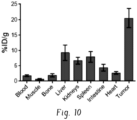
- U87MG tumor xenografts injected with 64 Cu-NMEB-RGD were sacrificed after 24h time-point PET imaging. Blood, muscle, bone, liver, kidneys, spleen, intestine, heart and tumor were collected and wet-weighed. For mice bearing MDA-MB-435 and HT-29 tumor xenografts, injected with 64 Cu-NMEB-RGD, blood, tumor and heart were collected. Radioactivity was measured in a ⁇ -counter. The results were expressed %ID/g.
- the binding affinity of NMEB-RGD to integrin ⁇ v ⁇ 3 was compared to c(RGDfK) in competition assays using U87MG cells.
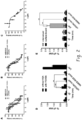
- the IC 50 values for NMEG-RGD and c(RGDfK) were 59.88 ⁇ 13.95 nM and 46.61 ⁇ 18.77 nM, respectively ( FIG. 2A ), when competed with 18 F-NOTA-c(RGDfK) at 1h and 74.07 ⁇ 28.24 nM and 85.21 ⁇ 13.99 nM, respectively ( FIG. 2B ) against 64 Cu-NOTA-c(RGDfK) at 4h.
- the specific activity for both tracers was similar (6.66 GBq/ ⁇ mol) which allowed one to assume that the difference in binding of both tracers was not due to receptor saturation.
- 64 Cu-NMEB-RGD cell uptake and internalization was tested using three cell lines (U87MG, MDA-MB-435 and HT29) which are known and evaluated by us to express different levels of integrin ⁇ v ⁇ 3 (high, medium and low, respectively.
- 64 Cu-NMEB-RGD uptake at all time points was significantly higher in the absence of albumin in the medium ( FIG. 2D ).
- 64 Cu-NMEB-RGD uptake by U87MG cells, which express highest levels of integrin ⁇ v ⁇ 3 increased with longer incubation times, reaching 1.86 ⁇ 0.22% of total input at 4h.
- NMEB-RGD internalized albumin bound to NMEB-RGD
- U87MG cells were incubated with fluorescently labeled albumin at increasing concentrations of NMEB-RGD, and the overall fluorescence of the cells was measured. No increase in cellular fluorescence over the baseline was observed with fitc-Albumin alone at any concentration of EB-RDG. The cells' fluorescence did not elevate with increased quantities of NMEB-RGD and suggested that the NMEB-RGD does not induce internalization of albumin, and it is likely to be released from the albumin prior to binding to integrin ⁇ v ⁇ 3 .
- EXAMPLE 23 MICROPET IMAGING OF TUMOR XENOGRAFTS WITH 64Cu-NMEB-RGD
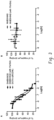
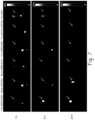
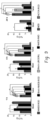
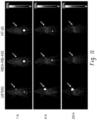
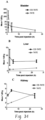
- 64 Cu-NMEB-RGD uptake in the blood was relatively high at 1h p.i. (9.58 ⁇ 0.84 %ID/g) but significantly decreased at 4 and 24 h p.i. to 5.73 ⁇ 0.67 and 2.46 ⁇ 0.25%ID/g, respectively, and resulted in high tumor to background ratio ( FIGS. 7 and 9 ).
- Binding specificity of 64 Cu-NMEB-RGD to integrin ⁇ v ⁇ 3 was tested by co-injection of either c(RGDfk) or unlabeled NMEB-RGD. When an excess of monomer was co-injected, the tumor uptake was decreased significantly at 1 h p.i.
- 64 Cu-NOTAc(RGDfk) was rapidly cleared from the blood through the urinary tract and depicted low accumulation in the tumor (1.29 ⁇ 0.17, 1.15 ⁇ 0.07, 1.06 ⁇ 0.03 %ID/g at 1, 4 and 24h p.i. correspondingly, FIGS. 7 and 9 ).
- the non-specific tracer, 64 Cu-NMEB-RAD had low tumor accumulation at all time points (approximately 6% ID/g). Its uptake in the blood was significantly higher than 64 Cu-NMEB-RGD at all time points (10-12% ID/g up to 4h p.i and 3.7 ⁇ 0.3 %ID/g at 24h p.i. FIGS. 7 and 9 ).
- 64 Cu-NEB had the highest accumulation in the blood at all time points while uptake in the tumor was slightly higher than 64 Cu-NMEB-RAD (6-7 %ID/g up to 4h p.i and approximately 8 %ID/g at 24h p.i. FIGS. 7 and 9 ).
- NMEB-RGD was applied to integrin ⁇ v ⁇ 3 targeted radiotherapy.
- NMEB was altered to encompass DOTA (named hereafter DMEB), which can chelate the radiotherapeutic isotope 90 Y.
- Radiotherapy efficacy on tumor growth was evaluated in U87MG tumor bearing mice (initial tumor size ranging from 150 to 200 mm 3 ) as follows: group A injected with Saline; group B was treated with 7.4 MBq (200 ⁇ Ci) of 90 Y-DMEB-RGD; group C treated with 3.7 MBq (100 ⁇ Ci) of 90 Y-DMEB-RGD; group D treated with 1.75 MBq (50 ⁇ Ci) of 90 Y-DMEB-RGD; group E treated with 7.4 MBq of 90 Y-DOTA-c(RGDfK) and group F treated with 1.75 MBq of 90 Y-DOTA-c(RGDfK) ( FIGS.
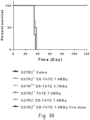
- the systemic toxicity of the radiotherapy was evaluated by monitoring animal body weight. Only group B showed statistically significant, but minor (5%), weight loss at day 2, but regained their weight at day 4 ( FIG. 16 ). Animal body weight for all other groups continued to increase after treatment ( FIG. 16 ). Similar pattern was observed after the second injection. End point of the radiotherapy, which was used for survival analysis, was determined to be when the tumor volume reached 1600 mm 3 , the tumor has ulcer or the mice died. Survival analysis showed significant differences (p ⁇ 0.01) for groups B-D in comparison to groups A, E and F. For group B the survival was 100% up to 30 days post initial treatment, and for groups B, C, and D the % survival was dose dependent ( FIG. 17 ).
- 18 F-FDG PET imaging 3 days post-injection of 90 Y showed decreased metabolism only for the groups injected with 90 Y-DMEB-RGD ( FIG. 19 ). However, repeating this scan 10 days post-treatment showed significant decreased metabolism only for group B ( FIG. 20 ).
- EXAMPLE 25 TUMOR BIOLOGY AFTER 90 Y RADIOTHERAPY
- group B showed considerably more cell apoptosis, envisioned by TUNEL staining ( FIG. 21 ).
- Hematoxylin and eosin staining showed that most of the tumor area in Group B was already necrotic after two doses of 90 Y-DMEB-RGD treatment, whereas tumors from other 5 groups were almost entirely viable ( FIG. 21 ).
- EXAMPLE 26 EVALUATION OF 64 CU-NMEB-RGD IN HUMAN SUBJECTS
- EXAMPLE 27 EVALUATION OF 64 CU-EB-TATE IN HUMAN SUBJECTS
- an "add-on" molecule featuring (i) truncated Evans blue (EB) dye molecule (ii) a metal chelate and (iii) a maleimide ( FIG. 25 ) was developed.
- the "add-on” molecule can be easily conjugated to targeting molecules containing a free thiol group to prolong the half-life in the blood by the moderate binding of EB to albumin, and allows radiolabeling for imaging and radiotherapy.
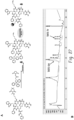
- the synthesis of the truncated EB derivative is described in FIG. 26 and was previously reported ( J Nucl Med 2017 Apr;58(4):590-597 ).
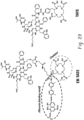
- TATE Octreotate
- TATE conjugated to DOTA without the EB moiety
- TATE FIG. 29
- Both TATE and EB-TATE were radiolabeled with either Cu-64, Y-86 or Y-90 for imaging or radiotherapy, respectively, and compared in mouse xenograft models.
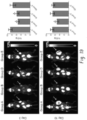
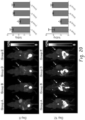
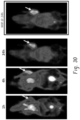
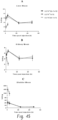
- FIGS. 30 and 31 The two compounds in a model of AR42J rat pancreas neuroendocrine tumor xenografts, which is a well-established model in the literature and was reported to have high SSTR2 expression, were first evaluated ( FIGS. 30 and 31 ).
- EB-TATE and TATE were first labeled with Cu-64 and the mice underwent PET scans at different time points post-injection (p.i.) of identical radioactive doses.
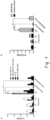
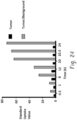
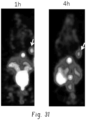
- 64 Cu-EB-TATE had a significant higher tumor uptake at all time points with high tumor to background ratio at 24h p.i. ( FIGS. 30-31 , 32A-B , and 33A-B).
- addition of EB moiety to Octreotate significantly decreased its excretion through the bladder ( FIGS.
- EB-TATE A potential future application of EB-TATE is radiotherapy using Y-90.
- EB-TATE was labelled with the PET isotope Y-86.
- Y-86 is better chelated by DOTA isotope therefor using Y-86 as an imaging isotope will reduce the accumulation of radioactivity that is due to transchelation or another phenomenon that are not related specifically to EB-TATE.
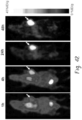
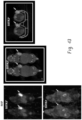
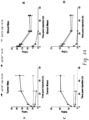
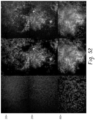
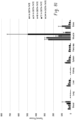
- the resulting radiolabeled conjugate showed prolonged circulation half-life and enhanced tumor accumulation in somatostatin receptor positive tumors ( FIGS. 42-43 , 44A-D , 45A-C , 46 , and 47A-B). Tumor uptake was markedly increased compared to the peptides without the "add-on" ( FIGS. 42-43 , 44A-D , 45A-C , 46 , and 47A-B).
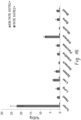
- 86 Y-EB-TATE in AR42J xenografts was evaluated, which expresses higher SSTR2 levels and indeed got higher tumor uptake values ( FIGS. 48-49 , 50A-B , and 51 ). Attempt to block 86 Y-EB-TATE in SSTR2-positive tumors were also successful ( FIGS. 49 , 50A-B , and 51 ).
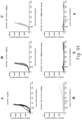
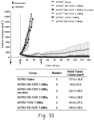
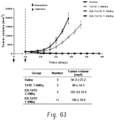
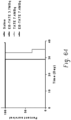
- FIGS. 55-57 , 58A-F , 59-61 , 62A-D , and 63-65 Tumor radiotherapy experiments in mice using 90 Y-EB-TATE was very successful ( FIGS. 55-57 , 58A-F , 59-61 , 62A-D , and 63-65 ) and eliminated receptor positive tumors using one or two doses of 90 Y-EB-TATE ( FIGS. 55-57 , 58A-F , 59-61 , 62A-D , and 63-65).
- Three mice from the 7.4MBq and one mouse from the 3.7MBq from radiotherapy experiments presented in FIG. 58 slightly shown tumor re-growth.
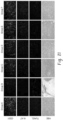
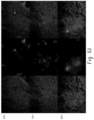
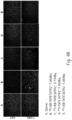
- PET imaging using 68 Ga-TATE and immunofluorescence staining confirmed that the tumor regrowth is SSTR2-independent ( FIGS. 59-61 ).
- PSMA prostate specific membrane antigen
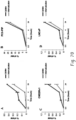
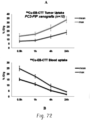
- PET studies also showed high tumor accumulation for PC3-PIP in comparison to PC3 and Cw22RV1 xenografts ( FIG. 71 , 72A-B , and 73-74 ). LNCaP xenografts need to be evaluated as well.
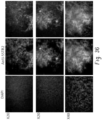
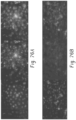
- FIG. 76 shows representative immunofluorescence staining of anti-SSTR2 (red) and nucleus (DAPI, blue) in (A) A427-7 (SSTR2 + ) and (B) A427-4 (SSTR2 - ) cells.
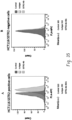
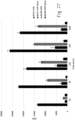
- FIG. 77 shows the results of cell internalization in A427-7 of 177 Lu-DMEB-TATE and 177 Lu-DOTA-TATE in the presence of 1% (w/v) bovine serum albumin (BSA) with and without adding unlabeled DMEB-TATE or DOTA-TATE, respectively.
- BSA bovine serum albumin
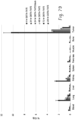
- FIG. 78 shows biodistribution of 177 Lu-DMEB-TATE in SSTR2 + tumor (A427-7)-bearing mice over time.
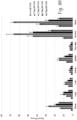
- FIG. 79 shows biodistribution of 177 Lu-DOTA-TATE in SSTR2 + tumor (A427-7)-bearing mice over time.
- FIG. 80 shows tumor-to-tissue ratios of 177 Lu-DMEB-TATE in SSTR2 + tumor (A427-7)-bearing mice over time.
- FIG. 81 shows tumor-to-tissue ratios of 177 Lu-DOTA-TATE in SSTR2 + tumor (A427-7)-bearing mice over time.
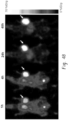
- FIG. 82 shows SPECT images of 177 Lu-DMEB-TATE in SSTR2 + tumor (A427-7)-bearing mice at 72 h post-injection without adding unlabeled DMEB-TATE (left) and with excess amount of unlabeled DMEB-TATE (right). The mice were injected with 1 mCi of 177 Lu-DMEB-TATE. White arrows indicate tumor location.
- FIG. 83 shows representative SPECT images of 177 Lu-DMEB-TATE in SSTR2 + tumor (A427-7)-bearing mice at different time points post-injection. The mouse was injected with 1 mCi of 177 Lu-DMEB-TATE. White arrows indicate tumor location.
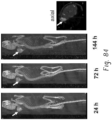
- FIG. 84 shows representative SPECT images of 177 Lu-DMEB-TATE in SSTR2 + tumor (A427-7)-bearing mice at different time points post-injection. The mouse was injected with 2 mCi of 177 Lu-DMEB-TATE. White arrows indicate tumor location.
- FIG. 85 shows representative SPECT images of 177 Lu-DOTA-TATE in SSTR2 + tumor (A427-7)-bearing mice at 1 and 24 h post-injection without addition of unlabeled DOTA-TATE (left) and with excess amount of unlabeled DOTA-TATE (right). The mice were injected with 1 mCi of 177 Lu-DOTA-TATE.
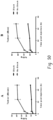
- FIG. 86 shows the results of the 177 Lu radionuclide therapy in SSTR2-xenografts, wherein the X-axis represents days post tumor inoculatio, and the Y-axis represents tumor volume (mm 3 ).
- the treatment was on Day 7 with single intravenous injection of PBD, 177 Lu-DOTA-TATE or 177 Lu-EB-DOTA-TATE of different doses.
Landscapes
- Health & Medical Sciences (AREA)
- Chemical & Material Sciences (AREA)
- Organic Chemistry (AREA)
- Life Sciences & Earth Sciences (AREA)
- General Health & Medical Sciences (AREA)
- Public Health (AREA)
- Medicinal Chemistry (AREA)
- Pharmacology & Pharmacy (AREA)
- Animal Behavior & Ethology (AREA)
- Veterinary Medicine (AREA)
- Epidemiology (AREA)
- Proteomics, Peptides & Aminoacids (AREA)
- Physics & Mathematics (AREA)
- Optics & Photonics (AREA)
- Oncology (AREA)
- Chemical Kinetics & Catalysis (AREA)
- General Chemical & Material Sciences (AREA)
- Nuclear Medicine, Radiotherapy & Molecular Imaging (AREA)
- Medicines Containing Antibodies Or Antigens For Use As Internal Diagnostic Agents (AREA)
- Medicines That Contain Protein Lipid Enzymes And Other Medicines (AREA)
- Peptides Or Proteins (AREA)
- Pyrrole Compounds (AREA)
- Medicinal Preparation (AREA)
Claims (8)
- Composé de formule III ou un ester, amide, solvate ou sel pharmaceutiquement acceptable de celui-ci, ou un sel d'un tel ester ou amide ou un solvate d'un tel ester, amide ou sel,
 R1, R2, R3, R4, R5, R6, R7, R8, R9, R10 et R11 sont indépendamment choisis parmi l'hydrogène, un halogène, hydroxyle, cyano, un alkyle en C1 à C6, un alcoxy en C1 à C6, un halogénoalkyle en C1 à C6, et un halogénoalcoxy en C1 à C6 ;R12 est l'hydrogène, un alkyle en C1 à C6 ou un halogénoalkyle en C1 à C6 ;L1 est -(CH2)m- où m est un entier de 0 à 12 et où chaque CH2 peut être individuellement remplacé par -O-, -NH(CO)- ou -(CO)-NH-, sous réserve que deux groupes CH2 adjacents ne soient pas remplacés ;L2 est -(CH2)n- où n est un entier de 0 à 12 et où chaque CH2 peut être individuellement remplacé par -O-, -NH(CO)- ou -(CO)-NH-, sous réserve que deux groupes CH2 adjacents ne soient pas remplacés ;L3 est -(CH2)p- où n est un entier de 0 à 12 et où chaque CH2 peut être individuellement remplacé par -O-, -NH(CO)- ou -(CO)-NH-, sous réserve que deux groupes CH2 adjacents ne soient pas remplacés ; etL4 est -(CH2)q- où q est un entier de 0 à 12 et où chaque CH2 peut être individuellement remplacé par -O-, -NH(CO)- ou -(CO)-NH-, sous réserve que deux groupes CH2 adjacents ne soient pas remplacés ; etR13 est un groupe chélatant comprenant 177Lu, etR13 est
 R14 est
- Composé selon la revendication 1, dans lequel L1 est -NH(CO)-, chacun de R1 et R4 est méthyle, et chacun de R2, R3, R5, R6, R7, R8, R9, R10, R11 et R12 est l'hydrogène.
- Composé selon la revendication 1, dans lequel le composé de formule III est un composé de formule IV :
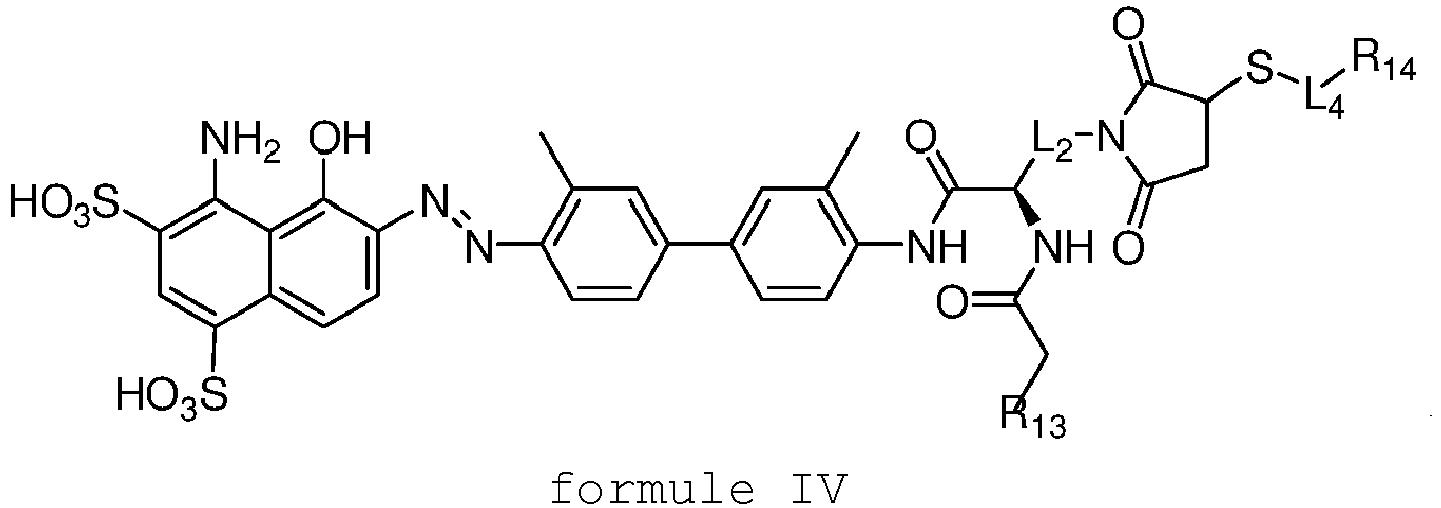 L2 est -(CH2)n- où n est un entier de 0 à 12 et où chaque CH2 peut être individuellement remplacé par -O-, -NH(CO)- ou -(CO)-NH-, sous réserve que deux groupes CH2 adjacents ne soient pas remplacés ;L4 est -(CH2)q- où q est un entier de 0 à 12 et où chaque CH2 peut être individuellement remplacé par -O-, -NH(CO)- ou -(CO)-NH-, sous réserve que deux groupes CH2 adjacents ne soient pas remplacés ; etR13 est un groupe chélatant comprenant 177Lu, etR13 est
 R14 est
- Composé selon la revendication 1 ou la revendication 3, dans lequel R13 est

- Composition pharmaceutique comprenant le composé de l'une quelconque des revendications 1 à 4, conjointement avec un véhicule pharmaceutiquement acceptable.
- Composition selon la revendication 5, dans laquelle le véhicule pharmaceutiquement acceptable est choisi dans le groupe constitué par les liants, les agents tampons, les agents colorants, les diluants, les délitants, les émulsionnants, les aromatisants, les agents de glissement, les lubrifiants, les conservateurs, les stabilisants, les tensioactifs, les agents de mise en comprimés, et les agents mouillants, ainsi que leurs combinaisons.
- Composé selon l'une quelconque des revendications 1 à 4, éventuellement en combinaison avec un ou plusieurs principes actifs additionnels, pour une utilisation dans une méthode de traitement ou de diagnostic d'un cancer chez un mammifère.
- Composé pour une utilisation selon la revendication 7, dans lequel le ou les principes actifs additionnels sont choisis parmi les composés thérapeutiques anticancéreux tels que la doxorubicine, le paclitaxel, le docétaxel, le cisplatine, la camptothécine, le témozolomide, l'avastine, l'herceptine, l'erbitux, et leurs combinaisons.
Applications Claiming Priority (1)
| Application Number | Priority Date | Filing Date | Title |
|---|---|---|---|
| PCT/US2017/054863 WO2019070236A1 (fr) | 2017-10-03 | 2017-10-03 | Conjugués chimiques de dérivés du bleu d'evans et leur utilisation comme agents de radiothérapie et d'imagerie |
Publications (3)
| Publication Number | Publication Date |
|---|---|
| EP3692032A1 EP3692032A1 (fr) | 2020-08-12 |
| EP3692032A4 EP3692032A4 (fr) | 2021-04-07 |
| EP3692032B1 true EP3692032B1 (fr) | 2024-06-19 |
Family
ID=65994901
Family Applications (1)
| Application Number | Title | Priority Date | Filing Date |
|---|---|---|---|
| EP17928082.1A Active EP3692032B1 (fr) | 2017-10-03 | 2017-10-03 | Conjugués chimiques de dérivés du bleu d'evans et leur utilisation comme agents de radiothérapie et d'imagerie |
Country Status (6)
| Country | Link |
|---|---|
| US (1) | US10981866B2 (fr) |
| EP (1) | EP3692032B1 (fr) |
| JP (1) | JP7097436B2 (fr) |
| CN (1) | CN111542518B (fr) |
| SG (1) | SG11202002882VA (fr) |
| WO (1) | WO2019070236A1 (fr) |
Families Citing this family (13)
| Publication number | Priority date | Publication date | Assignee | Title |
|---|---|---|---|---|
| EP3310758A1 (fr) | 2015-06-22 | 2018-04-25 | The U.S.A. As Represented By The Secretary, Department Of Health And Human Services | Conjugués chimiques de dérivés de bleu d'evans et leur utilisation dans la production de produits thérapeutiques à action prolongée |
| US10696631B2 (en) | 2016-05-09 | 2020-06-30 | The United States Of America, As Represented By The Secretary, Department Of Health And Human Services | Chemical conjugates of evans blue derivatives and their use as radiotherapy and imaging agents |
| CN111741751B (zh) * | 2018-02-22 | 2024-06-28 | 美国政府健康及人类服务部 | 伊文思蓝衍生物的化学缀合物及其作为靶向前列腺癌的放射疗法和显像剂的用途 |
| CN114369084B (zh) * | 2021-02-10 | 2023-02-03 | 烟台蓝纳成生物技术有限公司 | 一种截短型伊文思蓝修饰的成纤维细胞活化蛋白抑制剂及其制备方法和应用 |
| WO2022170732A1 (fr) * | 2021-02-10 | 2022-08-18 | 上海蓝纳成生物技术有限公司 | Inhibiteur de protéine d'activation des fibroblastes modifié par du bleu d'evans tronqué, son procédé de préparation et son utilisation |
| WO2022194298A1 (fr) * | 2021-03-19 | 2022-09-22 | The Hong Kong Polytechnic University | Composés/dérivés de tacn/nota chiraux avec et sans métaux pour application |
| CN114796532A (zh) * | 2022-04-20 | 2022-07-29 | 北京先通国际医药科技股份有限公司 | 放射性标记的伊文思蓝衍生物药物水溶液及其用途 |
| CN114748471A (zh) * | 2022-04-20 | 2022-07-15 | 北京先通国际医药科技股份有限公司 | 放射性标记的伊文思蓝衍生物药物的制备方法及用途 |
| WO2023202730A2 (fr) * | 2022-04-20 | 2023-10-26 | 北京先通国际医药科技股份有限公司 | Solution aqueuse pharmaceutique dérivée de bleu d'evans radioactif, son procédé de préparation et son utilisation |
| CN115433261B (zh) * | 2022-11-07 | 2023-01-13 | 烟台蓝纳成生物技术有限公司 | 一种rgd二聚体化合物及其制备方法和应用 |
| CN115583989B (zh) | 2022-12-09 | 2023-02-28 | 烟台蓝纳成生物技术有限公司 | 一种靶向sstr2的化合物及其制备方法和应用 |
| CN115947775B (zh) * | 2023-03-13 | 2023-06-09 | 北京先通国际医药科技股份有限公司 | 一种制备化合物(i)的方法和化合物(i)及其用途 |
| WO2025214280A1 (fr) * | 2024-04-08 | 2025-10-16 | 启德医药科技(苏州)有限公司 | Procédé de préparation d'un conjugué de radionucléides |
Family Cites Families (15)
| Publication number | Priority date | Publication date | Assignee | Title |
|---|---|---|---|---|
| EP1598082A4 (fr) | 2003-02-27 | 2008-11-12 | Univ Kyushu Nat Univ Corp | Produit de contraste pour irm |
| WO2006025304A1 (fr) | 2004-08-30 | 2006-03-09 | Kyushu University, National University Corporation | Agent de contraste pour irm pour la détection d’artériosclérose |
| US20160045626A1 (en) * | 2007-01-11 | 2016-02-18 | Immunomedics, Inc. | Methods and Compositions for Improved Labeling of Targeting Peptides |
| CN101848668A (zh) | 2007-09-14 | 2010-09-29 | 健康研究有限公司 | 用于肿瘤显像和治疗的多模态试剂 |
| US10556873B2 (en) * | 2008-02-22 | 2020-02-11 | Illinois Institute Of Technology | Bimodal ligands with macrocyclic and acyclic binding moieties, complexes and compositions thereof, and methods of using |
| EP3741381B1 (fr) | 2008-02-26 | 2024-04-24 | Cornell University | Peptide pour l'utilisation pour la prévention et le traitement d'une lésion rénale aiguë |
| CN103242255B (zh) | 2013-04-28 | 2015-01-14 | 厦门大学 | 伊文氏蓝配合物及其制备方法和应用 |
| CN104650217B (zh) * | 2015-01-26 | 2018-08-10 | 莎穆(上海)生物科技有限公司 | 伊文氏蓝或其衍生物修饰的Exendin-4及其制备方法和应用 |
| US20160287730A1 (en) | 2015-03-31 | 2016-10-06 | The United States Of America, As Represented By The Secretary, Department Of Health And Human Serv | Labeled evans blue dye derivative for in vivo serum albumin labeling |
| EP3310758A1 (fr) | 2015-06-22 | 2018-04-25 | The U.S.A. As Represented By The Secretary, Department Of Health And Human Services | Conjugués chimiques de dérivés de bleu d'evans et leur utilisation dans la production de produits thérapeutiques à action prolongée |
| US20190298824A1 (en) | 2016-05-04 | 2019-10-03 | The United States Of America, As Represented By The Secretary, Department Of Health And Human Serv | Albumin-binding immunomodulatory compositions and methods of use thereof |
| US10696631B2 (en) | 2016-05-09 | 2020-06-30 | The United States Of America, As Represented By The Secretary, Department Of Health And Human Services | Chemical conjugates of evans blue derivatives and their use as radiotherapy and imaging agents |
| CN107629016B (zh) | 2017-11-12 | 2020-05-22 | 莎穆(上海)生物科技有限公司 | 伊文氏蓝配合物及其制备方法和应用 |
| CN111741751B (zh) | 2018-02-22 | 2024-06-28 | 美国政府健康及人类服务部 | 伊文思蓝衍生物的化学缀合物及其作为靶向前列腺癌的放射疗法和显像剂的用途 |
| EP3918006A2 (fr) | 2019-01-30 | 2021-12-08 | The United States of America, as represented by The Secretary, Department of Health and Human Services | Conjugués de dérivés de colorant bleu d'evans bivalents et procédés d'utilisation |
-
2017
- 2017-10-03 CN CN201780095506.7A patent/CN111542518B/zh active Active
- 2017-10-03 SG SG11202002882VA patent/SG11202002882VA/en unknown
- 2017-10-03 JP JP2020519137A patent/JP7097436B2/ja active Active
- 2017-10-03 US US16/613,196 patent/US10981866B2/en active Active
- 2017-10-03 EP EP17928082.1A patent/EP3692032B1/fr active Active
- 2017-10-03 WO PCT/US2017/054863 patent/WO2019070236A1/fr not_active Ceased
Also Published As
| Publication number | Publication date |
|---|---|
| US20200231543A1 (en) | 2020-07-23 |
| JP7097436B2 (ja) | 2022-07-07 |
| EP3692032A4 (fr) | 2021-04-07 |
| EP3692032A1 (fr) | 2020-08-12 |
| CN111542518B (zh) | 2023-10-10 |
| WO2019070236A1 (fr) | 2019-04-11 |
| US10981866B2 (en) | 2021-04-20 |
| JP2021503439A (ja) | 2021-02-12 |
| SG11202002882VA (en) | 2020-04-29 |
| CN111542518A (zh) | 2020-08-14 |
Similar Documents
| Publication | Publication Date | Title |
|---|---|---|
| EP3455206B1 (fr) | Conjugués chimiques de dérivés du bleu d'evans et leur utilisation comme agents de radiothérapie et d'imagerie | |
| EP3692032B1 (fr) | Conjugués chimiques de dérivés du bleu d'evans et leur utilisation comme agents de radiothérapie et d'imagerie | |
| KR102902487B1 (ko) | 에반스 블루 유도체의 화학적 접합체 및 전립선 암 표적화를 위한 방사선 치료 및 조영제로서의 용도 | |
| US10709790B2 (en) | Chemical conjugates of Evans Blue derivatives and their use in the production of long-acting therapeutics | |
| CN110357967B (zh) | 新型成像组合物及其用途 | |
| US20220017495A1 (en) | Conjugates of bivalent evans blue dye derivatives and methods of use | |
| JP7646637B2 (ja) | 画像化及び治療用組成物 | |
| HK40026025A (en) | Chemical conjugates of evans blue derivatives and their use as radiotherapy and imaging agents | |
| HK40026025B (en) | Chemical conjugates of evans blue derivatives and their use as radiotherapy and imaging agents | |
| HK40118167A (zh) | 伊文思蓝衍生物的化学缀合物及其作为靶向前列腺癌的放射疗法和显像剂的用途 | |
| HK40029571A (en) | Chemical conjugates of evans blue derivatives and their use as radiotherapy and imaging agents for targeting prostate cancer | |
| HK40029571B (zh) | 伊文思蓝衍生物的化学缀合物及其作为靶向前列腺癌的放射疗法和显像剂的用途 |
Legal Events
| Date | Code | Title | Description |
|---|---|---|---|
| STAA | Information on the status of an ep patent application or granted ep patent |
Free format text: STATUS: THE INTERNATIONAL PUBLICATION HAS BEEN MADE |
|
| PUAI | Public reference made under article 153(3) epc to a published international application that has entered the european phase |
Free format text: ORIGINAL CODE: 0009012 |
|
| STAA | Information on the status of an ep patent application or granted ep patent |
Free format text: STATUS: REQUEST FOR EXAMINATION WAS MADE |
|
| 17P | Request for examination filed |
Effective date: 20200326 |
|
| AK | Designated contracting states |
Kind code of ref document: A1 Designated state(s): AL AT BE BG CH CY CZ DE DK EE ES FI FR GB GR HR HU IE IS IT LI LT LU LV MC MK MT NL NO PL PT RO RS SE SI SK SM TR |
|
| AX | Request for extension of the european patent |
Extension state: BA ME |
|
| REG | Reference to a national code |
Ref country code: HK Ref legal event code: DE Ref document number: 40026025 Country of ref document: HK |
|
| DAV | Request for validation of the european patent (deleted) | ||
| DAX | Request for extension of the european patent (deleted) | ||
| REG | Reference to a national code |
Ref country code: DE Ref legal event code: R079 Free format text: PREVIOUS MAIN CLASS: C07D0403120000 Ipc: C07D0201000000 Ref country code: DE Ref legal event code: R079 Ref document number: 602017082760 Country of ref document: DE Free format text: PREVIOUS MAIN CLASS: C07D0403120000 Ipc: C07D0201000000 |
|
| A4 | Supplementary search report drawn up and despatched |
Effective date: 20210310 |
|
| RIC1 | Information provided on ipc code assigned before grant |
Ipc: C07D 257/02 20060101ALI20210303BHEP Ipc: C07D 307/60 20060101ALI20210303BHEP Ipc: C07D 201/00 20060101AFI20210303BHEP Ipc: A61K 31/4015 20060101ALI20210303BHEP Ipc: A61K 31/395 20060101ALI20210303BHEP Ipc: C07D 403/12 20060101ALI20210303BHEP |
|
| STAA | Information on the status of an ep patent application or granted ep patent |
Free format text: STATUS: EXAMINATION IS IN PROGRESS |
|
| 17Q | First examination report despatched |
Effective date: 20220629 |
|
| P01 | Opt-out of the competence of the unified patent court (upc) registered |
Effective date: 20230601 |
|
| REG | Reference to a national code |
Ref country code: DE Free format text: PREVIOUS MAIN CLASS: C07D0201000000 Ref country code: DE Ref legal event code: R079 Ref document number: 602017082760 Country of ref document: DE Free format text: PREVIOUS MAIN CLASS: C07D0201000000 Ipc: C07D0403120000 |
|
| GRAP | Despatch of communication of intention to grant a patent |
Free format text: ORIGINAL CODE: EPIDOSNIGR1 |
|
| STAA | Information on the status of an ep patent application or granted ep patent |
Free format text: STATUS: GRANT OF PATENT IS INTENDED |
|
| GRAJ | Information related to disapproval of communication of intention to grant by the applicant or resumption of examination proceedings by the epo deleted |
Free format text: ORIGINAL CODE: EPIDOSDIGR1 |
|
| STAA | Information on the status of an ep patent application or granted ep patent |
Free format text: STATUS: EXAMINATION IS IN PROGRESS |
|
| GRAP | Despatch of communication of intention to grant a patent |
Free format text: ORIGINAL CODE: EPIDOSNIGR1 |
|
| STAA | Information on the status of an ep patent application or granted ep patent |
Free format text: STATUS: GRANT OF PATENT IS INTENDED |
|
| INTG | Intention to grant announced |
Effective date: 20231215 |
|
| RIC1 | Information provided on ipc code assigned before grant |
Ipc: A61P 35/00 20060101ALI20231201BHEP Ipc: A61K 45/06 20060101ALI20231201BHEP Ipc: A61K 31/4015 20060101ALI20231201BHEP Ipc: A61K 31/395 20060101ALI20231201BHEP Ipc: C07D 403/14 20060101ALI20231201BHEP Ipc: C07D 417/14 20060101ALI20231201BHEP Ipc: C07D 403/12 20060101AFI20231201BHEP |
|
| INTC | Intention to grant announced (deleted) | ||
| INTG | Intention to grant announced |
Effective date: 20240110 |
|
| GRAS | Grant fee paid |
Free format text: ORIGINAL CODE: EPIDOSNIGR3 |
|
| GRAA | (expected) grant |
Free format text: ORIGINAL CODE: 0009210 |
|
| STAA | Information on the status of an ep patent application or granted ep patent |
Free format text: STATUS: THE PATENT HAS BEEN GRANTED |
|
| AK | Designated contracting states |
Kind code of ref document: B1 Designated state(s): AL AT BE BG CH CY CZ DE DK EE ES FI FR GB GR HR HU IE IS IT LI LT LU LV MC MK MT NL NO PL PT RO RS SE SI SK SM TR |
|
| REG | Reference to a national code |
Ref country code: GB Ref legal event code: FG4D |
|
| REG | Reference to a national code |
Ref country code: CH Ref legal event code: EP |
|
| REG | Reference to a national code |
Ref country code: DE Ref legal event code: R096 Ref document number: 602017082760 Country of ref document: DE |
|
| PG25 | Lapsed in a contracting state [announced via postgrant information from national office to epo] |
Ref country code: BG Free format text: LAPSE BECAUSE OF FAILURE TO SUBMIT A TRANSLATION OF THE DESCRIPTION OR TO PAY THE FEE WITHIN THE PRESCRIBED TIME-LIMIT Effective date: 20240619 |
|
| PG25 | Lapsed in a contracting state [announced via postgrant information from national office to epo] |
Ref country code: HR Free format text: LAPSE BECAUSE OF FAILURE TO SUBMIT A TRANSLATION OF THE DESCRIPTION OR TO PAY THE FEE WITHIN THE PRESCRIBED TIME-LIMIT Effective date: 20240619 Ref country code: FI Free format text: LAPSE BECAUSE OF FAILURE TO SUBMIT A TRANSLATION OF THE DESCRIPTION OR TO PAY THE FEE WITHIN THE PRESCRIBED TIME-LIMIT Effective date: 20240619 |
|
| REG | Reference to a national code |
Ref country code: LT Ref legal event code: MG9D |
|
| PG25 | Lapsed in a contracting state [announced via postgrant information from national office to epo] |
Ref country code: GR Free format text: LAPSE BECAUSE OF FAILURE TO SUBMIT A TRANSLATION OF THE DESCRIPTION OR TO PAY THE FEE WITHIN THE PRESCRIBED TIME-LIMIT Effective date: 20240920 |
|
| REG | Reference to a national code |
Ref country code: NL Ref legal event code: MP Effective date: 20240619 |
|
| PG25 | Lapsed in a contracting state [announced via postgrant information from national office to epo] |
Ref country code: LV Free format text: LAPSE BECAUSE OF FAILURE TO SUBMIT A TRANSLATION OF THE DESCRIPTION OR TO PAY THE FEE WITHIN THE PRESCRIBED TIME-LIMIT Effective date: 20240619 |
|
| PG25 | Lapsed in a contracting state [announced via postgrant information from national office to epo] |
Ref country code: NO Free format text: LAPSE BECAUSE OF FAILURE TO SUBMIT A TRANSLATION OF THE DESCRIPTION OR TO PAY THE FEE WITHIN THE PRESCRIBED TIME-LIMIT Effective date: 20240919 Ref country code: LV Free format text: LAPSE BECAUSE OF FAILURE TO SUBMIT A TRANSLATION OF THE DESCRIPTION OR TO PAY THE FEE WITHIN THE PRESCRIBED TIME-LIMIT Effective date: 20240619 Ref country code: HR Free format text: LAPSE BECAUSE OF FAILURE TO SUBMIT A TRANSLATION OF THE DESCRIPTION OR TO PAY THE FEE WITHIN THE PRESCRIBED TIME-LIMIT Effective date: 20240619 Ref country code: GR Free format text: LAPSE BECAUSE OF FAILURE TO SUBMIT A TRANSLATION OF THE DESCRIPTION OR TO PAY THE FEE WITHIN THE PRESCRIBED TIME-LIMIT Effective date: 20240920 Ref country code: FI Free format text: LAPSE BECAUSE OF FAILURE TO SUBMIT A TRANSLATION OF THE DESCRIPTION OR TO PAY THE FEE WITHIN THE PRESCRIBED TIME-LIMIT Effective date: 20240619 Ref country code: BG Free format text: LAPSE BECAUSE OF FAILURE TO SUBMIT A TRANSLATION OF THE DESCRIPTION OR TO PAY THE FEE WITHIN THE PRESCRIBED TIME-LIMIT Effective date: 20240619 Ref country code: RS Free format text: LAPSE BECAUSE OF FAILURE TO SUBMIT A TRANSLATION OF THE DESCRIPTION OR TO PAY THE FEE WITHIN THE PRESCRIBED TIME-LIMIT Effective date: 20240919 |
|
| PG25 | Lapsed in a contracting state [announced via postgrant information from national office to epo] |
Ref country code: NL Free format text: LAPSE BECAUSE OF FAILURE TO SUBMIT A TRANSLATION OF THE DESCRIPTION OR TO PAY THE FEE WITHIN THE PRESCRIBED TIME-LIMIT Effective date: 20240619 |
|
| REG | Reference to a national code |
Ref country code: AT Ref legal event code: MK05 Ref document number: 1695858 Country of ref document: AT Kind code of ref document: T Effective date: 20240619 |
|
| PG25 | Lapsed in a contracting state [announced via postgrant information from national office to epo] |
Ref country code: NL Free format text: LAPSE BECAUSE OF FAILURE TO SUBMIT A TRANSLATION OF THE DESCRIPTION OR TO PAY THE FEE WITHIN THE PRESCRIBED TIME-LIMIT Effective date: 20240619 |
|
| PG25 | Lapsed in a contracting state [announced via postgrant information from national office to epo] |
Ref country code: PT Free format text: LAPSE BECAUSE OF FAILURE TO SUBMIT A TRANSLATION OF THE DESCRIPTION OR TO PAY THE FEE WITHIN THE PRESCRIBED TIME-LIMIT Effective date: 20241021 |
|
| PG25 | Lapsed in a contracting state [announced via postgrant information from national office to epo] |
Ref country code: PT Free format text: LAPSE BECAUSE OF FAILURE TO SUBMIT A TRANSLATION OF THE DESCRIPTION OR TO PAY THE FEE WITHIN THE PRESCRIBED TIME-LIMIT Effective date: 20241021 |
|
| PG25 | Lapsed in a contracting state [announced via postgrant information from national office to epo] |
Ref country code: PL Free format text: LAPSE BECAUSE OF FAILURE TO SUBMIT A TRANSLATION OF THE DESCRIPTION OR TO PAY THE FEE WITHIN THE PRESCRIBED TIME-LIMIT Effective date: 20240619 |
|
| PG25 | Lapsed in a contracting state [announced via postgrant information from national office to epo] |
Ref country code: EE Free format text: LAPSE BECAUSE OF FAILURE TO SUBMIT A TRANSLATION OF THE DESCRIPTION OR TO PAY THE FEE WITHIN THE PRESCRIBED TIME-LIMIT Effective date: 20240619 |
|
| PG25 | Lapsed in a contracting state [announced via postgrant information from national office to epo] |
Ref country code: AT Free format text: LAPSE BECAUSE OF FAILURE TO SUBMIT A TRANSLATION OF THE DESCRIPTION OR TO PAY THE FEE WITHIN THE PRESCRIBED TIME-LIMIT Effective date: 20240619 Ref country code: IS Free format text: LAPSE BECAUSE OF FAILURE TO SUBMIT A TRANSLATION OF THE DESCRIPTION OR TO PAY THE FEE WITHIN THE PRESCRIBED TIME-LIMIT Effective date: 20241019 |
|
| PG25 | Lapsed in a contracting state [announced via postgrant information from national office to epo] |
Ref country code: CZ Free format text: LAPSE BECAUSE OF FAILURE TO SUBMIT A TRANSLATION OF THE DESCRIPTION OR TO PAY THE FEE WITHIN THE PRESCRIBED TIME-LIMIT Effective date: 20240619 |
|
| PG25 | Lapsed in a contracting state [announced via postgrant information from national office to epo] |
Ref country code: RO Free format text: LAPSE BECAUSE OF FAILURE TO SUBMIT A TRANSLATION OF THE DESCRIPTION OR TO PAY THE FEE WITHIN THE PRESCRIBED TIME-LIMIT Effective date: 20240619 Ref country code: SK Free format text: LAPSE BECAUSE OF FAILURE TO SUBMIT A TRANSLATION OF THE DESCRIPTION OR TO PAY THE FEE WITHIN THE PRESCRIBED TIME-LIMIT Effective date: 20240619 |
|
| PG25 | Lapsed in a contracting state [announced via postgrant information from national office to epo] |
Ref country code: SM Free format text: LAPSE BECAUSE OF FAILURE TO SUBMIT A TRANSLATION OF THE DESCRIPTION OR TO PAY THE FEE WITHIN THE PRESCRIBED TIME-LIMIT Effective date: 20240619 Ref country code: ES Free format text: LAPSE BECAUSE OF FAILURE TO SUBMIT A TRANSLATION OF THE DESCRIPTION OR TO PAY THE FEE WITHIN THE PRESCRIBED TIME-LIMIT Effective date: 20240619 |
|
| PG25 | Lapsed in a contracting state [announced via postgrant information from national office to epo] |
Ref country code: SM Free format text: LAPSE BECAUSE OF FAILURE TO SUBMIT A TRANSLATION OF THE DESCRIPTION OR TO PAY THE FEE WITHIN THE PRESCRIBED TIME-LIMIT Effective date: 20240619 Ref country code: SK Free format text: LAPSE BECAUSE OF FAILURE TO SUBMIT A TRANSLATION OF THE DESCRIPTION OR TO PAY THE FEE WITHIN THE PRESCRIBED TIME-LIMIT Effective date: 20240619 Ref country code: RO Free format text: LAPSE BECAUSE OF FAILURE TO SUBMIT A TRANSLATION OF THE DESCRIPTION OR TO PAY THE FEE WITHIN THE PRESCRIBED TIME-LIMIT Effective date: 20240619 Ref country code: PL Free format text: LAPSE BECAUSE OF FAILURE TO SUBMIT A TRANSLATION OF THE DESCRIPTION OR TO PAY THE FEE WITHIN THE PRESCRIBED TIME-LIMIT Effective date: 20240619 Ref country code: IS Free format text: LAPSE BECAUSE OF FAILURE TO SUBMIT A TRANSLATION OF THE DESCRIPTION OR TO PAY THE FEE WITHIN THE PRESCRIBED TIME-LIMIT Effective date: 20241019 Ref country code: ES Free format text: LAPSE BECAUSE OF FAILURE TO SUBMIT A TRANSLATION OF THE DESCRIPTION OR TO PAY THE FEE WITHIN THE PRESCRIBED TIME-LIMIT Effective date: 20240619 Ref country code: EE Free format text: LAPSE BECAUSE OF FAILURE TO SUBMIT A TRANSLATION OF THE DESCRIPTION OR TO PAY THE FEE WITHIN THE PRESCRIBED TIME-LIMIT Effective date: 20240619 Ref country code: CZ Free format text: LAPSE BECAUSE OF FAILURE TO SUBMIT A TRANSLATION OF THE DESCRIPTION OR TO PAY THE FEE WITHIN THE PRESCRIBED TIME-LIMIT Effective date: 20240619 Ref country code: AT Free format text: LAPSE BECAUSE OF FAILURE TO SUBMIT A TRANSLATION OF THE DESCRIPTION OR TO PAY THE FEE WITHIN THE PRESCRIBED TIME-LIMIT Effective date: 20240619 |
|
| PG25 | Lapsed in a contracting state [announced via postgrant information from national office to epo] |
Ref country code: IT Free format text: LAPSE BECAUSE OF FAILURE TO SUBMIT A TRANSLATION OF THE DESCRIPTION OR TO PAY THE FEE WITHIN THE PRESCRIBED TIME-LIMIT Effective date: 20240619 |
|
| REG | Reference to a national code |
Ref country code: DE Ref legal event code: R097 Ref document number: 602017082760 Country of ref document: DE |
|
| PG25 | Lapsed in a contracting state [announced via postgrant information from national office to epo] |
Ref country code: DK Free format text: LAPSE BECAUSE OF FAILURE TO SUBMIT A TRANSLATION OF THE DESCRIPTION OR TO PAY THE FEE WITHIN THE PRESCRIBED TIME-LIMIT Effective date: 20240619 |
|
| PLBE | No opposition filed within time limit |
Free format text: ORIGINAL CODE: 0009261 |
|
| STAA | Information on the status of an ep patent application or granted ep patent |
Free format text: STATUS: NO OPPOSITION FILED WITHIN TIME LIMIT |
|
| 26N | No opposition filed |
Effective date: 20250320 |
|
| PG25 | Lapsed in a contracting state [announced via postgrant information from national office to epo] |
Ref country code: MC Free format text: LAPSE BECAUSE OF FAILURE TO SUBMIT A TRANSLATION OF THE DESCRIPTION OR TO PAY THE FEE WITHIN THE PRESCRIBED TIME-LIMIT Effective date: 20240619 |
|
| PG25 | Lapsed in a contracting state [announced via postgrant information from national office to epo] |
Ref country code: LU Free format text: LAPSE BECAUSE OF NON-PAYMENT OF DUE FEES Effective date: 20241003 Ref country code: BE Free format text: LAPSE BECAUSE OF NON-PAYMENT OF DUE FEES Effective date: 20241031 |
|
| REG | Reference to a national code |
Ref country code: BE Ref legal event code: MM Effective date: 20241031 |
|
| PG25 | Lapsed in a contracting state [announced via postgrant information from national office to epo] |
Ref country code: SE Free format text: LAPSE BECAUSE OF FAILURE TO SUBMIT A TRANSLATION OF THE DESCRIPTION OR TO PAY THE FEE WITHIN THE PRESCRIBED TIME-LIMIT Effective date: 20240619 |
|
| REG | Reference to a national code |
Ref country code: CH Ref legal event code: U11 Free format text: ST27 STATUS EVENT CODE: U-0-0-U10-U11 (AS PROVIDED BY THE NATIONAL OFFICE) Effective date: 20251101 |
|
| PGFP | Annual fee paid to national office [announced via postgrant information from national office to epo] |
Ref country code: DE Payment date: 20251029 Year of fee payment: 9 |
|
| PGFP | Annual fee paid to national office [announced via postgrant information from national office to epo] |
Ref country code: GB Payment date: 20251027 Year of fee payment: 9 |
|
| PGFP | Annual fee paid to national office [announced via postgrant information from national office to epo] |
Ref country code: FR Payment date: 20251027 Year of fee payment: 9 |
|
| PGFP | Annual fee paid to national office [announced via postgrant information from national office to epo] |
Ref country code: CH Payment date: 20251101 Year of fee payment: 9 |
|
| PGFP | Annual fee paid to national office [announced via postgrant information from national office to epo] |
Ref country code: IE Payment date: 20251027 Year of fee payment: 9 |
|
| PG25 | Lapsed in a contracting state [announced via postgrant information from national office to epo] |
Ref country code: CY Free format text: LAPSE BECAUSE OF FAILURE TO SUBMIT A TRANSLATION OF THE DESCRIPTION OR TO PAY THE FEE WITHIN THE PRESCRIBED TIME-LIMIT; INVALID AB INITIO Effective date: 20171003 |
|
| PG25 | Lapsed in a contracting state [announced via postgrant information from national office to epo] |
Ref country code: HU Free format text: LAPSE BECAUSE OF FAILURE TO SUBMIT A TRANSLATION OF THE DESCRIPTION OR TO PAY THE FEE WITHIN THE PRESCRIBED TIME-LIMIT; INVALID AB INITIO Effective date: 20171003 |