EP3693175B1 - Vorrichtung und verfahren zum bedrucken eines drucksubstrats - Google Patents
Vorrichtung und verfahren zum bedrucken eines drucksubstrats Download PDFInfo
- Publication number
- EP3693175B1 EP3693175B1 EP20156183.4A EP20156183A EP3693175B1 EP 3693175 B1 EP3693175 B1 EP 3693175B1 EP 20156183 A EP20156183 A EP 20156183A EP 3693175 B1 EP3693175 B1 EP 3693175B1
- Authority
- EP
- European Patent Office
- Prior art keywords
- printing
- printing table
- web
- print substrate
- Prior art date
- Legal status (The legal status is an assumption and is not a legal conclusion. Google has not performed a legal analysis and makes no representation as to the accuracy of the status listed.)
- Active
Links
Images



Classifications
-
- B—PERFORMING OPERATIONS; TRANSPORTING
- B41—PRINTING; LINING MACHINES; TYPEWRITERS; STAMPS
- B41J—TYPEWRITERS; SELECTIVE PRINTING MECHANISMS, i.e. MECHANISMS PRINTING OTHERWISE THAN FROM A FORME; CORRECTION OF TYPOGRAPHICAL ERRORS
- B41J11/00—Devices or arrangements of selective printing mechanisms, e.g. ink-jet printers or thermal printers, for supporting or handling copy material in sheet or web form
- B41J11/0005—Curl smoothing, i.e. smoothing down corrugated printing material, e.g. by pressing means acting on wrinkled printing material
-
- B—PERFORMING OPERATIONS; TRANSPORTING
- B41—PRINTING; LINING MACHINES; TYPEWRITERS; STAMPS
- B41J—TYPEWRITERS; SELECTIVE PRINTING MECHANISMS, i.e. MECHANISMS PRINTING OTHERWISE THAN FROM A FORME; CORRECTION OF TYPOGRAPHICAL ERRORS
- B41J11/00—Devices or arrangements of selective printing mechanisms, e.g. ink-jet printers or thermal printers, for supporting or handling copy material in sheet or web form
- B41J11/0045—Guides for printing material
- B41J11/005—Guides in the printing zone, e.g. guides for preventing contact of conveyed sheets with printhead
-
- B—PERFORMING OPERATIONS; TRANSPORTING
- B41—PRINTING; LINING MACHINES; TYPEWRITERS; STAMPS
- B41J—TYPEWRITERS; SELECTIVE PRINTING MECHANISMS, i.e. MECHANISMS PRINTING OTHERWISE THAN FROM A FORME; CORRECTION OF TYPOGRAPHICAL ERRORS
- B41J15/00—Devices or arrangements of selective printing mechanisms, e.g. ink-jet printers or thermal printers, specially adapted for supporting or handling copy material in continuous form, e.g. webs
- B41J15/16—Means for tensioning or winding the web
-
- B—PERFORMING OPERATIONS; TRANSPORTING
- B41—PRINTING; LINING MACHINES; TYPEWRITERS; STAMPS
- B41J—TYPEWRITERS; SELECTIVE PRINTING MECHANISMS, i.e. MECHANISMS PRINTING OTHERWISE THAN FROM A FORME; CORRECTION OF TYPOGRAPHICAL ERRORS
- B41J11/00—Devices or arrangements of selective printing mechanisms, e.g. ink-jet printers or thermal printers, for supporting or handling copy material in sheet or web form
- B41J11/0085—Using suction for maintaining printing material flat
-
- B—PERFORMING OPERATIONS; TRANSPORTING
- B41—PRINTING; LINING MACHINES; TYPEWRITERS; STAMPS
- B41J—TYPEWRITERS; SELECTIVE PRINTING MECHANISMS, i.e. MECHANISMS PRINTING OTHERWISE THAN FROM A FORME; CORRECTION OF TYPOGRAPHICAL ERRORS
- B41J13/00—Devices or arrangements of selective printing mechanisms, e.g. ink-jet printers or thermal printers, specially adapted for supporting or handling copy material in short lengths, e.g. sheets
- B41J13/0009—Devices or arrangements of selective printing mechanisms, e.g. ink-jet printers or thermal printers, specially adapted for supporting or handling copy material in short lengths, e.g. sheets control of the transport of the copy material
- B41J13/0036—Devices or arrangements of selective printing mechanisms, e.g. ink-jet printers or thermal printers, specially adapted for supporting or handling copy material in short lengths, e.g. sheets control of the transport of the copy material in the output section of automatic paper handling systems
-
- B—PERFORMING OPERATIONS; TRANSPORTING
- B41—PRINTING; LINING MACHINES; TYPEWRITERS; STAMPS
- B41J—TYPEWRITERS; SELECTIVE PRINTING MECHANISMS, i.e. MECHANISMS PRINTING OTHERWISE THAN FROM A FORME; CORRECTION OF TYPOGRAPHICAL ERRORS
- B41J13/00—Devices or arrangements of selective printing mechanisms, e.g. ink-jet printers or thermal printers, specially adapted for supporting or handling copy material in short lengths, e.g. sheets
- B41J13/009—Diverting sheets at a section where at least two sheet conveying paths converge, e.g. by a movable switching guide that blocks access to one conveying path and guides the sheet to another path, e.g. when a sheet conveying direction is reversed after printing on the front of the sheet has been finished and the sheet is guided to a sheet turning path for printing on the back
Definitions
- the invention relates to a device and a method for printing a printing substrate.
- the material can be provided as continuous material on a roll.
- individual sheets can be fed to the printing device one after the other in order to print each sheet individually.
- the continuous material can be separated after printing in order to obtain individual printed sheets.
- the document EN 10 2016 102 565 A1 discloses a method and a device for producing a separated sheet for a printing device.
- various sheet materials are provided as continuous material in magazine or buffer devices, with a transport path to a material switch in which the transport paths converge being arranged downstream of the magazine devices on the output side.
- Transport devices are provided, each of which is assigned to one of the transport paths and is set up to transport the various sheet materials from the magazine device at least to the material switch.
- the transport devices receive control signals that determine a material selection for a selected one of the sheet materials that corresponds to a print job.
- the transport devices are controlled according to the control signals in such a way that the selected sheet material is transported to the material switch and in the material switch it passes from the transport path into a feed path into which the transport paths open.
- the selected sheet material is transported by means of the transport devices via the feed path from the material switch to a separating device.
- a separated sheet is produced for subsequent printing by separating the separated sheet from the selected sheet material.
- the document US 2010/0271453 A1 describes a recording apparatus having a recording head for performing a recording operation by ejecting ink on a recording surface of a recording medium during movement, a transport section for transporting the recording medium along a transport path passing through a recording area in which the recording head performs the recording operation, a platen arranged in the recording area to support a surface opposite to the recording surface of the recording medium, and pressing elements arranged in the recording area and in contact with outer edge portions in a width direction of the recording surface of the recording medium.
- the pressing elements move to press the recording medium on an upstream side and on a downstream side of the recording head with a movement of the recording head.
- the document EP 3 434 489 A1 discloses a liquid ejecting device having a holding portion for holding a medium, a first ejecting portion capable of ejecting a pretreatment liquid onto the medium held by the holding portion, a first holding portion for holding the first ejecting portion, and a smoothing portion provided at and between the first holding portion a smoothing position in contact with an ejection area onto which the pretreatment liquid is ejected, and a non-smoothing position in non-contact with the ejection area of the medium.
- the ink-jet recording apparatus includes an ink-jet head, a first carrier on which the ink-jet head is supported, a guide member, a moving mechanism that moves the first carrier along the guide member, a transport mechanism that moves a medium along a transport surface, and a second carrier which is mutually movable following a movement of the first carrier and is designed to be relatively movable to the first carrier in a direction perpendicular to the transport surface.
- the second carrier has a protection element that protects a spray surface from the medium and a regulating element that regulates movement of the second carrier in relation to a third direction.
- the document DE 690 25 124 T2 describes an inkjet printer, the document JP H05-162397 A a printer.
- the document DE 43 21 177 A1 discloses a device for image inspection and color measurement on at least one printed product that was created in a printing press with at least one printing unit.
- the device consists of at least one image capture device, which supplies image data from the printed product, and a computing device, whereby the computing device, on the one hand, determines all image data of the printed product for the purpose of image inspection and, on the other hand, determines a measurement variable for a color assessment from the image data of at least one measuring point (pixel) of the printed product .
- the continuous material To print on a continuous material, the continuous material must be transported through the printing device or the printing system, whereby the transport movement must be coordinated with the printing process and transport must be ensured under suitable conditions through the entire printing device or the entire printing system, particularly in the area of the printing
- the responsible components must meet the requirements that arise from the printing process itself.
- the object of the invention is to provide a device and a method for printing on a printing substrate with an improved provision of a printing substrate, in particular with regard to avoiding unevenness of the printing substrate.
- a device for printing a printing substrate has a print head shuttle with at least one print head, which is designed to apply a printing medium to a printing substrate in order to generate a print image, wherein the printing substrate is a web material that can be displaced along a web path, and the print head shuttle is arranged on a first side of the printing substrate.
- a printing table with a support surface is arranged opposite the print head shuttle on a second side of the printing substrate.
- the printing table has a holding device that is designed to hold the printing substrate in such a way that a relative movement between the printing table and the printing substrate is prevented for printing.
- the print head shuttle has a smoothing device which is configured to come into contact with the support surface of the printing table and to be moved over at least a portion of the support surface such that it sweeps over a printing substrate arranged on the support surface of the printing table in order to smooth it, wherein the smoothing device extends along a longitudinal direction which runs parallel to the feed direction.
- a method for printing a printing substrate comprises: applying a printing medium to a printing substrate, which is a web material that can be displaced along a web path, with at least one print head of a print head shuttle, which is arranged on a first side of the printing substrate, for generating a print image; holding the printing substrate with a holding device of a printing table, which is arranged opposite the print head shuttle on a second side of the printing substrate, such that a relative movement between the printing table and the printing substrate is prevented for printing; and smoothing the web material arranged on a support surface of the printing table by means of a smoothing device, which strokes over the printing substrate arranged on the support surface of the printing table by coming into contact with the support surface of the printing table and over at least part of the support surface is moved, wherein the smoothing device extends along a longitudinal direction which runs parallel to the feed direction.
- the printing substrate can be printed in particular by means of the print head shuttle while it rests on the printing table and is held by the holding device.
- the smoothing device which strokes over the printing substrate by coming into contact with the support surface of the printing table and moving over the support surface, can eliminate unevenness such as wrinkles or bubbles. In this way, the printing process is optimized and the print image can be improved. Unevenness can arise in particular from the transport of the printing substrate designed as a web material, in particular the feed, but also from other factors that affect the resting of the printing substrate on the printing table. For example, heating the printing substrate by a heated printing table can lead to unevenness in the printing substrate, which can be eliminated by the smoothing device. It is understood that due to the thin design of the web material, the smoothing device comes into contact with the web material which is arranged on the support surface of the printing table when the smoothing device is set up to come into contact with the support surface. Therefore, the smoothing device comes into contact with the support surface of the printing table and comes into contact with the printing substrate, which may be arranged on the support surface.
- the smoothing device extends along a longitudinal direction which runs parallel to the feed direction.
- a functional part of the smoothing device is elongated in the longitudinal direction, i.e. has a greater extent in the longitudinal direction than in other directions.
- the smoothing device moves transversely, preferably perpendicular to the feed direction, over the support surface of the printing table.
- the smoothing device can have a smoothing effect when moving over the support surface of the printing table.
- the smoothing device can be arranged on the print head shuttle in such a way that the smoothing device moves with the print head shuttle.
- the smoothing device is preferably arranged at the front of the print head shuttle with respect to a direction of movement of the print head shuttle. arranged, ie when the print head shuttle moves in the printing direction, the smoothing device smooths the printing substrate before it is printed on. In this way, the smoothing device does not have to be moved separately, but can simply be attached to the print head shuttle and moved with it. If the print head shuttle moves transversely to the feed direction of the printing substrate, the smoothing device also moves transversely to the feed direction.
- the smoothing device is movable transversely to a direction of movement of the print head shuttle, preferably up and down relative to the print head shuttle, between a first and a second position.
- the smoothing device In the first position, the smoothing device can be in contact with the support surface of the printing table (or, as explained above, with the printing substrate arranged on the support surface of the printing table), so that the smoothing device strokes over the printing substrate arranged on the support surface of the printing table during a movement.
- the smoothing device can be arranged above the printing table in the second position in such a way that the smoothing device does not touch the printing substrate, preferably also the printing table, during a movement.
- the smoothing device only passes over the printing substrate once before the first printing process. In order not to smear the printed image, the smoothing device can then be moved to the second position, in particular raised, so that it no longer touches the printing substrate, preferably also the printing table. Alternatively, it is also conceivable that the smoothing device is uncoupled from the print head shuttle after the printing substrate has been smoothed and remains on the opposite side while the print head shuttle moves back for the next printing process. The smoothing device can then later be brought back to the starting position on the print head shuttle for another printing process.
- the smoothing device preferably has a length that corresponds to at least one length of the support surface of the printing table.
- the length of the smoothing device can be equal to or greater than one length of the print head shuttle. This ensures that the entire width of the printing substrate is swept over and smoothed. However, if necessary, it can also be provided to swept over only part of the printing substrate.
- the smoothing device may comprise a brush or be formed by a brush.
- bristles of the brush can point in the direction of the support surface of the printing table and smooth the printing substrate on the printing table. In this way, a sufficiently strong, yet gentle contact pressure of the smoothing device on the printing substrate can be achieved.
- the printing substrate is not only pressed smooth, but unevenness is smoothed out.
- the smoothing device can alternatively or additionally also have other suitable structures, such as a lip, for example a rubber lip or other plastic lip, a sponge or even rigid smoothing bodies, which can be rigid or flexible, soft or hard depending on the application.
- the smoothing device may possibly be spring-mounted in order to achieve the appropriate contact pressure.
- the aforementioned holding device can be designed to hold the printing substrate during a feed movement of the printing substrate in such a way that a relative movement between the printing table and the printing substrate is prevented during the feed movement.
- the holding device can comprise a vacuum device which sucks the printing substrate onto the printing table by means of a negative pressure or vacuum.
- the vacuum device can be connected to the environment via channels with a support surface of the printing table, so that the printing substrate is sucked onto the support surface of the printing table by means of the negative pressure in order to hold the printing substrate.
- a printing substrate held on the support surface of the printing table by a suitable negative pressure can be easily smoothed out by the smoothing device described above, in particular in comparison to a clamped printing substrate.
- the print head shuttle can be set up to carry out a movement in front of and against a shuttle movement direction that runs transversely to the feed direction of the printing substrate.
- the feed movement of the print substrate and the movement of the print head shuttle can provide a positioning of the print head shuttle above the print substrate, which enables the creation of a print image on the print substrate.
- the print head shuttle can be set up to carry out a movement in front of and against a parallel shuttle movement direction that runs parallel to the feed direction of the printing substrate.
- the web material may be a film material.
- the film material may be a plastic film material, for example made of polycarbonate (PC) or polyvinyl chloride (PVC).
- the web material may be a thin web material.
- the thin web material may have a material thickness of 100 ⁇ m or less.
- the web material may have a thickness of 75 ⁇ m.
- the web material can be provided with a width which corresponds to a desired width of the printed image, possibly plus necessary side margins.
- the web material can be provided with a width of 300 mm to 600 mm.
- a storage device can be provided from which the web material is fed to the printing process.
- the device can comprise a supply roll on which the web material is rolled up and from which the web material is pulled during operation.
- the device can further comprise a first web tension measuring device which is arranged along the web path in front of the printing table and is configured to generate first measurement data which indicate a mechanical web tension of the printing substrate at the first web tension measuring device, a first tensioning device which is arranged along the web path in front of the printing table and is configured to set a mechanical web tension of the printing substrate, a second web tension measuring device which is arranged along the web path after the printing table and is configured to generate second measurement data which indicate a mechanical web tension of the printing substrate at the second web tension measuring device, and a second tensioning device which is arranged along the web path after the printing table and is configured to set a mechanical web tension of the printing substrate, as well as a control device.
- a first web tension measuring device which is arranged along the web path in front of the printing table and is configured to generate first measurement data which indicate a mechanical web tension of the printing substrate at the first web tension measuring device
- a first tensioning device which is arranged along the web path in front of the printing table and is configured to set a
- the control device can be configured to receive the first measurement data, generate first control data based on the first measurement data and control the first clamping device in accordance with the first control data such that the first clamping device effects a first predetermined web tension of the printing substrate on the first clamping device, and to receive the second measurement data, generate second control data based on the second measurement data and control the second clamping device in accordance with the second control data such that the second clamping device effects a second predetermined web tension of the printing substrate on the second clamping device.
- the control device can be configured to keep the web tension of the printing substrate constant along the web path in front of the printing table and to keep the web tension of the printing substrate constant along the web path behind the printing table during a printing process. Thus, consistent printing conditions can be ensured in which the web tension in front of the printing table and the web tension behind the printing table remain constant.
- the device can comprise a sorting device.
- the sorting device can comprise a testing device, a processing device and a document switch.
- the testing device can be formed with an image recording device and be set up to record an image of the printed image on the web material, to compare the recorded image of the printed image on the web material with comparison image data, to determine the printed image as a correct printed image if a match between the printed image and the comparison image data is found based on the comparison of the printed image on the web material with the comparison image data, and to determine the printed image as an incorrect printed image if a match between the printed image and the comparison image data is found based on the comparison of the printed image on the web material with the comparison image data.
- the assembly device can be set up to assemble the web material into individual sheets and the document switch can be set up to direct a assembled sheet onto one of a first transport path and a second transport path, wherein a assembled sheet with a printed image, which is determined to be a correct printed image was directed to the first transport path and a finished sheet with a print image that was determined to be an incorrect print image is directed to the second transport path.
- a waste device can be arranged along the second transport path, which destroys a prepared sheet with a printed image that was determined to be an incorrect printed image. This makes it impossible to reuse the finished sheet with a print image that was determined to be an incorrect print image.
- sensitive data can be made unrecognizable.
- the waste device can be a cutting device that cuts the finished sheet with a print image that has been determined to be an incorrect print image.
- the cutting device can cut the sheet into strips. Parameters of the cutting device can be adjustable. For example, a strip width of the cut strips can be adjustable.
- the destroyed sheet for example the strips into which the sheet was cut, can be collected in a reject container.
- the second transport route can lead to the reject container.
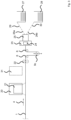
- the Fig.1 shows a printing device for printing on a printing substrate.
- the printing substrate is a web material 1 on a roll 2, which serves as a storage device for the web material 1.
- the web material 1 can be a plastic film.
- the web material 1 is a polycarbonate film with a thickness of 75 ⁇ m and a width of 600 mm.
- the web material can consist of another material, for example PVC, have a larger or smaller thickness, for example 100 ⁇ m, and / or have a smaller or larger width, for example 300 mm.
- the web material is moved through the printing device in a feed direction 4 by means of a printing table 3.
- the printing table 3 is movable in the feed direction 4 and against the feed direction 4.
- the printing table 3 is designed as a coherent unit or at least moves as a unit in order to support a uniform advance of the web material 1 across the width of the web material 1.
- the printing table 3 has a holding device by means of which the web material 1 is held. While the web material 1 is held on the printing table 3 by means of the holding device, the printing table moves in the feed direction 4 from a rear position to a front position and thus pulls the web material 1 from the roll 2 in the feed direction 4 through the printing device. The holding device then releases the web material 1 so that it is detached from the printing table 3.
- the printing table 3 then moves against the feed direction 4 past the web material 1 from the front to the rear position and then forms contact with the web material 1 again by means of the holding device, whereupon the movement of the printing table 3 in the feed direction 4 is repeated. This provides a discontinuous movement of the web material 1 through the printing device.
- additional drive mechanisms can be provided which support the movement of the web material 1 provided by the printing table 3.
- driven rollers over which the web material 1 runs and which support the movement of the web material 1 can be arranged along a web path of the web material 1 in front of and/or behind the printing table 3.
- a supporting drive mechanism can be arranged along the web path of the web material 1 behind the printing table 3 in order to support a movement of the web material 1 away from the printing table 3.
- a print head shuttle 5 is arranged on a side of the web material 1 opposite the print table 3.
- the print head shuttle 5 is arranged opposite the print table 3 with respect to the web material 1 in such a way that the web material 1 runs between the print table 3 and the print head shuttle 5 so that it can be printed on by means of the print head shuttle 5 while it rests on the print table 3 and is held by the holding device.
- the print table 3 moves the web material past the print head shuttle 5 in the feed direction 4. While the web material is moving, the print head shuttle 5 prints the web material 1.
- the web material 1 When moving through the printing device, the web material 1 runs over several deflection rollers 6, by means of which the web material 1 is deflected within the printing device.
- the web material also runs over web tension measuring rollers 7, by means of which web tension of the web material 1 is measured.
- a first web tension measuring roller 7a is arranged along the web path of the web material 1 in front of the printing table.
- the first web tension measuring roller 7a thus measures the web tension of the web material 1 in front of the printing table 3.
- a second web tension measuring roller 7b is arranged along the web path of the web material 1 behind the printing table.
- the second web tension measuring roller 7b thus measures the web tension of the web material 1 behind the printing table 3.
- the web tension of the web material 1 causes a respective force on the axes of the web tension measuring rollers 7a, 7b.
- the respective force on the axis of the web tension measuring rollers 7a, 7b is measured by means of a respective sensor device 8a, 8b of the web tension measuring rollers 7a, 7b.
- the respective sensor device 8a, 8b of the first 7a and the second 7b web tension measuring roller generates first and second measurement data, which indicate the respective web tension of the web material 1 on the first web tension measuring roller 7a or on the second web tension measuring roller 7b.
- the web material runs over so-called dancers 9. These are rollers which are arranged to be movable in order to adjust the tension of the web material 1.
- dancers 9 are rollers which are arranged to be movable in order to adjust the tension of the web material 1.
- a first dancer 9a can be seen arranged along the path of the web material 1 in front of the printing table.
- the first dancer 9a can be moved up and down, with a downward movement of the first dancer 9a leading to an increase in the tension of the web material 1 and an upward movement of the first dancer 9a leading to a reduction in the tension of the web material 1.
- the web tension of the web material 1 in front of the printing table 3 can thus be adjusted using the first dancer 9a.
- a second dancer 9b is arranged along the path of the web material 1 behind the printing table.
- the second dancer 9b is also movable up and down in the example shown, with a downward movement of the second dancer 9b leading to an increase in the tension of the web material 1 and a movement of the second dancer 9b leading to a reduction in the tension of the web material 1.
- the web tension of the web material 1 behind the printing table 3 can thus be adjusted by means of the second dancer 9b, which is independent of the web tension in front of the printing table 3 at least while the web material 1 is being held by means of the holding device on the printing table 3.
- a control device 10 is connected to the web tension measuring rollers 7a, 7b and the dancers 9a, 9b (not shown) and is set up to receive the first and second measurement data from the web tension measuring rollers 7a, 7b.
- the first measurement data is compared with a first predetermined web tension.
- the first specified web tension indicates a desired web tension of the web material 1 along the web path of the web material 1 in front of the printing table.
- the control device 10 generates first control data corresponding to the comparison result, which is transmitted to the first dancer 9a and leads to a movement of the first dancer 9a.
- the first control data indicates a small downward movement of the first dancer 9a if the comparison shows that the web tension of the web material on the first web tension measuring roller 7a deviates downwards by a small difference from the first predetermined web tension and the first control data indicates a larger one Movement of the first dancer 9a upwards if the comparison shows that the web tension of the web material on the first web tension measuring roller 7a deviates upwards by a larger difference from the first predetermined web tension.
- the control device 10 is further set up to compare the second measurement data with a second predetermined web tension.
- the second predetermined web tension indicates a desired web tension of the web material 1 along the web path of the web material 1 behind the printing table.
- the control device 10 generates second control data corresponding to the comparison result, which is transmitted to the second dancer 9b and leads to a movement of the second dancer 9b.
- the second control data indicates a small downward movement of the second dancer 9b if the comparison shows that the web tension of the web material on the second web tension measuring roller 7b is down by a small difference from the second predetermined one Web tension deviates and the second control data indicates a larger upward movement of the second dancer 9b if the comparison shows that the web tension of the web material on the second web tension measuring roller 7b deviates upwards by a larger difference from the second predetermined web tension.
- the web tensions in front of and behind the printing table 3 can be continuously monitored by repeatedly receiving first and second measurement data and generating corresponding first and second control data. This can provide control of the web tension in the printing device, along the web path of the web material 1 both in front of and behind the printing table 3.
- the first and second predetermined web tension can be the same and the web tension of the web material 1 can be regulated both in front of and behind the printing table 3 in such a way that the same web tension of the web material 1 is achieved in front of and behind the printing table 3 within a predetermined permissible deviation.
- the Fig. 2 shows an arrangement of a printing table 3 in a printing device, on which a web material 1 is arranged.
- the web material 1 is fed during a movement of the printing table 3 in a feed direction 4 (from the drawing plane of the Fig. 2 out) is held by means of a holding device on the printing table 3, so that the web material 1 is moved along the feed direction 4 through the printing device.
- the holding device is provided with a vacuum device 11.
- the vacuum device 11 generates a negative pressure.
- the vacuum device 11 is connected to the environment via channels 12 to a support surface 13 of the printing table 3.
- the web material 1 lies on the support surface 13 of the printing table 3.
- the vacuum device 11 generates a negative pressure during the movement of the printing table 3 in the feed direction 4, so that the web material is sucked onto the support surface 13 via the channels 12 and thus held on the printing table 3.
- the support surface 13 consists of a porous material with a defined porosity, which is connected to the vacuum device 11. Due to the porosity of the material of the support surface 13, undefined channels 12 are provided, which, due to the defined porosity, lead to a uniform suction and holding of the web material 1 on the support surface 13.
- the channels 12 can be provided, for example, with a defined grid of holes, for example micro-holes, in order to ensure uniform suction and holding of the web material 1 on the support surface 13.
- the support surface 13 of the printing table 3 is designed as a continuous surface. Interruptions in the support surface 13 can be provided. However, it is advantageous if the printing table 13 forms a unit and the support surface 13 is therefore also moved as a coherent unit.
- the holding device may not be provided as a vacuum device 11.
- the holding device can be provided by means of one or more grippers, which grip the web material 1 and hold it on the support surface 13 of the printing table 3.
- the print head shuttle 5 prints the web material 1 with a printing medium.
- the print head shuttle has one or more print heads 14.
- the print head shuttle 5 has two print heads 14a, 14b.
- a print head 14 can comprise a nozzle or a row of nozzles with several nozzles arranged in a row.
- the printing medium can be ejected drop by drop through the nozzles.
- one print head 14 can be used for each desired color or material to be applied.
- the print heads 14 are selectively controlled in order to selectively apply printing medium to the web material 1 and thus produce a desired print image on the web material.
- the print head shuttle 5 moves back and forth transversely to the feed direction 4 of the web material 1 so that the print heads 14 move over the web material 1.
- the movement of the printing table 3 along the feed direction 4 thus provides a relative movement of the web material 1 to the print heads 14 in a first printing direction and the movement of the print head shuttle 5 transversely to the feed direction 4 provides a relative movement of the web material 1 to the print heads 14 in a second printing direction which runs transversely to the first printing direction.
- the printing table 3 points according to the Fig. 2 a heating device 15.
- the heating device 15 the support surface 13 of the printing table 3 is brought to a predetermined temperature.
- the web material 1 arranged on the support surface 13 is heated to a printing temperature for printing.
- the print head shuttle 5 also has a smoothing device.
- the smoothing device is a brush 16 which extends along a longitudinal direction which runs parallel to the feed direction 4.
- the brush 16 as a functional part of the smoothing device is therefore elongated in the longitudinal direction, parallel to the feed direction. It therefore has a greater extent in the longitudinal direction than in other directions.
- the smoothing device can thus have a smoothing effect when moving over the web material 1 transversely to the feed direction 4.
- the brush 16 is as in the Fig. 2 presented, related arranged laterally on the printhead shuttle 5 in the direction of movement of the printhead shuttle 5.
- the brush 16 is movable up and down relative to the printhead shuttle 5 between a first and a second position.
- the brush 16 comes into contact with the support surface 13, so that when the printing head shuttle 5 moves transversely to the feed direction 4, the brush 16 strokes the web material 1 arranged on the support surface 13 of the printing table 3.
- the brush 16 is arranged above the printing table 3 in such a way that the brush 16 does not touch either the printing table 3 or the web material 1 when the print head shuttle 5 moves.
- the brush 16 strokes over the web material 1 and thus smoothes wrinkles and / or bubbles that appear in the web material 1 during the formation of contact between the support surface 13 and the web material 1 and / or may have arisen during the heating of the web material 1 by means of the heating device 15.
- the brush 16 After the brush 16 has been moved across the entire width of the web material 1, the brush 16 is brought into the second position. During subsequent movements of the print head shuttle 5, during the movement of the printing table 3 from the rear to the front position, the brush 16 therefore does not come into contact with the web material 1. After the web material 1 is released from the printing table 3 and the printing table 3 is moved from the front to the rear position, a connection is again formed between the web material 1 and the support surface 13 and the brush 16 is moved to the first position. The web material is thus smoothed by the brush 16 after each contact is made with the support surface 13 of the printing table 3 during the first subsequent movement of the print head shuttle 5 over the web material 1.
- the brush 16 has a length which corresponds at least to the length of the support surface 13 of the printing table 3.
- the length of the brush 16 may be greater than a length of the print head shuttle 5, which may be shorter than the length of the support surface 13. This ensures that the web material 1 passes through the brush 16 is smoothed over the entire length on which contact is made with the support surface 13 of the printing table.
- a capping station 17 can be provided, which prevents the print heads 14 from drying out.
- the printhead shuttle 5 is moved into a position in which the printheads 14 are shielded from the environment by the capping station 17 and thus the printheads 14 are prevented from drying out due to the evaporation of solvent in the printing medium.
- a pressure medium container 18 can optionally be provided for cleaning and/or preparing the print heads 14 for a printing process. The printhead shuttle can be moved to a position in which the printheads 14 are above the pressure medium container 18. Subsequently, pressure medium can be ejected from the print heads 14 into the pressure medium containers 18 in order to free the print heads 14 from contamination and/or pressure medium residues and/or to remove air from transport paths of the pressure medium in the print heads 14.
- drying devices 19a, 19b are arranged along the path of the web material 1 behind the printing table 3 and in the area of the second web tension measuring roller 7b and the second dancer 9b.
- the printing medium on the web material 1 is dried by means of the drying devices 19a, 19b.
- the drying devices 19a, 19b can be hot air blowers and/or UV lamps. Different drying devices 19a, 19b can be provided.
- the Fig. 3 shows further design options for a printing device. This can be done, for example, by the printing device Fig. 1 be. Alternatively, the design options can be according to Fig. 3 in a printing device other than the printing device according to the Fig. 1 be provided.
- a print image testing device 20 is arranged along the movement path of the web material 1 behind the second dancer 9b and the drying devices 19a, 19b.
- the print image checking device 20 has an image recording device 21, which is set up to record an image of the printed image on the web material 1.
- the recorded image of the print image on the web material 1 is compared with comparison image data, which can be, for example, print job data of a print job for printing the print image.
- the print image is determined to be a correct print image. If based on the comparison of the If the print image on the web material 1 and the comparison image data do not match the print image and the comparison image data, the print image is determined to be an incorrect print image.
- a match between the print image and the comparison image data is determined if the recorded image of the print image on the web material 1 corresponds to the comparison image data within predetermined limits. If the recorded image of the print image on the web material 1 does not correspond to the comparison image data within the predetermined limits, no match is determined between the print image and the comparison image data.
- the comparison of the recorded image with the comparison image data can be, for example, a pixel comparison and/or a comparison of characteristic values of the recorded image, for example a contrast value.
- a roller drive 22 is arranged along the path of movement of the web material 1 behind the testing device 21. Behind the roller drive 22, a further dancer 9c is arranged to control the web tension of the web material 1.
- the further dancer 9c can be controlled, for example, by the control device 10 in accordance with the second sensor data.
- a further web tension measuring roller can be provided, which generates third measurement data, by means of which the control device 10 controls the further dancer 9c.
- a finishing device 23 is arranged, which is set up to assemble the web material 1 into individual sheets.
- the web material 1 can be fed to the assembly device 23 and cut to a predetermined sheet size by means of a cutting device 24 of the assembly device 23 in order to assemble the web material 1 into individual sheets.
- the individual sheets are then directed to different transport paths 26a, 26b in a document switch 25.
- a transport path 26a leads into a document container 27.
- Another transport path 26b leads into a reject container 28. Sheets that carry a print image that was determined to be the correct print image are determined as document sheets 29 and are guided from the document switch 25 onto the transport path 26a leads into the document container 27.
- Sheets that carry a print image that was determined to be an incorrect print image are designated as waste sheets 30 and guided by the document switch 25 onto the transport path 26b, which leads into the reject container 28. In this way printed sheets that have errors in the printed image can be sorted out. The printed image of a waste sheet 30 can then be printed again.
- a bad marking device 31 can be provided, which is arranged along the path of movement of the web material 1 behind the testing device 21 and in front of the assembly device 23.
- the bad marking device 31 is set up to provide a print image that has been determined to be an incorrect print image with a marking that identifies the print image as an incorrect print image.
- the bad marking device 31 can comprise a print head for this purpose.
- the print image comprises several individual print images.
- each individual print image can be determined as a correct individual print image or an incorrect individual print image and the bad marking device 31 can be set up to provide each individual print image determined as an incorrect individual print image with a mark, which identifies the individual print image as an incorrect individual print image.
- the document switch 25 can be omitted and all individual sheets can be fed to the document container 27 via the transport path 26a.
- the document switch 25 can be provided and set up to send printed sheets with a printed image that includes a number of individual printed images marked as incorrect individual printed images, which exceeds a predetermined maximum number of incorrect individual printed images, via the transport path 26b To supply reject container 28 and to supply other sheets to document container 27 via transport path 26a.
- the Fig. 4 shows another printing device for printing on a printing substrate.
- the printing device has two dancers 9a, 9b, but no third dancer.
- a roll unwinding module 40 includes the roll 2, the first web tension measuring roll 7a with the sensor device 8a, the first dancer 9a and the associated deflection rollers 6.
- a printing module 41 includes the printing table 3, the print head shuttle 5 and the brush 16.
- a drying module 42 includes the second web tension measuring roller 7b with the sensor device 8b, the second dancer 9b, the drying devices 19a, 19b and the associated deflection rollers 6.
- An image processing module 43 includes the print image checking device with the image recording device 21 and optionally the bad marking device 31.
- a packaging module 44 includes the roller drive 22, the packaging device 23 with the cutting device 24, the document switch 25, the transport paths 26a, 26b, the document container 27 and the reject container 28.
Landscapes
- Ink Jet (AREA)
- Handling Of Sheets (AREA)
- Common Mechanisms (AREA)
Description
- Die Erfindung betrifft eine Vorrichtung sowie ein Verfahren zum Bedrucken eines Drucksubstrats.
- Beim Bedrucken eines Materials in einer Druckvorrichtung oder einem Drucksystem kann das Material als Endlosmaterial auf einer Rolle bereitgestellt werden. Alternativ kann vorgesehen sein, einzelne Bögen der Druckvorrichtung nacheinander zuzuführen, um die Bögen jeweils individuell zu bedrucken. Beim Bedrucken von Endlosmaterial, kann das Endlosmaterial nach dem Drucken vereinzelt werden, um einzelne bedruckte Bögen zu erhalten.
- Das Dokument
DE 10 2016 102 565 A1 offenbart ein Verfahren und eine Vorrichtung zum Herstellen eines vereinzelten Bogens für eine Druckvorrichtung. Bei dem Verfahren werden in Magazin- oder Puffereinrichtungen verschiedene Bogenmaterialien als Endlosmaterial bereitgestellt, wobei den Magazineinrichtungen ausgangsseitig jeweils ein Transportweg zu einer Materialweiche, in welcher die Transportwege zusammenlaufen, nachgelagert ist. Es werden Transporteinrichtungen bereitgestellt, die jeweils einem der Transportwege zugeordnet und eingerichtet sind, die verschiedenen Bogenmaterialien von der Magazineinrichtung wenigstens zur Materialweiche zu transportieren. In den Transporteinrichtungen werden Steuersignale empfangen, die eine einem Druckauftrag entsprechende Materialauswahl für ein ausgewähltes der Bogenmaterialien bestimmen. Die Transporteinrichtungen werden gemäß den Steuersignalen gesteuert, derart, dass das ausgewählte Bogenmaterial zu der Materialweiche transportiert wird und in der Materialweiche aus dem Transportweg in einen Zuführweg gelangt, in welchen die Transportwege münden. Das ausgewählte Bogenmaterial wird mittels der Transporteinrichtungen über den Zuführweg von der Materialweiche zu einer Vereinzelungseinrichtung transportiert. In der Vereinzelungseinrichtung wird ein vereinzelter Bogen zum anschließenden Bedrucken hergestellt, indem der vereinzelte Bogen von dem ausgewählten Bogenmaterial abgetrennt wird. - In dem Dokument
DE 10 2016 102 566 A1 sind ein Verfahren und eine Vorrichtung zum Bedrucken eines vereinzelten Bogens beschrieben. - Das Dokument
US 2010/0271453 A1 beschreibt ein Aufzeichnungsgerät mit einem Aufzeichnungskopf zum Durchführen eines Aufzeichnungsvorgangs durch Ausstoßen von Tinte auf eine Aufzeichnungsoberfläche eines Aufzeichnungsmediums während der Bewegung, einem Transportabschnitt zum Transportieren des Aufzeichnungsmediums entlang eines Transportwegs, der durch einen Aufzeichnungsbereich verläuft, in dem der Aufzeichnungskopf den Aufzeichnungsvorgang ausführt, einer Platte, die in dem Aufzeichnungsbereich angeordnet ist, um eine Oberfläche gegenüber der Aufzeichnungsoberfläche des Aufzeichnungsmediums zu stützen, und Druckelementen, die in dem Aufzeichnungsbereich angeordnet sind und in einer Breitenrichtung der Aufzeichnungsoberfläche des Aufzeichnungsmediums mit Außenkantenabschnitten in Kontakt stehen. Die Druckelemente bewegen sich, um das Aufzeichnungsmedium an einer stromaufwärtigen Seite und an einer stromabwärtigen Seite des Aufzeichnungskopfes mit einer Bewegung des Aufzeichnungskopfes zu drücken. - Das Dokument
EP 3 434 489 A1 offenbart eine Flüssigkeitsausstoßvorrichtung mit einem Halteabschnitt zum Halten eines Mediums, einem ersten Ausstoßabschnitt, der eine Vorbehandlungsflüssigkeit auf das von dem Halteabschnitt gehaltene Medium ausstoßen kann, einem ersten Halteabschnitt zum Halten des ersten Ausstoßabschnitts und einem Glättabschnitt, der an dem ersten Halteabschnitt bereitgestellt ist und sich zwischen einer Glättposition in Kontakt mit einem Ausstoßbereich, auf welchen die Vorbehandlungsflüssigkeit ausgestoßen wird, und einer Nicht-Glättposition in Nicht-Kontakt mit derm Ausstoßbereich des Mediums bewegen kann. - In dem Dokument
US 2011/242210 A1 ist eine Tintenstrahl-Aufzeichnungsvorrichtung beschrieben. Die Tintenstrahl-Aufzeichnungsvorrichtung weist einen Tintenstrahl-Kopf, einen ersten Träger, auf welchem der Tintenstrahl-Kopf getragen wird, ein Führungselement, einen Bewegungsmechanismus, welcher den ersten Träger entlang des Führungselements bewegt, einen Transportmechanismus, welcher ein Medium entlang einer Transportoberfläche bewegt, und einen zweiten Träger auf, welcher einer Bewegung des ersten Träger folgend gegenseitig beweglich ist und in einer zu der Transportoberfläche rechtwinkligen Richtung zu dem ersten Träger relativ beweglich konstruiert ist. Der zweite Träger hat ein Schutzelement, welches eine Spritzoberfläche vor dem Medium schützt, und ein Regulierungselement, welches die Bewegung des zweiten Träger in Relation zu einer dritten Richtung reguliert. - In dem Dokument
JP 2017-109364 A - Das Dokument
DE 690 25 124 T2 beschreibt einen Tintenstrahldrucker, das DokumentJP H05-162397 A - Das Dokument
DE 43 21 177 A1 offenbart eine Vorrichtung zur Bildinspektion und Farbmessung an mindestens einem Druckprodukt, das in einer Druckmaschine mit mindestens einem Druckwerk erstellt wurde. Die Vorrichtung besteht aus mindestens einer Bilderfassungseinrichtung, die Bilddaten vom Druckprodukt liefert, und aus einer Recheneinrichtung, wobei die Recheneinrichtung einerseits alle Bilddaten des Druckproduktes zwecks einer Bildinspektion ermittelt und andererseits aus den Bilddaten zumindest eines Messpunktes (Pixel) des Druckproduktes eine Messgröße für eine Farbbeurteilung ermittelt. - In dem Dokument
DE 10 2010 060 408 A1 ist eine Anordnung zur Regelung des Bahnzugs einer Bedruckstoffbahn bei einem Druckgerät beschrieben. - Zum Bedrucken eines Endlosmaterials ist das Endlosmaterial durch die Druckvorrichtung oder das Drucksystem zu transportieren, wobei die Transportbewegung auf den Druckvorgang abzustimmen ist und ein Transport unter geeigneten Bedingungen durch die gesamte Druckvorrichtung oder das gesamte Drucksystem sichergestellt werden muss, wobei insbesondere im Bereich der für das bedrucken zuständigen Komponenten die Anforderungen zu erfüllen sind, welche sich durch den Druckvorgang selbst ergeben.
- Aufgabe der Erfindung ist es, eine Vorrichtung sowie ein Verfahren zum Bedrucken eines Drucksubstrats mit einem verbesserten Bereitstellen eines Drucksubstrats anzugeben, insbesondere hinsichtlich der Vermeidung von Unebenheiten des Drucksubstrats.
- Zur Lösung sind eine Vorrichtung sowie ein Verfahren zum Bedrucken eines Drucksubstrats nach den unabhängigen Ansprüchen 1 und 13 geschaffen. Ausgestaltungen sind Gegenstand von den abhängigen Unteransprüchen.
- Nach einem Aspekt ist eine Vorrichtung zum Bedrucken eines Drucksubstrats geschaffen. Die Vorrichtung weist ein Druckkopfshuttle mit wenigstens einem Druckkopf auf, der eingerichtet ist, zum Erzeugen eines Druckbildes ein Druckmittel auf ein Drucksubstrat aufzubringen, wobei das Drucksubstrat ein Bahnmaterial ist, welches entlang eines Bahnwegs verlagerbar ist, und das Druckkopfshuttle auf einer ersten Seite des Drucksubstrats angeordnet ist. Ein Drucktisch mit einer Auflagefläche ist dem Druckkopfshuttle gegenüber auf einer zweiten Seite des Drucksubstrats angeordnet. Der Drucktisch weist eine Halteeinrichtung auf, die eingerichtet ist, das Drucksubstrat zu halten, derart, dass zum Bedrucken eine Relativbewegung zwischen dem Drucktisch und dem Drucksubstrat verhindert ist. Das Druckkopfshuttle weist eine Glättvorrichtung auf, welche eingerichtet ist, mit der Auflagefläche des Drucktischs in Kontakt zu treten und über zumindest einen Teil der Auflagefläche hinweg bewegt zu werden, derart, dass sie über ein auf der Auflagefläche des Drucktischs angeordnetes Drucksubstrat streicht, um es zu glätten, wobei sich die Glättvorrichtung entlang einer Längsrichtung erstreckt, welche parallel zur Vorschubrichtung verläuft.
- Nach einem weiteren Aspekt ist ein Verfahren zum Bedrucken eines Drucksubstrats geschaffen. Das Verfahren umfasst: Aufbringen eines Druckmittels auf ein Drucksubstrat, welches ein Bahnmaterial ist, welches entlang eines Bahnwegs verlagerbar ist, mit wenigstens einem Druckkopf eines Druckkopfshuttles, welches auf einer ersten Seite des Drucksubstrats angeordnet ist, zum Erzeugen eines Druckbildes; Halten des Drucksubstrats, mit einer Halteeinrichtung eines Drucktischs, der dem Druckkopfshuttle gegenüber auf einer zweiten Seite des Drucksubstrats angeordnet ist, derart, dass zum Bedrucken eine Relativbewegung zwischen dem Drucktisch und dem Drucksubstrat verhindert ist; und Glätten des auf einer Auflagefläche des Drucktischs angeordneten Bahnmaterials mittels einer Glättvorrichtung, welche über das auf der Auflagefläche des Drucktischs angeordnete Drucksubstrat streicht, indem sie mit der Auflagefläche des Drucktischs in Kontakt tritt und über zumindest einen Teil der Auflagefläche hinweg bewegt wird, wobei sich die Glättvorrichtung entlang einer Längsrichtung erstreckt, welche parallel zur Vorschubrichtung verläuft.
- Durch die Anordnung des Druckkopfshuttles auf einer dem Drucktisch gegenüberliegenden Seite des Bahnmaterials kann das Drucksubstrat insbesondere mittels des Druckkopfshuttles bedruckt werden, während es auf dem Drucktisch aufliegt und von der Halteeinrichtung gehalten wird.
- Durch die Glättvorrichtung, welche über das Drucksubstrat streicht, indem sie mit der Auflagefläche des Drucktischs in Kontakt tritt und über die Auflagefläche hinweg bewegt wird, können Unebenheiten, wie Falten oder Blasen, beseitigt werden. Auf diese Weise wird der Druckvorgang optimiert und das Druckbild kann verbessert werden. Unebenheiten können insbesondere durch den Transport des als Bahnmaterials ausgebildeten Drucksubstrats, insbesondere den Vorschub, aber auch durch andere Faktoren entstehen, welche das Aufliegen des Drucksubstrats auf dem Drucktisch betreffen. Beispielsweise kann ein Aufheizen des Drucksubstrats durch einen beheizten Drucktisch zu Unebenheiten des Drucksubstrats führen, welche durch die Glättvorrichtung beseitigt werden können. Es versteht sich, dass die Glättvorrichtung aufgrund der dünnen Ausgestaltung des Bahnmaterials mit dem Bahnmaterial in Kontakt tritt, welches auf der Auflagefläche des Drucktischs angeordnet ist, wenn die Glättvorrichtung dazu eingerichtet ist, mit der Auflagefläche in Kontakt zu treten. Daher wird umfasst das in Kontakt treten der Glättvorrichtung mit der Auflagefläche des Drucktischs ein in Kontakt treten mit dem Drucksubstrat, welches gegebenenfalls auf der Auflagefläche angeordnet ist.
- Erfindungsgemäß erstreckt sich die Glättvorrichtung entlang einer Längsrichtung, welche parallel zur Vorschubrichtung verläuft. Hierbei ist ein funktionaler Teil der Glättvorrichtung in der Längsrichtung langgestreckt, weist also in der Längsrichtung eine größere Erstreckung auf, als in andere Richtungen. Insbesondere kann vorgesehen sein, dass sich die Glättvorrichtung, quer, vorzugsweise senkrecht zur Vorschubrichtung über die Auflagefläche des Drucktischs hinweg bewegt. So kann bei Erstreckung der Glättvorrichtung in Längsrichtung die Glättvorrichtung bei der Bewegung über die Auflagefläche des Drucktischs glättend wirken.
- Die Glättvorrichtung kann derart an dem Druckkopfshuttle angeordnet sein, dass sich die Glättvorrichtung mit dem Druckkopfshuttle mitbewegt. Vorzugsweise ist die Glättvorrichtung bezogen auf eine Bewegungsrichtung des Druckkopfshuttles vorne am Druckkopfshuttle angeordnet, d.h. bei einer Bewegung des Druckkopfshuttles in Druckrichtung streift die Glättvorrichtung das Drucksubstrat glatt, bevor es bedruckt wird. Auf diese Weise muss die Glättvorrichtung nicht separat beweget werden, sondern kann einfach am Druckkopfshuttle angebracht und mit diesem mitbewegt werden. Wenn sich das Druckkopfshuttle quer zur Vorschubrichtung des Drucksubstrats bewegt, bewegt sich somit die Glättvorrichtung dann auch quer zur Vorschubrichtung.
- In einer bevorzugten Ausgestaltung ist die Glättvorrichtung quer zu einer Bewegungsrichtung des Druckkopfshuttles, vorzugsweise relativ zum Druckkopfshuttle nach oben und unten, zwischen einer ersten und einer zweiten Stellung beweglich. Dabei kann die Glättvorrichtung in der ersten Stellung mit der Auflagefläche des Drucktischs in Kontakt stehen (bzw. wie oben erläutert mit dem auf der Auflagefläche des Drucktischs angeordnete Drucksubstrat), so dass die Glättvorrichtung bei einer Bewegung über das auf der Auflagefläche des Drucktischs angeordnete Drucksubstrat streicht. Ferner kann die Glättvorrichtung in der zweiten Stellung so über dem Drucktisch angeordnet sein, dass die Glättvorrichtung bei einer Bewegung das Drucksubstrat, vorzugsweise auch den Drucktisch, nicht berührt.
- Insbesondere kann vorgesehen sein, dass die Glättvorrichtung nur einmal vor dem ersten Druckvorgang über das Drucksubstrat hinwegstreicht. Um das Druckbild nicht zu verschmieren, kann die Glättvorrichtung dann in die zweite Stellung verfahren werden, insbesondere angehoben werden, so dass sie das Drucksubstrat, vorzugsweise auch den Drucktisch, nicht mehr berührt. Alternativ ist auch denkbar, dass die Glättvorrichtung nach dem Glätten des Drucksubstrats von dem Druckkopfshuttle abgekoppelt wird und auf der gegenüberliegenden Seite stehenbleibt, während das Druckkopfshuttle für den weiteren Druckvorgang zurückfährt. Für einen weiteren Druckvorgang kann die Glättvorrichtung dann später wieder in die Ausgangposition an dem Druckkopfshuttle gebracht werden.
- Die Glättvorrichtung weist vorzugsweise eine Länge auf, welche mindestens einer Länge der Auflagefläche des Drucktischs entspricht. Die Länge der Glättvorrichtung kann gleich oder größer als eine Länge des Druckkopfshuttles sein. So wird sichergestellt, dass die gesamte Breite des Drucksubstrats überstrichen und geglättet wird. Gegebenenfalls kann jedoch auch vorgesehen sein, nur über einen Teil des Drucksubstrats zu streichen.
- Die Glättvorrichtung kann eine Bürste umfassen oder durch eine Bürste gebildet sein. Insbesondere können Borsten der Bürste in Richtung der Auflagefläche des Drucktischs weisen und das Drucksubstrat auf dem Drucktisch glatt streichen. Auf diese Weise kann ein ausreichend starker, aber dennoch schonender Anpressdruck der Glättvorrichtung auf das Drucksubstrat erreicht werden. Das Drucksubstrat wird nicht nur glatt gedrückt, sondern Unebenheiten werden herausgestrichen. Es versteht sich, dass die Glättvorrichtung alternativ oder zusätzlich auch andere geeignete Strukturen aufweisen kann, wie eine Lippe, z.B. eine Gummilippe oder andere Kunststofflippe, einen Schwamm oder auch starre Glättkörper, welche je nach Anwendungsfall starr oder nachgiebig, weich oder hart sein können. Möglicherweise kann die Glättvorrichtung gefedert gelagert sein, um einen passenden Anpressdruck zu erreichen.
- Die zuvor erwähnte Halteeinrichtung kann eingerichtet sein, das Drucksubstrat während einer Vorschubbewegung des Drucksubstrats zu halten, derart, dass eine Relativbewegung zwischen dem Drucktisch und dem Drucksubstrat während der Vorschubbewegung verhindert ist. Die Halteeinrichtung kann eine Vakuumeinrichtung umfassen, welche das Drucksubstrat mittels eines Unterdrucks oder Vakuums an den Drucktisch ansaugt. Die Vakuumvorrichtung kann über Kanäle mit einer Auflagefläche des Drucktischs mit der Umgebung verbunden sein, so dass das Drucksubstrat mittels des Unterdrucks an die Auflagefläche des Drucktischs angesaugt wird, um das Drucksubstrat zu halten. Ein durch einen geeigneten Unterdruck auf der Auflagefläche des Drucktischs gehaltenes Drucksubstrat lässt sich gut durch die oben geschriebene Glättvorrichtung glattstreichen, insbesondere im Vergleich zu einem festgeklemmten Drucksubstrat.
- Das Druckkopfshuttle kann eingerichtet sein, zum Bedrucken eine Bewegung vor und entgegen einer quer zu der Vorschubrichtung des Drucksubstrats verlaufenden Shuttlebewegungsrichtung auszuführen. Durch die Vorschubbewegung des Drucksubstrats und die Bewegung des Druckkopfshuttles kann eine Positionierung des Druckkopfshuttles über dem Drucksubstrat bereitgestellt sein, welche das Erzeugen eines Druckbilds auf dem Drucksubstrat ermöglicht. Alternativ oder zusätzlich kann das Druckkopfshuttle eingerichtet sein, eine Bewegung vor und entgegen einer parallel zu der Vorschubrichtung des Drucksubstrats verlaufenden Parallel-Shuttlebewegungsrichtung auszuführen.
- Das Bahnmaterial kann ein Folienmaterial sein. Das Folienmaterial kann ein Kunststoff-Folienmaterial sein, beispielsweise aus Polycarbonat (PC) oder Polyvinylchlorid (PVC). Das Bahnmaterial kann ein dünnes Bahnmaterial sein. Das dünne Bahnmaterial kann eine Material-Dicke von 100 µm oder weniger haben. Zum Beispiel kann das Bahnmaterial eine Dicke von 75 µm haben. Das Bahnmaterial kann mit einer Breite bereitgestellt sein, welche einer gewünschten Breite des Druckbilds, gegebenenfalls zuzüglich notwendiger Seitenränder, entspricht. Beispielsweise kann das Bahnmaterial mit einer Breite von 300 mm bis 600 mm bereitgestellt sein. Es kann eine Speichereinrichtung vorgesehen sein, aus welcher das Bahnmaterial dem Druckvorgang zugeführt wird. Beispielsweise kann die Vorrichtung eine Vorratsrolle umfassen, auf der das Bahnmaterial aufgerollt ist und von der das Bahnmaterial im Betrieb gezogen wird.
- Die Vorrichtung kann weiterhin eine erste Bahnspannungsmesseinrichtung aufweisen, welche entlang des Bahnwegs vor dem Drucktisch angeordnet und eingerichtet ist, erste Messdaten zu erzeugen, welche eine mechanische Bahnspannung des Drucksubstrats an der ersten Bahnspannungsmesseinrichtung angeben, eine erste Spannvorrichtung, welche entlang des Bahnwegs vor dem Drucktisch angeordnet und eingerichtet ist, eine mechanische Bahnspannung des Drucksubstrats einzustellen, eine zweite Bahnspannungsmesseinrichtung, welche entlang des Bahnwegs nach dem Drucktisch angeordnet und eingerichtet ist zweite Messdaten zu erzeugen, welche eine mechanische Bahnspannung des Drucksubstrats an der zweiten Bahnspannungsmesseinrichtung angeben, und eine zweite Spannvorrichtung, welche entlang des Bahnwegs nach dem Drucktisch angeordnet und eingerichtet ist, eine mechanische Bahnspannung des Drucksubstrats einzustellen, sowie eine Steuervorrichtung auf. Die Steuervorrichtung kann eingerichtet sein, die ersten Messdaten zu empfangen, anhand der ersten Messdaten erste Steuerdaten zu erzeugen und die erste Spannvorrichtung entsprechend den ersten Steuerdaten anzusteuern, derart, dass die erste Spannvorrichtung eine erste vorgegebene Bahnspannung des Drucksubstrats an der ersten Spannvorrichtung bewirkt, und die zweiten Messdaten zu empfangen, anhand der zweiten Messdaten zweite Steuerdaten zu erzeugen und die zweite Spannvorrichtung entsprechend den zweiten Steuerdaten anzusteuern, derart, dass die zweite Spannvorrichtung eine zweite vorgegebene Bahnspannung des Drucksubstrats an der zweiten Spannvorrichtung bewirkt.
- Die Steuervorrichtung kann eingerichtet sein, während eines Druckvorgangs die Bahnspannung des Drucksubstrats entlang des Bahnwegs vor dem Drucktisch konstant zu halten und die Bahnspannung des Drucksubstrats entlang des Bahnwegs hinter dem Drucktisch konstant zu halten. Somit können gleichbleibende Druckbedingungen sichergestellt sein, bei denen die Bahnspannung vor dem Drucktisch und die Bahnspannung hinter dem Drucktisch konstant bleiben.
- Die Vorrichtung kann eine Aussonderungseinrichtung umfassen. Die Aussonderungseinrichtung kann eine Prüfvorrichtung, eine Konfektioniereinrichtung und eine Dokumentenweiche umfassen. Die Prüfvorrichtung kann mit einer Bildaufnahmeeinrichtung gebildet und eingerichtet sein, ein Bild des Druckbilds auf dem Bahnmaterial aufzunehmen, das aufgenommene Bild des Druckbilds auf dem Bahnmaterial mit Vergleichs-Bilddaten zu vergleichen, das Druckbild als ein korrektes Druckbild zu bestimmen, wenn anhand des Vergleichs des Druckbilds auf dem Bahnmaterial mit den Vergleichs-Bilddaten eine Übereinstimmung zwischen dem Druckbild und den Vergleichs-Bilddaten festgestellt wird, und das Druckbild als ein nicht-korrektes Druckbild zu bestimmen, wenn anhand des Vergleichs des Druckbilds auf dem Bahnmaterial mit den Vergleichs-Bilddaten keine Übereinstimmung zwischen dem Druckbild und den Vergleichs-Bilddaten festgestellt wird.
- Die Konfektioniereinrichtung kann eingerichtet sein, das Bahnmaterial zu einzelnen Bögen zu konfektionieren und die Dokumentenweiche kann eingerichtet sein, einen konfektionierten Bogen auf einen von einem ersten Transportweg und einem zweiten Transportweg zu leiten, wobei ein konfektionierter Bogen mit einem Druckbild, welches als ein korrektes Druckbild bestimmt wurde, auf den ersten Transportweg geleitet wird und ein konfektionierter Bogen mit einem Druckbild, welches als ein nicht-korrektes Druckbild bestimmt wurde, auf den zweiten Transportweg geleitet wird.
- Entlang des zweiten Transportwegs kann eine Makulatureinrichtung angeordnet sein, welche einen konfektionierten Bogen mit einem Druckbild, welches als ein nicht-korrektes Druckbild bestimmt wurde, zerstört. Hierdurch kann eine Wiederverwendung des konfektionierten Bogens mit einem Druckbild, welches als ein nicht-korrektes Druckbild bestimmt wurde, ausgeschlossen sein. Alternativ oder zusätzlich können sensible Daten unkenntlich gemacht werden. Zum Beispiel kann die Makulatureinrichtung eine Schneideinrichtung sein, welche den konfektionierten Bogen mit einem Druckbild, welches als ein nicht-korrektes Druckbild bestimmt wurde, zerschneidet. Die Schneideinrichtung kann den Bogen in Streifen schneiden. Parameter der Schneideinrichtung können einstellbar sein. Beispielsweise kann eine Streifenbreite der geschnittenen Streifen einstellbar sein. Der zerstörte Bogen, beispielsweise die Streifen zu denen der Bogen zerschnitten wurde, können in einem Ausschussbehälter gesammelt werden. Der zweite Transportweg kann in den Ausschussbehälter führen.
- Die in Verbindung mit der Vorrichtung zum Bedrucken eines Drucksubstrats erläuterten Ausgestaltungen können bei dem Verfahren zum Bedrucken eines Drucksubstrats entsprechend vorgesehen sein.
- Im Folgenden werden weitere Ausführungsbeispiele unter Bezugnahme auf Zeichnungen näher erläutert. Hierbei zeigen:
-
Fig. 1 eine schematische Übersicht einer Druckvorrichtung zum Bedrucken eines Drucksubstrats; -
Fig. 2 eine schematische Übersicht einer Anordnung eines Drucktischs und eines Drucckopfshuttles in einer Druckvorrichtung; -
Fig. 3 eine schematische Übersicht weiterer Ausgestaltungsoptionen einer Druckvorrichtung; und -
Fig. 4 eine schematische Übersicht einer weiteren Druckvorrichtung zum Bedrucken eines Drucksubstrats. - Die
Fig.1 zeigt eine Druckvorrichtung zum Bedrucken eines Drucksubstrats. Bei dem Drucksubstrat handelt es sich um ein Bahnmaterial 1 auf einer Rolle 2, welche als Speichereinrichtung für das Bahnmaterial 1 dient. Bei dem Bahnmaterial 1 kann es sich um eine Kunststofffolie handeln. In einem Beispiel handelt es sich bei dem Bahnmaterial 1 um eine Polycarbonat-Folie mit einer Dicke von 75 µm und einer Breite von 600 mm. In weiteren Beispiel kann das Bahnmaterial aus einem anderen Werkstoff bestehen, beispielsweise PVC, eine größere oder kleinere Dicke haben, beispielsweise 100 µm, und / oder eine kleinere oder größere Breite haben, beispielsweise 300 mm. - Das Bahnmaterial wird mittels eines Drucktischs 3 in einer Vorschubrichtung 4 durch die Druckvorrichtung bewegt. Hierzu ist der Drucktisch 3 in die Vorschubrichtung 4 sowie entgegen der Vorschubrichtung 4 beweglich. Der Drucktisch 3 ist als zusammenhängende Einheit ausgebildet oder er bewegt sich zumindest als eine Einheit, um einen über die Breite des Bahnmaterials 1 hinweg gleichmäßigen Vorschub des Bahnmaterials 1 zu unterstützen. Der Drucktisch 3 weist eine Halteeinrichtung auf, mittels derer das Bahnmaterial 1 gehalten wird. Während das Bahnmaterial 1 mittels der Halteeinrichtung an dem Drucktisch 3 gehalten wird, bewegt sich der Drucktisch in die Vorschubrichtung 4 von einer hinteren Stellung in eine vordere Stellung und zieht so das Bahnmaterial 1 von der Rolle 2 in Vorschubrichtung 4 durch die Druckvorrichtung. Anschließend gibt die Halteeinrichtung das Bahnmaterial 1 frei, so dass dieses von dem Drucktisch 3 gelöst ist. Der Drucktisch 3 bewegt sich dann entgegen der Vorschubrichtung 4 an dem Bahnmaterial 1 vorbei von der vorderen in die hintere Stellung und bildet anschließend mittels der Halteeinrichtung erneut einen Kontakt zu dem Bahnmaterial 1 aus, worauf sich die Bewegung des Drucktischs 3 in die Vorschubrichtung 4 wiederholt. Es ist so eine diskontinuierliche Fortbewegung des Bahnmaterials 1 durch die Druckvorrichtung bereitgestellt.
- In weiteren Ausgestaltungen können zusätzliche Antriebsmechanismen vorgesehen sein, welche die mittels des Drucktischs 3 bereitgestellte Fortbewegung des Bahnmaterials 1 unterstützen. Beispielsweise können angetriebene Rollen, über die das Bahnmaterial 1 verläuft und welche das Bahnmaterial 1 unterstützend fortbewegen, entlang eines Bahnwegs des Bahnmaterials 1 vor und / oder hinter dem Drucktisch 3 angeordnet sein. Insbesondere kann ein unterstützender Antriebsmechanismus entlang des Bahnwegs des Bahnmaterials 1 hinter dem Drucktisch 3 angeordnet sein, um eine Bewegung des Bahnmaterials 1 von dem Drucktisch 3 weg zu unterstützen.
- Auf einer dem Drucktisch 3 gegenüberliegenden Seite des Bahnmaterials 1 ist ein Drucckopfshuttle 5 angeordnet. Das Druckkopfshuttle 5 ist bezüglich des Bahnmaterials 1 dem Drucktisch 3 derart gegenüberliegend angeordnet, dass das Bahnmaterial 1 zwischen dem Drucktisch 3 und dem Druckkopfshuttle 5 verläuft, sodass es mittels des Druckkopfshuttles 5 bedruckt werden kann, während es auf dem Drucktisch 3 aufliegt und von der Halteeinrichtung gehalten wird. Der Drucktisch 3 bewegt das Bahnmaterial in der Vorschubrichtung 4 an dem Druckkopfshuttle 5 vorbei. Während der Bewegung des Bahnmaterials bedruckt das Druckkopfshuttle 5 das Bahnmaterial 1.
- Bei der Bewegung durch die Druckvorrichtung verläuft das Bahnmaterial 1 über mehrere Umlenkrollen 6, mittels derer das Bahnmaterial 1 innerhalb der Druckvorrichtung umgelenkt wird. Das Bahnmaterial verläuft auch über Bahnspannungsmessrollen 7, mittels derer eine Bahnspannung des Bahnmaterials 1 gemessen wird. Wie in der
Fig. 1 gezeigt, ist eine erste Bahnspannungsmessrolle 7a entlang des Bahnwegs des Bahnmaterials 1 vor dem Drucktisch angeordnet. Die erste Bahnspannungsmessrolle 7a misst somit die Bahnspannung des Bahnmaterials 1 vor dem Drucktisch 3. Durch das Halten des Bahnmaterials 1 mittels der Halteeinrichtung an dem Drucktisch 3 kann entlang des Bahnwegs des Bahnmaterials 1 hinter dem Drucktisch 3 eine Bahnspannung des Bahnmaterials 1 auftreten, welche von der Bahnspannung vor dem Drucktisch 3 unabhängig ist. Aus diesem Grund ist eine zweite Bahnspannungsmessrolle 7b entlang des Bahnwegs des Bahnmaterials 1 hinter dem Drucktisch angeordnet. Die zweite Bahnspannungsmessrolle 7b misst somit die Bahnspannung des Bahnmaterials 1 hinter dem Drucktisch 3. Die Bahnspannung des Bahnmaterials 1 verursacht eine jeweilige Kraft auf die Achsen der Bahnspannungsmessrollen 7a, 7b. Mittels einer jeweiligen Sensoreinrichtung 8a, 8b der Bahnspannungsmessrollen 7a, 7b wird die jeweilige Kraft auf die Achse der Bahnspannungsmessrollen 7a, 7b gemessen. Die jeweilige Sensoreinrichtung 8a, 8b der ersten 7a und der zweiten 7b Bahnspannungsmessrolle erzeugt erste bzw. zweite Messdaten, welche die jeweilige Bahnspannung des Bahnmaterials 1 an der ersten Bahnspannungsmessrolle 7a bzw. an der zweiten Bahnspannungsmessrolle 7b angeben. - Weiterhin verläuft das Bahnmaterial über so genannte Tänzer 9. Hierbei handelt es sich um Rollen, welche beweglich angeordnet sind, um eine Spannung des Bahnmaterials 1 einzustellen. Wie in der
Fig. 1 zu erkennen ist ein erster Tänzer 9a entlang des Bahnwegs des Bahnmaterials 1 vor dem Drucktisch angeordnet. Der erste Tänzer 9a ist in dem gezeigten Beispiel nach oben und unten beweglich, wobei eine Bewegung des ersten Tänzers 9a nach unten zu einer Erhöhung der Spannung des Bahnmaterials 1 führt und eine Bewegung des ersten Tänzers 9a nach oben zu einer Verringerung der Spannung des Bahnmaterials 1 führt. Somit lässt sich mittels des ersten Tänzers 9a die Bahnspannung des Bahnmaterials 1 vor dem Drucktisch 3 einstellen. - Ein zweiter Tänzer 9b ist entlang des Bahnwegs des Bahnmaterials 1 hinter dem Drucktisch angeordnet. Auch der zweite Tänzer 9b ist in dem gezeigten Beispiel nach oben und unten beweglich, wobei eine Bewegung des zweiten Tänzers 9b nach unten zu einer Erhöhung der Spannung des Bahnmaterials 1 führt und eine Bewegung des zweiten Tänzers 9b nach oben zu einer Verringerung der Spannung des Bahnmaterials 1 führt. Somit lässt sich mittels des zweiten Tänzers 9b die Bahnspannung des Bahnmaterials 1 hinter dem Drucktisch 3 einstellen, welche zumindest während des Haltens des Bahnmaterials 1 mittels der Halteeinrichtung an dem Drucktisch 3 von der Bahnspannung vor dem Drucktisch 3 unabhängig ist.
- Eine Steuervorrichtung 10 ist mit den Bahnspannungsmessrollen 7a, 7b und den Tänzern 9a, 9b verbunden (nicht gezeigt) und eingerichtet, die ersten und die zweiten Messdaten von den Bahnspannungsmessrollen 7a, 7b zu empfangen. In der Steuervorrichtung 10 werden die ersten Messdaten mit einer ersten vorgegebenen Bahnspannung verglichen. Die erste vorgegeben Bahnspannung gibt eine gewünschte Bahnspannung des Bahnmaterials 1 entlang des Bahnwegs des Bahnmaterials 1 vor dem Drucktisch an. Die Steuervorrichtung 10 erzeugt dem Vergleichsergebnis entsprechende erste Steuerdaten, die an den ersten Tänzer 9a übertragen werden und zu einer Bewegung des ersten Tänzers 9a führen. Beispielsweise geben die ersten Steuerdaten eine kleine Bewegung des ersten Tänzers 9a nach unten an, wenn der Vergleich ergibt, dass die Bahnspannung des Bahnmaterials an der ersten Bahnspannungsmessrolle 7a um eine kleine Differenz nach unten von der ersten vorgegebenen Bahnspannung abweicht und die ersten Steuerdaten geben eine größere Bewegung des ersten Tänzers 9a nach oben an, wenn der Vergleich ergibt, dass die Bahnspannung des Bahnmaterials an der ersten Bahnspannungsmessrolle 7a um eine größere Differenz nach oben von der ersten vorgegebenen Bahnspannung abweicht.
- Die Steuervorrichtung 10 ist weiter eingerichtet, die zweiten Messdaten mit einer zweiten vorgegebenen Bahnspannung zu vergleichen. Die zweite vorgegeben Bahnspannung gibt eine gewünschte Bahnspannung des Bahnmaterials 1 entlang des Bahnwegs des Bahnmaterials 1 hinter dem Drucktisch an. Die Steuervorrichtung 10 erzeugt dem Vergleichsergebnis entsprechende zweite Steuerdaten, die an den zweiten Tänzer 9b übertragen werden und zu einer Bewegung des zweiten Tänzers 9b führen. Wie oben bezüglich des ersten Tänzers 9a erläutert, geben beispielsweise die zweiten Steuerdaten eine kleine Bewegung des zweiten Tänzers 9b nach unten an, wenn der Vergleich ergibt, dass die Bahnspannung des Bahnmaterials an der zweiten Bahnspannungsmessrolle 7b um eine kleine Differenz nach unten von der zweiten vorgegebenen Bahnspannung abweicht und die zweiten Steuerdaten geben eine größere Bewegung des zweiten Tänzers 9b nach oben an, wenn der Vergleich ergibt, dass die Bahnspannung des Bahnmaterials an der zweiten Bahnspannungsmessrolle 7b um eine größere Differenz nach oben von der zweiten vorgegebenen Bahnspannung abweicht.
- Es kann eine kontinuierliche Überwachung der Bahnspannungen vor und hinter dem Drucktisch 3 erfolgen, indem wiederholt erste und zweite Messdaten empfangen und entsprechende erste und zweite Steuerdaten erzeugt werden. Hierdurch kann eine Regelung der Bahnspannung in der Druckvorrichtung, entlang des Bahnwegs des Bahnmaterials 1 sowohl vor als auch hinter dem Drucktisch 3, bereitgestellt sein. Beispielsweise können die erste und die zweite vorgegebene Bahnspannung gleich sein und die Bahnspannung des Bahnmaterials 1 sowohl vor als auch hinter dem Drucktisch 3 derart geregelt sein, dass vor und hinter dem Drucktisch 3 die gleiche Bahnspannung des Bahnmaterials 1 innerhalb einer vorgegeben zulässigen Abweichung erreicht wird.
- Die
Fig. 2 zeigt eine Anordnung eines Drucktischs 3 in einer Druckvorrichtung, auf dem ein Bahnmaterial 1 angeordnet ist. Das Bahnmaterial 1 wird während einer Bewegung des Drucktischs 3 in eine Vorschubrichtung 4 (aus der Zeichnungsebene derFig. 2 heraus) mittels einer Halteeinrichtung an dem Drucktisch 3 gehalten, so dass das Bahnmaterial 1 entlang der Vorschubrichtung 4 durch die Druckvorrichtung bewegt wird. In der Darstellung derFig. 2 ist die Haltevorrichtung mit einer Vakuumvorrichtung 11 bereitgestellt. Die Vakuumvorrichtung 11 erzeugt einen Unterdruck. Hierbei ist die Vakuumvorrichtung 11 über Kanäle 12 zu einer Auflagefläche 13 des Drucktischs 3 mit der Umgebung verbunden. Das Bahnmaterial 1 liegt auf der Auflagefläche 13 des Drucktischs 3 auf. Zum Halten des Bahnmaterials 1 erzeugt die Vakuumvorrichtung 11 während der Bewegung des Drucktischs 3 in die Vorschubrichtung 4 einen Unterdruck, so dass das Bahnmaterial über die Kanäle 12 an die Auflagefläche 13 angesaugt und so an dem Drucktisch 3 gehalten wird. - Um ein gleichmäßiges Halten des Bahnmaterials 1 auf der Auflagefläche 13 zu gewährleisten, sind Öffnungen der Kanäle 12 über die gesamte Auflagefläche 13 verteilt. In dem Beispiel der
Fig. 2 besteht die Auflagefläche 13 hierzu aus einem porösen Material mit einer definierten Porosität, welches mit der Vakuumvorrichtung 11 verbunden ist. Durch die Porosität des Materials der Auflagefläche 13 sind undefinierte Kanäle 12 bereitgestellt, welche aufgrund der definierten Porosität zu einem gleichmäßigen Ansaugen und Halten des Bahnmaterials 1 an der Auflagefläche 13 führen. In alternativen Ausgestaltungen können die Kanäle 12 beispielsweise mit einem definierten Raster von Bohrungen, beispielsweise Mikrobohrungen, bereitgestellt sein, um ein gleichmäßiges Ansaugen und Halten des Bahnmaterials 1 an der Auflagefläche 13 zu gewährleisten. Abgesehen von den Öffnungen der Kanäle 12 in der Auflagefläche 13 bzw. der Porosität des Materials ist die Auflagefläche 13 des Drucktisches 3 als zusammenhängende Fläche ausgebildet. Unterbrechungen in der Auflagefläche 13 können vorgesehen sein. Es ist jedoch vorteilhaft, wenn der Drucktisch 13 eine Einheit bildet und somit auch die Auflagefläche 13 als eine zusammenhängende Einheit bewegt wird. - Als weitere Alternative kann die Haltevorrichtung nicht als eine Vakuumvorrichtung 11 bereitgestellt sein. Beispielsweise kann die Haltevorrichtung mittels eines oder mehrerer Greifer bereitgestellt sein, welche das Bahnmaterial 1 greifen und auf der Auflagefläche 13 des Drucktischs 3 halten.
- Während der Bewegung des Bahnmaterials 1 auf dem Drucktisch 3 an dem Druckkopfshuttle 5 vorbei, bedruckt das Druckkopfshuttle 5 das Bahnmaterial 1 mit einem Druckmittel. Hierzu weist das Druckkopfshuttle einen oder mehrere Druckköpfe 14 auf. In der Darstellung der
Fig. 2 weist das Druckkopfshuttle 5 zwei Druckköpfe 14a, 14b auf. Ein Druckkopf 14 kann eine Düse oder eine Düsenreihe mit mehreren aneinander gereihten Düsen umfassen. Durch die Düsen ist das Druckmittel tröpfchenweise ausstoßbar. Beispielsweise kann je ein Druckkopf 14 pro gewünschter Farbe bzw. aufzubringendem Material verwendet werden. - Die Druckköpfe 14 werden selektiv angesteuert, um selektiv Druckmittel auf das Bahnmaterial 1 aufzubringen und so ein gewünschtes Druckbild auf dem Bahnmaterial zu erzeugen. Hierbei bewegt sich das Druckkopfshuttle 5 quer zur Vorschubrichtung 4 des Bahnmaterials 1 vor und zurück, so dass sich die Druckköpfe 14 über das Bahnmaterial 1 bewegen. Es sind somit durch die Bewegung des Drucktischs 3 entlang der Vorschubrichtung 4 eine Relativbewegung des Bahnmaterials 1 zu den Druckköpfen 14 in einer ersten Druckrichtung und durch die Bewegung des Druckkopfshuttles 5 quer zu der Vorschubrichtung 4 eine Relativbewegung des Bahnmaterials 1 zu den Druckköpfen 14 in einer zweiten Druckrichtung bereitgestellt, die quer zu der ersten Druckrichtung verläuft. Durch eine selektive Steuerung der Bewegung des Drucktischs 3, der Bewegung des Druckkopfshuttles 5 sowie dem Ausstoß der Druckmittels aus den Druckköpfen 14 wird somit ein gewünschtes Druckbild auf das Bahnmaterial 1 aufgebracht.
- In Abhängigkeit von dem verwendeten Bahnmaterial 1 und dem verwendeten Druckmittel kann es vorteilhaft sein, das Bahnmaterial 1 zum Bedrucken auf eine bestimmte Temperatur zu bringen. Hierzu weist der Drucktisch 3 gemäß der
Fig. 2 eine Heizeinrichtung 15 auf. Mittels der Heizeinrichtung 15 wird die Auflagefläche 13 des Drucktischs 3 auf eine vorbestimmte Temperatur gebracht. Hierdurch wird das auf der Auflagefläche 13 angeordnete Bahnmaterial 1 zum Bedrucken auf eine Drucktemperatur erwärmt. - Das Druckkopfshuttle 5 weist weiter eine Glättvorrichtung auf. In den Darstellungen der
Figuren 1 und2 ist die Glättvorrichtung eine Bürste 16, welche sich entlang einer Längsrichtung erstreckt, welche parallel zu der Vorschubrichtung 4 verläuft. Die Bürste 16 als funktionaler Teil der Glättvorrichtung ist somit in Längsrichtung, parallel zur Vorschubrichtung, langgestreckt. Sie weist also in der Längsrichtung eine größere Erstreckung als in andere Richtungen auf. So kann die Glättvorrichtung bei einer Bewegung über das Bahnmaterial 1 quer zur Vorschubrichtung 4 glättend wirken. Die Bürste 16 ist, wie in derFig. 2 dargestellt, bezogen auf die Bewegungsrichtung des Druckkopfshuttles 5 seitlich an dem Druckkopfshuttle 5 angeordnet. Die Bürste 16 ist relativ zu dem Druckkopfshuttle 5 nach oben und unten zwischen einer ersten und einer zweiten Stellung beweglich. In der ersten Stellung tritt die Bürste 16 mit der Auflagefläche 13 in Kontakt, so dass die Bürste 16 bei einer Bewegung des Drucckopfshuttles 5 quer zur Vorschubrichtung 4 über das auf der Auflagefläche 13 des Drucktischs 3 angeordnete Bahnmaterial 1 streicht. In der zweiten Stellung ist die Bürste 16 so über dem Drucktisch 3 angeordnet, dass die Bürste 16 bei einer Bewegung des Druckkopfshuttles 5 weder den Drucktisch 3 noch das Bahnmaterial 1 berührt. - Bei einem Druckvorgang wird, während sich der Drucktisch 3 in der hinteren Stellung befindet, mittels der Vakuumvorrichtung 11 eine Verbindung zwischen dem Bahnmaterial 1 und der Auflagefläche 13 ausgebildet. Die gemäß der
Fig. 2 auf der linken Seite des Druckkopfshuttles 5 angeordnete Bürste 16 wird, während sich das Druckkopfshuttle 5 in einer ersten Stellung befindet, in der das Druckkopfshuttle 5 und die Bürste 16 rechts von dem Drucktisch 3 angeordnet sind, in die erste Stellung gebracht. Bei einer anschließenden ersten Bewegung des Druckkopfshuttles 5 über den Drucktisch 3 und das Bahnmaterial 1 streicht die Bürste 16 über das Bahnmaterial 1 und glättet damit Falten und / oder Blasen, die in dem Bahnmaterial 1 während des Ausbildens des Kontakts zwischen der Auflagefläche 13 und dem Bahnmaterial 1 und / oder während des Aufheizens des Bahnmaterials 1 mittels der Heizeinrichtung 15 entstanden sein können. - Nachdem die Bürste 16 über die gesamte Breite des Bahnmaterials 1 bewegt wurde, wird die Bürste 16 in die zweite Stellung gebracht. Bei anschließenden Bewegungen des Drucckopfshuttles 5, während der Bewegung des Drucktischs 3 von der hinteren in die vordere Stellung, tritt die Bürste 16 somit nicht in Kontakt mit dem Bahnmaterial 1. Nach dem Lösen des Bahnmaterials 1 von dem Drucktisch 3 und der Bewegung des Drucktischs 3 von der vorderen in die hintere Stellung wird erneut eine Verbindung zwischen dem Bahnmaterial 1 und der Auflagefläche 13 ausgebildet und die Bürste 16 in die erste Stellung bewegt. Somit wird das Bahnmaterial nach jedem Ausbilden eines Kontakts mit der Auflagefläche 13 des Drucktischs 3 während der ersten anschließenden Bewegung des Druckkopfshuttles 5 über das Bahnmaterial 1 durch die Bürste 16 geglättet.
- Die Bürste 16 weist eine Länge auf, welche mindestens der Länge der Auflagefläche 13 des Drucktischs 3 entspricht. Hierbei kann, wie in der
Fig. 1 erkennbar, die Länge der Bürste 16 größer sein als eine Länge des Druckkopfshuttles 5, welche kürzer sein kann als die Länge der Auflagefläche 13. Somit ist sichergestellt, dass das Bahnmaterial 1 durch die Bürste 16 auf der gesamten Länge geglättet wird, auf der ein Kontakt zu der Auflagefläche 13 des Drucktischs hergestellt ist. - Optional kann eine Capping-Station 17 vorgesehen sein, welche ein Austrocknen der Druccköpfe 14 verhindert. Bei Nichtbenutzung der Druckvorrichtung wird das Druckkopfshuttle 5 in eine Stellung gefahren, in der die Druckköpfe 14 durch die Capping-Station 17 von der Umgebung abgeschirmt sind und somit ein Austrocknen der Druckköpfe 14 durch Verdampfen von Lösungsmittel des Druckmittels verhindert ist. Weiterhin kann optional ein Druckmittelbehälter 18 für das Reinigen und / oder Vorbereiten der Druckköpfe 14 für einen Druckvorgang vorgesehen sein. Das Druckkopfshuttle kann in eine Stellung bewegt werden, in der sich die Druckköpfe 14 über dem Druckmittelbehälter 18 befinden. Anschließend kann aus den Druckköpfen 14 Druckmittel in die Druckmittelbehälter 18 ausgestoßen werden, um die die Druckköpfe 14 von Verunreinigungen und / oder Druckmittelresten zu befreien und / oder um Luft aus Transportwegen des Druckmittels in den Druckköpfen 14 entfernen.
- Wie in der
Fig. 1 dargestellt sind entlang des Bahnwegs des Bahnmaterials 1 hinter dem Drucktisch 3 und im Bereich der zweiten Bahnspannungsmessrolle 7b und des zweiten Tänzers 9b Trocknungseinrichtungen 19a, 19b angeordnet. Mittels der Trocknungseinrichtungen 19a, 19b wird das Druckmittel auf dem Bahnmaterial 1 getrocknet. Beispielsweise kann es sich bei den Trocknungseinrichtungen 19a, 19b um Heißluftgebläse und / oder UV-Strahler handeln. Es können unterschiedliche Trocknungseinrichtungen 19a, 19b vorgesehen sein. - Die
Fig. 3 zeigt weitere Ausgestaltungsoptionen einer Druckvorrichtung. Dies kann beispielsweise die Druckvorrichtung aus derFig. 1 sein. Alternativ können die Ausgestaltungsoptionen gemäß derFig. 3 in einer anderen Druckvorrichtung als der Druckvorrichtung gemäß derFig. 1 vorgesehen sein. Entlang der Bewegungsbahn des Bahnmaterials 1 hinter dem zweiten Tänzer 9b und den Trocknungseinrichtungen 19a, 19b ist eine Druckbild-Prüfvorrichtung 20 angeordnet. Die Druckbild-Prüfvorrichtung 20 weist eine Bildaufnahmevorrichtung 21 auf, die eingerichtet ist ein Bild des Druckbilds auf dem Bahnmaterial 1 aufzunehmen. In der Druckbild-Prüfvorrichtung 20 wird das aufgenommene Bild des Druckbilds auf dem Bahnmaterial 1 mit Vergleichs-Bilddaten verglichen, welche beispielsweise Druckauftrag-Daten eines Druckauftrags zum Drucken des Druckbilds sein können. Wenn anhand des Vergleichs des Druckbilds auf dem Bahnmaterial 1 mit den Vergleichs-Bilddaten eine Übereinstimmung zwischen dem Druckbild und den Vergleichs-Bilddaten festgestellt wird, wird das Druckbild als ein korrektes Druckbild bestimmt. Wenn anhand des Vergleichs des Druckbilds auf dem Bahnmaterial 1 mit den Vergleichs-Bilddaten keine Übereinstimmung zwischen dem Druckbild und den Vergleichs-Bilddaten festgestellt wird, wird das Druckbild als ein nicht-korrektes Druckbild bestimmt. - Eine Übereinstimmung zwischen dem Druckbild und den Vergleichs-Bilddaten wird festgestellt, wenn das aufgenommene Bild des Druckbilds auf dem Bahnmaterial 1 den Vergleichs-Bilddaten innerhalb vorbestimmter Grenzen entspricht. Entspricht das aufgenommene Bild des Druckbilds auf dem Bahnmaterial 1 den Vergleichs-Bilddaten nicht innerhalb der vorbestimmten Grenzen, wird keine Übereinstimmung zwischen dem Druckbild und den Vergleichs-Bilddaten festgestellt. Der Vergleich des aufgenommenen Bilds mit den Vergleichs-Bilddaten kann beispielsweise ein Pixel-Vergleich und / oder ein Vergleich kennzeichnender Werte des aufgenommenen Bilds, beispielsweise ein Kontrastwert, sein.
- Zur Unterstützung der Fortbewegung des Bahnmaterials 1 ist entlang der Bewegungsbahn des Bahnmaterials 1 hinter der Prüfvorrichtung 21 ein Rollenantrieb 22 angeordnet. Hinter dem Rollenantrieb 22 ist ein weiterer Tänzer 9c zur Steuerung der Bahnspannung des Bahnmaterials 1 angeordnet. Der weitere Tänzer 9c kann beispielsweise von der Steuervorrichtung 10 entsprechend den zweiten Sensordaten angesteuert werden. Alternativ kann eine weitere Bahnspannungsmessrolle vorgesehen sein, welche dritte Messdaten erzeugt, mittels derer die Steuervorrichtung 10 den weiteren Tänzer 9c ansteuert.
- Entlang der Bewegungsbahn des Bahnmaterials 1 hinter der Prüfvorrichtung 21 und dem weiteren Tänzer 9c ist eine Konfektioniereinrichtung 23 angeordnet, die eingerichtet ist, das Bahnmaterial 1 zu einzelnen Bögen zu konfektionieren. Beispielsweise kann das Bahnmaterial 1 der Konfektioniereinrichtung 23 zugeführt werden und mittels einer Schneideinrichtung 24 der Konfektioniereinrichtung 23 auf eine vorbestimmte Bogengröße zugeschnitten werden, um das Bahnmaterial 1 zu einzelnen Bögen zu konfektionieren. Anschließend werden die einzelnen Bögen in einer Dokumentenweiche 25 auf unterschiedliche Transportwege 26a, 26b gelenkt. Ein Transportweg 26a führt in einen Dokumentenbehälter 27. Ein weiterer Transportweg 26b führt in einen Ausschussbehälter 28. Bögen, die ein Druckbild tragen, welches als korrektes Druckbild bestimmt wurde, werden als Dokumentenbogen 29 bestimmt und von der Dokumentenweiche 25 auf den Transportweg 26a geleitet, der in den Dokumentenbehälter 27 führt. Bögen, die ein Druckbild tragen, welches als nicht-korrektes Druckbild bestimmt wurde, werden als Makulatur-Bogen 30 bestimmt und von der Dokumentenweiche 25 auf den Transportweg 26b geleitet, der in den Ausschussbehälter 28 führt. Auf diese Weise kann eine Aussortierung von Druckbögen erfolgen, welche Fehler im Druckbild aufweisen. Es kann anschließend ein erneuter Druck des Druckbilds eines Makulatur-Bogens 30 erfolgen.
- Optional kann eine Schlechtmarkierungs-Vorrichtung 31 vorgesehen sein, welche entlang der Bewegungsbahn des Bahnmaterials 1 hinter der Prüfvorrichtung 21 und vor der Konfektioniereinrichtung 23 angeordnet ist. Die Schlechtmarkierungs-Vorrichtung 31 ist eingerichtet, auf ein Druckbild, welches als nicht-korrektes Druckbild bestimmt wurde, mit einer Markierung zu versehen, welche das Druckbild als nicht-korrektes Druckbild kennzeichnet. Beispielsweise kann die Schlechtmarkierungs-Vorrichtung 31 hierzu einen Druckkopf umfassen.
- Es kann vorgesehen sein, dass das Druckbild mehrere Einzel-Druckbilder umfasst. In diesem Fall kann jedes Einzel-Druckbild als korrektes Einzel-Druckbild oder nicht-korrektes Einzel-Druckbild bestimmt werden und die Schlechtmarkierungs-Vorrichtung 31 kann eingerichtet sein, jedes als nicht-korrektes Einzel-Druckbild bestimmtes Einzel-Druckbild mit einer Markierung zu versehen, welche das Einzel-Druckbild als nicht-korrektes Einzel-Druckbild kennzeichnet. In diesem Fall kann die Dokumentenweiche 25 entfallen und alle vereinzelten Bögen können über den Transportweg 26a dem Dokumentenbehälter 27 zugeführt werden. Alternativ kann die Dokumentenweiche 25 vorgesehen und eingerichtet sein, Druckbögen mit einem Druckbild, das eine Anzahl an als nicht-korrekte Einzel-Druckbilder gekennzeichneten Einzel-Druckbildern umfasst, die eine vorbestimmte Höchstzahl an nicht-korrekten Einzel-Druckbildern übersteigt, über den Transportweg 26b dem Ausschussbehälter 28 zuzuführen und andere Bögen über den Transportweg 26a dem Dokumentenbehälter 27 zuzuführen.
- Die
Fig. 4 zeigt eine weitere Druckvorrichtung zum Bedrucken eines Drucksubstrats. In der Ausgestaltung gemäß derFig. 4 weist die Druckvorrichtung zwei Tänzer 9a, 9b, jedoch keinen dritten Tänzer, auf. In diesem Ausgestaltungsbeispiel umfasst ein Rollenabwickelmodul 40 die Rolle 2, die erste Bahnspannungsmessrolle 7a mit der Sensoreinrichtung 8a, den ersten Tänzer 9a sowie die zugehörigen Umlenkrollen 6. Gemäß der gezeigten Ausgestaltung umfasst ein Druckmodul 41 den Drucktisch 3, das Druckkopfshuttle 5 und die Bürste 16. Ein Trocknungsmodul 42 umfasst die zweite Bahnspannungsmessrolle 7b mit der Sensoreinrichtung 8b, den zweiten Tänzer 9b, die Trocknungseinrichtungen 19a, 19b sowie die zugehörigen Umlenkrollen 6. Ein Bildverabeitungsmodul 43 umfasst die Druckbild-Prüfvorrichtung mit der Bildaufnahmevorrichtung 21 und optional die Schlechtmarkierungs-Vorrichtung 31. Das Trocknungsmodul 42 und das Bildverabeitungsmodul 43 können zu einem Trocknungs- und Bildverarbeitungsmodul zusammengefasst sein. Gemäß der in derFig. 4 gezeigten Ausgestaltung umfasst ein Konfektionierungsmodul 44 den Rollenantrieb 22, die Konfektioniereinrichtung 23 mit der Schneideinrichtung 24, die Dokumentenweiche 25, die Transportwege 26a, 26b, den Dokumentenbehälter 27 sowie den Ausschussbehälter 28. -
- 1
- Bahnmaterial
- 2
- Rolle
- 3
- Drucktisch
- 4
- Vorschubrichtung
- 5
- Druckkopfshuttle
- 6
- Umlenkrollen
- 7a, 7b
- Bahnspannungsmessrolle
- 8a, 8b
- Sensoreinrichtung
- 9a, 9b, 9c
- Tänzer
- 10
- Steuervorrichtung
- 11
- Vakuumvorrichtung
- 12
- Kanäle
- 13
- Auflagefläche
- 14a, 14b
- Druckköpfe
- 15
- Heizeinrichtung
- 16
- Bürste
- 17
- Capping-Station
- 18
- Druckmittelbehälter
- 19a, 19b
- Trocknungseinrichtung
- 20
- Prüfvorrichtung
- 21
- Bildaufnahmevorrichtung
- 22
- Rollenantrieb
- 23
- Konfektioniereinrichtung
- 24
- Schneideinrichtung
- 25
- Dokumentenweiche
- 26a, 26b
- Transportwege
- 27
- Dokumentenbehälter
- 28
- Ausschussbehälter
- 29
- Dokumentenbogen
- 30
- Makulatur-Bogen
- 31
- Schlechtmarkierungs-Vorrichtung
- 40
- Rollenabwickelmodul
- 41
- Druckmodul
- 42
- Trocknungsmodul
- 43
- Bildverabeitungsmodul
- 44
- Konfektionierungsmodul
Claims (14)
- Vorrichtung zum Bedrucken eines Drucksubstrats (1), mit- einem Druckkopfshuttle (5) mit wenigstens einem Druckkopf (14a, 14b), der eingerichtet ist, zum Erzeugen eines Druckbildes ein Druckmittel auf ein Drucksubstrat (1) aufzubringen, wobei das Drucksubstrat (1) ein Bahnmaterial ist, welches entlang eines Bahnwegs in einer Vorschubrichtung (4) verlagerbar ist, und das Druckkopfshuttle (5) auf einer ersten Seite des Drucksubstrats (1) angeordnet ist; und- einem Drucktisch (3) mit einer Auflagefläche (13), der dem Druckkopfshuttle (5) gegenüber auf einer zweiten Seite des Drucksubstrats (1) angeordnet ist, wobei der Drucktisch (3) eine Halteeinrichtung (11) umfasst, die eingerichtet ist, das Drucksubstrat (1) zu halten, derart, dass zum Bedrucken eine Relativbewegung zwischen dem Drucktisch (3) und dem Drucksubstrat (1) verhindert ist;wobei das Druckkopfshuttle (5) eine Glättvorrichtung (16) aufweist, welche eingerichtet ist, mit der Auflagefläche (13) des Drucktischs in Kontakt zu treten und über zumindest einen Teil der Auflagefläche (13) hinweg bewegt zu werden, derart, dass sie über ein auf der Auflagefläche (13) des Drucktischs (3) angeordnetes Drucksubstrat (1) streicht, um es zu glätten,dadurch gekennzeichnet, dass sich die Glättvorrichtung (16) entlang einer Längsrichtung erstreckt, welche parallel zur Vorschubrichtung (4) verläuft.
- Vorrichtung nach Anspruch 1, dadurch gekennzeichnet, dass die Glättvorrichtung (16) eingerichtet ist, quer, vorzugsweise senkrecht zur Vorschubrichtung (4) über die Auflagefläche (13) des Drucktischs (3) hinweg bewegt zu werden.
- Vorrichtung nach mindestens einem der vorangehenden Ansprüche, dadurch ge-kennzeichnet, dass die Glättvorrichtung (16) an dem Druckkopfshuttle (5) angeordnet ist, derart, dass sich die Glättvorrichtung (16) mit dem Druckkopfshuttle (5) mitbewegt, wobei die Glättvorrichtung (16) bezogen auf eine Bewegungsrichtung des Druckkopfshuttles (5) vorzugsweise vorne am Druckkopfshuttle (5) angeordnet ist.
- Vorrichtung nach mindestens einem der vorangehenden Ansprüche, dadurch ge-kennzeichnet, dass die Glättvorrichtung (16) quer zu einer Bewegungsrichtung des Druckkopfshuttles (5) zwischen einer ersten und einer zweiten Stellung beweglich ist.
- Vorrichtung nach Anspruch 4, dadurch gekennzeichnet, dass die Glättvorrichtung (16) in der ersten Stellung mit der Auflagefläche (13) des Drucktischs (3) in Kontakt steht, so dass die Glättvorrichtung (16) bei einer Bewegung über das auf der Auflagefläche (13) des Drucktischs (3) angeordnete Drucksubstrat (1) streicht, und dass die Glättvorrichtung (16) in der zweiten Stellung so über dem Drucktisch (3) angeordnet ist, dass die Glättvorrichtung (16) bei einer Bewegung das Drucksubstrat (1) nicht berührt.
- Vorrichtung nach mindestens einem der vorangehenden Ansprüche, dadurch ge-kennzeichnet, dass die Glättvorrichtung (16) eine Länge aufweist, welche mindestens einer Länge der Auflagefläche (13) des Drucktischs (3) entspricht, wobei die Länge der Glättvorrichtung (16) vorzugsweise gleich oder größer ist als eine Länge des Drucckopfshuttles (5).
- Vorrichtung nach mindestens einem der vorangehenden Ansprüche, dadurch ge-kennzeichnet, dass die Glättvorrichtung eine Bürste (16) umfasst.
- Vorrichtung nach mindestens einem der vorangehenden Ansprüche, dadurch gekennzeichnet, dass die Vorrichtung für ein Bahnmaterial (1) eingerichtet ist, welches ein Folienmaterial ist.
- Vorrichtung nach mindestens einem der vorangehenden Ansprüche, dadurch gekennzeichnet, dass die Halteeinrichtung (11) eine Vakuumeinrichtung umfasst, welche eingerichtet ist, das Drucksubstrat (1) mittels eines Unterdrucks an den Drucktisch (3) anzusaugen, um das Drucksubstrat (1) zu halten.
- Vorrichtung nach mindestens einem der vorangehenden Ansprüche, gekenn-zeichnet, durch- eine erste Bahnspannungsmesseinrichtung (7a, 8a), welche entlang des Bahnwegs vor dem Drucktisch (3) angeordnet und eingerichtet ist, erste Messdaten zu erzeugen, welche eine mechanische Bahnspannung des Drucksubstrats (1) an der ersten Bahnspannungsmesseinrichtung (7a, 8a) angeben;- eine erste Spannvorrichtung (9a), welche entlang des Bahnwegs vor dem Drucktisch (3) angeordnet und eingerichtet ist, eine mechanische Bahnspannung des Drucksubstrats (1) einzustellen;- eine zweite Bahnspannungsmesseinrichtung (7b, 8b), welche entlang des Bahnwegs nach dem Drucktisch (3) angeordnet und eingerichtet ist, zweite Messdaten zu erzeugen, welche eine mechanische Bahnspannung des Drucksubstrats (1) an der zweiten Bahnspannungsmesseinrichtung (7b, 8b) angeben;- eine zweite Spannvorrichtung (9b), welche entlang des Bahnwegs nach dem Drucktisch (3) angeordnet und eingerichtet ist, eine mechanische Bahnspannung des Drucksubstrats (1) einzustellen; und- eine Steuervorrichtung (10), die eingerichtet ist,- die ersten Messdaten zu empfangen, anhand der ersten Messdaten erste Steuerdaten zu erzeugen und die erste Spannvorrichtung (9a) entsprechend den ersten Steuerdaten anzusteuern, derart, dass die erste Spannvorrichtung (9a) eine erste vorgegebene Bahnspannung des Drucksubstrats (1) an der ersten Spannvorrichtung (9a) bewirkt; und- die zweiten Messdaten zu empfangen, anhand der zweiten Messdaten zweite Steuerdaten zu erzeugen und die zweite Spannvorrichtung (9b) entsprechend den zweiten Steuerdaten anzusteuern, derart, dass die zweite Spannvorrichtung (9b) eine zweite vorgegebene Bahnspannung des Drucksubstrats (1) an der zweiten Spannvorrichtung (9b) bewirkt.
- Vorrichtung nach Anspruch 10, dadurch gekennzeichnet, dass die Steuervorrichtung (10) eingerichtet ist, während eines Druckvorgangs die Bahnspannung des Drucksubstrats (1) entlang des Bahnwegs vor dem Drucktisch (3) konstant zu halten und die Bahnspannung des Drucksubstrats (1) entlang des Bahnwegs hinter dem Drucktisch (3) konstant zu halten.
- Vorrichtung nach mindestens einem der vorangehenden Ansprüche, gekennzeichnet durch eine Aussonderungseinrichtung, umfassend:- eine Prüfvorrichtung (20) mit einer Bildaufnahmeeinrichtung (21), die eingerichtet ist,- ein Bild des Druckbilds auf dem Bahnmaterial (1) aufzunehmen,- das aufgenommene Bild des Druckbilds auf dem Bahnmaterial (1) mit Vergleichs-Bilddaten zu vergleichen,- das Druckbild als ein korrektes Druckbild zu bestimmen, wenn anhand des Vergleichs des Druckbilds auf dem Bahnmaterial (1) mit den Vergleichs-Bilddaten eine Übereinstimmung zwischen dem Druckbild und den Vergleichs-Bilddaten festgestellt wird, und- das Druckbild als ein nicht-korrektes Druckbild zu bestimmen, wenn anhand des Vergleichs des Druckbilds auf dem Bahnmaterial (1) mit den Vergleichs-Bilddaten keine Übereinstimmung zwischen dem Druckbild und den Vergleichs-Bilddaten festgestellt wird;- eine Konfektioniereinrichtung (23), die eingerichtet ist, das Bahnmaterial (1) zu einzelnen Bögen zu konfektionieren; und- eine Dokumentenweiche (25), die eingerichtet ist, einen konfektionierten Bogen auf einen von einem ersten Transportweg (26a) und einem zweiten Transportweg (26b) zu leiten, wobei- ein konfektionierter Bogen mit einem Druckbild, welches als ein korrektes Druckbild bestimmt wurde, auf den ersten Transportweg (26a) geleitet wird und- ein konfektionierter Bogen mit einem Druckbild, welches als ein nicht-korrektes Druckbild bestimmt wurde, auf den zweiten Transportweg (26b) geleitet wird.
- Verfahren zum Bedrucken eines Drucksubstrats (1), umfassend:- Aufbringen eines Druckmittels auf ein Drucksubstrat (1), welches ein Bahnmaterial (1) ist, welches entlang eines Bahnwegs in einer Vorschubrichtung (4) verlagerbar ist, mittels wenigstens eines Druckkopfs (14a, 14b) eines Druckkopfshuttles (5), welches auf einer ersten Seite des Drucksubstrats (1) angeordnet ist, zum Erzeugen eines Druckbildes;- Halten des Drucksubstrats (1) mittels einer Halteeinrichtung (11) eines Drucktischs (3), der dem Druckkopfshuttle (5) gegenüber auf einer zweiten Seite des Drucksubstrats (1) angeordnet ist, derart, dass zum Bedrucken eine Relativbewegung zwischen dem Drucktisch (3) und dem Drucksubstrat (1) verhindert wird; und- Glätten des auf einer Auflagefläche (13) des Drucktischs (3) angeordneten Drucksubstrats (1) mittels einer Glättvorrichtung (16), welche über das auf der Auflagefläche (13) des Drucktischs (3) angeordnete Drucksubstrat (1) streicht, indem sie mit der Auflagefläche (13) des Drucktischs (3) in Kontakt tritt und über zumindest einen Teil der Auflagefläche (13) hinweg bewegt wird, dadurch gekennzeichnet, dass sich die Glättvorrichtung (16) entlang einer Längsrichtung erstreckt, welche parallel zur Vorschubrichtung (4) verläuft.
- Verfahren nach Anspruch 13, dadurch gekennzeichnet, dass die Glättvorrichtung (16) quer zu einer Bewegungsrichtung des Druckkopfshuttles (5) zwischen einer ersten und einer zweiten Stellung beweglich ist, wobei die Glättvorrichtung (16) in der ersten Stellung mit der Auflagefläche (13) des Drucktischs (3) in Kontakt tritt, so dass die Glättvorrichtung (16) bei einer Bewegung über das auf der Auflagefläche (13) des Drucktischs (3) angeordnete Drucksubstrat (1) streicht, und wobei die Glättvorrichtung (16) in der zweiten Stellung so über dem Drucktisch (3) angeordnet ist, dass die Glättvorrichtung (16) bei einer Bewegung das Drucksubstrat (1) nicht berührt.
Applications Claiming Priority (1)
| Application Number | Priority Date | Filing Date | Title |
|---|---|---|---|
| DE102019103154.0A DE102019103154A1 (de) | 2019-02-08 | 2019-02-08 | Vorrichtung und Verfahren zum Bedrucken eines Drucksubstrats |
Publications (3)
| Publication Number | Publication Date |
|---|---|
| EP3693175A2 EP3693175A2 (de) | 2020-08-12 |
| EP3693175A3 EP3693175A3 (de) | 2020-12-02 |
| EP3693175B1 true EP3693175B1 (de) | 2024-04-03 |
Family
ID=69528611
Family Applications (1)
| Application Number | Title | Priority Date | Filing Date |
|---|---|---|---|
| EP20156183.4A Active EP3693175B1 (de) | 2019-02-08 | 2020-02-07 | Vorrichtung und verfahren zum bedrucken eines drucksubstrats |
Country Status (2)
| Country | Link |
|---|---|
| EP (1) | EP3693175B1 (de) |
| DE (1) | DE102019103154A1 (de) |
Citations (3)
| Publication number | Priority date | Publication date | Assignee | Title |
|---|---|---|---|---|
| DE69025124T2 (de) * | 1989-10-19 | 1996-07-04 | Seiko Epson Corp | Tintenstrahldrucker |
| US20100271453A1 (en) * | 2009-04-24 | 2010-10-28 | Seiko Epson Corporation | Recording apparatus |
| JP2017109364A (ja) * | 2015-12-16 | 2017-06-22 | セイコーエプソン株式会社 | 印刷装置の制御方法および印刷装置 |
Family Cites Families (10)
| Publication number | Priority date | Publication date | Assignee | Title |
|---|---|---|---|---|
| JPH05162397A (ja) * | 1991-12-11 | 1993-06-29 | Tokyo Electric Co Ltd | プリンタ |
| DE4321177A1 (de) * | 1993-06-25 | 1995-01-05 | Heidelberger Druckmasch Ag | Vorrichtung zur parallelen Bildinspektion und Farbregelung an einem Druckprodukt |
| JP2000127571A (ja) * | 1998-10-29 | 2000-05-09 | Dainippon Screen Mfg Co Ltd | 無版デジタル印刷装置および印刷方法 |
| CN102300715A (zh) * | 2009-01-30 | 2011-12-28 | 株式会社御牧工程 | 喷墨打印机 |
| JP5083358B2 (ja) * | 2010-03-31 | 2012-11-28 | ブラザー工業株式会社 | インクジェット記録装置 |
| DE102010060408A1 (de) * | 2010-11-08 | 2012-05-10 | OCé PRINTING SYSTEMS GMBH | Anordnung zur Regelung des Bahnzugs einer Bedruckstoffbahn bei einem Druckgerät |
| DE102016102565A1 (de) | 2016-02-15 | 2017-08-17 | Bundesdruckerei Gmbh | Verfahren und Vorrichtung zum Herstellen eines vereinzelten Bogens in einer Druckvorrichtung |
| DE102016102566B4 (de) | 2016-02-15 | 2019-08-01 | Bundesdruckerei Gmbh | Verfahren und Vorrichtung zum Bedrucken eines vereinzelten Bogens in einer Druckvorrichtung |
| DE102017223237A1 (de) * | 2017-01-13 | 2018-07-19 | Heidelberger Druckmaschinen Ag | Verfahren zum Bedrucken von Bogen |
| JP7059532B2 (ja) * | 2017-07-26 | 2022-04-26 | セイコーエプソン株式会社 | 液体吐出装置 |
-
2019
- 2019-02-08 DE DE102019103154.0A patent/DE102019103154A1/de not_active Withdrawn
-
2020
- 2020-02-07 EP EP20156183.4A patent/EP3693175B1/de active Active
Patent Citations (3)
| Publication number | Priority date | Publication date | Assignee | Title |
|---|---|---|---|---|
| DE69025124T2 (de) * | 1989-10-19 | 1996-07-04 | Seiko Epson Corp | Tintenstrahldrucker |
| US20100271453A1 (en) * | 2009-04-24 | 2010-10-28 | Seiko Epson Corporation | Recording apparatus |
| JP2017109364A (ja) * | 2015-12-16 | 2017-06-22 | セイコーエプソン株式会社 | 印刷装置の制御方法および印刷装置 |
Also Published As
| Publication number | Publication date |
|---|---|
| EP3693175A2 (de) | 2020-08-12 |
| DE102019103154A1 (de) | 2020-08-13 |
| EP3693175A3 (de) | 2020-12-02 |
Similar Documents
| Publication | Publication Date | Title |
|---|---|---|
| EP1317342B1 (de) | Tintenstrahl-druckvorrichtung | |
| DE102011006139B4 (de) | Medientransportsystem zum Transportieren eines Blattes eines Mediums durch eine Druckzone und Verfahren zum Betreiben des Medientransportsystems | |
| EP3230187B1 (de) | Druckaggregat | |
| EP3693178B1 (de) | Vorrichtung und verfahren zum bedrucken eines drucksubstrats | |
| DE69601056T2 (de) | In Abschnitte unterteilte Tänzerwalze und Fördermechanismus für bahnförmiges Material | |
| EP3693177B1 (de) | Vorrichtung und verfahren zum bedrucken eines drucksubstrats | |
| EP3693175B1 (de) | Vorrichtung und verfahren zum bedrucken eines drucksubstrats | |
| EP3693169B1 (de) | Vorrichtung und verfahren zum konfektionieren und sortieren eines drucksubstrats | |
| DE102014225204B4 (de) | Druckaggregat | |
| EP3693174B1 (de) | Vorrichtung und verfahren zum bedrucken eines drucksubstrats | |
| EP3251859A1 (de) | Vorrichtung zum bedrucken einer bahn aus bedruckstoff | |
| EP3728054B1 (de) | Vorrichtung und verfahren zum bedrucken von etiketten | |
| EP4005810B1 (de) | Verfahren und vorrichtung zum bedrucken eines endlosmaterials von einer materialrolle | |
| DE102016123115B4 (de) | Verfahren und Druckvorrichtung zur Erhöhung der Druckqualität einer Druckvorrichtung | |
| DE102020117181B4 (de) | Absaug-Vorrichtung für einen Aufzeichnungsträger | |
| DE102023134235B3 (de) | Verfahren zum Ausrichten von Non Impact Druckköpfen | |
| DE102014225210B4 (de) | Druckaggregat | |
| DE102014225202B4 (de) | Druckaggregat | |
| DE102014225208B4 (de) | Druckaggregat | |
| DE102017124114A1 (de) | Verfahren und Steuereinheit zur Anpassung einer Druckvorrichtung an einen Aufzeichnungsträger | |
| DE102023119622A1 (de) | Transportvorrichtung mit Vierfachantrieb für einen Abtasttintenstrahldrucker | |
| DE102023119623A1 (de) | Drucker mit Definitionsrolle für ein Endlosband | |
| DE102024123803A1 (de) | Druckmaschine mit wenigstens einem Farbwerk zum Bedrucken einer Materialbahn und Druckverfahren zum Bedrucken einer Materialbahn | |
| EP4444551A1 (de) | Multiapplikationsmodul, multiapplikationsvorrichtung sowie arbeitsverfahren für eine multiapplikationsvorrichtung | |
| DE102019132581A1 (de) | Bahnabschnitt-entfernungshilfe für breitformat-rollendrucker |
Legal Events
| Date | Code | Title | Description |
|---|---|---|---|
| PUAI | Public reference made under article 153(3) epc to a published international application that has entered the european phase |
Free format text: ORIGINAL CODE: 0009012 |
|
| STAA | Information on the status of an ep patent application or granted ep patent |
Free format text: STATUS: THE APPLICATION HAS BEEN PUBLISHED |
|
| AK | Designated contracting states |
Kind code of ref document: A2 Designated state(s): AL AT BE BG CH CY CZ DE DK EE ES FI FR GB GR HR HU IE IS IT LI LT LU LV MC MK MT NL NO PL PT RO RS SE SI SK SM TR |
|
| AX | Request for extension of the european patent |
Extension state: BA ME |
|
| PUAL | Search report despatched |
Free format text: ORIGINAL CODE: 0009013 |
|
| AK | Designated contracting states |
Kind code of ref document: A3 Designated state(s): AL AT BE BG CH CY CZ DE DK EE ES FI FR GB GR HR HU IE IS IT LI LT LU LV MC MK MT NL NO PL PT RO RS SE SI SK SM TR |
|
| AX | Request for extension of the european patent |
Extension state: BA ME |
|
| RIC1 | Information provided on ipc code assigned before grant |
Ipc: B41J 25/304 20060101ALI20201028BHEP Ipc: B41J 13/00 20060101ALI20201028BHEP Ipc: B41J 11/00 20060101AFI20201028BHEP Ipc: B41J 15/16 20060101ALI20201028BHEP |
|
| STAA | Information on the status of an ep patent application or granted ep patent |
Free format text: STATUS: REQUEST FOR EXAMINATION WAS MADE |
|
| 17P | Request for examination filed |
Effective date: 20210526 |
|
| RBV | Designated contracting states (corrected) |
Designated state(s): AL AT BE BG CH CY CZ DE DK EE ES FI FR GB GR HR HU IE IS IT LI LT LU LV MC MK MT NL NO PL PT RO RS SE SI SK SM TR |
|
| STAA | Information on the status of an ep patent application or granted ep patent |
Free format text: STATUS: EXAMINATION IS IN PROGRESS |
|
| 17Q | First examination report despatched |
Effective date: 20221027 |
|
| P01 | Opt-out of the competence of the unified patent court (upc) registered |
Effective date: 20230526 |
|
| GRAP | Despatch of communication of intention to grant a patent |
Free format text: ORIGINAL CODE: EPIDOSNIGR1 |
|
| STAA | Information on the status of an ep patent application or granted ep patent |
Free format text: STATUS: GRANT OF PATENT IS INTENDED |
|
| INTG | Intention to grant announced |
Effective date: 20230904 |
|
| GRAS | Grant fee paid |
Free format text: ORIGINAL CODE: EPIDOSNIGR3 |
|
| GRAA | (expected) grant |
Free format text: ORIGINAL CODE: 0009210 |
|
| STAA | Information on the status of an ep patent application or granted ep patent |
Free format text: STATUS: THE PATENT HAS BEEN GRANTED |
|
| AK | Designated contracting states |
Kind code of ref document: B1 Designated state(s): AL AT BE BG CH CY CZ DE DK EE ES FI FR GB GR HR HU IE IS IT LI LT LU LV MC MK MT NL NO PL PT RO RS SE SI SK SM TR |
|
| REG | Reference to a national code |
Ref country code: CH Ref legal event code: EP |
|
| REG | Reference to a national code |
Ref country code: IE Ref legal event code: FG4D Free format text: LANGUAGE OF EP DOCUMENT: GERMAN |
|
| REG | Reference to a national code |
Ref country code: DE Ref legal event code: R096 Ref document number: 502020007502 Country of ref document: DE |
|
| REG | Reference to a national code |
Ref country code: LT Ref legal event code: MG9D |
|
| REG | Reference to a national code |
Ref country code: NL Ref legal event code: MP Effective date: 20240403 |
|
| PG25 | Lapsed in a contracting state [announced via postgrant information from national office to epo] |
Ref country code: NL Free format text: LAPSE BECAUSE OF FAILURE TO SUBMIT A TRANSLATION OF THE DESCRIPTION OR TO PAY THE FEE WITHIN THE PRESCRIBED TIME-LIMIT Effective date: 20240403 |
|
| PG25 | Lapsed in a contracting state [announced via postgrant information from national office to epo] |
Ref country code: NL Free format text: LAPSE BECAUSE OF FAILURE TO SUBMIT A TRANSLATION OF THE DESCRIPTION OR TO PAY THE FEE WITHIN THE PRESCRIBED TIME-LIMIT Effective date: 20240403 |
|
| PG25 | Lapsed in a contracting state [announced via postgrant information from national office to epo] |
Ref country code: IS Free format text: LAPSE BECAUSE OF FAILURE TO SUBMIT A TRANSLATION OF THE DESCRIPTION OR TO PAY THE FEE WITHIN THE PRESCRIBED TIME-LIMIT Effective date: 20240803 |
|
| PG25 | Lapsed in a contracting state [announced via postgrant information from national office to epo] |
Ref country code: BG Free format text: LAPSE BECAUSE OF FAILURE TO SUBMIT A TRANSLATION OF THE DESCRIPTION OR TO PAY THE FEE WITHIN THE PRESCRIBED TIME-LIMIT Effective date: 20240403 |
|
| PG25 | Lapsed in a contracting state [announced via postgrant information from national office to epo] |
Ref country code: FI Free format text: LAPSE BECAUSE OF FAILURE TO SUBMIT A TRANSLATION OF THE DESCRIPTION OR TO PAY THE FEE WITHIN THE PRESCRIBED TIME-LIMIT Effective date: 20240403 Ref country code: HR Free format text: LAPSE BECAUSE OF FAILURE TO SUBMIT A TRANSLATION OF THE DESCRIPTION OR TO PAY THE FEE WITHIN THE PRESCRIBED TIME-LIMIT Effective date: 20240403 |
|
| PG25 | Lapsed in a contracting state [announced via postgrant information from national office to epo] |
Ref country code: GR Free format text: LAPSE BECAUSE OF FAILURE TO SUBMIT A TRANSLATION OF THE DESCRIPTION OR TO PAY THE FEE WITHIN THE PRESCRIBED TIME-LIMIT Effective date: 20240704 |
|
| PG25 | Lapsed in a contracting state [announced via postgrant information from national office to epo] |
Ref country code: PT Free format text: LAPSE BECAUSE OF FAILURE TO SUBMIT A TRANSLATION OF THE DESCRIPTION OR TO PAY THE FEE WITHIN THE PRESCRIBED TIME-LIMIT Effective date: 20240805 |
|
| PG25 | Lapsed in a contracting state [announced via postgrant information from national office to epo] |
Ref country code: ES Free format text: LAPSE BECAUSE OF FAILURE TO SUBMIT A TRANSLATION OF THE DESCRIPTION OR TO PAY THE FEE WITHIN THE PRESCRIBED TIME-LIMIT Effective date: 20240403 |
|
| PG25 | Lapsed in a contracting state [announced via postgrant information from national office to epo] |
Ref country code: CZ Free format text: LAPSE BECAUSE OF FAILURE TO SUBMIT A TRANSLATION OF THE DESCRIPTION OR TO PAY THE FEE WITHIN THE PRESCRIBED TIME-LIMIT Effective date: 20240403 |
|
| PG25 | Lapsed in a contracting state [announced via postgrant information from national office to epo] |
Ref country code: PL Free format text: LAPSE BECAUSE OF FAILURE TO SUBMIT A TRANSLATION OF THE DESCRIPTION OR TO PAY THE FEE WITHIN THE PRESCRIBED TIME-LIMIT Effective date: 20240403 |
|
| PG25 | Lapsed in a contracting state [announced via postgrant information from national office to epo] |
Ref country code: LV Free format text: LAPSE BECAUSE OF FAILURE TO SUBMIT A TRANSLATION OF THE DESCRIPTION OR TO PAY THE FEE WITHIN THE PRESCRIBED TIME-LIMIT Effective date: 20240403 |
|
| PG25 | Lapsed in a contracting state [announced via postgrant information from national office to epo] |
Ref country code: PT Free format text: LAPSE BECAUSE OF FAILURE TO SUBMIT A TRANSLATION OF THE DESCRIPTION OR TO PAY THE FEE WITHIN THE PRESCRIBED TIME-LIMIT Effective date: 20240805 Ref country code: PL Free format text: LAPSE BECAUSE OF FAILURE TO SUBMIT A TRANSLATION OF THE DESCRIPTION OR TO PAY THE FEE WITHIN THE PRESCRIBED TIME-LIMIT Effective date: 20240403 Ref country code: NO Free format text: LAPSE BECAUSE OF FAILURE TO SUBMIT A TRANSLATION OF THE DESCRIPTION OR TO PAY THE FEE WITHIN THE PRESCRIBED TIME-LIMIT Effective date: 20240703 Ref country code: LV Free format text: LAPSE BECAUSE OF FAILURE TO SUBMIT A TRANSLATION OF THE DESCRIPTION OR TO PAY THE FEE WITHIN THE PRESCRIBED TIME-LIMIT Effective date: 20240403 Ref country code: IS Free format text: LAPSE BECAUSE OF FAILURE TO SUBMIT A TRANSLATION OF THE DESCRIPTION OR TO PAY THE FEE WITHIN THE PRESCRIBED TIME-LIMIT Effective date: 20240803 Ref country code: HR Free format text: LAPSE BECAUSE OF FAILURE TO SUBMIT A TRANSLATION OF THE DESCRIPTION OR TO PAY THE FEE WITHIN THE PRESCRIBED TIME-LIMIT Effective date: 20240403 Ref country code: GR Free format text: LAPSE BECAUSE OF FAILURE TO SUBMIT A TRANSLATION OF THE DESCRIPTION OR TO PAY THE FEE WITHIN THE PRESCRIBED TIME-LIMIT Effective date: 20240704 Ref country code: FI Free format text: LAPSE BECAUSE OF FAILURE TO SUBMIT A TRANSLATION OF THE DESCRIPTION OR TO PAY THE FEE WITHIN THE PRESCRIBED TIME-LIMIT Effective date: 20240403 Ref country code: ES Free format text: LAPSE BECAUSE OF FAILURE TO SUBMIT A TRANSLATION OF THE DESCRIPTION OR TO PAY THE FEE WITHIN THE PRESCRIBED TIME-LIMIT Effective date: 20240403 Ref country code: CZ Free format text: LAPSE BECAUSE OF FAILURE TO SUBMIT A TRANSLATION OF THE DESCRIPTION OR TO PAY THE FEE WITHIN THE PRESCRIBED TIME-LIMIT Effective date: 20240403 Ref country code: BG Free format text: LAPSE BECAUSE OF FAILURE TO SUBMIT A TRANSLATION OF THE DESCRIPTION OR TO PAY THE FEE WITHIN THE PRESCRIBED TIME-LIMIT Effective date: 20240403 Ref country code: RS Free format text: LAPSE BECAUSE OF FAILURE TO SUBMIT A TRANSLATION OF THE DESCRIPTION OR TO PAY THE FEE WITHIN THE PRESCRIBED TIME-LIMIT Effective date: 20240703 |
|
| REG | Reference to a national code |
Ref country code: DE Ref legal event code: R097 Ref document number: 502020007502 Country of ref document: DE |
|
| PG25 | Lapsed in a contracting state [announced via postgrant information from national office to epo] |
Ref country code: DK Free format text: LAPSE BECAUSE OF FAILURE TO SUBMIT A TRANSLATION OF THE DESCRIPTION OR TO PAY THE FEE WITHIN THE PRESCRIBED TIME-LIMIT Effective date: 20240403 |
|
| PG25 | Lapsed in a contracting state [announced via postgrant information from national office to epo] |
Ref country code: EE Free format text: LAPSE BECAUSE OF FAILURE TO SUBMIT A TRANSLATION OF THE DESCRIPTION OR TO PAY THE FEE WITHIN THE PRESCRIBED TIME-LIMIT Effective date: 20240403 |
|
| PG25 | Lapsed in a contracting state [announced via postgrant information from national office to epo] |
Ref country code: RO Free format text: LAPSE BECAUSE OF FAILURE TO SUBMIT A TRANSLATION OF THE DESCRIPTION OR TO PAY THE FEE WITHIN THE PRESCRIBED TIME-LIMIT Effective date: 20240403 Ref country code: SK Free format text: LAPSE BECAUSE OF FAILURE TO SUBMIT A TRANSLATION OF THE DESCRIPTION OR TO PAY THE FEE WITHIN THE PRESCRIBED TIME-LIMIT Effective date: 20240403 |
|
| PG25 | Lapsed in a contracting state [announced via postgrant information from national office to epo] |
Ref country code: SM Free format text: LAPSE BECAUSE OF FAILURE TO SUBMIT A TRANSLATION OF THE DESCRIPTION OR TO PAY THE FEE WITHIN THE PRESCRIBED TIME-LIMIT Effective date: 20240403 |
|
| PG25 | Lapsed in a contracting state [announced via postgrant information from national office to epo] |
Ref country code: SM Free format text: LAPSE BECAUSE OF FAILURE TO SUBMIT A TRANSLATION OF THE DESCRIPTION OR TO PAY THE FEE WITHIN THE PRESCRIBED TIME-LIMIT Effective date: 20240403 Ref country code: SK Free format text: LAPSE BECAUSE OF FAILURE TO SUBMIT A TRANSLATION OF THE DESCRIPTION OR TO PAY THE FEE WITHIN THE PRESCRIBED TIME-LIMIT Effective date: 20240403 Ref country code: RO Free format text: LAPSE BECAUSE OF FAILURE TO SUBMIT A TRANSLATION OF THE DESCRIPTION OR TO PAY THE FEE WITHIN THE PRESCRIBED TIME-LIMIT Effective date: 20240403 Ref country code: EE Free format text: LAPSE BECAUSE OF FAILURE TO SUBMIT A TRANSLATION OF THE DESCRIPTION OR TO PAY THE FEE WITHIN THE PRESCRIBED TIME-LIMIT Effective date: 20240403 Ref country code: DK Free format text: LAPSE BECAUSE OF FAILURE TO SUBMIT A TRANSLATION OF THE DESCRIPTION OR TO PAY THE FEE WITHIN THE PRESCRIBED TIME-LIMIT Effective date: 20240403 |
|
| PLBE | No opposition filed within time limit |
Free format text: ORIGINAL CODE: 0009261 |
|
| STAA | Information on the status of an ep patent application or granted ep patent |
Free format text: STATUS: NO OPPOSITION FILED WITHIN TIME LIMIT |
|
| 26N | No opposition filed |
Effective date: 20250106 |
|
| PG25 | Lapsed in a contracting state [announced via postgrant information from national office to epo] |
Ref country code: SI Free format text: LAPSE BECAUSE OF FAILURE TO SUBMIT A TRANSLATION OF THE DESCRIPTION OR TO PAY THE FEE WITHIN THE PRESCRIBED TIME-LIMIT Effective date: 20240403 |
|
| PG25 | Lapsed in a contracting state [announced via postgrant information from national office to epo] |
Ref country code: SE Free format text: LAPSE BECAUSE OF FAILURE TO SUBMIT A TRANSLATION OF THE DESCRIPTION OR TO PAY THE FEE WITHIN THE PRESCRIBED TIME-LIMIT Effective date: 20240403 |
|
| PG25 | Lapsed in a contracting state [announced via postgrant information from national office to epo] |
Ref country code: MC Free format text: LAPSE BECAUSE OF FAILURE TO SUBMIT A TRANSLATION OF THE DESCRIPTION OR TO PAY THE FEE WITHIN THE PRESCRIBED TIME-LIMIT Effective date: 20240403 |
|
| REG | Reference to a national code |
Ref country code: CH Ref legal event code: PL |
|
| PG25 | Lapsed in a contracting state [announced via postgrant information from national office to epo] |
Ref country code: LU Free format text: LAPSE BECAUSE OF NON-PAYMENT OF DUE FEES Effective date: 20250207 |
|
| PG25 | Lapsed in a contracting state [announced via postgrant information from national office to epo] |
Ref country code: CH Free format text: LAPSE BECAUSE OF NON-PAYMENT OF DUE FEES Effective date: 20250228 |
|
| REG | Reference to a national code |
Ref country code: BE Ref legal event code: MM Effective date: 20250228 |
|
| PG25 | Lapsed in a contracting state [announced via postgrant information from national office to epo] |
Ref country code: BE Free format text: LAPSE BECAUSE OF NON-PAYMENT OF DUE FEES Effective date: 20250228 |
|
| PG25 | Lapsed in a contracting state [announced via postgrant information from national office to epo] |
Ref country code: IE Free format text: LAPSE BECAUSE OF NON-PAYMENT OF DUE FEES Effective date: 20250207 |
|
| PG25 | Lapsed in a contracting state [announced via postgrant information from national office to epo] |
Ref country code: IT Free format text: LAPSE BECAUSE OF FAILURE TO SUBMIT A TRANSLATION OF THE DESCRIPTION OR TO PAY THE FEE WITHIN THE PRESCRIBED TIME-LIMIT Effective date: 20240403 |
|
| PGFP | Annual fee paid to national office [announced via postgrant information from national office to epo] |
Ref country code: GB Payment date: 20260219 Year of fee payment: 7 |
|
| PGFP | Annual fee paid to national office [announced via postgrant information from national office to epo] |
Ref country code: DE Payment date: 20260217 Year of fee payment: 7 |
|
| PG25 | Lapsed in a contracting state [announced via postgrant information from national office to epo] |
Ref country code: AT Free format text: LAPSE BECAUSE OF NON-PAYMENT OF DUE FEES Effective date: 20250207 |
|
| REG | Reference to a national code |
Ref country code: AT Ref legal event code: MM01 Ref document number: 1671855 Country of ref document: AT Kind code of ref document: T Effective date: 20250207 |
|
| PGFP | Annual fee paid to national office [announced via postgrant information from national office to epo] |
Ref country code: FR Payment date: 20260223 Year of fee payment: 7 |