EP3694166B1 - Opération à créneaux temporels cycliques dans un réseau industriel sans fil - Google Patents
Opération à créneaux temporels cycliques dans un réseau industriel sans fil Download PDFInfo
- Publication number
- EP3694166B1 EP3694166B1 EP19155669.5A EP19155669A EP3694166B1 EP 3694166 B1 EP3694166 B1 EP 3694166B1 EP 19155669 A EP19155669 A EP 19155669A EP 3694166 B1 EP3694166 B1 EP 3694166B1
- Authority
- EP
- European Patent Office
- Prior art keywords
- timeslot
- memory
- pointer
- application software
- memory area
- Prior art date
- Legal status (The legal status is an assumption and is not a legal conclusion. Google has not performed a legal analysis and makes no representation as to the accuracy of the status listed.)
- Active
Links
Images




Classifications
-
- H—ELECTRICITY
- H04—ELECTRIC COMMUNICATION TECHNIQUE
- H04W—WIRELESS COMMUNICATION NETWORKS
- H04W72/00—Local resource management
- H04W72/04—Wireless resource allocation
- H04W72/044—Wireless resource allocation based on the type of the allocated resource
- H04W72/0446—Resources in time domain, e.g. slots or frames
-
- H—ELECTRICITY
- H04—ELECTRIC COMMUNICATION TECHNIQUE
- H04L—TRANSMISSION OF DIGITAL INFORMATION, e.g. TELEGRAPHIC COMMUNICATION
- H04L69/00—Network arrangements, protocols or services independent of the application payload and not provided for in the other groups of this subclass
- H04L69/28—Timers or timing mechanisms used in protocols
-
- H—ELECTRICITY
- H04—ELECTRIC COMMUNICATION TECHNIQUE
- H04L—TRANSMISSION OF DIGITAL INFORMATION, e.g. TELEGRAPHIC COMMUNICATION
- H04L5/00—Arrangements affording multiple use of the transmission path
- H04L5/003—Arrangements for allocating sub-channels of the transmission path
- H04L5/0078—Timing of allocation
- H04L5/0082—Timing of allocation at predetermined intervals
-
- H—ELECTRICITY
- H04—ELECTRIC COMMUNICATION TECHNIQUE
- H04L—TRANSMISSION OF DIGITAL INFORMATION, e.g. TELEGRAPHIC COMMUNICATION
- H04L47/00—Traffic control in data switching networks
- H04L47/70—Admission control; Resource allocation
- H04L47/80—Actions related to the user profile or the type of traffic
- H04L47/801—Real time traffic
-
- H—ELECTRICITY
- H04—ELECTRIC COMMUNICATION TECHNIQUE
- H04L—TRANSMISSION OF DIGITAL INFORMATION, e.g. TELEGRAPHIC COMMUNICATION
- H04L49/00—Packet switching elements
- H04L49/30—Peripheral units, e.g. input or output ports
- H04L49/3036—Shared queuing
-
- H—ELECTRICITY
- H04—ELECTRIC COMMUNICATION TECHNIQUE
- H04W—WIRELESS COMMUNICATION NETWORKS
- H04W72/00—Local resource management
- H04W72/12—Wireless traffic scheduling
- H04W72/1263—Mapping of traffic onto schedule, e.g. scheduled allocation or multiplexing of flows
-
- H—ELECTRICITY
- H04—ELECTRIC COMMUNICATION TECHNIQUE
- H04W—WIRELESS COMMUNICATION NETWORKS
- H04W84/00—Network topologies
- H04W84/18—Self-organising networks, e.g. ad-hoc networks or sensor networks
-
- H—ELECTRICITY
- H04—ELECTRIC COMMUNICATION TECHNIQUE
- H04W—WIRELESS COMMUNICATION NETWORKS
- H04W88/00—Devices specially adapted for wireless communication networks, e.g. terminals, base stations or access point devices
- H04W88/02—Terminal devices
- H04W88/06—Terminal devices adapted for operation in multiple networks or having at least two operational modes, e.g. multi-mode terminals
-
- H—ELECTRICITY
- H04—ELECTRIC COMMUNICATION TECHNIQUE
- H04L—TRANSMISSION OF DIGITAL INFORMATION, e.g. TELEGRAPHIC COMMUNICATION
- H04L67/00—Network arrangements or protocols for supporting network services or applications
- H04L67/01—Protocols
- H04L67/12—Protocols specially adapted for proprietary or special-purpose networking environments, e.g. medical networks, sensor networks, networks in vehicles or remote metering networks
Definitions
- Embodiments presented herein relate to a method, a communication device, a computer program, and a computer program product for cyclic time-slotted operation in a wireless industrial network.
- Industrial communications systems are commonly used in power grid control applications (e.g. for substation automation) to enable equipment control and monitoring. These communications systems have hence to accommodate different types of traffic, coming from informational technology (IT) infrastructure (e.g. remote monitoring devices, metering devices, etc.) as well as from operational technology (OT) infrastructure (e.g. control systems).
- IT informational technology
- OT operational technology
- Different traffic flows have different specific requirements in terms of determinism, latency and reliability, which should be taken into account when the protocol stack and, in particular, the medium access control (MAC) layer in the protocol stack, is designed.
- MAC medium access control
- the IEEE time-sensitive networking (TSN) working group is developing new standards that allow precise scheduling of heterogeneous traffic flows at the MAC layer of Ethernet networks. Thanks to the usage of time-aware shaper and preemption mechanisms, TSN is able to guarantee to each traffic flow a bounded worst-case latency as well as to implement redundancy and fault tolerance.
- US 2015/0295829 A1 discloses a communication module arranged to reduce the latency for time critical data transmitted from an industrial network to an electric device via the communication module.
- MOHIUDDIN AHMED ET AL "Intra-vehicular Wireless Networks", GLODECOM WORKSHOPS, 2007 IEEE, PI, 1 November 2007 (2007-11-01), pages 1-9, XP031207107, ISBN: 978-1-4244-2024-7 relates to wireless communications for automotive applications and network operations over an IEEE 802.15.4 stack protocol.
- the described procedure consumes time, which is a critical resource in industrial communication networks used in the automation of power systems, for example substation automation. Such networks must provide low-latency transfer of data.
- An object of embodiments herein is to provide efficient cyclic time-slotted operation in a wireless industrial network, enabling improved communication between communication devices in the wireless industrial network.
- a method for cyclic time-slotted operation in a wireless industrial network is performed by a communication device.
- the communication device comprises a memory having a first memory area and a second memory area.
- the method comprises running an application software at application layer.
- the application software is associated with a first pointer.
- the method comprises operating a communication hardware at physical layer.
- the communication hardware is associated with a second pointer.
- the first pointer and the second pointer in a given timeslot point at a respective different one of the memory areas, such that in said given timeslot the application software is enabled to access one of the memory areas and the communication hardware is enabled to access the other of the memory areas.
- the method comprises swapping the pointers to the memory areas at the end of each cycle of the cyclic time-slotted operation, wherein each of the first memory area and the second memory area has a status field, and indicating failure of the communication hardware to transmit or receive a packet in any timeslot by means of the status field of said any timeslot.
- a communication device for cyclic time-slotted operation in a wireless industrial network.
- the communication device comprises a memory having a first memory area and a second memory area.
- the communication device further comprises processing circuitry.
- the processing circuitry is configured to cause the communication device to run an application software at application layer.
- the application software is associated with a first pointer.
- the processing circuitry is configured to cause the communication device to operate a communication hardware at physical layer.
- the communication hardware is associated with a second pointer. The first pointer and the second pointer in a given timeslot point at a respective different one of the memory areas, such that in said given timeslot the application software is enabled to access one of the memory areas and the communication hardware is enabled to access the other of the memory areas.
- the processing circuitry is configured to cause the communication device to swap the pointers to the memory areas at the end of each cycle of the cyclic time-slotted operation, wherein each of the first memory area and the second memory area has a status field, and wherein the processing circuitry is further configured to, in case of failure of the communication hardware to transmit or receive a packed in any timeslot, cause the failure to be indicated in the status field of said any timeslot.
- a communication device for cyclic time-slotted operation in a wireless industrial network.
- the communication device comprises a memory having a first memory area and a second memory area.
- the communication device further comprises an execution module configured to run an application software at application layer.
- the application software is associated with a first pointer.
- the communication device further comprises an execution module configured to operate a communication hardware at physical layer.
- the communication hardware is associated with a second pointer.
- the first pointer and the second pointer in a given timeslot point at a respective different one of the memory areas, such that in said given timeslot the application software is enabled to access one of the memory areas and the communication hardware is enabled to access the other of the memory areas.
- the communication device further comprises a swap module configured to swap the pointers to the memory areas at the end of each cycle of the cyclic time-slotted operation
- a computer program for cyclic time-slotted operation in a wireless industrial network comprising computer program code which, when run on a communication device comprising a memory having a first memory area and a second memory area, causes the communication device to perform a method according to the first aspect.
- a computer-readable storage medium comprising a computer program according to the third aspect.
- the computer readable storage medium could be a non-transitory computer readable storage medium.
- these communication devices, this computer program, and this computer-readable storage medium provide efficient cyclic time-slotted operation in a wireless industrial network.
- Fig. 1 schematically illustrates a wireless communications network 100 wherein the herein disclosed embodiments apply.
- Network entities denoted nodes 300a, 300b, ..., 300N are equipped with a radio frequency (RF) front-end that allows them to communicate over a wireless network 110 with a network controller 200.
- Each node 300a:300N may represent a component of a substation automation system, such as a gateway, circuit breaker, circuit protector, transformer, switchgear, etc., that is configured for exchanging control messages and data with the network controller 200.
- RF radio frequency
- the topology of the network 100 is not limited to a star structure, where the nodes 300a:300N can communicate only with the network controller 200. Thus, in some aspects node-to-node communication is allowed between the nodes 300a:300N. In this way line, tree and mesh topologies can be easily built.
- the nodes 300a:300N and the network controller 200 will hereinafter collectively be referred to as communication devices 300a:300N, 200 when no distinction needs to be made between the nodes 300a:300N and the network controller 200.
- the time wasted by copying data between different layers of the protocol stack should be minimized.
- the consistency between the data generated/received by the application SW and the data processed by the communication HW should be ensured at any time. This is true both for the network controller 200 and the nodes 300a:300N.
- the herein disclosed embodiments relate to wireless industrial networks, in which raw communication errors are more frequent with respect to wired networks. Consequently, mechanisms to handle these errors and possibly repair them must be devised. In order to minimize the aforementioned latency, error handling should be handled as much as possible by the HW and be transparent to the SW.
- the embodiments disclosed herein in particular relate to mechanisms for cyclic time-slotted operation in a wireless industrial network.
- a communication device 300a:300N, 200 a method performed by the communication device 300a:300N, 200, a computer program product comprising code, for example in the form of a computer program, that when run on a communication device 300a:300N, 200, causes the communication device 300a:300N, 200 to perform the method.
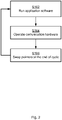
- Fig. 2 is a flowchart illustrating embodiments of methods for cyclic time-slotted operation in a wireless industrial network.
- the methods are performed by the communication device 300a:300N, 200.
- the communication device comprises a memory having a first memory area and a second memory area.
- the methods are advantageously provided as computer programs 720.
- step S102 S102: The communication device runs an application software at application layer.
- Application layer here refers to the application layer of the Open Systems Interconnection (OSI) model.
- the application software is associated with a first pointer.
- a communication hardware is operated at the communication device.
- the communication device is configured to perform step S104:
- the communication hardware is associated with a second pointer.
- steps S102 and S104 might be performed in parallel.
- the first pointer and the second pointer in a given timeslot point at a respective different one of the memory areas such that in the given timeslot the application software is enabled to access one of the memory areas and the communication hardware is enabled to access the other of the memory areas.
- To access one of the memory areas involves to read from, or write to, said one of the memory areas.
- the generated data/signalling and received data signalling for the communication device is thus stored in two memory areas in a memory shared between the application SW and the communication HW, and with two pointers alternatingly pointing to the two memory areas such that, at any given time, one pointer points at one of the two memory areas and the other pointer points at the other of the two memory areas.
- One of the pointers is used by the application SW and the other of the pointers is used by the communication HW.
- the pointers are swapped after each cycle. That is, at the end of each cycle the pointers to the memory areas are swapped.
- the communication device is configured to perform step S106: S106: The communication device swaps the pointers to the memory areas at the end of each cycle of the cyclic time-slotted operation.
- This method can be used to ensure low-latency, data consistency and error handling at the communication device.
- Embodiments relating to further details of cyclic time-slotted operation in a wireless industrial network as performed by the communication device 300a:300N, 200 will now be disclosed.
- Fig. 3 schematically illustrates the structure of a superframe 400 in which guaranteed timeslots 420 are provided.
- a beacon signal 410 as periodically transmitted by the network controller 200 could indicate the beginning of the superframe 400.
- the beacon signal 410 is followed by a set of guaranteed timeslots 420.
- the nodes 300a:300N are, by means of the guaranteed timeslots 420, guaranteed one or more time/frequency resource units in the superframe 400.
- the timeslots of each cycle are part of a set of guaranteed timeslots 420.
- each node 300a:300N can access the communication channel, thus avoiding collisions.
- the access to the communication channel might be organized in a time-division multiple access (TDMA) fashion.
- TDMA time-division multiple access
- each of the first memory area and the second memory area has as many cells for the application software and the communication hardware to access as there are timeslots in the set of guaranteed timeslots 420.
- the superframe 400 ends with some shared timeslots 430, which initially are not assigned to any specific node 300a:300N. That is, according to an embodiment, the superframe 400 further comprises a set of shared timeslots 430.
- One or more of the nodes 300a:300N might, additionally, be allocated time/frequency resource units among one or more of the shared timeslots 430, for example to handle communication errors (see below). That is, according to an embodiment, the shared timeslots 430 are used for handling data/signalling that has not been successfully received or transmitted. In absence of such communication errors the shared timeslots 430 might be used for transmission of other data, such as non-time critical data. Examples of such non-time critical data are firmware updates and software updates for the nodes 300a:300N.
- one occurrence of the beacon signal 410, one occurrence of a set of guaranteed timeslots 420 and one occurrence of a set of shared timeslots 430 define one superframe 400. That is, according to an embodiment, each set of guaranteed timeslots 420 is part of a superframe 400.
- One cycle can be defined in terms of the length of the superframe 400.
- each cycle lasts as long as the superframe 400, and the pointers are swapped upon start of each superframe 400.
- the application software might be cyclically executed, such that one cycle of the application software is executed per superframe. This could be the case where the communication device 200, 300a:300N communicates pieces of data, or signals, according to a predefined repetitive pattern, such as periodically.
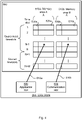
- Fig. 4 schematically illustrates a memory having a first memory area 510a (denoted memory A) and a second memory area 510b (denoted memory area B).
- the memory comprises four cells 520a, 520b, 530a, 530b per row.
- Cells 520a, 520b are memory cells for storing data and cells 530a, 530b are status fields for indicating failed transmission/reception. Further, each memory area has status fields, and failure of the communication hardware 630 to transmit or receive a packet in any timeslot is indicated in the status field of this timeslot.
- the memory of the illustrative example of Fig. 4 is suitable for a communication device being a network controller 200; for a communication device being a node 300a:300N the memory 500 could have fewer cells (corresponding to fewer rows in the table of Fig. 4 ).
- the memory might be represented by a table having N rows, one for each node 300a:300N.
- the table in Fig. 4 also has M empty rows at the end, reserved for retransmission of previously failed messages in the same superframe (if there are any).
- the maximum value of M is identical to the number of shared timeslots 430 in one superframe 400.
- the communication hardware 630 has the possibility, or option, to retry the failed communication in one of the shared timeslots 430 within the same superframe 400 as the guaranteed timeslot 420 where the communication failed.
- the pointer 610a associated with the application software 620 points at one of the memory areas
- the pointer 610b associated with the communication hardware 630 points at the other memory area, thus ensuring the data consistency.
- the pointer 610a associated with the application software 620 points at timeslot N-1 of memory area A
- the pointer 610b associated with the communication hardware 630 points at timeslot N-1 of memory area B.
- timeslot N the pointer 610a associated with the application software 620 will point at timeslot N of memory area A, and the pointer 610b associated with the communication hardware 630 will point at timeslot N of memory area B, and so on until the last timeslot (i.e., timeslot N+M).
- the pointers 610a, 610b to the memory areas 610a, 610b are swapped every time the superframe duration has elapsed. That is, at the first timeslot (i.e., of timeslot 1) at the next superframe, the pointer 610a associated with the application software 620 will point at timeslot 1 of memory area B, and the pointer 610b associated with the communication hardware 630 will point at timeslot 1 of memory area A.
- the application software 620 will see an error in the status field for the timeslot where communication failed and will decide how to handle the situation, e.g. if data/signalling should be retransmitted or new data/signalling transmitted.
- the pointers are swapped more often than once per superframe 400. This could be the case where there are relative few nodes 300a:300N and/or where relative small amounts of data/signalling is communicated between the nodes 300a:300N and the network controller 200.
- each cycle lasts as long as duration of one timeslot, and wherein the pointers are swapped upon start of each timeslot.
- the application software 620 is cyclically executed, such that the application software 620 is executed once per timeslot.
- Fig. 5 is flowchart of a method for cyclic time-slotted operation in a wireless industrial network as performed by a communication device embodied as the network controller 200 and relating to operations for the communication hardware 630.
- a beacon signal 410 is transmitted in order to indicate start of the superframe 400 and to provide synchronization of the same.
- S203 The first timeslot of the superframe 400 is selected.
- step S205 If a communication failure occurred in step S204, a status bit is set in the status field 530a, 530b in the memory 500 of the timeslot to indicate the communication failure.
- step S206 A check is made if any received data/signalling is readable. If the data is readable, step S207 is entered. Else, step S209 is entered.
- step S208 It is checked if the timeslot was the last in the superframe 400. If yes, step S201 is entered again for a new superframe 400. Else, step S211 is entered.
- step S209 It is checked if unreadable data is transmitted in the guaranteed timeslot. If yes, step S210 is entered. Else step S207 is entered.
- S210 It is determined whether or not the data of the failed communication should be communicated again. If decided to communicate the data/signal again within the same superframe, the timeslot is added to a list of timeslots in which the data is to be received again (if the list is not full).
- Step S211 Advancement is made to the next timeslot in the superframe 400. Step S204 is entered again for this next timeslot in the superframe 400.
- First superframe The pointer 610a of the application software 620 points at memory area A and the pointer 610b of the communication hardware 630 points at memory area B.
- Commandi is generated by the network controller 200 and stored in the memory cell as pointed at by the pointer 610a of the application software 620.
- Datai as previously generated by the node 300a is received by the communication hardware 630 from the node 300a and stored in the memory cell as pointed at by the pointer 610b of the communication hardware 630.
- Second superframe The pointer 610a of the application software 620 points at memory area B and the pointer 610b of the communication hardware 630 points at memory area A. Datai is fetched from the memory cell as pointed at by the pointer 610a of the application software 620. Commandi is fetched by the communication hardware 630 from the memory cell as pointed at by the pointer 610b of the communication hardware 630 and transmitted towards the node 300a.
- Third superframe As for the first superframe but with new Data2 (as requested according to Commandi) and new Command2 instead of Command1.
- First superframe The pointer 610a of the application software 620 points at memory area A and the pointer 610b of the communication hardware 630 points at memory area B.
- Data1 is measured by the node and stored in the memory cell as pointed at by the pointer 610a of the application software 620.
- Commandi for the node 300 as previously generated by the network controller 200 is received by the communication hardware 630 from the network controller 200 and stored in the memory cell as pointed at by the pointer 610b of the communication hardware 630.
- Second superframe The pointer 610a of the application software 620 points at memory area B and the pointer 610b of the communication hardware 630 points at memory area A.
- Data1 is fetched from the memory cell as pointed at by the pointer 610b of the communication hardware 630 and transmitted towards the network controller 200.
- Commandi is fetched by the application software 620 from the memory cell as pointed at by the pointer 610a of the application software 620.
- Third superframe As for the first superframe but with new Data2 (as requested according to Command1) and new Command2 instead of Command1.
- each superframe 400 has one single guaranteed timeslot 420 and one shared timeslot 430, and that the method is performed by network controller 200.
- reception of data fails in the guaranteed timeslot 420 of the first superframe 400 and the shared timeslot 430 of the first superframe 400 is used for retransmission of the data from the node 300a to the network controller 200.
- reception of data is successful in the guaranteed timeslot 420 of the second superframe 400 and the shared timeslot 430 of the second superframe 400 might be used for transmission or reception of non-time critical data.
- Guaranteed timeslot of first superframe The pointer 610a of the application software 620 points at memory area A and the pointer 610b of the communication hardware 630 points at memory area B.
- Commandi is generated by the network controller 200 and stored in the memory cell as pointed at by the pointer 610a of the application software 620.
- Data1 as previously generated by the node 300a fails to be received by the communication hardware 630 from the node 300a and a status bit is set to indicate the failed communication for the memory cell as pointed at by the pointer 610b of the communication hardware 630.
- Shared timeslot of first superframe The pointers 610a, 610b still point as in the guaranteed timeslot 420 of the first superframe.
- Data1 is retransmitted by the node 300a and is now correctly received by the communication hardware 630 from the node 300a and stored in the memory cell as pointed at by the pointer 610b of the communication hardware 630.
- Guaranteed timeslot of second superframe The pointer 610a of the application software 620 points at memory area B and the pointer 610b of the communication hardware 630 points at memory area A.
- Command2 is generated by the network controller 200 and stored in the memory cell as pointed at by the pointer 610a of the application software 620.
- Data2 as previously generated by the node 300a is received by the communication hardware 630 from the node 300a and stored in the memory cell as pointed at by the pointer 610b of the communication hardware 630.
- Shared timeslot of second superframe The pointers 610a, 610b still point as in the guaranteed timeslot 420 of the second superframe. If needed, the shared timeslot 430 is used for transmission or reception of non-time critical data.
- Fig. 6 schematically illustrates, in terms of a number of functional units, the components of a communication device 300a:300N, 200 according to an embodiment.
- Processing circuitry 210 is provided using any combination of one or more of a suitable central processing unit (CPU), multiprocessor, microcontroller, digital signal processor (DSP), etc., capable of executing software instructions stored in a computer program product 710 (as in Fig. 7 ), e.g. in the form of a storage medium 230.
- the processing circuitry 210 may further be provided as at least one application specific integrated circuit (ASIC), or field programmable gate array (FPGA).
- ASIC application specific integrated circuit
- FPGA field programmable gate array
- the processing circuitry 210 is configured to cause the communication device 300a:300N, 200 to perform a set of operations, or steps, as disclosed above.
- the storage medium 230 may store the set of operations
- the processing circuitry 210 may be configured to retrieve the set of operations from the storage medium 230 to cause the communication device 300a:300N, 200 to perform the set of operations.
- the set of operations may be provided as a set of executable instructions.
- the storage medium 230 may hold the memory 500.
- the storage medium 230 may store the application software 620.
- the processing circuitry 210 is thereby arranged to execute methods as herein disclosed.
- the storage medium 230 may also comprise persistent storage, which, for example, can be any single one or combination of magnetic memory, optical memory, solid state memory or even remotely mounted memory.
- the communication device 300a:300N, 200 may further comprise a communications interface 220 at least configured for communications with other entities, nodes, functions, and devices of the wireless communications network 100, such as other communication devices 300a:300N, 200.
- the communications interface 220 may comprise one or more transmitters and receivers, comprising analogue and digital components.
- the communications interface 220 might comprise the communication hardware 630.
- the processing circuitry 210 controls the general operation of the communication device 300a:300N, 200 e.g. by sending data and control signals to the communications interface 220 and the storage medium 230, by receiving data and reports from the communications interface 220, and by retrieving data and instructions from the storage medium 230.
- Other components, as well as the related functionality, of the communication device 300a:300N, 200 are omitted in order not to obscure the concepts presented herein.
- Fig. 7 shows one example of a computer program product 710 comprising computer readable storage medium 730.
- a computer program 720 can be stored, which computer program 720 can cause the processing circuitry 210 and thereto operatively coupled entities and devices, such as the communications interface 220 and the storage medium 230, to execute methods according to embodiments described herein.
- the computer program 720 and/or computer program product 710 may thus provide means for performing any steps as herein disclosed.
- the computer program product 710 is illustrated as an optical disc, such as a CD (compact disc) or a DVD (digital versatile disc) or a Blu-Ray disc.
- the computer program product 710 could also be embodied as a memory, such as a random access memory (RAM), a read-only memory (ROM), an erasable programmable read-only memory (EPROM), or an electrically erasable programmable read-only memory (EEPROM) and more particularly as a non-volatile storage medium of a device in an external memory such as a USB (Universal Serial Bus) memory or a Flash memory, such as a compact Flash memory.
- the computer program 720 is here schematically shown as a track on the depicted optical disk, the computer program 720 can be stored in any way which is suitable for the computer program product 710.
Landscapes
- Engineering & Computer Science (AREA)
- Signal Processing (AREA)
- Computer Networks & Wireless Communication (AREA)
- Computer Security & Cryptography (AREA)
- Mobile Radio Communication Systems (AREA)
Claims (14)
- Procédé de fonctionnement cyclique à créneaux temporels dans un réseau industriel sans fil (100), le procédé étant exécuté par un dispositif de communication (200, 300a:300N), le dispositif de communication (200, 300a:300N) comprenant une mémoire ayant une première zone de mémoire (510a) et une deuxième zone de mémoire (510b), le procédé comprenant :l'exécution (S102) d'un logiciel d'application (620) au niveau d'une couche d'application, le logiciel d'application (620) étant associé à un premier pointeur (610) ;la mise en fonctionnement (S104) d'un matériel de communication (630) au niveau d'une couche physique, le matériel de communication (630) étant associé à un deuxième pointeur (610b) ;le premier pointeur (610) et le deuxième pointeur (610b) dans un créneau temporel donné pointant vers l'une respective différente des zones de mémoire (510a, 510b), de telle sorte que, dans ledit créneau temporel donné, le logiciel d'application (620) soit capable d'accéder à l'une des zones de mémoire (510a, 510b) et que le matériel de communication (630) soit capable d'accéder à l'autre des zones de mémoire (510a, 510b) ; etla permutation (S106) des pointeurs (610a, 610b) sur les zones de mémoire (510a, 510b) à la fin de chaque cycle du fonctionnement cyclique à créneaux temporels ;caractérisé en ce quechacune de la première zone de mémoire (510a) et de la deuxième zone de mémoire (510b) a un champ d'état, et l'indication d'une défaillance du matériel de communication (630) à transmettre ou recevoir un paquet dans un quelconque créneau temporel se fait au moyen du champs d'état dudit créneau temporel quelconque.
- Procédé selon la revendication 1, dans lequel les créneaux temporels de chaque cycle font partie d'un ensemble de créneaux temporels garantis (420).
- Procédé selon la revendication 2, dans lequel chacune de la première zone de mémoire (510a) et de la deuxième zone de mémoire (510b) a autant de cellules auxquelles le logiciel d'application (620) et le matériel de communication (630) peuvent accéder qu'il y a de créneaux temporels dans l'ensemble de créneaux temporels garantis (420).
- Procédé selon la revendication 2 ou 3, dans lequel chaque ensemble de créneaux temporels garantis (420) fait partie d'une super-trame (400).
- Procédé selon la revendication 4, dans lequel chaque cycle du fonctionnement cyclique à créneaux temporels a la même durée que la super-trame (400), et les pointeurs (610a, 610b) sont permutés au démarrage de chaque super-trame (400).
- Procédé selon la revendication 4 ou 5, dans lequel le logiciel d'application (620) est exécuté de manière cyclique, et un seul cycle du logiciel d'application (620) est exécuté à chaque super-trame (400).
- Procédé selon l'une quelconque des revendications 4 à 6, dans lequel la super-trame (400) comprend en outre un ensemble de créneaux temporels partagés (430).
- Procédé selon la revendication 7, dans lequel les créneaux temporels partagés (430) sont utilisés pour la prise en charge de données qui n'ont pas été reçues ou transmises avec succès.
- Procédé selon la revendication 1, dans lequel chaque cycle du fonctionnement cyclique à créneaux temporels a la même durée qu'un créneau temporel, et les pointeurs (610a, 610b) sont permutés au démarrage de chaque créneau temporel.
- Procédé selon la revendication 9, dans lequel le logiciel d'application (620) est exécuté de manière cyclique, de telle sorte que le logiciel d'application (620) soit exécuté une seule fois par créneau temporel.
- Procédé selon l'une quelconque des revendications précédentes, dans lequel l'accès à l'une des zones de mémoire (510a, 510b) implique de lire, ou écrire, dans ladite une des zones de mémoire (510a, 510b).
- Dispositif de communication (200, 300a:300N) pour un fonctionnement cyclique à créneaux temporels dans un réseau industriel sans fil (100), le dispositif de communication (200, 300a:300N) comprenant une mémoire (500) ayant une première zone de mémoire (510a) et une deuxième zone de mémoire (510b), le dispositif de communication (200, 300a:300N) comprenant en outre un circuit de traitement (210), le circuit de traitement étant configuré pour amener le dispositif de communication (200, 300a:300N) à :exécuter un logiciel d'application (620) au niveau d'une couche d'application, le logiciel d'application (620) étant associé à un premier pointeur (610) ;faire fonctionner un matériel de communication(630) au niveau d'une couche physique, le matériel de communication (630) étant associé à un deuxième pointeur (610b) ;le premier pointeur (610) et le deuxième pointeur (610b) dans un créneau temporel donné pointant vers l'une respective différente des zones de mémoire (510a, 510b), de telle sorte que, dans ledit créneau temporel donné, le logiciel d'application (620) soit capable d'accéder à l'une des zones de mémoire (510a, 510b) et que le matériel de communication (630) soit capable d'accéder à l'autre des zones de mémoire (510a, 510b) ; etpermuter les pointeurs (610a, 610b) sur les zones de mémoire (510a, 510b) à la fin de chaque cycle du fonctionnement cyclique à créneaux temporels ;caractérisé en ce quechacune de la première zone de mémoire (510a) et de la deuxième zone de mémoire (510b) a un champ d'état, le circuit de traitement étant en outre configuré pour, en cas de défaillance du matériel de communication (630) à transmettre ou recevoir un paquet dans un quelconque créneau temporel, faire en sorte que la défaillance soit indiquée dans le champs d'état dudit créneau temporel quelconque.
- Programme informatique (720) pour un fonctionnement cyclique à créneaux temporels dans un réseau industriel sans fil (100), le programme informatique comprenant un code informatique qui, lorsqu'il est exécuté sur le circuit de traitement (210) d'un dispositif de communication (200, 300a:300N) comprenant une mémoire (500) ayant une première zone de mémoire (510a) et une deuxième zone de mémoire (510b), amène le dispositif de communication (200, 300a:300N) à :exécuter (S102) un logiciel d'application (620) au niveau d'une couche d'application, le logiciel d'application (620) étant associé à un premier pointeur (610) ;faire fonctionner (S104) un matériel de communication(630) au niveau d'une couche physique, le matériel de communication (630) étant associé à un deuxième pointeur (610b) ;le premier pointeur (610) et le deuxième pointeur (610b) dans un créneau temporel donné pointant vers l'une respective différente des zones de mémoire (510a, 510b), de telle sorte que, dans ledit créneau temporel donné, le logiciel d'application (620) soit capable d'accéder à l'une des zones de mémoire (510a, 510b) et que le matériel de communication (630) soit capable d'accéder à l'autre des zones de mémoire (510a, 510b) ; etpermuter (S106) les pointeurs (610a, 610b) sur les zones de mémoire (510a, 510b) à la fin de chaque cycle du fonctionnement cyclique à créneaux temporels ;caractérisé en ce quechacune de la première zone de mémoire (510a) et de la deuxième zone de mémoire (510b) a un champ d'état, et l'indication d'une défaillance du matériel de communication (630) à transmettre ou recevoir un paquet dans un quelconque créneau temporel se fait au moyen du champs d'état dudit créneau temporel quelconque.
- Support de stockage lisible par ordinateur (730) sur lequel est stocké le programme informatique (720) selon la revendication 13.
Priority Applications (3)
| Application Number | Priority Date | Filing Date | Title |
|---|---|---|---|
| EP19155669.5A EP3694166B1 (fr) | 2019-02-06 | 2019-02-06 | Opération à créneaux temporels cycliques dans un réseau industriel sans fil |
| US16/777,520 US11233624B2 (en) | 2019-02-06 | 2020-01-30 | Cyclic time-slotted operation in a wireless industrial network |
| CN202010080356.6A CN111542117B (zh) | 2019-02-06 | 2020-02-05 | 无线工业网络中的循环时隙操作 |
Applications Claiming Priority (1)
| Application Number | Priority Date | Filing Date | Title |
|---|---|---|---|
| EP19155669.5A EP3694166B1 (fr) | 2019-02-06 | 2019-02-06 | Opération à créneaux temporels cycliques dans un réseau industriel sans fil |
Publications (2)
| Publication Number | Publication Date |
|---|---|
| EP3694166A1 EP3694166A1 (fr) | 2020-08-12 |
| EP3694166B1 true EP3694166B1 (fr) | 2022-09-21 |
Family
ID=65576100
Family Applications (1)
| Application Number | Title | Priority Date | Filing Date |
|---|---|---|---|
| EP19155669.5A Active EP3694166B1 (fr) | 2019-02-06 | 2019-02-06 | Opération à créneaux temporels cycliques dans un réseau industriel sans fil |
Country Status (3)
| Country | Link |
|---|---|
| US (1) | US11233624B2 (fr) |
| EP (1) | EP3694166B1 (fr) |
| CN (1) | CN111542117B (fr) |
Family Cites Families (23)
| Publication number | Priority date | Publication date | Assignee | Title |
|---|---|---|---|---|
| US4809217A (en) | 1985-10-31 | 1989-02-28 | Allen-Bradley Company, Inc. | Remote I/O port for transfer of I/O data in a programmable controller |
| DE3683943D1 (de) | 1986-11-14 | 1992-03-26 | Ibm | Steuerungsschnittstelle fuer datentransfer zwischen einer datenverarbeitungseinheit und ein-ausgabevorrichtungen. |
| US5283900A (en) | 1989-10-02 | 1994-02-01 | Spectron Microsystems, Inc. | Real-time operating system and virtual digital signal processor for the control of a digital signal processor |
| US5884100A (en) | 1996-06-06 | 1999-03-16 | Sun Microsystems, Inc. | Low-latency, high-throughput, integrated cache coherent I/O system for a single-chip processor |
| US8346971B2 (en) * | 1999-05-04 | 2013-01-01 | At&T Intellectual Property I, Lp | Data transfer, synchronising applications, and low latency networks |
| US7724740B1 (en) * | 2002-08-27 | 2010-05-25 | 3Com Corporation | Computer system and network interface supporting class of service queues |
| US7506125B2 (en) * | 2003-09-29 | 2009-03-17 | Hitachi, Ltd. | Information terminals for receiving content with survival time and forwarding content to different information terminal after changing the survival time |
| JP2008542946A (ja) * | 2005-06-09 | 2008-11-27 | エヌエックスピー ビー ヴィ | 通信システムノード用記憶装置、データ記憶方法、及び通信システムノード |
| JP4042783B2 (ja) * | 2005-12-27 | 2008-02-06 | 松下電工株式会社 | 情報記憶システム |
| US7730230B1 (en) * | 2006-12-29 | 2010-06-01 | Marvell International Ltd. | Floating frame timing circuits for network devices |
| US8942219B2 (en) * | 2007-04-13 | 2015-01-27 | Hart Communication Foundation | Support for network management and device communications in a wireless network |
| TW201030645A (en) * | 2009-02-03 | 2010-08-16 | li-he Yao | Information exchange apparatus, method and its management system by utilizing the wireless channel |
| US8180728B2 (en) * | 2009-09-21 | 2012-05-15 | Bmc Software, Inc. | Area-specific reload of database |
| SE539755C2 (sv) * | 2012-11-27 | 2017-11-21 | Hms Ind Networks Ab | Kommunikationsmodul samt förfarande för att minska latensen för kommunikation av tidskritisk data mellan ett industrinätoch en elektrisk enhet |
| US20140254565A1 (en) * | 2013-03-05 | 2014-09-11 | Qualcomm Incorporated | Systems and methods for multiple concurrent wlan operational modes |
| US9665533B2 (en) * | 2013-12-20 | 2017-05-30 | Rambus Inc. | Blob pools, selectors, and command set implemented within a memory appliance for accessing memory |
| AT513782B1 (de) * | 2014-04-11 | 2018-08-15 | Avl List Gmbh | Vorrichtung und Verfahren zur Übermittlung von Daten |
| CN105323832B (zh) * | 2014-08-04 | 2019-12-31 | 中兴通讯股份有限公司 | Wban的信息交互方法、装置及系统 |
| DE102016202331A1 (de) * | 2016-02-16 | 2017-08-17 | Siemens Aktiengesellschaft | Netzknoteneinrichtung und Verfahren zur Vermittlung von Daten |
| JP6680030B2 (ja) * | 2016-03-24 | 2020-04-15 | 富士通株式会社 | 制御プログラム、制御方法、および制御装置 |
| CN106850565B (zh) | 2016-12-29 | 2019-06-18 | 河北远东通信系统工程有限公司 | 一种高速的网络数据传输方法 |
| US10346324B2 (en) * | 2017-02-13 | 2019-07-09 | Microchip Technology Incorporated | Devices and methods for autonomous hardware management of circular buffers |
| GB2583250B (en) * | 2017-11-24 | 2022-05-11 | Wolverton Jerry | Devices, systems, and methods for securely storing and managing sensitive information |
-
2019
- 2019-02-06 EP EP19155669.5A patent/EP3694166B1/fr active Active
-
2020
- 2020-01-30 US US16/777,520 patent/US11233624B2/en active Active
- 2020-02-05 CN CN202010080356.6A patent/CN111542117B/zh active Active
Also Published As
| Publication number | Publication date |
|---|---|
| EP3694166A1 (fr) | 2020-08-12 |
| CN111542117B (zh) | 2023-09-26 |
| CN111542117A (zh) | 2020-08-14 |
| US20200252187A1 (en) | 2020-08-06 |
| US11233624B2 (en) | 2022-01-25 |
Similar Documents
| Publication | Publication Date | Title |
|---|---|---|
| US9283682B2 (en) | Robot system having wireless acceleration sensor | |
| EP2422492B1 (fr) | Dispositif et procédé pour supporter des actionneurs sans fil et d'autres dispositifs dans des systèmes de commande de processus | |
| WO2021079599A1 (fr) | Dispositif de commande et système de commande distribuée | |
| CN111919492B (zh) | 用于工业无线网络中的信道访问方法、系统和分组收发器 | |
| US12342219B2 (en) | Minimizing over the air data transmission for wireless battery monitoring systems | |
| CN111030909B (zh) | 一种应用于can总线多主设备通讯间时间同步的方法 | |
| US11233674B2 (en) | Processing of process data | |
| US12228953B2 (en) | Fault communication in voltage regulator systems | |
| US11411768B2 (en) | Method and system for exchanging real time data in a ring network | |
| CN111542123B (zh) | 工业无线网络中的分组的时隙调度 | |
| CN103914007A (zh) | 用于程序重调的方法和系统 | |
| EP3694166B1 (fr) | Opération à créneaux temporels cycliques dans un réseau industriel sans fil | |
| WO2017019187A1 (fr) | Segmentation et réassemblage de datagramme efficaces pour des réseaux à commutation par paquets | |
| US20030018824A1 (en) | Method for generating commands to be interpreted by network controller modules of peripheral devices in electrical systems | |
| Zheng et al. | CHR: A Novel Channel-Hopping-Based Retransmission Scheme in WIA-FA Networks | |
| JP2019153914A (ja) | 無線通信方法、および、プログラム | |
| CN102013918B (zh) | 一种传输数据的方法、系统和装置 | |
| EP4092994B1 (fr) | Dispositif sans fil de base et procédé de communication sans fil | |
| JP7648957B2 (ja) | 制御装置、制御方法およびプログラム | |
| CN117294601A (zh) | 通信网络组网系统、数据帧传输方法、装置、设备和介质 | |
| KR101558986B1 (ko) | 저전력 통신을 기반으로 데이터를 전송하기 위한 방법 | |
| CN117221041A (zh) | 基于epa网络的多目标同步控制系统、方法和介质 | |
| HK40001989A (en) | Operating method of a communication node in a wireless communication network, associated communication node, communication system and storage system | |
| HK40001989B (zh) | 无线通信网络中的通信节点的操作方法、关联的通信节点、通信系统和存储系统 |
Legal Events
| Date | Code | Title | Description |
|---|---|---|---|
| PUAI | Public reference made under article 153(3) epc to a published international application that has entered the european phase |
Free format text: ORIGINAL CODE: 0009012 |
|
| STAA | Information on the status of an ep patent application or granted ep patent |
Free format text: STATUS: THE APPLICATION HAS BEEN PUBLISHED |
|
| AK | Designated contracting states |
Kind code of ref document: A1 Designated state(s): AL AT BE BG CH CY CZ DE DK EE ES FI FR GB GR HR HU IE IS IT LI LT LU LV MC MK MT NL NO PL PT RO RS SE SI SK SM TR |
|
| AX | Request for extension of the european patent |
Extension state: BA ME |
|
| STAA | Information on the status of an ep patent application or granted ep patent |
Free format text: STATUS: REQUEST FOR EXAMINATION WAS MADE |
|
| 17P | Request for examination filed |
Effective date: 20210126 |
|
| RBV | Designated contracting states (corrected) |
Designated state(s): AL AT BE BG CH CY CZ DE DK EE ES FI FR GB GR HR HU IE IS IT LI LT LU LV MC MK MT NL NO PL PT RO RS SE SI SK SM TR |
|
| RAP1 | Party data changed (applicant data changed or rights of an application transferred) |
Owner name: ABB POWER GRIDS SWITZERLAND AG |
|
| GRAP | Despatch of communication of intention to grant a patent |
Free format text: ORIGINAL CODE: EPIDOSNIGR1 |
|
| STAA | Information on the status of an ep patent application or granted ep patent |
Free format text: STATUS: GRANT OF PATENT IS INTENDED |
|
| RIC1 | Information provided on ipc code assigned before grant |
Ipc: H04L 29/08 20060101ALI20211026BHEP Ipc: H04L 29/06 20060101ALI20211026BHEP Ipc: H04L 12/935 20130101ALI20211026BHEP Ipc: H04L 12/927 20130101AFI20211026BHEP |
|
| INTG | Intention to grant announced |
Effective date: 20211125 |
|
| RAP3 | Party data changed (applicant data changed or rights of an application transferred) |
Owner name: HITACHI ENERGY SWITZERLAND AG |
|
| GRAJ | Information related to disapproval of communication of intention to grant by the applicant or resumption of examination proceedings by the epo deleted |
Free format text: ORIGINAL CODE: EPIDOSDIGR1 |
|
| STAA | Information on the status of an ep patent application or granted ep patent |
Free format text: STATUS: REQUEST FOR EXAMINATION WAS MADE |
|
| REG | Reference to a national code |
Ref country code: DE Ref legal event code: R079 Ref document number: 602019019702 Country of ref document: DE Free format text: PREVIOUS MAIN CLASS: H04L0012879000 Ipc: H04L0047800000 |
|
| GRAP | Despatch of communication of intention to grant a patent |
Free format text: ORIGINAL CODE: EPIDOSNIGR1 |
|
| INTC | Intention to grant announced (deleted) | ||
| STAA | Information on the status of an ep patent application or granted ep patent |
Free format text: STATUS: GRANT OF PATENT IS INTENDED |
|
| RIC1 | Information provided on ipc code assigned before grant |
Ipc: H04L 67/12 20220101ALN20220321BHEP Ipc: H04L 69/28 20220101ALI20220321BHEP Ipc: H04L 49/00 20220101ALI20220321BHEP Ipc: H04L 47/80 20220101AFI20220321BHEP |
|
| INTG | Intention to grant announced |
Effective date: 20220421 |
|
| RIC1 | Information provided on ipc code assigned before grant |
Ipc: H04L 67/12 20220101ALN20220411BHEP Ipc: H04L 69/28 20220101ALI20220411BHEP Ipc: H04L 49/00 20220101ALI20220411BHEP Ipc: H04L 47/80 20220101AFI20220411BHEP |
|
| GRAS | Grant fee paid |
Free format text: ORIGINAL CODE: EPIDOSNIGR3 |
|
| GRAA | (expected) grant |
Free format text: ORIGINAL CODE: 0009210 |
|
| STAA | Information on the status of an ep patent application or granted ep patent |
Free format text: STATUS: THE PATENT HAS BEEN GRANTED |
|
| AK | Designated contracting states |
Kind code of ref document: B1 Designated state(s): AL AT BE BG CH CY CZ DE DK EE ES FI FR GB GR HR HU IE IS IT LI LT LU LV MC MK MT NL NO PL PT RO RS SE SI SK SM TR |
|
| REG | Reference to a national code |
Ref country code: GB Ref legal event code: FG4D |
|
| RIN1 | Information on inventor provided before grant (corrected) |
Inventor name: LUVISOTTO, MICHELE Inventor name: JANSSON, ROGER Inventor name: ZHIBO, PANG |
|
| REG | Reference to a national code |
Ref country code: CH Ref legal event code: EP |
|
| REG | Reference to a national code |
Ref country code: DE Ref legal event code: R096 Ref document number: 602019019702 Country of ref document: DE |
|
| REG | Reference to a national code |
Ref country code: IE Ref legal event code: FG4D |
|
| REG | Reference to a national code |
Ref country code: AT Ref legal event code: REF Ref document number: 1520530 Country of ref document: AT Kind code of ref document: T Effective date: 20221015 |
|
| REG | Reference to a national code |
Ref country code: LT Ref legal event code: MG9D |
|
| REG | Reference to a national code |
Ref country code: NL Ref legal event code: MP Effective date: 20220921 |
|
| PG25 | Lapsed in a contracting state [announced via postgrant information from national office to epo] |
Ref country code: SE Free format text: LAPSE BECAUSE OF FAILURE TO SUBMIT A TRANSLATION OF THE DESCRIPTION OR TO PAY THE FEE WITHIN THE PRESCRIBED TIME-LIMIT Effective date: 20220921 Ref country code: RS Free format text: LAPSE BECAUSE OF FAILURE TO SUBMIT A TRANSLATION OF THE DESCRIPTION OR TO PAY THE FEE WITHIN THE PRESCRIBED TIME-LIMIT Effective date: 20220921 Ref country code: NO Free format text: LAPSE BECAUSE OF FAILURE TO SUBMIT A TRANSLATION OF THE DESCRIPTION OR TO PAY THE FEE WITHIN THE PRESCRIBED TIME-LIMIT Effective date: 20221221 Ref country code: LV Free format text: LAPSE BECAUSE OF FAILURE TO SUBMIT A TRANSLATION OF THE DESCRIPTION OR TO PAY THE FEE WITHIN THE PRESCRIBED TIME-LIMIT Effective date: 20220921 Ref country code: LT Free format text: LAPSE BECAUSE OF FAILURE TO SUBMIT A TRANSLATION OF THE DESCRIPTION OR TO PAY THE FEE WITHIN THE PRESCRIBED TIME-LIMIT Effective date: 20220921 Ref country code: FI Free format text: LAPSE BECAUSE OF FAILURE TO SUBMIT A TRANSLATION OF THE DESCRIPTION OR TO PAY THE FEE WITHIN THE PRESCRIBED TIME-LIMIT Effective date: 20220921 |
|
| REG | Reference to a national code |
Ref country code: AT Ref legal event code: MK05 Ref document number: 1520530 Country of ref document: AT Kind code of ref document: T Effective date: 20220921 |
|
| PG25 | Lapsed in a contracting state [announced via postgrant information from national office to epo] |
Ref country code: HR Free format text: LAPSE BECAUSE OF FAILURE TO SUBMIT A TRANSLATION OF THE DESCRIPTION OR TO PAY THE FEE WITHIN THE PRESCRIBED TIME-LIMIT Effective date: 20220921 Ref country code: GR Free format text: LAPSE BECAUSE OF FAILURE TO SUBMIT A TRANSLATION OF THE DESCRIPTION OR TO PAY THE FEE WITHIN THE PRESCRIBED TIME-LIMIT Effective date: 20221222 |
|
| PG25 | Lapsed in a contracting state [announced via postgrant information from national office to epo] |
Ref country code: SM Free format text: LAPSE BECAUSE OF FAILURE TO SUBMIT A TRANSLATION OF THE DESCRIPTION OR TO PAY THE FEE WITHIN THE PRESCRIBED TIME-LIMIT Effective date: 20220921 Ref country code: RO Free format text: LAPSE BECAUSE OF FAILURE TO SUBMIT A TRANSLATION OF THE DESCRIPTION OR TO PAY THE FEE WITHIN THE PRESCRIBED TIME-LIMIT Effective date: 20220921 Ref country code: PT Free format text: LAPSE BECAUSE OF FAILURE TO SUBMIT A TRANSLATION OF THE DESCRIPTION OR TO PAY THE FEE WITHIN THE PRESCRIBED TIME-LIMIT Effective date: 20230123 Ref country code: ES Free format text: LAPSE BECAUSE OF FAILURE TO SUBMIT A TRANSLATION OF THE DESCRIPTION OR TO PAY THE FEE WITHIN THE PRESCRIBED TIME-LIMIT Effective date: 20220921 Ref country code: CZ Free format text: LAPSE BECAUSE OF FAILURE TO SUBMIT A TRANSLATION OF THE DESCRIPTION OR TO PAY THE FEE WITHIN THE PRESCRIBED TIME-LIMIT Effective date: 20220921 Ref country code: AT Free format text: LAPSE BECAUSE OF FAILURE TO SUBMIT A TRANSLATION OF THE DESCRIPTION OR TO PAY THE FEE WITHIN THE PRESCRIBED TIME-LIMIT Effective date: 20220921 |
|
| PG25 | Lapsed in a contracting state [announced via postgrant information from national office to epo] |
Ref country code: SK Free format text: LAPSE BECAUSE OF FAILURE TO SUBMIT A TRANSLATION OF THE DESCRIPTION OR TO PAY THE FEE WITHIN THE PRESCRIBED TIME-LIMIT Effective date: 20220921 Ref country code: PL Free format text: LAPSE BECAUSE OF FAILURE TO SUBMIT A TRANSLATION OF THE DESCRIPTION OR TO PAY THE FEE WITHIN THE PRESCRIBED TIME-LIMIT Effective date: 20220921 Ref country code: IS Free format text: LAPSE BECAUSE OF FAILURE TO SUBMIT A TRANSLATION OF THE DESCRIPTION OR TO PAY THE FEE WITHIN THE PRESCRIBED TIME-LIMIT Effective date: 20230121 Ref country code: EE Free format text: LAPSE BECAUSE OF FAILURE TO SUBMIT A TRANSLATION OF THE DESCRIPTION OR TO PAY THE FEE WITHIN THE PRESCRIBED TIME-LIMIT Effective date: 20220921 |
|
| REG | Reference to a national code |
Ref country code: DE Ref legal event code: R097 Ref document number: 602019019702 Country of ref document: DE |
|
| PG25 | Lapsed in a contracting state [announced via postgrant information from national office to epo] |
Ref country code: NL Free format text: LAPSE BECAUSE OF FAILURE TO SUBMIT A TRANSLATION OF THE DESCRIPTION OR TO PAY THE FEE WITHIN THE PRESCRIBED TIME-LIMIT Effective date: 20220921 Ref country code: AL Free format text: LAPSE BECAUSE OF FAILURE TO SUBMIT A TRANSLATION OF THE DESCRIPTION OR TO PAY THE FEE WITHIN THE PRESCRIBED TIME-LIMIT Effective date: 20220921 |
|
| P01 | Opt-out of the competence of the unified patent court (upc) registered |
Effective date: 20230527 |
|
| PLBE | No opposition filed within time limit |
Free format text: ORIGINAL CODE: 0009261 |
|
| STAA | Information on the status of an ep patent application or granted ep patent |
Free format text: STATUS: NO OPPOSITION FILED WITHIN TIME LIMIT |
|
| PG25 | Lapsed in a contracting state [announced via postgrant information from national office to epo] |
Ref country code: DK Free format text: LAPSE BECAUSE OF FAILURE TO SUBMIT A TRANSLATION OF THE DESCRIPTION OR TO PAY THE FEE WITHIN THE PRESCRIBED TIME-LIMIT Effective date: 20220921 |
|
| 26N | No opposition filed |
Effective date: 20230622 |
|
| PG25 | Lapsed in a contracting state [announced via postgrant information from national office to epo] |
Ref country code: SI Free format text: LAPSE BECAUSE OF FAILURE TO SUBMIT A TRANSLATION OF THE DESCRIPTION OR TO PAY THE FEE WITHIN THE PRESCRIBED TIME-LIMIT Effective date: 20220921 |
|
| PG25 | Lapsed in a contracting state [announced via postgrant information from national office to epo] |
Ref country code: MC Free format text: LAPSE BECAUSE OF FAILURE TO SUBMIT A TRANSLATION OF THE DESCRIPTION OR TO PAY THE FEE WITHIN THE PRESCRIBED TIME-LIMIT Effective date: 20220921 |
|
| REG | Reference to a national code |
Ref country code: CH Ref legal event code: PL |
|
| REG | Reference to a national code |
Ref country code: BE Ref legal event code: MM Effective date: 20230228 |
|
| PG25 | Lapsed in a contracting state [announced via postgrant information from national office to epo] |
Ref country code: LU Free format text: LAPSE BECAUSE OF NON-PAYMENT OF DUE FEES Effective date: 20230206 Ref country code: LI Free format text: LAPSE BECAUSE OF NON-PAYMENT OF DUE FEES Effective date: 20230228 Ref country code: CH Free format text: LAPSE BECAUSE OF NON-PAYMENT OF DUE FEES Effective date: 20230228 |
|
| REG | Reference to a national code |
Ref country code: IE Ref legal event code: MM4A |
|
| PG25 | Lapsed in a contracting state [announced via postgrant information from national office to epo] |
Ref country code: IE Free format text: LAPSE BECAUSE OF NON-PAYMENT OF DUE FEES Effective date: 20230206 |
|
| PG25 | Lapsed in a contracting state [announced via postgrant information from national office to epo] |
Ref country code: BE Free format text: LAPSE BECAUSE OF NON-PAYMENT OF DUE FEES Effective date: 20230228 |
|
| REG | Reference to a national code |
Ref country code: DE Ref legal event code: R081 Ref document number: 602019019702 Country of ref document: DE Owner name: HITACHI ENERGY LTD, CH Free format text: FORMER OWNER: HITACHI ENERGY SWITZERLAND AG, BADEN, CH |
|
| PG25 | Lapsed in a contracting state [announced via postgrant information from national office to epo] |
Ref country code: IT Free format text: LAPSE BECAUSE OF FAILURE TO SUBMIT A TRANSLATION OF THE DESCRIPTION OR TO PAY THE FEE WITHIN THE PRESCRIBED TIME-LIMIT Effective date: 20220921 |
|
| REG | Reference to a national code |
Ref country code: GB Ref legal event code: 732E Free format text: REGISTERED BETWEEN 20240718 AND 20240724 |
|
| PG25 | Lapsed in a contracting state [announced via postgrant information from national office to epo] |
Ref country code: BG Free format text: LAPSE BECAUSE OF FAILURE TO SUBMIT A TRANSLATION OF THE DESCRIPTION OR TO PAY THE FEE WITHIN THE PRESCRIBED TIME-LIMIT Effective date: 20220921 |
|
| PG25 | Lapsed in a contracting state [announced via postgrant information from national office to epo] |
Ref country code: BG Free format text: LAPSE BECAUSE OF FAILURE TO SUBMIT A TRANSLATION OF THE DESCRIPTION OR TO PAY THE FEE WITHIN THE PRESCRIBED TIME-LIMIT Effective date: 20220921 |
|
| REG | Reference to a national code |
Ref country code: DE Ref legal event code: R082 Ref document number: 602019019702 Country of ref document: DE Representative=s name: DENNEMEYER & ASSOCIATES RECHTSANWALTSGESELLSCH, DE |
|
| PG25 | Lapsed in a contracting state [announced via postgrant information from national office to epo] |
Ref country code: CY Free format text: LAPSE BECAUSE OF FAILURE TO SUBMIT A TRANSLATION OF THE DESCRIPTION OR TO PAY THE FEE WITHIN THE PRESCRIBED TIME-LIMIT; INVALID AB INITIO Effective date: 20190206 |
|
| PG25 | Lapsed in a contracting state [announced via postgrant information from national office to epo] |
Ref country code: HU Free format text: LAPSE BECAUSE OF FAILURE TO SUBMIT A TRANSLATION OF THE DESCRIPTION OR TO PAY THE FEE WITHIN THE PRESCRIBED TIME-LIMIT; INVALID AB INITIO Effective date: 20190206 |
|
| PG25 | Lapsed in a contracting state [announced via postgrant information from national office to epo] |
Ref country code: TR Free format text: LAPSE BECAUSE OF FAILURE TO SUBMIT A TRANSLATION OF THE DESCRIPTION OR TO PAY THE FEE WITHIN THE PRESCRIBED TIME-LIMIT Effective date: 20220921 |
|
| PGFP | Annual fee paid to national office [announced via postgrant information from national office to epo] |
Ref country code: GB Payment date: 20260220 Year of fee payment: 8 |
|
| PGFP | Annual fee paid to national office [announced via postgrant information from national office to epo] |
Ref country code: DE Payment date: 20260218 Year of fee payment: 8 |
|
| PGFP | Annual fee paid to national office [announced via postgrant information from national office to epo] |
Ref country code: FR Payment date: 20260218 Year of fee payment: 8 |