EP3696265B1 - Variantes de la lipase et polynucléotides les codant - Google Patents
Variantes de la lipase et polynucléotides les codant Download PDFInfo
- Publication number
- EP3696265B1 EP3696265B1 EP20157646.9A EP20157646A EP3696265B1 EP 3696265 B1 EP3696265 B1 EP 3696265B1 EP 20157646 A EP20157646 A EP 20157646A EP 3696265 B1 EP3696265 B1 EP 3696265B1
- Authority
- EP
- European Patent Office
- Prior art keywords
- variant
- lipase
- seq
- iso
- mature polypeptide
- Prior art date
- Legal status (The legal status is an assumption and is not a legal conclusion. Google has not performed a legal analysis and makes no representation as to the accuracy of the status listed.)
- Active
Links
Classifications
-
- C—CHEMISTRY; METALLURGY
- C12—BIOCHEMISTRY; BEER; SPIRITS; WINE; VINEGAR; MICROBIOLOGY; ENZYMOLOGY; MUTATION OR GENETIC ENGINEERING
- C12N—MICROORGANISMS OR ENZYMES; COMPOSITIONS THEREOF; PROPAGATING, PRESERVING, OR MAINTAINING MICROORGANISMS; MUTATION OR GENETIC ENGINEERING; CULTURE MEDIA
- C12N9/00—Enzymes; Proenzymes; Compositions thereof; Processes for preparing, activating, inhibiting, separating or purifying enzymes
- C12N9/14—Hydrolases (3)
- C12N9/16—Hydrolases (3) acting on ester bonds (3.1)
- C12N9/18—Carboxylic ester hydrolases (3.1.1)
- C12N9/20—Triglyceride splitting, e.g. by means of lipase
-
- C—CHEMISTRY; METALLURGY
- C11—ANIMAL OR VEGETABLE OILS, FATS, FATTY SUBSTANCES OR WAXES; FATTY ACIDS THEREFROM; DETERGENTS; CANDLES
- C11D—DETERGENT COMPOSITIONS; USE OF SINGLE SUBSTANCES AS DETERGENTS; SOAP OR SOAP-MAKING; RESIN SOAPS; RECOVERY OF GLYCEROL
- C11D3/00—Other compounding ingredients of detergent compositions covered in group C11D1/00
- C11D3/16—Organic compounds
- C11D3/38—Products with no well-defined composition, e.g. natural products
- C11D3/386—Preparations containing enzymes, e.g. protease or amylase
- C11D3/38627—Preparations containing enzymes, e.g. protease or amylase containing lipase
-
- C—CHEMISTRY; METALLURGY
- C11—ANIMAL OR VEGETABLE OILS, FATS, FATTY SUBSTANCES OR WAXES; FATTY ACIDS THEREFROM; DETERGENTS; CANDLES
- C11D—DETERGENT COMPOSITIONS; USE OF SINGLE SUBSTANCES AS DETERGENTS; SOAP OR SOAP-MAKING; RESIN SOAPS; RECOVERY OF GLYCEROL
- C11D3/00—Other compounding ingredients of detergent compositions covered in group C11D1/00
- C11D3/39—Organic or inorganic per-compounds
- C11D3/3902—Organic or inorganic per-compounds combined with specific additives
- C11D3/3905—Bleach activators or bleach catalysts
- C11D3/3907—Organic compounds
- C11D3/3917—Nitrogen-containing compounds
- C11D3/392—Heterocyclic compounds, e.g. cyclic imides or lactames
-
- C—CHEMISTRY; METALLURGY
- C12—BIOCHEMISTRY; BEER; SPIRITS; WINE; VINEGAR; MICROBIOLOGY; ENZYMOLOGY; MUTATION OR GENETIC ENGINEERING
- C12Y—ENZYMES
- C12Y301/00—Hydrolases acting on ester bonds (3.1)
- C12Y301/01—Carboxylic ester hydrolases (3.1.1)
- C12Y301/01003—Triacylglycerol lipase (3.1.1.3)
-
- C—CHEMISTRY; METALLURGY
- C12—BIOCHEMISTRY; BEER; SPIRITS; WINE; VINEGAR; MICROBIOLOGY; ENZYMOLOGY; MUTATION OR GENETIC ENGINEERING
- C12N—MICROORGANISMS OR ENZYMES; COMPOSITIONS THEREOF; PROPAGATING, PRESERVING, OR MAINTAINING MICROORGANISMS; MUTATION OR GENETIC ENGINEERING; CULTURE MEDIA
- C12N9/00—Enzymes; Proenzymes; Compositions thereof; Processes for preparing, activating, inhibiting, separating or purifying enzymes
- C12N9/14—Hydrolases (3)
- C12N9/16—Hydrolases (3) acting on ester bonds (3.1)
- C12N9/18—Carboxylic ester hydrolases (3.1.1)
-
- C—CHEMISTRY; METALLURGY
- C12—BIOCHEMISTRY; BEER; SPIRITS; WINE; VINEGAR; MICROBIOLOGY; ENZYMOLOGY; MUTATION OR GENETIC ENGINEERING
- C12Y—ENZYMES
- C12Y301/00—Hydrolases acting on ester bonds (3.1)
- C12Y301/01—Carboxylic ester hydrolases (3.1.1)
Definitions
- the present invention relates to methods for obtaining lipase variants, lipase variants, polynucleotides encoding the variants, nucleic acid constructs, expression vectors, and host cells comprising a polynucleotide of the invention, and methods of producing the variants.
- lipases are amongst other components employed in formulating such compositions.
- the activity of lipases may be affected by the presence of the other components comprised.
- the introduction of some bleach catalysts has shown to inactivate certain enzymes. This compatibility issue constitutes a challenge which may not always be solved satisfactory by formulation alone.
- WO 2007/087242 discloses a composition comprising Thermomyces lanuginosus lipase variants, including two comprising a G91A substitution, and a bleach catalysts such as 3,4-dihydro-isoquinolin derivatives.
- WO07/001262 relates to cleaning compositions comprising organic catalysts with enhanced enzyme compatibility and processes for making and using such compositions, wherein said catalysts are zwitterionic sulfate derivatives of 3,4-dihydroisoquinoline.
- the catalysts are shown to have enhanced amylase compatibility but not lipase compatibility.
- WO 00/42156A1 concerns a detergent composition comprising a pectate lyase, and optionally a lipase, and a bleach system selected from the group consisting of a metal bleach catalyst; a combination of a peroxygen source and a bleach booster.
- WO 00/60063A1 discloses variants of Humicola lanuginosa lipase (renamed as Thermomyces lanuginosus lipase) comprising G91A or G91D substitution.
- EP 1712610 A1 discloses a detergent composition which may containing a G91A substitution and/or a disulfide bridge including a T37C substitution.
- WO 2009/083607A1 concerns a pharmaceutical composition comprising a Thermomyces lanuginosus lipase variants.
- WO 2008/079685A2 discloses Thermomyces lanuginosus lipase variants for pharmaceutical use comprising N33Q, T231R, N233R and at least one additional substitutions including T37K,M; N39H,S; and G91A,C,E,F,K,L,M,N,S,T,V,W,Y.
- US5,869,438A concerns lipase variants of Humicola lanuginosa lipase (renamed as Thermomyces lanuginosus ) comprising a G91A, G91S or G91C substitution.
- WO2004/111216 discloses Thermomyces lanuginosus lipase variants having phospholipase activity including a G91E, G91A, G91R or G91V substitution.
- the present invention relates to a method for obtaining a lipase variant, comprising introducing into a parent lipase a substitution corresponding to T37R of the mature polypeptide of SEQ ID NO: 2, wherein the variant is a polypeptide comprising an amino acid sequence with at least 90% but less than 100% identity with the mature polypeptide of SEQ ID NO: 2, has lipase activity, and in comparison with the parent lipase has improved performance in the presence of an organic catalyst selected from the group consisting of organic catalysts having the following formulae:
- the variant lipase comprises an amino acid sequence with at least 91%, at least 92%, at least 93%, at least 94%, at least 95%, at least 96%, at least 97%, at least 98%, or at least 99%, but less than 100% with the mature polypeptide of SEQ ID NO: 2; or a fragment thereof having lipase activity.
- the variant further comprises a substitution at one or more positions corresponding to positions D96, T143, A150, E210, G225, T231, N233 and P250 of the mature polypeptide of SEQ ID NO: 2, preferably the substitution is selected from D96G, T143A, A150G, E210Q, G225R, T231R, N233R and P250R, more preferably wherein the variant comprises T37R +N39R +G91A +D96G +T231R +N233R.
- the present invention also relates to lipase variants, comprising a substitution corresponding to T37R of the mature polypeptide of SEQ ID NO: 2, wherein the variant has lipase activity and has at least 90%, but less than 100% sequence identity to the mature polypeptide of SEQ ID NO: 2.
- the present invention also relates to isolated polynucleotides encoding the variants; nucleic acid constructs, vectors, and host cells comprising the polynucleotides; and methods of producing the variants.
- Lipase is an enzyme in class EC 3.1,1 as defined by Enzyme Nomenclature. It may have lipase activity (triacylglycerol lipase, EC 3.1.1.3), cutinase activity (EC 3.1.1.74), sterol esterase activity (EC 3.1.1.13) and/or wax-ester hydrolase activity (EC 3.1.1.50).
- lipase activity is determined according to the procedure described in the Examples. In one aspect, the variants of the present invention have at least 20%, e.g.
- allelic variant means any of two or more alternative forms of a gene occupying the same chromosomal locus. Allelic variation arises naturally through mutation, and may result in polymorphism within populations. Gene mutations can be silent (no change in the encoded polypeptide) or may encode polypeptides having altered amino acid sequences.
- An allelic variant of a polypeptide is a polypeptide encoded by an allelic variant of a gene.
- cDNA means a DNA molecule that can be prepared by reverse transcription from a mature, spliced, mRNA molecule obtained from a eukaryotic or prokaryotic cell. cDNA lacks intron sequences that may be present in the corresponding genomic DNA.
- the initial, primary RNA transcript is a precursor to mRNA that is processed through a series of steps, including splicing, before appearing as mature spliced mRNA.
- Coding sequence means a polynucleotide, which directly specifies the amino acid sequence of a variant.
- the boundaries of the coding sequence are generally determined by an open reading frame, which begins with a start codon such as ATG, GTG or TTG and ends with a stop codon such as TAA, TAG, or TGA.
- the coding sequence may be a genomic DNA, cDNA, synthetic DNA, or a combination thereof.
- control sequences means nucleic acid sequences necessary for expression of a polynucleotide encoding a variant of the present invention.
- Each control sequence may be native (i.e., from the same gene) or foreign (i.e., from a different gene) to the polynucleotide encoding the variant or native or foreign to each other.
- control sequences include, but are not limited to, a leader, polyadenylation sequence, propeptide sequence, promoter, signal peptide sequence, and transcription terminator.
- the control sequences include a promoter, and transcriptional and translational stop signals.
- the control sequences may be provided with linkers for the purpose of introducing specific restriction sites facilitating ligation of the control sequences with the coding region of the polynucleotide encoding a variant.
- expression includes any step involved in the production of a variant including, but not limited to, transcription, post-transcriptional modification, translation, post-translational modification, and secretion.
- Expression vector means a linear or circular DNA molecule that comprises a polynucleotide encoding a variant and is operably linked to control sequences that provide for its expression.
- fragment means a polypeptide having one or more (e.g., several) amino acids absent from the amino and/or carboxyl terminus of a mature polypeptide; wherein the fragment has lipase activity.
- a fragment contains at least 50%, at least 55%, at least 60%, at least 65%, at least 70%, at least 75%, at least 80%, at least 85%, at least 90%, and at least 95% of the number of amino acids of the mature polypeptide.
- host cell means any cell type that is susceptible to transformation, transfection, transduction, or the like with a nucleic acid construct or expression vector comprising a polynucleotide of the present invention.
- host cell encompasses any progeny of a parent cell that is not identical to the parent cell due to mutations that occur during replication.
- Improved property means a characteristic associated with a variant that is improved compared to the parent. Such improved properties include improved performance in the presence of an organic catalyst.
- the invention relates to an organic catalyst selected from the group consisting of organic catalysts having the following formulae:
- Isolated means a substance in a form or environment which does not occur in nature.
- isolated substances include (1) any non-naturally occurring substance, (2) any substance including, but not limited to, any enzyme, variant, nucleic acid, protein, peptide or cofactor, that is at least partially removed from one or more or all of the naturally occurring constituents with which it is associated in nature; (3) any substance modified by the hand of man relative to that substance found in nature; or (4) any substance modified by increasing the amount of the substance relative to other components with which it is naturally associated (e.g., multiple copies of a gene encoding the substance; use of a stronger promoter than the promoter naturally associated with the gene encoding the substance).
- An isolated substance may be present in a fermentation broth sample.
- Mature polypeptide means a polypeptide in its final form following translation and any post-translational modifications, such as N-terminal processing, C-terminal truncation, glycosylation, phosphorylation, etc.
- the mature polypeptide is amino acids 1 to 269 of SEQ ID NO: 2.
- Mature polypeptide coding sequence means a polynucleotide that encodes a mature polypeptide having lipase activity.
- the mature polypeptide coding sequence is nucleotides 67 to 873 of SEQ ID NO: 1.
- Mutant means a polynucleotide encoding a variant.
- nucleic acid construct means a nucleic acid molecule, either single- or double-stranded, which is isolated from a naturally occurring gene or is modified to contain segments of nucleic acids in a manner that would not otherwise exist in nature or which is synthetic, which comprises one or more control sequences.
- operably linked means a configuration in which a control sequence is placed at an appropriate position relative to the coding sequence of a polynucleotide such that the control sequence directs expression of the coding sequence.
- parent or parent lipase means a lipase to which an alteration is made to produce the enzyme variants of the present invention.
- the parent may be a naturally occurring (wild-type) polypeptide or a variant or fragment thereof.
- Sequence identity The relatedness between two amino acid sequences or between two nucleotide sequences is described by the parameter "sequence identity".
- sequence identity is determined using the Needleman-Wunsch algorithm ( Needleman and Wunsch, 1970, J. Mol. Biol. 48: 443-453 ) as implemented in the Needle program of the EMBOSS package ( EMBOSS: The European Molecular Biology Open Software Suite, Rice et al., 2000, Trends Genet. 16: 276-277 ), preferably version 5.0.0 or later.
- the parameters used are gap open penalty of 10, gap extension penalty of 0.5, and the EBLOSUM62 (EMBOSS version of BLOSUM62) substitution matrix.
- sequence identity between two deoxyribonucleotide sequences is determined using the Needleman-Wunsch algorithm (Needleman and Wunsch, 1970, supra) as implemented in the Needle program of the EMBOSS package ( EMBOSS: The European Molecular Biology Open Software Suite, Rice et al., 2000 , supra), preferably version 5.0.0 or later.
- the parameters used are gap open penalty of 10, gap extension penalty of 0.5, and the EDNAFULL (EMBOSS version of NCBI NUC4.4) substitution matrix.
- Subsequence means a polynucleotide having one or more (e.g., several) nucleotides absent from the 5' and/or 3' end of a mature polypeptide coding sequence; wherein the subsequence encodes a fragment having lipase activity.
- a subsequence contains at least 50%, at least 55%, at least 60%, at least 65%, at least 70%, at least 75%, at least 80%, at least 85%, at least 90%, and at least 95% of the number of nucleotides of the mature polypeptide coding sequence.
- variant means a polypeptide having lipase activity comprising a substitution at one or more (e.g., several) positions.
- a substitution means replacement of the amino acid occupying a position with a different amino acid.
- the variants of the present invention have at least 20%, e.g. , at least 25%, at least 30%, at least 35%, at least 40%, at least 45%, at least 50%, at least 55%, at least 60%, at least 65%, at least 70%, at least 75%, at least 80%, at least 85%, at least 90%, at least 95%, or at least 100% of the lipase activity of the mature polypeptide of SEQ ID NO: 2.
- Wild-type lipase means a lipase expressed by a naturally occurring microorganism, such as a bacterium, yeast, or filamentous fungus found in nature.
- the mature polypeptide disclosed in SEQ ID NO: 2 is used to determine the corresponding amino acid residue in another lipase.
- the amino acid sequence of another lipase is aligned with the mature polypeptide disclosed in SEQ ID NO: 2, and based on the alignment, the amino acid position number corresponding to any amino acid residue in the mature polypeptide disclosed in SEQ ID NO: 2 is determined using the Needleman-Wunsch algorithm ( Needleman and Wunsch, 1970, J. Mol. Biol. 48: 443-453 ) as implemented in the Needle program of the EMBOSS package ( EMBOSS: The European Molecular Biology Open Software Suite, Rice et al., 2000, Trends Genet. 16: 276-277 ), preferably version 5.0.0 or later.
- the parameters used are gap open penalty of 10, gap extension penalty of 0.5, and the EBLOSUM62 (EMBOSS version of BLOSUM62) substitution matrix.
- Identification of the corresponding amino acid residue in another lipase can be determined by an alignment of multiple polypeptide sequences using several computer programs including, but not limited to, MUSCLE (multiple sequence comparison by log-expectation; version 3.5 or later; Edgar, 2004, Nucleic Acids Research 32: 1792-1797 ), MAFFT (version 6.857 or later; Katoh and Kuma, 2002, Nucleic Acids Research 30: 3059-3066 ; Katoh et al., 2005, Nucleic Acids Research 33: 511-518 ; Katoh and Toh, 2007, Bioinformatics 23: 372-374 ; Katoh et al., 2009, Methods in Molecular Biology 537:_39-64 ; Katoh and Toh, 2010, Bioinformatics 26:_1899-1900 ), and EMBOSS EMMA employing ClustalW (1.83 or later; Thompson et al., 1994, Nucleic Acids Research 22: 4673-4680 ), using their respective default parameters.
- GenTHREADER Jones, 1999, J. Mol. Biol. 287: 797-815 ; McGuffin and Jones, 2003, Bioinformatics 19: 874-881
- Programs such as GenTHREADER utilize information from a variety of sources (PSI-BLAST, secondary structure prediction, structural alignment profiles, and solvation potentials) as input to a neural network that predicts the structural fold for a query sequence.
- sources PSI-BLAST, secondary structure prediction, structural alignment profiles, and solvation potentials
- Gough et al., 2000, J. Mol. Biol. 313: 903-919 can be used to align a sequence of unknown structure with the superfamily models present in the SCOP database.
- These alignments can in turn be used to generate homology models for the polypeptide, and such models can be assessed for accuracy using a variety of tools developed for that purpose.
- proteins of known structure For proteins of known structure, several tools and resources are available for retrieving and generating structural alignments. For example the SCOP superfamilies of proteins have been structurally aligned, and those alignments are accessible and downloadable.
- Two or more protein structures can be aligned using a variety of algorithms such as the distance alignment matrix ( Holm and Sander, 1998, Proteins 33: 88-96 ) or combinatorial extension ( Shindyalov and Bourne, 1998, Protein Engineering 11: 739-747 ), and implementation of these algorithms can additionally be utilized to query structure databases with a structure of interest in order to discover possible structural homologs ( e.g. , Holm and Park, 2000, Bioinformatics 16: 566-567 ).
- the distance alignment matrix Holm and Sander, 1998, Proteins 33: 88-96
- combinatorial extension Shindyalov and Bourne, 1998, Protein Engineering 11: 739-747
- substitutions For an amino acid substitution, the following nomenclature is used: Original amino acid, position, substituted amino acid. Accordingly, the substitution of threonine at position 226 with alanine is designated as "Thr226Ala” or “T226A”. Multiple mutations are separated by addition marks ("+"), e.g. , "Gly205Arg +Ser411Phe” or “G205R +S411F", representing substitutions at positions 205 and 411 of glycine (G) with arginine (R) and serine (S) with phenylalanine (F), respectively.
- addition marks e.g. , "Gly205Arg +Ser411Phe” or "G205R +S411F"
- Variants comprising multiple substitutions are separated by addition marks ("+"), e.g. , "Arg170Tyr +Gly195Glu” or “R170Y +G195E” representing a substitution of arginine and glycine at positions 170 and 195 with tyrosine and glutamic acid, respectively.
- the present invention relates to isolated lipase variants, comprising a substitution corresponding to T37R of the mature polypeptide of SEQ ID NO: 2, wherein the variant has lipase activity and has at least 90%, but less than 100% sequence identity to the mature polypeptide of SEQ ID NO: 2.
- the variant has at least 91%, at least 92%, at least 93%, at least 94%, at least 95%, such as at least 96%, at least 97%, at least 98%, or at least 99%, but less than 100%, sequence identity to the mature polypeptide of SEQ ID NO: 2.
- the number of substitutions in the variants of the present invention is 1-20, e.g. , 1-10 and 1-5, such as 1, 2, 3, 4, 5, 6, 7, 8, 9, 10, 11, 12, 13, 14, 15, 16, 17, 18, 19, or 20 substitutions.
- a variant comprises an alteration at two positions corresponding to any of positions T37R, N39A,C,D,E,F,G,I,K,L,M,P,Q,R,T,V,W,Y, and G91D,H,I,P,Q of the mature polypeptide of SEQ ID NO: 2.
- a variant comprises an alteration at three positions corresponding to any of positions T37R, N39A,C,D,E,F,G,I,K,L,M,P,Q,R,T,V,W,Y, and G91D,H,I,P,Q of the mature polypeptide of SEQ ID NO: 2.
- the variants may further comprise one or more additional substitutions at one or more (e.g., several) other positions.
- amino acid changes may be of a minor nature, that is conservative amino acid substitutions or insertions that do not significantly affect the folding and/or activity of the protein; small deletions, typically of 1-30 amino acids; small amino- or carboxyl-terminal extensions, such as an amino-terminal methionine residue; a small linker peptide of up to 20-25 residues; or a small extension that facilitates purification by changing net charge or another function, such as a poly-histidine tract, an antigenic epitope or a binding domain.
- conservative substitutions are within the groups of basic amino acids (arginine, lysine and histidine), acidic amino acids (glutamic acid and aspartic acid), polar amino acids (glutamine and asparagine), hydrophobic amino acids (leucine, isoleucine and valine), aromatic amino acids (phenylalanine, tryptophan and tyrosine), and small amino acids (glycine, alanine, serine, threonine and methionine).
- amino acid changes are of such a nature that the physico-chemical properties of the polypeptides are altered.
- amino acid changes may improve the thermal stability of the polypeptide, alter the substrate specificity, change the pH optimum, and the like.
- the variants may further comprise a substitution at a position corresponding to positions D96, T143, A150, E210, G225, T231, N233 and P250 of the mature polypeptide of SEQ ID NO: 2.
- the substitution is selected from D96G, T143A, A150G, E210Q, G225R, T231R, N233R and P250R.
- the invention relates to variants comprising: T 37 R + N 39 R + G 91 A + D 96 G + T 231 R + N 233 R
- Essential amino acids in a polypeptide can be identified according to procedures known in the art, such as site-directed mutagenesis or alanine-scanning mutagenesis ( Cunningham and Wells, 1989, Science 244: 1081-1085 ). In the latter technique, single alanine mutations are introduced at every residue in the molecule, and the resultant mutant molecules are tested for lipase activity to identify amino acid residues that are critical to the activity of the molecule. See also, Hilton et al., 1996, J. Biol. Chem. 271: 4699-4708 .
- the active site of the enzyme or other biological interaction can also be determined by physical analysis of structure, as determined by such techniques as nuclear magnetic resonance, crystallography, electron diffraction, or photoaffinity labeling, in conjunction with mutation of putative contact site amino acids. See, for example, de Vos et al., 1992, Science 255: 306-312 ; Smith et al., 1992, J. Mol. Biol. 224: 899-904 ; Wlodaver et al., 1992, FEBS Lett. 309: 59-64 .
- the identity of essential amino acids can also be inferred from an alignment with a related polypeptide.
- the variants may consist of at least 50%, at least 55%, at least 60%, at least 65%, at least 70%, at least 75%, at least 80%, at least 85%, at least 90%, and at least 95% of the number of amino acids of the mature polypeptide.
- the variant has improved performance in the presence of one or a mixture of more than one bleach components.
- Suitable bleach components include bleaching catalysts, photobleaches, bleach activators, hydrogen peroxide, sources of hydrogen peroxide, pre-formed peracids and mixtures thereof.
- the bleach component may be present, from about 0.00001 to 90 wt%, preferably 0.0001% to about 50% or even from about 0.001% to about 25% bleach component by weight of a cleaning composition.
- suitable bleach components include:
- the pre-formed peroxyacid or salt thereof is preferably a peroxycarboxylic acid or salt thereof, typically having a chemical structure corresponding to the following chemical formula: wherein: R 14 is selected from alkyl, aralkyl, cycloalkyl, aryl or heterocyclic groups; the R 14 group can be linear or branched, substituted or unsubstituted; and Y is any suitable counter-ion that achieves electric charge neutrality, preferably Y is selected from hydrogen, sodium or potassium.
- R 14 is a linear or branched, substituted or unsubstituted C 6-9 alkyl.
- the peroxyacid or salt thereof is selected from peroxyhexanoic acid, peroxyheptanoic acid, peroxyoctanoic acid, peroxynonanoic acid, peroxydecanoic acid, any salt thereof, or any combination thereof.
- Particularly preferred peroxyacids are phthalimido-peroxy-alkanoic acids, in particular ⁇ -phthahlimido peroxy hexanoic acid (PAP).
- PAP ⁇ -phthahlimido peroxy hexanoic acid
- the peroxyacid or salt thereof has a melting point in the range of from 30°C to 60°C.
- the pre-formed peroxyacid or salt thereof can also be a peroxysulphonic acid or salt thereof, typically having a chemical structure corresponding to the following chemical formula: wherein: R 15 is selected from alkyl, aralkyl, cycloalkyl, aryl or heterocyclic groups; the R 15 group can be linear or branched, substituted or unsubstituted; and Z is any suitable counter-ion that achieves electric charge neutrality, preferably Z is selected from hydrogen, sodium or potassium.
- R 15 is a linear or branched, substituted or unsubstituted C 6-9 alkyl.
- such bleach components may be present in a composition in an amount from 0.01 to 50%, most preferably from 0.1% to 20%.
- Sources of hydrogen peroxide include for example, inorganic perhydrate salts, including alkali metal salts such as sodium salts of perborate (usually mono- or tetra-hydrate), percarbonate, persulphate, perphosphate, persilicate salts and mixtures thereof.
- the inorganic perhydrate salts such as those selected from the group consisting of sodium salts of perborate, percarbonate and mixtures thereof.
- inorganic perhydrate salts are typically present in amounts of from 0.05 to 40 wt%, or 1 to 30 wt% of the overall composition and are typically incorporated into such compositions as a crystalline solid that may be coated.
- Suitable coatings include, inorganic salts such as alkali metal silicate, carbonate or borate salts or mixtures thereof, or organic materials such as water-soluble or dispersible polymers, waxes, oils or fatty soaps.
- inorganic salts such as alkali metal silicate, carbonate or borate salts or mixtures thereof
- organic materials such as water-soluble or dispersible polymers, waxes, oils or fatty soaps.
- bleach components may be present in a composition in an amount from 0.01 to 50%, most preferably from 0.1% to 20%.
- suitable leaving groups are benzoic acid and derivatives thereof - especially benzene sulphonate.
- Suitable bleach activators include dodecanoyl oxybenzene sulphonate, decanoyl oxybenzene sulphonate, decanoyl oxybenzoic acid or salts thereof, 3,5,5-trimethyl hexanoyloxybenzene sulphonate, tetraacetyl ethylene diamine (TAED) and nonanoyloxybenzene sulphonate (NOBS).
- TAED tetraacetyl ethylene diamine
- NOBS nonanoyloxybenzene sulphonate
- Suitable bleach activators are also disclosed in WO98/17767 . While any suitable bleach activator may be employed, in one aspect of the invention the subject cleaning composition may comprise NOBS, TAED or mixtures thereof.
- the peracid and/or bleach activator is generally present in the consumer product in an amount of from about 0.1 to about 60 wt%, from about 0.5 to about 40 wt % or even from about 0.6 to about 10 wt% based on the fabric and home care product.
- One or more hydrophobic peracids or precursors thereof may be used in combination with one or more hydrophilic peracid or precursor thereof.
- bleach components may be present in a composition in an amount from 0.01 to 50%, most preferably from 0.1% to 20%.
- the amounts of hydrogen peroxide source and peracid or bleach activator may be selected such that the molar ratio of available oxygen (from the peroxide source) to peracid is from 1:1 to 35:1, or even 2:1 to 10:1.
- Diacyl peroxides - preferred diacyl peroxide bleaching species include those selected from diacyl peroxides of the general formula: R 1 -C(O)-OO-(O)C-R 2 in which R 1 represents a C 6 -C 18 alkyl, preferably C 6 -C 12 alkyl group containing a linear chain of at least 5 carbon atoms and optionally containing one or more substituents (e.g. -N + (CH 3 ) 3 , -COOH or -CN) and/or one or more interrupting moieties (e.g.
- R 1 and R 2 are linear unsubstituted C 6 -C 12 alkyl chains. Most preferably R 1 and R 2 are identical. Diacyl peroxides, in which both R 1 and R 2 are C 6 -C 12 alkyl groups, are particularly preferred.
- the DAP may be asymmetric, such that preferably the hydrolysis of R 1 acyl group is rapid to generate peracid, but the hydrolysis of R 2 acyl group is slow.
- the tetraacyl peroxide bleaching species is preferably selected from tetraacyl peroxides of the general formula: R 3 -C(O)-OO-C(O)-(CH 2 )n-C(O)-OO-C(O)- R 3 in which R 3 represents a C 1 -C 9 alkyl, preferably C 3 -C 7 , group and n represents an integer from 2 to 12, preferably 4 to 10 inclusive.
- the diacyl and/or tetraacyl peroxide bleaching species is present in an amount sufficient to provide at least 0.5 ppm, more preferably at least 10 ppm, and even more preferably at least 50 ppm by weight of the wash liquor.
- the bleaching species is present in an amount sufficient to provide from about 0.5 to about 300 ppm, more preferably from about 30 to about 150 ppm by weight of the wash liquor.
- the bleach component comprises a bleach catalyst (5 and 6).
- Preferred are organic (non-metal) bleach catalysts include bleach catalyst capable of accepting an oxygen atom from a peroxyacid and/or salt thereof, and transferring the oxygen atom to an oxidizeable substrate.
- Suitable bleach catalysts include, but are not limited to: iminium cations and polyions; iminium zwitterions; modified amines; modified amine oxides; N-sulphonyl imines; N-phosphonyl imines; N-acyl imines; thiadiazole dioxides; perfluoroimines; cyclic sugar ketones and mixtures thereof.
- Suitable iminium cations and polyions include, but are not limited to, N-methyl-3,4-dihydroisoquinolinium tetrafluoroborate, prepared as described in Tetrahedron (1992), 49(2), 423-38 (see, for example, compound 4, p. 433); N-methyl-3,4-dihydroisoquinolinium p-toluene sulphonate, prepared as described in US5360569 (see, for example, Column 11, Example 1); and N-octyl-3,4-dihydroisoquinolinium p-toluene sulphonate, prepared as described in US5360568 (see, for example, Column 10, Example 3).
- Suitable iminium zwitterions include, but are not limited to, N-(3-sulfopropyl)-3,4-dihydroisoquinolinium, inner salt, prepared as described in US5576282 (see, for example, Column 31, Example II); N-[2-(sulphooxy)dodecyl]-3,4-dihydroisoquinolinium, inner salt, prepared as described in US5817614 (see, for example, Column 32, Example V); 2-[3-[(2-ethylhexyl)oxy]-2-(sulphooxy)propyl]-3,4-dihydroisoquinolinium, inner salt, prepared as described in WO05/047264 (see, for example, page 18, Example 8), and 2-[3-[(2-butyloctyl)oxy]-2-(sulphooxy)propyl]-3,4-dihydroisoquinolinium, inner salt.
- Suitable N-sulphonyl imine oxygen transfer catalysts include, but are not limited to, 3-methyl-1,2-benzisothiazole 1,1-dioxide, prepared according to the procedure described in the Journal of Organic Chemistry (1990), 55(4), 1254-61 .
- Suitable N-phosphonyl imine oxygen transfer catalysts include, but are not limited to, [R-(E)]-N-[(2-chloro-5-nitrophenyl)methylene]-P-phenyl-P-(2,4,6-trimethylphenyl)- phosphinic amide, which can be made according to the procedures described in the Journal of the Chemical Society, Chemical Communications (1994), (22), 2569-70 .
- Suitable N-acyl imine oxygen transfer catalysts include, but are not limited to, [N(E)]-N-(phenylmethylene)acetamide, which can be made according to the procedures described in Polish Journal of Chemistry (2003), 77(5), 577-590 .
- Suitable thiadiazole dioxide oxygen transfer catalysts include but are not limited to, 3-methyl-4-phenyl-1,2,5-thiadiazole 1,1-dioxide, which can be made according to the procedures described in US5753599 (Column 9, Example 2).
- Suitable perfluoroimine oxygen transfer catalysts include, but are not limited to, (Z)-2,2,3,3,4,4,4-heptafluoro-N-(nonafluorobutyl)butanimidoyl fluoride, which can be made according to the procedures described in Tetrahedron Letters (1994), 35(34), 6329-30 .
- the bleach catalyst comprises an iminium and/or carbonyl functional group and is typically capable of forming an oxaziridinium and/or dioxirane functional group upon acceptance of an oxygen atom, especially upon acceptance of an oxygen atom from a peroxyacid and/or salt thereof.
- the bleach catalyst comprises an oxaziridinium functional group and/or is capable of forming an oxaziridinium functional group upon acceptance of an oxygen atom, especially upon acceptance of an oxygen atom from a peroxyacid and/or salt thereof.
- the detergent composition comprises a bleach component having a logP o/w no greater than 0, no greater than -0.5, no greater than -1.0, no greater than -1.5, no greater than -2.0, no greater than -2.5, no greater than -3.0, or even no greater than -3.5.
- the method for determining logP o/w is described in more detail below.
- the bleach ingredient is capable of generating a bleaching species having a X SO of from 0.01 to about 0.30, from 0.05 to about 0.25, or even from about 0.10 to 0.20.
- the method for determining X SO is described in more detail below.
- bleaching ingredients having an isoquinolinium structure are capable of generating a bleaching species that has an oxaziridinium structure.
- the X SO is that of the oxaziridinium bleaching species.
- the amounts of hydrogen peroxide source and peracid or bleach activator may be selected such that the molar ratio of available oxygen (from the peroxide source) to peracid is from 1:1 to 35:1, or even 2:1 to 10:1.
- the bleach component may be provided by a catalytic metal complex.
- One type of metal-containing bleach catalyst is a catalyst system comprising a transition metal cation of defined bleach catalytic activity, such as copper, iron, titanium, ruthenium, tungsten, molybdenum, or manganese cations, an auxiliary metal cation having little or no bleach catalytic activity, such as zinc or aluminum cations, and a sequestrate having defined stability constants for the catalytic and auxiliary metal cations, particularly ethylenediaminetetraacetic acid, ethylenediaminetetra(methylenephosphonic acid) and water-soluble salts thereof.
- Such catalysts are disclosed in US4430243 .
- Preferred catalysts are described in WO09/839406 , US6218351 and WO00/012667 . Particularly preferred are transition metal catalyst or ligands therefore that are cross-bridged polydentate N-donor ligands. If desired, the compositions herein can be catalyzed by means of a manganese compound. Such compounds and levels of use are well known in the art and include, for example, the manganese-based catalysts disclosed in US5576282 .
- Particularly preferred bleach components are the bleach catalysts in particular the organic bleach catalysts.
- R1 is independently a branched alkyl group containing from 8 to 18 carbons or a linear alkyl group containing from 8 to 18 carbons. In some embodiments R1 is independently selected from the group consisting of 2-propylheptyl, 2-butyloctyl, 2-pentylnonyl, 2-hexyldecyl, n-dodecyl, n-tetradecyl, n-hexadecyl, n-octadecyl, iso-nonyl, iso-decyl, iso-tridecyl, and iso-pentadecyl.
- R1 is selected from the group consisting of 2-butyloctyl, 2-pentylnonyl, 2-hexyldecyl, iso-tridecyl, and iso-pentadecyl.
- Preferred variants have improved performance in the presence of a catalyst of formula b) in which R is 2-butyloctyl.
- the organic catalyst is typically used in an amount which provides 0.001-0.02 g of active material per liter of wash liquor or in an amount which provides 0.01 to 4.5, 0.5 to 4.0, 1.0 to 3.5, 1.5 to 3.0, or 2.0 to 2.5 ppm of active material per liter of wash liquor.
- a source of organic peroxyacids is present as a bleaching agent.
- the source of organic peroxyacids may be a preformed peracid or a diacyl peroxide, or it may comprise a source of hydrogen peroxide and a bleach activator.
- Suitable bleaching agents include diacyl peroxides, bleach activators, hydrogen peroxide, sources of hydrogen peroxide, pre-formed peracids and mixtures thereof.
- the compositions of the present invention may comprise from about 0.1% to about 50% or even from about 0.1% to about 25% bleaching agent by weight of the subject cleaning composition.
- the bleaching agent is typically a source of organic peroxyacids or an activated peroxygen source.
- the peracid and/or bleach activator is generally present in the composition in an amount of from about 0.1 to about 60 wt%, from about 0.5 to about 40 wt % or even from about 0.6 to about 10 wt% based on the composition.
- One or more hydrophobic peracids or precursors thereof may be used in combination with one or more hydrophilic peracid or precursor thereof.
- the amounts of hydrogen peroxide source and peracid or bleach activator may be selected such that the molar ratio of available oxygen (from the peroxide source) to peracid is from 1:1 to 35:1, or even 2:1 to 10:1.
- RPwash Relative Performance
- the parent lipase has a sequence identity to the mature polypeptide of SEQ ID NO: 2 of at least 90%, at least 91%, at least 92%, at least 93%, at least 94%, at least 95%, at least 96%, at least 97%, at least 98%, at least 99%, or 100%, which have lipase activity.
- the amino acid sequence of the parent differs by no more than 20 amino acids, e.g., 1, 2, 3, 4, 5, 6, 7, 8, 9, 10, 11, 12, 13, 14, 15, 16, 17, 18, 19, or 20 from the mature polypeptide of SEQ ID NO: 2.
- the parent comprises or consists of the amino acid sequence of SEQ ID NO: 2. In another aspect, the parent comprises or consists of the mature polypeptide of SEQ ID NO: 2. In another aspect, the parent comprises or consists of amino acids 1 to 269 of SEQ ID NO: 2.
- the parent is a fragment of the mature polypeptide of SEQ ID NO: 2 containing at least 50%, at least 55%, at least 60%, at least 65%, at least 70%, at least 75%, at least 80%, at least 85%, at least 90%, and at least 95% of the number of amino acids of the mature polypeptide.
- the parent is an allelic variant of the mature polypeptide of SEQ ID NO: 2.
- the parent is encoded by a polynucleotide having a sequence identity to the mature polypeptide coding sequence of SEQ ID NO: 1 of at least 60%, e.g. , at least 65%, at least 70%, at least 75%, at least 80%, at least 85%, at least 90%, at least 91%, at least 92%, at least 93%, at least 94%, at least 95%, at least 96%, at least 97%, at least 98%, at least 99%, or 100%.
- the polypeptide may be a hybrid polypeptide in which a region of one polypeptide is fused at the N-terminus or the C-terminus of a region of another polypeptide.
- the parent may be a fusion polypeptide or cleavable fusion polypeptide in which another polypeptide is fused at the N-terminus or the C-terminus of the polypeptide of the present invention.
- a fusion polypeptide is produced by fusing a polynucleotide encoding another polypeptide to a polynucleotide of the present invention.
- Techniques for producing fusion polypeptides are known in the art, and such as ligating the coding sequences encoding the polypeptides so that they are in frame and that expression of the fusion polypeptide is under control of the same promoter(s) and terminator.
- Fusion polypeptides may also be constructed using intein technology in which fusion polypeptides are created post-translationally ( Cooper et al., 1993, EMBO J. 12: 2575-2583 ; Dawson et al., 1994, Science 266: 776-779 ).
- a fusion polypeptide can further comprise a cleavage site between the two polypeptides. Upon secretion of the fusion protein, the site is cleaved releasing the two polypeptides.
- cleavage sites include, but are not limited to, the sites disclosed in Martin et al., 2003, J. Ind. Microbiol. Biotechnol. 3: 568-576 ; Svetina et al., 2000, J. Biotechnol. 76: 245-251 ; Rasmussen-Wilson et al., 1997, Appl. Environ. Microbiol.
- the parent may be obtained from microorganisms of any genus.
- the term "obtained from” as used herein in connection with a given source shall mean that the parent encoded by a polynucleotide is produced by the source or by a strain in which the polynucleotide from the source has been inserted.
- the parent is secreted extracellularly.
- the parent may be a bacterial lipase.
- the parent may be a Gram-positive bacterial polypeptide such as a Bacillus, Clostridium, Enterococcus, Geobacillus, Lactobacillus, Lactococcus, Oceanobacillus, Staphylococcus, Streptococcus, Streptomyces, Thermobifida fusca alias Thermomonospora fusca lipase or a Gram-negative bacterial polypeptide such as a Campylobacter, E. coli, Flavobacterium, Fusobacterium, Helicobacter, Ilyobacter, Neisseria, Pseudomonas, Salmonella, or Ureaplasma lipase.
- the parent is a Bacillus alkalophilus, Bacillus amyloliquefaciens, Bacillus brevis, Bacillus circulans, Bacillus clausii, Bacillus coagulans, Bacillus firmus, Bacillus lautus, Bacillus lentus, Bacillus licheniformis, Bacillus megaterium, Bacillus pumilus, Bacillus stearothermophilus, Bacillus subtilis, or Bacillus thuringiensis lipase.
- the parent is a Streptococcus equisimilis, Streptococcus pyogenes, Streptococcus uberis, or Streptococcus equi subsp. Zooepidemicus lipase.
- the parent is a Streptomyces achromogenes, Streptomyces avermitilis, Streptomyces coelicolor, Streptomyces griseus, or Streptomyces lividans lipase.
- the parent may be a fungal lipase.
- the parent may be a yeast lipase such as a Candida, Kluyveromyces, Pichia, Saccharomyces, Schizosaccharomyces, or Yarrowia lipase; or a filamentous fungal lipase such as an Acremonium, Agaricus, Alternaria, Aspergillus, Aureobasidium, Botryospaeria, Ceriporiopsis, Chaetomidium, Chrysosporium, Claviceps, Cochliobolus, Coprinopsis, Coptotermes, Corynascus, Cryphonectria, Cryptococcus, Diplodia, Exidia, Filibasidium, Fusarium, Gibberella, Holomastigotoides, Humicola, Irpex, Lentinula, Leptospaeria, Magnaporthe, Melanocarpus, Meripilus, Mucor, Myceliophthora
- the parent is a Saccharomyces carlsbergensis, Saccharomyces cerevisiae, Saccharomyces diastaticus, Saccharomyces douglasii, Saccharomyces kluyveri, Saccharomyces norbensis, or Saccharomyces oviformis lipase.
- the parent is an Acremonium cellulolyticus, Aspergillus aculeatus, Aspergillus awamori, Aspergillus foetidus, Aspergillus fumigatus, Aspergillus japonicus, Aspergillus nidulans, Aspergillus niger, Aspergillus oryzae, Chrysosporium inops, Chrysosporium keratinophilum, Chrysosporium lucknowense, Chrysosporium merdarium, Chrysosporium pannicola, Chrysosporium queenslandicum, Chrysosporium tropicum, Chrysosporium zonatum, Fusarium bactridioides, Fusarium cerealis, Fusarium crookwellense, Fusarium culmorum, Fusarium graminearum, Fusarium graminum, Fusarium heterosporum, Fusarium neg
- the parent is a Humicola lanuginosa lipase, e.g., the lipase of SEQ ID NO: 2 or the mature polypeptide thereof.
- the invention encompasses both the perfect and imperfect states, and other taxonomic equivalents, e.g., anamorphs, regardless of the species name by which they are known. Those skilled in the art will readily recognize the identity of appropriate equivalents.
- ATCC American Type Culture Collection
- DSMZ Deutsche Sammlung von Mikroorganismen und Zellkulturen GmbH
- CBS Centraalbureau Voor Schimmelcultures
- NRRL Northern Regional Research Center
- the parent may be identified and obtained from other sources including microorganisms isolated from nature (e.g., soil, composts, water, etc.) or DNA samples obtained directly from natural materials (e.g., soil, composts, water, etc.) using the above-mentioned probes. Techniques for isolating microorganisms and DNA directly from natural habitats are well known in the art. A polynucleotide encoding a parent may then be obtained by similarly screening a genomic DNA or cDNA library of another microorganism or mixed DNA sample.
- the polynucleotide can be isolated or cloned by utilizing techniques that are known to those of ordinary skill in the art (see, e.g., Sambrook et al., 1989, supra).
- the present invention also relates to a method for obtaining a lipase variant, comprising introducing into a parent lipase a substitution corresponding to T37R of the mature polypeptide of SEQ ID NO: 2, wherein the variant is a polypeptide comprising an amino acid sequence with at least 90% but less than 100% identity with the mature polypeptide of SEQ ID NO: 2, has lipase activity, and in comparison with the parent lipase has improved performance in the presence of an organic catalyst selected from the group consisting of organic catalysts having the following formulae:
- the invention relates to a method wherein R1 is independently a branched alkyl group containing from 8 to 18 carbons or a linear alkyl group containing from 8 to 18 carbons.
- the organic catalyst is typically used in an amount which provides 0.001-0.02 g of active material per liter of wash liquor or in an amount which provides 0.01 to 4.5, 0.5 to 4.0, 1.0 to 3.5, 1.5 to 3.0, or 2.0 to 2.5 ppm of active material per liter of wash liquor.
- the invention relates to a method wherein a source of organic peroxyacids is present as a bleaching agent.
- the source of organic peroxyacids may be a preformed peracid or a diacyl peroxide, or it may comprise a source of hydrogen peroxide and a bleach activator.
- Suitable bleaching agents include diacyl peroxides, bleach activators, hydrogen peroxide, sources of hydrogen peroxide, pre-formed peracids and mixtures thereof.
- compositions of the present invention may comprise from about 0.1% to about 50% or even from about 0.1% to about 25% bleaching agent by weight of the subject cleaning composition.
- the bleaching agent is typically a source of organic peroxyacids or an activated peroxygen source.
- the peracid and/or bleach activator is generally present in the composition in an amount of from about 0.1 to about 60 wt%, from about 0.5 to about 40 wt % or even from about 0.6 to about 10 wt% based on the composition.
- One or more hydrophobic peracids or precursors thereof may be used in combination with one or more hydrophilic peracid or precursor thereof.
- the amounts of hydrogen peroxide source and peracid or bleach activator may be selected such that the molar ratio of available oxygen (from the peroxide source) to peracid is from 1:1 to 35:1, or even 2:1 to 10:1.
- the invention relates to a method wherein the parent lipase comprises an amino acid sequence with at least 90% identity with the mature polypeptide of SEQ ID NO: 2; consists of the amino acid sequence of the mature polypeptide of SEQ ID NO: 2, or a fragment thereof having lipase activity.
- the invention relates to a method wherein the variant further comprises a substitution at one or more positions corresponding to positions D96, T143, A150, E210, G225, T231, N233 and P250 of the mature polypeptide of SEQ ID NO: 2.
- the invention relates to a method wherein the substitution is selected from D96G, T143A, A150G, E210Q, G225R, T231R, N233R and P250R.
- the variants can be prepared using any mutagenesis procedure known in the art, such as site-directed mutagenesis, synthetic gene construction, semi-synthetic gene construction, random mutagenesis, shuffling, etc.
- Site-directed mutagenesis is a technique in which one or more (e.g., several) mutations are introduced at one or more defined sites in a polynucleotide encoding the parent.
- Site-directed mutagenesis can be accomplished in vitro by PCR involving the use of oligonucleotide primers containing the desired mutation. Site-directed mutagenesis can also be performed in vitro by cassette mutagenesis involving the cleavage by a restriction enzyme at a site in the plasmid comprising a polynucleotide encoding the parent and subsequent ligation of an oligonucleotide containing the mutation in the polynucleotide. Usually the restriction enzyme that digests the plasmid and the oligonucleotide is the same, permitting sticky ends of the plasmid and the insert to ligate to one another. See, e.g. , Scherer and Davis, 1979, Proc. Natl. Acad. Sci. USA 76: 4949-4955 ; and Barton et al., 1990, Nucleic Acids Res. 18: 7349-4966 .
- Site-directed mutagenesis can also be accomplished in vivo by methods known in the art. See, e.g. , U.S. Patent Application Publication No. 2004/0171154 ; Storici et al., 2001, Nature Biotechnol. 19: 773-776 ; Kren et al., 1998, Nat. Med. 4: 285-290 ; and Calissano and Macino, 1996, Fungal Genet. Newslett. 43: 15-16 .
- Any site-directed mutagenesis procedure can be used in the present invention.
- Synthetic gene construction entails in vitro synthesis of a designed polynucleotide molecule to encode a polypeptide of interest. Gene synthesis can be performed utilizing a number of techniques, such as the multiplex microchip-based technology described by Tian et al. (2004, Nature 432: 1050-1054 ) and similar technologies wherein oligonucleotides are synthesized and assembled upon photo-programmable microfluidic chips.
- Single or multiple amino acid substitutions, deletions, and/or insertions can be made and tested using known methods of mutagenesis, recombination, and/or shuffling, followed by a relevant screening procedure, such as those disclosed by Reidhaar-Olson and Sauer, 1988, Science 241: 53-57 ; Bowie and Sauer, 1989, Proc. Natl. Acad. Sci. USA 86: 2152-2156 ; WO 95/17413 ; or WO 95/22625 .
- Other methods that can be used include error-prone PCR, phage display (e.g., Lowman et al., 1991, Biochemistry 30: 10832-10837 ; U.S. Patent No. 5,223,409 ; WO 92/06204 ) and region-directed mutagenesis ( Derbyshire et al., 1986, Gene 46: 145 ; Ner et al., 1988, DNA 7: 127 ).
- the present invention also relates to isolated polynucleotides encoding a variant of the present invention.
- the present invention also relates to nucleic acid constructs comprising a polynucleotide encoding a variant of the present invention operably linked to one or more control sequences that direct the expression of the coding sequence in a suitable host cell under conditions compatible with the control sequences.
- the polynucleotide may be manipulated in a variety of ways to provide for expression of a variant. Manipulation of the polynucleotide prior to its insertion into a vector may be desirable or necessary depending on the expression vector.
- the techniques for modifying polynucleotides utilizing recombinant DNA methods are well known in the art.
- the control sequence may be a promoter, a polynucleotide which is recognized by a host cell for expression of the polynucleotide.
- the promoter contains transcriptional control sequences that mediate the expression of the variant.
- the promoter may be any polynucleotide that shows transcriptional activity in the host cell including mutant, truncated, and hybrid promoters, and may be obtained from genes encoding extracellular or intracellular polypeptides either homologous or heterologous to the host cell.
- suitable promoters for directing transcription of the nucleic acid constructs of the present invention in a bacterial host cell are the promoters obtained from the Bacillus amyloliquefaciens alpha-amylase gene (amyQ), Bacillus licheniformis alpha-amylase gene (amyL), Bacillus licheniformis penicillinase gene (penP), Bacillus stearothermophilus maltogenic amylase gene ( amyM ), Bacillus subtilis levansucrase gene (sacB), Bacillus subtilis xyIA and xyIB genes, Bacillus thuringiensis cryIIIA gene ( Agaisse and Lereclus, 1994, Molecular Microbiology 13: 97-107 ), E.
- E. coli lac operon E. coli trc promoter ( Egon et al., 1988, Gene 69: 301-315 ), Streptomyces coelicolor agarase gene (dagA), and prokaryotic beta-lactamase gene ( Villa-Kamaroff et al., 1978, Proc. Natl. Acad. Sci. USA 75: 3727-3731 ), as well as the tac promoter ( DeBoer et al., 1983, Proc. Natl. Acad. Sci. USA 80: 21-25 ).
- promoters for directing transcription of the nucleic acid constructs of the present invention in a filamentous fungal host cell are promoters obtained from the genes for Aspergillus nidulans acetamidase, Aspergillus niger neutral alpha-amylase, Aspergillus niger acid stable alpha-amylase, Aspergillus niger or Aspergillus awamori glucoamylase (glaA), Aspergillus oryzae TAKA amylase, Aspergillus oryzae alkaline protease, Aspergillus oryzae triose phosphate isomerase, Fusarium oxysporum trypsin-like protease ( WO 96/00787 ), Fusarium venenatum amyloglucosidase ( WO 00/56900 ), Fusarium venenatum Daria ( WO 00/56900 ), Fusarium ven ven
- useful promoters are obtained from the genes for Saccharomyces cerevisiae enolase (ENO-1), Saccharomyces cerevisiae galactokinase (GAL1), Saccharomyces cerevisiae alcohol dehydrogenase/glyceraldehyde-3-phosphate dehydrogenase (ADH1, ADH2/GAP), Saccharomyces cerevisiae triose phosphate isomerase (TPI), Saccharomyces cerevisiae metallothionein (CUP1), and Saccharomyces cerevisiae 3-phosphoglycerate kinase.
- ENO-1 Saccharomyces cerevisiae enolase
- GAL1 Saccharomyces cerevisiae galactokinase
- ADH1, ADH2/GAP Saccharomyces cerevisiae triose phosphate isomerase
- TPI Saccharomyces cerevisiae metallothionein
- the control sequence may also be a transcription terminator, which is recognized by a host cell to terminate transcription.
- the terminator sequence is operably linked to the 3'-terminus of the polynucleotide encoding the variant. Any terminator that is functional in the host cell may be used.
- Preferred terminators for bacterial host cells are obtained from the genes for Bacillus clausii alkaline protease ( aprH ), Bacillus licheniformis alpha-amylase ( amyL ), and Escherichia coli ribosomal RNA ( rrnB ).
- Preferred terminators for filamentous fungal host cells are obtained from the genes for Aspergillus nidulans anthranilate synthase, Aspergillus nigerglucoamylase, Aspergillus niger alpha- glucosidase, Aspergillus oryzae TAKA amylase, and Fusarium oxysporum trypsin-like protease.
- Preferred terminators for yeast host cells are obtained from the genes for Saccharomyces cerevisiae enolase, Saccharomyces cerevisiae cytochrome C (CYC1), and Saccharomyces cerevisiae glyceraldehyde-3-phosphate dehydrogenase.
- Other useful terminators for yeast host cells are described by Romanos et al., 1992, supra.
- control sequence may also be an mRNA stabilizer region downstream of a promoter and upstream of the coding sequence of a gene which increases expression of the gene.
- mRNA stabilizer regions are obtained from a Bacillus thuringiensis cryIIIA gene ( WO 94/25612 ) and a Bacillus subtilis SP82 gene ( Hue et al., 1995, Journal of Bacteriology 177: 3465-3471 ).
- the control sequence may also be a leader, a nontranslated region of an mRNA that is important for translation by the host cell.
- the leader sequence is operably linked to the 5'-terminus of the polynucleotide encoding the variant. Any leader that is functional in the host cell may be used.
- Preferred leaders for filamentous fungal host cells are obtained from the genes for Aspergillus oryzae TAKA amylase and Aspergillus nidulans triose phosphate isomerase.
- Suitable leaders for yeast host cells are obtained from the genes for Saccharomyces cerevisiae enolase (ENO-1), Saccharomyces cerevisiae 3-phosphoglycerate kinase, Saccharomyces cerevisiae alpha-factor, and Saccharomyces cerevisiae alcohol dehydrogenase/glyceraldehyde-3-phosphate dehydrogenase (ADH2/GAP).
- ENO-1 Saccharomyces cerevisiae enolase
- Saccharomyces cerevisiae 3-phosphoglycerate kinase Saccharomyces cerevisiae alpha-factor
- Saccharomyces cerevisiae alcohol dehydrogenase/glyceraldehyde-3-phosphate dehydrogenase ADH2/GAP
- the control sequence may also be a polyadenylation sequence, a sequence operably linked to the 3'-terminus of the variant-encoding sequence and, when transcribed, is recognized by the host cell as a signal to add polyadenosine residues to transcribed mRNA. Any polyadenylation sequence that is functional in the host cell may be used.
- Preferred polyadenylation sequences for filamentous fungal host cells are obtained from the genes for Aspergillus nidulans anthranilate synthase, Aspergillus niger glucoamylase, Aspergillus niger alpha-glucosidase, Aspergillus oryzae TAKA amylase, and Fusarium oxysporum trypsin-like protease.
- yeast host cells Useful polyadenylation sequences for yeast host cells are described by Guo and Sherman, 1995, Mol. Cellular Biol. 15: 5983-5990 .
- the control sequence may also be a signal peptide coding region that encodes a signal peptide linked to the N-terminus of a variant and directs the variant into the cell's secretory pathway.
- the 5'-end of the coding sequence of the polynucleotide may inherently contain a signal peptide coding sequence naturally linked in translation reading frame with the segment of the coding sequence that encodes the variant.
- the 5'-end of the coding sequence may contain a signal peptide coding sequence that is foreign to the coding sequence.
- a foreign signal peptide coding sequence may be required where the coding sequence does not naturally contain a signal peptide coding sequence.
- a foreign signal peptide coding sequence may simply replace the natural signal peptide coding sequence in order to enhance secretion of the variant.
- any signal peptide coding sequence that directs the expressed variant into the secretory pathway of a host cell may be used.
- Effective signal peptide coding sequences for bacterial host cells are the signal peptide coding sequences obtained from the genes for Bacillus NCIB 11837 maltogenic amylase, Bacillus licheniformis subtilisin, Bacillus licheniformis beta-lactamase, Bacillus stearothermophilus alpha-amylase, Bacillus stearothermophilus neutral proteases ( nprT, nprS, nprM ), and Bacillus subtilis prsA. Further signal peptides are described by Simonen and Palva, 1993, Microbiological Reviews 57: 109-137 .
- Effective signal peptide coding sequences for filamentous fungal host cells are the signal peptide coding sequences obtained from the genes for Aspergillus niger neutral amylase, Aspergillus niger glucoamylase, Aspergillus oryzae TAKA amylase, Humicola insolens cellulase, Humicola insolens endoglucanase V, Humicola lanuginosa lipase, and Rhizomucor miehei aspartic proteinase.
- Useful signal peptides for yeast host cells are obtained from the genes for Saccharomyces cerevisiae alpha-factor and Saccharomyces cerevisiae invertase. Other useful signal peptide coding sequences are described by Romanos et al., 1992, supra.
- the control sequence may also be a propeptide coding sequence that encodes a propeptide positioned at the N-terminus of a variant.
- the resultant polypeptide is known as a proenzyme or propolypeptide (or a zymogen in some cases).
- a propolypeptide is generally inactive and can be converted to an active polypeptide by catalytic or autocatalytic cleavage of the propeptide from the propolypeptide.
- the propeptide coding sequence may be obtained from the genes for Bacillus subtilis alkaline protease ( aprE ), Bacillus subtilis neutral protease ( nprT ), Myceliophthora thermophila laccase ( WO 95/33836 ), Rhizomucor miehei aspartic proteinase, and Saccharomyces cerevisiae alpha-factor.
- the propeptide sequence is positioned next to the N-terminus of the variant and the signal peptide sequence is positioned next to the N-terminus of the propeptide sequence.
- regulatory sequences that regulate expression of the variant relative to the growth of the host cell.
- regulatory systems are those that cause expression of the gene to be turned on or off in response to a chemical or physical stimulus, including the presence of a regulatory compound.
- Regulatory systems in prokaryotic systems include the lac, tac, and trp operator systems.
- yeast the ADH2 system or GAL1 system may be used.
- filamentous fungi the Aspergillus niger glucoamylase promoter, Aspergillus oryzae TAKA alpha-amylase promoter, and Aspergillus oryzae glucoamylase promoter may be used.
- Other examples of regulatory sequences are those that allow for gene amplification.
- these regulatory sequences include the dihydrofolate reductase gene that is amplified in the presence of methotrexate, and the metallothionein genes that are amplified with heavy metals.
- the polynucleotide encoding the variant would be operably linked with the regulatory sequence.
- the present invention also relates to recombinant expression vectors comprising a polynucleotide encoding a variant of the present invention, a promoter, and transcriptional and translational stop signals.
- the various nucleotide and control sequences may be joined together to produce a recombinant expression vector that may include one or more convenient restriction sites to allow for insertion or substitution of the polynucleotide encoding the variant at such sites.
- the polynucleotide may be expressed by inserting the polynucleotide or a nucleic acid construct comprising the polynucleotide into an appropriate vector for expression.
- the coding sequence is located in the vector so that the coding sequence is operably linked with the appropriate control sequences for expression.
- the recombinant expression vector may be any vector (e.g., a plasmid or virus) that can be conveniently subjected to recombinant DNA procedures and can bring about expression of the polynucleotide.
- the choice of the vector will typically depend on the compatibility of the vector with the host cell into which the vector is to be introduced.
- the vector may be a linear or closed circular plasmid.
- the vector may be an autonomously replicating vector, i.e., a vector that exists as an extrachromosomal entity, the replication of which is independent of chromosomal replication, e.g., a plasmid, an extrachromosomal element, a minichromosome, or an artificial chromosome.
- the vector may contain any means for assuring self-replication.
- the vector may be one that, when introduced into the host cell, is integrated into the genome and replicated together with the chromosome(s) into which it has been integrated.
- a single vector or plasmid or two or more vectors or plasmids that together contain the total DNA to be introduced into the genome of the host cell, or a transposon may be used.
- the vector preferably contains one or more selectable markers that permit easy selection of transformed, transfected, transduced, or the like cells.
- a selectable marker is a gene the product of which provides for biocide or viral resistance, resistance to heavy metals, prototrophy to auxotrophs, and the like.
- bacterial selectable markers are Bacillus licheniformis or Bacillus subtilis dal genes, or markers that confer antibiotic resistance such as ampicillin, chloramphenicol, kanamycin, neomycin, spectinomycin or tetracycline resistance.
- Suitable markers for yeast host cells include, but are not limited to, ADE2, HIS3, LEU2, LYS2, MET3, TRP1, and URA3.
- Selectable markers for use in a filamentous fungal host cell include, but are not limited to, amdS (acetamidase), argB (ornithine carbamoyltransferase), bar (phosphinothricin acetyltransferase), hph (hygromycin phosphotransferase), niaD (nitrate reductase), pyrG (orotidine-5'-phosphate decarboxylase), sC (sulfate adenyltransferase), and trpC (anthranilate synthase), as well as equivalents thereof.
- Preferred for use in an Aspergillus cell are Aspergillus nidulans or Aspergillus oryzae amdS and pyrG genes and a Streptomyces hygroscopicus bar gene.
- the vector preferably contains an element(s) that permits integration of the vector into the host cell's genome or autonomous replication of the vector in the cell independent of the genome.
- the vector may rely on the polynucleotide's sequence encoding the variant or any other element of the vector for integration into the genome by homologous or non-homologous recombination.
- the vector may contain additional polynucleotides for directing integration by homologous recombination into the genome of the host cell at a precise location(s) in the chromosome(s).
- the integrational elements should contain a sufficient number of nucleic acids, such as 100 to 10,000 base pairs, 400 to 10,000 base pairs, and 800 to 10,000 base pairs, which have a high degree of sequence identity to the corresponding target sequence to enhance the probability of homologous recombination.
- the integrational elements may be any sequence that is homologous with the target sequence in the genome of the host cell. Furthermore, the integrational elements may be non-encoding or encoding polynucleotides. On the other hand, the vector may be integrated into the genome of the host cell by non-homologous recombination.
- the vector may further comprise an origin of replication enabling the vector to replicate autonomously in the host cell in question.
- the origin of replication may be any plasmid replicator mediating autonomous replication that functions in a cell.
- the term "origin of replication" or "plasmid replicator” means a polynucleotide that enables a plasmid or vector to replicate in vivo.
- bacterial origins of replication are the origins of replication of plasmids pBR322, pUC19, pACYC177, and pACYC184 permitting replication in E. coli, and pUB110, pE194, pTA1060, and pAMß1 permitting replication in Bacillus.
- origins of replication for use in a yeast host cell are the 2 micron origin of replication, ARS1, ARS4, the combination of ARS1 and CEN3, and the combination of ARS4 and CEN6.
- AMA1 and ANS1 examples of origins of replication useful in a filamentous fungal cell are AMA1 and ANS1 ( Gems et al., 1991, Gene 98: 61-67 ; Cullen et al., 1987, Nucleic Acids Res. 15: 9163-9175 ; WO 00/24883 ). Isolation of the AMA1 gene and construction of plasmids or vectors comprising the gene can be accomplished according to the methods disclosed in WO 00/24883 .
- the present invention also relates to recombinant host cells, comprising a polynucleotide encoding a variant of the present invention operably linked to one or more control sequences that direct the production of a variant of the present invention.
- a construct or vector comprising a polynucleotide is introduced into a host cell so that the construct or vector is maintained as a chromosomal integrant or as a self-replicating extra-chromosomal vector as described earlier.
- the term "host cell” encompasses any progeny of a parent cell that is not identical to the parent cell due to mutations that occur during replication. The choice of a host cell will to a large extent depend upon the gene encoding the variant and its source.
- the host cell may be any cell useful in the recombinant production of a variant, e.g., a prokaryote or a eukaryote.
- the prokaryotic host cell may be any Gram-positive or Gram-negative bacterium.
- Gram-positive bacteria include, but are not limited to, Bacillus, Clostridium, Enterococcus, Geobacillus, Lactobacillus, Lactococcus, Oceanobacillus, Staphylococcus, Streptococcus, and Streptomyces.
- Gram-negative bacteria include, but are not limited to, Campylobacter, E. coli, Flavobacterium, Fusobacterium, Helicobacter, Ilyobacter, Neisseria, Pseudomonas, Salmonella, and Ureaplasma.
- the bacterial host cell may be any Bacillus cell including, but not limited to, Bacillus alkalophilus, Bacillus amyloliquefaciens, Bacillus brevis, Bacillus circulans, Bacillus clausii, Bacillus coagulans, Bacillus firmus, Bacillus lautus, Bacillus lentus, Bacillus licheniformis, Bacillus megaterium, Bacillus pumilus, Bacillus stearothermophilus, Bacillus subtilis, and Bacillus thuringiensis cells.
- the bacterial host cell may also be any Streptococcus cell including, but not limited to, Streptococcus equisimilis, Streptococcus pyogenes, Streptococcus uberis, and Streptococcus equi subsp. Zooepidemicus cells.
- the bacterial host cell may also be any Streptomyces cell, including, but not limited to, Streptomyces achromogenes, Streptomyces avermitilis, Streptomyces coelicolor, Streptomyces griseus, and Streptomyces lividans cells.
- the introduction of DNA into a Bacillus cell may be effected by protoplast transformation (see, e.g., Chang and Cohen, 1979, Mol. Gen. Genet. 168: 111-115 ), competent cell transformation (see, e.g., Young and Spizizen, 1961, J. Bacteriol. 81: 823-829 , or Dubnau and Davidoff-Abelson, 1971, J. Mol. Biol. 56: 209-221 ), electroporation (see, e.g., Shigekawa and Dower, 1988, Biotechniques 6: 742-751 ), or conjugation (see, e.g., Koehler and Thorne, 1987, J. Bacteriol. 169: 5271-5278 ).
- protoplast transformation see, e.g., Chang and Cohen, 1979, Mol. Gen. Genet. 168: 111-115
- competent cell transformation see, e.g., Young and Spizizen, 1961, J. Bacteriol. 81: 8
- the introduction of DNA into an E. coli cell may be effected by protoplast transformation (see, e.g., Hanahan, 1983, J. Mol. Biol. 166: 557-580 ) or electroporation (see, e.g., Dower et al., 1988, Nucleic Acids Res. 16: 6127-6145 ).
- the introduction of DNA into a Streptomyces cell may be effected by protoplast transformation, electroporation (see, e.g., Gong et al., 2004, Folia Microbiol. (Praha) 49: 399-405 ), conjugation (see, e.g., Mazodier et al., 1989, J. Bacteriol.
- DNA into a Pseudomonas cell may be effected by electroporation (see, e.g., Choi et al., 2006, J. Microbiol. Methods 64: 391-397 ), or conjugation (see, e.g., Pinedo and Smets, 2005, Appl. Environ. Microbiol. 71: 51-57 ).
- the introduction of DNA into a Streptococcus cell may be effected by natural competence (see, e.g., Perry and Kuramitsu, 1981, Infect. Immun. 32: 1295-1297 ), protoplast transformation (see, e.g., Catt and Jollick, 1991, Microbios 68: 189-207 ), electroporation (see, e.g., Buckley et al., 1999, Appl. Environ. Microbiol. 65: 3800-3804 ) or conjugation (see, e.g., Clewell, 1981, Microbiol. Rev. 45: 409-436 ).
- any method known in the art for introducing DNA into a host cell can be used.
- the host cell may also be a eukaryote, such as a mammalian, insect, plant, or fungal cell.
- the host cell may be a fungal cell.
- "Fungi” as used herein includes the phyla Ascomycota, Basidiomycota, Chytridiomycota, and Zygomycota as well as the Oomycota and all mitosporic fungi (as defined by Hawksworth et al., In, Ainsworth and Bisby's Dictionary of The Fungi, 8th edition, 1995, CAB International, University Press, Cambridge, UK ).
- the fungal host cell may be a yeast cell.
- yeast as used herein includes ascosporogenous yeast (Endomycetales), basidiosporogenous yeast, and yeast belonging to the Fungi Imperfecti (Blastomycetes). Since the classification of yeast may change in the future, for the purposes of this invention, yeast shall be defined as described in Biology and Activities of Yeast (Skinner, Passmore, and Davenport, editors, Soc. App. Bacteriol. Symposium Series No. 9, 1980 ).
- the yeast host cell may be a Candida, Hansenula, Kluyveromyces, Pichia, Saccharomyces, Schizosaccharomyces, or Yarrowia cell such as a Kluyveromyces lactis, Saccharomyces carlsbergensis, Saccharomyces cerevisiae, Saccharomyces diastaticus, Saccharomyces douglasii, Saccharomyces kluyveri, Saccharomyces norbensis, Saccharomyces oviformis, or Yarrowia lipolytica cell.
- the fungal host cell may be a filamentous fungal cell.
- "Filamentous fungi” include all filamentous forms of the subdivision Eumycota and Oomycota (as defined by Hawksworth et al., 1995, supra).
- the filamentous fungi are generally characterized by a mycelial wall composed of chitin, cellulose, glucan, chitosan, mannan, and other complex polysaccharides. Vegetative growth is by hyphal elongation and carbon catabolism is obligately aerobic. In contrast, vegetative growth by yeasts such as Saccharomyces cerevisiae is by budding of a unicellular thallus and carbon catabolism may be fermentative.
- the filamentous fungal host cell may be an Acremonium, Aspergillus, Aureobasidium, Bjerkandera, Ceriporiopsis, Chrysosporium, Coprinus, Coriolus, Cryptococcus, Filibasidium, Fusarium, Humicola, Magnaporthe, Mucor, Myceliophthora, Neocallimastix, Neurospora, Paecilomyces, Penicillium, Phanerochaete, Phlebia, Piromyces, Pleurotus, Schizophyllum, Talaromyces, Thermoascus, Thielavia, Tolypocladium, Trametes, or Trichoderma cell.
- the filamentous fungal host cell may be an Aspergillus awamori, Aspergillus foetidus, Aspergillus fumigatus, Aspergillus japonicus, Aspergillus nidulans, Aspergillus niger, Aspergillus oryzae, Bjerkandera adusta, Ceriporiopsis aneirina, Ceriporiopsis caregiea, Ceriporiopsis gilvescens, Ceriporiopsis pannocinta, Ceriporiopsis rivulosa, Ceriporiopsis subrufa, Ceriporiopsis subvermispora, Chrysosporium inops, Chrysosporium keratinophilum, Chrysosporium lucknowense, Chrysosporium merdarium, Chrysosporium pannicola, Chrysosporium queenslandicum, Chrysosporium tropicum, Chrysosporium zona
- Fungal cells may be transformed by a process involving protoplast formation, transformation of the protoplasts, and regeneration of the cell wall in a manner known per se.
- Suitable procedures for transformation of Aspergillus and Trichoderma host cells are described in EP 238023 , Yelton et al., 1984, Proc. Natl. Acad. Sci. USA 81: 1470-1474 , and Christensen et al., 1988, Bio/Technology 6: 1419-1422 .
- Suitable methods for transforming Fusarium species are described by Malardier et al., 1989, Gene 78: 147-156 , and WO 96/00787 .
- Yeast may be transformed using the procedures described by Becker and Guarente, In Abelson, J.N. and Simon, M.I., editors, Guide to Yeast Genetics and Molecular Biology, Methods in Enzymology, Volume 194, pp 182-187, Academic Press, Inc., New York ; Ito et al., 1983, J. Bacteriol. 153: 163 ; and Hinnen et al., 1978, Proc. Natl. Acad. Sci. USA 75: 1920 .
- the present invention also relates to methods of producing a variant, comprising: (a) cultivating a host cell of the present invention under conditions suitable for expression of the variant; and (b) recovering the variant.
- the host cells are cultivated in a nutrient medium suitable for production of the variant using methods known in the art.
- the cell may be cultivated by shake flask cultivation, or small-scale or large-scale fermentation (including continuous, batch, fed-batch, or solid state fermentations) in laboratory or industrial fermentors performed in a suitable medium and under conditions allowing the variant to be expressed and/or isolated.
- the cultivation takes place in a suitable nutrient medium comprising carbon and nitrogen sources and inorganic salts, using procedures known in the art. Suitable media are available from commercial suppliers or may be prepared according to published compositions (e.g., in catalogues of the American Type Culture Collection). If the variant is secreted into the nutrient medium, the variant can be recovered directly from the medium. If the variant is not secreted, it can be recovered from cell lysates.
- the variant may be detected using methods known in the art that are specific for the variants. These detection methods include, but are not limited to, use of specific antibodies, formation of an enzyme product, or disappearance of an enzyme substrate. For example, an enzyme assay may be used to determine the activity of the variant.
- the variant may be recovered using methods known in the art.
- the variant may be recovered from the nutrient medium by conventional procedures including, but not limited to, collection, centrifugation, filtration, extraction, spray-drying, evaporation, or precipitation.
- the variant may be purified by a variety of procedures known in the art including, but not limited to, chromatography (e.g., ion exchange, affinity, hydrophobic, chromatofocusing, and size exclusion), electrophoretic procedures (e.g., preparative isoelectric focusing), differential solubility (e.g., ammonium sulfate precipitation), SDS-PAGE, or extraction (see, e.g., Protein Purification, Janson and Ryden, editors, VCH Publishers, New York, 1989 ) to obtain substantially pure variants.
- chromatography e.g., ion exchange, affinity, hydrophobic, chromatofocusing, and size exclusion
- electrophoretic procedures e.g., preparative isoelectric focusing
- differential solubility e.g., ammonium sulfate precipitation
- SDS-PAGE or extraction (see, e.g., Protein Purification, Janson and Ryden, editors, VCH Publishers, New York, 1989 ) to obtain
- the variant is not recovered, but rather a host cell of the present invention expressing the variant is used as a source of the variant.
- the AMSA plate has a number of slots for test solutions and a lid firmly squeezing the stained textile against all the slot openings. During the washing time, the plate, test solutions, textile and lid are vigorously shaken to bring the test solution in contact with the textile and apply mechanical stress in a regular, periodic oscillating manner.
- WO02/42740 especially the paragraph "Special method embodiments" at page 23-24.
- Model detergent and test materials were as follows: Laundry powder model detergent Sodium-LAS 20.1 % Alcohol ethoxylate, C12-15 7EO 4.5 % Sodium carbonate 11.8 % Zeolite A4 23.9 % Sodium citrate 11.6 % TAED 5.6 % Percarbonate 22.3 % Bleach catalyst* 0.2 ppm active material.
- the wash performance is measured as the brightness of the color of the textile washed. Brightness can also be expressed as the intensity of the light reflected from the sample when illuminated with white light. When the sample is stained the intensity of the reflected light is lower, than that of a clean sample. Therefore the intensity of the reflected light can be used to measure wash performance.
- Color measurements are made with a professional flatbed scanner (Kodak iQsmart, Kodak, Midtager 29, DK-2605 Br ⁇ ndby, Denmark), which is used to capture an image of the washed textile.
- Example 2 G91 variants with improved performance in the presence of bleach catalysts
- Example 3 T37 variants with improved performance in the presence of bleach catalysts
- Example 5 Variants with two or more mutations and with improved performance in the presence of bleach catalysts
Landscapes
- Chemical & Material Sciences (AREA)
- Life Sciences & Earth Sciences (AREA)
- Organic Chemistry (AREA)
- Wood Science & Technology (AREA)
- Engineering & Computer Science (AREA)
- Health & Medical Sciences (AREA)
- Zoology (AREA)
- Genetics & Genomics (AREA)
- Bioinformatics & Cheminformatics (AREA)
- Oil, Petroleum & Natural Gas (AREA)
- Chemical Kinetics & Catalysis (AREA)
- General Engineering & Computer Science (AREA)
- General Health & Medical Sciences (AREA)
- Biochemistry (AREA)
- Medicinal Chemistry (AREA)
- Molecular Biology (AREA)
- Microbiology (AREA)
- Biotechnology (AREA)
- Biomedical Technology (AREA)
- Inorganic Chemistry (AREA)
- Enzymes And Modification Thereof (AREA)
- Micro-Organisms Or Cultivation Processes Thereof (AREA)
- Detergent Compositions (AREA)
- Breeding Of Plants And Reproduction By Means Of Culturing (AREA)
- Preparation Of Compounds By Using Micro-Organisms (AREA)
Claims (11)
- Procédé pour obtenir un variant de lipase, comprenant l'introduction dans une lipase parente d'une substitution correspondant à T37R du polypeptide mature de SEQ ID NO: 2, dans lequel le variant est un polypeptide comprenant une séquence d'acides aminés ayant au moins 90 % mais moins de 100 % d'identité avec le polypeptide mature de SEQ ID NO: 2, présente une activité de lipase et, par rapport à la lipase parente, présente des performances améliorées en présence d'un catalyseur organique choisi dans le groupe constitué par les catalyseurs organiques ayant les formules suivantes :a)
 b)
b) c) leurs mélanges,dans lesquelles chaque R1 est indépendamment un groupe alkyle ramifié contenant de 3 à 24 atomes de carbone ou un groupe alkyle linéaire contenant de 1 à 24 atomes de carbone ; et la récupération du variant, de préférence dans laquelle R1 est indépendamment choisi dans le groupe constitué par 2-propylheptyle, 2-butyloctyle, 2-pentylnonyle, 2-hexyldécyle, n-dodécyle, n-tétradécyle, n-hexadécyle, n-octadécyle, isononyle, iso-décyle, iso-tridécyle et iso-pentadécyle.
 - Procédé selon la revendication 1, dans lequel la lipase variante comprend une séquence d'acides aminés avec au moins 91 %, au moins 92 %, au moins 93 %, au moins 94 %, au moins 95 %, au moins 96 %, au moins 97 %, au moins 98 %, ou au moins 99 %, mais moins de 100 % avec le polypeptide mature de SEQ ID NO: 2 ; ou un fragment correspondant ayant une activité de lipase.
- Procédé selon la revendication 1 ou 2, dans lequel le variant comprend en outre une substitution au niveau d'une ou plusieurs positions correspondant aux positions D96, T143, A150, E210, G225, T231, N233 et P250 du polypeptide mature de SEQ ID NO: 2, de préférence la substitution est choisie parmi D96G, T143A, A150G, E210Q, G225R, T231R, N233R et P250R, plus préférablement dans lequel le variant comprend T37R +N39R +G91A +D96G +T231R +N233R.
- Variant de lipase, comprenant une substitution correspondant à T37R du polypeptide mature de SEQ ID NO: 2, dans lequel le variant a une activité de lipase et a une identité de séquence d'au moins 90 %, mais inférieure à 100 %, avec le polypeptide mature de SEQ ID NO: 2.
- Variant selon la revendication 4, qui comprend en outre une substitution au niveau d'une ou plusieurs positions correspondant aux positions D96, T143, A150, E210, G225, T231, N233 et P250, de préférence où la substitution est choisie parmi D96G, T143A, A150G, E210Q, G225R, T231R, N233R et P250R, de préférence dans lequel le variant comprend T37R +N39R +G91A +D96G +T231R +N233R.
- Variant selon l'une quelconque des revendications 4 à 5, qui, par rapport à la lipase parente, a des performances améliorées en présence d'un catalyseur organique choisi dans le groupe constitué par des catalyseurs organiques ayant les formules suivantes :a)
 b)
b)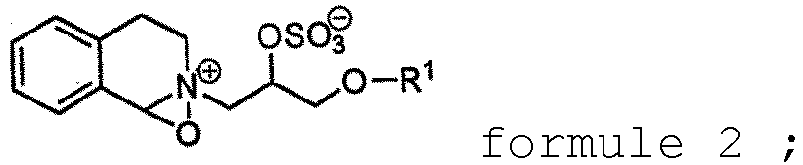 c) leurs mélanges,dans lesquelles chaque R1 est indépendamment un groupe alkyle ramifié contenant de 3 à 24 atomes de carbone ou un groupe alkyle linéaire contenant de 1 à 24 atomes de carbone ; et la récupération du variant, de préférence dans laquelle R1 est indépendamment choisi dans le groupe constitué par 2-propylheptyle, 2-butyloctyle, 2-pentylnonyle, 2-hexyldécyle, n-dodécyle, n-tétradécyle, n-hexadécyle, n-octadécyle, isononyle, iso-décyle, iso-tridécyle et iso-pentadécyle.
 - Polynucléotide isolé codant pour le variant selon l'une quelconque des revendications 4 à 6.
- Construction d'acide nucléique comprenant le polynucléotide selon la revendication 7.
- Vecteur d'expression comprenant le polynucléotide selon la revendication 7.
- Cellule hôte comprenant le polynucléotide selon la revendication 7.
- Procédé de production du variant selon l'une quelconque des revendications 4 à 6, comprenant :a) la culture de la cellule hôte de la revendication 10 dans des conditions appropriées pour l'expression du variant ; etb) la récupération du variant.
Priority Applications (1)
| Application Number | Priority Date | Filing Date | Title |
|---|---|---|---|
| EP25164023.1A EP4570895A3 (fr) | 2012-02-03 | 2013-01-25 | Variantes de la lipase et polynucléotides les codant |
Applications Claiming Priority (4)
| Application Number | Priority Date | Filing Date | Title |
|---|---|---|---|
| EP12153817 | 2012-02-03 | ||
| PCT/EP2013/051417 WO2013113622A1 (fr) | 2012-02-03 | 2013-01-25 | Variants de lipase et polynucléotides codant pour ceux-ci |
| EP17158945.0A EP3211074B1 (fr) | 2012-02-03 | 2013-01-25 | Variantes de la lipase et polynucléotides les codant |
| EP13702608.4A EP2809779B1 (fr) | 2012-02-03 | 2013-01-25 | Variantes de la lipase et polynucléotides les codant |
Related Parent Applications (2)
| Application Number | Title | Priority Date | Filing Date |
|---|---|---|---|
| EP17158945.0A Division EP3211074B1 (fr) | 2012-02-03 | 2013-01-25 | Variantes de la lipase et polynucléotides les codant |
| EP13702608.4A Division EP2809779B1 (fr) | 2012-02-03 | 2013-01-25 | Variantes de la lipase et polynucléotides les codant |
Related Child Applications (1)
| Application Number | Title | Priority Date | Filing Date |
|---|---|---|---|
| EP25164023.1A Division EP4570895A3 (fr) | 2012-02-03 | 2013-01-25 | Variantes de la lipase et polynucléotides les codant |
Publications (4)
| Publication Number | Publication Date |
|---|---|
| EP3696265A2 EP3696265A2 (fr) | 2020-08-19 |
| EP3696265A3 EP3696265A3 (fr) | 2020-10-07 |
| EP3696265B1 true EP3696265B1 (fr) | 2025-03-19 |
| EP3696265C0 EP3696265C0 (fr) | 2025-03-19 |
Family
ID=47664263
Family Applications (4)
| Application Number | Title | Priority Date | Filing Date |
|---|---|---|---|
| EP20157646.9A Active EP3696265B1 (fr) | 2012-02-03 | 2013-01-25 | Variantes de la lipase et polynucléotides les codant |
| EP17158945.0A Active EP3211074B1 (fr) | 2012-02-03 | 2013-01-25 | Variantes de la lipase et polynucléotides les codant |
| EP25164023.1A Pending EP4570895A3 (fr) | 2012-02-03 | 2013-01-25 | Variantes de la lipase et polynucléotides les codant |
| EP13702608.4A Active EP2809779B1 (fr) | 2012-02-03 | 2013-01-25 | Variantes de la lipase et polynucléotides les codant |
Family Applications After (3)
| Application Number | Title | Priority Date | Filing Date |
|---|---|---|---|
| EP17158945.0A Active EP3211074B1 (fr) | 2012-02-03 | 2013-01-25 | Variantes de la lipase et polynucléotides les codant |
| EP25164023.1A Pending EP4570895A3 (fr) | 2012-02-03 | 2013-01-25 | Variantes de la lipase et polynucléotides les codant |
| EP13702608.4A Active EP2809779B1 (fr) | 2012-02-03 | 2013-01-25 | Variantes de la lipase et polynucléotides les codant |
Country Status (9)
| Country | Link |
|---|---|
| US (3) | US9394530B2 (fr) |
| EP (4) | EP3696265B1 (fr) |
| JP (4) | JP2015512613A (fr) |
| CN (2) | CN108148823B (fr) |
| AR (2) | AR089828A1 (fr) |
| DK (1) | DK3211074T3 (fr) |
| ES (1) | ES2794644T3 (fr) |
| MX (3) | MX391773B (fr) |
| WO (1) | WO2013113622A1 (fr) |
Families Citing this family (15)
| Publication number | Priority date | Publication date | Assignee | Title |
|---|---|---|---|---|
| US20140014137A1 (en) | 2009-09-18 | 2014-01-16 | Ecolab Usa Inc. | Treatment of non-trans fats with acidic tetra sodium l-glutamic acid, n, n-diacetic acid (glda) |
| US10336016B2 (en) | 2011-07-22 | 2019-07-02 | Ticona Llc | Extruder and method for producing high fiber density resin structures |
| DK3211074T3 (da) * | 2012-02-03 | 2020-06-02 | Novozymes As | Lipasevarianter og polynukleotider, som koder for dem |
| US10253281B2 (en) | 2012-08-20 | 2019-04-09 | Ecolab Usa Inc. | Method of washing textile articles |
| WO2015049370A1 (fr) | 2013-10-03 | 2015-04-09 | Novozymes A/S | Composition détergente et utilisation de celle-ci |
| ES2797725T3 (es) * | 2014-12-22 | 2020-12-03 | Novozymes As | Composiciones detergentes, variantes de lipasa y polinucleótidos que codifican las mismas |
| JP6845142B2 (ja) * | 2015-01-29 | 2021-03-17 | エコラボ ユーエスエー インコーポレイティド | 布地の染み処理のための組成物及び方法 |
| US10760037B2 (en) | 2015-07-03 | 2020-09-01 | Novozymes A/S | Sulfite compositions |
| EP3320089B1 (fr) * | 2015-07-06 | 2021-06-16 | Novozymes A/S | Variantes de la lipase et polynucleotides les codant |
| DE102016204812A1 (de) * | 2016-03-23 | 2017-09-28 | Henkel Ag & Co. Kgaa | Flüssigformulierung enthaltend eine neue Lipase |
| CN108034647B (zh) * | 2018-01-31 | 2020-08-04 | 江南大学 | 一种饱和脂肪酸特异性脂肪酶突变体及其应用 |
| CN108018273B (zh) * | 2018-01-31 | 2020-05-08 | 江南大学 | 一种长链不饱和脂肪酸特异性脂肪酶突变体及其应用 |
| CN111757930A (zh) * | 2018-02-08 | 2020-10-09 | 诺维信公司 | 脂肪酶变体及其组合物 |
| WO2021037878A1 (fr) * | 2019-08-27 | 2021-03-04 | Novozymes A/S | Composition comprenant une lipase |
| US20250311734A1 (en) | 2022-05-14 | 2025-10-09 | Novozymes A/S | Compositions and Methods for Preventing, Treating, Suppressing and/or Eliminatting Phytopathogenic Infestations and Infections |
Family Cites Families (53)
| Publication number | Priority date | Publication date | Assignee | Title |
|---|---|---|---|---|
| GR76237B (fr) | 1981-08-08 | 1984-08-04 | Procter & Gamble | |
| DK122686D0 (da) | 1986-03-17 | 1986-03-17 | Novo Industri As | Fremstilling af proteiner |
| US5223409A (en) | 1988-09-02 | 1993-06-29 | Protein Engineering Corp. | Directed evolution of novel binding proteins |
| IL97645A (en) | 1990-03-23 | 1997-03-18 | Gist Brocades Nv | Production of enzymes in seeds and their use |
| US6395966B1 (en) | 1990-08-09 | 2002-05-28 | Dekalb Genetics Corp. | Fertile transgenic maize plants containing a gene encoding the pat protein |
| US5869438A (en) * | 1990-09-13 | 1999-02-09 | Novo Nordisk A/S | Lipase variants |
| DK0548228T3 (da) * | 1990-09-13 | 1999-05-10 | Novo Nordisk As | Lipasevarianter |
| IL99552A0 (en) | 1990-09-28 | 1992-08-18 | Ixsys Inc | Compositions containing procaryotic cells,a kit for the preparation of vectors useful for the coexpression of two or more dna sequences and methods for the use thereof |
| FR2704860B1 (fr) | 1993-05-05 | 1995-07-13 | Pasteur Institut | Sequences de nucleotides du locus cryiiia pour le controle de l'expression de sequences d'adn dans un hote cellulaire. |
| US5360569A (en) | 1993-11-12 | 1994-11-01 | Lever Brothers Company, Division Of Conopco, Inc. | Activation of bleach precursors with catalytic imine quaternary salts |
| US5360568A (en) | 1993-11-12 | 1994-11-01 | Lever Brothers Company, Division Of Conopco, Inc. | Imine quaternary salts as bleach catalysts |
| DE4343591A1 (de) | 1993-12-21 | 1995-06-22 | Evotec Biosystems Gmbh | Verfahren zum evolutiven Design und Synthese funktionaler Polymere auf der Basis von Formenelementen und Formencodes |
| US5605793A (en) | 1994-02-17 | 1997-02-25 | Affymax Technologies N.V. | Methods for in vitro recombination |
| JP3649338B2 (ja) | 1994-06-03 | 2005-05-18 | ノボザイムス バイオテック,インコーポレイティド | 精製されたマイセリオフトラ・ラッカーゼ及びそれをコードする核酸 |
| ATE294871T1 (de) | 1994-06-30 | 2005-05-15 | Novozymes Biotech Inc | Nicht-toxisches, nicht-toxigenes, nicht- pathogenes fusarium expressionssystem und darin zu verwendende promotoren und terminatoren |
| US5534179A (en) | 1995-02-03 | 1996-07-09 | Procter & Gamble | Detergent compositions comprising multiperacid-forming bleach activators |
| US5597936A (en) | 1995-06-16 | 1997-01-28 | The Procter & Gamble Company | Method for manufacturing cobalt catalysts |
| US5576282A (en) | 1995-09-11 | 1996-11-19 | The Procter & Gamble Company | Color-safe bleach boosters, compositions and laundry methods employing same |
| US5817614A (en) | 1996-08-29 | 1998-10-06 | Procter & Gamble Company | Color-safe bleach boosters, compositions and laundry methods employing same |
| EP0934389B1 (fr) | 1996-10-18 | 2003-12-10 | The Procter & Gamble Company | Compositions detergentes |
| US5753599A (en) | 1996-12-03 | 1998-05-19 | Lever Brothers Company, Division Of Conopco, Inc. | Thiadiazole dioxides as bleach enhancers |
| WO1998039335A1 (fr) | 1997-03-07 | 1998-09-11 | The Procter & Gamble Company | Procede ameliore de production de macropolycycles pontes transversalement |
| US6218351B1 (en) | 1998-03-06 | 2001-04-17 | The Procter & Gamble Compnay | Bleach compositions |
| ES2242996T3 (es) | 1997-03-07 | 2005-11-16 | THE PROCTER & GAMBLE COMPANY | Composiciones de blanqueo. |
| US5955310A (en) | 1998-02-26 | 1999-09-21 | Novo Nordisk Biotech, Inc. | Methods for producing a polypeptide in a bacillus cell |
| PH11999002190B1 (en) | 1998-09-01 | 2007-08-06 | Unilever Nv | Composition and method for bleaching a substrate |
| AU6188599A (en) | 1998-10-26 | 2000-05-15 | Novozymes A/S | Constructing and screening a dna library of interest in filamentous fungal cells |
| EP1135392A2 (fr) | 1998-11-30 | 2001-09-26 | The Procter & Gamble Company | Procede de preparation de tetraaza macrocycles pontes transversalement |
| AU2610500A (en) * | 1999-01-14 | 2000-08-01 | Procter & Gamble Company, The | Detergent compositions comprising a pectate lyase and a bleach system |
| CN1940067A (zh) | 1999-03-22 | 2007-04-04 | 诺沃奇梅兹有限公司 | 用于在真菌细胞中表达基因的启动子 |
| EP2278000A1 (fr) * | 1999-03-31 | 2011-01-26 | Novozymes A/S | Variante de lipase |
| KR20010108379A (ko) * | 1999-03-31 | 2001-12-07 | 피아 스타르 | 리파제 변이체 |
| EP1117052A1 (fr) | 2000-01-17 | 2001-07-18 | Anders Juul Eilersen | Méthode de transfert d'objets ou d'unités au détail |
| DE10058645A1 (de) | 2000-11-25 | 2002-05-29 | Clariant Gmbh | Verwendung von cyclischen Zuckerketonen als Katalysatoren für Persauerstoffverbindungen |
| WO2002042740A1 (fr) | 2000-11-27 | 2002-05-30 | Novozymes A/S | Test automatise de contrainte mecanique pour le criblage d'ingredients de nettoyage |
| US7151204B2 (en) | 2001-01-09 | 2006-12-19 | Monsanto Technology Llc | Maize chloroplast aldolase promoter compositions and methods for use thereof |
| CA2431972C (fr) * | 2001-01-10 | 2012-10-23 | Novozymes A/S | Variants d'enzyme lipolytique |
| US7314712B2 (en) | 2001-07-27 | 2008-01-01 | The United States Of America As Represented By The Secretary Of The Department Of Health And Human Services | Systems for in vivo site-directed mutagenesis using oligonucleotides |
| DK2295556T3 (en) * | 2002-01-16 | 2015-01-26 | Novozymes As | Lipolytic Enzyme Variants and Method of Preparation thereof. |
| US7557076B2 (en) * | 2002-06-06 | 2009-07-07 | The Procter & Gamble Company | Organic catalyst with enhanced enzyme compatibility |
| US20060251763A1 (en) * | 2003-06-19 | 2006-11-09 | Patkar Shamkant A | Phospholipase variants |
| GB0325432D0 (en) | 2003-10-31 | 2003-12-03 | Unilever Plc | Ligand and complex for catalytically bleaching a substrate |
| US20050113246A1 (en) | 2003-11-06 | 2005-05-26 | The Procter & Gamble Company | Process of producing an organic catalyst |
| EP2298872A3 (fr) * | 2004-09-30 | 2011-08-10 | Novozymes A/S | Polypeptides dotés d'activité lipase et polynucléotides les codant |
| EP1712610B1 (fr) * | 2005-02-22 | 2013-11-06 | The Procter and Gamble Company | Compositions de lavage |
| EP1693440A1 (fr) | 2005-02-22 | 2006-08-23 | The Procter & Gamble Company | Compositions de lavage |
| JP4837733B2 (ja) * | 2005-06-17 | 2011-12-14 | ザ プロクター アンド ギャンブル カンパニー | 強化された酵素適合性を有する有機触媒 |
| JP2009523900A (ja) * | 2006-01-23 | 2009-06-25 | ザ プロクター アンド ギャンブル カンパニー | リパーゼと漂白剤触媒を含む組成物 |
| US8273348B2 (en) | 2006-12-21 | 2012-09-25 | Novozymes A/S | Lipase variants for pharmaceutical use |
| US8368348B2 (en) | 2007-09-20 | 2013-02-05 | Semaconnect, Inc. | Automated recharging system |
| MX2010007242A (es) * | 2008-01-03 | 2010-10-05 | Abbott Products Gmbh | Composiciones farmaceuticas que comprenden granulos de lipasa microbiana purificada y metodos para prevenir o tratar trastornos digestivos. |
| EP2247720A2 (fr) * | 2008-02-29 | 2010-11-10 | The Procter & Gamble Company | Composition de détergent contenant une lipase |
| DK3211074T3 (da) * | 2012-02-03 | 2020-06-02 | Novozymes As | Lipasevarianter og polynukleotider, som koder for dem |
-
2013
- 2013-01-25 DK DK17158945.0T patent/DK3211074T3/da active
- 2013-01-25 MX MX2018001443A patent/MX391773B/es unknown
- 2013-01-25 ES ES17158945T patent/ES2794644T3/es active Active
- 2013-01-25 JP JP2014555157A patent/JP2015512613A/ja not_active Withdrawn
- 2013-01-25 EP EP20157646.9A patent/EP3696265B1/fr active Active
- 2013-01-25 CN CN201810015976.4A patent/CN108148823B/zh active Active
- 2013-01-25 EP EP17158945.0A patent/EP3211074B1/fr active Active
- 2013-01-25 MX MX2014009052A patent/MX353911B/es active IP Right Grant
- 2013-01-25 WO PCT/EP2013/051417 patent/WO2013113622A1/fr not_active Ceased
- 2013-01-25 US US14/372,858 patent/US9394530B2/en active Active
- 2013-01-25 EP EP25164023.1A patent/EP4570895A3/fr active Pending
- 2013-01-25 EP EP13702608.4A patent/EP2809779B1/fr active Active
- 2013-01-25 CN CN201380007787.8A patent/CN104080908B/zh active Active
- 2013-01-28 AR ARP130100252A patent/AR089828A1/es active IP Right Grant
-
2014
- 2014-07-25 MX MX2021013104A patent/MX2021013104A/es unknown
-
2016
- 2016-06-09 US US15/177,879 patent/US10119128B2/en active Active
-
2018
- 2018-05-09 JP JP2018090736A patent/JP6751113B2/ja active Active
- 2018-09-26 US US16/142,351 patent/US10927356B2/en active Active
-
2020
- 2020-02-28 JP JP2020033861A patent/JP7194134B2/ja active Active
-
2021
- 2021-07-01 AR ARP210101858A patent/AR122864A2/es unknown
-
2022
- 2022-04-21 JP JP2022070278A patent/JP7382443B2/ja active Active
Also Published As
Similar Documents
| Publication | Publication Date | Title |
|---|---|---|
| EP3211074B1 (fr) | Variantes de la lipase et polynucléotides les codant | |
| US12480108B2 (en) | Methods of reducing odor | |
| RU2612215C2 (ru) | Композиции, содержащие липазы, и способы обработки поверхности | |
| EP2997139B1 (fr) | Compositions de détergent qui comprennent des varianrs de la lipase de humicola lanuginosa | |
| WO2016102356A1 (fr) | Compositions détergentes, variants de lipase et polynucléotides codant pour ceux-ci | |
| CN103649307A (zh) | α-淀粉酶变体 | |
| JP2009523425A (ja) | 洗剤組成物 | |
| EP3485008A1 (fr) | Variantes de lipase, polynucléotides les codant et leur utilisation | |
| EP3749760A1 (fr) | Variants de lipase et compositions en comprenant | |
| EP3455352B1 (fr) | Polypeptidiques variants aux performances améliorées et leur utilisation |
Legal Events
| Date | Code | Title | Description |
|---|---|---|---|
| PUAI | Public reference made under article 153(3) epc to a published international application that has entered the european phase |
Free format text: ORIGINAL CODE: 0009012 |
|
| STAA | Information on the status of an ep patent application or granted ep patent |
Free format text: STATUS: THE APPLICATION HAS BEEN PUBLISHED |
|
| AC | Divisional application: reference to earlier application |
Ref document number: 3211074 Country of ref document: EP Kind code of ref document: P Ref document number: 2809779 Country of ref document: EP Kind code of ref document: P |
|
| AK | Designated contracting states |
Kind code of ref document: A2 Designated state(s): AL AT BE BG CH CY CZ DE DK EE ES FI FR GB GR HR HU IE IS IT LI LT LU LV MC MK MT NL NO PL PT RO RS SE SI SK SM TR |
|
| PUAL | Search report despatched |
Free format text: ORIGINAL CODE: 0009013 |
|
| AK | Designated contracting states |
Kind code of ref document: A3 Designated state(s): AL AT BE BG CH CY CZ DE DK EE ES FI FR GB GR HR HU IE IS IT LI LT LU LV MC MK MT NL NO PL PT RO RS SE SI SK SM TR |
|
| RIC1 | Information provided on ipc code assigned before grant |
Ipc: C11D 3/386 20060101ALI20200901BHEP Ipc: C07K 14/37 20060101ALI20200901BHEP Ipc: C12N 9/20 20060101AFI20200901BHEP |
|
| STAA | Information on the status of an ep patent application or granted ep patent |
Free format text: STATUS: REQUEST FOR EXAMINATION WAS MADE |
|
| 17P | Request for examination filed |
Effective date: 20210407 |
|
| RBV | Designated contracting states (corrected) |
Designated state(s): AL AT BE BG CH CY CZ DE DK EE ES FI FR GB GR HR HU IE IS IT LI LT LU LV MC MK MT NL NO PL PT RO RS SE SI SK SM TR |
|
| STAA | Information on the status of an ep patent application or granted ep patent |
Free format text: STATUS: EXAMINATION IS IN PROGRESS |
|
| 17Q | First examination report despatched |
Effective date: 20230517 |
|
| GRAP | Despatch of communication of intention to grant a patent |
Free format text: ORIGINAL CODE: EPIDOSNIGR1 |
|
| STAA | Information on the status of an ep patent application or granted ep patent |
Free format text: STATUS: GRANT OF PATENT IS INTENDED |
|
| INTG | Intention to grant announced |
Effective date: 20241017 |
|
| GRAS | Grant fee paid |
Free format text: ORIGINAL CODE: EPIDOSNIGR3 |
|
| GRAA | (expected) grant |
Free format text: ORIGINAL CODE: 0009210 |
|
| STAA | Information on the status of an ep patent application or granted ep patent |
Free format text: STATUS: THE PATENT HAS BEEN GRANTED |
|
| AC | Divisional application: reference to earlier application |
Ref document number: 2809779 Country of ref document: EP Kind code of ref document: P Ref document number: 3211074 Country of ref document: EP Kind code of ref document: P |
|
| AK | Designated contracting states |
Kind code of ref document: B1 Designated state(s): AL AT BE BG CH CY CZ DE DK EE ES FI FR GB GR HR HU IE IS IT LI LT LU LV MC MK MT NL NO PL PT RO RS SE SI SK SM TR |
|
| REG | Reference to a national code |
Ref country code: GB Ref legal event code: FG4D |
|
| REG | Reference to a national code |
Ref country code: CH Ref legal event code: EP |
|
| REG | Reference to a national code |
Ref country code: DE Ref legal event code: R096 Ref document number: 602013086601 Country of ref document: DE |
|
| REG | Reference to a national code |
Ref country code: IE Ref legal event code: FG4D |
|
| U01 | Request for unitary effect filed |
Effective date: 20250324 |
|
| U07 | Unitary effect registered |
Designated state(s): AT BE BG DE DK EE FI FR IT LT LU LV MT NL PT RO SE SI Effective date: 20250328 |
|
| PG25 | Lapsed in a contracting state [announced via postgrant information from national office to epo] |
Ref country code: RS Free format text: LAPSE BECAUSE OF FAILURE TO SUBMIT A TRANSLATION OF THE DESCRIPTION OR TO PAY THE FEE WITHIN THE PRESCRIBED TIME-LIMIT Effective date: 20250619 |
|
| PG25 | Lapsed in a contracting state [announced via postgrant information from national office to epo] |
Ref country code: NO Free format text: LAPSE BECAUSE OF FAILURE TO SUBMIT A TRANSLATION OF THE DESCRIPTION OR TO PAY THE FEE WITHIN THE PRESCRIBED TIME-LIMIT Effective date: 20250619 |
|
| PG25 | Lapsed in a contracting state [announced via postgrant information from national office to epo] |
Ref country code: HR Free format text: LAPSE BECAUSE OF FAILURE TO SUBMIT A TRANSLATION OF THE DESCRIPTION OR TO PAY THE FEE WITHIN THE PRESCRIBED TIME-LIMIT Effective date: 20250319 |
|
| PG25 | Lapsed in a contracting state [announced via postgrant information from national office to epo] |
Ref country code: GR Free format text: LAPSE BECAUSE OF FAILURE TO SUBMIT A TRANSLATION OF THE DESCRIPTION OR TO PAY THE FEE WITHIN THE PRESCRIBED TIME-LIMIT Effective date: 20250620 |
|
| PG25 | Lapsed in a contracting state [announced via postgrant information from national office to epo] |
Ref country code: SM Free format text: LAPSE BECAUSE OF FAILURE TO SUBMIT A TRANSLATION OF THE DESCRIPTION OR TO PAY THE FEE WITHIN THE PRESCRIBED TIME-LIMIT Effective date: 20250319 |
|
| PG25 | Lapsed in a contracting state [announced via postgrant information from national office to epo] |
Ref country code: ES Free format text: LAPSE BECAUSE OF FAILURE TO SUBMIT A TRANSLATION OF THE DESCRIPTION OR TO PAY THE FEE WITHIN THE PRESCRIBED TIME-LIMIT Effective date: 20250319 |
|
| PG25 | Lapsed in a contracting state [announced via postgrant information from national office to epo] |
Ref country code: PL Free format text: LAPSE BECAUSE OF FAILURE TO SUBMIT A TRANSLATION OF THE DESCRIPTION OR TO PAY THE FEE WITHIN THE PRESCRIBED TIME-LIMIT Effective date: 20250319 |
|
| PG25 | Lapsed in a contracting state [announced via postgrant information from national office to epo] |
Ref country code: CZ Free format text: LAPSE BECAUSE OF FAILURE TO SUBMIT A TRANSLATION OF THE DESCRIPTION OR TO PAY THE FEE WITHIN THE PRESCRIBED TIME-LIMIT Effective date: 20250319 |
|
| PG25 | Lapsed in a contracting state [announced via postgrant information from national office to epo] |
Ref country code: SK Free format text: LAPSE BECAUSE OF FAILURE TO SUBMIT A TRANSLATION OF THE DESCRIPTION OR TO PAY THE FEE WITHIN THE PRESCRIBED TIME-LIMIT Effective date: 20250319 |
|
| PG25 | Lapsed in a contracting state [announced via postgrant information from national office to epo] |
Ref country code: IS Free format text: LAPSE BECAUSE OF FAILURE TO SUBMIT A TRANSLATION OF THE DESCRIPTION OR TO PAY THE FEE WITHIN THE PRESCRIBED TIME-LIMIT Effective date: 20250719 |
|
| PGFP | Annual fee paid to national office [announced via postgrant information from national office to epo] |
Ref country code: GB Payment date: 20251218 Year of fee payment: 14 |
|
| PLBE | No opposition filed within time limit |
Free format text: ORIGINAL CODE: 0009261 |
|
| STAA | Information on the status of an ep patent application or granted ep patent |
Free format text: STATUS: NO OPPOSITION FILED WITHIN TIME LIMIT |
|
| REG | Reference to a national code |
Ref country code: CH Ref legal event code: L10 Free format text: ST27 STATUS EVENT CODE: U-0-0-L10-L00 (AS PROVIDED BY THE NATIONAL OFFICE) Effective date: 20260128 |
|
| 26N | No opposition filed |
Effective date: 20251222 |
|
| U20 | Renewal fee for the european patent with unitary effect paid |
Year of fee payment: 14 Effective date: 20260202 |