EP3697165A1 - Kommunikationsverfahren und -vorrichtung - Google Patents
Kommunikationsverfahren und -vorrichtung Download PDFInfo
- Publication number
- EP3697165A1 EP3697165A1 EP18872385.2A EP18872385A EP3697165A1 EP 3697165 A1 EP3697165 A1 EP 3697165A1 EP 18872385 A EP18872385 A EP 18872385A EP 3697165 A1 EP3697165 A1 EP 3697165A1
- Authority
- EP
- European Patent Office
- Prior art keywords
- random access
- access response
- message format
- terminal device
- control information
- Prior art date
- Legal status (The legal status is an assumption and is not a legal conclusion. Google has not performed a legal analysis and makes no representation as to the accuracy of the status listed.)
- Pending
Links
Images






Classifications
-
- H—ELECTRICITY
- H04—ELECTRIC COMMUNICATION TECHNIQUE
- H04W—WIRELESS COMMUNICATION NETWORKS
- H04W12/00—Security arrangements; Authentication; Protecting privacy or anonymity
- H04W12/06—Authentication
-
- H—ELECTRICITY
- H04—ELECTRIC COMMUNICATION TECHNIQUE
- H04W—WIRELESS COMMUNICATION NETWORKS
- H04W74/00—Wireless channel access
- H04W74/08—Non-scheduled access, e.g. ALOHA
- H04W74/0833—Random access procedures, e.g. with 4-step access
-
- H—ELECTRICITY
- H04—ELECTRIC COMMUNICATION TECHNIQUE
- H04W—WIRELESS COMMUNICATION NETWORKS
- H04W74/00—Wireless channel access
- H04W74/002—Transmission of channel access control information
-
- H—ELECTRICITY
- H04—ELECTRIC COMMUNICATION TECHNIQUE
- H04W—WIRELESS COMMUNICATION NETWORKS
- H04W74/00—Wireless channel access
- H04W74/002—Transmission of channel access control information
- H04W74/006—Transmission of channel access control information in the downlink, i.e. towards the terminal
-
- H—ELECTRICITY
- H04—ELECTRIC COMMUNICATION TECHNIQUE
- H04W—WIRELESS COMMUNICATION NETWORKS
- H04W74/00—Wireless channel access
- H04W74/08—Non-scheduled access, e.g. ALOHA
- H04W74/0833—Random access procedures, e.g. with 4-step access
- H04W74/0836—Random access procedures, e.g. with 4-step access with 2-step access
-
- H—ELECTRICITY
- H04—ELECTRIC COMMUNICATION TECHNIQUE
- H04W—WIRELESS COMMUNICATION NETWORKS
- H04W76/00—Connection management
- H04W76/20—Manipulation of established connections
- H04W76/27—Transitions between radio resource control [RRC] states
Definitions
- This application relates to the field of communications technologies, and in particular, to a communication method and a communications apparatus.
- radio resource control In a long term evolution (long term evolution, LTE) communications system, radio resource control (radio resource control, RRC) generally has two states: a connected state (connected state) and an idle state (idle state).
- RRC radio resource control
- a connected state connected state
- an idle state idle state
- a new state namely, an inactive (inactive) state
- 5G fifth-generation mobile communications system
- a new state namely, an inactive (inactive) state
- AS context access stratum context
- FIG. 1 is a schematic diagram of a random access procedure in the LTE system. The terminal device first switches from the idle state to the connected state through four times of interaction, and then sends data. In the inactive state, there is no corresponding solution for how the terminal device performs data communication with a network side.
- This application provides a communication method and a communications apparatus, to ensure implementation of data communication between a terminal device in an inactive state and a network side.
- a communication method includes: sending, by a terminal device, a random access request to a network device, where the random access request includes a random access preamble, control information, and user data, the terminal device is in an inactive state, and the control information includes at least a connection identifier and an authentication identifier; receiving, by the terminal device, a random access response sent by the network device; and performing, by the terminal device, a state transition AND/OR operation corresponding to a message format of the random access response.
- the terminal device in the inactive state adds the connection identifier and the authentication identifier to the random access request, to ensure implementation of data communication between the terminal device and a network side.
- the network device does not obtain the connection identifier or the authentication identifier, the network device cannot know a sender of the user data in the random access request, and discards the user data. In this case, current data communication initiated by the terminal device in the inactive state is invalid data communication, in other words, data communication between the terminal device and the network device fails.
- the performing, by the terminal device, a state transition AND/OR operation corresponding to a message format of the random access response includes at least one of the following operations: switching, by the terminal device, to a connected state based on the random access response in a first message format; maintaining, by the terminal device, the inactive state and adjusting uplink timing based on the random access response in a second message format; maintaining, by the terminal device, the inactive state based on the random access response in a third message format, where data corresponding to the random access response in the third message format is successfully sent; maintaining, by the terminal device, the inactive state or switching to an idle state based on the random access response in a fourth message format, where data corresponding to the random access response in the fourth message format fails to be sent; sending, by the terminal device, a radio resource control RRC connection request to the network device based on the random access response in a fifth message format; and resending, by the terminal device, the random access request to the network device based on the random access response in a sixth
- the method further includes: obtaining, by the terminal device, a transmission parameter, where the transmission parameter includes at least one of the following parameters: a time-frequency resource used to transmit the control information and the user data, a modulation and coding scheme parameter, an encryption parameter, a cyclic prefix length, and a reference signal parameter; and the sending, by a terminal device, a random access request to a network device includes: sending, by the terminal device, the control information and the user data in the random access request by using the transmission parameter.
- the method further includes: obtaining, by the terminal device, a random access parameter, where the random access parameter includes at least one of the following parameters: a random access preamble sequence generation parameter and a corresponding time-frequency resource, a random access response receive window parameter, a beam-related parameter, a random access preamble sequence subset division manner, and a backoff parameter.
- the random access parameter includes at least one of the following parameters: a random access preamble sequence generation parameter and a corresponding time-frequency resource, a random access response receive window parameter, a beam-related parameter, a random access preamble sequence subset division manner, and a backoff parameter.
- the method further includes: determining, by the terminal device, the message format of the random access response based on a message format field in the random access response.
- the message format field is set in the random access response, and the terminal device may clearly know the message format of the random access response based on the message format field.
- the method further includes: obtaining, by the terminal device, a transport block size corresponding to the random access response; and determining, by the terminal device, the message format of the random access response based on the transport block size, where each message format of the random access response corresponds to one transport block size, and different message formats correspond to different transport block sizes.
- the terminal device may determine the message format of the random access response based on the transport block size corresponding to the random access response, so that signaling overheads are small.
- the method further includes: receiving, by the terminal device, downlink control information corresponding to the random access response, where the downlink control information carries message format information of the random access response; and determining, by the terminal device, the message format of the random access response based on the downlink control information.
- the message format information of the random access response is carried in the downlink control information, and the terminal device may clearly know the message format of the random access response based on the message format information.
- the method further includes: determining, by the terminal device, the message format of the random access response based on a time window in which the terminal device receives the random access response, where each message format of the random access response corresponds to one time window, and different message formats correspond to different time windows.
- the network device sends the random access response in different time windows, and the terminal device may determine the message format of the random access response based on the time window in which the terminal device receives the random access response, so that signaling overheads are small.
- a communication method includes: receiving, by a network device, a random access request sent by a terminal device, where the random access request includes a random access preamble, control information, and user data, the terminal device is in an inactive state, and the control information includes at least a connection identifier and an authentication identifier; and sending, by the network device, a random access response to the terminal device, where the random access response has at least two message formats, and each message format corresponds to one state transition AND/OR operation.
- the network device receives the random access request sent by the terminal device in the inactive state, and the random access request includes the connection identifier and the authentication identifier, so that implementation of data communication between the terminal device and a network side is ensured. If the network device does not obtain the connection identifier or the authentication identifier, the network device cannot know a sender of the user data in the random access request, and discards the user data. In this case, current data communication initiated by the terminal device in the inactive state is invalid data communication, in other words, data communication between the terminal device and the network device fails.
- the method further includes: determining, by the network device, a message format of the random access response based on at least one of the following factors: a detection result of the random access preamble, a decoding and parsing result of the control information and the user data, and a current network status.
- the message format of the random access response is determined based on at least one of the detection result of the random access preamble, the decoding and parsing result of the control information and the user data, and the current network status.
- the network device indicates the message format of the random access response in at least one of the following manners: the random access response includes a message format field, and the message format field is used to indicate the message format of the random access response; the network device further sends first downlink control information corresponding to the random access response, where the first downlink control information includes a time-frequency resource and a modulation and coding scheme that are corresponding to the random access response, the time-frequency resource and the modulation and coding scheme are used to determine a transport block size corresponding to the random access response, and each transport block size corresponds to one message format; and the network device further sends second downlink control information corresponding to the random access response, where the second downlink control information includes message format information of the random access response.
- the message format field is set in the random access response, and the terminal device can clearly know the message format of the random access response based on the message format field; or the terminal device may determine the message format of the random access response based on the transport block size corresponding to the random access response, so that signaling overheads are small; or the message format information of the random access response is carried in DCI, and the terminal device can clearly know the message format of the random access response based on the message format information.
- the receiving, by a network device, a random access request sent by a terminal device includes: receiving, by the network device, a plurality of random access requests separately sent by the terminal device by using a plurality of beams; the method further includes: selecting, by the network device, one random access request from the plurality of random access requests based on a specified signal quality condition; and the sending, by the network device, a random access response to the terminal device includes: sending, by the network device, the random access response corresponding to the selected random access request.
- the terminal device sends the plurality of random access requests by using the plurality of beams, and the network device may select, from the plurality of random access requests, a random access request that meets the signal quality condition, thereby improving random access reliability.
- the message format of the random access response is specifically one of the following message formats: the first message format, where the random access response in the first message format includes at least one of the following fields: a connection identifier, an uplink timing advance, a cell radio network temporary identifier, and a radio resource control message; the second message format, where the random access response in the second message format includes at least one of the following fields: a connection identifier and an uplink timing advance; the third message format, where the random access response in the third message format includes at least one of the following field: a connection identifier; the fourth message format, where the random access response in the fourth message format includes at least one of the following fields: a connection identifier and a radio resource control connection reject indication; the fifth message format, where the random access response in the fifth message format includes at least one of the following fields: a random access preamble sequence identifier, an uplink timing advance, uplink scheduling information, a cell radio network temporary identifier, and a
- the connection identifier is used to identify a radio resource control connection before the terminal device switches from the connected state to the inactive state; or the connection identifier is used to identify access stratum context information that is of a radio resource control connection and that is stored when the terminal device switches from the connected state to the inactive state.
- the terminal device in the inactive state adds the connection identifier and the authentication identifier to the random access request, so that a data bearer can be set up in a random access procedure, thereby implementing data communication between the terminal device and the network side.
- the authentication identifier is used by the network device to perform identity authentication on the terminal device.
- control information may further include at least one of the following information: a data transmission reason and a switch-to-the-connected-state request.
- a communications apparatus can implement the foregoing communication method.
- the communications apparatus may be a chip (such as a baseband chip or a communications chip) or a device (such as a terminal device).
- the foregoing method may be implemented by using software or hardware, or by hardware executing corresponding software.
- a processor and a memory are included in a structure of the communications apparatus.
- the processor is configured to support the apparatus in performing a corresponding function in the foregoing communication method.
- the memory is configured to be coupled to the processor, and stores a program (an instruction) and/or data necessary for the apparatus.
- the communications apparatus may further include a communications interface, configured to support communication between the apparatus and another network element.
- the communications apparatus may include a sending unit, a receiving unit, and a processing unit.
- the sending unit and the receiving unit are respectively configured to implement a sending function and a receiving function in the foregoing method, and the processing unit is configured to implement a processing function in the foregoing method.
- the sending unit is configured to send a random access request to a network device, where the random access request includes a random access preamble, control information, and user data, the communications apparatus is in an inactive state, and the control information includes at least a connection identifier and an authentication identifier; and the receiving unit is configured to receive a random access response sent by the network device; and the processing unit is configured to perform a state transition AND/OR operation corresponding to a message format of the random access response.
- the message format of the random access response is specifically one of the following message formats: a first message format, where the random access response in the first message format includes at least one of the following fields: a connection identifier, an uplink timing advance, a cell radio network temporary identifier, and a radio resource control message; a second message format, where the random access response in the second message format includes at least one of the following fields: a connection identifier and an uplink timing advance; a third message format, where the random access response in the third message format includes at least one of the following field: a connection identifier; a fourth message format, where the random access response in the fourth message format includes at least one of the following fields: a connection identifier and a radio resource control connection reject indication; a fifth message format, where the random access response in the fifth message format includes at least one of the following fields: a random access preamble sequence identifier, an uplink timing advance, uplink scheduling information, a cell radio network temporary identifier, and a backoff indication; and a first message
- the processing unit is further configured to perform at least one of the following operations: switching a state of the communications apparatus to a connected state based on the random access response in the first message format; maintaining a state of the communications apparatus in the inactive state and adjusting uplink timing based on the random access response in the second message format; maintaining a state of the communications apparatus in the inactive state based on the random access response in the third message format, where data corresponding to the random access response in the third message format is successfully sent; maintaining a state of the communications apparatus in the inactive state or switching a state of the communications apparatus to an idle state based on the random access response in the fourth message format, where data corresponding to the random access response in the fourth message format fails to be sent; generating a radio resource control RRC connection request based on the random access response in the fifth message format; and regenerating the random access request based on the random access response in the sixth message format.
- the processing unit is further configured to obtain a transmission parameter, where the transmission parameter includes at least one of the following parameters: a time-frequency resource used to transmit the control information and the user data, a modulation and coding scheme parameter, an encryption parameter, a cyclic prefix length, and a reference signal parameter; and the sending unit is specifically configured to send the control information and the user data in the random access request by using the transmission parameter.
- the transmission parameter includes at least one of the following parameters: a time-frequency resource used to transmit the control information and the user data, a modulation and coding scheme parameter, an encryption parameter, a cyclic prefix length, and a reference signal parameter
- the sending unit is specifically configured to send the control information and the user data in the random access request by using the transmission parameter.
- the processing unit is further configured to obtain a random access parameter, where the random access parameter includes at least one of the following parameters: a random access preamble sequence generation parameter and a corresponding time-frequency resource, a random access response receive window parameter, a beam-related parameter, a random access preamble sequence subset division manner, and a backoff parameter.
- the random access parameter includes at least one of the following parameters: a random access preamble sequence generation parameter and a corresponding time-frequency resource, a random access response receive window parameter, a beam-related parameter, a random access preamble sequence subset division manner, and a backoff parameter.
- the processing unit is further configured to determine the message format of the random access response based on a message format field in the random access response.
- the processing unit is further configured to: obtain a transport block size corresponding to the random access response; and determine the message format of the random access response based on the transport block size, where each message format of the random access response corresponds to one transport block size, and different message formats correspond to different transport block sizes.
- the receiving unit is further configured to receive downlink control information corresponding to the random access response, where the downlink control information carries message format information of the random access response; and the processing unit is further configured to determine the message format of the random access response based on the downlink control information.
- the processing unit is further configured to determine the message format of the random access response based on a time window in which the terminal device receives the random access response, where each message format of the random access response corresponds to one time window, and different message formats correspond to different time windows.
- connection identifier is used to identify a radio resource control connection before the communications apparatus switches from the connected state to the inactive state; or the connection identifier is used to identify access stratum context information that is of a radio resource control connection and that is stored when the terminal device switches from the connected state to the inactive state.
- the authentication identifier is used by the network device to perform identity authentication on the communications apparatus.
- control information may further include at least one of the following information: a data transmission reason and a switch-to-the-connected-state request.
- the receiving unit may be an input unit, such as an input circuit or a communications interface
- the sending unit may be an output unit, such as an output circuit or a communications interface.
- the receiving unit may be a receiver (or may be referred to as a receiver)
- the sending unit may be a transmitter (or may be referred to as a transmitter).
- a communications apparatus can implement the foregoing communication method.
- the communications apparatus may be a chip (such as a baseband chip or a communications chip) or a device (such as a network device or a baseband board).
- the foregoing method may be implemented by using software or hardware, or by hardware executing corresponding software.
- a processor and a memory are included in a structure of the communications apparatus.
- the processor is configured to support the apparatus in performing a corresponding function in the foregoing communication method.
- the memory is configured to be coupled to the processor, and stores a program (an instruction) and/or data necessary for the apparatus.
- the communications apparatus may further include a communications interface, configured to support communication between the apparatus and another network element.
- the communications apparatus may include a receiving unit and a sending unit.
- the sending unit and the receiving unit are respectively configured to implement a sending function and a receiving function in the foregoing method.
- the receiving unit is configured to receive a random access request sent by a terminal device, where the random access request includes a random access preamble, control information, and user data, the terminal device is in an inactive state, and the control information includes at least a connection identifier and an authentication identifier; and the sending unit is configured to send a random access response to the terminal device, where the random access response has at least two message formats, and each message format corresponds to one state transition AND/OR operation.
- the receiving unit may be an input unit, such as an input circuit or a communications interface
- the sending unit may be an output unit, such as an output circuit or a communications interface.
- the receiving unit may be a receiver (or may be referred to as a receiver)
- the sending unit may be a transmitter (or may be referred to as a transmitter).
- the communications apparatus further includes a processing unit, where the processing unit is configured to determine a message format of the random access response based on at least one of the following factors: a detection result of the random access preamble, a decoding and parsing result of the control information and the user data, and a current network status.
- the message format of the random access response is indicated in at least one of the following manners: the random access response includes a message format field, and the message format field is used to indicate the message format of the random access response; the sending unit is further configured to send first downlink control information corresponding to the random access response, where the first downlink control information includes a time-frequency resource and a modulation and coding scheme that are corresponding to the random access response, the time-frequency resource and the modulation and coding scheme are used to determine a transport block size corresponding to the random access response, and each transport block size corresponds to one message format; and the sending unit is further configured to send second downlink control information corresponding to the random access response, where the second downlink control information includes message format information of the random access response.
- the receiving unit is specifically configured to receive a plurality of random access requests separately sent by the terminal device by using a plurality of beams; the processing unit is further configured to select one random access request from the plurality of random access requests based on a specified signal quality condition; and the sending unit is specifically configured to send the random access response corresponding to the selected random access request.
- the message format of the random access response is specifically one of the following message formats: a first message format, where the random access response in the first message format includes at least one of the following fields: a connection identifier, an uplink timing advance, a cell radio network temporary identifier, and a radio resource control message; a second message format, where the random access response in the second message format includes at least one of the following fields: a connection identifier and an uplink timing advance; a third message format, where the random access response in the third message format includes at least one of the following field: a connection identifier; a fourth message format, where the random access response in the fourth message format includes at least one of the following fields: a connection identifier and a radio resource control connection reject indication; a fifth message format, where the random access response in the fifth message format includes at least one of the following fields: a random access preamble sequence identifier, an uplink timing advance, uplink scheduling information, a cell radio network temporary identifier, and a backoff indication; and a first message
- connection identifier is used to identify a radio resource control connection before the terminal device switches from the connected state to the inactive state; or the connection identifier is used to identify access stratum context information that is of a radio resource control connection and that is stored when the terminal device switches from the connected state to the inactive state.
- the authentication identifier is used by the communications apparatus to perform identity authentication on the terminal device.
- control information may further include at least one of the following information: a data transmission reason and a switch-to-the-connected-state request.
- a computer-readable storage medium stores an instruction, and when the instruction is run on a computer, the computer is enabled to perform the methods in the foregoing aspects.
- a computer program product including an instruction is provided.
- the computer program product is run on a computer, the computer is enabled to perform the methods in the foregoing aspects.
- FIG. 2 is a schematic diagram of a communications system according to an embodiment of the present invention.
- the communications system may include at least one network device 100 (only one is shown) and one or more terminal devices 200 connected to the network device 100.
- the network device 100 may be a device that can communicate with the terminal device 200.
- the network device 100 may be any device with a wireless transmitting/receiving function.
- the network device 100 includes but is limited to a base station (for example, a NodeB NodeB, an evolved NodeB eNodeB, a base station in a fifth-generation (the fifth generation, 5G) communications system, a base station or a network device in a future communications system, an access node in a WiFi system, a radio relay node, or a wireless backhaul node) and the like.
- the network device 100 may be alternatively a radio controller in a cloud radio access network (cloud radio access network, CRAN) scenario.
- cloud radio access network cloud radio access network, CRAN
- the network device 100 may be alternatively a network device in a 5G network or a network device in a future evolved network, or may be a wearable device, an in-vehicle device, or the like.
- the network device 100 may be alternatively a small cell, a transmission reference point (transmission reference point, TRP), or the like. Certainly, this is not limited in this application.
- the terminal device 200 is a device that has a wireless transmitting/receiving function and may be deployed on land, including indoor or outdoor, handheld, wearable, or in-vehicle, or may be deployed on a water surface (such as a ship), or may be deployed in the air (for example, a plane, a balloon, or a satellite).
- the terminal device may be a mobile phone (mobile phone), a tablet computer (Pad), a computer with a wireless transmitting/receiving function, a virtual reality (Virtual Reality, VR) terminal device, an augmented reality (Augmented Reality, AR) terminal device, a wireless terminal in industrial control (industrial control), a wireless terminal in self-driving (self driving), a wireless terminal in telemedicine (remote medical), a wireless terminal in a smart grid (smart grid), a wireless terminal in transportation safety (transportation safety), a wireless terminal in a smart city (smart city), a wireless terminal in a smart home (smart home), or the like.
- An application scenario is not limited in this embodiment of this application.
- the terminal device may sometimes be referred to as user equipment (user equipment, UE), an access terminal device, a UE unit, a UE station, a mobile station, a mobile console, a remote station, a remote terminal device, a mobile device, a UE terminal device, a terminal device, a terminal (terminal), a wireless communications device, a UE agent, a UE apparatus, or the like.
- user equipment user equipment
- UE user equipment
- an access terminal device a UE unit, a UE station, a mobile station, a mobile console, a remote station, a remote terminal device, a mobile device, a UE terminal device, a terminal device, a terminal (terminal), a wireless communications device, a UE agent, a UE apparatus, or the like.
- a plurality of' means two or more, and in view of this, "a plurality of' may also be understood as “at least two” in the embodiments of the present invention.
- the term “and/or” describes an association relationship for describing associated objects and represents that three relationships may exist. For example, A and/or B may represent the following three cases: Only A exists, both A and B exist, and only B exists. In addition, the character “/" generally indicates an “or” relationship between the associated objects.
- words such as “first” and “second” are used to distinguish between same items or similar items whose functions and functions are basically the same.
- words such as “first” and “second” do not limit a quantity and an execution sequence, and the words such as “first” and “second” are not necessarily different.
- FIG. 3 is a schematic interaction flowchart of a communication method according to an embodiment of the present invention. The method may include the following steps:
- the terminal device sends a request to the network device.
- the request is used to initiate random access, and the request may be referred to as a random access request, a random access request message, a message 1 (msgl), a random access preamble (preamble), or another user-defined name. This is not limited herein.
- the random access request is used as an example for description.
- the response is used to respond to the foregoing request, and may be referred to as a random access response, a random access response message, a message 2 (msg2), or another user-defined name. This is not limited herein.
- the random access response is used as an example for description.
- the terminal device when sending the random access request, the terminal device is in an inactive state.
- the terminal device switches from a connected state to the inactive state, the terminal device stores related content in the connected state, and this part of content is referred to as access stratum context information of an RRC connection.
- the terminal device sends the random access request.
- the random access request includes a random access preamble, control information, and user data.
- the terminal device has kept uplink synchronization when sending the random access request, for example, in a case, when the network device successfully decodes the control information and the user data that are sent by the terminal device in the inactive state, and the network device feeds back an uplink timing advance (time advance, TA) in the random access response, uplink synchronization of the terminal device is completed and may be kept for a period of time, but the terminal device is still in the inactive state, and when transmitting data again and still keeping uplink synchronization, the terminal device may not send the preamble, and a format of the random access request of the terminal device is shown in Table 2; and in another case, after the terminal device switches from the connected state to the inactive state, if a previously synchronized TA is still valid and the terminal device needs to be send user data to the network device, the terminal device may also send a random access
- the preamble is selected by the terminal device from a set of available preambles.
- the network device determines the TA by detecting the preamble.
- the control information includes at least a connection identifier and an authentication identifier.
- connection identifier is used to identify an RRC connection before the terminal device switches from the connected state to the inactive state; or the connection identifier is used to identify access stratum context information that is of an RRC connection and that is stored when the terminal device switches from the connected state to the inactive state. Specifically, when instructing the terminal device to switch from the connected state to the inactive state, the network device allocates an identifier to the terminal device, and the identifier is used to restore a radio resource control (radio resource control, RRC) connection.
- RRC radio resource control
- connection identifier may be specifically an RRC ID or an RRC resume identity, in other words, the connection identifier is used to identify the RRC connection before the terminal device switches from the connected state to the inactive state; or the connection identifier may be specifically an AS context ID, in other words, the connection identifier is used to identify the access stratum context information that is of the RRC connection and that is stored when the terminal device switches from the connected state to the inactive state.
- the network device may obtain the access stratum context information of the RRC connection based on the control information.
- the authentication identifier is used by the network device to perform identity authentication on the terminal device. Specifically, the authentication identifier is separately calculated by the terminal device and the network device. A calculation manner is completed by using a specified algorithm and using an RRC-related key (for example, K RRCint), a counter, and some known parameters (for example, a cell identifier) as input parameters.
- an RRC-related key for example, K RRCint
- a counter for example, a cell identifier
- some known parameters for example, a cell identifier
- control information may further include at least one of the following information: a data transmission reason and a switch-to-the-connected-state request.
- a data transmission reason field is used to notify the network device of a trigger factor of current transmission.
- the switch-to-the-connected-state request is used by the terminal device to suggest whether to switch to the connected state subsequently.
- the terminal device When the terminal device expects to switch to the connected state after the current transmission is completed, the terminal device provides a suggestion for the network device by setting a connection request to a specific value.
- the network device may determine, based on this field, whether to switch the terminal device to the connected state. It should be noted that a preamble sequence may also be divided. The terminal device may select a sequence to indicate whether to switch to the connected state subsequently, so that signaling overheads are small.
- control information and the user data may be transmitted as a same transport block (transport block, TB).
- the control information may be transmitted as control information of a layer 2, such as, a media access control control element (media access control control element, MAC CE) or a MAC sub-header, or may be transmitted as control information of a layer 3, such as, an RRC message.
- Uplink user data may be a data unit encapsulated by using an upper layer, and the upper layer means a packet data convergence protocol (packet data convergence protocol, PDCP) sublayer and a radio link control (radio link control, RLC) sublayer.
- a bearer parameter required for transmitting the control information and the user data may be predefined (for example, specified by a standard protocol) or may be a preset value, and a bearer includes a radio bearer and a core network bearer.
- the network device detects a received signal, detects a preamble, and decodes and parses control information and user data.
- the network device detects a preamble sequence of the random access preamble (the random access preamble may be a preamble sequence) in the random access request or some sequences in the random access preamble (the random access preamble may include a plurality of sequences or a plurality of repetitions of one sequence), the network device generates the random access response corresponding to the random access request.
- the random access response may be carried by a physical downlink shared channel (physical downlink shared channel, PDSCH).
- the network device further sends downlink control information (downlink control information, DCI) corresponding to the random access response.
- DCI downlink control information
- the DCI is used to indicate information such as a time-frequency resource of the PDSCH that carries the random access response and an MCS corresponding to the PDSCH.
- the DCI may be identified by a random access-radio network temporary identifier (random access-radio network temporary identifier, RA-RNTI), and an identification manner is that cyclic redundancy check (cyclic redundancy check, CRC) of the DCI is scrambled by using the RA-RNTI.
- the DCI may be carried by a physical downlink control channel (physical downlink control channel, PDCCH). If the terminal device correctly descrambles the DCI by using the RA-RNTI, the terminal device may determine that the DCI is used for the random access response. If the network device fails to detect the preamble, the network device makes no response.
- the network device decodes the control information and the user data, and performs parsing based on the control information obtained after successfully performing decoding, to obtain the connection identifier and the authentication identifier through parsing. Further, the network device obtains the connection identifier through decoding, and restores, based on the connection identifier, the access stratum context information of the RRC connection that is associated with the connection identifier.
- the context information includes a parameter of a bearer associated with the RRC connection and a parameter used to calculate the authentication identifier (for example, MAC-I) of the terminal device.
- the network device authenticates a user identity, in other words, matches the authentication identifier obtained through decoding with an authentication identifier calculated based on the parameter that is included in the context information and that is used to calculate the authentication identifier. If the authentication identifiers match, a subsequent procedure is performed. Otherwise, it is considered that the user data is invalid, and the user data is discarded.
- the network device needs to indicate a state transition OR operation of the terminal device based on one or more of a detection result of the preamble, a decoding and parsing result of the control information and the user data, and a current network status. Therefore, in this embodiment, the random access response has at least two message formats, and each message format corresponds to one state transition AND/OR operation.
- each message format includes one or more fields.
- the terminal device may perform a corresponding state transition AND/OR operation based on content of the field.
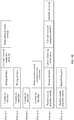
- a schematic diagram of a message format of a random access response shown in FIG. 4 shows random access responses in six message formats.
- Fields included in the random access responses in the six message formats are respectively a first message format (Format 1), a second message format (Format 2), a third message format (Format 3), a fourth message format (Format 4), a fifth message format (Format 5), and a sixth message format (Format 6).
- a random access response in the first message format includes at least one of the following fields: a connection identifier (connection identifier/identification, Connection ID), a TA, a cell-radio network temporary identifier (cell-radio network temporary identifier, C- RNTI).
- the random access response in the first message format may further include an RRC message (RRC message, RRC Msg), a message format field (Format), and/or downlink data (downlink data, DL Data).
- the RRC message includes configuration information of some signaling bearers (for example, a signaling bearer 2) and a data bearer, and specifically includes a related parameter (for example, a physical downlink shared channel (physical downlink shared channel, PDSCH), a physical uplink control channel (physical uplink control channel, PUCCH), a physical uplink shared channel (physical uplink shared channel, PUSCH), a channel sounding reference signal (sounding reference signal, SRS), antenna relevancy, or a scheduling request (scheduling request, SR)) of a corresponding physical layer, a media access control (media access control, MAC) layer parameter (for example, a shared channel (shared channel, SCH), discontinuous reception (discontiue reception, DRX), or a transmit power headroom (power head room, PHR)), a radio link control (radio link control, RLC) layer parameter, a packet data convergence protocol (packet data convergence protocol, PDCP) parameter, and the like.
- a related parameter for example, a
- the random access response in the first message format may further include a format (Format) field and/or a downlink data (downlink data, DL Data) field, the format field is used to indicate that a message format of the random access response in which the format field is located is the first message format, and the DL data field is used to carry downlink user data that is sent by the network device to the terminal device.
- a format Format
- DL Data downlink data
- a random access response in the second message format includes at least one of the following fields: a connection identifier and a TA.
- the random access response in the second message format may further include a format field and/or a DL data field.
- the format field in the random access response in the second message format is used to indicate that a message format of the random access response in which the format field is located is the second message format.
- a random access response in the third message format includes at least one of the following field: a connection identifier.
- the random access response in the third message format may further include a format field and/or a DL data field.
- the format field in the random access response in the third message format is used to indicate that a message format of the random access response in which the format field is located is the third message format.
- a random access response in the fourth message format includes at least one of the following fields: a connection identifier and a radio resource control connection reject indication (RRC reject).
- the random access response in the fourth message format may further include a format field.
- the format field in the random access response in the fourth message format is used to indicate that a message format of the random access response in which the format field is located is the fourth message format.
- a random access response in the fifth message format includes at least one of the following fields: a random access preamble identity (random access preamble identity, RAPID), a TA, uplink scheduling information, a temporary cell-radio network temporary identifier (temporary cell-radio network temporary identifier, temporary C-RNTI), and a backoff indication.
- the random access response in the fifth message format may further include a format field.
- the format field in the random access response in the fifth message format is used to indicate that a message format of the random access response in which the format field is located is the fifth message format.
- a random access response in the sixth message format includes at least one of the following fields: an RAPID and a backoff indication.
- the random access response in the sixth message format may further include a format field.
- the format field in the random access response in the sixth message format is used to indicate that a message format of the random access response in which the format field is located is the sixth message format.
- the RAPID is used to identify a random access preamble sequence.
- Various field information in the foregoing message formats and optional downlink user data may be transmitted as a same transport block (transport block, TB).
- the foregoing field information may be transmitted as control information of the layer 2, such as, a media access control control element (media access control control element, MAC CE) or a MAC sub-header, or may be transmitted as control information of the layer 3, such as, an RRC message; or some field information may be transmitted as control information of the layer 2, and the other field information may be transmitted as control information of the layer 3.
- the downlink user data may be a data unit encapsulated by using an upper layer, and the upper layer means a PDCP sublayer and an RLC sublayer.
- the network device sends the random access response to the terminal device in a determined message format.
- the terminal device After sending a random access request, the terminal device needs to wait to receive a random access response of the network device. Specifically, in a time window specified by downlink control information of the network device, the terminal device monitors a downlink physical control channel by using a corresponding RA-RNTI. If the terminal device receives DCI identified by the RA-RNTI, the terminal device decodes a random access response at a time-frequency location indicated by the DCI, in other words, receives the random access response, and then continues a subsequent process.
- the physical downlink control channel may include a plurality of pieces of DCI. If a specific piece of DCI that the random access response is for needs to be found, the terminal device descrambles decoded DCI by using the RA-RNTI. If the descrambling succeeds, it is considered that the current DCI is for the random access response, and a random access response corresponding to the current DCI is received based on the DCI.
- the terminal device may determine, based on the message format of the random access response, a to-be-performed state transition AND/OR operation corresponding to the message format, and perform the state transition AND/OR operation corresponding to the message format. For example, for the six message formats in the foregoing example, the terminal device correspondingly performs the following state transition AND/OR operations separately:
- the terminal device switches to the connected state based on the random access response in the first message format, and data corresponding to the random access response in the first message format is successfully sent.
- the terminal device maintains the inactive state and adjusts uplink timing based on the random access response in the second message format, and data corresponding to the random access response in the second message format is successfully sent.
- the terminal device maintains the inactive state based on the random access response in the third message format, and data corresponding to the random access response in the third message format is successfully sent.
- the terminal device maintains the inactive state or switches to the idle state based on the random access response in the fourth message format, and data corresponding to the random access response in the fourth message format fails to be sent.
- the terminal device sends a radio resource control RRC connection request to the network device based on the random access response in the fifth message format, and data corresponding to the random access response in the fifth message format fails to be sent, where the RRC connection request may be an RRC connection request sent in a third step in a random access procedure in the prior art.
- the terminal device resends the random access request to the network device based on the random access response in the sixth message format, and data corresponding to the random access response in the sixth message format fails to be sent.
- the terminal device may switch to the connected state, or maintain the inactive state, but may continue to send the user data; or maintains the inactive state or re-initiates a random access request.
- processing time of a subsequent procedure is performed in advance, thereby shortening duration occupied by an entire random access procedure and data sending.
- processing performed after the terminal device receives the random access responses in the various formats further includes:
- the terminal device determines whether a received connection identifier matches the connection identifier in the random access request sent by the terminal device, and if the connection identifiers match, the terminal device determines that this message is sent to the terminal device; or otherwise, the terminal device discards this message.
- the terminal device adjusts an uplink signal sending occasion based on the TA, to complete uplink synchronization.
- the terminal device configures a data radio bearer based on the RRC message.
- the terminal device monitors, based on the C-RNTI in the random access response, control information (scheduling information) sent by the network device to the terminal device. Further, the terminal device maintains the connected state.
- the terminal device determines whether a received connection identifier matches the connection identifier in the random access request sent by the terminal device, and if the connection identifiers match, the terminal device determines that this message is sent to the terminal device; or otherwise, the terminal device discards this message.
- the terminal device adjusts an uplink signal sending occasion based on the TA, to complete uplink synchronization.
- the terminal device determines whether a received connection identifier matches the connection identifier in the random access request sent by the terminal device, and if the connection identifiers match, the terminal device determines that this message is sent to the terminal device; or otherwise, the terminal device discards this message.
- the terminal device determines whether a received connection identifier matches the connection identifier in the random access request sent by the terminal device, and if the connection identifiers match, the terminal device determines that this message is sent to the terminal device; or otherwise, the terminal device discards this message.
- the terminal device maintains the inactive state or switches to the idle state based on an indication of the RRC reject field.
- the terminal device determines whether a received RAPID matches the RAPID in the random access request sent by the terminal device, and if the RAPIDs match, the terminal device determines that this message is sent to the terminal device; or otherwise, the terminal device discards this message.
- the terminal device adjusts an uplink signal sending occasion based on the TA, to complete uplink synchronization.
- the terminal device sends a Msg3 message based on an uplink resource allocated by the UL-Grant, where the Msg3 includes a field such as the user identifier or the authentication identifier.
- the terminal device determines whether a received RAPID matches the RAPID in the random access request sent by the terminal device, and if the RAPIDs match, the terminal device determines that this message is sent to the terminal device; or otherwise, the terminal device discards this message.
- a process of sending msgl to msg4 between the terminal device and the network device may be referred to as a four-step random access procedure (4-step random access procedure, 4-Step RA Procedure), and a process of sending the random access request and the random access response in this application between the terminal device and the network device may be referred to as a two-step random access (2-step RA Procedure).
- a random access request carries only a preamble, and random access can be completed only after a 4-step RA procedure, to obtain a random access parameter for setting up an RRC connection.
- the random access request in this application carries the preamble, the control information, and the user data, and the control information includes the connection identifier and the authentication identifier.
- a signaling bearer may be set up based on the connection identifier and the authentication identifier, thereby ensuring implementation of data communication between the terminal device and a network side.
- the terminal device in the inactive state adds the connection identifier and the authentication identifier to the random access request, so that implementation of data communication between the terminal device and the network side is ensured. If the network device does not obtain the connection identifier or the authentication identifier, the network device cannot know a sender of the user data in the random access request, and discards the user data. In this case, current data communication initiated by the terminal device in the inactive state is invalid data communication, in other words, data communication between the terminal device and the network device fails.
- FIG. 5 is a schematic interaction flowchart of another communication method according to an embodiment of the present invention. The method may include the following steps:
- the network device may further configure, for a terminal device in an inactive state, a parameter used to perform a random access procedure (2-step RA procedure and/or 4-step RA procedure).
- a parameter used to perform a random access procedure (2-step RA procedure and/or 4-step RA procedure).
- the network device configures, for the terminal device, a parameter used to send/receive msgl to msg4.
- a transmission parameter used to transmit the control information and the user data needs to be preconfigured, and a random access parameter may also need to be preconfigured.
- the transmission parameter includes at least one of the following parameters: a time-frequency resource used to transmit the control information and the user data, a modulation and coding scheme parameter, an encryption parameter, a cyclic prefix length, and a reference signal parameter.
- the random access parameter includes at least one of the following parameters: a random access preamble sequence generation parameter and a corresponding time-frequency resource, a random access response receive window parameter, a beam-related parameter, a random access preamble sequence subset division manner, and a backoff parameter.
- the reference signal parameter may be a demodulation reference signal (demodulation reference signal, DMRS) parameter or a terminal device-specific reference signal (UE-specific RS) parameter.
- Parameter content that needs to be preconfigured includes but is not limited to the following:
- parameters for transmitting the preamble sequence generation parameter and the occupied time-frequency resource may be configured in the manner (1), and a transmission parameter for transmitting the control information and the user data and the random access parameter may be configured in the manner (2).
- the transmission parameter and the random access parameter are configured, all the parameters listed above may be configured, or some of the parameters may be configured.
- the terminal device may obtain the transmission parameter and the random access parameter at a same time, or the terminal device may separately obtain the transmission parameter and the random access parameter.
- S502 is specifically that the terminal device sends the control information and the user data in the random access request by using the transmission parameter, or S502 is specifically that the terminal device sends the random access request by using the transmission parameter and the random access parameter.
- the terminal device may send the random access request by using one or more beams, and content of random access requests sent by using all the beams may be the same. Different beams correspond to different time-frequency resources.
- the network device After receiving the random access request sent by the terminal device, the network device detects the preamble in the random access request, and decodes and/or parses the control information and the user data.
- the network device needs to indicate a state transition OR operation of the terminal device based on one or more of a detection result of the preamble, a decoding and parsing result of the control information and the user data, and a current network status. Therefore, the network device needs to determine the message format of the random access response. Specifically, the network device determines the message format of the random access response based on at least one of the following factors: the detection result of the random access preamble, the decoding and parsing result of the control information and the user data, and the current network status. Specifically:
- the network device determines, based on whether the random access request includes information indicating a switch-to-the-connected-state request, the current network status, and/or whether the network device has a downlink data transmission requirement for the terminal device, whether the terminal device switches to the connected state, and sends a random access response in a corresponding message format.
- a switch-to-the-connected-state request field in the control information indicates that the terminal device requests to switch to the connected state, or a switch-to-the-connected-state request field in the control information (if the control information does not include the "switch-to-the-connected-state request field", it is considered that the terminal device does not request to switch to the connected state) or a preamble sequence implicitly indicates that the terminal device requests to switch to the connected state, it is considered that the terminal device requests to switch to the connected state.
- a value of a switch-to-the-connected-state request field in the control information does not indicate that the terminal device requests to switch to the connected state, and the preamble sequence does not indicate that the terminal device requests to switch to the connected state, it is considered that the terminal device does not need to switch to the connected state.
- the random access request does not include a switch-to-the-connected-state request field, and the preamble sequence does not indicate that the terminal device requests to switch to the connected state, it is also considered that the terminal device does not need to switch to the connected state.
- the terminal device requests to switch to the connected state it may be considered that the terminal device may still need to send uplink user data.
- the terminal device does not need to switch to the connected state, it may be considered that the terminal device does not need to transmit uplink data subsequently.
- the network device may send the random access response in the first message format, so that the terminal device switches to the connected state to complete subsequent data transmission.
- the random access response in the first message format further refer to the current network status to determine whether to send the random access response in the first message format.
- the random access response in the first message format is sent to the terminal device only when a network status is good (for example, a relatively small quantity of terminal devices access a network currently, or a current network load status is low, or there are still sufficient available resources in a network).
- the network device may directly send the random access response in the first message format to the terminal device provided that a current network status is good.
- the random access response in the first message format may further indicate that the user data in the random access request has been correctly received by the network device.
- the network device If the network device successfully detects the preamble and successfully decodes and parses the control information and the user data, and the network device considers that the terminal device may still need to transmit uplink user data, but due to a network resource shortage, the network device sends the random access response in the second message format to instruct the terminal device to maintain the inactive state and adjust uplink timing.
- the random access response in the second message format may further indicate that the user data in the random access request has been correctly received by the network device.
- the network device If the network device successfully detects the preamble and successfully decodes and parses the control information and the user data, and the network device considers that the terminal device subsequently has no to-be-transmitted user data, the network device sends the random access response in the third message format to instruct the terminal device to maintain the inactive state.
- the random access response in the third message format may further indicate that the user data in the random access request has been correctly received by the network device.
- the network device If the network device successfully detects the preamble and successfully decodes and parses the control information, and the network device forbids access of the terminal device out of consideration of a current network status (for example, a quantity of terminal devices that currently access a network, a load, or a network resource), or the network device fails to obtain context information of the terminal device based on the connection identifier, the network device sends the random access response in the fourth message format, to instruct the terminal device to maintain the inactive state or switch to the idle state.
- the random access response in the fourth message format may further indicate that the user data fails to be transmitted.
- the network device If the network device successfully detects the preamble but fails to perform decoding, the network device sends the random access response in the fifth message format, to instruct the terminal device to send an RRC connection request to the network device.
- the random access response in the fifth message format may further indicate that the user data fails to be transmitted.
- the network device If the network device successfully detects the preamble but fails to perform decoding, the network device sends the random access response in the sixth message format, to instruct the terminal device to resend the random access request to the network device.
- the random access response in the fifth message format may further indicate that the user data fails to be transmitted.
- the network device sends the random access response to the terminal device in the determined message format, and the network device indicates the message format of the random access response in at least one of the following manners:
- the random access response includes a message format field, and the message format field is used to indicate the message format of the random access response, and the terminal device determines the message format of the random access response based on the message format field in the random access response.
- a random access response in each message format includes a format field, and the field indicates the message format of the random access response. In this manner, the message format of the random access response may be clearly indicated.
- the format field is located in a first field in the random access response, and the first field is a first field that is read in the random access response; and in another implementation, the format field is located at a predetermined location of the random access response.
- the network device further sends downlink control information DCI corresponding to the random access response, where the downlink control information includes a time-frequency resource and a modulation and coding scheme that are corresponding to the random access response, the time-frequency resource and the modulation and coding scheme are used to determine a transport block size (transport block size, TBS) corresponding to the random access response, and each transport block size corresponds to one message format; the terminal device obtains the transport block size corresponding to the random access response; and the terminal device determines the message format of the random access response based on the transport block size, where each message format of the random access response corresponds to one transport block size, and different message formats correspond to different transport block sizes.
- FIG. 6b is a schematic diagram of another message format of the random access response.
- none of message formats includes a format field, and the message format of the random access response is indicated by using a transport block size of the random access response.
- CRC of DCI corresponding to the random access response is scrambled by using an RA-RNTI, and the RA-RNTI may be calculated by using a time-frequency resource occupied by a preamble of msgl.
- the DCI includes information about a time-frequency resource used to transmit the random access response, and a corresponding MCS.
- the terminal device may calculate, based on the time-frequency resource and the MCS, a TBS corresponding to the random access response.
- the TBS has a one-to-one correspondence with various formats. Therefore, a format of the random access response may be indicated by using the DCI. In this manner, the DCI does not need to be changed, and a quantity of blind detection times of the DCI does not need to be increased.
- the DCI includes message format information of the random access response.
- the terminal device receives DCI corresponding to the random access response, where the DCI carries the message format information of the random access response; and the terminal device determines the message format of the random access response based on the DCI.
- FIG. 6c shows still another message format of the random access response.
- a field of the random access response does not include a format field, but DCI includes a format field. In this manner, the message format of the random access response may be clearly indicated.
- the random access response may include downlink data.
- the terminal device determines the message format of the random access response based on a RAR response window in which the terminal device receives the random access response, where each message format of the random access response corresponds to one RAR response window, and different message formats correspond to different RAR response windows.
- the network device sends the random access response in different RAR response windows (or timeslots), and different RAR response windows correspond to different message formats. In this manner, signaling overheads are small.
- the terminal device receives the random access response sent by the network device, and determines the message format of the random access response in any one of the foregoing manners. Each message format corresponds to one state transition AND/OR operation.
- the terminal device sends the random access request on one set of time-frequency resources.
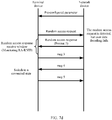
- FIG. 7a is a schematic interaction flowchart of a random access procedure in a specific example.
- the network device preconfigures the transmission parameter and the random access parameter.
- the terminal device is in the inactive state.
- the terminal device When the terminal device needs to send data, the terminal device sends the random access request on one set of time-frequency resources.
- the random access request includes a preamble, a connection identifier, an authentication identifier, and user data, and may further include a switch-to-the-connected-state request and a data transmission reason.
- the one set of time-frequency resources is a time-frequency resource for sending the preamble, and a time-frequency resource for sending the control information and the user data.
- the network device detects the preamble on a time-frequency resource of the random access request, and the network device decodes and/or parses the control information and the user data.
- the network device may determine, based on whether the random access request includes a switch-to-the-connected-state request field, a value of the switch-to-the-connected-state request field, an implicit indication of the preamble sequence, or a current network status, that the network device needs to instruct the terminal device to switch to the connected state, and the network device predicts, based on at least one piece of information in the switch-to-the-connected-state request, whether the terminal device has a downlink service requirement, and the current network load status, that the terminal device still needs to transmit the user data, and the network device determines that the message format of the random access response is the format 1.
- the network device sends a random access response in the format 1 by using a PDSCH, in other words, sends a random access response that includes fields such as a connection identifier, a TA, a C-RNTI, and an RRC message.
- CRC of corresponding DCI is scrambled by using an RA-RNTI, and the RA-RNTI is calculated based on a time-frequency resource of the random access request.
- the connection identifier is the same as the connection identifier included in the random access request received by the network device.
- the terminal device If the terminal device receives the DCI identified by the RA-RNTI, the terminal device decodes the random access response at a time-frequency resource location indicated by the DCI, in other words, receives the random access response.
- the terminal device identifies the message format of the received random access response in any one of the foregoing indication manners of the message format of the random access response, and performs a state transition AND/OR operation corresponding to the identified message format. Further, the random access response is parsed based on the identified message format, to obtain content included in the random access response.
- the terminal device switches to the connected state.
- the terminal device If the terminal device does not receive the random access response in the RA response window, the terminal device maintains the inactive state, and re-initiates a random access procedure to perform data retransmission.
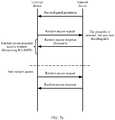
- the terminal device sends a plurality of random access requests.
- the terminal device sends the random access requests on a plurality of sets of time-frequency resources, in other words, sends the plurality of random access requests on a plurality of beams, and each beam corresponds to one set of time-frequency resources.
- the network device detects the preamble on the plurality of sets of time-frequency resources. If the preamble is detected on the plurality of sets of time-frequency resources, the network device separately decodes subsequent user data.
- the receiving, by a network device, a random access request sent by a terminal device includes: receiving, by the network device, a plurality of random access requests separately sent by the terminal device by using a plurality of beams.
- the method further includes: selecting, by the network device, one random access request from the plurality of random access requests based on a specified signal quality condition.
- the sending, by the network device, the random access response to the terminal device includes: sending, by the network device, the random access response corresponding to the selected random access request.
- FIG. 7b is a schematic interaction flowchart of a random access procedure in another specific example.
- the network device predicts, based on at least one piece of information in the switch-to-the-connected-state request, whether the terminal device has a downlink service requirement, and a current network load status, that the terminal device still needs to transmit user data, but due to a resource shortage, the network device does not want the terminal device to switch to the connected state.
- the network device sends a random access response in a format 2 by using a PDSCH, where the random access response includes fields such as a connection identifier and a TA.
- the connection identifier is the same as the connection identifier included in the random access request received by the network device.
- the terminal device After determining, in any one of the foregoing indication manners of the message format of the random access response, that the message format of the received random access response is the format 2, the terminal device maintains the inactive state. Further, the TA may be adjusted based on a TA indicated by a TA field in the format 2, and a valid timer of the TA is set. Within a validity period of the TA, if the terminal device still needs to send user data, the terminal device may directly send the random access request in the format shown in Table 2, and does not need to send the preamble again.
- the network device also sets a corresponding TA valid timer. Within a validity period of the TA, the network device also detects, in a time-frequency resource area that is preconfigured for the terminal device and that is used to transmit the random access request in the format shown in Table 2, the random access request sent by the terminal device, and performs demodulation and decoding.
- FIG. 7c is a schematic interaction flowchart of a random access procedure in still another specific example.
- the network device predicts, based on at least one piece of information in the switch-to-the-connected-state request, whether the terminal device has a downlink service requirement, and a current network load status, that the terminal device subsequently does not have to-be-transmitted user data, the network device sends a random access response in a format 3, where the random access response includes a field such as a connection identifier.
- the connection identifier is the same as the connection identifier included in the random access request received by the network device.
- the terminal device After determining, in any one of the foregoing indication manners of the message format of the random access response, that the message format of the received random access response is the format 3, the terminal device maintains the inactive state.
- the terminal device determines that the message format of the random access response received by the terminal device is any one of the format 1, the format 2, and the format 3, the terminal device considers that uplink user data sent by the terminal device is successfully received by the network device, so that uplink user data (the uplink user data is user data sent by using the random access request) in a cache may be cleared.
- FIG. 7d is a schematic interaction flowchart of a random access procedure in still another specific example.
- the network device detects the preamble, but decoding fails (if a same preamble is detected on a plurality of time-frequency resources, and decoding fails, user data and control information on a time-frequency resource with a strongest signal are decoded), the network device feeds back a random access response in a format 5.
- the random access response includes field information such as an RAPID, a TA, uplink scheduling information, a TC-RNTI, and a backoff indication (optional).
- the RAPID is the same as an RAPID included in the random access request received by the network device.
- the terminal device After determining, in any one of the foregoing indication manners of the message format of the random access response, that the message format of the received random access response is the format 5, the terminal device proceeds to a third step in an existing 4-step RA procedure: sending an RRC connection request (msg3).
- FIG. 7e is a schematic interaction flowchart of a random access procedure in still another specific example.
- the network device detects the preamble, but decoding fails (if a same preamble is detected on a plurality of time-frequency resources, and decoding fails, user data and control information on a time-frequency resource with a strongest signal are decoded), the network device feeds back a random access response in a format 6.
- the random access response includes fields such as an RAPID and a backoff indication (optional).
- the RAPID is the same as an RAPID included in the random access request received by the network device.
- the terminal device After determining, in any one of the foregoing indication manners of the message format of the random access response, that the message format of the received random access response is the format 6, the terminal device starts a new random access procedure after performing backoff, and tries to transmit data.
- the terminal device determines that the message format of the random access response received by the terminal device is any one of the format 4, the format 5, and the format 6, the terminal device considers that uplink user data sent by the terminal device fails to be transmitted, so that uplink user data (the uplink user data is user data sent by using the random access request) in a cache may be still kept.
- the terminal device in the inactive state adds the connection identifier and the authentication identifier to the random access request, so that a data bearer can be set up in the random access procedure, thereby implementing data communication between the terminal device and a network side.
- different message formats of the random access response correspond to different state transition AND/OR operations, to instruct the terminal device to perform various state transition AND/OR operations.
- FIG. 8 is a schematic diagram of modules of a communications apparatus according to an embodiment of the present invention.
- the communications apparatus 8000 includes: a sending unit 801, configured to send a random access request to a network device, where the random access request includes a random access preamble, control information, and user data, the communications apparatus is in an inactive state, and the control information includes at least a connection identifier and an authentication identifier; a receiving unit 802, configured to receive a random access response sent by the network device, and a processing unit 803, configured to perform a state transition AND/OR operation corresponding to a message format of the random access response.
- the communications apparatus may be specifically the terminal device in the foregoing embodiments.
- FIG. 9 shows a simplified schematic structural diagram of a terminal device in an implementation.
- the terminal device includes a processor, a memory, a radio frequency circuit, an antenna, and an input/output apparatus.
- the processor is mainly configured to: process a communication protocol and communication data, control the terminal device, execute a software program, process data of the software program, and the like.
- the memory is mainly configured to store the software program and the data.
- the radio frequency circuit is mainly configured to perform conversion between a baseband signal and a radio frequency signal, and process the radio frequency signal.
- the antenna is mainly configured to receive and send a radio frequency signal in a form of an electromagnetic wave.
- the input/output apparatus such as a touchscreen, a display screen, or a keyboard is mainly configured to receive data entered by a user, and output data to the user. It should be noted that some types of terminal devices may have no input/output apparatus.
- the processor When needing to send data, after performing baseband processing on to-be-sent data, the processor outputs a baseband signal to the radio frequency circuit; and the radio frequency circuit performs radio frequency processing on the baseband signal and then sends the radio frequency signal to outside in a form of an electromagnetic wave by using the antenna.
- the radio frequency circuit receives the radio frequency signal by using the antenna, converts the radio frequency signal into a baseband signal, and outputs the baseband signal to the processor.
- the processor converts the baseband signal into data, and processes the data.
- FIG. 9 shows only one memory and processor. In an actual terminal device product, there may be one or more processors and one or more memories.
- the memory may also be referred to as a storage medium, a storage device, or the like.
- the memory may be disposed independent of the processor, or may be integrated with the processor. This is not limited in this embodiment of this application.
- the antenna and the radio frequency circuit that have a receiving and sending function may be considered as a receiving unit and a sending unit of the terminal device (or may be collectively referred to as a transceiver unit), and the processor having a processing function may be considered as a processing unit of the terminal device.
- the terminal device includes a receiving unit 901, a processing unit 902, and a sending unit 903.
- the receiving unit 901 may also be referred to as a receiver, a receiving device, a receiving circuit, and the like.
- the sending unit 903 may also be referred to as a sender, a transmitter, a transmitting device, a transmitting circuit, and the like.
- the processing unit may also be referred to as a processor, a processing board, a processing module, a processing apparatus, or the like.
- the sending unit 903 is configured to perform step S301 in the embodiment shown in FIG. 3 .
- the receiving unit 901 is configured to perform step S302 in the embodiment shown in FIG. 3 .
- the processing unit 902 is configured to perform step S303 in the embodiment shown in FIG. 3 .
- the sending unit 903 is configured to perform step S502 in the embodiment shown in FIG. 5 .
- the receiving unit 901 is configured to perform step S504 in the embodiment shown in FIG. 5 .
- the processing unit 902 is configured to perform step S501, S505, and S506 in the embodiment shown in FIG. 5 .
- all or some functions of the communications apparatus may be implemented by using a system-on-chip (English: System-on-chip, SoC for short) technology, for example, implemented by one chip.
- the chip integrates a kernel, an input/output interface, and the like.
- the input/output interface may implement functions of the sending unit and the receiving unit, for example, send a random access request in a form of a baseband signal and receive a random access response in a form of a baseband signal.
- the kernel may implement a function of the processing unit, for example, perform a state transition AND/OR operation corresponding to a message format of the random access response.
- the functions of the kernel and the input/output interface may be implemented by hardware, or may be implemented by hardware executing corresponding software.
- the hardware or the software includes one or more modules corresponding to the foregoing functions.
- the input/output interface may also be an interface that is of the chip and that is connected to a circuit, a component, or a device other than the chip, and is configured to output a random access request generated by the chip to the circuit, the component, or the device connected to the chip, receive a random access response provided by the circuit, the component, or the device connected to the terminal.
- FIG. 10 is a schematic diagram of modules of a communications apparatus according to an embodiment of the present invention.
- the communications apparatus 1000 includes: a receiving unit 101, configured to receive a random access request sent by a terminal device, where the random access request includes a random access preamble, control information, and user data, the terminal device is in an inactive state, and the control information includes at least a connection identifier and an authentication identifier; and a sending unit 102, configured to send a random access response to the terminal device, where the random access response has at least two message formats, and each message format corresponds to one state transition and/or operation.
- the communications apparatus may be specifically the network device in the foregoing embodiments.
- FIG. 11 shows a simplified schematic structural diagram of a network device in an implementation.
- the network device includes a part 112 and a part for radio frequency signal receiving/sending and conversion.
- the part for radio frequency signal receiving and sending and conversion further includes a receiving unit 111 and a sending unit 113 (which may also be collectively referred to as a transceiver unit).
- the part for radio frequency signal receiving/sending and conversion is mainly configured to: send/receive a radio frequency signal and perform conversion between a radio frequency signal and a baseband signal.
- the part 112 is mainly configured to perform baseband processing, control the network device, and the like.
- the receiving unit 111 may also be referred to as a receiver, a receiving device, a receiving circuit, and the like.
- the sending unit 113 may also be referred to as a sender, a transmitter, a transmitting device, a transmitting circuit, and the like.
- the 112 part is usually a control center of the network device, or may be usually referred to as a processing unit, configured to control the network device to perform the steps performed by a second communications apparatus in FIG. 5 or FIG. 9 .
- a processing unit configured to control the network device to perform the steps performed by a second communications apparatus in FIG. 5 or FIG. 9 .
- the part 112 may include one or more boards. Each board may include one or more processors and one or more memories.
- the processor is configured to read and execute a program in the memory to implement a baseband processing function and control the network device. If there are a plurality of boards, the boards may be interconnected to enhance a processing capability. In an optional implementation, alternatively, the plurality of boards may share one or more processors, or the plurality of boards share one or more memories, or the plurality of boards simultaneously share one or more processors.
- the receiving unit 111 is configured to perform step S301 in FIG. 3
- the sending unit 112 is configured to perform step S302 in FIG. 3 .
- the receiving unit 111 is configured to perform step S502 in FIG. 5 ; the processing unit 112 is configured to perform step S503 in FIG. 5 ; and the sending unit 113 is configured to perform step S504 in FIG. 5 .
- all or some functions of the communications apparatus may be implemented by using a SoC technology, for example, implemented by one chip.
- the chip integrates a kernel, an input/output interface, and the like.
- the input/output interface may implement functions of the sending unit and the receiving unit, for example, receive a random access request in a form of a baseband signal and send a random access response in a form of a baseband signal.
- the kernel may implement a function of the processing unit, for example, perform a state transition AND/OR operation corresponding to a message format of the random access response.
- the functions of the kernel and the input/output interface may be implemented by hardware, or may be implemented by hardware executing corresponding software.
- the hardware or the software includes one or more modules corresponding to the foregoing functions.
- the input/output interface may also be an interface that is of the chip and that is connected to a circuit, a component, or a device other than the chip, and is configured to output a random access request generated by the chip to the circuit, the component, or the device connected to the chip, receive a random access response provided by the circuit, the component, or the device connected to the terminal.
- the disclosed system, apparatus, and method may be implemented in other manners.
- the described apparatus embodiment is merely an example.
- the unit division is merely logical function division and may be other division in actual implementation.
- a plurality of units or components may be combined or integrated into another system, or some features may be ignored or not performed.
- the displayed or discussed mutual couplings or direct couplings or communication connections may be implemented by using some interfaces.
- the indirect couplings or communication connections between the apparatuses or units may be implemented in electronic, mechanical, or other forms.
- the units described as separate parts may or may not be physically separate, and parts displayed as units may or may not be physical units, may be located in one position, or may be distributed on a plurality of network units. Some or all of the units may be selected based on actual requirements to achieve the objectives of the solutions of the embodiments.
- All or some of the foregoing embodiments may be implemented by using software, hardware, firmware, or any combination thereof.
- the embodiments may be implemented completely or partially in a form of a computer program product.
- the computer program product includes one or more computer instructions.
- the computer may be a general-purpose computer, a dedicated computer, a computer network, or other programmable apparatuses.
- the computer instruction may be stored in a computer readable storage medium, or may be transmitted by using the computer readable storage medium.
- the computer instructions may be transmitted from a website, computer, server, or data center to another website, computer, server, or data center in a wired (for example, a coaxial cable, an optical fiber, or a digital subscriber line (digital subscriber line, DSL)) or wireless (for example, infrared, radio, or microwave) manner.
- the computer-readable storage medium may be any usable medium accessible by a computer, or a data storage device, such as a server or a data center, integrating one or more usable media.
- the usable medium may be a magnetic medium (for example, a floppy disk, a hard disk, or a magnetic tape), an optical medium (for example, a digital versatile disc (digital versatile disc, DVD), a semiconductor medium (for example, a solid-state drive (solid state disk, SSD)), or the like.
- a magnetic medium for example, a floppy disk, a hard disk, or a magnetic tape
- an optical medium for example, a digital versatile disc (digital versatile disc, DVD)
- a semiconductor medium for example, a solid-state drive (solid state disk, SSD)
- the program may be stored in a computer readable storage medium. When the program runs, the processes of the methods in the embodiments are performed.
- the foregoing storage medium includes: any medium that can store program code, such as a read-only memory (read-only memory, ROM), a random access memory (random access memory, RAM), a magnetic disk, or an optical disc.
Landscapes
- Engineering & Computer Science (AREA)
- Computer Networks & Wireless Communication (AREA)
- Signal Processing (AREA)
- Computer Security & Cryptography (AREA)
- Mobile Radio Communication Systems (AREA)
Applications Claiming Priority (2)
| Application Number | Priority Date | Filing Date | Title |
|---|---|---|---|
| CN201711079615.8A CN109756991B (zh) | 2017-11-06 | 2017-11-06 | 通信方法及装置 |
| PCT/CN2018/114133 WO2019086039A1 (zh) | 2017-11-06 | 2018-11-06 | 通信方法及装置 |
Publications (2)
| Publication Number | Publication Date |
|---|---|
| EP3697165A1 true EP3697165A1 (de) | 2020-08-19 |
| EP3697165A4 EP3697165A4 (de) | 2020-11-18 |
Family
ID=66331353
Family Applications (1)
| Application Number | Title | Priority Date | Filing Date |
|---|---|---|---|
| EP18872385.2A Pending EP3697165A4 (de) | 2017-11-06 | 2018-11-06 | Kommunikationsverfahren und -vorrichtung |
Country Status (6)
| Country | Link |
|---|---|
| US (2) | US11419151B2 (de) |
| EP (1) | EP3697165A4 (de) |
| JP (1) | JP7313347B2 (de) |
| CN (2) | CN109756991B (de) |
| BR (1) | BR112020008886A2 (de) |
| WO (1) | WO2019086039A1 (de) |
Cited By (2)
| Publication number | Priority date | Publication date | Assignee | Title |
|---|---|---|---|---|
| EP3787353A4 (de) * | 2018-04-27 | 2022-04-20 | IUCF-HYU (Industry-University Cooperation Foundation Hanyang University) | Verbindungssignaleinstellungsverfahren zur positionierung eines mobilen kommunikationsendgerätes |
| US11451929B2 (en) | 2018-04-27 | 2022-09-20 | Iucf-Hyu (Industry-University Cooperation Foundation Hanyang University) | Link signal setting method for positioning mobile communication terminal |
Families Citing this family (35)
| Publication number | Priority date | Publication date | Assignee | Title |
|---|---|---|---|---|
| CN111386748B (zh) * | 2017-11-24 | 2023-07-25 | 索尼集团公司 | 通信方法、终端设备、基站 |
| CN112514522B (zh) | 2018-05-07 | 2024-07-23 | 瑞典爱立信有限公司 | 用于恢复时挂起不活动和挂起时恢复不活动的方法 |
| CN112514514A (zh) | 2018-07-27 | 2021-03-16 | Oppo广东移动通信有限公司 | 一种随机接入方法、终端设备、网络设备及存储介质 |
| WO2020030711A1 (en) * | 2018-08-09 | 2020-02-13 | Sony Corporation | Communications device, infrastructure equipment and methods |
| US11445549B2 (en) * | 2018-10-10 | 2022-09-13 | Qualcomm Incorporated | Two-step random access channel (RACH) procedure to four-step RACH procedure fallback |
| CN111601379B (zh) * | 2019-06-27 | 2022-02-01 | 维沃移动通信有限公司 | 用于获取定时提前量的方法和设备 |
| CN111800799B (zh) | 2019-08-08 | 2022-02-01 | 维沃移动通信有限公司 | 非授权频段的2步随机接入方法和设备 |
| WO2021046758A1 (zh) * | 2019-09-11 | 2021-03-18 | 华为技术有限公司 | 无线通信方法、装置及系统 |
| WO2021046828A1 (zh) * | 2019-09-12 | 2021-03-18 | 北京小米移动软件有限公司 | 随机接入方法及装置 |
| CN110650548B (zh) * | 2019-09-20 | 2021-11-23 | 展讯通信(上海)有限公司 | 多小区数据传输的方法与设备 |
| WO2021056462A1 (en) * | 2019-09-27 | 2021-04-01 | Nokia Shanghai Bell Co., Ltd. | Termination of monitoring window in random access procedure |
| CN114375609B (zh) * | 2019-10-12 | 2025-05-27 | 中兴通讯股份有限公司 | 无线通信中的控制信息配置 |
| CN112788618B (zh) * | 2019-11-06 | 2023-05-12 | 大唐移动通信设备有限公司 | 非连续接收参数的配置、监听寻呼的方法、设备及终端 |
| BR112022008662A2 (pt) * | 2019-11-08 | 2022-07-19 | Huawei Tech Co Ltd | Método e aparelho de indicação de informações |
| WO2021127966A1 (en) * | 2019-12-24 | 2021-07-01 | Qualcomm Incorporated | Ue-assisted group response for two-step random access procedure |
| CN111246590B (zh) * | 2020-01-10 | 2022-02-22 | 北京紫光展锐通信技术有限公司 | 数据传输方法及相关产品 |
| WO2021163835A1 (zh) * | 2020-02-17 | 2021-08-26 | Oppo广东移动通信有限公司 | 定时提前量的获取方法、装置、设备及存储介质 |
| JP7526275B2 (ja) | 2020-02-28 | 2024-07-31 | オッポ広東移動通信有限公司 | タイミング同期方法、端末デバイス及びネットワークデバイス |
| CN118301778A (zh) | 2020-03-06 | 2024-07-05 | 北京小米移动软件有限公司 | 数据传输方法、装置及计算机可读存储介质 |
| CN113453343B (zh) * | 2020-03-25 | 2023-04-18 | 展讯通信(上海)有限公司 | 业务的请求方法及装置 |
| CN113556815B (zh) * | 2020-04-24 | 2025-10-28 | 华为技术有限公司 | 数据传输方法及装置 |
| WO2022027238A1 (zh) * | 2020-08-04 | 2022-02-10 | Oppo广东移动通信有限公司 | 无线通信的方法、终端设备和网络设备 |
| KR102852092B1 (ko) * | 2020-10-29 | 2025-08-29 | 엘지전자 주식회사 | 중첩 전송에 의한 전송 전력 제한 완화 방법 및 장치 |
| US11632792B2 (en) * | 2020-11-27 | 2023-04-18 | Qualcomm Incorporated | Random access preamble for positioning indication |
| CN114666022B (zh) * | 2020-12-23 | 2024-11-22 | 维沃移动通信有限公司 | 非连接态定位方法、装置及设备 |
| WO2022151221A1 (zh) * | 2021-01-14 | 2022-07-21 | 捷开通讯(深圳)有限公司 | 精确参考定时信息获取方法、通信设备及可读存储介质 |
| EP4285681A4 (de) | 2021-01-29 | 2024-11-06 | Qualcomm Incorporated | Uplink-signal-unterstützte vorkonfigurierte uplink-ressource |
| US12604359B2 (en) * | 2021-02-19 | 2026-04-14 | Lg Electronics Inc. | Method and apparatus of performing random access procedure for data transmission in wireless communication system |
| JP2022154663A (ja) | 2021-03-30 | 2022-10-13 | Kddi株式会社 | ランダムアクセス手順におけるカバレッジ拡張のための端末装置、基地局装置、制御方法、およびプログラム |
| CN113727436B (zh) * | 2021-07-16 | 2023-07-11 | 中国信息通信研究院 | 一种终端非激活状态通信感知方法和设备 |
| EP4402920A4 (de) * | 2021-09-14 | 2024-12-11 | NEC Corporation | Verfahren, vorrichtung und computerspeichermedium zur kommunikation |
| CN118119031A (zh) * | 2022-11-28 | 2024-05-31 | 上海朗帛通信技术有限公司 | 一种被用于无线通信的通信节点中的方法和装置 |
| CN116506899B (zh) * | 2023-06-28 | 2023-08-25 | 成都星联芯通科技有限公司 | 延迟处理方法、登录方法、装置、主站、小站和存储介质 |
| CN119316970A (zh) * | 2023-07-10 | 2025-01-14 | 上海朗帛通信技术有限公司 | 一种被用于无线通信的通信节点中的方法和装置 |
| WO2025118752A1 (zh) * | 2023-12-07 | 2025-06-12 | 上海朗遥通信技术有限公司 | 一种被用于无线通信的通信节点中的方法和装置 |
Family Cites Families (15)
| Publication number | Priority date | Publication date | Assignee | Title |
|---|---|---|---|---|
| CN1893725B (zh) * | 2005-07-06 | 2011-09-14 | 华为技术有限公司 | 无线接入系统中调整睡眠组信息的方法 |
| US8295243B2 (en) * | 2006-08-21 | 2012-10-23 | Qualcomm Incorporated | Method and apparatus for random access in an orthogonal multiple-access communication system |
| CN103491622B (zh) * | 2012-06-12 | 2016-09-28 | 电信科学技术研究院 | 上行传输方法和设备 |
| US9609647B2 (en) * | 2012-09-25 | 2017-03-28 | Lg Electronics Inc. | Method for receiving downlink signal, and user device; and method for transmitting downlink signal, and base station |
| JP6587612B2 (ja) * | 2014-06-20 | 2019-10-09 | シャープ株式会社 | 端末装置、基地局装置、および通信方法 |
| US10236951B2 (en) * | 2015-04-10 | 2019-03-19 | Lg Electronics Inc. | Method for reporting channel state information in wireless communication system and device therefor |
| CN108604941A (zh) * | 2015-11-24 | 2018-09-28 | 联发科技(新加坡)私人有限公司 | 上报传输模式的方法以及用户设备 |
| WO2017110959A1 (ja) * | 2015-12-25 | 2017-06-29 | 株式会社Nttドコモ | ユーザ端末、無線基地局及び無線通信方法 |
| CN108476117B (zh) * | 2016-01-11 | 2021-11-05 | 索尼公司 | 一种发送或接收数据的方法、通信装置、基础设施设备 |
| US10952257B2 (en) * | 2016-11-23 | 2021-03-16 | Electronics And Telecommunications Research Institute | Access method in communication system and device for performing same |
| CN108282901B (zh) * | 2017-01-06 | 2019-08-09 | 电信科学技术研究院 | 一种随机接入响应方法和装置 |
| WO2018143608A1 (ko) * | 2017-02-01 | 2018-08-09 | 엘지전자 주식회사 | 시스템 정보 블록 요청 방법 및 이를 지원하는 장치 |
| US11129190B2 (en) * | 2017-03-22 | 2021-09-21 | Lg Electronics Inc. | Method for performing random access procedure and apparatus therefor |
| US11665741B2 (en) * | 2017-05-05 | 2023-05-30 | Motorola Mobility Llc | Method and apparatus for sending and receiving information on a wireless network |
| CN115297535B (zh) * | 2017-08-11 | 2025-02-25 | 中兴通讯股份有限公司 | 一种数据传输方法及装置、计算机可读存储介质 |
-
2017
- 2017-11-06 CN CN201711079615.8A patent/CN109756991B/zh active Active
- 2017-11-06 CN CN202111355080.9A patent/CN114222295A/zh active Pending
-
2018
- 2018-11-06 WO PCT/CN2018/114133 patent/WO2019086039A1/zh not_active Ceased
- 2018-11-06 EP EP18872385.2A patent/EP3697165A4/de active Pending
- 2018-11-06 BR BR112020008886-2A patent/BR112020008886A2/pt unknown
- 2018-11-06 JP JP2020524631A patent/JP7313347B2/ja active Active
-
2020
- 2020-05-05 US US16/866,731 patent/US11419151B2/en active Active
-
2022
- 2022-07-12 US US17/862,832 patent/US11943815B2/en active Active
Cited By (2)
| Publication number | Priority date | Publication date | Assignee | Title |
|---|---|---|---|---|
| EP3787353A4 (de) * | 2018-04-27 | 2022-04-20 | IUCF-HYU (Industry-University Cooperation Foundation Hanyang University) | Verbindungssignaleinstellungsverfahren zur positionierung eines mobilen kommunikationsendgerätes |
| US11451929B2 (en) | 2018-04-27 | 2022-09-20 | Iucf-Hyu (Industry-University Cooperation Foundation Hanyang University) | Link signal setting method for positioning mobile communication terminal |
Also Published As
| Publication number | Publication date |
|---|---|
| WO2019086039A1 (zh) | 2019-05-09 |
| US20220418004A1 (en) | 2022-12-29 |
| CN109756991A (zh) | 2019-05-14 |
| US11943815B2 (en) | 2024-03-26 |
| CN109756991B (zh) | 2021-11-19 |
| US20200267775A1 (en) | 2020-08-20 |
| JP7313347B2 (ja) | 2023-07-24 |
| EP3697165A4 (de) | 2020-11-18 |
| US11419151B2 (en) | 2022-08-16 |
| CN114222295A (zh) | 2022-03-22 |
| JP2021502035A (ja) | 2021-01-21 |
| BR112020008886A2 (pt) | 2020-10-20 |
Similar Documents
| Publication | Publication Date | Title |
|---|---|---|
| US11943815B2 (en) | Communication method and apparatus | |
| US12382404B2 (en) | Method and apparatus for random access on a wireless communication network | |
| EP4572421A1 (de) | Verfahren, benutzergerät, verarbeitungsvorrichtung, speichermedium und computerprogramm zum empfangen eines downlink-signals sowie verfahren und basisstation zum senden eines downlink-signals | |
| CN112369102B (zh) | 用于处理定时器操作的方法和无线通信系统 | |
| KR102478435B1 (ko) | NR(New Radio) 시스템의 랜덤 엑세스(random access) 수행 방법 및 그 장치 | |
| EP3043615B1 (de) | Verfahren, benutzervorrichtung und basisstation zur vorbestimmung einer ressource bei direktzugriff | |
| EP3751881A1 (de) | Strahlverwaltungsverfahren, endgerät, netzwerkvorrichtung und speichermedium | |
| US12096362B2 (en) | Communication method and apparatus | |
| EP3850902B1 (de) | Medienzugangs-steuerprotokolldateneinheit in einem nachrichten-3-puffer | |
| EP3720196B1 (de) | Verfahren zur timer-verarbeitung und endgerätvorrichtung | |
| WO2021064707A1 (en) | Method and apparatus for a two-step random access procedure | |
| EP3745794A1 (de) | Verfahren und vorrichtung zur datenübertragung während eines zufallszugriffs | |
| CN112970301B (zh) | 针对寻呼消息中的下行链路早期数据传输的确认 | |
| EP3651520A1 (de) | Verfahren und vorrichtung zur berechtigungsfreien ressourcenzuweisung | |
| KR20230128028A (ko) | 사용자 장비에 대한 향상된 불연속 수신 및 절전 | |
| CN113728716A (zh) | 基站装置及用户装置 | |
| WO2023083304A1 (zh) | 随机接入的方法、终端及网络侧设备 | |
| EP3826214A1 (de) | Kommunikationsverfahren und -vorrichtung | |
| CN114651497A (zh) | 随机接入过程中的竞争解决 | |
| WO2020000429A1 (en) | Uplink skipping during random access procedure | |
| KR20250071554A (ko) | 사이드링크를 통한 ta 정보 공유 방법 및 이를 위한 장치 | |
| KR20230075027A (ko) | 비지상 네트워크 시스템에서 데이터를 송수신하는 장치 및 방법 |
Legal Events
| Date | Code | Title | Description |
|---|---|---|---|
| STAA | Information on the status of an ep patent application or granted ep patent |
Free format text: STATUS: THE INTERNATIONAL PUBLICATION HAS BEEN MADE |
|
| PUAI | Public reference made under article 153(3) epc to a published international application that has entered the european phase |
Free format text: ORIGINAL CODE: 0009012 |
|
| STAA | Information on the status of an ep patent application or granted ep patent |
Free format text: STATUS: REQUEST FOR EXAMINATION WAS MADE |
|
| 17P | Request for examination filed |
Effective date: 20200511 |
|
| AK | Designated contracting states |
Kind code of ref document: A1 Designated state(s): AL AT BE BG CH CY CZ DE DK EE ES FI FR GB GR HR HU IE IS IT LI LT LU LV MC MK MT NL NO PL PT RO RS SE SI SK SM TR |
|
| AX | Request for extension of the european patent |
Extension state: BA ME |
|
| A4 | Supplementary search report drawn up and despatched |
Effective date: 20201016 |
|
| RIC1 | Information provided on ipc code assigned before grant |
Ipc: H04W 74/08 20090101ALN20201012BHEP Ipc: H04W 74/00 20090101AFI20201012BHEP Ipc: H04W 76/27 20180101ALN20201012BHEP |
|
| DAV | Request for validation of the european patent (deleted) | ||
| DAX | Request for extension of the european patent (deleted) | ||
| STAA | Information on the status of an ep patent application or granted ep patent |
Free format text: STATUS: EXAMINATION IS IN PROGRESS |
|
| 17Q | First examination report despatched |
Effective date: 20220615 |
|
| REG | Reference to a national code |
Ref country code: DE Ref legal event code: R079 Free format text: PREVIOUS MAIN CLASS: H04W0074080000 Ipc: H04W0074000000 |
|
| RIC1 | Information provided on ipc code assigned before grant |
Ipc: H04W 74/0833 20240101ALN20240424BHEP Ipc: H04W 76/27 20180101ALN20240424BHEP Ipc: H04W 74/08 20090101ALN20240424BHEP Ipc: H04W 74/00 20090101AFI20240424BHEP |
|
| GRAP | Despatch of communication of intention to grant a patent |
Free format text: ORIGINAL CODE: EPIDOSNIGR1 |
|
| STAA | Information on the status of an ep patent application or granted ep patent |
Free format text: STATUS: GRANT OF PATENT IS INTENDED |
|
| RIC1 | Information provided on ipc code assigned before grant |
Ipc: H04W 74/00 20090101AFI20260312BHEP Ipc: H04W 74/0833 20240101ALI20260312BHEP Ipc: H04W 74/0836 20240101ALN20260312BHEP Ipc: H04W 76/27 20180101ALN20260312BHEP |
|
| INTG | Intention to grant announced |
Effective date: 20260323 |