EP3698236B1 - System und verfahren zur gleichzeitigen verwaltung einer vielzahl von designationsperipheriegeräten - Google Patents
System und verfahren zur gleichzeitigen verwaltung einer vielzahl von designationsperipheriegeräten Download PDFInfo
- Publication number
- EP3698236B1 EP3698236B1 EP18793394.0A EP18793394A EP3698236B1 EP 3698236 B1 EP3698236 B1 EP 3698236B1 EP 18793394 A EP18793394 A EP 18793394A EP 3698236 B1 EP3698236 B1 EP 3698236B1
- Authority
- EP
- European Patent Office
- Prior art keywords
- designation
- recomposer
- data
- active surface
- peripherals
- Prior art date
- Legal status (The legal status is an assumption and is not a legal conclusion. Google has not performed a legal analysis and makes no representation as to the accuracy of the status listed.)
- Active
Links
Images
Classifications
-
- G—PHYSICS
- G06—COMPUTING OR CALCULATING; COUNTING
- G06F—ELECTRIC DIGITAL DATA PROCESSING
- G06F3/00—Input arrangements for transferring data to be processed into a form capable of being handled by the computer; Output arrangements for transferring data from processing unit to output unit, e.g. interface arrangements
- G06F3/01—Input arrangements or combined input and output arrangements for interaction between user and computer
- G06F3/02—Input arrangements using manually operated switches, e.g. using keyboards or dials
- G06F3/023—Arrangements for converting discrete items of information into a coded form, e.g. arrangements for interpreting keyboard generated codes as alphanumeric codes, operand codes or instruction codes
-
- G—PHYSICS
- G06—COMPUTING OR CALCULATING; COUNTING
- G06F—ELECTRIC DIGITAL DATA PROCESSING
- G06F3/00—Input arrangements for transferring data to be processed into a form capable of being handled by the computer; Output arrangements for transferring data from processing unit to output unit, e.g. interface arrangements
- G06F3/14—Digital output to display device ; Cooperation and interconnection of the display device with other functional units
- G06F3/147—Digital output to display device ; Cooperation and interconnection of the display device with other functional units using display panels
-
- G—PHYSICS
- G06—COMPUTING OR CALCULATING; COUNTING
- G06F—ELECTRIC DIGITAL DATA PROCESSING
- G06F13/00—Interconnection of, or transfer of information or other signals between, memories, input/output devices or central processing units
- G06F13/38—Information transfer, e.g. on bus
- G06F13/42—Bus transfer protocol, e.g. handshake; Synchronisation
- G06F13/4282—Bus transfer protocol, e.g. handshake; Synchronisation on a serial bus, e.g. I2C bus, SPI bus
-
- G—PHYSICS
- G06—COMPUTING OR CALCULATING; COUNTING
- G06F—ELECTRIC DIGITAL DATA PROCESSING
- G06F3/00—Input arrangements for transferring data to be processed into a form capable of being handled by the computer; Output arrangements for transferring data from processing unit to output unit, e.g. interface arrangements
- G06F3/01—Input arrangements or combined input and output arrangements for interaction between user and computer
- G06F3/03—Arrangements for converting the position or the displacement of a member into a coded form
- G06F3/033—Pointing devices displaced or positioned by the user, e.g. mice, trackballs, pens or joysticks; Accessories therefor
-
- G—PHYSICS
- G06—COMPUTING OR CALCULATING; COUNTING
- G06F—ELECTRIC DIGITAL DATA PROCESSING
- G06F3/00—Input arrangements for transferring data to be processed into a form capable of being handled by the computer; Output arrangements for transferring data from processing unit to output unit, e.g. interface arrangements
- G06F3/01—Input arrangements or combined input and output arrangements for interaction between user and computer
- G06F3/03—Arrangements for converting the position or the displacement of a member into a coded form
- G06F3/033—Pointing devices displaced or positioned by the user, e.g. mice, trackballs, pens or joysticks; Accessories therefor
- G06F3/0354—Pointing devices displaced or positioned by the user, e.g. mice, trackballs, pens or joysticks; Accessories therefor with detection of two-dimensional [2D] relative movements between the device, or an operating part thereof, and a plane or surface, e.g. 2D mice, trackballs, pens or pucks
- G06F3/03545—Pens or stylus
-
- G—PHYSICS
- G06—COMPUTING OR CALCULATING; COUNTING
- G06F—ELECTRIC DIGITAL DATA PROCESSING
- G06F3/00—Input arrangements for transferring data to be processed into a form capable of being handled by the computer; Output arrangements for transferring data from processing unit to output unit, e.g. interface arrangements
- G06F3/01—Input arrangements or combined input and output arrangements for interaction between user and computer
- G06F3/03—Arrangements for converting the position or the displacement of a member into a coded form
- G06F3/033—Pointing devices displaced or positioned by the user, e.g. mice, trackballs, pens or joysticks; Accessories therefor
- G06F3/038—Control and interface arrangements therefor, e.g. drivers or device-embedded control circuitry
-
- G—PHYSICS
- G06—COMPUTING OR CALCULATING; COUNTING
- G06F—ELECTRIC DIGITAL DATA PROCESSING
- G06F3/00—Input arrangements for transferring data to be processed into a form capable of being handled by the computer; Output arrangements for transferring data from processing unit to output unit, e.g. interface arrangements
- G06F3/01—Input arrangements or combined input and output arrangements for interaction between user and computer
- G06F3/03—Arrangements for converting the position or the displacement of a member into a coded form
- G06F3/041—Digitisers, e.g. for touch screens or touch pads, characterised by the transducing means
- G06F3/0416—Control or interface arrangements specially adapted for digitisers
-
- G—PHYSICS
- G06—COMPUTING OR CALCULATING; COUNTING
- G06F—ELECTRIC DIGITAL DATA PROCESSING
- G06F2203/00—Indexing scheme relating to G06F3/00 - G06F3/048
- G06F2203/038—Indexing scheme relating to G06F3/038
- G06F2203/0382—Plural input, i.e. interface arrangements in which a plurality of input device of the same type are in communication with a PC
-
- G—PHYSICS
- G06—COMPUTING OR CALCULATING; COUNTING
- G06F—ELECTRIC DIGITAL DATA PROCESSING
- G06F2213/00—Indexing scheme relating to interconnection of, or transfer of information or other signals between, memories, input/output devices or central processing units
- G06F2213/0042—Universal serial bus [USB]
Definitions
- the invention belongs to the field of computer systems and in particular of man-machine interfaces.
- the invention relates in particular to a system and a method for the management of several designation peripherals by which an operator interacts with a computer, when these designation peripherals are connected simultaneously in the same computer system.
- keyboards mice, styluses, touch pads or even touch screens.
- HID Human Interface Device
- mice It is possible to connect several of these devices to the same computer system, for example several keyboards or several mice, but in these cases only one of the redundant devices can be used at a given time.
- a mouse makes it possible to act on the position of a pointer on the display surface and the position of the pointer becomes nearly unmanageable if multiple mice are activated simultaneously.
- This limitation is due to the difficulty of combining individual and standardized links between the designation peripherals and the central processing unit of the computer system.
- USB link Universal Serial Bus
- a specific HID standard in order for the designation peripherals to be as independent as possible of the computer system to which they are connected, a specific HID standard, superimposed on the USB standard, defines the content and structure of the data exchanged between the terminal and the central unit.
- a disadvantage of this architecture comes from the fact that it is not possible to take into account simultaneous actions on several designation peripherals without conflict in the context of coordinated actions of the operator(s).
- KVM splitters keyboards, video monitors and mice
- reverse KVM switches see the Wikipedia article “KVM Splitter”.
- KVM splitters allow a user to control a single computer from one or more keyboard-monitor-mouse sets, and for this purpose comprise suitable inputs, outputs and digital processing means.
- KVM splitters allow access to the computer consecutively, not simultaneously, through the different control sets.
- VOPEX VOPEX Touch Screen Sharer NTI VOPEX-4MM-BI Touch Screen Sharer
- This device offers three modes of operation. Among these modes, the “INST mode” mode allows several users to have instant access to CPU control but only if it is one user at a time.
- the document CN 102314253A describes a portable electronic device and a method of operating the same.
- the portable electronic device comprises a plurality of touch screens and a screen control circuit, in which each touch screen generates a touch signal or not according to the depressed state of said screen; the screen control circuit combines the touch points of the touch screens into a set of points and sets the touch points of the touch screens according to a reference point; further, the screen control circuit converts the touch signal into a coordinate value under the set of points according to the reference point, so that the portable electronic device performs a corresponding operation according to the coordinate value.
- This document seeks to provide a solution to the problem of multiplication of control circuits in the case of several touch screens in the same electronic device.
- portable such as a flip or slider smartphone, but does not solve the scaling problem of using multiple touchscreens.
- the document DE 102014206745 A1 describes a method and a distribution module for connecting a plurality of touch screens to a computer system, in which a virtual total touch screen is simulated with respect to the computer system, and the distribution module divides the graphics signals of the system computer to the virtual total touch screen into graphic signals for at least two sub-areas which are respectively displayed on individual touch screens connected to the distribution module, the touch event signals being transmitted to the converted computer system in the opposite direction to the sub - zones of the virtual total touch screen.
- the graphic signals originating from the computer system are distributed in a distribution module in such a way that the real touch screens connected to the distribution module each represent a partial zone of the whole of the virtual touch screen. This document also does not describe a means of scaling.
- the document US 2012/0038561 A1 discloses a display method comprising: displaying an image on a plurality of touch screens; receiving a plurality of touch input information items from the plurality of touch screens; if respective ones of the plurality of touch input information items are received from different ones of the plurality of touch screens, performing a multiple touch operation with respect to the image.
- the display of the image on the plurality of touch screens consists in dividing said image so that each touch screen displays a part of it (like a puzzle) and not in displaying it entirely on each touch screen.
- the present invention provides a solution to these problems of simultaneous implementation of a plurality of active surface designation peripherals by a computer system. This by means of a recomposer arranging the data emitted by a plurality of designation peripherals with active surface, in a set of data comprising all the data characterizing the actions carried out by an operator on the active surfaces of the various designation peripherals and having the structure of the data which is transmitted by a single designation device.
- the invention relates to a redialer as defined in claim 1, for connecting a plurality of designation peripherals to the same central unit of a computer system.
- the central unit By exchanging the data with the redialer, the central unit is no longer faced with the inconsistencies and conflicts encountered when the plurality of designation peripherals are directly connected to the central unit.
- the recomposer having transformed the data received from the various designation peripherals, to give them the values and the structure corresponding to their generation by a single designation peripheral combining the functional characteristics of the various designation peripherals connected.
- the designation peripheral combining said functional characteristics is comparable to a virtual designation peripheral resulting from a digital assembly of the real designation peripherals connected to the redialer.
- Configuration can be of a redialer independent to be quickly connected to a central unit without hardware intervention on the central unit, or mounted on an electronic card to be permanently installed in a central unit.
- Each active surface associated with a designation peripheral is thus defined as a particular zone of the single active surface in which the actions of an operator carried out with the designation peripheral are characterized.
- coordinates of a point designated on the active surface in the coordinate system of a designation device transmitted in the variable data received on an input of the recomposer or elaborated by the recomposer from this data variables received, are transformed into coordinates of said point, designated on the active surface, in the coordinate system of the single active surface and incorporated into the variable data of the data emitted by the output.
- the recomposer is configured to receive, on at least one input, data that complies with the requirements of an open standard, for example the USB standard and the HID overlay on said USB standard.
- the recomposer is configured to receive, on at least one input, data defined by a so-called “proprietary” protocol.
- the data output conforms to the requirements of an open standard, for example the USB standard and the HID overlay to said USB standard.
- At least one entry corresponds to a wireless link to which a wireless designation peripheral can be connected, for example by radio link or by optical link.
- the invention also relates to an assembly comprising a redialer conforming to the redialer of the invention and comprising at least two designation peripherals.
- At least one designation peripheral of this set comprises an active surface associated with a touch screen.
- At least one peripheral of this set is a stylus associated with a designation surface.
- At least one designation device of this set is a scrollable designation device, such as a mouse or a trackball, whose signals are processed to define a position on a designation surface.
- the invention also relates to a computer system comprising such an assembly, incorporating a recomposer of the invention, in which the output of the recomposer is connected to a central unit of the computer system.
- the invention also relates to a method for connecting several designation peripherals to the same central unit in a computer system, to allow the simultaneous interoperability of said designation peripherals, comprising the steps of connecting said designation peripherals to inputs of a recomposer of the invention and to connect an output of this recomposer to the central unit so that the designation peripherals connected to the recomposer are seen by the central unit as a single designation peripheral.
- the method includes a step for parameterizing the redialer, this parameterizing step comprising defining an arrangement of the active surfaces, associated with each of the connected designation peripherals, in the single active surface.
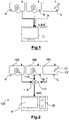
- FIG. 2 schematizes a computer system 100 comprising a central unit 90 to which is connected a display surface 91 and comprising three peripherals designated A, B, C, intended to be used, simultaneously or not, by one or more operators.
- peripherals considered hereafter are peripherals restoring the position of a pointer on a display surface.
- Such designation peripherals implement, for example, designation surfaces for restoring the position, on an active surface, or near and above the active surface, of a physical pointer such as a finger or a stylus.
- peripherals implement, for example, measurements of the displacements of a cursor, like a mouse or a tracking ball, from which displacements a position of a pointer is defined on a display surface, in particular by integrating movement.
- designation peripherals considered can be associated with the same display surface, for example in the case of a touch screen whose screen surface is greater than those of active surfaces of the designation peripherals, and or can be associated with several screens, we can cite the example of juxtaposed touch screens.
- the display surface 91 of the figure 2 is therefore a symbolic representation of a display device which comprises one or more screens, this aspect of the display system having no particular bearing on the invention.
- USB Universal Serial Bus Specification
- two peripherals designated A and B of a first type each comprise an active surface arranged on the surface of the screen 91 to constitute one or more touch screens.
- Each peripheral designated A, B generates data which is transmitted, via a USB digital bus, in accordance with the requirements of the HID standard.
- the data could however be transmitted via another type of bus and according to another transmission standard without calling into question the principles of the invention.
- peripherals are therefore standard equipment, in this example complying with the HID communication standard, with no technical specificity imposed for the implementation of the invention.
- design peripheral and "HID peripheral” will be used interchangeably to designate a designation peripheral comprising an active surface and configured to transmit in particular the absolute position in a reference of the active surface of a point designated by an operator's finger or by a suitable tool, for example a stylus.
- HID standard is here a particular case of standard, taken as an example because of its frequent use currently in the field of designation peripherals, but that this choice is not limiting of the invention. which can easily adapt to another communication standard.
- the computer system 100 also implements a redialer 10.
- the recomposer 10 receives, on inputs 11A, 11B of said recomposer, data according to a standardized format, in the example in HID format, transmitted by the various HID peripherals, here from each of the designation peripherals A, B.
- the recomposer 10 processes the data in the standardized format, received on the various inputs 11A, 11B, to reconstruct composite data sent on a single output 17 of said recomposer according to the standardized format.
- the composite data emitted as output responds to the requirements of a standard and therefore correspond, for the central unit 90, to the data transmitted by a single peripheral, here according to the HID standard.
- This specific construction differs from that of USB hubs or well-known switches in the field of communication networks between computers and which ensure the successive transmission of incoming data in a serial mode or without transformation on the background of these data.
- data received as input, coming from at least two HID peripherals are received on different inputs, and the data transmitted on the single output 17, in HID format, combine information contained in the data received at a given instant so that the assembly comprising the recomposer 10 and the HID peripherals which are connected to it is seen by the central unit 90 as if it were a single peripheral complying with the standard of HID communication, with which it therefore communicates without installing specific software or drivers on said central unit.
- the recomposer 10 must be designed to take into account the problems of synchronization and processing of the signals transmitted or received by the various peripherals, and to take charge of the various constraints of the communication standard. used, both in reception and in transmission.
- the recomposer will therefore include in particular buffer memories for the digital data received as input or to be transmitted and as many microcontrollers as required.
- the data transmitted by the recomposer 10 are therefore constructed from the data received by said recomposer, on different inputs, available at a given time.
- the recomposer is advantageously designed around a microcontroller, comprising conventional elements such as processors, memories, peripheral units, input-output interface, programmed in its main embodiment to execute the transformations applied to the data received on the inputs and to construct the output data whose characteristics are described below.
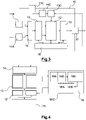
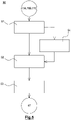
- the picture 3 illustrates an example of the internal architecture of a recomposer 10 in accordance with the invention and the operation of which, shown diagrammatically in the figure 5 , will be described in the case of using the HID standard for designation devices with active surfaces.
- the concentrator of the picture 3 also includes a configurator 16 in connection with the analyzer, the controller and the conditioner.
- radio receiver 11c transmitting signals received to an annexed controller 14' then to an annexed analyzer 13' connected to the controller 12 and to the configurator 16.
- Said data is transmitted, via the USB hub 14, to the analyzer 13 which interprets the data received according to the HID standard to extract therefrom the information necessary for the reconstruction of the data to be transmitted by the redialer.
- the descriptors are “fixed” data, configurable where applicable, characterizing the HID peripheral independently of the designations which are made, and which may be different from one HID peripheral to another. They generally allow a central unit 90 to know the characteristics of the HID peripheral from which it receives variable data so that an application implemented on said central unit is able to correctly interpret variable data received from this same HID peripheral. In the case of the invention, they are processed by the analyzer.
- Variable data is related to HID device usage. On a touch surface, this data indicates that a finger is in contact with the active surface and gives the position of the finger in the form of coordinates consistent with the descriptors. These data will be interpreted by an application implemented on the central unit, considering that they comply with the HID standard.
- peripherals that comply with the USB/HID standard can be supported by all applications and on any operating system, having integrated the standard in question into its communication protocols, without the need to put implement specific drivers, as in the case of systems using so-called "proprietary" communication protocols.
- the analyzer 13 will thus reconstitute a data table, resulting from the descriptors and the variable data, of each of the HID peripherals concerned by a processing by the controller.
- a cursor HID peripheral such as a mouse
- the data relating to the movement of the cursor are interpreted by the controller to calculate a position of a pointer controlled by said cursor on a designation surface assigned to said peripheral.
- the configurator 16 processes the descriptors of each of the HID peripherals A, B, so as to produce a virtual assembly of the designation surfaces 16A, 16B of the HID peripherals A, B, to define a single active surface 16U, virtual, representative of a physical arrangement of the designation surfaces of said peripherals.
- designation surfaces This physical arrangement of the designation surfaces is known to the recomposer in a simple case, for example when the configurator is intended for a predefined assembly of designation surfaces, one can cite the example of active surfaces of prepositioned touch screens.
- the physical layout is communicated in the form of parameters transmitted to the recomposer during an initialization or parameterization step, for example by a user of the computer system 100 via the central unit 90.
- the figure 4 illustrates in particular a simple example of an assembly defining such a single active surface 16U.
- the HID peripherals considered comprise in this example tactile surfaces sensitive to touch, capable of identifying the position of a finger touching the tactile surface.
- two display screens each covered with a touch-sensitive surface are juxtaposed, substantially edge to edge, to form a composite screen 91 presenting the appearance of a single screen.
- the simulated active surface 16U physically corresponds to the assembly of the touch surfaces covering the screens.
- peripherals comprising these touch screens being a priori "off-the-shelf" equipment, it is not required that the two touch surfaces have the same characteristics, and they may in particular have different physical dimensions, logical dimensions different (resolutions), different detection technologies.
- the descriptors of each of the corresponding HID peripherals are therefore not only distinct but may be different.
- the single active surface 16U also corresponds to descriptors, arbitrarily chosen or shaped, into which the descriptors of the HID peripherals connected to the recomposer 10 must be converted.
- the conversion carried out in the configurator 16 mainly determines transformations by which a point of a surface designation of a designation device expressed by coordinates in a reference system of said surface of designation, corresponds on the single active surface 16U to a point of said single active surface, expressed by coordinates in a coordinate system of said single active surface.
- the configurator of the figure 4 illustrates the case of two rectangular designation surfaces joined by an edge each of the same length, a height in the illustration, but points of said designation surfaces being determined in coordinate systems with different scales for the two designation surfaces .
- This single active surface 16U then comprises two zones, a first zone 16A' of which is isomorphic with the first designation surface 16A and a second zone 16B' of which is isomorphic with the second designation surface 16B.
- the relative positions between said first and second zones are also those between the first real designation surface 16A and the second designation surface 16B.
- the offset in X of the origin point of said second zone corresponds to the juxtaposed arrangement of the two designation surfaces 16A, 16B.
- the two touch surfaces 16A and 16B have the same physical dimensions, which leads to two zones of the same widths along X and the same heights along Y.
- the designation surfaces may have between them different dimensions, different shapes, different orientations. They can also be totally or partially superimposed.
- the area of the single active surface 16U associated with a designation surface may be a linear transformation of the physical touch surface or be transformed by nonlinear laws to produce particular effects, for example scale modifications depending on the position of a designated point on the designation surface or curvature effects.
- Zones corresponding to different designation surfaces are not necessarily arranged in a manner similar to the physical arrangement of said designation surfaces, and in the single active surface 16U zones of different designation surfaces can be close together or far apart or more or less superimposed .
- a zone can also declare locations in a designation area as non-active. This latter configuration makes it possible, for example, to ensure the continuity of an action such as a sliding of an operator's finger, when there is a non-active zone between two juxtaposed designation surfaces affected by the sliding.
- the two designation surfaces 16A and 16B can have the same physical height as shown but different widths, case not shown, and in this case the dimensions along Y of the two zones 16A' and 16B' will be identical, and the dimensions along X will be different and in the ratio of the physical widths of said designation surfaces. They may also have guidelines different: 90 or 45 degrees for example to form tactile mosaics. They may also not be contiguous to correspond to a physical arrangement of the designation surfaces.
- the two designation surfaces 16A and 16B can also have different physical heights, a case not shown. In this case, the single 16U rectangular active surface will not be fully active.
- a third conversion step 52 the data characterizing the zones 16A', 16B', associated with the HID peripherals A, B, established by the configurator 16 during the description step 54, are transmitted to the controller 12.
- the controller 12 transforms the variable data relating to the operation of the HID peripheral so that said variable data transmitted by said HID peripheral in correspondence with the descriptors of said HID peripheral are expressed after transformation in correspondence with descriptors of the single active surface 16U.
- the designated position for example the detected position of a finger, on a designation surface of an HID peripheral, which is transmitted by said HID peripheral in the data as a pair of values (Xf, Yf) corresponding to the designated position in the coordinate system of the designation surface considered, is converted into the coordinate system of the single active surface 16U by a scale factor on each of the axes and by an offset from the origin of the coordinates, factor d scale and offset as a function of the zone of the single active surface 16U corresponding to the designation surface considered.
- the various steps of the method 50 for transforming the input data are carried out recurrently when new variable data must be transformed.
- the second analysis step only needs to be implemented when the recomposer is put into service in a computer system and when the configuration of the designation peripherals connected to said recomposer is modified, for example by adding a designation device.
- a plurality of HID peripherals A, B, connected to the redialer 10 is "seen" by the central unit 90 as a single HID peripheral comprising the combined designation capabilities of the HID peripherals of said plurality of HID peripherals which are able to be implemented simultaneously by simple connection (“plug and play” according to the English expression).
- the redialer 10 associated with all the designation peripherals which are connected to it, therefore behaves vis-à-vis the central unit 90 like a unique designation peripheral for which the known operating problems no longer arise when several designation peripherals are individually connected directly to the central unit.
- the invention can be implemented for designation devices using data transmission standards other than the HID standard, although this standard is widely used today.
- the recomposer 10 incorporates at least one input for a designation peripheral of a second type, comprising an active surface and designed to communicate with a central unit by specific protocols not responding to a public standard, designated generically by the expression “proprietary system”, or to a different standard from that used for the designation peripherals of the first type connected to said recomposer.
- the data transmitted by this designation peripheral of a second type are transformed by the recomposer according to their structures to reconstruct a data table of form equivalent to those of the other designation peripherals connected to said recomposer.
- the data received from this designation peripheral of a second type are then processed like those of the designation peripherals of the first type and taken into account in the formatting step 53 to be incorporated into the data table of the single active surface 16U .
- a designation peripheral of the second type does not necessarily include the necessary descriptors to attribute to the active surface a particular zone of the single active surface 16U.
- said designation peripheral will be assigned an arbitrary zone, for example the entire single active surface 16U, or a zone 16A, 16B of another designation peripheral A, B, or even a zone selected by an operator from a computer station connected.
- FIG. 2 An example of this embodiment is shown in figure 2 and on the picture 3 .
- the C designation device of the second type is a C1 stylus associated with a C2 active surface.
- the peripheral C transmits the data by a radio link (Wifi, Bluetooth ® , etc.), essentially for practical reasons.
- Such a second-type designation device does not use the HID standardized communication standard (otherwise it would be considered a first-type designation device), and generally requires driver software to be installed on the central unit for its implementation.
- Such software drivers are specific to the operating system installed on the central unit 90 and sometimes are not available for certain operating systems, which limits the use of these peripherals to operating systems for which the software drivers are available.
- the receiver 11C here a radio receiver, receives the data transmitted by the stylus.
- These data comprise at least one identification of the peripheral so that the redialer can attribute to it the corresponding interactions on the surface C2.
- This operating data is, under ordinary conditions of use, normally extracted and interpreted by driver software specifically adapted to the peripheral in question.
- the data received by the radio controller 14C are processed by the annex analyzer 13C to obtain the variable data linked to the use of the graphic tablet.
- the annex analyzer 13C includes, for example, a firmware which can be installed during manufacture of the recomposer or downloaded into a flash memory, for example from the central unit 90.
- the descriptors of the stylus will be incorporated into the appendix analyzer 13C.
- variable data and the descriptors determined for the designation device of the second type C are then transmitted to the controller 12.
- the controller 12 reconstructs for said designation peripheral of the second type, such as the stylus in question, a table of data consistent with the tables of data produced by the HID peripherals, and said designation peripheral of the second type is then treated as a peripheral designation of the first type, which is associated with a designation surface in which said designation peripheral is active, for example, in the case of a stylus C1, the active surface C2 associated with said stylus.
- the active surface of the designation peripheral of the second type is then associated with a zone 16'C of the single active surface 16U.
- Said zone 16C′ is for example equal to the single active surface 16U so that the stylus C1 makes it possible to designate any point on the display surface 91 corresponding for example to the single active surface 16U.
- all or part of the zone 16C' on which the stylus C1 acts can be juxtaposed with the other zones 16A', 16B' of the peripherals designated 16A, 16B, and or can cover all or part thereof.
- the data linked to the designation peripheral of the second type C has the same structure as the data of the other designation peripherals A, B, so that they are taken up and processed like the latter by the controller 12 to convert the data according to data received from the configurator 16.
- the data is then transmitted to the conditioner 15 which reconstructs the table of data, incorporating the transformed variable data coming from all the peripherals of designation A, B and C, of the first type or of the second type, connected to the redialer 10.
- the recomposer 10 of the invention allows an operator to work with a graphics tablet on a touch screen, for example a touch screen of large dimensions in the vertical position, which may consist of several display screen tiles and of several touch surfaces, and simultaneously to one or more other operators to work by direct interactions on the touch screen, within the framework of a collaborative work.
- a graphics tablet on a touch screen for example a touch screen of large dimensions in the vertical position, which may consist of several display screen tiles and of several touch surfaces, and simultaneously to one or more other operators to work by direct interactions on the touch screen, within the framework of a collaborative work.
- the redialer 10 also has the effect of making a second type designation peripheral, nominally communicating according to a different, open or proprietary protocol, compatible with a standard such as the HID standard.
- the second type designation peripheral can be used on any computer system compatible with the data output standard managed by said recomposer, and without it being necessary to use a driver specific to the computer system, assuming that driver is available for that computer system.
- an HID peripheral with cursors such as a mouse
- these other designation peripherals possibly being of any type, surface touchscreens, styluses associated with active surfaces, and also other peripherals with cursors.
- said recomposer 10 can receive one or more other recomposers, each connected to an input of the first recomposer 10, such a cascade arrangement making it possible, at least in theory, to multiply indefinitely the number of designation peripherals simultaneously connected to the central unit.
- the number of inputs for connecting designation peripherals to the recomposer is not, at least in theory, limited insofar as the corresponding variable data can be put on a single output while remaining compatible with the standard considered. .
- the redialer comprises at least two inputs in order to make simultaneously usable at least two designation peripherals.
- the standard used at the output for the transmission of data to the central unit of the computer system is not necessarily the same as that (s) used to receive the data at the input of the recomposer.
- the two touch surfaces are arranged to form a touch screen, for example each touch surface covering half of a screen of dimensions greater than those of a touch surface, or else each touch surface covering a screen and the two screens being arranged to form an overall display surface, the two touch surfaces not necessarily being of the same technology, for example a touch surface in capacitive technology and another in optical technology.
- Example 1 simple sliding: an operator places a finger on one of the touch surfaces and moves it, for example to draw a line or move a "grabbed" object. If the trajectory of his finger passes from one touch surface to another, the movement will be perceived by the central unit as the continuous movement of the finger on a single touch surface without interruption. In particular if for technical reasons a separation exists between the two touch surfaces, the definition of a corresponding "dead" zone in the single active surface 16U will ensure the alignment of the trajectories followed by the finger on the two touch surfaces, the momentary absence of signal which can be considered in this example as a momentary raising of the finger.
- Example 2 multiple simultaneous contacts: an operator places two fingers of which one finger on one of the touch surfaces and the other finger on the other touch surface. This double contact does not generate a conflict because it is received by the central unit as a double contact on the same tactile surface. It will therefore be possible to produce effects of enlargement or shrinkage of an image, of rotation of an image, by a coordinated sliding action of the fingers on the touch surfaces considered by the central unit as a single touch surface.
- Example 3 collaborative work: an operator performs operations by means of a stylus and an active tablet, these operations materializing on a touch screen (simple or composite). Another operator interacts without conflict simultaneously by finger contacts on the shapes or other elements generated by means of the stylus and the active tablet.
- the invention thus makes it possible to overcome the shortcomings of the existing solutions by making it possible to assemble several existing designation peripherals, if necessary of different technologies, by ensuring the possibility of using them simultaneously in a transparent manner for the computer system whose central processing unit identifies only one designation peripheral which nevertheless transmits all the individualized information of the actions carried out on each of the designation peripherals.
- the architecture of the recomposer is described by way of example in a particular case and that the person skilled in the art may choose to perform the various functions to be performed by the recomposer of the invention by implementing, if need, one or more analyzers, and or one or more controllers, and or one or more configurators, and or one or more conditioners. He may also choose to group together certain elements or, on the contrary, to distribute the functions to be performed in different ways without departing from the invention.
- the recomposer has multiple outputs so that it is able to transmit recomposed data to multiple computers.
Landscapes
- Engineering & Computer Science (AREA)
- Theoretical Computer Science (AREA)
- General Engineering & Computer Science (AREA)
- Physics & Mathematics (AREA)
- General Physics & Mathematics (AREA)
- Human Computer Interaction (AREA)
- Position Input By Displaying (AREA)
- Small-Scale Networks (AREA)
Claims (13)
- Kombinierer (10), der es ermöglicht, eine Vielzahl von Bezeichnungsperipheriegeräten (A, B, C) mit einer einzigen Zentraleinheit (90) eines Computersystems (100) zu verbinden und gleichzeitig nutzbar zu machen, und der Folgendes umfasst:- Eingänge (11A, 11B, 11C) zum Empfangen von Daten, die normalerweise von der Zentraleinheit (90) empfangen werden, wenn das Bezeichnungsperipheriegerät direkt mit der Zentraleinheit verbunden ist, von jedem der Bezeichnungsperipheriegeräte, wenn das Bezeichnungsperipheriegerät mit dem Kombinierer verbunden ist ;- mindestens einen Ausgang (17) zum Senden von Daten an die Zentraleinheit (90), wenn der Kombinierer mit der Zentraleinheit verbunden ist;- digitale Verarbeitungsmittel (12, 13, 15, 13C, 14C, 16), die so konfiguriert sind, dass sie die an den Eingängen (11A, 11B, 11C) des Kombinierers empfangenen Daten in an den Ausgängen (17) des Kombinierers ausgegebene Daten umwandeln;wobei die ausgegebenen Daten inhaltlich und strukturell mit Daten übereinstimmen, die von einem Bezeichnungsperipheriegerät mit einer einzelnen aktiven Fläche (16U) ausgegeben würden;wobei die ausgegebenen Daten (17) zu jedem Zeitpunkt auf der einzigen aktiven Fläche (16U) individuell Aktionen charakterisieren, die mit den Bezeichnungsperipheriegeräten (A, B, C) durchgeführt werden, wobei die Aktionen durch die an den Eingängen (11A, 11B, 11C) empfangenen Daten charakterisiert werden, wobei der Kombinierer dadurch gekennzeichnet ist, dass:und dadurch, dass:
die Mittel zur digitalen Verarbeitung Folgendes umfassen:- mindestens einen Analysator (13, 13C), der so konfiguriert ist, dass er aus den Daten, die als Eingaben (11A, 11B, 11C) von jedem der mit dem Kombinierer verbundenen Bezeichnungsperipheriegeräte empfangen werden, eine Tabelle mit variablen Daten und Deskriptoren des Bezeichnungsperipheriegeräts extrahiert; mindestens einen Konfigurator (16), der so konfiguriert ist, dass er die Abmessungen und die Position einer aktiven Fläche (16A, 16B, 16C), die jedem der mit dem Kombinierer verbundenen Bezeichnungsperipheriegeräte zugeordnet ist, in einem Koordinatensystem der einzelnen aktiven Fläche (16U) definiert;- mindestens einen Kontroller (12), um variable Daten der an Eingängen (11A, 11B, 11C) empfangenen Daten in variable Daten der an Ausgängen (17) ausgegebenen Daten umzuwandeln;- mindestens einen Aufbereiter (15), der so konfiguriert ist, dass er die an den Ausgang (17) auszugebenden Daten in Übereinstimmung mit einem Kommunikationsprotokoll strukturiert, das von der Zentraleinheit (90) verstanden wird, an die der Kombinierer (10) angeschlossen werden soll;
der Konfigurator (16) für jede aktive Fläche (16A, 16B, 16C), die einem mit dem Kombinierer verbundenen Bezeichnungsperipheriegerät zugeordnet ist, Abmessungen und eine Position in der einzelnen aktiven Fläche (16U) eines Bereichs (16A', 16B', 16C') definiert, der der aktiven Fläche entspricht, die dem Bezeichnungsperipheriegerät zugeordnet ist, durch:- eine Skalierung einer Abszissenachse und einer Ordinatenachse jeder aktiven Fläche, die in einem Koordinatensystem der aktiven Fläche bekannt sind, auf ein Koordinatensystem der einzelnen aktiven Fläche (16U);- eine Position eines Referenzpunkts jeder aktiven Fläche in dem Koordinatensystem der einzelnen aktiven Fläche (16U). - Kombinierer nach Anspruch 1, bei dem Koordinaten eines bezeichneten Punkts auf einer aktiven Fläche (16A, 16B, 16C) im Koordinatensystem eines Bezeichnungsperipheriegeräts (A, B, C), die in den an einem Eingang (11A, 11B, 11C) des Kombinierers empfangenen variablen Daten übertragen wurden, oder vom Kombinierer aus den empfangenen variablen Daten erstellt werden, in die Koordinaten des bezeichneten Punkts auf der aktiven Fläche im Koordinatensystem der einzelnen aktiven Fläche (16U) umgewandelt und in die variablen Daten der vom Ausgang (17) ausgegebenen Daten aufgenommen werden.
- Kombinierer nach einem der Ansprüche 1 oder 2, der so konfiguriert ist, dass er an mindestens einem Eingang (11A, 11B) Daten empfängt, die die Anforderungen eines offenen Standards bestätigen, zum Beispiel den USB-Standard und die HID-Überlagerung des USB-Standards.
- Kombinierer nach einem der Ansprüche 1 bis 3, der so konfiguriert ist, dass er an mindestens einem Eingang (11C) Daten empfängt, die durch ein geschlossenes, sogenanntes "proprietäres" Protokoll definiert sind.
- Kombinierer nach einem der Ansprüche 1 bis 4, wobei die ausgegebenen Daten (17) den Anforderungen eines offenen Standards entsprechen, zum Beispiel dem USB-Standard und der HID-Überlagerung zu diesem USB-Standard.
- Kombinierer nach einem der Ansprüche 1 bis 5, wobei mindestens ein Eingang (11C) einer drahtlosen Verbindung entspricht, mit der sich ein drahtloses Bezeichnungsperipheriegerät (C) verbinden kann, zum Beispiel über eine Funkverbindung oder eine optische Verbindung.
- Anordnung mit einem Rekombinierer (10) gemäß einem der Ansprüche 1 bis 6 und mit mindestens zwei Bezeichnungsperipheriegeräten (A, B, C).
- Anordnung nach Anspruch 7, wobei mindestens ein Bezeichnungsperipheriegerät (A, B) eine aktive Fläche (16A, 16B) aufweist, die mit einem Touchscreen verbunden ist.
- Anordnung nach Anspruch 7 oder Anspruch 8, wobei mindestens ein Bezeichnungsperipheriegerät (C) ein Stift ist, der mit einer aktiven Fläche verbunden ist.
- Anordnung nach einem der Ansprüche 7 bis 9, wobei mindestens ein Bezeichnungsperipheriegerät ein Scrollgerät ist, dessen Signale verarbeitet werden, um eine Position auf einer aktiven Fläche zu definieren.
- Computersystem mit einer Anordnung nach einem der Ansprüche 7 bis 10, wobei der Ausgang (17) des Rekombinierers (10) mit einer Zentraleinheit (90) des Computersystems verbunden ist.
- Verfahren zum Verbinden mehrerer Bezeichnungsperipheriegeräte (A, B, C) mit derselben Zentraleinheit (90) in einem Computersystem (100) und zur gleichzeitigen Benutzbarkeit der Bezeichnungsperipheriegeräte, das die folgenden Schritte umfasst: Verbinden der Bezeichnungsperipheriegeräte mit Eingängen eines Rekombinierers (10) nach einem der Ansprüche 1 bis 6 und Verbinden eines Ausgangs des Rekombinierers mit der Zentraleinheit (90), so dass die mit dem Rekombinierer verbundenen Bezeichnungsperipheriegeräte von der Zentraleinheit als ein einziges Bezeichnungsperipheriegerät mit aktiver Fläche betrachtet werden.
- Verfahren nach Anspruch 12, umfassend einen Schritt des Einrichtens des Rekombinierers (10), wobei der Schritt des Einrichtens darin besteht, eine Anordnung von aktiven Flächen (16A, 16B, 16C), die mit jedem der angeschlossenen Bezeichnungsperipheriegeräte (A, B, C) verbunden sind, in der einzelnen aktiven Fläche (16U) zu definieren.
Applications Claiming Priority (2)
| Application Number | Priority Date | Filing Date | Title |
|---|---|---|---|
| FR1759852A FR3072803B1 (fr) | 2017-10-19 | 2017-10-19 | Systeme et procede pour la gestion simultanee d’une pluralite de peripheriques de designation |
| PCT/EP2018/078792 WO2019077142A1 (fr) | 2017-10-19 | 2018-10-19 | Systeme et procede pour la gestion simultanee d'une pluralite de peripheriques de designation |
Publications (2)
| Publication Number | Publication Date |
|---|---|
| EP3698236A1 EP3698236A1 (de) | 2020-08-26 |
| EP3698236B1 true EP3698236B1 (de) | 2022-12-07 |
Family
ID=60923671
Family Applications (1)
| Application Number | Title | Priority Date | Filing Date |
|---|---|---|---|
| EP18793394.0A Active EP3698236B1 (de) | 2017-10-19 | 2018-10-19 | System und verfahren zur gleichzeitigen verwaltung einer vielzahl von designationsperipheriegeräten |
Country Status (11)
| Country | Link |
|---|---|
| US (1) | US11481180B2 (de) |
| EP (1) | EP3698236B1 (de) |
| JP (1) | JP7284960B2 (de) |
| CN (1) | CN111263928B (de) |
| CA (1) | CA3079563A1 (de) |
| ES (1) | ES2942274T3 (de) |
| FR (1) | FR3072803B1 (de) |
| MA (1) | MA50393A (de) |
| PT (1) | PT3698236T (de) |
| SG (1) | SG11202002501VA (de) |
| WO (1) | WO2019077142A1 (de) |
Families Citing this family (3)
| Publication number | Priority date | Publication date | Assignee | Title |
|---|---|---|---|---|
| FR3072803B1 (fr) | 2017-10-19 | 2021-05-07 | Immersion | Systeme et procede pour la gestion simultanee d’une pluralite de peripheriques de designation |
| FR3111208B1 (fr) | 2020-06-04 | 2022-11-25 | Thales Sa | Système à écran tactile comprenant deux dalles tactiles disposées côte à côte |
| FR3111209A1 (fr) | 2020-06-04 | 2021-12-10 | Thales | Système à écran tactile comprenant deux dalles tactiles disposées côte à côte |
Citations (3)
| Publication number | Priority date | Publication date | Assignee | Title |
|---|---|---|---|---|
| CN102314253A (zh) * | 2010-07-06 | 2012-01-11 | 宏碁股份有限公司 | 手持式电子装置与其操作方法 |
| US20120038561A1 (en) * | 2010-08-12 | 2012-02-16 | Samsung Electronics Co., Ltd. | Method and apparatus for displaying |
| DE102014206745A1 (de) * | 2014-04-08 | 2015-10-08 | Siemens Aktiengesellschaft | Verfahren zum Anschluss mehrerer Touchscreens an ein Computer-System und Verteilmodul zum Verteilen von Grafik- und Touchscreensignalen |
Family Cites Families (26)
| Publication number | Priority date | Publication date | Assignee | Title |
|---|---|---|---|---|
| GB2313682B (en) * | 1996-05-29 | 2001-01-10 | Icl Personal Systems Oy | Personal computer systems |
| KR100551192B1 (ko) * | 1997-03-31 | 2006-05-25 | 매그나칩 반도체 유한회사 | 좌표 베이스 데이터 입력 시스템 |
| JP4033582B2 (ja) * | 1998-06-09 | 2008-01-16 | 株式会社リコー | 座標入力/検出装置および電子黒板システム |
| WO2000063767A1 (de) * | 1999-04-21 | 2000-10-26 | Siemens Schweiz Ag | Peripheriegerät mit einer drahtlosen übertragungsvorrichtung |
| EP1054321A3 (de) * | 1999-05-21 | 2002-06-19 | Sony Corporation | Informationsverarbeitungsverfahren und -vorrichtung |
| US6963935B1 (en) * | 1999-08-31 | 2005-11-08 | Gateway Inc. | Peripheral universal bus hub |
| JP2001084076A (ja) * | 1999-09-13 | 2001-03-30 | Masatoshi Iwamoto | ポインタ制御方法およびコンピュータシステム |
| JP2001195151A (ja) * | 2000-01-05 | 2001-07-19 | Toshiba Corp | 情報周辺装置 |
| DE10045436A1 (de) * | 2000-08-09 | 2002-02-21 | Siemens Ag | Computersystem mit einem Basisrechner und mehreren Bedienterminals |
| US20050174976A1 (en) * | 2004-02-11 | 2005-08-11 | Yung-Hui Wang | Auto-switching channel method of unidirectional wireless receiver |
| US7557774B2 (en) | 2004-08-13 | 2009-07-07 | Microsoft Corporation | Displaying visually correct pointer movements on a multi-monitor display system |
| US20090128504A1 (en) * | 2007-11-16 | 2009-05-21 | Garey Alexander Smith | Touch screen peripheral device |
| FR2932047B1 (fr) * | 2008-05-29 | 2010-08-13 | Airbus France | Systeme informatique de maintenance d'un aeronef a terminal distant |
| CN101877754B (zh) * | 2009-05-01 | 2012-11-28 | 柯尼卡美能达商用科技株式会社 | 信息设备装置 |
| US8310520B2 (en) * | 2009-08-19 | 2012-11-13 | Avaya Inc. | Flexible decomposition and recomposition of multimedia conferencing streams using real-time control information |
| KR20120047518A (ko) * | 2010-11-04 | 2012-05-14 | 채상우 | 자동 포인팅 기능을 겸용하는 키패드를 장착한 컨트롤 입력장치와 사용방법 |
| US8671235B2 (en) * | 2011-05-05 | 2014-03-11 | Aten International Co., Ltd. | KVM switch with embedded bluetooth module |
| US9213482B2 (en) * | 2011-11-11 | 2015-12-15 | Elan Microelectronics Corporation | Touch control device and method |
| FR2992074B1 (fr) * | 2012-06-14 | 2014-07-04 | Alphaui | Peripherique de frappe pour un equipement numerique |
| DE102013202818B4 (de) * | 2013-02-21 | 2023-03-30 | Siemens Healthcare Gmbh | Verfahren zur Steuerung einer Applikation und zugehöriges System |
| US20150138085A1 (en) * | 2013-07-31 | 2015-05-21 | Bradley Lloyd Wilk | Electronic apparatus for simulating or interfacing a backward compatible human input device by means or control of a gesture recognition system |
| JP6035290B2 (ja) * | 2014-07-29 | 2016-11-30 | 京セラドキュメントソリューションズ株式会社 | 表示入力装置及びこれを備えた画像形成装置 |
| CA2985129C (en) * | 2015-05-11 | 2023-06-06 | The Commonwealth Of Australia | Cross domain desktop compositor |
| US10547709B2 (en) * | 2015-06-18 | 2020-01-28 | Qualtrics, Llc | Recomposing survey questions for distribution via multiple distribution channels |
| US10686688B2 (en) * | 2016-07-22 | 2020-06-16 | Intel Corporation | Methods and apparatus to reduce static and dynamic fragmentation impact on software-defined infrastructure architectures |
| FR3072803B1 (fr) | 2017-10-19 | 2021-05-07 | Immersion | Systeme et procede pour la gestion simultanee d’une pluralite de peripheriques de designation |
-
2017
- 2017-10-19 FR FR1759852A patent/FR3072803B1/fr active Active
-
2018
- 2018-10-19 MA MA050393A patent/MA50393A/fr unknown
- 2018-10-19 JP JP2020521587A patent/JP7284960B2/ja active Active
- 2018-10-19 SG SG11202002501VA patent/SG11202002501VA/en unknown
- 2018-10-19 ES ES18793394T patent/ES2942274T3/es active Active
- 2018-10-19 CA CA3079563A patent/CA3079563A1/fr active Pending
- 2018-10-19 WO PCT/EP2018/078792 patent/WO2019077142A1/fr not_active Ceased
- 2018-10-19 PT PT187933940T patent/PT3698236T/pt unknown
- 2018-10-19 US US16/754,924 patent/US11481180B2/en active Active
- 2018-10-19 EP EP18793394.0A patent/EP3698236B1/de active Active
- 2018-10-19 CN CN201880066872.4A patent/CN111263928B/zh active Active
Patent Citations (3)
| Publication number | Priority date | Publication date | Assignee | Title |
|---|---|---|---|---|
| CN102314253A (zh) * | 2010-07-06 | 2012-01-11 | 宏碁股份有限公司 | 手持式电子装置与其操作方法 |
| US20120038561A1 (en) * | 2010-08-12 | 2012-02-16 | Samsung Electronics Co., Ltd. | Method and apparatus for displaying |
| DE102014206745A1 (de) * | 2014-04-08 | 2015-10-08 | Siemens Aktiengesellschaft | Verfahren zum Anschluss mehrerer Touchscreens an ein Computer-System und Verteilmodul zum Verteilen von Grafik- und Touchscreensignalen |
Also Published As
| Publication number | Publication date |
|---|---|
| CN111263928B (zh) | 2024-11-26 |
| CA3079563A1 (fr) | 2019-04-25 |
| US20200293256A1 (en) | 2020-09-17 |
| WO2019077142A1 (fr) | 2019-04-25 |
| FR3072803A1 (fr) | 2019-04-26 |
| JP7284960B2 (ja) | 2023-06-01 |
| CN111263928A (zh) | 2020-06-09 |
| MA50393A (fr) | 2021-03-24 |
| US11481180B2 (en) | 2022-10-25 |
| JP2021500657A (ja) | 2021-01-07 |
| ES2942274T3 (es) | 2023-05-31 |
| PT3698236T (pt) | 2023-03-20 |
| FR3072803B1 (fr) | 2021-05-07 |
| EP3698236A1 (de) | 2020-08-26 |
| SG11202002501VA (en) | 2020-05-28 |
Similar Documents
| Publication | Publication Date | Title |
|---|---|---|
| DE112018002775B4 (de) | Verfahren und vorrichtung zum erfassen von ebenen und/oder quadtrees zur verwendung als ein virtuelles substrat | |
| JP5023217B2 (ja) | 複数のコンピュータを管理する装置及びシステム | |
| US10339342B2 (en) | Data transfer based on input device identifying information | |
| KR101561827B1 (ko) | 단말 화면 상의 객체 처리 장치 및 방법 | |
| EP3698236B1 (de) | System und verfahren zur gleichzeitigen verwaltung einer vielzahl von designationsperipheriegeräten | |
| US20150185845A1 (en) | Providing tactle feedback for gesture based inputs | |
| CA2891875C (fr) | Dispositif et procede de partage visuel de donnees | |
| US20200089512A1 (en) | Method and Apparatus for Invoking Input Method, Server, and Terminal | |
| JP2016529607A (ja) | オブジェクトを表示する方法と装置 | |
| WO2019179927A1 (fr) | Procede d'interaction entre d'une part au moins un utilisateur et/ou un premier dispositif electronique et d'autre part un second dispositif electronique | |
| FR2907572A1 (fr) | Dispositif pour controler la commutation d'une interface utilisateur.. | |
| EP3202116B1 (de) | Verfahren und vorrichtung zur unterstützung von entscheidungsfindungen | |
| US9990117B2 (en) | Zooming and panning within a user interface | |
| CN104202484A (zh) | 一种单手操作大屏幕智能移动终端拨号键盘的方法与系统 | |
| US9875019B2 (en) | Indicating a transition from gesture based inputs to touch surfaces | |
| CN110737385B (zh) | 一种视频鼠标交互方法、智能终端及存储介质 | |
| CN103462695A (zh) | 监护仪及其屏幕的布局方法与系统 | |
| FR2940688A1 (fr) | Systeme comprenant un serveur et un terminal munis d'interfaces graphiques communiquant via un protocole de partage d'images | |
| US10915753B2 (en) | Operation assistance apparatus, operation assistance method, and computer readable recording medium | |
| US20160054818A1 (en) | Presenting user interface based on location of input from body part | |
| WO2016071171A1 (fr) | Procede et dispositif de changement de point de vue d'une carte tridimensionnelle (3d) ou d'une image d'un objet physique tridimensionnel (3d) observe par reconnaissance d'une gestuelle sur un ecran tactile multi-points | |
| WO2013121117A1 (fr) | Procede et dispositif de controle d'au moins un appareil par au moins un autre appareil, appareil et systeme mettant en oeuvre un tel dispositif | |
| US20130321243A1 (en) | Displaying Method of Integrating Multiple Electronic Devices in a Display Device and a Display Device Thereof | |
| FR3094964A1 (fr) | Système d'interaction du cockpit d'un aéronef | |
| US10257424B2 (en) | Augmenting functionality of a computing device |
Legal Events
| Date | Code | Title | Description |
|---|---|---|---|
| STAA | Information on the status of an ep patent application or granted ep patent |
Free format text: STATUS: UNKNOWN |
|
| STAA | Information on the status of an ep patent application or granted ep patent |
Free format text: STATUS: THE INTERNATIONAL PUBLICATION HAS BEEN MADE |
|
| TPAC | Observations filed by third parties |
Free format text: ORIGINAL CODE: EPIDOSNTIPA |
|
| PUAI | Public reference made under article 153(3) epc to a published international application that has entered the european phase |
Free format text: ORIGINAL CODE: 0009012 |
|
| STAA | Information on the status of an ep patent application or granted ep patent |
Free format text: STATUS: REQUEST FOR EXAMINATION WAS MADE |
|
| 17P | Request for examination filed |
Effective date: 20200324 |
|
| AK | Designated contracting states |
Kind code of ref document: A1 Designated state(s): AL AT BE BG CH CY CZ DE DK EE ES FI FR GB GR HR HU IE IS IT LI LT LU LV MC MK MT NL NO PL PT RO RS SE SI SK SM TR |
|
| AX | Request for extension of the european patent |
Extension state: BA ME |
|
| DAX | Request for extension of the european patent (deleted) | ||
| RAV | Requested validation state of the european patent: fee paid |
Extension state: MA Effective date: 20200324 Extension state: TN Effective date: 20200324 |
|
| STAA | Information on the status of an ep patent application or granted ep patent |
Free format text: STATUS: EXAMINATION IS IN PROGRESS |
|
| 17Q | First examination report despatched |
Effective date: 20210217 |
|
| TPAC | Observations filed by third parties |
Free format text: ORIGINAL CODE: EPIDOSNTIPA |
|
| REG | Reference to a national code |
Ref country code: DE Ref legal event code: R079 Ref document number: 602018044026 Country of ref document: DE Free format text: PREVIOUS MAIN CLASS: G06F0003023000 Ipc: G06F0003147000 |
|
| GRAP | Despatch of communication of intention to grant a patent |
Free format text: ORIGINAL CODE: EPIDOSNIGR1 |
|
| STAA | Information on the status of an ep patent application or granted ep patent |
Free format text: STATUS: GRANT OF PATENT IS INTENDED |
|
| RIC1 | Information provided on ipc code assigned before grant |
Ipc: G06F 3/033 20130101ALI20220608BHEP Ipc: G06F 3/038 20130101ALI20220608BHEP Ipc: G06F 3/023 20060101ALI20220608BHEP Ipc: G06F 3/147 20060101AFI20220608BHEP |
|
| INTG | Intention to grant announced |
Effective date: 20220701 |
|
| TPAC | Observations filed by third parties |
Free format text: ORIGINAL CODE: EPIDOSNTIPA |
|
| GRAS | Grant fee paid |
Free format text: ORIGINAL CODE: EPIDOSNIGR3 |
|
| GRAA | (expected) grant |
Free format text: ORIGINAL CODE: 0009210 |
|
| STAA | Information on the status of an ep patent application or granted ep patent |
Free format text: STATUS: THE PATENT HAS BEEN GRANTED |
|
| AK | Designated contracting states |
Kind code of ref document: B1 Designated state(s): AL AT BE BG CH CY CZ DE DK EE ES FI FR GB GR HR HU IE IS IT LI LT LU LV MC MK MT NL NO PL PT RO RS SE SI SK SM TR |
|
| REG | Reference to a national code |
Ref country code: GB Ref legal event code: FG4D Free format text: NOT ENGLISH |
|
| REG | Reference to a national code |
Ref country code: CH Ref legal event code: EP Ref country code: AT Ref legal event code: REF Ref document number: 1536692 Country of ref document: AT Kind code of ref document: T Effective date: 20221215 |
|
| REG | Reference to a national code |
Ref country code: DE Ref legal event code: R096 Ref document number: 602018044026 Country of ref document: DE |
|
| REG | Reference to a national code |
Ref country code: IE Ref legal event code: FG4D Free format text: LANGUAGE OF EP DOCUMENT: FRENCH |
|
| REG | Reference to a national code |
Ref country code: NL Ref legal event code: FP |
|
| REG | Reference to a national code |
Ref country code: PT Ref legal event code: SC4A Ref document number: 3698236 Country of ref document: PT Date of ref document: 20230320 Kind code of ref document: T Free format text: AVAILABILITY OF NATIONAL TRANSLATION Effective date: 20230314 |
|
| REG | Reference to a national code |
Ref country code: LT Ref legal event code: MG9D |
|
| REG | Reference to a national code |
Ref country code: SE Ref legal event code: TRGR |
|
| PG25 | Lapsed in a contracting state [announced via postgrant information from national office to epo] |
Ref country code: NO Free format text: LAPSE BECAUSE OF FAILURE TO SUBMIT A TRANSLATION OF THE DESCRIPTION OR TO PAY THE FEE WITHIN THE PRESCRIBED TIME-LIMIT Effective date: 20230307 Ref country code: LT Free format text: LAPSE BECAUSE OF FAILURE TO SUBMIT A TRANSLATION OF THE DESCRIPTION OR TO PAY THE FEE WITHIN THE PRESCRIBED TIME-LIMIT Effective date: 20221207 Ref country code: FI Free format text: LAPSE BECAUSE OF FAILURE TO SUBMIT A TRANSLATION OF THE DESCRIPTION OR TO PAY THE FEE WITHIN THE PRESCRIBED TIME-LIMIT Effective date: 20221207 |
|
| REG | Reference to a national code |
Ref country code: AT Ref legal event code: MK05 Ref document number: 1536692 Country of ref document: AT Kind code of ref document: T Effective date: 20221207 |
|
| PG25 | Lapsed in a contracting state [announced via postgrant information from national office to epo] |
Ref country code: RS Free format text: LAPSE BECAUSE OF FAILURE TO SUBMIT A TRANSLATION OF THE DESCRIPTION OR TO PAY THE FEE WITHIN THE PRESCRIBED TIME-LIMIT Effective date: 20221207 Ref country code: PL Free format text: LAPSE BECAUSE OF FAILURE TO SUBMIT A TRANSLATION OF THE DESCRIPTION OR TO PAY THE FEE WITHIN THE PRESCRIBED TIME-LIMIT Effective date: 20221207 Ref country code: LV Free format text: LAPSE BECAUSE OF FAILURE TO SUBMIT A TRANSLATION OF THE DESCRIPTION OR TO PAY THE FEE WITHIN THE PRESCRIBED TIME-LIMIT Effective date: 20221207 Ref country code: HR Free format text: LAPSE BECAUSE OF FAILURE TO SUBMIT A TRANSLATION OF THE DESCRIPTION OR TO PAY THE FEE WITHIN THE PRESCRIBED TIME-LIMIT Effective date: 20221207 Ref country code: GR Free format text: LAPSE BECAUSE OF FAILURE TO SUBMIT A TRANSLATION OF THE DESCRIPTION OR TO PAY THE FEE WITHIN THE PRESCRIBED TIME-LIMIT Effective date: 20230308 |
|
| REG | Reference to a national code |
Ref country code: ES Ref legal event code: FG2A Ref document number: 2942274 Country of ref document: ES Kind code of ref document: T3 Effective date: 20230531 |
|
| PG25 | Lapsed in a contracting state [announced via postgrant information from national office to epo] |
Ref country code: SM Free format text: LAPSE BECAUSE OF FAILURE TO SUBMIT A TRANSLATION OF THE DESCRIPTION OR TO PAY THE FEE WITHIN THE PRESCRIBED TIME-LIMIT Effective date: 20221207 Ref country code: RO Free format text: LAPSE BECAUSE OF FAILURE TO SUBMIT A TRANSLATION OF THE DESCRIPTION OR TO PAY THE FEE WITHIN THE PRESCRIBED TIME-LIMIT Effective date: 20221207 Ref country code: EE Free format text: LAPSE BECAUSE OF FAILURE TO SUBMIT A TRANSLATION OF THE DESCRIPTION OR TO PAY THE FEE WITHIN THE PRESCRIBED TIME-LIMIT Effective date: 20221207 Ref country code: CZ Free format text: LAPSE BECAUSE OF FAILURE TO SUBMIT A TRANSLATION OF THE DESCRIPTION OR TO PAY THE FEE WITHIN THE PRESCRIBED TIME-LIMIT Effective date: 20221207 Ref country code: AT Free format text: LAPSE BECAUSE OF FAILURE TO SUBMIT A TRANSLATION OF THE DESCRIPTION OR TO PAY THE FEE WITHIN THE PRESCRIBED TIME-LIMIT Effective date: 20221207 |
|
| PG25 | Lapsed in a contracting state [announced via postgrant information from national office to epo] |
Ref country code: SK Free format text: LAPSE BECAUSE OF FAILURE TO SUBMIT A TRANSLATION OF THE DESCRIPTION OR TO PAY THE FEE WITHIN THE PRESCRIBED TIME-LIMIT Effective date: 20221207 Ref country code: IS Free format text: LAPSE BECAUSE OF FAILURE TO SUBMIT A TRANSLATION OF THE DESCRIPTION OR TO PAY THE FEE WITHIN THE PRESCRIBED TIME-LIMIT Effective date: 20230407 Ref country code: AL Free format text: LAPSE BECAUSE OF FAILURE TO SUBMIT A TRANSLATION OF THE DESCRIPTION OR TO PAY THE FEE WITHIN THE PRESCRIBED TIME-LIMIT Effective date: 20221207 |
|
| REG | Reference to a national code |
Ref country code: DE Ref legal event code: R097 Ref document number: 602018044026 Country of ref document: DE |
|
| PLBE | No opposition filed within time limit |
Free format text: ORIGINAL CODE: 0009261 |
|
| STAA | Information on the status of an ep patent application or granted ep patent |
Free format text: STATUS: NO OPPOSITION FILED WITHIN TIME LIMIT |
|
| PG25 | Lapsed in a contracting state [announced via postgrant information from national office to epo] |
Ref country code: DK Free format text: LAPSE BECAUSE OF FAILURE TO SUBMIT A TRANSLATION OF THE DESCRIPTION OR TO PAY THE FEE WITHIN THE PRESCRIBED TIME-LIMIT Effective date: 20221207 |
|
| 26N | No opposition filed |
Effective date: 20230908 |
|
| PG25 | Lapsed in a contracting state [announced via postgrant information from national office to epo] |
Ref country code: SI Free format text: LAPSE BECAUSE OF FAILURE TO SUBMIT A TRANSLATION OF THE DESCRIPTION OR TO PAY THE FEE WITHIN THE PRESCRIBED TIME-LIMIT Effective date: 20221207 |
|
| PG25 | Lapsed in a contracting state [announced via postgrant information from national office to epo] |
Ref country code: MC Free format text: LAPSE BECAUSE OF FAILURE TO SUBMIT A TRANSLATION OF THE DESCRIPTION OR TO PAY THE FEE WITHIN THE PRESCRIBED TIME-LIMIT Effective date: 20221207 |
|
| PG25 | Lapsed in a contracting state [announced via postgrant information from national office to epo] |
Ref country code: IE Free format text: LAPSE BECAUSE OF NON-PAYMENT OF DUE FEES Effective date: 20231019 |
|
| PG25 | Lapsed in a contracting state [announced via postgrant information from national office to epo] |
Ref country code: IE Free format text: LAPSE BECAUSE OF NON-PAYMENT OF DUE FEES Effective date: 20231019 |
|
| PG25 | Lapsed in a contracting state [announced via postgrant information from national office to epo] |
Ref country code: BG Free format text: LAPSE BECAUSE OF FAILURE TO SUBMIT A TRANSLATION OF THE DESCRIPTION OR TO PAY THE FEE WITHIN THE PRESCRIBED TIME-LIMIT Effective date: 20221207 |
|
| PG25 | Lapsed in a contracting state [announced via postgrant information from national office to epo] |
Ref country code: BG Free format text: LAPSE BECAUSE OF FAILURE TO SUBMIT A TRANSLATION OF THE DESCRIPTION OR TO PAY THE FEE WITHIN THE PRESCRIBED TIME-LIMIT Effective date: 20221207 |
|
| PG25 | Lapsed in a contracting state [announced via postgrant information from national office to epo] |
Ref country code: CY Free format text: LAPSE BECAUSE OF FAILURE TO SUBMIT A TRANSLATION OF THE DESCRIPTION OR TO PAY THE FEE WITHIN THE PRESCRIBED TIME-LIMIT; INVALID AB INITIO Effective date: 20181019 |
|
| PG25 | Lapsed in a contracting state [announced via postgrant information from national office to epo] |
Ref country code: HU Free format text: LAPSE BECAUSE OF FAILURE TO SUBMIT A TRANSLATION OF THE DESCRIPTION OR TO PAY THE FEE WITHIN THE PRESCRIBED TIME-LIMIT; INVALID AB INITIO Effective date: 20181019 |
|
| VS25 | Lapsed in a validation state [announced via postgrant information from nat. office to epo] |
Ref country code: MA Free format text: FAILURE TO ELECT DOMICILE IN THE NATIONAL COUNTRY Effective date: 20230308 |
|
| REG | Reference to a national code |
Ref country code: CH Ref legal event code: U11 Free format text: ST27 STATUS EVENT CODE: U-0-0-U10-U11 (AS PROVIDED BY THE NATIONAL OFFICE) Effective date: 20251106 |
|
| PGFP | Annual fee paid to national office [announced via postgrant information from national office to epo] |
Ref country code: LU Payment date: 20251028 Year of fee payment: 8 Ref country code: NL Payment date: 20251029 Year of fee payment: 8 |
|
| PGFP | Annual fee paid to national office [announced via postgrant information from national office to epo] |
Ref country code: PT Payment date: 20251015 Year of fee payment: 8 |
|
| PG25 | Lapsed in a contracting state [announced via postgrant information from national office to epo] |
Ref country code: TR Free format text: LAPSE BECAUSE OF FAILURE TO SUBMIT A TRANSLATION OF THE DESCRIPTION OR TO PAY THE FEE WITHIN THE PRESCRIBED TIME-LIMIT Effective date: 20221207 |
|
| PGFP | Annual fee paid to national office [announced via postgrant information from national office to epo] |
Ref country code: DE Payment date: 20251029 Year of fee payment: 8 |
|
| PGFP | Annual fee paid to national office [announced via postgrant information from national office to epo] |
Ref country code: GB Payment date: 20251028 Year of fee payment: 8 |
|
| PGFP | Annual fee paid to national office [announced via postgrant information from national office to epo] |
Ref country code: IT Payment date: 20251029 Year of fee payment: 8 |
|
| PGFP | Annual fee paid to national office [announced via postgrant information from national office to epo] |
Ref country code: FR Payment date: 20251028 Year of fee payment: 8 |
|
| PGFP | Annual fee paid to national office [announced via postgrant information from national office to epo] |
Ref country code: BE Payment date: 20251029 Year of fee payment: 8 |
|
| PGFP | Annual fee paid to national office [announced via postgrant information from national office to epo] |
Ref country code: SE Payment date: 20251030 Year of fee payment: 8 Ref country code: CH Payment date: 20251106 Year of fee payment: 8 |
|
| PGFP | Annual fee paid to national office [announced via postgrant information from national office to epo] |
Ref country code: ES Payment date: 20251103 Year of fee payment: 8 |