EP3698247B1 - Appareil et procédé de fourniture d'ordonnanceur de paquets basé sur la performance - Google Patents
Appareil et procédé de fourniture d'ordonnanceur de paquets basé sur la performance Download PDFInfo
- Publication number
- EP3698247B1 EP3698247B1 EP18799951.1A EP18799951A EP3698247B1 EP 3698247 B1 EP3698247 B1 EP 3698247B1 EP 18799951 A EP18799951 A EP 18799951A EP 3698247 B1 EP3698247 B1 EP 3698247B1
- Authority
- EP
- European Patent Office
- Prior art keywords
- cores
- user plane
- work items
- observation
- scheduler
- Prior art date
- Legal status (The legal status is an assumption and is not a legal conclusion. Google has not performed a legal analysis and makes no representation as to the accuracy of the status listed.)
- Active
Links
Images


Classifications
-
- G—PHYSICS
- G06—COMPUTING OR CALCULATING; COUNTING
- G06F—ELECTRIC DIGITAL DATA PROCESSING
- G06F9/00—Arrangements for program control, e.g. control units
- G06F9/06—Arrangements for program control, e.g. control units using stored programs, i.e. using an internal store of processing equipment to receive or retain programs
- G06F9/46—Multiprogramming arrangements
- G06F9/50—Allocation of resources, e.g. of the central processing unit [CPU]
- G06F9/5005—Allocation of resources, e.g. of the central processing unit [CPU] to service a request
- G06F9/5027—Allocation of resources, e.g. of the central processing unit [CPU] to service a request the resource being a machine, e.g. CPUs, Servers, Terminals
- G06F9/505—Allocation of resources, e.g. of the central processing unit [CPU] to service a request the resource being a machine, e.g. CPUs, Servers, Terminals considering the load
-
- G—PHYSICS
- G06—COMPUTING OR CALCULATING; COUNTING
- G06F—ELECTRIC DIGITAL DATA PROCESSING
- G06F9/00—Arrangements for program control, e.g. control units
- G06F9/06—Arrangements for program control, e.g. control units using stored programs, i.e. using an internal store of processing equipment to receive or retain programs
- G06F9/46—Multiprogramming arrangements
- G06F9/50—Allocation of resources, e.g. of the central processing unit [CPU]
- G06F9/5061—Partitioning or combining of resources
-
- H—ELECTRICITY
- H04—ELECTRIC COMMUNICATION TECHNIQUE
- H04L—TRANSMISSION OF DIGITAL INFORMATION, e.g. TELEGRAPHIC COMMUNICATION
- H04L47/00—Traffic control in data switching networks
- H04L47/50—Queue scheduling
- H04L47/54—Loss aware scheduling
-
- H—ELECTRICITY
- H04—ELECTRIC COMMUNICATION TECHNIQUE
- H04L—TRANSMISSION OF DIGITAL INFORMATION, e.g. TELEGRAPHIC COMMUNICATION
- H04L47/00—Traffic control in data switching networks
- H04L47/50—Queue scheduling
- H04L47/56—Queue scheduling implementing delay-aware scheduling
-
- G—PHYSICS
- G06—COMPUTING OR CALCULATING; COUNTING
- G06F—ELECTRIC DIGITAL DATA PROCESSING
- G06F9/00—Arrangements for program control, e.g. control units
- G06F9/06—Arrangements for program control, e.g. control units using stored programs, i.e. using an internal store of processing equipment to receive or retain programs
- G06F9/46—Multiprogramming arrangements
- G06F9/50—Allocation of resources, e.g. of the central processing unit [CPU]
- G06F9/5005—Allocation of resources, e.g. of the central processing unit [CPU] to service a request
- G06F9/5027—Allocation of resources, e.g. of the central processing unit [CPU] to service a request the resource being a machine, e.g. CPUs, Servers, Terminals
- G06F9/5033—Allocation of resources, e.g. of the central processing unit [CPU] to service a request the resource being a machine, e.g. CPUs, Servers, Terminals considering data affinity
-
- G—PHYSICS
- G06—COMPUTING OR CALCULATING; COUNTING
- G06F—ELECTRIC DIGITAL DATA PROCESSING
- G06F9/00—Arrangements for program control, e.g. control units
- G06F9/06—Arrangements for program control, e.g. control units using stored programs, i.e. using an internal store of processing equipment to receive or retain programs
- G06F9/46—Multiprogramming arrangements
- G06F9/50—Allocation of resources, e.g. of the central processing unit [CPU]
- G06F9/5005—Allocation of resources, e.g. of the central processing unit [CPU] to service a request
- G06F9/5027—Allocation of resources, e.g. of the central processing unit [CPU] to service a request the resource being a machine, e.g. CPUs, Servers, Terminals
- G06F9/5038—Allocation of resources, e.g. of the central processing unit [CPU] to service a request the resource being a machine, e.g. CPUs, Servers, Terminals considering the execution order of a plurality of tasks, e.g. taking priority or time dependency constraints into consideration
Definitions
- the present disclosure relates to packet flow and particularly to a key performance indicator based scheduler that enables a dynamic matching of work items to cores in a given user plane, such as a container or virtual machine.
- the user plane In the 5G Next Generation Mobile Core, the user plane (UP) needs to have low latency and very high throughput. The user plane also needs to efficiently use CPU (central processing unit) resources based on the workload, be it DPI (deep packet inspection), TCP (transmission control protocol) optimizations, and so forth.
- CPU central processing unit
- DPI deep packet inspection
- TCP transmission control protocol
- Current packet forwarders in a Network Function Virtualization architecture like OVS-DPDK (Open vSwitch Data Plane Development Kit) or VPP (vector data processing), have a static binding of cores to work items. User space packet scheduling within a container or virtual machine is contained within a process boundary and cannot therefore dynamically allocate more CPU resources to processes within the container or virtual machine.
- NFVI network function virtualization infrastructure
- NFVI network function virtualization infrastructure
- OVS-DPDK network function virtualization infrastructure
- L2-L3 or L4-L7 processing work items are statically bound to certain cores. The result of this static binding is an uneven load distribution across CPU resources. Accordingly, statically allocating CPU resources can result in a waste of CPU resources.
- US2008271030A1 describes a method for managing workload in a computing system comprises performing automated workload management arbitration for a plurality of workloads executing on the computing system, and initiating the automated workload management arbitration from a process scheduler in a kernel.
- US2017177221A1 describes methods and systems for allocating resources based on dynamic core allocation in a scheduler hierarchy of a storage system.
- One method includes reserving a set of core processors including one or more core processors for execution of system IOs in the data storage system.
- the data storage system includes a controller including non-volatile memory (NVRAM) for handling IOs and a first central processing unit (CPU) having a plurality of core processors, a solid state memory (SSD) configured as a read cache memory, and permanent data storage.
- NVRAM non-volatile memory
- CPU central processing unit
- SSD solid state memory
- the method includes dynamically adjusting the number of core processors in the set based on a current utilization of a resource.
- the method includes scheduling an IO on a first core processor of the plurality of core processors that has the least magnitude of scheduled utilization.
- WO2014055028A1 describes a method, node and computer program for a resource controller node for enabling automatic adaptation of the size of a pool of resource units, the resource units needed for operation of an application in a computer environment.
- the method comprises requesting a predicted capacity demand by a resource controller unit from a prediction unit, retrieving a configuration for calculation of the predicted capacity demand from a workload characterization unit by the prediction unit as a response to the request, retrieving at least one key performance indicator based on workload metric data from a monitor unit by the prediction unit as a response to the request, calculating a capacity difference of compute units based on the at least one key performance indicator and the configuration by the prediction unit, the capacity difference defined by a difference of compute units between a current capacity allocation and a predicted capacity demand, translating the difference of compute units to a difference of resource units by a resource adapter unit, transmitting a size adaptation instruction comprising the difference of resource units to the pool of resource units, instructing the pool of resource units to adapt its size of the pool of resource units according
- WO2010138658A1 describes systems and methods improve the equitable distribution the processing capacity of a computing device processing work items retrieved from multiple queues in a workflow system.
- a retrieval priority is determined for each of the plurality of queues and work items are retrieved from each of the multiple queues according to the retrieval priority.
- the retrieved work items are then stored in a central data structure.
- Multiple processing components process the work items stored in the central data structure. The number of processing components is selectively adjusted to maximize efficiency.
- a method that includes periodically observing packets in a user plane according to at least one key performance indicator in a configuration file to yield an observation, wherein the observation represents a closed-loop demand of resources within the user plane.
- the method includes adjusting, via a scheduler in the user plane and based on the observation, a binding of cores to work items.
- the binding between cores and work items is dynamic and changeable to improve performance.
- the at least one key performance indicator can include one or more of a CPU utilization, latency and packet drops.
- the workload allocations can include work items that are individual schedulable functions that operation on a queue of packets within the user plane.
- a method for providing a dynamic binding of cores to work items within a user plane.
- the method includes assigning a first number of cores for a first work item within the user plane, assigning a second number of cores to a second work item within the user plan and periodically observing packets in the user plane according to at least one key performance indicator in a configuration file to yield an observation, wherein the observation represents a closed-loop demand of resources within the user plane.
- the method also includes adjusting, via a scheduler in the user plane and based on the observation, a binding of cores to work items by assigning a third number of cores to the first work item within the user plane and assigning a fourth number of cores to the second work item within the user plane.
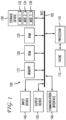
- FIG. 1 can provide some basic hardware components making up a server, node or other computer system.
- FIG. 1 illustrates a computing system architecture 100 wherein the components of the system are in electrical communication with each other using a connector 105.
- Exemplary system 100 includes a processing unit (CPU or processor) 110 and a system connector 105 that couples various system components including the system memory 115, such as read only memory (ROM) 120 and random access memory (RAM) 125, to the processor 110.
- the system 100 can include a cache of high-speed memory connected directly with, in close proximity to, or integrated as part of the processor 110.
- the system 100 can copy data from the memory 115 and/or the storage device 130 to the cache 112 for quick access by the processor 110.
- the cache can provide a performance boost that avoids processor 110 delays while waiting for data.
- modules/services can control or be configured to control the processor 110 to perform various actions.
- Other system memory 115 may be available for use as well.
- the memory 115 can include multiple different types of memory with different performance characteristics.
- the processor 110 can include any general purpose processor and a hardware module or software module/service, such as service 1 132, service 2 134, and service 3 136 stored in storage device 130, configured to control the processor 110 as well as a special-purpose processor where software instructions are incorporated into the actual processor design.
- the processor 110 may essentially be a completely self-contained computing system, containing multiple cores or processors, a bus (connector), memory controller, cache, etc.
- a multi-core processor may be symmetric or asymmetric.
- an input device 145 can represent any number of input mechanisms, such as a microphone for speech, a touch-sensitive screen for gesture or graphical input, keyboard, mouse, motion input, speech and so forth.
- An output device 135 can also be one or more of a number of output mechanisms known to those of skill in the art.
- multimodal systems can enable a user to provide multiple types of input to communicate with the computing device 100.
- the communications interface 140 can generally govern and manage the user input and system output. There is no restriction on operating on any particular hardware arrangement and therefore the basic features here may easily be substituted for improved hardware or firmware arrangements as they are developed.
- Storage device 130 is a non-volatile memory and can be a hard disk or other types of computer readable media which can store data that are accessible by a computer, such as magnetic cassettes, flash memory cards, solid state memory devices, digital versatile disks, cartridges, random access memories (RAMs) 125, read only memory (ROM) 120, and hybrids thereof.
- RAMs random access memories
- ROM read only memory
- the storage device 130 can include software services 132, 134, 136 for controlling the processor 110. Other hardware or software modules/services are contemplated.
- the storage device 130 can be connected to the system connector 105.
- a hardware module that performs a particular function can include the software component stored in a computer-readable medium in connection with the necessary hardware components, such as the processor 110, connector 105, display 135, and so forth, to carry out the function.
- FIG. 2 illustrates an example configuration 200, which provides a packet scheduler for a forwarder running within a virtual machine or container in the user plane of, for example, the 5G next generation mobile core.
- the goal of 5G is to provide for higher density of mobile broadband users, support device to device communication and be ultra-reliable.
- Other goals include data rates of tens of megabits per second for tens of thousands of users, data rates of 100 Mb per second for metropolitan areas, 1Gb per second simultaneously to workers on a same office floor, several hundreds of thousands of simultaneous connections for wireless sensors, spectral efficiency which is enhanced when compared to 4G networks, coverage improvement, signaling efficiency enhancements and reduce latency compared to the LTE standard.
- the present disclosure relates to a packet scheduler for a forwarder that runs within any virtual machine or container in any user plane and is not restricted to the 5G next generation mobile core.
- a set of 8 cores is shown as feature 202 in FIG. 2 .
- Core 0 is shown as running the scheduler and cores 1 - 5 are processing work item 1.
- Cores 6 and 7 process work item 2.
- Feature 202 can represent a state of the virtual machine or container in the user plane at a first time in which work item 1 is assigned or bound to a set of cores and work item 2 is assigned or bound to a set of cores.
- the concepts disclosed herein identify an approach which enables a dynamic binding between cores and work items.
- Work items are defined as individually schedulable functions that operate on a queue of packets. Work items can run within a single process or across multiple processes in a given user plane, i.e., a container or a virtual machine.
- the scheduler 204 will access a configuration file 212 that includes data associated with a number of key performance indicators.
- key performance indicators can include one or more of CPU utilization 208, packet drops 206, latency information, 210 as well as other performance information which might be available.
- Each key performance indicator can include a threshold value within the configuration file 212. These threshold values can individually be set manually by an administrator or can be set based on feedback from the system or the network. For example, feedback can be provided regarding performance within the virtual machine or container itself, independent of other virtual entities, or a combination of the performance within the virtual machine or container as well as other virtual machines or containers.
- the scheduler 204 can utilize any one or more pieces of data in the configuration file 212 in any combination.
- the scheduler 204 periodically monitors the key performance indicators at fixed or dynamic intervals, such as every 1 second, and decides at a certain time whether to scale up 214 or to scale down 216 work items according to the data in the configuration file 212.
- the interval of observation is configurable, as well as when, based on a set of observations, a decision is made to either scale up or scale down work items.
- the intervals can also be dynamic or static. In an embodiment which falls outside the scope of the invention, the interval is static. For example, the system could set an interval of observations every second and make a decision every 5 observations or every 5 seconds. The observations may occur at a shorter interval given data associated with the workload such as high CPU usage during a period of time or a scheduled increase in CPU usage.
- adjusting workload allocations and/or resources within a physical or a virtualized forwarding node can be based on a closed loop demand of resources.
- the closed loop demand for resources involves the demand for resources within the particular user plane environment, whether physical or virtualized.
- FIG. 2 illustrates an example of an initial binding between cores and work items 202 at a first time and after a scheduler decision 204 is made based on the observations and data in the configuration file 212, at a second time, which can be later than the first time. Note that the binding 218 has changed at the second time. Work item 1 now is assigned or bound to cores 1-3 and has thus been scaled down. Work item 2 has been scaled up from only two cores at the first time 202 to cores 4 - 7 at the second time 218.
- FIG. 2 of course illustrates a non-limiting example of how the binding of workload to cores can be adjusted.
- a scaling up of work items or a scaling down of work items can further factor in application type to determine resources that work items could scale to. For example, assume in FIG. 2 that there are several different types of cores and that cores 2 and 3 are type 1 and cores 4 and 5 are type 2. In some cases, applications that generate the packets that flow to respective cores will have an affinity for a particular type of resource such as a particular type of core.
- the scheduler 204 can include the information about the application type such that the scheduling decision 204 will not only involve a scale up 214 or a scaled-down 216 decision but also assign work items associated with an application to particular cores to improve efficiency or to match the application type with a resource type based on a likelihood of an affinity of that application for a particular resource type.
- the system can improve performance and avoid mismatches between work items and resources such as cores.
- the application type can also impact the dynamic adjustments between the binding of cores to work items when the cores are all of a similar type. In some cases, an application type might simply require or may be predicted to require more resources and thus additional cores (or any other compute resource) may be bound to work items based on that application type.
- the scheduler 204 in one aspect, can be considered self contained within the user plane, container or virtual machine. This can mean that the scheduler 204 does not require communication with an external system such as a north-bound orchestration system for a reallocation of work items with cores. In another aspect, the scheduler 204 could incorporate data from a north - bound orchestration system in its reallocation decisions. Furthermore, in another aspect, the number of cores available to the user plane, container or virtual machine could expand to include additional resources based on the analysis of the key performance indicators and the configuration threshold.
- FIG. 3 illustrates a method embodiment.
- a method includes periodically observing packets in a user plane according to at least one key performance indicator in a configuration file to yield an observation, wherein the observation represents a closed-loop demand of resources within the user plane (302).
- the user plane can be a 5G user plane appliance, a virtual machine or a container.
- the method includes adjusting, via a scheduler in the user plane and based on the observation, a binding of cores to work items (304).
- There is at least one key performance indicator which can include one or more of a CPU utilization, latency and packet drops.
- the key performance indicator can be any other data that represents performance of a resource or potential or predicated resource usage characteristics, such as data related to memory utilization, workload characteristics, predictive or expected performance associated with one or more of latency, CPU utilization, memory utilization and so forth.
- the workload allocations include work items that are individually schedulable functions that operate on a queue of packets within the user plane.
- the periodicity of monitoring the indicators can also be static, variable, or triggered based on some event. In an embodiment which falls outside the scope of the invention, the periodicity of monitoring is static. For example, if a large amount of workload is to be scheduled for using the compute environment, the monitoring of the indicators is increased in frequency, and thus increased in accuracy, for making scaling up or scaling down decisions. A spike in an observation of one of the data points could also trigger a scaling of work items. Further, the system could schedule a monitoring frequency or level of observation in advance of an expected throttling of any given resource or resource group.
- adjusting workload allocations includes one or more of: scaling up work items such that additional cores are bound to the work items or scaling down the work items such that cores are unbound to the work items.
- one set of work items could be scaled up, while another set of work items could be scaled down.
- Adjusting workload allocations includes adjusting how many cores are assigned to a respective work item within the user plane. The adjusting can also occur at a scheduled number of observations which can be static or dynamic in terms of timing. While cores are referenced, the adjustment can also relate to any other type of compute resource such as memory, bandwidth, and so forth.
- the observation can further include an application type, wherein adjusting of the binding of cores to work items is performed based at least in part on application type.
- the adjusting of the binding of cores in this respect can involve assigning work items associated with a particular application type to a particular core or resource within the user plane.
- the configuration file can include one or more of a first threshold associated with CPU utilization, a second threshold associated with latency, a third threshold associated with packet drops and an application type.
- the threshold for any individual data type in the configuration file can be statically set or can be dynamic based on feedback information from the user plane and/or from outside the user plane. An administrator can also set the threshold for any data type.
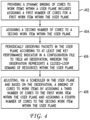
- FIG. 4 illustrates another method embodiment.
- a method for providing a dynamic binding of cores to work items within a user plane and includes assigning a first number of cores for a first work item within the user plane (402), assigning a second number of cores to a second work item within the user plane (404) and periodically observing packets in the user plane according to at least one key performance indicator in a configuration file to yield an observation, wherein the observation represents a closed-loop demand of resources within the user plane (406).
- the observation could include not only an analysis of the performance indicators as described above, but could also include an analysis or evaluation of the application type or workload characteristics.
- the method also includes adjusting, via a scheduler in the user plane and based on the observation, a binding of cores to work items by assigning a third number of cores to the first work item within the user plane and assigning a fourth number of cores to the second work item within the user plane (408).
- the observation upon which the adjusting is based includes not only data about the key indicators but also data about the application type or workload characteristics.
- the adjusting that is performed by the scheduler can take into account the indicators and/or the application type/workload characteristics and assign cores to work items accordingly.
- core characteristics might match a certain application type or workload characteristic than other application types or workload characteristics.
- an application or a workload can broadcast its affinities to the scheduler in advance and adjustments to the scheduler algorithm can occur to further refine and improve the assignment of cores to work items.
- an application or workload could transmit characteristics of individual work items associated with the workload or application to the scheduler, such as data associated with work items that are network intensive, database intensive, or CPU intensive, for example. This data could then be used to adjust the assignment algorithm for again further refinement of the assignment process.
- the first work item and the second work item each include an individually schedulable function that operates on a queue of packets.
- the observation can further include an application type, wherein cores of the third number of cores and cores of the fourth number of cores are chosen based at least in part on the application type.
- the scheduler in the user plane can operate independently or at least in part in coordination with a north-bound orchestration system.
- the computer-readable storage devices, mediums, and/or memories can include a cable or wireless signal containing a bit stream and the like.
- non-transitory computer-readable storage media expressly exclude media such as energy, carrier signals, electromagnetic waves, and signals per se.
- Such instructions can include, for example, instructions and data which cause or otherwise configure a general purpose computer, special purpose computer, or special purpose processing device to perform a certain function or group of functions. Portions of computer resources used can be accessible over a network.
- the computer executable instructions may be, for example, binaries, intermediate format instructions such as assembly language, firmware, or source code. Examples of computer-readable media that may be used to store instructions, information used, and/or information created during methods according to described examples include magnetic or optical disks, flash memory, USB devices provided with non-volatile memory, networked storage devices, and so on.
- Devices implementing methods according to these disclosures can include hardware, firmware and/or software, and can take any of a variety of form factors. Typical examples of such form factors include laptops, smart phones, small form factor personal computers, personal digital assistants, rackmount devices, standalone devices, and so on. Functionality described herein also can be embodied in peripherals or add-in cards. Such functionality can also be implemented on a circuit board among different chips or different processes executing in a single device, by way of further example.
- the instructions, media for conveying such instructions, computing resources for executing them, and other structures for supporting such computing resources are means for providing the functions described in these disclosures.
- a phrase such as an "aspect” does not imply that such aspect is essential to the subject technology or that such aspect applies to all configurations of the subject technology.
- a disclosure relating to an aspect may apply to all configurations, or one or more configurations.
- a phrase such as an aspect may refer to one or more aspects and vice versa.
- a phrase such as a “configuration” does not imply that such configuration is essential to the subject technology or that such configuration applies to all configurations of the subject technology.
- a disclosure relating to a configuration may apply to all configurations, or one or more configurations.
- a phrase such as a configuration may refer to one or more configurations and vice versa.
- the word "exemplary” is used herein to mean “serving as an example or illustration.” Any aspect or design described herein as "exemplary” is not necessarily to be construed as preferred or advantageous over other aspects or designs.
- claim language reciting "at least one of” a set indicates that one member of the set or multiple members of the set satisfy the claim.
- claim language reciting "at least one of A, B, and C" or "at least one of A, B, or C” means A alone, B alone, C alone, A and B together, A and C together, B and C together, or A, B and C together.
Landscapes
- Engineering & Computer Science (AREA)
- Software Systems (AREA)
- Theoretical Computer Science (AREA)
- Physics & Mathematics (AREA)
- General Engineering & Computer Science (AREA)
- General Physics & Mathematics (AREA)
- Computer Networks & Wireless Communication (AREA)
- Signal Processing (AREA)
- Debugging And Monitoring (AREA)
- Data Exchanges In Wide-Area Networks (AREA)
Claims (7)
- Procédé comprenant le fait :d'observer périodiquement des paquets dans un plan utilisateur selon au moins un indicateur de performance clé dans un fichier de configuration afin de produire une observation, procédé dans lequel l'observation représente une demande - en boucle fermée - de ressources dans le plan utilisateur ; etd'ajuster, via un planificateur dans le plan utilisateur et en se basant sur l'observation, une liaison de coeurs à des éléments de travail,procédé dans lequel une fréquence, à laquelle l'au moins un indicateur de performance clé est surveillé, est selon une quantité de charge de travail devant être planifiée pour utiliser un environnement de calcul,et procédé dans lequel les éléments de travail sont des fonctions planifiables individuellement qui agissent sur une file d'attente de paquets.
- Procédé selon la revendication 1, dans lequel le plan utilisateur comprend l'un ou l'une d'une machine virtuelle et d'un conteneur.
- Procédé selon l'une des revendications précédentes, dans lequel l'au moins un indicateur de performance clé comprend l'une d'une utilisation de l'unité centrale de traitement - CPU -, l'une d'une latence et l'une de celles parmi des pertes de paquets.
- Procédé selon l'une quelconque des revendications précédentes, dans lequel l'observation comprend en outre un type d'application, procédé dans lequel l'ajustement de la liaison de coeurs à des éléments de travail est mis en œuvre, en se basant au moins en partie sur le type d'application.
- Procédé selon l'une quelconque des revendications précédentes, dans lequel le fichier de configuration comprend un ou plusieurs de ceux parmi un premier seuil associé à l'utilisation de l'unité centrale de traitement - CPU -, un deuxième seuil associé à la latence, un troisième seuil associé à des pertes de paquets et à un type d'application.
- Appareil comprenant un processeur configuré pour mettre en oeuvre le procédé selon l'une quelconque des revendications précédentes.
- Support lisible par ordinateur, ledit support comprenant des instructions qui, lorsqu'elles sont exécutées par un processeur, amènent le processeur à mettre en oeuvre le procédé selon l'une quelconque des revendications 1 à 5.
Applications Claiming Priority (2)
| Application Number | Priority Date | Filing Date | Title |
|---|---|---|---|
| US15/786,657 US20190114206A1 (en) | 2017-10-18 | 2017-10-18 | System and method for providing a performance based packet scheduler |
| PCT/US2018/056435 WO2019079545A1 (fr) | 2017-10-18 | 2018-10-18 | Appareil et procédé de fourniture d'ordonnanceur de paquets basé sur la performance |
Publications (2)
| Publication Number | Publication Date |
|---|---|
| EP3698247A1 EP3698247A1 (fr) | 2020-08-26 |
| EP3698247B1 true EP3698247B1 (fr) | 2024-08-07 |
Family
ID=64184222
Family Applications (1)
| Application Number | Title | Priority Date | Filing Date |
|---|---|---|---|
| EP18799951.1A Active EP3698247B1 (fr) | 2017-10-18 | 2018-10-18 | Appareil et procédé de fourniture d'ordonnanceur de paquets basé sur la performance |
Country Status (6)
| Country | Link |
|---|---|
| US (1) | US20190114206A1 (fr) |
| EP (1) | EP3698247B1 (fr) |
| KR (1) | KR20200076700A (fr) |
| CN (1) | CN111247515A (fr) |
| CA (1) | CA3079572A1 (fr) |
| WO (1) | WO2019079545A1 (fr) |
Families Citing this family (13)
| Publication number | Priority date | Publication date | Assignee | Title |
|---|---|---|---|---|
| US11075888B2 (en) | 2017-12-04 | 2021-07-27 | Nicira, Inc. | Scaling gateway to gateway traffic using flow hash |
| US11095617B2 (en) | 2017-12-04 | 2021-08-17 | Nicira, Inc. | Scaling gateway to gateway traffic using flow hash |
| US11347561B1 (en) * | 2018-04-30 | 2022-05-31 | Vmware, Inc. | Core to resource mapping and resource to core mapping |
| US11431565B2 (en) * | 2018-10-15 | 2022-08-30 | Intel Corporation | Dynamic traffic-aware interface queue switching among processor cores |
| US11277343B2 (en) | 2019-07-17 | 2022-03-15 | Vmware, Inc. | Using VTI teaming to achieve load balance and redundancy |
| US11513842B2 (en) * | 2019-10-03 | 2022-11-29 | International Business Machines Corporation | Performance biased resource scheduling based on runtime performance |
| US11509638B2 (en) | 2019-12-16 | 2022-11-22 | Vmware, Inc. | Receive-side processing for encapsulated encrypted packets |
| TWI756974B (zh) | 2020-12-09 | 2022-03-01 | 財團法人工業技術研究院 | 機器學習系統及其資源配置方法 |
| EP4295230A1 (fr) * | 2021-02-18 | 2023-12-27 | Telefonaktiebolaget LM Ericsson (publ) | PROCÉDÉ NON INTRUSIF DE MISES EN oeUVRE DE PLAN UTILISATEUR EFFICACE EN TERMES DE RESSOURCES ET D'ÉNERGIE |
| US12107834B2 (en) | 2021-06-07 | 2024-10-01 | VMware LLC | Multi-uplink path quality aware IPsec |
| US12113773B2 (en) | 2021-06-07 | 2024-10-08 | VMware LLC | Dynamic path selection of VPN endpoint |
| US11863514B2 (en) | 2022-01-14 | 2024-01-02 | Vmware, Inc. | Performance improvement of IPsec traffic using SA-groups and mixed-mode SAs |
| US11956213B2 (en) | 2022-05-18 | 2024-04-09 | VMware LLC | Using firewall policies to map data messages to secure tunnels |
Family Cites Families (15)
| Publication number | Priority date | Publication date | Assignee | Title |
|---|---|---|---|---|
| US20080271030A1 (en) * | 2007-04-30 | 2008-10-30 | Dan Herington | Kernel-Based Workload Management |
| WO2010138658A1 (fr) * | 2009-05-29 | 2010-12-02 | Perceptive Software, Inc. | Système et procédé de gestion de flux de travail |
| US8774023B2 (en) * | 2010-09-22 | 2014-07-08 | At&T Intellectual Property I, Lp | Method and system for detecting changes in network performance |
| US20120093047A1 (en) * | 2010-10-14 | 2012-04-19 | Alcatel-Lucent USA Inc. via the Electronic Patent Assignment System (EPAS) | Core abstraction layer for telecommunication network applications |
| US8789065B2 (en) * | 2012-06-08 | 2014-07-22 | Throughputer, Inc. | System and method for input data load adaptive parallel processing |
| SE537197C2 (sv) * | 2012-10-05 | 2015-03-03 | Elastisys Ab | Metod, nod och datorprogram för möjliggörande av automatiskanpassning av resursenheter |
| US9367357B2 (en) * | 2013-01-18 | 2016-06-14 | Nec Corporation | Simultaneous scheduling of processes and offloading computation on many-core coprocessors |
| US9635103B2 (en) * | 2014-09-11 | 2017-04-25 | Amazon Technologies, Inc. | Dynamic virtual resource request rate control for utilizing physical resources |
| US10534542B2 (en) * | 2014-09-30 | 2020-01-14 | Hewlett Packard Enterprise Development Lp | Dynamic core allocation for consistent performance in a non-preemptive scheduling environment |
| CN104536822B (zh) * | 2014-12-31 | 2018-03-23 | 中科创达软件股份有限公司 | 一种进程调度优化方法、进程执行方法及相关装置 |
| EP3278221A1 (fr) * | 2015-04-02 | 2018-02-07 | Telefonaktiebolaget LM Ericsson (publ) | Technique de mise à l'échelle d'une application comprenant un ensemble de machines virtuelles |
| CN106155794B (zh) * | 2016-07-21 | 2019-11-19 | 浙江大华技术股份有限公司 | 一种应用于多线程系统中的事件分配方法及装置 |
| US9999057B2 (en) * | 2016-09-01 | 2018-06-12 | Hon Hai Precision Industry Co., Ltd. | Resource allocation method of a wireless communication system and mechanism thereof |
| US10474505B2 (en) * | 2016-09-02 | 2019-11-12 | Telefonaktiebolaget Lm Ericsson (Publ) | Systems and methods of managing computational resources |
| CN107122233B (zh) * | 2017-03-27 | 2020-08-28 | 西安电子科技大学 | 一种面向tsn业务的多vcpu自适应实时调度方法 |
-
2017
- 2017-10-18 US US15/786,657 patent/US20190114206A1/en not_active Abandoned
-
2018
- 2018-10-18 CA CA3079572A patent/CA3079572A1/fr active Pending
- 2018-10-18 EP EP18799951.1A patent/EP3698247B1/fr active Active
- 2018-10-18 KR KR1020207013886A patent/KR20200076700A/ko not_active Ceased
- 2018-10-18 CN CN201880068118.4A patent/CN111247515A/zh active Pending
- 2018-10-18 WO PCT/US2018/056435 patent/WO2019079545A1/fr not_active Ceased
Also Published As
| Publication number | Publication date |
|---|---|
| CA3079572A1 (fr) | 2019-04-25 |
| EP3698247A1 (fr) | 2020-08-26 |
| WO2019079545A1 (fr) | 2019-04-25 |
| CN111247515A (zh) | 2020-06-05 |
| US20190114206A1 (en) | 2019-04-18 |
| KR20200076700A (ko) | 2020-06-29 |
Similar Documents
| Publication | Publication Date | Title |
|---|---|---|
| US20190114206A1 (en) | System and method for providing a performance based packet scheduler | |
| CN108431796B (zh) | 分布式资源管理系统和方法 | |
| US10572290B2 (en) | Method and apparatus for allocating a physical resource to a virtual machine | |
| CN110249311B (zh) | 云计算系统中针对虚拟机的资源管理 | |
| US11436050B2 (en) | Method, apparatus and computer program product for resource scheduling | |
| US10412021B2 (en) | Optimizing placement of virtual machines | |
| EP3718008B1 (fr) | Distribution utilisant des données préextraites dans des environnements informatiques sans serveur | |
| US9686141B2 (en) | Systems and methods for resource sharing between two resource allocation systems | |
| US9483319B2 (en) | Job scheduling apparatus and method therefor | |
| CN110249310A (zh) | 云计算系统中的用于虚拟机的资源管理 | |
| US20180026910A1 (en) | Technologies for Managing Resource Allocation With a Hierarchical Model | |
| CN109684074B (zh) | 物理机资源分配方法及终端设备 | |
| US11237862B2 (en) | Virtualized network function deployment | |
| WO2017010922A1 (fr) | Attribution de ressources informatiques en nuage | |
| US11586475B2 (en) | Application aware resource allocation for deep learning job scheduling | |
| US12326810B2 (en) | Processor unit resource exhaustion detection and remediation | |
| US10216441B2 (en) | Dynamic quality of service for storage I/O port allocation | |
| CN121039636A (zh) | 基于数据分析的动态pod资源限制调整 | |
| WO2024041401A1 (fr) | Procédé et appareil de traitement de tâche, et dispositif et support de stockage | |
| CN118034938A (zh) | 一种作业调度方法、智能计算云操作系统以及计算平台 | |
| Chen et al. | Multiplexing Dynamic Deep Learning Workloads with SLO-awareness in GPU Clusters | |
| CN119336507A (zh) | Gpu的任务调度方法、装置、电子设备、存储介质和程序产品 | |
| Seth et al. | Dynamic threshold-based dynamic resource allocation using multiple VM migration for cloud computing systems | |
| CN114546587A (zh) | 一种在线图像识别服务的扩缩容方法及相关装置 | |
| CN104598311A (zh) | 一种面向Hadoop的实时作业公平调度的方法和装置 |
Legal Events
| Date | Code | Title | Description |
|---|---|---|---|
| STAA | Information on the status of an ep patent application or granted ep patent |
Free format text: STATUS: UNKNOWN |
|
| STAA | Information on the status of an ep patent application or granted ep patent |
Free format text: STATUS: THE INTERNATIONAL PUBLICATION HAS BEEN MADE |
|
| PUAI | Public reference made under article 153(3) epc to a published international application that has entered the european phase |
Free format text: ORIGINAL CODE: 0009012 |
|
| STAA | Information on the status of an ep patent application or granted ep patent |
Free format text: STATUS: REQUEST FOR EXAMINATION WAS MADE |
|
| 17P | Request for examination filed |
Effective date: 20200511 |
|
| AK | Designated contracting states |
Kind code of ref document: A1 Designated state(s): AL AT BE BG CH CY CZ DE DK EE ES FI FR GB GR HR HU IE IS IT LI LT LU LV MC MK MT NL NO PL PT RO RS SE SI SK SM TR |
|
| AX | Request for extension of the european patent |
Extension state: BA ME |
|
| DAV | Request for validation of the european patent (deleted) | ||
| DAX | Request for extension of the european patent (deleted) | ||
| STAA | Information on the status of an ep patent application or granted ep patent |
Free format text: STATUS: EXAMINATION IS IN PROGRESS |
|
| 17Q | First examination report despatched |
Effective date: 20220615 |
|
| P01 | Opt-out of the competence of the unified patent court (upc) registered |
Effective date: 20230525 |
|
| GRAP | Despatch of communication of intention to grant a patent |
Free format text: ORIGINAL CODE: EPIDOSNIGR1 |
|
| STAA | Information on the status of an ep patent application or granted ep patent |
Free format text: STATUS: GRANT OF PATENT IS INTENDED |
|
| INTG | Intention to grant announced |
Effective date: 20240321 |
|
| GRAS | Grant fee paid |
Free format text: ORIGINAL CODE: EPIDOSNIGR3 |
|
| GRAA | (expected) grant |
Free format text: ORIGINAL CODE: 0009210 |
|
| STAA | Information on the status of an ep patent application or granted ep patent |
Free format text: STATUS: THE PATENT HAS BEEN GRANTED |
|
| AK | Designated contracting states |
Kind code of ref document: B1 Designated state(s): AL AT BE BG CH CY CZ DE DK EE ES FI FR GB GR HR HU IE IS IT LI LT LU LV MC MK MT NL NO PL PT RO RS SE SI SK SM TR |
|
| REG | Reference to a national code |
Ref country code: GB Ref legal event code: FG4D |
|
| REG | Reference to a national code |
Ref country code: CH Ref legal event code: EP |
|
| REG | Reference to a national code |
Ref country code: IE Ref legal event code: FG4D |
|
| REG | Reference to a national code |
Ref country code: DE Ref legal event code: R096 Ref document number: 602018072834 Country of ref document: DE |
|
| REG | Reference to a national code |
Ref country code: LT Ref legal event code: MG9D |
|
| REG | Reference to a national code |
Ref country code: NL Ref legal event code: MP Effective date: 20240807 |
|
| PG25 | Lapsed in a contracting state [announced via postgrant information from national office to epo] |
Ref country code: NO Free format text: LAPSE BECAUSE OF FAILURE TO SUBMIT A TRANSLATION OF THE DESCRIPTION OR TO PAY THE FEE WITHIN THE PRESCRIBED TIME-LIMIT Effective date: 20241107 |
|
| REG | Reference to a national code |
Ref country code: AT Ref legal event code: MK05 Ref document number: 1711685 Country of ref document: AT Kind code of ref document: T Effective date: 20240807 |
|
| PG25 | Lapsed in a contracting state [announced via postgrant information from national office to epo] |
Ref country code: PL Free format text: LAPSE BECAUSE OF FAILURE TO SUBMIT A TRANSLATION OF THE DESCRIPTION OR TO PAY THE FEE WITHIN THE PRESCRIBED TIME-LIMIT Effective date: 20240807 Ref country code: PT Free format text: LAPSE BECAUSE OF FAILURE TO SUBMIT A TRANSLATION OF THE DESCRIPTION OR TO PAY THE FEE WITHIN THE PRESCRIBED TIME-LIMIT Effective date: 20241209 Ref country code: FI Free format text: LAPSE BECAUSE OF FAILURE TO SUBMIT A TRANSLATION OF THE DESCRIPTION OR TO PAY THE FEE WITHIN THE PRESCRIBED TIME-LIMIT Effective date: 20240807 Ref country code: NL Free format text: LAPSE BECAUSE OF FAILURE TO SUBMIT A TRANSLATION OF THE DESCRIPTION OR TO PAY THE FEE WITHIN THE PRESCRIBED TIME-LIMIT Effective date: 20240807 Ref country code: GR Free format text: LAPSE BECAUSE OF FAILURE TO SUBMIT A TRANSLATION OF THE DESCRIPTION OR TO PAY THE FEE WITHIN THE PRESCRIBED TIME-LIMIT Effective date: 20241108 |
|
| PG25 | Lapsed in a contracting state [announced via postgrant information from national office to epo] |
Ref country code: BG Free format text: LAPSE BECAUSE OF FAILURE TO SUBMIT A TRANSLATION OF THE DESCRIPTION OR TO PAY THE FEE WITHIN THE PRESCRIBED TIME-LIMIT Effective date: 20240807 |
|
| PG25 | Lapsed in a contracting state [announced via postgrant information from national office to epo] |
Ref country code: LV Free format text: LAPSE BECAUSE OF FAILURE TO SUBMIT A TRANSLATION OF THE DESCRIPTION OR TO PAY THE FEE WITHIN THE PRESCRIBED TIME-LIMIT Effective date: 20240807 |
|
| PG25 | Lapsed in a contracting state [announced via postgrant information from national office to epo] |
Ref country code: IS Free format text: LAPSE BECAUSE OF FAILURE TO SUBMIT A TRANSLATION OF THE DESCRIPTION OR TO PAY THE FEE WITHIN THE PRESCRIBED TIME-LIMIT Effective date: 20241207 Ref country code: AT Free format text: LAPSE BECAUSE OF FAILURE TO SUBMIT A TRANSLATION OF THE DESCRIPTION OR TO PAY THE FEE WITHIN THE PRESCRIBED TIME-LIMIT Effective date: 20240807 |
|
| PG25 | Lapsed in a contracting state [announced via postgrant information from national office to epo] |
Ref country code: HR Free format text: LAPSE BECAUSE OF FAILURE TO SUBMIT A TRANSLATION OF THE DESCRIPTION OR TO PAY THE FEE WITHIN THE PRESCRIBED TIME-LIMIT Effective date: 20240807 |
|
| PG25 | Lapsed in a contracting state [announced via postgrant information from national office to epo] |
Ref country code: ES Free format text: LAPSE BECAUSE OF FAILURE TO SUBMIT A TRANSLATION OF THE DESCRIPTION OR TO PAY THE FEE WITHIN THE PRESCRIBED TIME-LIMIT Effective date: 20240807 Ref country code: RS Free format text: LAPSE BECAUSE OF FAILURE TO SUBMIT A TRANSLATION OF THE DESCRIPTION OR TO PAY THE FEE WITHIN THE PRESCRIBED TIME-LIMIT Effective date: 20241107 |
|
| PG25 | Lapsed in a contracting state [announced via postgrant information from national office to epo] |
Ref country code: RS Free format text: LAPSE BECAUSE OF FAILURE TO SUBMIT A TRANSLATION OF THE DESCRIPTION OR TO PAY THE FEE WITHIN THE PRESCRIBED TIME-LIMIT Effective date: 20241107 Ref country code: PT Free format text: LAPSE BECAUSE OF FAILURE TO SUBMIT A TRANSLATION OF THE DESCRIPTION OR TO PAY THE FEE WITHIN THE PRESCRIBED TIME-LIMIT Effective date: 20241209 Ref country code: PL Free format text: LAPSE BECAUSE OF FAILURE TO SUBMIT A TRANSLATION OF THE DESCRIPTION OR TO PAY THE FEE WITHIN THE PRESCRIBED TIME-LIMIT Effective date: 20240807 Ref country code: NO Free format text: LAPSE BECAUSE OF FAILURE TO SUBMIT A TRANSLATION OF THE DESCRIPTION OR TO PAY THE FEE WITHIN THE PRESCRIBED TIME-LIMIT Effective date: 20241107 Ref country code: NL Free format text: LAPSE BECAUSE OF FAILURE TO SUBMIT A TRANSLATION OF THE DESCRIPTION OR TO PAY THE FEE WITHIN THE PRESCRIBED TIME-LIMIT Effective date: 20240807 Ref country code: LV Free format text: LAPSE BECAUSE OF FAILURE TO SUBMIT A TRANSLATION OF THE DESCRIPTION OR TO PAY THE FEE WITHIN THE PRESCRIBED TIME-LIMIT Effective date: 20240807 Ref country code: IS Free format text: LAPSE BECAUSE OF FAILURE TO SUBMIT A TRANSLATION OF THE DESCRIPTION OR TO PAY THE FEE WITHIN THE PRESCRIBED TIME-LIMIT Effective date: 20241207 Ref country code: HR Free format text: LAPSE BECAUSE OF FAILURE TO SUBMIT A TRANSLATION OF THE DESCRIPTION OR TO PAY THE FEE WITHIN THE PRESCRIBED TIME-LIMIT Effective date: 20240807 Ref country code: GR Free format text: LAPSE BECAUSE OF FAILURE TO SUBMIT A TRANSLATION OF THE DESCRIPTION OR TO PAY THE FEE WITHIN THE PRESCRIBED TIME-LIMIT Effective date: 20241108 Ref country code: FI Free format text: LAPSE BECAUSE OF FAILURE TO SUBMIT A TRANSLATION OF THE DESCRIPTION OR TO PAY THE FEE WITHIN THE PRESCRIBED TIME-LIMIT Effective date: 20240807 Ref country code: ES Free format text: LAPSE BECAUSE OF FAILURE TO SUBMIT A TRANSLATION OF THE DESCRIPTION OR TO PAY THE FEE WITHIN THE PRESCRIBED TIME-LIMIT Effective date: 20240807 Ref country code: BG Free format text: LAPSE BECAUSE OF FAILURE TO SUBMIT A TRANSLATION OF THE DESCRIPTION OR TO PAY THE FEE WITHIN THE PRESCRIBED TIME-LIMIT Effective date: 20240807 Ref country code: AT Free format text: LAPSE BECAUSE OF FAILURE TO SUBMIT A TRANSLATION OF THE DESCRIPTION OR TO PAY THE FEE WITHIN THE PRESCRIBED TIME-LIMIT Effective date: 20240807 |
|
| PG25 | Lapsed in a contracting state [announced via postgrant information from national office to epo] |
Ref country code: SM Free format text: LAPSE BECAUSE OF FAILURE TO SUBMIT A TRANSLATION OF THE DESCRIPTION OR TO PAY THE FEE WITHIN THE PRESCRIBED TIME-LIMIT Effective date: 20240807 Ref country code: DK Free format text: LAPSE BECAUSE OF FAILURE TO SUBMIT A TRANSLATION OF THE DESCRIPTION OR TO PAY THE FEE WITHIN THE PRESCRIBED TIME-LIMIT Effective date: 20240807 Ref country code: RO Free format text: LAPSE BECAUSE OF FAILURE TO SUBMIT A TRANSLATION OF THE DESCRIPTION OR TO PAY THE FEE WITHIN THE PRESCRIBED TIME-LIMIT Effective date: 20240807 |
|
| PG25 | Lapsed in a contracting state [announced via postgrant information from national office to epo] |
Ref country code: EE Free format text: LAPSE BECAUSE OF FAILURE TO SUBMIT A TRANSLATION OF THE DESCRIPTION OR TO PAY THE FEE WITHIN THE PRESCRIBED TIME-LIMIT Effective date: 20240807 |
|
| PG25 | Lapsed in a contracting state [announced via postgrant information from national office to epo] |
Ref country code: CZ Free format text: LAPSE BECAUSE OF FAILURE TO SUBMIT A TRANSLATION OF THE DESCRIPTION OR TO PAY THE FEE WITHIN THE PRESCRIBED TIME-LIMIT Effective date: 20240807 |
|
| PG25 | Lapsed in a contracting state [announced via postgrant information from national office to epo] |
Ref country code: SK Free format text: LAPSE BECAUSE OF FAILURE TO SUBMIT A TRANSLATION OF THE DESCRIPTION OR TO PAY THE FEE WITHIN THE PRESCRIBED TIME-LIMIT Effective date: 20240807 |
|
| REG | Reference to a national code |
Ref country code: DE Ref legal event code: R097 Ref document number: 602018072834 Country of ref document: DE |
|
| REG | Reference to a national code |
Ref country code: CH Ref legal event code: PL |
|
| PLBE | No opposition filed within time limit |
Free format text: ORIGINAL CODE: 0009261 |
|
| STAA | Information on the status of an ep patent application or granted ep patent |
Free format text: STATUS: NO OPPOSITION FILED WITHIN TIME LIMIT |
|
| PG25 | Lapsed in a contracting state [announced via postgrant information from national office to epo] |
Ref country code: MC Free format text: LAPSE BECAUSE OF FAILURE TO SUBMIT A TRANSLATION OF THE DESCRIPTION OR TO PAY THE FEE WITHIN THE PRESCRIBED TIME-LIMIT Effective date: 20240807 |
|
| PG25 | Lapsed in a contracting state [announced via postgrant information from national office to epo] |
Ref country code: BE Free format text: LAPSE BECAUSE OF NON-PAYMENT OF DUE FEES Effective date: 20241031 Ref country code: LU Free format text: LAPSE BECAUSE OF NON-PAYMENT OF DUE FEES Effective date: 20241018 |
|
| 26N | No opposition filed |
Effective date: 20250508 |
|
| PG25 | Lapsed in a contracting state [announced via postgrant information from national office to epo] |
Ref country code: CH Free format text: LAPSE BECAUSE OF NON-PAYMENT OF DUE FEES Effective date: 20241031 |
|
| REG | Reference to a national code |
Ref country code: BE Ref legal event code: MM Effective date: 20241031 |
|
| PG25 | Lapsed in a contracting state [announced via postgrant information from national office to epo] |
Ref country code: SE Free format text: LAPSE BECAUSE OF FAILURE TO SUBMIT A TRANSLATION OF THE DESCRIPTION OR TO PAY THE FEE WITHIN THE PRESCRIBED TIME-LIMIT Effective date: 20240807 |
|
| PG25 | Lapsed in a contracting state [announced via postgrant information from national office to epo] |
Ref country code: IE Free format text: LAPSE BECAUSE OF NON-PAYMENT OF DUE FEES Effective date: 20241018 |
|
| PGFP | Annual fee paid to national office [announced via postgrant information from national office to epo] |
Ref country code: DE Payment date: 20250922 Year of fee payment: 8 |
|
| PGFP | Annual fee paid to national office [announced via postgrant information from national office to epo] |
Ref country code: GB Payment date: 20251009 Year of fee payment: 8 |
|
| PGFP | Annual fee paid to national office [announced via postgrant information from national office to epo] |
Ref country code: FR Payment date: 20251007 Year of fee payment: 8 |
|
| PG25 | Lapsed in a contracting state [announced via postgrant information from national office to epo] |
Ref country code: CY Free format text: LAPSE BECAUSE OF FAILURE TO SUBMIT A TRANSLATION OF THE DESCRIPTION OR TO PAY THE FEE WITHIN THE PRESCRIBED TIME-LIMIT; INVALID AB INITIO Effective date: 20181018 Ref country code: IT Free format text: LAPSE BECAUSE OF FAILURE TO SUBMIT A TRANSLATION OF THE DESCRIPTION OR TO PAY THE FEE WITHIN THE PRESCRIBED TIME-LIMIT Effective date: 20240807 |
|
| PG25 | Lapsed in a contracting state [announced via postgrant information from national office to epo] |
Ref country code: HU Free format text: LAPSE BECAUSE OF FAILURE TO SUBMIT A TRANSLATION OF THE DESCRIPTION OR TO PAY THE FEE WITHIN THE PRESCRIBED TIME-LIMIT; INVALID AB INITIO Effective date: 20181018 |