EP3699313B1 - Manganstahl für tieftemperaturen mit ausgezeichneter oberflächenqualität und verfahren zu seiner herstellung - Google Patents
Manganstahl für tieftemperaturen mit ausgezeichneter oberflächenqualität und verfahren zu seiner herstellung Download PDFInfo
- Publication number
- EP3699313B1 EP3699313B1 EP18868100.1A EP18868100A EP3699313B1 EP 3699313 B1 EP3699313 B1 EP 3699313B1 EP 18868100 A EP18868100 A EP 18868100A EP 3699313 B1 EP3699313 B1 EP 3699313B1
- Authority
- EP
- European Patent Office
- Prior art keywords
- less
- steel
- slab
- rolling
- thickness
- Prior art date
- Legal status (The legal status is an assumption and is not a legal conclusion. Google has not performed a legal analysis and makes no representation as to the accuracy of the status listed.)
- Active
Links
Images


Classifications
-
- C—CHEMISTRY; METALLURGY
- C21—METALLURGY OF IRON
- C21D—MODIFYING THE PHYSICAL STRUCTURE OF FERROUS METALS; GENERAL DEVICES FOR HEAT TREATMENT OF FERROUS OR NON-FERROUS METALS OR ALLOYS; MAKING METAL MALLEABLE, e.g. BY DECARBURISATION OR TEMPERING
- C21D8/00—Modifying the physical properties of ferrous metals or ferrous alloys by deformation combined with, or followed by, heat treatment
-
- C—CHEMISTRY; METALLURGY
- C21—METALLURGY OF IRON
- C21D—MODIFYING THE PHYSICAL STRUCTURE OF FERROUS METALS; GENERAL DEVICES FOR HEAT TREATMENT OF FERROUS OR NON-FERROUS METALS OR ALLOYS; MAKING METAL MALLEABLE, e.g. BY DECARBURISATION OR TEMPERING
- C21D6/00—Heat treatment of ferrous alloys
- C21D6/002—Heat treatment of ferrous alloys containing Cr
-
- C—CHEMISTRY; METALLURGY
- C21—METALLURGY OF IRON
- C21D—MODIFYING THE PHYSICAL STRUCTURE OF FERROUS METALS; GENERAL DEVICES FOR HEAT TREATMENT OF FERROUS OR NON-FERROUS METALS OR ALLOYS; MAKING METAL MALLEABLE, e.g. BY DECARBURISATION OR TEMPERING
- C21D6/00—Heat treatment of ferrous alloys
- C21D6/005—Heat treatment of ferrous alloys containing Mn
-
- C—CHEMISTRY; METALLURGY
- C21—METALLURGY OF IRON
- C21D—MODIFYING THE PHYSICAL STRUCTURE OF FERROUS METALS; GENERAL DEVICES FOR HEAT TREATMENT OF FERROUS OR NON-FERROUS METALS OR ALLOYS; MAKING METAL MALLEABLE, e.g. BY DECARBURISATION OR TEMPERING
- C21D6/00—Heat treatment of ferrous alloys
- C21D6/008—Heat treatment of ferrous alloys containing Si
-
- C—CHEMISTRY; METALLURGY
- C21—METALLURGY OF IRON
- C21D—MODIFYING THE PHYSICAL STRUCTURE OF FERROUS METALS; GENERAL DEVICES FOR HEAT TREATMENT OF FERROUS OR NON-FERROUS METALS OR ALLOYS; MAKING METAL MALLEABLE, e.g. BY DECARBURISATION OR TEMPERING
- C21D7/00—Modifying the physical properties of iron or steel by deformation
- C21D7/13—Modifying the physical properties of iron or steel by deformation by hot working
-
- C—CHEMISTRY; METALLURGY
- C21—METALLURGY OF IRON
- C21D—MODIFYING THE PHYSICAL STRUCTURE OF FERROUS METALS; GENERAL DEVICES FOR HEAT TREATMENT OF FERROUS OR NON-FERROUS METALS OR ALLOYS; MAKING METAL MALLEABLE, e.g. BY DECARBURISATION OR TEMPERING
- C21D8/00—Modifying the physical properties of ferrous metals or ferrous alloys by deformation combined with, or followed by, heat treatment
- C21D8/02—Modifying the physical properties of ferrous metals or ferrous alloys by deformation combined with, or followed by, heat treatment during manufacturing of plates or strips
-
- C—CHEMISTRY; METALLURGY
- C21—METALLURGY OF IRON
- C21D—MODIFYING THE PHYSICAL STRUCTURE OF FERROUS METALS; GENERAL DEVICES FOR HEAT TREATMENT OF FERROUS OR NON-FERROUS METALS OR ALLOYS; MAKING METAL MALLEABLE, e.g. BY DECARBURISATION OR TEMPERING
- C21D8/00—Modifying the physical properties of ferrous metals or ferrous alloys by deformation combined with, or followed by, heat treatment
- C21D8/02—Modifying the physical properties of ferrous metals or ferrous alloys by deformation combined with, or followed by, heat treatment during manufacturing of plates or strips
- C21D8/021—Modifying the physical properties of ferrous metals or ferrous alloys by deformation combined with, or followed by, heat treatment during manufacturing of plates or strips involving particular fabrication steps or treatments of ingots or slabs
-
- C—CHEMISTRY; METALLURGY
- C21—METALLURGY OF IRON
- C21D—MODIFYING THE PHYSICAL STRUCTURE OF FERROUS METALS; GENERAL DEVICES FOR HEAT TREATMENT OF FERROUS OR NON-FERROUS METALS OR ALLOYS; MAKING METAL MALLEABLE, e.g. BY DECARBURISATION OR TEMPERING
- C21D8/00—Modifying the physical properties of ferrous metals or ferrous alloys by deformation combined with, or followed by, heat treatment
- C21D8/02—Modifying the physical properties of ferrous metals or ferrous alloys by deformation combined with, or followed by, heat treatment during manufacturing of plates or strips
- C21D8/0221—Modifying the physical properties of ferrous metals or ferrous alloys by deformation combined with, or followed by, heat treatment during manufacturing of plates or strips characterised by the working steps
- C21D8/0226—Hot rolling
-
- C—CHEMISTRY; METALLURGY
- C21—METALLURGY OF IRON
- C21D—MODIFYING THE PHYSICAL STRUCTURE OF FERROUS METALS; GENERAL DEVICES FOR HEAT TREATMENT OF FERROUS OR NON-FERROUS METALS OR ALLOYS; MAKING METAL MALLEABLE, e.g. BY DECARBURISATION OR TEMPERING
- C21D8/00—Modifying the physical properties of ferrous metals or ferrous alloys by deformation combined with, or followed by, heat treatment
- C21D8/02—Modifying the physical properties of ferrous metals or ferrous alloys by deformation combined with, or followed by, heat treatment during manufacturing of plates or strips
- C21D8/0247—Modifying the physical properties of ferrous metals or ferrous alloys by deformation combined with, or followed by, heat treatment during manufacturing of plates or strips characterised by the heat treatment
- C21D8/0263—Modifying the physical properties of ferrous metals or ferrous alloys by deformation combined with, or followed by, heat treatment during manufacturing of plates or strips characterised by the heat treatment following hot rolling
-
- C—CHEMISTRY; METALLURGY
- C21—METALLURGY OF IRON
- C21D—MODIFYING THE PHYSICAL STRUCTURE OF FERROUS METALS; GENERAL DEVICES FOR HEAT TREATMENT OF FERROUS OR NON-FERROUS METALS OR ALLOYS; MAKING METAL MALLEABLE, e.g. BY DECARBURISATION OR TEMPERING
- C21D9/00—Heat treatment, e.g. annealing, hardening, quenching or tempering, adapted for particular articles; Furnaces therefor
-
- C—CHEMISTRY; METALLURGY
- C21—METALLURGY OF IRON
- C21D—MODIFYING THE PHYSICAL STRUCTURE OF FERROUS METALS; GENERAL DEVICES FOR HEAT TREATMENT OF FERROUS OR NON-FERROUS METALS OR ALLOYS; MAKING METAL MALLEABLE, e.g. BY DECARBURISATION OR TEMPERING
- C21D9/00—Heat treatment, e.g. annealing, hardening, quenching or tempering, adapted for particular articles; Furnaces therefor
- C21D9/0081—Heat treatment, e.g. annealing, hardening, quenching or tempering, adapted for particular articles; Furnaces therefor for slabs; for billets
-
- C—CHEMISTRY; METALLURGY
- C21—METALLURGY OF IRON
- C21D—MODIFYING THE PHYSICAL STRUCTURE OF FERROUS METALS; GENERAL DEVICES FOR HEAT TREATMENT OF FERROUS OR NON-FERROUS METALS OR ALLOYS; MAKING METAL MALLEABLE, e.g. BY DECARBURISATION OR TEMPERING
- C21D9/00—Heat treatment, e.g. annealing, hardening, quenching or tempering, adapted for particular articles; Furnaces therefor
- C21D9/46—Heat treatment, e.g. annealing, hardening, quenching or tempering, adapted for particular articles; Furnaces therefor for sheet metals
-
- C—CHEMISTRY; METALLURGY
- C22—METALLURGY; FERROUS OR NON-FERROUS ALLOYS; TREATMENT OF ALLOYS OR NON-FERROUS METALS
- C22C—ALLOYS
- C22C38/00—Ferrous alloys, e.g. steel alloys
-
- C—CHEMISTRY; METALLURGY
- C22—METALLURGY; FERROUS OR NON-FERROUS ALLOYS; TREATMENT OF ALLOYS OR NON-FERROUS METALS
- C22C—ALLOYS
- C22C38/00—Ferrous alloys, e.g. steel alloys
- C22C38/001—Ferrous alloys, e.g. steel alloys containing N
-
- C—CHEMISTRY; METALLURGY
- C22—METALLURGY; FERROUS OR NON-FERROUS ALLOYS; TREATMENT OF ALLOYS OR NON-FERROUS METALS
- C22C—ALLOYS
- C22C38/00—Ferrous alloys, e.g. steel alloys
- C22C38/002—Ferrous alloys, e.g. steel alloys containing In, Mg, or other elements not provided for in one single group C22C38/001 - C22C38/60
-
- C—CHEMISTRY; METALLURGY
- C22—METALLURGY; FERROUS OR NON-FERROUS ALLOYS; TREATMENT OF ALLOYS OR NON-FERROUS METALS
- C22C—ALLOYS
- C22C38/00—Ferrous alloys, e.g. steel alloys
- C22C38/02—Ferrous alloys, e.g. steel alloys containing silicon
-
- C—CHEMISTRY; METALLURGY
- C22—METALLURGY; FERROUS OR NON-FERROUS ALLOYS; TREATMENT OF ALLOYS OR NON-FERROUS METALS
- C22C—ALLOYS
- C22C38/00—Ferrous alloys, e.g. steel alloys
- C22C38/04—Ferrous alloys, e.g. steel alloys containing manganese
-
- C—CHEMISTRY; METALLURGY
- C22—METALLURGY; FERROUS OR NON-FERROUS ALLOYS; TREATMENT OF ALLOYS OR NON-FERROUS METALS
- C22C—ALLOYS
- C22C38/00—Ferrous alloys, e.g. steel alloys
- C22C38/06—Ferrous alloys, e.g. steel alloys containing aluminium
-
- C—CHEMISTRY; METALLURGY
- C22—METALLURGY; FERROUS OR NON-FERROUS ALLOYS; TREATMENT OF ALLOYS OR NON-FERROUS METALS
- C22C—ALLOYS
- C22C38/00—Ferrous alloys, e.g. steel alloys
- C22C38/14—Ferrous alloys, e.g. steel alloys containing titanium or zirconium
-
- C—CHEMISTRY; METALLURGY
- C22—METALLURGY; FERROUS OR NON-FERROUS ALLOYS; TREATMENT OF ALLOYS OR NON-FERROUS METALS
- C22C—ALLOYS
- C22C38/00—Ferrous alloys, e.g. steel alloys
- C22C38/16—Ferrous alloys, e.g. steel alloys containing copper
-
- C—CHEMISTRY; METALLURGY
- C22—METALLURGY; FERROUS OR NON-FERROUS ALLOYS; TREATMENT OF ALLOYS OR NON-FERROUS METALS
- C22C—ALLOYS
- C22C38/00—Ferrous alloys, e.g. steel alloys
- C22C38/18—Ferrous alloys, e.g. steel alloys containing chromium
-
- C—CHEMISTRY; METALLURGY
- C22—METALLURGY; FERROUS OR NON-FERROUS ALLOYS; TREATMENT OF ALLOYS OR NON-FERROUS METALS
- C22C—ALLOYS
- C22C38/00—Ferrous alloys, e.g. steel alloys
- C22C38/18—Ferrous alloys, e.g. steel alloys containing chromium
- C22C38/20—Ferrous alloys, e.g. steel alloys containing chromium with copper
-
- C—CHEMISTRY; METALLURGY
- C22—METALLURGY; FERROUS OR NON-FERROUS ALLOYS; TREATMENT OF ALLOYS OR NON-FERROUS METALS
- C22C—ALLOYS
- C22C38/00—Ferrous alloys, e.g. steel alloys
- C22C38/18—Ferrous alloys, e.g. steel alloys containing chromium
- C22C38/28—Ferrous alloys, e.g. steel alloys containing chromium with titanium or zirconium
-
- C—CHEMISTRY; METALLURGY
- C22—METALLURGY; FERROUS OR NON-FERROUS ALLOYS; TREATMENT OF ALLOYS OR NON-FERROUS METALS
- C22C—ALLOYS
- C22C38/00—Ferrous alloys, e.g. steel alloys
- C22C38/18—Ferrous alloys, e.g. steel alloys containing chromium
- C22C38/32—Ferrous alloys, e.g. steel alloys containing chromium with boron
-
- C—CHEMISTRY; METALLURGY
- C22—METALLURGY; FERROUS OR NON-FERROUS ALLOYS; TREATMENT OF ALLOYS OR NON-FERROUS METALS
- C22C—ALLOYS
- C22C38/00—Ferrous alloys, e.g. steel alloys
- C22C38/18—Ferrous alloys, e.g. steel alloys containing chromium
- C22C38/38—Ferrous alloys, e.g. steel alloys containing chromium with more than 1.5% by weight of manganese
-
- C—CHEMISTRY; METALLURGY
- C21—METALLURGY OF IRON
- C21D—MODIFYING THE PHYSICAL STRUCTURE OF FERROUS METALS; GENERAL DEVICES FOR HEAT TREATMENT OF FERROUS OR NON-FERROUS METALS OR ALLOYS; MAKING METAL MALLEABLE, e.g. BY DECARBURISATION OR TEMPERING
- C21D2211/00—Microstructure comprising significant phases
- C21D2211/001—Austenite
-
- Y—GENERAL TAGGING OF NEW TECHNOLOGICAL DEVELOPMENTS; GENERAL TAGGING OF CROSS-SECTIONAL TECHNOLOGIES SPANNING OVER SEVERAL SECTIONS OF THE IPC; TECHNICAL SUBJECTS COVERED BY FORMER USPC CROSS-REFERENCE ART COLLECTIONS [XRACs] AND DIGESTS
- Y10—TECHNICAL SUBJECTS COVERED BY FORMER USPC
- Y10T—TECHNICAL SUBJECTS COVERED BY FORMER US CLASSIFICATION
- Y10T428/00—Stock material or miscellaneous articles
- Y10T428/12—All metal or with adjacent metals
- Y10T428/12493—Composite; i.e., plural, adjacent, spatially distinct metal components [e.g., layers, joint, etc.]
- Y10T428/12771—Transition metal-base component
- Y10T428/12861—Group VIII or IB metal-base component
- Y10T428/12951—Fe-base component
-
- Y—GENERAL TAGGING OF NEW TECHNOLOGICAL DEVELOPMENTS; GENERAL TAGGING OF CROSS-SECTIONAL TECHNOLOGIES SPANNING OVER SEVERAL SECTIONS OF THE IPC; TECHNICAL SUBJECTS COVERED BY FORMER USPC CROSS-REFERENCE ART COLLECTIONS [XRACs] AND DIGESTS
- Y10—TECHNICAL SUBJECTS COVERED BY FORMER USPC
- Y10T—TECHNICAL SUBJECTS COVERED BY FORMER US CLASSIFICATION
- Y10T428/00—Stock material or miscellaneous articles
- Y10T428/12—All metal or with adjacent metals
- Y10T428/12493—Composite; i.e., plural, adjacent, spatially distinct metal components [e.g., layers, joint, etc.]
- Y10T428/12771—Transition metal-base component
- Y10T428/12861—Group VIII or IB metal-base component
- Y10T428/12951—Fe-base component
- Y10T428/12972—Containing 0.01-1.7% carbon [i.e., steel]
-
- Y—GENERAL TAGGING OF NEW TECHNOLOGICAL DEVELOPMENTS; GENERAL TAGGING OF CROSS-SECTIONAL TECHNOLOGIES SPANNING OVER SEVERAL SECTIONS OF THE IPC; TECHNICAL SUBJECTS COVERED BY FORMER USPC CROSS-REFERENCE ART COLLECTIONS [XRACs] AND DIGESTS
- Y10—TECHNICAL SUBJECTS COVERED BY FORMER USPC
- Y10T—TECHNICAL SUBJECTS COVERED BY FORMER US CLASSIFICATION
- Y10T428/00—Stock material or miscellaneous articles
- Y10T428/12—All metal or with adjacent metals
- Y10T428/12493—Composite; i.e., plural, adjacent, spatially distinct metal components [e.g., layers, joint, etc.]
- Y10T428/12771—Transition metal-base component
- Y10T428/12861—Group VIII or IB metal-base component
- Y10T428/12951—Fe-base component
- Y10T428/12972—Containing 0.01-1.7% carbon [i.e., steel]
- Y10T428/12979—Containing more than 10% nonferrous elements [e.g., high alloy, stainless]
-
- Y—GENERAL TAGGING OF NEW TECHNOLOGICAL DEVELOPMENTS; GENERAL TAGGING OF CROSS-SECTIONAL TECHNOLOGIES SPANNING OVER SEVERAL SECTIONS OF THE IPC; TECHNICAL SUBJECTS COVERED BY FORMER USPC CROSS-REFERENCE ART COLLECTIONS [XRACs] AND DIGESTS
- Y10—TECHNICAL SUBJECTS COVERED BY FORMER USPC
- Y10T—TECHNICAL SUBJECTS COVERED BY FORMER US CLASSIFICATION
- Y10T428/00—Stock material or miscellaneous articles
- Y10T428/26—Web or sheet containing structurally defined element or component, the element or component having a specified physical dimension
Definitions
- the present invention relates to a high manganese steel for low temperature applications, which can be utilized in liquefied gas storage tanks and transportation facilities, in a wide range of temperatures from low temperature to room temperature, more specifically, to a high manganese steel for low temperature applications having excellent surface quality, and a method of manufacturing the same.
- Materials having excellent mechanical properties such as strength and toughness at low temperatures are used in low temperature storage tanks, and representative materials may be aluminum alloy, austenitic stainless steel, 35% Inva steel, and 9% Ni steel.
- nickel steel is the most widely used, in terms of economic feasibility and weldability. As most of these materials are high in terms of the amount of nickel added thereto, they may be expensive; thus, it is urgent to develop alternative materials having excellent yield strength and low temperature toughness.
- An example thereof is a technique of stabilizing austenite by adding large amounts of carbon and manganese .
- large amounts of carbon and manganese are added to stabilize austenite, however, slabs to products have an austenite single phase, that is, phase transformation may not occur.
- the slab may have a coarse casting structure. For this reason, surface grain boundary cracking occurs when the slab is hot-rolled. Further, the slab, which does not involve phase transformation, has a coarse casting structure, and thus has poor high temperature ductility.
- such thickness irregularities may cause a significant problem in the structural design and use of a structure requiring pressure resistance through securing a uniform thickness of steel, such as a low temperature pressure vessel.
- An aspect of the present disclosure is to provide a high manganese steel for low temperature applications having not only excellent yield strength and impact toughness but also excellent surface quality.
- Another aspect of the present disclosure is to provide a method for manufacturing a high manganese steel for low temperature applications having not only excellent yield strength and impact toughness but also excellent surface quality at a low price.
- a high manganese steel for low temperature applications having not only excellent yield strength and impact toughness but also excellent surface quality, may be provided at a low price.
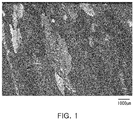
- FIGS. 1 and 2 illustrate microstructures of a slab before and after forging;
- FIG. 1 illustrates a microstructure of a slab before forging, while
- FIG. 2 illustrates a microstructure of a slab after forging.
- FIGS. 3 and 4 illustrate microstructures of a conventional steel and a steel appropriate to the present disclosure
- FIG. 3 illustrates a microstructure of the conventional steel (Comparative Example 2) in which coarse grains of austenite are formed
- FIG. 4 illustrates a uniform structure of austenite of the steel (Inventive Example 3) to which forging of a slab is applied according to the present invention.
- FIGS. 5 and 6 are photographic images illustrating examples of result of determining whether surface irregularities is generated; FIG. 5 illustrates an example of a case in which surface irregularities is generated, while FIG. 6 illustrates an example of a case in which surface irregularities is not generated.
- FIG. 7 is a graph illustrating a change in high temperature ductility of a slab according to a microstructure grain size of a surface layer of the slab.
- the present invention relates to a high manganese steel for low temperature applications having excellent surface quality and a manufacturing method thereof. Preferred embodiments of the present invention will be described.
- the present invention is preferably applied to materials including, for example, liquefied petroleum gas and liquefied natural gas, for use in low temperature components such as fuel tanks, storage tanks, ship membranes and transport pipes for storing and transporting at low temperatures.
- slabs to products When stabilizing austenite by adding large amounts of carbon and manganese as in the present invention, slabs to products have an austenite phase, that is, those are not subject to phase transformation.
- the slab has a coarse casting structure. For this reason, surface grain boundary cracking occurs when hot-rolling the slab.
- the slab which does not involve phase transformation, has the coarse casting structure, and thus does not have superior high temperature ductility.
- the present inventors conducted research and experiments to develop a high manganese steel for low temperature applications having not only high yield strength and excellent impact toughness but also excellent surface quality, and as a result, completed the present invention.
- a high manganese steel for low temperature applications contains 0.3 wt% to 0.8 wt% of C, 18 wt% to 26 wt% of Mn, 0.01 wt% to 1 wt% of Si, 0.01 wt% to 0.5 wt% of Al, 0.1 wt% or less of Ti (excluding 0%), 1 wt% to 4.5 wt% of Cr, 0.1 wt% to 0.9 wt% of Cu, 0.03 wt% or less of S (excluding 0%), 0.3 wt% or less of P (excluding 0%), 0.001 wt% to 0.03 wt% of N, 0.004 wt% or less of B (excluding 0%), and a remainder of Fe and other inevitable impurities, wherein a microstructure comprises an austenite single phase structure, an average grain size of the austenite is 20 ⁇ m to 50 ⁇ m, a number of austenite grains having a grain size of 50 ⁇
- Carbon (C) is an element for stabilizing austenite and securing strength.
- a content thereof is less than 0.3 wt, stability of the austenite is insufficient, and ferrite or martensite may form, thereby reducing low temperature ductility.
- a content thereof exceeds 0.8 wt%, carbides are formed, which may give rise to surface defects. Accordingly, the content of C is limited to 0.3 wt% to 0.8 wt%.
- Manganese (Mn) is an important element for stabilization of the austenite structure. As ferrite needs to be prevented from being formed and stability of the austenite needs to be increased to secure low temperature ductility, at least 18 wt% needs to be added. When the content of Mn is less than 18 wt%, an ⁇ -martensite phase and an ⁇ ' -martensite phase are formed and low temperature ductility is reduced. In contrast, when the content thereof is greater than 26 wt%, a manufacturing cost greatly increases, and internal oxidation is severely generated when the slab is heated during the hot rolling, which leads to deteriorated surface quality. Accordingly, the content of Mn is limited to 18 wt% to 26 wt%.
- Silicon (Si) is an element improving castability of molten steel, and in particular, effectively increasing strength of the steel while being added to austenite steel. However, when Si is added in an amount greater than 1 wt%, stability of austenite decreases and toughness may be reduced. Accordingly, an upper limit of the Si content is controlled to be 1 wt%.
- Aluminum (Al), in an appropriate amount thereof, is an element stabilizing austenite and affecting carbon activity in the steel to effectively inhibit the formation of carbides, thereby increasing toughness.
- Al is an element stabilizing austenite and affecting carbon activity in the steel to effectively inhibit the formation of carbides, thereby increasing toughness.
- an upper limit of the Al content is limited to 0.5 wt%.
- Titanium (Ti) is an element forming a precipitate individually or in combination to refine the austenite grain, thereby increasing strength and toughness. Further, when a sufficient number of sites for precipitate formation are present in the austenite grain, Ti forms fine precipitates inside the grain to improve strength through precipitate hardening. When more than 0.1 wt% of Ti is added, a large amount of oxide is produced in steelmaking, causing processing and cast steel-related problems during continuous casting. Alternately, carbonitrides are coarsened, causing deterioration of steel elongation, toughness and surface quality. Accordingly, the content of Ti is limited to 0.1 %wt or less.
- Chromium (Cr) is superior in terms of strength improvement through strengthening of a solid solution in the austenite structure.
- Cr has a corrosion resistance effect, surface quality may be effectively improved in high temperature oxidation.
- Cr is added in an amount of at least 1 wt%. Meanwhile, when an amount of Cr exceeding 4.5 wt% may be advantageous for carbide production, causes a problem of deteriorated cryogenic toughness. Accordingly, the content of Cr is limited to 1 wt% to 4.5 wt%
- S Sulfur
- S needs to be controlled to be in an amount of 0.03 wt% or less for inclusion control.
- Phosphorous (P) is an element promoting that segregation easily occurs, and lowers cracking and weldability during casting. To prevent the same, a content thereof needs to be controlled to 0.3 wt% or less. A content of P exceeding 0.3 wt% may reduce castability. Accordingly, an upper limit thereof is limited to 0.3 wt%.
- N Nitrogen (N), together with C, is an element stabilizing austenite and improving toughness.
- N is a greatly advantageous element for enhancing strength through solid solution strengthening or precipitate formation such as carbon.
- an upper limit thereof is limited to 0.03 wt%.
- the effect is insignificant. Accordingly, a lower limit thereof is limited to 0.001 wt%.
- Boron (B) has a significant effect on surface quality improvement by suppressing grain boundary fracture through strengthening of grain boundaries, but decreases toughness and weldability due to formation of coarse precipitates when excessively added. Accordingly, the content thereof is limited to 0.004 wt% or less.
- the microstructure of the high manganese steel for low temperature applications is an austenite single phase, and an average grain size of the austenite structure is 20 ⁇ m to 50 ⁇ m.
- a number of the austenite grains having a grain size of 50 ⁇ m or more is less than 1 per cm 2 .
- an average grain size of the austenite structure exceeds 50 ⁇ m, high density of the coarse grains causes non-uniform deformation during processing into a structure, which may result in deterioration of the surface quality after processing. Accordingly, the average grain size is limited to 50 ⁇ m or less. In contrast, strength of the steel increases accordingly as the average grain size of the austenite structure decreases, but precipitation of grain boundary carbide is facilitated by grain refinement, and low temperature toughness may become inferior due to the increased strength. Accordingly, the average grain size of the austenite structure is limited to 20 ⁇ m or more. In this regard, the average grain size of the austenite structure is 20 ⁇ m to 50 ⁇ m, and preferably 20 ⁇ m to 30 ⁇ m.
- the number of the grains of the austenite, which have a grain size of at least 50 ⁇ m is 1 or more per cm 2 , high density of the coarse grains may deteriorate the surface quality after processing into a structure. Accordingly, the number of the grains of the austenite, which have a grain size of at least 50 ⁇ m, is limited to less than 1 per cm 2 . More preferably, the number of the grains of the austenite structure, which have a grain size of at least 30 ⁇ m may be less than 1 per cm 2 .
- 1 vol% or less precipitates may be contained in the high manganese steel.
- the amount of the precipitate is limited to 1 vol% or less (excluding 0%).
- a thickness of the high manganese steel may be 8.0 mm or more, preferably 8.0 mm to 40 mm.
- the high manganese steel for low temperature applications according to the present invention has an impact toughness(preferably a Charpy impact absorption energy) of 100 J or more in the rolling direction (RD) at -196°C.
- an anisotropy index refers to a ratio of thickness direction (TD) impact toughness at -196°C to rolling direction (RD) impact toughness at -196°C.
- the anisotropy index of the steel in the present invention refers to a value obtained by dividing TD Charpy impact absorption energy at -196°C by RD Charpy impact absorption energy at -196°C.
- the anisotropy index When the anisotropy index is below a certain level, securing the physical properties may be problematic in a final product. That is, an anisotropy index below a certain level may make it difficult to secure target Charpy impact absorption energy according to a direction of a material of a final product. Accordingly, the high manganese steel for low temperature applications of the present invention is limited to a certain level or more, thereby effectively preventing non-uniform Charpy impact absorption energy according to the direction of a material of the final product.
- a lower limit of the material anisotropy index is 0.6, and preferably 0.8, to prevent non-uniform physical properties of the final product according to the direction of the material.
- a method for manufacturing a high manganese steel for low temperature applications includes preparing a slab comprising 0.3 wt% to 0.8 wt% of C, 18 wt% to 26 wt% of Mn, 0.01 wt% to 1 wt% of Si, 0.01 wt% to 0.5 wt% of Al, 0.1 wt% or less of Ti (excluding 0%), 1 wt% to 4.5 wt% of Cr, 0.1 wt% to 0.9 wt% of Cu, 0.03 wt% or less of S (excluding 0%), 0.3 wt% or less of P (excluding 0%), 0.001 wt% to 0.03 wt% of N, 0.004 wt% or less of B (excluding 0%), and a remainder of Fe and other inevitable impurities; deformation application involving applying a deformation to the slab such that a fine recrystallization structure is formed on a surface layer portion of the slab; air cooling involving air-cooling the
- a slab is applied with deformation so that a recrystallization microstructure is formed on a surface layer portion of the slab, followed by air-cooling to room temperature.
- the slab surface layer portion refers to a region of the slab surface layer portion up to 2 mm from the surface in a slab thickness direction.
- a recrystallization microstructure may be formed in a region other than the surface layer portion.
- the deformation application is performed such that a recrystallization structure in which a number of grains having a grain size of at least 150 ⁇ m is less than 1 per cm 2 .
- a number of grains having a grain size of at least 150 ⁇ m is one or more, high temperature ductility deteriorate due to coarse grains, and cracking and propagation are generated during hot-rolling, thereby adversely affecting surface quality of a product.
- An average grain size of the surface layer portion of the slab after the deformation application may be 100 ⁇ m or less.
- a treatment for the deformation application is not particularly limited, and any treatment is feasible as long as deformation is applied to the slab before reheating the slab and a recrystallization microstructure is formed on the surface layer portion of the slab.
- An example of the deformation application is rough rolling at 1000°C to 1200°C under high reduction conditions.
- a temperature for the rough rolling under the high reduction conditions is less than 1000°C, a treatment temperature is too low to obtain a recrystallization microstructure and deformation resistance may excessively increase during rough rolling.
- the temperature exceeds 1200°C it may be advantageous in obtaining the recrystallization microstructure, but may cause deeper grain boundary oxidation and partial melting in a segregation zone in the cast structure, resulting in surface quality deterioration.
- Another example of the deformation application is high temperature forging at 1000°C to 1200°C.
- a treatment temperature is too low to obtain a recrystallization microstructure and deformation resistance may increase excessively during forging.
- the temperature exceeds 1200°C it may be advantageous in obtaining the recrystallization microstructure, but may cause deeper grain boundary oxidation and partial melting in a segregation zone in the cast structure, resulting in surface quality deterioration
- the deformation application is performed such that a number of austenite grains having a grain size of 150 ⁇ m or more formed on the surface layer portion of the slab be less than 1 per cm 2 .
- An average grain size on the surface layer portion of the slab after deformed may be 100 ⁇ m or less.
- the deformation application is performed such that a thickness reduction rate is 15% with respect to an initial slab.
- a thickness reduction rate is less than too small, sufficient deformation cannot be secured, thereby making it difficult to obtain a recrystallization structure of the surface layer.
- an excessive thickness reduction rate causes the microstructure of the final steel to be excessively refined, thereby deteriorating low temperature toughness.
- the thickness reduction rate is limited to 50% or less. Accordingly, the thickness reduction rate is 15% to 50%.
- the slab in which a recrystallization microstructure is formed on the surface layer may have a cross-section reduction rate (high temperature ductility) of at least 60% at 1100°C.
- Another example of the deformation application is a shot blasting method.
- the air-cooled slab is reheated to 1100°C to 1250°C.
- a slab reheating temperature is too low, a rolling load may be excessively applied during hot rolling.
- the reheating temperature is at least 1100°C. The higher the heating temperature is, the easier the hot rolling is; however, in the case of steel, as the steel of the present invention, which contains a large amount of Mn, may have deteriorated surface quality due to severe internal grain boundary oxidation during high temperature heating. Accordingly, the reheating temperature is 1250°C or less.
- the reheated slab is finish hot-rolled at 850°C to 950°C to obtain hot-rolled steel.
- a thickness thereof may be at least 8 mm, preferably 8 mm to 40 mm.
- the finish rolling is performed at a temperature of 950°C or less. Meanwhile, when the finish hot rolling temperature is too low, a load increases during the rolling. In this regard, the finish rolling is performed at a temperature of 850°C or above.
- a rolling temperature may be controlled according to a thickness of the final steel during hot rolling. This may improve strength.
- a final pass rolling temperature during hot finish rolling may be 850°C or above and less than 900°C when a final thickness of the steel is 18t (t: steel thickness (mm)) or above, and a final pass rolling temperature during hot finish rolling may be 900°C to 950°C when a final thickness of the steel is less than 18t (t: steel thickness (mm)).
- carbides may be precipitate at a final pass rolling temperature of less than 850°C, which is lower than a temperature of carbide formation.
- the carbide precipitation may reduce low temperature impact toughness.
- the rolling is performed for a short period of time at a final pass rolling temperature of greater than 950°C, thereby making it difficult to secure a temperature.
- the hot rolling be performed at a temperature below a non-recrystallization temperature (Tnr) such that a reduction ratio is at least 40% of a total reduction rate.
- Tnr non-recrystallization temperature
- the hot-rolled steel is accelerated-cooled at a cooling speed of 10°C/sec or more to a accelerated cooling termination temperature of 600°C or less.
- the hot-rolled steel is a steel containing 1 wt% to 4.5 wt% of Cr and containing C and thus is essentially subject to accelerated cooling so as to prevent carbide precipitates which may reduce low temperature ductility.
- the cooling speed of accelerated cooling is less than 10°C/sec, carbides are precipitated in the grain boundaries, which may deteriorate impact toughness.
- the cooling speed may be 10°C/sec to 40°C/sec.
- the accelerated cooling termination temperature is greater than 600°C, carbides are precipitated in the grain boundaries due to said reason, and impact toughness may deteriorate.
- the accelerated cooling termination temperature is up to 600°C, preferably 300°C to 400°C.
- the steel manufactured as previously described has an austenite single phase, and an average grain size of the austenite structure is 20 ⁇ m to 50 ⁇ m, preferably 20 ⁇ m to 30 ⁇ m.
- Such manufactured steel has a microstructure whose number of the austenite grain having a grain size of at least 50 ⁇ m, is less than 1 per cm 2 .
- Such manufactured steel has an impact toughness of 100 J or higher at -196°C in a rolling direction (RD), and an anisotropy index of 0 . 6 or higher, more preferably 0 . 8 or higher, at -196°C, where the anisotropy index is a ratio of thickness direction (TD) impact toughness at -196°C to the RD impact toughness at -196°C.
- RD rolling direction
- Such manufactured steel has a yield strength of 400 MPa or higher.
- a slab having the steel composition of Table 1 is forged under the conditions of Table 2 and air-cooled to room temperature, and then reheated, hot rolled and cooled under the conditions of Table 2 to obtain a hot-rolled steel having a thickness of Table 2.
- the high temperature ductility (cross sectional reduction rate (%)) was measured at a strain rate of 1/s at 1100°C, and the Charpy impact toughness was measured at -196°C.
- the surface irregularities as illustrated in FIGS. 5 and 6 , were evaluated by bending the steel and observing with naked eye.
- FIG. 5 illustrates an example of a case in which surface irregularities occurred
- FIG. 6 illustrates an example of a case in which surface irregularities did not occur.
- FIG. 1 illustrates the slab microstructure before forging
- FIG. 2 illustrates the slab microstructure after forging.
- FIGS. 3 and 4 Inventive Example 3, to which the forging treatment is applied, and Comparative Example 2, to which the forging treatment is not applied, were observed with respect to the structure of the steel surface layer after hot rolling, and a result thereof is shown in FIGS. 3 and 4.
- FIG. 3 represents Comparative Example (2) and
- FIG. 4 represents Inventive Example (3).
- Inventive Examples 1, 3 and 4 which satisfy the steel composition and manufacturing conditions of the present invention, have less than 1 coarse grain having a grain size of 150 ⁇ m or more per cm 2 on the surface layer portion of the slab, and an average grain size of the steel is 50 ⁇ m or less, and a number of the coarse grain having a grain size of at least 50 ⁇ m and that of at least 30 ⁇ m are less than
- an average grain size of the steel was 50 ⁇ m or less, and a number of the coarse grains having a grain size of at least 50 ⁇ m was less than 1 per cm 2 . Accordingly, surface irregularities may not occur even when processed as a final structure product, thereby giving rise to excellent surface quality.
- Comparative Examples 1 and 2 In contrast, in the case of Comparative Examples 1 and 2, to which the forging treatment was not applied, showed 10 and 5 coarse grains having a grain size of 150 ⁇ m more per cm 2 , respectively, which may give rise to surface irregularities. Furthermore, numbers of the coarse grains of the steel, having a grain size of at least 50 ⁇ m, are 4 and 3 per cm 2 , respectively. This indicates that surface irregularities may occur when processed as a final structure product. As anisotropy indices of Comparative Examples 1 and 2 are less than 0.6, irregularity of physical properties may remarkably occur according to directionality of a material of the final structure product.
- an average grain size of the austenite structure is 18 ⁇ m, and a precipitate percentage is 4%. Accordingly, no surface irregularities occurred, but impact toughness was reduced.
- the microstructure of the coarse slab surface layer before forging has become more refined after forging.
- the slab of Inventive Example 1 was subject to forging such that a grain size of the surface layer structure becomes that in FIG. 7 and was observed with respect to changes in high temperature ductility according to the grain size of the surface layer of the slab after forging. As illustrated in FIG. 7 , a result indicates that the finer the grain size of the surface layer structure of the slab is, the more excellent the high temperature ductility of the slab is.
Landscapes
- Chemical & Material Sciences (AREA)
- Engineering & Computer Science (AREA)
- Mechanical Engineering (AREA)
- Materials Engineering (AREA)
- Metallurgy (AREA)
- Organic Chemistry (AREA)
- Crystallography & Structural Chemistry (AREA)
- Physics & Mathematics (AREA)
- Thermal Sciences (AREA)
- Heat Treatment Of Steel (AREA)
Claims (10)
- Hochmanganhaltiger Stahl für Niedertemperaturanwendungen, der Folgendes umfasst:0,3 Gew.-% bis 0,8 Gew.-% C, 18 Gew.-% bis 26 Gew.-% Mn, 0,01 Gew.-% bis 1 Gew.-% Si, 0,01 Gew.-% bis 0,5 Gew.-% Al, 0,1 Gew.-% oder weniger Ti, ausschließlich 0 %, 1 Gew.-% bis 4,5 Gew.-% Cr, 0,1 Gew.-% bis 0,9 Gew.-% Cu, 0,03 Gew.-% oder weniger S, ausschließlich 0 %, 0,3 Gew.-% oder weniger P, ausschließlich 0 %, 0,001 Gew.-% bis 0,03 Gew.-% N, 0,004 Gew.-% oder weniger B, ausschließlich 0 %,und einen Rest von Fe und anderen unvermeidlichen Verunreinigungen,wobei eine Mikrostruktur eine einphasige Austenitstruktur umfasst,eine durchschnittliche Korngröße des Austenits 20 µm bis 50 µm beträgt undeine Anzahl von Austenitkörnern, die eine Korngröße von 50 µm oder mehr aufweisen, weniger als 1 pro cm2 beträgt,wobei der hochmanganhaltige Stahl ferner 1 Volumen-% oder weniger, einschließlich 0 %, eines Niederschlags umfasst,wobei der hochmanganhaltige Stahl eine Schlagzähigkeit in Walzrichtung von 100 J oder höher bei -196 °C aufweist,wobei der hochmanganhaltige Stahl einen Anisotropieindex von 0,6 oder höher aufweist, wobei der Anisotropieindex ein Verhältnis von Schlagzähigkeit in Dickenrichtung bei -196 °C zu Schlagzähigkeit in Walzrichtung bei -196 °C ist, undwobei der hochmanganhaltige Stahl eine Streckgrenze von 400 MPa oder höher aufweist.
- Hochmanganhaltiger Stahl nach Anspruch 1, wobei eine durchschnittliche Korngröße der Austenitstruktur 20 µm bis 30 µm beträgt.
- Hochmanganhaltiger Stahl nach Anspruch 1, wobei in der Austenitstruktur eine Anzahl von Austenitkörnern, die eine Korngröße von 30 µm oder mehr aufweisen, weniger als 1 pro cm2 beträgt.
- Hochmanganhaltiger Stahl nach Anspruch 1, wobei der hochmanganhaltige Stahl eine Dicke von 8,0 mm bis 40 mm aufweist.
- Verfahren zum Fertigen eines hochmanganhaltigen Stahls für Niedertemperaturanwendungen nach Anspruch 1, wobei das Verfahren Folgendes umfasst:Vorbereiten einer Bramme, die 0,3 Gew.-% bis 0,8 Gew.-% C, 18 Gew.-% bis 26 Gew.-% Mn, 0,01 Gew.-% bis 1 Gew.-% Si, 0,01 Gew.-% bis 0,5 Gew.-% Al, 0,1 Gew.-% oder weniger Ti, ausschließlich 0 %, 1 Gew.-% bis 4,5 Gew.-% Cr, 0,1 Gew.-% bis 0,9 Gew.-% Cu, 0,03 Gew.-% oder weniger S, ausschließlich 0 %, 0,3 Gew.-% oder weniger P, ausschließlich 0 %, 0,001 Gew.-% bis 0,03 Gew.-% N, 0,004 Gew.-% oderweniger B, ausschließlich 0 %, und einen Rest von Fe und anderen unvermeidlichen Verunreinigungen umfasst;Verformungsanwendung, die das Anwenden einer Verformung auf die Bramme einschließt, derart, dass eine Rekristallisationsmikrostruktur auf einem Oberflächenschichtabschnitt der Bramme ausgebildet wird;Luftkühlen, das das Luftkühlen der Bramme, auf der die Rekristallisationsmikrostruktur auf dem Oberflächenschichtabschnitt davon ausgebildet ist, auf Raumtemperatur einschließt;Wiedererwärmen, das ein Erwärmen der luftgekühlten Bramme auf 1100 °C bis 1250 °C einschließt;Warmwalzen, das ein Feinwalzen der wiedererwärmten Bramme bei 850 °C bis 950 °C einschließt, um einen warmgewalzten Stahl zu erhalten; undbeschleunigtes Kühlen, das das beschleunigte Kühlen des warmgewalzten Stahls mit einer Kühlgeschwindigkeit von 10 °C/s oder mehr auf eine Endtemperatur des beschleunigten Kühlens von 600 °C oder weniger einschließt,wobei die Verformungsanwendung derart durchgeführt wird, dass eine Anzahl von Körnern, die eine Korngröße von wenigstens 150 µm auf dem Oberflächenschichtabschnitt aufweisen, der eine Region des Brammenoberflächenschichtabschnitts bis zu 2 mm von der Oberfläche in einer Brammendickenrichtung entfernt ist, weniger als 1 pro cm2 ist undwobei die Verformungsanwendung derart durchgeführt wird, dass eine Dickenreduktionsrate 15 % bis 50 % für eine anfängliche Bramme beträgt.
- Verfahren nach Anspruch 5, wobei die Verformungsanwendung durch Vorwalzen unter einer Hochreduktionsbedingung bei 1000 °C bis 1200 °C oder Hochtemperaturschmieden bei 1000 °C bis 1200 °C durchgeführt wird.
- Verfahren nach Anspruch 5, wobei eine durchschnittliche Korngröße des Oberflächenschichtabschnitts der Bramme nach der Verformungsanwendung 100 µm oder weniger beträgt.
- Verfahren nach Anspruch 5, wobei bei dem Warmwalzen eine Schlichtstichwalztemperatur während des Warmfeinwalzens 850 °C oder darüber und weniger als 900 °C beträgt, wenn eine Enddicke des Stahls 18 t, wobei t: Stahldicke in mm, oder darüber beträgt, und eine Schlichtstichwalztemperatur während des Warmfeinwalzens 900 °C bis 950 °C beträgt, wenn eine Enddicke des Stahls weniger als 18 t beträgt, wobei t: Stahldicke in mm.
- Verfahren nach Anspruch 5, wobei bei dem Warmwalzen ein Reduktionsverhältnis wenigstens 40 % einer Gesamtreduktionsrate bei einer Temperatur unterhalb einer Nicht-Rekristallisationstemperatur (Tnr) beträgt, wenn eine Enddicke des Stahls 18 t, wobei t: Stahldicke in mm, oder darüber beträgt.
- Verfahren nach Anspruch 5, wobei der warmgewalzte Stahl eine Dicke von 8 mm bis 40 mm aufweist.
Priority Applications (1)
| Application Number | Priority Date | Filing Date | Title |
|---|---|---|---|
| EP21193240.5A EP3974556B1 (de) | 2017-10-18 | 2018-10-11 | Manganstahl für tieftemperaturen mit ausgezeichneter oberflächenqualität |
Applications Claiming Priority (3)
| Application Number | Priority Date | Filing Date | Title |
|---|---|---|---|
| KR20170135464 | 2017-10-18 | ||
| KR1020180115926A KR102109270B1 (ko) | 2017-10-18 | 2018-09-28 | 표면품질이 우수한 저온용 고 망간강재 및 제조방법 |
| PCT/KR2018/011937 WO2019078538A1 (ko) | 2017-10-18 | 2018-10-11 | 표면품질이 우수한 저온용 고 망간강재 및 제조방법 |
Related Child Applications (2)
| Application Number | Title | Priority Date | Filing Date |
|---|---|---|---|
| EP21193240.5A Division EP3974556B1 (de) | 2017-10-18 | 2018-10-11 | Manganstahl für tieftemperaturen mit ausgezeichneter oberflächenqualität |
| EP21193240.5A Division-Into EP3974556B1 (de) | 2017-10-18 | 2018-10-11 | Manganstahl für tieftemperaturen mit ausgezeichneter oberflächenqualität |
Publications (3)
| Publication Number | Publication Date |
|---|---|
| EP3699313A4 EP3699313A4 (de) | 2020-08-26 |
| EP3699313A1 EP3699313A1 (de) | 2020-08-26 |
| EP3699313B1 true EP3699313B1 (de) | 2021-12-01 |
Family
ID=66281428
Family Applications (2)
| Application Number | Title | Priority Date | Filing Date |
|---|---|---|---|
| EP18868100.1A Active EP3699313B1 (de) | 2017-10-18 | 2018-10-11 | Manganstahl für tieftemperaturen mit ausgezeichneter oberflächenqualität und verfahren zu seiner herstellung |
| EP21193240.5A Active EP3974556B1 (de) | 2017-10-18 | 2018-10-11 | Manganstahl für tieftemperaturen mit ausgezeichneter oberflächenqualität |
Family Applications After (1)
| Application Number | Title | Priority Date | Filing Date |
|---|---|---|---|
| EP21193240.5A Active EP3974556B1 (de) | 2017-10-18 | 2018-10-11 | Manganstahl für tieftemperaturen mit ausgezeichneter oberflächenqualität |
Country Status (6)
| Country | Link |
|---|---|
| US (1) | US11584970B2 (de) |
| EP (2) | EP3699313B1 (de) |
| JP (1) | JP6947922B2 (de) |
| KR (1) | KR102109270B1 (de) |
| CN (1) | CN111225992B (de) |
| CA (1) | CA3076812C (de) |
Families Citing this family (7)
| Publication number | Priority date | Publication date | Assignee | Title |
|---|---|---|---|---|
| US12221680B2 (en) * | 2018-10-25 | 2025-02-11 | Posco Co., Ltd | Cryogenic austenitic high-manganese steel having excellent corrosion resistance, and manufacturing method therefor |
| WO2021181543A1 (ja) * | 2020-03-11 | 2021-09-16 | Jfeスチール株式会社 | 鋼材およびその製造方法、ならびにタンク |
| JP7338792B2 (ja) * | 2021-02-08 | 2023-09-05 | Jfeスチール株式会社 | 鋼材およびその製造方法、タンクおよびその製造方法 |
| CN115572800B (zh) * | 2022-10-31 | 2024-10-22 | 昆明理工大学 | 一种复合析出相提高高锰钢性能的处理方法 |
| CN116972238B (zh) * | 2023-09-04 | 2025-07-29 | 安阳工学院 | 一种高锰钢-高铬铸铁双金属耐磨复合管及其制备方法 |
| CN117344230B (zh) * | 2023-10-08 | 2024-05-17 | 燕山大学 | 一种分体式辙叉心轨和翼轨镶嵌块用高锰钢及其应用 |
| CN118086766A (zh) * | 2024-01-05 | 2024-05-28 | 湖南华菱涟源钢铁有限公司 | 一种耐海洋大气腐蚀的高锰钢及其制备方法 |
Family Cites Families (34)
| Publication number | Priority date | Publication date | Assignee | Title |
|---|---|---|---|---|
| JPH064903B2 (ja) | 1985-04-09 | 1994-01-19 | 新日本製鐵株式会社 | 脆性き裂伝播停止特性の優れた厚鋼板およびその製造法 |
| JPS621823A (ja) * | 1985-06-25 | 1987-01-07 | Kobe Steel Ltd | 被削性にすぐれた高Mn非磁性鋼の製造方法 |
| JPH05148589A (ja) * | 1991-11-27 | 1993-06-15 | Aichi Steel Works Ltd | 熱間工具鋼 |
| DE69226946T2 (de) * | 1991-12-30 | 1999-05-12 | Pohang Iron & Steel Co. Ltd., Pohang City, Kyung Sang Book | Austenitischer manganstahlblech mit hoher verformbarkeit, festichkeit und schweissbarkeit und verfahren |
| JPH06322440A (ja) * | 1993-05-12 | 1994-11-22 | Nippon Steel Corp | 高マンガン非磁性鋼片の圧延方法 |
| KR970001324B1 (ko) | 1994-03-25 | 1997-02-05 | 김만제 | 열간가공성이 우수한 고망간강 및 그 열간압연 방법 |
| JP3384890B2 (ja) * | 1994-09-30 | 2003-03-10 | 日新製鋼株式会社 | 表面性状に優れたオーステナイト系ステンレス鋼の製造方法 |
| JP3593182B2 (ja) * | 1995-07-07 | 2004-11-24 | 新日本製鐵株式会社 | フェライト系ステンレス熱間圧延鋼帯の表面疵防止方法 |
| JPH09137219A (ja) * | 1995-11-13 | 1997-05-27 | Kobe Steel Ltd | 平坦度の良好な非調質高張力鋼板の製造方法 |
| KR100320959B1 (ko) | 1996-12-30 | 2002-06-20 | 전선기 | 극저온충격특성이우수한고망간강및그제조방법 |
| JP2000178646A (ja) * | 1998-12-15 | 2000-06-27 | Sumitomo Metal Ind Ltd | B含有オーステナイト系ステンレス鋼板の製造方法 |
| KR100946051B1 (ko) | 2002-12-27 | 2010-03-09 | 주식회사 포스코 | 용접성이 우수한 고강도 후육강판 제조방법 |
| JP4464811B2 (ja) * | 2004-12-22 | 2010-05-19 | 新日本製鐵株式会社 | 延性に優れた高強度低比重鋼板の製造方法 |
| JP4529872B2 (ja) * | 2005-11-04 | 2010-08-25 | 住友金属工業株式会社 | 高Mn鋼材及びその製造方法 |
| KR100711371B1 (ko) | 2005-12-20 | 2007-04-30 | 주식회사 포스코 | 극저온 인성이 우수한 라인파이프용 후강판 및 그 제조방법 |
| JP2009074123A (ja) * | 2007-09-19 | 2009-04-09 | Nippon Steel Corp | 表面品質が良好なNi含有鋼の製造方法 |
| KR20090070509A (ko) | 2007-12-27 | 2009-07-01 | 주식회사 포스코 | 고연성 및 고강도를 가지는 고망간 도금강판 및 그제조방법 |
| DE102008056844A1 (de) | 2008-11-12 | 2010-06-02 | Voestalpine Stahl Gmbh | Manganstahlband und Verfahren zur Herstellung desselben |
| KR20110009792A (ko) | 2009-07-23 | 2011-01-31 | 주식회사 포스코 | 고온연성 및 내지연 파괴 특성이 우수한 오스테나이트계 강판 및 그 제조방법 |
| JP5618932B2 (ja) * | 2011-07-22 | 2014-11-05 | 株式会社神戸製鋼所 | 非磁性鋼線材又は棒鋼、及びその製造方法 |
| WO2013100614A1 (ko) * | 2011-12-27 | 2013-07-04 | 주식회사 포스코 | 피삭성 및 용접 열영향부 극저온 인성이 우수한 오스테나이트계 강재 및 그의 제조방법 |
| KR101417231B1 (ko) | 2011-12-28 | 2014-07-08 | 주식회사 포스코 | 저온인성 및 인장특성이 우수한 압력용기용 극후강판 및 그 제조 방법 |
| DE112014003038T5 (de) * | 2013-06-27 | 2016-03-24 | Hyundai Steel Company | Hochfester-Stahl-Blech und Herstellungsverfahren dafür |
| JP6377745B2 (ja) | 2013-08-14 | 2018-08-22 | ポスコPosco | 超高強度鋼板及びその製造方法 |
| KR101543916B1 (ko) * | 2013-12-25 | 2015-08-11 | 주식회사 포스코 | 표면 가공 품질이 우수한 저온용강 및 그 제조 방법 |
| KR101543915B1 (ko) * | 2013-12-25 | 2015-08-11 | 주식회사 포스코 | 항복강도가 우수한 오스테나이트계 저온용 강판 및 그 제조 방법 |
| KR101609242B1 (ko) | 2014-10-16 | 2016-04-05 | 한국생산기술연구원 | 부분 재결정을 이용한 쌍정유기소성강의 제조방법 |
| KR101665821B1 (ko) * | 2014-12-24 | 2016-10-13 | 주식회사 포스코 | 표면 가공 품질이 우수한 저온용 강판 및 그 제조방법 |
| KR101647227B1 (ko) | 2014-12-24 | 2016-08-10 | 주식회사 포스코 | 표면 가공 품질이 우수한 저온용 강판 및 그 제조 방법 |
| JP6693217B2 (ja) * | 2015-04-02 | 2020-05-13 | 日本製鉄株式会社 | 極低温用高Mn鋼材 |
| KR101889187B1 (ko) | 2015-12-23 | 2018-08-16 | 주식회사 포스코 | 열간 가공성이 우수한 비자성 강재 및 그 제조방법 |
| WO2017111510A1 (ko) * | 2015-12-23 | 2017-06-29 | 주식회사 포스코 | 열간 가공성이 우수한 비자성 강재 및 그 제조방법 |
| CN105861943B (zh) | 2016-05-20 | 2018-05-25 | 首钢集团有限公司 | 一种冷轧高强孪晶诱发塑性钢及其生产方法 |
| CN111663085B (zh) | 2020-07-02 | 2021-08-27 | 武汉科技大学 | 一种超高强度和塑性的热轧奥氏体低密度钢及生产方法 |
-
2018
- 2018-09-28 KR KR1020180115926A patent/KR102109270B1/ko active Active
- 2018-10-11 CN CN201880067461.7A patent/CN111225992B/zh active Active
- 2018-10-11 JP JP2020521408A patent/JP6947922B2/ja active Active
- 2018-10-11 CA CA3076812A patent/CA3076812C/en active Active
- 2018-10-11 EP EP18868100.1A patent/EP3699313B1/de active Active
- 2018-10-11 EP EP21193240.5A patent/EP3974556B1/de active Active
- 2018-10-11 US US16/649,739 patent/US11584970B2/en active Active
Also Published As
| Publication number | Publication date |
|---|---|
| KR20190043466A (ko) | 2019-04-26 |
| JP6947922B2 (ja) | 2021-10-13 |
| CN111225992A (zh) | 2020-06-02 |
| EP3974556A1 (de) | 2022-03-30 |
| JP2020537714A (ja) | 2020-12-24 |
| US11584970B2 (en) | 2023-02-21 |
| CA3076812A1 (en) | 2019-04-25 |
| EP3974556B1 (de) | 2025-08-06 |
| EP3699313A4 (de) | 2020-08-26 |
| KR102109270B1 (ko) | 2020-05-12 |
| CN111225992B (zh) | 2022-04-19 |
| EP3974556C0 (de) | 2025-08-06 |
| CA3076812C (en) | 2022-06-14 |
| US20200263268A1 (en) | 2020-08-20 |
| EP3699313A1 (de) | 2020-08-26 |
Similar Documents
| Publication | Publication Date | Title |
|---|---|---|
| EP3699313B1 (de) | Manganstahl für tieftemperaturen mit ausgezeichneter oberflächenqualität und verfahren zu seiner herstellung | |
| JP6691219B2 (ja) | 耐水素誘起割れ(hic)性に優れた圧力容器用鋼材及びその製造方法 | |
| KR101253890B1 (ko) | 중심부 물성 및 수소유기균열 저항성이 우수한 압력용기용 극후물 강판 및 그 제조방법 | |
| JP7147960B2 (ja) | 鋼板およびその製造方法 | |
| EP3561110B1 (de) | Stahl mit hohem mangangehalt mit hervorragender tieftemperaturzähigkeit und streckgrenze und herstellungsverfahren | |
| EP3395987B1 (de) | Hochfeste stahlplatte mit niedriger streckgrenze und ausgezeichneter spannungsrisskorrosionsbeständigkeit und niedriger temperaturzähigkeit | |
| JP5740486B2 (ja) | 極低温靭性に優れた高強度鋼板及びその製造方法 | |
| JP5741260B2 (ja) | 歪付与後のctod特性に優れた極低温用鋼材およびその製造方法 | |
| JP6703608B2 (ja) | 耐水素脆化性に優れたオーステナイト系鋼材 | |
| KR101665821B1 (ko) | 표면 가공 품질이 우수한 저온용 강판 및 그 제조방법 | |
| CN110088346A (zh) | 具有优异纵向均匀延伸率的用于焊接钢管的钢材、其制造方法和使用其的钢管 | |
| CN101568659B (zh) | 具有优良高强度的耐候性热轧钢板及其制造方法 | |
| CN108504931A (zh) | 一种海底管线钢及其生产方法 | |
| CN112888804A (zh) | 表面质量优异的超低温用奥氏体高锰钢材及其制备方法 | |
| EP3901312B1 (de) | Hochfestes warmgewalztes stahlblech mit ausgezeichneter bearbeitbarkeit und verfahren zur herstellung davon | |
| JP5428999B2 (ja) | Lpg・アンモニア混載用鋼材の製造方法 | |
| CN112912529A (zh) | 形状优良的超低温用奥氏体高锰钢材及其制造方法 | |
| JP5375933B2 (ja) | 脆性亀裂伝播停止特性に優れた厚鋼板 | |
| KR102142774B1 (ko) | 내해수 특성이 우수한 고강도 구조용강 및 그 제조방법 | |
| CN111542632A (zh) | 焊接热影响区韧性优异的高强度钢材及其制造方法 | |
| JP4910638B2 (ja) | 脆性亀裂伝播停止特性に優れた厚鋼板の製造方法 | |
| EP4079897A1 (de) | Hochfester stahl mit hoher duktilität und verfahren zu seiner herstellung | |
| CN121013913A (zh) | 钢板及其制造方法 | |
| JP2025031575A (ja) | 鋼板およびその製造方法 |
Legal Events
| Date | Code | Title | Description |
|---|---|---|---|
| STAA | Information on the status of an ep patent application or granted ep patent |
Free format text: STATUS: THE INTERNATIONAL PUBLICATION HAS BEEN MADE |
|
| PUAI | Public reference made under article 153(3) epc to a published international application that has entered the european phase |
Free format text: ORIGINAL CODE: 0009012 |
|
| STAA | Information on the status of an ep patent application or granted ep patent |
Free format text: STATUS: REQUEST FOR EXAMINATION WAS MADE |
|
| 17P | Request for examination filed |
Effective date: 20200327 |
|
| A4 | Supplementary search report drawn up and despatched |
Effective date: 20200626 |
|
| AK | Designated contracting states |
Kind code of ref document: A1 Designated state(s): AL AT BE BG CH CY CZ DE DK EE ES FI FR GB GR HR HU IE IS IT LI LT LU LV MC MK MT NL NO PL PT RO RS SE SI SK SM TR |
|
| AX | Request for extension of the european patent |
Extension state: BA ME |
|
| DAV | Request for validation of the european patent (deleted) | ||
| DAX | Request for extension of the european patent (deleted) | ||
| GRAP | Despatch of communication of intention to grant a patent |
Free format text: ORIGINAL CODE: EPIDOSNIGR1 |
|
| STAA | Information on the status of an ep patent application or granted ep patent |
Free format text: STATUS: GRANT OF PATENT IS INTENDED |
|
| INTG | Intention to grant announced |
Effective date: 20210416 |
|
| RIC1 | Information provided on ipc code assigned before grant |
Ipc: C22C 38/38 20060101AFI20210404BHEP Ipc: C22C 38/20 20060101ALI20210404BHEP Ipc: C22C 38/28 20060101ALI20210404BHEP Ipc: C22C 38/32 20060101ALI20210404BHEP Ipc: C22C 38/02 20060101ALI20210404BHEP Ipc: C22C 38/06 20060101ALI20210404BHEP Ipc: C22C 38/00 20060101ALI20210404BHEP Ipc: C21D 9/46 20060101ALI20210404BHEP Ipc: C21D 8/02 20060101ALI20210404BHEP Ipc: C21D 6/00 20060101ALI20210404BHEP Ipc: C21D 7/13 20060101ALI20210404BHEP Ipc: C21D 9/00 20060101ALI20210404BHEP Ipc: C21D 8/00 20060101ALI20210404BHEP |
|
| GRAS | Grant fee paid |
Free format text: ORIGINAL CODE: EPIDOSNIGR3 |
|
| GRAA | (expected) grant |
Free format text: ORIGINAL CODE: 0009210 |
|
| STAA | Information on the status of an ep patent application or granted ep patent |
Free format text: STATUS: THE PATENT HAS BEEN GRANTED |
|
| AK | Designated contracting states |
Kind code of ref document: B1 Designated state(s): AL AT BE BG CH CY CZ DE DK EE ES FI FR GB GR HR HU IE IS IT LI LT LU LV MC MK MT NL NO PL PT RO RS SE SI SK SM TR |
|
| REG | Reference to a national code |
Ref country code: GB Ref legal event code: FG4D |
|
| REG | Reference to a national code |
Ref country code: AT Ref legal event code: REF Ref document number: 1451818 Country of ref document: AT Kind code of ref document: T Effective date: 20211215 Ref country code: CH Ref legal event code: EP |
|
| REG | Reference to a national code |
Ref country code: IE Ref legal event code: FG4D |
|
| REG | Reference to a national code |
Ref country code: DE Ref legal event code: R096 Ref document number: 602018027721 Country of ref document: DE |
|
| REG | Reference to a national code |
Ref country code: NL Ref legal event code: FP |
|
| REG | Reference to a national code |
Ref country code: LT Ref legal event code: MG9D |
|
| REG | Reference to a national code |
Ref country code: AT Ref legal event code: MK05 Ref document number: 1451818 Country of ref document: AT Kind code of ref document: T Effective date: 20211201 |
|
| PG25 | Lapsed in a contracting state [announced via postgrant information from national office to epo] |
Ref country code: RS Free format text: LAPSE BECAUSE OF FAILURE TO SUBMIT A TRANSLATION OF THE DESCRIPTION OR TO PAY THE FEE WITHIN THE PRESCRIBED TIME-LIMIT Effective date: 20211201 Ref country code: LT Free format text: LAPSE BECAUSE OF FAILURE TO SUBMIT A TRANSLATION OF THE DESCRIPTION OR TO PAY THE FEE WITHIN THE PRESCRIBED TIME-LIMIT Effective date: 20211201 Ref country code: FI Free format text: LAPSE BECAUSE OF FAILURE TO SUBMIT A TRANSLATION OF THE DESCRIPTION OR TO PAY THE FEE WITHIN THE PRESCRIBED TIME-LIMIT Effective date: 20211201 Ref country code: BG Free format text: LAPSE BECAUSE OF FAILURE TO SUBMIT A TRANSLATION OF THE DESCRIPTION OR TO PAY THE FEE WITHIN THE PRESCRIBED TIME-LIMIT Effective date: 20220301 Ref country code: AT Free format text: LAPSE BECAUSE OF FAILURE TO SUBMIT A TRANSLATION OF THE DESCRIPTION OR TO PAY THE FEE WITHIN THE PRESCRIBED TIME-LIMIT Effective date: 20211201 |
|
| PG25 | Lapsed in a contracting state [announced via postgrant information from national office to epo] |
Ref country code: SE Free format text: LAPSE BECAUSE OF FAILURE TO SUBMIT A TRANSLATION OF THE DESCRIPTION OR TO PAY THE FEE WITHIN THE PRESCRIBED TIME-LIMIT Effective date: 20211201 Ref country code: PL Free format text: LAPSE BECAUSE OF FAILURE TO SUBMIT A TRANSLATION OF THE DESCRIPTION OR TO PAY THE FEE WITHIN THE PRESCRIBED TIME-LIMIT Effective date: 20211201 Ref country code: NO Free format text: LAPSE BECAUSE OF FAILURE TO SUBMIT A TRANSLATION OF THE DESCRIPTION OR TO PAY THE FEE WITHIN THE PRESCRIBED TIME-LIMIT Effective date: 20220301 Ref country code: LV Free format text: LAPSE BECAUSE OF FAILURE TO SUBMIT A TRANSLATION OF THE DESCRIPTION OR TO PAY THE FEE WITHIN THE PRESCRIBED TIME-LIMIT Effective date: 20211201 Ref country code: HR Free format text: LAPSE BECAUSE OF FAILURE TO SUBMIT A TRANSLATION OF THE DESCRIPTION OR TO PAY THE FEE WITHIN THE PRESCRIBED TIME-LIMIT Effective date: 20211201 Ref country code: GR Free format text: LAPSE BECAUSE OF FAILURE TO SUBMIT A TRANSLATION OF THE DESCRIPTION OR TO PAY THE FEE WITHIN THE PRESCRIBED TIME-LIMIT Effective date: 20220302 |
|
| PG25 | Lapsed in a contracting state [announced via postgrant information from national office to epo] |
Ref country code: SM Free format text: LAPSE BECAUSE OF FAILURE TO SUBMIT A TRANSLATION OF THE DESCRIPTION OR TO PAY THE FEE WITHIN THE PRESCRIBED TIME-LIMIT Effective date: 20211201 Ref country code: SK Free format text: LAPSE BECAUSE OF FAILURE TO SUBMIT A TRANSLATION OF THE DESCRIPTION OR TO PAY THE FEE WITHIN THE PRESCRIBED TIME-LIMIT Effective date: 20211201 Ref country code: RO Free format text: LAPSE BECAUSE OF FAILURE TO SUBMIT A TRANSLATION OF THE DESCRIPTION OR TO PAY THE FEE WITHIN THE PRESCRIBED TIME-LIMIT Effective date: 20211201 Ref country code: PT Free format text: LAPSE BECAUSE OF FAILURE TO SUBMIT A TRANSLATION OF THE DESCRIPTION OR TO PAY THE FEE WITHIN THE PRESCRIBED TIME-LIMIT Effective date: 20220401 Ref country code: ES Free format text: LAPSE BECAUSE OF FAILURE TO SUBMIT A TRANSLATION OF THE DESCRIPTION OR TO PAY THE FEE WITHIN THE PRESCRIBED TIME-LIMIT Effective date: 20211201 Ref country code: EE Free format text: LAPSE BECAUSE OF FAILURE TO SUBMIT A TRANSLATION OF THE DESCRIPTION OR TO PAY THE FEE WITHIN THE PRESCRIBED TIME-LIMIT Effective date: 20211201 Ref country code: CZ Free format text: LAPSE BECAUSE OF FAILURE TO SUBMIT A TRANSLATION OF THE DESCRIPTION OR TO PAY THE FEE WITHIN THE PRESCRIBED TIME-LIMIT Effective date: 20211201 |
|
| REG | Reference to a national code |
Ref country code: DE Ref legal event code: R097 Ref document number: 602018027721 Country of ref document: DE |
|
| REG | Reference to a national code |
Ref country code: DE Ref legal event code: R081 Ref document number: 602018027721 Country of ref document: DE Owner name: POSCO CO., LTD, POHANG-SI, KR Free format text: FORMER OWNER: POSCO, POHANG-SI, GYEONGSANGBUK-DO, KR Ref country code: DE Ref legal event code: R081 Ref document number: 602018027721 Country of ref document: DE Owner name: POSCO CO., LTD, POHANG- SI, KR Free format text: FORMER OWNER: POSCO, POHANG-SI, GYEONGSANGBUK-DO, KR Ref country code: DE Ref legal event code: R081 Ref document number: 602018027721 Country of ref document: DE Owner name: POSCO HOLDINGS INC., KR Free format text: FORMER OWNER: POSCO, POHANG-SI, GYEONGSANGBUK-DO, KR |
|
| PG25 | Lapsed in a contracting state [announced via postgrant information from national office to epo] |
Ref country code: IS Free format text: LAPSE BECAUSE OF FAILURE TO SUBMIT A TRANSLATION OF THE DESCRIPTION OR TO PAY THE FEE WITHIN THE PRESCRIBED TIME-LIMIT Effective date: 20220401 |
|
| PLBE | No opposition filed within time limit |
Free format text: ORIGINAL CODE: 0009261 |
|
| STAA | Information on the status of an ep patent application or granted ep patent |
Free format text: STATUS: NO OPPOSITION FILED WITHIN TIME LIMIT |
|
| PG25 | Lapsed in a contracting state [announced via postgrant information from national office to epo] |
Ref country code: DK Free format text: LAPSE BECAUSE OF FAILURE TO SUBMIT A TRANSLATION OF THE DESCRIPTION OR TO PAY THE FEE WITHIN THE PRESCRIBED TIME-LIMIT Effective date: 20211201 Ref country code: AL Free format text: LAPSE BECAUSE OF FAILURE TO SUBMIT A TRANSLATION OF THE DESCRIPTION OR TO PAY THE FEE WITHIN THE PRESCRIBED TIME-LIMIT Effective date: 20211201 |
|
| 26N | No opposition filed |
Effective date: 20220902 |
|
| REG | Reference to a national code |
Ref country code: NL Ref legal event code: PD Owner name: POSCO HOLDINGS INC.; KR Free format text: DETAILS ASSIGNMENT: CHANGE OF OWNER(S), CHANGE OF LEGAL ENTITY; FORMER OWNER NAME: POSCO Effective date: 20221026 |
|
| REG | Reference to a national code |
Ref country code: GB Ref legal event code: 732E Free format text: REGISTERED BETWEEN 20221027 AND 20221102 |
|
| PG25 | Lapsed in a contracting state [announced via postgrant information from national office to epo] |
Ref country code: SI Free format text: LAPSE BECAUSE OF FAILURE TO SUBMIT A TRANSLATION OF THE DESCRIPTION OR TO PAY THE FEE WITHIN THE PRESCRIBED TIME-LIMIT Effective date: 20211201 |
|
| REG | Reference to a national code |
Ref country code: NL Ref legal event code: PD Owner name: POSCO CO., LTD; KO Free format text: DETAILS ASSIGNMENT: CHANGE OF OWNER(S), ASSIGNMENT; FORMER OWNER NAME: POSCO Effective date: 20221109 |
|
| REG | Reference to a national code |
Ref country code: DE Ref legal event code: R081 Ref document number: 602018027721 Country of ref document: DE Owner name: POSCO CO., LTD, POHANG-SI, KR Free format text: FORMER OWNER: POSCO HOLDINGS INC., SEOUL, KR Ref country code: DE Ref legal event code: R081 Ref document number: 602018027721 Country of ref document: DE Owner name: POSCO CO., LTD, POHANG- SI, KR Free format text: FORMER OWNER: POSCO HOLDINGS INC., SEOUL, KR |
|
| PG25 | Lapsed in a contracting state [announced via postgrant information from national office to epo] |
Ref country code: MC Free format text: LAPSE BECAUSE OF FAILURE TO SUBMIT A TRANSLATION OF THE DESCRIPTION OR TO PAY THE FEE WITHIN THE PRESCRIBED TIME-LIMIT Effective date: 20211201 |
|
| REG | Reference to a national code |
Ref country code: CH Ref legal event code: PL |
|
| REG | Reference to a national code |
Ref country code: BE Ref legal event code: MM Effective date: 20221031 |
|
| PG25 | Lapsed in a contracting state [announced via postgrant information from national office to epo] |
Ref country code: LU Free format text: LAPSE BECAUSE OF NON-PAYMENT OF DUE FEES Effective date: 20221011 |
|
| PG25 | Lapsed in a contracting state [announced via postgrant information from national office to epo] |
Ref country code: LI Free format text: LAPSE BECAUSE OF NON-PAYMENT OF DUE FEES Effective date: 20221031 Ref country code: CH Free format text: LAPSE BECAUSE OF NON-PAYMENT OF DUE FEES Effective date: 20221031 |
|
| PG25 | Lapsed in a contracting state [announced via postgrant information from national office to epo] |
Ref country code: BE Free format text: LAPSE BECAUSE OF NON-PAYMENT OF DUE FEES Effective date: 20221031 |
|
| PG25 | Lapsed in a contracting state [announced via postgrant information from national office to epo] |
Ref country code: IE Free format text: LAPSE BECAUSE OF NON-PAYMENT OF DUE FEES Effective date: 20221011 |
|
| PG25 | Lapsed in a contracting state [announced via postgrant information from national office to epo] |
Ref country code: CY Free format text: LAPSE BECAUSE OF FAILURE TO SUBMIT A TRANSLATION OF THE DESCRIPTION OR TO PAY THE FEE WITHIN THE PRESCRIBED TIME-LIMIT Effective date: 20211201 |
|
| PG25 | Lapsed in a contracting state [announced via postgrant information from national office to epo] |
Ref country code: MK Free format text: LAPSE BECAUSE OF FAILURE TO SUBMIT A TRANSLATION OF THE DESCRIPTION OR TO PAY THE FEE WITHIN THE PRESCRIBED TIME-LIMIT Effective date: 20211201 Ref country code: HU Free format text: LAPSE BECAUSE OF FAILURE TO SUBMIT A TRANSLATION OF THE DESCRIPTION OR TO PAY THE FEE WITHIN THE PRESCRIBED TIME-LIMIT; INVALID AB INITIO Effective date: 20181011 |
|
| PG25 | Lapsed in a contracting state [announced via postgrant information from national office to epo] |
Ref country code: TR Free format text: LAPSE BECAUSE OF FAILURE TO SUBMIT A TRANSLATION OF THE DESCRIPTION OR TO PAY THE FEE WITHIN THE PRESCRIBED TIME-LIMIT Effective date: 20211201 |
|
| PG25 | Lapsed in a contracting state [announced via postgrant information from national office to epo] |
Ref country code: MT Free format text: LAPSE BECAUSE OF FAILURE TO SUBMIT A TRANSLATION OF THE DESCRIPTION OR TO PAY THE FEE WITHIN THE PRESCRIBED TIME-LIMIT Effective date: 20211201 |
|
| PGFP | Annual fee paid to national office [announced via postgrant information from national office to epo] |
Ref country code: NL Payment date: 20250922 Year of fee payment: 8 Ref country code: IT Payment date: 20250924 Year of fee payment: 8 |
|
| PGFP | Annual fee paid to national office [announced via postgrant information from national office to epo] |
Ref country code: GB Payment date: 20250922 Year of fee payment: 8 |
|
| PGFP | Annual fee paid to national office [announced via postgrant information from national office to epo] |
Ref country code: FR Payment date: 20250925 Year of fee payment: 8 |
|
| PGFP | Annual fee paid to national office [announced via postgrant information from national office to epo] |
Ref country code: DE Payment date: 20250922 Year of fee payment: 8 |