EP3699623B1 - Mehrschicht-magnetresonanzbildgebung - Google Patents
Mehrschicht-magnetresonanzbildgebung Download PDFInfo
- Publication number
- EP3699623B1 EP3699623B1 EP19159143.7A EP19159143A EP3699623B1 EP 3699623 B1 EP3699623 B1 EP 3699623B1 EP 19159143 A EP19159143 A EP 19159143A EP 3699623 B1 EP3699623 B1 EP 3699623B1
- Authority
- EP
- European Patent Office
- Prior art keywords
- concatenations
- slices
- magnetic resonance
- subvolume
- subvolumes
- Prior art date
- Legal status (The legal status is an assumption and is not a legal conclusion. Google has not performed a legal analysis and makes no representation as to the accuracy of the status listed.)
- Active
Links
Images


Classifications
-
- G—PHYSICS
- G01—MEASURING; TESTING
- G01R—MEASURING ELECTRIC VARIABLES; MEASURING MAGNETIC VARIABLES
- G01R33/00—Arrangements or instruments for measuring magnetic variables
- G01R33/20—Arrangements or instruments for measuring magnetic variables involving magnetic resonance
- G01R33/44—Arrangements or instruments for measuring magnetic variables involving magnetic resonance using nuclear magnetic resonance [NMR]
- G01R33/48—NMR imaging systems
- G01R33/483—NMR imaging systems with selection of signals or spectra from particular regions of the volume, e.g. in vivo spectroscopy
- G01R33/4833—NMR imaging systems with selection of signals or spectra from particular regions of the volume, e.g. in vivo spectroscopy using spatially selective excitation of the volume of interest, e.g. selecting non-orthogonal or inclined slices
- G01R33/4835—NMR imaging systems with selection of signals or spectra from particular regions of the volume, e.g. in vivo spectroscopy using spatially selective excitation of the volume of interest, e.g. selecting non-orthogonal or inclined slices of multiple slices
-
- A—HUMAN NECESSITIES
- A61—MEDICAL OR VETERINARY SCIENCE; HYGIENE
- A61B—DIAGNOSIS; SURGERY; IDENTIFICATION
- A61B5/00—Measuring for diagnostic purposes; Identification of persons
- A61B5/05—Detecting, measuring or recording for diagnosis by means of electric currents or magnetic fields; Measuring using microwaves or radio waves
- A61B5/055—Detecting, measuring or recording for diagnosis by means of electric currents or magnetic fields; Measuring using microwaves or radio waves involving electronic [EMR] or nuclear [NMR] magnetic resonance, e.g. magnetic resonance imaging
-
- A—HUMAN NECESSITIES
- A61—MEDICAL OR VETERINARY SCIENCE; HYGIENE
- A61B—DIAGNOSIS; SURGERY; IDENTIFICATION
- A61B5/00—Measuring for diagnostic purposes; Identification of persons
- A61B5/70—Means for positioning the patient in relation to the detecting, measuring or recording means
- A61B5/704—Tables
-
- A—HUMAN NECESSITIES
- A61—MEDICAL OR VETERINARY SCIENCE; HYGIENE
- A61B—DIAGNOSIS; SURGERY; IDENTIFICATION
- A61B5/00—Measuring for diagnostic purposes; Identification of persons
- A61B5/72—Signal processing specially adapted for physiological signals or for diagnostic purposes
- A61B5/7271—Specific aspects of physiological measurement analysis
- A61B5/7285—Specific aspects of physiological measurement analysis for synchronizing or triggering a physiological measurement or image acquisition with a physiological event or waveform, e.g. an ECG signal
-
- G—PHYSICS
- G01—MEASURING; TESTING
- G01R—MEASURING ELECTRIC VARIABLES; MEASURING MAGNETIC VARIABLES
- G01R33/00—Arrangements or instruments for measuring magnetic variables
- G01R33/20—Arrangements or instruments for measuring magnetic variables involving magnetic resonance
- G01R33/28—Details of apparatus provided for in groups G01R33/44 - G01R33/64
- G01R33/30—Sample handling arrangements, e.g. sample cells, spinning mechanisms
- G01R33/307—Sample handling arrangements, e.g. sample cells, spinning mechanisms specially adapted for moving the sample relative to the MR system, e.g. spinning mechanisms, flow cells or means for positioning the sample inside a spectrometer
-
- G—PHYSICS
- G01—MEASURING; TESTING
- G01R—MEASURING ELECTRIC VARIABLES; MEASURING MAGNETIC VARIABLES
- G01R33/00—Arrangements or instruments for measuring magnetic variables
- G01R33/20—Arrangements or instruments for measuring magnetic variables involving magnetic resonance
- G01R33/28—Details of apparatus provided for in groups G01R33/44 - G01R33/64
- G01R33/38—Systems for generation, homogenisation or stabilisation of the main or gradient magnetic field
- G01R33/387—Compensation of inhomogeneities
-
- G—PHYSICS
- G01—MEASURING; TESTING
- G01R—MEASURING ELECTRIC VARIABLES; MEASURING MAGNETIC VARIABLES
- G01R33/00—Arrangements or instruments for measuring magnetic variables
- G01R33/20—Arrangements or instruments for measuring magnetic variables involving magnetic resonance
- G01R33/28—Details of apparatus provided for in groups G01R33/44 - G01R33/64
- G01R33/38—Systems for generation, homogenisation or stabilisation of the main or gradient magnetic field
- G01R33/387—Compensation of inhomogeneities
- G01R33/3875—Compensation of inhomogeneities using correction coil assemblies, e.g. active shimming
-
- G—PHYSICS
- G01—MEASURING; TESTING
- G01R—MEASURING ELECTRIC VARIABLES; MEASURING MAGNETIC VARIABLES
- G01R33/00—Arrangements or instruments for measuring magnetic variables
- G01R33/20—Arrangements or instruments for measuring magnetic variables involving magnetic resonance
- G01R33/44—Arrangements or instruments for measuring magnetic variables involving magnetic resonance using nuclear magnetic resonance [NMR]
- G01R33/48—NMR imaging systems
- G01R33/54—Signal processing systems, e.g. using pulse sequences ; Generation or control of pulse sequences; Operator console
- G01R33/56—Image enhancement or correction, e.g. subtraction or averaging techniques, e.g. improvement of signal-to-noise ratio and resolution
- G01R33/561—Image enhancement or correction, e.g. subtraction or averaging techniques, e.g. improvement of signal-to-noise ratio and resolution by reduction of the scanning time, i.e. fast acquiring systems, e.g. using echo-planar pulse sequences
- G01R33/5615—Echo train techniques involving acquiring plural, differently encoded, echo signals after one RF excitation, e.g. using gradient refocusing in echo planar imaging [EPI], RF refocusing in rapid acquisition with relaxation enhancement [RARE] or using both RF and gradient refocusing in gradient and spin echo imaging [GRASE]
- G01R33/5616—Echo train techniques involving acquiring plural, differently encoded, echo signals after one RF excitation, e.g. using gradient refocusing in echo planar imaging [EPI], RF refocusing in rapid acquisition with relaxation enhancement [RARE] or using both RF and gradient refocusing in gradient and spin echo imaging [GRASE] using gradient refocusing, e.g. EPI
-
- G—PHYSICS
- G01—MEASURING; TESTING
- G01R—MEASURING ELECTRIC VARIABLES; MEASURING MAGNETIC VARIABLES
- G01R33/00—Arrangements or instruments for measuring magnetic variables
- G01R33/20—Arrangements or instruments for measuring magnetic variables involving magnetic resonance
- G01R33/44—Arrangements or instruments for measuring magnetic variables involving magnetic resonance using nuclear magnetic resonance [NMR]
- G01R33/48—NMR imaging systems
- G01R33/54—Signal processing systems, e.g. using pulse sequences ; Generation or control of pulse sequences; Operator console
- G01R33/56—Image enhancement or correction, e.g. subtraction or averaging techniques, e.g. improvement of signal-to-noise ratio and resolution
- G01R33/561—Image enhancement or correction, e.g. subtraction or averaging techniques, e.g. improvement of signal-to-noise ratio and resolution by reduction of the scanning time, i.e. fast acquiring systems, e.g. using echo-planar pulse sequences
- G01R33/5615—Echo train techniques involving acquiring plural, differently encoded, echo signals after one RF excitation, e.g. using gradient refocusing in echo planar imaging [EPI], RF refocusing in rapid acquisition with relaxation enhancement [RARE] or using both RF and gradient refocusing in gradient and spin echo imaging [GRASE]
- G01R33/5617—Echo train techniques involving acquiring plural, differently encoded, echo signals after one RF excitation, e.g. using gradient refocusing in echo planar imaging [EPI], RF refocusing in rapid acquisition with relaxation enhancement [RARE] or using both RF and gradient refocusing in gradient and spin echo imaging [GRASE] using RF refocusing, e.g. RARE
-
- G—PHYSICS
- G01—MEASURING; TESTING
- G01R—MEASURING ELECTRIC VARIABLES; MEASURING MAGNETIC VARIABLES
- G01R33/00—Arrangements or instruments for measuring magnetic variables
- G01R33/20—Arrangements or instruments for measuring magnetic variables involving magnetic resonance
- G01R33/44—Arrangements or instruments for measuring magnetic variables involving magnetic resonance using nuclear magnetic resonance [NMR]
- G01R33/48—NMR imaging systems
- G01R33/54—Signal processing systems, e.g. using pulse sequences ; Generation or control of pulse sequences; Operator console
- G01R33/56—Image enhancement or correction, e.g. subtraction or averaging techniques, e.g. improvement of signal-to-noise ratio and resolution
- G01R33/5607—Image enhancement or correction, e.g. subtraction or averaging techniques, e.g. improvement of signal-to-noise ratio and resolution by reducing the NMR signal of a particular spin species, e.g. of a chemical species for fat suppression, or of a moving spin species for black-blood imaging
-
- G—PHYSICS
- G01—MEASURING; TESTING
- G01R—MEASURING ELECTRIC VARIABLES; MEASURING MAGNETIC VARIABLES
- G01R33/00—Arrangements or instruments for measuring magnetic variables
- G01R33/20—Arrangements or instruments for measuring magnetic variables involving magnetic resonance
- G01R33/44—Arrangements or instruments for measuring magnetic variables involving magnetic resonance using nuclear magnetic resonance [NMR]
- G01R33/48—NMR imaging systems
- G01R33/54—Signal processing systems, e.g. using pulse sequences ; Generation or control of pulse sequences; Operator console
- G01R33/56—Image enhancement or correction, e.g. subtraction or averaging techniques, e.g. improvement of signal-to-noise ratio and resolution
- G01R33/565—Correction of image distortions, e.g. due to magnetic field inhomogeneities
- G01R33/56563—Correction of image distortions, e.g. due to magnetic field inhomogeneities caused by a distortion of the main magnetic field B0, e.g. temporal variation of the magnitude or spatial inhomogeneity of B0
-
- G—PHYSICS
- G01—MEASURING; TESTING
- G01R—MEASURING ELECTRIC VARIABLES; MEASURING MAGNETIC VARIABLES
- G01R33/00—Arrangements or instruments for measuring magnetic variables
- G01R33/20—Arrangements or instruments for measuring magnetic variables involving magnetic resonance
- G01R33/44—Arrangements or instruments for measuring magnetic variables involving magnetic resonance using nuclear magnetic resonance [NMR]
- G01R33/48—NMR imaging systems
- G01R33/54—Signal processing systems, e.g. using pulse sequences ; Generation or control of pulse sequences; Operator console
- G01R33/56—Image enhancement or correction, e.g. subtraction or averaging techniques, e.g. improvement of signal-to-noise ratio and resolution
- G01R33/567—Image enhancement or correction, e.g. subtraction or averaging techniques, e.g. improvement of signal-to-noise ratio and resolution gated by physiological signals, i.e. synchronization of acquired MR data with periodical motion of an object of interest, e.g. monitoring or triggering system for cardiac or respiratory gating
- G01R33/5676—Gating or triggering based on an MR signal, e.g. involving one or more navigator echoes for motion monitoring and correction
Definitions
- the invention concerns a method for acquiring magnetic resonance data of an object, in particular a patient, with a magnetic resonance imaging apparatus, wherein a slice group, whose slices define a contiguous imaging volume and which contains a first number of slices, is imaged, wherein in a first number of concatenations the magnetic resonance data for subgroups of the slices, each containing a respective second number of slices depending on the first number of concatenations, are acquired, and wherein shimming is performed to increase field homogeneity in the imaging volume.
- the invention further concerns a magnetic resonance imaging apparatus, a computer program, and an electronically readable storage medium.
- Magnetic resonance imaging is an established way to obtain diagnostic or other information in medical health care.
- high frequency excitation pulses are used to excite the spins, which are aligned in a main magnetic field of the magnetic resonance apparatus.
- the decay of this excitation may be measured as the magnetic resonance signal.
- this basic imaging process has been refined by lots of different imaging techniques, which can also be used in combination. Most of these imaging techniques aim at achieving a better image quality, certain contrasts and/or the reduction of scan time.
- imaging techniques have been proposed which try to isolate protons bound in certain molecules, for example, acquiring only magnetic resonance data regarding water while supressing fat signals or vice versa.
- These imaging techniques rely on the chemical shift between the Larmor frequencies of differently bound protons.
- excitation pulses which are frequency selective may be used.
- multiple fat saturation techniques have been proposed, such as chemical shift selective saturation, water excitation and spectral attenuated inversion recovery (SPAIR).
- SPAIR spectral attenuated inversion recovery
- these fat saturation techniques are sensitive to local Larmor frequency offsets, which may result from an inhomogeneous spatial distribution of the static main magnetic field. Such inhomogeneities may, in particular, also occur due to the object to be imaged.
- fat saturation may be compromised. This is mainly due to the fact that fat saturation techniques require the use of frequency selective pulses which act on the whole imaging volume, where strong field inhomogeneity in the order of the mentioned chemical shift can occur, especially at higher magnetic field strength.
- shimming An established tool to counteract inhomogeneities of the main magnetic field is called shimming.
- shim coils are controlled to produce magnetic shim fields which, at least in part, compensate inhomogeneities in a certain shim volume, which may also be called the "shim box".
- Field inhomogeneities at least inside such a shim box may be measured, for example using known main magnetic field (B0) mapping methods, where after shim currents in the shim coils may be calculated such that the resulting magnetic shim fields at least partly compensate the measured inhomogeneities.
- B0 main magnetic field
- imaging volumes defined by a slice stack (slice group) of a first number of slices, which are subject to motion, in particular breathing motion, of a patient
- a slice stack slice group
- intervals can be defined, during which the motion state does not change in a relevant way. Imaging can then be limited to these time intervals, pausing in between, by, for example, using triggering at the beginning of these intervals.
- navigator data and/or sensor data regarding the periodic motion may be used.
- homogeneity has to be improved for all slices to be acquired in one concatenation, that is, usually, the whole imaging volume is defined as the shim box.
- the limits of the spatial effectiveness of local shimming may be exceeded. This may lead to local shimming not being applicable, such that the image quality, in particular regarding fat saturation techniques, may not be improved.
- US 2015/0260811 A1 discloses method for magnetic resonance imaging of a subject under examination using a magnetic resonance device.
- the method includes an acquisition of magnetic resonance image data in a plurality of scanning blocks including different imaging volumes. Different shim settings are set in each case for the plurality of scanning blocks such that the shim field acts in spatially restricted fashion on the shim volume.
- the imaging volume is subdivided into at least two disjoint contiguous subvolumes and at least two subgroups are defined for each subvolume, each subgroup only containing non-adjacent slices in the subvolume, wherein, during acquisition of the magnetic resonance data of each subgroup, shimming is at least restricted to the respective subvolume.
- the invention thus proposes the use of a specific slice reordering and splitting algorithm, which allows to reduce the shim box from the size of the imaging volume to the size of the smallest bounding box of the actually acquired slices of the subgroup. That is, according to the invention, shimming is be restricted to the smallest possible bounding box of the slices in the subgroup during each concatenation. According to the invention, the shim box for which shim settings of the local shimming technique, in particular shim currents of respective shim coils of a shimming device, are determined may be chosen even smaller than the subvolume, namely as the smallest possible volume still containing all slices of the subgroup.
- the invention will be applied in cases in which the acquisition of each concatenation is spaced in time from the acquisition of the other concatenations, for example, until a certain motion state or interval reoccurs when triggering regarding periodic motion.
- splitting up the slices of the full slice group in a way to reduce the size of the shim box for local shimming allows improvement of the local shimming and thus the image quality.
- the shim settings are, of course, updated for each concatenation or at least each updated shim box. That is, dynamic adjustments are effected by using the optimal shim box for each concatenation, such that a better image quality thanks to a more homogeneous static magnetic field inside the imaging volume is provided.
- at least one frequency selective preparation pulse is used as a high-frequency excitation pulse, the preparation is also improved due to the increased homogeneity in the area covered by the slices by the current subgroup.
- a fat saturation technique using the preparation pulses is employed.
- the first number of concatenations to be used is usually determined depending on the maximum second number of slices to be allowed in one subgroup, considering a distribution of slices to the subgroups as even as possible. For example, if a triggered acquisition, for example in a free breathing scenario, is used, as will be further explained below, there may be a maximum of slices which can be acquired in one interval of a certain duration, for example defined by an essentially similar motion state throughout or as a certain movement phase. This maximum is also the maximum of slices that can be acquired during one concatenation. In such a case, the total, that is first, number of concatenations is preferably adapted.
- the slices are, in consequence, distributed as evenly as possible to the subgroups.
- the second number of slices will be the integer quotient resulting from Euclidian division of the first number of slices by the first number of concatenations or the integer quotient plus one, wherein the latter case only occurs when the modulus in not zero. If the modulus is zero, the first number of concatenations multiplied by the second number of slices equals the first number of slices.
- different second numbers of slices may be acquired in different concatenations.
- at least one subgroup of at least one concatenation may comprise leftover slices or even be filled up with "dummy slices" and/or reacquisitions of already imaged slices.
- subvolumes of the imaging volume are defined, each subvolume containing a certain third number of slices, which may, as discussed below, differ for different subvolumes.
- the third number of slices is any sum of allowed second numbers of slices, as explained above.
- the imaging volume is subdivided along the slice direction, that is, the direction along which the slices are stacked.
- subgroups containing the second number of slices are defined such that all slices lie inside the current subvolume. In this manner, at least two subgroups and thus two concatenations are defined for each subvolume, such that no directly adjacent slices are consecutively imaged to prevent slice crosstalk.
- local shimming may be restricted using a shim box which may be the respective subvolume, but is preferably the smallest possible bounding box of the slices in the subgroup.
- each subvolume is associated with a second number of concatenations, such that by imaging the slices of each subgroup of these concatenations, the whole subvolume is imaged.
- the second number of concatenations that is, the number of subgroups whose slices define the extent of the respective subvolume, is chosen from the group comprising two and three.
- the first number of slices has to be larger than seven, and the first number of concatenations has to be larger than three and is preferably larger than five.
- the slice group comprises eight slices, two subvolumes each comprising four slices may be defined such that four concatenations with subgroups of two slices each may be defined such that the two slices of each subgroup are non-adjacent in each subvolume.
- each subvolume is defined to be associated with a second number of concatenations equal to an even divisor of the number of concatenations.
- the second number of concatenations is two and/or three, in this case two.
- two concatenations may be associated with each subvolume, such that the number of subvolumes is half the number of concatenations.
- the concatenations may thus be grouped in pairs. If, for example, thirty slices are in the slice group and six concatenations are planned, each concatenation will acquire magnetic resonance data from five slices. For example, the first pair of concatenations may then cover the first ten slices (that is, the subvolume defined by slices one to ten), the next pair may cover the next ten slices, and so on. For the first pair of concatenations, slices 1, 3, 5, 7 and 9 may be acquired, while the second concatenation of the first pair may be used to acquire the slices 2, 4, 6, 8 and 10.
- the slices of the concatenations are geometrically close together, such that, as described, a localised shim box can be used to cover only slices in these concatenations.
- a localised shim box can be used to cover only slices in these concatenations.
- an uneven number of subvolumes is defined to be associated with an uneven second number of concatenations. That is, to associate second numbers of concatenations with each subvolume, if an uneven first number of concatenations is given, to at least one subvolume, an uneven second number of concatenations, preferably three, has to be assigned.
- the case of four concatenations is, for the same reasons, also not preferred. Options to avoid those unwanted first numbers of concatenations are discussed below. If the number of concatenations is larger than five and uneven, one subvolume associated with three concatenations and several subvolumes associated with two concatenations may be defined. Preferably the subvolume associated with three concatenations is placed central along the stack of slices, such that the other subvolumes surround the one subvolume. In such an embodiment, outer concatenations will be paired as described above with reference to an even first number of concatenations. The residual inner slices will be split up to be imaged in three concatenations.
- the first eight slices of the slice stack form a first subvolume
- the middle twelve slices of the slice stack form a second subvolume
- the last eight slices of the slice stack form a third subvolume.
- the first subvolume is imaged in two concatenations
- the second subvolume in three concatenations
- the third subvolume in two concatenations.
- all subvolumes are defined that such they are associated with the uneven second number of concatenations. For example, in the case of nine or twelve concatenations, instead of pairing two concatenations, as described above, three concatenations may be assigned to each subvolume, this time using three subvolumes in the case of nine concatenations or four subvolumes in the case of twelve concatenations.
- At least one admissibility criterion describing first numbers of concatenations to be avoided is evaluated, wherein, if a fist number of concatenations to be avoided is detected by the admissibility criterion, additional slices and/or additional acquisitions of slices already in the slice group are added as at least one additional concatenation and the first number of concatenations is accordingly increased.
- the admissibility criterion may check whether the first number of concatenations is smaller than a predetermined value, in particular six. In this manner, it can be assured that at least three subvolumes are definable, substantially reducing the size of shim boxes.
- magnetic resonance data from the additional slices and/or acquisitions may be used as a navigator and/or to equalise concatenation distribution in a continuous measurement involving multiple different positions of a patient table of the magnetic resonance apparatus.
- Additional slices could either be included into the final reconstructed slice stack data / magnetic resonance image presented to the user or may be discarded in a later step. If the magnetic resonance data of the additional slices is to be discarded, the acquisition can be performed as a dummy scan.
- arbitrary phase encoding can be employed, for example, to obtain additional navigator data.
- the problem of an undesired first number of concatenations can also be solved by redistributing slices between these multiple stations to achieve an optimal distribution of concatenations for all these positions of the patient table.
- the acquisition of each subgroup may be triggered using a trigger signal describing a phase of a periodic motion of a patient to be imaged and/or the first number of concatenations may be determined automatically depending on a measurement of the periodic motion of the patient.
- the trigger signal may describe, for example, a breathing cycle phase, which is, in many cases, the most relevant motion encountered.
- the trigger signal may also additionally or alternatively describe a heart cycle phase of the patient.
- Such trigger signals may, for example, be determined using a dedicated sensor and/or navigator measurements ("Pilot Tone" technique) and/or may describe the beginning of an interval suitable for acquisition.
- PACE Prospective Acquisition Correction
- the first number of concatenations may be preset, it has also been proposed to automatically adapt the first number of concatenations to the breathing characteristics of the current patient. This adaptation may be performed, for example, during the learning phase of PACE triggering and/or based on the breathing statistics when using a respiratory sensor and/or navigator measurements.
- a TSE sequence (Turbo Spin Echo) may be used for acquiring the magnetic resonance data.
- the implementation of the current invention is not limited to TSE sequences, but is also advantageous for single- and multi-shot EPI sequences (Echo Planar Imaging), where, for example, insufficient fat saturation may lead to fat ghosting in the anatomy.
- the invention also concerns a magnetic resonance imaging apparatus, comprising a control device having a controller and a memory, wherein the control device is configured to perform the steps of a method according to the invention. All features and remarks regarding the method according to the invention also apply to the magnetic resonance imaging apparatus according to the invention.
- control device may comprise, as already known in the state of the art, an acquisition unit controlling the acquisition of magnetic resonance data.
- the control device may comprise, as already known in the state of the art, an acquisition unit controlling the acquisition of magnetic resonance data.
- a computer program according to the invention can be loaded directly into a memory of a control device of a magnetic resonance imaging apparatus and comprises program means to perform the steps of a method according to the invention if the computer program is executed in the control device of the magnetic resonance imaging apparatus.
- the computer program may be stored on an electronically readable storage medium, which thus comprises electronically readable control information stored thereon, which comprises at least one computer program according to the invention and is configured to perform the steps of a method according to the invention if the storage medium is used in a control device of a magnetic resonance imaging apparatus.
- the electronically readable storage medium according to the invention may be a non-transient storage medium, for example a CD-ROM.
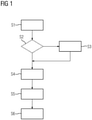
- Fig. 1 is a flow chart of an exemplary embodiment of a method according to the invention.
- the method serves to acquire magnetic resonance data from an imaging volume inside a patient, wherein, in this case, a large imaging volume is used, for example the thorax, the pelvis or the abdomen.
- the imaging volume is subject to the breathing motion of the patient.
- the acquisition of magnetic resonance data described here is to be done at free breathing, such that slices will be acquired at a certain phase of the breathing cycle. This breathing phase defines a certain interval during which, however, not all the slices may be acquired such that multiple concatenations are used.
- a step S1 basic imaging parameters are determined. First of all, automatically or specified by a user, the first (total) number of slices to be acquired and their positioning is determined. That is, the imaging volume is defined by a slice stack built from a first number of slices, which are all in a slice group. For example, thirty slices may form the slice group and define the imaging volume.
- the breathing characteristics of the patient also influence the number of slices that may be acquired during each breathing cycle without too much motion occurring, these breathing characteristics are determined and used to check if the total number of concatenations (first number of concatenations) to be used is to be adapted, in particular starting from a preset value of, for example, five or six.
- the trigger signal describing the breathing motion of the patient may be acquired using, for example, a dedicated sensor and/or navigator data acquired in a navigator scan using the magnetic resonance imaging apparatus.
- Navigator sequences to acquire navigator data are already known in the state of the art and may, for example, be one-dimensional sequences measuring the position of an edge of the diaphragm. If PACE is used, a measurement of the breathing motion of the patient is performed during a learning phase. In any case, breathing characteristics may be determined, depending on which the number of concatenations to be actually used and thus the maximum second number of slices to be consecutively acquired in one of these concatenations can be determined.
- the second number of slices to be imaged during one concatenation will be either be integer divisor of the first number of slices in the slice group and the first number of concatenations or the divisor plus one, as long as the modulus is not zero. If the modulus is zero, all concatenations will consecutively acquire the same second number of slices, namely the integer divisor.
- a fat saturation technique which may be a SPAIR technique or a classical so-called FatSat technique. Both of those techniques use frequency selective high-frequency preparation pulses as excitation pulses.
- the effectiveness of these preparation pulses highly depends on the homogeneity of the static main magnetic field of the magnetic resonance imaging apparatus.
- local shimming is to be used to improve the homogeneity of the static main magnetic field in the imaging volume.
- a very large imaging volume is used such that local shimming of the whole imaging volume as the shim box may not be possible or at least not to the desired grade.
- a reordering and allocation of slices to certain subvolumes of the imaging volume is performed, such that only slice groups in a single subvolume are imaged in each concatenation and the shim box can be respectively minimised.
- an admissibility criterion may be evaluated.
- the admissibility criterion checks if an undesired first number of concatenations has been determined in step S1. For example, it can be checked whether the first number of concatenations is lower than six, since, in that case, only two subvolumes could be defined such that the shim box may be only approximately half the size of the imaging volume.
- additional slices and/or reacquisitions of slices may be added to increase the first number of concatenations.
- these additional acquisitions may later be performed as dummy scans, it is preferable to use these additional acquisitions to generate more navigator data, in particular by using arbitrary phase encoding.
- the imaging volume is subdivided into subvolumes, in this embodiment such that the slices of each subvolume may be imaged with two or at maximum, if required, three concatenations.
- step S4 the imaging volume is subdivided such that magnetic resonance data for each subvolume may be acquired in two concatenations. It is, however, also possible, if the even number is divisable by three, to define subvolumes which may be acquired with three concatenations. It is, however, preferred to pair the concatenations to have subvolumes geometrically as small as possible.
- the subvolume to be imaged in three concatenations is positioned in the middle of the imaging volume, such that at least one subvolume that can be imaged in two concatenations follows on each side in the stacking direction of the slices.
- all subvolumes may also be defined to be imaged in three concatenations.
- a step S5 subgroups of slices for each concatenation are defined, that is, the slices of the subvolumes are allocated to concatenations which are restricted to these subvolumes, such that no directly adjacent slices are imaged in the same concatenation to prevent slice crosstalk.
- steps S4 and S5 are, in the following, illustrated for multiple examples of first numbers of concatenations in figures 2 to 5 .
- step S6 the magnetic resonance data of all slices of the slice group are acquired, wherein dynamic local shimming is applied.
- the shim box describing the region in which the static main magnetic field during each concatenation should be homogenised is chosen as the smallest bounding box of the slices to be acquired in one concatenation, which will often be even smaller than the corresponding subvolume. In this way, a geometrically small shim box is established, improving the quality of the local shimming and thus the quality of the fat saturation.
- fig. 2 an example for a slice group having thirty slices 1 is illustrated.
- the second number of slices to be acquired is five for each concatenation.
- the imaging volume 2 defined by the entirety of the slices 1 is subdivided into three subvolumes 3, each comprising ten slices 1.
- Each of these subvolumes 3 can thus be imaged in two concatenations.
- the first, third, fifth, seventh and ninth slices 1 are acquired, in a second concatenation for the first subvolume 3, the second, fourth, sixth, eighth and tenth slices 1 are acquired.
- Slices imaged in different concatenations are depicted differently in fig. 2 .
- Fig. 2 also shows the smallest possible bounding box 4 for the first two concatenations associated with the first subvolume 3, which are to be used as shim boxes for the dynamic local shimming.
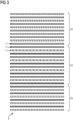
- Fig. 3 shows a second example in which the thirty slices 1 are to be imaged in seven concatenations.
- two concatenations have to image five slices, the other five concatenations have to image four slices each.
- seven is an uneven first number of concatenations, one subvolume 3 has to be defined which is to be imaged in three concatenations.
- the first subvolume 3 containing ten slices 1 to be imaged in the first two concatenations, whose slice groups contain five slices each, the second subvolume containing twelve slices 1 which are to be imaged in three concatenations, and the third subvolume 3 containing eight slices 1 to be imaged in two concatenations.
- the allocation of the slices 2 the slice groups and thus concatenations is indicated by a different depiction for each subvolume 3.
- fig. 4 an example for five concatenations is shown, such that in each concatenation, a subgroup comprising six slices is to be acquired.
- a subgroup comprising six slices is to be acquired.
- only two subvolumes 3 can be defined, one subvolume 3 containing twelve slices to be imaged in two concatenations, one subvolume 3 containing eighteen slices to be acquired in three concatenations.
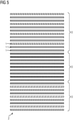
- Fig. 5 finally shows an example for nine total concatenations.
- three subvolumes 3 have been defined, such that the first subvolume 3 has twelve slices, and the second and third subvolumes 3 each have nine slices. That means that all subvolumes may be imaged using three concatenations, wherein the concatenations in the first subvolume 3 acquire four slices each, the other concatenations acquire three slices each.
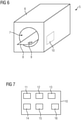
- Fig. 6 shows a principle drawing of a magnetic resonance imaging apparatus 5 according to the invention.
- the magnetic resonance imaging apparatus 5 comprises a main magnet unit 6 defining a bore 7 in which a patient may be positioned using the patient table 8.
- an optional breathing sensor 9 is indicated on the patient table 8 .
- the magnetic resonance imaging apparatus 5 is controlled by a control device 10.
- the control device 10 is configured to perform a method according to the invention.
- Fig. 7 shows the functional structure of the control device 10.
- the control device 10 comprises an acquisition unit 11 to control the acquisition of magnetic resonance data, in this case in particular in step S6 of fig. 1 .
- the acquisition unit 11 is supported by a triggering unit 12 and a shimming unit 13, wherein the triggering unit 12 evaluates a trigger signal describing the breathing motion of the patient to trigger each concatenation at a certain phase of the breathing cycle.
- the shimming unit 13 performs the local shimming using a shim device having at least one shim coil, which has not been shown in fig. 6 .
- the shim boxes as described above are used in step S6.
- the control device 10 further comprises a subdividing unit 14 for performing the step S4 and an allocation unit 15 for performing the step S5.
- triggering unit 12 may also be configured to determine breathing characteristics used to choose an adequate first number of concatenations.
- control device 10 may further comprise a user interaction unit 16 for receiving information entered by the user.
Landscapes
- Physics & Mathematics (AREA)
- Health & Medical Sciences (AREA)
- Life Sciences & Earth Sciences (AREA)
- Engineering & Computer Science (AREA)
- General Physics & Mathematics (AREA)
- Condensed Matter Physics & Semiconductors (AREA)
- General Health & Medical Sciences (AREA)
- High Energy & Nuclear Physics (AREA)
- Nuclear Medicine, Radiotherapy & Molecular Imaging (AREA)
- Veterinary Medicine (AREA)
- Surgery (AREA)
- Animal Behavior & Ethology (AREA)
- Molecular Biology (AREA)
- Public Health (AREA)
- Medical Informatics (AREA)
- Heart & Thoracic Surgery (AREA)
- Biomedical Technology (AREA)
- Biophysics (AREA)
- Pathology (AREA)
- Radiology & Medical Imaging (AREA)
- Signal Processing (AREA)
- Optics & Photonics (AREA)
- Spectroscopy & Molecular Physics (AREA)
- Psychiatry (AREA)
- Physiology (AREA)
- Computer Vision & Pattern Recognition (AREA)
- Artificial Intelligence (AREA)
- Magnetic Resonance Imaging Apparatus (AREA)
Claims (14)
- Verfahren zum Erfassen von Magnetresonanzdaten eines Objekts mit einer Magnetresonanzbildgebungsvorrichtung (5), wobei eine Schichtgruppe, deren Schichten (1) ein zusammenhängendes Abbildungsvolumen (2) definieren und die eine erste Anzahl von Schichten (1) enthält, abgebildet wird, wobei bei einer ersten Anzahl von Verkettungen die Magnetresonanzdaten für Subgruppen der Schichten (1), die jeweils eine jeweilige zweite Anzahl von Schichten (1) in Abhängigkeit von der ersten Anzahl von Verkettungen enthalten, erfasst werden, und wobei ein Trimmen durchgeführt wird, um eine Feldhomogenität in dem Abbildungsvolumen (2) zu erhöhen, dadurch gekennzeichnet, dass, um die Subgruppen zu definieren, das Abbildungsvolumen (2) in mindestens zwei nicht verbundene zusammenhängende Subvolumen (3) unterteilt wird, und mindestens zwei Subgruppen für jedes Subvolumen (3) definiert werden, wobei jede Subgruppe nur nicht angrenzende Schichten (1) in dem Subvolumen (3) enthält, wobei während einer Erfassung der Magnetresonanzdaten jeder Subgruppe ein Trimmen mindestens auf das jeweilige Subvolumen (3) beschränkt ist, wobei ein Trimmen auf den kleinsten möglichen Begrenzungsrahmen (4) der Schichten (1) in der Subgruppe beschränkt ist.
- Verfahren nach Anspruch 1, dadurch gekennzeichnet, dass zur Erfassung der Magnetresonanzdaten mindestens ein frequenzselektiver Vorbehandlungspuls als ein Hochfrequenzanregungspuls verwendet wird.
- Verfahren nach einem der vorhergehenden Ansprüche, dadurch gekennzeichnet, dass, wenn die erste Anzahl von Verkettungen gerade ist, jedes Subvolumen (3) so definiert wird, dass es einer zweiten Anzahl von Verkettungen zugeordnet ist, die gleich einem geraden Teiler der Anzahl von Verkettungen ist.
- Verfahren nach Anspruch 3, dadurch gekennzeichnet, dass jedem Subvolumen (3) zwei Verkettungen derartig zugeordnet werden, dass die Anzahl von Subvolumen (3) die Hälfte der Anzahl von Verkettungen ist.
- Verfahren nach einem der vorhergehenden Ansprüche, dadurch gekennzeichnet, dass, wenn die erste Anzahl von Verkettungen ungerade ist, eine ungerade Anzahl von Subvolumen (3) so definiert wird, dass sie einer ungeraden zweiten Anzahl von Verkettungen zugeordnet ist.
- Verfahren nach Anspruch 5, dadurch gekennzeichnet, dass, wenn die erste Anzahl von Verkettungen größer ist als fünf und ungerade ist, ein, insbesondere hinsichtlich des Abbildungsvolumen (2) zentrales, Subvolumen (3), das drei Verkettungen und mehreren Subvolumen (3) zugeordnet ist, die insbesondere das zentrale Subvolumen (3) umgeben, das zwei Verkettungen zugeordnet ist, definiert wird.
- Verfahren nach Anspruch 5 oder 6, dadurch gekennzeichnet, dass, wenn die erste Anzahl von Verkettungen durch die ungerade zweite Anzahl von Verkettungen teilbar ist, alle Subvolumen (3) derartig definiert werden, dass sie der ungeraden zweiten Anzahl von Verkettungen zugeordnet sind.
- Verfahren nach einem der vorhergehenden Ansprüche, dadurch gekennzeichnet, dass mindestens ein Zulässigkeitskriterium, das erste Anzahlen von Verkettungen beschreibt, die vermieden werden sollen, ausgewertet wird, wobei, wenn eine erste Anzahl von Verkettungen, die vermieden werden sollen, durch das Zulässigkeitskriterium detektiert wird, zusätzliche Schichten und/oder zusätzliche Erfassungen von Schichten (1), die bereits in der Schichtgruppe sind, als mindestens eine zusätzliche Verkettung hinzugefügt werden und die erste Anzahl von Verkettungen dementsprechend erhöht wird.
- Verfahren nach Anspruch 8, dadurch gekennzeichnet, dass das Zulässigkeitskriterium prüft, ob die erste Anzahl von Verkettungen kleiner ist als ein vorbestimmter Wert, insbesondere sechs, und/oder dass Magnetresonanzdaten von den zusätzlichen Schichten und/oder Erfassungen als ein Navigator und/oder zum Ausgleichen einer Verkettungsverteilung bei einer kontinuierlichen Messung verwendet werden, die mehrere verschiedene Positionen eines Patiententischs (8) der Magnetresonanzvorrichtung (5) einbezieht.
- Verfahren nach einem der vorhergehenden Ansprüche, dadurch gekennzeichnet, dass eine Erfassung jeder Subgruppe unter Verwendung eines Auslösesignals ausgelöst wird, das eine Phase einer periodischen Bewegung eines Patienten beschreibt, der abgebildet werden soll, und/oder die erste Anzahl von Verkettungen in Abhängigkeit einer Messung der periodischen Bewegung des Patienten automatisch bestimmt wird.
- Verfahren nach einem der vorhergehenden Ansprüche, dadurch gekennzeichnet, dass eine TSE-Sequenz und/oder eine EPI-Sequenz zum Erfassen der Magnetresonanzdaten verwendet werden.
- Magnetresonanzbildgebungsvorrichtung (5), eine Steuerungsvorrichtung (10) mit einer Steuerung und einem Speicher umfassend, wobei die Steuerungsvorrichtung (10) dazu ausgelegt ist, um die Schritte eines Verfahrens nach einem der vorhergehenden Ansprüche durchzuführen.
- Computerprogramm, das bewirkt, dass eine Magnetresonanzvorrichtung (5) die Schritte eines Verfahrens nach einem der Ansprüche 1 bis 11 durchführt, wenn das Computerprogramm in einer Steuerungsvorrichtung (10) der Magnetresonanzvorrichtung (5) ausgeführt wird.
- Elektronisch lesbares Speichermedium, auf dem ein Computerprogramm nach Anspruch 13 gespeichert ist.
Priority Applications (2)
| Application Number | Priority Date | Filing Date | Title |
|---|---|---|---|
| EP19159143.7A EP3699623B1 (de) | 2019-02-25 | 2019-02-25 | Mehrschicht-magnetresonanzbildgebung |
| US16/797,384 US11262425B2 (en) | 2019-02-25 | 2020-02-21 | Method for acquiring magnetic resonance data, magnetic resonance imaging apparatus, computer program, and electronically readable storage medium |
Applications Claiming Priority (1)
| Application Number | Priority Date | Filing Date | Title |
|---|---|---|---|
| EP19159143.7A EP3699623B1 (de) | 2019-02-25 | 2019-02-25 | Mehrschicht-magnetresonanzbildgebung |
Publications (2)
| Publication Number | Publication Date |
|---|---|
| EP3699623A1 EP3699623A1 (de) | 2020-08-26 |
| EP3699623B1 true EP3699623B1 (de) | 2022-02-23 |
Family
ID=65576232
Family Applications (1)
| Application Number | Title | Priority Date | Filing Date |
|---|---|---|---|
| EP19159143.7A Active EP3699623B1 (de) | 2019-02-25 | 2019-02-25 | Mehrschicht-magnetresonanzbildgebung |
Country Status (2)
| Country | Link |
|---|---|
| US (1) | US11262425B2 (de) |
| EP (1) | EP3699623B1 (de) |
Families Citing this family (3)
| Publication number | Priority date | Publication date | Assignee | Title |
|---|---|---|---|---|
| EP4104755B1 (de) * | 2021-06-16 | 2025-09-10 | Siemens Healthineers AG | Computerimplementiertes verfahren zum betrieb einer magnetresonanzvorrichtung, magnetresonanzvorrichtung, computerprogramm und elektronisch lesbares speichermedium |
| DE102021208406A1 (de) * | 2021-08-03 | 2023-02-09 | Siemens Healthcare Gmbh | Fettunterdrückung mit neuronalen Netzen |
| DE102024200392A1 (de) * | 2024-01-17 | 2025-07-17 | Siemens Healthineers Ag | Simultane Magnetresonanz-Mehrschichtbildgebungstechnik mit angepasster Aufnahmereihenfolge |
Family Cites Families (8)
| Publication number | Priority date | Publication date | Assignee | Title |
|---|---|---|---|---|
| DE69225564T2 (de) * | 1991-11-29 | 1998-11-26 | Philips Electronics N.V., Eindhoven | Magnetische Resonanzanordnung |
| DE4437443C2 (de) * | 1994-10-19 | 1996-09-12 | Siemens Ag | Verfahren zum Betrieb eines Kernspintomographiegerätes mit dynamisch lokalisierter Shimmung des Grundmagnetfeldes |
| AU2003253151A1 (en) * | 2002-09-18 | 2004-04-08 | Koninklijke Philips Electronics N.V. | A method of cyclic magnetic resonance imaging |
| US10534056B2 (en) * | 2012-06-27 | 2020-01-14 | Siemens Healthcare Gmbh | System for simultaneous dual-slab acquisition of MR images with asymmetric and time-reversed asymmetric, concatenated pulses |
| DE102014204451B4 (de) * | 2014-03-11 | 2018-08-16 | Siemens Healthcare Gmbh | Verfahren zur Magnetresonanz-Bildgebung und Magnetresonanzgerät |
| US10353031B2 (en) * | 2015-10-30 | 2019-07-16 | Siemens Healthcare Gmbh | Shimming method for magnetic resonance imaging |
| US10429476B2 (en) * | 2016-12-01 | 2019-10-01 | The Board Of Trustees Of The Leland Stanford Junior University | Algebraic reconstruction method for off-resonance and eddy-current correction in functional and diffusion weighted magnetic resonance imaging |
| DE102017202878A1 (de) * | 2017-02-22 | 2018-08-23 | Siemens Healthcare Gmbh | Verfahren zum Betrieb einer Shimeinrichtung für ein Grundfeld in einer Magnetresonanzeinrichtung, Magnetresonanzeinrichtung, Computerprogramm und elektronisch lesbarer Datenträger |
-
2019
- 2019-02-25 EP EP19159143.7A patent/EP3699623B1/de active Active
-
2020
- 2020-02-21 US US16/797,384 patent/US11262425B2/en active Active
Also Published As
| Publication number | Publication date |
|---|---|
| US11262425B2 (en) | 2022-03-01 |
| EP3699623A1 (de) | 2020-08-26 |
| US20200271741A1 (en) | 2020-08-27 |
Similar Documents
| Publication | Publication Date | Title |
|---|---|---|
| US8111070B2 (en) | Magnetic resonance imaging apparatus and magnetic resonance imaging method | |
| JP6270709B2 (ja) | 磁気共鳴生データの再構成方法および装置 | |
| CN104101849B (zh) | 磁共振系统控制序列的确定 | |
| US9841476B2 (en) | Method and apparatus for magnetic resonance imaging | |
| US8643365B2 (en) | Method and magnetic resonance system to generate magnetic resonance images | |
| US10185014B2 (en) | Method and apparatus for EPI magnetic resonance with slew rate controlled and kspace entry optimized | |
| US9841483B2 (en) | Magnetic resonance imaging method and magnetic resonance imaging apparatus | |
| US10761165B2 (en) | System and method for magnetic resonance image acquisition | |
| US9726743B2 (en) | Magnetic resonance method and apparatus wherein signal contributions outside of the measurement region are reduced | |
| US11262425B2 (en) | Method for acquiring magnetic resonance data, magnetic resonance imaging apparatus, computer program, and electronically readable storage medium | |
| JP2015500725A (ja) | Mr画像法において高次のbo場の不均一性を補正するための傾斜磁場コイルの使用 | |
| US11965945B2 (en) | Magnetic resonance system and shimming method and imaging method thereof | |
| US20150091567A1 (en) | Optimization of the noise development of a 3d gradient echo sequence in a magnetic resonance system | |
| US10175320B2 (en) | Controlling a magnetic resonance imaging system to generate magnetic resonance image data of an examination subject | |
| US20160124065A1 (en) | Method and apparatus for correction of magnetic resonance image recordings with the use of a converted field map | |
| US10976397B2 (en) | MRI apparatus utilizing non-ultrashort TE(UTE) imaging to generate a mask image for performance of mask processing | |
| US9823326B2 (en) | Method and magnetic resonance apparatus to correct magnetic resonance measurement data | |
| US20170315204A1 (en) | Method and magnetic resonance apparatus for forming rf pulses for the compensation of inhomogeneities in the edge region of the magnetic resonance scanner | |
| US9910117B2 (en) | Method and apparatus to generate magnetic resonance image data of an examination subject | |
| US20190310337A1 (en) | Method and computer for producing a pulse sequence for controlling a magnetic resonance imaging apparatus | |
| US20230041796A1 (en) | Fat suppression using neural networks | |
| EP4321892B1 (de) | Verfahren zur subjektspezifischen optimierung eines mehrband-hf-pulses, computerprogramm, computerlesbares medium und magnetresonanzsystem sowie steuergerät zur durchführung des verfahrens | |
| HK1241466A1 (en) | System and method for magnetic resonance image acquisition | |
| HK1241466B (en) | System and method for magnetic resonance image acquisition |
Legal Events
| Date | Code | Title | Description |
|---|---|---|---|
| PUAI | Public reference made under article 153(3) epc to a published international application that has entered the european phase |
Free format text: ORIGINAL CODE: 0009012 |
|
| STAA | Information on the status of an ep patent application or granted ep patent |
Free format text: STATUS: THE APPLICATION HAS BEEN PUBLISHED |
|
| AK | Designated contracting states |
Kind code of ref document: A1 Designated state(s): AL AT BE BG CH CY CZ DE DK EE ES FI FR GB GR HR HU IE IS IT LI LT LU LV MC MK MT NL NO PL PT RO RS SE SI SK SM TR |
|
| AX | Request for extension of the european patent |
Extension state: BA ME |
|
| STAA | Information on the status of an ep patent application or granted ep patent |
Free format text: STATUS: REQUEST FOR EXAMINATION WAS MADE |
|
| 17P | Request for examination filed |
Effective date: 20201019 |
|
| RBV | Designated contracting states (corrected) |
Designated state(s): AL AT BE BG CH CY CZ DE DK EE ES FI FR GB GR HR HU IE IS IT LI LT LU LV MC MK MT NL NO PL PT RO RS SE SI SK SM TR |
|
| GRAP | Despatch of communication of intention to grant a patent |
Free format text: ORIGINAL CODE: EPIDOSNIGR1 |
|
| STAA | Information on the status of an ep patent application or granted ep patent |
Free format text: STATUS: GRANT OF PATENT IS INTENDED |
|
| RIC1 | Information provided on ipc code assigned before grant |
Ipc: G01R 33/56 20060101ALN20210819BHEP Ipc: G01R 33/565 20060101ALN20210819BHEP Ipc: G01R 33/567 20060101ALN20210819BHEP Ipc: G01R 33/3875 20060101ALI20210819BHEP Ipc: G01R 33/483 20060101AFI20210819BHEP |
|
| INTG | Intention to grant announced |
Effective date: 20210917 |
|
| GRAS | Grant fee paid |
Free format text: ORIGINAL CODE: EPIDOSNIGR3 |
|
| GRAA | (expected) grant |
Free format text: ORIGINAL CODE: 0009210 |
|
| STAA | Information on the status of an ep patent application or granted ep patent |
Free format text: STATUS: THE PATENT HAS BEEN GRANTED |
|
| AK | Designated contracting states |
Kind code of ref document: B1 Designated state(s): AL AT BE BG CH CY CZ DE DK EE ES FI FR GB GR HR HU IE IS IT LI LT LU LV MC MK MT NL NO PL PT RO RS SE SI SK SM TR |
|
| REG | Reference to a national code |
Ref country code: GB Ref legal event code: FG4D |
|
| REG | Reference to a national code |
Ref country code: CH Ref legal event code: EP |
|
| REG | Reference to a national code |
Ref country code: AT Ref legal event code: REF Ref document number: 1470872 Country of ref document: AT Kind code of ref document: T Effective date: 20220315 |
|
| REG | Reference to a national code |
Ref country code: IE Ref legal event code: FG4D |
|
| REG | Reference to a national code |
Ref country code: DE Ref legal event code: R096 Ref document number: 602019011751 Country of ref document: DE |
|
| REG | Reference to a national code |
Ref country code: LT Ref legal event code: MG9D |
|
| REG | Reference to a national code |
Ref country code: NL Ref legal event code: MP Effective date: 20220223 |
|
| REG | Reference to a national code |
Ref country code: AT Ref legal event code: MK05 Ref document number: 1470872 Country of ref document: AT Kind code of ref document: T Effective date: 20220223 |
|
| PG25 | Lapsed in a contracting state [announced via postgrant information from national office to epo] |
Ref country code: SE Free format text: LAPSE BECAUSE OF FAILURE TO SUBMIT A TRANSLATION OF THE DESCRIPTION OR TO PAY THE FEE WITHIN THE PRESCRIBED TIME-LIMIT Effective date: 20220223 Ref country code: RS Free format text: LAPSE BECAUSE OF FAILURE TO SUBMIT A TRANSLATION OF THE DESCRIPTION OR TO PAY THE FEE WITHIN THE PRESCRIBED TIME-LIMIT Effective date: 20220223 Ref country code: PT Free format text: LAPSE BECAUSE OF FAILURE TO SUBMIT A TRANSLATION OF THE DESCRIPTION OR TO PAY THE FEE WITHIN THE PRESCRIBED TIME-LIMIT Effective date: 20220623 Ref country code: NO Free format text: LAPSE BECAUSE OF FAILURE TO SUBMIT A TRANSLATION OF THE DESCRIPTION OR TO PAY THE FEE WITHIN THE PRESCRIBED TIME-LIMIT Effective date: 20220523 Ref country code: NL Free format text: LAPSE BECAUSE OF FAILURE TO SUBMIT A TRANSLATION OF THE DESCRIPTION OR TO PAY THE FEE WITHIN THE PRESCRIBED TIME-LIMIT Effective date: 20220223 Ref country code: LT Free format text: LAPSE BECAUSE OF FAILURE TO SUBMIT A TRANSLATION OF THE DESCRIPTION OR TO PAY THE FEE WITHIN THE PRESCRIBED TIME-LIMIT Effective date: 20220223 Ref country code: HR Free format text: LAPSE BECAUSE OF FAILURE TO SUBMIT A TRANSLATION OF THE DESCRIPTION OR TO PAY THE FEE WITHIN THE PRESCRIBED TIME-LIMIT Effective date: 20220223 Ref country code: ES Free format text: LAPSE BECAUSE OF FAILURE TO SUBMIT A TRANSLATION OF THE DESCRIPTION OR TO PAY THE FEE WITHIN THE PRESCRIBED TIME-LIMIT Effective date: 20220223 Ref country code: BG Free format text: LAPSE BECAUSE OF FAILURE TO SUBMIT A TRANSLATION OF THE DESCRIPTION OR TO PAY THE FEE WITHIN THE PRESCRIBED TIME-LIMIT Effective date: 20220523 |
|
| PG25 | Lapsed in a contracting state [announced via postgrant information from national office to epo] |
Ref country code: PL Free format text: LAPSE BECAUSE OF FAILURE TO SUBMIT A TRANSLATION OF THE DESCRIPTION OR TO PAY THE FEE WITHIN THE PRESCRIBED TIME-LIMIT Effective date: 20220223 Ref country code: LV Free format text: LAPSE BECAUSE OF FAILURE TO SUBMIT A TRANSLATION OF THE DESCRIPTION OR TO PAY THE FEE WITHIN THE PRESCRIBED TIME-LIMIT Effective date: 20220223 Ref country code: GR Free format text: LAPSE BECAUSE OF FAILURE TO SUBMIT A TRANSLATION OF THE DESCRIPTION OR TO PAY THE FEE WITHIN THE PRESCRIBED TIME-LIMIT Effective date: 20220524 Ref country code: FI Free format text: LAPSE BECAUSE OF FAILURE TO SUBMIT A TRANSLATION OF THE DESCRIPTION OR TO PAY THE FEE WITHIN THE PRESCRIBED TIME-LIMIT Effective date: 20220223 Ref country code: AT Free format text: LAPSE BECAUSE OF FAILURE TO SUBMIT A TRANSLATION OF THE DESCRIPTION OR TO PAY THE FEE WITHIN THE PRESCRIBED TIME-LIMIT Effective date: 20220223 |
|
| PG25 | Lapsed in a contracting state [announced via postgrant information from national office to epo] |
Ref country code: IS Free format text: LAPSE BECAUSE OF FAILURE TO SUBMIT A TRANSLATION OF THE DESCRIPTION OR TO PAY THE FEE WITHIN THE PRESCRIBED TIME-LIMIT Effective date: 20220623 |
|
| REG | Reference to a national code |
Ref country code: CH Ref legal event code: PL |
|
| REG | Reference to a national code |
Ref country code: BE Ref legal event code: MM Effective date: 20220228 |
|
| PG25 | Lapsed in a contracting state [announced via postgrant information from national office to epo] |
Ref country code: SM Free format text: LAPSE BECAUSE OF FAILURE TO SUBMIT A TRANSLATION OF THE DESCRIPTION OR TO PAY THE FEE WITHIN THE PRESCRIBED TIME-LIMIT Effective date: 20220223 Ref country code: SK Free format text: LAPSE BECAUSE OF FAILURE TO SUBMIT A TRANSLATION OF THE DESCRIPTION OR TO PAY THE FEE WITHIN THE PRESCRIBED TIME-LIMIT Effective date: 20220223 Ref country code: RO Free format text: LAPSE BECAUSE OF FAILURE TO SUBMIT A TRANSLATION OF THE DESCRIPTION OR TO PAY THE FEE WITHIN THE PRESCRIBED TIME-LIMIT Effective date: 20220223 Ref country code: LU Free format text: LAPSE BECAUSE OF NON-PAYMENT OF DUE FEES Effective date: 20220225 Ref country code: EE Free format text: LAPSE BECAUSE OF FAILURE TO SUBMIT A TRANSLATION OF THE DESCRIPTION OR TO PAY THE FEE WITHIN THE PRESCRIBED TIME-LIMIT Effective date: 20220223 Ref country code: DK Free format text: LAPSE BECAUSE OF FAILURE TO SUBMIT A TRANSLATION OF THE DESCRIPTION OR TO PAY THE FEE WITHIN THE PRESCRIBED TIME-LIMIT Effective date: 20220223 Ref country code: CZ Free format text: LAPSE BECAUSE OF FAILURE TO SUBMIT A TRANSLATION OF THE DESCRIPTION OR TO PAY THE FEE WITHIN THE PRESCRIBED TIME-LIMIT Effective date: 20220223 |
|
| REG | Reference to a national code |
Ref country code: DE Ref legal event code: R097 Ref document number: 602019011751 Country of ref document: DE |
|
| PG25 | Lapsed in a contracting state [announced via postgrant information from national office to epo] |
Ref country code: MC Free format text: LAPSE BECAUSE OF FAILURE TO SUBMIT A TRANSLATION OF THE DESCRIPTION OR TO PAY THE FEE WITHIN THE PRESCRIBED TIME-LIMIT Effective date: 20220223 Ref country code: AL Free format text: LAPSE BECAUSE OF FAILURE TO SUBMIT A TRANSLATION OF THE DESCRIPTION OR TO PAY THE FEE WITHIN THE PRESCRIBED TIME-LIMIT Effective date: 20220223 |
|
| PLBE | No opposition filed within time limit |
Free format text: ORIGINAL CODE: 0009261 |
|
| STAA | Information on the status of an ep patent application or granted ep patent |
Free format text: STATUS: NO OPPOSITION FILED WITHIN TIME LIMIT |
|
| PG25 | Lapsed in a contracting state [announced via postgrant information from national office to epo] |
Ref country code: LI Free format text: LAPSE BECAUSE OF NON-PAYMENT OF DUE FEES Effective date: 20220228 Ref country code: IE Free format text: LAPSE BECAUSE OF NON-PAYMENT OF DUE FEES Effective date: 20220225 Ref country code: CH Free format text: LAPSE BECAUSE OF NON-PAYMENT OF DUE FEES Effective date: 20220228 |
|
| 26N | No opposition filed |
Effective date: 20221124 |
|
| PG25 | Lapsed in a contracting state [announced via postgrant information from national office to epo] |
Ref country code: SI Free format text: LAPSE BECAUSE OF FAILURE TO SUBMIT A TRANSLATION OF THE DESCRIPTION OR TO PAY THE FEE WITHIN THE PRESCRIBED TIME-LIMIT Effective date: 20220223 Ref country code: BE Free format text: LAPSE BECAUSE OF NON-PAYMENT OF DUE FEES Effective date: 20220228 |
|
| PG25 | Lapsed in a contracting state [announced via postgrant information from national office to epo] |
Ref country code: IT Free format text: LAPSE BECAUSE OF FAILURE TO SUBMIT A TRANSLATION OF THE DESCRIPTION OR TO PAY THE FEE WITHIN THE PRESCRIBED TIME-LIMIT Effective date: 20220223 |
|
| REG | Reference to a national code |
Ref country code: DE Ref legal event code: R081 Ref document number: 602019011751 Country of ref document: DE Owner name: SIEMENS HEALTHINEERS AG, DE Free format text: FORMER OWNER: SIEMENS HEALTHCARE GMBH, MUENCHEN, DE |
|
| PG25 | Lapsed in a contracting state [announced via postgrant information from national office to epo] |
Ref country code: MK Free format text: LAPSE BECAUSE OF FAILURE TO SUBMIT A TRANSLATION OF THE DESCRIPTION OR TO PAY THE FEE WITHIN THE PRESCRIBED TIME-LIMIT Effective date: 20220223 Ref country code: CY Free format text: LAPSE BECAUSE OF FAILURE TO SUBMIT A TRANSLATION OF THE DESCRIPTION OR TO PAY THE FEE WITHIN THE PRESCRIBED TIME-LIMIT Effective date: 20220223 |
|
| PG25 | Lapsed in a contracting state [announced via postgrant information from national office to epo] |
Ref country code: HU Free format text: LAPSE BECAUSE OF FAILURE TO SUBMIT A TRANSLATION OF THE DESCRIPTION OR TO PAY THE FEE WITHIN THE PRESCRIBED TIME-LIMIT; INVALID AB INITIO Effective date: 20190225 |
|
| PG25 | Lapsed in a contracting state [announced via postgrant information from national office to epo] |
Ref country code: TR Free format text: LAPSE BECAUSE OF FAILURE TO SUBMIT A TRANSLATION OF THE DESCRIPTION OR TO PAY THE FEE WITHIN THE PRESCRIBED TIME-LIMIT Effective date: 20220223 |
|
| PG25 | Lapsed in a contracting state [announced via postgrant information from national office to epo] |
Ref country code: MT Free format text: LAPSE BECAUSE OF FAILURE TO SUBMIT A TRANSLATION OF THE DESCRIPTION OR TO PAY THE FEE WITHIN THE PRESCRIBED TIME-LIMIT Effective date: 20220223 |
|
| PGFP | Annual fee paid to national office [announced via postgrant information from national office to epo] |
Ref country code: DE Payment date: 20250417 Year of fee payment: 7 |
|
| PGFP | Annual fee paid to national office [announced via postgrant information from national office to epo] |
Ref country code: GB Payment date: 20260310 Year of fee payment: 8 |
|
| PGFP | Annual fee paid to national office [announced via postgrant information from national office to epo] |
Ref country code: FR Payment date: 20260213 Year of fee payment: 8 |