EP3699626A1 - Abfangen einer mobilen vorrichtung - Google Patents
Abfangen einer mobilen vorrichtung Download PDFInfo
- Publication number
- EP3699626A1 EP3699626A1 EP19159063.7A EP19159063A EP3699626A1 EP 3699626 A1 EP3699626 A1 EP 3699626A1 EP 19159063 A EP19159063 A EP 19159063A EP 3699626 A1 EP3699626 A1 EP 3699626A1
- Authority
- EP
- European Patent Office
- Prior art keywords
- mobile platform
- mobile
- geographical location
- radio
- geographical
- Prior art date
- Legal status (The legal status is an assumption and is not a legal conclusion. Google has not performed a legal analysis and makes no representation as to the accuracy of the status listed.)
- Withdrawn
Links
Images


Classifications
-
- G—PHYSICS
- G06—COMPUTING OR CALCULATING; COUNTING
- G06Q—INFORMATION AND COMMUNICATION TECHNOLOGY [ICT] SPECIALLY ADAPTED FOR ADMINISTRATIVE, COMMERCIAL, FINANCIAL, MANAGERIAL OR SUPERVISORY PURPOSES; SYSTEMS OR METHODS SPECIALLY ADAPTED FOR ADMINISTRATIVE, COMMERCIAL, FINANCIAL, MANAGERIAL OR SUPERVISORY PURPOSES, NOT OTHERWISE PROVIDED FOR
- G06Q50/00—Information and communication technology [ICT] specially adapted for implementation of business processes of specific business sectors, e.g. utilities or tourism
- G06Q50/10—Services
- G06Q50/26—Government or public services
- G06Q50/265—Personal security, identity or safety
-
- G—PHYSICS
- G01—MEASURING; TESTING
- G01S—RADIO DIRECTION-FINDING; RADIO NAVIGATION; DETERMINING DISTANCE OR VELOCITY BY USE OF RADIO WAVES; LOCATING OR PRESENCE-DETECTING BY USE OF THE REFLECTION OR RERADIATION OF RADIO WAVES; ANALOGOUS ARRANGEMENTS USING OTHER WAVES
- G01S5/00—Position-fixing by co-ordinating two or more direction or position line determinations; Position-fixing by co-ordinating two or more distance determinations
- G01S5/02—Position-fixing by co-ordinating two or more direction or position line determinations; Position-fixing by co-ordinating two or more distance determinations using radio waves
- G01S5/12—Position-fixing by co-ordinating two or more direction or position line determinations; Position-fixing by co-ordinating two or more distance determinations using radio waves by co-ordinating position lines of different shape, e.g. hyperbolic, circular, elliptical or radial
-
- G—PHYSICS
- G01—MEASURING; TESTING
- G01C—MEASURING DISTANCES, LEVELS OR BEARINGS; SURVEYING; NAVIGATION; GYROSCOPIC INSTRUMENTS; PHOTOGRAMMETRY OR VIDEOGRAMMETRY
- G01C21/00—Navigation; Navigational instruments not provided for in groups G01C1/00 - G01C19/00
- G01C21/20—Instruments for performing navigational calculations
-
- G—PHYSICS
- G01—MEASURING; TESTING
- G01S—RADIO DIRECTION-FINDING; RADIO NAVIGATION; DETERMINING DISTANCE OR VELOCITY BY USE OF RADIO WAVES; LOCATING OR PRESENCE-DETECTING BY USE OF THE REFLECTION OR RERADIATION OF RADIO WAVES; ANALOGOUS ARRANGEMENTS USING OTHER WAVES
- G01S5/00—Position-fixing by co-ordinating two or more direction or position line determinations; Position-fixing by co-ordinating two or more distance determinations
- G01S5/02—Position-fixing by co-ordinating two or more direction or position line determinations; Position-fixing by co-ordinating two or more distance determinations using radio waves
- G01S5/0273—Position-fixing by co-ordinating two or more direction or position line determinations; Position-fixing by co-ordinating two or more distance determinations using radio waves using multipath or indirect path propagation signals in position determination
-
- H—ELECTRICITY
- H04—ELECTRIC COMMUNICATION TECHNIQUE
- H04M—TELEPHONIC COMMUNICATION
- H04M3/00—Automatic or semi-automatic exchanges
- H04M3/22—Arrangements for supervision, monitoring or testing
- H04M3/2281—Call monitoring, e.g. for law enforcement purposes; Call tracing; Detection or prevention of malicious calls
-
- H—ELECTRICITY
- H04—ELECTRIC COMMUNICATION TECHNIQUE
- H04W—WIRELESS COMMUNICATION NETWORKS
- H04W16/00—Network planning, e.g. coverage or traffic planning tools; Network deployment, e.g. resource partitioning or cells structures
- H04W16/24—Cell structures
- H04W16/28—Cell structures using beam steering
-
- H—ELECTRICITY
- H04—ELECTRIC COMMUNICATION TECHNIQUE
- H04W—WIRELESS COMMUNICATION NETWORKS
- H04W24/00—Supervisory, monitoring or testing arrangements
- H04W24/10—Scheduling measurement reports ; Arrangements for measurement reports
-
- H—ELECTRICITY
- H04—ELECTRIC COMMUNICATION TECHNIQUE
- H04W—WIRELESS COMMUNICATION NETWORKS
- H04W4/00—Services specially adapted for wireless communication networks; Facilities therefor
- H04W4/02—Services making use of location information
- H04W4/029—Location-based management or tracking services
Definitions
- Various example embodiments relate to a system and a method for intercepting a mobile apparatus of a cellular radio system.
- US 7035651 B2 , US 9872141 B2 and US 10034126 B2 disclose such direction finding, intercepting, and locating. Due to its nature, intercepting a geographical location of the mobile apparatus may be difficult. Consequently, there is a need to provide further sophistication to the interception.
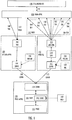
- FIG. 1 which illustrates example embodiments of a system for intercepting the mobile apparatus
- FIG. 6 which illustrates example embodiments of a method performed by the system
- FIG. 4 which is a signal sequence chart illustrating example embodiments of communication within the system.
- the system is configured to intercept a mobile apparatus 150 of a cellular radio system 190.
- the mobile apparatus 150 may be a portable / vehicle-mounted user subscriber apparatus (with a subscription to the wireless service implemented by a physical subscriber identity module SIM card, or an embedded SIM eSIM, for example).
- the mobile apparatus includes, but is not limited to a mobile phone, a smart phone, a smartwatch, or any other type of a portable ICT (Information and communication technology) user apparatus (such as a portable computer, a tablet computer, a connected Internet of Things (loT) device, etc.).
- ICT Information and communication technology
- the mobile apparatus 150 comprises a cellular radio transceiver configured to communicate with the cellular radio network 190 such as a mobile phone system.
- the cellular radio network 190 includes but is not limited to a suitable cellular communication technology such as GSM, GPRS, EGPRS, WCDMA, UMTS, 3GPP, IMT, LTE, LTE-A, NR, 3G, 4G, 5G etc.
- the system comprises three actors:
- the system is configured to intercept the mobile apparatus 150 as a part of a lawful interception, but the system is external in relation to the cellular radio system 190. In this way, the authorities may perform the lawful interception without any co-operation with the operator of the cellular radio network 190.
- the system is configured to intercept the mobile apparatus 150 during an emergency call, and the system is a part of the cellular radio system 190. In this way, the system may at least parly be embedded in the cellular radio system 190.
- the interrogation apparatus 100 may also be called a false base station. 'False' refers to the fact that the false base station 100 is not a part of the (real) cellular radio network 190 and it does not provide continuous service for the mobile (subscriber) apparatuses 150 and their users.
- the purpose of the false base station 100 is to perform radio interface functions required for implementing a silent call with the mobile apparatus 150. In the silent call, the failse base station 100 may page the mobile apparatus 150 to establish communication.
- the mobile apparatus 150 is interoperable with the real cellular radio network 190, i.e., the mobile apparatus 150 could gain service 192 from the real cellular radio network 190 (but the false base station 100 overrides this, at least momentarily, so that the silent call 160 may be implemented).
- the positioning receiver 116 may be a GNSS (Global Navigation Satellite System) receiver, which generates positioning data based on signals received from Earth-orbiting satellites.
- the GNSS may be GPS (Global Positioning System), Galileo, GLONASS, etc.
- the positioning receiver 116 may also operate according to another positioning technique, such as a radio network -based positioning (using the so-called triangulation, for example).
- the interrogation apparatus 100 and the mobile platform 110 may be separate, distinct apparatuses.
- the processing apparatus 130 may also be an apparatus that is separate and distinct from the interrogation apparatus 100 and the mobile platform. However, depending on the system design, the processing apparatus 130 may partly or wholly be a part of the other actor, such as being a part of the interrogation apparatus 100. It is even feasible that the interrogation apparatus 100 and the mobile platform 110 may be integrated into a combined apparatus.
- the processing apparatus 130 may comprise one or more processors 132 and one or more memories 134 including computer program code 136, wherein the one or more memories 134 and the computer program code 136 are configured to, with the one or more processors 132, cause the performance of the processing apparatus 130.
- the processing apparatus 130 may be implemented wholly or partly as a networked server apparatus.
- the interrogation apparatus 100, the mobile platform 110, and the networked server apparatus 130 may operate according to a client-server architecture, a cloud computing architecture, a peer-to-peer system, or another applicable computing architecture.
- the actors 100, 110, 130 each comprise a communication interface 104, 118, 138 implemented with appropriate wired/wireless communication technologies and standard/proprietary protocols.
- the term 'processor' 132 refers to a device that is capable of processing data.
- the processing apparatus 130 may comprise several processors 132 such as parallel processors or a multicore processor.
- a non-exhaustive list of implementation techniques for the processor 132 and the memory 134 includes, but is not limited to: logic components, standard integrated circuits, application-specific integrated circuits (ASIC), system-on-a-chip (SoC), application-specific standard products (ASSP), microprocessors, microcontrollers, digital signal processors, special-purpose computer chips, field-programmable gate arrays (FPGA), and other suitable electronics structures.
- ASIC application-specific integrated circuits
- SoC system-on-a-chip
- ASSP application-specific standard products
- microprocessors microcontrollers
- digital signal processors special-purpose computer chips
- FPGA field-programmable gate arrays
- the working memory and the non-volatile memory may be implemented by a random-access memory (RAM), dynamic RAM (DRAM), static RAM (SRAM), a flash memory, a solid state disk (SSD), PROM (programmable read-only memory), a suitable semiconductor, or any other means of implementing an electrical computer memory.
- the computer program code 136 may be implemented by software.
- the software may be written by a suitable programming language, and the resulting executable code 136 may be stored in the memory 134 and run by the processor 132.
- a computer-readable medium 140 comprises the computer program code 136, which, when loaded into the one or more processors 132 and executed by the one or more processors 132, causes the processing apparatus 130 to perform a part of the method.
- the computer program code 136 may be in source code form, object code form, executable file, or in some intermediate form, for example.
- the computer-readable medium 140 may comprise at least the following: any entity or device capable of carrying computer program code 136 to the processing apparatus 130, a record medium, a computer memory, a read-only memory, an electrical carrier signal, a telecommunications signal, and a software distribution medium. In some jurisdictions, depending on the legislation and the patent practice, the computer-readable medium 140 may not be the telecommunications signal. In an example embodiment, the computer-readable medium 140 may be a non-transitory computer-readable storage medium.
- one or more radio transceivers may be implemented with the software-defined radio (SDR) 114.
- the one or more radio transceivers contain the required radio frequency parts (for example: the antenna array 112, a low-noise amplifier, band-pass filters, an analog-to-digital converter), but at least some of the traditional hardware components, especially those used for digital signal processing, are implemented with radio interface software running on one or more processing units of the SDR 114.
- the system comprising the three actors 100, 110, 130 is configured to cause the system to perform the method.
- the method starts in 602, and ends in 616.
- the operations are not strictly in chronological order in FIG. 6 , and some of the operations may be performed simultaneously or in an order differing from the given ones. Other functions may also be executed between the operations or within the operations and other data exchanged between the operations. Some of the operations or part of the operations may also be left out or replaced by a corresponding operation or part of the operation. It should be noted that no special order of operations is required, except where necessary due to the logical requirements for the processing order.
- a silent call 160 with the mobile apparatus 150 in a radio cell 210 is implemented with the radio transceiver 102 / the interrogation apparatus 100.
- the radio cell 210 may be an omni cell (implemented by an omnidirectional antenna), but it may also be a sector cell, for example.
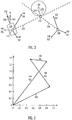
- each distinct transmission direction 164, 166, 168 may differ from the adjacent transmission directions by 120 degrees, for example.
- a measurement report 162 is received, with the radio transceiver 102, from the mobile apparatus 150 including received downlink power levels of the radio cell 210 and at least one of the three transmit radio beams 164, 166, 168.
- the received downlink power level of the radio cell 210 is the received downlink power level of the serving cell, whereas the received downlink power levels of the three transmit radio beams 164, 166, 168 are the received downlink power levels of the neighbour cells.
- the measurement report 162 may be transmitted from the interrogation apparatus 100 to the processing apparatus 130.
- a geographical location of the mobile platform 110 is received, by the processing apparatus 130, from the positioning receiver 116 of the mobile platform 110.
- a geographical orientation of the mobile platform 110 is obtained by the processing apparatus 130.
- the geographical orientation may be expressed as an angle 244 between a longitudinal axle 240 of the mobile platform 110 and the compass direction North 242.
- the geographical orientation of the mobile platform 110 may also be expressed as a heading of the longitudinal axle 240 in degrees (0-360 degrees), for example.
- the distinct transmission directions are also known (based on the geographical orientation), as the antenna array 112 is fixed in relation to the mobile platform 110.
- system is caused to perform:
- the mobile platform 110 further comprises an inertial measurement unit (IMU) 120.
- the inertial measurement unit 120 may comprise one accelerometer, gyroscope, and magnetometer for each of the three-dimensional measurement axes to measure mobile platform's 110 specific force, angular rate, and the magnetic field surrounding the mobile platform 110.
- the system is caused to perform:
- a geographical location of the mobile apparatus 150 is calculated, by the processing apparatus 130, based on the received downlink power levels, the geographical location of the mobile platform 110, the distinct transmission directions, and the geographical orientation of the mobile platform 110.
- the system is caused to calculate, by the processing apparatus 130, the geographical location of the mobile apparatus 150 based on the received downlink power levels, the geographical location of the mobile platform 110, the distinct transmission directions, and the geographical orientation of the mobile platform 110 so that a direction of a vector 300 from the mobile platform 110 to the mobile apparatus 150 is calculated based on the distinct transmission direction and the received downlink power level of each received transmit radio beam 164, 166, 168.
- the system is caused to perform:
- the geographical location of the mobile apparatus 150 may be determined by calculating a direction 220 from the mobile platform 110 to the mobile apparatus 150, and, as a distance (based on the timing advance, for example) 250 between the interogation apparatus 100 and the mobile apparatus 150 is known, the location of the mobile apparatus 150 is determined to be in a crossing of the distance 250 and the direction 220. In order this to work, the geographical location of the interrogation apparatus 100 needs to be known.
- the interrogation apparatus 100 is mobile and comprises a user portable pack and/or a land vehicle and/or a vessel, and a positioning receiver 106 of the interrogation apparatus configured to determine a geographical location of the interrogation apparatus 100.
- the system is caused to perform:
- the interrogation apparatus 100 is set stationary at a geographical location of the interrogation apparatus 100.
- the system is caused to calculate 612, by the processing apparatus 130, the geographical location of the mobile apparatus 150 based on the received downlink power levels, the geographical location of the mobile platform 110, the distinct transmission directions, the geographical orientation of the mobile platform 110, and the geographical location of the interrogation apparatus 100.
- the mobile platform 110 comprises an aerial vehicle and/or a land vehicle and/or a vessel. As shown in FIG. 5 , the mobile platform 110 is placed in an unmanned aerial vehicle UAV ("drone").
- UAV unmanned aerial vehicle
- the term “mobile” means that the platform 110 may move (carried by the vehicle/vessel) from one geographical location to another geographical location, or that the platform 110 may be "moveable", i.e., moved by an authorized person to a specific stationary geographical location.
- the software-defined radio 114 and the antenna array 112 are configured to make the at least three transmit radio beams 164, 166, 168 directional by beamforming 624.
- the software-defined radio 114 control the phase and relative amplitude of the signal at each transmitter to create a pattern of constructive and destructive interference, which results in directional signal transmission.
- the software-defined radio (114) is configured to include a different identifier 626 for each of the at least three transmit radio beams 164, 166, 168.
- the different identifiers may be cell identifiers or other identifiers used in the cellular radio network 190 and in the measurement report 162.
- the measurement report, the geographical location of the mobile platform 110, and the geographical orientation of the mobile platform 110 each comprise a time stamp 628, 630, 632 indicating a time of measurement or a time of reception.
- the calculations may be made more precise as the various types of data are matched to each other so that they relate to the same moment in time.
- FIG. 1 and FIG. 5 Let us study FIG. 1 and FIG. 5 illustrating further example embodiments.
- the various tranmission directions may be in horizontal directions only along X and Z axes, but also in a vertical direction along Y axis.
- system is caused to perform:
- system is caused to perform:
- FIG. 2 illustrates another example embodiment, wherein more than one mobile platforms 110, 200 are used.
- the second mobile platform 200 is configured to transmit three further transmit radio beams 202, 204, 206, and the location of the mobile apparatus 150 may be determined at a crossing of the direction vector 220 from the first mobile platform 110 and a direction vector 230 of the second mobile platform 200.
- the measurement report 162 from the mobile apparatus 150 may include received downlink power levels of the radio cell 210, at least one of the three transmit radio beams 164, 166, 168, and at least one of the three further transmit radio beamss 202, 204, 206.
Landscapes
- Engineering & Computer Science (AREA)
- Radar, Positioning & Navigation (AREA)
- Remote Sensing (AREA)
- Business, Economics & Management (AREA)
- Signal Processing (AREA)
- General Physics & Mathematics (AREA)
- Physics & Mathematics (AREA)
- Computer Networks & Wireless Communication (AREA)
- Computer Security & Cryptography (AREA)
- Tourism & Hospitality (AREA)
- Educational Administration (AREA)
- Human Resources & Organizations (AREA)
- Automation & Control Theory (AREA)
- Technology Law (AREA)
- Health & Medical Sciences (AREA)
- Economics (AREA)
- General Health & Medical Sciences (AREA)
- Development Economics (AREA)
- Marketing (AREA)
- Primary Health Care (AREA)
- Strategic Management (AREA)
- General Business, Economics & Management (AREA)
- Theoretical Computer Science (AREA)
- Mobile Radio Communication Systems (AREA)
Priority Applications (2)
| Application Number | Priority Date | Filing Date | Title |
|---|---|---|---|
| EP19159063.7A EP3699626A1 (de) | 2019-02-25 | 2019-02-25 | Abfangen einer mobilen vorrichtung |
| US16/799,257 US11501398B2 (en) | 2019-02-25 | 2020-02-24 | Interception of mobile apparatus |
Applications Claiming Priority (1)
| Application Number | Priority Date | Filing Date | Title |
|---|---|---|---|
| EP19159063.7A EP3699626A1 (de) | 2019-02-25 | 2019-02-25 | Abfangen einer mobilen vorrichtung |
Publications (1)
| Publication Number | Publication Date |
|---|---|
| EP3699626A1 true EP3699626A1 (de) | 2020-08-26 |
Family
ID=65576189
Family Applications (1)
| Application Number | Title | Priority Date | Filing Date |
|---|---|---|---|
| EP19159063.7A Withdrawn EP3699626A1 (de) | 2019-02-25 | 2019-02-25 | Abfangen einer mobilen vorrichtung |
Country Status (2)
| Country | Link |
|---|---|
| US (1) | US11501398B2 (de) |
| EP (1) | EP3699626A1 (de) |
Families Citing this family (2)
| Publication number | Priority date | Publication date | Assignee | Title |
|---|---|---|---|---|
| US12449503B2 (en) * | 2021-09-15 | 2025-10-21 | Parsons Corporation | Far-source position determination |
| WO2024215005A2 (ko) * | 2023-04-10 | 2024-10-17 | 삼성전자주식회사 | 이동 방향을 식별하는 전자 장치 및 그 동작 방법 |
Citations (6)
| Publication number | Priority date | Publication date | Assignee | Title |
|---|---|---|---|---|
| US7035651B2 (en) | 2002-02-28 | 2006-04-25 | Alcatel | Process and devices for determining the radio reception direction in a mobile communications network |
| US20140302869A1 (en) * | 2011-02-24 | 2014-10-09 | Glen Var Rosenbaum | Beacon and associated components for a ranging system |
| US20160195603A1 (en) * | 2012-06-14 | 2016-07-07 | Telefonaktiebolaget L M Ericsson (Publ) | Method and apparatus for position determination |
| US20160295366A1 (en) * | 2015-03-31 | 2016-10-06 | Sony Corporation | Method and apparatus for positioning a mobile terminal in a radio network |
| US9872141B2 (en) | 2015-05-14 | 2018-01-16 | Verint Systems Ltd. | System and method for accurate location of wireless terminals using mobile interrogation device |
| US10034126B2 (en) | 2013-03-21 | 2018-07-24 | Verint Systems Ltd. | Stand alone solution for location of a cellular phone |
Family Cites Families (2)
| Publication number | Priority date | Publication date | Assignee | Title |
|---|---|---|---|---|
| DE10051129A1 (de) | 2000-10-16 | 2002-04-18 | Rohde & Schwarz | Verfahren zum vom Besitzer unbemerkten Aktivieren eines Mobiltelefons |
| WO2019210953A1 (en) * | 2018-05-03 | 2019-11-07 | Telefonaktiebolaget Lm Ericsson (Publ) | Systems and methods of controlling a component of a network node in a communication system |
-
2019
- 2019-02-25 EP EP19159063.7A patent/EP3699626A1/de not_active Withdrawn
-
2020
- 2020-02-24 US US16/799,257 patent/US11501398B2/en active Active
Patent Citations (6)
| Publication number | Priority date | Publication date | Assignee | Title |
|---|---|---|---|---|
| US7035651B2 (en) | 2002-02-28 | 2006-04-25 | Alcatel | Process and devices for determining the radio reception direction in a mobile communications network |
| US20140302869A1 (en) * | 2011-02-24 | 2014-10-09 | Glen Var Rosenbaum | Beacon and associated components for a ranging system |
| US20160195603A1 (en) * | 2012-06-14 | 2016-07-07 | Telefonaktiebolaget L M Ericsson (Publ) | Method and apparatus for position determination |
| US10034126B2 (en) | 2013-03-21 | 2018-07-24 | Verint Systems Ltd. | Stand alone solution for location of a cellular phone |
| US20160295366A1 (en) * | 2015-03-31 | 2016-10-06 | Sony Corporation | Method and apparatus for positioning a mobile terminal in a radio network |
| US9872141B2 (en) | 2015-05-14 | 2018-01-16 | Verint Systems Ltd. | System and method for accurate location of wireless terminals using mobile interrogation device |
Also Published As
| Publication number | Publication date |
|---|---|
| US11501398B2 (en) | 2022-11-15 |
| US20200273129A1 (en) | 2020-08-27 |
Similar Documents
| Publication | Publication Date | Title |
|---|---|---|
| US11709274B2 (en) | Determining correct location in the presence of GNSS spoofing | |
| US11937280B2 (en) | Frequency and state dependent user equipment beam patterns | |
| Gao et al. | Cooperative localization and navigation: theory, research, and practice | |
| US11892546B2 (en) | Systems and methods for detecting and mitigating spoofed satellite navigation signals | |
| García et al. | Location-based services in cellular networks: from GSM to 5G NR | |
| US11796687B2 (en) | Method and apparatus for location determination using plate tectonics models | |
| EP3243088B1 (de) | Automobiles ad-hoc echtzeitkinematik roving netzwerk | |
| US12216223B2 (en) | Determining an orientation of a user equipment with a cellular network | |
| US11501398B2 (en) | Interception of mobile apparatus | |
| CN113196107A (zh) | 信息处理的方法和终端设备 | |
| KR20150013042A (ko) | 시야 가림 정보를 이용하는 휴대용 장치, 이동식 단말기, 데이터베이스 서버, 및 시스템, 그리고 휴대용 장치의 작동 방법 | |
| CN120604145A (zh) | 利用多个全球导航卫星系统接收器的协同定位 | |
| CN113439395A (zh) | 用于在高频无线网络中使用旋转向量来进行波束管理的技术 | |
| Szczepanik | Implementation of Doppler-based location sensor on unmanned aerial vehicle | |
| US12429606B2 (en) | Simplified precise positioning engine (PPE) backward smoothing | |
| Szczepanik et al. | Leveraging Digital Maps to Visualize Data in Doppler Effect-based Localization System Relying on GNSS | |
| WO2024182230A1 (en) | Optimizing weighted least square (wls) inputs to improve global navigation satellite systems (gnss) localization | |
| Nguyen-Tan et al. | GPS Signal Reception and Spoofing Based on Software-Defined Radio Devices | |
| Zhang et al. | RIS-Assisted Cooperative Positioning for Smart Vehicles with Extended Kalman Filter and AOA Measurements | |
| Saleh et al. | Vehicular Wireless Positioning--A Survey | |
| US20250147193A1 (en) | Precise attitude determination and positioning system | |
| US20250251518A1 (en) | Enhanced positioning after error recovery | |
| US12481067B2 (en) | Global navigation satellite system state space representation correction forwarding service | |
| Fernandez-Prades et al. | Assisted GNSS in LTE-advanced networks and its application to vector tracking loops | |
| US12436298B2 (en) | Carrier signal positioning |
Legal Events
| Date | Code | Title | Description |
|---|---|---|---|
| PUAI | Public reference made under article 153(3) epc to a published international application that has entered the european phase |
Free format text: ORIGINAL CODE: 0009012 |
|
| STAA | Information on the status of an ep patent application or granted ep patent |
Free format text: STATUS: THE APPLICATION HAS BEEN PUBLISHED |
|
| AK | Designated contracting states |
Kind code of ref document: A1 Designated state(s): AL AT BE BG CH CY CZ DE DK EE ES FI FR GB GR HR HU IE IS IT LI LT LU LV MC MK MT NL NO PL PT RO RS SE SI SK SM TR |
|
| AX | Request for extension of the european patent |
Extension state: BA ME |
|
| STAA | Information on the status of an ep patent application or granted ep patent |
Free format text: STATUS: THE APPLICATION IS DEEMED TO BE WITHDRAWN |
|
| 18D | Application deemed to be withdrawn |
Effective date: 20210227 |