EP3699636A1 - Procédé de commande de système de télémétrie par la lumière dans un véhicule - Google Patents
Procédé de commande de système de télémétrie par la lumière dans un véhicule Download PDFInfo
- Publication number
- EP3699636A1 EP3699636A1 EP19158170.1A EP19158170A EP3699636A1 EP 3699636 A1 EP3699636 A1 EP 3699636A1 EP 19158170 A EP19158170 A EP 19158170A EP 3699636 A1 EP3699636 A1 EP 3699636A1
- Authority
- EP
- European Patent Office
- Prior art keywords
- vehicle
- ranging system
- light ranging
- controlling
- operational
- Prior art date
- Legal status (The legal status is an assumption and is not a legal conclusion. Google has not performed a legal analysis and makes no representation as to the accuracy of the status listed.)
- Withdrawn
Links
Images
Classifications
-
- G—PHYSICS
- G01—MEASURING; TESTING
- G01S—RADIO DIRECTION-FINDING; RADIO NAVIGATION; DETERMINING DISTANCE OR VELOCITY BY USE OF RADIO WAVES; LOCATING OR PRESENCE-DETECTING BY USE OF THE REFLECTION OR RERADIATION OF RADIO WAVES; ANALOGOUS ARRANGEMENTS USING OTHER WAVES
- G01S17/00—Systems using the reflection or reradiation of electromagnetic waves other than radio waves, e.g. lidar systems
- G01S17/88—Lidar systems specially adapted for specific applications
- G01S17/93—Lidar systems specially adapted for specific applications for anti-collision purposes
- G01S17/931—Lidar systems specially adapted for specific applications for anti-collision purposes of land vehicles
-
- G—PHYSICS
- G01—MEASURING; TESTING
- G01S—RADIO DIRECTION-FINDING; RADIO NAVIGATION; DETERMINING DISTANCE OR VELOCITY BY USE OF RADIO WAVES; LOCATING OR PRESENCE-DETECTING BY USE OF THE REFLECTION OR RERADIATION OF RADIO WAVES; ANALOGOUS ARRANGEMENTS USING OTHER WAVES
- G01S17/00—Systems using the reflection or reradiation of electromagnetic waves other than radio waves, e.g. lidar systems
- G01S17/02—Systems using the reflection of electromagnetic waves other than radio waves
- G01S17/06—Systems determining position data of a target
- G01S17/08—Systems determining position data of a target for measuring distance only
- G01S17/10—Systems determining position data of a target for measuring distance only using transmission of interrupted, pulse-modulated waves
-
- G—PHYSICS
- G01—MEASURING; TESTING
- G01S—RADIO DIRECTION-FINDING; RADIO NAVIGATION; DETERMINING DISTANCE OR VELOCITY BY USE OF RADIO WAVES; LOCATING OR PRESENCE-DETECTING BY USE OF THE REFLECTION OR RERADIATION OF RADIO WAVES; ANALOGOUS ARRANGEMENTS USING OTHER WAVES
- G01S17/00—Systems using the reflection or reradiation of electromagnetic waves other than radio waves, e.g. lidar systems
- G01S17/86—Combinations of lidar systems with systems other than lidar, radar or sonar, e.g. with direction finders
-
- B—PERFORMING OPERATIONS; TRANSPORTING
- B60—VEHICLES IN GENERAL
- B60W—CONJOINT CONTROL OF VEHICLE SUB-UNITS OF DIFFERENT TYPE OR DIFFERENT FUNCTION; CONTROL SYSTEMS SPECIALLY ADAPTED FOR HYBRID VEHICLES; ROAD VEHICLE DRIVE CONTROL SYSTEMS FOR PURPOSES NOT RELATED TO THE CONTROL OF A PARTICULAR SUB-UNIT
- B60W40/00—Estimation or calculation of non-directly measurable driving parameters for road vehicle drive control systems not related to the control of a particular sub unit, e.g. by using mathematical models
- B60W40/02—Estimation or calculation of non-directly measurable driving parameters for road vehicle drive control systems not related to the control of a particular sub unit, e.g. by using mathematical models related to ambient conditions
- B60W40/04—Traffic conditions
-
- B—PERFORMING OPERATIONS; TRANSPORTING
- B60—VEHICLES IN GENERAL
- B60W—CONJOINT CONTROL OF VEHICLE SUB-UNITS OF DIFFERENT TYPE OR DIFFERENT FUNCTION; CONTROL SYSTEMS SPECIALLY ADAPTED FOR HYBRID VEHICLES; ROAD VEHICLE DRIVE CONTROL SYSTEMS FOR PURPOSES NOT RELATED TO THE CONTROL OF A PARTICULAR SUB-UNIT
- B60W40/00—Estimation or calculation of non-directly measurable driving parameters for road vehicle drive control systems not related to the control of a particular sub unit, e.g. by using mathematical models
- B60W40/10—Estimation or calculation of non-directly measurable driving parameters for road vehicle drive control systems not related to the control of a particular sub unit, e.g. by using mathematical models related to vehicle motion
- B60W40/105—Speed
-
- G—PHYSICS
- G01—MEASURING; TESTING
- G01S—RADIO DIRECTION-FINDING; RADIO NAVIGATION; DETERMINING DISTANCE OR VELOCITY BY USE OF RADIO WAVES; LOCATING OR PRESENCE-DETECTING BY USE OF THE REFLECTION OR RERADIATION OF RADIO WAVES; ANALOGOUS ARRANGEMENTS USING OTHER WAVES
- G01S17/00—Systems using the reflection or reradiation of electromagnetic waves other than radio waves, e.g. lidar systems
- G01S17/006—Theoretical aspects
-
- G—PHYSICS
- G01—MEASURING; TESTING
- G01S—RADIO DIRECTION-FINDING; RADIO NAVIGATION; DETERMINING DISTANCE OR VELOCITY BY USE OF RADIO WAVES; LOCATING OR PRESENCE-DETECTING BY USE OF THE REFLECTION OR RERADIATION OF RADIO WAVES; ANALOGOUS ARRANGEMENTS USING OTHER WAVES
- G01S7/00—Details of systems according to groups G01S13/00, G01S15/00, G01S17/00
- G01S7/48—Details of systems according to groups G01S13/00, G01S15/00, G01S17/00 of systems according to group G01S17/00
- G01S7/483—Details of pulse systems
- G01S7/484—Transmitters
-
- B—PERFORMING OPERATIONS; TRANSPORTING
- B60—VEHICLES IN GENERAL
- B60W—CONJOINT CONTROL OF VEHICLE SUB-UNITS OF DIFFERENT TYPE OR DIFFERENT FUNCTION; CONTROL SYSTEMS SPECIALLY ADAPTED FOR HYBRID VEHICLES; ROAD VEHICLE DRIVE CONTROL SYSTEMS FOR PURPOSES NOT RELATED TO THE CONTROL OF A PARTICULAR SUB-UNIT
- B60W2420/00—Indexing codes relating to the type of sensors based on the principle of their operation
- B60W2420/40—Photo, light or radio wave sensitive means, e.g. infrared sensors
- B60W2420/408—Radar; Laser, e.g. lidar
-
- B—PERFORMING OPERATIONS; TRANSPORTING
- B60—VEHICLES IN GENERAL
- B60W—CONJOINT CONTROL OF VEHICLE SUB-UNITS OF DIFFERENT TYPE OR DIFFERENT FUNCTION; CONTROL SYSTEMS SPECIALLY ADAPTED FOR HYBRID VEHICLES; ROAD VEHICLE DRIVE CONTROL SYSTEMS FOR PURPOSES NOT RELATED TO THE CONTROL OF A PARTICULAR SUB-UNIT
- B60W2510/00—Input parameters relating to a particular sub-units
- B60W2510/24—Energy storage means
- B60W2510/242—Energy storage means for electrical energy
- B60W2510/244—Charge state
-
- B—PERFORMING OPERATIONS; TRANSPORTING
- B60—VEHICLES IN GENERAL
- B60W—CONJOINT CONTROL OF VEHICLE SUB-UNITS OF DIFFERENT TYPE OR DIFFERENT FUNCTION; CONTROL SYSTEMS SPECIALLY ADAPTED FOR HYBRID VEHICLES; ROAD VEHICLE DRIVE CONTROL SYSTEMS FOR PURPOSES NOT RELATED TO THE CONTROL OF A PARTICULAR SUB-UNIT
- B60W2530/00—Input parameters relating to vehicle conditions or values, not covered by groups B60W2510/00 or B60W2520/00
- B60W2530/20—Tyre data
-
- B—PERFORMING OPERATIONS; TRANSPORTING
- B60—VEHICLES IN GENERAL
- B60W—CONJOINT CONTROL OF VEHICLE SUB-UNITS OF DIFFERENT TYPE OR DIFFERENT FUNCTION; CONTROL SYSTEMS SPECIALLY ADAPTED FOR HYBRID VEHICLES; ROAD VEHICLE DRIVE CONTROL SYSTEMS FOR PURPOSES NOT RELATED TO THE CONTROL OF A PARTICULAR SUB-UNIT
- B60W2555/00—Input parameters relating to exterior conditions, not covered by groups B60W2552/00, B60W2554/00
- B60W2555/20—Ambient conditions, e.g. wind or rain
-
- G—PHYSICS
- G01—MEASURING; TESTING
- G01S—RADIO DIRECTION-FINDING; RADIO NAVIGATION; DETERMINING DISTANCE OR VELOCITY BY USE OF RADIO WAVES; LOCATING OR PRESENCE-DETECTING BY USE OF THE REFLECTION OR RERADIATION OF RADIO WAVES; ANALOGOUS ARRANGEMENTS USING OTHER WAVES
- G01S13/00—Systems using the reflection or reradiation of radio waves, e.g. radar systems; Analogous systems using reflection or reradiation of waves whose nature or wavelength is irrelevant or unspecified
- G01S13/88—Radar or analogous systems specially adapted for specific applications
- G01S13/93—Radar or analogous systems specially adapted for specific applications for anti-collision purposes
- G01S13/931—Radar or analogous systems specially adapted for specific applications for anti-collision purposes of land vehicles
- G01S2013/9316—Radar or analogous systems specially adapted for specific applications for anti-collision purposes of land vehicles combined with communication equipment with other vehicles or with base stations
Definitions
- the present invention is generally related to the field of light ranging systems as used in vehicles.
- vehicles comprising a light ranging system are considered whereon one or more sensors are mounted.
- the range and performance of the sensing system are often limited by the power consumption of the illumination technology, e.g. LED or VCSEL (Vertical Cavity Surface Emitting Laser).
- the range and performance may further also be affected by eye safety considerations, which impose an average illumination level.
- a sensor may be used for more than one sensing function (sensor fusion) and the sensor then operates at a performance level high enough to fulfil the different function requirements.
- KR101848312 reveals a sensor fusion system for an autonomous emergency braking (AEB) system of a vehicle, comprising a camera module to photograph surroundings of the vehicle; a light detection and ranging (LiDAR) module scanning the surroundings of the vehicle to recognize an object and to detect a distance from the recognized object; a camera module fault monitoring unit to monitor whether or not the camera module is normally operated, a LiDAR module fault monitoring unit to monitor operation of the LiDAR module and a fault monitoring unit receiving a signal from the camera module fault monitoring unit and the LiDAR module fault monitoring unit to monitor the overall operation of a sensor fusion system, and outputting result data thereof to the outside including an AEB system.
- the proposed system enhances driving safety of an autonomous driving vehicle including the AEB system.
- the invention relates to a method for controlling a light ranging system mounted on a vehicle, said vehicle provided with receiving means for receiving external data and a plurality of sensors, said light ranging system arranged to be configured by a plurality of configurable parameters and comprising storage means for storing a plurality of predetermined operational schemes.
- the method comprises :
- the proposed solution indeed allows for deterministic control of the light ranging system configuration. From the collected information an operational scheme is selected. The choice of operational scheme is communicated to the light ranging system that comprises a memory wherein for each operational scheme a table of parameter settings is provided. The light ranging system is arranged for converting the parameter settings into actual control instructions to steer the operation of the light ranging system.
- the configurable parameters comprise one or more of ⁇ illumination power, field of view, wavelength, number of active light emitting elements, illumination location, illumination frame rate ⁇ .
- one or more sensors of the plurality are arranged for sensing one or more of ⁇ vehicle speed, steering angle, acceleration, tyre pressure, vehicle battery voltage, battery charge level ⁇ .
- one or more sensors of the plurality are arranged for sensing one or more of ⁇ a weather condition, a light condition ⁇ .
- the receiving means is arranged for receiving traffic information and/or location information, wherein the traffic information and/or location information is considered when determining the operational scheme.
- each operational scheme mode corresponds to a different parameter table.
- at least two operational schemes modes of said plurality correspond to a same parameter table.
- at least one parameter of the parameter table is calculated on the fly.
- the light ranging system is a LIDAR system or a Time-of-Flight system.
- the data is collected each time a cycle of measurements relating to said vehicle's current operation has been performed.
- the plurality of predetermined operational schemes has been derived from operational data stored in said vehicle.
- the operational scheme also sets parameters of sensors not related to said light ranging system.
- the invention relates to a program, executable on a programmable device containing instructions, which when executed, perform the method as in previously described.
- the invention in another aspect relates to a vehicle comprising
- the light ranging system comprises a control unit arranged for compiling the one or more control instructions.
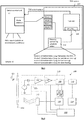
- Fig.1 illustrates a scheme of an embodiment of a system as in the present invention.
- a vehicle (10) comprises a light ranging system (100).
- the light ranging system is a Time-of-Flight (ToF) system. In other embodiments it may for example be a LIDAR system.
- the light ranging system can be configured by setting configurable parameters.
- the light ranging system comprises a set of sensors. These sensors are employed to perform a distance measurement to a target object to which an incident light beam is directed by detecting the reflected light beam. The distance to the target may then be calculated based on a time of flight measurement of the incident light beam and the reflected light beam.
- ADAS adaptive driver assistance
- the vehicle comprises other sensors communicating with the vehicle control unit (12), either one-way or two-way.
- these other sensors can for instance relate to conditions surrounding the vehicle, like e.g. a temperature sensor or a rain-light sensor to detect the amount of rain and the amount of light, or as in the case of the light ranging system (100), objects in the field-of-view of the system.
- Other sensor systems may relate to vehicle speed, acceleration, pressure of the tyres etc. that can be measured within the vehicle. It is also possible to receive data from outside the car, for instance traffic information through e.g. vehicle-to-vehicle information or GPS/GNSS data to calculate the location.
- All the sensor data is collected from the sensors in the vehicle control unit (12), where they are processed and may be used to indicate e.g. to the driver the conditions ahead or to indicate if the vehicle is not functioning correctly using measurements coming from meters. It is also possible to use the information for instance to control the operation of the motor e.g. by shutting it down in case certain conditions are met.
- the vehicle control unit may apply central computing or distributed computing.
- Fig.2 shows the light ranging system (100) in principle.
- the system comprises a light source (112) operably connected to timing control block (109), which controls the light emission timing and received signal sampling timing and their relation, for instance as described in patent application EP17184770 , where the sampling of the received signal is defined using two parameters ⁇ t start and ⁇ t phase .
- the light source (112) emits pulses or modulated light into the scene in its Field of View (FOV).
- the FOV is defined by the light source and its relation to optics (130).
- the light source may comprise one or more light emitting devices, e.g. LED or VCSEL. Different parameters of the light source can be controlled as well as the number of active light emitting devices. Thereby it is possible to control e.g. illumination power or wavelength, or the light pattern and thereby the FOV.
- the emitted light is partially reflected back. This is shown in Fig.2 as returning light (121).
- the returning light is detected through the optics (130) with one or more light sensitive detectors (125), pictured with a diode (101) in Fig.2 .
- the optics (130) may be shared with the light emitting devices. Alternatively, the detectors and the light emitting devices can each have their own optics. The functionality of the detectors can also be controlled, e.g. the number of active pixels. From the signal received by the light sensitive detectors is then amplified by an amplifier, typically a transimpedance amplifier.
- sample-and-hold circuits comprising one or more buffers (107) and S/H cells (108).
- sampled values may be converted to digital form using Analogue-to-Digital conversion (ADC) (113).
- ADC Analogue-to-Digital conversion
- From the converter (113) the result can be read to a Digital Signal Processing block (114) e.g. for low-pass filtering and pulse detection (e.g. by applying curve fitting or correlation).
- the light ranging system (100) there are several parameters that control the operation of the light ranging system (100). These parameters regulate among other things the illumination power, illumination Field of View, illumination location, illumination wavelength, illumination frame rate or other pixel settings. It is possible to set parameters relating to the light source side of the system (i.e. relating to the illumination configuration) and/or relating to the pixels at the detector side of the system. Concerning the pixel configuration distinction can be made between settings that are common for the whole array of pixels, e.g. frame rate, integration time, and settings relating to only part of the array, e.g. to apply pixel binning (i.e. combining of pixels) to implement some high dynamic range strategies relating to pixel by pixel operation.
- pixel binning i.e. combining of pixels
- Fig.2 shows a parameter control block (120), which is connected to different parts of the light ranging system (100).
- the control block (120) may be implemented in any suitable combination of hardware and/or software functional blocks.
- the light ranging control block (120) generates the control signals (possibly as a sequence in time), which are then communicated to different parts of the system.
- the control signals may be digital or analogue.
- the light ranging system is controlled by a control block (TOF CTRL 120), as also shown in Fig.1 .
- the control block is arranged to provide the light ranging system with one or more control instructions that set one or more of the light ranging system parameters.
- the system parameter values are taken from sets of parameters stored in tables in the memory (204).
- the controller block converts the parameter settings taken from the memory into corresponding control signals, which are next communicated to the light ranging system (TOF HW).
- the control block (120) may comprise a compiler block to generate the control signals.
- In the control block there may be a logic block operationally connected to the memory (204) and aware of the type of the light ranging system.
- the control instruction signals are derived in the control block from deterministic signals according to a set of parameters stored in the memory (204) and corresponding to a schedule selected from a set of predetermined schedules.
- deterministic signals according to a set of parameters stored in the memory (204) and corresponding to a schedule selected from a set of predetermined schedules.
- the predetermined schedules each describe an operational scheme, indicated in Fig.1 as Mode1, Mode2, Mode3 and Mode4, respectively.
- These various 'Modes' i.e. schedules
- the parameter tables are stored in a storage means (204) like a database or a look-up table.
- each operational scheme has a different parameter table.
- two or even more operational schemes are linked to a same parameter table.
- the storage means is in some embodiments a part of the control block. In other embodiments it is a separate block, possibly even an external block, in connection with the TOF control block, wherefrom the selected operational scheme (including the operational parameters) is uploaded.
- the selection of said schedule among the various possible schedules is in the present invention performed in the vehicle control unit (12) based on the input data collected from the sensors and the light ranging system output and from the receiving means of the vehicle.
- the VCU is thus capable of determining which of the available schedules fits best with the current conditions wherein the light ranging system is operating.
- Selection of the schedule may be based on information representative of the vehicle operation, the environmental conditions/information or a combination of both.
- the information can be in the form of parameter values obtained from measurement (i.e. raw detection data or filtered detection data), analysed distance data, text data, light ranging system data etc.
- the available information can be categorized into two types of data : information related to the operation of the vehicle and environmental information concerning the external conditions wherein the vehicle is operating.
- Information related to the vehicle operation may e.g. be vehicle speed data, a steering angle, data related to the vehicle trajectory, the braking system or a stability control system. Also other sensors on the vehicle can provide useful information, e.g. a rain/light sensor. Further information may relate to the vehicle battery voltage and/or the charge level.
- Information related to the environment wherein the vehicle is operating may for example be data on the roadway type, high density map data, external light conditions, daytime/night time, time of the day, atmospheric conditions e.g. precipitation.
- Other info that can be taken into account in the control block may for example be the planned routing.
- Another input that can be considered is for example an emergency vehicle notification.
- a received Dedicated Short Range Communications (DSRC) information vehicle-to-vehicle or vehicle-to-infrastructure) whereby location and speed vector are transmitted, indicates a fast approaching vehicle is approaching.
- DSRC Dedicated Short Range Communications
- Such information can be used after processing in the VCU as an emergency notification, resulting in the light ranging system preparing a detection of the vehicle from a certain direction.
- Yet another input that can be taken into account comprises optical feedback (including lens cleanliness). It could be that the light ranging system informs the VCU that the optics are not clean. The VCU can then, e.g. in a situation where the power is already maximum, make sure that the light ranging system starts operating in limited power mode.
- the idea behind the invention is to provide in the database (or any other appropriate storage means) a number of parameter tables corresponding to different operational scenarios, i.e. a number of operational schemes.
- Regulating the light ranging system in the vehicle is performed by first detecting actual conditions wherein the vehicle/light ranging system is operating and then selecting in the vehicle control unit, based on the gathered information, one of the available operational schemes (referred to as 'Modes' in Fig.1 ) that best fits to the current conditions and sending an indication of the selected scheme to the light ranging system, which based on that indication takes corresponding parameter settings from the memory and generates control instructions which allow setting one or more light ranging system parameters in accordance with said conditions.
- the modes may correspond to a number of scenarios corresponding to e.g. a stationary vehicle, a vehicle moving at low speed (e.g. below 15km/h) or moderate speed (e.g. between 15 and 50 km/h), a fast moving vehicle, urban or suburban environment, highway, traffic jam circumstances etc...
- the proposed solution allows dynamically adapting the illumination configuration to changing application conditions. This leads to more appropriate settings during operation and thus more energy efficiency.
- Different parts of the scene/field of illumination in front of the light source can so be illuminated differently.
- the use of high power illumination can so be limited to situations wherein it is really required given the number of frames per second and/or the field of view.
- only a window, i.e. a part of the field of view is considered wherein a part of the detector array is read out more often than the rest of the detector array.
- the eye safety is enhanced, as a lower average illumination power can be used and certain zones in the field of view can operate with reduced average power levels.
- optical sensing technology such as ToF or LIDAR
- the solution of this invention may rely on the optical sensors mounted on different parts of the vehicle to provide sensor information for the zones adjacent to the sensor mounting locations.
- the sensed data can be used to control amongst other things the power consumption and/or field of view.
- the sensor performance can be optimized in either a single or multiple operating mode by use of a schedule with associated parameter table.
- the operational schedule and corresponding parameter table to be applied is dynamically selectable based on the operating conditions (e.g. vehicle movement), operation limitations (e.g. minimized power consumption, heat generation of the illumination technology) and environmental operating limitations (e.g. eye safety).
- the light ranging system under consideration is a time-of-flight system or LIDAR system integrated in a chipset.
- Different schemes of operation with corresponding parameter tables can be stored in the system or external to it, from which one is selected by the vehicle control unit given the current operational conditions.
- the selected parameter table can be fixed (e.g. in a ROM) or uploaded at system initiation (e.g. vehicle ignition on).
- the parameter table in accordance with the operational scheme to be used may be continuously communicated to registers used within the chipset for management and execution.
- Control signals are generated in the light ranging system based on the parameter settings corresponding to the selected operational schedule received from the vehicle control unit, which can be processed locally in the chipset comprising the light ranging system to set parameters of both the illumination (or illumination array) and the pixel array.
- the control signals convey instructions to set parameters according to the dynamic parameter table selected in the vehicle control unit.
- the vehicle control unit receives external (vehicle, environmental and/or other) information and selects accordingly the most appropriate mode and communicates by serial data to the chipset comprising the light ranging system which executes in the form of a schedule table.
- the chipset comprising the light ranging system is preloaded (into on-board memory) with a number of "preferred" schedule tables and the required operating mode of the system chipset (as defined in the schedule table) is selected by an external microcontroller which itself uses algorithms and additional data to determine the correct operating mode for the light ranging system.
- Schedule table 1 for stationary vehicle front facing sensor 15m@1 Frame/sec, 2m@10 Frame/s Schedule Power FOV/Window Pixel Grouping Every 10 th sample Maximum Illuminate all FOV Grouped for max sensitivity 9 samples Low power Low array only Single for max resolution Repeat 100msec/sample
- Schedule table 2 for stationary vehicle front facing sensor 15m@0.5Frame/sec, 2m@5Frames/s Schedule Power FOV/Window Pixel Grouping Every 10 th sample Maximum Illuminate full FOV Grouped for max sensitivity 9 samples Low power Low array only Single for max resolution Repeat 200msec/sample
- the front facing sensor as described in the first and the second schedule table is used in a stationary vehicle situation.
- Schedule table 1 maximum power is used for the illumination array every tenth sample, which allows a reach of 15 meter.
- the full field-of-view is illuminated.
- pixels are grouped for reading out, i.e. binning (combining of read-outs from several pixels), is applied.
- binning combining of read-outs from several pixels
- a reduced power level is applied which reduces the illumination range to 2 meter.
- To obtain maximal time/distance resolution each pixel in the detector is read out separately in the low power mode. In this case only the low array part of the detector is employed, so that only a window of the full field of view is considered.
- a repetition rate is provided of 100 msec/sample.
- Schedule table 2 differs from table 1 by the repetition rate, which is 200msec/sample in Table 2. Due to the doubling of the repetition period, the frame rates are halved to 0.5 frame/s wherein the range is 15m and to 5 frames/s with the 2m range.
- Schedule table 3 for fast moving vehicle side facing sensor 15m@10Frames/s, 8m@10Frames/s Schedule Power FOV/Window Pixel Grouping Every other sample Maximum Illuminate full FOV Grouped for max sensitivity Every other sample medium Illuminate low and mid-level arrays only Grouped for max sensitivity Repeat 50msec/sample Schedule table 3 is for a side facing sensor of a fast moving vehicle.
- a sample with maximum power, full field of view illumination and a reading out with pixel grouping in order to achieve maximum sensitivity is now alternated with a sample with medium power, illumination of low and mid-level arrays only, while still applying read-out with pixel grouping to keep maximum sensitivity.
- maximum power When maximum power is applied, an illumination range of 15m is reached, which reduces to a range of 8m when the medium power level is used.
- the repetition rate is 50msec/sample.
- Schedule table 4 for low speed (e.g.
- Schedule table 4 is for all surround sensors of a low speed vehicle (e.g. when self-parking).
- every fifth sample gets maximum power and full field of view illumination, and a read-out with pixel grouping (binning) in order to obtain maximum sensitivity. In this case the full field-of-view is illuminated.
- the other 4 samples of each group of five samples have medium power, illumination of low and mid-level arrays only and read-out of each pixel separately for maximum resolution.
- the repetition rate is set at 200msec/sample.
- a first manufacturer can provide a vehicle control unit operable according to the following table : Environment data Case 1 Case 2 Case 3 Speed > 10 km/h ⁇ 10 km/h 0 km/h GNSS receiver + HD map application city city city Drive mode normal Parking assistance normal Selected Schedule table 1 4 1,2 In case 3 it is possible to switch between Schedule Table 1 and Schedule Table 2.
- Another manufacturer may opt for a vehicle control unit wherein both steering and GNSS information is exploited. The VCU is then operable e.g.
- the proposed approach based on a set of parameter tables corresponding to a set of scenarios can also be applied to perform some self-monitoring at system level.
- certain operational limitations e.g. a temperature limit of the illumination array
- this potential performance degradation can be diagnosed and the status is communicated back to the vehicle, allowing the vehicle to transition into a mode where the operational limit is not a factor.
- a computer program may be stored/distributed on a suitable medium, such as an optical storage medium or a solid-state medium supplied together with or as part of other hardware, but may also be distributed in other forms, such as via the Internet or other wired or wireless telecommunication systems. Any reference signs in the claims should not be construed as limiting the scope.
Landscapes
- Engineering & Computer Science (AREA)
- Physics & Mathematics (AREA)
- Radar, Positioning & Navigation (AREA)
- Remote Sensing (AREA)
- Computer Networks & Wireless Communication (AREA)
- General Physics & Mathematics (AREA)
- Electromagnetism (AREA)
- Automation & Control Theory (AREA)
- Mathematical Physics (AREA)
- Transportation (AREA)
- Mechanical Engineering (AREA)
- Optical Radar Systems And Details Thereof (AREA)
Priority Applications (3)
| Application Number | Priority Date | Filing Date | Title |
|---|---|---|---|
| EP19158170.1A EP3699636A1 (fr) | 2019-02-20 | 2019-02-20 | Procédé de commande de système de télémétrie par la lumière dans un véhicule |
| US16/782,502 US20200264312A1 (en) | 2019-02-20 | 2020-02-05 | Method for light ranging system control in a vehicle |
| CN202010101709.6A CN111596304A (zh) | 2019-02-20 | 2020-02-19 | 用于交通工具中的光测距系统控制的方法 |
Applications Claiming Priority (1)
| Application Number | Priority Date | Filing Date | Title |
|---|---|---|---|
| EP19158170.1A EP3699636A1 (fr) | 2019-02-20 | 2019-02-20 | Procédé de commande de système de télémétrie par la lumière dans un véhicule |
Publications (1)
| Publication Number | Publication Date |
|---|---|
| EP3699636A1 true EP3699636A1 (fr) | 2020-08-26 |
Family
ID=65529321
Family Applications (1)
| Application Number | Title | Priority Date | Filing Date |
|---|---|---|---|
| EP19158170.1A Withdrawn EP3699636A1 (fr) | 2019-02-20 | 2019-02-20 | Procédé de commande de système de télémétrie par la lumière dans un véhicule |
Country Status (3)
| Country | Link |
|---|---|
| US (1) | US20200264312A1 (fr) |
| EP (1) | EP3699636A1 (fr) |
| CN (1) | CN111596304A (fr) |
Families Citing this family (2)
| Publication number | Priority date | Publication date | Assignee | Title |
|---|---|---|---|---|
| US20220137197A1 (en) * | 2020-10-30 | 2022-05-05 | Motional Ad Llc | Robust eye safety for lidars |
| US12614388B2 (en) * | 2021-09-20 | 2026-04-28 | Arlo Technologies, Inc. | Image convergence in a smart security camera system with a secondary processor |
Citations (3)
| Publication number | Priority date | Publication date | Assignee | Title |
|---|---|---|---|---|
| US20090262760A1 (en) * | 2005-01-20 | 2009-10-22 | Vladimir Krupkin | Laser Obstacle Ranging and Display |
| US20180059248A1 (en) * | 2016-05-18 | 2018-03-01 | James Thomas O'Keeffe | Dynamically steered laser range finder |
| KR101848312B1 (ko) | 2017-03-28 | 2018-04-13 | (주) 모토텍 | 차량의 자동긴급제동시스템을 위한 센서융합시스템 |
Family Cites Families (1)
| Publication number | Priority date | Publication date | Assignee | Title |
|---|---|---|---|---|
| GB201018815D0 (en) * | 2010-11-08 | 2010-12-22 | Tomtom Int Bv | High-definition weather for improved routing and navigation systems |
-
2019
- 2019-02-20 EP EP19158170.1A patent/EP3699636A1/fr not_active Withdrawn
-
2020
- 2020-02-05 US US16/782,502 patent/US20200264312A1/en not_active Abandoned
- 2020-02-19 CN CN202010101709.6A patent/CN111596304A/zh active Pending
Patent Citations (3)
| Publication number | Priority date | Publication date | Assignee | Title |
|---|---|---|---|---|
| US20090262760A1 (en) * | 2005-01-20 | 2009-10-22 | Vladimir Krupkin | Laser Obstacle Ranging and Display |
| US20180059248A1 (en) * | 2016-05-18 | 2018-03-01 | James Thomas O'Keeffe | Dynamically steered laser range finder |
| KR101848312B1 (ko) | 2017-03-28 | 2018-04-13 | (주) 모토텍 | 차량의 자동긴급제동시스템을 위한 센서융합시스템 |
Also Published As
| Publication number | Publication date |
|---|---|
| US20200264312A1 (en) | 2020-08-20 |
| CN111596304A (zh) | 2020-08-28 |
Similar Documents
| Publication | Publication Date | Title |
|---|---|---|
| US12352891B2 (en) | Selective deactivation of light emitters for interference mitigation in light detection and ranging (lidar) devices | |
| US9897700B2 (en) | Vehicular ranging system and method of operation | |
| US20130235203A1 (en) | Indicia identifying system | |
| US12581200B2 (en) | Control window camera direction to avoid saturation from strong background light and actively adjust the frame time on the spinning camera to achieve directional control | |
| JP2007279017A (ja) | レーダ装置 | |
| US11796646B2 (en) | Dual-mode silicon photomultiplier based LiDAR | |
| US20250150726A1 (en) | Systems and methods for pixel on-off switching in focal plane arrays | |
| US20250321325A1 (en) | Two-Step Return Calibration for Lidar Cross-Talk Mitigation | |
| US20200264312A1 (en) | Method for light ranging system control in a vehicle | |
| US20230213623A1 (en) | Systems and methods for scanning a region of interest using a light detection and ranging scanner | |
| US12025701B2 (en) | Dynamic signal control in flash LiDAR | |
| CN119213332A (zh) | 激光雷达上雪崩光电二极管的动态校准方法 | |
| WO2021117608A1 (fr) | Dispositif de détection d'objets et procédé de commande du dispositif de détection d'objets | |
| US20250391211A1 (en) | System for monitoring a lighting unit | |
| US12543387B2 (en) | Systems and methods for breakdown voltage correction in Geiger-mode avalanche photodiode (APD) focal plane arrays (FPA) | |
| CN220584396U (zh) | 一种固态激光雷达测量系统 | |
| US20250358500A1 (en) | Foveated Imager for Automotive Applications | |
| JP2024168587A (ja) | 測距装置 | |
| CN121889699A (zh) | 探测方法及相关产品 |
Legal Events
| Date | Code | Title | Description |
|---|---|---|---|
| PUAI | Public reference made under article 153(3) epc to a published international application that has entered the european phase |
Free format text: ORIGINAL CODE: 0009012 |
|
| STAA | Information on the status of an ep patent application or granted ep patent |
Free format text: STATUS: THE APPLICATION HAS BEEN PUBLISHED |
|
| AK | Designated contracting states |
Kind code of ref document: A1 Designated state(s): AL AT BE BG CH CY CZ DE DK EE ES FI FR GB GR HR HU IE IS IT LI LT LU LV MC MK MT NL NO PL PT RO RS SE SI SK SM TR |
|
| AX | Request for extension of the european patent |
Extension state: BA ME |
|
| STAA | Information on the status of an ep patent application or granted ep patent |
Free format text: STATUS: REQUEST FOR EXAMINATION WAS MADE |
|
| 17P | Request for examination filed |
Effective date: 20201218 |
|
| RBV | Designated contracting states (corrected) |
Designated state(s): AL AT BE BG CH CY CZ DE DK EE ES FI FR GB GR HR HU IE IS IT LI LT LU LV MC MK MT NL NO PL PT RO RS SE SI SK SM TR |
|
| STAA | Information on the status of an ep patent application or granted ep patent |
Free format text: STATUS: EXAMINATION IS IN PROGRESS |
|
| 17Q | First examination report despatched |
Effective date: 20210825 |
|
| RIC1 | Information provided on ipc code assigned before grant |
Ipc: G01S 17/931 20200101ALI20240925BHEP Ipc: G01S 17/86 20200101ALI20240925BHEP Ipc: G01S 17/02 20200101AFI20240925BHEP |
|
| STAA | Information on the status of an ep patent application or granted ep patent |
Free format text: STATUS: THE APPLICATION IS DEEMED TO BE WITHDRAWN |
|
| 18D | Application deemed to be withdrawn |
Effective date: 20250211 |