EP3699989B1 - Électrode de batterie secondaire au lithium et son procédé de fabrication - Google Patents
Électrode de batterie secondaire au lithium et son procédé de fabrication Download PDFInfo
- Publication number
- EP3699989B1 EP3699989B1 EP19855630.0A EP19855630A EP3699989B1 EP 3699989 B1 EP3699989 B1 EP 3699989B1 EP 19855630 A EP19855630 A EP 19855630A EP 3699989 B1 EP3699989 B1 EP 3699989B1
- Authority
- EP
- European Patent Office
- Prior art keywords
- electrode
- metal layer
- lithium
- conductive metal
- polymer film
- Prior art date
- Legal status (The legal status is an assumption and is not a legal conclusion. Google has not performed a legal analysis and makes no representation as to the accuracy of the status listed.)
- Active
Links
Images

Classifications
-
- H—ELECTRICITY
- H01—ELECTRIC ELEMENTS
- H01M—PROCESSES OR MEANS, e.g. BATTERIES, FOR THE DIRECT CONVERSION OF CHEMICAL ENERGY INTO ELECTRICAL ENERGY
- H01M4/00—Electrodes
- H01M4/02—Electrodes composed of, or comprising, active material
- H01M4/62—Selection of inactive substances as ingredients for active masses, e.g. binders, fillers
- H01M4/628—Inhibitors, e.g. gassing inhibitors, corrosion inhibitors
-
- H—ELECTRICITY
- H01—ELECTRIC ELEMENTS
- H01M—PROCESSES OR MEANS, e.g. BATTERIES, FOR THE DIRECT CONVERSION OF CHEMICAL ENERGY INTO ELECTRICAL ENERGY
- H01M4/00—Electrodes
- H01M4/02—Electrodes composed of, or comprising, active material
- H01M4/64—Carriers or collectors
- H01M4/66—Selection of materials
- H01M4/665—Composites
- H01M4/667—Composites in the form of layers, e.g. coatings
-
- C—CHEMISTRY; METALLURGY
- C23—COATING METALLIC MATERIAL; COATING MATERIAL WITH METALLIC MATERIAL; CHEMICAL SURFACE TREATMENT; DIFFUSION TREATMENT OF METALLIC MATERIAL; COATING BY VACUUM EVAPORATION, BY SPUTTERING, BY ION IMPLANTATION OR BY CHEMICAL VAPOUR DEPOSITION, IN GENERAL; INHIBITING CORROSION OF METALLIC MATERIAL OR INCRUSTATION IN GENERAL
- C23C—COATING METALLIC MATERIAL; COATING MATERIAL WITH METALLIC MATERIAL; SURFACE TREATMENT OF METALLIC MATERIAL BY DIFFUSION INTO THE SURFACE, BY CHEMICAL CONVERSION OR SUBSTITUTION; COATING BY VACUUM EVAPORATION, BY SPUTTERING, BY ION IMPLANTATION OR BY CHEMICAL VAPOUR DEPOSITION, IN GENERAL
- C23C18/00—Chemical coating by decomposition of either liquid compounds or solutions of the coating forming compounds, without leaving reaction products of surface material in the coating; Contact plating
- C23C18/02—Chemical coating by decomposition of either liquid compounds or solutions of the coating forming compounds, without leaving reaction products of surface material in the coating; Contact plating by thermal decomposition
- C23C18/08—Chemical coating by decomposition of either liquid compounds or solutions of the coating forming compounds, without leaving reaction products of surface material in the coating; Contact plating by thermal decomposition characterised by the deposition of metallic material
-
- C—CHEMISTRY; METALLURGY
- C23—COATING METALLIC MATERIAL; COATING MATERIAL WITH METALLIC MATERIAL; CHEMICAL SURFACE TREATMENT; DIFFUSION TREATMENT OF METALLIC MATERIAL; COATING BY VACUUM EVAPORATION, BY SPUTTERING, BY ION IMPLANTATION OR BY CHEMICAL VAPOUR DEPOSITION, IN GENERAL; INHIBITING CORROSION OF METALLIC MATERIAL OR INCRUSTATION IN GENERAL
- C23C—COATING METALLIC MATERIAL; COATING MATERIAL WITH METALLIC MATERIAL; SURFACE TREATMENT OF METALLIC MATERIAL BY DIFFUSION INTO THE SURFACE, BY CHEMICAL CONVERSION OR SUBSTITUTION; COATING BY VACUUM EVAPORATION, BY SPUTTERING, BY ION IMPLANTATION OR BY CHEMICAL VAPOUR DEPOSITION, IN GENERAL
- C23C18/00—Chemical coating by decomposition of either liquid compounds or solutions of the coating forming compounds, without leaving reaction products of surface material in the coating; Contact plating
- C23C18/16—Chemical coating by decomposition of either liquid compounds or solutions of the coating forming compounds, without leaving reaction products of surface material in the coating; Contact plating by reduction or substitution, e.g. electroless plating
-
- C—CHEMISTRY; METALLURGY
- C23—COATING METALLIC MATERIAL; COATING MATERIAL WITH METALLIC MATERIAL; CHEMICAL SURFACE TREATMENT; DIFFUSION TREATMENT OF METALLIC MATERIAL; COATING BY VACUUM EVAPORATION, BY SPUTTERING, BY ION IMPLANTATION OR BY CHEMICAL VAPOUR DEPOSITION, IN GENERAL; INHIBITING CORROSION OF METALLIC MATERIAL OR INCRUSTATION IN GENERAL
- C23C—COATING METALLIC MATERIAL; COATING MATERIAL WITH METALLIC MATERIAL; SURFACE TREATMENT OF METALLIC MATERIAL BY DIFFUSION INTO THE SURFACE, BY CHEMICAL CONVERSION OR SUBSTITUTION; COATING BY VACUUM EVAPORATION, BY SPUTTERING, BY ION IMPLANTATION OR BY CHEMICAL VAPOUR DEPOSITION, IN GENERAL
- C23C18/00—Chemical coating by decomposition of either liquid compounds or solutions of the coating forming compounds, without leaving reaction products of surface material in the coating; Contact plating
- C23C18/16—Chemical coating by decomposition of either liquid compounds or solutions of the coating forming compounds, without leaving reaction products of surface material in the coating; Contact plating by reduction or substitution, e.g. electroless plating
- C23C18/1601—Process or apparatus
- C23C18/1633—Process of electroless plating
- C23C18/1635—Composition of the substrate
- C23C18/1639—Substrates other than metallic, e.g. inorganic or organic or non-conductive
- C23C18/1641—Organic substrates, e.g. resin, plastic
-
- C—CHEMISTRY; METALLURGY
- C23—COATING METALLIC MATERIAL; COATING MATERIAL WITH METALLIC MATERIAL; CHEMICAL SURFACE TREATMENT; DIFFUSION TREATMENT OF METALLIC MATERIAL; COATING BY VACUUM EVAPORATION, BY SPUTTERING, BY ION IMPLANTATION OR BY CHEMICAL VAPOUR DEPOSITION, IN GENERAL; INHIBITING CORROSION OF METALLIC MATERIAL OR INCRUSTATION IN GENERAL
- C23C—COATING METALLIC MATERIAL; COATING MATERIAL WITH METALLIC MATERIAL; SURFACE TREATMENT OF METALLIC MATERIAL BY DIFFUSION INTO THE SURFACE, BY CHEMICAL CONVERSION OR SUBSTITUTION; COATING BY VACUUM EVAPORATION, BY SPUTTERING, BY ION IMPLANTATION OR BY CHEMICAL VAPOUR DEPOSITION, IN GENERAL
- C23C18/00—Chemical coating by decomposition of either liquid compounds or solutions of the coating forming compounds, without leaving reaction products of surface material in the coating; Contact plating
- C23C18/16—Chemical coating by decomposition of either liquid compounds or solutions of the coating forming compounds, without leaving reaction products of surface material in the coating; Contact plating by reduction or substitution, e.g. electroless plating
- C23C18/1601—Process or apparatus
- C23C18/1633—Process of electroless plating
- C23C18/1646—Characteristics of the product obtained
- C23C18/165—Multilayered product
- C23C18/1653—Two or more layers with at least one layer obtained by electroless plating and one layer obtained by electroplating
-
- C—CHEMISTRY; METALLURGY
- C23—COATING METALLIC MATERIAL; COATING MATERIAL WITH METALLIC MATERIAL; CHEMICAL SURFACE TREATMENT; DIFFUSION TREATMENT OF METALLIC MATERIAL; COATING BY VACUUM EVAPORATION, BY SPUTTERING, BY ION IMPLANTATION OR BY CHEMICAL VAPOUR DEPOSITION, IN GENERAL; INHIBITING CORROSION OF METALLIC MATERIAL OR INCRUSTATION IN GENERAL
- C23C—COATING METALLIC MATERIAL; COATING MATERIAL WITH METALLIC MATERIAL; SURFACE TREATMENT OF METALLIC MATERIAL BY DIFFUSION INTO THE SURFACE, BY CHEMICAL CONVERSION OR SUBSTITUTION; COATING BY VACUUM EVAPORATION, BY SPUTTERING, BY ION IMPLANTATION OR BY CHEMICAL VAPOUR DEPOSITION, IN GENERAL
- C23C18/00—Chemical coating by decomposition of either liquid compounds or solutions of the coating forming compounds, without leaving reaction products of surface material in the coating; Contact plating
- C23C18/16—Chemical coating by decomposition of either liquid compounds or solutions of the coating forming compounds, without leaving reaction products of surface material in the coating; Contact plating by reduction or substitution, e.g. electroless plating
- C23C18/31—Coating with metals
-
- C—CHEMISTRY; METALLURGY
- C23—COATING METALLIC MATERIAL; COATING MATERIAL WITH METALLIC MATERIAL; CHEMICAL SURFACE TREATMENT; DIFFUSION TREATMENT OF METALLIC MATERIAL; COATING BY VACUUM EVAPORATION, BY SPUTTERING, BY ION IMPLANTATION OR BY CHEMICAL VAPOUR DEPOSITION, IN GENERAL; INHIBITING CORROSION OF METALLIC MATERIAL OR INCRUSTATION IN GENERAL
- C23C—COATING METALLIC MATERIAL; COATING MATERIAL WITH METALLIC MATERIAL; SURFACE TREATMENT OF METALLIC MATERIAL BY DIFFUSION INTO THE SURFACE, BY CHEMICAL CONVERSION OR SUBSTITUTION; COATING BY VACUUM EVAPORATION, BY SPUTTERING, BY ION IMPLANTATION OR BY CHEMICAL VAPOUR DEPOSITION, IN GENERAL
- C23C18/00—Chemical coating by decomposition of either liquid compounds or solutions of the coating forming compounds, without leaving reaction products of surface material in the coating; Contact plating
- C23C18/16—Chemical coating by decomposition of either liquid compounds or solutions of the coating forming compounds, without leaving reaction products of surface material in the coating; Contact plating by reduction or substitution, e.g. electroless plating
- C23C18/31—Coating with metals
- C23C18/32—Coating with nickel, cobalt or mixtures thereof with phosphorus or boron
- C23C18/34—Coating with nickel, cobalt or mixtures thereof with phosphorus or boron using reducing agents
-
- H—ELECTRICITY
- H01—ELECTRIC ELEMENTS
- H01M—PROCESSES OR MEANS, e.g. BATTERIES, FOR THE DIRECT CONVERSION OF CHEMICAL ENERGY INTO ELECTRICAL ENERGY
- H01M10/00—Secondary cells; Manufacture thereof
- H01M10/05—Accumulators with non-aqueous electrolyte
- H01M10/052—Li-accumulators
-
- H—ELECTRICITY
- H01—ELECTRIC ELEMENTS
- H01M—PROCESSES OR MEANS, e.g. BATTERIES, FOR THE DIRECT CONVERSION OF CHEMICAL ENERGY INTO ELECTRICAL ENERGY
- H01M4/00—Electrodes
- H01M4/02—Electrodes composed of, or comprising, active material
- H01M4/04—Processes of manufacture in general
-
- H—ELECTRICITY
- H01—ELECTRIC ELEMENTS
- H01M—PROCESSES OR MEANS, e.g. BATTERIES, FOR THE DIRECT CONVERSION OF CHEMICAL ENERGY INTO ELECTRICAL ENERGY
- H01M4/00—Electrodes
- H01M4/02—Electrodes composed of, or comprising, active material
- H01M4/04—Processes of manufacture in general
- H01M4/0402—Methods of deposition of the material
-
- H—ELECTRICITY
- H01—ELECTRIC ELEMENTS
- H01M—PROCESSES OR MEANS, e.g. BATTERIES, FOR THE DIRECT CONVERSION OF CHEMICAL ENERGY INTO ELECTRICAL ENERGY
- H01M4/00—Electrodes
- H01M4/02—Electrodes composed of, or comprising, active material
- H01M4/04—Processes of manufacture in general
- H01M4/0402—Methods of deposition of the material
- H01M4/0404—Methods of deposition of the material by coating on electrode collectors
-
- H—ELECTRICITY
- H01—ELECTRIC ELEMENTS
- H01M—PROCESSES OR MEANS, e.g. BATTERIES, FOR THE DIRECT CONVERSION OF CHEMICAL ENERGY INTO ELECTRICAL ENERGY
- H01M4/00—Electrodes
- H01M4/02—Electrodes composed of, or comprising, active material
- H01M4/04—Processes of manufacture in general
- H01M4/0438—Processes of manufacture in general by electrochemical processing
- H01M4/045—Electrochemical coating; Electrochemical impregnation
-
- H—ELECTRICITY
- H01—ELECTRIC ELEMENTS
- H01M—PROCESSES OR MEANS, e.g. BATTERIES, FOR THE DIRECT CONVERSION OF CHEMICAL ENERGY INTO ELECTRICAL ENERGY
- H01M4/00—Electrodes
- H01M4/02—Electrodes composed of, or comprising, active material
- H01M4/04—Processes of manufacture in general
- H01M4/0438—Processes of manufacture in general by electrochemical processing
- H01M4/045—Electrochemical coating; Electrochemical impregnation
- H01M4/0452—Electrochemical coating; Electrochemical impregnation from solutions
-
- H—ELECTRICITY
- H01—ELECTRIC ELEMENTS
- H01M—PROCESSES OR MEANS, e.g. BATTERIES, FOR THE DIRECT CONVERSION OF CHEMICAL ENERGY INTO ELECTRICAL ENERGY
- H01M4/00—Electrodes
- H01M4/02—Electrodes composed of, or comprising, active material
- H01M4/04—Processes of manufacture in general
- H01M4/049—Manufacturing of an active layer by chemical means
- H01M4/0497—Chemical precipitation
-
- H—ELECTRICITY
- H01—ELECTRIC ELEMENTS
- H01M—PROCESSES OR MEANS, e.g. BATTERIES, FOR THE DIRECT CONVERSION OF CHEMICAL ENERGY INTO ELECTRICAL ENERGY
- H01M4/00—Electrodes
- H01M4/02—Electrodes composed of, or comprising, active material
- H01M4/13—Electrodes for accumulators with non-aqueous electrolyte, e.g. for lithium-accumulators; Processes of manufacture thereof
-
- H—ELECTRICITY
- H01—ELECTRIC ELEMENTS
- H01M—PROCESSES OR MEANS, e.g. BATTERIES, FOR THE DIRECT CONVERSION OF CHEMICAL ENERGY INTO ELECTRICAL ENERGY
- H01M4/00—Electrodes
- H01M4/02—Electrodes composed of, or comprising, active material
- H01M4/13—Electrodes for accumulators with non-aqueous electrolyte, e.g. for lithium-accumulators; Processes of manufacture thereof
- H01M4/134—Electrodes based on metals, Si or alloys
-
- H—ELECTRICITY
- H01—ELECTRIC ELEMENTS
- H01M—PROCESSES OR MEANS, e.g. BATTERIES, FOR THE DIRECT CONVERSION OF CHEMICAL ENERGY INTO ELECTRICAL ENERGY
- H01M4/00—Electrodes
- H01M4/02—Electrodes composed of, or comprising, active material
- H01M4/13—Electrodes for accumulators with non-aqueous electrolyte, e.g. for lithium-accumulators; Processes of manufacture thereof
- H01M4/139—Processes of manufacture
- H01M4/1395—Processes of manufacture of electrodes based on metals, Si or alloys
-
- H—ELECTRICITY
- H01—ELECTRIC ELEMENTS
- H01M—PROCESSES OR MEANS, e.g. BATTERIES, FOR THE DIRECT CONVERSION OF CHEMICAL ENERGY INTO ELECTRICAL ENERGY
- H01M4/00—Electrodes
- H01M4/02—Electrodes composed of, or comprising, active material
- H01M4/36—Selection of substances as active materials, active masses, active liquids
- H01M4/38—Selection of substances as active materials, active masses, active liquids of elements or alloys
- H01M4/381—Alkaline or alkaline earth metals elements
- H01M4/382—Lithium
-
- H—ELECTRICITY
- H01—ELECTRIC ELEMENTS
- H01M—PROCESSES OR MEANS, e.g. BATTERIES, FOR THE DIRECT CONVERSION OF CHEMICAL ENERGY INTO ELECTRICAL ENERGY
- H01M4/00—Electrodes
- H01M4/02—Electrodes composed of, or comprising, active material
- H01M4/36—Selection of substances as active materials, active masses, active liquids
- H01M4/38—Selection of substances as active materials, active masses, active liquids of elements or alloys
- H01M4/386—Silicon or alloys based on silicon
-
- H—ELECTRICITY
- H01—ELECTRIC ELEMENTS
- H01M—PROCESSES OR MEANS, e.g. BATTERIES, FOR THE DIRECT CONVERSION OF CHEMICAL ENERGY INTO ELECTRICAL ENERGY
- H01M4/00—Electrodes
- H01M4/02—Electrodes composed of, or comprising, active material
- H01M4/62—Selection of inactive substances as ingredients for active masses, e.g. binders, fillers
- H01M4/624—Electric conductive fillers
- H01M4/626—Metals
-
- H—ELECTRICITY
- H01—ELECTRIC ELEMENTS
- H01M—PROCESSES OR MEANS, e.g. BATTERIES, FOR THE DIRECT CONVERSION OF CHEMICAL ENERGY INTO ELECTRICAL ENERGY
- H01M4/00—Electrodes
- H01M4/02—Electrodes composed of, or comprising, active material
- H01M4/64—Carriers or collectors
- H01M4/66—Selection of materials
- H01M4/661—Metal or alloys, e.g. alloy coatings
-
- H—ELECTRICITY
- H01—ELECTRIC ELEMENTS
- H01M—PROCESSES OR MEANS, e.g. BATTERIES, FOR THE DIRECT CONVERSION OF CHEMICAL ENERGY INTO ELECTRICAL ENERGY
- H01M4/00—Electrodes
- H01M4/02—Electrodes composed of, or comprising, active material
- H01M4/64—Carriers or collectors
- H01M4/70—Carriers or collectors characterised by shape or form
- H01M4/78—Shapes other than plane or cylindrical, e.g. helical
-
- H—ELECTRICITY
- H01—ELECTRIC ELEMENTS
- H01M—PROCESSES OR MEANS, e.g. BATTERIES, FOR THE DIRECT CONVERSION OF CHEMICAL ENERGY INTO ELECTRICAL ENERGY
- H01M4/00—Electrodes
- H01M4/02—Electrodes composed of, or comprising, active material
- H01M2004/021—Physical characteristics, e.g. porosity, surface area
-
- Y—GENERAL TAGGING OF NEW TECHNOLOGICAL DEVELOPMENTS; GENERAL TAGGING OF CROSS-SECTIONAL TECHNOLOGIES SPANNING OVER SEVERAL SECTIONS OF THE IPC; TECHNICAL SUBJECTS COVERED BY FORMER USPC CROSS-REFERENCE ART COLLECTIONS [XRACs] AND DIGESTS
- Y02—TECHNOLOGIES OR APPLICATIONS FOR MITIGATION OR ADAPTATION AGAINST CLIMATE CHANGE
- Y02E—REDUCTION OF GREENHOUSE GAS [GHG] EMISSIONS, RELATED TO ENERGY GENERATION, TRANSMISSION OR DISTRIBUTION
- Y02E60/00—Enabling technologies; Technologies with a potential or indirect contribution to GHG emissions mitigation
- Y02E60/10—Energy storage using batteries
Definitions
- the present invention relates to an electrode for a lithium secondary battery, which is applied to the lithium secondary battery to increase cycling performance and efficiency of the battery, and a manufacturing method thereof.
- lithium secondary batteries developed in the early 1990s have a high operating voltage and remarkably high energy density, as compared with conventional batteries such as Ni-MH, Ni-Cd, and sulfuric acid-lead batteries using an aqueous electrolyte solution, and thus lithium secondary batteries have received much attention.
- a lithium metal As a negative electrode active material of lithium secondary batteries, a lithium metal, a carbon-based material, or silicon may be used. Among them, the lithium metal is advantageous in that the highest energy density may be obtained, and thus it has been continuously studied.
- a lithium electrode using the lithium metal as an active material is commonly manufactured by attaching a lithium foil on a planar copper or nickel foil as a current collector.
- the lithium foil as it is may be used as the lithium electrode without a separate current collector.
- Such a lithium electrode has a problem in that uneven growth of lithium dendrites occurs on the surface during deposition and stripping of the lithium metal on the electrode when charging/discharging the battery.
- the lithium dendrites may cause damage to a separator and a short circuit of the lithium secondary battery to deteriorate safety of the battery, and therefore, there is a demand for improvement thereof.
- US 2005/0084760 A1 discloses a lithium secondary battery comprising an electrode which comprises, as a current collector, a rigid polymer film having a metal layer thereon.
- EP 3 079 186 A1 discloses an electrode comprising a polymer substrate and an electrode active material layer on the substrate, wherein the substrate and electrode active material layer have a first uneven pattern and a second uneven pattern formed on the first uneven pattern.
- An object of the present invention is to provide an electrode for a lithium secondary battery, which may improve cycle and efficiency characteristics of the lithium secondary battery by promoting uniform deposition and stripping of lithium metal when charging/discharging the battery, and a manufacturing method thereof.
- the present invention provides an electrode for a lithium secondary battery, the electrode including:
- the hemispherical protrusions may have a height of 3 ⁇ m to 50 ⁇ m.
- the hemispherical protrusions may have a diameter of 7 ⁇ m to 40 ⁇ m and a height of 5 ⁇ m to 40 ⁇ m.
- a distance between the hemispherical protrusions may be 2 ⁇ m to 50 ⁇ m.
- the polymer film may be one or more selected from the group consisting of polyethylene terephthalate, polybutylene terephthalate, polyethylene naphthalate, polyethylene, polypropylene, polybutene, polyphenyl sulfide, polyethylene sulfide, polyimide, and Teflon.
- the polymer film may have a thickness of 5 ⁇ m to 30 ⁇ m, the thickness excluding the height of the hemispherical protrusion.
- the conductive metal may be one or more selected from the group consisting of Ni, Ti, Cu, Ag, Au, Pt, Fe, Co, Cr, W, Mo, Al, Mg, K, Na, Ca, Sr, Ba, Si, Ge, Sb, Pb, In, and Zn.
- the conductive metal layer may have a thickness of 0.5 ⁇ m to 10 ⁇ m.
- the lithium metal layer may have a thickness of 5 ⁇ m to 50 ⁇ m.
- the present invention provides a lithium secondary battery including the electrode for the lithium secondary battery.
- the present invention provides a method of manufacturing the electrode for the lithium secondary battery, the method including the steps of:
- the conductive metal precursor may be one or more selected from the group consisting of a sulfate, halide, nitrate, and hydroxide of Ni, Ti, Cu, Ag, Au, Pt, Fe, Co, Cr, W, Mo, Al, Mg, K, Na, Ca, Sr, Ba, Si, Ge, Sb, Pb, In, or Zn.
- one or more selected from the group consisting of glycine, formaldehyde, hydrazine, and citric acid may be used as a reducing agent.
- the conductive metal layer may be formed in a thickness of 0.5 ⁇ m to 10 ⁇ m.
- the lithium metal layer may be formed in a thickness of 5 ⁇ m to 50 ⁇ m.
- an electrode for a lithium secondary battery of the present invention When an electrode for a lithium secondary battery of the present invention is applied to a lithium secondary battery, uniform deposition and stripping of a lithium metal occur throughout the surface of the electrode when charging/discharging the battery, and thus uneven formation of lithium dendrites may be prevented, thereby improving cycle and efficiency characteristics of the battery.
- the electrode for the lithium secondary battery of the present invention may exhibit remarkably high flexibility, as compared with existing electrodes including a metal current collector and an active material layer, thereby improving processability during manufacture of the electrode and assembling the battery.
- the present invention relates to an electrode for a lithium secondary battery, the electrode including:
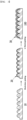
- FIG. 1 illustrates a structure of an electrode for a lithium secondary battery 100 according to one embodiment of the present invention.
- the electrode for the lithium secondary battery of the present invention has a structure in which a conductive metal layer 20 and a lithium metal layer 30 are sequentially stacked on a polymer film 10 having a pattern formed on one surface thereof.
- the polymer film 10 serves as a support for the conductive metal layer 20 and the lithium metal layer 30.
- the pattern formed on the polymer film has a shape in which a plurality of hemispherical protrusions 11 are regularly arranged. Since the thin conductive metal layer 20 and the lithium metal layer 30 are stacked on the pattern shape, the surface of the electrode to be finally manufactured has a plurality of hemispherical protrusions according to the pattern shape of the polymer film 10.
- the 'hemispherical protrusion' refers to a hemisphere-like shape protrusion, in which outer circumference of the protrusion is curved, and it does not necessarily mean the hemispherical shape.
- the electrode for the lithium secondary battery of the present invention may have greatly improved stability, cycle characteristics, and efficiency during operation of lithium secondary battery.
- the effect of inducing the uniform current flow may be obtained when the outer circumference of the protrusions of the pattern is curved, and it is difficult to expect the effect of dispersing current density when the protrusions include an angled part such as a regular hexahedral shape. Further, even though the outer circumference of the hemispherical protrusions is curved, the effect may be ensured only when the diameter of the protrusions satisfies an appropriate range.
- the diameter of the hemispherical protrusion 11 in the pattern of the polymer film 10 is 5 ⁇ m or more, preferably 7 ⁇ m or more, or 10 ⁇ m or more; and 50 ⁇ m or less, preferably 40 ⁇ m or less, or 30 ⁇ m or less.
- the diameter d of the hemispherical protrusion means the longest straight distance from one side of the lowermost portion of the hemispherical protrusion to the other side.
- the diameter of the hemispherical protrusion is less than 5 ⁇ m, the shape of the pattern may become less visible on the surface of the lithium metal layer of the electrode finally manufactured by stacking the conductive metal layer 20 and the lithium metal layer 30, and if the diameter of the hemispherical protrusion is as large as more than 50 ⁇ m, it is difficult to ensure the effect of dispersing current density by the patterning. Accordingly, it is preferable that the diameter satisfies the above range.
- a height h1 of the hemispherical protrusion 11 means a height from the lowermost portion to the uppermost portion of the hemispherical protrusion, and is preferably 3 ⁇ m or more, 5 ⁇ m or more, or 10 ⁇ m or more, and 50 ⁇ m or less, 40 ⁇ m or less, or 30 ⁇ m or less. If the height of the hemispherical protrusion 11 is less than 3 ⁇ m, the shape of the pattern may become less visible on the electrode finally manufactured, while if the height of the hemispherical protrusion 11 is more than 50 ⁇ m, the electrode becomes too thick, and thus there is a problem in that the energy density is reduced.
- a distance g between the hemispherical protrusions 11 means the shortest straight distance from one side of the lowermost portion of one hemispherical protrusion to the other side of another hemispherical protrusion, and the distance between the hemispherical protrusions is preferably 50 ⁇ m or less, 40 ⁇ m or less, or 30 ⁇ m or less.
- One hemispherical protrusion and another hemispherical protrusion may be arranged such that there is no gap therebetween.
- the lower limit of the distance between the hemispherical protrusions is not restricted, but the distance may be preferably 2 ⁇ m or more, or 3 ⁇ m or more, taking into consideration the thickness of the conductive metal layer and the lithium metal layer stacked on the polymer film.
- the thickness h2 of the polymer film is preferably in the range of 5 ⁇ m to 30 ⁇ m, or 8 ⁇ m to 15 ⁇ m.
- a material of the polymer film is not particularly limited, but a polymer that has flexibility, does not easily react with an organic electrolyte solution, and is not easily broken due to excellent tensile strength may be suitably used.
- the material of the polymer film which is applicable in the present invention may be one or more selected from the group consisting of polyethylene terephthalate, polybutylene terephthalate, polyethylene naphthalate, polyethylene, polypropylene, polybutene, polyphenyl sulfide, polyethylene sulfide, polyimide, and Teflon, but is not limited thereto.
- PET polyethylene terephthalate
- PET polyimide
- Teflon having excellent flexibility and strength characteristics is preferred, and PET is more preferred.
- the conductive metal layer 20 is composed of a conductive metal which may serve as a current collector, and as the conductive metal, any type commonly used in a negative electrode current collector of a lithium secondary battery may be used without limitation.
- the conductive metal may be one or more selected from the group consisting of Ni, Ti, Cu, Ag, Au, Pt, Fe, Co, Cr, W, Mo, Al, Mg, K, Na, Ca, Sr, Ba, Si, Ge, Sb, Pb, In, and Zn, and taking conductivity and economical efficiency into consideration, Ni, Cu, or Ti may be preferred, and Ni may be more preferred.
- a thickness of the conductive metal layer 20 may be in the range of 0.5 ⁇ m to 10 ⁇ m, 1 ⁇ m to 7 ⁇ m, or 2 ⁇ m to 5 ⁇ m. If the thickness of the conductive metal layer 20 is as thick as more than 10 ⁇ m, energy density may be reduced to deteriorate the performances of the battery, the pattern formed on the polymer film 10 may not become visible on the surface of the finally manufactured electrode, and it is difficult to secure the effect of the present invention. On the contrary, if the thickness is as thin as less than 0.5 ⁇ m, the uniform conductive metal layer is not formed, and there is a problem in that it is difficult to secure the sufficient conductivity. Therefore, it is preferable that the thickness satisfies the above range.
- the electrode for the lithium secondary battery of the present invention includes a lithium metal as an active material.
- the lithium metal layer 30 is formed on the conductive metal layer 20, and preferably has a thickness of 5 ⁇ m or more, or 10 ⁇ m or more for stable charging/discharging of the electrode. Meanwhile, if the lithium metal layer 30 is too thick, the pattern formed on the polymer film 10 may not become visible on the lithium metal layer 30, and thus it is difficult to achieve the effects of the present invention. Therefore, the thickness of the lithium metal layer 30 is preferably 50 ⁇ m or less, or 40 ⁇ m or less.
- a method of manufacturing the electrode for the lithium secondary battery of the present invention is not particularly limited. However, as illustrated in FIG. 3 , the method may include the steps of preparing the polymer film having the pattern formed on one surface thereof, in which a plurality of hemispherical protrusions having a diameter of 5 ⁇ m to 50 ⁇ m are regularly arranged; forming the conductive metal layer by electroless plating a conductive metal precursor onto the pattern of the polymer film; and forming the lithium metal layer by electroplating the lithium metal onto the conductive metal layer.
- This method may be further specified by the following examples.
- the polymer film those which are commercially available or directly manufactured may be used.
- a manufacturing method thereof is not limited, and various methods such as extrusion molding, injection molding, and a solution casting method known in the art may be applied.
- a method of forming the pattern on the polymer film is not particularly limited, but a method of placing a planar polymer film on a mold, and pressing and/or heating the polymer film to form the pattern may be used.
- the step of forming the conductive metal layer may be performed by electroless plating a conductive metal precursor.
- the electroless plating may be a method of reducing metal ions of metal salts in an aqueous solution into metals by using a reducing agent, thereby precipitating the metals on the surface of a subject to be treated.
- a common electroless plating method known in the art may be used without limitation.
- the conductive metal precursor used in the step of electroless plating may be a sulfate, halide, nitrate, or hydroxide of Ni, Ti, Cu, Ag, Au, Pt, Fe, Co, Cr, W, Mo, Al, Mg, K, Na, Ca, Sr, Ba, Si, Ge, Sb, Pb, In, or Zn.
- the conductive metal precursor is preferably used in the range of 0.1 M to 3 M, or 0.5 M to 1.5 M such that a sufficient amount of the conductive metal layer may be formed on the polymer film.
- the reducing agent in the step of electroless plating glycine, formaldehyde, hydrazine or citric acid may be used, and this reducing agent may be used in an appropriate range according to the number of moles of the used conductive metal precursor.
- the reducing agent may be used in the range of 0.1 M to 3 M or 0.5 M to 1.5 M.
- the reducing agent may be used in the range of about twice the above concentration (in the range of 0.2 M to 6 M or 1 M to 3 M).
- the conductive metal precursor includes a trivalent metal ion
- the reducing agent may be used in the range of about three times the above concentration (in the range of 0.3 M to 9 M or 1.5 M to 4.5 M).
- the conductive metal precursor solution and the reducing agent solution may be fed not at once but continuously at a constant rate into an electrolyzer, in which the polymer film to be treated and water are placed.
- an electrolyzer in which the polymer film to be treated and water are placed.
- uniform electroless plating may not occur on the polymer film, and uniform formation of the conductive metal layer may not occur.
- the uniform conductive metal layer may be preferably obtained.
- the conductive metal precursor solution and the reducing agent solution may be fed at a rate of 0.05 ml/min to 1 ml/min, or 0.1 ml/min to 0.5 ml/min, and the feeding time (reaction time) may be 20 minutes to 5 hours, or 30 minutes to 3 hours.
- Formation of the lithium metal layer may be performed by electroplating lithium metals.
- the electroplating may be performed in the presence of lithium salts in a non-aqueous solvent.
- the non-aqueous solvent may be one or more selected from the group consisting of organic solvents of 1,4-dioxane, 1,2-dimethoxyethane, tetrahydrofuran, dichloromethane, N-methylpyrrolidone, propylene carbonate, ethylene carbonate, butylene carbonate, dimethyl carbonate, diethyl carbonate, ethyl methyl carbonate, gamma-butyrolactone, 1,2-dimethoxyethane, 1,2-diethoxyethane, tetrahydroxy furan, 2-methyl tetrahydrofuran, dimethyl sulfoxide, 1,3-dioxolane, 4-methyl-1,3-dioxene, diethylether, formamide, dimethylformamide, dioxolane, acet
- the lithium salt may be one or more selected from the group consisting of LiCl, LiBr, LiI, LiClO 4 , LiBF 4 , LiB 10 Cl 10 , LiPF 6 , LiAsF 6 , LiSbF 6 , LiAlCl 4 , LiSCN, LiC 4 BO 8 , LiCF 3 CO 2 , LiCH 3 SO 3 , LiCF 3 SO 3 , LiN(SO 2 F) 2 , LiN(SO 2 CF 3 ) 2 , LiN(SO 2 C 2 F 5 ) 2 , LiC 4 F 9 SO 3 , LiC(CF 3 SO 2 ) 3 , (CF 3 SO 2 ) 2 NLi, lithium chloroborate, a lower aliphatic carboxylic acid lithium, lithium tetraphenyl borate, and lithium imide.
- LiN(SO 2 F) 2 , LiCl, and LiPF 6 may be more preferably
- the process conditions of the electroplating step are not particularly limited.
- the polymer film on which the conductive metal layer is formed may be placed in the electrolyzer containing the non-aqueous solvent and lithium salts, and then a current of 0.1 mA/cm 2 to 10 mA/cm 2 may be applied thereto at room temperature of 20 °C to 30 °C.
- the present invention provides a lithium secondary battery including the above-described electrode for the lithium secondary battery.
- the lithium secondary battery of the present invention includes a positive electrode, a negative electrode, a separator interposed therebetween, and an electrolyte, and the electrode for the lithium secondary battery is preferably used as the negative electrode.
- the lithium electrode of the present invention when used as the negative electrode, growth of lithium dendrites may be remarkably inhibited during charging/discharging the lithium secondary battery of the present invention. As a result, cycle and efficiency characteristics of the battery may be secured, and stability of the battery may be improved.
- the configuration of the positive electrode, the separator, and the electrolyte of the lithium secondary battery is not particularly limited in the present invention, and it follows those known in the art.
- the positive electrode includes a positive electrode active material formed on a positive electrode current collector.
- the positive electrode current collector is not particularly limited as long as it has high conductivity without causing chemical changes in the corresponding battery.
- stainless steel, aluminum, nickel, titanium, fired carbon, or aluminum or stainless steel that is surface-treated with carbon, nickel, titanium, or silver may be used.
- the positive electrode current collector may be in a variety of forms such as a film, a sheet, a foil, a net, a porous material, a foamed material, or a non-woven fabric material, which has fine roughness on the surface thereof so as to reinforce adhesion of the positive electrode active material.
- the positive electrode active material constituting the electrode layer may be any positive electrode active material which may be used in the art.
- the positive electrode active material may include lithium metals; lithium cobalt oxides such as LiCoO 2 ; lithium manganese oxides such as Li 1+x Mn 2-x O 4 (wherein x is 0 to 0.33), LiMnO 3 , LiMn 2 O 3 , and LiMnO 2 ; lithium copper oxides such as Li 2 CuO 2 ; vanadium oxides such as LiVsOs, LiFe 3 O 4 , V 2 O 5 , and Cu 12 V 2 O 7 ; lithium nickel oxides represented by LiNi 1-x M x O 2 (wherein M is Co, Mn, Al, Cu, Fe, Mg, B, or Ga, and x is 0.01 to 0.3); lithium manganese complex oxides represented by LiMn 2-x M x O 2 (wherein M is Co, Ni, Fe, Cr, Zn, or Ta, and x is 0.01 to 0.1)
- the electrode layer may further include a binder resin, a conductive material, a filler, or other additives, in addition to the positive electrode active material.
- the binder resin is used for binding of the electrode active material and the conductive material and binding with respect to the current collector.
- the binder resin may include polyvinylidene fluoride (PVDF), polyvinyl alcohol (PVA), polyacrylic acid (PAA), polymethacrylic acid (PMA), polymethylmethacrylate (PMMA), polyacrylamide (PAM), polymethacrylamide, polyacrylonitrile (PAN), polymethacrylonitrile, polyimide (PI), alginic acid, alginate, chitosan, carboxymethyl cellulose (CMC), starch, hydroxypropyl cellulose, regenerated cellulose, polyvinylpyrrolidone, tetrafluoroethylene, polyethylene, polypropylene, ethylene-propylene-diene terpolymer (EPDM), sulfonated EPDM, styrene-butadiene rubber (SBR), fluorine rubber, and various copolymers thereof.
- PVDF polyviny
- the conductive material is used to further improve conductivity of the electrode active material.
- the conductive material is not particularly limited, as long as it has conductivity without causing chemical changes in the corresponding battery. Examples thereof may include graphite such as natural or artificial graphite; carbon black such as carbon black, acetylene black, Ketjen black, channel black, furnace black, lamp black, and thermal black; conductive fibers such as carbon fibers, and metallic fibers; metallic powders such as carbon fluoride, aluminum, and nickel powder; conductive whiskers such as zinc oxide, and potassium titanate; conductive metal oxides such as titanium oxide; and polyphenylene derivatives.
- graphite such as natural or artificial graphite
- carbon black such as carbon black, acetylene black, Ketjen black, channel black, furnace black, lamp black, and thermal black
- conductive fibers such as carbon fibers, and metallic fibers
- metallic powders such as carbon fluoride, aluminum, and nickel powder
- conductive whiskers such as zinc oxide, and potassium titanate
- the filler is a component optionally used to inhibit expansion of the electrode.
- the filler is not particularly limited, as long as it is a fibrous material without causing chemical changes in the corresponding battery.
- olefinic polymers such as polyethylene and polypropylene
- fibrous materials such as glass fibers and carbon fibers, may be used.
- the separator may be composed of a porous substrate.
- any porous substrate may be used, as long as it is commonly used in an electrochemical device.
- a polyolefin-based porous film or non-woven fabric may be used, but is not particularly limited thereto.
- the separator may be a porous substrate composed of any one selected from the group consisting of polyethylene, polypropylene, polybutylene, polypentene, polyethylene terephthalate, polybutylene terephthalate, polyester, polyacetal, polyamide, polycarbonate, polyimide, polyetheretherketone, polyethersulfone, polyphenylene oxide, polyphenylene sulfide, and polyethylene naphthalate, or a mixture of two or more thereof.
- the electrolyte of the lithium secondary battery may be a non-aqueous electrolyte solution containing lithium salts and a non-aqueous organic solvent, an organic solid electrolyte, or an inorganic solid electrolyte, but is not limited thereto.
- the non-aqueous organic solvent may be, for example, a non-protic organic solvent, such as N-methyl-2-pyrrolidone, propylene carbonate, ethylene carbonate, butylene carbonate, dimethyl carbonate, diethyl carbonate, ethyl methyl carbonate, gamma butyrolactone, 1,2-dimethoxy ethane, 1,2-diethoxy ethane, tetrahydroxy franc, 2-methyl tetrahydrofuran, dimethyl sulfoxide, 1,3-dioxolane, 4-methyl-1,3-dioxene, diethylether, formamide, dimethylformamide, dioxolane, acetonitrile, nitromethane, methyl formate, methyl acetate, phosphoric acid triester, trimethoxy methane, dioxolane derivatives, sulfolane, methyl sulfolane, 1,3-dimethyl-2-imidazolidin
- the lithium salt is a material that is readily soluble in the non-aqueous electrolyte, and may include, for example, LiCl, LiBr, LiI, LiClO 4 , LiBF 4 , LiB 10 Cl 10 , LiPF 6 , LiAsF 6 , LiSbF 6 , LiAlCl 4 , LiSCN, LiC 4 BO 8 , LiCF 3 CO 2 , LiCH 3 SO 3 , LiCF 3 SO 3 , LiN(SO 2 F) 2 , LiN(SO 2 CF 3 ) 2 , LiN(SO 2 C 2 F 5 ) 2 , LiC 4 F 9 SO 3 , LiC(CF 3 SO 2 ) 3 , (CF 3 SO 2 ) 2 NLi, lithium chloroborate, a lower aliphatic carboxylic acid lithium, lithium tetraphenyl borate, and lithium imide.
- the organic solid electrolyte may include, for example, polyethylene derivatives, polyethylene oxide derivatives, polypropylene oxide derivatives, phosphoric acid ester polymer, polyalginate lysine, polyester sulfide, polyvinyl alcohol, polyvinylidene fluoride, and a polymer containing secondary dissociation groups.
- the inorganic solid electrolyte may include, for example, Li-based nitrides, halides, or sulfates such as Li 3 N, LiI, Li 5 NI 2 , Li 3 N-LiI-LiOH, LiSiO 4 , LiSiO 4 -LiI-LiOH, Li 2 SiS 3 , Li 4 SiO 4 , Li 4 SiO 4 -LiI-LiOH, and Li 3 PO 4 -Li 2 S-SiS 2 .
- Li-based nitrides, halides, or sulfates such as Li 3 N, LiI, Li 5 NI 2 , Li 3 N-LiI-LiOH, LiSiO 4 , LiSiO 4 -LiI-LiOH, Li 2 SiS 3 , Li 4 SiO 4 , Li 4 SiO 4 -LiI-LiOH, and Li 3 PO 4 -Li 2 S-SiS 2 .
- the electrolyte may further include other additives in order to improve, for example, charge/discharge characteristics or flame retardancy.
- the additives may include pyridine, triethyl phosphite, triethanolamine, cyclic ether, ethylene diamine, n-glyme, hexaphosphoric triamide, nitrobenzene derivatives, sulfur, quinone imine dyes, N-substituted oxazolidinone, N,N-substituted imidazolidine, ethylene glycol dialkylether, ammonium salts, pyrrole, 2-methoxy ethanol, aluminum trichloride, fluoroethylene carbonate (FEC), propene sultone (PRS), and vinylene carbonate (VC).
- FEC fluoroethylene carbonate
- PRS propene sultone
- VC vinylene carbonate
- the lithium secondary battery according to the present invention may be subjected to lamination (stacked) and folding processes of the separator and the electrode, in addition to a general process of winding.
- the battery case may be cylindrical, square, a pouch-type, or a coin-type.
- a PET film (thickness excluding the height of the protrusions: 10 ⁇ m) with a pattern of hemispherical protrusions (diameter: 10 ⁇ m, height: 10 ⁇ m, space between protrusions: 5 ⁇ m) was immersed in a water tank containing water, and then nickel sulfate (1 M) and glycine (1 M) were introduced at a rate of 0.15 mL/min for 2 hours to perform Ni electroless plating.
- the manufactured Ni/PET film (thickness of Ni layer: 2 ⁇ m) was washed with distilled water, followed by drying.
- the manufactured Ni/PET film was put in 1 M LiFSI-dissolved 1,4-dioxane (DX): 1,2-dimethoxyethane (DME) solution (1:2, v/v), and current of 1 mA/cm 2 was applied at room temperature (25 °C) to perform Li electroplating.
- DX 1,4-dioxane
- DME 1,2-dimethoxyethane
- current of 1 mA/cm 2 was applied at room temperature (25 °C) to perform Li electroplating.
- PESC05 of PNE Solution Co., Ltd. was used as an electroplating machine.
- an electrode for a lithium secondary battery was obtained, the electrode being plated with the lithium metal at a thickness of 20 ⁇ m, having Li/Ni/PET sequentially stacked, and having a plurality of regular hemispherical protrusions.
- a symmetric cell was manufactured by interposing a polyolefin separator between the manufactured electrodes for the lithium secondary battery, and an electrolyte solution, in which 1 M LiPF 6 was dissolved in a mixed solvent of ethylene carbonate (EC) and diethyl carbonate (DEC) at a volume ratio of 50:50, was injected to manufacture a coin-type cell.
- EC ethylene carbonate
- DEC diethyl carbonate
- a full cell was manufactured by interposing a polyolefin separator between the manufactured electrode for the lithium secondary battery (negative electrode) and a positive electrode manufactured by coating one surface of an aluminum current collector with a slurry at a thickness of 65 ⁇ m, followed by drying and rolling, in which the slurry was prepared by adding 96 % by weight of LiCoO 2 as a positive electrode active material, 2 % by weight of Denka black (conductive material), and 2 % by weight of PVdF (polyvinylidene fluoride, binder) to NMP (N-methyl-2-pyrrolidone).
- LiCoO 2 LiCoO 2
- Denka black conductive material
- PVdF polyvinylidene fluoride, binder
- an electrolyte solution in which 1 M LiPF 6 was dissolved in a mixed solvent of ethylene carbonate (EC) and diethyl carbonate (DEC) at a volume ratio of 50:50, was injected to manufacture a coin-type cell.
- EC ethylene carbonate
- DEC diethyl carbonate
- An electrode for a lithium secondary battery and a coin-type cell including the same were manufactured in the same manner as in Example 1, except that a PET film having hemispherical protrusions of 20 ⁇ m in diameter was used.
- An electrode for a lithium secondary battery and a coin-type cell including the same were manufactured in the same manner as in Example 1, except that a PET film having hemispherical protrusions of 40 ⁇ m in diameter was used.
- An electrode for a lithium secondary battery and a coin-type cell including the same were manufactured in the same manner as in Example 1, except that a PET film having hemispherical protrusions of 20 ⁇ m in height was used.
- An electrode for a lithium secondary battery and a coin-type cell including the same were manufactured in the same manner as in Example 1, except that a PET film having hemispherical protrusions of 10 ⁇ m in distance was used.
- An electrode for a lithium secondary battery and a coin-type cell including the same were manufactured in the same manner as in Example 1, except that a PET film having no pattern of hemispherical protrusions was used.
- a coin-type cell was manufactured in the same manner as in Example 1, except that a non-treated lithium metal foil (20 ⁇ m) was used as the electrode for the lithium secondary battery.
- An electrode for a lithium secondary battery and a coin-type cell including the same were manufactured in the same manner as in Example 1, except that a PET film not having hemispherical protrusions but having regular hexahedral protrusions of 10 ⁇ m in the length of one side was used.
- An electrode for a lithium secondary battery and a coin-type cell including the same were manufactured in the same manner as in Example 1, except that a PET film having hemispherical protrusions of 4 ⁇ m in diameter was used.
- An electrode for a lithium secondary battery and a coin-type cell including the same were manufactured in the same manner as in Example 1, except that a PET film having hemispherical protrusions of 60 ⁇ m in diameter was used.
- Each of the coin-type full cells manufactured in the examples and comparative examples was charged/discharged using an electrochemical charger/discharger (PNE Solution, PESC05). Charging was performed up to the voltage of 4.4 V vs. Li/Li + , and discharging was performed up to the voltage of 3.0 V vs. Li/Li + , and current density of 0.5C-rate was applied. Comparison of discharge capacity at the 100 th cycle with discharge capacity at the 1 st cycle is shown in the following Table 1.
- Examples 1 to 5 showed a remarkably low increase rate in the overvoltage at the 100 th cycle and remarkably high discharge capacity at the 100 th cycle with respect to the 1 st cycle, as compared with Comparative Examples 1 and 2.
- the reason is that the electrode has hemispherical patterns on the surface thereof, and thus uniform lithium deposition and stripping occurred throughout the surface of the electrode when charging and discharging the battery.
- Comparative Example 1 and 2 having no patterns on the surface of the electrode showed a rapid increase in the overvoltage and a remarkable reduction in the discharge capacity, indicating that uneven lithium deposition and stripping occurred due to the current concentration on a specific area of the surface of lithium metal.
- Comparative Examples 4 to 5 showed a high increase rate of overvoltage and a low discharge capacity, as compared with Examples 1 to 5. It is likely that this is because the diameter of the hemispherical protrusions is too small or too large, and thus the effect of uniformly dispersing the current was rather decreased. These results suggest that the diameter of the hemispherical protrusions must satisfy the range of 5 ⁇ m to 50 ⁇ m to secure the effects of the present invention.
Landscapes
- Chemical & Material Sciences (AREA)
- General Chemical & Material Sciences (AREA)
- Chemical Kinetics & Catalysis (AREA)
- Engineering & Computer Science (AREA)
- Electrochemistry (AREA)
- Materials Engineering (AREA)
- Manufacturing & Machinery (AREA)
- Metallurgy (AREA)
- Organic Chemistry (AREA)
- Mechanical Engineering (AREA)
- Composite Materials (AREA)
- Inorganic Chemistry (AREA)
- Physics & Mathematics (AREA)
- Thermal Sciences (AREA)
- Battery Electrode And Active Subsutance (AREA)
- Cell Electrode Carriers And Collectors (AREA)
- Secondary Cells (AREA)
Claims (15)
- Électrode (100) pour une batterie secondaire au lithium, l'électrode comprenant :un film polymère (10) présentant un motif formé sur une surface de celui-ci, dans laquelle une pluralité de saillies hémisphériques (11) ayant un diamètre compris de 5 µm à 50 µm sont disposées régulièrement ;une couche de métal conducteur (20) formée sur le motif du film polymère (10) ; etune couche de lithium métallique (30) formée sur la couche de métal conducteur (20) ;dans laquelle la surface de l'électrode présente un motif de saillies hémisphériques selon la forme de motif du film polymère (10).
- Électrode selon la revendication 1, dans laquelle les saillies hémisphériques (11) ont une hauteur de 3 µm à 50 µm.
- Électrode selon la revendication 1, dans laquelle les saillies hémisphériques (11) ont un diamètre de 7 µm à 40 µm et une hauteur de 5 µm à 40 µm.
- Électrode selon la revendication 1, dans laquelle la distance entre les saillies hémisphériques (11) est de 2 µm à 50 µm.
- Électrode selon la revendication 1, dans laquelle le polymère du film polymère (10) est un ou plusieurs parmi du polyéthylène téréphtalate, du polybutylène téréphtalate, du polyéthylène naphthalate, du polyéthylène, du polypropylène, du polybutène, du sulfure de polyphénylène, du sulfure de polyéthylène, du polyimide et du Teflon.
- Électrode selon la revendication 1, dans laquelle le film polymère (10) a une épaisseur de 5 µm à 30 µm, l'épaisseur excluant la hauteur de la saillie hémisphérique.
- Électrode selon la revendication 1, dans laquelle le métal conducteur est un ou plusieurs parmi Ni, Ti, Cu, Ag, Au, Pt, Fe, Co, Cr, W, Mo, Al, Mg, K, Na, Ca, Sr, Ba, Si, Ge, Sb, Pb, In et Zn.
- Électrode selon la revendication 1, dans laquelle la couche de métal conducteur (20) a une épaisseur de 0,5 µm à 10 µm.
- Électrode selon la revendication 1, dans laquelle la couche de lithium métallique (30) a une épaisseur de 5 µm à 50 µm.
- Batterie secondaire au lithium comprenant l'électrode selon l'une quelconque des revendications 1 à 9.
- Procédé de fabrication d'une électrode (100) selon la revendication 1, le procédé comprenant les étapes de :préparer un film polymère (10) présentant un motif formé sur une surface de celui-ci, dans lequel une pluralité de saillies hémisphériques (11) ayant un diamètre de 5 µm à 50 µm sont disposées régulièrement ;former une couche de métal conducteur (20) par dépôt sans courant électrique d'un précurseur métallique conducteur sur le motif du film polymère (10) ; etformer une couche de lithium métallique (30) par dépôt électrolytique d'un lithium métallique sur la couche de métal conducteur (20).
- Procédé selon la revendication 11, dans lequel le précurseur métallique conducteur est un ou plusieurs parmi un sulfate, halogénure, nitrate et hydroxyde de Ni, Ti, Cu, Ag, Au, Pt, Fe, Co, Cr, W, Mo, Al, Mg, K, Na, Ca, Sr, Ba, Si, Ge, Sb, Pb, In ou Zn.
- Procédé selon la revendication 11, dans lequel, dans l'étape de dépôt sans courant électrique, en tant qu'agent réducteur, un ou plusieurs parmi de la glycine, du formaldéhyde, de l'hydrazine et de l'acide citrique est utilisé.
- Procédé selon la revendication 11, dans lequel la couche de métal conducteur (20) est formée sur une épaisseur de 0,5 µm à 10 µm.
- Procédé selon la revendication 11, dans lequel la couche de lithium métallique (30) est formée sur une épaisseur de 5 µm à 50 µm.
Applications Claiming Priority (2)
| Application Number | Priority Date | Filing Date | Title |
|---|---|---|---|
| KR1020180100361A KR102433360B1 (ko) | 2018-08-27 | 2018-08-27 | 리튬 이차전지용 전극 및 이의 제조방법 |
| PCT/KR2019/008600 WO2020045820A1 (fr) | 2018-08-27 | 2019-07-11 | Électrode de batterie secondaire au lithium et son procédé de fabrication |
Publications (3)
| Publication Number | Publication Date |
|---|---|
| EP3699989A1 EP3699989A1 (fr) | 2020-08-26 |
| EP3699989A4 EP3699989A4 (fr) | 2021-02-24 |
| EP3699989B1 true EP3699989B1 (fr) | 2023-11-22 |
Family
ID=69645277
Family Applications (1)
| Application Number | Title | Priority Date | Filing Date |
|---|---|---|---|
| EP19855630.0A Active EP3699989B1 (fr) | 2018-08-27 | 2019-07-11 | Électrode de batterie secondaire au lithium et son procédé de fabrication |
Country Status (8)
| Country | Link |
|---|---|
| US (2) | US11677079B2 (fr) |
| EP (1) | EP3699989B1 (fr) |
| JP (1) | JP7062170B2 (fr) |
| KR (1) | KR102433360B1 (fr) |
| CN (2) | CN118899446A (fr) |
| ES (1) | ES2970915T3 (fr) |
| HU (1) | HUE065880T2 (fr) |
| WO (1) | WO2020045820A1 (fr) |
Families Citing this family (4)
| Publication number | Priority date | Publication date | Assignee | Title |
|---|---|---|---|---|
| KR102433360B1 (ko) * | 2018-08-27 | 2022-08-16 | 주식회사 엘지에너지솔루션 | 리튬 이차전지용 전극 및 이의 제조방법 |
| KR102491178B1 (ko) * | 2020-11-26 | 2023-01-20 | 한국생산기술연구원 | 저항 구배형 3차원 집전체, 리튬 음극 및 이들의 제조방법 |
| CN120380057A (zh) * | 2022-11-28 | 2025-07-25 | 提克纳有限责任公司 | 水解稳定的聚芳硫醚组合物 |
| CN119517997B (zh) * | 2025-01-22 | 2025-05-16 | 北京大学 | 基于化学镀制备的复合三维集流体及金属负极和金属二次电池 |
Family Cites Families (26)
| Publication number | Priority date | Publication date | Assignee | Title |
|---|---|---|---|---|
| JP4039893B2 (ja) * | 2002-06-19 | 2008-01-30 | 東洋鋼鈑株式会社 | 高容量負極 |
| JP4037229B2 (ja) | 2002-09-30 | 2008-01-23 | 日立マクセル株式会社 | リチウム二次電池用電極と、これを負極とするリチウム二次電池 |
| KR100485091B1 (ko) | 2002-10-25 | 2005-04-22 | 삼성에스디아이 주식회사 | 리튬 이차 전지용 음극 및 이를 포함하는 리튬 이차 전지 |
| KR100515301B1 (ko) * | 2003-05-27 | 2005-09-15 | 삼성에스디아이 주식회사 | 리튬 이차 전지용 음극 및 그를 포함하는 리튬 이차 전지 |
| JP4920880B2 (ja) | 2003-09-26 | 2012-04-18 | 三星エスディアイ株式会社 | リチウムイオン二次電池 |
| KR100560541B1 (ko) | 2003-09-26 | 2006-03-15 | 삼성에스디아이 주식회사 | 리튬 이차 전지 |
| KR100666506B1 (ko) | 2005-06-09 | 2007-01-09 | 강원대학교산학협력단 | 박막 전지 및 그 제조 방법 |
| KR100669338B1 (ko) * | 2005-07-18 | 2007-01-16 | 삼성에스디아이 주식회사 | 리튬 이차 전지용 음극 및 이를 포함하는 리튬 이차 전지 |
| EP2372821B1 (fr) * | 2006-12-27 | 2014-04-30 | Panasonic Corporation | Batterie, électrode et collecteur de courant utilisé à ces fins |
| US20080248386A1 (en) | 2007-04-05 | 2008-10-09 | Obrovac Mark N | Electrodes with raised patterns |
| JP5433144B2 (ja) | 2007-11-12 | 2014-03-05 | 東京応化工業株式会社 | リチウム二次電池用負極基材 |
| KR20090049022A (ko) * | 2007-11-12 | 2009-05-15 | 도오꾜오까고오교 가부시끼가이샤 | 부극 기재 |
| WO2010100636A1 (fr) | 2009-03-03 | 2010-09-10 | Technion Research & Development Foundation Ltd. | Batteries silicium-air |
| KR101105355B1 (ko) * | 2010-03-26 | 2012-01-16 | 국립대학법인 울산과학기술대학교 산학협력단 | 플렉서블한 전극용 집전체, 이의 제조방법 및 이를 이용한 음극 |
| KR101156225B1 (ko) | 2010-11-17 | 2012-06-18 | 고려대학교 산학협력단 | 리튬이 전착된 실리콘 리튬 이차전지용 음극 및 이의 제조방법 |
| BR112013023730A2 (pt) | 2011-03-15 | 2016-12-13 | Nano Nouvelle Pty Ltd | baterias |
| JP6050106B2 (ja) * | 2011-12-21 | 2016-12-21 | 株式会社半導体エネルギー研究所 | 非水二次電池用シリコン負極の製造方法 |
| KR101327283B1 (ko) | 2012-03-20 | 2013-11-11 | 한국과학기술연구원 | 집전체 표면위에 형성된 고분자패턴을 이용하여 고성능 실리콘 전극제조 및 이를 포함하는 리튬계 이차전지음전극의 제조방법 |
| JP5292502B1 (ja) * | 2012-09-06 | 2013-09-18 | 成康 町田 | 電気デバイス |
| CN103779579A (zh) * | 2014-01-24 | 2014-05-07 | 湖北金泉新材料有限责任公司 | 锂电池负极片及其制备方法和相应的锂电池制备方法 |
| KR101502080B1 (ko) * | 2014-04-30 | 2015-03-12 | 한국기계연구원 | 신축가능한 에너지 저장소자용 전극 구조물의 제조방법, 이 방법에 의해 제조된 전극 구조물 및 이를 포함하는 에너지 저장소자 |
| US9985293B2 (en) * | 2014-07-10 | 2018-05-29 | The Board Of Trustees Of The Leland Stanford Junior University | Structure that encapsulates lithium metal for high energy density battery anode |
| KR20170098375A (ko) | 2016-02-19 | 2017-08-30 | (주) 전문가닷컴 | 전문가중개 시스템 및 방법 |
| KR102003291B1 (ko) * | 2016-02-23 | 2019-07-24 | 주식회사 엘지화학 | 다공성 보호층이 형성된 전극, 이의 제조방법 및 이를 적용한 리튬 이차전지 |
| KR20180091456A (ko) | 2017-02-07 | 2018-08-16 | 성균관대학교산학협력단 | 리튬 이차 전지용 음극 및 이의 제조방법 |
| KR102433360B1 (ko) * | 2018-08-27 | 2022-08-16 | 주식회사 엘지에너지솔루션 | 리튬 이차전지용 전극 및 이의 제조방법 |
-
2018
- 2018-08-27 KR KR1020180100361A patent/KR102433360B1/ko active Active
-
2019
- 2019-07-11 HU HUE19855630A patent/HUE065880T2/hu unknown
- 2019-07-11 CN CN202410942389.5A patent/CN118899446A/zh active Pending
- 2019-07-11 JP JP2020528473A patent/JP7062170B2/ja active Active
- 2019-07-11 EP EP19855630.0A patent/EP3699989B1/fr active Active
- 2019-07-11 ES ES19855630T patent/ES2970915T3/es active Active
- 2019-07-11 WO PCT/KR2019/008600 patent/WO2020045820A1/fr not_active Ceased
- 2019-07-11 US US16/652,546 patent/US11677079B2/en active Active
- 2019-07-11 CN CN201980004922.0A patent/CN111194496A/zh active Pending
-
2023
- 2023-04-26 US US18/307,130 patent/US11984603B2/en active Active
Also Published As
| Publication number | Publication date |
|---|---|
| JP7062170B2 (ja) | 2022-05-06 |
| HUE065880T2 (hu) | 2024-06-28 |
| WO2020045820A1 (fr) | 2020-03-05 |
| JP2021504898A (ja) | 2021-02-15 |
| US11984603B2 (en) | 2024-05-14 |
| CN118899446A (zh) | 2024-11-05 |
| US11677079B2 (en) | 2023-06-13 |
| US20200243863A1 (en) | 2020-07-30 |
| EP3699989A4 (fr) | 2021-02-24 |
| CN111194496A (zh) | 2020-05-22 |
| KR20200023886A (ko) | 2020-03-06 |
| US20230268514A1 (en) | 2023-08-24 |
| ES2970915T3 (es) | 2024-05-31 |
| EP3699989A1 (fr) | 2020-08-26 |
| KR102433360B1 (ko) | 2022-08-16 |
Similar Documents
| Publication | Publication Date | Title |
|---|---|---|
| KR102258758B1 (ko) | 리튬 금속 전극의 표면에 부동태막을 형성하는 리튬 이차전지의 연속 제조 방법 및 이의 제조 방법으로 제조된 리튬 이차전지 | |
| KR102302038B1 (ko) | 리튬 이차전지용 양극 활물질, 이의 제조방법, 이를 포함하는 리튬 이차전지용 양극 및 리튬 이차전지 | |
| US11984603B2 (en) | Electrode for lithium secondary battery and manufacturing method thereof | |
| US9780359B2 (en) | Method of manufacturing electrode for lithium secondary battery and electrode manufactured using the same | |
| US10243212B2 (en) | Electrode assembly for sulfur-lithium ion battery and sulfur-lithium ion battery including the same | |
| KR102207524B1 (ko) | 리튬 이차전지용 전극의 제조방법 및 이로부터 제조된 리튬 이차전지용 전극 | |
| US12080886B2 (en) | Method of washing positive electrode active material, and positive electrode active material prepared thereby | |
| KR102230751B1 (ko) | 보호층을 포함하는 리튬 이차전지용 전극 및 이를 포함하는 리튬 이차전지 | |
| KR102415164B1 (ko) | 다공성 집전체, 이를 포함하는 전극 및 리튬 이차전지 | |
| EP3686962A1 (fr) | Séparateur et batterie secondaire au lithium le comprenant | |
| KR20170120279A (ko) | 질소 도핑된 탄소-실리콘 복합체의 제조방법 및 이에 의하여 제조된 질소 도핑된 탄소-실리콘 복합체 | |
| EP3605714B1 (fr) | Ensemble d'électrodes et batterie secondaire au lithium le comprenant | |
| KR102569296B1 (ko) | 리튬 이차전지용 양극 활물질의 제조 방법, 상기 제조방법에 의해 제조된 양극 활물질 | |
| KR102910524B1 (ko) | 리튬 프리 전지, 및 이의 제조 방법 | |
| US12249720B2 (en) | Electrode assembly having enhanced safety and lithium secondary battery comprising same | |
| US11205779B2 (en) | Electrode for lithium secondary battery comprising protective layer and lithium secondary battery comprising the same | |
| CN114097109B (zh) | 无锂电池及其制备方法 | |
| CN114556622B (zh) | 无锂电池及其制备方法 | |
| US12620590B2 (en) | Method of washing positive electrode active material, and positive electrode active material prepared thereby | |
| KR102147495B1 (ko) | 안전성이 향상된 양극 활물질 및 이를 포함하는 리튬이차전지 | |
| KR102910526B1 (ko) | 리튬 프리 전지 및 이의 제조 방법 | |
| KR20240112680A (ko) | 메쉬 적층체를 포함하는 음극 및 이를 포함하는 이차전지 |
Legal Events
| Date | Code | Title | Description |
|---|---|---|---|
| STAA | Information on the status of an ep patent application or granted ep patent |
Free format text: STATUS: THE INTERNATIONAL PUBLICATION HAS BEEN MADE |
|
| PUAI | Public reference made under article 153(3) epc to a published international application that has entered the european phase |
Free format text: ORIGINAL CODE: 0009012 |
|
| STAA | Information on the status of an ep patent application or granted ep patent |
Free format text: STATUS: REQUEST FOR EXAMINATION WAS MADE |
|
| 17P | Request for examination filed |
Effective date: 20200522 |
|
| AK | Designated contracting states |
Kind code of ref document: A1 Designated state(s): AL AT BE BG CH CY CZ DE DK EE ES FI FR GB GR HR HU IE IS IT LI LT LU LV MC MK MT NL NO PL PT RO RS SE SI SK SM TR |
|
| AX | Request for extension of the european patent |
Extension state: BA ME |
|
| A4 | Supplementary search report drawn up and despatched |
Effective date: 20210125 |
|
| RIC1 | Information provided on ipc code assigned before grant |
Ipc: H01M 4/134 20100101ALI20210119BHEP Ipc: C23C 18/34 20060101ALI20210119BHEP Ipc: H01M 4/1395 20100101ALI20210119BHEP Ipc: H01M 4/66 20060101ALI20210119BHEP Ipc: H01M 4/38 20060101ALI20210119BHEP Ipc: C23C 18/16 20060101ALI20210119BHEP Ipc: H01M 10/052 20100101ALI20210119BHEP Ipc: H01M 4/78 20060101AFI20210119BHEP Ipc: H01M 4/13 20100101ALI20210119BHEP Ipc: H01M 4/04 20060101ALI20210119BHEP |
|
| DAV | Request for validation of the european patent (deleted) | ||
| DAX | Request for extension of the european patent (deleted) | ||
| RAP1 | Party data changed (applicant data changed or rights of an application transferred) |
Owner name: LG ENERGY SOLUTION LTD. |
|
| RAP3 | Party data changed (applicant data changed or rights of an application transferred) |
Owner name: LG ENERGY SOLUTION, LTD. |
|
| REG | Reference to a national code |
Ref country code: DE Free format text: PREVIOUS MAIN CLASS: H01M0004660000 Ref country code: DE Ref legal event code: R079 Ref document number: 602019042050 Country of ref document: DE Free format text: PREVIOUS MAIN CLASS: H01M0004660000 Ipc: H01M0004780000 |
|
| GRAP | Despatch of communication of intention to grant a patent |
Free format text: ORIGINAL CODE: EPIDOSNIGR1 |
|
| STAA | Information on the status of an ep patent application or granted ep patent |
Free format text: STATUS: GRANT OF PATENT IS INTENDED |
|
| RIC1 | Information provided on ipc code assigned before grant |
Ipc: C23C 18/34 20060101ALI20230607BHEP Ipc: C23C 18/16 20060101ALI20230607BHEP Ipc: H01M 4/66 20060101ALI20230607BHEP Ipc: H01M 4/134 20100101ALI20230607BHEP Ipc: H01M 10/052 20100101ALI20230607BHEP Ipc: H01M 4/1395 20100101ALI20230607BHEP Ipc: H01M 4/13 20100101ALI20230607BHEP Ipc: H01M 4/04 20060101ALI20230607BHEP Ipc: H01M 4/38 20060101ALI20230607BHEP Ipc: H01M 4/78 20060101AFI20230607BHEP |
|
| INTG | Intention to grant announced |
Effective date: 20230630 |
|
| GRAS | Grant fee paid |
Free format text: ORIGINAL CODE: EPIDOSNIGR3 |
|
| GRAA | (expected) grant |
Free format text: ORIGINAL CODE: 0009210 |
|
| STAA | Information on the status of an ep patent application or granted ep patent |
Free format text: STATUS: THE PATENT HAS BEEN GRANTED |
|
| AK | Designated contracting states |
Kind code of ref document: B1 Designated state(s): AL AT BE BG CH CY CZ DE DK EE ES FI FR GB GR HR HU IE IS IT LI LT LU LV MC MK MT NL NO PL PT RO RS SE SI SK SM TR |
|
| REG | Reference to a national code |
Ref country code: GB Ref legal event code: FG4D |
|
| REG | Reference to a national code |
Ref country code: CH Ref legal event code: EP Ref country code: DE Ref legal event code: R096 Ref document number: 602019042050 Country of ref document: DE |
|
| P01 | Opt-out of the competence of the unified patent court (upc) registered |
Effective date: 20231026 |
|
| REG | Reference to a national code |
Ref country code: IE Ref legal event code: FG4D |
|
| REG | Reference to a national code |
Ref country code: LT Ref legal event code: MG9D |
|
| REG | Reference to a national code |
Ref country code: NL Ref legal event code: MP Effective date: 20231122 |
|
| PG25 | Lapsed in a contracting state [announced via postgrant information from national office to epo] |
Ref country code: GR Free format text: LAPSE BECAUSE OF FAILURE TO SUBMIT A TRANSLATION OF THE DESCRIPTION OR TO PAY THE FEE WITHIN THE PRESCRIBED TIME-LIMIT Effective date: 20240223 |
|
| PG25 | Lapsed in a contracting state [announced via postgrant information from national office to epo] |
Ref country code: IS Free format text: LAPSE BECAUSE OF FAILURE TO SUBMIT A TRANSLATION OF THE DESCRIPTION OR TO PAY THE FEE WITHIN THE PRESCRIBED TIME-LIMIT Effective date: 20240322 |
|
| PG25 | Lapsed in a contracting state [announced via postgrant information from national office to epo] |
Ref country code: LT Free format text: LAPSE BECAUSE OF FAILURE TO SUBMIT A TRANSLATION OF THE DESCRIPTION OR TO PAY THE FEE WITHIN THE PRESCRIBED TIME-LIMIT Effective date: 20231122 |
|
| REG | Reference to a national code |
Ref country code: AT Ref legal event code: MK05 Ref document number: 1634677 Country of ref document: AT Kind code of ref document: T Effective date: 20231122 |
|
| PG25 | Lapsed in a contracting state [announced via postgrant information from national office to epo] |
Ref country code: NL Free format text: LAPSE BECAUSE OF FAILURE TO SUBMIT A TRANSLATION OF THE DESCRIPTION OR TO PAY THE FEE WITHIN THE PRESCRIBED TIME-LIMIT Effective date: 20231122 |
|
| PG25 | Lapsed in a contracting state [announced via postgrant information from national office to epo] |
Ref country code: AT Free format text: LAPSE BECAUSE OF FAILURE TO SUBMIT A TRANSLATION OF THE DESCRIPTION OR TO PAY THE FEE WITHIN THE PRESCRIBED TIME-LIMIT Effective date: 20231122 |
|
| PG25 | Lapsed in a contracting state [announced via postgrant information from national office to epo] |
Ref country code: NL Free format text: LAPSE BECAUSE OF FAILURE TO SUBMIT A TRANSLATION OF THE DESCRIPTION OR TO PAY THE FEE WITHIN THE PRESCRIBED TIME-LIMIT Effective date: 20231122 Ref country code: LT Free format text: LAPSE BECAUSE OF FAILURE TO SUBMIT A TRANSLATION OF THE DESCRIPTION OR TO PAY THE FEE WITHIN THE PRESCRIBED TIME-LIMIT Effective date: 20231122 Ref country code: IS Free format text: LAPSE BECAUSE OF FAILURE TO SUBMIT A TRANSLATION OF THE DESCRIPTION OR TO PAY THE FEE WITHIN THE PRESCRIBED TIME-LIMIT Effective date: 20240322 Ref country code: GR Free format text: LAPSE BECAUSE OF FAILURE TO SUBMIT A TRANSLATION OF THE DESCRIPTION OR TO PAY THE FEE WITHIN THE PRESCRIBED TIME-LIMIT Effective date: 20240223 Ref country code: BG Free format text: LAPSE BECAUSE OF FAILURE TO SUBMIT A TRANSLATION OF THE DESCRIPTION OR TO PAY THE FEE WITHIN THE PRESCRIBED TIME-LIMIT Effective date: 20240222 Ref country code: AT Free format text: LAPSE BECAUSE OF FAILURE TO SUBMIT A TRANSLATION OF THE DESCRIPTION OR TO PAY THE FEE WITHIN THE PRESCRIBED TIME-LIMIT Effective date: 20231122 Ref country code: PT Free format text: LAPSE BECAUSE OF FAILURE TO SUBMIT A TRANSLATION OF THE DESCRIPTION OR TO PAY THE FEE WITHIN THE PRESCRIBED TIME-LIMIT Effective date: 20240322 |
|
| PG25 | Lapsed in a contracting state [announced via postgrant information from national office to epo] |
Ref country code: SE Free format text: LAPSE BECAUSE OF FAILURE TO SUBMIT A TRANSLATION OF THE DESCRIPTION OR TO PAY THE FEE WITHIN THE PRESCRIBED TIME-LIMIT Effective date: 20231122 Ref country code: RS Free format text: LAPSE BECAUSE OF FAILURE TO SUBMIT A TRANSLATION OF THE DESCRIPTION OR TO PAY THE FEE WITHIN THE PRESCRIBED TIME-LIMIT Effective date: 20231122 Ref country code: PL Free format text: LAPSE BECAUSE OF FAILURE TO SUBMIT A TRANSLATION OF THE DESCRIPTION OR TO PAY THE FEE WITHIN THE PRESCRIBED TIME-LIMIT Effective date: 20231122 Ref country code: NO Free format text: LAPSE BECAUSE OF FAILURE TO SUBMIT A TRANSLATION OF THE DESCRIPTION OR TO PAY THE FEE WITHIN THE PRESCRIBED TIME-LIMIT Effective date: 20240222 Ref country code: LV Free format text: LAPSE BECAUSE OF FAILURE TO SUBMIT A TRANSLATION OF THE DESCRIPTION OR TO PAY THE FEE WITHIN THE PRESCRIBED TIME-LIMIT Effective date: 20231122 Ref country code: HR Free format text: LAPSE BECAUSE OF FAILURE TO SUBMIT A TRANSLATION OF THE DESCRIPTION OR TO PAY THE FEE WITHIN THE PRESCRIBED TIME-LIMIT Effective date: 20231122 |
|
| REG | Reference to a national code |
Ref country code: ES Ref legal event code: FG2A Ref document number: 2970915 Country of ref document: ES Kind code of ref document: T3 Effective date: 20240531 |
|
| REG | Reference to a national code |
Ref country code: HU Ref legal event code: AG4A Ref document number: E065880 Country of ref document: HU |
|
| PG25 | Lapsed in a contracting state [announced via postgrant information from national office to epo] |
Ref country code: DK Free format text: LAPSE BECAUSE OF FAILURE TO SUBMIT A TRANSLATION OF THE DESCRIPTION OR TO PAY THE FEE WITHIN THE PRESCRIBED TIME-LIMIT Effective date: 20231122 |
|
| PG25 | Lapsed in a contracting state [announced via postgrant information from national office to epo] |
Ref country code: CZ Free format text: LAPSE BECAUSE OF FAILURE TO SUBMIT A TRANSLATION OF THE DESCRIPTION OR TO PAY THE FEE WITHIN THE PRESCRIBED TIME-LIMIT Effective date: 20231122 |
|
| PG25 | Lapsed in a contracting state [announced via postgrant information from national office to epo] |
Ref country code: SK Free format text: LAPSE BECAUSE OF FAILURE TO SUBMIT A TRANSLATION OF THE DESCRIPTION OR TO PAY THE FEE WITHIN THE PRESCRIBED TIME-LIMIT Effective date: 20231122 |
|
| PG25 | Lapsed in a contracting state [announced via postgrant information from national office to epo] |
Ref country code: SM Free format text: LAPSE BECAUSE OF FAILURE TO SUBMIT A TRANSLATION OF THE DESCRIPTION OR TO PAY THE FEE WITHIN THE PRESCRIBED TIME-LIMIT Effective date: 20231122 Ref country code: SK Free format text: LAPSE BECAUSE OF FAILURE TO SUBMIT A TRANSLATION OF THE DESCRIPTION OR TO PAY THE FEE WITHIN THE PRESCRIBED TIME-LIMIT Effective date: 20231122 Ref country code: RO Free format text: LAPSE BECAUSE OF FAILURE TO SUBMIT A TRANSLATION OF THE DESCRIPTION OR TO PAY THE FEE WITHIN THE PRESCRIBED TIME-LIMIT Effective date: 20231122 Ref country code: IT Free format text: LAPSE BECAUSE OF FAILURE TO SUBMIT A TRANSLATION OF THE DESCRIPTION OR TO PAY THE FEE WITHIN THE PRESCRIBED TIME-LIMIT Effective date: 20231122 Ref country code: EE Free format text: LAPSE BECAUSE OF FAILURE TO SUBMIT A TRANSLATION OF THE DESCRIPTION OR TO PAY THE FEE WITHIN THE PRESCRIBED TIME-LIMIT Effective date: 20231122 Ref country code: DK Free format text: LAPSE BECAUSE OF FAILURE TO SUBMIT A TRANSLATION OF THE DESCRIPTION OR TO PAY THE FEE WITHIN THE PRESCRIBED TIME-LIMIT Effective date: 20231122 Ref country code: CZ Free format text: LAPSE BECAUSE OF FAILURE TO SUBMIT A TRANSLATION OF THE DESCRIPTION OR TO PAY THE FEE WITHIN THE PRESCRIBED TIME-LIMIT Effective date: 20231122 |
|
| REG | Reference to a national code |
Ref country code: DE Ref legal event code: R097 Ref document number: 602019042050 Country of ref document: DE |
|
| PLBE | No opposition filed within time limit |
Free format text: ORIGINAL CODE: 0009261 |
|
| STAA | Information on the status of an ep patent application or granted ep patent |
Free format text: STATUS: NO OPPOSITION FILED WITHIN TIME LIMIT |
|
| PG25 | Lapsed in a contracting state [announced via postgrant information from national office to epo] |
Ref country code: SI Free format text: LAPSE BECAUSE OF FAILURE TO SUBMIT A TRANSLATION OF THE DESCRIPTION OR TO PAY THE FEE WITHIN THE PRESCRIBED TIME-LIMIT Effective date: 20231122 |
|
| 26N | No opposition filed |
Effective date: 20240823 |
|
| PG25 | Lapsed in a contracting state [announced via postgrant information from national office to epo] |
Ref country code: SI Free format text: LAPSE BECAUSE OF FAILURE TO SUBMIT A TRANSLATION OF THE DESCRIPTION OR TO PAY THE FEE WITHIN THE PRESCRIBED TIME-LIMIT Effective date: 20231122 |
|
| PG25 | Lapsed in a contracting state [announced via postgrant information from national office to epo] |
Ref country code: MC Free format text: LAPSE BECAUSE OF FAILURE TO SUBMIT A TRANSLATION OF THE DESCRIPTION OR TO PAY THE FEE WITHIN THE PRESCRIBED TIME-LIMIT Effective date: 20231122 |
|
| REG | Reference to a national code |
Ref country code: CH Ref legal event code: PL |
|
| PG25 | Lapsed in a contracting state [announced via postgrant information from national office to epo] |
Ref country code: LU Free format text: LAPSE BECAUSE OF NON-PAYMENT OF DUE FEES Effective date: 20240711 |
|
| PG25 | Lapsed in a contracting state [announced via postgrant information from national office to epo] |
Ref country code: LU Free format text: LAPSE BECAUSE OF NON-PAYMENT OF DUE FEES Effective date: 20240711 |
|
| PG25 | Lapsed in a contracting state [announced via postgrant information from national office to epo] |
Ref country code: CH Free format text: LAPSE BECAUSE OF NON-PAYMENT OF DUE FEES Effective date: 20240731 Ref country code: BE Free format text: LAPSE BECAUSE OF NON-PAYMENT OF DUE FEES Effective date: 20240731 |
|
| REG | Reference to a national code |
Ref country code: BE Ref legal event code: MM Effective date: 20240731 |
|
| PGFP | Annual fee paid to national office [announced via postgrant information from national office to epo] |
Ref country code: GB Payment date: 20250624 Year of fee payment: 7 |
|
| PGFP | Annual fee paid to national office [announced via postgrant information from national office to epo] |
Ref country code: FR Payment date: 20250624 Year of fee payment: 7 |
|
| PG25 | Lapsed in a contracting state [announced via postgrant information from national office to epo] |
Ref country code: IE Free format text: LAPSE BECAUSE OF NON-PAYMENT OF DUE FEES Effective date: 20240711 |
|
| PGFP | Annual fee paid to national office [announced via postgrant information from national office to epo] |
Ref country code: HU Payment date: 20250721 Year of fee payment: 7 |
|
| PG25 | Lapsed in a contracting state [announced via postgrant information from national office to epo] |
Ref country code: FI Free format text: LAPSE BECAUSE OF FAILURE TO SUBMIT A TRANSLATION OF THE DESCRIPTION OR TO PAY THE FEE WITHIN THE PRESCRIBED TIME-LIMIT Effective date: 20231122 |
|
| PGFP | Annual fee paid to national office [announced via postgrant information from national office to epo] |
Ref country code: ES Payment date: 20250822 Year of fee payment: 7 |
|
| PGFP | Annual fee paid to national office [announced via postgrant information from national office to epo] |
Ref country code: DE Payment date: 20250624 Year of fee payment: 7 |
|
| PG25 | Lapsed in a contracting state [announced via postgrant information from national office to epo] |
Ref country code: CY Free format text: LAPSE BECAUSE OF FAILURE TO SUBMIT A TRANSLATION OF THE DESCRIPTION OR TO PAY THE FEE WITHIN THE PRESCRIBED TIME-LIMIT; INVALID AB INITIO Effective date: 20190711 |