EP3700251B1 - Measurements by an user-side device in disconnected state - Google Patents
Measurements by an user-side device in disconnected state Download PDFInfo
- Publication number
- EP3700251B1 EP3700251B1 EP18879369.9A EP18879369A EP3700251B1 EP 3700251 B1 EP3700251 B1 EP 3700251B1 EP 18879369 A EP18879369 A EP 18879369A EP 3700251 B1 EP3700251 B1 EP 3700251B1
- Authority
- EP
- European Patent Office
- Prior art keywords
- connected state
- side device
- user
- state measurement
- configuration information
- Prior art date
- Legal status (The legal status is an assumption and is not a legal conclusion. Google has not performed a legal analysis and makes no representation as to the accuracy of the status listed.)
- Active
Links
Images




Classifications
-
- H—ELECTRICITY
- H04—ELECTRIC COMMUNICATION TECHNIQUE
- H04W—WIRELESS COMMUNICATION NETWORKS
- H04W24/00—Supervisory, monitoring or testing arrangements
- H04W24/10—Scheduling measurement reports ; Arrangements for measurement reports
-
- H—ELECTRICITY
- H04—ELECTRIC COMMUNICATION TECHNIQUE
- H04W—WIRELESS COMMUNICATION NETWORKS
- H04W36/00—Hand-off or reselection arrangements
- H04W36/0005—Control or signalling for completing the hand-off
- H04W36/0083—Determination of parameters used for hand-off, e.g. generation or modification of neighbour cell lists
- H04W36/0085—Hand-off measurements
- H04W36/0094—Definition of hand-off measurement parameters
-
- H—ELECTRICITY
- H04—ELECTRIC COMMUNICATION TECHNIQUE
- H04W—WIRELESS COMMUNICATION NETWORKS
- H04W24/00—Supervisory, monitoring or testing arrangements
- H04W24/02—Arrangements for optimising operational condition
-
- H—ELECTRICITY
- H04—ELECTRIC COMMUNICATION TECHNIQUE
- H04W—WIRELESS COMMUNICATION NETWORKS
- H04W36/00—Hand-off or reselection arrangements
- H04W36/0005—Control or signalling for completing the hand-off
- H04W36/0083—Determination of parameters used for hand-off, e.g. generation or modification of neighbour cell lists
- H04W36/0085—Hand-off measurements
- H04W36/0088—Scheduling hand-off measurements
-
- H—ELECTRICITY
- H04—ELECTRIC COMMUNICATION TECHNIQUE
- H04W—WIRELESS COMMUNICATION NETWORKS
- H04W76/00—Connection management
- H04W76/20—Manipulation of established connections
- H04W76/27—Transitions between radio resource control [RRC] states
-
- H—ELECTRICITY
- H04—ELECTRIC COMMUNICATION TECHNIQUE
- H04W—WIRELESS COMMUNICATION NETWORKS
- H04W88/00—Devices specially adapted for wireless communication networks, e.g. terminals, base stations or access point devices
- H04W88/02—Terminal devices
Definitions
- the present disclosure relates to the field of communication technologies, and in particular, to a measurement method of a non-connected state user-side device, a user-side device and a computer-readable storage medium.
- the direct solution may be to increase the system transmission bandwidth.
- a technology that can increase the system transmission bandwidth is proposed, that is, carrier aggregation technology.
- the carrier aggregation technology is a technology in which a user-side device connects and communicates through multiple cells and a network, where the multiple cells may include a primary cell (Pcell) and at least one secondary cell (that is, cells except the primary cell), where the primary cell is not in the deactivated state, and remains activated all the time, and the secondary cell exists the activated state and the deactivated state. Since there are two different states of the secondary cell, in some cases, the secondary cell needs to be quickly activated. In order to activate the secondary cell, it is needed to measure the non-connected user-side device.
- Pcell primary cell
- secondary cell that is, cells except the primary cell
- the user-side device when the user-side device is in the connected state, the user-side device can be notified to perform the non-connected state measurement by using a dedicated signaling, or instruct the user-side device to perform the non-connected state measurement through the indication information in the system broadcast message.
- the current non-connected user-side equipment does not have non-connected measurement configuration information (especially inter-frequency measurement configuration).
- the user-side equipment performs the inter-frequency measurement only when it needs to trigger cell reselection.
- the user-side device frequently performs measurements in the non-connected state, a lot of resources of the user-side device will be consumed, such as the power resource of the user-side device.
- US 2013/070632 A1 provides an apparatus and a method for reporting logged measurement in which a terminal informs whether the logged measurement needs to be reported to a network.
- US 2015/139053 A1 discloses a method and system for minimizing battery power consumption of UE during inter-frequency cell discovery in heterogeneous network.
- WO 2016/197378 A1 discloses a user equipment and network access method, and addresses the problem in which a longer time is required to re-access a network after a UE has failed to access the network or after a radio link failure (RLF) or a handover failure has been detected at a current cell.
- RLF radio link failure
- US 2012/302240 A1 describes apparatus and methods of handing over a wireless transmit/receive unit (WTRU) that belongs to a group of WTRUs from an originating base station to a target base station.
- WTRU wireless transmit/receive unit
- a measurement method of a non-connected state user-side device, a measurement method of a non-connected state user-side device and a user-side device are provided in the embodiments of the present disclosure.
- GSM Global System of Mobile
- CDMA Code Division Multiple Access
- WCDMA Wideband Code Division Multiple Access
- GPRS General Packet Radio Service
- LTE Long Term Evolution
- UE User equipment
- the access terminal can be a cellular phone, a cordless phone, a Session Initiation Protocol (SIP) phone, a Wireless Local Loop (WLL) station, a Personal Digital Assistant (PDA), or a wireless communication function handheld devices, computing devices or other processing devices connected to wireless modems, in-vehicle devices, wearable devices, terminal devices in future 5G networks or terminals in future evolved Public Land Mobile Network (PLMN) networks device.
- SIP Session Initiation Protocol
- WLL Wireless Local Loop
- PDA Personal Digital Assistant
- PLMN Public Land Mobile Network
- the network-side device may be a device for communicating with a mobile device, and the network-side device may be a Base Transceiver Station (BTS) in Global System of Mobile communication (GSM) or Code Division Multiple Access (CDMA), or NodeB (NB) base station in WCDMA, or eNB or eNodeB (Evolutional Node B, in Long Term Evolution) or access point, or vehicle-mounted device, wearable device, network side device in the future 5G network or network side device in the future evolved PLMN network.
- BTS Base Transceiver Station
- GSM Global System of Mobile communication
- CDMA Code Division Multiple Access
- NB NodeB
- eNB or eNodeB Evolutional Node B, in Long Term Evolution
- vehicle-mounted device wearable device, network side device in the future 5G network or network side device in the future evolved PLMN network.
- the system to which the present disclosure is applicable may be a Frequency Division Duplex (FDD) system, a Time Division Duplex (TDD) system, or a system in which FDD and TDD are combined in duplex mode, but the present disclosure is not limited herein.
- FDD Frequency Division Duplex
- TDD Time Division Duplex
- present disclosure is not limited herein.
- a measurement method of a non-connected user-side device is provided in an embodiment of the present disclosure. This method can be applied to the measurement of a non-connected user-side device.
- the measurement of the non-connected user-side device may be a measurement that needs to be performed by the user-side device when it is in the non-connected state.
- the measurement of the non-connected user-side device may be set according to different measurement purposes, for example, the purpose of the measurement of the non-connected user-side device is to quickly activate the secondary cell (SCell).
- the measurement item may be the measurement of the signal quality of the reference signal at different frequencies (not only the frequency of the current cell, but also the frequencies of other cells, etc.).
- the purpose of the measurement and the measurement items may be set according to the actual situation, which is not limited in the embodiments of the present disclosure.
- the execution subject of the method may be a user-side device, where the user-side device may be a terminal device, the terminal device may be a mobile terminal device such as a mobile phone, a tablet computer or a wearable device, and the terminal device may also be a terminal such as a personal computer device.
- the method may specifically include the following steps: S102: acquiring, by the user-side device, non-connected state measurement configuration information.
- the user-side device may be in two states, one is connected state, and the other is non-connected state, where the non-connected state may also include an idle state and an inactive state.
- the user-side device may establish a communication connection with the network-side device.
- the user-side device may send information to the network-side device, and the network-side device may also send information to the user-side device.
- the user-side device is in a non-connected state, the communication connection between the user-side device and the network-side device is disconnected, and at this time, the user-side device is in an idle state.
- the network-side device may be a wireless device that transmits information to the user-side device in a certain radio coverage area.
- the network-side device may include one device, such as a base station, or the network-side device may also include multiple devices.
- the network-side device may also include a key control node MME and/or a serving gateway device.
- the direct solution may be to increase the system transmission bandwidth.
- a technology that can increase the system transmission bandwidth is proposed. It is the carrier aggregation technology.
- the carrier aggregation technology is a technology in which a user-side device connects and communicates through multiple cells and a network, where multiple cells may include a primary cell (Pcell) and at least one secondary cell (that is, multiple cells except the primary cell), where the primary cell does not have the deactivated state and remains activated all the time, and the secondary cell has the activated state and the deactivated state. Since the secondary cell has two different states, in some cases, it is necessary to quickly activate the secondary cell.
- Pcell primary cell
- secondary cell that is, multiple cells except the primary cell
- the non-connected user-side device In order to activate the secondary cell, it is necessary to measure the non-connected user-side device. According to the measurement method of the non-connected user-side device in the embodiments of the present disclosure, it is able to achieve the measuring of the non-connected user-side device. For details, reference may be made to the following description.
- the processing of acquiring the non-connected measurement configuration information by the user-side device may be that the user-side device acquires the non-connected measurement configuration information when it is in the connected state, or the user-side device acquires the non-connected measurement configuration information when it is in the non-connected state.
- a specific processing method is used to obtain the non-connected state measurement configuration information. For details, reference may be made to the following description.
- the user-side device may be preselected as the device for performing the non-connected state measurement, and the user-side device may actively instruct itself to be the user-side device for the non-connected state measurement.
- the user-side device may set the non-connected measurement configuration information according to the actual situation of the current communication network.
- the non-connected measurement configuration information may include the intra-frequency measurement configuration information, or may include the inter-frequency measurement configuration information.
- the user-side device may store it in a designated storage area of the user-side device.
- the user-side device may find from its designated storage area whether it contains non-connected measurement configuration information.
- the non-connected state measurement configuration information can be extracted, so that the user-side device may obtain the non-connected state measurement configuration information. If the configuration information of the non-connected state measurement is not included, it is indicated that the user-side device is not a non-connected state measurement device, and the user-side device may not perform any operation.
- the processing of acquiring the non-connected measurement configuration information by the user-side device in step S102 may be performed in various ways, and an optional processing method is provided below, that is, whether the non-connected measurement is performed can be determined in a pre-agreed manner, Specifically, it may include the following: the user-side device obtains preset non-connected state measurement agreement information; if the non-connected state measurement agreement information instructs the user-side device to perform non-connected state measurement, the user-side device generates non-connected measurement configuration information according to the non-connected state measurement agreement information.
- S104 performing, by the user-side device, a non-connected state measurement according to the non-connected state measurement configuration information.
- the non-connected state measurement may be a measurement operation that needs to be performed when the user-side device is in the non-connected state.
- the user-side device may analyze and extract related content in the non-connected state measurement configuration information, and based on the related content of the non-connected state measurement configuration information, the user-side device perform the measurement configuration in the non-connected state for the user-side device.
- step S 102 information such as the signal quality of the reference signal at which frequencies need to be measured is written into the items to be completed or to be executed by the user-side device, for example, by measuring the signal quality of the reference signal of cell 1 at frequency 1, the signal quality of the reference signal of cell 3 at measurement frequency 1, the signal quality of the reference signal of cell 1 at measurement frequency 2, the signal quality of the reference signal of cell 5 at measurement frequency 3, etc.
- the information is written into the item to be completed or to be executed by the user-side device.
- the user-side device may perform non-connected state measurement one by one according to the items to be completed or to be executed, and obtain corresponding measurement results.
- the user-side device may send the current measurement result to the network-side device using indication information that can be used.
- a notification message for reporting the measurement result may be sent to the user-side device, and after receiving the notification message, the user-side device may send the measurement result to the network-side device.
- the network-side device may use the measurement result to configure the secondary cell and activate the secondary cell. If the secondary cell is successfully activated, the user-side device may use the secondary cell to send and receive data with the network-side device.
- the user-side device can determine whether to perform the non-connected state measurement according to the current actual situation.
- connection state measurement if the user-side device determines that it cannot perform non-connection state measurement, it may send a notification message to the network side device to refuse to perform the non-connection state measurement.
- the non-connected state measurement is performed based on the non-connected state measurement configuration information. Therefore, based on the non-connected state measurement configuration information, the user-side device may help the network-side device to select a suitable user-side device to perform the non-connected state measurement, thereby achieving the measurement of the non-connected state user-side device.
- the non-connected state measurement configuration information may include inter-frequency measurement configuration information, thereby achieving an inter-frequency measurement and saving resources of the user-side device during the measurement.
- the above first embodiment (that is, the specific processing procedures of the above steps S102 and S104) is not limited to one of the achievable methods provided above, and the non-connected state measurement can also be implemented in various ways.
- the following provides 6 processing methods. For details, reference may be made to the details in Embodiment 2, Embodiment 3, Embodiment 4, Embodiment 5, Embodiment 6, Embodiment 7 and Embodiment 8 respectively.
- a measurement method for a non-connected user-side device is provided in an embodiment of the present disclosure.
- the method can be applied to a process of measuring a non-connected user-side device.
- the measurement of the non-connected user-side device may be a measurement that needs to be performed by the user-side device when it is in the non-connected state.
- the measurement of the non-connected user-side device may be set according to different measurement purposes, for example, the purpose of the measurement of the non-connected user-side device is to quickly activate the SCell.
- the measurement item can be the measurement of the signal quality of the reference signal at different frequencies (not only the frequency of the current cell, but also the frequencies of other cells, etc.).
- the execution subject of the method may be a user-side device, where the user-side device may be a terminal device, the terminal device may be a mobile terminal device such as a mobile phone, a tablet computer or a wearable device, and the terminal device may also be a terminal such as a personal computer device.
- the network-side device mentioned in the embodiments of the present disclosure may be a wireless device that transmits information with a user-side device in a certain radio coverage area.
- the network-side device may include a device, such as a base station, the network-side device. It may also include multiple devices.
- the network-side device may include a key control node MME and/or a serving gateway device in addition to the base station.
- the method specifically includes the following steps: S302: receiving, by the user-side device, non-connected state measurement indication information sent by a network-side device, where the non-connected state measurement indication information includes the non-connected state measurement configuration information.
- the non-connected state measurement indication information may be information for indicating whether the user-side device performs the non-connected state measurement. If the non-connected state measurement indication information includes information instructing the user-side device to perform the non-connected state measurement, the non-connected state measurement indication information may include the non-connected state measurement configuration information. If the non-connected state measurement indication information does not include the information instructing the user-side device to perform the non-connected state measurement, the non-connected state measurement indication information does not include the non-connected state measurement configuration information.
- the user-side device and the network-side device can perform data interaction through the communication network, and the network-side device may select the appropriate user-side device from the user-side devices having a communication connection with the device according to the actual situation of the current communication network, for example, select the user-side device that is in the connected state and has high data processing capability.
- the network-side device may generate the non-connected state measurement indication information, and may send the non-connected state measurement indication information to the corresponding user-side device through the communication network.
- the network-side device may send the non-connected state measurement indication information to the user-side device in various ways.
- the following provides various optional processing methods, which may specifically include: the non-connected state measurement indication information, It is sent to the user-side device through broadcast or dedicated signaling such as Radio Resource Control (RRC), MAC Control Element (MAC CE) or Physical Downlink Control Channel (PDCCH), for example , System Information Block 5 (SIBS) can carry the above non-connected state measurement indication information, and then the network side device may send the SIBS carrying the non-connected state measurement indication information to the corresponding user-side device by broadcasting. The user-side device may receive the non-connected state measurement indication information sent by the network side device.
- RRC Radio Resource Control
- MAC CE MAC Control Element
- PDCCH Physical Downlink Control Channel
- SIBS System Information Block 5
- step S304 and step S306 described below are performed.
- S304 acquiring, by the user-side device, non-connected state measurement configuration information.
- the content of the step S304 is the same as the content of the step S102 in the embodiment 1, and the specific processing of the step S304 can be referred to the related content of the step S 102, which will not be repeated here.
- S306 determining, by the user-side device, that the non-connected state measurement indication information instructs the user-side device to perform the non-connected state measurement; performing, by the user-side device, the non-connected state measurement according to the non-connected state measurement configuration information.
- the user-side device may specifically determine whether to perform the non-connected state measurement according to the indication information provided in the non-connected state measurement indication information. If the above-mentioned indication information does not exist in the user-side device, the user-side device may not need to perform the non-connected state measurement. If the non-connected state measurement indication information instructs the user-side device to perform the non-connected state measurement, the user-side device may extract the non-connected state measurement configuration information from the non-connected state measurement indication information through the above step S304, and the user-side device may perform the non-connected state measurement based on the extracted non-connected state measurement configuration information, and obtain the corresponding measurement result. The network side device may quickly activate the secondary cell based on the measurement result. For the corresponding processing procedure, reference may be made to the relevant content of step S 104 in Embodiment 1 above, which is not repeated herein.
- step S306 may be implemented in the following manner: when the non-connected state measurement indication information instructs the user-side device to perform the non-connected state measurement, and the duration from the receiving time of the non-connected state measurement indication information to the current time is within a predetermined duration range, the user-side device performs the non-connected measurement based on the non-connected measurement configuration information.
- the predetermined duration range may be set according to the actual situation, for example, the predetermined time range is 0 to 10 minutes or 0 to 5 minutes.
- the user-side device may calculate the elapsed time from the receiving time of the non-connected state measurement indication information to the current time, and then the obtained duration is compared with the predetermined duration range. If the obtained duration is not within the predetermined duration range, it is indicated that the non-connected state measurement indication information is invalid. At this time, the user-side device may not need to perform the non-connected state measurement. If the obtained duration is within a predetermined duration, it is indicated that the non-connected state measurement indication information is valid. At this time, the user-side device may perform the non-connected state measurement. For the specific processing procedure of performing the non-connected state measurement, reference may be made to the steps in Embodiment 1 above. The relevant content of S 104 will not be repeated here.
- the user-side device can be based on the current location. The actual situation determines whether to perform the non-connected state measurement. If the user-side device determines that it cannot perform the non-connected state measurement, it may send a notification message to the network side device to refuse to perform the non-connected state measurement.
- the non-connected state measurement is performed based on the non-connected state measurement configuration information. Therefore, based on the non-connected state measurement configuration information, the user-side device may help the network-side device to select a suitable user-side device to perform the non-connected state measurement, thereby achieving the measurement of the non-connected state user-side device.
- the non-connected state measurement configuration information may include inter-frequency measurement configuration information, thereby achieving an inter-frequency measurement and saving resources of the user-side device during the measurement.
- a measurement method of a non-connected user-side device is provided in an embodiment of the present disclosure provides.
- the method can be applied to the measurement of a non-connected user-side device.
- the measurement of the non-connected user-side device is a measurement that needs to be performed by the user-side device when it is in the non-connected state.
- the measurement of the non-connected user-side device can be set according to different measurement purposes, for example, the purpose of the measurement of the non-connected user-side device is to quickly activate the SCell.
- the measurement item can be the measurement of the signal quality of the reference signal at different frequencies (not only the frequency of the current cell, but also the frequencies of other cells, etc.).
- the execution subject of the method may be a user-side device, where the user-side device may be a terminal device, the terminal device may be a mobile terminal device such as a mobile phone, a tablet computer or a wearable device, and the terminal device may also be a terminal such as a personal computer device.
- the method may specifically include the following steps: S402: receiving, by the user-side device, non-connected state measurement indication information sent by a network-side device.
- the content of the step S402 is the same as the content of the step S302 in the second embodiment, and the specific processing of the step S402 may be referred to the related content of the step S302, which will not be repeated here.
- S404 acquiring, by the user-side device, non-connected state measurement configuration information.
- the content of the step S404 is the same as the content of the step S 102 in the first embodiment, and the specific processing of the step S404 may be referred to the related content of the step S 102, which will not be repeated here.
- the time required for the user-side device to enter the non-connected state from the connected state may reflect the data processing performance of the user-side device to a certain extent. Therefore, the selecting conditions of the user-side device for non-connected state measurement may be set accordingly.
- S406 acquiring, by the user-side device, a first duration for entering a non-connected state from a connected state, in the case that the non-connected state measurement indication information instructs the user-side device to perform the non-connected state measurement.
- the first duration may be the duration for the user-side device to enter the non-connected state from the connected state, e.g., 1 millisecond or 1 second.
- S408 performing, by the user-side device, the non-connected state measurement according to the non-connected state measurement configuration information, in the case that the first duration does not exceed a predetermined duration threshold.
- the duration threshold may be set according to actual conditions, such as 1 second or 100 milliseconds.
- step S408 For the specific processing of step S408, reference may be made to the related content of step S104, and details are not described herein again.
- the non-connected state measurement is performed based on the non-connected state measurement configuration information. Therefore, based on the non-connected state measurement configuration information, the user-side device may help the network-side device to select a suitable user-side device to perform the non-connected state measurement, thereby achieving the measurement of the non-connected state user-side device.
- the non-connected state measurement configuration information may include inter-frequency measurement configuration information, thereby achieving an inter-frequency measurement and saving resources of the user-side device during the measurement.
- a measurement method of a non-connected user-side device is provided in an embodiment of the present disclosure.
- the method can be applied to the measurement of a non-connected user-side device.
- the measurement of the non-connected user-side device is a measurement that needs to be performed by the user-side device when it is in the non-connected state.
- the measurement of the non-connected user-side device can be set according to different measurement purposes, for example, the purpose of the measurement of the non-connected user-side device is to quickly activate the SCell.
- the measurement item can be the measurement of the signal quality of the reference signal at different frequencies (not only the frequency of the current cell, but also the frequencies of other cells, etc.).
- the execution subject of the method may be a user-side device, where the user-side device may be a terminal device, the terminal device may be a mobile terminal device such as a mobile phone, a tablet computer or a wearable device, and the terminal device may also be a terminal such as a personal computer device.
- the method may specifically include the following steps: S502: receiving, by the user-side device, non-connected state measurement indication information sent by a network-side device.
- the content of the step S502 is the same as the content of the step S302 in the second embodiment, and the specific processing of the step S502 can refer to the related content of the step S302, which will not be repeated here.
- S504 acquiring, by the user-side device, non-connected state measurement configuration information.
- the content of the step S504 is the same as the content of the step S102 in the first embodiment, and the specific processing of the step S504 can refer to the related content of the step S102, which will not be repeated here.
- the data throughput of the user-side device in the connected state may reflect the data processing performance of the user-side device to a certain extent. Therefore, the selection conditions of the user-side device for non-connected state measurement may be set accordingly.
- S506 acquiring, by the user-side device, a data throughput of a last or last N times in the connected state, in the case that the non-connected state measurement indication information instructs the user-side device to perform the non-connected state measurement.
- the data throughput may be the amount of data received and sent when the user-side device is in the connected state, such as 10GB or 100GB.
- N is a positive integer greater than 1.
- S508 performing, by the user-side device, the non-connected state measurement according to the non-connected state measurement configuration information, in the case that the data throughput of the last or last N times in the connected state exceeds a predetermined throughput threshold, where N is a positive integer larger than 1.
- the throughput threshold may be set according to the actual situation, such as 10GB or 1GB.
- step S508 For the specific processing of step S508, reference may be made to the related content of step S104, and details are not described herein again.
- the non-connected state measurement is performed based on the non-connected state measurement configuration information. Therefore, based on the non-connected state measurement configuration information, the user-side device may help the network-side device to select a suitable user-side device to perform the non-connected state measurement, thereby achieving the measurement of the non-connected state user-side device.
- the non-connected state measurement configuration information may include inter-frequency measurement configuration information, thereby achieving an inter-frequency measurement and saving resources of the user-side device during the measurement.
- a measurement method of a non-connected user-side device is provided in an embodiment of the present disclosure provides.
- the method can be applied to the measurement of a non-connected user-side device.
- the measurement of the non-connected user-side device is a measurement that needs to be performed by the user-side device when it is in the non-connected state.
- the measurement of the non-connected user-side device can be set according to different measurement purposes, for example, the purpose of the measurement of the non-connected user-side device is to quickly activate the SCell.
- the measurement item can be the measurement of the signal quality of the reference signal at different frequencies (not only the frequency of the current cell, but also the frequencies of other cells, etc.).
- the execution subject of the method may be a user-side device, where the user-side device may be a terminal device, the terminal device may be a mobile terminal device such as a mobile phone, a tablet computer or a wearable device, and the terminal device may also be a terminal such as a personal computer device.
- the method may specifically include the following steps: S602: receiving, by the user-side device, non-connected state measurement indication information sent by a network-side device.
- the content of the step S602 is the same as the content of the step S302 in the second embodiment, and the specific processing of the step S602 can refer to the related content of the step S302, which will not be repeated here.
- S604 acquiring, by the user-side device, non-connected state measurement configuration information.
- the content of the step S604 is the same as the content of the step S 102 in the first embodiment, and the specific processing of the step S604 can be referred to the related content of the step S102, which will not be repeated here.
- the selecting conditions of the user-side device for non-connected state measurement may be set accordingly.
- S606 acquiring, by the user-side device, configuration information of a carrier aggregation, or a dual connection (DC), or a bandwidth part (BWP), or a multiple input multiple output (MIMO) of a last time in the connected state, in the case that the non-connected state measurement indication information instructs the user-side device to perform the non-connected state measurement.
- configuration information of a carrier aggregation, or a dual connection (DC), or a bandwidth part (BWP), or a multiple input multiple output (MIMO) of a last time in the connected state in the case that the non-connected state measurement indication information instructs the user-side device to perform the non-connected state measurement.
- DC dual connection
- BWP bandwidth part
- MIMO multiple input multiple output
- the configuration information of the carrier aggregation may be information indicating whether the user-side device was configured in the form of Carrier Aggregation (CA) or DC when the user-side device was in the connected state last time.
- CA Carrier Aggregation
- S608 performing, by the user-side device, the non-connected state measurement according to the non-connected state measurement configuration information, in the case that the configuration information indicates that carrier aggregation, or the DC, or the BWP, or the MIMO is performed in the last time in the connected state.
- step S608 For the specific processing of step S608, reference may be made to the related content of step S104, and details are not described herein again.
- the non-connected state measurement is performed based on the non-connected state measurement configuration information. Therefore, based on the non-connected state measurement configuration information, the user-side device may help the network-side device to select a suitable user-side device to perform the non-connected state measurement, thereby achieving the measurement of the non-connected state user-side device.
- the non-connected state measurement configuration information may include inter-frequency measurement configuration information, thereby achieving an inter-frequency measurement and saving resources of the user-side device during the measurement.
- a measurement method of a non-connected user-side device is provided in an embodiment of the present disclosure provides.
- the method can be applied to the measurement of a non-connected user-side device.
- the measurement of the non-connected user-side device is a measurement that needs to be performed by the user-side device when it is in the non-connected state.
- the measurement of the non-connected user-side device can be set according to different measurement purposes, for example, the purpose of the measurement of the non-connected user-side device is to quickly activate the SCell.
- the measurement item can be the measurement of the signal quality of the reference signal at different frequencies (not only the frequency of the current cell, but also the frequencies of other cells, etc.).
- the execution subject of the method may be a user-side device, where the user-side device may be a terminal device, the terminal device may be a mobile terminal device such as a mobile phone, a tablet computer or a wearable device, and the terminal device may also be a terminal such as a personal computer device.
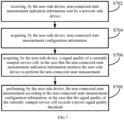
- the method may specifically include the following steps: S702: receiving, by the user-side device, non-connected state measurement indication information sent by a network-side device.
- the content of the step S702 is the same as the content of the step S302 in the second embodiment, and the specific processing of the step S702 can be referred to the related content of the step S302, which will not be repeated here.
- S704 acquiring, by the user-side device, non-connected state measurement configuration information.
- the content of the step S704 is the same as the content of the step S 102 in the first embodiment, and the specific processing of the step S704 can be referred to the related content of the step S 102, which will not be repeated here.
- the selecting conditions of the user-side device for non-connected state measurement may be set accordingly.
- S706 acquiring, by the user-side device, a signal quality of a currently camped service cell, in the case that the non-connected state measurement indication information instructs the user-side device to perform the non-connected state measurement.
- the signal quality of the serving cell is a serving cell RSRP.
- S708 performing, by the user-side device, the non-connected state measurement according to the non-connected state measurement configuration information, in the case that the signal quality of the currently camped service cell exceeds a preset signal quality threshold.
- the signal quality threshold may be set according to actual conditions, which is not limited in the embodiments of the present disclosure.
- step S708 For the specific processing of step S708, reference may be made to the related content of step S104, and details are not described herein again.
- the non-connected state measurement is performed based on the non-connected state measurement configuration information. Therefore, based on the non-connected state measurement configuration information, the user-side device may help the network-side device to select a suitable user-side device to perform the non-connected state measurement, thereby achieving the measurement of the non-connected state user-side device.
- the non-connected state measurement configuration information may include inter-frequency measurement configuration information, thereby achieving an inter-frequency measurement and saving resources of the user-side device during the measurement.
- a measurement method of a non-connected user-side device is provided in an embodiment of the present disclosure provides.
- the method can be applied to the measurement of a non-connected user-side device.
- the measurement of the non-connected user-side device is a measurement that needs to be performed by the user-side device when it is in the non-connected state.
- the measurement of the non-connected user-side device can be set according to different measurement purposes, for example, the purpose of the measurement of the non-connected user-side device is to quickly activate the SCell.
- the measurement item can be the measurement of the signal quality of the reference signal at different frequencies (not only the frequency of the current cell, but also the frequencies of other cells, etc.).
- the execution subject of the method may be a user-side device, where the user-side device may be a terminal device, the terminal device may be a mobile terminal device such as a mobile phone, a tablet computer or a wearable device, and the terminal device may also be a terminal such as a personal computer device.
- the method may specifically include the following steps: S802: receiving, by the user-side device, non-connected state measurement indication information sent by a network-side device.
- the content of the step S802 is the same as the content of the step S302 in the second embodiment.
- S804 acquiring, by the user-side device, a group ID to which the user-side device belongs.
- the group ID may be information used to mark user-side devices that need to be measured in a non-connected state, such as the packet name or number.
- the network-side device may send or broadcast the relevant group ID of the user-side device for non-connected state measurement to the user-side device through SIBS or PDCCH.
- the user-side device may calculate the group ID to which the user-side device belongs based on a preset rule or algorithm, and then may compare the calculated group ID with the received group ID. If the group ID is included in the received group ID, the processes from step S806 to step S808 described below can be performed. If the calculated group ID is not included in the received group ID, it is not necessary to perform non-connected state measurement.
- the acquisition of the group ID to which the user-side device belongs may be obtained based on a preset rule or algorithm, or may be obtained in the following manner, that is, the user-side device acquires the group ID which is allocated by the network-side device for the user-side device.
- the network-side device may calculate a group ID for the user-side device that needs to perform non-connected state measurement through a preset rule or algorithm, and then may send the group ID to the corresponding user-side device through broadcasting or signaling such as RRC, MAC CE or PDCCH, etc.
- the group ID may be obtained by taking the modulus of the International Mobile Subscriber Identity (IMSI) or resume ID of the user-side device.
- IMSI International Mobile Subscriber Identity
- S806 acquiring, by the user-side device, the non-connected state measurement configuration information corresponding to the group ID.
- different group IDs may correspond to different non-connected measurement configuration information.
- the corresponding non-connected measurement configuration may be determined by the obtained group ID information.
- S808 performing, by the user-side device, the non-connected state measurement according to the non-connected state measurement configuration information, in the case that the non-connected state measurement indication information instructs the user-side device to perform the non-connected state measurement.
- step S808 For the specific processing of step S808, reference may be made to the related content of step S104, and details are not described herein again.
- the non-connected state measurement is performed based on the non-connected state measurement configuration information. Therefore, based on the non-connected state measurement configuration information, the user-side device may help the network-side device to select a suitable user-side device to perform the non-connected state measurement, thereby achieving the measurement of the non-connected state user-side device.
- the non-connected state measurement configuration information may include inter-frequency measurement configuration information, thereby achieving an inter-frequency measurement and saving resources of the user-side device during the measurement.
- a measurement method of a non-connected user-side device is provided in an embodiment not covered by the claimed invention.
- the method can be applied to the measurement of a non-connected user-side device.
- the measurement of the non-connected user-side device is a measurement that needs to be performed by the user-side device when it is in the non-connected state.
- the measurement of the non-connected user-side device can be set according to different measurement purposes, for example, the purpose of the measurement of the non-connected user-side device is to quickly activate the SCell.
- the measurement item can be the measurement of the signal quality of the reference signal at different frequencies (not only the frequency of the current cell, but also the frequencies of other cells, etc.).
- the execution subject of the method may be a user-side device, where the user-side device may be a terminal device, the terminal device may be a mobile terminal device such as a mobile phone, a tablet computer or a wearable device, and the terminal device may also be a terminal such as a personal computer device.
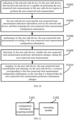
- the method may specifically include the following steps: S902: acquiring, by the user-side device, non-connected state measurement preference information or capability information.
- the non-connected state measurement preference information may be used to indicate whether the user-side device has the ability to or prefers to perform non-connected state measurement, and the capability information may have the ability to perform non-connected state measurement.
- the user-side device may acquire its own parameter data related to the non-connected state measurement, and may determine whether the user-side device has the capability to perform the non-connected state measurement based on the parameter data, or an option of whether to perform the non-connected state measurement is set in each user-side device, and the user or related technical personnel may set the above options according to the actual situation, so that the user-side device may obtain the non-connected state measurement preference information or capability information.
- S904 indicating to a network-side device, by the user-side device, whether the user-side device is capable of performing a non-connected state measurement or whether the user-side device expects to perform a non-connected state measurement.
- the user-side device indicates to the network-side device that the user-side device is capable of performing non-connected state measurement or expects to perform non-connected state measurement, the user-side device performs non-connected state measurement according to the non-connected state measurement configuration information, and the specific processing may be refer to the relevant content of the above step S104, which will not be repeated here.
- the non-connected state measurement is performed based on the non-connected state measurement configuration information. Therefore, based on the non-connected state measurement configuration information, the user-side device may help the network-side device to select a suitable user-side device to perform the non-connected state measurement, thereby achieving the measurement of the non-connected state user-side device.
- the non-connected state measurement configuration information may include inter-frequency measurement configuration information, thereby achieving an inter-frequency measurement and saving resources of the user-side device during the measurement.
- a measurement method of a non-connected user-side device is provided in an embodiment not covered by the claimed invention.
- the method can be applied to the measurement of a non-connected user-side device.
- the measurement of the non-connected user-side device is a measurement that needs to be performed by the user-side device when it is in the non-connected state.
- the measurement of the non-connected user-side device can be set according to different measurement purposes, for example, the purpose of the measurement of the non-connected user-side device is to quickly activate the SCell.
- the measurement item can be the measurement of the signal quality of the reference signal at different frequencies (not only the frequency of the current cell, but also the frequencies of other cells, etc.).
- the execution subject of the method may be a user-side device, where the user-side device may be a terminal device, the terminal device may be a mobile terminal device such as a mobile phone, a tablet computer or a wearable device, and the terminal device may also be a terminal such as a personal computer device.
- the method may specifically include the following steps: S1002: indicating to the network-side device, by the user-side device, that the network-side device is capable of performing the non-connected state measurement or the user-side device expects to perform the non-connected state measurement.
- the user-side device may acquire its own parameter data related to the non-connected state measurement, and may determine whether the user-side device has the capability to perform the non-connected state measurement based on the parameter data, or an option of whether to perform the non-connected state measurement is set in each user-side device, and the user or related technical personnel may set the above options according to the actual situation.
- the user-side device may send the non-connected state measurement preference information to the network side device.
- the network-side device may determine whether it is necessary to send the non-connected state measurement configuration information to the user-side device through the non-connected state measurement preference information.
- the process of sending by the user-side device the non-connected state measurement preference information to the network-side device is actively performed by the user-side device, and in practical applications, the network-side device may also trigger the user-side device to perform the above step S 1002.
- the process thereof may specifically include the following: the user-side device receives a reporting request for non-connected state measurement preference information sent by the network side device; the user-side device sends the non-connected state measurement preference information corresponding to the reporting request to the network side device.
- S1004 the user-side device receiving the non-connected state measurement indication information sent by the network side device, and then acquiring the non-connected state measurement configuration information.
- the non-connected state measurement indication information may carry the non-connected state measurement configuration information, or, if the non-connected state measurement indication information indicates the user-side device to perform the non-connected state measurement, the user-side device may obtain the non-connected state measurement configuration information through other ways, for example, through the above-mentioned RRC, MAC CE, or PDCCH.
- S1006 performing, by the user-side device, the non-connected state measurement according to the non-connected state measurement configuration information.
- step S 1006 For specific processing of step S 1006, reference may be made to the related content of step S104, and details are not described herein again.
- S1008 detecting, by the user-side device, whether the non-connected state measurement preference information changes, during the non-connected state measurement.
- the user-side device may be set with a detection period for detecting the above-mentioned non-connected state measurement preference information, such as 30 seconds or 1 minute. Whenever the detection period is reached, the non-connected state measurement preference information of the user-side device may be obtained, and then the acquired non-connected state measurement preference information may be compared with the non-connected state measurement preference information of the user-side device acquired in the previous detection period. If the two preference information are the same, it is determined that the non-connected state measurement preference information of the user-side device does not change. In this case, the processing of step S 1010 described below may not be required. If the two preference information are different, it is determined that the non-connected state measurement preference information of the user-side device has changed. At this time, the process of step S910 described below may be continued.
- a detection period for detecting the above-mentioned non-connected state measurement preference information such as 30 seconds or 1 minute.
- S1010 stopping, by the user-side device, the non-connected state measurement and releasing, by the user-side device, a resource corresponding to the non-connected state measurement configuration information, in the case that it is detected that the non-connected state measurement preference information changes.
- the non-connected state measurement is performed based on the non-connected state measurement configuration information. Therefore, based on the non-connected state measurement configuration information, the user-side device may help the network-side device to select a suitable user-side device to perform the non-connected state measurement, thereby achieving the measurement of the non-connected state user-side device.
- the non-connected state measurement configuration information may include inter-frequency measurement configuration information, thereby achieving an inter-frequency measurement and saving resources of the user-side device during the measurement.
- the above is the measurement method of the non-connected user-side device provided in the embodiment of the present disclosure. Based on the same idea, a measurement apparatus of the non-connected user-side device is further provided in some embodiments of the present disclosure, as shown in FIG. 11 .
- the apparatus includes: a configuration information acquiring module 1101 and a measuring module 1102.
- the configuration information acquiring module 1101 is configured to acquire non-connected state measurement configuration information;
- the measuring module 1102 is configured to perform a non-connected state measurement according to the non-connected state measurement configuration information.
- the apparatus further includes:
- the measuring module 1102 is configured to perform the non-connected state measurement according to the non-connected state measurement configuration information, in the case that the non-connected state measurement indication information instructs the user-side device to perform the non-connected state measurement and a duration from a receiving time of the non-connected state measurement indication information to a current time is within a predetermined range.
- the measuring module 1102 includes:
- the measuring module 1102 includes:
- the measuring module 1102 includes:
- the measuring module 1102 includes:
- the configuration information acquiring module 1101 includes:
- the group ID acquiring unit is configured to acquire a group ID allocated by the network device for the user-side device.
- the group ID acquiring unit is configured to acquire the group ID obtained by taking a modulus of an International Mobile Subscriber Identity (IMSI) or a resume ID of the user-side device.
- IMSI International Mobile Subscriber Identity
- the configuration information acquiring module 1101 includes:
- the non-connected state measurement is performed based on the non-connected state measurement configuration information. Therefore, based on the non-connected state measurement configuration information, the user-side device may help the network-side device to select a suitable user-side device to perform the non-connected state measurement, thereby achieving the measurement of the non-connected state user-side device.
- the non-connected state measurement configuration information may include inter-frequency measurement configuration information, thereby achieving an inter-frequency measurement and saving resources of the user-side device during the measurement.
- the above is the measurement method of the non-connected user-side device provided by the embodiment of the present disclosure. Based on the same idea, a measurement apparatus of the non-connected user-side device is further provided in the embodiment not covered by the claimed invention, as shown in FIG. 12 .
- the apparatus includes: a preference acquiring module 1201 and an indicating module 1202.
- the preference acquiring module 1201 is configured to acquire non-connected state measurement preference information or capability information.
- the indicating module 1202 is configured to indicate to a network-side device whether the user-side device is capable of performing a non-connected state measurement or whether the user-side device expects to perform a non-connected state measurement.
- the indicating module 1202 is configured to indicate to the network-side device that the network-side device is capable of performing the non-connected state measurement or the user-side device expects to perform the non-connected state measurement.
- the apparatus further includes:
- the apparatus further includes:
- the preference sending module is configured to receive the reporting request of the non-connected state measurement preference information sent by the network device and send the non-connected state measurement preference information corresponding to the reporting request to the network-side device
- the apparatus further includes:
- the non-connected state measurement is performed based on the non-connected state measurement configuration information. Therefore, based on the non-connected state measurement configuration information, the user-side device may help the network-side device to select a suitable user-side device to perform the non-connected state measurement, thereby achieving the measurement of the non-connected state user-side device.
- the non-connected state measurement configuration information may include inter-frequency measurement configuration information, thereby achieving an inter-frequency measurement and saving resources of the user-side device during the measurement.
- FIG. 13 is a block diagram of a mobile terminal according to another embodiment not covered by the claimed invention.
- the mobile terminal 1300 shown in FIG. 13 includes: at least one processor 1301, memory 1302, at least one network interface 1304, and user interface 1303.
- the various components in the mobile terminal 1300 are coupled together through a bus system 1305.
- the bus system 1305 is used to implement connection and communication between these components.
- the bus system 1305 also includes a power bus, a control bus, and a status signal bus. However, for clarity, various buses are marked as the bus system 1305 in FIG. 13 .
- the user interface 1303 may include a display, a keyboard, or a pointing device (for example, a mouse, a trackball, a touch pad, or a touch screen, etc.).
- a pointing device for example, a mouse, a trackball, a touch pad, or a touch screen, etc.
- the memory 1302 in the embodiment of the present disclosure may be a volatile memory or a nonvolatile memory, or may include both volatile and nonvolatile memory.
- the non-volatile memory can be read-only memory (ROM), programmable read-only memory (PROM), erasable programmable read-only memory (EPROM), electrically erasable and removable Program read-only memory (Electrically EPROM, EEPROM) or flash memory.
- the volatile memory may be a random access memory (RAM), which is used as an external cache.
- RAM static random access memory
- DRAM dynamic random access memory
- SDRAM synchronous dynamic random access memory
- DDRSDRAM Double data rate synchronous dynamic random access memory
- Enhanced SDRAM ESDRAM
- SLDRAM synchronous connection dynamic random access memory
- Direct Rambus RAM Direct Rambus RAM
- the memory 1302 stores the following elements, executable modules or data structures, or their subsets, or their extended sets: operating system 13021 and application programs 13022.
- the operating system 13021 includes various system programs, such as a framework layer, a core library layer, a driver layer, etc., for implementing various basic services and processing hardware-based tasks.
- the application program 13022 includes various application programs, such as a media player, a browser, etc., for implementing various application services.
- the program for implementing the method of the embodiment of the present disclosure may be included in the application program 13022.
- the mobile terminal 1300 further includes: a computer program stored on the memory 1309 and executable on the processor 1310.
- the computer program When the computer program is executed by the processor 1301, the following steps are implemented: acquiring non-connected state measurement configuration information; performing a non-connected state measurement according to the non-connected state measurement configuration information.
- the method disclosed in the foregoing embodiment of the present disclosure may be applied to the processor 1301 or implemented by the processor 1301.
- the processor 1301 may be an integrated circuit chip with signal processing capabilities. In the implementation process, each step of the above method may be completed by an integrated logic circuit of hardware in the processor 1301 or an instruction in the form of software.
- the aforementioned processor 1301 may be a general-purpose processor, a digital signal processor (DSP), an application specific integrated circuit (ASIC), an existing programmable gate array (FPGA) or other programmable logic devices, discrete gates Or transistor logic devices, discrete hardware components.
- DSP digital signal processor
- ASIC application specific integrated circuit
- FPGA existing programmable gate array
- the disclosed methods, steps, and logical block diagrams in the embodiments of the present disclosure may be implemented or executed.
- the general-purpose processor may be a microprocessor or the processor may be any conventional processor or the like.
- the steps of the method disclosed in conjunction with the embodiments of the present disclosure may be directly embodied and executed by a hardware decoding processor, or may be executed and completed by a combination of hardware and software modules in the decoding processor.
- the software module may be located in a computer-readable storage medium that is mature in the art, such as random access memory, flash memory, read-only memory, programmable read-only memory, or electrically erasable programmable memory, and registers.
- the computer-readable storage medium is located in the memory 1302, and the processor 1301 reads the information in the memory 1302 and completes the steps of the above method in combination with its hardware.
- a computer program is stored on the computer-readable storage medium, and when the computer program is executed by the processor 1301, each step of the embodiment of the measurement method of the non-connected user-side device described above is implemented.
- the embodiments described in the embodiments of the present disclosure may be implemented by hardware, software, firmware, middleware, microcode, or a combination thereof.
- the processing unit can be implemented in one or more application specific integrated circuits (ASIC), digital signal processor (DSP), digital signal processing device (DSPD), programmable logic device (PLD), Field programmable gate array (FPGA), general-purpose processor, controller, microcontroller, microprocessor, other electronic units for performing the functions described in the present disclosure, or a combination thereof.
- ASIC application specific integrated circuits
- DSP digital signal processor
- DSPD digital signal processing device
- PLD programmable logic device
- FPGA Field programmable gate array
- controller microcontroller
- microprocessor other electronic units for performing the functions described in the present disclosure, or a combination thereof.
- the technology described in the embodiments of the present disclosure may be implemented through modules (e.g., processes, functions, etc.) that perform the functions described in the embodiments of the present disclosure.
- the software codes can be stored in the memory and executed by the processor.
- the memory may be implemented in the processor or external to the processor.
- the method further includes:
- the performing the non-connected state measurement according to the non-connected state measurement configuration information in the case that the non-connected state measurement indication information instructs the user-side device to perform the non-connected state measurement includes: performing the non-connected state measurement according to the non-connected state measurement configuration information, in the case that the non-connected state measurement indication information instructs the user-side device to perform the non-connected state measurement and a duration from a receiving time of the non-connected state measurement indication information to a current time is within a predetermined range.
- the performing the non-connected state measurement according to the non-connected state measurement configuration information includes:
- the performing the non-connected state measurement according to the non-connected state measurement configuration information includes:
- the performing the non-connected state measurement according to the non-connected state measurement configuration information includes:
- the performing the non-connected state measurement according to the non-connected state measurement configuration information includes:
- the acquiring the non-connected state measurement configuration information includes:
- the group ID is allocated by a network side device; or the group ID is obtained by taking a modulus of an International Mobile Subscriber Identity (IMSI) or a resume ID of the user-side device.
- IMSI International Mobile Subscriber Identity
- the acquiring by the user-side device the non-connected state measurement configuration information includes:
- the computer program is executed by the processor 1301 to perform:
- the method further includes:
- the sending the non-connected state measurement preference information or capability information to the network side device includes:
- the method further includes:
- the mobile terminal 1300 can implement various processes implemented by the mobile terminal in the foregoing embodiments. To avoid repetition, details are not described here.
- the non-connected state measurement is performed based on the non-connected state measurement configuration information. Therefore, based on the non-connected state measurement configuration information, the user-side device may help the network-side device to select a suitable user-side device to perform the non-connected state measurement, thereby achieving the measurement of the non-connected state user-side device.
- the non-connected state measurement configuration information may include inter-frequency measurement configuration information, thereby achieving an inter-frequency measurement and saving resources of the user-side device during the measurement.
- the embodiment of the present disclosure also provides a computer-readable storage medium.
- the computer-readable storage medium stores one or more programs, and when the one or more programs is executed by a user-side device including a plurality of application programs according to the processing procedure shown in FIG. 1 , the user-side device performs: prior to the acquiring, by the user-side device, the non-connected state measurement configuration information, the method further includes:
- the performing the non-connected state measurement according to the non-connected state measurement configuration information in the case that the non-connected state measurement indication information instructs the user-side device to perform the non-connected state measurement includes: performing the non-connected state measurement according to the non-connected state measurement configuration information, in the case that the non-connected state measurement indication information instructs the user-side device to perform the non-connected state measurement and a duration from a receiving time of the non-connected state measurement indication information to a current time is within a predetermined range.
- the performing the non-connected state measurement according to the non-connected state measurement configuration information includes:
- the performing the non-connected state measurement according to the non-connected state measurement configuration information includes:
- the performing the non-connected state measurement according to the non-connected state measurement configuration information includes:
- the performing the non-connected state measurement according to the non-connected state measurement configuration information includes:
- the acquiring the non-connected state measurement configuration information includes:
- the group ID is allocated by a network side device; or the group ID is obtained by taking a modulus of an International Mobile Subscriber Identity (IMSI) or a resume ID of the user-side device.
- IMSI International Mobile Subscriber Identity
- the acquiring by the user-side device the non-connected state measurement configuration information includes:
- the computer-readable storage medium stores one or more programs, and when the one or more programs is executed by a user-side device including a plurality of application programs according to the processing procedure shown in FIG. 1 , the user-side device performs:
- the method further includes:
- the sending the non-connected state measurement preference information or capability information to the network side device includes:
- the method further includes:
- the non-connected state measurement is performed based on the non-connected state measurement configuration information. Therefore, based on the non-connected state measurement configuration information, the user-side device may help the network-side device to select a suitable user-side device to perform the non-connected state measurement, thereby achieving the measurement of the non-connected state user-side device.
- the non-connected state measurement configuration information may include inter-frequency measurement configuration information, thereby achieving an inter-frequency measurement and saving resources of the user-side device during the measurement.
- the improvement of a technology can be clearly distinguished from the improvement of hardware (for example, the improvement of the circuit structure of diodes, transistors, switches, etc.) or the improvement of software (the improvement of the process flow).
- hardware for example, the improvement of the circuit structure of diodes, transistors, switches, etc.
- software the improvement of the process flow.
- PLD programmable logic device
- FPGA field programmable gate array
- HDL hardware description language
- ABEL Advanced Boolean Expression Language
- AHDL Altera Hardware Description Language
- CUPL Cornell University Programming Language
- HDCal Java Hardware Description Language
- JHDL Java Hardware Description Language
- Lava Lola
- MyHDL PALASM
- Ruby Hardware Description Language RHDL
- VHDL Very-HighSpeed Integrated Circuit Hardware Description Language
- VHDL Verilog
- the controller may be implemented in any suitable manner, for example, the controller may take the form of a microprocessor or processor and a computer-readable medium storing computer-readable program code (such as software or firmware) executable by the (micro) processor , Logic gates, switches, application specific integrated circuits (ASICs), programmable logic controllers and embedded microcontrollers.
- controllers include but are not limited to the following microcontrollers: ARC 625D, Atmel AT91SAM, Microchip PIC18F26K20 and Silicone Labs C8051F320, the memory controller can also be implemented as part of the control logic of the memory.
- controller in addition to implementing the controller in a pure computer-readable program code manner, it is entirely possible to make the controller into logic gates, switches, application specific integrated circuits, programmable logic controllers and The same function is realized in the form of a microcontroller or the like. Therefore, such a controller can be regarded as a hardware component, and the devices included therein for realizing various functions can also be regarded as a structure within the hardware component. Or even, the device for realizing various functions can be regarded as both a software module of an implementation method and a structure within a hardware component.
- the system, device, module or unit explained in the above embodiments may be specifically implemented by a computer chip or entity, or by a product having a certain function.
- a typical implementation device is a computer.
- the computer may be, for example, a personal computer, a laptop computer, a cellular phone, a camera phone, a smart phone, a personal digital assistant, a media player, a navigation device, an email device, a game console, a tablet computer, a wearable device, or any combination of these devices.
- the embodiments of the present disclosure may be provided as methods, systems, or computer program products. Therefore, the present disclosure may take the form of an entirely hardware embodiment, an entirely software embodiment, or an embodiment combining software and hardware. Moreover, the present disclosure may take the form of a computer program product implemented on one or more computer usable storage media (including but not limited to disk storage, CD-ROM, optical storage, etc.) containing computer usable program code.
- computer usable storage media including but not limited to disk storage, CD-ROM, optical storage, etc.
- each flow and/or block in the flowchart and/or block diagram and a combination of the flow and/or block in the flowchart and/or block diagram may be implemented by computer program instructions.
- These computer program instructions can be provided to the processor of a general-purpose computer, special-purpose computer, embedded processing machine, or other programmable data processing device to produce a machine that enables the generation of instructions executed by the processor of the computer or other programmable data processing device A device for realizing the functions specified in one block or multiple blocks of one flow or multiple blocks of a flowchart.
- These computer program instructions may also be stored in a computer readable memory that can guide a computer or other programmable data processing device to work in a specific manner, so that the instructions stored in the computer readable memory produce an article of manufacture including an instruction device, the instructions
- the device implements the functions specified in one block or multiple blocks of the flowchart one flow or multiple flows and/or block diagrams.
- These computer program instructions can also be loaded onto a computer or other programmable data processing device, so that a series of operating steps are performed on the computer or other programmable device to produce computer-implemented processing, which is executed on the computer or other programmable device
- the instructions provide steps for implementing the functions specified in one block or multiple blocks of the flowchart one flow or multiple flows and/or block diagrams.
- the computing device includes one or more processors (CPUs), input / output interfaces, network interfaces, and memory.
- processors CPUs
- input / output interfaces output interfaces
- network interfaces network interfaces
- memory volatile and non-volatile memory
- the memory may include non-permanent memory, random access memory (RAM) and/or non-volatile memory in a computer-readable medium, such as read only memory (ROM) or flash memory (flash RAM). Memory is an example of computer-readable media.
- RAM random access memory
- ROM read only memory
- flash RAM flash memory
- Computer-readable media including permanent and non-permanent, removable and non-removable media, can store information by any method or technology.
- the information may be computer readable instructions, data structures, modules of programs, or other data.
- Examples of computer storage media include, but are not limited to, phase change memory (PRAM), static random access memory (SRAM), dynamic random access memory (DRAM), other types of random access memory (RAM), read-only memory (ROM), electrically erasable programmable read-only memory (EEPROM), flash memory or other memory technologies, read-only compact disc read-only memory (CD-ROM), digital versatile disc (DVD) or other optical storage, Magnetic tape cassettes, magnetic tape magnetic disk storage or other magnetic storage devices or any other non-transmission media can be used to store information that can be accessed by computing devices.
- computer-readable media does not include temporary computer-readable media (transitory media), such as modulated data signals and carrier waves.
- the embodiments of the present disclosure may be provided as methods, systems, or computer program products. Therefore, the present disclosure may take the form of an entirely hardware embodiment, an entirely software embodiment, or an embodiment combining software and hardware. Moreover, the present disclosure may take the form of a computer program product implemented on one or more computer usable storage media (including but not limited to disk storage, CD-ROM, optical storage, etc.) containing computer usable program code.
- computer usable storage media including but not limited to disk storage, CD-ROM, optical storage, etc.
- program modules include routines, programs, objects, components, data structures, etc. that perform specific tasks or implement specific abstract data types.
- program modules can also be practiced in distributed computing environments in which remote processing devices connected through a communication network perform tasks.
- program modules may be located in local and remote computer storage media including storage devices.
Landscapes
- Engineering & Computer Science (AREA)
- Computer Networks & Wireless Communication (AREA)
- Signal Processing (AREA)
- Mobile Radio Communication Systems (AREA)
Applications Claiming Priority (2)
| Application Number | Priority Date | Filing Date | Title |
|---|---|---|---|
| CN201711139513.0A CN109803280B (zh) | 2017-11-16 | 2017-11-16 | 非连接态用户侧设备的测量方法、装置及用户侧设备 |
| PCT/CN2018/109684 WO2019095895A1 (zh) | 2017-11-16 | 2018-10-10 | 非连接态用户侧设备的测量方法、装置及用户侧设备 |
Publications (4)
| Publication Number | Publication Date |
|---|---|
| EP3700251A1 EP3700251A1 (en) | 2020-08-26 |
| EP3700251A4 EP3700251A4 (en) | 2020-11-25 |
| EP3700251B1 true EP3700251B1 (en) | 2024-10-09 |
| EP3700251C0 EP3700251C0 (en) | 2024-10-09 |
Family
ID=66538900
Family Applications (1)
| Application Number | Title | Priority Date | Filing Date |
|---|---|---|---|
| EP18879369.9A Active EP3700251B1 (en) | 2017-11-16 | 2018-10-10 | Measurements by an user-side device in disconnected state |
Country Status (5)
| Country | Link |
|---|---|
| US (3) | US11356913B2 (es) |
| EP (1) | EP3700251B1 (es) |
| CN (1) | CN109803280B (es) |
| ES (1) | ES2990256T3 (es) |
| WO (1) | WO2019095895A1 (es) |
Families Citing this family (8)
| Publication number | Priority date | Publication date | Assignee | Title |
|---|---|---|---|---|
| CN110636641B (zh) * | 2018-06-25 | 2021-10-15 | 维沃移动通信有限公司 | 一种ca配置信息的处理方法和终端 |
| CN111601334B (zh) * | 2019-06-14 | 2021-11-30 | 维沃移动通信有限公司 | 一种测量方法、设备及系统 |
| CN112399497B (zh) * | 2019-08-15 | 2024-07-23 | 华为技术有限公司 | 通信方法和通信装置 |
| KR20220061917A (ko) | 2019-09-16 | 2022-05-13 | 광동 오포 모바일 텔레커뮤니케이션즈 코포레이션 리미티드 | 셀을 측정하는 방법과 장치 |
| CN117500032A (zh) * | 2020-01-23 | 2024-02-02 | 华为技术有限公司 | 通信方法、装置和系统 |
| WO2022027370A1 (zh) * | 2020-08-05 | 2022-02-10 | 华为技术有限公司 | 一种移动性测量方法及装置 |
| WO2022056692A1 (zh) * | 2020-09-15 | 2022-03-24 | 北京小米移动软件有限公司 | 配置信息指示、参考信号接收方法和装置 |
| WO2023050383A1 (zh) * | 2021-09-30 | 2023-04-06 | 北京小米移动软件有限公司 | 参考信号接收、发送方法和装置、通信装置和存储介质 |
Family Cites Families (19)
| Publication number | Priority date | Publication date | Assignee | Title |
|---|---|---|---|---|
| KR101670513B1 (ko) * | 2009-06-01 | 2016-10-31 | 엘지전자 주식회사 | 무선 통신 시스템에서 측정 결과 보고 방법 및 장치 |
| US9301180B2 (en) | 2010-02-12 | 2016-03-29 | Blackberry Limited | Methods and apparatus to perform measurements |
| WO2011149281A2 (ko) | 2010-05-26 | 2011-12-01 | 엘지전자 주식회사 | 무선 통신 시스템에서 로그된 측정 보고 방법 및 장치 |
| CN102448107B (zh) | 2010-09-30 | 2014-11-19 | 华为技术有限公司 | 测量间隙配置方法、终端及网络设备 |
| KR20130058063A (ko) | 2010-10-13 | 2013-06-03 | 쿄세라 코포레이션 | 무선 측정 수집 방법, 무선 단말, 및 무선 기지국 |
| CN102469498A (zh) * | 2010-11-12 | 2012-05-23 | 中兴通讯股份有限公司 | 频外检测小区的测量上报方法、ue及rnc |
| CN102685798B (zh) * | 2011-03-10 | 2017-03-22 | 中兴通讯股份有限公司 | 一种终端测量时刻的配置方法、终端、网络侧装置及系统 |
| US8989741B2 (en) | 2011-05-23 | 2015-03-24 | Interdigital Patent Holdings, Inc. | Apparatus and methods for group wireless transmit/receive unit (WTRU) handover |
| WO2013133630A1 (en) | 2012-03-06 | 2013-09-12 | Samsung Electronics Co., Ltd. | A method and system for minimizing power consumption of user equipment during cell detection |
| WO2014113958A1 (zh) * | 2013-01-24 | 2014-07-31 | 华为技术有限公司 | 一种测量方法、用户设备、基站及无线通信系统 |
| CN104170437B (zh) * | 2014-01-21 | 2018-11-06 | 华为技术有限公司 | 频点测量控制方法及基站、用户设备 |
| EP3142406B1 (en) * | 2014-05-09 | 2019-10-23 | Sony Corporation | Device |
| EP3219140B1 (en) * | 2014-11-14 | 2020-07-08 | Interdigital Patent Holdings, Inc. | Methods and procedures for channel measurements and reporting mechanisms |
| WO2016197378A1 (zh) * | 2015-06-11 | 2016-12-15 | 华为技术有限公司 | 一种用户设备及网络接入方法 |
| US10772139B2 (en) * | 2015-08-07 | 2020-09-08 | Sharp Kabushiki Kaisha | Terminal device, base station device, communication system, measurement method, and integrated circuit |
| CN106941677A (zh) * | 2016-01-04 | 2017-07-11 | 中兴通讯股份有限公司 | Cgi信息测量方法及装置 |
| RU2741626C1 (ru) * | 2017-07-20 | 2021-01-28 | Гуандун Оппо Мобайл Телекоммьюникейшнс Корп., Лтд. | Способ конфигурирования измерений и относящийся к нему продукт |
| CN109309969B (zh) * | 2017-07-26 | 2022-07-29 | 株式会社Kt | 在rrc空闲模式下控制测量处理的方法及其装置 |
| CN114125893A (zh) * | 2017-08-11 | 2022-03-01 | 华为技术有限公司 | 一种测量方法、设备及系统 |
-
2017
- 2017-11-16 CN CN201711139513.0A patent/CN109803280B/zh active Active
-
2018
- 2018-10-10 WO PCT/CN2018/109684 patent/WO2019095895A1/zh not_active Ceased
- 2018-10-10 US US16/765,048 patent/US11356913B2/en active Active
- 2018-10-10 ES ES18879369T patent/ES2990256T3/es active Active
- 2018-10-10 EP EP18879369.9A patent/EP3700251B1/en active Active
-
2022
- 2022-05-02 US US17/661,670 patent/US11792703B2/en active Active
-
2023
- 2023-09-11 US US18/464,317 patent/US12225420B2/en active Active
Also Published As
| Publication number | Publication date |
|---|---|
| US20220264396A1 (en) | 2022-08-18 |
| EP3700251A4 (en) | 2020-11-25 |
| WO2019095895A1 (zh) | 2019-05-23 |
| US20200329409A1 (en) | 2020-10-15 |
| US12225420B2 (en) | 2025-02-11 |
| ES2990256T3 (es) | 2024-11-29 |
| US20230422116A1 (en) | 2023-12-28 |
| EP3700251A1 (en) | 2020-08-26 |
| CN109803280B (zh) | 2021-04-13 |
| CN109803280A (zh) | 2019-05-24 |
| EP3700251C0 (en) | 2024-10-09 |
| US11356913B2 (en) | 2022-06-07 |
| US11792703B2 (en) | 2023-10-17 |
Similar Documents
| Publication | Publication Date | Title |
|---|---|---|
| EP3700251B1 (en) | Measurements by an user-side device in disconnected state | |
| JP2023503650A (ja) | 5g nrにおける熱影響を管理するためのスマート機構 | |
| JP5963965B2 (ja) | 無線通信における現在のセルからより優先度の高いセルの高速再選択 | |
| US9420512B2 (en) | Handling uplink power limited scenarios | |
| US20180070400A1 (en) | Transmission Method and Device for Sidelink Information and Communication System | |
| US11218958B2 (en) | Measurement for fast cell access | |
| US11641619B2 (en) | Optimized user equipment measurements for fast cell access | |
| US20160073442A1 (en) | Mobility handling for dual connectivity | |
| CN110574430A (zh) | 用于高移动速度的无线电链路监测和小区搜索技术 | |
| US11382015B2 (en) | Processing apparatus and method for network indication and communications system | |
| CN112584426B (zh) | 一种系统帧号和帧定时偏差sftd测量方法 | |
| US20190174363A1 (en) | Mobile telecommunications system method | |
| US11528623B2 (en) | User device assisted connected mode measurement enhancements | |
| WO2019088898A1 (en) | Configuring measurement reporting | |
| US20200137600A1 (en) | Measurements and signalling for fast setup | |
| HK40033927A (en) | Measurement for fast cell access | |
| HK40033927B (en) | Measurement for fast cell access | |
| KR20220006538A (ko) | 사이드 링크 모니터링 방법 및 디바이스 |
Legal Events
| Date | Code | Title | Description |
|---|---|---|---|
| STAA | Information on the status of an ep patent application or granted ep patent |
Free format text: STATUS: THE INTERNATIONAL PUBLICATION HAS BEEN MADE |
|
| PUAI | Public reference made under article 153(3) epc to a published international application that has entered the european phase |
Free format text: ORIGINAL CODE: 0009012 |
|
| STAA | Information on the status of an ep patent application or granted ep patent |
Free format text: STATUS: REQUEST FOR EXAMINATION WAS MADE |
|
| 17P | Request for examination filed |
Effective date: 20200520 |
|
| AK | Designated contracting states |
Kind code of ref document: A1 Designated state(s): AL AT BE BG CH CY CZ DE DK EE ES FI FR GB GR HR HU IE IS IT LI LT LU LV MC MK MT NL NO PL PT RO RS SE SI SK SM TR |
|
| AX | Request for extension of the european patent |
Extension state: BA ME |
|
| A4 | Supplementary search report drawn up and despatched |
Effective date: 20201022 |
|
| RIC1 | Information provided on ipc code assigned before grant |
Ipc: H04W 24/02 20090101AFI20201016BHEP Ipc: H04W 24/10 20090101ALI20201016BHEP |
|
| DAV | Request for validation of the european patent (deleted) | ||
| DAX | Request for extension of the european patent (deleted) | ||
| STAA | Information on the status of an ep patent application or granted ep patent |
Free format text: STATUS: EXAMINATION IS IN PROGRESS |
|
| 17Q | First examination report despatched |
Effective date: 20230215 |
|
| GRAP | Despatch of communication of intention to grant a patent |
Free format text: ORIGINAL CODE: EPIDOSNIGR1 |
|
| STAA | Information on the status of an ep patent application or granted ep patent |
Free format text: STATUS: GRANT OF PATENT IS INTENDED |
|
| INTG | Intention to grant announced |
Effective date: 20240502 |
|
| GRAS | Grant fee paid |
Free format text: ORIGINAL CODE: EPIDOSNIGR3 |
|
| GRAA | (expected) grant |
Free format text: ORIGINAL CODE: 0009210 |
|
| STAA | Information on the status of an ep patent application or granted ep patent |
Free format text: STATUS: THE PATENT HAS BEEN GRANTED |
|
| AK | Designated contracting states |
Kind code of ref document: B1 Designated state(s): AL AT BE BG CH CY CZ DE DK EE ES FI FR GB GR HR HU IE IS IT LI LT LU LV MC MK MT NL NO PL PT RO RS SE SI SK SM TR |
|
| REG | Reference to a national code |
Ref country code: CH Ref legal event code: EP |
|
| REG | Reference to a national code |
Ref country code: DE Ref legal event code: R096 Ref document number: 602018075347 Country of ref document: DE |
|
| REG | Reference to a national code |
Ref country code: IE Ref legal event code: FG4D |
|
| U01 | Request for unitary effect filed |
Effective date: 20241024 |
|
| REG | Reference to a national code |
Ref country code: ES Ref legal event code: FG2A Ref document number: 2990256 Country of ref document: ES Kind code of ref document: T3 Effective date: 20241129 |
|
| U07 | Unitary effect registered |
Designated state(s): AT BE BG DE DK EE FI FR IT LT LU LV MT NL PT RO SE SI Effective date: 20241106 |
|
| U20 | Renewal fee for the european patent with unitary effect paid |
Year of fee payment: 7 Effective date: 20241111 |
|
| PG25 | Lapsed in a contracting state [announced via postgrant information from national office to epo] |
Ref country code: IS Free format text: LAPSE BECAUSE OF FAILURE TO SUBMIT A TRANSLATION OF THE DESCRIPTION OR TO PAY THE FEE WITHIN THE PRESCRIBED TIME-LIMIT Effective date: 20250209 Ref country code: HR Free format text: LAPSE BECAUSE OF FAILURE TO SUBMIT A TRANSLATION OF THE DESCRIPTION OR TO PAY THE FEE WITHIN THE PRESCRIBED TIME-LIMIT Effective date: 20241009 |
|
| PG25 | Lapsed in a contracting state [announced via postgrant information from national office to epo] |
Ref country code: NO Free format text: LAPSE BECAUSE OF FAILURE TO SUBMIT A TRANSLATION OF THE DESCRIPTION OR TO PAY THE FEE WITHIN THE PRESCRIBED TIME-LIMIT Effective date: 20250109 |
|
| PG25 | Lapsed in a contracting state [announced via postgrant information from national office to epo] |
Ref country code: GR Free format text: LAPSE BECAUSE OF FAILURE TO SUBMIT A TRANSLATION OF THE DESCRIPTION OR TO PAY THE FEE WITHIN THE PRESCRIBED TIME-LIMIT Effective date: 20250110 |
|
| PG25 | Lapsed in a contracting state [announced via postgrant information from national office to epo] |
Ref country code: PL Free format text: LAPSE BECAUSE OF FAILURE TO SUBMIT A TRANSLATION OF THE DESCRIPTION OR TO PAY THE FEE WITHIN THE PRESCRIBED TIME-LIMIT Effective date: 20241009 |
|
| PG25 | Lapsed in a contracting state [announced via postgrant information from national office to epo] |
Ref country code: RS Free format text: LAPSE BECAUSE OF FAILURE TO SUBMIT A TRANSLATION OF THE DESCRIPTION OR TO PAY THE FEE WITHIN THE PRESCRIBED TIME-LIMIT Effective date: 20250109 |
|
| REG | Reference to a national code |
Ref country code: CH Ref legal event code: PL |
|
| PG25 | Lapsed in a contracting state [announced via postgrant information from national office to epo] |
Ref country code: SM Free format text: LAPSE BECAUSE OF FAILURE TO SUBMIT A TRANSLATION OF THE DESCRIPTION OR TO PAY THE FEE WITHIN THE PRESCRIBED TIME-LIMIT Effective date: 20241009 |
|
| PG25 | Lapsed in a contracting state [announced via postgrant information from national office to epo] |
Ref country code: MC Free format text: LAPSE BECAUSE OF FAILURE TO SUBMIT A TRANSLATION OF THE DESCRIPTION OR TO PAY THE FEE WITHIN THE PRESCRIBED TIME-LIMIT Effective date: 20241009 |
|
| PG25 | Lapsed in a contracting state [announced via postgrant information from national office to epo] |
Ref country code: CH Free format text: LAPSE BECAUSE OF NON-PAYMENT OF DUE FEES Effective date: 20241031 |
|
| PG25 | Lapsed in a contracting state [announced via postgrant information from national office to epo] |
Ref country code: SK Free format text: LAPSE BECAUSE OF FAILURE TO SUBMIT A TRANSLATION OF THE DESCRIPTION OR TO PAY THE FEE WITHIN THE PRESCRIBED TIME-LIMIT Effective date: 20241009 |
|
| PG25 | Lapsed in a contracting state [announced via postgrant information from national office to epo] |
Ref country code: CZ Free format text: LAPSE BECAUSE OF FAILURE TO SUBMIT A TRANSLATION OF THE DESCRIPTION OR TO PAY THE FEE WITHIN THE PRESCRIBED TIME-LIMIT Effective date: 20241009 |
|
| PLBE | No opposition filed within time limit |
Free format text: ORIGINAL CODE: 0009261 |
|
| STAA | Information on the status of an ep patent application or granted ep patent |
Free format text: STATUS: NO OPPOSITION FILED WITHIN TIME LIMIT |
|
| 26N | No opposition filed |
Effective date: 20250710 |
|
| U20 | Renewal fee for the european patent with unitary effect paid |
Year of fee payment: 8 Effective date: 20250909 |
|
| PGFP | Annual fee paid to national office [announced via postgrant information from national office to epo] |
Ref country code: GB Payment date: 20250828 Year of fee payment: 8 |
|
| PG25 | Lapsed in a contracting state [announced via postgrant information from national office to epo] |
Ref country code: IE Free format text: LAPSE BECAUSE OF NON-PAYMENT OF DUE FEES Effective date: 20241010 |
|
| PG25 | Lapsed in a contracting state [announced via postgrant information from national office to epo] |
Ref country code: CY Free format text: LAPSE BECAUSE OF FAILURE TO SUBMIT A TRANSLATION OF THE DESCRIPTION OR TO PAY THE FEE WITHIN THE PRESCRIBED TIME-LIMIT; INVALID AB INITIO Effective date: 20181010 |
|
| PGFP | Annual fee paid to national office [announced via postgrant information from national office to epo] |
Ref country code: ES Payment date: 20251106 Year of fee payment: 8 |
|
| PG25 | Lapsed in a contracting state [announced via postgrant information from national office to epo] |
Ref country code: HU Free format text: LAPSE BECAUSE OF FAILURE TO SUBMIT A TRANSLATION OF THE DESCRIPTION OR TO PAY THE FEE WITHIN THE PRESCRIBED TIME-LIMIT; INVALID AB INITIO Effective date: 20181010 |