EP3701855B1 - Système de diagnostic pour la détection et la surveillance d'indicateurs volumétriques et de périmètre du corps humain - Google Patents
Système de diagnostic pour la détection et la surveillance d'indicateurs volumétriques et de périmètre du corps humain Download PDFInfo
- Publication number
- EP3701855B1 EP3701855B1 EP19160373.7A EP19160373A EP3701855B1 EP 3701855 B1 EP3701855 B1 EP 3701855B1 EP 19160373 A EP19160373 A EP 19160373A EP 3701855 B1 EP3701855 B1 EP 3701855B1
- Authority
- EP
- European Patent Office
- Prior art keywords
- volumetric
- perimetric
- indicators
- data
- human body
- Prior art date
- Legal status (The legal status is an assumption and is not a legal conclusion. Google has not performed a legal analysis and makes no representation as to the accuracy of the status listed.)
- Active
Links
Images


Classifications
-
- A—HUMAN NECESSITIES
- A61—MEDICAL OR VETERINARY SCIENCE; HYGIENE
- A61B—DIAGNOSIS; SURGERY; IDENTIFICATION
- A61B5/00—Measuring for diagnostic purposes; Identification of persons
- A61B5/48—Other medical applications
- A61B5/4869—Determining body composition
- A61B5/4875—Hydration status, fluid retention of the body
- A61B5/4878—Evaluating oedema
-
- A—HUMAN NECESSITIES
- A61—MEDICAL OR VETERINARY SCIENCE; HYGIENE
- A61B—DIAGNOSIS; SURGERY; IDENTIFICATION
- A61B5/00—Measuring for diagnostic purposes; Identification of persons
- A61B5/0059—Measuring for diagnostic purposes; Identification of persons using light, e.g. diagnosis by transillumination, diascopy, fluorescence
- A61B5/0077—Devices for viewing the surface of the body, e.g. camera, magnifying lens
-
- A—HUMAN NECESSITIES
- A61—MEDICAL OR VETERINARY SCIENCE; HYGIENE
- A61B—DIAGNOSIS; SURGERY; IDENTIFICATION
- A61B5/00—Measuring for diagnostic purposes; Identification of persons
- A61B5/103—Measuring devices for testing the shape, pattern, colour, size or movement of the body or parts thereof, for diagnostic purposes
- A61B5/107—Measuring physical dimensions, e.g. size of the entire body or parts thereof
- A61B5/1073—Measuring volume, e.g. of limbs
-
- A—HUMAN NECESSITIES
- A61—MEDICAL OR VETERINARY SCIENCE; HYGIENE
- A61B—DIAGNOSIS; SURGERY; IDENTIFICATION
- A61B5/00—Measuring for diagnostic purposes; Identification of persons
- A61B5/68—Arrangements of detecting, measuring or recording means, e.g. sensors, in relation to patient
- A61B5/6801—Arrangements of detecting, measuring or recording means, e.g. sensors, in relation to patient specially adapted to be attached to or worn on the body surface
- A61B5/6813—Specially adapted to be attached to a specific body part
- A61B5/6828—Leg
-
- A—HUMAN NECESSITIES
- A61—MEDICAL OR VETERINARY SCIENCE; HYGIENE
- A61B—DIAGNOSIS; SURGERY; IDENTIFICATION
- A61B5/00—Measuring for diagnostic purposes; Identification of persons
- A61B5/68—Arrangements of detecting, measuring or recording means, e.g. sensors, in relation to patient
- A61B5/6801—Arrangements of detecting, measuring or recording means, e.g. sensors, in relation to patient specially adapted to be attached to or worn on the body surface
- A61B5/684—Indicating the position of the sensor on the body
- A61B5/6842—Indicating the position of the sensor on the body by marking the skin
-
- A—HUMAN NECESSITIES
- A61—MEDICAL OR VETERINARY SCIENCE; HYGIENE
- A61B—DIAGNOSIS; SURGERY; IDENTIFICATION
- A61B5/00—Measuring for diagnostic purposes; Identification of persons
- A61B5/70—Means for positioning the patient in relation to the detecting, measuring or recording means
- A61B5/702—Posture restraints
-
- A—HUMAN NECESSITIES
- A61—MEDICAL OR VETERINARY SCIENCE; HYGIENE
- A61B—DIAGNOSIS; SURGERY; IDENTIFICATION
- A61B5/00—Measuring for diagnostic purposes; Identification of persons
- A61B5/70—Means for positioning the patient in relation to the detecting, measuring or recording means
- A61B5/704—Tables
Definitions
- the present invention relates to a diagnostic system for the detection, assessing and monitoring volumetric and perimetric indicators of a human body, and portions thereof.
- the system operates according to a method not part of the invention.
- the system is implemented with the purpose of generating a multitude of volumetric indicators and perimetric indicators, morphological indicators and a model of the venous tree of a human body, or a portion thereof, which, by using a dedicated method of use not according to the invention, are suitable for obtaining information on the (muscle and fat) mass and on the (lymphatic and vessel) liquid system of a human body, or portions thereof, and also suitable for diagnosing and monitoring pathologies.
- Patent documents are known in the present status of the art, including documents GB,2,564,243 ; WO2016/071773 ; US2015/216477 and US2016/235354 .
- Document US9878209B2 discloses an apparatus and its respective procedure for generating tridimensional (3D) models which represent the dimensions of a human body, by using one or several depth sensors and depth assessing cameras. Determining the dimensions of a body includes measuring any parts of a body, such as for instance the height of a person, the width of his/her chest, the circumference of his/her waist, the length of an arm thereof, etc. Said measurement can be repeated over time to obtain more sets of data which can subsequently be compared to or coupled together for monitoring any changes in the dimensions of a people's body over time.
- some of said systems and methods feature a poor measurement repeatability and are in any case particularly invasive both because of the position taken by the human body during their use, and because of the administration of radiations.
- the present invention starts from the recognition of the above-mentioned drawbacks to try and correct them.
- An object of the present invention is to provide a system for generating a multitude of volumetric indicators and perimetric indicators suitable for monitoring pathologies, while greatly limiting the recourse to approximation operations, hence featuring a high level of reliability and accuracy in the obtained results.
- Another object of the present invention is to provide a system as said above, which can be easily embodied, without entailing particularly significant adaptation operations, with reference to means suitable for assessing volumetric and perimetric data, having characteristics even considerably different from each other.
- a further object of the present invention is to provide a system as mentioned above, wherein the different volumetric indicators and perimetric indicators suitable for monitoring pathologies in processing operations are easy to update, so as to optimize reliability and effectiveness of the final assessment and diagnostic result.
- an object of the present invention is to provide a system as specified above, which allows to make the measurement of volumetric indicators and perimetric indicators, which will not be operator-dependent, more repeatable.
- a concept not part of the invention relating to a method for assessing and monitoring volumes of a human body, or portions thereof, through the system according to the present invention for generating volumetric indicators and perimetric indicators is described .
- An object of the present invention is also to provide a system for relating said volumetric indicators and perimetric indicators to morphological indicators and to a model of the venous tree of a human body in order to improve diagnostics, progress, and monitoring of pathologies.
- a further object of the present invention is to make it possible to perform orthostatic volumetric measurements, in time repeatable conditions, the patient being in a standing straight position.
- the present invention provides a diagnostic system for assessing and monitoring volumetric and perimetric indicators of a human body, or portions thereof, whose basic characteristic is the subject of claim 1.
- the present invention relates to a diagnostic system for generating a multitude of volumetric indicators and perimetric indicators of a human body, or portions thereof, which are suitable for monitoring pathologies and modifications of muscle and fat masses, and of the liquid system, including the lymphatic and vessel ones, of a human body, as indicated in claim 1.
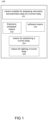
- the diagnostic system according to the present invention comprises:
- volumetric indicators and the perimetric indicators described in the present invention are to be considered as numerical indices representative of metabolic processes of a human body which allow to monitor pathologies and modifications of muscle and fat masses, and of the liquid system, including the lymphatic and vessel ones, of a human body.
- Generating said indicators and monitoring them over time provides information on the progress of pathologies that involve the (muscle and fat) mass and the liquid system (including the lymphatic and vessel ones). Modifications in the morphology of a human body, or a portion thereof, are also monitored via said volumetric indicators and perimetric indicators.
- a concept relating to a method not according to the invention for generating and monitoring volumetric indicators and perimetric indicators of a human body, or portions thereof, by using said diagnostic system characterized in that it comprises the following steps:
- a diagnostic system 100 comprising:
- Said system is characterized in that said electronic processor means 102 and said software means 103 process said volumetric and perimetric data and generate a multitude of volumetric indicators and perimetric indicators suitable for monitoring edemas and pathologies included in a group formed of muscle, cardiovascular, venous system, and lymphatic pathologies, over time.
- said diagnostic system 100 is characterized in that said means suitable for assessing volumetric data and perimetric data 101 are means for acquiring images comprising, jointly or disjointly, video cameras, cameras, scanner, echo-dopplers.
- Said means for positioning a human body 104 comprise: a footboard, one or more supports for portions of a human body, handles, standing bases.
- Said means for lighting a human body 105 comprise lamps featuring a high chromatic yield index and light diffusers suitable for opening the light beam and for reducing the presence of direct light and shadows.
- Said means for lighting a human body 105 might comprise LED lamps.
- said video cameras 202 possibly comprise one or several depth sensors.
- said video cameras 202 comprising depth sensors, are integrally connected to means for positioning a human body 104, in particular they are connected, via folding movable arms 203, to a footboard 207 in junction points 204, wherein every arm 203 accommodates one or more video cameras 202.
- said depth sensors accommodated in said video cameras 202 comprise infrared depth sensors.
- the present invention is characterized in that said means suitable for assessing volumetric and perimetric data 101, comprising video cameras 202, also include movable laser lines 205 suitable for identifying and using marker points and lines 401a-c.
- Said means suitable for assessing volumetric and perimetric data 101 and said means for positioning a human body 104, being part of the diagnostic system 100, are for instance applied for generating a multitude of lower limb volumetric indicators and perimetric indicators.
- said means suitable for assessing volumetric and perimetric data 101 are characterized in that they include three movable laser lines 205 suitable for identifying and using marker points or lines 401a-c.
- said marker points or lines 401a-c are positioned at the groin, femoral condyles, and malleolus-ankle levels respectively.
- the human body is in a standing straight position.
- the first lower limb 402 is lifted and leans on a support point 208, as shown in Figure 4 , said support point 208 being adjustable in height.
- the second lower limb 403 is put in contact with the standing base 201 (as is shown in Figure 4 ) of the footboard 207.
- the position of the first lower limb 402 being raised makes it easily accessible a collection of said volumetric and perimetric data of the inner thigh and improves the quality of the assessment of said data.
- the positions of the first lower limb 402 and of the second lower limb 403 are interchangeable on the support point 208 and on the standing base 201 of the footboard 207.
- said diagnostic system 100 is characterized in that advantageously said means suitable for assessing volumetric data and perimetric data 101 also comprise means suitable for acquiring volumetric data and blood vessel flow data (not shown in the figures).
- Said means suitable for acquiring volumetric data and blood vessel flow data comprise, as an example, an echo-doppler or an echo-color doppler, operationally connected to said electronic processor means 102, to said software means 103, and to said means for positioning a human body 104.
- said means suitable for acquiring volumetric data and blood vessel flow data are suitable for generating morphological indicators and a model of the venous tree of a human body, or a portion thereof.
- said model of the venous tree is advantageously classified on the basis of eleven standard models of the venous tree or phenotypes.
- Said phenotypes are a classification of various typologies of chronic venous insufficiency of the lower limbs, a pathological situation wherein an increase in the volume of the limbs takes place, related to a deficit of the drainage system constituted by veins.
- the model of the venous tree of the lower limbs Surprisingly a correlation was identified between the model of the venous tree of the lower limbs and the volumetric and perimetric indicators of the lower limbs.
- the specific model of the venous tree as determined via the diagnostic system 100 i.e. the specific phenotype, characterizes each individual human body.
- the evolution of said volumetric and perimetric indicators generated for each individual human body over time is related to the specific phenotype of each individual human body, via a statistical relationship, hence they allow an improved monitoring over time of edemas and pathologies falling in the group formed of muscle, cardiovascular, venous system, and lymphatic system pathologies.
- Said monitoring over time is made, for example, on edemas and pathologies of the lower limbs. It has been found that the best therapy applicable to the treatment of edemas and pathologies of the lower limbs can be defined on the basis of the phenotypes, and therapeutic effectiveness can be measured by monitoring said volumetric indicators.
- a method for assessing and monitoring volumetric indicators and perimetric indicators of a human body, or parts thereof, determined according to the system 100, and characterized in comprising the following steps:
- the present invention comprises the steps of generating and monitoring volumetric indicators and perimetric indicators for the lower limbs.
- the assessment of said volumetric and perimetric data by using means suitable for assessing volumes and perimeters is made with the help of several video cameras, the human body being in a standing straight position.
- Said assessment of said volumetric and perimetric data is made, for instance, by acquiring, in a rapid succession, several images from four video cameras 202 positioned in a circular manner about the lower limb thus obtaining several views of one and the same lower limb.
- Said video cameras 202 include one or several infrared depth sensors and are integrally connected to said means for positioning a human body 104, in particular they are connected, via folding movable arms 203, to a footboard 207 at junction points 204, wherein every arm 203 accommodates one or several video cameras 202.
- Said volumetric and perimetric data processing by using electronic processor means and software means is made on the images acquired from each of the four video cameras 202, i.e. by processing several views of one and the same lower limb acquired in a rapid succession.
- Said software means apply image processing and transformation algorithms in order to perform a superimposition of said images, and to apply a filter for cleaning up the images themselves, so as to obtain a cloud of points which characterizes and represents the lower limb.
- Said software means also make a segmentation of the cloud of points of the lower limb at several cutting levels, i.e. several cutting planes.
- said software means For every cutting plane of the cloud of points of the lower limb, said software means define a projection of said closest points on the plane, thereby drawing up a polyline which plots the perimeter of the lower limb at the assessment height of interest.
- the area enclosed by said polyline is subsequently calculated by the software means, and the volume is determined in correspondence with the height of the plane defined for segmentation.
- the thickness of said plane is, for example, 1 cm.
- the method described in the present invention is characterized in that the generation of volumetric and perimetric indicators is made, the lower limbs being subdivided into quartiles, by generating one global volumetric indicator of the limb and one volumetric indicator for each of said quartiles of the limb.
- Figure 5 shows an example of such subdivision of a lower limb into quartiles: Ist quartile 501, IInd quartile 502, IIIrd quartile 503, IVth quartile 504.
- the length of the Ist quartile 501 and that of the IInd quartile 502 equal a value corresponding to A/2.
- the length of the Illrd quartile 503 and that of the IVth quartile 504 equal a value corresponding to B/2.
- the parameters A and B represent segments of said lower limb, A+B defining the length of the limb from the groin to the malleolus.
- volumetric indicators generated by said electronic processor means and said software means can equal values falling in the following ranges, cubic centimeter (cc) being taken as measuring unit:
- the method for generating and monitoring volumetric indicators and perimetric indicators of a human body, or parts thereof, as determined according to the system 100 is characterized in comprising the following additional steps ( Figure 7 ):
- the assessment of said data on blood vessels of a human body, or a portion thereof, by using means suitable for acquiring volumetric data and blood vessel flow data is made by using means suitable for acquiring volumetric data and blood vessel flow data (not shown in the figures).
- said means suitable for acquiring volumetric data and blood vessel flow data comprise an echo-doppler or an echo-color doppler, operationally connected to said electronic processor means (102), to said software means (103), and to said means suitable for positioning a human body (104).
- said means suitable for acquiring volumetric data and blood vessel flow data are suitable for generating morphological indicators and a model of the venous tree of a human body, or a portion thereof.
- said model of the venous tree is advantageously classified on the basis of eleven standard models of the venous tree, or phenotypes.
- Said phenotypes are a classification of various typologies of chronic venous insufficiency of the lower limbs, a pathological situation wherein an increase in the volume of the limbs takes place, related to a deficiency of the drainage system constituted by veins.
- said monitoring over time is made on edemas and pathologies of the lower limbs.
- the basic model of the venous tree of the lower limbs is semi-automatically performed and classified by said software means (103) in a specific category of phenotypes and/or sub-categories thereof, referable to volumetric data and blood vessel flow data.
- the diagnostic system and its respective method was applied for assessing and monitoring volumetric and perimetric indicators of the lower limbs 402 and 403.
- Said diagnostic system 101 was configured as follow:
- the volume of the lower limb to be assessed and monitored was: diameter: variable; height: 100 cm.
- the diagnostic system according to the present invention made it possible to generate the following volumetric indicators for the first lower limb, for instance, as an average of several measurements:
- Figure 8 shows how the individual volumetric indicators 501, 502, 503 and 504 for the two lower limbs 402 and 403, whose variation is related to the pathological status of the lower limbs being analyzed, vary as a function of time (t1, t2, t3).
Landscapes
- Health & Medical Sciences (AREA)
- Life Sciences & Earth Sciences (AREA)
- Biomedical Technology (AREA)
- Molecular Biology (AREA)
- Veterinary Medicine (AREA)
- Biophysics (AREA)
- Pathology (AREA)
- Engineering & Computer Science (AREA)
- Public Health (AREA)
- Heart & Thoracic Surgery (AREA)
- Medical Informatics (AREA)
- Physics & Mathematics (AREA)
- Surgery (AREA)
- Animal Behavior & Ethology (AREA)
- General Health & Medical Sciences (AREA)
- Dentistry (AREA)
- Oral & Maxillofacial Surgery (AREA)
- Measuring Pulse, Heart Rate, Blood Pressure Or Blood Flow (AREA)
- Measuring And Recording Apparatus For Diagnosis (AREA)
Claims (6)
- Système de diagnostic (100) pour évaluer et surveiller des indicateurs volumétriques et des indicateurs périmétriques d'un corps humain, ou de parties de celui-ci, comprenant:- des moyens adaptés à l'évaluation de données volumétriques et périmétriques (101),- des moyens de traitement électronique (102) et des moyens logiciels (103) reliés de manière opérationnelle auxdits moyens adaptés à l'évaluation de données volumétriques et périmétriques (101), pour l'élaboration desdites données volumétriques et périmétriques avec génération d'indicateurs volumétriques et périmétriques,- des moyens de positionnement d'un corps humain (104) reliés de manière opérationnelle auxdits moyens adaptés à l'évaluation de données volumétriques et périmétriques (101),- des moyens d'éclairage d'un corps humain (105) reliés auxdits moyens de positionnement d'un corps humain (104) et reliés de manière opérationnelle auxdits moyens adaptés à l'évaluation de données volumétriques et périmétriques (101) et auxdits moyens de traitement électronique (102),caractérisé en ce que lesdits moyens adaptés à l'évaluation de données volumétriques et périmétriques (101) sont des moyens d'acquisition d'images comprenant des caméras vidéo (202) intégralement reliées aux moyens pour positionner un corps humain (104), étant reliés à un marchepied (207), par des bras mobiles pliables (203), au niveau de points de jonction (204), dans lequel chaque bras (203) reçoit une ou plusieurs caméras vidéo (202).
- Système de diagnostic selon la revendication 1 caractérisé en ce que lesdites caméras vidéo (202) sont quatre caméras vidéo 202 positionnées en manière circulaire autour de l'extrémité inférieure.
- Système de diagnostic selon la revendication 1 caractérisé en ce que lesdites caméras vidéo (202) comprennent un ou plusieurs capteurs de profondeur.
- Système de diagnostic selon la revendication 3 caractérisé en ce que un ou plusieurs desdits capteurs de profondeur sont des capteurs infrarouges.
- Système de diagnostic selon l'une ou plusieurs des revendications précédentes, caractérisé en ce que lesdits moyens aptes à évaluer et à surveiller des indicateurs volumétriques et des indicateurs périmétriques (101) comprennent à la fois des caméras vidéo (202) et un écho-doppler, lesdites caméras vidéo (202) comprenant un ou plusieurs capteurs de profondeur infrarouges.
- Système de diagnostic selon la revendication 5, caractérisé en ce que ledit écho-doppler acquiert des données volumétriques et des données de flux sanguin, et est apte à déterminer la typologie de l'arbre veineux des membres inférieurs.
Priority Applications (1)
| Application Number | Priority Date | Filing Date | Title |
|---|---|---|---|
| EP19160373.7A EP3701855B1 (fr) | 2019-03-01 | 2019-03-01 | Système de diagnostic pour la détection et la surveillance d'indicateurs volumétriques et de périmètre du corps humain |
Applications Claiming Priority (1)
| Application Number | Priority Date | Filing Date | Title |
|---|---|---|---|
| EP19160373.7A EP3701855B1 (fr) | 2019-03-01 | 2019-03-01 | Système de diagnostic pour la détection et la surveillance d'indicateurs volumétriques et de périmètre du corps humain |
Publications (3)
| Publication Number | Publication Date |
|---|---|
| EP3701855A1 EP3701855A1 (fr) | 2020-09-02 |
| EP3701855C0 EP3701855C0 (fr) | 2025-02-26 |
| EP3701855B1 true EP3701855B1 (fr) | 2025-02-26 |
Family
ID=66223566
Family Applications (1)
| Application Number | Title | Priority Date | Filing Date |
|---|---|---|---|
| EP19160373.7A Active EP3701855B1 (fr) | 2019-03-01 | 2019-03-01 | Système de diagnostic pour la détection et la surveillance d'indicateurs volumétriques et de périmètre du corps humain |
Country Status (1)
| Country | Link |
|---|---|
| EP (1) | EP3701855B1 (fr) |
Families Citing this family (1)
| Publication number | Priority date | Publication date | Assignee | Title |
|---|---|---|---|---|
| CN114596352A (zh) * | 2022-02-28 | 2022-06-07 | 西安电子科技大学 | 基于深度相机和yolo的奶山羊身高体长测量方法 |
Family Cites Families (5)
| Publication number | Priority date | Publication date | Assignee | Title |
|---|---|---|---|---|
| US20150216477A1 (en) * | 2014-02-06 | 2015-08-06 | Samir I. Sayegh | Methods for detecting lymphedema |
| EP3215013A2 (fr) * | 2014-11-04 | 2017-09-13 | Osteoid Saglik Teknolojileri A.S. | Procédés permettant d'intégrer des capteurs et des effecteurs dans des orthèses personnalisées en trois dimensions |
| US20160235354A1 (en) * | 2015-02-12 | 2016-08-18 | Lymphatech, Inc. | Methods for detecting, monitoring and treating lymphedema |
| GB2564243A (en) * | 2015-09-03 | 2019-01-09 | Heartfelt Tech Limited | Method and apparatus for determining volumetric data of a predetermined anatomical feature |
| US9878209B2 (en) | 2015-09-24 | 2018-01-30 | Intel Corporation | Facilitating dynamic monitoring of body dimensions over periods of time based on three-dimensional depth and disparity |
-
2019
- 2019-03-01 EP EP19160373.7A patent/EP3701855B1/fr active Active
Also Published As
| Publication number | Publication date |
|---|---|
| EP3701855A1 (fr) | 2020-09-02 |
| EP3701855C0 (fr) | 2025-02-26 |
Similar Documents
| Publication | Publication Date | Title |
|---|---|---|
| JP7462898B2 (ja) | 診断支援プログラム | |
| US8605979B2 (en) | Automatic detection and quantification of plaque in the coronary arteries of subjects from CT scans | |
| KR101090375B1 (ko) | 자동 초기화를 기반으로 흉곽 변형 정도의 평가 인덱스 계산을 자동화한 ct 영상 분석의 자동화 방법, 기록 매체 및 장치 | |
| CN1976629A (zh) | 用于准确测定定向瘤变化的医学影像系统 | |
| JP2016503706A (ja) | 超音波プローブ及び超音波撮像システム | |
| US20080279435A1 (en) | Automated Calcium Scoring of the Aorta | |
| CN105339982B (zh) | 肺测量 | |
| EP3979915B1 (fr) | Alignement d'image ultrasonore | |
| WO2010057665A1 (fr) | Appareil ultrasonore pour mesurer un paramètre de progrès d'accouchement | |
| CN108151670A (zh) | 一种后背三维对称度评价装置及方法 | |
| CN118155243B (zh) | 基于图像识别的黄疸病况监测识别分析方法及系统 | |
| Barone et al. | Assessment of chronic wounds by three-dimensional optical imaging based on integrating geometrical, chromatic, and thermal data | |
| EP3701855B1 (fr) | Système de diagnostic pour la détection et la surveillance d'indicateurs volumétriques et de périmètre du corps humain | |
| KR102122767B1 (ko) | 초음파 검사 지원 장치 및 방법 | |
| KR102357751B1 (ko) | 2차원 초음파이미지를 자료로 하는 혈관객체분석방법 | |
| CN113693617A (zh) | 一种体内病灶体积的自动测量系统及方法 | |
| TWI864040B (zh) | 診斷支援系統 | |
| JP2011206519A5 (fr) | ||
| TW201941219A (zh) | 診斷支援程式 | |
| CN114494299A (zh) | 温度检测设备 | |
| EP4134907A1 (fr) | Analyse de l'hétérogénéité en imagerie 3d par rayons x en champ sombre | |
| JP2018089379A (ja) | 膀胱機能評価プログラム及び膀胱機能評価方法 | |
| WO2020246894A1 (fr) | Quantification automatique d'œdème papillaire | |
| CN114027803A (zh) | 一种基于温度场分布的体内平衡检测装置 | |
| CN114617533B (zh) | 一种基于三维重建的营养状况确定系统 |
Legal Events
| Date | Code | Title | Description |
|---|---|---|---|
| PUAI | Public reference made under article 153(3) epc to a published international application that has entered the european phase |
Free format text: ORIGINAL CODE: 0009012 |
|
| STAA | Information on the status of an ep patent application or granted ep patent |
Free format text: STATUS: THE APPLICATION HAS BEEN PUBLISHED |
|
| AK | Designated contracting states |
Kind code of ref document: A1 Designated state(s): AL AT BE BG CH CY CZ DE DK EE ES FI FR GB GR HR HU IE IS IT LI LT LU LV MC MK MT NL NO PL PT RO RS SE SI SK SM TR |
|
| AX | Request for extension of the european patent |
Extension state: BA ME |
|
| STAA | Information on the status of an ep patent application or granted ep patent |
Free format text: STATUS: REQUEST FOR EXAMINATION WAS MADE |
|
| 17P | Request for examination filed |
Effective date: 20210301 |
|
| RBV | Designated contracting states (corrected) |
Designated state(s): AL AT BE BG CH CY CZ DE DK EE ES FI FR GB GR HR HU IE IS IT LI LT LU LV MC MK MT NL NO PL PT RO RS SE SI SK SM TR |
|
| STAA | Information on the status of an ep patent application or granted ep patent |
Free format text: STATUS: EXAMINATION IS IN PROGRESS |
|
| RIC1 | Information provided on ipc code assigned before grant |
Ipc: A61B 5/107 20060101ALI20240209BHEP Ipc: A61B 5/00 20060101AFI20240209BHEP |
|
| 17Q | First examination report despatched |
Effective date: 20240307 |
|
| GRAP | Despatch of communication of intention to grant a patent |
Free format text: ORIGINAL CODE: EPIDOSNIGR1 |
|
| STAA | Information on the status of an ep patent application or granted ep patent |
Free format text: STATUS: GRANT OF PATENT IS INTENDED |
|
| INTG | Intention to grant announced |
Effective date: 20241119 |
|
| GRAS | Grant fee paid |
Free format text: ORIGINAL CODE: EPIDOSNIGR3 |
|
| GRAA | (expected) grant |
Free format text: ORIGINAL CODE: 0009210 |
|
| STAA | Information on the status of an ep patent application or granted ep patent |
Free format text: STATUS: THE PATENT HAS BEEN GRANTED |
|
| AK | Designated contracting states |
Kind code of ref document: B1 Designated state(s): AL AT BE BG CH CY CZ DE DK EE ES FI FR GB GR HR HU IE IS IT LI LT LU LV MC MK MT NL NO PL PT RO RS SE SI SK SM TR |
|
| REG | Reference to a national code |
Ref country code: GB Ref legal event code: FG4D |
|
| REG | Reference to a national code |
Ref country code: CH Ref legal event code: EP |
|
| REG | Reference to a national code |
Ref country code: DE Ref legal event code: R096 Ref document number: 602019066399 Country of ref document: DE |
|
| REG | Reference to a national code |
Ref country code: IE Ref legal event code: FG4D |
|
| U01 | Request for unitary effect filed |
Effective date: 20250312 |
|
| U07 | Unitary effect registered |
Designated state(s): AT BE BG DE DK EE FI FR IT LT LU LV MT NL PT RO SE SI Effective date: 20250320 |
|
| PG25 | Lapsed in a contracting state [announced via postgrant information from national office to epo] |
Ref country code: RS Free format text: LAPSE BECAUSE OF FAILURE TO SUBMIT A TRANSLATION OF THE DESCRIPTION OR TO PAY THE FEE WITHIN THE PRESCRIBED TIME-LIMIT Effective date: 20250526 |
|
| PG25 | Lapsed in a contracting state [announced via postgrant information from national office to epo] |
Ref country code: PL Free format text: LAPSE BECAUSE OF FAILURE TO SUBMIT A TRANSLATION OF THE DESCRIPTION OR TO PAY THE FEE WITHIN THE PRESCRIBED TIME-LIMIT Effective date: 20250226 |
|
| PG25 | Lapsed in a contracting state [announced via postgrant information from national office to epo] |
Ref country code: ES Free format text: LAPSE BECAUSE OF FAILURE TO SUBMIT A TRANSLATION OF THE DESCRIPTION OR TO PAY THE FEE WITHIN THE PRESCRIBED TIME-LIMIT Effective date: 20250226 |
|
| PG25 | Lapsed in a contracting state [announced via postgrant information from national office to epo] |
Ref country code: IS Free format text: LAPSE BECAUSE OF FAILURE TO SUBMIT A TRANSLATION OF THE DESCRIPTION OR TO PAY THE FEE WITHIN THE PRESCRIBED TIME-LIMIT Effective date: 20250626 Ref country code: NO Free format text: LAPSE BECAUSE OF FAILURE TO SUBMIT A TRANSLATION OF THE DESCRIPTION OR TO PAY THE FEE WITHIN THE PRESCRIBED TIME-LIMIT Effective date: 20250526 |
|
| PG25 | Lapsed in a contracting state [announced via postgrant information from national office to epo] |
Ref country code: HR Free format text: LAPSE BECAUSE OF FAILURE TO SUBMIT A TRANSLATION OF THE DESCRIPTION OR TO PAY THE FEE WITHIN THE PRESCRIBED TIME-LIMIT Effective date: 20250226 |
|
| U20 | Renewal fee for the european patent with unitary effect paid |
Year of fee payment: 7 Effective date: 20250611 |
|
| PG25 | Lapsed in a contracting state [announced via postgrant information from national office to epo] |
Ref country code: GR Free format text: LAPSE BECAUSE OF FAILURE TO SUBMIT A TRANSLATION OF THE DESCRIPTION OR TO PAY THE FEE WITHIN THE PRESCRIBED TIME-LIMIT Effective date: 20250527 |
|
| PG25 | Lapsed in a contracting state [announced via postgrant information from national office to epo] |
Ref country code: SM Free format text: LAPSE BECAUSE OF FAILURE TO SUBMIT A TRANSLATION OF THE DESCRIPTION OR TO PAY THE FEE WITHIN THE PRESCRIBED TIME-LIMIT Effective date: 20250226 |
|
| PG25 | Lapsed in a contracting state [announced via postgrant information from national office to epo] |
Ref country code: CZ Free format text: LAPSE BECAUSE OF FAILURE TO SUBMIT A TRANSLATION OF THE DESCRIPTION OR TO PAY THE FEE WITHIN THE PRESCRIBED TIME-LIMIT Effective date: 20250226 |
|
| REG | Reference to a national code |
Ref country code: CH Ref legal event code: H13 Free format text: ST27 STATUS EVENT CODE: U-0-0-H10-H13 (AS PROVIDED BY THE NATIONAL OFFICE) Effective date: 20251023 |
|
| PG25 | Lapsed in a contracting state [announced via postgrant information from national office to epo] |
Ref country code: SK Free format text: LAPSE BECAUSE OF FAILURE TO SUBMIT A TRANSLATION OF THE DESCRIPTION OR TO PAY THE FEE WITHIN THE PRESCRIBED TIME-LIMIT Effective date: 20250226 |
|
| PG25 | Lapsed in a contracting state [announced via postgrant information from national office to epo] |
Ref country code: MC Free format text: LAPSE BECAUSE OF FAILURE TO SUBMIT A TRANSLATION OF THE DESCRIPTION OR TO PAY THE FEE WITHIN THE PRESCRIBED TIME-LIMIT Effective date: 20250226 |
|
| PLBE | No opposition filed within time limit |
Free format text: ORIGINAL CODE: 0009261 |
|
| STAA | Information on the status of an ep patent application or granted ep patent |
Free format text: STATUS: NO OPPOSITION FILED WITHIN TIME LIMIT |
|
| PG25 | Lapsed in a contracting state [announced via postgrant information from national office to epo] |
Ref country code: CH Free format text: LAPSE BECAUSE OF NON-PAYMENT OF DUE FEES Effective date: 20250331 |
|
| PG25 | Lapsed in a contracting state [announced via postgrant information from national office to epo] |
Ref country code: IE Free format text: LAPSE BECAUSE OF NON-PAYMENT OF DUE FEES Effective date: 20250301 |
|
| GBPC | Gb: european patent ceased through non-payment of renewal fee |
Effective date: 20250526 |
|
| 26N | No opposition filed |
Effective date: 20251127 |
|
| PG25 | Lapsed in a contracting state [announced via postgrant information from national office to epo] |
Ref country code: GB Free format text: LAPSE BECAUSE OF NON-PAYMENT OF DUE FEES Effective date: 20250526 |