EP3702365A2 - Modifiziertes egf-protein, verfahren zu seiner herstellung und seine verwendung - Google Patents
Modifiziertes egf-protein, verfahren zu seiner herstellung und seine verwendung Download PDFInfo
- Publication number
- EP3702365A2 EP3702365A2 EP18871487.7A EP18871487A EP3702365A2 EP 3702365 A2 EP3702365 A2 EP 3702365A2 EP 18871487 A EP18871487 A EP 18871487A EP 3702365 A2 EP3702365 A2 EP 3702365A2
- Authority
- EP
- European Patent Office
- Prior art keywords
- protein
- culture
- egf
- cell
- modified egf
- Prior art date
- Legal status (The legal status is an assumption and is not a legal conclusion. Google has not performed a legal analysis and makes no representation as to the accuracy of the status listed.)
- Withdrawn
Links
Images









Classifications
-
- C—CHEMISTRY; METALLURGY
- C07—ORGANIC CHEMISTRY
- C07K—PEPTIDES
- C07K14/00—Peptides having more than 20 amino acids; Gastrins; Somatostatins; Melanotropins; Derivatives thereof
- C07K14/435—Peptides having more than 20 amino acids; Gastrins; Somatostatins; Melanotropins; Derivatives thereof from animals; from humans
- C07K14/475—Growth factors; Growth regulators
- C07K14/485—Epidermal growth factor [EGF], i.e. urogastrone
-
- A—HUMAN NECESSITIES
- A61—MEDICAL OR VETERINARY SCIENCE; HYGIENE
- A61K—PREPARATIONS FOR MEDICAL, DENTAL OR TOILETRY PURPOSES
- A61K8/00—Cosmetics or similar toiletry preparations
- A61K8/18—Cosmetics or similar toiletry preparations characterised by the composition
- A61K8/30—Cosmetics or similar toiletry preparations characterised by the composition containing organic compounds
- A61K8/64—Proteins; Peptides; Derivatives or degradation products thereof
-
- A—HUMAN NECESSITIES
- A61—MEDICAL OR VETERINARY SCIENCE; HYGIENE
- A61Q—SPECIFIC USE OF COSMETICS OR SIMILAR TOILETRY PREPARATIONS
- A61Q19/00—Preparations for care of the skin
-
- A—HUMAN NECESSITIES
- A61—MEDICAL OR VETERINARY SCIENCE; HYGIENE
- A61Q—SPECIFIC USE OF COSMETICS OR SIMILAR TOILETRY PREPARATIONS
- A61Q19/00—Preparations for care of the skin
- A61Q19/08—Anti-ageing preparations
-
- C—CHEMISTRY; METALLURGY
- C12—BIOCHEMISTRY; BEER; SPIRITS; WINE; VINEGAR; MICROBIOLOGY; ENZYMOLOGY; MUTATION OR GENETIC ENGINEERING
- C12P—FERMENTATION OR ENZYME-USING PROCESSES TO SYNTHESISE A DESIRED CHEMICAL COMPOUND OR COMPOSITION OR TO SEPARATE OPTICAL ISOMERS FROM A RACEMIC MIXTURE
- C12P21/00—Preparation of peptides or proteins
- C12P21/02—Preparation of peptides or proteins having a known sequence of two or more amino acids, e.g. glutathione
-
- A—HUMAN NECESSITIES
- A61—MEDICAL OR VETERINARY SCIENCE; HYGIENE
- A61K—PREPARATIONS FOR MEDICAL, DENTAL OR TOILETRY PURPOSES
- A61K38/00—Medicinal preparations containing peptides
-
- C—CHEMISTRY; METALLURGY
- C07—ORGANIC CHEMISTRY
- C07K—PEPTIDES
- C07K2319/00—Fusion polypeptide
- C07K2319/30—Non-immunoglobulin-derived peptide or protein having an immunoglobulin constant or Fc region, or a fragment thereof, attached thereto
Definitions
- the present invention relates to a modified EGF protein, a production method therefor, and a use thereof.
- EGF epidermal growth factor
- EGF is a small protein of 6 kDa and is involved in the skin regeneration process by acting on the cell nucleus to promote the division and proliferation rate of epidermal cells. In addition, this protein regulates secretion of collagen synthase and exhibits a great effect on the recovery of corneal ulcer or damage (Young Seok Kim, 2006).
- the EGF is widely used in cosmetics for improving skin condition, therapeutic agents for diabetic foot ulcer, wound healing agents, and the like; however, such a protein has a problem in that delivery to the wound area, persistence, and the like are relatively low. Therefore, there is a need to develop a new substance which is an EGF protein with increased in vivo permeability and persistence.
- the present inventors have discovered a modified EGF protein having excellent cell permeability, in vivo persistence, and stability as compared with existing EGF proteins, and thus have completed the present invention.
- An object of the present invention is to provide a modified EGF protein, a production method therefor, and a use thereof.
- the present invention provides a modified EGF protein having the amino acid sequence of SEQ ID NO: 4.
- the present invention provides a host cell transfected with the expression vector.
- the present invention provides a method for producing a modified EGF protein, comprising the steps of: 1) culturing a host cell which produces the modified EGF protein at a temperature condition of 35°C to 38°C; and 2) culturing the host cell in a state where the culture temperature is lowered to a temperature of 32°C to 34°C.
- the present invention provides a cosmetic composition for improving skin condition, comprising, as an active ingredient, the modified EGF protein of the present invention.
- the present invention provides a pharmaceutical composition for preventing or treating a skin disease, comprising, as an active ingredient, the modified EGF protein of the present invention.
- the modified EGF protein according to the present invention binds to the cell membrane so that EGF can be effectively delivered into the cell, thereby exhibiting increased cell permeability and half-life.
- the modified EGF protein has enhanced long-term stability in that EGF is kept in an intact form under severe conditions.
- this protein can be very effectively applied to cosmetic compositions and pharmaceutical compositions, which have a short shelf life and are difficult to store and distribute, due to protein denaturation.
- a method for producing a modified EGF protein according to the present invention allows the modified EGF protein to be produced in an active form, and can be used commercially because such a method may be carried out with an excellent productivity through establishment of optimal culture temperature and pH conditions.
- a modified EGF protein is produced with a productivity of 2.3 g/L or higher and a purification yield of 75% or higher, demonstrating superiority of the method for producing a modified EGF protein according to the present invention. Therefore, the modified EGF protein of the present invention is superior to existing EGF proteins in terms of cell permeability, and persistence and stability in vivo, and thus can be used as a cosmetic composition or a pharmaceutical composition.
- a modified EGF protein having the amino acid sequence of SEQ ID NO: 2 or SEQ ID NO: 4.
- EGF refers to a protein (SEQ ID NO: 1) having a molecular weight of 6 kDa and consisting of 53 amino acids.
- SEQ ID NO: 1 The EGF promotes the division and proliferation rate of epidermal cells, thereby acting to recover skin damage, promote healing of corneal ulcer, regenerate the skin, or the like, and functioning to form new blood vessels, proliferate fibroblasts, secrete collagen synthase, or the like.
- the EGF-deri not only has increased in vivo delivery and persistence relative to standard EGF, but also may retain protein activity for a long period of time even under severe conditions.
- the EGF-deri can be very effectively applied to cosmetic compositions, which have a short shelf life and are difficult to store and distribute, due to protein denaturation.
- an expression vector comprising a polynucleotide that encodes the modified EGF protein, and a host cell transfected with the expression vector.
- the expression vector may be pAD15 EGF derivative.
- the host cell may be a Chinese hamster ovary cell (CHO cell).
- the expression vector pAD15 EGF derivative expressing EGF-deri protein was constructed using an expression vector system (ProGen, Korea). Subsequently, the vector was transfected into Chinese hamster ovary (CHO)-DG44 DHFR(-) cells, and then a screening process was performed twice to select a cell line in which the EGF-deri protein is expressed at a high level.
- a method for producing a modified EGF protein comprising the steps of: 1) culturing a host cell which produces the modified EGF protein at a temperature condition of 35°C to 38 °C; and 2) culturing the host cell in a state where the culture temperature is lowered to a temperature of 32°C to 34°C.
- the host cell may be a Chinese hamster ovary cell
- the modified EGF protein may have the amino acid sequence of SEQ ID NO: 2 or SEQ ID NO: 4.
- the culture in step 1) and/or step 2) may be fed-batch culture.
- fed-batch culture refers to a culture method in which nutrient medium is gradually added to a culture vessel at the same time as culture begins, and a culture solution is not withdrawn from the culture vessel until the end of culture.
- the concentration of a specific substance in culture may be controlled to a predetermined set value by causing a rate of addition of the substance to be proportional to a rate of consumption thereof by microorganisms.
- the term "medium (or media)” refers to a nutrient solution for maintenance, growth, proliferation, or expansion of cells in an artificial in vitro environment outside of a multicellular organism or tissue.
- the medium may be optimized for culturing particular cells, and examples thereof include basal culture medium prepared for supporting cell growth, production medium prepared for promoting production of monoclonal antibodies, and concentrated medium prepared by concentrating nutrients to a high concentration.
- the basal culture medium refers to a medium capable of supporting minimal cell growth.
- the basal culture medium supplies standard inorganic salts such as zinc, iron, magnesium, calcium, and potassium, as well as trace elements, vitamins, energy sources, buffer systems, and amino acids.
- the basal culture medium according to the present invention may be used during the early stage of culture which is a cell growth phase. In an embodiment of the present invention, Hycell CHO medium was used as the basal culture medium.
- the method for producing a modified EGF protein according to the present invention includes a step of culturing a host cell, which produces the modified EGF protein of the present invention, at 35°C to 38°C. Specifically, the culture may be performed at a temperature of 37°C and at a pH condition of 6.8 to 7.3.
- the step of culturing the host cell at 35°C to 38°C is a step for growing the cell, during which rapid cell growth occurs.
- a culture condition for cell growth may vary depending on the type of cell, the type of target protein to be produced, and the like.
- the CHO cell used in the present invention it is known that the number of cells is most actively increased at a temperature of 37°C and at a pH range of 6.8 to 7.3.
- the cell growth phase may be 3 to 8 days, specifically 4 to 7 days, from the beginning of culture. According to an embodiment of the invention, the cell growth phase may be 7 days from the beginning of culture.
- a culture temperature during the cell growth phase may be 37 °C.
- the method for producing a modified EGF protein according to the present invention includes a step of culturing the host cell in a state where the culture temperature is lowered to 32°C to 34°C.
- the culture temperature may be lowered when the number of cells cultured in step 1) reaches 6 ⁇ 10 6 to 9 ⁇ 10 6 cells/ml.
- the culture may be performed at a temperature of 33 °C and at a pH condition of 6.8 to 7.1.
- the cell When the culture temperature for the cell is lowered according to the above step, the cell enters a protein production phase under a culture condition for maximizing target protein production.
- the culture condition For entry from the cell growth phase to the protein production phase, the culture condition may be changed when the viable cell density caused by culture reaches about 80% to 90% of the maximum viable cell density. According to an embodiment of the present invention, the culture condition may be changed when the viable cell density reaches about 90%.
- the culture temperature for the cell at which entry from the cell growth phase to the protein production phase takes place may be 33°C. If the culture temperature is 35°C or higher, there is a problem that the produced modified EGF protein becomes unstable; and if the culture temperature is 31°C or lower, there is a problem that decreased productivity is exhibited because the cells do not grow to a sufficient number.
- change of the culture temperature according to the present invention may be performed at day 6 to day 8 of culture; and according to an embodiment of the present invention, such change may be performed at day 7 of culture.
- the period of time, during which the culture is performed in a state where the culture temperature is lowered to 32°C to 34°C is 7 to 12 days, specifically 8 to 10 days, from the end of the culture performed at 35°C to 38°C.
- viable cell density refers to the amount or number of living cells in a given area.
- viable cell density is measured to change the culture condition when an appropriate number of cells are viable.
- the viable cell density may be determined by measuring the absorbance of cells.
- a supplement in the step of culturing the host cell, may be supplied to the basal culture medium for protein production.
- the term "supplement” refers to a substance additionally contained in basal culture medium for sufficiently supplying nutrients so that a cell can produce a protein while maintaining its health when the cell enters a protein production phase.
- the supplement includes lipids, amino acids, vitamins, growth factors, and the like.
- Types of supplements that can be used for protein production are well known in the art, and examples thereof include, but are not limited to, ActiCHO (GE Healthcare), Cell Boost (GE Healthcare), ASF Feed2 (Ajinomoto Co., Inc.).
- the supplement may be Cell Boost (CB)5 and ASF Feed2.
- the supplements may be added in an appropriate amount for a high level of recombinant protein production, and these may be used individually or in combination.
- the supplement may be added starting from a time point which is immediately before the cell passes through the growth phase and enters the protein production phase.
- the supplement may be added starting from 1 to 3 days before the temperature is lowered for protein production.
- the supplement may be added starting from 3 days before the temperature is lowered for protein production.
- the supplement should be continuously added from the viewpoint that such a supplement is consumed during cell survival and protein production.
- the supplement may be added periodically at intervals of 1 to 3 days from the addition date thereof. In an embodiment of the present invention, the supplement was added at intervals of 2 days.
- the concentration of CB5 may be 3.0% to 5.0%. In an embodiment, the concentration of CB5 may be, but is not limited to, 3.0%, 3.5%, 4.0%, 4.5%, or 5.0%, with 3.0% being preferred.
- the concentration of ASF Feed2 when ASF Feed2 is used as a supplement, the concentration of ASF Feed2 may be 0.5% to 2%. In an embodiment, the concentration of ASF Feed2 may be, but is not limited to, 0.5%, 1%, 1.5%, or 2%, with 2.0% being preferred.
- CB5 or ASF Feed2 as a supplement may be applied individually or in combination.
- CB5 or ASF Feed2 as a supplement was applied during culture under the following combinations: CB5 4.5% + ASF Feed2 0.5%, CB5 3.5% + ASF Feed2 1.5%, CB5 5.0%, CB5 4.0% + ASF Feed2 1.0%, or CB5 3.0% + ASF Feed2 2.0%.
- CB5 or Feed2 is added as a supplement during culture, excellent viable cell density, cell viability, and modified EGF protein productivity were observed; and in particular, the best result was observed for the combination of CB5 3.0% + ASF Feed2 2.0%.
- the culture for producing a modified EGF protein according to the present invention may last for 10 to 20 days, specifically 12 to 18 days; and according to an embodiment of the present invention, the culture may last for 15 days.
- the method for producing a modified EGF protein according to the present invention may further include a step of purifying the modified EGF protein obtained from a culture solution.
- Affinity chromatography may be performed to purify and obtain the modified protein with high yield.
- culture solution refers to a culture medium after culture of a cell, which contains various factors including a protein produced and secreted by the cell, and may be obtained by removing the cell by centrifugation after completion of the culture.
- affinity chromatography refers to one of chromatography methods in which one of two types of substances having highly specific biological affinity to each other is used as a stationary phase and separation of a target substance is achieved using difference in affinity for the stationary phase. Therefore, in the step of obtaining a modified EGF protein from the culture solution, the culture solution may be purified by a column filled with Protein A-coupled resin.
- the resin used for the affinity chromatography is composed of a matrix, a hydrophilic crosslinking agent, and a ligand.
- the matrix may be cross-linked agarose, for example, highly cross-linked high-flow agarose.
- the ligand may be Protein A that is a protein specifically binding to the modified EGF protein of the present invention.
- a modified EGF protein is covalently linked to an agarose fragment, and thus may selectively bind to the modified EGF protein.
- the ligand in the resin has a long hydrophilic crosslinking agent, the target protein to be separated may be easily bound thereto.
- An example of the resin may be MabSelect.
- the term "Protein A” refers to a protein capable of recognizing, as an epitope, a specific subunit of the modified EGF protein having the amino acid sequence of SEQ ID NO: 2 or 4, and specifically binding thereto.
- the modified EGF protein in a column filled with Protein A-coupled resin, may be eluted with a glycine solution.
- the solution may be used at an appropriate concentration and pH, which may prevent the target protein from binding to Protein A, to the extent that such a solution does not alter the quality and activity of the target protein.
- An appropriate concentration range for the solution may be 50 mM to 150 mM; and according to an embodiment of the present invention, the solution may have a concentration of 0.1 M.
- an appropriate pH range for the solution may be 3.4 to 4.4; and according to an embodiment of the present invention, the solution may have a pH of 3.8.
- a method for producing a modified EGF protein according to the present invention not only a simple and economical production process is used, but also the produced modified EGF protein has excellent activity, which allows the modified EGF protein produced by the above method to be supplied to consumers at a lower price.
- a cosmetic composition for improving skin condition comprising, as an active ingredient, the modified EGF protein produced according to the method for producing a modified EGF protein of the present invention.
- the improving skin condition means protecting the skin from deterioration or loss of function of skin cells or improving skin condition, selected from the group consisting of inhibition of wrinkle formation, inhibition of skin aging, improvement in skin elasticity, skin regeneration, injury or wound healing, corneal regeneration, alleviation of skin irritation, and combinations thereof.
- the method for improving skin condition may include a step of applying, to the skin of a subject in need thereof, a cosmetic composition according to the present invention.
- the subject may be a mammal, specifically a human.
- the step for applying, to the skin, a cosmetic composition according to the present invention may include directly applying or spraying the cosmetic composition to the skin, depending on its formulation.
- application amount and number of daily uses of the cosmetic composition may be appropriately set depending on the user's age, sex, intended use, severity of symptoms, and the like.
- an appropriate amount of the cosmetic composition may be applied to the skin at a frequency of 1 to 6 times per day.
- a pharmaceutical composition for preventing or treating a skin disease comprising, as an active ingredient, the modified EGF protein produced according to the method for producing a modified EGF protein of the present invention.
- the skin disease may be selected from the group consisting of foot ulcer, pressure ulcer, oral mucositis, burn, and combinations thereof.
- the pharmaceutical composition may further comprise a pharmaceutically acceptable carrier.
- the carrier may be contained in an amount of about 1% to about 99.99% by weight, 5% to 90% by weight, 10% to 85% by weight, 20% to 60% by weight, and preferably about 90% to about 99.99% by weight, based on the total weight of the pharmaceutical composition of the present invention.
- the method for preventing or treating a skin disease may include a step of applying, to the skin of a subject in need thereof, the pharmaceutical composition according to the present invention.
- the subject to which the pharmaceutical composition can be applied may be a mammal, specifically a human.
- the step of applying, to the skin, the pharmaceutical composition according to the present invention may include directly applying or spraying the pharmaceutical composition to the skin, depending on its formulation.
- application amount and number of daily uses of the pharmaceutical composition may be appropriately set depending on the user's age, sex, intended use, severity of symptoms, and the like.
- an appropriate amount of the pharmaceutical composition may be applied to the skin at a frequency of 1 to 6 times per day.
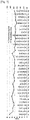
- Expression vector pAD15 EGF-derivative expressing EGF-deri protein was constructed using an expression vector system (ProGen, Korea). Here, the structure of a gene construct inserted into the expression vector is shown in FIG. 1 .
- the vector was transfected into Chinese hamster ovary (CHO)-DG44 DHFR(-) cells, and then high expression monoclonal cell lines were screened twice.
- Dihydrofolate reductase (DHFR) is an enzyme essential for the synthesis of deoxythymidine monophosphate (dTMP), one of the four components required for gene replication which is a cell proliferation process.
- dTMP deoxythymidine monophosphate
- the substance HT hyperxanthine and thymidine
- HT hypoxanthine and thymidine
- CHO-DG44 DHFR(-) cells were transfected with an expression vector containing DHFR gene, culture must be performed in medium containing HT in order to allow for cell growth. Therefore, after transfection with the expression vector, culture was performed in medium not containing HT so that only cell lines, into which a plasmid expressing the target gene and DHFR had been stably inserted to expresses the DHFR protein, survived and were selected. This is called a HT selection step. After selecting the cell lines expressing DHFR and EGF-deri proteins through the HT selection step, high expression cell lines were selected while increasing the concentration of methotrexate (MTX), a potent inhibitor of DHFR enzyme, in a stepwise manner.
- MTX methotrexate
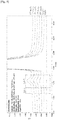
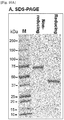
- the EGF-deri protein has a molecular weight of about 62 kDa.
- the EGF-deri protein accounted for 80% or higher thereof.
- most of them were present in an active monomeric form (62 kDa), 5% or lower of them were also observed in a dimeric form (124 kDa), and no cleaved form was observed.
- productivity and doubling time should be kept constant within a set criterion during the time period until the production is completed.
- MCB master cell bank
- WB working cell bank
- productivity and doubling time should be kept stable during 35 or more passages.
- productivity and doubling time of the EGF-deri protein were measured for each of the selected RCB candidate cell lines.
- a cell culture in culture was first centrifuged and suspended to a concentration of 5 ⁇ 10 5 cells/ml as a new culture solution. Subsequently, 5 ml of the suspension was cultured in a T-25 flask for 3 days. Then, 1 ml of the culture solution was taken, of which 0.5 ml was used to measure the cell number; and the remaining 0.5 ml was centrifuged and the supernatant was used to measure, with human IgG ELISA, productivity per 1 ⁇ 10 6 cells.
- the doubling time (Td) was measured as follows.
- a cell line showing the best long-term passage stability was selected as the final cell line for pharmaceutical product development.
- For cell line F selected as the final cell line the productivity and doubling time measured during 35 passages are shown in Table 3 below and FIG.
- the productivity was kept in a range of 100% to 132%, and the doubling time was kept constant at around 25 hours. This indicates that the selected final cell line can be used as a cell line for pharmaceutical product production.
- EGF-deri protein In order to identify stability of the EGF-deri protein under a severe condition, 126 ⁇ g/ml of EGF-deri protein was stored for 3 months under a severe condition of a temperature of 40°C and a relative humidity of 75 ⁇ 5%, and activity of the substance EGF-deri was observed. An amount of the EGF-deri protein over time is shown in Table 4 below, and activity of the EGF-deri protein over time is shown in Table 5 below and FIGS. 4A to 4C .
- EGF-deri protein As shown in Table 4, morphology of the EGF-deri protein gradually decreased to 79%, 49.5%, and 32% over time under a severe condition of 40°C. However, as shown in Table 5 and FIGS. 4A to 4C , biological activity of the EGF-deri protein was mostly retained. This indicates that although partial degradation of the EGF-deri protein occurred under a severe condition, most of the degraded EGF-deri substances were normal EGF's and retained activity. From these results, it was found that the EGF-deri protein exhibited high stability from the viewpoint of retaining activity with little loss even under a severe condition.
- mice and SKH-1 hairless mice were prepared as experimental animals. Using two types of mice, that is, Balb/c mice of which hair had been removed from the back skin using epilation cream, and genetically hairless mice, it was examined whether skin permeability of the EGF-deri protein differs depending on artificial damage of the skin caused by hair removal.
- the two types of mice were divided into PBS group, EGF group, EGF-deri group, and EGF liposome (H&A PharmaChem) group, respectively, depending on the protein to be applied on the skin.
- each protein was labeled with fluorescein isothiocyanate (FITC), a fluorescent labeling reagent, so that skin permeability of the individual protein could be identified.
- FITC fluorescein isothiocyanate
- a solution of each protein labeled with FITC was dropped, in an amount of 200 ng based on FITC, on the skin of each group of mice, and applied using a brush.
- mice When 6 hours and 12 hours had passed after the solution of each protein labeled with FITC was applied on the back skin of each group of mice, the mice were sacrificed and skin tissues were removed therefrom. The skin tissues were stored in their longitudinal section using a cryostat, and then permeability thereof for respective skin layers was analyzed through a confocal fluorescence microscope. The results are shown in FIG. 6 .
- Cell Boost 5 CB5, GE Healthcare, USA
- ASF Feed2 Ajinomoto Co., Inc.
- CB5 4.5% + ASF Feed2 0.5% CB5 3.5% + ASF Feed2 1.5%
- CB5 5.0% CB5 4.0% + ASF Feed2 1.0%
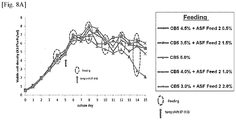
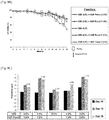
- CB5 3.0% + ASF Feed2 2.0%. This is specifically shown in Table 7 below and FIGS. 8A to 8C .
- viable cell density (VCD) values ranged from 7.0 ⁇ 10 6 cells/mL to 8.0 ⁇ 10 6 cells/mL under the conditions of CB5 3.0% + ASF Feed2 2.0%, CB5 4.0% + ASF Feed2 1.0%, and CB5 3.5% + ASF Feed2 1.5%.
- VCD viable cell density
- the best VCD value was observed under the condition of CB5 3.0% + ASF Feed2 2.0%.
- the best result was observed under the conditions of CB5 3.0% + ASF Feed2 2.0% and CB5 3.5% + ASF Feed2 1.5% in that cell viability was kept at 90% or higher during the 15-day culture.
- the agitation speed for culture which had started from 150 rpm, was increased to 200 rpm at day 4 of culture and increased to 250 rpm at day 6 of culture.
- the glucose concentration was kept at 3.0 g/L or higher throughout the culture period.
- days 4, 6, 8, 10, 12, and 14 of culture a combination of CB5 3.0% + ASF Feed2 2.0% was added as a supplement. The results are shown in FIGS. 9A to 9C .
- the VCD values ranged from 8.0 ⁇ 10 6 cells/mL to 12.0 ⁇ 10 6 cells/mL ( FIG. 9A ); and the cell viability was 90% or higher until day 14 of culture and 80% or higher at day 15 which was the last culture day ( FIG. 9B ).
- Productivity of the modified EGF was 2.3 g/L or higher ( FIG. 9C ).
- Table 9 The results are summarized in Table 9 below. From the above results, it was found that a process with far superior culture productivity relative to the standard EGF was established. [Table 9] Item Contents Maximum cell density ⁇ 11 ⁇ 10 6 cells/mL Viability at day 15 of culture ⁇ 80% Productivity ⁇ 2.3g/L
- the optimized purification method for EGF-deri is as follows. First, a column having Protein A as a stationary phase was prepared with a Mabselect system, and the prepared cell supernatant was loaded onto the column to have an amount of 14 g protein/L. Subsequently, impurities were removed by sequentially using wash buffer 1 of pH 7.0 composed of 50 mM sodium phosphate and 500 mM NaCl, and wash buffer 2 of pH 4.5 composed of 50 mM sodium acetate. Subsequently, the modified EGF protein was eluted while injecting, into the column, an elution buffer of pH 3.8 composed of 100 mM glycine. The experimental results are shown in Table 10 below, and FIGS. 10A and 10B . [Table 10] Item Contents Note Purification yield ⁇ 75% - Purity ⁇ 97% -
- the modified EGF protein was well purified.
- the purified modified EGF protein had a purification yield of 75% or higher and a purity of 97% or higher.
- EGF-deri a modified EGF protein of the present invention, had biological activity similar to the standard EGF purchased from NIBSC.
Landscapes
- Health & Medical Sciences (AREA)
- Life Sciences & Earth Sciences (AREA)
- Chemical & Material Sciences (AREA)
- General Health & Medical Sciences (AREA)
- Organic Chemistry (AREA)
- Veterinary Medicine (AREA)
- Public Health (AREA)
- Animal Behavior & Ethology (AREA)
- Zoology (AREA)
- Proteomics, Peptides & Aminoacids (AREA)
- Gastroenterology & Hepatology (AREA)
- Genetics & Genomics (AREA)
- Biochemistry (AREA)
- Engineering & Computer Science (AREA)
- Molecular Biology (AREA)
- Dermatology (AREA)
- Medicinal Chemistry (AREA)
- Epidemiology (AREA)
- Wood Science & Technology (AREA)
- Birds (AREA)
- Biophysics (AREA)
- Toxicology (AREA)
- Bioinformatics & Cheminformatics (AREA)
- General Engineering & Computer Science (AREA)
- Biotechnology (AREA)
- Chemical Kinetics & Catalysis (AREA)
- General Chemical & Material Sciences (AREA)
- Microbiology (AREA)
- Gerontology & Geriatric Medicine (AREA)
- Pharmacology & Pharmacy (AREA)
- Immunology (AREA)
- Preparation Of Compounds By Using Micro-Organisms (AREA)
- Peptides Or Proteins (AREA)
- Micro-Organisms Or Cultivation Processes Thereof (AREA)
- Cosmetics (AREA)
- Medicines That Contain Protein Lipid Enzymes And Other Medicines (AREA)
Applications Claiming Priority (4)
| Application Number | Priority Date | Filing Date | Title |
|---|---|---|---|
| KR20170137140 | 2017-10-23 | ||
| KR20170137132 | 2017-10-23 | ||
| KR1020180125012A KR102190790B1 (ko) | 2018-10-19 | 2018-10-19 | 변형된 egf 단백질의 생산 방법 |
| PCT/KR2018/012569 WO2019083256A2 (ko) | 2017-10-23 | 2018-10-23 | 변형된 egf 단백질, 이의 생산 방법 및 용도 |
Publications (2)
| Publication Number | Publication Date |
|---|---|
| EP3702365A2 true EP3702365A2 (de) | 2020-09-02 |
| EP3702365A4 EP3702365A4 (de) | 2021-11-10 |
Family
ID=66246628
Family Applications (1)
| Application Number | Title | Priority Date | Filing Date |
|---|---|---|---|
| EP18871487.7A Withdrawn EP3702365A4 (de) | 2017-10-23 | 2018-10-23 | Modifiziertes egf-protein, verfahren zu seiner herstellung und seine verwendung |
Country Status (5)
| Country | Link |
|---|---|
| US (1) | US11339197B2 (de) |
| EP (1) | EP3702365A4 (de) |
| JP (1) | JP6963336B2 (de) |
| CN (1) | CN111836826B (de) |
| WO (1) | WO2019083256A2 (de) |
Families Citing this family (2)
| Publication number | Priority date | Publication date | Assignee | Title |
|---|---|---|---|---|
| CN116239667B (zh) * | 2022-07-21 | 2024-05-10 | 西南大学 | 具有促细胞增殖活性的ehEGF重组蛋白及其制备方法和应用 |
| CN116875611B (zh) * | 2023-07-06 | 2024-10-29 | 臻赫医药(杭州)有限公司 | 一种编码表皮生长因子的化学修饰mRNA及其构建方法和应用 |
Family Cites Families (10)
| Publication number | Priority date | Publication date | Assignee | Title |
|---|---|---|---|---|
| EP1482966B1 (de) * | 2002-03-12 | 2014-05-14 | Bio-Click Technologies Ltd | Verfahren und zusammensetzung zur behandlung von hautwunden mit epidermalem wachstumsfaktor |
| CA2480121C (en) * | 2002-03-27 | 2012-02-28 | Immunex Corporation | Methods for increasing polypeptide production |
| CA2427190A1 (en) | 2002-04-30 | 2003-10-30 | Alberta Research Council Inc. | Production of recombinant epidermal growth factor in plants |
| TWI384069B (zh) | 2004-08-27 | 2013-02-01 | Pfizer Ireland Pharmaceuticals | 多胜肽之製法 |
| KR100583350B1 (ko) * | 2004-11-03 | 2006-06-05 | (주)넥스젠 | Fas-1 도메인을 함유하는 융합 단백질을 이용한상피세포재생인자의 생산 방법 |
| US20060222653A1 (en) * | 2004-11-12 | 2006-10-05 | Xencor, Inc. | Antibodies operably linked to selected chemoattractants |
| WO2014097733A1 (ja) * | 2012-12-21 | 2014-06-26 | 株式会社UniBio | ヒト上皮細胞増殖因子の製造方法 |
| KR101519118B1 (ko) * | 2013-07-23 | 2015-05-12 | (주)피앤피바이오팜 | 고안정성 상피세포 성장인자 변이체 |
| US9321821B2 (en) | 2013-11-14 | 2016-04-26 | Lg Household & Health Care Ltd. | Cosmetic composition for improving skin conditions comprising fusion protein |
| KR101867134B1 (ko) * | 2015-03-23 | 2018-06-12 | 한양대학교 산학협력단 | 포유류 세포를 이용하여 목적 물질을 고효율로 생산하기 위한 세포 배양 배지, 이를 이용한 세포 배양 방법 및 목적 물질의 생산 방법 |
-
2018
- 2018-10-23 EP EP18871487.7A patent/EP3702365A4/de not_active Withdrawn
- 2018-10-23 WO PCT/KR2018/012569 patent/WO2019083256A2/ko not_active Ceased
- 2018-10-23 US US16/757,823 patent/US11339197B2/en active Active
- 2018-10-23 JP JP2020542519A patent/JP6963336B2/ja active Active
- 2018-10-23 CN CN201880083629.3A patent/CN111836826B/zh active Active
Also Published As
| Publication number | Publication date |
|---|---|
| JP6963336B2 (ja) | 2021-11-05 |
| US11339197B2 (en) | 2022-05-24 |
| JP2021500069A (ja) | 2021-01-07 |
| CN111836826B (zh) | 2024-01-02 |
| WO2019083256A3 (ko) | 2019-06-13 |
| WO2019083256A2 (ko) | 2019-05-02 |
| US20210188931A1 (en) | 2021-06-24 |
| CN111836826A (zh) | 2020-10-27 |
| EP3702365A4 (de) | 2021-11-10 |
Similar Documents
| Publication | Publication Date | Title |
|---|---|---|
| US10695378B2 (en) | Direct reprogramming of cells to cardiac myocyte fate | |
| EP2588491B1 (de) | Neues peptid und seine verwendung | |
| KR101791526B1 (ko) | 발모 촉진 활성을 나타내는 펩타이드 및 이의 용도 | |
| JPH07502651A (ja) | 老化細胞由来dna合成阻害因子 | |
| US10815312B2 (en) | Bifunctional peptide having capability to permeate cells and capability to regenerate muscles and use thereof | |
| CN105814195A (zh) | 层粘连蛋白应用于角膜内皮细胞培养 | |
| JPH10507081A (ja) | シュワン細胞の分離および培養 | |
| JP2010508845A (ja) | ヘパリン結合配列に融合した増殖因子を使用して心臓修復を促進する方法 | |
| US20150273018A1 (en) | Synthetic peptide for inhibiting expression of type 2 tnf receptor and use thereof | |
| JP2010508845A5 (de) | ||
| US11339197B2 (en) | Modified EGF protein, production method therefor, and use thereof | |
| KR102038040B1 (ko) | 경피 전달율이 향상된 변형된 egf 단백질, 이를 유효성분으로 포함하는 피부 상태 개선용 화장료 조성물 및 피부질환 예방 또는 치료용 약학 조성물 | |
| TWI263784B (en) | Encapsulated cell indicator system | |
| Yang et al. | Cloning of rat fibrillin-2 cDNA and its role in branching morphogenesis of embryonic lung | |
| JP2002542824A (ja) | 組換えラミニン5 | |
| KR102720867B1 (ko) | 변형된 egf 단백질 및 이를 유효성분으로 포함하는 피부 상태 개선용 화장료 조성물 | |
| KR102190790B1 (ko) | 변형된 egf 단백질의 생산 방법 | |
| KR101810867B1 (ko) | 발모 촉진 활성을 나타내는 펩타이드 및 이의 용도 | |
| JP5399913B2 (ja) | 発毛促進剤 | |
| CN114854744A (zh) | 一种重组anti-miR-129-5p及其制备方法和在抗皮肤衰老中的应用 | |
| US9856293B2 (en) | Methods for inducing nestin expression of astrocytes by nestin-inducing synthetic peptides derived from the BC-box of the SOCS6 protein | |
| US10125168B2 (en) | Synthetic peptide for adjusting balance between presence of type 1 TNF receptor and type 2 TNF receptor and use thereof | |
| CN115974998A (zh) | 一种TNF-α拮抗肽及其应用 | |
| CN119841934A (zh) | 一种重组iii型胶原蛋白及其制备方法和应用 | |
| KR20210116726A (ko) | 동결 저장된 제대혈 유래 줄기세포를 이용한 고농도 성장인자 함유 배양액 제조 방법 |
Legal Events
| Date | Code | Title | Description |
|---|---|---|---|
| STAA | Information on the status of an ep patent application or granted ep patent |
Free format text: STATUS: THE INTERNATIONAL PUBLICATION HAS BEEN MADE |
|
| PUAI | Public reference made under article 153(3) epc to a published international application that has entered the european phase |
Free format text: ORIGINAL CODE: 0009012 |
|
| STAA | Information on the status of an ep patent application or granted ep patent |
Free format text: STATUS: REQUEST FOR EXAMINATION WAS MADE |
|
| 17P | Request for examination filed |
Effective date: 20200506 |
|
| AK | Designated contracting states |
Kind code of ref document: A2 Designated state(s): AL AT BE BG CH CY CZ DE DK EE ES FI FR GB GR HR HU IE IS IT LI LT LU LV MC MK MT NL NO PL PT RO RS SE SI SK SM TR |
|
| AX | Request for extension of the european patent |
Extension state: BA ME |
|
| DAV | Request for validation of the european patent (deleted) | ||
| DAX | Request for extension of the european patent (deleted) | ||
| RIC1 | Information provided on ipc code assigned before grant |
Ipc: C07K 14/485 20060101AFI20210629BHEP Ipc: A61K 8/64 20060101ALI20210629BHEP Ipc: A61Q 19/08 20060101ALI20210629BHEP Ipc: A61Q 19/00 20060101ALI20210629BHEP Ipc: A61K 38/00 20060101ALI20210629BHEP |
|
| A4 | Supplementary search report drawn up and despatched |
Effective date: 20211007 |
|
| RIC1 | Information provided on ipc code assigned before grant |
Ipc: A61K 38/00 20060101ALI20211002BHEP Ipc: A61Q 19/00 20060101ALI20211002BHEP Ipc: A61Q 19/08 20060101ALI20211002BHEP Ipc: A61K 8/64 20060101ALI20211002BHEP Ipc: C07K 14/485 20060101AFI20211002BHEP |
|
| STAA | Information on the status of an ep patent application or granted ep patent |
Free format text: STATUS: EXAMINATION IS IN PROGRESS |
|
| 17Q | First examination report despatched |
Effective date: 20231010 |
|
| RIC1 | Information provided on ipc code assigned before grant |
Ipc: A61Q 19/08 20060101ALI20241011BHEP Ipc: A61Q 19/00 20060101ALI20241011BHEP Ipc: A61K 38/00 20060101ALI20241011BHEP Ipc: A61K 8/64 20060101ALI20241011BHEP Ipc: C07K 14/485 20060101AFI20241011BHEP |
|
| GRAP | Despatch of communication of intention to grant a patent |
Free format text: ORIGINAL CODE: EPIDOSNIGR1 |
|
| STAA | Information on the status of an ep patent application or granted ep patent |
Free format text: STATUS: GRANT OF PATENT IS INTENDED |
|
| INTG | Intention to grant announced |
Effective date: 20241210 |
|
| STAA | Information on the status of an ep patent application or granted ep patent |
Free format text: STATUS: THE APPLICATION IS DEEMED TO BE WITHDRAWN |
|
| 18D | Application deemed to be withdrawn |
Effective date: 20250411 |