EP3703302B1 - Verfahren und vorrichtung zur minimierung von interferenzen zwischen tdd-kommunikationsnetzwerken - Google Patents
Verfahren und vorrichtung zur minimierung von interferenzen zwischen tdd-kommunikationsnetzwerken Download PDFInfo
- Publication number
- EP3703302B1 EP3703302B1 EP19382155.0A EP19382155A EP3703302B1 EP 3703302 B1 EP3703302 B1 EP 3703302B1 EP 19382155 A EP19382155 A EP 19382155A EP 3703302 B1 EP3703302 B1 EP 3703302B1
- Authority
- EP
- European Patent Office
- Prior art keywords
- tdd
- transmission
- time
- base station
- time intervals
- Prior art date
- Legal status (The legal status is an assumption and is not a legal conclusion. Google has not performed a legal analysis and makes no representation as to the accuracy of the status listed.)
- Active
Links
Images




Classifications
-
- H—ELECTRICITY
- H04—ELECTRIC COMMUNICATION TECHNIQUE
- H04L—TRANSMISSION OF DIGITAL INFORMATION, e.g. TELEGRAPHIC COMMUNICATION
- H04L5/00—Arrangements affording multiple use of the transmission path
- H04L5/14—Two-way operation using the same type of signal, i.e. duplex
- H04L5/1469—Two-way operation using the same type of signal, i.e. duplex using time-sharing
-
- H—ELECTRICITY
- H04—ELECTRIC COMMUNICATION TECHNIQUE
- H04L—TRANSMISSION OF DIGITAL INFORMATION, e.g. TELEGRAPHIC COMMUNICATION
- H04L5/00—Arrangements affording multiple use of the transmission path
- H04L5/003—Arrangements for allocating sub-channels of the transmission path
- H04L5/0032—Distributed allocation, i.e. involving a plurality of allocating devices, each making partial allocation
-
- H—ELECTRICITY
- H04—ELECTRIC COMMUNICATION TECHNIQUE
- H04J—MULTIPLEX COMMUNICATION
- H04J11/00—Orthogonal multiplex systems, e.g. using WALSH codes
- H04J11/0023—Interference mitigation or co-ordination
- H04J11/005—Interference mitigation or co-ordination of intercell interference
-
- H—ELECTRICITY
- H04—ELECTRIC COMMUNICATION TECHNIQUE
- H04J—MULTIPLEX COMMUNICATION
- H04J11/00—Orthogonal multiplex systems, e.g. using WALSH codes
- H04J11/0023—Interference mitigation or co-ordination
- H04J11/005—Interference mitigation or co-ordination of intercell interference
- H04J11/0056—Inter-base station aspects
-
- H—ELECTRICITY
- H04—ELECTRIC COMMUNICATION TECHNIQUE
- H04L—TRANSMISSION OF DIGITAL INFORMATION, e.g. TELEGRAPHIC COMMUNICATION
- H04L5/00—Arrangements affording multiple use of the transmission path
- H04L5/0091—Signalling for the administration of the divided path, e.g. signalling of configuration information
- H04L5/0094—Indication of how sub-channels of the path are allocated
-
- H—ELECTRICITY
- H04—ELECTRIC COMMUNICATION TECHNIQUE
- H04L—TRANSMISSION OF DIGITAL INFORMATION, e.g. TELEGRAPHIC COMMUNICATION
- H04L5/00—Arrangements affording multiple use of the transmission path
- H04L5/14—Two-way operation using the same type of signal, i.e. duplex
- H04L5/1461—Suppression of signals in the return path, i.e. bidirectional control circuits
-
- H—ELECTRICITY
- H04—ELECTRIC COMMUNICATION TECHNIQUE
- H04W—WIRELESS COMMUNICATION NETWORKS
- H04W28/00—Network traffic management; Network resource management
- H04W28/16—Central resource management; Negotiation of resources or communication parameters, e.g. negotiating bandwidth or QoS [Quality of Service]
- H04W28/26—Resource reservation
-
- H—ELECTRICITY
- H04—ELECTRIC COMMUNICATION TECHNIQUE
- H04W—WIRELESS COMMUNICATION NETWORKS
- H04W72/00—Local resource management
- H04W72/50—Allocation or scheduling criteria for wireless resources
- H04W72/54—Allocation or scheduling criteria for wireless resources based on quality criteria
- H04W72/542—Allocation or scheduling criteria for wireless resources based on quality criteria using measured or perceived quality
-
- H—ELECTRICITY
- H04—ELECTRIC COMMUNICATION TECHNIQUE
- H04J—MULTIPLEX COMMUNICATION
- H04J11/00—Orthogonal multiplex systems, e.g. using WALSH codes
- H04J2011/0096—Network synchronisation
-
- H—ELECTRICITY
- H04—ELECTRIC COMMUNICATION TECHNIQUE
- H04L—TRANSMISSION OF DIGITAL INFORMATION, e.g. TELEGRAPHIC COMMUNICATION
- H04L5/00—Arrangements affording multiple use of the transmission path
- H04L5/003—Arrangements for allocating sub-channels of the transmission path
- H04L5/0058—Allocation criteria
- H04L5/0064—Rate requirement of the data, e.g. scalable bandwidth, data priority
-
- H—ELECTRICITY
- H04—ELECTRIC COMMUNICATION TECHNIQUE
- H04L—TRANSMISSION OF DIGITAL INFORMATION, e.g. TELEGRAPHIC COMMUNICATION
- H04L5/00—Arrangements affording multiple use of the transmission path
- H04L5/003—Arrangements for allocating sub-channels of the transmission path
- H04L5/0058—Allocation criteria
- H04L5/0073—Allocation arrangements that take into account other cell interferences
Definitions
- the present invention has its application within the telecommunication sector, particularly in cellular (wireless) communications networks. More specifically, the present invention proposes a method and device to minimize inter-system and intra-system interferences in order to allow coexistence between cellular networks (cellular systems) using Time Division Duplex (TDD) technology and, therefore, in Time Division Duplex (TDD) bands.
- TDD Time Division Duplex
- TDD Time Division Duplex
- TDD bands are attractive for Fifth-Generation (5G) systems, as they have the potential to offer large bandwidths for future cellular use.
- 5G Fifth-Generation
- the electromagnetic spectrum above 6 GHz (generally referred to as millimetre-waves) is usually offered in contiguous mode for simplicity of the UE frontends in cellular networks, hence enforcing TDD operation.
- the millimetre-wave (mmWave) frequency region comprises radio frequencies in the range from 30 GHz to 300 GHz although in some practical applications, frequencies above 6 GHz are also regarded as mmWaves.
- FWA Fixed Wireless Access
- Time Division Duplex mode is attractive because it can cope with asymmetric traffic demands, as opposed to Frequency Division Duplex (FDD) mode where capacity for uplink (UL) and downlink (DL) is symmetric.
- FDD Frequency Division Duplex
- different frequencies are used in UL and DL.
- TDD technology usually the same carrier frequency is used for both uplink (from the user equipment to the base station) and downlink (from the base station to the user equipment) transmissions; the carrier is subdivided in the time domain into a series of timeslots and the single carrier is assigned to uplink during some timeslots and to downlink during other timeslots.
- TDD bands One of the drawbacks of TDD bands is, however, the potential coexistence issues that appear between systems operating in the same band, because interference from BS to BS and from UE to UE can be very strong unless special protection mechanisms are devised.
- the presence of multiple cross interferences in TDD systems makes it essential to follow strict coexistence rules between systems (e.g. networks or operators). These rules will be either imposed by the regulator or agreed among operators, and usually include the timeslots to be used in each frame for UL and DL transmissions, which is called the UL:DL pattern.
- the usual approach for coexistence in TDD bands is to define a strict time synchronization scheme (in order to minimize cross interferences) that must be followed by all systems.
- This time synchronization scheme involves: unambiguously defining the start instants of all the transmission and reception opportunities (e.g. using Global Navigation Satellite Systems, GNSS, a transport network synchronization protocol as Precision Time Protocol or signals or synchronization protocols like IEEE 1588v2) and specifying the exact UL:DL (Uplink : Downlink) pattern detailing the transmission opportunities for Base Stations (BSs) and User Equipments (UEs) in all the systems which are deployed in a certain zone (e.g. a country).
- GNSS Global Navigation Satellite Systems
- UEs User Equipments
- some FWA systems in mmWaves operate in FDD mode, i.e. they use different frequencies in UL and DL (either from the same band or from different bands) with a given duplex gap separation in between. In such cases, no strict time synchronization is required, and systems only need to follow certain out-of-band emission limits to keep interferences to a minimum.
- leaving a duplex gap at these high frequencies significantly reduces spectrum efficiency, and some mmWaves bands (like 26 GHz) will only work in TDD mode for 5G New Radio (NR).
- NR 5G New Radio
- Document ZTE "Channel sensing based schemes for cross-link interference mitigation in NR", 3GPP DRAFT; R1-1712282, 3RD GENERATION PARTNERSHIP PROJECT (3GPP), vol. RAN WG1, 20 August 2017 , discloses cross-link interference mitigation among different base stations.
- Document CATT "Discussion on eNB synchronization error", 3GPP DRAFT; R4-132644, 3RD GENERATION PARTNERSHIP PROJECT (3GPP), vol. RAN WG4, 13 May 2013 discusses TDD synchronization.
- the new TDD system aimed to coexist with an incumbent TDD system adapts its transmission parameters in such a way that all UL and DL transmissions of the new system are contained within the opportunity intervals defined by the incumbent system.
- This scheme can be appropriately considered as following strict time synchronization, whose time pattern is in some proposals signaled to devices.
- Other procedures consider blank periods to avoid interferences as in US20100135272 or US20130301420 with the subsequent loss in efficiency.
- the present invention solves the aforementioned problems and overcomes previously explained state-of-the-art limitations by proposing a method and device to facilitate coexistence between a (first) TDD cellular system, comprising at least one Base Station (BS) and at least one user equipment (UE) and one or more other TDD systems (called from now on incumbent TDD systems) operating in the same TDD frequency band, in such a way that no modifications are required to the incumbent systems (i.e. the incumbent systems remain unchanged) while interferences between the users and base stations of the respective systems are minimized, as well as any self-interference occurring between sectors of the same system. Thanks to the proposed mechanism, it is ensured that the resulting interferences between systems are minimized to the extent possible, while keeping the radio characteristics and the downlink, DL, and uplink, UL, time intervals defined by said incumbent system for radio transmission and reception unchanged.
- BS Base Station
- UE user equipment
- TDD systems called from now on incumbent TDD systems
- the invention proposes a hybrid synchronization scheme with strictly synchronized DL transmissions but asynchronous operation in UL.
- the synchronous DL timing is assumed to be imposed by the incumbent system(s) (DL pattern agreed between the systems or imposed by a regulator) hence avoiding some of the interference terms between coexisting systems.
- DL pattern agreed between the systems or imposed by a regulator
- UL operation can observe potentially different timings hence achieving a flexible UL:DL pattern.
- the resulting UL:DL ratio of the UL and DL transmissions duration in said TDD system is flexible and dynamically determined by the scheduler decisions at the base station of the first cellular system, whereas the UL:DL ratio of the UL and DL transmission duration in said incumbent system is fixed.
- the radio scheduler at the base station of the first cellular system determines the UL transmission durations and start instants of the UL packets, in such a way that no collisions between the user equipments of the first and of the incumbent cellular systems will occur.
- DL transmissions however, always stick to the predefined DL slots. Whenever an UL transmission from a given UE is active and occupies part of the DL resources, the BS will refrain from initiating any DL transmission until no UL signal intended for that BS is present.
- Prior state-of-the-art techniques usually impose strict time synchronization, including a predefined UL:DL ratio and a Timing Advance procedure.
- the resulting loss in flexibility can also lead to high spectral inefficiencies as per the fixed size of the packets.
- Other asynchronous alternatives require guard bands and strict filtering capabilities, and incumbent systems may not be allowed to incorporate such modifications hence making this option unavailable.
- the proposed invention can overcome the limitations of prior techniques by introducing synchronous DL but asynchronous UL operation, hence allowing flexible UL packet sizes while not requiring any Timing Advance algorithm.
- UEs can therefore be simpler while achieving better spectral efficiency than in a fixed UL:DL configuration. Interferences towards incumbent base station, and from incumbent user equipment, are also avoided, in this proposal.
- a method performed by a base station, a corresponding base station apparatus and a corresponding non-transitory computer readable medium are defined in appended claims 1, 14, 15 respectively.
- the invention is defined by the appended claims.
- the present invention proposes a method and device to minimize interferences between wireless cellular systems operating in TDD mode (using TDD techniques), where at least one of them is an incumbent system whose radiofrequency (RF) and software (SW) characteristics must not be modified.
- the proposed synchronization scheme (optionally together with additional filtering stages, guard bands and site engineering actions), can minimize interferences while at the same time achieving flexibility in UL:DL traffic ratio.
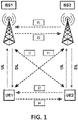
- Figure 1 shows an embodiment for application of the proposed invention.
- a first (new) TDD system comprising at least one base station (BS1) and at least one user equipment (UE1) has to coexist in the same band with at least one second TDD system comprising at least BS2 and UE2, in such a way that BS2 and UE2 remain unchanged while minimizing interferences.
- Figure 1 illustrates a cellular TDD scenario containing at least two Base Stations, named BS1 and BS2, and at least two User Equipment (UEs), named UE1 and UE2.
- Both BS1 and UE1 operates in a given carrier frequency that may be different or not to the one corresponding to BS2 and UE2, but in the same band.
- BS2 and UE2 operate at a different carrier frequency, they are considered in what follows as the incumbent system, with which BS1 and UE1 must coexist.
- BS1 and UE1 can use the same baseband technology as BS2 and UE2, or a different one.
- Figure 1 shows all possible interference terms in the uplink (UL) and downlink (DL) of this scenario, denoted as 11, 12, ..., 16. Some of these interference terms are avoided when strict time synchronization is observed.
- I1, I2, ..., I6 are usually denoted as self-interference terms.
- the interference terms are the following:
- both systems are strictly time-synchronized as shown in Figure 2 .
- the DL and UL slots are the same and synchronized (they start and finish at the same time instants).
- Interference terms I3, I4, I5 and I6 are not present in this case.
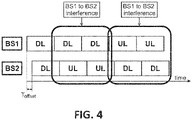
- systems operate in asynchronous mode (an example shown in Figure 4 ).
- asynchronous mode an example shown in Figure 4 .
- the slots starts and finish at different times in each BS and one of the BS can be transmitting in the downlink and the other in the Uplink.
- BS1 when BS1 is transmitting in the downlink and BS2 in the uplink there is a strong interference from BS1 to BS2 (and vice versa).
- the present patent application proposes an alternative hybrid synchronization mechanism that accomplishes coexistence between a first (new) system and at least one second (incumbent) system without requiring any modifications to the second system equipment.
- a first TDD system comprising at least one BS and one or multiple UEs, must coexist with one or more second TDD systems (called incumbent systems) operating in the same band.
- the incumbent systems must remain unchanged while ensuring that the resulting interferences between systems are minimized to the extent possible.
- the TDD system can be part of any telecommunications network, especially a cellular telecommunication network, for example a 2G, 3G, 4G, 5G mobile telecommunications network or any other type of telecommunications network using TDD technology for communications.
- the technologies used by the TDD system and the incumbent system are the same or different (in an embodiment, for example, the first system can be a 3GPP or non-3GPP system operating in a mmWave band, and said incumbent TDD system is a 3GPP system operating in the same band).
- the user equipment may be a mobile telephone, a tablet, a smartphone, a laptop, a computer, a PC... (and generally any electronic equipment or device that can be connected to the TDD system).
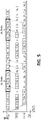
- FIG. 5 shows a TDD system, with at least one Base Station BS1 and at least two user equipments UE1 and UE1A.
- Tp1 and Tp1A are the propagation times between BS1 and UE1 and UE1A respectively.
- the slots where there is a real DL or UL transmission are highlighted.
- the synchronous DL instants and pattern is imposed by the incumbent systems (previously agreed between the existing TDD systems in a certain area), in order to avoid some of the interference terms in Figure 1 .
- UL operation can observe potentially different timings hence achieving a flexible UL:DL pattern.
- the BS scheduler determines the UL transmission durations and start instants of the UL packets, in such a way that no collisions between UEs occur.
- the UEs transmit to the BS their traffic requirements and, based at least on said information the BS scheduler assigns to each UE, UL transmission durations and start instants of their UL packets (which may stick or not to the predefined UL slots, that is the UL packets can be transmitted in the predefined UL slots or in predefined DL or S time slots, for example).
- DL transmissions however, always stick to the predefined DL slots. That is, to the DL time slots predefined by the UL:DL pattern agreed between all the existing TDD systems in a certain geographical area.
- the BS Whenever an UL transmission from a given UE is active and occupies part of the DL resources, the BS will refrain from initiating any DL transmission until no UL signal intended for said BS is present in the system. That is, as the BS has assigned UL transmission durations and start instants to each UE (some of them occupying part of the pre-assigned DL resources), the BS knows when there is no UL transmission assigned and will only initiate a DL transmission when there is no UL transmission assigned in said time slot. No Timing Advance mechanism is necessary, as UL transmissions do not need to be confined within the limits of the UL occasions defined by the incumbent systems. That is, if the system does not use the hybrid synchronization scheme (e.g.
- Timing Advance algorithm to ensure that all UL signals under control of BS2 are received at the same instants, while no Timing Advance algorithm is needed at said TDD system applying the proposed hybrid synchronization scheme, to achieve coexistence and minimize interferences.
- each base station estimates the round-trip-time between it and the user equipment connected to that cell, with the intention to avoid any time overlap between received UL signals and transmitted DL signals when radio resources are to be scheduled by the base station.
- Such estimation can be performed dynamically by the BS (for moving UEs), or statically by the BS or the management system (for static UEs, like in FWA scenarios), without precluding any other possibility.
- the actual UL:DL ratio in the system will therefore be dynamic and dependent on the BS scheduler decisions, which are ultimately determined by the traffic demand and the spectral efficiency of the system. This represents an advantage over traditional fully synchronized TDD networks, where UL:DL ratio is fixed and cannot adapt to the traffic demand.
- the presence of asynchronous UL transmissions generally introduces interferences between the elements of the system.
- said interference is minimized.
- the proposed hybrid synchronization scheme is applied at BS1 and UE1 (the first TDD system)
- the interference from BS2 to BS1 (15 in figure 1 ) and from UE2 to UE1 (13 in figure 1 ) will be avoided (because the uplink transmission of UE2 will never coincide with the downlink transmission of UE1 and BS1 will strictly follow same DL time instants as used in BS2), being BS2 and UE2 a base station and user equipment of a second TDD system (an incumbent system coexisting in the same band, where this hybrid synchronization scheme may not be applied).
- the base stations BS1 and BS2 may be in different positions or even they can be co-located in the same position (in this latter case, the base stations may be pointing towards non-overlapping angular regions, hence serving different cellular sectors).
- the following rules are observed in order to minimize interferences between the system with hybrid synchronization and the incumbent system (where this hybrid synchronization scheme may not be applied):
- FIG. 8 shows an embodiment where the proposed hybrid synchronization is applied at BS'1, BS'2, UE'1 and UE'2, all of which belong to the same TDD cellular system.
- the rules already described for minimizing the interference between the TDD system applying the proposed synchronization scheme and an incumbent system not applying said proposed synchronization scheme, the following rules may be applied:
- the proposed embodiments can be implemented by means of software elements, hardware elements, firmware elements, or any suitable combination of them.
Landscapes
- Engineering & Computer Science (AREA)
- Signal Processing (AREA)
- Computer Networks & Wireless Communication (AREA)
- Quality & Reliability (AREA)
- Mobile Radio Communication Systems (AREA)
Claims (15)
- Verfahren zum Minimieren von Interdifferenzen zwischen einem ersten Zeitmultiplexduplex-, TDD, Kommunikationssystem und mindestens einem zweiten TDD-Kommunikationssystem, das in demselben Band wie das erste TDD-Kommunikationssystem existiert, wobei jedes TDD-Kommunikationssystem mindestens eine Basisstation aufweist, jeweils eine erste Basisstation BS1 in dem ersten TDD-Kommunikationssystem und einer zweiten Basisstation BS2 in dem zweiten TDD-System, die für die Planung von Abwärts-DL- und Aufwärts-UL-Verbindungen zuständig sind und mindestens einen Benutzergerät, wobei die DL- und UL-Verbindungen in dem zweiten TDD-System gemäß einem voraus festgelegten festen UL:DL Muster erfolgen, dass angibt, welche Zeitintervalle für die DL-Übertragung und welche für den UL-Empfang auf der Seite der zweiten Basisstation BS2 reserviert sind, wobei das Verfahren die folgenden Schritte, durchgeführt von BS1 aufweist:a) Einplanen für ein Zeitintervall für die Übertragung von DL-Paketen von BS1 nur dann, wenn das Zeitintervall innerhalb der für die DL-Übertragung in dem zweiten TDD-System reservierten Zeitintervalle enthalten ist und das Zeitintervall sich nicht mit irgendeinem von der Basisstation für den UL-Empfang eingeplanten UL-Zeitintervall überschneidet;b) Einplanen eines oder mehrere Zeitintervalle für die Übertragung von UL-Pakten durch ein Benutzergerät, wobei das eine oder die mehreren Zeitintervalle zumindest teilweise außerhalb der für die UL-Übertragung im zweiten TDD-System-basierten Zeitintervall liegen.
- Verfahren nach Anspruch 1, wobei Schritt b) aufweist: BS1 plant ein oder mehrere Zeitintervalle für die Übertragung von UL-Paketen ein, die zumindest teilweise ein oder mehrere Zeitintervalle überlappen, die für den DL-Empfang in dem zweiten TDD-System reserviert sind.
- Verfahren nach einem der vorangehenden Ansprüche, wobei BS1 ein Zeitintervall für die Übertragung von UL-Paketen durch ein Benutzergerät nur dann einplant, wenn sich das Zeitintervall nicht mit einem DL-Zeitintervall überschneidet, das von BS1 für die DL-Übertragung an ein anderes von BS1 bedientes Benutzergerät eingeplant ist.
- Verfahren nach einem der vorangehenden Ansprüche, wobei das zweite TDD-System einem strengen Zeitsynchronisationsschema folgt, indem es ein globales Navigationssatellitensystem, GNSS oder ein Transportnetzsynchronisationsprotokoll wie zum Beispiel Precision-time-Protokoll, PTP oder ein anderes geeignetes Mittel zur Zeitsynchronisation verwendet.
- Verfahren nach einem der vorangehenden Ansprüche, bei dem Schutzbänder an beiden Rändern der Frequenzträger reserviert sind, die mindestens einer Basisstation und mindestens einem Benutzergerät des ersten TDD-Systems zugewiesen sind.
- Verfahren nach einem der vorangehenden Ansprüche, wobei jede BS1 die UL Zeitintervalle zumindest auf der Grundlage der Anforderungen des Übertragungsverkehrs der von ihr bedienten Benutzereinrichtungen und/oder der Anforderungen des Übertragungsverkehrs der BS1 plant.
- Verfahren nach einem der vorangehenden Ansprüche, wobei die BS1 über spezifische, auf ihre Trägerfrequenz zentrierte Empfangsfelder verfügt.
- Verfahren nach einem der vorangehenden Ansprüche, wobei zur weiteren Minimierung der Interferenz zwischen BS2 und BS1 mindestens eine der folgenden Maßnahmen ebenfalls ergriffen wird: Maximieren der Trennung der von BS2 und BS1 verwendeten Trägerfrequenzen, Maximierung des physikalischen Abstandes zwischen BS1 und BS2 oder Vermeidung direkter Sichtbarkeit zwischen beiden Basisstationen durch Anpassung ihrer relativen Neigung und Azimuthausrichtung.
- Verfahren nach einem der vorangehenden Ansprüche, wobei das erste TDD-System des Weiteren aufweist: eine zweite Basisstation BS'2, wobei die zweite Basisstation auch die Schritte a) und b) zum Planen der Übertragung von UL und DL-Pakten durchführt.
- Verfahren nach Anspruch 9, wobei zur weiteren Minimierung der Interferenz zwischen BS1 und BS'2 mindestens eine der folgenden Maßnahmen ebenfalls ausgeführt wird: Zuweisen unterschiedlicher Trägerfrequenzen an BS1 und BS'2, Vermeiden direkter Sichtbarkeit zwischen beiden Basisstationen durch Anpassen ihrer relativen Neigung und Azimuthausrichtung oder Reservieren von Schutzbändern an beiden Rändern der Trägerfrequenzen von BS1 und BS'2.
- Verfahren nach einem der vorangehenden Ansprüche 9 oder 10, wobei die Basisstationen BS1 und BS'2 des ersten TDD-Systems die Umlaufzeit zwischen ihnen und den mit der jeweiligen Basisstation verbundenen Benutzergeräten schätzen und die geschätzte Umlaufzeit bei der Planung von UL- und/oder DL-Übertragung berücksichtigt wird.
- Verfahren nach einem der vorangehenden Ansprüche, wobei zur weiteren Minimierung der von einem an BS1 angeschlossenen Benutzergerät UE1 erzeugten Störung das UE1 die Anforderung an die Grenzwerte der außer-Band und Störaussendungen erfüllt.
- Verfahren nach einem der vorangehenden Ansprüche, wobei bei jeder der Basisstationen des ersten und zweiten TDD-Systems sich an unterschiedlichen Positionen befinden oder an derselben Position zusammen aufgestellt sind und in diesem zweiten Fall die zusammen aufgestellten Basisstationen auf nicht überlappende Winkelbereiche gerichtet sind.
- Erste Basisstation BS1 eines ersten Time-Division-Duplex, TDD, Kommunikationssystem zum Minimieren von Interferenzen mit mindestens einem zweiten TDD-System aufweisend mindestens eine zweite Basisstation BS2, wobei das zweite TDD-System in demselben Band wie das erste TDD-Kommunikationssystem existiert, wobei die DL- und UL-Übertragungsplanung in dem zweiten TDD-System ausgeführt wird, folgend einem zuvor festgelegten UL:DL-Musters, das angibt, welche Zeitintervalle jedes Rahmens für die DL-Übertragung und welche für den UL-Empfang auf der Seite der zweiten Basisstation BS2 reserviert sind, wobei BS1 einen Basisstationsplaner aufweist, der für die Planung der DL- und UL-Übertragungen zuständig ist, wobei der Basisstationsplaner konfiguriert ist um:a) ein Zeitintervall für die Übertragung von DL-Paketen von BS1 nur dann zu planen, wenn das Zeitintervall innerhalb der Zeitintervalle enthalten ist, die für die DL-Übertragung in dem vorher eingerichteten festen UL:DL-Muster des zweiten TDD-Systems reserviert sind und das Zeitintervall sich nicht mit irgendeinem UL Zeitintervall überschneidet, das von BS1 für den UL-Empfang geplant ist;b) Planen eines oder mehrerer Zeitintervalle für die Übertragung von UL-Paketen durch ein Benutzergerät, wobei das eine oder die mehreren Zeitinervalle zumindest teilweise außerhalb der Zeitintervalle liegen, die für UL-Übertragungen in dem vorher eingerichteten festen UL:DL-Muster des zweiten TDD-Systems reserviert sind.
- Nicht-flüchtiges computerlesbares Medium aufweisend Anweisungen, welche, wenn sie durch einen Computer ausgeführt werden, den Computer veranlassen, das Verfahren nach einem der Ansprüche 1 bis 13 durchzuführen.
Priority Applications (5)
| Application Number | Priority Date | Filing Date | Title |
|---|---|---|---|
| ES19382155T ES2927089T3 (es) | 2019-03-01 | 2019-03-01 | Procedimiento y dispositivo para minimizar interferencias entre redes de comunicaciones TDD |
| EP19382155.0A EP3703302B1 (de) | 2019-03-01 | 2019-03-01 | Verfahren und vorrichtung zur minimierung von interferenzen zwischen tdd-kommunikationsnetzwerken |
| PCT/EP2020/055421 WO2020178229A1 (en) | 2019-03-01 | 2020-03-02 | Method and device for minimizing interferences between tdd communications networks |
| BR112021017093A BR112021017093A2 (pt) | 2019-03-01 | 2020-03-02 | Método para minimizar interferências entre redes de comunicações de tdd, estação-base e mídia legível por computador não transitória |
| US17/435,414 US20220182194A1 (en) | 2019-03-01 | 2020-03-02 | Method and device for minimizing interferences between tdd communications networks |
Applications Claiming Priority (1)
| Application Number | Priority Date | Filing Date | Title |
|---|---|---|---|
| EP19382155.0A EP3703302B1 (de) | 2019-03-01 | 2019-03-01 | Verfahren und vorrichtung zur minimierung von interferenzen zwischen tdd-kommunikationsnetzwerken |
Publications (2)
| Publication Number | Publication Date |
|---|---|
| EP3703302A1 EP3703302A1 (de) | 2020-09-02 |
| EP3703302B1 true EP3703302B1 (de) | 2022-07-27 |
Family
ID=65812250
Family Applications (1)
| Application Number | Title | Priority Date | Filing Date |
|---|---|---|---|
| EP19382155.0A Active EP3703302B1 (de) | 2019-03-01 | 2019-03-01 | Verfahren und vorrichtung zur minimierung von interferenzen zwischen tdd-kommunikationsnetzwerken |
Country Status (5)
| Country | Link |
|---|---|
| US (1) | US20220182194A1 (de) |
| EP (1) | EP3703302B1 (de) |
| BR (1) | BR112021017093A2 (de) |
| ES (1) | ES2927089T3 (de) |
| WO (1) | WO2020178229A1 (de) |
Families Citing this family (3)
| Publication number | Priority date | Publication date | Assignee | Title |
|---|---|---|---|---|
| JP2024033020A (ja) * | 2021-01-13 | 2024-03-13 | シャープ株式会社 | 端末装置、基地局装置、および、通信方法 |
| US11716745B1 (en) * | 2021-06-16 | 2023-08-01 | T-Mobile Innovations Llc | Scheduler systems and methods |
| WO2025252995A1 (en) * | 2024-06-07 | 2025-12-11 | Fraunhofer-Gesellschaft zur Förderung der angewandten Forschung e.V. | Method for efficient tdd operation in ntn |
Family Cites Families (10)
| Publication number | Priority date | Publication date | Assignee | Title |
|---|---|---|---|---|
| KR100521854B1 (ko) * | 1997-03-03 | 2005-10-14 | 셀레트라 리미티드 | 셀룰라 통신 시스템 |
| US8077694B2 (en) * | 2006-11-28 | 2011-12-13 | Motorola Mobility, Inc. | Intelligent scheduling in a time division duplexing system to mitigate near/far interference scenarios |
| CN101282168B (zh) | 2007-04-03 | 2013-01-16 | 中兴通讯股份有限公司 | 时分双工移动通信系统共存时无线帧的发射方法、系统 |
| US8547989B2 (en) | 2008-12-01 | 2013-10-01 | Qualcomm Incorporated | Methods and systems for LTE-WIMAX coexistence |
| CN102387506B (zh) | 2010-08-30 | 2015-06-03 | 中兴通讯股份有限公司 | 通信系统共存时的物理资源配置和信号发送方法及系统 |
| US9681382B2 (en) | 2012-05-11 | 2017-06-13 | Intel Corporation | Radio coexistence in wireless networks |
| US10405334B2 (en) * | 2015-12-18 | 2019-09-03 | Qualcomm Incorporated | Techniques for switching between downlink and uplink communications |
| US10236933B2 (en) * | 2016-10-07 | 2019-03-19 | Qualcomm Incorporated | Timing offset compensation for inter-link interference cancellation |
| US11716558B2 (en) * | 2018-04-16 | 2023-08-01 | Charter Communications Operating, Llc | Apparatus and methods for integrated high-capacity data and wireless network services |
| EP3925123A1 (de) * | 2019-02-15 | 2021-12-22 | Telefonaktiebolaget LM ERICSSON (PUBL) | Technik zur verminderung von fernstörungen |
-
2019
- 2019-03-01 EP EP19382155.0A patent/EP3703302B1/de active Active
- 2019-03-01 ES ES19382155T patent/ES2927089T3/es active Active
-
2020
- 2020-03-02 BR BR112021017093A patent/BR112021017093A2/pt unknown
- 2020-03-02 US US17/435,414 patent/US20220182194A1/en not_active Abandoned
- 2020-03-02 WO PCT/EP2020/055421 patent/WO2020178229A1/en not_active Ceased
Also Published As
| Publication number | Publication date |
|---|---|
| WO2020178229A1 (en) | 2020-09-10 |
| ES2927089T3 (es) | 2022-11-02 |
| BR112021017093A2 (pt) | 2021-11-03 |
| EP3703302A1 (de) | 2020-09-02 |
| US20220182194A1 (en) | 2022-06-09 |
Similar Documents
| Publication | Publication Date | Title |
|---|---|---|
| US11558841B2 (en) | Uplink synchronization method, and apparatus | |
| EP3430743B1 (de) | Reduzierung von interferenzen zwischen benachbarter mobilfunkkommunikation | |
| US9107077B2 (en) | Method and system for time synchronization of WiMAX and LTE-TDD networks | |
| EP2745429B1 (de) | Relaisknoten, haupteinheit für einen relaisknoten und verfahren darin | |
| EP1946575B1 (de) | Zellulares kommunikationssystem und verfahren für koexistenz unähnlicher systeme | |
| CN101483511B (zh) | 适用于多tdd系统共存的方法 | |
| EP2901731B1 (de) | Methoden und geräte zur funkkommunikations-konfiguration | |
| EP2641342B1 (de) | Vorrichtung und verfahren zur verringerung der interferenz zwischen frequenzduplex- und zeitduplex-signalen in einem kommunikationssystem | |
| CN101282168B (zh) | 时分双工移动通信系统共存时无线帧的发射方法、系统 | |
| EP1227602A1 (de) | Verfahren zur dynamischen Zuweisung von Zeitschlitzen in einem TDD Kommunikationssystem | |
| US9445425B2 (en) | Method of transmission in a communications network | |
| US20220182194A1 (en) | Method and device for minimizing interferences between tdd communications networks | |
| EP3127267B1 (de) | Leistungsbasiertes rahmentiming-synchronisation für zeitduplexnetzwerken | |
| CN1848706B (zh) | 用于进行上行链路同步的方法与系统 | |
| WO2024007322A1 (en) | Methods and apparatuses for cg configurations in a full duplex system | |
| JP6377682B2 (ja) | 基地局及び通信システム | |
| US10129913B2 (en) | Method and system for direct communication between mobile terminals | |
| WO2017111673A1 (en) | Computer program, carrier comprising computer program, network node and method therein for mitigating interference | |
| CA3092291A1 (en) | User equipment and base station apparatus | |
| WO2024170476A1 (en) | Methods, communications devices and infrastructure equipment | |
| JP2018019233A (ja) | 基地局、通信システム及び同期信号発信装置 | |
| JP2018019234A (ja) | 基地局、通信システム及び同期信号発信装置 |
Legal Events
| Date | Code | Title | Description |
|---|---|---|---|
| PUAI | Public reference made under article 153(3) epc to a published international application that has entered the european phase |
Free format text: ORIGINAL CODE: 0009012 |
|
| STAA | Information on the status of an ep patent application or granted ep patent |
Free format text: STATUS: THE APPLICATION HAS BEEN PUBLISHED |
|
| AK | Designated contracting states |
Kind code of ref document: A1 Designated state(s): AL AT BE BG CH CY CZ DE DK EE ES FI FR GB GR HR HU IE IS IT LI LT LU LV MC MK MT NL NO PL PT RO RS SE SI SK SM TR |
|
| AX | Request for extension of the european patent |
Extension state: BA ME |
|
| STAA | Information on the status of an ep patent application or granted ep patent |
Free format text: STATUS: REQUEST FOR EXAMINATION WAS MADE |
|
| 17P | Request for examination filed |
Effective date: 20210211 |
|
| RBV | Designated contracting states (corrected) |
Designated state(s): AL AT BE BG CH CY CZ DE DK EE ES FI FR GB GR HR HU IE IS IT LI LT LU LV MC MK MT NL NO PL PT RO RS SE SI SK SM TR |
|
| GRAP | Despatch of communication of intention to grant a patent |
Free format text: ORIGINAL CODE: EPIDOSNIGR1 |
|
| STAA | Information on the status of an ep patent application or granted ep patent |
Free format text: STATUS: GRANT OF PATENT IS INTENDED |
|
| INTG | Intention to grant announced |
Effective date: 20220318 |
|
| GRAS | Grant fee paid |
Free format text: ORIGINAL CODE: EPIDOSNIGR3 |
|
| GRAA | (expected) grant |
Free format text: ORIGINAL CODE: 0009210 |
|
| STAA | Information on the status of an ep patent application or granted ep patent |
Free format text: STATUS: THE PATENT HAS BEEN GRANTED |
|
| AK | Designated contracting states |
Kind code of ref document: B1 Designated state(s): AL AT BE BG CH CY CZ DE DK EE ES FI FR GB GR HR HU IE IS IT LI LT LU LV MC MK MT NL NO PL PT RO RS SE SI SK SM TR |
|
| REG | Reference to a national code |
Ref country code: CH Ref legal event code: EP |
|
| REG | Reference to a national code |
Ref country code: AT Ref legal event code: REF Ref document number: 1507806 Country of ref document: AT Kind code of ref document: T Effective date: 20220815 |
|
| REG | Reference to a national code |
Ref country code: DE Ref legal event code: R096 Ref document number: 602019017462 Country of ref document: DE |
|
| REG | Reference to a national code |
Ref country code: IE Ref legal event code: FG4D |
|
| REG | Reference to a national code |
Ref country code: ES Ref legal event code: FG2A Ref document number: 2927089 Country of ref document: ES Kind code of ref document: T3 Effective date: 20221102 |
|
| REG | Reference to a national code |
Ref country code: LT Ref legal event code: MG9D |
|
| REG | Reference to a national code |
Ref country code: NL Ref legal event code: MP Effective date: 20220727 |
|
| PG25 | Lapsed in a contracting state [announced via postgrant information from national office to epo] |
Ref country code: SE Free format text: LAPSE BECAUSE OF FAILURE TO SUBMIT A TRANSLATION OF THE DESCRIPTION OR TO PAY THE FEE WITHIN THE PRESCRIBED TIME-LIMIT Effective date: 20220727 Ref country code: RS Free format text: LAPSE BECAUSE OF FAILURE TO SUBMIT A TRANSLATION OF THE DESCRIPTION OR TO PAY THE FEE WITHIN THE PRESCRIBED TIME-LIMIT Effective date: 20220727 Ref country code: PT Free format text: LAPSE BECAUSE OF FAILURE TO SUBMIT A TRANSLATION OF THE DESCRIPTION OR TO PAY THE FEE WITHIN THE PRESCRIBED TIME-LIMIT Effective date: 20221128 Ref country code: NO Free format text: LAPSE BECAUSE OF FAILURE TO SUBMIT A TRANSLATION OF THE DESCRIPTION OR TO PAY THE FEE WITHIN THE PRESCRIBED TIME-LIMIT Effective date: 20221027 Ref country code: NL Free format text: LAPSE BECAUSE OF FAILURE TO SUBMIT A TRANSLATION OF THE DESCRIPTION OR TO PAY THE FEE WITHIN THE PRESCRIBED TIME-LIMIT Effective date: 20220727 Ref country code: LV Free format text: LAPSE BECAUSE OF FAILURE TO SUBMIT A TRANSLATION OF THE DESCRIPTION OR TO PAY THE FEE WITHIN THE PRESCRIBED TIME-LIMIT Effective date: 20220727 Ref country code: LT Free format text: LAPSE BECAUSE OF FAILURE TO SUBMIT A TRANSLATION OF THE DESCRIPTION OR TO PAY THE FEE WITHIN THE PRESCRIBED TIME-LIMIT Effective date: 20220727 Ref country code: FI Free format text: LAPSE BECAUSE OF FAILURE TO SUBMIT A TRANSLATION OF THE DESCRIPTION OR TO PAY THE FEE WITHIN THE PRESCRIBED TIME-LIMIT Effective date: 20220727 |
|
| REG | Reference to a national code |
Ref country code: AT Ref legal event code: MK05 Ref document number: 1507806 Country of ref document: AT Kind code of ref document: T Effective date: 20220727 |
|
| PG25 | Lapsed in a contracting state [announced via postgrant information from national office to epo] |
Ref country code: PL Free format text: LAPSE BECAUSE OF FAILURE TO SUBMIT A TRANSLATION OF THE DESCRIPTION OR TO PAY THE FEE WITHIN THE PRESCRIBED TIME-LIMIT Effective date: 20220727 Ref country code: IS Free format text: LAPSE BECAUSE OF FAILURE TO SUBMIT A TRANSLATION OF THE DESCRIPTION OR TO PAY THE FEE WITHIN THE PRESCRIBED TIME-LIMIT Effective date: 20221127 Ref country code: HR Free format text: LAPSE BECAUSE OF FAILURE TO SUBMIT A TRANSLATION OF THE DESCRIPTION OR TO PAY THE FEE WITHIN THE PRESCRIBED TIME-LIMIT Effective date: 20220727 Ref country code: GR Free format text: LAPSE BECAUSE OF FAILURE TO SUBMIT A TRANSLATION OF THE DESCRIPTION OR TO PAY THE FEE WITHIN THE PRESCRIBED TIME-LIMIT Effective date: 20221028 |
|
| PG25 | Lapsed in a contracting state [announced via postgrant information from national office to epo] |
Ref country code: SM Free format text: LAPSE BECAUSE OF FAILURE TO SUBMIT A TRANSLATION OF THE DESCRIPTION OR TO PAY THE FEE WITHIN THE PRESCRIBED TIME-LIMIT Effective date: 20220727 Ref country code: RO Free format text: LAPSE BECAUSE OF FAILURE TO SUBMIT A TRANSLATION OF THE DESCRIPTION OR TO PAY THE FEE WITHIN THE PRESCRIBED TIME-LIMIT Effective date: 20220727 Ref country code: DK Free format text: LAPSE BECAUSE OF FAILURE TO SUBMIT A TRANSLATION OF THE DESCRIPTION OR TO PAY THE FEE WITHIN THE PRESCRIBED TIME-LIMIT Effective date: 20220727 Ref country code: CZ Free format text: LAPSE BECAUSE OF FAILURE TO SUBMIT A TRANSLATION OF THE DESCRIPTION OR TO PAY THE FEE WITHIN THE PRESCRIBED TIME-LIMIT Effective date: 20220727 Ref country code: AT Free format text: LAPSE BECAUSE OF FAILURE TO SUBMIT A TRANSLATION OF THE DESCRIPTION OR TO PAY THE FEE WITHIN THE PRESCRIBED TIME-LIMIT Effective date: 20220727 |
|
| REG | Reference to a national code |
Ref country code: DE Ref legal event code: R097 Ref document number: 602019017462 Country of ref document: DE |
|
| PG25 | Lapsed in a contracting state [announced via postgrant information from national office to epo] |
Ref country code: SK Free format text: LAPSE BECAUSE OF FAILURE TO SUBMIT A TRANSLATION OF THE DESCRIPTION OR TO PAY THE FEE WITHIN THE PRESCRIBED TIME-LIMIT Effective date: 20220727 Ref country code: EE Free format text: LAPSE BECAUSE OF FAILURE TO SUBMIT A TRANSLATION OF THE DESCRIPTION OR TO PAY THE FEE WITHIN THE PRESCRIBED TIME-LIMIT Effective date: 20220727 |
|
| PLBE | No opposition filed within time limit |
Free format text: ORIGINAL CODE: 0009261 |
|
| STAA | Information on the status of an ep patent application or granted ep patent |
Free format text: STATUS: NO OPPOSITION FILED WITHIN TIME LIMIT |
|
| PG25 | Lapsed in a contracting state [announced via postgrant information from national office to epo] |
Ref country code: AL Free format text: LAPSE BECAUSE OF FAILURE TO SUBMIT A TRANSLATION OF THE DESCRIPTION OR TO PAY THE FEE WITHIN THE PRESCRIBED TIME-LIMIT Effective date: 20220727 |
|
| 26N | No opposition filed |
Effective date: 20230502 |
|
| PG25 | Lapsed in a contracting state [announced via postgrant information from national office to epo] |
Ref country code: SI Free format text: LAPSE BECAUSE OF FAILURE TO SUBMIT A TRANSLATION OF THE DESCRIPTION OR TO PAY THE FEE WITHIN THE PRESCRIBED TIME-LIMIT Effective date: 20220727 |
|
| PG25 | Lapsed in a contracting state [announced via postgrant information from national office to epo] |
Ref country code: MC Free format text: LAPSE BECAUSE OF FAILURE TO SUBMIT A TRANSLATION OF THE DESCRIPTION OR TO PAY THE FEE WITHIN THE PRESCRIBED TIME-LIMIT Effective date: 20220727 |
|
| REG | Reference to a national code |
Ref country code: CH Ref legal event code: PL |
|
| REG | Reference to a national code |
Ref country code: BE Ref legal event code: MM Effective date: 20230331 |
|
| PG25 | Lapsed in a contracting state [announced via postgrant information from national office to epo] |
Ref country code: LU Free format text: LAPSE BECAUSE OF NON-PAYMENT OF DUE FEES Effective date: 20230301 |
|
| REG | Reference to a national code |
Ref country code: IE Ref legal event code: MM4A |
|
| PG25 | Lapsed in a contracting state [announced via postgrant information from national office to epo] |
Ref country code: LI Free format text: LAPSE BECAUSE OF NON-PAYMENT OF DUE FEES Effective date: 20230331 Ref country code: IE Free format text: LAPSE BECAUSE OF NON-PAYMENT OF DUE FEES Effective date: 20230301 Ref country code: FR Free format text: LAPSE BECAUSE OF NON-PAYMENT OF DUE FEES Effective date: 20230331 Ref country code: CH Free format text: LAPSE BECAUSE OF NON-PAYMENT OF DUE FEES Effective date: 20230331 |
|
| PG25 | Lapsed in a contracting state [announced via postgrant information from national office to epo] |
Ref country code: BE Free format text: LAPSE BECAUSE OF NON-PAYMENT OF DUE FEES Effective date: 20230331 |
|
| PG25 | Lapsed in a contracting state [announced via postgrant information from national office to epo] |
Ref country code: IT Free format text: LAPSE BECAUSE OF FAILURE TO SUBMIT A TRANSLATION OF THE DESCRIPTION OR TO PAY THE FEE WITHIN THE PRESCRIBED TIME-LIMIT Effective date: 20220727 |
|
| PG25 | Lapsed in a contracting state [announced via postgrant information from national office to epo] |
Ref country code: BG Free format text: LAPSE BECAUSE OF FAILURE TO SUBMIT A TRANSLATION OF THE DESCRIPTION OR TO PAY THE FEE WITHIN THE PRESCRIBED TIME-LIMIT Effective date: 20220727 |
|
| PG25 | Lapsed in a contracting state [announced via postgrant information from national office to epo] |
Ref country code: BG Free format text: LAPSE BECAUSE OF FAILURE TO SUBMIT A TRANSLATION OF THE DESCRIPTION OR TO PAY THE FEE WITHIN THE PRESCRIBED TIME-LIMIT Effective date: 20220727 |
|
| PGFP | Annual fee paid to national office [announced via postgrant information from national office to epo] |
Ref country code: ES Payment date: 20250401 Year of fee payment: 7 |
|
| PG25 | Lapsed in a contracting state [announced via postgrant information from national office to epo] |
Ref country code: CY Free format text: LAPSE BECAUSE OF FAILURE TO SUBMIT A TRANSLATION OF THE DESCRIPTION OR TO PAY THE FEE WITHIN THE PRESCRIBED TIME-LIMIT; INVALID AB INITIO Effective date: 20190301 |
|
| PG25 | Lapsed in a contracting state [announced via postgrant information from national office to epo] |
Ref country code: HU Free format text: LAPSE BECAUSE OF FAILURE TO SUBMIT A TRANSLATION OF THE DESCRIPTION OR TO PAY THE FEE WITHIN THE PRESCRIBED TIME-LIMIT; INVALID AB INITIO Effective date: 20190301 |
|
| PG25 | Lapsed in a contracting state [announced via postgrant information from national office to epo] |
Ref country code: TR Free format text: LAPSE BECAUSE OF FAILURE TO SUBMIT A TRANSLATION OF THE DESCRIPTION OR TO PAY THE FEE WITHIN THE PRESCRIBED TIME-LIMIT Effective date: 20220727 |
|
| PGFP | Annual fee paid to national office [announced via postgrant information from national office to epo] |
Ref country code: GB Payment date: 20260129 Year of fee payment: 8 |
|
| PGFP | Annual fee paid to national office [announced via postgrant information from national office to epo] |
Ref country code: DE Payment date: 20260319 Year of fee payment: 8 |