EP3703396A1 - Procédé de fourniture d'informations et terminal mobile correspondant - Google Patents
Procédé de fourniture d'informations et terminal mobile correspondant Download PDFInfo
- Publication number
- EP3703396A1 EP3703396A1 EP20171532.3A EP20171532A EP3703396A1 EP 3703396 A1 EP3703396 A1 EP 3703396A1 EP 20171532 A EP20171532 A EP 20171532A EP 3703396 A1 EP3703396 A1 EP 3703396A1
- Authority
- EP
- European Patent Office
- Prior art keywords
- mobile terminal
- ble device
- information
- notification
- user
- Prior art date
- Legal status (The legal status is an assumption and is not a legal conclusion. Google has not performed a legal analysis and makes no representation as to the accuracy of the status listed.)
- Granted
Links
Images

















Classifications
-
- H—ELECTRICITY
- H04—ELECTRIC COMMUNICATION TECHNIQUE
- H04B—TRANSMISSION
- H04B7/00—Radio transmission systems, i.e. using radiation field
- H04B7/24—Radio transmission systems, i.e. using radiation field for communication between two or more posts
- H04B7/26—Radio transmission systems, i.e. using radiation field for communication between two or more posts at least one of which is mobile
-
- H—ELECTRICITY
- H04—ELECTRIC COMMUNICATION TECHNIQUE
- H04W—WIRELESS COMMUNICATION NETWORKS
- H04W4/00—Services specially adapted for wireless communication networks; Facilities therefor
- H04W4/80—Services using short range communication, e.g. near-field communication [NFC], radio-frequency identification [RFID] or low energy communication
-
- H—ELECTRICITY
- H04—ELECTRIC COMMUNICATION TECHNIQUE
- H04W—WIRELESS COMMUNICATION NETWORKS
- H04W52/00—Power management, e.g. Transmission Power Control [TPC] or power classes
- H04W52/02—Power saving arrangements
- H04W52/0209—Power saving arrangements in terminal devices
- H04W52/0212—Power saving arrangements in terminal devices managed by the network, e.g. network or access point is leader and terminal is follower
- H04W52/0216—Power saving arrangements in terminal devices managed by the network, e.g. network or access point is leader and terminal is follower using a pre-established activity schedule, e.g. traffic indication frame
-
- H—ELECTRICITY
- H04—ELECTRIC COMMUNICATION TECHNIQUE
- H04W—WIRELESS COMMUNICATION NETWORKS
- H04W52/00—Power management, e.g. Transmission Power Control [TPC] or power classes
- H04W52/02—Power saving arrangements
- H04W52/0209—Power saving arrangements in terminal devices
- H04W52/0251—Power saving arrangements in terminal devices using monitoring of local events, e.g. events related to user activity
- H04W52/0254—Power saving arrangements in terminal devices using monitoring of local events, e.g. events related to user activity detecting a user operation or a tactile contact or a motion of the device
-
- H—ELECTRICITY
- H04—ELECTRIC COMMUNICATION TECHNIQUE
- H04W—WIRELESS COMMUNICATION NETWORKS
- H04W4/00—Services specially adapted for wireless communication networks; Facilities therefor
- H04W4/02—Services making use of location information
- H04W4/025—Services making use of location information using location based information parameters
- H04W4/027—Services making use of location information using location based information parameters using movement velocity, acceleration information
-
- H—ELECTRICITY
- H04—ELECTRIC COMMUNICATION TECHNIQUE
- H04W—WIRELESS COMMUNICATION NETWORKS
- H04W4/00—Services specially adapted for wireless communication networks; Facilities therefor
- H04W4/06—Selective distribution of broadcast services, e.g. multimedia broadcast multicast service [MBMS]; Services to user groups; One-way selective calling services
Definitions
- Bluetooth technology enables short-range wireless communication, rather than having to use several cables to connect devices to each other.
- the cellular phone or the laptop computer may be connected to a wireless communication network without having to make a cable connection.
- all digital devices including printers, Personal Digital Assistants (PDAs), desktop computers, fax machines, keyboards, and joysticks, can be a part of a Bluetooth system.
- Bluetooth wireless technology can also be used to form an interface between an existing data network and peripheral devices and to form a special group between devices which are located far from a fixed network infrastructure.
- Bluetooth technology provides a strong wireless connection based on quick recognition and by using a frequency hopping method.
- a Bluetooth module prevents interference with other signals by hopping to a new frequency after transmission or reception of a packet.
- Bluetooth uses a specially short and fast packet. Because Bluetooth version 4.0 (which has all of the functions provided by Classic Bluetooth, Bluetooth high speed and BLE) was released, interest in the BLE technology has been growing.
- an information providing method using a mobile terminal comprising: placing the mobile terminal within a communication range of a Bluetooth Low Energy, BLE, device which is registered in the mobile terminal; receiving identification information from the BLE device; extracting previously set notification information corresponding to the received identification information; and outputting a notification message based on the extracted notification information.
- BLE Bluetooth Low Energy
- a mobile terminal comprising: a communication unit configured to receive, when the mobile terminal is disposed within a communication range of a Bluetooth Low Energy, BLE, device previously registered in the mobile terminal, identification information from the BLE device; a control unit configured to extract previously set notification information corresponding to the received identification information; and an output unit configured to output a notification message based on the extracted notification information.
- BLE Bluetooth Low Energy
- the notification information may include at least one of a notification message input by a user of the mobile terminal and notification condition information regarding an output of the notification message.
- the method may further include receiving an input of notification information regarding the BLE device from a user of the mobile terminal, and mapping and storing the identification information of the BLE device and the input notification information.
- the receiving of the input of notification information regarding the BLE device may include receiving an input of a plurality of pieces of notification information regarding the BLE device, and wherein the storing of the identification information of the BLE device and the input notification information includes mapping and storing the identification information of the BLE device and the plurality of pieces of notification information.
- the outputting of the notification message may include: outputting at least one of information regarding a Social Networking Service (SNS) that is being used by a user carrying the BLE device and communication history information regarding a communication history between the BLE device and the mobile terminal.
- SNS Social Networking Service
- the method may further include mapping and storing the output notification message and identification information of another BLE device based on a user input.
- the user input unit is further configured to detect a user input that maps the output notification message and identification information of another BLE device, and wherein the memory is further configured to map and store the output notification message and the identification information of the another BLE device.
- a communication range of a BLE device corresponds to a distance across which a mobile terminal may receive data which may be broadcast from the BLE device in the form of an advertising packet.
- the distance may be 50m to 100m.
- the communication range of the BLE device may be arbitrarily set by a user.
- the user may set a certain area, such as a living room, a kitchen, or an entire house, as the communication range of the BLE device.
- the user may set a certain distance (e.g., 5m), as the communication range of the BLE device.
- FIG. 1 is a diagram illustrating a BLE communication system according to an embodiment of the present invention.
- the mobile terminal 100 may be implemented in various forms.
- the mobile terminal 100 may be a cellular phone, a smart phone, a laptop Personal Computer (PC), a tablet PC, an e-book terminal, a digital broadcasting terminal, a Personal Digital Assistant (PDA), a Portable Multimedia Player (PMP), a navigation system, a portable game console, an MP3 player, and/or the like.
- PDA Personal Digital Assistant
- PMP Portable Multimedia Player
- the mobile terminal 100 is not limited thereto.
- the mobile terminal 100 includes a Seamless Sensing Platform (SSP) that may operate independently from an Application Process (AP).
- SSP Seamless Sensing Platform
- AP Application Process
- the mobile terminal 100 may collect information about the BLE device 200 and recognize a context by connecting a sensor hub of the SSP to a BLE communication unit without having to wake up the AP from a sleep mode. In the case of a predetermined situation, the SSP wakes up the AP from the sleep mode.
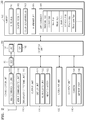
- the SSP, the AP, and the BLE communication unit may be implemented by hardware, software, or a combination of hardware and software. Examples of an implementation or configuration of the SSP, the AP, and the BLE communication unit will be described in detail later with reference to FIG. 3 .
- the BLE device 200 may broadcast the identification information in the format of an advertising packet.
- the sensing information detected by the BLE device 200 may be transmitted to the mobile terminal 100 via a communication channel after the BLE device 200 is paired with the mobile terminal 100.
- the BLE device 200 may encrypt the sensing information by using a negotiated encryption key or a pre-defined encryption key, and may transmit the encrypted sensing information to the mobile terminal 100.
- the BLE communication unit 111 supports a BLE communication function.
- the BLE communication unit 111 may receive a signal which is broadcast from the external BLE device 200 in the form of an advertising packet.
- the BLE communication unit 111 may scan the BLE device 200 for a predetermined period of time or upon a request from a user.
- the BLE communication unit 111 may be connected to an SSP 30.
- the SSP 30 may include a sensor hub and an SSP manager.
- the sensor hub is a type of Micro Controller Unit (MCU) and may be connected to various types of sensors. According to various embodiments of the present invention, the sensor hub may be connected to the BLE communication unit 111, and collect information about the external BLE device 200 via the BLE communication unit 111.
- the SSP manager may receive data from the sensor hub and wake up an AP 151 from a sleep mode based on the data received from the sensor hub.
- the SSP 30 will be described later with reference to FIG. 3 .
- the communication unit 110 may also support other short-range wireless communication functions, in addition to the BLE communication function.
- short-range wireless technology may include a wireless Local Area Network (LAN) which may be a Wi-Fi technology, a Bluetooth technology, a Zigbee technology, a Wi-Fi Direct (WFD) technology, a Near Field Communication (NFC) technology, an Ultra Wideband (UWB) technology, an Infrared Data Association (IrDA) network technology, and/or the like.
- LAN wireless Local Area Network
- WLAN Wireless Fidelity
- WLAN Wireless Fidelity
- WLAN Wireless Fidelity
- NFC Near Field Communication
- UWB Ultra Wideband
- IrDA Infrared Data Association
- the mobile communication unit 112 transmits and receives a wireless signal to and from with at least one of a base station, an external terminal, and a server on a mobile communication network.
- the wireless signals may include a voice call signal, a video phone call signal, various forms of data used to transmit and receive text or multimedia messages, and/or the like.
- the broadcasting receiving unit 113 receives broadcasting signals and/or broadcasting-related information via a broadcasting channel.
- the broadcasting channel may include a satellite channel and a terrestrial broadcast channel.
- the mobile terminal 100 may not include a broadcasting receiving unit 113.
- the display unit 121 may display a UI or a GUI, regarding a setting of the BLE device 200. While in a photographing mode, the display unit 121 may display a captured image.
- the audio output unit 122 outputs audio data which may be received from the communication unit 110 or stored in the memory 160.
- the audio output unit 122 outputs an audio signal related to functions performed at the mobile terminal 100 such as, for example, a call signal reception sound, a message reception sound, and/or the like.
- the audio output unit 122 may include a speaker, a buzzer, and/or the like.
- the user input unit 130 is a unit for inputting data so that the user may control the mobile terminal 100.
- the user input unit 130 may include a key pad, a dome switch, a touch pad, which may be a capacitive overlay type, a resistive overlay type, an infrared beam type, a surface acoustic wave type, an integral strain gauge type, or a piezoelectric type, a jog wheel, a jog switch, and/or the like.
- a key pad a dome switch
- a touch pad which may be a capacitive overlay type, a resistive overlay type, an infrared beam type, a surface acoustic wave type, an integral strain gauge type, or a piezoelectric type, a jog wheel, a jog switch, and/or the like.
- various embodiments of the present invention are not limited thereto.
- the control unit 150 operatively controls all operations of the mobile terminal 100.
- the control unit 150 executes programs stored in the memory 160 so as to control the communication unit 110, the output unit 120, the user input unit 130, the A/V input unit 140, and the memory 160.
- the control unit 150 may map and register property information regarding the BLE device 200 and user added information, which is input from a user, and manage the registered information. Additionally, the control unit 150 may compare identification information about a searched for BLE device to a list of registered BLE devices which are stored in the memory 160. Thus, the control unit 150 may extract a BLE device, which is not registered in the mobile terminal 100, from among the searched for BLE devices. Based on the user input, the control unit 150 may capture an image of an object, for example, an image of the BLE device 200 or an image of an object or place to which the BLE device 200 is attached, by using the camera 141.
- the memory 160 may include at least one storage medium from among a flash memory, a hard disk, a multimedia card micro, a card-type memory such as a Secure Digital (SD) or extreme Digital (XD) memory, a Random Access Memory (RAM), a Static Random Access Memory (SRAM), a Read-Only Memory (ROM), an Electrically Erasable Programmable Read-Only Memory (EEPROM), a Programmable Read-Only Memory (PROM), a magnetic memory, a magnetic disc, an optical disc, or the like. Additionally, the mobile terminal 100 may operate web storage for performing a storage function of the memory 160 on the internet.
- SD Secure Digital
- XD extreme Digital
- RAM Random Access Memory
- SRAM Static Random Access Memory
- ROM Read-Only Memory
- EEPROM Electrically Erasable Programmable Read-Only Memory
- PROM Programmable Read-Only Memory
- magnetic memory a magnetic disc, an optical disc, or the like.
- the mobile terminal 100 may operate web storage for performing a storage function of the
- the programs, stored in the memory 160 may be classified into a plurality of modules according to functions.
- the programs may be classified into a User Interface (UI) module 161, a camera module 162, a touch screen module 163, an alarm module 164, an application Database (DB) 165, or the like.
- UI User Interface
- DB application Database
- the UI module 161 may provide a specialized UI or GUI which interworks with the BLE device 200 according to applications.
- the camera module 162 may capture and process an image of an object which corresponds to the BLE device 200. Functions of the UI module 161 and the camera module 162 may be intuitively inferred from the name of the modules by those of ordinary skill in the art. Thus, a detailed description thereof will not be provided here.
- a sensor for detecting a touch on the touch screen may be a tactile sensor.
- the tactile sensor is a sensor for detecting a contact of a specific object to such a degree that humans may feel the contact with the specific object or to a higher degree.
- the tactile sensor may detect various types of information such as information about a roughness of a contact surface, a hardness of a contact object, a temperature at a contact point, and/or the like.
- an example of a sensor for detecting a touch on the touch screen is a proximity sensor.
- the proximity sensor is a sensor for detecting an object which is approaching a predetermined detection surface or a neighbouring object by using the strength of an electromagnetic field or an infrared light.
- Examples of the proximity sensor include a transmission-type photoelectric sensor, a direct reflection-type photoelectric sensor, a mirror reflection-type photoelectric sensor, a high-frequency oscillation proximity sensor, an electrostatic capacity-type proximity sensor, a magnetic-type proximity sensor, an infrared proximity sensor, and/or the like.
- Touch gestures of a user may include a tap, a touch and hold, a double-tap, a drag, panning, a flick, a drag-and-drop, a swipe, and/or the like.
- a “tap” is a gesture in which a user touches a screen by using a finger or a touch tool, for example, an electronic pen, and then, immediately lifts the touch off from the screen without dragging on the screen.
- a “touch and hold” is a gesture in which a user touches a screen by using a finger or a touch tool, for example, an electronic pen and holds the touch for more than a critical period of time, for example, 2 seconds. For example, a difference in time between time points of a touch on and a lift-off from the screen is longer than the critical period of time, for example, 2 seconds. If the touch input is held for more than the critical period of time to make a user recognize whether the touch input is a tap or a touch and hold, a feedback signal may be visually, aurally, or tactually provided.
- the critical period of time may vary according to various embodiments of the present invention.
- a “double tap” is a gesture in which a user touches a screen twice by using a finger or a touch tool which may be a stylus.
- a "panning" gesture is a gesture in which a user performs a drag without selecting an object. As the panning does not select a specific object, an object does not move in a page, and the page moves in the screen or a group of objects moves in the page.
- a “flick” is a gesture in which a user performs a drag at a critical speed or at a higher speed (e.g., 100 pixels/s), by using a finger or a touch tool.
- the flick may be distinguished from the drag or the panning based on whether a moving speed of a finger or a touch tool is equal to or higher than the critical speed (e.g., 100 pixels/s).
- a “drag and drop” is a gesture in which a user drags an object to a predetermined place in a screen by using a finger or a touch tool, and then, lifts the finger or touch tool off the screen.
- a “pinch” is a gesture in which a user touches a screen with two fingers or the like, and moves the two fingers in different directions.
- the pinch may be a pinch-open gesture for zooming-in to an object or a page, or a pinch-close gesture for zooming-out from an object or a page.
- a zoom-in or zoom-out value is determined according to a distance between the two fingers.
- a “swipe” is a gesture for touching an object in a screen by using a finger or a touch tool and moving the finger or the touch tool in a horizontal or vertical direction for a certain distance. Moving in a diagonal direction may not be recognized as a swipe event.
- the memory 160 may include a voice recognition module (not illustrated) for recognizing a voice of a user by using a voice recognition engine and transmitting the recognized voice signal to the control unit 150.
- a voice recognition module (not illustrated) for recognizing a voice of a user by using a voice recognition engine and transmitting the recognized voice signal to the control unit 150.
- the alarm module 164 may generate a signal for notifying generation of an event in the mobile terminal 100. Examples of the event generated in the mobile terminal 100 may include call signal reception, message reception, key signal input, schedule notification, and/or the like.
- the alarm module 164 may output an alarm signal in a form of a video signal via the display unit 121 or in a form of an audio signal via the audio output unit 122.
- the alarm module 164 may also output an alarm signal in a form of a vibration signal via the vibration motor 123.
- the alarm module 164 may provide a snooze function. For example, if a user sets the number of alarm repetition to be, for example, 5 times, or an alarm interval to be, for example, 3 minutes, the alarm module 164 may output an alarm signal a predetermined number of times (e.g., 5 times), or at a predetermined interval (e.g., every 3 minutes).
- the application Database (DB) 165 may include a reminder application, a contact application, a map application, a music application, an e-book application, a healthcare application, a fitness application, a baby care application, or the like.
- the applications stored in the application DB 165 are not limited thereto.
- the sensor hub 31 may receive identification information about the BLE device 200 such as a tag Identification (ID) a device name, and/or the like which is broadcast from the external BLE device 200 via the BLE communication unit 111, and also receive a measurement value detected at the BLE device 200. If waking up the AP 151 from a sleep mode is necessary (e.g., if executing a predetermined application with regard to the received identification information of the BLE device 200 is necessary), then at operation S10, the sensor hub 31 may send an interrupt signal in order to provide a notification that data to be transmitted to the SSP manager 32 exists.
- ID tag Identification
- the SSP manager 32 may send, to the sensor hub 31, a signal for requesting a data type and a length which are to be sent by the sensor hub 31.
- the sensor hub 31 may send details on the data type and the length to the SSP manager 32.
- the SSP manager 32 may send a start-to-read message (MSG) to the sensor hub 31.
- MSG start-to-read message
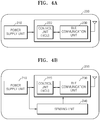
- FIGS. 4A and 4B are block diagrams illustrating a BLE device according to two embodiments of the present invention.
- the BLE device 200 may include a power supply unit 210, a control unit 220, and a BLE communication unit 230.
- the illustrated units are not always essential elements of the present invention.
- the BLE device 200 may be implemented by using more or less units than those shown in FIG. 4A .
- the power supply unit 210 supplies power to the BLE device 200.
- the power supply unit 210 may be a battery.
- the power supply unit 210 may be recharged or replaced.
- the control unit 220 may broadcast the identification information of the BLE device 200 for a predetermined period of time (e.g., for one second). Then, the control unit 220 may transmit the identification information of the BLE device 200, stored in a memory, to the mobile terminal 100 via the BLE communication unit 230.
- the identification information of the BLE device 200 is unique information for distinguishing the BLE device 200 from other devices.
- the identification information may be a tag ID, a device name, a serial number, a Media Access Control (MAC) address, and/or the like.
- the BLE device 200 may further include a sensing unit 240.
- the BLE device 200 may include the sensing information measured by the sensor in the MSD field of the advertising data packet and may broadcast the sensing information.
- the BLE device 200 may include a code (“0X06000024") indicating that the temperature is 36 °C in the MSD ⁇ Sensor> field and may broadcast the code.
- the mobile terminal 100 provides a predetermined service based on information, which is received from the BLE device 200, will be briefly described.
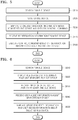
- FIG. 5 is a flowchart illustrating the method in which a mobile terminal provides a service by using a BLE device according to an embodiment of the present invention.
- the mobile terminal 100 may map and store identification information of the registered BLE device and a control command in a memory 160.
- the mobile terminal 100 may map and store the identification information of the registered BLE device and the control command, based on a user input.
- a user's work-to-do such as, for example, if a user is to attend an office meeting is mapped with identification information of a first BLE device (e.g., an ID 'XXX')
- the mobile terminal 100 may map and store the identification information of the first BLE device (e.g., the ID 'XXX'), and a notification command or a reminder application execution command regarding the user's work-to-do.
- the mobile terminal 100 may map and store the identification information of the second BLE device (e.g., the ID 'YYY'), and a playback command regarding the specific music or a music application execution command.
- a second BLE device e.g., an ID 'YYY'
- the mobile terminal 100 may map and store the identification information of the second BLE device (e.g., the ID 'YYY'), and a playback command regarding the specific music or a music application execution command.
- the mobile terminal 100 may map and store the identification information of the BLE device 200 and mode change information. For example, the mobile terminal 100 may map and store identification information of a third BLE device (e.g., an ID 'AAA'), with a Wi-Fi mode. Then, the mobile terminal 100 may map and store the identification information of the third BLE device (e.g., an ID 'BBB'), with a Bluetooth mode.
- a third BLE device e.g., an ID 'AAA'
- the mobile terminal 100 may map and store the identification information of the third BLE device (e.g., an ID 'BBB'), with a Bluetooth mode.
- the mobile terminal 100 compares the identification information received from the BLE device 200 to a list of registered BLE devices which are stored in the memory 160, thus determining whether the BLE device 200 which has transmitted the identification information is registered. In addition, the mobile terminal 100 may determine whether a control command which is mapped with the identification information has been received from the BLE device 200.
- the mobile terminal 100 may execute the control command, based on the received identification information of the BLE device.
- identification information e.g., an ID 'XXX'
- the mobile terminal 100 may search for control information stored in the memory 160.
- the identification information of the first BLE device e.g., an ID 'XXX'
- the mobile terminal 100 may execute a predetermined application such as, for example, a reminder application to output the notification message (e.g., attend office meeting).
- the mobile terminal 100 may receive temperature information regarding the BLE device 200 attached to a baby bottle, which was detected by a temperature sensor for a predetermined period of time, thus monitoring a temperature of the baby bottle. If, during the monitoring, the temperature of the baby bottle reaches a temperature which is defined (e.g., set or otherwise configured) by a user, the mobile terminal 100 may output a notification message such as "the temperature of the baby bottle is appropriately set.”
- the mobile terminal 100 may execute an application which corresponds to the motion information. For example, if motion information regarding shaking the baby bottle twice is received, the mobile terminal 100 may execute a call application and attempt to make a phone call to a device of another person (e.g., a parent), which is predefined (e.g., preset or otherwise configured) with regard to a motion of shaking the baby bottle twice.
- a device of another person e.g., a parent
- predefined e.g., preset or otherwise configured
- the mobile terminal 100 may provide various services, such as a reminder service, a mode change service, a monitoring service, a remote control service, and/or the like by using a BLE device 200 located in a near field range.
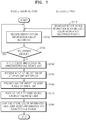
- FIG. 6 is a flowchart illustrating a method in which a mobile terminal registers and controls a BLE device according to an embodiment of the present invention.
- the mobile terminal 100 may search for the BLE device 200. For example, a request for registering or adding a new BLE device 200 is received from a user, the mobile terminal 100 may receive identification information in a format of an advertising packet from a nearby BLE device 200. According to various embodiments of the present invention, the mobile terminal 100 may also receive identification information in a form of an advertising packet from the nearby BLE device 200, independently from a user input.
- the BLE device 200 may include the identification information of the BLE device 200 in a UUID field of an advertising packet or in an MSD field thereof and may broadcast the identification information.
- identification information may include property information regarding the BLE device 200.
- the property information is information about a property of the corresponding BLE device, such as an appearance of the corresponding BLE device.
- the property information may be colour information such as red, yellow, blue, orange, purple, black, or the like, shape information such as a rectangle, a triangle, a circle, a starfish, a heart, or the like, and image information such as a water drop, a diamond, a clover, a bear, a sunflower, or the like, or label information providing a description of the label on the corresponding BLE device.
- the property information may include sensor information, regarding a sensor included in the BLE device 200, such as a sensor ID, a type of the sensor, a name of the sensor, and/or the like.
- the mobile terminal 100 may receive the property information from the BLE device 200, separately from the identification information.
- the BLE device 200 may include the property information in the MSD field of the advertising data packet and may broadcast the property information separately from the identification information.
- the mobile terminal 100 may display a list of the BLE devices which include the property information regarding a searched for BLE device.
- the mobile terminal 100 may determine whether the searched for BLE device is a registered BLE device, based on the identification information of the searched for BLE device. In addition, the mobile terminal 100 may create a list of unregistered BLE devices, by using identification information of at least one unregistered BLE device from among the searched for BLE devices. According to various embodiments of the present invention, the list of the BLE devices may display the property information regarding the BLE devices, such as colour information, shape information, image information, sensor information, and/or the like. Therefore, a user may distinguish several BLE devices from each other easily.
- the mobile terminal 100 may receive a selection made by a user regarding at least one BLE device from the list of the BLE devices. For example, the user may select at least one BLE device to be registered from the list of the searched for BLE devices. The user may tap, swipe, or flick a certain area in a touch screen which displays a BLE device to be selected, in order to select at least one BLE device from the list of the BLE devices.
- the mobile terminal 100 may receive user added information from a user regarding the selected BLE device.
- the mobile terminal 100 may provide a Graphic User Interface (GUI) which may receive the user added information regarding the BLE device selected by the user. The user may input the user added information via the GUI.
- GUI Graphic User Interface
- the user added information may include an ID arbitrarily set by the user, a nickname, a category, a memo, notification information, an image of an object which corresponds to the BLE device 200, for example, an object to which the BLE device is attached or a place in which the BLE device is located, but is not limited thereto.
- the mobile terminal 100 may register a selected BLE device 200.
- the mobile terminal 100 may map and store the property information regarding the BLE device 200 (e.g., colour information, shape information, image information, sensor information, and/or the like) and the user added information in the memory 160.
- the mobile terminal 100 may register the selected BLE device 200.
- the mobile terminal 100 may store the property information regarding the selected BLE device 200 and the user added information as profile information regarding the BLE device 200. Accordingly, the user may easily manage the BLE device 200 by identifying the profile information regarding the registered BLE device 200. If a sensor is included in the BLE device 200, a value measured by the sensor may be automatically reflected in the profile information.
- FIG. 7 is a flowchart illustrating a method of applying colour information of a BLE device to a list according to an embodiment of the present invention.
- the BLE device 200 may broadcast identification information, which includes appearance colour information, via BLE communication.
- identification information e.g., "SAMSUNG_TAG001_blue"
- the BLE device 200 may include identification information (e.g., "SAMSUNG_TAG001_blue") including colour information in a UUID field of an advertising data packet or in an MSD field thereof and may broadcast the identification information.
- the mobile terminal 100 may receive identification information which includes the colour information from the nearby BLE device 200.
- the mobile terminal 100 determines whether the nearby BLE device 200 corresponds to the registered device. For example, the mobile terminal 100 may compare the identification information of the received BLE device 200 to a list of registered BLE devices, which is stored in the memory 160, in order to determine whether the searched for BLE device 200 is the registered device.
- the mobile terminal 100 determines that the searched for BLE device is the registered device at operation S730, then the mobile terminal 100 returns to operation S710 and awaits reception of broadcast identification information from a nearby BLE device 200.
- Operations S750 through S780 correspond to the operations S630 through S650 of FIG. 6 . Therefore, a detailed description thereof will not be provided here.
- the mobile terminal 100 may receive an input of a selection of at least one BLE device.
- the mobile terminal 100 may provide a GUI with which a user may input user added information.
- the mobile terminal 100 may receive an input of user added information from the user.
- the mobile terminal 100 may map and store colour information and user added information on the selected BLE device.
- FIGS. 8 and 9 The detailed description will be provided by referring to FIGS. 8 and 9 .
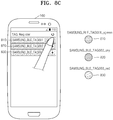
- FIGS. 8A, 8B , and 8C are diagrams illustrating a list of BLE devices which include colour information according to an embodiment of the present invention.
- the mobile terminal 100 may search for a nearby BLE tag as illustrated in FIG. 8B .
- the mobile terminal 100 may receive first identification information, which is 'SAMSUNG_BLE_TAG001_yellow-green', from a first BLE tag 810, second identification information, which is 'SAMSUNG_BLE_TAG002_sky', from a second BLE tag 820, and third identification information, which is 'SAMSUNG_BLE_TAG003_red', from a third BLE tag 830.
- the first identification information, second identification information, and third identification information respectively include a colour value of the BLE tag, such as yellow-green, sky, and red. Accordingly, the mobile terminal 100 may display the list of the searched for BLE devices by applying yellow-green to the first identification information, sky-blue to the second identification, and red to the third identification information. Therefore, the user may distinguish the identification information between nearby several BLE devices.
- the mobile terminal 100 may display the list of the BLE devices by applying a shape to the list of the BLE devices.
- the mobile terminal 100 may provide an input window for receiving an input of user added information regarding the selected BLE device 810. This will be described by referring to FIGS. 9A and 9B .
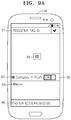
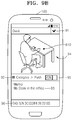
- FIGS. 9A and 9B are diagrams illustrating an input window for receiving an input of user added information according to an embodiment of the present invention.
- the mobile terminal 100 may provide the input window for receiving an input of user added information regarding the selected BLE device 810.
- the input window may include an ID input field 91, a category input field 92, a memo field 93, an image insertion field 94, and a notification selection field 95.
- the ID input field 91 is a field in which a user may input an arbitrary ID for convenience of use.
- the ID input field 91 may be distinguished from a field 96 for displaying unique identification information of the BLE device 810, for example, TAG S/N 3C:D0:F8:26: 22:0D.
- the user may set an ID of the selected BLE device 900 as 'Desk' and take a simple memo (e.g., 'My desk in the office'), for easy reminding'.
- a simple memo e.g., 'My desk in the office'
- the user may insert at least one from among an image of the desk to which the BLE device 900 is attached and an image of the BLE device 900.
- the mobile terminal 100 may read a stored image or photograph a desk by activating a photographing mode.
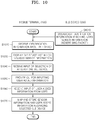
- FIG. 10 is a flowchart illustrating a method of displaying a BLE device list which includes sensor information according to an embodiment of the present invention.
- the BLE device 200 may broadcast identification information which includes sensor information.
- the BLE device 200 may include identification information (e.g., "SAMSUNG Temp_TAG001_blue") including sensor information in a UUID field of an advertising data packet or in an MSD field thereof and may broadcast the identification information to the outside.
- identification information e.g., "SAMSUNG Temp_TAG001_blue"
- the mobile terminal 100 may receive the identification information of the BLE device 200.
- the mobile terminal 100 may create and display a list of the BLE devices which include the sensor information.
- Operations S1040 through S1070 correspond to the operations S630 through S650 of FIG. 6 . Therefore, a detailed description thereof will not be provided here.
- the mobile terminal 100 may receive an input corresponding to a selection of at least one BLE device.
- the mobile terminal 100 may provide a GUI with which a user may input user added information.
- the mobile terminal 100 may receive an input of user added information from the user.
- the mobile terminal 100 may map and store colour information and user added information on the selected BLE device.
- FIGS. 11A, 11B , and 11C are diagrams illustrating a list of BLE devices which include the sensor information according to an embodiment of the present invention.
- the first identification information, second identification information, and third identification information respectively include a colour value implemented in the BLE device, for example temp, motion, and weight.
- the mobile terminal 100 may display the list of the BLE devices which includes sensor information such as, for example. a temperature sensor, a motion sensor, a weight sensor, and/or the like. Therefore, the user may easily determine the BLE tag to be registered, by identifying the sensor information of the BLE tag in the list of the BLE devices. For example, if a BLE tag to be used for a baby bottle is necessary, the user may select the first BLE tag 1110 which includes the temperature sensor and register the first BLE tag 1110 in the mobile terminal 100.
- FIG. 12 is a diagram illustrating a configuration window for setting a category according to an embodiment of the present invention.
- the mobile terminal 100 may display a configuration window for setting a category.
- the category may be classified according to a location of the BLE device 200 such as a house, an office, and a car, an object which is monitored via the BLE device 200, or people who possess the BLE device 200, or the like.
- various embodiments of the present invention are not limited thereto.
- FIGS. 13A and 13B are diagrams illustrating an input window for receiving an input of user added information regarding a BLE device which includes a sensor according to an embodiment of the present invention.
- the mobile terminal 100 may display an input window for inputting user added information.
- the input window for inputting user added information may include an ID input field 101, a category input field 102, an image insertion field 103, a notification selection field 104, a memo field 105, and/or the like.
- Sensing information received from the BLE device 200 may be automatically reflected and displayed in the sensing information display field 106, independently from a user input.
- the mobile terminal 100 may map and register user added information and property information regarding the BLE device 1300, such as sensor information and appearance colour information, which are input by the user during registration of the BLE device 1300.
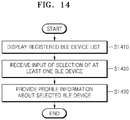
- FIG. 14 is a flowchart illustrating a method in which a mobile terminal provides profile information regarding a registered BLE device according to an embodiment of the present invention.
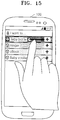
- FIG. 15 is a diagram illustrating a list of registered BLE devices according to an embodiment of the present invention.
- the mobile terminal 100 may display the list of registered BLE devices on a screen.
- the mobile terminal 100 may configure and display a list of registered BLE devices, which includes an ID, a nickname, and category information which are input by the user to easily identify each of the registered BLE devices.
- the mobile terminal 100 may provide profile information regarding the registered BLE device which is selected by the user.
- the profile information may include at least one from among unique identification information such as a device ID, a Serial Number (S/N), and a MAC Address, property information such as appearance colour information, image information, and sensor information, and user added information such as an ID, a nickname, a category, and a memo which are set by the user, with regard to the selected registered BLE device, or the like.
- the mobile terminal 100 may provide an ID, a nickname, a category, a memo, notification information regarding the registered BLE device as profile information, and/or the like. Additionally, according to various embodiments of the present invention, if the registered BLE device includes a sensor, the mobile terminal 100 may receive sensing information detected by the selected registered BLE device from the selected registered BLE device for a predetermined period and may display the sensing information as profile information. This will be described by referring to FIGS. 16A, 16B , 16C, 16D , and 16E .
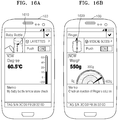
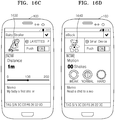
- FIGS. 16A, 16B , 16C, 16D , and 16E are diagrams for displaying profile information regarding a registered BLE device according to an embodiment of the present invention.
- a registered BLE device 1610 includes a temperature sensor
- the mobile terminal 100 may further display temperature information (e.g., 60.5 °C), as the profile information which corresponds to the registered BLE device 1610, in addition to user added information, which are input by the user during registration, such as an ID (e.g., a baby bottle), a category (e.g., layettes), a description of a memo (e.g., 'My baby bottle temperature check'), an image (e.g., a photograph of a baby bottle), and/or the like.
- ID e.g., a baby bottle
- a category e.g., layettes
- a description of a memo e.g., 'My baby bottle temperature check'
- an image e.g., a photograph of a baby bottle
- the mobile terminal 100 may further display weight information (e.g., 550g), as the profile information which corresponds to the registered BLE device 1620, in addition to user added information which is input by the user during registration, such as an ID (e.g., Ringer), a category (e.g., medical goods), a description of a memo (e.g., 'check an injection of Ringer's solution'), and an image (e.g., a photograph of Ringer's solution), and/or the like.
- ID e.g., Ringer
- a category e.g., medical goods
- a description of a memo e.g., 'check an injection of Ringer's solution'
- an image e.g., a photograph of Ringer's solution
- the mobile terminal 100 may further display information about a distance between the mobile terminal 100 and the registered BLE device 1630 (e.g., 1 m), as the profile information which corresponds to the registered BLE device 1630, in addition to user added information which is input by the user during registration, such as an ID (e.g., a baby stroller), a category (e.g., layettes), a description of a memo (e.g., 'My baby's first stroller'), and an image (e.g., an image of a baby stroller), and/or the like.
- ID e.g., a baby stroller
- a category e.g., layettes
- a description of a memo e.g., 'My baby's first stroller'
- an image e.g., an image of a baby stroller
- the mobile terminal 100 may determine information about the distance between the registered BLE device 1630 and the mobile terminal 100, based on the strength of a signal which is received from the registered BLE device 1630. For example, the mobile terminal 100 may determine the distance between the registered BLE device 1630 and the mobile terminal 100, by using a relationship between the strength of the signal and the distance. For example, when the signal becomes weaker, a distance between the registered BLE device and the mobile terminal 100 becomes farther. In contrast, when the signal becomes stronger, the distance there between becomes nearer. The mobile terminal 100 may display the determined distance information as profile information regarding the registered BLE device 1630.
- the mobile terminal 100 may further display motion information (e.g., 2 Shakes), as the profile information which corresponds to the registered BLE device 1640, in addition to user added information which is input by the user during registration, such as an ID (e.g., eBook), a category (e.g., Smart Device), a description of a memo (e.g., 'Read a child to sleep'), and an image (e.g., a photograph of a teddy bear), and/or the like.
- motion information e.g., 2 Shakes
- an ID e.g., eBook
- a category e.g., Smart Device
- a description of a memo e.g., 'Read a child to sleep'
- an image e.g., a photograph of a teddy bear
- the mobile terminal 100 may display an ID (e.g., Desk), a category (e.g., office), a description of a memo (e.g., 'My desk in the office'), and an image (e.g., a photograph of a desk), which are input by the user during registration, as the profile information which corresponds to the registered BLE device 1650.
- an ID e.g., Desk
- a category e.g., office
- a description of a memo e.g., 'My desk in the office'
- an image e.g., a photograph of a desk
- the mobile terminal 100 may update user added information input from a user regarding a registered BLE device. For example, if a place at which the registered BLE device is attached is changed, the mobile terminal 100 may receive from the user new inputs of an ID, a category, a description of a memo, and an image with regard to the registered BLE device and update the additional user information.
- the mobile terminal 100 may update the user added information regarding the registered BLE device.
- sensing information may be included in an MSD field of an advertising packet broadcasted from the BLE device 200.
- the BLE device 200 mentioned hereinafter means the BLE device 200 that is previously registered in the mobile terminal 100, except for a special case (e.g., in a case in which the BLE device 200 is referred to as a separately unregistered BLE device).
- FIG. 17 is a flowchart illustrating a method in which a mobile terminal receives an input of notification information from a user according to an embodiment of the present invention.
- the mobile terminal 100 may display a list of registered BLE devices that are previously registered in the mobile terminal 100. For example, in a case in which the mobile terminal 100 receives a user input that requests a list of registered BLE devices, the mobile terminal 100 may display the list of previously registered BLE devices on a screen. In this regard, the mobile terminal 100 may configure and display a list of registered devices including an ID, a nickname, category information, and/or the like that are input by the user in such a manner that the user may easily identify the registered BLE devices.
- the mobile terminal 100 may receive a selection of at least one registered BLE device from among the list of registered BLE devices.
- the mobile terminal 100 may detect a tap gesture, which is applied by the user, or a swipe gesture, a flick gesture, and/or the like, or recognize a voice command of the user so as to select the at least one registered BLE device from among the list of registered BLE devices.
- the mobile terminal 100 may receive an input of notification information regarding the registered BLE device selected by the user.
- the notification information may include a notification message set by the user for notification through the mobile terminal 100 in a case in which the mobile terminal 100 comes within a communication range of the selected registered BLE device (or in a case in which the mobile terminal 100 goes beyond the communication range).
- the notification information may include at least one of a notification message regarding a place at which a BLE device is disposed, a notification message regarding an object that is present at the place at which the BLE device is disposed, a notification message regarding an object to which the BLE device is attached, a notification message regarding another user that owns the BLE device, and/or the like.
- a notification message regarding a place at which a BLE device is disposed a notification message regarding an object that is present at the place at which the BLE device is disposed
- a notification message regarding an object to which the BLE device is attached a notification message regarding another user that owns the BLE device, and/or the like.
- a notification message regarding another user that owns the BLE device and/or the like.
- various embodiments of the present invention are not limited thereto.
- the notification message may be in the form of at least one of a text message, a sound message, a still image, a moving image, a map, and/or the like.
- the user may input the notification message in text form or in sound form.
- the user may also add an image (e.g., an image of the object to which the BLE device is attached or an image of an object related to the notification message) of an object or location information (e.g., a map indicating a location of the object, a layout of a plan view indicating the location of the object, and/or the like) of the object to the notification message.
- an image e.g., an image of the object to which the BLE device is attached or an image of an object related to the notification message
- location information e.g., a map indicating a location of the object, a layout of a plan view indicating the location of the object, and/or the like
- the notification information may include notification condition information regarding an output of the notification message.
- the notification condition information e.g., in a case in which the mobile terminal 100 comes within a communication range of the BLE device, in a case in which the mobile terminal 100 goes beyond the communication range, and/or the like
- the notification condition information regarding a situation in which the notification message is output, a condition (e.g., morning, daytime, evening, from 3 to 5 pm, and/or the like) regarding a time when the notification message is output, a condition regarding a distance (e.g., less than 3 m) between the mobile terminal 100 that outputs the notification message and the BLE device, and/or the like.
- the mobile terminal 100 may receive an input of one piece of notification information regarding one BLE device or an input of the same notification information regarding two or more BLE devices.
- the mobile terminal 100 may receive an input of a plurality of pieces of notification information regarding a single BLE device. This will be described in detail with reference to FIGS. 26 to 28 .
- the mobile terminal 100 may receive an input of notification information regarding a BLE device through various applications such as an address book application, a schedule application, a message application, a memo application, and/or the like.
- the mobile terminal 100 may provide a GUI that executes the address book application and inputs a notification message in the address book application.
- the mobile terminal 100 may provide a GUI that executes the message application and sets a notification regarding the text message.
- the mobile terminal 100 may map and store the identification information of the registered BLE device and the notification information in the memory 160.
- the mobile terminal 100 may further map and store the notification information and property information (e.g., colour information of an appearance, shape information, sensor information, and/or the like) or user added information (e.g., an ID, a nickname, a category, a memo, and/or the like set by the user) in addition to unique identification information (e.g., a device ID, S/N, MAC address, and/or the like) in the memory 160.
- the notification information and property information e.g., colour information of an appearance, shape information, sensor information, and/or the like
- user added information e.g., an ID, a nickname, a category, a memo, and/or the like set by the user
- unique identification information e.g., a device ID, S/N, MAC address, and/or the like
- the mobile terminal 100 may update the notification information regarding the registered BLE device stored in the memory 160.
- the mobile terminal 100 may map and store notification information regarding the registered BLE device through the address book application, the schedule application, the message application, the memo application, and/or the like, and the identification information of the registered BLE device.
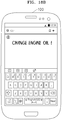
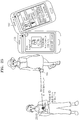
- identification information of a first BLE device 2210 attached to a car and notification information "Change engine oil" are mapped and stored in the memory 160 of the mobile terminal 100.
- the mobile terminal 100 may receive identification information (e.g., BLE_TAG_001) from the first BLE device 2210.
- the identification information e.g., BLE_TAG_001
- the identification information may be included in a UUID field of an advertising packet broadcasted by the first BLE device 2210 or in an MSD field thereof.
- the mobile terminal 100 may receive identification information (e.g., BLE_TAG_003) of a third BLE device 2230 disposed at a desk of the office.
- the mobile terminal 100 may output a notification message (e.g., "Scan and send a business license") corresponding to the identification information (e.g., BLE_TAG_003) of the third BLE device 2230.
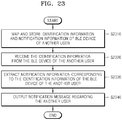
- FIG. 23 is a flowchart illustrating a method of providing a notification regarding another user that carries a BLE device according to an embodiment of the present invention.
- the user may select a notification setting button 2410 displayed on the screen.
- the mobile terminal 100 may detect a tap gesture, which is applied by the user, or a swipe gesture, a flick gesture, and/or the like or recognize a voice command and thus detect a user's selection of the notification setting button 2410.
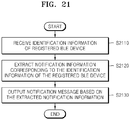
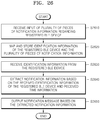
- the mobile terminal 100 may receive identification information from the registered BLE device. For example, in a case in which the mobile terminal 100 is disposed within a communication range of the registered BLE device, the mobile terminal 100 may receive the identification information that was broadcast from the registered BLE device. According to various embodiments of the present invention, the mobile terminal 100 may receive the identification information at previously set intervals (e.g., every 1 second). In addition, according to various embodiments of the present invention, the mobile terminal 100 may receive, from the registered BLE device, an advertising packet in which the identification information is included in a UUID field or an MSD field.
- the mobile terminal 100 may extract notification information corresponding to the identification information of the registered BLE device based on the received identification information of the registered BLE device and received time information. For example, in a case in which the mobile terminal 100 receives the identification information from the registered BLE device, the mobile terminal 100 may search for the notification information regarding the registered BLE device by using the received identification information. In this regard, in a case in which a plurality of pieces of notification information regarding the registered BLE device exist, the mobile terminal 100 may extract one piece of notification information from the plurality of pieces of notification information regarding the registered BLE device additionally in consideration of time information regarding a time when the identification information is received from the registered BLE device.
- FIGS. 27A , 27B, and 27C are diagrams illustrating a screen for receiving an input of a plurality of pieces of notification information regarding a single BLE device according to an embodiment of the present invention.
- the mobile terminal 100 may provide a notification setting window for setting a notification regarding the registered BLE device 2710 attached to the front door.
- the mobile terminal 100 may receive an in input of a plurality of pieces of notification information regarding the registered BLE device 2710 attached to the front door, which are classified with respect to time.
- the mobile terminal 100 may map and store the plurality of pieces of notification information and identification information regarding the registered BLE device 2710 attached to the front door, in the memory 160.
- the mobile terminal 100 may map and store first notification information (in a case in which the identification information is received at 7:30 AM, the mobile terminal 100 outputs "take an umbrella"), second notification information (in a case in which the identification information is received at 11:30 AM, the mobile terminal 100 outputs "take a shopping basket to a grocery store"), third notification information (in a case in which the identification information is received at 4:00 PM, the mobile terminal 100 outputs "open a window to let fresh air in”), and fourth notification information (in a case in which the identification information is received at 10:30 PM, the mobile terminal 100 outputs "check the door is locked”) and the identification information (e.g., TAG S/N: SAMSUNG_BLE_Item101) of the registered BLE device 2710 attached to the front door.
- the identification information e.g., TAG S/N: SAMSUNG_BLE_Item101
- the mobile terminal 100 may extract the first notification information (in a case in which the identification information is received at 7:30 AM, the mobile terminal 100 outputs "take an umbrella") from the plurality of pieces of notification information corresponding to the identification information of the registered BLE device 2710 attached to the front door based on the identification information (e.g., TAG S/N: SAMSUNG_BLE_Item101) of the registered BLE device 2710 attached to the front door and time information (e.g., 7:30 AM) regarding a time when the identification information is received.
- the mobile terminal 100 may output a notification message "take an umbrella" according to the first notification information.
- FIG. 29 is a flowchart illustrating a method of mapping a notification message to another BLE device according to an embodiment of the present invention.
- the mobile terminal 100 may output a notification message based on the extracted notification information.
- the mobile terminal 100 may receive a notification message share request from a user.
- the mobile terminal 100 may output a share button on a window that outputs the notification message regarding the registered BLE device.
- the user may select the share button to send the notification message share request to the mobile terminal 100 in such a way that a notification message that is being currently output may be output in a case in which identification information of another BLE device is received.
- the mobile terminal 100 may detect a user's selection of another registered BLE device from the list of registered BLE devices. For example, the mobile terminal 100 may detect the user's selection of the other registered BLE device in addition to a registered BLE device mapped to the notification message that is being currently output.
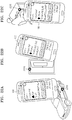
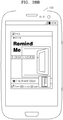
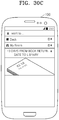
- FIGS. 30A , 30B , and 30C are diagrams illustrating a screen for mapping a notification message to another BLE device according to an embodiment of the present invention.
- the mobile terminal 100 may receive the identification information of the second registered BLE device and output the notification message (e.g., an image of the book + -3 days from a return date) that is stored after being mapped with the identification information of the second registered BLE device.
- the notification message e.g., an image of the book + -3 days from a return date
- the identification information of the second registered BLE device may be included in a UUID field of an advertising packet broadcasted by the second registered BLE device or in an MSD field thereof.
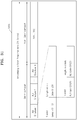
- a data format of the advertising packet broadcasted by the BLE device 200 will now be described in more detail below.
- the data part 3120 may include an AD type 3121 and AD data 3122.
- a value for identifying a type of the AD data 3122 may be included in the AD type 3121.
- the AD type 3121 will now be described in more detail with reference to FIG. 32 .
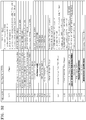
- FIG. 32 is a table for explaining an AD type according to an embodiment of the present invention.
- the AD type 3220 that may be included in an advertising data packet may be diverse.
- the AD type 3220 may include «Flags», «Incomplete List of 16-bit Service Class UUIDs», «Complete List of 16-bit Service Class UUIDs», «Incomplete List of 32-bit Service Class UUIDs», «Complete List of 32-bit Service Class UUIDs», «Incomplete List of 128-bit Service Class UUIDs», «Complete List of 128-bit Service Class UUIDs», «Shortened Local Name», «Complete Local Name», «TX Power Level», «Class of Device», «Simple Pairing Hash C», «Simple Pairing Randomizer R», «Device ID», «Security Manager TK Value», «Security Manager Out of Band Flags», «Slave Connection Interval Range», «List of 16-bit Service Solicitation UUIDs», «List of 128-bit Service Solicitation UUIDs», «Service Data», «Public Target Address», « «Flags», «Incomplete
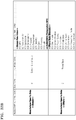
- the table includes information such as necessary AD type 3310, an indication of a byte 3320, a purpose 3330, and an embodiment 3340.
- the BLE device 200 may broadcast necessary data by using a specific AD type.
- the BLE device 200 may include and broadcast TX Power Level (e.g., +4 dBm), Shortened Local Name (e.g., GT-N8000, Samsung Mobile), Class of Device (e.g., Major: Phone, Minor: Smart phone, Service: Object Transfer), Random Target Address (e.g., Samsung Mobile), List of Service Solicitation (e.g., 0X1105), Manufacturer Specific Data ⁇ Protocol>> (e.g., 0X0075: a previously defined code indicating Samsung Electronics), Manufacturer Specific Data ⁇ Capability>> (e.g., 0X00ff: Bluetooth BR/EDR, Bluetooth AMP, Bluetooth LE, Wi-Fi, Wi-Fi Direct, Wi-Fi Display, DLSN(All-share), NFC, RFID support), Manufacturer Specific Data ⁇ Sensor>> (e.g., +4 dBm), Shortened Local Name (e.g., GT-N8000, Samsung Mobile), Class
- the BLE device 200 may broadcast only essential data by using an advertising data packet and additionally respond to optional data such as Local Name through SCAN_RSP.
- the advertising data packet may further include an encryption field.
- the BLE device 200 may broadcast property information (e.g., information regarding a sensor included in the BLE device 200 or appearance colour information of the BLE device 200) through the advertising data packet.
- property information e.g., information regarding a sensor included in the BLE device 200 or appearance colour information of the BLE device 200
- the BLE device 200 may include identification information (e.g., "SAMSUNG Temp_TAG001_blue") indicating property information in a UUID field or an MSD field thereof and may broadcast the identification information to the outside.
- identification information e.g., "SAMSUNG Temp_TAG001_blue"
- the BLE device 200 may include and broadcast sensing information measured by a sensor in an MSD field.
- the BLE device 200 may include a code (“0X06000024") indicating that the temperature is 36 °C in the MSD ⁇ Sensor> field and may broadcast the code.
- the BLE device 200 may adjust an advertising interval according to a state of the BLE device 200 such as stop, or move (walking or moving by vehicle, and the like) and increase connectivity to the mobile terminal 100.
- the BLE device 200 may lengthen the advertising interval in a sleep mode and shorten the advertising interval while moving.
- FIG. 34 is a diagram illustrating an example of an AD packet according to an embodiment of the present invention.
- a first AD structure (1) “02” indicates a length (2 bytes) of an AD type and AD data, “01” indicates an AD type (Flags), and “04” indicates substantial data (LE and BR/EDR simultaneous availability (Host)).
- '09' indicates a length (9 bytes) of the AD type and the AD data
- '08' indicates an AD type (Shortened Local Name)
- '71 54 5F 4E 38 30 30' indicates substantial data (G T - N 8 0 0 0).
- '02' indicates a length (2 bytes) of the AD type and the AD data
- '0A' indicates an AD type (Tx Power Level)
- '84' indicates substantial data (132(+4dBm)).
- '03' indicates a length (3 bytes) of the AD type and the AD data
- 'FF' indicates an AD type (Manufacturer Specific Data)
- '03' indicates a length (3 bytes) of the AD type and the AD data
- 'FF' indicates an AD type (Manufacturer Specific Data)
- '01 02' indicates substantial data (Protocol ID: 0X0201).
- '04' indicates a length (4 bytes) of the AD type and the AD data
- 'FF' indicates an AD type (Manufacturer Specific Data)
- 'FF 00 00' indicates substantial data
- Capability state: 0X0000FF Bluetooth BR/EDR, Bluetooth AMP, Bluetooth LE, Wi-Fi, Wi-Fi Direct, Wi-Fi Display, DLSN(All-share), NFC, RFID support).
- embodiments of the present invention can be realized in the form of hardware, software or a combination of hardware and software.
- the various embodiments of the present invention can be implemented in the form of executable program commands through a variety of computer means and recordable to a non-transitory computer readable media, which may be volatile or non-volatile storage.
- the non-transitory computer readable media may include solely or in combination, program commands, data files and data structures.
- the program commands recorded to the media may be components specially designed for the present invention or may be usable by one of ordinary skill in the art of computer software.
- the non-transitory computer readable record media include magnetic media such as a hard disk, a floppy disk, and a magnetic tape, optical media such as CD-ROM and DVD, magneto-optical media such as floppy disk and hardware devices such as ROM, RAM and flash memory specially designed to store and carry out programs, and/or the like.
- the storage devices and storage media are embodiments of machine-readable storage that are suitable for storing a program or programs comprising instructions that, when executed, implement embodiments of the present invention.
- Program commands include not only machine language code generated by a complier but also high level code that can be used by an interpreter and/or the like, which is executed by a computer.
- embodiments provide a program comprising code for implementing apparatus or a method as claimed in any one of the claims of this specification and a machine-readable storage storing such a program. Still further, such programs may be conveyed electronically via any medium, for example a communication signal carried over a wired or wireless connection and embodiments suitably encompass the same.
- An example provides an information providing method using a mobile terminal, the method comprising: placing the mobile terminal within a communication range of a Bluetooth Low Energy, BLE, device which is registered in the mobile terminal; receiving identification information from the BLE device; extracting previously set notification information corresponding to the received identification information; and outputting a notification message based on the extracted notification information.
- BLE Bluetooth Low Energy
- the notification information comprises at least one of a notification message input by a user of the mobile terminal and notification condition information regarding an output of the notification message.
- the method further comprises receiving an input of notification information regarding the BLE device from a user of the mobile terminal; and mapping and storing the identification information of the BLE device and the input notification information.
- receiving an input of notification information regarding the BLE device comprises receiving an input of a plurality of pieces of notification information regarding the BLE device; and wherein mapping and storing the identification information of the BLE device and the input notification information comprises mapping and storing the identification information of the BLE device and the plurality of pieces of notification information.
- receiving an input of a plurality of pieces of notification information comprises: receiving an input of a plurality of pieces of notification information classified according to time.
- extracting previously set notification information corresponding to the received identification information of the BLE device comprises: extracting previously set notification information corresponding to the received identification information of the BLE device based on the identification information of the BLE device and time information regarding a time at which the identification information of the BLE device is received.
- receiving an input of notification information regarding the BLE device from a user of the mobile terminal comprises: receiving an input of at least one of a text message, a voice message, a still image, a moving image, and location information of an object to which the BLE device is attached.
- the previously set notification information comprises at least one of a notification message relating to a location at which the BLE device is disposed, a notification message relating to an object that is present at the location at which the BLE device is disposed, a notification message relating to an object to which the BLE device is attached, and a notification message relating to a user carrying the BLE device.
- extracting previously set notification information comprises: comparing the received identification information of the BLE device and information regarding a registered BLE device previously stored in a memory; and determining whether the BLE device that transmits the identification information is the registered BLE device.
- outputting a notification message comprises: outputting at least one of information regarding a Social Networking Service, SNS, that is being used by a user carrying the BLE device and communication history information regarding a communication history between the BLE device and the mobile terminal.
- SNS Social Networking Service
- outputting information regarding a SNS comprises: receiving the information regarding the SNS from an SNS server or the BLE device.
- outputting a notification message comprises: when the mobile terminal goes beyond the communication range of the BLE device, outputting the notification message.
- the method further comprises: mapping and storing the output notification message and identification information of another BLE device based on a user input.
- outputting of the notification message comprises: obtaining distance information regarding a distance between the BLE device and the mobile terminal based on an intensity of a signal received from the BLE device; and outputting the notification message based on the obtained distance information.
- An example provides a mobile terminal comprising: a communication unit configured to receive, when the mobile terminal is disposed within a communication range of a Bluetooth Low Energy, BLE, device previously registered in the mobile terminal, identification information from the BLE device; a control unit configured to extract previously set notification information corresponding to the received identification information; and an output unit configured to output a notification message based on the extracted notification information.
- a communication unit configured to receive, when the mobile terminal is disposed within a communication range of a Bluetooth Low Energy, BLE, device previously registered in the mobile terminal, identification information from the BLE device
- a control unit configured to extract previously set notification information corresponding to the received identification information
- an output unit configured to output a notification message based on the extracted notification information.
- the user input unit is further configured to receive an input of a plurality of pieces of notification information classified according to time.
- the output unit is further configured to output the notification message when the mobile terminal goes beyond the communication range of the BLE device.
- the user input unit is further configured to detect a user input that maps the output notification message and identification information of another BLE device; and wherein the memory is further configured to map and store the output notification message and the identification information of the another BLE device.
- An example provides a non-transitory computer-readable recording medium having recorded thereon a computer program for executing the method of the appended claims.
Landscapes
- Engineering & Computer Science (AREA)
- Computer Networks & Wireless Communication (AREA)
- Signal Processing (AREA)
- Telephone Function (AREA)
- Computer And Data Communications (AREA)
- Mobile Radio Communication Systems (AREA)
- Telephonic Communication Services (AREA)
- Information Transfer Between Computers (AREA)
Priority Applications (1)
| Application Number | Priority Date | Filing Date | Title |
|---|---|---|---|
| EP22193418.5A EP4138419B1 (fr) | 2012-12-03 | 2013-11-21 | Procédé de fourniture d'informations et terminal mobile correspondant |
Applications Claiming Priority (3)
| Application Number | Priority Date | Filing Date | Title |
|---|---|---|---|
| KR20120139246 | 2012-12-03 | ||
| KR1020130026822A KR102037414B1 (ko) | 2012-12-03 | 2013-03-13 | 정보 제공 방법 및 이를 위한 휴대 단말 |
| EP13193818.5A EP2750414B1 (fr) | 2012-12-03 | 2013-11-21 | Procédé de fourniture d'informations et terminal mobile correspondant |
Related Parent Applications (1)
| Application Number | Title | Priority Date | Filing Date |
|---|---|---|---|
| EP13193818.5A Division EP2750414B1 (fr) | 2012-12-03 | 2013-11-21 | Procédé de fourniture d'informations et terminal mobile correspondant |
Related Child Applications (2)
| Application Number | Title | Priority Date | Filing Date |
|---|---|---|---|
| EP22193418.5A Division EP4138419B1 (fr) | 2012-12-03 | 2013-11-21 | Procédé de fourniture d'informations et terminal mobile correspondant |
| EP22193418.5A Division-Into EP4138419B1 (fr) | 2012-12-03 | 2013-11-21 | Procédé de fourniture d'informations et terminal mobile correspondant |
Publications (2)
| Publication Number | Publication Date |
|---|---|
| EP3703396A1 true EP3703396A1 (fr) | 2020-09-02 |
| EP3703396B1 EP3703396B1 (fr) | 2022-10-19 |
Family
ID=49641589
Family Applications (3)
| Application Number | Title | Priority Date | Filing Date |
|---|---|---|---|
| EP20171532.3A Active EP3703396B1 (fr) | 2012-12-03 | 2013-11-21 | Procédé de fourniture d'informations et terminal mobile correspondant |
| EP22193418.5A Active EP4138419B1 (fr) | 2012-12-03 | 2013-11-21 | Procédé de fourniture d'informations et terminal mobile correspondant |
| EP13193818.5A Active EP2750414B1 (fr) | 2012-12-03 | 2013-11-21 | Procédé de fourniture d'informations et terminal mobile correspondant |
Family Applications After (2)
| Application Number | Title | Priority Date | Filing Date |
|---|---|---|---|
| EP22193418.5A Active EP4138419B1 (fr) | 2012-12-03 | 2013-11-21 | Procédé de fourniture d'informations et terminal mobile correspondant |
| EP13193818.5A Active EP2750414B1 (fr) | 2012-12-03 | 2013-11-21 | Procédé de fourniture d'informations et terminal mobile correspondant |
Country Status (6)
| Country | Link |
|---|---|
| US (1) | US9356687B2 (fr) |
| EP (3) | EP3703396B1 (fr) |
| JP (1) | JP6490890B2 (fr) |
| CN (2) | CN109041032B (fr) |
| AU (1) | AU2013263755B2 (fr) |
| WO (1) | WO2014088231A1 (fr) |
Cited By (1)
| Publication number | Priority date | Publication date | Assignee | Title |
|---|---|---|---|---|
| US20220182965A1 (en) * | 2020-12-08 | 2022-06-09 | International Business Machines Corporation | Identifying unregistered devices through wireless behavior |
Families Citing this family (42)
| Publication number | Priority date | Publication date | Assignee | Title |
|---|---|---|---|---|
| KR101920001B1 (ko) * | 2012-04-03 | 2018-11-19 | 삼성전자주식회사 | 상황 인식 장치 및 상황 인식 방법 |
| WO2015094288A1 (fr) * | 2013-12-19 | 2015-06-25 | Intel Corporation | Procédé et appareil de communication entre des dispositifs compagnons |
| KR102201616B1 (ko) * | 2014-02-23 | 2021-01-12 | 삼성전자주식회사 | 전자 장치 간의 장치 검색 방법 |
| WO2015157460A1 (fr) | 2014-04-09 | 2015-10-15 | Koeppel Adam R | Systèmes et processus mis en œuvre par ordinateur pour fournir des notifications électroniques |
| JP6271730B2 (ja) * | 2014-06-30 | 2018-01-31 | 株式会社東芝 | 通知情報をフィルタリングするための電子機器および方法 |
| US9282516B2 (en) | 2014-07-01 | 2016-03-08 | Apple Inc. | Cooperative power savings among mobile computing devices |
| CN104219065B (zh) * | 2014-07-31 | 2017-09-29 | 北京升哲科技有限公司 | 基于Beacon的广播方法和Beacon设备 |
| EP3133845B1 (fr) * | 2014-08-29 | 2018-04-04 | Huawei Technologies Co., Ltd. | Procédé et appareil pour envoyer et afficher un message |
| USD851118S1 (en) * | 2014-09-02 | 2019-06-11 | Samsung Electronics Co., Ltd. | Display screen or portion thereof with graphical user interface |
| FR3028123B1 (fr) * | 2014-11-05 | 2016-12-09 | Jcdecaux Sa | Systeme de communication equipe d'une balise radio |
| CN104393987A (zh) * | 2014-11-11 | 2015-03-04 | 天津北方网新媒体集团股份有限公司 | 基于iBeacon技术的数据加密方法及系统 |
| JP6590486B2 (ja) * | 2015-02-18 | 2019-10-16 | キヤノン株式会社 | プログラム、方法、通信端末 |
| US9554239B2 (en) | 2015-04-21 | 2017-01-24 | Apple Inc. | Opportunistic offloading of tasks between nearby computing devices |
| US10917920B2 (en) * | 2015-05-14 | 2021-02-09 | Lg Electronics Inc. | Method and apparatus for connecting alternative communication means using bluetooth low energy (LE) |
| WO2016196556A1 (fr) * | 2015-06-01 | 2016-12-08 | Dci Marketing, Inc. | Procédé et appareil pour la communication bluetooth |
| US10028087B2 (en) | 2016-04-04 | 2018-07-17 | Ricoh Company, Ltd. | Locating and tracking missing or relocated devices |
| CN106060002B (zh) * | 2016-05-09 | 2019-07-02 | 特斯联(北京)科技有限公司 | 一种基于智能通行设备开锁的数据分享方法及系统 |
| JP2018005396A (ja) * | 2016-06-29 | 2018-01-11 | 富士通株式会社 | 情報処理装置、情報処理プログラム、情報処理システム及び情報処理方法 |
| US12342255B2 (en) | 2016-11-11 | 2025-06-24 | Carnival Corporation | Antenna device for a wireless guest engagement system and methods for making and using the same |
| US10045184B2 (en) * | 2016-11-11 | 2018-08-07 | Carnival Corporation | Wireless guest engagement system |
| US10070309B2 (en) * | 2016-12-22 | 2018-09-04 | Tile, Inc. | Unauthorized tracking device detection and prevention |
| USD828375S1 (en) * | 2017-03-08 | 2018-09-11 | Google Inc. | Display screen with graphical user interface |
| CN108391237A (zh) * | 2018-01-29 | 2018-08-10 | 北京怡和嘉业医疗科技股份有限公司 | 医疗器械数据的发送、接收方法和发送、接收设备 |
| JP7293748B2 (ja) * | 2018-03-22 | 2023-06-20 | 株式会社デンソーウェーブ | 端末装置及びコンピュータプログラム |
| US10805879B2 (en) * | 2018-09-27 | 2020-10-13 | Apple Inc. | Low-power activation of accessory in sleep state |
| WO2020107466A1 (fr) | 2018-11-30 | 2020-06-04 | 华为技术有限公司 | Procédé et dispositif de transmission de données d'un point à de multiples points |
| CN109613983A (zh) | 2018-12-26 | 2019-04-12 | 青岛小鸟看看科技有限公司 | 头戴显示系统中手柄的定位方法、装置和头戴显示系统 |
| US11449749B2 (en) * | 2019-02-01 | 2022-09-20 | EMC IP Holding Company LLC | Issuing alerts for storage volumes using machine learning |
| US11000759B2 (en) * | 2019-03-29 | 2021-05-11 | Valve Corporation | Game controller operable in bluetooth low energy (BLE) mode |
| WO2020227680A1 (fr) * | 2019-05-09 | 2020-11-12 | Gg Technologies Inc. | Procédé et système de transfert par contact de proximité |
| US11245737B2 (en) | 2019-05-09 | 2022-02-08 | Gg Technologies Inc. | Method and system for proximity-based contact transfer |
| US11412555B2 (en) * | 2019-07-23 | 2022-08-09 | Lg Electronics Inc. | Mobile terminal |
| CN110582027B (zh) * | 2019-08-22 | 2022-04-12 | 聚好看科技股份有限公司 | 智能电视上显示消息的方法及相关装置 |
| CN110489958B (zh) * | 2019-08-27 | 2021-03-05 | 上海银基信息安全技术股份有限公司 | 一种身份认证方法、定位装置及待解锁终端 |
| CN111404802A (zh) | 2020-02-19 | 2020-07-10 | 华为技术有限公司 | 通知处理系统、方法以及电子设备 |
| CN111338595B (zh) * | 2020-02-19 | 2021-11-19 | 上海肇观电子科技有限公司 | 电子系统、电子设备和控制电子设备的方法 |
| WO2021164445A1 (fr) * | 2020-02-19 | 2021-08-26 | 华为技术有限公司 | Procédé de traitement de notification, appareil électronique et système |
| FR3110316B1 (fr) * | 2020-05-15 | 2023-05-26 | Orange | Procédé de gestion d’une communauté virtuelle d'utilisateurs de terminaux |
| CN115756270B (zh) | 2020-05-29 | 2024-03-26 | 华为技术有限公司 | 一种内容分享的方法、装置及系统 |
| EP3929830A1 (fr) * | 2020-06-24 | 2021-12-29 | Proseco Software GmbH | Procédé d'enregistrement automatique du temps de travail et/ou de détermination automatique de la position d'une personne dans un environnement prédéterminé et système de détection |
| US12063207B2 (en) | 2021-09-28 | 2024-08-13 | Fortinet, Inc. | Non-interfering access layer end-to-end encryption for IOT devices over a data communication network |
| CN115087134B (zh) * | 2022-07-20 | 2023-01-13 | 荣耀终端有限公司 | 一种蓝牙连接的方法和电子设备 |
Citations (4)
| Publication number | Priority date | Publication date | Assignee | Title |
|---|---|---|---|---|
| US20030034887A1 (en) * | 2001-03-12 | 2003-02-20 | Crabtree Timothy L. | Article locator system |
| US20100062711A1 (en) * | 2008-09-08 | 2010-03-11 | Sang Wook Park | Bluetooth device and method of searching for peripheral bluetooth device |
| US20120116548A1 (en) * | 2010-08-26 | 2012-05-10 | John Goree | Motion capture element |
| WO2012092141A1 (fr) * | 2010-12-30 | 2012-07-05 | Google Inc. | Détection de dispositif périphérique avec communication à courte distance |
Family Cites Families (32)
| Publication number | Priority date | Publication date | Assignee | Title |
|---|---|---|---|---|
| US6131811A (en) * | 1998-05-29 | 2000-10-17 | E-Micro Corporation | Wallet consolidator |
| AU2003220263A1 (en) | 2002-03-11 | 2003-09-29 | Ting-Mao Chang | Proximity triggered job scheduling system and method |
| JP2004102693A (ja) * | 2002-09-10 | 2004-04-02 | Mitsubishi Heavy Ind Ltd | 自己位置登録型センサ、およびプラント監視装置、ならびに自己位置登録型センサを用いたプラント監視方法 |
| KR101061265B1 (ko) * | 2004-10-19 | 2011-08-31 | 야후! 인크. | 위치 기반 사회 네트워킹을 위한 시스템 및 방법 |
| JP2006228178A (ja) * | 2005-02-18 | 2006-08-31 | Takahiko Tsujisawa | 物品管理補助装置 |
| US8068009B2 (en) | 2006-01-10 | 2011-11-29 | Savi Technology, Inc. | Radio frequency identification system and a method of operating same |
| KR100801648B1 (ko) * | 2006-10-09 | 2008-02-05 | 삼성전자주식회사 | 블루투스를 이용한 이동 통신 단말기의 정보 표시 방법 |
| WO2008076827A1 (fr) | 2006-12-13 | 2008-06-26 | Synthesis Studios, Inc. | Notifications basées sur la proximité de mobiles |
| US7920849B2 (en) | 2007-07-13 | 2011-04-05 | Pop Adrian | Method and system for providing advertisements/messages based on wireless data communication technology |
| US8626152B2 (en) * | 2008-01-31 | 2014-01-07 | Agero Connected Sevices, Inc. | Flexible telematics system and method for providing telematics to a vehicle |
| US9357052B2 (en) | 2008-06-09 | 2016-05-31 | Immersion Corporation | Developing a notification framework for electronic device events |
| WO2010096691A2 (fr) | 2009-02-20 | 2010-08-26 | The Regents Of The University Of Colorado, A Body Corporate | Moniteur de poids corporel basé sur une chaussure et calculateur d'allocation de posture, de classification d'activité physique et de dépense d'énergie |
| CN101510796A (zh) * | 2009-03-27 | 2009-08-19 | 深圳华为通信技术有限公司 | 一种输出告警提示的方法和设备 |
| US9141087B2 (en) | 2009-04-26 | 2015-09-22 | Nike, Inc. | Athletic watch |
| US8105208B2 (en) | 2009-05-18 | 2012-01-31 | Adidas Ag | Portable fitness monitoring systems with displays and applications thereof |
| KR101533691B1 (ko) * | 2009-06-01 | 2015-07-03 | 삼성전자 주식회사 | 블루투스 모듈을 구비한 장치의 연결 시스템 및 방법 |
| US20110040757A1 (en) | 2009-08-14 | 2011-02-17 | Nokia Corporation | Method and apparatus for enhancing objects with tag-based content |
| US8558693B2 (en) | 2009-09-10 | 2013-10-15 | Tribal Technologies, Inc. | System and method for location-based reminders on a mobile device |
| CN101694585A (zh) * | 2009-09-27 | 2010-04-14 | 中山爱科数字科技有限公司 | 一种实现远程监护的装置和方法 |
| US8570168B2 (en) * | 2009-10-08 | 2013-10-29 | Bringrr Systems, Llc | System, method and device to interrogate for the presence of objects |
| US8604925B2 (en) | 2009-10-23 | 2013-12-10 | Globalstar, Inc. | Simplex personal and asset tracker |
| US10453157B2 (en) | 2010-01-22 | 2019-10-22 | Deka Products Limited Partnership | System, method, and apparatus for electronic patient care |
| JP2013529423A (ja) | 2010-04-20 | 2013-07-18 | ゾム,エルエルシー | 無線データ関連のアプリケーションを再パッケージ化する方法及びシステム |
| JP2012010019A (ja) * | 2010-06-23 | 2012-01-12 | Fujitsu Ltd | メモ通知システム、メモ通知支援システム、メモ通知支援装置、メモ通知方法、およびコンピュータプログラム |
| US20120003932A1 (en) * | 2010-07-01 | 2012-01-05 | Victor Zhodzishsky | Method and system for reducing power consumption in bluetooth proximity implementations |
| EP2619749A4 (fr) | 2010-09-21 | 2017-11-15 | 4IIII Innovations Inc. | Systèmes et procédés de visiocasque à vision périphérique |
| WO2012061804A1 (fr) | 2010-11-05 | 2012-05-10 | Nike International Ltd. | Procédé et système d'entraînement personnel automatisé |
| JP5530902B2 (ja) * | 2010-11-16 | 2014-06-25 | 株式会社エヌ・ティ・ティ・データ | 警報装置、警報システムおよび警報出力方法 |
| CN103370095B (zh) | 2010-12-17 | 2017-02-15 | 太空实验室健康护理有限公司 | 集成的可扩展麻醉系统 |
| WO2012092609A2 (fr) * | 2010-12-30 | 2012-07-05 | Sensys Networks, Inc. | Nœuds détecteurs sans fil et filaires, micro-radar, réseaux et systèmes associés |
| EP2667577A4 (fr) * | 2011-01-19 | 2017-05-31 | NEC Corporation | Dispositif et procédé de communication mobile |
| US20120196534A1 (en) * | 2011-02-01 | 2012-08-02 | Nokia Corporation | Method, apparatus, and computer program product for broadcasting in short-range communication |
-
2013
- 2013-11-12 US US14/077,766 patent/US9356687B2/en active Active
- 2013-11-13 WO PCT/KR2013/010282 patent/WO2014088231A1/fr not_active Ceased
- 2013-11-21 EP EP20171532.3A patent/EP3703396B1/fr active Active
- 2013-11-21 EP EP22193418.5A patent/EP4138419B1/fr active Active
- 2013-11-21 EP EP13193818.5A patent/EP2750414B1/fr active Active
- 2013-11-27 JP JP2013244801A patent/JP6490890B2/ja not_active Expired - Fee Related
- 2013-11-28 AU AU2013263755A patent/AU2013263755B2/en not_active Ceased
- 2013-12-03 CN CN201811063641.6A patent/CN109041032B/zh active Active
- 2013-12-03 CN CN201310642483.0A patent/CN103856629B/zh active Active
Patent Citations (4)
| Publication number | Priority date | Publication date | Assignee | Title |
|---|---|---|---|---|
| US20030034887A1 (en) * | 2001-03-12 | 2003-02-20 | Crabtree Timothy L. | Article locator system |
| US20100062711A1 (en) * | 2008-09-08 | 2010-03-11 | Sang Wook Park | Bluetooth device and method of searching for peripheral bluetooth device |
| US20120116548A1 (en) * | 2010-08-26 | 2012-05-10 | John Goree | Motion capture element |
| WO2012092141A1 (fr) * | 2010-12-30 | 2012-07-05 | Google Inc. | Détection de dispositif périphérique avec communication à courte distance |
Non-Patent Citations (1)
| Title |
|---|
| ANONYMOUS: "Bluetooth low energy - Wikipedia, the free encyclopedia", 1 December 2012 (2012-12-01), XP055117961, Retrieved from the Internet <URL:http://en.wikipedia.org/w/index.php?title=Bluetooth_low_energy&oldid=525896000> [retrieved on 20140514] * |
Cited By (2)
| Publication number | Priority date | Publication date | Assignee | Title |
|---|---|---|---|---|
| US20220182965A1 (en) * | 2020-12-08 | 2022-06-09 | International Business Machines Corporation | Identifying unregistered devices through wireless behavior |
| US11659513B2 (en) * | 2020-12-08 | 2023-05-23 | International Business Machines Corporation | Identifying unregistered devices through wireless behavior |
Also Published As
| Publication number | Publication date |
|---|---|
| EP2750414B1 (fr) | 2020-05-06 |
| JP6490890B2 (ja) | 2019-03-27 |
| EP2750414A1 (fr) | 2014-07-02 |
| EP4138419A1 (fr) | 2023-02-22 |
| WO2014088231A1 (fr) | 2014-06-12 |
| EP4138419B1 (fr) | 2024-07-24 |
| JP2014110052A (ja) | 2014-06-12 |
| CN103856629A (zh) | 2014-06-11 |
| AU2013263755B2 (en) | 2017-08-10 |
| EP3703396B1 (fr) | 2022-10-19 |
| US9356687B2 (en) | 2016-05-31 |
| CN109041032B (zh) | 2021-12-24 |
| CN103856629B (zh) | 2018-10-12 |
| US20140154986A1 (en) | 2014-06-05 |
| EP4138419C0 (fr) | 2024-07-24 |
| CN109041032A (zh) | 2018-12-18 |
| AU2013263755A1 (en) | 2014-06-19 |
Similar Documents
| Publication | Publication Date | Title |
|---|---|---|
| EP3703396B1 (fr) | Procédé de fourniture d'informations et terminal mobile correspondant | |
| US12004244B2 (en) | Method and mobile terminal for controlling Bluetooth low energy device | |
| EP2753104B1 (fr) | Procédé de fourniture d'informations et terminal mobile correspondant | |
| EP2739020B1 (fr) | Terminal mobile et procédé de commande d'une fonction de terminal mobile | |
| KR102047496B1 (ko) | Ble 디바이스 제어 방법 및 이를 위한 휴대 단말 | |
| KR102251244B1 (ko) | 정보 제공 방법 및 이를 위한 휴대 단말 |
Legal Events
| Date | Code | Title | Description |
|---|---|---|---|
| PUAI | Public reference made under article 153(3) epc to a published international application that has entered the european phase |
Free format text: ORIGINAL CODE: 0009012 |
|
| STAA | Information on the status of an ep patent application or granted ep patent |
Free format text: STATUS: THE APPLICATION HAS BEEN PUBLISHED |
|
| AC | Divisional application: reference to earlier application |
Ref document number: 2750414 Country of ref document: EP Kind code of ref document: P |
|
| AK | Designated contracting states |
Kind code of ref document: A1 Designated state(s): AL AT BE BG CH CY CZ DE DK EE ES FI FR GB GR HR HU IE IS IT LI LT LU LV MC MK MT NL NO PL PT RO RS SE SI SK SM TR |
|
| STAA | Information on the status of an ep patent application or granted ep patent |
Free format text: STATUS: REQUEST FOR EXAMINATION WAS MADE |
|
| 17P | Request for examination filed |
Effective date: 20210113 |
|
| RBV | Designated contracting states (corrected) |
Designated state(s): AL AT BE BG CH CY CZ DE DK EE ES FI FR GB GR HR HU IE IS IT LI LT LU LV MC MK MT NL NO PL PT RO RS SE SI SK SM TR |
|
| STAA | Information on the status of an ep patent application or granted ep patent |
Free format text: STATUS: EXAMINATION IS IN PROGRESS |
|
| 17Q | First examination report despatched |
Effective date: 20210420 |
|
| GRAP | Despatch of communication of intention to grant a patent |
Free format text: ORIGINAL CODE: EPIDOSNIGR1 |
|
| STAA | Information on the status of an ep patent application or granted ep patent |
Free format text: STATUS: GRANT OF PATENT IS INTENDED |
|
| INTG | Intention to grant announced |
Effective date: 20220712 |
|
| GRAS | Grant fee paid |
Free format text: ORIGINAL CODE: EPIDOSNIGR3 |
|
| GRAA | (expected) grant |
Free format text: ORIGINAL CODE: 0009210 |
|
| STAA | Information on the status of an ep patent application or granted ep patent |
Free format text: STATUS: THE PATENT HAS BEEN GRANTED |
|
| AC | Divisional application: reference to earlier application |
Ref document number: 2750414 Country of ref document: EP Kind code of ref document: P |
|
| AK | Designated contracting states |
Kind code of ref document: B1 Designated state(s): AL AT BE BG CH CY CZ DE DK EE ES FI FR GB GR HR HU IE IS IT LI LT LU LV MC MK MT NL NO PL PT RO RS SE SI SK SM TR |
|
| REG | Reference to a national code |
Ref country code: GB Ref legal event code: FG4D |
|
| REG | Reference to a national code |
Ref country code: CH Ref legal event code: EP |
|
| REG | Reference to a national code |
Ref country code: DE Ref legal event code: R096 Ref document number: 602013082725 Country of ref document: DE |
|
| REG | Reference to a national code |
Ref country code: IE Ref legal event code: FG4D |
|
| REG | Reference to a national code |
Ref country code: AT Ref legal event code: REF Ref document number: 1526309 Country of ref document: AT Kind code of ref document: T Effective date: 20221115 |
|
| REG | Reference to a national code |
Ref country code: NL Ref legal event code: FP |
|
| REG | Reference to a national code |
Ref country code: LT Ref legal event code: MG9D |
|
| REG | Reference to a national code |
Ref country code: AT Ref legal event code: MK05 Ref document number: 1526309 Country of ref document: AT Kind code of ref document: T Effective date: 20221019 |
|
| PG25 | Lapsed in a contracting state [announced via postgrant information from national office to epo] |
Ref country code: SE Free format text: LAPSE BECAUSE OF FAILURE TO SUBMIT A TRANSLATION OF THE DESCRIPTION OR TO PAY THE FEE WITHIN THE PRESCRIBED TIME-LIMIT Effective date: 20221019 Ref country code: PT Free format text: LAPSE BECAUSE OF FAILURE TO SUBMIT A TRANSLATION OF THE DESCRIPTION OR TO PAY THE FEE WITHIN THE PRESCRIBED TIME-LIMIT Effective date: 20230220 Ref country code: NO Free format text: LAPSE BECAUSE OF FAILURE TO SUBMIT A TRANSLATION OF THE DESCRIPTION OR TO PAY THE FEE WITHIN THE PRESCRIBED TIME-LIMIT Effective date: 20230119 Ref country code: LT Free format text: LAPSE BECAUSE OF FAILURE TO SUBMIT A TRANSLATION OF THE DESCRIPTION OR TO PAY THE FEE WITHIN THE PRESCRIBED TIME-LIMIT Effective date: 20221019 Ref country code: FI Free format text: LAPSE BECAUSE OF FAILURE TO SUBMIT A TRANSLATION OF THE DESCRIPTION OR TO PAY THE FEE WITHIN THE PRESCRIBED TIME-LIMIT Effective date: 20221019 Ref country code: ES Free format text: LAPSE BECAUSE OF FAILURE TO SUBMIT A TRANSLATION OF THE DESCRIPTION OR TO PAY THE FEE WITHIN THE PRESCRIBED TIME-LIMIT Effective date: 20221019 Ref country code: AT Free format text: LAPSE BECAUSE OF FAILURE TO SUBMIT A TRANSLATION OF THE DESCRIPTION OR TO PAY THE FEE WITHIN THE PRESCRIBED TIME-LIMIT Effective date: 20221019 |
|
| PG25 | Lapsed in a contracting state [announced via postgrant information from national office to epo] |
Ref country code: RS Free format text: LAPSE BECAUSE OF FAILURE TO SUBMIT A TRANSLATION OF THE DESCRIPTION OR TO PAY THE FEE WITHIN THE PRESCRIBED TIME-LIMIT Effective date: 20221019 Ref country code: PL Free format text: LAPSE BECAUSE OF FAILURE TO SUBMIT A TRANSLATION OF THE DESCRIPTION OR TO PAY THE FEE WITHIN THE PRESCRIBED TIME-LIMIT Effective date: 20221019 Ref country code: LV Free format text: LAPSE BECAUSE OF FAILURE TO SUBMIT A TRANSLATION OF THE DESCRIPTION OR TO PAY THE FEE WITHIN THE PRESCRIBED TIME-LIMIT Effective date: 20221019 Ref country code: IS Free format text: LAPSE BECAUSE OF FAILURE TO SUBMIT A TRANSLATION OF THE DESCRIPTION OR TO PAY THE FEE WITHIN THE PRESCRIBED TIME-LIMIT Effective date: 20230219 Ref country code: HR Free format text: LAPSE BECAUSE OF FAILURE TO SUBMIT A TRANSLATION OF THE DESCRIPTION OR TO PAY THE FEE WITHIN THE PRESCRIBED TIME-LIMIT Effective date: 20221019 Ref country code: GR Free format text: LAPSE BECAUSE OF FAILURE TO SUBMIT A TRANSLATION OF THE DESCRIPTION OR TO PAY THE FEE WITHIN THE PRESCRIBED TIME-LIMIT Effective date: 20230120 |
|
| REG | Reference to a national code |
Ref country code: CH Ref legal event code: PL |
|
| REG | Reference to a national code |
Ref country code: DE Ref legal event code: R097 Ref document number: 602013082725 Country of ref document: DE |
|
| REG | Reference to a national code |
Ref country code: BE Ref legal event code: MM Effective date: 20221130 |
|
| PG25 | Lapsed in a contracting state [announced via postgrant information from national office to epo] |
Ref country code: SM Free format text: LAPSE BECAUSE OF FAILURE TO SUBMIT A TRANSLATION OF THE DESCRIPTION OR TO PAY THE FEE WITHIN THE PRESCRIBED TIME-LIMIT Effective date: 20221019 Ref country code: RO Free format text: LAPSE BECAUSE OF FAILURE TO SUBMIT A TRANSLATION OF THE DESCRIPTION OR TO PAY THE FEE WITHIN THE PRESCRIBED TIME-LIMIT Effective date: 20221019 Ref country code: MC Free format text: LAPSE BECAUSE OF FAILURE TO SUBMIT A TRANSLATION OF THE DESCRIPTION OR TO PAY THE FEE WITHIN THE PRESCRIBED TIME-LIMIT Effective date: 20221019 Ref country code: LI Free format text: LAPSE BECAUSE OF NON-PAYMENT OF DUE FEES Effective date: 20221130 Ref country code: EE Free format text: LAPSE BECAUSE OF FAILURE TO SUBMIT A TRANSLATION OF THE DESCRIPTION OR TO PAY THE FEE WITHIN THE PRESCRIBED TIME-LIMIT Effective date: 20221019 Ref country code: DK Free format text: LAPSE BECAUSE OF FAILURE TO SUBMIT A TRANSLATION OF THE DESCRIPTION OR TO PAY THE FEE WITHIN THE PRESCRIBED TIME-LIMIT Effective date: 20221019 Ref country code: CZ Free format text: LAPSE BECAUSE OF FAILURE TO SUBMIT A TRANSLATION OF THE DESCRIPTION OR TO PAY THE FEE WITHIN THE PRESCRIBED TIME-LIMIT Effective date: 20221019 Ref country code: CH Free format text: LAPSE BECAUSE OF NON-PAYMENT OF DUE FEES Effective date: 20221130 |
|
| PLBE | No opposition filed within time limit |
Free format text: ORIGINAL CODE: 0009261 |
|
| STAA | Information on the status of an ep patent application or granted ep patent |
Free format text: STATUS: NO OPPOSITION FILED WITHIN TIME LIMIT |
|
| PG25 | Lapsed in a contracting state [announced via postgrant information from national office to epo] |
Ref country code: SK Free format text: LAPSE BECAUSE OF FAILURE TO SUBMIT A TRANSLATION OF THE DESCRIPTION OR TO PAY THE FEE WITHIN THE PRESCRIBED TIME-LIMIT Effective date: 20221019 Ref country code: LU Free format text: LAPSE BECAUSE OF NON-PAYMENT OF DUE FEES Effective date: 20221121 Ref country code: AL Free format text: LAPSE BECAUSE OF FAILURE TO SUBMIT A TRANSLATION OF THE DESCRIPTION OR TO PAY THE FEE WITHIN THE PRESCRIBED TIME-LIMIT Effective date: 20221019 |
|
| 26N | No opposition filed |
Effective date: 20230720 |
|
| PG25 | Lapsed in a contracting state [announced via postgrant information from national office to epo] |
Ref country code: IE Free format text: LAPSE BECAUSE OF NON-PAYMENT OF DUE FEES Effective date: 20221121 |
|
| PG25 | Lapsed in a contracting state [announced via postgrant information from national office to epo] |
Ref country code: SI Free format text: LAPSE BECAUSE OF FAILURE TO SUBMIT A TRANSLATION OF THE DESCRIPTION OR TO PAY THE FEE WITHIN THE PRESCRIBED TIME-LIMIT Effective date: 20221019 Ref country code: BE Free format text: LAPSE BECAUSE OF NON-PAYMENT OF DUE FEES Effective date: 20221130 |
|
| PG25 | Lapsed in a contracting state [announced via postgrant information from national office to epo] |
Ref country code: CY Free format text: LAPSE BECAUSE OF FAILURE TO SUBMIT A TRANSLATION OF THE DESCRIPTION OR TO PAY THE FEE WITHIN THE PRESCRIBED TIME-LIMIT Effective date: 20221019 |
|
| PG25 | Lapsed in a contracting state [announced via postgrant information from national office to epo] |
Ref country code: MK Free format text: LAPSE BECAUSE OF FAILURE TO SUBMIT A TRANSLATION OF THE DESCRIPTION OR TO PAY THE FEE WITHIN THE PRESCRIBED TIME-LIMIT Effective date: 20221019 Ref country code: IT Free format text: LAPSE BECAUSE OF FAILURE TO SUBMIT A TRANSLATION OF THE DESCRIPTION OR TO PAY THE FEE WITHIN THE PRESCRIBED TIME-LIMIT Effective date: 20221019 Ref country code: HU Free format text: LAPSE BECAUSE OF FAILURE TO SUBMIT A TRANSLATION OF THE DESCRIPTION OR TO PAY THE FEE WITHIN THE PRESCRIBED TIME-LIMIT; INVALID AB INITIO Effective date: 20131121 |
|
| PG25 | Lapsed in a contracting state [announced via postgrant information from national office to epo] |
Ref country code: BG Free format text: LAPSE BECAUSE OF FAILURE TO SUBMIT A TRANSLATION OF THE DESCRIPTION OR TO PAY THE FEE WITHIN THE PRESCRIBED TIME-LIMIT Effective date: 20221019 |
|
| PG25 | Lapsed in a contracting state [announced via postgrant information from national office to epo] |
Ref country code: MT Free format text: LAPSE BECAUSE OF FAILURE TO SUBMIT A TRANSLATION OF THE DESCRIPTION OR TO PAY THE FEE WITHIN THE PRESCRIBED TIME-LIMIT Effective date: 20221019 |
|
| PGFP | Annual fee paid to national office [announced via postgrant information from national office to epo] |
Ref country code: NL Payment date: 20251002 Year of fee payment: 13 |
|
| PG25 | Lapsed in a contracting state [announced via postgrant information from national office to epo] |
Ref country code: TR Free format text: LAPSE BECAUSE OF FAILURE TO SUBMIT A TRANSLATION OF THE DESCRIPTION OR TO PAY THE FEE WITHIN THE PRESCRIBED TIME-LIMIT Effective date: 20221019 |
|
| PGFP | Annual fee paid to national office [announced via postgrant information from national office to epo] |
Ref country code: DE Payment date: 20251002 Year of fee payment: 13 |
|
| PGFP | Annual fee paid to national office [announced via postgrant information from national office to epo] |
Ref country code: GB Payment date: 20251001 Year of fee payment: 13 |
|
| PGFP | Annual fee paid to national office [announced via postgrant information from national office to epo] |
Ref country code: FR Payment date: 20251001 Year of fee payment: 13 |