EP3704723B1 - Particules magnétiques améliorées et leurs utilisations - Google Patents
Particules magnétiques améliorées et leurs utilisations Download PDFInfo
- Publication number
- EP3704723B1 EP3704723B1 EP18795635.4A EP18795635A EP3704723B1 EP 3704723 B1 EP3704723 B1 EP 3704723B1 EP 18795635 A EP18795635 A EP 18795635A EP 3704723 B1 EP3704723 B1 EP 3704723B1
- Authority
- EP
- European Patent Office
- Prior art keywords
- acid
- magnetic
- metal
- composition
- silicate
- Prior art date
- Legal status (The legal status is an assumption and is not a legal conclusion. Google has not performed a legal analysis and makes no representation as to the accuracy of the status listed.)
- Active
Links
Images



Classifications
-
- H—ELECTRICITY
- H01—ELECTRIC ELEMENTS
- H01F—MAGNETS; INDUCTANCES; TRANSFORMERS; SELECTION OF MATERIALS FOR THEIR MAGNETIC PROPERTIES
- H01F1/00—Magnets or magnetic bodies characterised by the magnetic materials therefor; Selection of materials for their magnetic properties
- H01F1/0036—Magnets or magnetic bodies characterised by the magnetic materials therefor; Selection of materials for their magnetic properties showing low dimensional magnetism, i.e. spin rearrangements due to a restriction of dimensions, e.g. showing giant magnetoresistivity
- H01F1/0045—Zero dimensional, e.g. nanoparticles, soft nanoparticles for medical/biological use
- H01F1/0054—Coated nanoparticles, e.g. nanoparticles coated with organic surfactant
-
- B—PERFORMING OPERATIONS; TRANSPORTING
- B01—PHYSICAL OR CHEMICAL PROCESSES OR APPARATUS IN GENERAL
- B01J—CHEMICAL OR PHYSICAL PROCESSES, e.g. CATALYSIS OR COLLOID CHEMISTRY; THEIR RELEVANT APPARATUS
- B01J20/00—Solid sorbent compositions or filter aid compositions; Sorbents for chromatography; Processes for preparing, regenerating or reactivating thereof
- B01J20/02—Solid sorbent compositions or filter aid compositions; Sorbents for chromatography; Processes for preparing, regenerating or reactivating thereof comprising inorganic material
- B01J20/10—Solid sorbent compositions or filter aid compositions; Sorbents for chromatography; Processes for preparing, regenerating or reactivating thereof comprising inorganic material comprising silica or silicate
-
- H—ELECTRICITY
- H01—ELECTRIC ELEMENTS
- H01F—MAGNETS; INDUCTANCES; TRANSFORMERS; SELECTION OF MATERIALS FOR THEIR MAGNETIC PROPERTIES
- H01F1/00—Magnets or magnetic bodies characterised by the magnetic materials therefor; Selection of materials for their magnetic properties
- H01F1/01—Magnets or magnetic bodies characterised by the magnetic materials therefor; Selection of materials for their magnetic properties of inorganic materials
- H01F1/03—Magnets or magnetic bodies characterised by the magnetic materials therefor; Selection of materials for their magnetic properties of inorganic materials characterised by their coercivity
- H01F1/12—Magnets or magnetic bodies characterised by the magnetic materials therefor; Selection of materials for their magnetic properties of inorganic materials characterised by their coercivity of soft-magnetic materials
- H01F1/34—Magnets or magnetic bodies characterised by the magnetic materials therefor; Selection of materials for their magnetic properties of inorganic materials characterised by their coercivity of soft-magnetic materials non-metallic substances, e.g. ferrites
- H01F1/342—Oxides
- H01F1/344—Ferrites, e.g. having a cubic spinel structure (X2+O)(Y23+O3), e.g. magnetite Fe3O4
-
- B—PERFORMING OPERATIONS; TRANSPORTING
- B01—PHYSICAL OR CHEMICAL PROCESSES OR APPARATUS IN GENERAL
- B01J—CHEMICAL OR PHYSICAL PROCESSES, e.g. CATALYSIS OR COLLOID CHEMISTRY; THEIR RELEVANT APPARATUS
- B01J20/00—Solid sorbent compositions or filter aid compositions; Sorbents for chromatography; Processes for preparing, regenerating or reactivating thereof
- B01J20/02—Solid sorbent compositions or filter aid compositions; Sorbents for chromatography; Processes for preparing, regenerating or reactivating thereof comprising inorganic material
- B01J20/06—Solid sorbent compositions or filter aid compositions; Sorbents for chromatography; Processes for preparing, regenerating or reactivating thereof comprising inorganic material comprising oxides or hydroxides of metals not provided for in group B01J20/04
-
- B—PERFORMING OPERATIONS; TRANSPORTING
- B01—PHYSICAL OR CHEMICAL PROCESSES OR APPARATUS IN GENERAL
- B01J—CHEMICAL OR PHYSICAL PROCESSES, e.g. CATALYSIS OR COLLOID CHEMISTRY; THEIR RELEVANT APPARATUS
- B01J20/00—Solid sorbent compositions or filter aid compositions; Sorbents for chromatography; Processes for preparing, regenerating or reactivating thereof
- B01J20/28—Solid sorbent compositions or filter aid compositions; Sorbents for chromatography; Processes for preparing, regenerating or reactivating thereof characterised by their form or physical properties
- B01J20/28002—Solid sorbent compositions or filter aid compositions; Sorbents for chromatography; Processes for preparing, regenerating or reactivating thereof characterised by their form or physical properties characterised by their physical properties
- B01J20/28009—Magnetic properties
-
- B—PERFORMING OPERATIONS; TRANSPORTING
- B01—PHYSICAL OR CHEMICAL PROCESSES OR APPARATUS IN GENERAL
- B01J—CHEMICAL OR PHYSICAL PROCESSES, e.g. CATALYSIS OR COLLOID CHEMISTRY; THEIR RELEVANT APPARATUS
- B01J20/00—Solid sorbent compositions or filter aid compositions; Sorbents for chromatography; Processes for preparing, regenerating or reactivating thereof
- B01J20/28—Solid sorbent compositions or filter aid compositions; Sorbents for chromatography; Processes for preparing, regenerating or reactivating thereof characterised by their form or physical properties
- B01J20/28014—Solid sorbent compositions or filter aid compositions; Sorbents for chromatography; Processes for preparing, regenerating or reactivating thereof characterised by their form or physical properties characterised by their form
- B01J20/28016—Particle form
- B01J20/28021—Hollow particles, e.g. hollow spheres, microspheres or cenospheres
-
- C—CHEMISTRY; METALLURGY
- C01—INORGANIC CHEMISTRY
- C01G—COMPOUNDS CONTAINING METALS NOT COVERED BY SUBCLASSES C01D OR C01F
- C01G49/00—Compounds of iron
- C01G49/02—Oxides; Hydroxides
- C01G49/08—Ferroso-ferric oxide [Fe3O4]
-
- C—CHEMISTRY; METALLURGY
- C12—BIOCHEMISTRY; BEER; SPIRITS; WINE; VINEGAR; MICROBIOLOGY; ENZYMOLOGY; MUTATION OR GENETIC ENGINEERING
- C12N—MICROORGANISMS OR ENZYMES; COMPOSITIONS THEREOF; PROPAGATING, PRESERVING, OR MAINTAINING MICROORGANISMS; MUTATION OR GENETIC ENGINEERING; CULTURE MEDIA
- C12N15/00—Mutation or genetic engineering; DNA or RNA concerning genetic engineering, vectors, e.g. plasmids, or their isolation, preparation or purification; Use of hosts therefor
- C12N15/09—Recombinant DNA-technology
- C12N15/10—Processes for the isolation, preparation or purification of DNA or RNA
- C12N15/1003—Extracting or separating nucleic acids from biological samples, e.g. pure separation or isolation methods; Conditions, buffers or apparatuses therefor
- C12N15/1006—Extracting or separating nucleic acids from biological samples, e.g. pure separation or isolation methods; Conditions, buffers or apparatuses therefor by means of a solid support carrier, e.g. particles, polymers
- C12N15/1013—Extracting or separating nucleic acids from biological samples, e.g. pure separation or isolation methods; Conditions, buffers or apparatuses therefor by means of a solid support carrier, e.g. particles, polymers by using magnetic beads
-
- C—CHEMISTRY; METALLURGY
- C12—BIOCHEMISTRY; BEER; SPIRITS; WINE; VINEGAR; MICROBIOLOGY; ENZYMOLOGY; MUTATION OR GENETIC ENGINEERING
- C12Q—MEASURING OR TESTING PROCESSES INVOLVING ENZYMES, NUCLEIC ACIDS OR MICROORGANISMS; COMPOSITIONS OR TEST PAPERS THEREFOR; PROCESSES OF PREPARING SUCH COMPOSITIONS; CONDITION-RESPONSIVE CONTROL IN MICROBIOLOGICAL OR ENZYMOLOGICAL PROCESSES
- C12Q1/00—Measuring or testing processes involving enzymes, nucleic acids or microorganisms; Compositions therefor; Processes of preparing such compositions
- C12Q1/68—Measuring or testing processes involving enzymes, nucleic acids or microorganisms; Compositions therefor; Processes of preparing such compositions involving nucleic acids
- C12Q1/6844—Nucleic acid amplification reactions
- C12Q1/686—Polymerase chain reaction [PCR]
-
- H—ELECTRICITY
- H01—ELECTRIC ELEMENTS
- H01F—MAGNETS; INDUCTANCES; TRANSFORMERS; SELECTION OF MATERIALS FOR THEIR MAGNETIC PROPERTIES
- H01F1/00—Magnets or magnetic bodies characterised by the magnetic materials therefor; Selection of materials for their magnetic properties
- H01F1/0018—Diamagnetic or paramagnetic materials, i.e. materials with low susceptibility and no hysteresis
-
- H—ELECTRICITY
- H01—ELECTRIC ELEMENTS
- H01F—MAGNETS; INDUCTANCES; TRANSFORMERS; SELECTION OF MATERIALS FOR THEIR MAGNETIC PROPERTIES
- H01F41/00—Apparatus or processes specially adapted for manufacturing or assembling magnets, inductances or transformers; Apparatus or processes specially adapted for manufacturing materials characterised by their magnetic properties
- H01F41/02—Apparatus or processes specially adapted for manufacturing or assembling magnets, inductances or transformers; Apparatus or processes specially adapted for manufacturing materials characterised by their magnetic properties for manufacturing cores, coils, or magnets
- H01F41/0206—Manufacturing of magnetic cores by mechanical means
-
- B—PERFORMING OPERATIONS; TRANSPORTING
- B82—NANOTECHNOLOGY
- B82Y—SPECIFIC USES OR APPLICATIONS OF NANOSTRUCTURES; MEASUREMENT OR ANALYSIS OF NANOSTRUCTURES; MANUFACTURE OR TREATMENT OF NANOSTRUCTURES
- B82Y25/00—Nanomagnetism, e.g. magnetoimpedance, anisotropic magnetoresistance, giant magnetoresistance or tunneling magnetoresistance
-
- B—PERFORMING OPERATIONS; TRANSPORTING
- B82—NANOTECHNOLOGY
- B82Y—SPECIFIC USES OR APPLICATIONS OF NANOSTRUCTURES; MEASUREMENT OR ANALYSIS OF NANOSTRUCTURES; MANUFACTURE OR TREATMENT OF NANOSTRUCTURES
- B82Y5/00—Nanobiotechnology or nanomedicine, e.g. protein engineering or drug delivery
-
- C—CHEMISTRY; METALLURGY
- C01—INORGANIC CHEMISTRY
- C01P—INDEXING SCHEME RELATING TO STRUCTURAL AND PHYSICAL ASPECTS OF SOLID INORGANIC COMPOUNDS
- C01P2004/00—Particle morphology
- C01P2004/01—Particle morphology depicted by an image
- C01P2004/03—Particle morphology depicted by an image obtained by SEM
-
- C—CHEMISTRY; METALLURGY
- C01—INORGANIC CHEMISTRY
- C01P—INDEXING SCHEME RELATING TO STRUCTURAL AND PHYSICAL ASPECTS OF SOLID INORGANIC COMPOUNDS
- C01P2004/00—Particle morphology
- C01P2004/60—Particles characterised by their size
- C01P2004/62—Submicrometer sized, i.e. from 0.1-1 micrometer
-
- C—CHEMISTRY; METALLURGY
- C01—INORGANIC CHEMISTRY
- C01P—INDEXING SCHEME RELATING TO STRUCTURAL AND PHYSICAL ASPECTS OF SOLID INORGANIC COMPOUNDS
- C01P2004/00—Particle morphology
- C01P2004/60—Particles characterised by their size
- C01P2004/64—Nanometer sized, i.e. from 1-100 nanometer
-
- C—CHEMISTRY; METALLURGY
- C01—INORGANIC CHEMISTRY
- C01P—INDEXING SCHEME RELATING TO STRUCTURAL AND PHYSICAL ASPECTS OF SOLID INORGANIC COMPOUNDS
- C01P2004/00—Particle morphology
- C01P2004/80—Particles consisting of a mixture of two or more inorganic phases
- C01P2004/82—Particles consisting of a mixture of two or more inorganic phases two phases having the same anion, e.g. both oxidic phases
- C01P2004/84—Particles consisting of a mixture of two or more inorganic phases two phases having the same anion, e.g. both oxidic phases one phase coated with the other
- C01P2004/86—Thin layer coatings, i.e. the coating thickness being less than 0.1 time the particle radius
-
- C—CHEMISTRY; METALLURGY
- C01—INORGANIC CHEMISTRY
- C01P—INDEXING SCHEME RELATING TO STRUCTURAL AND PHYSICAL ASPECTS OF SOLID INORGANIC COMPOUNDS
- C01P2006/00—Physical properties of inorganic compounds
- C01P2006/42—Magnetic properties
Definitions
- Improved magnetic glass particles are disclosed for use in a sample processing tubule configured to perform nucleic acid analysis, capture, enrichment, and purification.
- nucleic acids present special challenges in terms of isolating them from their natural environment. On the one hand, they are often present in very small concentrations and, on the other hand, they are often found in the presence of many other solid and dissolved substances that make them difficult to isolate or to measure, in particular in biospecific assays.
- Magnetic silica particles are widely used. Ferrimagnetic nanoparticles commonly are not commercially available and only known from academic publications. Such publications include nanoparticles with silica coatings ( Chen et al; J. of alloys and compounds 497 (2010) 221-227 ; Wang et al; Bioresource Technology 101 (2010) 8931-8935 ; Reza et al; Cent. Eu. J. Chem 5 (2010) 1041-1048 ). However, numerous magnetic silica particles are commercially available, most of which show superparamagnetic behavior. Commercially available particles are usually made of magnetic cores with a silane coating according to the Stöber method ( Stöber et al., J. Colloid Interface Sci., 1968, 26, 62 ).
- the silica source is based on soluble silicates (liquid glass) ( Philipse et al., Langmuir, 1994, 10, 92 - 99 ; Bolle et al., 2015, EP2916327B1 ).
- soluble silicates liquid glass
- For the magnetic core either nanoparticles ranging from 3-10 nm with superparamagnetic behavior or nanoparticles greater than 60 nm with ferromagnetic behavior are typically used.
- An example for nanoparticles of greater than 60 nm with superparamagnetic behavior is shown by Liu et al. (Angew. Chem. Int. Ed., 2009, 48, 5875 -5879 ) but such particles have not been used for nucleic acid purification.
- EP2110175 discloses the use of coated magnetic beads in PCR applications, wherein the magnetic beads have a magnetic core made up from metals or alloys covered with a polymer or a silica coating.
- EP2110175 does not disclose any preferred properties of beads (e.g., superparamagnetic properties) nor solvothermal production of such beads.
- WO2014/090838 discloses magnetic particles having a SiO 2 containing surface that represents 25-85% (by weight) of the magnetic silica particles and having a particle size of 30 ⁇ m or less.
- the magnetic core particles are produced using a precipitation reaction.
- the particles are coated with silica, wherein several core particles or agglomerates thereof are coated to form magnetic silica particles.
- the magnetic silica particles exhibit a thick silica coating.
- the production method disclosed in WO 2014/090838 does not enable the production of supraparticles (i.e., defined aggregates of magnetic nanoparticles), wherein only the supraparticles are covered with a thin silica coating.
- particles having a thick coating have been shown to not being suitable in systems with challenging and demanding reaction conditions.
- US 2017/159043 discloses magnetic particles, wherein solid Fe 3 O 4 magnetite particles are covered with a closed ultrathin silica layer and a method for producing such magnetic particles.
- WO 01/88540 discloses silica-coated nanoparticles and a process for producing such silica-coated nanoparticles using a microemulsion and a coating agent.
- the core of the particles must be selected to having a core sized less than 50 to 80 nm.
- the present disclosure provides a composition of magnetic beads comprising (a) a stabilizer and a magnetic core produced under solvothermal conditions, (b) a liquid-glass coating, wherein the magnetic bead is superparamagnetic, wherein the magnetic core is a defined aggregate of magnetic nanoparticles, said magnetic nanoparticles having a size of less than 30 nm and wherein the diameter of the magnetic core is between 100-400 nm; and wherein the liquid-glass coating comprises a silicate and has a thickness of 20 nm or below.
- the diameter is between about 150-450 nm, more specifically between about 200-400 nm, and even more specifically between about 250-400 nm.
- the magnetic bead has a particle size of between 200-400 nm.
- the diameter of the magnetic core is between about 150-350 nm, more specifically about 200-350 nm.
- the magnetic core is between about 250-320 nm, more specifically between about 260-300 nm, more specifically between about 270-290 nm.
- the magnetic bead has a saturation magnetization of 30 - 80 Am 2 /kg, more specifically 50-70 Am 2 /kg.
- the magnetic bead has a magnetic remanence below 5 Am 2 /kg, more specifically below 3 Am 2 /kg, even more specifically below 2 Am 2 /kg.
- the magnetic bead has a magnetic remanence below 3 Am 2 /kg.
- the silicate is selected from the group consisting of sodium silicate, potassium silicate, calcium silicate, lithium silicate, and magnesium silicate.
- the silicate is sodium silicate.
- the liquid-glass coating has a thickness 10 nm or below.
- the stabilizer is selected from the group consisting of citrate, histidine, cetyltrimethylammonium bromide (CTAB), cetyltrimethylammonium chloride (CTAC), sodium oleate, polyacrylic acid.
- the stabilizer is sodium citrate.
- the magnetic core is a defined aggregate of magnetic nanoparticles with at least one stabilizer.
- the magnetic core is a defined aggregate of magnetic nanoparticles, wherein the magnetic nanoparticles have a size of ⁇ 30nm and wherein the diameter of the defined aggregate of magnetic nanoparticles is between about 150-350 nm, more specifically about 200-350 nm.
- the magnetic core provides for superparamagnetic properties.
- the stabilizer is present or is added in-situ during the formation of said defined aggregate of magnetic nanoparticles.
- the at least one stabilizer is selected from the group consisting of citrate, histidine, cetyl trimethylammonium bromide (CTAB), cetyl trimethylammonium chloride (CTAC), sodium oleate, polyacrylic acid or mixtures of two or more thereof.
- the mixture of stabilizers comprises sodium citrate.
- the magnetic core is Fe 3 O 4 , ⁇ -Fe 2 O 3 , ⁇ - Fe 2 O 3 , MnFe x O y , CoFe x O y , NiFe x O y , CuFe x O y , ZnFe x O y ,, CdFe x O y , BaFe x O and SrFe x O, wherein x and y vary depending on the method of synthesis, and wherein x is preferably an integer of from 1 to 3, more preferably 2, and wherein y is preferably 3 or 4 most preferably, Fe 3 O 4 .
- the magnetic core is a magnetite core.
- solvothermal conditions are conditions including 190-250 °C and increased pressure of 1-20 bar.
- the magnetic beads are substantially spherical.
- the present disclosure provides a suspension of magnetic beads comprising a composition indicated above and a liquid, wherein the suspension is mixed to homogeneity.
- the suspension comprises between 5 to 200 mg/mL magnetic beads.
- the suspension comprises between 5 to 100 mg/mL magnetic beads.
- the suspension comprises between 5 to 60 mg/mL magnetic beads.
- the suspension comprises between 25 to 50 mg/mL magnetic beads.
- the liquid comprises an aqueous buffered solution.
- the aqueous buffered solution comprises Tris-hydroxymethylamine (TRIS), phosphate, N-(2-Hydroxyethyl)piperazine-N'-(2-ethanesulfonic acid) (HEPES), and mixtures thereof.
- the aqueous buffered solution further comprises a chaotropic agent.
- the chaotropic agent is present in the suspension at a concentration of between 2-8 mol/L.
- the chaotropic agent is selected from the group consisting of sodium iodide, sodium perchlorate, guanidinium thiocyanate, guanidinium isothiocyanate, and guanidinium hydrochlorite.
- the present disclosure provides a device configured to perform a nucleic acid analysis of a sample, said device comprising
- kits comprising a device as disclosed herein
- the kit includes any manufacture (e.g., a package or a container) including at least one device for specifically amplifying, capturing, tagging/converting or detecting a target nucleic acid sequence as described herein, wherein the compositions described herein are included in the device or provided as a separate kit component, vial or container.
- the kit further includes any one of instructions for use, supplemental reagents, control materials, and/or components or modules used in the amplification methods described herein or a step thereof.
- the present disclosure provides a kit comprising the composition of disclosed above.
- the composition may be provided in a device described herein.
- the composition is provided in a package or a container.
- the kit further includes at least one of the following components: nucleoside triphosphates, nucleic acid polymerase, and buffers necessary for the function of the nucleic acid polymerase.
- the kit components are included in the kit as separate components, in separate vials or containers.
- one of more of the kit components is included in the kit in the same vial or container.
- the kit further comprises an eluent or elution buffer.
- the kit further contains a polymerase enzyme having 5' to 3' exonuclease activity. In some embodiments, the kit contains an enzyme with reverse transcriptase activity. In some embodiment, the kit contains a polymerase enzyme having 5' to 3' exonuclease activity and reverse transcriptase activity.
- the present disclosure provides a method of manufacturing a composition of magnetic beads described herein, comprising the steps of
- the diameter of the coated magnetic bead is between about 150-450 nm, more specifically between about 200-400 nm, and even more specifically between about 250-400 nm. In certain embodiments, the magnetic bead has a particle size of between 200-400 nm. In some embodiments, the diameter of the magnetic core is between about 150-350 nm, more specifically about 200-350 nm. In particular embodiments, the magnetic core is between about 250-320 nm, more specifically between about 260-300 nm, more specifically between about 270-290 nm.
- the stabilizer is selected from the group consisting of citrate, histidine, cetyltrimethylammonium bromide (CTAB), cetyltrimethylammonium chloride (CTAC), sodium oleate, polyacrylic acid.
- the stabilizer is sodium citrate.
- the magnetic core is Fe 3 O 4 , ⁇ -Fe 2 O 3 , ⁇ - Fe 2 O 3 , MnFe x O y , CoFe x O y , NiFe x O y , CuFe x O y , ZnFe x O y ,, CdFe x O y , BaFe x O and SrFe x O, wherein x and y vary depending on the method of synthesis, and wherein x is preferably an integer of from 1 to 3, more preferably 2, and wherein y is preferably 3 or 4 most preferably, Fe 3 O 4 .
- the magnetic core is a magnetite core.
- solvothermal conditions are conditions including 190-250 °C and increased pressure of 1-20 bar.
- the magnetic beads are substantially spherical.
- the silicate is selected from the group consisting of sodium silicate, potassium silicate, calcium silicate, lithium silicate, and magnesium silicate.
- the silicate is sodium silicate.
- the liquid-glass coating has a thickness 10 nm or below.
- step a. includes reducing a metal salt in the presence of a stabilizer.
- the metal salt is FeCl 3 and the stabilizer is sodium citrate to form a magnetite core.
- the liquid glass is sodium silicate.
- the method comprises the steps of:
- detect when used in reference to a target nucleic acid sequence, can denote discovery or determination of the presence, absence, level or quantity, as well as a probability or likelihood of the presence or absence of the sequence. It is to be understood that the expressions “detecting presence or absence,” “detection of presence or absence” and related expressions include qualitative and quantitative detection.
- nucleic acid refers to polymers of nucleotides (e.g., ribonucleotides or deoxyribo-nucleotides) and includes naturally-occurring (adenosine, guanidine, cytosine, uracil and thymidine), non-naturally occurring, and modified nucleic acids.
- the term is not limited by length (e.g., number of monomers) of the polymer.
- a nucleic acid may be single-stranded or double-stranded and will generally contain 5'-3' phosphodiester bonds, although in some cases, nucleotide analogs may have other linkages.
- nucleotides Monomers are typically referred to as nucleotides.
- non-natural nucleotide or “modified nucleotide” refers to a nucleotide that contains a modified nitrogenous base, sugar or phosphate group, or that incorporates a non-natural moiety in its structure.
- non-natural nucleotides include dideoxynucleotides, biotinylated, aminated, deaminated, alkylated, benzylated and fluorophor-labeled nucleotides.
- sample refers to any composition containing or presumed to contain nucleic acid from an individual.
- the term includes purified or separated components of cells, tissues, or blood, e.g., DNA, RNA, proteins, cell-free portions, or cell lysates.
- the sample is a whole blood sample.
- a “whole blood sample” includes blood drawn from the body from which no constituent, such as plasma or platelets, has been removed. Generally, the sample is unmodified except for the presence of an anticoagulant.
- a sample can also refer to other types of biological samples, e.g., plasma, scrum, blood components (buffy coat), and dried blood spots.
- Samples also may include constituents and components of in vitro cultures of cells obtained from an individual, including cell lines.
- biological samples include feces, mucosal swabs, tissue aspirates, tissue homogenates, cell cultures and cell culture supernatants (including cultures of eukaryotic and prokaryotic cells), urine, saliva, sputum, and cerebrospinal sample.
- Solid state machines are applied in a solvothermal synthesis method of producing chemical compounds.
- solvothermal synthesis allows for the precise control over the size, shape distribution, and crystallinity of metal oxide nanoparticles or nanostructures. These characteristics can be altered by changing certain experimental parameters, including reaction temperature, reaction time, solvent type, surfactant type, and precursor type ( R. Xu et al., Modern Inorganic Synthetic Chemistry, Elsevier, 2011, Amsterdam, pp. 63 ).
- magnétique refers to a material consisting of populations of atoms with opposing but unequally distributed magnetic moments, thus resulting in a magnetic saturation and remanence once an external magnetic field was applied.
- Paramagnetic refers to a form of magnetism whereby certain materials are weakly attracted by an externally applied magnetic field, and form internal, induced magnetic fields in the direction of the applied magnetic field. Paramagnetism occurs due to the presence of unpaired electrons in the material, so all atoms with incompletely filled atomic orbitals are paramagnetic. Due to their spin, unpaired electrons have a magnetic dipole moment and act like tiny magnets. An external magnetic field causes the electrons' spins to align parallel to the field, causing a net attraction.
- Paramagnetic materials include aluminium, oxygen, titanium, and iron oxide (FeO). Notably, paramagnets do not retain any magnetization in the absence of an externally applied magnetic field because thermal motion randomizes the spin orientations. Consequently, the total magnetization drops to zero when the applied field is removed.
- superparamagnetic refers to a form of magnetism which appears in small ferromagnetic or ferrimagnetic nanoparticles. In the absence of an external magnetic field the magnetization of the nanoparticles appears to be in average zero. This state is understood to be in the superparamagnetic state. In this state, an external magnetic field is able to magnetize the nanoparticles with the magnetic susceptibility of the superparamagnetic particles being much larger than that of paramagnetic particles.
- the problem to be solved by the present invention can be seen as providing magnetic particles with improved properties for sample preparation and for biological assays, in particular for automated processes that are conducted in a sample processing tubule.
- Systems that use a sample processing tubule such as those described in the cobas ® Liat ® System, have very challenging requirements for the magnetic particles. In such systems washing, incubation and elution steps happen not within several minutes but rather within a few seconds, thereby increasing the demands on the particles.
- the particles should provide for a strong magnetic response, should have a small particle size and should show a low remanent magnetization. In some aspects it was shown to being beneficial that the particles are superparamagnetic and have a size of > 200 nm as otherwise the particles separate too slowly.
- particles according to the present invention which exhibit that desired properties of low magnetic remanence and fast magnetic separation times, high and quick binding capacities for nucleic acids with fast elution properties of the nucleic acids.
- particles according to the present invention provide for an available surface area which is relatively high (for high and quick binding capacities), for a low coating thickness (for magnetic saturation), for a particle size which is approximately greater than 100 nm (for fast magnetic separation times), and for a magnetic core that is superparamagnetic (for low magnetic remanence).
- the invention provides a magnetic particle or magnetic bead comprising a magnetic core produced under solvothermal conditions and a liquid glass-based coating, wherein the magnetic particle or magnetic bead is superparamagnetic. More specifically, the present invention provides a composition of magnetic particles.
- particles refers to solid materials having a relatively small diameter.
- the particles contemplated herein are a solid dispersion of small magnetic cores with a liquid glass based coating. The particles are comparatively small and are substantially spherical. It should be noted that the terms “particles” and “beads as well as “magnetic particles” and “magnetic beads” may be used interchangeably. The advantages of such particles or beads include, but are not limited to:
- size is not the only deciding factor for magnetic properties of the particles.
- iron oxides such as Fe 3 O 4
- the size of the crystallites can be relevant to the magnetic properties of the particles.
- small crystallites may show significantly lower magnetic remanence and thus provide for superparamagnetic properties, whereas crystallites with a size of 200 nm or more may not exhibit superparamagnetic properties.
- the magnetic core of the particles according to the invention are made up of small crystallites (e.g., a defined aggregate of magnetic nanoparticles further comprising a stabilizer).
- the particles according to the invention reach sizes of 100-500 nm, more specifically 200-400 nm, but still exhibit superparamagnetic properties. Moreover, the superparamagnetic properties can be decisive for the technical application as the particles may not agglomerate if they come into contact with a magnet several times.
- One aspect of the invention is a composition of magnetic particles which are substantially spherical and have a small diameter and contain at least one magnetic object with a diameter greater than 100 nm.
- the diameter is between about 80-500 nm, more specifically between about 150-450 nm, more specifically between about 200-400 nm, and even more specifically between about 250-400 nm.
- the diameter of the magnetic core is between about 50-450 nm, more specifically between about 100-400 nm, more specifically between about 150-350 nm, more specifically about 200-350 nm.
- the magnetic core is between about 250-320 nm, more specifically between about 260-300 nm, more specifically between about 270-290 nm.
- the magnetic particles according to the present invention are glass droplets in which very small non-aggregating magnetic objects are dispersed.
- the magnetic particles described herein may also be referred to as "magnetic glass particles" ("MGPs").
- MGPs magnetic glass particles
- Those objects that are referred to as magnetic are drawn to a magnet, i.e., ferromagnetic or superparamagnetic materials.
- Ferromagnetic materials can include materials that have not yet been premagnetized. Premagnetization in this context is understood to mean bringing in contact with a magnet, which increases the remanence. More specifically, the magnetic core of the magnetic particles according to the invention is superparamagnetic.
- Suitable materials for generating superparamagnetic beads are metals, metal salts, metal carbides, metal nitrides, metal sulfides, metal phosphides, metal oxides, or metal chelates comprising at least one transition metal.
- Preferred transition metals according to the disclosure include, but are not limited to, chromium, manganese, iron, cobalt, nickel, zinc, cadmium, nickel, gadolinium, copper, and molybdenum. More preferably, the metal, metal carbide, metal nitride, metal sulfide, metal phosphide, metal oxide, or metal chelate comprises at least iron.
- the magnetic core comprises an iron oxide, in particular an iron oxide selected from the group consisting of Fe 3 O 4 , a-Fe 2 O 3 , ⁇ - Fe 2 O 3 , MnFe x O y , CoFe x O y , NiFe x O y , CuFe x O y , ZnFe x O y , CdFe x O y , BaFe x O and SrFe x O, wherein x and y vary depending on the method of synthesis, and wherein x is preferably an integer of from 1 to 3, more preferably 2, and wherein y is preferably 3 or 4.
- the magnetic core comprises Fe 3 O 4 . More specifically, preferred magnetic materials are iron or iron oxide, e.g., magnetite (Fe 3 O 4 ), or Fe 2 O 3 .
- the magnetic core material specified above comprises a defined aggregate of magnetic nanoparticles with a stabilizer.
- Suitable stabilizers are selected from at least one member of the group consisting of dicarboxylic acids, tricarboxylic acids, polyacrylic acid, amino acids, surfactants and fatty acids, including the salts and derivatives, such as esters and polymers, of the mentioned compounds. It is to thus be understood that the aforementioned group includes salts and derivatives, such as esters and polymers, of the mentioned compounds.
- the stabilizer is preferably selected from at least one member of the group consisting of dicarboxylic acids, dicarboxylic acid salts, dicarboxylic acid derivatives, tricarboxylic acids, tricarboxylic acid salts, tricarboxylic derivatives, polyacrylic acid, polyacrylic acid salts, polyacrylic acid derivatives, amino acids, amino acid salts, amino acid derivatives, surfactants, salt of surfactants, fatty acids, fatty acid salts and fatty acid derivatives.
- the stabilizer such as citrate, is added in-situ during the formation of particle aggregates (the so-called supraparticles) forming the magnetic core of the particles according to the invention exhibiting the superparamagnetic properties.
- fatty acids fatty acid salts or fatty acid derivatives
- such compounds are chosen which are capable of binding to the surface of the supraparticle, thereby stabilizing the supraparticle.
- a fatty acid employed as stabilizer is preferably a single chain of alkyl groups containing from 8 to 22 carbon atoms with a terminal carboxyl group (-COOH) and high affinity adsorption (e.g., chemisorption or physical adsorption) to the surface of the magnetic particle.
- the fatty acid has multiple functions including protecting the magnetic particle core from oxidation and/or hydrolysis in the presence of water, which can significantly reduce the magnetization of the nanoparticle ( Hutten, et al. (2004) J. Bio-tech. 112:47-63 ); stabilizing the nanoparticle core; and the like.
- the term "fatty acid” includes saturated or unsaturated, and in particular unsaturated fatty acids.
- Exemplary saturated fatty acids include lauric acid, myristic acid, palmitic acid, stearic acid, arachidic acid, propionic acid, butyric acid, valeric acid, caproic acid, enanthic acid, caprylic acid, pelargonic acid, capric acid, undecylic acid, tridecylic acid, pentadecylic acid, margaric acid, nonadecylic acid, heneicosylic acid, behenic acid, tricosylic acid, lignoceric acid, pentacosylic acid, cerotic acid, heptacosylic acid, montanic acid, nonacosylic acid, melissic acid, henatriacontylic acid, lacceroic acid, psyllic acid, geddic acid, ceroplastic acid, hexatriacontylic acid, heptatriacontanoic acid and octatriacontanoic acid and the like.
- Exemplary unsaturated fatty acids include oleic acid, linoleic acid, linolenic acid, arachidonic acid, hexadecatrienoic acid, stearidonic acid, eicosatrienoic acid, eicosatetraenoic acid, eicosapentaenoic acid, heneicosapentaenoic acid, docosapentaenoic acid, clupanodonic acid, docosahexaenoic acid, tetracosapentaenoic acid, tetracosahexaenoic acid, calendic acid, eicosadienoic acid, docosadienoic acid, adrenic acid, docosapentaenoic acid, tetracosatetraenoic acid, tetracosapentaenoic acid, 5-dodecenoic acid, 7-tetradecenoic acid
- the fatty acid can be synthetic or isolated from a natural source using established methods.
- a fatty acid can be a derivative such as a fatty acid enol ester (i.e., a fatty acid reacted with the enolic form of acetone), a fatty ester (i.e., a fatty acid with the active hydrogen replaced by the alkyl group of a monohydric alcohol), a fatty amine or fatty amide, or in particular embodiments, a fatty alcohol as described above.
- a particularly preferred fatty acid is oleic acid.
- a surfactant as used in the context of the instant invention is an organic compound that is amphipathic, i.e., containing both hydrophobic groups and hydrophilic groups.
- surfactants are chosen which are capable of binding to the surface of the supraparticle thereby preferably stabilizing the supraparticle surfactants with a variety of chain lengths, hydrophilic-lipophilic balance (HLB) values and surfaces charges can be employed de-pending upon the application.
- the surfactant according to the disclosure is a quateranary ammonium salt, alkylbenzenesulfonates, lignin sulfonates, polyoxylethoxylate, or sulfate ester.
- Nonlimiting examples of surfactants are cetyltrimethylammonium bromide (CTAB), cetyltrimethylammonium chloride (CTAC), nonyphenolpolyethoxylates (i.e. NP-4, NP-40 and NP-7), sodium dodecylbenzenesulfonate, ammonium lauryl sulfate, sodium laureth sulfate, sodium myreth sulfate, docusate, perfluorooctanesulfonate, perfluorobutanesulfonate, alkylaryl ether phosphates, alkyl ether phosphates, sodium stearate, 2-Acrylamido-2-methylpropane sulfonic acid, ammonium perfluorononanoate, magnesium laureth sulfate, perfluorononanoic acid, perfluorooctanoic acid, phospholipids, potassium lauryl sulfate, sodium alkyl s
- amino acids refers to natural or unnatural amino acids or amino acid derivatives as well as to salts of amino acids.
- amino acids are chosen which are capable of binding to the surface of the supraparticle thereby preferably stabilizing the supraparticle.
- Exemplary amino acids include cysteine, methionine, histidine, alanine, arginine, asparagine, aspartic acid, glutamic acid, glutamine, glycine, isoleucine, leucine, lysine, phenylalanine, proline, serine, threonine, tryptophan, tyrosine, valine, selenocysteine, pyrrolysine, cysteine, dehydroalanine, enduracididine, lanthionine, norvaline and derivatives thereof.
- dicarboxylic acid within the meaning of the present invention refers to a hydrocarbon or substituted hydrocarbon containing two carboxylic acid functional groups (i.e., R 1 -(C(O)OH)2), where Ri is (a) a linear hydrocarbon containing from 0-18 carbon units or (b) a cyclic hydrocarbon containing 3- 8 carbon units, either as aromatic or non-aromatic rings.
- R 1 -(C(O)OH)2 a hydrocarbon or substituted hydrocarbon containing two carboxylic acid functional groups
- Ri is (a) a linear hydrocarbon containing from 0-18 carbon units or (b) a cyclic hydrocarbon containing 3- 8 carbon units, either as aromatic or non-aromatic rings.
- the term includes salts and derivatives of fatty acids, such as esters of fatty acids.
- Representative dicarboxylic acids are e.g.
- tricarboxylic acid within the meaning of the present invention refers to a hydrocarbon or substituted hydrocarbon containing three carboxylic acid functional groups (i.e., R 1 -(C(O)OH)3), where Ri is (a) a linear hydrocarbon containing from 3-18 carbon units or (b) a cyclic hydrocarbon containing 3- 8 carbon units, either as aromatic or non-aromatic rings.
- R 1 -(C(O)OH)3 a hydrocarbon or substituted hydrocarbon containing three carboxylic acid functional groups
- Ri is (a) a linear hydrocarbon containing from 3-18 carbon units or (b) a cyclic hydrocarbon containing 3- 8 carbon units, either as aromatic or non-aromatic rings.
- the term includes salts and derivatives of fatty acids, such as esters of fatty acids.
- Representative tricarboxylic acids are e.g.
- citric acid (2-hydroxypropane-1,2,3 tri-carboxylic acid), isocitric acid (1-hydroxypropane-1,2,3 tricarboxylic acid), aconitic acid (prop-l-ene-1,2,3 tricarboxylic acid), propane-1,2,3-tricarboxylic acid, trimellitic acid (benzene-1,2,4-tricarboxylic acid), trimesic acid (benzene-1,3,5-tricarboxylic acid), oxalosuccinic acid (1-oxopropane-1,2,3-tricarboxylic acid) or hemimellitic acid (benzene-1,2,3-tricarboxylic acid).
- the tricarboxylic acid is citric acid including citrates, i.e. salts and derivatives of citric acid.
- the stabilizer is selected from the group consisting of citric acid, histidine, cetyltrimethylammonium bromide (CTAB), cetyltrimethylammonium chloride (CTAC), sodium oleate, polyacrylic acid or mixtures of two or more thereof including the respective salts or derivatives thereof.
- CAB cetyltrimethylammonium bromide
- CAC cetyltrimethylammonium chloride
- sodium oleate sodium oleate
- polyacrylic acid or mixtures of two or more thereof including the respective salts or derivatives thereof.
- the present invention also relates to a magnetic particle as described above, wherein the magnetic core preferably consists of, a supraparticle consisting of aggregated magnetic nanoparticles with at least one stabilizer, wherein the at least one stabilizer is selected from the group consisting of citrate, histidine, cetyltrimethylammonium bromide (CTAB), cetyltrimethylammonium chloride (CTAC), sodium oleate, polyacrylic acid or mixtures of two or more thereof.
- the stabilizer is sodium citrate.
- the amount of stabilizer is in the range of from 1 to 80% by weight, more preferably in the range of from 5 to 70% by weight, more preferably in the range of from 10 to 50% by weight, most preferably 20 to 40% based on the total weight of the sum of stabilizer and the supraparticle.
- the magnetic core of the MGPs is produced under solvothermal conditions.
- Solvothermal conditions are to be understood to include about 190-250 °C and increased pressure of about 1-20 bar.
- a suspension of magnetic beads e.g., which can be produced by adding a liquid to a composition of the MGPs and the suspension is mixed to homogeneity.
- a liquid that can be used in the suspension may include any liquid which does not affect the stability of the magnetic particles and may be used to produce a homogenous suspension.
- Suitable liquids are used which are suitable for processes in molecular biology, in particular deoxyribonucleic acid (DNA) or ribonucleic acid (RNA) purification processes which make use of the binding of these substances to glass particles under certain conditions.
- Alternative liquids comprise alcohols or any mixtures thereof with water or ketones.
- a suspension can contain between 5 to 200 mg/mL MGPs. In other embodiments, suspension can contain between 5 to 100 mg/mL MGPs. In other embodiments, suspension can contain between 5 to 60 mg/mL MGPs. In certain embodiments, suspension can contain between 25 to 50 mg/mL MGPs.
- the MGPs are suspended in aqueous buffered solutions which may optionally contain a chaotropic agent.
- concentration may be between 2 and 8 mol/l, e.g., between 4 and 6 mol/l.
- Chaotropic salts can be sodium iodide, sodium perchlorate, guanidinium thiocyanate, guanidinium isothiocyanate or guanidinium hydrochlorite.
- a "chaotropic agent,” as used herein, includes any chemical substance which will disturb the ordered structure of liquid water and will have the effect that DNA or RNA will bind to the MGPs if this agent is present in the DNA or RNA containing solution.
- Buffer systems which may be used for molecular biology purposes may be found e.g. in Sambrook et al. (1989), Molecular Cloning, Cold Spring Harbor University Press, New York, N.Y., USA .
- Preferred buffer substances are Tris-hydroxymethylamine (TRIS), phosphate, N-(2-Hydroxyethyl) piperazine-N'-(2-ethanesulfonic acid) (HEPES), salts thereof or other suitable substances.
- substances may be present which modify the ionic strength of the solution, e.g., NaCl, KCl or CaCl 2 or which are metal cation complexing agents as e.g.
- the suspension of MGPs may additionally contain DNA or RNA optionally in a mixture with proteins, fatty acids, carbohydrates and other material from biological origin.
- the liquid may contain a mixture of one or more constituents selected from the group of alcohols, ketones, aqueous buffered solutions, chaotropic agents, substances which modify the ionic strength of the solution, complexing agents, biological material, DNA or RNA all with the features as described above.
- Magnetic materials that can be used in the MGPs can be characterized by any suitable method known in the art.
- magnetic saturation is the state reached when an increase in an applied external magnetic field cannot increase the magnetization of the material further, so the total magnetic flux density more or less levels off.
- remanence or remanent magnetization or residual magnetism is the magnetization left behind in a ferromagnetic material (such as iron) after an external magnetic field is removed.
- the MGPs contemplated herein have a saturation magnetization between 30 - 80 Am 2 /kg, more specifically 50-70 Am 2 /kg and a magnetic remanence below 5 Am 2 /kg, more specifically below 3, even more specifically below 2.
- the magnetic core material used in the MGPs described herein includes a coating composed of an amorphous material containing a liquid glass coating, e.g., a sodium liquid glass coating.
- the uncoated magnetic core particles have a diameter of approximately 250-320 nm, more specifically 260-300 nm, more specifically 270-290 nm.
- the coated bead has a diameter of approximately 270-340 nm, more specifically 280-320 nm, magnetized with 50-70 Am 2 /kg, respectively.
- a stabilizer is contacted with nanoparticles from any one material selected from the group consisting of metals, metal salts, metal carbides, metal nitrides, metal sulfides, metal phosphides, metal oxides, or metal chelates comprising at least one transition metal under solvothermal conditions.
- a stabilizer is contacted with nanoparticles from any one material selected from the group consisting of metals, metal salts, metal carbides, metal nitrides, metal sulfides, metal phosphides, metal oxides, or metal chelates comprising at least one transition metal under solvothermal conditions.
- aggregates of controlled size of above 100 nm are produced that form a magnetic core which is superparamagnetic.
- the magnetic core is coated with a liquid glass to form the magnetic beads according to the invention.
- the reaction is performed under elevated temperature, preferably between 190-250 °C, and elevated pressure, preferably 1-20 bar.
- elevated temperature preferably between 190-250 °C
- elevated pressure preferably 1-20 bar.
- the stabilizer coordinates on the surface around the magnetic nanoparticles to give supraparticles.
- the magnetic core comprises a supraparticle consisting of aggregated, stabilizer-coated nanoparticles being aggregated with each other.
- the coating is a stabilizer which covers at least a part, preferably the whole surface, of each nanoparticle.
- each nanoparticle comprises a compound selected from the group consisting of metal, metal salts, metal carbide, metal nitride, metal sulfide, metal phosphide, metal oxide, metal chelate and a mixture of two or more thereof.
- each nanoparticle present in the supraparticle may comprise a mixture of two or more of the above-mentioned group, i.e. two or more of a metal, metal salts, metal carbide, metal nitride, metal sulfide, metal phosphide, metal oxide, metal chelate and a mixture of two or more thereof.
- each nanoparticle in the supraparticle comprises a metal oxide or a metal carbide.
- the metal is a transition metal.
- Preferred transition metals according to the disclosure include, but are not limited to, chromium, manganese, iron, cobalt, nickel, zinc, cadmium, nickel, gadolinium, copper, and molybdenum.
- the metal is iron.
- each nanoparticle comprised in the supraparticle is a metal oxide nanoparticle, most preferably an iron oxide nanoparticle, in particular a Fe 3 O 4 -nanoparticle.
- the present disclosure also relates to a magnetic particle as described above, as well as to a magnetic particle obtained or obtainable by the above described method, wherein the magnetic core comprises or preferably consists of a supraparticle consisting of aggregated nanoparticles wherein the nanoparticles are preferably being coated with at least one stabilizer.
- the magnetic core has a diameter in the range of from 80 to 500 nm, more specifically between about 150-450 nm, more specifically between about 200-400 nm, and even more specifically between about 250-400 nm.
- the magnetic bead has a particle size of between 200-400 nm.
- the diameter of the magnetic core is between about 50-450 nm, more specifically between about 100-400 nm, more specifically between about 150-350 nm, more specifically about 200-350 nm. In particular embodiments, the magnetic core is between about 250-320 nm, more specifically between about 260-300 nm, more specifically between about 270-290 nm.
- the stabilizer is selected from at least one member of the group consisting of dicarboxylic acids, tricarboxylic acids, polyacrylic acid, amino acids, surfactants and fatty acids.
- the aforementioned group includes salts and derivatives, such as esters and polymers, of the mentioned compounds.
- the stabilizer is preferably selected from at least one member of the group consisting of dicarboxylic acids, dicarboxylic acid salts, dicarboxylic acid derivatives, tricarboxylic acids, tricarboxylic acid salts, tricarboxylic derivatives, polyacrylic acid, polyacrylic acid salts, polyacrylic acid derivatives, amino acids, amino acid salts, amino acid derivatives, surfactants, salt of surfactants, fatty acids, fatty acid salts and fatty acid derivatives.
- the terms “coated” or “coating” are used to refer to the process of adsorption, van der Waals and/or non-polar group interactions (e.g., chemisorption or physical adsorption), or covalent binding of the magnetic nanoparticle and the stabilizer.
- an iron(III) salt is reduced to Fe 3 O 4 under solvothermal conditions to form magnetic nanoparticles.
- the reducing agent may be selected from the group of alcohols, preferably polyalcohols, such as ethylene glycol, diethylene glycol, triethylene glycol.
- a stabilizer is present in the reaction mixture. As shown in Fig. 1B the stabilizer, such as natrium citrate, coordinates on the surface around the magnetic nanoparticles provides for the in situ formation of aggregates of nanoparticles with controlled sizes to form so called supraparticles.
- the supraparticles are coated with a coating selected from the group consisting of silica, silicates, silanes, and mixtures of two or more thereof.
- a coating selected from the group consisting of silica, silicates, silanes, and mixtures of two or more thereof.
- TEOS Tetraethyl Ortho Silicate
- the supraparticles are mixed with ethanol and H 2 O before TEOS is added. Stirring the mixture at a temperature of 15 -35°C for 8 to 24 hours provides magnetic beads covered with TEOS.
- the coating may be selected from the group of silica (e.g., tetraethyl orthosilicate, 3-(trimethoxysilyl) propyl methacrylate, vinyltrimethoxysilane, vinyltriethoxysilane, allyltrimethoxysilane, allyltriethoxysilane, triethoxyvinylsilane, 3-(trimethoxysilyl) propyl acrylate, trimethoxy(7-octen-1-yl)silane, trimethoxymethylsilane, triethoxymethylsilane, ethyltrimethoxysilane, triethoxy (ethyl) silane, trimethoxyphenylsilane, trimethoxy (2-phenylethyl) silane trimethoxy (propyl)silane, n-propyltriethoxysilane, isobutyl (trimethoxy) silane, isobutyl (tri
- the superparticles may be subjected to a liquid glass ("LG") coating by mixing the superparticles with H 2 O and sodium liquid glass (e.g. sodium silicate) before adding HCl. Stirring the mixture at a temperature of 15 -35°C for 2 to 12 hours provides magnetic beads having a liquid glass coating. Depending on the efficacy of the coating the liquid glass coating step may be repeated at least once more. By slowly dripping and applying HCl to the solution it is possible to adjust the coating thickness exactly. Thus, extremely thin coatings may be obtained using clearly controlled conditions when adding HCl to the solution. As shown in the Example section below coatings that are too thick lead to impaired results, e.g., in the cobas ® Liat ® assays.
- the MGPs described herein can be used in any manual amplification assay method or in an automated nucleic acid amplification system or sample preparation system.
- the MGPs can be used in any suitable commercially available PCR instrumentation and/or sample preparation system, including but not limited to, the cobas ® 6800/8800 System, cobas ® 4800 System, the cobas ® AmpliPrep Instrument, the cobas ® Liat ® System, the cobas ® p630 Instrument, the cobas ® s201 System, the cobas ® TaqMan ® 48 Analyzer, the cobas ® TaqMan ® Analyzer, the LightCycler ® 1536 System, the LightCycler ® 2.0 System, the LightCycler ® 480 System, the LightCycler ® 96 System, the MagNA Pure 96 System, the MagNA Pure Compact System, the MagNA Pure LC 2.0 System, or the FLOW Solution (see., e.g., www.molecular.roche.
- the MGPs described herein are used in a sample processing device configured to perform a nucleic acid amplification technique.
- Nucleic acids extracted from a biological sample may be further processed by amplifying the nucleic acids using any of the methods described hereinabove.
- the nucleic acids extracted from the organism are RNA and their processing includes a coupled reverse transcription and polymerase chain reaction (RT-PCR) using combinations of enzymes such as Tth polymerase and Taq polymerase or reverse transcriptase and Taq polymerase.
- RT-PCR coupled reverse transcription and polymerase chain reaction
- nicked circular nucleic acid probes can be circularized using T4 DNA ligase or Ampligase TM and guide nucleic acids, followed by detecting the formation of the closed circularized probes after an in vitro selection process. Such detection can be through PCR, TMA, RCA, LCR, NASBA or SDAR using enzymes known to those familiar with the art.
- the amplification of the nucleic acids can be detected in real time by using fluorescent-labeled nucleic acid probes or DNA intercalating dyes as well as a photometer or charge-coupled device in the molecular analyzer to detect the increase in fluorescence during the nucleic acid amplification.
- the MGPs disclosed herein are used in a device comprising self-contained microscale to macroscale channels, chambers, reservoirs, detection and processing regions.
- the device can be a cartridge, device, container, or pouch, e.g., as described in U.S. Patent Nos.
- the device can be a self-contained nucleic acid analysis pouch which includes a cell lysis zone, a nucleic acid preparation zone, a first-stage amplification zone, a second-stage amplification zone, as shown in Fig. 1 of US Application Publication No. 201000056383 .
- the pouch comprises a variety of channels and blisters of various sizes and is arranged such that the sample flows through the system and various zones and processed accordingly. Sample processing occurs in various blisters located within the pouch. Numerous channels are provided to move the sample within and between processing zones, while other channels are provided to deliver fluids and reagents to the sample or to remove such fluids and reagents from the sample.
- Liquid within the pouch is moved between blisters by pressure, e.g., pneumatic pressure.
- pressure e.g., pneumatic pressure.
- the MGPs described herein are provided in a compartment configured to house the MGPs and in fluid communication with one or other channels and blisters such that the MGPs can be incorporated into the sample processing workflow and processed accordingly.
- the device can be a self-contained nucleic acid analysis cartridge as shown in Figs. 3-5 and 9 of U.S. Patent No. 9,322,052 .
- the cartridge includes, inter alia, multiple chambers comprising a sample chamber for holding a fluid sample introduced through the inlet port, a wash chamber for holding a wash solution, a reagent chamber for holding a lysing reagent, a lysis chamber, a waste chamber for receiving used sample and wash solution, a neutralizer chamber for holding a neutralizer, and a master mix chamber for holding a master mix (e.g., amplification reagents and fluorescent probes) and for mixing the reagents and probes with analyte separated from the fluid sample, a reaction vessel, and a detection chamber.
- the MGPs described herein are provided in a compartment configured to house the MGPs and in fluid communication with one or other channels and blisters such that the MGPs can be incorporated into the sample processing workflow and processed accordingly.
- the methods described herein are conducted in a sample processing device such as that described in U.S. Patent No. 7,718,421 .
- Segmented devices such as those described in U.S. Patent No. 7,718,421 , provide a convenient vessel for receiving, storing, processing, and/or analyzing a biological sample.
- the segmented device facilitates sample processing protocols involving multiple processing steps.
- a sample may be collected in a sample device, and the device is then positioned in an analyzer which manipulates the device and its contents to process the sample.
- a particular embodiment includes a flexible device which has been segmented into compartments by breakable seals.
- the individual segments may contain various reagents and buffers for processing a sample.
- Clamps and actuators may be applied to the device in various combinations and with various timings to direct the movement of fluid and to cause the breakable seals to burst. This bursting of the breakable seals may leave an inner device surface that is substantially free of obstructions to fluid flow.
- the flow of the biological sample may be directed toward the distal end of the device as the processing progresses, while the flow of waste may be forced to move in the opposite direction, toward the opening of the device where the sample was initially input.
- This sample inlet can be sealed, possibly permanently, by a cap with a locking mechanism, and a waste chamber may be located in the cap to receive the waste for storage.
- a waste chamber may be located in the cap to receive the waste for storage.
- the sample processing device is shown in Fig. 5 and may include a transparent flexible device 10 capable of being configured into a plurality of segments, such as 16, 110, 120, 130, 140, 150, 160, 170, 180, and/or 190, and being substantially flattened by compression.
- a device may have at least two segments.
- a device may have at least three segments.
- the flexible device can provide operational functionality between approximately 2-105°C, compatibility with samples, targets and reagents, low gas permeability, minimal fluorescence properties, and/or resilience during repeated compression and flexure cycles.
- the device may be made of a variety of materials, examples of which include but are not limited to: polyolefins such as polypropylene or polyethylene, polyurethane, polyolefin co-polymers and/or other materials providing suitable characteristics.
- one or more reagents can be stored either as dry substance and/or as liquid solutions in device segments.
- liquid solutions can be stored in adjoining segments to facilitate the reconstitution of the reagent solution.
- typical reagents include: lysis reagent, elution buffer, wash buffer, DNase inhibitor, RNase inhibitor, proteinase inhibitor, chelating agent, neutralizing reagent, chaotropic salt solution, detergent, surfactant, anticoagulant, germinant solution, isopropanol, ethanol solution, antibody, nucleic acid probes, peptide nucleic acid probes, and phosphothioate nucleic acid probes.
- a preferred component is guanidinium isocyanate or guanidinium hydrochloride or a combination thereof.
- the order in which reagents may be stored in the device relative to the opening through which a sample is input reflects the order in which the reagents can be used in methods utilizing the tube.
- a reagent includes a substance capable of specific binding to a preselected component of a sample. For example, a substance may specifically bind to nucleic acid, or a nucleic acid probe may specifically bind to nucleic acids having particular base sequences.
- a real-time detection of a signal from a device segment can be achieved by using a sensor, such as a photometer, a spectrometer, a CCD, connected to a block.
- pressure can be applied by an actuator on the device segment to suitably define the device segment's shape.
- the format of signal can be an intensity of a light at certain wavelength, such as a fluorescent light, a spectrum, and/or an image, such as image of cells or manmade elements such as quantum dots.
- an excitation of light from the optical system can be used to illuminate a reaction, and emission light can be detected by the photometer.
- different wavelength signals can be detected in series or parallel by dedicated detection channels or a spectrometer.
- kits contemplated herein can include any manufacture (e.g., a package or a container), including at least one device for specifically amplifying, capturing, tagging/converting or detecting a target nucleic acid sequence as described herein, wherein the compositions described herein are included in the device or provided as a separate kit component, vial or container.
- the kit can further include instructions for use, supplemental reagents, control materials, and/or components or modules used in the amplification methods described herein or a step thereof.
- the kit can also include at least one of the following components: nucleoside triphosphates, nucleic acid polymerase, and buffers necessary for the function of the nucleic acid polymerase.
- nucleoside triphosphates can be included in the kit as separate components, e.g., in separate vials or containers packaged together, or one of more of the kit components can be included in the kit in the same vial or container.
- kits may comprise components which can be used during a sample preparation procedure, e.g., microtiter plates in the 96- or 384-well format or ordinary reaction tubes manufactured, e.g., by Eppendorf, Hamburg, Germany and all other reagents for carrying out a nucleic acid amplification using the control materials described herein.
- the kit can include MGPs, as described herein.
- the kit can further or additionally comprise a protease reagent and a lysis buffer containing e.g. chaotropic agents, detergents or alcohols or mixtures thereof allowing for the lysis of cells.
- These components of the kit may be provided separately in tubes or storage containers. Depending on the nature of the components, these may be provided in a single tube or storage container.
- the kit may further or additionally comprise a washing solution which is suitable for the washing step of the magnetic glass particles when a nucleic acid is bound thereto.
- This washing solution may contain ethanol and/ or chaotropic agents in a buffered solution or solutions with an acidic pH without ethanol and/ or chaotropic agents as described above. Often the washing solution or other solutions are provided as stock solutions which have to be diluted before use.
- the kit may further comprise an eluent or elution buffer, i.e. a solution or a buffer (e.g. 10 mM Tris, 1 mM EDTA, pH 8.0) or pure water to elute the nucleic acid bound to the magnetic glass particles. Further, additional reagents or buffered solutions may be present which can be used for the purification of a nucleic acid.
- an eluent or elution buffer i.e. a solution or a buffer (e.g. 10 mM Tris, 1 mM EDTA, pH 8.0) or pure water to elute the nucleic acid bound to the magnetic glass particles.
- a buffer e.g. 10 mM Tris, 1 mM EDTA, pH 8.0
- additional reagents or buffered solutions may be present which can be used for the purification of a nucleic acid.
- the kit contains a polymerase enzyme having 5' to 3' exonuclease activity.
- the kit can also contain an enzyme with reverse transcriptase activity.
- the kit contains a polymerase enzyme having 5' to 3' exonuclease activity and reverse transcriptase activity.
- the MGPs (and compositions and suspensions thereof) described herein can be used to analyze any target nucleic acid, including but not limited to, nucleic acids associated with bacterial pathogens (e.g. methicillin resistant staphylococcus aureus, c. difficile, tuberculosis, group B strep., sepsis, chlamydia, and gonorrhea), viral pathogens (e.g.
- bacterial pathogens e.g. methicillin resistant staphylococcus aureus, c. difficile, tuberculosis, group B strep., sepsis, chlamydia, and gonorrhea
- viral pathogens e.g.
- tumor cells e.g., bladder cancer, lung cancer, breast cancer, colon cancer, and leukemia
- chromosomal alterations such as gene duplication, gene deletions or gene translocations
- cells expressing specific cell surface markers such as CD4+ cells
- detection of gene mutation/alterations such as single nucleotide polymorphisms (SNPs) and methylation status of genes.
- SNPs single nucleotide polymorphisms
- the MGPs can be used for assays that include nucleic acid capture, enrichment, analysis, and/or purification.
- the MGPs described herein can be used to capture a target nucleic acid. Capturing can help to enrich the target nucleic acid and to remove reaction inhibitors from a sample.
- MGPs can be used for capture, enrichment, and/or purification under defined chemical and temperature conditions, and may release the components under different chemical and temperature conditions.
- the MGPs are used to analyze nucleic acids in a sample by nucleic acid amplification methods.
- Nucleic acid amplification methods may include but are not limited to, the Ligase Chain Reaction (LCR; Wu D. Y. and Wallace R. B., Genomics 4 (1989) 560-69 ; and Barany F., Proc. Natl. Acad. Sci. USA 88 (1991)189-193 ); Polymerase Ligase Chain Reaction ( Barany F., PCR Methods and Applic. 1 (1991) 5-16 ); Gap-LCR ( WO 90/01069 ); Repair Chain Reaction ( EP 0439182 A2 ), 3SR ( Kwoh D.Y. et al., Proc.
- LCR Ligase Chain Reaction
- Wu D. Y. and Wallace R. B. Genomics 4 (1989) 560-69 ; and Barany F., Proc. Natl. Acad. Sci. USA 88 (1991)189-193
- MGPs described herein can also be used in the following methods: strand displacement amplification (SDA), transcription mediated amplification (TMA), and Qb-amplification (for a review see e.g. Whelen A. C. and Persing D. H., Annu. Rev. Microbiol. 50(1996) 349-373 ; Abramson R. D. and Myers T. W., Curr Opin Biotechnol 4 (1993) 41-47 ).
- SDA strand displacement amplification
- TMA transcription mediated amplification
- Qb-amplification for a review see e.g. Whelen A. C. and Persing D. H., Annu. Rev. Microbiol. 50(1996) 349-373 ; Abramson R. D. and Myers T. W., Curr Opin Biotechnol 4 (1993) 41-47 ).
- PCR Polymerase Chain Reaction
- PCR typically employs two or more oligonucleotide primers that bind to a selected nucleic acid template (e.g. DNA or RNA).
- Primers useful for nucleic acid analysis include oligonucleotides capable of acting as a point of initiation of nucleic acid synthesis within the nucleic acid sequences of the target nucleic acids.
- a primer can be purified from a restriction digest by conventional methods, or it can be produced synthetically.
- the primer is preferably single-stranded for maximum efficiency in amplification, but the primer can be double-stranded.
- Double-stranded primers are first denatured, i.e., treated to separate the strands.
- One method of denaturing double stranded nucleic acids is by heating.
- a "thermostable polymerase” is a polymerase enzyme that is heat stable, i.e., it is an enzyme that catalyzes the formation of primer extension products complementary to a template and does not irreversibly denature when subjected to the elevated temperatures for the time necessary to effect denaturation of double-stranded template nucleic acids.
- the synthesis is initiated at the 3' end of each primer and proceeds in the 5' to 3' direction along the template strand.
- Thermostable polymerases have, for example, been isolated from Thermus flavus, T. ruber, T.
- thermophilus T. aquaticus, T. lacteus, T. rubens, Bacillus stearothermophilus, and
- thermostable polymerases that are not thermostable also can be employed in PCR assays provided the enzyme is replenished.
- Strand separation can be accomplished by any suitable denaturing method including physical, chemical or enzymatic means.
- One method of separating the nucleic acid strands involves heating the nucleic acid until it is predominately denatured (e.g., greater than 50%, 60%, 70%, 80%, 90% or 95% denatured).
- the heating conditions necessary for denaturing template nucleic acid will depend, e.g., on the buffer salt concentration and the length and nucleotide composition of the nucleic acids being denatured, but typically range from about 90°C to about 105°C for a time depending on features of the reaction such as temperature and the nucleic acid length. Denaturation is typically performed for about 5 sec to 9 min. In order to not expose the respective polymerase to such high temperatures for too long and thus risking a loss of functional enzyme, it is preferred to use short denaturation steps. In a specific embodiment, the denaturation step is up to 30 sec, e.g., up to 20 sec, up to 10 sec, up to 5 sec, and specifically, about 5 sec.
- the reaction mixture is allowed to cool to a temperature that promotes annealing of each primer to its target sequence on the target nucleic acids.
- the temperature for annealing is preferably from about 35°C to about 70°C, further preferably about 45°C to about 65°C; further preferably about 50°C to about 60°C, further preferably about 55°C to about 58°C.
- Annealing times can be from about 10 sec to about 1 min (e.g., about 20 sec to about 50 sec; about 30 sec to about 40 sec). In this context, it can be advantageous to use different annealing temperatures in order to increase the inclusivity of the respective assay.
- annealing temperatures at relatively low annealing temperatures, primers may also bind to targets having single mismatches, so variants of certain sequences can also be amplified. This can be desirable if e.g. a certain organism has known or unknown genetic variants which should also be detected.
- relatively high annealing temperatures bear the advantage of providing higher specificity, since at higher temperatures the probability of primer binding to not exactly matching target sequences continuously decreases.
- the process described above comprises annealing at different temperatures, preferably first at a lower, then at a higher temperature.
- non-exactly matching target sequences may be (pre-) amplified. This can be followed e.g. by about 45 cycles at 58°C, providing for higher specificity throughout the major part of the experiment. This way, potentially important genetic variants are not missed, while the specificity remains relatively high.
- the reaction mixture is then adjusted to a temperature at which the activity of the polymerase is promoted or optimized, i.e., a temperature sufficient for extension to occur from the annealed primer to generate products complementary to the nucleic acid to be analyzed.
- the temperature should be sufficient to synthesize an extension product from each primer that is annealed to a nucleic acid template, but should not be so high as to denature an extension product from its complementary template (e.g., the temperature for extension generally ranges from about 40° to 80°C (e.g., about 50°C to about 70°C; about 60°C).
- Extension times can be from about 10 seconds to about 5 min, preferably about 15 sec to 2 min, further preferably about 20 sec to about 1 min, further preferably about 25 sec to about 35 sec.
- the newly synthesized strands form a double-stranded molecule that can be used in the succeeding steps of the reaction.
- the steps of strand separation, annealing, and elongation can be repeated as often as needed to produce the desired quantity of amplification products corresponding to the target nucleic acids.
- the limiting factors in the reaction are the amounts of primers, thermostable enzyme, and nucleoside triphosphates present in the reaction.
- the cycling steps i.e., denaturation, annealing, and extension
- cycling steps For use in detection, the number of cycling steps will depend, e.g., on the nature of the sample. If the sample is a complex mixture of nucleic acids, more cycling steps will be required to amplify the target sequence sufficient for detection. Generally, the cycling steps are repeated at least about 20 times, but may be repeated as many as 40, 60, or even 100 times.
- the magnetic core was synthesized by reducing iron(III)chloride to iron(II,III)oxide (Fe 3 O 4 ) under solvothermal conditions as described in document [3], i.e. Liu et al. (Angew. Chem. Int. Ed., 2009, 48, 5875 -5879 ). Briefly, the magnetic core (“MC-Beads”) were produced by degassing 800 mL ethylene glycol with Argon for 1 hour. FeCl 3 (44 g) was added and dissolved and the solution was transferred to a pressure reactor.
- Sodium citrate (9.7 g) and Sodium acetate (51.9 g) were added and the mixture was heated to 160 °C for 1 hour, and then the temperature was raised to 200 °C and maintained for 18 hours.
- the mixture was subjected to magnetic washing using ethanol and water (3 x ethanol, 3 x water).
- the MC-beads obtained were superparamagnetic.
- the reaction schemes are shown in Figs. 1A and 1B .
- sodium acetate was used as proton acceptor, while sodium citrate was added to promote the formation of defined nanoparticle aggregates as shown in Fig. 1B .
- the possible reduction mechanism is shown in Fig. 2 .
- MC-Beads were coated with Tetraethyl Ortho Silicate (TEOS) according to the Stöber method ( Stöber et al., J. Colloid Interface Sci., 1968, 26, 62 ) as follows: 0.4 g MC-Beads produced by the foregoing method, were mixed with 1280 mL ethanol, 312 mL H 2 O, and 16 mL NH 4 OH. The mixture was added to a flow-through US cell activated for 30 minutes. TEOS (2 mL) was added and the mixture was stirred at 25 °C for 16 hours. The mixture was subjected to magnetic washing using ethanol and water (3 x ethanol, 3 x water).
- TEOS Tetraethyl Ortho Silicate
- MC-Beads were subjected to a liquid glass (“LG") coating by mixing 0.5 g beads with 160 mL H 2 O and 40 mL sodium liquid glass in 250 mL glass reactor with a flow-through US cell (and pre-mixed for 10 minutes).
- HC1 (1M, 66 mL) was added and the mixture was stirred continuously and subjected to a flow-through US cell for 2 hours.
- the mixture was then subjected to a magnetic wash (3 x water), and the foregoing liquid glass coating steps were repeated at least once more.
- Exemplary beads are MC13-LG to MC17-LG.
- MC-beads were subjected to a liquid glass (“LG") coating by mixing MC-beads (2-15 g/L) with various amounts of sodium liquid glass (38-100 mL) in a total volume of up to 250 mL in a glass reactor with a flow-through US cell (and pre-mixed for 10 minutes).
- HC1 1-3 M, 45-110 mL was added dropwise and the mixture was stirred continuously and subjected to a flow-through US cell for 4-6 hours. The mixture was then subjected to a magnetic wash (3 x water).
- Exemplary beads are MC47-LG and MC48-LG.
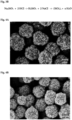
- the uncoated MC-Beads had a diameter of approximately 270 nm, the TEOS-coated particles had a diameter of about 400 nm, and the liquid glass coated particles had a diameter of about 280 nm, magnetized with 46.7 (TEOS) and 54 (LG) A* m 2 /kg, respectively.
- the coating method was adapted from EP2916327B1 .
- the reaction time was reduced from over two days to 4 hours and the ultrasonication procedure was optimized by using a bypass probe, which allowed easy scale up of the coating procedure and was shown by successfully coating a 10 gram, while in EP2916327B1 a 500 mg batch is used.
- the magnetic cores were coated by the Stöber method as well, where TEOS was used as reagent.
- Table 2 shows the different synthesis conditions.
- Table 2 - Characterization of coated beads Name Amount magnetic particles [g] Liquid glass [mL] TEOS [mL] Time [h] Magn. [Am 2 /kg] Rem.
- the cobas ® Liat ® System is a point-of-care system that fully automates sample preparation, PCR amplification and real-time detection of target DNA/RNA sequences on the cobas ® Liat ® Analyzer.
- the turn-around-time (TAT) is very rapid, ranging 10-20 minutes.
- the total time of nano MGP nucleic acid binding, enriching and purification can be as short as 5 min or less. In these test, 10 ⁇ L of each nano MGPs at 25 mg/mL concentrations were filled into cobas ® Liat ® tubes. Clostridium difficile (C.
- MC47 and MC48 beads were subjected to a liquid glass ("LG") coating by mixing MC-beads (2-15 g/L) with various amounts of sodium liquid glass (38-100 mL) in a total volume of up to 250 mL in a glass reactor with a flow-through US cell (and pre-mixed for 10 minutes).
- HCl 1-3 M, 45-110 mL was added dropwise depending on desired coating thickness and the mixture was stirred continuously and subjected to a flow-through US cell for 4-6 hours. The mixture was then subjected to a magnetic wash (3 x water).
- Table 4 Isoelectric point and silica coating of MGPs.
- Figure 6 and Table 4 show the dependency of the isoelectric point of the particles to the coating thickness (i.e., the silica content) of the particles. Herein, it is clearly shown, that with increasing silica coating the value of the isoelectric point is decreasing.
- the magnetic core particles are built up by controlled aggregates of magnetite nanoparticles. With this, the particles show very low magnetic remanence combined with particle sizes in the range of 80-500 nm.
- the controlled aggregates are only formed by adding a stabilizer in situ in the solvothermal reaction.
- the thickness of the glass coating of the particles must be specifically controlled in that too thick coatings as well as too high and too low isoelectric point values of the coated particles are to be avoided.
Landscapes
- Chemical & Material Sciences (AREA)
- Engineering & Computer Science (AREA)
- Organic Chemistry (AREA)
- Health & Medical Sciences (AREA)
- Life Sciences & Earth Sciences (AREA)
- Genetics & Genomics (AREA)
- Biomedical Technology (AREA)
- Wood Science & Technology (AREA)
- Zoology (AREA)
- Analytical Chemistry (AREA)
- Biotechnology (AREA)
- Bioinformatics & Cheminformatics (AREA)
- General Engineering & Computer Science (AREA)
- Chemical Kinetics & Catalysis (AREA)
- Power Engineering (AREA)
- Molecular Biology (AREA)
- General Health & Medical Sciences (AREA)
- Inorganic Chemistry (AREA)
- Biophysics (AREA)
- Physics & Mathematics (AREA)
- Biochemistry (AREA)
- Microbiology (AREA)
- Plant Pathology (AREA)
- Crystallography & Structural Chemistry (AREA)
- Proteomics, Peptides & Aminoacids (AREA)
- Nanotechnology (AREA)
- Dispersion Chemistry (AREA)
- Immunology (AREA)
- Manufacturing & Machinery (AREA)
- Soft Magnetic Materials (AREA)
- Measuring Or Testing Involving Enzymes Or Micro-Organisms (AREA)
- Compounds Of Iron (AREA)
- Treatment Of Liquids With Adsorbents In General (AREA)
- Solid-Sorbent Or Filter-Aiding Compositions (AREA)
- Silicates, Zeolites, And Molecular Sieves (AREA)
- Apparatus Associated With Microorganisms And Enzymes (AREA)
- Hard Magnetic Materials (AREA)
- Glass Compositions (AREA)
Claims (14)
- Composition de billes magnétiques comprenant (a) un stabilisateur et un noyau magnétique produit dans des conditions solvothermiques, (b) un revêtement de verre liquide, dans laquelle les billes magnétiques sont superparamagnétiques, dans laquelle le revêtement de verre liquide comprend un silicate et a une épaisseur de 20 nm ou moins, caractérisée en ce que le noyau magnétique est un agrégat défini de nanoparticules magnétiques, lesdites nanoparticules magnétiques ayant une taille inférieure à 30 nm et le diamètre du noyau magnétique est compris entre 100 et 400 nm.
- Composition selon la revendication 1, dans laquelle les billes magnétiques ont une taille de particules comprise entre 200 et 400 nm.
- Composition selon l'une quelconque des revendications 1 à 2, dans laquelle les billes magnétiques ont une aimantation à saturation comprise entre 50 et 70 Am2/kg.
- Composition selon l'une quelconque des revendications 1 à 3, dans laquelle les billes magnétiques ont une rémanence magnétique inférieure à 3 Am2/kg.
- Composition selon l'une quelconque des revendications 1 à 4, dans laquelle le silicate est choisi dans le groupe constitué par le silicate de sodium, le silicate de potassium, le silicate de calcium, le silicate de lithium et le silicate de magnésium.
- Composition selon l'une quelconque des revendications 1 à 5, dans laquelle le stabilisateur est choisi dans le groupe constitué par le citrate, l'histidine, le bromure de cétyltriméthylammonium (CTAB), le chlorure de cétyltriméthylammonium (CTAC), l'oléate de sodium, l'acide polyacrylique.
- Composition selon l'une quelconque des revendications 1 à 6, dans laquelle le noyau magnétique est Fe3O4, a-Fe2O3, γ-Pe2O3, MnFexOy, CoFexOy, NiFexOy, CuFexOy, ZnFexOy, CdFexOy, BaFexO et SrFexO, dans laquelle x et y varient en fonction du procédé de synthèse, et dans laquelle x représente de préférence un nombre entier de 1 à 3, et dans laquelle y représente 3 ou 4.
- Suspension de billes magnétiques comprenant une composition selon l'une quelconque des revendications 1 à 7 et un liquide, dans laquelle la suspension est mélangée jusqu'à homogénéité.
- Suspension selon la revendication 8 comprenant entre 5 et 200 mg/mL de billes magnétiques.
- Suspension selon l'une quelconque des revendications 8 à 9, dans laquelle le liquide comprend une solution aqueuse tamponnée.
- Suspension selon la revendication 10 comprenant en outre un agent chaotropique.
- Dispositif configuré pour effectuer une analyse d'acides nucléiques d'un échantillon, ledit dispositif comprenant(a) un orifice d'introduction d'échantillon adapté pour recevoir une aliquote d'échantillon ;(b) un compartiment comprenant une composition selon l'une quelconque des revendications 1 à 7 ; et(c) une région d'analyse par PCR comprenant un ou plusieurs compartiments supplémentaires, chacun étant conçu pour réaliser une ou plusieurs étapes de ladite analyse par PCR comprenant la préparation de réactifs, l'enrichissement ciblé, l'élimination de l'inhibiteur, l'extraction d'acides nucléiques, l'amplification et la détection en temps réel.
- Kit comprenant la composition selon l'une quelconque des revendications 1 à 7.
- Procédé de fabrication d'une composition de billes magnétiques selon l'une quelconque des revendications 1 à 7, comprenant les étapes dea. mise en contact d'un stabilisateur et de nanoparticules magnétiques ayant une taille inférieure à 30 nm à partir d'un matériau quelconque choisi dans le groupe constitué par les métaux, les sels métalliques, les carbures métalliques, les nitrures métalliques, les sulfures métalliques, les phosphures métalliques, les oxydes métalliques ou les chélates métalliques comprenant au moins un métal de transition dans des conditions solvothermiques pour former des agrégats définis de taille contrôlée pour former un noyau magnétique ayant un diamètre compris entre 100 et 400 nm qui est superparamagnétique ;b. revêtement du noyau magnétique formé à l'étape (a) avec un verre liquide, dans lequel le revêtement de verre liquide comprend un silicate et a une épaisseur de 20 nm ou moins.
Applications Claiming Priority (3)
| Application Number | Priority Date | Filing Date | Title |
|---|---|---|---|
| US201762579380P | 2017-10-31 | 2017-10-31 | |
| EP17199299 | 2017-10-31 | ||
| PCT/EP2018/079829 WO2019086517A1 (fr) | 2017-10-31 | 2018-10-31 | Particules magnétiques améliorées et leur utilisation |
Publications (3)
| Publication Number | Publication Date |
|---|---|
| EP3704723A1 EP3704723A1 (fr) | 2020-09-09 |
| EP3704723B1 true EP3704723B1 (fr) | 2023-10-11 |
| EP3704723C0 EP3704723C0 (fr) | 2023-10-11 |
Family
ID=64049266
Family Applications (1)
| Application Number | Title | Priority Date | Filing Date |
|---|---|---|---|
| EP18795635.4A Active EP3704723B1 (fr) | 2017-10-31 | 2018-10-31 | Particules magnétiques améliorées et leurs utilisations |
Country Status (8)
| Country | Link |
|---|---|
| US (2) | US11728078B2 (fr) |
| EP (1) | EP3704723B1 (fr) |
| JP (2) | JP7319973B2 (fr) |
| CN (2) | CN117504806A (fr) |
| AU (1) | AU2018359609B2 (fr) |
| CA (1) | CA3080871C (fr) |
| ES (1) | ES2960530T3 (fr) |
| WO (1) | WO2019086517A1 (fr) |
Families Citing this family (11)
| Publication number | Priority date | Publication date | Assignee | Title |
|---|---|---|---|---|
| CN112007605A (zh) * | 2019-05-30 | 2020-12-01 | 苏州海狸生物医学工程有限公司 | 一种用于核酸提取的羟基纳米磁珠及其制备方法 |
| CN110408278B (zh) * | 2019-09-05 | 2021-06-04 | 上海富元塑胶科技有限公司 | 一种本征功能性涂料及其制备与应用 |
| WO2021185682A1 (fr) | 2020-03-17 | 2021-09-23 | F. Hoffmann-La Roche Ag | Procédé d'amélioration de la récupération de cellules dans une analyse monocellulaire |
| US20230118882A1 (en) * | 2020-03-25 | 2023-04-20 | Sekisui Medical Co., Ltd. | Magnetically responsive particles, and immunoassay method and immunoassay reagent using same |
| DK4128287T3 (da) * | 2020-04-03 | 2024-06-10 | Lybe Scient As | Fremgangsmåde til fremstillingen af produkter til isolering af nukleinsyrer |
| CN115551614A (zh) * | 2020-05-14 | 2022-12-30 | 日本碍子株式会社 | 蜂窝结构体及尾气净化装置 |
| WO2022008649A1 (fr) | 2020-07-08 | 2022-01-13 | F. Hoffmann-La Roche Ag | Analyse spatiale de multiples cibles dans des échantillons de tissu |
| CN113145087A (zh) * | 2021-04-13 | 2021-07-23 | 杭州安誉科技有限公司 | 一种新型冠状病毒核酸纯化试剂及纯化方法 |
| CN116891849B (zh) * | 2023-09-11 | 2023-11-17 | 成都斯马特科技有限公司 | 一种快速从鼻咽拭子中提取核酸的试剂盒及提取方法 |
| WO2025090777A1 (fr) * | 2023-10-27 | 2025-05-01 | University Of Houston System | Capteurs et biocapteurs à base de nanoparticules d'oxyde de fer magnétiques et leurs procédés d'utilisation |
| CN117599763B (zh) * | 2024-01-22 | 2024-04-09 | 北京青莲百奥生物科技有限公司 | 一种双富集基团富集磁珠的制作方法及应用 |
Citations (2)
| Publication number | Priority date | Publication date | Assignee | Title |
|---|---|---|---|---|
| WO2001088540A1 (fr) * | 2000-05-17 | 2001-11-22 | University Of Florida | Nanoparticules enrobees |
| US20170159043A1 (en) * | 2005-06-23 | 2017-06-08 | Siemens Healthcare Diagnostics Gmbh | Magnetic particles with a closed ultrathin silica layer, method for the production thereof and their use |
Family Cites Families (33)
| Publication number | Priority date | Publication date | Assignee | Title |
|---|---|---|---|---|
| US4683202A (en) | 1985-03-28 | 1987-07-28 | Cetus Corporation | Process for amplifying nucleic acid sequences |
| US4683195A (en) | 1986-01-30 | 1987-07-28 | Cetus Corporation | Process for amplifying, detecting, and/or-cloning nucleic acid sequences |
| US4965188A (en) | 1986-08-22 | 1990-10-23 | Cetus Corporation | Process for amplifying, detecting, and/or cloning nucleic acid sequences using a thermostable enzyme |
| US4800159A (en) | 1986-02-07 | 1989-01-24 | Cetus Corporation | Process for amplifying, detecting, and/or cloning nucleic acid sequences |
| US5130238A (en) | 1988-06-24 | 1992-07-14 | Cangene Corporation | Enhanced nucleic acid amplification process |
| ATE138106T1 (de) | 1988-07-20 | 1996-06-15 | David Segev | Verfahren zur amplifizierung und zum nachweis von nukleinsäuresequenzen |
| CA2035010C (fr) | 1990-01-26 | 1996-12-10 | Keith C. Backman | Methode d'amplification des acides nucleiques cibles applicable aux reactions en chaine a la polymerase et a la ligase |
| JPH06502766A (ja) | 1990-11-14 | 1994-03-31 | アクゾ・ノベル・ナムローゼ・フェンノートシャップ | ポリスチレン支持体ベース−サンドイッチハイブリダイゼーションアッセイ法を用いる核酸の非同位体検出およびそれに用いる組成物 |
| EP1154443A1 (fr) * | 2000-05-12 | 2001-11-14 | Boehringer Mannheim Gmbh | Particules magnétiques de verre, méthode de fabrication et utilisation |
| JP3746884B2 (ja) * | 1997-09-16 | 2006-02-15 | 日鉄鉱業株式会社 | 磁性流体及びその製造方法 |
| EP1179585B1 (fr) | 1997-12-24 | 2008-07-09 | Cepheid | Dispositif et procédé de Lyse |
| US6979424B2 (en) | 1998-03-17 | 2005-12-27 | Cepheid | Integrated sample analysis device |
| US6818185B1 (en) | 1999-05-28 | 2004-11-16 | Cepheid | Cartridge for conducting a chemical reaction |
| DE60022025T2 (de) | 1999-05-28 | 2006-06-29 | Cepheid, Sunnyvale | Anlage zum brechen von zellen |
| US6783934B1 (en) | 2000-05-01 | 2004-08-31 | Cepheid, Inc. | Methods for quantitative analysis of nucleic acid amplification reaction |
| US7338760B2 (en) * | 2001-10-26 | 2008-03-04 | Ntu Ventures Private Limited | Sample preparation integrated chip |
| EP1499895B1 (fr) * | 2002-04-22 | 2008-05-07 | University Of Florida | Nanoparticules fonctionnalisees et procede d'utilisation |
| CA2515075C (fr) | 2003-02-05 | 2012-10-02 | Iquum, Inc. | Traitement d'echantillons |
| JP2008505346A (ja) * | 2004-06-07 | 2008-02-21 | アイキューム, インク. | サンプルマルチ処理 |
| US7130106B2 (en) * | 2004-07-12 | 2006-10-31 | Xerox Corporation | Sol-gel nanocoated particles for magnetic displays |
| CA2607661C (fr) | 2005-05-09 | 2017-08-08 | Idaho Technology, Inc. | Appareil et methode d'amplification d'acide nucleique en deux etapes |
| CA2631829C (fr) * | 2005-12-14 | 2012-01-24 | F. Hoffmann-La Roche Ag | Nouveau procede de traitement bisulfite |
| US9102911B2 (en) * | 2009-05-15 | 2015-08-11 | Biofire Diagnostics, Llc | High density self-contained biological analysis |
| EP2089543B1 (fr) | 2006-11-15 | 2020-07-01 | BioFire Diagnostics, LLC | Analyse biologique auto-contenue haute densité |
| EP2128095A4 (fr) | 2007-01-05 | 2011-12-21 | Tokyo Inst Tech | Nanoparticules sphériques de ferrite et leur procédé de fabrication |
| US20100190240A1 (en) * | 2007-03-21 | 2010-07-29 | Ibis Biosciences, Inc. | Reagents for nucleic acid purification |
| EP2110175A1 (fr) | 2008-03-20 | 2009-10-21 | Fraunhofer-Gesellschaft zur Förderung der angewandten Forschung e.V. | Procédé et dispositif de commande thermique de réactions biologiques et chimiques sous l'influence de particules ou de billes magnétiques et de champs magnétiques variables |
| EP2244268B1 (fr) * | 2009-04-23 | 2016-04-13 | Turbobeads GmbH | Procédé de production de porteurs magnétiques chimiquement stables |
| DE102009025019A1 (de) * | 2009-06-10 | 2010-12-16 | Giesecke & Devrient Gmbh | Sicherheitsmerkmal und Verfahren zur Herstellung eines Sicherheitsmerkmals |
| US8563298B2 (en) * | 2010-10-22 | 2013-10-22 | T2 Biosystems, Inc. | NMR systems and methods for the rapid detection of analytes |
| US9708660B2 (en) * | 2012-02-19 | 2017-07-18 | Nvigen, Inc. | Uses of IDed nanostructures in nucleic acid technology |
| WO2014090838A1 (fr) * | 2012-12-11 | 2014-06-19 | Qiagen Gmbh | Préparation de particules de silice |
| EP2916327B1 (fr) | 2014-03-04 | 2017-01-11 | F. Hoffmann-La Roche AG | Nanoparticules magnétiques pour la purification d'acides nucléiques |
-
2018
- 2018-10-31 WO PCT/EP2018/079829 patent/WO2019086517A1/fr not_active Ceased
- 2018-10-31 JP JP2020523753A patent/JP7319973B2/ja active Active
- 2018-10-31 ES ES18795635T patent/ES2960530T3/es active Active
- 2018-10-31 CN CN202311503653.7A patent/CN117504806A/zh active Pending
- 2018-10-31 AU AU2018359609A patent/AU2018359609B2/en active Active
- 2018-10-31 CN CN201880070748.5A patent/CN111279444A/zh active Pending
- 2018-10-31 EP EP18795635.4A patent/EP3704723B1/fr active Active
- 2018-10-31 CA CA3080871A patent/CA3080871C/fr active Active
-
2020
- 2020-04-28 US US16/860,968 patent/US11728078B2/en active Active
-
2022
- 2022-07-05 JP JP2022108427A patent/JP2022153411A/ja active Pending
-
2023
- 2023-06-15 US US18/210,534 patent/US20230326640A1/en active Pending
Patent Citations (2)
| Publication number | Priority date | Publication date | Assignee | Title |
|---|---|---|---|---|
| WO2001088540A1 (fr) * | 2000-05-17 | 2001-11-22 | University Of Florida | Nanoparticules enrobees |
| US20170159043A1 (en) * | 2005-06-23 | 2017-06-08 | Siemens Healthcare Diagnostics Gmbh | Magnetic particles with a closed ultrathin silica layer, method for the production thereof and their use |
Also Published As
| Publication number | Publication date |
|---|---|
| CA3080871A1 (fr) | 2019-05-09 |
| US11728078B2 (en) | 2023-08-15 |
| AU2018359609A1 (en) | 2020-04-23 |
| ES2960530T3 (es) | 2024-03-05 |
| WO2019086517A1 (fr) | 2019-05-09 |
| CN117504806A (zh) | 2024-02-06 |
| CA3080871C (fr) | 2024-05-28 |
| AU2018359609B2 (en) | 2023-01-05 |
| US20200265979A1 (en) | 2020-08-20 |
| JP7319973B2 (ja) | 2023-08-02 |
| JP2021501107A (ja) | 2021-01-14 |
| EP3704723A1 (fr) | 2020-09-09 |
| CN111279444A (zh) | 2020-06-12 |
| US20230326640A1 (en) | 2023-10-12 |
| EP3704723C0 (fr) | 2023-10-11 |
| JP2022153411A (ja) | 2022-10-12 |
Similar Documents
| Publication | Publication Date | Title |
|---|---|---|
| US20230326640A1 (en) | Magnetic particles and uses thereof | |
| US8026068B2 (en) | Use of silica material in an amplification reaction | |
| Wei et al. | DNAzyme-based colorimetric sensing of lead (Pb2+) using unmodified gold nanoparticle probes | |
| JP6364039B2 (ja) | 核酸の単離方法およびキット | |
| JP5153048B2 (ja) | 亜硫酸水素塩処理のための改善された方法 | |
| US20220081705A1 (en) | Compositions and methods for urine sample storage and dna extraction | |
| CA2614069C (fr) | Isolement d'acide nucleique au moyen de polidocanol et de derives connexes | |
| KR20220024866A (ko) | 생체자기 마이크로스피어와 그 제조 방법 및 사용 방법 | |
| CN101027411A (zh) | 用于从固相结合材料释放核酸的组合物和方法 | |
| US10752892B2 (en) | Multilayer complex, method for manufacturing said complex and use of said complex | |
| US20220093295A1 (en) | Magnetic beads, method of making and method of use thereof | |
| GB2368909A (en) | Separation Particles | |
| US7655407B2 (en) | Method for detecting target substance utilizing probe desorption | |
| RU2542476C1 (ru) | Бионаноконъюгат для обнаружения и выделения нуклеиновых кислот и способ его получения | |
| Stankiewicz et al. | In vivo labeling and specific magnetic bead separation of RNA for biofilm characterization and stress-induced gene expression analysis in bacteria | |
| JP2024031999A (ja) | 核酸の分離方法及び増幅方法 |
Legal Events
| Date | Code | Title | Description |
|---|---|---|---|
| STAA | Information on the status of an ep patent application or granted ep patent |
Free format text: STATUS: UNKNOWN |
|
| STAA | Information on the status of an ep patent application or granted ep patent |
Free format text: STATUS: THE INTERNATIONAL PUBLICATION HAS BEEN MADE |
|
| PUAI | Public reference made under article 153(3) epc to a published international application that has entered the european phase |
Free format text: ORIGINAL CODE: 0009012 |
|
| STAA | Information on the status of an ep patent application or granted ep patent |
Free format text: STATUS: REQUEST FOR EXAMINATION WAS MADE |
|
| 17P | Request for examination filed |
Effective date: 20200602 |
|
| AK | Designated contracting states |
Kind code of ref document: A1 Designated state(s): AL AT BE BG CH CY CZ DE DK EE ES FI FR GB GR HR HU IE IS IT LI LT LU LV MC MK MT NL NO PL PT RO RS SE SI SK SM TR |
|
| AX | Request for extension of the european patent |
Extension state: BA ME |
|
| DAV | Request for validation of the european patent (deleted) | ||
| DAX | Request for extension of the european patent (deleted) | ||
| STAA | Information on the status of an ep patent application or granted ep patent |
Free format text: STATUS: EXAMINATION IS IN PROGRESS |
|
| RIC1 | Information provided on ipc code assigned before grant |
Ipc: H01F 1/00 20060101AFI20210430BHEP Ipc: C12N 15/10 20060101ALI20210430BHEP Ipc: C01G 49/08 20060101ALI20210430BHEP Ipc: B82Y 5/00 20110101ALN20210430BHEP Ipc: B82Y 25/00 20110101ALN20210430BHEP |
|
| 17Q | First examination report despatched |
Effective date: 20210602 |
|
| GRAP | Despatch of communication of intention to grant a patent |
Free format text: ORIGINAL CODE: EPIDOSNIGR1 |
|
| STAA | Information on the status of an ep patent application or granted ep patent |
Free format text: STATUS: GRANT OF PATENT IS INTENDED |
|
| RIC1 | Information provided on ipc code assigned before grant |
Ipc: B82Y 25/00 20110101ALN20221121BHEP Ipc: B82Y 5/00 20110101ALN20221121BHEP Ipc: C01G 49/08 20060101ALI20221121BHEP Ipc: C12N 15/10 20060101ALI20221121BHEP Ipc: H01F 1/00 20060101AFI20221121BHEP |
|
| INTG | Intention to grant announced |
Effective date: 20221206 |
|
| GRAJ | Information related to disapproval of communication of intention to grant by the applicant or resumption of examination proceedings by the epo deleted |
Free format text: ORIGINAL CODE: EPIDOSDIGR1 |
|
| STAA | Information on the status of an ep patent application or granted ep patent |
Free format text: STATUS: EXAMINATION IS IN PROGRESS |
|
| GRAP | Despatch of communication of intention to grant a patent |
Free format text: ORIGINAL CODE: EPIDOSNIGR1 |
|
| STAA | Information on the status of an ep patent application or granted ep patent |
Free format text: STATUS: GRANT OF PATENT IS INTENDED |
|
| INTC | Intention to grant announced (deleted) | ||
| RIC1 | Information provided on ipc code assigned before grant |
Ipc: B82Y 25/00 20110101ALN20230417BHEP Ipc: B82Y 5/00 20110101ALN20230417BHEP Ipc: C01G 49/08 20060101ALI20230417BHEP Ipc: C12N 15/10 20060101ALI20230417BHEP Ipc: H01F 1/00 20060101AFI20230417BHEP |
|
| INTG | Intention to grant announced |
Effective date: 20230504 |
|
| RIN1 | Information on inventor provided before grant (corrected) |
Inventor name: SILVESTRE, MARTIN EDUARDO Inventor name: SCHOENBRUNNER, NANCY Inventor name: LIU, FANGBING Inventor name: HUG, STEPHAN |
|
| GRAS | Grant fee paid |
Free format text: ORIGINAL CODE: EPIDOSNIGR3 |
|
| GRAA | (expected) grant |
Free format text: ORIGINAL CODE: 0009210 |
|
| STAA | Information on the status of an ep patent application or granted ep patent |
Free format text: STATUS: THE PATENT HAS BEEN GRANTED |
|
| AK | Designated contracting states |
Kind code of ref document: B1 Designated state(s): AL AT BE BG CH CY CZ DE DK EE ES FI FR GB GR HR HU IE IS IT LI LT LU LV MC MK MT NL NO PL PT RO RS SE SI SK SM TR |
|
| RAP1 | Party data changed (applicant data changed or rights of an application transferred) |
Owner name: F. HOFFMANN-LA ROCHE AG |
|
| REG | Reference to a national code |
Ref country code: GB Ref legal event code: FG4D |
|
| REG | Reference to a national code |
Ref country code: CH Ref legal event code: EP |
|
| REG | Reference to a national code |
Ref country code: DE Ref legal event code: R096 Ref document number: 602018059237 Country of ref document: DE |
|
| REG | Reference to a national code |
Ref country code: IE Ref legal event code: FG4D |
|
| U01 | Request for unitary effect filed |
Effective date: 20231025 |
|
| U07 | Unitary effect registered |
Designated state(s): AT BE BG DE DK EE FI FR IT LT LU LV MT NL PT SE SI Effective date: 20231031 |
|
| U20 | Renewal fee for the european patent with unitary effect paid |
Year of fee payment: 6 Effective date: 20231031 |
|
| REG | Reference to a national code |
Ref country code: ES Ref legal event code: FG2A Ref document number: 2960530 Country of ref document: ES Kind code of ref document: T3 Effective date: 20240305 |
|
| PG25 | Lapsed in a contracting state [announced via postgrant information from national office to epo] |
Ref country code: GR Free format text: LAPSE BECAUSE OF FAILURE TO SUBMIT A TRANSLATION OF THE DESCRIPTION OR TO PAY THE FEE WITHIN THE PRESCRIBED TIME-LIMIT Effective date: 20240112 |
|
| PG25 | Lapsed in a contracting state [announced via postgrant information from national office to epo] |
Ref country code: IS Free format text: LAPSE BECAUSE OF FAILURE TO SUBMIT A TRANSLATION OF THE DESCRIPTION OR TO PAY THE FEE WITHIN THE PRESCRIBED TIME-LIMIT Effective date: 20240211 |
|
| PG25 | Lapsed in a contracting state [announced via postgrant information from national office to epo] |
Ref country code: IS Free format text: LAPSE BECAUSE OF FAILURE TO SUBMIT A TRANSLATION OF THE DESCRIPTION OR TO PAY THE FEE WITHIN THE PRESCRIBED TIME-LIMIT Effective date: 20240211 Ref country code: GR Free format text: LAPSE BECAUSE OF FAILURE TO SUBMIT A TRANSLATION OF THE DESCRIPTION OR TO PAY THE FEE WITHIN THE PRESCRIBED TIME-LIMIT Effective date: 20240112 |
|
| PG25 | Lapsed in a contracting state [announced via postgrant information from national office to epo] |
Ref country code: RS Free format text: LAPSE BECAUSE OF FAILURE TO SUBMIT A TRANSLATION OF THE DESCRIPTION OR TO PAY THE FEE WITHIN THE PRESCRIBED TIME-LIMIT Effective date: 20231011 Ref country code: PL Free format text: LAPSE BECAUSE OF FAILURE TO SUBMIT A TRANSLATION OF THE DESCRIPTION OR TO PAY THE FEE WITHIN THE PRESCRIBED TIME-LIMIT Effective date: 20231011 Ref country code: NO Free format text: LAPSE BECAUSE OF FAILURE TO SUBMIT A TRANSLATION OF THE DESCRIPTION OR TO PAY THE FEE WITHIN THE PRESCRIBED TIME-LIMIT Effective date: 20240111 Ref country code: HR Free format text: LAPSE BECAUSE OF FAILURE TO SUBMIT A TRANSLATION OF THE DESCRIPTION OR TO PAY THE FEE WITHIN THE PRESCRIBED TIME-LIMIT Effective date: 20231011 |
|
| REG | Reference to a national code |
Ref country code: DE Ref legal event code: R097 Ref document number: 602018059237 Country of ref document: DE |
|
| PG25 | Lapsed in a contracting state [announced via postgrant information from national office to epo] |
Ref country code: CZ Free format text: LAPSE BECAUSE OF FAILURE TO SUBMIT A TRANSLATION OF THE DESCRIPTION OR TO PAY THE FEE WITHIN THE PRESCRIBED TIME-LIMIT Effective date: 20231011 |
|
| PG25 | Lapsed in a contracting state [announced via postgrant information from national office to epo] |
Ref country code: SK Free format text: LAPSE BECAUSE OF FAILURE TO SUBMIT A TRANSLATION OF THE DESCRIPTION OR TO PAY THE FEE WITHIN THE PRESCRIBED TIME-LIMIT Effective date: 20231011 |
|
| PG25 | Lapsed in a contracting state [announced via postgrant information from national office to epo] |
Ref country code: SM Free format text: LAPSE BECAUSE OF FAILURE TO SUBMIT A TRANSLATION OF THE DESCRIPTION OR TO PAY THE FEE WITHIN THE PRESCRIBED TIME-LIMIT Effective date: 20231011 Ref country code: SK Free format text: LAPSE BECAUSE OF FAILURE TO SUBMIT A TRANSLATION OF THE DESCRIPTION OR TO PAY THE FEE WITHIN THE PRESCRIBED TIME-LIMIT Effective date: 20231011 Ref country code: RO Free format text: LAPSE BECAUSE OF FAILURE TO SUBMIT A TRANSLATION OF THE DESCRIPTION OR TO PAY THE FEE WITHIN THE PRESCRIBED TIME-LIMIT Effective date: 20231011 Ref country code: CZ Free format text: LAPSE BECAUSE OF FAILURE TO SUBMIT A TRANSLATION OF THE DESCRIPTION OR TO PAY THE FEE WITHIN THE PRESCRIBED TIME-LIMIT Effective date: 20231011 |
|
| PLBE | No opposition filed within time limit |
Free format text: ORIGINAL CODE: 0009261 |
|
| STAA | Information on the status of an ep patent application or granted ep patent |
Free format text: STATUS: NO OPPOSITION FILED WITHIN TIME LIMIT |
|
| PG25 | Lapsed in a contracting state [announced via postgrant information from national office to epo] |
Ref country code: MC Free format text: LAPSE BECAUSE OF FAILURE TO SUBMIT A TRANSLATION OF THE DESCRIPTION OR TO PAY THE FEE WITHIN THE PRESCRIBED TIME-LIMIT Effective date: 20231011 |
|
| PG25 | Lapsed in a contracting state [announced via postgrant information from national office to epo] |
Ref country code: MC Free format text: LAPSE BECAUSE OF FAILURE TO SUBMIT A TRANSLATION OF THE DESCRIPTION OR TO PAY THE FEE WITHIN THE PRESCRIBED TIME-LIMIT Effective date: 20231011 |
|
| 26N | No opposition filed |
Effective date: 20240712 |
|
| PG25 | Lapsed in a contracting state [announced via postgrant information from national office to epo] |
Ref country code: IE Free format text: LAPSE BECAUSE OF NON-PAYMENT OF DUE FEES Effective date: 20231031 |
|
| U20 | Renewal fee for the european patent with unitary effect paid |
Year of fee payment: 7 Effective date: 20240919 |
|
| PG25 | Lapsed in a contracting state [announced via postgrant information from national office to epo] |
Ref country code: IE Free format text: LAPSE BECAUSE OF NON-PAYMENT OF DUE FEES Effective date: 20231031 |
|
| PG25 | Lapsed in a contracting state [announced via postgrant information from national office to epo] |
Ref country code: CY Free format text: LAPSE BECAUSE OF FAILURE TO SUBMIT A TRANSLATION OF THE DESCRIPTION OR TO PAY THE FEE WITHIN THE PRESCRIBED TIME-LIMIT; INVALID AB INITIO Effective date: 20181031 |
|
| PG25 | Lapsed in a contracting state [announced via postgrant information from national office to epo] |
Ref country code: HU Free format text: LAPSE BECAUSE OF FAILURE TO SUBMIT A TRANSLATION OF THE DESCRIPTION OR TO PAY THE FEE WITHIN THE PRESCRIBED TIME-LIMIT; INVALID AB INITIO Effective date: 20181031 |
|
| PGFP | Annual fee paid to national office [announced via postgrant information from national office to epo] |
Ref country code: GB Payment date: 20250923 Year of fee payment: 8 |
|
| U20 | Renewal fee for the european patent with unitary effect paid |
Year of fee payment: 8 Effective date: 20250923 |
|
| REG | Reference to a national code |
Ref country code: CH Ref legal event code: U11 Free format text: ST27 STATUS EVENT CODE: U-0-0-U10-U11 (AS PROVIDED BY THE NATIONAL OFFICE) Effective date: 20251101 |
|
| PG25 | Lapsed in a contracting state [announced via postgrant information from national office to epo] |
Ref country code: TR Free format text: LAPSE BECAUSE OF FAILURE TO SUBMIT A TRANSLATION OF THE DESCRIPTION OR TO PAY THE FEE WITHIN THE PRESCRIBED TIME-LIMIT Effective date: 20231011 |
|
| PGFP | Annual fee paid to national office [announced via postgrant information from national office to epo] |
Ref country code: CH Payment date: 20251101 Year of fee payment: 8 |
|
| PGFP | Annual fee paid to national office [announced via postgrant information from national office to epo] |
Ref country code: ES Payment date: 20251103 Year of fee payment: 8 |