EP3707716B1 - Mehrkanalsprachtrennung - Google Patents
Mehrkanalsprachtrennung Download PDFInfo
- Publication number
- EP3707716B1 EP3707716B1 EP18804781.5A EP18804781A EP3707716B1 EP 3707716 B1 EP3707716 B1 EP 3707716B1 EP 18804781 A EP18804781 A EP 18804781A EP 3707716 B1 EP3707716 B1 EP 3707716B1
- Authority
- EP
- European Patent Office
- Prior art keywords
- audio
- beamformer
- separator
- separators
- sources
- Prior art date
- Legal status (The legal status is an assumption and is not a legal conclusion. Google has not performed a legal analysis and makes no representation as to the accuracy of the status listed.)
- Active
Links
Images




Classifications
-
- G—PHYSICS
- G06—COMPUTING OR CALCULATING; COUNTING
- G06N—COMPUTING ARRANGEMENTS BASED ON SPECIFIC COMPUTATIONAL MODELS
- G06N3/00—Computing arrangements based on biological models
- G06N3/02—Neural networks
- G06N3/08—Learning methods
- G06N3/084—Backpropagation, e.g. using gradient descent
-
- G—PHYSICS
- G10—MUSICAL INSTRUMENTS; ACOUSTICS
- G10L—SPEECH ANALYSIS TECHNIQUES OR SPEECH SYNTHESIS; SPEECH RECOGNITION; SPEECH OR VOICE PROCESSING TECHNIQUES; SPEECH OR AUDIO CODING OR DECODING
- G10L21/00—Speech or voice signal processing techniques to produce another audible or non-audible signal, e.g. visual or tactile, in order to modify its quality or its intelligibility
- G10L21/02—Speech enhancement, e.g. noise reduction or echo cancellation
- G10L21/0208—Noise filtering
- G10L21/0216—Noise filtering characterised by the method used for estimating noise
-
- G—PHYSICS
- G06—COMPUTING OR CALCULATING; COUNTING
- G06N—COMPUTING ARRANGEMENTS BASED ON SPECIFIC COMPUTATIONAL MODELS
- G06N3/00—Computing arrangements based on biological models
- G06N3/02—Neural networks
- G06N3/04—Architecture, e.g. interconnection topology
- G06N3/044—Recurrent networks, e.g. Hopfield networks
-
- G—PHYSICS
- G06—COMPUTING OR CALCULATING; COUNTING
- G06N—COMPUTING ARRANGEMENTS BASED ON SPECIFIC COMPUTATIONAL MODELS
- G06N3/00—Computing arrangements based on biological models
- G06N3/02—Neural networks
- G06N3/04—Architecture, e.g. interconnection topology
- G06N3/044—Recurrent networks, e.g. Hopfield networks
- G06N3/0442—Recurrent networks, e.g. Hopfield networks characterised by memory or gating, e.g. long short-term memory [LSTM] or gated recurrent units [GRU]
-
- G—PHYSICS
- G06—COMPUTING OR CALCULATING; COUNTING
- G06N—COMPUTING ARRANGEMENTS BASED ON SPECIFIC COMPUTATIONAL MODELS
- G06N3/00—Computing arrangements based on biological models
- G06N3/02—Neural networks
- G06N3/04—Architecture, e.g. interconnection topology
- G06N3/045—Combinations of networks
-
- G—PHYSICS
- G06—COMPUTING OR CALCULATING; COUNTING
- G06N—COMPUTING ARRANGEMENTS BASED ON SPECIFIC COMPUTATIONAL MODELS
- G06N3/00—Computing arrangements based on biological models
- G06N3/02—Neural networks
- G06N3/08—Learning methods
- G06N3/09—Supervised learning
-
- G—PHYSICS
- G10—MUSICAL INSTRUMENTS; ACOUSTICS
- G10L—SPEECH ANALYSIS TECHNIQUES OR SPEECH SYNTHESIS; SPEECH RECOGNITION; SPEECH OR VOICE PROCESSING TECHNIQUES; SPEECH OR AUDIO CODING OR DECODING
- G10L21/00—Speech or voice signal processing techniques to produce another audible or non-audible signal, e.g. visual or tactile, in order to modify its quality or its intelligibility
- G10L21/02—Speech enhancement, e.g. noise reduction or echo cancellation
- G10L21/0272—Voice signal separating
-
- G—PHYSICS
- G10—MUSICAL INSTRUMENTS; ACOUSTICS
- G10L—SPEECH ANALYSIS TECHNIQUES OR SPEECH SYNTHESIS; SPEECH RECOGNITION; SPEECH OR VOICE PROCESSING TECHNIQUES; SPEECH OR AUDIO CODING OR DECODING
- G10L25/00—Speech or voice analysis techniques not restricted to a single one of groups G10L15/00 - G10L21/00
- G10L25/27—Speech or voice analysis techniques not restricted to a single one of groups G10L15/00 - G10L21/00 characterised by the analysis technique
- G10L25/30—Speech or voice analysis techniques not restricted to a single one of groups G10L15/00 - G10L21/00 characterised by the analysis technique using neural networks
-
- G—PHYSICS
- G10—MUSICAL INSTRUMENTS; ACOUSTICS
- G10L—SPEECH ANALYSIS TECHNIQUES OR SPEECH SYNTHESIS; SPEECH RECOGNITION; SPEECH OR VOICE PROCESSING TECHNIQUES; SPEECH OR AUDIO CODING OR DECODING
- G10L21/00—Speech or voice signal processing techniques to produce another audible or non-audible signal, e.g. visual or tactile, in order to modify its quality or its intelligibility
- G10L21/02—Speech enhancement, e.g. noise reduction or echo cancellation
- G10L21/0208—Noise filtering
- G10L2021/02087—Noise filtering the noise being separate speech, e.g. cocktail party
-
- G—PHYSICS
- G10—MUSICAL INSTRUMENTS; ACOUSTICS
- G10L—SPEECH ANALYSIS TECHNIQUES OR SPEECH SYNTHESIS; SPEECH RECOGNITION; SPEECH OR VOICE PROCESSING TECHNIQUES; SPEECH OR AUDIO CODING OR DECODING
- G10L21/00—Speech or voice signal processing techniques to produce another audible or non-audible signal, e.g. visual or tactile, in order to modify its quality or its intelligibility
- G10L21/02—Speech enhancement, e.g. noise reduction or echo cancellation
- G10L21/0208—Noise filtering
- G10L21/0216—Noise filtering characterised by the method used for estimating noise
- G10L2021/02161—Number of inputs available containing the signal or the noise to be suppressed
- G10L2021/02166—Microphone arrays; Beamforming
-
- G—PHYSICS
- G10—MUSICAL INSTRUMENTS; ACOUSTICS
- G10L—SPEECH ANALYSIS TECHNIQUES OR SPEECH SYNTHESIS; SPEECH RECOGNITION; SPEECH OR VOICE PROCESSING TECHNIQUES; SPEECH OR AUDIO CODING OR DECODING
- G10L21/00—Speech or voice signal processing techniques to produce another audible or non-audible signal, e.g. visual or tactile, in order to modify its quality or its intelligibility
- G10L21/02—Speech enhancement, e.g. noise reduction or echo cancellation
- G10L21/0272—Voice signal separating
- G10L21/0308—Voice signal separating characterised by the type of parameter measurement, e.g. correlation techniques, zero crossing techniques or predictive techniques
-
- H—ELECTRICITY
- H04—ELECTRIC COMMUNICATION TECHNIQUE
- H04R—LOUDSPEAKERS, MICROPHONES, GRAMOPHONE PICK-UPS OR LIKE ACOUSTIC ELECTROMECHANICAL TRANSDUCERS; ELECTRIC HEARING AIDS; PUBLIC ADDRESS SYSTEMS
- H04R2430/00—Signal processing covered by H04R, not provided for in its groups
- H04R2430/20—Processing of the output signals of the acoustic transducers of an array for obtaining a desired directivity characteristic
-
- H—ELECTRICITY
- H04—ELECTRIC COMMUNICATION TECHNIQUE
- H04R—LOUDSPEAKERS, MICROPHONES, GRAMOPHONE PICK-UPS OR LIKE ACOUSTIC ELECTROMECHANICAL TRANSDUCERS; ELECTRIC HEARING AIDS; PUBLIC ADDRESS SYSTEMS
- H04R3/00—Circuits for transducers
- H04R3/005—Circuits for transducers for combining the signals of two or more microphones
Definitions
- This application relates generally to separating out speech from multiple speakers. More specifically, this application relates to separating speech from multiple speakers using multiple channel separation architectures.
- Embodiments of the present disclosure present mechanisms for solving the cocktail party problem where multiple overlapping speakers exist and the goal is to separate out each speaker so the system can identify each speaker and work with the individual speakers in some fashion. More generally, the embodiments separate and/or recognize all sound components in an arbitrary environment.
- Embodiments are useful in such environments as hearing aids, meeting transcription / diarization, music information retrieval and others.
- the audio separators of the present disclosure can be utilized in a wide variety of environments.
- Embodiments can comprise a microphone array coupled to a beamforming network to perform spatial filtering.
- the output of each beamformed channel is passed through a source separator, which performs spectral filtering to separate out different audio sources.
- the source separators can comprise a machine learning algorithm that utilizes a ratio mask learned for each participating source.
- the source separators can output one or more channels, which will be related to the audio sources.
- a post selection process occurs to select the top C channels that correspond to the C audio sources.
- the post selection can utilize spectral clustering, speech quality detection (for audio sources containing speech), and other mechanisms to select those channels with the best quality audio corresponding to the audio sources.
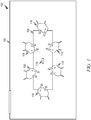
- FIG. 1 illustrates an example environment 100 where an audio processing system can be used to recognize multiple remote speakers according to some aspects of the present disclosure.
- This example comprises a plurality of speakers (106, 108, 110, 112, 114, 116) in a conference room 102 in a meeting or other such gathering.
- the table 104 utilized by the speakers has an audio separator 118 according to some aspects of the present disclosure.
- the audio separator 118 can utilize a microphone array and a beamformer to produce directional beams, each having a particular look direction, that help separate out the various speakers into spatially filtered channels, represented by the directional beams.
- look direction beam direction, or more simply direction (as applied to directional audio beams) mean the direction (as measured from some origin) of a directional beam. This results in a situation where speakers are likely to be represented in one beam more than another. With fixed beamforming this is not necessarily guaranteed, although for relatively fixed environments like a conference room with a limited number of chairs, design of the microphone array and beamformer can increase the likelihood.
- dynamic beamforming can be used to place beams toward audio sources as is known in the art. However, this is not necessary for embodiments of the present disclosure to function well.
- FIG. 1 illustrates an environment of a conference room
- embodiments of the present disclosure can be utilized in any environment where multiple audio sources exist.
- Representative examples include, but are not limited to: multiple users are participating in an activity (playing a game, working on a white board, and so forth) and speaking at the same time; an orchestra or other group with multiple instruments where it is desired to isolate one or more of the instruments; multiple speakers where it is desired to isolate one or more speakers; and/or any other environment where multiple audio sources exist and it is desired to isolate one or more of the audio sources.
- Uses in the representative environments can include, but are not limited to: speech recognition of one or more speakers; identification of an audio source (e.g., identity of a speaker, a type of instrument, and so forth); amplification and/or isolation of an audio source such as would be useful in a hearing aid or other systems; speech enhancement; music identification and/or information retrieval; meeting transcription (e.g., create a transcription of a meeting or any other environment where multiple speakers reside); and many other uses.
- identification of an audio source e.g., identity of a speaker, a type of instrument, and so forth
- amplification and/or isolation of an audio source such as would be useful in a hearing aid or other systems
- speech enhancement music identification and/or information retrieval
- meeting transcription e.g., create a transcription of a meeting or any other environment where multiple speakers reside
- the system can be used to identify who is speaking, recognize the speech and use the recognized speech to perform other operations (e.g., recognize commands for a digital assistant or other system), transcribe the meeting, and so forth.
- other operations e.g., recognize commands for a digital assistant or other system
- FIG. 2 illustrates a representative arrangement 200 to recognize multiple audio sources according to some aspects of the present disclosure.
- the arrangement comprises a plurality of audio sources 202, 204 that are to be recognized and/or separated from each other for further purposes.
- the system utilizes a microphone array 206.
- a microphone array 206 comprises a plurality of microphones with spatial separation between the microphones.
- the particular design of the microphone array can depend upon various factors such as the environment where the system is employed, the shape of the room (if any) where the system is employed, the materials used in the construction of the room (if any) where the system is employed (i.e., the degree to which the materials acoustically reflective and/or acoustically absorptive), the number and possible location of audio sources 202, 204, and so forth.
- the microphone array When coupled with a beamformer (not shown), the microphone array can be used to create audio beams to spatially filter the audio sources and create a plurality of audio channels which carry audio derived to one or more audio beams. Due to the separation between the audio sources 202, 204 and the separation created by various audio beams, some audio sources will be attenuated in an audio channel created by the audio beam while other sources remain unattenuated and/or amplified in the same audio channel. The amount of attenuation and/or amplification depends on the relative location of the audio source and the characteristics (location, main lobe, side lobes, roll off, and so forth) of the audio beam. The number, direction, and characteristics of the audio beams depend on the microphone array 206 and the beamformer used. The number of audio channels also depend upon these factors as well as other factors.
- the beamformer can be part of the microphone array 206 or can be part of the audio separator 208. Either way, the audio separator 208 takes the plurality of audio channels created by the microphone array 206 and beamformer and produces one or more outputs that contain the separated audio sources.
- the audio sources 202, 204 can represent four human speakers and the outputs from the audio separator 208 comprises four channels with separated audio, each carrying the speech of one of the four human speakers.
- the audio sources 202, 204 represent several musical instruments and the outputs form the audio separator 208 comprises one channel for each instrument of interest.
- the output of the audio separator 208 can be input into another system 210 to further process the separated audio and/or perform other functions based on the separated audio.
- the audio sources 202, 204 are human speakers and the output of the audio separator 208 comprises an audio channel for each speaker, the relying system 210 can take the output and accomplish various tasks.
- the relying system can be a system that suppresses or filters out audio sources except for one or more that are of interest.
- the audio separator can pass an audio source of interest to a hearing aid or other personal device of a user.
- FIG. 3 illustrates a representative architecture of such a system.
- various of the illustrated aspects can be combined in different ways or can be implemented either on one or more local devices, server systems, cloud services, and/or any combination thereof.
- the relying system 210 identifies an audio source of interest and selects the appropriate audio source from the audio separator 208 and sends the selected audio to a user.
- the microphone array 206 and audio separator 208 process the mixed audio and produce audio from one or more sources 202, 204, and so forth.
- the relying system 210 identifies an audio source of interest to a user as indicated by user interest process 304.
- a wearable or other user system may identify where a user is looking or an audio source of interest.
- a wearable such as glasses, watch and so forth, or a different mobile device can ascertain the orientation of the user (e.g., which direction a user is facing) and correlate that orientation with one or more of the directional audio beams of the microphone array 206.
- the user can point a device, such as a mobile phone or other device (e.g., wearable that has a microphone) that can pick up audio and device can collect a sample of audio based on where the user points the device.
- Such an audio sample can be collected and processed by the user interest process 304.
- the audio selector 302 can use the information to determine which of the separated audio sources should be passed to the user. For example, the audio sample can be correlated (e.g., time characteristics, frequency characteristics, and/or other audio characteristics) with audio coming from the audio separator 208 and based on correlation the appropriate audio selected and passed to the user. Additionally, or alternatively, the audio selector can provide information back to the audio separator 208 and/or microphone array 206 as indicated by dashed line 308 to help the microphone array 206 and/or audio separator 208 produce the audio source of interest.
- the audio selector 302 can use the information to determine which of the separated audio sources should be passed to the user. For example, the audio sample can be correlated (e.g., time characteristics, frequency characteristics, and/or other audio characteristics) with audio coming from the audio separator 208 and based on correlation the appropriate audio selected and passed to the user. Additionally, or alternatively, the audio selector can provide information back to the audio separator 208 and/or microphone array 206 as indicated by dashed line
- the appropriate audio source is selected by audio selector 302, the appropriate audio is output to the user as indicated by output 306.
- the same or a similar architecture can be used where clarity of a single speaker and/or other audio source is of interest, such as separating out a particular musical instrument in an orchestra/band, separating out movie dialog from background sounds, and so forth.
- the relying system 210 is a digital assistant, such as Cortana ® , Alexa ® , Siri ® , Google I/O ® , or other such system.
- the microphone array 206 and/or audio separator 208 can be incorporated as part of any existing digital assistant architecture. How this is incorporated will typically be evident from the architecture.
- the microphone array 206 will be placed in a device or other housing that is located to pick up user's speech.
- Alexa ® devices are typically depicted as being placed on a piece of furniture in a room.
- Cortana ® or other digital assistants can be part of such a room device, be part of a vehicle (such as a car or motorcycle), a tablet, phone, wearable, or other device, and so forth.
- the audio separator 208 is typically placed in the digital assistant architecture before the speech recognition portion so that the output(s) of the audio separator 208 are used as input into the speech recognition portion of the digital assistant.
- the microphone array 206 and/or the audio separator 208 can be integrated into the digital assistant or can be a "front end" system to the digital assistant.
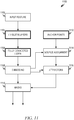
- FIG. 4 shows an example architecture of where relying system 210 is a digital assistant.
- the audio sources 202, 204 are multiple human speakers.
- the microphone array 206 produces audio signals that are processed by the audio separator 208 as described herein to produce one or more separated audio sources. These are provided to the digital assistant (e.g., relying system 210).
- the audio sources from audio separator 208 are presented to the digital assistant (i.e., relying system 210 in FIG. 4 ) and received by, for example, the digital assistant front end 402.
- the front end 402 can do any pre-processing on the separated audio prior to speech recognition and intent detection. For example, where there are multiple speakers the digital assistant may be set up to give priority of one speaker over another. Such a situation can, for example, give priority to a parent over a child, a meeting organizer over meeting participants, and so forth where multiple individuals speak at the same time. As another example, perhaps the digital assistant is set up with a hierarchy of speakers so that potential speakers are given a hierarchy ranking.
- the front end 402 can select the highest priority speaker and pass appropriate audio to the orchestrator 404.
- the front end 402 can provide information back to the audio separator 208 and/or microphone array 206 as illustrated by dashed line 412. This may be helpful, for example, in helping the appropriate audio source be separated out by the microphone array 206 and/or audio separator 208.
- the orchestrator 404 orchestrates all the processes of the digital assistant and effectuates the user's intent.
- the audio from the front end 402 is passed by the orchestrator 404 to a language understanding model 406.
- the language understanding model 406 performs a speech to text conversation and from the audio extracts one or more user intents.
- An intent is something the user wants to accomplish via the digital assistant.
- the intent is passed back to the orchestrator 404, which passes the intent to the appropriate skills/intent implementation 408 to effectuate the user intent.
- the skills/intent implementation 408 is what actually performs what the user wants such as "tell me the height of Mt. Everest" or "order me dinner from that little Chinese place around the corner” or any other user intent.
- Output, status, feedback, and/or other information is sent from the skills/intent implementation 408 to the orchestrator 404, which can send it to the output process 410.
- the output process 410 performs and post processing on the output from the skills/intent implementation 408 and selects an appropriate channel to send the output back to the user (such as audio, visual, and so forth).
- the relying system 210 can be a transcription system.
- the human speakers may be holding a meeting, be the participants of a negotiation, be parties involved in a legal proceeding or other situation where a transcription of the meeting, negotiation, proceeding, and so forth is needed.
- the transcription system can speech recognize (i.e., speech to text) each channel and then produce a transcription where what is spoken is labeled by each different speaker.
- an automatic transcription labeled by speaker can be produced 214.
- FIG. 5 A representative example architecture to accomplish this is presented in FIG. 5 .
- the architecture of FIG. 5 shares many similarities to prior architectures. This illustrates that such functionality may be accomplished, for example, using a digital assistant in some instances.
- the audio sources 202, 204 are separated out by the microphone array 206 and the audio separator 208 as previously described.
- the front end associates the separated audio output from the audio separator 208 with a speaker label for purposes of transcription. This can be accomplished by the correlation process and/or self-identification process as previously described. Association can be nothing more than identifying to the remainder of the system which audio is being sent for processing or it can be more complicated such as tagging the audio in a particular manner.
- the front end can order (e.g., by time) audio if the remainder of the system is not set up to process multiple audio channels simultaneously.
- audio can be tagged so the system knows in what order to place the audio in the transcription and/or how to order sections of audio where multiple speakers are talking simultaneously.
- the front end can also do any audio buffering that needs to take place in some embodiments.
- the audio is passed to the orchestrator 504 which orchestrates the remainder of the processes to ensure the transcription is produced.
- the orchestrator 504 passes the input audio to the language understanding model 506 which performs a speech to text conversion and otherwise prepares the audio for processing by the transcription service 508.
- the orchestrator 504 passes converted speech to the transcription service 508 which performs any further processing to produce the transcription. Taking grammar cues from the language understanding model 506, time/ordering information, and/or speaker labels and creating the transcription, ensuring the transcription makes grammatical and logical sense.
- the transcription can be stored for later retrieval, displayed in real time, or both.
- the orchestrator 504 passes any information to be output to the output process 510 where the output is sent to the appropriate place via the appropriate channel.
- the audio sources 202, 204 can be musical instruments and/or mixed musical instrument and vocal and the output of the audio separator 208 can correspond to one or more of the instruments and/or vocals.
- the relying system 210 can then be a music information retrieval system that can use one or more of the musical instruments. For example, it may be easier to identify a song using only instruments and/or vocals that carry the melody line. Alternatively, the particular performance of the song may be identified by examining the base line, or other audio aspects.
- the output can be information identifying the song, performance, and so forth.
- FIG. 6 A representative architecture for this is illustrated in FIG. 6 .
- the relying system 210 is a music information retrieval system/service.
- the separated audio is received by a feature extractor 602 that extracts information that will be used to retrieve the information desired.
- the feature extractor 602 can pass information back to the audio separator 208 and/or the microphone array 206 as indicated by dashed line 610 to help tune the separator 208 and/or the microphone array 206 to separate out the audio that is desired so that appropriate features can be extracted by the feature extractor 602.
- the feature extractor 602 can extract a combination of features that are used to retrieve the desired information. For example, the words of a song can be extracted (such as by the processes previously described in FIG. 4 and/or FIG. 5 ), the melody line of a particular instrument can be extracted, the bass line can be extracted, or any other feature or combination of features.
- the extracted features are used to look up the desired information in an audio database and/or using an audio lookup service as indicated by 604.
- the returned information can be appropriately formatted by answer selection/formatting process 606.
- the output of this process can then be passed to the output process 608 which can perform any additional formatting, format conversion and so forth and select an appropriate channel to pass the information back to a user.
- the audio sources 202, 204 can be musical instruments and/or mixed musical instrument and vocal and the output of the audio separator 208 can correspond to one or more of the instruments and/or vocals.
- the relying system can be a system that automatically creates a karaoke track that removes vocals and leaves the instruments intact (e.g., by subtracting the vocals from the soundtrack).
- FIG. 7 A representative architecture is presented in FIG. 7 .
- the various audio sources e.g., the musical track and the vocal track
- the audio of interest process 704 identifies what should be extracted, such as the music track, the vocal track and so forth.
- the audio selector 702 selects the appropriate track using the separated audio from the audio separator 208. If, for example, the audio separator 208 is trained to separate out vocal tracks and everything else, then the desired output can be obtained by subtracting the vocal track from everything else. Additionally, or alternatively, some of the separated outputs can be recombined to recreate a desired track/effect. This if particular instruments are separated out by the audio separator 208, and the vocals are filtered out during the separation process, then the audio track can be recreated by combining the separated-out instruments. Other implementations are also possible.
- the system may send commands and/or information 212 back to the audio separator 208 and/or the microphone array 206.
- the desired identity can be passed in the commands/information 212.
- the commands/information 212 can represent any other desired audio source(s) that should be selected for consideration.
- the commands/information 212 can also be used to steer a null in a dynamic beamformer in a particular direction of dynamic beamforming is used.
- FIG. 8 illustrates a representation 800 of a microphone array 802 to recognize multiple audio sources according to some aspects of the present disclosure.
- a microphone array can be any arrangement of two or more microphones separated by a spatial distance.
- the number and placement of microphones in an array influences not only the number of beams that can be formed, but also the characteristics of the beams such as beamwidth, roll off characteristics of the beam, location, height, and width of sidelobes, and other such characteristics.
- this representative microphone array 802 six microphones 804, 806, 808, 810, 812, 814 are arranged in a circle. Each microphone is separated by 60 degrees. A single microphone 816 is placed in the center of the circle. With this arrangement, 12 beams can be formed, each targeted at a 30 degree offset from the prior beam (e.g., 0 degrees, 30 degrees, 60 degrees, and so forth). Thus, this arrangement produces 12 beams, one with a look direction of 0 degrees, one with a look direction of 30 degrees, and so forth. In one experimental setup the distance between the center microphone and the other microphones was 42.5 mm. Experimental results with this microphone array are presented below.
- the microphone array in FIG. 8 is only a representative array and many other microphone arrangements are suitable for use in embodiments of the present disclosure. Principles for selecting an arrangement of microphones are known and depend on such aspects as the type of beamformer used, the number and look direction of beams to be formed, the mounting location of the array, the location (or likely location) of the audio sources, the characteristics (beam width of the main lobe of the acoustic beams, the roll off characteristics of the main lobe, side lobe characteristics such as number, height and location, and so forth) of the formed acoustic beams to be formed, and so forth.
- FIG. 9 illustrates example architecture 900 for separating and recognizing multiple audio sources according to the invention.
- the architecture is designed to separate out C audio sources.
- a microphone array 904 such as the array of FIG. 8 or any other microphone array that produces a plurality of audio signals, one for each microphone.
- the audio signals from the microphone array are fed into the audio separator 208 that separates out a desired number of audio sources. If C audio sources from the mixed audio input are desired, then the audio separator 208 separates out C sources as outputs 916, 918, 920, 922.
- the microphone array 904 is shown as separate from the audio separator 208, but in some embodiments the microphone array 904 is part of the audio separator 208.
- the audio separator 208 comprises a beamformer 906 to create directional beams from the output of the microphone array 904.
- the beamformer 906 produces B beams having desired characteristics and direction.
- Dynamic and/or fixed beamformers can be used with embodiments of the present disclosure. In one set of embodiments, fixed beamformers are used. Additive (e.g., delay-and-sum) or differential beamformers can be used. Differential beamformers can explicitly form acoustic nulls and can better suppress interfering audio sources when the audio sources are sufficiently spatially isolated from the target audio source. Thus, in one embodiment a fixed differential beamformer is used.
- the microphone array 904 and beamformer 906 produce B spatially filtered audio channels, each channel corresponding to a directional beam formed using the beamformer 906 and microphone array 904.
- Each of the audio channels out of the beamformer 906 is fed into a source separator 908, 910, 912.
- the source separators 908, 910, 912 separate out sources, each produce E spectrally filtered outputs for the single input, using a trained machine learning model.
- the number of signals produced by the source separators are E ⁇ B.
- the source separators 908, 910, 912 are discussed in greater detail below.
- the outputs of the source separators 908, 910, 912 are passed through a post selection process 914 to select C outputs 916, 918, 920, 922, one corresponding to each input source.
- the post selection process is discussed in greater detail below.
- FIG. 10 illustrates a representative architecture 1000 for a single source separator 1002, such as the source separator 908, 910, 912 of FIG. 9 according to the invention.
- the purpose of the source separator 1002 is to separate out one or more audio sources in the channel.
- the output of a beam from the beamformer (e.g., 906) is input into the source separator 1002.
- the source separator 1002 comprises a trained neural network model 1006 that produces one or more masks 1008, 1010 that separate out audio sources in the input signal 1004.
- the neural network model 1006 can also produce a residual 1012 where the remainder of the audio sources in the input signal 1004 are placed.
- the number of masks (plus the residual) are a set parameter in the trained neural network model 1006.
- C is the number of audio sources
- E in a beam falls between 1 and C: 1 ⁇ E ⁇ C. Selection of the number of audio sources is discussed below.
- the trained neural network model 1006 is shown to produce two masks and a residual, embodiments of the present disclosure can produce either more or fewer masks.
- a number of different trained neural network models 1006 can be utilized in embodiments of the present disclosure.
- Representative neural network models 1006 that are suitable include, but are not limited to, Deep Attractor Network (DAN), Deep Clustering (DCPL), Permutation Invariant Training (PIT), and Anchored Deep Attractor Network (ADAN).
- DAN Deep Attractor Network
- DCPL Deep Clustering
- PIT Permutation Invariant Training
- ADAN Anchored Deep Attractor Network
- FIG. 11 illustrates an architecture 1100 for an example neural network model according to some aspects of the present disclosure.
- the architecture 1100 illustrates an ADAN.
- the heavy bordered operations (1104, 1106, 1112) are trainable parameters.
- the architecture takes an input signal 1102, which comes from a beam (e.g., input 1004) and projects the signal using a trained neural network onto a high-dimensional embedding space where the projected time-frequency bins of each source are pulled toward several attractor points in the embedding space.
- the attractors are formed using true or estimated source assignments.
- softmax ( ⁇ ) is the softmax activation function over the c axis. This is illustrated by source assignment 1114.
- the in-set similarity is defined for each attractor set.
- the selected attractor set, ⁇ is illustrated by 1116.
- the oracle binary mask is not used during training, therefore the source information is not available at the training stage, leading to the so called permutation problem.
- embodiments of the present disclosure can use PIT to fix this problem, where the best permutations of the C sources are exhaustively searched. This is done by computing the squared error for each permutation of the masked speech outputs and selecting the minimum error as the error to generate the gradient for back propagation.
- the number of audio sources, E in a beam falls between 1 and C: 1 ⁇ E ⁇ C.
- G is selected as three and E is selected as two.
- FIG. 12 illustrates a representative flow diagram 1200 for post selection processing according to some aspects of the current disclosure.
- E outputs will be generated for each of the B beams, resulting in a total of E ⁇ B outputs.
- the task of the post selection processing is to select C of the E ⁇ B outputs, one to represent each of the C sources as a final output.
- the outputs of the source separators will have some degree of separation between the input sources, which can simplify the output selection. Additionally, assumptions can further simplify the output selection. For example, the assumption that the strongest speaker in one beam will be likely to dominate neighboring beams. For example, in an experimental data set (discussed below) more than 70% of the 4-speaker mixtures have such weaker (or soft) speakers that do not dominate any particular beam when overlapping audio is present. Moreover, actual speaker locations may be detected from segments of non-overlapping audio, which could help determine which signals to output. In addition, the outputs can be run through speech recognition or other algorithms to identify which sources have the "best" quality.
- the architecture in FIG. 12 does not incorporate any of these assumptions, but relies on spectral clustering to identify which outputs should be selected.
- the method begins in operation 1202 and proceeds to operation 1204 which calculates an affinity matrix between each of the E ⁇ B magnitude spectrograph by their Pearson correlation.
- Operation 1206 uses spectral clustering to group the columns of the affinity matrix into C + 1 clusters.
- the motivation for using an additional cluster is reduce the impact of failure separation in certain beams and artifacts by isolating them in the additional cluster.
- 92.5%, 96%, and 99.5% of 4-speaker, 3-speaker and 2-speaker mixtures of a test data set were correctly segregated into different clusters.
- operation selects the output in each cluster that has best audio quality. How the "best" audio quality is measured can depend on the type of audio being separated. For example, for speech the outputs of each cluster can be fed into a speech recognition algorithm and the output with the highest recognition value in each cluster selected as the output for that source. Alternatively, a mean to standard variation criterion can be used. Thus, the output with the highest mean to standard deviation of the signal can be selected. As yet another alternative, if the spectral characteristics of the source are known, the signals with the closest spectral characteristics can be selected. For example, if the system is trying to select between different instruments that have different spectral characteristics, the spectral characteristics of each cluster can be compared to a representative spectrum for each instrument and those that match the closest can be selected. Other alternatives can also be used.
- the architecture described herein was tested against a new speech mixture corpus created using utterances taken from the Wall Street Journal (WSJ0) corpus. Three mixing conditions were considered: 2-speaker, 3-speaker, and 4-speaker mixtures. For each condition, a 10-hour training set, a 1-hour validation set, and a 1-hour testing set were created. Both training and validation sets were sampled from the WSJ0 training set si_tr_s. Thus, the validation set is called the closed set. Note, however, that there was no utterance appearing in both the training and validation data. The testing data (or the open set) were generated similarly by using utterances of 16 speakers from the WSJ0 development set si_dt_05 and the evaluation set si_et_05.
- the testing set had no speaker overlap with the training and validation sets.
- the first speaker was used as reference, and a mixing SNR was randomly determined for each remaining speaker in the range from -2.5 dB to 2.5 dB.
- the source signals were truncated to the length of the shortest one to ensure that the mixtures were fully overlapped.
- Each multi-channel mixture signal was generated as follows. Firstly, single-channel clean sources were sampled from the original corpus. Then a room with a random size was selected, where a length and a width were sampled from [1m, 10m], a height was sampled from [2.5m, 4m]. An absorption coefficient was also randomly selected from the range of [0.2 0.5]. Positions for a microphone array and each speaker were also randomly determined. For each mixture, we ensured only up to 2 speaker to present within 30 degrees. Then, a multi-channel room impulse response (RIR) was generated with the image method, which was convolved with the clean sources to generate reverberated source signals. They were mixed randomly chosen SNRs to produce the final mixture signal to use.
- RIR room impulse response
- the network used in the experiments consisted of 4 bi-directional long short term memory (BLSTM) layers, each with 300 forward and 300 backward cells.
- BLSTM long short term memory
- a linear layer with Tanh activation function was added on top of the BLSTM layers to generate embeddings for individual T-F bins.
- six anchor points were used, and the embedding space had 20 dimensions.
- the network was initialized with a single-channel trained 3 speaker separation network and then fine tuned on beamformed signals. To reduce the training process complexity, for each speaker in each mixture, only the beam where the speaker had the largest SNR was used for training.
- LSTM-RNN Long short term memory - recurrent neural network
- feed-forward DNNs deep neural networks
- Each LSTM layer has 1024 hidden units and the output size of each LSTM layer is reduced to 512 using a linear projection layer.
- HMM hidden Markov model
- the input feature is the 22-dimension log-filter-bank feature extracted from the 8k sampled speech waveform.
- the transcribed data used to train this acoustic model comes from 3400 hours of US-English audio gathered from a digital assistant.
- a far-talk ASR model with a domain adaptation method based on teacher-student (T/S) learning was also built.
- T/S learning method is very effective in producing accurate target-domain model.
- the far-talk data is simulated from the 3400 hours clean data by using the room impulse response collected from public and Microsoft ® internal databases.
- the clean data is processed by the clean model (teacher) to generate the corresponding posterior probabilities or soft labels. These posterior probabilities are used in lieu of the usual hard labels derived from the transcriptions to train the target far-talk (student) model with the simulated far-talk data.
- SDR Signal-to-distortion ratio
- MBBF multi-beam beamformer
- OGEV oracle generalized eigenvalue
- OMVDR oracle minimum variance distortionless response
- the oracle MVDR that used only target speaker directions was also compared to the other systems. This system represents a more practical system since exact locations are not known. However, the performance was significantly worse than all other systems, and therefore its result is not reported.
- the oracle beam selection strategy was adopted. That is, for each speaker, we picked the beam that had largest SDR for that speaker. It should be note that after the MBBF step, most of the beams are still highly mixed because the spatial separation capability of fixed beamformers is limited. Therefore, the post selection method of FIG. 7 did not work.
- the single and multi-channel ideal-ratio-mask (IRM) system for comparison, where a mixture spectrogram was masked by oracle IRMs for each target speaker, and converted to a time domain signal with noisy phase information.
- the multi-channel IRM MMIRM
- the multi-channel mixture signal was first processed by the differential beamformer. Then, for each speaker, the IRM approach was applied to the beamformed signal that had the largest SDR for that speaker.
- Tables 1 and 2 reports the SDR (dB) improvement for 2, 3 and 4 speaker mixtures in the closed and open speaker set.
- the MBDAN refers to the architecture disclosed herein with the clustering-based post selection (e.g., described in FIG. 12 ).
- the OMBDAN refers to the proposed system with oracle selection, where C outputs that have the best performances in reference to each clean signal are selected.
- FIG. 13 illustrates a representative machine architecture suitable for implementing the systems and other aspects disclosed herein or for executing the methods disclosed herein.
- the machine of FIG. 13 is shown as a standalone device, which is suitable for implementation of the concepts above.
- server aspects described above a plurality of such machines operating in a data center, part of a cloud architecture, and so forth can be used.
- server aspects not all of the illustrated functions and devices are utilized.
- a system, device, etc. that a user uses to interact with a server and/or the cloud architectures may have a screen, a touch screen input, etc.
- servers often do not have screens, touch screens, cameras and so forth and typically interact with users through connected systems that have appropriate input and output aspects.
- the architecture below should be taken as encompassing multiple types of devices and machines and various aspects may or may not exist in any particular device or machine depending on its form factor and purpose (for example, servers rarely have cameras, while wearables rarely comprise magnetic disks).
- FIG. 13 is suitable to allow those of skill in the art to determine how to implement the embodiments previously described with an appropriate combination of hardware and software, with appropriate modification to the illustrated embodiment to the particular device, machine, etc. used.
- machine While only a single machine is illustrated, the term “machine” shall also be taken to include any collection of machines that individually or jointly execute a set (or multiple sets) of instructions to perform any one or more of the methodologies discussed herein.
- the example of the machine 1300 includes at least one processor 1302 (e.g., a central processing unit (CPU), a graphics processing unit (GPU), advanced processing unit (APU), or combinations thereof), one or more memories such as a main memory 1304, a static memory 1306, or other types of memory, which communicate with each other via link 1308.
- processor 1302 e.g., a central processing unit (CPU), a graphics processing unit (GPU), advanced processing unit (APU), or combinations thereof
- memories such as a main memory 1304, a static memory 1306, or other types of memory, which communicate with each other via link 1308.
- Link 1308 may be a bus or other type of connection channel.
- the machine 1300 may include further optional aspects such as a graphics display unit 1310 comprising any type of display.
- the machine 1300 may also include other optional aspects such as an alphanumeric input device 1312 (e.g., a keyboard, touch screen, and so forth), a user interface (UI) navigation device 1314 (e.g., a mouse, trackball, touch device, and so forth), a storage unit 1316 (e.g., disk drive or other storage device(s)), a signal generation device 1318 (e.g., a speaker), sensor(s) 1321 (e.g., global positioning sensor, accelerometer(s), microphone(s), camera(s), an eye tracking subsystem, and so forth), output controller 1328 (e.g., wired or wireless connection to connect and/or communicate with one or more other devices such as a universal serial bus (USB), near field communication (NFC), infrared (IR), serial/parallel bus, etc.), and a network interface device 1320 (e.g., wired and/or wireless) to connect to and/or communicate over one or more networks 1326.
- a universal serial bus USB
- Neural Network chips can be used to implement embodiments of the present disclosure.
- Neural Network chips are specialized chips designed to execute various forms of neural networks. As such, they are suitable for use in implementing aspects of the present disclosure such as the source separators 910 and other neural network aspects of the present disclosure. Based on the disclosure contained herein, those of skill in the art will know how to implement the embodiments of the present disclosure using one or more neural network chips.
- beamformers e.g., beamformer 906
- microphone arrays e.g., microphone array 904
- beamformers e.g., beamformer 906
- microphone arrays e.g., microphone array 904
- beamformer 906 and microphone arrays are often implemented in whole or in part using discrete circuitry or specialized circuitry tailored to the design. This is particularly true where fixed beamformers such as those discussed that form beams at 30 degree offsets from each other are utilized with an appropriate array microphone.
- the various memories (i.e., 1304, 1306, and/or memory of the processor(s) 1302) and/or storage unit 1316 may store one or more sets of instructions and data structures (e.g., software) 1324 embodying or utilized by any one or more of the methodologies or functions described herein. These instructions, when executed by processor(s) 1302 cause various operations to implement the disclosed embodiments.
- machine-storage medium means the same thing and may be used interchangeably in this disclosure.
- the terms refer to a single or multiple storage devices and/or media (e.g., a centralized or distributed database, and/or associated caches and servers) that store executable instructions and/or data.
- the terms shall accordingly be taken to include storage devices such as solid-state memories, and optical and magnetic media, including memory internal or external to processors.
- machine-storage media, computer-storage media and/or device-storage media include non-volatile memory, including by way of example semiconductor memory devices, e.g., erasable programmable read-only memory (EPROM), electrically erasable programmable read-only memory (EEPROM), FPGA, and flash memory devices; magnetic disks such as internal hard disks and removable disks; magneto-optical disks; and CD-ROM and DVD-ROM disks.
- semiconductor memory devices e.g., erasable programmable read-only memory (EPROM), electrically erasable programmable read-only memory (EEPROM), FPGA, and flash memory devices
- EPROM erasable programmable read-only memory
- EEPROM electrically erasable programmable read-only memory
- FPGA field-programmable read-only memory
- flash memory devices e.g., erasable programmable read-only memory
- magnetic disks such as internal hard disks and removable disks
- signal medium shall be taken to include any form of modulated data signal, carrier wave, and so forth.
- modulated data signal means a signal that has one or more of its characteristics set or changed in such a matter as to encode information in the signal.
- machine-readable medium means the same thing and may be used interchangeably in this disclosure.
- the terms are defined to include both machine-storage media and signal media.
- the terms include both storage devices/media and carrier waves/modulated data signals.
Landscapes
- Engineering & Computer Science (AREA)
- Physics & Mathematics (AREA)
- Theoretical Computer Science (AREA)
- Computational Linguistics (AREA)
- Health & Medical Sciences (AREA)
- Artificial Intelligence (AREA)
- Evolutionary Computation (AREA)
- Computing Systems (AREA)
- Software Systems (AREA)
- Biophysics (AREA)
- General Health & Medical Sciences (AREA)
- Molecular Biology (AREA)
- Biomedical Technology (AREA)
- General Engineering & Computer Science (AREA)
- General Physics & Mathematics (AREA)
- Mathematical Physics (AREA)
- Data Mining & Analysis (AREA)
- Life Sciences & Earth Sciences (AREA)
- Signal Processing (AREA)
- Audiology, Speech & Language Pathology (AREA)
- Human Computer Interaction (AREA)
- Acoustics & Sound (AREA)
- Multimedia (AREA)
- Quality & Reliability (AREA)
- Circuit For Audible Band Transducer (AREA)
Claims (15)
- Computerimplementiertes Verfahren zum Trennen und Erkennen mehrerer Audioquellen, umfassend:Empfangen einer Audioeingabe einer Vielzahl von Mikrofonen (206, 800, 904), wobei die Audioeingabe gemischte Audiosignale von C-Audioquellen umfasst;Erzeugen einer Vielzahl B von strahlgeformten Signalen aus dem empfangenen Audioeingang unter Verwendung eines Strahlformers, der mit der Vielzahl von Mikrofonen gekoppelt ist, wobei jedes strahlgeformte Signal einem anderen Richtungsstrahl (906) entspricht; undErzeugen einer Vielzahl von spektral gefilterten Ausgängen aus der Vielzahl B von strahlgeformten Signalen unter Verwendung einer Vielzahl von Separatoren (908, 910, 912, 1002), wobei jeder Separator mit jedem Ausgang des Strahlformers (906) gekoppelt ist und jeder Separator ein trainiertes neuronales Netzwerk (1006) umfasst, undProduzieren von E spektral gefilterten Ausgängen aus einem einzigen strahlgeformten Signal, sodass die Anzahl der von den Separatoren produzierten Signale E × B Signale beträgt;Weiterleitung der von den Separatoren produzierten E × B-Signale durch einen Nachselektionsprozess (914), um C-Ausgänge (916, 918, 920, 922) auszuwählen, die jeweils einer der Audioquellen entsprechen.
- Verfahren nach Anspruch 1, weiter umfassend:
Auswählen einer Teilmenge aus der Vielzahl der spektral gefilterten Ausgänge mit der besten Audioqualität auf der Grundlage einer Qualitätsmetrik. - Verfahren nach Anspruch 2, wobei die Auswahl der Teilmenge umfasst:Berechnung einer Affinitätsmatrix zwischen einem Magnitudenspektrogramm, das jedem spektral gefilterten Ausgang der Separatoren entspricht, durch ihre Pearson-Korrelation;Gruppierung der Spalten der Affinitätsmatrix in C + 1 Cluster unter Verwendung von Spektralclustering; undaus den Clustern Auswahl der C-Ausgänge mit der höchsten Sprachqualitätsmetrik.
- Verfahren nach Anspruch 3, wobei die Sprachqualitätsmetrik unter Verwendung eines Mittelwert/Standardabweichungskriteriums berechnet wird.
- Verfahren nach Anspruch 1, wobei E gleich 2 ist.
- Verfahren nach Anspruch 1, wobei die Vielzahl von strahlgeformten Signalen durch differentielle Strahlformung erzeugt wird.
- Verfahren nach Anspruch 1, 2, 3, 4, 5 oder 6, wobei das neuronale Netzwerk ein Anchored-Deep-Attractor-Netzwerk ist.
- Verfahren nach Anspruch 1, 2, 3, 4, 5 oder 6, wobei das neuronale Netzwerk umfasst:ein Deep-Attractor-Netzwerk;ein Deep-Clustering-Netzwerk; oderein permutationsinvariantes Trainingsnetzwerk.
- System zum Trennen und Erkennen mehrerer Audioquellen, umfassend:ein Mikrofonarray, das eine Vielzahl von Mikrofonen umfasst, die an räumlich unterschiedlichen Stellen angeordnet sind;einen Strahlformer, der mit dem Mikrofonarray gekoppelt ist, wobei der Strahlformer zum Empfang einer Vielzahl von Audiosignalen vom Mikrofonarray und zum Produzieren einer Vielzahl B von räumlich gefilterten Audiokanälen ausgelegt ist, wobei jeder Kanal einem anderen Richtungsstrahl entspricht und die Vielzahl von Audiosignalen gemischte Audiosignale von C-Audioquellen umfasst; undeine Vielzahl von Separatoren (908, 910, 912, 1002), wobei jeder Separator mit jedem räumlich gefilterten Audiokanal des Strahlformers gekoppelt ist, wobei jeder Separator ein trainiertes neuronales Netzwerk (1006) umfasst und zum Produzieren von E spektral gefilterten Ausgängen ausgelegt ist, die E Audioquellen entsprechen, die für diesen Separator getrennt werden, sodass die Anzahl der von den Separatoren produzierten Signale E × B-Signale beträgt;eine Nachselektionseinheit zum Weiterleiten der von den Separatoren produzierten E × B-Signale durch einen Nachselektionsprozess (914), um C-Ausgänge (916, 918, 920, 922) auszuwählen, die jeweils einer der Audioquellen entsprechen.
- System nach Anspruch 9, wobei der Strahlformer ein differentieller Strahlformer ist.
- System nach Anspruch 9, wobei der Strahlformer eine feste Strahlformereinheit ist.
- System nach Anspruch 9, wobei das neuronale Netzwerk weiter umfasst:ein Anchored-Deep-Attractor-Netzwerk;ein Deep-Attractor-Netzwerk;ein Deep-Clustering-Netzwerk; oderein permutationsinvariantes Trainingsnetzwerk.
- System nach Anspruch 9, weiter umfassend:
einen Nachselektionsprozessor zum Auswählen von C-Audioquellen mit der besten Audioqualität aus der Vielzahl von Audioquellen, die von den kombinierten Separatoren produziert werden, basierend auf einer Sprachqualitätsmetrik. - System nach Anspruch 13, wobei der Nachselektionsprozessor die folgenden Schritte umfasst:Berechnung einer Affinitätsmatrix zwischen einem Magnitudenspektrogramm, das jedem Ausgangssignal der Separatoren entspricht, durch ihre Pearson-Korrelation;Gruppierung der Spalten der Affinitätsmatrix in C + 1 Cluster unter Verwendung von Spektralclustering; undaus den Clustern, Auswahl der C-Ausgänge mit der höchsten Sprachqualitätsmetrik.
- Computerlesbares Medium, das Anweisungen umfasst, die, wenn sie von einem Computer ausgeführt werden, den Computer veranlassen, das Verfahren der Ansprüche 1 bis 8 auszuführen.
Applications Claiming Priority (2)
| Application Number | Priority Date | Filing Date | Title |
|---|---|---|---|
| US15/805,106 US10839822B2 (en) | 2017-11-06 | 2017-11-06 | Multi-channel speech separation |
| PCT/US2018/058067 WO2019089486A1 (en) | 2017-11-06 | 2018-10-30 | Multi-channel speech separation |
Publications (2)
| Publication Number | Publication Date |
|---|---|
| EP3707716A1 EP3707716A1 (de) | 2020-09-16 |
| EP3707716B1 true EP3707716B1 (de) | 2021-12-01 |
Family
ID=64362662
Family Applications (1)
| Application Number | Title | Priority Date | Filing Date |
|---|---|---|---|
| EP18804781.5A Active EP3707716B1 (de) | 2017-11-06 | 2018-10-30 | Mehrkanalsprachtrennung |
Country Status (3)
| Country | Link |
|---|---|
| US (1) | US10839822B2 (de) |
| EP (1) | EP3707716B1 (de) |
| WO (1) | WO2019089486A1 (de) |
Cited By (1)
| Publication number | Priority date | Publication date | Assignee | Title |
|---|---|---|---|---|
| WO2024186708A1 (en) * | 2023-03-03 | 2024-09-12 | Shure Acquisition Holdings, Inc. | Audio fencing system and method |
Families Citing this family (111)
| Publication number | Priority date | Publication date | Assignee | Title |
|---|---|---|---|---|
| US9318108B2 (en) | 2010-01-18 | 2016-04-19 | Apple Inc. | Intelligent automated assistant |
| WO2008109826A1 (en) * | 2007-03-07 | 2008-09-12 | Personics Holdings Inc. | Acoustic dampening compensation system |
| US11750965B2 (en) * | 2007-03-07 | 2023-09-05 | Staton Techiya, Llc | Acoustic dampening compensation system |
| US8977255B2 (en) | 2007-04-03 | 2015-03-10 | Apple Inc. | Method and system for operating a multi-function portable electronic device using voice-activation |
| US8676904B2 (en) | 2008-10-02 | 2014-03-18 | Apple Inc. | Electronic devices with voice command and contextual data processing capabilities |
| US10057736B2 (en) | 2011-06-03 | 2018-08-21 | Apple Inc. | Active transport based notifications |
| EP2954514B1 (de) | 2013-02-07 | 2021-03-31 | Apple Inc. | Sprachtrigger für einen digitalen assistenten |
| US9715875B2 (en) | 2014-05-30 | 2017-07-25 | Apple Inc. | Reducing the need for manual start/end-pointing and trigger phrases |
| US10170123B2 (en) | 2014-05-30 | 2019-01-01 | Apple Inc. | Intelligent assistant for home automation |
| US9338493B2 (en) | 2014-06-30 | 2016-05-10 | Apple Inc. | Intelligent automated assistant for TV user interactions |
| US9886953B2 (en) | 2015-03-08 | 2018-02-06 | Apple Inc. | Virtual assistant activation |
| US10460227B2 (en) | 2015-05-15 | 2019-10-29 | Apple Inc. | Virtual assistant in a communication session |
| US10331312B2 (en) | 2015-09-08 | 2019-06-25 | Apple Inc. | Intelligent automated assistant in a media environment |
| US10671428B2 (en) | 2015-09-08 | 2020-06-02 | Apple Inc. | Distributed personal assistant |
| US10747498B2 (en) | 2015-09-08 | 2020-08-18 | Apple Inc. | Zero latency digital assistant |
| US11587559B2 (en) | 2015-09-30 | 2023-02-21 | Apple Inc. | Intelligent device identification |
| US10691473B2 (en) | 2015-11-06 | 2020-06-23 | Apple Inc. | Intelligent automated assistant in a messaging environment |
| US12223282B2 (en) | 2016-06-09 | 2025-02-11 | Apple Inc. | Intelligent automated assistant in a home environment |
| US10586535B2 (en) | 2016-06-10 | 2020-03-10 | Apple Inc. | Intelligent digital assistant in a multi-tasking environment |
| US12197817B2 (en) | 2016-06-11 | 2025-01-14 | Apple Inc. | Intelligent device arbitration and control |
| DK201670540A1 (en) | 2016-06-11 | 2018-01-08 | Apple Inc | Application integration with a digital assistant |
| US11373672B2 (en) | 2016-06-14 | 2022-06-28 | The Trustees Of Columbia University In The City Of New York | Systems and methods for speech separation and neural decoding of attentional selection in multi-speaker environments |
| US11204787B2 (en) | 2017-01-09 | 2021-12-21 | Apple Inc. | Application integration with a digital assistant |
| DK180048B1 (en) | 2017-05-11 | 2020-02-04 | Apple Inc. | MAINTAINING THE DATA PROTECTION OF PERSONAL INFORMATION |
| DK179496B1 (en) | 2017-05-12 | 2019-01-15 | Apple Inc. | USER-SPECIFIC Acoustic Models |
| DK201770429A1 (en) | 2017-05-12 | 2018-12-14 | Apple Inc. | LOW-LATENCY INTELLIGENT AUTOMATED ASSISTANT |
| DK201770411A1 (en) | 2017-05-15 | 2018-12-20 | Apple Inc. | Multi-modal interfaces |
| DK179549B1 (en) | 2017-05-16 | 2019-02-12 | Apple Inc. | FAR-FIELD EXTENSION FOR DIGITAL ASSISTANT SERVICES |
| US10303715B2 (en) | 2017-05-16 | 2019-05-28 | Apple Inc. | Intelligent automated assistant for media exploration |
| EP3695621B1 (de) * | 2017-10-13 | 2023-05-31 | Sonova AG | Auswahl eines mikrofons basierend auf der geschätzten nähe zur schallquelle |
| CN108109619B (zh) * | 2017-11-15 | 2021-07-06 | 中国科学院自动化研究所 | 基于记忆和注意力模型的听觉选择方法和装置 |
| CN111465982B (zh) * | 2017-12-12 | 2024-10-15 | 索尼公司 | 信号处理设备和方法、训练设备和方法以及程序 |
| WO2019133732A1 (en) * | 2017-12-28 | 2019-07-04 | Knowles Electronics, Llc | Content-based audio stream separation |
| US10755728B1 (en) * | 2018-02-27 | 2020-08-25 | Amazon Technologies, Inc. | Multichannel noise cancellation using frequency domain spectrum masking |
| US10818288B2 (en) | 2018-03-26 | 2020-10-27 | Apple Inc. | Natural assistant interaction |
| US10699697B2 (en) * | 2018-03-29 | 2020-06-30 | Tencent Technology (Shenzhen) Company Limited | Knowledge transfer in permutation invariant training for single-channel multi-talker speech recognition |
| US10937438B2 (en) * | 2018-03-29 | 2021-03-02 | Ford Global Technologies, Llc | Neural network generative modeling to transform speech utterances and augment training data |
| US10699698B2 (en) * | 2018-03-29 | 2020-06-30 | Tencent Technology (Shenzhen) Company Limited | Adaptive permutation invariant training with auxiliary information for monaural multi-talker speech recognition |
| WO2019198306A1 (ja) * | 2018-04-12 | 2019-10-17 | 日本電信電話株式会社 | 推定装置、学習装置、推定方法、学習方法及びプログラム |
| US10811000B2 (en) * | 2018-04-13 | 2020-10-20 | Mitsubishi Electric Research Laboratories, Inc. | Methods and systems for recognizing simultaneous speech by multiple speakers |
| US10928918B2 (en) | 2018-05-07 | 2021-02-23 | Apple Inc. | Raise to speak |
| DK201870355A1 (en) | 2018-06-01 | 2019-12-16 | Apple Inc. | VIRTUAL ASSISTANT OPERATION IN MULTI-DEVICE ENVIRONMENTS |
| DK180639B1 (en) | 2018-06-01 | 2021-11-04 | Apple Inc | DISABILITY OF ATTENTION-ATTENTIVE VIRTUAL ASSISTANT |
| US11252517B2 (en) * | 2018-07-17 | 2022-02-15 | Marcos Antonio Cantu | Assistive listening device and human-computer interface using short-time target cancellation for improved speech intelligibility |
| US10796692B2 (en) * | 2018-07-17 | 2020-10-06 | Marcos A. Cantu | Assistive listening device and human-computer interface using short-time target cancellation for improved speech intelligibility |
| CN110164469B (zh) * | 2018-08-09 | 2023-03-10 | 腾讯科技(深圳)有限公司 | 一种多人语音的分离方法和装置 |
| US11462215B2 (en) | 2018-09-28 | 2022-10-04 | Apple Inc. | Multi-modal inputs for voice commands |
| JP7334406B2 (ja) * | 2018-10-24 | 2023-08-29 | ヤマハ株式会社 | アレイマイクロフォンおよび収音方法 |
| US11475898B2 (en) * | 2018-10-26 | 2022-10-18 | Apple Inc. | Low-latency multi-speaker speech recognition |
| WO2020084787A1 (en) * | 2018-10-26 | 2020-04-30 | Nec Corporation | A source separation device, a method for a source separation device, and a non-transitory computer readable medium |
| US10930300B2 (en) | 2018-11-02 | 2021-02-23 | Veritext, Llc | Automated transcript generation from multi-channel audio |
| US11456007B2 (en) * | 2019-01-11 | 2022-09-27 | Samsung Electronics Co., Ltd | End-to-end multi-task denoising for joint signal distortion ratio (SDR) and perceptual evaluation of speech quality (PESQ) optimization |
| US12014710B2 (en) * | 2019-01-14 | 2024-06-18 | Sony Group Corporation | Device, method and computer program for blind source separation and remixing |
| DE102019200954A1 (de) * | 2019-01-25 | 2020-07-30 | Sonova Ag | Signalverarbeitungseinrichtung, System und Verfahren zur Verarbeitung von Audiosignalen |
| DE102019200956A1 (de) * | 2019-01-25 | 2020-07-30 | Sonova Ag | Signalverarbeitungseinrichtung, System und Verfahren zur Verarbeitung von Audiosignalen |
| JP7131424B2 (ja) * | 2019-02-18 | 2022-09-06 | 日本電信電話株式会社 | 信号処理装置、学習装置、信号処理方法、学習方法及びプログラム |
| US11348573B2 (en) | 2019-03-18 | 2022-05-31 | Apple Inc. | Multimodality in digital assistant systems |
| EP3951777A4 (de) * | 2019-03-27 | 2022-05-18 | Sony Group Corporation | Signalverarbeitungsvorrichtung, -verfahren und -programm |
| US11138980B2 (en) * | 2019-04-30 | 2021-10-05 | Microsoft Technology Licensing, Llc | Processing overlapping speech from distributed devices |
| US11307752B2 (en) | 2019-05-06 | 2022-04-19 | Apple Inc. | User configurable task triggers |
| DK201970509A1 (en) | 2019-05-06 | 2021-01-15 | Apple Inc | Spoken notifications |
| US11140099B2 (en) | 2019-05-21 | 2021-10-05 | Apple Inc. | Providing message response suggestions |
| US11900949B2 (en) * | 2019-05-28 | 2024-02-13 | Nec Corporation | Signal extraction system, signal extraction learning method, and signal extraction learning program |
| US10937417B2 (en) * | 2019-05-31 | 2021-03-02 | Clinc, Inc. | Systems and methods for automatically categorizing unstructured data and improving a machine learning-based dialogue system |
| US11227599B2 (en) | 2019-06-01 | 2022-01-18 | Apple Inc. | Methods and user interfaces for voice-based control of electronic devices |
| KR102316537B1 (ko) * | 2019-06-21 | 2021-10-22 | 한양대학교 산학협력단 | 잡음 환경에 강인한 화자 인식을 위한 심화신경망 기반의 특징 강화 및 변형된 손실 함수를 이용한 결합 학습 방법 및 장치 |
| KR102190986B1 (ko) * | 2019-07-03 | 2020-12-15 | 주식회사 마인즈랩 | 개별 화자 별 음성 생성 방법 |
| US12076120B2 (en) * | 2019-07-22 | 2024-09-03 | Mayo Foundation For Medical Education And Research | Systems, methods and media for estimating compensatory reserve and predicting hemodynamic decompensation using physiological data |
| JP7392969B2 (ja) * | 2019-08-19 | 2023-12-06 | 株式会社オーディオテクニカ | マイクロホン位置決定方法 |
| CN110491412B (zh) * | 2019-08-23 | 2022-02-25 | 北京市商汤科技开发有限公司 | 声音分离方法和装置、电子设备 |
| JP7191793B2 (ja) * | 2019-08-30 | 2022-12-19 | 株式会社東芝 | 信号処理装置、信号処理方法、及びプログラム |
| CN110600018B (zh) * | 2019-09-05 | 2022-04-26 | 腾讯科技(深圳)有限公司 | 语音识别方法及装置、神经网络训练方法及装置 |
| CN110600050B (zh) * | 2019-09-12 | 2022-04-15 | 深圳市华创技术有限公司 | 基于深度神经网络的麦克风阵列语音增强方法及系统 |
| US11638111B2 (en) * | 2019-11-01 | 2023-04-25 | Meta Platforms Technologies, Llc | Systems and methods for classifying beamformed signals for binaural audio playback |
| CN113053400B (zh) * | 2019-12-27 | 2024-06-07 | 武汉Tcl集团工业研究院有限公司 | 音频信号降噪模型的训练方法、音频信号降噪方法及设备 |
| CN111179959B (zh) * | 2020-01-06 | 2022-08-05 | 北京大学 | 一种基于说话人嵌入空间的竞争说话人数量估计方法及系统 |
| CN111370031B (zh) * | 2020-02-20 | 2023-05-05 | 厦门快商通科技股份有限公司 | 语音分离方法、系统、移动终端及存储介质 |
| CN111429905B (zh) * | 2020-03-23 | 2024-06-07 | 北京声智科技有限公司 | 语音信号处理方法、装置、语音智能电梯、介质和设备 |
| CN111326168B (zh) * | 2020-03-25 | 2023-08-22 | 合肥讯飞数码科技有限公司 | 语音分离方法、装置、电子设备和存储介质 |
| US11061543B1 (en) | 2020-05-11 | 2021-07-13 | Apple Inc. | Providing relevant data items based on context |
| US12301635B2 (en) | 2020-05-11 | 2025-05-13 | Apple Inc. | Digital assistant hardware abstraction |
| US12382234B2 (en) | 2020-06-11 | 2025-08-05 | Dolby Laboratories Licensing Corporation | Perceptual optimization of magnitude and phase for time-frequency and softmask source separation systems |
| US12212939B2 (en) * | 2020-06-19 | 2025-01-28 | Nippon Telegraph And Telephone Corporation | Target sound signal generation apparatus, target sound signal generation method, and program |
| US11490204B2 (en) | 2020-07-20 | 2022-11-01 | Apple Inc. | Multi-device audio adjustment coordination |
| US11438683B2 (en) | 2020-07-21 | 2022-09-06 | Apple Inc. | User identification using headphones |
| CN112116920B (zh) * | 2020-08-10 | 2022-08-05 | 北京大学 | 一种说话人数未知的多通道语音分离方法 |
| JP7387565B2 (ja) * | 2020-09-16 | 2023-11-28 | 株式会社東芝 | 信号処理装置、学習済みニューラルネットワーク、信号処理方法及び信号処理プログラム |
| WO2022071959A1 (en) * | 2020-10-01 | 2022-04-07 | Google Llc | Audio-visual hearing aid |
| WO2022081678A1 (en) * | 2020-10-15 | 2022-04-21 | Dolby Laboratories Licensing Corporation | Frame-level permutation invariant training for source separation |
| CN112562715A (zh) * | 2020-11-27 | 2021-03-26 | 上海容大数字技术有限公司 | 一种保险双录场景语音角色分离平板系统 |
| US11259139B1 (en) * | 2021-01-25 | 2022-02-22 | Iyo Inc. | Ear-mountable listening device having a ring-shaped microphone array for beamforming |
| TWI809390B (zh) * | 2021-03-01 | 2023-07-21 | 新加坡商台達電子國際(新加坡)私人有限公司 | 不須計算取樣頻率誤差的盲源分離方法以及音訊處理系統 |
| CN113113041B (zh) * | 2021-04-29 | 2022-10-11 | 电子科技大学 | 一种基于时频跨域特征选择的语音分离方法 |
| US11798562B2 (en) * | 2021-05-16 | 2023-10-24 | Google Llc | Attentive scoring function for speaker identification |
| US20240265934A1 (en) * | 2021-06-04 | 2024-08-08 | Sony Group Corporation | Information processing apparatus, signal processing apparatus, information processing method, and program |
| DE102021116577A1 (de) | 2021-06-28 | 2022-12-29 | Audi Aktiengesellschaft | Kraftfahrzeug mit einem Mikrofonarray und Verfahren zum Anpassen eines Strahlformungsverfahrens |
| CN114283832B (zh) * | 2021-09-09 | 2024-08-09 | 腾讯科技(深圳)有限公司 | 用于多通道音频信号的处理方法及装置 |
| CN113608167B (zh) * | 2021-10-09 | 2022-02-08 | 阿里巴巴达摩院(杭州)科技有限公司 | 声源定位方法、装置及设备 |
| EP4416924A4 (de) * | 2021-10-12 | 2025-07-16 | Qsc Llc | Systeme und verfahren zur audioverarbeitung mit mehreren quellen |
| CN113644947A (zh) * | 2021-10-14 | 2021-11-12 | 西南交通大学 | 一种自适应波束形成方法、装置、设备及可读存储介质 |
| WO2023070061A1 (en) * | 2021-10-21 | 2023-04-27 | University Of Washington | Directional audio source separation using hybrid neural network |
| WO2023075248A1 (ko) * | 2021-10-26 | 2023-05-04 | 에스케이텔레콤 주식회사 | 영상의 배경음원 자동제거 장치 및 방법 |
| CN114067785B (zh) * | 2022-01-05 | 2023-01-13 | 江苏清微智能科技有限公司 | 语音深度神经网络训练方法、装置、存储介质及电子装置 |
| CN114724590B (zh) * | 2022-05-07 | 2025-08-19 | 亿咖通(湖北)技术有限公司 | 一种音频混音测试方法、装置、设备及存储介质 |
| US11900961B2 (en) | 2022-05-31 | 2024-02-13 | Microsoft Technology Licensing, Llc | Multichannel audio speech classification |
| CN115295005B (zh) * | 2022-07-27 | 2025-07-08 | 成都市联洲国际技术有限公司 | 音频的分离方法、分离装置、处理器与电子设备 |
| US12542140B2 (en) * | 2022-11-11 | 2026-02-03 | Huawei Technologies Co., Ltd. | Audio visual sound source separation with cross-modal meta consistency learning |
| CN115579022B (zh) * | 2022-12-09 | 2023-06-30 | 南方电网数字电网研究院有限公司 | 叠音检测方法、装置、计算机设备和存储介质 |
| US20240289089A1 (en) * | 2023-02-23 | 2024-08-29 | Shure Acquisition Holdings, Inc. | Predicted audio immersion related to audio capture devices within an audio environment |
| CN116386656B (zh) * | 2023-04-06 | 2025-08-19 | 腾讯音乐娱乐科技(深圳)有限公司 | 一种音频分离方法、电子设备及计算机可读存储介质 |
| WO2025136697A1 (en) * | 2023-12-19 | 2025-06-26 | Dolby Laboratories Licensing Corporation | Method for separation of audio sources with different time-frequency characteristics |
Family Cites Families (13)
| Publication number | Priority date | Publication date | Assignee | Title |
|---|---|---|---|---|
| US7454333B2 (en) | 2004-09-13 | 2008-11-18 | Mitsubishi Electric Research Lab, Inc. | Separating multiple audio signals recorded as a single mixed signal |
| US8954324B2 (en) * | 2007-09-28 | 2015-02-10 | Qualcomm Incorporated | Multiple microphone voice activity detector |
| US8238569B2 (en) * | 2007-10-12 | 2012-08-07 | Samsung Electronics Co., Ltd. | Method, medium, and apparatus for extracting target sound from mixed sound |
| US8223988B2 (en) * | 2008-01-29 | 2012-07-17 | Qualcomm Incorporated | Enhanced blind source separation algorithm for highly correlated mixtures |
| US9286897B2 (en) | 2013-09-27 | 2016-03-15 | Amazon Technologies, Inc. | Speech recognizer with multi-directional decoding |
| US9390712B2 (en) | 2014-03-24 | 2016-07-12 | Microsoft Technology Licensing, Llc. | Mixed speech recognition |
| US20170061978A1 (en) | 2014-11-07 | 2017-03-02 | Shannon Campbell | Real-time method for implementing deep neural network based speech separation |
| US10283139B2 (en) * | 2015-01-12 | 2019-05-07 | Mh Acoustics, Llc | Reverberation suppression using multiple beamformers |
| US9368110B1 (en) | 2015-07-07 | 2016-06-14 | Mitsubishi Electric Research Laboratories, Inc. | Method for distinguishing components of an acoustic signal |
| US10347271B2 (en) | 2015-12-04 | 2019-07-09 | Synaptics Incorporated | Semi-supervised system for multichannel source enhancement through configurable unsupervised adaptive transformations and supervised deep neural network |
| JP6480644B1 (ja) * | 2016-03-23 | 2019-03-13 | グーグル エルエルシー | マルチチャネル音声認識のための適応的オーディオ強化 |
| US10090001B2 (en) * | 2016-08-01 | 2018-10-02 | Apple Inc. | System and method for performing speech enhancement using a neural network-based combined symbol |
| US11089402B2 (en) | 2018-10-19 | 2021-08-10 | Bose Corporation | Conversation assistance audio device control |
-
2017
- 2017-11-06 US US15/805,106 patent/US10839822B2/en active Active
-
2018
- 2018-10-30 EP EP18804781.5A patent/EP3707716B1/de active Active
- 2018-10-30 WO PCT/US2018/058067 patent/WO2019089486A1/en not_active Ceased
Cited By (1)
| Publication number | Priority date | Publication date | Assignee | Title |
|---|---|---|---|---|
| WO2024186708A1 (en) * | 2023-03-03 | 2024-09-12 | Shure Acquisition Holdings, Inc. | Audio fencing system and method |
Also Published As
| Publication number | Publication date |
|---|---|
| US10839822B2 (en) | 2020-11-17 |
| WO2019089486A1 (en) | 2019-05-09 |
| EP3707716A1 (de) | 2020-09-16 |
| US20190139563A1 (en) | 2019-05-09 |
Similar Documents
| Publication | Publication Date | Title |
|---|---|---|
| EP3707716B1 (de) | Mehrkanalsprachtrennung | |
| Yoshioka et al. | Multi-microphone neural speech separation for far-field multi-talker speech recognition | |
| Chen et al. | Cracking the cocktail party problem by multi-beam deep attractor network | |
| Hoshen et al. | Speech acoustic modeling from raw multichannel waveforms | |
| Barker et al. | The third ‘CHiME’speech separation and recognition challenge: Dataset, task and baselines | |
| JP5738020B2 (ja) | 音声認識装置及び音声認識方法 | |
| Sainath et al. | Speaker location and microphone spacing invariant acoustic modeling from raw multichannel waveforms | |
| Nakadai et al. | Design and Implementation of Robot Audition System'HARK'—Open Source Software for Listening to Three Simultaneous Speakers | |
| US8392185B2 (en) | Speech recognition system and method for generating a mask of the system | |
| Žmolíková et al. | Learning speaker representation for neural network based multichannel speaker extraction | |
| Richard et al. | Audio signal processing in the 21st century: The important outcomes of the past 25 years | |
| CN109830245A (zh) | 一种基于波束成形的多说话者语音分离方法及系统 | |
| JP6261043B2 (ja) | 音声処理装置、音声処理方法、及び音声処理プログラム | |
| Kanda et al. | Acoustic modeling for distant multi-talker speech recognition with single-and multi-channel branches | |
| Kinoshita et al. | Tackling real noisy reverberant meetings with all-neural source separation, counting, and diarization system | |
| Kumatani et al. | Channel selection based on multichannel cross-correlation coefficients for distant speech recognition | |
| JP5180928B2 (ja) | 音声認識装置及び音声認識装置のマスク生成方法 | |
| Nakadai et al. | A robot referee for rock-paper-scissors sound games | |
| Venkatesan et al. | Binaural classification-based speech segregation and robust speaker recognition system | |
| Xiong et al. | Channel selection using neural network posterior probability for speech recognition with distributed microphone arrays in everyday environments | |
| Moritz et al. | A CHiME-3 challenge system: Long-term acoustic features for noise robust automatic speech recognition | |
| Kundegorski et al. | Two-microphone dereverberation for automatic speech recognition of Polish | |
| Li et al. | Beamformed feature for learning-based dual-channel speech separation | |
| Sun et al. | A two-stage single-channel speaker-dependent speech separation approach for chime-5 challenge | |
| Okuno et al. | Robot audition: Missing feature theory approach and active audition |
Legal Events
| Date | Code | Title | Description |
|---|---|---|---|
| STAA | Information on the status of an ep patent application or granted ep patent |
Free format text: STATUS: UNKNOWN |
|
| STAA | Information on the status of an ep patent application or granted ep patent |
Free format text: STATUS: THE INTERNATIONAL PUBLICATION HAS BEEN MADE |
|
| PUAI | Public reference made under article 153(3) epc to a published international application that has entered the european phase |
Free format text: ORIGINAL CODE: 0009012 |
|
| STAA | Information on the status of an ep patent application or granted ep patent |
Free format text: STATUS: REQUEST FOR EXAMINATION WAS MADE |
|
| 17P | Request for examination filed |
Effective date: 20200424 |
|
| AK | Designated contracting states |
Kind code of ref document: A1 Designated state(s): AL AT BE BG CH CY CZ DE DK EE ES FI FR GB GR HR HU IE IS IT LI LT LU LV MC MK MT NL NO PL PT RO RS SE SI SK SM TR |
|
| AX | Request for extension of the european patent |
Extension state: BA ME |
|
| DAV | Request for validation of the european patent (deleted) | ||
| DAX | Request for extension of the european patent (deleted) | ||
| GRAP | Despatch of communication of intention to grant a patent |
Free format text: ORIGINAL CODE: EPIDOSNIGR1 |
|
| STAA | Information on the status of an ep patent application or granted ep patent |
Free format text: STATUS: GRANT OF PATENT IS INTENDED |
|
| GRAJ | Information related to disapproval of communication of intention to grant by the applicant or resumption of examination proceedings by the epo deleted |
Free format text: ORIGINAL CODE: EPIDOSDIGR1 |
|
| STAA | Information on the status of an ep patent application or granted ep patent |
Free format text: STATUS: REQUEST FOR EXAMINATION WAS MADE |
|
| RIC1 | Information provided on ipc code assigned before grant |
Ipc: G10L 21/0272 20130101AFI20210518BHEP Ipc: G10L 25/30 20130101ALI20210518BHEP Ipc: G06N 3/04 20060101ALI20210518BHEP Ipc: G06N 3/08 20060101ALI20210518BHEP Ipc: H04R 3/00 20060101ALN20210518BHEP Ipc: G10L 21/0308 20130101ALN20210518BHEP Ipc: G10L 21/0216 20130101ALN20210518BHEP |
|
| INTG | Intention to grant announced |
Effective date: 20210610 |
|
| GRAP | Despatch of communication of intention to grant a patent |
Free format text: ORIGINAL CODE: EPIDOSNIGR1 |
|
| STAA | Information on the status of an ep patent application or granted ep patent |
Free format text: STATUS: GRANT OF PATENT IS INTENDED |
|
| INTC | Intention to grant announced (deleted) | ||
| RIC1 | Information provided on ipc code assigned before grant |
Ipc: G10L 21/0272 20130101AFI20210617BHEP Ipc: G10L 25/30 20130101ALI20210617BHEP Ipc: G06N 3/04 20060101ALI20210617BHEP Ipc: G06N 3/08 20060101ALI20210617BHEP Ipc: H04R 3/00 20060101ALN20210617BHEP Ipc: G10L 21/0308 20130101ALN20210617BHEP Ipc: G10L 21/0216 20130101ALN20210617BHEP |
|
| INTG | Intention to grant announced |
Effective date: 20210714 |
|
| GRAS | Grant fee paid |
Free format text: ORIGINAL CODE: EPIDOSNIGR3 |
|
| GRAA | (expected) grant |
Free format text: ORIGINAL CODE: 0009210 |
|
| STAA | Information on the status of an ep patent application or granted ep patent |
Free format text: STATUS: THE PATENT HAS BEEN GRANTED |
|
| RAP3 | Party data changed (applicant data changed or rights of an application transferred) |
Owner name: MICROSOFT TECHNOLOGY LICENSING, LLC |
|
| AK | Designated contracting states |
Kind code of ref document: B1 Designated state(s): AL AT BE BG CH CY CZ DE DK EE ES FI FR GB GR HR HU IE IS IT LI LT LU LV MC MK MT NL NO PL PT RO RS SE SI SK SM TR |
|
| REG | Reference to a national code |
Ref country code: GB Ref legal event code: FG4D |
|
| REG | Reference to a national code |
Ref country code: AT Ref legal event code: REF Ref document number: 1452567 Country of ref document: AT Kind code of ref document: T Effective date: 20211215 Ref country code: CH Ref legal event code: EP |
|
| REG | Reference to a national code |
Ref country code: IE Ref legal event code: FG4D |
|
| REG | Reference to a national code |
Ref country code: DE Ref legal event code: R096 Ref document number: 602018027655 Country of ref document: DE |
|
| REG | Reference to a national code |
Ref country code: LT Ref legal event code: MG9D |
|
| REG | Reference to a national code |
Ref country code: NL Ref legal event code: MP Effective date: 20211201 |
|
| REG | Reference to a national code |
Ref country code: AT Ref legal event code: MK05 Ref document number: 1452567 Country of ref document: AT Kind code of ref document: T Effective date: 20211201 |
|
| PG25 | Lapsed in a contracting state [announced via postgrant information from national office to epo] |
Ref country code: RS Free format text: LAPSE BECAUSE OF FAILURE TO SUBMIT A TRANSLATION OF THE DESCRIPTION OR TO PAY THE FEE WITHIN THE PRESCRIBED TIME-LIMIT Effective date: 20211201 Ref country code: LT Free format text: LAPSE BECAUSE OF FAILURE TO SUBMIT A TRANSLATION OF THE DESCRIPTION OR TO PAY THE FEE WITHIN THE PRESCRIBED TIME-LIMIT Effective date: 20211201 Ref country code: FI Free format text: LAPSE BECAUSE OF FAILURE TO SUBMIT A TRANSLATION OF THE DESCRIPTION OR TO PAY THE FEE WITHIN THE PRESCRIBED TIME-LIMIT Effective date: 20211201 Ref country code: BG Free format text: LAPSE BECAUSE OF FAILURE TO SUBMIT A TRANSLATION OF THE DESCRIPTION OR TO PAY THE FEE WITHIN THE PRESCRIBED TIME-LIMIT Effective date: 20220301 Ref country code: AT Free format text: LAPSE BECAUSE OF FAILURE TO SUBMIT A TRANSLATION OF THE DESCRIPTION OR TO PAY THE FEE WITHIN THE PRESCRIBED TIME-LIMIT Effective date: 20211201 |
|
| PG25 | Lapsed in a contracting state [announced via postgrant information from national office to epo] |
Ref country code: SE Free format text: LAPSE BECAUSE OF FAILURE TO SUBMIT A TRANSLATION OF THE DESCRIPTION OR TO PAY THE FEE WITHIN THE PRESCRIBED TIME-LIMIT Effective date: 20211201 Ref country code: PL Free format text: LAPSE BECAUSE OF FAILURE TO SUBMIT A TRANSLATION OF THE DESCRIPTION OR TO PAY THE FEE WITHIN THE PRESCRIBED TIME-LIMIT Effective date: 20211201 Ref country code: NO Free format text: LAPSE BECAUSE OF FAILURE TO SUBMIT A TRANSLATION OF THE DESCRIPTION OR TO PAY THE FEE WITHIN THE PRESCRIBED TIME-LIMIT Effective date: 20220301 Ref country code: LV Free format text: LAPSE BECAUSE OF FAILURE TO SUBMIT A TRANSLATION OF THE DESCRIPTION OR TO PAY THE FEE WITHIN THE PRESCRIBED TIME-LIMIT Effective date: 20211201 Ref country code: HR Free format text: LAPSE BECAUSE OF FAILURE TO SUBMIT A TRANSLATION OF THE DESCRIPTION OR TO PAY THE FEE WITHIN THE PRESCRIBED TIME-LIMIT Effective date: 20211201 Ref country code: GR Free format text: LAPSE BECAUSE OF FAILURE TO SUBMIT A TRANSLATION OF THE DESCRIPTION OR TO PAY THE FEE WITHIN THE PRESCRIBED TIME-LIMIT Effective date: 20220302 |
|
| PG25 | Lapsed in a contracting state [announced via postgrant information from national office to epo] |
Ref country code: NL Free format text: LAPSE BECAUSE OF FAILURE TO SUBMIT A TRANSLATION OF THE DESCRIPTION OR TO PAY THE FEE WITHIN THE PRESCRIBED TIME-LIMIT Effective date: 20211201 |
|
| PG25 | Lapsed in a contracting state [announced via postgrant information from national office to epo] |
Ref country code: SM Free format text: LAPSE BECAUSE OF FAILURE TO SUBMIT A TRANSLATION OF THE DESCRIPTION OR TO PAY THE FEE WITHIN THE PRESCRIBED TIME-LIMIT Effective date: 20211201 Ref country code: SK Free format text: LAPSE BECAUSE OF FAILURE TO SUBMIT A TRANSLATION OF THE DESCRIPTION OR TO PAY THE FEE WITHIN THE PRESCRIBED TIME-LIMIT Effective date: 20211201 Ref country code: RO Free format text: LAPSE BECAUSE OF FAILURE TO SUBMIT A TRANSLATION OF THE DESCRIPTION OR TO PAY THE FEE WITHIN THE PRESCRIBED TIME-LIMIT Effective date: 20211201 Ref country code: PT Free format text: LAPSE BECAUSE OF FAILURE TO SUBMIT A TRANSLATION OF THE DESCRIPTION OR TO PAY THE FEE WITHIN THE PRESCRIBED TIME-LIMIT Effective date: 20220401 Ref country code: ES Free format text: LAPSE BECAUSE OF FAILURE TO SUBMIT A TRANSLATION OF THE DESCRIPTION OR TO PAY THE FEE WITHIN THE PRESCRIBED TIME-LIMIT Effective date: 20211201 Ref country code: EE Free format text: LAPSE BECAUSE OF FAILURE TO SUBMIT A TRANSLATION OF THE DESCRIPTION OR TO PAY THE FEE WITHIN THE PRESCRIBED TIME-LIMIT Effective date: 20211201 Ref country code: CZ Free format text: LAPSE BECAUSE OF FAILURE TO SUBMIT A TRANSLATION OF THE DESCRIPTION OR TO PAY THE FEE WITHIN THE PRESCRIBED TIME-LIMIT Effective date: 20211201 |
|
| REG | Reference to a national code |
Ref country code: DE Ref legal event code: R097 Ref document number: 602018027655 Country of ref document: DE |
|
| PG25 | Lapsed in a contracting state [announced via postgrant information from national office to epo] |
Ref country code: IS Free format text: LAPSE BECAUSE OF FAILURE TO SUBMIT A TRANSLATION OF THE DESCRIPTION OR TO PAY THE FEE WITHIN THE PRESCRIBED TIME-LIMIT Effective date: 20220401 |
|
| PLBE | No opposition filed within time limit |
Free format text: ORIGINAL CODE: 0009261 |
|
| STAA | Information on the status of an ep patent application or granted ep patent |
Free format text: STATUS: NO OPPOSITION FILED WITHIN TIME LIMIT |
|
| PG25 | Lapsed in a contracting state [announced via postgrant information from national office to epo] |
Ref country code: DK Free format text: LAPSE BECAUSE OF FAILURE TO SUBMIT A TRANSLATION OF THE DESCRIPTION OR TO PAY THE FEE WITHIN THE PRESCRIBED TIME-LIMIT Effective date: 20211201 Ref country code: AL Free format text: LAPSE BECAUSE OF FAILURE TO SUBMIT A TRANSLATION OF THE DESCRIPTION OR TO PAY THE FEE WITHIN THE PRESCRIBED TIME-LIMIT Effective date: 20211201 |
|
| 26N | No opposition filed |
Effective date: 20220902 |
|
| PG25 | Lapsed in a contracting state [announced via postgrant information from national office to epo] |
Ref country code: SI Free format text: LAPSE BECAUSE OF FAILURE TO SUBMIT A TRANSLATION OF THE DESCRIPTION OR TO PAY THE FEE WITHIN THE PRESCRIBED TIME-LIMIT Effective date: 20211201 |
|
| PG25 | Lapsed in a contracting state [announced via postgrant information from national office to epo] |
Ref country code: MC Free format text: LAPSE BECAUSE OF FAILURE TO SUBMIT A TRANSLATION OF THE DESCRIPTION OR TO PAY THE FEE WITHIN THE PRESCRIBED TIME-LIMIT Effective date: 20211201 Ref country code: IT Free format text: LAPSE BECAUSE OF FAILURE TO SUBMIT A TRANSLATION OF THE DESCRIPTION OR TO PAY THE FEE WITHIN THE PRESCRIBED TIME-LIMIT Effective date: 20211201 |
|
| REG | Reference to a national code |
Ref country code: CH Ref legal event code: PL |
|
| P01 | Opt-out of the competence of the unified patent court (upc) registered |
Effective date: 20230501 |
|
| REG | Reference to a national code |
Ref country code: BE Ref legal event code: MM Effective date: 20221031 |
|
| PG25 | Lapsed in a contracting state [announced via postgrant information from national office to epo] |
Ref country code: LU Free format text: LAPSE BECAUSE OF NON-PAYMENT OF DUE FEES Effective date: 20221030 |
|
| PG25 | Lapsed in a contracting state [announced via postgrant information from national office to epo] |
Ref country code: LI Free format text: LAPSE BECAUSE OF NON-PAYMENT OF DUE FEES Effective date: 20221031 Ref country code: CH Free format text: LAPSE BECAUSE OF NON-PAYMENT OF DUE FEES Effective date: 20221031 |
|
| PG25 | Lapsed in a contracting state [announced via postgrant information from national office to epo] |
Ref country code: BE Free format text: LAPSE BECAUSE OF NON-PAYMENT OF DUE FEES Effective date: 20221031 |
|
| PG25 | Lapsed in a contracting state [announced via postgrant information from national office to epo] |
Ref country code: IE Free format text: LAPSE BECAUSE OF NON-PAYMENT OF DUE FEES Effective date: 20221030 |
|
| PG25 | Lapsed in a contracting state [announced via postgrant information from national office to epo] |
Ref country code: CY Free format text: LAPSE BECAUSE OF FAILURE TO SUBMIT A TRANSLATION OF THE DESCRIPTION OR TO PAY THE FEE WITHIN THE PRESCRIBED TIME-LIMIT Effective date: 20211201 |
|
| PG25 | Lapsed in a contracting state [announced via postgrant information from national office to epo] |
Ref country code: MK Free format text: LAPSE BECAUSE OF FAILURE TO SUBMIT A TRANSLATION OF THE DESCRIPTION OR TO PAY THE FEE WITHIN THE PRESCRIBED TIME-LIMIT Effective date: 20211201 Ref country code: HU Free format text: LAPSE BECAUSE OF FAILURE TO SUBMIT A TRANSLATION OF THE DESCRIPTION OR TO PAY THE FEE WITHIN THE PRESCRIBED TIME-LIMIT; INVALID AB INITIO Effective date: 20181030 |
|
| PG25 | Lapsed in a contracting state [announced via postgrant information from national office to epo] |
Ref country code: MT Free format text: LAPSE BECAUSE OF FAILURE TO SUBMIT A TRANSLATION OF THE DESCRIPTION OR TO PAY THE FEE WITHIN THE PRESCRIBED TIME-LIMIT Effective date: 20211201 |
|
| PGFP | Annual fee paid to national office [announced via postgrant information from national office to epo] |
Ref country code: GB Payment date: 20250923 Year of fee payment: 8 |
|
| PGFP | Annual fee paid to national office [announced via postgrant information from national office to epo] |
Ref country code: FR Payment date: 20250924 Year of fee payment: 8 |
|
| PG25 | Lapsed in a contracting state [announced via postgrant information from national office to epo] |
Ref country code: TR Free format text: LAPSE BECAUSE OF FAILURE TO SUBMIT A TRANSLATION OF THE DESCRIPTION OR TO PAY THE FEE WITHIN THE PRESCRIBED TIME-LIMIT Effective date: 20211201 |
|
| PGFP | Annual fee paid to national office [announced via postgrant information from national office to epo] |
Ref country code: DE Payment date: 20250923 Year of fee payment: 8 |