EP3709111A1 - Système de gestion intégré pour l'historique de la production d'un produit en béton - Google Patents
Système de gestion intégré pour l'historique de la production d'un produit en béton Download PDFInfo
- Publication number
- EP3709111A1 EP3709111A1 EP19213101.9A EP19213101A EP3709111A1 EP 3709111 A1 EP3709111 A1 EP 3709111A1 EP 19213101 A EP19213101 A EP 19213101A EP 3709111 A1 EP3709111 A1 EP 3709111A1
- Authority
- EP
- European Patent Office
- Prior art keywords
- concrete product
- measurement values
- aggregate
- concrete
- molding
- Prior art date
- Legal status (The legal status is an assumption and is not a legal conclusion. Google has not performed a legal analysis and makes no representation as to the accuracy of the status listed.)
- Granted
Links
Images


Classifications
-
- G—PHYSICS
- G05—CONTROLLING; REGULATING
- G05B—CONTROL OR REGULATING SYSTEMS IN GENERAL; FUNCTIONAL ELEMENTS OF SUCH SYSTEMS; MONITORING OR TESTING ARRANGEMENTS FOR SUCH SYSTEMS OR ELEMENTS
- G05B19/00—Program-control systems
- G05B19/02—Program-control systems electric
- G05B19/418—Total factory control, i.e. centrally controlling a plurality of machines, e.g. direct or distributed numerical control [DNC], flexible manufacturing systems [FMS], integrated manufacturing systems [IMS] or computer integrated manufacturing [CIM]
- G05B19/41875—Total factory control, i.e. centrally controlling a plurality of machines, e.g. direct or distributed numerical control [DNC], flexible manufacturing systems [FMS], integrated manufacturing systems [IMS] or computer integrated manufacturing [CIM] characterised by quality surveillance of production
-
- G—PHYSICS
- G05—CONTROLLING; REGULATING
- G05B—CONTROL OR REGULATING SYSTEMS IN GENERAL; FUNCTIONAL ELEMENTS OF SUCH SYSTEMS; MONITORING OR TESTING ARRANGEMENTS FOR SUCH SYSTEMS OR ELEMENTS
- G05B19/00—Program-control systems
- G05B19/02—Program-control systems electric
- G05B19/418—Total factory control, i.e. centrally controlling a plurality of machines, e.g. direct or distributed numerical control [DNC], flexible manufacturing systems [FMS], integrated manufacturing systems [IMS] or computer integrated manufacturing [CIM]
- G05B19/4183—Total factory control, i.e. centrally controlling a plurality of machines, e.g. direct or distributed numerical control [DNC], flexible manufacturing systems [FMS], integrated manufacturing systems [IMS] or computer integrated manufacturing [CIM] characterised by data acquisition, e.g. workpiece identification
-
- Y—GENERAL TAGGING OF NEW TECHNOLOGICAL DEVELOPMENTS; GENERAL TAGGING OF CROSS-SECTIONAL TECHNOLOGIES SPANNING OVER SEVERAL SECTIONS OF THE IPC; TECHNICAL SUBJECTS COVERED BY FORMER USPC CROSS-REFERENCE ART COLLECTIONS [XRACs] AND DIGESTS
- Y02—TECHNOLOGIES OR APPLICATIONS FOR MITIGATION OR ADAPTATION AGAINST CLIMATE CHANGE
- Y02P—CLIMATE CHANGE MITIGATION TECHNOLOGIES IN THE PRODUCTION OR PROCESSING OF GOODS
- Y02P90/00—Enabling technologies with a potential contribution to greenhouse gas [GHG] emissions mitigation
- Y02P90/02—Total factory control, e.g. smart factories, flexible manufacturing systems [FMS] or integrated manufacturing systems [IMS]
Definitions
- the present invention relates to an integrated management system for production history of a concrete product. More particularly, the present invention relates to an integrated management system for production history of a concrete product, the system being capable of: dividing all production processes from aggregate that is raw material to a complete concrete product such as concrete blocks; providing information required for each process and measurement values to a manager and an operator by using generic technologies such as ICT, IoT, AI, etc. so that the manager and the operator reflect the information and the measurement values in the production processes in real time; and integrally managing and analyzing the information and the measurement values so as to continuously produce concrete products having high quality.
- generic technologies such as ICT, IoT, AI, etc.
- a production process of such concrete products includes: an aggregate process of cleaning, drying, and sorting aggregate that is raw material; an aggregate mixing process of determining a mixing ratio of the aggregate according to a feature of the product to be produced; a molding process of inserting an aggregate mixture into a metal frame, and applying high vibration and pressure; a curing process of curing the concrete product output from the molding process under constant temperature and humidity, and time; and a packing process of packing the completed concrete product output from the curing process.
- Quality of such a concrete product significantly varies according to moisture content, viscosity, salinity, temperature, and humidity of aggregates that become raw materials, that is, pebbles, sand, cement, etc.
- a molding condition such as vibration, pressure, etc. in the molding process
- a curing condition such as temperature, humidity, etc. in the curing process
- a state condition of a concrete molding board used in the molding process and the curing process are also major factors that determine quality of the concrete product.
- Korean Patent Nos. 10-1091870 and 10-1624464 respectively disclose a concrete curing management system and a concrete quality management method.
- the above conventional methods determine whether or not a product has a defect during a curing process by using temperature data or temperature and time data in a concrete curing process, and determine whether or not a product has a defect in a curing. Accordingly, the above methods are not applied for all production processes of the concrete product.
- an objective of the present invention is to provide an integrated management system for production history of a concrete product, the system being capable of: dividing all production processes from aggregate that is raw material to a complete concrete product; providing information required for each process and measurement values to the manager and the operator by using generic technologies such as ICT, IoT, AI, etc. so that the manager and the operator reflect the information and the measurement values in the production processes in real time; and integrally managing and analyzing the information and the measurement values so as to continuously produce concrete products having high quality.
- another objective of the present invention is to provide an integrated management system for production history of a concrete product, the system being capable of: storing in real time information measured and collected in all production processes of the concrete product; forming the stored information into big data, and autonomously performing learning through comparison and analysis so as to estimate and determining an error or abnormal situation occurring in production processes such that product quality and productivity are continuously improved.
- Still another objective of the present invention is to provide an integrated management system for production history of a concrete product, the system being capable of performing post-management of the concrete product that has been shipped or delivered by attaching an RFID chip including production history information of the concrete product individually or bundled in the packing process.
- an objective of the present invention is to provide an integrated management system for production history of a concrete product, wherein the system integrally manages all production processes of the concrete product which include an aggregate process, an aggregate mixing process, a molding process, a curing process, and a packing process, the system including: a measurement unit measuring a state of a product, for which the aggregate process, molding process, or curing process is performed, or a state of a production line in each process; a wireless transmitting/receiving unit receiving measurement values measured by the measurement unit, and transmitting the received measurement values to a main server and a user terminal; a main server storing the measurement values received through the wireless transmitting/receiving unit, and controlling each production process according to the measurement values, at the same time, determining whether or not the production line is in normal operation; and a user terminal receiving the measurement values of each production process through communication with the wireless transmitting/receiving unit and the main server, and transmit
- the measurement unit may include an integrated sensor module where multiple independent sensors are integrated by using a Beacon technology.
- the integrated sensor module may include: a first sensor module measuring compositions contained in aggregate in the aggregate process; a second sensor module measuring a state within a mixing apparatus in the aggregate mixing process; and a third sensor module installed in a concrete molding board, measuring an internal condition of a molding apparatus in the molding process and an internal condition of a curing room in the curing process, and measuring a weight of the concrete product after the molding process and the curing process.
- the first sensor module may include a humidity sensor, a chloride ion sensor, an image sensor, and a pH sensor.
- the second sensor module may include a temperature sensor and a humidity sensor.
- the third sensor module may include a vibration sensor, a pressure sensor, a temperature sensor, a humidity sensor, a weight sensor, and a position sensor.
- the measurement unit may further include: a first image capturing device capturing an image of a concrete molding board input to a molding apparatus in the molding process; a second image capturing device capturing an image of the concrete product output from the molding apparatus; and a third image capturing device capturing an image of the concrete product output after the curing process.
- each of the first to third image capturing devices includes a laser irradiating part.
- the main server may include: a memory apparatus for receiving the measurement values measured by the measurement unit and storing the received measurement values; a display device displaying for receiving the measurement values measured by the measurement unit and displaying the received measurement values; a control device controlling works performed in each production process; a communication device performing communication with the wireless transmitting/receiving unit and the user terminal; and a data analysis device analyzing the measurement values measured by the measurement unit.
- the memory apparatus may include: a first database for storing measurement values measured in the aggregate process; a second database for storing measurement values measured in the aggregate mixing process; a third database for storing measurement values measured in the molding process; a fourth database for storing measurement values measured in the curing process; and a fifth database for storing data analyzed by the data analysis device.
- the memory apparatus may further include: a sixth database for storing optimum data selected from data stored in the fifth database.
- the data analysis device may include: a first analysis unit analyzing data stored in the first and second databases so as to determine works of the aggregate process and the aggregate mixing process; a second analysis unit analyzing data stored in the third and fourth databases so as to determine whether or not a concrete molding board is normal; and a third analysis unit analyzing data stored in the third and fourth databases so as to determine whether or not the concrete product after the molding process and the curing process has a defect.
- the data analysis device may further include: a fourth analysis unit analyzing the measurement values measured by the measurement unit so as to determine whether or not an error occurs in a production line of each production process.
- the third analysis unit may determine whether or not the concrete product has a defect by analyzing a size, a strength value, a density, and compositions of the concrete product.
- the strength value and the density of the concrete product may be estimated by using a ratio between a total volume of the concrete product and a volume of cavities formed in the concrete product.
- compositions of the concrete product may be analyzed by performing spectroscopic analysis using a laser irradiating the concrete product.
- system may further include an RFID chip attached on the concrete product in the packing process.
- production information of the concrete product which is stored in the RFID chip may be stored in the main server.
- problems that may occur in each production process of the concrete product are identified in real time by storing information measured and collected in each process, at the same time, enabling the manager and the operator to check the information through wired/wireless communication.
- the manager and the operator issue a process command in real time according the information, and thus building an effective process line, while at the same time minimizing the defect rate can be obtained.
- information measured and collected in all production processes of the concrete product is stored in real time so as to form big data, autonomous learning is performed through comparison and analysis so as to estimate and determine an error or abnormal situation occurring in production processes. Accordingly, product quality and productivity can be continuously improved.
- an RFID chip including production history information of the concrete product is attached individually or bundled in the packing process, and thus post-management of the concrete product that has been shipped or delivered can be available.
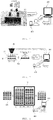
- FIG. 1 is a view schematically showing an integrated management system for production history of concrete product according to the present invention
- FIG. 2 is a view conceptually showing an integrated management system for production history of concrete product according to the present invention
- FIG. 3 is a view conceptually showing an aggregate process according to the present invention shown in FIG. 1
- FIG. 4 is a view conceptually showing an aggregate mixing process according to the present invention shown in FIG. 1
- FIG. 5 is a view conceptually showing a molding process according to the present invention shown in FIG. 1
- FIG. 6 is a view conceptually showing a curing process according to the present invention shown in FIG. 1
- FIG. 7 is a view conceptually showing a packing process according to the present invention shown in FIG. 1
- FIGS. 8 and 9 are views conceptually showing a usage state of a concrete molding board applied to the present invention.
- the present invention relates to an integrated management system 10 for production history of a concrete product (hereinafter, referred to as "integrated management system 10"), the system being capable of: dividing all production processes from aggregate that is raw material to a complete concrete product such as concrete blocks; providing information required for each process and measurement values to the manager and the operator by using generic technologies such as ICT, IoT, AI, etc. so that the manager and the operator reflect the information and the measurement values in the production process in real time; and integrally managing and analyzing the information and the measurement values so as to continuously produce concrete product having high quality.
- the system includes, as shown in FIGS. 1 and 2 , a measurement unit 100, a wireless transmitting/receiving unit 200, a main server 300, and a user terminal 400.
- the measurement unit 100 measuring information which is required for each process, and measuring a work state may be installed all production processes of a concrete product.
- measurement values measured by the measurement unit 100 that is, information and work states, may be transmitted to the main server 300 and the user terminal 400 through the wireless transmitting/receiving unit 200 so that an operator or manager may check the same. Therefore, all production processes of the concrete product can be recorded and controlled.
- Production processes of the concrete product to which the present invention is applied include: an aggregate process, an aggregate mixing process, a molding process, a curing process, and a packing process.
- the measurement unit 100 measures a state of a concrete product of an aggregate process, a molding process or a curing process, or measures a state of a production line, and includes an integrated sensor module 110 and an image capturing means 120.
- the integrated sensor module 110 is one module where multiple independent sensors are integrated that performs wireless communication by using a Beacon technology.
- multiple factors determining quality of the concrete product such as temperature, humidity, salinity, pH level, etc. have to be measured for each process.
- measuring the multiple factors by independently installing sensors in each process is not easy, and thus the integrated sensor module 110 where multiple independent sensors are integrated into one module is installed in each process.
- first to third sensor modules 112, 114, and 116 are used as the integrated sensor module 110.
- the first and second sensor modules 112 and 114 are respectively used for an aggregate process and an aggregate mixing process, and the third sensor module 116 is installed in a concrete molding board 500 that will be described later (hereinafter, referred to as "board 500") and used for a molding process and a curing process. A detail description thereof will be described later.
- the image capturing means 120 captures an image of an ongoing state of each process or an image of a concrete product after a molding or curing process, and an image of a state of the board 500 used in the molding and curing processes so as to transmit the captured image to the main server 300 or user terminal 400 such that the operator or manager checks in real time an ongoing state of production processes of the concrete product or a state of the concrete product and the board 500.
- the image capturing means 120 includes first to third image capturing devices 122, 124, and 126.
- the first image capturing device 122 is for capturing images of the board 500, and at least one first image capturing device 122 is installed in an upper part of a conveyor that transfers the board 500 to a molding apparatus so as to capture an image of the board 500 input to the molding apparatus such that the operator or manager checks a state of the board 500.
- At least one second image capturing device 124 is installed on an upper part of a conveyor transferring a concrete product output from a molding process so as to capture an image of the concrete product after the molding process
- at least one third image capturing device 126 is installed in an upper part of a conveyor transferring a concrete product after a curing process so as to capture an image the concrete product after the curing process. Therefore, all of the image capturing devices are used for inspecting quality of the concrete product.
- the second and third image capturing devices 124 and 126 capture images of the concrete product after the molding process and the curing process, and transmit, directly or through the wireless transmitting/receiving unit 200, the captured images to the main server 300 and the user terminal 400 such that the operator or manager checks in real time whether or not the concrete product has a defect.
- each of the first to third image capturing devices 122, 124, and 126 includes a laser irradiating part (not shown) so as to measure in detail a shape, a weight, a strength value, etc. of the board 500 and a concrete product by using a laser that is emitted from the laser irradiating parts, at the same time, to determine hazardous substances such as oil, pH, salt, etc. levels included in the concrete product by performing spectrum analysis. A detailed description thereof will be described later.
- At least one wireless transmitting/receiving unit 200 is installed within a workplace so as to receive measurement values measured by the measurement unit 100, and to transmit the received values to the main server 300 and the user terminal 400.
- a device capable of performing wireless communication such as WiFi, Bluetooth, etc. may be used.
- the main server 300 stores measurement values, which are measured by the measurement unit 100, received through the wireless transmitting/receiving unit 200, analyzes the measurement values, and integrally controls and manages works performed in each process, at the same time, determines whether or not a production line of each process is in normal operation.
- the main server 300 builds the measurement values stored in a storage unit into big data, and autonomously performs learning by using information of big data so as to determine a situation occurring in a production line of the concrete product, at the same time, to predict a situation that might happen in the future.
- the above determination result and prediction result are transmitted to the user terminal 400 by performing wireless communication such that the operators proceed the production lines according to the results of the main server 300.
- the function of the main server 300 as described above may be employed by using ICT (information & communication technology), IoT (Internet of Things), AI (artificial intelligence), etc. based technology. Accordingly, the operators check in real time information provided from the main server 300 and issue process commands.
- ICT information & communication technology
- IoT Internet of Things
- AI artificial intelligence
- the measurement values stored in the storage unit and information of big data obtained from the measurement value are separately stored by using a cloud service such that the operators conveniently use information required in each process by using their user terminals 400, at the same time, maintenance costs are reduced.
- the main server 300 includes a memory apparatus 310, a display device 320, a control device 330, a communication device 340, and a data analysis device 350.
- the memory apparatus 310 is for receiving measurement values of each process which is measured by measurement unit 100 and storing the same, and includes first to fifth databases 311, 312, 313, 314, and 315.
- the first to fourth databases 311, 312, 313, and 314 are for storing measurement values measured in an aggregate process, an aggregate mixing process, a molding process, and a curing process, respectively, and the fifth database 315 is for storing data that is analyzed in the data analysis device 350 of the main server 300 which will be described later.
- the display device 320 is for displaying measurement values which are measured and transmitted by the measurement unit 100, and displays the measurement values over time in a graph form or displays images captured by the first to third image capturing devices 122, 124, and 126.
- the display device 320 displays a process command input through the user terminal 400, or data analyzed in the data analysis device 350 which will be described later.
- control device 330 controls works performed in each process.
- the control device 330 receives the input process command, and controls and manages works performed in each process.
- the communication device 340 performs wired or wireless communication for the main server 300, and used for performing wired/wireless communication with the measurement unit 100, the wireless transmitting/receiving unit 200, and the user terminal 400.
- the communication device 340 enables the main server 300 to receive, directly or the through wireless transmitting/receiving unit 200, measurement values measured by the measurement unit 100 in each process, and to provide measurement values received in the main server 300 and data requested from the user terminal 400 to the user terminal 400 through wireless communication, at the same time, receive a process command input by the manager or operator through the user terminal 400.
- the data analysis device 350 analyzes measurement values measured by the measurement unit 100 and data stored in the memory apparatus 310. Resulting contents analyzed by the data analysis device 350 are applied to a production process of a current or future concrete product.
- the data analysis device 350 includes first to third analysis unit 352, 354, and 356, the first analysis unit 352 determines works to be performed in an aggregate process and an aggregate mixing process by analyzing measurement values measured in the aggregate process and the aggregate mixing process, that is, data stored in the first and second databases 311 and 312.
- the first analysis unit 352 analyzes the above measurement results so that the operator or manager determines whether or not to clean the aggregate, a method of drying the aggregate, etc. on the basis of the analysis result.
- the measurement unit 100 that is, the second sensor module 114, measures temperature and humidity values within a mixing device 20 where aggregate, cement, and water are mixed.
- the first analysis unit 352 synthetically analyzes measurement values measured by the second sensor module 114, and measurement values of the aggregate which are measured by the first sensor module 112 so as to provide to the operator or manager. Accordingly, the operator or manager determines a mixing ratio between aggregate, cement, and water which are input to the mixing device 20 on the basis of the analysis result.
- process commands of the operator or manager which are determined on the basis of the analysis result of the first analysis unit 352 are transmitted to the main server 300 through the user terminal 400 so as to be reflected on works of each process by the control device 330, at the same time stored in the first and second databases 311 and 312.
- the first analysis unit 352 autonomously determines whether or not to clean the aggregate and a method of drying the aggregate in an aggregate process, and determines a mixing ratio between aggregate, cement, and water in an aggregate mixing process by analyzing big data.
- the control device 330 controls works of each process according to the determination result of the first analysis unit 352 regardless of process commands of the operator or manager.
- the second analysis unit 354 is for determining whether or not the board 500 is normal, and determines whether or not the board 500 is normal by using data stored in the third and fourth databases 313 and 314, that is, data related to shapes of the board 500 in a molding process which are captured by the first image capturing device 122 and stored in the third database 313, and using data related to shapes of the board 500 in a curing process which are captured in the third image capturing device 126 and stored in the fourth database 314.
- the board 500 is a product essentially used for continuous mass production of concrete products.
- the board 500 is disposed on the bottom of a mold of a concrete molding device 30 as a lower mold when filling concrete mortar in the mold including upper and lower holes to produce concrete products such as bricks, and to transfer vibration of the molding device 30 to the concrete product.
- the board 500 is for transferring the concrete product output from the molding process to a curing room 40, and used as a pallet used for transferring the product after the curing process.
- the present invention is configured to check whether or not the board 500 is normal through the second analysis unit 354.
- the third analysis unit 356 is for determining whether or not a concrete product has a defect after a molding process and a curing process. Similarly, the third analysis unit 356 determines whether or not a concrete product has a defect by using measurement values of the molding process and the curing process which are stored in the third and fourth databases 313 and 314.
- the third analysis unit 356 synthetically analyzes a size, a weight, a strength value, a density, compositions, etc. of a concrete product so as to determine whether or not the concrete product has a defect.
- a reference value and an error range after a molding process, and a reference value and an error range after a curing process are recorded for each concrete product type, and thus the third analysis unit 356 determines whether or not the concrete product has a defect by comparing the values with analysis results of the third analysis unit 356.
- whether or not a product size is normal is determined by determining whether or not the product size is present within an error range by comparing image data of the product respectively captured by the second and third image capturing devices 124 and 126 in a molding process and a curing process with a prestored normal product size.
- a weight of a concrete product is normal is determined by comparing measurement values measured by the third sensor module 116 installed in board 500 and which are measured in a molding process and a curing process with a prestored weight of a normal product.
- the third analysis unit 356 calculates each volume of the product after a molding process and a curing process by using image data respectively captured by the second and third image capturing devices 124 and 126 in the molding process and the curing process; calculates each volume of cavities formed in the product after the molding process and the curing process by performing analysis on a measurement result obtained by a laser that is emitted from the laser irradiating part provided in each of the second and third image capturing devices 124 and 126; and estimates a strength value of the product by a ratio between the total volume and the volume of cavities.
- a density of a concrete product may be obtained by performing calculation using the weight and the volume of the product. Since the volume and the weight of the product are calculated as described above, a detailed description thereof will be omitted.
- a density of the concrete product may be estimated by comparing the total volume of the product, and the volume of cavities formed in the concrete product.
- the volume of cavities formed in the concrete product is associated with the weight of the product. Therefore, correlation between the density calculated by using the volume and the weight, and a ratio between the entire volume and the volume of cavities calculated by the analysis of the measurement result using laser is obtained. Accordingly, the product density is estimated by using a ratio between the entire volume and the volume of cavities formed in the concrete product.
- the above method of estimating the density of the concrete product is performed, similarly, by the third analysis unit 356.
- the third analysis unit 356 relatively accurately estimates the strength value and the density of the concrete product by using the ratio between the entire volume and the volume of cavities of the concrete product.
- the third analysis unit 356 includes a component analysis module such as a spectrometer (not shown), and detects composition such as oil, salt, pH, bacteria, etc. which are included in the concrete product levels and that adversely affect quality of the concrete product by performing spectroscopic analysis for lasers emitted from the laser irradiating units, which are provided in the second and third image capturing devices 124 and 126, on the concrete product after a molding process and a curing process.
- a component analysis module such as a spectrometer (not shown)
- composition such as oil, salt, pH, bacteria, etc.
- the third analysis unit 356 determines an optimum curing time value for each concrete product type, which will be described later.
- the data analysis device 350 may further include a fourth analysis unit 358, and the fourth analysis unit 358 determines whether or not equipment of production lines of respective processes, that is, the measurement unit 100 including the integrated sensor module 110 and the image capturing means 120, the mixing apparatus 20, the molding apparatus 30, the curing room 40, etc. which are used in the production lines of the concrete product are in normal operation by analyzing measurement values obtained by the measurement unit 100 .
- measurement values of respective processes which are measured by the measurement unit 100 are stored in the first to fourth databases 311, 312, 313, and 314 of the memory apparatus 310, and the fourth analysis unit 358 receives and analyzes measurement values of respective processes from the first to fourth databases 311, 312, 313, and 314, and determines that an error has occurred in the corresponding measurement unit or equipment such as the mixing apparatus 20, the molding apparatus 30, the curing room 40, etc. when data such as temperature, humidity, vibration, noise, etc. measured in each process exceeds a preset error range.
- the fourth analysis unit 358 controls the display device 320 to display the error, or transmits the corresponding contents to the user terminal 400 through the wireless transmitting/receiving unit 200 so as to generate a warning signal such that the operator or manager immediately recognizes the corresponding contents.
- the user terminal 400 belongs to the operator or manager so that the operator or manager checks and controls in real time all production processes of the concrete product.
- a mobile communication device such as a typical smart phone may be used for the same.
- the user terminal 400 enables the operator or manager to check the progress of works in each process by receiving measurement values of each process from the measurement unit 100 which is transmitted through the wireless transmitting/receiving unit 200, and to input a process command, that is, a work control command, for each process to the main server 300 according thereto. Accordingly, the main server 300 controls each process though the control device 330.
- the operator or manager checks data stored in the memory apparatus 310, particularly, data stored by the data analysis device 350, by accessing the main server 300 by using the user terminal 400.
- an information storage device such as an RFID chip 600 may be attached on a product individually or in a bundle.
- production information such as a production year, a name of company, a product name, dimensions, and characteristics of the product is recorded, and the production information recorded in the RFID chip 600 is stored in the main server 300 so as to enable post-management of the sold products.
- the RFID chip 600 may be attached on the board 500, and the RFID chip 600 attached on the board 500 may be used for post-management of the board 500, and for identifying a position of the board 500 within the curing room 40.
- temperature, humidity, etc. within the curing room 40 are measured by the third sensor module 116 installed in the board 500.
- a position of the board 500 within the curing room 40 may be identified. Therefore, temperature, humidity, etc. for each position within the curing room 40 are determined so as to optimize an output timing of the concrete product such as varying a curing time value for each position, that is, an optimum curing time value.
- the aggregate process is a process of sorting, cleaning, and drying aggregate used as raw material of a concrete product.
- the aggregate process in order to generate an optimum state of the aggregate for the production of concrete products, moisture, salt, foreign substances, and acid content levels of each aggregate are measured by using the measurement unit 100.
- a humidity sensor In order to measure moisture, salt, foreign substances, and acid content levels contained in the aggregate as above, a humidity sensor, a chloride ion sensor, an image sensor, a pH sensor, etc. are used.
- an integrated sensor module 110 where multiple sensors are integrated while enabling wireless communication by using a beacon technology is used so that data of the aggregate is conveniently collect.
- At least one first sensor module 112 is used as the measurement unit 100, and the first sensor module 112 is employed in an integrated sensor module 110 where a humidity sensor, a chloride ion sensor, an image sensor, a pH sensor, etc. which are capable of measuring moisture, salt, foreign substances, and acid content levels contained in aggregate are integrated.
- Measurement values measured by the first sensor module 112 are transmitted to at least one wireless transmitting/receiving unit 200 installed within the workplace through wireless communication, and then the wireless transmitting/receiving unit 200 transmits the received measurement values to the main server 300 and the user terminal 400 through wireless communication.
- the main server 300 includes the memory apparatus 310 for storing measurement values received through the wireless transmitting/receiving unit 200, and measurement values measured in the aggregate process by the first sensor module 112 are stored in the first database 311 of the memory apparatus 310.
- the operator or manager checks measurement values transmitted to the user terminal 400, and inputs a process command such as whether or not to clean the aggregate and a drying method for the aggregate so as to be transmitted to the main server 300.
- the control device 330 of the main server 300 receives the same, and controls and manages works in the aggregate process.
- the first analysis unit 352 of the data analysis device 350 of the main server 300 may autonomously determine or estimate whether or not to clean the aggregate, a method of drying the aggregate, etc. on the basis of accumulated data of the first database 311.
- the aggregate mixing process is a process of mixing aggregate and cement by using the mixing apparatus 20.
- weather, temperature, humidity, etc. are measured to determine amounts of aggregates, cements, and water, that is, a mixing ratio.
- the integrated sensor module 110 where a temperature sensor, a humidity sensor, etc. are integrated, that is, the second sensor module 114, is used to measure temperature and humidity values within the workplace.
- the measurement values are transmitted to the main server 300 through the wireless transmitting/receiving unit 200 so as to be stored in the second database 312 of the memory apparatus 310, at the same time, transmitted to the user terminal 400 so that the operator or manager checks the values.
- the operator or manager determines a mixing ratio of aggregate, cement and water according to a concrete product type to be produced on the basis of measurement values of temperature and humidity within a workplace which are transmitted to the user terminal 400, and moisture, salt, foreign substances, and acid content levels contained in aggregate which are transmitted from the aggregate process, and transmits the determined ratio to the main server 300. Accordingly, the control device 330 of the main server 300 controls and manages works of the aggregate mixing process by receiving the same.
- measurement values measured in the aggregate process are used as information on moisture, salt, foreign substances, and acid content levels contained in aggregate.
- cleaning and drying processes have completed for the aggregate used in the aggregate mixing, and a chloride ion sensor, an image sensor, and a pH sensor are additionally integrated in the second sensor module 114 so as to determine a precise mixing ratio. Accordingly, information on moisture, salt, foreign substances, and acid content levels contained in aggregate may be measured again in the aggregate mixing process, and the measured information may be transmitted to the main server 300 and the user terminal 400.
- information on aggregate such as the vendor or origin of the aggregate may be stored in the second database 312 of the main server 300 so as to be used as big data.
- process commands input by the operator or manager through the user terminal 400 to the main server 300 are stored may be in the database where data of the corresponding process is stored, and used as reference data for determining, by the first analysis unit 352, a mixing ratio between aggregate, cement, and water according to a concrete product type to be produced on the basis of data accumulated in the first and second databases 311 and 312.
- the molding process is a process of inputting a mixture of aggregate, cement and water of the aggregate mixing process to a metal frame 32 by using an aggregate injector 22, and molding into a concrete product by applying pressure.
- the board 500 is provided inside the molding apparatus 30, and the mixture is injected into the metal fame 32 disposed above the board 500 so as to proceed the molding process.
- state measurement of the board 500 input to the molding apparatus 30, vibration and pressure measurement within the molding apparatus 30, and feature measurement of a concrete product after the molding process are performed.
- a state of the board 500 is measured by the at least one first image capturing device 122 installed in the upper part of the conveyor transferring the board 500 to the molding apparatus 30.
- an image of the board 500 which is captured by the first image capturing device 122 is transmitted, directly or through the transmitting/receiving unit 200, to the main server 300 and the user terminal 400. Accordingly, the operator or manager determines whether or not the board 500 is normal by checking the board 500 through the user terminal 400, and the image transmitted to the main server 300 is stored in the third database 313.
- the laser irradiating part included in the first image capturing device 122 may be used.
- the measurement values are stored in the third database of the main server 300.
- the second analysis unit 354 of the data analysis device 350 analyzes measurement values stored in the third database 313, and calculates a precise dimension of the board 500. Therefore, the shape of the board 500 is measured precisely.
- the second analysis unit 354 autonomously determines whether or not the board 500 is normal by using data related to shapes of the board 500 which is newly input to the third database 313.
- the third sensor module 116 is configured to measure vibration and pressure values in the molding process, temperature and humidity values in the curing process, and a weight of the concrete product after the molding and curing processes by being integrated with a vibration sensor, a pressure sensor, a temperature sensor, a humidity sensor, a weight sensor, a position sensor, etc.
- composite materials including steel, plastic, etc. may be used as material of the board 500.
- composite materials including steel, plastic, etc.
- a bar 510 of epoxy or plastic material is attached on the side of the board 500, and then third sensor module 116 or RFID chip 600 is installed in the side of the bar 510.
- measurement values of vibration and pressure within the molding apparatus 30 which are measured by the third sensor module 116 are transmitted, directly or through the wireless transmitting/receiving unit 200, to the main server 300 and the user terminal 400 through wireless communication. Accordingly, the operator or manager checks vibration and pressure values within the molding apparatus 30 through the user terminal 400, and controls vibration and pressure values within the molding apparatus 30 through the control device 330 of the main server 300 when an error is present.
- measurement values of vibration and pressure are stored in the third database 313 of the main server 300, and the measurement values stored in the third database 313 are analyzed by the third analysis unit 356 of the data analysis device 350 so as to determine and estimate optimum vibration and pressure values within the molding apparatus 30 according to a concrete product type.
- a feature of the concrete product after a molding process is measured by at least one second image capturing device 124 installed on the upper part of the conveyor transferring the concrete product after a molding process and by the third sensor module 116 installed in the board 500.
- an image of the concrete product after the molding process is captured by the second image capturing device 124, and an appearance, a cavity ratio, a weight, etc. of the concrete product after the molding process are measured by using a laser emitted from the laser irradiating part included in the second image capturing device 124 and by using the third sensor module 116. Accordingly, a density, a strength value, and compositions of the concrete product are identified by using the same.
- the concrete product after a molding process is output from the molding apparatus 30 by being disposed on the board 500 and transferred to the curing room 40 through the conveyor.
- an image of the product is captured by the at least one second image capturing device 124 including the laser irradiating part, and the captured image and a measurement result by the laser irradiating part are transmitted, directly or through the wireless transmitting/receiving unit 200, to the main server 300 through wireless communication so as to be stored in the third database 313.
- the image of the concrete product after the molding process which is captured by the second image capturing device 124 may be also transmitted to the user terminal 400 so that the operator or manager determines whether or not a defect is present in an appearance of the concrete product through the image transmitted to the user terminal 400.
- a density of the concrete product may be calculated by a volume of the concrete product which is obtained from an image captured by the second image capturing device 124, and a weight of the concrete product which is measured through the third sensor module 116.
- a strength value of the concrete product after a molding process may be estimated by a ratio between the volume of the concrete product and a volume of cavities formed in the concrete product.
- the volume of cavities of the concrete product may be measured by using a laser irradiating the concrete product by the laser irradiating part included in the second image capturing device 124.
- the third analysis unit 356 accurately estimates the strength value and density of the concrete product by only calculating the volume of cavities of the concrete product.
- composition analysis of the concrete product is performed by using a laser irradiating the concrete product by the laser irradiating part.
- the third analysis unit 356 includes a spectral analysis module, and analyzes compositions included in the concrete product, particularly, hazardous compositions such as salt, oil, bacteria, etc. through spectroscopic analysis using laser.
- an additional infrared laser generator may be installed for spectroscopic analysis, and a method of detecting the above compositions through spectroscopic analysis is already known and is not intended to be claimed in the present invention, and thus a detailed description thereof will be omitted.
- results analyzed by the data analysis device 350 by using a state of the board 500 input to the molding apparatus 30 and which is measured in the molding process, and a state of the concrete product after vibration and pressure and the molding process within the molding apparatus 30 are all separately stored in the fifth database 315 of the memory apparatus 310 so as to be used for learning using big data performed by the main server 300.
- the curing process is a process of inputting the molded concrete product after the molding process to the curing room 40, and curing the concrete product for a predetermined time under constant temperature and humidity.
- the concrete product disposed on the board 500 output from the molding apparatus 30 is transferred as it is to the curing room 40 so as to proceed the curing process.
- temperature and humidity values within the curing room 40 are measured, and then a state and a feature of the concrete product after curing are measured.
- the temperature and humidity values within the curing room 40 are measured by the third sensor module 116 installed in the board 500.
- the third sensor module 116 includes a temperature sensor and a humidity sensor to measure temperature and humidity values within the curing room 40.
- the measurement values are transmitted, directly or through the wireless transmitting/receiving unit 200, to the main server 300 and the user terminal 400, and the measurement values transmitted to the main server 300 are stored in the fourth database 314 of the memory apparatus 310.
- the measurement values transmitted to the user terminal 400 are displayed to the operator or manager so that the operator or manager determines a process command, that is, a curing time value.
- a process command for a curing time value is input by the operator or manager through the user terminal 400 and transmitted to the control device 330 of the main server 300, and then the control device 330 controls a curing time value according to temperature and humidity values within the curing room 40 by using a method of controlling a timer included in the curing room 40.
- the third analysis 356 of the main server 300 analyzes a curing time value according to temperature and humidity conditions within the curing room 40 by synthetically analyzing temperature and humidity conditions within the curing room 40, process commands of the operator or manager for curing time values according thereto, and states and features of the concrete products after the curing process, which will be described later, which are stored in the fourth database 314.
- An optimum curing time value according to temperature and humidity conditions is determined and estimated by repeating the above analysis.
- a state and a feature of the concrete product after the curing process are measured by the at least one third image capturing device 126 installed in the upper part of the conveyor transferring the cured concrete product in the curing process, and by the third sensor module 116.
- an image of the concrete product after the curing process is captured by the third image capturing device 126, and spectroscopic analysis using a laser irradiating the concrete product is performed by the laser irradiating part included in the third image capturing device 126.
- a weight of the concrete product after the curing process is measured by the third sensor module 116 installed in the board 500.
- All of the above measurement values are stored in the fourth database 314 of the main server 300, and data stored in the fourth database 314 is analyzed by the third analysis unit 356 so as to analyze a density, a strength value, compositions, etc. of the concrete product after the curing process.
- a method of measuring a state and a feature of the concrete product after the curing process and an analysis method using the measurement values are identical to those of the molding process, and thus a detailed description thereof will be omitted.
- the third analysis unit 356 of the main server 300 calculates a rate of change by comparing feature data of the concrete product after the molding process such as a size, a density, a strength value, compositions, etc. and feature data of the concrete product after the curing process, and stores the resulting rate of change in the fifth database 315 to form big data so as to be reflected when calculating an optimum condition for a production process of a concrete product afterward.
- the memory apparatus 310 of the main server 300 may further include a sixth database 316, and data in association with the optimum conditions among analysis results obtained from the data analysis device 350 and stored in the fifth database 315 are stored the sixth database 316.
- the optimum data to produce the best concrete product among the data for each process which is stored in the fifth database 315 and analyzed by the data analysis device 350, is stored in the sixth database 316, and thus in the production process of the concrete product, product production is performed by applying the optimal data stored in the sixth database 316 so as to simplify the overall production processes and to automatically produce the concrete products with the best quality.
- the optimum data stored in the sixth database 316 includes optimum data of all conditions that are applied to all production processes of the concrete product such as a ratio between aggregate and cement, a moisture level, temperature, humidity, vibration strength, curing temperature, etc.
- the packing process is a process of separating the concrete product after the curing process from the board 500, and packing individually or bundled.
- attaching the RFID chip 600 is performed for post-management of the concrete product, and inspection for the board 500 is performed.
- the RFID chip 600 is attached on the completed concrete product individually or bundled, and production information on features such as a production date, a name of company, a product name, dimensions and density, a strength value, compositions, etc. is recorded in the RFID chip 600.
- the production information of the concrete product recorded in the RFID chip 600 is stored in the memory apparatus 310 of the main server 300 so as to enable post-management of the concrete product and overall management of the production history and sales history.
- inspection of the board 500 is performed for managing the board 500 to prevent quality degradation of the concrete product due to quality degradation of the board 50.
- Deformation, surface scratches and corrosion of the board 500 are inspected through visual inspection and flatness inspection, etc.
- the defect of the board 500 is repaired by using a method such as surface processing, cleaning, coating, so as to prevent quality degradation of the concrete product due to the detect of the board 500.
- problems that may occur in each production process of the concrete product are identified in real time by storing information measured and collected in each process, at the same time, enabling the manager and the operator to check the information through wired/wireless communication.
- the manager and the operator issue a process command in real time according the information, and thus building an effective process line, at the same time, minimizing the defect rate can be obtained.
- information measured and collected in all production processes of the concrete product is stored in real time so as to form big data, and autonomous learning is performed through comparison and analysis using the big data so as to estimate and determine an error or abnormal situation occurring in production processes. Accordingly, product quality and productivity can be continuously improved.
- an RFID chip 600 including production history information of the concrete product is attached individually or bundled in the packing process, and thus post-management of the concrete product that has been shipped or delivered can be available.
- the present invention relates to an integrated management system for production history of a concrete product. More particularly, the present invention relates to an integrated management system for production history of a concrete product, the system being capable of: dividing all production processes for from aggregate that is raw material to a complete concrete product such as concrete blocks; providing information required for each process and measurement values to the manager and the operator by using generic technologies such as ICT, IoT, AI, etc. so that the manager and the operator reflect them in the production processes in real time; and integrally managing and analyzing the information and the measurement values so as to continuously produce of concrete products having high quality.
- generic technologies such as ICT, IoT, AI, etc.
Landscapes
- Engineering & Computer Science (AREA)
- General Engineering & Computer Science (AREA)
- Manufacturing & Machinery (AREA)
- Quality & Reliability (AREA)
- Physics & Mathematics (AREA)
- General Physics & Mathematics (AREA)
- Automation & Control Theory (AREA)
- Preparation Of Clay, And Manufacture Of Mixtures Containing Clay Or Cement (AREA)
Applications Claiming Priority (2)
| Application Number | Priority Date | Filing Date | Title |
|---|---|---|---|
| KR20190029080 | 2019-03-14 | ||
| KR1020190129357A KR102184943B1 (ko) | 2019-03-14 | 2019-10-17 | 콘크리트 제품 생산이력 통합관리 시스템 |
Publications (3)
| Publication Number | Publication Date |
|---|---|
| EP3709111A1 true EP3709111A1 (fr) | 2020-09-16 |
| EP3709111B1 EP3709111B1 (fr) | 2023-08-16 |
| EP3709111C0 EP3709111C0 (fr) | 2023-08-16 |
Family
ID=68766571
Family Applications (1)
| Application Number | Title | Priority Date | Filing Date |
|---|---|---|---|
| EP19213101.9A Active EP3709111B1 (fr) | 2019-03-14 | 2019-12-03 | Système de gestion intégré pour l'historique de la production d'un produit en béton |
Country Status (1)
| Country | Link |
|---|---|
| EP (1) | EP3709111B1 (fr) |
Cited By (1)
| Publication number | Priority date | Publication date | Assignee | Title |
|---|---|---|---|---|
| CN114290510A (zh) * | 2021-12-30 | 2022-04-08 | 珠海原子科技有限公司 | 智慧型混凝土预制构件载荷感应定位系统 |
Citations (4)
| Publication number | Priority date | Publication date | Assignee | Title |
|---|---|---|---|---|
| KR101091870B1 (ko) | 2009-02-20 | 2011-12-12 | 현대건설주식회사 | 콘크리트양생관리시스템 |
| KR101624464B1 (ko) | 2015-06-30 | 2016-05-26 | 중앙대학교 산학협력단 | 콘크리트 품질 관리 방법 |
| US20170016874A1 (en) * | 2014-01-29 | 2017-01-19 | Quipip, Llc | Measuring Device, and Systems and Methods for Obtaining Data Relating to Condition and Performance of Concrete Mixtures |
| US20180284741A1 (en) * | 2016-05-09 | 2018-10-04 | StrongForce IoT Portfolio 2016, LLC | Methods and systems for industrial internet of things data collection for a chemical production process |
-
2019
- 2019-12-03 EP EP19213101.9A patent/EP3709111B1/fr active Active
Patent Citations (4)
| Publication number | Priority date | Publication date | Assignee | Title |
|---|---|---|---|---|
| KR101091870B1 (ko) | 2009-02-20 | 2011-12-12 | 현대건설주식회사 | 콘크리트양생관리시스템 |
| US20170016874A1 (en) * | 2014-01-29 | 2017-01-19 | Quipip, Llc | Measuring Device, and Systems and Methods for Obtaining Data Relating to Condition and Performance of Concrete Mixtures |
| KR101624464B1 (ko) | 2015-06-30 | 2016-05-26 | 중앙대학교 산학협력단 | 콘크리트 품질 관리 방법 |
| US20180284741A1 (en) * | 2016-05-09 | 2018-10-04 | StrongForce IoT Portfolio 2016, LLC | Methods and systems for industrial internet of things data collection for a chemical production process |
Cited By (1)
| Publication number | Priority date | Publication date | Assignee | Title |
|---|---|---|---|---|
| CN114290510A (zh) * | 2021-12-30 | 2022-04-08 | 珠海原子科技有限公司 | 智慧型混凝土预制构件载荷感应定位系统 |
Also Published As
| Publication number | Publication date |
|---|---|
| EP3709111B1 (fr) | 2023-08-16 |
| EP3709111C0 (fr) | 2023-08-16 |
Similar Documents
| Publication | Publication Date | Title |
|---|---|---|
| KR102184943B1 (ko) | 콘크리트 제품 생산이력 통합관리 시스템 | |
| KR101936218B1 (ko) | 인공지능 학습기반 레디믹스트 콘크리트 생산 시스템 | |
| US12379366B2 (en) | Embedded wireless monitoring sensors | |
| US11531000B2 (en) | Electrical methods and systems for concrete testing | |
| CN110852696A (zh) | 工程进度监控方法及系统 | |
| CN109374870B (zh) | 一种水泥基自修复材料修复性能的评价方法及装置 | |
| US20230184707A1 (en) | Electrical methods and systems for concrete testing | |
| KR20220061573A (ko) | IoT 기반의 도로포장 품질관리를 위한 통합 운용 시스템 | |
| CN113935965A (zh) | 一种预制箱梁模板检测系统 | |
| CN111002328A (zh) | 轮式机器人校验系统及方法 | |
| EP3709111B1 (fr) | Système de gestion intégré pour l'historique de la production d'un produit en béton | |
| CN119567428A (zh) | 一种混凝土生产线工艺流程在线监测管理系统 | |
| CN117250201B (zh) | 一种泳池砖层缺陷检测方法及系统 | |
| Ha et al. | Monitoring concrete compressive strength using IoT-based wireless sensor network | |
| CN119887451A (zh) | 一种施工现场预拌混凝土浇筑的智能管理系统 | |
| CN121190083B (zh) | 木制刨花混合质量控制与效率优化管理系统 | |
| Helebrant et al. | The harmonization and optimization of diagnostic methods for a belt conveyor | |
| CN121836495A (zh) | 一种特种混凝土物料管理方法及系统 | |
| CN120664489A (zh) | 一种液体物料卸车的自动化控制系统及方法 | |
| CN121724495A (zh) | 面向固井外掺料的全生产流程质量追溯方法及系统 | |
| CN121632853A (zh) | 一种废旧电缆回收的比重检测系统 | |
| CN121919820A (zh) | 一种基于多模态融合的絮凝剂残留影响评估方法及系统 |
Legal Events
| Date | Code | Title | Description |
|---|---|---|---|
| PUAI | Public reference made under article 153(3) epc to a published international application that has entered the european phase |
Free format text: ORIGINAL CODE: 0009012 |
|
| STAA | Information on the status of an ep patent application or granted ep patent |
Free format text: STATUS: REQUEST FOR EXAMINATION WAS MADE |
|
| 17P | Request for examination filed |
Effective date: 20191203 |
|
| AK | Designated contracting states |
Kind code of ref document: A1 Designated state(s): AL AT BE BG CH CY CZ DE DK EE ES FI FR GB GR HR HU IE IS IT LI LT LU LV MC MK MT NL NO PL PT RO RS SE SI SK SM TR |
|
| AX | Request for extension of the european patent |
Extension state: BA ME |
|
| STAA | Information on the status of an ep patent application or granted ep patent |
Free format text: STATUS: EXAMINATION IS IN PROGRESS |
|
| 17Q | First examination report despatched |
Effective date: 20210902 |
|
| GRAP | Despatch of communication of intention to grant a patent |
Free format text: ORIGINAL CODE: EPIDOSNIGR1 |
|
| STAA | Information on the status of an ep patent application or granted ep patent |
Free format text: STATUS: GRANT OF PATENT IS INTENDED |
|
| INTG | Intention to grant announced |
Effective date: 20230309 |
|
| GRAS | Grant fee paid |
Free format text: ORIGINAL CODE: EPIDOSNIGR3 |
|
| GRAA | (expected) grant |
Free format text: ORIGINAL CODE: 0009210 |
|
| STAA | Information on the status of an ep patent application or granted ep patent |
Free format text: STATUS: THE PATENT HAS BEEN GRANTED |
|
| AK | Designated contracting states |
Kind code of ref document: B1 Designated state(s): AL AT BE BG CH CY CZ DE DK EE ES FI FR GB GR HR HU IE IS IT LI LT LU LV MC MK MT NL NO PL PT RO RS SE SI SK SM TR |
|
| REG | Reference to a national code |
Ref country code: CH Ref legal event code: EP |
|
| REG | Reference to a national code |
Ref country code: DE Ref legal event code: R096 Ref document number: 602019035024 Country of ref document: DE |
|
| REG | Reference to a national code |
Ref country code: IE Ref legal event code: FG4D |
|
| U01 | Request for unitary effect filed |
Effective date: 20230915 |
|
| U07 | Unitary effect registered |
Designated state(s): AT BE BG DE DK EE FI FR IT LT LU LV MT NL PT SE SI Effective date: 20230921 |
|
| U20 | Renewal fee for the european patent with unitary effect paid |
Year of fee payment: 5 Effective date: 20231116 |
|
| PG25 | Lapsed in a contracting state [announced via postgrant information from national office to epo] |
Ref country code: GR Free format text: LAPSE BECAUSE OF FAILURE TO SUBMIT A TRANSLATION OF THE DESCRIPTION OR TO PAY THE FEE WITHIN THE PRESCRIBED TIME-LIMIT Effective date: 20231117 |
|
| PG25 | Lapsed in a contracting state [announced via postgrant information from national office to epo] |
Ref country code: IS Free format text: LAPSE BECAUSE OF FAILURE TO SUBMIT A TRANSLATION OF THE DESCRIPTION OR TO PAY THE FEE WITHIN THE PRESCRIBED TIME-LIMIT Effective date: 20231216 |
|
| PG25 | Lapsed in a contracting state [announced via postgrant information from national office to epo] |
Ref country code: RS Free format text: LAPSE BECAUSE OF FAILURE TO SUBMIT A TRANSLATION OF THE DESCRIPTION OR TO PAY THE FEE WITHIN THE PRESCRIBED TIME-LIMIT Effective date: 20230816 Ref country code: NO Free format text: LAPSE BECAUSE OF FAILURE TO SUBMIT A TRANSLATION OF THE DESCRIPTION OR TO PAY THE FEE WITHIN THE PRESCRIBED TIME-LIMIT Effective date: 20231116 Ref country code: IS Free format text: LAPSE BECAUSE OF FAILURE TO SUBMIT A TRANSLATION OF THE DESCRIPTION OR TO PAY THE FEE WITHIN THE PRESCRIBED TIME-LIMIT Effective date: 20231216 Ref country code: HR Free format text: LAPSE BECAUSE OF FAILURE TO SUBMIT A TRANSLATION OF THE DESCRIPTION OR TO PAY THE FEE WITHIN THE PRESCRIBED TIME-LIMIT Effective date: 20230816 Ref country code: GR Free format text: LAPSE BECAUSE OF FAILURE TO SUBMIT A TRANSLATION OF THE DESCRIPTION OR TO PAY THE FEE WITHIN THE PRESCRIBED TIME-LIMIT Effective date: 20231117 |
|
| PG25 | Lapsed in a contracting state [announced via postgrant information from national office to epo] |
Ref country code: PL Free format text: LAPSE BECAUSE OF FAILURE TO SUBMIT A TRANSLATION OF THE DESCRIPTION OR TO PAY THE FEE WITHIN THE PRESCRIBED TIME-LIMIT Effective date: 20230816 |
|
| PG25 | Lapsed in a contracting state [announced via postgrant information from national office to epo] |
Ref country code: ES Free format text: LAPSE BECAUSE OF FAILURE TO SUBMIT A TRANSLATION OF THE DESCRIPTION OR TO PAY THE FEE WITHIN THE PRESCRIBED TIME-LIMIT Effective date: 20230816 |
|
| PG25 | Lapsed in a contracting state [announced via postgrant information from national office to epo] |
Ref country code: SM Free format text: LAPSE BECAUSE OF FAILURE TO SUBMIT A TRANSLATION OF THE DESCRIPTION OR TO PAY THE FEE WITHIN THE PRESCRIBED TIME-LIMIT Effective date: 20230816 Ref country code: RO Free format text: LAPSE BECAUSE OF FAILURE TO SUBMIT A TRANSLATION OF THE DESCRIPTION OR TO PAY THE FEE WITHIN THE PRESCRIBED TIME-LIMIT Effective date: 20230816 Ref country code: ES Free format text: LAPSE BECAUSE OF FAILURE TO SUBMIT A TRANSLATION OF THE DESCRIPTION OR TO PAY THE FEE WITHIN THE PRESCRIBED TIME-LIMIT Effective date: 20230816 Ref country code: CZ Free format text: LAPSE BECAUSE OF FAILURE TO SUBMIT A TRANSLATION OF THE DESCRIPTION OR TO PAY THE FEE WITHIN THE PRESCRIBED TIME-LIMIT Effective date: 20230816 Ref country code: SK Free format text: LAPSE BECAUSE OF FAILURE TO SUBMIT A TRANSLATION OF THE DESCRIPTION OR TO PAY THE FEE WITHIN THE PRESCRIBED TIME-LIMIT Effective date: 20230816 |
|
| REG | Reference to a national code |
Ref country code: DE Ref legal event code: R097 Ref document number: 602019035024 Country of ref document: DE |
|
| PLBE | No opposition filed within time limit |
Free format text: ORIGINAL CODE: 0009261 |
|
| STAA | Information on the status of an ep patent application or granted ep patent |
Free format text: STATUS: NO OPPOSITION FILED WITHIN TIME LIMIT |
|
| 26N | No opposition filed |
Effective date: 20240517 |
|
| REG | Reference to a national code |
Ref country code: CH Ref legal event code: PL |
|
| PG25 | Lapsed in a contracting state [announced via postgrant information from national office to epo] |
Ref country code: MC Free format text: LAPSE BECAUSE OF FAILURE TO SUBMIT A TRANSLATION OF THE DESCRIPTION OR TO PAY THE FEE WITHIN THE PRESCRIBED TIME-LIMIT Effective date: 20230816 |
|
| GBPC | Gb: european patent ceased through non-payment of renewal fee |
Effective date: 20231203 |
|
| PG25 | Lapsed in a contracting state [announced via postgrant information from national office to epo] |
Ref country code: MC Free format text: LAPSE BECAUSE OF FAILURE TO SUBMIT A TRANSLATION OF THE DESCRIPTION OR TO PAY THE FEE WITHIN THE PRESCRIBED TIME-LIMIT Effective date: 20230816 |
|
| REG | Reference to a national code |
Ref country code: IE Ref legal event code: MM4A |
|
| PG25 | Lapsed in a contracting state [announced via postgrant information from national office to epo] |
Ref country code: IE Free format text: LAPSE BECAUSE OF NON-PAYMENT OF DUE FEES Effective date: 20231203 |
|
| PG25 | Lapsed in a contracting state [announced via postgrant information from national office to epo] |
Ref country code: GB Free format text: LAPSE BECAUSE OF NON-PAYMENT OF DUE FEES Effective date: 20231203 |
|
| PG25 | Lapsed in a contracting state [announced via postgrant information from national office to epo] |
Ref country code: CH Free format text: LAPSE BECAUSE OF NON-PAYMENT OF DUE FEES Effective date: 20231231 |
|
| PG25 | Lapsed in a contracting state [announced via postgrant information from national office to epo] |
Ref country code: IE Free format text: LAPSE BECAUSE OF NON-PAYMENT OF DUE FEES Effective date: 20231203 Ref country code: GB Free format text: LAPSE BECAUSE OF NON-PAYMENT OF DUE FEES Effective date: 20231203 Ref country code: CH Free format text: LAPSE BECAUSE OF NON-PAYMENT OF DUE FEES Effective date: 20231231 |
|
| PG25 | Lapsed in a contracting state [announced via postgrant information from national office to epo] |
Ref country code: CY Free format text: LAPSE BECAUSE OF FAILURE TO SUBMIT A TRANSLATION OF THE DESCRIPTION OR TO PAY THE FEE WITHIN THE PRESCRIBED TIME-LIMIT; INVALID AB INITIO Effective date: 20191203 |
|
| PG25 | Lapsed in a contracting state [announced via postgrant information from national office to epo] |
Ref country code: HU Free format text: LAPSE BECAUSE OF FAILURE TO SUBMIT A TRANSLATION OF THE DESCRIPTION OR TO PAY THE FEE WITHIN THE PRESCRIBED TIME-LIMIT; INVALID AB INITIO Effective date: 20191203 |
|
| U90 | Renewal fees not paid: noting of loss of rights |
Free format text: RENEWAL FEE NOT PAID FOR YEAR 06 Effective date: 20250716 |
|
| U93 | Unitary patent lapsed |
Free format text: RENEWAL FEE NOT PAID Effective date: 20241231 |
|
| PG25 | Lapsed in a contracting state [announced via postgrant information from national office to epo] |
Ref country code: TR Free format text: LAPSE BECAUSE OF FAILURE TO SUBMIT A TRANSLATION OF THE DESCRIPTION OR TO PAY THE FEE WITHIN THE PRESCRIBED TIME-LIMIT Effective date: 20230816 |