EP3709567A1 - Système d'authentification de signature électronique sur la base d'informations biométriques, et procédé d'authentification de signature électronique associé - Google Patents
Système d'authentification de signature électronique sur la base d'informations biométriques, et procédé d'authentification de signature électronique associé Download PDFInfo
- Publication number
- EP3709567A1 EP3709567A1 EP17928819.6A EP17928819A EP3709567A1 EP 3709567 A1 EP3709567 A1 EP 3709567A1 EP 17928819 A EP17928819 A EP 17928819A EP 3709567 A1 EP3709567 A1 EP 3709567A1
- Authority
- EP
- European Patent Office
- Prior art keywords
- electronic
- document
- signature
- electronic document
- signer
- Prior art date
- Legal status (The legal status is an assumption and is not a legal conclusion. Google has not performed a legal analysis and makes no representation as to the accuracy of the status listed.)
- Granted
Links
Images






Classifications
-
- H—ELECTRICITY
- H04—ELECTRIC COMMUNICATION TECHNIQUE
- H04L—TRANSMISSION OF DIGITAL INFORMATION, e.g. TELEGRAPHIC COMMUNICATION
- H04L9/00—Cryptographic mechanisms or cryptographic arrangements for secret or secure communications; Network security protocols
- H04L9/32—Cryptographic mechanisms or cryptographic arrangements for secret or secure communications; Network security protocols including means for verifying the identity or authority of a user of the system or for message authentication, e.g. authorization, entity authentication, data integrity or data verification, non-repudiation, key authentication or verification of credentials
- H04L9/3247—Cryptographic mechanisms or cryptographic arrangements for secret or secure communications; Network security protocols including means for verifying the identity or authority of a user of the system or for message authentication, e.g. authorization, entity authentication, data integrity or data verification, non-repudiation, key authentication or verification of credentials involving digital signatures
-
- G—PHYSICS
- G06—COMPUTING OR CALCULATING; COUNTING
- G06F—ELECTRIC DIGITAL DATA PROCESSING
- G06F21/00—Security arrangements for protecting computers, components thereof, programs or data against unauthorised activity
- G06F21/30—Authentication, i.e. establishing the identity or authorisation of security principals
- G06F21/31—User authentication
- G06F21/32—User authentication using biometric data, e.g. fingerprints, iris scans or voiceprints
-
- G—PHYSICS
- G06—COMPUTING OR CALCULATING; COUNTING
- G06F—ELECTRIC DIGITAL DATA PROCESSING
- G06F21/00—Security arrangements for protecting computers, components thereof, programs or data against unauthorised activity
- G06F21/60—Protecting data
- G06F21/62—Protecting access to data via a platform, e.g. using keys or access control rules
- G06F21/6209—Protecting access to data via a platform, e.g. using keys or access control rules to a single file or object, e.g. in a secure envelope, encrypted and accessed using a key, or with access control rules appended to the object itself
-
- G—PHYSICS
- G06—COMPUTING OR CALCULATING; COUNTING
- G06F—ELECTRIC DIGITAL DATA PROCESSING
- G06F21/00—Security arrangements for protecting computers, components thereof, programs or data against unauthorised activity
- G06F21/60—Protecting data
- G06F21/62—Protecting access to data via a platform, e.g. using keys or access control rules
- G06F21/6218—Protecting access to data via a platform, e.g. using keys or access control rules to a system of files or objects, e.g. local or distributed file system or database
- G06F21/6272—Protecting access to data via a platform, e.g. using keys or access control rules to a system of files or objects, e.g. local or distributed file system or database by registering files or documents with a third party
-
- G—PHYSICS
- G06—COMPUTING OR CALCULATING; COUNTING
- G06F—ELECTRIC DIGITAL DATA PROCESSING
- G06F21/00—Security arrangements for protecting computers, components thereof, programs or data against unauthorised activity
- G06F21/60—Protecting data
- G06F21/64—Protecting data integrity, e.g. using checksums, certificates or signatures
-
- G—PHYSICS
- G06—COMPUTING OR CALCULATING; COUNTING
- G06F—ELECTRIC DIGITAL DATA PROCESSING
- G06F21/00—Security arrangements for protecting computers, components thereof, programs or data against unauthorised activity
- G06F21/60—Protecting data
- G06F21/64—Protecting data integrity, e.g. using checksums, certificates or signatures
- G06F21/645—Protecting data integrity, e.g. using checksums, certificates or signatures using a third party
-
- H—ELECTRICITY
- H04—ELECTRIC COMMUNICATION TECHNIQUE
- H04L—TRANSMISSION OF DIGITAL INFORMATION, e.g. TELEGRAPHIC COMMUNICATION
- H04L63/00—Network architectures or network communication protocols for network security
- H04L63/08—Network architectures or network communication protocols for network security for authentication of entities
- H04L63/0861—Network architectures or network communication protocols for network security for authentication of entities using biometrical features, e.g. fingerprint, retina-scan
-
- H—ELECTRICITY
- H04—ELECTRIC COMMUNICATION TECHNIQUE
- H04L—TRANSMISSION OF DIGITAL INFORMATION, e.g. TELEGRAPHIC COMMUNICATION
- H04L9/00—Cryptographic mechanisms or cryptographic arrangements for secret or secure communications; Network security protocols
- H04L9/08—Key distribution or management, e.g. generation, sharing or updating, of cryptographic keys or passwords
- H04L9/0861—Generation of secret information including derivation or calculation of cryptographic keys or passwords
- H04L9/0866—Generation of secret information including derivation or calculation of cryptographic keys or passwords involving user or device identifiers, e.g. serial number, physical or biometrical information, DNA, hand-signature or measurable physical characteristics
-
- H—ELECTRICITY
- H04—ELECTRIC COMMUNICATION TECHNIQUE
- H04L—TRANSMISSION OF DIGITAL INFORMATION, e.g. TELEGRAPHIC COMMUNICATION
- H04L9/00—Cryptographic mechanisms or cryptographic arrangements for secret or secure communications; Network security protocols
- H04L9/08—Key distribution or management, e.g. generation, sharing or updating, of cryptographic keys or passwords
- H04L9/0894—Escrow, recovery or storing of secret information, e.g. secret key escrow or cryptographic key storage
-
- H—ELECTRICITY
- H04—ELECTRIC COMMUNICATION TECHNIQUE
- H04L—TRANSMISSION OF DIGITAL INFORMATION, e.g. TELEGRAPHIC COMMUNICATION
- H04L9/00—Cryptographic mechanisms or cryptographic arrangements for secret or secure communications; Network security protocols
- H04L9/14—Cryptographic mechanisms or cryptographic arrangements for secret or secure communications; Network security protocols using a plurality of keys or algorithms
-
- H—ELECTRICITY
- H04—ELECTRIC COMMUNICATION TECHNIQUE
- H04L—TRANSMISSION OF DIGITAL INFORMATION, e.g. TELEGRAPHIC COMMUNICATION
- H04L9/00—Cryptographic mechanisms or cryptographic arrangements for secret or secure communications; Network security protocols
- H04L9/32—Cryptographic mechanisms or cryptographic arrangements for secret or secure communications; Network security protocols including means for verifying the identity or authority of a user of the system or for message authentication, e.g. authorization, entity authentication, data integrity or data verification, non-repudiation, key authentication or verification of credentials
- H04L9/3226—Cryptographic mechanisms or cryptographic arrangements for secret or secure communications; Network security protocols including means for verifying the identity or authority of a user of the system or for message authentication, e.g. authorization, entity authentication, data integrity or data verification, non-repudiation, key authentication or verification of credentials using a predetermined code, e.g. password, passphrase or PIN
- H04L9/3231—Biological data, e.g. fingerprint, voice or retina
-
- H—ELECTRICITY
- H04—ELECTRIC COMMUNICATION TECHNIQUE
- H04L—TRANSMISSION OF DIGITAL INFORMATION, e.g. TELEGRAPHIC COMMUNICATION
- H04L9/00—Cryptographic mechanisms or cryptographic arrangements for secret or secure communications; Network security protocols
- H04L9/32—Cryptographic mechanisms or cryptographic arrangements for secret or secure communications; Network security protocols including means for verifying the identity or authority of a user of the system or for message authentication, e.g. authorization, entity authentication, data integrity or data verification, non-repudiation, key authentication or verification of credentials
- H04L9/3236—Cryptographic mechanisms or cryptographic arrangements for secret or secure communications; Network security protocols including means for verifying the identity or authority of a user of the system or for message authentication, e.g. authorization, entity authentication, data integrity or data verification, non-repudiation, key authentication or verification of credentials using cryptographic hash functions
- H04L9/3239—Cryptographic mechanisms or cryptographic arrangements for secret or secure communications; Network security protocols including means for verifying the identity or authority of a user of the system or for message authentication, e.g. authorization, entity authentication, data integrity or data verification, non-repudiation, key authentication or verification of credentials using cryptographic hash functions involving non-keyed hash functions, e.g. modification detection codes [MDCs], MD5, SHA or RIPEMD
Definitions
- the present disclosure relates to an electronic signature authentication system and method and, more particularly, to an electronic signature authentication system and method capable of enhancing stability and reliability of an electronic signature by generating electronic signature information for authentication of an electronic document based on biometric information of a user such as a handwritten signature, an iris pattern, a fingerprint, a palm veins pattern, and voice of the user.
- Internet is a collection of networks connected to computer networks around the world and has been spreading rapidly due to its characteristics of facilitating non-face-to-face transaction, openness, a broadcast-type, a globality, and an easy accessibility.
- Internet inherently has security vulnerabilities such as tapping, tampering, falsification, malicious code, and password decryption.
- Various technologies have been developed to solve these security vulnerabilities.
- an electronic signature is a form of electronic data that is attached to or logically associated with the electronic document by a signer to verify the signer's identity and to indicate that the signer consented to contents of the signed document.
- the electronic signature does not encrypt the electronic document itself, there is no obstacle for a third party person to access and view the electronic document.
- the electronic signature can provide an evidence that the document was created by or under a consent of the signer and that the content of the electronic document has not been falsified or tampered, and prevent the signer from denying having signed the electronic document.
- the electronic signature can be used as a tool for reducing a risk of information leakage that may occur in electronic commerce or electronic financial transactions, and thus can prevent intrusion or tampering of personal information.
- the electronic signature is generally used in financial transactions such as Internet banking, Internet public services, and Internet shopping at present, but is expected to expand its usage to international electronic commerce, electronic voting, and the like in the future.
- an electronic signature is created by generating a hash value of an electronic document to be signed and encrypting the hash value by a public key encryption algorithm to provide non-repudiation.
- a public key encryption algorithm to provide non-repudiation.
- the hash value of the message is encrypted using a private key of the user 'A'.
- the user 'B' receiving the message attached with the encrypted hash value may decrypt the encrypted hash value using a public key of the user 'A' and compare the decrypted hash value with another hash value computed from the message to verify that the message was received from the user 'A' and has not been tampered since it was signed.
- a public key infrastructure (PKI) used for the electronic signature is an information protection standard allowing the encryption and decryption of data using the private key and the public key.
- PKI public key infrastructure
- a receiver of the electronic signature encrypted with the private key of a signer can verify the identity of the signer and the intactness of the electronic document by validating the received electronic signature using the public key of the signer.
- a seed data unique to each user is required to generate the private key and the public key used for generation and authentication of the electronic signature.
- a signer executes the electronic signature for an electronic document provided by a separate electronic document provider and a third party person receives and validates the electronically signed document.
- the followings are required: identification of the electronic document provider, integrity of the electronic document, non-repudiation of the signer, verification of whether the electronic document signed by the signer is identical to the electronic document provided by the electronic document provider, and a scheme for preventing falsification or tampering of the electronic document committed by the electronic document provider
- the electronic signature cannot be validated effectively in case that the electronic document provider is different from the signer or a third party person is to verify the electronically signed document.
- An object of the present disclosure is to provide an electronic signature authentication system and method capable of enhancing stability and reliability of an electronic signature by generating electronic signature information for authentication of an electronic document based on biometric information of a user such as a handwritten signature, an iris pattern, a fingerprint, a palm veins pattern, and voice of the user.
- the present disclosure also provides an electronic signature authentication system and method based on biometric information capable of providing an identification of an electronic document provider among the electronic document provider, a signer of the electronic document, and a third party person using a signed electronic document, and providing integrity verification of the electronic document, non-repudiation of the signer, verification of whether the electronic document signed by the signer is identical to the electronic document provided by the electronic document provider, and a scheme for preventing falsification or tampering of the electronic document committed by the electronic document provider.
- an electronic signature authentication system based on biometric information, includes: an authentication server configured to register a public key of a signer generated based on biometric information for user identification and perform authentication of an electronic document that is electronically signed with a private key of the signer generated based on the biometric information for user identification by using the public key of the signer; an electronic document device configured to request an electronic signature for the electronic document to a user device, extract encryption data from data received from the user device, and generate a final electronic file for storage by combining the encryption data with the electronic document to transfer to the authentication server; and the user device configured to register the biometric information for user identification of the signer and a handwritten signature for document confirmation entered from the signer, generate the public key and the private key of the signer based on the registered biometric information for user identification, request a registration of the public key of the signer to the authentication server, receive a handwritten signature for document confirmation of the signer in response to a signature request from the electronic document device, determine whether the received handwritten signature for
- an electronic signature authentication method based on biometric information is performed in a user device capable of being interfaced to an electronic document device and an authentication server to execute an electronic signature.
- the method includes: calculating a hash value of an electronic document received from the electronic document device; generating a handwritten signature for final document confirmation to register to the authentication server; calculating a hash value of a handwritten signature for final document confirmation and a hash value of at least one handwritten signature for document confirmation and encrypting the hash value of the handwritten signature received from the electronic document device, the hash value of the handwritten signature for final document confirmation, and the hash value of the at least one handwritten signature for document confirmation with a private key of a signer to generate a first electronic signature value for the electronic document, a second electronic signature value for the handwritten signature for final document confirmation, and a third electronic signature value for the at least one handwritten signature for document confirmation; generating a first encryption data by encrypting the hash value of the electronic document received from the electronic document
- an electronic signature authentication method based on biometric information is performed in an electronic document device capable of being interfaced to a user device of a signer and an authentication server.
- the method includes: transmitting an electronic document to be signed to the user device; receiving, from the user device, a first encryption data generated by encrypting the hash value of the electronic document received by the user device and the first electronic signature value for the electronic document with a public key of an electronic document provider, a second encryption data generated by encrypting the hash value of the electronic document received by the user device and the first electronic signature value for the electronic document with a public key of the authentication server, a third encryption data generated by encrypting the handwritten signature for final document confirmation, a hash value of the handwritten signature for final document confirmation, the second electronic signature value for the handwritten signature for final document confirmation with the public key of the authentication server, and a fourth encryption data generated by encrypting the at least one handwritten signature for document confirmation inserted into the electronic document, the hash value of the at
- an electronic signature authentication method based on biometric information is performed in an authentication server capable of being interfaced to a user device of a signer and an electronic document device of an electronic document provider.
- the method includes: receiving an electronic file to be verified which combines a second encryption data generated by encrypting the hash value of the electronic document received by the user device calculated by the user device and the first electronic signature value for the electronic document with a public key of the authentication server, a third encryption data generated by encrypting the handwritten signature for final document confirmation, a hash value of the handwritten signature for final document confirmation, the second electronic signature value for the handwritten signature for final document confirmation with the public key of the authentication server, a fourth encryption data generated by encrypting the at least one handwritten signature for document confirmation inserted into the electronic document, the hash value of the at least one handwritten signature for document confirmation, and a third electronic signature value for the handwritten signature for document confirmation with the public key of the authentication server, and a fifth encryption data generated by encrypting
- the electronic signature authentication method based on biometric information described above may be implemented by a computer program stored in a non-transitory computer-readable storage medium.
- the present disclosure is applicable to a field of digital signature authentication of an electronic document.
- biometric authentication is performed based on the biometric information of the signer so as to assure safety of data. Since a public key and a private key for executing the electronic signature are generated based on the biometric information that is unique to the signer, it is possible to enhance the efficiency of generating and managing the public key and the private key and generate the keys safely and reliably.
- the present disclosure enables to identify an electronic document provider among the electronic document provider, a signer of the electronic document, and a third party person using a signed electronic document, facilitates verification of integrity of the electronic document, prevention of repudiation of the signer, verification of whether the electronic document signed by the signer is identical to the electronic document provided by the electronic document provider, and prevention of falsification or tampering of the electronic document committed by the electronic document provider, so as to provide a safe and reliable electronic signature authentication service.
- the present disclosure can further enhance the non-repudiation effect of the signer with respect to a generated electronic document by further combining biometric handwritten signature of the signer in a series of processes of creating and signing the electronic document and checking and verifying the signed electronic document.
- first and second used to explain various elements in this specification may be used to discriminate an element from the other ones, but the terms do not restrict the structures of the elements.
- a second component may be referred to as a first component, and similarly, a first component may also be referred to as a second component without departing from the scope of the present disclosure.
- network is defined as one or more data links that enable electronic data to be transmitted between computer systems and/or modules.
- a network or other kind of communication connection which may be a wired connection, a wireless connection, or a combination of the wired or wireless connections
- the connection may be understood as a computer-readable medium.
- Computer-executable instructions may include instructions and data that may cause a general purpose computer system or a special purpose computer system, for example, to perform a particular function or a group of functions.
- the computer-executable instructions have readily executable machine language forms but may have a form of a source code written in an assembly language or another kind of languages.
- FIG. 1 is a block diagram of an electronic signature authentication system based on biometric information according to an exemplary embodiment of the present disclosure.
- the electronic signature authentication system based on biometric information includes a user device 100, an electronic document device 200, an authentication server 300, an electronic document depository device 400, and a verification request device 500 which are connected through a communications network 10.
- the user device 100 which is used by a user executing electronic signature (hereinafter, referred to as "signer"), registers biometric information of the signer and generates encryption keys based on registered biometric information.
- the user device 100 generates a private key and a public key, which are asymmetric keys, of the user.
- the user device 100 generates the electronic signature for an electronic document, using the private key, for which the electronic signature is requested.
- Any device having a memory and a processor and being capable of performing communication functions to access the communications network 10 for transmitting and receiving data and biometric information input function to recognize biometric information may be used for the user device 100.
- the user device 100 may be implemented by a smartphone or a tablet PC having the biometric information input functionality, or a smartphone or a tablet PC connected to a biometric information input device.
- the user device 100 may store, in the memory, an application program (hereinafter, referred to as "biometric authentication application”) for performing biometric information-based electronic signature authentication according to the present disclosure and load and execute the biometric authentication application to perform the biometric information-based electronic signature authentication according to the present disclosure.
- biometric authentication application an application program for performing biometric information-based electronic signature authentication according to the present disclosure
- the user device 100 may include a biometric authentication module 110, a cryptographic module 120, and a storage module 130.
- the biometric authentication module 110, the cryptographic module 120, and the storage module 130 may be implemented by hardware, software, or a combination of hardware and software, and may be activated by loading and executing the biometric authentication application stored in the memory by the processor.
- the biometric authentication module 110 includes a biometric information registration unit 111 suitable for registering the biometric information of the signer input through the user device 100 into the storage module 130 and a biometric authentication unit 112 suitable for performing the authentication of a user by comparing biometric information currently being input with the registered biometric information.
- the cryptographic module 120 includes a biometric information-based asymmetric key generation unit 121 suitable for generating the private key and the public key for use in the electronic signature based on the biometric information registered in the storage module 130 and storing the private key and the public key into the storage module 130 and an electronic signature encryption unit 122 suitable for generating electronic signature information for the electronic document provided by the electronic document device 200 by use of the generated private key.
- the storage module 130 may be configured as a hardware security module, an encryption storage module, or a hardware security token that can be connected externally to the user device 100.
- the electronic document device 200 is a device used by an electronic document provider or a signature requester who requests the electronic signature for an electronic document.
- the electronic document device 200 provides the user device 100 with an electronic document that needs the execution of the electronic signature and generates a final electronic document file for storage by combining electronic signature generated by the user device 100 to the electronic document. Any device capable of handling the electronic document can be used for the electronic document device 200.
- the electronic document provider may be an institution or a government agency issuing a document requiring the electronic signature, an insurance company or an insurance sales agent performing a transaction requiring a user authentication, an electronic commerce company, or a financial company, for example.
- the electronic document device 200 may be a server device operated by the electronic document provider or may be a general purpose computer device or a portable terminal device such as the tablet PC and the smart phone used by the electronic document provider.
- the electronic document device 200 may include an electronic document module 210 suitable for handing the electronic document.
- the electronic document module 210 may be implemented by hardware, software, or a combination of hardware and software.
- the electronic document module 210 may be implemented by a program module that is stored in the memory and loaded and executed by the processor to perform the function.
- the electronic document module 210 may include an electronic document creation unit 211 suitable for creating the electronic document in accordance with a user input signal and a hash value generation unit 212 suitable for generating a hash value of the electronic document created in advance.
- the authentication server 300 registers and maintains information needed for the electronic signature authentication based on the biometric information according to the present disclosure and validates the electronic signature combined with the electronic document based on the registered information.
- the authentication server 300 includes a signer information management module 310, a key management module 320, a storage module 330, and a biometric information management module 340.
- the signer information management module 310 collects information on signers using electronic signature based on the biometric information and registers the collected information to the storage module 330.
- the key management module 320 registers public key information of the registered signers to the storage module 330 and manages the registered public key information.
- the biometric information management module 340 registers and manages biometric information for final document confirmation.
- the storage module 330 may be configured as a hardware security module, an encryption storage module, or a hardware security token that can be connected externally to the user device 100 in order to keep the stored biometric information secure.
- the biometric information for final document confirmation may be a handwritten signature, for example.
- the electronic document depository device 400 stores the electronic document.
- the electronic document depository device 400 may store the final electronically signed document file for storage received from the electronic document device 200.
- the present disclosure is not limited thereto, and the electronic document depository device 400 may be accessible by the user device 100 or the authentication server 300 if necessary.
- the electronic document depository device 400 may be implemented by a network-attached storage (NAS). Also, the electronic document depository device 400 may be integrated into a single device with another device such as the electronic document device 200 or the authentication server 300.
- NAS network-attached storage
- the verification request device 500 is an arbitrary user device that uses the issued electronic file to be validated according to the present disclosure, and can request the authentication server 300 to validate an issued electronic file to be validated.
- a signer is denoted by a user "U”
- an electronic document provider is denoted by a service provider "SP”
- an authentication server is denoted by a server “S” in the following description.
- the private key and the public key of each of the signer, the electronic document provider, and the authentication server are denoted by "SK” and "PK”, respectively.
- a completed electronic document to be subjected to the electronic signature is denoted by "D"
- an electronic document received by the user device 100 of the signer is denoted by “D'”
- the final electronic file for which the execution of the electronic signature has been completed is denoted by "F”
- the electronic file to be validated is denoted by "V”.
- FIGS. 2A through 2C are flowcharts illustrating the electronic signature authentication process based on the biometric information according to a first embodiment of the present disclosure.
- the electronic document device 200 is a portable terminal device such as a tablet PC of another user and that the electronic document device 200 communicates with the signer's user device 100 through the communications network 10 including a local area network such as a Bluetooth and Wi-Fi to provide an electronic document to the user device 100 and receives an electronic signature for the provided electronic document from the user device 100.
- the communications network 10 including a local area network such as a Bluetooth and Wi-Fi to provide an electronic document to the user device 100 and receives an electronic signature for the provided electronic document from the user device 100.
- the user device 100 must install the biometric authentication application that is programmed to implement the biometric authentication module 110, the cryptographic module 120, and the storage module 130 shown in FIG. 1 .
- the installation of the application may be accomplished as follows.
- the electronic document device 200 connected to the user device 100 through the communication link may request the user device 100 to install the biometric authentication application (S105).
- the request may be presented by providing a two-dimensional matrix code such as a two-dimensional bar code and a QR code which contains access information (e.g., URL) of a site for downloading the biometric authentication application or by transmitting a short message containing the access information.
- access information e.g., URL
- the biometric authentication application is provided by the authentication server 300.
- the user device 100 may access the authentication server 300 corresponding to the access information through the communications network 10 to request downloading of the biometric authentication application (S110).
- the authentication server 300 may transmit a biometric authentication application installation file in response to the request, and the user device 100 receives the installation file and installs biometric authentication application in the local memory (S115, S120).
- a separate application store server rather than the authentication server 300 may provide the biometric authentication application to the user device 100.
- the operations S110 and S115 may be performed between the user device 100 and the application store server (not shown).
- the user device 100 installed with the biometric authentication application as above may perform the electronic signature authentication process based on the biometric information which is described below through an execution of the biometric authentication application.
- the user device 100 receives signer information (U info ) and biometric information to be used for electronic signature authentication from the signer and registers the received information (S125).
- the signer may select one or more type of the biometric information such as a handwritten signature, an iris pattern, a fingerprint, a palm veins pattern, voice, face, and the like, and input biometric information of a selected type to the user device 100 through a biometric information input device (not shown in the drawings).
- the signer may select the types of biometric information for user identification and biometric information for document confirmation separately, and input each biometric information of the selected types to the user device 100 through respective biometric information input devices for registration.
- a handwritten signature may generally be used as the biometric information for document confirmation.
- the handwritten signature for document confirmation that is registered in the operation S125 is denoted by "SIG".
- the registered handwritten signature for document confirmation may include one or both of image information (SIG.image) of the handwritten signature for document confirmation and biometric characteristic information (SIG.bio) of the handwritten signature for document confirmation based on a unique action or behavior of the signer.
- the signer information (U info ) may include general information including name, affiliation, and photograph of the signer as well as signer identification information (U id ) that can be used for identifying the signer.
- the signer identification information (U id ) may be a signer ID, identification information of the user device 100, or unique information (e.g., date of birth, a mobile phone number of the signer, etc.).
- the cryptographic module 120 of the user device 100 After the type of the biometric information is selected and the biometric information of the selected type is registered, the cryptographic module 120 of the user device 100 generates encryption keys to be used for generating the electronic signature based on the registered biometric information (S130). In this case, the biometric information for user identification may be used in the generation of the encryption keys.
- the generated encryption keys are an asymmetric key pair including the private key (U SK ) and the public key (U PK ).
- the user device 100 After the private key (U SK ) and public key (U PK ) are generated based on the biometric information, the user device 100 transmits the public key (U PK ) to the authentication server 300 together with the signer information (U info ) including the signer identification information to request the registration of the information (S135).
- the authentication server 300 may perform a signer registration procedure to register the public key (U PK ) received from the user device 100 to be mapped into the signer information (U info ) including the signer identification information (S140).
- the user can carry out the electronic signature process based on the biometric information, which is performed as follows.
- the user may input the biometric information of the type selected by the user to request the execution of the electronic signature (S145).
- the input of the biometric information may be carried out at once with the execution of the electronic signature. Alternatively, however, the input of the biometric information may be performed according to the request for the execution of the electronic signature, or the request for the execution of the electronic signature may be carried out after the input of the biometric information.
- the user device 100 first performs the authentication of the user by comparing the input biometric information with the registered biometric information (S150). If the input biometric information matches the registered biometric information, the user device 100 determines that the identity of the user is valid.
- the user device 100 sends signer identification information (U id ) to the electronic document device 200 so that the electronic document device 200 can acquire the public key (U PK ) of the signer that is registered previously (S155).
- the user device 100 may generate and output a two-dimensional matrix code such as the QR code containing the signer identification information (U id ), so that the electronic document device 200 may read the two-dimensional matrix code to extract the signer identification information (U id ).
- the electronic document device 200 having acquired the signer identification information (U id ) may send the signer identification information (U id ) to the authentication server 300 to request the public key (U PK ) of the signer (S160).
- the authentication server 300 extracts the public key (U PK ) of the registered signer corresponding to the signer identification information (U id ) and transmits the public key (U PK ) to the electronic document device 200 (S165).
- the electronic document device 200 provides the user device 100 with the electronic document to be signed (S170), and the user device 100 outputs the electronic document so that the signer can check the electronic document (S175).
- the electronic document device 200 allows the user to select whether to add the handwritten signature for document confirmation (SIG i ) into the electronic document, allows the user to input any required information or mark in input fields of the electronic document, and confirms the input of such information or mark in the electronic document.
- the electronic document device 200 receives the handwritten signature for document confirmation (SIG i ), from the user device 100, that is entered by the user and validated to match the registered handwritten signature for document confirmation (SIG) (S180).
- the received handwritten signature for document confirmation may include image information (SIG i .image) of the handwritten signature for document confirmation and biometric characteristic information (SIG i .bio) of the handwritten signature for document confirmation based on a unique action or behavior of the signer. Therefore, the received handwritten signature for document confirmation (SIG i ) is verified to match the registered handwritten signature for document confirmation (SIG) when the image information (SIG i .image) of the received handwritten signature for document confirmation matches the image information (SIG.image) of the registered handwritten signature for document confirmation and the biometric characteristic information(SIG i .bio) of the received handwritten signature for document confirmation matches biometric characteristic information (SIG.bio) of the registered handwritten signature for document confirmation.
- the received handwritten signature for document confirmation may include one or both of the image information (SIG i .image) of the handwritten signature and the biometric characteristic information (SIG i .bio) of the handwritten signature based on the unique action or behavior of the signer.
- the electronic document device 200 may add the information or mark to the input fields of the electronic document where the input of the information or mark is required.
- the user device 100 notifies a handwritten signature request from the electronic document device 200 to the signer and receives the handwritten signature for document confirmation (SIG i ) entered by the signer through the biometric information input device (not shown) to deliver to the electronic document device 200.
- the received handwritten signature for document confirmation (SIG i ) delivered to the electronic document device 200 may include one or both of the image information (SIG i .image) of the handwritten signature for document confirmation and the biometric characteristic information (SIG i .bio), based on the unique action or behavior of the signer, of the handwritten signature for document confirmation as described above.
- the received handwritten signature for document confirmation (SIG i ) delivered to the electronic document device 200 may include only the handwritten signature image information (SIG i .image) depending on a level of security and reliability of the electronic document provider and the electronic document device 200.
- the operation S180 may be repeatedly carried out as many times as the handwritten signature for document confirmation (SIG i ) is necessary.
- a number of inputs of the handwritten signature (SIG i ) is denoted by "n”
- the electronic document device 200 When the checking of the electronic document including the input of the handwritten signature for document confirmation (SIG i ) is completed by the signer, the electronic document device 200 generates the completed electronic document (D) (S185).
- the user device 100 receives the completed electronic document (D) and the public key of the electronic document provider (SP PK ) from the electronic document device 200.
- the electronic document transmitted by the electronic document device 200 is denoted by "D”
- the electronic document received by the user device 100 and corresponding to the electronic document (D) is denoted by "D' ".
- the hash value generated by the electronic document device 200 for the electronic document (D) is denoted by "H1" while the hash value separately calculated for the electronic document (D') received by the user device is denoted by "H1' ".
- the completed electronic document (D) is transmitted from the electronic document device 200 to the user device 100 while the public key of the electronic document provider (SP PK ) may be provided by the electronic document device 200 or the authentication server 300. That is, the user device 100 may receive both the completed electronic document (D) and the public key of the electronic document provider (SP PK ) from the electronic document device 200 or may receive the electronic document (D) from the electronic document device 200 while requesting and receiving the public key of the electronic document provider (SP PK ) from the authentication server 300 (S195).
- the user device 100 receives the handwritten signature from the signer (S200), performs authentication for the entered handwritten signature (S205), generates a handwritten signature for final document confirmation (SIG f ), and requests the registration thereof to the authentication server 300 if the authentication of the entered handwritten signature is successful (S210). Accordingly, the authentication server 300 may register the handwritten signature for final document confirmation (SIG f ) together with the registered public key of the signer (U PK ) being mapped with the signer identification information (U id ) (S215).
- the received handwritten signature for document confirmation (SIG i ) is verified to match the registered handwritten signature for document confirmation (SIG) when the image information (SIG i .image) of the received handwritten signature for document confirmation matches the image information (SIG.image) of the registered handwritten signature for document confirmation and the biometric characteristic information(SIG i .bio) of the received handwritten signature for document confirmation matches biometric characteristic information (SIG.bio) of the registered handwritten signature for document confirmation.
- the entered handwritten signature having succeeded in the authentication is registered in the authentication server 300 as the handwritten signature for final document confirmation (SIG f ).
- the handwritten signature for final document confirmation (SIG f ) that is registered in the authentication server 300 may include one or both of the image information (SIG f .image) of the handwritten signature and the biometric characteristic information (SIG f .bio) of the handwritten signature based on the unique action or behavior of the signer
- the user device 100 generates a first through third electronic signature values and a first through fourth encryption data (S220) and transmits the first through fourth encryption data to the electronic document device 200 (S225).
- step S220 the user device 100 first generates the first electronic signature value (DS1) by encrypting the hash value (H1') of the completed electronic document (D') received already with the private key (U SK ) of the signer based on the registered biometric information (i.e., DS1 ⁇ [H1']U SK ).
- the user device 100 may calculate a hash value (H2) of the handwritten signature for final document confirmation (SIG f ) and generate the second electronic signature value (DS2) by encrypting the hash value (H2) with the private key (U SK ) of the signer based on the registered biometric information (i.e., DS2 ⁇ [H2]U SK ).
- the user device 100 may calculate a hash value (H3) of the handwritten signature for document confirmation ⁇ SIG 0 , SIG 1 , SIG 2 ,..., SIG (n-1) ⁇ and generate the third electronic signature value (DS3) by encrypting the hash value (H3) with the private key (U SK ) of the signer based on the registered biometric information (i.e., DS3 ⁇ -[H3]U SK ).
- the user device 100 generates the first encryption data (E1) by encrypting the hash value (H1') and the first electronic signature value (DS1) with the public key (SP PK ) of the electronic document provider (i.e., E1 ⁇ [H1', DS1]SP PK ).
- the user device 100 generates the second encryption data (E2) by encrypting the hash value (H1') and the first electronic signature value (DS1) with the public key (S PK ) of the authentication server 300 (i.e., E2 ⁇ [H1', DS1]S PK ).
- the user device 100 generates the third encryption data (E3) by encrypting the handwritten signature for final document confirmation (SIG f ), the hash value (H2), and the second electronic signature value (DS2) with the public key (S PK ) of the authentication server 300 (i.e., E3 ⁇ [SIG f , H2, DS2]S PK ).
- the user device 100 generates the fourth encryption data (E4) by encrypting the handwritten signature for document confirmation ⁇ SIG 0 , SIG 1 , SIG 2 ,..., SIG (n-1) ⁇ , the hash value (H3), and the third electronic signature value (DS3) with the public key (S PK ) of the authentication server 300 (i.e., E4 ⁇ [ ⁇ SIG 0 , SIG 1 , SIG 2 , ..., SIG (n-1) ⁇ , H3, DS3]S PK ).
- the user device 100 transmits the first through fourth encryption data (E1, E2, E3 and E4) to the electronic document device 200.
- the electronic document device 200 generates a final electronic file for storage (F) of the completed electronic document (D).
- the electronic document device 200 decrypts the received first encryption data (E1) with the private key (SP SK ) of the electronic document provider to extract the hash value (H1') of the electronic document (D') received by the user device 100 and the first electronic signature value (DS1).
- the electronic document device 200 compares a hash value ([DS1]U PK ) acquired by decrypting the first electronic signature value (DS1) with the public key (U PK ) of the signer, the hash value (H1') of the electronic document (D') extracted from the first encryption data, and the hash value (H1) calculated for the electronic document (D) by the electronic document provider.
- the electronic document device 200 generates the fourth electronic signature value (DS4) by encrypting the hash value (H1) calculated for the completed electronic document (D) with the private key (SP SK ) of the electronic document provider (i.e., DS4 ⁇ [H1]SP SK ).
- the electronic document device 200 generates a fifth encryption data (E5) by encrypting the hash value (H1) calculated for the completed electronic document (D) and the fourth electronic signature value (DS4) with the public key (S PK ) of the authentication server 300 (i.e., E5 ⁇ [H1, DS4]S PK ) (S227).
- the electronic document device 200 combines the second through fourth encryption data (E2, E3, and E4) received from the user device 100 and the fifth encryption data (E5) to the completed electronic document (D) to generate the final electronic file for storage (F) (i.e., F ⁇ ⁇ D,E2, E3, E4, E5 ⁇ ) (S230).
- the final electronic file for storage (F) generated as above is an electronic document that is created by combining the electronic signature and the handwritten signature to the completed electronic document (D) by the authenticated user based on the biometric information.
- the electronic document device 200 may transmit the final electronic file for storage (F) to the electronic document depository device 400 so that the electronic document depository device 400 stores the file (S235).
- the final electronic file for storage (F) can be generated by combining the electronic signature and the handwritten signature to the completed electronic document (D) by the authenticated user based on the biometric information.
- FIGS. 3A through 3C are flowcharts illustrating the electronic signature authentication process based on biometric information according to a second embodiment of the present disclosure.
- the electronic document device 200 is implemented by a server device (e.g., a web server) that is accessible through the communications network 10, and the user of the user device 100 can use the service provided by the electronic document device 200 by accessing and logging in the electronic document device 200.
- a server device e.g., a web server
- the operations that the electronic document device 200 checks the signer identification information (U id ) of the signer replace the operation S155 in the first embodiment shown in FIGS. 2A through 2C .
- the other operations of the second embodiment are the same as those of the first embodiment.
- the electronic document device 200 may be implemented by a portable user device such as a tablet PC, and the electronic document provider and the signer may face each other.
- the user device 100 may generate and outputs a two-dimensional matrix code such as the QR code including the signer identification information (U id )
- the electronic document device 200 may extract the signer identification information (U id ) from the two-dimensional matrix code.
- the electronic document device 200 is implemented by a web server operated by a financial company, an insurance company, or a service provider, for example, the electronic document provider and the signer are far apart from each other.
- the signer who wishes to use the service has to access and log in the electronic document device 200 through the user device 100 (S155-1).
- the electronic document device 200 performs a signer authentication procedure by using entered login ID and various additional authentication methods including passwords (S155-2). If the signer authentication is successful, the electronic document device 200 can extract the signer identification information (U id ) by identifying the login ID.
- the signer identification information (U id ) may be the login ID itself or another unique information (e.g., date of birth, a mobile phone number) distinguishable from other signers among various signer information mapped to the login ID.
- the electronic document device 200 may transmit the signer identification information (U id ) to the authentication server 300 and request the public key (U PK ) of the signer corresponding to the signer identification information (U id ) (S160).
- FIGS. 4A and 4B are flowcharts illustrating an operation of the user device 100 in the electronic signature authentication system based on the biometric information according to the present disclosure. The operation of the user device 100 will now be described with reference to FIGS. 4A and 4B .
- operations S305 through S315 correspond to a signer registration process
- operations S320 through S380 correspond to a process of executing the electronic document.
- a signing process of an electronic document is executed by the registered signer.
- the user device 100 downloads the biometric authentication application from the authentication server 300 or another application store server and installs the biometric authentication application to perform the function according to the present disclosure. Then, the user device 100 executes the biometric authentication application and receives, from the user, selection information for the type of biometric information to be used by the user (S310).
- the user device 100 receives the biometric information corresponding to the type selected by the user through the biometric information input device (not shown) and registers the received biometric information. Also, the user device 100 receives signer information including the signer identification information (U id ) and registers the signer information based on the registered biometric information by connecting to the authentication server 300 (S315). Particularly, the received biometric information of the signer includes the biometric information for user identification and the biometric information for document confirmation.
- the handwritten signature (SIG) may be used as the biometric information for document confirmation.
- the handwritten signature for document confirmation may include one or both of the image information (SIG.image) of the handwritten signature for document confirmation and the biometric characteristic information (SIG.bio) of the handwritten signature for document confirmation based on the unique action or behavior of the signer.
- the user device 100 generates the private key (U SK ) and the public key (U PK ) of the signer to be used for signing on the basis of the previously registered biometric information in the operation S315, transmits the public key (U PK ) and the signer information (U info ) to the authentication server 300, and requests the registration of such information.
- process of executing the electronic document is performed upon a request of the signer.
- the user device 100 receives the biometric information of the signer to be authenticated and performs the user authentication based on the biometric information (S320). This authentication may be performed by checking whether the received biometric information of the user matches the registered biometric authentication for the user.
- the user device 100 may provide the registered signer identification information (U info ) to the electronic document device 200 (S325).
- the operation S325 may be replaced by a procedure that the user device 100 accesses the electronic document device 200 to login, performs the user authentication based on the login information, and extracts the signer identification information (U id ).
- the user device 100 may receive and output the electronic document provided by the electronic document device 200 to allow the user to check the electronic document (S330).
- the user device 100 may check whether it is necessary to add the handwritten signature for document confirmation (SIG i ) in the electronic document (S335).
- the user device 100 receives any required information or mark to be inserted into the electronic document from the signer, and checks and confirms the input of the information or mark (S340). Then, the user device 100 sequentially receives the handwritten signature for document confirmation (SIG i ), verifies a matching level with the registered handwritten signature for document confirmation (SIG), and inserts the authenticated handwritten signature into a corresponding position in the electronic document (S345).
- the operations S340 and S345 are repeatedly carried out as long as there remains a place in the electronic document where the input of the handwritten signature for document confirmation is required (S350).
- the user device 100 may immediately receive the information or mark to be inserted into the electronic document from the signer, and check and confirm the information or mark (S355).
- the user device 100 receives the signer confirmation for final content of the completed electronic document (D) (S360), and then carries out the user authentication based on the handwritten signature to input the handwritten signature for final document confirmation (SIG f ) (S365).
- This authentication can be performed by receiving the handwritten signature for final document confirmation (SIG f ) from the signer and comparing with the registered handwritten signature for document confirmation (SIG).
- the user device 100 transmits the handwritten signature for final document confirmation (SIG f ) to the authentication server 300 for registration (S370). Also, the user device 100 generates the first through third electronic signature values (DS1-DS3) for the received completed electronic document (D'), the handwritten signature for final document confirmation (SIG f ), and the handwritten signature for document confirmation (SIG i ), respectively, by using the private key (U SK ) of the signer based on the biometric information for user identification. Further, the user device 100 generates the first encryption data (E1) by encrypting the first electronic signature value (DS1) with the public key (SP PK ) of the electronic document provider.
- E1 the first encryption data
- the user device 100 generates the second through fourth encryption data (E2-E4) by encrypting the second through fourth electronic signature values (DS2-DS4), respectively, with the public key (S PK ) of the authentication server (S375).
- the user device 100 transmits the first through fourth encryption data (E1-E4) to the electronic document device 200, so that the electronic document device 200 generates the final electronic file for storage (F).
- FIG. 5 is a schematic diagram illustrating a process of generating encryption keys based on the biometric information in the electronic signature authentication system based on the biometric information according to the present disclosure.
- the biometric information used in the present disclosure may be information based on physical characteristics that is unique to each user such as a fingerprint, an iris pattern, a palm veins pattern, a voice, a face, and the like, or may be information based on behavioral characteristics such as a handwritten signature, keystroke and mouse dynamics, and speaking habits.
- the present disclosure generates electronic signature based on the biometric information.
- one or more biometric information is acquired through biometric information input devices (not shown) (S405).
- key characteristic information is extracted from the received one or more biometric information (S410).
- seed data for use in the key generation is generated from the extracted key characteristic information (S415).
- the asymmetric key pair composed of the private key and the public key is generated by applying the seed data to a key derivation function (S420).
- FIG. 6 is a detailed flowchart for the operations S125-S140 shown in FIGS. 2A and 3A and illustrates a signer registration process, in more detail, in the electronic signature authentication method based on the biometric information according to the present disclosure
- the user device 100 after receiving the signer information (U info ) including the signer identification information (U id ) and the biometric information for user identification which are required for the signer registration (S505), the user device 100 having the biometric authentication application installed therein generates the public key (U PK ) and the private key (U SK ) of the signer based on the received biometric information through the procedure shown in FIG. 5 (S510).
- the user device 100 When the keys for the electronic signature are generated based on the biometric information, the user device 100 encrypts the signer information (U info ) and the public key (U PK ) of the signer using the public key (S PK ) of the authentication server 300 (([U info , U PK ]S PK )), transmits the encrypted signer information and the encrypted public key of the signer to the authentication server 300, and requests to register such information (S515).
- the signer information (U info ) and the public key (U PK ) of the signer based on the biometric information are decryptable only by using the private key (S SK ) of the authentication server 300, it is possible to prevent exposure or leakage of the signer information (U info ) transmitted from the user device 100 to the authentication server 300.
- the authentication server 300 can extract the signer information (U info ) and the public key (U PK ) of the signer by decrypting the received data with its private key (S SK ).
- the authentication server 300 may complete the signer registration process by registering the signer information (U info ) and the public key (U PK ) of the signer in a state of being mapped to each other to complete the signer registration process (S520).
- FIG. 7 is a flowchart illustrating a process of creating the electronic document according to a first embodiment in detail
- FIG. 9 is a flowchart illustrating a process of creating the electronic document according to a second embodiment in detail
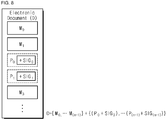
- FIG. 8 is a schematic block diagram of an electronic document created by the process shown in FIG. 7 or FIG. 9 .
- FIGS. 7 and 9 show the operations S150 through S190 depicted in FIGS. 2B and 3B in detail.
- the user device 100 compares the input biometric information with the previously registered biometric information to authenticate the signer (S605).
- the user device 100 makes the electronic document device 200 to acquire the public key (U PK ) of the signer.
- the user device 100 may provide the electronic document device 200 with the signer identification information (U id ) (S610).
- the user device 100 may access the electronic document device 200 and login by using the signer ID entered by the signer (S610-1).
- the electronic document device 200 may perform a signer authentication process based on the entered signer ID and extract the signer identification information (U id ) from the signer information (U id ) mapped to the authenticated signer ID (S610-2).
- the electronic document device 200 having acquired the signer identification information (U id ) encrypts the signer identification information (U id ) with the public key (S PK ) of the authentication server 300 (i.e., [U id ]S PK ) and transmits to the authentication server 300.
- S PK public key
- the authentication server 300 identifies the signer identification information (U id ) transmitted by the electronic document device 200 by decrypting the encrypted data using with its private key (S SK ), extracts the public key (U PK ) of the signer and the signer information for the electronic document (C U ) stored being mapped to the signer identification information (U id ), and encrypts the extracted information with the public key (SP PK ) of the electronic document device 200 (i.e., [U PK , C U ]SP PK ) to transmit to the electronic document device 200 (S620).
- the signer information for the electronic document (C U ) may be some of the signer information (U info ) to be embedded in the electronic document by a default setting.
- the electronic document device 200 may decrypt the encrypted data ([U PK , C U ]SP SK ) with its private key (SP SK ) and extract the public key (U PK ) of the signer and signer information for the electronic document (C U ).
- the electronic document device 200 provides the user device 100 with the electronic document to be signed (S625), and the user device 100 outputs the electronic document so that the user can check the electronic document (S630).
- the electronic document device 200 checks whether the handwritten signature for document confirmation (SIG i ) is input in the electronic document (S635).
- the electronic document device 200 checks whether input field is entered by the electronic document provider or the signer (S640), and requests the handwritten signature for document confirmation (SIG i ) from the user device 100 for the field where the handwritten signature for document confirmation (SIG i ) is required (S645).
- the user device 100 notifies the request for the handwritten signature for document confirmation (SIG i ) from the electronic document device 200 to the user, receives the handwritten signature for document confirmation (SIG i ) entered through the biometric information input device by the user (S650), and encrypts the information with the public key (SP PK ) of the electronic document device 200 (i.e., [SIG i ]SP PK ) to transmit to the electronic document device 200 (S655).
- the electronic document device 200 decrypts the encrypted handwritten signature for document confirmation ([SIG i ]SP PK ) with its private key (SP SK ), extracts the handwritten signature for document confirmation (SIG i ), and inserts it into the electronic document.
- This process may be repeatedly carried out as many times as the handwritten signature for document confirmation (SIG i ) is necessary.
- the electronic document device 200 When the checking of the electronic document including the handwritten signature for document confirmation (SIG i ) is completed by the signer, the electronic document device 200 generates the completed electronic document (D) (S660).
- the completed electronic document (D) may have a structure shown in FIG. 8 .
- the completed electronic document (D) includes one or more pages M 0 , M 1 , ..., M (m-1) with no handwritten signature for document confirmation and one or more pages (P 0 + SIG 0 ), (P 1 + SIG 1 ), ..., (P (n-1) + SIG (n-1) ) combined with respective handwritten signature for document confirmation SIG 0 , SIG 1 , ..., SIG (n-1) .
- the signer may confirm final content for the completed electronic document (D) combined with the at least one handwritten signature for document confirmation (SIG i ) (S665).
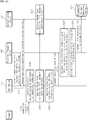
- FIG. 10 is a flowchart illustrating a process of generating the electronic signature for the completed electronic document (D) through the above process of creating the electronic document, in detail, in the electronic signature authentication method based on the biometric information according to the present disclosure. Specifically, FIG. 10 shows the operations S195 through S225 depicted in FIGS. 2C and 3C in detail.
- the electronic document device 200 encrypts a hash value (H1 ⁇ hash(D)) of the completed electronic document (D) and the public key (SP PK ) of the electronic document provider with the public key (U PK ) of the signer acquired from the authentication server 300 (i.e., [H1, SP PK ]U PK ) to transmit to the user device 100 (S705).
- the electronic document device 200 may encrypt only the hash value (H1) of the completed electronic document (D) with the public key (U PK ) of the signer (i.e., [H1]U PK ) and transmit the encrypted data to the user device 100.
- the user device 100 may separately request the authentication server 300 to provide the public key (SP PK ) of the electronic document provider.
- the authentication server 300 may encrypt the public key (SP PK ) of the electronic document provider with the public key (U PK ) of the signer (i.e., [SP PK ]U PK ) and transmit it to the user device 100 (S706).
- the user device 100 may acquire the hash value (H1) of the completed electronic document (D) by decrypting the received encrypted data ([H1, SP PK ]U PK or [H1]U PK ) with the private key (U SK ) of the signer.
- the electronic document received by the user device 100 and the hash value of the electronic document are denoted by "D' " and "H1' ", respectively, to distinguish from the electronic document (D) calculated or generated by the electronic document device 200 and the hash value (H) thereof.
- the user device 100 Before generating the electronic signature value, the user device 100 receives the handwritten signature from the signer and performs authentication for the received handwritten signature (S710).
- the user device 100 If the authentication of the entered handwritten signature is successful, the user device 100 generates the handwritten signature for final document confirmation (SIG f ) for the completed electronic document (D') (S715), encrypts the handwritten signature for final document confirmation (SIG f ) with the public key (S PK ) of the authentication server 300, transmits the encrypted handwritten signature to the authentication server 300, and requests the registration of the handwritten signature for final document confirmation (SIG f ) (S720). Accordingly, the authentication server 300 may register the handwritten signature for final document confirmation (SIG f ) with the public key (U PK ) of the signer by mapping to the signer identification information (U id ).
- the user device 100 generates the electronic signature value and encryption data for the received electronic document (D') corresponding to the completed electronic document (D) (S730). Specifically, the user device 100 calculates the hash value (H1') of the received electronic document (D') and the hash value (H2) of the handwritten signature for final document confirmation (SIG f ) (i.e., H1' ⁇ hash(D', H2 ⁇ hash(SIG f )).
- the user device 100 generates the first electronic signature value (DS1) for the received electronic document (D') by encrypting the hash value (H1') with the private key (U SK ) of the signer based on the registered biometric information and generates the second electronic signature value (DS2) for the handwritten signature for final document confirmation (SIG f ) by encrypting the hash value (H2) with the private key (U SK ) of the signer based on the registered biometric information (i.e., DS1 ⁇ [H1']U SK , DS2 ⁇ [H2]U SK ).
- the user device 100 generates the third electronic signature value (DS3) by encrypting the hash value (H3) of the handwritten signature for document confirmation ⁇ SIG 0 , SIG 1 , SIG 2 ,..., SIG (n-1) ⁇ with the private key (U SK ) of the signer based on the registered biometric information (i.e., DS3 ⁇ [H3]U SK ).
- the user device 100 generates the first encryption data (E1) by encrypting the hash value (H1') of the electronic document (D') and the first electronic signature value (DS1) for the electronic document (D') with the public key (SP PK ) of the electronic document provider (i.e., E1 ⁇ [H1', DS1]SP PK ).
- the user device 100 generates the second encryption data (E2) by encrypting the hash value (H1') and the first electronic signature value (DS1) with the public key (S PK ) of the authentication server 300 (i.e., E2 ⁇ [H1', DS1]S PK ).
- the user device 100 generates the third encryption data (E3) by encrypting the handwritten signature for final document confirmation (SIG f ), the hash value (H2) of the handwritten signature for final document confirmation (SIG f ), and the second electronic signature value (DS2) with the public key (S PK ) of the authentication server 300 (i.e., E3 ⁇ [SIG f , H2, DS2]S PK ).
- the user device 100 generates the fourth encryption data (E4) by encrypting the handwritten signature for document confirmation ⁇ SIG 0 , SIG 1 , SIG 2 ,..., SIG (n-1) ⁇ , the hash value (H3) of the handwritten signature for document confirmation ⁇ SIG 0 , SIG 1 , SIG 2 ,..., SIG (n-1) ⁇ , and the third electronic signature value (DS3) for the handwritten signature for document confirmation ⁇ SIG 0 , SIG 1 , SIG 2 ,..., SIG (n-1) ⁇ with the public key (S PK ) of the authentication server 300 (i.e., E4 ⁇ [ ⁇ SIG 0 , SIG 1 , SIG 2 , ..., SIG (n-1) ⁇ , H3, DS3]S PK ).
- the user device 100 transmits the first through fourth encryption data (E1-E4) to the electronic document device 200 (S735).
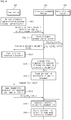
- FIG. 11 is a flowchart illustrating a process of handling the electronically signed document in the electronic signature authentication method based on the biometric information according to the present disclosure.
- DS1 i.e., H1 ⁇ H1', H1 ⁇ [DS1]U PK
- the electronic document device 200 If it is determined that the signer has electronically signed the electronic document in accordance with the intent of the electronic document provider, the electronic document device 200 generates the fourth electronic signature value (DS4) by encrypting the hash value (H1) of the electronic document (D) with the private key (SP SK ) of the electronic document provider (i.e., DS4 ⁇ [H1]SP SK ). Further, the electronic document device 200 generates a fifth encryption data (E5) by encrypting the hash value (H1) of the electronic document (D) and the fourth electronic signature value (DS4) for the electronic document (D) with the public key (S PK ) of the authentication server 300 (i.e., E5 ⁇ [H1, DS4]S PK ) (S803).
- S PK public key
- E2 [H1', DS1]S PK
- E3 [SIG f , H2, DS2]S PK
- E4 [ ⁇ SIG 0 , SIG 1 , SIG 2 , ..., SIG (n-1) ⁇ , H3, DS3]S PK ) received from the user device 100 and the fifth encryption data (E5)
- the electronic document device 200 transmits the final electronic file for storage (F) to the electronic document depository device 400, so that the electronic document depository device 400 saves the file (F) (S810).
- the final electronic file for storage (F) is the electronic document that is created by combining the electronic signature and the handwritten signature to the completed electronic document (D) by the authenticated user based on the biometric information.
- the electronic document is stored in a state of being combined with the electronic signatures of the signer through the processes described above, so that the electronic document can be validated based on the attached electronic signature through a procedure shown in FIG. 12 when the electronic document is to be used in the future.
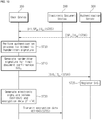
- FIG. 12 is a flowchart illustrating a process of validating an electronic document authenticated by the electronic signature authentication method based on the biometric information according to the present disclosure.
- the verification request device 500 is a device used by a user who is issued an electronic document file (V) that has been electronically signed based on the biometric information as described above, and can request verification of an issued electronic file to the authentication server 300.
- V electronic document file
- the verification request device 500 can receive the electronic file to be verified (V) through an arbitrary path (S905), and can request the verification of the electronic file to be verified (V) to the authentication server 300 if the verification is necessary (S910).
- the authentication server 300 can decrypt the second through fifth encryption data (E2-E5) contained in the electronic file (V) with the private key (S SK ) of the authentication server 300.
- the authentication server 300 compares the hash value ([DS4]SP PK ) acquired by decrypting the fourth electronic signature value (DS4) extracted from the electronic file to be verified (V) with the public key (SP PK ) of the electronic document provider, the hash value (H1) calculated by the electronic document device for the electronic document (D) and extracted from the electronic file to be verified (V), and the hash value (H1" ⁇ hash(D)) calculated by the authentication server 300 for the electronic document (D) extracted from the electronic file to be verified(V) to verify that they match one another (i.e., H1 ⁇ [DS4]SP PK ⁇ H1").
- the authentication server 300 can verify the integrity ensuring that the electronic document (D) extracted from the electronic file to be verified (V) is the electronic document generated by the electronic document provider (S920).
- the authentication server 300 can verify the integrity of the handwritten signature for document confirmation ⁇ SIG 0 , SIG 1 , SIG 2 ,..., SIG (n-1) ⁇ extracted from the electronic file to be verified (V) (S923).
- the authentication server 300 can verify the integrity of the handwritten signature for final document confirmation (SIG f ) extracted from the electronic file to be verified (V) (S925).
- the authentication server 300 compares the hash value ([DS1]U PK ) acquired by decrypting the first electronic signature value (DS1) extracted from the electronic file to be verified (V) with the public key (U PK ) of the signer, the hash value (H1') calculated by the user device 100 for the electronic document (D') received by the user device 100, the hash value (H1) calculated by the electronic document device 200 for the electronic document (D) extracted from the electronic file to be verified (V), and the hash value (H1") calculated by the authentication server 300 for the electronic document (D) extracted from the electronic file to be verified (V) to verify that they match one another (i.e., H1 ⁇ H1' ⁇ [DS1]U PK ⁇ H1").
- the authentication server 300 can verify the non-repudiation of the electronic signature of the signer with respect to the electronic document (D) contained in the electronic file to be verified (V), the non-repudiation of the electronic signature of the electronic document provider with respect to the electronic document (D), the consistency between the electronic document signed by the signer and the electronic document signed by the electronic document provider, and the integrity of the electronic document (D) provided to the signer (S930).
- the authentication server 300 compares the handwritten signature for final document confirmation (SIG f ) extracted from the electronic file to be verified (V) and the handwritten signature for final document confirmation (SIG' f ) that the user device 100 registered previously to verify that they match to each other (i.e., SIG f ⁇ SIG' f ). Through this verification, the authentication server 300 can check the validity of the handwritten signature for final document confirmation (SIG f ) added to electronic file to be verified (V) and verify the non-repudiation of the signer (S935).
- the authentication server 300 compares the handwritten signature for document confirmation ⁇ SIG' 0 , SIG' 1 , SIG' 2 ,..., SIG' (n-1) ⁇ inserted in respective pages of the electronic document (D) included in the electronic file to be verified (V), the handwritten signature for document confirmation ⁇ SIG 0 , SIG 1 , SIG 2 ,..., SIG (n-1) ⁇ extracted from the electronic file to be verified, and the handwritten signature for final document confirmation (SIG f ) to verify that they match to one another (i.e., SIG' i ⁇ SIG i ⁇ SIG f ).
- the authentication server 300 can additionally check whether each of the handwritten signatures for document confirmation SIG' 0 , SIG' 1 , SIG' 2 ,..., and SIG' (n-1) combined to the electronic document (D) match to one another (S940).
- the verification result is transmitted to the verification request device 500 (S945).
- the methods and modules according to the present disclosure may be driven by the execution of instructions that cause one or more processors to perform the functions and processes described above.
- the instructions may include interpretable codes such as JavaScript and ECMAScript, for example, executable machine codes, or other kinds of instructions stored in the computer-readable medium.
- the apparatus according to the present disclosure may be implemented in a distributed system across a network similarly to a server farm or may be implemented in a single computer device.
- the subject matter described herein may be implemented by one or more computer program products, in other words, one or more modules of computer program instruction encoded in an intangible computer-readable program storage medium for controlling the operation of the device according to the present disclosure.
- the computer-readable medium may be a machine-readable storage device, a machine-readable storage substrate, a memory device, a composition of matter that affects the machine readable propagation-type signal, or a combination of one or more of the devices or the matter.
- Implementations of the subject matter described herein may include a back-end component such as a data server, a middleware component such as an application server, a frontend component such as a client computer having a graphic user interface or a web browser capable of interacting with an implementation of the subject matter described herein, or a computing system including a combination having at least one of the backend, middleware, or frontend components.
- the components of the system may be interconnected by any form or medium of digital data communication such as a communications network, for example.
- the present disclosure is applicable to a field of digital signature authentication of an electronic document.
- biometric authentication is performed based on the biometric information of the signer so as to assure safety of data. Since encryption keys for the electronic signature are generated based on the biometric information, it is possible to solve the problem of issuing and managing a code unique to each signer for generating the encryption keys for the electronic signature.
- the present disclosure may reinforce the effects of prevention of repudiation of the signer for a generated electronic document, prevention of repudiation of the electronic document provider, verification of whether the electronic document signed by the signer is identical to the electronic document provided by the electronic document provider, and prevention of falsification or tampering of the electronic document committed by the electronic document provider.
Landscapes
- Engineering & Computer Science (AREA)
- Computer Security & Cryptography (AREA)
- Computer Networks & Wireless Communication (AREA)
- Signal Processing (AREA)
- Theoretical Computer Science (AREA)
- General Health & Medical Sciences (AREA)
- Health & Medical Sciences (AREA)
- Computer Hardware Design (AREA)
- General Engineering & Computer Science (AREA)
- General Physics & Mathematics (AREA)
- Software Systems (AREA)
- Physics & Mathematics (AREA)
- Biomedical Technology (AREA)
- Bioethics (AREA)
- Life Sciences & Earth Sciences (AREA)
- Biodiversity & Conservation Biology (AREA)
- Computing Systems (AREA)
- Databases & Information Systems (AREA)
- Collating Specific Patterns (AREA)
- Management, Administration, Business Operations System, And Electronic Commerce (AREA)
- Storage Device Security (AREA)
Applications Claiming Priority (2)
| Application Number | Priority Date | Filing Date | Title |
|---|---|---|---|
| KR1020170147207A KR101853610B1 (ko) | 2017-11-07 | 2017-11-07 | 생체정보 기반의 전자서명 인증 시스템 및 그의 전자서명 인증 방법 |
| PCT/KR2017/014473 WO2019093573A1 (fr) | 2017-11-07 | 2017-12-11 | Système d'authentification de signature électronique sur la base d'informations biométriques, et procédé d'authentification de signature électronique associé |
Publications (3)
| Publication Number | Publication Date |
|---|---|
| EP3709567A1 true EP3709567A1 (fr) | 2020-09-16 |
| EP3709567A4 EP3709567A4 (fr) | 2021-03-24 |
| EP3709567B1 EP3709567B1 (fr) | 2023-07-19 |
Family
ID=62183610
Family Applications (1)
| Application Number | Title | Priority Date | Filing Date |
|---|---|---|---|
| EP17928819.6A Active EP3709567B1 (fr) | 2017-11-07 | 2017-12-11 | Système d'authentification de signature électronique sur la base d'informations biométriques, et procédé d'authentification de signature électronique associé |
Country Status (5)
| Country | Link |
|---|---|
| US (1) | US11917074B2 (fr) |
| EP (1) | EP3709567B1 (fr) |
| JP (1) | JP7046331B2 (fr) |
| KR (1) | KR101853610B1 (fr) |
| WO (1) | WO2019093573A1 (fr) |
Cited By (6)
| Publication number | Priority date | Publication date | Assignee | Title |
|---|---|---|---|---|
| WO2021146818A1 (fr) * | 2020-01-23 | 2021-07-29 | Mehrtash Seyed Mehdi | Système de vérification d'identification |
| WO2023004491A3 (fr) * | 2021-07-28 | 2023-03-02 | Donald Craig Waugh | Procédés et systèmes pour générer et valider des utilisations de justificatifs d'identité numériques et d'autres documents |
| EP4193283A1 (fr) * | 2020-08-04 | 2023-06-14 | Imprimerie Nationale | Procede pour generer un document numerique securise stocke sur un terminal mobile et associe a une identite numerique |
| EP3998742A4 (fr) * | 2019-07-12 | 2023-08-09 | Muuk Technologies, S. DE R.L. DE C.V. | Système de génération d'une signature autographe numérique au moyen d'un dispositif mobile |
| CN118075036A (zh) * | 2024-04-25 | 2024-05-24 | 江西省外经贸融资担保有限公司 | 一种电子函证的认证方法、系统及计算机可读存储介质 |
| CN119203251A (zh) * | 2024-09-03 | 2024-12-27 | 北京电子科技学院 | 一种基于固定神经网络隐写技术的电子文档签署方法 |
Families Citing this family (20)
| Publication number | Priority date | Publication date | Assignee | Title |
|---|---|---|---|---|
| KR102145766B1 (ko) * | 2018-09-17 | 2020-08-19 | 인비즈넷 주식회사 | 본인 인증 시스템 및 방법 |
| KR102166690B1 (ko) * | 2018-11-12 | 2020-10-16 | 아미쿠스렉스 주식회사 | 전자문서를 위한 전자서명 관리서버 및 관리방법 |
| US10931572B2 (en) * | 2019-01-22 | 2021-02-23 | Vmware, Inc. | Decentralized control plane |
| KR102322435B1 (ko) | 2019-05-13 | 2021-11-10 | 고려대학교 산학협력단 | 퍼지 데이터로부터 동일한 키를 추출하는 방법 및 이를 이용한 사용자 인증 방법 |
| US11275858B2 (en) | 2019-06-25 | 2022-03-15 | Vmware, Inc. | Document signing system for mobile devices |
| US11461451B2 (en) * | 2019-06-25 | 2022-10-04 | Vmware, Inc. | Document signing system for mobile devices |
| US12603780B2 (en) * | 2019-09-25 | 2026-04-14 | Amod Ashok Dange | System and method for managing an operating system using tokenized identity |
| EP3836015A1 (fr) * | 2019-12-09 | 2021-06-16 | Iris-Gmbh Infrared & Intelligent Sensors | Système de capteur permettant de vérifier les motifs de veines de la main |
| EP4100853A1 (fr) * | 2020-02-07 | 2022-12-14 | Veridas Digital Authentication Solutions, S.L. | Signatures électroniques |
| CN111401901B (zh) * | 2020-03-23 | 2021-06-04 | 腾讯科技(深圳)有限公司 | 生物支付设备的认证方法、装置、计算机设备和存储介质 |
| KR102320103B1 (ko) * | 2020-04-09 | 2021-10-29 | 건양대학교산학협력단 | 작품에 기재되는 서명을 대체하여 진품을 인증하기 위한 방법 |
| JP7540207B2 (ja) * | 2020-06-09 | 2024-08-27 | 富士フイルムビジネスイノベーション株式会社 | 情報処理装置及びコンピュータプログラム |
| US12101399B2 (en) * | 2020-07-20 | 2024-09-24 | Pruve Systems, Inc. | Secure storage techniques utilizing consortium distributed ledgers |
| JP7664691B2 (ja) | 2020-09-02 | 2025-04-18 | 株式会社東芝 | 電子承認システム、電子承認サーバ、及び電子承認プログラム |
| CN120567396A (zh) | 2020-10-09 | 2025-08-29 | 崔云虎 | 使用公钥基础设施的认证链 |
| KR102407699B1 (ko) * | 2022-02-16 | 2022-06-15 | 주식회사 글로싸인 | 생체정보의 인증을 통한 전자문서 관리 서비스 제공 서버, 방법 및 프로그램 |
| CN114866271B (zh) * | 2022-03-15 | 2024-08-27 | 上海东普信息科技有限公司 | 电子凭证的生成方法、装置、设备及存储介质 |
| CN115276997A (zh) * | 2022-05-17 | 2022-11-01 | 上海亘岩网络科技有限公司 | 电子签章生成方法、装置、计算机可读存储介质及电子设备 |
| CN115396117B (zh) * | 2022-08-24 | 2024-11-08 | 济南超级计算技术研究院 | 基于区块链预防篡改的电子文书签署、校验方法及系统 |
| CN119785440B (zh) * | 2025-03-11 | 2025-06-13 | 北京安证通信息科技股份有限公司 | 一种签章电子化用签章信息采集装置 |
Family Cites Families (38)
| Publication number | Priority date | Publication date | Assignee | Title |
|---|---|---|---|---|
| US6307955B1 (en) * | 1998-12-18 | 2001-10-23 | Topaz Systems, Inc. | Electronic signature management system |
| ES2245305T3 (es) * | 1999-04-22 | 2006-01-01 | Veridicom, Inc. | Autenticacion biometrica de alta seguridad usando pares de encriptacion clave publica/clave privada. |
| US6553494B1 (en) * | 1999-07-21 | 2003-04-22 | Sensar, Inc. | Method and apparatus for applying and verifying a biometric-based digital signature to an electronic document |
| US7237114B1 (en) * | 2000-04-26 | 2007-06-26 | Pronvest, Inc. | Method and system for signing and authenticating electronic documents |
| US8285991B2 (en) * | 2000-10-25 | 2012-10-09 | Tecsec Inc. | Electronically signing a document |
| IES20011070A2 (en) * | 2001-12-14 | 2003-04-02 | Daon Ltd | Biometrically protected electronic signatures |
| US20030012374A1 (en) * | 2001-07-16 | 2003-01-16 | Wu Jian Kang | Electronic signing of documents |
| JP2004023649A (ja) * | 2002-06-19 | 2004-01-22 | Hitachi Software Eng Co Ltd | ディジタル署名方法 |
| GB2391669A (en) * | 2002-08-09 | 2004-02-11 | Optisign Ltd | Portable device for verifying a document's authenticity |
| KR100485137B1 (ko) * | 2002-09-02 | 2005-04-25 | 주식회사 스마트게이트 | 수기 서명과 스마트카드를 이용한 인증 시스템 및 방법 |
| US20040064705A1 (en) * | 2002-09-30 | 2004-04-01 | Rivet Gregory M. | Automated system and method for gaining access to restricted or controlled areas |
| JP2004128999A (ja) * | 2002-10-04 | 2004-04-22 | Hitachi Ltd | 手書き署名による電子署名方法 |
| JP2005094173A (ja) * | 2003-09-16 | 2005-04-07 | Hitachi Ltd | 暗号鍵生成装置及び暗号鍵を複数のシステムで共有する方法 |
| US7581105B2 (en) * | 2003-12-16 | 2009-08-25 | Sap Aktiengesellschaft | Electronic signing apparatus and methods |
| US7502934B2 (en) * | 2003-12-16 | 2009-03-10 | Sap Aktiengesellschaft | Electronic signatures |
| JP2006157399A (ja) * | 2004-11-29 | 2006-06-15 | Hitachi Ltd | 電子署名付き電子文書交換支援方法及び情報処理装置 |
| US20060136731A1 (en) * | 2004-12-21 | 2006-06-22 | Signaturelink, Inc. | System and method for providing an online electronic signature |
| JP4616677B2 (ja) * | 2005-03-25 | 2011-01-19 | 株式会社日立製作所 | 生体情報による暗号鍵生成および生体情報による個人認証システム |
| JP4765482B2 (ja) * | 2005-08-25 | 2011-09-07 | 富士ゼロックス株式会社 | 文書管理システム、文書管理プログラム及び文書管理方法 |
| HUP0500872A2 (en) * | 2005-09-21 | 2007-05-02 | Csik Balazs | Method and apparatus for creating digital signature defined by biometric identification |
| KR20080113264A (ko) * | 2006-04-28 | 2008-12-29 | 마이크로소프트 코포레이션 | 보안 서명을 위한 컴퓨팅 장치, 컴퓨터 판독가능 데이터 저장 매체, 및 컴퓨터 구현 방법 |
| EP1944716B1 (fr) * | 2007-01-15 | 2010-04-28 | Stepover GmbH | Procédé et dispositif de sécurisation d'un document comportant une signature apposée et des données biométriques dans un système informatique |
| WO2009053500A1 (fr) * | 2007-10-24 | 2009-04-30 | Scytl Secure Electronic Voting, S.A. | Procédé et système de protection de registres d'informations d'utilisateurs applicable à des processus électoraux |
| JP2009232002A (ja) * | 2008-03-21 | 2009-10-08 | Fuji Xerox Co Ltd | 電子署名システム、署名装置、検証装置、及びプログラム |
| KR20090122657A (ko) * | 2008-05-26 | 2009-12-01 | 동명대학교산학협력단 | 문자 인식을 통한 공개키 기반의 문서위조 방지 방법 |
| EP2350911B1 (fr) * | 2008-09-30 | 2014-08-27 | Stepover GmbH | Procédé et dispositif de capture électronique d'une signature manuscrite et de sauvegarde de données biométriques |
| US20100100743A1 (en) * | 2008-10-17 | 2010-04-22 | Microsoft Corporation | Natural Visualization And Routing Of Digital Signatures |
| JP2010218440A (ja) * | 2009-03-18 | 2010-09-30 | Sony Corp | 決済システム、決済方法および情報処理装置 |
| US8959353B2 (en) * | 2009-03-31 | 2015-02-17 | Topaz Systems, Inc. | Distributed system for multi-function secure verifiable signer authentication |
| BRPI1006764A8 (pt) * | 2009-04-10 | 2017-07-11 | Koninklijke Philips Electronics Nv | Método em um sistema que compreende um dispositivo e um serviço remoto, e, sistema para autenticar um dispositivo e um usuário |
| US8375211B2 (en) * | 2009-04-21 | 2013-02-12 | International Business Machines Corporation | Optimization of signing soap body element |
| WO2012049592A2 (fr) * | 2010-10-10 | 2012-04-19 | Vpsign, Ltd. | Procédé et appareil pour signature électronique |
| KR101149695B1 (ko) * | 2011-10-20 | 2012-05-23 | 제이콥스 주식회사 | 금융거래시 전자문서상 자필 전자서명을 이용한 업무처리시스템 및 업무처리방법 |
| RU2522024C2 (ru) * | 2012-10-15 | 2014-07-10 | Общество С Ограниченной Ответственностью "Лаборатория Эландис" | Способ подписания электронных документов аналого-цифровой подписью с дополнительной верификацией |
| US10057068B2 (en) * | 2013-05-28 | 2018-08-21 | Hitachi, Ltd. | Biometric signature system, signature verification method, registration terminal, signature generation terminal, and signature verification device |
| KR20150011293A (ko) * | 2013-07-22 | 2015-01-30 | 김종규 | 인스턴트 메신저를 이용한 생체인증 전자서명 서비스 방법 |
| US9992026B2 (en) * | 2014-03-28 | 2018-06-05 | Mohammed Alawi E GEOFFREY | Electronic biometric (dynamic) signature references enrollment method |
| US9432368B1 (en) * | 2015-02-19 | 2016-08-30 | Adobe Systems Incorporated | Document distribution and interaction |
-
2017
- 2017-11-07 KR KR1020170147207A patent/KR101853610B1/ko active Active
- 2017-12-11 US US16/345,207 patent/US11917074B2/en active Active
- 2017-12-11 EP EP17928819.6A patent/EP3709567B1/fr active Active
- 2017-12-11 JP JP2020544714A patent/JP7046331B2/ja active Active
- 2017-12-11 WO PCT/KR2017/014473 patent/WO2019093573A1/fr not_active Ceased
Cited By (8)
| Publication number | Priority date | Publication date | Assignee | Title |
|---|---|---|---|---|
| EP3998742A4 (fr) * | 2019-07-12 | 2023-08-09 | Muuk Technologies, S. DE R.L. DE C.V. | Système de génération d'une signature autographe numérique au moyen d'un dispositif mobile |
| WO2021146818A1 (fr) * | 2020-01-23 | 2021-07-29 | Mehrtash Seyed Mehdi | Système de vérification d'identification |
| EP4193283A1 (fr) * | 2020-08-04 | 2023-06-14 | Imprimerie Nationale | Procede pour generer un document numerique securise stocke sur un terminal mobile et associe a une identite numerique |
| EP4193283B1 (fr) * | 2020-08-04 | 2025-05-07 | Imprimerie Nationale | Procédé pour générer un document numérique sécurisé stocké sur un terminal mobile et associé à une identité numérique |
| WO2023004491A3 (fr) * | 2021-07-28 | 2023-03-02 | Donald Craig Waugh | Procédés et systèmes pour générer et valider des utilisations de justificatifs d'identité numériques et d'autres documents |
| CN118075036A (zh) * | 2024-04-25 | 2024-05-24 | 江西省外经贸融资担保有限公司 | 一种电子函证的认证方法、系统及计算机可读存储介质 |
| CN119203251A (zh) * | 2024-09-03 | 2024-12-27 | 北京电子科技学院 | 一种基于固定神经网络隐写技术的电子文档签署方法 |
| CN119203251B (zh) * | 2024-09-03 | 2025-07-22 | 北京电子科技学院 | 一种基于固定神经网络隐写技术的电子文档签署方法 |
Also Published As
| Publication number | Publication date |
|---|---|
| EP3709567B1 (fr) | 2023-07-19 |
| US20220038291A1 (en) | 2022-02-03 |
| WO2019093573A1 (fr) | 2019-05-16 |
| US11917074B2 (en) | 2024-02-27 |
| KR101853610B1 (ko) | 2018-05-02 |
| JP2021508427A (ja) | 2021-03-04 |
| EP3709567A4 (fr) | 2021-03-24 |
| JP7046331B2 (ja) | 2022-04-04 |
Similar Documents
| Publication | Publication Date | Title |
|---|---|---|
| EP3709567B1 (fr) | Système d'authentification de signature électronique sur la base d'informations biométriques, et procédé d'authentification de signature électronique associé | |
| CN108604991B (zh) | 能够检测应用程序篡改的双通道认证代理系统及其方法 | |
| US9112705B2 (en) | ID system and program, and ID method | |
| US8640203B2 (en) | Methods and systems for the authentication of a user | |
| TWI522836B (zh) | Network authentication method and system for secure electronic transaction | |
| KR102038964B1 (ko) | 어플리케이션 간의 상호 인증 방법 및 장치 | |
| CN112232814B (zh) | 支付密钥的加密和解密方法、支付认证方法及终端设备 | |
| JP2018521417A (ja) | 生体特徴に基づく安全性検証方法、クライアント端末、及びサーバ | |
| JP7702404B2 (ja) | 悪意のあるプログラムコード注入に対する保護のためのシステム及び方法 | |
| KR20110081104A (ko) | 보안 트랜잭션 시스템 및 방법 | |
| KR101829730B1 (ko) | 블록체인 데이터베이스를 통해 모바일 아이디를 이용하여 사용자를 인증하는 방법, 단말 및 이를 이용한 서버 | |
| KR101858653B1 (ko) | 블록체인 데이터베이스 및 이와 연동하는 머클 트리 구조를 통해 모바일 아이디를 이용하여 사용자를 인증하는 방법, 단말 및 이를 이용한 서버 | |
| CN107548542B (zh) | 经强化完整性及安全性的用户认证方法 | |
| KR102561689B1 (ko) | 생체 정보 등록 장치 및 방법, 생체 인증 장치 및 방법 | |
| KR101868564B1 (ko) | 사용자 본인 확인(identification) 등록과 로컬 인증을 연계한 사용자 인증 장치 및 방법 | |
| KR101611099B1 (ko) | 본인 실명 확인을 위한 인증 토큰 발급 방법, 인증 토큰을 이용하는 사용자 인증 방법 및 이를 수행하는 장치 | |
| JP5489913B2 (ja) | 携帯型情報装置及び暗号化通信プログラム | |
| KR102123405B1 (ko) | 보안 회원가입 및 로그인 호스팅 서비스 제공 시스템 및 그 방법 | |
| US20190122205A1 (en) | Card issuing and payment system and method using mobile device | |
| KR20200139642A (ko) | 집단 검증에 기반하는 부분 데이터 검증 방법 | |
| CN117439760A (zh) | 登录方法、装置、设备及存储介质 | |
| HK40081382A (en) | System and method for protection against malicious program code injection | |
| CN114884710A (zh) | 页面数据的验证方法及其装置、电子设备及存储介质 | |
| JP2006011673A (ja) | 認証装置及び利用者端末及び認証方法 |
Legal Events
| Date | Code | Title | Description |
|---|---|---|---|
| STAA | Information on the status of an ep patent application or granted ep patent |
Free format text: STATUS: UNKNOWN |
|
| STAA | Information on the status of an ep patent application or granted ep patent |
Free format text: STATUS: THE INTERNATIONAL PUBLICATION HAS BEEN MADE |
|
| PUAI | Public reference made under article 153(3) epc to a published international application that has entered the european phase |
Free format text: ORIGINAL CODE: 0009012 |
|
| STAA | Information on the status of an ep patent application or granted ep patent |
Free format text: STATUS: REQUEST FOR EXAMINATION WAS MADE |
|
| 17P | Request for examination filed |
Effective date: 20190424 |
|
| AK | Designated contracting states |
Kind code of ref document: A1 Designated state(s): AL AT BE BG CH CY CZ DE DK EE ES FI FR GB GR HR HU IE IS IT LI LT LU LV MC MK MT NL NO PL PT RO RS SE SI SK SM TR |
|
| AX | Request for extension of the european patent |
Extension state: BA ME |
|
| RIC1 | Information provided on ipc code assigned before grant |
Ipc: G06F 21/32 20130101AFI20201019BHEP Ipc: H04L 9/32 20060101ALI20201019BHEP Ipc: G06F 21/62 20130101ALI20201019BHEP Ipc: H04L 9/08 20060101ALI20201019BHEP Ipc: H04L 9/14 20060101ALI20201019BHEP Ipc: H04L 29/06 20060101ALI20201019BHEP Ipc: G06F 21/64 20130101ALI20201019BHEP |
|
| DAV | Request for validation of the european patent (deleted) | ||
| DAX | Request for extension of the european patent (deleted) | ||
| A4 | Supplementary search report drawn up and despatched |
Effective date: 20210224 |
|
| RIC1 | Information provided on ipc code assigned before grant |
Ipc: H04L 9/14 20060101ALI20210217BHEP Ipc: H04L 9/32 20060101ALI20210217BHEP Ipc: H04L 9/08 20060101ALI20210217BHEP Ipc: G06F 21/62 20130101ALI20210217BHEP Ipc: G06F 21/32 20130101AFI20210217BHEP Ipc: G06F 21/64 20130101ALI20210217BHEP Ipc: H04L 29/06 20060101ALI20210217BHEP |
|
| REG | Reference to a national code |
Ref country code: DE Ref legal event code: R079 Free format text: PREVIOUS MAIN CLASS: H04L0009320000 Ipc: H04L0009400000 Ref document number: 602017071669 Country of ref document: DE |
|
| RIC1 | Information provided on ipc code assigned before grant |
Ipc: H04L 9/08 20060101ALI20221222BHEP Ipc: H04L 9/14 20060101ALI20221222BHEP Ipc: H04L 9/32 20060101ALI20221222BHEP Ipc: G06F 21/62 20130101ALI20221222BHEP Ipc: G06F 21/32 20130101ALI20221222BHEP Ipc: H04L 9/40 20220101AFI20221222BHEP |
|
| GRAP | Despatch of communication of intention to grant a patent |
Free format text: ORIGINAL CODE: EPIDOSNIGR1 |
|
| STAA | Information on the status of an ep patent application or granted ep patent |
Free format text: STATUS: GRANT OF PATENT IS INTENDED |
|
| INTG | Intention to grant announced |
Effective date: 20230206 |
|
| GRAS | Grant fee paid |
Free format text: ORIGINAL CODE: EPIDOSNIGR3 |
|
| GRAA | (expected) grant |
Free format text: ORIGINAL CODE: 0009210 |
|
| STAA | Information on the status of an ep patent application or granted ep patent |
Free format text: STATUS: THE PATENT HAS BEEN GRANTED |
|
| AK | Designated contracting states |
Kind code of ref document: B1 Designated state(s): AL AT BE BG CH CY CZ DE DK EE ES FI FR GB GR HR HU IE IS IT LI LT LU LV MC MK MT NL NO PL PT RO RS SE SI SK SM TR |
|
| REG | Reference to a national code |
Ref country code: GB Ref legal event code: FG4D |
|
| REG | Reference to a national code |
Ref country code: CH Ref legal event code: EP |
|
| REG | Reference to a national code |
Ref country code: DE Ref legal event code: R096 Ref document number: 602017071669 Country of ref document: DE |
|
| REG | Reference to a national code |
Ref country code: IE Ref legal event code: FG4D |
|
| REG | Reference to a national code |
Ref country code: LT Ref legal event code: MG9D |
|
| REG | Reference to a national code |
Ref country code: NL Ref legal event code: MP Effective date: 20230719 |
|
| REG | Reference to a national code |
Ref country code: AT Ref legal event code: MK05 Ref document number: 1590571 Country of ref document: AT Kind code of ref document: T Effective date: 20230719 |
|
| PG25 | Lapsed in a contracting state [announced via postgrant information from national office to epo] |
Ref country code: NL Free format text: LAPSE BECAUSE OF FAILURE TO SUBMIT A TRANSLATION OF THE DESCRIPTION OR TO PAY THE FEE WITHIN THE PRESCRIBED TIME-LIMIT Effective date: 20230719 |
|
| PG25 | Lapsed in a contracting state [announced via postgrant information from national office to epo] |
Ref country code: GR Free format text: LAPSE BECAUSE OF FAILURE TO SUBMIT A TRANSLATION OF THE DESCRIPTION OR TO PAY THE FEE WITHIN THE PRESCRIBED TIME-LIMIT Effective date: 20231020 |
|
| PG25 | Lapsed in a contracting state [announced via postgrant information from national office to epo] |
Ref country code: IS Free format text: LAPSE BECAUSE OF FAILURE TO SUBMIT A TRANSLATION OF THE DESCRIPTION OR TO PAY THE FEE WITHIN THE PRESCRIBED TIME-LIMIT Effective date: 20231119 |
|
| PG25 | Lapsed in a contracting state [announced via postgrant information from national office to epo] |
Ref country code: SE Free format text: LAPSE BECAUSE OF FAILURE TO SUBMIT A TRANSLATION OF THE DESCRIPTION OR TO PAY THE FEE WITHIN THE PRESCRIBED TIME-LIMIT Effective date: 20230719 Ref country code: RS Free format text: LAPSE BECAUSE OF FAILURE TO SUBMIT A TRANSLATION OF THE DESCRIPTION OR TO PAY THE FEE WITHIN THE PRESCRIBED TIME-LIMIT Effective date: 20230719 Ref country code: PT Free format text: LAPSE BECAUSE OF FAILURE TO SUBMIT A TRANSLATION OF THE DESCRIPTION OR TO PAY THE FEE WITHIN THE PRESCRIBED TIME-LIMIT Effective date: 20231120 Ref country code: NO Free format text: LAPSE BECAUSE OF FAILURE TO SUBMIT A TRANSLATION OF THE DESCRIPTION OR TO PAY THE FEE WITHIN THE PRESCRIBED TIME-LIMIT Effective date: 20231019 Ref country code: LV Free format text: LAPSE BECAUSE OF FAILURE TO SUBMIT A TRANSLATION OF THE DESCRIPTION OR TO PAY THE FEE WITHIN THE PRESCRIBED TIME-LIMIT Effective date: 20230719 Ref country code: LT Free format text: LAPSE BECAUSE OF FAILURE TO SUBMIT A TRANSLATION OF THE DESCRIPTION OR TO PAY THE FEE WITHIN THE PRESCRIBED TIME-LIMIT Effective date: 20230719 Ref country code: IS Free format text: LAPSE BECAUSE OF FAILURE TO SUBMIT A TRANSLATION OF THE DESCRIPTION OR TO PAY THE FEE WITHIN THE PRESCRIBED TIME-LIMIT Effective date: 20231119 Ref country code: HR Free format text: LAPSE BECAUSE OF FAILURE TO SUBMIT A TRANSLATION OF THE DESCRIPTION OR TO PAY THE FEE WITHIN THE PRESCRIBED TIME-LIMIT Effective date: 20230719 Ref country code: GR Free format text: LAPSE BECAUSE OF FAILURE TO SUBMIT A TRANSLATION OF THE DESCRIPTION OR TO PAY THE FEE WITHIN THE PRESCRIBED TIME-LIMIT Effective date: 20231020 Ref country code: FI Free format text: LAPSE BECAUSE OF FAILURE TO SUBMIT A TRANSLATION OF THE DESCRIPTION OR TO PAY THE FEE WITHIN THE PRESCRIBED TIME-LIMIT Effective date: 20230719 Ref country code: AT Free format text: LAPSE BECAUSE OF FAILURE TO SUBMIT A TRANSLATION OF THE DESCRIPTION OR TO PAY THE FEE WITHIN THE PRESCRIBED TIME-LIMIT Effective date: 20230719 |
|
| PG25 | Lapsed in a contracting state [announced via postgrant information from national office to epo] |
Ref country code: PL Free format text: LAPSE BECAUSE OF FAILURE TO SUBMIT A TRANSLATION OF THE DESCRIPTION OR TO PAY THE FEE WITHIN THE PRESCRIBED TIME-LIMIT Effective date: 20230719 |
|
| REG | Reference to a national code |
Ref country code: DE Ref legal event code: R097 Ref document number: 602017071669 Country of ref document: DE |
|
| PG25 | Lapsed in a contracting state [announced via postgrant information from national office to epo] |
Ref country code: ES Free format text: LAPSE BECAUSE OF FAILURE TO SUBMIT A TRANSLATION OF THE DESCRIPTION OR TO PAY THE FEE WITHIN THE PRESCRIBED TIME-LIMIT Effective date: 20230719 |
|
| PG25 | Lapsed in a contracting state [announced via postgrant information from national office to epo] |
Ref country code: SM Free format text: LAPSE BECAUSE OF FAILURE TO SUBMIT A TRANSLATION OF THE DESCRIPTION OR TO PAY THE FEE WITHIN THE PRESCRIBED TIME-LIMIT Effective date: 20230719 Ref country code: RO Free format text: LAPSE BECAUSE OF FAILURE TO SUBMIT A TRANSLATION OF THE DESCRIPTION OR TO PAY THE FEE WITHIN THE PRESCRIBED TIME-LIMIT Effective date: 20230719 Ref country code: ES Free format text: LAPSE BECAUSE OF FAILURE TO SUBMIT A TRANSLATION OF THE DESCRIPTION OR TO PAY THE FEE WITHIN THE PRESCRIBED TIME-LIMIT Effective date: 20230719 Ref country code: EE Free format text: LAPSE BECAUSE OF FAILURE TO SUBMIT A TRANSLATION OF THE DESCRIPTION OR TO PAY THE FEE WITHIN THE PRESCRIBED TIME-LIMIT Effective date: 20230719 Ref country code: DK Free format text: LAPSE BECAUSE OF FAILURE TO SUBMIT A TRANSLATION OF THE DESCRIPTION OR TO PAY THE FEE WITHIN THE PRESCRIBED TIME-LIMIT Effective date: 20230719 Ref country code: CZ Free format text: LAPSE BECAUSE OF FAILURE TO SUBMIT A TRANSLATION OF THE DESCRIPTION OR TO PAY THE FEE WITHIN THE PRESCRIBED TIME-LIMIT Effective date: 20230719 Ref country code: SK Free format text: LAPSE BECAUSE OF FAILURE TO SUBMIT A TRANSLATION OF THE DESCRIPTION OR TO PAY THE FEE WITHIN THE PRESCRIBED TIME-LIMIT Effective date: 20230719 |
|
| PLBE | No opposition filed within time limit |
Free format text: ORIGINAL CODE: 0009261 |
|
| STAA | Information on the status of an ep patent application or granted ep patent |
Free format text: STATUS: NO OPPOSITION FILED WITHIN TIME LIMIT |
|
| PG25 | Lapsed in a contracting state [announced via postgrant information from national office to epo] |
Ref country code: IT Free format text: LAPSE BECAUSE OF FAILURE TO SUBMIT A TRANSLATION OF THE DESCRIPTION OR TO PAY THE FEE WITHIN THE PRESCRIBED TIME-LIMIT Effective date: 20230719 |
|
| 26N | No opposition filed |
Effective date: 20240422 |
|
| PG25 | Lapsed in a contracting state [announced via postgrant information from national office to epo] |
Ref country code: SI Free format text: LAPSE BECAUSE OF FAILURE TO SUBMIT A TRANSLATION OF THE DESCRIPTION OR TO PAY THE FEE WITHIN THE PRESCRIBED TIME-LIMIT Effective date: 20230719 |
|
| REG | Reference to a national code |
Ref country code: CH Ref legal event code: PL |
|
| PG25 | Lapsed in a contracting state [announced via postgrant information from national office to epo] |
Ref country code: LU Free format text: LAPSE BECAUSE OF NON-PAYMENT OF DUE FEES Effective date: 20231211 |
|
| PG25 | Lapsed in a contracting state [announced via postgrant information from national office to epo] |
Ref country code: MC Free format text: LAPSE BECAUSE OF FAILURE TO SUBMIT A TRANSLATION OF THE DESCRIPTION OR TO PAY THE FEE WITHIN THE PRESCRIBED TIME-LIMIT Effective date: 20230719 |
|
| REG | Reference to a national code |
Ref country code: BE Ref legal event code: MM Effective date: 20231231 |
|
| PG25 | Lapsed in a contracting state [announced via postgrant information from national office to epo] |
Ref country code: MC Free format text: LAPSE BECAUSE OF FAILURE TO SUBMIT A TRANSLATION OF THE DESCRIPTION OR TO PAY THE FEE WITHIN THE PRESCRIBED TIME-LIMIT Effective date: 20230719 Ref country code: LU Free format text: LAPSE BECAUSE OF NON-PAYMENT OF DUE FEES Effective date: 20231211 |
|
| REG | Reference to a national code |
Ref country code: IE Ref legal event code: MM4A |
|
| PG25 | Lapsed in a contracting state [announced via postgrant information from national office to epo] |
Ref country code: IE Free format text: LAPSE BECAUSE OF NON-PAYMENT OF DUE FEES Effective date: 20231211 |
|
| PG25 | Lapsed in a contracting state [announced via postgrant information from national office to epo] |
Ref country code: BE Free format text: LAPSE BECAUSE OF NON-PAYMENT OF DUE FEES Effective date: 20231231 |
|
| PG25 | Lapsed in a contracting state [announced via postgrant information from national office to epo] |
Ref country code: CH Free format text: LAPSE BECAUSE OF NON-PAYMENT OF DUE FEES Effective date: 20231231 |
|
| PG25 | Lapsed in a contracting state [announced via postgrant information from national office to epo] |
Ref country code: IE Free format text: LAPSE BECAUSE OF NON-PAYMENT OF DUE FEES Effective date: 20231211 Ref country code: CH Free format text: LAPSE BECAUSE OF NON-PAYMENT OF DUE FEES Effective date: 20231231 Ref country code: BE Free format text: LAPSE BECAUSE OF NON-PAYMENT OF DUE FEES Effective date: 20231231 |
|
| PG25 | Lapsed in a contracting state [announced via postgrant information from national office to epo] |
Ref country code: BG Free format text: LAPSE BECAUSE OF FAILURE TO SUBMIT A TRANSLATION OF THE DESCRIPTION OR TO PAY THE FEE WITHIN THE PRESCRIBED TIME-LIMIT Effective date: 20230719 |
|
| PG25 | Lapsed in a contracting state [announced via postgrant information from national office to epo] |
Ref country code: BG Free format text: LAPSE BECAUSE OF FAILURE TO SUBMIT A TRANSLATION OF THE DESCRIPTION OR TO PAY THE FEE WITHIN THE PRESCRIBED TIME-LIMIT Effective date: 20230719 |
|
| PG25 | Lapsed in a contracting state [announced via postgrant information from national office to epo] |
Ref country code: CY Free format text: LAPSE BECAUSE OF FAILURE TO SUBMIT A TRANSLATION OF THE DESCRIPTION OR TO PAY THE FEE WITHIN THE PRESCRIBED TIME-LIMIT; INVALID AB INITIO Effective date: 20171211 |
|
| PG25 | Lapsed in a contracting state [announced via postgrant information from national office to epo] |
Ref country code: HU Free format text: LAPSE BECAUSE OF FAILURE TO SUBMIT A TRANSLATION OF THE DESCRIPTION OR TO PAY THE FEE WITHIN THE PRESCRIBED TIME-LIMIT; INVALID AB INITIO Effective date: 20171211 |
|
| PG25 | Lapsed in a contracting state [announced via postgrant information from national office to epo] |
Ref country code: TR Free format text: LAPSE BECAUSE OF FAILURE TO SUBMIT A TRANSLATION OF THE DESCRIPTION OR TO PAY THE FEE WITHIN THE PRESCRIBED TIME-LIMIT Effective date: 20230719 |
|
| PGFP | Annual fee paid to national office [announced via postgrant information from national office to epo] |
Ref country code: GB Payment date: 20251218 Year of fee payment: 9 |
|
| PGFP | Annual fee paid to national office [announced via postgrant information from national office to epo] |
Ref country code: FR Payment date: 20251218 Year of fee payment: 9 |
|
| PGFP | Annual fee paid to national office [announced via postgrant information from national office to epo] |
Ref country code: DE Payment date: 20251231 Year of fee payment: 9 |