EP3710043B1 - Fgf10 for the treatment of heart diseases - Google Patents
Fgf10 for the treatment of heart diseases Download PDFInfo
- Publication number
- EP3710043B1 EP3710043B1 EP18803673.5A EP18803673A EP3710043B1 EP 3710043 B1 EP3710043 B1 EP 3710043B1 EP 18803673 A EP18803673 A EP 18803673A EP 3710043 B1 EP3710043 B1 EP 3710043B1
- Authority
- EP
- European Patent Office
- Prior art keywords
- fgf10
- heart
- myocardial infarction
- mice
- agent
- Prior art date
- Legal status (The legal status is an assumption and is not a legal conclusion. Google has not performed a legal analysis and makes no representation as to the accuracy of the status listed.)
- Active
Links
Images










Classifications
-
- A—HUMAN NECESSITIES
- A61—MEDICAL OR VETERINARY SCIENCE; HYGIENE
- A61K—PREPARATIONS FOR MEDICAL, DENTAL OR TOILETRY PURPOSES
- A61K38/00—Medicinal preparations containing peptides
- A61K38/16—Peptides having more than 20 amino acids; Gastrins; Somatostatins; Melanotropins; Derivatives thereof
- A61K38/17—Peptides having more than 20 amino acids; Gastrins; Somatostatins; Melanotropins; Derivatives thereof from animals; from humans
- A61K38/18—Growth factors; Growth regulators
- A61K38/1825—Fibroblast growth factor [FGF]
-
- A—HUMAN NECESSITIES
- A61—MEDICAL OR VETERINARY SCIENCE; HYGIENE
- A61K—PREPARATIONS FOR MEDICAL, DENTAL OR TOILETRY PURPOSES
- A61K38/00—Medicinal preparations containing peptides
- A61K38/16—Peptides having more than 20 amino acids; Gastrins; Somatostatins; Melanotropins; Derivatives thereof
- A61K38/17—Peptides having more than 20 amino acids; Gastrins; Somatostatins; Melanotropins; Derivatives thereof from animals; from humans
- A61K38/18—Growth factors; Growth regulators
-
- A—HUMAN NECESSITIES
- A61—MEDICAL OR VETERINARY SCIENCE; HYGIENE
- A61P—SPECIFIC THERAPEUTIC ACTIVITY OF CHEMICAL COMPOUNDS OR MEDICINAL PREPARATIONS
- A61P9/00—Drugs for disorders of the cardiovascular system
-
- A—HUMAN NECESSITIES
- A61—MEDICAL OR VETERINARY SCIENCE; HYGIENE
- A61P—SPECIFIC THERAPEUTIC ACTIVITY OF CHEMICAL COMPOUNDS OR MEDICINAL PREPARATIONS
- A61P9/00—Drugs for disorders of the cardiovascular system
- A61P9/10—Drugs for disorders of the cardiovascular system for treating ischaemic or atherosclerotic diseases, e.g. antianginal drugs, coronary vasodilators, drugs for myocardial infarction, retinopathy, cerebrovascula insufficiency, renal arteriosclerosis
-
- C—CHEMISTRY; METALLURGY
- C07—ORGANIC CHEMISTRY
- C07K—PEPTIDES
- C07K14/00—Peptides having more than 20 amino acids; Gastrins; Somatostatins; Melanotropins; Derivatives thereof
- C07K14/435—Peptides having more than 20 amino acids; Gastrins; Somatostatins; Melanotropins; Derivatives thereof from animals; from humans
- C07K14/475—Growth factors; Growth regulators
- C07K14/50—Fibroblast growth factor [FGF]
Definitions
- the present invention relates to FGF10 for use in the treatment of heart diseases.
- Cardiovascular diseases are the leading cause of mortality, accounting for 33% of all deaths in the United States in 2008 and 29% in France.
- the annual economic cost of cardiovascular diseases in the United States was an estimated at 297.7 billion dollars which accounted for 16% of total health expenditure, clearly demonstrating that cardiovascular diseases are a major public health problem in industrialized countries.
- Cardiac diseases including myocardial infarction are characterized by cardiomyocyte loss which leads to dramatic impairment of cardiac function and ultimately to congestive heart failure.
- conventional treatments do not correct the defects in cardiac muscle cell numbers and the prognosis of congestive heart failure remains poor. Specific needs remain for new strategies to enhance cardiac regeneration and to replace cardiomyocytes following cardiac injury and disease.
- WO 00/38518 discloses uses of recombinant adeno-associated virus vectors to deliver genes to cardiomyocytes for treating or ameliorating cardiovascular conditions whereby the expressed therapeutically-effective molecule can be FGF-1, FGF-2, FGF-5, VEGF, or HIF-1.
- the inventors have recently uncovered a role for FGF10 signaling in regulating both fetal and adult cardiomyocyte proliferation ( Rochais F, et al. 2014, Cardiovasc Res, 104:432-42 ).
- the role of Fgf10 in controlling fetal cardiomyocyte proliferation was uncovered using heart sections and cardiac cell primary cultures arising from wildtype and Fgf10 knock-out embryos.
- Fgf10 overexpression led to an increase in cardiomyocyte proliferation.
- this study did not investigate the role of FGF10 in the pathogenesis of heart diseases, in particular myocardial infarction. It was thus not certain that FGF10 was actually a target of choice for the treatment of heart diseases.
- the present invention relates to FGF10, or a vector encoding FGF10 for use in a method for treating a heart disease which is selected from myocardial infarction, ischemic heart disease, heart fibrosis or heart inflammation.
- FGF10 or a vector encoding the same is used to enhance cardiac repair and regeneration (replacement of damaged cardiomyocytes) in particular a patient displaying a heart disease as defined above such as myocardial infarction and ischemic heart disease (e.g. chronic ischemic heart disease). Thanks to the invention, FGF10, or a nucleic acid encoding the same may be used to repair and/or regenerate cardiac tissue of said patient. In another embodiment, the invention provides FGF10, or a vector encoding the same, for use in the prevention of congestive heart failure.
- ischemic heart disease e.g. chronic ischemic heart disease
- the present invention provides a novel strategy for the treatment of a heart disease as defined above. It is based on the unexpected finding that FGF10 is able to promote cell cycle re-entry of cardiomyocytes in mouse heart.
- Fibroblast Growth Factor 10 is a protein that plays an important role in the regulation of embryonic development, cell proliferation and cell differentiation. Notably, it is required for normal branching morphogenesis.
- FGF10 may be derived from any species. However, in a preferred embodiment, in particular for human therapy, FGF10 is derived from primates such as non-human primates or is human FGF10. In a particular embodiment, FGF10 is human FGF10 (such as FGF10 with Uniprot accession number 015520).
- the present invention relates to FGF10 or a vector encoding FGF10, for use as a medicament.
- the invention relies on the delivery of FGF10 to the cardiac tissue of a subject in need thereof.
- a subject in need of FGF10 is a mammal subject, such as a human subject, having or at risking of having a heart disease as defined above.
- the subject is suffering from heart disease as defined above such as myocardial infarction or ischemic heart disease (e.g. chronic ischemic heart disease).
- therapeutic agent denotes the FGF10 protein or the vector encoding the same, , all being molecules or complexes that may be used in the present invention.
- the therapeutic agent is FGF10 or a vector encoding FGF10.
- Delivery may be achieved according to a number of means, such as by administering a recombinant protein or an expression vector.
- delivery is achieved by administering a recombinant protein such as a FGF10 protein .
- a recombinant protein such as a FGF10 protein .
- the recombinant protein is FGF10 protein.
- delivery is achieved by administering an expression vector, such as a vector encoding FGF10.
- an expression vector such as a vector encoding FGF10.
- the expression vector encodes FGF10.
- an "expression vector” is a vector, such as a plasmid or a viral vector, comprising a nucleic acid sequence encoding an agent useful for therapy in the context of the present invention, operably linked to a promoter.
- An "expression vector encoding FGF10” comprises a nucleic acid sequence encoding FGF10, operably linked to a promoter. Relying on vectors, such as on viral vector, has the advantage of resulting in the constitutive expression of the encoded agent, such as FGF10, from a cell or tissue of interest, in particular from cardiac cells.
- the promoter is a promoter functional in cardiac cells, such as an ubiquitous promoter (for example the CMV promoter) or a cardiac-specific promoter (such as the ⁇ MHC and TnT promoters).
- an ubiquitous promoter for example the CMV promoter
- a cardiac-specific promoter such as the ⁇ MHC and TnT promoters.
- Viral vectors useful in the practice of the invention include, without limitation, adenoviral vectors, retroviral vectors, lentiviral vectors and AAV vectors.
- the viral vector is an AAV vector.
- the AAV vector is selected from the group consisting of an AAV1, AAV6, AAV8, AAV9 and AAVM41 vector.
- Delivery of the therapeutic may be done through a number of routes, for example via the oral, intramuscular, subcutaneous or intraperitoneal route, or preferably intravascularly (such as intra-arterially or intravenously) or through injection into the heart of the subject, such as by intracardiac or intracoronary injection.
- routes for example via the oral, intramuscular, subcutaneous or intraperitoneal route, or preferably intravascularly (such as intra-arterially or intravenously) or through injection into the heart of the subject, such as by intracardiac or intracoronary injection.
- the therapeutic for use according to the present invention may be in the form of an injectable composition comprising a therapeutically effective amount of the therapeutic, and a pharmaceutically acceptable carrier.
- pharmaceutically acceptable means approved by a regulatory agency of the Federal or a state government or listed in the U.S. or European Pharmacopeia or other generally recognized pharmacopeia for use in animals, and humans.
- carrier refers to a diluent, adjuvant, excipient, or vehicle with which the therapeutic is administered.
- Such pharmaceutical carriers can be sterile liquids, such as water and oils, including those of petroleum, animal, vegetable or synthetic origin, such as peanut oil, soybean oil, mineral oil, sesame oil and the like.
- Water is a preferred carrier when the pharmaceutical composition is administered intravenously.
- Saline solutions and aqueous dextrose and glycerol solutions can also be employed as liquid carriers, particularly for injectable solutions.
- Suitable pharmaceutical excipients include starch, glucose, lactose, sucrose, sodium stearate, glycerol monostearate, talc, sodium chloride, dried skim milk, glycerol, propylene glycol, water, ethanol and the like.
- compositions can also contain minor amounts of wetting or emulsifying agents, or pH buffering agents.
- These compositions can take the form of solutions, suspensions, emulsions, tablets, pills, capsules, powders, sustained-release formulations and the like.
- Oral formulation can include standard carriers such as pharmaceutical grades of mannitol, lactose, starch, magnesium stearate, sodium saccharine, cellulose, magnesium carbonate, etc. Examples of suitable pharmaceutical carriers are described in "Remington's Pharmaceutical Sciences" by E. W. Martin.
- Such compositions will contain a therapeutically effective amount of the therapeutic, preferably in purified form, together with a suitable amount of carrier so as to provide the form for proper administration to the subject.
- the composition is formulated in accordance with routine procedures as a pharmaceutical composition adapted for intravascular administration, such for intravenous or intra-arterial administration, to human beings.
- compositions for intravascular administration are solutions in sterile isotonic aqueous buffer.
- the composition may also include a solubilizing agent and a local anesthetic such as lidocaine to ease pain at the site of injection.
- the therapeutic is used in a therapeutically effective amount.
- the amount of the therapeutic which will be effective in the treatment of a heart disease as defined above can be determined by standard clinical techniques.
- in vivo and/or in vitro assays may optionally be employed to help predict optimal dosage amounts.
- the precise amount to be employed will also depend on the route of administration, and the seriousness of the disease, and should be decided according to the judgment of the practitioner and each patient's circumstances.
- the amount of the therapeutic administered to the subject in need thereof will vary based on several factors including, without limitation, the route of administration, the specific disease treated, the subject's age or the level of protein required, or the level of expression necessary to achieve the therapeutic effect.
- One skilled in the art can readily determine, based on its knowledge in this field, the dosage range required based on these factors and others.
- treatment is used herein to refer to any regimen that can benefit an animal, in particular a mammal, more particularly a human subject. Accordingly, a treatment may include curative, alleviation or prophylactic effects. Accordingly, therapeutic and prophylactic treatment include amelioration of the symptoms of a particular heart disease as defined above or preventing or otherwise reducing the risk of developing a particular heart disease as defined above.
- prophylactic may be considered as reducing the severity or the onset of a particular condition. “Prophylactic” also includes preventing reoccurrence of a particular condition in a patient previously diagnosed with the condition. “Therapeutic” may also include the reduction of the severity of an existing condition.
- the therapeutic agent of the invention may be used in the treatment of a heart disease as defined above.
- Heart diseases that may be treated according to the invention include, without limitation, infarction or ischemic heart disease (e.g. chronic ischemic heart disease).
- the invention may be implemented to treat heart fibrosis or heart inflammation.
- the invention may be implemented for the prevention of congestive heart failure.
- the therapeutic agent is for use in the treatment of any consequence of a heart disease as defined above.
- Particular consequences of a heart disease include, without limitation, heart fibrosis and heart inflammation.
- the administration of the therapeutic agent is preferably done the earliest after onset of the heart disease.
- the administration may be done the same day as the day of infarction, or the day the patient is medically taken care for a heart disease as defined above or is diagnosed with a heart disease as defined above.
- administration may be done up to normalization of cardiac physiological parameters, although administration may be conducted for a longer time.
- the therapeutic agent is administered the earliest after onset of the heart disease as defined above, and up to normalization of cardiac physiological parameters.
- the administration of the therapeutic agent may include single or multiple administrations.
- administration may be done, for example, once a day, once a week or once a month during a time sufficient for the treatment of the disease to be effective.
- the therapeutic agent for example a protein (such as FGF10), is administered a short time after the day of infarction.
- administration may be done the same day as myocardial infarction, or one day after the episode of myocardial infarction, or may be done the same day as the patient in need thereof is medically taken care of for a heart disease as defined above or is diagnosed with a heart disease as defined above, or the day after medical care or diagnosis.
- therapeutic agent administration such as administration of a protein, for example FGF10 administration
- administration of a protein, for example FGF10 administration is done daily starting from the day of infarction (otherwise referred to as day 0) or from the day of medical care or diagnosis of the patient.
- therapeutic agent administration is done daily starting from the day after the day of infarction (i.e.
- therapeutic administration (such as administration of a protein, for example FGF10 administration) is done daily starting from day 0, from day 1 or from day 2 after myocardial infarction or from the day of medical care or diagnosis of the patient.
- the administration is discontinuous, i.e. administration is not done daily.
- the administration is done daily during the treatment phase.
- the treatment is an acute treatment, done for a short period of time (such as for several days, for example for no more than 30 days, 29, 28, 27, 26, 25, 24, 23, 21, 20, 19, 18, 17, 16, 15, 14, 13, 12, 11 or no more than 10 days).
- the treatment is a chronic treatment, wherein administration of the therapeutic agent is done for at least several weeks, several months, or even several years.
- the invention describes a method for preparing a heart transplant, comprising immersing a heart which will undergo a transplant into a medium containing FGF10 or an activator of the FGF10 signaling pathway. Thanks to the method, the heart to be transplanted is preserved and activated thanks to the medium it is immersed into.
- the medium may further comprise one or more components such as salts (for example NaCl or KCl), and other growth factors.
- Fgf10 +/- , Fgf10-LacZ, Rosa26-rtTA and Tet(O)-Fgf10 mice were maintained on mixed C57Bl/6, CD1 and inbred FVB/N backgrounds, respectively.
- Inducible expression of Fgf10 is achieved by feeding sequentially mice with food containing doxycycline (625 mg/kg DOX, Envigo). Cervical dislocation method was used for mice sacrifice. Animal care was in accordance with national and institutional guidelines. Mice were genotyped using DNA extracted from adult tail tips.
- PCR was performed using specific primers listed below. The PCR steps include pre-denaturation at 94°C for 5 minutes, 30 cycles of denaturation (94°C for 45 seconds), annealing (60°C for 45 seconds) and extension (72°C for 45 seconds) followed by a final extension step at 72°C for 7 minutes. PCR products were separated using agarose gel electrophoresis to detect the specific amplified fragments. Primers for genotyping (sequence 5'-3'):
- Myocardial infarction model Adult mice were sedated with isoflurane and, following endotracheal intubation, were artificially ventilated. Following skin incision, lateral thoracotomy at the fourth intercostal space was performed by blunt dissection of the intercostal muscles. Following left anterior descending coronary artery ligation (with 8.0 non-absorbable silk sutures), thoracic wall and skin incisions were sutured with 6.0 non-absorbable and 4.0 absorbable silk sutures, respectively. Mice were then warmed for several minutes until recovery.
- Echocardiography Heart function was evaluated at the CERIMED-Marseille, by transthoracic echocardiography performed on isoflurane-sedated mice using a Vevo 2100 VisualSonics. All echocardiography measurements were performed in a blinded manner.
- Sirius red staining on paraffin sections Serial 13 ⁇ m sections were obtained and mounted on poly-lysine-treated slides. After dewaxing (xylene, 2 times) and rehydration in an ethanol series (100, 90, 70, 50% and H2O), paraffin sections were incubated in a 0.1% Sirius Red solution dissolved in saturated aqueous solution of picric acid for 1 hour at room temperature. Subsequently, sections were washed 3 times in acidified water (0.5% acetic acid), dehydrated in ascending concentrations of ethanol (70%, 90% and 100%) and cleared in xylene. Sections were mounted in resinous medium (Entellan). Collagen and non-collagen components were red- and orange-stained, respectively.
- Quantitative Real Time PCR Total RNA was extracted using Trizol LS reagent (Life technologies). First strand cDNA was synthesized using Maxima Reverse Transcriptase (Life technologies). qRT-PCR was performed using the following primers and Luminaris qPCR SuperMix (Life technologies) and a Roche Light Cycler 480. Each experiment was performed in duplicate and normalized to Hprt. Quantitative RT-PCR primers are the following:
- the inventors show the protective role of FGF10 signaling pathway on cardiac remodeling and function in the context of myocardial infarction. Indeed, unexpectedly the inventors using a mouse model of myocardial infarction demonstrate for the first time that FGF10 specifically promotes cardiomyocyte proliferation after myocardial infarction, leading to cardiac regeneration. In addition they show that FGF10 is also required to prevent cardiac fibrosis infiltration and to repress prolonged inflammation both parameters strongly participating to the deleterious cardiac remodeling post-infarction. Finally they clearly demonstrate that FGF10 is essential to preserve cardiac performance following myocardial infarction. Thus altogether, the inventors ascertained that FGF10 is crucial for cardiac regeneration and repair in pathological conditions.
- transgenic mice with reduced Fgf10 expression were subjected to myocardial infarction and three weeks after myocardial infarction, in vivo heart function was investigated using echocardiography (CERIMED, Marseille).
- CERIMED Echocardiography
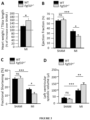
- Fgf10 +/- infarcted mice displayed worsened cardiac remodeling ( Figure 3A ) and function including decreased ejection fraction ( Figure 3B ), decreased fractional shortening ( Figure 3C ) and increased left ventricular dilation ( Figure 3D ).
- FGF10 preserves cardiac performance post-myocardial infarction.
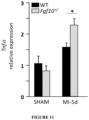
- the temporal conditional overexpression of Fgf10 was achieved using the Rosa26-RTTA / Tet(O)-Fgf10 mouse line treated with Doxycycline one days after myocardial infarction.
- the analysis cardiac function 3 weeks post-MI using echocardiographic measurement revealed that Fgf10 upregulation is sufficient to improve cardiac function post-MI ( Figure 12 ).
- Quantitative Real Time PCR on human samples Total RNA was extracted using Trizol LS reagent (Life technologies). First strand cDNA was synthesized using Maxima Reverse Transcriptase (Life technologies). qRT-PCR was performed using the following primers and Luminaris qPCR SuperMix (Life technologies) and a Roche Light Cycler 480. Each experiment was performed in duplicate and normalized to PPIA and YWHAZ. Quantitative RT-PCR primers are the following:
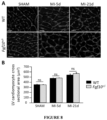
- cardiomyocyte cross sectional area measurement revealed decreased cardiomyocyte cell size in R26R-RTTA / Tet(O)-Fgf10 -MI mice treated with DOX food compare to R26R-RTTA / Tet(O)-Fgf10 -MI mice treated with CTRL food, strongly reinforcing the pro-proliferative effect of FGF10 on cardiomyocytes post-MI.
Landscapes
- Health & Medical Sciences (AREA)
- Life Sciences & Earth Sciences (AREA)
- Chemical & Material Sciences (AREA)
- General Health & Medical Sciences (AREA)
- Medicinal Chemistry (AREA)
- Engineering & Computer Science (AREA)
- Bioinformatics & Cheminformatics (AREA)
- Pharmacology & Pharmacy (AREA)
- Veterinary Medicine (AREA)
- Animal Behavior & Ethology (AREA)
- Public Health (AREA)
- Organic Chemistry (AREA)
- Gastroenterology & Hepatology (AREA)
- Proteomics, Peptides & Aminoacids (AREA)
- Zoology (AREA)
- Immunology (AREA)
- Epidemiology (AREA)
- Nuclear Medicine, Radiotherapy & Molecular Imaging (AREA)
- Cardiology (AREA)
- Heart & Thoracic Surgery (AREA)
- Chemical Kinetics & Catalysis (AREA)
- General Chemical & Material Sciences (AREA)
- Urology & Nephrology (AREA)
- Vascular Medicine (AREA)
- Toxicology (AREA)
- Biochemistry (AREA)
- Biophysics (AREA)
- Genetics & Genomics (AREA)
- Molecular Biology (AREA)
- Medicines That Contain Protein Lipid Enzymes And Other Medicines (AREA)
Applications Claiming Priority (2)
| Application Number | Priority Date | Filing Date | Title |
|---|---|---|---|
| EP17306594 | 2017-11-16 | ||
| PCT/EP2018/081584 WO2019097001A1 (en) | 2017-11-16 | 2018-11-16 | Fgf10 for the treatment of heart diseases |
Publications (3)
| Publication Number | Publication Date |
|---|---|
| EP3710043A1 EP3710043A1 (en) | 2020-09-23 |
| EP3710043B1 true EP3710043B1 (en) | 2024-04-17 |
| EP3710043C0 EP3710043C0 (en) | 2024-04-17 |
Family
ID=60629615
Family Applications (1)
| Application Number | Title | Priority Date | Filing Date |
|---|---|---|---|
| EP18803673.5A Active EP3710043B1 (en) | 2017-11-16 | 2018-11-16 | Fgf10 for the treatment of heart diseases |
Country Status (5)
| Country | Link |
|---|---|
| US (2) | US12064470B2 (pl) |
| EP (1) | EP3710043B1 (pl) |
| ES (1) | ES2983584T3 (pl) |
| PL (1) | PL3710043T3 (pl) |
| WO (1) | WO2019097001A1 (pl) |
Families Citing this family (1)
| Publication number | Priority date | Publication date | Assignee | Title |
|---|---|---|---|---|
| WO2025214963A1 (en) * | 2024-04-08 | 2025-10-16 | Universite D'aix Marseille | Method for the treatment of heart diseases |
Family Cites Families (6)
| Publication number | Priority date | Publication date | Assignee | Title |
|---|---|---|---|---|
| US20050019824A1 (en) * | 1994-03-08 | 2005-01-27 | Human Genome Sciences, Inc. | Fibroblast Growth Factor-10 |
| GB2332373A (en) * | 1997-12-19 | 1999-06-23 | Merck & Co Inc | Treatment of coronary and/or peripheral ischemia using an antithrombotic agent and an angiogenesis promoter |
| CA2356551A1 (en) * | 1998-12-28 | 2000-07-06 | Arch Development Corporation | Efficient and stable in vivo gene transfer to cardiomyocytes using recombinant adeno-associated virus vectors |
| WO2005118782A2 (en) * | 2004-04-16 | 2005-12-15 | Hydra Biosciences, Inc. | Methods of promoting cardiac cell proliferation |
| US7612181B2 (en) * | 2005-08-19 | 2009-11-03 | Abbott Laboratories | Dual variable domain immunoglobulin and uses thereof |
| WO2009114702A2 (en) * | 2008-03-14 | 2009-09-17 | Humanzyme Limited | Recombinant production of authentic human proteins using human cell expression systems |
-
2018
- 2018-11-16 PL PL18803673.5T patent/PL3710043T3/pl unknown
- 2018-11-16 US US16/764,043 patent/US12064470B2/en active Active
- 2018-11-16 ES ES18803673T patent/ES2983584T3/es active Active
- 2018-11-16 WO PCT/EP2018/081584 patent/WO2019097001A1/en not_active Ceased
- 2018-11-16 EP EP18803673.5A patent/EP3710043B1/en active Active
-
2024
- 2024-07-09 US US18/767,040 patent/US20240358795A1/en active Pending
Also Published As
| Publication number | Publication date |
|---|---|
| WO2019097001A1 (en) | 2019-05-23 |
| ES2983584T3 (es) | 2024-10-23 |
| US12064470B2 (en) | 2024-08-20 |
| US20200276268A1 (en) | 2020-09-03 |
| PL3710043T3 (pl) | 2024-09-23 |
| EP3710043C0 (en) | 2024-04-17 |
| US20240358795A1 (en) | 2024-10-31 |
| EP3710043A1 (en) | 2020-09-23 |
Similar Documents
| Publication | Publication Date | Title |
|---|---|---|
| Song et al. | CREG protects from myocardial ischemia/reperfusion injury by regulating myocardial autophagy and apoptosis | |
| US20090239940A1 (en) | Treating heart failure and ventricular arrhythmias | |
| Gupte et al. | Chronic neuregulin-1β treatment mitigates the progression of postmyocardial infarction heart failure in the setting of type 1 diabetes mellitus by suppressing myocardial apoptosis, fibrosis, and key oxidant-producing enzymes | |
| KR20190013926A (ko) | 폐혈관 질환 치료용 조성물 및 방법 | |
| Fargnoli et al. | Cardiac surgical delivery of the sarcoplasmic reticulum calcium ATPase rescues myocytes in ischemic heart failure | |
| Chen et al. | Effect of propofol on myocardial ischemia/reperfusion injury in rats through JAK/STAT signaling pathway. | |
| US20240358795A1 (en) | Fgf10 for the treatment of heart diseases | |
| US9751950B2 (en) | Methods of reducing skeletal muscle loss using an antibody against Fn14 | |
| Zeng et al. | Ethyl ferulate suppresses post-myocardial infarction myocardial fibrosis by inhibiting transforming growth factor receptor 1 | |
| US20140205577A1 (en) | Treatment of Cardiovascular Disorders Using the Cell Differentiation Signaling Protein Nell1 | |
| Gooch et al. | Initial report on a phase I clinical trial: prevention and treatment of post-operative acute kidney injury with allogeneic mesenchymal stem cells in patients who require on-pump cardiac surgery | |
| CN108096567A (zh) | 组蛋白甲基转移酶ezh2在制备预防或治疗主动脉疾病的药物制剂中的应用 | |
| Ding et al. | MiR-21 regulates pulmonary hypertension in rats via TGF-β1/Smad2 signaling pathway. | |
| CN110734972A (zh) | miR-181c-3p作为肾纤维化标志物的应用 | |
| CN108430517A (zh) | 利用fgf12的血管平滑肌细胞增殖性疾病的诊断、预防或治疗用组合物 | |
| ES3014709T3 (en) | Park2 nucleic acid and/or park2 polypeptide and salvador shrna for use in the treatment of cardiac conditions | |
| Vähäsilta et al. | Cardiomyocyte apoptosis after antegrade and retrograde cardioplegia during aortic valve surgery | |
| Wu et al. | Application of a modified extracorporeal circulation perfusion method during surgery for acute Stanford type A aortic dissection | |
| US20220372169A1 (en) | Inhibition of the ve-ptp phosphatase protects the kidney from ischemia-reperfusion injury | |
| Feng et al. | The role of CC motif chemokine ligand 2 in the preservation of myogenic tone in the kidney microvasculature of Dahl Salt-Sensitive rats | |
| Narula et al. | Apoptosis in heart failure: a tale of heightened expectations, unfulfilled promises and broken hearts... | |
| Honkanen | Methods of spinal cord protection in aortic surgery: experimental porcine studies | |
| CN117547621A (zh) | 激活gata5和isl1在心肌梗死后心脏损伤修复中的应用 | |
| Montero et al. | Galectin-1 prevents pathological vascular remodeling in atherosclerosis and abdominal aortic aneurysm | |
| CN117224677A (zh) | 促进senp1基因表达的试剂在制备治疗或抑制心肌纤维化药物中的应用 |
Legal Events
| Date | Code | Title | Description |
|---|---|---|---|
| STAA | Information on the status of an ep patent application or granted ep patent |
Free format text: STATUS: UNKNOWN |
|
| STAA | Information on the status of an ep patent application or granted ep patent |
Free format text: STATUS: THE INTERNATIONAL PUBLICATION HAS BEEN MADE |
|
| PUAI | Public reference made under article 153(3) epc to a published international application that has entered the european phase |
Free format text: ORIGINAL CODE: 0009012 |
|
| STAA | Information on the status of an ep patent application or granted ep patent |
Free format text: STATUS: REQUEST FOR EXAMINATION WAS MADE |
|
| 17P | Request for examination filed |
Effective date: 20200608 |
|
| AK | Designated contracting states |
Kind code of ref document: A1 Designated state(s): AL AT BE BG CH CY CZ DE DK EE ES FI FR GB GR HR HU IE IS IT LI LT LU LV MC MK MT NL NO PL PT RO RS SE SI SK SM TR |
|
| AX | Request for extension of the european patent |
Extension state: BA ME |
|
| DAV | Request for validation of the european patent (deleted) | ||
| DAX | Request for extension of the european patent (deleted) | ||
| STAA | Information on the status of an ep patent application or granted ep patent |
Free format text: STATUS: EXAMINATION IS IN PROGRESS |
|
| 17Q | First examination report despatched |
Effective date: 20210709 |
|
| GRAP | Despatch of communication of intention to grant a patent |
Free format text: ORIGINAL CODE: EPIDOSNIGR1 |
|
| STAA | Information on the status of an ep patent application or granted ep patent |
Free format text: STATUS: GRANT OF PATENT IS INTENDED |
|
| INTG | Intention to grant announced |
Effective date: 20231117 |
|
| GRAS | Grant fee paid |
Free format text: ORIGINAL CODE: EPIDOSNIGR3 |
|
| GRAA | (expected) grant |
Free format text: ORIGINAL CODE: 0009210 |
|
| STAA | Information on the status of an ep patent application or granted ep patent |
Free format text: STATUS: THE PATENT HAS BEEN GRANTED |
|
| AK | Designated contracting states |
Kind code of ref document: B1 Designated state(s): AL AT BE BG CH CY CZ DE DK EE ES FI FR GB GR HR HU IE IS IT LI LT LU LV MC MK MT NL NO PL PT RO RS SE SI SK SM TR |
|
| REG | Reference to a national code |
Ref country code: GB Ref legal event code: FG4D |
|
| REG | Reference to a national code |
Ref country code: CH Ref legal event code: EP |
|
| REG | Reference to a national code |
Ref country code: IE Ref legal event code: FG4D Ref country code: DE Ref legal event code: R096 Ref document number: 602018068247 Country of ref document: DE |
|
| U01 | Request for unitary effect filed |
Effective date: 20240517 |
|
| U07 | Unitary effect registered |
Designated state(s): AT BE BG DE DK EE FI FR IT LT LU LV MT NL PT SE SI Effective date: 20240527 |
|
| REG | Reference to a national code |
Ref country code: GR Ref legal event code: EP Ref document number: 20240401654 Country of ref document: GR Effective date: 20240819 |
|
| PG25 | Lapsed in a contracting state [announced via postgrant information from national office to epo] |
Ref country code: IS Free format text: LAPSE BECAUSE OF FAILURE TO SUBMIT A TRANSLATION OF THE DESCRIPTION OR TO PAY THE FEE WITHIN THE PRESCRIBED TIME-LIMIT Effective date: 20240817 |
|
| PG25 | Lapsed in a contracting state [announced via postgrant information from national office to epo] |
Ref country code: HR Free format text: LAPSE BECAUSE OF FAILURE TO SUBMIT A TRANSLATION OF THE DESCRIPTION OR TO PAY THE FEE WITHIN THE PRESCRIBED TIME-LIMIT Effective date: 20240417 |
|
| REG | Reference to a national code |
Ref country code: ES Ref legal event code: FG2A Ref document number: 2983584 Country of ref document: ES Kind code of ref document: T3 Effective date: 20241023 |
|
| PG25 | Lapsed in a contracting state [announced via postgrant information from national office to epo] |
Ref country code: IS Free format text: LAPSE BECAUSE OF FAILURE TO SUBMIT A TRANSLATION OF THE DESCRIPTION OR TO PAY THE FEE WITHIN THE PRESCRIBED TIME-LIMIT Effective date: 20240817 Ref country code: HR Free format text: LAPSE BECAUSE OF FAILURE TO SUBMIT A TRANSLATION OF THE DESCRIPTION OR TO PAY THE FEE WITHIN THE PRESCRIBED TIME-LIMIT Effective date: 20240417 Ref country code: RS Free format text: LAPSE BECAUSE OF FAILURE TO SUBMIT A TRANSLATION OF THE DESCRIPTION OR TO PAY THE FEE WITHIN THE PRESCRIBED TIME-LIMIT Effective date: 20240717 |
|
| U20 | Renewal fee for the european patent with unitary effect paid |
Year of fee payment: 7 Effective date: 20241115 |
|
| REG | Reference to a national code |
Ref country code: DE Ref legal event code: R097 Ref document number: 602018068247 Country of ref document: DE |
|
| PG25 | Lapsed in a contracting state [announced via postgrant information from national office to epo] |
Ref country code: CZ Free format text: LAPSE BECAUSE OF FAILURE TO SUBMIT A TRANSLATION OF THE DESCRIPTION OR TO PAY THE FEE WITHIN THE PRESCRIBED TIME-LIMIT Effective date: 20240417 |
|
| PG25 | Lapsed in a contracting state [announced via postgrant information from national office to epo] |
Ref country code: SK Free format text: LAPSE BECAUSE OF FAILURE TO SUBMIT A TRANSLATION OF THE DESCRIPTION OR TO PAY THE FEE WITHIN THE PRESCRIBED TIME-LIMIT Effective date: 20240417 Ref country code: RO Free format text: LAPSE BECAUSE OF FAILURE TO SUBMIT A TRANSLATION OF THE DESCRIPTION OR TO PAY THE FEE WITHIN THE PRESCRIBED TIME-LIMIT Effective date: 20240417 |
|
| PG25 | Lapsed in a contracting state [announced via postgrant information from national office to epo] |
Ref country code: SM Free format text: LAPSE BECAUSE OF FAILURE TO SUBMIT A TRANSLATION OF THE DESCRIPTION OR TO PAY THE FEE WITHIN THE PRESCRIBED TIME-LIMIT Effective date: 20240417 |
|
| PG25 | Lapsed in a contracting state [announced via postgrant information from national office to epo] |
Ref country code: SM Free format text: LAPSE BECAUSE OF FAILURE TO SUBMIT A TRANSLATION OF THE DESCRIPTION OR TO PAY THE FEE WITHIN THE PRESCRIBED TIME-LIMIT Effective date: 20240417 Ref country code: SK Free format text: LAPSE BECAUSE OF FAILURE TO SUBMIT A TRANSLATION OF THE DESCRIPTION OR TO PAY THE FEE WITHIN THE PRESCRIBED TIME-LIMIT Effective date: 20240417 Ref country code: RO Free format text: LAPSE BECAUSE OF FAILURE TO SUBMIT A TRANSLATION OF THE DESCRIPTION OR TO PAY THE FEE WITHIN THE PRESCRIBED TIME-LIMIT Effective date: 20240417 Ref country code: CZ Free format text: LAPSE BECAUSE OF FAILURE TO SUBMIT A TRANSLATION OF THE DESCRIPTION OR TO PAY THE FEE WITHIN THE PRESCRIBED TIME-LIMIT Effective date: 20240417 |
|
| PLBE | No opposition filed within time limit |
Free format text: ORIGINAL CODE: 0009261 |
|
| STAA | Information on the status of an ep patent application or granted ep patent |
Free format text: STATUS: NO OPPOSITION FILED WITHIN TIME LIMIT |
|
| 26N | No opposition filed |
Effective date: 20250120 |
|
| U20 | Renewal fee for the european patent with unitary effect paid |
Year of fee payment: 8 Effective date: 20251021 |
|
| REG | Reference to a national code |
Ref country code: CH Ref legal event code: U11 Free format text: ST27 STATUS EVENT CODE: U-0-0-U10-U11 (AS PROVIDED BY THE NATIONAL OFFICE) Effective date: 20251201 |
|
| PGFP | Annual fee paid to national office [announced via postgrant information from national office to epo] |
Ref country code: GB Payment date: 20251125 Year of fee payment: 8 |
|
| PGFP | Annual fee paid to national office [announced via postgrant information from national office to epo] |
Ref country code: MC Payment date: 20251120 Year of fee payment: 8 Ref country code: NO Payment date: 20251120 Year of fee payment: 8 |
|
| PGFP | Annual fee paid to national office [announced via postgrant information from national office to epo] |
Ref country code: TR Payment date: 20251030 Year of fee payment: 8 Ref country code: GR Payment date: 20251118 Year of fee payment: 8 |
|
| PGFP | Annual fee paid to national office [announced via postgrant information from national office to epo] |
Ref country code: CH Payment date: 20251201 Year of fee payment: 8 |
|
| PGFP | Annual fee paid to national office [announced via postgrant information from national office to epo] |
Ref country code: IE Payment date: 20251118 Year of fee payment: 8 |
|
| PGFP | Annual fee paid to national office [announced via postgrant information from national office to epo] |
Ref country code: PL Payment date: 20251027 Year of fee payment: 8 |
|
| PGFP | Annual fee paid to national office [announced via postgrant information from national office to epo] |
Ref country code: ES Payment date: 20251209 Year of fee payment: 8 |
|
| PG25 | Lapsed in a contracting state [announced via postgrant information from national office to epo] |
Ref country code: HU Free format text: LAPSE BECAUSE OF FAILURE TO SUBMIT A TRANSLATION OF THE DESCRIPTION OR TO PAY THE FEE WITHIN THE PRESCRIBED TIME-LIMIT; INVALID AB INITIO Effective date: 20181116 |
|
| PG25 | Lapsed in a contracting state [announced via postgrant information from national office to epo] |
Ref country code: CY Free format text: LAPSE BECAUSE OF FAILURE TO SUBMIT A TRANSLATION OF THE DESCRIPTION OR TO PAY THE FEE WITHIN THE PRESCRIBED TIME-LIMIT; INVALID AB INITIO Effective date: 20181116 |