EP3710599B1 - Procédé de stadification de la fibrose hépatique chez les patients atteints de nash - Google Patents
Procédé de stadification de la fibrose hépatique chez les patients atteints de nash Download PDFInfo
- Publication number
- EP3710599B1 EP3710599B1 EP18808196.2A EP18808196A EP3710599B1 EP 3710599 B1 EP3710599 B1 EP 3710599B1 EP 18808196 A EP18808196 A EP 18808196A EP 3710599 B1 EP3710599 B1 EP 3710599B1
- Authority
- EP
- European Patent Office
- Prior art keywords
- fibrosis
- nash
- protein
- stage
- markers
- Prior art date
- Legal status (The legal status is an assumption and is not a legal conclusion. Google has not performed a legal analysis and makes no representation as to the accuracy of the status listed.)
- Active
Links
Images





Classifications
-
- A—HUMAN NECESSITIES
- A61—MEDICAL OR VETERINARY SCIENCE; HYGIENE
- A61P—SPECIFIC THERAPEUTIC ACTIVITY OF CHEMICAL COMPOUNDS OR MEDICINAL PREPARATIONS
- A61P1/00—Drugs for disorders of the alimentary tract or the digestive system
- A61P1/16—Drugs for disorders of the alimentary tract or the digestive system for liver or gallbladder disorders, e.g. hepatoprotective agents, cholagogues, litholytics
-
- C—CHEMISTRY; METALLURGY
- C12—BIOCHEMISTRY; BEER; SPIRITS; WINE; VINEGAR; MICROBIOLOGY; ENZYMOLOGY; MUTATION OR GENETIC ENGINEERING
- C12Q—MEASURING OR TESTING PROCESSES INVOLVING ENZYMES, NUCLEIC ACIDS OR MICROORGANISMS; COMPOSITIONS OR TEST PAPERS THEREFOR; PROCESSES OF PREPARING SUCH COMPOSITIONS; CONDITION-RESPONSIVE CONTROL IN MICROBIOLOGICAL OR ENZYMOLOGICAL PROCESSES
- C12Q1/00—Measuring or testing processes involving enzymes, nucleic acids or microorganisms; Compositions therefor; Processes of preparing such compositions
- C12Q1/68—Measuring or testing processes involving enzymes, nucleic acids or microorganisms; Compositions therefor; Processes of preparing such compositions involving nucleic acids
- C12Q1/6876—Nucleic acid products used in the analysis of nucleic acids, e.g. primers or probes
- C12Q1/6883—Nucleic acid products used in the analysis of nucleic acids, e.g. primers or probes for diseases caused by alterations of genetic material
-
- G—PHYSICS
- G01—MEASURING; TESTING
- G01N—INVESTIGATING OR ANALYSING MATERIALS BY DETERMINING THEIR CHEMICAL OR PHYSICAL PROPERTIES
- G01N33/00—Investigating or analysing materials by specific methods not covered by groups G01N1/00 - G01N31/00
- G01N33/48—Biological material, e.g. blood, urine; Haemocytometers
- G01N33/50—Chemical analysis of biological material, e.g. blood, urine; Testing involving biospecific ligand binding methods; Immunological testing
- G01N33/68—Chemical analysis of biological material, e.g. blood, urine; Testing involving biospecific ligand binding methods; Immunological testing involving proteins, peptides or amino acids
- G01N33/6893—Chemical analysis of biological material, e.g. blood, urine; Testing involving biospecific ligand binding methods; Immunological testing involving proteins, peptides or amino acids related to diseases not provided for elsewhere
-
- A—HUMAN NECESSITIES
- A61—MEDICAL OR VETERINARY SCIENCE; HYGIENE
- A61K—PREPARATIONS FOR MEDICAL, DENTAL OR TOILETRY PURPOSES
- A61K45/00—Medicinal preparations containing active ingredients not provided for in groups A61K31/00 - A61K41/00
- A61K45/06—Mixtures of active ingredients without chemical characterisation, e.g. antiphlogistics and cardiaca
-
- C—CHEMISTRY; METALLURGY
- C12—BIOCHEMISTRY; BEER; SPIRITS; WINE; VINEGAR; MICROBIOLOGY; ENZYMOLOGY; MUTATION OR GENETIC ENGINEERING
- C12Q—MEASURING OR TESTING PROCESSES INVOLVING ENZYMES, NUCLEIC ACIDS OR MICROORGANISMS; COMPOSITIONS OR TEST PAPERS THEREFOR; PROCESSES OF PREPARING SUCH COMPOSITIONS; CONDITION-RESPONSIVE CONTROL IN MICROBIOLOGICAL OR ENZYMOLOGICAL PROCESSES
- C12Q2600/00—Oligonucleotides characterized by their use
- C12Q2600/112—Disease subtyping, staging or classification
-
- C—CHEMISTRY; METALLURGY
- C12—BIOCHEMISTRY; BEER; SPIRITS; WINE; VINEGAR; MICROBIOLOGY; ENZYMOLOGY; MUTATION OR GENETIC ENGINEERING
- C12Q—MEASURING OR TESTING PROCESSES INVOLVING ENZYMES, NUCLEIC ACIDS OR MICROORGANISMS; COMPOSITIONS OR TEST PAPERS THEREFOR; PROCESSES OF PREPARING SUCH COMPOSITIONS; CONDITION-RESPONSIVE CONTROL IN MICROBIOLOGICAL OR ENZYMOLOGICAL PROCESSES
- C12Q2600/00—Oligonucleotides characterized by their use
- C12Q2600/158—Expression markers
-
- G—PHYSICS
- G01—MEASURING; TESTING
- G01N—INVESTIGATING OR ANALYSING MATERIALS BY DETERMINING THEIR CHEMICAL OR PHYSICAL PROPERTIES
- G01N2333/00—Assays involving biological materials from specific organisms or of a specific nature
- G01N2333/435—Assays involving biological materials from specific organisms or of a specific nature from animals; from humans
- G01N2333/46—Assays involving biological materials from specific organisms or of a specific nature from animals; from humans from vertebrates
- G01N2333/47—Assays involving proteins of known structure or function as defined in the subgroups
- G01N2333/4701—Details
- G01N2333/4716—Complement proteins, e.g. anaphylatoxin, C3a, C5a
-
- G—PHYSICS
- G01—MEASURING; TESTING
- G01N—INVESTIGATING OR ANALYSING MATERIALS BY DETERMINING THEIR CHEMICAL OR PHYSICAL PROPERTIES
- G01N2333/00—Assays involving biological materials from specific organisms or of a specific nature
- G01N2333/435—Assays involving biological materials from specific organisms or of a specific nature from animals; from humans
- G01N2333/46—Assays involving biological materials from specific organisms or of a specific nature from animals; from humans from vertebrates
- G01N2333/47—Assays involving proteins of known structure or function as defined in the subgroups
- G01N2333/4701—Details
- G01N2333/4745—Insulin-like growth factor binding protein
-
- G—PHYSICS
- G01—MEASURING; TESTING
- G01N—INVESTIGATING OR ANALYSING MATERIALS BY DETERMINING THEIR CHEMICAL OR PHYSICAL PROPERTIES
- G01N2333/00—Assays involving biological materials from specific organisms or of a specific nature
- G01N2333/435—Assays involving biological materials from specific organisms or of a specific nature from animals; from humans
- G01N2333/705—Assays involving receptors, cell surface antigens or cell surface determinants
- G01N2333/70575—NGF/TNF-superfamily, e.g. CD70, CD95L, CD153 or CD154
-
- G—PHYSICS
- G01—MEASURING; TESTING
- G01N—INVESTIGATING OR ANALYSING MATERIALS BY DETERMINING THEIR CHEMICAL OR PHYSICAL PROPERTIES
- G01N2333/00—Assays involving biological materials from specific organisms or of a specific nature
- G01N2333/435—Assays involving biological materials from specific organisms or of a specific nature from animals; from humans
- G01N2333/705—Assays involving receptors, cell surface antigens or cell surface determinants
- G01N2333/70578—NGF-receptor/TNF-receptor superfamily, e.g. CD27, CD30 CD40 or CD95
-
- G—PHYSICS
- G01—MEASURING; TESTING
- G01N—INVESTIGATING OR ANALYSING MATERIALS BY DETERMINING THEIR CHEMICAL OR PHYSICAL PROPERTIES
- G01N2333/00—Assays involving biological materials from specific organisms or of a specific nature
- G01N2333/435—Assays involving biological materials from specific organisms or of a specific nature from animals; from humans
- G01N2333/705—Assays involving receptors, cell surface antigens or cell surface determinants
- G01N2333/715—Assays involving receptors, cell surface antigens or cell surface determinants for cytokines; for lymphokines; for interferons
- G01N2333/7155—Assays involving receptors, cell surface antigens or cell surface determinants for cytokines; for lymphokines; for interferons for interleukins [IL]
-
- G—PHYSICS
- G01—MEASURING; TESTING
- G01N—INVESTIGATING OR ANALYSING MATERIALS BY DETERMINING THEIR CHEMICAL OR PHYSICAL PROPERTIES
- G01N2333/00—Assays involving biological materials from specific organisms or of a specific nature
- G01N2333/81—Protease inhibitors
- G01N2333/8107—Endopeptidase (E.C. 3.4.21-99) inhibitors
- G01N2333/8146—Metalloprotease (E.C. 3.4.24) inhibitors, e.g. tissue inhibitor of metallo proteinase, TIMP
-
- G—PHYSICS
- G01—MEASURING; TESTING
- G01N—INVESTIGATING OR ANALYSING MATERIALS BY DETERMINING THEIR CHEMICAL OR PHYSICAL PROPERTIES
- G01N2333/00—Assays involving biological materials from specific organisms or of a specific nature
- G01N2333/90—Enzymes; Proenzymes
- G01N2333/91—Transferases (2.)
- G01N2333/91045—Acyltransferases (2.3)
- G01N2333/91051—Acyltransferases other than aminoacyltransferases (general) (2.3.1)
- G01N2333/91057—Acyltransferases other than aminoacyltransferases (general) (2.3.1) with definite EC number (2.3.1.-)
-
- G—PHYSICS
- G01—MEASURING; TESTING
- G01N—INVESTIGATING OR ANALYSING MATERIALS BY DETERMINING THEIR CHEMICAL OR PHYSICAL PROPERTIES
- G01N2333/00—Assays involving biological materials from specific organisms or of a specific nature
- G01N2333/90—Enzymes; Proenzymes
- G01N2333/91—Transferases (2.)
- G01N2333/912—Transferases (2.) transferring phosphorus containing groups, e.g. kinases (2.7)
- G01N2333/91205—Phosphotransferases in general
- G01N2333/9121—Phosphotransferases in general with an alcohol group as acceptor (2.7.1), e.g. general tyrosine, serine or threonine kinases
- G01N2333/91215—Phosphotransferases in general with an alcohol group as acceptor (2.7.1), e.g. general tyrosine, serine or threonine kinases with a definite EC number (2.7.1.-)
-
- G—PHYSICS
- G01—MEASURING; TESTING
- G01N—INVESTIGATING OR ANALYSING MATERIALS BY DETERMINING THEIR CHEMICAL OR PHYSICAL PROPERTIES
- G01N2333/00—Assays involving biological materials from specific organisms or of a specific nature
- G01N2333/90—Enzymes; Proenzymes
- G01N2333/914—Hydrolases (3)
- G01N2333/948—Hydrolases (3) acting on peptide bonds (3.4)
- G01N2333/95—Proteinases, i.e. endopeptidases (3.4.21-3.4.99)
- G01N2333/964—Proteinases, i.e. endopeptidases (3.4.21-3.4.99) derived from animal tissue
- G01N2333/96425—Proteinases, i.e. endopeptidases (3.4.21-3.4.99) derived from animal tissue from mammals
- G01N2333/96427—Proteinases, i.e. endopeptidases (3.4.21-3.4.99) derived from animal tissue from mammals in general
- G01N2333/9643—Proteinases, i.e. endopeptidases (3.4.21-3.4.99) derived from animal tissue from mammals in general with EC number
- G01N2333/96466—Cysteine endopeptidases (3.4.22)
-
- G—PHYSICS
- G01—MEASURING; TESTING
- G01N—INVESTIGATING OR ANALYSING MATERIALS BY DETERMINING THEIR CHEMICAL OR PHYSICAL PROPERTIES
- G01N2800/00—Detection or diagnosis of diseases
- G01N2800/08—Hepato-biliairy disorders other than hepatitis
- G01N2800/085—Liver diseases, e.g. portal hypertension, fibrosis, cirrhosis, bilirubin
-
- G—PHYSICS
- G01—MEASURING; TESTING
- G01N—INVESTIGATING OR ANALYSING MATERIALS BY DETERMINING THEIR CHEMICAL OR PHYSICAL PROPERTIES
- G01N2800/00—Detection or diagnosis of diseases
- G01N2800/52—Predicting or monitoring the response to treatment, e.g. for selection of therapy based on assay results in personalised medicine; Prognosis
-
- G—PHYSICS
- G01—MEASURING; TESTING
- G01N—INVESTIGATING OR ANALYSING MATERIALS BY DETERMINING THEIR CHEMICAL OR PHYSICAL PROPERTIES
- G01N2800/00—Detection or diagnosis of diseases
- G01N2800/56—Staging of a disease; Further complications associated with the disease
Definitions
- NASH represents a significant and growing unmet medical need with no currently approved therapies. An estimated 16 million adults in the United States have NASH. Approximately 25% of patients diagnosed with NASH have advanced liver fibrosis, which is associated with increased morbidity and mortality.
- Biopsy is considered a standard for assessments of liver health including NASH. However, biopsy is an invasive technique that is not ideal for many patients. Non-invasive methods may provide advantages for diagnosing, monitoring, or predicting NASH. Described herein are non-invasive markers associated with NASH or a related presentation.
- WO 2012/105590 A1 discloses a determination marker comprising YKL-40 which can be used for distinguishing between simple steatosis and NASH in a non-alcoholic fatty liver disease (NAFLD) patient.
- WO 2005/039397 A2 discloses a method of diagnosing the presence or severity of tissue fibrosis in an individual by detecting ⁇ 2-macroglobulin ( ⁇ 2-MG) in a sample from the individual, detecting hyaluronic acid (HA) in a sample from the individual, detecting tissue inhibitor of metalloproteinase-1 (TIMP-1) in a sample from the individual, and diagnosing the presence or severity of tissue fibrosis in the individual based on the presence or level of ⁇ 2-MG, HA and TIMP-1.
- ⁇ 2-MG ⁇ 2-macroglobulin
- HA hyaluronic acid
- TIMP-1 tissue inhibitor of metalloproteinase-1
- WO 2017/139254 A1 discloses methods, compositions and kits for determining whether a subject has NAFLD, as well as methods, compositions and kits for determining whether a subject has NASH.
- WO 2017/167934 A1 discloses a method for the diagnosis of NASH, and for classifying a subject as a potential receiver of a treatment for NASH.
- a method for classifying a non-alcoholic steatohepatitis (NASH) patient with severe fibrosis comprising measuring the protein levels of Collectin Kidney 1 (CL-K1), Spondin-1(RSPO1), Matrix metallopeptidase 7 (MMP-7), Complement component 7 (C7), Insulin-like growth factor binding protein 7 (IGFBP7), Interleukin 5 receptor subunit alpha (IL-5Ra), and Thrombospondin-2 (TSP2) in a serum sample isolated from the NASH patient; determining whether Nonalcoholic Steatohepatitis Clinical Research Network (CRN) fibrosis stage of liver fibrosis in the NASH patient is stage 3 or 4, based on the measured protein levels and predetermined reference values, wherein the predetermined reference values include reference protein levels for
- sample refers generally to a fluid from a human.
- a sample include: bile, blood, blood plasma, serum, breast milk, feces, pus, saliva, sebum, semen, sweat, tears, urine, and vomit.
- the sample is serum.
- the term "subject” refers to a mammalian subject. Exemplary subjects include, but are not limited to humans, monkeys, dogs, cats, mice, rats, cows, horses, goats and sheep. In some embodiments, the subject has a liver disease or condition and can be treated as described herein.
- the term "suspected" when referencing a patient refers to the potential for a patient to have a certain liver disease or condition based on a correlate.
- treatment refers to a process to (1) delay onset of a disease that is causing clinical symptoms; (2) inhibiting a disease, that is, arresting the development of clinical symptoms; and/or (3) relieving the disease, that is, causing the regression of clinical symptoms or the severity thereof.
- liver disease or condition refers to any one or more of the following: liver fibrosis, alcoholic hepatitis, C7 steatohepatitis (NASH), non-alcoholic fatty liver disease (NAFLD), or liver inflammation.
- NAS refers to the NAFLD Activity Score, which is a scoring system for NAFLD.
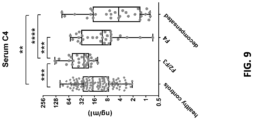
- the experimental examples of the present disclosure identified non-invasive markers from serum samples that can be used to diagnose liver diseases or conditions, such as liver fibrosis, non-alcoholic steatohepatitis (NASH), non-alcoholic fatty liver disease (NAFLD), and liver inflammation. More specifically, the instant inventors demonstrated that the expression levels of certain protein markers, individually or in combination, significantly correlated with the stage or status of the liver disease or condition. In addition, the serum C4 (7 ⁇ -hydroxy-4-cholesten-3-one) levels, which were measured to reflect hepatic bile acid biosynthesis, correlated with fibrosis stages and development of cirrhosis.
- liver diseases or conditions such as liver fibrosis, non-alcoholic steatohepatitis (NASH), non-alcoholic fatty liver disease (NAFLD), and liver inflammation. More specifically, the instant inventors demonstrated that the expression levels of certain protein markers, individually or in combination, significantly correlated with the stage or status of the liver disease or condition.
- information obtained using the diagnostic assays described herein may be used alone or in combination with other information, such as, but not limited to, genotypes or expression levels of other proteins, clinical chemical parameters, histopathological parameters, or age, gender and weight of the subject.
- the information obtained using the diagnostic assays described herein is useful in determining or identifying the clinical outcome of a treatment, selecting a patient for a treatment, or treating a patient, etc.
- the information obtained using the diagnostic assays described herein is useful in aiding in the determination or identification of clinical outcome of a treatment, aiding in the selection of a patient for a treatment, or aiding in the treatment of a patient and etc.
- the genotypes or expression levels of one or more proteins as disclosed herein are used in a panel of proteins, each of which contributes to the final diagnosis, prognosis or treatment.
- Protein markers have also been identified that correlate with clinical improvements following a treatment. These markers, therefore, can be used to monitor the treatment of patients. For example, when the markers show that a treatment has been effective in a patient, the patient may be instructed to continue the treatment. By contrast, if the markers show that no desired improvements have been achieved with the treatment, then a new treatment (e.g., a new medicine or a higher dose) may be used.
- a new treatment e.g., a new medicine or a higher dose
- a method of determining the stage or status of liver disease or condition in a human subject e.g., one that is suspected to have a liver disease or condition.
- the method entails measuring the expression levels of proteins/genes, selected from Table 1A, in a biological sample isolated from the human subject and determining the stage of liver fibrosis in the human subject based on the expression levels.
- the invention provides a method for classifying a non-alcoholic steatohepatitis (NASH) patient with severe fibrosis, comprising measuring the protein levels of Collectin Kidney 1 (CL-K1), Spondin-1(RSPO1), Matrix metallopeptidase 7 (MMP-7), Complement component 7 (C7), Insulin-like growth factor binding protein 7 (IGFBP7), Interleukin 5 receptor subunit alpha (IL-5Ra), and Thrombospondin-2 (TSP2) in a serum sample isolated from the NASH patient; determining whether Nonalcoholic Steatohepatitis Clinical Research Network (CRN) fibrosis stage of liver fibrosis in the NASH patient is stage 3 or 4, based on the measured protein levels and predetermined reference values, wherein the predetermined reference values include reference protein levels for each of Collectin Kidney 1 (CL-K1), Spondin-1(RSPO1), Matrix metallopeptidase 7 (MMP-7), Complement component 7 (C
- Table 1A shows that the protein marker "Collectin Kidney 1" has expression levels 5987.2, 4903.3, 8174.95, 11267.55, and 15604.5 (unit: relative fluorescent unit (RFU)), at CRN fibrosis stages 0-4, respectively in the test sample.
- REU relative fluorescent unit
- the proteins are selected from Table 1A or Table 2A.
- the diagnostic variable in this aspect, is a CRN fibrosis stage.
- the proteins are selected from Table 1B or 2B, and the diagnostic variable is an Ishak Fibrosis stage; the proteins are selected from Table 1C or 2C, and the diagnostic variable is a NAS score; the proteins are selected from Table 1D or 2D, and the diagnostic variable is a steatosis; the proteins are selected from Table 1E or 2E, and the diagnostic variable is lobular inflammation (LI); or the proteins are selected from Table 1F or 2F, and the diagnostic variable is hepatic ballooning (HB).
- CRN fibrosis stage In other disclosures which do not form part of the present invention, the proteins are selected from Table 1B or 2B, and the diagnostic variable is an Ishak Fibrosis stage; the proteins are selected from Table 1C or 2C, and the diagnostic variable is a NAS score; the proteins are selected from Table 1D or 2D, and the diagnostic variable is a
- Example 1 As shown in the multivariant analysis of Example 1, a group of seven protein markers, when used in combination, had even greater diagnostic capability. These seven protein markers include C7 (Complement component 7), CL-K1 (Collectin Kidney 1), IGFBP7 (Insulin-like growth factor binding protein 7), Spondin 1 (RSPO1), IL-5Ra (UniProt: Q01344; Interleukin 5 receptor subunit alpha), MMP-7 (Matrix metallopeptidase 7) and TSP2 (Thrombospondin-2). In the invention, all seven of the seven markers are used.
- the serum levels of C4 (7 ⁇ -hydroxy-4-cholesten-3-one) correlate with the stage and status of liver diseases as well, which can individually, or in combination with other markers such as those disclosed herein, be used for the purpose of making diagnosis for liver diseases or conditions.
- the disease assessment can be made with information obtained through conventional or non-conventional methods.
- a method (not according to the invention) is provided for identifying a non-alcoholic steatohepatitis (NASH) patient as likely suffering advanced fibrosis.
- NASH non-alcoholic steatohepatitis
- the method entails measuring the AST level, ALT level and platelet count for the NASH patient and calculating a Fibrosis-4 (FIB-4) index, measuring the serum concentrations of tissue inhibitor of metalloproteinases 1 (TIMP-1), amino-terminal propeptide of type III procollagen (PIIINP) and hyaluronic acid (HA) for the NASH patient and calculating an enhanced liver fibrosis (ELF) score, or conducting a transient elastographic (Fibroscan) of the NASH patient to determine a Fibroscan score, and comparing the FIB-4 index and either or both of the ELF score and the Fibroscan score to reference values, and identifying the NASH patient as likely suffering from advanced fibrosis based on the comparison.
- FIB-4 index tissue inhibitor of metalloproteinases 1
- PIIINP amino-terminal propeptide of type III procollagen
- HA hyaluronic acid
- ELF enhanced liver fibrosis
- the FIB-4 index and the ELF score are determined. In some disclosures, the FIB-4 index, the ELF score and the Fibroscan score are determined. In some disclosures, no invasive measurements are made to the NASH patient. In one disclosure, an assessment of the FIB-4 or ELF score is made and a patient is treated with one or more therapeutic agents selected from an ASK1 inhibitor, an ACC inhibitor, or an FXR agonist. In one disclosure, an assessment of the FIB-4 or ELF score is made and a patient is treated with selonsertib.
- metabolites measured in serum samples of an individual can also be used as biomarkers for assessing disease stages.
- the present disclosure discloses a method of determining the stage or status of liver disease or condition in a human subject, e.g., one that is suspected to have a liver disease or condition.
- the method entails measuring the levels of one or more metabolites, selected from Tables 15-27, in a biological sample (e.g., serum) obtained from the human subject and determining the stage of liver fibrosis in the human subject based on the levels.
- the determination comprises comparing the levels to reference levels.
- the reference levels are obtained from a human subject not suffering from liver fibrosis.
- the metabolites are selected from Table 15.
- the diagnostic variable in this aspect, is a CRN fibrosis stage.
- the metabolites are selected from Table 16, and the diagnostic variable is a NAS score; the metabolites are selected from Table 17, and the diagnostic variable is a steatosis; the metabolites are selected from Table 19, and the diagnostic variable is lobular inflammation (LI); or the metabolites are selected from Table 18, and the diagnostic variable is hepatic ballooning (HB).
- determination of a liver disease or condition in a patient is followed by treatment as described herein. In other embodiments, determination of a liver disease or condition is conducted during the course of treatment.
- the presentation of a patient is determined from obtaining a biological sample including the panel described in Example 6, the patient may be treated by one or more therapeutic agents as described herein.
- protein markers have been identified that correlate well with the improvement of certain clinical endpoints. These protein markers, therefore, can be used to monitor the effectiveness of a treatment in a patient.
- the present disclosure also discloses a method for assessing the effect of a treatment in a patient suffering from a liver disease or condition and having received the treatment.
- the method entails measuring the expression levels of one or more proteins, selected from Tables 3A-D and 12, in a biological sample isolated from the patient; and assessing the effect of the treatment by comparing the expression levels to baseline expression levels obtained from the patients prior to the treatment.
- Each of the clinical endpoints/variables (steatosis, lobular inflammation, hepatic ballooning, and CRN fibrosis stage) has a corresponding list of protein markers for monitoring its improvement.
- the protein marker is selected from Table 3A, Table 4A or Table 12.
- the protein marker is selected from Table 3B, Table 4B or Table 12.
- the protein marker is selected from Table 3C, Table 4C or Table 12.
- the protein marker is selected from Table 3D or Table 4D.
- Multivariate marker groups are also identified for each clinical endpoint, which are summarized in Table B.
- the protein markers are two, three, four, five, six or more, or all seven selected from pTEN (P60484), CD70 (P32970), Caspase-2 (P42575), Cathepsin H (P09668), LAG-1 (Q8NHW4), PDXK (O00764), and GITR (Q9Y5U5).
- the protein markers are two, three, four, five, six, seven, eight, nine, ten, eleven or more, or all twelve selected from Integrin a1b1 (P56199, P05556), Nectin-like protein 2 (Q9BY67), PDGF Rb (P09619), LRP8 (Q14114), CD30 Ligand (P32971), Lumican (P51884), SAP (P02743), YKL-40 (P36222), sTie-2 (Q02763), HSP 90a/b (P07900 P08238), TSP2 (P35442), and YES (P07947).
- the protein markers are two, three, four, five or more, or all five selected from HSP 90a/b (P07900 P08238), Aminoacylase-1 (Q03154), FCG3B (075015), M-CSF R (P07333), and Keratin 18 (P05783).
- the protein markers are two, three, four, five, six or more, or all seven selected from Fibronectin (P02751), Thyroxine-Binding Globulin (P05543), FGF23 (Q9GZV9), LG3BP (Q08380), Heparin cofactor II (P05546), Protein C (P04070) and STAT3 (P40763).
- kits, packages and diagnostic panels for use in the method of the invention.
- the kits may include antibodies, nucleotide probes or primers and other reagents for measuring the protein or mRNA expression of various lists of proteins (e.g., Tables 1A-1F, 2A-2F, 3A-3D, 4A-4D, 11A-11D, 12, A, and B) as disclosed herein.
- the kit or package further includes a suitable therapy.
- Various embodiments disclosed above include multiple protein markers, the measurement of which can be conducted together (simultaneously or sequentially). Such testing will provide information for suitable diagnosis, prognosis, and clinical monitoring, without limitation.
- a method for providing biological information for diagnosing a liver disease or condition in a human subject comprising measuring the expression levels of two, three, four, five, six, seven, eight, nine, ten, fifty, twenty or more proteins, selected from Tables 1A-1F, Tables 2A-2F or Table 11A-11D, in a biological sample isolated from the human subject.
- the proteins are selected from Complement component 7 (C7), Collectin Kidney 1 (CL-K1), Insulin-like growth factor binding protein 7 (IGFBP7), Spondin-1(RSPO1), Interleukin 5 receptor subunit alpha (IL5-Ra), Matrix metallopeptidase (MMP-7), and Thrombospondin-2 (TSP2).
- the measurement is carried out for no more than 20, 25, 30, 35, 40, or 50 proteins.
- Another method for providing biological information for determining the CRN (Nonalcoholic Steatohepatitis Clinical Research Network) fibrosis stage in a human subject, comprising measuring the expression levels of two, three, four, five, six, seven, eight, nine, ten, fifty, twenty or more proteins, selected from Tables 1A, 2A or 11A, in a biological sample isolated from the human subject. In some disclosures, the measurement is carried out for no more than 20, 25, 30, 35, 40, or 50 proteins.
- CRN Nonalcoholic Steatohepatitis Clinical Research Network
- Another method for providing biological information for determining the Ishak fibrosis stage in a human subject, comprising measuring the expression levels of two, three, four, five, six, seven, eight, nine, ten, fifty, twenty or more proteins, selected from Tables 1B or 2B, in a biological sample isolated from the human subject. In some disclosures, the measurement is carried out for no more than 20, 25, 30, 35, 40, or 50 proteins.
- Another method for providing biological information for determining the NAS (nonalcoholic fatty liver disease (NAFLD) activity score) in a human subject, comprising measuring the expression levels of two, three, four, five, six, seven, eight, nine, ten, fifty, twenty or more proteins, selected from Tables 1C, 2C or 11B, in a biological sample isolated from the human subject. In some disclosures, the measurement is carried out for no more than 20, 25, 30, 35, 40, or 50 proteins.
- NAFLD nonalcoholic fatty liver disease
- Another method for providing biological information for characterizing steatosis in a human subject, comprising measuring the expression levels of two, three, four, five, six, seven, eight, nine, ten, fifty, twenty or more proteins, selected from Tables 1D or 2D, in a biological sample isolated from the human subject. In some disclosures, the measurement is carried out for no more than 20, 25, 30, 35, 40, or 50 proteins.
- Another method for providing biological information for characterizing lobular inflammation in a human subject, comprising measuring the expression levels of two, three, four, five, six, seven, eight, nine, ten, fifty, twenty or more proteins, selected from Tables 1E, 2E or 11C, in a biological sample isolated from the human subject. In some disclosures, the measurement is carried out for no more than 20, 25, 30, 35, 40, or 50 proteins.
- Another method for providing biological information for characterizing hepatic ballooning in a human subject, comprising measuring the expression levels of two, three, four, five, six, seven, eight, nine, ten, fifty, twenty or more proteins, selected from Tables 1F, 2F or 11D, in a biological sample isolated from the human subject. In some disclosures, the measurement is carried out for no more than 20, 25, 30, 35, 40, or 50 proteins.
- the method further comprises making a diagnosis based on the biological information. In some disclosures, the method further comprises prescribing or administering to the human subject a therapy according to the diagnosis.
- One disclosure provides a method for providing biological information for assessing the effect of a treatment in a patient suffering from liver disease or condition and having received the treatment, comprising measuring the expression levels of two, three, four, five, six, seven, eight, nine, ten, fifty, twenty or more proteins, selected from Tables 3A-3D and 12, in a biological sample isolated from the patient.
- the proteins are selected from Phosphatase and tensin homolog (PTEN), CD70, Caspase 2, Cathepsin H (CTSH), Sphingosine N-acyltransferase (LAG-1), Pyridoxal kinase (PDXK), and Glucocorticoid-induced TNFR-related protein (GITR).
- PTEN Phosphatase and tensin homolog
- CD70 CD70
- Caspase 2 Caspase 2
- CTSH Cathepsin H
- LAG-1 Sphingosine N-acyltransferase
- Another disclosure provides a method for providing biological information for assessing whether a liver disease or condition patient exhibits improvement on steatosis following a treatment, comprising measuring the expression levels of two, three, four, five, six, seven, eight, nine, ten, fifty, twenty or more proteins, selected from Tables 3A, 4A or 12, in a biological sample isolated from the human subject.
- the proteins are selected from Integrin a1b1 (P56199, P05556), Nectin-like protein 2 (Q9BY67), PDGF Rb (P09619), LRP8 (Q14114), CD30 Ligand (P32971), Lumican (P51884), SAP (P02743), YKL-40 (P36222), sTie-2 (Q02763), HSP 90a/b (P07900 P08238), TSP2 (P35442), and YES (P07947).
- the measurement is carried out for no more than 20, 25, 30, 35, 40, or 50 proteins.
- Another disclosure provides a method for providing biological information for assessing whether a liver disease or condition patient exhibits improvement on lobular inflammation following a treatment, comprising measuring the expression levels of two, three, four, five, six, seven, eight, nine, ten, fifty, twenty or more proteins, selected from Tables 3B, 4B or 12, in a biological sample isolated from the human subject.
- the proteins are selected from HSP 90a/b (P07900 P08238), Aminoacylase-1 (Q03154), FCG3B (075015), M-CSF R (P07333), and Keratin 18 (P05783).
- the measurement is carried out for no more than 20, 25, 30, 35, 40, or 50 proteins.
- Another disclosure provides a method for providing biological information for assessing whether a liver disease or condition patient exhibits improvement on hepatic ballooning following a treatment, comprising measuring the expression levels of two, three, four, five, six, seven, eight, nine, ten, fifty, twenty or more proteins, selected from Tables 3C, 4C or 12, in a biological sample isolated from the human subject.
- the proteins are selected from Fibronectin (P02751), Thyroxine-Binding Globulin (P05543), FGF23 (Q9GZV9), LG3BP (Q08380), Heparin cofactor II (P05546), Protein C (P04070) and STAT3 (P40763).
- the measurement is carried out for no more than 20, 25, 30, 35, 40, or 50 proteins.
- Another disclosure provides a method for providing biological information for assessing whether a liver disease or condition patient exhibits improvement on CRN fibrosis stage following a treatment, comprising measuring the expression levels of two, three, four, five, six, seven, eight, nine, ten, fifty, twenty or more proteins, selected from Tables 3D or 4D, in a biological sample isolated from the human subject.
- the proteins are selected from pTEN (P60484), CD70 (P32970), Caspase-2 (P42575), Cathepsin H (P09668), LAG-1 (Q8NHW4), PDXK (O00764), and GITR (Q9Y5U5).
- the measurement is carried out for no more than 20, 25, 30, 35, 40, or 50 proteins.
- the method further comprises making a treatment assessment based on the biological information. In some disclosures, the method further comprises prescribing or administering to the human subject a therapy according to the diagnosis.
- the present disclosure Upon obtaining information relating to the diagnosis of a liver disease or condition, or confirmation of effectiveness of a treatment, the present disclosure further provides suitable treatment methods or uses to the patient.
- the patient has been analyzed accordingly using any embodiment of the present disclosure, with one or more protein markers, optionally with other markers or clinical tests.
- the treatment uses one or more of the following therapeutic agents.
- one or more therapeutic agents include, and are not limited to, a compound disclosed herein which is administered in combination with one or more additional therapeutic agents to treat or prevent a disease or condition disclosed herein.
- the one or more additional therapeutic agents are a(n) ACE inhibitor, Acetyl CoA carboxylase inhibitor, Adenosine A3 receptor agonist, Adiponectin receptor agonist, AKT protein kinase inhibitor, AMP-activated protein kinases (AMPK), Amylin receptor agonist, Angiotensin II AT-1 receptor antagonist, Autotaxin inhibitors, Bioactive lipid, Calcitonin agonist, Caspase inhibitor, Caspase-3 stimulator, Cathepsin inhibitor, Caveolin 1 inhibitor, CCR2 chemokine antagonist, CCR3 chemokine antagonist, CCR5 chemokine antagonist, Chloride channel stimulator, CNR1 inhibitor, Cyclin D1 inhibitor, Cytochrome P450 7A1 inhibitor, DGAT1/2 inhibitor, Dipeptidyl
- Non-limiting examples of the one or more additional therapeutic agents include:
- the one or more additional therapeutic agents are selected from A-4250, AC-3174, acetylsalicylic acid, AK-20, AKN-083, alipogene tiparvovec, aramchol, ARI-3037MO, ASP-8232, atorvastatin, bertilimumab, Betaine anhydrous, BAR-704, BI-1467335, BMS-986036, BMS-986171, BMT-053011, BOT-191, BTT-1023, BWD-100, BWL-200, CAT-2003, cenicriviroc, CER-209, CF-102, CGS21680, CNX-014, CNX-023, CNX-024, CNX-025, cobiprostone, colesevelam, dapagliflozin, 16-dehydro-pregnenolone, deuterated pioglitazone R-enantiomer, 2,4-dinitrophenol, DRX-065,
- the one or more therapeutic agent is an ACC inhibitor described in WO2013/071169 . In some disclosures, the one or more therapeutic agent is an ASK1 inhibitor described in WO2013/112741 . In some disclosures, the one or more therapeutic agent is an FXR agonist such as the one described in WO2013/007387 . In particular disclosures, the two therapeutic agents are an ASK1 and an ACC inhibitor. In particular disclosures, the therapeutic agents are an FXR agonist and an ASK1 inhibitor. In still other disclosures, the two therapeutic agents are an FXR agonist and an ACC inhibitor. In yet another disclosure, three therapeutic agents are used: an ASK1 inhibitor, and ACC inhibitor, and an FXR agonist.
- compositions that contain one or more of the compounds described herein or a pharmaceutically acceptable salt, tautomer, stereoisomer, mixture of stereoisomers, prodrug, or deuterated analog thereof and one or more pharmaceutically acceptable vehicles selected from carriers, adjuvants and excipients.
- Suitable pharmaceutically acceptable vehicles may include, for example, inert solid diluents and fillers, diluents, including sterile aqueous solution and various organic solvents, permeation enhancers, solubilizers and adjuvants.
- Such compositions are prepared in a manner well known in the pharmaceutical art.
- the pharmaceutical compositions may be administered in either single or multiple doses.
- the pharmaceutical composition may be administered by various methods including, for example, rectal, buccal, intranasal and transdermal routes.
- the pharmaceutical composition may be administered by intra-arterial injection, intravenously, intraperitoneally, parenterally, intramuscularly, subcutaneously, orally, topically, or as an inhalant.
- Oral administration may be another route for administration of the compounds described herein. Administration may be via, for example, capsule or enteric coated tablets.
- the active ingredient is usually diluted by an excipient and/or enclosed within such a carrier that can be in the form of a capsule, sachet, paper or other container.
- the excipient serves as a diluent, it can be in the form of a solid, semi-solid, or liquid material, which acts as a vehicle, carrier or medium for the active ingredient.
- compositions can be in the form of tablets, pills, powders, lozenges, sachets, cachets, elixirs, suspensions, emulsions, solutions, syrups, aerosols (as a solid or in a liquid medium), ointments containing, for example, up to 10% by weight of the active compound, soft and hard gelatin capsules, sterile injectable solutions, and sterile packaged powders.
- excipients include lactose, dextrose, sucrose, sorbitol, mannitol, starches, gum acacia, calcium phosphate, alginates, tragacanth, gelatin, calcium silicate, microcrystalline cellulose, polyvinylpyrrolidone, cellulose, sterile water, syrup, and methyl cellulose.
- the formulations can additionally include lubricating agents such as talc, magnesium stearate, and mineral oil; wetting agents; emulsifying and suspending agents; preserving agents such as methyl and propylhydroxy-benzoates; sweetening agents; and flavoring agents.
- compositions that include at least one compound described herein or a pharmaceutically acceptable salt, tautomer, stereoisomer, mixture of stereoisomers, prodrug, or deuterated analog thereof can be formulated so as to provide quick, sustained or delayed release of the active ingredient after administration to the subject by employing procedures known in the art.
- Controlled release drug delivery systems for oral administration include osmotic pump systems and dissolutional systems containing polymer-coated reservoirs or drug-polymer matrix formulations. Examples of controlled release systems are given in U.S. Patent Nos. 3,845,770 ; 4,326,525 ; 4,902,514 ; and 5,616,345 .
- Another formulation for use in the methods disclosed herein employ transdermal delivery devices ("patches").
- transdermal patches may be used to provide continuous or discontinuous infusion of the compounds described herein in controlled amounts.
- the construction and use of transdermal patches for the delivery of pharmaceutical agents is well known in the art. See , e.g ., U.S. Patent Nos. 5,023,252 , 4,992,445 and 5,001,139 .
- Such patches may be constructed for continuous, pulsatile, or on demand delivery of pharmaceutical agents.
- the principal active ingredient may be mixed with a pharmaceutical excipient to form a solid preformulation composition containing a homogeneous mixture of a compound described herein or a pharmaceutically acceptable salt, tautomer, stereoisomer, mixture of stereoisomers, prodrug, or deuterated analog thereof.
- a pharmaceutical excipient for preparing solid compositions such as tablets, the principal active ingredient may be mixed with a pharmaceutical excipient to form a solid preformulation composition containing a homogeneous mixture of a compound described herein or a pharmaceutically acceptable salt, tautomer, stereoisomer, mixture of stereoisomers, prodrug, or deuterated analog thereof.
- the active ingredient may be dispersed evenly throughout the composition so that the composition may be readily subdivided into equally effective unit dosage forms such as tablets, pills and capsules.
- the tablets or pills of the compounds described herein may be coated or otherwise compounded to provide a dosage form affording the advantage of prolonged action, or to protect from the acid conditions of the stomach.
- the tablet or pill can include an inner dosage and an outer dosage component, the latter being in the form of an envelope over the former.
- the two components can be separated by an enteric layer that serves to resist disintegration in the stomach and permit the inner component to pass intact into the duodenum or to be delayed in release.
- enteric layers or coatings such materials including a number of polymeric acids and mixtures of polymeric acids with such materials as shellac, cetyl alcohol, and cellulose acetate.
- compositions for inhalation or insufflation may include solutions and suspensions in pharmaceutically acceptable, aqueous or organic solvents, or mixtures thereof, and powders.
- the liquid or solid compositions may contain suitable pharmaceutically acceptable excipients as described herein.
- the compositions are administered by the oral or nasal respiratory route for local or systemic effect.
- compositions in pharmaceutically acceptable solvents may be nebulized by use of inert gases. Nebulized solutions may be inhaled directly from the nebulizing device or the nebulizing device may be attached to a facemask tent, or intermittent positive pressure breathing machine. Solution, suspension, or powder compositions may be administered, preferably orally or nasally, from devices that deliver the formulation in an appropriate manner.
- Example 1 Evaluation of SOMAscan as a discovery platform to identify non-invasive protein biomarkers in NASH patients treated with selonsertib
- SOMAscan is a proteomic biomarker discovery platform and has been used to identify disease-associated protein biomarkers in blood and other biological fluids.
- Protein Markers for Steatosis (not according to the invention) Marker Name UniProt p value Steatosis stage 0 Steatosis stage 1 Steatosis stage 2 Steatosis stage 3 HSP 90b P08238 0.000218 14145.9 19107.9 22238.45 26074 HSP 90a/b P07900 0.000221 3373.4 4670.85 5334.6 6426.6 P08238 HSP 70 P0DMV8 0.000354 5647.5 8043.75 8569.6 7897.6 CAMK2D Q13557 0.000453 2680.4 3298.3 3753.95 3728.9 Integrin a1b1 P56199, P05556 0.000688 866.5 1478.55 1602.65 1464.8 Aminoacylase-1 Q03154 0.000779 6993 13331 15128.35 18432.1 Table 1E.
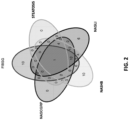
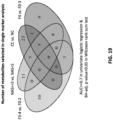
- FIG. 2 shows common protein markers are present between different diagnostic variables (FIBSG: CRN fibrosis stages; STEATOSI: steatosis; NASLI: NAS Lobular Inflammation; NASHB: NAS Hepatic Ballooning; NASCGRP: NAS score). Certain overlaps are summarized in Table A below: Table A.
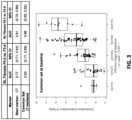
- Multivariate analysis further identified a panel of 7 protein markers (C7, CL-K1, IGFBP7, Spondin 1, IL-5Ra (UniProt: Q01344), MMP-7 and TSP2) that possess good diagnostic value to classify NASH subjects with severe fibrosis (F0-1 vs F3-4; AUROC: 0.83; FIG. 3 ).
- Changes in circulating levels of the biomarkers were generally reflected in the expression of their corresponding RNAs by RNAseq of formalin-fixed paraffin-embedded (FFPE) sections of liver.
- FFPE formalin-fixed paraffin-embedded
- Protein Biomarkers for Monitoring Lobular Inflammation Improvement (not according to the invention) Marker Name UniProt Median percent CHG at W24 in Non-improver Median percent CHG at W24 in improver p value M-CSF R P07333 5.72 -12.625 4.58E-05 ACE2 Q9BYF1 -2.05 2.605 0.000138 FCG3B 075015 -1.44 -14.29 0.000191 IL24 Q13007 2.03 -3.985 0.00038 ERAB Q99714 2.01 -26.665 0.000429 Keratin 18 P05783 -0.96 4.1 0.000515 Aminoacylase-1 Q03154 -11.97 -37.08 0.000727 PHI P06744 -5.37 -30.06 0.000862 C4 P0C0L4, P0C0L5 -2.53 7.51 0.001019 HSP 90a/b P07900 -4.98 -21.04 0.001202 P08238 CHST2 Q9Y
- Protein Biomarkers for Monitoring Hepatic Ballooning Improvement (not according to the invention) Marker Name UniProt Median percent CHG at W24 in Non-improver Median percent CHG at W24 in improver p value Protein C P04070 -0.09 9.69 0.000589 LG3BP Q08380 7.44 -7.56 0.006607 Cathepsin D P07339 4.95 -15.96 0.01054 Coagulation Factor Xa P00742 0.825 6.52 0.010541 Thyroxine-Binding Globulin P05543 -1.5 -7.58 0.014594 XEDAR Q9HAV5 -0.875 1.66 0.014887 CBG P08185 -2.655 1.44 0.015188 HGF P14210 -4.445 -9.9 0.015802 LTBP4 Q8N2S1 2.525 -5.93 0.017776 Eotaxin-2 000175 -0.04 4.07 0.018122 B7-H2 075144 -5
- Table 4A Protein Biomarkers for Monitoring Steatosis Improvement, Filtered (not according to the invention) Marker Name UniProt Nectin-like protein 2 Q9BY67 CD30 Ligand P32971 YKL-40 P36222 TSP2 P35442 PCSK7 Q16549 IR P06213 AK1A1 P14550 FLRT3 Q9NZU0 TIMD3 Q8TDQ0 SAP P02743 YES P07947 CNTN2 Q02246 sTie-2 Q02763 Lumican P51884 HSP 70 P0DMV8 Table 4B.
- Protein Biomarkers for Monitoring Lobular Inflammation Improvement Filtered (not according to the invention) Marker Name UniProt ACE2 Q9BYF1 IL24 Q13007 ERAB Q99714 Keratin 18 P05783 PHI P06744 C4 P0C0L4, P0C0L5 CHST2 Q9Y4C5 Cathepsin D P07339 CBG P08185 MDM2 Q00987 CD5L O43866 IL-8 P10145 LYVE1 Q9Y5Y7 Eotaxin P51671 Albumin P02768 Histone H2A.z P0C0S5 KIF23 Q02241 ALT P24298 EPO-R P19235 STX1a Q16623 MED-1 Q15648 Table 4C.
- Multivariate analysis for the monitoring markers also identifies a few groups of markers, when used collectively, possess better monitoring capabilities. These multivariate marker groups are listed in Table B below. Table B. Multivariate Protein Markers for Treatment Monitoring Endpoint Protein Markers
- PDXK O00764)
- GITR Q9Y5U5) Steatosis Marker (UniProt)
- FIG. 1 Integrin a1b1 (P56199, P05556) Nectin-like protein 2 (Q9BY67) PDGF Rb (P09619) LRP8 (Q14114) CD30 Ligand (P32971) Lumican (P51884) SAP (P02743) YKL-40 (P36222) sTie-2 (Q02763) HSP 90a/b (P07900 P08238) TSP2 (P35442) YES (P07947) Lobular Inflammation Marker (UniProt) FIG.
- HSP 90a/b (P07900 P08238) Aminoacylase-1 (Q03154) FCG3B (075015) M-CSF R (P07333) Keratin 18 (P05783) Hepatic Ballooning Marker (UniProt)
- FIG. 7 Fibronectin (P02751) Thyroxine-Binding Globulin (P05543) FGF23 (Q9GZV9) LG3BP (Q08380) Heparin cofactor II (P05546) Protein C (P04070) STAT3 (P40763)
- This example identifies new protein biomarker candidates for staging fibrosis, steatosis, lobular inflammation, and hepatic ballooning in NASH subjects are identified using SOMAscan. Additionally, in F2-3 NASH subjects treated with selonsertib, markers that show treatment response monitoring characteristics are also identified.
- Serum bile acid levels are reciprocally regulated with C4 levels across the spectrum of disease severity in patients with nonalcoholic steatohepatitis (NASH) (not according to the invention)
- NASH nonalcoholic steatohepatitis
- BA Serum bile acid
- C4 7 ⁇ -hydroxy-4-cholesten-3-one
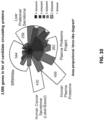
- This example used a combination of NASH biopsy-derived transcriptomics analysis and predictive bioinformatics algorithms to identify 100 transcripts that could produce secreted/leaked proteins (so called NASH secretome). These transcripts exhibited fibrosis stage dependent expression profiles and are relevant to NASH biology. Individual or combined transcripts are good discriminators (AUROC > 0.86) for classifying NASH subjects with cirrhosis (F4) or severe fibrosis (F3/F4).
- ELISA assays were selected and qualified for the top 30 candidates.
- 11 proteins YKL-40, FAP, ITGB6, EMILIN1, FNDC1, IGDCC4, MASP2, SCF, LTBP2, ADAMTS12 and MCM2
- AUROC 0.70, 0.67 and 0.72, respectively
- Example 1 assays for selective protein targets (LOXL2, Lumican, TGFBI, CK- 18s, Pro-C3) as well as high-content proteomic platform (SOMAscan) were employed as part of the comprehensive proteomic approaches to identify and evaluate novel protein markers for NASH. Even though about 1350 proteins were covered by these two approaches, there are still many potential circulating proteins that are not included. As a complementary proteomic approach, NASH biopsy-derived transcriptomics analysis was combined with predictive bioinformatics algorithms to identify additional secreted/leaked proteins (so called NASH secretome) from liver for further exploration.
- Proteins in circulation may come from 1) "Classic secretory” via exocytosis, 2) “Non-classic secretory” through translocation, lysosomal secretion or exosome, or 3) tissue leakage due to cell death or damage.
- transcriptomic information from tissues of interest to predict potential secreted or leaked protein.
- This example developed bioinformatics algorithms to predict genes to 1) demonstrate fibrosis stage dependent differential expression in NASH subjects and 2) encode for secreted proteins.
- These NASH secretome will represent potential tissue-selective and disease severity dependent candidates as circulating protein biomarkers. After these candidates were identified, protein quantification data were either generated using ELISA or derived from SOMAscan if available.
- Procured FFPE liver samples listed in Table 5 were used for RNA extraction and RNAseq Table 5.
- Procured Samples for RNAseq Healthy F1 F2 F3 F4 Phase I: pilot (completed) 6* 4 14 11 1
- Phase 2 second dataset (initiated, data expected in May) 21 46 27 5 10 Total 27 50 41 16 11
- Procured serum samples were used for initial ELISA screening experiments to identify candidates for further testing using clinical study samples.
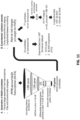
- a candidate list of non-invasive, circulating biomarkers for NASH progression using RNA-seq data and public databases/datasets was then compiled with a bioinformatic workflow.
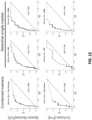
- the method of repeated cross-validation was performed. Specifically, the data is randomly divided into 5-folds, using 4 of the folds for the modeling (i.e. logistic regression) and predicting on the left-out fold, and performing the modeling/predicting process for each of the 5-folds until the predictions are obtained for all 5 folds (i.e. whole dataset). AUROC performance metric is obtained. The cross-validation procedure is then repeated 100 times with a different randomly-divided 5 folds each time, and the mean and 95% CI for the AUROC are provided across the 100 repeats. In the modeling, logistic regression was used to model the binary endpoint (e.g. baseline F4 vs. F0-3) with the biomarker(s) as covariate.
- the binary endpoint e.g. baseline F4 vs. F0-3
- baseline CRN fibrosis stage Additional analyses for baseline CRN fibrosis stage are provided.
- boxplots of baseline levels of specific conventional tests by baseline CRN fibrosis stage are provided.
- the Jonckheere-Terpstra trend test was conducted to assess the trend (whether increasing or decreasing) of biomarker levels with fibrosis stage.
- NASH Secretome candidate genes were generated after the bioinformatics filters were applied. Among these 100 targets, many code for proteins having functions related to NASH biology (Table 6). Table. 6. Secretome Candidates Participate in NASH Relevant Biological Pathways ECM Membra ne receptors Cytoskelet on myosin related Neuroendocrin e Immunoglobul in cyto/chemoki ne Platelet/ compleme nt related Enzyme/ TF Others Col1A1 EPHA3 MYH10 TENM4 IGDCC4 THBS2 PLCE1 FAM 129 B Co13A1 EPHB2 MY05A SYTL2 IGSF3 C4BPB FUBP1 FNDC1 Co14A1 FGFR2 TPM1 TANC1 PRTG C4BPA AEBP1 HPX Col4A2 FGFR3 LIMA1 NEO1 SCF MASP2 ZNF671 GC Co15A1 DDR1 CALD1 ROBO1 CCL14 TFPI PTGDS AGT Col6
- ELISA assays were developed and qualified for secretome candidates that were not included on the SOMAscan (ITGB6, FNDC1, MCM2, EMILIN1, IGDCC4, MASP2, SCF, LTBP2, ADAMTS12) as well as for those (TSP2, A2AP, MRC2, SAP, CTSH, IGFBP7, C7, MAC2BP) that were on SOMAscan platform and demonstrated promising preliminary results on fibrosis staging associations (Table 9). Table 9.
- CHI3L1 (YKL-40) CHI3L1 Chitinase-3-like protein 1 ECM glycoprotein FAP FAP Fibroblast activation protein Membrane-bound protease ITGB6 ITGB6 Integrin, beta 6 Membrane receptor FNDC1 FNDC1 Fibronectin type III domain containing 1 G-protein signaling MCM2 MCM2 Mini-chromosome maintenance protein 2 Genome replication/liver regeneration EMILIN1 EMILIN1 Elastin microfibril interfacer 1 ECM glycoprotein IGDCC4 IGDCC4 Immunoglobulin superfamily DCC subclass member 4 Immunoglobulin MASP2 MASP2 Mannan-binding lectin serine protease 2 Protease to cleave complement(C4/C2) SCF(Kit ligand) KITLG Kit ligand Cytokine LTBP2 LTBP2 Latent-transforming growth factor beta-binding protein 2 ECM
- ELISA assays were performed in batches, first 11 candidates (CHI3L1, FAP, ITGB6, FNDC1, MCM2, EMILIN1, IGDCC4, MASP2, SCF, LTBP2, ADAMTS12) were tested and 6 out of 11 candidates demonstrated significant association with fibrosis stage ( FIG. 13 ).
- AUROC ⁇ 0.7 was observed for diagnosing advanced fibrosis for IGFBP7 and TSP2, and for diagnosing cirrhosis for SAP, A2AP and IGFBP7 using baseline and wk48 data [Table 16.8.2.1].
- C7 had AUROC of 0.65 for diagnosing cirrhosis.
- F2 BL F4 vs. F3 Wk24 (1497) F3 vs. F1, 2 BL + Wk48 F3, 4 vs. F0, 1, 2 BL + Wk48 F4 vs. F0, 1, 2, 3 TSP2 0.63 (0.61, 0.64) 0.7 (0.69, 0.72) 0.71 (0.7, 0.72) 0.71 (0.69, 0.72) 0.67 (0.66, 0.67) A2AP 0.71 (0.7, 0.72) 0.67 (0.65, 0.68) 0.72 (0.71, 0.72) 0.66 (0.64, 0.66) 0.71 (0.71, 0.72) MRC2 0.58 (0.47, 0.65) 0.59 (0.47, 0.65) 0.52 (0.47, 0.58) 0.58 (0.47, 0.65) 0.52 (0.47, 0.58) SAP 0.78 (0.77, 0.78) 0.62 (0.59, 0.63) 0.77 (0.76, 0.77) 0.59 (0.56, 0.61) 0.77 (0.77, 0.78) CTSH 0.5 (0.48
- AUROC AUROC>0.70 for monitoring CRN fibrosis improvement or CRN fibrosis worsening (SIM 105).
- IGFBP7 F3 to lower at wk48 in SIM105
- F4 to lower at wk48 in SIM106 F4/3 to lower at wk48
- FAP and SCF F4 to lower at wk48
- CRN fibrosis worsening (F3 to F4 at wk48): IGFBP7 and SAP.
- AUROC ⁇ 0.7 was observed for FAP for monitoring lobular inflammation improvement (Grade 3 to lower at wk48), and ADAMTS 12 for monitoring steatosis improvement (Grade 2/3 to lower at wk48).
- TSP2 had AUROC of 0.66/0.68/0.7/0.71 for diagnosing NASH vs. non-NASH [4 definitions of non-NASH: 1) 0 for any NAS subscore (lobular inflammation, hepatic ballooning or steatosis); 2) no to mild inflammation; 3) no ballooning; 4) no active NASH (no to mild inflammation and no ballooning)]. Similar AUROC was observed when using only baseline data from enrolled patients in combined SIM105/106 studies.
- liver selective and fibrosis stage dependent protein biomarkers were taken to generate potential liver selective and fibrosis stage dependent protein biomarkers using biopsy derived transcriptome data and bioinformatic algorisms to predict secreted/leaking proteins.
- This strategy was proven to be fruitful with the following key findings, (1) candidate genes code for proteins that are involved in fibrosis biology; (2) hepatic expression profiles of these genes (single or selective panel) have good classifying characteristics (AUROC 0.8-0.9) for identification of severe fibrosis (F3) or cirrhosis (F4); and (3) circulating levels of selective candidates were evaluated either by SOMAscan (depends on availability) or ELISA assays.
- AUROC ⁇ 0.7 was observed for diagnosing advanced fibrosis for IGFBP7 and TSP2, and for diagnosing cirrhosis for SAP, A2AP and IGFBP7 using baseline, screen fail and wk48 data.
- C7 had AUROC of 0.65 for diagnosing cirrhosis.
- TSP2 Using data from baseline and wk48 in combined SIM105/106 studies, TSP2 had AUROC of ⁇ 0.7 for diagnosing NASH vs. non-NASH across the 4 definitions.
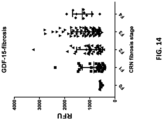
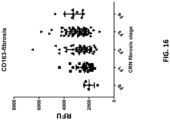
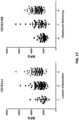
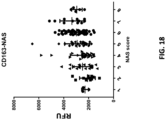
- This example reports additional SOMAscan data collected with the method in Example 1, for the circulating proteins GDF-15 and CD163. Summary data are presented in charts in FIG. 14-18 .
- circulating GDF-15 levels were significantly associated with fibrosis stage in NASH subjects; p ⁇ 0.0001 (Kruskal-Wallis test).
- the circulating GDF-15 levels were significantly associated with Lobular inflammation (left panel; P ⁇ 0.05 (Kruskal-Wallis test)) and Hepatic Ballooning in the NASH subjects (right panel; P ⁇ 0.005 (Kruskal-Wallis test)).
- the circulating GDF-15 levels were not associated with steatosis or NAS scores in the NASH subjects.
- the chart in FIG. 16 shows that circulating CD163 levels were significantly associated with fibrosis stages in NASH subjects, p ⁇ 0.001 (Kruskal-Wallis test).
- the circulating CD163 levels were also significantly associated with Lobular inflammation ( FIG. 17 , left panel, p ⁇ 0.0005 (Kruskal-Wallis test)) and Hepatic Ballooning ( FIG. 17 , right panel, p ⁇ 0.0001 (Kruskal-Wallis test)) in the NASH subjects.
- the circulating CD163 levels were also significantly associated with NAS scores ( FIG. 18 , p ⁇ 0.001 (Kruskal-Wallis test)) but not with steatosis in the NASH subjects.
- Protein Markers for NAS Scores (NAS) (not according to the invention) Marker Name UniProt p value NAS stages CD163 Q86VB7 ⁇ 0.001 2429 1943 2363 2258 2676 2817 2918 3033 Table 11C.
- Protein Markers for Lobular Inflammation (LI) (not according to the invention) Marker Name UniProt p value Lobular inflammation stage 0 Lobular inflammation stage 1 Lobular inflammation stage 2 GDF-15 Q99988 ⁇ 0.05 623.2 858.6 1024 CD163 Q86VB7 ⁇ 0.001 2002 2413 2846 Table 11D.
- Hepatic Ballooning (not according to the invention) Marker Name UniProt p value Hepatic ballooning stage 0 Hepatic ballooning stage 1 Hepatic ballooning stage 2 GDF-15 Q99988 ⁇ 0.005 630.9 774.7 1039 CD163 Q86VB7 ⁇ 0.0001 1966 2473 2863
- Table 12 Protein markers for monitoring clinical improvements (not according to the invention)
- Example 5 Algorithms Using Noninvasive Tests Can Accurately Identify Patients with Advanced Fibrosis due to NASH: Data from STELLAR Clinical Trials (not according to the invention)
- NITs noninvasive tests
- the cohort was divided (80%/20%) into evaluation/validation sets.
- the evaluation set was further stratified 250x into training and test sets (66%/33%).
- Optimal thresholds were derived as average across training sets, and applied sequentially (FIB-4 followed by ELF and/or FS) to the validation set.
- Example 6 Identification of NASH associated serum metabolites and diagnosis biomarkers using an OWLiver ® metabolomics platform (not according to the invention)
- This example was conducted to identify serum metabolites correlated with NASH disease severities, and to evaluate the performance of selected metabolite panels as classifiers for advance fibrosis, cirrhosis, active NASH and cryptogenic cirrhosis.
- the technology used here referred to as OWLiver ® metabolomics, is commercially available from OWL Metabolomics (Bizkaia, Spain) and is described in Barr et al, J Proteome Res. 2010 Sep 3;9(9):4501-12 and Mayo et al., Hepatol Commun. 2018 May 4;2(7):807-820 .
- Metabolomics profiling in serum were performed using mass spectrometry (MS) based approach at OWL Metabolomics.
- Metabolites significantly associated with one or more of the fibrosis stages are listed in the tables below. Underlined and bold: negative correlation; otherwise positive correlation. Underlined and bold: negative correlation; otherwise positive correlation. Underlined and bold: negative correlation; otherwise positive correlation. Table 18.
- FIG. 19 shows common metabolite markers are present between different NASH phenotypes.
Landscapes
- Life Sciences & Earth Sciences (AREA)
- Health & Medical Sciences (AREA)
- Chemical & Material Sciences (AREA)
- Engineering & Computer Science (AREA)
- Proteomics, Peptides & Aminoacids (AREA)
- Organic Chemistry (AREA)
- Immunology (AREA)
- Analytical Chemistry (AREA)
- Molecular Biology (AREA)
- General Health & Medical Sciences (AREA)
- Biotechnology (AREA)
- Biomedical Technology (AREA)
- Microbiology (AREA)
- Urology & Nephrology (AREA)
- Physics & Mathematics (AREA)
- Wood Science & Technology (AREA)
- Zoology (AREA)
- Biochemistry (AREA)
- Pathology (AREA)
- Hematology (AREA)
- Genetics & Genomics (AREA)
- Bioinformatics & Cheminformatics (AREA)
- Medicinal Chemistry (AREA)
- Cell Biology (AREA)
- General Engineering & Computer Science (AREA)
- Biophysics (AREA)
- Food Science & Technology (AREA)
- General Physics & Mathematics (AREA)
- General Chemical & Material Sciences (AREA)
- Chemical Kinetics & Catalysis (AREA)
- Gastroenterology & Hepatology (AREA)
- Nuclear Medicine, Radiotherapy & Molecular Imaging (AREA)
- Pharmacology & Pharmacy (AREA)
- Animal Behavior & Ethology (AREA)
- Public Health (AREA)
- Veterinary Medicine (AREA)
- Investigating Or Analysing Biological Materials (AREA)
- Measuring Or Testing Involving Enzymes Or Micro-Organisms (AREA)
Claims (1)
- Procédé de permettant de classifier un patient atteint de stéatohépatite non alcoolique (NASH) comme souffrant d'une fibrose sévère, comprenant les étapes consistant à :mesurer les niveaux de protéine de collectine 1 du rein (CL-K1), de spondine-1 (RSPO1), de la métallopeptidase matricielle 7 (MMP-7), du composant 7 du complément (C7), de la protéine 7 liant un facteur de croissance analogue à l'insuline (IGFBP7), de la sous-unité alpha du récepteur de l'interleukine-5 (IL-5Ra), et de la thrombospondine-2 (TSP2) dans un échantillon de sérum isolé du patient atteint de NASH,déterminer si le stade de fibrose de la fibrose hépatique chez le patient atteint de NASH est de stade 3 ou 4 selon le réseau de recherche clinique (CRN) sur la stéatohépatite non alcoolique, sur la base des niveaux de protéine mesurés et de valeurs de référence prédéterminées, dans lequel les valeurs de référence prédéterminées incluent des niveaux de protéine de référence pour chacun de la collectine 1 du rein (CL-K1), de la spondine-1 (RSPO1), de la métallopeptidase matricielle 7 (MMP-7), du composant 7 du complément (C7), de la protéine 7 liant un facteur de croissance analogue à l'insuline (IGFBP7), de la sous-unité alpha du récepteur de l'interleukine-5 (IL-5Ra), et de la thrombospondine-2 (TSP2) à des stades de fibrose CRN de 0 à 4, etclassifier le patient atteint de NASH comme présentant une fibrose sévère si le stade de fibrose CRN déterminé est de 3 ou 4.
Applications Claiming Priority (3)
| Application Number | Priority Date | Filing Date | Title |
|---|---|---|---|
| US201762585421P | 2017-11-13 | 2017-11-13 | |
| US201862739778P | 2018-10-01 | 2018-10-01 | |
| PCT/US2018/060106 WO2019094777A1 (fr) | 2017-11-13 | 2018-11-09 | Compositions et méthodes d'identification et de traitement de maladies hépatiques et de surveillance des résultats du traitement |
Publications (3)
| Publication Number | Publication Date |
|---|---|
| EP3710599A1 EP3710599A1 (fr) | 2020-09-23 |
| EP3710599B1 true EP3710599B1 (fr) | 2024-07-17 |
| EP3710599C0 EP3710599C0 (fr) | 2024-07-17 |
Family
ID=64457127
Family Applications (1)
| Application Number | Title | Priority Date | Filing Date |
|---|---|---|---|
| EP18808196.2A Active EP3710599B1 (fr) | 2017-11-13 | 2018-11-09 | Procédé de stadification de la fibrose hépatique chez les patients atteints de nash |
Country Status (4)
| Country | Link |
|---|---|
| US (1) | US20200340060A1 (fr) |
| EP (1) | EP3710599B1 (fr) |
| ES (1) | ES2986647T3 (fr) |
| WO (1) | WO2019094777A1 (fr) |
Families Citing this family (15)
| Publication number | Priority date | Publication date | Assignee | Title |
|---|---|---|---|---|
| CN111320609A (zh) | 2018-12-13 | 2020-06-23 | 拓臻股份有限公司 | 一种THRβ受体激动剂化合物及其制备方法和用途 |
| AU2020336272A1 (en) | 2019-08-23 | 2022-04-14 | Terns Pharmaceuticals, Inc. | Thyroid hormone receptor beta agonist compounds |
| EP4028008A4 (fr) | 2019-09-12 | 2023-09-13 | Terns Pharmaceuticals, Inc. | Composés agonistes du récepteur bêta de l'hormone thyroïdienne |
| WO2022029066A1 (fr) * | 2020-08-03 | 2022-02-10 | Genfit | Procédé d'évaluation du risque de nash |
| WO2022046779A1 (fr) | 2020-08-25 | 2022-03-03 | Eli Lilly And Company | Polymorphes d'un inhibiteur de ssao |
| CN113230240B (zh) * | 2021-03-22 | 2022-12-27 | 广州医科大学 | 1,3-二苯基丙-2-烯-1-酮衍生物及其应用 |
| CN114525329B (zh) * | 2021-04-08 | 2023-08-25 | 四川大学华西第二医院 | 血管分泌因子在制备检测非酒精性脂肪性肝炎的生物标记物中的应用 |
| KR102901130B1 (ko) * | 2021-05-13 | 2025-12-17 | 고려대학교 산학협력단 | 대규모 코호트 유래 전장 유전체 연관 분석 및 dna 메틸화 분석을 이용한 간 섬유화 진단용 바이오마커 조성물 |
| JP7837065B2 (ja) * | 2021-06-01 | 2026-03-30 | ザ ユニバーシティ オブ ホンコン | 非アルコール性脂肪性肝疾患のための線維症バイオマーカー |
| CN114699509A (zh) * | 2021-09-23 | 2022-07-05 | 中南大学湘雅三医院 | Fgf21调控糖尿病缺血创面细胞焦亡的机制的应用 |
| CN114563493A (zh) * | 2022-02-17 | 2022-05-31 | 上海药明奥测医疗科技有限公司 | 胆道闭锁评估系统、检测mmp-7的方法、试剂盒和应用 |
| CN114441760B (zh) * | 2022-04-07 | 2022-06-21 | 中国人民解放军军事科学院军事医学研究院 | 一种用于肝癌诊断的生物标志物和试剂盒及检测方法 |
| EP4336186A1 (fr) * | 2022-09-12 | 2024-03-13 | Universitätsmedizin der Johannes Gutenberg-Universität Mainz | Biomarqueurs pour une maladie pulmonaire systémique (spd), en particulier une maladie de covid19 grave |
| EP4553173A1 (fr) | 2023-11-07 | 2025-05-14 | Universitätsmedizin der Johannes Gutenberg-Universität Mainz | Marqueurs pour détecter et surveiller la fibrose hépatique |
| CN119724621A (zh) * | 2024-12-19 | 2025-03-28 | 西藏自治区人民医院 | 基于PPARγ表达水平评价绿绒蒿对肝纤维化治疗效果的方法、系统和设备 |
Family Cites Families (18)
| Publication number | Priority date | Publication date | Assignee | Title |
|---|---|---|---|---|
| US3845770A (en) | 1972-06-05 | 1974-11-05 | Alza Corp | Osmatic dispensing device for releasing beneficial agent |
| US4326525A (en) | 1980-10-14 | 1982-04-27 | Alza Corporation | Osmotic device that improves delivery properties of agent in situ |
| US5364620A (en) | 1983-12-22 | 1994-11-15 | Elan Corporation, Plc | Controlled absorption diltiazem formulation for once daily administration |
| US5023252A (en) | 1985-12-04 | 1991-06-11 | Conrex Pharmaceutical Corporation | Transdermal and trans-membrane delivery of drugs |
| US4992445A (en) | 1987-06-12 | 1991-02-12 | American Cyanamid Co. | Transdermal delivery of pharmaceuticals |
| US5001139A (en) | 1987-06-12 | 1991-03-19 | American Cyanamid Company | Enchancers for the transdermal flux of nivadipine |
| US4902514A (en) | 1988-07-21 | 1990-02-20 | Alza Corporation | Dosage form for administering nilvadipine for treating cardiovascular symptoms |
| US7670764B2 (en) * | 2003-10-24 | 2010-03-02 | Prometheus Laboratories Inc. | Methods of diagnosing tissue fibrosis |
| US20090304704A1 (en) * | 2006-05-03 | 2009-12-10 | Geisinger Clinic | Methods for diagnosing and predicting non-alcoholic steatohepatitis (nash) |
| EP2567241B1 (fr) * | 2010-05-03 | 2015-11-04 | The Cleveland Clinic Foundation | Détection et suivi d'une hépatite graisseuse non alcoolique |
| WO2012105590A1 (fr) * | 2011-02-01 | 2012-08-09 | アステラス製薬株式会社 | Marqueur de détermination pour une stéatose hépatique non alcoolique et méthode de diagnostic d'une stéatose hépatique non alcoolique à l'aide du marqueur en tant que mesure |
| EP2545964A1 (fr) | 2011-07-13 | 2013-01-16 | Phenex Pharmaceuticals AG | Nouveaux composés se liant au fxr (nr1 h4) et modulant son activité |
| ES2665580T3 (es) | 2011-11-11 | 2018-04-26 | Gilead Apollo, Llc | Inhibidores de ACC y usos de los mismos |
| UY34573A (es) | 2012-01-27 | 2013-06-28 | Gilead Sciences Inc | Inhibidor de la quinasa que regula la señal de la apoptosis |
| WO2014057522A1 (fr) * | 2012-10-12 | 2014-04-17 | Mochida Pharmaceutical Co., Ltd. | Compositions et procédés de traitement de la stéatohépatite non alcoolique |
| WO2017082943A1 (fr) * | 2016-01-29 | 2017-05-18 | The Government Of The United States, As Represented By The Secretary Of The Army | Articles servant à diagnostiquer une fibrose hépatique |
| US20210215711A1 (en) * | 2016-02-08 | 2021-07-15 | Somalogic, Inc. | Nonalcoholic Fatty Liver Disease (NAFLD) and Nonalcoholic Steatohepatitis (NASH) Biomarkers and Uses Thereof |
| EA201892201A1 (ru) * | 2016-03-30 | 2019-03-29 | Женфит | Неинвазивная диагностика неалкогольного стеатогепатита |
-
2018
- 2018-11-09 US US16/763,495 patent/US20200340060A1/en not_active Abandoned
- 2018-11-09 EP EP18808196.2A patent/EP3710599B1/fr active Active
- 2018-11-09 WO PCT/US2018/060106 patent/WO2019094777A1/fr not_active Ceased
- 2018-11-09 ES ES18808196T patent/ES2986647T3/es active Active
Also Published As
| Publication number | Publication date |
|---|---|
| EP3710599A1 (fr) | 2020-09-23 |
| ES2986647T3 (es) | 2024-11-12 |
| US20200340060A1 (en) | 2020-10-29 |
| WO2019094777A1 (fr) | 2019-05-16 |
| EP3710599C0 (fr) | 2024-07-17 |
Similar Documents
| Publication | Publication Date | Title |
|---|---|---|
| US20200340060A1 (en) | Compositions and methods for identifying and treating liver diseases and monitoring treatment outcomes | |
| EP2803735B1 (fr) | Biomarqueurs de protéines et de gènes pour le rejet d'organes transplantés | |
| US9200322B2 (en) | Biomarkers for acute ischemic stroke | |
| EP2834638B1 (fr) | Procédés de diagnostic et de pronostic d'un sepsis | |
| JP6535385B2 (ja) | 血管疾患診断用バイオマーカー及びその用途 | |
| CA3082591A1 (fr) | Marqueurs pour le diagnostic et le traitement de la steatohepatite non alcoolique (nash) et de la fibrose hepatique avancee | |
| US20150072360A1 (en) | Biomarkers of pulmonary hypertension | |
| US11531023B2 (en) | Biomarker for diagnosing overactive bladder disease and screening method of therapeutic agents using the same | |
| US11360093B2 (en) | Colorectal cancer diagnostic composition, and method for detecting diagnostic marker | |
| Liu et al. | LAMB3 promotes intestinal inflammation through SERPINA3 and is directly transcriptionally regulated by P65 in inflammatory bowel disease | |
| US20210018506A1 (en) | Autoantibodies and autoantibody-autoantigen complexes as biomarkers of small cell lung cancer | |
| Cruz-González et al. | Recent advances in proteomic analysis to study carotid artery plaques | |
| US10557860B2 (en) | Circulating pulmonary hypertension biomarker | |
| US20160244835A1 (en) | Urinary neuropilin-1 (nrp-1) as a prognostic marker for nephritis and lupus nephritis | |
| US20220273591A1 (en) | Methods for determining risk of developing insulin resistance | |
| HK40037617A (en) | Method for staging liver fibrosis in nash patients | |
| HK40037617B (en) | Method for staging liver fibrosis in nash patients | |
| JP2023548156A (ja) | 肝疾患の評価のためのキット、試薬、及び方法 | |
| WO2018178071A1 (fr) | Procédé de prédiction de la réponse thérapeutique à des médicaments antipsychotiques | |
| CN114755313A (zh) | 包含尿液nad+代谢物的急性肾损伤标志物 | |
| US10316319B2 (en) | Composition for diagnosis of liver metastasis of colorectal cancer and the use thereof | |
| US20260035698A1 (en) | Comprising exosomal mir-664a-5p as an active ingredient, a diagnostic biomarker composition for parp inhibitor response and a pharmaceutical composition for cancer treatment | |
| EP4134671A1 (fr) | Diagnostic de compagnons au méthylène quinuclidinone | |
| KR20260047458A (ko) | 간내 담관암 진단 마커로서의 이중 특이적 탈인산화 효소 Dual-specificity phosphatase 23 및 이의 용도 | |
| WO2026064292A1 (fr) | Criblage d'inhibiteurs des janus kinases pour le traitement de la myocardite modérée et d'autres affections cardiaques inflammatoires |
Legal Events
| Date | Code | Title | Description |
|---|---|---|---|
| STAA | Information on the status of an ep patent application or granted ep patent |
Free format text: STATUS: UNKNOWN |
|
| STAA | Information on the status of an ep patent application or granted ep patent |
Free format text: STATUS: THE INTERNATIONAL PUBLICATION HAS BEEN MADE |
|
| PUAI | Public reference made under article 153(3) epc to a published international application that has entered the european phase |
Free format text: ORIGINAL CODE: 0009012 |
|
| STAA | Information on the status of an ep patent application or granted ep patent |
Free format text: STATUS: REQUEST FOR EXAMINATION WAS MADE |
|
| 17P | Request for examination filed |
Effective date: 20200608 |
|
| AK | Designated contracting states |
Kind code of ref document: A1 Designated state(s): AL AT BE BG CH CY CZ DE DK EE ES FI FR GB GR HR HU IE IS IT LI LT LU LV MC MK MT NL NO PL PT RO RS SE SI SK SM TR |
|
| AX | Request for extension of the european patent |
Extension state: BA ME |
|
| DAV | Request for validation of the european patent (deleted) | ||
| DAX | Request for extension of the european patent (deleted) | ||
| STAA | Information on the status of an ep patent application or granted ep patent |
Free format text: STATUS: EXAMINATION IS IN PROGRESS |
|
| 17Q | First examination report despatched |
Effective date: 20210309 |
|
| REG | Reference to a national code |
Ref country code: HK Ref legal event code: DE Ref document number: 40037617 Country of ref document: HK |
|
| GRAP | Despatch of communication of intention to grant a patent |
Free format text: ORIGINAL CODE: EPIDOSNIGR1 |
|
| STAA | Information on the status of an ep patent application or granted ep patent |
Free format text: STATUS: GRANT OF PATENT IS INTENDED |
|
| INTG | Intention to grant announced |
Effective date: 20240213 |
|
| GRAS | Grant fee paid |
Free format text: ORIGINAL CODE: EPIDOSNIGR3 |
|
| GRAA | (expected) grant |
Free format text: ORIGINAL CODE: 0009210 |
|
| STAA | Information on the status of an ep patent application or granted ep patent |
Free format text: STATUS: THE PATENT HAS BEEN GRANTED |
|
| P01 | Opt-out of the competence of the unified patent court (upc) registered |
Effective date: 20240530 |
|
| AK | Designated contracting states |
Kind code of ref document: B1 Designated state(s): AL AT BE BG CH CY CZ DE DK EE ES FI FR GB GR HR HU IE IS IT LI LT LU LV MC MK MT NL NO PL PT RO RS SE SI SK SM TR |
|
| REG | Reference to a national code |
Ref country code: CH Ref legal event code: EP |
|
| REG | Reference to a national code |
Ref country code: DE Ref legal event code: R096 Ref document number: 602018071933 Country of ref document: DE |
|
| REG | Reference to a national code |
Ref country code: IE Ref legal event code: FG4D |
|
| U01 | Request for unitary effect filed |
Effective date: 20240813 |
|
| U07 | Unitary effect registered |
Designated state(s): AT BE BG DE DK EE FI FR IT LT LU LV MT NL PT SE SI Effective date: 20240826 |
|
| P04 | Withdrawal of opt-out of the competence of the unified patent court (upc) registered |
Free format text: CASE NUMBER: APP_48238/2024 Effective date: 20240821 |
|
| U08 | Date and/or purport of decision on request for unitary effect for the european patent changed [decision is positive] |
Designated state(s): AT BE BG DE DK EE FI FR IT LT LU LV MT NL PT RO SE SI Effective date: 20240905 |
|
| U15 | Date of registration of unitary effect changed |
Effective date: 20240905 |
|
| REG | Reference to a national code |
Ref country code: ES Ref legal event code: FG2A Ref document number: 2986647 Country of ref document: ES Kind code of ref document: T3 Effective date: 20241112 |
|
| U20 | Renewal fee for the european patent with unitary effect paid |
Year of fee payment: 7 Effective date: 20241007 |
|
| P05 | Withdrawal of opt-out of the competence of the unified patent court (upc) changed |
Free format text: CASE NUMBER: APP_48238/2024 Effective date: 20240826 |
|
| PG25 | Lapsed in a contracting state [announced via postgrant information from national office to epo] |
Ref country code: NO Free format text: LAPSE BECAUSE OF FAILURE TO SUBMIT A TRANSLATION OF THE DESCRIPTION OR TO PAY THE FEE WITHIN THE PRESCRIBED TIME-LIMIT Effective date: 20241017 |
|
| PG25 | Lapsed in a contracting state [announced via postgrant information from national office to epo] |
Ref country code: GR Free format text: LAPSE BECAUSE OF FAILURE TO SUBMIT A TRANSLATION OF THE DESCRIPTION OR TO PAY THE FEE WITHIN THE PRESCRIBED TIME-LIMIT Effective date: 20241018 Ref country code: PL Free format text: LAPSE BECAUSE OF FAILURE TO SUBMIT A TRANSLATION OF THE DESCRIPTION OR TO PAY THE FEE WITHIN THE PRESCRIBED TIME-LIMIT Effective date: 20240717 |
|
| PG25 | Lapsed in a contracting state [announced via postgrant information from national office to epo] |
Ref country code: IS Free format text: LAPSE BECAUSE OF FAILURE TO SUBMIT A TRANSLATION OF THE DESCRIPTION OR TO PAY THE FEE WITHIN THE PRESCRIBED TIME-LIMIT Effective date: 20241117 |
|
| PG25 | Lapsed in a contracting state [announced via postgrant information from national office to epo] |
Ref country code: HR Free format text: LAPSE BECAUSE OF FAILURE TO SUBMIT A TRANSLATION OF THE DESCRIPTION OR TO PAY THE FEE WITHIN THE PRESCRIBED TIME-LIMIT Effective date: 20240717 |
|
| PG25 | Lapsed in a contracting state [announced via postgrant information from national office to epo] |
Ref country code: RS Free format text: LAPSE BECAUSE OF FAILURE TO SUBMIT A TRANSLATION OF THE DESCRIPTION OR TO PAY THE FEE WITHIN THE PRESCRIBED TIME-LIMIT Effective date: 20241017 |
|
| PG25 | Lapsed in a contracting state [announced via postgrant information from national office to epo] |
Ref country code: RS Free format text: LAPSE BECAUSE OF FAILURE TO SUBMIT A TRANSLATION OF THE DESCRIPTION OR TO PAY THE FEE WITHIN THE PRESCRIBED TIME-LIMIT Effective date: 20241017 Ref country code: PL Free format text: LAPSE BECAUSE OF FAILURE TO SUBMIT A TRANSLATION OF THE DESCRIPTION OR TO PAY THE FEE WITHIN THE PRESCRIBED TIME-LIMIT Effective date: 20240717 Ref country code: NO Free format text: LAPSE BECAUSE OF FAILURE TO SUBMIT A TRANSLATION OF THE DESCRIPTION OR TO PAY THE FEE WITHIN THE PRESCRIBED TIME-LIMIT Effective date: 20241017 Ref country code: IS Free format text: LAPSE BECAUSE OF FAILURE TO SUBMIT A TRANSLATION OF THE DESCRIPTION OR TO PAY THE FEE WITHIN THE PRESCRIBED TIME-LIMIT Effective date: 20241117 Ref country code: HR Free format text: LAPSE BECAUSE OF FAILURE TO SUBMIT A TRANSLATION OF THE DESCRIPTION OR TO PAY THE FEE WITHIN THE PRESCRIBED TIME-LIMIT Effective date: 20240717 Ref country code: GR Free format text: LAPSE BECAUSE OF FAILURE TO SUBMIT A TRANSLATION OF THE DESCRIPTION OR TO PAY THE FEE WITHIN THE PRESCRIBED TIME-LIMIT Effective date: 20241018 |
|
| PG25 | Lapsed in a contracting state [announced via postgrant information from national office to epo] |
Ref country code: SM Free format text: LAPSE BECAUSE OF FAILURE TO SUBMIT A TRANSLATION OF THE DESCRIPTION OR TO PAY THE FEE WITHIN THE PRESCRIBED TIME-LIMIT Effective date: 20240717 |
|
| PG25 | Lapsed in a contracting state [announced via postgrant information from national office to epo] |
Ref country code: CZ Free format text: LAPSE BECAUSE OF FAILURE TO SUBMIT A TRANSLATION OF THE DESCRIPTION OR TO PAY THE FEE WITHIN THE PRESCRIBED TIME-LIMIT Effective date: 20240717 |
|
| PG25 | Lapsed in a contracting state [announced via postgrant information from national office to epo] |
Ref country code: SK Free format text: LAPSE BECAUSE OF FAILURE TO SUBMIT A TRANSLATION OF THE DESCRIPTION OR TO PAY THE FEE WITHIN THE PRESCRIBED TIME-LIMIT Effective date: 20240717 |
|
| PLBE | No opposition filed within time limit |
Free format text: ORIGINAL CODE: 0009261 |
|
| STAA | Information on the status of an ep patent application or granted ep patent |
Free format text: STATUS: NO OPPOSITION FILED WITHIN TIME LIMIT |
|
| 26N | No opposition filed |
Effective date: 20250422 |
|
| REG | Reference to a national code |
Ref country code: CH Ref legal event code: PL |
|
| PG25 | Lapsed in a contracting state [announced via postgrant information from national office to epo] |
Ref country code: MC Free format text: LAPSE BECAUSE OF FAILURE TO SUBMIT A TRANSLATION OF THE DESCRIPTION OR TO PAY THE FEE WITHIN THE PRESCRIBED TIME-LIMIT Effective date: 20240717 |
|
| REG | Reference to a national code |
Ref country code: CH Ref legal event code: PL |
|
| PG25 | Lapsed in a contracting state [announced via postgrant information from national office to epo] |
Ref country code: CH Free format text: LAPSE BECAUSE OF NON-PAYMENT OF DUE FEES Effective date: 20241130 |
|
| PGFP | Annual fee paid to national office [announced via postgrant information from national office to epo] |
Ref country code: GB Payment date: 20250918 Year of fee payment: 8 |
|
| PGFP | Annual fee paid to national office [announced via postgrant information from national office to epo] |
Ref country code: IE Payment date: 20250909 Year of fee payment: 8 |
|
| U20 | Renewal fee for the european patent with unitary effect paid |
Year of fee payment: 8 Effective date: 20251008 |
|
| PGFP | Annual fee paid to national office [announced via postgrant information from national office to epo] |
Ref country code: ES Payment date: 20251212 Year of fee payment: 8 |
|
| PG25 | Lapsed in a contracting state [announced via postgrant information from national office to epo] |
Ref country code: HU Free format text: LAPSE BECAUSE OF FAILURE TO SUBMIT A TRANSLATION OF THE DESCRIPTION OR TO PAY THE FEE WITHIN THE PRESCRIBED TIME-LIMIT; INVALID AB INITIO Effective date: 20181109 |
|
| PG25 | Lapsed in a contracting state [announced via postgrant information from national office to epo] |
Ref country code: CY Free format text: LAPSE BECAUSE OF FAILURE TO SUBMIT A TRANSLATION OF THE DESCRIPTION OR TO PAY THE FEE WITHIN THE PRESCRIBED TIME-LIMIT; INVALID AB INITIO Effective date: 20181109 |
|
| U1N | Appointed representative for the unitary patent procedure changed after the registration of the unitary effect |
Representative=s name: MARKS & CLERK LLP; GB |