EP3711217B1 - Procédé et appareil de détermination de livre-code harq-ack - Google Patents
Procédé et appareil de détermination de livre-code harq-ack Download PDFInfo
- Publication number
- EP3711217B1 EP3711217B1 EP17932250.8A EP17932250A EP3711217B1 EP 3711217 B1 EP3711217 B1 EP 3711217B1 EP 17932250 A EP17932250 A EP 17932250A EP 3711217 B1 EP3711217 B1 EP 3711217B1
- Authority
- EP
- European Patent Office
- Prior art keywords
- harq
- ack
- association set
- tbs
- downlink association
- Prior art date
- Legal status (The legal status is an assumption and is not a legal conclusion. Google has not performed a legal analysis and makes no representation as to the accuracy of the status listed.)
- Active
Links
Images




Classifications
-
- H—ELECTRICITY
- H04—ELECTRIC COMMUNICATION TECHNIQUE
- H04L—TRANSMISSION OF DIGITAL INFORMATION, e.g. TELEGRAPHIC COMMUNICATION
- H04L1/00—Arrangements for detecting or preventing errors in the information received
- H04L1/12—Arrangements for detecting or preventing errors in the information received by using return channel
- H04L1/16—Arrangements for detecting or preventing errors in the information received by using return channel in which the return channel carries supervisory signals, e.g. repetition request signals
- H04L1/18—Automatic repetition systems, e.g. Van Duuren systems
- H04L1/1829—Arrangements specially adapted for the receiver end
- H04L1/1861—Physical mapping arrangements
-
- H—ELECTRICITY
- H04—ELECTRIC COMMUNICATION TECHNIQUE
- H04L—TRANSMISSION OF DIGITAL INFORMATION, e.g. TELEGRAPHIC COMMUNICATION
- H04L1/00—Arrangements for detecting or preventing errors in the information received
- H04L1/12—Arrangements for detecting or preventing errors in the information received by using return channel
- H04L1/16—Arrangements for detecting or preventing errors in the information received by using return channel in which the return channel carries supervisory signals, e.g. repetition request signals
- H04L1/18—Automatic repetition systems, e.g. Van Duuren systems
- H04L1/1812—Hybrid protocols; Hybrid automatic repeat request [HARQ]
-
- H—ELECTRICITY
- H04—ELECTRIC COMMUNICATION TECHNIQUE
- H04L—TRANSMISSION OF DIGITAL INFORMATION, e.g. TELEGRAPHIC COMMUNICATION
- H04L1/00—Arrangements for detecting or preventing errors in the information received
- H04L1/12—Arrangements for detecting or preventing errors in the information received by using return channel
- H04L1/16—Arrangements for detecting or preventing errors in the information received by using return channel in which the return channel carries supervisory signals, e.g. repetition request signals
- H04L1/1607—Details of the supervisory signal
- H04L1/1614—Details of the supervisory signal using bitmaps
-
- H—ELECTRICITY
- H04—ELECTRIC COMMUNICATION TECHNIQUE
- H04L—TRANSMISSION OF DIGITAL INFORMATION, e.g. TELEGRAPHIC COMMUNICATION
- H04L1/00—Arrangements for detecting or preventing errors in the information received
- H04L1/12—Arrangements for detecting or preventing errors in the information received by using return channel
- H04L1/16—Arrangements for detecting or preventing errors in the information received by using return channel in which the return channel carries supervisory signals, e.g. repetition request signals
- H04L1/18—Automatic repetition systems, e.g. Van Duuren systems
- H04L1/1829—Arrangements specially adapted for the receiver end
- H04L1/1864—ARQ related signaling
-
- H—ELECTRICITY
- H04—ELECTRIC COMMUNICATION TECHNIQUE
- H04L—TRANSMISSION OF DIGITAL INFORMATION, e.g. TELEGRAPHIC COMMUNICATION
- H04L1/00—Arrangements for detecting or preventing errors in the information received
- H04L1/12—Arrangements for detecting or preventing errors in the information received by using return channel
- H04L1/16—Arrangements for detecting or preventing errors in the information received by using return channel in which the return channel carries supervisory signals, e.g. repetition request signals
- H04L1/18—Automatic repetition systems, e.g. Van Duuren systems
- H04L1/1867—Arrangements specially adapted for the transmitter end
- H04L1/1896—ARQ related signaling
-
- H—ELECTRICITY
- H04—ELECTRIC COMMUNICATION TECHNIQUE
- H04W—WIRELESS COMMUNICATION NETWORKS
- H04W72/00—Local resource management
- H04W72/20—Control channels or signalling for resource management
- H04W72/23—Control channels or signalling for resource management in the downlink direction of a wireless link, i.e. towards a terminal
-
- H—ELECTRICITY
- H04—ELECTRIC COMMUNICATION TECHNIQUE
- H04L—TRANSMISSION OF DIGITAL INFORMATION, e.g. TELEGRAPHIC COMMUNICATION
- H04L5/00—Arrangements affording multiple use of the transmission path
- H04L5/003—Arrangements for allocating sub-channels of the transmission path
- H04L5/0053—Allocation of signalling, i.e. of overhead other than pilot signals
- H04L5/0055—Physical resource allocation for ACK/NACK
Definitions
- HARQ-ACK feedback technology is commonly used during data transmission, so as to feedback whether data was correctly received in the downlink (DL) or uplink (UL) transmission.
- HARQ-ACK represents collectively the Positive Acknowledgement (ACK) and the Negative Acknowledgement (NACK).
- ACK means data was correctly received while NACK means data was erroneously received.
- NACK means data was erroneously received.
- HARQ-ACK feedback information (which may be called a HARQ-ACK codebook, for example)
- the HARQ-ACK codebook size is usually preconfigured and/or determined during transmission.
- HARQ-ACK codebook consists of HARQ-ACK bits corresponding to multiple DL or UL resources in time domain and/or carrier domain
- R1-1718781 is a 3GPP document titled " Summary on CA Aspects", submitted by Samsung at TSG RAN WG1#90bis in Prague, Czech Republic, on 9 October 2017 .
- One objective of the present application is to provide a manner of determining a HARQ-ACK codebook used for multiple DL or UL resources in time domain and/or carrier domain.
- the invention is defined by the appended claims. Claims 1 and 14 define respective apparatuses, claims 6 and 15 define respective methods. In the following, any method and/or apparatus referred to as embodiments but nevertheless do not fall within the scope of the appended claims are to be understood as examples helpful in understanding the invention.
- Embodiments of the present application can reduce signaling overhead for a HARQ-ACK codebook and avoid misunderstanding between a base unit and a remote unit when determining the HARQ-ACK codebook.
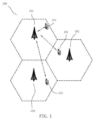
- the wireless communication system 100 includes remote units 101 and base units 102. Even though a specific number of remote units 101 and base units 102 are depicted in FIG. 1 , one of skill in the art will recognize that any number of remote units 101 and base units 102 may be included in the wireless communication system 100.
- the base units 102 may serve a number of remote units 101 within a serving area, for example, a cell or a cell sector via a wireless communication link.
- the base units 102 may communicate directly with one or more of the remote units 101 via communication signals.
- a base unit 102 may serve remote units 101 within a macro cell.
- the wireless communication system 100 is compliant with any type of network that is capable of sending and receiving wireless communication signals.
- the wireless communication system 100 is compliant with a wireless communication network, a cellular telephone network, a Time Division Multiple Access (TDMA)-based network, a Code Division Multiple Access (CDMA)-based network, an Orthogonal Frequency Division Multiple Access (OFDMA)-based network, a Long Term Evolution (LTE) network, a 3rd Generation Partnership Project (3GPP)-based network, 3GPP 5G network, a satellite communications network, a high altitude platform network, and/or other communications networks.
- TDMA Time Division Multiple Access
- CDMA Code Division Multiple Access
- OFDMA Orthogonal Frequency Division Multiple Access
- LTE Long Term Evolution
- 3GPP 3rd Generation Partnership Project
- 3GPP 5G 3rd Generation Partnership Project 5G network
- satellite communications network a high altitude platform network, and/or other communications networks.
- the wireless communication system 100 is compliant with the long-term evolution (LTE) of the 3GPP protocol, wherein the base unit 102 transmits using an orthogonal frequency division multiplexing (OFDM) modulation scheme on the DL and the remote units 101 transmit on the UL using a single-carrier frequency division multiple access (SC-FDMA) scheme or OFDM scheme. More generally, however, the wireless communication system 100 may implement some other open or proprietary communication protocol, for example, WiMAX, among other protocols.
- LTE long-term evolution
- OFDM orthogonal frequency division multiplexing
- SC-FDMA single-carrier frequency division multiple access
- a wireless communication device can generate a single bit for each CBG then concatenate the generated bits in one HARQ-ACK codebook. That is, one HARQ-ACK bit corresponds to one CBG, and the number of resulting HARQ-ACK bits for one TB may be equal to the number of code block groups. That will balance the quantity of the needed HARQ-ACK feedback bits and the retransmission efficiency. This manner may be called CBG-based HARQ-ACK feedback or CBG-level HARQ-ACK feedback.
- the HARQ-ACK codebook includes multiple HARQ-ACK bits for multiple CBGs of one TB, one or two TBs in one PDSCH, multiple PDSCHs in time domain and/or in multiple component carriers.
- the HARQ-ACK codebook size can be semi-statically changed by adjusting the configured maximum number of CBGs and/or the number of bundled PDSCHs via a RRC signaling.
- This HARQ-ACK codebook size determination manner is simple and reliable. Moreover, there is no ambiguity between the base unit and the remote unit on understanding HARQ-ACK codebooks even when some DL transmissions are missed.
- the remote unit pads redundant bits, for example, "NACK,” to make the HARQ-ACK codebook size equal to the predetermined value of N*M or N*M*2 and guarantee the same understanding on each HARQ-ACK bit.
- NACK redundant bits
- this HARQ-ACK codebook determination manner may require Polar coding to encode the HARQ-ACK bits and need more uplink resources for the PUCCH transmission.
- a HARQ-ACK codebook may include two parts, wherein a first part includes K1 HARQ-ACK bits and a second part includes K2 HARQ-ACK bit fields, wherein K1 is a quantity of TBs in a downlink association set, and K2 is a quantity of HARQ-ACK bit fields in a HARQ-ACK codebook.
- K1 is a quantity of TBs in a downlink association set
- K2 is a quantity of HARQ-ACK bit fields in a HARQ-ACK codebook.
- Each bit in the first part corresponds to one TB in the downlink association set
- each HARQ-ACK bit field in the second part corresponds to one incorrectly decoded TB in the downlink association set.
- the first part may be called TB-based HARQ-ACK feedback or TB-level HARQ-ACK feedback
- the second part may be called CBG-based HARQ-ACK feedback or CBG-level HARQ-ACK feedback.
- Figure 2A illustrates an example of a downlink association set according to an embodiment of the present application.
- the first PDSCH includes four CBGs
- the second PDSCH includes two CBGs
- the third PDSCH includes three CBGs
- the fourth PDSCH includes one CBG.
- the HARQ-ACK feedback corresponding to the four PDSCHs within the downlink association set is transmitted in one UCI.
- the remote unit knows the second PDSCH being lost or missed.
- TB-based HARQ-ACK bits in a HARQ-ACK codebook correspond to TB11 (carrier 1, slot 1), TB12 (carrier 1, slot 2), TB13 (carrier 1, slot 3), TB14 (carrier 1, slot 4), TB21 (carrier 2, slot 1), TB22 (carrier 2, slot 2), TB23 (carrier 2, slot 3), and TB24 (carrier 2, slot 4) within the downlink association set in order, respectively. That is, TB-based HARQ-ACK bits corresponding to the eight TBs within the downlink association set are ordered in the frequency-first time-second rule.
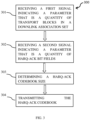
- a first signal for indicating a first parameter K1, which is an integer, is received from a base unit, wherein the first parameter is a quantity of TBs in a downlink association set.
- the first signal is a physical layer signaling.
- the first signal is a RRC signaling.
- the first parameter may be used as a payload size of a first part of a HARQ-ACK codebook, which will be illustrated in the following embodiments.
- the first parameter may be equal to the maximum number of TBs, for example, N, which is an integer, in the downlink association set indicated by the RRC signaling.
- TB-based HARQ-ACK bits corresponding to the K1 TBs within the downlink association set may be ordered in the frequency-first time-second rule.
- the first parameter may be indicated by a total DAI in DCI.
- a first part of a HARQ-ACK codebook corresponds to each transmitted DL transmission (for example, PDSCH) within the downlink association set.
- a remote unit for example an UE can derive the total DAI indicated in DL assignment as the value of the first parameter K1, and the remote unit can identify the lost or missed DL transmission(s) using additional counter DAI indicated in DL assignment.
- TB-based HARQ-ACK bits corresponding to the K1 TBs within the downlink association set may be ordered in counter DAIs. That is, the TB-based HARQ-ACK bits in the HARQ-ACK codebook for the downlink association set corresponds to all downlink transmissions in the downlink association set and each bit in the TB-based HARQ-ACK bits is ordered based on the counter DAI.
- a second signal for indicating a second parameter, K2 which is an integer is received from a base unit.
- the second parameter is a quantity of HARQ-ACK bit fields in a HARQ-ACK codebook.
- the second signal may be a physical layer signaling or a RRC signaling.
- the value of the second parameter may be configured by a base unit via RRC signaling.
- the second parameter may be indicated by a plurality of bits in DCI from a predefined set.
- the second parameter may be selected from a set of values configured by a RRC signaling and indicated by a plurality of bits in DCI.
- the value of K2 is dynamically indicated by a base unit from a RRC configured value set.
- the number of needed bits for indicating K2 is dependent on the configured value set size.
- the typical value of the configured value set size may be set to 4, and thus two-bits in DCI are needed for indicating K2.
- One example for the RRC configured value set may be ⁇ 0, 1, 2, 4 ⁇ , and another embodiment for the RRC configured value set may be ⁇ 1, 2, 3, 4 ⁇ .
- a HARQ-ACK bit field includes one or more HARQ-ACK bits.
- each HARQ-ACK bit field in a HARQ-ACK codebook includes M bits for HARQ-ACK feedback, wherein M is an integer.
- the second parameter is equal to zero, there is no second part of a HARQ-ACK codebook, and the HARQ-ACK codebook only includes the first part with TB-based HARQ-ACK feedback.
- a remote unit identifies the value of K2 is 0, only TB-based HARQ-ACK feedback in the first part of the HARQ-ACK codebook is transmitted. That implies CBG-based HARQ-ACK feedback is not supported.
- K2 is signaled to the remote unit to avoid any misunderstanding on the final HARQ-ACK codebook between the base unit and the remote unit. That implies the remote unit may only report up to K2 failed TBs with CBG-based HARQ-ACK feedback.
- the HARQ-ACK codebook is transmitted to the base unit.
- the first part and the second part of a HARQ-ACK codebook may be transmitted as a whole or may be transmitted separately.
- the first part and the second part of the HARQ-ACK codebook may be transmitted in one UCI.
- the first part and the second part of the HARQ-ACK codebook may be transmitted in different UCIs.
- Figure 4 illustrates an example of a HARQ-ACK codebook according to an embodiment of the present application.
- Figure 4 shows the mapping between four TBs in a downlink association set and bits in the HARQ-ACK codebook.
- the first part of the HARQ-ACK codebook in Figure 4 has four HARQ-ACK bits, each bit corresponding to one TB in the downlink association set. Since the second TB is incorrectly decoded at a remote unit, a second part of the HARQ-ACK codebook in Figure 4 has one HARQ-ACK bit field, each bit in the HARQ-ACK bit field corresponding to each CBG of the second TB in the downlink association set.
- each bit in the second part of the HARQ-ACK codebook may be set as "ACK” or "NACK” (which is shown as “A/N” in Figure 4 ) according to the actual result of CBGs in the second TB in the downlink association set.
- the HARQ-ACK codebook including the first and second parts definitely and clearly illustrates that the second TB in the downlink association set is incorrectly decoded and meanwhile the third CBG in this second TB is incorrectly decoded.
- this HARQ-ACK codebook determination manner is simple and reliable and such HARQ-ACK codebook is very economical in overhead.
- Each bit in the first HARQ-ACK bit field corresponds to each CBG of the second TB in the downlink association set
- each bit in the second HARQ-ACK bit field corresponds to each CBG in the seventh TB in the downlink association set.
- all bits in the second part of the HARQ-ACK codebook may be set as "ACK” or "NACK” (which is shown as "A/N” in Figure 5 ) according to the actual result of CBGs in the second and seventh TBs in the downlink association set. All the above-mentioned implementations or embodiment in a HARQ-ACK codebook are applicable for this embodiment.
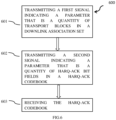
- Figure 6 illustrates an example flowchart demonstrating the operations of a base unit according to an embodiment of the present application.
- the method 600 is performed by an apparatus, such as the base units 102.
- the method 600 may be performed by a processor executing program codes, for example, a microcontroller, a microprocessor, a CPU, a GPU, an auxiliary processing unit, a FPGA, or the like.
- Each bit in the first part corresponds to one TB in the downlink association set.
- Each HARQ-ACK bit field in the second part corresponds to one of incorrectly decoded TBs in the downlink association set. All the above-mentioned implementations or embodiment in HARQ-ACK codebook determination are applicable for this embodiment.
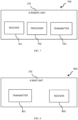
- Figure 7 illustrates an example block diagram of a remote unit according to an embodiment of the present application.
- the apparatus 700 in Figure 7 includes one embodiment of the remote unit 101.
- the remote unit 101 may include a receiver 701, a processor 702, and a transmitter 703.
- the receiver 701 and the transmitter 703 may be integrated into a single device, such as a transceiver.
- the remote unit 101 may further include an input device, a display, a memory, and/or other elements.
- the receiver 701 receives a first signal for indicating a parameter of K1 and a second signal for indicating a parameter of K2.
- K1 is a quantity of transport blocks (TBs) in a downlink association set and K2 is a quantity of HARQ-ACK bit fields in a HARQ-ACK codebook received from a base unit 102 (referring to Figure 8 ).
- the processor 702 determines a size of the HARQ-ACK codebook based on the first signal and the second signal.
- the transmitter 703 transmits the HARQ-ACK codebook to the base unit 102.
- the HARQ-ACK codebook includes a first part with K1 HARQ-ACK bits and a second part with K2 HARQ-ACK bit fields.
- K1 is a quantity of transport blocks (TBs) in a downlink association set
- K2 is a quantity of HARQ-ACK bit fields in a HARQ-ACK codebook.
- the receiver 803 receives the HARQ-ACK codebook from the remote unit 101 (referring to Figure 7 ).
- the HARQ-ACK codebook comprises a first part including K1 HARQ-ACK bits and a second part including K2 HARQ-ACK bit fields. Each bit in the first part corresponds to one TB in the downlink association set, and each HARQ-ACK bit field in the second part corresponds to one incorrectly decoded TB in the downlink association set.
- the apparatus 800 may further include a processor, which is used for determining, indicating, or adjusting K2, i.e., a quantity of HARQ-ACK bit fields in a HARQ-ACK codebook.
- the processor in the apparatus 800 determines K2 based on one or more of an experienced channel condition, a total UCI payload size, a PUCCH format, a required PUCCH resource, an estimated uplink transmit power, K1 and configured maximum number of CBGs per TB and etc.
- the functions and implementations of all elements in the apparatus 800 and definitions of related technical terms can refer to the specific descriptions of Figures 2 and 4-6 and the foregoing corresponding paragraphs in this specification.
- the method of this disclosure can be implemented on a programmed processor.
- the controllers, flowcharts, and modules may also be implemented on a general purpose or special purpose computer, a programmed microprocessor or microcontroller and peripheral integrated circuit elements, an integrated circuit, a hardware electronic or logic circuit such as a discrete element circuit, a programmable logic device, or the like.
- any device on which there resides a finite state machine capable of implementing the flowcharts shown in the figures may be used to implement the processor functions of this disclosure.
Landscapes
- Engineering & Computer Science (AREA)
- Computer Networks & Wireless Communication (AREA)
- Signal Processing (AREA)
- Mobile Radio Communication Systems (AREA)
- Detection And Prevention Of Errors In Transmission (AREA)
Claims (15)
- Appareil (700), comprenant :un récepteur (701) agencé pour recevoir un premier signal permettant d'indiquer un paramètre de K1, dans lequel K1 est une quantité de blocs de transport, TB, dans un ensemble d'associations de liaison descendante ; etrecevoir un second signal permettant d'indiquer un paramètre de K2, dans lequel K2 est une quantité de champs binaires d'accusé de réception de demande de répétition automatique hybride, HARQ-ACK, dans un livre de codes HARQ-ACK ;un processeur (702) agencé pour déterminer, en fonction du premier signal et du second signal, une taille du livre de codes HARQ-ACK ;un émetteur (703) agencé pour transmettre le livre de codes HARQ-ACK, dans lequel le livre de codes HARQ-ACK comprend une première partie comportant K1 bits HARQ-ACK et une seconde partie comportant K2 champs binaires HARQ-ACK, dans lequel chaque bit de la première partie correspond à un bloc de transport, TB, dans l'ensemble d'associations de liaison descendante, et chaque champ binaire HARQ-ACK de la seconde partie comprend une pluralité de bits HARQ-ACK et chacun de la pluralité de bits HARQ-ACK correspond à un groupe de blocs de code, CBG, d'un TB incorrectement décodé dans l'ensemble d'associations de liaison descendante ;dans lequel la seconde partie est complétée par un ou plusieurs bits d'accusé de réception, ACK, ou d'accusé de réception négatif, NACK, en réponse à l'identification de K2 comme étant supérieur à une quantité de TB effectivement décodés de manière incorrecte dans l'ensemble d'association de liaison descendante ;dans lequel la seconde partie comportant K2 champs binaires HARQ-ACK correspond à un premier K2 de TB de TB effectivement décodés de manière incorrecte dans l'ensemble d'associations de liaison descendante en réponse à l'identification de K2 comme étant plus petit qu'une quantité de TB effectivement décodés de manière incorrecte dans l'ensemble d'associations de liaison descendante.
- Appareil (700) selon la revendication 1, dans lequel le premier signal est un signal de couche physique et K1 est indiqué par un indice d'attribution de liaison descendante totale, DAI, dans l'information de contrôle de liaison descendante, DCI.
- Appareil (700) selon la revendication 1, dans lequel le premier signal est un signal de contrôle des ressources radio, RRC et K1 est égal à un nombre maximal de TB dans l'ensemble d'associations de liaison descendante indiqué par la signalisation RRC.
- Appareil (700) selon la revendication 1, dans lequel une longueur de bit de chaque champ de bit HARQ-ACK est égale à un nombre maximal de groupes de blocs de code, CBG, par TB configuré par une signalisation RRC.
- Appareil (700) selon la revendication 1 :dans lequel le second signal est une signalisation RRC ;dans lequel le second signal est un signal de couche physique et K2 est indiqué par une pluralité de bits dans des DCI à partir d'un ensemble prédéfini ; soitdans lequel le second signal est un signal de couche physique et K2 est sélectionné parmi un ensemble de valeurs configurées par un signal RRC et indiquées par une pluralité de bits dans des DCI.
- Procédé (300) réalisé par un appareil (700) comprenant :la réception (301) d'un premier signal permettant d'indiquer un paramètre de K1, dans lequel K1 est une quantité de blocs de transport, TB, dans un ensemble d'associations de liaison descendante ; etla réception (302) d'un second signal permettant d'indiquer un paramètre de K2, dans lequel K2 est une quantité de champs binaires d'accusé de réception de demande de répétition automatique hybride, HARQ-ACK, dans un livre de codes HARQ-ACK ;la détermination (303) d'une taille du livre de codes HARQ-ACK en fonction du premier signal et du second signal ;la transmission (304) du livre de codes HARQ-ACK, dans lequel le livre de codes HARQ-ACK comprend une première partie comportant K1 bits HARQ-ACK et une seconde partie comportant K2 champs binaires HARQ-ACK, dans lequel chaque bit de la première partie correspond à un bloc de transport, TB, dans l'ensemble d'associations de liaison descendante, et chaque champ binaire HARQ-ACK de la seconde partie comprend une pluralité de bits HARQ-ACK et chacun de la pluralité de bits HARQ-ACK correspond à un groupe de blocs de code, CBG, d'un TB incorrectement décodé dans l'ensemble d'associations de liaison descendante ;dans lequel la seconde partie est complétée par un ou plusieurs bits d'accusé de réception, ACK, ou d'accusé de réception négatif, NACK, en réponse à l'identification de K2 comme étant supérieur à une quantité de TB effectivement décodés de manière incorrecte dans l'ensemble d'association de liaison descendante ;dans lequel la seconde partie comportant K2 champs binaires HARQ-ACK correspond à un premier K2 de TB de TB effectivement décodés de manière incorrecte dans l'ensemble d'associations de liaison descendante en réponse à l'identification de K2 comme étant plus petit qu'une quantité de TB effectivement décodés de manière incorrecte dans l'ensemble d'associations de liaison descendante.
- Procédé (300) selon la revendication 6, dans lequel le premier signal est un signal de couche physique et K1 est indiqué par un indice d'attribution de liaison descendante totale, DAI, dans des informations de contrôle de liaison descendante, DCI, ou
- Procédé (300) selon la revendication 7, dans lequel le premier signal est un signal de contrôle de ressources radio, RRC, et K1 est égal à un nombre maximal de TB dans l'ensemble d'associations de la liaison descendante indiqué par la signalisation RRC.
- Procédé (300) selon la revendication 7, dans lequel une longueur de bit de chaque champ binaire HARQ-ACK est égale à un nombre maximal de groupes de blocs de code, CBG, par TB configuré par une signalisation RRC.
- Procédé (300) selon la revendication 7, dans lequel le second signal est une signalisation RRC.
- Procédé (300) selon la revendication 7, dans lequel le second signal est une signalisation de couche physique et K2 est indiqué par une pluralité de bits dans des DCI à partir d'un ensemble prédéfini.
- Procédé (300) selon la revendication 7, dans lequel le second signal est une signalisation de couche physique et K2 est sélectionné dans un ensemble de valeurs configurées par une signalisation RRC et indiqué par une pluralité de bits dans des DCI.
- Procédé (300) selon la revendication 7, dans lequel la première partie et la seconde partie sont transmises séparément.
- Appareil (800), comprenant :un émetteur (801) agencé pour transmettre un premier signal permettant d'indiquer un paramètre de K1, dans lequel K1 est une quantité de blocs de transport, TB, dans un ensemble d'associations de liaison descendante ; etla transmission d'un second signal permettant d'indiquer un paramètre de K2, dans lequel K2 est une quantité de champs binaires d'accusé de réception de demande de répétition automatique hybride, HARQ-ACK, dans un livre de codes HARQ-ACK ;un récepteur (802) agencé pour recevoir le livre de codes HARQ-ACK, dans lequel le livre de codes HARQ-ACK comprend une première partie comportant K1 bits HARQ-ACK et une seconde partie comportant K2 champs binaires HARQ-ACK, dans lequel chaque bit de la première partie correspond à un bloc de transport, TB, dans l'ensemble d'associations de liaison descendante, et chaque champ binaire HARQ-ACK de la seconde partie comprend une pluralité de bits HARQ-ACK et chacun de la pluralité de bits HARQ-ACK correspond à un groupe de blocs de code, CBG, d'un TB incorrectement décodé dans l'ensemble d'associations de liaison descendante ;dans lequel la seconde partie est complétée par un ou plusieurs bits d'accusé de réception, ACK, ou d'accusé de réception négatif, NACK, en réponse à l'identification de K2 comme étant supérieur à une quantité de TB effectivement décodés de manière incorrecte dans l'ensemble d'association de liaison descendante ;dans lequel la seconde partie comportant K2 champs binaires HARQ-ACK correspond à un premier K2 de TB de TB effectivement décodés de manière incorrecte dans l'ensemble d'associations de liaison descendante en réponse à l'identification de K2 comme étant plus petit qu'une quantité de TB effectivement décodés de manière incorrecte dans l'ensemble d'associations de liaison descendante.
- Procédé (600) réalisé par un appareil (800) comprenant :la transmission (601) d'un premier signal permettant d'indiquer un paramètre de K1, dans lequel K1 est une quantité de blocs de transport, TB, dans un ensemble d'associations de liaison descendante ; etla transmission (602) d'un second signal permettant d'indiquer un paramètre de K2, dans lequel K2 est une quantité de champs binaires d'accusé de réception de demande de répétition automatique hybride, HARQ-ACK, dans un livre de codes HARQ-ACK ;la réception (603) du livre de codes HARQ-ACK, dans lequel le livre de codes HARQ-ACK comprend une première partie comportant K1 bits HARQ-ACK et une seconde partie comportant K2 champs binaires HARQ-ACK, dans lequel chaque bit de la première partie correspond à un bloc de transport, TB, dans l'ensemble d'associations de liaison descendante, et chaque champ binaire HARQ-ACK de la seconde partie comprend une pluralité de bits HARQ-ACK et chacun de la pluralité de bits HARQ-ACK correspond à un groupe de blocs de code, CBG, d'un TB incorrectement décodé dans l'ensemble d'associations de liaison descendante ;dans lequel la seconde partie est complétée par un ou plusieurs bits d'accusé de réception, ACK, ou d'accusé de réception négatif, NACK, en réponse à l'identification de K2 comme étant supérieur à une quantité de TB effectivement décodés de manière incorrecte dans l'ensemble d'association de liaison descendante ;dans lequel la seconde partie comportant K2 champs binaires HARQ-ACK correspond à un premier K2 de TB de TB effectivement décodés de manière incorrecte dans l'ensemble d'associations de liaison descendante en réponse à l'identification de K2 comme étant plus petit qu'une quantité de TB effectivement décodés de manière incorrecte dans l'ensemble d'associations de liaison descendante.
Applications Claiming Priority (1)
| Application Number | Priority Date | Filing Date | Title |
|---|---|---|---|
| PCT/CN2017/111352 WO2019095202A1 (fr) | 2017-11-16 | 2017-11-16 | Procédé et appareil de détermination de livre-code harq-ack |
Publications (4)
| Publication Number | Publication Date |
|---|---|
| EP3711217A1 EP3711217A1 (fr) | 2020-09-23 |
| EP3711217A4 EP3711217A4 (fr) | 2021-06-30 |
| EP3711217B1 true EP3711217B1 (fr) | 2025-04-09 |
| EP3711217C0 EP3711217C0 (fr) | 2025-04-09 |
Family
ID=66539301
Family Applications (1)
| Application Number | Title | Priority Date | Filing Date |
|---|---|---|---|
| EP17932250.8A Active EP3711217B1 (fr) | 2017-11-16 | 2017-11-16 | Procédé et appareil de détermination de livre-code harq-ack |
Country Status (5)
| Country | Link |
|---|---|
| US (1) | US11483096B2 (fr) |
| EP (1) | EP3711217B1 (fr) |
| CN (1) | CN111684749B (fr) |
| ES (1) | ES3018785T3 (fr) |
| WO (1) | WO2019095202A1 (fr) |
Families Citing this family (29)
| Publication number | Priority date | Publication date | Assignee | Title |
|---|---|---|---|---|
| KR102750782B1 (ko) | 2017-11-17 | 2025-01-06 | 지티이 코포레이션 | 데이터 재전송을 위한 코드북 피드백 |
| US10686576B2 (en) * | 2017-11-17 | 2020-06-16 | Qualcomm Incorporated | Techniques and apparatuses for hybrid automatic repeat request acknowledgement (HARQ-ACK) feedback for carrier aggregation in new radio |
| CA3082758C (fr) * | 2017-11-17 | 2023-01-17 | Telefonaktiebolaget Lm Ericsson (Publ) | Signalisation d'accuse de reception de reseaux d'acces radio |
| CN110034901B (zh) * | 2018-01-12 | 2020-07-17 | 北京紫光展锐通信技术有限公司 | 混合式自动重传请求码本的生成方法、用户设备、介质 |
| WO2019160457A1 (fr) * | 2018-02-16 | 2019-08-22 | Telefonaktiebolaget Lm Ericsson (Publ) | Structure de livre de codes harq |
| EP4221029A1 (fr) | 2018-05-11 | 2023-08-02 | Telefonaktiebolaget LM Ericsson (publ) | Livre de codes harq pour réseaux d'accès radio |
| EP3827538B1 (fr) * | 2018-07-26 | 2024-01-24 | Telefonaktiebolaget LM Ericsson (publ) | Livre de codes harq pour réseaux d'accès radio |
| CN115842607B (zh) * | 2018-11-02 | 2024-06-11 | 中兴通讯股份有限公司 | Harq-ack码本确定方法及装置、终端、存储介质 |
| US11451284B2 (en) * | 2019-03-28 | 2022-09-20 | Qualcomm Incorporated | Multiplexing codebooks generated for transmissions having different service types |
| KR102685077B1 (ko) * | 2019-03-29 | 2024-07-16 | 애플 인크. | 뉴 라디오(nr)에 대한 하이브리드 자동 반복 요청(harq) 송신들 |
| CN114097293B (zh) * | 2019-07-12 | 2025-12-05 | 联想(北京)有限公司 | 单次harq-ack码本确定的装置和方法 |
| CN110311762B (zh) | 2019-07-16 | 2021-04-16 | 北京紫光展锐通信技术有限公司 | 反馈信息传输方法、装置、终端及存储介质 |
| JP7498259B2 (ja) * | 2019-07-26 | 2024-06-11 | 北京小米移動軟件有限公司 | 競合ウィンドウの決定方法及び装置、通信装置及び記憶媒体 |
| CN115276918B (zh) * | 2019-08-02 | 2024-04-26 | 中兴通讯股份有限公司 | 信息计数方法、装置和计算机存储介质 |
| US11784707B2 (en) * | 2019-08-02 | 2023-10-10 | Qualcomm Incorporated | Techniques for sidelink relay |
| CN113261223B (zh) * | 2019-12-12 | 2023-04-18 | 北京小米移动软件有限公司 | Harq-ack信息传输方法及装置、通信设备 |
| CN115280699B (zh) * | 2020-02-12 | 2024-11-26 | 高通股份有限公司 | 用于上行链路传输的uci增强 |
| US11817959B2 (en) * | 2020-02-19 | 2023-11-14 | Qualcomm Incorporated | Codebook construction for enhanced hybrid automatic repeat request feedback |
| US11799590B2 (en) * | 2020-04-27 | 2023-10-24 | Qualcomm Incorporated | Hybrid automatic repeat request procedures for a relay using partial decoding |
| US12574150B2 (en) * | 2020-10-09 | 2026-03-10 | Ntt Docomo, Inc. | Terminal and communication method |
| WO2021042091A2 (fr) * | 2020-10-13 | 2021-03-04 | Zeku, Inc. | Appareil et procédé de réalisation d'un processus de sélection de livre de codes d'accusé de réception de requête de répétition hybride automatique |
| US12476751B2 (en) * | 2021-03-04 | 2025-11-18 | Samsung Electronics Co., Ltd. | Methods for dynamic HARQ-ACK codebook with multiple sub-codebooks |
| EP4342112A4 (fr) * | 2021-05-18 | 2025-02-19 | Qualcomm Incorporated | Livre de codes harq pour transmission multi-tb |
| US12278706B2 (en) * | 2021-06-15 | 2025-04-15 | Qualcomm Incorporated | Transport block grouping for higher bands |
| CN113994615B (zh) * | 2021-09-26 | 2024-03-29 | 北京小米移动软件有限公司 | Harq码本处理方法及装置、通信设备及存储介质 |
| CN114040480B (zh) * | 2021-11-05 | 2024-11-19 | 中国信息通信研究院 | 一种物理控制信道发送功率确定方法和设备 |
| WO2024173451A1 (fr) * | 2023-02-14 | 2024-08-22 | Interdigital Patent Holdings, Inc. | Améliorations de livre de codes harq |
| US20250096948A1 (en) * | 2023-09-20 | 2025-03-20 | Qualcomm Incorporated | Lossy compression for hybrid automatic repeat request acknowledgement (harq-ack) |
| US20250096945A1 (en) * | 2023-09-20 | 2025-03-20 | Qualcomm Incorporated | Two part hybrid automatic repeat request acknowledgement (harq-ack) for compressing a harq-ack payload |
Family Cites Families (13)
| Publication number | Priority date | Publication date | Assignee | Title |
|---|---|---|---|---|
| US9236918B2 (en) | 2008-06-24 | 2016-01-12 | Panasonic Intellectual Property Corporation Of America | MIMO transmitting apparatus, MIMO receiving apparatus, MIMO transmission signal formation method, and MIMO transmission signal separation method |
| KR102004267B1 (ko) * | 2012-02-03 | 2019-07-26 | 엘지전자 주식회사 | 상향링크 신호 또는 하향링크 신호 송수신 방법 및 이를 위한 장치 |
| US20150200751A1 (en) * | 2014-01-10 | 2015-07-16 | Sharp Laboratories Of America, Inc. | Enhanced pucch reporting for carrier aggregation |
| US9877288B2 (en) * | 2014-07-25 | 2018-01-23 | Futurewei Technologies, Inc. | System and method for transmit power control with secondary uplink pilot channel |
| CN105530072B (zh) * | 2014-09-29 | 2018-09-14 | 普天信息技术有限公司 | 一种基于码块分割的上行信号解码方法及基站 |
| TWI599183B (zh) * | 2016-05-02 | 2017-09-11 | 瑞昱半導體股份有限公司 | 最大可能性偵測器與偵測方法 |
| CN107294667B (zh) * | 2017-06-16 | 2020-11-10 | 宇龙计算机通信科技(深圳)有限公司 | 数据收发配置方法及相关装置 |
| US10750488B2 (en) * | 2017-09-11 | 2020-08-18 | Apple Inc. | Hybrid automatic repeat request (HARQ) based on codeblock groups in new radio systems |
| CN109728877B (zh) * | 2017-10-27 | 2021-07-27 | 上海朗帛通信技术有限公司 | 一种用于无线通信的用户设备、基站中的方法和装置 |
| CN109756299B (zh) * | 2017-11-04 | 2021-01-26 | 上海朗帛通信技术有限公司 | 一种用于无线通信的用户设备、基站中的方法和装置 |
| US11997045B2 (en) * | 2018-02-16 | 2024-05-28 | Nokia Technologies Oy | Hybrid automatic repeat request feedback arrangement for NR-unlicensed bands |
| EP3776959A1 (fr) * | 2018-04-06 | 2021-02-17 | Nokia Technologies Oy | Livre de codes harq-ack prenant en charge des ue ayant une capacité de réception pdsch parallèle |
| MX2020011801A (es) * | 2018-05-10 | 2020-12-07 | Ericsson Telefon Ab L M | Metodos y aparatos para solicitud de repeticion automatica hibrida (harq). |
-
2017
- 2017-11-16 ES ES17932250T patent/ES3018785T3/es active Active
- 2017-11-16 US US16/764,669 patent/US11483096B2/en active Active
- 2017-11-16 WO PCT/CN2017/111352 patent/WO2019095202A1/fr not_active Ceased
- 2017-11-16 EP EP17932250.8A patent/EP3711217B1/fr active Active
- 2017-11-16 CN CN201780096975.0A patent/CN111684749B/zh active Active
Also Published As
| Publication number | Publication date |
|---|---|
| CN111684749B (zh) | 2022-07-26 |
| EP3711217A4 (fr) | 2021-06-30 |
| US11483096B2 (en) | 2022-10-25 |
| WO2019095202A1 (fr) | 2019-05-23 |
| EP3711217A1 (fr) | 2020-09-23 |
| US20210176011A1 (en) | 2021-06-10 |
| ES3018785T3 (en) | 2025-05-19 |
| EP3711217C0 (fr) | 2025-04-09 |
| CN111684749A (zh) | 2020-09-18 |
Similar Documents
| Publication | Publication Date | Title |
|---|---|---|
| EP3711217B1 (fr) | Procédé et appareil de détermination de livre-code harq-ack | |
| US11916678B2 (en) | Method and apparatus for HARQ-ACK feedback for carrier aggregation | |
| US11418291B2 (en) | Method and apparatus of using redundant bits in semi-statically configured HARQ-ACK codebook | |
| US11444727B2 (en) | Method and apparatus for HARQ-ACK payload reduction for semi-static HARQ-ACK codebook determination | |
| US11489635B2 (en) | Method and apparatus for determining a dynamic HARQ-ACK codebook | |
| EP3738245B1 (fr) | Procédé et appareil pour déterminer un livre de codes harq-ack pour agrégation de porteuses | |
| US12615634B2 (en) | Method and apparatus for determining HARQ-ACK codebook | |
| US12284134B2 (en) | Method and apparatus for fallback operation for semi-static HARQ-ACK codebook determination | |
| EP3955498B1 (fr) | Procédé de transmission d'informations de commande, procédé et appareil de retransmission, terminal et support de stockage | |
| US12009934B2 (en) | Method and apparatus for transmitting HARQ-ACK feedback on unlicensed spectrum | |
| WO2023205937A1 (fr) | Procédé et appareils pour la détermination d'un codebook harq-ack basé sur le nack-only |
Legal Events
| Date | Code | Title | Description |
|---|---|---|---|
| STAA | Information on the status of an ep patent application or granted ep patent |
Free format text: STATUS: THE INTERNATIONAL PUBLICATION HAS BEEN MADE |
|
| PUAI | Public reference made under article 153(3) epc to a published international application that has entered the european phase |
Free format text: ORIGINAL CODE: 0009012 |
|
| STAA | Information on the status of an ep patent application or granted ep patent |
Free format text: STATUS: REQUEST FOR EXAMINATION WAS MADE |
|
| 17P | Request for examination filed |
Effective date: 20200507 |
|
| AK | Designated contracting states |
Kind code of ref document: A1 Designated state(s): AL AT BE BG CH CY CZ DE DK EE ES FI FR GB GR HR HU IE IS IT LI LT LU LV MC MK MT NL NO PL PT RO RS SE SI SK SM TR |
|
| AX | Request for extension of the european patent |
Extension state: BA ME |
|
| DAV | Request for validation of the european patent (deleted) | ||
| DAX | Request for extension of the european patent (deleted) | ||
| A4 | Supplementary search report drawn up and despatched |
Effective date: 20210531 |
|
| RIC1 | Information provided on ipc code assigned before grant |
Ipc: H04L 1/18 20060101AFI20210525BHEP Ipc: H04L 1/16 20060101ALI20210525BHEP Ipc: H04L 5/00 20060101ALN20210525BHEP |
|
| STAA | Information on the status of an ep patent application or granted ep patent |
Free format text: STATUS: EXAMINATION IS IN PROGRESS |
|
| 17Q | First examination report despatched |
Effective date: 20230515 |
|
| REG | Reference to a national code |
Ref country code: DE Ipc: H04L0001160700 Ref country code: DE Ref legal event code: R079 Ref document number: 602017088887 Country of ref document: DE Free format text: PREVIOUS MAIN CLASS: H04L0001180000 Ipc: H04L0001160700 |
|
| RIC1 | Information provided on ipc code assigned before grant |
Ipc: H04L 5/00 20060101ALN20241029BHEP Ipc: H04L 1/1867 20230101ALI20241029BHEP Ipc: H04L 1/1829 20230101ALI20241029BHEP Ipc: H04L 1/1607 20230101AFI20241029BHEP |
|
| GRAP | Despatch of communication of intention to grant a patent |
Free format text: ORIGINAL CODE: EPIDOSNIGR1 |
|
| STAA | Information on the status of an ep patent application or granted ep patent |
Free format text: STATUS: GRANT OF PATENT IS INTENDED |
|
| INTG | Intention to grant announced |
Effective date: 20241206 |
|
| GRAS | Grant fee paid |
Free format text: ORIGINAL CODE: EPIDOSNIGR3 |
|
| GRAA | (expected) grant |
Free format text: ORIGINAL CODE: 0009210 |
|
| STAA | Information on the status of an ep patent application or granted ep patent |
Free format text: STATUS: THE PATENT HAS BEEN GRANTED |
|
| AK | Designated contracting states |
Kind code of ref document: B1 Designated state(s): AL AT BE BG CH CY CZ DE DK EE ES FI FR GB GR HR HU IE IS IT LI LT LU LV MC MK MT NL NO PL PT RO RS SE SI SK SM TR |
|
| REG | Reference to a national code |
Ref country code: GB Ref legal event code: FG4D |
|
| REG | Reference to a national code |
Ref country code: CH Ref legal event code: EP |
|
| REG | Reference to a national code |
Ref country code: DE Ref legal event code: R096 Ref document number: 602017088887 Country of ref document: DE |
|
| REG | Reference to a national code |
Ref country code: IE Ref legal event code: FG4D |
|
| REG | Reference to a national code |
Ref country code: ES Ref legal event code: FG2A Ref document number: 3018785 Country of ref document: ES Kind code of ref document: T3 Effective date: 20250519 |
|
| U01 | Request for unitary effect filed |
Effective date: 20250424 |
|
| U07 | Unitary effect registered |
Designated state(s): AT BE BG DE DK EE FI FR IT LT LU LV MT NL PT RO SE SI Effective date: 20250502 |
|
| PG25 | Lapsed in a contracting state [announced via postgrant information from national office to epo] |
Ref country code: NO Free format text: LAPSE BECAUSE OF FAILURE TO SUBMIT A TRANSLATION OF THE DESCRIPTION OR TO PAY THE FEE WITHIN THE PRESCRIBED TIME-LIMIT Effective date: 20250709 Ref country code: GR Free format text: LAPSE BECAUSE OF FAILURE TO SUBMIT A TRANSLATION OF THE DESCRIPTION OR TO PAY THE FEE WITHIN THE PRESCRIBED TIME-LIMIT Effective date: 20250710 |
|
| PG25 | Lapsed in a contracting state [announced via postgrant information from national office to epo] |
Ref country code: PL Free format text: LAPSE BECAUSE OF FAILURE TO SUBMIT A TRANSLATION OF THE DESCRIPTION OR TO PAY THE FEE WITHIN THE PRESCRIBED TIME-LIMIT Effective date: 20250409 |
|
| PG25 | Lapsed in a contracting state [announced via postgrant information from national office to epo] |
Ref country code: HR Free format text: LAPSE BECAUSE OF FAILURE TO SUBMIT A TRANSLATION OF THE DESCRIPTION OR TO PAY THE FEE WITHIN THE PRESCRIBED TIME-LIMIT Effective date: 20250409 |
|
| PG25 | Lapsed in a contracting state [announced via postgrant information from national office to epo] |
Ref country code: RS Free format text: LAPSE BECAUSE OF FAILURE TO SUBMIT A TRANSLATION OF THE DESCRIPTION OR TO PAY THE FEE WITHIN THE PRESCRIBED TIME-LIMIT Effective date: 20250709 |
|
| PG25 | Lapsed in a contracting state [announced via postgrant information from national office to epo] |
Ref country code: IS Free format text: LAPSE BECAUSE OF FAILURE TO SUBMIT A TRANSLATION OF THE DESCRIPTION OR TO PAY THE FEE WITHIN THE PRESCRIBED TIME-LIMIT Effective date: 20250809 |
|
| U20 | Renewal fee for the european patent with unitary effect paid |
Year of fee payment: 9 Effective date: 20251126 |
|
| PGFP | Annual fee paid to national office [announced via postgrant information from national office to epo] |
Ref country code: GB Payment date: 20251125 Year of fee payment: 9 |
|
| PG25 | Lapsed in a contracting state [announced via postgrant information from national office to epo] |
Ref country code: SM Free format text: LAPSE BECAUSE OF FAILURE TO SUBMIT A TRANSLATION OF THE DESCRIPTION OR TO PAY THE FEE WITHIN THE PRESCRIBED TIME-LIMIT Effective date: 20250409 |
|
| PG25 | Lapsed in a contracting state [announced via postgrant information from national office to epo] |
Ref country code: CZ Free format text: LAPSE BECAUSE OF FAILURE TO SUBMIT A TRANSLATION OF THE DESCRIPTION OR TO PAY THE FEE WITHIN THE PRESCRIBED TIME-LIMIT Effective date: 20250409 |
|
| PG25 | Lapsed in a contracting state [announced via postgrant information from national office to epo] |
Ref country code: SK Free format text: LAPSE BECAUSE OF FAILURE TO SUBMIT A TRANSLATION OF THE DESCRIPTION OR TO PAY THE FEE WITHIN THE PRESCRIBED TIME-LIMIT Effective date: 20250409 |
|
| PGFP | Annual fee paid to national office [announced via postgrant information from national office to epo] |
Ref country code: ES Payment date: 20251209 Year of fee payment: 9 |
|
| PLBE | No opposition filed within time limit |
Free format text: ORIGINAL CODE: 0009261 |
|
| STAA | Information on the status of an ep patent application or granted ep patent |
Free format text: STATUS: NO OPPOSITION FILED WITHIN TIME LIMIT |
|
| REG | Reference to a national code |
Ref country code: CH Ref legal event code: L10 Free format text: ST27 STATUS EVENT CODE: U-0-0-L10-L00 (AS PROVIDED BY THE NATIONAL OFFICE) Effective date: 20260218 |
|
| 26N | No opposition filed |
Effective date: 20260112 |