EP3713558B1 - Aminoadamantylnitratverbindungen und ihre verwendung zur behandlung von zns-erkrankungen - Google Patents
Aminoadamantylnitratverbindungen und ihre verwendung zur behandlung von zns-erkrankungen Download PDFInfo
- Publication number
- EP3713558B1 EP3713558B1 EP18882117.7A EP18882117A EP3713558B1 EP 3713558 B1 EP3713558 B1 EP 3713558B1 EP 18882117 A EP18882117 A EP 18882117A EP 3713558 B1 EP3713558 B1 EP 3713558B1
- Authority
- EP
- European Patent Office
- Prior art keywords
- aminoadamantyl
- nitrate
- acid
- compound
- compounds
- Prior art date
- Legal status (The legal status is an assumption and is not a legal conclusion. Google has not performed a legal analysis and makes no representation as to the accuracy of the status listed.)
- Active
Links
Images
Classifications
-
- C—CHEMISTRY; METALLURGY
- C07—ORGANIC CHEMISTRY
- C07C—ACYCLIC OR CARBOCYCLIC COMPOUNDS
- C07C219/00—Compounds containing amino and esterified hydroxy groups bound to the same carbon skeleton
- C07C219/24—Compounds containing amino and esterified hydroxy groups bound to the same carbon skeleton having esterified hydroxy groups or amino groups bound to carbon atoms of rings other than six-membered aromatic rings of the same carbon skeleton
-
- A—HUMAN NECESSITIES
- A61—MEDICAL OR VETERINARY SCIENCE; HYGIENE
- A61K—PREPARATIONS FOR MEDICAL, DENTAL OR TOILETRY PURPOSES
- A61K31/00—Medicinal preparations containing organic active ingredients
- A61K31/16—Amides, e.g. hydroxamic acids
-
- A—HUMAN NECESSITIES
- A61—MEDICAL OR VETERINARY SCIENCE; HYGIENE
- A61P—SPECIFIC THERAPEUTIC ACTIVITY OF CHEMICAL COMPOUNDS OR MEDICINAL PREPARATIONS
- A61P11/00—Drugs for disorders of the respiratory system
-
- A—HUMAN NECESSITIES
- A61—MEDICAL OR VETERINARY SCIENCE; HYGIENE
- A61P—SPECIFIC THERAPEUTIC ACTIVITY OF CHEMICAL COMPOUNDS OR MEDICINAL PREPARATIONS
- A61P25/00—Drugs for disorders of the nervous system
-
- C—CHEMISTRY; METALLURGY
- C07—ORGANIC CHEMISTRY
- C07C—ACYCLIC OR CARBOCYCLIC COMPOUNDS
- C07C211/00—Compounds containing amino groups bound to a carbon skeleton
- C07C211/01—Compounds containing amino groups bound to a carbon skeleton having amino groups bound to acyclic carbon atoms
- C07C211/16—Compounds containing amino groups bound to a carbon skeleton having amino groups bound to acyclic carbon atoms of a saturated carbon skeleton containing rings other than six-membered aromatic rings
- C07C211/19—Compounds containing amino groups bound to a carbon skeleton having amino groups bound to acyclic carbon atoms of a saturated carbon skeleton containing rings other than six-membered aromatic rings containing condensed ring systems
-
- C—CHEMISTRY; METALLURGY
- C07—ORGANIC CHEMISTRY
- C07C—ACYCLIC OR CARBOCYCLIC COMPOUNDS
- C07C211/00—Compounds containing amino groups bound to a carbon skeleton
- C07C211/01—Compounds containing amino groups bound to a carbon skeleton having amino groups bound to acyclic carbon atoms
- C07C211/26—Compounds containing amino groups bound to a carbon skeleton having amino groups bound to acyclic carbon atoms of an unsaturated carbon skeleton containing at least one six-membered aromatic ring
- C07C211/27—Compounds containing amino groups bound to a carbon skeleton having amino groups bound to acyclic carbon atoms of an unsaturated carbon skeleton containing at least one six-membered aromatic ring having amino groups linked to the six-membered aromatic ring by saturated carbon chains
-
- C—CHEMISTRY; METALLURGY
- C07—ORGANIC CHEMISTRY
- C07C—ACYCLIC OR CARBOCYCLIC COMPOUNDS
- C07C217/00—Compounds containing amino and etherified hydroxy groups bound to the same carbon skeleton
- C07C217/54—Compounds containing amino and etherified hydroxy groups bound to the same carbon skeleton having etherified hydroxy groups bound to carbon atoms of at least one six-membered aromatic ring and amino groups bound to acyclic carbon atoms or to carbon atoms of rings other than six-membered aromatic rings of the same carbon skeleton
- C07C217/56—Compounds containing amino and etherified hydroxy groups bound to the same carbon skeleton having etherified hydroxy groups bound to carbon atoms of at least one six-membered aromatic ring and amino groups bound to acyclic carbon atoms or to carbon atoms of rings other than six-membered aromatic rings of the same carbon skeleton with amino groups linked to the six-membered aromatic ring, or to the condensed ring system containing that ring, by carbon chains not further substituted by singly-bound oxygen atoms
- C07C217/60—Compounds containing amino and etherified hydroxy groups bound to the same carbon skeleton having etherified hydroxy groups bound to carbon atoms of at least one six-membered aromatic ring and amino groups bound to acyclic carbon atoms or to carbon atoms of rings other than six-membered aromatic rings of the same carbon skeleton with amino groups linked to the six-membered aromatic ring, or to the condensed ring system containing that ring, by carbon chains not further substituted by singly-bound oxygen atoms linked by carbon chains having two carbon atoms between the amino groups and the six-membered aromatic ring or the condensed ring system containing that ring
-
- C—CHEMISTRY; METALLURGY
- C07—ORGANIC CHEMISTRY
- C07C—ACYCLIC OR CARBOCYCLIC COMPOUNDS
- C07C219/00—Compounds containing amino and esterified hydroxy groups bound to the same carbon skeleton
- C07C219/32—Compounds containing amino and esterified hydroxy groups bound to the same carbon skeleton having amino groups bound to carbon atoms of six-membered aromatic rings and esterified hydroxy groups bound to acyclic carbon atoms or to carbon atoms of rings other than six-membered aromatic rings of the same carbon skeleton
-
- C—CHEMISTRY; METALLURGY
- C07—ORGANIC CHEMISTRY
- C07C—ACYCLIC OR CARBOCYCLIC COMPOUNDS
- C07C2603/00—Systems containing at least three condensed rings
- C07C2603/56—Ring systems containing bridged rings
- C07C2603/58—Ring systems containing bridged rings containing three rings
- C07C2603/70—Ring systems containing bridged rings containing three rings containing only six-membered rings
- C07C2603/74—Adamantanes
Definitions
- the N-methyl-D-aspartate receptor (also known as the NMDA receptor or NMDAR) is an excitatory glutamate receptor and ion-channel protein found in neurons in the central nervous system (CNS). Activation of the NMDA receptor requires the binding of g utamate (or aspartate or NMDA, both weaker stimulants), which is released following depolarization of the presynaptic neuron, and the binding of glycine (or D-serine, a stronger co-agonist) for efficient opening of the ion-channel part of the receptor.
- g utamate or aspartate or NMDA, both weaker stimulants
- glycine or D-serine, a stronger co-agonist
- Activation of the NMDAR produces an excitatory postsynaptic potential that results in the opening of a transmembrane ion channel and flow of non-selective cations through it. While the opening and closing of the ion channel is primarily gated by ligand binding, the current flow through the ion channel is voltage-dependent. Extracellular magnesium (Mg 2+ ) ions can bind to an allosteric site in the NMDAR channel at resting membrane potential, thereby blocking the passage of other cations through the open ion channel.
- Mg 2+ Extracellular magnesium
- the influx of Ca 2+ triggers intracellular signaling pathways with Ca 2+ acting as a second messenger.
- the ion channel of an NMDA receptor opens and remains open only when the co-agonists glutamate and glycine are bound to the receptor and the postsynaptic membrane is depolarized to remove the voltage-dependent channel block by Mg 2+ .
- This property of the NMDA receptor is an important cellular mechanism for synaptic plasticity and long-term potentiation underpinning it.
- NMDAR-mediated neurotransmission is the primary intemeuronal communication underlying synaptic plasticity.
- NMDA receptors are located synaptically and extrasynaptically.
- the proportion of synaptic NMDARs increases with development, although a significant number of extrasynaptic NMDARs remains in adulthood.
- Ca 2+ influx through activated synaptic NMDARs is important for controlling synaptic plasticity and synapse formation underlying memory, learning and formation of neural networks during development of the CNS.
- excessive extracellular levels of glutamate cause overstimulation of extrasynaptic NMDARs and continuous depolarization of neurons, resulting in excessive Ca 2+ influx into neurons.
- aminoadamantyl nitrate compound that is a selective uncompetitive antagonist of activated extrasynaptic NMDA receptors as defined in claim 1.
- Other compounds are exemplified but not claimed.
- the aminoadamantyl nitrate compounds are of Formula I: and pharmaceutically acceptable salts, solvates, hydrates, clathrates, polymorphs and stereoisomers thereof, wherein Y is a nitrate-containing group and R 1 , R 2 , R 3 , R 4 , R 5 , X and m are as defined elsewhere herein.
- the aminoadamantyl nitrates are of Formulas II and III: and pharmaceutically acceptable salts, solvates, hydrates, clathrates, polymorphs and stereoisomers thereof, wherein Y is a nitrate-containing group and R 1 , R 2 , R 3 , R 4 , R 5 , X and m are as defined elsewhere herein.
- the aminoadamantyl nitrate compounds can be used to treat a broad range of neurodegenerative and other CNS disorders, including Alzheimer's disease, vascular dementia, Huntington's disease, Parkinson's disease, cerebral ischemia, traumatic brain injury, epilepsy and autism spectrum disorder.
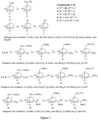
- Figure 1 describes the synthesis of various aminoadamantyl nitrate compounds.
- the term “about” or “approximately” means an acceptable error for a particular value as determined by one of ordinary skill in the art, which depends in part on how the value is measured or determined. In certain embodiments, the term “about” or “approximately” means within one standard deviation. In some embodiments, when no particular margin of error (e.g., a standard deviation to a mean value given in a chart or table of data) is recited, the term “about” or “approximately” means that range which would encompass the recited value and the range which would be included by rounding up or down to the recited value as well, taking into account significant figures.
- the term “about” or “approximately” means within 20%, 15%, 10% or 5% of the specified value. Whenever the term “about” or “approximately” precedes the first numerical value in a series of two or more numerical values or in a series of two or more ranges of numerical values, the term “about” or “approximately” applies to each one of the numerical values in that series of numerical values or in that series of ranges of numerical values.
- pharmaceutically acceptable refers to a substance (e.g., an active ingredient or an excipient) that is suitable for use in contact with the tissues and organs of a subject without excessive irritation, allergic response, immunogenicity and toxicity, is commensurate with a reasonable benefit/risk ratio, and is effective for its intended use.
- a "pharmaceutically acceptable” excipient or carrier of a pharmaceutical composition is also compatible with the other ingredients of the composition.
- terapéuticaally effective amount refers to an amount of a compound that, when administered to a subject, is sufficient to prevent development of, or to alleviate to some extent, the medical condition being treated or one or more symptoms associated with the condition.
- therapeutically effective amount also refers to an amount of a compound that is sufficient to elicit the biological or medical response of a cell, tissue, organ, system, animal or human which is sought by a researcher, veterinarian, medical doctor or clinician.
- treat include alleviating or abrogating a medical condition or one or more symptoms associated with the condition, and alleviating or eradicating one or more causes of the condition.
- Reference to “treatment” of a condition is intended to include prevention of the condition.
- prevent include precluding or delaying the onset of a medical condition or one or more symptoms associated with the condition, precluding a subject from acquiring a condition, and reducing a subject's risk of acquiring a condition.
- medical conditions includes diseases and disorders.
- subject refers to an animal, including but not limited to a mammal, such as a primate (e.g., a human, a chimpanzee or a monkey), a rodent (e.g., a rat, a mouse, a guinea pig, a gerbil or a hamster), a lagomorph (e.g., a rabbit), a swine (e.g., a pig), an equine (e.g., a horse), a canine (e.g., a dog) or a feline (e.g., a cat).
- a primate e.g., a human, a chimpanzee or a monkey
- rodent e.g., a rat, a mouse, a guinea pig, a gerbil or a hamster
- lagomorph e.g., a rabbit
- a swine e.g
- a “compound” encompasses salts, solvates, hydrates, clathrates and polymorphs of that compound.
- a “solvate” of a compound includes a stoichiometric or non-stoichiometric amount of a solvent (e.g., water, acetone or an alcohol [e.g., ethanol]) bound non-covalently to the compound.
- a “hydrate” of a compound includes a stoichiometric or non-stoichiometric amount of water bound non-covalently to the compound.
- a “clathrate” of a compound contains molecules of a substance (e.g., a solvent) enclosed in the crystal structure of the compound.
- a “polymorph” of a compound is a crystalline form of the compound.
- the specific recitation of “salt”, “solvate”, “hydrate”, “clathrate” or “polymorph” with respect to a compound in certain instances of the disclosure shall not be interpreted as an intended omission of any of these forms in other instances of the disclosure where the term “compound” is used without recitation of any of these forms, unless the context clearly indicates otherwise.
- the present disclosure encompasses all possible stereoisomers, including both enantiomers and all possible diastereomers in substantially pure form and mixtures of both enantiomers in any ratio (including a racemic mixture of enantiomers) and mixtures of two or more diastereomers in any ratio, of the adamantyl compounds described herein having one or more stereocenters, and not only the specific stereoisomers as indicated by drawn structure or nomenclature. Some embodiments of the disclosure relate to the specific stereoisomers indicated by drawn structure or nomenclature.
- the present disclosure provides a novel aminoadamantyl nitrate compound of Formula I as claimed in claim 1: and pharmaceutically acceptable salts thereof.
- the adamantyl compounds described herein have one or more amine groups (possibly unless the amine group indirectly or directly connected to the C-1 position of the adamantyl scaffold is an amide, carbamate or urea) and can exist as a free base or as salts. They can be used or administered as a free base or as pharmaceutically acceptable salts.
- An amine group can form an addition salt with an acid, such as a mineral acid (e.g., HCl, HBr, HI, nitric acid, phosphoric acid or sulfuric acid) or an organic acid (e.g., a carboxylic acid or a sulfonic acid).
- Suitable acids for use in the preparation of pharmaceutically acceptable salts include without limitation acetic acid, 2,2-dichloroacetic acid, acylated amino acids, adipic acid, alginic acid, ascorbic acid, L-aspartic acid, benzenesulfonic acid, benzoic acid, 4-acetamidobenzoic acid, boric acid, (+)-camphoric acid, camphorsulfonic acid, (+)-(1S)-camphor-10-sulfonic acid, capric acid, caproic acid, caprylic acid, cinnamic acid, citric acid, cyclamic acid, cyclohexanesulfamic acid, dodecylsulfuric acid, ethane-1,2-disulfonic acid, ethanesulfonic acid, 2-hydroxy ethanesulfonic acid, formic acid, fumaric acid, galactaric acid, gentisic acid, glucoheptonic acid, D-gluconic
- a compound has an acidic group (e.g., a carboxyl group)
- the acidic group can form an addition salt with a base.
- Pharmaceutically acceptable base addition salts can be formed with, e.g., metals (e.g., alkali metals or alkaline earth metals) or amines (e.g., organic amines).
- metals useful as cations include without limitation alkali metals (e.g., lithium, sodium, potassium and cesium), alkaline earth metals (e.g., magnesium, calcium and barium), aluminum and zinc.
- Metal cations can be provided by way of, e.g., inorganic bases, such as hydroxides, carbonates and hydrogen carbonates.
- Non-limiting examples of organic amines useful for forming base addition salts include chloroprocaine, choline, cyclohexylamine, dibenzylamine, N,N'-dibenzylethylenediamine, dicyclohexylamine, diethanolamine, ethylenediamine, N-ethylpiperidine, histidine, isopropylamine, N-methylglucamine, procaine, pyrazine, triethylamine, trimethylamine and tromethamine.
- Pharmaceutically acceptable salts are discussed in detail in Handbook of Pharmaceutical Salts, Properties, Selection and Use, P. Stahl and C. Wermuth, Eds., Wiley-VCH (2011 ).
- the aminoadamantyl nitrate compounds described herein are used or administered in the form of pharmaceutically acceptable salts. In certain embodiments, the aminoadamantyl nitrate compounds are used or administered as a hydrochloride (HCl) or hydrobromide (HBr) salt.
- HCl hydrochloride
- HBr hydrobromide
- NMDA receptor relieving the voltage-dependent channel block by Mg 2+ and causing excessive influx of Ca 2+ and subsequent oxidative stress due to overproduction of reactive oxygen species, can lead to neuronal excitotoxicity and ultimately neuronal injury and death.
- eNMDAR extrasynaptic NMDA receptors
- sNMDAR synaptic NMDA receptors
- extrasynaptic NMDARs typically are activated chronically by elevated levels of ambient glutamate, whether resulting from synaptic release of glutamate or/and impairment or reversal of uptake of glutamate [ G. Hardingham et al., Nat. Rev. Neurosci., 11:682-696 (2010 )]. Because synaptic NMDARs typically are phasically/transiently activated while extrasynaptic NMDARs typically are chronically/tonically activated, it is primarily extrasynaptic NMDARs that are excessively activated and hence allow an excessive and prolonged influx of Ca 2+ through the excessively/persistently open ion channel.
- Synaptic NMDAR activity promotes cell health and survival, whereas extrasynaptic NMDAR activity initiates cell-death pathways and antagonizes synaptic NMDAR-induced cell-survival pathways.
- Ca 2+ influx evoked by intense activation of synaptic NMDARs causes no perturbation to mitochondrial membrane potential and enhances mitochondrial health, and triggers genomic processes primarily via nuclear Ca 2+ signaling that render neurons more resistant to oxidative stress and apoptosis (including decreased expression of pro-apoptotic factors such as caspases).
- An episode of synaptic NMDAR activity promotes "acquired" neuroprotection that lasts after most signaling pathways are no longer active.
- Nuclear Ca 2+ an important regulator of gene expression, plays a key role in the pro-survival effects of synaptic NMDAR activation and is disrupted by extrasynaptic NMDAR activity. Many neurodegenerative disorders and other CNS disorders share common signaling pathways downstream of extrasynaptic NMDAR activity which contribute to neurotoxicity. See, e.g., Hardingham (2010, supra) and M. Parsons et al., Neuron, 82:279-293 (2014 ).
- extrasynaptic NMD A receptors rather than synaptic NMDA receptors is believed to be responsible for excitotoxicity implicated in neurodegenerative disorders such as Alzheimer's disease, Huntington's disease, Parkinson's disease and amyotrophic lateral sclerosis, and in other CNS disorders such as epilepsy, stroke and traumatic brain injury [Hardingham (2010, supra) and Parsons (2014, supra)]. Extrasynaptic NMDAR expression or/and activation are elevated in disease states [Parsons (2014, supra)].
- AD Alzheimer's disease
- the amyloid- ⁇ 1-42 peptide stimulates the ⁇ -7 nicotinic acetylcholine receptor and hence the release of an excessive amount of glutamate from astrocytes, which in turn activates neuronal extrasynaptic NMDARs that mediate nitric oxide production, tau hyperphosphorylation, caspase-3 activation and mitochondrial dysfunction, resulting in neuronal spine loss and loss of synapses associated with cognitive decline in AD [ M. Talantova et al., Proc. Natl. Acad. Sci. USA, 110:E2518-E2527 (2013 )].
- Loss of synapses can cause an imbalance of synaptic NMDAR and extrasynaptic NMDAR activity and signaling that can lead to cell death associated with neurodegenerative diseases such as Alzheimer's disease and Huntington's disease.
- NMDARs assemble as heterotetramers having two obligatory GluN1 subunits and two GluN2 (GluN2A, 2B, 2C or 2D) or/and GluN3 (GluN3A or 3B) subunits.
- the large majority of NMDARs in the CNS assemble as a GluN1/GluN2A or GluN1/GluN2B diheteromer, or as a GluN1 /GluN2A/GluN2B triheteromer.
- the GluN2A (or NR2A) subtype is enriched in synaptic NMDARs, while the GluN2B (or NR2B) subtype is more prevalent in extrasynaptic NMDARs [ L. Groc et al., Proc. Natl. Acad. Sci. USA, 103:18769-18774 (2006 ); and M. Martel et al., Neurosci., 158:334-343 (2009 )].
- GluN2A-containing NMDARs are associated with cell survival, whereas GluN2B-containing NMDARs are linked to cell death [ T. Lai et al., Trends Mol.
- Neurodegenerative and other CNS disorders associated with excitotoxic events can be treated through blockade of extrasynaptic NMDARs.
- the physiological activity of synaptic NMDARs is essential for normal neuronal function, so an NMDAR antagonist needs to block activated extrasynaptic NMDARs without suppressing the normal activity of synaptic NMDARs.
- This can be achieved by an uncompetitive antagonist, or open channel blocker, that selectively enters the opened channel of extrasynaptic NMDARs after they have been activated by the binding of co-agonists and thereby blocks the flow of cations, in particular Ca 2+ .
- the aminoadamantyl nitrate compound described herein act as voltage-dependent, uncompetitive antagonists that selectively block extrasynaptic NMDARs. They have a relatively low affinity for, and a relatively fast off rate from, the memantine/phencyclidine-binding site at or near the Mg 2+ -binding site in the channel of activated NMDARs so that they do not accumulate in the channel when it closes and hence preserve the physiological activity of phasically activated synaptic NMDARs and avoid psychiatric side effects associated with high-affinity NMDAR antagonists [ S. Lipton, Curr. Drug Targets, 8:621-632 (2007 )].
- the aminoadamantyl nitrate compounds have a sufficiently high affinity (e.g., a K, from about 200 nM to about single-digit ⁇ M) for the memantine/phencyclidine-binding site and a sufficiently long dwell time in the excessively/persistently open ion channel of tonically activated extrasynaptic NMDARs so that they block excessive influx of Ca 2+ through the channel and thereby prevent excitotoxic events.
- the amine group of the adamantyl compounds is protonated at physiological pH (pH of about 7.4).
- the protonated amine group binds at or near the Mg 2+ -binding site in the channel of activated NMDARs with a higher affinity, a slower off/dissociation rate and lesser voltage dependence than Mg 2+ does at the Mg 2+ -binding site, allowing the adamantyl compounds to block prolonged influx of Ca 2+ through the channel.
- the protonated amine group forms a hydrogen bond with the side chain of asparagine at position 616 of the GluN1 (or NR1) subunit at the narrowest constriction of the pore (the channel selectivity filter), and also has significant electrostatic interaction with the carbonyl oxygen atom of the side chain of asparagine residues at the N and N + 1 sites of the GluN2 (or NR2) subunit there [ H.-S. Chen et al., J. Pharmacol. Exper. Therap., 314:961-971 (2005 )].
- the Mg 2+ -binding site is within the electric field of the channel, so blockade of the channel by a (positively) charged agent binding at or near the Mg 2+ -binding site is voltage-dependent.
- Increased binding affinity of the aminoadamantyl nitrate compound for extrasynaptic NMDARs is also provided by hydrophobic interaction between the compounds and the subunits of extrasynaptic NMDARs.
- the two methyl groups of memantine engage in hydrophobic interaction with hydrophobic binding pockets formed by the residues A645 and A644 in the third transmembrane helix of the GluN1 (or NR1) subunit and the GluN2B (or NR2B) subunit, respectively, which greatly increases memantine's binding affinity for activated NMDARs compared to that of amantadine [ W. Limapichat et al., ACS Chem.
- the GluN2B (or NR2B) subtype is more prevalent in extrasynaptic NMDARs.
- Aminoadamantyl nitrate compounds having a non-hydrogen (e.g., alkyl) group for R 1 and R 2 can engage in hydrophobic interaction with the hydrophobic binding pockets of the GluN1 and GluN2B subunits of extrasynaptic NMDARs.
- the R 1 group is believed to be oriented toward the hydrophobic binding pocket of GluN2B.
- a greater number of carbon atoms of a group increases its hydrophobicity/lipophilicity.
- the aminoadamantyl nitrate compounds described herein selectively inhibit activated extrasynaptic NMDARs and possess a dual mechanism of inhibition. They block the open ion channel of activated extrasynaptic NMDARs in a voltage-dependent manner by binding at or near the Mg 2+ -binding site in the channel, and they suppress the activity of activated extrasynaptic NMDARs in a voltage-independent manner by S-nitrosylation of cysteine residues of a redox modulatory site on the receptor.
- the ion-channel conductivity of NMD A receptors is regulated by nitrosylation [ Y. Choi et al., Nat. Neurosci., 3:15-21 (2000 )].
- Binding of the protonated amine group of an aminoadamantyl nitrate at or near the Mg 2+ -binding site in the open ion channel of activated extrasynaptic NMDARs brings a nitrate group of the compound in close proximity to cysteine residues of a redox modulatory site in the extracellular domain of the receptor. Oxidation at the redox site, possibly resulting in the formation of one or more disulfide bonds involving two or more cysteine residues, downregulates/desensitizes NMDAR channel activity.
- the nitrate group of the aminoadamantyl compound donates/transfers NO (e.g., in the form of NO + ) to a cysteine residue of the redox site, possibly with the aid of glutathione S-transferase. If the aminoadamantyl compound has two or more nitrate groups, two or more nitrate groups can potentially transfer NO to two or more of about five cysteine residues of the redox site. S-nitrosylation of cysteine residue(s) oxidizes the sulfhydryl group of the cysteine residue(s), or may facilitate the formation of disulfide bond(s).
- NOS nitric oxide synthase
- Targeting of the NO-donating nitrate group(s) of the aminoadamantyl compound to the cysteine residues of the redox site avoids potential vascular and neurotoxic side effects of free nitric oxide, such as vasodilation, apoptosis and formation of neurotoxic peroxynitrite.
- the resulting protonated aminoadamantyl compound with a hydroxyl group in place of each donor nitrate group remains bound at or near the Mg 2+ -binding site, unless its voltage-gated blockade of the ion channel is attenuated by membrane depolarization.
- the redox modulatory site is outside of the voltage field of the channel, and hence suppression of the channel activity of activated extrasynaptic NMDARs by S-nitrosylation of cysteine residues of the redox site is voltage-independent and remains for a significant amount of time after the compound is expelled from the channel by depolarization.
- Inhibition of activated extrasynaptic NMDARs via S-nitrosylation of cysteine residues markedly increases under hypoxic condition, and thus is particularly suited for, but not limited to, preventing or reducing neuronal damage due to cerebral ischemia such as stroke and vasular dementia [ H. Takahashi et al., Sci. Rep.,5:14781 (2015 )].
- the aminoadamantyl nitrate compound described herein selectively inhibit activated extrasynaptic NMDARs and thereby prevent or curtail excitotoxicity while sparing normal synaptic NMDAR activity. Sparing the NMDAR component of excitatory postsynaptic currents (EPSCs) is neurotrophic and avoids synaptic injury.
- the aminoadamantyl nitrate compounds described herein have at least one nitrate group. Memantine preferentially blocks the excessively open channel of activated extrasynaptic NMDARs while relatively sparing normal synaptic NMDAR activity, even under conditions of pathological depolarization in the presence of extracellular Mg 2+ [ P. Xia et al., J.
- Nitromemantine inhibits extrasynaptic NMDAR activity more selectively and spares synaptic NMDAR activity to a greater degree than memantine [Takahashi (2015, supra)]. Selective inhibition of extrasynaptic NMDARs results in greater neuroprotection and less side effects than uncompetitive antagonists that block both synaptic NMDARs and extrasynaptic NMDARs (e.g., high-affinity NMDAR antagonists) or are less selective for the latter (e.g., memantine).
- uncompetitive antagonists that block both synaptic NMDARs and extrasynaptic NMDARs (e.g., high-affinity NMDAR antagonists) or are less selective for the latter (e.g., memantine).
- the aminoadamantyl nitrate compounds described herein can prevent or reduce loss of synapses and death of neurons, increase synaptic and dendritic density, and enhance the cognitive function of Alzheimer's patients by antagonizing extrasynaptic NMDARs as well as the ⁇ -7 nicotinic acetylcholine receptor with, e.g., chronic treatment. Furthermore, the aminoadamantyl nitrate compounds can stimulate regrowth of synapses and restore lost synapses with, e.g., prolonged administration.
- LTP long-term potentiation
- synaptic plasticity is the ability of chemical synapses to change their strength, and permits regulated strengthening or weakening of specific connections in an organized fashion.
- Memories are believed to be encoded by modification of synaptic strength.
- LTP is a persistent strengthening of synapses based on recent patterns of synaptic activity that produce a long-lasting increase in signal transmission between two neurons, a process believed to encode and store learning and long-term memory.
- LTP long-term depression
- the aminoadamantyl nitrate compounds can promote or spare LTP and prevent or curtail LTD, and thereby can restore synaptic plasticity and enhance cognitive function. Moreover, the compounds can aid recovery of synaptic function and thereby improve impaired memory and learning.
- aminoadamantyl nitrate compounds described herein can be used to treat a wide variety of neurodegenerative disorders and other CNS disorders.
- Non-limiting examples of neurodegenerative disorders that can be treated with the aminoadamantyl nitrate compounds described herein include dementia (e.g., Alzheimer's disease, vascular dementia, dementia with Lewy bodies, frontotemporal dementia and HIV-associated dementia), Huntington's disease (which often leads to dementia), Parkinson's disease (which often leads to dementia), multiple system atrophy (Shy-Drager syndrome), cerebellar degeneration, ataxia (e.g., cerebellar ataxia, spinocerebellar ataxia, Friedreich's ataxia and ataxia-telangiectasia [Louis-Bar syndrome]), motor neuron diseases (e.g., amyotrophic lateral sclerosis [ALS], primary lateral sclerosis [PLS], progressive muscular atrophy [PMA] and spinal muscular atrophy [SMA]), multiple sclerosis, vision impairment or loss caused by neurodegeneration of the visual pathway (e.g., optic neuropathy/atrophy, glaucoma and age-related macular degeneration [AMD
- the aminoadamantyl nitrate compound described herein are used to treat a neurodegenerative disorder selected from Alzheimer's disease, vascular dementia, Huntington's disease, Parkinson's disease and ALS.
- CNS disorders which may or may not involve neurodegeneration in their pathophysiology, that can be treated with the aminoadamantyl nitrate compounds described herein include without limitation cerebrovascular disorders (including brain ischemia [including acute ischemia such as stroke, chronic ischemia such as vascular dementia, cerebral ischemia/reperfusion injury, and neurological damage caused by low oxygen or/and glucose levels in the brain], intracerebral hemorrhage and retinopathy), brain injury and trauma (including traumatic brain injury, diffuse axonal injury, primary and secondary brain injury, focal and diffuse brain injury, anoxic and hypoxic brain injury, intracerebral hemorrhage and brain edema), spinal cord injury (due to, e.g., trauma, ischemia or a degenerative disorder), epilepsy (including neurological damage caused by epileptic seizures), dyskinesia (e.g., levodopa-induced dyskinesia and tardive dyskinesia), spasticity, pain (e
- the therapeutically effective amount and the frequency of administration of an aminoadamantyl nitrate compound to treat a neurodegenerative or other CNS disorder may depend on various factors, including the type of disorder, the severity of the condition, the potency of the compound, the mode of administration, the age, body weight, general health, gender and diet of the subject, and the response of the subject to the treatment, and can be determined by the treating physician.
- the effective dose of an aminoadamantyl nitrate per day is from about 1, 5 or 10 mg to about 100 mg, or as deemed appropriate by the treating physician, which can be administered in a single dose or in divided doses.
- the effective dose of an aminoadamantyl nitrate per day is from about 5 or 10 mg to about 50 mg, or about 50-100 mg. In further embodiments, the effective dose of an aminoadamantyl nitrate per day is about 1, 5, 10, 15, 20, 25, 30, 40, 50, 60, 70, 80, 90 or 100 mg. In certain embodiments, the effective dose of an aminoadamantyl nitrate per day is about 10-30 mg, or about 10, 15, 20, 25 or 30 mg.
- the dosage of an aminoadamantyl nitrate can be adjusted during the course of the treatment regimen, which can be determined by the treating physician.
- an aminoadamantyl nitrate compound can be adminstered in an initial daily dose for the first week of treatment, and then the daily dose of the compound can be gradually or step-wise increased for every subsequent week of treatment until a target or suitable daily maintenance dose is administered for, e.g., the fourth week of treatment and thereafter for the duration of treatment.
- a target or suitable daily maintenance dose is administered for, e.g., the fourth week of treatment and thereafter for the duration of treatment.
- Increasing the dose of a drug gradually or step-wise during the initial phase of treatment would allow the treating physician to determine the optimum therapeutic dose while avoiding or minimizing any potential side effect, for example.
- the initial doses and the maintenance dose can be any effective dose described herein.
- a first loading dose of the compound can be administered on, e.g., day 1
- an optional second loading dose can be administered on, e.g., day 2
- an optional third loading dose can be administered on, e.g., day 3
- a maintenance dose of the compound can be administered daily thereafter for the duration of treatment.
- a loading dose can be, e.g., about 5, 4, 3, 2.5, 2 or 1.5 times larger than the maintenance dose
- the optional second and third loading doses can be, e.g., smaller than the previous loading dose.
- the maintenance dose can be any effective dose described herein.
- An aminoadamantyl nitrate can be administered for any suitable period of time to treat a neurodegenerative or other CNS disorder, which can be determined by the treating physician.
- a neurodegenerative disorder in some embodiments an aminoadamantyl nitrate is administered for a period of at least about 3 months, 6 months, 1 year, 1.5 years, 2 years, 3 years, 4 years, 5 years or longer.
- an aminoadamantyl nitrate is administered for a period of at least about 1 week, 2 weeks, 1 month, 2 months, 3 months, 6 months, 1 year, 1.5 years, 2 years, 3 years or longer.
- An aminoadamantyl nitrate can also be administered pro re nata (as needed) for the treatment of a CNS disorder, which can be determined by the treating physician. For example, for the treatment of pain or headache an aminoadamantyl nitrate can be taken until the pain or headache dissipates. If pain or headache returns, administration of the aminoadamantyl nitrate can be resumed.
- the appropriate dosage of, the frequency of dosing of and the length of treatment with an aminoadamantyl nitrate for a neurodegenerative or other CNS disorder can be determined by the treating physician.
- a aminoadamantyl nitrate can be administered via any suitable route, and can be administered locally or systemically, for the treatment of a neurodegenerative or other CNS disorder, which can be determined by the treating physician.
- Potential routes of administration of an aminoadamantyl nitrate include without limitation oral, parenteral (including intradermal, subcutaneous, intramuscular, intravascular, intravenous, intraarterial, intraperitoneal, intramedullary, intrathecal and topical), intracavitary, and topical (including dermal/epicutaneous, transdermal, mucosal, transmucosal, intranasal [e.g., by nasal spray or drop], intraocular [e.g., by eye drop], pulmonary [e.g., by oral or nasal inhalation], buccal, sublingual, rectal [e.g., by suppository], and vaginal [e.g., by suppository]).
- an aminoadamantyl nitrate is administered orally (e.g., as a tablet or capsule). In other embodiments, an aminoadamantyl nitrate is administered parenterally (e.g., intravenously, intramuscularly or subcutaneously, whether by injection or infusion).
- the aminoadamantyl nitrate compound described herein can effectively cross the blood-brain barrier (BBB) for the treatment of neurodegenerative and other CNS disorders, or the blood-retinal barrier (BRB) for the treatment of eye disorders such as glaucoma, AMD and retinopathy.
- BBB blood-brain barrier
- BRB blood-retinal barrier
- They are small molecules with a hydrophobic/lipophilic scaffold and hence can penetrate into the brain or the eye. Increasing the lipophilicity of group(s) on aminoadamantyl compounds increases their ability to cross the BBB or the BRB.
- An aminoadamantyl nitrate can optionally be used in combination with one or more additional therapeutic agents to treat a neurodegenerative or other CNS disorder.
- compositions comprising an aminoadamantyl nitrate compound described herein, or a pharmaceutically acceptable salt, solvate, hydrate, clathrate or polymorph thereof, and one or more pharmaceutically acceptable excipients or carriers.
- the compositions can optionally contain an additional therapeutic agent.
- a pharmaceutical composition contains a therapeutically effective amount of an aminoadamantyl nitrate, one or more pharmaceutically acceptable excipients or carriers and optionally a therapeutically effective amount of an additional therapeutic agent, and is formulated for administration to a subject for therapeutic use.
- a pharmaceutical composition contains an aminoadamantyl nitrate and optionally an additional therapeutic agent in substantially pure form.
- the purity of the aminoadamantyl nitrate and the optional additional therapeutic agent independently is at least about 95%, 96%, 97%, 98% or 99%.
- the purity of the aminoadamantyl nitrate and the optional additional therapeutic agent independently is at least about 98% or 99%.
- a pharmaceutical composition is substantially free of contaminants or impurities.
- the level of contaminants or impurities other than residual solvent in a pharmaceutical composition is no more than about 5%, 4%, 3%, 2% or 1% relative to the combined weight of the intended active and inactive ingredients.
- the level of contaminants or impurities other than residual solvent in a pharmaceutical composition is no more than about 2% or 1% relative to the combined weight of the intended active and inactive ingredients.
- Pharmaceutical compositions generally are prepared according to current good manufacturing practice (GMP), as recommended or required by, e.g., the Federal Food, Drug, and Cosmetic Act ⁇ 501(a)(2)(B) and the International Conference on Harmonisation Q7 Guideline.
- compositions/formulations can be prepared in sterile form.
- pharmaceutical compositions/formulations for parenteral administration by injection or infusion generally are sterile.
- Sterile pharmaceutical compositions/formulations are compounded or manufactured according to pharmaceutical-grade sterilization standards known to those of skill in the art, such as those disclosed in or required by the United States Pharmacopeia Chapters 797, 1072 and 1211, and 21 Code of Federal Regulations 211.
- compositions and carriers include pharmaceutically acceptable substances, materials and vehicles.
- excipients include liquid and solid fillers, diluents, binders, lubricants, glidants, surfactants, dispersing agents, disintegration agents, emulsifying agents, wetting agents, suspending agents, thickeners, solvents, isotonic agents, buffers, pH adjusters, absorption-delaying agents, stabilizers, preservatives, antioxidants, antimicrobial agents, antibacterial agents, antifungal agents, adjuvants, sweetening agents, flavoring agents, coloring agents, encapsulating materials and coating materials.
- the use of such excipients in pharmaceutical formulations is known in the art.
- conventional vehicles and carriers include without limitation oils (e.g., vegetable oils, such as sesame oil), aqueous solvents (e.g., saline, phosphate-buffered saline [PBS] and isotonic solutions [e.g., Ringer's solution]), and solvents (e.g., dimethyl sulfoxide [DMSO] and alcohols [e.g., ethanol, glycerol and propylene glycol]).
- oils e.g., vegetable oils, such as sesame oil
- aqueous solvents e.g., saline, phosphate-buffered saline [PBS] and isotonic solutions [e.g., Ringer's solution]
- solvents e.g., dimethyl sulfoxide [DMSO] and alcohols [e.g., ethanol, glycerol and propylene glycol]
- DMSO dimethyl sulfoxide
- alcohols e.
- Proper formulation can depend on various factors, such as the route of administration chosen.
- Potential routes of administration of pharmaceutical compositions comprising aminoadamantyl nitrate compounds include without limitation oral, parenteral (including intradermal, subcutaneous, intramuscular, intravascular, intravenous, intraarterial, intraperitoneal, intramedullary, intrathecal and topical), intracavitary, and topical (including dermal/epi cutaneous, transdermal, mucosal, transmucosal, intranasal [e.g., by nasal spray or drop], intraocular [e.g., by eye drop], pulmonary [e.g., by oral or nasal inhalation], buccal, sublingual, rectal [e.g., by suppository], and vaginal [e.g., by suppository]).
- Topical formulations can be designed to produce a local or systemic therapeutic effect.
- formulations of aminoadamantyl nitrate compounds suitable for oral administration can be presented as, e.g., boluses; capsules (including push-fit capsules and soft capsules), tablets, pills, cachets or lozenges; as powders or granules; as semisolids, electuaries, pastes or gels; as solutions or suspensions in an aqueous liquid or/and a non-aqueous liquid; or as oil-in-water liquid emulsions or water-in-oil liquid emulsions.
- Push-fit capsules or two-piece hard gelatin capsules can contain an aminoadamantyl nitrate in admixture with, e.g., a filler or inert solid diluent (e.g., calcium carbonate, calcium phosphate, kaolin or lactose), a binder (e.g., a starch), a glidant or lubricant (e.g., talc or magnesium stearate), and a disintegrant (e.g., crospovidone), and optionally a stabilizer or/and a preservative.
- a filler or inert solid diluent e.g., calcium carbonate, calcium phosphate, kaolin or lactose
- a binder e.g., a starch
- a glidant or lubricant e.g., talc or magnesium stearate
- a disintegrant e.g., crospovid
- an aminoadamantyl nitrate can be dissolved or suspended in a suitable liquid (e.g., liquid polyethylene glycol or an oil medium, such as a fatty oil, peanut oil, olive oil or liquid paraffin), and the liquid-filled capsules can contain one or more other liquid excipients or/and semi-solid excipients, such as a stabilizer or/and an amphiphilic agent (e.g., a fatty acid ester of glycerol, propylene glycol or sorbitol).
- a suitable liquid e.g., liquid polyethylene glycol or an oil medium, such as a fatty oil, peanut oil, olive oil or liquid paraffin
- an amphiphilic agent e.g., a fatty acid ester of glycerol, propylene glycol or sorbitol.
- a capsule e.g., a hard gelatin capsule
- Tablets can contain an aminoadamantyl nitrate in admixture with, e.g., a filler or inert diluent (e.g., calcium carbonate, calcium phosphate, lactose, mannitol or microcrystalline cellulose), a binding agent (e.g., a starch, gelatin, acacia, alginic acid or a salt thereof, or microcrystalline cellulose), a lubricating agent (e.g., stearic acid, magnesium stearate, talc or silicon dioxide), and a disintegrating agent (e.g., crospovidone, croscarmellose sodium or colloidal silica), and optionally a surfactant (e.g., sodium lauryl sulfate).
- a filler or inert diluent e.g., calcium carbonate, calcium phosphate, lactose, mannitol or microcrystalline cellulose
- a binding agent e.
- the tablets can be uncoated or can be coated with, e.g., an enteric coating that protects the active ingredient from the acidic environment of the stomach, or with a material that delays disintegration and absorption of the active ingredient in the gastrointestinal tract and thereby provides a sustained action over a longer time period.
- a tablet comprises an aminoadamantyl nitrate and lactose monohydrate, microcrystalline cellulose, silica colloidal anhydrous, talc and magnesium stearate, and is film-coated (e.g., a film-coating containing hypromellose, titanium dioxide and macrogol 400).
- compositions for oral administration can also be formulated as solutions or suspensions in an aqueous liquid or/and anon-aqueous liquid, or as oil-in-water liquid emulsions or water-in-oil liquid emulsions.
- Dispersible powder or granules of an aminoadamantyl nitrate can be mixed with any suitable combination of an aqueous liquid, an organic solvent or/and an oil and any suitable excipients (e.g., any combination of a dispersing agent, a wetting agent, a suspending agent, an emulsifying agent or/and a preservative) to form a solution, suspension or emulsion.
- the aminoadamantyl nitrate compound can also be formulated for parenteral administration by injection or infusion to circumvent gastrointestinal absorption and first-pass metabolism.
- An exemplary parenteral route is intravenous. Additional advantages of intravenous administration include direct administration of a therapeutic agent into systemic circulation to achieve a rapid systemic effect, and the ability to administer the agent continuously or/and in a large volume if desired.
- Formulations for injection or infusion can be in the form of, e.g., solutions, suspensions or emulsions in oily or aqueous vehicles, and can contain excipients such as suspending agents, dispersing agents or/and stabilizing agents.
- aqueous or non-aqueous (e.g., oily) sterile injection solutions can contain an aminoadamantyl nitrate along with excipients such as an antioxidant, a buffer, a bacteriostat and solutes that render the formulation isotonic with the blood of the subject.
- Aqueous or non-aqueous sterile suspensions can contain an aminoadamantyl nitrate along with excipients such as a suspending agent and a thickening agent, and optionally a stabilizer and an agent that increases the solubility of the aminoadamantyl nitrate to allow for the preparation of a more concentrated solution or suspension.
- a sterile aqueous solution for injection or infusion can contain an aminoadamantyl nitrate, sodium chloride, a buffering agent (e.g., sodium citrate), a preservative (e.g., meta-cresol), and optionally a base (e.g., NaOH) or/and an acid (e.g., HCl) to adjust pH.
- a buffering agent e.g., sodium citrate
- a preservative e.g., meta-cresol
- a base e.g., NaOH
- an acid e.g., HCl
- the aminoadamantyl nitrate compound can be formulated as, e.g., a buccal or sublingual tablet or pill.
- Advantages of a buccal or sublingual tablet or pill include avoidance of gastrointestinal absorption and first-pass metabolism, and rapid absorption into systemic circulation.
- a buccal or sublingual tablet or pill can be designed to provide faster release of the aminoadamantyl nitrate for more rapid uptake of it into systemic circulation.
- the buccal or sublingual tablet or pill can contain suitable excipients, including without limitation any combination of fillers and diluents (e.g., mannitol and sorbitol), binding agents (e.g., sodium carbonate), wetting agents (e.g., sodium carbonate), disintegrants (e.g., crospovidone and croscarmellose sodium), lubricants (e.g., silicon dioxide [including colloidal silicon dioxide] and sodium stearyl fumarate), stabilizers (e.g., sodium bicarbonate), flavoring agents (e.g., spearmint flavor), sweetening agents (e.g., sucralose), and coloring agents (e.g., yellow iron oxide).
- suitable excipients including without limitation any combination of fillers and diluents (e.g., mannitol and sorbitol), binding agents (e.g., sodium carbonate), wetting agents (e.g., sodium carbonate), disintegrants (e.g
- the aminoadamantyl nitrate compound can also be formulated for intranasal administration.
- the nasal mucosa provides a big surface area, a porous endothelium, a highly vascular subepithelial layer and a high absorption rate, and hence allows for high bioavailability.
- intranasal administration avoids first-pass metabolism and can introduce a significant concentration of the aminoadamantyl nitrate to the CNS.
- An intranasal formulation can comprise an aminoadamantyl nitrate along with excipients, such as a solubility enhancer (e.g., propylene glycol), a humectant (e.g., mannitol or sorbitol), a buffer and water, and optionally a preservative (e.g., benzalkonium chloride), a mucoadhesive agent (e.g., hydroxy ethylcellulose) or/and a penetration enhancer.
- a solubility enhancer e.g., propylene glycol
- a humectant e.g., mannitol or sorbitol
- a buffer and water e.g., a buffer and water
- a preservative e.g., benzalkonium chloride
- a mucoadhesive agent e.g., hydroxy ethylcellulose
- An additional mode of topical administration of an aminoadamantyl nitrate is pulmonary, including by oral inhalation and nasal inhalation.
- the lungs serve as a portal to the systemic circulation.
- Advantages of pulmonary drug delivery include, for example: 1) avoidance of first pass hepatic metabolism; 2) fast drug action; 3) large surface area of the alveolar region for absorption, high permeability of the lungs (thin air-blood barrier), and profuse vasculature of the airways; 4) reduced extracellular enzyme levels compared to the gastronintestinal tract due to the large alveolar surface area; and 5) smaller doses to achieve equivalent therapeutic effect compared to other oral routes, and hence reduced systemic side effects.
- a sterile aqueous solution for oral inhalation contains an aminoadamantyl nitrate, sodium chloride, a buffering agent (e.g., sodium citrate), optionally a preservative (e.g., meta-cresol), and optionally a base (e.g., NaOH) or/and an acid (e.g., HCl) to adjust pH.
- a buffering agent e.g., sodium citrate
- a preservative e.g., meta-cresol
- a base e.g., NaOH
- an acid e.g., HCl
- Topical formulations for application to the skin or mucosa can be useful for transdermal or transmucosal administration of a therapeutic agent into the blood for systemic distribution.
- Advantages of topical administration can include circumvention of gastrointestinal absorption and first-pass metabolism, delivery of a therapeutic agent with a short half-life and low oral bioavailability, more controlled and sustained release of the therapeutic agent, a more uniform plasma dosing or delivery profile of the therapeutic agent, less frequent dosing of the therapeutic agent, minimal or no invasiveness, ease of self-administration, and increased patient compliance.
- compositions suitable for topical administration include without limitation liquid or semi-liquid preparations such as sprays, gels, liniments, lotions, oil-in-water or water-in-oil emulsions such as creams, foams, ointments and pastes, and solutions or suspensions such as drops (e.g., eye drops, nose drops and ear drops).
- a topical composition comprises an aminoadamantyl nitrate dissolved, dispersed or suspended in a carrier.
- the carrier can be in the form of, e.g., a solution, a suspension, an emulsion, an ointment or a gel base, and can contain, e.g., petrolatum, lanolin, a wax (e.g., bee wax), mineral oil, a long-chain alcohol, polyethylene glycol or polypropylene glycol, a diluent (e.g., water or/and an alcohol [e.g., ethanol or propylene glycol]), a gel, an emulsifier, a thickening agent, a stabilizer or a preservative, or any combination thereof.
- petrolatum e.g., petrolatum, lanolin
- a wax e.g., bee wax
- mineral oil e.g., mineral oil
- a long-chain alcohol e.g., polyethylene glycol or polypropylene glycol
- a diluent e.g., water or/and an alcohol [
- a topical composition can include, or a topical formulation can be administered by means of, e.g., a transdermal or transmucosal delivery device, such as a transdermal patch, a microneedle patch or an iontophoresis device.
- a topical composition can deliver an aminoadamantyl nitrate transdermally or transmucosally via a concentration gradient (with or without the use of a chemical permeation enhancer) or an active mechanism (e.g., iontophoresis or microneedles).
- a topical composition e.g., a transdermal delivery system
- a chemical permeation enhancer e.g., a surfactant [e.g., sodium laureth sulfate], optionally in combination with an aromatic compound [e.g., phenylpiperazine]
- an aminoadamantyl nitrate is administered via a transdermal patch.
- a transdermal patch comprises an impermeable backing membrane or layer, a drug reservoir, a semi-permeable membrane that can serve as a rate-limiting or rate-controlling diffusion barrier, and a skin-contacting adhesive layer.
- the semi-permeable membrane can be composed of, e.g., a suitable polymeric material (e.g., cellulose nitrate or acetate, polyisobutene, polypropylene, polyvinyl acetate or a polycarbonate).
- Transdermal drug-delivery systems, including patches can be designed to provide controlled and prolonged release of a drug over a period of about 1 week, 2 weeks, 1 month or longer.
- an aminoadamantyl nitrate is delivered from a sustained-release composition.
- sustained-release composition encompasses sustained-release, prolonged-release, extended-release, slow-release and controlled-release compositions, systems and devices.
- Use of a sustained-release composition can have benefits, such as an improved profile of the amount of the drug delivered to the target site(s) over a time period, including delivery of a therapeutically effective amount of the drug over a prolonged time period.
- the sustained-release composition delivers the aminoadamantyl nitrate over a period of at least about 1 day, 2 days, 3 days, 1 week, 2 weeks, 3 weeks, 1 month, 2 months, 3 months or longer.
- the sustained-release composition is a drug-encapsulation system, such as, e.g., nanoparticles, microparticles or a capsule made of, e.g., a biodegradable polymer or/and a hydrogel.
- the sustained-release composition comprises a hydrogel.
- polymers of which a hydrogel can be composed include polyvinyl alcohol, acrylate polymers (e.g., sodium polyacrylate), and other homopolymers and copolymers having a large number of hydrophilic groups (e.g., hydroxyl or/and carboxylate groups).
- the sustained-release drug-encapsulation system comprises a membrane-enclosed reservoir, wherein the reservoir contains a drug and the membrane is permeable to the drug.
- a drug-delivery system can be in the form of, e.g., a transdermal patch.
- the sustained-release composition is an oral dosage form, such as a tablet or capsule.
- a drug can be embedded in an insoluble porous matrix such that the dissolving drug must make its way out of the matrix before it can be absorbed through the gastrointestinal tract.
- a drug can be embedded in a matrix that swells to form a gel through which the drug exits.
- Sustained release can also be achieved by way of a single-layer or multi-layer osmotic controlled-release oral delivery system (OROS).
- An OROS is a tablet with a semi-permeable outer membrane and one or more small laser-drilled holes in it.
- the sustained-release composition is formulated as polymeric nanoparticles or microparticles, wherein the polymeric particles can be delivered, e.g., by injection or from an implant.
- the polymeric implant or polymeric nanoparticles or microparticles are composed of a biodegradable polymer.
- the biodegradable polymer comprises lactic acid or/and glycolic acid [e.g., an L-lactic acid-based copolymer, such as poly(L-lactide-co-glycolide) or poly(L-lactic acid-co-D,L-2-hydroxyoctanoic acid)].
- the biodegradable polymer of the polymeric implant or polymeric nanoparticles or microparticles can be selected so that the polymer substantially completely degrades around the time the period of treatment is expected to end, and so that the byproducts of the polymer's degradation, like the polymer, are biocompatible.
- a composition can also be formulated as, e.g., a depot that can be implanted in or injected into a subject, e.g., intramuscularly or subcutaneously.
- a depot formulation can be designed to deliver the aminoadamantyl nitrate over an extended period of time, e.g., over a period of at least about 1 week, 2 weeks, 3 weeks, 1 month, 6 weeks, 2 months, 3 months or longer.
- an aminoadamantyl nitrate can be formulated with a polymeric material (e.g., polyethylene glycol [PEG], polylactic acid [PLA] or poly glycolic acid [PGA], or a copolymer thereof [e.g., PLGA]), a hydrophobic material (e.g., as an emulsion in an oil) or/and an ion-exchange resin, or as a sparingly soluble derivative (e.g., a sparingly soluble salt).
- a polymeric material e.g., polyethylene glycol [PEG], polylactic acid [PLA] or poly glycolic acid [PGA], or a copolymer thereof [e.g., PLGA]
- a hydrophobic material e.g., as an emulsion in an oil
- an ion-exchange resin e.g., a sparingly soluble derivative
- an aminoadamantyl nitrate can be incorporated or embedded in sustained-release microp
- the aminoadamantyl nitrate compound can also be contained or dispersed in a matrix material.
- the matrix material can comprise a polymer (e.g., ethylene-vinyl acetate) and controls the release of the compound by controlling dissolution or/and diffusion of the compound from, e.g., a reservoir, and can enhance the stability of the compound while contained in the reservoir.
- a "release system” can be designed as a sustained-release system, can be configured as, e.g., a transdermal or transmucosal patch, and can contain an excipient that can accelerate the compound's release, such as a water-swellable material (e.g., a hydrogel) that aids in expelling the compound out of the reservoir.
- a water-swellable material e.g., a hydrogel
- the release system can provide a temporally modulated release profile (e.g., pulsatile release) when time variation in plasma levels is desired, or a more continuous or consistent release profile when a constant plasma level is desired.
- Pulsatile release can be achieved from an individual reservoir or from a plurality of reservoirs. For example, where each reservoir provides a single pulse, multiple pulses (“pulsatile" release) are achieved by temporally staggering the single pulse release from each of multiple reservoirs. Alternatively, multiple pulses can be achieved from a single reservoir by incorporating several layers of a release system and other materials into a single reservoir.
- Continuous release can be achieved by incorporating a release system that degrades, dissolves, or allows diffusion of a compound through it over an extended time period. In addition, continuous release can be approximated by releasing several pulses of a compound in rapid succession ("digital" release).
- An active release system can be used alone or in conjunction with a passive release system, as described in US Pat. 5,797,898 .
- compositions comprising an aminoadamantyl nitrate can be formulated as, e.g., liposomes, micelles (e.g., those composed of biodegradable natural or/and synthetic polymers, such as lactosomes), microparticles, microspheres or nanoparticles, whether or not designed for sustained release.
- liposomes e.g., those composed of biodegradable natural or/and synthetic polymers, such as lactosomes
- microparticles e.g., those composed of biodegradable natural or/and synthetic polymers, such as lactosomes
- microspheres or nanoparticles whether or not designed for sustained release.
- compositions can be manufactured in any suitable manner known in the art, e.g., by means of conventional mixing, dissolving, suspending, granulating, dragee-making, levigating, emulsifying, encapsulating, entrapping or compressing processes.
- compositions can be presented in unit dosage form as a single dose wherein all active and inactive ingredients are combined in a suitable system, and components do not need to be mixed to form the composition to be administered.
- the unit dosage form contains an effective dose of an aminoadamantyl nitrate.
- a representative example of a unit dosage form is a tablet, capsule, or pill for oral uptake.
- compositions can be presented as a kit, not covered by the claims, wherein the active ingredient, excipients and carriers (e.g., solvents) are provided in two or more separate containers (e.g., ampules, vials, tubes, bottles or syringes) and need to be combined to form the composition to be administered.
- the kit can contain instructions for storing, preparing and administering the composition (e.g., a solution to be injected intravenously).
- DCM dichloromethane
- DMF N,N-dimethylformamide
- EGTA ethylene glycol-bis( ⁇ -aminoethy] ether)-N,N,N',N'-tetraacetic acid
- HEPES 4-(2-hydroxyethyl)-1-piperazineethanesulfonic acid
- MTBE methyl tert-butyl ether
- PBS phosphate-buffered saline
- RT room/ambient temperature
- TEA triethylamine
- THF tetrahydrofuran
- 1-Carboxamidemethyl-3,5-dimethyl-7-carboxyadamantane was prepared starting from 1-acetic acid-3,5-dimethyladamantane (available from Sigma- Aldrich) using similar procedures as described for the preparation of 1-carboxamide-3,5-dimethyl-7-carboxyadamantane starting from 1-carboxy-3,5-dimethyladamantane in Example 1.
- the methyl ester was formed using TMS diazomethane.
- 1-(2-Aminoethyl)-3,5-dimethyl-7-(1-nitratepropyl)adamantane hydrochloride was prepared starting from 1- (N - Boc-2-aminoethyl)-3,5-dimethyl-7-(1-hydroxypropyl)adamantane using similar procedures as described for the preparation of 1- aminomethylene-3,5-dimethyl-7-nitratemethyladamantane hydrochloride starting from 1- (N - Boc-aminomethylene)-3,5-dimethyl-7-hydroxymethyladamantane in Example 1.
- 1-(2-aminoethyl)-3,5-dimethyl-7-(1-nitrate-ethyl)adamantane hydrochloride and 1-(aminomethylene)-3,5-dimethyl-7-(1-nitrate-ethyl)adamantane hydrochloride can be synthesized using similar procedures as above.
- MeMgBr can be reacted with the corresponding methyl ester to form the methyl ketone, or the methyl ketone can be formed by reacting MeLi with the corresponding carboxylic acid according to the procedure described in J. Henkel et al., J. Med. Chem., 25:51-56 (1982 ).
- 2-Aminomethylene-2-(3-nitratephenyl)adamantane hydrochloride was prepared starting from 2- (N - Boc-aminomethylene)-2-(3-hydroxyphenyl)adamantane using similar procedures as described for the preparation of 1-aminomethylene-3,5-dimethyl-7- nitratemethyladamantane hydrochloride starting from 1- (N - Boc-aminomethylene)-3,5- dimethyl-7-hydroxymethyl-adamantane in Example 1.
- 2-Aminomethylene-2-[3-(2-nitrate-ethoxy)phenyl]adamantane hydrochloride was prepared starting from 2- (N - Boc-aminomethylene)-2-[3-(2-hydroxyethoxy)phenyl]adamantane using similar procedures as described for the preparation of 1-aminomethylene-3,5-dimethyl-7-nitratemethyladamantane hydrochloride starting from 1- (N - Boc-aminomethylene)-3,5-dimethyl-7-hydroxy methyl-adamantane in Example 1.
- Figure 1 describes the synthesis of aminoadamantyl nitrate compounds 9a-e, 13a-e and 16a-e.
- 1-Bromoadamantanes 2b-d can be generated from adamantanes 1b-d as described in J. Henkel et al., J. Med. Chem., 25:51-56 (1982 ) ("Henkel"), while 1-bromoadamantane 2a can be generated from the corresponding I-hydroxyadamantane as described in Henkel.
- 1,3-Di-n-propyladamantane 1e can be prepared by reacting 1,3-adamantanediacetic acid (available from Sigma-Aldrich) with CH 3 Li followed by Wolff-Kishner reduction of the resulting 1,3-adamantanediacetone with hydrazine, similar to the preparation of 1-propyladamantane from 1-adamantaneacetic acid as described in Henkel.
- Adamantane 1e can be brominated using the procedure of Henkel to form 1-bromoadamantane 2e.
- 1-Bromoadamantanes 2a-e can be converted to 1-cyanoadamantanes 3a-e using NaCN or KCN at elevated temperature.
- adamantanes 1a-e can be converted to 1-carboxy adamantanes 4a-e and then I-carboxamideadamantanes 5a-e using procedures described in Example 1.
- Aminoadamantyl nitrate compounds 9a-e can be synthesized from 1-cyanoadamantanes 3a-e or 1-carboxamideadamantanes 5a-e using procedures described for the synthesis of 1-aminomethylene-3,5-dimethyl-7-nitrateadamantane hydrochloride in Example 2. Conversion of a cyano group to a -CH 2 NHBoc group using LiAlH 4 followed by Boc 2 O is described in
- Aminoadamantyl nitrate compounds 13a-e can be synthesized from 1-cyanoadamantanes 3a-e or 1-carboxamideadamantanes 5a-e using procedures described for the synthesis of 1-aminomethylene-3,5-dimethyl-7-nitratemethyladamantane hydrochloride in Example 1 .
- Aminoadamantyl nitrate compounds 16a-e can be synthesized from 1-(cyano or carboxamide)-5 or 7-carboxyadamantanes 10a-e using procedures described for the synthesis of 1-(2-aminoethyl)-3,5-dimethyl-7-(1-nitratepropyl)adamantane hydrochloride in Example 3.
- Methyl or ethyl ketones 14a-e can be prepared by reacting carboxyadamantanes 10a-e with MeLi or EtLi, similar to the preparation of 1-adamantaneacetone by reacting 1-adamantaneacetic acid with MeLi as described in Henkel.
- methyl or ethyl ketones 14a-e can be prepared by reacting the methyl ester of carboxylic acid 10 with MeMgBr or EtMgBr as described in Example 3.
- the stereoisomers can be included in a mixture (e.g., an about 1:1 mixture) with compounds 9a, b and d, 13a, b and d, and 16a, b and d, or can be separated from compounds 9a, b and d, 13a, b and d, and 16a, b and d, such as by chiral high-pressure liquid chromatography (HPLC).
- HPLC high-pressure liquid chromatography
- the antagonistic activity of various aminoadamantyl nitrate compounds on NMDA receptors was assessed in a ScreenPatch IonWorks Barracuda-based assay using HEK293 cells expressing NR1/NR2A ionotropic glutamate receptors.
- the assay was conducted at ambient temperature.
- Extracellular buffer 137 mM NaCl, 1 mM KCI, 5 mM CaCl 2 , 10 mM HEPES, 10 mM glucose, pH 7.4 was loaded into the wells of a PPC plate (11 ⁇ L per well).
- a suspension of NR1/NR2A-expressing HEK293 cells was pipetted into the wells (9 ⁇ L per well) of the PPC planar electrode whose intracellular compartment contained an intracellular solution of 50 mM CsCI, 90 mM CsF, 2 mM MgCl 2 , 5 mM EGTA, 10 mM HEPES, pH 7.2.
- the holding potential was -70 mV, and the potential during application of a test compound or memantine HCl (positive control) was -40 mV.
- Whole-cell recording configuration was established via patch perforation with membrane currents recorded by on-board patch clamp amplifiers.
- test compound and agonist were performed during co-application of a test compound and agonist (EC 20 L-glutamate) to detect any PAM effect of the test compound.
- Application of a test compound or memantine HCl consisted of addition of 20 ⁇ L of 1X or 2X concentrated solution of the test compound or memantine HCl and co-agonists (3 ⁇ M L-glutamate and 50 ⁇ M glycine) at 10 ⁇ L/s (2 second total application time).
- the duration of co-exposure/co-application of a test compound or memantine HCl and co-agonists was at least 15 seconds.
- Activation of NMDA receptors was calculated in three ways based on measurements of peak current amplitudes and current amplitude 2 seconds after agonist addition.
- the vehicle (agonist) control was 3 ⁇ M L-glutamate and 50 ⁇ M glycine, and the positive control was memantine HCl.
- Data acquisition and analysis were performed using IonWorks system software (Molecular Devices Corporation, Union City, California).
- the IC 50 of test compounds and memantine HCl was calculated from a dose-response curve generated from 8 different concentrations of the test compounds and memantine HCl.
- the decrease in current amplitude and current decay after co-application of a test compound or memantine HCl and co-agonists was used to calculate the percent NMDAR channel block.
- Patch-clamp electrophysiology experiments are performed to assess the ability of test compounds to block NMDA-evoked currents by a dual mechanism of channel blockade at or near the Mg 2+ -binding site and S-nitrosylation of the redox modulatory site.
- Tissues containing parieto-occipital cortex from C57BL/6 mice are incubated twice (20 min each time) at 37 °C in Hanks' balanced salt solution (HBSS), pH 7.22, containing 3.5 U/mL papain, 1.7 mM cysteine, 20 ⁇ g/mL bovine serum albumin and NMDAR blockers (100 ⁇ M DL-APV [DL-amino-5-phosphonovaleric acid], 1 mM kynurenic acid, 10 mM MgCl 2 ). After being rinsed, the tissues are gently washed with a 1-mL glass serological pipette. The supernatant is placed onto glass cover slips coated with poly-L-lysine. Cells are plated 2-10 hr before electrophysiological recordings.
- HBSS Hanks' balanced salt solution
- Electrodes are filled with an intracellular solution (pH 7.22) containing 120 mM CsCI, 20 mM TEA-C1, 10 mM HEPES, 2.25 mM EGTA, 1 mM CaCl 2 , and 2 mM MgCl 2 .
- the external solution is a modified HBSS with 10 ⁇ M glycine in which Mg 2+ salts are omitted, and [Ca 2+ ] o is adjusted to 2.5 mM or lowered to the nanomolar range by adding 1 mM EGTA in the absence of added CaCl 2 .
- Low [Ca 2+ ] o is used to minimize subconductance states during single-channel recording.
- a potential problem in electrophysiology experiments is rundown of the NMDA-evoked response - keeping [Ca 2+ ] o low and using an ATP-regenerating system helps.
- EBPs extracellular field excitatory postsynaptic potentials
- Intense insults with NMDA induce necrosis (monitored by histology, trypan blue staining, and lactate dehydrogenase [LDH] leakage) [ Ankarcrona et al., Neuron, 15:961-973 (1995 ); Bonfoco et al., Proc. Natl. Acad. Sci. USA, 92:7162-7166 (1995 ); Bonfoco et al. (1997, supra); and Nicotera et al., Apoptosis, 1:5-10 (1996 )].
- Dose-response for protection by test compounds is evaluated using memantine and nitroglycerin alone and combined as controls.
- In situ detection of apoptotic cells is performed by TUNEL staining using a commercial kit (Intergen, Purchase, New York). After being washed with PBS, cells cultured on slides are fixed with 1% paraformaldehyde for 10 min. After being washed with PBS, the adherent cultured cells are incubated with terminal deoxynucleotidyl transferase (TdT) in a humidified chamber at 37 °C for 1 hr. After being treated with stop/wash buffer at room temperature for 10 min and three washes with PBS, cells are incubated with anti-digoxigenin conjugated with fluorescein in a humidified chamber at room temperature for 30 min.
- TdT terminal deoxynucleotidyl transferase
- the slides with adherent cultured cells are counterstained with 0.5 ⁇ g/mL propidium iodide and mounted with a glass cover slip. The number of apoptotic cells are counted under a microscope (100X magnification).
- Isolated primary cerebellum granule cells of infant rats are inoculated in 96-well plates at about 1.2 ⁇ 10 5 cells per well using 10% FBS + 25 mM KCI + 2 mM glutamine + 1% of double-antibody BME medium. After 24 hours, cytarabine at a final concentration of 10 ⁇ M is added to inhibit the proliferation of neurogliocyte cells. After day 4, glucose at a final concentration of 5 mM is added every four days to complement energy metabolism and water evaporation of cells. The materials are placed in a cell incubator (37 °C, 5% CO 2 ) for culturing for 10 days. 200 ⁇ M of glutamate is used to induce excitotoxic injury of the primary cerebellum granule cells.
- MCA middle cerebral artery
- a loading dose of a test compound or vehicle control is initially administered intraperitoneally (i.p.) 2 hr after MCA occlusion, followed by i.p. administration of a maintenance dose of the test compound or vehicle control every 12 hr for 48 hr.
- the animals are sacrificed and analyzed with TTC staining 48 hr after MCA occlusion.
- Outcomes of focal cerebral ischemia/reperfusion induced by the intraluminal suture method, such as infarct area or volume, are measured as a gage of the test compound's ability to reduce cerebral damage after a stroke.
- HEK293 cells originally from ATCC, Manassas, VA. Cells were maintained in tissue culture incubators, and stocks were maintained in cryogenic storage. Cells used for electrophysiology were plated in I50-mm plastic culture dishes. HEK293 cells were transfected with the appropriate ion channel or receptor cDNA(s) encoding NR1 and NR2B. Stable transfectants were selected using the G418 and Zeocin TM -resistance genes incorporated into the expression plasmid.
- D-MEM/F-12 Dulbecco's Modified Eagle Medium/Nutrient Mixture F-12 supplemented with 10% fetal bovine serum, 100 U/mL penicillin G sodium, 100 pg/mL streptomycin sulfate, 100 ug/mL Zeocin TM , 5 ug/mL blasticidin, and 500 ⁇ g/mL G418.
- Test compounds were evaluated in 8-point concentration-response format (8 replicate wells/concentration). All test and control solutions contained 0.3% DMSO.
- Intracellular solution contained 50 mM CsCI, 90 mM CsF, 2 mM MgCl2, 5 mM EGTA, and 10 mM HEPES, pH 7.2. This solution was prepared in batches and stored refrigerated. In preparation for a recording session, the intracellular solution was loaded into the intracellular compartment of the PPC planar electrode. Extracellular solution (137 mM NaCl; 1.0 mM KCI; 5 mM CaCl2; 10 mM HEPES; 10 mM glucose; pH 7.4.
- Patch clamp measurements were made with a holding potential of -70 mV, and the potential during compound application was -40 mV.
- Extracellular buffer was loaded into the PPC plate wells (11 ⁇ L per well). Cell suspension was then pipetted into the wells (9 ⁇ L per well) of the PPC planar electrode.
- Whole-cell recording configuration was established via patch perforation with membrane currents recorded by on-board patch clamp amplifiers. Two recordings (scans) were performed: first, during pre-application of test articles and, second, co-application test article with agonist (EC50 L-glutamate) and to detect inhibition of NR1/NR2B receptors by the test article.
- RESPONSE Base + Max ⁇ Base / 1 + x half / x rate
- Base the response at low concentrations of test article
- Max the maximum response at high concentrations
- x half is the EC 50 , or IC 50
- rate is the Hill coefficient.
- Nonlinear least squares fits were made assuming a simple binding model. Fits were weighted by the standard deviation. No assumptions about the fit parameters were made; the fit parameters were determined by the algorithm.
- IC50 values for test compounds Compound ID Peak current Steady state current IC50 ( ⁇ M) IC50 ( ⁇ M) Memantine-HCl 2.96 1.14 NM-004 25.94 20.96 YQW-036 10,11 6.80 Cmpd 1 4.59 2.62 Cmpd 2 73.22 47.36 Cmpd 3 8.01 5.08 Cmpd 4 35.24 34.24 Cmpd 5 11.22 7.18 Glutamate CRC * 2.7** 1.44** Memantine CRC * 3.51 1.68 * reference controls ** EC50 is shown
- Compounds 1-5 all showed activity for inhibiting the NR1/NR2B glutamate receptor. These compounds can be useful for improving memory, awareness, and ability to perform daily functions. These compounds can be used to treat diabetes, cerebral ischemia, traumatic brain injury, stroke, epilepsy, autism spectrum disorder, a broad range of neurodegenerative and other CNS disorders, dementia (e.g., Alzheimer's disease, vascular dementia, dementia with Lewy bodies, frontotemporal dementia and HIV-associated dementia), Huntington's disease, Parkinson's disease, multiple system atrophy (Shy-Drager syndrome), cerebellar degeneration, ataxia (e.g., cerebellar ataxia, spinocerebellar ataxia, Friedreich's ataxia and ataxia-telangiectasia [Louis-Bar syndrome]), motor neuron diseases (e.g., amyotrophic lateral sclerosis [ALS], primary lateral sclerosis [PLS], progressive muscular atrophy [PMA] and spinal muscular atrophy [SMA]), multiple sclerosis,
- dementia e.g., Alzheimer's disease, vascular dementia, dementia with Lewy bodies, frontotemporal dementia and HIV-associated dementia
- Huntington's disease which often leads to dementia
- Parkinson's disease which often leads to dementia
- multiple system atrophy Shy-Drager syndrome
- cerebellar degeneration ataxia (e.g., cerebellar ataxia, spinocerebellar ataxia, Friedreich's ataxia and ataxia-telangiectasia [Louis-Bar syndrome])
- motor neuron diseases e.g., amyotrophic lateral sclerosis [ALS], primary lateral sclerosis [PLS], progressive muscular atrophy [PMA] and spinal muscular atrophy [SMA]
- multiple sclerosis vision impairment or loss caused by neurodegeneration of the visual pathway (e.g., optic neuropathy/atrophy, glaucoma and age-related macular degeneration [AMD]), and sensorineural hearing loss.
- AMD age-related macular degeneration
Landscapes
- Chemical & Material Sciences (AREA)
- Organic Chemistry (AREA)
- Health & Medical Sciences (AREA)
- Veterinary Medicine (AREA)
- Public Health (AREA)
- General Health & Medical Sciences (AREA)
- Animal Behavior & Ethology (AREA)
- Life Sciences & Earth Sciences (AREA)
- Pharmacology & Pharmacy (AREA)
- Medicinal Chemistry (AREA)
- Nuclear Medicine, Radiotherapy & Molecular Imaging (AREA)
- General Chemical & Material Sciences (AREA)
- Chemical Kinetics & Catalysis (AREA)
- Bioinformatics & Cheminformatics (AREA)
- Engineering & Computer Science (AREA)
- Neurosurgery (AREA)
- Neurology (AREA)
- Biomedical Technology (AREA)
- Epidemiology (AREA)
- Pulmonology (AREA)
- Pharmaceuticals Containing Other Organic And Inorganic Compounds (AREA)
- Acyclic And Carbocyclic Compounds In Medicinal Compositions (AREA)
- Organic Low-Molecular-Weight Compounds And Preparation Thereof (AREA)
Claims (1)
- Verbindung, die eine Formel aufweist:

Applications Claiming Priority (2)
| Application Number | Priority Date | Filing Date | Title |
|---|---|---|---|
| US201762590179P | 2017-11-22 | 2017-11-22 | |
| PCT/US2018/061981 WO2019104020A1 (en) | 2017-11-22 | 2018-11-20 | Aminoadamantyl nitrate compounds and their use to treat cns disorders |
Publications (4)
| Publication Number | Publication Date |
|---|---|
| EP3713558A1 EP3713558A1 (de) | 2020-09-30 |
| EP3713558A4 EP3713558A4 (de) | 2021-10-13 |
| EP3713558B1 true EP3713558B1 (de) | 2024-09-11 |
| EP3713558C0 EP3713558C0 (de) | 2024-09-11 |
Family
ID=66631708
Family Applications (1)
| Application Number | Title | Priority Date | Filing Date |
|---|---|---|---|
| EP18882117.7A Active EP3713558B1 (de) | 2017-11-22 | 2018-11-20 | Aminoadamantylnitratverbindungen und ihre verwendung zur behandlung von zns-erkrankungen |
Country Status (9)
| Country | Link |
|---|---|
| US (2) | US11447442B2 (de) |
| EP (1) | EP3713558B1 (de) |
| JP (1) | JP7543136B2 (de) |
| KR (1) | KR102764546B1 (de) |
| CN (1) | CN111432810B (de) |
| AU (2) | AU2018372938B2 (de) |
| CA (1) | CA3081604A1 (de) |
| ES (1) | ES2997869T3 (de) |
| WO (1) | WO2019104020A1 (de) |
Families Citing this family (7)
| Publication number | Priority date | Publication date | Assignee | Title |
|---|---|---|---|---|
| JP7543136B2 (ja) | 2017-11-22 | 2024-09-02 | パノラマ リサーチ,インコーポレイティド | Cns疾患を治療するためのアミノアダマンチルナイトレート化合物およびそれらの使用 |
| WO2021188864A1 (en) * | 2020-03-19 | 2021-09-23 | Eumentis Therapeutics, Inc. | Nitro-aminoadamantane compounds for the treatment of betacoronavirus infections |
| WO2021231582A1 (en) * | 2020-05-12 | 2021-11-18 | Eumentis Therapeutics, Inc. | Nitro-aminoadamantane compounds for the treatment of negative symptoms and cognitive impairment associated with schizophrenia |
| KR20230137978A (ko) | 2021-02-03 | 2023-10-05 | 더 제너럴 하스피탈 코포레이션 | 자폐증 스펙트럼 장애를 치료하는 방법 |
| CN116725997A (zh) * | 2022-03-01 | 2023-09-12 | 广州喜鹊医药有限公司 | 氨基金刚烷单硝酸酯类化合物在制药领域中的应用 |
| CN117427057A (zh) * | 2022-07-14 | 2024-01-23 | 广州喜鹊医药有限公司 | 金刚烷硝酸酯类化合物在制备预防或治疗细胞因子风暴药物中的应用 |
| CN119529119A (zh) * | 2023-08-29 | 2025-02-28 | 中国石油天然气股份有限公司 | 一种超分子聚合物功能单元、超分子聚合物及其制备方法和应用 |
Family Cites Families (16)
| Publication number | Priority date | Publication date | Assignee | Title |
|---|---|---|---|---|
| US4144317A (en) | 1975-05-30 | 1979-03-13 | Alza Corporation | Device consisting of copolymer having acetoxy groups for delivering drugs |
| US5334618A (en) | 1991-04-04 | 1994-08-02 | The Children's Medical Center Corporation | Method of preventing NMDA receptor-mediated neuronal damage |
| US5797898A (en) | 1996-07-02 | 1998-08-25 | Massachusetts Institute Of Technology | Microchip drug delivery devices |
| US6444702B1 (en) * | 2000-02-22 | 2002-09-03 | Neuromolecular, Inc. | Aminoadamantane derivatives as therapeutic agents |
| EP1852113A3 (de) | 2000-12-07 | 2008-03-12 | Neuromolecular Inc. | Verfahren zur Behandlung neuropsychiatrischer Erkrankungen mit NMDA-Rezeptorantagonisten |
| MXPA03005130A (es) | 2000-12-07 | 2004-12-06 | Neuromolecular Inc | Metodos para tratar trastornos neurosiquiatricos con antagonistas del receptor del nmda. |
| US20040122090A1 (en) * | 2001-12-07 | 2004-06-24 | Lipton Stuart A. | Methods for treating neuropsychiatric disorders with nmda receptor antagonists |
| ITTO20030668A1 (it) | 2003-09-02 | 2005-03-03 | Rotta Res Lab S P A O Ra Rottapharm | Derivati dell'adamantano dotati di attivita' neuroprotettiva, antidepressiva e anti-ischemica e procedimento per la loro preparazione. |
| US8461148B2 (en) | 2004-09-20 | 2013-06-11 | Icahn School Of Medicine At Mount Sinai | Use of memantine (namenda) to treat autism, compulsivity and impulsivity |
| CA2578953A1 (en) | 2004-09-23 | 2006-03-30 | Merz Pharma Gmbh & Co. Kgaa | Memantine for the treatment of childhood behavioral disorders |
| JP5666087B2 (ja) | 2005-04-06 | 2015-02-12 | アダマス・ファーマシューティカルズ・インコーポレーテッド | Cns関連疾患の治療のための方法及び組成物 |
| WO2007065036A2 (en) * | 2005-12-02 | 2007-06-07 | Neuromolecular Pharmaceuticals, Inc. | Therapeutic conjugates and methods of using same |
| CN118239847A (zh) * | 2014-05-29 | 2024-06-25 | 广州喜鹊医药有限公司 | 具有神经保护作用的金刚烷胺硝酸酯化合物的制备方法 |
| US10214478B2 (en) * | 2016-11-28 | 2019-02-26 | Guangzhou Magpie Pharmaceuticals Co., Ltd. | Amantadine nitrate compounds with neural protective effect, and preparation and medical use thereof |
| US11529319B2 (en) | 2017-08-01 | 2022-12-20 | Stuart A. Lipton | Methods and compositions for treating neurological conditions |
| JP7543136B2 (ja) | 2017-11-22 | 2024-09-02 | パノラマ リサーチ,インコーポレイティド | Cns疾患を治療するためのアミノアダマンチルナイトレート化合物およびそれらの使用 |
-
2018
- 2018-11-20 JP JP2020524567A patent/JP7543136B2/ja active Active
- 2018-11-20 US US16/766,357 patent/US11447442B2/en active Active
- 2018-11-20 WO PCT/US2018/061981 patent/WO2019104020A1/en not_active Ceased
- 2018-11-20 CA CA3081604A patent/CA3081604A1/en active Pending
- 2018-11-20 AU AU2018372938A patent/AU2018372938B2/en active Active
- 2018-11-20 ES ES18882117T patent/ES2997869T3/es active Active
- 2018-11-20 KR KR1020207017585A patent/KR102764546B1/ko active Active
- 2018-11-20 CN CN201880075519.2A patent/CN111432810B/zh active Active
- 2018-11-20 EP EP18882117.7A patent/EP3713558B1/de active Active
-
2022
- 2022-09-19 US US17/947,817 patent/US12071392B2/en active Active
-
2025
- 2025-07-10 AU AU2025205359A patent/AU2025205359A1/en active Pending
Also Published As
| Publication number | Publication date |
|---|---|
| JP2021504303A (ja) | 2021-02-15 |
| ES2997869T3 (en) | 2025-02-18 |
| EP3713558C0 (de) | 2024-09-11 |
| CN111432810A (zh) | 2020-07-17 |
| US11447442B2 (en) | 2022-09-20 |
| KR102764546B1 (ko) | 2025-02-11 |
| AU2025205359A1 (en) | 2025-07-31 |
| JP7543136B2 (ja) | 2024-09-02 |
| EP3713558A1 (de) | 2020-09-30 |
| CN111432810B (zh) | 2024-03-08 |
| EP3713558A4 (de) | 2021-10-13 |
| US20200377444A1 (en) | 2020-12-03 |
| US12071392B2 (en) | 2024-08-27 |
| AU2018372938A1 (en) | 2020-05-21 |
| KR20200115472A (ko) | 2020-10-07 |
| CA3081604A1 (en) | 2019-05-31 |
| WO2019104020A1 (en) | 2019-05-31 |
| US20230130425A1 (en) | 2023-04-27 |
| AU2018372938B2 (en) | 2025-04-10 |
Similar Documents
| Publication | Publication Date | Title |
|---|---|---|
| AU2018372938B2 (en) | Aminoadamantyl nitrate compounds and their use to treat CNS disorders | |
| OA11924A (en) | Methods for treatment of sickle cell anemia. | |
| JP2013527124A (ja) | オピオイドの新規カルバマートアミノ酸およびペプチドプロドラッグならびにその使用 | |
| WO2005058294A1 (en) | Copper antagonist compounds | |
| CA2716019C (en) | Antitumoral agents with a benzophenanthridine structure and formulations containing them | |
| MXPA06006696A (es) | (s)-2-n-propilamino-5-hidroxitetralina como un agonista-d3. | |
| JP7830540B2 (ja) | d-アンフェタミン化合物、組成物、ならびにそれを作製および使用するためのプロセス | |
| JP2020040949A (ja) | パ−キンソン病治療用の新規高透過薬物及びその組成物 | |
| WO2021231582A1 (en) | Nitro-aminoadamantane compounds for the treatment of negative symptoms and cognitive impairment associated with schizophrenia | |
| EP3423444B1 (de) | Neuartige typen von c-3-substituierten kynureninsäurederivaten mit verbesserter neuroprotektiver aktivität | |
| US20140275060A1 (en) | Compounds for the treatment of neurologic disorders | |
| HK1215017A1 (zh) | 治療帕金森疾病的新型高穿透力藥物和醫藥組合物 |
Legal Events
| Date | Code | Title | Description |
|---|---|---|---|
| STAA | Information on the status of an ep patent application or granted ep patent |
Free format text: STATUS: THE INTERNATIONAL PUBLICATION HAS BEEN MADE |
|
| PUAI | Public reference made under article 153(3) epc to a published international application that has entered the european phase |
Free format text: ORIGINAL CODE: 0009012 |
|
| STAA | Information on the status of an ep patent application or granted ep patent |
Free format text: STATUS: REQUEST FOR EXAMINATION WAS MADE |
|
| 17P | Request for examination filed |
Effective date: 20200513 |
|
| AK | Designated contracting states |
Kind code of ref document: A1 Designated state(s): AL AT BE BG CH CY CZ DE DK EE ES FI FR GB GR HR HU IE IS IT LI LT LU LV MC MK MT NL NO PL PT RO RS SE SI SK SM TR |
|
| AX | Request for extension of the european patent |
Extension state: BA ME |
|
| DAV | Request for validation of the european patent (deleted) | ||
| DAX | Request for extension of the european patent (deleted) | ||
| A4 | Supplementary search report drawn up and despatched |
Effective date: 20210909 |
|
| RIC1 | Information provided on ipc code assigned before grant |
Ipc: C07C 217/60 20060101ALI20210903BHEP Ipc: C07C 211/27 20060101ALI20210903BHEP Ipc: C07C 211/19 20060101ALI20210903BHEP Ipc: A61P 11/00 20060101ALI20210903BHEP Ipc: A61K 31/21 20060101AFI20210903BHEP |
|
| STAA | Information on the status of an ep patent application or granted ep patent |
Free format text: STATUS: EXAMINATION IS IN PROGRESS |
|
| 17Q | First examination report despatched |
Effective date: 20231018 |
|
| GRAP | Despatch of communication of intention to grant a patent |
Free format text: ORIGINAL CODE: EPIDOSNIGR1 |
|
| STAA | Information on the status of an ep patent application or granted ep patent |
Free format text: STATUS: GRANT OF PATENT IS INTENDED |
|
| INTG | Intention to grant announced |
Effective date: 20240328 |
|
| GRAS | Grant fee paid |
Free format text: ORIGINAL CODE: EPIDOSNIGR3 |
|
| GRAA | (expected) grant |
Free format text: ORIGINAL CODE: 0009210 |
|
| STAA | Information on the status of an ep patent application or granted ep patent |
Free format text: STATUS: THE PATENT HAS BEEN GRANTED |
|
| RIN1 | Information on inventor provided before grant (corrected) |
Inventor name: LIPTON, STUART ARTHUR Inventor name: LARRICK, JAMES W. Inventor name: ZHANG, XIAOMING Inventor name: VENKATRAMAN, MEENAKSHI S. Inventor name: BECKER, CYRUS K. |
|
| AK | Designated contracting states |
Kind code of ref document: B1 Designated state(s): AL AT BE BG CH CY CZ DE DK EE ES FI FR GB GR HR HU IE IS IT LI LT LU LV MC MK MT NL NO PL PT RO RS SE SI SK SM TR |
|
| REG | Reference to a national code |
Ref country code: GB Ref legal event code: FG4D |
|
| REG | Reference to a national code |
Ref country code: CH Ref legal event code: EP |
|
| REG | Reference to a national code |
Ref country code: DE Ref legal event code: R096 Ref document number: 602018074378 Country of ref document: DE |
|
| REG | Reference to a national code |
Ref country code: IE Ref legal event code: FG4D |
|
| U01 | Request for unitary effect filed |
Effective date: 20241011 |
|
| U07 | Unitary effect registered |
Designated state(s): AT BE BG DE DK EE FI FR IT LT LU LV MT NL PT RO SE SI Effective date: 20241029 |
|
| PG25 | Lapsed in a contracting state [announced via postgrant information from national office to epo] |
Ref country code: NO Free format text: LAPSE BECAUSE OF FAILURE TO SUBMIT A TRANSLATION OF THE DESCRIPTION OR TO PAY THE FEE WITHIN THE PRESCRIBED TIME-LIMIT Effective date: 20241211 |
|
| PG25 | Lapsed in a contracting state [announced via postgrant information from national office to epo] |
Ref country code: GR Free format text: LAPSE BECAUSE OF FAILURE TO SUBMIT A TRANSLATION OF THE DESCRIPTION OR TO PAY THE FEE WITHIN THE PRESCRIBED TIME-LIMIT Effective date: 20241212 |
|
| PG25 | Lapsed in a contracting state [announced via postgrant information from national office to epo] |
Ref country code: HR Free format text: LAPSE BECAUSE OF FAILURE TO SUBMIT A TRANSLATION OF THE DESCRIPTION OR TO PAY THE FEE WITHIN THE PRESCRIBED TIME-LIMIT Effective date: 20240911 |
|
| PG25 | Lapsed in a contracting state [announced via postgrant information from national office to epo] |
Ref country code: RS Free format text: LAPSE BECAUSE OF FAILURE TO SUBMIT A TRANSLATION OF THE DESCRIPTION OR TO PAY THE FEE WITHIN THE PRESCRIBED TIME-LIMIT Effective date: 20241211 |
|
| PG25 | Lapsed in a contracting state [announced via postgrant information from national office to epo] |
Ref country code: RS Free format text: LAPSE BECAUSE OF FAILURE TO SUBMIT A TRANSLATION OF THE DESCRIPTION OR TO PAY THE FEE WITHIN THE PRESCRIBED TIME-LIMIT Effective date: 20241211 Ref country code: NO Free format text: LAPSE BECAUSE OF FAILURE TO SUBMIT A TRANSLATION OF THE DESCRIPTION OR TO PAY THE FEE WITHIN THE PRESCRIBED TIME-LIMIT Effective date: 20241211 Ref country code: HR Free format text: LAPSE BECAUSE OF FAILURE TO SUBMIT A TRANSLATION OF THE DESCRIPTION OR TO PAY THE FEE WITHIN THE PRESCRIBED TIME-LIMIT Effective date: 20240911 Ref country code: GR Free format text: LAPSE BECAUSE OF FAILURE TO SUBMIT A TRANSLATION OF THE DESCRIPTION OR TO PAY THE FEE WITHIN THE PRESCRIBED TIME-LIMIT Effective date: 20241212 |
|
| REG | Reference to a national code |
Ref country code: ES Ref legal event code: FG2A Ref document number: 2997869 Country of ref document: ES Kind code of ref document: T3 Effective date: 20250218 |
|
| PG25 | Lapsed in a contracting state [announced via postgrant information from national office to epo] |
Ref country code: IS Free format text: LAPSE BECAUSE OF FAILURE TO SUBMIT A TRANSLATION OF THE DESCRIPTION OR TO PAY THE FEE WITHIN THE PRESCRIBED TIME-LIMIT Effective date: 20250111 |
|
| PG25 | Lapsed in a contracting state [announced via postgrant information from national office to epo] |
Ref country code: SM Free format text: LAPSE BECAUSE OF FAILURE TO SUBMIT A TRANSLATION OF THE DESCRIPTION OR TO PAY THE FEE WITHIN THE PRESCRIBED TIME-LIMIT Effective date: 20240911 |
|
| PG25 | Lapsed in a contracting state [announced via postgrant information from national office to epo] |
Ref country code: CZ Free format text: LAPSE BECAUSE OF FAILURE TO SUBMIT A TRANSLATION OF THE DESCRIPTION OR TO PAY THE FEE WITHIN THE PRESCRIBED TIME-LIMIT Effective date: 20240911 Ref country code: PL Free format text: LAPSE BECAUSE OF FAILURE TO SUBMIT A TRANSLATION OF THE DESCRIPTION OR TO PAY THE FEE WITHIN THE PRESCRIBED TIME-LIMIT Effective date: 20240911 |
|
| PG25 | Lapsed in a contracting state [announced via postgrant information from national office to epo] |
Ref country code: SK Free format text: LAPSE BECAUSE OF FAILURE TO SUBMIT A TRANSLATION OF THE DESCRIPTION OR TO PAY THE FEE WITHIN THE PRESCRIBED TIME-LIMIT Effective date: 20240911 |
|
| U21 | Renewal fee for the european patent with unitary effect paid with additional fee |
Year of fee payment: 7 Effective date: 20250519 |
|
| REG | Reference to a national code |
Ref country code: CH Ref legal event code: PL |
|
| PG25 | Lapsed in a contracting state [announced via postgrant information from national office to epo] |
Ref country code: MC Free format text: LAPSE BECAUSE OF FAILURE TO SUBMIT A TRANSLATION OF THE DESCRIPTION OR TO PAY THE FEE WITHIN THE PRESCRIBED TIME-LIMIT Effective date: 20240911 |
|
| REG | Reference to a national code |
Ref country code: CH Ref legal event code: PL |
|
| PLBE | No opposition filed within time limit |
Free format text: ORIGINAL CODE: 0009261 |
|
| STAA | Information on the status of an ep patent application or granted ep patent |
Free format text: STATUS: NO OPPOSITION FILED WITHIN TIME LIMIT |
|
| PG25 | Lapsed in a contracting state [announced via postgrant information from national office to epo] |
Ref country code: CH Free format text: LAPSE BECAUSE OF NON-PAYMENT OF DUE FEES Effective date: 20241130 |
|
| 26N | No opposition filed |
Effective date: 20250612 |
|
| PG25 | Lapsed in a contracting state [announced via postgrant information from national office to epo] |
Ref country code: IE Free format text: LAPSE BECAUSE OF NON-PAYMENT OF DUE FEES Effective date: 20241120 |
|
| U20 | Renewal fee for the european patent with unitary effect paid |
Year of fee payment: 8 Effective date: 20251126 |
|
| PGFP | Annual fee paid to national office [announced via postgrant information from national office to epo] |
Ref country code: GB Payment date: 20251127 Year of fee payment: 8 |
|
| PGFP | Annual fee paid to national office [announced via postgrant information from national office to epo] |
Ref country code: ES Payment date: 20251201 Year of fee payment: 8 |
|
| PG25 | Lapsed in a contracting state [announced via postgrant information from national office to epo] |
Ref country code: HU Free format text: LAPSE BECAUSE OF FAILURE TO SUBMIT A TRANSLATION OF THE DESCRIPTION OR TO PAY THE FEE WITHIN THE PRESCRIBED TIME-LIMIT; INVALID AB INITIO Effective date: 20181120 |
|
| PG25 | Lapsed in a contracting state [announced via postgrant information from national office to epo] |
Ref country code: CY Free format text: LAPSE BECAUSE OF FAILURE TO SUBMIT A TRANSLATION OF THE DESCRIPTION OR TO PAY THE FEE WITHIN THE PRESCRIBED TIME-LIMIT; INVALID AB INITIO Effective date: 20181120 |