EP3714337B1 - Simulation de données de capteur modélisées de manière statistique - Google Patents
Simulation de données de capteur modélisées de manière statistique Download PDFInfo
- Publication number
- EP3714337B1 EP3714337B1 EP19720390.4A EP19720390A EP3714337B1 EP 3714337 B1 EP3714337 B1 EP 3714337B1 EP 19720390 A EP19720390 A EP 19720390A EP 3714337 B1 EP3714337 B1 EP 3714337B1
- Authority
- EP
- European Patent Office
- Prior art keywords
- sensor data
- simulated
- model
- training
- rsd
- Prior art date
- Legal status (The legal status is an assumption and is not a legal conclusion. Google has not performed a legal analysis and makes no representation as to the accuracy of the status listed.)
- Not-in-force
Links
Images
Classifications
-
- G—PHYSICS
- G05—CONTROLLING; REGULATING
- G05B—CONTROL OR REGULATING SYSTEMS IN GENERAL; FUNCTIONAL ELEMENTS OF SUCH SYSTEMS; MONITORING OR TESTING ARRANGEMENTS FOR SUCH SYSTEMS OR ELEMENTS
- G05B17/00—Systems involving the use of models or simulators of said systems
- G05B17/02—Systems involving the use of models or simulators of said systems electric
Definitions
- the invention relates to a sensor data simulation device.
- the invention also relates to a training device.
- the invention also relates to a method for simulating sensor data.
- the invention also relates to a training method for training a sensor data simulation device.
- test runs involves a lot of early planning processes, high costs, and technical complications. It is also difficult to ensure that a test run can take into account all of the environmental issues that can affect a sensor. For example, it cannot be guaranteed that there will be enough snow or even snow at all during a scheduled test run if the functionality of a sensor is correlated with weather conditions, such as snow, for example.
- EP 3 270 252 A1 an error check is described with the help of simulated comparison data that is generated with the help of a physical model and a statistical model are generated.
- the task is therefore to develop a device and a corresponding method which deliver realistic sensor data with little effort.
- the sensor data simulation device has a physics engine for generating first simulated sensor data on the basis of a physical model.
- a physical model describes a mathematical relationship between different physical quantities.
- the method according to the invention is about a mathematical description of the relationship between physical quantities that describe the environmental influences on a relevant sensor, as well as the sensor and its Physical quantities characterizing response behavior.
- Such a physical model can be generated, for example, by a physics engine.
- the physics engine also takes into account restrictions and boundary conditions in the model equations it uses. For example, the thickness of lines and the length of the lines are used to calculate heat loss.
- Part of the sensor data simulation device is also a statistical model unit for generating second simulated sensor data on the basis of a trained statistical model that was obtained by training with real sensor data and is set up to reproduce the time-dependent statistical behavior of the real sensor data.
- a trained statistical model should include a statistical model that is generated on the basis of a learning algorithm, for example a machine learning method.
- a statistical model is to be understood as a model which statistically describes a temporal variability of the sensor values.
- the sensor data simulation device takes into account the statistical behavior of the sensor data as a model by learning on the basis of real sensor data, simulated sensor data can be generated which have a certain complementarity with the data of the physical model. In this way, more precise sensor data can be generated over a larger parameter range. In addition, the time-consuming acquisition of real test data can be reduced by the simulation.
- the sensor data simulation device takes into account in a model the statistical behavior of the sensor data by learning on the basis of real sensor data generate simulated sensor data that correspond more precisely to the actual behavior of the sensors.
- a high degree of variability can be achieved by integrating the physical model.
- the time-consuming acquisition of real test data can be reduced by the simulation.
- the sensor data simulation device also comprises a fusion unit for generating a set of combined simulated sensor data by combining the first simulated sensor data with the second simulated sensor data using a trained combination model on the first simulated sensor data and the second simulated sensor data, the trained combination model by Training with real sensor data and simulated first and second sensor data was obtained.
- a trained combination model is to be understood as a model which generates combined simulated sensor data on the basis of a learning algorithm, for example a machine learning method.
- the learning process takes place as a two-stage learning process. Because for the training of the combination algorithm, second simulated sensor data are first required, which in turn are model-based or generated based on a learning algorithm with the help of real sensor data as test data.
- the sensor data generated by combination in the context of the learning process can then be used in the context of a matching process together with the test data to adapt the learning algorithm.
- the sensor data simulation device takes into account the statistical behavior of the sensor data as a model by learning on the basis of real sensor data, simulated sensor data can be generated which correspond more precisely to the actual behavior of the sensors. At the same time, by integrating the physical model, a high Variability can be achieved. In addition, the time-consuming acquisition of real test data can be reduced by the simulation.
- the training device comprises a first interface for receiving second simulated sensor data, which are generated with a statistical model to be trained, and a model training unit for training the statistical model with real sensor data and the second simulated sensor data received via the first interface.
- the statistical model can be adapted to changing conditions with regard to the response behavior of the sensors and the environmental conditions.
- first simulated sensor data are generated on the basis of a physical model.
- simulated sensor data are also generated on the basis of the trained statistical model.
- the trained statistical model was obtained in a previous training process by training with real sensor data and reproduces the time-dependent statistical behavior of the real sensor data.
- the method according to the invention shares the advantages of the sensor data simulation device according to the invention.
- first simulated sensor data are generated on the basis of the physical model.
- a statistical model is also trained with real sensor data.
- second simulated sensor data are generated with the trained statistical model.
- Parts of the sensor data simulation device according to the invention and the training device can for the most part be designed in the form of software components. This applies in particular to parts of the physics engine, the statistical model unit and the model training unit. In principle, however, these components can also be implemented in part, in particular when particularly fast calculations are concerned, in the form of software-supported hardware, for example FPGAs or the like.
- the required interfaces for example if it is only a matter of transferring data from other software components, can be designed as software interfaces. However, they can also be designed as hardware-based interfaces that are controlled by suitable software.
- a partially software-based implementation has the advantage that computer systems that have already been used for sensor data simulation can easily be retrofitted with a software update in order to work in the manner according to the invention.
- the object is also achieved by a corresponding computer program product with a computer program that can be loaded directly into a memory device of such a computer system, with program sections to carry out all steps of the method for simulating sensor data and / or the training method for training the sensor data simulation device according to the invention when the computer program is executed in the computer system.
- such a computer program product can optionally include additional components, such as documentation and / or additional components, also hardware components, such as hardware keys (dongles, etc.) for using the software
- a computer-readable Medium for example a memory stick, a hard disk or some other transportable or permanently installed data carrier, on which the program sections of the computer program that can be read in and executed by a computer unit are stored.
- the computer unit can, for example, have one or more cooperating microprocessors or the like.
- the trained statistical model reproduces the dynamic behavior of the sensor whose real sensor data were used to train the statistical model.
- the statistical model simulates the noise behavior of the sensor and / or artifacts that were generated by the sensor whose real sensor data were used to train the statistical model.
- the actual response behavior of a sensor can advantageously be simulated particularly precisely.
- the physical model takes into account metadata collected during the training of the statistical model which relate to the environmental conditions during the generation of the real sensor data when the first simulated sensor data is generated.
- the physical model can advantageously be designed more precisely with knowledge of specific values of the metadata.
- the trained statistical model was generated by training real sensor data to which different values of metadata are assigned. Values of metadata can also advantageously be taken into account when training the statistical model, so that the statistical model can be designed even more precisely and particularly realistic simulated second sensor data can be generated.
- the sensor state should include the current physical state of the sensor, which includes, for example, the supply voltage, the current intensity and the sensor temperature.
- the sensor state also includes different modes in which a sensor can be operated.
- the travel metadata includes the place of departure, the place of arrival and the timetable data.
- the information mentioned influences the response behavior of a sensor. It is therefore advantageous to take this data into account when generating simulated sensor data in order to achieve a more differentiated simulation that is better adapted to reality.
- Part of the training device according to the invention are preferably also a second interface for receiving combined sensor data and a third interface to a physics engine for generating first simulated sensor data for training a combination model.
- the training device according to the invention also preferably has a combination model training unit for training the combination model on the basis of real sensor data and the simulated first and second sensor data.
- the two models i.e. the statistical model and the combination model, can be trained simultaneously with one another, but they can also be trained independently of one another.
- the combination algorithm of the simulated sensor data generated on the basis of different models can advantageously be adapted to specific conditions by the combination model training unit.
- the sensor data simulation device has the training device according to the invention.
- Parts of the sensor data simulation device such as the physics engine, the statistical model unit and the fusion unit, can also advantageously be used for the training process, so that these elements are only required once when the two devices according to the invention interact directly.
- a set of combined simulated sensor data is preferably created by combining the first simulated sensor data with the second simulated sensor data obtained using the trained combination model on the first simulated sensor data and the second simulated sensor data.
- the trained combination model was obtained in a previous training process by training with real sensor data and simulated first and second sensor data.
- the combination process is also advantageously carried out based on a trained combination model which can be individually adapted to different training data sets.
- the combination model is trained with the real sensor data and the simulated first and second sensor data.
- the combination of the simulated sensor data is also advantageously included in the training process, so that particularly realistic sensor data can be simulated.
- a machine learning process can be adapted much more flexibly and precisely to scenarios that can either only be described insufficiently, with great effort or not at all by a physical model.
- a statistical component is extracted from the real sensor data and a sequential statistical model is trained on the basis of the statistical component, with the time-dependent behavior of the statistical Component is learned. This procedure is particularly effective when a noise behavior or artifact behavior of a sensor is to be described.
- a sequential statistical model is used to model sequences of events. Examples of this are the hidden Markov model or recurrent neural networks.
- the statistical components are extracted by applying a time derivative and / or a high-pass filter to the real sensor data.
- noise components can be separated from sensor data.
- the sequential statistical model comprises the technique of long short-term memory (referred to in English as “long short term memory", LSTM for short).
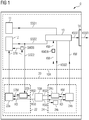
- FIG 1 a sensor data simulation device 10 according to an embodiment of the invention is shown schematically.
- the sensor data simulation device 10 has a simulation component 10a and a training device 20.
- a model simulation of sensor data KSSD is carried out with the simulation component 10a.
- the training device 20 is used to generate models STM, KM based on a machine learning method on the basis of real sensor data RSD.
- the generated models STM, KM, a statistical model STM and a combination model KM are used to generate simulated sensor data SSD2, KSSD for specific sensors and are stored after their generation by the training device 20 in a sensor model database SMDB or in a combination model database KMDB, which are each part of the simulation component 10a.
- the simulation component 10a comprises a physics engine 11 which is set up to generate first simulated sensor data SSD1 on the basis of a physical model for a specific sensor. Part of the simulation component 10a is also a statistical model unit 12 which is set up to generate second simulated sensor data SSD2 on the basis of a trained statistical model STM.
- the trained statistical model which is specific for a certain sensor, is stored in the aforementioned sensor model database SMDB and can be transmitted from this sensor model database SMDB to the statistical model unit 12 if required, that is, if a sensor data simulation is to be carried out for a specific sensor .
- the statistical model STM was obtained by training with real sensor data RSD of a respective sensor and reproduces the time-dependent statistical behavior of the real sensor data.
- Part of the simulation component 10a is also a fusion unit 13 which is connected to the physics engine 11 and the statistical model unit 12 via communication channels and from these the first simulated sensor data SSD1 and the second simulated sensor data SSD2, which include, for example, simulated noise components or simulated artifacts, receives.
- the fusion unit 13 is set up to generate a set of combined simulated sensor data KSSD by combining the first simulated sensor data SSD1 with the second simulated sensor data SSD2.
- the combination process takes place using a combination model KM trained by a machine learning method on the first simulated sensor data SSD1 and the second simulated sensor data SSD2.
- the trained combination model KM used here was obtained with the aid of the training device 20 by training with real sensor data RSD and simulated first and second sensor data SSD1, SSD2.
- the combined simulated sensor data KSSD generated can be output via an output interface 14, which is also part of the simulation component 10a. It is expressly mentioned that the fusion unit 13 represents an optional feature and embodiments without a fusion unit 13 are
- the training device 20 has a statistical model training unit 22 and a combination model training unit 24.
- the model training unit 22 is used to train a statistical model STM for a specific sensor with real sensor data RSD with the aid of a machine learning method.
- the statistical model training unit 22 has a model adaptation unit 22a and a comparison unit 22b.
- the model adaptation unit 22a initially generates an initial model STM of a specific sensor or its behavior and transmits this model STM to the aforementioned statistical model unit 12, which generates second simulated sensor data SSD2 on the basis of the model STM received, and also to the Comparison unit 22b.
- the second simulated sensor data SSD2 are transmitted to the comparison unit 22b as part of the machine learning process, which carries out a so-called matching process, in which real sensor data RSD with noise components STK, which are stored in the test database TDB, are compared with the generated second simulated sensor data SSD2. If it was determined in the matching process that the generated sensor data SSD2 match the real sensor data RSD sufficiently or that the matching process has a positive result, the statistical model STM last transmitted to the comparison unit 22b is stored in the sensor model database SMDB. Otherwise, correction parameters KD are transmitted to the model adaptation unit 22a as a function of the result of the matching process.
- the model adaptation unit 22a then generates a corrected statistical model STM as a function of the received correction parameters KD and in turn transmits this model STM to the statistical model unit 12 and to the comparison unit 22b.
- the statistical model unit 12 then again generates second simulated sensor data SSD2, which in turn are subjected to a matching process with the real sensor data RSD by the comparison unit 22b. The process described is carried out until the result of the matching process does not require any further corrections.
- the statistical model STM used last is then stored in the sensor model database SMDB.
- the combination model training unit 24 has an initialization unit 24a with which, as a function of the test database TDB received, real sensor data RSD for a specific sensor is instructed to generate first simulated sensor data SSD1 in the physics engine 11 and to simulate second simulated sensor data SSD2 is instructed in the statistical model unit 12 (communication lines between the initialization unit 24a and the physics engine 11 and the statistical model unit 12 are not shown for the sake of clarity). Furthermore, the combination model training unit 24 has a model adaptation unit 24b, which transmits an initial combination model KM to the combination unit 13 on the basis of real sensor data RSD, which it receives from the test database TDB. The combination unit 13 combines the first and second simulated sensor data SSD1, SSD2 generated for training purposes and transmits the combined simulated sensor data KSSD to a comparison unit 24c, which is also part of the combination model training unit 24.
- the combined simulated sensor data KSSD are transmitted as part of the machine learning process to the comparison unit 24c, which carries out a so-called matching process in which real sensor data RSD, which are stored in the test database TDB, are compared with the generated combined simulated sensor data KSSD . If it was determined in the matching process that the combined simulated sensor data KSSD generated match the real sensor data RSD sufficiently or that the matching process has a positive result, the statistical model STM last transmitted to the comparison unit 24c is used in the previously mentioned Combination model database KMDB saved.
- correction parameters KD are transmitted to the model adaptation unit 24b as a function of the result of the matching process.
- the model adaptation unit 24b then generates a corrected combination model KM as a function of the received correction parameters KD and transmits this model KM in turn to the combination model unit 13 and to the comparison unit 24c.
- the combination model unit 13 then generates again combined simulated sensor data KSSD, which in turn are subjected to a matching process with the real sensor data RSD by the comparison unit 24b. The process described is carried out until the result of the matching process does not require any further corrections. Afterward the last used combination model KM is saved in the combination model database KMDB, in which it is available for simulations.
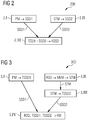
- FIG 2 A flow diagram 200 is shown which illustrates a method for simulating sensor data according to an embodiment of the invention.
- step 2.I a large number of first simulated sensor data SSD1 are generated with the aid of a physics engine for defined sensor parameters and environmental parameters.
- step 2.II a statistical model STM, which was trained by a machine learning method, generates a large number of second simulated sensor data SSD2 for the same defined sensor parameters and environmental parameters that were also used in step 2.I. became.
- the statistical model STM was obtained through machine learning with real sensor data RSD or statistical components based on these.
- the second simulated sensor data SSD2 can include, for example, a statistical component, such as, for example, noise effects or artifacts, which can occur as a result of environmental influences or due to the design. Instead of complete second simulated sensor data SSD2, only the statistical components assigned to them can also be generated.
- the first and second simulated sensor data SSD1, SSD2 are used to generate a set of combined simulated sensor data KSSD.
- the set of combined simulated sensor data KSSD is achieved by combining the first simulated sensor data SSD1 with the second simulated sensor data SSD2.
- the combination takes place by applying a combination model KM trained by machine learning, which was trained to combine the first and second sensor data SSD1, SSD2 with one another in such a way that the combined simulated sensor data KSSD, as exactly as possible correspond to the real sensor data RSD used for the training.
- Machine learning processes are therefore used both for generating statistical components from simulated sensor data and also for combining these simulated statistical components with simulated sensor data that were generated by a physical model. By taking statistical data into account, a more exact and lifelike simulation of sensor data is achieved.
- FIG 3 A flow diagram 300 is shown which illustrates a training method for training a sensor data simulation device according to an exemplary embodiment of the invention.
- the illustrated methods are initially generated in step 3.I with a physical model PM, which is implemented by a physics engine, first statistical sensor data SSD1 for certain defined environmental parameters and sensor parameters, the corresponding parameters or their values varying in order to obtain simulated sensor values for a correspondingly wide range of parameters.
- the parameter range depends, among other things, on the existing real sensor data RSD or on the parameter value range assigned to them.
- a dynamic statistical model STM is trained by machine learning MLM using real sensor data RSD.
- the real sensor data RSD can, for example, be taken from a test database TDB (see FIG 1 ) come.
- the real sensor data RSD can, for example, have statistical components, ie components which vary statistically over time and which are used to train the dynamic statistical model STM.
- the statistical components can relate, for example, to the noise behavior of the simulated sensor data.
- step 3.III second simulated sensor data are then simulated with the aid of the trained statistical model STM SSD2 generated.
- the second simulated sensor data SSD2 comprise the described statistical component of sensor data.
- a combination model KM is then trained in step 3.IV.
- the combination model KM is intended to suitably combine the first sensor data SSD1 simulated via the physical model and the second sensor data SSD2 simulated with the statistical model STM, ie to combine them in such a way that the combined sensor data KSSD generated by the combination model KM is used for training real sensor data RSD used correspond to the specific parameter values assigned to them.
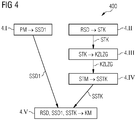
- FIG 4 A flowchart 400 is shown which illustrates a training method for training models for simulating sensor data according to a second exemplary embodiment of the invention.
- step 4.I as in the in FIG 3
- first simulated sensor data SSD1 is generated with the aid of a physics engine or a physical model PM implemented by the physics engine.
- noise components STK are extracted from the real sensor data RSD in step 4.II. These noise components STK are extracted in the in FIG 4 embodiment shown by using a high-pass filter on the real sensor data RSD on which the training process is based.
- the noise components STK are then processed in step 4.III with the aid of a sequential statistical model, in this case a model called "short-term long-term memory” KZLZG with which the noise behavior of the sensor data RSD is learned automatically as a function of time.
- a model called "short-term long-term memory” KZLZG with which the noise behavior of the sensor data RSD is learned automatically as a function of time.
- the "short-term long-term memory” KZLZG has been sufficiently trained with noise components STK in step 4.III, it can then be used in step 4.IV to generate simulated noise components SSTK as time series.
- These simulated Noise components SSTK are then used in step 4.V together with the first simulated sensor data SSD1 and the real sensor data RSD to machine-learn a combination model KM.
- the combination model KM is intended to suitably combine the first sensor data SSD1 simulated via the physical model PM and the noise components SSTK simulated with the statistical model called "short-term long-term memory" KZLZG, ie to combine them in such a way that the combined sensor data generated by the combination model KM KSSD correspond to the real sensor data RSD used for training for the parameter values assigned to them.
Landscapes
- Physics & Mathematics (AREA)
- General Physics & Mathematics (AREA)
- Engineering & Computer Science (AREA)
- Automation & Control Theory (AREA)
- Testing Or Calibration Of Command Recording Devices (AREA)
Claims (18)
- Système (10) de simulation de données de capteur, comportant :- un moteur (41) physique de production de premières données (SSD1) de capteur simulées sur la base d'un modèle (PM) physique,- une unité (42) de modèle statistique de production de deuxièmes données (SSD2, SSTK) de capteur simulées sur la base d'un modèle (STM) statistique ayant subi un apprentissage, qui a été obtenu par apprentissage avec des données (RSD) de capteur réelles et qui est conçu pour reproduire un comportement statistique en fonction du temps des données (RSD) de capteur réelles,- caractérisé par une unité (43) de fusion de production d'un ensemble de données (KSSD) de capteur simulées combinées par combinaison des premières données (SSD1) de capteur simulées aux deuxièmes données (SSD2, SSTK) de capteur simulées avec application d'un modèle (KM) de combinaison ayant subi un apprentissage aux premières données (SSD1) de capteur simulées et aux deuxièmes données (SSD2, SSTK) de capteur simulées, le modèle (KM) de combinaison ayant subi un apprentissage ayant été obtenu en faisant subir un apprentissage avec des données (RSD) de capteur réelles et des premières et deuxièmes données (SSD1, SSD2, SSTK) de capteur simulées.
- Système de simulation de données de capteur suivant la revendication 1, dans lequel le modèle (STM) statistique ayant subi un apprentissage reproduit le comportement dynamique d'un capteur, dont les données (RSD) de capteur réelles ont été utilisées pour faire subir un apprentissage au modèle (STM) statistique.
- Système de simulation de données de capteur suivant l'une des revendications précédentes, dans lequel le modèle (STM) statistique simule le comportement de bruit d'un capteur et/ou des artéfacts produits par le capteur, dont les données (RSD) de capteur réelles ont été utilisées pour faire subir un apprentissage au modèle (STM) statistique.
- Système de simulation de données de capteur suivant l'une des revendications précédentes, dans lequel le modèle (PM) physique est conçu pour prendre en compte, lors de la production des premières données (SSD1) de capteur simulées, des métadonnées qui ont été rassemblées lors de l'apprentissage du modèle (STM) statistique et qui concernent les conditions amiantes lors de la production des données (RSD) de capteur réelles.
- Système de simulation de données de capteur suivant l'une des revendications précédentes, dans lequel le modèle (STM) statistique ayant subi un apprentissage a été produit par apprentissage par des données (RSD) de capteur réelles, auxquelles des valeurs de métadonnées différentes sont associées.
- Système de simulation de données de capteur suivant la revendication 5, dans lequel les métadonnées comprennent au moins l'un des types de données suivants :- des données météorologiques,- l'heure du jour,- des conditions physiques aux limites.
- Installation (20) d'apprentissage, comprenant :- une première interface de réception de deuxièmes données (SSD2, SSTK) de capteur simulées, qui sont produites par un modèle (STM) statistique auquel on doit faire subir un apprentissage,- une unité (22) d'apprentissage de modèle pour faire subir un apprentissage au modèle (STM) statistique par des données (RSD) de capteur réelles et par les deuxièmes données (SSD2, SSTK) de capteur simulées reçues par l'intermédiaire de la première interface,- caractérisée par une deuxième interface de réception de données (KSSD) de capteur combinées,- une troisième interface avec un moteur (41) physique pour produire des premières données (SSD1) de capteur simulées afin de faire subir un apprentissage à un modèle (KM) de combinaison,- une unité (24) d'apprentissage de modèle de combinaison pour faire subir un apprentissage au modèle (KM) de combinaison sur la base de données (RSD) de capteur réelles et des premières et deuxièmes données (SSD1, SSD2, SSTK) de capteur simulées.
- Système (10) de simulation de données de capteur suivant l'une des revendications 1 à 6, comportant un dispositif (20) d'apprentissage suivant la revendication 7.
- Procédé de simulation de données (KSSD) de capteur en utilisant le dispositif (10) de simulation de données de capteur suivant l'une des revendications 1 à 6 ou 8, caractérisé par les stades :- production de premières données (SSD1) de capteur simulées sur la base du modèle (PM) physique,- production de deuxièmes données (SSD2, SSTK) de capteur simulées sur la base du modèle (STM) statistique ayant subi un apprentissage par des données (RSD) de capteur réelles.
- Procédé suivant la revendication 9, dans lequel on produit un ensemble de données (KSSD) de capteur simulées combinées par combinaison des premières données (SSD1) de capteur simulées aux deuxièmes données (SSD2, SSTK) de capteur simulées, en appliquant le modèle (KM) de combinaison ayant subi un apprentissage aux premières données (SSD1) de capteur simulées et aux deuxièmes données (SSD2, SSTK) de capteur simulées.
- Procédé d'apprentissage pour faire subir un apprentissage à un système (10) de simulation de données de capteur suivant l'une des revendications 1 à 6 ou 8, caractérisé par les stades :- production de premières données (SSD1) de capteur simulées sur la base du modèle (PM) physique,- apprentissage du modèle (STM) statistique par des données (RSD) de capteur réelles,- production de deuxièmes données (SSD2, SSTK) de capteur simulées par le modèle (STM) statistique ayant subi un apprentissage.
- Procédé suivant la revendication 11, dans lequel
on fait subir un apprentissage au modèle (KM) de combinaison par les données (RSD) de capteur réelles et par les premières et deuxièmes données (SSD1, SSD2, SSTK) de capteur simulées. - Procédé suivant la revendication 11 ou 12, dans lequel on utilise comme procédé d'apprentissage l'un des types de procédé suivants :- un procédé d'apprentissage automatique,- un procédé deep-learning.
- Procédé suivant l'une des revendications 9 à 13, dans lequel dans le stade de l'apprentissage du modèle (STM) statistique- on extrait une composante (STK) statistique respectivement des données (RSD) de capteur réelles,- l'apprentissage d'un modèle (SSTM) statistique séquentiel s'effectue sur la base de la composante (STK) statistique, dans lequel on fait l'apprentissage du comportement en fonction du temps de la composante (STK) statistique.
- Procédé suivant la revendication 14, dans lequel l'extraction de la composante (STK) statistique s'effectue par application d'une dérivée en fonction du temps et/ou d'un filtre passe-haut aux données (RSD) de capteur réelles.
- Procédé suivant la revendication 14 ou 15, dans lequel le modèle (SSTM) statistique séquentiel comprend la technique de la mémoire longue de courte durée (KZLZG).
- Produit de programme d'ordinateur ayant un programme d'ordinateur, qui peut être chargé directement dans une unité de mémoire d'une unité informatique, comprenant des parties de programme pour effectuer tous les stades d'un procédé suivant l'une des revendications 9 à 16, lorsque le programme d'ordinateur est réalisé dans l'unité informatique.
- Support déchiffrable par ordinateur, sur lequel des parties de programme pouvant être réalisées par une unité informatique sont mises en mémoire, pour effectuer tous les stades du procédé suivant l'une des revendications 9 à 16 lorsque les parties de programme sont réalisées par l'unité informatique.
Applications Claiming Priority (2)
| Application Number | Priority Date | Filing Date | Title |
|---|---|---|---|
| DE102018205660.9A DE102018205660A1 (de) | 2018-04-13 | 2018-04-13 | Simulieren von statistisch modellierten Sensordaten |
| PCT/EP2019/058785 WO2019197324A1 (fr) | 2018-04-13 | 2019-04-08 | Simulation de données de capteur modélisées de manière statistique |
Publications (2)
| Publication Number | Publication Date |
|---|---|
| EP3714337A1 EP3714337A1 (fr) | 2020-09-30 |
| EP3714337B1 true EP3714337B1 (fr) | 2021-10-13 |
Family
ID=66334361
Family Applications (1)
| Application Number | Title | Priority Date | Filing Date |
|---|---|---|---|
| EP19720390.4A Not-in-force EP3714337B1 (fr) | 2018-04-13 | 2019-04-08 | Simulation de données de capteur modélisées de manière statistique |
Country Status (3)
| Country | Link |
|---|---|
| EP (1) | EP3714337B1 (fr) |
| DE (1) | DE102018205660A1 (fr) |
| WO (1) | WO2019197324A1 (fr) |
Cited By (1)
| Publication number | Priority date | Publication date | Assignee | Title |
|---|---|---|---|---|
| DE102022002242A1 (de) | 2022-06-21 | 2023-12-21 | Mercedes-Benz Group AG | Virtueller Sensor und Verfahren zum Betrieb eines virtuellen Sensors |
Families Citing this family (1)
| Publication number | Priority date | Publication date | Assignee | Title |
|---|---|---|---|---|
| EP4127576A1 (fr) * | 2020-03-27 | 2023-02-08 | Siemens Schweiz AG | Dispositif informatisé et procédé de contrôle de système cvc mis en oeuvre par ordinateur |
Family Cites Families (7)
| Publication number | Priority date | Publication date | Assignee | Title |
|---|---|---|---|---|
| ES2264766T3 (es) * | 2002-09-26 | 2007-01-16 | Siemens Aktiengesellschaft | Dispositivo y procedimiento para la supervision de una instalacion tecnica que comprende varios sistemas, especialmente de una central electrica. |
| ATE445870T1 (de) * | 2005-12-05 | 2009-10-15 | Siemens Corp Res Inc | Verwendung von sequentiellem clustering zur instanzenauswahl bei der maschinenzustandsüberwachung |
| US7505949B2 (en) * | 2006-01-31 | 2009-03-17 | Caterpillar Inc. | Process model error correction method and system |
| US8095479B2 (en) * | 2006-02-28 | 2012-01-10 | Hitachi, Ltd. | Plant control apparatus and method having functions of determining appropriate learning constraint conditions |
| DE102007059582B4 (de) * | 2007-11-15 | 2010-06-10 | Outotec Oyj | Verfahren und Vorrichtung zum Training des Bedienpersonals einer prozesstechnischen Anlage |
| US10466142B2 (en) * | 2016-07-13 | 2019-11-05 | Hitachi, Ltd. | Equipment control based on failure determination |
| JP6562883B2 (ja) * | 2016-09-20 | 2019-08-21 | 株式会社東芝 | 特性値推定装置および特性値推定方法 |
-
2018
- 2018-04-13 DE DE102018205660.9A patent/DE102018205660A1/de not_active Ceased
-
2019
- 2019-04-08 EP EP19720390.4A patent/EP3714337B1/fr not_active Not-in-force
- 2019-04-08 WO PCT/EP2019/058785 patent/WO2019197324A1/fr not_active Ceased
Cited By (1)
| Publication number | Priority date | Publication date | Assignee | Title |
|---|---|---|---|---|
| DE102022002242A1 (de) | 2022-06-21 | 2023-12-21 | Mercedes-Benz Group AG | Virtueller Sensor und Verfahren zum Betrieb eines virtuellen Sensors |
Also Published As
| Publication number | Publication date |
|---|---|
| WO2019197324A1 (fr) | 2019-10-17 |
| DE102018205660A1 (de) | 2019-10-17 |
| EP3714337A1 (fr) | 2020-09-30 |
Similar Documents
| Publication | Publication Date | Title |
|---|---|---|
| DE102017211433B4 (de) | Verfahren zum Durchführen eines Funktionstests eines Steuergeräts in einem Hardware-in-the-Loop-Test, HIL-Test, sowie HIL-Prüfstand und Steuergerät | |
| DE102007053501A1 (de) | Verfahren zur Entwicklung und/oder zum Testen wenigstens eines Sicherheits- und/oder Fahrerassistenzsystems für ein Kraftfahrzeug und Simulationsumgebung | |
| DE102019203712B4 (de) | Verfahren zum Trainieren wenigstens eines Algorithmus für ein Steuergerät eines Kraftfahrzeugs, Computerprogrammprodukt, Kraftfahrzeug sowie System | |
| DE102005026040A1 (de) | Parametrierung eines Simulations-Arbeitsmodells | |
| DE102016109651A1 (de) | Verfahren für die Validierung von Fahrzeugfunktionen eines virtuellen autonomen Fahrzeugs | |
| DE102017120016A1 (de) | Verfahren zur Konfiguration eines zum Testen eines elektronischen Steuergeräts eingerichteten Testgeräts sowie Konfigurationssystem | |
| EP3398092A1 (fr) | Procédé de configuration d'une cosimulation pour un système complet | |
| WO2021058223A1 (fr) | Procédé d'application de fonctions de conduite automatisée de manière efficace et simulée | |
| DE102019134053A1 (de) | Verfahren zur kontinuierlichen Absicherung im Fahrversuch applizierter automatisierter Fahrfunktionen | |
| DE102017210787A1 (de) | Verfahren und Vorrichtung zum Ermitteln von Anomalien in einem Kommunikationsnetzwerk | |
| DE102018209108A1 (de) | Schnelle Fehleranalyse für technische Vorrichtungen mit maschinellem Lernen | |
| EP3714337B1 (fr) | Simulation de données de capteur modélisées de manière statistique | |
| DE19701928C1 (de) | Verfahren zur Initialisierung einer Simulation des Verhaltens einer technischen Anlage und Simulationssystem für eine technische Anlage | |
| EP3782081B1 (fr) | Procédé de génération d'un ensemble de données d'essai, procédé d'essai, procédé de fonctionnement d'un système, dispositif, système de commande, produit programme d'ordinateur, support lisible par ordinateur, production et utilisation | |
| EP3979009A1 (fr) | Génération d'un modèle simplifié pour systèmes xil | |
| DE102018125712A1 (de) | Fahrunterstützungsverfahrens für ein Fahrzeug | |
| DE102021208472B3 (de) | Computerimplementiertes Verfahren zum Trainieren eines Machine-Learning-Modells für ein Fahrzeug oder einen Roboter | |
| EP3866135B1 (fr) | Procédé de commande d'une installation de signalisation lumineuse | |
| DE102021200257A1 (de) | Verfahren zur Validierung von Softwarefunktionen in einem Fahrerassistenzsystem für Kraftfahrzeuge | |
| WO2012045322A1 (fr) | Procédé et ordinateur de processus servant à calculer des grandeurs d'état d'un modèle de processus différentiel algébrique hybride | |
| EP3521949A1 (fr) | Dispositif de simulation d'une machine ou d'une installation commandées ainsi que procédé | |
| DE102019216676A1 (de) | Prognose eines Messwerts einer Messgröße eines technischen Systems | |
| WO2019057284A1 (fr) | Génération de capacités d'unités de production pouvant être automatisée | |
| DE102019132624A1 (de) | Verfahren, Vorrichtung, Computerprogramm und computerlesbares Speichermedium zum Erstellen eines Motion Cueing Algorithmus | |
| DE102014221011A1 (de) | Modul zur Simulation eines Sondereinsatzfahrzeuges in einer Verkehrsflusssimulation und Verfahren zur Durchführung einer Verkehrsflusssimulation |
Legal Events
| Date | Code | Title | Description |
|---|---|---|---|
| STAA | Information on the status of an ep patent application or granted ep patent |
Free format text: STATUS: UNKNOWN |
|
| STAA | Information on the status of an ep patent application or granted ep patent |
Free format text: STATUS: THE INTERNATIONAL PUBLICATION HAS BEEN MADE |
|
| PUAI | Public reference made under article 153(3) epc to a published international application that has entered the european phase |
Free format text: ORIGINAL CODE: 0009012 |
|
| STAA | Information on the status of an ep patent application or granted ep patent |
Free format text: STATUS: REQUEST FOR EXAMINATION WAS MADE |
|
| 17P | Request for examination filed |
Effective date: 20200623 |
|
| AK | Designated contracting states |
Kind code of ref document: A1 Designated state(s): AL AT BE BG CH CY CZ DE DK EE ES FI FR GB GR HR HU IE IS IT LI LT LU LV MC MK MT NL NO PL PT RO RS SE SI SK SM TR |
|
| AX | Request for extension of the european patent |
Extension state: BA ME |
|
| GRAP | Despatch of communication of intention to grant a patent |
Free format text: ORIGINAL CODE: EPIDOSNIGR1 |
|
| STAA | Information on the status of an ep patent application or granted ep patent |
Free format text: STATUS: GRANT OF PATENT IS INTENDED |
|
| DAV | Request for validation of the european patent (deleted) | ||
| DAX | Request for extension of the european patent (deleted) | ||
| INTG | Intention to grant announced |
Effective date: 20210625 |
|
| GRAS | Grant fee paid |
Free format text: ORIGINAL CODE: EPIDOSNIGR3 |
|
| GRAA | (expected) grant |
Free format text: ORIGINAL CODE: 0009210 |
|
| STAA | Information on the status of an ep patent application or granted ep patent |
Free format text: STATUS: THE PATENT HAS BEEN GRANTED |
|
| AK | Designated contracting states |
Kind code of ref document: B1 Designated state(s): AL AT BE BG CH CY CZ DE DK EE ES FI FR GB GR HR HU IE IS IT LI LT LU LV MC MK MT NL NO PL PT RO RS SE SI SK SM TR |
|
| REG | Reference to a national code |
Ref country code: GB Ref legal event code: FG4D Free format text: NOT ENGLISH |
|
| REG | Reference to a national code |
Ref country code: CH Ref legal event code: EP |
|
| REG | Reference to a national code |
Ref country code: DE Ref legal event code: R096 Ref document number: 502019002515 Country of ref document: DE |
|
| REG | Reference to a national code |
Ref country code: IE Ref legal event code: FG4D Free format text: LANGUAGE OF EP DOCUMENT: GERMAN |
|
| REG | Reference to a national code |
Ref country code: AT Ref legal event code: REF Ref document number: 1438618 Country of ref document: AT Kind code of ref document: T Effective date: 20211115 |
|
| REG | Reference to a national code |
Ref country code: LT Ref legal event code: MG9D |
|
| REG | Reference to a national code |
Ref country code: NL Ref legal event code: MP Effective date: 20211013 |
|
| PG25 | Lapsed in a contracting state [announced via postgrant information from national office to epo] |
Ref country code: RS Free format text: LAPSE BECAUSE OF FAILURE TO SUBMIT A TRANSLATION OF THE DESCRIPTION OR TO PAY THE FEE WITHIN THE PRESCRIBED TIME-LIMIT Effective date: 20211013 Ref country code: LT Free format text: LAPSE BECAUSE OF FAILURE TO SUBMIT A TRANSLATION OF THE DESCRIPTION OR TO PAY THE FEE WITHIN THE PRESCRIBED TIME-LIMIT Effective date: 20211013 Ref country code: FI Free format text: LAPSE BECAUSE OF FAILURE TO SUBMIT A TRANSLATION OF THE DESCRIPTION OR TO PAY THE FEE WITHIN THE PRESCRIBED TIME-LIMIT Effective date: 20211013 Ref country code: BG Free format text: LAPSE BECAUSE OF FAILURE TO SUBMIT A TRANSLATION OF THE DESCRIPTION OR TO PAY THE FEE WITHIN THE PRESCRIBED TIME-LIMIT Effective date: 20220113 |
|
| PG25 | Lapsed in a contracting state [announced via postgrant information from national office to epo] |
Ref country code: IS Free format text: LAPSE BECAUSE OF FAILURE TO SUBMIT A TRANSLATION OF THE DESCRIPTION OR TO PAY THE FEE WITHIN THE PRESCRIBED TIME-LIMIT Effective date: 20220213 Ref country code: SE Free format text: LAPSE BECAUSE OF FAILURE TO SUBMIT A TRANSLATION OF THE DESCRIPTION OR TO PAY THE FEE WITHIN THE PRESCRIBED TIME-LIMIT Effective date: 20211013 Ref country code: PT Free format text: LAPSE BECAUSE OF FAILURE TO SUBMIT A TRANSLATION OF THE DESCRIPTION OR TO PAY THE FEE WITHIN THE PRESCRIBED TIME-LIMIT Effective date: 20220214 Ref country code: PL Free format text: LAPSE BECAUSE OF FAILURE TO SUBMIT A TRANSLATION OF THE DESCRIPTION OR TO PAY THE FEE WITHIN THE PRESCRIBED TIME-LIMIT Effective date: 20211013 Ref country code: NO Free format text: LAPSE BECAUSE OF FAILURE TO SUBMIT A TRANSLATION OF THE DESCRIPTION OR TO PAY THE FEE WITHIN THE PRESCRIBED TIME-LIMIT Effective date: 20220113 Ref country code: NL Free format text: LAPSE BECAUSE OF FAILURE TO SUBMIT A TRANSLATION OF THE DESCRIPTION OR TO PAY THE FEE WITHIN THE PRESCRIBED TIME-LIMIT Effective date: 20211013 Ref country code: LV Free format text: LAPSE BECAUSE OF FAILURE TO SUBMIT A TRANSLATION OF THE DESCRIPTION OR TO PAY THE FEE WITHIN THE PRESCRIBED TIME-LIMIT Effective date: 20211013 Ref country code: HR Free format text: LAPSE BECAUSE OF FAILURE TO SUBMIT A TRANSLATION OF THE DESCRIPTION OR TO PAY THE FEE WITHIN THE PRESCRIBED TIME-LIMIT Effective date: 20211013 Ref country code: GR Free format text: LAPSE BECAUSE OF FAILURE TO SUBMIT A TRANSLATION OF THE DESCRIPTION OR TO PAY THE FEE WITHIN THE PRESCRIBED TIME-LIMIT Effective date: 20220114 Ref country code: ES Free format text: LAPSE BECAUSE OF FAILURE TO SUBMIT A TRANSLATION OF THE DESCRIPTION OR TO PAY THE FEE WITHIN THE PRESCRIBED TIME-LIMIT Effective date: 20211013 |
|
| REG | Reference to a national code |
Ref country code: DE Ref legal event code: R097 Ref document number: 502019002515 Country of ref document: DE |
|
| PG25 | Lapsed in a contracting state [announced via postgrant information from national office to epo] |
Ref country code: SM Free format text: LAPSE BECAUSE OF FAILURE TO SUBMIT A TRANSLATION OF THE DESCRIPTION OR TO PAY THE FEE WITHIN THE PRESCRIBED TIME-LIMIT Effective date: 20211013 Ref country code: SK Free format text: LAPSE BECAUSE OF FAILURE TO SUBMIT A TRANSLATION OF THE DESCRIPTION OR TO PAY THE FEE WITHIN THE PRESCRIBED TIME-LIMIT Effective date: 20211013 Ref country code: RO Free format text: LAPSE BECAUSE OF FAILURE TO SUBMIT A TRANSLATION OF THE DESCRIPTION OR TO PAY THE FEE WITHIN THE PRESCRIBED TIME-LIMIT Effective date: 20211013 Ref country code: EE Free format text: LAPSE BECAUSE OF FAILURE TO SUBMIT A TRANSLATION OF THE DESCRIPTION OR TO PAY THE FEE WITHIN THE PRESCRIBED TIME-LIMIT Effective date: 20211013 Ref country code: DK Free format text: LAPSE BECAUSE OF FAILURE TO SUBMIT A TRANSLATION OF THE DESCRIPTION OR TO PAY THE FEE WITHIN THE PRESCRIBED TIME-LIMIT Effective date: 20211013 Ref country code: CZ Free format text: LAPSE BECAUSE OF FAILURE TO SUBMIT A TRANSLATION OF THE DESCRIPTION OR TO PAY THE FEE WITHIN THE PRESCRIBED TIME-LIMIT Effective date: 20211013 |
|
| PLBE | No opposition filed within time limit |
Free format text: ORIGINAL CODE: 0009261 |
|
| STAA | Information on the status of an ep patent application or granted ep patent |
Free format text: STATUS: NO OPPOSITION FILED WITHIN TIME LIMIT |
|
| 26N | No opposition filed |
Effective date: 20220714 |
|
| PG25 | Lapsed in a contracting state [announced via postgrant information from national office to epo] |
Ref country code: AL Free format text: LAPSE BECAUSE OF FAILURE TO SUBMIT A TRANSLATION OF THE DESCRIPTION OR TO PAY THE FEE WITHIN THE PRESCRIBED TIME-LIMIT Effective date: 20211013 |
|
| PG25 | Lapsed in a contracting state [announced via postgrant information from national office to epo] |
Ref country code: SI Free format text: LAPSE BECAUSE OF FAILURE TO SUBMIT A TRANSLATION OF THE DESCRIPTION OR TO PAY THE FEE WITHIN THE PRESCRIBED TIME-LIMIT Effective date: 20211013 |
|
| REG | Reference to a national code |
Ref country code: CH Ref legal event code: PL |
|
| REG | Reference to a national code |
Ref country code: BE Ref legal event code: MM Effective date: 20220430 |
|
| PG25 | Lapsed in a contracting state [announced via postgrant information from national office to epo] |
Ref country code: MC Free format text: LAPSE BECAUSE OF FAILURE TO SUBMIT A TRANSLATION OF THE DESCRIPTION OR TO PAY THE FEE WITHIN THE PRESCRIBED TIME-LIMIT Effective date: 20211013 Ref country code: LU Free format text: LAPSE BECAUSE OF NON-PAYMENT OF DUE FEES Effective date: 20220408 Ref country code: LI Free format text: LAPSE BECAUSE OF NON-PAYMENT OF DUE FEES Effective date: 20220430 Ref country code: CH Free format text: LAPSE BECAUSE OF NON-PAYMENT OF DUE FEES Effective date: 20220430 |
|
| PG25 | Lapsed in a contracting state [announced via postgrant information from national office to epo] |
Ref country code: BE Free format text: LAPSE BECAUSE OF NON-PAYMENT OF DUE FEES Effective date: 20220430 |
|
| PG25 | Lapsed in a contracting state [announced via postgrant information from national office to epo] |
Ref country code: IE Free format text: LAPSE BECAUSE OF NON-PAYMENT OF DUE FEES Effective date: 20220408 |
|
| PG25 | Lapsed in a contracting state [announced via postgrant information from national office to epo] |
Ref country code: IT Free format text: LAPSE BECAUSE OF FAILURE TO SUBMIT A TRANSLATION OF THE DESCRIPTION OR TO PAY THE FEE WITHIN THE PRESCRIBED TIME-LIMIT Effective date: 20211013 |
|
| PGFP | Annual fee paid to national office [announced via postgrant information from national office to epo] |
Ref country code: FR Payment date: 20230421 Year of fee payment: 5 Ref country code: DE Payment date: 20230619 Year of fee payment: 5 |
|
| GBPC | Gb: european patent ceased through non-payment of renewal fee |
Effective date: 20230408 |
|
| PG25 | Lapsed in a contracting state [announced via postgrant information from national office to epo] |
Ref country code: GB Free format text: LAPSE BECAUSE OF NON-PAYMENT OF DUE FEES Effective date: 20230408 |
|
| PG25 | Lapsed in a contracting state [announced via postgrant information from national office to epo] |
Ref country code: GB Free format text: LAPSE BECAUSE OF NON-PAYMENT OF DUE FEES Effective date: 20230408 |
|
| PG25 | Lapsed in a contracting state [announced via postgrant information from national office to epo] |
Ref country code: MK Free format text: LAPSE BECAUSE OF FAILURE TO SUBMIT A TRANSLATION OF THE DESCRIPTION OR TO PAY THE FEE WITHIN THE PRESCRIBED TIME-LIMIT Effective date: 20211013 Ref country code: CY Free format text: LAPSE BECAUSE OF FAILURE TO SUBMIT A TRANSLATION OF THE DESCRIPTION OR TO PAY THE FEE WITHIN THE PRESCRIBED TIME-LIMIT Effective date: 20211013 |
|
| PG25 | Lapsed in a contracting state [announced via postgrant information from national office to epo] |
Ref country code: HU Free format text: LAPSE BECAUSE OF FAILURE TO SUBMIT A TRANSLATION OF THE DESCRIPTION OR TO PAY THE FEE WITHIN THE PRESCRIBED TIME-LIMIT; INVALID AB INITIO Effective date: 20190408 |
|
| PG25 | Lapsed in a contracting state [announced via postgrant information from national office to epo] |
Ref country code: TR Free format text: LAPSE BECAUSE OF FAILURE TO SUBMIT A TRANSLATION OF THE DESCRIPTION OR TO PAY THE FEE WITHIN THE PRESCRIBED TIME-LIMIT Effective date: 20211013 |
|
| PG25 | Lapsed in a contracting state [announced via postgrant information from national office to epo] |
Ref country code: MT Free format text: LAPSE BECAUSE OF FAILURE TO SUBMIT A TRANSLATION OF THE DESCRIPTION OR TO PAY THE FEE WITHIN THE PRESCRIBED TIME-LIMIT Effective date: 20211013 |
|
| REG | Reference to a national code |
Ref country code: DE Ref legal event code: R119 Ref document number: 502019002515 Country of ref document: DE |
|
| PG25 | Lapsed in a contracting state [announced via postgrant information from national office to epo] |
Ref country code: DE Free format text: LAPSE BECAUSE OF NON-PAYMENT OF DUE FEES Effective date: 20241105 |
|
| PG25 | Lapsed in a contracting state [announced via postgrant information from national office to epo] |
Ref country code: FR Free format text: LAPSE BECAUSE OF NON-PAYMENT OF DUE FEES Effective date: 20240430 |
|
| PG25 | Lapsed in a contracting state [announced via postgrant information from national office to epo] |
Ref country code: FR Free format text: LAPSE BECAUSE OF NON-PAYMENT OF DUE FEES Effective date: 20240430 Ref country code: DE Free format text: LAPSE BECAUSE OF NON-PAYMENT OF DUE FEES Effective date: 20241105 |
|
| REG | Reference to a national code |
Ref country code: AT Ref legal event code: MM01 Ref document number: 1438618 Country of ref document: AT Kind code of ref document: T Effective date: 20240408 |
|
| PG25 | Lapsed in a contracting state [announced via postgrant information from national office to epo] |
Ref country code: AT Free format text: LAPSE BECAUSE OF NON-PAYMENT OF DUE FEES Effective date: 20240408 |
|
| PGFP | Annual fee paid to national office [announced via postgrant information from national office to epo] |
Ref country code: AT Payment date: 20260410 Year of fee payment: 5 |