EP3716058A1 - Procédé de commande d'un appareil au moyen d'un nouveau code de programme - Google Patents
Procédé de commande d'un appareil au moyen d'un nouveau code de programme Download PDFInfo
- Publication number
- EP3716058A1 EP3716058A1 EP19165906.9A EP19165906A EP3716058A1 EP 3716058 A1 EP3716058 A1 EP 3716058A1 EP 19165906 A EP19165906 A EP 19165906A EP 3716058 A1 EP3716058 A1 EP 3716058A1
- Authority
- EP
- European Patent Office
- Prior art keywords
- driver
- new
- program code
- interface
- program
- Prior art date
- Legal status (The legal status is an assumption and is not a legal conclusion. Google has not performed a legal analysis and makes no representation as to the accuracy of the status listed.)
- Withdrawn
Links
Images



Classifications
-
- G—PHYSICS
- G06—COMPUTING OR CALCULATING; COUNTING
- G06F—ELECTRIC DIGITAL DATA PROCESSING
- G06F9/00—Arrangements for program control, e.g. control units
- G06F9/06—Arrangements for program control, e.g. control units using stored programs, i.e. using an internal store of processing equipment to receive or retain programs
- G06F9/44—Arrangements for executing specific programs
- G06F9/4401—Bootstrapping
- G06F9/4411—Configuring for operating with peripheral devices; Loading of device drivers
-
- G—PHYSICS
- G06—COMPUTING OR CALCULATING; COUNTING
- G06F—ELECTRIC DIGITAL DATA PROCESSING
- G06F8/00—Arrangements for software engineering
- G06F8/20—Software design
-
- G—PHYSICS
- G06—COMPUTING OR CALCULATING; COUNTING
- G06F—ELECTRIC DIGITAL DATA PROCESSING
- G06F8/00—Arrangements for software engineering
- G06F8/30—Creation or generation of source code
- G06F8/36—Software reuse
-
- G—PHYSICS
- G06—COMPUTING OR CALCULATING; COUNTING
- G06F—ELECTRIC DIGITAL DATA PROCESSING
- G06F9/00—Arrangements for program control, e.g. control units
- G06F9/06—Arrangements for program control, e.g. control units using stored programs, i.e. using an internal store of processing equipment to receive or retain programs
- G06F9/46—Multiprogramming arrangements
- G06F9/54—Interprogram communication
- G06F9/541—Interprogram communication via adapters, e.g. between incompatible applications
-
- G—PHYSICS
- G06—COMPUTING OR CALCULATING; COUNTING
- G06F—ELECTRIC DIGITAL DATA PROCESSING
- G06F9/00—Arrangements for program control, e.g. control units
- G06F9/06—Arrangements for program control, e.g. control units using stored programs, i.e. using an internal store of processing equipment to receive or retain programs
- G06F9/46—Multiprogramming arrangements
- G06F9/54—Interprogram communication
- G06F9/545—Interprogram communication where tasks reside in different layers, e.g. user- and kernel-space
-
- G—PHYSICS
- G06—COMPUTING OR CALCULATING; COUNTING
- G06F—ELECTRIC DIGITAL DATA PROCESSING
- G06F9/00—Arrangements for program control, e.g. control units
- G06F9/06—Arrangements for program control, e.g. control units using stored programs, i.e. using an internal store of processing equipment to receive or retain programs
- G06F9/46—Multiprogramming arrangements
- G06F9/54—Interprogram communication
- G06F9/546—Message passing systems or structures, e.g. queues
-
- G—PHYSICS
- G06—COMPUTING OR CALCULATING; COUNTING
- G06N—COMPUTING ARRANGEMENTS BASED ON SPECIFIC COMPUTATIONAL MODELS
- G06N3/00—Computing arrangements based on biological models
- G06N3/02—Neural networks
- G06N3/04—Architecture, e.g. interconnection topology
- G06N3/045—Combinations of networks
-
- G—PHYSICS
- G06—COMPUTING OR CALCULATING; COUNTING
- G06N—COMPUTING ARRANGEMENTS BASED ON SPECIFIC COMPUTATIONAL MODELS
- G06N3/00—Computing arrangements based on biological models
- G06N3/02—Neural networks
- G06N3/04—Architecture, e.g. interconnection topology
- G06N3/047—Probabilistic or stochastic networks
-
- G—PHYSICS
- G06—COMPUTING OR CALCULATING; COUNTING
- G06N—COMPUTING ARRANGEMENTS BASED ON SPECIFIC COMPUTATIONAL MODELS
- G06N3/00—Computing arrangements based on biological models
- G06N3/02—Neural networks
- G06N3/04—Architecture, e.g. interconnection topology
- G06N3/0475—Generative networks
-
- G—PHYSICS
- G06—COMPUTING OR CALCULATING; COUNTING
- G06N—COMPUTING ARRANGEMENTS BASED ON SPECIFIC COMPUTATIONAL MODELS
- G06N3/00—Computing arrangements based on biological models
- G06N3/02—Neural networks
- G06N3/08—Learning methods
- G06N3/084—Backpropagation, e.g. using gradient descent
-
- G—PHYSICS
- G06—COMPUTING OR CALCULATING; COUNTING
- G06N—COMPUTING ARRANGEMENTS BASED ON SPECIFIC COMPUTATIONAL MODELS
- G06N3/00—Computing arrangements based on biological models
- G06N3/02—Neural networks
- G06N3/08—Learning methods
- G06N3/094—Adversarial learning
-
- H—ELECTRICITY
- H04—ELECTRIC COMMUNICATION TECHNIQUE
- H04L—TRANSMISSION OF DIGITAL INFORMATION, e.g. TELEGRAPHIC COMMUNICATION
- H04L67/00—Network arrangements or protocols for supporting network services or applications
- H04L67/01—Protocols
- H04L67/12—Protocols specially adapted for proprietary or special-purpose networking environments, e.g. medical networks, sensor networks, networks in vehicles or remote metering networks
- H04L67/125—Protocols specially adapted for proprietary or special-purpose networking environments, e.g. medical networks, sensor networks, networks in vehicles or remote metering networks involving control of end-device applications over a network
-
- H—ELECTRICITY
- H04—ELECTRIC COMMUNICATION TECHNIQUE
- H04W—WIRELESS COMMUNICATION NETWORKS
- H04W4/00—Services specially adapted for wireless communication networks; Facilities therefor
- H04W4/18—Information format or content conversion, e.g. adaptation by the network of the transmitted or received information for the purpose of wireless delivery to users or terminals
-
- H—ELECTRICITY
- H04—ELECTRIC COMMUNICATION TECHNIQUE
- H04W—WIRELESS COMMUNICATION NETWORKS
- H04W4/00—Services specially adapted for wireless communication networks; Facilities therefor
- H04W4/50—Service provisioning or reconfiguring
-
- H—ELECTRICITY
- H04—ELECTRIC COMMUNICATION TECHNIQUE
- H04W—WIRELESS COMMUNICATION NETWORKS
- H04W4/00—Services specially adapted for wireless communication networks; Facilities therefor
- H04W4/70—Services for machine-to-machine communication [M2M] or machine type communication [MTC]
-
- H—ELECTRICITY
- H04—ELECTRIC COMMUNICATION TECHNIQUE
- H04W—WIRELESS COMMUNICATION NETWORKS
- H04W4/00—Services specially adapted for wireless communication networks; Facilities therefor
- H04W4/60—Subscription-based services using application servers or record carriers, e.g. SIM application toolkits
Definitions
- the invention relates to a method and a device for controlling a device with a new program code.
- a software ecosystem typically offers a marketplace for application programs, which are also referred to as program codes or apps.
- Examples are applications in the Smart City context, in which different energy providers such as the intelligent building and the intelligent power grid work together in an energy market.
- the object of the invention is to provide a method and a device for controlling a device with a new program code, the new program code being provided by a marketplace with several domains and being compatible with a previous program code with regard to its function, but with an incompatibility with regard to a message Has interface of the program code.
- Apps can be identified by overlapping attributes or by mapping attributes between domains.
- the first driver environment is a first application interface and the new driver environment includes a new application interface and preferably an event manager or message broker. This means that very widespread architectures can be used for systems with IIoT devices, the implementation can be simplified and the integration costs can be reduced.
- the new driver environment when the new driver environment is generated, the first driver is compiled with the at least one driver parameter and stored in a library, and when the new application interface is generated, the new driver is loaded from the library and is compiled with the first application interface.
- the new program code can be generated in a simple manner.
- the first and the new control code are provided for writing data and / or instructions to the device and / or reading data and / or information from the device. This means that an IIoT device can be flexibly controlled with the new program code for many different purposes.
- step b after the at least one driver parameter has been determined in step b), the functionality and the compatibility of the new control code are verified. This ensures that the new driver is checked before it is used, for example, in the operation of a production plant.
- the message interface and the driver interface are an interface according to an IoT protocol such as the MQTT (Message Queuing Telemetry Transport) protocol.
- IoT protocol such as the MQTT (Message Queuing Telemetry Transport) protocol.
- the interface converter is a message broker. This increases the number of potentially suitable apps as the widely used concept of a message broker is implemented.
- GAN refers to "Generative Adversarial Networks", which consist of two artificial neural networks that perform a zero-sum game. One of them creates candidates (the generator), the second neural network evaluates the candidates (the discriminator).
- the generator typically maps a vector of latent variables to the desired result space. The goal of the generator is to learn to generate results according to a certain distribution.
- the discriminator on the other hand, is trained to distinguish the results of the generator from the data from the real, given distribution. The generator's objective function is then to produce results that the discriminator cannot distinguish. As a result, the generated distribution should gradually adjust to the real distribution.
- GAN Generative Adversarial Network
- Siemens will host different marketplaces for its ecosystem initiatives and platforms as Siemens has deep vertical integration into different areas. These domains are different, but they also have similarities.
- the object of the invention is also achieved by a device for controlling a device with a new program code, the device being set up to be controlled by a first To be controlled program code which has a first control code and a first driver environment which comprises a first driver, and the method steps can be carried out according to the method according to the invention.
- program code is used, which can also be referred to as an application program (English “application” or “app”), a code sequence or a computer program.
- a program library or an app store, which is often formed in a cloud, is also referred to as a marketplace.
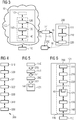
- Fig. 1, Fig. 2 and Fig. 3 show schematically an embodiment of the invention with a method 300 for controlling a device 150 with a new program code 101.
- the device 150 can be controlled by a first program code 100, which, when it is executed, based on a first control code 110, controls the device 150 with the aid of a first driver environment 145 which includes a first driver 140.
- step 13 the first driver 140 is coupled via the driver interface 250, and this in turn is coupled to the message converter 220 in step 14.
- step 15 the first application interface 120 is coupled to the message converter 220 via the new driver 141 in step 16, the new driver 141 im
- Step 17 can communicate with the driver interface 250, for example via a data delivery, and the driver interface 250 can communicate with the message converter 220 in step 18, for example via a request.
- Fig. 4 schematically shows the method 300 according to the invention.
- the first driver environment 145 comprises a first application interface 120 and the new driver environment 146 comprises a new application interface 121.
- An event manager 130 is also included in each case.
- Fig. 5 the sequence for generating the new driver environment 146 is shown.
- the first driver 140 is compiled 270 with the at least one driver parameter and stored 271 in a library 260.
- the new driver 141 is loaded 272 from the library 260 and compiled with the first application interface 120.
- Fig. 6 schematically shows the structure of the new program code 101.
- the first and the new control code 110, 111 are provided for writing data and / or instructions to the device 150 and / or reading data and / or information from the device 150. After determining 322 the at least one driver parameter in step b2), the functionality and the compatibility of the new control code 111 are optionally verified.
- the message interface 210 and the driver interface 250 are each interfaces according to the MQTT protocol.
- the interface converter 220 is a message broker (“message broker”).
- GAN Garnier Adversarial Networks
- Generative Adversary Networks are a class of artificial intelligence algorithms used in unsupervised machine learning.
- Generative Adversarial Networks consist of two artificial neural networks that perform a zero-sum game. One of them creates candidates (a generator 410), the second neural network evaluates the candidates (the discriminator 420).
- the generator typically maps a vector of latent variables to a desired result space.
- the aim of the generator 410 is to learn Generate results 411 according to a particular distribution.
- the discriminator 420 is trained by means of a feedback 421 to distinguish the results of the generator 410 from the data from the real, predetermined distribution.
- the objective function of the generator 410 is then to produce results 411 that the discriminator cannot distinguish. As a result, the generated distribution should gradually adjust to the real distribution.
- the generator 410 maps a first marketplace 451 and the discriminator 420 maps a second marketplace 452.
- the aim is to test whether a program code on the second marketplace 452 also represents a valuable offer on the first marketplace 451, for example a certain program code that is originally located on the second marketplace 452 can also be recommended for users on the first marketplace 451.
- the relevance estimation of the first marketplace 451 is responsible for determining the relevance of the program code on the first marketplace 451.
- the second marketplace 452 is to learn a model in order to predict the relevance of its program code for the first marketplace 451. From the perspective of the second marketplace 452, however, the first marketplace 451 is a "black box".
- the first marketplace 451 is the discriminator 420 and the second marketplace 452 is the generator 410.
- the goal of the generator 410 is to learn an accurate model of program code relevance without examining the first marketplace 451.
- the generator 410 is “blind” and can only update its program code relevance model based on feedback 421 from the discriminator 420.
- This is exactly the term used by GAN, but is used here in a novel cross-domain recommendation context for program code.
- the generator 410 determines a relevant program code from the context of the second marketplace 452 and sends an offer 411 to the discriminator 420.
- the discriminator 420 determines the relevance of the respective program code on the first marketplace 451 and provides feedback 421.
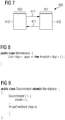
- Figs. 8-10 show examples of pseudo-codes for a GAN implementation in a marketplace environment.
- FIG. 8 Figure 11 shows a pseudo-code for a general marketplace implementation that provides a list of IIoT program codes.
- the marketplace is assigned to one or more domains.
- Fig. 9 shows a pseudo-code for an implementation of a discriminator, adding additional functions to the market.
- the discriminator 420 carries out a clustering of program codes on the basis of their functions by classifying the importance of certain function clusters as required.
- the discriminator 420 offers a getFeedback () method in order to give the generator 410 feedback 421 on the relevance of a specific program code.
- Fig. 10 shows a pseudo-code for an implementation of a generator.
- the generator 410 expands the market with prediction functions and is assigned to a discriminator instance using the setinstance () method.
- the run () method is executed n times until a good model of program code relevance with regard to the discriminator marketplace has been derived.
- the predict () method calculates class probabilities on the basis of a specific machine learning model m and the program code feature weighting vector v.
- Class probability means that the probability p ( c
- the trainModel () method creates an initial ML model, for example using techniques such as SVM, Random Forest or (Deep) Neural Networks) to predict program code clusters.
- the model can be incrementally updated and improved by feedback 421 of the discriminator 420, for example using additional training data or by means of backpropagation, in order to adapt weights in neural networks.
- the sampleApps () method tests n apps or program codes from the second marketplace 452 of the generator 410. This subset is used for an initial training of the ML model.
- GAN for Code Marketplaces provides a very elegant way to find out what kind of apps should be shared across marketplaces.
- Program code relevance models are created according to peer-2-peer (P2P) between marketplace pairs, which are always modeled according to the discriminator and generator pattern.
- P2P peer-2-peer
- the GAN approach is based on unsupervised ML techniques and the P2P network of marketplaces can therefore be set up flexibly.
- the discriminator 420 performs clustering based on program code functions.
- Fig. 11 shows a pseudo code for clustering.
- respective function / weight profiles can be created for a fixed amount of program code functions, which can be associated with the respective program code, as shown by way of example in Table 1.
- Table 1 Program code functions and function weights Program code (app) Function 1 Function 2 Function 3 A1 0.5 0.3 0.6 A2 0.3 0.7 0.1
- the program code A1 accordingly has a function-weight profile of [0.5,0.3,0.6] and can be compared with other program codes on the marketplace with regard to a function similarity. Very similar program codes can be grouped in a cluster.
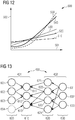
- Fig. 12 shows examples of marketplace behavior 500 of program codes with demand and growth patterns at program code marketplaces.
- the clusters are associated with demand or growth patterns to determine whether applications need to be shared across domains. For example, it does not make sense to propose a program code from the second marketplace 452 when the demand for similar program codes is already saturated.
- the common sharing of program codes only makes sense if there is unsatisfactory demand.
- the diagram 500 shows the demand 501 for program codes as a function of the supply 502 for program codes from various clusters 510-550.
- Cluster 550 for example, has a high demand or a strong growth profile with an exponential curve, cluster 510 has a low demand or a moderate growth profile.
- the growth profile can, for example, be determined based on the average number of downloads ⁇ DL / ⁇ t, the cumulative program code turnover ⁇ R / ⁇ t , etc., in each case over a certain period of time. Then a cluster can be rated in terms of market importance.
- generator 410 If program code predicted by generator 410 falls into a cluster such as cluster 5, generator 410 would received a very positive feedback. The generator 410 therefore learns relevantly from the perspective of the discriminator 420.
- This model is relevant for the individual market entities that implement the generator 410 and the discriminator 420.
- the preceding steps for predicting the relevance of a program code from the second marketplace 452 in the first marketplace 451 are supported on the basis of the GAN generator and discriminator pattern.
- the relevance of the program code at the second marketplace 452 at the first marketplace 451 can be determined.
- a uniform program code rating model for determining relevant program code on the second marketplace 452 is based on the relevance on the first and second marketplace 451, 452.
- Fig. 13 shows examples of marketplaces.
- the first marketplace 451 comprises a first program code group 600 with program codes 601, 602, 603 and an outdated program code 604 and a cluster group 600 with clusters 611, 612, 613.
- the second marketplace 452 assumes the role of the generator 410 and the first marketplace 451 the role of the discriminator 420.
- connections of a second program code group 620 with program codes 621, 622, 623, 624 of the second marketplace 452 are established.
- Three program codes 621, 622, 622 at the second marketplace 452 could provide functions that are relevant in the cluster 613.
- program codes in the second program code group 620 are evaluated by users 631, 632, 633 of a user group 630 at the second marketplace 452.
- Reco ( a ) can be calculated using terms known in connection with two-part network projection and personal recommendation.
- Fig. 14 is the program code group 620 with the program codes 621, 622, 623, 624 and the user group 630 with the users 631, 632, 633 of the second marketplace 452 of the Fig. 13 shown, in which a first method step 650 is carried out.
- each program code has a "token" that can be shared with the users with whom the program code is associated.
- the token flows from the program code to the connected users divided by the number of users the program code is connected to (the degree of the program code).
- Fig. 15 is the program code group 620 and the user group 630 of the Fig. 13 shown, in which a second method step 651 is carried out.
- the procedure is analogous to first step 650, but from the right partition (user) to the left partition (program codes / apps).
- the flow is divided by the degree of the user.
- Program code 641 Program codes 621 + 622 * 1 ⁇ 3 + 624 * 1 ⁇ 2 * 1 ⁇ 3
- Program code 642 Program codes 621 + 622 * 1 ⁇ 3 + 624 * 1 ⁇ 2 * 1 ⁇ 3 + 622 * 1 ⁇ 3 + 623 * 1 ⁇ 2 * 1 ⁇ 2 + 622 * 1 ⁇ 3 + 623 * 1 ⁇ 2 + 624 * 1 ⁇ 2 * 1 ⁇ 3
- Program code 644 Program codes 621 + 622 * 1 ⁇ 3 + 624 * 1 ⁇ 2 * 1 ⁇ 3 + 622 * 1 ⁇ 3
- Program code 641 642 643 644 1 ⁇ 3 / 9 1 0 / 6th 1 1 ⁇ 3 / 18th 7th / 12 5 / 6th 2 1 ⁇ 3 / 18th 9 / 12 7th / 6th 3 1 ⁇ 3 / 9 2 / 6th 1 / 6th 2 ⁇
- the vector with the new program code 641-644 on the left shows the resulting significance values for corresponding program codes 621-624.
- the 4x4 matrix represents the weights based on the two-stage propagation shown above, and the vector on the right hand side of the corresponding program codes 621-624.
- the program code 623 is recommended from the perspective of the second marketplace 452.
- R ( a; C ) The overall rating is given by R ( a; C ), which depends on the prediction of the ML model.
Landscapes
- Engineering & Computer Science (AREA)
- Theoretical Computer Science (AREA)
- Software Systems (AREA)
- Physics & Mathematics (AREA)
- General Engineering & Computer Science (AREA)
- General Physics & Mathematics (AREA)
- General Health & Medical Sciences (AREA)
- Health & Medical Sciences (AREA)
- Computing Systems (AREA)
- Biomedical Technology (AREA)
- Mathematical Physics (AREA)
- Data Mining & Analysis (AREA)
- Molecular Biology (AREA)
- Computational Linguistics (AREA)
- Biophysics (AREA)
- Artificial Intelligence (AREA)
- Evolutionary Computation (AREA)
- Life Sciences & Earth Sciences (AREA)
- Computer Networks & Wireless Communication (AREA)
- Signal Processing (AREA)
- Probability & Statistics with Applications (AREA)
- Medical Informatics (AREA)
- Computer Security & Cryptography (AREA)
- Stored Programmes (AREA)
Priority Applications (2)
| Application Number | Priority Date | Filing Date | Title |
|---|---|---|---|
| EP19165906.9A EP3716058A1 (fr) | 2019-03-28 | 2019-03-28 | Procédé de commande d'un appareil au moyen d'un nouveau code de programme |
| PCT/EP2020/057344 WO2020193294A1 (fr) | 2019-03-28 | 2020-03-17 | Procédé et dispositif destinés à commander de manière compatible un appareil avec un nouveau code de programme |
Applications Claiming Priority (1)
| Application Number | Priority Date | Filing Date | Title |
|---|---|---|---|
| EP19165906.9A EP3716058A1 (fr) | 2019-03-28 | 2019-03-28 | Procédé de commande d'un appareil au moyen d'un nouveau code de programme |
Publications (1)
| Publication Number | Publication Date |
|---|---|
| EP3716058A1 true EP3716058A1 (fr) | 2020-09-30 |
Family
ID=66049003
Family Applications (1)
| Application Number | Title | Priority Date | Filing Date |
|---|---|---|---|
| EP19165906.9A Withdrawn EP3716058A1 (fr) | 2019-03-28 | 2019-03-28 | Procédé de commande d'un appareil au moyen d'un nouveau code de programme |
Country Status (2)
| Country | Link |
|---|---|
| EP (1) | EP3716058A1 (fr) |
| WO (1) | WO2020193294A1 (fr) |
Cited By (2)
| Publication number | Priority date | Publication date | Assignee | Title |
|---|---|---|---|---|
| CN116795452A (zh) * | 2023-07-20 | 2023-09-22 | 龙芯中科(北京)信息技术有限公司 | 驱动程序兼容性的确定方法、装置及设备 |
| DE102023116611A1 (de) * | 2023-06-23 | 2024-12-24 | Krohne Messtechnik Gmbh | Verfahren zur Herstellung eines elektrischen Geräts |
-
2019
- 2019-03-28 EP EP19165906.9A patent/EP3716058A1/fr not_active Withdrawn
-
2020
- 2020-03-17 WO PCT/EP2020/057344 patent/WO2020193294A1/fr not_active Ceased
Non-Patent Citations (3)
| Title |
|---|
| ANONYMOUS: "Device driver - Wikipedia", 24 March 2019 (2019-03-24), XP055625332, Retrieved from the Internet <URL:https://en.wikipedia.org/w/index.php?title=Device_driver&oldid=889261409> [retrieved on 20190924] * |
| ANONYMOUS: "MQTT (Message Queuing Telemetry Transport) protocol - Wikipedia", 21 March 2019 (2019-03-21), XP055624410, Retrieved from the Internet <URL:https://en.wikipedia.org/w/index.php?title=MQTT&oldid=888839246> [retrieved on 20190920] * |
| KAROLINE SAATKAMP ET AL: "Generic driver injection for automated IoT application deployments", INFORMATION INTEGRATION AND WEB-BASED APPLICATIONS & SERVICES, ACM, 2 PENN PLAZA, SUITE 701NEW YORKNY10121-0701USA, 4 December 2017 (2017-12-04), pages 320 - 329, XP058386072, ISBN: 978-1-4503-5299-4, DOI: 10.1145/3151759.3151789 * |
Cited By (3)
| Publication number | Priority date | Publication date | Assignee | Title |
|---|---|---|---|---|
| DE102023116611A1 (de) * | 2023-06-23 | 2024-12-24 | Krohne Messtechnik Gmbh | Verfahren zur Herstellung eines elektrischen Geräts |
| CN116795452A (zh) * | 2023-07-20 | 2023-09-22 | 龙芯中科(北京)信息技术有限公司 | 驱动程序兼容性的确定方法、装置及设备 |
| CN116795452B (zh) * | 2023-07-20 | 2024-04-02 | 龙芯中科(北京)信息技术有限公司 | 驱动程序兼容性的确定方法、装置及设备 |
Also Published As
| Publication number | Publication date |
|---|---|
| WO2020193294A1 (fr) | 2020-10-01 |
Similar Documents
| Publication | Publication Date | Title |
|---|---|---|
| DE112020000584T5 (de) | Verfahren für unüberwachte bild-zu-bild-übersetzung mit wenigen aufnahmen | |
| DE112017005538T5 (de) | Automatisierte Erzeugung von Arbeitsabläufen | |
| DE102023124207A1 (de) | Einzelbild-Konzept-Kodierer zur Personalisierung unter Verwendung eines vortrainierten Diffusionsmodells | |
| DE202017007517U1 (de) | Aggregatmerkmale für maschinelles Lernen | |
| DE102019204139A1 (de) | Training für künstliche neuronale Netzwerke mit besserer Ausnutzung der Lern-Datensätze | |
| WO2021104608A1 (fr) | Procédé de génération d'une proposition d'ingénierie pour un dispositif ou une installation | |
| DE102024206000A1 (de) | System und Verfahren für Suchen Nach Prompts | |
| DE112021000251T5 (de) | Verfahren zum auswählen von datensätzen zum aktualisieren eines moduls mit künstlicher intelligenz | |
| EP3568757A1 (fr) | Procédé de génération de code source | |
| EP3716058A1 (fr) | Procédé de commande d'un appareil au moyen d'un nouveau code de programme | |
| DE69031327T2 (de) | Einrichtung und Verfahren zur rechnergestützten Entscheidungsfindung | |
| EP1650686A2 (fr) | Appareil et procédé de simulation des dépendances entre entités physique et données de mesures provenant des facteurs d'influence utilisant une approche dirigée par des modèles locaux/globaux utilisant des réseaux probabilistes intégrés | |
| DE102023202593A1 (de) | Verfahren und System zum Empfehlen von Modulen für ein Engineering-Projekt | |
| DE112022003696T5 (de) | Verfahren und systeme zur erzeugung von modellen für die bildanalyse pipeline prediction | |
| DE112021001565T5 (de) | Sortieren von datenelementen eines bestimmten satzes von datenelementen | |
| DE102021204550A1 (de) | Verfahren zum Erzeugen wenigstens eines Datensatzes zum Trainieren eines Algorithmus maschinellen Lernens | |
| WO2025114004A1 (fr) | Système et procédé utilisant un grand modèle de langage | |
| WO2020193481A1 (fr) | Procédé et dispositif d'apprentissage et de réalisation d'un réseau neuronal artificiel | |
| EP3637354A1 (fr) | Procédé de commande d'un appareil électronique au moyen d'un code de programme optimal | |
| DE202023103073U1 (de) | Ein System zur Segmentierung synthetischer Bilder unter Verwendung einer Glühwürmchen-Technik auf Basis des Absorptionskoeffizienten | |
| DE102022115101A1 (de) | Automatisierter entwurf von architekturen künstlicher neuronaler netze | |
| EP4506860A1 (fr) | Procédé d'apprentissage d'un modèle mathématique basé sur un apprentissage distribué à l'aide d'un système d'apprentissage, produit programme informatique, support de stockage lisible par ordinateur et système d'apprentissage | |
| EP3507943B1 (fr) | Procédé de communication dans un réseau de communication | |
| EP4268162A1 (fr) | Procédé et système permettant de transformer une situation d'objet de démarrage en une situation d'objet cible (découverte de solution de tacite intuitive) | |
| WO2020229407A1 (fr) | Système de classificateur et procédé pour la génération répartie de modèles de classification |
Legal Events
| Date | Code | Title | Description |
|---|---|---|---|
| PUAI | Public reference made under article 153(3) epc to a published international application that has entered the european phase |
Free format text: ORIGINAL CODE: 0009012 |
|
| STAA | Information on the status of an ep patent application or granted ep patent |
Free format text: STATUS: THE APPLICATION HAS BEEN PUBLISHED |
|
| AK | Designated contracting states |
Kind code of ref document: A1 Designated state(s): AL AT BE BG CH CY CZ DE DK EE ES FI FR GB GR HR HU IE IS IT LI LT LU LV MC MK MT NL NO PL PT RO RS SE SI SK SM TR |
|
| AX | Request for extension of the european patent |
Extension state: BA ME |
|
| STAA | Information on the status of an ep patent application or granted ep patent |
Free format text: STATUS: THE APPLICATION IS DEEMED TO BE WITHDRAWN |
|
| 18D | Application deemed to be withdrawn |
Effective date: 20210331 |