EP3716162A1 - Correspondance dynamique basée sur un réseau neuronal - Google Patents
Correspondance dynamique basée sur un réseau neuronal Download PDFInfo
- Publication number
- EP3716162A1 EP3716162A1 EP19166274.1A EP19166274A EP3716162A1 EP 3716162 A1 EP3716162 A1 EP 3716162A1 EP 19166274 A EP19166274 A EP 19166274A EP 3716162 A1 EP3716162 A1 EP 3716162A1
- Authority
- EP
- European Patent Office
- Prior art keywords
- parameter values
- determining
- learning
- metaheuristic
- instance
- Prior art date
- Legal status (The legal status is an assumption and is not a legal conclusion. Google has not performed a legal analysis and makes no representation as to the accuracy of the status listed.)
- Withdrawn
Links
Images


Classifications
-
- G—PHYSICS
- G06—COMPUTING OR CALCULATING; COUNTING
- G06Q—INFORMATION AND COMMUNICATION TECHNOLOGY [ICT] SPECIALLY ADAPTED FOR ADMINISTRATIVE, COMMERCIAL, FINANCIAL, MANAGERIAL OR SUPERVISORY PURPOSES; SYSTEMS OR METHODS SPECIALLY ADAPTED FOR ADMINISTRATIVE, COMMERCIAL, FINANCIAL, MANAGERIAL OR SUPERVISORY PURPOSES, NOT OTHERWISE PROVIDED FOR
- G06Q10/00—Administration; Management
Definitions
- the present disclosure relates to systems and methods for dynamic matching.
- the present disclosure relates to systems and methods for neural-network-based dynamic matching of users to vehicles in ride-hailing applications.
- RH urban ride hailing
- the main scope of the work mentioned above does not include an interaction or impact of ODM services on overall traffic.
- the availability of actual representative data is extremely important for simulations.
- the NYC taxi data is generally acquired by real taxis, that are typically hailed instead of being booked via an app. Further, due to the high number of taxis, they are typically immediately available, and that might not reflect real RH scenarios. Therefore, it is more appropriate to use booking data collected via some form of ODM app.
- Embodiments in accordance with the present disclosure include the use of machine learning techniques for predicting an optimized parameter value set for a given problem, instead of using a constant set of parameters.
- One of the key challenges is selecting the correct features for predicting the parameters accurately.
- Embodiments in accordance with the present disclosure is based on the use of a modified version of pairwise Shareability Graph for feature extraction (see, e.g. Santi, P., G. Resta, M. Szell, S. Sobolevsky, S. H. Strogatz, and C. Ratti, Quantifying the benefits of vehicle pooling with shareability networks (Proceedings of the National Academy of Sciences, Vol. 111, No. 37, 2014, pp. 13290-13294 ).
- Embodiments in accordance with the present disclosure employ a single insertion and removal operator, in line with a focus more on parameterization and performance prediction. But the approach is general and can be easily applied to any metaheuristic algorithm.
- a method for dynamic matching in a problem instance to be solved comprises selecting a set of problem instances and a set of parameter values; selecting a metaheuristic algorithm; determining, for each problem instance in the set of problem instances and for each combination of parameter values of the set of parameter values, an average objective cost of a returned solution for each pair of problem instance and parameter values, based on the metaheuristic algorithm; determining a machine-learning-based function configured to estimate, for each problem instance in the set of problem instances and for each combination of parameter values of the set of parameter values, an average estimated cost of a returned solution for each pair; determining a set of features from the problem instance for the machine-learning-based function; determining a set of predicted parameter values based on a minimal estimated cost; and performing the dynamic matching based on the set of predicted parameter values and the metaheuristic.
- determining the average objective cost of the returned solution for each pair includes running the metaheuristic algorithm multiple times for each combination of parameter values of the set of parameter values.
- determining the machine-learning-based function includes extracting problem specific features from the respective problem instance; extracting parameter specific features from the respective parameter values; and providing the problem specific features and the parameter specific features to the machine-learning-based function, preferably in form of a feature vector.
- the machine-learning-based function includes a Neural Network, including, but not limited to, one or more of: Feed Forward Neural Networks, Recurrent Neural Networks, Long Short Term Memory Networks, and Pointer Networks.
- a Neural Network including, but not limited to, one or more of: Feed Forward Neural Networks, Recurrent Neural Networks, Long Short Term Memory Networks, and Pointer Networks.
- determining the machine-learning-based function includes determining an error between a respective average estimated cost and a respective average objective cost of a returned solution for each pair; and minimizing the error.
- determining the machine-learning-based function includes processing the respective average objective cost based on a function G(.) in order to obtain respective processed average objective costs; and providing the respective processed average objective costs to the machine-learning-based function.
- a seventh aspect for each problem instance of the set of problem instances, there exists a set of feasible solutions and an associated objective cost given by an objective cost function.
- the metaheuristic algorithm is configured to return a feasible solution based on a respective problem instance and metaheuristic parameters values, optionally wherein the metaheuristic algorithm is configured to return the feasible solution when executed once.
- extracting the problem specific features) from the respective problem instance includes generating a pair-wise shareability graph; and performing a large neighborhood search on the pair-wise shareability graph in order to extract the problem specific features.
- extracting the parameter specific features from the respective parameter values includes generating the parameter specific features based on the application of binning techniques to one or more percentage frequency distributions, optionally in the form of one or more percentage frequency distribution-based feature vectors.
- a fleet V of size m and a set R of n requests is considered.
- each vehicle can serve only one request at a time (i.e. there is no ride sharing).
- For each request r ⁇ R there is a pickup location r p , a drop-off location r d and the time t r when the request (i.e. pickup) should be fulfilled.
- the time it takes to travel from r p to r d is given as T r .
- c r be 0 if request r is not covered by any vehicle otherwise 1.
- the multi-objective optimization problem is given as: min ⁇ ⁇ v ⁇ V T v + ⁇ ⁇ v ⁇ V ⁇ r ⁇ P v delay rv + ⁇ ⁇ v ⁇ V ⁇ r ⁇ P v wait rv + ⁇ ⁇ r ⁇ R 1 ⁇ c r
- ⁇ , ⁇ , and ⁇ are constant weights defining the relative importance of the total travel time of all the vehicles, the total delay to the users and the total time the vehicles were waiting for the users respectively.
- ⁇ is relevant to the case when the drivers are users themselves, and it is desired to reduce their waiting time as well. If the drivers are employees of a company then they can wait indefinitely for the user, and ⁇ can be set to zero.
- ⁇ is heavy weight for giving preference to a matching maximum number of passengers.
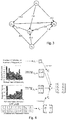
- Figure 1 illustrates dynamic selection of metaheuristic parameter values using a proxy function in accordance with embodiments of the present disclosure.
- the new user requests are accumulated for a specific period of time before optimizing the already scheduled but hitherto unserved requests and the newly accumulated requests.
- Selecting the right value for this accumulation period, ⁇ t A is of utmost importance for the real-time application of the RH service. Selecting a very low ⁇ t A will lead to a myopic strategy with a low-quality solution, while selecting a very high value might lead to better solution at the expense of delayed response and big problem size.
- the question is what parameter values would give the best performance.
- the size, and the temporal and spatial distribution of the requests can vary significantly in each call to the metaheuristic, thereby making it difficult to tune the metaheuristic parameters that give the best solution every time.
- the metaheuristic can only be run for a limited time ⁇ t A , it is crucial to select parameter values that give the best solution quickly.
- a proxy function is used that can estimate the performance of the metaheuristic for given problem instance against various possible parameter values. Then, the values that are expected to give the best performance are selected, as shown in Figure 1 .
- Such a proxy function can be estimated using various statistical tools.
- NN Neural Networks
- the framework in accordance with embodiments of the present disclosure is based on the concept that the solution quality and the performance of a metaheuristic depends not only on the chosen parameter values, but also on the nature of the problem instance being solved.
- the metaheuristics always need to be tuned to give satisfactory performance on a specific group of problems (see Talbi, E.-G., Metaheuristics: from design to implementation, Vol. 74. John Wiley & Sons, 42 2009 ; see also Ropke et al. as cited above). It is assumed that a metaheuristic gives similar performance for a specific set of parameters when the problem instances have some common features. Generally, it is very difficult to find such features, and multiple experiments are typically conducted in order to discover them.
- Figure 2 illustrates an example showing the generation of a feature vector for a single problem instance and parameter values pair in accordance with embodiments of the present disclosure.
- NN Modern machine learning techniques have shown promising results for multiple problems. It is proposed to use NN to learn various features and problem characteristics to predict the performance of the metaheuristic. This is especially beneficial for the problems where some patterns already exist.
- These NN show the capability to learn complex relations between the problem instances and the metaheuristic performance. For example, the pattern of new requests in RH services are different during different time slots (e.g. in the morning and the evening time slots). Therefore, if NN are trained to predict the objective cost by examining the request frequency for the corresponding time, various complex relations can be learned and the performance can be accurately predicted.
- the framework is divided into three phases:
- the pair-wise shareability or RV graph is based on the concepts described by Santi et al. (see above).
- N V ⁇ R as nodes and edges E defined as follows:
- T vr is the traveling time from the vehicle location to the pickup point of r and t s is the start time of the vehicle.
- edge weight in G means that the request pickup is delayed by the given weight, while a negative weight means that the vehicle arrived earlier and have to wait.
- the edge weights help in the implementation, as these weights could easily be accumulated for checking the feasibility of a vehicle route.
- FIG. 3 illustrates an example of the used shareability or RV graph in accordance with embodiments of the present disclosure, where Tri is the travel time from pickup to drop off of the request, tri the absolute time when customer wants to be picked up, and d max is the maximum delay allowed for picking up a request.
- LNS tries to explore such a large neighborhood of the solution that cannot be explored explicitly. Practically this is achieved by partially destroying and rebuilding the solution, which in case of the matching problem would mean to remove and reinsert the requests following some specific rules. The number of requests removed in each iteration determines the size of the neighborhood being explored. Furthermore, in LNS the different methodologies used for removal and insertion of the customer requests have a big influence on the solution quality (see Ropke et al.).
- a key concept is to provide a trained NN that gives a good prediction of the objective cost for problems of various sizes.
- NN needs detailed features that are specific to the individual problem instance.
- For training the NN it is of utmost importance to have just the right number of independent features that would characterize the important details of the problem. For example, if a NN is trained on some problem set that includes problems with various numbers of vehicles and requests, then just the amount of vehicles and the requests can be used to predict the objective cost up to certain accuracy. But such a trained NN only looks at these two parameters and cannot differentiate among cases that have same number of vehicles and the requests but vary in other aspects. Thus, it needs detailed features for producing a generalized trained NN that is able to tackle wide variety of problems.
- a binning technique can be used on various percentage frequency distributions (PFD) for getting detailed feature vectors.
- PFD percentage frequency distributions
- the size and the number of bins are selected according to the biggest problem in the data set.
- Figure 4 illustrates an example showing the generation of feature vectors for the vehicle to passenger matching problem in accordance with embodiments of the present disclosure.
- Figure 4 shows an example of generating feature vectors for a single problem instance using two PFD.
- the metaheuristic parameter values are linearized using all the individual parameter values used during the testing of LNS.
- the number of vehicles and requests are linearized so that all the values lie between 0 and 1. The linearization is usually required for easier convergence of NN
- the last three also depend on the maximum delay allowed for picking up a request. Additionally, they also characterize the complexity of the problem, as the implemented LNS uses RV graph for exploring the feasible solutions.
- Data from DriveNow a free floating car sharing service of BMW is used.
- the booking data is regularly collected by DriveNow via a corresponding app.
- the data used includes data acquired in the city of Kunststoff in April and May 2017, in order to generate customer requests.
- the data does not include the number of passengers riding the vehicle. Therefore, the data does not directly represent customer requests for an RH service, rather it consists of the time and location when a customer booked the car, and when he left it.
- Table 1 shows problem instances from DriveNow data. For both LF and HF, 7 problems were taken for each number of requests. Three sets of vehicles (10, 20 and 30) were used with LF and three sets of vehicles (20, 35 and 50) were tested with HF. ⁇ period and ⁇ period represent the mean and standard deviation of the time difference between the first and the last request in minutes respectively. ⁇ travel and ⁇ travel represent the mean and standard deviation of the travel time (calculated through OSRM) from start to end location of the request in minutes. Table 1 LF (9am) HF (6pm) No.
- a problem with HF requests will have more edges in the RV graph, and thus more difficult to solve than a LF problem.
- the vehicle minimization problem is not solved at the start of the optimization, as generally in RH services the number and locations of vehicles are already known at the time of solving the matching problem. Rather, the problem is run with different number of vehicles. Therefore, a combination of requests and vehicles is considered as a different problem instance, as shown in Table 1.
- problem instances are divided into two sets: training and validation, and testing. This division is required for training the NN efficiently. Out of seven problems for each pair of frequency and requests in Table 1, one set of five problems is kept for training and validation, and another set of two problems for final testing.
- Table 2 shows the value ranges used for testing: Table 2 min max Step size Total Steps ( ⁇ , ⁇ ) (0.1, 0.9) (0.9, 0.1) (+0.1, -0.1) 10 p 1 31 3 11 q 5 50 5 10 w s 20 50 10 4 p F 10 30 10 3 m iter 2000 20000 3000 7
- Table 3 shows the details of objective costs calculated during the test phase. Dividing the costs by the number of requests brought the distribution on similar scale for all the problems. This made the problem easier to learn by the NN Table 3 Objective Cost Normalized Objective Cost No. of Reqs ⁇ ⁇ ⁇ ⁇ 50 401.4 226.4 8 4.5 100 1048.8 704.6 10.5 7.0 150 1840.6 1221.7 12.27 8.1 200 2720.5 1752.9 13.6 8.8 250 3423.3 2208.4 13.7 8.8 300 4247.4 2725.5 14.2 9.1
- the problem instances from the testing group mentioned above were used. These instances were never seen by the NN during training. Similar to the training phase, first, the MAE between the actual objective cost and the prediction was measured, using the data obtained during the test phase. The MAE was found to be 0.93, which indicated that the NN was able to predict the objective costs even for unseen instances.
- the ability of the trained NN was tested to predict the best average objective cost.
- the solution quality was measured against the best average cost that was found during test phase for each instance.
- Figures 5 (a) and 5 (b) show comparisons of the prediction accuracy for three strategies in accordance with embodiments of the present invention.
- the third strategy predicted objective costs which were very close to the best average cost. The reason is that the NN had only seen examples of similar nature with specific set of parameter values. Expecting it to predict cost for the parameter values that it did not see during training leads to high degree of error. Furthermore, as shown in Figure 5 (b) , the third scheme also had the least relative difference with the cost from actual LNS. This shows that the trained NN is not only predicting the cost with high accuracy, but also returning the actual parameters which should be used with LNS for achieving it.
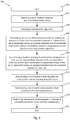
- Figure 6 shows a flow chart of a method 600 for dynamic matching in accordance with embodiments of the present invention.
- the method 600 starts at step 601.
- step 602 a set of problem instances and a set of parameter values ⁇ are selected.
- step 604 a metaheuristic algorithm is selected.
- step 606 for each problem instance I in the set of problem instances and for each combination of parameter values Q in the set of parameter values ⁇ , an average objective cost of a returned solution for each pair I, Q of problem instance I and parameter values Q, is determined based on the metaheuristic algorithm.
- step 608 a machine-learning-based function configured to estimate, for each problem instance I in the set of problem instances and for each combination of parameter values Q of the set of parameter values, an average estimated cost of a returned solution is determined for each pair I, Q.
- step 610 a set of features from the problem instance J for the machine-learning-based function is determined.
- step 612 a set of predicted parameter values is determined based on a minimal estimated cost.
- step 614 the dynamic matching is performed based on the set of predicted parameter values and the metaheuristic.
- the method 600 ends at step 616.
- the matching problem in the context of RH is becoming critical over time. With introduction of so many companies providing RH services, it has become even more crucial to find optimal solutions for matching problem in less computation time. Metaheuristics can be used for this purpose but are affected by the choice of parameters used in finding solution. Therefore, the present disclosure provides a novel neural-network-based approach for finding a good set of parameters without tuning the metaheuristic repeatedly for different scenarios.
Landscapes
- Business, Economics & Management (AREA)
- Engineering & Computer Science (AREA)
- Economics (AREA)
- Entrepreneurship & Innovation (AREA)
- Human Resources & Organizations (AREA)
- Marketing (AREA)
- Operations Research (AREA)
- Quality & Reliability (AREA)
- Strategic Management (AREA)
- Tourism & Hospitality (AREA)
- Physics & Mathematics (AREA)
- General Business, Economics & Management (AREA)
- General Physics & Mathematics (AREA)
- Theoretical Computer Science (AREA)
- Management, Administration, Business Operations System, And Electronic Commerce (AREA)
Priority Applications (1)
| Application Number | Priority Date | Filing Date | Title |
|---|---|---|---|
| EP19166274.1A EP3716162A1 (fr) | 2019-03-29 | 2019-03-29 | Correspondance dynamique basée sur un réseau neuronal |
Applications Claiming Priority (1)
| Application Number | Priority Date | Filing Date | Title |
|---|---|---|---|
| EP19166274.1A EP3716162A1 (fr) | 2019-03-29 | 2019-03-29 | Correspondance dynamique basée sur un réseau neuronal |
Publications (1)
| Publication Number | Publication Date |
|---|---|
| EP3716162A1 true EP3716162A1 (fr) | 2020-09-30 |
Family
ID=66041275
Family Applications (1)
| Application Number | Title | Priority Date | Filing Date |
|---|---|---|---|
| EP19166274.1A Withdrawn EP3716162A1 (fr) | 2019-03-29 | 2019-03-29 | Correspondance dynamique basée sur un réseau neuronal |
Country Status (1)
| Country | Link |
|---|---|
| EP (1) | EP3716162A1 (fr) |
Cited By (3)
| Publication number | Priority date | Publication date | Assignee | Title |
|---|---|---|---|---|
| CN120494876A (zh) * | 2025-07-17 | 2025-08-15 | 江苏零浩网络科技有限公司 | 基于动态运输价格规则引擎的运单自适应试算方法及系统 |
| CN120851147A (zh) * | 2025-09-22 | 2025-10-28 | 罗根激光科技(武汉)有限公司 | 一种激光器激光切割路径优化方法及系统 |
| CN121638841A (zh) * | 2026-02-05 | 2026-03-10 | 吉林大学 | 一种面向动态扰动的应急物资多式联运智能调度方法 |
Citations (3)
| Publication number | Priority date | Publication date | Assignee | Title |
|---|---|---|---|---|
| US20160335568A1 (en) * | 2015-05-15 | 2016-11-17 | Cox Automotive, Inc. | Parallel Processing for Solution Space Partitions |
| CN107844853A (zh) * | 2017-10-23 | 2018-03-27 | 重庆大学 | 一种利用动态价格预测减少网约车费用的乘车推荐系统 |
| US20180197070A1 (en) * | 2017-01-12 | 2018-07-12 | International Business Machines Corporation | Neural network computing systems for predicting vehicle requests |
-
2019
- 2019-03-29 EP EP19166274.1A patent/EP3716162A1/fr not_active Withdrawn
Patent Citations (3)
| Publication number | Priority date | Publication date | Assignee | Title |
|---|---|---|---|---|
| US20160335568A1 (en) * | 2015-05-15 | 2016-11-17 | Cox Automotive, Inc. | Parallel Processing for Solution Space Partitions |
| US20180197070A1 (en) * | 2017-01-12 | 2018-07-12 | International Business Machines Corporation | Neural network computing systems for predicting vehicle requests |
| CN107844853A (zh) * | 2017-10-23 | 2018-03-27 | 重庆大学 | 一种利用动态价格预测减少网约车费用的乘车推荐系统 |
Non-Patent Citations (12)
| Title |
|---|
| AGATZ, N.; A. ERERA; M. SAVELSBERGH; X. WANG: "Optimization for dynamic ride-sharing: A review", EUROPEAN JOURNAL OF OPERATIONAL RESEARCH, vol. 223, no. 2, 2012, pages 295 - 303 |
| ALONSO-MORA, J.; S. SAMARANAYAKE; A. WALLAR; E. FRAZZOLI; D. RUS: "On-demand high capacity ride-sharing via dynamic trip-vehicle assignment", PROCEEDINGS OF THE NATIONAL ACADEMY OF SCIENCES, vol. 114, no. 3, 2017, pages 462 - 467, XP055561022, DOI: doi:10.1073/pnas.1611675114 |
| DETTI, P.; F. PAPALINI; G. Z. M. DE LARA: "A multi-depot dial-a-ride problem with heterogeneous vehicles and compatibility constraints in healthcare", OMEGA, vol. 70, 2017, pages 1 - 14, XP085005265, DOI: doi:10.1016/j.omega.2016.08.008 |
| GSCHWIND, T.; M. DREXL ET AL., ADAPTIVE LARGE NEIGHBORHOOD SEARCH WITH A CONSTANT-TIME FEASIBILITY TEST FOR THE DIAL-A-RIDE PROBLEM, 2016 |
| HO, S. C.; W. SZETO; Y.-H. KUO; J. M. LEUNG; M. PETERING; T.W. TOU: "A survey of dial a-ride problems: Literature review and recent developments", TRANSPORTATION RESEARCH PART B: METHODOLOGICAL, 2018 |
| HONG, L.: "An improved LNS algorithm for real-time vehicle routing problem with time windows", COMPUTERS & OPERATIONS RESEARCH, vol. 39, no. 2, 2012, pages 151 - 163, XP028376035, DOI: doi:10.1016/j.cor.2011.03.006 |
| PARRAGH, S. N.; K. F. DOERNER; R. F. HARTL: "Variable neighborhood search for the dial-a-ride problem", COMPUTERS & OPERATIONS RESEARCH, vol. 37, no. 6, 2010, pages 1129 - 1138, XP026855375 |
| ROPKE, S.; D. PISINGER: "An adaptive large neighborhood search heuristic for the pickup and delivery problem with time windows", TRANSPORTATION SCIENCE, vol. 40, no. 4, 2006, pages 455 - 472 |
| SANTI, P.; G. RESTA; M. SZELL; S. SOBOLEVSKY; S. H. STROGATZ; C. RATTI: "Quantifying the benefits of vehicle pooling with shareability networks", PROCEEDINGS OF THE NATIONAL ACADEMY OF SCIENCES, vol. 111, no. 37, 2014, pages 13290 - 13294 |
| TALBI, E.-G.: "Metaheuristics: from design to implementation", vol. 74, 2009, JOHN WILEY & SONS, pages: 42 |
| TOTH, P.; D. VIGO: "Vehicle routing: problems, methods, and applications", SIAM, 2014 |
| VAZIFEH, M.; P. SANTI; G. RESTA; S. STROGATZ; C. RATTI: "Addressing the minimum fleet problem in on-demand urban mobility", NATURE, vol. 557, no. 7706, 2018, pages 534, XP036511231, DOI: doi:10.1038/s41586-018-0095-1 |
Cited By (3)
| Publication number | Priority date | Publication date | Assignee | Title |
|---|---|---|---|---|
| CN120494876A (zh) * | 2025-07-17 | 2025-08-15 | 江苏零浩网络科技有限公司 | 基于动态运输价格规则引擎的运单自适应试算方法及系统 |
| CN120851147A (zh) * | 2025-09-22 | 2025-10-28 | 罗根激光科技(武汉)有限公司 | 一种激光器激光切割路径优化方法及系统 |
| CN121638841A (zh) * | 2026-02-05 | 2026-03-10 | 吉林大学 | 一种面向动态扰动的应急物资多式联运智能调度方法 |
Similar Documents
| Publication | Publication Date | Title |
|---|---|---|
| Joe et al. | Deep reinforcement learning approach to solve dynamic vehicle routing problem with stochastic customers | |
| Jindal et al. | Optimizing taxi carpool policies via reinforcement learning and spatio-temporal mining | |
| Guo et al. | A deep reinforcement learning approach to ride-sharing vehicle dispatching in autonomous mobility-on-demand systems | |
| Guan et al. | Cumulative prospect theory based dynamic pricing for shared mobility on demand services | |
| Cattaruzza et al. | The multi-trip vehicle routing problem with time windows and release dates | |
| Sarasola et al. | Variable neighborhood search for the stochastic and dynamic vehicle routing problem | |
| CN115409388B (zh) | 多车型定制公交运营优化方法 | |
| US9404760B2 (en) | Efficient route planning in public transportation networks | |
| EP3716162A1 (fr) | Correspondance dynamique basée sur un réseau neuronal | |
| CN119398462B (zh) | 基于图神经网络模型的芯片生产物流网络优化方法及系统 | |
| CN113536493A (zh) | 基于聚类反推的有效路径生成方法及断面客流估算方法 | |
| EP3772026A1 (fr) | Procédé et système pour l'acheminement d'une pluralité de véhicules | |
| Tomaras et al. | Modeling and predicting bike demand in large city situations | |
| Syed et al. | Asynchronous adaptive large neighborhood search algorithm for dynamic matching problem in ride hailing services | |
| Raiyn | Road traffic congestion management based on a search-allocation approach | |
| Wang et al. | Taxi-cruising recommendation via real-time information and historical trajectory data | |
| Ho et al. | Local search heuristics for the probabilistic dial-a-ride problem | |
| Namdarpour et al. | On non-myopic internal transfers in large-scale ride-pooling systems | |
| Büchel et al. | Probabilistic bus delay predictions with Bayesian networks | |
| Tarapata et al. | Machine learning algorithms for the problem of optimizing the distribution of parcels in time-dependent networks: the case study | |
| Schönberger et al. | A combined approach to solve the pickup and delivery selection problem | |
| Syed et al. | NEURAL NETWORK BASED METAHEURISTIC PARAMETERIZATION, WITH 1 APPLICATION TO VEHICLE MATCHING PROBLEM IN ON DEMAND MOBILITY 2 SERVICES 3 | |
| Li et al. | Near-optimal fixed-route scheduling for crowdsourced transit system | |
| EP3772028A1 (fr) | Procédé et système pour l'acheminement d'une pluralité de véhicules à l'aide d'un réseau neuronal | |
| Zhao et al. | A genetic approach to solving the vehicle routing problem with time-dependent travel times |
Legal Events
| Date | Code | Title | Description |
|---|---|---|---|
| PUAI | Public reference made under article 153(3) epc to a published international application that has entered the european phase |
Free format text: ORIGINAL CODE: 0009012 |
|
| STAA | Information on the status of an ep patent application or granted ep patent |
Free format text: STATUS: THE APPLICATION HAS BEEN PUBLISHED |
|
| AK | Designated contracting states |
Kind code of ref document: A1 Designated state(s): AL AT BE BG CH CY CZ DE DK EE ES FI FR GB GR HR HU IE IS IT LI LT LU LV MC MK MT NL NO PL PT RO RS SE SI SK SM TR |
|
| AX | Request for extension of the european patent |
Extension state: BA ME |
|
| STAA | Information on the status of an ep patent application or granted ep patent |
Free format text: STATUS: REQUEST FOR EXAMINATION WAS MADE |
|
| 17P | Request for examination filed |
Effective date: 20201207 |
|
| RBV | Designated contracting states (corrected) |
Designated state(s): AL AT BE BG CH CY CZ DE DK EE ES FI FR GB GR HR HU IE IS IT LI LT LU LV MC MK MT NL NO PL PT RO RS SE SI SK SM TR |
|
| STAA | Information on the status of an ep patent application or granted ep patent |
Free format text: STATUS: EXAMINATION IS IN PROGRESS |
|
| 17Q | First examination report despatched |
Effective date: 20220114 |
|
| STAA | Information on the status of an ep patent application or granted ep patent |
Free format text: STATUS: THE APPLICATION IS DEEMED TO BE WITHDRAWN |
|
| 18D | Application deemed to be withdrawn |
Effective date: 20220726 |
|
| P01 | Opt-out of the competence of the unified patent court (upc) registered |
Effective date: 20230523 |