EP3716206A1 - Verfahren und vorrichtung zur messung von artikelbeschädigungen und vorrichtung zur messung der artikelbeschädigung - Google Patents
Verfahren und vorrichtung zur messung von artikelbeschädigungen und vorrichtung zur messung der artikelbeschädigung Download PDFInfo
- Publication number
- EP3716206A1 EP3716206A1 EP19781812.3A EP19781812A EP3716206A1 EP 3716206 A1 EP3716206 A1 EP 3716206A1 EP 19781812 A EP19781812 A EP 19781812A EP 3716206 A1 EP3716206 A1 EP 3716206A1
- Authority
- EP
- European Patent Office
- Prior art keywords
- model
- article
- sub
- damage
- images
- Prior art date
- Legal status (The legal status is an assumption and is not a legal conclusion. Google has not performed a legal analysis and makes no representation as to the accuracy of the status listed.)
- Granted
Links
Images

Classifications
-
- G—PHYSICS
- G06—COMPUTING OR CALCULATING; COUNTING
- G06V—IMAGE OR VIDEO RECOGNITION OR UNDERSTANDING
- G06V10/00—Arrangements for image or video recognition or understanding
- G06V10/70—Arrangements for image or video recognition or understanding using pattern recognition or machine learning
- G06V10/82—Arrangements for image or video recognition or understanding using pattern recognition or machine learning using neural networks
-
- G—PHYSICS
- G06—COMPUTING OR CALCULATING; COUNTING
- G06T—IMAGE DATA PROCESSING OR GENERATION, IN GENERAL
- G06T7/00—Image analysis
- G06T7/0002—Inspection of images, e.g. flaw detection
- G06T7/0004—Industrial image inspection
- G06T7/0006—Industrial image inspection using a design-rule based approach
-
- G—PHYSICS
- G06—COMPUTING OR CALCULATING; COUNTING
- G06F—ELECTRIC DIGITAL DATA PROCESSING
- G06F18/00—Pattern recognition
- G06F18/20—Analysing
- G06F18/21—Design or setup of recognition systems or techniques; Extraction of features in feature space; Blind source separation
- G06F18/214—Generating training patterns; Bootstrap methods, e.g. bagging or boosting
- G06F18/2155—Generating training patterns; Bootstrap methods, e.g. bagging or boosting characterised by the incorporation of unlabelled data, e.g. multiple instance learning [MIL], semi-supervised techniques using expectation-maximisation [EM] or naïve labelling
-
- G—PHYSICS
- G06—COMPUTING OR CALCULATING; COUNTING
- G06F—ELECTRIC DIGITAL DATA PROCESSING
- G06F18/00—Pattern recognition
- G06F18/20—Analysing
- G06F18/24—Classification techniques
- G06F18/241—Classification techniques relating to the classification model, e.g. parametric or non-parametric approaches
- G06F18/2413—Classification techniques relating to the classification model, e.g. parametric or non-parametric approaches based on distances to training or reference patterns
-
- G—PHYSICS
- G06—COMPUTING OR CALCULATING; COUNTING
- G06F—ELECTRIC DIGITAL DATA PROCESSING
- G06F18/00—Pattern recognition
- G06F18/20—Analysing
- G06F18/25—Fusion techniques
- G06F18/253—Fusion techniques of extracted features
-
- G—PHYSICS
- G06—COMPUTING OR CALCULATING; COUNTING
- G06N—COMPUTING ARRANGEMENTS BASED ON SPECIFIC COMPUTATIONAL MODELS
- G06N3/00—Computing arrangements based on biological models
- G06N3/02—Neural networks
- G06N3/04—Architecture, e.g. interconnection topology
- G06N3/044—Recurrent networks, e.g. Hopfield networks
- G06N3/0442—Recurrent networks, e.g. Hopfield networks characterised by memory or gating, e.g. long short-term memory [LSTM] or gated recurrent units [GRU]
-
- G—PHYSICS
- G06—COMPUTING OR CALCULATING; COUNTING
- G06N—COMPUTING ARRANGEMENTS BASED ON SPECIFIC COMPUTATIONAL MODELS
- G06N3/00—Computing arrangements based on biological models
- G06N3/02—Neural networks
- G06N3/04—Architecture, e.g. interconnection topology
- G06N3/0464—Convolutional networks [CNN, ConvNet]
-
- G—PHYSICS
- G06—COMPUTING OR CALCULATING; COUNTING
- G06N—COMPUTING ARRANGEMENTS BASED ON SPECIFIC COMPUTATIONAL MODELS
- G06N3/00—Computing arrangements based on biological models
- G06N3/02—Neural networks
- G06N3/08—Learning methods
-
- G—PHYSICS
- G06—COMPUTING OR CALCULATING; COUNTING
- G06N—COMPUTING ARRANGEMENTS BASED ON SPECIFIC COMPUTATIONAL MODELS
- G06N3/00—Computing arrangements based on biological models
- G06N3/02—Neural networks
- G06N3/08—Learning methods
- G06N3/09—Supervised learning
-
- G—PHYSICS
- G06—COMPUTING OR CALCULATING; COUNTING
- G06T—IMAGE DATA PROCESSING OR GENERATION, IN GENERAL
- G06T7/00—Image analysis
- G06T7/0002—Inspection of images, e.g. flaw detection
- G06T7/0004—Industrial image inspection
-
- G—PHYSICS
- G06—COMPUTING OR CALCULATING; COUNTING
- G06T—IMAGE DATA PROCESSING OR GENERATION, IN GENERAL
- G06T2207/00—Indexing scheme for image analysis or image enhancement
- G06T2207/20—Special algorithmic details
- G06T2207/20084—Artificial neural networks [ANN]
-
- G—PHYSICS
- G06—COMPUTING OR CALCULATING; COUNTING
- G06T—IMAGE DATA PROCESSING OR GENERATION, IN GENERAL
- G06T2207/00—Indexing scheme for image analysis or image enhancement
- G06T2207/30—Subject of image; Context of image processing
- G06T2207/30108—Industrial image inspection
-
- G—PHYSICS
- G06—COMPUTING OR CALCULATING; COUNTING
- G06V—IMAGE OR VIDEO RECOGNITION OR UNDERSTANDING
- G06V2201/00—Indexing scheme relating to image or video recognition or understanding
- G06V2201/06—Recognition of objects for industrial automation
-
- G—PHYSICS
- G06—COMPUTING OR CALCULATING; COUNTING
- G06V—IMAGE OR VIDEO RECOGNITION OR UNDERSTANDING
- G06V2201/00—Indexing scheme relating to image or video recognition or understanding
- G06V2201/07—Target detection
-
- Y—GENERAL TAGGING OF NEW TECHNOLOGICAL DEVELOPMENTS; GENERAL TAGGING OF CROSS-SECTIONAL TECHNOLOGIES SPANNING OVER SEVERAL SECTIONS OF THE IPC; TECHNICAL SUBJECTS COVERED BY FORMER USPC CROSS-REFERENCE ART COLLECTIONS [XRACs] AND DIGESTS
- Y02—TECHNOLOGIES OR APPLICATIONS FOR MITIGATION OR ADAPTATION AGAINST CLIMATE CHANGE
- Y02W—CLIMATE CHANGE MITIGATION TECHNOLOGIES RELATED TO WASTEWATER TREATMENT OR WASTE MANAGEMENT
- Y02W90/00—Enabling technologies or technologies with a potential or indirect contribution to greenhouse gas [GHG] emissions mitigation
Definitions
- the present specification relates to the field of data processing technologies, and in particular, to article damage detection methods and apparatuses and article damage detectors.
- the present specification provides an article damage detection method, including: obtaining at least two images that are time sequentially related and show a detected article at different angles; and inputting the images to a detection model in time order, to determine a damage detection result, where the detection model includes a first sub-model and a second sub-model, the first sub-model identifies respective features of each image, a feature processing result of each image is input to the second sub-model, the second sub-model performs time series analysis on the feature processing result to determine the damage detection result, and the first sub-model and the second sub-model are obtained by performing joint training by using training samples labeled with article damage.
- the present specification further provides an article damage detection apparatus, including: an image sequence acquisition unit, configured to obtain at least two images that are time sequentially related and show a detected article at different angles; and a detection model application unit, configured to input the images to a detection model in time order, to determine a damage detection result, where the detection model includes a first sub-model and a second sub-model, the first sub-model identifies respective features of each image, a feature processing result of each image is input to the second sub-model, the second sub-model performs time series analysis on the feature processing result to determine the damage detection result, and the first sub-model and the second sub-model are obtained by performing joint training by using training samples labeled with article damage.
- an image sequence acquisition unit configured to obtain at least two images that are time sequentially related and show a detected article at different angles
- a detection model application unit configured to input the images to a detection model in time order, to determine a damage detection result
- the detection model includes a first sub-model and a second sub-model, the first sub
- the present specification provides a computer device, including a storage medium and a processor, where the storage medium stores a computer program that can be run by the processor, and when the processor runs the computer program, the steps of the article damage detection method are performed.
- the present specification provides a computer-readable storage medium, where the computer-readable storage medium stores a computer program, and when the computer program is run by a processor, the steps of the article damage detection method are performed.
- the present specification further provides an article damage detector, including: a photographing module, configured to generate, based on a photographing instruction from a calculation and control module, at least two images of a detected article that are time sequentially related; a movement module, configured to drive relative movement between a camera of the photographing module and the detected article based on a movement instruction from the calculation and control module; and the calculation and control module, configured to enable, by using the movement instruction and the photographing instruction, the photographing module to generate the at least two images that are time sequentially related and show the detected article at different angles, and determine a damage detection result based on the images, where the damage detection result is generated by using the previous article damage detection method or apparatus.
- a photographing module configured to generate, based on a photographing instruction from a calculation and control module, at least two images of a detected article that are time sequentially related
- a movement module configured to drive relative movement between a camera of the photographing module and the detected article based on a movement instruction from the calculation and control module
- the images that are time sequentially related and show the detected article at different angles are input to the detection model, the first sub-model in the detection model identifies the respective features of each image, the feature processing result is input to the second sub-model after feature processing, and the second sub-model performs time series analysis on the feature processing results of the images to determine the damage detection result.
- the images at different angles can more comprehensively show a real condition of the article, and therefore a more uniform and complete detection result can be obtained by performing time series analysis on the feature processing results of the images. Therefore, damage detection accuracy can be greatly improved in the implementations of the present specification.
- the calculation and control module when enabling, by using the movement instruction, the movement module to drive the relative moment between the camera and the detected article, the calculation and control module enables, by using the photographing instruction, the photographing module to generate the at least two images of the detected article that are time sequentially related, and obtains, based on the generated images, the damage detection result generated by using the article damage detection method or apparatus in the present specification.
- damage detection accuracy is greatly improved while it is more convenient to perform article damage detection.
- Implementations of the present specification provide new article damage detection methods.
- a detection model is built by using a first sub-model and a second sub-model that are cascaded; the first sub-model uses images of a detected article that are obtained at different angles and generated in time order as inputs, to obtain feature processing results of the images, and outputs the feature processing results to the second sub-model; and the second sub-model performs time series analysis on the feature processing results of the images to determine a damage detection result.
- damage on the detected article can be found more comprehensively by using the images at different angles, and damage found in the images can be combined into a uniform detection result through time series analysis, thereby greatly improving damage detection accuracy.
- the implementations of the article damage detection methods in the present specification can run on any device with computing and storage capabilities, for example, a mobile phone, a tablet computer, a personal computer (PC), a laptop, or a server.
- functions in the implementation of the article damage detection method in the present specification can be implemented by logical nodes running on two or more devices.
- a machine learning model that uses at least two images that are time sequentially related as inputs, which is referred to as the detection model, is used to perform article damage detection.
- the detection model includes two cascaded sub-models. The first sub-model identifies respective features of each image to generate a feature processing result of each image, and the feature processing results of the images are input to the second sub-model in time order. The second sub-model performs time series analysis on the feature processing results of the images to determine a damage detection result.
- the first sub-model can be any machine learning model, and an advantageous result usually can be achieved by using an algorithm that is suitable for feature extraction and processing, for example, a deep convolutional neural network (DCNN).
- the second sub-model can be any machine learning model that can perform time series analysis, for example, a recurrent neural network (RNN), a long short-term memory (LSTM) network, etc.
- RNN recurrent neural network
- LSTM long short-term memory
- the detection model in the implementations of the present specification is a model trained using supervised learning training, and the entire detection model is trained by using training samples labeled with article damage.
- joint training is performed on the first sub-model and the second sub-model, a training loss of the entire model is fed back to both the first sub-model and the second sub-model for parameter update, and parameters of the two sub-models are simultaneously optimized, to optimize an overall prediction accuracy of the detection model.
- each training sample includes at least two images of the article that are time sequentially related.
- a form of the damage detection result is determined based on a need in an actual application scenario. Implementations are not limited.
- the damage detection result can be a classification result indicating whether there is damage on the detected article, can be a degree of a certain type of damage on the detected article, can be a classification result indicating whether there are two or more types of damage on the detected article, or can be degrees of two or more types of damage on the detected article.
- Types of damage can include scratches, damage, stains, adhesives, etc.
- Sample data can be labeled based on a determined form of the damage detection result, and the damage detection result in this form can be obtained by using the trained detection model.
- the feature processing result output by the first sub-model to the second sub-model includes information used by the second sub-model to generate the damage detection result.
- the feature processing result output by the first sub-model to the second sub-model can be a damage detection result of each single image, or can be another tensor that can specify damage detection result information of the single image. Implementations are not limited.
- the feature processing result can include a respective classification result that is of each type of damage in the single image of the detected article and is generated after the first sub-model performs feature extraction and damage discovery on each image, and performs feature fusion on a feature extraction result and a damage discovery result, or can include a respective tensor that specifies damage detection information of each type of damage in the single image of the detected article.
- the second sub-model can perform time series analysis based on detection information of each type of damage in the at least two images, to obtain a classification result of each type of damage on the detected article.
- the first sub-model in the detection model is the DCNN network.
- the first sub-model can use an output of the last convolution layer or pooling layer in a DCNN network (namely, an output before processing at a fully connected layer and an output prediction layer is performed) as the feature processing result, can use an output of the fully connected layer in the DCNN network as the feature processing result, or can use an output of the output prediction layer as the feature processing result.
- FIG. 1 a procedure of the article damage detection method is shown in FIG. 1 .
- Step 110 Obtain at least two images that are time sequentially related and show a detected article at different angles.
- the at least two images that are time sequentially related and show the detected article at different angles can be photos of the detected moving article that are consecutively taken, can be recorded videos (the video includes multiple images arranged in time order) of the detected moving article, can be photos of the detected article that are consecutively taken by using a mobile camera, can be videos of the detected article that are recorded by using a mobile camera, can be at least two photos or videos consecutively taken or recorded by changing a photographing angle, or can be a combination thereof.
- the at least two images that are time sequentially related and show the detected article at different angles can be automatically generated, for example, can be generated by using an article damage detector in the present specification, or can be generated by manually holding a photographing device (for example, a mobile phone). Implementations are not limited.
- a device for running the article damage detection methods can independently generate the images, can receive the images from another device, or can read the images from a predetermined storage location.
- Implementations are not limited.
- the methods in the present implementation runs on a mobile phone, the images can be generated by taking a photo or recording a video by using a camera of the mobile phone.
- the method in the present implementation can run on a server of a certain application (APP), and a client of the App uploads multiple obtained photos or recorded videos to the server.
- APP application
- Step 120 Input the images to a detection model in time order, to determine a damage detection result.
- the trained detection model is used, and the obtained images are input to the detection model in time order, to determine the damage detection result.
- Some damage on the detected article cannot be captured by the photographing device at a specific angle.
- the detected article is photographed at different angles, so that omission of damage on the article in the image can be reduced. More photographing angles indicate a more comprehensive direction and a higher possibility that the images can truly show a condition of the article.
- Damage on the article showed in the images may be inconsistent (for example, damage A, B, and C is obtained in image 1, and damage B and D is obtained in image 2).
- damage discovery is performed by using the first sub-model in the detection model, time series analysis is performed for the same damage found in these images that are time sequentially related, to obtain a complete and uniform view of damage on each part of the detected article, thereby improving damage detection accuracy.
- a damage detection report can be automatically generated based on the damage detection result, and the value of detected article is estimated.
- a specific method for generating the damage detection report, and a specific algorithm used for value estimation references can be made to the existing technology. Details are omitted for simplicity.
- the detection model is built by using the first sub-model and the second sub-model that are cascaded, and the images that are time sequentially related and show the detected article at different angles are input to the detection model; the first sub-model outputs the feature processing result of each image to the second sub-model; and the second sub-model performs time series analysis on the feature processing results of the images to determine the damage detection result.
- damage on the detected article can be found more comprehensively by using the images at different angles, and damage found in the images can be combined into a complete, uniform, and more accurate detection result.
- implementations of the present specification further provide an article damage detection apparatus.
- the apparatus can be implemented by software, can be implemented by hardware, or can be implemented by a combination of hardware and software.
- Software implementation is used as an example.
- the apparatus is formed by reading a corresponding computer program by a central processing unit (CPU) in a device in which the apparatus is located and running the computer program in a memory.
- CPU central processing unit
- the device in which the article damage detection apparatus is located usually includes other hardware such as a chip for sending and receiving radio signals and/or other hardware such as a card configured to implement a network communications function.
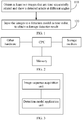
- FIG. 3 illustrates an article damage detection apparatus, according to implementations of the present specification.
- the apparatus includes an image sequence acquisition unit and a detection model application unit.
- the image sequence acquisition unit is configured to obtain at least two images that are time sequentially related and show a detected article at different angles.
- the detection model application unit is configured to input the images to a detection model in time order, to determine a damage detection result.
- the detection model includes a first sub-model and a second sub-model, the first sub-model identifies respective features of each image, a feature processing result of each image is input to the second sub-model, and the second sub-model performs time series analysis on the feature processing result to determine the damage detection result.
- the first sub-model and the second sub-model are obtained by performing joint training by using training samples labeled with article damage.
- the first sub-model is a deep convolutional neural network
- the second sub-model is a long short-term memory (LSTM) network.
- the second sub-model is an LSTM network based on an attention mechanism.
- the at least two images that are time sequentially related and show the detected article at different angles include at least one of the following: photos of the detected moving article that are consecutively taken, recorded videos of the detected moving article, photos of the detected article that are consecutively taken by using a mobile camera, and videos of the detected article that are recorded by using a mobile camera.
- the damage detection result includes a classification result of each of one or more types of damage.
- the feature processing result of each image includes a classification result that is of a type of damage in the single image of the detected article and is generated after the first sub-model performs feature extraction, damage discovery, and feature fusion on each image.
- Implementations of the present specification provide a computer device, and the computer device includes a storage medium and a processor.
- the storage medium stores a computer program that can be run by the processor.
- the processor runs the stored computer program, the steps of the article damage detection method in the implementations of the present specification are performed.
- the steps of the article damage detection method references can be made to the previous content. Details are omitted for simplicity.
- Implementations of the present specification provide a computer-readable storage medium.
- the storage medium stores a computer program.
- the steps of the article damage detection method in the implementations of the present specification are performed.
- Implementations of the present specification provide a new article damage detector.
- a calculation and control module instructs a photographing module to perform consecutive photographing or recording on the detected article, to conveniently and quickly generate multiple images of the detected article that are time sequentially related and are obtained at different angles, and performs damage detection based on these images by using the article damage detection method or apparatus in the implementations of the present specification, to obtain a more accurate detection result.
- the article damage detector includes the calculation and control module, the movement module, and the photographing module.
- the calculation and control module includes a CPU, a memory, a storage medium, a communications submodule, etc.
- the CPU reads a program in the storage medium, and runs the program in the memory to generate a movement instruction and a photographing instruction.
- the communications submodule sends the movement instruction to the movement module, and sends the photographing instruction to the photographing module.
- the photographing module includes a camera. After receiving the photographing instruction sent by the calculation and control module, the photographing module performs consecutive photographing or video recording on the detected article, and generates, based on the photographing instruction, at least two images of the detected article that are time sequentially related.
- the photographing instruction can include one or more photographing-related parameters, for example, a photographing delay time, a time interval for consecutive photographing, the quantity of photos that are to be consecutively taken, and duration for recording a video.
- the photographing instruction can be set based on a need in an actual application scenario. Implementations are not limited.
- the calculation and control module can further send a photographing stop instruction, so that the photographing module stops photographing.
- the photographing module can store the generated images in a predetermined storage location, or can send the generated images to the calculation and control module. Implementations are not limited either.
- the movement module is configured to drive relative movement between the camera of the photographing module and the detected article based on the movement instruction from the calculation and control module. Based on factors such as a size and a weight of the detected article and needs on portability of the article damage detector in an actual application scenario, the movement module can drive the relative movement between the camera and the detected article by moving the detected article, by moving the camera, or by moving both the detected article and the camera.
- the movement module includes an article movement submodule, and the detected article is placed on the article movement submodule.
- the article movement submodule After receiving the movement instruction from the calculation and control module, the article movement submodule performs upward or downward movement, displacement, and/or rotation based on the movement instruction, so that the detected article moves based on the received instruction.
- the camera can be fastened, or can move based on the movement instruction in a movement track different from that of the detected article.
- the movement module includes a camera movement submodule, and the camera is installed on the camera movement submodule.
- the camera movement submodule After receiving the movement instruction from the calculation and control module, the camera movement submodule performs upward or downward movement, displacement, and/or rotation based on the movement instruction, so that the camera moves based on the received instruction.
- the detected article can be fastened, or can move based on the movement instruction in a movement track different from that of the camera.
- the movement instruction sent by the calculation and control module can include several movement-related parameters.
- the movement instruction can be set based on a need in an actual application scenario, specific implementations of the movement module, etc. Implementations are not limited.
- the movement instruction can include a displacement length, an upward or downward movement height, a rotation angle, and a movement speed.
- the calculation and control module can further send a movement stop instruction, so that the movement module stops the relative movement between the detected article and the camera.
- the calculation and control module When performing article damage detection, the calculation and control module sends the movement instruction to the movement module, to drive the relative movement between the detected article and the camera, and sends the photographing instruction to the photographing module, so that the photographing module generates the at least two images that are time sequentially related and show the detected article at different angles.
- the calculation and control module obtains, based on the generated images, the damage detection result obtained by using the article damage detection methods or apparatuses in the implementations of the present specification.
- the calculation and control module can locally run the article damage detection methods or apparatuses in the implementations of the present specification.
- the calculation and control module inputs the generated images to a detection model in time order, and an output of the detection model is the damage detection result.
- the article damage detection method or apparatus in the implementations of the present specification runs on a server.
- the calculation and control module of the article damage detector uploads the generated images to the server in time order, and the server inputs the images to a detection model in time order, and returns an output of the detection model to the calculation and control module.
- a light source module can be added to the article damage detector, and a light control submodule can be added to the calculation and control module.
- the light control submodule sends a light source instruction to the light source module by using the communications submodule.
- the light source module provides proper light for the photographing module based on the light source instruction, to improve image generation quality.
- the calculation and control module can send, based on a light condition in a current environment, a light source instruction that includes parameters such as a light angle and light brightness, so that the light source module controls one or more light sources to satisfy light needs of photographing.
- both the light source of the light source module and the camera of the photographing module can be installed on the camera movement submodule.
- the camera movement submodule performs upward or downward movement, displacement, and/or rotation based on the movement instruction, both the camera and the light source are moved at the same time, so that light fully matches photographing to achieve a better photographing effect.
- the calculation and control module can further generate a detection report based on the damage detection result, estimate the price of the detected article, and so on.
- the calculation and control module when enabling, by using the movement instruction, the movement module to drive the relative moment between the camera and the detected article, the calculation and control module enables, by using the photographing instruction, the photographing module to photograph the detected article, to quickly and conveniently generate the at least two images of the detected article that are time sequentially related and are obtained at different angles, and obtains, based on the generated images, the more accurate detection result obtained by using the article damage detection method or apparatus in the present specification.
- a secondhand mobile device merchant places a damage detector in a crowded public place.
- a user can independently use the damage detector to obtain an estimated recycling price of a secondhand mobile device.
- the mobile device can be a mobile phone, a tablet computer, a laptop, etc.
- the damage detector includes a trained detection model, and a structure of the detection model is shown in FIG. 5 .
- the detection model includes a deep convolutional neural network sub-model (a first sub-model) and an LSTM sub-model (a second sub-model).
- the detection model uses multiple images that are time sequentially related as inputs.
- the deep convolutional neural network sub-model first performs feature extraction on each image in time order; then identifies a target mobile device from an extracted feature, and performs damage discovery on the target mobile device; and then performs fusion on the initially extracted feature and a feature obtained after damage discovery, to avoid a feature loss that may be caused in the identification process of the target mobile device and the damage discovery process, and generates a damage classification result of the single image based on a feature obtained after fusion.
- the deep convolutional neural network sub-model inputs the damage classification result of the single image to the LSTM sub-model in time order.
- the LSTM sub-model performs time series analysis on damage classification results of consecutive single images, combines the same damage in different single images, and outputs a damage classification result that can fully show a status of the detected mobile device.
- the LSTM sub-model can use an attention mechanism, to achieve a better time series analysis effect.
- the damage classification result includes scratches, damage, and adhesives.
- each training sample is labeled with a value in terms of each type of damage: 0 (there is no this type of damage) or 1 (there is this type of damage).
- Several such samples are used to perform joint training on the deep convolutional neural network sub-model and the LSTM sub-model.
- damage detection is performed by using the trained detection model, the output is the possibility that there is each type of damage on the detected mobile device.
- the damage detector includes a calculation and control module, a movement module, a photographing module, and a light source module.
- the detection model is stored in a storage medium of the calculation and control module.
- a server of the secondhand mobile device merchant can update a stored program (including the detection model) online by communicating with the calculation and control module.
- the movement module includes a platform for accommodating a mobile device, and the platform can rotate based on a movement instruction from the calculation and control module.
- a camera of the photographing module and a light source of the light source module are fastened around the platform.
- the damage detector prompts the user to place the mobile device on the platform.
- the calculation and control module determines, based on light in a current environment, light brightness to be used, and sends a light source instruction to the light source module.
- the light source module lights the light source based on light intensity specified in the instruction.
- the calculation and control module sends a movement instruction to the movement module, so that the platform rotates 360 degrees.
- the calculation and control module sends a photographing instruction to the photographing module, so that the photographing module records a video of an article on the platform during rotation of the platform.
- the photographing module stores the recorded video in a local storage medium.
- the calculation and control module instructs the light source module to turn off the light, read the recorded video from the local storage medium, and input images in the video to the detection model in time order, to obtain a classification result of each type of damage on the detected mobile device.
- the calculation and control module calculates an estimated price of the detected mobile device based on the damage classification result and information such as the model and the configuration of the detected mobile device, and displays the estimated price to the user.
- a computing device includes one or more central processing units (CPUs), input/output interfaces, network interfaces, and memories.
- CPUs central processing units
- input/output interfaces input/output interfaces
- network interfaces network interfaces
- memories random access memory
- the memory can include a non-persistent memory, a random access memory (RAM), and/or a nonvolatile memory in a computer-readable medium, for example, a read-only memory (ROM) or a flash memory (flash RAM).
- ROM read-only memory
- flash RAM flash memory
- the computer-readable medium includes persistent, non-persistent, removable, and irremovable media that can store information by using any method or technology.
- the information can be a computer-readable instruction, a data structure, a program module, or other data.
- Examples of the computer storage medium include but are not limited to a parameter random access memory (PRAM), a static random access memory (SRAM), a dynamic random access memory (DRAM), another type of random access memory, a read-only memory (ROM), an electrically erasable programmable read-only memory (EEPROM), a flash memory or another memory technology, a compact disc read-only memory (CD-ROM), a digital versatile disc (DVD) or other optical storage mediums, a cassette, a cassette magnetic disk storage medium, another magnetic storage device, or any other non-transmission medium.
- the computer storage medium can be configured to store information that can be accessed by the computing device. As described in the present specification, the computer-readable medium does not include computer-readable transitory media such as a modulated data signal and
- an implementation of the present specification can be provided as a method, a system, or a computer program product. Therefore, the implementations of the present specification can use a form of hardware only implementations, software only implementations, or implementations with a combination of software and hardware. In addition, the implementations of the present specification can use a form of a computer program product that is implemented on one or more computer-usable storage media (including but not limited to a disk memory, a CD-ROM, an optical memory, etc.) that include computer-usable program code.
- computer-usable storage media including but not limited to a disk memory, a CD-ROM, an optical memory, etc.
Landscapes
- Engineering & Computer Science (AREA)
- Theoretical Computer Science (AREA)
- Physics & Mathematics (AREA)
- Evolutionary Computation (AREA)
- General Physics & Mathematics (AREA)
- Data Mining & Analysis (AREA)
- Artificial Intelligence (AREA)
- General Engineering & Computer Science (AREA)
- Life Sciences & Earth Sciences (AREA)
- Computer Vision & Pattern Recognition (AREA)
- General Health & Medical Sciences (AREA)
- Health & Medical Sciences (AREA)
- Software Systems (AREA)
- Computing Systems (AREA)
- Biomedical Technology (AREA)
- Mathematical Physics (AREA)
- Molecular Biology (AREA)
- Computational Linguistics (AREA)
- Biophysics (AREA)
- Bioinformatics & Computational Biology (AREA)
- Evolutionary Biology (AREA)
- Bioinformatics & Cheminformatics (AREA)
- Quality & Reliability (AREA)
- Medical Informatics (AREA)
- Databases & Information Systems (AREA)
- Multimedia (AREA)
- Image Analysis (AREA)
- Investigating Materials By The Use Of Optical Means Adapted For Particular Applications (AREA)
Applications Claiming Priority (2)
| Application Number | Priority Date | Filing Date | Title |
|---|---|---|---|
| CN201810295312.8A CN108921811B (zh) | 2018-04-03 | 2018-04-03 | 检测物品损伤的方法和装置、物品损伤检测器 |
| PCT/CN2019/073837 WO2019192257A1 (zh) | 2018-04-03 | 2019-01-30 | 检测物品损伤的方法和装置、物品损伤检测器 |
Publications (3)
| Publication Number | Publication Date |
|---|---|
| EP3716206A1 true EP3716206A1 (de) | 2020-09-30 |
| EP3716206A4 EP3716206A4 (de) | 2021-05-05 |
| EP3716206B1 EP3716206B1 (de) | 2022-11-09 |
Family
ID=64402822
Family Applications (1)
| Application Number | Title | Priority Date | Filing Date |
|---|---|---|---|
| EP19781812.3A Active EP3716206B1 (de) | 2018-04-03 | 2019-01-30 | Verfahren und vorrichtung zur messung von artikelbeschädigungen und vorrichtung zur messung der artikelbeschädigung |
Country Status (6)
| Country | Link |
|---|---|
| US (1) | US10929717B2 (de) |
| EP (1) | EP3716206B1 (de) |
| CN (1) | CN108921811B (de) |
| SG (1) | SG11202005454UA (de) |
| TW (1) | TWI696123B (de) |
| WO (1) | WO2019192257A1 (de) |
Families Citing this family (22)
| Publication number | Priority date | Publication date | Assignee | Title |
|---|---|---|---|---|
| JP6807459B2 (ja) * | 2017-07-25 | 2021-01-06 | 富士フイルム株式会社 | 損傷図作成方法、損傷図作成装置、損傷図作成システム、及び記録媒体 |
| KR101916347B1 (ko) * | 2017-10-13 | 2018-11-08 | 주식회사 수아랩 | 딥러닝 기반 이미지 비교 장치, 방법 및 컴퓨터 판독가능매체에 저장된 컴퓨터 프로그램 |
| CN108921811B (zh) * | 2018-04-03 | 2020-06-30 | 阿里巴巴集团控股有限公司 | 检测物品损伤的方法和装置、物品损伤检测器 |
| WO2019209059A1 (en) * | 2018-04-25 | 2019-10-31 | Samsung Electronics Co., Ltd. | Machine learning on a blockchain |
| CN109344819A (zh) * | 2018-12-13 | 2019-02-15 | 深源恒际科技有限公司 | 基于深度学习的车辆损伤识别方法 |
| CN110569703B (zh) * | 2019-05-10 | 2020-09-01 | 阿里巴巴集团控股有限公司 | 计算机执行的从图片中识别损伤的方法及装置 |
| US10885625B2 (en) | 2019-05-10 | 2021-01-05 | Advanced New Technologies Co., Ltd. | Recognizing damage through image analysis |
| CN110443191A (zh) * | 2019-08-01 | 2019-11-12 | 北京百度网讯科技有限公司 | 用于识别物品的方法和装置 |
| CN110782920B (zh) * | 2019-11-05 | 2021-09-21 | 广州虎牙科技有限公司 | 音频识别方法、装置及数据处理设备 |
| CN111768381A (zh) * | 2020-06-29 | 2020-10-13 | 北京百度网讯科技有限公司 | 零部件缺陷检测方法、装置及电子设备 |
| KR20230096994A (ko) * | 2020-10-26 | 2023-06-30 | 스미도모쥬기가이고교 가부시키가이샤 | 표시방법, 제어장치, 표시장치, 및 프로그램 |
| CN112507820A (zh) * | 2020-11-25 | 2021-03-16 | 北京旷视机器人技术有限公司 | 自动盘点货物的方法、装置、系统和电子设备 |
| CN112634245A (zh) * | 2020-12-28 | 2021-04-09 | 广州绿怡信息科技有限公司 | 损耗检测模型训练方法、损耗检测方法及装置 |
| CN113033469B (zh) * | 2021-04-14 | 2024-04-02 | 杭州电力设备制造有限公司 | 工器具损坏识别方法、装置、设备、系统及可读存储介质 |
| JPWO2023047859A1 (de) * | 2021-09-22 | 2023-03-30 | ||
| CN114283290B (zh) * | 2021-09-27 | 2024-05-03 | 腾讯科技(深圳)有限公司 | 图像处理模型的训练、图像处理方法、装置、设备及介质 |
| US12567001B2 (en) * | 2022-02-03 | 2026-03-03 | Denso Corporation | Machine learning generation for real-time location |
| CN115112661B (zh) * | 2022-05-11 | 2024-08-02 | 腾讯科技(深圳)有限公司 | 一种缺陷检测方法、装置、计算机设备和存储介质 |
| US20240330722A1 (en) * | 2023-03-27 | 2024-10-03 | Dell Products L.P. | System and method for selecting collecting diagnostic data based on diagnostic data utility |
| CN117849058B (zh) * | 2024-03-06 | 2024-07-26 | 宁德时代新能源科技股份有限公司 | 用于极片的检测系统和检测方法 |
| CN118130508B (zh) * | 2024-04-29 | 2024-07-02 | 南方电网调峰调频发电有限公司检修试验分公司 | 励磁浇筑母线质量检测方法、装置和计算机设备 |
| CN118999391A (zh) * | 2024-08-30 | 2024-11-22 | 西京学院 | 基于管道机器人的石油钻井套管形变检测方法及系统 |
Family Cites Families (30)
| Publication number | Priority date | Publication date | Assignee | Title |
|---|---|---|---|---|
| US7809587B2 (en) * | 2004-05-07 | 2010-10-05 | International Business Machines Corporation | Rapid business support of insured property using image analysis |
| US10853873B2 (en) * | 2008-10-02 | 2020-12-01 | Ecoatm, Llc | Kiosks for evaluating and purchasing used electronic devices and related technology |
| US9842373B2 (en) * | 2009-08-14 | 2017-12-12 | Mousiki Inc. | System and method for acquiring, comparing and evaluating property condition |
| JP6030457B2 (ja) * | 2013-01-23 | 2016-11-24 | 株式会社メガチップス | 画像検出装置及び制御プログラム並びに画像検出方法 |
| US10453145B2 (en) * | 2014-04-30 | 2019-10-22 | Hartford Fire Insurance Company | System and method for vehicle repair cost estimate verification |
| CN105160318B (zh) * | 2015-08-31 | 2018-11-09 | 北京旷视科技有限公司 | 基于面部表情的测谎方法及系统 |
| US9824453B1 (en) * | 2015-10-14 | 2017-11-21 | Allstate Insurance Company | Three dimensional image scan for vehicle |
| CN105335710A (zh) * | 2015-10-22 | 2016-02-17 | 合肥工业大学 | 一种基于多级分类器的精细车辆型号识别方法 |
| US9965705B2 (en) * | 2015-11-03 | 2018-05-08 | Baidu Usa Llc | Systems and methods for attention-based configurable convolutional neural networks (ABC-CNN) for visual question answering |
| CN105719188B (zh) * | 2016-01-22 | 2017-12-26 | 平安科技(深圳)有限公司 | 基于多张图片一致性实现保险理赔反欺诈的方法及服务器 |
| TWI585698B (zh) * | 2016-02-26 | 2017-06-01 | 簡單綠能股份有限公司 | Item recycling method |
| EP4036852B1 (de) * | 2016-03-07 | 2026-04-15 | Assurant, Inc. | Schirmfehlerdetektion für vorrichtungen |
| US10692050B2 (en) * | 2016-04-06 | 2020-06-23 | American International Group, Inc. | Automatic assessment of damage and repair costs in vehicles |
| CN106407942B (zh) * | 2016-09-27 | 2020-04-28 | 腾讯征信有限公司 | 一种图像处理方法及其装置 |
| US10565305B2 (en) * | 2016-11-18 | 2020-02-18 | Salesforce.Com, Inc. | Adaptive attention model for image captioning |
| US10657707B1 (en) * | 2017-01-09 | 2020-05-19 | State Farm Mutual Automobile Insurance Company | Photo deformation techniques for vehicle repair analysis |
| IT201700002416A1 (it) * | 2017-01-11 | 2018-07-11 | Autoscan Gmbh | Apparecchiatura mobile automatizzata per il rilevamento e la classificazione dei danni sulla carrozzeria |
| US10628890B2 (en) * | 2017-02-23 | 2020-04-21 | International Business Machines Corporation | Visual analytics based vehicle insurance anti-fraud detection |
| US10242401B2 (en) * | 2017-03-13 | 2019-03-26 | Ford Global Technologies, Llc | Method and apparatus for enhanced rental check-out/check-in |
| CN107358596B (zh) * | 2017-04-11 | 2020-09-18 | 阿里巴巴集团控股有限公司 | 一种基于图像的车辆定损方法、装置、电子设备及系统 |
| CN107066980B (zh) * | 2017-04-18 | 2020-04-24 | 腾讯科技(深圳)有限公司 | 一种图像变形检测方法及装置 |
| CN108205684B (zh) * | 2017-04-25 | 2022-02-11 | 北京市商汤科技开发有限公司 | 图像消歧方法、装置、存储介质和电子设备 |
| CN111914692B (zh) * | 2017-04-28 | 2023-07-14 | 创新先进技术有限公司 | 车辆定损图像获取方法及装置 |
| CN107220667B (zh) * | 2017-05-24 | 2020-10-30 | 北京小米移动软件有限公司 | 图像分类方法、装置及计算机可读存储介质 |
| CN108229292A (zh) * | 2017-07-28 | 2018-06-29 | 北京市商汤科技开发有限公司 | 目标识别方法、装置、存储介质和电子设备 |
| CN107704932A (zh) * | 2017-08-23 | 2018-02-16 | 阿里巴巴集团控股有限公司 | 一种物品回收设备、装置以及电子设备 |
| CN107741781A (zh) * | 2017-09-01 | 2018-02-27 | 中国科学院深圳先进技术研究院 | 无人机的飞行控制方法、装置、无人机及存储介质 |
| DE102017220027A1 (de) * | 2017-11-10 | 2019-05-16 | Ford Global Technologies, Llc | Verfahren zur Schadenkontrolle bei Kraftfahrzeugen |
| CN108921811B (zh) * | 2018-04-03 | 2020-06-30 | 阿里巴巴集团控股有限公司 | 检测物品损伤的方法和装置、物品损伤检测器 |
| US10818014B2 (en) * | 2018-07-27 | 2020-10-27 | Adobe Inc. | Image object segmentation based on temporal information |
-
2018
- 2018-04-03 CN CN201810295312.8A patent/CN108921811B/zh active Active
-
2019
- 2019-01-30 EP EP19781812.3A patent/EP3716206B1/de active Active
- 2019-01-30 SG SG11202005454UA patent/SG11202005454UA/en unknown
- 2019-01-30 WO PCT/CN2019/073837 patent/WO2019192257A1/zh not_active Ceased
- 2019-02-11 TW TW108104363A patent/TWI696123B/zh not_active IP Right Cessation
-
2020
- 2020-05-29 US US16/888,568 patent/US10929717B2/en active Active
Also Published As
| Publication number | Publication date |
|---|---|
| US10929717B2 (en) | 2021-02-23 |
| EP3716206A4 (de) | 2021-05-05 |
| US20200293830A1 (en) | 2020-09-17 |
| WO2019192257A1 (zh) | 2019-10-10 |
| TWI696123B (zh) | 2020-06-11 |
| CN108921811B (zh) | 2020-06-30 |
| SG11202005454UA (en) | 2020-07-29 |
| TW201942795A (zh) | 2019-11-01 |
| CN108921811A (zh) | 2018-11-30 |
| EP3716206B1 (de) | 2022-11-09 |
Similar Documents
| Publication | Publication Date | Title |
|---|---|---|
| US10929717B2 (en) | Article damage detection | |
| WO2019057168A1 (zh) | 一种货物订单处理方法、装置、服务器、购物终端及系统 | |
| CN113252678A (zh) | 一种移动终端的外观质检方法及设备 | |
| US11348254B2 (en) | Visual search method, computer device, and storage medium | |
| CN111598006A (zh) | 用于标注对象的方法和装置 | |
| US20240311375A1 (en) | Contextual searches in software development environments | |
| CN111563398A (zh) | 用于确定目标物的信息的方法和装置 | |
| CN115658034A (zh) | 流程自动化文件生成方法 | |
| US20230072641A1 (en) | Image Processing and Automatic Learning on Low Complexity Edge Apparatus and Methods of Operation | |
| CN110443191A (zh) | 用于识别物品的方法和装置 | |
| CN109341832A (zh) | 一种商品称量方法和电子秤 | |
| US11093743B2 (en) | Intelligent personalization of operations of an image capturing device | |
| CN109816715A (zh) | 确定车辆类型的方法、设备及存储介质 | |
| US20190266651A1 (en) | System and method for providing a plurality of service providers based on issues received from a user over network | |
| US10162736B2 (en) | Smart emulator for wearable devices | |
| US11354793B2 (en) | Object detection with missing annotations in visual inspection | |
| CN117333383B (zh) | 一种表面缺陷检测方法、装置和设备 | |
| CN119065669A (zh) | 基于图像检测的前端代码模板生成方法、装置和介质 | |
| CN116701587A (zh) | 基于机器学习的问答方法及装置 | |
| WO2023200520A1 (en) | Temporal co-contrastive learning-based node representation generation | |
| US20250007979A1 (en) | Controlled image storage using dynamic benchmarking on edge devices | |
| US12536779B2 (en) | Facilitating identification of error image label | |
| US20260065598A1 (en) | System and method for generating an image of a vehicle | |
| CN112839181B (zh) | 一种用于生成高动态范围图像的方法与设备 | |
| US12579375B2 (en) | Implementing active learning in natural language generation tasks |
Legal Events
| Date | Code | Title | Description |
|---|---|---|---|
| STAA | Information on the status of an ep patent application or granted ep patent |
Free format text: STATUS: THE INTERNATIONAL PUBLICATION HAS BEEN MADE |
|
| PUAI | Public reference made under article 153(3) epc to a published international application that has entered the european phase |
Free format text: ORIGINAL CODE: 0009012 |
|
| STAA | Information on the status of an ep patent application or granted ep patent |
Free format text: STATUS: REQUEST FOR EXAMINATION WAS MADE |
|
| 17P | Request for examination filed |
Effective date: 20200623 |
|
| AK | Designated contracting states |
Kind code of ref document: A1 Designated state(s): AL AT BE BG CH CY CZ DE DK EE ES FI FR GB GR HR HU IE IS IT LI LT LU LV MC MK MT NL NO PL PT RO RS SE SI SK SM TR |
|
| AX | Request for extension of the european patent |
Extension state: BA ME |
|
| RAP1 | Party data changed (applicant data changed or rights of an application transferred) |
Owner name: ADVANCED NEW TECHNOLOGIES CO., LTD. |
|
| RAP1 | Party data changed (applicant data changed or rights of an application transferred) |
Owner name: ALIBABA GROUP HOLDING LIMITED |
|
| RAP1 | Party data changed (applicant data changed or rights of an application transferred) |
Owner name: ADVANCED NEW TECHNOLOGIES CO., LTD. |
|
| A4 | Supplementary search report drawn up and despatched |
Effective date: 20210406 |
|
| RIC1 | Information provided on ipc code assigned before grant |
Ipc: G06T 7/00 20170101AFI20210329BHEP Ipc: G06K 9/00 20060101ALI20210329BHEP |
|
| DAV | Request for validation of the european patent (deleted) | ||
| DAX | Request for extension of the european patent (deleted) | ||
| STAA | Information on the status of an ep patent application or granted ep patent |
Free format text: STATUS: EXAMINATION IS IN PROGRESS |
|
| 17Q | First examination report despatched |
Effective date: 20211110 |
|
| REG | Reference to a national code |
Ref country code: DE Ref legal event code: R079 Ref document number: 602019021781 Country of ref document: DE Free format text: PREVIOUS MAIN CLASS: G06T0007000000 Ipc: G06V0010820000 |
|
| RIC1 | Information provided on ipc code assigned before grant |
Ipc: G06T 7/00 20170101ALI20220406BHEP Ipc: G06V 10/82 20220101AFI20220406BHEP |
|
| GRAP | Despatch of communication of intention to grant a patent |
Free format text: ORIGINAL CODE: EPIDOSNIGR1 |
|
| STAA | Information on the status of an ep patent application or granted ep patent |
Free format text: STATUS: GRANT OF PATENT IS INTENDED |
|
| INTG | Intention to grant announced |
Effective date: 20220601 |
|
| GRAS | Grant fee paid |
Free format text: ORIGINAL CODE: EPIDOSNIGR3 |
|
| GRAA | (expected) grant |
Free format text: ORIGINAL CODE: 0009210 |
|
| STAA | Information on the status of an ep patent application or granted ep patent |
Free format text: STATUS: THE PATENT HAS BEEN GRANTED |
|
| AK | Designated contracting states |
Kind code of ref document: B1 Designated state(s): AL AT BE BG CH CY CZ DE DK EE ES FI FR GB GR HR HU IE IS IT LI LT LU LV MC MK MT NL NO PL PT RO RS SE SI SK SM TR |
|
| REG | Reference to a national code |
Ref country code: GB Ref legal event code: FG4D |
|
| REG | Reference to a national code |
Ref country code: CH Ref legal event code: EP Ref country code: AT Ref legal event code: REF Ref document number: 1530877 Country of ref document: AT Kind code of ref document: T Effective date: 20221115 |
|
| REG | Reference to a national code |
Ref country code: DE Ref legal event code: R096 Ref document number: 602019021781 Country of ref document: DE |
|
| REG | Reference to a national code |
Ref country code: IE Ref legal event code: FG4D |
|
| REG | Reference to a national code |
Ref country code: LT Ref legal event code: MG9D |
|
| REG | Reference to a national code |
Ref country code: NL Ref legal event code: MP Effective date: 20221109 |
|
| REG | Reference to a national code |
Ref country code: AT Ref legal event code: MK05 Ref document number: 1530877 Country of ref document: AT Kind code of ref document: T Effective date: 20221109 |
|
| PG25 | Lapsed in a contracting state [announced via postgrant information from national office to epo] |
Ref country code: SE Free format text: LAPSE BECAUSE OF FAILURE TO SUBMIT A TRANSLATION OF THE DESCRIPTION OR TO PAY THE FEE WITHIN THE PRESCRIBED TIME-LIMIT Effective date: 20221109 Ref country code: PT Free format text: LAPSE BECAUSE OF FAILURE TO SUBMIT A TRANSLATION OF THE DESCRIPTION OR TO PAY THE FEE WITHIN THE PRESCRIBED TIME-LIMIT Effective date: 20230309 Ref country code: NO Free format text: LAPSE BECAUSE OF FAILURE TO SUBMIT A TRANSLATION OF THE DESCRIPTION OR TO PAY THE FEE WITHIN THE PRESCRIBED TIME-LIMIT Effective date: 20230209 Ref country code: LT Free format text: LAPSE BECAUSE OF FAILURE TO SUBMIT A TRANSLATION OF THE DESCRIPTION OR TO PAY THE FEE WITHIN THE PRESCRIBED TIME-LIMIT Effective date: 20221109 Ref country code: FI Free format text: LAPSE BECAUSE OF FAILURE TO SUBMIT A TRANSLATION OF THE DESCRIPTION OR TO PAY THE FEE WITHIN THE PRESCRIBED TIME-LIMIT Effective date: 20221109 Ref country code: ES Free format text: LAPSE BECAUSE OF FAILURE TO SUBMIT A TRANSLATION OF THE DESCRIPTION OR TO PAY THE FEE WITHIN THE PRESCRIBED TIME-LIMIT Effective date: 20221109 Ref country code: AT Free format text: LAPSE BECAUSE OF FAILURE TO SUBMIT A TRANSLATION OF THE DESCRIPTION OR TO PAY THE FEE WITHIN THE PRESCRIBED TIME-LIMIT Effective date: 20221109 |
|
| PG25 | Lapsed in a contracting state [announced via postgrant information from national office to epo] |
Ref country code: RS Free format text: LAPSE BECAUSE OF FAILURE TO SUBMIT A TRANSLATION OF THE DESCRIPTION OR TO PAY THE FEE WITHIN THE PRESCRIBED TIME-LIMIT Effective date: 20221109 Ref country code: PL Free format text: LAPSE BECAUSE OF FAILURE TO SUBMIT A TRANSLATION OF THE DESCRIPTION OR TO PAY THE FEE WITHIN THE PRESCRIBED TIME-LIMIT Effective date: 20221109 Ref country code: LV Free format text: LAPSE BECAUSE OF FAILURE TO SUBMIT A TRANSLATION OF THE DESCRIPTION OR TO PAY THE FEE WITHIN THE PRESCRIBED TIME-LIMIT Effective date: 20221109 Ref country code: IS Free format text: LAPSE BECAUSE OF FAILURE TO SUBMIT A TRANSLATION OF THE DESCRIPTION OR TO PAY THE FEE WITHIN THE PRESCRIBED TIME-LIMIT Effective date: 20230309 Ref country code: HR Free format text: LAPSE BECAUSE OF FAILURE TO SUBMIT A TRANSLATION OF THE DESCRIPTION OR TO PAY THE FEE WITHIN THE PRESCRIBED TIME-LIMIT Effective date: 20221109 Ref country code: GR Free format text: LAPSE BECAUSE OF FAILURE TO SUBMIT A TRANSLATION OF THE DESCRIPTION OR TO PAY THE FEE WITHIN THE PRESCRIBED TIME-LIMIT Effective date: 20230210 |
|
| P01 | Opt-out of the competence of the unified patent court (upc) registered |
Effective date: 20230524 |
|
| PG25 | Lapsed in a contracting state [announced via postgrant information from national office to epo] |
Ref country code: NL Free format text: LAPSE BECAUSE OF FAILURE TO SUBMIT A TRANSLATION OF THE DESCRIPTION OR TO PAY THE FEE WITHIN THE PRESCRIBED TIME-LIMIT Effective date: 20221109 |
|
| PG25 | Lapsed in a contracting state [announced via postgrant information from national office to epo] |
Ref country code: SM Free format text: LAPSE BECAUSE OF FAILURE TO SUBMIT A TRANSLATION OF THE DESCRIPTION OR TO PAY THE FEE WITHIN THE PRESCRIBED TIME-LIMIT Effective date: 20221109 Ref country code: RO Free format text: LAPSE BECAUSE OF FAILURE TO SUBMIT A TRANSLATION OF THE DESCRIPTION OR TO PAY THE FEE WITHIN THE PRESCRIBED TIME-LIMIT Effective date: 20221109 Ref country code: EE Free format text: LAPSE BECAUSE OF FAILURE TO SUBMIT A TRANSLATION OF THE DESCRIPTION OR TO PAY THE FEE WITHIN THE PRESCRIBED TIME-LIMIT Effective date: 20221109 Ref country code: DK Free format text: LAPSE BECAUSE OF FAILURE TO SUBMIT A TRANSLATION OF THE DESCRIPTION OR TO PAY THE FEE WITHIN THE PRESCRIBED TIME-LIMIT Effective date: 20221109 Ref country code: CZ Free format text: LAPSE BECAUSE OF FAILURE TO SUBMIT A TRANSLATION OF THE DESCRIPTION OR TO PAY THE FEE WITHIN THE PRESCRIBED TIME-LIMIT Effective date: 20221109 |
|
| REG | Reference to a national code |
Ref country code: DE Ref legal event code: R097 Ref document number: 602019021781 Country of ref document: DE |
|
| PG25 | Lapsed in a contracting state [announced via postgrant information from national office to epo] |
Ref country code: SK Free format text: LAPSE BECAUSE OF FAILURE TO SUBMIT A TRANSLATION OF THE DESCRIPTION OR TO PAY THE FEE WITHIN THE PRESCRIBED TIME-LIMIT Effective date: 20221109 Ref country code: AL Free format text: LAPSE BECAUSE OF FAILURE TO SUBMIT A TRANSLATION OF THE DESCRIPTION OR TO PAY THE FEE WITHIN THE PRESCRIBED TIME-LIMIT Effective date: 20221109 |
|
| REG | Reference to a national code |
Ref country code: CH Ref legal event code: PL |
|
| PLBE | No opposition filed within time limit |
Free format text: ORIGINAL CODE: 0009261 |
|
| STAA | Information on the status of an ep patent application or granted ep patent |
Free format text: STATUS: NO OPPOSITION FILED WITHIN TIME LIMIT |
|
| PG25 | Lapsed in a contracting state [announced via postgrant information from national office to epo] |
Ref country code: LU Free format text: LAPSE BECAUSE OF NON-PAYMENT OF DUE FEES Effective date: 20230130 |
|
| REG | Reference to a national code |
Ref country code: BE Ref legal event code: MM Effective date: 20230131 |
|
| 26N | No opposition filed |
Effective date: 20230810 |
|
| GBPC | Gb: european patent ceased through non-payment of renewal fee |
Effective date: 20230209 |
|
| PG25 | Lapsed in a contracting state [announced via postgrant information from national office to epo] |
Ref country code: LI Free format text: LAPSE BECAUSE OF NON-PAYMENT OF DUE FEES Effective date: 20230131 Ref country code: CH Free format text: LAPSE BECAUSE OF NON-PAYMENT OF DUE FEES Effective date: 20230131 |
|
| PG25 | Lapsed in a contracting state [announced via postgrant information from national office to epo] |
Ref country code: SI Free format text: LAPSE BECAUSE OF FAILURE TO SUBMIT A TRANSLATION OF THE DESCRIPTION OR TO PAY THE FEE WITHIN THE PRESCRIBED TIME-LIMIT Effective date: 20221109 Ref country code: FR Free format text: LAPSE BECAUSE OF NON-PAYMENT OF DUE FEES Effective date: 20230131 Ref country code: BE Free format text: LAPSE BECAUSE OF NON-PAYMENT OF DUE FEES Effective date: 20230131 |
|
| PG25 | Lapsed in a contracting state [announced via postgrant information from national office to epo] |
Ref country code: GB Free format text: LAPSE BECAUSE OF NON-PAYMENT OF DUE FEES Effective date: 20230209 |
|
| PG25 | Lapsed in a contracting state [announced via postgrant information from national office to epo] |
Ref country code: IE Free format text: LAPSE BECAUSE OF NON-PAYMENT OF DUE FEES Effective date: 20230130 Ref country code: GB Free format text: LAPSE BECAUSE OF NON-PAYMENT OF DUE FEES Effective date: 20230209 |
|
| PG25 | Lapsed in a contracting state [announced via postgrant information from national office to epo] |
Ref country code: IT Free format text: LAPSE BECAUSE OF FAILURE TO SUBMIT A TRANSLATION OF THE DESCRIPTION OR TO PAY THE FEE WITHIN THE PRESCRIBED TIME-LIMIT Effective date: 20221109 |
|
| PG25 | Lapsed in a contracting state [announced via postgrant information from national office to epo] |
Ref country code: MC Free format text: LAPSE BECAUSE OF FAILURE TO SUBMIT A TRANSLATION OF THE DESCRIPTION OR TO PAY THE FEE WITHIN THE PRESCRIBED TIME-LIMIT Effective date: 20221109 |
|
| PG25 | Lapsed in a contracting state [announced via postgrant information from national office to epo] |
Ref country code: MC Free format text: LAPSE BECAUSE OF FAILURE TO SUBMIT A TRANSLATION OF THE DESCRIPTION OR TO PAY THE FEE WITHIN THE PRESCRIBED TIME-LIMIT Effective date: 20221109 |
|
| PG25 | Lapsed in a contracting state [announced via postgrant information from national office to epo] |
Ref country code: BG Free format text: LAPSE BECAUSE OF FAILURE TO SUBMIT A TRANSLATION OF THE DESCRIPTION OR TO PAY THE FEE WITHIN THE PRESCRIBED TIME-LIMIT Effective date: 20221109 |
|
| PG25 | Lapsed in a contracting state [announced via postgrant information from national office to epo] |
Ref country code: BG Free format text: LAPSE BECAUSE OF FAILURE TO SUBMIT A TRANSLATION OF THE DESCRIPTION OR TO PAY THE FEE WITHIN THE PRESCRIBED TIME-LIMIT Effective date: 20221109 |
|
| PG25 | Lapsed in a contracting state [announced via postgrant information from national office to epo] |
Ref country code: CY Free format text: LAPSE BECAUSE OF FAILURE TO SUBMIT A TRANSLATION OF THE DESCRIPTION OR TO PAY THE FEE WITHIN THE PRESCRIBED TIME-LIMIT; INVALID AB INITIO Effective date: 20190130 |
|
| PG25 | Lapsed in a contracting state [announced via postgrant information from national office to epo] |
Ref country code: HU Free format text: LAPSE BECAUSE OF FAILURE TO SUBMIT A TRANSLATION OF THE DESCRIPTION OR TO PAY THE FEE WITHIN THE PRESCRIBED TIME-LIMIT; INVALID AB INITIO Effective date: 20190130 |
|
| PG25 | Lapsed in a contracting state [announced via postgrant information from national office to epo] |
Ref country code: TR Free format text: LAPSE BECAUSE OF FAILURE TO SUBMIT A TRANSLATION OF THE DESCRIPTION OR TO PAY THE FEE WITHIN THE PRESCRIBED TIME-LIMIT Effective date: 20221109 |
|
| PGFP | Annual fee paid to national office [announced via postgrant information from national office to epo] |
Ref country code: DE Payment date: 20251203 Year of fee payment: 8 |