EP3716518A1 - Kanalstatusinformationsübertragungsverfahren, kommunikationsvorrichtung und einrichtung - Google Patents
Kanalstatusinformationsübertragungsverfahren, kommunikationsvorrichtung und einrichtung Download PDFInfo
- Publication number
- EP3716518A1 EP3716518A1 EP18896050.4A EP18896050A EP3716518A1 EP 3716518 A1 EP3716518 A1 EP 3716518A1 EP 18896050 A EP18896050 A EP 18896050A EP 3716518 A1 EP3716518 A1 EP 3716518A1
- Authority
- EP
- European Patent Office
- Prior art keywords
- csi
- pusch
- transmission
- code rate
- available
- Prior art date
- Legal status (The legal status is an assumption and is not a legal conclusion. Google has not performed a legal analysis and makes no representation as to the accuracy of the status listed.)
- Granted
Links
Images


Classifications
-
- H—ELECTRICITY
- H04—ELECTRIC COMMUNICATION TECHNIQUE
- H04B—TRANSMISSION
- H04B7/00—Radio transmission systems, i.e. using radiation field
- H04B7/02—Diversity systems; Multi-antenna system, i.e. transmission or reception using multiple antennas
- H04B7/04—Diversity systems; Multi-antenna system, i.e. transmission or reception using multiple antennas using two or more spaced independent antennas
- H04B7/06—Diversity systems; Multi-antenna system, i.e. transmission or reception using multiple antennas using two or more spaced independent antennas at the transmitting station
- H04B7/0613—Diversity systems; Multi-antenna system, i.e. transmission or reception using multiple antennas using two or more spaced independent antennas at the transmitting station using simultaneous transmission
- H04B7/0615—Diversity systems; Multi-antenna system, i.e. transmission or reception using multiple antennas using two or more spaced independent antennas at the transmitting station using simultaneous transmission of weighted versions of same signal
- H04B7/0619—Diversity systems; Multi-antenna system, i.e. transmission or reception using multiple antennas using two or more spaced independent antennas at the transmitting station using simultaneous transmission of weighted versions of same signal using feedback from receiving side
- H04B7/0621—Feedback content
- H04B7/0626—Channel coefficients, e.g. channel state information [CSI]
-
- H—ELECTRICITY
- H04—ELECTRIC COMMUNICATION TECHNIQUE
- H04L—TRANSMISSION OF DIGITAL INFORMATION, e.g. TELEGRAPHIC COMMUNICATION
- H04L1/00—Arrangements for detecting or preventing errors in the information received
- H04L1/0001—Systems modifying transmission characteristics according to link quality, e.g. power backoff
- H04L1/0023—Systems modifying transmission characteristics according to link quality, e.g. power backoff characterised by the signalling
- H04L1/0026—Transmission of channel quality indication
-
- H—ELECTRICITY
- H04—ELECTRIC COMMUNICATION TECHNIQUE
- H04L—TRANSMISSION OF DIGITAL INFORMATION, e.g. TELEGRAPHIC COMMUNICATION
- H04L1/00—Arrangements for detecting or preventing errors in the information received
- H04L1/0001—Systems modifying transmission characteristics according to link quality, e.g. power backoff
- H04L1/0002—Systems modifying transmission characteristics according to link quality, e.g. power backoff by adapting the transmission rate
- H04L1/0003—Systems modifying transmission characteristics according to link quality, e.g. power backoff by adapting the transmission rate by switching between different modulation schemes
-
- H—ELECTRICITY
- H04—ELECTRIC COMMUNICATION TECHNIQUE
- H04L—TRANSMISSION OF DIGITAL INFORMATION, e.g. TELEGRAPHIC COMMUNICATION
- H04L1/00—Arrangements for detecting or preventing errors in the information received
- H04L1/0001—Systems modifying transmission characteristics according to link quality, e.g. power backoff
- H04L1/0009—Systems modifying transmission characteristics according to link quality, e.g. power backoff by adapting the channel coding
-
- H—ELECTRICITY
- H04—ELECTRIC COMMUNICATION TECHNIQUE
- H04L—TRANSMISSION OF DIGITAL INFORMATION, e.g. TELEGRAPHIC COMMUNICATION
- H04L1/00—Arrangements for detecting or preventing errors in the information received
- H04L1/0001—Systems modifying transmission characteristics according to link quality, e.g. power backoff
- H04L1/0015—Systems modifying transmission characteristics according to link quality, e.g. power backoff characterised by the adaptation strategy
- H04L1/0016—Systems modifying transmission characteristics according to link quality, e.g. power backoff characterised by the adaptation strategy involving special memory structures, e.g. look-up tables
-
- H—ELECTRICITY
- H04—ELECTRIC COMMUNICATION TECHNIQUE
- H04L—TRANSMISSION OF DIGITAL INFORMATION, e.g. TELEGRAPHIC COMMUNICATION
- H04L1/00—Arrangements for detecting or preventing errors in the information received
- H04L1/0001—Systems modifying transmission characteristics according to link quality, e.g. power backoff
- H04L1/0023—Systems modifying transmission characteristics according to link quality, e.g. power backoff characterised by the signalling
- H04L1/0025—Transmission of mode-switching indication
-
- H—ELECTRICITY
- H04—ELECTRIC COMMUNICATION TECHNIQUE
- H04L—TRANSMISSION OF DIGITAL INFORMATION, e.g. TELEGRAPHIC COMMUNICATION
- H04L1/00—Arrangements for detecting or preventing errors in the information received
- H04L1/12—Arrangements for detecting or preventing errors in the information received by using return channel
- H04L1/16—Arrangements for detecting or preventing errors in the information received by using return channel in which the return channel carries supervisory signals, e.g. repetition request signals
- H04L1/18—Automatic repetition systems, e.g. Van Duuren systems
- H04L1/1812—Hybrid protocols; Hybrid automatic repeat request [HARQ]
- H04L1/1819—Hybrid protocols; Hybrid automatic repeat request [HARQ] with retransmission of additional or different redundancy
-
- H—ELECTRICITY
- H04—ELECTRIC COMMUNICATION TECHNIQUE
- H04L—TRANSMISSION OF DIGITAL INFORMATION, e.g. TELEGRAPHIC COMMUNICATION
- H04L5/00—Arrangements affording multiple use of the transmission path
- H04L5/003—Arrangements for allocating sub-channels of the transmission path
- H04L5/0044—Allocation of payload; Allocation of data channels, e.g. PDSCH or PUSCH
-
- H—ELECTRICITY
- H04—ELECTRIC COMMUNICATION TECHNIQUE
- H04L—TRANSMISSION OF DIGITAL INFORMATION, e.g. TELEGRAPHIC COMMUNICATION
- H04L5/00—Arrangements affording multiple use of the transmission path
- H04L5/003—Arrangements for allocating sub-channels of the transmission path
- H04L5/0048—Allocation of pilot signals, i.e. of signals known to the receiver
- H04L5/0051—Allocation of pilot signals, i.e. of signals known to the receiver of dedicated pilots, i.e. pilots destined for a single user or terminal
-
- H—ELECTRICITY
- H04—ELECTRIC COMMUNICATION TECHNIQUE
- H04L—TRANSMISSION OF DIGITAL INFORMATION, e.g. TELEGRAPHIC COMMUNICATION
- H04L5/00—Arrangements affording multiple use of the transmission path
- H04L5/003—Arrangements for allocating sub-channels of the transmission path
- H04L5/0053—Allocation of signalling, i.e. of overhead other than pilot signals
- H04L5/0055—Physical resource allocation for ACK/NACK
-
- H—ELECTRICITY
- H04—ELECTRIC COMMUNICATION TECHNIQUE
- H04L—TRANSMISSION OF DIGITAL INFORMATION, e.g. TELEGRAPHIC COMMUNICATION
- H04L5/00—Arrangements affording multiple use of the transmission path
- H04L5/003—Arrangements for allocating sub-channels of the transmission path
- H04L5/0053—Allocation of signalling, i.e. of overhead other than pilot signals
- H04L5/0057—Physical resource allocation for CQI
-
- H—ELECTRICITY
- H04—ELECTRIC COMMUNICATION TECHNIQUE
- H04L—TRANSMISSION OF DIGITAL INFORMATION, e.g. TELEGRAPHIC COMMUNICATION
- H04L5/00—Arrangements affording multiple use of the transmission path
- H04L5/003—Arrangements for allocating sub-channels of the transmission path
- H04L5/0058—Allocation criteria
- H04L5/0064—Rate requirement of the data, e.g. scalable bandwidth, data priority
-
- H—ELECTRICITY
- H04—ELECTRIC COMMUNICATION TECHNIQUE
- H04L—TRANSMISSION OF DIGITAL INFORMATION, e.g. TELEGRAPHIC COMMUNICATION
- H04L5/00—Arrangements affording multiple use of the transmission path
- H04L5/0091—Signalling for the administration of the divided path, e.g. signalling of configuration information
-
- H—ELECTRICITY
- H04—ELECTRIC COMMUNICATION TECHNIQUE
- H04L—TRANSMISSION OF DIGITAL INFORMATION, e.g. TELEGRAPHIC COMMUNICATION
- H04L5/00—Arrangements affording multiple use of the transmission path
- H04L5/0091—Signalling for the administration of the divided path, e.g. signalling of configuration information
- H04L5/0094—Indication of how sub-channels of the path are allocated
-
- H—ELECTRICITY
- H04—ELECTRIC COMMUNICATION TECHNIQUE
- H04L—TRANSMISSION OF DIGITAL INFORMATION, e.g. TELEGRAPHIC COMMUNICATION
- H04L5/00—Arrangements affording multiple use of the transmission path
- H04L5/02—Channels characterised by the type of signal
- H04L5/06—Channels characterised by the type of signal the signals being represented by different frequencies
- H04L5/10—Channels characterised by the type of signal the signals being represented by different frequencies with dynamo-electric generation of carriers; with mechanical filters or demodulators
-
- H—ELECTRICITY
- H04—ELECTRIC COMMUNICATION TECHNIQUE
- H04W—WIRELESS COMMUNICATION NETWORKS
- H04W72/00—Local resource management
- H04W72/20—Control channels or signalling for resource management
- H04W72/21—Control channels or signalling for resource management in the uplink direction of a wireless link, i.e. towards the network
-
- H—ELECTRICITY
- H04—ELECTRIC COMMUNICATION TECHNIQUE
- H04W—WIRELESS COMMUNICATION NETWORKS
- H04W72/00—Local resource management
- H04W72/20—Control channels or signalling for resource management
- H04W72/23—Control channels or signalling for resource management in the downlink direction of a wireless link, i.e. towards a terminal
-
- H—ELECTRICITY
- H04—ELECTRIC COMMUNICATION TECHNIQUE
- H04W—WIRELESS COMMUNICATION NETWORKS
- H04W80/00—Wireless network protocols or protocol adaptations to wireless operation
- H04W80/08—Upper layer protocols
-
- H—ELECTRICITY
- H04—ELECTRIC COMMUNICATION TECHNIQUE
- H04L—TRANSMISSION OF DIGITAL INFORMATION, e.g. TELEGRAPHIC COMMUNICATION
- H04L27/00—Modulated-carrier systems
- H04L27/0008—Modulated-carrier systems arrangements for allowing a transmitter or receiver to use more than one type of modulation
-
- H—ELECTRICITY
- H04—ELECTRIC COMMUNICATION TECHNIQUE
- H04L—TRANSMISSION OF DIGITAL INFORMATION, e.g. TELEGRAPHIC COMMUNICATION
- H04L27/00—Modulated-carrier systems
- H04L27/18—Phase-modulated carrier systems, i.e. using phase-shift keying
- H04L27/20—Modulator circuits; Transmitter circuits
- H04L27/2032—Modulator circuits; Transmitter circuits for discrete phase modulation, e.g. in which the phase of the carrier is modulated in a nominally instantaneous manner
- H04L27/2053—Modulator circuits; Transmitter circuits for discrete phase modulation, e.g. in which the phase of the carrier is modulated in a nominally instantaneous manner using more than one carrier, e.g. carriers with different phases
- H04L27/206—Modulator circuits; Transmitter circuits for discrete phase modulation, e.g. in which the phase of the carrier is modulated in a nominally instantaneous manner using more than one carrier, e.g. carriers with different phases using a pair of orthogonal carriers, e.g. quadrature carriers
-
- H—ELECTRICITY
- H04—ELECTRIC COMMUNICATION TECHNIQUE
- H04L—TRANSMISSION OF DIGITAL INFORMATION, e.g. TELEGRAPHIC COMMUNICATION
- H04L5/00—Arrangements affording multiple use of the transmission path
- H04L5/0001—Arrangements for dividing the transmission path
- H04L5/0003—Two-dimensional division
- H04L5/0005—Time-frequency
- H04L5/0007—Time-frequency the frequencies being orthogonal, e.g. OFDM(A) or DMT
Definitions
- the present disclosure relates to the field of communication technology, in particular to a Channel State Information (CSI) transmission method, a communication device, and an apparatus.
- CSI Channel State Information
- aperiodic CSI is transmitted through a Physical Uplink Shared Channel (PUSCH), and an evolved Node B (eNB) triggers a User Equipment (UE) to report the aperiodic CSI through Downlink Control Information (DCI) for scheduling uplink data.
- DCI Downlink Control Information
- An information field in the DCI for scheduling the uplink data is used for triggering the report of the aperiodic CSI, and when the information field indicates that the UE needs to report the aperiodic CSI, the UE may report the aperiodic CSI through the PUSCH at a predefined position.
- a Rank Indication (RI) and a Channel Quality Indicator (CQI)/Precoding Matrix Indicator (PMI) in the CSI are encoded independently.
- the aperiodic CSI transmitted through the PUSCH may also include two parts, a first part of the CSI includes the RI and a first part of the CQI/PMI information, and a second part of the CSI includes the other CQI/PMI information.
- the first part of the CSI and the second part of the CSI are encoded and mapped independently.
- An object of the present disclosure is to provide a CSI transmission method, a communication device and an apparatus, so as to solve the problem in the related art where it is impossible to determine the resource for the transmission of each part of CSI on the PUSCH.
- the present disclosure provides in some embodiments a CSI transmission method, CSI including a first part and a second part, the CSI transmission method including: determining a resource available for the transmission of the first part of the CSI on a PUSCH in accordance with a target code rate used by the first part of the CSI; and determining an available resource on the PUSCH other than the resource available for the transmission of the first part of the CSI as a resource available for the transmission of the second part of the CSI on the PUSCH.
- the CSI transmission method prior to determining the resource available for the transmission of the first part of the CSI on the PUSCH in accordance with the target code rate used by the first part of the CSI, the CSI transmission method further includes acquiring the target code rate used by the first part of the CSI.
- the acquiring the target code rate used by the first part of the CSI includes: receiving the target code rate used by the first part of the CSI and configured by a base station through high-layer signaling; or receiving a set of code rates preconfigured by the base station and capable of being used by the first part of the CSI, receiving Downlink Control Information (DCI) capable of triggering a UE to transmit the first part of the CSI, and determining one code rate in the set of code rates as the target code rate used by the first part of the CSI in accordance with indication information in a specific indication field of the DCI, the set of code rates including two or more code rates; or predefining in a protocol a set of code rates capable of being used by the first part of the CSI , receiving DCI capable of triggering the UE to transmit the first part of the CSI, and determining one code rate in the set of code rates as the target code rate used by the first part of the CSI in accordance with indication information in a specific indication field of the DCI
- DCI Downlink Control Information
- the specific indication field of the DCI includes one or a combination of two or more of a Modulation & Coding Scheme (MCS) information field, a Redundancy Version (RV) information field, a New Data Indicator (NDI) information field, and a Hybrid Automatic Repeat reQuest (HARQ) process number indication information field.
- MCS Modulation & Coding Scheme
- RV Redundancy Version
- NDI New Data Indicator
- HARQ Hybrid Automatic Repeat reQuest
- the specific indication field of the DCI is an HARQ process number indication information field, and indication information in the HARQ process number indication information field is used to indicate a code rate that is associated with a modulation order of the first part of the CSI and is in a predetermined table in the protocol.
- the modulation order of the first part of the CSI is 2
- information of three most significant bits or information of three least significant bits in the HARQ process number indication information field is used to indicate eight code rates that are associated with the modulation order of 2 and are in the predetermined table in the protocol
- the modulation order of the first part of the CSI is 4
- information of three most significant bits or information of three least significant bits in the HARQ process number indication information field is used to indicate seven code rates that are associated with the modulation order of 4 and are in the predetermined table in the protocol
- information of all bits in the HARQ process number indication information field is used to indicate eleven code rates that are associated with the modulation order of 6 and are in the predetermined table in the protocol.
- the determining the resource available for the transmission of the first part of the CSI on the PUSCH in accordance with the target code rate used by the first part of the CSI includes determining the quantity of Resource Elements (REs) available for the transmission of the first part of the CSI on the PUSCH in accordance with the target code rate used by the first part of the CSI, the quantity of information bits of the first part of the CSI and the modulation order of the first part of the CSI.
- REs Resource Elements
- the determining the available resource on the PUSCH other than the resource available for the transmission of the first part of the CSI as the resource available for the transmission of the second part of the CSI on the PUSCH includes: determining the quantity of REs available for the transmission of the second part of the CSI on the PUSCH in accordance with the quantity of REs available for the transmission of Uplink Control Information (UCI) on the PUSCH and the quantity of REs available for the transmission of the first part of the CSI on the PUSCH.
- UCI Uplink Control Information
- OFDM Orthogonal Frequency Division Multiplexing
- the CSI transmission method subsequent to determining the quantity of REs available for the transmission of the first part of the CSI on the PUSCH, the CSI transmission method further includes, when the quantity of REs available for the transmission of the first part of the CSI on the PUSCH is greater than the quantity of REs available for the transmission of the UCI on the PUSCH, determining the REs available for the transmission of the UCI on the PUSCH as the REs available for the transmission of the first part of the CSI, and determining that there is no RE available for the transmission of the second part of the CSI on the PUSCH.
- the CSI transmission method prior to determining the resource available for the transmission of the first part of the CSI on the PUSCH in accordance with the target code rate used by the first part of the CSI, the CSI transmission method further includes: receiving the DCI transmitted by the base station; and parsing the DCI to determine that merely the CSI, rather than data, is transmitted through the PUSCH.
- the CSI transmission method subsequent to determining the available resource on the PUSCH other than the resource available for the transmission of the first part of the CSI as the resource available for the transmission of the second part of the CSI on the PUSCH, the CSI transmission method further includes: acquiring a code rate threshold of the second part of the CSI; and determining the quantity of bits of the second part of the CSI capable of being transmitted through the resource available for the transmission of the second part of the CSI on the PUSCH in accordance with the code rate threshold of the second part of the CSI.
- the determining the quantity of bits of the second part of the CSI capable of being transmitted through the resource available for the transmission of the second part of the CSI on the PUSCH in accordance with the code rate threshold of the second part of the CSI includes: when an actual code rate corresponding to the second part of the CSI is smaller than or equal to the code rate threshold of the second part of the CSI, determining the quantity of bits of the second part of the CSI capable of being transmitted through the resource available for the transmission of the second part of the CSI as the total quantity of bits of the second part of the CSI; and when the actual code rate corresponding to the second part of the CSI is greater than the code rate threshold of the second part of the CSI, discarding the second part of the CSI in accordance with a predetermined rule until an actual code rate corresponding to the remaining second part of the CSI is smaller than or equal to the code rate threshold of the second part of the CSI, and determining the quantity of bits of the second part of the CSI capable of being transmitted through the
- the present disclosure provides in some embodiments a communication device, including a memory, a processor, and a computer program stored in the memory and executed by the processor.
- the processor is configured to execute the computer program so as to: determine a resource available for the transmission of a first part of the CSI on a PUSCH in accordance with a target code rate used by the first part of the CSI; and determine an available resource on the PUSCH other than the resource available for the transmission of the first part of the CSI as a resource available for the transmission of a second part of the CSI on the PUSCH.
- the communication device further includes a transceiver configured to acquire the target code rate used by the first part of the CSI.
- the transceiver is further configured to: receive the target code rate used by the first part of the CSI and configured by a base station through high-layer signaling; or receive a set of code rates preconfigured by the base station and capable of being used by the first part of the CSI, receive DCI capable of triggering a UE to transmit the first part of the CSI, and determine one code rate in the set of code rates as the target code rate used by the first part of the CSI in accordance with indication information in a specific indication field of the DCI, the set of code rates including two or more code rates; or predefine in a protocol a set of code rates capable of being used by the first part of the CSI, receive DCI capable of triggering the UE to transmit the first part of the CSI, and determine one code rate in the set of code rates as the target code rate used by the first part of the CSI in accordance with indication information in a specific indication field of the DCI, the set of code rates including two or more code rates; or predefine in a protocol a set
- the specific indication field of the DCI includes one or a combination of two or more of an MCS information field, an RV information field, an NDI information field, and an HARQ process number indication information field.
- the specific indication field of the DCI is an HARQ process number indication information field, and indication information in the HARQ process number indication information field is used to indicate a code rate that is associated with a modulation order of the first part of the CSI and is in a predetermined table in the protocol.
- the modulation order of the first part of the CSI is 2
- information of three most significant bits or information of three least significant bits in the HARQ process number indication information field is used to indicate eight code rates that are associated with the modulation order of 2 and are in the predetermined table in the protocol
- the modulation order of the first part of the CSI is 4
- information of three most significant bits or information of three least significant bits in the HARQ process number indication information field is used to indicate seven code rates that are associated with the modulation order of 4 and are in the predetermined table in the protocol
- information of all bits in the HARQ process number indication information field is used to indicate eleven code rates that are associated with the modulation order of 6 and are in the predetermined table in the protocol.
- the processor is further configured to determine the quantity of REs available for the transmission of the first part of the CSI on the PUSCH in accordance with the target code rate used by the first part of the CSI, the quantity of information bits of the first part of the CSI and the modulation order of the first part of the CSI.
- the processor is further configured to determine the quantity of REs available for the transmission of the second part of the CSI on the PUSCH in accordance with the quantity of REs available for the transmission of UCI on the PUSCH and the quantity of REs available for the transmission of the first part of the CSI on the PUSCH.
- the processor is further configured to, when the quantity of REs available for the transmission of the first part of the CSI on the PUSCH is greater than the quantity of REs available for the transmission of the UCI on the PUSCH, determine the REs available for the transmission of the UCI on the PUSCH as the REs available for the transmission of the first part of the CSI, and determine that there is no RE available for the transmission of the second part of the CSI on the PUSCH.
- the transceiver is further configured to receive the DCI transmitted by the base station, and the processor is further configured to parse the DCI to determine that merely the CSI, rather than data, is transmitted through the PUSCH.
- the processor is further configured to: acquire a code rate threshold of the second part of the CSI; and determine the quantity of bits of the second part of the CSI capable of being transmitted through the resource available for the transmission of the second part of the CSI on the PUSCH in accordance with the code rate threshold of the second part of the CSI.
- the processor is further configured to: when an actual code rate corresponding to the second part of the CSI is smaller than or equal to the code rate threshold of the second part of the CSI, determine the quantity of bits of the second part of the CSI capable of being transmitted through the resource available for the transmission of the second part of the CSI as the total quantity of bits of the second part of the CSI; and when the actual code rate corresponding to the second part of the CSI is greater than the code rate threshold of the second part of the CSI, discard the second part of the CSI in accordance with a predetermined rule until an actual code rate corresponding to the remaining second part of the CSI is smaller than or equal to the code rate threshold of the second part of the CSI, and determine the quantity of bits of the second part of the CSI capable of being transmitted through the resource available for the transmission of the second part of the CSI as the quantity of bits of the remaining second part of the CSI.
- the present disclosure provides in some embodiments a device for determining a CSI transmission resource, the CSI including a first part and a second part, the device for determining the CSI transmission resource including: a first determination module configured to determine a resource available for the transmission of the first part of the CSI on a PUSCH in accordance with a target code rate used by the first part of the CSI; and a second determination module configured to determine an available resource on the PUSCH other than the resource available for the transmission of the first part of the CSI as a resource available for the transmission of the second part of the CSI on the PUSCH.
- the present disclosure provides in some embodiments a computer-readable storage medium storing therein a computer program.
- the computer program is executed by a processor so as to implement the above-mentioned CSI transmission method.
- the communication device and the device in the embodiments of the present disclosure when two parts of the CSI, rather than the data, are transmitted through the PUSCH, the resource available for the transmission of the first part of the CSI on the PUSCH may be determined in accordance with the target code rate used by the first part of the CSI, and the remaining available resource on the PUSCH may be determined as the resource available for the transmission of the second part of the CSI.
- the resource available for the transmission of the first part of the CSI on the PUSCH may be determined in accordance with the target code rate used by the first part of the CSI, and the remaining available resource on the PUSCH may be determined as the resource available for the transmission of the second part of the CSI.
- CSI includes a first part and a second part.
- the CSI transmission method includes: Step 11 of determining a resource available for the transmission of the first part of the CSI on a PUSCH in accordance with a target code rate used by the first part of the CSI; and Step 12 of determining an available resource on the PUSCH other than the resource available for the transmission of the first part of the CSI as a resource available for the transmission of the second part of the CSI on the PUSCH.
- the CSI may be aperiodic CSI
- the aperiodic CSI transmitted on the PUSCH includes the first part and the second part.
- the first part may include an RI and a part of a CQI/PMI
- the second part may include the other CQI/PMI information.
- the CSI transmission method may further include: receiving DCI from a base station; and parsing the DCI to determine that merely the CSI, rather than data, is transmitted through the PUSCH.
- the CSI transmission method may be applied to a scenario where merely the CSI, rather than the data, is transmitted through the PUSCH.
- the DCI may include an information field, and a content in the information field may be used to trigger the reporting of the CSI.
- the UE may report the CSI through the PUSCH at a predetermined position.
- the CSI transmission method may further include Step 10 of acquiring the target code rate used by the first part of the CSI.
- the target code rate used by the first part of the CSI may be a value predefined in a protocol, a value configured through high-layer signaling, or a value indicated by a specific information field in the DCI for triggering the transmission of the PUSCH.
- the target code rate used by the first part of the CSI may be acquired in at least the following four modes, i.e., a communication device may determine the target code rate used by the first part of the CSI in any one of the following modes.
- the target code rate used by the first part of the CSI may be determined in any one of the following modes.
- Mode 1 receiving the target code rate used by the first part of the CSI and configured by the base station through high-layer signaling.
- the base station may directly configure the target code rate used by the first part of the CSI.
- Mode 2 receiving a set of code rates preconfigured by the base station and capable of being used by the first part of the CSI, receiving the DCI capable of triggering a UE to transmit the first part of the CSI, and determining one code rate in the set of code rates as the target code rate used by the first part of the CSI in accordance with indication information in a specific indication field of the DCI, the set of code rates including two or more code rates.
- the base station may preconfigure a set of code rates, and the set may include two or more code rates. Any code rate in the set may be used by the first part of the CSI as the target code rate used by the first part of the CSI.
- the code rate used by the first part of the CSI as the target code rate may be indicated through the specific indication field of the DCI, and the DCI may be capable of triggering the UE to transmit the first part of the CSI.
- Mode 3 predefining in a protocol a set of code rates capable of being used by the first part of the CSI, receiving DCI capable of triggering the UE to transmit the first part of the CSI, and determining one code rate in the set of code rates as the target code rate used by the first part of the CSI in accordance with indication information in a specific indication field of the DCI, the set of code rates including two or more code rates.
- one set of code rates may be predefined in a protocol or standard, and the set may also include two or more code rates. Any code rate in the set may be used by the first part of the CSI as the target code rate used by the first part of the CSI.
- the code rate used by the first part of the CSI as the target code rate may be indicated through the specific indication field of the DCI, and the DCI may be capable of triggering the UE to transmit the first part of the CSI.
- the specific indication field of the DCI may be an HARQ process number indication information field.
- Indication information in the HARQ process number indication information field may be used to indicate a code rate associated with a modulation order of the first part of the CSI in a predetermined table in the protocol.
- the predetermined table in the protocol may be Table 6.1.4.1-1 in the 3GPP protocol 38.213.
- the code rate corresponding to the modulation order of the first part of the CSI in the Table 6.1.4.1-1 in the 3GPP protocol 38.213 may be indicated through the HARQ process number indication information field.
- information of three most significant bits or information of three least significant bits in the HARQ process number indication information field may be used to indicate eight code rates associated with the modulation order of 2 in the predetermined table in the protocol; in the case that the modulation order of the first part of the CSI is 4, information of three most significant bits or information of three least significant bits in the HARQ process number indication information field may be used to indicate seven code rates associated with the modulation order of 4 in the predetermined table in the protocol; and in the case that the modulation order of the first part of the CSI is 6, information of all bits in the HARQ process number indication information field may be used to indicate eleven code rates associated with the modulation order of 6 in the predetermined table in the protocol.
- N most-significant bits may refer to N consecutive bits from a first most-significant bit in a descending order from most significant bit to least significant bit.
- the information of the three most significant bits in the HARQ process number indication information field may refer to information of three consecutive bits in the HARQ process number indication information field from a first most-significant bit in the descending order from most significant bit to least significant bit.
- the information of the three least significant bits in the HARQ process number indication information field may refer to information of three consecutive bits in the HARQ process number indication information field from a first least-significant bit in an ascending order from least significant bit to most significant bit.
- the HARQ process number indication information field may occupy four bits.
- Mode 4 predefining in a protocol a set of code rates capable of being used by the first part of the CSI, receiving high-layer signaling from the base station, and determining one code rate in the set of code rates as the target code rate used by the first part of the CSI in accordance with indication information in the high-layer signaling, the set of code rates including two or more code rates.
- one set of code rates may be predefined in a protocol or standard, and the set may also include two or more code rates. Any code rate in the set may be used by the first part of the CSI as the target code rate of the first part of the CSI. The code rate used by the first part of the CSI as the target code rate may be directly indicated by the base station through the high-layer signaling.
- the specific indication field of the DCI may include one or a combination of two or more of an MCS information field, an RV information field, an NDI information field, and an HARQ process number indication information field.
- the indication information in the specific indication field of the DCI or the indication information in the high-layer signaling may directly indicate a certain code rate in the set, or indirectly indicate the code rate through indicating a certain code rate serial number in the set.
- the indication information may directly indicate the target code rate of the first part of the CSI as 0.15, or indirectly indicate the target code rate as 0.15 through indicating the target code rate of the first part of the CSI as a second value in the set.
- Step 11 may include determining the quantity of REs available for the transmission of the first part of the CSI on the PUSCH in accordance with the target code rate used by the first part of the CSI, the quantity of information bits of the first part of the CSI and the modulation order of the first part of the CSI.
- all the REs available for the transmission of the UCI on the PUSCH may be determined as the REs available for the transmission of the first part of the CSI, and it determines there is no RE available for the transmission of the second part of the CSI on the PUSCH.
- the quantity of REs available for the transmission of the UCI on the PUSCH may be set as an upper limit of the quantity of REs available for the transmission of the first part of the CSI.
- the quantity of REs available for the transmission of the first part of the CSI in current transmission may be set to be equal to the quantity of REs available for the transmission of the UCI on the PUSCH.
- Step 12 may include determining the quantity of REs available for the transmission of the second part of the CSI on the PUSCH in accordance with the quantity of REs available for the transmission of the UCI on the PUSCH and the quantity of REs available for the transmission of the first part of the CSI on the PUSCH.
- the quantity of REs available for the transmission of the second part of the CSI on the PUSCH may be equal to a value acquired by subtracting the quantity of REs available for the transmission of the first part of the CSI on the PUSCH and the quantity of REs available for the transmission of the HARQ-ACK from the quantity of REs available for the transmission of the UCI on the PUSCH.
- the CSI transmission method may further include: acquiring a code rate threshold of the second part of the CSI; and determining the quantity of bits of the second part of the CSI capable of being transmitted through the resource available for the transmission of the second part of the CSI on the PUSCH in accordance with the code rate threshold of the second part of the CSI.
- the determining the quantity of bits of the second part of the CSI capable of being transmitted through the resource available for the transmission of the second part of the CSI on the PUSCH in accordance with the code rate threshold of the second part of the CSI may include: when an actual code rate corresponding to the second part of the CSI is smaller than or equal to the code rate threshold of the second part of the CSI, determining the quantity of bits of the second part of the CSI capable of being transmitted through the resource available for the transmission of the second part of the CSI as the total quantity of bits of the second part of the CSI; and when the actual code rate corresponding to the second part of the CSI is greater than the code rate threshold of the second part of the CSI, discarding the second part of the CSI in accordance with a predetermined rule until an actual code rate corresponding to the remaining second part of the CSI is smaller than or equal to the code rate threshold of the second part of the CSI, and determining the quantity of bits of the second part of the CSI capable of being transmitted through the resource available for the transmission
- the actual code rate corresponding to the second part of the CSI may refer to an actual code rate corresponding to the total quantity of bits of the second part of the CSI.
- the resource for the transmission of the second part of the CSI may probably be smaller than the actual resource to be occupied by the second part of the CSI, and in this case, the second part of the CSI may not be, as a whole, transmitted through the resource for the transmission of the second part of the CSI.
- the resource available for the transmission of the second part of the CSI on the PUSCH may include 50 REs, the second part of the CSI may be modulated in a QPSK mode, and the code rate threshold of the second part of the CSI may be 0.4.
- 30 bits may be discarded.
- the second part of the CSI having 30 bits may be transmitted on the resource available for the transmission of the second part of the CSI.
- the CSI transmission method will be described hereinafter in more details in conjunction with two embodiments.
- the aperiodic CSI may be divided into a first part and a second part.
- the first part of the CSI may include 50 bits, and the second part of the CSI may include 100 bits.
- the target code rate used by the first part of the CSI may be acquired.
- the base station may directly configure the target code rate used by the first part of the CSI as 0.15.
- the base station may configure a set of code rates used by the first part of the CSI as ⁇ [0.08, 0.15, 0.25, 0.35, 0.45, 0.60, 0.80] ⁇ , and then indicate, through the DCI, the target code rate used by the first part of the CSI as 0.15.
- a set of code rates used by the first part of the CSI may be defined in a standard as ⁇ [0.08, 0.15, 0.25, 0.35, 0.45, 0.60, 0.80] ⁇ , and the base station may indicate, through high-layer signaling, a second value, i.e., 0.15, as the target code rate used by the first part of the CSI.
- the base station may indicate, through an MCS information field in the DCI, a modulation order of the first part of the CSI and the target code rate used by the first part of the CSI.
- a column of target code rate may be added in an MCS table defined in the standard as the target code rate used by the first part of the CSI, as shown in Table 1, and merely I MCS 3 ⁇ 23 in the table may be used to indicate the modulation order of the first part of the CSI and the target code rate used by the first part of the CSI.
- Table 1 MCS indication in PUSCH MCS index I MCS Modulation order Q m Target code rate [1024] R Spectrum efficiency Target code rate used by the first part of the CSI (on the PUSCH where no data is transmitted) 0 2 120 0.2344 1 2 157 0.3066 2 2 193 0.3770 3 2 251 0.4902 0.08 4 2 308 0.6016 0.15 5 2 379 0.7402 0.25 6 2 449 0.8770 0.35 7 2 526 1.0273 0.45 8 2 602 1.1758 0.60 9 2 679 1.3262 0.80 10 4 340 1.3281 0.08 11 4 378 1.4766 0.15 12 4 434 1.6953 0.25 13 4 490 1.9141 0.35 14 4 553 2.1602 0.45 15 4 616 2.4063 0.60 16 4 658 2.5703 0.80 17 6 438 2.5664 0.08 18 6 466 2.7305 0.15 19 6 517 3.0293 0.25 20 6 567 3.3223 0.35 21 6 616 3.6094 0.45 22 6 666 3.9023
- the base station may indicate, through the MCS information field in the DCI (one or more of the other information fields may not be excluded, e.g., an HARQ process indication information field, an RV indication field and an NDI indication field), the target code rate of the first part of the CSI and/or the modulation order of the first part of the CSI.
- a target code rate in the MCS table defined in the standard may be taken as the target code rate used by the first part of the CSI, as shown in Table 2.
- I MCS 0-27 in the table may be used to indicate the target code rate used by the first part of the CSI and/or the modulation order of the first part of the CSI, and the MCS information field in the DCI (one or more of the other information fields may not be excluded, e.g., the HARQ process indication information field, the RV indication field and the NDI indication field) may be used to indicate which MCS index in the table is to be used.
- the MCS information field in the DCI one or more of the other information fields may not be excluded, e.g., the HARQ process indication information field, the RV indication field and the NDI indication field
- Table 2 MCS indication in PUSCH MCS index I MCS Modulation order Q m Target code rate x 1024 R Spectrum efficiency 0 1 240 0.2344 1 1 314 0.3066 2 2 193 0.3770 3 2 251 0.4902 4 2 308 0.6016 5 2 379 0.7402 6 2 449 0.8770 7 2 526 1.0273 8 2 602 1.1758 9 2 679 1.3262 10 4 340 1.3281 11 4 378 1.4766 12 4 434 1.6953 13 4 490 1.9141 14 4 553 2.1602 15 4 616 2.4063 16 4 658 2.5703 17 6 466 2.7305 18 6 517 3.0293 19 6 567 3.3223 20 6 616 3.6094 21 6 666 3.9023 22 6 719 4.2129 23 6 772 4.5234 24 6 822 4.8164 25 6 873 5.1152 26 6 910 5.3320 27 6 948 5.5547 28 1 reserved 29 2 reserved 30 4 reserved 31 6 reserved
- the base station has acquired the modulation order of the first part of the CSI through the MCS information field as well as the NDI information field and/or the RV information field, and it may indicate, through the HARQ process indication information field in the DCI, a code rate associated with the modulation order of the first part of the CSI in a predetermined table in a protocol.
- the predetermined table in the protocol may be Table 6.1.4.1-1 in the 3GPP protocol 38.213.
- Table 2 is Table 6.1.4.1-1 in the 3GPP protocol 38.213.
- information of three most significant bits or information of three least significant bits in four bits of the HARQ process number indication information field may be used to indicate code rates corresponding to I MCS 2-9 in the table; when the modulation order of the CSI is 4, information of three most significant bits or information of three least significant bits in four bits of the HARQ process number indication information field may be used to indicate code rates corresponding to I MCS 10 ⁇ 16 in the table; and when the modulation order of the CSI is 6, information of the four bits of the HARQ process number indication information field may be used to indicate code rates corresponding to I MCS 18-27 in the table.
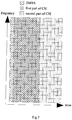
- the first part of the CSI may include 50 bits.
- the REs indicated by “ " may be used for the transmission of the DMRS, and the REs indicated by " “ may be used for the transmission of the first part of the CSI.
- the aperiodic CSI may be divided into a first part and a second part.
- the first part of the CSI may include 50 bits, and the second part of the CSI may include 100 bits.
- the target code rate in the MCS table (i.e., Table 1) defined in the protocol 38.214 is used as the target code rate used by the first part of the CSI.
- the MCS index for the CSI transmission as indicated by the base station through the DCI is 0, the corresponding modulation order may be 2, and at this time, the target code rate used by the first part of the CSI may be 120/1024.
- the quantity of REs occupied by the first part of the CSI may be 214, which is greater than the quantity of REs available for the transmission of the UCI on the PUSCH, i.e., 156, so the quantity of REs used by the first part of the CSI in the current transmission may be equal to the quantity of REs available for the transmission of the UCI on the PUSCH, and correspondingly, there exists no RE available for the transmission of the second part of the CSI on the PUSCH. In other words, merely the first part of the CSI may be transmitted on the PUSCH currently, and all the second part of the CSI may be discarded.
- the resource available for the transmission of the first part of the CSI on the PUSCH may be determined in accordance with the target code rate used by the first part of the CSI, and the remaining available resource on the PUSCH may be determined as the resource available for the transmission of the second part of the CSI.
- it is able to correctly transmit the CSI on the PUSCH in a 5G NR system, thereby to ensure the performance of the 5G NR system.
- the present disclosure provides in some embodiments a communication device, which includes a memory 310, a processor 300, and a computer program stored in the memory 310 and executed by the processor 300.
- the processor 300 is configured to execute the computer program so as to: determine a resource available for the transmission of a first part of the CSI on a PUSCH in accordance with a target code rate used by the first part of the CSI; and determine an available resource on the PUSCH other than the resource available for the transmission of the first part of the CSI as a resource available for the transmission of a second part of the CSI on the PUSCH.
- the communication device may further include a transceiver 320 configured to acquire the target code rate used by the first part of the CSI.
- the transceiver 320 is further configured to: receive the target code rate used by the first part of the CSI and configured by a base station through high-layer signaling; or receive a set of code rates preconfigured by the base station and capable of being used by the first part of the CSI, receive DCI capable of triggering a UE to transmit the first part of the CSI, and determine one code rate in the set of code rates as the target code rate used by the first part of the CSI in accordance with indication information in a specific indication field of the DCI, the set of code rates including two or more code rates; or predefine in a protocol a set of code rates capable of being used by the first part of the CSI, receive DCI capable of triggering the UE to transmit the first part of the CSI, and determine one code rate in the set of code rates as the target code rate used by the first part of the CSI in accordance with indication information in a specific indication field of the DCI, the set of code rates including two or more code rates; or predefine in a protocol
- the specific indication field of the DCI may include one or a combination of two or more of an MCS information field, an RV information field, an NDI information field, and an HARQ process number indication information field.
- the specific indication field of the DCI may be an HARQ process number indication information field, and indication information in the HARQ process number indication information field may be used to indicate a code rate associated with a modulation order of the first part of the CSI in a predetermined table in the protocol.
- information of three most significant bits or information of three least significant bits in the HARQ process number indication information field may be used to indicate eight code rates associated with the modulation order of 2 in the predetermined table in the protocol; in the case that the modulation order of the first part of the CSI is 4, information of three most significant bits or information of three least significant bits in the HARQ process number indication information field may be used to indicate seven code rates associated with the modulation order of 4 in the predetermined table in the protocol; and in the case that the modulation order of the first part of the CSI is 6, information of all bits in the HARQ process number indication information field may be used to indicate eleven code rates associated with the modulation order of 6 in the predetermined table in the protocol.
- the processor 300 is further configured to determine the quantity of REs available for the transmission of the first part of the CSI on the PUSCH in accordance with the target code rate used by the first part of the CSI, the quantity of information bits of the first part of the CSI and the modulation order of the first part of the CSI.
- the processor 300 is further configured to determine the quantity of REs available for the transmission of the second part of the CSI on the PUSCH in accordance with the quantity of REs available for the transmission of UCI on the PUSCH and the quantity of REs available for the transmission of the first part of the CSI on the PUSCH.
- the processor 300 is further configured to, when the quantity of REs available for the transmission of the first part of the CSI on the PUSCH is greater than the quantity of REs available for the transmission of the UCI on the PUSCH, determine the REs available for the transmission of the UCI on the PUSCH as the REs available for the transmission of the first part of the CSI, and determine that there is no RE available for the transmission of the second part of the CSI on the PUSCH.
- the transceiver 320 is further configured to receive the DCI transmitted by the base station, and the processor 300 is further configured to parse the DCI to determine that merely the CSI, rather than data, is transmitted through the PUSCH.
- the processor 300 is further configured to: acquire a code rate threshold of the second part of the CSI; and determine the quantity of bits of the second part of the CSI capable of being transmitted through the resource available for the transmission of the second part of the CSI on the PUSCH in accordance with the code rate threshold of the second part of the CSI.
- the processor 300 is further configured to: when an actual code rate corresponding to the second part of the CSI is smaller than or equal to the code rate threshold of the second part of the CSI, determine the quantity of bits of the second part of the CSI capable of being transmitted through the resource available for the transmission of the second part of the CSI as the total quantity of bits of the second part of the CSI; and when the actual code rate corresponding to the second part of the CSI is greater than the code rate threshold of the second part of the CSI, discard the second part of the CSI in accordance with a predetermined rule until an actual code rate corresponding to the remaining second part of the CSI is smaller than or equal to the code rate threshold of the second part of the CSI, and determine the quantity of bits of the second part of the CSI capable of being transmitted through the resource available for the transmission of the second part of the CSI as the quantity of bits of the remaining second part of the CSI.
- the resource available for the transmission of the first part of the CSI on the PUSCH may be determined in accordance with the target code rate used by the first part of the CSI, and the remaining available resource on the PUSCH may be taken as the resource available for the transmission of the second part of the CSI.
- it is able to correctly transmit the CSI on the PUSCH in a 5G NR system, thereby to ensure the performance of the 5G NR system.
- the communication device in the embodiments of the present disclosure is capable of implementing the above-mentioned CSI transmission method, and the implementation of the communication device may refer to that of the above CSI transmission method with a same or similar beneficial effect.
- the present disclosure further provides in some embodiments an apparatus for determining a CSI transmission resource.
- CSI includes a first part and a second part.
- the apparatus for determining the CSI transmission resource includes: a first determination module 41 configured to determine a resource available for the transmission of the first part of the CSI on a PUSCH in accordance with a target code rate used by the first part of the CSI; and a second determination module 42 configured to determine an available resource on the PUSCH other than the resource available for the transmission of the first part of the CSI as a resource available for the transmission of the second part of the CSI on the PUSCH.
- the apparatus for determining the CSI transmission resource may further include an acquisition module configured to acquire the target code rate used by the first part of the CSI.
- the acquisition module may include: a first acquisition sub-module configured to receive the target code rate used by the first part of the CSI and configured by a base station through high-layer signaling; and/or a second acquisition sub-module configured to receive a set of code rates preconfigured by the base station and capable of being used by the first part of the CSI, receive DCI capable of triggering a UE to transmit the first part of the CSI, and determine one code rate in the set of code rates as the target code rate used by the first part of the CSI in accordance with indication information in a specific indication field of the DCI, the set of code rates including two or more code rates; and/or a third acquisition sub-module configured to predefine in a protocol a set of code rates capable of being used by the first part of the CSI, receive DCI capable of triggering the UE to transmit the first part of the CSI, and determine one code rate in the set of code rates as the target code rate used by the first part of the CSI
- the specific indication field of the DCI may include one or a combination of two or more of an MCS information field, an RV information field, an NDI information field, and an HARQ process number indication information field.
- the first determination module 41 may include a first determination sub-module configured to determine the quantity of REs available for the transmission of the first part of the CSI on the PUSCH in accordance with the target code rate used by the first part of the CSI, the quantity of information bits of the first part of the CSI and the modulation order of the first part of the CSI.
- the second determination module may include a second determination sub-module configured to determine the quantity of REs available for the transmission of the second part of the CSI on the PUSCH in accordance with the quantity of REs available for the transmission of UCI on the PUSCH and the quantity of REs available for the transmission of the first part of the CSI on the PUSCH.
- a second determination sub-module configured to determine the quantity of REs available for the transmission of the second part of the CSI on the PUSCH in accordance with the quantity of REs available for the transmission of UCI on the PUSCH and the quantity of REs available for the transmission of the first part of the CSI on the PUSCH.
- the apparatus for determining the CSI transmission resource may further include a processing module configured to, when the quantity of REs available for the transmission of the first part of the CSI on the PUSCH is greater than the quantity of REs available for the transmission of the UCI on the PUSCH, determine the REs available for the transmission of the UCI on the PUSCH as the REs available for the transmission of the first part of the CSI, and determine that there is no RE available for the transmission of the second part of the CSI on the PUSCH.
- a processing module configured to, when the quantity of REs available for the transmission of the first part of the CSI on the PUSCH is greater than the quantity of REs available for the transmission of the UCI on the PUSCH, determine the REs available for the transmission of the UCI on the PUSCH as the REs available for the transmission of the first part of the CSI, and determine that there is no RE available for the transmission of the second part of the CSI on the PUSCH.
- the apparatus for determining the CSI transmission resource may further include: a reception module configured to receive the DCI from the base station; and a parsing module configured to parse the DCI to determine that merely the CSI, rather than data, is transmitted through the PUSCH.
- the apparatus for determining the CSI transmission resource may further include: a threshold acquisition module configured to acquire a code rate threshold of the second part of the CSI; and a bit determination module configured to determine the quantity of bits of the second part of the CSI capable of being transmitted through the resource available for the transmission of the second part of the CSI on the PUSCH in accordance with the code rate threshold of the second part of the CSI.
- the bit determination module may include: a first bit determination sub-module configured to, when an actual code rate corresponding to the second part of the CSI is smaller than or equal to the code rate threshold of the second part of the CSI, determine the quantity of bits of the second part of the CSI capable of being transmitted through the resource available for the transmission of the second part of the CSI as the total quantity of bits of the second part of the CSI; and a second bit determination sub-module configured to, when the actual code rate corresponding to the second part of the CSI is greater than the code rate threshold of the second part of the CSI, discard the second part of the CSI in accordance with a predetermined rule until an actual code rate corresponding to the remaining second part of the CSI is smaller than or equal to the code rate threshold of the second part of the CSI, and determine the quantity of bits of the second part of the CSI capable of being transmitted through the resource available for the transmission of the second part of the CSI as the quantity of bits of the remaining second part of the CSI
- the resource available for the transmission of the first part of the CSI on the PUSCH may be determined in accordance with the target code rate used by the first part of the CSI, and the remaining available resource on the PUSCH may be determined as the resource available for the transmission of the second part of the CSI.
- it is able to correctly transmit the CSI on the PUSCH in a 5G NR system, thereby to ensure the performance of the 5G NR system.
- the apparatus for determining the CSI transmission resource in the embodiments of the present disclosure is capable of implementing the above-mentioned CSI transmission method, and the implementation of the apparatus for determining the CSI transmission resource may refer to that of the above CSI transmission method with a same or similar beneficial effect.
- the present disclosure further provides in some embodiments a computer-readable storage medium storing therein a computer program.
- the computer program is executed by a processor so as to implement the above-mentioned CSI transmission method with a same technical effect, which will not be particularly defined herein.
- the computer-readable storage medium may be a Read-Only Memory (ROM), a Random Access Memory (RAM), a magnetic disk, an optical disk, or the like.
- the present disclosure may be implemented by software as well as a necessary common hardware platform, or by hardware, and the former may be better in most cases.
- the technical solutions of the present disclosure essentially, or parts of the technical solutions of the present disclosure contributing to the related art, may appear in the form of software products, which may be stored in a storage medium (e.g., ROM/ RAM, magnetic disk or optical disk) and include instructions so as to enable a terminal device (e.g., mobile phone, computer, server, air conditioner or network device) to execute the methods in the embodiments of the present disclosure.
- a storage medium e.g., ROM/ RAM, magnetic disk or optical disk
- a terminal device e.g., mobile phone, computer, server, air conditioner or network device
Landscapes
- Engineering & Computer Science (AREA)
- Signal Processing (AREA)
- Computer Networks & Wireless Communication (AREA)
- Quality & Reliability (AREA)
- Mobile Radio Communication Systems (AREA)
Applications Claiming Priority (4)
| Application Number | Priority Date | Filing Date | Title |
|---|---|---|---|
| CN201711473505 | 2017-12-29 | ||
| CN201810032021 | 2018-01-12 | ||
| CN201810292329.8A CN109995493B (zh) | 2017-12-29 | 2018-03-30 | 信道状态信息的传输资源的确定方法、通信设备及装置 |
| PCT/CN2018/117133 WO2019128576A1 (zh) | 2017-12-29 | 2018-11-23 | 信道状态信息传输方法、通信设备及装置 |
Publications (3)
| Publication Number | Publication Date |
|---|---|
| EP3716518A1 true EP3716518A1 (de) | 2020-09-30 |
| EP3716518A4 EP3716518A4 (de) | 2021-01-27 |
| EP3716518B1 EP3716518B1 (de) | 2023-04-19 |
Family
ID=67128667
Family Applications (1)
| Application Number | Title | Priority Date | Filing Date |
|---|---|---|---|
| EP18896050.4A Active EP3716518B1 (de) | 2017-12-29 | 2018-11-23 | Kanalstatusinformationsübertragungsverfahren, kommunikationsvorrichtung und einrichtung |
Country Status (6)
| Country | Link |
|---|---|
| US (1) | US20200366352A1 (de) |
| EP (1) | EP3716518B1 (de) |
| JP (1) | JP6999818B2 (de) |
| KR (1) | KR20200096630A (de) |
| CN (1) | CN109995493B (de) |
| TW (1) | TWI677203B (de) |
Families Citing this family (8)
| Publication number | Priority date | Publication date | Assignee | Title |
|---|---|---|---|---|
| US10986613B2 (en) * | 2018-01-19 | 2021-04-20 | Qualcomm Incorporated | Uplink control information (UCI) to resource element (RE) mapping |
| CN112398518B (zh) * | 2019-08-14 | 2022-06-10 | 大唐移动通信设备有限公司 | 一种信息传输方法、装置及通信设备 |
| CN112398612B (zh) * | 2019-08-15 | 2022-02-22 | 大唐移动通信设备有限公司 | 传输资源大小的确定方法、装置、终端及网络侧设备 |
| CN112752346B (zh) * | 2019-10-29 | 2025-07-29 | 中兴通讯股份有限公司 | Uci复用配置方法、装置、设备及计算机可读存储介质 |
| WO2021167715A1 (en) | 2020-02-21 | 2021-08-26 | Qualcomm Incorporated | Positioning reference signal processing |
| BR112022016172A2 (pt) * | 2020-02-24 | 2022-10-04 | Qualcomm Inc | Codificação de informações de controle de enlace ascendente (uci) de duas partes para relatórios de informações de estado de posicionamento (psi) para posicionamento de baixa latência |
| CN116073942A (zh) * | 2021-10-29 | 2023-05-05 | 华为技术有限公司 | 通信方法和通信装置 |
| US20250202749A1 (en) * | 2023-12-15 | 2025-06-19 | Qualcomm Incorporated | Frequency domain multiplexing of demodulation reference signal |
Family Cites Families (13)
| Publication number | Priority date | Publication date | Assignee | Title |
|---|---|---|---|---|
| PT3352407T (pt) * | 2008-03-31 | 2019-10-28 | Ericsson Telefon Ab L M | Métodos e arquiteturas num sistema de telecomunicações |
| US8971261B2 (en) * | 2010-06-02 | 2015-03-03 | Samsung Electronics Co., Ltd. | Method and system for transmitting channel state information in wireless communication systems |
| TWI479852B (zh) * | 2011-03-22 | 2015-04-01 | Innovative Sonic Corp | 在無線通訊系統中改善非週期性探測參考符元的方法及裝置 |
| KR101763750B1 (ko) * | 2011-06-17 | 2017-08-01 | 삼성전자 주식회사 | 협력 통신을 위한 피드백 송수신 방법 및 장치 |
| CN102347825B (zh) * | 2011-11-02 | 2014-05-07 | 电信科学技术研究院 | 一种传输反馈信息的方法、系统和设备 |
| US9730258B2 (en) * | 2014-11-18 | 2017-08-08 | Intel Corporation | Apparatus configured to report aperiodic channel state information for dual connectivity |
| CN113259053A (zh) * | 2015-01-29 | 2021-08-13 | 北京三星通信技术研究有限公司 | 上行控制信号的发送方法及装置 |
| CN107210854B (zh) * | 2015-01-30 | 2020-11-06 | 瑞典爱立信有限公司 | 多载波通信系统中传输上行链路控制信息的方法与装置 |
| CN106301692B (zh) * | 2015-05-21 | 2019-12-10 | 电信科学技术研究院 | 一种信道状态信息获取方法及装置 |
| SG11201809169PA (en) * | 2016-05-13 | 2018-11-29 | Ericsson Telefon Ab L M | Harq-ack multiplexing in pusch |
| US11171746B2 (en) * | 2016-06-15 | 2021-11-09 | Apple Inc. | Channel state and beam related information reporting |
| EP3639400B1 (de) * | 2017-06-14 | 2022-03-16 | Sony Group Corporation | Vorrichtung und verfahren zur bestimmung, ob ein csi-bericht bereitgestellt werden soll |
| EP3514998B1 (de) * | 2017-11-15 | 2021-10-27 | LG Electronics Inc. | Verfahren zur übertragung von uplink-steuerinformationen durch ein endgerät in einem drahtloskommunikationssystem und endgerät mit verwendung des verfahrens |
-
2018
- 2018-03-30 CN CN201810292329.8A patent/CN109995493B/zh active Active
- 2018-11-23 KR KR1020207020329A patent/KR20200096630A/ko not_active Ceased
- 2018-11-23 JP JP2020535237A patent/JP6999818B2/ja active Active
- 2018-11-23 US US16/772,077 patent/US20200366352A1/en not_active Abandoned
- 2018-11-23 EP EP18896050.4A patent/EP3716518B1/de active Active
- 2018-11-29 TW TW107142614A patent/TWI677203B/zh active
Also Published As
| Publication number | Publication date |
|---|---|
| KR20200096630A (ko) | 2020-08-12 |
| TW201931798A (zh) | 2019-08-01 |
| EP3716518B1 (de) | 2023-04-19 |
| CN109995493B (zh) | 2020-12-11 |
| JP2021508971A (ja) | 2021-03-11 |
| TWI677203B (zh) | 2019-11-11 |
| CN109995493A (zh) | 2019-07-09 |
| JP6999818B2 (ja) | 2022-01-19 |
| EP3716518A4 (de) | 2021-01-27 |
| US20200366352A1 (en) | 2020-11-19 |
Similar Documents
| Publication | Publication Date | Title |
|---|---|---|
| EP3716518B1 (de) | Kanalstatusinformationsübertragungsverfahren, kommunikationsvorrichtung und einrichtung | |
| EP3734889B1 (de) | Verfahren und vorrichtung zur übertragung von uplink-informationen | |
| EP4167672B1 (de) | Uplink-steuerungsinformationssendeverfahren, uplink-steuerungsinformationsempfangsverfahren und vorrichtung | |
| EP2357868B1 (de) | Verfahren, Basisstation und Mobilstation zur Implementierung von aufwärts Betriebsmittelangabe. | |
| EP3429114B1 (de) | Informationsverarbeitungsverfahren, endgerätevorrichtung, netzwerkvorrichtung und kommunikationssystem | |
| US10512070B2 (en) | User equipment, network device, and method for determining physical uplink control channel resource | |
| US10912076B2 (en) | Physical downlink control channel transmission method and apparatus | |
| EP2340630B1 (de) | Effizientes Senden und Empfangen von Rückkopplungs- und Benutzerdaten | |
| EP3251247B1 (de) | Verfahren und vorrichtung zur übertragung von uplink-steuerinformationen in einem mehrträgerkommunikationssystem | |
| EP4221016B1 (de) | Übertragungsverfahren und -vorrichtung für uplink-steuerinformationen | |
| EP2863694B1 (de) | Verfahren zur zuweisung von steuerkanalkandidatennummern sowie blinderkennungsfrequenz, basisstation und benutzervorrichtung | |
| EP3439211B1 (de) | Verfahren, vorrichtung und computerspeichermedien zur signalübertragung | |
| EP4280477A1 (de) | Datenübertragungsverfahren und -vorrichtung | |
| EP2672771A1 (de) | Übertragungsverfahren, -vorrichtung und -system zur steuerung von informationen | |
| US20180160423A1 (en) | Uplink control information sending method and receiving method, and related apparatus | |
| EP3567951B1 (de) | Verfahren und vorrichtung zur verarbeitung von downlink-steuerungsinformationen | |
| EP2894805A1 (de) | Verfahren zur Auswahl der Transportblockgröße und zugehörige Kommunikationsvorrichtung | |
| US20210218452A1 (en) | Method and apparatus for determining transmit power | |
| EP3905811B1 (de) | Verfahren zur dynamischen einstellung einer pusch-ressource, vorrichtung, gerät und computerlesbares speichermedium | |
| CN113612595A (zh) | 上行控制信息传输方法及装置 |
Legal Events
| Date | Code | Title | Description |
|---|---|---|---|
| STAA | Information on the status of an ep patent application or granted ep patent |
Free format text: STATUS: THE INTERNATIONAL PUBLICATION HAS BEEN MADE |
|
| PUAI | Public reference made under article 153(3) epc to a published international application that has entered the european phase |
Free format text: ORIGINAL CODE: 0009012 |
|
| STAA | Information on the status of an ep patent application or granted ep patent |
Free format text: STATUS: REQUEST FOR EXAMINATION WAS MADE |
|
| 17P | Request for examination filed |
Effective date: 20200625 |
|
| AK | Designated contracting states |
Kind code of ref document: A1 Designated state(s): AL AT BE BG CH CY CZ DE DK EE ES FI FR GB GR HR HU IE IS IT LI LT LU LV MC MK MT NL NO PL PT RO RS SE SI SK SM TR |
|
| AX | Request for extension of the european patent |
Extension state: BA ME |
|
| A4 | Supplementary search report drawn up and despatched |
Effective date: 20210112 |
|
| RIC1 | Information provided on ipc code assigned before grant |
Ipc: H04L 5/00 20060101AFI20201221BHEP |
|
| DAV | Request for validation of the european patent (deleted) | ||
| DAX | Request for extension of the european patent (deleted) | ||
| RAP1 | Party data changed (applicant data changed or rights of an application transferred) |
Owner name: DATANG MOBILE COMMUNICATIONS EQUIPMENT CO., LTD. |
|
| STAA | Information on the status of an ep patent application or granted ep patent |
Free format text: STATUS: EXAMINATION IS IN PROGRESS |
|
| 17Q | First examination report despatched |
Effective date: 20211021 |
|
| REG | Reference to a national code |
Ref country code: DE Ref legal event code: R079 Ref document number: 602018048753 Country of ref document: DE Free format text: PREVIOUS MAIN CLASS: H04L0005000000 Ipc: H04L0001000000 |
|
| GRAP | Despatch of communication of intention to grant a patent |
Free format text: ORIGINAL CODE: EPIDOSNIGR1 |
|
| STAA | Information on the status of an ep patent application or granted ep patent |
Free format text: STATUS: GRANT OF PATENT IS INTENDED |
|
| RIC1 | Information provided on ipc code assigned before grant |
Ipc: H04L 5/00 20060101ALI20221003BHEP Ipc: H04L 1/00 20060101AFI20221003BHEP |
|
| INTG | Intention to grant announced |
Effective date: 20221031 |
|
| GRAS | Grant fee paid |
Free format text: ORIGINAL CODE: EPIDOSNIGR3 |
|
| GRAA | (expected) grant |
Free format text: ORIGINAL CODE: 0009210 |
|
| STAA | Information on the status of an ep patent application or granted ep patent |
Free format text: STATUS: THE PATENT HAS BEEN GRANTED |
|
| AK | Designated contracting states |
Kind code of ref document: B1 Designated state(s): AL AT BE BG CH CY CZ DE DK EE ES FI FR GB GR HR HU IE IS IT LI LT LU LV MC MK MT NL NO PL PT RO RS SE SI SK SM TR |
|
| REG | Reference to a national code |
Ref country code: GB Ref legal event code: FG4D |
|
| REG | Reference to a national code |
Ref country code: DE Ref legal event code: R096 Ref document number: 602018048753 Country of ref document: DE |
|
| REG | Reference to a national code |
Ref country code: CH Ref legal event code: EP |
|
| REG | Reference to a national code |
Ref country code: IE Ref legal event code: FG4D |
|
| REG | Reference to a national code |
Ref country code: AT Ref legal event code: REF Ref document number: 1561980 Country of ref document: AT Kind code of ref document: T Effective date: 20230515 |
|
| P01 | Opt-out of the competence of the unified patent court (upc) registered |
Effective date: 20230512 |
|
| REG | Reference to a national code |
Ref country code: LT Ref legal event code: MG9D |
|
| REG | Reference to a national code |
Ref country code: NL Ref legal event code: MP Effective date: 20230419 |
|
| REG | Reference to a national code |
Ref country code: AT Ref legal event code: MK05 Ref document number: 1561980 Country of ref document: AT Kind code of ref document: T Effective date: 20230419 |
|
| PG25 | Lapsed in a contracting state [announced via postgrant information from national office to epo] |
Ref country code: NL Free format text: LAPSE BECAUSE OF FAILURE TO SUBMIT A TRANSLATION OF THE DESCRIPTION OR TO PAY THE FEE WITHIN THE PRESCRIBED TIME-LIMIT Effective date: 20230419 |
|
| PG25 | Lapsed in a contracting state [announced via postgrant information from national office to epo] |
Ref country code: SE Free format text: LAPSE BECAUSE OF FAILURE TO SUBMIT A TRANSLATION OF THE DESCRIPTION OR TO PAY THE FEE WITHIN THE PRESCRIBED TIME-LIMIT Effective date: 20230419 Ref country code: PT Free format text: LAPSE BECAUSE OF FAILURE TO SUBMIT A TRANSLATION OF THE DESCRIPTION OR TO PAY THE FEE WITHIN THE PRESCRIBED TIME-LIMIT Effective date: 20230821 Ref country code: NO Free format text: LAPSE BECAUSE OF FAILURE TO SUBMIT A TRANSLATION OF THE DESCRIPTION OR TO PAY THE FEE WITHIN THE PRESCRIBED TIME-LIMIT Effective date: 20230719 Ref country code: ES Free format text: LAPSE BECAUSE OF FAILURE TO SUBMIT A TRANSLATION OF THE DESCRIPTION OR TO PAY THE FEE WITHIN THE PRESCRIBED TIME-LIMIT Effective date: 20230419 Ref country code: AT Free format text: LAPSE BECAUSE OF FAILURE TO SUBMIT A TRANSLATION OF THE DESCRIPTION OR TO PAY THE FEE WITHIN THE PRESCRIBED TIME-LIMIT Effective date: 20230419 |
|
| PG25 | Lapsed in a contracting state [announced via postgrant information from national office to epo] |
Ref country code: RS Free format text: LAPSE BECAUSE OF FAILURE TO SUBMIT A TRANSLATION OF THE DESCRIPTION OR TO PAY THE FEE WITHIN THE PRESCRIBED TIME-LIMIT Effective date: 20230419 Ref country code: PL Free format text: LAPSE BECAUSE OF FAILURE TO SUBMIT A TRANSLATION OF THE DESCRIPTION OR TO PAY THE FEE WITHIN THE PRESCRIBED TIME-LIMIT Effective date: 20230419 Ref country code: LV Free format text: LAPSE BECAUSE OF FAILURE TO SUBMIT A TRANSLATION OF THE DESCRIPTION OR TO PAY THE FEE WITHIN THE PRESCRIBED TIME-LIMIT Effective date: 20230419 Ref country code: LT Free format text: LAPSE BECAUSE OF FAILURE TO SUBMIT A TRANSLATION OF THE DESCRIPTION OR TO PAY THE FEE WITHIN THE PRESCRIBED TIME-LIMIT Effective date: 20230419 Ref country code: IS Free format text: LAPSE BECAUSE OF FAILURE TO SUBMIT A TRANSLATION OF THE DESCRIPTION OR TO PAY THE FEE WITHIN THE PRESCRIBED TIME-LIMIT Effective date: 20230819 Ref country code: HR Free format text: LAPSE BECAUSE OF FAILURE TO SUBMIT A TRANSLATION OF THE DESCRIPTION OR TO PAY THE FEE WITHIN THE PRESCRIBED TIME-LIMIT Effective date: 20230419 Ref country code: GR Free format text: LAPSE BECAUSE OF FAILURE TO SUBMIT A TRANSLATION OF THE DESCRIPTION OR TO PAY THE FEE WITHIN THE PRESCRIBED TIME-LIMIT Effective date: 20230720 Ref country code: AL Free format text: LAPSE BECAUSE OF FAILURE TO SUBMIT A TRANSLATION OF THE DESCRIPTION OR TO PAY THE FEE WITHIN THE PRESCRIBED TIME-LIMIT Effective date: 20230419 |
|
| PG25 | Lapsed in a contracting state [announced via postgrant information from national office to epo] |
Ref country code: FI Free format text: LAPSE BECAUSE OF FAILURE TO SUBMIT A TRANSLATION OF THE DESCRIPTION OR TO PAY THE FEE WITHIN THE PRESCRIBED TIME-LIMIT Effective date: 20230419 |
|
| PG25 | Lapsed in a contracting state [announced via postgrant information from national office to epo] |
Ref country code: SK Free format text: LAPSE BECAUSE OF FAILURE TO SUBMIT A TRANSLATION OF THE DESCRIPTION OR TO PAY THE FEE WITHIN THE PRESCRIBED TIME-LIMIT Effective date: 20230419 |
|
| REG | Reference to a national code |
Ref country code: DE Ref legal event code: R097 Ref document number: 602018048753 Country of ref document: DE |
|
| PG25 | Lapsed in a contracting state [announced via postgrant information from national office to epo] |
Ref country code: SM Free format text: LAPSE BECAUSE OF FAILURE TO SUBMIT A TRANSLATION OF THE DESCRIPTION OR TO PAY THE FEE WITHIN THE PRESCRIBED TIME-LIMIT Effective date: 20230419 Ref country code: SK Free format text: LAPSE BECAUSE OF FAILURE TO SUBMIT A TRANSLATION OF THE DESCRIPTION OR TO PAY THE FEE WITHIN THE PRESCRIBED TIME-LIMIT Effective date: 20230419 Ref country code: RO Free format text: LAPSE BECAUSE OF FAILURE TO SUBMIT A TRANSLATION OF THE DESCRIPTION OR TO PAY THE FEE WITHIN THE PRESCRIBED TIME-LIMIT Effective date: 20230419 Ref country code: EE Free format text: LAPSE BECAUSE OF FAILURE TO SUBMIT A TRANSLATION OF THE DESCRIPTION OR TO PAY THE FEE WITHIN THE PRESCRIBED TIME-LIMIT Effective date: 20230419 Ref country code: DK Free format text: LAPSE BECAUSE OF FAILURE TO SUBMIT A TRANSLATION OF THE DESCRIPTION OR TO PAY THE FEE WITHIN THE PRESCRIBED TIME-LIMIT Effective date: 20230419 Ref country code: CZ Free format text: LAPSE BECAUSE OF FAILURE TO SUBMIT A TRANSLATION OF THE DESCRIPTION OR TO PAY THE FEE WITHIN THE PRESCRIBED TIME-LIMIT Effective date: 20230419 |
|
| PLBE | No opposition filed within time limit |
Free format text: ORIGINAL CODE: 0009261 |
|
| STAA | Information on the status of an ep patent application or granted ep patent |
Free format text: STATUS: NO OPPOSITION FILED WITHIN TIME LIMIT |
|
| 26N | No opposition filed |
Effective date: 20240122 |
|
| PG25 | Lapsed in a contracting state [announced via postgrant information from national office to epo] |
Ref country code: SI Free format text: LAPSE BECAUSE OF FAILURE TO SUBMIT A TRANSLATION OF THE DESCRIPTION OR TO PAY THE FEE WITHIN THE PRESCRIBED TIME-LIMIT Effective date: 20230419 |
|
| PG25 | Lapsed in a contracting state [announced via postgrant information from national office to epo] |
Ref country code: SI Free format text: LAPSE BECAUSE OF FAILURE TO SUBMIT A TRANSLATION OF THE DESCRIPTION OR TO PAY THE FEE WITHIN THE PRESCRIBED TIME-LIMIT Effective date: 20230419 Ref country code: IT Free format text: LAPSE BECAUSE OF FAILURE TO SUBMIT A TRANSLATION OF THE DESCRIPTION OR TO PAY THE FEE WITHIN THE PRESCRIBED TIME-LIMIT Effective date: 20230419 |
|
| REG | Reference to a national code |
Ref country code: CH Ref legal event code: PL |
|
| PG25 | Lapsed in a contracting state [announced via postgrant information from national office to epo] |
Ref country code: MC Free format text: LAPSE BECAUSE OF FAILURE TO SUBMIT A TRANSLATION OF THE DESCRIPTION OR TO PAY THE FEE WITHIN THE PRESCRIBED TIME-LIMIT Effective date: 20230419 |
|
| PG25 | Lapsed in a contracting state [announced via postgrant information from national office to epo] |
Ref country code: LU Free format text: LAPSE BECAUSE OF NON-PAYMENT OF DUE FEES Effective date: 20231123 |
|
| PG25 | Lapsed in a contracting state [announced via postgrant information from national office to epo] |
Ref country code: CH Free format text: LAPSE BECAUSE OF NON-PAYMENT OF DUE FEES Effective date: 20231130 |
|
| PG25 | Lapsed in a contracting state [announced via postgrant information from national office to epo] |
Ref country code: MC Free format text: LAPSE BECAUSE OF FAILURE TO SUBMIT A TRANSLATION OF THE DESCRIPTION OR TO PAY THE FEE WITHIN THE PRESCRIBED TIME-LIMIT Effective date: 20230419 Ref country code: LU Free format text: LAPSE BECAUSE OF NON-PAYMENT OF DUE FEES Effective date: 20231123 Ref country code: CH Free format text: LAPSE BECAUSE OF NON-PAYMENT OF DUE FEES Effective date: 20231130 |
|
| REG | Reference to a national code |
Ref country code: BE Ref legal event code: MM Effective date: 20231130 |
|
| REG | Reference to a national code |
Ref country code: IE Ref legal event code: MM4A |
|
| PG25 | Lapsed in a contracting state [announced via postgrant information from national office to epo] |
Ref country code: IE Free format text: LAPSE BECAUSE OF NON-PAYMENT OF DUE FEES Effective date: 20231123 |
|
| PG25 | Lapsed in a contracting state [announced via postgrant information from national office to epo] |
Ref country code: BE Free format text: LAPSE BECAUSE OF NON-PAYMENT OF DUE FEES Effective date: 20231130 |
|
| PG25 | Lapsed in a contracting state [announced via postgrant information from national office to epo] |
Ref country code: IE Free format text: LAPSE BECAUSE OF NON-PAYMENT OF DUE FEES Effective date: 20231123 Ref country code: BE Free format text: LAPSE BECAUSE OF NON-PAYMENT OF DUE FEES Effective date: 20231130 |
|
| PG25 | Lapsed in a contracting state [announced via postgrant information from national office to epo] |
Ref country code: BG Free format text: LAPSE BECAUSE OF FAILURE TO SUBMIT A TRANSLATION OF THE DESCRIPTION OR TO PAY THE FEE WITHIN THE PRESCRIBED TIME-LIMIT Effective date: 20230419 |
|
| PG25 | Lapsed in a contracting state [announced via postgrant information from national office to epo] |
Ref country code: BG Free format text: LAPSE BECAUSE OF FAILURE TO SUBMIT A TRANSLATION OF THE DESCRIPTION OR TO PAY THE FEE WITHIN THE PRESCRIBED TIME-LIMIT Effective date: 20230419 |
|
| PG25 | Lapsed in a contracting state [announced via postgrant information from national office to epo] |
Ref country code: CY Free format text: LAPSE BECAUSE OF FAILURE TO SUBMIT A TRANSLATION OF THE DESCRIPTION OR TO PAY THE FEE WITHIN THE PRESCRIBED TIME-LIMIT; INVALID AB INITIO Effective date: 20181123 |
|
| PG25 | Lapsed in a contracting state [announced via postgrant information from national office to epo] |
Ref country code: HU Free format text: LAPSE BECAUSE OF FAILURE TO SUBMIT A TRANSLATION OF THE DESCRIPTION OR TO PAY THE FEE WITHIN THE PRESCRIBED TIME-LIMIT; INVALID AB INITIO Effective date: 20181123 |
|
| PG25 | Lapsed in a contracting state [announced via postgrant information from national office to epo] |
Ref country code: TR Free format text: LAPSE BECAUSE OF FAILURE TO SUBMIT A TRANSLATION OF THE DESCRIPTION OR TO PAY THE FEE WITHIN THE PRESCRIBED TIME-LIMIT Effective date: 20230419 |
|
| PGFP | Annual fee paid to national office [announced via postgrant information from national office to epo] |
Ref country code: DE Payment date: 20251119 Year of fee payment: 8 |
|
| PGFP | Annual fee paid to national office [announced via postgrant information from national office to epo] |
Ref country code: GB Payment date: 20251121 Year of fee payment: 8 |
|
| PGFP | Annual fee paid to national office [announced via postgrant information from national office to epo] |
Ref country code: FR Payment date: 20251126 Year of fee payment: 8 |