EP3719006B1 - Compositions pharmaceutiques comprenant dérivés du 2-amino-pyrimidin-5-ol deutérés et non-deutérés pour le traitemnt de maladies mitochondriales (par ex. obésité) - Google Patents
Compositions pharmaceutiques comprenant dérivés du 2-amino-pyrimidin-5-ol deutérés et non-deutérés pour le traitemnt de maladies mitochondriales (par ex. obésité) Download PDFInfo
- Publication number
- EP3719006B1 EP3719006B1 EP20176556.7A EP20176556A EP3719006B1 EP 3719006 B1 EP3719006 B1 EP 3719006B1 EP 20176556 A EP20176556 A EP 20176556A EP 3719006 B1 EP3719006 B1 EP 3719006B1
- Authority
- EP
- European Patent Office
- Prior art keywords
- mmol
- alkyl
- alkenyl
- alkynyl
- hexane
- Prior art date
- Legal status (The legal status is an assumption and is not a legal conclusion. Google has not performed a legal analysis and makes no representation as to the accuracy of the status listed.)
- Active
Links
Images
Classifications
-
- C—CHEMISTRY; METALLURGY
- C07—ORGANIC CHEMISTRY
- C07D—HETEROCYCLIC COMPOUNDS
- C07D239/00—Heterocyclic compounds containing 1,3-diazine or hydrogenated 1,3-diazine rings
- C07D239/02—Heterocyclic compounds containing 1,3-diazine or hydrogenated 1,3-diazine rings not condensed with other rings
- C07D239/24—Heterocyclic compounds containing 1,3-diazine or hydrogenated 1,3-diazine rings not condensed with other rings having three or more double bonds between ring members or between ring members and non-ring members
- C07D239/28—Heterocyclic compounds containing 1,3-diazine or hydrogenated 1,3-diazine rings not condensed with other rings having three or more double bonds between ring members or between ring members and non-ring members with hetero atoms or with carbon atoms having three bonds to hetero atoms with at the most one bond to halogen, directly attached to ring carbon atoms
- C07D239/46—Two or more oxygen, sulphur or nitrogen atoms
- C07D239/47—One nitrogen atom and one oxygen or sulfur atom, e.g. cytosine
-
- A—HUMAN NECESSITIES
- A61—MEDICAL OR VETERINARY SCIENCE; HYGIENE
- A61P—SPECIFIC THERAPEUTIC ACTIVITY OF CHEMICAL COMPOUNDS OR MEDICINAL PREPARATIONS
- A61P25/00—Drugs for disorders of the nervous system
-
- A—HUMAN NECESSITIES
- A61—MEDICAL OR VETERINARY SCIENCE; HYGIENE
- A61P—SPECIFIC THERAPEUTIC ACTIVITY OF CHEMICAL COMPOUNDS OR MEDICINAL PREPARATIONS
- A61P25/00—Drugs for disorders of the nervous system
- A61P25/14—Drugs for disorders of the nervous system for treating abnormal movements, e.g. chorea, dyskinesia
- A61P25/16—Anti-Parkinson drugs
-
- A—HUMAN NECESSITIES
- A61—MEDICAL OR VETERINARY SCIENCE; HYGIENE
- A61P—SPECIFIC THERAPEUTIC ACTIVITY OF CHEMICAL COMPOUNDS OR MEDICINAL PREPARATIONS
- A61P25/00—Drugs for disorders of the nervous system
- A61P25/18—Antipsychotics, i.e. neuroleptics; Drugs for mania or schizophrenia
-
- A—HUMAN NECESSITIES
- A61—MEDICAL OR VETERINARY SCIENCE; HYGIENE
- A61P—SPECIFIC THERAPEUTIC ACTIVITY OF CHEMICAL COMPOUNDS OR MEDICINAL PREPARATIONS
- A61P25/00—Drugs for disorders of the nervous system
- A61P25/28—Drugs for disorders of the nervous system for treating neurodegenerative disorders of the central nervous system, e.g. nootropic agents, cognition enhancers, drugs for treating Alzheimer's disease or other forms of dementia
-
- A—HUMAN NECESSITIES
- A61—MEDICAL OR VETERINARY SCIENCE; HYGIENE
- A61P—SPECIFIC THERAPEUTIC ACTIVITY OF CHEMICAL COMPOUNDS OR MEDICINAL PREPARATIONS
- A61P3/00—Drugs for disorders of the metabolism
- A61P3/04—Anorexiants; Antiobesity agents
-
- A—HUMAN NECESSITIES
- A61—MEDICAL OR VETERINARY SCIENCE; HYGIENE
- A61P—SPECIFIC THERAPEUTIC ACTIVITY OF CHEMICAL COMPOUNDS OR MEDICINAL PREPARATIONS
- A61P35/00—Antineoplastic agents
-
- A—HUMAN NECESSITIES
- A61—MEDICAL OR VETERINARY SCIENCE; HYGIENE
- A61P—SPECIFIC THERAPEUTIC ACTIVITY OF CHEMICAL COMPOUNDS OR MEDICINAL PREPARATIONS
- A61P9/00—Drugs for disorders of the cardiovascular system
-
- A—HUMAN NECESSITIES
- A61—MEDICAL OR VETERINARY SCIENCE; HYGIENE
- A61P—SPECIFIC THERAPEUTIC ACTIVITY OF CHEMICAL COMPOUNDS OR MEDICINAL PREPARATIONS
- A61P9/00—Drugs for disorders of the cardiovascular system
- A61P9/04—Inotropic agents, i.e. stimulants of cardiac contraction; Drugs for heart failure
-
- A—HUMAN NECESSITIES
- A61—MEDICAL OR VETERINARY SCIENCE; HYGIENE
- A61P—SPECIFIC THERAPEUTIC ACTIVITY OF CHEMICAL COMPOUNDS OR MEDICINAL PREPARATIONS
- A61P9/00—Drugs for disorders of the cardiovascular system
- A61P9/10—Drugs for disorders of the cardiovascular system for treating ischaemic or atherosclerotic diseases, e.g. antianginal drugs, coronary vasodilators, drugs for myocardial infarction, retinopathy, cerebrovascula insufficiency, renal arteriosclerosis
-
- C—CHEMISTRY; METALLURGY
- C07—ORGANIC CHEMISTRY
- C07D—HETEROCYCLIC COMPOUNDS
- C07D239/00—Heterocyclic compounds containing 1,3-diazine or hydrogenated 1,3-diazine rings
- C07D239/02—Heterocyclic compounds containing 1,3-diazine or hydrogenated 1,3-diazine rings not condensed with other rings
- C07D239/24—Heterocyclic compounds containing 1,3-diazine or hydrogenated 1,3-diazine rings not condensed with other rings having three or more double bonds between ring members or between ring members and non-ring members
- C07D239/28—Heterocyclic compounds containing 1,3-diazine or hydrogenated 1,3-diazine rings not condensed with other rings having three or more double bonds between ring members or between ring members and non-ring members with hetero atoms or with carbon atoms having three bonds to hetero atoms with at the most one bond to halogen, directly attached to ring carbon atoms
- C07D239/46—Two or more oxygen, sulphur or nitrogen atoms
- C07D239/52—Two oxygen atoms
-
- C—CHEMISTRY; METALLURGY
- C07—ORGANIC CHEMISTRY
- C07D—HETEROCYCLIC COMPOUNDS
- C07D401/00—Heterocyclic compounds containing two or more hetero rings, having nitrogen atoms as the only ring hetero atoms, at least one ring being a six-membered ring with only one nitrogen atom
- C07D401/02—Heterocyclic compounds containing two or more hetero rings, having nitrogen atoms as the only ring hetero atoms, at least one ring being a six-membered ring with only one nitrogen atom containing two hetero rings
- C07D401/04—Heterocyclic compounds containing two or more hetero rings, having nitrogen atoms as the only ring hetero atoms, at least one ring being a six-membered ring with only one nitrogen atom containing two hetero rings directly linked by a ring-member-to-ring-member bond
-
- C—CHEMISTRY; METALLURGY
- C07—ORGANIC CHEMISTRY
- C07D—HETEROCYCLIC COMPOUNDS
- C07D403/00—Heterocyclic compounds containing two or more hetero rings, having nitrogen atoms as the only ring hetero atoms, not provided for by group C07D401/00
- C07D403/02—Heterocyclic compounds containing two or more hetero rings, having nitrogen atoms as the only ring hetero atoms, not provided for by group C07D401/00 containing two hetero rings
- C07D403/04—Heterocyclic compounds containing two or more hetero rings, having nitrogen atoms as the only ring hetero atoms, not provided for by group C07D401/00 containing two hetero rings directly linked by a ring-member-to-ring-member bond
Definitions
- Mitochondria are central key organelles to regulate a multitude of different metabolic and signaling pathways and also play an important role in programmed cell death (( McBride et al. (2006) Curr Biol. 16:R551 ; Graier et al. (2007) Eur J Physiol. 455, 375 ).
- the primary function of mitochondria is to produce ATP through the process of oxidative phosphorylation (OXPHOS), which is performed by the four respiratory complexes (complexes I-IV) and the ATP synthase (complex V), all located in the inner mitochondrial membrane ( Saraste et al. (1999) Science, 283, 1488 ; Henze et al. (2003) Nature, 426, 127 ).
- mitochondria superoxide O 2 •-
- ETC electron-transport chain
- the cells have developed a number of efficient scavenger systems including antioxidant enzymes and the glutathione redox cycle with its associated constitutive enzymes as well as glutathione itself in the mitochondria and cytosol to cope with the normal production of reactive oxygen species.
- Superoxide is converted rapidly to hydrogen peroxide (H 2 O 2 ) by spontaneous dismutation using superoxide dismutase (SOD) in the mitochondrial matrix (MnSOD) and the inter membrane space (IMS) and cytosol (CuZnSOD).
- SOD superoxide dismutase
- MnSOD mitochondrial matrix
- IMS inter membrane space
- CuZnSOD inter membrane space
- Peroxidases and catalases also participate in the conversion of reactive oxygen species to water.
- Mitochondrial diseases are a clinically heterogeneous group of disorders that arise as a result of dysfunction of the mitochondrial respiratory chain. They can be caused by mutation of genes encoded by either nuclear DNA or mitochondrial DNA (mtDNA). While some mitochondrial disorders only affect a single organ (e.g., the eye in Leber hereditary optic neuropathy [LHON]), many involve multiple organ systems and often present with prominent neurologic and myopathic features. The underlying biochemistries of these diseases tend to be rather similar. They include increased lactate production, diminished respiration and ATP production, and reflect the consequences of oxidative stress.
- One embodiment provides a compound of formula I: wherein:
- One embodiment provides a compound of formula I or a pharmaceutically acceptable salt thereof as described herein, wherein one or more carbons of the compound of formula I is deuterated.
- One embodiment provides a pharmaceutical composition
- a pharmaceutical composition comprising a compound of formula I or a pharmaceutically acceptable salt thereof as described herein and a pharmaceutically acceptable carrier.
- One embodiment provides a compound of formula I or a pharmaceutically acceptable salt thereof for use in a method of treating a mitochondrial disease, obesity, heart disease, central nervous system disorder, cancer, fragile X syndrome or chronic fatigue syndrome in an animal (e.g., a mammal such as a human) comprising administering to the animal (e.g., a mammal such as a human) in need thereof a compound of formula I or a pharmaceutically acceptable salt thereof as described herein.
- an animal e.g., a mammal such as a human
- administering to the animal e.g., a mammal such as a human
- a compound of formula I or a pharmaceutically acceptable salt thereof as described herein.
- One embodiment provides a compound of formula I or a pharmaceutically acceptable salt thereof as described herein for use in medical therapy.
- One embodiment provides a compound of formula I or a pharmaceutically acceptable salt thereof as described herein for use in a method of prophylactic or therapeutic treatment of a mitochondrial disease, obesity, heart disease, central nervous system disorder, cancer, fragile X syndrome or chronic fatigue syndrome.
- One embodiment provides the use of a compound of formula I or a pharmaceutically acceptable salt thereof as described herein to prepare a medicament for treating a mitochondrial disease, obesity, heart disease, central nervous system disorder, cancer, fragile X syndrome or chronic fatigue syndrome in an animal (e.g., a mammal such as a human).
- One embodiment provides processes and intermediates disclosed herein that are useful for preparing a compound of formula I or a salt thereof.
- compounds e.g., compounds of formula I or salts thereof
- the compounds have been designed to include the properties of metabolic stability and bioavailability.
- the compounds provided herein include compounds that differ only in the presence of one or more isotopically enriched atoms.
- compounds, wherein the independent replacement or enrichment of one or more hydrogen by deuterium or tritium, carbon by 13 C- or 14 C carbon, nitrogen by a 15 N nitrogen, sulfur by a 33 S, 34 S or 36 S sulfur, or oxygen by a 17 O or 18 O oxygen are included.
- Such compounds are useful, for example, as therapeutic agents, analytical tools or as probes in biological assays.
- one or more hydrogens of the compound of formula I or a salt thereof are replaced by deuterium.
- one or more carbons of the compound of formula I or a salt thereof is deuterated.
- deuterated means enriched in deuterium above its natural abundance at one or more positions of a compound.
- a particular position for example, a carbon atom
- deuterated it is understood that the abundance of deuterium at that position is substantially greater than the natural abundance of deuterium, which is 0.015%.
- a deuterated position typically has a minimum isotopic enrichment factor of at least 3000 (45% deuterium incorporation).
- isotopic enrichment factor means the ratio between the isotopic abundance and the natural abundance of a specified isotope.
- a compound has an isotopic enrichment factor of at least 3500 (52.5% deuterium incorporation) at a given deuterated atom, at least 4000 (60% deuterium incorporation), at least 4500 (67.5% deuterium incorporation), at least 5000 (75% deuterium incorporation), at least 5500 (82.5% deuterium incorporation), at least 6000 (90% deuterium incorporation), at least 6333.3 (95% deuterium incorporation), at least 6466.7 (97% deuterium incorporation), at least 6600 (99% deuterium incorporation), or at least 6633.3 (99.5% deuterium incorporation). In some embodiments, 100% deuterium incorporation is achieved.
- a deuterated compound may contain one or more deuterium atoms.
- a deuterated compound may contain just one deuterium.
- a deuterated compound contains just two deuteriums.
- a deuterated compound contains only three deuteriums.
- a deuterated compound contains four deuteriums.
- a deuterated compound contains 1, 2, 3, or 4 deuteriums.
- a deuterated compound contains 1, 2, 3, or 4 or more deuteriums, or any range derivable therein.
- a carbon atom of a compound of formula I may be deuterated with a single deuterium.
- a carbon atom of a compound of formula I may be fully deuterated.
- the term fully deuterated refers to a carbon wherein each valence of the carbon that is not occupied by another atom is occupied by deuterium wherein the deuterium is enriched in deuterium above its natural abundance. It is to be understood that when a structure is shown herein with "D” it is a deuterium atom at that position that is enriched in deuterium above its natural abundance.
- Deuterium can be incorporated into a compound of formula I using a variety of known reagents and synthetic techniques.
- deuterium can be incorporated into a compound of formula I using a deuterated alkylating agent or a deuterio source.
- Deuterium can also be incorporated into a compound of formula I through other processes such as reduction, catalytic deuteration or isotopic exchange using appropriate deuterated reagents such as deuterides, D 2 and D 2 O.
- the compounds provided herein also include enantiomeric, diastereomeric and geometric (or conformational) isomeric forms of a given structure.
- enantiomeric, diastereomeric and geometric (or conformational) isomeric forms of a given structure For example, the R and S configurations for each asymmetric center, Z and E double bond isomers, Z and E conformational isomers, single stereochemical isomers, as well as enantiomeric, diastereomeric, and geometric (or conformational) mixtures are included. Unless otherwise stated, all tautomeric forms of structures depicted herein are included.
- alkyl as used herein is a straight or branched saturated hydrocarbon.
- an alkyl group can have 1 to 8 carbon atoms ( i. e., (C 1 -C 8 )alkyl) or 1 to 6 carbon atoms ( i. e., (C 1 -C 6 alkyl) or 1 to 4 carbon atoms.
- alkenyl as used herein is a straight or branched hydrocarbon with one or more carbon-carbon double bonds.
- an alkenyl group can have 2 to 8 carbon atoms (i.e., C 2 -C 8 alkenyl), or 2 to 6 carbon atoms (i.e., C 2 -C 6 alkenyl).
- alkynyl as used herein is a straight or branched hydrocarbon with one or more carbon-carbon triple bonds.
- an alkynyl group can have 2 to 8 carbon atoms (i.e. C 2 -C 8 alkyne,), or 2 to 6 carbon atoms (i.e., C 2 -C 6 alkynyl).
- halo or halogen as used herein refers to fluoro, chloro, bromo and iodo.
- carrier refers to a single saturated (i.e., cycloalkyl) or a single partially unsaturated (e.g., cycloalkenyl, cycloalkadienyl, etc.) all carbon ring having 3 to 7 carbon atoms (i.e. (C 3 -C 7 )carbocycle).
- carrier or “carbocyclyl” also includes multiple condensed, saturated and partially unsaturated all carbon ring systems (e.g., ring systems comprising 2 or 3 carbocyclic rings).
- carbocycle includes multicyclic carbocyles such as a bicyclic carbocycles (e.g., bicyclic carbocycles having about 6 to 12 carbon atoms such as bicyclo[3.1.0]hexane and bicyclo[2.1.1]hexane), and polycyclic carbocycles (e.g tricyclic and tetracyclic carbocycles with up to about 20 carbon atoms).
- the rings of the multiple condensed ring system can be connected to each other via fused, spiro and bridged bonds when allowed by valency requirements.
- multicyclic carbocyles can be connected to each other via a single carbon atom to form a spiro connection (e.g., spiropentane, spiro[4,5]decane, etc), via two adjacent carbon atoms to form a fused connection (e.g., carbocycles such as decahydronaphthalene, norsabinane, norcarane) or via two non-adjacent carbon atoms to form a bridged connection (e.g., norbornane, bicyclo[2.2.2]octane, etc).
- a spiro connection e.g., spiropentane, spiro[4,5]decane, etc
- a fused connection e.g., carbocycles such as decahydronaphthalene, norsabinane, norcarane
- a bridged connection e.g., norbornane, bicyclo[2.2.2]octane,
- the "carbocycle” or “carbocyclyl” can also be optionally substituted with one or more (e.g., 1, 2 or 3) oxo groups.
- monocyclic carbocycles include cyclopropyl, cyclobutyl, cyclopentyl, 1-cyclopent-1-enyl, 1-cyclopent-2-enyl, 1-cyclopent-3-enyl, cyclohexyl, 1-cyclohex-1-enyl, 1-cyclohex-2-enyl and 1-cyclohex-3-enyl.
- heterocyclyl or “heterocycle” as used herein refers to a single saturated or partially unsaturated ring that has at least one atom other than carbon in the ring, wherein the atom is selected from the group consisting of oxygen, nitrogen and sulfur; the term also includes multiple condensed ring systems that have at least one such saturated or partially unsaturated ring, which multiple condensed ring systems are further described below.
- the term includes single saturated or partially unsaturated rings (e.g., 3, 4, 5, 6 or 7-membered rings) from about 1 to 6 carbon atoms and from about 1 to 3 heteroatoms selected from the group consisting of oxygen, nitrogen and sulfur in the ring.
- the ring may be substituted with one or more (e.g., 1, 2 or 3) oxo groups and the sulfur and nitrogen atoms may also be present in their oxidized forms.
- Such rings include but are not limited to azetidinyl, tetrahydrofuranyl or piperidinyl.
- heterocycle also includes multiple condensed ring systems (e.g., ring systems comprising 2 or 3 rings) wherein a single heterocycle ring (as defined above) can be condensed with one or more groups selected from heterocycles (to form for example a decahydronapthyridinyl), carbocycles (to form for example a decahydroquinolyl) and aryls to form the multiple condensed ring system.
- a heterocycle a single saturated or single partially unsaturated ring or multiple condensed ring system
- Such multiple condensed ring systems may be optionally substituted with one or more (e.g., 1, 2, 3 or 4) oxo groups on the carbocycle or heterocycle portions of the multiple condensed ring.
- the rings of the multiple condensed ring system can be connected to each other via fused, spiro and bridged bonds when allowed by valency requirements. It is to be understood that the individual rings of the multiple condensed ring system may be connected in any order relative to one another. It is also to be understood that the point of attachment of a multiple condensed ring system (as defined above for a heterocycle) can be at any position of the multiple condensed ring system including a heterocycle, aryl and carbocycle portion of the ring.
- the point of attachment for a heterocycle or heterocycle multiple condensed ring system can be at any suitable atom of the heterocycle or heterocycle multiple condensed ring system including a carbon atom and a heteroatom (e.g., a nitrogen).
- heterocycles include, but are not limited to aziridinyl, azetidinyl, pyrrolidinyl, piperidinyl, homopiperidinyl, morpholinyl, thiomorpholinyl, piperazinyl, tetrahydrofuranyl, dihydrooxazolyl, tetrahydropyranyl, tetrahydrothiopyranyl, 1,2,3,4- tetrahydroquinolyl, benzoxazinyl, dihydrooxazolyl, chromanyl, 1,2-dihydropyridinyl, 2,3-dihydrobenzofuranyl, 1,3-benzodioxolyl, 1,4-benzodioxanyl, spiro[cyclopropane-1,1'-isoindolinyl]-3'-one, isoindolinyl-1-one, 2-oxa-6-azaspiro[3.3]heptanyl, imi
- aryl refers to a single all carbon aromatic ring or a multiple condensed all carbon ring system wherein at least one of the rings is aromatic.
- an aryl group can have 6 to 20 carbon atoms, 6 to 14 carbon atoms, 6 to 12 carbon atoms or 6-10 carbon atoms.
- Aryl includes a phenyl radical.
- Aryl also includes multiple condensed ring systems (e.g., ring systems comprising 2, 3 or 4 rings) having about 9 to 20 carbon atoms in which at least one ring is aromatic and wherein the other rings may be aromatic or not aromatic (i.e., carbocycle).
- Such multiple condensed ring systems may be optionally substituted with one or more (e.g., 1, 2 or 3) oxo groups on any carbocycle portion of the multiple condensed ring system.
- the rings of the multiple condensed ring system can be connected to each other via fused, spiro and bridged bonds when allowed by valency requirements. It is to be understood that the point of attachment of a multiple condensed ring system, as defined above, can be at any position of the ring system including an aromatic or a carbocycle portion of the ring.
- Typical aryl groups include, but are not limited to, phenyl, indenyl, naphthyl, 1, 2, 3, 4-tetrahydronaphthyl, anthracenyl, and the like.
- treatment or “treating,” to the extent it relates to a disease or condition includes inhibiting the disease or condition, eliminating the disease or condition, and/or relieving one or more symptoms of the disease or condition.
- patient refers to any animal including mammals such as humans, higher non-human primates, rodents domestic and farm animals such as cow, horses, dogs and cats.
- the patient is a human patient.
- terapéuticaally effective amount means an amount of a compound described herein that (i) treats or prevents the particular disease, condition, or disorder, (ii) attenuates, ameliorates, or eliminates one or more symptoms of the particular disease, condition, or disorder, or (iii) prevents or delays the onset of one or more symptoms of the particular disease, condition, or disorder described herein.
- the atom to which the bond is attached includes all stereochemical possibilities.
- a bond in a compound formula herein is drawn in a defined stereochemical manner (e.g. bold, bold-wedge, dashed or dashed-wedge)
- a bond in a compound formula herein is drawn in a defined stereochemical manner (e.g. bold, bold-wedge, dashed or dashed-wedge)
- the atom to which the stereochemical bond is attached is enriched in the absolute stereoisomer depicted unless otherwise noted.
- the compound may be at least 51% the absolute stereoisomer depicted.
- the compound may be at least 60% the absolute stereoisomer depicted.
- the compound may be at least 80% the absolute stereoisomer depicted.
- the compound may be at least 90% the absolute stereoisomer depicted. In another embodiment, the compound may be at least 95 the absolute stereoisomer depicted. In another embodiment, the compound may be at least 99% the absolute stereoisomer depicted.
- radicals, substituents, and ranges are for illustration only; they do not exclude other defined embodiments or values or other values within defined ranges for the radicals and substituents. It is to be understood that two or more embodiments may be combined.
- R 1 is (C 6 -C 26 )alkyl or -O(C 6 -C 26 )alkyl wherein any (C 6 -C 26 )alkyl of R 1 is optionally substituted with one or more groups independently selected from halogen, CN, NO 2 , -OR a1 , -N(R b1 ) 2 , -CO 2 R a1 and -CON(R b1 ) 2 .
- R 1 is (C 6 -C 26 )alkyl wherein any (C 6 -C 26 )alkyl of R 1 is optionally substituted with one or more groups independently selected from halogen, CN, NO 2 , -OR a1 , -N(R b1 ) 2 , -CO 2 R a1 and -CON(R b1 ) 2 .
- R 1 is (C 12 -C 20 )alkyl wherein any (C 12 -C 20 )alkyl of R 1 is optionally substituted with one or more groups independently selected from halogen, CN, NO 2 , -OR a1 , -N(R b1 ) 2 , -CO 2 R a1 and -CON(R b1 ) 2 .
- R 1 is (C 12 -C 20 )alkyl.
- R 1 is -(CH 2 ) 13 CH 3 , -(CH 2 ) 14 CH 3 or -(CH 2 ) 15 CH 3 .
- R 2a and R 2b are each independently (C 1 -C 6 )alkyl, wherein any (C 1 -C 6 )alkyl of R 2a and R 2b is optionally substituted with one or more groups independently selected from halogen, CN, NO 2 , -OR a2 , -N(R b2 ) 2 , -CO 2 R a2 and -CON(R b2 ) 2 ; or R 2a and R 2b together with the nitrogen to which they are attached form a 3-7 membered heterocyclyl wherein the heterocyclyl is optionally substituted with one more groups independently selected from halogen, (C 1 -C 6 )alkyl, (C 2 -C 6 )alkenyl, (C 2 -C 6 )alkynyl, CN, NO 2 , -OR a2 , -N(R b2 ) 2 , -CO 2 R a2 and -CON(R b2
- R 2a and R 2b are each independently (C 1 -C 6 )alkyl; or R 2a and R 2b together with the nitrogen to which they are attached form a 3-7 membered heterocyclyl.
- -NR 2a R 2b is
- R 3 is a carbocyclyl or -Ocarbocyclyl.
- R 3 is -Ocarbocyclyl, wherein any -Ocarbocyclyl of R 3 is optionally substituted with one or more groups independently selected from halogen, CN, NO 2 , -OR a3 , -N(R b3 ) 2 , -CO 2 R a3 and -CON(R b3 ) 2 .
- R 3 is -O(C 3 -C 7 )carbocyclyl wherein any -O(C 3 -C 7 )carbocyclyl is optionally substituted with one or more groups independently selected from halogen, CN, NO 2 , -OR a3 , -N(R b3 ) 2 , -CO 2 R a3 and -CON(R b3 ) 2 .
- R 3 is:
- one or more carbons of the compound of formula I is deuterated.
- R 1 is wherein the carbon marked ⁇ is deuterated.
- -NR 2a R 2b is wherein the carbons marked ⁇ are deuterated.
- a compound of formula I is: or a salt thereof, wherein the carbons marked ⁇ are deuterated.
- the deuterium of the deuterated carbon or deuterated carbons is enriched in deuterium with a minimum isotopic enrichment factor of at least 3000.
- the carbon marked ⁇ is deuterated with one deuterium atom wherein the deuterium of the carbon marked ⁇ is enriched in deuterium with a minimum isotopic enrichment factor of at least 3000.
- the deuterium of the deuterated carbon or deuterated carbons is enriched in deuterium over the natural abundance of deuterium for the corresponding non-deuterated carbon or carbons.
- the carbon marked ⁇ is deuterated with one deuterium atom wherein the deuterium of the carbon marked ⁇ is enriched in deuterium above the natural abundance of deuterium for the corresponding non-deuterated carbon.
- the carbon marked ⁇ is fully deuterated.
- a compound of formula I is: or a salt thereof.
- One embodiment provides a compound which is: or a salt thereof.
- the level of deuterium of the carbons bearing the deuterium is greater than the natural abundance of deuterium for the corresponding non-deuterated carbon.
- a salt of a compound of formula I can be useful as an intermediate for isolating or purifying a compound of formula I.
- administration of a compound of formula I as a pharmaceutically acceptable acid or base salt may be appropriate.
- pharmaceutically acceptable salts include organic acid addition salts formed with acids which form a physiological acceptable anion, for example, tosylate, methanesulfonate, acetate, citrate, malonate, tartrate, succinate, benzoate, ascorbate, ⁇ -ketoglutarate, and ⁇ -glycerophosphate.
- Suitable inorganic acid addition salts may also be formed, which include a physiological acceptable anion, for example, chloride, sulfate, nitrate, bicarbonate, and carbonate salts.
- salts may be obtained using standard procedures well known in the art, for example by reacting a sufficiently basic compound such as an amine with a suitable acid affording a physiologically acceptable anion.
- a sufficiently basic compound such as an amine
- a suitable acid affording a physiologically acceptable anion.
- Alkali metal (for example, sodium, potassium or lithium) or alkaline earth metal (for example calcium) salts of carboxylic acids can also be made.
- the compounds of formula I can be formulated as pharmaceutical compositions and administered to a mammalian host, such as a human patient in a variety of forms adapted to the chosen route of administration, i.e., orally or parenterally, by intravenous, intramuscular, topical or subcutaneous routes.
- the present compounds may be systemically administered, e.g., orally, in combination with a pharmaceutically acceptable vehicle such as an inert diluent or an assimilable edible carrier. They may be enclosed in hard or soft shell gelatin capsules, may be compressed into tablets, or may be incorporated directly with the food of the patient's diet.
- a pharmaceutically acceptable vehicle such as an inert diluent or an assimilable edible carrier.
- the active compound may be combined with one or more excipients and used in the form of ingestible tablets, buccal tablets, troches, capsules, elixirs, suspensions, syrups, wafers, and the like.
- Such compositions and preparations should contain at least 0.1 % of active compound.
- the percentage of the compositions and preparations may, of course, be varied and may conveniently be between about 2 to about 60% of the weight of a given unit dosage form.
- the amount of active compound in such therapeutically useful compositions is such that an effective dosage level will be
- the tablets, troches, pills, capsules, and the like may also contain the following: binders such as gum tragacanth, acacia, corn starch or gelatin; excipients such as dicalcium phosphate; a disintegrating agent such as corn starch, potato starch, alginic acid and the like; a lubricant such as magnesium stearate; and a sweetening agent such as sucrose, fructose, lactose or aspartame or a flavoring agent such as peppermint, oil of wintergreen, or cherry flavoring may be added.
- a liquid carrier such as a vegetable oil or a polyethylene glycol.
- any material used in preparing any unit dosage form should be pharmaceutically acceptable and substantially non-toxic in the amounts employed.
- the active compound may be incorporated into sustained-release preparations and devices.
- the active compound may also be administered intravenously or intraperitoneally by infusion or injection.
- Solutions of the active compound or its salts can be prepared in water, optionally mixed with a nontoxic surfactant.
- Dispersions can also be prepared in glycerol, liquid polyethylene glycols, triacetin, and mixtures thereof and in oils. Under ordinary conditions of storage and use, these preparations contain a preservative to prevent the growth of microorganisms.
- the pharmaceutical dosage forms suitable for injection or infusion can include sterile aqueous solutions or dispersions or sterile powders comprising the active ingredient which are adapted for the extemporaneous preparation of sterile injectable or infusible solutions or dispersions, optionally encapsulated in liposomes.
- the ultimate dosage form should be sterile, fluid and stable under the conditions of manufacture and storage.
- the liquid carrier or vehicle can be a solvent or liquid dispersion medium comprising, for example, water, ethanol, a polyol (for example, glycerol, propylene glycol, liquid polyethylene glycols, and the like), vegetable oils, nontoxic glyceryl esters, and suitable mixtures thereof.
- the proper fluidity can be maintained, for example, by the formation of liposomes, by the maintenance of the required particle size in the case of dispersions or by the use of surfactants.
- the prevention of the action of microorganisms can be brought about by various antibacterial and antifungal agents, for example, parabens, chlorobutanol, phenol, sorbic acid, thimerosal, and the like. In many cases, it will be preferable to include isotonic agents, for example, sugars, buffers or sodium chloride. Prolonged absorption of the injectable compositions can be brought about by the use in the compositions of agents delaying absorption, for example, aluminum monostearate and gelatin.
- Sterile injectable solutions are prepared by incorporating the active compound in the required amount in the appropriate solvent with various of the other ingredients enumerated above, as required, followed by filter sterilization.
- the preferred methods of preparation are vacuum drying and the freeze drying techniques, which yield a powder of the active ingredient plus any additional desired ingredient present in the previously sterile-filtered solutions.
- the present compounds may be applied in pure form, i.e., when they are liquids. However, it will generally be desirable to administer them to the skin as compositions or formulations, in combination with a dermatologically acceptable carrier, which may be a solid or a liquid.
- Useful solid carriers include finely divided solids such as talc, clay, microcrystalline cellulose, silica, alumina and the like.
- Useful liquid carriers include water, alcohols or glycols or water-alcohol/glycol blends, in which the present compounds can be dissolved or dispersed at effective levels, optionally with the aid of non-toxic surfactants.
- Adjuvants such as fragrances and additional antimicrobial agents can be added to optimize the properties for a given use.
- the resultant liquid compositions can be applied from absorbent pads, used to impregnate bandages and other dressings, or sprayed onto the affected area using pump-type or aerosol sprayers.
- Thickeners such as synthetic polymers, fatty acids, fatty acid salts and esters, fatty alcohols, modified celluloses or modified mineral materials can also be employed with liquid carriers to form spreadable pastes, gels, ointments, soaps, and the like, for application directly to the skin of the user.
- Examples of useful dermatological compositions which can be used to deliver the compounds of formula I to the skin are known to the art; for example, see Jacquet et al. (U.S. Pat. No. 4,608,392 ), Geria (U.S. Pat. No. 4,992,478 ), Smith et al. (U.S. Pat. No. 4,559,157 ) and Wortzman (U.S. Pat. No. 4,820,508 ).
- Useful dosages of the compounds of formula I can be determined by comparing their in vitro activity, and in vivo activity in animal models. Methods for the extrapolation of effective dosages in mice, and other animals, to humans are known to the art; for example, see U.S. Pat. No. 4,938,949 .
- the amount of the compound, or an active salt or derivative thereof, required for use in treatment will vary not only with the particular salt selected but also with the route of administration, the nature of the condition being treated and the age and condition of the patient and will be ultimately at the discretion of the attendant physician or clinician.
- a suitable dose will be in the range of from about 0.5 to about 100 mg/kg, e.g., from about 10 to about 75 mg/kg of body weight per day, such as 3 to about 50 mg per kilogram body weight of the recipient per day, preferably in the range of 6 to 90 mg/kg/day, most preferably in the range of 15 to 60 mg/kg/day.
- the compound is conveniently formulated in unit dosage form; for example, containing 5 to 1000 mg, conveniently 10 to 750 mg, most conveniently, 50 to 500 mg of active ingredient per unit dosage form.
- the invention provides a composition comprising a compound of the invention formulated in such a unit dosage form.
- the desired dose may conveniently be presented in a single dose or as divided doses administered at appropriate intervals, for example, as two, three, four or more sub-doses per day.
- the sub-dose itself may be further divided, e.g., into a number of discrete loosely spaced administrations; such as multiple inhalations from an insufflator or by application of a plurality of drops into the eye.
- one or more of the compounds disclosed herein are co-administered with one or more other active therapeutic agents.
- Co-administration of a compound disclosed herein with one or more other active therapeutic agents generally refers to simultaneous or sequential administration of a compound disclosed herein and one or more other active therapeutic agents, such that therapeutically effective amounts of the compounds disclosed herein and one or more other active therapeutic agents are both present in the body of the patient.
- one or more of the compounds disclosed herein are co-administered with one or more active therapeutic agents by combining the compounds disclosed herein with the other therapeutic agents in a unitary dosage form for simultaneous or sequential administration to a patient.
- this combination therapy may be administered as a simultaneous or sequential regimen.
- the combination may be administered in two or more administrations.
- Compounds disclosed herein are useful, for example, for treating or suppressing diseases associated with impaired mitochondrial function resulting in diminished ATP production and/or oxidative stress and/or lipid peroxidation in a subject in need of treatment.
- the present disclosure provides compounds for use in methods of treating a mitochondrial disease including but not limited to Friedreich's ataxia, Leber's hereditary optic neuropathy, Kearns-Sayre Syndrome, mitochondrial encephalomyopathy (e.g., with lactic acidosis and stroke-like episodes) and Leigh syndrome in an animal (e.g., a mammal such as a human).
- the compounds disclosed herein are also useful for treating conditions including but not limited to obesity, atherosclerosis, Parkinson's disease, cancer, heart failure, myocardial infarction (MI), Alzheimer's disease , Huntington's disease, schizophrenia, bipolar disorder, fragile X syndrome and chronic fatigue syndrome, in an animal (e.g., a mammal such as a human).
- a mammal such as a human
- One embodiment provides compounds for use in a method of treating a mitochondrial disease, obesity, heart disease, central nervous system disorder, cancer, fragile X syndrome or chronic fatigue syndrome in an animal (e.g., a mammal such as a human) comprising administering to the animal in need thereof a compound of formula I or a pharmaceutically acceptable salt as described herein.
- an animal e.g., a mammal such as a human
- One embodiment provides compounds for use in a method of treating a mitochondrial disease in an animal (e.g., a mammal such as a human) comprising administering to the animal in need thereof a compound of formula I or a pharmaceutically acceptable salt as described herein.
- an animal e.g., a mammal such as a human
- administering to the animal in need thereof a compound of formula I or a pharmaceutically acceptable salt as described herein.
- the mitochondrial disease is Friedreich's ataxia, Leber's hereditary optic neuropathy, Kearns-Sayre Syndrome, mitochondrial encephalomyopathy or Leigh syndrome.
- One embodiment provides compounds for use in a method of treating a central nervous system disease in an animal (e.g., a mammal such as a human) comprising administering to the animal in need thereof a compound of formula I or a pharmaceutically acceptable salt as described herein.
- an animal e.g., a mammal such as a human
- administering to the animal in need thereof a compound of formula I or a pharmaceutically acceptable salt as described herein.
- the central nervous system disease is a neurodegenerative disease.
- the neurodegenerative disease is Parkinson's Disease, Alzheimer's disease or Huntington's disease.
- the central nervous system disease is schizophrenia or bipolar disorder.
- One embodiment provides compounds for use in a method of treating heart disease in an animal (e.g., a mammal such as a human) comprising administering to the animal in need thereof a compound of formula I or a pharmaceutically acceptable salt as described herein.
- an animal e.g., a mammal such as a human
- administering to the animal in need thereof a compound of formula I or a pharmaceutically acceptable salt as described herein.
- the heart disease is atherosclerosis, heart failure or myocardial infarction.
- Friedreich's ataxia is a severe neurodegenerative and cardiodegenerative condition. It is characterized by progressive ataxia of the limbs, muscle weakness, dysarthria, skeletal deformities and cardiomyopathy. While the biochemical basis of the disease is still under investigation, it is strongly associated with insufficient frataxin ( Wilson et al. (1997) Nat. Genet. 16, 352-357 ; Wilson et al. (2003) J. Neurol. Sci. 207, 103-105 ). In the majority of patients the insufficiency of frataxin is a consequence of an intronic GAA triplet repeat expansion in the gene for frataxin, which results in a significant decrease in its mRNA levels, and ultimately in protein levels as well ( Campuzano et al.
- Frataxin acts as an iron chaperone during heme biosynthesis ( Bencze et al. (2007) J.C.S. Chem. Commun. 1798-1800 ) and has been shown to be capable of stimulating the in vitro assembly of heme and Fe-S clusters ( Park et al. (2003) J. Biol. Chem. 278, 31340-31351 ; Yoon et al. (2003) J. Am Chem. Soc. 125, 6078-6084 ; Yoon et al. (2004) J. Biol. Chem. 279, 25943-25946 ).
- Frataxin can interact physically with mitochondrial electron transport chain proteins, as well as with mitochondrial aconitase (which contains an Fe-S cluster) ( Bulteau et al. (2004) Science 305, 242-245 ; Gonzalez-Cabo etal. (2005) Hum. Mol. Genet. 14, 2091-2098 ). Therefore, frataxin deficiency results in disruption of cellular iron homeostasis, with a progressive iron accumulation in the mitochondrion, and a deficiency in heme and Fe-S clusters.
- Leber hereditary optic neuropathy is associated with degeneration of retinal ganglion cells and causes progressive loss of vision resulting in various degrees of blindness. Leber hereditary optic neuropathy primarily affects men over the age of 20 and is maternally transmitted due to mutations in the mitochondrial (not nuclear) genome.
- Kearns-Sayre syndrome is a rare neuromuscular disorder typically with onset usually before the age of 20. It is characterized by progressive external ophthalmoplegia (paralysis of the eye muscles) and mild skeletal muscle weakness, hearing loss, loss of coordination, heart problems, and cognitive delays.
- Kearns-Sayre syndrome There are many other names for the Kearns-Sayre syndrome including: Chronic progressive external ophthalmoplegia CPEO with myopathy; CPEO with ragged-red fibers; KSS; Mitochondrial cytopathy, Kearns-Sayre type; Oculocraniosomatic syndrome; Ophthalmoplegia-plus syndrome; Ophthalmoplegia with myopathy; and Ophthalmoplegia with ragged-red fibers.
- Mitochondrial encephalomyopathy with lactic acidosis and stroke-like episodes is a progressive mitochondrial disease that involves multiple organ systems including the central nervous system, cardiac muscle, skeletal muscle, and gastrointestinal system. Symptoms include muscle weakness, stroke-like events, eye muscle paralysis, and cognitive impairment. Leigh syndrome is a degenerative brain disorder usually diagnosed at a young age (e.g. before age two). Deterioration is often rapid with symptoms such as seizures, dementia, feeding and speech difficulties, respiratory dysfunction, heart problems, and muscle weakness. Prognosis is poor with death typically occurring within a few years of diagnosis.
- NADH complex I
- FADH 2 complex II
- the electron carriers in the respiratory chain include flavins, protein-bound iron-sulfur centers, quinones, cytochromes and copper.
- coenzyme Q complex I --> III, and complex II -> III
- cytochrome c complex III -> IV
- the final electron acceptor in the respiratory chain is O 2 , which is converted to H 2 O in complex IV.
- transport of two electrons through complex I results in the transport of 4H + into the intermembrane space.
- Two more H + transfers to the intermembrane space result from electron transport through complex III, and four more H + transfers from electron transport through complex IV.
- Electrons can enter the electron transport chain at the level of coenzyme Q (either from complex II or from fatty acid oxidation), producing about 60% as much ATP as would have resulted had they entered the electron transport chain at complex I). While the flux of electrons that normally enter the individual mitochondrial complexes, ultimately passing through coenzyme Q, is probably dictated largely by the availability of electrons derived from NADH, FADH 2 and fatty acid oxidation, the actual intrinsic capacity of the individual pathways does not appear to have been studied carefully.
- Superoxide is one form of reactive oxygen species (ROS).
- ROS reactive oxygen species
- Superoxide itself is not believed to react readily with biological molecules such lipid membranes, proteins and DNA, and actually functions as a signaling molecule for the regulation of certain cellular processes.
- ROS reactive oxygen species
- the main fate of superoxide (O 2 •- ) is a disproportionation reaction with itself to produce peroxide (H 2 O 2 ) and oxygen, i.e. 2O 2 + 2H + ⁇ H 2 O 2 + O 2
- Hydroxyl radicals are very highly reactive, capable of reacting with virtually any biological molecule, including DNA, proteins and lipids. Hydroxyl radicals can also diffuse through cells readily, and their ability to damage cells is limited only by the distance that they travel before they react. Hydroxyl radicals can also react with superoxide, producing singlet oxygen (( 1 O 2 ) + - OH), another highly reactive form of ROS that damages cellular macromolecules and assemblies.
- One particularly deleterious and well studied reaction mediated by hydroxyl radicals is the abstraction of hydrogen atoms (H•) from membrane lipids, forming a carbon-centered radical (R•).
- This radical HO• + RH (lipid) —> R• + H 2 O R• + O 2 -> ROO• ROO• + RH —> ROOH + R• can readily react with oxygen, forming a hydroperoxy radical (ROO•).
- the hydroperoxy radical is also highly reactive, and can abstract another hydrogen atom from the membrane lipid, producing another carbon-centered radical (which can undergo precisely the same chemistry), ultimately producing a chain reaction affording many oxidative lesions in the membrane lipids from a single hydroxyl radical (lipid peroxidation). It is for this reason that lipid peroxidation likely represents a major process by which cellular and mitochondrial membranes are degraded in cells containing (partially) dysfunctional mitochondria.
- One poorly studied parameter of mitochondrial electron transport is whether the process is best characterized as involving one or two electron transfers. This is important because NADH is an obligatory two-electron donor, and coenzyme Q and cytochrome c participate in two-electron redox cycles, as does FADH 2 . Virtually all publications represent the processes in which these species participate as involving a net two electron change. However, FADH 2 may (and generally does) transfer its reducing equivalents as single electrons. Further, the Q cycle in complex III clearly involves single-electron transfers. Reduced cytochrome c is known to transfer electrons one at a time to cytochrome c oxidase, the enzyme responsible for the final step in respiration.
- reductive stress build-up of electrons encountered initially in mitochondrial dysfunction is a one electron process, as is lipid peroxidation
- carriers of single electrons could find utility in dealing with reductive stress, e.g. molecules in which the one-electron reduced intermediate is stabilized by dipole interactions, substituent effects, resonance effects or captodative effects.
- Molecules designed to traffic single electrons, and which can (i) accept electrons from superoxide (ii) donate electrons to complex III and (iii) quench carbon-centered lipid radicals are especially useful.
- Multifunctional Radical Quenchers (MRQs) of the invention can effectively protect mitochondria, cells and organisms from oxidative stress.
- Compounds as described herein can be purified by any of the means known in the art, including chromatographic means, such as HPLC, preparative thin layer chromatography, flash column chromatography and ion exchange chromatography. Any suitable stationary phase can be used, including normal and reversed phases as well as ionic resins. Most typically the disclosed compounds are purified via silica gel and/or alumina chromatography. See, e.g., Introduction to Modern Liquid Chromatography, 2nd Edition, ed. L. R. Snyder and J. J. Kirkland, John Wiley and Sons, 1979 ; and Thin Layer Chromatography, ed E. Stahl, Springer-Verlag, New York, 1969 .
- the TLC chromatograms were developed using UV (short wave) lamp irradiation or by immersing the plates in 2.5 % potassium permanganate in ethanol or 2 % anysaldehyde + 5% sulfuric acid + 1.5 % of glacial acetic acid in ethanol fallowed by heating (heat gun).
- Compound 1 was prepared by methods described in PCT/US2011/025613 .
- Example 1 (reference example): Preparation of 2-( N , N -dimethylamino- d 6 )-4-(1-hexadecyl- d 1 )-6-(methoxy- d 3 )-pyrimidin-5-ol (2).
- Example 5 (reference example): Preparation of 2-(dimethylamino)-4-methyl-6-(pentadecyloxy) pyrimidin-5-ol ( 6 ).
- Example 6 Preparation of 4-(cyclopentyloxy)-2-( N,N -dimethylamino)-6-hexadecylpyrimidin-5-ol ( 7 ).
- the aqueous layer was extracted with three portions of 100 mL of Ethyl Acetate. The organic phases were combined, dried over MgSO 4 and evaporated to dryness under diminished pressure. The crude 31 was recovered as a yellowish oil and directly used for the next step.
- Example 7 (reference example): Preparation of 2-(Azetidin-1-yl)-4-methoxy-6-hexadecylpyrimidin-5-ol ( 8 ).
- reaction mixture was stirred for additional 30 min and poured into 20 mL water, neutralized with dilute aq HCl and then extracted with 100 mL of EtOAc. The combined organic phase was washed with brine, dried (MgSO 4 ) and concentrated under diminished pressure. The residue was purified by chromatography on a silica gel column (15 ⁇ 3 cm).
- Example 8 (reference example): Preparation of 2-(Azetidin-1-yl)-4-ethoxy-6-hexadecylpyrimidin-5-ol ( 9 ).
- Example 9 (reference example): Preparation of 2-(Azetidin-1-yl)-4-hexadecyl-6-methylpyrimidin-5-ol ( 10 ).
- Example 10 (reference example): Preparation of 2-(Azetidin-1-yl)-4-methyl-6-(pentadecyloxy)- ⁇ pyrimidin-5-ol ( 11 ).
- reaction mixture was diluted in 30 mL of EtOAc and filtrated through Celite. The resulting filtrate was concentrated to dryness. The crude residue was purified by flash chromatography on a silica gel column (15 ⁇ 4 cm).
- Example 12 Preparation of 4-Cyclobutoxy-2-( N , N -dimethylamino- d 6 )-6-hexadecylpyrimidin-5-ol ( 13 ).
- Example 13 Preparation of 4-cyclobutoxy-6-hexadecyl-2-(pyrrolidin-1-yl)pyrimidin-5-ol ( 14 ).
- the reaction was quenched by adding 20 mL of NH 4 Cl sat., and extracted with two portions of 20 mL of CH 2 Cl 2 . The organic phases were combined, dried over MgSO 4 and concentrated under diminished pressure. The residue was purified by flash chromatography on a silica gel column (15 ⁇ 2 cm).
- 70 ⁇ L (0.62 mmol) of trimethyl borate was slowly added and the reaction was kept at -10 °C for 1 more hour.
- reaction mixture was diluted by addition of 30 mL of saturated NH 4 Cl and extracted with two 25 mL portions of CH 2 Cl 2 .
- the organic phase was combined, dried over MgSO 4 and concentrated under diminished pressure.
- the residue was purified by flash chromatography on a silica gel column (15 ⁇ 1 cm).
- Example 14 Preparation of 4-cyclobutoxy-6-hexadecyl-2-(piperidin-1-yl)-pyrimidin-5-ol ( 15 ).
- reaction was quenched by adding 20 mL of saturated NH 4 Cl and extracted with two 20 mL portions of CH 2 Cl 2 .
- the combined organic phase was dried over MgSO 4 and concentrated under diminished pressure.
- the residue was purified by flash chromatography on a silica gel column (15 ⁇ 2 cm).
- GM15850 Human mitochondrial disease cell line, Friedreich's ataxia lymphocytes (GM15850) was obtained from Coriell Cell Repositories (Camden, NJ). Lymphocytes were cultured in RPMI-1640 medium (Gibco, Life Technologies, Grand Island, NY) with 15% fetal calf serum, 2 mM glutamine (HyClone, South Logan, UT) and 1% penicillin-streptomycin antibiotic supplement (Cellgro, Manassas, VA). Cells were passaged every other day to maintain them in log phase growth and kept at a nominal concentration of 5-10 ⁇ 10 5 cell/mL. A CoQ 10 deficient lymphocyte cell line (GM17932) was obtained from Coriell Cell Repositories.
- a nutrient sensitized screening strategy to identify CoQ 10 analogues that function within the mitochondrial respiratory chain was used by growing the CoQ 10 -deficient or FRDA lymphocytes in galactose containing media to force energy production predominantly through oxidative phosphorylation rather than glycolysis.
- the lymphocytes were cultured in RPMI 1640 glucose free medium (Gibco, Grand Island, NY) supplemented with 25 mM galactose, 2 mM glutamine and 1% penicillin-streptomycin, and 10% dialyzed fetal bovine serum (FBS) ( ⁇ 0.5 ⁇ g/mL) (Gemini Bio-Product, West Sacramento, CA).
- FBS dialyzed fetal bovine serum
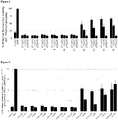
- Example 15 Inhibition of lipid peroxidation.
- C 11 -BODIPY 581/591 a hydrophobic fatty acid fluorophore which inserts preferentially in membranes, has been shown previously to enable quantification of fatty acid oxidation and antioxidant activity in live cells.
- the oxidation of the polyunsaturated butadienyl portion of the dye results in a shift of the fluorescence emission peak from red to green.
- the degree of probe oxidation was followed using flow cytometry as reported before ( Post et al.
- FRDA lymphocytes (5 ⁇ 10 5 cell/mL) were plated (1 mL in 24-well plates), treated with the test compounds and incubated at 37 °C for 16 h in a humidified atmosphere containing 5% CO 2 in air.
- lipid peroxide was detected as a result of the oxidation of the polyunsaturated butadienyl portion of the dye, resulting in a shift of the fluorescence emission peak from red to green.
- 10,000 events were recorded after cell debris were electronically gated out. Results were expressed as a percentage of lipid peroxidation scavenging activity.
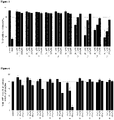
- Example 16 Suppression of reactive oxygen species.
- FRDA lymphocyte cells The ability of the pyridinol and pyrimidinol analogues to suppress ROS induced by depletion of glutathione was evaluated in FRDA lymphocyte cells.
- the intracellular ROS level was measured based on the ROS-induced formation of the highly fluorescent product 2',7'-dichlorofluorescein (DCF) from the non-fluorescent dye 2',7'-dichlorodihydrofluorescein diacetate (DCFH-DA). Briefly, 1 mL of FRDA lymphocytes (5 ⁇ 10 5 cells) was plated in a 24-well plate, treated with the test compounds and incubated at 37 °C for 16 h in a humidified atmosphere containing 5% CO 2 in air.
- DCF highly fluorescent product 2',7'-dichlorofluorescein
- DCFH-DA non-fluorescent dye 2',7'-dichlorodihydrofluorescein diacetate
- Cells were treated with 5 mM diethyl maleate (DEM) for 80 min, collected by centrifugation at 300 ⁇ g for 3 min and then washed with phosphate buffered saline (Life Technologies). Cells were resuspended in PBS containing 20 mM glucose and incubated at 37 °C in the dark for 25 min with 10 ⁇ M DCFH-DA. Cells were collected by centrifugation at 300 ⁇ g for 3 min and then washed with PBS. The samples were analyzed immediately by flow cytometry (C6 Accuri, BD Biosciences, San Jose, CA), using a 488 nm excitation laser and the FL1-H channel 530 ⁇ 15 nm emission filter.
- C6 Accuri C6 Accuri, BD Biosciences, San Jose, CA
- ROS mainly peroxides
- Example 17 Preservation of mitochondrial membrane potential ( ⁇ m ).
- ⁇ m mitochondrial inner membrane potential
- TMRM tetramethylrhodamine methyl ester
- the extent of its uptake, as measured by intensity of cellular TMRM red fluorescence, is proportional to mitochondrial function ( Ehrenberg et al. (1988) Biophys. J. 53, 785 ). Therefore, the accumulation of dye in the mitochondria and the intensity of the signal is a direct function of mitochondrial potential. Mitochondrial depolarization then causes the redistribution of dye from mitochondria into the cytosol, causing a change in signal intensity.
- TMRM mitochondrial depolarization
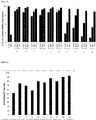
- Example 18 Cellular ATP levels.
- a nutrient-sensitized screening strategy to identify CoQ 10 analogues that function within the mitochondrial respiratory chain and augment ATP was used as described before ( Khdour et al. (2013) ACS Med. Chem. Lett. 4, 724 ).
- the intracellular ATP level was measured in glucose-free media.
- the cells were grown on galactose-containing media to maximize ATP production via oxidative phosphorylation, and they become more sensitive to mitochondrial respiratory chain inhibitors than cells grown on glucose medium.
- CoQ 10 deficient lymphocytes (2 ⁇ 10 5 cell/mL) were plated (1 mL in 24-well plates) in glucose-free media supplemented with galactose and treated with the test compounds at final concentrations of 5, 10, and 25 ⁇ M, and then incubated at 37 °C for 48 h in a humidified atmosphere containing 5% CO 2 in air. Wells were mixed and cells in each well were transferred (100 ⁇ L) to 96-well microtiter black-walled cell culture plates (Costar, Corning, NY).
- the total intracellular ATP level was measured in a luminator (Clarity TM luminescence microplate reader) using an ATP Bioluminescence Assay Kit (ViaLight-Plus ATP monitoring reagent kit, Lonza, Walkersville, MD) following the manufacturer's protocol. The total ATP level was expressed as a percentage of untreated control.
- the cytoprotection conferred by the compounds disclosed herein was determined in FRDA lymphocyte using the trypan blue exclusion method. This method is used to determine the number of viable cells present in cell suspension. It is based on the principle that live cells possess intact cell membranes that exclude trypan blue, whereas dead cells are not capable of excluding trypan blue. Briefly, lymphocytes were seeded at a density of 5 ⁇ 10 5 cells per mL and treated with different concentrations of the test compounds. Cells were incubated at 37 °C in a humidified atmosphere of 5% CO 2 in air for 16 h. Oxidative stress was then induced by 5 mM diethyl maleate (DEM) treatment for 6 h.
- DEM diethyl maleate
- the viability of DEM-treated FRDA lymphocyte cells was determined by using a simultaneous staining with a two-color fluorescence assay, the LIVE/DEAD ® Viability/Cytotoxicity Kit (Molecular Probes). This assay is used to measure two recognized parameters of cell viability, intracellular esterase activity and plasma integrity.
- the membrane-impermeant DNA dye ethidium homodimer-1 (EthD-1) was used to identify dead cells whose plasma membrane integrity was disrupted.
- the membrane-permeant dye calcein-AM was used to label live cells. It penetrates into the cells where it is metabolized by cytoplasmic esterases and becomes a fluorescent but membrane-impermeant probe which is retained in viable cells.
- FRDA lymphocyte cells were seeded at a density of 5 ⁇ 10 5 cells/mL and treated with different concentrations of the test compounds. Cells were incubated at 37 C in a humidified atmosphere of 5% CO2 in air for 16 h. Oxidative stress was then induced by incubation with 5 mM DEM for 6 h, followed by evaluation of cytoprotection. Cells were collected by centrifugation at 300 ⁇ g for 3 min and washed with phosphate buffered saline. Cells were resuspended in phosphate buffered saline containing 25 mM galactose.
- Example 20 Microsomal enzyme preparation.
- Bovine liver microsomes were prepared from liver of a freshly slaughtered animal as previously reported, with some modifications ( Moubarak et al. (2000) Biochem. Biophys. Res. Commun. 274, 746 ). Briefly, liver tissues were diced into small pieces and then washed with isotonic sucrose buffer (0.25 M sucrose, 10 mM Tris-HCl, 0.5 mM EDTA, pH 7.8). The diced tissue was passed through a precooled meat grinder and mixed with three-fold ice cold sucrose buffer supplemented with a mixture of protease inhibitors. The suspension was homogenized in a Waring blender for 25 sec at high speed. At this stage, the pH of the suspension was adjusted to 7.4 with 1 M Tris base.
- the homogenate was centrifuged for 20 min at 1200 ⁇ g to remove cell debris.
- the supernatant suspension was homogenized in a tight fitting Teflon-glass Potter-Elvejhem homogenizer and then centrifuged twice at 10 000 ⁇ g for 20 min, collecting the supernatant each time to remove mitochondria.
- the floating fat layer was carefully removed by filtering the supernatant through layers of cheesecloth.
- the supernatant was centrifuged at 150000 ⁇ g for 30 min (Beckman-Coulter ultracentrifuge, XL-100K -01, SW 55 Ti rotor).
- the pellet (microsomal fraction) was suspended in 0.25 M sucrose buffer containing 10 mM Tris-HCl, pH 7.4, with 20% (v/v) glycerol, and centrifuged once more at 150000 ⁇ g. The pellet was resuspended in sucrose buffer with 20% (v/v) glycerol. The protein concentration after resuspension was approximately 20 mg/mL, as determined by BCA protein assay (Pierce Chemical) using bovine serum albumin as a standard. Aliquots of microsomal suspensions were stored at -80 °C.
- Example 21 Microsomal stability assay.
- This mixture was pre-warmed to 37 °C prior to starting the reaction with the addition of ⁇ -NADPH to 1 mM final concentration. After incubation for 30 min at 37 °C, the reaction was quenched by the addition of 1 mL of propanol, vortexed for 2 min and centrifuged at 15000 ⁇ g for 10 min to pellet the precipitated protein. The resulting supernatant was pipetted out and then concentrated under diminished pressure. A parallel incubation of the test compound with deactivated microsomes (quenched immediately with propanol) lacking ⁇ - NADPH served as a control and was run for each test agent to detect microsomal-independent degradation.
- the sample was reconstituted in 130 ⁇ L MeOH and centrifuged again at 15000 ⁇ g for 3 min. The supernatant was removed and 4 ⁇ M fluorene was added as an internal standard before HPLC analysis.
- HPLC analyses were performed on a reversed phase Zorbax SB-Phenyl reversed phase analytical (150 ⁇ 4.6 mm, 5 ⁇ m) HPLC column using a mobile phase consisting of MeOH/H 2 O. A linear gradient of (50:50 MeOH/H 2 O ⁇ 100:0 MeOH/H 2 O) was employed over a period of 14 min at a flow rate of 1 mL/min. Metabolic stability was expressed as percent of control remaining. The experiments were carried out in duplicate to verify the results.
- Example 22 Animal study information.
- Bioavailability is an important characteristic of many therapeutic agents. Accordingly, certain compounds disclosed herein were tested for bioavailability in a mouse model.
- test compound was prepared on the day of dose administration by dissolving the appropriate amount of test article in olive oil to reach the proper concentrations.
- the dose of 100 mg/kg body weight was ⁇ 120 ⁇ L was used for testing.
- a mouse whose body weight is 20 g would need 2 mg of test article in oral gavage. Mice were food deprived overnight. On the experimental day, mice were weighed to obtain dosage information before oral gavage was performed. Blood and brain samples were collected at the desired post-dose time points after oral gavage. Brain samples were perfused to exclude blood as a factor in the analysis of bioavailability.
- Compound 12 was quantified in a blood sample after 6 h from oral gavage by HPLC and it was found to be present at a concentration of about 4 ⁇ M.
- Example 23 The following illustrate representative pharmaceutical dosage forms, containing a compound of formula I ('Compound X'), for therapeutic or prophylactic use in humans.
Landscapes
- Health & Medical Sciences (AREA)
- Chemical & Material Sciences (AREA)
- Organic Chemistry (AREA)
- Engineering & Computer Science (AREA)
- Bioinformatics & Cheminformatics (AREA)
- Animal Behavior & Ethology (AREA)
- Pharmacology & Pharmacy (AREA)
- Chemical Kinetics & Catalysis (AREA)
- General Chemical & Material Sciences (AREA)
- Medicinal Chemistry (AREA)
- Nuclear Medicine, Radiotherapy & Molecular Imaging (AREA)
- Veterinary Medicine (AREA)
- Public Health (AREA)
- Life Sciences & Earth Sciences (AREA)
- General Health & Medical Sciences (AREA)
- Biomedical Technology (AREA)
- Neurology (AREA)
- Neurosurgery (AREA)
- Cardiology (AREA)
- Heart & Thoracic Surgery (AREA)
- Psychiatry (AREA)
- Hospice & Palliative Care (AREA)
- Vascular Medicine (AREA)
- Urology & Nephrology (AREA)
- Psychology (AREA)
- Child & Adolescent Psychology (AREA)
- Diabetes (AREA)
- Hematology (AREA)
- Obesity (AREA)
- Pharmaceuticals Containing Other Organic And Inorganic Compounds (AREA)
- Plural Heterocyclic Compounds (AREA)
Claims (15)
- Composition pharmaceutique comprenant un composé de formule I :
 R1 est un alkyle en C6 à C26, un alcényle en C6 à C26, un alcynyle en C6 à C26, un -O-alkyle en C6 à C26, un -O-alcényle en C6 à C26 ou un -O-alcynyle en C6 à C26, dans lequel n'importe quel alkyle en C6 à C26, alcényle en C6 à C26, alcynyle en C6 à C26, -O-alkyle en C6 à C26, -O-alcényle en C6 à C26 ou -O-alcynyle en C6 à C26 de R1 est facultativement substitué avec un ou plusieurs groupes sélectionnés indépendamment parmi un halogène, CN, NO2, -ORa1, -N(Rb1)2, -CO2Ra1 et -CON(Rb1)2 ;R2a et R2b sont chacun indépendamment un hydrogène, un alkyle en C1 à C6, un alcényle en C2 à C6 ou un alcynyle en C2 à C6, dans lequel n'importe quel alkyle en C1 à C6, alcényle en C2 à C6 ou alcynyle en C2 à C6 de R2a et R2b est facultativement substitué avec un ou plusieurs groupes sélectionnés indépendamment parmi un halogène, CN, NO2, -ORa2, -N(Rb2)2, -CO2Ra2 et -CON(Rb2)2; ou R2a et R2b conjointement avec l'azote auquel ils sont liés forment un hétérocyclyle de 3 à 7 chaînons dans lequel l'hétérocyclyle est facultativement substitué avec un ou plusieurs groupes sélectionnés indépendamment parmi un halogène, un alkyle en C1 à C6, un alcényle en C2 à C6, un alcynyle en C2 à C6, CN, NO2, -ORa2, -N(Rb2)2, -CO2Ra2 et -CON(Rb2)2;R3 est un carbocyclyle ou un -Ocarbocyclyle, dans lequel n'importe quel carbocyclyle ou -Ocarbocyclyle de R3 est facultativement substitué avec un ou plusieurs groupes sélectionnés indépendamment parmi un halogène, CN, NO2, -ORa3, -N(Rb3)2, -CO2Ra3 et -CON(Rb3)2;chaque Ra1 est indépendamment un hydrogène, un alkyle en C1 à C6, un alcényle en C2 à C6, un alcynyle en C2 à C6 ou un carbocyclyle en C3 à C7, dans lequel n'importe quel alkyle en C1 à C6, alcényle en C2 à C6, alcynyle en C2 à C6 ou carbocyclyle en C3 à C7 de Ra1 est facultativement substitué avec un ou plusieurs halogènes ;chaque Rb1 est indépendamment un hydrogène, un alkyle en C1 à C6, un alcényle en C2 à C6, un alcynyle en C2 à C6 ou un carbocyclyle en C3 à C7, dans lequel n'importe quel alkyle en C1 à C6, alcényle en C2 à C6, alcynyle en C2 à C6 ou carbocyclyle en C3 à C7 de Rb1 est facultativement substitué avec un ou plusieurs halogènes, ou deux groupes Rb1 conjointement avec l'azote auquel ils sont liés forment un hétéréocyclyle de 3 à 7 chaînons facultativement substitué avec un ou plusieurs halogènes ;chaque Ra2 est indépendamment un hydrogène, un alkyle en C1 à C6, un alcényle en C2 à C6, un alcynyle en C2 à C6 ou un carbocyclyle en C3 à C7, dans lequel n'importe quel alkyle en C1 à C6, alcényle en C2 à C6, alcynyle en C2 à C6 ou carbocyclyle en C3 à C7 de Ra2 est facultativement substitué avec un ou plusieurs halogènes ;chaque Rb2 est indépendamment un hydrogène, un alkyle en C1 à C6, un alcényle en C2 à C6, un alcynyle en C2 à C6 ou un carbocyclyle en C3 à C7, dans lequel n'importe quel alkyle en C1 à C6, alcényle en C2 à C6, alcynyle en C2 à C6 ou carbocyclyle en C3 à C7 de Rb2 est facultativement substitué avec un ou plusieurs halogènes, ou deux groupes Rb2 conjointement avec l'azote auquel ils sont liés forment un hétéréocyclyle de 3 à 7 chaînons facultativement substitué avec un ou plusieurs halogènes ;chaque Ra3 est indépendamment un hydrogène, un alkyle en C1 à C6, un alcényle en C2 à C6, un alcynyle en C2 à C6 ou un carbocyclyle en C3 à C7, dans lequel n'importe quel alkyle en C1 à C6, alcényle en C2 à C6, alcynyle en C2 à C6 ou carbocyclyle en C3 à C7 de Ra3 est facultativement substitué avec un ou plusieurs halogènes ; etchaque Rb3 est indépendamment un hydrogène, un alkyle en C1 à C6, un alcényle en C2 à C6, un alcynyle en C2 à C6 ou un carbocyclyle en C3 à C7, dans lequel n'importe quel alkyle en C1 à C6, alcényle en C2 à C6, alcynyle en C2 à C6 ou carbocyclyle en C3 à C7 de Rb3 est facultativement substitué avec un ou plusieurs halogènes, ou deux groupes Rb3 conjointement avec l'azote auquel ils sont liés forment un hétéréocyclyle de 3 à 7 chaînons facultativement substitué avec un ou plusieurs halogènes ;ou un sel pharmaceutiquement acceptable de celui-ci ;et un vecteur pharmaceutiquement acceptable.
- Composé selon la revendication 1, dans lequel R1 est un alkyle en C6 à C26 ou un -O-alkyle en C6 à C26 dans lequel n'importe quel alkyle en C6 à C26 de R1 est facultativement substitué avec un ou plusieurs groupes sélectionnés indépendamment parmi un halogène, CN, NO2, -ORa1, -N(Rb1)2, -CO2Ra1 et -CON(Rb1)2.
- Composition pharmaceutique selon la revendication 1, dans lequel R1 est un alkyle en C12 à C20 dans lequel n'importe quel alkyle en C12 à C20 de R1 est facultativement substitué avec un ou plusieurs groupes sélectionnés indépendamment parmi un halogène, CN, NO2, - ORa1, -N(Rb1)2, -CO2Ra1 et -CON(Rb1)2.
- Composition pharmaceutique selon l'une quelconque des revendications 1 à 3, dans lequel R2a et R2b sont chacun indépendamment un alkyle en C1 à C6, dans lequel n'importe quel alkyle en C1 à C6 de R2a et R2b est facultativement substitué avec un ou plusieurs groupes sélectionnés indépendamment parmi un halogène, CN, NO2, -ORa2, - N(Rb2)2, -CO2Ra2 et -CON(Rb2)2; ou R2a et R2b conjointement avec l'azote auquel ils sont liés forment un hétérocyclyle de 3 à 7 chaînons dans lequel l'hétérocyclyle est facultativement substitué avec un ou plusieurs groupes sélectionnés indépendamment parmi un halogène, un alkyle en C1 à C6, un alcényle en C2 à C6, un alcynyle en C2 à C6, CN, NO2, -ORa2, -N(Rb2)2, -CO2Ra2 et -CON(Rb2)2.
- Composition pharmaceutique selon l'une quelconque des revendications 1 à 3, dans lequel -NR2aR2b est

- Composition pharmaceutique selon l'une quelconque des revendications 1 à 5, dans lequel R3 est un carbocyclyle ou un - Ocarbocyclyle.
- Composition pharmaceutique selon l'une quelconque des revendications 1 à 5, dans lequel R3 est un -Ocarbocyclyle en C3 à C7, dans lequel n'importe quel -Ocarbocyclyle en C3 à C7 est facultativement substitué avec un ou plusieurs groupes sélectionnés indépendamment parmi un halogène, CN, NO2, -ORa3, -N(Rb3)2, -CO2Ra3 et -CON(Rb3)2.
- Composition pharmaceutique selon l'une quelconque des revendications 1 à 5, dans lequel R3 est :
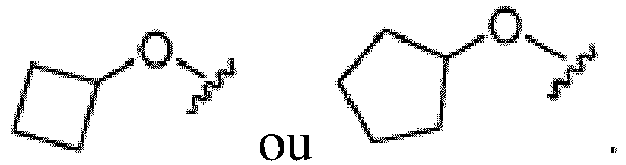
- Composition pharmaceutique selon l'une quelconque des revendications 1 à 8, dans lequel un ou plusieurs carbones du composé formule I sont deutérés.
- Composition pharmaceutique selon la revendication 1, dans lequel R1 est

- Composition pharmaceutique selon l'une quelconque des revendications 1 à 3, dans lequel -NR2aR2b est

- Composition pharmaceutique selon la revendication 1, dans laquelle le composé de formule I est :
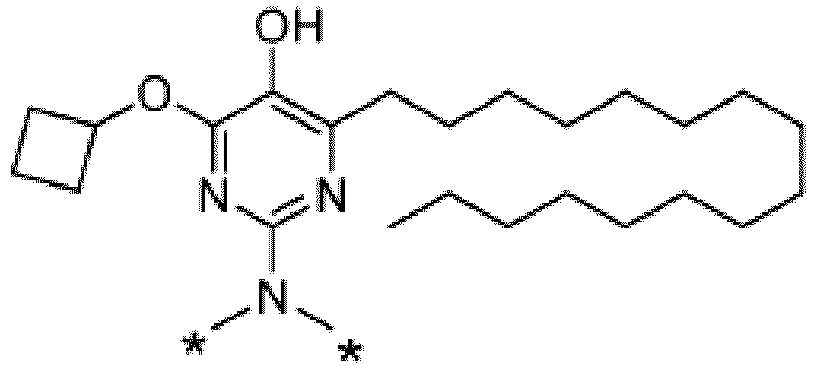
- Composition pharmaceutique selon la revendication 1, dans laquelle le composé de formule I est :




- Composé de formule I tel que décrit selon l'une quelconque des revendications 1 à 13 ou un de ses sels pharmaceutiquement acceptables, pour son utilisation dans une thérapie médicale.
- Composé de formule I tel que décrit selon l'une quelconque des revendications 1 à 13 ou un de ses sels pharmaceutiquement acceptables, pour son utilisation dans le traitement prophylactique ou thérapeutique d'une maladie mitochondriale, de l'obésité, d'une maladie cardiaque, d'un trouble du système nerveux central, d'un cancer, d'un syndrome de l'X fragile ou d'un syndrome de fatigue chronique.
Applications Claiming Priority (3)
| Application Number | Priority Date | Filing Date | Title |
|---|---|---|---|
| US201562117365P | 2015-02-17 | 2015-02-17 | |
| EP16752946.0A EP3259254B1 (fr) | 2015-02-17 | 2016-02-17 | Dérivés du 2-amino-pyrimidin-5-ol deutérés et non-deutérés pour le traitemnt de maladies mitochondriales (p.e. obésité) |
| PCT/US2016/018166 WO2016133959A1 (fr) | 2015-02-17 | 2016-02-17 | Composés thérapeutiques |
Related Parent Applications (2)
| Application Number | Title | Priority Date | Filing Date |
|---|---|---|---|
| EP16752946.0A Division-Into EP3259254B1 (fr) | 2015-02-17 | 2016-02-17 | Dérivés du 2-amino-pyrimidin-5-ol deutérés et non-deutérés pour le traitemnt de maladies mitochondriales (p.e. obésité) |
| EP16752946.0A Division EP3259254B1 (fr) | 2015-02-17 | 2016-02-17 | Dérivés du 2-amino-pyrimidin-5-ol deutérés et non-deutérés pour le traitemnt de maladies mitochondriales (p.e. obésité) |
Publications (2)
| Publication Number | Publication Date |
|---|---|
| EP3719006A1 EP3719006A1 (fr) | 2020-10-07 |
| EP3719006B1 true EP3719006B1 (fr) | 2022-04-06 |
Family
ID=56689291
Family Applications (2)
| Application Number | Title | Priority Date | Filing Date |
|---|---|---|---|
| EP20176556.7A Active EP3719006B1 (fr) | 2015-02-17 | 2016-02-17 | Compositions pharmaceutiques comprenant dérivés du 2-amino-pyrimidin-5-ol deutérés et non-deutérés pour le traitemnt de maladies mitochondriales (par ex. obésité) |
| EP16752946.0A Active EP3259254B1 (fr) | 2015-02-17 | 2016-02-17 | Dérivés du 2-amino-pyrimidin-5-ol deutérés et non-deutérés pour le traitemnt de maladies mitochondriales (p.e. obésité) |
Family Applications After (1)
| Application Number | Title | Priority Date | Filing Date |
|---|---|---|---|
| EP16752946.0A Active EP3259254B1 (fr) | 2015-02-17 | 2016-02-17 | Dérivés du 2-amino-pyrimidin-5-ol deutérés et non-deutérés pour le traitemnt de maladies mitochondriales (p.e. obésité) |
Country Status (6)
| Country | Link |
|---|---|
| US (1) | US10364227B2 (fr) |
| EP (2) | EP3719006B1 (fr) |
| JP (1) | JP6770534B2 (fr) |
| AU (1) | AU2016220153B2 (fr) |
| CA (1) | CA2976937C (fr) |
| WO (1) | WO2016133959A1 (fr) |
Families Citing this family (6)
| Publication number | Priority date | Publication date | Assignee | Title |
|---|---|---|---|---|
| CA2976937C (fr) | 2015-02-17 | 2023-04-04 | Arizona Board Of Regents On Behalf Of Arizona State University | Composes therapeutiques |
| CA2976776C (fr) | 2015-02-17 | 2023-06-20 | Arizona Board Of Regents On Behalf Of Arizona State University | Analogues de phenothiazine utilises comme agents therapeutiques mitochondriaux |
| WO2017218537A1 (fr) | 2016-06-15 | 2017-12-21 | Arizona Board Of Regents On Behalf Of Arizona State University | Composés promédicaments et profluorescents pour une imagerie mitochondriale sélective et un ciblage thérapeutique |
| US12570622B2 (en) | 2016-08-25 | 2026-03-10 | Arizona Board Of Regents On Behalf Of Arizona State University | Therapeutic compounds |
| US11390605B2 (en) * | 2016-08-25 | 2022-07-19 | Arizona Board Of Regents On Behalf Of Arizona State University | Substituted pyrimidine compounds as multifunctional radical quenchers and their uses |
| WO2018039487A1 (fr) | 2016-08-25 | 2018-03-01 | Arizona Board Of Regents On Behalf Of Arizona State University | Composés thérapeutiques |
Family Cites Families (42)
| Publication number | Priority date | Publication date | Assignee | Title |
|---|---|---|---|---|
| US3476722A (en) | 1966-08-15 | 1969-11-04 | Goodrich Co B F | Process for polymerizing acrylic acid esters |
| DE2315349A1 (de) | 1973-03-28 | 1974-10-03 | Bayer Ag | Nicht verfaerbende alterungsschutzmittel |
| JPS5168569A (en) | 1974-12-10 | 1976-06-14 | Fuji Photo Film Co Ltd | 2 2 44 torimechiru 66 hidorokishi 77 chikankuromanruino seizoho |
| FR2471052B1 (fr) | 1979-11-28 | 1985-10-11 | Kuraray Co | Photo-electrode pour cellule photo-electrochimique et son procede de fabrication |
| US4559157A (en) | 1983-04-21 | 1985-12-17 | Creative Products Resource Associates, Ltd. | Cosmetic applicator useful for skin moisturizing |
| LU84979A1 (fr) | 1983-08-30 | 1985-04-24 | Oreal | Composition cosmetique ou pharmaceutique sous forme aqueuse ou anhydre dont la phase grasse contient un polyether oligomere et polyethers oligomeres nouveaux |
| US5220042A (en) | 1984-01-26 | 1993-06-15 | Otsuka Pharmaceutical Co., Ltd. | 1,4-benzoquinone derivatives and benzene derivatives, and process for preparing the same |
| US4820508A (en) | 1987-06-23 | 1989-04-11 | Neutrogena Corporation | Skin protective composition |
| US4992478A (en) | 1988-04-04 | 1991-02-12 | Warner-Lambert Company | Antiinflammatory skin moisturizing composition and method of preparing same |
| US4938949A (en) | 1988-09-12 | 1990-07-03 | University Of New York | Treatment of damaged bone marrow and dosage units therefor |
| CA2099868C (fr) | 1991-01-31 | 2002-04-02 | Thomas Richard Belliotti | 4,6-di-tert-butyl-5-hydroxy-pyrimidines substituees |
| AU5527196A (en) | 1995-04-04 | 1996-10-23 | Brigham And Women's Hospital | Inhibiting retroviral replication |
| JP2001209176A (ja) | 1999-04-02 | 2001-08-03 | Fuji Photo Film Co Ltd | 光重合性組成物およびそれを用いた記録材料 |
| YU63802A (sh) | 2000-02-25 | 2005-06-10 | F. Hoffmann-La Roche Ag. | Modulatori adenozinskih receptora |
| WO2002000683A2 (fr) | 2000-06-23 | 2002-01-03 | Vanderbilt University | Nouveaux antioxydants a rupture de chaine |
| CA2452541A1 (fr) | 2001-07-20 | 2003-01-30 | Eli Lilly And Company | Derives d'acide trienoique (pyridinyle et pyrimidyle) agissant comme modulateurs du recepteur retinoide x |
| KR20050012796A (ko) | 2002-06-17 | 2005-02-02 | 베리피케이션 테크놀로지스, 인코포레이티드 | 리더기의 빔에 일시적으로 반응하는 광학 매체복제-방지용 물질 |
| CA2505603A1 (fr) | 2002-11-18 | 2004-06-03 | Genospectra, Inc. | Capteurs, regulateurs et composes bloques et utilisations de ceux-ci |
| US20060188866A1 (en) | 2005-02-18 | 2006-08-24 | Children's Hospital Oakland Research Institute | Diaminophenothiazine compositions and uses thereof |
| JP2008534472A (ja) * | 2005-03-22 | 2008-08-28 | ノイロサーチ アクティーゼルスカブ | カリウムチャンネル調節剤としてのピラゾリル−ピリミジン及びその医学的使用 |
| MY162313A (en) | 2006-07-11 | 2017-05-31 | Wista Lab Ltd | Methods of synthesis and/or purification of diaminophenothiazinium compounds |
| US8268849B2 (en) | 2007-09-25 | 2012-09-18 | Board Of Regents Of The University Of Nebraska | Multifunctional Antioxidants and methods of use thereof |
| CN105288619A (zh) | 2008-04-04 | 2016-02-03 | 免疫之光有限责任公司 | 用于原位光生物调节的非侵入性系统和方法 |
| US8389583B2 (en) | 2008-05-23 | 2013-03-05 | Zurex Pharma, Inc. | Antimicrobial compositions and methods of use |
| CA2784830C (fr) * | 2009-12-18 | 2018-03-27 | Sunovion Pharmaceuticals Inc. | Composes pour le traitement des troubles medies par le recepteur metabotropique 5 du glutamate, et leurs methodes d'utilisation |
| ES2687177T3 (es) * | 2010-02-19 | 2018-10-24 | Arizona Board Of Regents, A body corporate of the State of Arizona acting, For and on behalf of Arizona State University | Inhibidores de radicales multifuncionales y su uso |
| EP2606022A2 (fr) | 2010-08-16 | 2013-06-26 | Santhera Pharmaceuticals (Schweiz) AG | Nouveaux dérivés de benzoquinone et utilisation de ces dérivés en tant que modulateurs de la fonction mitochondriale |
| DE102010043379A1 (de) | 2010-11-04 | 2012-05-10 | Bayer Schering Pharma Aktiengesellschaft | Substituierte 6-Fluor-1H-Pyrazolo[4,3-b]pyridine und ihre Verwendung |
| EP2450893A1 (fr) | 2010-11-08 | 2012-05-09 | Bayer MaterialScience AG | Formule photopolymère pour la fabrication de supports holographiques dotés de polymères à matrice hautement réticulés |
| WO2012125983A1 (fr) | 2011-03-17 | 2012-09-20 | Prosetta Antiviral Inc. | Traitements antiviraux |
| WO2012138713A2 (fr) | 2011-04-04 | 2012-10-11 | Arizona Board Of Regents, A Body Corporate Of The State Of Arizona, Acting For And On Behalf Of Arizona State University | Extincteurs de luminescence radicaux multifonctionnels pour le traitement d'un dysfonctionnement mitochondrial |
| KR101270160B1 (ko) | 2011-05-16 | 2013-05-31 | 아주대학교산학협력단 | 가변색 이광자 형광프로브, 이를 이용한 미토콘드리아 내 티올 활성의 영상화 방법 및 이의 제조방법 |
| WO2013120081A1 (fr) | 2012-02-10 | 2013-08-15 | Arizona Board Of Regents, A Body Corporate Of The State Of Arizona, Acting For And On Behalf Of Arizona State University | Dérivés 1h-pyrrolo [2,3-b] pyridine et leur utilisation comme agents de trempe de radicaux |
| WO2013120040A1 (fr) * | 2012-02-10 | 2013-08-15 | Children's Medical Center Corporation | Inhibition d'une voie ciblée pour améliorer la structure, le fonctionnement et l'activité musculaires dans la dystrophie musculaire |
| WO2014055629A1 (fr) | 2012-10-03 | 2014-04-10 | Arizona Board Agents, A Body Corporate Of The State Of Arizona, Acting For And On Behalf Of Arizona | Extincteurs de radicaux multifonctionnels pour le traitement d'un dysfonctionnement mitochondrial |
| EP2906207A4 (fr) * | 2012-10-10 | 2016-10-26 | Univ Arizona State | Agents d'extinction de radicaux multifonctionnels |
| US20140275045A1 (en) | 2013-03-15 | 2014-09-18 | Edison Pharmaceuticals, Inc. | Phenazine-3-one and phenothiazine-3-one derivatives for treatment of oxidative stress disorders |
| CA2976776C (fr) | 2015-02-17 | 2023-06-20 | Arizona Board Of Regents On Behalf Of Arizona State University | Analogues de phenothiazine utilises comme agents therapeutiques mitochondriaux |
| CA2976937C (fr) | 2015-02-17 | 2023-04-04 | Arizona Board Of Regents On Behalf Of Arizona State University | Composes therapeutiques |
| WO2017218537A1 (fr) | 2016-06-15 | 2017-12-21 | Arizona Board Of Regents On Behalf Of Arizona State University | Composés promédicaments et profluorescents pour une imagerie mitochondriale sélective et un ciblage thérapeutique |
| WO2018039487A1 (fr) | 2016-08-25 | 2018-03-01 | Arizona Board Of Regents On Behalf Of Arizona State University | Composés thérapeutiques |
| US11390605B2 (en) | 2016-08-25 | 2022-07-19 | Arizona Board Of Regents On Behalf Of Arizona State University | Substituted pyrimidine compounds as multifunctional radical quenchers and their uses |
-
2016
- 2016-02-17 CA CA2976937A patent/CA2976937C/fr active Active
- 2016-02-17 AU AU2016220153A patent/AU2016220153B2/en not_active Ceased
- 2016-02-17 WO PCT/US2016/018166 patent/WO2016133959A1/fr not_active Ceased
- 2016-02-17 EP EP20176556.7A patent/EP3719006B1/fr active Active
- 2016-02-17 US US15/550,273 patent/US10364227B2/en active Active
- 2016-02-17 EP EP16752946.0A patent/EP3259254B1/fr active Active
- 2016-02-17 JP JP2017561610A patent/JP6770534B2/ja not_active Expired - Fee Related
Also Published As
| Publication number | Publication date |
|---|---|
| US10364227B2 (en) | 2019-07-30 |
| US20180319751A1 (en) | 2018-11-08 |
| EP3259254B1 (fr) | 2020-07-01 |
| CA2976937A1 (fr) | 2016-08-25 |
| EP3259254A4 (fr) | 2019-02-27 |
| WO2016133959A9 (fr) | 2018-02-22 |
| AU2016220153B2 (en) | 2020-07-02 |
| WO2016133959A1 (fr) | 2016-08-25 |
| JP6770534B2 (ja) | 2020-10-21 |
| CA2976937C (fr) | 2023-04-04 |
| EP3719006A1 (fr) | 2020-10-07 |
| AU2016220153A9 (en) | 2018-03-08 |
| JP2018505227A (ja) | 2018-02-22 |
| AU2016220153A1 (en) | 2017-09-07 |
| EP3259254A1 (fr) | 2017-12-27 |
Similar Documents
| Publication | Publication Date | Title |
|---|---|---|
| EP3259254B1 (fr) | Dérivés du 2-amino-pyrimidin-5-ol deutérés et non-deutérés pour le traitemnt de maladies mitochondriales (p.e. obésité) | |
| US12595250B2 (en) | Substituted pyrimidine compounds as multifunctional radical quenchers and their uses | |
| US9957214B2 (en) | Multifunctional radical quenchers | |
| EP3071561B1 (fr) | Composés inhibiteurs de l'autotaxine | |
| EP2536690B1 (fr) | Desactivateurs de radicaux multifonctions et leur utilisations | |
| EP2491009B1 (fr) | Dérivés de cyclopentanecarboxamide, médicaments contenant ces composés et leur utilisation | |
| EP3258938B1 (fr) | Analogues de phénothiazine utilisés comme agents thérapeutiques mitochondriaux | |
| EP0851759A1 (fr) | Composes et procedes associes | |
| JP2014510143A (ja) | ミトコンドリア機能不全の処置のための多官能性ラジカル失活剤 | |
| EP3781567B1 (fr) | Imidazopyridines comme découpleurs mitochondriaux | |
| US9440967B2 (en) | 1H-pyrrolo [2, 3 -B] pyridine derivatives and their use as radical quenchers | |
| WO2019099651A1 (fr) | Procédés d'utilisation d'activateurs de pyruvate kinase deutérés | |
| EP3753926A1 (fr) | Composé spiro utilisé en tant qu'inhibiteur de l'indoléamine-2,3-dioxygénase | |
| KR102149303B1 (ko) | 신규한 피루브산 탈수소효소 키나아제 4 저해제 | |
| HK40038883A (en) | Pharmaceutical compositions comprising deuterated and undeuterated 2-amino-pyrimidin-5-ol derivatives for treating mitochondrial diseases (e.g. obesity) | |
| EP4291552B1 (fr) | Modulateurs du complexe i | |
| HK40046949B (en) | Imidazopyridines useful as mitochondrial uncouplers | |
| HK40046949A (en) | Imidazopyridines useful as mitochondrial uncouplers |
Legal Events
| Date | Code | Title | Description |
|---|---|---|---|
| PUAI | Public reference made under article 153(3) epc to a published international application that has entered the european phase |
Free format text: ORIGINAL CODE: 0009012 |
|
| STAA | Information on the status of an ep patent application or granted ep patent |
Free format text: STATUS: THE APPLICATION HAS BEEN PUBLISHED |
|
| AC | Divisional application: reference to earlier application |
Ref document number: 3259254 Country of ref document: EP Kind code of ref document: P |
|
| AK | Designated contracting states |
Kind code of ref document: A1 Designated state(s): AL AT BE BG CH CY CZ DE DK EE ES FI FR GB GR HR HU IE IS IT LI LT LU LV MC MK MT NL NO PL PT RO RS SE SI SK SM TR |
|
| AX | Request for extension of the european patent |
Extension state: BA ME |
|
| RIN1 | Information on inventor provided before grant (corrected) |
Inventor name: ALAM, MOHAMMAD Inventor name: HECHT, SIDNEY Inventor name: CHEVALIER, ARNAUD Inventor name: CHEN, YANA Inventor name: DEY, SRILOY Inventor name: KHDOUR, OMAR |
|
| STAA | Information on the status of an ep patent application or granted ep patent |
Free format text: STATUS: REQUEST FOR EXAMINATION WAS MADE |
|
| 17P | Request for examination filed |
Effective date: 20210402 |
|
| RBV | Designated contracting states (corrected) |
Designated state(s): AL AT BE BG CH CY CZ DE DK EE ES FI FR GB GR HR HU IE IS IT LI LT LU LV MC MK MT NL NO PL PT RO RS SE SI SK SM TR |
|
| REG | Reference to a national code |
Ref country code: HK Ref legal event code: DE Ref document number: 40038883 Country of ref document: HK |
|
| RIC1 | Information provided on ipc code assigned before grant |
Ipc: A61P 25/18 20060101ALI20210716BHEP Ipc: A61P 25/16 20060101ALI20210716BHEP Ipc: A61P 35/00 20060101ALI20210716BHEP Ipc: A61P 25/28 20060101ALI20210716BHEP Ipc: A61P 25/00 20060101ALI20210716BHEP Ipc: A61P 9/10 20060101ALI20210716BHEP Ipc: A61P 9/04 20060101ALI20210716BHEP Ipc: A61P 9/00 20060101ALI20210716BHEP Ipc: A61P 3/04 20060101ALI20210716BHEP Ipc: A61K 31/506 20060101ALI20210716BHEP Ipc: A61K 31/505 20060101ALI20210716BHEP Ipc: C07D 403/04 20060101ALI20210716BHEP Ipc: C07D 401/04 20060101ALI20210716BHEP Ipc: C07D 239/52 20060101ALI20210716BHEP Ipc: C07D 239/47 20060101AFI20210716BHEP |
|
| GRAP | Despatch of communication of intention to grant a patent |
Free format text: ORIGINAL CODE: EPIDOSNIGR1 |
|
| STAA | Information on the status of an ep patent application or granted ep patent |
Free format text: STATUS: GRANT OF PATENT IS INTENDED |
|
| INTG | Intention to grant announced |
Effective date: 20210930 |
|
| GRAS | Grant fee paid |
Free format text: ORIGINAL CODE: EPIDOSNIGR3 |
|
| GRAA | (expected) grant |
Free format text: ORIGINAL CODE: 0009210 |
|
| STAA | Information on the status of an ep patent application or granted ep patent |
Free format text: STATUS: THE PATENT HAS BEEN GRANTED |
|
| AC | Divisional application: reference to earlier application |
Ref document number: 3259254 Country of ref document: EP Kind code of ref document: P |
|
| AK | Designated contracting states |
Kind code of ref document: B1 Designated state(s): AL AT BE BG CH CY CZ DE DK EE ES FI FR GB GR HR HU IE IS IT LI LT LU LV MC MK MT NL NO PL PT RO RS SE SI SK SM TR |
|
| REG | Reference to a national code |
Ref country code: GB Ref legal event code: FG4D |
|
| REG | Reference to a national code |
Ref country code: CH Ref legal event code: EP |
|
| REG | Reference to a national code |
Ref country code: AT Ref legal event code: REF Ref document number: 1481235 Country of ref document: AT Kind code of ref document: T Effective date: 20220415 |
|
| REG | Reference to a national code |
Ref country code: DE Ref legal event code: R096 Ref document number: 602016070982 Country of ref document: DE |
|
| REG | Reference to a national code |
Ref country code: IE Ref legal event code: FG4D |
|
| REG | Reference to a national code |
Ref country code: LT Ref legal event code: MG9D |
|
| REG | Reference to a national code |
Ref country code: NL Ref legal event code: MP Effective date: 20220406 |
|
| REG | Reference to a national code |
Ref country code: AT Ref legal event code: MK05 Ref document number: 1481235 Country of ref document: AT Kind code of ref document: T Effective date: 20220406 |
|
| PG25 | Lapsed in a contracting state [announced via postgrant information from national office to epo] |
Ref country code: NL Free format text: LAPSE BECAUSE OF FAILURE TO SUBMIT A TRANSLATION OF THE DESCRIPTION OR TO PAY THE FEE WITHIN THE PRESCRIBED TIME-LIMIT Effective date: 20220406 |
|
| PG25 | Lapsed in a contracting state [announced via postgrant information from national office to epo] |
Ref country code: SE Free format text: LAPSE BECAUSE OF FAILURE TO SUBMIT A TRANSLATION OF THE DESCRIPTION OR TO PAY THE FEE WITHIN THE PRESCRIBED TIME-LIMIT Effective date: 20220406 Ref country code: PT Free format text: LAPSE BECAUSE OF FAILURE TO SUBMIT A TRANSLATION OF THE DESCRIPTION OR TO PAY THE FEE WITHIN THE PRESCRIBED TIME-LIMIT Effective date: 20220808 Ref country code: NO Free format text: LAPSE BECAUSE OF FAILURE TO SUBMIT A TRANSLATION OF THE DESCRIPTION OR TO PAY THE FEE WITHIN THE PRESCRIBED TIME-LIMIT Effective date: 20220706 Ref country code: LT Free format text: LAPSE BECAUSE OF FAILURE TO SUBMIT A TRANSLATION OF THE DESCRIPTION OR TO PAY THE FEE WITHIN THE PRESCRIBED TIME-LIMIT Effective date: 20220406 Ref country code: HR Free format text: LAPSE BECAUSE OF FAILURE TO SUBMIT A TRANSLATION OF THE DESCRIPTION OR TO PAY THE FEE WITHIN THE PRESCRIBED TIME-LIMIT Effective date: 20220406 Ref country code: GR Free format text: LAPSE BECAUSE OF FAILURE TO SUBMIT A TRANSLATION OF THE DESCRIPTION OR TO PAY THE FEE WITHIN THE PRESCRIBED TIME-LIMIT Effective date: 20220707 Ref country code: FI Free format text: LAPSE BECAUSE OF FAILURE TO SUBMIT A TRANSLATION OF THE DESCRIPTION OR TO PAY THE FEE WITHIN THE PRESCRIBED TIME-LIMIT Effective date: 20220406 Ref country code: ES Free format text: LAPSE BECAUSE OF FAILURE TO SUBMIT A TRANSLATION OF THE DESCRIPTION OR TO PAY THE FEE WITHIN THE PRESCRIBED TIME-LIMIT Effective date: 20220406 Ref country code: BG Free format text: LAPSE BECAUSE OF FAILURE TO SUBMIT A TRANSLATION OF THE DESCRIPTION OR TO PAY THE FEE WITHIN THE PRESCRIBED TIME-LIMIT Effective date: 20220706 Ref country code: AT Free format text: LAPSE BECAUSE OF FAILURE TO SUBMIT A TRANSLATION OF THE DESCRIPTION OR TO PAY THE FEE WITHIN THE PRESCRIBED TIME-LIMIT Effective date: 20220406 |
|
| PG25 | Lapsed in a contracting state [announced via postgrant information from national office to epo] |
Ref country code: RS Free format text: LAPSE BECAUSE OF FAILURE TO SUBMIT A TRANSLATION OF THE DESCRIPTION OR TO PAY THE FEE WITHIN THE PRESCRIBED TIME-LIMIT Effective date: 20220406 Ref country code: PL Free format text: LAPSE BECAUSE OF FAILURE TO SUBMIT A TRANSLATION OF THE DESCRIPTION OR TO PAY THE FEE WITHIN THE PRESCRIBED TIME-LIMIT Effective date: 20220406 Ref country code: LV Free format text: LAPSE BECAUSE OF FAILURE TO SUBMIT A TRANSLATION OF THE DESCRIPTION OR TO PAY THE FEE WITHIN THE PRESCRIBED TIME-LIMIT Effective date: 20220406 Ref country code: IS Free format text: LAPSE BECAUSE OF FAILURE TO SUBMIT A TRANSLATION OF THE DESCRIPTION OR TO PAY THE FEE WITHIN THE PRESCRIBED TIME-LIMIT Effective date: 20220806 |
|
| REG | Reference to a national code |
Ref country code: DE Ref legal event code: R097 Ref document number: 602016070982 Country of ref document: DE |
|
| PG25 | Lapsed in a contracting state [announced via postgrant information from national office to epo] |
Ref country code: SM Free format text: LAPSE BECAUSE OF FAILURE TO SUBMIT A TRANSLATION OF THE DESCRIPTION OR TO PAY THE FEE WITHIN THE PRESCRIBED TIME-LIMIT Effective date: 20220406 Ref country code: SK Free format text: LAPSE BECAUSE OF FAILURE TO SUBMIT A TRANSLATION OF THE DESCRIPTION OR TO PAY THE FEE WITHIN THE PRESCRIBED TIME-LIMIT Effective date: 20220406 Ref country code: RO Free format text: LAPSE BECAUSE OF FAILURE TO SUBMIT A TRANSLATION OF THE DESCRIPTION OR TO PAY THE FEE WITHIN THE PRESCRIBED TIME-LIMIT Effective date: 20220406 Ref country code: EE Free format text: LAPSE BECAUSE OF FAILURE TO SUBMIT A TRANSLATION OF THE DESCRIPTION OR TO PAY THE FEE WITHIN THE PRESCRIBED TIME-LIMIT Effective date: 20220406 Ref country code: DK Free format text: LAPSE BECAUSE OF FAILURE TO SUBMIT A TRANSLATION OF THE DESCRIPTION OR TO PAY THE FEE WITHIN THE PRESCRIBED TIME-LIMIT Effective date: 20220406 Ref country code: CZ Free format text: LAPSE BECAUSE OF FAILURE TO SUBMIT A TRANSLATION OF THE DESCRIPTION OR TO PAY THE FEE WITHIN THE PRESCRIBED TIME-LIMIT Effective date: 20220406 |
|
| PLBE | No opposition filed within time limit |
Free format text: ORIGINAL CODE: 0009261 |
|
| STAA | Information on the status of an ep patent application or granted ep patent |
Free format text: STATUS: NO OPPOSITION FILED WITHIN TIME LIMIT |
|
| 26N | No opposition filed |
Effective date: 20230110 |
|
| PG25 | Lapsed in a contracting state [announced via postgrant information from national office to epo] |
Ref country code: AL Free format text: LAPSE BECAUSE OF FAILURE TO SUBMIT A TRANSLATION OF THE DESCRIPTION OR TO PAY THE FEE WITHIN THE PRESCRIBED TIME-LIMIT Effective date: 20220406 |
|
| PG25 | Lapsed in a contracting state [announced via postgrant information from national office to epo] |
Ref country code: SI Free format text: LAPSE BECAUSE OF FAILURE TO SUBMIT A TRANSLATION OF THE DESCRIPTION OR TO PAY THE FEE WITHIN THE PRESCRIBED TIME-LIMIT Effective date: 20220406 |
|
| P01 | Opt-out of the competence of the unified patent court (upc) registered |
Effective date: 20230526 |
|
| REG | Reference to a national code |
Ref country code: DE Ref legal event code: R082 Ref document number: 602016070982 Country of ref document: DE Representative=s name: ALPSPITZ IP ALLGAYER UND PARTNER PATENTANWAELT, DE |
|
| PG25 | Lapsed in a contracting state [announced via postgrant information from national office to epo] |
Ref country code: MC Free format text: LAPSE BECAUSE OF FAILURE TO SUBMIT A TRANSLATION OF THE DESCRIPTION OR TO PAY THE FEE WITHIN THE PRESCRIBED TIME-LIMIT Effective date: 20220406 |
|
| REG | Reference to a national code |
Ref country code: CH Ref legal event code: PL |
|
| REG | Reference to a national code |
Ref country code: BE Ref legal event code: MM Effective date: 20230228 |
|
| PG25 | Lapsed in a contracting state [announced via postgrant information from national office to epo] |
Ref country code: LU Free format text: LAPSE BECAUSE OF NON-PAYMENT OF DUE FEES Effective date: 20230217 Ref country code: LI Free format text: LAPSE BECAUSE OF NON-PAYMENT OF DUE FEES Effective date: 20230228 Ref country code: CH Free format text: LAPSE BECAUSE OF NON-PAYMENT OF DUE FEES Effective date: 20230228 |
|
| REG | Reference to a national code |
Ref country code: IE Ref legal event code: MM4A |
|
| PG25 | Lapsed in a contracting state [announced via postgrant information from national office to epo] |
Ref country code: IT Free format text: LAPSE BECAUSE OF FAILURE TO SUBMIT A TRANSLATION OF THE DESCRIPTION OR TO PAY THE FEE WITHIN THE PRESCRIBED TIME-LIMIT Effective date: 20220406 Ref country code: IE Free format text: LAPSE BECAUSE OF NON-PAYMENT OF DUE FEES Effective date: 20230217 |
|
| PG25 | Lapsed in a contracting state [announced via postgrant information from national office to epo] |
Ref country code: BE Free format text: LAPSE BECAUSE OF NON-PAYMENT OF DUE FEES Effective date: 20230228 |
|
| PG25 | Lapsed in a contracting state [announced via postgrant information from national office to epo] |
Ref country code: BG Free format text: LAPSE BECAUSE OF FAILURE TO SUBMIT A TRANSLATION OF THE DESCRIPTION OR TO PAY THE FEE WITHIN THE PRESCRIBED TIME-LIMIT Effective date: 20220406 |
|
| PG25 | Lapsed in a contracting state [announced via postgrant information from national office to epo] |
Ref country code: BG Free format text: LAPSE BECAUSE OF FAILURE TO SUBMIT A TRANSLATION OF THE DESCRIPTION OR TO PAY THE FEE WITHIN THE PRESCRIBED TIME-LIMIT Effective date: 20220406 |
|
| PG25 | Lapsed in a contracting state [announced via postgrant information from national office to epo] |
Ref country code: CY Free format text: LAPSE BECAUSE OF FAILURE TO SUBMIT A TRANSLATION OF THE DESCRIPTION OR TO PAY THE FEE WITHIN THE PRESCRIBED TIME-LIMIT; INVALID AB INITIO Effective date: 20160217 |
|
| PG25 | Lapsed in a contracting state [announced via postgrant information from national office to epo] |
Ref country code: HU Free format text: LAPSE BECAUSE OF FAILURE TO SUBMIT A TRANSLATION OF THE DESCRIPTION OR TO PAY THE FEE WITHIN THE PRESCRIBED TIME-LIMIT; INVALID AB INITIO Effective date: 20160217 |
|
| PGFP | Annual fee paid to national office [announced via postgrant information from national office to epo] |
Ref country code: DE Payment date: 20250901 Year of fee payment: 10 |
|
| PGFP | Annual fee paid to national office [announced via postgrant information from national office to epo] |
Ref country code: GB Payment date: 20250807 Year of fee payment: 10 |
|
| PGFP | Annual fee paid to national office [announced via postgrant information from national office to epo] |
Ref country code: FR Payment date: 20250804 Year of fee payment: 10 |
|
| PG25 | Lapsed in a contracting state [announced via postgrant information from national office to epo] |
Ref country code: TR Free format text: LAPSE BECAUSE OF FAILURE TO SUBMIT A TRANSLATION OF THE DESCRIPTION OR TO PAY THE FEE WITHIN THE PRESCRIBED TIME-LIMIT Effective date: 20220406 |