EP3719032A2 - Composition pour la prévention ou le traitement de la chute des cheveux - Google Patents
Composition pour la prévention ou le traitement de la chute des cheveux Download PDFInfo
- Publication number
- EP3719032A2 EP3719032A2 EP18883020.2A EP18883020A EP3719032A2 EP 3719032 A2 EP3719032 A2 EP 3719032A2 EP 18883020 A EP18883020 A EP 18883020A EP 3719032 A2 EP3719032 A2 EP 3719032A2
- Authority
- EP
- European Patent Office
- Prior art keywords
- formula
- pharmaceutical composition
- represented
- hair loss
- composition according
- Prior art date
- Legal status (The legal status is an assumption and is not a legal conclusion. Google has not performed a legal analysis and makes no representation as to the accuracy of the status listed.)
- Withdrawn
Links
- 0 CC1=CC*(C*)CC1 Chemical compound CC1=CC*(C*)CC1 0.000 description 2
Images



Classifications
-
- A—HUMAN NECESSITIES
- A61—MEDICAL OR VETERINARY SCIENCE; HYGIENE
- A61K—PREPARATIONS FOR MEDICAL, DENTAL OR TOILETRY PURPOSES
- A61K8/00—Cosmetics or similar toiletry preparations
- A61K8/18—Cosmetics or similar toiletry preparations characterised by the composition
- A61K8/30—Cosmetics or similar toiletry preparations characterised by the composition containing organic compounds
- A61K8/40—Cosmetics or similar toiletry preparations characterised by the composition containing organic compounds containing nitrogen
- A61K8/44—Aminocarboxylic acids or derivatives thereof, e.g. aminocarboxylic acids containing sulfur; Salts; Esters or N-acylated derivatives thereof
-
- A—HUMAN NECESSITIES
- A61—MEDICAL OR VETERINARY SCIENCE; HYGIENE
- A61K—PREPARATIONS FOR MEDICAL, DENTAL OR TOILETRY PURPOSES
- A61K47/00—Medicinal preparations characterised by the non-active ingredients used, e.g. carriers or inert additives; Targeting or modifying agents chemically bound to the active ingredient
- A61K47/50—Medicinal preparations characterised by the non-active ingredients used, e.g. carriers or inert additives; Targeting or modifying agents chemically bound to the active ingredient the non-active ingredient being chemically bound to the active ingredient, e.g. polymer-drug conjugates
- A61K47/51—Medicinal preparations characterised by the non-active ingredients used, e.g. carriers or inert additives; Targeting or modifying agents chemically bound to the active ingredient the non-active ingredient being chemically bound to the active ingredient, e.g. polymer-drug conjugates the non-active ingredient being a modifying agent
- A61K47/62—Medicinal preparations characterised by the non-active ingredients used, e.g. carriers or inert additives; Targeting or modifying agents chemically bound to the active ingredient the non-active ingredient being chemically bound to the active ingredient, e.g. polymer-drug conjugates the non-active ingredient being a modifying agent the modifying agent being a protein, peptide or polyamino acid
- A61K47/64—Drug-peptide, drug-protein or drug-polyamino acid conjugates, i.e. the modifying agent being a peptide, protein or polyamino acid which is covalently bonded or complexed to a therapeutically active agent
-
- A—HUMAN NECESSITIES
- A61—MEDICAL OR VETERINARY SCIENCE; HYGIENE
- A61K—PREPARATIONS FOR MEDICAL, DENTAL OR TOILETRY PURPOSES
- A61K45/00—Medicinal preparations containing active ingredients not provided for in groups A61K31/00 - A61K41/00
- A61K45/06—Mixtures of active ingredients without chemical characterisation, e.g. antiphlogistics and cardiaca
-
- A—HUMAN NECESSITIES
- A61—MEDICAL OR VETERINARY SCIENCE; HYGIENE
- A61K—PREPARATIONS FOR MEDICAL, DENTAL OR TOILETRY PURPOSES
- A61K31/00—Medicinal preparations containing organic active ingredients
- A61K31/33—Heterocyclic compounds
- A61K31/395—Heterocyclic compounds having nitrogen as a ring hetero atom, e.g. guanethidine or rifamycins
- A61K31/495—Heterocyclic compounds having nitrogen as a ring hetero atom, e.g. guanethidine or rifamycins having six-membered rings with two or more nitrogen atoms as the only ring heteroatoms, e.g. piperazine or tetrazines
- A61K31/505—Pyrimidines; Hydrogenated pyrimidines, e.g. trimethoprim
- A61K31/506—Pyrimidines; Hydrogenated pyrimidines, e.g. trimethoprim not condensed and containing further heterocyclic rings
-
- A—HUMAN NECESSITIES
- A61—MEDICAL OR VETERINARY SCIENCE; HYGIENE
- A61K—PREPARATIONS FOR MEDICAL, DENTAL OR TOILETRY PURPOSES
- A61K31/00—Medicinal preparations containing organic active ingredients
- A61K31/33—Heterocyclic compounds
- A61K31/395—Heterocyclic compounds having nitrogen as a ring hetero atom, e.g. guanethidine or rifamycins
- A61K31/495—Heterocyclic compounds having nitrogen as a ring hetero atom, e.g. guanethidine or rifamycins having six-membered rings with two or more nitrogen atoms as the only ring heteroatoms, e.g. piperazine or tetrazines
- A61K31/505—Pyrimidines; Hydrogenated pyrimidines, e.g. trimethoprim
- A61K31/519—Pyrimidines; Hydrogenated pyrimidines, e.g. trimethoprim ortho- or peri-condensed with heterocyclic rings
-
- A—HUMAN NECESSITIES
- A61—MEDICAL OR VETERINARY SCIENCE; HYGIENE
- A61K—PREPARATIONS FOR MEDICAL, DENTAL OR TOILETRY PURPOSES
- A61K31/00—Medicinal preparations containing organic active ingredients
- A61K31/33—Heterocyclic compounds
- A61K31/395—Heterocyclic compounds having nitrogen as a ring hetero atom, e.g. guanethidine or rifamycins
- A61K31/495—Heterocyclic compounds having nitrogen as a ring hetero atom, e.g. guanethidine or rifamycins having six-membered rings with two or more nitrogen atoms as the only ring heteroatoms, e.g. piperazine or tetrazines
- A61K31/505—Pyrimidines; Hydrogenated pyrimidines, e.g. trimethoprim
- A61K31/519—Pyrimidines; Hydrogenated pyrimidines, e.g. trimethoprim ortho- or peri-condensed with heterocyclic rings
- A61K31/52—Purines, e.g. adenine
-
- A—HUMAN NECESSITIES
- A61—MEDICAL OR VETERINARY SCIENCE; HYGIENE
- A61K—PREPARATIONS FOR MEDICAL, DENTAL OR TOILETRY PURPOSES
- A61K31/00—Medicinal preparations containing organic active ingredients
- A61K31/56—Compounds containing cyclopenta[a]hydrophenanthrene ring systems; Derivatives thereof, e.g. steroids
- A61K31/58—Compounds containing cyclopenta[a]hydrophenanthrene ring systems; Derivatives thereof, e.g. steroids containing heterocyclic rings, e.g. danazol, stanozolol, pancuronium or digitogenin
-
- A—HUMAN NECESSITIES
- A61—MEDICAL OR VETERINARY SCIENCE; HYGIENE
- A61K—PREPARATIONS FOR MEDICAL, DENTAL OR TOILETRY PURPOSES
- A61K8/00—Cosmetics or similar toiletry preparations
- A61K8/18—Cosmetics or similar toiletry preparations characterised by the composition
- A61K8/30—Cosmetics or similar toiletry preparations characterised by the composition containing organic compounds
- A61K8/64—Proteins; Peptides; Derivatives or degradation products thereof
-
- A—HUMAN NECESSITIES
- A61—MEDICAL OR VETERINARY SCIENCE; HYGIENE
- A61P—SPECIFIC THERAPEUTIC ACTIVITY OF CHEMICAL COMPOUNDS OR MEDICINAL PREPARATIONS
- A61P17/00—Drugs for dermatological disorders
- A61P17/14—Drugs for dermatological disorders for baldness or alopecia
-
- A—HUMAN NECESSITIES
- A61—MEDICAL OR VETERINARY SCIENCE; HYGIENE
- A61P—SPECIFIC THERAPEUTIC ACTIVITY OF CHEMICAL COMPOUNDS OR MEDICINAL PREPARATIONS
- A61P37/00—Drugs for immunological or allergic disorders
-
- A—HUMAN NECESSITIES
- A61—MEDICAL OR VETERINARY SCIENCE; HYGIENE
- A61Q—SPECIFIC USE OF COSMETICS OR SIMILAR TOILETRY PREPARATIONS
- A61Q7/00—Preparations for affecting hair growth
-
- C—CHEMISTRY; METALLURGY
- C07—ORGANIC CHEMISTRY
- C07K—PEPTIDES
- C07K19/00—Hybrid peptides, i.e. peptides covalently bound to nucleic acids, or non-covalently bound protein-protein complexes
-
- C—CHEMISTRY; METALLURGY
- C07—ORGANIC CHEMISTRY
- C07K—PEPTIDES
- C07K7/00—Peptides having 5 to 20 amino acids in a fully defined sequence; Derivatives thereof
- C07K7/04—Linear peptides containing only normal peptide links
- C07K7/08—Linear peptides containing only normal peptide links having 12 to 20 amino acids
Definitions
- the present invention relates to a composition for prevention or treatment of hair loss.
- Hair is maintained by repeating hair regrowth and hair loss following a cycle of growth phase (anagen), regression phase (catagen), and resting phase (telogen).
- the cycle may be divided into the growth phase (anagen) during which hair grows, the regression phase (catagen) during which the hair ends growing and the hair bulb shrinks, the resting phase (telogen) during which the hair papilla stops working and keeps the hair on the scalp, and a new anagen phase during which the hair papilla begins to work or develops new hair so that the old hair is caused to fall out.
- the anagen lasts 3 to 5 years for men and 4 to 6 years for women, followed by the catagen of about 30 to 45 days and the telogen of about 3 to 4 months. Then, the hair naturally falls out. At the end of the telogen, a new anagen phase, during which new hair is produced, begins.
- Hair loss is a normal phenomenon.
- a person with alopecia usually has a lot of hair at telogen, which makes a hair loss phenomenon visible.
- the characteristic of people who exhibit alopecia is miniaturization of hair. As hair loss progresses, the period of anagen is shortened, and thus the hair becomes smaller and smaller. Therefore, for the treatment of hair loss, it is important to allow hair follicles at telogen to enter anagen quickly and to increase the shortened period of anagen.
- Androgenetic alopecia which causes male sexual characteristics to develop, is a phenomenon manifested by the male hormone called testosterone, a hormone that acts on development of muscles, development of male organs, and the like during puberty.
- testosterone a hormone that acts on development of muscles, development of male organs, and the like during puberty.
- DHT dihydrotestosterone
- 5-alpha reductase an enzyme called 5-alpha reductase
- the thus converted hormone acts on hair follicles so that the hair follicles are induced to go from anagen to catagen, thereby causing hair loss. Therefore, in order to treat alopecia caused by this, a method of inhibiting production of DHT caused by 5-alpha reductase is mainly used.
- Alopecia areata is caused by an autoimmune disease, mental stress, or genetic predisposition. Alopecia areata causes round or oval patches of hair loss, and is characterized by tinea capitis or trichotillomania. Alopecia areata is fundamentally different from androgenetic alopecia in terms of cause. Also, a different treatment method such as adrenocortical hormone therapy is used for alopecia areata.
- An object of the present invention is to provide a composition for various uses, including prevention or treatment of hair loss.
- Another object of the present invention is to provide a method for preventing or treating hair loss.
- the "protein transduction domain (PTD)" is a short peptide with strong hydrophobicity which consists of 7 to 50 amino acids, and refers to a domain capable of delivering, into cells, a protein having a molecular weight of 120 kDa or more as well as DNA or RNA.
- any one selected from the group consisting of Hph-1, Mph-1, Sim-2, Tat, VP22, antennapedia (Antp), peptide-1 (Pep-1), protein transduction domain-5 (PTD-5), 11R, 7R, and cytoplasmic transduction peptide (CTP) may be used, or a macromolecule transduction domain disclosed in WO2016/028036A1 or US Laid-open Patent Application No. 2014-0186379 may be used.
- the present invention is not limited thereto, and any protein transduction domain, which is generally used in the art or commercially available, may be used without limitation.
- the protein transduction domain may be CTP represented by SEQ ID NO: 1, Hph-1 represented by SEQ ID NO: 2, or Tat represented by SEQ ID NO: 3.
- 11R and 7R refer to peptides composed of 11 and 7 arginines, respectively.
- A is a drug for prevention or treatment of hair loss and may be, for example, selected from the group consisting of finasteride, dutasteride, minoxidil, episteride, alfatradiol, tofacitinib, and ruxolitinib, with finasteride or dutasteride being preferred.
- L 1 serves to link the protein transduction domain P to the drug A (when M is a direct bond) or the cleavage site X (when M is a linker represented by Formula 2).
- the structure of L 1 may be represented by Formula 3 or 4, in Formulas 3 and 4, * is a site where a bond is formed.
- the linker L 1 may be connected to the C-terminal amino acid residue of the protein transduction domain.
- a carbonyl group of the linker L 1 when the linker L 1 is connected to the drug, a carbonyl group of the linker L 1 may be connected to an amine group (-NH 2 ), hydroxyl group (-OH), or cyano group (-CN) of the drug for prevention or treatment of hair loss.
- the carbonyl group of the linker L 1 may be connected to the amine group (-NH 2 ) of finasteride, dutasteride, or minoxidil, to the hydroxyl group (-OH) of episteride or alfatradiol, or to the cyano group (-CN) of tofacitinib or ruxolitinib.
- the linker L 1 may be connected to the cleavage site X.
- X refers to an in vivo or target site such as a peptide site that is cleaved in hair papilla cells at a hair loss area, and may be a site recognized by a cytokine, protease, or peptidase.
- the cleavage site may be a site recognized or cleaved by pro-form of interleukin-1beta (interleukin-1b) that is a cleavage cytokine, caspase (for example, caspase-1, caspase-4, caspase-5), or matrix metalloproteinases (MMPs; for example, MMP1, MMP2, MMP3, MMP7, MMP8, MMP9, MMP10, MMP11, MMP12, MMP13, MMP14, MMP15, MMP16, MMP17, MMP18, MMP19, MM20, PMM21, PMM23A, PMM23B, MMP24, MMP25, MMP26, MMP27, MMP28, and the like), which are present in vivo, in particular, in hair papilla cells.
- interleukin-1b that is a cleavage cytokine
- caspase for example, caspase-1, caspase-4, caspase-5
- the cleavage site may be a site recognized by caspase-1 or interleukin-lb which is highly expressed at a hair loss area, and more preferably may be a peptide (YVAD) represented by SEQ ID NO: 4.
- YVAD peptide represented by SEQ ID NO: 4.
- W may be a direct bond or may include at least one amino acid. That is, in the present invention, the protein transduction domain P and the linker L 1 may be directly connected to each other, or the protein transduction domain P and the linker L 1 may be connected to each other via at least one amino acid interposed therebetween.
- the amino acid may be selected from 21 amino acids, and may preferably include at least one cysteine.
- the thiol group (-SH) of the cysteine may be connected to the linker L 1 .
- M may be a direct bond or a linker represented by Formula 2. That is, in the present invention, the linker L 1 may be directly connected to the drug A, or the linker L 1 and the drug A may be connected to each other by the linker represented by Formula 2.
- the linker L 2 in the present invention serves to link the cleavage site X to the drug A.
- the structure of L 2 may be represented by Formula 5, in Formula 5, * is a site where a bond is formed.
- the linker L 2 may be connected to an amine group (-NH 2 ), hydroxyl group (-OH), or cyano group (-CN) of the drug for prevention or treatment of hair loss.
- the linker L 2 may be connected to the amine group (-NH 2 ) of finasteride, dutasteride, or minoxidil, to the hydroxyl group (-OH) of episteride or alfatradiol, or to the amine group (-NH 2 ) of tofacitinib or ruxolitinib.
- the compound represented by Formula 1 may be a compound represented by Formula 6 or 7, in Formulas 6 and 7,
- the compound represented by Formula 1 may be a compound represented by any one of Formulas 8 to 11, in Formulas 8 to 11,
- the compound represented by Formula 1 may be a compound represented by any one of Formulas 12 to 15, in Formulas 12 to 15,
- the drug for prevention or treatment of hair loss may be selected from the group consisting of finasteride, dutasteride, minoxidil, episteride, alfatradiol, tofacitinib, and ruxolitinib, with finasteride or dutasteride being preferred.
- any one selected from the group consisting of Hph-1, Mph-1, Sim-2, Tat, VP22, antennapedia (Antp), peptide-1 (Pep-1), protein transduction domain-5 (PTD-5), 11R, 7R, and cytoplasmic transduction peptide (CTP) maybe used, or a macromolecule transduction domain disclosed in WO2016/028036A1 or US Laid-open Patent Application No. 2014-0186379 may be used.
- the present invention is not limited thereto, and any protein transduction domain, which is generally used in the art or commercially available, may be used without limitation.
- the protein transduction domain may be CTP represented by SEQ ID NO: 1, Hph-1 represented by SEQ ID NO: 2, or Tat represented by SEQ ID NO: 3.
- a step of additionally extending the C-terminus of the protein transduction domain with at least one amino acid may be performed before causing the protein transduction domain to be applied to the reaction.
- the amino acid may be selected from 21 amino acids, and preferably the C-terminus of the protein transduction domain may be additionally extended with at least one cysteine.
- the order of reacting the drug for prevention or treatment of hair loss, 6-maleimidocapronic acid represented by Formula 16, and the protein transduction domain is not particularly limited.
- the drug may be first reacted with 6-M-Aleimidocaproic acid and then the resulting product may be reacted with the protein transduction domain; or the protein transduction domain may be first reacted with 6-maleimidocapronic acid and then the resulting product may be reacted with the drug.
- reaction may be performed with further addition of a compound represented by Formula 17 and a peptide (YVA) represented by SEQ ID NO: 5, in Formula 17, R 1 is a hydroxy group or halogen, wherein the halogen may be fluorine, chlorine, bromine, or iodine, with chlorine being preferred.
- YVA peptide represented by SEQ ID NO: 5
- R 1 is a hydroxy group or halogen, wherein the halogen may be fluorine, chlorine, bromine, or iodine, with chlorine being preferred.
- a step of reacting the compound represented by Formula 17 with a compound represented by Formula 18 may be performed first, in Formula 18,
- R 2 may be hydrogen or a carboxyl protecting group, wherein the carboxyl protecting group may be, but is not limited to, DMB, Bn, allyl, PfP, Me, PMB, MEM, or t-Bu.
- the order of reacting the drug for prevention or treatment of hair loss, the compound represented by Formula 16, the peptide (YVA) represented by SEQ ID NO: 5, the compound represented by Formula 17, the compound represented by Formula 18, and the protein transduction domain is not particularly limited.
- the preparation method of the present invention may comprise steps of:
- steps (2) and (3) is not particularly limited. Step (2) may be performed and then step (3) may be performed; step (3) may be performed and then step (2) may be performed; or steps (2) and (3) may be performed at the same time.
- step (1) of the present invention the compound represented by Formula 17 may be reacted with the compound represented by Formula 18 to prepare a compound represented by Formula 19, in Formula 19,
- the drug for prevention or treatment of hair loss is preferably finasteride or dutasteride.
- step (2) the amine group of finasteride may react with the carboxyl group of the compound represented by Formula 19 prepared in step (1), to form an amide bond.
- step (3) the amine group (-NH 2 ) of the N-terminus of the peptide (YVA) represented by SEQ ID NO: 5 reacts with the carboxyl group (-COOH) of the compound represented by Formula 16, to form an amide bond.
- step (4) may be performed in the presence of a solvent, wherein the solvent used may be, but is not limited to, any one or more selected from the group consisting of hexafluorophosphate benzotriazole tetramethyl uronium (HBTU), N,N-diisopropylethylamine (DIEA), and dimethylformamide (DMF).
- HBTU hexafluorophosphate benzotriazole tetramethyl uronium
- DIEA N,N-diisopropylethylamine
- DMF dimethylformamide
- step (4) the amine group (-NH 2 ) of the compound obtained in step (2) reacts with the carboxyl group (-COOH) of the compound obtained in step (3), to form an amide bond.
- R 2 in Formula 18 is a carboxyl protecting group
- an optional step of removing the carboxyl protecting group may be additionally performed.
- trifluoroacetic acid TAA
- any method used to remove a carboxyl protecting group in the art may be used without limitation.
- the C-terminus of the protein transduction domain may be additionally extended with at least one amino acid.
- the amino acid may be selected from 21 amino acids, and preferably the C-terminus of the protein transduction domain may be additionally extended with at least one cysteine.
- the protein transduction domain is preferably CTP (SEQ ID NO: 1), Hph-1 (SEQ ID NO: 2), or Tat (SEQ ID NO: 3).
- the protein transduction domain in step (5), may be added at a molar ratio of 0.5 to 5, preferably 1 to 3, with respect to the compound obtained in step (4).
- step (5) may be performed in the presence of a solvent, wherein the solvent used may be, but is not limited to, at least one of dimethyl sulfoxide (DMSO) and N-methylmorpholine (NMM).
- DMSO dimethyl sulfoxide
- NMM N-methylmorpholine
- step (5) may be performed at room temperature of 20°C to 25°C for 6 to 48 hours, preferably 12 to 24 hours.
- the preparation method of the present invention is not limited to steps (1) to (5).
- the method may comprise reacting the drug with the compound represented by Formula 19, then reacting the resulting product with the polypeptide (YVA) represented by SEQ ID NO: 5, then reacting the resulting product with the compound represented by Formula 16, and then reacting the resulting product with the protein transduction domain.
- the method may comprise reacting the protein transduction domain with the compound represented by Formula 16, then reacting the resulting product with the peptide (YVA) represented by SEQ ID NO: 5, then reacting the resulting product with the compound represented by Formula 19, and then reacting the resulting product with the drug.
- compositions for prevention, improvement, or treatment of hair loss comprising, as an active ingredient, the compound represented by Formula 1 of the present invention.
- a specific drug for prevention or treatment of hair loss and a protein transduction domain are connected to each other via a linker so that structural changes in the drug and the protein transduction domain are minimized, which in turn allows the drug, which is active, to be delivered to a target site.
- the cleavage site may be further included between the protein transduction domain and the drug.
- the drug in a case where the drug is delivered by the protein transduction domain to hair papilla cells at a target hair loss area, the drug is cleaved from the drug delivery vehicle by caspase-1 or pro-form of interleukin-1beta (interleukin-1b) which is hyperactivated at the hair loss area, thereby not only enabling the drug to exhibit activity, but also making it possible to indirectly prevent caspase-1 from converting prointerleukin-1b into IL-1b in the process so that inflammatory responses can be further suppressed.
- interleukin-1b pro-form of interleukin-1beta
- composition of the present invention may further comprise another drug for prevention or treatment of hair loss, in addition to the compound represented by Formula 1, in order to increase an effect of preventing, improving, or treating hair loss.
- another drug for prevention or treatment of hair loss for example, at least one selected from the group consisting of finasteride, dutasteride, minoxidil, episteride, alfatradiol, tofacitinib, and ruxolitinib may be used, and any drug may be included without limitation as long as the drug is another known drug for prevention or treatment of hair loss.
- the composition of the present invention may further comprise a known anti-inflammatory agent, in addition to the compound represented by Formula 1, in order to increase an effect of preventing, improving, or treating hair loss.
- the anti-inflammatory agent includes a steroidal agent such as prednisolone, a non-steroidal agent, or the like; and a pharmaceutically effective amount thereof is known in the art, and a treating physician may adjust the amount in consideration of various conditions such as severity of symptoms and administration combined with chlorogenic acid.
- the known anti-inflammatory agent is administered in combination with chlorogenic acid or a derivative thereof in this manner, not only a side effect or the like of the known anti-inflammatory agent may be alleviated by chlorogenic acid or the derivative thereof, but also a synergistic therapeutic effect may be expected.
- this known anti-inflammatory agent may be administered simultaneously or in the form of a complex preparation with chlorogenic acid of the present invention, or may be administered at a time interval from chlorogenic acid of the present invention.
- composition of the present invention may be used as a pharmaceutical composition, cosmetic composition, or food composition.
- a method for preventing, improving, or treating hair loss comprising a step of administering, to a target individual, an effective amount of the composition of the present invention.
- the "target individual” refers to an individual who has or is more likely to have hair loss.
- the "prevention” may include, without limitation, any act of blocking symptoms of hair loss or suppressing or delaying progression of the symptoms, using the pharmaceutical composition of the present invention.
- the "treatment” or “improvement” may include, without limitation, any act of ameliorating or beneficially altering symptoms of hair loss, using the pharmaceutical composition of the present invention.
- the pharmaceutical composition may be characterized by being in the form of capsules, tablets, granules, injections, ointments, powders, or beverages, and the pharmaceutical composition may be characterized by being targeted to humans.
- the pharmaceutical composition of the present invention may be formulated in the form of oral preparations such as powders, granules, capsules, tablets, and aqueous suspensions, preparations for external use, suppositories, and sterile injectable solutions, respectively, according to conventional methods, and used.
- oral preparations such as powders, granules, capsules, tablets, and aqueous suspensions, preparations for external use, suppositories, and sterile injectable solutions, respectively, according to conventional methods, and used.
- the pharmaceutical composition is not limited thereto.
- the pharmaceutical composition of the present invention may further comprise a pharmaceutically acceptable carrier.
- a binder, a glidant, a disintegrant, an excipient, a solubilizer, a dispersant, a stabilizer, a suspending agent, a pigment, a fragrance, and the like may be used for oral administration; a buffer, a preserving agent, a pain-relieving agent, a solubilizer, an isotonic agent, a stabilizer, and the like may be used in admixture for injections; and a base, an excipient, a lubricant, a preserving agent, and the like may be used for topical administration.
- the preparations of the pharmaceutical composition of the present invention may be prepared in various ways by being mixed with the pharmaceutically acceptable carrier as described above.
- the pharmaceutical composition may be formulated in the form of tablets, troches, capsules, elixirs, suspensions, syrups, wafers, or the like.
- the pharmaceutical composition may be formulated in the form of unit dosage ampoules or multiple dosage forms.
- the pharmaceutical composition may be formulated into solutions, suspensions, tablets, capsules, sustained-release preparations, or the like.
- diluents suitable for making preparations, lactose, dextrose, sucrose, sorbitol, mannitol, xylitol, erythritol, maltitol, starch, gum acacia, alginate, gelatin, calcium phosphate, calcium silicate, cellulose, methyl cellulose, microcrystalline cellulose, polyvinylpyrrolidone, water, methyl hydroxybenzoate, propyl hydroxybenzoate, talc, magnesium stearate, mineral oil, or the like may be used.
- a filler, an anti-coagulant, a lubricant, a wetting agent, a fragrance, an emulsifier, a preservative, and the like may further be included.
- the route of administration of the pharmaceutical composition of the present invention includes, but is not limited to, oral, intravenous, intramuscular, intraarterial, intramedullary, intradural, intracardiac, transdermal, subcutaneous, intraperitoneal, intranasal, intestinal, topical, sublingual, or rectal route. Oral or parenteral administration is preferred.
- parenteral includes subcutaneous, intradermal, intravenous, intramuscular, intraarticular, intrabursal, intrasternal, intradural, intralesional, and intracranial injection or infusion techniques.
- the pharmaceutical composition of the present invention may also be administered in the form of suppositories for rectal administration.
- the pharmaceutical composition of the present invention may vary depending on a variety of factors, including activity of a certain compound used, the patient's age, body weight, general health status, sex, diet, time of administration, route of administration, rate of excretion, drug combination, and severity of a certain disease to be prevented or treated.
- a dose of the pharmaceutical composition may vary depending on the patient's condition, body weight, severity of disease, drug form, route of administration, and duration, and may be appropriately selected by those skilled in the art.
- the pharmaceutical composition may be administered in an amount of 0.0001 to 50 mg/kg or 0.001 to 50 mg/kg, per day. Administration maybe made once a day or several times a day. The dose is not intended to limit the scope of the present invention in any way.
- the pharmaceutical composition according to the present invention may be formulated in the form of pills, sugar-coated tablets, capsules, liquids, gels, syrups, slurries, or suspensions.
- the cosmetic composition may be prepared in the form of skin softeners, nourishing lotions, nourishing essences, massage creams, cosmetic bath water additives, body lotions, body milks, bath oil, baby oil, baby powders, shower gels, shower creams, sun screen lotions, sun screen creams, suntan creams, skin lotions, skin creams, UV blocking cosmetics, cleansing milks, hair removing agents (for cosmetic purposes), face and body lotions, face and body creams, skin whitening creams, hand lotions, hair lotions, cosmetic creams, Jasmine oil, bath soaps, liquid soaps, cosmetic soaps, shampoos, hand cleaners, medicinal soaps (for non-medical purposes), cream soaps, facial washes, body cleansers, scalp cleansers, hair rinses, toilet soaps, tooth whitening gels, toothpastes, and the like.
- the composition of the present invention may further contain either a solvent which is conventionally used for the preparation of cosmetic compositions, or a suitable carrier, excipient, or d
- the type of solvent that may further be added to the cosmetic composition of the present invention is not particularly limited, and examples of the solvent may include water, saline, DMSO, or a combination thereof.
- examples of the carrier, excipient, or diluent include, but are not limited to, purified water, oil, wax, fatty acids, fatty acid alcohol, fatty acid esters, surfactants, humectants, thickeners, antioxidants, viscosity stabilizers, chelating agents, buffers, lower alcohol, and the like.
- the cosmetic composition of the present invention may, if necessary, contain whitening agents, moisturizing agents, vitamins, UV blocking agents, fragrances, dyes, antibiotics, antibacterial agents, and antifungal agents.
- Examples of the oil may include hydrogenated vegetable oil, castor oil, cottonseed oil, olive oil, palm kernel oil, jojoba oil, and avocado oil
- examples of the wax may include beeswax, spermaceti, carnauba wax, candelilla wax, montan wax, ceresin wax, liquid paraffin, and lanolin.
- Examples of the fatty acids may include stearic acid, linoleic acid, linolenic acid, and oleic acid; examples of the fatty acid alcohol may include cetyl alcohol, octyl dodecanol, oleyl alcohol, panthenol, lanolin alcohol, stearyl alcohol, and hexadecanol; and examples of the fatty acid esters may include isopropyl myristate, isopropyl palmitate, and butyl stearate.
- Examples of the surfactants may include cationic surfactants, anionic surfactants, and nonionic surfactants, which are known in the art. Among these, if possible, surfactants derived from natural products are preferred.
- the cosmetic composition of the present invention may contain humectants, thickeners, antioxidants, and the like, which are widely known in the cosmetic field, and the types and amounts thereof are as known in the art.
- the food composition of the present invention may be prepared in the form of various foods, for example, beverages, gums, tea, vitamin complexes, powders, granules, tablets, capsules, confections, rice cakes, bread, and the like.
- the food composition of the present invention is composed of a plant extract having little toxicity and side effects, and thus can be used without worries in a case of being ingested for a long time for preventive purposes.
- the miRNA, expression vector, or transformant of the present invention When included in the food composition, it may be added in an amount corresponding to a rate of 0.1 % to 50% of the total weight.
- the beverage contains the food composition at an indicated proportion
- the beverage may contain various flavoring agents, natural carbohydrates, or the like as additional ingredients, similarly to conventional beverages.
- the natural carbohydrates may include monosaccharides such as glucose, disaccharides such as fructose, polysaccharides such as sucrose, conventional sugars such as dextrin and cyclodextrin, and sugar alcohol such as xylitol, sorbitol, and erythritol.
- flavoring agents may include natural flavoring agents (thaumatin, stevia extracts (such as rebaudioside A), glycyrrhizin, and the like) and synthetic flavoring agents (saccharin, aspartame, and the like).
- the food composition of the present invention may contain various nutrients, vitamins, minerals (electrolytes), flavorings such as synthetic flavorings and natural flavorings, colorants, pectic acid and salts thereof, alginic acid and salts thereof, organic acids, protective colloidal thickeners, pH adjusting agents, stabilizers, preservatives, glycerin, alcohol, carbonizing agents used in carbonated beverages, and the like.
- various nutrients vitamins, minerals (electrolytes), flavorings such as synthetic flavorings and natural flavorings, colorants, pectic acid and salts thereof, alginic acid and salts thereof, organic acids, protective colloidal thickeners, pH adjusting agents, stabilizers, preservatives, glycerin, alcohol, carbonizing agents used in carbonated beverages, and the like.
- ingredients may be used individually or in combination.
- a proportion of such additives is not so important, and is generally selected from the range of 0.1 to about 50 parts by weight per 100 parts by weight of the composition of the present invention.
- the composition provided by the present invention is delivered to the skin, in particular, the composition is effectively delivered into hair papilla cells in a hair loss area, which is a target area, wherein a cytokine or enzyme highly expressed in the hair loss area causes a drug to be separated from a compound contained in the composition so that the drug effectively exhibits activity, which can ultimately promote hair growth and/or hair regrowth.
- the present invention relates to a pharmaceutical composition for prevention or treatment of hair loss, comprising, as an active ingredient, the compound represented by Formula 6 or 7, in Formulas 6 and 7,
- CTP represented by SEQ ID NO: 1 Hph-1 represented by SEQ ID NO: 2
- Tat represented by SEQ ID NO: 3 were prepared, and then the respective C-termini thereof were additionally extended with the amino acid cysteine to prepare peptides represented by SEQ ID NOs: 6, 7, and 8, respectively.
- the compound represented by Formula A1 containing finasteride was mixed in a 1: 1 molar ratio with the peptide (CTP + cysteine) represented by SEQ ID NO: 6 prepared in Preparation Example 1, in the presence of DMSO and NMM, and then reaction was allowed to proceed at room temperature for 12 hours, to prepare a final compound represented by Formula E1.
- '-Cys-S-' refers to a structure in which a thiol group contained in cysteine (Cys) is connected to pyrrolidine-2,5-dione.
- the compound represented by Formula A2 containing dutasteride was mixed in a 1: 1 molar ratio with the peptide (CTP + cysteine) represented by SEQ ID NO: 6 prepared in Preparation Example 1, in the presence of DMSO and NMM, and then reaction was allowed to proceed at room temperature for 12 hours, to prepare a final compound represented by Formula E2.
- '-Cys-S-' refers to a structure in which a thiol group contained in cysteine (Cys) is connected to pyrrolidine-2,5-dione.
- a compound represented by Formula E3 was prepared in the same method as in Example 1, except that in Example 1, the peptide (Hph-1 + cysteine) represented by SEQ ID NO: 7 was used in place of the peptide represented by SEQ ID NO: 6 used as the protein transduction domain.
- '-Cys-S-' refers to a structure in which a thiol group contained in cysteine (Cys) is connected to pyrrolidine-2,5-dione.
- a compound represented by Formula E4 was prepared in the same method as in Example 1, except that in Example 2, the peptide (Hph-1 + cysteine) represented by SEQ ID NO: 7 was used in place of the peptide represented by SEQ ID NO: 6 used as the protein transduction domain.
- '-Cys-S-' refers to a structure in which a thiol group contained in cysteine (Cys) is connected to pyrrolidine-2,5-dione.
- a compound represented by Formula E5 was prepared in the same method as in Example 1, except that in Example 2, the peptide (Tat + cysteine) represented by SEQ ID NO: 8 was used in place of the peptide represented by SEQ ID NO: 6 used as the protein transduction domain.
- '-Cys-S-' refers to a structure in which a thiol group contained in cysteine (Cys) is connected to pyrrolidine-2,5-dione.
- a compound represented by Formula E6 was prepared in the same method as in Example 1, except that in Example 2, the peptide (Tat + cysteine) represented by SEQ ID NO: 8 was used in place of the peptide represented by SEQ ID NO: 6 used as the protein transduction domain.
- '-Cys-S-' refers to a structure in which a thiol group contained in cysteine (Cys) is connected to pyrrolidine-2,5-dione.
- the compound represented by Formula B1 was reacted with finasteride represented by Formula X3 in the presence of NaH, to prepare an intermediate compound represented by Formula M1.
- 6-Maleimidocapronic acid represented by Formula X4 was reacted with a compound represented by Formula X5 (peptide represented by SEQ ID NO: 5), to prepare an intermediate compound represented by Formula M2.
- the compound represented by Formula A3 obtained in Step 1 was allowed to react under 30% TFA so that the tert-butyl group, which is a carboxyl protecting group, is removed, thereby obtaining a compound represented by Formula A4.
- the compound represented by Formula A4 obtained in Step 2 was mixed in a 1: 1 molar ratio with the peptide represented by SEQ ID NO: 6 obtained in Preparation Example 1, in the presence of DMSO and NMM, and then reaction was allowed to proceed at room temperature for 12 hours, to prepare a final compound represented by Formula E7.
- '-Cys-S-' refers to a structure in which a thiol group contained in cysteine (Cys) is connected to pyrrolidine-2,5-dione.
- the compound represented by Formula B1 was reacted with dutasteride represented by Formula X4 in the presence of NaH, to prepare an intermediate compound represented by Formula M3.
- a final compound represented by Formula E8 was prepared in the same method as in Example 7, except that in Example 7, the compound represented by Formula M3 obtained in Preparation Example 5 was used in place of the compound represented by Formula M1.
- '-Cys-S-' refers to a structure in which a thiol group contained in cysteine (Cys) is connected to pyrrolidine-2,5-dione.
- a compound represented by Formula E9 was prepared in the same method as in Example 7, except that in Step 3 of Example 7, the peptide (Hph-1 + cysteine) represented by SEQ ID NO: 7 was used in place of the peptide represented by SEQ ID NO: 6 used as the protein transduction domain.
- '-Cys-S-' refers to a structure in which a thiol group contained in cysteine (Cys) is connected to pyrrolidine-2,5-dione.
- a compound represented by Formula E10 was prepared in the same method as in Example 8, except that in Example 8, the peptide (Hph-1 + cysteine) represented by SEQ ID NO: 7 was used in place of the peptide represented by SEQ ID NO: 6 used as the protein transduction domain.
- '-Cys-S-' refers to a structure in which a thiol group contained in cysteine (Cys) is connected to pyrrolidine-2,5-dione.
- a compound represented by Formula E11 was prepared in the same method as in Example 7, except that in Step 3 of Example 7, the peptide (Tat + cysteine) represented by SEQ ID NO: 8 was used in place of the peptide represented by SEQ ID NO: 6 used as the protein transduction domain.
- '-Cys-S-' refers to a structure in which a thiol group contained in cysteine (Cys) is connected to pyrrolidine-2,5-dione.
- a compound represented by Formula E12 was prepared in the same method as in Example 8, except that in Example 8, the peptide (Tat + cysteine) represented by SEQ ID NO: 8 was used in place of the peptide represented by SEQ ID NO: 6 used as the protein transduction domain.
- '-Cys-S-' refers to a structure in which a thiol group contained in cysteine (Cys) is connected to pyrrolidine-2,5-dione.
- cultured LNCaP cells androgen receptor positive-human cancer cell line
- trypsinized cells were trypsinized with trypsin and centrifuged at 1500 rpm for 2 minutes to recover the cells. Washing with PBS was performed three times, and then the cells were evenly mixed with a pipette. Subsequently, ultrasonication was performed three times at 4°C (on ice). Thereafter, centrifugation was performed at 4°C for 15 minutes at 3000 rpm, to remove cell debris. The supernatant was used as the enzyme 5-alpha reductase. 50 uL of each sample was placed in 96 wells for ELISA kit. The compounds prepared in Examples 1 to 12 were added thereto and incubation was performed at room temperature for 30 minutes.
- FIG. 4 illustrates the results for the compounds (Examples 1, 2, 7, and 8) obtained using CTP as the protein transduction domain
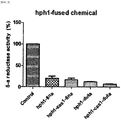
- FIG. 5 illustrates the results for the compounds (Examples 3, 4, 9, and 10) obtained using Hph-1 as the protein transduction domain
- FIG. 6 illustrates the results for the compounds (Examples 5, 6, 11, and 12) obtained using Tat as the protein transduction domain.
- the compound synthesized in the present invention has superior skin and cell permeability as compared with a case where the drug for treatment of hair loss is administered with the protein transduction domain.
- the compound of the present invention allows the drug to be effectively delivered even to cells in the dermal layer.
- the cleavage site therein is cleaved by interleukin-1b, caspase that is an enzyme, or the like which is highly expressed at a hair loss area, so that the drug can effectively exhibit activity.
- the present invention relates to a method for effectively preventing or treating hair loss.
Landscapes
- Health & Medical Sciences (AREA)
- Life Sciences & Earth Sciences (AREA)
- Chemical & Material Sciences (AREA)
- General Health & Medical Sciences (AREA)
- Animal Behavior & Ethology (AREA)
- Public Health (AREA)
- Veterinary Medicine (AREA)
- Medicinal Chemistry (AREA)
- Epidemiology (AREA)
- Pharmacology & Pharmacy (AREA)
- Proteomics, Peptides & Aminoacids (AREA)
- Organic Chemistry (AREA)
- Bioinformatics & Cheminformatics (AREA)
- Engineering & Computer Science (AREA)
- Molecular Biology (AREA)
- Biochemistry (AREA)
- Biophysics (AREA)
- Genetics & Genomics (AREA)
- Dermatology (AREA)
- Birds (AREA)
- Chemical Kinetics & Catalysis (AREA)
- General Chemical & Material Sciences (AREA)
- Nuclear Medicine, Radiotherapy & Molecular Imaging (AREA)
- Immunology (AREA)
- Cosmetics (AREA)
- Medicines That Contain Protein Lipid Enzymes And Other Medicines (AREA)
- Gastroenterology & Hepatology (AREA)
- Gerontology & Geriatric Medicine (AREA)
- Steroid Compounds (AREA)
- Pharmaceuticals Containing Other Organic And Inorganic Compounds (AREA)
- Peptides Or Proteins (AREA)
- Medicinal Preparation (AREA)
Applications Claiming Priority (2)
| Application Number | Priority Date | Filing Date | Title |
|---|---|---|---|
| KR20170164440 | 2017-12-01 | ||
| PCT/KR2018/015202 WO2019108047A2 (fr) | 2017-12-01 | 2018-12-03 | Composition pour la prévention ou le traitement de la chute des cheveux |
Publications (2)
| Publication Number | Publication Date |
|---|---|
| EP3719032A2 true EP3719032A2 (fr) | 2020-10-07 |
| EP3719032A4 EP3719032A4 (fr) | 2021-09-01 |
Family
ID=66665715
Family Applications (1)
| Application Number | Title | Priority Date | Filing Date |
|---|---|---|---|
| EP18883020.2A Withdrawn EP3719032A4 (fr) | 2017-12-01 | 2018-12-03 | Composition pour la prévention ou le traitement de la chute des cheveux |
Country Status (6)
| Country | Link |
|---|---|
| US (1) | US11890364B2 (fr) |
| EP (1) | EP3719032A4 (fr) |
| JP (1) | JP2021504407A (fr) |
| KR (3) | KR20190065178A (fr) |
| CN (1) | CN111465611B (fr) |
| WO (1) | WO2019108047A2 (fr) |
Families Citing this family (7)
| Publication number | Priority date | Publication date | Assignee | Title |
|---|---|---|---|---|
| CN114728073B (zh) * | 2019-09-19 | 2024-12-27 | 思进股份有限公司 | 药物从生物活性化合物的内化缀合物的选择性释放 |
| BR112023018676A2 (pt) | 2021-03-18 | 2023-10-10 | Seagen Inc | Conjugado anticorpo-fármaco, composição farmacêutica, métodos de tratamento de uma doença ou condição e de um câncer, e, composição de conjugado ligante-fármaco |
| CN114931546A (zh) * | 2022-04-20 | 2022-08-23 | 江苏联环药业股份有限公司 | 一种用于防治雄激素性脱发的爱普列特外用制剂 |
| KR102939348B1 (ko) * | 2022-08-11 | 2026-03-16 | 주식회사 그릿인피스 | 탈모 방지용 기능성 식품 |
| WO2024262969A1 (fr) * | 2023-06-20 | 2024-12-26 | 주식회사 아이코어바이오 | Composé à structure nouvelle à composant immobilisé pour le traitement contre la perte de cheveux et son procédé de fabrication et son procédé de production |
| KR102773375B1 (ko) * | 2024-07-31 | 2025-02-28 | 한국콜마주식회사 | 두피 침투 효과가 우수한 펩타이드 결합 리포좀 조성물과 이를 활용한 모발 성장 효능 및 탈모 완화 타겟팅 기술 |
| CN121108234B (zh) * | 2025-11-13 | 2026-02-24 | 安徽益普克医药科技发展有限公司 | 一种5α-还原酶长效衍生物及其制备方法与用途 |
Family Cites Families (16)
| Publication number | Priority date | Publication date | Assignee | Title |
|---|---|---|---|---|
| WO1999065483A1 (fr) | 1998-05-05 | 1999-12-23 | Astrazeneca Ab | Inhibiteurs mycobacteriens |
| WO2006098422A1 (fr) * | 2005-03-14 | 2006-09-21 | Nippon Medical School Foundation | Agent anti-alopecie base sur une super proteine anti-apoptotique fnk |
| WO2007140390A2 (fr) | 2006-05-31 | 2007-12-06 | The Rockefeller University | Procédé de modulation de la pousse des cheveux |
| EP2837636B1 (fr) | 2007-01-29 | 2018-04-11 | Procell Therapeutics Inc. | Nouveaux domaines de transduction de macromolecules et procedes d'identification et utilisations correspondantes |
| KR101095841B1 (ko) * | 2009-02-19 | 2011-12-21 | 주식회사 나이벡 | 표적 선택적 세포/조직 투과기능 활성을 가지는 펩타이드 및 그 용도 |
| AU2010305284A1 (en) * | 2009-10-06 | 2012-05-03 | Angiochem Inc. | Compositions and methods for the transport of therapeutic agents |
| SI2528625T1 (sl) * | 2010-04-15 | 2013-11-29 | Spirogen Sarl | Pirolobenzodiazepini in njihovi konjugati |
| KR20130112674A (ko) * | 2012-04-03 | 2013-10-14 | 연세대학교 산학협력단 | 비멘틴을 포함하는 탈모 억제 또는 발모 촉진용 조성물 |
| AU2013263349B2 (en) * | 2012-05-17 | 2016-09-08 | Extend Biosciences, Inc | Carriers for improved drug delivery |
| KR102021836B1 (ko) | 2012-11-12 | 2019-09-17 | 연세대학교 산학협력단 | 탈모증의 예방, 치료 또는 개선용 조성물 |
| US9724378B2 (en) | 2014-05-19 | 2017-08-08 | Samsung Electronics Co., Ltd. | Fusion protein comprising granzyme B and use thereof |
| CN107074910B (zh) | 2014-08-17 | 2022-02-18 | 塞里维瑞疗法公司 | 高级大分子转导域序列、编码其的多核苷酸及其用途 |
| KR20160121122A (ko) * | 2015-04-10 | 2016-10-19 | 차의과학대학교 산학협력단 | 탈모방지 또는 발모촉진용 조성물 |
| US11357783B2 (en) | 2016-03-18 | 2022-06-14 | Caregen Co., Ltd. | Conjugate of finasteride with peptide |
| US10918727B2 (en) | 2016-04-06 | 2021-02-16 | Icure Bnp Co., Ltd. | Peptide with ability to penetrate cell membrane |
| WO2017176076A1 (fr) * | 2016-04-06 | 2017-10-12 | Ewha University - Industry Collaboration Foundation | Peptide ayant la capacité de pénétrer une membrane cellulaire |
-
2018
- 2018-12-03 CN CN201880077942.6A patent/CN111465611B/zh active Active
- 2018-12-03 WO PCT/KR2018/015202 patent/WO2019108047A2/fr not_active Ceased
- 2018-12-03 KR KR1020180153792A patent/KR20190065178A/ko not_active Ceased
- 2018-12-03 US US16/768,051 patent/US11890364B2/en active Active
- 2018-12-03 EP EP18883020.2A patent/EP3719032A4/fr not_active Withdrawn
- 2018-12-03 JP JP2020529401A patent/JP2021504407A/ja active Pending
-
2020
- 2020-11-13 KR KR1020200151817A patent/KR102416354B1/ko not_active Expired - Fee Related
-
2022
- 2022-06-29 KR KR1020220079558A patent/KR20220099934A/ko not_active Ceased
Also Published As
| Publication number | Publication date |
|---|---|
| US11890364B2 (en) | 2024-02-06 |
| KR20220099934A (ko) | 2022-07-14 |
| JP2021504407A (ja) | 2021-02-15 |
| EP3719032A4 (fr) | 2021-09-01 |
| US20200352839A1 (en) | 2020-11-12 |
| KR102416354B1 (ko) | 2022-07-05 |
| CN111465611A (zh) | 2020-07-28 |
| CN111465611B (zh) | 2024-10-11 |
| WO2019108047A2 (fr) | 2019-06-06 |
| WO2019108047A3 (fr) | 2019-07-18 |
| KR20190065178A (ko) | 2019-06-11 |
| KR20200131792A (ko) | 2020-11-24 |
Similar Documents
| Publication | Publication Date | Title |
|---|---|---|
| US11890364B2 (en) | Composition for prevention or treatment of hair loss | |
| EP3800194B1 (fr) | Peptide ayant une activité de blanchiment de la peau et son utilisation | |
| KR101900748B1 (ko) | 모발 성장 촉진 효과를 가지는 펩타이드, 및 이의 용도 | |
| US20240407993A1 (en) | Peptide having anti-aging activity, and use thereof | |
| EP4166564A1 (fr) | Peptide présentant une activité de type toxine botulique et utilisation correspondante | |
| US20240391955A1 (en) | Peptide having anti-aging activity, and use thereof | |
| EP4410820A1 (fr) | Peptide ayant une activité anti-âge et son utilisation | |
| KR101886124B1 (ko) | 피부 상태 개선 및 모발 성장 촉진 효과를 가지는 펩타이드, 및 이의 용도 | |
| EP4603498A1 (fr) | Peptide ayant des activités pour favoriser la croissance des cheveux et pour inhiber la chute des cheveux et son utilisation | |
| EP4603499A1 (fr) | Peptide ayant une activité favorisant la pousse des cheveux et inhibant la chute des cheveux et son utilisation | |
| KR20250054924A (ko) | 피부 미백 활성을 갖는 펩타이드 및 이의 용도 | |
| EP4620968A1 (fr) | Peptide ayant une activité de blanchiment de la peau et ses utilisations | |
| EP4620969A1 (fr) | Peptide ayant une activité de blanchiment de la peau et son utilisation | |
| KR102954347B1 (ko) | 발모 촉진 및 탈모 억제 활성을 가지는 펩타이드 및 이의 용도 | |
| EP4620963A1 (fr) | Peptide ayant une activité de blanchiment de la peau et ses utilisations | |
| EP4620964A1 (fr) | Peptide ayant une activité de blanchiment de la peau et son utilisation | |
| US20250064707A1 (en) | Peptide having anti-aging activity, and use thereof | |
| EP4603500A1 (fr) | Peptide ayant une activité favorisant la pousse des cheveux et supprimant la chute des cheveux et son utilisation | |
| EP4603501A1 (fr) | Peptide favorisant la pousse des cheveux et inhibant la chute des cheveux et son utilisation | |
| EP4410817A1 (fr) | Peptide ayant une activité anti-vieillissement, et son utilisation | |
| KR102203424B1 (ko) | Zdhhc13 유래 생리활성 펩타이드, 및 이의 용도 | |
| EP4603502A1 (fr) | Peptide ayant des activités de promotion de la pousse des cheveux et d'inhibition de la chute des cheveux, et ses utilisations | |
| CN122003431A (zh) | 具有皮肤增白活性的肽及其用途 | |
| JP2026512119A (ja) | ヒアルロン酸分解遅延活性を有する新規ペプチド及びその用途 | |
| KR20250054923A (ko) | 피부 미백 활성을 갖는 펩타이드 및 이의 용도 |
Legal Events
| Date | Code | Title | Description |
|---|---|---|---|
| STAA | Information on the status of an ep patent application or granted ep patent |
Free format text: STATUS: THE INTERNATIONAL PUBLICATION HAS BEEN MADE |
|
| PUAI | Public reference made under article 153(3) epc to a published international application that has entered the european phase |
Free format text: ORIGINAL CODE: 0009012 |
|
| STAA | Information on the status of an ep patent application or granted ep patent |
Free format text: STATUS: REQUEST FOR EXAMINATION WAS MADE |
|
| 17P | Request for examination filed |
Effective date: 20200529 |
|
| AK | Designated contracting states |
Kind code of ref document: A2 Designated state(s): AL AT BE BG CH CY CZ DE DK EE ES FI FR GB GR HR HU IE IS IT LI LT LU LV MC MK MT NL NO PL PT RO RS SE SI SK SM TR |
|
| AX | Request for extension of the european patent |
Extension state: BA ME |
|
| DAV | Request for validation of the european patent (deleted) | ||
| DAX | Request for extension of the european patent (deleted) | ||
| A4 | Supplementary search report drawn up and despatched |
Effective date: 20210803 |
|
| RIC1 | Information provided on ipc code assigned before grant |
Ipc: C07K 7/08 20060101AFI20210728BHEP Ipc: C07K 14/00 20060101ALI20210728BHEP Ipc: C07K 19/00 20060101ALI20210728BHEP Ipc: A61K 8/44 20060101ALI20210728BHEP Ipc: A61K 31/195 20060101ALI20210728BHEP Ipc: A61K 47/64 20170101ALI20210728BHEP Ipc: A61K 47/65 20170101ALI20210728BHEP Ipc: A61P 37/00 20060101ALI20210728BHEP Ipc: A61Q 19/08 20060101ALI20210728BHEP |
|
| STAA | Information on the status of an ep patent application or granted ep patent |
Free format text: STATUS: EXAMINATION IS IN PROGRESS |
|
| 17Q | First examination report despatched |
Effective date: 20250312 |
|
| STAA | Information on the status of an ep patent application or granted ep patent |
Free format text: STATUS: THE APPLICATION HAS BEEN WITHDRAWN |
|
| 18W | Application withdrawn |
Effective date: 20250424 |