EP3719114A1 - Nouvelle microalgue et utilisation associée - Google Patents
Nouvelle microalgue et utilisation associée Download PDFInfo
- Publication number
- EP3719114A1 EP3719114A1 EP18884061.5A EP18884061A EP3719114A1 EP 3719114 A1 EP3719114 A1 EP 3719114A1 EP 18884061 A EP18884061 A EP 18884061A EP 3719114 A1 EP3719114 A1 EP 3719114A1
- Authority
- EP
- European Patent Office
- Prior art keywords
- cells
- alga
- algae
- haploid
- strain
- Prior art date
- Legal status (The legal status is an assumption and is not a legal conclusion. Google has not performed a legal analysis and makes no representation as to the accuracy of the status listed.)
- Pending
Links
Images








Classifications
-
- C—CHEMISTRY; METALLURGY
- C12—BIOCHEMISTRY; BEER; SPIRITS; WINE; VINEGAR; MICROBIOLOGY; ENZYMOLOGY; MUTATION OR GENETIC ENGINEERING
- C12N—MICROORGANISMS OR ENZYMES; COMPOSITIONS THEREOF; PROPAGATING, PRESERVING, OR MAINTAINING MICROORGANISMS; MUTATION OR GENETIC ENGINEERING; CULTURE MEDIA
- C12N1/00—Microorganisms; Compositions thereof; Processes of propagating, maintaining or preserving microorganisms or compositions thereof; Processes of preparing or isolating a composition containing a microorganism; Culture media therefor
- C12N1/12—Unicellular algae; Culture media therefor
-
- C—CHEMISTRY; METALLURGY
- C12—BIOCHEMISTRY; BEER; SPIRITS; WINE; VINEGAR; MICROBIOLOGY; ENZYMOLOGY; MUTATION OR GENETIC ENGINEERING
- C12N—MICROORGANISMS OR ENZYMES; COMPOSITIONS THEREOF; PROPAGATING, PRESERVING, OR MAINTAINING MICROORGANISMS; MUTATION OR GENETIC ENGINEERING; CULTURE MEDIA
- C12N1/00—Microorganisms; Compositions thereof; Processes of propagating, maintaining or preserving microorganisms or compositions thereof; Processes of preparing or isolating a composition containing a microorganism; Culture media therefor
- C12N1/06—Lysis of microorganisms
-
- A—HUMAN NECESSITIES
- A23—FOODS OR FOODSTUFFS; TREATMENT THEREOF, NOT COVERED BY OTHER CLASSES
- A23K—FODDER
- A23K10/00—Animal feeding-stuffs
- A23K10/10—Animal feeding-stuffs obtained by microbiological or biochemical processes
- A23K10/16—Addition of microorganisms or extracts thereof, e.g. single-cell proteins, to feeding-stuff compositions
-
- A—HUMAN NECESSITIES
- A23—FOODS OR FOODSTUFFS; TREATMENT THEREOF, NOT COVERED BY OTHER CLASSES
- A23L—FOODS, FOODSTUFFS OR NON-ALCOHOLIC BEVERAGES, NOT OTHERWISE PROVIDED FOR; PREPARATION OR TREATMENT THEREOF
- A23L17/00—Food-from-the-sea products; Fish products; Fish meal; Fish-egg substitutes; Preparation or treatment thereof
- A23L17/60—Edible seaweed
-
- A—HUMAN NECESSITIES
- A23—FOODS OR FOODSTUFFS; TREATMENT THEREOF, NOT COVERED BY OTHER CLASSES
- A23L—FOODS, FOODSTUFFS OR NON-ALCOHOLIC BEVERAGES, NOT OTHERWISE PROVIDED FOR; PREPARATION OR TREATMENT THEREOF
- A23L33/00—Modifying nutritive qualities of foods; Dietetic products; Preparation or treatment thereof
- A23L33/10—Modifying nutritive qualities of foods; Dietetic products; Preparation or treatment thereof using additives
-
- A—HUMAN NECESSITIES
- A23—FOODS OR FOODSTUFFS; TREATMENT THEREOF, NOT COVERED BY OTHER CLASSES
- A23L—FOODS, FOODSTUFFS OR NON-ALCOHOLIC BEVERAGES, NOT OTHERWISE PROVIDED FOR; PREPARATION OR TREATMENT THEREOF
- A23L33/00—Modifying nutritive qualities of foods; Dietetic products; Preparation or treatment thereof
- A23L33/10—Modifying nutritive qualities of foods; Dietetic products; Preparation or treatment thereof using additives
- A23L33/105—Plant extracts, their artificial duplicates or their derivatives
-
- A—HUMAN NECESSITIES
- A61—MEDICAL OR VETERINARY SCIENCE; HYGIENE
- A61K—PREPARATIONS FOR MEDICAL, DENTAL OR TOILETRY PURPOSES
- A61K36/00—Medicinal preparations of undetermined constitution containing material from algae, lichens, fungi or plants, or derivatives thereof, e.g. traditional herbal medicines
- A61K36/02—Algae
-
- A—HUMAN NECESSITIES
- A61—MEDICAL OR VETERINARY SCIENCE; HYGIENE
- A61K—PREPARATIONS FOR MEDICAL, DENTAL OR TOILETRY PURPOSES
- A61K8/00—Cosmetics or similar toiletry preparations
- A61K8/18—Cosmetics or similar toiletry preparations characterised by the composition
- A61K8/96—Cosmetics or similar toiletry preparations characterised by the composition containing materials, or derivatives thereof of undetermined constitution
- A61K8/97—Cosmetics or similar toiletry preparations characterised by the composition containing materials, or derivatives thereof of undetermined constitution from algae, fungi, lichens or plants; from derivatives thereof
- A61K8/9706—Algae
-
- A—HUMAN NECESSITIES
- A61—MEDICAL OR VETERINARY SCIENCE; HYGIENE
- A61K—PREPARATIONS FOR MEDICAL, DENTAL OR TOILETRY PURPOSES
- A61K8/00—Cosmetics or similar toiletry preparations
- A61K8/18—Cosmetics or similar toiletry preparations characterised by the composition
- A61K8/96—Cosmetics or similar toiletry preparations characterised by the composition containing materials, or derivatives thereof of undetermined constitution
- A61K8/97—Cosmetics or similar toiletry preparations characterised by the composition containing materials, or derivatives thereof of undetermined constitution from algae, fungi, lichens or plants; from derivatives thereof
- A61K8/9706—Algae
- A61K8/9717—Rhodophycota or Rhodophyta [red algae], e.g. Porphyra
-
- C—CHEMISTRY; METALLURGY
- C12—BIOCHEMISTRY; BEER; SPIRITS; WINE; VINEGAR; MICROBIOLOGY; ENZYMOLOGY; MUTATION OR GENETIC ENGINEERING
- C12N—MICROORGANISMS OR ENZYMES; COMPOSITIONS THEREOF; PROPAGATING, PRESERVING, OR MAINTAINING MICROORGANISMS; MUTATION OR GENETIC ENGINEERING; CULTURE MEDIA
- C12N15/00—Mutation or genetic engineering; DNA or RNA concerning genetic engineering, vectors, e.g. plasmids, or their isolation, preparation or purification; Use of hosts therefor
- C12N15/09—Recombinant DNA-technology
-
- C—CHEMISTRY; METALLURGY
- C12—BIOCHEMISTRY; BEER; SPIRITS; WINE; VINEGAR; MICROBIOLOGY; ENZYMOLOGY; MUTATION OR GENETIC ENGINEERING
- C12N—MICROORGANISMS OR ENZYMES; COMPOSITIONS THEREOF; PROPAGATING, PRESERVING, OR MAINTAINING MICROORGANISMS; MUTATION OR GENETIC ENGINEERING; CULTURE MEDIA
- C12N15/00—Mutation or genetic engineering; DNA or RNA concerning genetic engineering, vectors, e.g. plasmids, or their isolation, preparation or purification; Use of hosts therefor
- C12N15/09—Recombinant DNA-technology
- C12N15/63—Introduction of foreign genetic material using vectors; Vectors; Use of hosts therefor; Regulation of expression
- C12N15/74—Vectors or expression systems specially adapted for prokaryotic hosts other than E. coli, e.g. Lactobacillus, Micromonospora
-
- C—CHEMISTRY; METALLURGY
- C12—BIOCHEMISTRY; BEER; SPIRITS; WINE; VINEGAR; MICROBIOLOGY; ENZYMOLOGY; MUTATION OR GENETIC ENGINEERING
- C12N—MICROORGANISMS OR ENZYMES; COMPOSITIONS THEREOF; PROPAGATING, PRESERVING, OR MAINTAINING MICROORGANISMS; MUTATION OR GENETIC ENGINEERING; CULTURE MEDIA
- C12N15/00—Mutation or genetic engineering; DNA or RNA concerning genetic engineering, vectors, e.g. plasmids, or their isolation, preparation or purification; Use of hosts therefor
- C12N15/09—Recombinant DNA-technology
- C12N15/63—Introduction of foreign genetic material using vectors; Vectors; Use of hosts therefor; Regulation of expression
- C12N15/79—Vectors or expression systems specially adapted for eukaryotic hosts
-
- C—CHEMISTRY; METALLURGY
- C12—BIOCHEMISTRY; BEER; SPIRITS; WINE; VINEGAR; MICROBIOLOGY; ENZYMOLOGY; MUTATION OR GENETIC ENGINEERING
- C12P—FERMENTATION OR ENZYME-USING PROCESSES TO SYNTHESISE A DESIRED CHEMICAL COMPOUND OR COMPOSITION OR TO SEPARATE OPTICAL ISOMERS FROM A RACEMIC MIXTURE
- C12P13/00—Preparation of nitrogen-containing organic compounds
- C12P13/005—Amino acids other than alpha- or beta amino acids, e.g. gamma amino acids
-
- A—HUMAN NECESSITIES
- A23—FOODS OR FOODSTUFFS; TREATMENT THEREOF, NOT COVERED BY OTHER CLASSES
- A23V—INDEXING SCHEME RELATING TO FOODS, FOODSTUFFS OR NON-ALCOHOLIC BEVERAGES AND LACTIC OR PROPIONIC ACID BACTERIA USED IN FOODSTUFFS OR FOOD PREPARATION
- A23V2002/00—Food compositions, function of food ingredients or processes for food or foodstuffs
-
- C—CHEMISTRY; METALLURGY
- C12—BIOCHEMISTRY; BEER; SPIRITS; WINE; VINEGAR; MICROBIOLOGY; ENZYMOLOGY; MUTATION OR GENETIC ENGINEERING
- C12Q—MEASURING OR TESTING PROCESSES INVOLVING ENZYMES, NUCLEIC ACIDS OR MICROORGANISMS; COMPOSITIONS OR TEST PAPERS THEREFOR; PROCESSES OF PREPARING SUCH COMPOSITIONS; CONDITION-RESPONSIVE CONTROL IN MICROBIOLOGICAL OR ENZYMOLOGICAL PROCESSES
- C12Q1/00—Measuring or testing processes involving enzymes, nucleic acids or microorganisms; Compositions therefor; Processes of preparing such compositions
- C12Q1/68—Measuring or testing processes involving enzymes, nucleic acids or microorganisms; Compositions therefor; Processes of preparing such compositions involving nucleic acids
-
- C—CHEMISTRY; METALLURGY
- C12—BIOCHEMISTRY; BEER; SPIRITS; WINE; VINEGAR; MICROBIOLOGY; ENZYMOLOGY; MUTATION OR GENETIC ENGINEERING
- C12R—INDEXING SCHEME ASSOCIATED WITH SUBCLASSES C12C - C12Q, RELATING TO MICROORGANISMS
- C12R2001/00—Microorganisms ; Processes using microorganisms
- C12R2001/89—Algae ; Processes using algae
Definitions
- the present invention relates to novel microalgae and use for the same. More specifically, the present invention relates to novel microalgae, a method for producing the microalgae as haploids, and the like. The present invention also relates to a nutrient composition and a method for producing a nutrient.
- Microalgae have a carbon dioxide fixation capacity higher than that of terrestrial plants and do not compete with agricultural products for their growing places. Therefore, some species of the microalgae are cultured in large quantities and used industrially as feed, functional foods, cosmetic materials, and the like.
- microalgae that can be cultured outdoors in large quantities are desirable.
- the microalgae that can be cultured outdoors in large quantities need to meet requirements such as being resistant to environmental changes (light, temperature, and the like), being cultivable under conditions where other organisms cannot survive, and being able to grow to high density. Accordingly, hitherto, only a few species such as Chlorella, Euglena, Dunaliella, and Spirulina have been practically used in industry.
- One of the characteristic of the aforementioned species of algae is that they can be cultured in an environment, such as an environment with a high salt concentration, high pH, and low pH, where other organisms are difficult to grow.
- These species of algae are rich in amino acids and vitamins and are used as raw materials for functional foods or supplements.
- Cyanidiophyceae which are unicellular primitive red algae, grow preferentially in acidic hot springs containing sulfuric acid.
- Cyanidiophyceae includes Cyanidioschyzon, Cyanidium, and Galdieria (Non-Patent Document 1).
- As haploid algae only Cyanidioschyzon merolae is known (Non-Patent Document 2). Cyanidioschyzon merolae has no rigid cell wall (Non-Patent Documents 1 and 2).
- Cyanidioschyzon merolae is constituted with a very simple set of cell organelles, and the genome sequence thereof has been completely decoded. Therefore, Cyanidioschyzon merolae is used as a model organism for basic research on photosynthetic organisms, and the development of techniques for modifying the gene thereof is also making progress (Non-Patent Documents 3 and 4).
- microalgae practically used in industry have been limited to several species of algae.
- Still another object of the present invention is to provide a method for preparing haploid cells from diploid algal cells, haploid cells prepared by the method, and a haploid algal cell population obtained by culturing the haploid cells.
- Yet another object of the present invention is to provide a method for preparing diploid cells from haploid algal cells, diploid cells prepared by the method, and a diploid algal cell population obtained by culturing the diploid cells.
- Another object of the present invention is to provide algal cells transformed by self-cloning or multiple self-cloning by using haploid algal cells.
- the inventors of the present invention have found that among the algae belonging to Cyanidiophyceae, there are a generation of haploid cells and a generation of diploid cells. Furthermore, the inventors have found that among the algae belonging to Cyanidiophyceae, those having a rigid cell wall are diploid cells, and found a method for inducing cells having no rigid cell wall from the diploid cells having a rigid cell wall. Furthermore, the inventors have found that the cells having no rigid cell wall obtained by the above method are haploid cells. In addition, the inventors have found that the algae belonging to Cyanidiophyceae are rich in nutrients such as amino acids and vitamins. Based on these findings, the inventors of the present invention have accomplished the following invention.
- the present invention includes the following aspects.
- the present invention also includes the following aspects.
- the present invention also includes the following aspects.
- the present invention also includes the following aspects.
- the present invention also includes the following aspects.
- novel microalgae which can be industrially used and a method of using the microalgae. Furthermore, according to the present invention, there are provided a nutrient composition using microalgae rich in nutrients, and a method for producing a nutrient by using the microalgae.
- haploid cells from diploid algal cells, haploid cells prepared by the method, and a haploid algal cell population obtained by culturing the haploid cells.
- a method for preparing diploid cells from haploid algal cells diploid cells prepared by the method, and a diploid algal cell population obtained by culturing the diploid cells.
- the present invention also provides algal cells transformed by self-cloning or multiple self-cloning by using haploid algal cells.
- the present invention provides a nutrient composition, a nutritional supplement, a food, a feed, a pet food, a pet food, a cosmetic, and the like using the algae belonging to Cyanidiophyceae. Furthermore, the present invention provides a method for producing a nutrient using the algae belonging to Cyanidiophyceae.
- Cyanidiophyceae is classified into Rhodophyta, Cyanidiophyceae.
- Cyanidiophyceae Currently, three genera of Cyanidioschyzon, Cyanidium, and Galdieria are classified into Cyanidiophyceae.
- In the nutrient composition according to an embodiment of the present invention and the like may use algae belonging to any of the above genera.
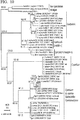
- Whether or not certain algae belong to Cyanidiophyceae can be determined, for example, by phylogenetic analysis using the base sequence of an 18S rRNA gene or a chloroplast rbcL gene.
- the phylogenetic analysis may be performed by a known method.
- haploid cell form means that the cell as an observation target has one set of genetic information
- diploid cell form means that the cell as an observation target has two sets of genetic information. Whether a certain cell is haploid or diploid can be determined by measuring the content of DNA in the cell, and also can be determined by a next-generation sequencer which will be described later.
- a diploid cell form and a haploid cell form means that a cell of an alga belonging to Cyanidiophyceae collected from nature is the haploid cell form in a case, and is the diploid cell form in another case, and also means that the cell of an alga belonging to Cyanidiophyceae which is unknown hitherto and created by the method of the present invention is the haploid cell form in a case and is the diploid cell form in another case.
- cell population of diploid cell form and “cell population of haploid cell form” may be a clonal cell population or a non-clonal cell population.
- Cyanidioschyzon merolae is known to have no rigid cell wall.
- Most of the algae belonging to Cyanidiophyceae other than Cyanidioschyzon merolae have been found as algal cells having a rigid cell wall. As shown in Examples which will be described later, it has been confirmed that these cells having a rigid cell wall are diploids.
- the haploid cell form of algal cells that do not have a rigid cell wall can be disrupted by a relatively mild treatment such as a neutralization treatment, a hypotonic treatment, or a freeze-thaw treatment.
- a relatively mild treatment such as a neutralization treatment, a hypotonic treatment, or a freeze-thaw treatment.
- "having no rigid cell wall” means that a cell is ruptured by any of the following cell rupturing treatments (A) to (C).
- the medium in a case where the algal cells are cultured cells, the medium may be removed by centrifugation or the like before each treatment is performed, and the algal cells may be washed with an isotonic solution or the like.
- examples of the isotonic solution include a pH 7 buffer containing 10% sucrose and 20 mM HEPES.
- examples of the drying treatment include drying in a refrigerator (4°C), freeze-drying, and the like.
- the drying treatment the precipitate of algal cells collected by centrifugation is used.
- the drying treatment time depends on the amount of algal cells, and is, for example, 3 days or longer.
- Whether or not the cells rupture has occurred can be determined by performing centrifugation (1,500x g, 3 minutes) on the algal cell suspension after the cell rupturing treatments (A) to (C) described above, and calculating a ratio of the mass of proteins in the centrifugal supernatant to the total mass of proteins in the algal cell suspension. Specifically, in a case where a rupture rate determined by the following equation is equal to or higher than 20%, it can be determined that cell rupture has occurred.
- Rupture rate Protein content in centrifugal supernatant mass g Total protein content in algal suspension mass g ⁇ 100 %
- the algal cells in the algal cell suspension are observed using an optical microscope (for example, at a magnification of 600X), and the ratio of ruptured cells to the total number of the algal cells is found to be about equal to or higher than 10% and preferably about equal to or higher than 20%, it may be determined that cell rupture has occurred.
- an optical microscope for example, at a magnification of 600X
- the cells ruptured by any of the cell rupturing treatments (A) to (C) are cells that are ruptured under the condition of pH 7.
- the algae belonging to Cyanidioschyzon are preferable because it is easy to extract nutrients from such algae.
- such algae also have an advantage that even though the algal cells are added as themselves to a nutritional supplement or the like which will be described later, the nutrients in the algal cells are easily absorbed after the intake of the nutritional supplement. Therefore, in the nutrient composition according to the present embodiment, the alga, which belongs to Cyanidiophyceae and undergo cell rupture under the condition of pH 7, can be suitably used.
- Whether or not certain alga undergoes cell rupture under the condition of pH 7 can be determined by immersing the algal cell in a buffer at pH 7 or the like, observing the cell for about 10 to 30 minutes, and checking whether or not the algal cells are ruptured.
- the algal cell has no a rigid cell wall
- an optical microscope for example, at a magnification of 600X
- Cyanidioschyzon merolae does not undergo cell rupture even being subjected to a mild hypotonic treatment under the condition of pH equal to or lower than 6. Therefore, whether or not cell rupture occurs due to the mild hypotonic treatment under the condition of pH equal to or lower than 6 does not exert an influence on determining whether or not the alga has a rigid cell wall.
- the algae belonging to Cyanidiophyceae is characterized by being a haploid. Furthermore, these algae have no rigid cell wall. Accordingly, the algae belonging to Cyanidioschyzon, particularly, Cyanidioschyzon merolae, can be relatively easily transformed using gene recombination techniques. For example, as shown in Examples which will be described later, by using a gene recombination technique, it is possible to prepare a transformant having an increased intracellular content of a nutrient.
- the algae belonging to Cyanidioschyzon particularly, Cyanidioschyzon merolae, but also haploid algae are preferable because these algae can be relatively easily transformed.
- the haploid cells of algae which belong to Cyanidiophyceae having a diploid cell form and a haploid cell form which will be described later, is preferable because these algae can be relatively easily transformed. Therefore, in the nutrient composition and the like according to the embodiment of the present invention, the haploid algae belonging to Cyanidiophyceae can be suitably used.
- Whether certain algae are haploid can be determined by checking the number of copies of the same loci. That is, in a case where the copy number of the same loci is 1, the algae are determined to be haploid.
- whether certain algae are haploid can also be determined using a next-generation sequencer or the like. For example, whole genome sequence reads are acquired by a next-generation sequencer or the like, the sequence reads are assembled, and then the sequence reads are mapped for the sequence obtained by the assembling. In diploids, the difference in base between alleles are found in various regions on the genome. However, in haploids, because only one allele is present, no such regions are found.
- whether the algae are haploid or diploid can be determined by measuring the DNA content in the cells.
- the DNA content in haploid cells is one half of the DNA content in diploid cells.
- Cyanidioschyzon merolae is a suitable example of algae used in the nutrient composition or the like according to the embodiment of the present invention.
- haploid of algae belonging to Cyanidioschyzon other than Cyanidioschyzon merolae that is obtained by the present invention and is unknown hitherto, but also the haploid of algae belonging to Galdieria and the haploid of algae belonging to Cyanidium are suitable examples as well.
- the algae belonging to Cyanidiophyceae can grow to high density (about 30 g/L) under high temperature (30°C to 55°C) and acidic (pH 0.1 to 3.0) conditions. Under such a high-temperature and acidic environment, other organisms are difficult to grow. Therefore, the algae belonging to Cyanidiophyceae are suitable for being cultured outdoors in large quantities.
- the algae belonging to Cyanidiophyceae can grow not only under high-temperature and acidic conditions but also under a relatively wide range of environmental conditions such as a medium-temperature environment (15°C to 30°C) and a neutral environment (about pH 6). Therefore, the culture conditions can be changed according to the region and the season. In this respect, the algae belonging to Cyanidiophyceae are also suitable for being cultured outdoors in large quantities.
- the algae belonging to Cyanidiophyceae exhibits high salt tolerance and can grow under high salt (300 mM NaCl) conditions.
- the range of optical intensity at which the algae can grow is wide.
- the algae can grow to high density in a range of 5 to 1,500 ⁇ mol/m 2 s, and can grow under strong light.
- the algae belonging to Cyanidiophyceae are rich in nutrients such as amino acids, vitamins, proteins, lipids, and dietary fiber. Particularly, it has been confirmed that the algae belonging to Cyanidiophyceae contain amino acids and vitamins at a higher concentration compared to the conventionally used algae (Chlorella, Euglena, and Spirulina). Furthermore, the composition of components of the algae is also specific. Therefore, by using the algae belonging to Cyanidiophyceae, it is possible to manufacture a nutrient composition, a nutritional supplement, and the like rich in nutrients selected from the group consisting of amino acids, vitamins, proteins, lipids, and dietary fiber, particularly, nutrients such as amino acids or vitamins.
- amino acids mean organic compounds having an amino group and a carboxy group.
- Examples of the amino acids contained in the algae belonging to Cyanidiophyceae include isoleucine, leucine, lysine, methionine, cystine, phenylalanine, tyrosine, threonine, tryptophan, valine, arginine, histidine, alanine, aspartic acid, glutamic acid, glycine, proline, serine, ⁇ -anunobutyric acid, and the like.
- One of the characteristics of the algae belonging to Cyanidiophyceae is that the total amino acid content thereof is higher than that of the conventionally used algae. Furthermore, the content of each of the amino acids in the algae belonging to Cyanidiophyceae tends to be high overall.
- the total content of amino acids in the algae belonging to Cyanidiophyceae is 60 to 80 g/100 g based on dry weight.
- algae belonging to Cyanidiophyceae are also characterized by containing ⁇ -anunobutyric acid.
- the content of ⁇ -anunobutyric acid in the algae belonging to Cyanidiophyceae is 0.1 to 0.3 g/100 g based on dry weight.
- total amino acid content means a value obtained by adding up the contents of isoleucine, leucine, lysine, methionine, cystine, phenylalanine, tyrosine, threonine, tryptophan, valine, arginine, histidine, alanine, aspartic acid, glutamic acid, glycine, proline, and serine.
- vitamins mean organic compounds other than carbohydrates, proteins, and lipids among nutrients necessary for the survival of an organism.
- Examples of the vitamins contained in the algae belonging to Cyanidiophyceae include vitamin A, ⁇ -carotene, vitamin B 1 , vitamin B 2 , vitamin B 6 , vitamin C, vitamin E, vitamin K 1 , vitamin K 2 , niacin, inositol, folic acid, biotin, and the like.
- One of the characteristics of the algae belonging to Cyanidiophyceae is that the content of ⁇ -carotene, vitamin C, vitamin E, vitamin K 1 , vitamin K 2 , and folic acid among the above vitamins is particularly higher in the algae than in the conventionally used algae.
- the content of each of the vitamins in the algae belonging to Cyanidiophyceae is 200 to 250 mg/100 g based on dry weight
- the content of vitamin C is 40 to 70 mg/100 g based on dry weight
- the content of vitamin E is 150 to 180 mg/100 g based on dry weight
- the content of vitamin K 1 is 3,000 to 5,000 ⁇ g/100 g based on dry weight
- the content of vitamin K 2 is 4,000 to 7,000 ⁇ g/100 g based on dry weight
- the content of folic acid is 3,500 to 6,500 ⁇ g/100 g based on dry weight.
- the nutrients described above can be efficiently absorbed into the body of the human being or the non-human animal.
- the extract can be prepared by a simple operation such as the cell rupturing treatments (A) to (C) described above.
- the algae belonging to Cyanidiophyceae can preferentially grow in an acidic environment of sulfuric acid such as an acidic hot spring containing sulfuric acid. Therefore, the algae can be obtained by being isolated from the acidic hot spring containing sulfuric acid and the like.
- the algae belonging to Cyanidiophyceae may be obtained from a culture collection and the like.
- Cyanidioschyzon merolae can be obtained from the National Institute for Environmental Studies MICROBIAL CULTURE COLLECTION (16-2 Onogawa, Tsukuba-shi, Ibaraki prefecture, Japan), American Type Culture Collection (ATCC; 10801 University Boulevard Manassas, VA 20110 USA), and the like.
- the algae belonging to Cyanidiophyceae can be cultured using a medium for culturing microalgae.
- the medium is not particularly limited, and examples thereof include an inorganic salt medium containing a nitrogen source, a phosphorus source, trace elements (such as zinc, boron, cobalt, copper, manganese, molybdenum, and iron), and the like.
- the nitrogen source include an ammonium salt, a nitrate, and a nitrite, and the like.
- the phosphorus source include a phosphate and the like.
- Examples of the aforementioned medium include a 2X Allen medium ( Allen MB. Arch. Microbiol.
- the pH condition can be, for example, pH 1.0 to 6.0, and is preferably pH 1.0 to 5.0.
- the pH of such conditions is, for example, 1.0 to 3.0.
- the temperature condition can be, for example, 15°C to 50°C, and is preferably 30°C to 50°C. In a case where the algae are cultured outdoors, in order to prevent the growth of other organisms, it is preferable to culture the algae at a high temperature.
- the temperature of such condition is, for example, 35°C to 50°C.
- the light intensity can be, for example, 5 to 2,000 ⁇ mol/m 2 s, and is preferably 5 to 1,500 ⁇ mol/m 2 s.
- the algae may be cultured under sunlight.
- the algae may be cultured under continuous light or go through a light-dark cycle (10L:14D or the like).
- the algae belonging to Cyanidiophyceae grown by culturing can be used in the nutritional supplement of the present embodiment.
- the algae belonging to Cyanidiophyceae are not limited to those isolated from the natural world, and may be algae obtained by the mutation of natural algae belonging to Cyanidiophyceae.
- the mutation may be spontaneous mutation or induced mutation.
- Cyanidioschyzon merolae isolated from the natural world is haploid cells.
- the genome size of Cyanidioschyzon merolae is small (about 16 Mbp) and the genomic sequence thereof has been completely decoded ( Matsuzaki M et al., Nature. 2004 Apr 8; 428 (6983): 653-7 .), Cyanidioschyzon merolae can be easily genetically modified.
- a transformant produced by genetically modifying Cyanidioschyzon merolae is a suitable example of the algae belonging to Cyanidiophyceae.
- the transformant of the algae belonging to Cyanidiophyceae may be used in the nutrient composition and the like according to the embodiment of the present invention as algae belonging to Cyanidiophyceae, as long as the transformant can be genetically modified.
- the algae belonging to Galdieria and the algae belonging to Cyanidium isolated from nature are diploid cells having a rigid cell wall, these can be made into haploid cells by the method of the present invention. Therefore, these algae have a haploid cell form and a diploid cell form.
- Cells in any form may be used as a cell population.
- the cells that do not have a rigid cell wall just as Cyanidioschyzon merolae can be easily genetically modified.
- the transformant which is obtained by genetically modifying haploid cells of the algae belonging to Galdieria or Cyanidium or cells having no rigid cell wall, is also a suitable example of the algae belonging to Cyanidiophyceae.
- diploids belonging to Cyanidiophyceae which do not have a rigid cell wall are also preferable.
- the transformant of the algae belonging to Cyanidiophyceae is not particularly limited, and examples thereof include a transformant having an increased intracellular content of at least one kind of nutrient.
- a transformant of which the intracellular content is to be increased for example, at least one kind of nutrient selected from the group consisting of amino acids, vitamins, proteins, lipids, and dietary fiber is suitable. That is, for example, a transformant of the algae belonging to Cyanidiophyceae is preferable, which has a higher intracellular content of at least one kind of nutrient selected from the group consisting of amino acids, vitamins, proteins, lipids, and dietary fiber compared to a wild-type strain.
- wild-type strain means an original cell that is a target of transformation but has not yet been transformed.
- At least one kind of nutrient selected from the group consisting of amino acids and vitamins is preferable.
- Such transformant has a higher intracellular content of a specific nutrient compared to the wild-type strain. Therefore, by using the transformant, it is possible to prepare a nutrient composition, a nutritional supplement, and the like rich in the nutrient.
- the method for increasing the intracellular content of the nutrient is not particularly limited.
- the algae may be genetically modified such that the expression amount of an enzyme catalyzing any of the reactions in the synthesis pathway of the nutrient of interest is increased.
- an enzyme gene a gene encoding the enzyme
- a method of introducing a gene encoding a factor that promotes the expression of the enzyme gene a method of disrupting a gene encoding a factor that inhibits the expression of the enzyme gene, and the like.
- a promoter of a gene expressed in large amounts in the algal cell into which the gene will be introduced may be used.
- the enzyme is not particularly limited as long as it is an enzyme that catalyzes any of the reactions in the synthesis pathway of the nutrient of interest.
- the enzyme include a synthase of the nutrient of interest, a synthase of a precursor of the nutrient of interest, and the like.
- Precursor of the nutrient may be any of the compounds that are generated at the stage before the nutrient is synthesized in the synthesis pathway of the nutrient of interest.
- the method for increasing the intracellular content of a nutrient may be, for example, genetic modification for reducing the expression amount of a factor (hereinafter, referred to as "inhibitory factor") that inhibits any of the reactions in the synthesis pathway of the nutrient of interest.
- a factor hereinafter, referred to as "inhibitory factor”
- known methods can be used without particular limitation. Examples of such a method include a method of disrupting a gene encoding the inhibitory factor, a method of introducing a gene encoding a factor that inhibits the expression of a gene encoding the inhibitory factor, a method of disrupting a gene encoding a factor that promotes the expression of a gene encoding the inhibitory factor, and the like.
- glutamate decarboxylase is a synthase of ⁇ -anunobutyric acid. Therefore, by genetically modifying the algae belonging to Cyanidiophyceae such that the expression amount of the glutamate decarboxylase is increased, it is possible to obtain a transformant having an increased intracellular content of ⁇ -anunobutyric acid.
- Homogentisate phytyltransferase and tocopherol cyclase are enzymes that catalyze reactions in a vitamin E biosynthesis pathway.
- the homogentisate phytyltransferase is an enzyme that synthesizes 2-methyl-6-phytylbenzoquinone
- the tocopherol cyclase is an enzyme that synthesizes ⁇ -tocotrienol. Therefore, by genetically modifying the algae belonging to Cyanidiophyceae such that the expression amount of either or both of the enzyme genes described above, it is possible to obtain a transformant having an increased intracellular content of vitamin E. In order to increase the intracellular content of vitamin E, the expression amount of an enzyme that catalyzes another reaction in the vitamin E biosynthesis pathway may be increased.
- the intracellular content of the nutrient can be increased.
- sequence information of these synthetic enzyme genes can be obtained from a known sequence database such as GenBank.
- the sequence of the glutamate decarboxylase gene (CMF072C) of Cyanidioschyzon merolae is shown in SEQ ID NO: 3, and the amino acid sequence thereof is shown in SEQ ID NO: 4.
- CCN202C homogentisate phytyltransferase gene
- CML326C amino acid sequence of Cyanidioschyzon merolae
- amino acid sequence thereof is shown in SEQ ID NO: 8.
- a synthetic enzyme gene for example, the glutamate decarboxylase gene
- the promoter used for the gene to be introduced may be the promoter of the synthetic enzyme gene or the promoter of another gene.
- a promoter of a gene that is expressed in large amounts in the algal cell into which the gene is to be introduced is preferable.
- examples of such a promoter include a promoter of APCC (CMO250C) (for example, -600 to -1; "-1" indicates a nucleotide immediately before the start codon), and a promoter of CPCC (CMP166C), a promoter of Catalase (CMI050C), and the like.
- CMO250C APCC
- -1 indicates a nucleotide immediately before the start codon
- CMP166C a promoter of CPCC
- CMI050C Catalase
- the sequence information of these promoters can be obtained from a known sequence database such as GenBank.
- GenBank The promoter sequence of APCC of Cyanidioschyzon merolae is shown in SEQ ID NO: 9
- the promoter sequence of CPCC (CMP166C) of Cyanidioschyzon merolae is shown in SEQ ID NO: 10
- the promoter sequence of Catalase (CM1050C) of Cyanidioschyzon merolae is shown in SEQ ID NO: 11.
- Cyanidioschyzon merolae is algae capable of self-cloning ( Fujiwara et al., PLoS One. 2013 Sep 5; 8 (9): e73608 ).
- Self-cloning refers to a gene recombination technique only using, as nucleic acids to be introduced into a cell, (1) a nucleic acid of an organism that taxonomically belongs to the same species as the organism from which the cell is derived, and (2) a nucleic acid of an organism belonging to a species that exchanges nucleic acids with a taxonomic species, to which the organism as an origin of the cell belongs, under the natural conditions.
- the transformants prepared by self-cloning are excluded from the organisms to be subjected to genetic modification listed in the Cartagena Protocol. Therefore, the transformants can also be cultured outdoors. Accordingly, the transformant of the algae belonging to Cyanidiophyceae that is generated by self-cloning is suitable as algae used in the nutritional supplement of the present embodiment. Particularly, the transformant of Cyanidioschyzon merolae that is generated by self-cloning is preferable.
- the method for performing self-cloning in Cyanidioschyzon merolae is not particularly limited, and examples thereof include a method using a URA5.3 gene (CMK046C) as a selection marker.
- Cyanidioschyzon merolae includes Cyanidioschyzon merolae M4 ( Minoda et al., Plant Cell Physiol. 2004 Jun; 45 (6): 667-71 .) which is a uracil auxotrophic mutant. Cyanidioschyzon merolae M4 has a mutation in the URA5.3 gene and cannot synthesize uracil. Accordingly, Cyanidioschyzon merolae M4 cannot grow in a uracil-free medium.
- self-cloning can be performed using Cyanidioschyzon merolae M4 as a parent strain and using the URA5.3 gene of a wild-type strain as a selection marker. More specifically, an arbitrary gene set of Cyanidioschyzon merolae is linked to a URA5.3 gene set of a wild-type strain of Cyanidioschyzon merolae (for example, a 10D strain), and the resulting gene is introduced into Cyanidioschyzon merolae M4. Thereafter, by culturing the cells in a uracil-free medium, it is possible to obtain cells into which an arbitrary gene set has been introduced.
- Gene set means a set in which an arbitrary promoter, ORF of a target gene, and arbitrary 3'UTR are linked to each other.
- the 3'UTR is not particularly limited, and may be 3'UTR of a target gene or 3'UTR of another gene. As the 3'UTR, for example, 3'UTR of ⁇ -tubulin is frequently used.
- the selection marker is not limited to the URA5.3 gene, and may be a gene related to other types of auxotrophy.
- the genetic modification is performed using the auxotrophy-related gene as a selection marker as described above, by knocking out the auxotrophy-related gene introduced into the algal cells, genetic modification can be performed again by using the same auxotrophy-related gene as a selection marker. That is, it is possible to perform multiple self-cloning.
- known knockout techniques may be used without particular limitation. Examples of the knockout techniques include homologous recombination, a gene editing technique, and the like.
- the URA5.3 gene knockout strain By being cultured in a medium containing uracil and 5-fluoroorotic acid (5-FOA), the URA5.3 gene knockout strain can be selected. This is because in a strain that normally expresses the URA5.3 gene, 5-FOA is converted into toxic 5-fluorouracil by the gene product of the URA5.3 gene. In a case where the URA5.3 knockout strain obtained as above is used as a parent strain, self-cloning can be performed again by using the URA5.3 gene as a selection marker. By repeating the same operation, it is possible to perform self-cloning a desired number of times.
- uracil and 5-fluoroorotic acid 5-fluoroorotic acid
- known methods can be used without particular limitation. Examples thereof include a polyethylene glycol method, a lipofection method, a microinjection method, a DEAE dextran method, a gene gun method, an electroporation method, a calcium phosphate method, and the like.
- the nucleic acid to be introduced may be inserted into any of a nuclear genome, a chloroplast genome, and a mitochondrial genome.
- the nucleic acid to be introduced may be inserted into a specific position in the genome or randomly inserted into the genome.
- the method for inserting the nucleic acid to be introduced into a specific position in the genome homologous recombination can be used.
- Cyanidioschyzon merolae because the entire genome sequence thereof has been completely mapped ( Matsuzaki M et al., Nature. 2004 Apr 8; 428 (6983): 653-7 .)
- the nucleic acid to be introduced can be inserted into a desired position on the genome.
- the transgene insertion position in Cyanidioschyzon merolae examples include, for example, a region between CMD184C and CMD185C.
- mutants of the algae belonging to Cyanidiophyceae for example, the following (1) to (18) are preferable, but are not limited thereto.
- operably linked means that a first base sequence is disposed sufficiently close to a second base sequence and can exert an influence on the second base sequence or on a region which is under the control of the second base sequence.
- gene operably linked to a promoter means that the gene is linked so as to be expressed under the control of the promoter.
- “Expressible form” refers to a form where a gene can be transcribed and translated in a cell into which the gene has been introduced.
- An extract of algae according to an embodiment of the present invention refers to a substance extracted from one kind of algae belonging to Cyanidiophyceae.
- the extract may contain a substance extracted from two or more kinds of algae belonging to Cyanidiophyceae or undisrupted cells of Cyanidiophyceae, and an extract and cells of algae that do not belong to Cyanidiophyceae.
- the extract of the algae belonging to Cyanidiophyceae may be used instead of or together with the algae belonging to Cyanidiophyceae.
- the extract of the algae belonging to Cyanidiophyceae can also be rich in nutrients such as amino acids, vitamins, proteins, lipids, and dietary fiber, just as the algae belonging to Cyanidiophyceae. Therefore, the present invention also provides a nutrient composition, a nutritional supplement, a food, a feed or a pet food, a cosmetic, and the like using the extract of the algae belonging to Cyanidiophyceae.
- extract of the algae belonging to Cyanidiophyceae refers to a substance obtained by extracting intracellular components by performing a physical treatment or a chemical treatment on the cells of the algae belonging to Cyanidiophyceae.
- the extract of the algae belonging to Cyanidiophyceae may be a cell disruption product obtained by disrupting the cells of the algae belonging to Cyanidiophyceae by a physical treatment or a chemical treatment.
- the extract of algae belonging to Cyanidiophyceae may be a substance obtained by concentrating the cell disruption product, a substance obtained by removing solid contents from the cell disruption product, or a substance obtained by removing some components from the cell disruption product.
- the method of the physical treatment or the chemical treatment for the cells is not particularly limited, and the methods generally used for cell disruption can be used.
- Examples of the physical treatment include cell disruption performed by means of glass beads, a mortar, an ultrasonic treatment, a French press, a homogenizer, and the like.
- Examples of the chemical treatment include a neutralization treatment, a hypotonic treatment, a freeze-thaw treatment, a dry and swelling treatment, and the like. More specifically, examples thereof include the cell rupturing treatments (A) to (C) described above.
- the concentration method is not particularly limited, and a generally used concentration method may be used.
- concentration method for the cell disruption product include drying, freeze-drying, drying under reduced pressure, and the like.
- the solid content-removing method is not particularly limited, and it is possible to use a method that is generally used for removing solid contents and the like.
- Examples of the solid content-removing method include filtration, centrifugation, and the like.
- the separation method is not particularly limited, and it is possible to use a method generally used for separation, purification, and the like of biochemical substances.
- the separation method include salting out, dialysis, solvent extraction, adsorption, column chromatography, ion exchange chromatography, and the like. Each of these methods may be used singly. Alternatively, two or more kinds of treatments may be used in combination.
- a substance purified into a single component is excluded from "extract of the algae belonging to Cyanidiophyceae".
- the extract of the algae belonging to Cyanidiophyceae preferably contains 10 or more kinds of cell components of the algae belonging to Cyanidiophyceae, more preferably contains 15 or more kinds of the cell components described above, and even more preferably contains 20 or more kinds of the cell components described above.
- the extract of the algae belonging to Cyanidiophyceae preferably contains a nutrient selected from the group consisting of amino acids, vitamins, proteins, lipids, and dietary fiber, and more preferably contains a nutrient selected from the group consisting of amino acids and vitamins.
- amino acids include isoleucine, leucine, lysine, methionine, cystine, phenylalanine, tyrosine, threonine, tryptophan, valine, arginine, histidine, alanine, aspartic acid, glutamic acid, glycine, proline, serine, ⁇ -anunobutyric acid, and the like.
- vitamins include vitamin A, ⁇ -carotene, vitamin B 1 , vitamin B 2 , vitamin B 6 , vitamin C, vitamin E, vitamin K 1 , vitamin K 2 , niacin, inositol, folic acid, biotin, and the like.
- the present invention provides an alga which belongs to Cyanidiophyceae and having a diploid cell form and a haploid cell form.
- the alga of the present embodiment is that the alga belong to Cyanidiophyceae and having diploid cell form and a haploid cell form.
- the algae belonging to Cyanidioschyzon include haploid algae.
- no algae have been known so far which have both the diploid cell form and haploid cell form. That is, from nature, Cyanidioschyzon merolae belonging to Cyanidioschyzon which belongs to Cyanidiophyceae has been collected only in the form of haploids.
- the present invention provides algae, which are haploid cells that are created from diploid cells of the algae belonging to Cyanidiophyceae, and algae which are diploid cells generated from two or more haploid cells.
- the algae described above will be expressed using "having both a diploid cell form and a haploid cell form”.
- the algae of the present embodiment having both a diploid cell form and a haploid cell form.
- the haploid cells are generated by the meiosis of the diploid cells. It is considered that by the mating of two haploid cells, diploid cells may be generated. Therefore, in the algae of the present embodiment, by mating haploid cells having desired traits, diploid cells having the traits of the cells can be prepared.
- a method is considered in which a plurality of transformants having any traits are prepared using the haploid cells, and the transformants having any traits are crossing so as to prepare diploids having all the traits of the transformants.
- the algae of the present embodiment can grow in a cell population consisting only of haploid cells.
- the algae of the present embodiment can grow in a cell population consisting only of diploid cells.
- haploid cells from diploid cells and to create diploid cells from two or more kinds of haploid cells.
- haploid cells are created from diploid cells or in a case where diploid cells are created from haploid cells, sometimes the haploid cells and the diploid cells are mixed together.
- the diploid cells are cultured until they reach a stationary phase, and whether cells in the form different from the diploid appear is checked when culturing is continued in the stationary phase.
- the cells in the form different from the diploid appear the cells are collected, and whether they are haploid cells is checked. In a case where the cells are found to be haploid cells as a result, it is possible to determine that the algae having both a diploid cell form and a haploid cell form.
- the cells in either of the cell forms do not have a rigid cell wall.
- the cells having no rigid cell wall can be disrupted by a relatively mild treatment such as a neutralization treatment, a hypotonic treatment, a freeze-thaw treatment, or the like. Whether or not the algae have a rigid cell wall can be determined by the method described in "[Alga belonging to Cyanidiophyceae]" described above.
- the diploid cells or the haploid cells do not have a rigid cell wall. It is more preferable that the haploid cells do not have a rigid cell wall. That is, it is preferable that the haploid cells are ruptured by any of the cell rupturing treatments (A) to (C) described above.
- the cell wall is not observed by the observation with an optical microscope (for example, at a magnification of 600X).
- the diploid cells have a rigid cell wall while the haploid cells do not have a rigid cell wall.
- the algae of the present embodiment are rich in nutrients such as amino acids, vitamins, proteins, lipids, and dietary fiber. Particularly, it has been confirmed that the algae belonging to Cyanidiophyceae contain amino acids and vitamins at a higher concentration compared to the conventionally used algae (Chlorella, Euglena, and Spirulina). Therefore, the algae of the present embodiment can be used for a method for producing a nutritional supplement or a nutrient which will be described later.
- Examples of the amino acids contained in the algae of the present embodiment include isoleucine, leucine, lysine, methionine, cystine, phenylalanine, tyrosine, threonine, tryptophan, valine, arginine, histidine, alanine, aspartic acid, glutamic acid, glycine, glycine, proline, serine, ⁇ -anunobutyric acid, and the like.
- One of the characteristics of the algae of the present embodiment is that the total amino acid content thereof is higher than that of the conventionally used algae. Furthermore, the content of each of the amino acids in the algae of the present embodiment tends to be high in general.
- the total amino acid content in the algae of the present embodiment is preferably equal to or greater than 50 g/100 g based on dry weight.
- the range of the total amino acid content is, for example, 50 g to 70 g/100 g based on dry weight.
- total amino acid content means a value obtained by adding up the contents of isoleucine, leucine, lysine, methionine, cystine, phenylalanine, tyrosine, threonine, tryptophan, valine, arginine, histidine, alanine, aspartic acid, glutamic acid, glycine, proline, and serine.
- the content of isoleucine in the algae of the present embodiment is preferably equal to or greater than 1.5 g/100 g based on dry weight.
- the range of the content of isoleucine is, for example, 1.5 g to 5 g/100 g based on dry weight.
- the content of leucine in the algae of the present embodiment is preferably equal to or greater than 4.5 g/100 g based on dry weight.
- the range of the content of isoleucine is, for example, 4.5g to 8 g/100 g based on dry weight.
- the content of lysine in the algae of the present embodiment is preferably equal to or greater than 2.5 g/100 g based on dry weight.
- the range of the content of lysine is, for example, 2.5 g to 6 g / 100 g based on dry weight.
- the content of methionine in the algae of the present embodiment is preferably equal to or greater than 0.5 g/100 g based on dry weight.
- the range of the content of methionine is, for example, 0.5 g to 4 g/100 g based on dry weight.
- the content of cystine in the algae of the present embodiment is preferably equal to or greater than 0.5 g/100 g based on dry weight.
- the range of the content of cystine is, for example, 0.5 g to 3 g/100 g based on dry weight.
- the content of phenylalanine in the algae of the present embodiment is preferably equal to or greater than 1.5 g/100 g based on dry weight.
- the range of the content of phenylalanine is, for example, 1.5 g to 5 g/100 g based on dry weight.
- the content of tyrosine in the algae of the present embodiment is preferably equal to or greater than 2.0 g/100 g based on dry weight.
- the range of the content of tyrosine is, for example, 2.0 g to 5 g/100 g based on dry weight.
- the content of threonine in the algae of the present embodiment is preferably equal to or greater than 2.0 g/100 g based on dry weight.
- the range of the content of threonine is, for example, 2.0 g to 5 g/100 g based on dry weight.
- the content of tryptophan in the algae of the present embodiment is preferably equal to or greater than 0.5 g/100 g based on dry weight.
- the range of the content of tryptophan is, for example, 0.5 g to 3 g/100 g based on dry weight.
- the content of valine in the algae of the present embodiment is preferably equal to or greater than 2.5 g/100 g based on dry weight.
- the range of the content of valine is, for example, 2.5 g to 6 g/100 g based on dry weight.
- the content of arginine in the algae of the present embodiment is preferably equal to or greater than 4.5 g/100 g based on dry weight.
- the range of the content of phenylalanine is, for example, 4.5 g to 8 g/100 g based on dry weight.
- the content of histidine in the algae of the present embodiment is preferably equal to or greater than 0.5 g/100 g based on dry weight.
- the range of the content of histidine is, for example, 0.5 g to 3 g/100 g based on dry weight.
- the content of alanine in the algae of the present embodiment is preferably equal to or greater than 3.5 g/100 g based on dry weight.
- the range of the content of alanine is, for example, 3.5 g to 7 g/100 g based on dry weight.
- the content of aspartic acid in the algae of the present embodiment is preferably equal to or greater than 4.5 g/100 g based on dry weight.
- the range of the content of aspartic acid is, for example, 4.5 g to 8 g/100 g based on dry weight.
- the content of glutamic acid in the algae of present embodiment is preferably equal to or greater than 5.5 g/100 g based on dry weight.
- the range of the content of glutamic acid is, for example, 5.5 g to 9 g/100 g based on dry weight.
- the content of glycine in the algae of the present embodiment is preferably equal to or greater than 2.0 g/100 g based on dry weight.
- the range of the content of glycine is, for example, 2.0 g to 5.5 g/100 g based on dry weight.
- the content of proline in the algae of the present embodiment is preferably equal to or greater than 1.5 g/100 g based on dry weight.
- the range of the content of proline is, for example, 1.5 g to 5 g/100 g based on dry weight.
- the content of serine in the algae of present embodiment is preferably equal to or greater than 2.0 g/100 g based on dry weight.
- the range of the content of serine is, for example, 2.0 g to 5 g/100 g based on dry weight.
- the content of ⁇ -anunobutyric acid in the algae of the present embodiment is preferably equal to or greater than 0.05 g/100 g based on dry weight.
- the range of the content of ⁇ -anunobutyric acid is, for example, 0.05 g to 0.3 g/100 g based on dry weight.
- vitamins contained in the algae of the present embodiment include vitamin A, ⁇ -carotene, vitamin C, vitamin E, vitamin K 1 , vitamin K 2 , folic acid, and the like.
- One of the characteristics of the algae of the present embodiment is that the content of ⁇ -carotene, vitamin C, vitamin E, vitamin K 1 , vitamin K 2 , and folic acid is particularly higher in the algae of the present embodiment than in the conventionally used algae.
- the content of vitamin A in the algae of the present embodiment is preferably equal to or greater than 8 mg/100 g based on dry weight.
- the range of the content of vitamin A is, for example, 8 mg to 20 mg/100 g based on dry weight.
- the content of ⁇ -carotene in the algae of the present embodiment is preferably equal to or greater than 100 mg/100 g based on dry weight.
- the range of the content of ⁇ -carotene is, for example, 100 mg to 200 mg/100 g based on dry weight.
- the content of vitamin C in the algae of the present embodiment is preferably equal to or greater than 20 mg/100 g based on dry weight.
- the range of the content of vitamin C is, for example, 20 mg to 50 mg/100 g based on dry weight.
- the content of vitamin E in the algae of the present embodiment is preferably equal to or greater than 80 mg/100 g based on dry weight.
- the range of the content of vitamin E is, for example, 80 mg to 150 mg/100 g dry weight.
- the content of vitamin K 1 in the algae of the present embodiment is preferably equal to or greater than 4,000 ⁇ g/100 g based on dry weight.
- the range of the content of vitamin K 1 is, for example, 4,000 ⁇ g to 8,000 ⁇ g/100 g based on dry weight.
- the content of vitamin K 2 in the algae of the present embodiment is preferably equal to or greater than 1,000 ⁇ g/100 g based on dry weight.
- the range of the content of vitamin K 2 is, for example, 1,000 ⁇ g to 3,000 ⁇ g/100 g based on dry weight.
- the content of folic acid in the algae of the present embodiment is preferably equal to or greater than 1,500 ⁇ g/100 g based on dry weight.
- the range of the content of folic acid is, for example, 1,500 ⁇ g to 4,000 ⁇ g/100 g based on dry weight.
- the algae of the present embodiment can be cultured using a medium for culturing microalgae.
- the culturing can be performed in the same manner as in the method described above in "[Alga belonging to Cyanidiophyceae]".
- the algae of the present embodiment can also be cultured in a medium using acidic hot spring drainage.
- Acidic hot spring drainage means acidic drainage discharged from hot spring facilities.
- the acidic hot spring drainage is not particularly limited, and the pH thereof is preferably 1.0 to 4.0 and more preferably 1.0 to 3.0.
- Medium using acidic hot spring drainage means a medium prepared by adding a nitrogen source, a phosphorus source, trace elements, and the like to acidic hot spring drainage.
- a medium obtained by adding a nitrogen source to acidic hot spring drainage is preferable, and a medium obtained by adding a nitrogen source and a phosphorus source to acidic hot spring drainage is more preferable (for example, see Hirooka S and Miyagishima S.Y. (2016) Cultivation of Acidophilic Algae Galdieria sulphuraria and Pseudochlorella sp. YKT1 in Media Derived from Acidic Hot Springs. Front Microbiol. Dec 20; 7: 2022 .).
- the nitrogen source include ammonium salts (such as ammonium sulfate), urea, nitrates (such as sodium nitrate), and the like.
- ammonium salts and urea are preferable, and ammonium salts are more preferable.
- the amount of the nitrogen source to be added is, for example, 1 to 50 mM as the amount of nitrogen to be added.
- the amount of the nitrogen source to be added is preferably 5 to 40 mM and more preferably 10 to 30 mM as the amount of nitrogen to be added.
- Examples of the phosphorus source include phosphates (such as potassium dihydrogen phosphate).
- the amount of the phosphorus source to be added is, for example, 0.1 to 10 mM as the amount of phosphorus to be added.
- the amount of the phosphorus source to be added is preferably 0.5 to 5 mM and more preferably 1 to 3 mM as the amount of phosphorus to be added.
- the algae of the present embodiment can be cultured in a medium using acidic hot spring drainage. Therefore, the algae of the present embodiment make it possible to effectively use acidic hot spring drainage and can be cultured at low costs.
- an ammonium salt or urea is preferable, and an ammonium salt is more preferable.
- an ammonium salt or a nitrate is preferable, and an ammonium salt is more preferable.
- algae of the present embodiment include a Cyanidium sp. YFU3 (FERM BP-22334) (hereinafter, referred to as "YFU3 strain”), a Cyanidium sp. HKN1 (FERM BP-22333) (hereinafter referred to as "HKN1 strain”), and allied species, mutants, and progenies of these.
- YFU3 strain Cyanidium sp. YFU3
- HKN1 Cyanidium sp. HKN1
- HKN1 strain a Cyanidium sp. HKN1 strain
- Both the YFU3 strain and the HKN1 strain have a diploid cell form and a haploid cell form.
- the diploid cells will be described as “YFU3 strain (diploid)”
- the haploid cells will be described as “YFU3 strain (haploid)”.
- the HKN1 strain is described by distinguishing between diploid cells and haploid cells
- the diploid cells will be described as “HKN1 strain (diploid)”
- the haploid cells will be described as "HKN1 strain (haploid)”.
- each of the strains includes both the diploid cells and the haploid cells.
- the YFU3 strain (haploid) is unicellular red algae isolated from hot acidic water of a hot spring in Yufu-shi, Oita prefecture, Japan.
- the YFU3 strain was deposited in the Patent Microorganism Depositary Center of National Institute of Technology and Evaluation (2-5-8 Kazusa Kamatari, Kisarazu-shi, Chiba prefecture, Japan) on June 28, 2017 under the accession No. FERM P-22334, and transferred to the International Depositary on May 23, 2018 under the accession No. FERM BP-22334.
- the HKN1 strain is unicellular red algae isolated from hot acidic water of a hot spring in Hakone-machi, Ashigarashimo-gun, Kanagawa prefecture, Japan.
- the HKN1 strain (haploid) was deposited in the Patent Microorganism Depositary Center of National Institute of Technology and Evaluation on June 28, 2017 under the accession No. FERM P-22333, and transferred to the International Depositary on May 23, 2018 under the accession No. FERM BP-22333.
- Both the YFU3 strain and the HKN1 strain have a blue pigment, phycocyanin, in addition to chlorophyll a. Therefore, these strains appear blue-green.
- Both the YFU3 strain and the HKN1 strain grow suitably in a high-temperature acidic environment, at an optimum temperature of about 42°C and an optimum pH of around 2.
- Both the YFU3 strain (diploid) and the HKN1 strain (diploid) have a cell size of about 4 ⁇ m.
- both the YFU3 strain (haploid) and the HKN1 strain (haploid) have a cell size of about 2 ⁇ m.
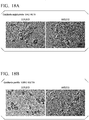
- both the YFU3 strain (diploid) and the HKN1 strain (diploid) have a rigid cell wall. That is, these strains do not undergo cell rupture under the condition of pH 7.
- neither the YFU3 strain (haploid) nor the HKN1 strain (haploid) has a rigid cell wall. That is, these strains undergo cell rupture under the condition of pH 7.
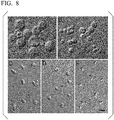
- the cells of the YFU3 strain (haploid) and the HKN1 strain (haploid) are similar to the cells of Cyanidioschyzon merolae (see Fig. 8 ).
- Cyanidioschyzon merolae is the only known species of haploid algae having no rigid cell wall.
- the cells similar to the cells of Cyanidioschyzon merolae will be described as "Cyanidioschyzon merolae-like cells" in some cases.
- algae which are allied species of the YFU3 strain or the HKN1 strain and having a diploid cell form and a haploid cell form, are suitable.
- examples of the algae as allied species of the YFU3 strain and the HKN1 strain include algae in which the base sequence of the rbcL gene shares identity equal to or higher than 90% with the base sequence of the rbcL gene of the YFU3 strain or the HKN1 strain.
- the base sequence of the rbcL gene of the YFU3 strain is shown in SEQ ID NO: 1.
- the base sequence of the rbcL gene of the HKN1 strain is shown in SEQ ID NO: 2. Therefore, the algae, in which the base sequence of the rbcL gene shares identity equal to or higher than 90% with the base sequence shown in SEQ ID NO: 1 or 2, are also a suitable example of the algae of the present embodiment.
- the identity between the base sequence of the rbcL gene of the algae and the base sequence shown in SEQ ID NO: 1 or 2 is preferably equal to or higher than 95%, more preferably equal to or higher than 97%, even more preferably equal to or higher than 98%, and particularly preferably equal to or higher than 99%.
- the base sequence of the rbcL gene of algae can be obtained by a known method. For example, by extracting DNA from algal cells of interest by a known method, amplifying DNA fragments of the rbcL gene by PCR or the like, and analyzing the base sequence of the amplified DNA fragments by using a DNA sequencer, the base sequence of the rbcL gene of the algae of interest can be obtained.
- primers for amplifying the rbcL gene include the primers used in Examples of the present specification and the like.
- algae which are a mutant of the YFU3 strain or the HKN1 strain and have a diploid cell form and a haploid cell form
- mutant means an algal strain generated when spontaneous or induced mutation occurs in the genome of the original algal strain (including a nuclear genome, a chloroplast genome, and a mitochondrial genome; the same is true of the following description).
- the technique for inducing mutation in the genome is not particularly limited, and examples thereof include ultraviolet irradiation, radiation irradiation, a chemical treatment using nitrous acid; genetic engineering techniques such as gene introduction and genome editing, and the like.
- mutant of the YFU3 strain refers to an algal strain which is generated by the mutation of the genome of the YFU3 strain and has a diploid cell form and a haploid cell form.
- mutant of the HKN1 strain refers to an algal strain which is generated by the mutation of the genome of the HKN1 strain and has a diploid cell form and a haploid cell form.
- the proportion of mutations in the whole genome of the YFU3 strain is preferably equal to or lower than 10%, more preferably equal to or lower than 5%, even more preferably equal to or lower than 3%, and particularly preferably equal to or lower than 2% or 1%.
- the proportion of mutations in the whole genome of the HKN1 strain is preferably equal to or lower than 10%, more preferably equal to or lower than 5%, even more preferably equal to or lower than 3%, and particularly preferably equal to or lower than 2% or 1%.
- the proportion of mutations in the whole genome is calculated by comparing the whole genomes of the diploid cells or comparing the whole genomes of the haploid cells.
- the allied species or the mutant of the YFU3 strain or the HKN1 strain those having a nutritional composition similar to the nutritional composition of the YFU3 strain or the HNK1 strain are preferable.
- one of the characteristics of the YFU3 strain and the HKN1 strain is that these strains are rich in amino acids and vitamins. Therefore, it is preferable that the content of amino acids or vitamins in the allied species or the mutant is similar to those in the YFU3 strain and the HKN1 strain. Examples of the content of amino acids and vitamins include the contents exemplified above.
- mutant of the YFU3 strain or the HKN1 strain include transformants obtained by genetic modification using genetic engineering techniques.
- the genetic modification may be performed on the diploid cells or the haploid cells. However, it is easier to genetically modify the haploid cells.
- the type of genetic modification is not particularly limited, and any type of modification may be adopted.
- Examples of the transformant of the YFU3 strain or the HKN1 strain include a transformant having an increased intracellular content of at least one kind of nutrient.
- the nutrient of which the intracellular content is to be increased for example, at least one kind of nutrient selected from the group consisting of amino acids, vitamins, proteins, lipids, and dietary fiber is suitable. That is, a transformant of the YFU3 strain or the HKN1 strain is suitable, in which the intracellular content of at least one kind of nutrient selected from the group consisting of amino acids, vitamins, proteins, lipids, and dietary fiber is higher than that in a wild-type strain.
- At least one kind of nutrient selected from the group consisting of amino acids and vitamins is preferable.
- Such a transformant has a higher intracellular amount of a specific nutrient compared to a wild-type strain. Therefore, by using this transformant, it is possible to prepare a nutritional supplement rich in the nutrient.
- the method for increasing the intracellular content of a nutrient is not particularly limited, and any method can be used. Examples thereof include a method similar to the method exemplified in "[Alga belonging to Cyanidiophyceae]" described above. For example, by modifying the YFU3 strain or the HKN1 strain such that the expression amount of any enzyme gene involved in the synthesis of nutrients such as glutamate decarboxylase, homogentisate phytyltransferase, and tocopherol cyclase is increased, the intracellular content of any nutrient can be increased.
- sequence information of these synthetic enzyme genes can be obtained by cloning the gene of interest and analyzing the sequence of the cloned gene of interest by a known method.
- primers may be designed based on the sequence information of known homologous genes of the algae belonging to Cyanidiophyceae, and amplified fragments of the gene of interest may be obtained by PCR or the like by using the genome of the YFU3 strain or the HKN1 strain as a template.
- a probe may be designed based on the sequence information of a known homologous gene of the algae belonging to Cyanidiophyceae, and a cDNA library of the YFU3 strain or the HKN1 strain may be screened out.
- a gene of an organism of another species may be used as long as the gene functions in the transfected cell.
- a known gene of the algae belonging to Cyanidiophyceae may be used.
- the sequence information of a known gene can be obtained from a known sequence database such as GenBank.
- GenBank GenBank
- a synthetic enzyme gene for example, a glutamate decarboxylase gene
- the promoter used for the gene to be introduced may be the promoter of the synthetic enzyme gene or the promoter of another gene.
- a promoter of a gene that is expressed in large amounts in the algal cell into which the gene is to be introduced is preferable.
- a promoter examples include an APCC (CMO250C) promoter, a CPCC (CMP166C) promoter, a Catalase (CMI050C) promoter, and the like.
- the promoter may be derived from an organism of the same species as the cell to be transfected, or may be derived from an organism of another species, as long as the promotor functions in the cell to be transfected.
- sequence information thereof can be obtained from a known sequence database such as GenBank.
- the transformant of the YFU3 strain or the HKN1 strain can be prepared by the introduction of any nucleic acid.
- the transformant is more preferably prepared by self-cloning.
- a self-cloning method has been established ( Fujiwara et al., PLoS One. 2013 Sep 5; 8 (9): e73608 ). Therefore, self-cloning can also be performed on the YFU3 strain or the HKN1 strain by the same method as the method used for Cyanidioschyzon merolae.
- the self-cloning method is not particularly limited, and examples thereof include a method using an auxotrophic mutant.
- a method using an auxotrophic mutant for Cyanidioschyzon merolae, a method using the URA5.3 gene (CMK046C) as a selection marker has been suggested (see “[Algae belonging to Cyanidiophyceae]" described above).
- the gene to be knocked out As the knockout technique, a known method may be used without particular limitation. Examples of the knockout technique include homologous recombination, a gene editing technique, and the like.
- the gene to be knocked out is not particularly limited as long as the auxotrophy is changed by the knockout of the gene. Examples of the gene to be knocked out include orotidine-5'-decarboxylase and the like.
- the genetic modification in a case where genetic modification is performed using the auxotrophy-related gene as a selection marker as described above, by knocking out the auxotrophy-related gene introduced into algal cells, the genetic modification can be performed again by using the same auxotrophy-related gene as a selection marker. That is, it is possible to perform multiple self-cloning.
- known knockout techniques may be used without particular limitation. Examples of the knockout technique include homologous recombination, a gene editing technique, and the like.
- the URA5.3 gene is knocked out again by a known knockout technique such as homologous recombination.
- a known knockout technique such as homologous recombination.
- the re-knockout strain of the URA5.3 gene can be selected. This is because in a strain that normally expresses the URA5.3 gene, 5-FOA is converted into toxic 5-fluorouracil by the gene product of the URA5.3 gene.
- self-cloning can be performed again by using the URA5.3 gene as a selection marker. By repeating the same operation, it is possible to perform self-cloning a desired number of times.
- the URA5.3 gene may be totally or partially deleted, or a point mutation may be introduced into the URA5.3 gene.
- the method for introducing an arbitrary nucleic acid into the YFU3 strain or the HKN1 strain is not particularly limited, and a known method can be used. Examples thereof include a polyethylene glycol method, a lipofection method, a microinjection method, a DEAE dextran method, a gene gun method, an electroporation method, a calcium phosphate method, and the like.
- the nucleic acid to be introduced may be inserted into any of a nuclear genome, a chloroplast genome, and a mitochondrial genome.
- the nucleic acid to be introduced may be inserted into a specific position in the genome or randomly inserted into the genome.
- homologous recombination can be used as the method for inserting the nucleic acid to be introduced into a specific position in the genome.
- the YFU3 strain or the HKN1 strain is diluted with an appropriate medium such as MA2U medium (see Example 7) such that the concentration thereof becomes appropriate.
- an appropriate medium such as MA2U medium (see Example 7) such that the concentration thereof becomes appropriate.
- the cells are cultured for about for about 40 to 80 hours with aeration under appropriate culture conditions (for example, light-dark cycle: 12L:12D, light: 50 ⁇ mol/m 2 s, temperature: 42°C). Thereafter, Tween-20 is added to the culture solution such that the final concentration becomes 0.002%, and then the cells are collected by centrifugation and suspended in an appropriate medium such as MA2U medium.
- the culture solution is dissolved in 450 ⁇ L of MA2U medium containing PEG4000 (95°C, 10 minutes), thereby preparing a 60% (w/v) PEG4000 solution. Subsequently, the PEG 4000 solution was kept at 42°C on a heat block until used.
- the cell suspension of the YFU3 strain or the HKN1 strain is added to a mixture for transformation containing a vector for transformation including an appropriate selection marker and polyethylene glycol (such as PEG4000), and the mixture is stirred.
- the cells are moved to an appropriate medium such as MA2U medium and cultured in a static state for about 40 to 60 hours under appropriate culture conditions (for example, continuous light: 20 ⁇ mol/m 2 s, temperature: 42°C). Then, the cells are collected by centrifugation, and suspended in an appropriate medium such as Tsukahara mineral spring medium ( Hirooka et al. 2016 Front in Microbiology ) or modified MA medium (see Example 7).
- the cell suspension is added to a selective medium compatible with the used selection marker (for example, a medium obtained by adding a specific substance to the Tsukahara mineral spring medium, the modified MA medium, or the like, or a medium obtained by removing a specific substance from the medium described above), and the cells are cultured in a static state for about 5 to 10 days under appropriate culture conditions (for example, continuous light: 20 ⁇ mol/m 2 s, temperature: 42°C, 3% CO 2 ).
- the culture solution of a green portion, which has become darker, is added to the newly collected selective medium, the cells are further cultured in a static state for about 5 to 10 days, and transformants are selected.
- the transformants are isolated one by one by using a Pasteur pipette with a sharp tip, and cultured in a static state in an appropriate medium such as the Tsukahara mineral spring medium or the modified MA medium. In this way, the transformants can be obtained.
- transformation by a polyethylene glycol method was described.
- other transformation methods such as a lipofection method, a microinjection method, a DEAE dextran method, a gene gun method, an electroporation method, and a calcium phosphate method may also be used.
- strains preferred as the mutants of the YFU3 strain or the HKN1 strain include, but are not limited to, the following (1) to (18).
- the algae belonging to Galdieria may be algae belonging to Galdieria.
- the algae belonging to Galdieria include Galdieria sulphuraria (for example, an SAG108.79 strain), Galdieria partita (for example, an NBRC 102759 strain), and the like.
- the algae of the present embodiment may be algae belonging to Cyanidium other than the YFU3 strain and the HKN1 strain.
- the present invention provides a method for producing a haploid cell of alga, including (a) step of culturing a diploid cell of an alga belonging to Cyanidiophyceae having a diploid cell form and a haploid cell form and (b) step of isolating a haploid cell generated during the culturing.
- the algae which belong to Cyanidiophyceae and have a diploid cell form and a haploid cell form are the same as the algae described above in "[Alga having a diploid cell form and a haploid cell form]".
- the present algae for example, the YFU3 strain, the HKN1 strain, mutants or analogues of these, and the like.
- the algae belonging to Galdieria (Galdieria sulphuraria SAG108.79 and Galdieria partita NBRC 102759) also have a diploid cell form and a haploid cell form.
- This result implies that in Cyanidiophyceae (for example, Galdieria and Cyanidium), probably, there may be a wide variety of algae having a diploid cell form and a haploid cell form. Therefore, the algae to which the producing method of the present embodiment can be applied may be algae belonging to Galdieria or Cyanidium, and are not limited to those exemplified above. Specific examples of the algae belonging to Galdieria include Galdieria sulphuraria and Galdieria partita.
- haploid cells of algae can be prepared from diploid cells of the algae.
- Haploid algae can be transformed more easily compared to diploid algae.
- the step (a) is a step of culturing a diploid cell of an alga (present algae) which belongs to Cyanidiophyceae and has a diploid cell form and a haploid cell form.
- the present algae are not particularly limited, and diploid cells of algae, which belong to Cyanidiophyceae and have been found to have a diploid cell form and a haploid cell form, may be cultured. Specific examples thereof include the YFU3 strain (diploid), the HKN1 strain (diploid), and allied species and mutants of these, and the like. In addition, examples thereof also include diploid cells of algae belonging to Galdieria (such as Galdieria sulphuraria and Galdieria partita), diploid cells of algae belonging to Cyanidium, and the like.
- Examples of the culture conditions include the culture conditions exemplified in "[Alga belonging to Cyanidiophyceae]” or “[Alga having a diploid cell form and a haploid cell form]”.
- the pH condition is pH 1.0 to 6.0 for example, and is preferably pH 1.0 to 5.0.
- the temperature condition is 15°C to 50°C for example, and is preferably 30°C to 50°C.
- Examples of the medium include those exemplified above in "[Alga belonging to Cyanidiophyceae]” or “[Alga having a diploid cell form and a haploid cell form]”.
- a medium using acidic hot spring drainage is preferable.
- Specific examples of the medium using acidic hot spring drainage is include the Tsukahara mineral spring medium ( Hirooka et al. 2016 Front in Microbiology ).
- the algae of the above embodiment are preferably cultured until the algae enter the stationary phase, and more preferably continuously cultured for an arbitrary period of time in the stationary phase.
- the duration of culturing is, for example, 2 to 60 days, 3 to 40 days, or 5 to 35 days.
- the period from the start of culturing to the stationary phase varies with the type of algae. Therefore, the duration of culturing can be set according to the type of algae.
- cells may be collected from the culture solution in the stationary phase, subcultured, and further cultured for about 1 to 5 days.
- the step (b) is a step of isolating a haploid cell generated during the culturing.
- diploid cells of the present algae undergo meiosis, and as a result, haploid cells of the present algae are generated.
- the shape of the haploid cells looks different from the shape of the diploid cells (for example, the haploid cells are found to have a size smaller than that of the diploid cells and found to have no rigid cell wall). Therefore, based on the difference in the cell shape, it is possible to discern the haploid cells.
- By collecting and isolating the haploid cells by using a Pasteur pipette or the like it is possible to manufacture haploid cells of the algae.
- the isolated haploid cells of the algae may be cultured using the medium exemplified in "[Alga belonging to Cyanidiophyceae]” or "[Alga having a diploid cell form and a haploid cell form]” described above, and the like.
- the present invention provides a haploid cell of an alga (cell) (present alga) that belongs to Cyanidiophyceae and having a diploid cell form and a haploid cell form.
- the algae can be obtained by the method for producing haploid algae described above.
- the present invention also provides a haploid alga (cell) of the YFU3 strain, a haploid alga (cell) of the HKN1 strain, a haploid alga (cells) of algae belonging to Cyanidium, and a haploid alga (cell) of algae belonging to Galdieria.
- Specific examples of the algae belonging to Galdieria include Galdieria sulphuraria and Galdieria partita.
- the present invention provides a method for producing a diploid alga of an alga having a diploid cell form and a haploid cell form, the method including (a) step of mixing together two or more kinds of haploid cells and culturing the cells, and (b) step of isolating a diploid cell generated during the culturing.
- diploid cells can be obtained.
- Step (a) is a step of mixing together and culturing two or more kinds of haploid cells of an alga having a diploid cell form and a haploid cell form.
- the two or more kinds of haploid cells, which are mixed together in this step, are preferably algal cells of the same species. It is more preferable to use haploid cells derived from the diploid cells of the same strain.
- Examples of the culture conditions include the culture conditions exemplified in "[Alga belonging to Cyanidiophyceae]” or “[Alga having a diploid cell form and a haploid cell form]” described above.
- the pH condition is pH 1.0 to 6.0 for example, and is preferably pH 1.0 to 5.0.
- the temperature condition is 15°C to 50°C for example, and is preferably 30°C to 50°C.
- Examples of the medium include the media described in "[Alga belonging to Cyanidiophyceae]” or “[Alga having a diploid cell form and a haploid cell form]” described above.
- the cells are preferably cultured, for example, for about 1 to 4 weeks, and may be further subcultured and then cultured for about 3 to 10 days.
- the step (b) is a step of isolating a diploid cell generated during the culturing.
- haploid cells are mated to each other, and as a result, diploid cells are generated.
- diploid alga By collecting and isolating the diploid cell by using a Pasteur pipette or the like, a diploid alga can be prepared.
- the isolated diploid algae may be cultured using the medium exemplified in "[Alga belonging to Cyanidiophyceae]” or "[Alga having a diploid cell form and a haploid cell form]” described above (preferably an artificial synthetic medium such as M-Allen medium), and the like.
- the present invention provides a diploid alga (cell) of an alga (present alga) which belongs to Cyanidiophyceae and has a diploid cell form and a haploid cell form.
- the alga can be obtained by the method for producing a diploid alga described above.
- the present invention also provides a diploid alga (cell) of the YFU3 strain, a diploid alga (cell) of the HKN1 strain, and a diploid alga (cell) of an alga belonging to Cyanidioschyzon.
- Specific examples of the algae belonging to Cyanidioschyzon include Cyanidioschyzon merolae.
- the present invention provides an alga culture containing algae (present algae) which belong to Cyanidiophyceae and have a diploid cell form and a haploid cell form.
- algae present algae
- the ratio of the number of haploid algal cells to the total number of algal cells is 70% to 100%.
- the present algae may exist as both the diploid cells and haploid cells.
- all of the known algae belonging to Galdieria and Cyanidium are discovered as cells having a rigid cell wall. Therefore, it is considered that most of the present algae may exist as diploid cells in nature.
- the diploid cells of the present algae when they enter the stationary phase and then continuously cultured as they are, the diploid cells of the present algae undergo meiosis, and as a result, haploid cells of the present algae appear.
- the haploid cells of the present algae grow by two-cell division, and the proportion of the haploid cells of the present algae increases as the culture is continued. Then, by further continuing the culture or isolating the haploid cells and culturing them, it is possible to obtain an alga culture in which the proportion of the haploid cells of the present algae is 70% to 100%.
- the present algae are not particularly limited, and diploid cells of algae which belong to Cyanidiophyceae and are confirmed to have a diploid cell form and a haploid cell form may be cultured. Specific examples thereof include the YFU3 strain (diploid), the HKN1 strain (diploid), allied species and mutants of these, and the like. In addition, examples thereof also include diploid cells of algae belonging to Galdieria (such as Galdieria sulphuraria and Galdieria partita), diploid cells of algae belonging to Cyanidium, and the like.
- Examples of the culture conditions for the present algae in the form of diploid cells are the same as the culture conditions exemplified in "[Alga belonging to Cyanidiophyceae]” or "[Alga having a diploid cell form and a haploid cell form]” described above.
- the proportion of the haploid cells is 70 to 100%, which is significantly different from the proportion of haploid cells in nature.
- the present invention provides a cell population including diploid cells of algae which belong to Cyanidiophyceae and have a diploid cell form and a haploid cell form.
- the algae belonging to Cyanidiophyceae for example, the YFU3 strain, the HKN1 strain, mutants of these, and algae belonging to Cyanidioschyzon.
- Examples of the algae belonging to Cyanidioschyzon include Cyanidioschyzon merolae.
- the present invention provides a cell population including haploid cells of algae which belong to Cyanidiophyceae and have a diploid cell form and a haploid cell form.
- the algae belonging to Cyanidiophyceae for example, the YFU3 strain, the HKN1 strain, mutants of these, algae belonging to Cyanidium other than the above, and algae belonging to Galdieria.
- Examples of the algae belonging to Galdieria include Galdieria sulphuraria and Galdieria partita.
- the present invention provides a cell population of algae that belong to Cyanidiophyceae and have a diploid cell form and a haploid cell form, in which the diploid cells and the haploid cells are mixed together.
- the present invention provides a dry and swollen product obtained by performing a drying and swelling treatment on algae (present algae) which belong to Cyanidiophyceae and have a diploid cell form and a haploid cell form.
- drying and swelling treatment refers to a treatment of drying algal cells and then adding an aqueous medium or the like to the dried product so as to wet again the dried product.
- Specific examples of the drying and swelling treatment include the cell disruption treatment described above in (3).
- the present algae subjected to the drying and swelling treatment may be diploid cells, haploid cells, or a mixture of diploid cells and haploid cells.
- the present algae may be cells collected from the alga culture of the above embodiment.
- the ploidy-variable algae subjected to the drying and swelling treatment are preferably haploid cells.
- the present algae are rich in nutrients such as amino acids, vitamins, proteins, lipids, and dietary fiber. Accordingly, the present algae can be used as a nutrient composition or a nutritional supplement which will be described below. In addition, in a case where the present algae are blended with foods, feeds, pet foods, cosmetics, and the like, it is possible to provide nutrient-enriched products. Furthermore, in the products described above, an extract of the present algae may be used instead of or together with the present algae. Therefore, the present invention also provides an extract of the present algae.
- extract of the present algae refers to a substance obtained by extracting intracellular components from cells of the present algae by performing a physical treatment or a chemical treatment.
- the extract of the present algae may be a cell disruption product obtained by disrupting the cells of the present algae by means of a physical treatment or a chemical treatment.
- the extract of the present algae may be a substance obtained by concentrating the cell disruption product, a substance obtained by removing solid contents from the cell disruption product, or a substance obtained by separating some components from the cell disruption product.
- the method of the physical treatment or the chemical treatment for the cells is not particularly limited, and the methods generally used for cell disruption can be used.
- Examples of the physical treatment include cell disruption performed by means of glass beads, a mortar, an ultrasonic treatment, a French press, a homogenizer, and the like.
- Examples of the chemical treatment include a neutralization treatment, a hypotonic treatment, a freeze-thaw treatment, a drying and swelling treatment, and the like. More specifically, examples thereof include the cell rupturing treatments (A) to (C) described above.
- the concentration method is not particularly limited, and a generally used concentration method may be used.
- concentration method for the cell disruption product include drying, freeze-drying, drying under reduced pressure, and the like.
- the solid content-removing method is not particularly limited, and it is possible to use a method that is generally used for removing solid contents.
- the solid content-removing method include filtration, centrifugation, and the like.
- the separation method is not particularly limited, and it is possible to use a method generally used for separation, purification, and the like for biochemical substances.
- the separation method include salting out, dialysis, solvent extraction, adsorption, column chromatography, ion exchange chromatography, and the like. Each of these methods may be used singly. Alternatively, two or more kinds of treatments may be used in combination.
- a substance purified into a single component is excluded from "extract of the present algae".
- the extract of the present algae preferably contains 10 or more kinds of cell components of the present algae, more preferably contains 15 or more kinds of cell components of the present algae, and even more preferably contains 20 or more kinds of cell components of the present algae.
- the extract of the present algae preferably contains a nutrient selected from the group consisting of amino acids, vitamins, proteins, lipids, and dietary fiber, and more preferably contains a nutrient selected from the group consisting of amino acids and vitamins.
- amino acids include isoleucine, leucine, lysine, methionine, cystine, phenylalanine, tyrosine, threonine, tryptophan, valine, arginine, histidine, alanine, aspartic acid, glutamic acid, glycine, proline, serine, ⁇ -aminobutyric acid, and the like.
- Specific examples of the vitamins include vitamin A, ⁇ -carotene, vitamin C, vitamin E, vitamin K 1 , vitamin K 2 , folic acid, and the like.
- the present invention provides a nutrient composition containing the algae belonging to Cyanidiophyceae or an extract thereof.
- the nutrient composition of the present embodiment contains the algae belonging to Cyanidiophyceae or an extract thereof. Accordingly, the nutrient composition is rich in nutrients abundantly contained in the algae.
- the nutrient composition can be rich in nutrients selected from the group consisting of amino acids, vitamins, proteins, lipids, and dietary fiber.
- the nutrient composition can be rich in nutrients selected from the group consisting of amino acids and vitamins. Therefore, the nutrient composition can be used by being blended with a nutritional supplement, a food, a feed, a pet food, a cosmetic, or the like which will be described later.
- the algae belonging to Cyanidiophyceae are not particularly limited.
- the algae for example, the present algae or algae belonging to Cyanidioschyzon are preferable.
- the present algae may be diploid cells, haploid cells, or a mixture of diploid cells and haploid cells.
- the present algae may be cells collected from the alga culture of the above embodiment.
- Examples of the present algae contained in the nutrient composition of the present embodiment include those exemplified in "[Alga having a diploid cell form and a haploid cell form]" described above.
- Specific examples of the present algae include the YFU3 strain, the HKN1 strain, allied species and mutants of these, and the like.
- examples of the present algae also include algae belonging to Cyanidium other than the above and algae belonging to Galdieria. Among these, the YFU3 strain, the HKN1 strain, mutants of these, and the algae belonging to Galdieria are preferable, and the YFU3 strain, the HKN1 strain, and mutants of these are more preferable.
- the cells having no rigid cell wall In a case where either the diploid cells or the haploid cells having no rigid cell wall, it is preferable to use the cells having no rigid cell wall. Using such cells is advantageous because nutrients can be easily extracted. Furthermore, using such cells is advantageous because even in a case where the algal cells are directly blended with the nutrient composition, the nutrients in the algal cells are easily absorbed after the intake of the nutrient composition. For example, in a case where the YFU3 strain, the HKN1 strain, or mutants of these are used, it is preferable to use the YFU3 strain (haploid), the HKN1 strain (haploid), or the mutants of these.
- haploid cells of the algae belonging to Galdieria for example, Galdieria sulphuraria, Galdieria partita, and the like
- haploid cells of the algae belonging to Cyanidium are also preferable.
- the YFU3 strain (haploid), the HKN1 strain (haploid), mutants of these, and haploid cells of the algae belonging to Galdieria are preferable.
- the algae belonging to Cyanidiophyceae may be algae belonging to Cyanidiophyceae other than the present algae.
- the algae belonging to Cyanidioschyzon have no rigid cell wall. Therefore, their cells can be disrupted by a relatively mild treatment such as a neutralization treatment, a hypotonic treatment, a freeze-thaw treatment, or the like.
- the algae belonging to Cyanidioschyzon (for example, Cyanidioschyzon merolae) are a preferred example of the algae belonging to Cyanidiophyceae.
- the algae belonging to Cyanidiophyceae can be used in the nutritional supplement of the present embodiment.
- the algal cells may be used in the nutrient composition of the present embodiment.
- the nutrient composition of the present embodiment may contain an extract of the algae belonging to Cyanidiophyceae instead of or together with the algae belonging to Cyanidiophyceae.
- the nutrient composition of the present embodiment may contain other components as appropriate in addition to the algae belonging to Cyanidiophyceae or an extract thereof. Those other components are not particularly limited, and examples thereof include a pharmaceutically acceptable carrier and the like.
- “Pharmaceutically acceptable carrier” means a carrier which does not inhibit the function of nutrients contained in the algae belonging to Cyanidiophyceae and substantially does not exhibit toxicity to an administration subject.
- “Substantially does not exhibit toxicity” means that the component does not exhibit toxicity to the administration subject at the usual dose thereof.
- Examples of the pharmaceutically acceptable carrier include, but are not limited to, excipients, binders, disintegrants, lubricants, emulsifiers, stabilizers, diluents, oleaginous bases, thickeners, antioxidants, reducing agents, oxidants, chelating agents, solvents, and the like.
- One kind of pharmaceutically acceptable carrier may be used singly, or two or more kinds of pharmaceutically acceptable carriers may be used in combination.
- the content of the algae belonging to Cyanidiophyceae or an extract thereof in the nutrient composition of the present embodiment is not particularly limited, and can be appropriately selected, for example, in a range of 1% to 100% by mass.
- the content of the algae belonging to Cyanidiophyceae or an extract thereof in the nutritional supplement of the present embodiment is preferably 50% to 100% by mass, more preferably 60% to 100% by mass, and even more preferably 70% to 100% by mass.
- the algae belonging to Cyanidiophyceae or an extract thereof can be appropriately mixed with other components and made into a form such as dry powder, granules, tablets, jelly, a liquid, or capsules according to a common method.
- the present invention provides a nutritional supplement containing the algae belonging to Cyanidiophyceae or an extract thereof.
- Nutritional supplements are used by human beings or non-human animals for supplying nutrients, and there is no particular limitation on the dosage form, the degree of purification, and the like thereof.
- the algae belonging to Cyanidiophyceae are rich in nutrients such as amino acids and vitamins. Therefore, by using the algae belonging to Cyanidiophyceae or an extract thereof, it is possible to obtain a nutritional supplement rich in nutrients such as amino acids and vitamins.
- the nutritional supplement of the present embodiment is rich in nutrients such as amino acids and vitamins. Therefore, the nutritional supplement of the present embodiment can be used for human beings or non-human animals as a nutritional supplement for supplying the nutrients. Examples of the nutrients supplied by the nutritional supplement of the present embodiment include amino acids, vitamins, proteins, lipids, dietary fiber, and the like.
- the nutritional supplement of the present embodiment can be suitably used for supplying amino acids (such as isoleucine, leucine, lysine, methionine, cystine, phenylalanine, tyrosine, threonine, tryptophan, valine, arginine, histidine, alanine, aspartic acid, glutamic acid, glycine, proline, serine, and ⁇ -aminobutyric acid) and vitamins (such as vitamin A, ⁇ -carotene, vitamin B1, vitamin B2, vitamin B6, vitamin C, vitamin E, vitamin K 1 , vitamin K 2 , niacin, inositol, folic acid, and biotin).
- amino acids such as isoleucine, leucine, lysine, methionine, cystine, phenylalanine, tyrosine, threonine, tryptophan, valine, arginine, histidine, alanine, aspartic
- the nutritional supplement of the present embodiment can be particularly suitably used for supplying amino acids (such as isoleucine, leucine, lysine, methionine, cystine, phenylalanine, tyrosine, threonine, tryptophan, valine, arginine, histidine, alanine, aspartic acid, glutamic acid, glycine, proline, serine, and ⁇ -aminobutyric acid) and vitamins (such as vitamin A, ⁇ -carotene, vitamin B1, vitamin B2, vitamin B6, vitamin C, vitamin E, vitamin K 1 , vitamin K 2 , niacin, inositol, folic acid, and biotin).
- amino acids such as isoleucine, leucine, lysine, methionine, cystine, phenylalanine, tyrosine, threonine, tryptophan, valine, arginine, histidine, alanine, aspart
- the nutritional supplement of the present embodiment can be particularly suitably used for supplying ⁇ -aminobutyric acid, ⁇ -carotene, vitamin C, vitamin E, vitamin K 1 , vitamin K 2 , and folic acid.
- the nutritional supplement of the present embodiment may contain other components as appropriate in addition to the algae belonging to Cyanidiophyceae and an extract thereof.
- Those other components are not particularly limited, and examples thereof include a pharmaceutically acceptable carrier and the like.
- examples of the pharmaceutically acceptable carrier are the same as those exemplified in "Nutrient composition]" described above.
- One kind of pharmaceutically acceptable carrier may be used singly, or two or more kinds of pharmaceutically acceptable carriers may be used in combination.
- the content of the algae belonging to Cyanidiophyceae or an extract thereof in the nutritional supplement of the present embodiment is not particularly limited, and can be appropriately selected, for example, in a range of 1% to 100% by mass.
- the content of the algae belonging to Cyanidiophyceae or an extract thereof in the nutritional supplement of the present embodiment is preferably 50% to 100% by mass, more preferably 60% to 99% by mass, and even more preferably 70% to 99% by mass.
- the algae belonging to Cyanidiophyceae or an extract thereof can be appropriately mixed with other components and made into a form such as dry powder, granules, tablets, jelly, a liquid, or capsules according to a common method.
- the nutritional supplement of the present embodiment may be used as it is for human beings or non-human organisms, or may be used by being blended with a composition for supplying nutrients such as a food, a feed, a pet food, or a cosmetic which will be described later.
- a composition suitable for supplying nutrients such as amino acids and vitamins.
- the present invention provides a method for producing a nutritional supplement, including a step of culturing algae belonging to Cyanidiophyceae, a step of collecting the cultured algae belonging to Cyanidiophyceae, and a step of formulating the collected algae belonging to Cyanidiophyceae.
- the present invention provides a method for producing a nutritional supplement, including a step of culturing algae belonging to Cyanidiophyceae, a step of collecting the cultured algae belonging to Cyanidiophyceae, a step of obtaining an extract of the collected algae belonging to Cyanidiophyceae, and a step of formulating the extract of the algae belonging to Cyanidiophyceae.
- the present invention provides a composition for supplying nutrients containing the nutritional supplement described above.
- composition for supplying nutrients refers to a composition used by human beings or non-human animals for the intake of nutrients into the body.
- the intake of nutrients into the body may be oral or parenteral.
- the composition for supplying nutrients of the present embodiment is rich in amino acids, vitamins, proteins, lipids, dietary fiber, and the like. These components are nutrients abundantly contained in the aforementioned nutritional supplement.
- composition for supplying nutrients of the present embodiment is that the composition is rich in amino acids and vitamins among the above nutrients.
- the composition is characterized by being particularly rich in ⁇ -aminobutyric acid among amino acids and in ⁇ -carotene, vitamin C, vitamin E, vitamin K 1 , vitamin K 2 , and folic acid among vitamins.
- ⁇ -aminobutyric acid is known to have a brain function improving effect and a blood pressure lowering effect.
- ⁇ -carotene, vitamin C and vitamin E are known to have an antioxidant activity.
- vitamin K 1 and vitamin K 2 are known to have an osteoporosis improving effect.
- folic acid is known to be necessary for the development of the fetus during pregnancy, and is reported to have a cardiovascular disease improving effect.
- the intake of the composition for supplying nutrients of the present embodiment can bring about the physical condition improving effects that the aforementioned nutrients have. Therefore, the composition for supplying nutrients of the present embodiment is suitably used for supplying at least one kind of nutrient selected from amino acids, vitamins, proteins, lipids, and dietary fiber. Furthermore, the composition for supplying nutrients of the present embodiment is more suitably used for supplying at least one kind of nutrient selected from the group consisting of amino acids and vitamins.
- the composition for supplying nutrients of the present embodiment is not particularly limited as long as the composition is used by human beings or non-human animals for the intake of nutrients into the body.
- Examples of the composition for supplying nutrients of the present embodiment include foods, feeds, pet foods, cosmetics, and the like.
- the composition for supplying nutrients of the present embodiment may be a food. Therefore, the present invention also provides a food containing the nutrient composition or the nutritional supplement of the above embodiment. In addition, the present invention also provides a food containing the algae belonging to Cyanidiophyceae or an extract thereof.
- the nutrient composition or the nutritional supplement described above may be added to the food as a food additive.
- the present invention provides a food additive containing the algae belonging to Cyanidiophyceae or an extract thereof.
- the food of the present embodiment can be manufactured by a known method according to the type of the food.
- the type of the food is not particularly limited.
- the food include, but are not limited to, various noodles such as Soba, Udon, Harusame, Chinese noodles, instant noodles, and cup noodles; carbohydrates such as bread, flour, rice flour, pancake, and mashed potatoes; beverages such as green vegetable juice, soft drinks, carbonated drinks, nutritious drinks, fruit drinks, vegetable drinks, lactic acid drinks, milk-based drinks, sports drinks, tea, and coffee; bean products such as tofu, Okara, and Natto; various soups such as curry roux, stew, and instant soups; frozen desserts such as ice cream, ice sorbet, and shaved ice; confectioneries such as cookies, candies, gums, chocolates, tablet-shaped sweets, snacks, biscuits, jellies, jams, creams, and other baked cakes; processed marine and livestock products such as Kamaboko, Hanpen, hams, and sausages; dairy products such as processed milk, fermented milk, butter, cheese, and yogurt, oil
- the content of the aforementioned nutrient composition or the nutritional supplement is not particularly limited, and may be appropriately set according to the type of the food.
- the content of the aforementioned nutrient composition or nutritional supplement in the food can be, for example, 0.01% to 30% by mass as the content of the algae belonging to Cyanidiophyceae or an extract thereof.
- the content of the nutrient composition or the nutritional supplement is preferably 0.05% to 20% by mass, more preferably 0.1% to 15% by mass, even more preferably 0.1% to 10% by mass, and particularly preferably 0.1% to 5% by mass.
- the food may be a functional food or a dietary supplement.
- the functional food or the dietary supplement may be in the form of a general food as described above, or in the form of dry powder, granules, tablets, jellies, drinks, and the like.
- foods in the form of dry powders, granules, tablets, jellies, drinks, and the like can be prepared according to a common method.
- Those other components are not particularly limited, and examples thereof include a pharmaceutically acceptable carrier and the like. Examples of the pharmaceutically acceptable carrier are the same as those exemplified in "[Nutrient composition]" described above.
- sweeteners, flavoring agents, various flavors, spices, oils and fats, other food additives, and the like may be used as those other components.
- One kind of each of those other components may be used singly, or two or more kinds of those other components may be used in combination.
- the content of the aforementioned nutrient composition or nutritional supplement is not particularly limited, and may be appropriately set according to the type of the functional food or the dietary supplement.
- the functional food or the dietary supplement is in the form of dry powder, granules, tablets, or the like
- the content of the nutrient composition or the nutritional supplement described above is, for example, 0.1% to 99% by mass as the content of the algae belonging to Cyanidiophyceae or an extract thereof.
- the content of the nutrient composition or the nutritional supplement described above is preferably 1% to 90% by mass, more preferably 10% to 85% by mass, even more preferably 20% to 85% by mass, and particularly preferably 25% to 85% by mass.
- the content of the nutritional supplement described above is, for example, 0.05% to 80% by mass as the content of the algae belonging to Cyanidiophyceae or an extract thereof.
- the content of the nutritional supplement described above is preferably 1% to 75% by mass, more preferably 10% to 70% by mass, even more preferably 15% to 70% by mass, and particularly preferably 20% to 70% by mass.
- the food of the present embodiment can be ingested for efficiently supplying the aforementioned nutrients contained in the algae belonging to Cyanidiophyceae.
- the food of the present embodiment can be ingested for efficiently supplying nutrients selected from the group consisting of amino acids, vitamins, proteins, lipids, and dietary fiber.
- the food of the present embodiment is effective for the intake of nutrients selected from the group consisting of amino acids and vitamins among the nutrients described above.
- the composition for supplying nutrients according to the present embodiment may be a feed or a pet food. Accordingly, the present invention also provides a feed or a pet food containing the nutrient composition or the nutritional supplement of the above embodiment. In addition, the present invention also provides a feed or a pet food which contains the algae belonging to Cyanidiophyceae or an extract thereof.
- the composition for supplying nutrients of the present embodiment is a feed or a pet food
- the nutrient composition or the nutritional supplement described above may be added to the feed or the pet food as a feed additive or a pet food additive.
- the present invention provides a feed additive or a pet food additive containing the algae belonging to Cyanidiophyceae or an extract thereof.
- the feed or the pet food of the present embodiment can be manufactured by a known method according to the type of the raw materials of the feed or the pet food.
- the type of animal to which the feed or the pet food of the present embodiment is provided is not particularly limited. Examples of thereof include, but are not limited to, livestock (such as cows, pigs, chickens, horses, sheep, and goats), fish, shellfish, pets (such as dogs, cats, hamsters, rabbits, parakeets, tropical fish, reptiles, amphibians, and insects), and the like.
- livestock such as cows, pigs, chickens, horses, sheep, and goats
- fish shellfish
- pets such as dogs, cats, hamsters, rabbits, parakeets, tropical fish, reptiles, amphibians, and insects
- the content of the aforementioned nutrient composition or nutritional supplement is not particularly limited, and may be appropriately set according to the type of the feed or the pet food.
- the content of the aforementioned nutrient composition or nutritional supplement is, for example, 0.01% to 90% by mass as the content of the algae belonging to Cyanidiophyceae or an extract thereof.
- the content of the aforementioned nutrient composition or nutritional supplement is preferably 0.1% to 80% by mass, more preferably 1% to 70% by mass, and particularly preferably 1% to 60% by mass.
- the feed or the pet food of the present embodiment can be used for efficiently supplying the aforementioned nutrients, which are contained in the algae belonging to Cyanidiophyceae, to the animal.
- the feed or the pet food of the present embodiment can be used particularly for efficiently supplying nutrients, which are selected from the group consisting of amino acids, vitamins, proteins, lipids, and dietary fiber, to the animal.
- the feed or the pet food of the present embodiment is effective for the intake of nutrients selected from the group consisting of amino acids and vitamins among the above nutrients.
- the composition for supplying nutrients according to the present embodiment may be a cosmetic. Therefore, the present invention also provides a cosmetic containing the nutrient composition or the nutritional supplement of the above embodiment. In addition, the present invention also provides a cosmetic containing the algae belonging to Cyanidiophyceae or an extract thereof.
- the nutrient composition or the nutritional supplement described above may be added to the cosmetic as a cosmetic additive.
- the present invention provides a cosmetic additive containing the algae belonging to Cyanidiophyceae or an extract thereof.
- the cosmetic of the present embodiment can be manufactured by a known method according to the type of the cosmetic.
- Those other components are not particularly limited, and examples thereof include a pharmaceutically acceptable carrier and the like.
- examples of the pharmaceutically acceptable carrier are the same as those exemplified in "[Nutrient composition]" described above.
- materials known as cosmetic additives may be used as those other components.
- One kind of each of those other components may be used singly, or two or more kinds of those other components may be used in combination.
- the type of the cosmetic is not particularly limited.
- the cosmetic include, but are not limited to, skin care cosmetics such as toners, emulsions, lotions, creams, gels, sunscreens, facial packs, masks, and serums; makeup products such as foundations, makeup bases, lipsticks, lip glosses, and blushers; cleansers such as facial cleansers, body washes, and cleansing agents; hair care cosmetics such as shampoos, rinses, hair conditioners, treatments, and hair styling agents; body care cosmetics such as body powders and body lotions; and the like.
- skin care cosmetics such as toners, emulsions, lotions, creams, gels, sunscreens, facial packs, masks, and serums
- makeup products such as foundations, makeup bases, lipsticks, lip glosses, and blushers
- cleansers such as facial cleansers, body washes, and cleansing agents
- hair care cosmetics such as shampoos, rinses, hair conditioners, treatments, and hair styling agents
- body care cosmetics
- the content of the aforementioned nutrient composition or nutritional supplement is not particularly limited, and may be appropriately set according to the type of the cosmetic.
- the content of the aforementioned nutrient composition or nutritional supplement in the cosmetic can be, for example, 0.01% to 30% by mass as the content of the algae belonging to Cyanidiophyceae or an extract thereof.
- the content of the nutrient composition or the nutritional supplement is preferably 0.1% to 20% by mass, more preferably 0.1% to 15% by mass, even more preferably 0.1% to 10% by mass, and particularly preferably 0.1% to 5% by mass.
- the cosmetic of the present embodiment can be used by being applied to the skin or hair so as to supply the aforementioned nutrients, which are contained in the algae belonging to Cyanidiophyceae, to the skin or hair.
- the cosmetic of the present embodiment can be used by being applied to the skin or hair so as to supply nutrients, which are selected from the group consisting of amino acids, vitamins, proteins, lipids, and dietary fiber, to the skin or hair.
- the cosmetic of the present embodiment is effective for supplying nutrients selected from the group consisting of amino acids and vitamins among the above nutrients.
- the present invention provides a method for producing a food, including a step of blending algae belonging to Cyanidiophyceae or an extract thereof with a food.
- the present invention provides a method for producing a functional food or a dietary supplement, including a step of mixing algae belonging to Cyanidiophyceae or an extract thereof with a pharmaceutically acceptable carrier.
- the present invention provides a method for producing a feed or a pet food, including a step of blending algae belonging to Cyanidiophyceae or an extract thereof with a feed or a pet food.
- the present invention provides a method for producing a cosmetic, including a step of blending algae belonging to Cyanidiophyceae or an extract thereof with a cosmetic.
- the present invention provides a method for producing a food additive, a feed additive, a pet food additive, or a cosmetic additive, including a step of culturing algae belonging to Cyanidiophyceae, a step of collecting the cultured algae belonging to Cyanidiophyceae, and a step of formulating the collected algae belonging to Cyanidiophyceae.
- the present invention provides a method for producing a food additive, a feed additive, a pet food additive, or a cosmetic additive, including a step of culturing algae belonging to Cyanidiophyceae, a step of collecting the cultured algae belonging to Cyanidiophyceae, a step of obtaining an extract of the collected algae belonging to Cyanidiophyceae, and a step of formulating the extract of the algae belonging to Cyanidiophyceae.
- the present invention provides a method for producing a nutrient.
- the method for producing a nutrient of the present embodiment includes (a) step of disrupting cells of algae belonging to Cyanidiophyceae so as to obtain a cell disruption product and (b) step of separating at least one kind of nutrient from the cell disruption product.
- the step (a) is a step of disrupting cells of algae belonging to Cyanidiophyceae so as to obtain a cell disruption product.
- the present algae described above and algae belonging to Cyanidioschyzon are suitable.
- the present algae for example, the same algae as those listed in "[Alga having a diploid cell form and a haploid cell form]" described above are suitable.
- Specific examples thereof include the YFU3 strain, the HKN1 strain, allied species and mutants of these, and the like.
- examples thereof also include algae belonging to Cyanidium other than the above and algae belonging to Galdieria.
- the YFU3 strain, the HKN1 strain, mutants of these, and the algae belonging to Galdieria are preferable, and the YFU3 strain, the HKN1 strain, and mutants of these are more preferable.
- the present algae may be diploid cells, haploid cells, or a mixture of diploid cells and haploid cells.
- the present algae may be cells collected from the alga culture of the above embodiment. Therefore, the producing method of the present embodiment also provides a method for producing a nutrient, including (a) step of collecting algae from the alga culture of the above embodiment, (b) step of disrupting cells of the algae so as to obtain a cell disruption product, and (c) step of separating at least one kind of nutrient from the cell disruption product.
- the cells having no rigid cell wall can be disrupted by a relatively mild treatment.
- the YFU3 strain, the HKN1 strain, or mutants of these it is preferable to use the YFU3 strain (haploid), the HKN1 strain (haploid), or mutants of these.
- haploid cells of the algae belonging to Galdieria such as Galdieria sulphuraria, and Galdieria partita
- haploid cells of the algae belonging to Cyanidium are also preferable.
- the YFU3 strain (haploid), the HKN1 strain (haploid), mutants of these, and haploid cells of the algae belonging to Galdieria are preferable.
- the method for disrupting the cells of the algae belonging to Cyanidiophyceae is not particularly limited, and a known method can be used.
- Examples of the method for disrupting the cells include physical treatments by means of glass beads, a mortar, an ultrasonic treatment, a French press, a homogenizer, and the like; chemical treatments such as a neutralization treatment, a hypotonic treatment, a freeze-thaw treatment, and a drying and swelling treatment; and the like.
- One kind of each of these treatments may be performed singly, or two or more kinds of these treatments may be performed in combination.
- the algae belonging to Cyanidiophyceae have no rigid cell wall, it is possible to disrupt the cells by relatively mild treatment such as a neutralization treatment, a hypotonic treatment, a freeze-thaw treatment, or a drying and swelling treatment. These treatments bear energy costs lower than that of physical treatments and can be performed in a simple manner. Therefore, in a case where the algae belonging to Cyanidiophyceae that do not have a rigid cell wall are used, as the cell disruption method, a neutralization treatment, a hypotonic treatment, a freeze-thaw treatment, and a drying and swelling treatment are preferable. Furthermore, any of the cell rupturing treatments (1) to (3) described above is also an example suitable as the cell disruption method.
- Examples of the neutralization treatment method include a method of immersing the algal cells, which belong to Cyanidiophyceae and have no rigid cell wall, in a neutralizing solution at a pH of about 7 to 10.
- the algae belonging to Cyanidiophyceae are adapted to the acidic pH range. Therefore, in a case where the algae have no rigid cell wall, the cells are disrupted by being immersed in the neutralizing solution which is neutral or basic.
- the composition of the neutralizing solution is not particularly limited, and for example, a buffer such as a phosphate buffer and a Tris buffer can be used.
- the time for which the cells are immersed in the neutralizing solution may be set such that the cells are disrupted.
- the cells are immersed in the neutralizing solution for about one week.
- the cell rupturing treatment described above in (1) is suitable.
- hypotonic treatment method examples include a method of immersing the algal cells belonging to Cyanidiophyceae in a hypotonic solution such as water.
- a hypotonic solution such as water.
- the algae belonging to Cyanidiophyceae those having no rigid cell wall undergo cell rupture by being immersed in a hypotonic solution such as water.
- the composition of the hypotonic solution is not particularly limited as long as it is a hypotonic liquid in which the algal cells belonging to Cyanidiophyceae are ruptured.
- the hypotonic solution include water, a buffer with a low salt concentration, and the like.
- the time for which the cells are immersed in the hypotonic solution may be set such that the cells are ruptured. For example, the cells are immersed in the hypotonic solution for about 1 to 30 minutes.
- a process of collecting the algal cells by centrifugation or the like and resuspending the cells in the hypotonic solution may be repeated.
- the number of times of resuspension is not particularly limited, but is, for example, 1 to 5.
- the cell rupturing treatment described above in (2) is suitable.
- Examples of the freeze-thaw treatment method include a method in which a cycle of freezing and thawing is performed once or more on the algal cells belonging to Cyanidiophyceae.
- the number of cycles of freezing and thawing is not particularly limited, and may be set such that the algal cells belonging to Cyanidiophyceae having no rigid cell wall are disrupted.
- the number of cycles of freezing and thawing is, for example, about 1 to 5.
- Each of the freezing time and the thawing time is not particularly limited, but is, for example, about 10 to 30 minutes.
- drying and swelling treatment method examples include a method in which a cycle of drying and resuspension in a buffer is performed once or more on the algal cells.
- the number of cycles of drying and resuspension is not particularly limited, and may be set such that the algal cells belonging to Cyanidiophyceae having no rigid cell wall are disrupted.
- the number of cycles of drying and resuspension is, for example, about 1 to 5.
- the cell rupturing treatment described above in (3) is suitable.
- the step (b) is a step of separating at least one kind of nutrient from the cell disruption product of the algae belonging to Cyanidiophyceae.
- the nutrient to be separated is not particularly limited as long as it is a nutrient of the algae belonging to Cyanidiophyceae.
- the algae belonging to Cyanidiophyceae are rich in nutrients such as amino acids, vitamins, proteins, lipids, and dietary fiber. Therefore, examples of the nutrient to be separated in this step include at least one kind of nutrient selected from the group consisting of amino acids, vitamins, proteins, lipids, and dietary fiber.
- the amino acids include at least one kind of amino acid selected from the group consisting of isoleucine, leucine, lysine, methionine, cystine, phenylalanine, tyrosine, threonine, tryptophan, valine, arginine, histidine, alanine, aspartic acid, glutamic acid, glycine, proline, serine, and ⁇ -aminobutyric acid.
- the amino acid for example, ⁇ -aminobutyric acid is preferable.
- the vitamins include at least one kind of vitamin selected from the group consisting of vitamin A, ⁇ -carotene, vitamin B 1 , vitamin B 2 , vitamin B 6 , vitamin C, vitamin E, vitamin K 1 , vitamin K 2 , niacin, inositol, folic acid, and biotin.
- specific examples of the vitamins include at least one kind of vitamin selected from the group consisting of vitamin A, ⁇ -carotene, vitamin C, vitamin E, vitamin K 1 , vitamin K 2 , and folic acid.
- the vitamins for example, at least one kind of vitamin selected from the group consisting of ⁇ -carotene, vitamin C, vitamin E, vitamin K 1 , vitamin K 2 , and folic acid is preferable.
- one kind of nutrient or two or more kinds of nutrients may be separated.
- amino acids such as vitamin A, ⁇ -carotene, vitamin E, vitamin K 1 , and vitamin K 2
- water-soluble vitamins such as vitamin B 1 , vitamin B 2 , vitamin B 6 , vitamin C, niacin, inositol, folic acid, and biotin
- amino acids such as vitamin A, ⁇ -carotene, vitamin E, vitamin K 1 , and vitamin K 2
- water-soluble vitamins such as vitamin B 1 , vitamin B 2 , vitamin B 6 , vitamin C, niacin, inositol, folic acid, and biotin
- the method for separating the nutrient from the cell disruption product is not particularly limited, and may be appropriately selected according to the type of the nutrient.
- the methods generally used for the separation, purification, and the like for biochemical substances can be used in combination as appropriate.
- the separation method include, but are not limited to, centrifugation, washing, salting out, dialysis, recrystallization, reprecipitation, solvent extraction, adsorption, concentration, filtration, gel filtration, ultrafiltration, various types of chromatography (such as thin layer chromatography, column chromatography, ion exchange chromatography, high performance liquid chromatography, and adsorption chromatography), and the like.
- the producing method of the present embodiment may include other steps in addition to the steps (a) and (b).
- Examples of those other steps include a step of culturing algae belonging to Cyanidiophyceae (culturing step), a step of collecting the algae belonging to Cyanidiophyceae from a culture solution (collecting step), a step of washing cells of the algae belonging to Cyanidiophyceae (washing step), a step of treating the algae belonging to Cyanidiophyceae at a low temperature (low-temperature treatment step), a step of drying the algae belonging to Cyanidiophyceae (drying step), a step of freezing the algae belonging to Cyanidiophyceae (freezing step), and the like.
- These steps can be performed before the step (a).
- the culturing step can be performed by the method described above in "[Alga belonging to Cyanidiophyceae]” or "[Alga having a diploid cell form and a haploid cell form]". Furthermore, the collecting step can be performed by a known method such as filtration or centrifugation.
- the washing step can be performed by suspending the cells in a washing solution (such as a buffer) at a pH of 1.0 to 6.0, and then collecting the cells from the washing solution by a method such as filtration or centrifugation.
- the low-temperature treatment step can be performed by treating the algae belonging to Cyanidiophyceae at a temperature of 0°C to 5°C.
- the algal cells belonging to Cyanidiophyceae collected through the culturing step and the collecting step are placed in an environment at a temperature of 0°C to 5°C, the algal cells can be killed. Therefore, even a transformant obtained not using self-cloning can be handled in an open system.
- the time of the low-temperature treatment is not particularly limited, and is, for example, 8 days or longer, and preferably 10 days or longer.
- the drying step can be performed by drying the algae belonging to Cyanidiophyceae with a dryer such as a room temperature dryer, a low temperature dryer, or a freeze dryer.
- a dryer such as a room temperature dryer, a low temperature dryer, or a freeze dryer.
- the freezing step can be performed by freezing the algae belonging to Cyanidiophyceae in liquid nitrogen, a freezer, or the like.
- the algal cells belonging to Cyanidiophyceae collected through the culturing step and the collecting step are placed in an environment with a temperature equal to or lower than - 4°C and preferably equal to or lower than -20°C, the algal cells can be killed. Therefore, even a transformant obtained not using self-cloning can be handled in an open system.
- the time of the freezing treatment is not particularly limited, and is, for example, 10 minutes or longer and preferably 30 minutes or longer.
- the nutrient produced by the producing method of the present embodiment can be used for various uses such as nutritional supplements, foods, feeds, pet foods, cosmetics, pharmaceutical products, and reagents.
- the algae belonging to Cyanidiophyceae are considered to be resistant to gastric acid because they are resistant to acid.
- those having no rigid cell wall for example, the YFU3 strain (haploid), the HKN1 strain (haploid), algae belonging to Cyanidioschyzon (for example, Cyanidioschyzon merolae), haploids of algae belonging to Galdieria, haploids of algae belonging to Cyanidium, and the like
- undergo cell rupture in a neutral environment (pH of about 7 to 10). Therefore, these algae are considered to undergo cell rupture in the intestinal tract.
- a transformation system has been established, and accordingly, any gene can be introduced into the algae.
- the transformant can be used as a capsule of a gastric acid-resistant drug. Consequently, the present invention also provides a pharmaceutical composition containing algae belonging to Cyanidiophyceae into which a drug-generating gene has been introduced.
- “Drug-generating gene” means a gene expressed in the cells of algae belonging to Cyanidiophyceae, in which a translation product of the gene generates a drug for treating or preventing diseases in human beings or non-human animals (such as mammals).
- the translation product of the drug-generating gene may be a drug or may be an enzyme that catalyzes a drug synthesis reaction.
- the drug is not particularly limited, and examples thereof include antigenic proteins of pathogenic microorganisms or pathogenic viruses.
- the pathogenic viruses are not particularly limited, and examples thereof include a rabies virus, a porcine circovirus, a bovine rotavirus, an influenza virus, an AIDS virus, and the like.
- the algae belonging to Cyanidiophyceae into which antigenic proteins of these pathogenic microorganisms or pathogenic viruses have been introduced can be used as vaccines against infectious diseases caused by the microorganisms or the viruses.
- Cyanidioschyzon merolae 10D was cultured with aeration by using 5 L of a 2X Allen medium. The cells were cultured for 2 weeks at a culturing temperature of about 35°C under continuous white light (500 ⁇ mol/m 2 s).
- Table 1 shows the composition of the 2X Allen medium.
- 2x Allen medium (NH 4 ) 2 SO 4 2.6 g KH 2 PO 4 0.54 g MgSO 4 ⁇ 7H 2 O 0.5 g CaCl 2 ⁇ 2H 2 O 0.15 g FeCl 3 ⁇ 6H 2 O 0.784 mg MnCl 2 ⁇ 4H 2 O 0.144 mg ZnSO 4 ⁇ 7H 2 O 0.0888 mg CoCl 2 ⁇ 6H 2 O 0.016 mg Na 2 MoO 4 ⁇ 2H 2 O 001 mg Na 2 EDTA ⁇ 2H 2 O 4 mg H 2 SO 4 1 ml Distilled water 999 ml
- the cells of Cyanidioschyzon merolae 10D cultured as described above were collected by centrifugation, and the component analysis thereof was deputed to Japan Food Research Laboratories.
- the analytical value per wet weight obtained by the component analysis was divided by 0.248 so as to be converted into a value per dry weight.
- Tables 2 and 3 show the analysis method for each component.
- Component Analysis method Note Isoleucine Automatic amino acid analysis method Leucine Automatic amino acid analysis method Lysine Automatic amino acid analysis method Methionine Automatic amino acid analysis method Performic acid oxidation treatment, followed by hydrochloric acid hydrolysis and measurement Cystine Automatic amino acid analysis method Performic acid oxidation treatment, followed by hydrochloric acid hydrolysis and measurement Phenylalanine Automatic amino acid analysis method Tyrosine Automatic amino acid analysis method Threonine Automatic amino acid analysis method Tryptophan High performance liquid chromatography method Valine Automatic amino acid analysis method Arginine Automatic amino acid analysis method Histidine Automatic amino acid analysis method Alanine Automatic amino acid analysis method Aspartic acid Automatic amino acid analysis method Glutamic acid Automatic amino acid analysis method Glycine Automatic amino acid analysis method Proline Automatic amino acid analysis method Serine Automatic amino acid analysis method ⁇ -Aminobutyric acid Automatic amino acid analysis method [Table 3] Component Analysis method Note Vitamin A (retinol activity equivalent) Each of ⁇ -carotene
- Niacin equivalent The total amount of niacin (nicotinic acid equivalent) and 1/60 tryptophan were regarded as niacin equivalent.
- Tables 4 to 6 show the results of the component analysis.
- Table 4 shows the analysis results of amino acids
- Table 5 shows the analysis results of vitamins
- Table 6 shows the analysis results of other nutrients.
- analytical values published for Chlorella, Euglena, and Spirulina are also shown for reference.
- Cyanidioschyzon merolae 10D is described as "Schyzon".
- Vitamins Unit (per dry weight of 100 g) Chlorella 1) Euglena 2) Spirulina 3) Spirulina 4) Schyzon Vitamin A mg - - 16.2 - 17.75 ⁇ -carotene mg 17.4 - - - 0 ⁇ -carotene mg 7.03 - - 212.88 Vitamin B 1 mg 1.55 18.1 3.78 2.38 3.98 Vitamin B 2 mg 4.73 6.06 3.99 3.67 4.06 Vitamin B 6 mg 1.58 1.36 0.84 0.364 1.52 Vitamin B 12 ⁇ g 310 190 - 0 - Vitamin C mg 8 5 - 10.1 56.34 Vitamin D ⁇ g 794 - - 0 0 Vitamin D ⁇ g 794 - - 0 0 Vitamin D ⁇ g 794 - - 0 0 Vitamin D ⁇ g 794 - - 0 0 Vitamin D ⁇ g 794 - - 0 0 Vitamin D ⁇ g 794 - - 0 0 Vitamin D ⁇ g 7
- the Cyanidioschyzon merolae contains ⁇ -aminobutyric acid.
- ⁇ -Aminobutyric acid is a substance that functions as an inhibitory neurotransmitter, and has been found to have a brain function improving effect, a blood pressure lowering action, a sedative action, and the like.
- Tomato is known as a food rich in ⁇ -aminobutyric acid, and has been reported to contain ⁇ -aminobutyric acid in an amount of 0.062 g/100 g based on wet weight ( Overview on Wide-spreading Dietary Supplements for the Appropriate Use in Dialysis Patients [paper] 8 GABA, Clinical Dialysis Vol. 24. No. 13, December 2008 ). It can be said that the ⁇ -aminobutyric acid content in Schyzon is by no means lower than that in tomatoes.
- the Cyanidioschyzon merolae tended to be richer in vitamins compared to other algae. Particularly, the content of ⁇ -carotene, vitamin C, vitamin E, vitamin K 1 , vitamin K 2 , and folic acid was higher in the Cyanidioschyzon merolae than in other algae.
- Almond is known as a food rich in vitamin E, and has been reported to contain vitamin E in an amount of 30.3 mg/100 g based on wet weight (Standard Tables of Food Composition in Japanese, 2015). Furthermore, Natto is known as a food rich in vitamin K, and has been reported to contain vitamin K in an amount of 600 ⁇ g/100 g based on wet weight (Standard Tables of Food Composition in Japanese, 2015). It can be said that the content of vitamin E and vitamin K is higher in Schyzon than in these foods.
- a DNA fragment containing the URA5.3 gene (including an 897 bp upstream sequence and a 471 downstream sequence) was amplified by PCR by using the genomic DNA of the Cyanidioschyzon merolae 10D as a template and using primer set No. 1/2.
- a CMD 184C fragment (including the last 1,961 bp and 1.9 kb downstream sequences of CDC184C ORF) and a pQE80 vector (QIAGEN) were amplified by PCR by using primer set No. 3/4, and primer set No. 5/6 respectively.
- the CMD184C fragment was subcloned into the pQE80 vector by using an In-Fusion HD Cloning Kit (Clontech Laboratories, Inc.).
- the resulting pD184 vector was amplified by PCR by using primer set No. 7/8.
- the upstream sequence of CMO250C (-600 to -1: SEQ ID NO: 9), EGFP ORF (Takara Bio Inc.), and the downstream sequence of ⁇ -tubulin (+1 to +200) were amplified by PCR by using primer set No. 9/10, primer set no. 11/12, and primer set No. 13/14 respectively, and subcloned into pQE by using the In-Fusion HD Cloning Kit.
- an assembly fragment (upstream region of CMO250C [-600 to -1], EGFP ORF, and downstream region of ⁇ -tubulin [+1 to +200]) was amplified by PCR by using primer set No. 15/16, and subcloned into the amplified pD184 vector.
- the resulting pD184-O250-EGFP vector was amplified by PCR by using primer set No. 17/18.
- the URA Cm-Cm selection marker was subcloned into the amplified pD184-O250-EGFP vector.
- the resulting pD184-O250-EGFP-URA Cm-Cm vector was used as a template for amplifying an EGFP/URA Cm-Cm fragment by using primer set No. 19/20.
- the amplified DNA fragment (EGFP/URA Cm-Cm fragment) was used for transformation.
- the EGFP/URA Cm-Cm fragment was used as a negative control.
- Fig. 1(A) shows the construct of the EGFP/URA Cm-Cm fragment.
- a pD184-O250-GAD-URA Cm-Cm vector was prepared by the same method as the method used in " ⁇ Preparation of EGFP/URA Cm-Cm Fragment>" described above, except that instead of EGFP ORF, a DNA fragment was used which was obtained by adding a 3xHA tag to the 3' terminal of CMF072C (glutamate decarboxylase: GAD: SEQ ID NO: 3) of Cyanidioschyzon merolae.
- GAD gluta decarboxylase
- a GAD/URA Cm-Cm fragment was amplified by PCR.
- the amplified DNA fragment (GAD/URA Cm-Cm fragment) was used for transformation.
- Fig. 1(B) shows the construct of the GAD/URA Cm-Cm fragment.
- the vector was amplified by PCR by using primer set No. 21/22.
- a sequence including an OMP-decarboxylase domain of URA5.3 of Galdieria sulphuraria was amplified by PCR by using primer set No. 23/24 and using a URA Cm-Gs selection marker as template DNA, and the sequence was subcloned into the pD184-O250-GAD-URA Cm-Cm vector.
- the resulting pD184-O250-EGAD-URA Cm-Gs vector was used as a template for amplifying a GAD/URA Cm-Gs fragment by using primer set No. 19/20 and PrimeSTAR (registered trademark) MAX (Takara Bio Inc.).
- the amplified DNA fragment (GAD/URA Cm-Gs fragment) was used for transformation.
- Fig. 1(C) shows the construct of the GAD/URA Cm-Gs fragment.
- a uracil auxotrophic mutant Cyanidioschyzon merolae M4 ( Minoda et al., Plant Cell Physiol. 2004 Jun; 45 (6): 667-71 .) was used.
- the cells were allowed to grow in MA2 medium containing uracil (0.5 mg/mL) and 5-fluoroorotic acid (0.8 mg/mL) ( Ohnuma M et al. Plant Cell Physiol. 2008 Jan; 49 (1): 117-20 .).
- the cells were cultured by being shaken at 130 rpm under the conditions of continuous white light (80 ⁇ mol/m 2 s) and 40°C.
- the MA2 medium was coagulated using 0.5% (w/v) gellan gum (Wako Pure Chemical Industries, Ltd.). In order to adjust the pH to 2.3, sulfuric acid was added thereto such that the final concentration became 0.05% (v/v).
- the cells were transformed by the method described in Ohnuma M et al (Plant Cell Physiol. 2008 Jan; 49 (1): 117-20 .) and Imamura S et al (Plant Cell Physiol. 2010 May; 51 (5): 707-17 ). For transformation, 4 ⁇ g of each of the fragments for transformation prepared as above was used. The cells were cultured at 40°C under continuous white light until colonies were formed. Thereafter, the colonies were moved to starch on MA2 solid medium containing uracil (0.5 mg/mL).
- a cell lysate (4 ⁇ g as protein amount) of each of the transformants obtained using each of the fragments for transformation was separated by SDS-PAGE (gel having a thickness of 1 mm, 10% acrylamide, 50 minutes at 25 mA). Then, the protein in the gel was transferred to a PVDF membrane (300 V, 400 mA, 75 minutes). Blocking was performed using 5% skim milk, and as a primary antibody, an anti-HA antibody (16B12, 1:2,000) was reacted for 1 hour. Thereafter, as a secondary antibody, an anti-mouse HRP-labeled antibody (1:25,000) was reacted for 1 hour. Chemiluminescent signals were detected using Immobilin Western Chemiluminescent HRP Substrate (Milipore) and LAS-3000 (FUJIFILM Corporation).
- Fig. 2 shows the results.
- the right figure shows the gel stained after SDS-PAGE.
- the left figure shows the results of immunoblotting. Chemiluminescent signals were detected from the GAD/URA Cm-Cm fragment transformant and the GAD/URA Cm-Gs fragment transformant. On the other hand, no signal was detected from those transformed using the EGFP/URA Cm-Cm fragment.
- This result shows that HA-tagged GAD is expressed in the GAD/URA Cm-Cm fragment transformant and the GAD/URA Cm-Gs fragment transformant.
- the expression amount of the HA-tagged GAD was larger in the GAD/URA Cm-Gs fragment transformant than in the GAD/URA CmCm fragment transformant.
- Fig. 3 shows the results of comparison between the GAD/URA Cm-Cm fragment transformant and a wild-type strain (WT).
- WT wild-type strain
- Fig. 4 shows the results of checking the number of copies in the GAD/URA Cm-Gs fragment transformant.
- the EGFP/URA Cm-Cm fragment transformant, the GAD/URA Cm-Cm fragment transformant, and the GAD/URA Cm-Gs fragment transformant were allowed to grow in MA2 medium.
- the cells were cultured under the conditions of continuous white light and 40°C.
- the cells After being cultured, the cells were collected by centrifugation, and a soluble matter was extracted from the collected cells by using 75% ethanol. ⁇ -Aminobutyric acid in the extracted soluble matter was quantified by OPA-post column derivatization by using HPLC.
- Table 9 shows a relative concentration determined in a case where the concentration of ⁇ -aminobutyric acid (per dry weight of cells) in the EGFP/URA Cm-Cm fragment transformant is regarded as 1.0.
- the concentration of ⁇ -aminobutyric acid was higher than in the EGFP/URA Cm-Cm fragment transformant as a negative control. Furthermore, in the GAD/URA Cm-Gs fragment transformant, the concentration of ⁇ -aminobutyric acid was higher than in the GAD/URA Cm-Cm fragment transformant. This result shows that the intracellular ⁇ -aminobutyric acid concentration increases according to the number of introduced GAD copies.
- the Cyanidioschyzon merolae 10D was cultured in the same manner as in Example 1, and 1 mL of the culture solution was subjected to centrifugation (1,500x g, 2 minutes). The supernatant obtained after the centrifugation was discarded, the precipitate of the algal cells was suspended in an isotonic solution (10% sucrose, 20 mM HEPES, pH 7.0) and subjected to centrifugation (1,500x g, 3 minutes), and the algal cells were washed. The supernatant obtained after the centrifugation was discarded, and the precipitate of the algal cells was left in a refrigerator (4°C) for 3 days so as to dry the algal cells.
- the algal cells were suspended in 45 ⁇ L of an isotonic solution (10% sucrose, 20 mM HEPES, pH 7.0), and subjected to centrifugation (1,500x g, 3 minutes), and centrifugal supernatant and precipitate were collected.
- an isotonic solution (10% sucrose, 20 mM HEPES, pH 7.0)
- Cyanidium caldarium RK-1 was cultured and subjected to the same drying and swelling treatment as that described above, and centrifugal supernatant and precipitate were obtained.
- Fig. 5 shows the results.
- the Cyanidioschyzon merolae 10D a plurality of kinds of proteins were detected in both the supernatant and the precipitate obtained after the drying and swelling treatment. From this result, it has been confirmed that the cells of Cyanidioschyzon merolae 10D are ruptured by the drying and swelling treatment.
- the Cyanidium Caldarium RK-1 no protein was detected in the supernatant obtained after the drying and swelling treatment. This result shows that the cells of Cyanidium Caldarium RK-1 are not ruptured by the drying and swelling treatment.
- Hot acidic water was collected from a hot spring in Yufu-shi, Oita prefecture, Japan. Likewise, hot acidic water was collected from a hot spring in Hakone-machi, Ashigarashimo-gun, Kanagawa prefecture, Japan. The collected hot acidic water was cultured in M-Allen medium (40°C, pH 2.0, 100 ⁇ mol/m 2 s), and microalgae were isolated. The YFU3 strain was isolated from the hot acidic water collected in Yufu-shi, and the HKN1 strain was isolated from the hot acidic water collected in Hakone-machi.
- M-Allen Medium (hereinafter, referred to as "MA medium” as well).
- MA medium M-Allen Medium
- NH 4 ) 2 SO 4 2.64 g KH 2 PO 4 0.54 g MgSO 4 ⁇ 7H 2 O 0.5 g CaCl 2 ⁇ 2H 2 O 0.14 g
- A2 trace element 2 mL Distilled water 994 mL Adjusted to pH 2.0 by using sulfuric acid Autoclaving followed by addition of 4 mL ofA2 Fe stock A2 trace element H 3 BO 4 2.85 g MnCl 2 ⁇ 4H 2 O 1.8 g ZnCl 2 0.105 g Na 2 MoO 4 ⁇ 2H 2 O 0.39 g CoCl 2 ⁇ 6H 2 O 40m g CuCl 2 ⁇ 2H 2 O 43m g Distilled water 1000 mL A2 Fe stock EDTA ⁇ 2Na 7 g FeCl 3 ⁇ 6H 2 O 4 g Distilled water 1000 mL Sterilization
- HKN1 strain isolated from the hot acidic water collected in Hakone-machi was cultured in M-Allen medium in a static state for about one month (40°C, 2% CO 2 ). After about one month of the culturing, the growth phase ended, and the cells entered a stationary phase. While the cells were being in the stationary phase, the culture solutions of the HKN1 strain were observed. As a result, small Cyanidioschyzon merolae-like cells were observed in all of the culture solutions.
- Fig. 6(A) is a picture (magnification: 600X) of a culture solution of the HKN1 strain in the stationary phase. In Fig. 6(A) , the arrows indicate Cyanidioschyzon merolae-like cells.
- the Cyanidioschyzon merolae-like cells were isolated one by one, and the cells were cultured in a static state in 1 mL of a hot spring medium or a modified MA medium (see Example 7).
- a hot spring medium a medium was used which was obtained by adding 10 mM (NH 4 ) 2 SO 4 to hot spring water collected from Tsukahara hot spring (pH 1.15) or Tamagawa hot spring (pH 1.14) ( Hirooka S and Miyagishima SY., Front Microbiol. 2016 Dec 20; 7: 2022 .).
- Fig. 6(B) is a photograph (magnification: 600X) of Cyanidioschyzon merolae-like cells isolated from the culture solution of the HKN1 strain in the stationary phase.
- the Cyanidioschyzon merolae-like cells maintained their shape even though the cells were continuously cultured thereafter.
- the allele sequence of the Schyzon-like cells derived from the HKN1 strain is a sequence in which two allele sequences of HKN1 are crossed.
- Fig. 7 shows two allele sequences of the HKN1 strain (HKN1_allele 1: SEQ ID NO: 12, HKN1_allele 2: SEQ ID NO: 13) and an allele sequence of the Schyzon-like cell derived from the HKN1 (HKN1 Schyzon-like_allele 1: SEQ ID NO: 14).
- the arrowheads indicate bases in which polymorphism is observed between alleles.
- the Schyzon-like cells derived from the HKN1 strain are haploid cells generated by the meiosis of the diploid HKN1 strain.
- the YFU3 strain isolated from the hot acidic water collected in Yufu-shi was a Cyanidioschyzon-like cell, and a haploid cell.
- diploid cells of the YFU3 strain will be described as "YFU strain (diploid)", haploid Schyzon-like cells derived from the YFU3 strain will be described as “YFU3 strain (haploid)”, and the YFU strain (diploid) and the YFU3 strain (haploid) will be collectively described as “YFU3 strain” in some cases.
- diploid cells of the HKN1 strain will be described as “HKN1 strain (diploid)”
- haploid Schyzon-like cells derived from the HKN1 strain will be described as “HKN1 strain (haploid)”
- the HKN1 strain (diploid) and the HKN1 strain (haploid) will be collectively described as "HKN1 strain” in some cases.
- Fig. 8 shows pictures (magnification: 600X) of the YFU3 strain (haploid), the HKN1 strain (haploid), and other cells of Cyanidium observed using a microscope (BX51; Olympus Corporation).
- Fig. 8(A) is a micrograph of Galdieria sulphuraria 074
- Fig. 8(B) is a micrograph of Cyanidium caldarium RK-1
- Fig. 8(C) is a micrograph of Cyanidioschyzon merolae 10D
- Fig. 8(D) is a micrograph of the YFU3 strain (haploid)
- Fig. 8(E) is a micrograph of the HKN1 strain (haploid).
- the scale bar in Fig. 3 represents 5 ⁇ m.
- the Galdieria sulphuraria 074 ( Fig. 8A ) and the Cyanidium caldarium RK-1 ( Fig. 8B ) have a rigid cell wall and grow by forming endospores within the mother cell wall.
- the YFU3 strain (haploid) ( Fig. 8D ) and the HKN1 strain (haploid) ( Fig. 8E ) do not have a rigid cell wall just as the Cyanidioschyzon merolae 10D ( Fig. 8C ) and grow by two-cell division.
- both the YFU3 strain (haploid) and the HKN1 strain (haploid) had a cell size of about 2 ⁇ m.
- the YFU3 strain (haploid), the HKN1 strain (haploid), and the Cyanidioschyzon merolae 10D were compared with each other in terms of the size of the ribosomal DNA ITS1.
- DNA was extracted from the cells of the YFU3 strain, the HKN1 strain, and the Cyanidioschyzon merolae 10D, and the ribosomal DNA ITS1 was amplified by PCR.
- the amplified ITS1 fragment was subjected to agarose gel electrophoresis, and the sizes of ITS 1 of the microalgae were compared with each other.
- the primers used for the amplification of ITS1 are as follows.
- Fig. 9 shows the results of the agarose gel electrophoresis.
- both the YFU3 strain (haploid) and the HKN1 strain (haploid) had an ITS1 size of about 1.5 kb.
- both the YFU3 strain (haploid) and the HKN1 strain (haploid) had an ITS1 size larger than that of the Cyanidioschyzon merolae 10D.
- the rbcL gene was amplified by PCR, and the sequence thereof was analyzed.
- the base sequences of the rbcL genes of the YFU3 strain (haploid) and the HKN1 strain (haploid) are shown in SEQ ID NOS: 1 and 2 respectively.
- sequences of the primers used for the amplification of rbcL are as follows.
- Fig. 10 shows a molecular phylogenetic tree based on the base sequence of the rbcL gene.
- YFU3 strain (haploid) and the HKN1 strain (haploid) can be cultured in an acidic hot spring drainage medium was checked.
- As the acidic hot spring drainage water from the Tsukahara hot spring or the Tamagawa hot spring was used. By adding 10 mM (NH 4 ) 2 SO 4 as a nitrogen source to the acidic hot spring drainage from the Tsukahara hot spring or the Tamagawa hot spring, an acidic hot spring drainage medium was prepared. Alternatively, by adding 10 mM (NH 4 ) 2 SO 4 as a nitrogen source and 2 mM KH 2 PO 4 as a phosphorus source to the acidic hot spring drainage, an acidic hot spring drainage medium was prepared.
- the YFU3 strain (haploid) or the HKN1 strain (haploid) was cultured with aeration by using 50 mL of the acidic hot spring drainage medium.
- the cells were cultured for 2 weeks at a culturing temperature of 40°C under continuous white light (100 ⁇ mol/m 2 s).
- the YFU3 strain (haploid) and the HKN1 strain (haploid) could be cultured in any of the acidic hot spring drainage media.
- the YFU3 strain (haploid) was cultured with aeration.
- the cells were cultured for 2 weeks at a culturing temperature of 35°C under continuous white light (500 ⁇ mol/m 2 s).
- the cells of the YFU3 strain (haploid) cultured as described above were collected by centrifugation, and the component analysis thereof was deputed to Japan Food Research Laboratories.
- the analytical value per wet weight obtained by the component analysis was divided by 0.248 so as to be converted into a value per dry weight.
- Tables 11 and 12 show the results of the component analysis.
- Table 11 shows the analysis results for amino acids
- Table 12 shows the analysis results for vitamins.
- analytical values published for Chlorella, Euglena, and Spirulina are also shown for reference.
- Vitamins Unit per dry weight of 100 g) Chlorella 1) Euglena 2) Spirulina 3) Spirulina 4) Schyzon Vitamin A mg - - 16.2 - 13.1 ⁇ -carotene mg 17.4 - - - 0 ⁇ -carotene mg 7.03 - - 156.8 Vitamin C mg 8 5 - 10.1 36 Vitamin E mg 3.7 23.8 9.1 5 110 Vitamin K 1 ⁇ g 980 - 1080 25.5 6350 Vitamin K 2 ⁇ g 0 - 80 - 1407 Folic acid ⁇ g 1200 990 170 94 2338 1) ⁇ 4) Same as in Table 4
- the YFU3 strain contains ⁇ -aminobutyric acid.
- ⁇ -Aminobutyric acid is a substance that functions as an inhibitory neurotransmitter, and has been found to have a brain function improving effect, a blood pressure lowering action, a sedative action, and the like.
- Tomato is known as a food rich in ⁇ -aminobutyric acid, and has been reported to contain ⁇ -aminobutyric acid in an amount of 0.062 g/100 g based on wet weight ( Overview on Wide-spreading Dietary Supplements for the Appropriate Use in Dialysis Patients [paper] 8 GABA, Clinical Dialysis Vol. 24. No. 13, December 2008 ). It can be said that the ⁇ -aminobutyric acid content in the YFU strain (haploid) is by no means lower than that in tomatoes.
- the YFU3 strain haploid
- the YFU3 strain tended to be richer in vitamins compared to other algae.
- the content of ⁇ -carotene, vitamin C, vitamin E, vitamin K 1 , vitamin K 2 , and folic acid was higher in the YFU3 strain (haploid) than in other algae.
- Almond is known as a food rich in vitamin E, and has been reported to contain vitamin E in an amount of 30.3 mg/100 g based on wet weight (Standard Tables of Food Composition in Japanese, 2015). Furthermore, Natto is known as a food rich in vitamin K, and has been reported to contain vitamin K in an amount of 600 ⁇ g/100 g based on wet weight (Standard Tables of Food Composition in Japanese, 2015). It can be said that the content of vitamin E and vitamin K in the YFU strain is higher than those in the foods described above.
- CAT ORF was amplified by PCR.
- an InFusion Cloning Kit Takara Bio Inc.
- the sequence encoding a chloroplast transition sequence of APCC, CAT ORF, and the downstream sequence of ⁇ -tubulin were cloned into pD184-O250-EGFP-URA CmCm ( Fujiwara et al., PLoS One. 2013 Sep 5; 8 (9): e73608 ) amplified using primer set No.
- a DNA fragment was amplified by PCR, thereby preparing a CAT vector for transforming novel microalgae.
- the cells were transformed by a method obtained by modifying the method described in Ohnuma M et al (Plant Cell Physiol. 2008 Jan; 49 (1): 117-20 .).
- the Cyanidioschyzon merolae 10D and the YFU3 strain (haploid) were used as parent strains for transformation.
- the cells were cultured for 19 hours with aeration (600 mL/ambient air/min) under continuous light (100 ⁇ mol/m 2 s).
- Tween-20 was added to the culture solution such that the final concentration became 0.002%, and the cells were collected by centrifugation (2,000 g, 5 minutes). The collected cells were suspended in 270 ⁇ L of an MA2U medium. Transformation was performed according to the protocol using polyethylene glycol (PEG).
- PEG polyethylene glycol
- PEG4000 (Sigma-Aldrich Co. LLC., # 81240, 0.6 g) was dissolved in 450 ⁇ L of an MA2U medium (95°C, 10 minutes), thereby preparing a 60% (w/v) PEG4000 solution. Subsequently, the PEG 4000 solution was kept at 42°C on a heat block until used.
- Each of the CAT vectors (4 ⁇ g) for transformation prepared as above was dissolved in 90 ⁇ L of water.
- the vector solution (90 ⁇ L), 10 ⁇ L of a 10X TF solution (400 mM (NH 4 ) 2 SO 4 , 40 mM MgSO 4 , 0.3% H 2 SO 4 ), and 100 ⁇ L of the PEG 4000 solution were mixed together in a 1.5 mL tube by means of pipetting.
- 25 ⁇ L of the cell suspension was added to 200 ⁇ L of a TF-CAT vector-PEG4000 mixed solution, stirred by being flipped upside down three to four times, and immediately moved to 40 mL of an MA2U medium.
- the cells were cultured for 1 day with aeration (300 mL ambient air/min) under continuous light (100 ⁇ mol/m 2 s). Thereafter, the cells were collected by centrifugation (1,500 g, 5 minutes) and suspended in 2 mL of an MA2U medium. The cells were cultured for 2 to 3 days in a 24-well plate (TPP Techno Plastic Products AG) under the conditions of continuous light, 42°C, and 5% CO 2 . Subsequently, chloramphenicol (CP) was added to the culture solution, the cells were cultured for 10 days, and CP-resistant transformants were selected.
- CP chloramphenicol
- the CP resistant transformants were diluted stepwise by being washed with a CP-free MA2U medium, and spotted on a starch bed on an MA2U gellan gum plate.
- the starch bed and the MA2U gellan gum plate were prepared by a method obtained by adding slight modifications ( Fujiwara et al., PLoS One. 2013 Sep 5; 8(9): e73608 ) to the method described in Imamura S et al (Plant Cell Physiol. 2010 May;51(5):707-17 ).
- the plate was cultured for 2 weeks in a 5% CO 2 incubator until colonies appeared. According to the method described in Fujiwara et al. (PLoS One. 2013 Sep 5; 8 (9): e73608 ), the colonies were moved to a starch bed on a new MA2U medium plate.
- the cells were cultured in an MA2 liquid medium supplemented with CP so as to select CP-resistant transformants of Cyanidioschyzon merolae 10D and the YFU3 strain (haploid).
- CP-resistant transformants of Cyanidioschyzon merolae 10D and the YFU3 strain (haploid).
- WT wild-type strain
- TF transformant
- Fig. 11 The results are shown in Fig. 11 .
- 10D_TF and 10D_WT represent the CP-resistant transformant of the Cyanidioschyzon merolae 10D and the wild-type strain respectively.
- YFU3_TF and YFU3_WT represent the CP-resistant transformant of the YFU3 strain (haploid) and the wild-type strain respectively.
- the CP-resistant transformant exhibited higher CP concentration resistance compared to the wild-type strain.
- primers were designed for the 5' terminal sequence of the chloroplast transition sequence of APCC and for the 3' terminal sequence of CAT ORF.
- the sequences of the primers are as follows.
- CP-resistant transformant cells (TF_0, TF_150) of the Cyanidioschyzon merolae 10D cultured in CP at 0 ⁇ g/mL or 150 ⁇ g/mL and the CP-resistant transformant cells (TF_0, TF_100) of the YFU3 strain (haploid) cultured in CP at 0 ⁇ g/mL or 100 ⁇ g/mL were collected and subjected to PCR by using the above primer set. Then, agarose gel electrophoresis was performed to check where or not amplified fragments generated by PCR are present.
- w/o TF represents a cell that has not been subjected to transformation (wild-type strain).
- haploid in the CP-resistant transformant of the YFU3 strain (haploid), even though the cells were cultured in CP at a concentration of 0 ⁇ g/mL and at a concentration of 100 ⁇ g/mL, the amplified fragment of the CAT gene was checked.
- the amplified fragment of the CAT gene was checked in the cells cultured in CP at a concentration of 150 ⁇ g/mL, but no amplified fragment of the CAT gene was checked in the cells cultured in CP at a concentration of 0 ⁇ g/mL. It is considered that in a case where the Cyanidioschyzon merolae is cultured in the absence of CP, the introduced CAT gene may be eliminated.
- Table 14 shows the primers used for preparing fragments for transformation. Hereinafter, the primers used will be described using Primer No. shown in Table 14.
- the construct for introducing genes into the upstream of the URA5.3 gene was prepared as below.
- genomic DNA of the HKN1 strain as a template and using primer set No. 1/2, a DNA fragment of the upstream sequence (-2500 to -501) of the URA5.3 gene was amplified by PCR.
- the fragment amplified by PCR was subcloned into pUC19.
- the resulting vector will be referred to as pURA5.3up vector.
- pCAT vector a DNA fragment of the downstream sequence (+1 to +250) of ubiquitin was amplified by PCR.
- the four fragments amplified by PCR were subcloned into pUC19.
- the resulting vector will be referred to as pCAT vector.
- a DNA fragment was amplified by PCR.
- the amplified DNA fragment was used as a CAT vector for transformation.
- the structure of the CAT vector for transformation is shown in Fig. 13 as PCR Product.
- the cells were transformed by a method obtained by modifying the method described in Ohnuma M et al (Plant Cell Physiol. 2008 Jan; 49 (1): 117-20 .).
- the HKN1 strain (haploid) was used as a parent strain for transformation.
- the cells were cultured for 60 hours with aeration (600 mL ambient air/min) in a light-dark cycle (12L:12D) under light (50 ⁇ mol/m 2 s) at a temperature of 42°C.
- the CAT vector (4 ⁇ g) for transformation was dissolved in 90 ⁇ L of water.
- the vector solution (90 ⁇ L), 10 ⁇ L of the 10X TF solution (400 mM (NH 4 ) 2 SO 4 , 40 mM MgSO 4 , 0.3% H 2 SO 4 ), and 100 ⁇ L of the PEG4000 solution were mixed together in a 1.5 mL tube by means of pipetting, thereby preparing a TF-CAT vector-PEG 4000 mixed solution.
- 25 ⁇ L of the cell suspension was added to 200 ⁇ L of the TF-CAT vector-PEG4000 mixed solution, stirred by being flipped upside down three to four times, and immediately moved to 10 mL of an MA2U medium.
- the cells were cultured for 2 days in a static state under continuous light (20 ⁇ mol/m 2 s) at a temperature of 42°C. Thereafter, the cells were collected by centrifugation (1,500 g, 5 minutes) and suspended in 1 mL of the Tsukahara mineral spring medium or 1 mL of a modified MA medium. The cell suspension (100 ⁇ L) was added to 1 mL of the Tsukahara mineral spring medium or the modified MA medium containing CP at 100 ⁇ g/mL, and the cells were cultured for 7 days in a static state in a 24-well plate (TPP Techno Plastic Products AG) under the conditions of continuous light (20 ⁇ mol/m 2 s), 42°C, and 3% CO 2 .
- TPP Techno Plastic Products AG TPP Techno Plastic Products AG
- the CP-resistant transformant cells were isolated one by one under an inverted microscope (CKX41; Olympus Corporation), and cultured in a static state in 1 mL of the Tsukahara mineral spring medium or the modified MA medium.
- Table 15 shows the composition of the modified MA medium.
- Modified MA medium (NH 4 ) 2 SO 4 2.64 g KH 2 PO 4 0.54 g MgSO 4 ⁇ 7H 2 O 0.5 g CaCl 2 ⁇ 2H 2 O 0.14 g
- A2 trace element 2 mL Distilled water 998 mL Adjusted to pH 1.2 by using sulfuric acid Autoclaving followed by addition of 1.39 g of FeS 4 ⁇ 7H 2 O A2 trace element H 3 BO 4 2.85 g MnCl 2 ⁇ 4H 2 O 1.8 g ZnCl 2 0.105 g Na 2 MoO 4 ⁇ 2H 2 O 0.39 g CoCl 2 ⁇ 6H 2 O 40 mg CuCl 2 ⁇ 2H 2 O 43 mg Distilled water 1,000 mL
- Primers were designed to check whether the mVenus-CAT gene had been introduced into the target site in the cells of the CP-resistant transformant that had been isolated and cultured (see Fig. 13 ; the approximate location of the primers are indicated by the arrows in the lower figure (Genome) of Fig. 13 ).
- the sequences of the primers are as follows.
- the cells of the CP transformant were collected. By using the primer set described above, PCR was performed, and agarose gel electrophoresis was carried out.
- Fig. 14 The results are shown in Fig. 14 .
- An amplified fragment was observed at about 2.5 kb in the wild-type strain (WT).
- an amplified fragment was detected at about 5.5 kb in the CP-resistant transformant (TF). From this result, it has been confirmed that the mVenus-CAT gene has been inserted into the target site (see Fig. 13 ) in the transformant (TF).
- the above result shows that gene targeting can be performed on the HKN1 (haploid).
- the CP-resistant transformant was observed using a fluorescence microscope so as to check whether green fluorescence from mVenus is observed.
- the results are shown in Fig. 15 .
- the left figure (mVenus) is a fluorescence micrograph showing the detected fluorescence of mVenus
- the middle figure (Chl) is a fluorescence micrograph showing the detected autofluorescence of the chloroplast
- the right figure (merged) is an image obtained by merging the two fluorescence micrographs.
- mVenus was expressed in the cytoplasm, and green fluorescence was detected.
- the above results show that the HKN1 (haploid) can express a foreign gene.
- Example 8 Cell rupturing treatment for YFU3 strain and HKN1 strain
- the YFU3 strain (haploid), the HKN1 strain (haploid), and the HKN1 strain (diploid) were cultured in the same manner as in Example 5, and 1 mL of the culture solution was subjected to centrifugation (1,500x g, 2 minutes). The supernatant obtained after the centrifugation was discarded, the precipitate of the algal cells was suspended in an isotonic solution (10% sucrose, 20 mM HEPES, pH 7.0) and subjected to centrifugation (1,500x g, 3 minutes), and the algal cells were washed. The supernatant obtained after the centrifugation was discarded, and the precipitate of the algal cells was left in a refrigerator (4°C) for 3 days so as to dry the algal cells.
- the algal cells were suspended in 45 ⁇ L of an isotonic solution (10% sucrose, 20 mM HEPES, pH 7.0), and subjected to centrifugation (1,500x g, 3 minutes), and centrifugal supernatant and precipitate were collected.
- an isotonic solution (10% sucrose, 20 mM HEPES, pH 7.0)
- Cyanidium caldarium RK-1 as a control of algae having a rigid cell wall and Cyanidioschyzon merolae 10D as a control of algae having no rigid cell wall were cultured and subjected to the same drying and swelling treatment as that described above, and centrifugal supernatant and precipitate were obtained.
- Fig. 16 shows the results.
- the YFU3 strain (haploid), the HKN1 strain (haploid), and the Cyanidioschyzon merolae 10D a plurality of kinds of proteins were detected in both the supernatant and the precipitate obtained after the drying and swelling treatment. From this result, it has been confirmed that the YFU3 strain (haploid), the HKN1 strain (haploid), and the Cyanidioschyzon merolae 10D undergo cell rupture by the drying and swelling treatment.
- the HKN1 strain (diploid) and the Cyanidium Caldarium RK-1 no protein was detected in the supernatant obtained after the drying and swelling treatment. This result shows that the HKN1 strain (diploid) and the Cyanidium Caldarium RK-1 do not undergo cell rupture by the drying and swelling treatment.
- No. 1 and No. 5 strains of the HKN1 strain were mixed together and cultured in an MA medium for 3 weeks under the culture conditions of 40°C, light at 50 ⁇ mol/m 2 s, a light-dark cycle (12L:12D), and 2% CO 2 . After being cultured for 3 weeks, the cells were further subcultured (diluted 20X) in a new medium for 1 week. Thereafter, the algal cells were observed using a microscope. As a result, diploid-like cells having a rigid cell wall were checked ( Fig. 17A ).
- the diploid-like cells were collected and stained with DAPI so as to quantify the fluorescence intensity.
- the HKN1 strain haploid
- the results are shown in Fig. 17B .
- the fluorescence intensity of the diploid-like cells was twice the fluorescence intensity of the haploid strain. From this result, it has been confirmed that the diploid-like cells are diploids. From the above results, it has been revealed that by mixing together and culturing haploid cells, diploid cells can be prepared.
- the YFU3 strain (haploid) was subjected to the same operation as that described above. As a result, the emergence of diploid cells was confirmed by an optical microscope.
- the Tsukahara mineral spring medium Hirooka et al. 2016 Front in Microbiology
- a modified MA medium (1 mL) was put into a 24-well plate, about 10 cells of Galdieria sulphuraria SAG108.79 were added to each of the wells, and the cells were cultured for 1 week under light at 50 ⁇ mol/m 2 s at a temperature of 42°C in 2% CO 2 .
- this medium both the tadpole-like cells and the round cells were present.
- the tadpole-like cells were isolated using a Pasteur pipette with a sharp tip, and these cells were further cultured in an MA medium under light at 50 ⁇ E/m 2 s at 42°C in 2% CO 2 .
- the Galdieria sulphuraria SAG108.79 was cultured in an MA medium until the strain reached a plateau phase, a cell population was taken out of the culture solution and diluted 100X, and the cells were further subcultured in an MA medium. After 3 days of culturing, tadpole-like cells appeared. Therefore, by using a Pasteur pipette with a sharp tip, the tadpole-like cells were isolated from the culture solution while being observed under a microscope. The isolated cells were further cultured in an MA medium at 42°C under light at 50 ⁇ E/m 2 s in 2% CO 2.
- Fig. 18A shows the normal cells of Galdieria sulphuraria SAG108.79 (left figure) and the cells having no rigid cell wall checked after the culturing of the normal cells (right figure).
- haploids were created using Galdieria partita NBRC 102759 (obtained from NITE Biological Resource Center) instead of Galdieria sulphuraria SAG108.79.
- Fig. 18B shows the normal cells of the Galdieria partita NBRC 102759 (left figure) and the cells having no rigid cell wall checked after the culturing of the normal cells (right figure).
- the cells having no rigid cell wall could be easily disrupted by freeze thawing or the like, and the cell contents could be extracted.
- the cells having no rigid cell wall that appeared during the culturing of the algae belonging to Galdieria included both the tadpole-like cells and round cells.
- the cells indicated by the arrows in the left figure of Figs. 18A and 18B are considered to be mother cell walls thrown off after mitosis.
- the cells having no rigid cell wall that appeared by the culturing of the Galdieria sulphuraria SAG 108.79 were collected, one region of the genomic DNA thereof was amplified by PCR, and the sequence thereof was analyzed by the Sanger method. For comparison, sequence analysis was also performed on the same region of the cells having a rigid cell wall. The results are shown in Fig. 19 .
- the cells having a rigid cell wall had two kinds of allele sequences (2N_allele1 (SEQ ID NO: 61) and 2N_allele2 (SEQ ID NO: 62)). In contrast, the cells having no rigid cell wall only had either 2N_allele1 or 2N_allele2. From this result, it has been confirmed that the cells having no rigid cell wall are haploids. Therefore, it has been revealed that the algae belonging to Galdieria also include diploid cells and haploid cells.
- the diploid and haploid of the Galdieria sulphuraria SAG108.79 will be described as SAG108.79 (diploid) and SAG108.79 (haploid) respectively.
- the diploid and haploid of the Galdieria partita NBRC 102759 will be described as NBRC 102759 strain (diploid) and NBRC 102759 (haploid) respectively.
- a cell rupturing treatment was performed in the same manner as in Example 8, except that instead of the YFU3 strain and the like, SAG108.79 (diploid), SAG108.79 (haploid), the NBRC 102759 strain (diploid), and NBRC # 102759 (haploid) were used. Then, SDS-PAGE was performed in the same manner as in Example 8. The gel after SDS-PAGE was stained with coomassie brilliant blue, and proteins in the centrifugal supernatant and precipitate were checked.
- a pD184-O250-TC-URA Cm-Cm vector was prepared in the same manner as in " ⁇ Preparation of EGFP/URA Cm-Cm fragment>" in Example 2 described above, except that instead of EGFP ORF, a DNA fragment was used which was obtained by adding a 3xHA tag to the 3' terminal of Cyanidioschyzon merolae CML326C (Tocopherol cyclase: TC).
- the upstream sequence of CMP166C (-500 to -1), a fragment obtained by adding a 3x FLAG tag to the 3' terminal of CMN202C (homogentisate phytyltransferase: HPT), and the downstream sequence of CMK296C (+1 to +278) were amplified by PCR, and the resulting fragment was introduced into the downstream of a URA Cm-Cm selection marker of pD184-O250-TC-URA Cm-Cm by using the In-Fusion HD Cloning Kit, thereby preparing a pD184-O250-TC-URA Cm-Cm vector.
- a VE/URA Cm-Cm fragment was amplified by PCR.
- the amplified DNA fragment (VE/URA Cm-Cm fragment) was used for transformation.
- Fig. 21 shows the constitution of the DNA fragment for transformation (VE/URA Cm-Cm fragment).
- Cyanidioschyzon merolae M4 which is a uracil auxotrophic mutant was transformed.
- the transformation and the culturing after the transformation were performed by the same method as that in Example 2. Then, by using an anti-HA antibody or an anti-FLAG antibody, immunoblotting was performed in the same manner as in Example 2.
- Fig. 22 The results are shown in Fig. 22 .
- the left figure shows the results of immunoblotting using an anti-HA antibody, and the right figure shows the results of immunoblotting using an anti-FLAG antibody.
- GFP represents a cell (EGFP/URA Cm-Cm fragment transformant) transformed using the EGFP/URA Cm-Cm fragment ( Fig. 1A ).
- VE represents a cell transformed using the VE/URA Cm-Cm fragment (VE/URA Cm-Cm fragment transformant).
- VE/URA Cm-Cm fragment transformant expresses tocopherol cyclase and homogentisate phytyltransferase.
- the EGFP/URA Cm-Cm fragment transformant and the VE/URA Cm-Cm fragment transformant were allowed to grow in an MA2 medium.
- the cells were cultured under the conditions of continuous white light and 40°C. After being cultured, the cells were collected by centrifugation, and a soluble matter was extracted from the collected cells by using 75% ethanol. Vitamin E in the extracted soluble matter was quantified. The Vitamin E quantification was deputed to Japan Food Research Laboratories and performed by high performance liquid chromatography method.
- Table 16 shows relative values determined under the assumption that the vitamin E concentration (per dry weight of cells) in the EGFP/URA Cm-Cm fragment transformant is 1.0.
- Transformant Concentration of Vitamin E (relative value) EGFP/URA Cm-Cm fragment transformant 1.0 VE/URA Cm-Cm fragment transformant 1.61
- the vitamin E concentration was higher in the VE/URA Cm-Cm fragment transformant than in the EGFP/URA Cm-Cm fragment transformant as a negative control. From these results, it has been confirmed that the intracellular concentration of vitamin E in the Cyanidioschyzon merolae can be increased by transformation.
- novel microalgae which can be used industrially and use of the novel microalgae.
- the novel microalgae provided by the present invention can be used for a nutrient composition, a nutritional supplement, a composition for supplying nutrients, a method for producing a nutrient, and the like.
- the novel microalgae provided by the present invention can be used in various foods such as processed foods, functional foods, and dietary supplements, feeds, pet foods, cosmetics, and the like.
- a nutrient composition or a nutritional supplement which is rich in nutrients such as amino acids or vitamins.
- the nutrient composition or nutritional supplement can be used for foods such as various processed foods, functional foods, and dietary supplements, feeds, pet foods, cosmetics, and the like.
- a method for producing a nutrient such as amino acids, vitamins, proteins, lipids, and dietary fiber.
Landscapes
- Life Sciences & Earth Sciences (AREA)
- Engineering & Computer Science (AREA)
- Health & Medical Sciences (AREA)
- Chemical & Material Sciences (AREA)
- Biotechnology (AREA)
- Genetics & Genomics (AREA)
- Zoology (AREA)
- Organic Chemistry (AREA)
- Wood Science & Technology (AREA)
- Bioinformatics & Cheminformatics (AREA)
- Microbiology (AREA)
- Biomedical Technology (AREA)
- General Engineering & Computer Science (AREA)
- General Health & Medical Sciences (AREA)
- Biochemistry (AREA)
- Polymers & Plastics (AREA)
- Mycology (AREA)
- Botany (AREA)
- Molecular Biology (AREA)
- Food Science & Technology (AREA)
- Medicinal Chemistry (AREA)
- Virology (AREA)
- Tropical Medicine & Parasitology (AREA)
- Biophysics (AREA)
- Physics & Mathematics (AREA)
- Nutrition Science (AREA)
- Plant Pathology (AREA)
- Public Health (AREA)
- Epidemiology (AREA)
- Animal Behavior & Ethology (AREA)
- Veterinary Medicine (AREA)
- Animal Husbandry (AREA)
- Birds (AREA)
- Physiology (AREA)
- Cell Biology (AREA)
- Marine Sciences & Fisheries (AREA)
- Natural Medicines & Medicinal Plants (AREA)
- Proteomics, Peptides & Aminoacids (AREA)
- Pharmacology & Pharmacy (AREA)
- Medical Informatics (AREA)
Applications Claiming Priority (5)
| Application Number | Priority Date | Filing Date | Title |
|---|---|---|---|
| JP2017228396 | 2017-11-28 | ||
| JP2017228394 | 2017-11-28 | ||
| JP2018101753 | 2018-05-28 | ||
| JP2018177416 | 2018-09-21 | ||
| PCT/JP2018/043696 WO2019107385A1 (fr) | 2017-11-28 | 2018-11-28 | Nouvelle microalgue et utilisation associée |
Publications (2)
| Publication Number | Publication Date |
|---|---|
| EP3719114A1 true EP3719114A1 (fr) | 2020-10-07 |
| EP3719114A4 EP3719114A4 (fr) | 2021-08-18 |
Family
ID=66664494
Family Applications (1)
| Application Number | Title | Priority Date | Filing Date |
|---|---|---|---|
| EP18884061.5A Pending EP3719114A4 (fr) | 2017-11-28 | 2018-11-28 | Nouvelle microalgue et utilisation associée |
Country Status (7)
| Country | Link |
|---|---|
| US (4) | US12286616B2 (fr) |
| EP (1) | EP3719114A4 (fr) |
| JP (3) | JP6852190B2 (fr) |
| KR (1) | KR102771934B1 (fr) |
| CN (1) | CN111868228A (fr) |
| IL (1) | IL274935B1 (fr) |
| WO (1) | WO2019107385A1 (fr) |
Families Citing this family (10)
| Publication number | Priority date | Publication date | Assignee | Title |
|---|---|---|---|---|
| CN113015791A (zh) * | 2018-10-02 | 2021-06-22 | 国立研究开发法人科学技术振兴机构 | 淡水微藻的培养方法 |
| CN113710268B (zh) * | 2019-03-29 | 2025-07-22 | 国立研究开发法人科学技术振兴机构 | 药物递送组合物 |
| CN110403896A (zh) * | 2019-08-30 | 2019-11-05 | 广州艾蓓生物科技有限公司 | 一种益生菌面膜 |
| PL432684A1 (pl) * | 2020-01-24 | 2021-07-26 | Uniwersytet Warszawski | Szczep jednokomórkowych krasnorostów, sposób otrzymywania jednokomórkowych krasnorostów oraz zastosowanie szczepu do bioremediacji i do wytwarzania biopaliw |
| JP2021170976A (ja) * | 2020-04-23 | 2021-11-01 | 学校法人東京農業大学 | 単細胞性真核紅藻への遺伝子導入方法 |
| JPWO2022045110A1 (fr) * | 2020-08-24 | 2022-03-03 | ||
| WO2022045109A1 (fr) * | 2020-08-24 | 2022-03-03 | Dic株式会社 | Procédé de fabrication d'algue rouge dégradable unicellulaire, et milieu de culture pour algue rouge dégradable unicellulaire |
| WO2022080234A1 (fr) * | 2020-10-12 | 2022-04-21 | Dic株式会社 | Procédé de modification du génome d'algues appartenant au genre galdieria |
| WO2024004647A1 (fr) * | 2022-06-30 | 2024-01-04 | 株式会社AlgaleX | Microalgues hétérotrophes, leur utilisation et procédé pour augmenter l'acide gamma-aminobutyrique dans des microalgues hétérotrophes |
| IL326652A (en) | 2023-08-22 | 2026-04-01 | Japan Science & Tech Agency | Unicellular algae, a method for cultivating unicellular algae at high density, and a method for creating unicellular algae |
Family Cites Families (14)
| Publication number | Priority date | Publication date | Assignee | Title |
|---|---|---|---|---|
| DK115191D0 (da) * | 1991-06-14 | 1991-06-14 | Ingrid Stampe Villadsen | Fremgangsmaade til frembringelse af carotenoidproducerende, isaer astaxanthinproducerende, mikroorganismer, mikroorganismer opnaaet ved fremgangsmaaden og fremgangsmaade til fremstilling af carotenoidholdige mikroorganismeceller eller -celledele eller oprenset carotenoid |
| JP3459275B2 (ja) * | 1993-03-02 | 2003-10-20 | 財団法人地球環境産業技術研究機構 | 新規微細藻類株及びそれを用いて二酸化炭素を固定する方法 |
| DE102011110996A1 (de) * | 2011-08-18 | 2013-02-21 | Evonik Goldschmidt Gmbh | Verfahren zur Herstellung von 4-Aminobuttersäure aus Algen |
| JP6169337B2 (ja) * | 2012-09-03 | 2017-07-26 | 株式会社日立ハイテクノロジーズ | 検体検査自動化システムおよび検体の搬送方法 |
| JP6359314B2 (ja) * | 2014-03-31 | 2018-07-18 | 学校法人立教学院 | 紅藻シアニジウム目のための脂質生産用培地組成物および脂質生産方法 |
| WO2015159959A1 (fr) * | 2014-04-17 | 2015-10-22 | 株式会社ユーグレナ | Procédé de culture d'algues et procédé de production pour agent de réglage de la pression osmotique |
| CN105282862B (zh) * | 2014-06-17 | 2020-07-31 | 南京中兴软件有限责任公司 | 一种无线网络访问接入点连接方法及终端 |
| FR3041653B1 (fr) | 2015-09-25 | 2017-12-29 | Fermentalg | Procede de culture d'algues, particulierement d'algues rouges unicellulaires (arus) |
| US9727353B2 (en) * | 2015-10-30 | 2017-08-08 | International Business Machines Corporation | Simultaneously capturing status information for multiple operating modes |
| JP6681065B2 (ja) * | 2016-01-14 | 2020-04-15 | 学校法人明治大学 | 食品、食品の加熱処理方法、フィコシアニン含有物の製造方法、及び食品の製造方法 |
| JP2017228396A (ja) | 2016-06-21 | 2017-12-28 | 有限会社ワイズトランス | 静電気除去装置 |
| JP6548610B2 (ja) | 2016-06-21 | 2019-07-24 | 日本特殊陶業株式会社 | プラズマジェットプラグ |
| JP6583247B2 (ja) | 2016-12-21 | 2019-10-02 | 日亜化学工業株式会社 | 発光装置 |
| JP2018177416A (ja) | 2017-04-07 | 2018-11-15 | 日本ブレーキ工業株式会社 | 粉体供給装置 |
-
2018
- 2018-11-28 IL IL274935A patent/IL274935B1/en unknown
- 2018-11-28 KR KR1020207018058A patent/KR102771934B1/ko active Active
- 2018-11-28 WO PCT/JP2018/043696 patent/WO2019107385A1/fr not_active Ceased
- 2018-11-28 CN CN201880076198.8A patent/CN111868228A/zh active Pending
- 2018-11-28 EP EP18884061.5A patent/EP3719114A4/fr active Pending
- 2018-11-28 US US16/766,946 patent/US12286616B2/en active Active
- 2018-11-28 JP JP2019557254A patent/JP6852190B2/ja active Active
-
2019
- 2019-12-26 JP JP2019237197A patent/JP7298905B2/ja active Active
-
2023
- 2023-06-07 JP JP2023093900A patent/JP7681338B2/ja active Active
-
2025
- 2025-04-17 US US19/182,345 patent/US20250243450A1/en active Pending
- 2025-04-17 US US19/182,315 patent/US20250243449A1/en active Pending
- 2025-04-17 US US19/182,319 patent/US20250250533A1/en active Pending
Also Published As
| Publication number | Publication date |
|---|---|
| KR20200115476A (ko) | 2020-10-07 |
| EP3719114A4 (fr) | 2021-08-18 |
| US20250250533A1 (en) | 2025-08-07 |
| IL274935B1 (en) | 2026-02-01 |
| JP7681338B2 (ja) | 2025-05-22 |
| CN111868228A (zh) | 2020-10-30 |
| US20250243449A1 (en) | 2025-07-31 |
| US12286616B2 (en) | 2025-04-29 |
| JP2023120242A (ja) | 2023-08-29 |
| IL274935A (en) | 2020-07-30 |
| JP7298905B2 (ja) | 2023-06-27 |
| WO2019107385A1 (fr) | 2019-06-06 |
| KR102771934B1 (ko) | 2025-02-26 |
| JPWO2019107385A1 (ja) | 2020-04-09 |
| US20250243450A1 (en) | 2025-07-31 |
| JP6852190B2 (ja) | 2021-03-31 |
| US20210147791A1 (en) | 2021-05-20 |
| JP2020072698A (ja) | 2020-05-14 |
Similar Documents
| Publication | Publication Date | Title |
|---|---|---|
| US20250243449A1 (en) | Novel microalgae and use for same | |
| WO2019230183A1 (fr) | Bactérie lactique et son utilisation | |
| US20220010264A1 (en) | Modified strains of chlorella vulgaris and method of production | |
| US20250027033A1 (en) | Modified strains of chlorella vulgaris and method of production | |
| Del Valle et al. | Soyamilk fermented with riboflavin-producing Lactobacillus plantarum CRL 2130 reverts and prevents ariboflavinosis in murine models | |
| KR102439500B1 (ko) | 바실러스 아밀로리퀴파시엔스 ny-psh 124-1 균주 및 이를 이용한 분지쇄 아미노산 생산방법 | |
| JP6679202B2 (ja) | Iv型アレルギー用組成物 | |
| WO2021240426A1 (fr) | Souches modifiées d'espèces de microalgues chlorella présentant une teneur réduite en chitine | |
| KR101612421B1 (ko) | 글루타치온을 고발현하는 신규 균주 및 글루타치온 대량 생산 방법 | |
| WO2023281787A1 (fr) | Bactérie lactique capable de produire de la spermidine de manière extracellulaire | |
| KR102368626B1 (ko) | I형 알레르기용 조성물 | |
| KR101157461B1 (ko) | 글루타치온 고발현 사카로마이세스 세레비지애 54-8 야생형및 이의 용도 | |
| TWI872639B (zh) | 產生含有高蛋白質含量、抗氧化色素與ω-3脂肪酸的生質之裂殖壺菌屬物種菌株的新穎菌株及其用途 | |
| Nowruzi et al. | The Function of Microalgae in Fermentation, Augmentation of Antioxidant Activity, and Enhancement of Probiotic Viability in Fermented Dairy Products | |
| JP7097014B2 (ja) | 藻類及びその使用 | |
| JP2020058321A (ja) | 藻類改変体を含む飲食品、飼料、又は餌料 | |
| JP7053231B2 (ja) | 藻類、栄養剤、栄養成分補給用組成物及び栄養成分の製造方法 |
Legal Events
| Date | Code | Title | Description |
|---|---|---|---|
| STAA | Information on the status of an ep patent application or granted ep patent |
Free format text: STATUS: THE INTERNATIONAL PUBLICATION HAS BEEN MADE |
|
| PUAI | Public reference made under article 153(3) epc to a published international application that has entered the european phase |
Free format text: ORIGINAL CODE: 0009012 |
|
| STAA | Information on the status of an ep patent application or granted ep patent |
Free format text: STATUS: REQUEST FOR EXAMINATION WAS MADE |
|
| 17P | Request for examination filed |
Effective date: 20200529 |
|
| AK | Designated contracting states |
Kind code of ref document: A1 Designated state(s): AL AT BE BG CH CY CZ DE DK EE ES FI FR GB GR HR HU IE IS IT LI LT LU LV MC MK MT NL NO PL PT RO RS SE SI SK SM TR |
|
| AX | Request for extension of the european patent |
Extension state: BA ME |
|
| DAV | Request for validation of the european patent (deleted) | ||
| DAX | Request for extension of the european patent (deleted) | ||
| A4 | Supplementary search report drawn up and despatched |
Effective date: 20210720 |
|
| RIC1 | Information provided on ipc code assigned before grant |
Ipc: C12N 1/12 20060101AFI20210713BHEP Ipc: C12N 1/13 20060101ALI20210713BHEP Ipc: C12N 1/06 20060101ALI20210713BHEP Ipc: C12N 15/09 20060101ALI20210713BHEP Ipc: C12Q 1/68 20180101ALI20210713BHEP |
|
| STAA | Information on the status of an ep patent application or granted ep patent |
Free format text: STATUS: EXAMINATION IS IN PROGRESS |
|
| 17Q | First examination report despatched |
Effective date: 20240523 |