EP3719800B1 - Vorrichtung zur tonhöhenverbesserung, verfahren dafür und programm - Google Patents
Vorrichtung zur tonhöhenverbesserung, verfahren dafür und programm Download PDFInfo
- Publication number
- EP3719800B1 EP3719800B1 EP18882312.4A EP18882312A EP3719800B1 EP 3719800 B1 EP3719800 B1 EP 3719800B1 EP 18882312 A EP18882312 A EP 18882312A EP 3719800 B1 EP3719800 B1 EP 3719800B1
- Authority
- EP
- European Patent Office
- Prior art keywords
- pitch
- signal
- time
- enhancement
- time segment
- Prior art date
- Legal status (The legal status is an assumption and is not a legal conclusion. Google has not performed a legal analysis and makes no representation as to the accuracy of the status listed.)
- Active
Links
Images


Classifications
-
- G—PHYSICS
- G10—MUSICAL INSTRUMENTS; ACOUSTICS
- G10L—SPEECH ANALYSIS TECHNIQUES OR SPEECH SYNTHESIS; SPEECH RECOGNITION; SPEECH OR VOICE PROCESSING TECHNIQUES; SPEECH OR AUDIO CODING OR DECODING
- G10L19/00—Speech or audio signals analysis-synthesis techniques for redundancy reduction, e.g. in vocoders; Coding or decoding of speech or audio signals, using source filter models or psychoacoustic analysis
- G10L19/04—Speech or audio signals analysis-synthesis techniques for redundancy reduction, e.g. in vocoders; Coding or decoding of speech or audio signals, using source filter models or psychoacoustic analysis using predictive techniques
- G10L19/26—Pre-filtering or post-filtering
-
- G—PHYSICS
- G10—MUSICAL INSTRUMENTS; ACOUSTICS
- G10L—SPEECH ANALYSIS TECHNIQUES OR SPEECH SYNTHESIS; SPEECH RECOGNITION; SPEECH OR VOICE PROCESSING TECHNIQUES; SPEECH OR AUDIO CODING OR DECODING
- G10L21/00—Speech or voice signal processing techniques to produce another audible or non-audible signal, e.g. visual or tactile, in order to modify its quality or its intelligibility
- G10L21/02—Speech enhancement, e.g. noise reduction or echo cancellation
- G10L21/0316—Speech enhancement, e.g. noise reduction or echo cancellation by changing the amplitude
- G10L21/0364—Speech enhancement, e.g. noise reduction or echo cancellation by changing the amplitude for improving intelligibility
-
- G—PHYSICS
- G10—MUSICAL INSTRUMENTS; ACOUSTICS
- G10L—SPEECH ANALYSIS TECHNIQUES OR SPEECH SYNTHESIS; SPEECH RECOGNITION; SPEECH OR VOICE PROCESSING TECHNIQUES; SPEECH OR AUDIO CODING OR DECODING
- G10L25/00—Speech or voice analysis techniques not restricted to a single one of groups G10L15/00 - G10L21/00
- G10L25/90—Pitch determination of speech signals
-
- Y—GENERAL TAGGING OF NEW TECHNOLOGICAL DEVELOPMENTS; GENERAL TAGGING OF CROSS-SECTIONAL TECHNOLOGIES SPANNING OVER SEVERAL SECTIONS OF THE IPC; TECHNICAL SUBJECTS COVERED BY FORMER USPC CROSS-REFERENCE ART COLLECTIONS [XRACs] AND DIGESTS
- Y02—TECHNOLOGIES OR APPLICATIONS FOR MITIGATION OR ADAPTATION AGAINST CLIMATE CHANGE
- Y02E—REDUCTION OF GREENHOUSE GAS [GHG] EMISSIONS, RELATED TO ENERGY GENERATION, TRANSMISSION OR DISTRIBUTION
- Y02E10/00—Energy generation through renewable energy sources
- Y02E10/70—Wind energy
- Y02E10/72—Wind turbines with rotation axis in wind direction
Definitions
- This invention relates to a technology to analyze and enhance a pitch component of a sample sequence derived from an audio signal in signal processing technology such as audio signal coding technology.
- a sample sequence which is obtained at the time of decoding is a distorted sample sequence different from the original sample sequence.
- this distortion often contains a pattern that natural sounds do not have, which sometimes makes a decoded audio signal sound unnatural to a person who hears it.
- processing to enhance a pitch component processing to obtain a pitch period and processing to enhance a pitch component using the pitch period are usually performed for every given time segment.
- Patent Literature 1 relates to post filters and filtering methods.
- the post filter includes: a first filter coefficient calculation unit which obtains a pitch filter coefficient g P(0) of a current frame so as to asymptotically approach the intensity g of the pitch filter from an initial value 0; a second filter coefficient calculation unit which obtains a pitch filter coefficient g P(-1) of a preceding frame so as to asymptotically approach 0 by setting the initial value to the value of the pitch filter coefficient obtained by the first filter coefficient calculation unit; a filter state setting unit which sets a pitch filter state fsi for each of the sub-frames; and a pitch filter which pitch-filters the combined signal x i by using the pitch filter coefficients g P(-1) , g P(0) , and past demodulation audio signals y i-P(-1)
- Patent Literature 2 relates to systems and methods for enhancing the quality of an audio signal produced by an audio codec.
- a pitch-based pre-filter adaptively filters an input audio signal to produce a filtered audio signal.
- An audio encoder encodes the filtered audio signal to generate a compressed audio bit stream.
- An audio decoder decodes the compressed audio bit stream to generate a decoded audio signal.
- a pitch-based post-filter adaptively filters the decoded audio signal to produce an output audio signal, wherein adaptively filtering the decoded audio signal comprises undoing at least part of a signal-shaping effect of the pitch-based pre-filter.
- the present invention has been made to solve this problem and an object thereof is to achieve pitch enhancement processing that makes a decoded audio signal, which may sound unnatural due to discontinuity in an audio signal resulting from a pitch period corresponding to fluctuations in a pitch period of the audio signal, sound less unnatural to a person who hears it even when the pitch enhancement processing is performed, for every short time segment, on an audio signal itself obtained by decoding processing.
- the present invention provides pitch enhancement apparatus, pitch enhancement methods, programs, and computer-readable recording media having the features of the respective independent claims. Embodiments are described in the dependent claims.
- a pitch enhancement apparatus obtains an output signal by performing, for each time segment, pitch enhancement processing on a signal derived from an input audio signal.
- the pitch enhancement apparatus includes a pitch enhancement unit that performs, as the pitch enhancement processing, for each time segment, processing to obtain, as an output signal at each time of the time segment, a signal including the signal at the time, a first signal for enhancement that is the signal at a time which is an earlier time than the time by the number of samples T 0 corresponding to a pitch period of the time segment, and a second signal for enhancement that is the signal at a time which is an earlier time than the time by the number of samples T - ⁇ corresponding to a pitch period of the ⁇ -th time segment previous to the time segment.
- a pitch enhancement method obtains an output signal by performing, for each time segment, pitch enhancement processing on a signal derived from an input audio signal.
- the pitch enhancement method includes a pitch enhancement step of performing, as the pitch enhancement processing, for each time segment, processing to obtain, as an output signal at each time of the time segment, a signal including the signal at the time, a first signal for enhancement that is the signal at a time which is an earlier time than the time by the number of samples T 0 corresponding to a pitch period of the time segment, and a second signal for enhancement that is the signal at a time which is an earlier time than the time by the number of samples T - ⁇ corresponding to a pitch period of the ⁇ -th time segment previous to the time segment.
- pitch enhancement processing that makes a decoded audio signal, which may sound unnatural due to discontinuity in an audio signal resulting from a pitch period corresponding to fluctuations in a pitch period of the audio signal, sound less unnatural to a person who hears it even when the pitch enhancement processing is performed, for every short time segment, on an audio signal itself obtained by decoding processing.
- pitch enhancement processing when pitch enhancement processing is performed on an input audio signal itself of the current time segment, not only a pitch component corresponding to a pitch period of the current time segment, but also a pitch component corresponding to a pitch period of an earlier time segment is enhanced.
- the degree of enhancement of a pitch component corresponding to a pitch period of an earlier time segment lower than the degree of enhancement of a pitch component corresponding to a pitch period of the current time segment.
- pitch components corresponding to pitch periods of a plurality of earlier time segments are enhanced, preferably, the more distant a time segment is from the current time segment, the lower the degree of enhancement thereof is made. It is to be noted that enhancement of a component corresponding to a pitch period of each time segment is performed based on pitch gain.
- the extent to which pitch enhancement is performed should be determined based on all the pitch components used.
- energy integrity after enhancement should be maintained also based on the hypothesis that the pitch periods are values close to each other.
- Fig. 1 shows a functional block diagram of a speech pitch enhancement apparatus according to the first embodiment and Fig. 2 shows a processing flow of the speech pitch enhancement apparatus.
- the speech pitch enhancement apparatus of the first embodiment obtains a pitch period and pitch gain by analyzing an input signal and enhances a pitch based on the pitch period and the pitch gain.
- the speech pitch enhancement apparatus of the first embodiment includes an autocorrelation function calculation unit 110, a pitch analysis unit 120, a pitch enhancement unit 130, a signal storage 140, and a pitch information storage 150; the speech pitch enhancement apparatus of the first embodiment may further include an autocorrelation function storage 160.
- the speech pitch enhancement apparatus is a special apparatus configured as a result of a special program being read into a publicly known or dedicated computer including, for example, a central processing unit (CPU), a main storage unit (random access memory: RAM), and so forth.
- the speech pitch enhancement apparatus executes each processing under the control of the central processing unit, for example.
- the data input to the speech pitch enhancement apparatus and the data obtained by each processing are stored in the main storage unit, for instance, and the data stored in the main storage unit is read into the central processing unit when necessary and used for other processing.
- At least part of each processing unit of the speech pitch enhancement apparatus may be configured with hardware such as an integrated circuit.
- Each storage of the speech pitch enhancement apparatus can be configured with, for example, a main storage unit such as random access memory (RAM) or middleware such as a relational database or a key-value store. It is to be noted that the speech pitch enhancement apparatus does not necessarily have to include each storage; each storage may be configured with an auxiliary storage unit configured with a hard disk, an optical disk, or a semiconductor memory device such as flash memory and provided outside the speech pitch enhancement apparatus.
- a main storage unit such as random access memory (RAM) or middleware such as a relational database or a key-value store.
- middleware such as a relational database or a key-value store.
- the speech pitch enhancement apparatus does not necessarily have to include each storage; each storage may be configured with an auxiliary storage unit configured with a hard disk, an optical disk, or a semiconductor memory device such as flash memory and provided outside the speech pitch enhancement apparatus.
- Main processing which is performed by the speech pitch enhancement apparatus of the first embodiment includes autocorrelation function calculation processing (S110), pitch analysis processing (S120), and pitch enhancement processing (S130) (see Fig. 2 ). Since these processing is performed by a plurality of hardware resources of the speech pitch enhancement apparatus in cooperation with each other, each of the autocorrelation function calculation processing (S 110), the pitch analysis processing (S120), and the pitch enhancement processing (S130) will be explained in the following description along with related processing.
- a time domain audio signal is input to the autocorrelation function calculation unit 110.
- This audio signal is a signal obtained by performing compression coding of a sound signal such as a speech signal by a coding device and decoding the codes by a decoding device corresponding to the coding device.
- a sample sequence of a time domain audio signal of the current frame, which was input to the speech pitch enhancement apparatus, is input to the autocorrelation function calculation unit 110 in frames (time segments), each having a predetermined length of time. Assume that a positive integer representing the length of a sample sequence of one frame is N; then, N time domain audio signal samples that make up a sample sequence of a time domain audio signal of the current frame are input to the autocorrelation function calculation unit 110.
- the autocorrelation function calculation unit 110 calculates an autocorrelation function R 0 at time lag 0 and autocorrelation functions R ⁇ (1) , ..., R ⁇ (M) for each of a plurality of (M; M is a positive integer) predetermined time lags ⁇ (1), ..., ⁇ (M) in a sample sequence of the latest L (L is a positive integer) audio signal samples including the input N time domain audio signal samples. That is, the autocorrelation function calculation unit 110 calculates autocorrelation functions in a sample sequence of the latest audio signal samples including the time domain audio signal samples of the current frame.
- the autocorrelation functions calculated by the autocorrelation function calculation unit 110 in processing of the current frame that is, the autocorrelation functions in a sample sequence of the latest audio signal samples including the time domain audio signal samples of the current frame will also be referred to as the "autocorrelation functions of the current frame"; likewise, if a certain earlier frame is assumed to be a frame F, the autocorrelation functions calculated by the autocorrelation function calculation unit 110 in processing of the frame F, that is, the autocorrelation functions in a sample sequence of the latest audio signal samples at the frame F, which include the time domain audio signal samples of the frame F, will also be referred to as the "autocorrelation functions of the frame F".
- the speech pitch enhancement apparatus includes the signal storage 140 to use the latest L audio signal samples for calculation of autocorrelation functions.
- the signal storage 140 is configured so that the signal storage 140 can store at least L-N audio signal samples, and L-N audio signal samples X 0 , X 1 , ..., X L-N-1 input by the previous frame are stored therein.
- the autocorrelation function calculation unit 110 reads the L-N audio signal samples X 0 , X 1 , ..., X L-N-1 stored in the signal storage 140 and obtains the latest L audio signal samples X 0 , X 1 , ..., X L-1 by assigning the input N time domain audio signal samples to X L-N , X L-N+1 , ..., X L-1 .
- the input N time domain audio signal samples only have to be used as the latest L audio signal samples X 0 , X 1 , ..., X L-1 .
- the speech pitch enhancement apparatus does not have to include the signal storage 140.
- the autocorrelation function calculation unit 110 calculates an autocorrelation function R 0 at time lag 0 and autocorrelation functions R ⁇ (1) , ..., R ⁇ (M) for each of a plurality of predetermined time lags ⁇ (1), ..., ⁇ (M) by using the latest L audio signal samples X 0 , X 1 , ..., X L-1 . If a time lag such as ⁇ (1), ..., ⁇ (M) and 0 is assumed to be ⁇ , the autocorrelation function calculation unit 110 calculates an autocorrelation function R ⁇ by Formula (1) below, for example.
- the autocorrelation function calculation unit 110 outputs the calculated autocorrelation functions R 0 and R ⁇ (1) , ..., R ⁇ (M) to the pitch analysis unit 120.
- these time lags ⁇ (1), ..., ⁇ (M) are candidates for a pitch period T 0 of the current frame, which is obtained by the pitch analysis unit 120 which will be described later.
- T 0 the pitch period
- integer values from 75 to 320 which are suitable for candidates for a speech pitch period can be adopted as ⁇ (1), ..., ⁇ (M), for instance.
- R ⁇ in Formula (1) a normalized autocorrelation function R ⁇ /R 0 , which is obtained by dividing R ⁇ in Formula (1) by R 0 , may be obtained.
- the autocorrelation function R ⁇ may be calculated by Formula (1) itself; alternatively, a value that is the same as a value which is obtained by Formula (1) may be calculated by another calculation method.
- the speech pitch enhancement apparatus may include the autocorrelation function storage 160 and store therein the autocorrelation functions (the autocorrelation functions of the immediately preceding frame) R ⁇ (1) , ..., R ⁇ (M) obtained by processing to calculate autocorrelation functions of the previous frame (the immediately preceding frame), and the autocorrelation function calculation unit 110 may calculate the autocorrelation functions R ⁇ (1) , ..., R ⁇ (M) of the current frame by adding the contributions of the newly input audio signal samples of the current frame to and subtracting the contributions of the earliest frame from each of the autocorrelation functions (the autocorrelation functions of the immediately preceding frame) R ⁇ (1) , ..., R ⁇ (M) read from the autocorrelation function storage 160, which were obtained by the processing of the immediately preceding frame.
- the autocorrelation function calculation unit 110 obtains the autocorrelation function R ⁇ of the current frame by adding a difference ⁇ R ⁇ + , which is obtained by Formula (2) below, to and subtracting a difference ⁇ R ⁇ - , which is obtained by Formula (3), from the autocorrelation function R ⁇ (the autocorrelation function R ⁇ of the immediately preceding frame) obtained by the processing of the immediately preceding frame.
- the amount of computation may be reduced by calculating an autocorrelation function by processing similar to that described above using, not the latest L audio signal samples themselves of an input audio signal, a signal whose number of samples is reduced by, for example, performing downsampling on the L audio signal samples or decimating samples.
- M time lags ⁇ (1), ..., ⁇ (M) are expressed by using half the number of samples.
- the signal storage 140 updates the storage contents so as to store the latest L-N audio signal samples at this point. Specifically, for example, when L > 2N, the signal storage 140 deletes the oldest N audio signal samples X 0 , X 1 , ..., X N-1 of the stored L-N audio signal samples, assigns X N , X N+1 , ..., X L-N-1 to X 0 , X 1 , ..., X L-2N-1 , and newly stores the input N time domain audio signal samples of the current frame as X L-2N , X L-2N+1 , ..., X L-N-1 .
- the signal storage 140 deletes the stored L-N audio signal samples X 0 , X 1 , ..., X L-N-1 and newly stores the latest L-N audio signal samples of the input N time domain audio signal samples of the current frame as X 0 , X 1 , ..., X L-N-1 .
- the autocorrelation function storage 160 updates the storage contents so as to store the calculated autocorrelation functions R ⁇ (1) , ..., R ⁇ (M) of the current frame. Specifically, the autocorrelation function storage 160 deletes the stored R ⁇ (1) , ..., R ⁇ (M) and newly stores the calculated autocorrelation functions R ⁇ (1) , ..., R ⁇ (M) of the current frame.
- the autocorrelation functions R 0 and R ⁇ (1) , ..., R ⁇ (M) of the current frame, which were output from the autocorrelation function calculation unit 110, are input to the pitch analysis unit 120.
- the pitch analysis unit 120 obtains the largest value among the autocorrelation functions R ⁇ (1) , ..., R ⁇ (M) of the current frame for predetermined time lags, obtains the ratio between the largest value of the autocorrelation function and the autocorrelation function R 0 at time lag 0 as the pitch gain ⁇ 0 of the current frame, obtains a time lag at which the value of the autocorrelation function becomes the largest value as a pitch period T 0 of the current frame, and outputs the obtained pitch gain ⁇ 0 and pitch period T 0 to the pitch enhancement unit 130.
- the pitch gain and the pitch period of the s-th frame previous to the current frame are written as ⁇ -s and T -s , respectively.
- the pitch enhancement unit 130 receives the pitch period and the pitch gain output from the pitch analysis unit 120 and the time domain audio signal of the current frame, which was input to the speech pitch enhancement apparatus, and outputs, for an audio signal sample sequence of the current frame, a sample sequence of an output signal obtained by enhancing a pitch component corresponding to the pitch period T 0 of the current frame and a pitch component corresponding to a pitch period of an earlier frame.
- the pitch enhancement unit 130 obtains, as an output signal X new n corresponding to a signal at each time n included in a signal (a time domain audio signal of the current frame) X n (L-N ⁇ n ⁇ L-1), which is made up of N samples, of a time segment, a signal including the signal X n at the time n, a signal (hereinafter also referred to as a first signal for enhancement, which is a pitch component corresponding to the pitch period T 0 of the current frame) X n-T_0 (where A_B in a subscript means A B ) at a time n-To that is an earlier time than the time n by the number of samples T 0 corresponding to the pitch period T 0 of the current frame, and a signal (hereinafter also referred to as a second signal for enhancement, which is a pitch component corresponding to a pitch period of the immediately preceding frame) X n-T_-1 at a time n-T -1 that
- the pitch period T -1 and the pitch gain ⁇ -1 of the previous frame are stored in the pitch information storage 150.
- the pitch enhancement unit 130 performs pitch enhancement processing on the sample sequence of the audio signal of the current frame using the input pitch gain ⁇ 0 of the current frame, the pitch gain ⁇ -1 of the previous frame, which was read from the pitch information storage 150, the input pitch period T 0 of the current frame, and the pitch period T -1 of the previous frame, which was read from the pitch information storage 150.
- the pitch enhancement unit 130 obtains a sample sequence, which consists of N samples X new L-N , ..., X new L-1 , of an output signal of the current frame by obtaining an output signal X new n for each sample X n (L-N ⁇ n ⁇ L-1), which makes up the input sample sequence of the audio signal of the current frame, by Formula (4) below.
- X n new 1 A X n + 3 4 ⁇ 0 X n ⁇ T 0 + 1 4 ⁇ ⁇ 1 X n ⁇ T ⁇ 1
- a in Formula (4) is an amplitude correction factor which is determined by Formula (5) below.
- A 1 + 9 16 ⁇ 0 2 + 1 16 ⁇ ⁇ 1 2 + 3 8 ⁇ 0 ⁇ ⁇ 1
- the pitch enhancement processing of Formula (4) is processing that enhances a pitch component with consideration given not only to a pitch period, but also to pitch gain. Furthermore, the pitch enhancement processing of Formula (4) is processing that enhances a pitch component corresponding to the pitch period T 0 of the current frame and, at the same time, also enhances a pitch component corresponding to the pitch period T -1 in the immediately preceding frame, making the degree of enhancement lower than the degree of enhancement of a pitch component corresponding to the pitch period T 0 of the current frame.
- a pitch component ⁇ -1 X n-T_-1 corresponding to the pitch period T -1 in the immediately preceding frame is also enhanced with the degree of enhancement being made lower than the degree of enhancement of a pitch component ⁇ 0 X n-T_0 corresponding to the pitch period T 0 of the current frame.
- an output signal X new n may be obtained by Formula (4A) below by using B 0 and B -1 which are predetermined values.
- X n new 1 A X n + B 0 ⁇ 0 X n ⁇ T 0 + B ⁇ 1 ⁇ ⁇ 1 X n ⁇ T ⁇ 1
- the amplitude correction factor A which is obtained by Formula (5) above allows the energy of a pitch component to be preserved before and after pitch enhancement if the assumption is made that the pitch period T 0 of the current frame and the pitch period T -1 of the immediately preceding frame are values sufficiently close to each other. That is, when an output signal X new n is obtained by Formula (4A), a value which is obtained by Formula (5A) below only has to be used as the amplitude correction factor A.
- A 1 + B 0 2 ⁇ 0 2 + B ⁇ 1 2 ⁇ ⁇ 1 2 + 2 B 0 B ⁇ 1 ⁇ 0 ⁇ ⁇ 1
- a predetermined value which is greater than or equal to 1 may be used as the amplitude correction factor A, or an output signal X new n may be obtained by Formula (4B) or Formula (4C) without using the amplitude correction factor A.
- X n new X n + 3 4 ⁇ 0 X n ⁇ T 0 + 1 4 ⁇ ⁇ 1 X n ⁇ T ⁇ 1
- X n new X n + B 0 ⁇ 0 X n ⁇ T 0 + B ⁇ 1 ⁇ ⁇ 1 X n ⁇ T ⁇ 1
- the earlier pitch period a pitch period is, the smaller a coefficient by which a value, which is added to enhance a pitch component corresponding to a pitch period, is multiplied is set, as in Formula (6) below, for example.
- Formula (6) it is preferable to perform calculation of the amplitude correction factor, including the pitch gain of a much earlier frame (the second or higher order frame previous to the current frame).
- T -2 and ⁇ -2 are the pitch period and the pitch gain, respectively, of the second frame previous to the current frame. That is, Formula (6) is an example of a case where an output signal X new n is obtained by processing that enhances a pitch component corresponding to the pitch period T 0 of the current frame and, at the same time, also enhances a pitch component corresponding to the pitch period T -1 in the previous frame and a pitch component corresponding to the pitch period T -2 in the second frame previous to the current frame. It goes without saying that a modification similar to, for example, a modification made to Formula (4) to obtain Formula (4A) or a modification made to Formula (5) to obtain Formula (5A) may be made to Formula (6).
- an output signal X new n may be obtained by Formula (6A) below by using B 0 , B -1 , and B -2 which are predetermined values.
- the pitch information storage 150 also stores the pitch period T -2 and the pitch gain ⁇ -2 of the second frame previous to the current frame.
- the pitch information storage 150 also stores the pitch period T -3 and the pitch gain ⁇ -3 of the third frame previous to the current frame.
- an earlier sample than each sample by each pitch period in an audio signal that was passed through a low-pass filter may be used or an earlier sample than each sample by each pitch period in an audio signal subjected to processing equivalent to a low-pass filter may be used.
- an output signal X new n only has to be obtained by Formula (7) below.
- Formula (7) performs processing equivalent to a symmetrical low-pass filter by addition of a value based on a sample around an earlier sample than each sample by each pitch period in the pitch enhancement processing.
- pitch enhancement processing that does not include the pitch component may be performed.
- an output signal X new n may be obtained by Formula (8) below.
- the pitch gain ⁇ 0 of the current frame is a value greater than or equal to the threshold Th ⁇
- the pitch gain ⁇ -1 of the previous frame is a value less than the threshold Th ⁇
- the pitch gain ⁇ -2 of the second frame previous to the current frame is a value greater than or equal to the threshold Th ⁇ at the time of execution of the pitch enhancement of Formula (6), it is only necessary to obtain an output signal X new n by Formula (9) below.
- the pitch information storage 150 updates the storage contents so that the pitch period and the pitch gain of the current frame can be used as the pitch period and the pitch gain of an earlier frame in processing which is performed on the next frame by the pitch enhancement unit 130. For example, when the pitch enhancement unit 130 performs the processing of Formula (4), the pitch information storage 150 deletes the stored pitch period T -1 and pitch gain ⁇ -1 of the previous frame and newly stores the pitch period T 0 of the current frame as the pitch period T -1 and newly stores the pitch gain ⁇ 0 of the current frame as the pitch gain ⁇ -1 .
- the pitch information storage 150 deletes the stored pitch period T -2 and pitch gain ⁇ -2 of the second frame previous to the current frame, assigns the stored pitch period T -1 and pitch gain ⁇ -1 of the previous frame to T -2 and ⁇ -2 , respectively, and newly stores the pitch period To and the pitch gain ⁇ 0 of the current frame as T -1 and ⁇ -1 , respectively.
- the above-described second signal for enhancement does not necessarily have to be a pitch component corresponding to a pitch period of the immediately preceding frame; the second signal for enhancement only has to be a pitch component corresponding to a pitch period of the ⁇ -th frame previous to the current frame.
- ⁇ is any one of integers greater than or equal to 1.
- the pitch enhancement unit 130 may obtain, as an output signal X new n corresponding to a signal at each time n included in a time domain audio signal sample X n (L-N ⁇ n ⁇ L-1) of the current frame, a signal including the signal X n at the time n, a signal (hereinafter also referred to as a first signal for enhancement, which is a pitch component corresponding to the pitch period To of the current frame) X n-T_0 at a time n-T 0 that is an earlier time than the time n by the number of samples T 0 corresponding to the pitch period T 0 of the current frame, and a signal (hereinafter also referred to as a second signal for enhancement, which is a pitch component corresponding to a pitch period of the ⁇ -th frame previous to the current frame) X n-T_- ⁇ at a time n-T - ⁇ that is an earlier time than the time n by the number of samples T - ⁇ corresponding to the pitch
- X n new 1 A X n + B 0 ⁇ 0 X n ⁇ T 0 + B ⁇ ⁇ ⁇ ⁇ X n ⁇ T ⁇ ⁇ holds. It is preferable that B 0 > B - ⁇ as in the case of the first modification; however, even when B 0 ⁇ B - ⁇ , the effect of reducing discontinuity between frames caused by fluctuations in a pitch period can be obtained. Furthermore, this modification may be combined with the above-described second to fifth modifications.
- a predetermined value greater than or equal to 1 may be used as the amplitude correction factor A or the above processing may be performed without using the amplitude correction factor A.
- a signal may be obtained, the signal including, in addition to the signal X n at the time n, the first signal for enhancement X n-T_0 , and the second signal for enhancement X n-T_- ⁇ , a signal (hereinafter also referred to as a third signal for enhancement, which is a pitch component corresponding to a pitch period of the ⁇ -th frame previous to the current frame) X n-T_- ⁇ at a time n-T - ⁇ that is an earlier time than the time n by the number of samples T - ⁇ corresponding to the pitch period T - ⁇ of the ⁇ -th frame previous to the current frame.
- a third signal for enhancement which is a pitch component corresponding to a pitch period of the ⁇ -th frame previous to the current frame
- ⁇ ⁇ ⁇ holds.
- the pitch information storage 150 stores the pitch periods T 0 , T -1 , ..., T - ⁇ and the pitch gains ⁇ 0 , ⁇ -1 , ..., ⁇ - ⁇ of the frames from the current frame to the ⁇ -th frame previous to the current frame.
- a signal may be obtained, the signal including, in addition to the signal X n at the time n, the first signal for enhancement X n-T_0 , the second signal for enhancement X n-T_- ⁇ , and the third signal for enhancement X n-T_- ⁇ , Q (q+3)-th signals for enhancement X n ⁇ T ⁇ ⁇ q .
- the pitch information storage 150 stores the pitch periods T 0 , T -1 , ..., T - ⁇ _Q and the pitch gains ⁇ 0 , ⁇ -1 , ..., ⁇ - ⁇ _Q of the frames from the current frame to the ⁇ Q -th frame, which is the earliest frame, previous to the current frame.
- an earlier sample than each sample by each pitch period in an audio signal that was passed through a low-pass filter may be used or an earlier sample than each sample by each pitch period in an audio signal subjected to processing equivalent to a low-pass filter may be used.
- a configuration may be adopted in which, when the pitch gain ⁇ 0 of the current frame is less than a predetermined threshold, the first signal for enhancement is not included in an output signal; when the pitch gain ⁇ - ⁇ of the ⁇ -th frame previous to the current frame is less than the predetermined threshold, the second signal for enhancement is not included in an output signal.
- the modifications may be combined.
- the third modification, the fifth modification, and the sixth modification may be combined so that, when the pitch gain ⁇ - ⁇ of the ⁇ -th frame previous to the current frame is less than a predetermined threshold, the third signal for enhancement is not included in an output signal.
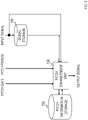
- the speech pitch enhancement apparatus may be configured as shown in Fig. 3 so as to enhance a pitch based on the pitch period and the pitch gain obtained outside the speech pitch enhancement apparatus.
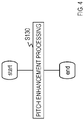
- Fig. 4 shows a processing flow of this speech pitch enhancement apparatus.
- the speech pitch enhancement apparatus does not have to include the autocorrelation function calculation unit 110, the pitch analysis unit 120, and the autocorrelation function storage 160 of the speech pitch enhancement apparatus of the first embodiment.
- the pitch enhancement unit 130 only has to perform the pitch enhancement processing (S130) by using the pitch period and the pitch gain input to the speech pitch enhancement apparatus, not the pitch period and the pitch gain output from the pitch analysis unit 120.
- the speech pitch enhancement apparatus of the first embodiment can obtain a pitch period and pitch gain independently of the frequency of obtaining a pitch period and pitch gain outside the speech pitch enhancement apparatus, which allows the speech pitch enhancement apparatus of the first embodiment to perform pitch enhancement processing in frames, each having a very short length of time.
- a sampling frequency of 32 kHz if N is assumed to be 32, for instance, the speech pitch enhancement apparatus of the first embodiment can perform pitch enhancement processing in 1-ms frames.
- the present invention may be applied as pitch enhancement processing which is performed on linear prediction residual in a configuration, which is described in Non-patent Literature 1, for example, in which linear prediction synthesis is performed after pitch enhancement processing is performed on linear prediction residual. That is, the present invention may be applied, not to an audio signal itself, but to a signal derived from an audio signal, such as a signal obtained by performing an analysis or processing on an audio signal.
- the computer-readable recording medium may be any medium such as a magnetic recording device, an optical disk, a magneto-optical recording medium, and a semiconductor memory.
- Distribution of this program is implemented by sales, transfer, rental, and other transactions of a portable recording medium such as a DVD and a CD-ROM on which the program is recorded, for example. Furthermore, this program may be distributed by storing the program in a storage device of a server computer and transferring the program from the server computer to other computers via a network.
- a computer which executes such program first stores the program recorded in a portable recording medium or transferred from a server computer once in a storage thereof, for example.
- the computer reads out the program stored in the storage thereof and performs processing in accordance with the program thus read out.
- the computer may directly read out the program from a portable recording medium and perform processing in accordance with the program.
- the computer may sequentially perform processing in accordance with the received program.
- a configuration may be adopted in which the transfer of a program to the computer from the server computer is not performed and the above-described processing is executed by so-called application service provider (ASP)-type service by which the processing functions are implemented only by an instruction for execution thereof and result acquisition.
- ASP application service provider
- the program includes information which is provided for processing performed by electronic calculation equipment and which is equivalent to a program (such as data which is not a direct instruction to the computer but has a property specifying the processing performed by the computer).
- the apparatuses are assumed to be configured with a predetermined program executed on a computer. However, at least part of these processing details may be realized in a hardware manner.
Landscapes
- Engineering & Computer Science (AREA)
- Computational Linguistics (AREA)
- Signal Processing (AREA)
- Health & Medical Sciences (AREA)
- Audiology, Speech & Language Pathology (AREA)
- Human Computer Interaction (AREA)
- Physics & Mathematics (AREA)
- Acoustics & Sound (AREA)
- Multimedia (AREA)
- Quality & Reliability (AREA)
- Compression, Expansion, Code Conversion, And Decoders (AREA)
- Electrophonic Musical Instruments (AREA)
- Stereophonic System (AREA)
- Measurement Of Mechanical Vibrations Or Ultrasonic Waves (AREA)
Claims (8)
- Eine Pitch- bzw. Tonhöhenverbesserungsvorrichtung, die ein Ausgangssignal erlangt durch Durchführen, für jedes Zeitsegment, einer Tonhöhenverbesserungsverarbeitung an einem Signal, das von einem Eingangsaudiosignal abgeleitet ist, wobei die Tonhöhenverbesserungsvorrichtung aufweist:eine Tonhöhenverbesserungseinheit (130), die als die Tonhöhenverbesserungsverarbeitung für jedes Zeitsegment eine Verarbeitung durchführt, um als Ausgangssignal zu jedem Zeitpunkt des Zeitsegments ein Signal zu erlangen, das umfasstdas Signal an dem Zeitpunkt,ein erstes Signal zur Verbesserung, das das Signal an einem Zeitpunkt ist, der ein früherer Zeitpunkt ist als der Zeitpunkt um die Anzahl von Abtastwerten TO, die einer Tonhöhendauer des Zeitsegments entsprechen, undein zweites Signal zur Verbesserung, das das Signal an einem Zeitpunkt ist, der ein früherer Zeitpunkt ist als der Zeitpunkt um die Anzahl von Abtastwerten T-α, die einer Tonhöhendauer eines α-ten Zeitsegments vor dem Zeitsegment entsprechen, wobei α ein Wert größer oder gleich 1 ist, wobeidie Tonhöhenverbesserungseinheit (130) als Ausgangssignal an jedem Zeitpunkt des Zeitsegments ein Ausgangssignal erlangt, das ein Signal umfasst, das erlangt wird durch Hinzufügendes Signals an dem Zeitpunkt,eines Signals, das erlangt wird durch Multiplizieren des ersten Signals zur Verbesserung mit einer Tonhöhenverstärkung σO des Zeitsegments und einem vorgegebenen Koeffizienten BO, der ein Wert kleiner als 1 ist, undeines Signals, das erlangt wird durch Multiplizieren des zweiten Signals zur Verbesserung mit einer Tonhöhenverstärkung σ-α eines α-ten Zeitsegments vor dem Zeitsegment und einem vorgegebenen Koeffizienten B-α, der ein Wert kleiner als 1 ist,dadurch gekennzeichnet, dassdie Tonhöhenverbesserungseinheit (130) ein Signal durch Teilen des Signals, das durch die Addition erlangt wird, durch

- Die Tonhöhenverbesserungsvorrichtung gemäß Anspruch 1, wobei der Koeffizient B-α ein kleinerer Wert als der Koeffizient BO ist.
- Eine Tonhöhenverbesserungsvorrichtung, die ein Ausgangssignal erlangt durch Durchführen, für jedes Zeitsegment, einer Tonhöhenverbesserungsverarbeitung an einem Signal, das von einem Eingangsaudiosignal abgeleitet ist, wobei die Tonhöhenverbesserungsvorrichtung aufweist:eine Tonhöhenverbesserungseinheit (130), die als die Tonhöhenverbesserungsverarbeitung für jedes Zeitsegment eine Verarbeitung durchführt, um als Ausgangssignal zu jedem Zeitpunkt des Zeitsegments ein Signal zu erlangen, das umfasstdas Signal an dem Zeitpunkt,ein erstes Signal zur Verbesserung, das das Signal an einem Zeitpunkt ist, der ein früherer Zeitpunkt ist als der Zeitpunkt um die Anzahl von Abtastwerten TO, die einer Tonhöhendauer des Zeitsegments entsprechen,ein zweites Signal zur Verbesserung, das das Signal an einem Zeitpunkt ist, der ein früherer Zeitpunkt ist als der Zeitpunkt um die Anzahl von Abtastwerten T-α, die einer Tonhöhendauer eines α-ten Zeitsegments vor dem Zeitsegment entsprechen, wobei α ein Wert größer oder gleich 1 ist, undein drittes Signal zur Verbesserung, das das Signal an einem Zeitpunkt ist, der ein früherer Zeitpunkt ist als der Zeitpunkt um die Anzahl von Abtastwerten T-β, die einer Tonhöhendauer eines β-ten Zeitsegments, wobei β ein Wert größer als α ist, vor dem Zeitsegment entsprechen, wobeidie Tonhöhenverbesserungseinheit (130) als Ausgangssignal an jedem Zeitpunkt des Zeitsegments ein Ausgangssignal erlangt, das ein Signal umfasst, das erlangt wird durch Hinzufügendes Signals an dem Zeitpunkt,eines Signals, das erlangt wird durch Multiplizieren des ersten Signals zur Verbesserung mit einer Tonhöhenverstärkung σ0 des Zeitsegments und einem vorgegebenen Koeffizienten Bo, der ein Wert kleiner als 1 ist, undeines Signals, das erlangt wird durch Multiplizieren des zweiten Signals zur Verbesserung mit einer Tonhöhenverstärkung σ-α eines α-ten Zeitsegments vor dem Zeitsegment und einem vorgegebenen Koeffizienten B-α, der ein Wert kleiner als 1 ist, undeines Signals, das erlangt wird durch Multiplizieren des dritten Signals zur Verbesserung mit einer Tonhöhenverstärkung σ-β eines β-ten Zeitsegments vor dem Zeitsegment und einem vorgegebenen Koeffizienten B-β, der ein Wert kleiner als 1 ist,dadurch gekennzeichnet, dassdie Tonhöhenverbesserungseinheit (130) ein Signal durch Teilen des Signals, das durch die Addition erlangt wird, durch
 als Ausgangssignal erlangt, wobei


- Ein Tonhöhenverbesserungsverfahren zum Erlangen eines Ausgangssignals durch Durchführen, für jedes Zeitsegment, einer Tonhöhenverbesserungsverarbeitung an einem Signal, das von einem Eingangsaudiosignal abgeleitet ist, wobei das Tonhöhenverbesserungsverfahren aufweist:einen Tonhöhenverbesserungsschritt (S130) zum Durchführen, als die Tonhöhenverbesserungsverarbeitung, für jedes Zeitsegment, einer Verarbeitung, um als Ausgangssignal zu jedem Zeitpunkt des Zeitsegments ein Signal zu erlangen, das umfasstdas Signal an dem Zeitpunkt,ein erstes Signal zur Verbesserung, das das Signal an einem Zeitpunkt ist, der ein früherer Zeitpunkt ist als der Zeitpunkt um die Anzahl von Abtastwerten To, die einer Tonhöhendauer des Zeitsegments entsprechen, undein zweites Signal zur Verbesserung, das das Signal an einem Zeitpunkt ist, der ein früherer Zeitpunkt ist als der Zeitpunkt um die Anzahl von Abtastwerten T-α, die einer Tonhöhendauer eines α-ten Zeitsegments vor dem Zeitsegment entsprechen, wobei α ein Wert größer oder gleich 1 ist, wobeider Tonhöhenverbesserungsschritt (S130) als Ausgangssignal an jedem Zeitpunkt des Zeitsegments ein Ausgangssignal erlangt, das ein Signal umfasst, das erlangt wird durch Hinzufügendes Signals an dem Zeitpunkt,eines Signals, das erlangt wird durch Multiplizieren des ersten Signals zur Verbesserung mit einer Tonhöhenverstärkung σ0 des Zeitsegments und einem vorgegebenen Koeffizienten Bo, der ein Wert kleiner als 1 ist, undeines Signals, das erlangt wird durch Multiplizieren des zweiten Signals zur Verbesserung mit einer Tonhöhenverstärkung σ-α eines α-ten Zeitsegments vor dem Zeitsegment und einem vorgegebenen Koeffizienten B-α, der ein Wert kleiner als 1 ist,dadurch gekennzeichnet, dassder Tonhöhenverbesserungsschritt (S130) ein Signal durch Teilen des Signals, das durch die Addition erlangt wird, durch

- Das Tonhöhenverbesserungsverfahren gemäß Anspruch 4, wobei der Koeffizient B-α ein kleinerer Wert als der Koeffizient B0 ist.
- Ein Tonhöhenverbesserungsverfahren zum Erlangen eines Ausgangssignals durch Durchführen, für jedes Zeitsegment, einer Tonhöhenverbesserungsverarbeitung an einem Signal, das von einem Eingangsaudiosignal abgeleitet ist, wobei das Tonhöhenverbesserungsverfahren aufweist:eine Tonhöhenverbesserungsschritt (S130) zum Durchführen als die Tonhöhenverbesserungsverarbeitung, für jedes Zeitsegment, einer Verarbeitung, um als Ausgangssignal zu jedem Zeitpunkt des Zeitsegments ein Signal zu erlangen, das umfasstdas Signal an dem Zeitpunkt,ein erstes Signal zur Verbesserung, das das Signal an einem Zeitpunkt ist, der ein früherer Zeitpunkt ist als der Zeitpunkt um die Anzahl von Abtastwerten To, die einer Tonhöhendauer des Zeitsegments entsprechen,ein zweites Signal zur Verbesserung, das das Signal an einem Zeitpunkt ist, der ein früherer Zeitpunkt ist als der Zeitpunkt um die Anzahl von Abtastwerten T-α, die einer Tonhöhendauer eines α-ten Zeitsegments vor dem Zeitsegment entsprechen, wobei α ein Wert größer oder gleich 1 ist, undein drittes Signal zur Verbesserung, das das Signal an einem Zeitpunkt ist, der ein früherer Zeitpunkt ist als der Zeitpunkt um die Anzahl von Abtastwerten T-β, die einer Tonhöhendauer eines β-ten Zeitsegments, wobei β ein Wert größer als α ist, vor dem Zeitsegment entsprechen, wobeider Tonhöhenverbesserungsschritt (S130) als Ausgangssignal an jedem Zeitpunkt des Zeitsegments ein Ausgangssignal erlangt, das ein Signal umfasst, das erlangt wird durch Hinzufügendes Signals an dem Zeitpunkt,eines Signals, das erlangt wird durch Multiplizieren des ersten Signals zur Verbesserung mit einer Tonhöhenverstärkung σ0 des Zeitsegments und einem vorgegebenen Koeffizienten Bo, der ein Wert kleiner als 1 ist, undeines Signals, das erlangt wird durch Multiplizieren des zweiten Signals zur Verbesserung mit einer Tonhöhenverstärkung σ-α eines α-ten Zeitsegments vor dem Zeitsegment und einem vorgegebenen Koeffizienten B-α, der ein Wert kleiner als 1 ist, undeines Signals, das erlangt wird durch Multiplizieren des dritten Signals zur Verbesserung mit einer Tonhöhenverstärkung σ-β eines β-ten Zeitsegments vor dem Zeitsegment und einem vorgegebenen Koeffizienten B-β, der ein Wert kleiner als 1 ist,dadurch gekennzeichnet, dassder Tonhöhenverbesserungsschritt (S130) ein Signal durch Teilen des Signals, das durch die Addition erlangt wird, durch
 als Ausgangssignal erlangt, wobei


- Ein Programm, das Anweisungen aufweist, die bei Ausführung des Programms durch einen Computer den Computer veranlassen, das Tonhöhenverbesserungsverfahren gemäß einem der Ansprüche 4 bis 6 auszuführen.
- Ein computerlesbares Aufzeichnungsmedium, das Anweisungen aufweist, die bei Ausführung durch einen Computer den Computer veranlassen, das Tonhöhenverbesserungsverfahren gemäß einem der Ansprüche 4 bis 6 auszuführen.
Applications Claiming Priority (2)
| Application Number | Priority Date | Filing Date | Title |
|---|---|---|---|
| JP2017231747 | 2017-12-01 | ||
| PCT/JP2018/040150 WO2019107041A1 (ja) | 2017-12-01 | 2018-10-29 | ピッチ強調装置、その方法、およびプログラム |
Publications (3)
| Publication Number | Publication Date |
|---|---|
| EP3719800A1 EP3719800A1 (de) | 2020-10-07 |
| EP3719800A4 EP3719800A4 (de) | 2021-08-11 |
| EP3719800B1 true EP3719800B1 (de) | 2022-06-08 |
Family
ID=66664829
Family Applications (1)
| Application Number | Title | Priority Date | Filing Date |
|---|---|---|---|
| EP18882312.4A Active EP3719800B1 (de) | 2017-12-01 | 2018-10-29 | Vorrichtung zur tonhöhenverbesserung, verfahren dafür und programm |
Country Status (5)
| Country | Link |
|---|---|
| US (1) | US11270719B2 (de) |
| EP (1) | EP3719800B1 (de) |
| JP (1) | JP6911939B2 (de) |
| CN (1) | CN111630594B (de) |
| WO (1) | WO2019107041A1 (de) |
Families Citing this family (1)
| Publication number | Priority date | Publication date | Assignee | Title |
|---|---|---|---|---|
| EP3719800B1 (de) * | 2017-12-01 | 2022-06-08 | Nippon Telegraph And Telephone Corporation | Vorrichtung zur tonhöhenverbesserung, verfahren dafür und programm |
Family Cites Families (17)
| Publication number | Priority date | Publication date | Assignee | Title |
|---|---|---|---|---|
| US4058676A (en) * | 1975-07-07 | 1977-11-15 | International Communication Sciences | Speech analysis and synthesis system |
| JP4343302B2 (ja) * | 1998-01-26 | 2009-10-14 | パナソニック株式会社 | ピッチ強調方法及びその装置 |
| US7072832B1 (en) * | 1998-08-24 | 2006-07-04 | Mindspeed Technologies, Inc. | System for speech encoding having an adaptive encoding arrangement |
| US7117146B2 (en) * | 1998-08-24 | 2006-10-03 | Mindspeed Technologies, Inc. | System for improved use of pitch enhancement with subcodebooks |
| JP3824810B2 (ja) * | 1998-09-01 | 2006-09-20 | 富士通株式会社 | 音声符号化方法、音声符号化装置、及び音声復号装置 |
| US6574593B1 (en) * | 1999-09-22 | 2003-06-03 | Conexant Systems, Inc. | Codebook tables for encoding and decoding |
| JP3559485B2 (ja) * | 1999-11-22 | 2004-09-02 | 日本電信電話株式会社 | 音声信号の後処理方法および装置並びにプログラムを記録した記録媒体 |
| EP1164580B1 (de) * | 2000-01-11 | 2015-10-28 | Panasonic Intellectual Property Management Co., Ltd. | Multimodale sprachkodier- und dekodiervorrichtung |
| JPWO2008072701A1 (ja) * | 2006-12-13 | 2010-04-02 | パナソニック株式会社 | ポストフィルタおよびフィルタリング方法 |
| CN101636750B (zh) | 2007-03-23 | 2012-08-08 | 富士通株式会社 | 电子装置、安装有电子装置的电子设备、安装有电子装置的物品、电子装置的制造方法 |
| CN101814291B (zh) * | 2009-02-20 | 2013-02-13 | 北京中星微电子有限公司 | 在时域提高语音信号信噪比的方法和装置 |
| RU2510974C2 (ru) * | 2010-01-08 | 2014-04-10 | Ниппон Телеграф Энд Телефон Корпорейшн | Способ кодирования, способ декодирования, устройство кодера, устройство декодера, программа и носитель записи |
| US8738385B2 (en) * | 2010-10-20 | 2014-05-27 | Broadcom Corporation | Pitch-based pre-filtering and post-filtering for compression of audio signals |
| KR101699898B1 (ko) * | 2011-02-14 | 2017-01-25 | 프라운호퍼 게젤샤프트 쭈르 푀르데룽 데어 안겐반텐 포르슝 에. 베. | 스펙트럼 영역에서 디코딩된 오디오 신호를 처리하기 위한 방법 및 장치 |
| KR101629661B1 (ko) * | 2012-08-29 | 2016-06-13 | 니폰 덴신 덴와 가부시끼가이샤 | 복호 방법, 복호 장치, 프로그램 및 그 기록매체 |
| JP6261381B2 (ja) * | 2014-02-28 | 2018-01-17 | 日本電信電話株式会社 | 信号処理装置、信号処理方法、プログラム |
| EP3719800B1 (de) * | 2017-12-01 | 2022-06-08 | Nippon Telegraph And Telephone Corporation | Vorrichtung zur tonhöhenverbesserung, verfahren dafür und programm |
-
2018
- 2018-10-29 EP EP18882312.4A patent/EP3719800B1/de active Active
- 2018-10-29 US US16/767,408 patent/US11270719B2/en active Active
- 2018-10-29 CN CN201880077503.5A patent/CN111630594B/zh active Active
- 2018-10-29 JP JP2019557077A patent/JP6911939B2/ja active Active
- 2018-10-29 WO PCT/JP2018/040150 patent/WO2019107041A1/ja not_active Ceased
Also Published As
| Publication number | Publication date |
|---|---|
| JPWO2019107041A1 (ja) | 2020-11-26 |
| EP3719800A4 (de) | 2021-08-11 |
| CN111630594B (zh) | 2023-08-01 |
| EP3719800A1 (de) | 2020-10-07 |
| CN111630594A (zh) | 2020-09-04 |
| US11270719B2 (en) | 2022-03-08 |
| WO2019107041A1 (ja) | 2019-06-06 |
| JP6911939B2 (ja) | 2021-07-28 |
| US20200388301A1 (en) | 2020-12-10 |
Similar Documents
| Publication | Publication Date | Title |
|---|---|---|
| EP1493146B1 (de) | Einrichtungen, verfahren und programme zur kodierung und dekodierung | |
| TWI398854B (zh) | 用於計算轉換值及執行定窗運算之方法、裝置、電路及電腦可讀媒體,及用於提供一解碼器之方法 | |
| US11532315B2 (en) | Linear prediction analysis device, method, program, and storage medium | |
| JP4961042B2 (ja) | 整数変換ベースの符号化及び復号化のためのラウンディング雑音シェーピング | |
| EP3098813B1 (de) | Linear-prädiktive analysevorrichtung, verfahren, programm und aufzeichnungsmedium | |
| US12106767B2 (en) | Pitch emphasis apparatus, method and program for the same | |
| EP3719800B1 (de) | Vorrichtung zur tonhöhenverbesserung, verfahren dafür und programm | |
| JP6510566B2 (ja) | オーディオ信号の時間包絡線を処理するための方法および装置、ならびにエンコーダ | |
| US20060100885A1 (en) | Method and apparatus to encode and decode an audio signal | |
| EP1267328A2 (de) | Verfahren zur Konvertierung von Koden zwischen Kodierung- und Dekodierungssystemen, sowie entsprechende Vorrichtung und Programm | |
| US12100410B2 (en) | Pitch emphasis apparatus, method, program, and recording medium for the same | |
| US8843380B2 (en) | Method and apparatus for encoding residual signals and method and apparatus for decoding residual signals | |
| KR101906522B1 (ko) | 코딩/디코딩 방법, 장치 및 시스템 | |
| US7508333B2 (en) | Method and apparatus to quantize and dequantize input signal, and method and apparatus to encode and decode input signal | |
| US8224659B2 (en) | Audio encoding method and apparatus, and audio decoding method and apparatus, for processing death sinusoid and general continuation sinusoid | |
| JPH09162745A (ja) | 高速分析フィルタ及び合成フィルタを備えるオーディオ符号化器及び復号化器 | |
| EP1293968B1 (de) | Effiziente Quantisierung der Anregung in einem "noise-feedback" Kodierungssystem unter Verwendung von Korrelationstechnik | |
| US11302340B2 (en) | Pitch emphasis apparatus, method and program for the same | |
| Beack et al. | Single‐Mode‐Based Unified Speech and Audio Coding by Extending the Linear Prediction Domain Coding Mode | |
| Huang et al. | AAC audio compression detection based on QMDCT coefficient | |
| JP2011009868A (ja) | 符号化方法、復号方法、符号化器、復号器およびプログラム | |
| CN115312069B (zh) | 音频编解码方法、装置、计算机可读介质及电子设备 | |
| You et al. | A study on splitting LPC synthesis filter | |
| HK40075003A (en) | Audio coding and decoding method, device, computer-readable medium and electronic equipment |
Legal Events
| Date | Code | Title | Description |
|---|---|---|---|
| STAA | Information on the status of an ep patent application or granted ep patent |
Free format text: STATUS: THE INTERNATIONAL PUBLICATION HAS BEEN MADE |
|
| PUAI | Public reference made under article 153(3) epc to a published international application that has entered the european phase |
Free format text: ORIGINAL CODE: 0009012 |
|
| STAA | Information on the status of an ep patent application or granted ep patent |
Free format text: STATUS: REQUEST FOR EXAMINATION WAS MADE |
|
| 17P | Request for examination filed |
Effective date: 20200701 |
|
| AK | Designated contracting states |
Kind code of ref document: A1 Designated state(s): AL AT BE BG CH CY CZ DE DK EE ES FI FR GB GR HR HU IE IS IT LI LT LU LV MC MK MT NL NO PL PT RO RS SE SI SK SM TR |
|
| AX | Request for extension of the european patent |
Extension state: BA ME |
|
| DAV | Request for validation of the european patent (deleted) | ||
| DAX | Request for extension of the european patent (deleted) | ||
| A4 | Supplementary search report drawn up and despatched |
Effective date: 20210712 |
|
| RIC1 | Information provided on ipc code assigned before grant |
Ipc: G10L 19/26 20130101AFI20210706BHEP Ipc: G10L 21/0364 20130101ALI20210706BHEP Ipc: G10L 25/90 20130101ALN20210706BHEP |
|
| GRAP | Despatch of communication of intention to grant a patent |
Free format text: ORIGINAL CODE: EPIDOSNIGR1 |
|
| STAA | Information on the status of an ep patent application or granted ep patent |
Free format text: STATUS: GRANT OF PATENT IS INTENDED |
|
| INTG | Intention to grant announced |
Effective date: 20220120 |
|
| RIC1 | Information provided on ipc code assigned before grant |
Ipc: G10L 25/90 20130101ALN20220107BHEP Ipc: G10L 21/0364 20130101ALI20220107BHEP Ipc: G10L 19/26 20130101AFI20220107BHEP |
|
| GRAS | Grant fee paid |
Free format text: ORIGINAL CODE: EPIDOSNIGR3 |
|
| GRAA | (expected) grant |
Free format text: ORIGINAL CODE: 0009210 |
|
| STAA | Information on the status of an ep patent application or granted ep patent |
Free format text: STATUS: THE PATENT HAS BEEN GRANTED |
|
| AK | Designated contracting states |
Kind code of ref document: B1 Designated state(s): AL AT BE BG CH CY CZ DE DK EE ES FI FR GB GR HR HU IE IS IT LI LT LU LV MC MK MT NL NO PL PT RO RS SE SI SK SM TR |
|
| REG | Reference to a national code |
Ref country code: AT Ref legal event code: REF Ref document number: 1497481 Country of ref document: AT Kind code of ref document: T Effective date: 20220615 Ref country code: CH Ref legal event code: EP |
|
| REG | Reference to a national code |
Ref country code: DE Ref legal event code: R096 Ref document number: 602018036637 Country of ref document: DE |
|
| REG | Reference to a national code |
Ref country code: IE Ref legal event code: FG4D |
|
| REG | Reference to a national code |
Ref country code: LT Ref legal event code: MG9D |
|
| REG | Reference to a national code |
Ref country code: NL Ref legal event code: MP Effective date: 20220608 |
|
| PG25 | Lapsed in a contracting state [announced via postgrant information from national office to epo] |
Ref country code: SE Free format text: LAPSE BECAUSE OF FAILURE TO SUBMIT A TRANSLATION OF THE DESCRIPTION OR TO PAY THE FEE WITHIN THE PRESCRIBED TIME-LIMIT Effective date: 20220608 Ref country code: NO Free format text: LAPSE BECAUSE OF FAILURE TO SUBMIT A TRANSLATION OF THE DESCRIPTION OR TO PAY THE FEE WITHIN THE PRESCRIBED TIME-LIMIT Effective date: 20220908 Ref country code: LT Free format text: LAPSE BECAUSE OF FAILURE TO SUBMIT A TRANSLATION OF THE DESCRIPTION OR TO PAY THE FEE WITHIN THE PRESCRIBED TIME-LIMIT Effective date: 20220608 Ref country code: HR Free format text: LAPSE BECAUSE OF FAILURE TO SUBMIT A TRANSLATION OF THE DESCRIPTION OR TO PAY THE FEE WITHIN THE PRESCRIBED TIME-LIMIT Effective date: 20220608 Ref country code: GR Free format text: LAPSE BECAUSE OF FAILURE TO SUBMIT A TRANSLATION OF THE DESCRIPTION OR TO PAY THE FEE WITHIN THE PRESCRIBED TIME-LIMIT Effective date: 20220909 Ref country code: FI Free format text: LAPSE BECAUSE OF FAILURE TO SUBMIT A TRANSLATION OF THE DESCRIPTION OR TO PAY THE FEE WITHIN THE PRESCRIBED TIME-LIMIT Effective date: 20220608 Ref country code: ES Free format text: LAPSE BECAUSE OF FAILURE TO SUBMIT A TRANSLATION OF THE DESCRIPTION OR TO PAY THE FEE WITHIN THE PRESCRIBED TIME-LIMIT Effective date: 20220608 Ref country code: BG Free format text: LAPSE BECAUSE OF FAILURE TO SUBMIT A TRANSLATION OF THE DESCRIPTION OR TO PAY THE FEE WITHIN THE PRESCRIBED TIME-LIMIT Effective date: 20220908 |
|
| REG | Reference to a national code |
Ref country code: AT Ref legal event code: MK05 Ref document number: 1497481 Country of ref document: AT Kind code of ref document: T Effective date: 20220608 |
|
| PG25 | Lapsed in a contracting state [announced via postgrant information from national office to epo] |
Ref country code: RS Free format text: LAPSE BECAUSE OF FAILURE TO SUBMIT A TRANSLATION OF THE DESCRIPTION OR TO PAY THE FEE WITHIN THE PRESCRIBED TIME-LIMIT Effective date: 20220608 Ref country code: LV Free format text: LAPSE BECAUSE OF FAILURE TO SUBMIT A TRANSLATION OF THE DESCRIPTION OR TO PAY THE FEE WITHIN THE PRESCRIBED TIME-LIMIT Effective date: 20220608 |
|
| PG25 | Lapsed in a contracting state [announced via postgrant information from national office to epo] |
Ref country code: NL Free format text: LAPSE BECAUSE OF FAILURE TO SUBMIT A TRANSLATION OF THE DESCRIPTION OR TO PAY THE FEE WITHIN THE PRESCRIBED TIME-LIMIT Effective date: 20220608 |
|
| PG25 | Lapsed in a contracting state [announced via postgrant information from national office to epo] |
Ref country code: SM Free format text: LAPSE BECAUSE OF FAILURE TO SUBMIT A TRANSLATION OF THE DESCRIPTION OR TO PAY THE FEE WITHIN THE PRESCRIBED TIME-LIMIT Effective date: 20220608 Ref country code: SK Free format text: LAPSE BECAUSE OF FAILURE TO SUBMIT A TRANSLATION OF THE DESCRIPTION OR TO PAY THE FEE WITHIN THE PRESCRIBED TIME-LIMIT Effective date: 20220608 Ref country code: RO Free format text: LAPSE BECAUSE OF FAILURE TO SUBMIT A TRANSLATION OF THE DESCRIPTION OR TO PAY THE FEE WITHIN THE PRESCRIBED TIME-LIMIT Effective date: 20220608 Ref country code: PT Free format text: LAPSE BECAUSE OF FAILURE TO SUBMIT A TRANSLATION OF THE DESCRIPTION OR TO PAY THE FEE WITHIN THE PRESCRIBED TIME-LIMIT Effective date: 20221010 Ref country code: EE Free format text: LAPSE BECAUSE OF FAILURE TO SUBMIT A TRANSLATION OF THE DESCRIPTION OR TO PAY THE FEE WITHIN THE PRESCRIBED TIME-LIMIT Effective date: 20220608 Ref country code: CZ Free format text: LAPSE BECAUSE OF FAILURE TO SUBMIT A TRANSLATION OF THE DESCRIPTION OR TO PAY THE FEE WITHIN THE PRESCRIBED TIME-LIMIT Effective date: 20220608 Ref country code: AT Free format text: LAPSE BECAUSE OF FAILURE TO SUBMIT A TRANSLATION OF THE DESCRIPTION OR TO PAY THE FEE WITHIN THE PRESCRIBED TIME-LIMIT Effective date: 20220608 |
|
| PG25 | Lapsed in a contracting state [announced via postgrant information from national office to epo] |
Ref country code: PL Free format text: LAPSE BECAUSE OF FAILURE TO SUBMIT A TRANSLATION OF THE DESCRIPTION OR TO PAY THE FEE WITHIN THE PRESCRIBED TIME-LIMIT Effective date: 20220608 Ref country code: IS Free format text: LAPSE BECAUSE OF FAILURE TO SUBMIT A TRANSLATION OF THE DESCRIPTION OR TO PAY THE FEE WITHIN THE PRESCRIBED TIME-LIMIT Effective date: 20221008 |
|
| REG | Reference to a national code |
Ref country code: DE Ref legal event code: R097 Ref document number: 602018036637 Country of ref document: DE |
|
| PG25 | Lapsed in a contracting state [announced via postgrant information from national office to epo] |
Ref country code: AL Free format text: LAPSE BECAUSE OF FAILURE TO SUBMIT A TRANSLATION OF THE DESCRIPTION OR TO PAY THE FEE WITHIN THE PRESCRIBED TIME-LIMIT Effective date: 20220608 |
|
| PLBE | No opposition filed within time limit |
Free format text: ORIGINAL CODE: 0009261 |
|
| STAA | Information on the status of an ep patent application or granted ep patent |
Free format text: STATUS: NO OPPOSITION FILED WITHIN TIME LIMIT |
|
| PG25 | Lapsed in a contracting state [announced via postgrant information from national office to epo] |
Ref country code: DK Free format text: LAPSE BECAUSE OF FAILURE TO SUBMIT A TRANSLATION OF THE DESCRIPTION OR TO PAY THE FEE WITHIN THE PRESCRIBED TIME-LIMIT Effective date: 20220608 |
|
| 26N | No opposition filed |
Effective date: 20230310 |
|
| PG25 | Lapsed in a contracting state [announced via postgrant information from national office to epo] |
Ref country code: SI Free format text: LAPSE BECAUSE OF FAILURE TO SUBMIT A TRANSLATION OF THE DESCRIPTION OR TO PAY THE FEE WITHIN THE PRESCRIBED TIME-LIMIT Effective date: 20220608 Ref country code: MC Free format text: LAPSE BECAUSE OF FAILURE TO SUBMIT A TRANSLATION OF THE DESCRIPTION OR TO PAY THE FEE WITHIN THE PRESCRIBED TIME-LIMIT Effective date: 20220608 |
|
| REG | Reference to a national code |
Ref country code: CH Ref legal event code: PL |
|
| REG | Reference to a national code |
Ref country code: BE Ref legal event code: MM Effective date: 20221031 |
|
| PG25 | Lapsed in a contracting state [announced via postgrant information from national office to epo] |
Ref country code: LU Free format text: LAPSE BECAUSE OF NON-PAYMENT OF DUE FEES Effective date: 20221029 |
|
| PG25 | Lapsed in a contracting state [announced via postgrant information from national office to epo] |
Ref country code: LI Free format text: LAPSE BECAUSE OF NON-PAYMENT OF DUE FEES Effective date: 20221031 Ref country code: FR Free format text: LAPSE BECAUSE OF NON-PAYMENT OF DUE FEES Effective date: 20221031 Ref country code: CH Free format text: LAPSE BECAUSE OF NON-PAYMENT OF DUE FEES Effective date: 20221031 |
|
| PG25 | Lapsed in a contracting state [announced via postgrant information from national office to epo] |
Ref country code: BE Free format text: LAPSE BECAUSE OF NON-PAYMENT OF DUE FEES Effective date: 20221031 |
|
| PG25 | Lapsed in a contracting state [announced via postgrant information from national office to epo] |
Ref country code: IE Free format text: LAPSE BECAUSE OF NON-PAYMENT OF DUE FEES Effective date: 20221029 |
|
| PG25 | Lapsed in a contracting state [announced via postgrant information from national office to epo] |
Ref country code: IT Free format text: LAPSE BECAUSE OF FAILURE TO SUBMIT A TRANSLATION OF THE DESCRIPTION OR TO PAY THE FEE WITHIN THE PRESCRIBED TIME-LIMIT Effective date: 20220608 |
|
| PG25 | Lapsed in a contracting state [announced via postgrant information from national office to epo] |
Ref country code: CY Free format text: LAPSE BECAUSE OF FAILURE TO SUBMIT A TRANSLATION OF THE DESCRIPTION OR TO PAY THE FEE WITHIN THE PRESCRIBED TIME-LIMIT Effective date: 20220608 |
|
| PG25 | Lapsed in a contracting state [announced via postgrant information from national office to epo] |
Ref country code: MK Free format text: LAPSE BECAUSE OF FAILURE TO SUBMIT A TRANSLATION OF THE DESCRIPTION OR TO PAY THE FEE WITHIN THE PRESCRIBED TIME-LIMIT Effective date: 20220608 Ref country code: HU Free format text: LAPSE BECAUSE OF FAILURE TO SUBMIT A TRANSLATION OF THE DESCRIPTION OR TO PAY THE FEE WITHIN THE PRESCRIBED TIME-LIMIT; INVALID AB INITIO Effective date: 20181029 |
|
| PG25 | Lapsed in a contracting state [announced via postgrant information from national office to epo] |
Ref country code: MT Free format text: LAPSE BECAUSE OF FAILURE TO SUBMIT A TRANSLATION OF THE DESCRIPTION OR TO PAY THE FEE WITHIN THE PRESCRIBED TIME-LIMIT Effective date: 20220608 |
|
| PG25 | Lapsed in a contracting state [announced via postgrant information from national office to epo] |
Ref country code: BG Free format text: LAPSE BECAUSE OF FAILURE TO SUBMIT A TRANSLATION OF THE DESCRIPTION OR TO PAY THE FEE WITHIN THE PRESCRIBED TIME-LIMIT Effective date: 20220608 |
|
| PG25 | Lapsed in a contracting state [announced via postgrant information from national office to epo] |
Ref country code: BG Free format text: LAPSE BECAUSE OF FAILURE TO SUBMIT A TRANSLATION OF THE DESCRIPTION OR TO PAY THE FEE WITHIN THE PRESCRIBED TIME-LIMIT Effective date: 20220608 |
|
| PG25 | Lapsed in a contracting state [announced via postgrant information from national office to epo] |
Ref country code: TR Free format text: LAPSE BECAUSE OF FAILURE TO SUBMIT A TRANSLATION OF THE DESCRIPTION OR TO PAY THE FEE WITHIN THE PRESCRIBED TIME-LIMIT Effective date: 20220608 |
|
| PGFP | Annual fee paid to national office [announced via postgrant information from national office to epo] |
Ref country code: DE Payment date: 20251021 Year of fee payment: 8 |
|
| PGFP | Annual fee paid to national office [announced via postgrant information from national office to epo] |
Ref country code: GB Payment date: 20251022 Year of fee payment: 8 |
|
| REG | Reference to a national code |
Ref country code: DE Ref legal event code: R081 Ref document number: 602018036637 Country of ref document: DE Owner name: NTT, INC., JP Free format text: FORMER OWNER: NIPPON TELEGRAPH AND TELEPHONE CORPORATION, TOKYO, JP Ref country code: DE Ref legal event code: R082 Ref document number: 602018036637 Country of ref document: DE Representative=s name: DENNEMEYER & ASSOCIATES RECHTSANWALTSGESELLSCH, DE |