EP3720076A1 - Datensende- und -empfangsverfahren, -einrichtung und -vorrichtung und computerlesbares speichermedium - Google Patents
Datensende- und -empfangsverfahren, -einrichtung und -vorrichtung und computerlesbares speichermedium Download PDFInfo
- Publication number
- EP3720076A1 EP3720076A1 EP18884519.2A EP18884519A EP3720076A1 EP 3720076 A1 EP3720076 A1 EP 3720076A1 EP 18884519 A EP18884519 A EP 18884519A EP 3720076 A1 EP3720076 A1 EP 3720076A1
- Authority
- EP
- European Patent Office
- Prior art keywords
- data
- extended
- sub
- frequency band
- transmission frequency
- Prior art date
- Legal status (The legal status is an assumption and is not a legal conclusion. Google has not performed a legal analysis and makes no representation as to the accuracy of the status listed.)
- Granted
Links
Images



Classifications
-
- H—ELECTRICITY
- H04—ELECTRIC COMMUNICATION TECHNIQUE
- H04L—TRANSMISSION OF DIGITAL INFORMATION, e.g. TELEGRAPHIC COMMUNICATION
- H04L5/00—Arrangements affording multiple use of the transmission path
- H04L5/0001—Arrangements for dividing the transmission path
- H04L5/0003—Two-dimensional division
- H04L5/0005—Time-frequency
- H04L5/0007—Time-frequency the frequencies being orthogonal, e.g. OFDM(A) or DMT
-
- H—ELECTRICITY
- H04—ELECTRIC COMMUNICATION TECHNIQUE
- H04L—TRANSMISSION OF DIGITAL INFORMATION, e.g. TELEGRAPHIC COMMUNICATION
- H04L27/00—Modulated-carrier systems
- H04L27/26—Systems using multi-frequency codes
- H04L27/2601—Multicarrier modulation systems
- H04L27/2602—Signal structure
- H04L27/26025—Numerology, i.e. varying one or more of symbol duration, subcarrier spacing, Fourier transform size, sampling rate or down-clocking
-
- H—ELECTRICITY
- H04—ELECTRIC COMMUNICATION TECHNIQUE
- H04L—TRANSMISSION OF DIGITAL INFORMATION, e.g. TELEGRAPHIC COMMUNICATION
- H04L27/00—Modulated-carrier systems
- H04L27/26—Systems using multi-frequency codes
- H04L27/2601—Multicarrier modulation systems
- H04L27/2602—Signal structure
- H04L27/26035—Maintenance of orthogonality, e.g. for signals exchanged between cells or users, or by using covering codes or sequences
-
- H—ELECTRICITY
- H04—ELECTRIC COMMUNICATION TECHNIQUE
- H04L—TRANSMISSION OF DIGITAL INFORMATION, e.g. TELEGRAPHIC COMMUNICATION
- H04L27/00—Modulated-carrier systems
- H04L27/26—Systems using multi-frequency codes
- H04L27/2601—Multicarrier modulation systems
- H04L27/2602—Signal structure
- H04L27/261—Details of reference signals
- H04L27/2613—Structure of the reference signals
-
- H—ELECTRICITY
- H04—ELECTRIC COMMUNICATION TECHNIQUE
- H04L—TRANSMISSION OF DIGITAL INFORMATION, e.g. TELEGRAPHIC COMMUNICATION
- H04L5/00—Arrangements affording multiple use of the transmission path
- H04L5/0001—Arrangements for dividing the transmission path
- H04L5/0003—Two-dimensional division
- H04L5/0005—Time-frequency
- H04L5/0007—Time-frequency the frequencies being orthogonal, e.g. OFDM(A) or DMT
- H04L5/001—Time-frequency the frequencies being orthogonal, e.g. OFDM(A) or DMT the frequencies being arranged in component carriers
-
- H—ELECTRICITY
- H04—ELECTRIC COMMUNICATION TECHNIQUE
- H04L—TRANSMISSION OF DIGITAL INFORMATION, e.g. TELEGRAPHIC COMMUNICATION
- H04L5/00—Arrangements affording multiple use of the transmission path
- H04L5/003—Arrangements for allocating sub-channels of the transmission path
- H04L5/0044—Allocation of payload; Allocation of data channels, e.g. PDSCH or PUSCH
-
- H—ELECTRICITY
- H04—ELECTRIC COMMUNICATION TECHNIQUE
- H04L—TRANSMISSION OF DIGITAL INFORMATION, e.g. TELEGRAPHIC COMMUNICATION
- H04L5/00—Arrangements affording multiple use of the transmission path
- H04L5/003—Arrangements for allocating sub-channels of the transmission path
- H04L5/0048—Allocation of pilot signals, i.e. of signals known to the receiver
-
- H—ELECTRICITY
- H04—ELECTRIC COMMUNICATION TECHNIQUE
- H04L—TRANSMISSION OF DIGITAL INFORMATION, e.g. TELEGRAPHIC COMMUNICATION
- H04L5/00—Arrangements affording multiple use of the transmission path
- H04L5/02—Channels characterised by the type of signal
- H04L5/12—Channels characterised by the type of signal the signals being represented by different phase modulations of a single carrier
-
- H—ELECTRICITY
- H04—ELECTRIC COMMUNICATION TECHNIQUE
- H04W—WIRELESS COMMUNICATION NETWORKS
- H04W72/00—Local resource management
- H04W72/04—Wireless resource allocation
- H04W72/044—Wireless resource allocation based on the type of the allocated resource
- H04W72/0453—Resources in frequency domain, e.g. a carrier in FDMA
-
- H—ELECTRICITY
- H04—ELECTRIC COMMUNICATION TECHNIQUE
- H04L—TRANSMISSION OF DIGITAL INFORMATION, e.g. TELEGRAPHIC COMMUNICATION
- H04L27/00—Modulated-carrier systems
- H04L27/26—Systems using multi-frequency codes
- H04L27/2601—Multicarrier modulation systems
- H04L27/2626—Arrangements specific to the transmitter only
- H04L27/26265—Arrangements for sidelobes suppression specially adapted to multicarrier systems, e.g. spectral precoding
Definitions
- the present disclosure relates to, but is not limited to, the field of communications.
- Orthogonal frequency division multiplexing (OFDM) technology is introduced in a fourth generation (4G) wireless cellular communication, and continues to be used in a fifth generation (5G) wireless cellular communication.
- 4G fourth generation
- 5G fifth generation
- a main idea of OFDM technology is to use characteristics that sub-carriers are orthogonal to each other and do not interfere with each other, meanwhile, multiple data transmissions are completed by multiple sub-carriers, so that spectrum efficiency is improved and spectrum resources are saved.
- Embodiments of the present disclosure provide a data sending and receiving method, apparatus, and device, and a computer readable storage medium.
- An embodiment of the present disclosure provides a data sending method.
- the data sending method includes steps described below.
- a first transmission frequency band sends data by adopting an extended sequence modulation data sending rule
- data to be transmitted on spaced sub-carriers of the first transmission frequency band is multiplied respectively by each extended element in an extended sequence with a length of 2K to obtain extended data with a number of 2K, where there is another extended element with a phase difference of ⁇ relative to each extended element in the extended sequence; and the extended data with the number of 2K is sent on 2K spaced sub-carriers of the first transmission frequency band, and K is a positive integer.
- An embodiment of the present disclosure provides a data receiving method.
- the data receiving method includes steps described below.
- Data sent by a first transmission frequency band through the data sending method described above is received; extended data with the number of 2K on the 2K spaced sub-carriers of the first transmission frequency band is extracted; and the extracted and extended data with the number of 2K is divided respectively by corresponding extended elements in the extended sequence with the length of 2K.
- An embodiment of the present disclosure provides a data sending method.
- the data sending method includes steps described below.
- a transmission frequency band sends data by adopting an extended sequence modulation data sending rule
- data to be transmitted on the transmission frequency band is multiplied respectively by each extended element in an extended sequence with a length of 2K to obtain extended data with a number of 2K, where there is another extended element with a phase difference of ⁇ relative to each extended element in the extended sequence; and the extended data with the number of 2K is sent on 2K consecutive sub-carriers of the transmission frequency band, and K is a positive integer greater than 1.
- An embodiment of the present disclosure provides a data sending apparatus.
- the data sending apparatus includes a data modulation module and a data transfer module.
- the data modulation module is configured to, when a first transmission frequency band sends data by adopting an extended sequence modulation data sending rule, multiply data to be transmitted on spaced sub-carriers of the first transmission frequency band respectively by each extended element in an extended sequence with a length of 2K to obtain extended data with a number of 2K, where there is another extended element with a phase difference of ⁇ relative to each extended element in the extended sequence.
- the data transfer module is configured to send the extended data with the number of 2K on 2K spaced sub-carriers of the first transmission frequency band, and K is a positive integer.
- An embodiment of the present disclosure provides a data receiving apparatus.
- the data receiving apparatus includes a data receiving module and a data demodulation module.
- the data receiving module is configured to receive data sent by a first transmission frequency band through the data sending method described above and extract extended data with the number of 2K on the 2K spaced sub-carriers of the first transmission frequency band.
- the data demodulation module is configured to divide the extracted and extended data with the number of 2K respectively by corresponding extended elements in the extended sequence with the length of 2K.
- An embodiment of the present disclosure provides a data sending device.
- the data sending device includes a processor, a memory and a communication bus.
- the communication bus is configured to implement a connection communication between the processor and the memory, and the processor is configured to execute a data sending program stored in the memory to implement steps of the data sending method described above.
- An embodiment of the present disclosure provides a computer readable storage medium.
- the computer readable storage medium is configured to store a data sending program, which is executable by at least one processor to implement steps of the data sending method described above; or, the computer readable storage medium is configured to store a data receiving program, which is executable by at least one processor to implement steps of the data receiving method described above.
- the data sending and receiving method, apparatus, and device, and the computer readable storage medium provided by the embodiments of the present disclosure are aimed at problems in the related art that two transmission frequency bands interfere with each other and influence respective transmission performance of each other in a data transmission process due to the fact that the sub-carriers are not orthogonal to each other, and following manners are used: the data to be transmitted on the spaced sub-carriers of the first transmission frequency band is multiplied respectively by each extended element in the extended sequence with the length of 2K to obtain the extended data with the number of 2K, and then the extended data with the number of 2K is sent on the 2K spaced sub-carriers of the first transmission frequency band; or the data to be transmitted on the second transmission frequency band with the larger sub-carrier spacing is multiplied by each extended element in the extended sequence with the length of 2K respectively to obtain the extended data with the number of 2K, and then the extended data with the number of 2K is sent on the 2K consecutive sub-carriers, and K is a positive integer, and there
- one piece of data to be transmitted may be extended into a data sequence including at least two pieces of data and sent on at least two sub-carriers. Therefore, same data to be transmitted is repeatedly sent under the action of the extended sequence, and in comparison with the existing single-carrier transmission manner of data transmission, the received signal-to-noise ratio of data to be transmitted is increased, and the demodulation performance is improved.
- the present embodiment provides a data sending method, which may be applied to a data sending device as a sending end.
- the data sending device in this embodiment includes, but is not limited to, a base station, a terminal, a relay and a transmitting point.
- this embodiment is exemplified by a specific application scenario.
- the first transmission frequency band may send data by adopting an extended sequence modulation data sending rule.
- This data sending process is shown in FIG. 1 , and may include steps described below.
- data to be transmitted on spaced sub-carriers of the first transmission frequency band is multiplied respectively by each extended element in an extended sequence with a length of 2K to obtain extended data with a number of 2K, where K is a positive integer.
- the extended data with the number of 2K is sent on 2K spaced sub-carriers of the first transmission frequency band.
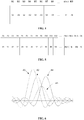
- a frequency spacing of adjacent sub-carriers of each sub-carrier (A1, A2, A3, ... etc.) of the first transmission frequency band A is C A
- a frequency spacing of adjacent sub-carriers of each sub-carrier (B1, B2, B3, ... etc.) of the second transmission frequency band B is C B
- a frequency spacing between the two transmission frequency bands, i.e., the first transmission frequency band A and the second transmission frequency band B is C.
- the first transmission frequency band may send the data by adopting the extended sequence modulation data sending rule as shown in FIG. 1 .
- the method further includes a step described below. It is determined whether the first transmission frequency band sends the data by adopting the extended sequence modulation data sending rule.
- the first transmission frequency band and the second transmission frequency band may also selectively adopt the extended sequence modulation data sending rule to send the data, specifically, it may include that the first transmission frequency band adopts the extended sequence modulation data sending rule, and the second transmission frequency band does not adopt the extended sequence modulation data sending rule; or, the second transmission frequency band adopts the extended sequence modulation data sending rule, and the first transmission frequency band does not adopt the extended sequence modulation data sending rule; or both the first transmission frequency band and the second transmission frequency band adopt the extended sequence modulation data sending rule. It should be understood that which frequency bands adopting this rule may be flexibly set according to a specific application scenario.
- the second transmission frequency band sends the data by adopting the extended sequence modulation data sending rule
- a process of sending the data is shown in FIG. 2 , and may include steps described below.
- data to be transmitted on the second transmission frequency band is multiplied respectively by each extended element in the extended sequence with a length of 2L to obtain extended data with a number of 2L, where L is a positive integer, and a value of L may be equal to or not equal to the K described above.
- the obtained and extended data with the number of 2L is sent on 2L consecutive sub-carriers of the second transmission frequency band.
- a frequency spacing of adjacent sub-carriers is a frequency difference of peak values of two adjacent sub-carriers.
- a width of each sub-carrier in this transmission frequency band is identical and a frequency spacing configuration of adjacent sub-carriers in this transmission frequency band is also identical, so that the first transmission frequency band A has a uniform frequency spacing C A of adjacent sub-carriers.
- the width of each sub-carrier in the first transmission frequency band A is equal to the frequency spacing C A of adjacent sub-carriers, therefore the sub-carriers are orthogonal to each other in the first transmission frequency band A.
- the frequency spacing C B of adjacent sub-carriers in the second transmission frequency band B is 30 kHz, and a frequency width of each sub-carrier (B1, B2, B3, ... etc.) is also 30 kHz, therefore the sub-carriers are orthogonal to each other in the second transmission frequency band B.
- the frequency spacing C of two adjacent transmission frequency bands refers to a frequency spacing between two sub-carriers on an adjacent edge between the first transmission frequency band A and the second transmission frequency band B, for example, the first transmission frequency band A is adjacent to the second transmission frequency band B, and a frequency upper limit of the first transmission frequency band A is less than a frequency upper limit of the second transmission frequency band B.
- Each of the first transmission frequency band A and the second transmission frequency band B has 3 sub-carriers, namely A1, A2, A3, B1, B2 and B3 in a sequence from a low frequency to a high frequency, thus the frequency spacing between the first transmission frequency band A and the second transmission frequency band B is a frequency spacing between sub-carrier A3 and sub-carrier B1.
- the frequency spacing C A of adjacent sub-carriers of the first transmission frequency band A is less than the frequency spacing C B of adjacent sub-carriers of the first transmission frequency band A, the frequency spacing C between adjacent transmission frequency bands is equal to an integer multiple of C A under a normal condition.
- the "normal condition” mentioned here is a condition that a frequency offset is excluded, but if the frequency offset between the two adjacent transmission frequency bands exists, the frequency spacing C and C A will no longer satisfy the above relationship.
- the transmission frequency band is a section of frequency resources for transmitting data.
- the transmission frequency band includes N sub-carriers, and N is greater than or equal to 2.
- the first transmission frequency band and the second transmission frequency band may be two complete transmission broadbands, or two transmission sub-bands on one transmission broadband, or a part of frequency resources of a transmission sub-band, and so on.
- the data sending method for these two adjacent transmission frequency bands may be flexibly adopt the above example method according to a specific scenario.
- an extended modulation is performed on the corresponding data to be transmitted thereof mainly to enable side lobe amplitudes of the sub-carriers to be cancelled with each other when sub-carriers in the target transmission frequency band send the obtained data to be sent with the number of 2K or 2L (which may be referred to as data sequences to be transmitted), so that interference on other transmission frequency bands caused by the out-of-band leakage is avoided.
- the extended modulation of the data sequences to be transmitted of the target transmission frequency band is actually to protect other transmission frequency bands adjacent to the target transmission frequency band.
- a protected transmission frequency band is referred to as a "protected frequency band".
- the first frequency band is the target transmission frequency band
- the second transmission frequency band is the protected frequency band, and so on for other application situations.
- the data to be transmitted in this embodiment may be digital modulation information, such as a binary phase shift keying (BPSK), a quadrature phase shift keying (QPSK), a quadrature amplitude modulation (QAM), or others, and may also be in other data formats.
- digital modulation information such as a binary phase shift keying (BPSK), a quadrature phase shift keying (QPSK), a quadrature amplitude modulation (QAM), or others, and may also be in other data formats.
- BPSK binary phase shift keying
- QPSK quadrature phase shift keying
- QAM quadrature amplitude modulation
- the extended sequence used for performing the extended modulation on the data to be transmitted includes 2K extended elements. It should be understood that when the extended sequence is adopted to perform the extended modulation on the data to be transmitted, other modulation manners are not excluded except the manner of multiplying this extended sequence by the data to be transmitted.
- the data sequence to be transmitted obtained by the extended modulation includes data to be transmitted with a number of 2K. Where, a value of K is a positive integer, and there is another extended element with the phase difference of ⁇ relative to each extended element in the extended sequence.
- every two consecutive extended elements in the extended sequence are divided into a group. It is assumed that this group is referred to as a "suppression group", and two extended elements within one suppression group have a phase difference of ⁇ . And in this embodiment, adjacent extended elements between groups may have a phase difference of 0 or ⁇ .
- the extended sequence includes K suppression groups, where, a 1 st extended element and a 2 nd extended element belong to one suppression group, a 3 rd extended element and a 4 th extended element belong to one suppression group, ... and so on, a (2K-1) th extended element and a (2K) th extended elements belong to one suppression group.
- two extended elements in a same suppression group have the phase difference of ⁇ .
- the 1 st extended data and the 2 nd extended data have a phase difference of ⁇ , so that signal side lobes may be cancelled with each other on sub-carriers for transmitting the 1 st extended data and the 2 nd extended data, and signal side lobes may be cancelled with each other on sub-carrier for transmitting the 3 rd data and 4 th data, ... it is assumed that the value of K is 1, the extended sequence includes 2 extended elements, that is, only one suppression group such as [P, -P] is included.
- the value of K is 2, the extended sequence includes [P, -P, -P, P], and the extended sequence includes two suppression groups, and side lobes of two sub-carrier signals corresponding to one group may be cancelled with each other, and at this time, adjacent extended elements between groups have the phase difference of 0.
- the extended sequence [P, -P, -P, P] has a better out-of-band leakage suppression effect than the extended sequence [P, -P].
- the value of K is 2, and the extended sequence includes [P, -P, -P, P], this extended sequence still includes two suppression groups, side lobes of two sub-carrier signals corresponding to one group may be cancelled with each other, but at this point, adjacent extended elements between groups have the phase difference of ⁇ .
- K in this embodiment may be flexibly set according to proposed transmission environment and requirements.
- the value of K may also be 3 or 4, etc.
- P in the above examples is a complex number, and it should be understood that it may specifically be a real number or an imaginary number.
- each extended element in the extended sequence has an equal absolute value, which is P.
- P the absolute value of each extended element will influence an amplitude of a sub-carrier after the extended modulation is performed on the data to be transmitted. Therefore, in some other examples, in order to obtain a better out-of-band leakage suppression effect for the transmission, the absolute value of each extended element in the extended sequence may not be completely equal. For example, when the value of K is 1, two elements of the extended sequence may have opposite phases and unequal modulus values. When the value of K is 2, there may be extended elements with unequal modulus values in the extended sequence.
- a signal of the second transmission frequency band B when a first receiving end corresponding to the first transmission frequency band A receives data, a signal of the second transmission frequency band B will become an interference signal of the first transmission frequency band A, and the data is intercepted according to an OFDM symbol length of the first transmission frequency band A, at this time, an out-of-band leakage signal of the second transmission frequency band B will be received on the first transmission frequency band A (and vice versa, the first transmission frequency band A may be taken as the target transmission frequency band, while the second transmission frequency band B may be taken as the protected frequency band, or both the first transmission frequency band A and the second transmission frequency band B are taken as the target transmission frequency bands and the protected frequency bands).
- the first transmission frequency band A may be taken as the protected frequency band, while the second transmission frequency band B may be taken as the target transmission frequency band, after sending end performs the extended modulation on first data to be transmitted which needs to be transmitted on the second transmission frequency band B by adopting the extended sequence including the 2K extended elements, a first data sequence to be transmitted including the data with the number of 2K is obtained, and the data with the number of 2K is sent on 2K consecutive sub-carriers of the second transmission frequency band B.
- K when K is equal to 1, two pieces of data of the first data sequence to be transmitted are sent on 1 st and 2 nd sub-carriers of the second transmission frequency band B.
- K has a value of 2
- data with a number of 4 of the first data sequence to be transmitted are respectively sent on 1 st to 4 th sub-carriers of the second transmission frequency band B.
- the second transmission frequency band B is under the action of the extended sequence, the sub-carrier B1 and the sub-carrier B2 repeatedly send data, so that the received signal-to-noise ratio of the second transmission frequency band B may be increased, and the demodulation performance is improved when the second transmission frequency band B demodulates data.
- first data to be transmitted there is only one piece of first data to be transmitted, but that in practical applications, there may be multiple pieces of first data to be transmitted at the same time which need to be sent from the sending end to the first receiving end, for example, there is first data to be transmitted with a number of i at present, i.e., S1, S2, S3 ..., Si, where i is an integer greater than 1.
- the sending end may multiply the data to be transmitted with the number of i respectively by the extended sequence on consecutive sub-carriers of the second transmission frequency band B to obtain i data sequences to be transmitted, where each data sequence to be transmitted includes extended data with a number of 2K.
- the sending end sends the i data sequences to be transmitted respectively on i groups of consecutive sub-carriers successively using 2K consecutive sub-carriers as a group, as shown in FIG. 4 .
- the value of K is 1, and the extended sequence is [1, -1].
- a first data sequence to be transmitted [S1, -S1] is obtained, and these two pieces of data will be sent through two consecutive sub-carriers with serial numbers of B1 and B2 in the second transmission frequency band B;
- the first data sequence to be transmitted obtained after the extended modulation is performed on a second piece of data to be transmitted S2 is [S2, -S2], which will be sent through two consecutive sub-carriers with serial numbers of B3 and B4;
- i th first data to be transmitted Si is extendedly modulated into [Si, -Si], which may be sent by using sub-carriers with serial numbers of B2i-1 and B2i .
- a signal of the first transmission frequency band A When a second receiving end corresponding to the second transmission frequency band B receives data, a signal of the first transmission frequency band A will become an interference signal of the second transmission frequency band B, and the data is intercepted according to an OFDM symbol length of the second transmission frequency band B, at this time, a signal of the first transmission frequency band A is received on the second transmission frequency band B, and the frequency spacing of adjacent sub-carriers of the first transmission frequency band A is invariant, however, a sub-carrier width of the first transmission frequency band A is the same as a sub-carrier width of the second transmission frequency band B.
- the second transmission frequency band B may be taken as the protected frequency band, while the first transmission frequency band A is taken as the target transmission frequency band.
- the sending end performs the extended modulation on the second data to be transmitted corresponding to the sub-carriers by adopting the extended sequence including the 2K extended elements to obtain a second data sequence to be transmitted including data with a number of 2K, and the data with the number of 2K is sent on 2K spaced sub-carriers of the first transmission frequency band A.
- the 2K spaced sub-carriers are sub-carriers with an equal spacing.
- Sub-carriers spaced between adjacent spaced sub-carriers in the 2K spaced sub-carriers have a number of m-1 (that is, the frequency spacing is C B ).
- a frequency difference between the spaced sub-carriers of the first transmission frequency band A and sub-carriers of the second transmission frequency band B is not equal to an integer multiple of C B .
- some sub-carriers of the first transmission frequency band A have the frequency spacing with the sub-carriers of the second transmission frequency band B being just a positive integer multiple of C B , and these sub-carriers are orthogonal to the sub-carriers in the second transmission frequency band B. Therefore, the transmission of these sub-carriers will not interfere with the transmission of the second transmission frequency band B. Therefore, these sub-carriers do not need to be subjected to side lobe amplitude cancellation.
- a set of these sub-carriers orthogonal to the sub-carriers in the first transmission frequency band A is referred to as an "orthogonal sub-carrier set".
- the sending end may select each sub-carrier from the first transmission frequency band A as a sub-carrier to be selected, each sub-carrier has the frequency spacing with the second transmission frequency band B satisfying a relationship of n ⁇ C A + C ⁇ qC B , and select sub-carriers having the frequency spacing of C B from these sub-carriers to be selected to form one or more spaced sub-carrier sets, where q is a positive integer, and n is a serial number of a sub-carrier in the first transmission frequency band A.
- sub-carriers A1, A5, A9, etc. form the orthogonal sub-carrier set
- sub-carriers A2, A6, A10, etc. form a first spaced sub-carrier set
- sub-carriers A3, A7, A11, etc. form a second spaced sub-carrier set
- sub-carriers A4, A8, A12, etc. form a third spaced sub-carrier set.
- the sub-carrier spacing C B of the second transmission frequency band B is 30 kHz
- the sub-carrier spacing C A of the first transmission frequency band A is 15 kHz
- the frequency spacing C between the second transmission frequency band B and the first transmission frequency band A is equal to 30 kHz.
- the serial number of a sub-carrier starts from 1, then sub-carriers with an even serial number are not orthogonal to the sub-carriers in the second transmission frequency band B, while sub-carriers with an odd serial number are orthogonal to each sub-carrier in the second transmission frequency band B. Therefore, the sending end may adopt data modulated by an extended sequence on the sub-carriers with the even serial number such as A2, A4, A6, etc.
- the sub-carriers in the first transmission frequency band A having the frequency spacing with the sub-carriers in the second transmission frequency band B satisfying the relationship of n ⁇ C A + C ⁇ qC B are just orthogonal to the sub-carriers in the second transmission frequency band B, therefore a set of these sub-carriers orthogonal to each sub-carrier in the second transmission frequency band B may be referred to as the "orthogonal sub-carrier set".
- the second transmission frequency band B is not interfered when data is transmitted, so that the data may be directly sent to the receiving end without performing the extended modulation.
- sub-carriers of the first transmission frequency band with an odd serial number n such as A1, A3, A5, etc.
- the sending end may directly adopt these orthogonal sub-carriers to send third data to be transmitted except the second data to be transmitted without performing the extended modulation on these third data to be transmitted. That is, data to be transmitted on a sub-carrier of the first transmission frequency band may be sent directly through this sub-carrier, a frequency difference with between this sub-carrier of the first transmission frequency band and a sub-carrier of the second transmission frequency band is equal to an integer multiple of C B .
- FIG. 5 shows a mapping relationship between the data to be transmitted in the first transmission frequency band A and sub-carriers when k is equal to 1.
- the sending end needs to send data with a number of 3j to the second receiving end through the first transmission frequency band A, in order to make rational use of each sub-carrier in the first transmission frequency band, the sending end may take data with a number of j (such as, S1, S2, S3 ... and Sj) as the second data to be transmitted to perform the extended modulation.
- each second data sequence to be transmitted includes two pieces of extended data, such as [S1, -S1], [S2, -S2]... and [Sj, -Sj].
- the sending end may send the data on the spaced sub-carrier set including 2j sub-carriers.
- remaining data with the number of 2j (such as, d1, d2, d3 ... and d2j) is taken as the third data to be transmitted, which is transmitted directly on the orthogonal sub-carrier set of the first transmission frequency band A.
- FIG. 6 shows a schematic diagram of waveforms of each sub-carrier signal in the first transmission frequency band A when j has a value of 1, where the side lobe amplitudes of sub-carrier A2 and sub-carrier A4 are cancelled with each other, since the sub-carrier A1 and the sub-carrier A3 are orthogonal to the sub-carriers of the second transmission frequency band B, therefore sub-carrier A1 and sub-carrier A3 directly transmit the third data to be transmitted.
- each data to be transmitted is modulated by an extended sequence, then sent on equally spaced sub-carriers with the frequency spacing of C B to each other.
- C B 4C A as an example, after certain data to be transmitted is modulated by the extended sequence with the length of 2, the extended data with a number of 2 is obtained.
- the extended data with the number of 2 is sent on the equally spaced sub-carriers with the frequency spacing of C B to each other, that is, 3 sub-carriers are spaced, such as sub-carriers A1 and A5, or A2 and A6, or A9 and A13, etc..
- the application of the data sending method in this embodiment is not limited to adjacent transmission frequency bands, and it is also applicable to a single transmission frequency band in some scenarios.
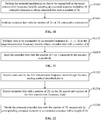
- the single transmission frequency band sends data by adopting the extended sequence modulation data sending rule, a process of sending the data is shown in FIG. 7 , which includes steps described below.
- data to be transmitted on the transmission frequency band is multiplied respectively by each extended element in the above extended sequence with the length of 2K to obtain extended data with a number of 2K.
- the extended data with the number of 2K is sent on 2K consecutive sub-carriers of the transmission frequency band, where K is a positive integer greater than 1.
- the data to be transmitted is multiplied by the extended sequence with the length of 2K, the extended data with the number of 2K is obtained, and the extended data with the number of 2K is respectively sent on the 2K consecutive sub-carriers, so that the side lobe amplitudes between 2K sub-carrier signals may be greatly cancelled, the purpose of reducing the out-of-band leakage is achieved, and the interference of a signal of the target transmission frequency band on a signal of the protected frequency band is avoided, so as to ensure the transmission performance of the protected frequency band.
- the data sending method provided in this embodiment will also directly adopt these orthogonal sub-carriers to send the third data to be transmitted without performing the extended modulation on the third data to be transmitted, so that spectrum efficiency of the target transmission frequency band is improved.
- two adjacent transmission frequency bands are two adjacent sub-bands in a complete transmission frequency band, which are a second sub-band C and a first sub-band D respectively.
- the sending end such as a base station, schedules the second sub-band C and the first sub-band D to send data respectively to two terminal devices, and the sending end configures a frequency spacing C C of adjacent sub-carriers for the second sub-band C to be 60 kHz and a frequency spacing C D of adjacent sub-carriers for the first sub-band D to be 15 kHz.
- the sending end should take both the second sub-band C and the first sub-band D as the target transmission frequency bands, and the extended modulation is performed on data to be transmitted of both the second sub-band C and the first sub-band D so as to suppress the interference between the two sub-bands.
- the sending end may perform the extended modulation only on any one of the two sub-bands. Please refer to FIG. 8 and FIG. 9 , which respectively show a flow chart of a data sending when the second sub-band C and the first sub-band D are individually used as the target transmission frequency band.
- the first data to be transmitted Si is multiplied by an extended sequence [1, -1] with a length of 2 to obtain a first data sequence to be transmitted [Si, -Si].
- the extended sequence is [1, -1], so the value of K is 1.
- two extended elements in this example have a same absolute value, that is, two pieces of data obtained by performing the extended modulation have a same amplitude, but in some other examples, in order to better cancel the side lobe amplitudes of the two sub-carriers, an extended sequence with not exactly same modulus values of extended elements may be selected.
- a frequency spacing C CD between the second sub-band C and the first sub-band D adjacent to each other is 15 ⁇ p kHz, which is an integer multiple of a frequency spacing C D of adjacent sub-carriers of the first sub-band D.
- the two pieces of data in the first data sequence to be transmitted is sent on a first sub-carrier C1 and a second sub-carrier C2 of the second sub-band C.
- the sending end performs the extended modulation on data which needs to be transmitted on spaced sub-carriers of the first sub-band D, i.e., second data to be transmitted, that is, the sending end selects the first sub-band D as the target transmission frequency band, and a process of sending the data please refer to FIG. 9 .
- the second data to be transmitted is multiplied by the extended sequence to obtain a second data sequence to be transmitted.
- the second sub-band C is selected as the target transmission frequency band or the first sub-band is selected as the target transmission frequency band, that is, whether the extended modulation is performed on the first data to be transmitted is selected or the extended modulation is performed on the second data to be transmitted is selected, in this embodiment, processes of the extended modulation are similar. Therefore, the specific extended modulation process may be referred to the explanation of embodiment one and the previous modulation process of the first data to be transmitted Si, which will not be repeated here again.
- the extended sequence adopted may be different, which specifically may be embodied in different modulus values of extended elements in the extended sequence, or different lengths of the extended sequence, etc..
- the frequency spacing C CD between the second sub-band C and the first sub-band D is an integer multiple of the sub-carrier spacing C D of the first sub-band D.
- C CD is equal to 15 ⁇ p kHz, and p is an integer in this embodiment, so it is determined that the frequency spacing between the second sub-band C and the first sub-band D is an integer multiple of the frequency spacing of adjacent sub-carriers of the first sub-band. In this case, it may be considered that no frequency offset exists between the second sub-band C and the first sub-band D. No frequency offset means that a part of the sub-carriers in the first sub-band D are orthogonal to the sub-carriers of the second sub-band C.
- a spaced sub-carrier set is determined from the first sub-band D.
- the first sub-band D includes one or more spaced sub-carrier sets, each spaced sub-carrier set includes sub-carriers having a frequency difference with the second sub-band C unequal to an integer multiple of C D , and the frequency spacing of adjacent sub-carriers in the spaced sub-carrier set is C D . Since C C is 60 kHz and C D is 15 kHz, so m is equal to 4, and the first sub-band D includes 3 spaced sub-carrier sets. It is assumed that p in this embodiment is 3, then C CD is 15 kHz, so sub-carriers 1, 5, 9, 13 ...
- sub-carriers 2, 6, 10, 14 ... and 4L-2 form a second spaced sub-carrier set
- sub-carriers 3, 7, 11, 15 ... and 4L-1 form a third spaced sub-carrier set.
- the second data sequence to be transmitted is sent on the sub-carriers in the spaced sub-carrier set.
- the extended sequence is [1, -1]
- the data to be transmitted with the number of j are respectively multiplied by the extended sequence [1, -1] to obtain j groups of extended data, such as [S1, -S1], [S2, -S2] ... and [Sj, -Sj].
- the first spaced sub-carrier set two sub-carriers are taken as a group successively, and the j groups of extended data are sent on j groups of sub-carriers respectively.
- [S1, -S1] is sent on sub-carriers 1 and 5
- [S2, -S2] is sent on sub-carriers 9 and 13
- [S3, -S3] is sent on sub-carriers 17 and 21, ... and so on.
- the data to be transmitted with the number of j are respectively multiplied by the extended sequence [1,-1] to obtain j groups of extended data, such as [Sj+1, -Sj+1], [Sj+2, -Sj+2] ... [S2j, -S2j].
- j groups of extended data such as [Sj+1, -Sj+1], [Sj+2, -Sj+2] ... [S2j, -S2j].
- two sub-carriers are taken as a group successively, and the j groups of extended data are sent on j group of sub-carriers respectively.
- [Sj+1, -Sj+1] is sent on sub-carriers 2 and 6
- [Sj+2, -Sj+2] is sent on sub-carriers 10 and 14
- [Sj+3, -Sj+3] is sent on sub-carriers 18 and 22, ... and so on.
- the data to be transmitted with the number of j are respectively multiplied by the extended sequence [1,-1] to obtain j groups of extended data [S2j+1, -S2j+1], [S2j+2, -S2j+2] ... [S3j, -S3j].
- the third spaced sub-carrier set two sub-carriers are taken as a group successively, and the j groups of extended data are sent on j group of sub-carriers respectively.
- [S2j+1, -S2j+1] is sent on sub-carriers 3 and 7
- [S2j+2, - S2j+2] is sent on sub-carriers 11 and 15
- [S2j+3, -S2j+3] is sent on sub-carriers 19 and 23, ... and so on.
- sub-carriers 4, 8, 12, 16, ... and 4L of the first sub-band D corresponding data to be transmitted is directly sent on these sub-carriers without multiplying the extended sequence.
- FIGs. 8 and 9 may be performed simultaneously, and in most cases, in order to ensure the respective transmission performance of two adjacent sub-bands, the sending end may select the second sub-band C and the first sub-band D as the target transmission frequency bands simultaneously, processes shown in FIG. 8 and FIG. 9 are simultaneously executed to realize data sending.
- the extended modulation is performed on sub-carriers which are not orthogonal to the sub-carriers of the second sub-band, so that side lobe amplitudes of each sub-carrier signal are mutually cancelled, the out-of-band leakage of the first sub-band is suppressed, and the interference of the first sub-band on the second sub-band is reduced.
- orthogonal sub-carriers which are orthogonal to each sub-carrier of the second sub-band data is directly transmitted without performing the extended modulation, so that spectrum resources are saved and the spectrum efficiency is improved.
- an embodiment of the present disclosure proposes a data sending method that can effectively reduce the out-of-band leakage and suppress the interference between adjacent frequency bands, please refer to FIG. 10 .
- the target transmission frequency band may be any transmission frequency band.
- the extended modulation is performed on data to be transmitted on the target transmission frequency band by adopting an extended sequence including 2K extended elements to obtain extended data with a number of 2K.
- the transmission frequency band is a section of frequency resources for transmitting data.
- the transmission frequency band includes N sub-carriers, and N is greater than or equal to 2.
- the transmission frequency band may be a complete transmission broadband, or a transmission sub-band on the transmission broadband, or a part of frequency resources of the transmission sub-band, and so on.
- the data to be transmitted may be digital modulation information.
- digital modulation information such as a BPSK, a QPSK, or a QAM
- the data to be transmitted may also be in other data formats, which is collectively referred to as the data to be transmitted.
- K is a positive integer, in some examples of this embodiment, K is greater than or equal to 2.
- every two consecutive elements of the extended sequence form a suppression group
- two extended elements within a same suppression group have the phase difference of ⁇
- adjacent extended elements between groups have the phase difference of 0 or ⁇ . That is, a 1 st extended element and a 2 nd extended element in the extended sequence form a suppression group, a 3 rd extended element and a 4 th extended element form a suppression group, ...
- a (2K-1) th extended element and a (2K) th extended element form a suppression group
- a phase difference between the 2 nd extended element and the 3 rd extended element in the extended sequence is 0 or ⁇
- a phase difference between the 4 th extended element and the 5 th extended elements is 0 or ⁇ , and so on.
- the extended sequence when K is equal to 1, the extended sequence is [P, -P]; when K is equal to 2, the extended sequence includes [P, -P, -P, P], where P is a complex number, and it should be understood that P may be specifically set to be a real number or an imaginary number according to actual requirements.
- each extended element in the extended sequence has an equal absolute value, which is P. It should be understood that a modulus value of each extended element will influence an amplitude of the data to be transmitted after performing the extended modulation. Therefore, optionally, each extended element in the extended sequence may have a not completely equal modulus value. For example, when the value of K is 1, modulus values of the two elements of the extended sequence may not be equal; when the value of K is 2, extended elements with unequal modulus values may exist in the extended sequence.
- the extended sequence in this embodiment is similar to that in each of the previous embodiments, and the modulation manner may also refer to the explanation of the previous embodiments, which is not to be repeated again.
- the sending end After the sending end performs the extended modulation on the data to be transmitted to obtain the data sequence to be transmitted, the extended data with the number of 2K may be sequentially mapped onto the 2K consecutive sub-carriers of the target transmission frequency band. It should be understood that in some other examples, the sending end may also select spaced sub-carriers for sending the data. When the spaced sub-carriers for transmitting the data sequence to be transmitted are selected, the sending end should ensure that each selected sub-carrier spacing is the same.
- the above method steps of this embodiment are directed to a processing process of a single piece of data to be transmitted.
- the data to be transmitted has a plural number, for example, there is data to be transmitted with a number of j at present, and j is an integer greater than 1
- one manner of sending the data to be transmitted at this time is to respectively multiply the data to be transmitted with the number of j by the extended sequence to obtain j groups of data sequences to be transmitted (each data sequence to be transmitted includes the extended data with the number of 2K).
- the 2K consecutive sub-carriers are taken as a group successively on the target transmission frequency band, and the j groups of data sequences to be transmitted are sent on j groups of consecutive sub-carriers respectively.
- the data to be transmitted is multiplied by the extended sequence with the length of 2K to obtain the extended data with the number of 2K, and the extended data with the number of 2K is respectively sent on the 2K consecutive sub-carriers respectively, so that the side lobe amplitudes between 2K sub-carrier signals may be greatly cancelled, the purpose of reducing the out-of-band leakage is achieved, moreover, the signal-to-noise ratio may be increased by repeatedly sending the data under the action of the extended sequence, so that the demodulation performance is improved.
- a data sending method is provided.
- This embodiment is a specific implementation of the data sending method described in embodiment three.
- the second transmission frequency band B adopting the data extended modulation sending rule is taken as an example, i.e., the second transmission frequency band B is taken as the target transmission frequency band.
- data to be transmitted is multiplied by an extended sequence [1, -1, -1, 1] on the target transmission frequency band to obtain extended data with a number of 4.
- the target transmission frequency band is a section of frequency resource for transmitting data.
- the target transmission frequency band includes N sub-carriers, and N is greater than or equal to 2.
- the transmission frequency band may be a complete transmission broadband, or a transmission sub-band on the transmission broadband, or a part of frequency resources of the transmission sub-band, and so on.
- the data to be transmitted with the number of K are respectively multiplied by the extended sequence [1, - 1, -1, 1] to obtain K data sequences to be transmitted ([S1, -S1, -S1, S1], [S2, -S2, -S2, S2]... and [SK, -SK, -SK, SK]).
- K data sequences to be transmitted are sent on K consecutive groups of sub-carriers respectively, that is, [S1, -S1, - S1, S1] is sent on sub-carriers 1, 2, 3 and 4, [S2, -S2, -S2, S2] is sent on sub-carriers 5, 6, 7 and 8, ... and [SK, -SK, -SK, SK] is sent on sub-carriers 4K-3, 4K-2, 4K-1 and 4K.
- the extended sequence [1, -1, -1, 1] achieves the effect of suppressing the out-of-band leakage through the side lobe cancellation of 4 consecutive sub-carrier signals, and the out-of-band leakage suppression effect is better than that of the extended sequence [1, - 1].
- the data is repeatedly sent under the action of the extended sequence [1, -1, -1, 1], so that the received signal-to-noise ratio may be increased by 4 times at most.
- This embodiment first provides a data receiving method, please refer to FIG. 12 , the data receiving method includes steps described below.
- the extracted extended data with the number of 2K is respectively divided by corresponding extended elements in an extended sequence with a length of 2K to obtain original data with a number of 2K.
- the receiving end demodulates the received information with a number of 2K according to the extended sequence, thereby obtaining target data.
- the demodulation process of the receiving end is inverse to the extended modulation process of the sending end, so that the extended sequence used by the demodulation of the receiving end should be the same as the extended sequence used by the extended modulation of the sending end.
- the computer readable storage medium stores one or more computer programs that may be read, compiled, or executed by a memory, the one or more computer programs include a data sending program, which is executable by a processor to implement the data sending method provided by the previous embodiments.
- the above computer readable storage medium may store a data receiving program, which is executable by the processor to implement the data receiving method described above.
- the computer readable storage medium may store both the data sending program and the data receiving program at the same time.
- the data transmission device may be used as a data sending device, of course, may also be used as a data receiving device, or may be used as both the data sending device and the receiving device at the same time, please refer to FIG. 13 .
- the data transmission device includes a processor 131, a memory 132 and a communication bus 133 configured to connect the processor 131 and the memory 132.
- the memory 132 may be the aforementioned computer readable storage medium storing the data sending program or the computer readable storage medium storing the data receiving program. Therefore, the data transmission device provided in this embodiment may be used as the data sending end to execute the data sending methods in the previous embodiments, and may also be used as the data receiving end to execute the data receiving methods in the previous embodiments.
- This embodiment also provides a data sending apparatus, as shown in FIG. 14 , the data sending apparatus includes a data modulation module 141 and a data transfer module 142.
- the data modulation module 141 is configured to, when a first transmission frequency band sends data by adopting an extended sequence modulation data sending rule, multiply data to be transmitted on the first transmission frequency band respectively by each extended element in an extended sequence with a length of 2K to obtain extended data with a number of 2K, where there is another extended element with a phase difference of ⁇ relative to each extended element in the extended sequence.
- the data transfer module 142 is configured to send the extended data with the number of 2K on 2K spaced sub-carriers of the first transmission frequency band, where m and K are positive integers.
- the functions of the data modulation module 141 and the data transfer module 142 may be implemented by a processor, such as the processor shown in FIG. 13 .
- a specific data modulation process of the data modulation module 141 and a specific process of sending data by the data transfer module 142 refer to the methods in the various embodiments described above, which are not to be repeated herein again.
- the data modulation module 141 and the data transfer module 142 in this embodiment may also implement sending data on the first transmission frequency band by adopting the methods shown in the various embodiments described above.
- This embodiment provides a data receiving apparatus, as shown in FIG. 15 , the data receiving apparatus includes a data receiving module 151 and a data demodulation module 152.
- the data receiving module 151 is configured to receive data sent by a first transmission frequency band through the data sending method described above and extract extended data with a number of 2K on the 2K spaced sub-carriers of the first transmission frequency band.
- the data demodulation module 152 is configured to divide the extracted and extended data with the number of 2K respectively by corresponding extended elements in the extended sequence with the length of 2K.
- functions of the data receiving module 151 and the data demodulation module 152 in this embodiment may also be implemented by a processor, such as the processor shown in FIG. 13 .
- the specific data demodulation process of the data demodulation module 152 refers to the methods in the various embodiments described above, which is not to be repeated herein again.
- the data receiving module 151 and the data demodulation module 152 in this embodiment may also implement reception and demodulation of data on the second transmission frequency band by adopting the methods shown in the various embodiments described above.
- This embodiment provides a data receiving method, a computer readable storage medium, and a data transmission device.
- the data transmission device is used as the sending end, through the extended modulation performed on the data to be transmitted corresponding to the target transmission frequency band, so when the target transmission frequency band transmits the data sequence to be transmitted, the side lobe amplitudes of the sub-carriers may cancelled with each other, thereby the out-of-band leakage of the target transmission frequency band is suppressed, interference of signals of the target transmission frequency band on signals of the protected frequency band is avoided, furthermore, the transmission performance of the protected frequency band is ensured.
- modules or steps of the embodiments of the present disclosure described above may be implemented with a general-purpose computing apparatus, and they may be concentrated on a single computing apparatus, or distributed over the network composed of multiple computing apparatuses, optionally, they may be implemented through a program code executable by the computing apparatus, so that they may be stored in a computer storage medium (a read only memory (ROM)/random access memory (RAM), a magnetic disk, an optical disk) and executed by the computing apparatus, and in some cases, they may be implemented through steps shown or described performed in an order different from that herein, or separately fabricating them as individual integrated circuit modules, or fabricating multiple modules or steps thereof as a single integrated circuit module. Accordingly, the present disclosure is not limited to a combination of any particular hardware and software.
Landscapes
- Engineering & Computer Science (AREA)
- Signal Processing (AREA)
- Computer Networks & Wireless Communication (AREA)
- Physics & Mathematics (AREA)
- Mathematical Physics (AREA)
- Mobile Radio Communication Systems (AREA)
- Radio Transmission System (AREA)
Applications Claiming Priority (2)
| Application Number | Priority Date | Filing Date | Title |
|---|---|---|---|
| CN201711250071.7A CN109873782B (zh) | 2017-12-01 | 2017-12-01 | 数据发送、接收方法、装置、设备及计算机可读存储介质 |
| PCT/CN2018/097813 WO2019105053A1 (zh) | 2017-12-01 | 2018-07-31 | 数据发送、接收方法、装置、设备及计算机可读存储介质 |
Publications (3)
| Publication Number | Publication Date |
|---|---|
| EP3720076A1 true EP3720076A1 (de) | 2020-10-07 |
| EP3720076A4 EP3720076A4 (de) | 2021-08-04 |
| EP3720076B1 EP3720076B1 (de) | 2024-07-10 |
Family
ID=66663792
Family Applications (1)
| Application Number | Title | Priority Date | Filing Date |
|---|---|---|---|
| EP18884519.2A Active EP3720076B1 (de) | 2017-12-01 | 2018-07-31 | Datensende- und -empfangsverfahren, -einrichtung und -vorrichtung und computerlesbares speichermedium |
Country Status (4)
| Country | Link |
|---|---|
| US (1) | US11418377B2 (de) |
| EP (1) | EP3720076B1 (de) |
| CN (1) | CN109873782B (de) |
| WO (1) | WO2019105053A1 (de) |
Families Citing this family (4)
| Publication number | Priority date | Publication date | Assignee | Title |
|---|---|---|---|---|
| CN115102822B (zh) * | 2018-07-26 | 2025-02-14 | 中兴通讯股份有限公司 | 一种数据调制方法、装置及计算机存储介质 |
| WO2024038333A1 (en) | 2022-08-15 | 2024-02-22 | Agco International Gmbh | Vehicle with controllable clutch between front and rear axle and method for controlling variable clutch engagement ratio of the clutch |
| CN118740579A (zh) * | 2023-03-31 | 2024-10-01 | 中兴通讯股份有限公司 | 数据传输方法、电子设备、计算机可读介质 |
| CN118740577A (zh) * | 2023-03-31 | 2024-10-01 | 中兴通讯股份有限公司 | 数据传输方法、电子设备、计算机可读介质 |
Family Cites Families (14)
| Publication number | Priority date | Publication date | Assignee | Title |
|---|---|---|---|---|
| EP1655918A3 (de) * | 2004-11-03 | 2012-11-21 | Broadcom Corporation | Modus mit niedriger Rate und hoher Reichweite für OFDM in drahtlosen LANs |
| WO2007040218A1 (ja) * | 2005-10-03 | 2007-04-12 | Sharp Kabushiki Kaisha | 送信機、ofdm通信システム及び送信方法 |
| US20090003484A1 (en) * | 2007-06-29 | 2009-01-01 | Wei Li | Device and method for communication using hybrid modulation |
| US9225575B2 (en) * | 2008-06-18 | 2015-12-29 | Center Of Excellence In Wireless Technology | Precoding for single transmission streams in multiple antenna systems |
| GB0818989D0 (en) * | 2008-10-16 | 2008-11-26 | Univ Glasgow | A telecommunications method and system |
| US8824267B2 (en) * | 2010-08-13 | 2014-09-02 | Telefonaktiebolaget L M Ericsson (Publ) | Systems and methods for transmit diversity for DFT precoded channels |
| CN102916783B (zh) * | 2011-08-02 | 2015-09-30 | 华为技术有限公司 | 信息发送和接收处理方法、基站和用户设备 |
| CN105515713B (zh) * | 2014-09-25 | 2018-11-30 | 中兴通讯股份有限公司 | 一种多用户码分多址接入通信方法与相应发射机、接收机 |
| US10491429B2 (en) | 2015-07-14 | 2019-11-26 | Lg Electronics Inc. | Method for estimating nonlinear self-interference channel in wireless communication system and device for same |
| CA2996399C (en) | 2015-08-27 | 2019-04-02 | Nippon Telegraph And Telephone Corporation | Signal generating device |
| US10498563B2 (en) * | 2015-11-06 | 2019-12-03 | Telefonaktiebolaget Lm Ericsson (Publ) | Processing a constant amplitude sequence for transmission |
| CN110289941B (zh) * | 2016-03-16 | 2022-06-28 | 华为技术有限公司 | 数据发送方法、数据接收方法、发送端设备及接收端设备 |
| CN107343321B (zh) * | 2016-04-29 | 2022-11-08 | 中兴通讯股份有限公司 | 接入方法及装置、发射机、接收机、终端 |
| US10749644B2 (en) * | 2016-08-12 | 2020-08-18 | Huawei Technologies Co., Ltd. | System and method for efficient bandwidth utilization |
-
2017
- 2017-12-01 CN CN201711250071.7A patent/CN109873782B/zh active Active
-
2018
- 2018-07-31 WO PCT/CN2018/097813 patent/WO2019105053A1/zh not_active Ceased
- 2018-07-31 US US16/768,220 patent/US11418377B2/en active Active
- 2018-07-31 EP EP18884519.2A patent/EP3720076B1/de active Active
Also Published As
| Publication number | Publication date |
|---|---|
| EP3720076B1 (de) | 2024-07-10 |
| CN109873782A (zh) | 2019-06-11 |
| US11418377B2 (en) | 2022-08-16 |
| CN109873782B (zh) | 2022-02-25 |
| WO2019105053A1 (zh) | 2019-06-06 |
| US20200287765A1 (en) | 2020-09-10 |
| EP3720076A4 (de) | 2021-08-04 |
Similar Documents
| Publication | Publication Date | Title |
|---|---|---|
| US12381768B2 (en) | Data transmission method and apparatus, data modulation method and apparatus, electronic device, and storage medium | |
| Van Eeckhaute et al. | Performance of emerging multi-carrier waveforms for 5G asynchronous communications | |
| US10116479B2 (en) | Apparatus and operating method for controlling peak to average power ratio of signal in wireless communication system | |
| EP3720076B1 (de) | Datensende- und -empfangsverfahren, -einrichtung und -vorrichtung und computerlesbares speichermedium | |
| EP2270995A1 (de) | Kommunikationssystem, sender, empfänger und kommunikationsverfahren | |
| CN107645464B (zh) | 多载波系统及多载波系统的数据调制、解调方法及装置 | |
| KR20160002722A (ko) | 직교 주파수 분할 다중-오프셋 직교 진폭 변조를 위한 시스템 및 방법 | |
| CN102960038B (zh) | 在单载波通信系统中的待发送信号 | |
| KR20230005994A (ko) | 자원 할당 방법, 설비 및 저장 매체 | |
| US10999108B2 (en) | Wireless communication method, apparatus, and system | |
| US11757584B2 (en) | Transmissions using discrete spectra | |
| CN110401517A (zh) | 一种多载波混合传输方法及发送端和接收端 | |
| WO2024087649A1 (zh) | 数据传输方法、数据处理方法、通信设备、介质及产品 | |
| CN106936754A (zh) | 一种通信处理方法、处理器和通信设备 | |
| KR20230035053A (ko) | 데이터 변조 방법, 통신 장치 및 저장 매체 | |
| US12463700B2 (en) | Method and apparatus for multi-access uplink transmission of different waveforms | |
| EP4221034B1 (de) | Referenzsignalübertragungsverfahren und -vorrichtung, kommunikationsknoten und speichermedium | |
| JP5441811B2 (ja) | 受信装置、基地局装置、無線通信システム、伝搬路推定方法、制御プログラムおよび集積回路 | |
| EP4521693A1 (de) | Datenmodulationsverfahren und -vorrichtung sowie medium und speichermedium | |
| CN108989257B (zh) | 数据调制方法、装置及存储介质 | |
| Katsiru | Orthogonal Frequency Division Multiplexing Modelling | |
| CN119728367A (zh) | 数据传输方法、设备及存储介质 | |
| CN119728365A (zh) | 数据传输方法、设备及存储介质 | |
| CN119728369A (zh) | 数据传输方法、设备及存储介质 | |
| Sonntag | Orthogonal frequency division multiplexing (OFDM) implementation as part of a software devined radio (SDR) environment |
Legal Events
| Date | Code | Title | Description |
|---|---|---|---|
| STAA | Information on the status of an ep patent application or granted ep patent |
Free format text: STATUS: THE INTERNATIONAL PUBLICATION HAS BEEN MADE |
|
| PUAI | Public reference made under article 153(3) epc to a published international application that has entered the european phase |
Free format text: ORIGINAL CODE: 0009012 |
|
| STAA | Information on the status of an ep patent application or granted ep patent |
Free format text: STATUS: REQUEST FOR EXAMINATION WAS MADE |
|
| 17P | Request for examination filed |
Effective date: 20200629 |
|
| AK | Designated contracting states |
Kind code of ref document: A1 Designated state(s): AL AT BE BG CH CY CZ DE DK EE ES FI FR GB GR HR HU IE IS IT LI LT LU LV MC MK MT NL NO PL PT RO RS SE SI SK SM TR |
|
| AX | Request for extension of the european patent |
Extension state: BA ME |
|
| DAV | Request for validation of the european patent (deleted) | ||
| DAX | Request for extension of the european patent (deleted) | ||
| A4 | Supplementary search report drawn up and despatched |
Effective date: 20210707 |
|
| RIC1 | Information provided on ipc code assigned before grant |
Ipc: H04L 29/06 20060101AFI20210701BHEP Ipc: H04L 5/00 20060101ALI20210701BHEP |
|
| REG | Reference to a national code |
Ref country code: DE Free format text: PREVIOUS MAIN CLASS: H04L0029060000 Ref country code: DE Ref legal event code: R079 Ref document number: 602018071708 Country of ref document: DE Free format text: PREVIOUS MAIN CLASS: H04L0029060000 Ipc: H04L0005000000 |
|
| GRAP | Despatch of communication of intention to grant a patent |
Free format text: ORIGINAL CODE: EPIDOSNIGR1 |
|
| STAA | Information on the status of an ep patent application or granted ep patent |
Free format text: STATUS: GRANT OF PATENT IS INTENDED |
|
| RIC1 | Information provided on ipc code assigned before grant |
Ipc: H04L 27/26 20060101ALI20240219BHEP Ipc: H04L 5/00 20060101AFI20240219BHEP |
|
| INTG | Intention to grant announced |
Effective date: 20240305 |
|
| GRAS | Grant fee paid |
Free format text: ORIGINAL CODE: EPIDOSNIGR3 |
|
| GRAA | (expected) grant |
Free format text: ORIGINAL CODE: 0009210 |
|
| STAA | Information on the status of an ep patent application or granted ep patent |
Free format text: STATUS: THE PATENT HAS BEEN GRANTED |
|
| AK | Designated contracting states |
Kind code of ref document: B1 Designated state(s): AL AT BE BG CH CY CZ DE DK EE ES FI FR GB GR HR HU IE IS IT LI LT LU LV MC MK MT NL NO PL PT RO RS SE SI SK SM TR |
|
| REG | Reference to a national code |
Ref country code: CH Ref legal event code: EP |
|
| REG | Reference to a national code |
Ref country code: DE Ref legal event code: R096 Ref document number: 602018071708 Country of ref document: DE |
|
| REG | Reference to a national code |
Ref country code: LT Ref legal event code: MG9D |
|
| REG | Reference to a national code |
Ref country code: NL Ref legal event code: MP Effective date: 20240710 |
|
| PG25 | Lapsed in a contracting state [announced via postgrant information from national office to epo] |
Ref country code: PT Free format text: LAPSE BECAUSE OF FAILURE TO SUBMIT A TRANSLATION OF THE DESCRIPTION OR TO PAY THE FEE WITHIN THE PRESCRIBED TIME-LIMIT Effective date: 20241111 |
|
| REG | Reference to a national code |
Ref country code: AT Ref legal event code: MK05 Ref document number: 1702997 Country of ref document: AT Kind code of ref document: T Effective date: 20240710 |
|
| PG25 | Lapsed in a contracting state [announced via postgrant information from national office to epo] |
Ref country code: NL Free format text: LAPSE BECAUSE OF FAILURE TO SUBMIT A TRANSLATION OF THE DESCRIPTION OR TO PAY THE FEE WITHIN THE PRESCRIBED TIME-LIMIT Effective date: 20240710 |
|
| PG25 | Lapsed in a contracting state [announced via postgrant information from national office to epo] |
Ref country code: PT Free format text: LAPSE BECAUSE OF FAILURE TO SUBMIT A TRANSLATION OF THE DESCRIPTION OR TO PAY THE FEE WITHIN THE PRESCRIBED TIME-LIMIT Effective date: 20241111 Ref country code: NL Free format text: LAPSE BECAUSE OF FAILURE TO SUBMIT A TRANSLATION OF THE DESCRIPTION OR TO PAY THE FEE WITHIN THE PRESCRIBED TIME-LIMIT Effective date: 20240710 |
|
| PG25 | Lapsed in a contracting state [announced via postgrant information from national office to epo] |
Ref country code: PL Free format text: LAPSE BECAUSE OF FAILURE TO SUBMIT A TRANSLATION OF THE DESCRIPTION OR TO PAY THE FEE WITHIN THE PRESCRIBED TIME-LIMIT Effective date: 20240710 Ref country code: FI Free format text: LAPSE BECAUSE OF FAILURE TO SUBMIT A TRANSLATION OF THE DESCRIPTION OR TO PAY THE FEE WITHIN THE PRESCRIBED TIME-LIMIT Effective date: 20240710 Ref country code: GR Free format text: LAPSE BECAUSE OF FAILURE TO SUBMIT A TRANSLATION OF THE DESCRIPTION OR TO PAY THE FEE WITHIN THE PRESCRIBED TIME-LIMIT Effective date: 20241011 |
|
| PG25 | Lapsed in a contracting state [announced via postgrant information from national office to epo] |
Ref country code: BG Free format text: LAPSE BECAUSE OF FAILURE TO SUBMIT A TRANSLATION OF THE DESCRIPTION OR TO PAY THE FEE WITHIN THE PRESCRIBED TIME-LIMIT Effective date: 20240710 |
|
| PG25 | Lapsed in a contracting state [announced via postgrant information from national office to epo] |
Ref country code: LV Free format text: LAPSE BECAUSE OF FAILURE TO SUBMIT A TRANSLATION OF THE DESCRIPTION OR TO PAY THE FEE WITHIN THE PRESCRIBED TIME-LIMIT Effective date: 20240710 |
|
| PG25 | Lapsed in a contracting state [announced via postgrant information from national office to epo] |
Ref country code: IS Free format text: LAPSE BECAUSE OF FAILURE TO SUBMIT A TRANSLATION OF THE DESCRIPTION OR TO PAY THE FEE WITHIN THE PRESCRIBED TIME-LIMIT Effective date: 20241110 Ref country code: AT Free format text: LAPSE BECAUSE OF FAILURE TO SUBMIT A TRANSLATION OF THE DESCRIPTION OR TO PAY THE FEE WITHIN THE PRESCRIBED TIME-LIMIT Effective date: 20240710 |
|
| PG25 | Lapsed in a contracting state [announced via postgrant information from national office to epo] |
Ref country code: HR Free format text: LAPSE BECAUSE OF FAILURE TO SUBMIT A TRANSLATION OF THE DESCRIPTION OR TO PAY THE FEE WITHIN THE PRESCRIBED TIME-LIMIT Effective date: 20240710 |
|
| PG25 | Lapsed in a contracting state [announced via postgrant information from national office to epo] |
Ref country code: RS Free format text: LAPSE BECAUSE OF FAILURE TO SUBMIT A TRANSLATION OF THE DESCRIPTION OR TO PAY THE FEE WITHIN THE PRESCRIBED TIME-LIMIT Effective date: 20241010 Ref country code: ES Free format text: LAPSE BECAUSE OF FAILURE TO SUBMIT A TRANSLATION OF THE DESCRIPTION OR TO PAY THE FEE WITHIN THE PRESCRIBED TIME-LIMIT Effective date: 20240710 |
|
| PG25 | Lapsed in a contracting state [announced via postgrant information from national office to epo] |
Ref country code: RS Free format text: LAPSE BECAUSE OF FAILURE TO SUBMIT A TRANSLATION OF THE DESCRIPTION OR TO PAY THE FEE WITHIN THE PRESCRIBED TIME-LIMIT Effective date: 20241010 Ref country code: PL Free format text: LAPSE BECAUSE OF FAILURE TO SUBMIT A TRANSLATION OF THE DESCRIPTION OR TO PAY THE FEE WITHIN THE PRESCRIBED TIME-LIMIT Effective date: 20240710 Ref country code: LV Free format text: LAPSE BECAUSE OF FAILURE TO SUBMIT A TRANSLATION OF THE DESCRIPTION OR TO PAY THE FEE WITHIN THE PRESCRIBED TIME-LIMIT Effective date: 20240710 Ref country code: IS Free format text: LAPSE BECAUSE OF FAILURE TO SUBMIT A TRANSLATION OF THE DESCRIPTION OR TO PAY THE FEE WITHIN THE PRESCRIBED TIME-LIMIT Effective date: 20241110 Ref country code: HR Free format text: LAPSE BECAUSE OF FAILURE TO SUBMIT A TRANSLATION OF THE DESCRIPTION OR TO PAY THE FEE WITHIN THE PRESCRIBED TIME-LIMIT Effective date: 20240710 Ref country code: GR Free format text: LAPSE BECAUSE OF FAILURE TO SUBMIT A TRANSLATION OF THE DESCRIPTION OR TO PAY THE FEE WITHIN THE PRESCRIBED TIME-LIMIT Effective date: 20241011 Ref country code: FI Free format text: LAPSE BECAUSE OF FAILURE TO SUBMIT A TRANSLATION OF THE DESCRIPTION OR TO PAY THE FEE WITHIN THE PRESCRIBED TIME-LIMIT Effective date: 20240710 Ref country code: ES Free format text: LAPSE BECAUSE OF FAILURE TO SUBMIT A TRANSLATION OF THE DESCRIPTION OR TO PAY THE FEE WITHIN THE PRESCRIBED TIME-LIMIT Effective date: 20240710 Ref country code: BG Free format text: LAPSE BECAUSE OF FAILURE TO SUBMIT A TRANSLATION OF THE DESCRIPTION OR TO PAY THE FEE WITHIN THE PRESCRIBED TIME-LIMIT Effective date: 20240710 Ref country code: AT Free format text: LAPSE BECAUSE OF FAILURE TO SUBMIT A TRANSLATION OF THE DESCRIPTION OR TO PAY THE FEE WITHIN THE PRESCRIBED TIME-LIMIT Effective date: 20240710 |
|
| REG | Reference to a national code |
Ref country code: CH Ref legal event code: PL |
|
| PG25 | Lapsed in a contracting state [announced via postgrant information from national office to epo] |
Ref country code: LU Free format text: LAPSE BECAUSE OF NON-PAYMENT OF DUE FEES Effective date: 20240731 |
|
| PG25 | Lapsed in a contracting state [announced via postgrant information from national office to epo] |
Ref country code: LU Free format text: LAPSE BECAUSE OF NON-PAYMENT OF DUE FEES Effective date: 20240731 |
|
| REG | Reference to a national code |
Ref country code: DE Ref legal event code: R097 Ref document number: 602018071708 Country of ref document: DE |
|
| PG25 | Lapsed in a contracting state [announced via postgrant information from national office to epo] |
Ref country code: SM Free format text: LAPSE BECAUSE OF FAILURE TO SUBMIT A TRANSLATION OF THE DESCRIPTION OR TO PAY THE FEE WITHIN THE PRESCRIBED TIME-LIMIT Effective date: 20240710 Ref country code: DK Free format text: LAPSE BECAUSE OF FAILURE TO SUBMIT A TRANSLATION OF THE DESCRIPTION OR TO PAY THE FEE WITHIN THE PRESCRIBED TIME-LIMIT Effective date: 20240710 Ref country code: RO Free format text: LAPSE BECAUSE OF FAILURE TO SUBMIT A TRANSLATION OF THE DESCRIPTION OR TO PAY THE FEE WITHIN THE PRESCRIBED TIME-LIMIT Effective date: 20240710 |
|
| PG25 | Lapsed in a contracting state [announced via postgrant information from national office to epo] |
Ref country code: MC Free format text: LAPSE BECAUSE OF FAILURE TO SUBMIT A TRANSLATION OF THE DESCRIPTION OR TO PAY THE FEE WITHIN THE PRESCRIBED TIME-LIMIT Effective date: 20240710 Ref country code: EE Free format text: LAPSE BECAUSE OF FAILURE TO SUBMIT A TRANSLATION OF THE DESCRIPTION OR TO PAY THE FEE WITHIN THE PRESCRIBED TIME-LIMIT Effective date: 20240710 Ref country code: CH Free format text: LAPSE BECAUSE OF NON-PAYMENT OF DUE FEES Effective date: 20240731 Ref country code: BE Free format text: LAPSE BECAUSE OF NON-PAYMENT OF DUE FEES Effective date: 20240731 |
|
| PG25 | Lapsed in a contracting state [announced via postgrant information from national office to epo] |
Ref country code: CZ Free format text: LAPSE BECAUSE OF FAILURE TO SUBMIT A TRANSLATION OF THE DESCRIPTION OR TO PAY THE FEE WITHIN THE PRESCRIBED TIME-LIMIT Effective date: 20240710 |
|
| PG25 | Lapsed in a contracting state [announced via postgrant information from national office to epo] |
Ref country code: SK Free format text: LAPSE BECAUSE OF FAILURE TO SUBMIT A TRANSLATION OF THE DESCRIPTION OR TO PAY THE FEE WITHIN THE PRESCRIBED TIME-LIMIT Effective date: 20240710 |
|
| PLBE | No opposition filed within time limit |
Free format text: ORIGINAL CODE: 0009261 |
|
| STAA | Information on the status of an ep patent application or granted ep patent |
Free format text: STATUS: NO OPPOSITION FILED WITHIN TIME LIMIT |
|
| REG | Reference to a national code |
Ref country code: BE Ref legal event code: MM Effective date: 20240731 |
|
| 26N | No opposition filed |
Effective date: 20250411 |
|
| PGFP | Annual fee paid to national office [announced via postgrant information from national office to epo] |
Ref country code: GB Payment date: 20250612 Year of fee payment: 8 |
|
| PG25 | Lapsed in a contracting state [announced via postgrant information from national office to epo] |
Ref country code: IT Free format text: LAPSE BECAUSE OF NON-PAYMENT OF DUE FEES Effective date: 20240731 |
|
| PGFP | Annual fee paid to national office [announced via postgrant information from national office to epo] |
Ref country code: FR Payment date: 20250610 Year of fee payment: 8 |
|
| PG25 | Lapsed in a contracting state [announced via postgrant information from national office to epo] |
Ref country code: IE Free format text: LAPSE BECAUSE OF NON-PAYMENT OF DUE FEES Effective date: 20240731 |
|
| PG25 | Lapsed in a contracting state [announced via postgrant information from national office to epo] |
Ref country code: SE Free format text: LAPSE BECAUSE OF FAILURE TO SUBMIT A TRANSLATION OF THE DESCRIPTION OR TO PAY THE FEE WITHIN THE PRESCRIBED TIME-LIMIT Effective date: 20240710 |
|
| PGFP | Annual fee paid to national office [announced via postgrant information from national office to epo] |
Ref country code: DE Payment date: 20250604 Year of fee payment: 8 |
|
| PGFP | Annual fee paid to national office [announced via postgrant information from national office to epo] |
Ref country code: NO Payment date: 20250709 Year of fee payment: 8 |
|
| PG25 | Lapsed in a contracting state [announced via postgrant information from national office to epo] |
Ref country code: CY Free format text: LAPSE BECAUSE OF FAILURE TO SUBMIT A TRANSLATION OF THE DESCRIPTION OR TO PAY THE FEE WITHIN THE PRESCRIBED TIME-LIMIT; INVALID AB INITIO Effective date: 20180731 |
|
| PG25 | Lapsed in a contracting state [announced via postgrant information from national office to epo] |
Ref country code: HU Free format text: LAPSE BECAUSE OF FAILURE TO SUBMIT A TRANSLATION OF THE DESCRIPTION OR TO PAY THE FEE WITHIN THE PRESCRIBED TIME-LIMIT; INVALID AB INITIO Effective date: 20180731 |