EP3720153A1 - Signaux sans fil de détermination d'emplacements - Google Patents
Signaux sans fil de détermination d'emplacements Download PDFInfo
- Publication number
- EP3720153A1 EP3720153A1 EP19219641.8A EP19219641A EP3720153A1 EP 3720153 A1 EP3720153 A1 EP 3720153A1 EP 19219641 A EP19219641 A EP 19219641A EP 3720153 A1 EP3720153 A1 EP 3720153A1
- Authority
- EP
- European Patent Office
- Prior art keywords
- zone
- location
- wireless terminal
- determined
- determining
- Prior art date
- Legal status (The legal status is an assumption and is not a legal conclusion. Google has not performed a legal analysis and makes no representation as to the accuracy of the status listed.)
- Pending
Links
Images

















Classifications
-
- H—ELECTRICITY
- H04—ELECTRIC COMMUNICATION TECHNIQUE
- H04W—WIRELESS COMMUNICATION NETWORKS
- H04W4/00—Services specially adapted for wireless communication networks; Facilities therefor
- H04W4/02—Services making use of location information
- H04W4/023—Services making use of location information using mutual or relative location information between multiple location based services [LBS] targets or of distance thresholds
-
- H—ELECTRICITY
- H04—ELECTRIC COMMUNICATION TECHNIQUE
- H04W—WIRELESS COMMUNICATION NETWORKS
- H04W64/00—Locating users or terminals or network equipment for network management purposes, e.g. mobility management
- H04W64/006—Locating users or terminals or network equipment for network management purposes, e.g. mobility management with additional information processing, e.g. for direction or speed determination
-
- G—PHYSICS
- G01—MEASURING; TESTING
- G01S—RADIO DIRECTION-FINDING; RADIO NAVIGATION; DETERMINING DISTANCE OR VELOCITY BY USE OF RADIO WAVES; LOCATING OR PRESENCE-DETECTING BY USE OF THE REFLECTION OR RERADIATION OF RADIO WAVES; ANALOGOUS ARRANGEMENTS USING OTHER WAVES
- G01S5/00—Position-fixing by co-ordinating two or more direction or position line determinations; Position-fixing by co-ordinating two or more distance determinations
- G01S5/02—Position-fixing by co-ordinating two or more direction or position line determinations; Position-fixing by co-ordinating two or more distance determinations using radio waves
- G01S5/0294—Trajectory determination or predictive filtering, e.g. target tracking or Kalman filtering
-
- G—PHYSICS
- G01—MEASURING; TESTING
- G01S—RADIO DIRECTION-FINDING; RADIO NAVIGATION; DETERMINING DISTANCE OR VELOCITY BY USE OF RADIO WAVES; LOCATING OR PRESENCE-DETECTING BY USE OF THE REFLECTION OR RERADIATION OF RADIO WAVES; ANALOGOUS ARRANGEMENTS USING OTHER WAVES
- G01S5/00—Position-fixing by co-ordinating two or more direction or position line determinations; Position-fixing by co-ordinating two or more distance determinations
- G01S5/01—Determining conditions which influence positioning, e.g. radio environment, state of motion or energy consumption
- G01S5/013—Identifying areas in a building
-
- G—PHYSICS
- G01—MEASURING; TESTING
- G01S—RADIO DIRECTION-FINDING; RADIO NAVIGATION; DETERMINING DISTANCE OR VELOCITY BY USE OF RADIO WAVES; LOCATING OR PRESENCE-DETECTING BY USE OF THE REFLECTION OR RERADIATION OF RADIO WAVES; ANALOGOUS ARRANGEMENTS USING OTHER WAVES
- G01S5/00—Position-fixing by co-ordinating two or more direction or position line determinations; Position-fixing by co-ordinating two or more distance determinations
- G01S5/02—Position-fixing by co-ordinating two or more direction or position line determinations; Position-fixing by co-ordinating two or more distance determinations using radio waves
- G01S5/14—Determining absolute distances from a plurality of spaced points of known location
-
- H—ELECTRICITY
- H04—ELECTRIC COMMUNICATION TECHNIQUE
- H04W—WIRELESS COMMUNICATION NETWORKS
- H04W24/00—Supervisory, monitoring or testing arrangements
- H04W24/10—Scheduling measurement reports ; Arrangements for measurement reports
-
- H—ELECTRICITY
- H04—ELECTRIC COMMUNICATION TECHNIQUE
- H04W—WIRELESS COMMUNICATION NETWORKS
- H04W4/00—Services specially adapted for wireless communication networks; Facilities therefor
- H04W4/02—Services making use of location information
- H04W4/029—Location-based management or tracking services
-
- H—ELECTRICITY
- H04—ELECTRIC COMMUNICATION TECHNIQUE
- H04W—WIRELESS COMMUNICATION NETWORKS
- H04W4/00—Services specially adapted for wireless communication networks; Facilities therefor
- H04W4/30—Services specially adapted for particular environments, situations or purposes
- H04W4/33—Services specially adapted for particular environments, situations or purposes for indoor environments, e.g. buildings
Definitions
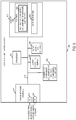
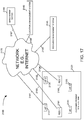
- FIG 9 is a drawing of an example location / zone tracking server 900 in accordance with an example embodiment.
- Location / zone tracking server 900 is, e.g., location / zone tracking server 150 of Figure 1 , Figure 5 , and/or Figure 7 .
- Server 900 includes a communications interface 902, a processor 904, e.g., a CPU, an input device 906, e.g., a keyboard, an output device 908, e.g., a display, and assembly of components 910, e.g., an assembly of hardware components, e.g., circuits, and memory 912 coupled together via bus 914 over which the various elements (902, 904, 906, 908, 910, 912) of the server 900 may interchange data and information.
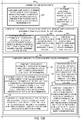
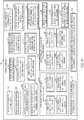
- a component 1120 configured to use a first threshold number of location detections in zone as the zone presence determination threshold in response to a determination that the device is already determined to be in the zone based on the previous zone presence determination, a component 1118 configured to determine if the determined device location corresponds to a known zone entry location, e.g., a doorway, and to control operation as a function of the determination, a component 1122 configured to use a second threshold number of location detections in zone as the zone presence determination threshold, in response to a determination that the determined device location corresponds to a known zone entry location for the zone, a component 1124 configured to store the determined device location as a possible zone entry location, e.g.
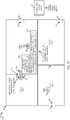
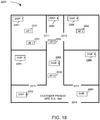
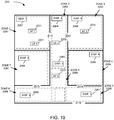
- the most recent RSSI based location determination of device 1 156, performed by location / zone tracking server 150, is indicated by solid black triangle 1304, and the determined location 1304 is located within zone 1 106.
- the location/zone tracking server 150 is aware that determined location 1304 is within zone 1 104 since the server includes information, e.g. geographical information, corresponding to the zones.
- Determined location 1304 is within known zone entry area 122, which is a zone entry area of zone 1 104.
- the location/zone tracking server 150 is also aware that determined location 1304 is within a known zone entry area for zone 1 104 since the server includes information, e.g. geographical information corresponding to known zone entry locations.
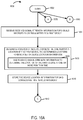
- the server uses a first out of zone threshold when said first device is determined to have newly entered the first zone at a location which is a known entry location. If the determination of operation 1624 is that the first device has newly entered the first zone at a location which is not a known entry location, then operation proceeds from operation 1624 to operation 1628. In operation 1628 the server uses a second out of zone threshold when said first device is determined to have newly entered the first zone at a location which is not a known entry location.
- Operation proceeds from operation 1614 to operation 1630.
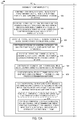
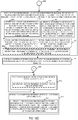
- the server uses the determined first zone threshold number of location determinations and stored location information to determine if the first device is present in the first zone. For each iteration of operation 1630, the server performs one of operation 16301 and operation 16302.
- the server determines that the first device is present in the first zone, e.g., in response to the number of determined first device locations in an evaluation window which are determined to be located within the first zone being greater than the first zone threshold number.
- the server determines that the first device is not present in the first zone, e.g., in response to the number of determined first device locations in an evaluation window which are determined to be located within the first zone not being greater than the first zone threshold number.
- Operation 1630 may, and sometimes does, include operation 1631, in which the server detects entry of the first device into the first zone. Operation proceeds from operation 1630, via connecting node D 1632 to operation 1634.
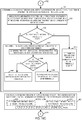
- operation 1638 if the determination of operation 1636, based on the stored information, is that the first device is not present in the second zone, then operation proceeds from operation 1638 to operation 1640. In operation 1638 if the determination of operation 1636, based on the stored information, is that the first device is present in the second zone, then operation proceeds from operation 1638 to operation 1642.
- operation 1672 the server continuously monitors for a request for the number of devices in a set of non-overlapping zones.
- Operation 1672 may, and sometimes does, includes operation 1674, in which the server receives a request for the number of devices in a set of non-overlapping zones. Operation proceeds from operation 1674, to operation 1670.
- Zones can be defined by a system administrator by entering geometric parameters of a zone such as X Y coordinated of rectangular or square zone, entering the center and radius or circular zone, etc. Similarly, system administrator may use a mouse or a stylus to draw zone on a map presented on a screen of devices such as PC, mobile phone, tablet, etc. In accordance with yet another embodiment, a zone can be defined by proximity to specific access points.
- a location determination server may determine that a user as being in zone 1 if the RSSI it measures from API is greater than 30, in zone 2 if the RSSI it measures from AP2 is greater 20 and the RSSI it measures from AP3 is greater than 50.
- a more complex RSSI based zones can be defined by incorporating a complex mathematical/logical RSSI relationships. For example a device may be defined to be in a specific zone if the RSSI it measures from API is greater than 30 and smaller 40, and the RSSI it measures from AP2 is greater than 35 and smaller 42.
- user is counted as being in a specific zone if he was observed in that zone at least T1 times within specific time window W. For example, the user was observed inside a zone three times within a time window of five consecutive seconds. Because the uncertainty in identifying the precise location of users, this method may count a user as being in multiple zones at the same time. This may occur when zones are adjacent and the user is located close to the boundary between the two (or more) zones. Counting users as being in multiple zones is beneficial in many scenarios. For example two adjacent stores may want to place advertisements in their windows. By counting users who are close to both stores, each store can obtain the number of potential shoppers next to its window or entrance.
- zones and specifically the count of the number of people in a specific zone can be utilized to determine how many people are in a specific queue waiting for service.
- a new service station e.g., store checkout point of sale
- the system may identify the number of visitors in a queue for a specific ride in amusement park.
- a new ride may be opened to alleviate the load on the crowded ride thus increasing the level of satisfaction of the visitors.
- Memory 2612 includes routines 2614 and data/information/content 2617.
- Routines 2614 include assembly of modules 2618, e.g., an assembly of software modules, and Application Programming Interface (API) 2620.
- Data/information/content 2617 includes configuration information 2622, content 2624, and collection of actions, 2626, to be taken based on the instructions from the resource management server 2145.
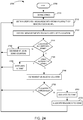
- the method loops to operation 2725, not shown, and examines if the user should be marked also as being in other zones. Once all of the zones were examined, the process loops back to operation 2715 and awaits the next set of messages with the RSSI measurements.
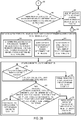
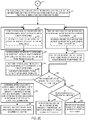
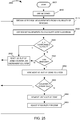
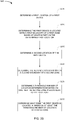
- Figure 25 is a flowchart illustrating an embodiment of process 2800 wherein it is assumed that the UE has been marked as being in at least one specific zone.
- the process describes a method by which the location management system determines if a UE should be removed from being marked in a specific zone, or alternatively, be marked as not being in the specific zone.
- the method starts in operation 2805 and proceeds to operation 2810 wherein the system administrator defines the boundaries of zones.
- This operation is similar to operation 2710 of process 2700, and in accordance with one embodiment, operations 2710 and operation 2810 are the same process that can be performed at different times or at the same time.
- the method proceeds to operation 2815 which may be the same process as described in operation 2715 of figure 24 , and similarly the process continues to operation 2820.
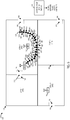
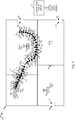
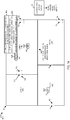
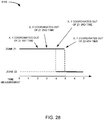
- Figures 26 , 27 , and 28 illustrate an example of marking a UE as being in a specific zone. More specifically, the figures 26 , 27 and 28 illustrate the functionality of the thresholds T1 and T2 on marking a UE as transitioning between zones (exit event from one zone and entry event into another zone). For sake of simplicity we assume that the distance D of figure 25 is set to zero, the two zones, Z1 and Z2 are adjacent, and a UE is moving from zone Z1 to zone Z2.
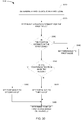
- a determination of what zone the first device is located in is made. The determination is based on at least the threshold number of location determinations. For example, if at least the threshold number of location indications (e.g. position estimates based on RSSI information) within a time period or the threshold number of contiguous location indications indicate a single zone, then the process 3200 concludes or determines that the first device is within that single zone. Operation 3230 may include writing a result of the determination to a storage, such as a database, hard disk, or other stable storage.
- the determination of which zone the first device is in may be used, as disclosed above, for a variety of purposes, such as providing services and/or control operations. As discussed above, some embodiments may control the opening and/or closing or locking of doors based on presence or absence of devices within a threshold distance of the door.
Landscapes
- Engineering & Computer Science (AREA)
- Computer Networks & Wireless Communication (AREA)
- Signal Processing (AREA)
- Physics & Mathematics (AREA)
- General Physics & Mathematics (AREA)
- Radar, Positioning & Navigation (AREA)
- Remote Sensing (AREA)
- Mobile Radio Communication Systems (AREA)
- Quality & Reliability (AREA)
- Electromagnetism (AREA)
- Position Fixing By Use Of Radio Waves (AREA)
Applications Claiming Priority (2)
| Application Number | Priority Date | Filing Date | Title |
|---|---|---|---|
| US201962827959P | 2019-04-02 | 2019-04-02 | |
| US16/676,812 US10986607B2 (en) | 2019-04-02 | 2019-11-07 | Wireless signals for location determination |
Publications (1)
| Publication Number | Publication Date |
|---|---|
| EP3720153A1 true EP3720153A1 (fr) | 2020-10-07 |
Family
ID=69024186
Family Applications (1)
| Application Number | Title | Priority Date | Filing Date |
|---|---|---|---|
| EP19219641.8A Pending EP3720153A1 (fr) | 2019-04-02 | 2019-12-24 | Signaux sans fil de détermination d'emplacements |
Country Status (6)
| Country | Link |
|---|---|
| US (4) | US10986607B2 (fr) |
| EP (1) | EP3720153A1 (fr) |
| JP (1) | JP2020169973A (fr) |
| CN (2) | CN119247266A (fr) |
| AU (1) | AU2019284151A1 (fr) |
| CA (1) | CA3065997A1 (fr) |
Families Citing this family (16)
| Publication number | Priority date | Publication date | Assignee | Title |
|---|---|---|---|---|
| US10986607B2 (en) | 2019-04-02 | 2021-04-20 | Juniper Networks, Inc. | Wireless signals for location determination |
| US11657613B2 (en) * | 2020-08-11 | 2023-05-23 | Analog Devices International Unlimited Company | Zone based object tracking and counting |
| US11843957B2 (en) | 2021-04-06 | 2023-12-12 | Juniper Networks, Inc. | Detection of insufficient RF coverage areas in a wireless network |
| US20240210518A1 (en) * | 2021-04-28 | 2024-06-27 | Paylessgate Corporation | Simulation device, reception device, simulation method, arrangement method, and program |
| US12484012B2 (en) | 2021-09-13 | 2025-11-25 | Juniper Networks, Inc. | Determining locations of deployed access points |
| US12082296B2 (en) | 2021-11-09 | 2024-09-03 | Juniper Networks, Inc. | Control of roaming in a wireless network using a variable mobility threshold |
| US20230146435A1 (en) | 2021-11-11 | 2023-05-11 | Aristocrat Technologies, Inc. | Modular hardware and software platform for selectively providing gaming device information to subscribers |
| US12580836B2 (en) | 2022-06-30 | 2026-03-17 | Juniper Networks, Inc. | Orchestration of round-trip time (RTT) measurements |
| US12238616B2 (en) * | 2022-09-23 | 2025-02-25 | Insight Direct Usa, Inc. | Dynamic asset tracking |
| WO2024144131A1 (fr) * | 2022-12-26 | 2024-07-04 | 경기대학교 산학협력단 | Système de service de commande spécifique à un emplacement d'utilisateur |
| KR102804098B1 (ko) * | 2022-12-26 | 2025-05-09 | 경기대학교 산학협력단 | 사용자 위치별 제어 서비스 시스템 |
| KR102804114B1 (ko) * | 2022-12-26 | 2025-05-09 | 경기대학교 산학협력단 | 위치별 제어 서비스를 위한 라디오 맵 구성 방법 및 장치 |
| US12587997B2 (en) * | 2023-02-09 | 2026-03-24 | Nanjing University Of Posts And Telecommunications | High-precision spatio-temporal trajectory recovery method based on cell phone signaling data |
| US12464314B2 (en) * | 2023-03-21 | 2025-11-04 | International Business Machines Corporation | Crowd density analysis with multiple regions |
| US20240380672A1 (en) * | 2023-05-11 | 2024-11-14 | Cisco Technology, Inc. | Generating Floorplans via Machine Learning in Network Devices |
| CN119785565B (zh) * | 2025-03-12 | 2025-05-27 | 杭州智控网络有限公司 | 一种可视化电子价签定位反馈预警方法及系统 |
Citations (2)
| Publication number | Priority date | Publication date | Assignee | Title |
|---|---|---|---|---|
| US20080225810A1 (en) * | 2007-03-16 | 2008-09-18 | Jon Robert Buchwald | Configurable zone-based location detection |
| US20180146343A1 (en) * | 2016-11-24 | 2018-05-24 | Samsung Electronics Co., Ltd. | Electronic device, server, and method for determining presence or absence of user within specific space |
Family Cites Families (17)
| Publication number | Priority date | Publication date | Assignee | Title |
|---|---|---|---|---|
| KR20050005690A (ko) * | 2003-07-07 | 2005-01-14 | 에스케이 텔레콤주식회사 | 무선 통신망을 통한 위치통보 서비스 방법 |
| US7751829B2 (en) | 2003-09-22 | 2010-07-06 | Fujitsu Limited | Method and apparatus for location determination using mini-beacons |
| EP2527859B1 (fr) * | 2004-10-29 | 2016-04-20 | Skyhook Wireless, Inc. | Base de données de radiobalises de localisation et serveur de localisation, procédé de construction d'une base de données de radiobalises de localisation, et service basé sur la localisation dans lequel sont utilisés cette base de données et ce serveur |
| US20060137239A1 (en) | 2004-12-27 | 2006-06-29 | Skirts Plus Corporation | Snag resistant line reversing device for fishing tackle |
| EP1986457B1 (fr) | 2007-04-26 | 2010-06-09 | Research In Motion Limited | Prédiction de disponibilité d'utilisateur à partir de données de puissance du signal regroupées |
| US8023965B2 (en) * | 2008-05-09 | 2011-09-20 | Mitel Networks Corporation | Method, system and apparatus for locating a mobile communications device |
| CN101364915B (zh) * | 2008-09-04 | 2011-11-16 | 南昌大学 | 一种基于三跳环带的传感器网络定位方法 |
| EP2419753B1 (fr) * | 2009-04-17 | 2015-04-08 | Nokia Technologies OY | Détermination d'une position d'un terminal |
| JP5258865B2 (ja) * | 2009-11-05 | 2013-08-07 | サムソン エスディーエス カンパニー リミテッド | 無線lanapを利用した無線デバイスの位置追跡システム及び方法 |
| JP6079034B2 (ja) * | 2012-08-07 | 2017-02-15 | セイコーエプソン株式会社 | 停止継続判定方法及び停止継続判定装置 |
| US9310465B2 (en) | 2012-12-27 | 2016-04-12 | Intel Corporation | Systems and methods for reducing variations in received signal strength indicator (RSSI) measurements for location sensing |
| US9357521B2 (en) * | 2013-02-27 | 2016-05-31 | Marvell World Trade Ltd. | Determining an estimated location of a base station |
| US9253596B2 (en) * | 2013-10-15 | 2016-02-02 | Qualcomm Incorporated | Method and apparatus for detecting location changes and monitoring assistance data via scanning |
| US9743254B2 (en) | 2015-04-30 | 2017-08-22 | Mist Systems, Inc. | Methods and apparatus relating to the use of received signals to determine wireless terminal location and/or refine location determination models |
| KR102489490B1 (ko) | 2015-08-13 | 2023-01-17 | 삼성전자주식회사 | 무선 통신 시스템에서 단말의 위치를 추정하기 위한 장치 및 방법 |
| US20170364901A1 (en) | 2016-06-19 | 2017-12-21 | Google Inc. | Identifying user computing device specific locations |
| US10986607B2 (en) | 2019-04-02 | 2021-04-20 | Juniper Networks, Inc. | Wireless signals for location determination |
-
2019
- 2019-11-07 US US16/676,812 patent/US10986607B2/en active Active
- 2019-12-23 CA CA3065997A patent/CA3065997A1/fr not_active Abandoned
- 2019-12-24 EP EP19219641.8A patent/EP3720153A1/fr active Pending
- 2019-12-26 JP JP2019236063A patent/JP2020169973A/ja active Pending
- 2019-12-31 AU AU2019284151A patent/AU2019284151A1/en not_active Abandoned
- 2019-12-31 CN CN202411417055.2A patent/CN119247266A/zh active Pending
- 2019-12-31 CN CN201911410135.4A patent/CN111796237B/zh active Active
-
2021
- 2021-03-09 US US17/196,402 patent/US11576144B2/en active Active
-
2022
- 2022-12-16 US US18/067,223 patent/US12452829B2/en active Active
-
2025
- 2025-09-30 US US19/345,682 patent/US20260025792A1/en active Pending
Patent Citations (2)
| Publication number | Priority date | Publication date | Assignee | Title |
|---|---|---|---|---|
| US20080225810A1 (en) * | 2007-03-16 | 2008-09-18 | Jon Robert Buchwald | Configurable zone-based location detection |
| US20180146343A1 (en) * | 2016-11-24 | 2018-05-24 | Samsung Electronics Co., Ltd. | Electronic device, server, and method for determining presence or absence of user within specific space |
Also Published As
| Publication number | Publication date |
|---|---|
| US10986607B2 (en) | 2021-04-20 |
| US20200322916A1 (en) | 2020-10-08 |
| JP2020169973A (ja) | 2020-10-15 |
| US20230119490A1 (en) | 2023-04-20 |
| CA3065997A1 (fr) | 2020-10-02 |
| US11576144B2 (en) | 2023-02-07 |
| US20260025792A1 (en) | 2026-01-22 |
| CN111796237A (zh) | 2020-10-20 |
| CN111796237B (zh) | 2024-10-29 |
| US12452829B2 (en) | 2025-10-21 |
| AU2019284151A1 (en) | 2020-10-22 |
| CN119247266A (zh) | 2025-01-03 |
| US20210195553A1 (en) | 2021-06-24 |
Similar Documents
| Publication | Publication Date | Title |
|---|---|---|
| US12452829B2 (en) | Wireless signals for location determination | |
| Kim et al. | Discovering semantically meaningful places from pervasive RF-beacons | |
| Kosba et al. | RASID: A robust WLAN device-free passive motion detection system | |
| US20240302485A1 (en) | Estimating user risk based on wireless location determination | |
| Lim et al. | Zero-configuration indoor localization over IEEE 802.11 wireless infrastructure | |
| JP5165181B2 (ja) | 携帯型コンピュータデバイスの所在と動態を割り出すシステムおよび方法 | |
| JP5015423B2 (ja) | ビーコン装置を用いて位置決定を行うターゲット装置、遠隔サーバ及び方法 | |
| CA2638754C (fr) | Detection de position et localisation dans un reseau sans fil | |
| US9743237B2 (en) | Method and apparatus for predicting mobility based on relative mobile characteristics | |
| US20160202342A1 (en) | Location detection system and method | |
| US20190230620A1 (en) | Mobile device mapping for wireless access point connection management and device automation | |
| Budina et al. | Method of iBeacon optimal distribution for indoor localization | |
| Borenović et al. | Positioning in WLAN environment by use of artificial neural networks and space partitioning | |
| de Araújo et al. | An optimized Markov model to predict link quality in mobile wireless sensor networks | |
| Kjærgaard et al. | Zone-based RSS reporting for location fingerprinting | |
| Muthukrishnan et al. | Inferring motion and location using WLAN RSSI | |
| Kim et al. | A user application-based access point selection algorithm for dense WLANs | |
| Weinschrott et al. | Participatory sensing algorithms for mobile object discovery in urban areas | |
| Čavojský et al. | User trajectory extraction based on wifi scanning | |
| Demrozi et al. | A graph-based approach for mobile localization exploiting real and virtual landmarks | |
| Sikeridis et al. | A cloud-assisted infrastructure for occupancy tracking in smart facilities | |
| US20240214772A1 (en) | Systems and methods for assigning user device movement states | |
| US20250039823A1 (en) | Device type and location resolution in a wireless fidelity (wi-fi) network | |
| Malavalli et al. | Indoor localization through machine learning on WiFi fingerprints | |
| Faraz et al. | Direct Learning Localization in the Presence of Multiple Access Interference |
Legal Events
| Date | Code | Title | Description |
|---|---|---|---|
| PUAI | Public reference made under article 153(3) epc to a published international application that has entered the european phase |
Free format text: ORIGINAL CODE: 0009012 |
|
| STAA | Information on the status of an ep patent application or granted ep patent |
Free format text: STATUS: THE APPLICATION HAS BEEN PUBLISHED |
|
| AK | Designated contracting states |
Kind code of ref document: A1 Designated state(s): AL AT BE BG CH CY CZ DE DK EE ES FI FR GB GR HR HU IE IS IT LI LT LU LV MC MK MT NL NO PL PT RO RS SE SI SK SM TR |
|
| AX | Request for extension of the european patent |
Extension state: BA ME |
|
| STAA | Information on the status of an ep patent application or granted ep patent |
Free format text: STATUS: REQUEST FOR EXAMINATION WAS MADE |
|
| 17P | Request for examination filed |
Effective date: 20210407 |
|
| RBV | Designated contracting states (corrected) |
Designated state(s): AL AT BE BG CH CY CZ DE DK EE ES FI FR GB GR HR HU IE IS IT LI LT LU LV MC MK MT NL NO PL PT RO RS SE SI SK SM TR |
|
| STAA | Information on the status of an ep patent application or granted ep patent |
Free format text: STATUS: EXAMINATION IS IN PROGRESS |
|
| 17Q | First examination report despatched |
Effective date: 20221031 |