EP3720173A1 - Procédé de commutation, dispositif terminal, et dispositif de réseau - Google Patents
Procédé de commutation, dispositif terminal, et dispositif de réseau Download PDFInfo
- Publication number
- EP3720173A1 EP3720173A1 EP19738620.4A EP19738620A EP3720173A1 EP 3720173 A1 EP3720173 A1 EP 3720173A1 EP 19738620 A EP19738620 A EP 19738620A EP 3720173 A1 EP3720173 A1 EP 3720173A1
- Authority
- EP
- European Patent Office
- Prior art keywords
- threshold
- terminal device
- network device
- measurement report
- handover
- Prior art date
- Legal status (The legal status is an assumption and is not a legal conclusion. Google has not performed a legal analysis and makes no representation as to the accuracy of the status listed.)
- Withdrawn
Links
- 238000000034 method Methods 0.000 title claims abstract description 185
- 238000005259 measurement Methods 0.000 claims abstract description 485
- 230000008859 change Effects 0.000 claims abstract description 133
- 230000004044 response Effects 0.000 claims description 84
- 230000015654 memory Effects 0.000 claims description 64
- 238000012545 processing Methods 0.000 claims description 37
- 238000004590 computer program Methods 0.000 claims description 15
- 230000006854 communication Effects 0.000 description 33
- 238000004891 communication Methods 0.000 description 32
- 238000010586 diagram Methods 0.000 description 23
- 230000008569 process Effects 0.000 description 20
- 230000006870 function Effects 0.000 description 8
- 238000010295 mobile communication Methods 0.000 description 5
- 230000001960 triggered effect Effects 0.000 description 5
- 230000001360 synchronised effect Effects 0.000 description 4
- 230000008878 coupling Effects 0.000 description 3
- 238000010168 coupling process Methods 0.000 description 3
- 238000005859 coupling reaction Methods 0.000 description 3
- 230000000977 initiatory effect Effects 0.000 description 2
- 230000007774 longterm Effects 0.000 description 2
- 230000003287 optical effect Effects 0.000 description 2
- 238000002360 preparation method Methods 0.000 description 2
- 239000007787 solid Substances 0.000 description 2
- 230000003068 static effect Effects 0.000 description 2
- 239000002699 waste material Substances 0.000 description 2
- 230000001413 cellular effect Effects 0.000 description 1
- 239000003795 chemical substances by application Substances 0.000 description 1
- 238000013500 data storage Methods 0.000 description 1
- 238000013461 design Methods 0.000 description 1
- 238000007726 management method Methods 0.000 description 1
- 239000013307 optical fiber Substances 0.000 description 1
- 239000004065 semiconductor Substances 0.000 description 1
- 230000011664 signaling Effects 0.000 description 1
Images






Classifications
-
- H—ELECTRICITY
- H04—ELECTRIC COMMUNICATION TECHNIQUE
- H04W—WIRELESS COMMUNICATION NETWORKS
- H04W24/00—Supervisory, monitoring or testing arrangements
- H04W24/10—Scheduling measurement reports ; Arrangements for measurement reports
-
- H—ELECTRICITY
- H04—ELECTRIC COMMUNICATION TECHNIQUE
- H04W—WIRELESS COMMUNICATION NETWORKS
- H04W36/00—Hand-off or reselection arrangements
- H04W36/0005—Control or signalling for completing the hand-off
- H04W36/0083—Determination of parameters used for hand-off, e.g. generation or modification of neighbour cell lists
- H04W36/0085—Hand-off measurements
-
- H—ELECTRICITY
- H04—ELECTRIC COMMUNICATION TECHNIQUE
- H04W—WIRELESS COMMUNICATION NETWORKS
- H04W36/00—Hand-off or reselection arrangements
- H04W36/0005—Control or signalling for completing the hand-off
- H04W36/0083—Determination of parameters used for hand-off, e.g. generation or modification of neighbour cell lists
- H04W36/0085—Hand-off measurements
- H04W36/0094—Definition of hand-off measurement parameters
-
- H—ELECTRICITY
- H04—ELECTRIC COMMUNICATION TECHNIQUE
- H04W—WIRELESS COMMUNICATION NETWORKS
- H04W36/00—Hand-off or reselection arrangements
- H04W36/24—Reselection being triggered by specific parameters
- H04W36/249—Reselection being triggered by specific parameters according to timing information
-
- H—ELECTRICITY
- H04—ELECTRIC COMMUNICATION TECHNIQUE
- H04W—WIRELESS COMMUNICATION NETWORKS
- H04W36/00—Hand-off or reselection arrangements
- H04W36/24—Reselection being triggered by specific parameters
- H04W36/30—Reselection being triggered by specific parameters by measured or perceived connection quality data
- H04W36/304—Reselection being triggered by specific parameters by measured or perceived connection quality data due to measured or perceived resources with higher communication quality
-
- H—ELECTRICITY
- H04—ELECTRIC COMMUNICATION TECHNIQUE
- H04W—WIRELESS COMMUNICATION NETWORKS
- H04W36/00—Hand-off or reselection arrangements
- H04W36/34—Reselection control
- H04W36/36—Reselection control by user or terminal equipment
- H04W36/362—Conditional handover
-
- H—ELECTRICITY
- H04—ELECTRIC COMMUNICATION TECHNIQUE
- H04W—WIRELESS COMMUNICATION NETWORKS
- H04W36/00—Hand-off or reselection arrangements
- H04W36/0005—Control or signalling for completing the hand-off
- H04W36/0083—Determination of parameters used for hand-off, e.g. generation or modification of neighbour cell lists
- H04W36/00838—Resource reservation for handover
-
- H—ELECTRICITY
- H04—ELECTRIC COMMUNICATION TECHNIQUE
- H04W—WIRELESS COMMUNICATION NETWORKS
- H04W36/00—Hand-off or reselection arrangements
- H04W36/24—Reselection being triggered by specific parameters
- H04W36/32—Reselection being triggered by specific parameters by location or mobility data, e.g. speed data
- H04W36/324—Reselection being triggered by specific parameters by location or mobility data, e.g. speed data by mobility data, e.g. speed data
Definitions
- This application relates to the communications field, and more specifically, to a handover method, a terminal device, and a network device.
- a handover is a process of switching a wireless connection link of communication from one cell to another cell in a mobile communication process while ensuring uninterrupted communication.
- a terminal device sends a measurement report to a current cell, to hand over the terminal device to the another base station to ensure normal communication.
- a serving base station sends a handover request message to a target base station, the target base station replies with a handover request response message and reserves a resource for the terminal device, and the serving base station sends a condition-based handover command to the terminal device. Because the terminal device moves slowly or is stationary and a handover condition is not met for a long time, the terminal device discards the condition-based handover command after a timer expires. At this time, cell quality meets a measurement report triggering threshold.
- the terminal device sends a measurement report to the serving base station, and a condition-based handover preparation process is repeatedly performed.
- a condition-based handover preparation process is repeatedly performed.
- two air interface messages and two Xn messages are initiated, and a target cell always reserves a resource for the terminal device, seriously wasting system resources.
- This application provides a handover method, a terminal device, and a network device.
- the terminal device may select or update a measurement report triggering threshold based on threshold configuration information, to help prevent the terminal device from continuously triggering a measurement report, thereby reducing system overheads of the terminal device.
- a handover method includes: determining, by a terminal device, a first measurement report triggering threshold based on threshold configuration information, where the threshold configuration information includes first information or threshold update information, and the first information includes at least one cell quality change rate threshold and at least two measurement report triggering thresholds; sending, by the terminal device, a first measurement report to a first network device based on the first measurement report triggering threshold; and receiving, by the terminal device, a first handover command from the first network device, where the first handover command is used to instruct the terminal device to be handed over from the first network device to a second network device.
- the threshold update information is a fourth measurement report triggering threshold or a threshold change step.
- the at least one cell quality change rate threshold in the first information is predefined by a protocol.
- the terminal device may select or update the measurement report triggering threshold based on the threshold configuration information, to help prevent the terminal device from continuously triggering a measurement report, thereby reducing system overheads of the terminal device.
- the threshold configuration information includes the first information
- the method further includes: receiving, by the terminal device, a measurement control message from the first network device, where the measurement control message includes the first information; and the determining, by a terminal device, a first measurement report triggering threshold based on threshold configuration information includes: determining, by the terminal device, the first measurement report triggering threshold based on a cell quality change rate and the first information.
- the first information is carried in the measurement control message, to help prevent the terminal device from continuously triggering the measurement report, thereby reducing the system overheads of the terminal device.
- the threshold configuration information includes the first information
- the method further includes: receiving, by the terminal device, a second handover command from the first network device, where the second handover command includes a second handover condition and the first information; and the determining, by a terminal device, a first measurement report triggering threshold based on threshold configuration information includes: if the terminal device does not meet the second handover condition within a predetermined time, determining, by the terminal device, the first measurement report triggering threshold based on a cell quality change rate and the first information.
- the method before the receiving, by the terminal device, a second handover command from the first network device, the method further includes: receiving, by the terminal device, a measurement control message from the first network device, where the measurement control message includes second threshold configuration information; and sending, by the terminal device, a second measurement report to a first network node based on the second threshold configuration information; and the receiving, by the terminal device, a second handover command from the first network device includes: receiving, by the terminal device, the second handover command sent by the first network device based on the second measurement report.
- the first information is carried in the handover command, to help prevent the terminal device from continuously triggering the measurement report, thereby reducing the system overheads of the terminal device.
- the determining, by the terminal device, the first measurement report triggering threshold based on a cell quality change rate and the first information includes: determining, by the terminal device, a first cell quality change rate threshold based on the cell quality change rate and the at least one cell quality change rate threshold; and determining, by the terminal device, the first measurement report triggering threshold from the at least two measurement report triggering thresholds based on the first cell quality change rate threshold based on the first cell quality change rate threshold.
- the terminal device selects an appropriate measurement report triggering threshold from the at least two measurement report triggering thresholds based on the cell quality change rate and the first information, to help prevent the terminal device from continuously triggering the measurement report, thereby reducing the system overheads of the terminal device.
- the threshold configuration information includes the threshold update information
- the method further includes: receiving, by the terminal device, a third handover command from the first network device, where the third handover command includes a third handover condition and the threshold update information; and the determining, by a terminal device, a first measurement report triggering threshold based on threshold configuration information includes: if the terminal device does not meet the third handover condition within a predetermined time, determining, by the terminal device, the first measurement report triggering threshold based on the threshold update information.
- the method before the receiving, by the terminal device, a third handover command from the first network device, the method further includes: receiving, by the terminal device, a measurement control message sent by the first network device, where the measurement control message includes a third measurement report triggering threshold; and sending, by the terminal device, a third measurement report to the first network device based on the third measurement report triggering threshold; and the receiving, by the terminal device, a third handover command from the first network device includes: receiving, by the terminal device, the third handover command sent by the first network device based on the third measurement report.
- the threshold update information is carried in the handover command, to help prevent the terminal device from continuously triggering the measurement report, thereby reducing the system overheads of the terminal device.
- the threshold configuration information includes the threshold update information
- the method further includes: receiving, by the terminal device, a measurement control message from the first network device, where the measurement control message includes a third measurement report triggering threshold and the threshold update information; sending, by the terminal device, a third measurement report to the first network device based on the third measurement report triggering threshold; and receiving, by the terminal device, a third handover command from the first network device, where the third handover command includes a third handover condition; and the determining, by a terminal device, a first measurement report triggering threshold based on threshold configuration information includes: if the terminal device does not meet the third handover condition within a predetermined time, determining, by the terminal device, the first measurement report triggering threshold based on the threshold update information.
- the threshold update information is carried in the measurement control message, to help prevent the terminal device from continuously triggering the measurement report, thereby reducing the system overheads of the terminal device.
- the threshold update information is a fourth measurement report triggering threshold
- the determining, by the terminal device, the first measurement report triggering threshold based on the threshold update information includes: if the terminal device does not meet the third handover condition within the predetermined time, after a predetermined time, determining, by the terminal device, the fourth measurement report triggering threshold as the first measurement report triggering threshold.
- the threshold update information is a threshold change step.
- the cell quality change rate threshold includes at least one of a quality change rate threshold of a neighboring cell, a quality change rate threshold of a serving cell, and a change rate threshold of a quality deviation between the neighboring cell and the serving cell.
- the measurement report triggering threshold includes at least one of a quality threshold of the neighboring cell, a quality threshold of the serving cell, and a threshold of a quality deviation between the neighboring cell and the serving cell.
- a handover method includes: receiving, by a terminal device, a first measurement control message from a first network device, where the first measurement control message includes a first measurement report triggering threshold; sending, by the terminal device, a first measurement report to the first network device based on the first measurement report triggering threshold; receiving, by the terminal device, a first handover command from the first network device, where the first handover command includes a first handover condition; and if the terminal device does not meet the first handover condition within a first predetermined time, sending, by the terminal device, a second measurement report to the first network device based on the first measurement report triggering threshold after a second predetermined time.
- the first predetermined time is a timer 1
- the second predetermined time is a timer 2.
- the terminal device After receiving the first handover command from the first network device, the terminal device starts the timer 1, and the terminal device does not meet the first handover condition during running of the timer 1. After the timer 1 expires, the timer 2 is started. During running of the timer 2, the terminal device does not trigger a measurement report. After the timer 2 expires, the terminal device sends the second measurement report to the first network device based on the first measurement report triggering threshold.
- the first handover command includes the timer 1 and the timer 2.
- the timer 2 is added, to help prevent the terminal device from continuously triggering a measurement report, thereby reducing system overheads of the terminal device.
- a handover method includes: sending, by a first network device, threshold configuration information to a terminal device, where the threshold configuration information is used by the terminal device to determine a first measurement report triggering threshold, the threshold configuration information includes first information or threshold update information, and the first information includes at least one cell quality change rate threshold and at least two measurement report triggering thresholds; receiving, by the first network device, a first measurement report from the terminal device; and sending, by the first network device, a first handover command to the terminal device based on the first measurement report, where the first handover command is used to instruct the terminal device to be handed over from the first network device to a second network device.
- the sending, by a first network device, threshold configuration information to a terminal device includes: sending, by the first network device, a measurement control message to the terminal device, where the measurement control message includes the threshold configuration information.
- the method further includes: sending, by the first network device, a measurement control message to the terminal device, where the measurement control message includes a second cell quality threshold; and receiving, by the first network device, a second measurement report from the terminal device; and the sending, by a first network device, threshold configuration information to a terminal device includes: sending, by the first network device, a second handover command to the terminal device based on the second measurement report, where the second handover command includes the threshold configuration information.
- the sending, by the first network device, a second handover command to the terminal device based on the second measurement report includes: sending, by the first network device, a handover request message to the second network device based on the second measurement report; receiving, by the first network device, a handover request response message from the second network device, where the handover request response message includes the threshold configuration information; and sending, by the first network device, the second handover command to the terminal device based on the handover request response message.
- the sending, by the first network device, a second handover command to the terminal device based on the second measurement report includes: sending, by the first network device, a handover request message to the second network device based on the second measurement report; receiving, by the first network device, a handover request response message from the second network device; and sending, by the first network device, the second handover command to the terminal device based on the handover request response message.
- the sending, by the first network device, a second handover command to the terminal device based on the second measurement report includes: sending, by the first network device, a handover request message to the second network device based on the second measurement report, where the handover request message includes the threshold configuration information; receiving, by the first network device, a handover request response message from the second network device, where the handover request response message includes the threshold configuration information; and sending, by the first network device, the second handover command to the terminal device based on the handover request response message.
- a terminal device is provided and is configured to perform the method according to any one of the first aspect or the possible implementations of the first aspect.
- the terminal device includes the modules configured to perform the method in any one of the first aspect or the possible implementations of the first aspect.
- a terminal device is provided and is configured to perform the method according to any one of the second aspect or the possible implementations of the second aspect.
- the terminal device includes the modules configured to perform the method in any one of the second aspect or the possible implementations of the second aspect.
- a network device is provided and is configured to perform the method according to any one of the third aspect or the possible implementations of the third aspect.
- the network device includes the modules configured to perform the method in any one of the third aspect or the possible implementation of the third aspect.
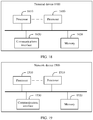
- a network device includes a memory, a transceiver, and at least one processor.
- the memory, the transceiver, and the at least one processor are connected to each other by using a line.
- the transceiver is configured to perform the information sending and receiving operations that are performed by the network device in the method in any one of the first aspect or the possible implementations of the first aspect.
- the at least one processor invokes an instruction stored in the memory, to perform the processing operation performed by the network device in the method in any one of the first aspect or the possible implementations of the first aspect.
- a terminal device includes a memory, a transceiver, and at least one processor.
- the memory, the transceiver, and the at least one processor are connected to each other by using a line.
- the transceiver is configured to perform the information sending and receiving operations that are performed by the terminal device in the method in any one of the second aspect or the possible implementations of the second aspect.
- the at least one processor invokes an instruction stored in the memory, to perform the processing operation performed by the terminal device in the method in any one of the second aspect or the possible implementations of the second aspect.
- a network device includes a memory, a transceiver, and at least one processor.
- the memory, the transceiver, and the at least one processor are connected to each other by using a line.
- the transceiver is configured to perform the information sending and receiving operations that are performed by the network device in the method in any one of the third aspect or the possible implementations of the third aspect.
- the at least one processor invokes an instruction stored in the memory, to perform the processing operation performed by the network device in the method in any one of the third aspect or the possible implementations of the third aspect.
- a chip system is provided.
- the chip system is applied to a terminal device, and the chip system includes at least one processor, at least one memory, and an interface circuit.
- the interface circuit is responsible for information exchange between the chip system and an external device.
- the at least one memory, the interface circuit, and the at least one processor are connected to each other by using a line.
- the at least one memory stores an instruction. The instruction is executed by the at least one processor, to perform the operations of the terminal device in the methods in the foregoing aspects.
- a chip system is provided.
- the chip system is applied to a network device, and the chip system includes at least one processor, at least one memory, and an interface circuit.
- the interface circuit is responsible for information exchange between the chip system and an external device.
- the at least one memory, the interface circuit, and the at least one processor are connected to each other by using a line.
- the at least one memory stores an instruction. The instruction is executed by the at least one processor, to perform the operations of the terminal device in the methods in the foregoing aspects.
- a communications system including a network device and/or a terminal device.
- the terminal device is the terminal device in the foregoing aspects
- the network device is the network device in the foregoing aspects.
- a computer program product is provided.
- the computer program product is applied to a terminal device, and the computer program product includes a series of instructions. When the instructions are executed, the operations of the terminal device in the methods in the foregoing aspects are performed.
- a computer program product is provided.
- the computer program product is applied to a network device, and includes a series of instructions. When the instructions are executed, the operations of the network device in the methods in the foregoing aspects are performed.
- a computer-readable storage medium stores an instruction, and when the instruction is run on a computer, the computer is enabled to perform the methods in the foregoing aspects.
- GSM Global System of Mobile Communication
- CDMA Code Division Multiple Access
- WCDMA wideband code division multiple access
- GPRS General Packet Radio Service
- LTE Long Term Evolution
- FDD Frequency Division Duplex
- TDD Time Division Duplex
- Universal Mobile Telecommunications System Universal Mobile Telecommunications System
- UMTS Universal Mobile Telecommunications System
- the terminal device in the embodiments of this application may also be referred to as user equipment, an access terminal, a subscriber unit, a subscriber station, a mobile station, a mobile console, a remote station, a remote terminal, a mobile device, a user terminal, a terminal, a wireless communications device, a user agent, or a user apparatus.
- the terminal device may alternatively be a cellular phone, a cordless phone, a session initiation protocol (Session Initiation Protocol, SIP) phone, a wireless local loop (Wireless Local Loop, WLL) station, a personal digital assistant (Personal Digital Assistant, PDA), a handheld device having a wireless communication function, a computing device, another processing device connected to a wireless modem, a vehicle-mounted device, a wearable device, a terminal device in a future 5G network, or a terminal device in a future evolved public land mobile network (Public Land Mobile Network, PLMN).
- SIP Session Initiation Protocol
- WLL Wireless Local Loop
- PDA Personal Digital Assistant
- PLMN Public Land Mobile Network
- a network device in the embodiments of this application may be a device configured to communicate with a terminal device.
- the network device may be a base transceiver station (Base Transceiver Station, BTS) in a global system for mobile communications (Global System of Mobile communication, GSM) system or code division multiple access (Code Division Multiple Access, CDMA), or may be a NodeB (NodeB, NB) in a wideband code division multiple access (Wideband Code Division Multiple Access, WCDMA) system, or may be an evolved NodeB (Evolutional NodeB, eNB or eNodeB) in an LTE system, or may be a radio controller in a cloud radio access network (Cloud Radio Access Network, CRAN) scenario.
- BTS Base Transceiver Station
- GSM Global System of Mobile communication
- CDMA Code Division Multiple Access
- NodeB NodeB
- WCDMA Wideband Code Division Multiple Access
- Evolutional NodeB, eNB or eNodeB evolved NodeB
- the network device may be a relay station, an access point, an in-vehicle device, a wearable device, a network device in a future 5G network, a network device in a future evolved PLMN network, or the like. This is not limited in the embodiments of this application.
- FIG. 1 is a schematic diagram of a scenario to which a technical solution according to an embodiment of this application is applied.
- a terminal device is connected to a first network device. Because the terminal device moves to a second network device, the terminal device needs to be handed over from the first network device to the second network device.
- the first network device may be a serving base station or a source base station in an actual case, and the second network device may be a target base station.
- FIG. 2 is a schematic flowchart of a handover method 100 according to an embodiment of this application.
- a terminal device may be the terminal device in FIG. 1
- a first network device may be the first network device in FIG. 1
- a second network device may be the second network device in FIG. 1 .
- the method 100 includes the following steps.
- the terminal device determines a first measurement report triggering threshold based on threshold configuration information, where the threshold configuration information includes first information or threshold update information, and the first information includes at least one cell quality change rate threshold and at least two measurement report triggering thresholds.
- the terminal device may receive the threshold configuration information sent by the first network device.
- the threshold configuration information is used by the terminal device to determine the first measurement report triggering threshold.
- the terminal device determines the first measurement report triggering threshold based on the threshold configuration information.
- the threshold configuration information may be the first information or the threshold update information, and the first information includes the at least one cell quality change rate threshold and the at least two measurement report triggering thresholds.
- the threshold update information may be a measurement report triggering threshold, or may be a threshold change step.
- the threshold configuration information may be configured in a measurement report message sent by the first network device to the terminal device.
- the threshold configuration information may be configured in a handover command sent by the first network device to the terminal device before the handover method 100 is performed.
- the threshold configuration information configured by the first network device by using a handover command in a previous handover may be used, to determine the first measurement report triggering threshold in the handover method 100.
- the first network device may select one of the following events as a measurement report triggering event:
- the first network device sets a group of thresholds for a used triggering event in a measurement configuration. If the triggering event relates to quality of only one cell (for example, the event A2 and the event A4), or the triggering event relates to a quality deviation between two cells (for example, the event A3 and the event A6), the group of thresholds includes only one threshold. If the triggering event relates to quality of two cells (for example, the event A5), the group of thresholds includes two thresholds. When a measurement result of the terminal device meets a configured event threshold, the measurement report is triggered.
- the terminal device sends a first measurement report to the first network device based on the first measurement report triggering threshold, and the first network device receives the first measurement report sent by the terminal device.
- the terminal device measures the serving cell and/or the neighboring cell based on the measurement configuration, and determines whether a condition for triggering the measurement report is met.
- a report triggering condition is met (the quality of the neighboring cell is higher than a specific threshold and the quality of the serving cell is lower than a specific threshold, or an amount by which the quality of the neighboring cell is higher than that of the serving cell is higher than a specific threshold)
- the terminal device sends the first measurement report to the first network device.
- the first network device sends a first handover command to the terminal device based on the first measurement report, and the terminal device receives the first handover command sent by the first network device based on the first measurement report, where the first handover command includes a first handover condition.
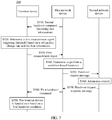
- FIG. 3 is another schematic flowchart of a handover method 100 according to an embodiment of this application.
- S130 in which the terminal device receives the first handover command sent by the first network device based on the first measurement report includes the following steps.
- the first network device determines, based on the first measurement report, whether to hand over the terminal device.
- the first network device may make a handover decision based on the first measurement report and radio resource management information.
- the first network device sends a handover request message to the second network device, and the second network device receives the handover request message sent by the first network device.
- the first network device sends the handover request message to the second network device, and the handover request message carries necessary information for the second network device to prepare for a handover.
- the necessary information includes: a target cell ID, a KgNB*, and radio resource control (Radio Resource Control, RRC) context information (including a cell radio network temporary identifier (Cell Radio Network Temporary Identifier, C-RNTI) that is allocated by the first network device to the terminal device, access-layer configuration information (excluding physical-layer configuration information), and the like).
- RRC Radio Resource Control
- C-RNTI Cell Radio Network Temporary Identifier
- the second network device performs admission control based on the handover request message.
- the first network device may send the handover request message to a plurality of second network devices, and the plurality of second network devices perform admission control.
- the second network device sends a handover request response message to the first network device, and the first network device receives the handover request response message sent by the second network device.
- the second network device sends a handover request acknowledgment message to the first network device, where the handover request response message includes a transparent container (transparent container), and the transparent container is sent to the terminal device as a part of the handover command.
- the transparent container includes a new C-RNTI.
- the second network device is configured to select a security algorithm identifier of a security algorithm.
- the transparent container may further include a dedicated random access preamble sequence (Preamble) and an end time indication of a dedicated preamble, and may further include some other parameters, for example, a system information block.
- Preamble dedicated random access preamble sequence
- end time indication of a dedicated preamble may further include some other parameters, for example, a system information block.
- the first network device sends the first handover command to the terminal device based on the handover request response message, and the terminal device receives the first handover command sent by the first network device, where the first handover command includes the first handover condition.
- the first network device sends the first handover command to the terminal device, where the first handover command includes a transparent container.
- the first network device performs a necessary encryption and integrity protection operation on the handover command.
- the terminal device receives the handover command having necessary information (the necessary information includes: a new C-RNTI and a security algorithm identifier of the second network device, and optionally may further include: a dedicated random access preamble, an end time indication of a dedicated preamble, a system information block of the second network device, and the like).
- the first network device sends the handover command to the terminal device.
- the first handover command may further include a timer 1, and the timer 1 is used to indicate a validity time of the first handover command.
- the terminal device After receiving the first handover command, the terminal device does not immediately perform a handover process, and instead starts the timer 1 and evaluates whether the handover condition is met.
- the terminal device is handed over based on the first handover condition, where the handover is a handover from the first network device to the second network device.
- the terminal device determines whether the terminal device meets the first handover condition, and if the terminal device meets the first handover condition, the first terminal device performs a handover, where the handover is a handover from the first network device to the second network device.
- the first network device adds a fixed cell quality threshold to a measurement control message. For a terminal device that loiters at a low speed or is stationary at a cell edge, the handover condition is not met for a long time. The terminal device discards a condition-based handover command after a timer expires. At this time, cell quality meets the measurement report triggering threshold. Therefore, the terminal device sends a measurement report to a serving base station, and a condition-based handover preparation process is repeatedly performed, causing a large quantity of signaling overheads. In addition, the second network device reserves a resource for the terminal device, causing serious system resource waste.
- the terminal device may select or update the measurement report triggering threshold based on the threshold configuration information, to help prevent the terminal device from continuously triggering a measurement report, thereby reducing system overheads of the terminal device.
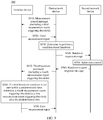
- FIG. 4 is a schematic flowchart of a handover method 200 according to an embodiment of this application.
- a terminal device may be the terminal device in FIG. 1
- a first network device may be the first network device in FIG. 1
- a second network device may be the second network device in FIG. 1 .
- the method 200 includes the following steps.
- the first network device sends a measurement control message to the terminal device, and the terminal device receives the measurement control message sent by the first network device, where the measurement control message includes first information.
- the terminal device determines a first measurement report triggering threshold based on a cell quality change rate and the first information.
- the first network device may configure a measurement process, including a measurement object (at least one of quality of a neighboring cell, quality of a serving cell, or an amount by which quality of a neighboring cell is higher than that of a serving cell) and the first information, of the terminal device based on roaming and access restriction information.
- the first information includes at least one cell quality change rate threshold and at least two measurement report triggering thresholds.
- the terminal device determines the first measurement report triggering threshold based on the cell quality change rate and the first information.
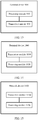
- FIG. 5 is a schematic diagram of determining a measurement report triggering threshold according to an embodiment of this application.
- a method for selecting the first measurement report triggering threshold is as follows:
- the first network device configures n measurement report triggering thresholds in the first information: a measurement report triggering threshold 1 (a 1 , b 1 ), a measurement report triggering threshold 2 (a 2 , b 2 ), ..., and a measurement report triggering threshold n (an, bn).
- the first network device configures n-1 associated cell quality change rate thresholds in the first information: a cell quality change rate threshold 1 (c 1 , d 1 ), a cell quality change rate threshold 2 (c2, d2), ..., and a cell quality change rate threshold (n - 1) (c (n-1) , d (n-1) ).
- c 1 , c 2 , ..., and c (n - 1) may represent quality change rate thresholds of a serving cell
- di, d2, ..., and d (n - 1) may represent quality change rate thresholds of a neighboring cell.
- a quality change rate of a first serving cell may be determined from c 1 , c 2 , ..., and c (n - 1) based on the quality change rate of the serving cell by using the method in (1).
- the threshold a is determined from a 1 , a2, ..., and an based on the quality change rate of the first serving cell.
- a quality change rate of a first neighboring cell is determined from di, d 2 , ..., and d (n - 1) based on the quality change rate of the neighboring cell. Then, the threshold b is determined from bi, b 2 , ..., and b n based on the quality change rate of the first serving cell.
- the terminal device triggers reporting of the measurement report only when both the quality of the serving cell is worse than the threshold a and the quality of the neighboring cell is better than the threshold b.
- the terminal device sends a first measurement report to the first network device based on the first measurement report triggering threshold, and the first network device receives the first measurement report sent by the terminal device.
- the first network device determines, based on the first measurement report, whether to hand over the terminal device.
- the first network device sends a handover request message to the second network device, and the second network device receives the handover request message sent by the first network device.
- the second network device performs admission control based on the handover request message.
- the second network device sends a handover request response message to the first network device, and the first network device receives the handover request response message sent by the second network device.
- the first network device sends a first handover command to the terminal device based on the handover request response message, and the terminal device receives the first handover command sent by the first network device, where the first handover command includes a first handover condition.
- the terminal device is handed over based on the first handover condition, where the handover is a handover from the first network device to the second network device.
- S230 to S290 are similar to S120 to S140 in the handover method 100. For brevity, details are not described herein again.
- the first handover command may further include a timer 1.
- the terminal device After receiving the first handover command, the terminal device does not immediately perform a handover process, and instead starts the timer 1. If the terminal device meets the first handover condition before the timer 1 expires, the terminal device is handed over to a target cell that meets a condition. If the handover condition is not met during running of the timer 1, after the timer 1 expires, the terminal device discards the first handover command, and performs steps S220 to S280 by using the first information.
- FIG. 6 is a schematic diagram of determining a measurement report triggering threshold.
- An event type is that quality of a serving cell becomes worse than a measurement report triggering threshold.
- the first network device configures two measurement report triggering thresholds for the terminal device.
- a measurement report is triggered when cell quality reaches the threshold 1.
- the measurement report is not triggered when the cell quality reaches the threshold 1, and the measurement report can be triggered only when the cell quality reaches the threshold 2. In this way, system resource waste is avoided.
- the measurement control message carries the at least one cell quality change rate and the at least two measurement report triggering thresholds, to help the terminal device select an appropriate measurement report triggering threshold based on an actual situation, thereby helping prevent the terminal device from continuously triggering the measurement report and reduce system overheads of the terminal device.
- the measurement control message carries the first information, to help the terminal device select an appropriate measurement report triggering threshold based on an actual situation.
- the first information is carried in a handover command sent by the first network device to the terminal device in a previous handover, to help the terminal device select an appropriate measurement report triggering threshold during a next handover based on an actual situation.
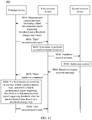
- FIG. 7 is a schematic flowchart of a handover method 300 according to an embodiment of this application.
- a terminal device may be the terminal device in FIG. 1
- a first network device may be the first network device in FIG. 1
- a second network device may be the second network device in FIG. 1 .
- the method 300 includes the following steps.
- the first network device sends a second handover command to the terminal device based on a second measurement report, and the terminal device receives the second handover command sent by the first network device based on the second measurement report, where the second handover command includes a second handover condition and threshold configuration information.
- the threshold configuration information is first information.
- the sending, by the first network device, a second handover command to the terminal device based on a second measurement report includes:
- the first information is configured by the second network device.
- the second network device After receiving the handover request message sent by the first network device, the second network device sends the handover request response message to the first network device.
- the handover request response message includes the first information configured by the second network device.
- the first network device After receiving the handover request response message, the first network device sends the second handover command to the terminal device, where the second handover command carries the first information.
- the sending, by the first network device, a second handover command to the terminal device based on a second measurement report includes:
- the first information is configured by the first network device.
- the second network device After receiving the handover request message sent by the first network device, the second network device sends the handover request response message to the first network device. After receiving the handover request response message, the first network device sends the second handover command to the terminal device, where the second handover command carries the first information.
- the sending, by the first network device, a second handover command to the terminal device based on a second measurement report includes:
- the first information is configured by the first network device, and the first network device adds the first information to the handover request message sent to the second network device.
- the second network device adds the first information to the handover request response message and sends the handover request response message to the first network device.
- the first network device sends the second handover command to the terminal device, where the second handover command carries the first information.
- the handover method 300 before the sending, by the first network device, a second handover command to the terminal device based on a second measurement report, the handover method 300 further includes:
- the second handover command may further include a timer 1.
- the terminal device After receiving the second handover command, the terminal device does not immediately perform a handover process, and instead starts the timer 1. If the terminal device meets the second handover condition before the timer 1 expires, the terminal device is handed over to a target cell that meets a condition. If the handover condition is not met during running of the timer 1, after the timer 1 expires, the terminal device discards the second handover command, and performs steps S320 to S380 by using the first information.
- the terminal device determines a first measurement report triggering threshold based on a cell quality change rate and the first information.
- the first network device sends the measurement control message to the terminal device, where the measurement control message includes the second measurement report triggering threshold. After meeting the second measurement report triggering threshold, the terminal device sends the second measurement report to the first network device. The first network device sends the second handover command to the terminal device based on the second measurement report, where the second handover command includes the second handover condition and the first information. If the terminal device does not meet the second handover condition within the predetermined time, the terminal device determines the first measurement report triggering threshold based on the cell quality change rate and the first information.
- the terminal device sends a first measurement report to the first network device based on the first measurement report triggering threshold, and the first network device receives the first measurement report sent by the terminal device.
- the first network device determines, based on the first measurement report, whether to hand over the terminal device.
- the first network device sends a handover request message to the second network device, and the second network device receives the handover request message sent by the first network device.
- the second network device performs admission control based on the handover request message.
- the second network device sends a handover request response message to the first network device, and the first network device receives the handover request response message sent by the second network device.
- the first network device sends a first handover command to the terminal device based on the handover request response message, and the terminal device receives the first handover command sent by the first network device, where the first handover command includes a first handover condition.
- the terminal device is handed over based on the first handover condition, where the handover is a handover from the first network device to the second network device.
- S330 to S390 are similar to S120 to S140 in the handover method 100. For brevity, details are not described herein again.
- a handover command of a previous handover carries the at least one cell quality change rate and the at least two measurement report triggering thresholds, to help the terminal device select an appropriate measurement report triggering threshold based on an actual situation, thereby helping prevent the terminal device from continuously triggering the measurement report and reduce system overheads of the terminal device.
- a network side configures a plurality of measurement report triggering thresholds and corresponding cell quality change rate thresholds for the terminal device, and the terminal device selects a measurement report triggering threshold thereof based on a cell signal quality change rate.
- a timer is used to prevent a terminal device from continuously triggering a measurement report, thereby reducing system overheads of a terminal device that loiters at a low speed or is stationary at a cell edge.
- FIG. 8 is a schematic flowchart of a handover method 400 according to an embodiment of this application.
- a terminal device may be the terminal device in FIG. 1
- a first network device may be the first network device in FIG. 1
- a second network device may be the second network device in FIG. 1 .
- the method 400 includes the following steps.
- the first network device sends a measurement control message to the terminal device, and the terminal device receives the measurement control message sent by the first network device, where the measurement control message includes a first measurement report triggering threshold.
- the measurement control message sent by the first network device to the terminal device includes the first measurement report triggering threshold.
- the terminal device sends a first measurement report to the first network device based on the first measurement report triggering threshold, and the first network device receives the first measurement report sent by the terminal device based on the first measurement report triggering threshold.
- the first network device determines, based on the first measurement report, whether to hand over the terminal device.
- the first network device sends a handover request message to the second network device, and the second network device receives the handover request message sent by the first network device.
- the second network device performs admission control based on the handover request message.
- the second network device sends a handover request response message to the first network device, and the first network device receives the handover request response message sent by the second network device.
- the first network device sends a first handover command to the terminal device based on the handover request response message, and the terminal device receives the first handover command sent by the first network device, where the first handover command includes a first handover condition.
- S430 to S470 are similar to S131 to S135 in the handover method 100. For brevity, details are not described herein again.
- the first handover command in S470 includes the first handover condition and configurations of a timer 1 and a timer 2.
- the timer 1 is used to indicate a validity time of the first handover command
- the timer 2 is started after the timer 1 is started and is used to restrict the terminal device in triggering a measurement report.
- timer 2 may be further configured for the terminal device by using the measurement control message in S410. If the measurement control message includes the timer 2, the first handover command may not include the timer 2.
- the terminal device does not meet the first handover condition within a first predetermined time, the terminal device does not trigger the measurement report within a second predetermined time.
- the terminal device After the second predetermined time, the terminal device sends a second measurement report to the first network device based on the first measurement report triggering threshold.
- the terminal device after receiving the first handover command, the terminal device does not immediately perform a handover process, and instead starts the timer 1.
- the timer 1 is used to indicate the validity time of the first handover command, and the timer 2 is started after the timer 1 is started.
- the terminal device no longer sends the measurement report to the first network device, and after the timer 2 expires, steps S420 to S470 are performed.
- the timer is used to help prevent the terminal device from continuously triggering the measurement report, and reduce system overheads of the terminal device that loiters at a low speed or is stationary at a cell edge.
- FIG. 9 is a schematic flowchart of a handover method 500 according to an embodiment of this application.
- a group of specific thresholds are configured, to reduce system overheads of a terminal device that loiters at a low speed or is stationary at a cell edge.
- a terminal device may be the terminal device in FIG. 1
- a first network device may be the first network device in FIG. 1
- a second network device may be the second network device in FIG. 1 .
- the method 500 includes the following steps.
- the first network device sends a measurement control message to the terminal device, and the terminal device receives the measurement control message sent by the first network device, where the measurement control message includes a third measurement report triggering threshold.
- the measurement control message sent by the first network device to the terminal device includes the third measurement report triggering threshold.
- the terminal device sends a third measurement report to the first network device based on the third measurement report triggering threshold, and the first network device receives the third measurement report sent by the terminal device based on the third measurement report triggering threshold.
- the first network device determines, based on the third measurement report, whether to hand over the terminal device.
- the first network device sends a handover request message to the second network device, and the second network device receives the handover request message sent by the first network device.
- the second network device performs admission control based on the handover request message.
- S510 to S550 are similar to S410 to S450 in the handover method 400. For brevity, details are not described herein again.
- the second network device sends a handover request response message to the first network device, and the first network device receives the handover request response message sent by the second network device.
- the first network device sends a third handover command to the terminal device based on the handover request response message, and the terminal device receives the third handover command sent by the first network device, where the third handover command includes a third handover condition and threshold update information.
- the threshold update information is a fourth measurement report triggering threshold.
- the threshold update information (the fourth measurement report triggering threshold) may be configured by the first network device, or may be configured by the second network device.
- a configuration process is similar to that of the first information in S310. For brevity, details are not described herein again.
- the third handover command in S570 further includes the fourth measurement report triggering threshold in addition to the third handover condition and the configurations of the timer 1 and the timer 2.
- the timer 1 is used to indicate a validity time of the third handover command, and the timer 2 is started after the timer 1 is started.
- the terminal device may send a measurement report to the first network device; or if the terminal device does not meet the fourth measurement report triggering threshold configured in S570, the terminal device does not send the measurement report to the first network device.
- the fourth measurement report triggering threshold may include one threshold or two thresholds:
- the terminal device determines the fourth measurement report triggering threshold as a first measurement report triggering threshold after the predetermined time.
- the terminal device sends a first measurement report to the first network device based on the first measurement report triggering threshold, and the first network device receives the first measurement report sent by the terminal device.
- a group of specific thresholds are carried in the handover command, to help prevent the terminal device from continuously triggering the measurement report, and reduce system overheads of the terminal device that loiters at a low speed or is stationary at a cell edge.
- FIG. 10 is a schematic flowchart of a handover method 600 according to an embodiment of this application.
- a terminal device may be the terminal device in FIG. 1
- a first network device may be the first network device in FIG. 1
- a second network device may be the second network device in FIG. 1 .
- the method 600 includes the following steps.
- the first network device sends a measurement control message to the terminal device, and the terminal device receives the measurement control message sent by the first network device, where the measurement control message includes a third measurement report triggering threshold and threshold update information.
- the threshold update information is a fourth measurement report triggering threshold.
- the measurement control message sent by the first network device to the terminal device includes the third measurement report triggering threshold and the fourth measurement report triggering threshold.
- the terminal device sends a third measurement report to the first network device based on the third measurement report triggering threshold, and the first network device receives the third measurement report sent by the terminal device based on the third measurement report triggering threshold.
- the first network device determines, based on the third measurement report, whether to hand over the terminal device.
- the first network device sends a handover request message to the second network device, and the second network device receives the handover request message sent by the first network device.
- the second network device performs admission control based on the handover request message.
- S610 to S650 are similar to S510 to S550 in the handover method 500. For brevity, details are not described herein again.
- the second network device sends a handover request response message to the first network device, and the first network device receives the handover request response message sent by the second network device.
- the first network device sends a third handover command to the terminal device based on the handover request response message, and the terminal device receives the third handover command sent by the first network device, where the third handover command includes a third handover condition.
- the third handover command in S670 includes the third handover condition and configurations of a timer 1 and a timer 2.
- the timer 1 is used to indicate a validity time of the third handover command, and the timer 2 is started after the timer 1 is started.
- the terminal device may send a measurement report to the first network device; or if the terminal device does not meet the fourth measurement report triggering threshold configured in the measurement control message in S610, the terminal device does not send the measurement report to the first network device.
- the terminal device determines the fourth measurement report triggering threshold as a first measurement report triggering threshold after the predetermined time.
- the terminal device sends a first measurement report to the first network device based on the first measurement report triggering threshold, and the first network device receives the first measurement report sent by the terminal device.
- a group of specific thresholds are carried in the measurement control message, to help prevent the terminal device from continuously triggering the measurement report, and reduce system overheads of the terminal device that loiters at a low speed or is stationary at a cell edge.
- a timer (or a timer and a group of specific thresholds) is used, to reduce system overheads of a terminal device that loiters at a low speed or is stationary at a cell edge.
- a network device configures a threshold change step for a terminal device, to reduce system overheads of a terminal device that loiters at a low speed or is stationary at a cell edge.
- FIG. 11 is a schematic flowchart of a handover method 700 according to an embodiment of this application.
- a terminal device may be the terminal device in FIG. 1
- a first network device may be the first network device in FIG. 1
- a second network device may be the second network device in FIG. 1 .
- the method 700 includes the following steps.
- the first network device sends a measurement control message to the terminal device, and the terminal device receives the measurement control message sent by the first network device, where the measurement control message includes a third measurement report triggering threshold.
- the measurement control message sent by the first network device to the terminal device includes the third measurement report triggering threshold.
- the terminal device sends a third measurement report to the first network device based on the third measurement report triggering threshold, and the first network device receives the third measurement report sent by the terminal device based on the third measurement report triggering threshold.
- the first network device determines, based on the third measurement report, whether to hand over the terminal device.
- the first network device sends a handover request message to the second network device, and the second network device receives the handover request message sent by the first network device.
- the second network device performs admission control based on the handover request message.
- S710 to S750 are similar to S510 to S550 in the handover method 500. For brevity, details are not described herein again.
- the second network device sends a handover request response message to the first network device, and the first network device receives the handover request response message sent by the second network device.
- the first network device sends a third handover command to the terminal device based on the handover request response message, and the terminal device receives the third handover command sent by the first network device, where the third handover command includes a third handover condition and threshold configuration information.
- the threshold configuration information is a threshold change step.
- the threshold update information may be configured by the first network device, or may be configured by the second network device.
- a configuration process is similar to that of the first information in S310. For brevity, details are not described herein again.
- the third handover command further includes the threshold change step.
- the timer 1 is used to indicate a validity time of the first handover command. If the terminal device meets the third handover condition before the timer 1 expires, the terminal device is handed over to a target cell that meets a condition. If the terminal device does not meet the third handover condition during running of the timer 1, after the timer 1 expires, the terminal device updates the measurement report triggering threshold based on the threshold change step configured in the third handover command in S760.
- the terminal device determines a fourth measurement report triggering threshold as a first measurement report triggering threshold after the predetermined time.
- the threshold change step is a step value m. If the terminal device does not meet the third handover condition during running of the timer 1, after the timer 1 expires, the terminal device may determine that the first measurement report triggering threshold is the third measurement report triggering threshold plus the step value m.
- the third measurement report triggering threshold may be the threshold 1. If the terminal device does not meet the third handover condition during running of the timer 1, after the timer 1 expires, the terminal device may determine that the first measurement report triggering threshold is the threshold 2. The threshold 2 is the third measurement report triggering threshold plus the step value m.
- the terminal device sends a first measurement report to the first network device based on the first measurement report triggering threshold, and the first network device receives the first measurement report sent by the terminal device.
- FIG. 12 is a schematic flowchart of a handover method 800 according to an embodiment of this application.
- a terminal device may be the terminal device in FIG. 1
- a first network device may be the first network device in FIG. 1
- a second network device may be the second network device in FIG. 1 .
- the method 800 includes the following steps.
- the first network device sends a measurement control message to the terminal device, and the terminal device receives the measurement control message sent by the first network device, where the measurement control message includes a third measurement report triggering threshold and threshold update information.
- the threshold update information is a threshold change step.
- the measurement control message sent by the first network device to the terminal device includes the third measurement report triggering threshold and the threshold change step.
- the terminal device sends a third measurement report to the first network device based on the third measurement report triggering threshold, and the first network device receives the third measurement report sent by the terminal device based on the third measurement report triggering threshold.
- the first network device determines, based on the third measurement report, whether to hand over the terminal device.
- the first network device sends a handover request message to the second network device, and the second network device receives the handover request message sent by the first network device.
- the second network device performs admission control based on the handover request message.
- S820 to S850 are similar to S720 to S750 in the handover method 700. For brevity, details are not described herein again.
- the second network device sends a handover request response message to the first network device, and the first network device receives the handover request response message sent by the second network device.
- the first network device sends a third handover command to the terminal device based on the handover request response message, and the terminal device receives the third handover command sent by the first network device, where the third handover command includes a third handover condition.
- the third handover command includes the third handover condition and a configuration of a timer 1.
- the timer 1 is used to indicate a validity time of the first handover command. If the terminal device meets the third handover condition before the timer 1 expires, the terminal device is handed over to a target cell that meets a condition. If the terminal device does not meet the third handover condition during running of the timer 1, after the timer 1 expires, the terminal device updates the measurement report triggering threshold based on the threshold change step configured in the measurement control message in S810.
- the terminal device determines a fourth measurement report triggering threshold as a first measurement report triggering threshold after the predetermined time.
- the threshold change step is a step value m. If the terminal device does not meet the third handover condition during running of the timer 1, after the timer 1 expires, the terminal device may determine that the first measurement report triggering threshold is the third measurement report triggering threshold plus the step value m.
- the third measurement report triggering threshold may be the threshold 1. If the terminal device does not meet the third handover condition during running of the timer 1, after the timer 1 expires, the terminal device may determine that the first measurement report triggering threshold is the threshold 2. The threshold 2 is the third measurement report triggering threshold plus the step value m.
- the terminal device sends a first measurement report to the first network device based on the first measurement report triggering threshold, and the first network device receives the first measurement report sent by the terminal device.
- a network side configures the threshold change step, to help prevent the terminal device from continuously triggering the measurement report, and reduce system overheads of the terminal device that loiters at a low speed or is stationary at a cell edge.
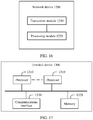
- FIG. 13 is a schematic block diagram of a terminal device 900 according to an embodiment of this application. As shown in FIG. 13 , the terminal device 900 includes:
- the threshold configuration information includes the first information
- the transceiver module 920 is further configured to receive a measurement control message from the first network device, where the measurement control message includes the first information.
- the processing module 910 is specifically configured to determine the first measurement report triggering threshold based on a cell quality change rate and the first information.
- the threshold configuration information includes the first information
- the transceiver module 920 is further configured to receive a second handover command sent by the first network device based on a second measurement report, where the second handover command includes a second handover condition and the first information.
- the processing module 910 is specifically configured to: if the terminal device does not meet the second handover condition within a predetermined time, determine the first measurement report triggering threshold based on a cell quality change rate and the first information.
- processing module 910 is specifically configured to:
- the threshold configuration information includes the threshold update information
- the transceiver module 920 is further configured to receive a third handover command sent by the first network device based on a third measurement report, where the third handover command includes a third handover condition and the threshold update information.
- the processing module 910 is specifically configured to: if the third handover condition is not met within a predetermined time, determine the first measurement report triggering threshold based on the threshold update information.
- the threshold configuration information includes the threshold update information
- the transceiver module 920 is further configured to receive a measurement control message sent by the first network device, where the measurement control message includes a third measurement report triggering threshold and the threshold update information.
- the processing module 910 controls the transceiver module 920 based on the third measurement report triggering threshold to send a third measurement report to the first network device.
- the transceiver module 920 is further configured to receive a third handover command from the first network device based on the third measurement report, where the third handover command includes a third handover condition.
- the processing module 910 is specifically configured to: if the terminal device does not meet the third handover condition within a predetermined time, determine, by the terminal device, the first measurement report triggering threshold based on the threshold update information.
- the threshold update information is a fourth measurement report triggering threshold
- the processing module 910 is specifically configured to:
- the threshold update information is a threshold change step.
- the cell quality change rate threshold includes at least one of a quality change rate threshold of a neighboring cell, a quality change rate threshold of a serving cell, and a change rate threshold of a quality deviation between the neighboring cell and the serving cell.
- the measurement report triggering threshold includes at least one of a quality threshold of the neighboring cell, a quality threshold of the serving cell, and a threshold of a quality deviation between the neighboring cell and the serving cell.
- FIG. 14 is a schematic block diagram of a terminal device 1000 according to an embodiment of this application. As shown in FIG. 14 , the terminal device 1000 includes:
- the transceiver module 1010 is further configured to receive a first handover command sent by the first network device based on the first measurement report, where the first handover command includes a first handover condition.
- the processing module 1020 is further configured to send a second measurement report to the first network device based on the first measurement report triggering threshold after the second predetermined time.
- FIG. 15 is a schematic block diagram of a network device 1100 according to an embodiment of this application. As shown in FIG. 15 , the network device 1100 includes:
- the transceiver module 1110 is specifically configured to: send a measurement control message to the terminal device, where the measurement control message includes the threshold configuration information.
- the transceiver module 1110 is further configured to send a measurement control message to the terminal device, where the measurement control message includes a second cell quality threshold.
- the transceiver module 1110 is further configured to receive a second measurement report sent by the terminal device based on the second cell quality threshold.
- the transceiver module 1110 is specifically configured to: send a second handover command to the terminal device based on the second measurement report, where the second handover command includes the threshold configuration information.
- processing module 1120 is specifically configured to:
- processing module 1120 is specifically configured to:
- processing module 1120 is specifically configured to:
- the threshold update information is a fourth measurement report triggering threshold or a threshold change step.
- the cell quality change rate threshold includes at least one of a quality change rate threshold of a neighboring cell, a quality change rate threshold of a serving cell, and a change rate threshold of a quality deviation between the neighboring cell and the serving cell.
- the measurement report triggering threshold includes at least one of a quality threshold of the neighboring cell, a quality threshold of the serving cell, and a threshold of a quality deviation between the neighboring cell and the serving cell.
- FIG. 16 is a schematic block diagram of a network device 1200 according to an embodiment of this application. As shown in FIG. 16 , the network device 1200 includes:
- the handover request message includes the threshold configuration information.
- the threshold update information is a fourth measurement report triggering threshold or a threshold change step.
- the cell quality change rate threshold includes at least one of a quality change rate threshold of a neighboring cell, a quality change rate threshold of a serving cell, and a change rate threshold of a quality deviation between the neighboring cell and the serving cell.
- the measurement report triggering threshold includes at least one of a quality threshold of the neighboring cell, a quality threshold of the serving cell, and a threshold of a quality deviation between the neighboring cell and the serving cell.
- FIG. 17 is a schematic block diagram of a terminal device 1300 according to an embodiment of this application.
- the terminal device 1300 includes one or more processors 1310, a memory 1320, and a communications interface 1330.
- the one or more processors 1310, the memory 1320, and the communications interface 1330 are all connected by using an internal path.
- the memory 1320 is configured to store a computer-executable instruction.
- the one or more processors 1310 are configured to execute the computer-executable instruction stored in the memory 1320, so that the terminal device 1300 can exchange, through the communications interface 1330, data with another apparatus, to perform the handover method provided in the foregoing method embodiments.
- the one or more processors 1310 are configured to perform the following operations:
- the terminal device 1300 may be specifically the terminal device 900 in the foregoing embodiment, and may be configured to perform the steps and/or procedures corresponding to the terminal device 900 in the foregoing method embodiment.
- FIG. 18 is a schematic block diagram of a terminal device 1400 according to an embodiment of this application.
- the terminal device 1400 includes one or more processors 1410, a memory 1420, and a communications interface 1430.
- the one or more processors 1410, the memory 1420, and the communications interface 1430 are all connected by using an internal path.
- the memory 1420 is configured to store a computer-executable instruction.
- the one or more processors 1410 are configured to execute the computer-executable instruction stored in the memory 1420, so that the server 1400 can exchange, through the communications interface 1430, data with another apparatus, to perform the handover method provided in the foregoing method embodiments.
- the one or more processors 1410 are configured to perform the following operations:
- the network device 1400 may be specifically the network device 1000 in the foregoing embodiment, and may be configured to perform the steps and/or procedures corresponding to the network device 1000 in the foregoing method embodiment.
- FIG. 19 is a schematic block diagram of a network device 1500 according to an embodiment of this application.
- the terminal device 1500 includes one or more processors 1510, a memory 1520, and a communications interface 1530.
- the one or more processors 1510, the memory 1520, and the communications interface 1530 are all connected by using an internal path.
- the memory 1520 is configured to store a computer-executable instruction.
- the one or more processors 1510 are configured to execute the computer-executable instruction stored in the memory 1520, so that the terminal device 1500 can exchange, through the communications interface 1530, data with another apparatus, to perform the handover method provided in the foregoing method embodiments.
- the one or more processors 1510 are configured to perform the following operations:
- the network device 1500 may be specifically the network device 1100 in the foregoing embodiment, and may be configured to perform the steps and/or procedures corresponding to the network device 1100 in the foregoing method embodiment.
- FIG. 20 is a schematic block diagram of a network device 1600 according to an embodiment of this application.
- the network device 1600 includes one or more processors 1610, a memory 1620, and a communications interface 1630.
- the one or more processors 1610, the memory 1620, and the communications interface 1630 are all connected by using an internal path.
- the memory 1620 is configured to store a computer-executable instruction.
- the one or more processors 1610 are configured to execute the computer-executable instruction stored in the memory 1620, so that the network device 1600 can exchange, through the communications interface 1630, data with another apparatus, to perform the handover method provided in the foregoing method embodiments.
- the one or more processors 1610 are configured to perform the following operations:
- the network device 1600 may be specifically the network device 1200 in the foregoing embodiment, and may be configured to perform the steps and/or procedures corresponding to the network device 1200 in the foregoing method embodiment.
- An embodiment of this application further provides a chip system.
- the chip system includes one or more processors, one or more memories, and an interface circuit.
- the interface circuit is responsible for information exchange between the chip system and an external device, and the one or more memories, the interface circuit, and the one or more processors are interconnected by using a line.
- the one or more memories store instructions, and the instructions are executed by the one or more processors, so that the terminal device or the network device can perform operations, of the terminal device or the network device, corresponding to the foregoing methods.
- An embodiment of this application further provides a communications system, including a terminal device and/or a network device.
- the terminal device is the terminal device in the foregoing aspects
- the network device is the network device in the foregoing aspects.
- An embodiment of this application further provides a computer program product.
- the computer program product is applied to a network device, and includes a series of instructions. When the instructions are run, the terminal device or the network device can be enabled to perform operations, of the terminal device or the network device, corresponding to the foregoing methods.
- the processor may be an integrated circuit chip and has a signal processing capability.
- steps in the foregoing method embodiments can be implemented by using a hardware integrated logical circuit in the processor, or by using an instruction in a form of software.
- the processor may be a general-purpose processor, a digital signal processor (Digital Signal Processor, DSP), an application-specific integrated circuit (Application Specific Integrated Circuit, ASIC), a field programmable gate array (Field Programmable Gate Array, FPGA) or another programmable logical device, a discrete gate or transistor logic device, or a discrete hardware component.
- DSP Digital Signal Processor
- ASIC Application Specific Integrated Circuit
- FPGA Field Programmable Gate Array
- the processor may implement or perform the methods, the steps, and logical block diagrams that are disclosed in the embodiments of this application.
- the general-purpose processor may be a microprocessor, or the processor may be any conventional processor or the like. Steps of the methods disclosed with reference to the embodiments of this application may be directly executed and completed by using a hardware decoding processor, or may be executed and completed by using a combination of hardware and software modules in a decoding processor.
- the software module may be located in a storage medium mature in the art, such as a random access memory, a flash memory, a read-only memory, a programmable read-only memory, an electrically erasable programmable memory, or a register. The storage medium is located in the memory, and the processor reads information in the memory and completes the steps in the foregoing methods in combination with hardware of the processor.
- the memory in the embodiments of this application may be a volatile memory or a nonvolatile memory, or may include a volatile memory and a nonvolatile memory.
- the nonvolatile memory may be a read-only memory (Read-Only Memory, ROM), a programmable read-only memory (Programmable ROM, PROM), an erasable programmable read-only memory (Erasable PROM, EPROM), an electrically erasable programmable read-only memory (Electrically EPROM, EEPROM), or a flash memory.
- the volatile memory may be a random access memory (Random Access Memory, RAM), used as an external cache.
- RAMs may be used, for example, a static random access memory (Static RAM, SRAM), a dynamic random access memory (Dynamic RAM, DRAM), a synchronous dynamic random access memory (Synchronous DRAM, SDRAM), a double data rate synchronous dynamic random access memory (Double Data Rate SDRAM, DDRSDRAM), an enhanced synchronous dynamic random access memory (Enhanced SDRAM, ESDRAM), a synchlink dynamic random access memory (Synchlink DRAM, SLDRAM), and a direct rambus random access memory (Direct Rambus RAM, DR RAM).
- Static RAM static random access memory
- DRAM dynamic random access memory
- DRAM synchronous dynamic random access memory
- SDRAM synchronous dynamic random access memory
- DDRSDRAM double data rate synchronous dynamic random access memory
- Enhanced SDRAM, ESDRAM enhanced synchronous dynamic random access memory
- Synchlink dynamic random access memory Synchlink dynamic random access memory
- SLDRAM direct rambus random access memory
- Direct Rambus RAM Direct Rambus RAM
- system and “network” in this specification may be often used interchangeably in this specification.
- network in this specification describes only an association relationship for describing associated objects and represents that three relationships may exist.
- a and/or B may represent the following three cases: Only A exists, both A and B exist, and only B exists.
- character "/" in this specification usually indicates an "or" relationship between the associated objects.
- B corresponding to A indicates that B is associated with A, and B may be determined based on A.
- determining B based on A does not mean that B is determined based on A only.
- B may alternatively be determined based on A and/or other information.
- All or some of the foregoing embodiments may be implemented by using software, hardware, firmware, or any combination thereof.
- the software is used to implement the embodiments, all or some of the embodiments may be implemented in a form of a computer program product.
- the computer program product may include one or more computer instructions.
- the computer may be a general-purpose computer, a dedicated computer, a computer network, or another programmable apparatus.
- the computer instructions may be stored in a computer-readable storage medium or may be transmitted from a computer-readable storage medium to another computer-readable storage medium.
- the computer instructions may be transmitted from a website, computer, server, or data center to another website, computer, server, or data center in a wired (such as a coaxial cable, an optical fiber, or a digital subscriber line (DSL)) or wireless (such as infrared, radio, or microwave) manner.
- the computer-readable storage medium may be any usable medium accessible by a computer, or a data storage device, such as a server or a data center, integrating one or more usable media.
- the usable medium may be a magnetic medium (for example, a floppy disk, a hard disk, or a magnetic disk), an optical medium (for example, a DVD), a semiconductor medium (for example, a solid state disk Solid State Disk (SSD)), or the like.
- a magnetic medium for example, a floppy disk, a hard disk, or a magnetic disk
- an optical medium for example, a DVD
- a semiconductor medium for example, a solid state disk Solid State Disk (SSD)
- the disclosed system, apparatus, and method may be implemented in other manners.
- the described apparatus embodiments are merely examples.
- the unit division is merely logical function division and may be other division in actual implementation.
- a plurality of units or components may be combined or integrated into another system, or some features may be ignored or not performed.
- the displayed or discussed mutual couplings or direct couplings or communication connections may be implemented by using some interfaces.
- the indirect couplings or communication connections between the apparatuses or units may be implemented in electrical, mechanical, or other forms.
- the units described as separate parts may or may not be physically separate, and parts displayed as units may or may not be physical units, may be located in one position, or may be distributed on a plurality of network units. Some or all of the units may be selected based on an actual requirement to achieve an objective of the solutions of the embodiments.
- the functions When the functions are implemented in a form of a software functional unit and sold or used as an independent product, the functions may be stored in a computer-readable storage medium. Based on such an understanding, the technical solutions of this application essentially, or the part contributing to the prior art, or some of the technical solutions may be implemented in a form of a software product.
- the software product is stored in a storage medium, and includes several instructions for instructing a computer device (which may be a personal computer, a server, a network device, or the like) to perform all or some of the steps of the methods described in the embodiments of this application.
- the storage medium includes any medium that may store program code, such as a USB flash drive, a removable hard disk, a read-only memory (Read-Only Memory, ROM), a random access memory (Random Access Memory, RAM), a magnetic disk, or an optical disc.
- program code such as a USB flash drive, a removable hard disk, a read-only memory (Read-Only Memory, ROM), a random access memory (Random Access Memory, RAM), a magnetic disk, or an optical disc.
Landscapes
- Engineering & Computer Science (AREA)
- Computer Networks & Wireless Communication (AREA)
- Signal Processing (AREA)
- Mobile Radio Communication Systems (AREA)
Applications Claiming Priority (2)
| Application Number | Priority Date | Filing Date | Title |
|---|---|---|---|
| CN201810026708.2A CN110035464B (zh) | 2018-01-11 | 2018-01-11 | 一种切换方法、终端设备和网络设备 |
| PCT/CN2019/071068 WO2019137409A1 (fr) | 2018-01-11 | 2019-01-10 | Procédé de commutation, dispositif terminal, et dispositif de réseau |
Publications (2)
| Publication Number | Publication Date |
|---|---|
| EP3720173A1 true EP3720173A1 (fr) | 2020-10-07 |
| EP3720173A4 EP3720173A4 (fr) | 2020-12-30 |
Family
ID=67218516
Family Applications (1)
| Application Number | Title | Priority Date | Filing Date |
|---|---|---|---|
| EP19738620.4A Withdrawn EP3720173A4 (fr) | 2018-01-11 | 2019-01-10 | Procédé de commutation, dispositif terminal, et dispositif de réseau |
Country Status (4)
| Country | Link |
|---|---|
| US (1) | US20200344654A1 (fr) |
| EP (1) | EP3720173A4 (fr) |
| CN (1) | CN110035464B (fr) |
| WO (1) | WO2019137409A1 (fr) |
Families Citing this family (16)
| Publication number | Priority date | Publication date | Assignee | Title |
|---|---|---|---|---|
| EP3900423A4 (fr) * | 2018-12-18 | 2022-06-29 | Lenovo (Beijing) Limited | Équipement d'utilisateur, station de base et procédé de communication dans un réseau non terrestre |
| WO2021026913A1 (fr) * | 2019-08-15 | 2021-02-18 | Nokia Shanghai Bell Co., Ltd. | Transfert dans des réseaux de communication |
| WO2021056577A1 (fr) | 2019-09-29 | 2021-04-01 | 华为技术有限公司 | Procédé, dispositif et système de mise à jour d'informations |
| BR112022008755A2 (pt) * | 2019-11-08 | 2022-07-26 | Huawei Tech Co Ltd | Método, aparelho e sistema de comunicação |
| CN113259999B (zh) | 2020-02-10 | 2022-08-26 | 华为技术有限公司 | 一种网络资源配置的方法和装置 |
| CN113498102A (zh) * | 2020-03-18 | 2021-10-12 | 深圳传音控股股份有限公司 | 通信方法和通信装置 |
| CN115088304B (zh) * | 2020-03-19 | 2024-09-06 | 华为技术有限公司 | 小区切换方法和装置 |
| CN113518398A (zh) | 2020-04-10 | 2021-10-19 | 华为技术有限公司 | 一种中继通信方法及相关设备 |
| WO2021237589A1 (fr) * | 2020-05-28 | 2021-12-02 | Qualcomm Incorporated | Procédé permettant d'accélérer un retour d'équipement utilisateur à la 5g à partir de la 4g |
| US12231976B2 (en) * | 2020-06-24 | 2025-02-18 | Nokia Technologies Oy | Methods, devices and computer readable medium for handover rate control |
| CN111787584B (zh) * | 2020-07-02 | 2021-02-19 | 四川观想科技股份有限公司 | 一种基于物联网的数据采集方法及系统 |
| CN116134887B (zh) * | 2020-08-14 | 2025-12-12 | 华为技术有限公司 | 通信方法、装置及系统 |
| CN114390610B (zh) * | 2020-10-22 | 2022-12-09 | 荣耀终端有限公司 | 小区切换方法、通信装置及存储介质 |
| WO2022087792A1 (fr) * | 2020-10-26 | 2022-05-05 | Oppo广东移动通信有限公司 | Procédé et appareil de rapport de mesures dans un réseau ntn, procédé et appareil de réception, ainsi que dispositif et support |
| CN114916022A (zh) * | 2022-05-31 | 2022-08-16 | 中国电信股份有限公司 | 基于语音质量的切换方法、装置和基站 |
| WO2025160967A1 (fr) * | 2024-02-02 | 2025-08-07 | Oppo广东移动通信有限公司 | Procédés de commande de rapport d'informations de mesure, dispositifs terminaux et premiers dispositifs de réseau |
Family Cites Families (15)
| Publication number | Priority date | Publication date | Assignee | Title |
|---|---|---|---|---|
| CN101453770A (zh) * | 2007-12-07 | 2009-06-10 | 华为技术有限公司 | 一种测量控制方法和装置 |
| CN101854679A (zh) * | 2009-04-02 | 2010-10-06 | 中国移动通信集团公司 | 群切换处理方法、基站及系统 |
| CN101715206A (zh) * | 2009-04-24 | 2010-05-26 | 北京新岸线无线技术有限公司 | 用于越区切换的方法和装置 |
| CN101715223B (zh) * | 2009-04-24 | 2012-08-22 | 北京新岸线无线技术有限公司 | 用于越区切换的方法和装置 |
| CN101998555B (zh) * | 2009-08-12 | 2015-05-06 | 中兴通讯股份有限公司 | 一种小区重选的方法和系统 |
| KR101622792B1 (ko) * | 2010-02-04 | 2016-06-01 | 삼성전자주식회사 | 무선 통신 시스템에서 핸드오버 방법 및 장치 |
| CN102264093B (zh) * | 2010-05-31 | 2015-09-16 | 株式会社Ntt都科摩 | 一种切换方法、移动终端及基站 |
| US8744449B2 (en) * | 2012-03-16 | 2014-06-03 | Blackberry Limited | Mobility parameter adjustment and mobility state estimation in heterogeneous networks |
| EP2661125A1 (fr) * | 2012-05-01 | 2013-11-06 | BlackBerry Limited | Détermination des facteurs d'échelle en fonction de la vitesse |
| WO2014096532A1 (fr) * | 2012-12-20 | 2014-06-26 | Nokia Corporation | Gestion de différents types de seuils dans des rapports de mesurage |
| CN104272804B (zh) * | 2013-05-03 | 2017-12-22 | 华为技术有限公司 | 测量方法、测量控制方法及设备 |
| CN103648128B (zh) * | 2013-12-30 | 2017-05-24 | 上海大唐移动通信设备有限公司 | 一种确定系统间切换门限的方法及装置 |
| US20150334612A1 (en) * | 2014-05-13 | 2015-11-19 | Qualcomm Incorporated | Small cell channel selection |
| US10798623B2 (en) * | 2015-06-26 | 2020-10-06 | Apple Inc. | Method for processing radio signals and mobile terminal device |
| CN107438266B (zh) * | 2016-05-27 | 2021-06-08 | 成都鼎桥通信技术有限公司 | 无线链路重建方法、装置和设备 |
-
2018
- 2018-01-11 CN CN201810026708.2A patent/CN110035464B/zh active Active
-
2019
- 2019-01-10 EP EP19738620.4A patent/EP3720173A4/fr not_active Withdrawn
- 2019-01-10 WO PCT/CN2019/071068 patent/WO2019137409A1/fr not_active Ceased
-
2020
- 2020-07-09 US US16/925,106 patent/US20200344654A1/en not_active Abandoned
Also Published As
| Publication number | Publication date |
|---|---|
| US20200344654A1 (en) | 2020-10-29 |
| EP3720173A4 (fr) | 2020-12-30 |
| WO2019137409A1 (fr) | 2019-07-18 |
| CN110035464A (zh) | 2019-07-19 |
| CN110035464B (zh) | 2021-01-05 |
Similar Documents
| Publication | Publication Date | Title |
|---|---|---|
| EP3720173A1 (fr) | Procédé de commutation, dispositif terminal, et dispositif de réseau | |
| CN112929936B (zh) | 小区切换方法及装置、存储介质、用户设备、基站设备 | |
| EP2946609B1 (fr) | Délestage optimisé vers un wlan en mobilité rat-3gppp | |
| US20200305224A1 (en) | Service Processing Method and Apparatus | |
| US11184827B2 (en) | Network switching method, network device, and terminal device | |
| EP3809756B1 (fr) | Procédés de gestion de mobilité, appareil, système de communication et support de stockage lisible par ordinateur | |
| US9462510B2 (en) | Circuit switched fallback handover method and apparatus, and base station | |
| EP3920589B1 (fr) | Procédé et dispositif pour déclencher une resélection de cellule, support de stockage et terminal utilisateur | |
| US10244446B2 (en) | Triggering terminal roaming by access point | |
| KR102343455B1 (ko) | 페이징 방법 및 페이징 장치 | |
| EP3226611B1 (fr) | Procédé de transfert entre points d'accès répartis, point d'accès central et point d'accès réparti | |
| EP3920593B1 (fr) | Procédé de resélection de cellule, dispositif, support d'informations et terminal d'utilisateur | |
| CA2996178C (fr) | Methode et appareil de controle de gestion de palier en service | |
| CN111148187A (zh) | 通信方法和装置 | |
| WO2020082903A1 (fr) | Procédé de transfert intercellulaire, dispositif de transfert intercellulaire et support d'informations lisible par ordinateur | |
| WO2019153302A1 (fr) | Dispositif et procédé permettant de configurer des cellules | |
| US20160242090A1 (en) | Service handover method, network device and user equipment | |
| CN111586743B (zh) | 无线网络通信方法、网络设备和终端设备 | |
| WO2021063205A1 (fr) | Procédé d'envoi d'indication de canal, procédé de balayage de canal et dispositif | |
| CN117641580A (zh) | 通信方法、终端设备和接入网设备 | |
| EP3190834A1 (fr) | Procédé et dispositif de commande pour activer une station | |
| CN113261329B (zh) | 用于切换网络设备的方法、终端设备和网络设备 | |
| CN120881668A (zh) | 一种小区重建立方法、程序产品、装置及存储介质 | |
| CN120881667A (zh) | 一种链路失败预测方法、程序产品、装置及存储介质 | |
| CN120201506A (zh) | 条件切换方法、通信设备、存储介质 |
Legal Events
| Date | Code | Title | Description |
|---|---|---|---|
| STAA | Information on the status of an ep patent application or granted ep patent |
Free format text: STATUS: THE INTERNATIONAL PUBLICATION HAS BEEN MADE |
|
| PUAI | Public reference made under article 153(3) epc to a published international application that has entered the european phase |
Free format text: ORIGINAL CODE: 0009012 |
|
| STAA | Information on the status of an ep patent application or granted ep patent |
Free format text: STATUS: REQUEST FOR EXAMINATION WAS MADE |
|
| 17P | Request for examination filed |
Effective date: 20200701 |
|
| AK | Designated contracting states |
Kind code of ref document: A1 Designated state(s): AL AT BE BG CH CY CZ DE DK EE ES FI FR GB GR HR HU IE IS IT LI LT LU LV MC MK MT NL NO PL PT RO RS SE SI SK SM TR |
|
| AX | Request for extension of the european patent |
Extension state: BA ME |
|
| A4 | Supplementary search report drawn up and despatched |
Effective date: 20201201 |
|
| RIC1 | Information provided on ipc code assigned before grant |
Ipc: H04W 36/24 20090101ALI20201125BHEP Ipc: H04W 36/00 20090101ALI20201125BHEP Ipc: H04W 24/10 20090101AFI20201125BHEP Ipc: H04W 36/36 20090101ALI20201125BHEP |
|
| DAV | Request for validation of the european patent (deleted) | ||
| DAX | Request for extension of the european patent (deleted) | ||
| STAA | Information on the status of an ep patent application or granted ep patent |
Free format text: STATUS: THE APPLICATION IS DEEMED TO BE WITHDRAWN |
|
| 18D | Application deemed to be withdrawn |
Effective date: 20210629 |