EP3720221A1 - Procédés d'affectation de ressources et équipements pour la transmission de signaux de dispositif à dispositif - Google Patents
Procédés d'affectation de ressources et équipements pour la transmission de signaux de dispositif à dispositif Download PDFInfo
- Publication number
- EP3720221A1 EP3720221A1 EP20176270.5A EP20176270A EP3720221A1 EP 3720221 A1 EP3720221 A1 EP 3720221A1 EP 20176270 A EP20176270 A EP 20176270A EP 3720221 A1 EP3720221 A1 EP 3720221A1
- Authority
- EP
- European Patent Office
- Prior art keywords
- mode
- resource allocation
- resource
- configuration information
- base station
- Prior art date
- Legal status (The legal status is an assumption and is not a legal conclusion. Google has not performed a legal analysis and makes no representation as to the accuracy of the status listed.)
- Granted
Links
Images


Classifications
-
- H—ELECTRICITY
- H04—ELECTRIC COMMUNICATION TECHNIQUE
- H04W—WIRELESS COMMUNICATION NETWORKS
- H04W76/00—Connection management
- H04W76/10—Connection setup
- H04W76/14—Direct-mode setup
-
- H—ELECTRICITY
- H04—ELECTRIC COMMUNICATION TECHNIQUE
- H04W—WIRELESS COMMUNICATION NETWORKS
- H04W4/00—Services specially adapted for wireless communication networks; Facilities therefor
- H04W4/06—Selective distribution of broadcast services, e.g. multimedia broadcast multicast service [MBMS]; Services to user groups; One-way selective calling services
-
- H—ELECTRICITY
- H04—ELECTRIC COMMUNICATION TECHNIQUE
- H04W—WIRELESS COMMUNICATION NETWORKS
- H04W72/00—Local resource management
- H04W72/02—Selection of wireless resources by user or terminal
-
- H—ELECTRICITY
- H04—ELECTRIC COMMUNICATION TECHNIQUE
- H04W—WIRELESS COMMUNICATION NETWORKS
- H04W72/00—Local resource management
- H04W72/20—Control channels or signalling for resource management
- H04W72/23—Control channels or signalling for resource management in the downlink direction of a wireless link, i.e. towards a terminal
-
- H—ELECTRICITY
- H04—ELECTRIC COMMUNICATION TECHNIQUE
- H04W—WIRELESS COMMUNICATION NETWORKS
- H04W72/00—Local resource management
- H04W72/50—Allocation or scheduling criteria for wireless resources
- H04W72/51—Allocation or scheduling criteria for wireless resources based on terminal or device properties
-
- H—ELECTRICITY
- H04—ELECTRIC COMMUNICATION TECHNIQUE
- H04W—WIRELESS COMMUNICATION NETWORKS
- H04W72/00—Local resource management
- H04W72/50—Allocation or scheduling criteria for wireless resources
- H04W72/54—Allocation or scheduling criteria for wireless resources based on quality criteria
- H04W72/542—Allocation or scheduling criteria for wireless resources based on quality criteria using measured or perceived quality
-
- H—ELECTRICITY
- H04—ELECTRIC COMMUNICATION TECHNIQUE
- H04W—WIRELESS COMMUNICATION NETWORKS
- H04W8/00—Network data management
- H04W8/22—Processing or transfer of terminal data, e.g. status or physical capabilities
- H04W8/24—Transfer of terminal data
-
- H—ELECTRICITY
- H04—ELECTRIC COMMUNICATION TECHNIQUE
- H04W—WIRELESS COMMUNICATION NETWORKS
- H04W92/00—Interfaces specially adapted for wireless communication networks
- H04W92/16—Interfaces between hierarchically similar devices
- H04W92/18—Interfaces between hierarchically similar devices between terminal devices
Definitions
- the present disclosure relates to the field of computers, in particular to a resource allocation method and a resource allocation equipment for device-to-device (D2D) signal transmission, and a resource determination method and a resource determination equipment for D2D signal transmission.
- D2D device-to-device
- LTE Long Term Evolution
- a network centralized control mode is adopted, i.e., as shown in Fig.1 , uplink and downlink data for a User Equipment (UE) is transmitted and received respectively under the control of a network (e.g., the UE may communicate with a core network via an evolved NodeB (eNB)).
- eNB evolved NodeB
- the data between the UEs is also forwarded and controlled via the network.
- the UE there is no direct communication link between the UEs, and the UE is not permitted to transmit the uplink data by itself.
- a D2D direct communication mechanism is introduced, so as to meet users' requirements in a better manner and improve the information exchange efficiency.
- the D2D proximity service includes D2D Discovery and D2D communication between mobile devices, which will be described hereinafter.
- the UE may determine, using Evolved Universal Terrestrial Radio Access (E-UTRA), that another UE is located in proximity thereto. For example, on the basis of the ProSe Discovery, the D2D UE may find a taxi or a friend located in proximity thereto.
- E-UTRA Evolved Universal Terrestrial Radio Access
- a link may be directly established between two adjacent UEs (as shown in Fig.2 ), so as to convert a communication link via a network into a local, direct communication link, thereby to save the bandwidth and improve the communication efficiency.
- the direct communication link may be established between the two adjacent UEs, so as to acquire a stable, high-speed and economic communication service.
- the ProSe Communication is usually controlled or assisted by a network side, and even resources may be dynamically allocated by the eNB to the UEs for the ProSe Communication.
- a signaling link in Fig.2 includes a link for direct communication between the devices (i.e., a D2D link) and links between the devices and a network node (i.e., device-to-node (D2N) links).
- Radio resources for the ProSe Discovery and ProSe Communication may be allocated in a resource pool-based mode, i.e., the UE that needs the radio resources for the ProSe Discovery or ProSe Communication may select the radio resources from a resource pool in accordance with a certain rule.
- the ProSe Discovery and ProSe Communication may use non-dedicated radio resources, i.e., they may share the radio resources with an LTE cellular network.
- the UE may determine the resource for transmission in two modes, i.e., a UE autonomous selection mode in which the UE may initiatively select a resource from the resource pool for the data transmission, and a network scheduling mode in which the UE may transmit the data on a resource allocated by a base station.
- a UE autonomous selection mode in which the UE may initiatively select a resource from the resource pool for the data transmission
- a network scheduling mode in which the UE may transmit the data on a resource allocated by a base station.
- the above-mentioned UE autonomous selection mode and the network scheduling mode have their own advantages and disadvantages.
- the UE autonomous selection mode the UE may initiatively select the resource in accordance with a monitoring result.
- the UE may have a long waiting or backoff time, and the quality of service (QoS) may be adversely affected.
- QoS quality of service
- control signaling overhead in the network may increase.
- the UE autonomous selection mode and the network scheduling mode may be applied to different scenarios, and the D2D communication will be adversely affected in the case that the resource allocation modes cannot be switched flexibly in accordance with the practical need.
- the present disclosure provides a resource allocation method and a resource determination method for D2D signal transmission, so as to achieve the efficient switch between resource allocation modes for the D2D signal transmission, thereby to enable a UE to select the resource allocation mode in accordance with the practical need, as well as improve the D2D communication performance and the cellular communication performance.
- a resource allocation method for Device-to-Device, D2D, signal transmission including steps of:
- the step of transmitting, by the base station, the configuration information to the UE includes: transmitting, by the base station, the configuration information to the UE via broadcasting or dedicated signaling.
- a resource determination method for Device-to-Device, D2D, signal transmission including steps of:
- the configuration information is transmitted from the base station to the UE via broadcasting or dedicated signaling.
- a resource allocation equipment for Device-to-Device, D2D including:
- the transmission module is further configured to transmit the configuration information to the UE via broadcasting or dedicated signaling.
- a resource determination equipment for Device-to-Device, D2D, signal transmission, for use in a User Equipment, UE is further provided in the present disclosure, including:
- the configuration information is transmitted from the base station to the UE via broadcasting or dedicated signaling.
- the configuration information may be transmitted from the base station to the UE, so as to specifically indicate the resource allocation mode to be currently adopted.
- the UE may be efficiently switched between the different resource allocation modes in accordance with the configuration information from the base station. As a result, it is able to flexibly switch the resource allocation mode in accordance with the practical need, thereby to efficiently improve a resource utilization rate as well as the D2D communication performance.
- the present disclosure provides in some embodiments a resource allocation method for D2D signal transmission.
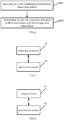
- the resource allocation method includes following steps.
- Step S301 is to determine, by a base station, a resource allocation mode to be adopted by a UE.
- the resource allocation mode includes a network scheduling mode and a UE autonomous selection mode.
- Step S303 is to transmit, by the base station, configuration information to the UE.
- the configuration information includes at least one of: indication information indicating whether or not the UE is permitted to determine a resource in accordance with the network scheduling mode and/or UE autonomous selection mode; QoS information of a D2D service (in the context, the D2D service includes a D2D discovery service and a D2D communication service) corresponding to each resource allocation mode; and resource allocation information for determining the resource in the case that the UE adopts the UE autonomous selection mode.
- the resource allocation method further includes: receiving, by the base station in advance, support capability for the resource allocation mode and resource requirement information reported by the UE; and determining, by the base station, the resource allocation mode to be adopted by the UE in accordance with the support capability reported by the UE.
- the configuration information transmitted from the base station to the UE merely includes the resource allocation information.
- the base station in the case that the base station indicates the UE to determine the resource in accordance with the network scheduling mode through the indication information, the base station further notifies the UE of information about a resource pool from which the resource is to be selected by the UE.
- the configuration information is transmitted by the base station to the UE via broadcasting or dedicated signaling.
- the network scheduling mode is a mode in which the UE transmits a D2D signal (in the context, the D2D signal includes a D2D discovery signal and/or a D2D communication signal) on the resource selected by the UE initiatively from the resource pool; and the UE autonomous selection mode is a mode in which the UE transmits the D2D signal on the resource indicated by the resource allocation information.
- the present disclosure further provides in some embodiments a resource determination method for D2D signal transmission.
- the resource determination method includes following steps.
- Step S401 is to receive, by a UE, configuration information from a base station.
- the configuration information includes at least one of: indication information indicating whether or not the UE is permitted to determine a resource in accordance with a network scheduling mode and/or a UE autonomous selection mode; QoS information of a D2D service corresponding to each resource allocation mode; and resource allocation information for determining the resource in the case that the UE adopts the UE autonomous selection mode.
- Step S403 is to determine, by the UE, the resource allocation mode in accordance with the configuration information.
- the resource determination method further includes: reporting, by the UE in advance, support capability for the resource allocation mode and resource requirement information to the base station, so that the base station determines the resource allocation mode suitable for the UE.
- the UE determines the resource in accordance with the resource allocation mode indicated in the indication information.
- the UE in the step of determining the resource allocation mode, in the case that the configuration information received by the UE includes the QoS information of the D2D service corresponding to each resource allocation mode, the UE selects the resource allocation mode in accordance with QoS required by a currently-transmitted D2D signal.
- the UE determines that the UE autonomous selection mode is to be adopted and determines the resource in accordance with the resource allocation information.
- the configuration information may be transmitted from the base station to the UE via broadcasting or dedicated signaling.
- the network scheduling mode is a mode in which the UE transmits the D2D signal on the resource selected by the UE initiatively from a resource pool; and the UE autonomous selection mode is a mode in which the UE transmits the D2D signal on the resource indicated by the resource allocation information.
- the present disclosure provides a solution for the switch between the different resource allocation modes.
- the switch between the different resource allocation modes may be achieved as follows.
- the UE may report the support capability for the D2D resource allocation mode to the base station, i.e., which resource allocation modes the UE may support.
- the base station provides the configuration information to the UE via signaling (e.g., via broadcasting or dedicated signaling).
- the configuration information may include at least one of: the indication information indicating whether or not the UE is permitted to determine the resource in accordance with the network scheduling mode and/or the UE autonomous selection mode; and/or, the QoS information of the D2D service corresponding to each resource allocation mode; and/or, resource allocation information of the network scheduling mode.
- the UE may select the resource allocation mode based on the configuration information and in accordance with a predetermined rule.
- the predetermined rule will be described hereinafter.
- D2D discovery signal e.g., a D2D communication signal
- Example 1 UE autonomous selection mode and network scheduling mode of resource allocation for D2D discovery
- the UE may initiatively select the resource from the resource pool to transmit the D2D discovery signal.
- the resource pool may be configured by network signaling.
- the resource may be selected by monitoring carriers.
- the UE may monitor the configured resource pool, and in the case that there is an idle resource, it may be selected. Otherwise, the UE continues to wait and monitor the resource pool.
- the base station may allocate a dedicated D2D discovery resource for the UE in a semi-static manner (e.g., the resource may be allocated by an eNB for the UE upon receiving a request therefrom).
- Table 1 UE autonomous selection mode
- Network scheduling mode Air-interface signaling overhead Small Large Validity of discovery resource Low (in the case of more UEs) High Signaling overhead of eNBs Small Large
- the base station may determine the resource allocation mode suitable for a current scenario in accordance with the actual number of the UEs, and transit the resource allocation mode to the UE through the configuration information.
- Example 2 provision of configuration information and selection of resource allocation mode
- one kind of configuration information provided by the base station may include an indicator related to QoS parameters.
- the base station may provide a delay threshold Td to the UE.
- Td a delay threshold
- the UE may make a decision on the QoS requirement corresponding to the current service.
- the desired delay is greater than Td, it means that the delay requirement for the current service is not high, and at this point, the UE may perform the D2D transmission in the UE autonomous selection mode.
- the network scheduling mode may be selected (i.e., the UE may send a request for a dedicated channel resource to a network side).
- another kind of configuration information provided by the base station may include indication information indicating whether or not the UE is permitted to determine the resource in accordance with the UE autonomous selection mode or the network scheduling mode.
- the base station may determine whether or not a UE newly accessing the network is permitted to adopt the UE autonomous selection mode or the network scheduling mode in accordance with the number of the currently active D2D UEs. In the case that there are fewer UEs, the UE autonomous selection mode may be adopted by the UE, so as to reduce the air-interface signaling overhead. Otherwise, the UEs having a higher priority level may adopt the network scheduling mode, so as to reduce collision or delay.
- the base station may indicate the resource allocation mode in an implicit manner. For example, a predetermined rule may be used. In the case that the base station has allocated a resource in the network scheduling mode to the UE, the UE may automatically adopt the network scheduling mode, and at this point, the UE autonomous selection mode is prohibited.
- the indication information may be provided via broadcasting or dedicated signaling.
- Example 3 related procedures for UE in an idle state
- the UE in a connected state is mainly taken into consideration in the above examples.
- the UE autonomous selection mode needs to be adopted. This is because a standby resource pool may be notified by system information in the UE autonomous selection mode, and it is unnecessary for the UE to be in the connected state.
- the above-mentioned method may be used in an extended manner for the UE in the idle state. For example, the QoS-related configuration information in Example 2 may be used.
- the UE in the idle state determines that the currently desired delay is too high and the UE autonomous selection mode is inappropriate, the establishment of a Radio Resource Control (RRC) connection may be triggered, and the UE may be in the connected state for the subsequent selection of the resource allocation modes.
- RRC Radio Resource Control
- the network scheduling mode may be selected by the UE in the connected state.
- the present disclosure further provides in some embodiments a resource allocation equipment for D2D signal transmission.
- the resource allocation equipment includes: a determination module 51 configured to determine a resource allocation mode to be adopted by a UE, the resource allocation mode including a network scheduling mode and an independent selection mode; and a transmission module 52 configured to transmit configuration information to the UE.
- the configuration information includes at least one of: indication information indicating whether or not the UE is permitted to determine a resource in accordance with the network scheduling mode and/or independent selection mode; QoS information of a D2D service corresponding to each resource allocation mode; and resource allocation information for determining the resource in the case that the UE adopts the independent selection mode.
- the resource allocation equipment may further include a reception module (not shown) configured to receive in advance support capability for the resource allocation mode and resource requirement information reported by the UE.
- the determination module 51 is further configured to determine the resource allocation mode to be adopted by the UE in accordance with the support capability reported by the UE.
- the transmission module 52 is further configured to transmit the configuration information to the UE via broadcasting or dedicated signaling.
- the configuration information transmitted by the transmission module 52 to the UE merely includes the resource allocation information.
- the transmission module 52 is further configured to notify the UE of information of a resource pool from which the resource is to be selected by the UE.
- the network scheduling mode is a mode in which the UE transmits a D2D signal on the resource selected by the UE independently from the resource pool; and the independent selection mode is a mode in which the UE transmits the D2D signal on the resource indicated by the resource allocation information.
- the present disclosure further provides in some embodiments a resource determination equipment for D2D signal transmission, for use in a UE.
- the resource determination equipment includes: a reception module 61 configured to receive configuration information from a base station, and a determination module 62 configured to determine the resource allocation mode in accordance with the configuration information.
- the configuration information includes at least one of: indication information indicating whether or not the UE is permitted to determine a resource in accordance with a network scheduling mode and/or an independent selection mode; QoS information of a D2D service corresponding to each resource allocation mode; and resource allocation information for determining the resource in the case that the UE adopts the independent selection mode.
- the resource determination equipment may further include a reporting module (not shown) configured to report in advance support capability for the resource allocation mode and resource requirement information to the base station.
- a reporting module (not shown) configured to report in advance support capability for the resource allocation mode and resource requirement information to the base station.
- the determination module 62 is further configured to determine the resource in accordance with the resource allocation mode indicated in the indication information.
- the determination module 62 is further configured to select the resource allocation mode in accordance with QoS required by a currently-transmitted D2D signal.
- the determination module 62 is further configured to determine that the independent selection mode is to be adopted and determine the resource in accordance with the resource allocation information.
- the configuration information is transmitted from the base station to the UE via broadcasting or dedicated signaling.
- the network scheduling mode is a mode in which the UE transmits the D2D signal on the resource selected by the UE independently from a resource pool; and the independent selection mode is a mode in which the UE transmits the D2D signal on the resource indicated by the resource allocation information.
- the configuration information may be transmitted from the base station to the UE, so as to specifically indicate the resource allocation mode to be currently adopted.
- the UE may be efficiently switched between the different resource allocation modes in accordance with the configuration information from the base station. As a result, it is able to flexibly switch the resource allocation mode in accordance with the practical need, thereby to efficiently improve a resource utilization rate as well as the D2D communication performance.
- the purposes of the present disclosure may also be implemented by one program or a set of programs running on any computing device, e.g., a known general-purpose computer, or implemented merely by a program product including programs codes capable of implementing the method or device.
- this program product and a storage medium storing therein the program product also constitute a part of the present disclosure.
- the storage medium may be any known storage medium or a storage medium that may occur in future.
- the present disclosure further provides in some embodiments a storage medium (e.g., a Read Only Memory (ROM), a Random Access Memory (RAM), a hard disc, or a removable memory).
- a computer program for the allocation of resources may be stored in the storage medium and include program codes so as to: determine a resource allocation mode to be adopted by a UE, the resource allocation mode including a network scheduling mode and a UE autonomous selection mode; and transmit configuration information to the UE.
- the configuration information includes at least one of: indication information indicating whether or not the UE is permitted to determine a resource in accordance with the network scheduling mode and/or UE autonomous selection mode; QoS information of a D2D service corresponding to each resource allocation mode; and resource allocation information for determining the resource in the case that the UE adopts the UE autonomous selection mode.
- a computer program for the allocation of resources may be stored in the storage medium and include program codes so as to perform following steps: receive configuration information from a base station, the configuration information including at least one of: indication information indicating whether or not the UE is permitted to determine a resource in accordance with a network scheduling mode and/or a UE autonomous selection mode, QoS information of a D2D service corresponding to each resource allocation mode, and resource allocation information for determining the resource in the case that the UE adopts the UE autonomous selection mode; determining the resource allocation mode in accordance with the configuration information.
- the configuration information including at least one of: indication information indicating whether or not the UE is permitted to determine a resource in accordance with a network scheduling mode and/or a UE autonomous selection mode, QoS information of a D2D service corresponding to each resource allocation mode, and resource allocation information for determining the resource in the case that the UE adopts the UE autonomous selection mode; determining the resource allocation mode in accordance with the configuration information.
- the present disclosure further provides in some embodiments a computer program including program codes so as to: determine a resource allocation mode to be adopted by a UE, the resource allocation mode including a network scheduling mode and a UE autonomous selection mode; and transmit configuration information to the UE.
- the configuration information includes at least one of: indication information indicating whether or not the UE is permitted to determine a resource in accordance with the network scheduling mode and/or UE autonomous selection mode; QoS information of a D2D service corresponding to each resource allocation mode; and resource allocation information for determining the resource in the case that the UE adopts the UE autonomous selection mode.
- the present disclosure further provides in some embodiments a computer program including program codes so as to: receive configuration information from a base station, the configuration information including at least one of: indication information indicating whether or not the UE is permitted to determine a resource in accordance with a network scheduling mode and/or a UE autonomous selection mode, QoS information of a D2D service corresponding to each resource allocation mode, and resource allocation information for determining the resource in the case that the UE adopts the UE autonomous selection mode; determine the resource allocation mode in accordance with the configuration information.
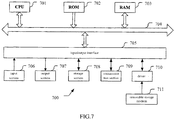
- programs may be installed in a computer with a dedicated hardware structure, e.g., a general-purpose computer 700 in Fig.7 , via the storage medium or a network, so as to achieve various functions.
- a Central Processing Unit (CPU) 701 may execute various processings in accordance with the programs stored in a ROM 702 or the programs loaded into a RAM 703 via a storage section 708. Data desired for the operation of the CPU 701 may also be stored in the RAM 703 according to the practical need.
- the CPU 701, the ROM 702 and the RAM 703 are connected to each other via a bus 704.
- an input/output interface 705 is also connected to the bus 704.
- An input section 706 including a keyboard and a mouse
- an output section 707 including a display such as Cathode Ray Tube (CRT) or a Liquid Crystal Display (LCD), and a speaker
- a storage section 708 including a hard disk
- a communication section 709 including a network interface card such as Local Area Network (LAN) card, and a Modem
- the communication section 709 is configured to perform the communication over a network, e.g., internet.
- a driver 710 may also be connected to the input/output interface 705, and a removable storage medium 711 such as a magnetic disk, an optical disk, a magneto-optical disk or a semiconductor memory may be installed on the driver 710, so as to read the computer programs therefrom and install them into the storage section 708.
- a removable storage medium 711 such as a magnetic disk, an optical disk, a magneto-optical disk or a semiconductor memory
- the programs may be installed from the network, e.g., internet, or the storage medium, e.g., the removable storage medium 711.
- the storage medium is not limited to the removable storage medium 711 in Fig.7 in which the programs are stored and which may be distributed in such a manner as to be detachable from the device so as to provide the programs to a user.
- the removable storage medium 711 may include a magnetic disk (including a floppy disk (registered trademark), an optical disk (including Compact Disk Read Only Memory (CD-ROM) and Digital Video Disk (DVD), a magneto-optical disk (including Mini Disk (registered trademark) and a semiconductor memory.
- the storage media may be a hard disk included in the storage section 708 and the ROM 702 in which the programs are stored, and the storage media may be distributed to the user together with the device including them.
- the members and/or steps may be subdivided and/or recombined.
- the steps for executing the above-mentioned processings may be performed in a chronological order. Of course, some steps may also be performed in parallel, or independently of each other.
Landscapes
- Engineering & Computer Science (AREA)
- Computer Networks & Wireless Communication (AREA)
- Signal Processing (AREA)
- Quality & Reliability (AREA)
- Multimedia (AREA)
- Databases & Information Systems (AREA)
- Mobile Radio Communication Systems (AREA)
Applications Claiming Priority (3)
| Application Number | Priority Date | Filing Date | Title |
|---|---|---|---|
| CN201410101192.5A CN104936292B (zh) | 2014-03-18 | 2014-03-18 | 用于设备到设备信号传输的资源分配方法和装置 |
| EP15765448.4A EP3101978B1 (fr) | 2014-03-18 | 2015-03-16 | Procédés d'affectation de ressources et équipements pour la transmission de signaux de dispositif à dispositif |
| PCT/CN2015/074296 WO2015139592A1 (fr) | 2014-03-18 | 2015-03-16 | Procédé d'affectation de ressources et équipement pour la transmission de signaux de dispositif à dispositif |
Related Parent Applications (2)
| Application Number | Title | Priority Date | Filing Date |
|---|---|---|---|
| EP15765448.4A Division EP3101978B1 (fr) | 2014-03-18 | 2015-03-16 | Procédés d'affectation de ressources et équipements pour la transmission de signaux de dispositif à dispositif |
| EP15765448.4A Division-Into EP3101978B1 (fr) | 2014-03-18 | 2015-03-16 | Procédés d'affectation de ressources et équipements pour la transmission de signaux de dispositif à dispositif |
Publications (2)
| Publication Number | Publication Date |
|---|---|
| EP3720221A1 true EP3720221A1 (fr) | 2020-10-07 |
| EP3720221B1 EP3720221B1 (fr) | 2024-06-19 |
Family
ID=54123184
Family Applications (2)
| Application Number | Title | Priority Date | Filing Date |
|---|---|---|---|
| EP20176270.5A Active EP3720221B1 (fr) | 2014-03-18 | 2015-03-16 | Procédés d'affectation de ressources et équipements pour la transmission de signaux de dispositif à dispositif |
| EP15765448.4A Active EP3101978B1 (fr) | 2014-03-18 | 2015-03-16 | Procédés d'affectation de ressources et équipements pour la transmission de signaux de dispositif à dispositif |
Family Applications After (1)
| Application Number | Title | Priority Date | Filing Date |
|---|---|---|---|
| EP15765448.4A Active EP3101978B1 (fr) | 2014-03-18 | 2015-03-16 | Procédés d'affectation de ressources et équipements pour la transmission de signaux de dispositif à dispositif |
Country Status (6)
| Country | Link |
|---|---|
| US (1) | US10225874B2 (fr) |
| EP (2) | EP3720221B1 (fr) |
| JP (1) | JP6353068B2 (fr) |
| KR (1) | KR101928635B1 (fr) |
| CN (1) | CN104936292B (fr) |
| WO (1) | WO2015139592A1 (fr) |
Families Citing this family (36)
| Publication number | Priority date | Publication date | Assignee | Title |
|---|---|---|---|---|
| WO2015142900A1 (fr) | 2014-03-18 | 2015-09-24 | Sharp Laboratories Of America, Inc. | Programmation de communications de dispositif à dispositif sans fil |
| JP6533529B2 (ja) | 2014-03-18 | 2019-06-19 | シャープ株式会社 | デバイス・ツー・デバイス通信装置および方法 |
| WO2015167681A1 (fr) * | 2014-05-01 | 2015-11-05 | Sharp Laboratories Of America, Inc. | Appareil et procédés pour des communications de dispositif à dispositif |
| JP6407304B2 (ja) | 2014-05-08 | 2018-10-17 | シャープ株式会社 | デバイス・ツー・デバイス通信装置および方法 |
| US9980226B2 (en) * | 2015-04-03 | 2018-05-22 | Qualcomm Incorporated | Discovery resource pool management in proximity based services |
| RU2698104C1 (ru) * | 2015-11-06 | 2019-08-22 | Хуавэй Текнолоджиз Ко., Лтд. | Способ и аппарат определения радиоресурса и сервер обслуживания |
| US9986476B2 (en) * | 2016-03-01 | 2018-05-29 | Futurewei Technologies, Inc. | Scheduling and handover of a vehicular connection with periodic messaging |
| KR20190002431A (ko) * | 2016-05-11 | 2019-01-08 | 광동 오포 모바일 텔레커뮤니케이션즈 코포레이션 리미티드 | 통신 방법, 단말 기기 및 네트워크 기기 |
| MX2019001684A (es) | 2016-08-09 | 2019-10-07 | Huawei Tech Co Ltd | Metodo, aparato y sistema de envio de mensajes v2x. |
| WO2018027989A1 (fr) | 2016-08-12 | 2018-02-15 | 华为技术有限公司 | Procédé et appareil de communication |
| CN109644438B (zh) * | 2016-09-18 | 2021-06-15 | 华为技术有限公司 | 一种数据发送方法、基站和通信节点 |
| JP2020502876A (ja) | 2016-11-03 | 2020-01-23 | オッポ広東移動通信有限公司 | 通信モードを切り替える方法、端末装置及びネットワーク装置 |
| CN108419294B (zh) | 2017-02-10 | 2020-02-21 | 电信科学技术研究院 | 一种资源池确定方法及相关设备 |
| CN108633048B (zh) * | 2017-03-24 | 2025-01-10 | 中兴通讯股份有限公司 | 一种资源分配方法、装置及存储介质 |
| CN108924892A (zh) * | 2017-04-07 | 2018-11-30 | 华为技术有限公司 | 一种d2d通信方法及装置 |
| CN108990084B (zh) * | 2017-06-01 | 2021-05-07 | 电信科学技术研究院 | 一种信息获取方法、装置、设备及计算机可读存储介质 |
| CN109996295B (zh) * | 2018-01-02 | 2023-05-09 | 中国移动通信有限公司研究院 | 一种车联网中通信资源分配方法、装置和介质 |
| WO2019157726A1 (fr) * | 2018-02-14 | 2019-08-22 | Oppo广东移动通信有限公司 | Procédé d'indication de ressources, dispositif terminal, et dispositif de réseau |
| US11516633B2 (en) | 2018-02-23 | 2022-11-29 | Lg Electronics Inc. | V2X communication method of terminal in wireless communication system and apparatus using same method |
| WO2019214135A1 (fr) * | 2018-05-07 | 2019-11-14 | Oppo广东移动通信有限公司 | Procédé et dispositif de communication |
| CN110830953B (zh) * | 2018-08-10 | 2022-05-13 | 华为技术有限公司 | 一种通信方法及相关设备 |
| CN110839299B (zh) * | 2018-08-16 | 2022-04-01 | 大唐移动通信设备有限公司 | 一种资源分配的方法和设备 |
| CN110859005B (zh) * | 2018-08-23 | 2023-04-21 | 华为技术有限公司 | 一种通信方法及相关设备 |
| CN110958689B (zh) * | 2018-09-26 | 2022-05-27 | 维沃移动通信有限公司 | 资源分配方法和设备 |
| CN111065170B (zh) * | 2018-10-17 | 2022-08-12 | 大唐移动通信设备有限公司 | 一种辅助单播连接建立和建立单播连接的方法及设备 |
| ES2928912T3 (es) * | 2018-10-29 | 2022-11-23 | Guangdong Oppo Mobile Telecommunications Corp Ltd | Procedimiento para determinar el modo de transmisión en un enlace lateral, aparato terminal y aparato de red |
| CN111328069B (zh) * | 2018-12-17 | 2022-05-03 | 大唐移动通信设备有限公司 | 一种资源分配模式配置方法、终端及网络设备 |
| US12028835B2 (en) | 2019-01-10 | 2024-07-02 | Beijing Xiaomi Mobile Software Co., Ltd. | Methods, apparatuses, user equipment and base stations for determining sidelink resource |
| CN114423080A (zh) * | 2019-01-18 | 2022-04-29 | 维沃移动通信有限公司 | 资源分配的方法和设备 |
| CN111263451B (zh) | 2019-01-23 | 2022-10-11 | 维沃移动通信有限公司 | 副链路传输方法和设备 |
| CN111866794B (zh) * | 2019-04-30 | 2022-04-22 | 华为技术有限公司 | 一种资源调度方法及装置 |
| CN111885734B (zh) * | 2019-05-02 | 2021-08-24 | 华硕电脑股份有限公司 | 请求单播传送的侧链路无线电承载配置的方法和设备 |
| WO2020231126A1 (fr) * | 2019-05-10 | 2020-11-19 | 엘지전자 주식회사 | Détermination d'un ensemble de ressources dans un réseau nr v2x |
| CN112584447A (zh) * | 2019-09-29 | 2021-03-30 | 索尼公司 | 无线通信系统中的电子设备和方法 |
| US11985632B2 (en) * | 2021-10-05 | 2024-05-14 | Qualcomm Incorporated | Resource allocation mode indication for resource pool sharing |
| US20240292435A1 (en) * | 2023-02-24 | 2024-08-29 | Samsung Electronics Co., Ltd. | Channel announcement in wireless communication systems |
Citations (2)
| Publication number | Priority date | Publication date | Assignee | Title |
|---|---|---|---|---|
| US20120020213A1 (en) * | 2009-03-12 | 2012-01-26 | Kari Veikko Horneman | Device-to-Device Communication |
| WO2014014326A1 (fr) * | 2012-07-20 | 2014-01-23 | Lg Electronics Inc. | Procédé et appareil pour la transmission d'un message relatif à une connexion de dispositif à dispositif dans un système de communication sans fil |
Family Cites Families (16)
| Publication number | Priority date | Publication date | Assignee | Title |
|---|---|---|---|---|
| US9072060B2 (en) * | 2008-06-03 | 2015-06-30 | Nokia Technologies Oy | Method, apparatus and computer program for power control to mitigate interference |
| EP2692190B1 (fr) * | 2011-03-29 | 2020-01-15 | Nokia Solutions and Networks Oy | Controle de sélection de canal distribué dans un système de communciation |
| EP2700259A1 (fr) | 2011-04-19 | 2014-02-26 | Telefonaktiebolaget LM Ericsson (PUBL) | Stations de base radio et leurs procédés pour gérer le brouillage et planifier des ressources radio en conséquence |
| KR20130065373A (ko) * | 2011-12-09 | 2013-06-19 | 한국전자통신연구원 | D2d 그룹 통신 방법 및 이를 이용하는 단말 장치 |
| KR20130070661A (ko) * | 2011-12-14 | 2013-06-28 | 한국전자통신연구원 | 단말간 직접 통신을 위한 제어 방법 |
| KR20130109781A (ko) * | 2012-03-28 | 2013-10-08 | 한국전자통신연구원 | 셀룰러 이동통신 시스템에서의 단말간 직접 통신을 위한 자원 할당 방법 |
| CN102638893B (zh) * | 2012-03-31 | 2014-09-10 | 南京邮电大学 | 直通蜂窝系统中基站联合直通终端优化资源分配方法 |
| TWI620459B (zh) * | 2012-05-31 | 2018-04-01 | 內數位專利控股公司 | 在蜂巢式通訊系統中賦能直鏈通訊排程及控制方法 |
| CN103533500A (zh) * | 2012-07-04 | 2014-01-22 | 中兴通讯股份有限公司 | 临近终端的通信方法及装置、系统 |
| JP6031610B2 (ja) * | 2012-08-23 | 2016-11-24 | インターデイジタル パテント ホールディングス インコーポレイテッド | デバイスツーデバイス発見を行うための方法および装置 |
| EP2888898A4 (fr) * | 2012-08-27 | 2016-04-06 | Ericsson Telefon Ab L M | Adaptation de liaison pour des communications de dispositif à dispositif |
| CN103052164B (zh) * | 2012-12-27 | 2016-02-24 | 北京邮电大学 | 蜂窝与d2d混合网络中终端直通通信的干扰控制协调方法 |
| TWI531273B (zh) * | 2013-08-09 | 2016-04-21 | 財團法人資訊工業策進會 | 無線通訊系統及其資源分配方法 |
| KR20150093533A (ko) * | 2014-02-07 | 2015-08-18 | 한국전자통신연구원 | 단말간 통신 자원 할당 방법 및 장치 |
| US9769644B2 (en) | 2014-03-14 | 2017-09-19 | Intel IP Corporation | Systems, methods, and devices for device-to-device communication mode selection |
| CN104202821B (zh) * | 2014-03-20 | 2019-08-23 | 中兴通讯股份有限公司 | 设备到设备通信干扰避免方法和装置 |
-
2014
- 2014-03-18 CN CN201410101192.5A patent/CN104936292B/zh active Active
-
2015
- 2015-03-16 US US15/125,769 patent/US10225874B2/en active Active
- 2015-03-16 JP JP2016554381A patent/JP6353068B2/ja active Active
- 2015-03-16 WO PCT/CN2015/074296 patent/WO2015139592A1/fr not_active Ceased
- 2015-03-16 EP EP20176270.5A patent/EP3720221B1/fr active Active
- 2015-03-16 EP EP15765448.4A patent/EP3101978B1/fr active Active
- 2015-03-16 KR KR1020167024926A patent/KR101928635B1/ko active Active
Patent Citations (2)
| Publication number | Priority date | Publication date | Assignee | Title |
|---|---|---|---|---|
| US20120020213A1 (en) * | 2009-03-12 | 2012-01-26 | Kari Veikko Horneman | Device-to-Device Communication |
| WO2014014326A1 (fr) * | 2012-07-20 | 2014-01-23 | Lg Electronics Inc. | Procédé et appareil pour la transmission d'un message relatif à une connexion de dispositif à dispositif dans un système de communication sans fil |
Non-Patent Citations (2)
| Title |
|---|
| "Status Report to TSG 1 Work plan related evaluation", vol. TSG RAN, no. Fukuoka, Japan; 20140303 - 20140306, 5 March 2014 (2014-03-05), XP050781457, Retrieved from the Internet <URL:http://www.3gpp.org/ftp/Meetings_3GPP_SYNC/RAN/Docs/> [retrieved on 20140305] * |
| QUALCOMM INCORPORATED: "Resource allocation aspects of 1: M D2D broadcast communication", vol. RAN WG2, no. Prague, Czech Republic; 20140210 - 20140214, 9 February 2014 (2014-02-09), XP050792008, Retrieved from the Internet <URL:http://www.3gpp.org/ftp/Meetings_3GPP_SYNC/RAN2/Docs/> [retrieved on 20140209] * |
Also Published As
| Publication number | Publication date |
|---|---|
| US20170006653A1 (en) | 2017-01-05 |
| EP3101978B1 (fr) | 2020-07-22 |
| CN104936292B (zh) | 2019-02-05 |
| EP3720221B1 (fr) | 2024-06-19 |
| EP3101978A4 (fr) | 2017-02-22 |
| JP2017513290A (ja) | 2017-05-25 |
| JP6353068B2 (ja) | 2018-07-04 |
| EP3101978A1 (fr) | 2016-12-07 |
| KR20160119843A (ko) | 2016-10-14 |
| WO2015139592A1 (fr) | 2015-09-24 |
| US10225874B2 (en) | 2019-03-05 |
| KR101928635B1 (ko) | 2019-02-26 |
| CN104936292A (zh) | 2015-09-23 |
Similar Documents
| Publication | Publication Date | Title |
|---|---|---|
| EP3101978B1 (fr) | Procédés d'affectation de ressources et équipements pour la transmission de signaux de dispositif à dispositif | |
| US20240080750A1 (en) | Mobile telecommunications system method, user equipment and base station for transmitting on demand system information | |
| US20200120708A1 (en) | Uplink Resource Grant Method and Apparatus, and System | |
| CN112889311B (zh) | 用于移动性管理的活动协调集的方法、设备和系统 | |
| US20140242963A1 (en) | Network-assisted multi-cell device discovery protocol for device-to-device communications | |
| EP3297311A1 (fr) | Procédé et dispositif d'attribution de fréquence pour une bande de fréquences non autorisées | |
| US10952168B2 (en) | Method for transmitting downlink control signal and apparatus | |
| US12133246B2 (en) | Communication method and apparatus | |
| US12088488B2 (en) | Radio network node, user equipment and methods performed therein | |
| US11304222B2 (en) | Method and apparatus for uplink scheduling | |
| US10477551B2 (en) | Uplink data transmission resource allocation method and apparatus using load balancing | |
| US20210153242A1 (en) | Base station and user equipment | |
| EP3884727B1 (fr) | Ensemble de coordination actif pour environnements à spectre partagés | |
| CN111066355A (zh) | 一种通信方法及设备 | |
| WO2023283761A1 (fr) | Procédé, dispositif et support lisible par ordinateur pour la communication | |
| WO2016131166A1 (fr) | Procédé pour surveiller une cellule d'accès d'assistance de licence, équipement et station de base | |
| US20230224877A1 (en) | Access Method, Apparatus, Electronic Device, and Readable Storage Medium | |
| WO2025184917A1 (fr) | Procédé de communication sans fil et dispositif de communication |
Legal Events
| Date | Code | Title | Description |
|---|---|---|---|
| PUAI | Public reference made under article 153(3) epc to a published international application that has entered the european phase |
Free format text: ORIGINAL CODE: 0009012 |
|
| STAA | Information on the status of an ep patent application or granted ep patent |
Free format text: STATUS: REQUEST FOR EXAMINATION WAS MADE |
|
| 17P | Request for examination filed |
Effective date: 20200525 |
|
| AC | Divisional application: reference to earlier application |
Ref document number: 3101978 Country of ref document: EP Kind code of ref document: P |
|
| AK | Designated contracting states |
Kind code of ref document: A1 Designated state(s): AL AT BE BG CH CY CZ DE DK EE ES FI FR GB GR HR HU IE IS IT LI LT LU LV MC MK MT NL NO PL PT RO RS SE SI SK SM TR |
|
| RAP1 | Party data changed (applicant data changed or rights of an application transferred) |
Owner name: DATANG MOBILE COMMUNICATIONS EQUIPMENT CO., LTD. |
|
| STAA | Information on the status of an ep patent application or granted ep patent |
Free format text: STATUS: EXAMINATION IS IN PROGRESS |
|
| 17Q | First examination report despatched |
Effective date: 20220527 |
|
| REG | Reference to a national code |
Ref country code: DE Ref legal event code: R079 Free format text: PREVIOUS MAIN CLASS: H04W0072040000 Ipc: H04W0072230000 Ref country code: DE Ref legal event code: R079 Ref document number: 602015089045 Country of ref document: DE Free format text: PREVIOUS MAIN CLASS: H04W0072040000 Ipc: H04W0072230000 |
|
| GRAP | Despatch of communication of intention to grant a patent |
Free format text: ORIGINAL CODE: EPIDOSNIGR1 |
|
| STAA | Information on the status of an ep patent application or granted ep patent |
Free format text: STATUS: GRANT OF PATENT IS INTENDED |
|
| RIC1 | Information provided on ipc code assigned before grant |
Ipc: H04W 4/06 20090101ALI20240125BHEP Ipc: H04W 76/14 20180101ALI20240125BHEP Ipc: H04W 72/23 20230101AFI20240125BHEP |
|
| INTG | Intention to grant announced |
Effective date: 20240214 |
|
| GRAS | Grant fee paid |
Free format text: ORIGINAL CODE: EPIDOSNIGR3 |
|
| GRAA | (expected) grant |
Free format text: ORIGINAL CODE: 0009210 |
|
| STAA | Information on the status of an ep patent application or granted ep patent |
Free format text: STATUS: THE PATENT HAS BEEN GRANTED |
|
| AC | Divisional application: reference to earlier application |
Ref document number: 3101978 Country of ref document: EP Kind code of ref document: P |
|
| AK | Designated contracting states |
Kind code of ref document: B1 Designated state(s): AL AT BE BG CH CY CZ DE DK EE ES FI FR GB GR HR HU IE IS IT LI LT LU LV MC MK MT NL NO PL PT RO RS SE SI SK SM TR |
|
| REG | Reference to a national code |
Ref country code: GB Ref legal event code: FG4D |
|
| REG | Reference to a national code |
Ref country code: CH Ref legal event code: EP |
|
| REG | Reference to a national code |
Ref country code: DE Ref legal event code: R096 Ref document number: 602015089045 Country of ref document: DE |
|
| PG25 | Lapsed in a contracting state [announced via postgrant information from national office to epo] |
Ref country code: BG Free format text: LAPSE BECAUSE OF FAILURE TO SUBMIT A TRANSLATION OF THE DESCRIPTION OR TO PAY THE FEE WITHIN THE PRESCRIBED TIME-LIMIT Effective date: 20240619 |
|
| PG25 | Lapsed in a contracting state [announced via postgrant information from national office to epo] |
Ref country code: FI Free format text: LAPSE BECAUSE OF FAILURE TO SUBMIT A TRANSLATION OF THE DESCRIPTION OR TO PAY THE FEE WITHIN THE PRESCRIBED TIME-LIMIT Effective date: 20240619 Ref country code: HR Free format text: LAPSE BECAUSE OF FAILURE TO SUBMIT A TRANSLATION OF THE DESCRIPTION OR TO PAY THE FEE WITHIN THE PRESCRIBED TIME-LIMIT Effective date: 20240619 |
|
| REG | Reference to a national code |
Ref country code: LT Ref legal event code: MG9D |
|
| PG25 | Lapsed in a contracting state [announced via postgrant information from national office to epo] |
Ref country code: GR Free format text: LAPSE BECAUSE OF FAILURE TO SUBMIT A TRANSLATION OF THE DESCRIPTION OR TO PAY THE FEE WITHIN THE PRESCRIBED TIME-LIMIT Effective date: 20240920 |
|
| REG | Reference to a national code |
Ref country code: NL Ref legal event code: MP Effective date: 20240619 |
|
| PG25 | Lapsed in a contracting state [announced via postgrant information from national office to epo] |
Ref country code: LV Free format text: LAPSE BECAUSE OF FAILURE TO SUBMIT A TRANSLATION OF THE DESCRIPTION OR TO PAY THE FEE WITHIN THE PRESCRIBED TIME-LIMIT Effective date: 20240619 |
|
| PG25 | Lapsed in a contracting state [announced via postgrant information from national office to epo] |
Ref country code: NO Free format text: LAPSE BECAUSE OF FAILURE TO SUBMIT A TRANSLATION OF THE DESCRIPTION OR TO PAY THE FEE WITHIN THE PRESCRIBED TIME-LIMIT Effective date: 20240919 Ref country code: LV Free format text: LAPSE BECAUSE OF FAILURE TO SUBMIT A TRANSLATION OF THE DESCRIPTION OR TO PAY THE FEE WITHIN THE PRESCRIBED TIME-LIMIT Effective date: 20240619 Ref country code: HR Free format text: LAPSE BECAUSE OF FAILURE TO SUBMIT A TRANSLATION OF THE DESCRIPTION OR TO PAY THE FEE WITHIN THE PRESCRIBED TIME-LIMIT Effective date: 20240619 Ref country code: GR Free format text: LAPSE BECAUSE OF FAILURE TO SUBMIT A TRANSLATION OF THE DESCRIPTION OR TO PAY THE FEE WITHIN THE PRESCRIBED TIME-LIMIT Effective date: 20240920 Ref country code: FI Free format text: LAPSE BECAUSE OF FAILURE TO SUBMIT A TRANSLATION OF THE DESCRIPTION OR TO PAY THE FEE WITHIN THE PRESCRIBED TIME-LIMIT Effective date: 20240619 Ref country code: BG Free format text: LAPSE BECAUSE OF FAILURE TO SUBMIT A TRANSLATION OF THE DESCRIPTION OR TO PAY THE FEE WITHIN THE PRESCRIBED TIME-LIMIT Effective date: 20240619 Ref country code: RS Free format text: LAPSE BECAUSE OF FAILURE TO SUBMIT A TRANSLATION OF THE DESCRIPTION OR TO PAY THE FEE WITHIN THE PRESCRIBED TIME-LIMIT Effective date: 20240919 |
|
| PG25 | Lapsed in a contracting state [announced via postgrant information from national office to epo] |
Ref country code: NL Free format text: LAPSE BECAUSE OF FAILURE TO SUBMIT A TRANSLATION OF THE DESCRIPTION OR TO PAY THE FEE WITHIN THE PRESCRIBED TIME-LIMIT Effective date: 20240619 |
|
| REG | Reference to a national code |
Ref country code: AT Ref legal event code: MK05 Ref document number: 1696812 Country of ref document: AT Kind code of ref document: T Effective date: 20240619 |
|
| PG25 | Lapsed in a contracting state [announced via postgrant information from national office to epo] |
Ref country code: NL Free format text: LAPSE BECAUSE OF FAILURE TO SUBMIT A TRANSLATION OF THE DESCRIPTION OR TO PAY THE FEE WITHIN THE PRESCRIBED TIME-LIMIT Effective date: 20240619 |
|
| PG25 | Lapsed in a contracting state [announced via postgrant information from national office to epo] |
Ref country code: PT Free format text: LAPSE BECAUSE OF FAILURE TO SUBMIT A TRANSLATION OF THE DESCRIPTION OR TO PAY THE FEE WITHIN THE PRESCRIBED TIME-LIMIT Effective date: 20241021 |
|
| PG25 | Lapsed in a contracting state [announced via postgrant information from national office to epo] |
Ref country code: PT Free format text: LAPSE BECAUSE OF FAILURE TO SUBMIT A TRANSLATION OF THE DESCRIPTION OR TO PAY THE FEE WITHIN THE PRESCRIBED TIME-LIMIT Effective date: 20241021 |
|
| PG25 | Lapsed in a contracting state [announced via postgrant information from national office to epo] |
Ref country code: PL Free format text: LAPSE BECAUSE OF FAILURE TO SUBMIT A TRANSLATION OF THE DESCRIPTION OR TO PAY THE FEE WITHIN THE PRESCRIBED TIME-LIMIT Effective date: 20240619 |
|
| PG25 | Lapsed in a contracting state [announced via postgrant information from national office to epo] |
Ref country code: EE Free format text: LAPSE BECAUSE OF FAILURE TO SUBMIT A TRANSLATION OF THE DESCRIPTION OR TO PAY THE FEE WITHIN THE PRESCRIBED TIME-LIMIT Effective date: 20240619 |
|
| PG25 | Lapsed in a contracting state [announced via postgrant information from national office to epo] |
Ref country code: AT Free format text: LAPSE BECAUSE OF FAILURE TO SUBMIT A TRANSLATION OF THE DESCRIPTION OR TO PAY THE FEE WITHIN THE PRESCRIBED TIME-LIMIT Effective date: 20240619 Ref country code: IS Free format text: LAPSE BECAUSE OF FAILURE TO SUBMIT A TRANSLATION OF THE DESCRIPTION OR TO PAY THE FEE WITHIN THE PRESCRIBED TIME-LIMIT Effective date: 20241019 |
|
| PG25 | Lapsed in a contracting state [announced via postgrant information from national office to epo] |
Ref country code: CZ Free format text: LAPSE BECAUSE OF FAILURE TO SUBMIT A TRANSLATION OF THE DESCRIPTION OR TO PAY THE FEE WITHIN THE PRESCRIBED TIME-LIMIT Effective date: 20240619 |
|
| PG25 | Lapsed in a contracting state [announced via postgrant information from national office to epo] |
Ref country code: RO Free format text: LAPSE BECAUSE OF FAILURE TO SUBMIT A TRANSLATION OF THE DESCRIPTION OR TO PAY THE FEE WITHIN THE PRESCRIBED TIME-LIMIT Effective date: 20240619 Ref country code: SK Free format text: LAPSE BECAUSE OF FAILURE TO SUBMIT A TRANSLATION OF THE DESCRIPTION OR TO PAY THE FEE WITHIN THE PRESCRIBED TIME-LIMIT Effective date: 20240619 |
|
| PG25 | Lapsed in a contracting state [announced via postgrant information from national office to epo] |
Ref country code: ES Free format text: LAPSE BECAUSE OF FAILURE TO SUBMIT A TRANSLATION OF THE DESCRIPTION OR TO PAY THE FEE WITHIN THE PRESCRIBED TIME-LIMIT Effective date: 20240619 Ref country code: SM Free format text: LAPSE BECAUSE OF FAILURE TO SUBMIT A TRANSLATION OF THE DESCRIPTION OR TO PAY THE FEE WITHIN THE PRESCRIBED TIME-LIMIT Effective date: 20240619 |
|
| PG25 | Lapsed in a contracting state [announced via postgrant information from national office to epo] |
Ref country code: SM Free format text: LAPSE BECAUSE OF FAILURE TO SUBMIT A TRANSLATION OF THE DESCRIPTION OR TO PAY THE FEE WITHIN THE PRESCRIBED TIME-LIMIT Effective date: 20240619 Ref country code: SK Free format text: LAPSE BECAUSE OF FAILURE TO SUBMIT A TRANSLATION OF THE DESCRIPTION OR TO PAY THE FEE WITHIN THE PRESCRIBED TIME-LIMIT Effective date: 20240619 Ref country code: RO Free format text: LAPSE BECAUSE OF FAILURE TO SUBMIT A TRANSLATION OF THE DESCRIPTION OR TO PAY THE FEE WITHIN THE PRESCRIBED TIME-LIMIT Effective date: 20240619 Ref country code: PL Free format text: LAPSE BECAUSE OF FAILURE TO SUBMIT A TRANSLATION OF THE DESCRIPTION OR TO PAY THE FEE WITHIN THE PRESCRIBED TIME-LIMIT Effective date: 20240619 Ref country code: IS Free format text: LAPSE BECAUSE OF FAILURE TO SUBMIT A TRANSLATION OF THE DESCRIPTION OR TO PAY THE FEE WITHIN THE PRESCRIBED TIME-LIMIT Effective date: 20241019 Ref country code: ES Free format text: LAPSE BECAUSE OF FAILURE TO SUBMIT A TRANSLATION OF THE DESCRIPTION OR TO PAY THE FEE WITHIN THE PRESCRIBED TIME-LIMIT Effective date: 20240619 Ref country code: EE Free format text: LAPSE BECAUSE OF FAILURE TO SUBMIT A TRANSLATION OF THE DESCRIPTION OR TO PAY THE FEE WITHIN THE PRESCRIBED TIME-LIMIT Effective date: 20240619 Ref country code: CZ Free format text: LAPSE BECAUSE OF FAILURE TO SUBMIT A TRANSLATION OF THE DESCRIPTION OR TO PAY THE FEE WITHIN THE PRESCRIBED TIME-LIMIT Effective date: 20240619 Ref country code: AT Free format text: LAPSE BECAUSE OF FAILURE TO SUBMIT A TRANSLATION OF THE DESCRIPTION OR TO PAY THE FEE WITHIN THE PRESCRIBED TIME-LIMIT Effective date: 20240619 |
|
| PG25 | Lapsed in a contracting state [announced via postgrant information from national office to epo] |
Ref country code: IT Free format text: LAPSE BECAUSE OF FAILURE TO SUBMIT A TRANSLATION OF THE DESCRIPTION OR TO PAY THE FEE WITHIN THE PRESCRIBED TIME-LIMIT Effective date: 20240619 |
|
| REG | Reference to a national code |
Ref country code: DE Ref legal event code: R097 Ref document number: 602015089045 Country of ref document: DE |
|
| PG25 | Lapsed in a contracting state [announced via postgrant information from national office to epo] |
Ref country code: DK Free format text: LAPSE BECAUSE OF FAILURE TO SUBMIT A TRANSLATION OF THE DESCRIPTION OR TO PAY THE FEE WITHIN THE PRESCRIBED TIME-LIMIT Effective date: 20240619 |
|
| PLBE | No opposition filed within time limit |
Free format text: ORIGINAL CODE: 0009261 |
|
| STAA | Information on the status of an ep patent application or granted ep patent |
Free format text: STATUS: NO OPPOSITION FILED WITHIN TIME LIMIT |
|
| 26N | No opposition filed |
Effective date: 20250320 |
|
| PG25 | Lapsed in a contracting state [announced via postgrant information from national office to epo] |
Ref country code: SE Free format text: LAPSE BECAUSE OF FAILURE TO SUBMIT A TRANSLATION OF THE DESCRIPTION OR TO PAY THE FEE WITHIN THE PRESCRIBED TIME-LIMIT Effective date: 20240619 |
|
| PG25 | Lapsed in a contracting state [announced via postgrant information from national office to epo] |
Ref country code: MC Free format text: LAPSE BECAUSE OF FAILURE TO SUBMIT A TRANSLATION OF THE DESCRIPTION OR TO PAY THE FEE WITHIN THE PRESCRIBED TIME-LIMIT Effective date: 20240619 |
|
| REG | Reference to a national code |
Ref country code: CH Ref legal event code: H13 Free format text: ST27 STATUS EVENT CODE: U-0-0-H10-H13 (AS PROVIDED BY THE NATIONAL OFFICE) Effective date: 20251023 |
|
| PG25 | Lapsed in a contracting state [announced via postgrant information from national office to epo] |
Ref country code: LU Free format text: LAPSE BECAUSE OF NON-PAYMENT OF DUE FEES Effective date: 20250316 |
|
| REG | Reference to a national code |
Ref country code: BE Ref legal event code: MM Effective date: 20250331 |
|
| PG25 | Lapsed in a contracting state [announced via postgrant information from national office to epo] |
Ref country code: BE Free format text: LAPSE BECAUSE OF NON-PAYMENT OF DUE FEES Effective date: 20250331 |
|
| PG25 | Lapsed in a contracting state [announced via postgrant information from national office to epo] |
Ref country code: CH Free format text: LAPSE BECAUSE OF NON-PAYMENT OF DUE FEES Effective date: 20250331 |
|
| PG25 | Lapsed in a contracting state [announced via postgrant information from national office to epo] |
Ref country code: IE Free format text: LAPSE BECAUSE OF NON-PAYMENT OF DUE FEES Effective date: 20250316 |
|
| PGFP | Annual fee paid to national office [announced via postgrant information from national office to epo] |
Ref country code: GB Payment date: 20260324 Year of fee payment: 12 |
|
| PGFP | Annual fee paid to national office [announced via postgrant information from national office to epo] |
Ref country code: DE Payment date: 20260319 Year of fee payment: 12 |
|
| PGFP | Annual fee paid to national office [announced via postgrant information from national office to epo] |
Ref country code: FR Payment date: 20260320 Year of fee payment: 12 |