EP3721887A1 - Formulations non toxiques de nanoparticules radio-luminescentes pour une utilisation en tant qu'agents de radiosensiblisation du cancer - Google Patents
Formulations non toxiques de nanoparticules radio-luminescentes pour une utilisation en tant qu'agents de radiosensiblisation du cancer Download PDFInfo
- Publication number
- EP3721887A1 EP3721887A1 EP20174348.1A EP20174348A EP3721887A1 EP 3721887 A1 EP3721887 A1 EP 3721887A1 EP 20174348 A EP20174348 A EP 20174348A EP 3721887 A1 EP3721887 A1 EP 3721887A1
- Authority
- EP
- European Patent Office
- Prior art keywords
- cwo
- particle
- peg
- metal
- poly
- Prior art date
- Legal status (The legal status is an assumption and is not a legal conclusion. Google has not performed a legal analysis and makes no representation as to the accuracy of the status listed.)
- Withdrawn
Links
Images









Classifications
-
- A—HUMAN NECESSITIES
- A61—MEDICAL OR VETERINARY SCIENCE; HYGIENE
- A61K—PREPARATIONS FOR MEDICAL, DENTAL OR TOILETRY PURPOSES
- A61K51/00—Preparations containing radioactive substances for use in therapy or testing in vivo
- A61K51/12—Preparations containing radioactive substances for use in therapy or testing in vivo characterised by a special physical form, e.g. emulsion, microcapsules, liposomes, characterized by a special physical form, e.g. emulsions, dispersions, microcapsules
- A61K51/1241—Preparations containing radioactive substances for use in therapy or testing in vivo characterised by a special physical form, e.g. emulsion, microcapsules, liposomes, characterized by a special physical form, e.g. emulsions, dispersions, microcapsules particles, powders, lyophilizates, adsorbates, e.g. polymers or resins for adsorption or ion-exchange resins
- A61K51/1244—Preparations containing radioactive substances for use in therapy or testing in vivo characterised by a special physical form, e.g. emulsion, microcapsules, liposomes, characterized by a special physical form, e.g. emulsions, dispersions, microcapsules particles, powders, lyophilizates, adsorbates, e.g. polymers or resins for adsorption or ion-exchange resins microparticles or nanoparticles, e.g. polymeric nanoparticles
-
- A—HUMAN NECESSITIES
- A61—MEDICAL OR VETERINARY SCIENCE; HYGIENE
- A61K—PREPARATIONS FOR MEDICAL, DENTAL OR TOILETRY PURPOSES
- A61K33/00—Medicinal preparations containing inorganic active ingredients
- A61K33/24—Heavy metals; Compounds thereof
-
- A—HUMAN NECESSITIES
- A61—MEDICAL OR VETERINARY SCIENCE; HYGIENE
- A61K—PREPARATIONS FOR MEDICAL, DENTAL OR TOILETRY PURPOSES
- A61K41/00—Medicinal preparations obtained by treating materials with wave energy or particle radiation ; Therapies using these preparations
- A61K41/0038—Radiosensitizing, i.e. administration of pharmaceutical agents that enhance the effect of radiotherapy
-
- A—HUMAN NECESSITIES
- A61—MEDICAL OR VETERINARY SCIENCE; HYGIENE
- A61N—ELECTROTHERAPY; MAGNETOTHERAPY; RADIATION THERAPY; ULTRASOUND THERAPY
- A61N5/00—Radiation therapy
- A61N5/10—X-ray therapy; Gamma-ray therapy; Particle-irradiation therapy
-
- C—CHEMISTRY; METALLURGY
- C09—DYES; PAINTS; POLISHES; NATURAL RESINS; ADHESIVES; COMPOSITIONS NOT OTHERWISE PROVIDED FOR; APPLICATIONS OF MATERIALS NOT OTHERWISE PROVIDED FOR
- C09K—MATERIALS FOR MISCELLANEOUS APPLICATIONS, NOT PROVIDED FOR ELSEWHERE
- C09K11/00—Luminescent materials, e.g. electroluminescent or chemiluminescent
- C09K11/02—Use of particular materials as binders, particle coatings or suspension media therefor
-
- C—CHEMISTRY; METALLURGY
- C09—DYES; PAINTS; POLISHES; NATURAL RESINS; ADHESIVES; COMPOSITIONS NOT OTHERWISE PROVIDED FOR; APPLICATIONS OF MATERIALS NOT OTHERWISE PROVIDED FOR
- C09K—MATERIALS FOR MISCELLANEOUS APPLICATIONS, NOT PROVIDED FOR ELSEWHERE
- C09K11/00—Luminescent materials, e.g. electroluminescent or chemiluminescent
- C09K11/08—Luminescent materials, e.g. electroluminescent or chemiluminescent containing inorganic luminescent materials
- C09K11/67—Luminescent materials, e.g. electroluminescent or chemiluminescent containing inorganic luminescent materials containing refractory metals
- C09K11/68—Luminescent materials, e.g. electroluminescent or chemiluminescent containing inorganic luminescent materials containing refractory metals containing chromium, molybdenum or tungsten
-
- A—HUMAN NECESSITIES
- A61—MEDICAL OR VETERINARY SCIENCE; HYGIENE
- A61N—ELECTROTHERAPY; MAGNETOTHERAPY; RADIATION THERAPY; ULTRASOUND THERAPY
- A61N5/00—Radiation therapy
- A61N5/06—Radiation therapy using light
- A61N2005/0658—Radiation therapy using light characterised by the wavelength of light used
- A61N2005/0661—Radiation therapy using light characterised by the wavelength of light used ultraviolet
-
- A—HUMAN NECESSITIES
- A61—MEDICAL OR VETERINARY SCIENCE; HYGIENE
- A61N—ELECTROTHERAPY; MAGNETOTHERAPY; RADIATION THERAPY; ULTRASOUND THERAPY
- A61N5/00—Radiation therapy
- A61N5/10—X-ray therapy; Gamma-ray therapy; Particle-irradiation therapy
- A61N2005/1092—Details
- A61N2005/1098—Enhancing the effect of the particle by an injected agent or implanted device
Definitions
- the invention relates generally to a formulation in which metal tungstate particles are encapsulated within biocompatible, diseased cell-targeting polymeric coatings.
- radio-sensitizers chemical agents that make cancer cells easier to kill with less radiation.
- current methods of radio-sensitization are not satisfactory because of their toxicity or inefficiency.
- R adio L uminescence T herapy RLT
- RLT radio-sensitization T herapy
- This technology is based on a new type of radio-sensitizer, namely, " R adio- L uminescent P articles (RLPs)”.
- RLPs R adio- L uminescent P articles
- the most promising examples of such materials include metal tungstates and metal molybdates. These RLPs produce UV light with high energy photon radiation. Under the influence of RLPs, radiation kills cancer cells significantly better; thus the same therapeutic effect can be achieved with less radiation. Using less radiation can reduce side effects of radiation treatments for patients.
- NP nanoparticle
- a formulation comprising a crystalline metal tungstate particle or particle aggregate encapsulated within a biocompatible polymeric coating material.
- the metal tungstate material (M x (WO4) y ) contains a metal compound (M) selected from the "Alkaline Earth Metal", “Transition Metal” or “Poor Metal” group of elements in the periodic table, or an atomic mixture thereof.
- the metal tungstate material is calcium tungstate (CaWO 4 ).
- the particle is a composite material comprising metal tungstate in claim 2 or 3 and other biocompatible organic or inorganic compound.
- a formulation comprising a crystalline metal molybdate particle or particle aggregate encapsulated within a biocompatible polymeric coating material.
- the metal molybdate material (M x (MoO4) y ) contains a metal compound (M) selected from the "Alkaline Earth Metal", “Transition Metal” or “Poor Metal” group of elements in the periodic table, or an atomic mixture thereof.
- the particle is a composite material that includes metal molybdate and other biocompatible organic or inorganic compound.
- the mean largest dimension of said particle material is in the range between about 1 nm and about 50,000 nm in its unaggregated state. In yet another aspect, the mean largest dimension of said particle aggregate is ranged between about 10 nm and about 500,000 nm. In yet another aspect, the mean diameter of said particle or particle aggregate is in the range between about 1 nm and about 500 nm.
- said particle or particle aggregate is encapsulated with a biocompatible amphiphilic block copolymer comprising one or more of the following polymer components: polyethylene glycol (PEG), poly(D,L-lactic acid) (PLA), poly(D,L-lactic acid-ran-glycolic acid) (PLGA), poly( ⁇ -caprolactone) (PCL), poly(styrene) (PS), poly(n-butyl acrylate) (PnBA).
- PEG polyethylene glycol
- PLA poly(D,L-lactic acid)
- PLGA poly(D,L-lactic acid-ran-glycolic acid)
- PCL poly( ⁇ -caprolactone)
- PS poly(styrene)
- PnBA poly(n-butyl acrylate)
- said particle or said coating material is functionalized with a target agent specific to diseased cells in humans or animals.
- the particle or coating material is functionalized with folic acid.
- the diseased cells are cancer cells.
- said radio-luminescent material is a calcium tungstate (CaWO 4 ) particle.
- the mean diameter of said particle material is in the range between about 0.1 and 1000 nm. In yet another aspect, the mean diameter of said particle is ranged between about 1 and 10 ⁇ m. In yet another aspect, the mean diameter of said particle is in the range between about 1 and 200 nm.
- the polymer-encapsulated particle is functionalized or conjugated with a target agent specific to a cancer.
- the target agent is a biological molecule having specific affinity to said cancer so as to enhance the delivery of said polymer-encapsulated particles to tumor cells.
- the polymer-encapsulated particle is functionalized with folic acid. In yet another aspect, the particle is functionalized with polyethylene glycol (PEG), poly(D,L-lactic acid-ran-glycolic acid) (PLGA), or a combination thereof.
- formulations in which metal tungstate particles are encapsulated within biocompatible, diseased cell-targeting polymeric coatings. Such formulations render metal tungstate particles suitable for in vivo biomedical imaging and therapeutic applications.
- a formulation is herein presented which comprises a crystalline metal tungstate particle or particle aggregate encapsulated within a biocompatible polymeric coating material.
- the metal tungstate material (M x (WO4) y ) contains a metal compound (M) selected from the "Alkaline Earth Metal", “Transition Metal” or “Poor Metal” group of elements in the periodic table, or an atomic mixture thereof.
- the metal tungstate material is calcium tungstate (CaWO 4 ).
- the particle is a composite material comprising metal tungstate in clause 2 or 3 and other biocompatible organic or inorganic compound.
- a formulation comprising a crystalline metal molybdate particle or particle aggregate encapsulated within a biocompatible polymeric coating material.
- the metal molybdate material (M x (MoO4) y ) contains a metal compound (M) selected from the "Alkaline Earth Metal", “Transition Metal” or “Poor Metal” group of elements in the periodic table, or an atomic mixture thereof.
- the particle is a composite material that includes metal molybdate and other biocompatible organic or inorganic compound.
- the mean largest dimension of said particle material is in the range between about 1 nm and about 50,000 nm in its unaggregated state. In yet another aspect, the mean largest dimension of said particle aggregate is ranged between about 10 nm and about 500,000 nm. In yet another aspect, the mean diameter of said particle or particle aggregate is in the range between about 1 nm and about 500 nm.
- the coating material is encapsulated with a biocompatible amphiphilic block copolymer including one or more of the following polymer components: polyethylene glycol (PEG), poly(D,L-lactic acid) (PLA), poly(D,L-lactic acid-ran-glycolic acid) (PLGA), poly( ⁇ -caprolactone) (PCL), poly(styrene) (PS), poly(n-butyl acrylate) (PnBA).
- PEG polyethylene glycol
- PLA poly(D,L-lactic acid)
- PLGA poly(D,L-lactic acid-ran-glycolic acid)
- PCL poly( ⁇ -caprolactone)
- PS poly(styrene)
- PnBA poly(n-butyl acrylate)
- the particle or said coating material is functionalized with a target agent specific to diseased cells in humans or animals.
- the particle or coating material is functionalized with folic acid.
- the diseased cells are cancer cells.
- a polymer-encapsulated radio-luminescent particle wherein said particle is a calcium tungstate (CaWO 4 ) particle.
- the mean diameter of said particle material is in the range between about 0.1 and 1000 nm.
- the mean diameter of said particle is ranged between about 1 and 10 ⁇ m.
- the mean diameter of said particle is in the range between about 1 and 200 nm.
- the polymer-encapsulated particle is functionalized or conjugated with a target agent specific to a cancer.
- the target agent is a biological molecule having specific affinity to said cancer so as to enhance the delivery of said polymer-encapsulated particles to tumor cells.
- the polymer-encapsulated particle is functionalized with folic acid.
- the particle is functionalized with polyethylene glycol (PEG), poly(D,L-lactic acid-ran-glycolic acid) (PLGA), or a combination thereof.
- PEG polyethylene glycol
- PLGA poly(D,L-lactic acid-ran-glycolic acid)
- CaWO 4 (CWO) crystals have been studied for their unique luminescence properties.
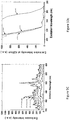
- CWO produces a wide emission spectrum under excitation at wavelengths ⁇ 250 nm because of the tetrahedral coordination of WO 4 and the deltahedral coordination of CaO 8 ; 1 the photographs shown in Figure 8 demonstrate the emission of blue light by CWO NPs under 250 nm UV or 6 MV X-ray excitation.
- WO 4 2- in the WO 4 tetrahedral state has a valance band composed of the oxygen 2p orbitals (O(2p x + 2p y + 2p z )) and a conduction band composed of the tungsten 5d orbitals (W 5de (W(5d z 2 + 5d x 2 -y 2 )) and W 5dt 2 ( W (5 d xy + 5 d yz + 5 d xz ))) ( Figure 1 ).
- An electron transition from the W 5dt 2 to O 2p molecular orbitals of WO 4 causes an emission of blue light at a wavelength of 420 nm.
- a green emission at 480 - 490nm has been attributed to the oxygen-vacancy defect centers in WO 3 or the electron transition from the W 5de to O 2p molecular orbitals of the WO 4 2- complex ion. Red emission has also been observed from quenched CaWO 4 with longer-wavelength excitation and has been ascribed to electron transitions in higher tungstate complexes.
- the singlet state of CWO has a relatively long decay time constant (8 ⁇ s), which makes this material suitable for use in integrated X-Ray detection systems as a scintillation material.
- the optically and thermally stimulated luminescence properties of radiated CWO have also been studied in relation to potential applications in dosimetry.
- CWO is chemically stable, does not liberate WO -2 ions and is insoluble in aqueous solution. Its MSDS classifies it as a nonhazardous substance possessing no carcinogenic properties and requires no precautionary statements.
- Studies investigating dental filling materials possessing radiopacity have tested unencapsulated CaWO 4 for biocompatibility and found no associated toxicity against periodontal and osteogenic cell lines. Additionally, encapsulated CaWO 4 has been shown to possess no detectable cytotoxicity against HeLa cells.
- CWO NPs have poor colloidal stability in aqueous solution.
- Standard synthesis procedures for preparation of CWO NPs involve uses of such surfactant materials as sodium citrate, cetyl trimethylammonium bromide (CTAB), or poly(ethylene glycol) (PEG) as a reaction-controlling and stabilizing agent.
- CCD cetyl trimethylammonium bromide
- PEG poly(ethylene glycol)
- Citrate is an anionic ligand.
- CTAB forms a cationic coating.
- PEG does not physisorb onto CWO, and the PEG-functionalization ("PEGylation") of CWO NPs requires chemical modification of PEG.
- PEGylation PEG-functionalization
- One study reported the use of a non-ionic surfactant TritonX-100 for production of CWO NPs within the cyclohexane phase of a microemulsion system.
- PEGylation of nanoparticles provides a steric barrier to the adsorption of opsonization proteins, resulting in reduced toxicity and improved pharmacokinetic properties.
- Chemical conjugation of pre-made PEG chains to the nanoparticle surface is a common method for producing PEGylated NPs.
- this method does not produce dense PEG grafted layers because of the steric hindrance caused by initially grafted PEG chains.
- Incomplete PEGylation of NPs results in poor colloidal stability.
- PEG-based amphiphilic block copolymers BCPs
- BCPs PEG-based amphiphilic block copolymers
- a formulation which comprises a crystalline metal tungstate particle and/or particle aggregate encapsulated within a biocompatible polymeric coating material.
- the metal tungstate material (M x (WO4) y ) includes a metal compound (M) selected from the "Alkaline Earth Metal", “Transition Metal” or “Poor Metal” group of elements in the periodic table, or an atomic mixture thereof.
- the metal tungstate material is calcium tungstate (CaWO 4 ).
- the particle is a composite material comprising metal tungstate in clause 2 or 3 and other biocompatible organic or inorganic compound.
- the mean largest dimension of said particle material is in the range between about 1 nm and about 50,000 nm in its unaggregated state. In yet another aspect, the mean largest dimension of said particle aggregate is ranged between about 10 nm and about 500,000 nm. In yet another aspect, the mean diameter of said particle or particle aggregate is in the range between about 1 nm and about 500 nm.
- the coating material includes polyethylene glycol (PEG), poly(D,L-lactic acid) (PLA), poly(D,L-lactic acid-ran-glycolic acid) (PLGA), poly( ⁇ -caprolactone) (PCL), poly(styrene) (PS), poly(n-butyl acrylate) (PnBA), and/or any copolymeric combination of two or more of these polymer components.
- PEG polyethylene glycol
- PLA poly(D,L-lactic acid)
- PLGA poly(D,L-lactic acid-ran-glycolic acid)
- PCL poly( ⁇ -caprolactone)
- PS poly(styrene)
- PnBA poly(n-butyl acrylate)
- the coating material is functionalized with a target agent specific to diseased cells in humans or animals.
- the coating material is functionalized with folic acid.
- a polymer-encapsulated particle wherein the particle is a calcium tungstate (CaWO 4 ) particle.
- the mean diameter of said polymer-encapsulated particle is in the range between about 0.1 and 1000 nm. In yet another aspect, the mean diameter of said polymer-encapsulated particle is ranged between about 1 and 10 ⁇ m. In yet another aspect, the mean diameter of said polymer-encapsulated particle is in the range between about 1 and 200 nm. In yet another aspect, the polymer-encapsulated particle is functionalized or conjugated with a target agent specific to a cancer.
- the polymer-encapsulated particle is functionalized with folic acid.
- the polymer-encapsulated particle is functionalized with any one of polyethylene glycol (PEG), poly(D,L-lactic acid-ran-glycolic acid) (PLGA), or a combination thereof.
- the cancer can include any cancer.
- the cancer is lung cancer.
- the cancer is small-cell lung carcinoma (SCLC), and in yet another aspect, the cancer is non-small-cell lung carcinoma (NSCLC).
- Alkaline Earth Metals refers to any one of or a combination of the elements found in Group 2 of the Periodic Table as defined in accordance with the characterization set forth by the Royal Society of Chemistry.
- Transition Metal refers to a metal as defined by the IUPAC Gold Book as "an element whose atom has an incomplete d sub-shell, or which can give rise to cations with an incomplete d sub-shell.”
- a "Poor Metal” refers to metals that are considered in the art to include some metallic elements of the p-block in the Periodic Table which are more electronegative than transition metals, and, as defined by the Los Alamos National Laboratory, include “post-transition metals” which include "Al, Ga, In, Tl, Sn, Pb and Bi.
- CaWO 4 (CWO) nanocrystals can be used in biomedical imaging and therapy because of the unique ways this material interacts with high energy radiation ( Figure 1 ).
- These applications require development of nanoparticle (NP) formulations that are suitable for in vivo applications; primarily, the formulated nanoparticles should be sufficiently small, chemically and biologically inert, and stable against aggregation under physiological conditions.
- NP nanoparticle
- the present disclosure demonstrates at least one such method and formulation, in which CWO nanoparticles are encapsulated in bio-inert block copolymer (BCP) micelles.
- BCP bio-inert block copolymer
- the as-synthesized CWO NPs contain different surfactant materials (citric acid, cetyl trimethylammonium bromide, or a mixture of oleic acid and oleylamine) in the coating layers.
- surfactant materials citric acid, cetyl trimethylammonium bromide, or a mixture of oleic acid and oleylamine
- the original surfactant coating can be replaced with a new enclosure formed by BCP materials using a solvent exchange method.
- Two types of BCPs have been tested: poly(ethylene glycol-block-n-butyl acrylate) (PEG-PnBA), and poly(ethylene glycol-block-D,L-lactic acid) (PEG-PLA).
- Both BCPs are able to produce fully PEGylated CWO NPs that are stable against aggregation under physiological salt conditions for indefinite periods of time.
- the optical and radio-luminescence properties of both BCP-encapsulated and surfactant-coated CWO NPs were extensively characterized. The study confirms that the BCP coating structure does not influence the luminescence properties of CWO NPs.
- stable BCP-encapsulated CWO NPs can also be produced by using a solvent exchange technique.
- CWO NPs of different sizes and shapes were prepared by the reaction of sodium tungstate dihydrate with calcium salt using different combinations of solvent and surfactant. These CWO samples exhibited differing degrees of crystallinity.
- biocompatible BCPs such as PEG-PnBA or PEG-PLA.
- BCP-encapsulated NPs were stable against aggregation in physiological salt conditions for indefinite periods of time. The luminescence properties of both pristine and BCP-encapsulated CWO NPs were extensively characterized.
- NPs showed much stronger luminescence (fluorescence/phosphorescence/OSL following X-ray irradiation) than bulk powder because NPs have larger surface areas.
- CWO NPs were measured to have higher fluorescence band gap energies than bulk CWO.
- the BCP coating structure did not influence the luminescence properties of CWO NPs.
- BCP-encapsulated CWO NPs are promising materials for biomedical applications because of their colloidal stability, biocompatibility, and unique optical and radio-luminescence properties. The present study provides a strong basis for further studies of BCP-encapsulated CWO NPs for specific applications.
- CWO samples were used: a commercially available bulk CWO powder sample (of 2 - 3 ⁇ m diameter; named hereafter as "B-CWO"), and three monodisperse CWO NP samples having different sizes (70, 10 and 3 nm in diameter) synthesized in our laboratory (called hereafter as “L-CWO”, “M-CWO”, and “S-CWO”, respectively).
- L-CWO a commercially available bulk CWO powder sample
- M-CWO monodisperse CWO NP samples having different sizes (70, 10 and 3 nm in diameter) synthesized in our laboratory
- the as-purchased B-CWO material has no coating on the surface.
- the CWO NP samples were synthesized using three different surfactants: citric acid (L-CWO), CTAB (M-CWO), and a mixture of oleic acid and oleylamine (S-CWO).
- Shapes were also different among the different NP samples: elongated rhombic (L-CWO), truncated rhombic/round (M-CWO), and irregular (S-CWO).
- L-CWO elongated rhombic
- M-CWO truncated rhombic/round
- S-CWO irregular
- BCPs poly(ethylene glycol-block-n-butyl acrylate)
- PEG-PLA poly(ethylene glycol-block-D,L-lactic acid)
- both polymers were found to be able to produce fully PEGylated CWO NP products that are essentially devoid of surfactant and are stable against aggregation under physiological salt concentrations for indefinite periods of time.
- the mean hydrodynamic diameters of the resulting PEG-PLA BCP-encapsulated CWO NPs were determined to be always greater than those of the PEG-PnBA-encapsulated CWO NPs; in the CWO/PEG-PnBA assemblies single CWO NPs were encapsulated within each BCP micelle, whereas in the CWO/PEG-PLA assemblies the NPs were encapsulated as clusters within the hydrophobic core domains of the BCP micelles.
- B-CWO was purchased from Sigma-Aldrich and used as received.
- the L-CWO, M-CWO and S-CWO NP samples were synthesized using different procedures.
- the L-CWO NPs were synthesized by a hydro-thermal method.24 First, 0.006 mol of citrate acid ( ⁇ 99.5%, Sigma-Aldrich) was dissolved in 20 ml of Milli-Q purified water. Next, 0.003 mol of Na2WO4 (99%, Acros Organics) and 0.006 mol of CaCl2 (99%, Mallinckrodt Chemicals)were added to the solution. Then, an appropriate amount of NaOH (98.7%, Macron Chemicals) was added to the solution in order to adjust the pH to about 9.
- the M-CWO NPs were synthesized by a micro-emulsion method.22 First, 20 ml of cyclohexane was mixed with 2 ml of hexanol. CTAB (2 mmol) ( ⁇ 99%, Sigma) was added to this solvent mixture, and then the solution was heated to 70 °C or until the solution became transparent (Solution 1). Meanwhile, 0.4 mmol of Na2WO4 (99%, Acros Organics) was dissolved in 0.6 ml of Milli-Q water (Solution 2). Next, 0.4 mmol of CaCl2 was dissolved in a mixture of 0.564 ml of Milli-Q water and 0.036 ml of 0.1 M HCl solution (Solution 3).
- the S-CWO NPs were synthesized by a solvo-thermal method.8, 38 0.001 mmol of Na2WO4 and 0.001 mmol of Ca(NO3)2 (99%, Sigma-Aldrich) were dissolved in 30 ml of ethylene glycol containing oleylamine (0.005 m mol) (70%, Aldrich) and oleic acid (0.005 mmol) ( ⁇ 99%, Simga-Aldrich) in a 50 ml round bottom flask. The mixture was rapidly heated to 160 °C in an oil bath and maintained at that temperature for 12 hours. During the reaction, the reactor was purged with nitrogen. Afterwards, the oil bath was removed, and the reactor was gradually cooled to room temperature. The product was purified by washing and centrifugation with excess ethanol.
- the PEG-PnBA BCP was synthesized by Reversible Addition-Fragmentation Chain-Transfer (RAFT) polymerization of nBA using monomethoxy PEG (PEG-ME, Mn 5,000 g/mol, PDI 1.07, Polysciences, Inc.) as the starting material.
- RAFT Reversible Addition-Fragmentation Chain-Transfer
- nBA 4,4'-azobis(4-cyanovaleric acid)
- ACVA 4,4'-azobis(4-cyanovaleric acid)
- the reaction mixture was sealed in a round bottom flask under nitrogen and placed in a 80 °C oil bath. The reaction was allowed to proceed with stirring for 48 hours. To remove unreacted nBA the polymerization product was filtered and precipitated into excess ether. This process was repeated two additional times. The final precipitate was dried under vacuum and stored at low temperature.
- the PEG-PLA diblock copolymer was synthesized by 1,8-diazabicyclo[5.4.0] undec-7-ene(DBU, 98%, Aldrich)-catalyzed ring-opening polymerization of lactide (LA, a racemic mixture). 0.45 g of PEG-ME was dissolved in DCM (22 ml) dried with molecular sieves. After a day LA (0.35 g) was added into the PEG-ME solution. The polymerization was initiated by adding 2 ml of a DBU solution (3.35 mmol of DBU dissolved in 30 ml of DCM) to the LA/PEG-ME mixture at room temperature. The polymerization reaction was run for 1 hour at room temperature.
- DBU 1,8-diazabicyclo[5.4.0] undec-7-ene
- PEG-PnBA or PEG-PLA-encapsulated B-CWO and L-CWO samples were prepared as follows. 100.0 mg of PEG-PnBA or PEG-PLA was dissolved in 3.9 g of dimethylformamide (DMF, ⁇ 99.9%, Sigma-Aldrich). 1.0 mg of B-CWO or L-CWO was dispersed in 2.1 g of Milli-Q water. The two solutions were mixed rapidly, mechanically stirred (15000 rpm), and ultrasonicated for 30 minutes.
- DMF dimethylformamide
- the mixture was then dialyzed using a dialysis bag (molecular weight cutoff 50 kDa) for 3 days against a total of 1.0 liter of Milli-Q water (replaced with fresh Milli-Q water three times) to remove DMF.
- a dialysis bag molecular weight cutoff 50 kDa
- PEG-PnBA or PEG-PLA-encapsulated M-CWO and S-CWO samples were prepared slightly differently than the above.
- 1.0 mg of M-CWO or S-CWO (purified by centrifugation) was dispersed in 1.0 g of DMF.
- 100.0 mg of PEG-PnBA or PEG-PLA was added to 2.9 g of the above nanoparticle suspension.
- This mixture was stirred using a high speed overhead mechanical stirrer (at 15000 rpm) with simultaneous sonication.
- 2.1 ml of Milli-Q water was added to the DMF solution.
- the resulting mixture was emulsified with a mechanical stirrer and then ultrasonicated in a sonication bath for 30 minutes.
- This emulsion was placed in a dialysis bag (molecular weight cutoff 50 kDa) and dialyzed for 3 days against a total of 1.0 liter of Milli-Q water (regularly replaced with fresh Milli-Q water) to remove DMF.
- L-CWO NPs have a rhombus shape, and their diagonal length is about 70 ⁇ 25 nm.
- M-CWO and S-CWO NPs were, on the other hand, observed to be close to cube and sphere-shaped, respectively; their diameters were estimated to be approximately 10 ⁇ 2 and 3 ⁇ 1 nm, respectively.
- CWO samples were encapsulated with PEG-PnBA or PEG-PLA using a solvent exchange method.30
- the number-average degrees of polymerization of the PnBA and PLA blocks of these PEG-PnBA and PEG-PLA BCPs were determined by 1H NMR spectroscopy (ARX300, Bruker) to be 46 and 44, respectively ( Figures 9A and 9B ); thus in these figures these polymers are also denoted as PEG113-PnBA46 and PEG113-PLA44.
- the polydispersity indices of these polymers were determined by GPC (Waters Breeze HPLC System) to be 1.45 (PEG-PnBA) and 1.17 (PEG-PLA) ( Figure 10 ).
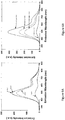
- the hydrodynamic diameters of PEG-PnBA-encapsulated L-CWO, M-CWO and S-CWO NPs in Milli-Q water were measured by DLS (ZetaPALS, Brookhaven Instruments) to be approximately 70, 60 and 40 nm, respectively ( Figures 4a 4b and 4c ).
- the hydrodynamic diameters of PEG-PLA-encapsulated L-CWO, M-CWO and S-CWO NPs were 190, 175 and 165 nm, respectively ( Figures 4D , 4E and 4F ).
- BCP-encapsulated CWO NPs were confirmed to be stable against aggregation in physiological salt conditions; their hydrodynamic sizes did not change after addition of 150 mM NaCl over, at least, a 30-day period similarly to what was observed with Au nanorods.
- PEG-PnBA and PEG-PLA-encapsulated B-CWO samples were also prepared and used to measure the size of the B-CWO particles by optical microscopy; the BCP coating delays the aggregation of B-CWO in water and thus enables imaging of individual B-CWO particles by microscopy. From the images shown in Figure 11 , the sizes of the B-CWO particles were estimated to be in the range of about 2 - 3 ⁇ m.
- the B-CWO and L-CWO samples were dispersed in water.
- the M-CWO and S-CWO samples were dispersed in chloroform.
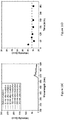
- the fluorescence band gap energies of the different CWO samples were evaluated by measuring their emission intensities at the peak emission wavelength of 420 nm under varying excitation wavelengths in the range of 200 - 280 nm, as demonstrated in the literature 1, 44 ( Figures 5D , 5E and 5F ).
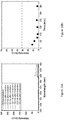
- UV absorbance measurement could not be used for the determination of the band gap energy because, as shown in Figures 13A - 13C and Figures 14A - 14F , BCP and surfactant materials used in this study strongly absorb UV light. However, none of these materials produces a significant emission that can interfere with the CWO fluorescence at 420 nm ( Figures 12A - 12B ).
- the band gap energies of the non-BCP-coated CWO materials were estimated to be 4.62 eV (B-CWO), 5.44 eV (L-CWO), 5.46 eV (M-CWO) and 5.46 eV (S-CWO).
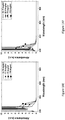
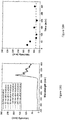
- the phosphorescence spectra of the CWO samples were also measured with 200 nm excitation using the phosphorescence mode with a delay time of 0.2 ms and a gate time of 5 ms. All measurements were performed at an identical CWO concentration of 0.1 mg/ml. All spectra showed two broad peaks at around 480 nm (due to charge transfer transitions within the WO42- molecular orbitals) and 680 nm (likely due to electron transitions in higher tungstate complexes)1, 5 ( Figures 6A, 6B and 6C ).
- the phosphorescence emission intensities at the peak emission wavelength of 480 nm were measured as a function of excitation wavelength from 200 to 330 nm.
- the results are presented in Figures 6D , 6E and 6F ; note in these figures the data are presented in normalized form. From the data shown in Figure 6A , for instance, the phosphorescence band gap energies of the non-BCP-coated CWO materials were estimated to be 4.39 eV (B-CWO), 4.38 eV (L-CWO), 4.39 eV (M-CWO) and 4.38 eV (S-CWO).
- band gap energy values were obtained: 4.40 eV (PEG-PnBA-coated B-CWO), 4.41 eV (PEG-PnBA-coated L-CWO), 4.39 eV (PEG-PnBA-coated M-CWO), and 4.40 eV (PEG-PnBA-coated S-CWO); 4.40 eV (PEG-PLA-coated B-CWO), 4.43 eV (PEG-PLA-coated L-CWO), 4.40 eV (PEG-PLA-coated M-CWO), and 4.40 eV (PEG-PLA-coated S-CWO).
- the optically stimulated luminescence (OSL) properties of BCP-encapsulated CWO NPs were characterized following irradiation with 6 MV X-rays (Varian EX Linear Accelerator). Measurements were performed at two different CWO concentrations: 1.0 and 0.1 mg/ml CWO in Milli-Q water. Samples were irradiated at two different total X-ray doses (20 and 5 Gy) with the same dose rate of 0.4 Gy/min. The OSL spectra of the X-ray irradiated samples were measured with 700 nm excitation in the fluorescence mode under zero delay-time/decay-time conditions (Cary Eclipse, Varian) ( Figures 15A - 15H ).
- the emission intensities were recorded in the in the 250 - 650 nm wavelength range.
- electrons trapped in defects within CWO crystal lattices are re-excited by 700 nm light, and the release of these re-excited electrons into the near-valence-band states can thus produce emissions at wavelengths shorter than the 700-nm excitation wavelength.
Landscapes
- Health & Medical Sciences (AREA)
- Chemical & Material Sciences (AREA)
- Engineering & Computer Science (AREA)
- Life Sciences & Earth Sciences (AREA)
- Animal Behavior & Ethology (AREA)
- General Health & Medical Sciences (AREA)
- Public Health (AREA)
- Veterinary Medicine (AREA)
- Medicinal Chemistry (AREA)
- Pharmacology & Pharmacy (AREA)
- Epidemiology (AREA)
- Biomedical Technology (AREA)
- Materials Engineering (AREA)
- Organic Chemistry (AREA)
- Inorganic Chemistry (AREA)
- Pathology (AREA)
- Nuclear Medicine, Radiotherapy & Molecular Imaging (AREA)
- Radiology & Medical Imaging (AREA)
- Nanotechnology (AREA)
- Dispersion Chemistry (AREA)
- Physics & Mathematics (AREA)
- Optics & Photonics (AREA)
- Medicinal Preparation (AREA)
- Pharmaceuticals Containing Other Organic And Inorganic Compounds (AREA)
- Medicines That Contain Protein Lipid Enzymes And Other Medicines (AREA)
Applications Claiming Priority (3)
| Application Number | Priority Date | Filing Date | Title |
|---|---|---|---|
| US201562101275P | 2015-01-08 | 2015-01-08 | |
| PCT/US2016/012684 WO2016112314A1 (fr) | 2015-01-08 | 2016-01-08 | Formulations non toxiques de nanoparticules radioluminescentes destinées à être utilisées en tant qu'agents radio-sensibilisants du cancer |
| EP16735490.1A EP3242670B1 (fr) | 2015-01-08 | 2016-01-08 | Formulations non toxiques de nanoparticules radioluminescentes destinées à être utilisées en tant qu'agents radio-sensibilisants du cancer |
Related Parent Applications (2)
| Application Number | Title | Priority Date | Filing Date |
|---|---|---|---|
| EP16735490.1A Division EP3242670B1 (fr) | 2015-01-08 | 2016-01-08 | Formulations non toxiques de nanoparticules radioluminescentes destinées à être utilisées en tant qu'agents radio-sensibilisants du cancer |
| EP16735490.1A Division-Into EP3242670B1 (fr) | 2015-01-08 | 2016-01-08 | Formulations non toxiques de nanoparticules radioluminescentes destinées à être utilisées en tant qu'agents radio-sensibilisants du cancer |
Publications (1)
| Publication Number | Publication Date |
|---|---|
| EP3721887A1 true EP3721887A1 (fr) | 2020-10-14 |
Family
ID=56356462
Family Applications (2)
| Application Number | Title | Priority Date | Filing Date |
|---|---|---|---|
| EP16735490.1A Active EP3242670B1 (fr) | 2015-01-08 | 2016-01-08 | Formulations non toxiques de nanoparticules radioluminescentes destinées à être utilisées en tant qu'agents radio-sensibilisants du cancer |
| EP20174348.1A Withdrawn EP3721887A1 (fr) | 2015-01-08 | 2016-01-08 | Formulations non toxiques de nanoparticules radio-luminescentes pour une utilisation en tant qu'agents de radiosensiblisation du cancer |
Family Applications Before (1)
| Application Number | Title | Priority Date | Filing Date |
|---|---|---|---|
| EP16735490.1A Active EP3242670B1 (fr) | 2015-01-08 | 2016-01-08 | Formulations non toxiques de nanoparticules radioluminescentes destinées à être utilisées en tant qu'agents radio-sensibilisants du cancer |
Country Status (4)
| Country | Link |
|---|---|
| US (1) | US20180008733A1 (fr) |
| EP (2) | EP3242670B1 (fr) |
| ES (1) | ES2817748T3 (fr) |
| WO (2) | WO2016112314A1 (fr) |
Families Citing this family (2)
| Publication number | Priority date | Publication date | Assignee | Title |
|---|---|---|---|---|
| CA3073316A1 (fr) * | 2017-09-08 | 2019-03-14 | Purdue Research Foundation | Nanoparticules radioluminescentes pour medicaments a liberation controlee declenchee par un rayonnement |
| WO2020154110A1 (fr) * | 2019-01-22 | 2020-07-30 | Purdue Research Foundation | Particules radio-luminescentes revêtues de bilirubine |
Citations (3)
| Publication number | Priority date | Publication date | Assignee | Title |
|---|---|---|---|---|
| US5595724A (en) * | 1991-10-22 | 1997-01-21 | Deutsch; Edward A. | Treated calcium/oxyanion-containing particles for medical diagnostic imaging |
| US20070217996A1 (en) * | 2004-05-10 | 2007-09-20 | Laurent Levy | Activatable Particles, Preparations and Uses |
| EP2130553A1 (fr) * | 2008-06-05 | 2009-12-09 | Nanobiotix | Nanoparticules inorganiques de haute densité pour détruire des cellules in-vivo |
Family Cites Families (11)
| Publication number | Priority date | Publication date | Assignee | Title |
|---|---|---|---|---|
| US20040058457A1 (en) * | 2002-08-29 | 2004-03-25 | Xueying Huang | Functionalized nanoparticles |
| WO2006037081A2 (fr) * | 2004-09-28 | 2006-04-06 | The Regents Of The University Of California | Radiosensibiliseurs a base de nanoparticules |
| WO2007149951A2 (fr) * | 2006-06-20 | 2007-12-27 | Sunstone Inc. | Systèmes et procédés d'utilisation de composés luminescents dans le traitement de maladies et l'imagerie médicale |
| US9488916B2 (en) * | 2007-04-08 | 2016-11-08 | Immunolight, Llc. | Interior energy-activation of photo-reactive species inside a medium or body |
| US9072789B2 (en) * | 2007-07-20 | 2015-07-07 | The Trustees Of Princeton University | Nano-particle surface modification |
| TWI511756B (zh) * | 2009-04-21 | 2015-12-11 | 伊穆諾萊特公司 | 用以修飾介導生物活性或與生物活性有關之標靶結構之醫藥組合物或套組 |
| KR101906132B1 (ko) * | 2010-07-17 | 2018-10-10 | 메르크 파텐트 게엠베하 | 침투 및 작용의 증진 |
| WO2013131064A1 (fr) * | 2012-03-01 | 2013-09-06 | Ferro Corporation | Composés d'absorption laser |
| US9700632B2 (en) * | 2012-09-13 | 2017-07-11 | Centre For Bioseperation Technology-Vit | Dendrimers, conjugates and methods thereof |
| US11337665B2 (en) * | 2013-03-15 | 2022-05-24 | The Trustees Of The University Of Pennsylvania | Radiographic contrast agents for temporal subtraction and dual-energy x-ray imaging |
| US20160220500A1 (en) * | 2014-11-14 | 2016-08-04 | Kent State University | Targeting Intracellular Copper Ions for Inhibiting Angiogenesis Using Nanoparticles of Ternary Inorganic Metal Sulfide M1M2S4 (M1, independently, is Mg, Ca, Mn, Fe, or Zn; M2 = Mo or W) Compounds to Treat Metastatic Cancer |
-
2016
- 2016-01-08 US US15/541,822 patent/US20180008733A1/en not_active Abandoned
- 2016-01-08 ES ES16735490T patent/ES2817748T3/es active Active
- 2016-01-08 WO PCT/US2016/012684 patent/WO2016112314A1/fr not_active Ceased
- 2016-01-08 EP EP16735490.1A patent/EP3242670B1/fr active Active
- 2016-01-08 EP EP20174348.1A patent/EP3721887A1/fr not_active Withdrawn
- 2016-01-08 WO PCT/US2016/012616 patent/WO2016112268A1/fr not_active Ceased
Patent Citations (3)
| Publication number | Priority date | Publication date | Assignee | Title |
|---|---|---|---|---|
| US5595724A (en) * | 1991-10-22 | 1997-01-21 | Deutsch; Edward A. | Treated calcium/oxyanion-containing particles for medical diagnostic imaging |
| US20070217996A1 (en) * | 2004-05-10 | 2007-09-20 | Laurent Levy | Activatable Particles, Preparations and Uses |
| EP2130553A1 (fr) * | 2008-06-05 | 2009-12-09 | Nanobiotix | Nanoparticules inorganiques de haute densité pour détruire des cellules in-vivo |
Non-Patent Citations (45)
| Title |
|---|
| A. KUMARG. M. WHITESIDES, ABSTRACTS OF PAPERS OF THE AMERICAN CHEMICAL SOCIETY, vol. 206, 1993, pages 172 |
| A. L. G. CORNELIOL. P. SALLESM. C. DA PAZJ. A. CIRELLIJ. M. GUERREIRO-TANOMARUM. TANOMARU, JOURNAL OF ENDODONTICS, vol. 37, 2011, pages 203 - 210 |
| A. L. PATTERSON, PHYSICAL REVIEW, vol. 56, 1939, pages 978 - 982 |
| A. MONSHIM. R. FOROUGHIM. R. MONSHI, WORLD JOURNAL OF NANO SCIENCE AND ENGINEERING, vol. 02, 2012, pages 154 - 160 |
| A. P. ALIVISATOS, SCIENCE, vol. 271, 1996, pages 933 - 937 |
| A. SHMILEVICHD. WEISSR. CHENN. KRISTIANPOLLER, RADIATION PROTECTION DOSIMETRY, vol. 84, 1999, pages 131 - 133 |
| C. GRABINSKIN. SCHAEUBLINA. WIJAYAH. D'COUTOS. H. BAXAMUSAK. HAMAD-SCHIFFERLIS. M. HUSSAIN, ACS NANO, vol. 5, 2011, pages 2870 - 2879 |
| D. E. OWENS, 3RDN. A. PEPPAS, INTJPHARM, vol. 307, 2006, pages 93 - 102 |
| D. H. KIMA. WEIY. Y. WON, ACS APPL MATER INTERFACES, vol. 4, 2012, pages 1872 - 1877 |
| D. H. KIMY.-Y. WON, MACROMOLECULAR REACTION ENGINEERING, vol. 6, 2012, pages 45 - 56 |
| E. ORHANM. ANICETE-SANTOSM. A. M. A. MAURERAF. M. PONTESA. G. SOUZAJ. ANDRESA. BELTRANJ. A. VARELAP. S. PIZANIC. A. TAFT, JOURNAL OF SOLID STATE CHEMISTRY, vol. 178, 2005, pages 1284 - 1291 |
| F. J. MANJOND. ERRANDONEAJ. LOPEZ-SOLANOP. RODRIGUEZ-HERNANDEZA. MUNOZ, JOURNAL OF APPLIED PHYSICS, vol. 105, 2009, pages 094321 |
| G. BLASSEB. C. GRABMAIER: "Luminescent materials", 1994, SPRINGER-VERLAG |
| G. H. GAOJ. W. LEEM. K. NGUYENG. H. IMJ. YANGH. HEOP. JEONT. G. PARKJ. H. LEED. S. LEE, J CONTROL RELEASE, vol. 155, 2011, pages 11 - 17 |
| H. BORCHERTE. V. SHEVCHENKOA. ROBERTI. MEKISA. KORNOWSKIG. G. BELH. WELLER, LANGMUIR, vol. 21, 2005, pages 1931 - 1936 |
| H. LEEJ. LEEJ. PARKT. KWONS. HONGY.-Y. WON, POLYMER DEGRADATION AND STABILITY, vol. 120, 2015, pages 149 - 157 |
| H. LINC. HUANGW. LIC. NIS. SHAHY. TSENG, APPLIED CATALYSIS B: ENVIRONMENTAL, vol. 68, 2006, pages 1 - 11 |
| J. F. ENDICOTTY.-J. CHEN, COORDINATION CHEMISTRY REVIEWS, vol. 251, 2007, pages 328 - 350 |
| J. H. RYUJ.-W. YOONC. S. LIMW.-C. OHK. B. SHIM, CERAMICS INTERNATIONAL, vol. 31, 2005, pages 883 - 888 |
| J. LEEJ. YANGH. KOS. OHJ. KANGJ. SONK. LEES. W. LEEH. G. YOONJ. S. SUH, ADVANCED FUNCTIONAL MATERIALS, vol. 18, 2008, pages 258 - 264 |
| J. PARKP. M. FONGJ. LUK. S. RUSSELLC. J. BOOTHW. M. SALTZMANT. M. FAHMY, NANOMEDICINE, vol. 5, 2009, pages 410 - 418 |
| J. ZHAOW. WUJ. SUNS. GUO, CHEM SOC REV, vol. 42, 2013, pages 5323 - 5351 |
| K. A. HUYNHK. L. CHEN, ENVIRON SCI TECHNOL, vol. 45, 2011, pages 5564 - 5571 |
| K. G. SHARMAN. R. SINGH, JOURNAL OF RARE EARTHS, vol. 30, 2012, pages 310 - 314 |
| L. S. CAVALCANTEV. M. LONGOJ. C. SCZANCOSKIM. A. P. ALMEIDAA. A. BATISTAJ. A. VARELAM. O. ORLANDIE. LONGOM. S. LI, CRYSTENGCOMM, vol. 14, 2012, pages 853 - 868 |
| M. MAIC. FELDMANN, JOURNAL OF MATERIALS SCIENCE, vol. 47, 2011, pages 1427 - 1435 |
| M. NIKL, MEASUREMENT SCIENCE AND TECHNOLOGY, vol. 17, 2006, pages R37 - R54 |
| P. Y. JIAX. M. LIUG. Z. LIM. YU, J. FANGJ. LIN, NANOTECHNOLOGY, vol. 17, 2006, pages 734 - 742 |
| R. CARUBAP. IACCONIJ. F. COTTRANTG. CALAS, PHYSICS AND CHEMISTRY OF MINERALS, vol. 9, 1983, pages 223 - 228 |
| S. BASUB. SANYASI NAIDUB. VISWANADHV. SUDARSANS. N. JHAD. BHATTACHARYYAR. K. VATSA, RSC ADVANCES, vol. 4, 2014, pages 15606 |
| S. DEMIRCIA. CELEBIOGLUZ. AYTACT. UYAR, POLYM. CHEM., vol. 5, 2014, pages 2050 - 2056 |
| S. JAVADIANV. RUHIA. HEYDARIA. ASADZADEH SHAHIRA. YOUSEFIJ. AKBARI, INDUSTRIAL & ENGINEERING CHEMISTRY RESEARCH, vol. 52, 2013, pages 4517 - 4526 |
| S. W. S. MCKEEVER, NUCLEAR INSTRUMENTS AND METHODS IN PHYSICS RESEARCH B, vol. 184, 2001, pages 29 - 54 |
| S.-J. CHENJ. LIX.-T. CHENJ.-M. HONGZ. XUEX.-Z. YOU, JOURNAL OF CRYSTAL GROWTH, vol. 253, 2003, pages 361 - 365 |
| T. B. HUFFM. N. HANSENY. ZHAOJ.-X. CHENGA. WEI, LANGMUIR, vol. 23, 2007, pages 1596 - 1599 |
| VINDYA S. PERERA ET AL: "A highly efficient and extremely selective intracellular copper detoxifying agent based on nanoparticles of ZnMoS 4", JOURNAL OF MATERIALS CHEMISTRY B, vol. 2, no. 3, 1 January 2014 (2014-01-01), GB, pages 257 - 261, XP055441173, ISSN: 2050-750X, DOI: 10.1039/C3TB20962H * |
| X. ZHAIM. YUZ. CHENGZ. HOUP. MAD. YANGX. KANGY. DAID. WANGJ. LIN, DALTON TRANS, vol. 40, 2011, pages 12818 - 12825 |
| Y. G. ZDESENKOF. T. AVIGNONE IIIV. B. BRUDANINF. A. DANEVICHS. S. NAGORNYI. M. SOLSKYV. I. TRETYAK, NUCLEAR INSTRUMENTS AND METHODS IN PHYSICS RESEARCH SECTION A: ACCELERATORS, SPECTROMETERS, DETECTORS AND ASSOCIATED EQUIPMENT, vol. 538, 2005, pages 657 - 667 |
| Y. GUOG. ZHANGH. GANY. ZHANG, DALTON TRANS, vol. 41, 2012, pages 12697 - 12703 |
| Y. LVG. DINGJ. ZHAIY. GUOG. NIEL. XU, COLLOIDS SURF B BIOINTERFACES, vol. 110, 2013, pages 411 - 418 |
| Y. SUG. LIY. XUEL. LI, THE JOURNAL OF PHYSICAL CHEMISTRY C, vol. 111, 2007, pages 6684 - 6689 |
| Y. SUL. LIG. LI, CHEMISTRY OF MATERIALS, vol. 20, 2008, pages 6060 - 6067 |
| Y. ZHANGN. A. W. HOLZWARTHR. T. WILLIAMS, PHYSICAL REVIEW B, vol. 57, 1998, pages 12738 - 12750 |
| Y.-Y. WONH. T. DAVISF. S. BATES, MACROMOLECULES, vol. 36, 2003, pages 953 - 955 |
| Z. LOUM. COCIVERA, MATERIALS RESEARCH BULLETIN, 2002, pages 1573 - 1582 |
Also Published As
| Publication number | Publication date |
|---|---|
| WO2016112268A1 (fr) | 2016-07-14 |
| EP3242670A1 (fr) | 2017-11-15 |
| EP3242670B1 (fr) | 2020-06-24 |
| ES2817748T3 (es) | 2021-04-08 |
| EP3242670A4 (fr) | 2018-08-08 |
| WO2016112314A1 (fr) | 2016-07-14 |
| US20180008733A1 (en) | 2018-01-11 |
Similar Documents
| Publication | Publication Date | Title |
|---|---|---|
| Kazemi et al. | The synthesis and characterization of targeted delivery curcumin using chitosan-magnetite-reduced graphene oxide as nano-carrier | |
| Cipreste et al. | Synthesis and characterization of 159Gd-doped hydroxyapatite nanorods for bioapplications as theranostic systems | |
| Karimi et al. | Synthesis of folic acid-conjugated glycodendrimer with magnetic β-cyclodextrin core as a pH-responsive system for tumor-targeted co-delivery of doxorubicin and curcumin | |
| Mishra et al. | Doxorubicin-conjugated bimetallic silver–gadolinium nanoalloy for multimodal MRI-CT-optical imaging and pH-responsive drug release | |
| Monteiro et al. | Magnetic nanoparticles coated with cyclodextrins and citrate for irinotecan delivery | |
| Renu et al. | Development of cerium oxide nanoparticles and its cytotoxicity in prostate cancer cells | |
| Lee et al. | Block copolymer-encapsulated CaWO4 nanoparticles: synthesis, formulation, and characterization | |
| Zhou et al. | Multihydroxy dendritic upconversion nanoparticles with enhanced water dispersibility and surface functionality for bioimaging | |
| Kazemi-Andalib et al. | Hollow microcapsule with pH-sensitive chitosan/polymer shell for in vitro delivery of curcumin and gemcitabine | |
| Wang et al. | Emission-tunable probes using terbium (III)-doped self-activated luminescent hydroxyapatite for in vitro bioimaging | |
| US20110022129A1 (en) | Nanoparticles for photodynamic therapy | |
| Ding et al. | Chitosan-based magnetic/fluorescent nanocomposites for cell labelling and controlled drug release | |
| Mishra et al. | A bimetallic silver–neodymium theranostic nanoparticle with multimodal NIR/MRI/CT imaging and combined chemo-photothermal therapy | |
| Dunn et al. | Spatial and temporal control of drug release through pH and alternating magnetic field induced breakage of Schiff base bonds | |
| Xiao et al. | Facile synthesis of acetylated dendrimer-entrapped gold nanoparticles with enhanced gold loading for CT imaging applications | |
| Choi et al. | Enabling nanohybrid drug discovery through the soft chemistry telescope | |
| Gayathri et al. | Chitosan conjugation: A facile approach to enhance the cell viability of LaF3: Yb, Er upconverting nanotransducers in human breast cancer cells | |
| Ghosh et al. | Biomedical application of doxorubicin coated hydroxyapatite—poly (lactide-co-glycolide) nanocomposite for controlling osteosarcoma therapeutics | |
| Shaik et al. | Optical emissions of chitosan modified LaAlO3: Bi3+, Tb3+ nanoparticles for bio labeling and drug delivery to breast cancer cells | |
| EP3242670B1 (fr) | Formulations non toxiques de nanoparticules radioluminescentes destinées à être utilisées en tant qu'agents radio-sensibilisants du cancer | |
| Adeli et al. | Polyrotaxane/gold nanoparticle hybrid nanomaterials as anticancer drug delivery systems | |
| Nasef et al. | Preparation and characterization of magnetic nanocomposite based on gum arabic/2-hydroxyethylmethacrylate using gamma irradiation for use in biomedical application | |
| Lim et al. | A novel method for synthesizing manganese dioxide nanoparticles using diethylenetriamine pentaacetic acid as a metal ion chelator | |
| Peng et al. | In situ thermal synthesis of molybdenum oxide nanocrystals in thermoresponsive microgels | |
| CN103976953B (zh) | 一种磁性纳米聚合物囊泡及其制备方法和应用 |
Legal Events
| Date | Code | Title | Description |
|---|---|---|---|
| PUAI | Public reference made under article 153(3) epc to a published international application that has entered the european phase |
Free format text: ORIGINAL CODE: 0009012 |
|
| STAA | Information on the status of an ep patent application or granted ep patent |
Free format text: STATUS: THE APPLICATION HAS BEEN PUBLISHED |
|
| AC | Divisional application: reference to earlier application |
Ref document number: 3242670 Country of ref document: EP Kind code of ref document: P |
|
| AK | Designated contracting states |
Kind code of ref document: A1 Designated state(s): AL AT BE BG CH CY CZ DE DK EE ES FI FR GB GR HR HU IE IS IT LI LT LU LV MC MK MT NL NO PL PT RO RS SE SI SK SM TR |
|
| AX | Request for extension of the european patent |
Extension state: BA ME |
|
| STAA | Information on the status of an ep patent application or granted ep patent |
Free format text: STATUS: REQUEST FOR EXAMINATION WAS MADE |
|
| 17P | Request for examination filed |
Effective date: 20210406 |
|
| RBV | Designated contracting states (corrected) |
Designated state(s): AL AT BE BG CH CY CZ DE DK EE ES FI FR GB GR HR HU IE IS IT LI LT LU LV MC MK MT NL NO PL PT RO RS SE SI SK SM TR |
|
| STAA | Information on the status of an ep patent application or granted ep patent |
Free format text: STATUS: EXAMINATION IS IN PROGRESS |
|
| 17Q | First examination report despatched |
Effective date: 20210917 |
|
| STAA | Information on the status of an ep patent application or granted ep patent |
Free format text: STATUS: THE APPLICATION IS DEEMED TO BE WITHDRAWN |
|
| 18D | Application deemed to be withdrawn |
Effective date: 20251129 |