EP3721949A1 - Übungsvorrichtung und übungssystem mit dieser vorrichtung - Google Patents
Übungsvorrichtung und übungssystem mit dieser vorrichtung Download PDFInfo
- Publication number
- EP3721949A1 EP3721949A1 EP20175510.5A EP20175510A EP3721949A1 EP 3721949 A1 EP3721949 A1 EP 3721949A1 EP 20175510 A EP20175510 A EP 20175510A EP 3721949 A1 EP3721949 A1 EP 3721949A1
- Authority
- EP
- European Patent Office
- Prior art keywords
- exercise
- optionally
- session
- base
- owner
- Prior art date
- Legal status (The legal status is an assumption and is not a legal conclusion. Google has not performed a legal analysis and makes no representation as to the accuracy of the status listed.)
- Withdrawn
Links
Images












Classifications
-
- A—HUMAN NECESSITIES
- A63—SPORTS; GAMES; AMUSEMENTS
- A63B—APPARATUS FOR PHYSICAL TRAINING, GYMNASTICS, SWIMMING, CLIMBING, OR FENCING; BALL GAMES; TRAINING EQUIPMENT
- A63B71/00—Games or sports accessories not covered in groups A63B1/00 - A63B69/00
- A63B71/02—Games or sports accessories not covered in groups A63B1/00 - A63B69/00 for large-room or outdoor sporting games
- A63B71/03—Athletic drills or obstacles for sport training, other than foot obstacles for skipping
-
- A—HUMAN NECESSITIES
- A63—SPORTS; GAMES; AMUSEMENTS
- A63B—APPARATUS FOR PHYSICAL TRAINING, GYMNASTICS, SWIMMING, CLIMBING, OR FENCING; BALL GAMES; TRAINING EQUIPMENT
- A63B24/00—Electric or electronic controls for exercising apparatus of preceding groups; Controlling or monitoring of exercises, sportive games, training or athletic performances
- A63B24/0075—Means for generating exercise programmes or schemes, e.g. computerized virtual trainer, e.g. using expert databases
-
- A—HUMAN NECESSITIES
- A63—SPORTS; GAMES; AMUSEMENTS
- A63B—APPARATUS FOR PHYSICAL TRAINING, GYMNASTICS, SWIMMING, CLIMBING, OR FENCING; BALL GAMES; TRAINING EQUIPMENT
- A63B21/00—Exercising apparatus for developing or strengthening the muscles or joints of the body by working against a counterforce, with or without measuring devices
- A63B21/06—User-manipulated weights
- A63B21/072—Dumb-bells, bar-bells or the like, e.g. weight discs having an integral peripheral handle
- A63B21/0726—Dumb bells, i.e. with a central bar to be held by a single hand, and with weights at the ends
-
- A—HUMAN NECESSITIES
- A63—SPORTS; GAMES; AMUSEMENTS
- A63B—APPARATUS FOR PHYSICAL TRAINING, GYMNASTICS, SWIMMING, CLIMBING, OR FENCING; BALL GAMES; TRAINING EQUIPMENT
- A63B47/00—Devices for handling or treating balls, e.g. for holding or carrying balls
-
- A—HUMAN NECESSITIES
- A63—SPORTS; GAMES; AMUSEMENTS
- A63B—APPARATUS FOR PHYSICAL TRAINING, GYMNASTICS, SWIMMING, CLIMBING, OR FENCING; BALL GAMES; TRAINING EQUIPMENT
- A63B71/00—Games or sports accessories not covered in groups A63B1/00 - A63B69/00
- A63B71/0036—Accessories for stowing, putting away or transporting exercise apparatus or sports equipment
-
- A—HUMAN NECESSITIES
- A63—SPORTS; GAMES; AMUSEMENTS
- A63B—APPARATUS FOR PHYSICAL TRAINING, GYMNASTICS, SWIMMING, CLIMBING, OR FENCING; BALL GAMES; TRAINING EQUIPMENT
- A63B71/00—Games or sports accessories not covered in groups A63B1/00 - A63B69/00
- A63B71/06—Indicating or scoring devices for games or players, or for other sports activities
- A63B71/0619—Displays, user interfaces and indicating devices, specially adapted for sport equipment, e.g. display mounted on treadmills
- A63B71/0622—Visual, audio or audio-visual systems for entertaining, instructing or motivating the user
-
- B—PERFORMING OPERATIONS; TRANSPORTING
- B65—CONVEYING; PACKING; STORING; HANDLING THIN OR FILAMENTARY MATERIAL
- B65D—CONTAINERS FOR STORAGE OR TRANSPORT OF ARTICLES OR MATERIALS, e.g. BAGS, BARRELS, BOTTLES, BOXES, CANS, CARTONS, CRATES, DRUMS, JARS, TANKS, HOPPERS, FORWARDING CONTAINERS; ACCESSORIES, CLOSURES, OR FITTINGS THEREFOR; PACKAGING ELEMENTS; PACKAGES
- B65D51/00—Closures not otherwise provided for
-
- G—PHYSICS
- G09—EDUCATION; CRYPTOGRAPHY; DISPLAY; ADVERTISING; SEALS
- G09B—EDUCATIONAL OR DEMONSTRATION APPLIANCES; APPLIANCES FOR TEACHING, OR COMMUNICATING WITH, THE BLIND, DEAF OR MUTE; MODELS; PLANETARIA; GLOBES; MAPS; DIAGRAMS
- G09B5/00—Electrically-operated educational appliances
- G09B5/04—Electrically-operated educational appliances with audible presentation of the material to be studied
-
- H—ELECTRICITY
- H04—ELECTRIC COMMUNICATION TECHNIQUE
- H04M—TELEPHONIC COMMUNICATION
- H04M1/00—Substation equipment, e.g. for use by subscribers
- H04M1/72—Mobile telephones; Cordless telephones, i.e. devices for establishing wireless links to base stations without route selection
- H04M1/724—User interfaces specially adapted for cordless or mobile telephones
- H04M1/72403—User interfaces specially adapted for cordless or mobile telephones with means for local support of applications that increase the functionality
- H04M1/72409—User interfaces specially adapted for cordless or mobile telephones with means for local support of applications that increase the functionality by interfacing with external accessories
- H04M1/72412—User interfaces specially adapted for cordless or mobile telephones with means for local support of applications that increase the functionality by interfacing with external accessories using two-way short-range wireless interfaces
-
- A—HUMAN NECESSITIES
- A63—SPORTS; GAMES; AMUSEMENTS
- A63B—APPARATUS FOR PHYSICAL TRAINING, GYMNASTICS, SWIMMING, CLIMBING, OR FENCING; BALL GAMES; TRAINING EQUIPMENT
- A63B24/00—Electric or electronic controls for exercising apparatus of preceding groups; Controlling or monitoring of exercises, sportive games, training or athletic performances
- A63B24/0075—Means for generating exercise programmes or schemes, e.g. computerized virtual trainer, e.g. using expert databases
- A63B2024/0081—Coaching or training aspects related to a group of users
-
- A—HUMAN NECESSITIES
- A63—SPORTS; GAMES; AMUSEMENTS
- A63B—APPARATUS FOR PHYSICAL TRAINING, GYMNASTICS, SWIMMING, CLIMBING, OR FENCING; BALL GAMES; TRAINING EQUIPMENT
- A63B71/00—Games or sports accessories not covered in groups A63B1/00 - A63B69/00
- A63B71/02—Games or sports accessories not covered in groups A63B1/00 - A63B69/00 for large-room or outdoor sporting games
- A63B71/023—Supports, e.g. poles
- A63B2071/025—Supports, e.g. poles on rollers or wheels
-
- A—HUMAN NECESSITIES
- A63—SPORTS; GAMES; AMUSEMENTS
- A63B—APPARATUS FOR PHYSICAL TRAINING, GYMNASTICS, SWIMMING, CLIMBING, OR FENCING; BALL GAMES; TRAINING EQUIPMENT
- A63B71/00—Games or sports accessories not covered in groups A63B1/00 - A63B69/00
- A63B71/06—Indicating or scoring devices for games or players, or for other sports activities
- A63B71/0619—Displays, user interfaces and indicating devices, specially adapted for sport equipment, e.g. display mounted on treadmills
- A63B71/0622—Visual, audio or audio-visual systems for entertaining, instructing or motivating the user
- A63B2071/0625—Emitting sound, noise or music
-
- A—HUMAN NECESSITIES
- A63—SPORTS; GAMES; AMUSEMENTS
- A63B—APPARATUS FOR PHYSICAL TRAINING, GYMNASTICS, SWIMMING, CLIMBING, OR FENCING; BALL GAMES; TRAINING EQUIPMENT
- A63B71/00—Games or sports accessories not covered in groups A63B1/00 - A63B69/00
- A63B71/06—Indicating or scoring devices for games or players, or for other sports activities
- A63B2071/0675—Input for modifying training controls during workout
- A63B2071/068—Input by voice recognition
-
- A—HUMAN NECESSITIES
- A63—SPORTS; GAMES; AMUSEMENTS
- A63B—APPARATUS FOR PHYSICAL TRAINING, GYMNASTICS, SWIMMING, CLIMBING, OR FENCING; BALL GAMES; TRAINING EQUIPMENT
- A63B2220/00—Measuring of physical parameters relating to sporting activity
- A63B2220/80—Special sensors, transducers or devices therefor
- A63B2220/806—Video cameras
-
- A—HUMAN NECESSITIES
- A63—SPORTS; GAMES; AMUSEMENTS
- A63B—APPARATUS FOR PHYSICAL TRAINING, GYMNASTICS, SWIMMING, CLIMBING, OR FENCING; BALL GAMES; TRAINING EQUIPMENT
- A63B2220/00—Measuring of physical parameters relating to sporting activity
- A63B2220/80—Special sensors, transducers or devices therefor
- A63B2220/808—Microphones
-
- A—HUMAN NECESSITIES
- A63—SPORTS; GAMES; AMUSEMENTS
- A63B—APPARATUS FOR PHYSICAL TRAINING, GYMNASTICS, SWIMMING, CLIMBING, OR FENCING; BALL GAMES; TRAINING EQUIPMENT
- A63B2225/00—Miscellaneous features of sport apparatus, devices or equipment
- A63B2225/09—Adjustable dimensions
-
- A—HUMAN NECESSITIES
- A63—SPORTS; GAMES; AMUSEMENTS
- A63B—APPARATUS FOR PHYSICAL TRAINING, GYMNASTICS, SWIMMING, CLIMBING, OR FENCING; BALL GAMES; TRAINING EQUIPMENT
- A63B2225/00—Miscellaneous features of sport apparatus, devices or equipment
- A63B2225/10—Multi-station exercising machines
-
- A—HUMAN NECESSITIES
- A63—SPORTS; GAMES; AMUSEMENTS
- A63B—APPARATUS FOR PHYSICAL TRAINING, GYMNASTICS, SWIMMING, CLIMBING, OR FENCING; BALL GAMES; TRAINING EQUIPMENT
- A63B2225/00—Miscellaneous features of sport apparatus, devices or equipment
- A63B2225/15—Miscellaneous features of sport apparatus, devices or equipment with identification means that can be read by electronic means
-
- A—HUMAN NECESSITIES
- A63—SPORTS; GAMES; AMUSEMENTS
- A63B—APPARATUS FOR PHYSICAL TRAINING, GYMNASTICS, SWIMMING, CLIMBING, OR FENCING; BALL GAMES; TRAINING EQUIPMENT
- A63B2225/00—Miscellaneous features of sport apparatus, devices or equipment
- A63B2225/20—Miscellaneous features of sport apparatus, devices or equipment with means for remote communication, e.g. internet or the like
-
- A—HUMAN NECESSITIES
- A63—SPORTS; GAMES; AMUSEMENTS
- A63B—APPARATUS FOR PHYSICAL TRAINING, GYMNASTICS, SWIMMING, CLIMBING, OR FENCING; BALL GAMES; TRAINING EQUIPMENT
- A63B2225/00—Miscellaneous features of sport apparatus, devices or equipment
- A63B2225/50—Wireless data transmission, e.g. by radio transmitters or telemetry
-
- A—HUMAN NECESSITIES
- A63—SPORTS; GAMES; AMUSEMENTS
- A63B—APPARATUS FOR PHYSICAL TRAINING, GYMNASTICS, SWIMMING, CLIMBING, OR FENCING; BALL GAMES; TRAINING EQUIPMENT
- A63B2225/00—Miscellaneous features of sport apparatus, devices or equipment
- A63B2225/68—Miscellaneous features of sport apparatus, devices or equipment with article holders
- A63B2225/682—Miscellaneous features of sport apparatus, devices or equipment with article holders for beverages
-
- A—HUMAN NECESSITIES
- A63—SPORTS; GAMES; AMUSEMENTS
- A63B—APPARATUS FOR PHYSICAL TRAINING, GYMNASTICS, SWIMMING, CLIMBING, OR FENCING; BALL GAMES; TRAINING EQUIPMENT
- A63B2225/00—Miscellaneous features of sport apparatus, devices or equipment
- A63B2225/68—Miscellaneous features of sport apparatus, devices or equipment with article holders
- A63B2225/685—Miscellaneous features of sport apparatus, devices or equipment with article holders for electronic devices, e.g. phone, PDA, GPS device, notebook
-
- A—HUMAN NECESSITIES
- A63—SPORTS; GAMES; AMUSEMENTS
- A63B—APPARATUS FOR PHYSICAL TRAINING, GYMNASTICS, SWIMMING, CLIMBING, OR FENCING; BALL GAMES; TRAINING EQUIPMENT
- A63B2225/00—Miscellaneous features of sport apparatus, devices or equipment
- A63B2225/68—Miscellaneous features of sport apparatus, devices or equipment with article holders
- A63B2225/687—Miscellaneous features of sport apparatus, devices or equipment with article holders for others, e.g. keys, wallets, books
-
- A—HUMAN NECESSITIES
- A63—SPORTS; GAMES; AMUSEMENTS
- A63B—APPARATUS FOR PHYSICAL TRAINING, GYMNASTICS, SWIMMING, CLIMBING, OR FENCING; BALL GAMES; TRAINING EQUIPMENT
- A63B5/00—Apparatus for jumping
- A63B5/20—Skipping-ropes or similar devices rotating in a vertical plane
-
- A—HUMAN NECESSITIES
- A63—SPORTS; GAMES; AMUSEMENTS
- A63B—APPARATUS FOR PHYSICAL TRAINING, GYMNASTICS, SWIMMING, CLIMBING, OR FENCING; BALL GAMES; TRAINING EQUIPMENT
- A63B65/00—Implements for throwing ; Mechanical projectors, e.g. using spring force
- A63B65/06—Heavy throwing-balls, i.e. "medicine balls", shots, weights or stones for putting
-
- A—HUMAN NECESSITIES
- A63—SPORTS; GAMES; AMUSEMENTS
- A63B—APPARATUS FOR PHYSICAL TRAINING, GYMNASTICS, SWIMMING, CLIMBING, OR FENCING; BALL GAMES; TRAINING EQUIPMENT
- A63B71/00—Games or sports accessories not covered in groups A63B1/00 - A63B69/00
- A63B71/06—Indicating or scoring devices for games or players, or for other sports activities
Definitions
- the present invention relates to an exercise device and in particular to methods of exercising using such device including association with a mobile electronic device such as a mobile phone running a software application that communicates with a server over a communications network.
- a mobile electronic device such as a mobile phone running a software application that communicates with a server over a communications network.
- a mobile exercise device that can be located anywhere at any time. Such a device however would also need to include means to direct exercising participants to that location and how to exercise in a structured manner to achieve goals. There is also a need to provide a device that permits exercising participants of various fitness levels to exercise together at the same time using the same device.
- Congregational Exercising (CE) arrangements which seek to address the above problems by providing (a) a mobile exercise device (referred to hereinafter as the “exercise device”) enabling structured exercise routines to be performed by a number of participants including the owner of the exercise device and a number of other people (referred to as “remote participants”) who congregate to participate in the exercise sessions, and (b) a software application (referred to hereinafter as the "application”) running on an electronic device such as a PC or mobile phone (referred to hereinafter as the "communication device”) that communicates with a remote CE server running CE server software over a communications network, for (i) enabling the owner of the exercise device to electronically publish details for a proposed exercise session, (ii) for enabling remote participants, using the application running on their communication devices to apply for participation in the exercise session, and (iii) for providing audio information to the participants during the exercise session.
- a mobile exercise device referred to hereinafter as the "exercise device”
- remote participants a software application
- an exercise device having:
- said device further includes a plurality of locators each operatively associated with a respective one of said display means, said locators adapted to define the particular location defining an exercise station.
- said locator is adapted to be positioned at a distance from said display means.
- said locator is adapted to be positioned on said device
- each said locator includes a rigid member and a flexible elongate portion extendable between said rigid member and said base.
- each said rigid member is adapted to be received within a corresponding slot within said base.
- said locator includes an elongate portion having a first end and a second end.
- said each said rigid member is adapted to be received by said device.
- said locator includes a flexible member.
- said locator includes a close rigid member.
- said device includes a plurality of locators adapted to form an exercise grid in use.
- said device includes means to retract said flexible portion into said base.
- said device includes means to fix said rigid member in a particular location away from said base.
- each said mounting means includes a slot in said wall.
- each said display means provides an exercise.
- each said display means includes a card.
- each said card is to be located within said slot in use.
- each said card includes a unique identifier.
- said identifier is a number, letter or combination thereof.
- said base includes at least one wheel to assist with the mobility of said device.
- said device includes an insert securable to said base and adapted to hold exercise equipment.
- said wall and closure are a single member, said single member adapted to be lifted away from said base to access said space.
- said wall includes at least one panel, said panel adapted to be moved to allow access to said space.
- said closure is a lid.
- said device includes means to provide an audio signal.
- said device includes a slot to receive a speaker in use.
- said device includes a speaker.
- said device includes power means.
- said device includes means to provide audio directions to said users.
- said device includes means to connect an electronic device to said exercise device.
- An exercise system comprising:
- the owner session information comprises a location of the proposed exercise session, and information describing a type and a degree of difficulty of the exercise routines.
- the server authorizes remote participant requests dependent upon a number of exercise stations of the exercise device.
- the server determines the participant session information dependent upon at least one of the number of exercise stations of the exercise device, and the number of different exercise types assigned to the exercise sessions.
- a method of conducting an exercise session comprising the steps of:
- a computer readable non-transitory storage medium storing a computer executable program for directing at least one processor to perform a method for conducting an exercise session, the method comprising the steps of:
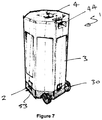
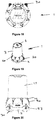
- an exercise device 1 having a base 2, a wall 3 extendable away from the base 2 to a closure 4.
- the base 2, wall 3 and closure 4 defining a space 7 therebetween adapted to receive exercise equipment 10.
- the exercise equipment 10 can be any type of exercise equipment, such as, dumbbells, medicine balls, skipping ropes, weights, obstacles, power bands, agility ladders, straps, nets, spikes, grids, or the like.
- the device 1 further includes a plurality of mounting means 12 locatable about the wall 3.
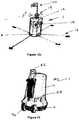
- a plurality of display means 14 as best seen in Figure 12 are each operatively associated with a respective one of the mounting means 12.
- the display means 14 are adapted in use to display exercises to be performed by a user so that in use the users spaced about the device 1 are provided information as to exercises to be performed at their particular location or station.
- the device 1 further includes a plurality of locators 16 each operatively associated with a respective one of the display means 14.
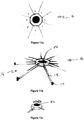
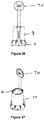
- the locators 16 are adapted to be moved away from the device 1 and positioned at a distance from the display means 14 so as to define an exercise station as best seen in Figures 11a and 12a .
- the locators 16 could be located on the device 1.
- the locators 16 could be adapted to form an exercise grid or the like.
- the display means could act as locators.
- each locator 16 includes a rigid member 17 and a flexible elongate portion 18 extendible between the rigid member 17 and the base 2.
- the flexible elongate portion 18 typically would be a ribbon, cord, rope or the like.
- Each of the rigid members 17 is adapted to be received within a corresponding slot 20 within the base 2 and as best seen in Figure 14a .
- the rigid members 17 could also be located in the space 7 as shown in Figure 12a .
- the device 1 includes means to retract the locator 16 from its spaced location for example as shown in Figure 11c .
- the rigid member 17 includes means to fix the rigid member 17 in a particular location away from the base 2. For example, it could include a weight, peg, protrusion, spike or the like.
- the locators 16 could be all flexible, all rigid or combinations thereof.
- the wall 3 includes slots 12.
- the slots 12 form the mounting means and are locatable about the wall 3 and evenly spaced about the device 1.
- Locatable within each of the slots 12 is a respective display means 14 which is adapted to provide exercises to a user positioned opposite the display means 14.
- the display means 14 may include more than one exercise.
- the display means 14 could be in the form of a card or an electronic display such as an LCD screen or the like.
- each card 14 includes a unique identifier such as a number, letter or combination thereof which corresponds to a particular pre-determined exercise.
- the cards 14 can be located within the space 7 when not in use.
- the base 2 can include wheels 30 to assist with the mobility of the device 1 to a particular location where exercise is to be conducted.
- the base 2 can include feet 31 to raise the base 2 above a ground surface and also include compartments 33 to receive exercise equipment 10, water bottles (not shown), locators 16 or any other such items.
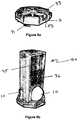
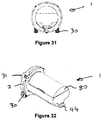
- the device 1 could further include an insert part 40 securable to the base 2 and adapted to hold the exercise devices 10, cards 14 or the like.
- the insert could include a number of compartments 35 and netting 36.
- the insert 40 could also include a handle 44.
- the wall 3 and closure 4 are a single member 17 as best seen in Figures 7 and 8b .
- the single member 17 being adapted to be lifted away from the base 2 over the insert 40 to allow access to the space 7.
- the single member 17 could also be separate parts such as shown in Figure 10b where the closure 4 separates from the device 1.
- the closure 7 can include the locators 16.
- a winding mechanism or the like 50 retracts the locators 16 back to the closure 7.
- the wall 3 also includes at least one panel 80 adapted to be moved to allow access to the space 7.
- the base 2 can further include clips 53 or the like to secure the wall 3 to the base 2 (i.e. the insert 40 to the single member 17) and the doors could also hold equipment, speakers 19 or the like.
- the device 1 can include power means in the form of solar panels 60, batteries (not shown) or electrical mains power access (not shown). The device 1 however does not necessarily need power.
- the device 1 could further include a flag 70 or the like and means 75 to provide attachment for an audio device for the users of the device.
- the audio means 75 can include speakers or the like or access to electronic mobile devices, such as, mobile phones or iPods.
- the device 1 may include further pockets, apertures or the like to retain keys, watches, wallets or the like or accommodate housing of water bottles.
- the device 1 could include in-built speakers or clocks (not shown).
- the wheels 30 and axle of the device 1 are adjustably configurable to form bar bells or the like usable by the exercise user.
- the display means and locators could provide a board game style for children and one or more persons could exercise at each station.
- a further display means 80 can be provided at the locator 16. It should be appreciated that any number of locators 16 an exercise stations could be utilised. The stations could be positioned in a variety of patterns adjacent the device 1.
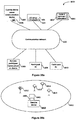
- FIGS 39A and 39B depict an example 1800 of a functional block diagram of a CE arrangement 1800.
- the owner of an exercise device 1818 communicates, using his communication device 1805 running a CE application 1806, with a CE server 601 running CE server software 633 over a communication network 620.
- the CE server 601 communicates with a database 1801 which stores owner session information and participant session information 1802.
- a number of remote participants having associated communication devices 1808-1810 each running the CE application can communication with the CE server 601 over the communication network 620 in order to request participation in an exercise session.
- the mobile devices such as 1805 and 1808 execute the CE application in conjunction with the CE server executing the CE server software 633 in order to provide the disclosed CE functionality.
- Figure 39B depicts the owner 1812 of the exercise device 1818 and a number of remote participants 1813, 1814, 1815 who have been authorised to congregate and attend the exercise session in question.
- the owner's communication device 1805 has been connected to the exercise device 1818 by, for example, inserting the communication device into the requisite slot in the exercise device 1818.
- the CE application 1806 executes on the communication device 1805 and communicates with electronic circuitry and audio speakers (not shown) in the exercise device 1818 in order to direct the various participants 1812, 1813, 1814, and 1815 to the various exercise stations as the exercise session progresses.
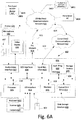
- FIGS. 6A and 6B form a schematic block diagram of a general purpose computer system 600 upon which CE arrangements described can be practiced.
- the computer system 600 includes: a computer module 601 which functions as the CE server; input devices such as a keyboard 602, a mouse pointer device 603, a scanner 626, a camera 627, and a microphone 680; and output devices including a printer 615, a display device 614 and loudspeakers 617.
- An external Modulator-Demodulator (Modem) transceiver device 616 may be used by the computer module 601 for communicating to and from the owner communication device 1805, the server database 1801, and the remote participant communication device 1808 over the communications network 620 via a connection 621.
- the communications network 620 may be a wide-area network (WAN), such as the Internet, a cellular telecommunications network, or a private WAN.
- WAN wide-area network
- the modem 616 may be a traditional "dial-up" modem.
- the connection 621 is a high capacity (e.g., cable) connection
- the modem 616 may be a broadband modem.
- a wireless modem may also be used for wireless connection to the communications network 620.
- the CE server computer module 601 typically includes at least one processor unit 605, and a memory unit 606.
- the memory unit 606 may have semiconductor random access memory (RAM) and semiconductor read only memory (ROM).
- the computer module 601 also includes an number of input/output (I/O) interfaces including: an audio-video interface 607 that couples to the video display 614, loudspeakers 617 and microphone 680; an I/O interface 613 that couples to the keyboard 602, mouse 603, scanner 626, camera 627 and optionally a joystick or other human interface device (not illustrated); and an interface 608 for the external modem 616 and printer 615.
- the modem 616 may be incorporated within the computer module 601, for example within the interface 608.
- the computer module 601 also has a local network interface 611, which permits coupling of the computer system 600 via a connection 623 to a local-area communications network 622, known as a Local Area Network (LAN). As illustrated in Fig. 6A , the local communications network 622 may also couple to the wide network 620 via a connection 624, which would typically include a so-called "firewall” device or device of similar functionality.
- the local network interface 611 may comprise an Ethernet circuit card, a Bluetooth® wireless arrangement or an IEEE 802.11 wireless arrangement; however, numerous other types of interfaces may be practiced for the interface 611.
- the I/O interfaces 608 and 613 may afford either or both of serial and parallel connectivity, the former typically being implemented according to the Universal Serial Bus (USB) standards and having corresponding USB connectors (not illustrated).
- Storage devices 609 are provided and typically include a hard disk drive (HDD) 610. Other storage devices such as a floppy disk drive and a magnetic tape drive (not illustrated) may also be used.
- An optical disk drive 612 is typically provided to act as a non-volatile source of data.
- Portable memory devices such optical disks (e.g., CD-ROM, DVD, Blu-ray DiscTM), USB-RAM, portable, external hard drives, and floppy disks, for example, may be used as appropriate sources of data to the system 600.
- the components 605 to 613 of the computer module 601 typically communicate via an interconnected bus 604 and in a manner that results in a conventional mode of operation of the computer system 600 known to those in the relevant art.
- the processor 605 is coupled to the system bus 604 using a connection 618.
- the memory 606 and optical disk drive 612 are coupled to the system bus 604 by connections 619. Examples of computers on which the described arrangements can be practiced include IBM-PC's and compatibles, Sun Sparcstations, Apple MacTM or a like computer systems.
- the CE methods may be implemented using the computer system 600 wherein the processes of Figures 1-5 , to be described, may be implemented as one or more software application programs 1806, 633 executable within the computer system 600.
- the software application(s) used to implement the CE arrangements comprise two modules, namely (a) the CE application which executes on the communication devices used by the exercise device owner and the remote participants, and (b) the CE server software running on the server machine 601.
- the steps of the CE method are effected by instructions 631 (see Fig. 6B ) in the software 1806, 633 that are carried out within the computer system 600.
- the software instructions 631 may be formed as one or more code modules, each for performing one or more particular tasks.
- the software may also be divided into two separate parts, in which a first part and the corresponding code modules performs the CE methods and a second part and the corresponding code modules manage a user interface between the first part and the user.
- the software may be stored in a computer readable medium, including the storage devices described below, for example.
- the software is loaded into the computer system 600 from the computer readable medium, and then executed by the computer system 600.
- a computer readable medium having such software or computer program recorded on the computer readable medium is a computer program product.
- the use of the computer program product in the computer system 600 preferably effects an advantageous CE apparatus.
- the software 633, 1806 is typically stored in the HDD 610 or the memory 606 of the server and in a memory (not shown) of the communication devices.
- the software is loaded into the computer system 600 from a computer readable medium, and executed by the computer system 600.
- the software 633 may be stored on an optically readable disk storage medium (e.g., CD-ROM) 625 that is read by the optical disk drive 612.
- a computer readable medium having such software or computer program recorded on it is a computer program product.
- the use of the computer program product in the computer system 600 preferably effects an advantageous CE apparatus.
- CE application programs 633, 1806 may be supplied to the user encoded on one or more CD-ROMs 625 and read via the corresponding drive 612 and equivalent in the communication devices, or alternatively may be read by the user from the networks 620 or 622. Still further, the software can also be loaded into the computer system 600 from other computer readable media.
- Computer readable storage media refers to any non-transitory tangible storage medium that provides recorded instructions and/or data to the computer system 600 for execution and/or processing.
- Examples of such storage media include floppy disks, magnetic tape, CD-ROM, DVD, Blu-rayTM Disc, a hard disk drive, a ROM or integrated circuit, USB memory, a magneto-optical disk, or a computer readable card such as a PCMCIA card and the like, whether or not such devices are internal or external of the computer module 601.
- Examples of transitory or non-tangible computer readable transmission media that may also participate in the provision of software, application programs, instructions and/or data to the computer module 601 include radio or infra-red transmission channels as well as a network connection to another computer or networked device, and the Internet or Intranets including e-mail transmissions and information recorded on Websites and the like.
- the second part of the application programs 633, 1806 and the corresponding code modules mentioned above may be executed to implement one or more graphical user interfaces (GUIs) to be rendered or otherwise represented upon the display 614 and the display of the communication devices 1805, 1808 for example.
- GUIs graphical user interfaces
- a user of the computer system 600 and the application may manipulate the interface in a functionally adaptable manner to provide controlling commands and/or input to the applications associated with the GUI(s).
- Other forms of functionally adaptable user interfaces may also be implemented, such as an audio interface utilizing speech prompts output via the loudspeakers 617 and user voice commands input via the microphone 680.
- Fig. 6B is a detailed schematic block diagram of the processor 605 and a "memory" 634.
- the memory 634 represents a logical aggregation of all the memory modules (including the HDD 609 and semiconductor memory 606) that can be accessed by the computer module 601 and the in Fig. 6A .
- a similar description applies to the operation of the communication devices 1805, 1808.
- a power-on self-test (POST) program 650 executes.
- the POST program 650 is typically stored in a ROM 649 of the semiconductor memory 606 of Fig. 6A .
- a hardware device such as the ROM 649 storing software is sometimes referred to as firmware.
- the POST program 650 examines hardware within the computer module 601 to ensure proper functioning and typically checks the processor 605, the memory 634 (609, 606), and a basic input-output systems software (BIOS) module 651, also typically stored in the ROM 649, for correct operation. Once the POST program 650 has run successfully, the BIOS 651 activates the hard disk drive 610 of Fig. 6A .
- BIOS basic input-output systems software
- Activation of the hard disk drive 610 causes a bootstrap loader program 652 that is resident on the hard disk drive 610 to execute via the processor 605.
- the operating system 653 is a system level application, executable by the processor 605, to fulfill various high level functions, including processor management, memory management, device management, storage management, software application interface, and generic user interface.
- the operating system 653 manages the memory 634 (609, 606) to ensure that each process or application running on the computer module 601 has sufficient memory in which to execute without colliding with memory allocated to another process. Furthermore, the different types of memory available in the system 600 of Fig. 6A must be used properly so that each process can run effectively. Accordingly, the aggregated memory 634 is not intended to illustrate how particular segments of memory are allocated (unless otherwise stated), but rather to provide a general view of the memory accessible by the computer system 600 and how such is used.
- the processor 605 includes a number of functional modules including a control unit 639, an arithmetic logic unit (ALU) 640, and a local or internal memory 648, sometimes called a cache memory.
- the cache memory 648 typically includes a number of storage registers 644 - 646 in a register section.
- One or more internal busses 641 functionally interconnect these functional modules.
- the processor 605 typically also has one or more interfaces 642 for communicating with external devices via the system bus 604, using a connection 618.
- the memory 634 is coupled to the bus 604 using a connection 619.
- the application program 633 includes a sequence of instructions 631 that may include conditional branch and loop instructions.
- the program 633 may also include data 632 which is used in execution of the program 633.
- the instructions 631 and the data 632 are stored in memory locations 628, 629, 630 and 635, 636, 637, respectively.
- a particular instruction may be stored in a single memory location as depicted by the instruction shown in the memory location 630.
- an instruction may be segmented into a number of parts each of which is stored in a separate memory location, as depicted by the instruction segments shown in the memory locations 628 and 629.
- the processor 605 is given a set of instructions which are executed therein.
- the processor 1105 waits for a subsequent input, to which the processor 605 reacts to by executing another set of instructions.
- Each input may be provided from one or more of a number of sources, including data generated by one or more of the input devices 602, 603, data received from an external source across one of the networks 620, 602, data retrieved from one of the storage devices 606, 609 or data retrieved from a storage medium 625 inserted into the corresponding reader 612, all depicted in Fig. 6A .
- the execution of a set of the instructions may in some cases result in output of data. Execution may also involve storing data or variables to the memory 634.
- the disclosed CE arrangements use input variables 654, which are stored in the memory 634 in corresponding memory locations 655, 656, 657.
- the CE arrangements produce output variables 661, which are stored in the memory 634 in corresponding memory locations 662, 663, 664.
- Intermediate variables 658 may be stored in memory locations 659, 660, 666 and 667.
- each fetch, decode, and execute cycle comprises:
- a further fetch, decode, and execute cycle for the next instruction may be executed.
- a store cycle may be performed by which the control unit 639 stores or writes a value to a memory location 632.
- Each step or sub-process in the processes of Figures 1-5 is associated with one or more segments of the program 633 and is performed by the register section 644, 645, 647, the ALU 640, and the control unit 639 in the processor 605 working together to perform the fetch, decode, and execute cycles for every instruction in the instruction set for the noted segments of the program 633.
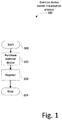
- FIG 1 is a flow chart of an example of a process 100 depicting how a person purchases and registers the exercise device, thereby becoming the owner of the exercise device and being able to effect the disclosed CE arrangements.
- the process 100 commences at the start step 101, after which in a following step 102 the person purchases the exercise device, and then registers the exercise device in a step 103, as described hereinafter in more detail with respect to Figure 2 , after which the process 100 ends with a stop step 104.
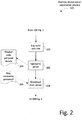
- FIG. 2 is a flow chart showing an example of the registration step 103 from Figure 1 in more detail.
- the owner of the exercise device logs on to the CE website (which is hosted on the CE server 601) using his communication device 1805, after which in a step 202, the owner of the exercise device uploads to the CE server the product code of the exercise device he has just purchased, together with his personal details such as his name, address, telephone number and email address.
- the owner of the exercise device downloads from the CE server 601 to his communications device 1805 the CE application as well as a user name and password.
- the aforementioned user name and password can be used by the owner of the exercise device when setting up exercise sessions according to the CE arrangement.
- FIG 3 is a flow chart of an example of a process 300 showing (i) how the owner of the exercise device publishes details of a proposed exercise session, (ii) how remote participants apply for participation in the published session, and (iii) how the session is directed by the disclosed CE arrangement.
- the process 300 commences with a step 301 in which the CE application that has been downloaded to the owner's communication device in the step 204 in Figure 2 determines if the owner wishes to initiate a new exercise session. The owner would indicate his desire to do so by suitable interacting with the user interface generated by the CE application on his communication device 1805.
- step 301 determines that no new session is presently desired, then the process 300 follows a NO arrow back to the step 301. If, on the other hand, the step 301 determines, based upon the owner providing a suitable command to the CE application 1806 running on his communication device 1805, that the owner does wish to initiate a new session, the process 300 is directed to a step 302 in which the owner enters his user name, password and details of the proposed exercise session into his communication device 1805. Details of the session can include the location of the session, the type of session (eg heavy cardio-vascular etc.), the skill level (eg beginner, intermediate etc.) and other details.
- the owner communication device 1805 uploads this owner session information 301 to the server 601.
- the server 601 processes this owner session information 301 to produce participant session information 307.
- the CE server 601 also published details of the proposed session in a manner that is accessible to remote participants who might wish to select a session in which to participate.
- remote participants can access the CE web site using a PC for instance, view the available sessions, and apply to join a session.
- the remote participant can download the CE application to a communication device such as a PC or a smartphone, and view / apply to join sessions using the installed CE application.
- the owner takes the exercise device to the session venue, as depicted by a following step 303. Thereafter, in a step 304, the owner initiates the exercise session by inputting the appropriate command to the CE application running on his communication device 1805, and the communication device 1805 uploads a corresponding session activation command 305 to the server. Thereafter, in a step 306, the owner communication device 1805 downloads the participant session information 307 constructed by the server 307.
- the owner then, in one example, inserts the communication device 1805 into the relevant slot in the exercise device 1818, and the communication device 1805 directs the session performance by, in one example, allocating participants in the exercise session to the various exercise stations as the exercise session progresses using the electronic circuitry and audio speakers in the exercise device 1818.
- the CE application 1806 running on the owner communication device 1805 determines if the session is completed. If this is not the case, then the process 300 follows a NO arrow back to the step 309. If, on the other hand, the session is completed, then the process 300 follows a YES arrow back to the step 301.
- FIG 4 is a flow chart of an example of a process 400 used by a remote participant wishing to join a published exercise session.
- a first step 401 determines whether the remote participant is interested in joining an exercise session according to the CE arrangement. If this is not the case, then the process follows a NO arrow back to the step 401, indicating that the person in question has not decided to join such a session. If, on the other hand, the person is interested in joining a session, then the process 400 follows a YES arrow to a step 402. In the step 402, if the participant has not yet downloaded the CE application to her communication device then the process 400 follows a NO arrow to a step 403. In the step 403 the remote participant logs on to the CE website, and in a following step 404 downloads the CE application to her PC or her mobile communication device. The process 400 is then directed to a step 405.
- step 402 if the remote participant has already downloaded the CE application on to their communication device, then the process 400 follows a YES arrow to the step 405.
- the downloaded CE application on the remote participant's communication device displays available published exercise sessions, preferably within a specified radial distance of the remote participant person in question.
- the remote participant person selects a desired session, using the CE application graphical user interface associated with her communication device and then in a following step 406, as directed by the CE application, the remote participant uploads to the CE server the ID of the selected session as well as the remote participant's name.
- the remote participant's communication device downloads, from the CE server, either an authorisation ID or a rejection 409.
- the CE server determines whether to authorise or reject a participants request based on a number of factors.
- the process 400 is directed to a step 410 in which the remote participant, being an authorised remote participant goes to the exercise session venue and participates in the exercise session in question. This participation continues as long as the session continues as indicated by the loop around the steps 410 and 411. Once the session is completed, then the process 400 follows a YES arrow from the step 411 back to the step 401. The remote participant wishing to participate is then free to select another session to join.
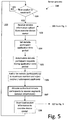
- FIG 5 is a flow chart of an example of a process 500 used by the CE server 601 to allocate participants to various exercise stations during an exercise session.
- the CE server determines if there is new participant session information 307 to construct. This will be determined based upon whether the CE server has received an upload of owner session information 301 from an exercise device owner from the step 302 in Figure 3 . If this is not the case, then the process 500 follows a NO arrow 502 back to the step 501. If, on the other hand, a new session is to be constructed, then the process 500 follows a YES arrow to a step 503.
- the CE server receives owner session information 301 uploaded from the step 302 in Figure 3 .
- the server sets a remote participant application time period.
- This time period is the time period during which remote participants interested in joining the exercise session in question may be accepted to the exercise session.
- the participant application time period might be set to one month less two days.
- the CE server accumulates remote participant requests, and continues to do so as long as the participant application time period set in the step 504 has not elapsed.
- the server authorizes remote participants up to a maximum number, and rejects any surplus/subsequent remote participant applicants, by sending them a rejection 409 as depicted in the step 408 in Figure 4 .
- the maximum number of authorized remote participants determined by the step 506 can depend on a number of factors, including the number of exercise stations specified by the owner session information 301 provided in the step 302.
- the CE server allocates authorized remote participants to session segments (also referred to as exercise routines) dependent upon the number of authorized participants, and the owner session information 301 provided by the step 302.
- the following table provides two examples of how the step 507 in Figure 5 can allocate authorized participants to various session segments.
- Index No. Exercise routine No. Exercise station No. Participant No. 1 a 1 1 2 a 2 2 3 a 3 3 4 a 4 4 5 a 5 5 6 a 6 6 7 a 1 1 8 a 2 2 9 a 3 3 10 b 4 4 11 b 5 5 12 b 6 6 13 a 1 4 14 a 2 5 15 a 3 6 16 b 4 1 17 b 5 2 18 b 6 3
- an exercise routine "a" such as star jumps, has been allocated to all six exercise stations that are available on the exercise device in question.
- Six participants, designated participant number 1 through participant number 6 are therefore allocated to corresponding exercise stations 1-6. Since all of the exercise stations are associated with the same exercise routine number "a", the CE arrangement does not move participants between exercise stations during the exercise session since there is no point in doing so because all of the stations are associated with the same exercise "a".
- the CE arrangement allocates participant numbers 1-6 to corresponding exercise stations 1-6. This means that participant numbers 1-3 will be performing exercise routine number "a” and participant numbers 4-6 will be participating in exercise routine "b".
- the CE arrangement reallocates the participants so that participant numbers 4-6 are allocated to exercise stations 1-3 respectively, while participant numbers 1-3 are allocated to exercise station numbers 4-6 respectively. In this manner, participants are rotated between the exercise routine number "a” and the exercise routine "b”.
- step 508 the server downloads the participant session information to the mobile communication device of the exercise device owner, as depicted by the step 306 in Fig. 3 .
- the process 500 then follows an arrow 509 back to the step 501.
Landscapes
- Health & Medical Sciences (AREA)
- Engineering & Computer Science (AREA)
- General Health & Medical Sciences (AREA)
- Physical Education & Sports Medicine (AREA)
- Human Computer Interaction (AREA)
- Multimedia (AREA)
- Databases & Information Systems (AREA)
- Software Systems (AREA)
- Computer Networks & Wireless Communication (AREA)
- General Physics & Mathematics (AREA)
- Educational Administration (AREA)
- Educational Technology (AREA)
- Physics & Mathematics (AREA)
- Theoretical Computer Science (AREA)
- Business, Economics & Management (AREA)
- Orthopedic Medicine & Surgery (AREA)
- Signal Processing (AREA)
- Life Sciences & Earth Sciences (AREA)
- Biophysics (AREA)
- Mechanical Engineering (AREA)
- Mobile Radio Communication Systems (AREA)
- Medical Treatment And Welfare Office Work (AREA)
- Electrically Operated Instructional Devices (AREA)
- Rehabilitation Tools (AREA)
Applications Claiming Priority (3)
| Application Number | Priority Date | Filing Date | Title |
|---|---|---|---|
| AU2014900408A AU2014900408A0 (en) | 2014-02-11 | An exercise device and method of exercising using said device | |
| PCT/AU2015/000074 WO2015120504A1 (en) | 2014-02-11 | 2015-02-11 | An exercise device and method of exercising using said device |
| EP15748785.1A EP3104943B1 (de) | 2014-02-11 | 2015-02-11 | Übungsvorrichtung und verfahren unter verwendung dieser vorrichtung |
Related Parent Applications (1)
| Application Number | Title | Priority Date | Filing Date |
|---|---|---|---|
| EP15748785.1A Division EP3104943B1 (de) | 2014-02-11 | 2015-02-11 | Übungsvorrichtung und verfahren unter verwendung dieser vorrichtung |
Publications (1)
| Publication Number | Publication Date |
|---|---|
| EP3721949A1 true EP3721949A1 (de) | 2020-10-14 |
Family
ID=53799437
Family Applications (2)
| Application Number | Title | Priority Date | Filing Date |
|---|---|---|---|
| EP15748785.1A Not-in-force EP3104943B1 (de) | 2014-02-11 | 2015-02-11 | Übungsvorrichtung und verfahren unter verwendung dieser vorrichtung |
| EP20175510.5A Withdrawn EP3721949A1 (de) | 2014-02-11 | 2015-02-11 | Übungsvorrichtung und übungssystem mit dieser vorrichtung |
Family Applications Before (1)
| Application Number | Title | Priority Date | Filing Date |
|---|---|---|---|
| EP15748785.1A Not-in-force EP3104943B1 (de) | 2014-02-11 | 2015-02-11 | Übungsvorrichtung und verfahren unter verwendung dieser vorrichtung |
Country Status (8)
| Country | Link |
|---|---|
| US (1) | US10201730B2 (de) |
| EP (2) | EP3104943B1 (de) |
| AU (1) | AU2015218169A1 (de) |
| CA (1) | CA2939238C (de) |
| DE (1) | DE112015000740B4 (de) |
| ES (1) | ES2807803T3 (de) |
| GB (1) | GB2539574B (de) |
| WO (1) | WO2015120504A1 (de) |
Families Citing this family (4)
| Publication number | Priority date | Publication date | Assignee | Title |
|---|---|---|---|---|
| US11000735B2 (en) * | 2018-08-09 | 2021-05-11 | Tonal Systems, Inc. | Control sequence based exercise machine controller |
| US11406873B2 (en) * | 2018-08-09 | 2022-08-09 | Tonal Systems, Inc. | Timeline and media controller for exercise machine |
| US11202951B1 (en) * | 2020-07-27 | 2021-12-21 | Tempo Interactive Inc. | Free-standing a-frame exercise equipment cabinet |
| WO2023004413A2 (en) * | 2021-07-22 | 2023-01-26 | Nautilus, Inc. | Free-weight exercise system |
Citations (7)
| Publication number | Priority date | Publication date | Assignee | Title |
|---|---|---|---|---|
| GB2227678A (en) * | 1989-02-07 | 1990-08-08 | David Int Ltd | A system of equipment for physical exercise |
| DE29707943U1 (de) * | 1997-04-29 | 1997-07-17 | Germania Gerätebau- und Vertriebs-GmbH, 76829 Landau | Aufklappbares multifunktionales Trainingsgerät zur dreidimensionalen Zugausführung |
| DE202007000434U1 (de) * | 2007-01-07 | 2007-03-15 | Moll, Wolfgang | Sportübungsgerät zur Durchführung von Stretching |
| US20080110115A1 (en) * | 2006-11-13 | 2008-05-15 | French Barry J | Exercise facility and method |
| US20080179214A1 (en) * | 2006-02-23 | 2008-07-31 | David Hall | Exercise system carrying kit having a wheeled handle |
| US20100273610A1 (en) * | 2009-04-27 | 2010-10-28 | Nike, Inc. | Training program and music playlist generation for athletic training |
| US20120309551A1 (en) * | 2011-06-02 | 2012-12-06 | Cento E Vinte 120 Participacoes E Empreendimentos Ltda | Structured space for the practice of fitness training and a method of fitness training practice management |
Family Cites Families (3)
| Publication number | Priority date | Publication date | Assignee | Title |
|---|---|---|---|---|
| US6050924A (en) | 1997-04-28 | 2000-04-18 | Shea; Michael J. | Exercise system |
| US8241118B2 (en) * | 2006-01-27 | 2012-08-14 | Great Play Holdings Llc | System for promoting physical activity employing virtual interactive arena |
| US7789811B2 (en) * | 2008-01-24 | 2010-09-07 | Cooper Scott R | Method and apparatus for a mobile training device for simultaneous use by multiple users |
-
2015
- 2015-02-11 WO PCT/AU2015/000074 patent/WO2015120504A1/en not_active Ceased
- 2015-02-11 AU AU2015218169A patent/AU2015218169A1/en not_active Abandoned
- 2015-02-11 EP EP15748785.1A patent/EP3104943B1/de not_active Not-in-force
- 2015-02-11 DE DE112015000740.7T patent/DE112015000740B4/de active Active
- 2015-02-11 ES ES15748785T patent/ES2807803T3/es active Active
- 2015-02-11 US US15/117,791 patent/US10201730B2/en active Active
- 2015-02-11 CA CA2939238A patent/CA2939238C/en active Active
- 2015-02-11 GB GB1613586.5A patent/GB2539574B/en not_active Expired - Fee Related
- 2015-02-11 EP EP20175510.5A patent/EP3721949A1/de not_active Withdrawn
Patent Citations (7)
| Publication number | Priority date | Publication date | Assignee | Title |
|---|---|---|---|---|
| GB2227678A (en) * | 1989-02-07 | 1990-08-08 | David Int Ltd | A system of equipment for physical exercise |
| DE29707943U1 (de) * | 1997-04-29 | 1997-07-17 | Germania Gerätebau- und Vertriebs-GmbH, 76829 Landau | Aufklappbares multifunktionales Trainingsgerät zur dreidimensionalen Zugausführung |
| US20080179214A1 (en) * | 2006-02-23 | 2008-07-31 | David Hall | Exercise system carrying kit having a wheeled handle |
| US20080110115A1 (en) * | 2006-11-13 | 2008-05-15 | French Barry J | Exercise facility and method |
| DE202007000434U1 (de) * | 2007-01-07 | 2007-03-15 | Moll, Wolfgang | Sportübungsgerät zur Durchführung von Stretching |
| US20100273610A1 (en) * | 2009-04-27 | 2010-10-28 | Nike, Inc. | Training program and music playlist generation for athletic training |
| US20120309551A1 (en) * | 2011-06-02 | 2012-12-06 | Cento E Vinte 120 Participacoes E Empreendimentos Ltda | Structured space for the practice of fitness training and a method of fitness training practice management |
Also Published As
| Publication number | Publication date |
|---|---|
| GB2539574B (en) | 2020-05-13 |
| ES2807803T3 (es) | 2021-02-24 |
| US10201730B2 (en) | 2019-02-12 |
| EP3104943A4 (de) | 2018-01-24 |
| GB2539574A (en) | 2016-12-21 |
| CA2939238A1 (en) | 2015-08-20 |
| DE112015000740B4 (de) | 2024-01-04 |
| WO2015120504A1 (en) | 2015-08-20 |
| EP3104943B1 (de) | 2020-05-20 |
| DE112015000740T5 (de) | 2017-06-01 |
| US20170007884A1 (en) | 2017-01-12 |
| EP3104943A1 (de) | 2016-12-21 |
| AU2015218169A1 (en) | 2016-08-25 |
| CA2939238C (en) | 2021-03-30 |
Similar Documents
| Publication | Publication Date | Title |
|---|---|---|
| EP3104943B1 (de) | Übungsvorrichtung und verfahren unter verwendung dieser vorrichtung | |
| AU2018100571A4 (en) | Remote configuration and operation of fitness studios from a central server | |
| US10162486B2 (en) | Generating a playlist based on content meta data and user parameters | |
| USRE44650E1 (en) | Exercise activity recording system | |
| WO2010117616A2 (en) | Exercise activity recording system | |
| US20140212857A1 (en) | Generating a workout routine | |
| JP2014519068A (ja) | 物理的な活動の監視及び記録システム及び装置 | |
| US20150157895A1 (en) | Gymnastic machine with data exchange by means of a short range communication channel and training system using such machine | |
| KR101831762B1 (ko) | 피트니스 서비스 운영 방법 및 시스템 | |
| CN107710327A (zh) | 私教健身的服务方法、系统、用户端和教练端及处理方法 | |
| US20150217179A1 (en) | Digital scoreboard | |
| KR102334023B1 (ko) | 실시간 골프 레슨 매칭 시스템 | |
| US20140207914A1 (en) | Certification validation and associated content access | |
| CN107948411A (zh) | 终端控制方法及装置、终端装置与计算机可读存储介质 | |
| CN109121090A (zh) | 店铺电子围栏建立方法及装置 | |
| KR20160064893A (ko) | 피트니스센터의 회원 간에 제공되는 소셜피트니스 서비스 제공방법 | |
| KR20160072888A (ko) | 골프 스코어관리 시스템 | |
| WO2008092455A1 (en) | A method and a system for dealing out at least one hand of cards | |
| CN112131460A (zh) | 一种信息推送系统、方法、设备 | |
| US20170185923A1 (en) | Exercise apparatus group | |
| US20190247752A1 (en) | Interactive Golfing System and Method | |
| JP2016039870A (ja) | スコア管理プログラム及びスコア管理装置 | |
| Adams et al. | Effect of Dolphin kick timing on breaststroke pullout performance | |
| KR20250120745A (ko) | 무인 스크린 골프의 운영 시스템 | |
| Tavares et al. | IC Design Activities in the Microelectronics Students' Group |
Legal Events
| Date | Code | Title | Description |
|---|---|---|---|
| PUAI | Public reference made under article 153(3) epc to a published international application that has entered the european phase |
Free format text: ORIGINAL CODE: 0009012 |
|
| STAA | Information on the status of an ep patent application or granted ep patent |
Free format text: STATUS: THE APPLICATION HAS BEEN PUBLISHED |
|
| AC | Divisional application: reference to earlier application |
Ref document number: 3104943 Country of ref document: EP Kind code of ref document: P |
|
| AK | Designated contracting states |
Kind code of ref document: A1 Designated state(s): AL AT BE BG CH CY CZ DE DK EE ES FI FR GB GR HR HU IE IS IT LI LT LU LV MC MK MT NL NO PL PT RO RS SE SI SK SM TR |
|
| STAA | Information on the status of an ep patent application or granted ep patent |
Free format text: STATUS: REQUEST FOR EXAMINATION WAS MADE |
|
| 17P | Request for examination filed |
Effective date: 20210413 |
|
| RBV | Designated contracting states (corrected) |
Designated state(s): AL AT BE BG CH CY CZ DE DK EE ES FI FR GB GR HR HU IE IS IT LI LT LU LV MC MK MT NL NO PL PT RO RS SE SI SK SM TR |
|
| RAP3 | Party data changed (applicant data changed or rights of an application transferred) |
Owner name: FITNESS ENGINEERS PTY LTD. |
|
| STAA | Information on the status of an ep patent application or granted ep patent |
Free format text: STATUS: EXAMINATION IS IN PROGRESS |
|
| 17Q | First examination report despatched |
Effective date: 20231213 |
|
| STAA | Information on the status of an ep patent application or granted ep patent |
Free format text: STATUS: THE APPLICATION IS DEEMED TO BE WITHDRAWN |
|
| 18D | Application deemed to be withdrawn |
Effective date: 20240416 |