EP3721995A1 - Procédé de régénération partielle de catalyseur de méthanol en oléfine et processus de conversion de méthanol en oléfine - Google Patents
Procédé de régénération partielle de catalyseur de méthanol en oléfine et processus de conversion de méthanol en oléfine Download PDFInfo
- Publication number
- EP3721995A1 EP3721995A1 EP17934137.5A EP17934137A EP3721995A1 EP 3721995 A1 EP3721995 A1 EP 3721995A1 EP 17934137 A EP17934137 A EP 17934137A EP 3721995 A1 EP3721995 A1 EP 3721995A1
- Authority
- EP
- European Patent Office
- Prior art keywords
- catalyst
- methanol
- olefin
- reaction
- regenerator
- Prior art date
- Legal status (The legal status is an assumption and is not a legal conclusion. Google has not performed a legal analysis and makes no representation as to the accuracy of the status listed.)
- Pending
Links
- OKKJLVBELUTLKV-UHFFFAOYSA-N Methanol Chemical compound OC OKKJLVBELUTLKV-UHFFFAOYSA-N 0.000 title claims abstract description 290
- 239000003054 catalyst Substances 0.000 title claims abstract description 172
- 150000001336 alkenes Chemical class 0.000 title claims abstract description 98
- JRZJOMJEPLMPRA-UHFFFAOYSA-N olefin Natural products CCCCCCCC=C JRZJOMJEPLMPRA-UHFFFAOYSA-N 0.000 title claims abstract description 94
- 238000000034 method Methods 0.000 title claims abstract description 31
- 230000001172 regenerating effect Effects 0.000 title claims abstract description 20
- 230000008569 process Effects 0.000 title claims abstract description 10
- 238000006243 chemical reaction Methods 0.000 claims abstract description 70
- 239000000571 coke Substances 0.000 claims abstract description 56
- 230000008929 regeneration Effects 0.000 claims abstract description 44
- 238000011069 regeneration method Methods 0.000 claims abstract description 44
- XLYOFNOQVPJJNP-UHFFFAOYSA-N water Substances O XLYOFNOQVPJJNP-UHFFFAOYSA-N 0.000 claims description 32
- IJGRMHOSHXDMSA-UHFFFAOYSA-N Atomic nitrogen Chemical compound N#N IJGRMHOSHXDMSA-UHFFFAOYSA-N 0.000 claims description 29
- 239000007789 gas Substances 0.000 claims description 12
- 239000011261 inert gas Substances 0.000 claims description 7
- XKRFYHLGVUSROY-UHFFFAOYSA-N Argon Chemical compound [Ar] XKRFYHLGVUSROY-UHFFFAOYSA-N 0.000 claims description 6
- 239000002808 molecular sieve Substances 0.000 claims description 6
- 229910052757 nitrogen Inorganic materials 0.000 claims description 6
- URGAHOPLAPQHLN-UHFFFAOYSA-N sodium aluminosilicate Chemical compound [Na+].[Al+3].[O-][Si]([O-])=O.[O-][Si]([O-])=O URGAHOPLAPQHLN-UHFFFAOYSA-N 0.000 claims description 6
- QVGXLLKOCUKJST-UHFFFAOYSA-N atomic oxygen Chemical compound [O] QVGXLLKOCUKJST-UHFFFAOYSA-N 0.000 claims description 5
- 239000001301 oxygen Substances 0.000 claims description 5
- 229910052760 oxygen Inorganic materials 0.000 claims description 5
- 239000001307 helium Substances 0.000 claims description 4
- 229910052734 helium Inorganic materials 0.000 claims description 4
- SWQJXJOGLNCZEY-UHFFFAOYSA-N helium atom Chemical compound [He] SWQJXJOGLNCZEY-UHFFFAOYSA-N 0.000 claims description 4
- 229910052786 argon Inorganic materials 0.000 claims description 3
- 229910001873 dinitrogen Inorganic materials 0.000 description 17
- 238000010438 heat treatment Methods 0.000 description 13
- 239000007864 aqueous solution Substances 0.000 description 12
- 238000002309 gasification Methods 0.000 description 8
- 239000002994 raw material Substances 0.000 description 8
- 239000003795 chemical substances by application Substances 0.000 description 7
- 238000010408 sweeping Methods 0.000 description 7
- 230000003197 catalytic effect Effects 0.000 description 6
- 230000008021 deposition Effects 0.000 description 6
- 238000011156 evaluation Methods 0.000 description 6
- 238000012986 modification Methods 0.000 description 6
- 230000004048 modification Effects 0.000 description 6
- 238000011056 performance test Methods 0.000 description 6
- 239000000243 solution Substances 0.000 description 4
- VGGSQFUCUMXWEO-UHFFFAOYSA-N Ethene Chemical compound C=C VGGSQFUCUMXWEO-UHFFFAOYSA-N 0.000 description 3
- 239000005977 Ethylene Substances 0.000 description 3
- 241000269350 Anura Species 0.000 description 2
- 230000009286 beneficial effect Effects 0.000 description 2
- 125000004432 carbon atom Chemical group C* 0.000 description 2
- 238000002485 combustion reaction Methods 0.000 description 2
- 230000000694 effects Effects 0.000 description 2
- QQONPFPTGQHPMA-UHFFFAOYSA-N propylene Natural products CC=C QQONPFPTGQHPMA-UHFFFAOYSA-N 0.000 description 2
- 125000004805 propylene group Chemical group [H]C([H])([H])C([H])([*:1])C([H])([H])[*:2] 0.000 description 2
- 239000000126 substance Substances 0.000 description 2
- 239000004215 Carbon black (E152) Substances 0.000 description 1
- UFHFLCQGNIYNRP-UHFFFAOYSA-N Hydrogen Chemical compound [H][H] UFHFLCQGNIYNRP-UHFFFAOYSA-N 0.000 description 1
- XYFCBTPGUUZFHI-UHFFFAOYSA-N Phosphine Chemical compound P XYFCBTPGUUZFHI-UHFFFAOYSA-N 0.000 description 1
- 229910007264 Si2H6 Inorganic materials 0.000 description 1
- BLRPTPMANUNPDV-UHFFFAOYSA-N Silane Chemical compound [SiH4] BLRPTPMANUNPDV-UHFFFAOYSA-N 0.000 description 1
- 239000002253 acid Substances 0.000 description 1
- 239000003570 air Substances 0.000 description 1
- 238000006555 catalytic reaction Methods 0.000 description 1
- 230000008859 change Effects 0.000 description 1
- 239000003245 coal Substances 0.000 description 1
- 230000009849 deactivation Effects 0.000 description 1
- 238000011161 development Methods 0.000 description 1
- 230000018109 developmental process Effects 0.000 description 1
- PZPGRFITIJYNEJ-UHFFFAOYSA-N disilane Chemical compound [SiH3][SiH3] PZPGRFITIJYNEJ-UHFFFAOYSA-N 0.000 description 1
- 230000007613 environmental effect Effects 0.000 description 1
- 230000002349 favourable effect Effects 0.000 description 1
- 239000005431 greenhouse gas Substances 0.000 description 1
- 125000005842 heteroatom Chemical group 0.000 description 1
- 229930195733 hydrocarbon Natural products 0.000 description 1
- 150000002430 hydrocarbons Chemical class 0.000 description 1
- 239000001257 hydrogen Substances 0.000 description 1
- 229910052739 hydrogen Inorganic materials 0.000 description 1
- 230000006698 induction Effects 0.000 description 1
- 238000009776 industrial production Methods 0.000 description 1
- 150000002605 large molecules Chemical class 0.000 description 1
- 229920002521 macromolecule Polymers 0.000 description 1
- 239000000463 material Substances 0.000 description 1
- 230000007246 mechanism Effects 0.000 description 1
- 239000002184 metal Substances 0.000 description 1
- 239000000203 mixture Substances 0.000 description 1
- 239000000376 reactant Substances 0.000 description 1
- 238000011160 research Methods 0.000 description 1
- 238000004904 shortening Methods 0.000 description 1
Images


Classifications
-
- B—PERFORMING OPERATIONS; TRANSPORTING
- B01—PHYSICAL OR CHEMICAL PROCESSES OR APPARATUS IN GENERAL
- B01J—CHEMICAL OR PHYSICAL PROCESSES, e.g. CATALYSIS OR COLLOID CHEMISTRY; THEIR RELEVANT APPARATUS
- B01J29/00—Catalysts comprising molecular sieves
- B01J29/90—Regeneration or reactivation
-
- B—PERFORMING OPERATIONS; TRANSPORTING
- B01—PHYSICAL OR CHEMICAL PROCESSES OR APPARATUS IN GENERAL
- B01J—CHEMICAL OR PHYSICAL PROCESSES, e.g. CATALYSIS OR COLLOID CHEMISTRY; THEIR RELEVANT APPARATUS
- B01J29/00—Catalysts comprising molecular sieves
- B01J29/82—Phosphates
- B01J29/84—Aluminophosphates containing other elements, e.g. metals, boron
- B01J29/85—Silicoaluminophosphates [SAPO compounds]
-
- B—PERFORMING OPERATIONS; TRANSPORTING
- B01—PHYSICAL OR CHEMICAL PROCESSES OR APPARATUS IN GENERAL
- B01J—CHEMICAL OR PHYSICAL PROCESSES, e.g. CATALYSIS OR COLLOID CHEMISTRY; THEIR RELEVANT APPARATUS
- B01J38/00—Regeneration or reactivation of catalysts, in general
- B01J38/04—Gas or vapour treating; Treating by using liquids vaporisable upon contacting spent catalyst
- B01J38/06—Gas or vapour treating; Treating by using liquids vaporisable upon contacting spent catalyst using steam
-
- C—CHEMISTRY; METALLURGY
- C07—ORGANIC CHEMISTRY
- C07C—ACYCLIC OR CARBOCYCLIC COMPOUNDS
- C07C1/00—Preparation of hydrocarbons from one or more compounds, none of them being a hydrocarbon
- C07C1/20—Preparation of hydrocarbons from one or more compounds, none of them being a hydrocarbon starting from organic compounds containing only oxygen atoms as heteroatoms
-
- C—CHEMISTRY; METALLURGY
- C07—ORGANIC CHEMISTRY
- C07C—ACYCLIC OR CARBOCYCLIC COMPOUNDS
- C07C1/00—Preparation of hydrocarbons from one or more compounds, none of them being a hydrocarbon
- C07C1/20—Preparation of hydrocarbons from one or more compounds, none of them being a hydrocarbon starting from organic compounds containing only oxygen atoms as heteroatoms
- C07C1/24—Preparation of hydrocarbons from one or more compounds, none of them being a hydrocarbon starting from organic compounds containing only oxygen atoms as heteroatoms by elimination of water
-
- C—CHEMISTRY; METALLURGY
- C07—ORGANIC CHEMISTRY
- C07C—ACYCLIC OR CARBOCYCLIC COMPOUNDS
- C07C11/00—Aliphatic unsaturated hydrocarbons
- C07C11/02—Alkenes
- C07C11/107—Alkenes with six carbon atoms
-
- C—CHEMISTRY; METALLURGY
- C07—ORGANIC CHEMISTRY
- C07C—ACYCLIC OR CARBOCYCLIC COMPOUNDS
- C07C2529/00—Catalysts comprising molecular sieves
- C07C2529/82—Phosphates
- C07C2529/84—Aluminophosphates containing other elements, e.g. metals, boron
- C07C2529/85—Silicoaluminophosphates (SAPO compounds)
-
- Y—GENERAL TAGGING OF NEW TECHNOLOGICAL DEVELOPMENTS; GENERAL TAGGING OF CROSS-SECTIONAL TECHNOLOGIES SPANNING OVER SEVERAL SECTIONS OF THE IPC; TECHNICAL SUBJECTS COVERED BY FORMER USPC CROSS-REFERENCE ART COLLECTIONS [XRACs] AND DIGESTS
- Y02—TECHNOLOGIES OR APPLICATIONS FOR MITIGATION OR ADAPTATION AGAINST CLIMATE CHANGE
- Y02P—CLIMATE CHANGE MITIGATION TECHNOLOGIES IN THE PRODUCTION OR PROCESSING OF GOODS
- Y02P20/00—Technologies relating to chemical industry
- Y02P20/50—Improvements relating to the production of bulk chemicals
- Y02P20/584—Recycling of catalysts
-
- Y—GENERAL TAGGING OF NEW TECHNOLOGICAL DEVELOPMENTS; GENERAL TAGGING OF CROSS-SECTIONAL TECHNOLOGIES SPANNING OVER SEVERAL SECTIONS OF THE IPC; TECHNICAL SUBJECTS COVERED BY FORMER USPC CROSS-REFERENCE ART COLLECTIONS [XRACs] AND DIGESTS
- Y02—TECHNOLOGIES OR APPLICATIONS FOR MITIGATION OR ADAPTATION AGAINST CLIMATE CHANGE
- Y02P—CLIMATE CHANGE MITIGATION TECHNOLOGIES IN THE PRODUCTION OR PROCESSING OF GOODS
- Y02P30/00—Technologies relating to oil refining and petrochemical industry
- Y02P30/20—Technologies relating to oil refining and petrochemical industry using bio-feedstock
-
- Y—GENERAL TAGGING OF NEW TECHNOLOGICAL DEVELOPMENTS; GENERAL TAGGING OF CROSS-SECTIONAL TECHNOLOGIES SPANNING OVER SEVERAL SECTIONS OF THE IPC; TECHNICAL SUBJECTS COVERED BY FORMER USPC CROSS-REFERENCE ART COLLECTIONS [XRACs] AND DIGESTS
- Y02—TECHNOLOGIES OR APPLICATIONS FOR MITIGATION OR ADAPTATION AGAINST CLIMATE CHANGE
- Y02P—CLIMATE CHANGE MITIGATION TECHNOLOGIES IN THE PRODUCTION OR PROCESSING OF GOODS
- Y02P30/00—Technologies relating to oil refining and petrochemical industry
- Y02P30/40—Ethylene production
Definitions
- the present application relates to a method for partially regenerating methanol to olefin catalyst and a regenerated catalyst, which belongs to the field of chemical catalysts.
- Ethylene and propylene are important basic raw materials for the national economy and occupy an important strategic position in the development of the petrochemical and chemical industries.
- the raw material for producing ethylene in China is mainly naphtha, and its cost is relatively high.
- Industrial methanol to olefin technology starts from coal and light olefin with a high selectivity is successfully achieved by a fluidized bed process using a SAPO-based catalyst.
- the deactivation of SAPO-type catalysts will occur after reacting for a certain period of time due to coke deposition and it is necessary to carry out coke-burning for regenerating to restore the activity and selectivity of the catalyst.
- the regeneration process of the methanol to olefin catalyst uses a mixture of nitrogen and air or water steam and air as the regeneration feed gas.
- the phenomenon of "temperature runaway” or “tail burning” in the regeneration process is avoiding.
- a large amount of greenhouse gas CO 2 is produced in this method, which is not conducive to environmental protection and reduces the utilization of carbon atoms in methanol.
- US06/286604 discloses a method for regenerating a catalyst by mixing air and water steam, wherein the volume ratio of air to water steam is 1: 1 and the regeneration temperature is in a range of 450 °C to 480 °C.
- the rate of coke-burning is very fast due to the presence of air.
- the catalytic effect of the catalyst after regeneration is comparable to that of the fresh agent, and the selectivity to the initial light olefin is not increased, and the effect thereof is equivalent to complete regeneration.
- a method for partially regenerating a methanol to olefin catalyst is provided, which is capable of gasifying partial coke deposited on the deactivated catalyst with water steam to partially regenerate the deactivated methanol to -olefin catalyst quickly and efficiently. It is more favorable for methanol to olefin reaction than completely regenerating the catalyst.
- the inventive discovery of the present application is that the catalytic performances of the deactivated methanol to olefin catalyst and the fully regenerated methanol to olefin catalyst are not satisfactory for the methanol to olefin reaction, but the incompletely regenerated catalyst which retains a certain amount of coke deposition has better catalytic activity and can greatly improve the selectivity to the initial light olefins and also ensure the highest selectivity of the catalyst to light olefins, thereby improving the overall selectivity to the light olefins.
- the method for partially regenerating methanol to olefin catalyst characterized in that the method comprises placing a deactivated methanol to olefin catalyst in a regenerator for a partial regeneration reaction to obtain a regenerated catalyst;
- At least a portion of the regenerated catalyst has a coke amount of more than 1%. Further preferably, among the regenerated catalyst obtained by the partial regeneration reaction in the regenerator, at least a portion of the regenerated catalyst has a coke amount in a range of 1.7% to 6%.
- the lower limit of the coke amount of the regenerated catalyst obtained by the partial regeneration reaction in the regenerator is selected from 1%, 1.5%, 1.7%, 1.76%, 2%, 2.94%, 3%, 3.89% and 4 %
- the upper limit is selected from 2%, 2.94%, 3%, 3.89%, 4%, 4.82%, 5.16%, 5.95% and 6%.
- the regenerated catalyst obtained by the partial regeneration reaction in the regenerator has a coke amount in a range of 2% to 6%.
- the formula for calculating the coke amount ⁇ of the catalyst is as shown in the following formula I:
- ⁇ is the coke amount of the catalyst in mass percentage
- m 250°C is the mass of the catalyst when the temperature is raised to 250 °C
- m 900°C is the mass of the catalyst when the temperature is raised to 900 °C, and the heating process is performed in air.
- water steam is introduced into the regenerator.
- the regeneration reaction is a reaction between the coke deposited on the deactivated catalyst and O 2 . Since it is equivalent to the combustion reaction of the coke itself, it is difficult to control the degree of combustion and is difficult to obtain an incompletely regenerated catalyst; and the catalytic activity of the coke deposited on the catalyst which is not completely oxidized to CO 2 after reacting with O 2 is not high, and the selectivity to ethylene and propylene in MTO reaction is also low.
- water steam is introduced into the regenerator instead of the regeneration gas containing oxygen, and the regeneration reaction in the technical solution of the present application is a reaction between the coke deposited on the deactivated catalyst and H 2 O.
- the water steam reacts with the coke selectively, so that the properties of the residual coke can be effectively controlled by the regeneration temperature and time, thereby the selectivity to the light olefin in the reaction may be further ensured.
- the catalyst is in contact with water steam under an inert gas atmosphere so as to avoid the influence of air on the performance of the catalyst.
- the contact time between the water steam introduced into the regenerator and the deactivated methanol to olefin catalyst is in a range of 10 min to 40 min.
- the water steam is introduced into the regenerator with a space velocity in a range of 4 h -1 to 8 h -1 .
- the partial regeneration reaction is carried out at a temperature in a range of 600 °C to 750 °C; Further preferably, the partial regeneration reaction is carried out at a temperature in a range of 710 °C to 750 °C; Preferably, the deactivated methanol to olefin catalyst has a coke amount in a range of 7% to 12%.
- an inert gas is also introduced into the regenerator.
- the inert gas is at least one selected from nitrogen, helium, argon, and helium. Further preferably, in the partial regeneration reaction, the volume fraction of oxygen in the gas phase of the regenerator is ⁇ 1%.
- the methanol to olefin catalyst is subjected to a methanol to olefin reaction in a fluidized bed reactor, and the deactivated methanol to olefin catalyst is transported to a regenerator for a partial regeneration reaction to obtain a regenerated catalyst, which is an incompletely regenerated catalyst.
- the incompletely regenerated catalyst is recycled back to the fluidized bed reactor.
- the incompletely regenerated catalyst refers to a regenerated catalyst in which the coke deposition on the catalyst is not completely removed after being regenerated, and a portion of the coke deposition remains on the catalyst. It may also be referred to as a partially regenerated catalyst.
- the catalyst is a molecular sieve catalyst.
- the methanol to olefin catalyst is a fluidized bed catalyst.
- the catalyst is a silicoaluminophosphate molecular sieve (abbreviated as SAPO molecular sieve) catalyst.
- SAPO molecular sieve silicoaluminophosphate molecular sieve
- the reactor is a fluidized bed reactor.
- an inert gas is introduced into the reactor for sweeping before the water steam is introduced.
- the inert gas is at least one selected from argon and nitrogen.
- a methanol to olefin process wherein the methanol to olefin reaction is carried out in a fluidized bed with the use of a methanol to olefin catalyst, characterized in that at least a portion of the regenerated catalyst has a coke amount of more than 1%.
- the regenerated catalyst has a coke amount in a range of 2% to 6%.
- the regenerated catalyst is obtained by at least one of the above-described methods for partially regenerating methanol to olefin catalyst.
- the methanol to olefin catalyst SAPO-34 used commercially in the present application is purchased from Zhengda Energy Materials (Dalian) Co., Ltd.
- reaction raw material is a methanol aqueous solution with a concentration of 80 wt%
- reaction temperature is 490 °C
- the pressure is 0.1 MPa
- the space velocity is 2.1 h -1 .
- a nitrogen gas with a flow rate of 100 mL/min is introduced into the reactor for sweeping, the temperature of the reactor heating furnace is set.
- the temperature is raised to 700 ° C, the nitrogen gas is continuously swept for 10 minutes, and then water steam is introduced with a mass space velocity of 6 h -1 , and the temperature is kept for 15min.
- a small amount of catalyst is taken to measure the coke amount.
- the coke amount is 5.95%.
- the regeneration is stopped after the temperature programming is over, the regeneration gas is switched to nitrogen gas. When the temperature of the heating furnace drops to 490°C, keep it for 20 min.
- a methanol aqueous solution with a concentration of 80wt% is introduced after the temperature is stabilized, the space velocity is 2.1 h -1 , the pressure is 0.1 MPa, and an evaluation of methanol to olefin reaction is carried out.
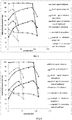
- the conversion of methanol and the selectivity to olefin with the regenerated catalyst are shown in Figure 1 .
- "fresh agent” means a methanol to olefin catalyst which has not been used in the examples, that is, which is used as a methanol to olefin catalyst for the first time.
- reaction raw material is a methanol aqueous solution with a concentration of 80 wt%
- reaction temperature is 490 °C
- the pressure is 0.1 MPa
- the space velocity is 2.1 h -1 .
- a nitrogen gas with a flow rate of 100 mL/min is introduced into the reactor for sweeping, the temperature of the reactor heating furnace is set.
- the temperature is raised to 700 °C, the nitrogen gas is continuously swept for 10 minutes, and then water steam is introduced with a mass space velocity of 6 h -1 , and the temperature is kept for 30 min.
- a small amount of catalyst is taken to measure the coke amount.
- the coke amount is 4.82%.
- the regeneration is stopped after the temperature programming is over, the regeneration gas is switched to nitrogen gas. When the temperature of the heating furnace drops to 490 °C, keep it for 20 min.
- a methanol aqueous solution with a concentration of 80wt% is introduced after the temperature is stabilized, the space velocity is 2.1 h -1 , the pressure is 0.1 MPa, and an evaluation of methanol to olefin reaction is carried out.
- the conversion of methanol and the selectivity to olefin with the regenerated catalyst are shown in Figure 2 .
- "fresh agent” means a methanol to olefin catalyst which has not been used in the examples, that is, which is used as a methanol to olefin catalyst for the first time.
- reaction raw material is a methanol aqueous solution with a concentration of 80 wt%
- the reaction temperature is 490 °C
- the pressure is 0.1 MPa
- the space velocity is 2.1 h -1 .
- a nitrogen gas with a flow rate of 100 mL/min is introduced into the reactor for sweeping, the temperature of the reactor heating furnace is set.
- the temperature is raised to 750 °C, the nitrogen is continuously swept for 10 minutes, and then water steam is introduced with a mass space velocity of 6h -1 , and the temperature is kept for 10 min.
- a small amount of catalyst is taken to measure the coke amount.
- the coke amount is 5.16%.
- the regeneration is stopped after the temperature programming is over, the regeneration gas is switched to nitrogen gas. When the temperature of the heating furnace drops to 490 °C, keep it for 20 min.
- a methanol aqueous solution with a concentration of 80wt% is introduced after the temperature is stabilized, the space velocity is 2.1 h -1 , the pressure is 0.1 MPa, and an evaluation of methanol to olefin reaction is carried out.
- the conversion of methanol and the selectivity to olefin with the regenerated catalyst are shown in Figure 3 .
- "fresh agent” means a methanol to olefin catalyst which has not been used in the examples, that is, which is used as a methanol to olefin catalyst for the first time.
- reaction raw material is a methanol aqueous solution with a concentration of 80 wt%
- reaction temperature is 490 °C
- the pressure is 0.1 MPa
- the space velocity is 2.1 h -1 .
- a nitrogen gas with a flow rate of 100 mL/min is introduced into the reactor for sweeping, the temperature of the reactor heating furnace is set.
- the temperature is raised to 750 °C, the nitrogen gas is continuously swept for 10 minutes, and then water steam is introduced with a mass space velocity of 6h -1 , and the temperature is kept for 20 min.
- a small amount of catalyst is taken to measure the coke amount.
- the coke amount is 3.89%.
- the regeneration is stopped after the temperature programming is over, the regeneration gas is switched to nitrogen gas. When the temperature of the heating furnace drops to 490 °C, keep it for 20 min.
- a methanol aqueous solution with a concentration of 80wt% is introduced after the temperature is stabilized, the space velocity is 2.1 h -1 , the pressure is 0.1 MPa, and an evaluation of methanol to olefin reaction is carried out.
- the conversion of methanol and the selectivity to olefin with the regenerated catalyst are shown in Figure 4 .
- "fresh agent” means a methanol to olefin catalyst which has not been used in the examples, that is, which is used as a methanol to olefin catalyst for the first time.
- reaction raw material is a methanol aqueous solution with a concentration of 80 wt%
- reaction temperature is 490 °C
- the pressure is 0.1 MPa
- the space velocity is 2.1 h -1 .
- a nitrogen gas with a flow rate of 100 mL/min is introduced into the reactor for sweeping, the temperature of the reactor heating furnace is set.
- the temperature is raised to 750 °C, the nitrogen gas is continuously swept for 10 minutes, and then water steam is introduced with a mass space velocity of 6h -1 , and the temperature is kept for 30 min.
- a small amount of catalyst is taken to measure the coke amount.
- the coke amount is 2.94%.
- the regeneration is stopped after the temperature programming is over, the regeneration gas is switched to nitrogen gas. When the temperature of the heating furnace drops to 490 °C, keep it for 20 min.
- a methanol aqueous solution with a concentration of 80wt% is introduced after the temperature is stabilized, the space velocity is 2.1 h -1 , the pressure is 0.1 MPa, and an evaluation of methanol to olefin reaction is carried out.
- the conversion of methanol and the selectivity to olefin with the regenerated catalyst are shown in Figure 5 .
- "fresh agent” means a methanol to olefin catalyst which has not been used in the examples, that is, which is used as a methanol to olefin catalyst for the first time.
- reaction raw material is a methanol aqueous solution with a concentration of 80 wt%
- reaction temperature is 490 °C
- the pressure is 0.1 MPa
- the space velocity is 2.1 h -1 .
- a nitrogen gas with a flow rate of 100 mL/min is introduced into the reactor for sweeping, the temperature of the reactor heating furnace is set.
- the temperature is raised to 750 °C, the nitrogen gas is continuously swept for 10 minutes, and then water steam is introduced with a mass space velocity of 6h -1 , and the temperature is kept for 40 min.
- a small amount of catalyst is taken to measure the coke amount.
- the coke amount is 1.76%.
- the regeneration is stopped after the temperature programming is over, the regeneration gas is switched to nitrogen gas. When the temperature of the heating furnace drops to 490 °C, keep it for 20 min.
- a methanol aqueous solution with a concentration of 80wt% is introduced after the temperature is stabilized, the space velocity is 2.1 h -1 , the pressure is 0.1 MPa, and an evaluation of methanol to olefin reaction is carried out.
- the conversion of methanol and the selectivity to olefin with the regenerated catalyst are shown in Figure 6 .
- "fresh agent” means a methanol to olefin catalyst which has not been used in the examples, that is, which is used as a methanol to olefin catalyst for the first time.
Landscapes
- Chemical & Material Sciences (AREA)
- Organic Chemistry (AREA)
- Engineering & Computer Science (AREA)
- Materials Engineering (AREA)
- Chemical Kinetics & Catalysis (AREA)
- Organic Low-Molecular-Weight Compounds And Preparation Thereof (AREA)
- Catalysts (AREA)
- Low-Molecular Organic Synthesis Reactions Using Catalysts (AREA)
Applications Claiming Priority (1)
| Application Number | Priority Date | Filing Date | Title |
|---|---|---|---|
| PCT/CN2017/114567 WO2019109237A1 (fr) | 2017-12-05 | 2017-12-05 | Procédé de régénération partielle de catalyseur de méthanol en oléfine et processus de conversion de méthanol en oléfine |
Publications (2)
| Publication Number | Publication Date |
|---|---|
| EP3721995A1 true EP3721995A1 (fr) | 2020-10-14 |
| EP3721995A4 EP3721995A4 (fr) | 2020-11-11 |
Family
ID=66751229
Family Applications (1)
| Application Number | Title | Priority Date | Filing Date |
|---|---|---|---|
| EP17934137.5A Pending EP3721995A4 (fr) | 2017-12-05 | 2017-12-05 | Procédé de régénération partielle de catalyseur de méthanol en oléfine et processus de conversion de méthanol en oléfine |
Country Status (7)
| Country | Link |
|---|---|
| US (1) | US11504703B2 (fr) |
| EP (1) | EP3721995A4 (fr) |
| JP (1) | JP7008138B2 (fr) |
| KR (1) | KR102400421B1 (fr) |
| RU (1) | RU2753348C1 (fr) |
| SG (1) | SG11202005199TA (fr) |
| WO (1) | WO2019109237A1 (fr) |
Cited By (2)
| Publication number | Priority date | Publication date | Assignee | Title |
|---|---|---|---|---|
| WO2022077452A1 (fr) * | 2020-10-16 | 2022-04-21 | 中国科学院大连化学物理研究所 | Réacteur à lit fluidisé, appareil et procédé de préparation d'oléfine à faible teneur en carbone à partir d'un composé contenant de l'oxygène |
| CN117185308A (zh) * | 2022-06-01 | 2023-12-08 | 中国石油化工股份有限公司 | 一种sapo-34分子筛及其制备方法和应用 |
Families Citing this family (2)
| Publication number | Priority date | Publication date | Assignee | Title |
|---|---|---|---|---|
| WO2022077459A1 (fr) * | 2020-10-16 | 2022-04-21 | 中国科学院大连化学物理研究所 | Dispositif de régénération, dispositif de préparation d'oléfines à faible teneur en carbone et leur utilisation |
| CN115304442A (zh) * | 2021-05-08 | 2022-11-08 | 国家能源投资集团有限责任公司 | 甲醇制c2-c3烯烃的方法和装置 |
Family Cites Families (15)
| Publication number | Priority date | Publication date | Assignee | Title |
|---|---|---|---|---|
| US6482999B2 (en) * | 1999-02-17 | 2002-11-19 | Exxonmobil Chemical Patents, Inc. | Method for improving light olefin selectivity in an oxygenate conversion reaction |
| US6286604B1 (en) | 2000-05-09 | 2001-09-11 | Ren-Sheng Ou | Powerless automatic and/or manual fire-extinguishing device |
| US7550403B2 (en) | 2005-06-30 | 2009-06-23 | Uop Llc | Methods for recovering activity of molecular sieve catalysts |
| US20070037692A1 (en) | 2005-08-10 | 2007-02-15 | Beech James H Jr | Method for stabilizing catalyst activity during MTO unit operation |
| EP2022565A1 (fr) * | 2007-07-06 | 2009-02-11 | Casale Chemicals S.A. | Procédé pour la préparation de tamis moléculaires en silicoaluminoposphate (SAPO), catalyseurs contenant lesdits tamis et procédés de déshydratation catalytique utilisant lesdits catalyseurs |
| CN101811072B (zh) * | 2009-02-19 | 2011-12-21 | 中国石油化工股份有限公司 | 甲醇制烯烃反应过程中控制再生的方法 |
| JP5499918B2 (ja) * | 2009-06-05 | 2014-05-21 | 三菱化学株式会社 | 触媒の再生方法 |
| CN101941875B (zh) * | 2009-07-06 | 2012-11-28 | 中国石油化工股份有限公司 | 增产低碳烯烃的方法 |
| CN101844089A (zh) * | 2010-05-25 | 2010-09-29 | 兆威兴业有限公司 | 对甲醇或二甲醚制备低碳烯烃用催化剂部分再生的方法 |
| CN102276393A (zh) | 2010-06-11 | 2011-12-14 | 中国石油化工股份有限公司 | 甲醇制烯烃反应-再生系统中再生催化剂返回反应器的方法 |
| CN102463138B (zh) * | 2010-11-17 | 2013-08-14 | 中国石油化工股份有限公司 | Sapo-34催化剂的两段再生方法 |
| RU2522576C1 (ru) * | 2013-04-10 | 2014-07-20 | Ассоциация делового сотрудничества в области передовых комплексных технологий "АСПЕКТ" | Способ каталитического пиролиза хлористого метила |
| KR101494229B1 (ko) * | 2013-05-01 | 2015-02-17 | 한국화학연구원 | 중간생성물의 실시간 모니터링을 통한 메탄올로부터 경질올레핀 제조용 순환유동층 공정의 효율적 운전 |
| CN104672040B (zh) * | 2013-12-03 | 2017-06-16 | 中国科学院大连化学物理研究所 | 一种含氧化合物制低碳烯烃的方法及其使用的设备 |
| EP3078652B1 (fr) | 2013-12-03 | 2018-07-18 | Dalian Institute Of Chemical Physics, Chinese Academy of Sciences | Procédé de préparation d'une oléfine légère à l'aide d'un composé contenant de l'oxygène |
-
2017
- 2017-12-05 SG SG11202005199TA patent/SG11202005199TA/en unknown
- 2017-12-05 EP EP17934137.5A patent/EP3721995A4/fr active Pending
- 2017-12-05 KR KR1020207016344A patent/KR102400421B1/ko active Active
- 2017-12-05 US US16/767,268 patent/US11504703B2/en active Active
- 2017-12-05 JP JP2020527996A patent/JP7008138B2/ja active Active
- 2017-12-05 RU RU2020122179A patent/RU2753348C1/ru active
- 2017-12-05 WO PCT/CN2017/114567 patent/WO2019109237A1/fr not_active Ceased
Cited By (5)
| Publication number | Priority date | Publication date | Assignee | Title |
|---|---|---|---|---|
| WO2022077452A1 (fr) * | 2020-10-16 | 2022-04-21 | 中国科学院大连化学物理研究所 | Réacteur à lit fluidisé, appareil et procédé de préparation d'oléfine à faible teneur en carbone à partir d'un composé contenant de l'oxygène |
| JP2023530851A (ja) * | 2020-10-16 | 2023-07-20 | 中国科学院大▲連▼化学物理研究所 | 流動床反応器、装置及び含酸素化合物から軽オレフィンを製造する方法 |
| JP7449413B2 (ja) | 2020-10-16 | 2024-03-13 | 中国科学院大▲連▼化学物理研究所 | 流動床反応器、装置及び含酸素化合物から軽オレフィンを製造する方法 |
| US12286594B2 (en) | 2020-10-16 | 2025-04-29 | Dalian Institute Of Chemical Physics, Chinese Academy Of Sciences | Fluidized bed reactor, device and method for preparing low-carbon olefins from oxygen-containing compound |
| CN117185308A (zh) * | 2022-06-01 | 2023-12-08 | 中国石油化工股份有限公司 | 一种sapo-34分子筛及其制备方法和应用 |
Also Published As
| Publication number | Publication date |
|---|---|
| US11504703B2 (en) | 2022-11-22 |
| JP7008138B2 (ja) | 2022-02-10 |
| KR20200085831A (ko) | 2020-07-15 |
| EP3721995A4 (fr) | 2020-11-11 |
| US20200324280A1 (en) | 2020-10-15 |
| SG11202005199TA (en) | 2020-07-29 |
| KR102400421B1 (ko) | 2022-05-19 |
| WO2019109237A1 (fr) | 2019-06-13 |
| JP2021505361A (ja) | 2021-02-18 |
| RU2753348C1 (ru) | 2021-08-13 |
Similar Documents
| Publication | Publication Date | Title |
|---|---|---|
| EP3721995A1 (fr) | Procédé de régénération partielle de catalyseur de méthanol en oléfine et processus de conversion de méthanol en oléfine | |
| US3515514A (en) | Production of hydrogen containing gases | |
| JPH0618790B2 (ja) | メタンの酸化転化方法 | |
| WO2019029358A1 (fr) | Catalyseur d'oxyde bimétallique molybdène-vanadium et son utilisation dans la déshydrogénation en chaîne chimique d'alcanes inférieurs | |
| CN109433257B (zh) | 一种二氧化碳氧化乙烷脱氢制乙烯的催化剂及其制备方法 | |
| CN109865530B (zh) | 部分再生甲醇制烯烃催化剂的方法和甲醇制烯烃方法 | |
| CN104098429A (zh) | 一种利用循环流化床由甲醇制备丙烯、c4烃类的方法 | |
| CN114425385A (zh) | 费托合成制低碳烯烃的催化剂及其制备方法和应用 | |
| WO1999043608A1 (fr) | Production d'hydrogene par le craquage direct d'hydrocarbures | |
| Oluokun et al. | Green ethylene production from bio-ethanol with acidity controlled Barium exchanged zeolite Y catalyst | |
| CN107008255A (zh) | 用于正丁烷直接脱氢制丁烯的纳米金刚石载铂催化剂及其制备方法和应用 | |
| CN114984946A (zh) | 一种镓基低碳烷烃脱氢催化剂及其制备方法和应用 | |
| CN116237075B (zh) | 改性氮化碳负载铁的费托合成催化剂的制备方法及其应用 | |
| CN113509957B (zh) | 一种用于提高甲醇制烯烃反应催化剂循环稳定性和寿命的方法 | |
| CN117756592A (zh) | 一种生物质热解制备低碳烯烃的方法 | |
| CN115364894A (zh) | 一种高选择性的甲醇制烯烃催化剂的制备方法 | |
| US20230127784A1 (en) | Dehydrogenation catalyst for production of olefins from alkane gases and preparation method thereof | |
| JP7285336B2 (ja) | メタノール及び/又はジメチルエーテルからオレフィンを製造するための触媒の部分再生方法及びメタノール及び/又はジメチルエーテルからオレフィンを製造する方法 | |
| CN111036282B (zh) | 负载型催化剂及其制备方法以及由合成气制备α-烯烃的方法 | |
| RU2787876C1 (ru) | Способ частичной регенерации катализатора превращения метанола и/или диметилового эфира в олефины и способ превращения метанола и/или диметилового эфира в олефины | |
| CN111905839B (zh) | 甲醇和/或二甲醚制烯烃催化剂的部分再生方法及甲醇和/或二甲醚制烯烃方法 | |
| CN104415791B (zh) | 一种合成丙烯酸的钼基金属配合物催化剂的制备方法 | |
| CN101947470A (zh) | 一种聚苯乙烯基三唑螯合型铑催化剂及其制备方法和应用 | |
| CN102441384A (zh) | 一种高活性稳定性负载型铁基合成气制低碳烯烃催化剂的制备方法 | |
| US20040127584A1 (en) | Chemical vapor deposition synthesis of polymerization catalyst composition |
Legal Events
| Date | Code | Title | Description |
|---|---|---|---|
| STAA | Information on the status of an ep patent application or granted ep patent |
Free format text: STATUS: THE INTERNATIONAL PUBLICATION HAS BEEN MADE |
|
| PUAI | Public reference made under article 153(3) epc to a published international application that has entered the european phase |
Free format text: ORIGINAL CODE: 0009012 |
|
| STAA | Information on the status of an ep patent application or granted ep patent |
Free format text: STATUS: REQUEST FOR EXAMINATION WAS MADE |
|
| 17P | Request for examination filed |
Effective date: 20200624 |
|
| AK | Designated contracting states |
Kind code of ref document: A1 Designated state(s): AL AT BE BG CH CY CZ DE DK EE ES FI FR GB GR HR HU IE IS IT LI LT LU LV MC MK MT NL NO PL PT RO RS SE SI SK SM TR |
|
| AX | Request for extension of the european patent |
Extension state: BA ME |
|
| A4 | Supplementary search report drawn up and despatched |
Effective date: 20201013 |
|
| RIC1 | Information provided on ipc code assigned before grant |
Ipc: B01J 38/06 20060101ALI20201007BHEP Ipc: B01J 29/90 20060101AFI20201007BHEP Ipc: C07C 1/20 20060101ALI20201007BHEP |
|
| DAV | Request for validation of the european patent (deleted) | ||
| DAX | Request for extension of the european patent (deleted) | ||
| STAA | Information on the status of an ep patent application or granted ep patent |
Free format text: STATUS: EXAMINATION IS IN PROGRESS |
|
| 17Q | First examination report despatched |
Effective date: 20230309 |